[From the book, The Cross & the Constitution in the Age of Incoherence, 2012, Tate Publishing]
Perhaps secular ears will hear …
Not long ago a gay couple in West Hollywood hung Sarah Palin in effigy. That image will loom large in the minds of the Palin children for many years, perhaps for a lifetime. In recent days at demonstrations in Palm Springs we’ve seen gay protestors knock a cross out of the hands of a grandmother, stomp all over it, and scream in her face. She is filing charges.
We’ve seen homosexual protestors invade church services Sunday morning and rail against people, shouting threats. We’ve seen what appears to be Anthrax mailed to LDS churches. We have seen protests throughout southern California and threats of more violence and demonstrations. And we have heard LGBT leaders call blacks ignorant bigots for voting in favor of Proposition Eight in California.
All this is no way to build consensus, invite understanding, or forward the cause of mutual respect.
It appears we are incapable of engaging a rational discussion when it comes to the topic of homosexuality.
Many of us in the traditional faith community want to challenge those in the LGBT community to consider: perhaps Christians are not hate-filled homophobes but instead rational people with a legitimate point of view. Why are you so intolerant of our point of view? Why do you give yourselves permission to do violence against us?
Maybe gay marriage is unhealthy for everyone? Regardless, don’t people have a right to an opinion? Do they not have the right to vote their conscience on issues central to the organization of society?
The answer is no if we listen to contemporary gay activists.
For those more moderate in approach and sensibility, please try to understand where Christians are coming from. Quell the emotion for a time and try to come at this with hardcore objectivity and rational inquiry.
Our belief is God is very clear in his Word.
People have the freedom to accept his Word or not. Neither God nor man is forcing anyone to do, or not do, something or other. Is that plausible to you? We are simply following the dictates of our conscience. Do we have the freedom to do so? Do we have the right to do so? What does God’s Word say about homosexual behaviors and gay marriage?
Here are the most often cited passages from both Old and New Testaments. Please read carefully.
Do not lie with a man as one lies with a woman; that is detestable. – Leviticus 18:22
If a man lies with a man as one lies with a woman, both of them have done what is detestable. They must be put to death; their blood will be on their own heads. – Leviticus 20:13
Keep in mind laws in Leviticus were laid down for the Jews at a specific time for specific reasons. Obviously as Christians we do not believe people should be put to death today. We live under an entirely new covenant and dispensation, one governed by grace and mercy and love, not the law. However, God does not change his mind about the nature of sin or move from calling something detestable to calling it blessed or sanctioned. This should be obvious.
Because of this, God gave them over to shameful lusts. Even their women exchanged natural relations for unnatural ones. In the same way the men also abandoned natural relations with women and were inflamed with lust for one another. Men committed indecent acts with other men, and received in themselves the due penalty for their perversion. – Romans 1:26–27
Do you not know that the wicked will not inherit the kingdom of God? Do not be deceived: Neither the sexually immoral nor idolaters nor adulterers nor male prostitutes nor homosexual offenders nor thieves nor the greedy nor drunkards nor slanderers nor swindlers will inherit the kingdom of God. – 1 Corinthians 6:9–10
… knowing this: that the law is not made for a righteous person, but for the lawless and insubordinate, for the ungodly and for sinners, for the unholy and profane, for murderers of fathers and murderers of mothers, for manslayers, for fornicators, for sodomites, for kidnappers, for liars, for perjurers, and if there is any other thing that is contrary to sound doctrine – 1 Timothy 1:9–10
[The Word is convicting on purpose. The Gospel is an offense. It is supposed to be, for only by conviction of sin are we led to repentance and salvation.]
Let’s remember the Word says all have fallen short of the Glory of God, all are sinners, and no one does good, not one. As Christians, we simply believe Christ and his Word, and the Word is obviously very clear. Demanding we act in ways contrary to what we believe is to attempt to force us to deny our Lord and deny conscience. Is that so hard to understand? Does our devotion make us homophobes by default? Of course not. Nor is it appropriate for members of the LGBT community to attack us, as we’ve seen in recent days in the wake of the passage of Proposition Eight in California.
No doubt gays will come back, saying, “You are asking us to deny our conscience telling us homosexuality is sin.” Well, somebody is wrong, and somebody is right. Logic alone disallows both parties claiming truth. Perhaps the following will help explain our point of view further.
I’ve had gay friends as far back as 1972. One old friend, who is long gone, once told me gay activism was entirely misguided. He said there was no point declaring war on the larger society. (Gays comprise 3–4 percent of the population.) He said it would only cause endless turmoil for no good reason. I think he was right. It is understood that flying under the radar is anathema to many people in the homosexual world, but this is where my friend concluded the matter for himself. The fact he was a college professor may carry weight with some people.
It pains me to think homosexual friends are headed for judgment.
What is the most loving thing I can do? Accommodate their sin as they stumble into hell or try to dissuade them from following a destructive and unhealthy lifestyle that ultimately leads to eternal separation from God? The answer is obvious. If I ignore the sin of a brother and let him fall, die, and go to hell, one of two things must be true: either I do not love that brother, or I do not believe sin will visit these consequences.
If my brother’s house is on fire, do I stand on the sidewalk and wish him well and walk away, or do I rush in to save him?
It is not an act of love to silently standby and pat people on the back while they destroy themselves.
And it is not discrimination to speak the truth in love.
We have always held to the idea of community standards of morality as defined by the majority. Several states voted against gay marriage this last go around. Is there any respect for voters out there?
So far, all states have voted against gay marriage except one. If the people in that state want to codify gay marriage, so be it.
Why must the LGBT community insist the majority submit to their vision of marriage? There is a distinct tyrannical flavor to it.
Otherwise, it is astounding to hear so-called pastors ignore God’s Word, accommodate sin—which is killing people—and bow to tyrants. Lord, help us.
As always, the Lord of love shows the way.
When the religious hypocrites threw the adulterous woman at Jesus’ feet, challenging him to give the order to stone her to death, the Master waited for a teachable moment, challenged the sinners to cast the first stone, loved the woman, and told her to “sin no more.” He restored her, not by accommodating her sin, not by looking the other way, but by protecting her and leading her into the light, by his grace.
With Christ as our example we must “go and do likewise.” We should neither condemn sinners nor codify sin into law, all the while recognizing we too are all sinners, saved only by grace, and that, “not of ourselves, lest anyone should boast” (Eph. 2:9).
Pastors who prefer accommodation to salvation lean to their own understanding, lead people to destruction, and dishonor the Lord, all in the same breath.
Trust in the Lord with all your heart and lean not on your own understanding; in all your ways acknowledge him, and he will make your paths straight. – Proverbs 3: 5,6
We can no sooner force gay people to be straight than we can force Christians to be atheists. God never forces anyone to do anything. He simply invites people to enter his rest and enjoy a loving relationship with him, thereby allowing the Holy Spirit to conform us to Christ, the personification of Truth. Entering this loving relationship allows a person to enjoy the essence of true freedom.
Christians should be able to take a stand for our beliefs, and we should be able to do so in this country without being assaulted. Any objective examination of the record shows Christians do not assault members of the LGBT community.
Hopefully members of the LGBT community will try to understand Christian beliefs and confront this ludicrous idea Christians are somehow filled with hate and out to get them. It’s a lie from the pit of hell, and, somehow people know this, but they let the lie goad them to violence nonetheless.
We continue to pray for peaceful resolution, asking for an end to hostilities and an embrace of understanding, even an understanding unto salvation. Most Christians I know are willing to live and let live but cannot, as a matter of conscience, sanction gay marriage. It appears more and more LGBT people are not willing to live and let live but are pleased to fight and fight some more.
If that is the case, we are in for a long fight.
Image: Courtesy of: http://benry.deviantart.com/art/Angry-Eyes-285299531
About the author: Allan Erickson

Allan Erickson enjoyed an 11-year career in radio, television and print journalism as a reporter, talk show host, and operations manager. He then turned to sales and marketing for a decade. Ten years ago he started his own training and recruitment company in the Pacific Northwest. Allan & wife Jodi have four children and live in California. He is also the author of “
The Cross & the Constitution in the Age of Incoherence,” Tate Publishing, 2012. He is available to speak in churches addressing the topics of faith and freedom. To contact him, email:
allanlerickson@gmail.comRead more at http://clashdaily.com/2013/12/lgbt-people-hacked-christians/#7qgp4DhWrSsGxbbi.99






































 The new law would be called the


 after Democrats labeled it as a school that discriminates against LGBT students during Secretary of Education Betsy DeVos’ congressional hearing. The Lighthouse Christian Academy of Bloomington, Ind. has been the center of the debate about school choice ever since Senate Democrats claimed that the school discriminated against LGBT students, according to an
 community branded Berkman


 Posted on October 1, 2016
 Never mind that the organizations that support Dems do this all the time.

 Across the country states have been

 gender identity in communications with employee and with others.”
 This is exactly why legislatures and voters in dozens of states have been working so hard to pass the defense of religious liberty laws, and exactly why the liberals in those states have fought so hard to kill them. While the liberals have been telling us that there is no reason to worry, Massachusetts has a very different story to tell us. We cannot trust these liberals who attempt to assuage our feelings with soft words, because they most certainly will be stabbing us in the back the first chance they get…



 Casey Harper 05/15/2016


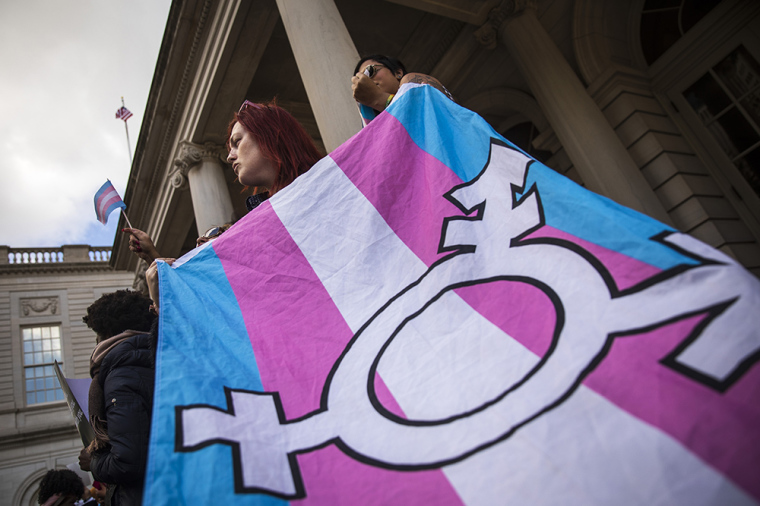
 the infamous North Carolina “Bathroom Bill.” Infamous in that it states if you’re a guy, regardless of how you are dressed or the way you “feel” that particular moment, you must use the guys public restroom, locker room, shower, etc. If you are a girl – vice versa.

 their children to be brainwashed in the state-run schools. It should not be a hard connection to make between the loss of our children and the fact that they attended the same education system. But, one would think that they would at least wait until the second grade to begin the mush mind program. But this is not the case.


 retirement.”
 They keep telling us that they won’t go after churches, but I know how this works. Once the glitter ball gets a’rolling, the gay mafia won’t stop. As we saw with photographer Elaine Huguenin, it doesn’t matter if there are other accommodations, the lesbian couple sued anyway.
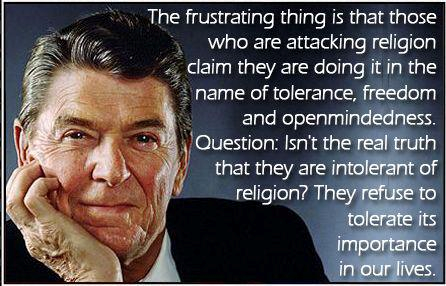 until we begin to look like England. Christians will be arrested for reading the bible aloud on the street. We’re lucky that we have the First Amendment, but so long as activist judges are in control, it offers little comfort. After our freedoms are eroded, American Christians will face a choice they’ve been lucky enough to avoid in modern times:


 What Did You Say?

A major new report, published today in the journal The New Atlantis, challenges the leading narratives that the media has pushed regarding sexual orientation and gender identity.
Co-authored by two of the nation’s leading scholars on mental health and sexuality, the 143-page report discusses over 200 peer-reviewed studies in the biological, psychological, and social sciences, painstakingly documenting what scientific research shows and does not show about sexuality and gender.
The major takeaway, as the editor of the journal explains, is that “some of the most frequently heard claims about sexuality and gender are not supported by scientific evidence.”
Here are four of the report’s most important conclusions:
The report, “Sexuality and Gender: Findings from the Biological, Psychological, and Social Sciences,” is co-authored by Dr. Lawrence Mayer and Dr. Paul McHugh. Mayer is a scholar-in-residence in the Department of Psychiatry at Johns Hopkins University and a professor of statistics and biostatistics at Arizona State University.
McHugh, whom the editor of The New Atlantis describes as “arguably the most important American psychiatrist of the last half-century,” is a professor of psychiatry and behavioral sciences at the Johns Hopkins University School of Medicine and was for 25 years the psychiatrist-in-chief at the Johns Hopkins Hospital. It was during his tenure as psychiatrist-in-chief at Johns Hopkins that he put an end to sex reassignment surgery there, after a study launched at Hopkins revealed that it didn’t have the benefits for which doctors and patients had long hoped.
Implications for Policy
The report focuses exclusively on what scientific research shows and does not show. But this science can have implications for public policy.
Take, for example, our nation’s recent debates over transgender policies in schools. One of the consistent themes of the report is that science does not support the claim that “gender identity” is a fixed property independent of biological sex, but rather that a combination of biological, environmental, and experiential factors likely shape how individuals experience and express themselves when it comes to sex and gender.
The report also discusses the reality of neuroplasticity: that all of our brains can and do change throughout our lives (especially, but not only, in childhood) in response to our behavior and experiences. These changes in the brain can, in turn, influence future behavior.
This provides more reason for concern over the Obama administration’s recent transgender school policies. Beyond the privacy and safety concerns, there is thus also the potential that such policies will result in prolonged identification as transgender for students who otherwise would have naturally grown out of it.
The report reviews rigorous research showing that “only a minority of children who experience cross-gender identification will continue to do so into adolescence or adulthood.” Policymakers should be concerned with how misguided school policies might encourage students to identify as girls when they are boys, and vice versa, and might result in prolonged difficulties. As the report notes, “There is no evidence that all children who express gender-atypical thoughts or behavior should be encouraged to become transgender.” (If the image below does not play, please proceed to https://youtu.be/O9RE_VD1nf8)
Beyond school policies, the report raises concerns about proposed medical intervention in children. Mayer and McHugh write: “We are disturbed and alarmed by the severity and irreversibility of some interventions being publicly discussed and employed for children.”
They continue: “We are concerned by the increasing tendency toward encouraging children with gender identity issues to transition to their preferred gender through medical and then surgical procedures.” But as they note, “There is little scientific evidence for the therapeutic value of interventions that delay puberty or modify the secondary sex characteristics of adolescents.”
Findings on Transgender Issues
The same goes for social or surgical gender transitions in general. Mayer and McHugh note that the “scientific evidence summarized suggests we take a skeptical view toward the claim that sex reassignment procedures provide the hoped for benefits or resolve the underlying issues that contribute to elevated mental health risks among the transgender population.” Even after sex reassignment surgery, patients with gender dysphoria still experience poor outcomes:
Mayer and McHugh urge researchers and physicians to work to better “understand whatever factors may contribute to the high rates of suicide and other psychological and behavioral health problems among the transgender population, and to think more clearly about the treatment options that are available.” They continue:
Policymakers should take these findings very seriously. For example, the Obama administration recently finalized a new Department of Health and Human Services mandate that requires all health insurance plans under Obamacare to cover sex reassignment treatments and all relevant physicians to perform them. The regulations will force many physicians, hospitals, and other health care providers to participate in sex reassignment surgeries and treatments, even if doing so violates their moral and religious beliefs or their best medical judgment.
Rather than respect the diversity of opinions on sensitive and controversial health care issues, the regulations endorse and enforce one highly contested and scientifically unsupported view. As Mayer and McHugh urge, more research is needed, and physicians need to be free to practice the best medicine.
Stigma, Prejudice Don’t Explain Tragic Outcomes
The report also highlights that people who identify as LGBT face higher risks of adverse physical and mental health outcomes, such as “depression, anxiety, substance abuse, and most alarmingly, suicide.” The report summarizes some of those findings:
What accounts for these tragic outcomes? Mayer and McHugh investigate the leading theory—the “social stress model”—which proposes that “stressors like stigma and prejudice account for much of the additional suffering observed in these subpopulations.”
But they argue that the evidence suggests that this theory “does not seem to offer a complete explanation for the disparities in the outcomes.” It appears that social stigma and stress alone cannot account for the poor physical and mental health outcomes that LGBT-identified people face.
As a result, they conclude that “More research is needed to uncover the causes of the increased rates of mental health problems in the LGBT subpopulations.” And they call on all of us work to “alleviate suffering and promote human health and flourishing.”
Findings Contradict Claims in Supreme Court’s Gay Marriage Ruling
Finally, the report notes that scientific evidence does not support the claim that people are “born that way” with respect to sexual orientation. The narrative pushed by Lady Gaga and others is not supported by the science. A combination of biological, environmental, and experiential factors likely account for an individual’s sexual attractions, desires, and identity, and “there are no compelling causal biological explanations for human sexual orientation.”
Furthermore, the scientific research shows that sexual orientation is more fluid than the media suggests. The report notes that “Longitudinal studies of adolescents suggest that sexual orientation may be quite fluid over the life course for some people, with one study estimating that as many as 80 percent of male adolescents who report same-sex attractions no longer do so as adults.”
These findings—that scientific research does not support the claim that sexual orientation is innate and immutable—directly contradict claims made by Supreme Court Justice Anthony Kennedy in last year’s Obergefell ruling. Kennedy wrote, “their immutable nature dictates that same-sex marriage is their only real path to this profound commitment” and “in more recent years have psychiatrists and others recognized that sexual orientation is both a normal expression of human sexuality and immutable.”
But the science does not show this.
While the marriage debate was about the nature of what marriage is, incorrect scientific claims about sexual orientation were consistently used in the campaign to redefine marriage.
In the end, Mayer and McHugh observe that much about sexuality and gender remains unknown. They call for honest, rigorous, and dispassionate research to help better inform public discourse and, more importantly, sound medical practice.
As this research continues, it’s important that public policy not declare scientific debates over, or rush to legally enforce and impose contested scientific theories. As Mayer and McHugh note, “Everyone—scientists and physicians, parents and teachers, lawmakers and activists—deserves access to accurate information about sexual orientation and gender identity.”
We all must work to foster a culture where such information can be rigorously pursued and everyone—whatever their convictions, and whatever their personal situation—is treated with the civility, respect, and generosity that each of us deserves.