Read more at https://www.conservativereview.com/bidens-vaccine-mandate-is-outrageously-unconstitutional-why-couldnt-lawyers-make-that-argument-to-the-supreme-court-2656327300.html/
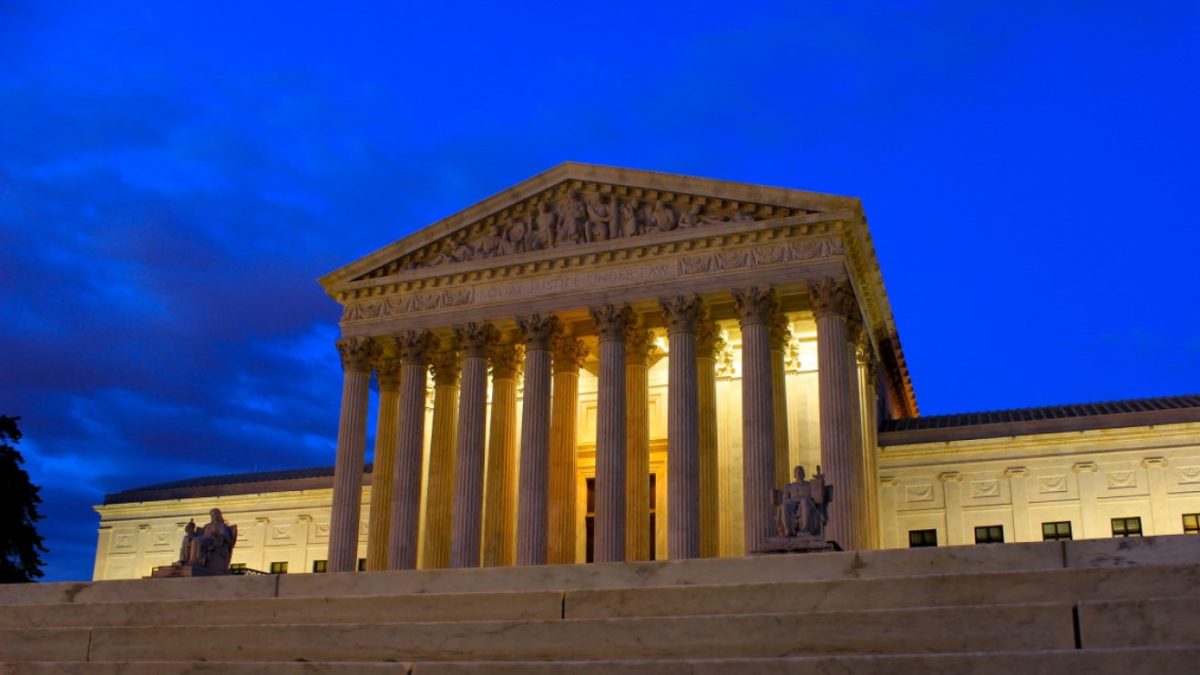
All the petitioners needed was for the Supreme Court to enter a stay to prevent the Occupational Safety and Health Administration vaccination rule from taking effect, but, truly, was it too much to ask for a defense of limited government, separation of powers, and federalism?
Apparently so, because on Friday, over more than two hours of argument in National Federation of Independent Business v. Department of Labor, lawyers pushing the Supreme Court to delay the regulation circled and sidled rather than state clearly that the rule, OSHA, the Biden administration, and the entire federal government represented a mockery of our constitutional order.
On November 5, 2021, OSHA issued the rule under review, framing it as an “Emergency Temporary Standard” or ETS. The ETS required all employers of 100 or more employees to “develop, implement, and enforce a mandatory COVID-19 vaccination policy,” which required employees to either be fully vaccinated or submit to weekly COVID-19 testing and to wear face coverings at work.
Congress authorized OSHA to issue “an emergency temporary standard to take immediate effect,” and without the traditional notice-and-comment process, if it “determines (A) that employees are exposed to grave danger from exposure to substances or agents determined to be toxic or physically harmful or from new hazards, and (B) that such emergency standard is necessary to protect employees from such danger.”
The ETS was immediately challenged by individual Americans, religious groups, covered employers, states, and trade organizations, with the cases filed directly in federal courts of appeals throughout the country, bypassing the federal trial courts pursuant to the statute that authorized emergency rules.
The Fifth Circuit Court of Appeals acted first, issuing a stay on November 6, 2021, preventing enforcement of the rule pending briefing. Less than a week later, a three-judge panel of the Fifth Circuit—consisting of Ronald Reagan appointee Judge Edith Jones and two Donald Trump appointees, Judges Kyle Duncan and Kurt Engelhardt—issued an opinion holding that the ETS remain stayed “pending adequate judicial review” of the lawsuit challenging the OSHA rule.
The 21-page opinion, authored by Judge Engelhardt, analyzed the request for a stay and concluded that, for numerous reasons, the petitioners had a strong likelihood to succeed on the merits of their challenge and that without a stay the businesses and other petitioners would suffer irreparable injury.
Shortly after the Fifth Circuit issued its decision, pursuant to the procedures controlling when multiple lawsuits are filed challenging an ETS, all of the cases throughout the various federal circuits were consolidated and assigned by lottery to the Sixth Circuit Court of Appeals. Then, on December 17, 2021, the Sixth Circuit vacated the stay entered by the Fifth Circuit.
Sixth Circuit Deadlocks
Judge Jane Stranch, a Barack Obama appointee, authored the decision for the three-judge panel of the Sixth Circuit, which Judge Julia Gibbons, a G.W. Bush appointee, joined. Trump-appointee Judge Joan Larsen dissented from the decision, concisely capturing her concern with this opening line: “As the Supreme Court has very recently reminded us, ‘our system does not permit agencies to act unlawfully even in pursuit of desirable ends.’”
Two days before the Sixth Circuit removed the stay, thereby setting the ETS to go into effect this month, the federal appellate court denied a request by the challengers of the OSHA rule for the court to hear the case initially en banc, or as a full court. To obtain en banc review, a majority of the active judges on the Sixth Circuit needed to vote for the full court to decide the case together, but the 16-member court deadlocked 8-8, leaving the three-judge panel in charge.
In voting to hear the request for a stay of the ETS en banc in the Sixth Circuit, Judge John Bush, a Trump appointee, opened with the closer: “Whether it uses a clear statement or not, Congress likely has no authority under the Commerce Clause to impose, much less to delegate the imposition of, a de facto national vaccine mandate upon the American public. Such claimed authority runs contrary to the text and structure of the Constitution and historical practice. The regulation of health and safety through compulsory vaccination is a traditional prerogative of the states—not the domain of Congress and certainly not fodder for the diktat of a federal administrative agency.”
Sidelining the Constitution
With all of the ammunition provided by the dissenting judges in the Sixth Circuit, as well as the Fifth Circuit’s original opinion entering the stay, one would think that when the Supreme Court fast-tracked the case for oral argument, the attorneys seeking the stay would stress the grave attack the ETS represents to our constitutional republic. But they didn’t.
Instead, Scott Keller, counsel for the National Federation of Independent Business, argued “OSHA’s economy-wide one-size-fits-all mandate covering 84 million Americans is not a necessary, indispensable use of OSHA’s extraordinary emergency power which this Court has recognized is narrowly circumscribed.”
Likewise, Benjamin Flowers, the solicitor general of Ohio, arguing on behalf of the slew of states that joined in challenging the ETS, stressed “so sweeping a rule [as the vaccine mandate] is not necessary to protect employees from a grave danger as the emergency provision requires.”
Throughout the argument, Keller and Flowers also focused on the so-called “major questions” doctrine, which stems from a series of Supreme Court cases that stressed that if an agency’s regulatory action “brings about an enormous and transformative expansion in regulatory authority,” Congress must speak clearly that “it wishes to assign to an agency decisions [such issues] of vast ‘economic and political significance.”
The petitioners weren’t wrong. The OSHA rule, which is, in essence, a vaccine mandate given the shortage of tests and the federal government’s decision to force employees to pay for the cost of testing, is not “necessary” to protect employees from a “grave danger” for many reasons.
This Is Obviously Unconstitutional
First, COVID is only a grave danger to a small segment of society, while the ETS adopts the de facto vaccine mandate for all employers of 100 or more employees. The ETS also makes no distinction between employers where working conditions create a higher risk of COVID infection from those facilities where employees have limited risk. Nor, after two years of COVID, with OSHA waiting that time period to issue the ETS and the latest mutation less severe than the former ones, does the ETS fit within the concept of an “emergency” standard.
Also, far from providing the OSHA clear authority to mandate vaccinations (or a weekly medical test) in response to a virus such as COVID, the statute authorizing OSHA to issue an ETS speaks of grave dangers “from exposure to substances or agents determined to be toxic or physically harmful or from new hazards.” Thus, the major question doctrine supports the petitioners’ challenge to the ETS and their request for a stay.
Yes, advocates must be pragmatists, and the petitioners’ attorneys didn’t need a home run; they just needed a rain delay. But so much more could have been said, and indeed needed to be said—and forcefully so—about limited powers, federalism, and separation of powers. Yet in their desire to win the stay, there was barely any mention of these important constitutional principles.
Major Opportunity Lost
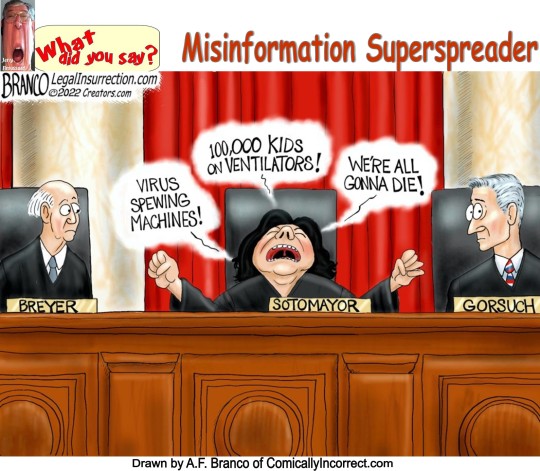
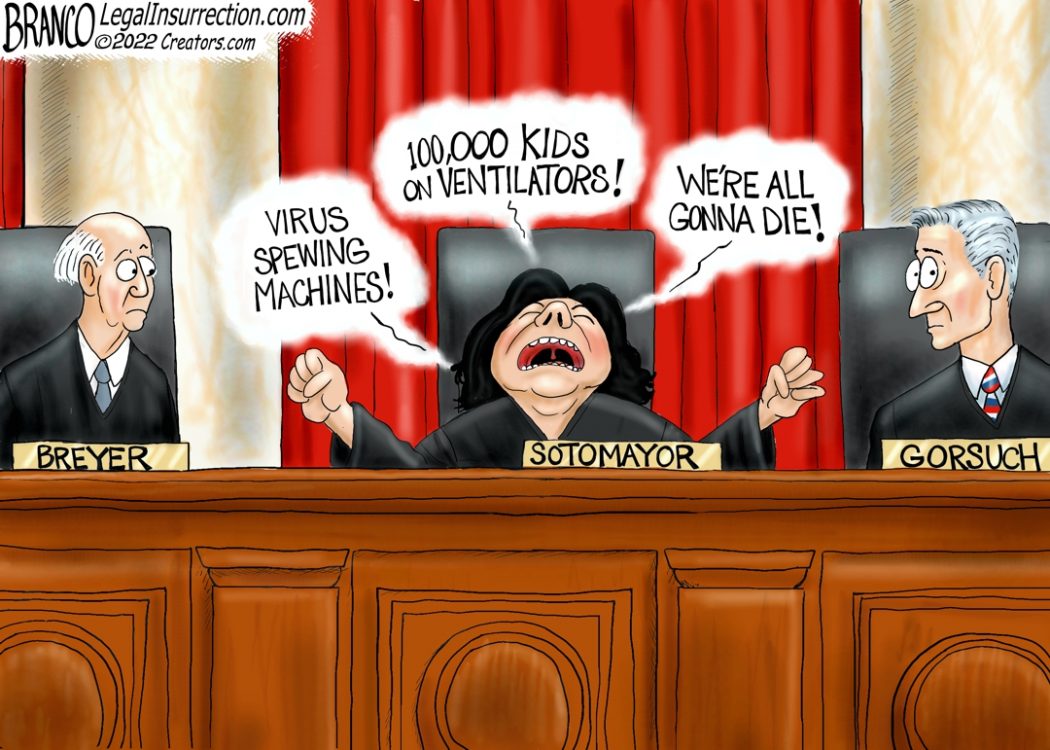
Consider this notable exchange between Ohio’s top attorney and Justice Sotomayor.
JUSTICE SOTOMAYOR: “So, if it’s within the police power to protect the health and welfare of workers, you seem to be saying the states can do it, but you’re saying the federal government can’t even though it’s facing the same crisis in interstate commerce that states are facing within their own borders. I — I’m not sure I understand the distinction why the states would have the power but the federal government wouldn’t.”
MR. FLOWERS: “The federal government has no police power, if we’re asking about that.”
JUSTICE SOTOMAYOR: “Oh, it does have power with respect to protecting the health and safety of workers. We have — we have — accept the constitutionality of OSHA.”
MR. FLOWERS: “Yes. I took you to be asking if they had a police power to protect public health. They — they absolutely have the –”
JUSTICE SOTOMAYOR: “No, they have a police power to protect workers.”
MR. FLOWERS: “I would not call it a police power. I think the Commerce Clause power allows them to address health.”
“I would not call it a police power” is as much as the Ohio solicitor general could muster for a pushback. But Congress has no “police power” no matter what it is called, and the federal government cannot “pretextually relabel” a federal de facto vaccination mandate “commerce” to gain what is, in effect, a novel police power of the national government.
The breadth of the OSHA rule and its effects on two-thirds of private businesses also threatens the “system of government ordered by the Constitution,” that gave all legislative powers to Congress. The resulting “nondelegation doctrine constrains Congress’s ability to delegate its legislative authority to executive agencies.”
Yet when provided an opportunity to hammer these points, Flowers served up the vanilla point “that although our non-delegation doctrine is not especially robust today, there are limits on the amount of authority that Congress can give away.”
The justices—and Americans—needed to hear these points because COVID has become both the excuse and the case study for authoritarianism. And from OSHA’s most recent rule, we might divine the civil corollary to the “Show me the man, and I’ll show you the crime,” motto, and it seems to be, “Provide me a public interest, and I’ll find the power.”
Or, elsewise said, “Cut me a mouse hole, and I’ll squeeze in an elephant.”




















































 What Did You Say?
You must be logged in to post a comment.