Congress has tried to sneak through amnesties three times in a little more than a decade. Every time, the American people somehow found out — despite the best efforts of the press — rose up in a rage and killed the proposed bills.
In 2006, President Bush got the brilliant idea to push amnesty on the country. His party was wiped out the very next time voters could get to the polls.
Liberals like to claim that their brave opposition to the Iraq War led to the midterm slaughter, but, as I recall, they were against that war in the 2004 presidential election, too, and Bush won. An April 2006 Washington Post–ABC News poll — taken about a month after Bush launched his amnesty crusade — showed that more Americans approved of Bush’s handling of the Iraq War than approved of his handling of immigration. In nearly every poll on Bush’s handling of immigration that year, a huge majority of the public disapproved .
.
Three years ago, House Majority Leader Eric Cantor lost his seat to an unknown economics professor, Dave Brat, by a whopping 55 percent to 45 percent, despite outspending Brat 40-to-1. It was the first time in history a member of leadership had lost a primary. (This despite Cantor being one of the “Young Guns”!) Brat had explicitly attacked Cantor for supporting amnesty.
Most spectacularly, last year, an utterly implausible presidential candidate crushed all his opponents — including the media — and won the White House by promising to deport illegals and build a wall.
How many different ways can Americans express that they want a whole lot less immigration and absolutely no amnesties?
We already tried amnesty once. The 1986 amnesty under Reagan was supposed to be a one-time fix. We’d forgive the estimated 1 million illegal aliens living here and, in exchange, draconian measures would be imposed on any employer ever caught hiring an illegal again — up to a $10,000 fine per illegal and jail time for repeat offenders.
We never got the employer sanctions.
There weren’t 1 million illegals — it was 4 million.
It wasn’t a one-time fix. In another real-world example of “incentives,” the first amnesty led to a never-ending stream of illegals across our border, confident of getting in on the next amnesty. Today, there are at least 40 million illegals living in the U.S. (Eleven million is nonsense — they’ve been claiming that since the 1980s. See Adios, America)
And now, once again, politicians are lobbying for the exact same policy that was a complete failure last time. When it comes to immigration, it’s always Groundhog Day!
We’re told the DACA amnesty will apply only to a very small, discrete group of unbelievably fantastic illegals — who melt Ivanka’s heart by refilling her water glass at Cipriani with such alacrity!
Not only that, but there will be strict requirements on who qualifies for a DACA amnesty.
None of which will ever be enforced.
Congress has passed laws requiring that immigrants pay back taxes, learn English, not collect welfare and have good moral character. That’s not too onerous, right? It’s not like we’re requiring them to have any skills or talents that would be valuable to America.
Every single one of these requirements has been scuttled by immigration bureaucrats, federal judges and Democratic presidents. All of ’em. Our immigration bureaucracy is so dedicated to destroying America that it’s made citizens of thousands of convicted felons.
If you don’t understand how that could happen, you have no idea how much our cultural elites hate this country. Their governing philosophy is: Anyone we bring in is at least better than an American!
This nation is mind-bogglingly generous. But decades of lies make it impossible for even the most tender-hearted American to fall for this bait-and-switch one more time.
Every politician swears up and down that he wants a “secure border.” But then these same politicians go absolutely berserk when Trump says he wants to build a wall.
They say we’ll get enforcement right after the amnesty. That’s obviously absurd. When the tub is overflowing, water pouring out of the faucet, across the carpets, down the stairs, up the dining room walls, we don’t debate whether we’re going to dry clean the curtains or throw them out. We don’t argue about whether to use a mop or towels. FIRST: Turn off the water.
As long as both political parties stoutly refuse to build the wall, we know they are not serious about ever stopping illegal immigration. (Luckily, the Constitution gives the commander in chief full authority to protect our borders, with or without congressional approval.)
We know what happened after the Reagan amnesty. We know politicians and the media are lying to us. Why, some of the politicians who lied to us then are lying to us today, for example, Chuck Schumer.
No matter how innocent and lamblike a “Dreamer” they produce to tear at our heartstrings, it won’t work anymore. Decades of their perfidy has made sympathy impossible. It’s as if, night after night, Paul Ryan knocked on our door and asked us to take in one helpless orphan and, night after night, we crack open our door, only to be set upon by 30 armed felons with tire chains and brass knuckles.
At a certain point, Ryan might actually produce a sad orphan. Who knows? It’s theoretically possible. But we could not be faulted for not opening the door.
Politicians and the press are themselves responsible for thoroughly killing any human sympathy Americans may have had for illegal immigrants — even the “Dreamers” (whom Ivanka adores, but would die before sending her kids to a school jam-packed with them).
The only question is: Will anyone in Washington ever listen?

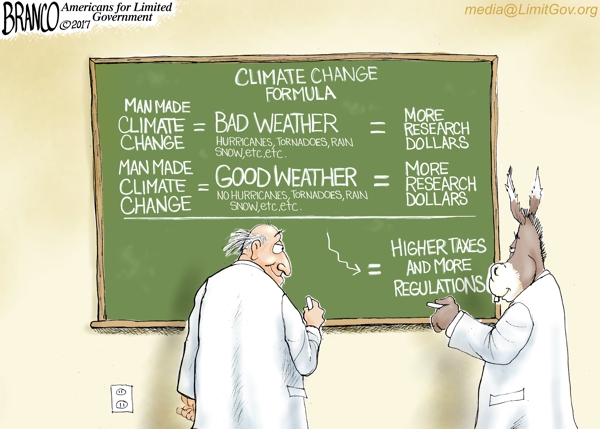
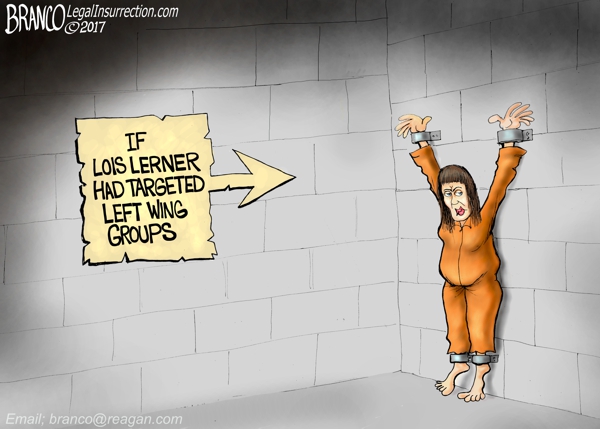
 Political Cartoon by A.F. Branco.
 Political cartoon by A.F. Branco ©2017.


 Commentary by Bishop E.W. Jackson | Wednesday, September 13, 2017 @ 12:27 PM


 Reported

 Published by ClashDaily.com | on September 13, 2017





 According to the

 Reported













 Reported by

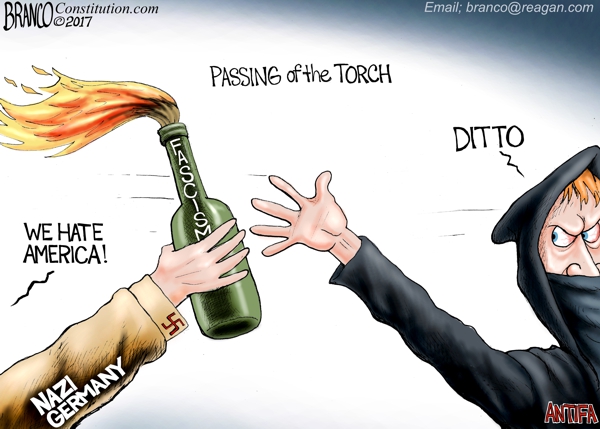
 at UC Berkeley was assaulted by antifa members who accused him of merely looking like a white man. He was told that he




 Reported


 Reported



 Peter Hasson | Associate Editor | 8:16 PM 09/03/2017


 Reported


 What Did You Say?

States already do this in the context of child and elder abuse, requiring teachers, administrators, school nurses, and coaches to report suspected abuse to appropriate law enforcement agencies. Failure to report can trigger civil and criminal penalties against the individual and penalties against the institution.
These proposals would take the pressure off colleges to conduct quasi-criminal proceedings, which college administrators are ill equipped to do. No one would expect a college tribunal to handle a murder on campus.
It makes no sense for a college to handle other serious crimes such as sexual assaults and rapes. Rapists are criminals, not just college students who violate a school’s honor code. They should be prosecuted in criminal court, and if found guilty, punished accordingly, including having to register as convicted sex offenders.
But the Obama-era guidance led colleges to steer students away from reporting crimes to the authorities, and required use of the low “preponderance of the evidence” standard of proof when investigating and disciplining students accused of sexual assault.
This led to colleges barring an accused student from reviewing the evidence against him or cross-examining his accuser; refusing to allow an accused to hire an attorney or, when attorneys were permitted, prohibiting them from speaking on the accused’s behalf; and implementing other procedures that fly in the face of the protections typically afforded to someone accused of a crime.
The guidance letter received criticism from liberal and conservative quarters, from law professors to think tank scholars to members of Congress and many others.
Law professors at the University of Pennsylvania wrote that this “approach exerts improper pressure upon universities to adopt procedures that do not afford fundamental fairness,” and that “due process of law is not window dressing.”
Harvard law professors similarly decried the procedures as “overwhelmingly stacked against the accused” and which were “in no way” required by federal law. It also led to numerous lawsuits filed by students who were punished in these kangaroo courts.
In her speech, DeVos stated, “The notion that a school must diminish due process rights to better serve the ‘victim’ only creates more victims.”
Instead, due process must be “the foundation of any system of justice that seeks a fair outcome. Due process either protects everyone, or it protects no one.”
Sexual assault investigations and adjudications are serious issues that involve complicated procedures designed to get at the truth and prevent further harm to victims and those falsely accused.
Compound this complexity with a massive federal bureaucracy and various interest groups with their own agendas, and it is little wonder that alleged victims, alleged perpetrators, and universities themselves are often left with no clear idea of their rights and responsibilities under the law.
Reversing the ill-advised Obama-era guidance is the first step to ensure that sexual assaults are properly investigated and adjudicated by trained professionals, leaving college administrators, as DeVos said, “to focus on what they do best: educate.”
Commentary By
Hans von Spakovsky/ @HvonSpakovsky
Hans von Spakovsky is an authority on a wide range of issues—including civil rights, civil justice, the First Amendment, immigration, the rule of law and government reform—as a senior legal fellow in The Heritage Foundation’s Edwin Meese III Center for Legal and Judicial Studies and manager of the think tank’s Election Law Reform Initiative. Read his research.
Elizabeth Slattery/ @EHSlattery
Elizabeth Slattery writes about the rule of law, the proper role of the courts, civil rights and equal protection, and the scope of constitutional provisions such as the Commerce Clause and the Recess Appointments Clause as a legal fellow in the Heritage Foundation’s Edwin Meese III Center for Legal and Judicial Studies. Read her research.