Perspectives; Thoughts; Comments; Opinions; Discussions

Posts tagged ‘Voting’

Sweeping Trump Order Overhauls US Elections, Including Citizenship Requirement


Tuesday, 25 March 2025 05:23 PM EDT

Sweeping Trump Order Overhauls US Elections, Including Citizenship Requirement
(Dreamstime)

President Donald Trump on Tuesday signed a sweeping executive action to overhaul elections in the U.S., including requiring documentary proof of citizenship to register to vote in federal elections and demanding that all ballots be received by Election Day.

The order says the U.S. has failed “to enforce basic and necessary election protections” and calls on states to work with federal agencies to share voter lists and prosecute election crimes.

It threatens to pull federal funding from states where election officials who don’t comply.

The move, which is likely to face swift challenges from voting rights organizations, is consistent with Trump’s long history of railing against election processes. He has in the past alleged election rigging and has waged battles against certain voting methods since he lost the 2020 election to Democrat Joe Biden and attributed the outcome to widespread fraud.

Trump has focused particularly on mail voting, arguing that it’s insecure and invites fraud.

After signing, Trump said that more election actions would be taken in coming weeks.

Copyright 2025 The Associated Press. All rights reserved. This material may not be published, broadcast, rewritten or redistributed without permission.


Rep. Crockett: Hispanic Voters Have “Slave Mentality” and “Can Barely Vote”

By: Jonathan Turley | December 23, 2024

Read more at https://jonathanturley.org/2024/12/21/rep-crockett-hispanic-voters-have-slave-mentality-and-can-barely-vote/

One of the most consistent elements of the identity politics practiced by the left is its selectivity. Whether in politics or higher education, the outrage that comes from allegedly racist or insensitive comments is confined to targets on the right. A case in point is the deafening silence after a diatribe by Rep. Jasmine Crockett D-Texas, during which she accused Hispanic voters of having a “slave mentality” and said that they “can barely vote.” There was no vaporous segment on The View or condemnations on the floor from members.

Crockett has been celebrated in left-wing publications such as Vanity Fair for schooling her colleagues, which she describes as “old as sh*t.” She offered Vanity Fair her “distilled summary of what happens within the Latino community.” Not surprisingly, it is identity politics with a race edge:

“I’ve not run into that with the Asian community. I’ve not run into that with the African community. I’ve not run into that with the Caribbean community. I’ve only run into it with Hispanics. When they think of ‘illegals,’ they think of, you know, maybe people that came out of the cartels and that kind of, like, the criminal-type book or whatever. It’s insane.”

“It almost reminds me of what people would talk about when they would talk about kind of like ‘slave mentality’ and the hate that some slaves would have for themselves. It’s almost like a slave mentality that they have. It is wild to me when I hear how anti-immigrant they are as immigrants, many of them. I’m talking about people that literally just got here and can barely vote that are having this kind of attitude.”

The attack on Hispanic voters as including people who “literally just got here and can barely vote” did not even generate objections from many Democratic Hispanic groups. Imagine if Trump or a conservative commentator made this comment.

Ironically, just before the election, I wrote how recent immigrants seemed to have a particularly strong connection to our defining and collective values. That does not appear a view shared by the congresswoman.

Crockett was, if anything, inclusive in her attacks based on gender and race. She also attacked black men and women for voting for Trump. She just dismissed black men as hating women: “I’m going to chalk up to misogyny.” What is unimaginable is that any woman or person of color could vote on the merits against the Democrats.

Notably, after her loss, Hillary Clinton offered the same attacks on women as voting against her only because they are weak and self-loathing. She claimed that Kamala, who notoriously avoided interviews and could not think of “a thing she would do differently” from Biden, “ran a flawless campaign.” The problem is again self-hating women and minorities, adding, “I don’t trust White women. I said, I’m just telling you, and I think you need to have conversations with your sisters, because they are the group that failed Hillary Clinton.”

The claim that Hispanics “can barely vote” would not be tolerated from someone on the right. It is reminiscent of the controversy involving Democratic lawyer and former Clinton campaign general counsel Marc Elias over what some called inherently racist comments about Georgia voters. Elias argued that Georgia voters could not be expected to be able to read their driver’s licenses correctly — a statement that seemed to refer to minority voters who would be disproportionately impacted by such a requirement.

What is striking about the Vanity Fair article is that Democrats continued to rely on identity politics despite every indication that it was not working. Now, after losing both houses and the White House, they are doubling down on identity politics.

Outgoing Democratic National Committee (DNC) Chair Jaime Harrison used his farewell address to warn Democrats not to abandon identity politics as the touchstone of future campaigns.

Jonathan Turley is the Shapiro Professor of Public Interest Law at George Washington University. He is the author of “The Indispensable Right: Free Speech in an Age of Rage.”

Do You Want to Hear a Testimony from a Black Man That Will Dispel the Left’s Lies?


October 15, 2024

The Federalist’s 2024 Battleground State Elections Guide


By: The Federalist Staff | October 10, 2024

Read more at https://thefederalist.com/2024/10/10/the-federalists-2024-battleground-state-elections-guide/

'I voted' sticker.

Author The Federalist Staff profile

The Federalist Staff

More Articles

With Election Day less than a month away, election processes and early voting are kicking into gear in several swing states around the country. With different election laws and court rulings governing election administration in each state, it can be tough to keep up with the myriad guidelines and rules governing the electoral process. That’s why The Federalist’s 2024 Battleground State Elections Guide is here to help.

From ballot return deadlines to mail-in voting rules, here are all the key dates and information you’ll need to understand the election process in swing states throughout the country this cycle.

Arizona

In-Person Early VotingBegan on Oct. 9 and ends on Nov. 1.

Mail-In Voting: Ballots began to be mailed out Oct. 9.

Ballot Return Deadlines: Mail-in ballots must be returned by 7 p.m. local time on Election Day to be counted. These ballots can be returned via mail or delivered in person. Polling locations for in-person voting on Election Day also close at 7 p.m. local time.

Ballot HarvestingArizona law stipulates that only a “family member, household member or caregiver of the voter” may return the elector’s mail-in ballot.

Mail-In Ballot Signature Requirements: All absentee voters are required to sign the affidavit on the ballot envelope in order for their vote to be tabulated. The envelope signature must match the signature on the voter’s registration form.

Voter ID: Arizona requires in-person voters to present one type of acceptable photo ID or two types of non-photo ID.

Citizenship Requirements: The U.S. Supreme Court recently allowed part of a state law to go into effect that requires eligible electors to provide documentary proof of citizenship when registering to vote via state registration form. Arizonans may still register as federal-only voters with no proof of citizenship. The Arizona Constitution further specifies only U.S. citizens can vote in elections.

Post-Election Day Ballot CuringArizona law permits a “curing” period, in which local officials are authorized to contact voters to correct signature issues on their mail ballots. Any issue must be corrected “not later than the fifth business day after a primary, general or special election that includes a federal office or the third business day after any other election.”

Major Ballot Initiatives: Arizona’s ballot is expected to be stacked with roughly a dozen ballot initiatives this November. Among the most notable are constitutional amendments to effectively legalize late-term abortion (Proposition 139), raise the threshold for citizen-initiated ballot measures (Proposition 134), give the state legislature power to limit the governor’s emergency powers (Proposition 135), and prohibit open primary elections (Proposition 133).

Also set to appear on the ballot is a constitutional amendment that would institute open primaries and allow for the adoption of ranked-choice voting for general elections (Proposition 140). Despite the discovery that roughly 38,000 pairs of signatures gathered in support of the measure were duplicates, the Arizona Supreme Court ruled that votes cast for the measure may count.

For more information on the full list of Arizona ballot measures, see here.

Biggest Election Fights: In September, Arizona election officials discovered roughly 98,000 registered voters lacking documentary proof of citizenship (DPOC) due to an error stemming from how the state’s Motor Vehicle Division shares driver’s license information with the voter registration system. As noted above, individuals who do not provide DPOC may still register as “federal-only” voters and can only cast ballots in federal races.

According to the secretary of state’s office, most of the affected voters are registered Republicans. The Arizona Supreme Court granted these electors the ability to vote full-ballot this November.

The secretary of state’s office revealed on Sept. 30 that election officials found an additional 120,000 voters affected by the issue who lack DPOC.

Georgia

In-Person Early VotingBegins on Oct. 15 and ends on Nov. 1. 

Mail-In VotingAbsentee ballots were sent to UOCAVA voters on Sept. 17.  Registrars began sending out absentee ballots for the general public on Oct. 7. The last day to request a mail-in ballot is Oct. 25. 

Ballot Return Deadlines: Absentee ballots (excluding UOCAVA ballots) must be returned by 7 p.m. local time on Election Day to be counted. These ballots can be returned in person, through the mail, or at a drop box location. Polling locations for in-person voting on Election Day also close at 7 p.m. local time. 

Ballot Harvesting: Georgia does not permit ballot harvesting, but only allows certain family members or a household member to return a voter’s ballot. (A caretaker may also return a disabled voter’s ballot.)

Mail-In Ballot Signature Requirements: Absentee ballot envelopes contain an “oath which must be signed by the voter.” Georgia also “requires the voter’s driver’s license number or state identification card number, which is compared with the voter’s registration record,” according to the National Conference of State Legislatures. If a voter is unable to sign his ballot, Georgia “law requires the voter make a mark,” according to Carroll County’s election website. Ballots lacking a signature or mark are rejected, according to Carroll County. 

Voter ID: “Georgia law requires photo identification when voting, either in person or absentee,” according to the secretary of state’s website. Acceptable forms of identification include any state or federal government-issued photo ID (including a driver’s license or a valid passport), a student ID from a Georgia public college or university, or a military or tribal photo ID.

Citizenship Requirements: Since 2010, Georgians registering to vote have been required to provide evidence of their U.S. citizenship, including a driver’s license or driver’s license number as long as the registrant has previously provided proof of citizenship to the Department of Driver Services. For those who don’t possess any of the accepted citizenship documents, Georgia law tasks the State Election Board with establishing “other documents or methods” for proving a person’s citizenship. However, it appears certain voters may be able to evade some of the safeguards in place.  

Post-Election Day Ballot Curing: Georgia law permits a “curing” period, in which local officials are authorized to contact voters to correct signature issues on their absentee ballots. The “last day for voters to cure timely submitted absentee ballots if they failed to sign the oath or information mismatch” is Nov. 8. 

Major Ballot Initiatives: Georgia will have three initiatives on the November ballot. One would create a Georgia Tax Court “with judicial power and statewide jurisdiction,” the second would provide “for a local option homestead property tax exemption,” and the third “exempts property that is valued at less than $20,000 from the personal property tax,” according to Ballotpedia

Biggest Election Fights: The conservative-led State Election Board has clashed with Democrats and Georgia’s Republican-led secretary of state’s office recently, especially on the topic of whether election officials should be forced to rubber-stamp election results even if they have concerns about the election’s administration.

Republican officials like Fulton County election board member Julie Adams argue they should be able to investigate concerns about the administration of an election before certifying the results, rather than rubber-stamping results they believe are legally dubious.

Democrats are also waging a series of legal challenges against the State Election Board, which has passed a series of rules aimed at ensuring the number of ballots cast matches the number of voters who voted, among other election integrity measures.

Michigan

Voter Registration: Michiganders can register to vote at any time up to 8 p.m. on Election Day. They can register to vote online, by mail, or in person at the local clerk’s office.

In-Person Early Voting: The Michigan Department of State tells voters early voting will be available “for a minimum of nine consecutive days, ending on the Sunday before an election.” So early voting will start Oct. 26 at the latest, but communities can start the process earlier, allowing it to run for as many as 29 days.

Mail-In Voting: Absentee ballots are available beginning 40 days ahead of every election. Voters can request a ballot from the local clerk, and can opt-in to receive absentee ballots ahead of every federal, state, and local election. After Michigan voters approved no-excuse absentee voting in 2018, Proposal 2, which passed in 2022, further instituted mail-in voting practices and myriad other election policies supported by the left.

Ballot Return Deadlines: Voters must return absentee ballots to the local clerk’s office by 8 p.m. on Election Day to be counted, but overseas voters simply need their ballots to be postmarked by Election Day and received by clerks within six days after the election.

Ballot Harvesting: Michigan law allows an immediate family member or “individual residing in your household” to return a voter’s ballot. A voter may also request the clerk who issued a ballot help return it. 

Mail-In Ballot Signature Requirements: Absentee voters must sign the envelope with a signature matching their state ID or voter registration application.

Voter ID: The state requires in-person voters to show a photo ID or sign an affidavit claiming they don’t have one. Acceptable documents include a current student ID or government ID such as (but not limited to) a U.S. passport or state driver’s license. Michigan does not require a copy of an ID to vote by mail.

Citizenship Requirements: It is illegal for noncitizens to vote in federal elections, and voter registration forms and ballot applications require a person to attest that he is a citizen, but Michigan does not require documentary proof of citizenship from would-be voters.

Post-Election Day Ballot Curing: If a signature does not match that in the local clerk’s records, Michigan law requires clerks to contact the voter to “cure” the signature and solve the issue. According to the secretary of state’s office, voters may cure their signatures until 5 p.m. the third day after the election.

Major Ballot Initiatives: Michigan will have no statewide ballot measures in November.

Biggest Election Fights: Democrat Secretary of State Jocelyn Benson fought to keep third-party candidate Robert F. Kennedy Jr. on the ballot and remove independent Cornel West from the ballot, both of which actions would likely help Vice President Kamala Harris’ chances.

The Republican National Committee has filed multiple lawsuits against Benson for her guidance to clerks on handling ballots and her alleged failure to clean the state’s voter rolls. The Public Interest Legal Foundation has also sued Benson for an alleged lack of voter roll maintenance.

Nevada

Voter Registration: The deadline to register online is Oct. 23. Mailed voter registration forms had to be postmarked by Oct. 8.

Nevada also offers same-day registration, in which eligible electors may register and vote in person during the early voting period or on Election Day. Those who choose this option must present a valid Nevada driver’s license or Nevada ID card. Voters will receive their ballots to vote after the registration process is completed.

In-Person Early VotingBegins on Oct. 19 and ends on Nov. 1.

Mail-In Voting: Every registrant listed as “active” on Nevada’s voter rolls is automatically mailed a ballot every election. Voters can request to opt out of this mailing list.

According to the National Conference of State Legislatures, Nevada law does not specify when election officials may start sending mail-in ballots to voters. State law does, however, require these officials to send electors their ballots “not later than the 14 days before the election.”

Ballot Return Deadlines: All ballots that are dropped off in person must be submitted by 7 p.m. local time on Election Day. According to the Nevada secretary of state’s office, “Mail-in ballots that are postmarked on or before the day of the election AND received by the 4th day after election day by 5 p.m., will be accepted as received and processed according to Nevada State law.”

Ballot Harvesting: Nevada law permits any “person authorized by the voter [to] return the mail ballot on behalf of the voter by mail or personal delivery to the county clerk, or any ballot drop box established in the county.”

Mail-In Ballot Signature Requirements: All electors voting via mail must sign the ballot envelope for it to be counted. The envelope signature must match the signature on the voter’s registration form.

Voter ID: Nevada does not require a person to show ID to vote. As summarized by Ballotpedia, state law requires a Nevada in-person voter to “sign his or her name in the election board register at his or her polling place.” That signature is then “compared with the signature on the voter’s original application to vote or another form of identification, such as a driver’s license, a state identification card, military identification, or another government-issued ID.”

Citizenship Requirements: Nevada law requires all eligible residents to be U.S. citizens to vote, although the state constitution does not explicitly stipulate only U.S. citizens can vote. The state does not require documentary proof of citizenship from people voting or registering to vote.

Post-Election Day Ballot CuringNevada law permits a “curing” period, in which local officials are required to contact voters to allow them to correct signature issues on their mail-in ballots or otherwise confirm the signature affixed to the ballot belonged to them. The voter “must provide a signature or a confirmation, as applicable, not later than 5 p.m. on the sixth day following the election” for the ballot to be counted.

Major Ballot Initiatives: There will be seven measures appearing on Nevada’s 2024 ballot, six of which are constitutional amendment proposals. Among the most notable are initiatives instituting ranked-choice voting (Question 3), effectively legalizing late-term abortion (Question 6), and requiring electors to present a valid form of ID in order to vote (Question 7).

[RELATED: Ranked-Choice Voting Is A Nightmare — And It’s On The Ballot In Nevada]

Biggest Election Fights: The top issue raising concerns among election integrity activists in the state is the accuracy of Nevada’s voter rolls. Organizations such as the Public Interest Legal Foundation have documented what appear to be alarming inaccuracies within the voter registration lists, such as finding some registrants’ addresses listed at bars and casinos. Efforts by the Citizen Outreach Foundation to file citizen-led challenges to have these allegedly ineligible registrants removed have been met with resistance by Democrat Secretary of State Cisco Aguilar, whose office recently issued a memo instructing local officials to stop processing the group’s challenges.

North Carolina

Voter Registration: The standard deadline to register to vote is 5 p.m., Oct. 11. However, North Carolinians can register to vote after the Oct. 11 deadline in person at early voting locations.

In-Person Early VotingBegins Oct. 17 and ends at 3 p.m. on Nov. 2.

Mail-In Voting: Any registered voter in North Carolina can vote by mail for any reason. Voters must request the ballot using an absentee ballot request form, either online or with a paper form. This year, voters must request absentee ballots by Oct. 29 at 5 p.m.

Ballot Return Deadlines: Ballots must be returned by Election Day, Nov. 5 at 7:30 p.m. (with exceptions for UOCAVA voters).

Ballot Harvesting: North Carolina law permits a near relative or legal guardian to return a voter’s absentee ballot. It is otherwise a class I felony for anyone to deliver a ballot to a voter or return it for them.

Mail-In Ballot Signature Requirements: Voters must sign their absentee ballot envelope.

Absentee ballots must be filled out in the presence of two adult witnesses who are not disqualified by other state statutes. Those two persons must print and sign their names on the application and certificate, as well as provide their addresses. Voters can also fulfill the requirement with the seal and signature of one notary public.

Voter ID: A photo ID is generally required to vote in North Carolina, but the address on the ID “does not have to match the voter registration records.”

If an in-person voter does not have a voter ID, he will be asked to either complete an ID exception form and vote provisionally, or vote provisionally and return to his county elections office with a valid ID “by the day before [the] county canvass.” North Carolinians voting by mail are required to provide a copy of a photo ID when returning their ballot, but they can also fill out an exception form. Counties are required to count provisional ballots as long as the ID exception forms are “properly completed.”

Exceptions for not showing an ID are expansive, and range from a disability to “work or school schedule” to a religious objection to being photographed. (Being the victim of a declared natural disaster occurring withing 100 days of Election Day also qualifies a voter for an ID exception.) Mail-in voters who are somehow unable to attach a copy of their ID must include either their driver’s license number or the last four digits of their Social Security number.

North Carolina does not require photo ID for voters covered under the Uniformed and Overseas Citizens Absentee Voting Act.

Citizenship Requirements: North Carolina law requires U.S. citizenship to register to vote. However, citizenship documents are not required to register.

Post-Election Day Ballot Curing: North Carolina allows for ballot curing in certain circumstances, including if the voter “did not sign the voter certification,” “signed the application in the wrong place,” or failed to include a copy of a photo ID with an absentee ballot.

Major Ballot Initiatives: North Carolina only has one ballot initiative certified to appear on the ballot this November. The Citizenship Requirement for Voting Amendment was referred to voters by the state legislature and would amend the state constitution to provide that only eligible U.S. citizens can vote in the state. The amendment would prohibit local governments from allowing noncitizens to vote.

Biggest Election Fights: The RNC has filed several lawsuits against the North Carolina State Board of Elections.

The western part of the state was also significantly damaged by Hurricane Helene, which will make it more difficult to vote in the deep-red region of the state, though state officials are in the process of implementing emergency election procedures.

Pennsylvania

Voter Registration: The deadline to register to vote in Pennsylvania is Oct. 21. The state implemented automatic voter registration in September 2023 through the Department of Motor Vehicles. Since then, anyone who gets a driver’s license and is eligible to vote is automatically registered unless they intentionally opted out of voter registration. Pennsylvanians may also register online, by mail, or in person at their county election office.   

In-Person Early Voting: Pennsylvania treats early voting and mail-in voting the same. Voters can go to their county election office, receive a mail-in ballot, vote, and submit this ballot “all in the same visit.” In-person voting starts as soon as counties start mailing out ballots, but that date is different for each county. Voters may check online with the Pennsylvania Department of State to see when their counties’ ballots are ready.

Mail-In Voting: The deadline for requesting a mail-in ballot is Oct. 29. Any registered voter may request a mail-in ballot.

Ballot Return Deadlines: The county must receive a completed ballot by 8 p.m. on Election Day, Nov. 5. Counties will not accept ballots with a postmark of Nov. 5 at 8 p.m.; the ballot must be in hand by then. 

Ballot Harvesting: Voters must return their own ballots, although there are some exceptions for voters with a disability to designate someone, in writing, to deliver their ballot. Former Democratic Gov. Tom Wolf created a stir in 2021 when he casually admitted in a radio interview that his wife violated this rule, by dropping off his ballot for him. It is not allowed in Pennsylvania, even between spouses.

Mail-In Ballot Signature Requirements: Voters mail ballots in a two-envelope system. The inner, secrecy envelope is not marked, but the outer, mailing envelope must be signed and dated.

Voter ID: Voters must provide a driver’s license number or the last four digits of their Social Security number when registering to vote, as required by federal law. Identification is also required the first time a voter casts a vote in a precinct where they will sign a voter roll book, though the ID does not have to include a photo (voters can use a utility bill or bank statement as long as it includes their name and address). After that, no identification is required as long as the voter continues in the same precinct because they sign the book each election. If a Pennsylvania voter moves to a new precinct, he will need to show identification again.

Voters who qualify for a ballot under the Uniformed and Overseas Citizens Absentee Voting Act (UOCAVA) or the Voting Accessibility for the Elderly and Handicapped Act do not need to show ID.

Citizenship Requirements: You must be a U.S. citizen and a resident of Pennsylvania at least 30 days before the next election to register to vote.

Military voters, and those who are registered in Pennsylvania but out of the country, may register to vote through UOCAVA. They may participate in federal and local elections. Pennsylvania also allows voters who once lived in the state but now live overseas and have no intention of returning to vote as “federal” UOCAVA voters. These voters may vote in federal-level elections such as president, vice president, U.S. senator, and congressional representative. They cannot vote in Pennsylvania’s local elections.

Post-Election Day Ballot CuringSome counties give voters notice and opportunity to “cure” mistakes, and some do not. State law tells counties not to count improperly marked ballots, but the Pennsylvania Department of State has issued guidance telling counties to flag ballots in need of curing so voters will receive an automatic notice informing voters they can cure their ballots. This has become a point of controversy.

Biggest Election Fights: Mail-in ballot curing has been under dispute, and in the courts for several years, and in multiple cases. Should counties toss out improperly marked ballots as the election code directs? Or does Pennsylvania Secretary of State Al Schmidt have the authority to override the law and issue guidance to mail-in voters offering them a second chance to mark their outer envelope properly? Counties have been choosing to either follow the law or the guidance, giving voters different responses to the same problem, depending on where they live.

The Republican National Committee (RNC) and the Republican Party of Pennsylvania challenged Schmidt and Pennsylvania’s 67 county boards of elections over this matter. The RNC believes voters should be held to the law as written by the elected General Assembly, which does have the authority to change the law, and so far, hasn’t. Last week, the state supreme court declined to rule on the issue before Election Day.

Wisconsin

Voter Registration: Wisconsin offers same-day voter registration, so eligible Wisconsinites can register to vote in person on Tuesday, Nov. 5, 2024 (Election Day). The deadline to register to vote by mail or online is Oct. 16.

In-Person Early Voting: Counties can offer early voting from Oct. 22 until Nov. 3, although the dates and office hours “vary by municipality.” 

Mail-In Voting: Absentee ballots begin being mailed out 47 days before November’s general election. 

Ballot Return Deadlines: All absentee ballots must be delivered no later than 8 p.m. local time on Election Day. The ballots may be returned via mail or hand-delivered to the polling place or clerk’s election office. 

Ballot Harvesting: Wisconsin law implies that only the voter shall mail the ballot or deliver it in person to the municipal clerk’s office that issued the ballot.

Mail-In Ballot Signature Requirements: All absentee voters must sign and seal the ballot certificate envelope. A witness also is required to sign the envelope and include his address.  Ballots that fail to include the required information are rejected.  

Voter ID: Wisconsin requires in-person voters to show the “original copy of their photo ID” to vote. 

Citizenship Requirements: Wisconsin’s constitution states that “Every United States citizen age 18 or older who is a resident of an election district in this state” is eligible to vote. “Citizenship is documented through a U.S. birth certificate or a Certificate of Naturalization, but proof of citizenship is not required to vote,” notes the Wisconsin Elections Commission. 

Post-Election Day Ballot Curing: This has been an on-again, off-again issue in the Badger State for several years. In February, the Wisconsin Elections Commission voted 5-1 on guidance advising clerks to accept ballots with incomplete ballot witness addresses following a Dane County Court ruling on the curing question. A Waukesha County judge in 2022 had ruled that clerks completing or fixing missing information on absentee ballot envelopes on behalf of the voter violated state law. Concerns over improperly “fixed” ballot envelopes were at issue in the 2020 election, and a subject of unsuccessful Trump campaign lawsuits challenging the results of the election in Wisconsin. A federal judge earlier this year tossed out a lawsuit by Democrat Party fixer Marc Elias’ lawfare group seeking to block Wisconsin election law requiring a witness to sign a voter’s absentee ballot.

Major Ballot Initiatives: Wisconsin voters will decide whether to amend Wisconsin’s constitution to provide that “only” U.S. citizens 18 or older may vote in national, state or local elections. Currently the constitution states that “every” U.S. citizen 18 or older may vote. Citizen Only Voting Amendment advocates argue the existing language leaves a loophole that would allow Wisconsin municipalities and the state to open elections to noncitizens, as has been done in other states and the District of Columbia. 

Biggest Election Fights: Wisconsin’s four-year battle over the widespread use of absentee ballot drop boxes was decided by a new liberal-led court, just in time for the 2024 general election. In a 4-3 ruling in July, the court endorsed the return of absentee ballot drop boxes, opening the door to the same kind of election shenanigans that plagued the Badger State in 2020. The decision overturned the Wisconsin Supreme Court’s 4-3 ruling by the conservative majority in 2022 banning the widespread use of the drop boxes.

For more election news and updates, visit electionbriefing.com.
Oklahoma Removes 450,000 Ineligible Voters from Rolls, Including More Than 5,000 Felons


By: Logan Washburn | September 20, 2024

Read more at https://thefederalist.com/2024/09/20/oklahoma-removes-450000-ineligible-voters-from-rolls-including-over-5000-felons/

Gov. Kevin Stitt speaking at an event.

Author Logan Washburn profile

Logan Washburn

More Articles

Oklahoma election officials have removed more than 450,000 ineligible voters from the state’s rolls ahead of November’s election.

“Voting is our most sacred duty as Americans — and every Oklahoman wants to know their vote is securely cast and properly counted,” said Republican Gov. Kevin Stitt in a press release

State election officials have removed 453,000 total ineligible voters since 2021, Stitt’s office announced Wednesday. 

As part of “routine voter list maintenance,” the state has removed 5,607 felons, 14,993 duplicate registrations, 97,065 dead voters, and 143,682 voters who moved out of state, according to the release. During address verification, officials also canceled 194,962 inactive voters.

Stitt’s office has been working with legislators, the state election board, and the secretary of state on voter list maintenance. Officials are using technology like artificial intelligence to “protect our elections,” said Secretary of State Josh Cockroft in the release.

“We’ve aggressively pursued policies to ensure voting is secure and accurate,” Cockroft said. “Every eligible citizen will have their vote counted and their voice heard.”

Oklahoma allows “only eligible voters” to take part in elections, according to the release. The state’s June primaries had a “100% voter verification match,” KOSU reported.

Stitt formed a Campaign Finance and Election Threats Task Force in November 2023, according to the release. The task force works to “assess the electoral process, scrutinize foreign investment in campaigns, and ensure Oklahoma elections are the safest in the nation.”

The task force recommended random post-election audits, banning ranked-choice voting, regulating the use of AI, changing contribution limits by “non-corporate entities,” banning foreign campaign expenditures, and working with Native American tribes to enforce election law, according to state documents

“This Task Force was charged with investigating the most critical aspect of our republic: ensuring our elections are free and fair,” Stitt said in an April press release, encouraging state legislators to adopt the recommendations. 

Paul Ziriax said in the latest press release that successful recounts and post-election audits have “proven the accuracy of Oklahoma’s voting system.”

“Our laws and procedures are designed to ensure the integrity and security of our elections,” Ziriax said. 

Texas recently announced the removal of 1.1 million ineligible voters from the rolls during routine maintenance ahead of November’s election, as The Federalist previously reported. Other states have taken similar steps to deal with ineligible voters on the rolls.

Virginia Gov. Glenn Youngkin revealed in an executive order in August that the state’s department of elections had removed more than 6,300 noncitizens from the voter rolls, as The Federalist reported. The same month, Alabama Secretary of State Wes Allen announced his office found more than 3,000 potential noncitizens registered to vote. Earlier this year, Ohio discovered more than 100 noncitizens registered to vote, spurring the state to clean its voter rolls.

For more election news and updates, visit electionbriefing.com.


Logan Washburn is a staff writer covering election integrity. He graduated from Hillsdale College, served as Christopher Rufo’s editorial assistant, and has bylines in The Wall Street Journal, The Tennessean, and The Daily Caller. Logan is originally from Central Oregon but now lives in rural Michigan.

Thousands Of Noncitizens on U.S. Voter Rolls Assure Americans the Next Election Will Be Unsafe and Unfair


By: Ben Weingarten | August 15, 2024

Read more at https://thefederalist.com/2024/08/15/thousands-of-noncitizens-on-u-s-voter-rolls-assure-americans-the-next-election-will-be-unsafe-and-unfair/

Vote sign

Author Ben Weingarten profile

Ben Weingarten

Visit on Twitter@bhweingarten

More Articles

More than a dozen jurisdictions run by Democrats — including Washington, D.C., and several adjacent Maryland municipalities — allow noncitizens to vote in some local elections. San Francisco not only permits noncitizens to vote but appointed one to serve on its elections commission.

Such developments, against a backdrop of millions of illegal migrants streaming into the United States under the Biden-Harris administration, bring new urgency to debates over election integrity. Many Republicans fear that a widespread effort is afoot to give noncitizens the full benefits of citizenship, including the right to vote in all elections, on top of benefits already available to illegal aliens in some places, notably driver’s licenses, food stamps, government health care, and work visas.

Although Democrats note that noncitizens may not participate in federal elections and claim there is little evidence noncitizens are voting unlawfully, critics are unmollified.

A RealClearInvestigations analysis of proposed and enacted state and federal laws, along with other reporting and research, suggests that the fight over noncitizen voting is only likely to intensify this year — both in the immediate wake of an expected closely contested presidential election and in its aftermath.

States across the country report that thousands of noncitizens have been discovered on voter rolls in the past decade, with unknown numbers already having voted: 

  • Pennsylvania found 11,000 registrants suspected of being noncitizens after becoming aware of a decades-old “glitch” in the state’s “motor voter” registration system in 2017. It removed 2,500 individuals from the rolls, and it could not verify the citizenship status of the other 8,700 registrants.
  • Virginia has removed over 11,000 registrants from its rolls between 2014 and 2023 — and more than 6,300 from January 2022 to July 2024 alone — upon learning that they had declared themselves noncitizens in other interactions with government, typically in transactions with the state’s department of motor vehicles. House Republicans cited a study showing that of nearly 1,500 noncitizens the Commonwealth removed from rolls from May 2023 to February 2024, 23 percent had cast ballots since February 2019.
  • New Jersey had some 616 self-reported noncitizens in 11 counties “engaged on some level with the statewide registration system,” 9 percent of whom cast ballots, according to a 2017 survey conducted by the Public Interest Legal Foundation.
  • Boston, Massachusetts, officials revealed this year that the city had removed 70 noncitizens from the rolls, some 22 of whom had voted, the removals coming in response to disclosure requests from the Public Interest Legal Foundation.
  • Ohio recently ordered the removal of 499 noncitizens from its voter rolls after removing some 137 other registrants back in May.
  • North Carolina identified more than 1,400 registrants on state voter rolls who did not appear to be naturalized, in an audit conducted prior to the 2014 midterm election. Eighty-nine flagged individuals appeared at the polls to vote, and 24 had their registration challenged; 11 challenges were sustained or justified.
  • Arizona classifies some 42,000 people on its rolls as “federal-only” registrants as of July 1, 2024 — after they had failed to provide the proof of citizenship necessary to vote in state and local races. The state’s bifurcated voter rolls are the result of a 2013 Supreme Court ruling in which a 7-2 majority led by the late Justice Antonin Scalia ruled that federal voter registration requirements — of which documentary proof of citizenship is not one — preempted the state’s standards. 

Other evidence of noncitizen voting has been found in states from California to Illinois

Republicans argue that such examples expose weaknesses in the voter registration and administration process — including that registrants need not provide proof of citizenship to get on the voter rolls. These and other loopholes in state-run systems make elections vulnerable to ineligible noncitizen voters today.

Each side has its own research to support its claims. Democrats cite a study by the Brennan Center for Justice at New York University, finding that local election officials overseeing the tabulation of 23.5 million ballots during the 2016 presidential election identified only 30 potential incidents of noncitizen voting.

Republicans highlight a recent study estimating that 10 percent to 27 percent of noncitizens are illegally registered to vote, and 5 percent to 13 percent will illegally vote in 2024 — a potentially massive number given the illegal alien portion of the noncitizen population alone numbers well over 10 million. Election integrity advocates argue that states have not found many incidents of noncitizen voting for the simple reason that authorities, including the Department of Justice, do not look for it.

“DOJ investigations of illegal voting are all but nonexistent,” Sen. Mike Lee, a Utah Republican, said in a recent floor debate concerning the SAVE (Safeguard American Voter Eligibility) Act, a bill Lee and House colleague Chip Roy, R-Texas, introduced to combat noncitizen voting. After the House passed the measure in July, Democrats blocked the legislation in the upper chamber, where it remains stalled.

“[T]oo many prosecutors refuse to enforce the law even when such illegal behavior is discovered by election officials or others,” Hans von Spakovsky, a former Department of Justice official who now works at the conservative Heritage Foundation, told Congress in May.

Should election officials fail to prevent noncitizens from casting ballots on the front end, J. Christian Adams, a fellow former DOJ official and president of the Public Interest Legal Foundation, told RCI, there is “almost nothing” the public or political parties can do on the back end to identify, challenge, and invalidate noncitizen votes prior to election certification.

Adams’ group has documented myriad electoral races decided by one vote or tied over the last two decades — something he and others argue indicates just how critical it is to combat illegal voting, given the potential impact to tight races up and down ballots.

States generally seem unfazed by the prospect of noncitizen voting. For this article, RealClearInvestigations contacted authorities in the seven states comprising RealClearPolitics’ top battlegrounds: Arizona, Georgia, Michigan, Nevada, North Carolina, Pennsylvania, and Wisconsin. Two states, Michigan and Pennsylvania, did not respond to RCI’s inquiries. Election authorities in the five responsive states maintained that current law is a sufficient deterrent to noncitizen voting, emphasizing that casting a ballot as a foreigner would constitute a criminal offense with grave penalties.

“Someone would have to knowingly and intentionally commit a class 6 Felony if they did vote as a noncitizen, and it would result in the revocation of their legal status in the USA, and they would likely face deportation,” a spokesman for Arizona’s Democrat Secretary of State Adrian Fontes said in a statement. The spokesman said he hoped his statement, which pointed to the state’s voter challenge process and noted other procedures pertaining to citizenship, would “compel” RealClearInvestigations to “clear up [RCI’s] notions and erroneous assumptions.”

Georgia touted its 2022 citizenship audit in correspondence with RCI, the first such review of the voter rolls for citizenship in state history, in which it found that 1,634 people who attempted to register to vote were not verified by the SAVE program. All were in “pending citizenship” status within Georgia’s internal systems, and thus none had been allowed to vote. “Due to the effective processes Georgia has in place to verify U.S citizenship at the time of registration … we are confident noncitizens are not voting in Georgia, and if one ever does, they will be punished to the full extent of the law,” Mike Hassinger, a spokesman for Republican Secretary of State Brad Raffensperger, told RCI.

North Carolina elections board Public Information Director Patrick Gannon told RCI: “We have little evidence of noncitizens voting in elections, and get very few complaints alleging voting by noncitizens.”

He pointed to a 2016 state audit report and the handful of cases alleging noncitizen voting that the bipartisan State Board of Elections has referred to prosecutors since 2017.

Similarly, Wisconsin Elections Commission Public Information Officer Riley Vetterkind told RCI, “There is no evidence to support the idea that noncitizens are voting in Wisconsin in significant numbers.” The spokesperson for the state’s bipartisan commission cited the few instances of suspected election fraud, irregularities, or violations referred to district attorneys by municipal clerks that the state’s elections commission “has been made aware of.”

These messages of reassurance, however, at times come with notes of caution that underpin election integrity advocates’ concerns.

States each have their own independent processes to maintain voter lists. Those processes vary widely in vigor, tempo, and transparency. They are often based on different degrees of access to sources of citizenship status with which to identify ineligible voters. “No state or federal law requires the WEC [Wisconsin Elections Commission] or clerks to verify a voter’s citizenship status beyond requiring the voter to certify that they are a U.S. citizen as a qualification for voter eligibility,” said Vetterkind.

Pennsylvania has asserted that “the Commonwealth has no systematic program to identify and remove non-citizens from the voting rolls.” 

The Public Interest Legal Foundation has litigated against the Keystone State and other jurisdictions just to get a peek into their registration list maintenance processes. As for how states identify potential noncitizens, Gannon said of North Carolina’s audit that “relying on state databases was wildly inaccurate for determining citizenship status.” 

The state passed a law in 2023 requiring that the election board regularly reconcile its registration list with lists provided by state courts of those excused from jury duty due to lack of citizenship — an ad hoc approach commonly used by other states.

Georgia emphasized its use of the Department of Homeland Security’s more robust SAVE tool, which provides “point in time immigration status” for those who have been issued a unique immigration identifier. (This Systematic Alien Verification for Entitlements tool is distinct from the GOP-sponsored legislation with the same acronym.)

Most state officials who responded to RCI’s query emphasized that there are laws on the books permitting third-party challenges to voter eligibility. But this is a measure requiring time, money, and effort. The two former Justice Department officials — Spakovsky and Adams — recently took issue with the view that state audits and scrubs of voter rolls ought to inspire confidence, writing in the Daily Signal:

Because almost no state even attempts to verify that individuals registering to vote are U.S. citizens — and because the federal government, including both the courts and the executive branch, have put up significant barriers to such verification — we don’t really know how many aliens, whether here legally or illegally, are registering and voting.

Rougher Weather Ahead

Whatever the extent of noncitizen registration and voting today, Election Integrity Network leader Cleta Mitchell says conditions are building for a “perfect storm.” Two factors are about to produce it: “the invasion of our country by millions of illegals” and a series of largely Democrat Party-driven efforts to ease voter registration and participation.

Mitchell and others, including The Heritage Foundation’s Oversight Project, have suggested that significant numbers of noncitizens could wind up on the voting rolls under Biden administration Executive Order 14019, which directs every federal agency to register and mobilize voters. 

Officials in Alabama and Mississippi say that under the executive order, which RCI has previously examined, authorities are already attempting to register noncitizens to vote. The Biden administration initiative calls on federal agencies to coordinate with third-party groups in pursuit of its objectives as well. Adams, testifying alongside Spakovsky for the Republican majority before the House Administration Committee in May, said that “most often noncitizens are getting on the rolls through the motor voter registration process or third-party registration drives.” 

Regarding motor-voter registration, the Only Citizens Vote Coalition warns that “many states are now automatically registering people to vote at the time of coming into contact with the DMV unless the person ‘opts out’ of registration.” 

Advocates are also concerned that practices like same-day voter registration and allowing the use of student IDs to vote — IDs that can be issued to foreigners — could lead to noncitizens ending up on voter rolls and potentially voting. 

These issues likely only exacerbate concerns election integrity advocates already have around practices like mail-in voting and ballot harvesting that have become widespread since the 2020 election. A more robust “level of citizenship tracking and verification would almost certainly require legislative change to accomplish,” Wisconsin’s Riley Vetterkind told RCI.

Congressional Republicans have sought to do just that with the SAVE Act, which passed the House on July 10 in a largely party-line vote. Under the existing registration system, applicants attest to their citizenship simply by checking a box, under penalty of perjury. House Speaker Mike Johnson calls this nothing more than an “honor system” that leaves “people who have already proven they have no regard or respect for our laws” undeterred. 

The SAVE Act would close this loophole by requiring that applicants provide proof of citizenship in person when registering to vote in federal elections. Adams has argued that under the less stringent status quo, noncitizens often end up on the voter rolls through no fault of their own — subjecting aliens who often can’t speak English to severe legal liability.

Critics of the SAVE Act, echoing some states, believe those liabilities — including the threat of deportation, jail time, and other punishments — sufficiently curb noncitizen registration and voting.

New York University Brennan Center for Justice President Michael Waldman emphasized in the May congressional hearing, as the Democrat minority’s witness opposite Adams and Spakovsky, that “under current law, noncitizen voting in federal elections is illegal four times over: it is both a state and federal crime to register to vote, and it is both a state and federal crime to vote in federal elections.” 

The liberal think tank did not respond to RCI’s inquiries in connection with this story. Democrat Party leaders from President Biden on down also dismiss evidence of noncitizen voting, claiming it is virtually non-existent.

“Even the conservative CATO Institute has said that ‘noncitizens don’t illegally vote in detectable numbers,’” California Democrat Sen. Alex Padilla noted in a floor speech in response to Mike Lee, referencing a 2020 blog post from the libertarian think tank. 

Democrats also claim the bill’s documentary proof of citizenship requirements disenfranchise potential voters. They point to past evidence indicating that similar state laws in places like Kansas ended up preventing eligible registrants from voting. They also highlight surveys showing millions of Americans lack commonly used documents to prove citizenship, like a passport or birth certificate — two of a number of forms one could present to satisfy the SAVE Act’s requirements.

House Minority Leader Hakeem Jeffries branded the SAVE Act an “extreme MAGA Republican voter suppression bill.”

DHS’s ‘Slow-Walking’

Registration requirements and voter ID laws, which vary by state, do not necessarily prevent ineligible individuals from voting since noncitizens — and, in some cases, illegal aliens — can obtain relevant forms of identification. As Republican Virginia Gov. Glenn Youngkin highlighted in a recent executive order, only three states — his included — require even a full Social Security number to register to vote.

Thus, the SAVE Act would also mandate that states bolster their registration list maintenance practices explicitly to identify and remove noncitizens from voter rolls — including through cross-referencing their lists with more comprehensive data sources.

Only five states currently have access to one resource referenced in the bill, the Department of Homeland Security’s SAVE tool. A House Administration Committee report indicates that DHS is not granting the same level of access to all states and may be “slow-walking” requests to use it. 

‘Significant Inaccuracies’ in the Federal Database

When asked about this allegation, a spokesman for the U.S. Customs and Immigration Service told RCI, “There is an established process agencies must undergo and eligibility criteria agencies must meet to complete SAVE registration.”

“USCIS is committed to working with agencies seeking access to SAVE and processing registration requests as efficiently as possible,” the spokesman added while referring a reporter to several resources on the USCIS website.

Still, these databases are not seen by all as a panacea. “Even using the federal SAVE database, which can only be used to determine current citizenship status for one person at a time, and only when that person has been involved in the federal immigration system, our agency found significant inaccuracies in the data we received,” North Carolina’s Patrick Gannon told RCI in an email. “There is no comprehensive, accurate, or up-to-date database of U.S. citizens that election administrators could use for verification purposes.”

Democrats argue that the more robust voter registration list maintenance demanded by Republicans could leave eligible voters purged. Calling the SAVE Act “nothing other than a solution in search of a problem,” Sen. Padilla blocked the bill in the upper chamber.

With a September spending fight looming in Congress, the House Freedom Caucus is seeking to force the issue by calling on leadership to attach the SAVE Act to any stopgap spending solution — a plan Sen. Lee has also endorsed.

Meanwhile, election integrity advocates like the Only Citizens Vote Coalition are calling for state-level model legislation to combat noncitizen voting. The Heritage Foundation’s Oversight Project has been working to identify vulnerabilities in extant voter registration systems and potential legal violations, publicize them, and press lawmakers to enforce relevant laws to combat noncitizen voting.

The conservative public interest law organization America First Legal recently sent letters to all 50 states instructing them that under existing law, states can and should send requests to the DHS soliciting the citizenship status of registered voters.

America First Legal has also sent demand letters to all 15 Arizona county recorders, compelling them to verify the citizenship of all “federal-only” voters, including through making citizenship requests of DHS — or face legal action.

On Aug. 5, America First Legal filed suit against the Maricopa County Recorder for his alleged failure to act in response to the group’s demand letter. Three days later, the Republican National Committee filed an emergency application at the Supreme Court in a bid to compel Arizona to enforce its proof of citizenship requirements for the 2024 presidential election.

Warning: Extended Lawfare Ahead

These forces on the right are likely to find themselves locked in battle with the left for years to come. 

House Democrats, today in the slim minority, have voted to continue apportioning congressional seats based on total population rather than total citizens in a given jurisdiction; to protect noncitizen voting rights in Washington, D.C.; and, in legislation aimed at providing certain aliens with a path to permanent resident status, to permit authorities to waive unlawful voting as grounds for deeming noncitizens inadmissible. Leftist witnesses were unable or unwilling to affirm that only citizens should be permitted to vote in federal elections during a March Senate Judiciary Committee hearing concerning elections.

As a presidential candidate in 2020, Vice President Kamala Harris signaled her support for providing government health care to illegal aliens. Her presumed running mate, Minnesota Gov. Tim Walz, signed legislation providing benefits for illegal aliens, including state-funded health care, driver’s licenses, and free college tuition.

Those on the left see voting rights, like the expansion of other benefits to noncitizens, as a matter of fairness.

“Immigrants pay taxes, they use city services, their kids go to our public schools. They are part of our community. And they deserve a say in local government,” New York City Council Speaker Corey Johnson said in defending a bill that has been ruled unconstitutional that would have allowed an estimated 800,000 noncitizens to vote in local elections.

The Trump-Vance campaign, by contrast, has called for mass deportation of the illegal alien population (to which Democrats increasingly wish to extend rights and benefits), among other immigration measures the Republicans say aim to protect and support Americans. In contrast to the growing coterie of blue-state jurisdictions embracing noncitizen voting, red states are increasingly passing amendments prohibiting local governments from allowing noncitizens to vote, with Louisiana and Ohio approving such constitutional changes in 2022. Eight more states have citizenship-related ballot measures in the 2024 election.

This article is republished from RealClearInvestigations, with permission.


Ben Weingarten is editor at large for RealClearInvestigations. He is a senior contributor to The Federalist, columnist at Newsweek, and a contributor to the New York Post and Epoch Times, among other publications. Subscribe to his newsletter at weingarten.substack.com, and follow him on Twitter: @bhweingarten.

Report: America Has Nearly 300,000 Double-Registered Voters


By: Logan Washburn | August 01, 2024

Read more at https://thefederalist.com/2024/08/01/report-america-has-nearly-300000-double-registered-voters/

A ballot being dropped into a ballot drop box.

Author Logan Washburn profile

Logan Washburn

More Articles

A watchdog group has uncovered close to 300,000 voters registered in two or more states, including thousands of double voters. 

“Registrars aren’t doing their jobs,” Linda Szynkowicz, CEO of the nonprofit Fight Voter Fraud, told The Federalist. “Stop telling me the voter rolls are fine. They’re not.”

Fight Voter Fraud found 297,856 voters registered in two or more states, according to a report released last week. Nearly all of these voters only registered in two states, but 3,112 registered in three states and 24 registered in four or more.

The report also found 3,170 people who voted at least twice in elections from 2016 to 2022. While most only double voted once, 248 double voted twice, 194 double voted three times, and 180 double voted four times. 

Fight Voter Fraud’s report included data for all 50 states, of which Florida had the most double registrations — more than 37,000 — along with 312 who voted multiple times in elections. California had similar numbers, with more than 36,000 double registered, and 732 who voted multiple times. States including Indiana, Kentucky, New Jersey, New York, and Texas also had over 10,000 double registrations.

Fight Voter Fraud found one individual who voted twice in North Carolina and once in Florida in 2020, according to Szynkowicz.

“This is the lowest hanging fruit,” she said. 

If someone was registered for an absentee ballot in one state, but moved and registered in a new state, officials might still send the absentee ballot and someone could potentially vote in their name, according to Szynkowicz.

Fight Voter Fraud announced July 30 that more than 500 dead voters were still registered in Connecticut. 

“Even with the dead people voting, whether it’s someone impersonating or someone who gets the absentee ballot request form,” Szynkowicz said, “it’s all over the place.”

Voting more than once is a violation of federal law with a penalty of up to five years in prison or a fine of up to $10,000. Anyone who “knowingly or willfully” provides false information about “name, address or period of residence” in a voting district is subject to similar penalties. 

The group compared the National Change of Address system with state voter rolls to find the dual registrations, then verified the results with “commercial data,” according to Szynkowicz.  

“We don’t just take things and throw it against the wall to see what sticks. All of our stuff is going to stick,” she said, noting that election integrity advocates may have removed some dual registrants since the report first included them five months ago. 

Because the data excludes those who did not file with the NCOA system, the report said, the “actual numbers could be significantly higher.”

“People don’t understand, you can’t be registered in more than one location,” Szynkowicz said. “They assume that if they register somewhere else — the ones who unknowingly are double registered — that they’ll automatically be removed. That’s not the case.”


Logan Washburn is a staff writer covering election integrity. He graduated from Hillsdale College, served as Christopher Rufo’s editorial assistant, and has bylines in The Wall Street Journal, The Tennessean, and The Daily Caller. Logan is originally from Central Oregon but now lives in rural Michigan.

There’s Only One Reason Democrats Oppose Requiring Proof of Citizenship to Vote


BY: M.D. KITTLE | JULY 10, 2024

Read more at https://thefederalist.com/2024/07/10/theres-only-one-reason-democrats-oppose-requiring-proof-of-citizenship-to-vote/

Sign instructing voters where to vote.

Author M.D. Kittle profile

M.D. KITTLE

MORE ARTICLES

As the Republican-controlled House is expected to take up a bill Wednesday aimed at making sure only U.S. citizens vote in federal elections, President Joe Biden is signaling he would kill the measure should it miraculously survive the Democrat-led Senate. Biden isn’t likely to need the veto pen. Democrats will, however, be forced to explain why they oppose the Safeguard American Voter Eligibility (SAVE) Act, which requires documentary proof of citizenship to vote for president and members of Congress. 

And while they have gotten plenty of cover from corporate media in asserting that foreign nationals — including illegal aliens — are rarely ever caught voting in federal elections, such explanations may not sit well with U.S. voters who overwhelmingly support prohibitions on noncitizens voting in federal elections. Most Americans, too, according to polls, are deeply concerned about the tsunami of illegal immigrants that has swamped U.S. communities on Biden’s watch. Exactly why the Biden administration has kept the border door wide open isn’t lost on anyone who has been paying attention for the past three and a half years. 

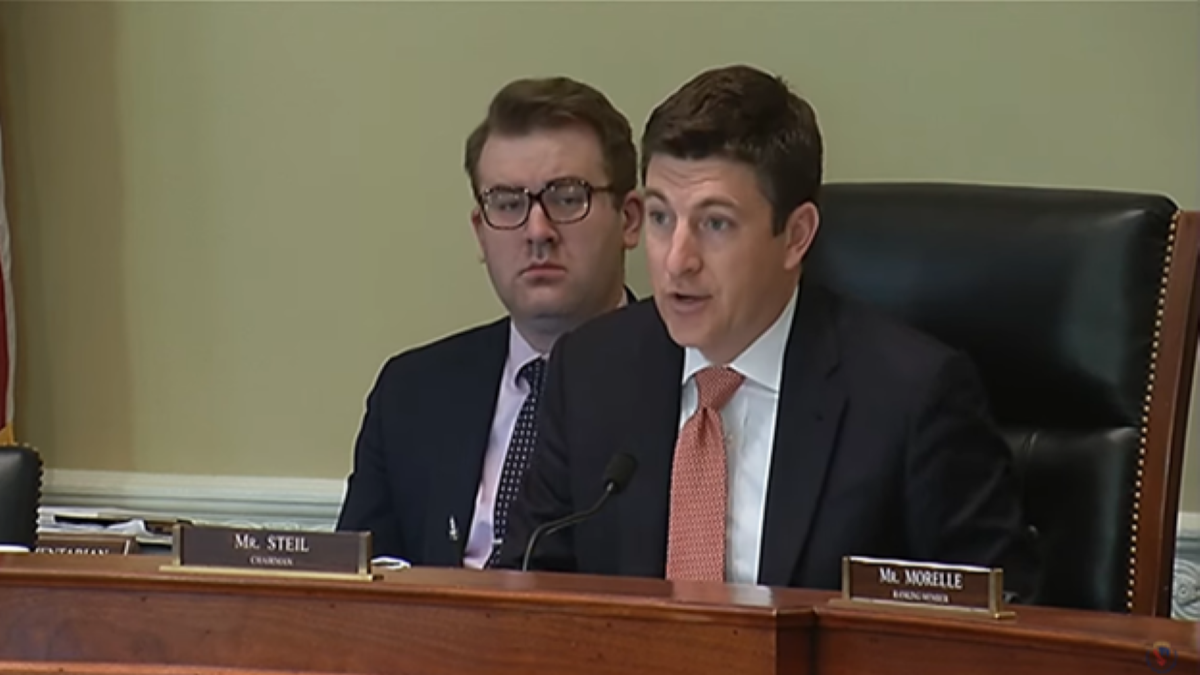
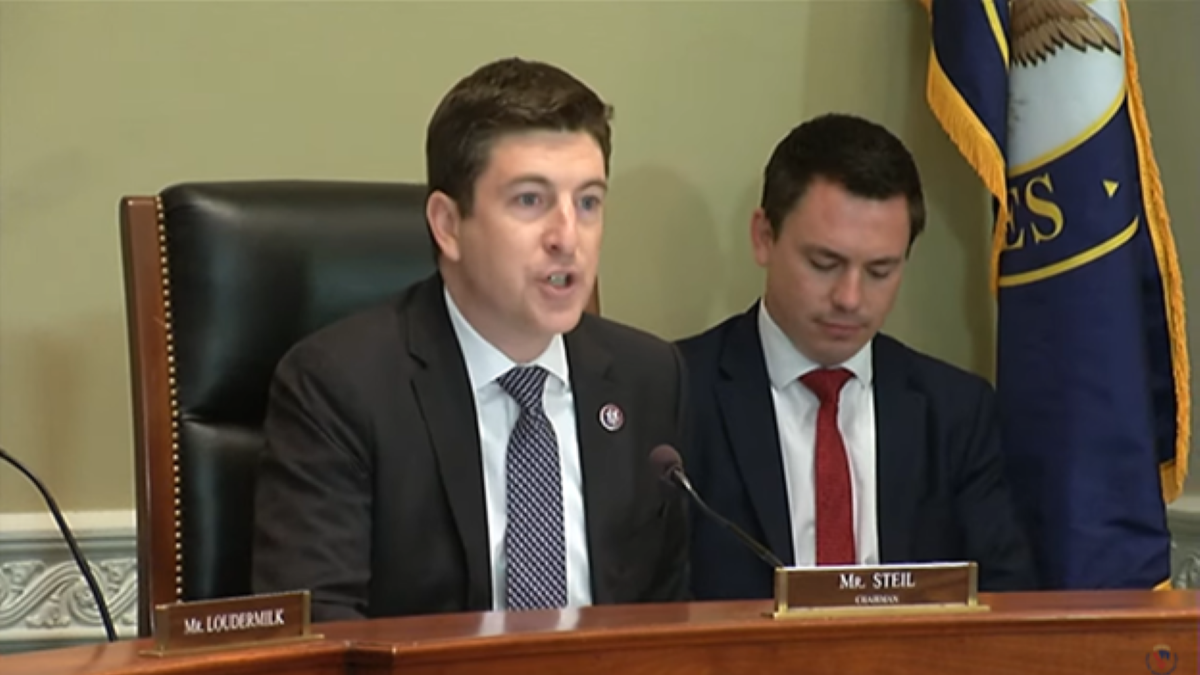
“Democrats say it’s already illegal for noncitizens to vote in federal elections. That’s true. It’s also illegal for someone to illegally enter our country, but that hasn’t stopped millions and millions of people,” U.S. Rep. Bryan Steil, R-Wis., told me Tuesday during an interview on the “The Vicki McKenna Show” in Milwaukee and Madison. 

‘Petri Dish’ for Noncitizen Voting

Steil, the chairman of the House Committee on Administration, which passed H.R. 8281 in May, wants to remind anyone who will listen that Democrats already support foreign nationals voting in local elections, as they are allowed to do in Washington, D.C. Most House Democrats earlier this year voted against a measure that would have barred illegal immigrants and other noncitizens from voting in local elections in the nation’s capital. The bill is deemed dead on arrival in the Senate. 

Not surprisingly, just 28 of the 500-plus foreign nationals voting in last month’s D.C. primary elections registered as Republicans, according to The Washington Post. 

Steil said Democrats want to use noncitizen voting in local elections, currently allowed in a handful of states, as a “Petri dish” to test on the American people. 

“In a period of time that we know that millions of legal and illegal immigrants in the country are not eligible to vote in federal elections, it’s important to enforce the laws on the books,” the congressman said. 

Honor System

As it stands under the 1993 National Voter Registration Act, commonly known as the “motor voter law,” voters may simply check a box on the federal form affirming they are U.S. citizens and meet other eligibility requirements. Democrats prefer the honor system. In opposing the SAVE Act, they have noted the tough penalties for foreign nationals who lie about their citizenship status in registering to vote: a fine, up to five years in prison, or both, according to federal code. 

But Democrats know it is difficult to track false claims of citizenship, a longtime problem. A 2014 story by WHYY, a Philadelphia public radio station, reported on a fact that remains a significant issue in the Biden presidency a decade later: “Illegal immigrants lie to get asylum status in U.S.” 

But they certainly wouldn’t lie to vote in federal elections, Democrats insist. 

“We all know, intuitively, that a lot of illegals are voting in federal elections. But it’s not been something that is easily provable,” Speaker Mike Johnson, R-La., said at the May 8 press conference in introducing the SAVE Act. 

‘The Only Reason’

Sen. Mike Lee, R-Utah, has introduced a similar measure in the Senate. He cut to the chase in a post Tuesday on his X account. 

“The SAVE Act would prevent non-Americans from illegally voting, protecting the votes of American citizens. The only reason to oppose it is because you want non-Americans illegally voting,” Lee wrote. 

Biden, meanwhile, is pushing Democrat legislation loosening voter integrity laws.  

“The President has been clear: he will continue fighting to protect Americans’ sacred right to vote in free, fair, and secure elections,” the White House said in its opposition statement to the SAVE Act. 

But how “free, fair, and secure” are U.S. elections without documented proof of citizenship? 

Biden and his fellow Democrats in D.C. appear to be backing a losing issue. A national poll conducted last year for Americans for Citizen Voting by RMG Research Inc. found that 75 percent of respondents opposed allowing foreign nationals to vote in their local elections. A recent poll found 68 percent of North Carolina voters supported a state constitutional amendment barring foreign nationals from voting in elections. North Carolina voters will vote on the citizens-only question on November’s general election ballot. 

“This is a moment in time that we should all realize that we should maintain U.S. elections for U.S. citizens and requiring documentary proof of that citizenship is how you actually enforce the law,” Steil said. 


Matt Kittle is a senior elections correspondent for The Federalist. An award-winning investigative reporter and 30-year veteran of print, broadcast, and online journalism, Kittle previously served as the executive director of Empower Wisconsin.

Yes, Democrats Want Aliens to Vote in U.S. Elections. Take Jamie Raskin’s Word for It


BY: M.D. KITTLE | MAY 24, 2024

Read more at https://thefederalist.com/2024/05/24/yes-democrats-want-aliens-to-vote-in-u-s-elections-take-jamie-raskins-word-for-it/

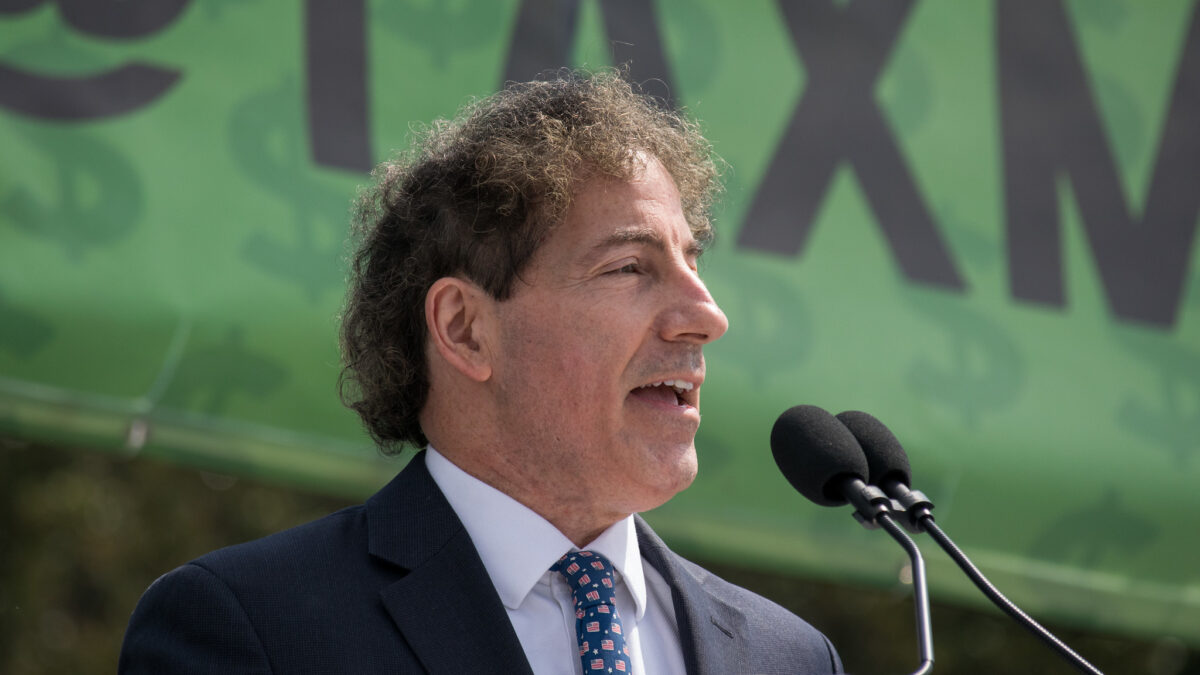
Jamie raskin speaking

Author M.D. Kittle profile

M.D. KITTLE

MORE ARTICLES

As the House voted Thursday to bar foreign nationals from voting in local Washington, D.C. elections, Democrats and their public-relations team in the corporate media have rolled out the big guns in attacking such election integrity efforts. They’re painting the legislation that ensures noncitizens cannot vote in elections as the next so-called “Big Lie,” sticking to their well-worn narrative that noncitizens already are prohibited from voting in U.S. elections and that such violations “don’t exist.” 

But one of the fiercest opponents of the election integrity legislation has said the quiet part out loud, as Democrats are wont to do. 

‘Alien Suffrage’

As Fox News reported, U.S. Rep. Jamie Raskin, D-Md., wrote a full-throated defense of “Alien Suffrage” in a 1993 paper for the American University Washington College of Law, where he serves as Professor of Law Emeritus. Raskin is ranking member of the House’s Oversight Committee, which, among other things, has constitutional oversight of the District of Columbia. 

“In this Article, I will argue that the current blanket exclusion of noncitizens from the ballot is neither constitutionally required nor historically normal,” Raskin wrote. “Moreover, the disenfranchisement of aliens at the local level is vulnerable to deep theoretical objections since resident aliens — who are governed, taxed, and often drafted just like citizens — have a strong democratic claim to being considered members, indeed citizens, of their local communities.”

Not surprisingly, Raskin was among 143 Democrats voting against the Republican-led bill blocking illegal immigrants and other foreign nationals from voting in elections in the district, over which Congress has ultimate authority. Interestingly, 52 Democrats joined Republicans in passing the measure — because the vast majority of Americans believe only U.S. citizens should be allowed to vote in local and U.S. elections. Taking the opposing view is not a smart reelection strategy for politically vulnerable liberals. 

Several cities in Raskin’s home state have allowed foreign nationals to vote in local elections for years. Takoma Park, Maryland in November celebrated its 30th anniversary “of the first non-US. Residents” voting in the Washington, D.C. suburb. 

“Even if it’s only a handful voting in elections—and it’s more than that—it’s a huge step forward for democracy,” said Seth Grimes, a leftist community organizer, in an official city press release. “Non-citizens have a stake in civic affairs, and everyone should have a voice in who governs them.” 

Polling shows an overwhelming number of Americans don’t share Grimes’ point of view, or the one expressed in Raskin’s law school report. A national poll conducted last year for Americans for Citizen Voting by RMG Research, Inc., found 75 percent of respondents were opposed to allowing foreign nationals to vote in their local elections. 

In his 1993 paper, Raskin argued that the “emergence of a global market and the corresponding dilution of national boundaries, would invite us to treat local governments as ‘polities of presence’ in which all community inhabitants, not just those who are citizens of the superordinate nation-state, form the electorate.” 

“Alien suffrage would thus become part of a basic human right to democracy,” the now-congressman wrote.

Does Raskin still feel that way? His office did not return The Federalist’s request for comment. 

Media: Alien Voting Doesn’t Happen and It’s Fine When It Does

After Thursday’s vote, it’s not a leap to suspect many of Raskin’s fellow Democrats support foreign nationals voting in local elections. If they were against it, they would have voted for the D.C. election integrity measure. 

Corporate media, of course, have been running interference for Democrats in the weeks since former President Donald Trump, the GOP’s presumed presidential nominee, and Speaker Mike Johnson announced the rollout of the Safeguard American Voter Eligibility Act. The SAVE Act is aimed at shoring up glaring holes in the 30-year-old National Voter Registration Act (NVRA) passed during a simpler time, when politicians believed in borders. The bill would amend the 1993 “Motor Voter” law to require individuals to provide proof of citizenship before they are automatically registered to vote at state departments of motor vehicles and other agencies. It also requires states to remove foreign nationals from their voting rolls, something too many state election officials have been loath to do. The NVRA does not require direct proof of citizenship for voter registration. 

Republicans say the legislation is crucial in the wake of the millions of illegal immigrants that have poured through the U.S. southwest border since Joe Biden took the presidential oath of office in January 2021. 

“There is currently an unprecedented and a clear and present danger to the integrity of our election system, and that is the threat of noncitizens and illegal aliens voting in our elections,” Johnson said at a Capitol press conference earlier this month announcing the bill.

But the accomplice media, while conceding foreign nationals have been caught voting in federal elections, assert the act is extremely rare. Besides, the left’s messengers contend, what illegal alien in his right mind would risk committing a felony just to vote in a federal election? The New York Times accused Republicans of “Sowing [a] False Narrative.” The Associated Press asserts “Noncitizen voting isn’t an issue in federal elections,” while it acknowledges that it does happen. 

“To be clear, there have been cases of noncitizens casting ballots, but they are extremely rare. Those who have looked into these cases say they often involve legal immigrants who mistakenly believe they have the right to vote,” AP admits

So much for the idea that any illegal vote dilutes the validity of an election. Again, the corporate media like to put qualifiers on fraud, forced by the facts to acknowledge its existence but insisting it isn’t “widespread.” 

“They’ve used ‘widespread’ for years as a way of downplaying any concern about it,” said Hans von Spakovsky, a former member of the Federal Election Commission and Senior Legal Fellow in the Heritage Foundation’s Edwin Meese III Center for Legal and Judicial Studies. “We don’t have ‘widespread’ bank robberies but we have enough of them that we take very detailed security precautions to prevent them. Election fraud is exactly the same.”

Where Democrats Stand

Raskin isn’t the only Democrat who has defended foreign nationals voting in elections. House Minority Leader Hakeem Jeffries, a Brooklyn Democrat, has been very vocal in his support for aliens voting in New York local elections. His New York congressional colleague, leftist Rep. Alexandria Ocasio-Cortez, has suggested the Republican-controlled House’s bill to bar foreign nationals from voting in D.C. is reminiscent of the days of slavery. 

“They’re singling out the residents of the District of Columbia and expanding in the history of disenfranchisement that goes all the way back to the legacy of slavery,” she said last year. 

James Comer, chairman of the House Committee on Oversight and Accountability, said the bill aims to rectify the D.C. City Council’s decision to “recklessly allowed non-citizens to participate in elections in our nation’s capital.”

“This move by the Council was irresponsible and subverts the voices of American citizens,” Comer said in a statement. “Today, Congress took action and I applaud the passage of legislation that will now prohibit non-citizens from voting in District of Columbia elections.”

The House bill pertaining to D.C. elections and the SAVE Act aren’t going anywhere this year with a Democrat-controlled Senate and a president who appears to be running a Democrat Party future recruitment drive. But Americans, many of whom don’t support illegal aliens and other foreign nationals voting in U.S. elections, know where the party stands heading into the November election. 

“Rep. Raskin is okay with the ‘dilution of national boundaries.’ I am not. And neither are the majority of United States citizens,” said Jack Tomczak, national field director for Americans for Citizen Voting, which is leading a growing national effort to amend state constitutions to include citizen-only voting language. 


Matt Kittle is a senior elections correspondent for The Federalist. An award-winning investigative reporter and 30-year veteran of print, broadcast, and online journalism, Kittle previously served as the executive director of Empower Wisconsin.


Without The SAVE Act, The Only Thing Keeping Foreigners from Voting Is the Honor System

BY: MIKE LEE | MAY 13, 2024

Read more at https://thefederalist.com/2024/05/13/without-the-save-act-the-only-thing-keeping-foreigners-from-voting-is-the-honor-system/

Someone holding an 'election integrity' sign.

Author Mike Lee profile

MIKE LEE

MORE ARTICLES

Congressional Democrats insist that the SAVE Act — which requires proof of citizenship to establish eligibility to vote in federal elections — is unnecessary because federal law (18 USC § 611) already prohibits noncitizens from voting in federal elections. Those making this argument ignore a glaring problem: the government officials who register voters and conduct federal elections aren’t allowed to require proof of citizenship.

It’s therefore shockingly easy for noncitizens to vote in federal elections, leaving our elections dangerously vulnerable to foreign interference. Anyone — even an illegal alien or other noncitizen — can register to vote in federal elections, just by checking a box and signing a form. This is all on the honor system. No proof of citizenship is required.

It’s not just that state officials — who are responsible for federal voter registration and elections in our country — don’t verify citizenship in this context; it’s that the Supreme Court has told them that they’re not allowed to do so. In Arizona v. Inter Tribal Council of Arizona, Inc., 570 U.S. 1 (2013), the Court held that the National Voter Registration Act (NVRA, also known as the “Motor Voter” law) prohibits states from requiring proof of citizenship when processing federal voter registration forms.

The SAVE Act would fix this gaping loophole by requiring anyone registering to vote in federal elections to provide proof of citizenship. It would also require states to review existing federal voter registration files and remove all noncitizens.

Remember: every state issues driver’s licenses to noncitizens, and 19 states issue them to illegal aliens. This, coupled with the Motor Voter law and the Supreme Court’s ruling, makes it shockingly easy for aliens — legal and illegal — to vote in federal elections, even though they’re prohibited from doing so. Considering that there are now nearly 30 million noncitizens in the U.S., including about 12 million who have entered illegally since the last presidential election, we desperately need the SAVE Act.

While Democrats are already mocking the SAVE Act, they don’t dispute that noncitizens shouldn’t vote in federal elections. Rather, they insist that there’s no need for the bill because noncitizens — being prohibited by law from voting in federal elections — categorically do not vote in such elections. That argument fails for one simple reason: it implausibly assumes universal compliance with a law that has become breathtakingly easy (and correspondingly tempting) to violate.

Some say that noncitizens wouldn’t dare register to vote in federal elections, as doing so is illegal and could adversely affect their present or future immigration status. Even if this assumption were correct with regard to many (or even most) noncitizens in the U.S., that still wouldn’t disprove the need for the SAVE Act.

If even a tiny percentage of America’s 30 million noncitizens were to vote, they could change the outcome of a close federal election. And, as noted by the Immigration Accountability Project, it’s odd for the left to insist so vehemently that illegal aliens don’t vote, given that congressional Democrats have inserted language “to waive inadmissibility for illegal voting in all [their] amnesty bills.”

Democrats can’t have it both ways; they can’t (1) credibly say that illegal aliens don’t vote in federal elections, and then (2) expect us to forget their own proposals, which assume the opposite is true. In any event, and regardless of how many (or few) noncitizens may have voted in the past, why not take steps to prevent it from happening in the future?

The sanctity of your vote is at stake. Now more than ever, we need to make sure that our elections are fair, lawfully conducted, and free of foreign influence. To do that, it’s imperative that Congress pass the SAVE Act.

All of the democrats’ arguments are just as ridiculous. This guy has something to say about them.


Mike Lee is a U.S. Senator from Utah and author of “Our Lost Constitution: The Willful Subversion of America’s Founding Document.”

Speaker Johnson: Bill Ensures Only US Citizens Vote


By Sandy Fitzgerald    |   Wednesday, 08 May 2024 02:58 PM EDT

Read more at https://www.newsmax.com/newsfront/mike-johnson-voting-legislation/2024/05/08/id/1163961/

House Speaker Mike Johnson, accompanied by Rep. Chip Roy, R-Texas, and Sen. Mike Lee, R-Utah, on Wednesday introduced legislation that they said will ensure that only U.S. citizens are voting in U.S. elections by requiring proof of citizenship to register to vote.

“Some have noted that it’s already a crime for noncitizens to vote in a federal election, and that is true,” Johnson said during an event at the Capitol announcing the Safeguard American Voter Eligibility (SAVE) Act. However, he said, there is “no mechanism to ensure” that only citizens are registering or voting.”

“It is true that [President Joe] Biden has welcomed millions and millions of illegal aliens, including sophisticated criminal syndicates and agents of adversarial governments, into our borders and even on humanitarian parole,” Johnson, R-La., said. “It is true that a growing number of localities are blurring the lines for noncitizens by allowing them to vote in municipal elections [and] it is true that Democrats have expressed a desire to turn non-citizens into voters.”

Johnson said that in his travels to cities nationwide, the first or second question he’s asked in every forum is about election security. 

“Americans are deeply concerned about this and it doesn’t matter where you live or whether you’re in a blue state or a red state,” Johnson said. “Due to the wide-open border that the Biden administration has refused to close — in fact that they engineered to open — we now have so many noncitizens in the country that if only one out of 100 of those voted, they would cast hundreds of thousands of votes.”

Johnson called that a “dangerously high number” that could change the outcome of the nation’s elections. 

Johnson added that nearly 16 million immigrants have entered the country since Biden entered office, including on humanitarian parole, “and that means the millions that had been paroled can simply go to their local welfare office or the DMV and register to vote there.”

The speaker also pointed out that there has been a growing number of people in the United States on student visas who have staged protests at the nation’s colleges, threatening law-abiding students. 

“If they’re willing to take over buildings and physically terrorize their fellow students, why would they not be willing to lie on a voter registration form?” Johnson said. 

The speaker was accompanied by several advocates for the legislation, including Cleta Mitchell (FAIR Elections Fund and Election Integrity Network), Jenny Beth Martin (Tea Party Patriots Action), Stephen Miller (America First Legal), Ken Cuccinelli (Election Transparency Initiative), Rosemary Jenks (Immigration Accountability Project), Andy Roth (State Freedom Caucus  Network), and Hogan Gidley (America First Policy Institute).

Sandy Fitzgerald 

Sandy Fitzgerald has more than three decades in journalism and serves as a general assignment writer for Newsmax covering news, media, and politics. 

10 Lies Democrats Tell About Our Elections (And How to Refute Them)


BY: SHAWN FLEETWOOD | MAY 03, 2024

Read more at https://thefederalist.com/2024/05/03/10-lies-democrats-tell-about-our-elections-and-how-to-refute-them/

Voting stickers on voting day sign

Author Shawn Fleetwood profile

SHAWN FLEETWOOD

VISIT ON TWITTER@SHAWNFLEETWOOD

MORE ARTICLES

There is almost no subject the left won’t lie about. Whether it’s denying basic biology or fabricating “bloodbath” hoaxes about their top Republican rival, no topic is off limits for the Democrat “disinformation” police — and that includes elections.

Since the 2020 election, Democrats and their media allies have worked overtime to smear Americans concerned about the integrity of U.S. elections. No matter how legitimate these concerns may be, the left slanders anyone who challenges controversial elections won by Democrats as so-called “election deniers.”

Putting aside the fact that Democrats have questioned elections they don’t win (see the Trump-Russia collusion hoax), it’s important to highlight that the left regularly lies about America’s elections to further their party’s goal of acquiring and maintaining government power. In service of this goal, no falsehood is too great.

Here are the 10 biggest lies Democrats tell about U.S. elections so you can identify and combat these mistruths.

1. Election Integrity Laws ‘Suppress’ Voters

Under the guise of Covid, many states expanded the use of unsupervised mail-in voting, permanently changing the electoral landscape and how modern elections are conducted. With Covid-era lockdowns now in the rearview mirror, many Republican-controlled states have spent the past several years returning their election systems to pre-Covid practices and moving away from unsupervised methods.

With their election machine that thrives off the insecure mail-in system threatened, Democrats have taken to dishonestly attacking GOP-backed election integrity laws. The most common of these smears is the debunked claim that voter ID laws suppress voters, especially those who aren’t white. Of course, there’s no evidence to support such assertions, as multiple court rulings have found.

One of the more egregious examples of these attacks came from President Joe Biden, who grossly labeled a benign 2021 Georgia election law as “Jim Crow on steroids.” Contrary to Democrats’ smears, Georgia experienced record early voter turnout during the state’s 2022 midterms. A poll conducted after the election also revealed that zero percent of black Georgia voters said they had a “poor” experience voting.

2. The 2020 Election Was the ‘Most Secure in American History’

This claim from the Cybersecurity and Infrastructure Security Agency (CISA) — the “nerve center” of the federal government’s censorship operations — is just as inaccurate today as the day it was issued nearly four years ago.

From illegal election rule changes in Michigan and Pennsylvania to the unauthorized use of ballot drop boxes in Wisconsin, the 2020 election was fraught with mischief and irregularities. In unprecedented fashion, Meta CEO Mark Zuckerberg poured hundreds of millions of dollars into left-wing nonprofits, which funneled most of these “Zuckbucks” into election offices in Democrat-majority localities to push Democrat-backed voting policies and get-out-the-vote efforts.

There was also heavy involvement from U.S. intel agencies and officials to help Joe Biden leading up to the election.

Weeks ahead of the 2020 contest, the New York Post dropped a bombshell story documenting the Biden family’s foreign business dealings. Despite having authenticated the laptop as early as November 2019, the FBI spent months leading up to the election pressuring Big Tech companies such as Facebook and Twitter (now X) to be on the lookout for so-called “Russian propaganda” and “hack and leak operations.” Zuckerberg all but admitted during a 2022 interview with podcaster Joe Rogan that the company’s decision to suppress the Post story was based on the FBI’s warning.

The CIA — while allegedly coordinating with the Biden campaign — purportedly solicited signatures for a letter issued by 51 former intel officials claiming Hunter’s laptop was part of a Russian disinformation campaign. Meanwhile, Delaware U.S. Attorney David Weiss reportedly delayed his investigation into Hunter’s alleged tax law violations to avoid negatively affecting Joe’s electoral prospects.

[READ: Docs: CISA Knew Risks Of Mail-In Voting In 2020, But Got Posts About Them Censored Anyway]

3. Voter Fraud Doesn’t Exist

When it comes to defending the chaotic and irregular 2020 election, legacy media have adopted the strategy of pretending that voter fraud never happens. But recent cases of such illegalities show that isn’t true.

In December, the Louisiana Supreme Court let stand a lower court decision that the existence of voter fraud in a local sheriff’s race warranted a new election. While initial results in Caddo Parish’s November sheriff’s race indicated that Democrat Henry Whitehorn defeated Republican John Nickelson by one vote, a lawsuit filed by Nickelson and subsequent legal proceedings revealed there were enough illegal votes to call into question the election outcome.

The judge overseeing the case ultimately determined there were 11 unlawful votes cast in the race, and as such, ordered that a new election be held.

Another recent incident of voter fraud occurred in Bridgeport, Connecticut’s Democrat mayoral primary. Surveillance footage released after the September election showed what appeared to be a city employee affiliated with the incumbent mayor’s campaign “stuffing ballot boxes.” The matter prompted a superior court judge to order a new election.

4. Election Workers Are Under Siege

As America edges closer to the 2024 election, Democrats are ramping up their attacks on election oversight. On an almost weekly basis, regime-approved media outlets run article after article lamenting an alleged wave of “threats” against election workers that they blame on Trump’s 2020 election criticisms.

Of course, these same doomsday predictions didn’t materialize during the 2022 midterms. But that hasn’t stopped the press from continuing to repeat the narrative they have little evidence to support.

As I previously wrote in these pages, Democrat claims that election workers have experienced a spike in threats since the 2020 election are primarily based on “surveys” issued by leftist organizations and unsubstantiated statements from Democrat election officials. Moreover, data produced by the Biden Department of Justice indicates the issue is minimal.

5. Ranked-Choice Voting Is ‘Fair’

Often referred to as “rigged-choice voting” by its critics, ranked-choice voting (RCV) is a system whereby voters rank candidates in order of preference. If no candidate receives more than 50 percent of first-choice votes in the first round of voting, the last-place finisher is eliminated, and his votes are reallocated to the voter’s second-choice candidate. This process continues until one candidate receives a majority of votes.

RCV’s (mostly Democrat) proponents have deceptively attempted to garner support for the system by claiming it brings “fairness” to the voting process. But a quick look into RCV’s history reveals anything but a fair system.

RCV has produced election results that contradict the desires of voters, especially Republican ones. Since adopting the system, Alaska and Maine have produced elections in which the Democrat candidate was the declared winner despite the Republican candidate winning more votes in the first round of voting.

Jurisdictions employing RCV have also experienced inaccurate election results and high rates of discarded ballots.

6. Contingent Electors Are ‘Fake’ and Unlawful

After Arizona Democrat Attorney General Kris Mayes released an indictment alleging 18 Republicans illegally participated in a so-called “fake elector scheme,” media hacks are once again using this dishonest terminology to characterize Trump’s challenging of the 2020 election results as unlawful and unprecedented.

But there’s no such thing as a “fake elector,” and the naming of contingent Republican electors during the 2020 election was neither unprecedented nor unlawful. The process undertaken in states such as Georgia closely mirrored efforts taken during the 1960 presidential contest between John F. Kennedy and Richard Nixon.

[READ: The Left’s 2020 ‘Fake Electors’ Narrative Is Fake News]

Had courts ruled in Trump’s favor in lawsuits disputing the election results in battleground states, the alternate electors would have been in place to ensure the will of the people was exercised.

7. ERIC Is ‘Nonpartisan’

The Electronic Registration Information Center (ERIC) has become a favorite tool of the Democrat election machine — so naturally, the media have rushed to smear its opponents as unhinged crazies.

Deceptively marketed to states as a means to keep their voter rolls updated, ERIC is a widely used voter-roll “management” system founded by far-left activist David Becker that places a higher priority on registering new voters than on cleaning up existing voter rolls. The program inflates voter rolls by requiring member states to contact “eligible but unregistered” residents and encourage them to register to vote.

Concerns about ERIC’s ties to Becker and its refusal to change its bylaws prompted numerous GOP-led states to depart the organization. To salvage ERIC’s reputation, the media launched a seemingly coordinated campaign to position the group as “nonpartisan” and cast its opponents as “conspiracy theorists.” Of course, this coverage fails to disclose ERIC’s relationship with the Center for Election Innovation and Research (CEIR), another Becker-founded nonprofit most notable for its “Zuckbucks” interference in the 2020 election to help Biden and other Democrats.

As The Federalist previously reported, ERIC sends the voter-roll data it receives from states to CEIR. Upon receiving the data, CEIR “then develops targeted mailing lists and sends them back to the states to use for voter registration outreach.” In other words, CEIR — a highly partisan nonprofit with a history of left-wing activism — is creating lists of potential (and likely Democrat) voters for states to register in the lead-up to major elections.

8. Mail-In Voting Is Secure and Reliable

Much like the issue of voter fraud, Democrats have gone to great lengths to convince the American public that mail-in voting has zero problems and is 100 percent secure. But according to left-wing media’s own reporting, that narrative isn’t true.

In recent months, outlets such as NBC News and CBS News have published stories highlighting insecurities within the U.S. postal system. While NBC addressed the effect postal delivery delays could have on mail-in voting during the 2024 election, CBS explored the increasing problem of mail theft.

NBC even cited remarks from Rep. Sylvia Garcia, D-Texas, who expressed concern that mail delivery delays could present “difficulties” and “barriers” to voters during the November election.

9. Democrats Are the Party of ‘Democracy’

Biden and Democrats love to contend that “democracy is on the ballot” this November. The insinuation, of course, is that the republic as we know it will collapse if Trump and Republicans emerge victorious at the ballot box. Yet, for all their professed concerns about “democracy,” Democrats are doing everything in their power to destroy it.

In unprecedented fashion, the left is abusing the legal system in an attempt to imprison and bankrupt their chief political rival ahead of a major election. Spanning dozens of counts, a roughly half-a-billion-dollar fine, and five judicial venues, the Biden Department of Justice and leftist prosecutors are waging lawfare against Donald Trump to hinder his reelection prospects.

10. Biden’s Federal Election Takeover Is Just a ‘Nonpartisan’ Outreach Effort

The seriousness of Executive Order 14019 cannot be overstated. Signed by Biden in March 2021, the directive ordered hundreds of federal agencies to interfere in state and local election administration by using taxpayer dollars to engage in voter registration and get-out-the-vote activities — a policy Congress never authorized.

Under the edict, each department was instructed to draft “a strategic plan” explaining how it intended to fulfill Biden’s order, and to collaborate with so-called “nonpartisan third-party organizations” that have been “approved” by the administration to supply “voter registration services on agency premises.” While Biden and his lackies claim these outside groups are “nonpartisan,” the facts tell a different story.

Good government groups and conservative media have discovered that many of the organizations collaborating with the administration are extremely left-wing, indicating an effort to identify and register likely-Democrat voters. Among those identified are the ACLU and Demos, both of which contributed to a “progress report” tracking agencies’ compliance with the “Bidenbucks” order.


Shawn Fleetwood is a staff writer for The Federalist and a graduate of the University of Mary Washington. He previously served as a state content writer for Convention of States Action and his work has been featured in numerous outlets, including RealClearPolitics, RealClearHealth, and Conservative Review. Follow him on Twitter @ShawnFleetwood

Poll: Election-Shifting Percentage of Voters Admit to Illegal Voting In 2020


BY: JUSTIN HASKINS | APRIL 30, 2024

Read more at https://thefederalist.com/2024/04/30/poll-election-shifting-percentage-of-voters-admit-to-illegal-voting-in-2020/

mail-in voting

Author Justin Haskins profile

JUSTIN HASKINS

MORE ARTICLES

For the past three years, the corporate press and numerous officials in the Biden White House have asserted there is no evidence widespread voter fraud occurred during the 2020 presidential election. Some have even gone so far as to call it the “most secure” election in U.S. history.

However, a poll conducted by Rasmussen Reports — a survey I wrote with a team of experts at the Heartland Institute and discussed last week on Tucker Carlson’s show — not only calls into question that often-repeated claim, it shows the opposite could have been true. According to its findings, voter fraud, especially fraud related to mail-in ballots, may have been common in the 2020 election. This conclusion isn’t based on questionable allegations but on voters’ own responses to the poll questions.

The Heartland Institute/Rasmussen survey, which was conducted from Nov. 30 to Dec. 6, asked likely voters who cast ballots in 2020 questions about fraudulent activities, without telling them such actions were a form of voter fraud. The results were stunning. One in five people who voted by mail admitted to engaging in at least one kind of potential voter fraud, seriously calling into question the security of widespread mail-in balloting.

For example, one question asked, “During the 2020 election, did you cast a mail-in ballot in a state where you were no longer a permanent resident?” Such an action nearly always constitutes fraud. Incredibly, 17 percent of voters said “yes.”

Another question asked if “a friend or family member” filled out a respondent’s ballot, “in part or in full,” on behalf of the respondent, which is illegal in some states. Nineteen percent of mail-in voters who responded to the survey answered “yes.”

Even more remarkably, 21 percent of respondents admitted to filling out a ballot for someone they know, such as a spouse or child, and 17 percent confessed to signing a ballot or ballot envelope “on behalf of a friend or family member, with or without his or her permission” — both potential forms of illegal voting.

Taken together, these results strongly indicate fraud and illegal voting heavily affected mail-in balloting in the 2020 election. Even if a fraction of the people admitting wrongdoing here are actually guilty, that would still equal the electoral margin for 2020.

It’s an incredibly important finding since that contest involved more mail-in ballots than any other election in U.S. history. Election officials report that of 159 million ballots cast in 2020, more than 68 million were submitted by mail, about 43 percent of the total. In addition, as the MIT Election Data and Science Lab noted, “the dramatic increase in the raw number of absentee ballots cast was accompanied by a significant decrease in the overall absentee rejection rate for the country: from 0.96 percent in 2016 to 0.79 percent in 2020.”

If the recent Heartland Institute/Rasmussen survey is accurate and one in five ballots were, in fact, fraudulent, that would suggest greater than 13 million ballots should not have been counted nationwide in 2020. That’s far more than the margin of victory for President Biden in the popular vote, about 7 million.

As troubling as these findings are, however, additional questions in the Heartland Institute/Rasmussen survey suggest voter fraud and illegal voting may have been even worse than the one-in-five figure suggests. For instance, 8 percent of all respondents — not just those who voted by mail — said they were offered “pay” or “reward” in return for voting.

Equally disturbing, 10 percent of voters said, “a friend, family member, co-worker, or other acquaintance” admitted to them that he or she “cast a mail-in ballot in 2020 in a state other than his or her state of permanent residence.” Eleven percent said that “a friend, family member, co-worker, or other acquaintance” admitted to filling out someone else’s ballot.

These questions could indicate far more fraud occurred than anyone previously thought.

It’s also worth remembering that presidents are not elected by a national popular vote but through the Electoral College. The three states in which Trump and Biden were closest — Arizona, Georgia, and Wisconsin — were all decided by fewer than 21,000 votes.

Biden narrowly won each of those contests, but if he had lost those three states, he wouldn’t have reached the 270 electoral vote thresholds needed to win the presidency. Instead, the Electoral College vote would have been a tie, pushing the decision to the Republican-controlled House of Representatives. With such razor-thin margins and the results of the recent Heartland/Rasmussen voter fraud survey in mind, it’s hard not to wonder how big of an effect fraud truly had on the outcome of the 2020 presidential election.

But regardless of how much fraud occurred, one thing is absolutely certain: States must take appropriate legislative action to protect the integrity of the next presidential election so that all Americans can be confident that the winner of the 2024 campaign will capture the White House fair and square.

There is already substantial evidence that voter fraud could play a significant role in 2024. Another survey conducted in March and April by the Heartland Institute and Rasmussen shows that 28 percent of likely voters now say they would commit at least one form of illegal voting during the 2024 election, “if given the opportunity.” Interestingly, respondents’ willingness to commit fraud was similar among Republicans, Democrats, and independents.

There is some good news, however. The threat of voter fraud can be limited dramatically by changing mail-in ballot rules. Voters who are physically able to cast their ballots in person should be required to do so, or they should be mandated to have their ballot signature notarized, significantly reducing opportunities for fraud. Lawmakers could fund public programs to increase access to free notaries for those who need them.

According to the National Conference of State Legislatures, just three states require notaries for mail-in ballots — Mississippi, Missouri, and Oklahoma. Only nine additional states mandate that a voter obtain one or more non-notary witness signatures when casting a ballot by mail. Most states require neither a witness nor a notary to verify signatures.

Lawmakers must ensure widespread voter fraud does not happen in future elections. That can only occur if mail-in voting systems are radically improved. Time is running out for legislators to fix these major threats to American self-government.


Justin Haskins (Jhaskins@heartland.org) is the director of the Socialism Research Center at The Heartland Institute and a New York Times bestselling author.

Exclusive: How A Left-Wing ‘Alliance’ Skirted Arizona’s ‘Zuckbucks’ Ban To Meddle In Key County’s Elections


BY: SHAWN FLEETWOOD | JANUARY 08, 2024

Read more at https://thefederalist.com/2024/01/08/exclusive-how-a-left-wing-alliance-skirted-arizonas-zuckbucks-ban-to-meddle-in-key-countys-elections/

Mural of Arizona state flag.

Author Shawn Fleetwood profile

SHAWN FLEETWOOD

VISIT ON TWITTER@SHAWNFLEETWOOD

MORE ARTICLES

Abevy of emails obtained by The Federalist reveal how Coconino County officials have been violating the spirit of Arizona law by colluding with a coalition of left-wing nonprofits tasked with influencing election operations in key battleground states ahead of the 2024 election.

Last year, Coconino County — a Democrat stronghold that delivered Joe Biden a margin of 17,646 votes in 2020, greater than the margin of votes by which Biden won the state — became one of several localities to join the U.S. Alliance for Election Excellence. The Honest Elections Project describes the “Alliance” as an $80 million venture launched in 2022 by left-wing nonprofits to “systematically influence every aspect of election administration” and advance Democrat-backed voting policies in local election offices. Several of the organizations participating in the project include the Center for Civic DesignThe Elections Group, and the Center for Tech and Civic Life (CTCL), the latter of which interfered in the 2020 election to the benefit of Democrats.

During the 2020 contest, CTCL and the Center for Election Innovation and Research collectively received hundreds of millions of dollars from Meta CEO Mark Zuckerberg. These “Zuckbucks” were poured into local election offices in battleground states around the country to change how elections were administered, such as by expanding unsupervised election protocols like mail-in voting and the use of ballot drop boxes. To make matters worse, the grants were heavily skewed towards Democrat-majority counties, essentially making it a massive Democrat get-out-the-vote operation.

With Arizona and 26 other states having passed measures restricting the use of private money in elections in the years since, CTCL and other left-wing nonprofits devised the Alliance as a way to skirt these “Zuckbucks” bans. In a 2023 report, the Honest Elections Project and John Locke Foundation revealed how the Alliance seeks to provide election offices with “scholarships” to cover membership costs, which can then be “converted into ‘credits’ that member offices can use to buy services from CTCL and other Alliance partners.”

Obtained via open records request, the communications reviewed by The Federalist document the process by which Coconino County officials worked behind the scenes to make their county an Alliance member. The extensive coordination between the county and coalition involves regular meetings on election administrative issues and the crafting of election-related materials to distribute to voters ahead of Arizona’s 2024 elections.

Working Behind the Scenes to Skirt State Ban on Private Election Funding

While the U.S. Alliance for Election Excellence wasn’t publicly launched until April 11, 2022, Coconino County’s connections with CTCL — an Alliance participant — date back to the 2020 election cycle. According to the Capital Research Center, Arizona received $5.1 million from CTCL ahead of the November 2020 contest, with more than three-fourths of that money ($3.9 million) going towards four of five counties won by Joe Biden. Coconino County — which Biden won by more than 24 points — received the third largest grant per capita, behind Apache and Navajo Counties.

Coconino’s established connection with CTCL made the Arizona locality a perfect target upon the Alliance’s spring 2022 launch. While Coconino wasn’t a part of the coalition’s 2022 inaugural cohort of participating election offices, county recorder Patty Hansen, a Democrat, sought to gain her jurisdiction access to the Alliance in the weeks following its reveal to the public.

On April 28, 2022, Hansen submitted an application on behalf of Coconino to join the Alliance, which asks applicants to disclose specific information regarding their election administration. The questions included in the application goad local election offices into revealing the size of their elections team, any “improvement” the office would like to make ahead of future elections, and “[h]ow much additional funding would make a meaningful difference” in altering office operations, among other information.

While Hansen received an automated email nearly a month later from CTCL confirming Coconino’s application had been received, Hansen didn’t appear to get a response from CTCL Associate Director Sophie Lehman until Nov. 22, 2022. In her email, Lehman notified Hansen that the Alliance had received Coconino’s application and expressed the coalition’s continued interest in making Coconino an Alliance member. Lehman further informed Hansen that she would receive an Alliance membership agreement after Thanksgiving and that CTCL was “meeting with Alliance partners and our expert legal team to design a membership structure so jurisdictions from across the country can participate in the program.”

“To be clear, this is a pivot from our original vision that would have offered Alliance programming for free,” Lehman wrote.

Honest Elections Project Executive Director Jason Snead previously told The Federalist that CTCL shifted its “original model to a fee-based membership model” as a way of skirting existing “Zuckbucks” bans. “For jurisdictions that are permitted to receive grants, those fees are effectively waived. But jurisdictions that cannot receive private grants can still buy their way in for a relatively small sum, allowing the Alliance to spread its influence even in states where lawmakers have tried to prevent it,” Snead explained.

On Dec. 13, 2022, Lehman informed Hansen that Coconino County had been designated as “a finalist in the inaugural cohort of Centers for Election Excellence” and provided a list of “next steps” for the county to take to become an Alliance member. According to the Alliance membership agreement, counties are given the option of joining the coalition as a basic or premium member, costing $1,600 or $4,800 a year, respectively.

A basic membership grants participating counties access to “a selection of off-the-shelf, publicly-accessible election administration resources, document templates, and training materials,” and “center-specific coaching and consulting from select Alliance partners, in the form of a $800 credit towards the fair market value of Alliance partners’ hourly consulting services,” among other services. Premium members are offered similar services, but are granted $3,040 in credit and “additional multi-center group coaching and consulting sessions hosted by select Alliance partners on an hourly basis.”

Hansen notified Lehman on Jan. 3, 2023, that Coconino County would be subscribing to the Alliance as a basic member and disclosed that she had discussed the legality of the county joining the coalition with “our civil division’s chief deputy county attorney,” who purportedly believed that Coconino joining the Alliance did not “violate[] any state laws.” Lehman replied two days later congratulating Hansen on Coconino becoming an official member of the Alliance.

Hansen did not respond to The Federalist’s request for comment on whether taxpayer money was used to pay for Coconino County’s Alliance membership fee.

County Officials Briefed on Left-Wing Partners’ ‘Vision and Goals’

With Coconino County’s 2023 membership secured, the Alliance wasted no time in bringing the Arizona locality into the fold of its operations. On Jan. 4, 2023, Lehman offered Hansen the opportunity to participate in a panel discussion on “election funding” at the Alliance’s “Debrief” event in Chicago the following month. As The Federalist previously reported, “The Debrief” was a three-day “inaugural” event designed “for election officials and election experts to come together to distill key lessons learned from the 2022 election cycle and to plan for the years ahead.”

While Hansen initially expressed interest in participating in the panel, she ultimately backed out of attending the event in person due to her partner’s medical issues. Additional communications indicate Hansen and her “team” attended the event virtually.

But “The Debrief” was just one of many Alliance-sponsored meetings Coconino election officials participated in throughout 2023. Shortly after joining the coalition, Hansen and her team were invited to and took part in a virtual “Centers for Election Excellence kickoff call” on Jan. 25, in which participants would “hear about the Alliance vision and goals,” meet other election offices “who have committed” to the Alliance, and meet the Alliance’s participating organizations.

Hansen and her colleagues were also invited in April 2023 to attend an in-person Alliance “cohort convening” in Las Vegas from May 22-24. Communication records confirm Ray Daw, Coconino County’s Native American elections outreach coordinator, represented the locality’s elections team in Las Vegas. Hansen and at least two colleagues opted to attend the event virtually.

Lehman would continue to email Hansen throughout summer 2023, inviting the Coconino recorder and her team to various meetings hosted by Alliance partners. These events included an Aug. 14 Zoom conference hosted by the Elections Group on “election cybersecurity” and several virtual “monthly cohort call[s]” launched on Aug. 23. Emails also confirm Hansen attended the Alliance’s in-person “cohort convening” in Chicago from Nov. 29-Dec. 1.

Hansen did not respond to The Federalist’s request for comment on whether taxpayer money was used to pay for her and Daw’s respective travel-related expenses to Alliance events.

Coconino County Divulged Election Administration Data to Alliance

While Coconino County officials’ meetings with Alliance partners and fellow members were a major facet of the election office-coalition relationship, the Arizona county’s willful exchange of sensitive information and collusion with the Alliance on election-related matters remains equally concerning.

In addition to its invasive application questions, the Alliance requested Hansen disclose information regarding Coconino County’s election office practices. On March 8, 2023, for example, Lehman emailed Hansen several surveys that, once completed, would provide the Alliance with a “snapshot of [Coconino’s election] office’s current practices around poll workers, and which practices [Hansen is] most interested in improving.” Lehman further noted that the Alliance would like to “conduct an hour-long interview” with Hansen’s office to learn more about Coconino County’s poll worker program.

“The surveys and interviews will help the Alliance as a whole decide which resources to prioritize building and what kind of support to provide,” Lehman claimed. While Lehman noted that the aforementioned survey questions were “optional,” a follow-up email sent to Hansen in April indicated Hansen completed the surveys.

County Recorder Pushed Biden Agenda at Alliance’s Request

The Coconino-Alliance relationship was also very collaborative when it came to pushing leftist causes. On March 9, 2023, Hansen received an automated email from CTCL asking recipients to encourage their congressional representatives to support a provision in President Joe Biden’s 2024 fiscal year budget that included “$5 billion over 10 years for state and local election departments.” In an email sent to a CTCL representative the following day, Hansen expressed her desire to “offer my assistance with contacting my representatives to urge them to support” including the provision in the 2024 budget. In her email, Hansen predicted that her congressman, GOP Rep. Eli Crane, would not support the initiative, noting Crane’s role as a member of the House Freedom Caucus and referring to the Arizona Republican as a so-called “election denier.”

Hansen further noted that she would “be happy” to reach out to several Democrat members of Arizona’s congressional delegation, including Rep. Ruben Gallego and Sen. Mark Kelly, to push the initiative forward. A March 27 email from CTCL’s Sofia Martinez indicates Hansen submitted funding requests to Sen. Kyrsten Sinema, an independent who caucuses with Senate Democrats, and Kelly.

Alliance Partners Helped Design Voter Guide

But Coconino and the Alliance’s collusive efforts didn’t stop there. Roughly a month after the Alliance’s February 2023 “Debrief” event, Hansen emailed Lehman requesting the Center for Civic Design’s (CCD) assistance in creating a new version of Coconino County’s 2024 Voter Guide. Hansen included “a couple of these mailings” her office used leading up to prior elections and noted how the county sends 90-day notice mailings “to all of the registered voters in the county every two years” to verify the accuracy of its voter rolls.

“In 2016 we decided to do a Voter Guide for the upcoming state elections. It’s been very well received by the voters, but I think we can improve it,” Hansen wrote. “Arizona also has a complicated system for our Active (used to be called Permanent) Early Voting list mailing. We’d like to see if [CCD] can help us develop a less legalize mailing to our voters that explains the process.”

Donna Casner, Coconino County’s chief deputy recorder, later sent Hansen templates of the county’s 2022 90-day notice on March 28, 2023, which Hansen then forwarded to Lehman the same day.

Coconino’s collaboration with the Alliance on these new election materials continued into the fall, at which point Lehman connected Hansen with CCD’s Tasmin Swanson. After a series of emails, the two women scheduled a Zoom meeting for Oct. 18, which Hansen indicated would be attended by herself, Casner, and their colleague, Sedona Stone. Less than a week later, Casner emailed Swanson three “variations” of Coconino’s 2022 90-day notice templates “including variable data fields, along with an excerpt from [the office’s] procedures manual that outlines the mandatory requirements for the notice.”

Collaboration between Coconino County election officials and CCD continued into November, at which point CCD’s Randy Hadzor was brought into the mix to assist the Arizona locality on redesigning its 90-day notice. In her Nov. 2 email providing Hansen and Casner with CCD’s proposal for the redesign, Swanson noted that the project would likely use up the remaining credit Coconino County received upon subscribing to the Alliance. A Dec. 8 email from Hadzor to Casner indicated the new redesign was “coming along nicely,” with Hadzor expressing hope that he would “be able to send over some preliminary concepts for your review soon.”

The Road Ahead

The Alliance’s efforts to influence and acquire information about local election operations is hardly exclusive to Coconino County. Localities in battleground states throughout the country, such as Georgia’s DeKalb County, for example, have become targets of the Alliance’s scheme to replicate CTCL’s 2020 election shenanigans. Rather than allow states and localities to manage their elections, as the Constitution prescribes, leftist groups such as those comprising the Alliance are intent on dipping their hands into the electoral process to steer elections in Democrats’ favor.

[READ NEXT: Exclusive: DeKalb County Officials Skirted Georgia Law To Acquire Funds From Left-Wing Dark Money Elections Group]

While speaking with The Federalist, Republican National Committee spokesman Gates McGavick referred to the Alliance as a “trojan horse for far-left dark money to influence elections,” and called on Coconino County to be transparent about its active relationship with the coalition.

“Arizona has a ban on third-party ‘Zuckbucks’ to prevent groups just like the [Alliance] from unduly influencing local election administration,” McGavick said. “Sunlight is the best disinfectant, and Coconino County should answer for its collaboration with [the Alliance].”

Communication records show that the Alliance has since offered Coconino County the opportunity to remain an Alliance member throughout 2024.

Hansen did not respond to The Federalist’s request for comment on whether, as of Monday, Coconino County completed and submitted the 2024 Alliance membership agreement or intends to do so.


Shawn Fleetwood is a staff writer for The Federalist and a graduate of the University of Mary Washington. He previously served as a state content writer for Convention of States Action and his work has been featured in numerous outlets, including RealClearPolitics, RealClearHealth, and Conservative Review. Follow him on Twitter @ShawnFleetwood

Biden DOJ Dispatches Feds to Polling Places to Interfere in an Election Near You


BY: SHAWN FLEETWOOD | NOVEMBER 07, 2023

Read more at https://thefederalist.com/2023/11/07/biden-doj-dispatches-feds-to-polling-places-to-interfere-in-an-election-near-you/

citizens voting in voting booths on Election Day

In its latest attempt to interfere in state and local elections, the Biden administration is deploying federal agents to monitor polling places in several states during Tuesday’s off-year elections.

The U.S. Constitution charges states — not the federal government — with primary oversight and administration of elections. But according to the highly politicized Department of Justice, state and local election officials can’t be trusted to uphold the law. Thus, the agency has decided to forcibly inject itself into the process.

According to a Monday press release, the DOJ is dispatching federal observers from its Civil Rights Division to “monitor for compliance with the federal voting rights laws” in numerous jurisdictions throughout the country. Among those listed are Union County, New Jersey; Pawtucket and Woonsocket, Rhode Island; Madison County and Panola County, Mississippi; and Prince William County, Virginia.

Regarding Union County, a U.S. district court approved a consent decree proposed by the DOJ earlier this year that forces local election officials to provide “a comprehensive Spanish-language election program for voters” during the state’s Nov. 7 elections. The consent decree — which also authorized federal observers to monitor polling places throughout the county — was filed in conjunction with a DOJ lawsuit, which claimed that a failure by Union County officials to provide such materials constituted a violation of the Voting Rights Act.

“The Civil Rights Division enforces the federal voting rights laws that protect the rights of all citizens to access the ballot,” the DOJ claimed. “The division regularly deploys its staff to monitor for compliance with the federal civil rights laws in elections in communities all across the country.”

Okay, I’ll say it. This is the closest we, as a nation, have come to pure Socialism.

In addition to New Jersey, Virginia, Mississippi, Pennsylvania, Ohio, Kentucky, and several other states will decide the outcome of critically important elections on Tuesday.

This is hardly the first time the DOJ has concocted this type of election meddling. In fact, the agency carried out this same scheme during last year’s midterm elections. As Victoria Marshall wrote in these pages, most of the 64 jurisdictions the DOJ “monitored” during the 2022 elections are “Democrat strongholds or swing districts in states with key midterm contests such as Pennsylvania, Michigan, Wisconsin, Georgia, Arizona, and Nevada.”

Much like last year, the jurisdictions being surveilled by the DOJ on Tuesday are mostly Democrat strongholds. During Virginia’s 2021 gubernatorial race, for example, Democrat candidate Terry McAuliffe won Prince William County by nearly 15 points over now-Gov. Glenn Youngkin, a Republican. Similarly, UnionPawtucket, and Woonsocket Counties all went to Joe Biden during the 2020 presidential election.

The DOJ’s increasing efforts to “monitor” local and state elections appear to be aimed at curtailing GOP poll watchers’ legitimate right to oversee U.S. election administration. After it became clear more conservatives were going to partake in this legal form of election oversight, legacy media began running hit pieces leading up to the 2022 midterms warning that so-called “election denying” MAGA Republicans volunteering as poll watchers were plotting to disrupt elections throughout the country.

While the left’s doomsday predictions (unsurprisingly) never came true, that hasn’t stopped regime-approved media from furthering the lie that election workers are under constant threat from Republicans. Even the Biden DOJ’s own data shows that there is no widespread threat to election workers. Nonetheless, so-called “journalists” continue to parrot their Democrat allies’ falsehoods without a second thought.


Shawn Fleetwood is a staff writer for The Federalist and a graduate of the University of Mary Washington. He previously served as a state content writer for Convention of States Action and his work has been featured in numerous outlets, including RealClearPolitics, RealClearHealth, and Conservative Review. Follow him on Twitter @ShawnFleetwood

Author Shawn Fleetwood profile

SHAWN FLEETWOOD

VISIT ON TWITTER@SHAWNFLEETWOOD

MORE ARTICLES

Court: Democrats Have No Evidence To Challenge New Hampshire’s Voter ID Law


BY: SHAWN FLEETWOOD | NOVEMBER 06, 2023

Read more at https://thefederalist.com/2023/11/06/court-democrats-have-no-evidence-to-challenge-new-hampshires-voter-id-law/

A citizen on their way to vote in Minneapolis, MN

A New Hampshire court dismissed Democrat-backed lawsuits contesting the legality of the state’s voter ID law on Wednesday, marking a major win for Republicans and election integrity advocates.

Writing for the Hillsborough Superior Court, Justice Charles Temple ruled that a series of challenges filed against New Hampshire’s voter ID law lacks legal standing because plaintiffs failed to provide evidence showing their ability to vote was impeded by the law in question. In their original lawsuit against New Hampshire’s Republican secretary of state and attorney general, several state voters, along with 603 Forward and Open Democracy Action (two leftist organizations), claimed SB 418 violated provisions of the New Hampshire Constitution.

The Republican National Committee, New Hampshire Republican State Committee, and Restoring Integrity and Trust in Elections (RITE) PAC were intervenor-defendants in the case.

Signed into law by GOP Gov. Chris Sununu last year, SB 418 altered the process by which voters verify their identity when casting their ballot. Under the law, voters who fail to present an approved form of ID would be instructed to fill out an “affidavit ballot,” at which point he or she must then fill out and submit a series of documents proving he or she is eligible to vote. If a voter does not return a copy of the required information within seven days of the election, that voter’s ballot will not be certified.

In his Wednesday ruling, Temple noted how plaintiffs were unable to document any evidence proving their rights were, “or will be,” violated by the law.

“In sum, it seems abundantly clear to the Court that the ‘rights’ at issue in this litigation are the constitutional rights of New Hampshire’s voters, which the organizational plaintiffs maintain have been (or will be) violated by SB 418,” Temple wrote. “However, under long-standing case law, the organizational plaintiffs may only challenge the constitutionality of SB 418 based on an invasion of their own rights. … For the reasons stated above, the plaintiffs have failed to identify the necessary ‘present legal or equitable right’ belonging to them ‘to which the [defendants] [are] asserting an adverse claim.’”

Temple furthermore granted the defendants’ motion to dismiss the plaintiffs’ requests that SB 418 be declared unlawful and an injunction prohibiting its enactment and enforcement.

“Voter ID laws do not harm eligible voters, instead, they identify those people ineligible to vote, including non-citizens,” RITE President Derek Lyons said in a statement celebrating Wednesday’s ruling. “Every case rejecting activists’ attempts to upend state election law helps restore voters’ confidence in the ballot box.”


Shawn Fleetwood is a staff writer for The Federalist and a graduate of the University of Mary Washington. He previously served as a state content writer for Convention of States Action and his work has been featured in numerous outlets, including RealClearPolitics, RealClearHealth, and Conservative Review. Follow him on Twitter @ShawnFleetwood

Author Shawn Fleetwood profile

SHAWN FLEETWOOD

VISIT ON TWITTER@SHAWNFLEETWOOD

MORE ARTICLES

Federal Court Chides Dem Activists: There’s Nothing Racist About Election Integrity Laws Like Florida’s


BY: SHAWN FLEETWOOD | SEPTEMBER 22, 2023

Read more at https://thefederalist.com/2023/09/22/federal-court-chides-dem-activists-theres-nothing-racist-about-election-integrity-laws-like-floridas/

Voter putting their ballot in voting machine in Columbia, MO

A full federal appeals court declined to take up Democrat groups’ challenge of Florida’s 2021 election integrity law on Thursday, marking a major win for Gov. Ron DeSantis and the GOP-controlled state legislature.

According to the Orlando Sentinel, Thursday’s decision by the 11th Circuit Court of Appeals “let stand an April ruling by a three-judge panel of the [court] that sided with the state on major issues in the case.” The 11th Circuit’s April decision effectively overturned a prior ruling issued by U.S. District Judge Mark Walker — an Obama appointee — who baselessly claimed the law in question discriminated against black voters.

“What are the supposedly racist provisions that the district judge enjoined officials from enforcing?” Chief Judge William Pryor wrote of the court’s Thursday decision. “They are unremarkable, race-neutral policies designed to bolster election security, maintain order at the polls and ensure that voter-registration forms are delivered on time.”

Signed into law in May 2021, SB 90 includes numerous provisions heavily supported by election integrity activists and American voters. According to a DeSantis press release, the statute “strengthens existing voter ID laws, bans ballot harvesting, prohibits unsolicited mass mailing of ballots, increases election transparency, and prohibits private money from administering elections.”

In his March 2022 decision, Walker claimed that Florida lawmakers demonstrated “intent to discriminate against Black voters” and that the statute is “the stark result[] of a political system that, for well over a century, has overrepresented White Floridians and underrepresented Black and Latino Floridians.” The majority of the 11th Circuit’s three-judge panel disagreed, writing in April that Walker’s allegations of “intentional racial discrimination rest on both legal errors and clearly erroneous findings of fact.”

“Under our precedent, this history cannot support a finding of discriminatory intent in this case. Florida’s more recent history does not support a finding of discriminatory intent,” Pryor wrote.


Shawn Fleetwood is a staff writer for The Federalist and a graduate of the University of Mary Washington. He previously served as a state content writer for Convention of States Action and his work has been featured in numerous outlets, including RealClearPolitics, RealClearHealth, and Conservative Review. Follow him on Twitter @ShawnFleetwood

Author Shawn Fleetwood profile

SHAWN FLEETWOOD

VISIT ON TWITTER@SHAWNFLEETWOOD

MORE ARTICLES


Media Gin Up Lies About Election Worker Safety To Escape Ballot-Box Accountability

BY: SHAWN FLEETWOOD | AUGUST 08, 2023

Read more at https://thefederalist.com/2023/08/08/media-gin-up-lies-about-election-worker-safety-to-escape-ballot-box-accountability/

A 2016 election party

Legacy media are once again parroting the debunked lie that there is a growing, widespread problem of Republicans threatening election workers. On Monday, Time Magazine published a melodramatic article about congressional Democrats’ “desperate[] push[]” to include provisions in the next federal spending bill they claim will protect state and local election workers. Of course, Time places the blame for this alleged problem on Donald Trump and his so-called “election denying” supporters, and warns that Congress’s upcoming budget is “likely the last chance” Democrats have to “safeguard” the 2024 election.

“It comes as election officials have faced a titanic upswing in death threats, online intimidation, and abuse,” the article reads.

There’s just one little problem with Time’s fantastical claim: It’s manufactured nonsense.

As I reported in these pages in April, the left’s insistence that there is a widespread conspiracy of Republican voters threatening election officials is simply not true. But don’t take my word for it. Ask Joe Biden’s own Department of Justice (DOJ).

During his August 2022 testimony before the U.S. Senate, Kenneth A. Polite Jr., the assistant attorney general for the criminal division of the DOJ, claimed the agency’s Election Threats Task Force — which was launched in July 2021 to address this alleged “rise in threats” against election workers — had reviewed and assessed roughly 1,000 allegedly “threatening and harassing” communications directed toward election officials. Two days before Polite’s testimony, the DOJ issued a press release disclosing only about 11 percent of those 1,000 communications “met the threshold for a federal criminal investigation” and that the “remaining reported contacts did not provide a predication” for further investigation.

“[T]o recap: In a country of roughly 331 million people, the DOJ — in the span of a year — received roughly 1,000 calls alleging threats toward election workers, in which only about 11 percent of cases warranted a federal investigation,” I wrote at the time.

So how exactly does Time justify its claim that there’s been a “titanic upswing” in threats directed toward election workers since the 2020 contest? The first is by linking to a survey from the Brennan Center for Justice — a highly partisan organization engaged in left-wing activism — claiming to show persistent fear among election workers for “their colleagues’ safety.”

The second is by linking to a November 2022 Washington Post article that includes grandiose statements from Democrat election officials pushing the same sky-is-falling narrative. Among those who commented to the Post was Colorado Secretary of State Jena Griswold, whose office proclaimed it had “identified hundreds more threats against her since 2020.” The Post, of course, didn’t bother to mention whether it vetted her assertion to determine its truthfulness.

What’s equally remarkable about the article is the Post’s willingness to bury the truth from its readers. Not until the article’s 22nd paragraph are readers given the actual data from the DOJ on which I previously reported. Even then, the Post attempts to downplay the truth by regurgitating claims from unnamed election officials who say the DOJ and states’ limited number of prosecutions are “just a fraction of the threats they receive.”

Yes, there are verifiable threats made against election workers, however rare. But it also rarely rains in Death Valley, California. That doesn’t mean we should start building Noah’s Ark 2.0 to prepare for a catastrophic flood there.

What we’re seeing is a media-wide effort to take anecdotal incidents of threats and blow them out of proportion to give the appearance that election workers are under constant siege from so-called “election denying” MAGA Republicans. It’s a Democrat strategy designed to both cast their political opponents as extremists and dissuade conservatives who have legitimate concerns about election integrity from partaking in completely legal forms of electoral oversight (such as poll watching).

Democracy does indeed die in darkness — just not in the way regime-approved media want you to believe.


Shawn Fleetwood is a staff writer for The Federalist and a graduate of the University of Mary Washington. He previously served as a state content writer for Convention of States Action and his work has been featured in numerous outlets, including RealClearPolitics, RealClearHealth, and Conservative Review. Follow him on Twitter @ShawnFleetwood

Author Shawn Fleetwood profile

SHAWN FLEETWOOD

VISIT ON TWITTER@SHAWNFLEETWOOD

MORE ARTICLES

Exclusive: Poll Shows Majority of Americans Support Voter ID, Limited Mail-in Voting


BY: SHAWN FLEETWOOD | JULY 31, 2023

Read more at https://thefederalist.com/2023/07/31/exclusive-poll-shows-majority-of-americans-support-voter-id-limited-mail-in-voting/

voting stickers

New polling provided exclusively to The Federalist shows a vast majority of U.S. voters support election integrity initiatives such as voter ID requirements and limitations on the use of mail-in voting.

Conducted by the Honest Elections Project (HEP) from July 13-16, the survey reveals widespread support among the American electorate for common-sense election integrity policies. According to the poll, 88 percent of Americans support laws mandating voters show a form of ID in order to cast their ballot, including the vast majority of black (82 percent) and Hispanic voters (83 percent). Only 9 percent of those polled opposed ID requirements.

The survey’s findings paint a vastly different picture than the one crafted by legacy media and Democrat politicians, who for years have maliciously smeared voter ID laws as Republican-sponsored tools designed to “suppress” the votes of racial minorities. Two years ago, for example, Democrats and their propaganda press allies used this tactic to smear Georgia’s passage of an election integrity law that contained a provision mandating voter ID for absentee voting. President Joe Biden went so far as to label the bill “Jim Crow on steroids.”

Not only did Georgia experience record early voter turnout ahead of its Nov. 8 general election and Dec. 6 Senate runoff, but a poll conducted after the 2022 midterms revealed zero percent of black Georgia voters said they had a “poor” experience voting in the elections.

The HEP survey also found overwhelming opposition to noncitizens and minors voting in U.S. elections. In recent years, Democrat-controlled cities such as Washington, D.C., have passed measures permitting foreign nationals to vote in their respective municipal elections. Meanwhile, blue localities in states such as Maryland and California have passed measures allowing kids as young as 16 to vote in local elections.

According to HEP’s polling data, 89 percent of voters “think that American elections should only be for American citizens, including 82% of Democrats, 80% of Black voters, and 78% of Hispanic voters.” The survey also found 72 percent of voters oppose dropping the voting age to 16.

But it’s not just voter ID and eligibility where Democrats are out of touch with voters. Among the poll’s notable findings is support for limiting the use of mail-in voting.

In the lead-up to the 2020 election, numerous states used the Covid lockdowns as a pretext for expanding the use of vote-by-mail and other nonsecure election practices. Attempts by GOP-led states to return their respective elections to pre-Covid election rules have predictably been met with pushback from Democrats, who have falsely accused Republicans of “rolling back” so-called voting rights.

Contrary to Democrat claims, HEP’s survey shows over three-fourths (76 percent) of voters believe “voting in person is better than voting by mail.” The data also reveals that 73 percent of Americans “reject automatically sending ballots without a voter’s request,” and 74 percent think practices such as ballot harvesting “should be illegal.” Meanwhile, 89 percent think “every ballot should be received by Election Day.”

The data also indicates two-thirds of voters (66 percent) support terminating no-excuse mail voting “as long as states offer two weeks of early in-person voting, including weekends.” This includes 69 percent of Hispanic voters and 55 percent of black voters, who support limiting the use of mail-in voting to groups such as people with disabilities, elderly citizens, people serving in the military, and those who “will be absent on Election Day.”

The poll additionally found widespread opposition to foreign nationals influencing U.S. elections and support for transparency in the elections process.

“Despite what the far left and many in the mainstream media would have you believe, election integrity measures continue to boast wide support among the American public,” HEP Executive Director Jason Snead said in a statement. “When it comes down to it, election integrity measures that make it easy to vote and hard to cheat are just common sense.”

The HEP survey was conducted among 1,600 registered voters and has a margin of error of 2.45 percent.


Shawn Fleetwood is a staff writer for The Federalist and a graduate of the University of Mary Washington. He previously served as a state content writer for Convention of States Action and his work has been featured in numerous outlets, including RealClearPolitics, RealClearHealth, and Conservative Review. Follow him on Twitter @ShawnFleetwood

Author Shawn Fleetwood profile

SHAWN FLEETWOOD

VISIT ON TWITTER@SHAWNFLEETWOOD

MORE ARTICLES

Over 70 Nonprofits Call On Congress To Pass Republicans’ Election Integrity Bill


BY: SHAWN FLEETWOOD | JULY 14, 2023

Read more at https://thefederalist.com/2023/07/14/over-70-nonprofits-call-on-congress-to-pass-republicans-election-integrity-bill/

someone voting in Alachua County

Author Shawn Fleetwood profile

SHAWN FLEETWOOD

VISIT ON TWITTER@SHAWNFLEETWOOD

MORE ARTICLES

A coalition of over 70 conservative nonprofits sent a letter to House leaders on Wednesday, urging the lower chamber to pass recently introduced legislation that seeks to strengthen the integrity of U.S. elections.

“The undersigned nonprofit organizations and policy leaders write in strong support of the free speech and citizen privacy provisions in the ‘American Confidence in Elections (ACE) Act’ (H.R. 4563) introduced by Congressman Bryan Steil,” the letter reads. “This thoughtful legislation protects and strengthens important First Amendment rights that Americans have enjoyed since the founding of our country.”

The document’s signatories include leaders from organizations such as the Capital Research Center, John Locke Foundation, and the Wisconsin Institute for Law and Liberty, among others.

Introduced on Monday, the American Confidence in Elections Act, or ACE Act, includes numerous provisions designed to close existing loopholes in America’s election system. Among the bill’s notable proposals is a provision repealing President Joe Biden’s March 2021 executive order that instructed hundreds of federal agencies to interfere in the electoral process by using taxpayer money to boost voter registration and get-out-the-vote activities. Under Executive Order 14019, the heads of each agency were additionally required to draft “a strategic plan” explaining how his or her department intends to fulfill Biden’s directive. Despite attempts by good government groups to acquire these plans, the Biden administration has routinely stonewalled such efforts by slow-walking its response to federal court orders and heavily redacting any related documents it has released.

The ACE Act would not only prohibit federal agencies from engaging in voter registration and mobilization activities; it would require them to turn over their strategic plans to Congress “[n]ot later than 30 days after” its enactment.

Other changes to federal election law include those ensuring only U.S. citizens are voting in federal elections. According to a bill summary, the ACE Act incorporates several provisions from Rep. Morgan Griffith’s, R-Va., “NO VOTE for Non-Citizens Act of 2023,” including a requirement that states permitting localities to allow non-citizen voting in their respective elections to place such non-citizens on a voter registration list “separate from the official list of eligible voters with respect to registrants who are citizens of the United States.”

A separate provision mandating “the ballot used for the casting of votes by a noncitizen in such State or local jurisdiction may only include the candidates for the elections for public office in the State or local jurisdiction for which the non-citizen is permitted to vote” was also included.

Notably, the ACE Act also ensures only U.S. governments — not private actors — are responsible for funding election administration. During the 2020 election, nonprofits such as the Center for Tech and Civic Life (CTCL) received hundreds of millions of dollars from Meta CEO Mark Zuckerberg. These “Zuckbucks” were poured into local election offices in battleground states around the country to change how elections were administered; among other things, this was done by expanding unsupervised election protocols like mail-in voting and using ballot drop boxes. To make matters worse, the grants were heavily skewed toward Democrat-majority counties, essentially making it a massive, privately funded Democrat get-out-the-vote operation.

recently published report by Americans for Public Trust details somewhat similar efforts by Hansjörg Wyss, a left-wing Swiss billionaire who, according to the analysis, has “flooded the American political system with hundreds of millions of dollars of foreign dark money” for years. APT had previously filed a complaint with the Federal Election Commission against Wyss in May 2021 for allegedly violating the Federal Election Campaign Act.

The ACE Act furthermore seeks to enhance congressional oversight of Washington, D.C., by enacting a series of provisions aimed at enhancing the district’s election system. Included are requirements for voter ID and regular voter roll maintenance, as well as prohibitions on ballot harvestingranked-choice voting, and mailing ballots “except upon a voter’s request.” The bill would also repeal a law passed by the district’s council last year that allows non-citizens to vote in municipal elections.

Provisions promoting voter ID, strengthening donor disclosure protections, and prohibiting federal “disinformation governance boards” are also included in the bill.

“We urge all Members of Congress to support the strong free speech and citizen privacy provisions in Congressman Bryan Steil’s ‘American Confidence in Elections Act,’” the conservative nonprofits wrote.

The House Administration Committee passed the ACE Act on Thursday; it now awaits a vote from the full House.


Shawn Fleetwood is a staff writer for The Federalist and a graduate of the University of Mary Washington. He previously served as a state content writer for Convention of States Action and his work has been featured in numerous outlets, including RealClearPolitics, RealClearHealth, and Conservative Review. Follow him on Twitter @ShawnFleetwood

House Republican Bill Would Keep Foreign Nationals From Voting In U.S. Federal Elections


BY: SHAWN FLEETWOOD | JULY 07, 2023

Read more at https://thefederalist.com/2023/07/07/house-republican-bill-would-keep-foreign-nationals-from-voting-in-u-s-federal-elections/

citizens voting in voting booths on Election Day

Rep. Morgan Griffith, R-Va., introduced legislation earlier this week ensuring that only eligible U.S. citizens are able to vote in federal elections.

Titled the “NO VOTE for Non-Citizens Act of 2023,” the proposed bill includes amendments to the 1993 National Voter Registration Act (NVRA) and 2002 Help America Vote Act that seek to clarify states’ authority in maintaining federal voter registration lists and establish that federal election funding cannot be “used to support States that permit non-citizens to cast ballots in any election.”

Under the NVRA, states are required to “ensur[e] the maintenance of an accurate and current voter registration roll for elections for Federal office.” The current version of the law, however, only refers to “eligible voters” and does not include a provision about citizenship requirements.

While the Constitution and federal law stipulate that only U.S. citizens can vote in federal elections, several Democrat-led cities in states such as Maryland and California have adopted measures in recent years permitting the practice for their respective municipal elections. In October, for instance, Washington, D.C. passed legislation granting foreign nationals the ability to vote in the district’s local elections. House Republicans’ efforts to revoke the law have been blocked by Senate Democrats.

“Since the Constitution prohibits non-citizens from voting in Federal elections, such ineligible persons must not be permitted to be placed on Federal voter registration lists,” the NO VOTE for Non-Citizens Act reads.

In order to ensure noncitizens aren’t voting in federal elections, Griffith’s bill includes a provision requiring states that permit localities to allow noncitizen voting in their respective elections to place such non-citizens on a voter registration list “separate from the official list of eligible voters with respect to registrants who are citizens of the United States.” The measure further mandates “the ballot used for the casting of votes by a noncitizen in such State or local jurisdiction may only include the candidates for the elections for public office in the State or local jurisdiction for which the noncitizen is permitted to vote.”

While Congress does not possess the authority to manage state and local elections, it can control federal funding that is allocated to these jurisdictions for the purposes of election administration. Griffith’s bill seeks to utilize this authority by reducing any federal payments issued to a state or locality that permits noncitizen voting by 30 percent and prohibiting them from using funds for certain “election administration activities.”

“One of the rights and privileges granted in the U.S Constitution is an American citizen’s ability to vote in our country’s federal elections,” Griffith said in a statement. “If non-citizens are allowed to vote in our federal elections, it could invite foreign interference and dilute the voice of American citizens. The NO VOTE for Non-Citizens Act upholds Americans’ right to vote, preserving our great democracy.”


Shawn Fleetwood is a staff writer for The Federalist and a graduate of the University of Mary Washington. He previously served as a state content writer for Convention of States Action and his work has been featured in numerous outlets, including RealClearPolitics, RealClearHealth, and Conservative Review. Follow him on Twitter @ShawnFleetwood

Author Shawn Fleetwood profile

SHAWN FLEETWOOD

VISIT ON TWITTER@SHAWNFLEETWOOD

MORE ARTICLES

Leading GOP Election Officials: Feds’ ‘Treasonous’ Interference Is A ‘Direct Attack’ On U.S. Elections


BY: SHAWN FLEETWOOD | JUNE 02, 2023

Read more at https://thefederalist.com/2023/06/02/leading-gop-election-officials-feds-treasonous-interference-is-a-direct-attack-on-u-s-elections/

A roll of 'I voted' stickers

Author Shawn Fleetwood profile

SHAWN FLEETWOOD

VISIT ON TWITTER@SHAWNFLEETWOOD

MORE ARTICLES

Several leading Republican election officials are sounding the alarm about the federal government’s persistent interference in U.S. elections.

Jay Ashcroft and Mac Warner, the secretaries of state of Missouri and West Virginia, respectively, recently told The Federalist they are increasingly worried about the mounting evidence documenting federal agencies’ interference in prior elections to the benefit of the Democrat Party.

Ashcroft pointed to the long-awaited report from U.S. Attorney John Durham that confirmed what The Federalist has been reporting for years: The FBI possessed no real evidence that then-candidate Donald Trump colluded with Russian government officials when it launched its investigation into the Trump campaign leading up to the 2016 election. The political investigation — which was “based on raw, unanalyzed, and uncorroborated intelligence” — would continue throughout the 2016 election and well into Trump’s presidency.

This type of behavior from government agencies “is what you expect out of a banana republic,” Ashcroft said. “It is a direct attack on a foundational aspect of our country, that being fair, free elections.” As it turns out, he noted, “the largest purveyor of misinformation and disinformation with regard to elections [over the course of] the last several years has been the federal government.”

Warner echoed similar sentiments, calling the report’s findings “extraordinary” and adding that he can’t recall an instance in U.S. history where “our own federal agencies have gotten involved in an election to the point of lying to the American people to sway the outcome … for one candidate and one party.”

The 2016 election wasn’t the only one in which U.S. intel agencies decided to intervene to boost Democrats’ electoral prospects. Last month, a report released by the House Select Subcommittee on the Weaponization of the Federal Government indicated the CIA “both solicited signatures for and eventually approved the infamous 2020 letter claiming that the Hunter Biden laptop story was a Russian disinformation plot.” The letter — which was signed by more than 50 former intel officials — was used as a pretext by Big Tech companies and legacy media to censor and ignore the New York Post’s reporting on the Bidens’ shady business dealings ahead of the 2020 election.

During his Oct. 2020 debate with Trump, Biden even cited the letter to dismiss Trump’s mention of the Post report, accusing the then-Republican president of partaking in a “Russian plan.” It’s also worth noting that during an August interview with podcast host Joe Rogan, Meta CEO Mark Zuckerberg admitted Facebook algorithmically suppressed stories about Hunter Biden’s laptop during the 2020 election after being primed to do so by the FBI. According to Zuckerberg, the FBI warned Facebook about forthcoming “Russian propaganda” just before reports of the laptop dropped.

Polls taken since the 2020 election have shown that the coordinated efforts between U.S. intelligence agencies, America’s regime media, and social media companies to censor and ignore the Post’s reporting may have tipped the election to Biden. As Federalist CEO Sean Davis reported, a 2022 poll by TIPP Insights “found that 47 percent of those polled, including 45 percent of independents, said knowing the laptop contents were real and not Russian disinformation likely would have changed their votes in the 2020 election.”

In his remarks to The Federalist, Warner took specific aim at then-Biden campaign adviser and now-Secretary of State Antony Blinken, who, according to testimony from ex-CIA official Michael Morell, played a role in the creation of the debunked letter. During his testimony before the House Judiciary Committee, Morell said Blinken reached out to him to discuss the laptop story several days after it dropped and that the call “absolutely” pushed him to write the infamous letter. Morell additionally confirmed one of the main reasons he released the letter was because he “wanted [Biden] to win the election.”

“Using the word treason is not out of context. It’s treasonous when you betray your own, and this [was] a betrayal by our own people,” Warner said. “These agencies are supposed to protect us, and [yet] they are the ones who are perpetrating this fraud on the American people. You just can’t get any more insidious or dangerous than that.”

Warner has been among several Republican elected officials to call for Blinken’s resignation.

While discussing the integrity of future elections, Ashcroft and Warner both emphasized that failure to hold America’s intel agencies accountable for their previous shenanigans will only result in continued interference in future elections.

“Unless there is real punishment for the people involved, it will continue in future elections,” Ashcroft said. “They are violating federal law by being involved in elections in a political way that they are not allowed to be and they are using that to change the outcome. They are using … not just their office, but their clearance and their job titles, and using that to change the outcome of our elections. I don’t know what’s more severe than that.”

It’s worth mentioning that Missouri and West Virginia have implemented several election integrity reforms in recent years. Last year, Missouri passed legislation requiring voters to “provide a form of personal photo identification that is consistent” with state law in order to vote. Meanwhile, West Virginia, according to Warner, has successfully removed more than 400,000 ineligible voters from its voter registration lists since 2016. Both states were also among those to withdraw from ERIC — a leftist-controlled voter-roll management group — earlier this year.


Shawn Fleetwood is a staff writer for The Federalist and a graduate of the University of Mary Washington. He previously served as a state content writer for Convention of States Action and his work has been featured in numerous outlets, including RealClearPolitics, RealClearHealth, and Conservative Review. Follow him on Twitter @ShawnFleetwood

Republicans Use House Committee Hearing To Demolish Democrats’ Bogus Election Lies


BY: SHAWN FLEETWOOD | MAY 25, 2023

Read more at https://thefederalist.com/2023/05/25/republicans-use-house-committee-hearing-to-demolish-democrats-bogus-election-lies/

Former Georgia Rep. Scot Turner testifying before Congress

Author Shawn Fleetwood profile

SHAWN FLEETWOOD

VISIT ON TWITTER@SHAWNFLEETWOOD

MORE ARTICLES

During a House subcommittee hearing on “American Confidence in Elections,” Republicans demolished Democrats’ phony narratives regarding nonexistent “voter suppression.”

“Our hearing today will highlight how voters across the country are demanding reforms to ensure that every eligible American voter can be confident that they will have access to the ballot box and that their ballot will be counted according to established law,” said Chair and Rep. Laurel Lee, R-Fla.

For the past several years, Democrats have routinely slandered anyone with legitimate questions about the conduction of the 2020 election. Concerns raised about the influence of hundreds of millions of ‘Zuckbucks,’ interference by federal intel agencies, and censorship by Big Tech platforms have been met with leftist accusations of subverting “democracy” and advancing “conspiracy theories.” Legacy media have additionally used the term “election denier” to smear and silence their political opponents over such concerns.

During Wednesday’s hearing, however, Scot Turner, a former Republican state representative from Georgia, turned the tables, exposing Democrats as the party that has a history of pushing real conspiracy theories regarding the outcome of elections.

“Faith in the results of elections is vitally key for the health of our republic. But more and more, that faith is shaken by false allegations,” Turner said. “In 2016, the presidential election was marred by allegations of Russian hacking. And while evidence showed that the hacking was of email servers, by December of 2016, half of Democrat voters believed that Russians had changed vote tallies in favor of Donald Trump. That number would skyrocket to 67 percent … after a media barrage and many prominent leaders call[ed] the presidency of Donald Trump ‘illegitimate.’”

A November 2018 Economist/YouGov poll found this to be the case, showing that 67 percent of Democrats believed it was “definitely true” or “probably true” that “Russia tampered with vote tallies in order to get Donald Trump elected.” Meanwhile, only 17 percent of Republicans and 41 percent of Independents believed such a statement to have any semblance of accuracy, according to the survey.

During his testimony, Turner also highlighted former Georgia Democrat gubernatorial candidate Stacey Abrams’ repeated insistence that her 2018 election against now-Republican Gov. Brian Kemp was illegitimate due to nonexistent voter suppression. Shortly after the 2018 contest, for instance, Abrams told a crowd of supporters that “concession means to acknowledge an action is right, true, or proper” and that “as a woman of conscience and faith, I cannot concede.” Abrams repeated similar remarks during an August 2019 interview with CBS News.

Abrams’ bogus contention ultimately went down in flames last year when an Obama-appointed judge struck down her lawsuit challenging the election. In his opinion, Judge Steve Jones wrote that the voting practices challenged by Abrams’ team “violate neither the constitution nor the [Voting Rights Act of 1965].”

“Abrams’ refusal [to concede] in 2018 is when it became apparent to me as a state representative just how damaging misinformation and disinformation are to our country,” Turner said.

Turner additionally referenced Democrats’ slanderous attacks on Georgia’s 2021 election integrity law, saying that dishonest opposition to such measures “are a form of voter suppression in their own right.” Signed by Kemp in March 2021, SB 202 included provisions mandating voter ID for absentee voting and safeguards on giving voters gifts or money within 150 feet of a polling place. Early voting was also expanded under the law, with counties now required to “offer two Saturdays of early voting instead of just one.”

Immediately after the law’s passage, Democrats and their legacy media allies began smearing the law as a Republican-led effort to “suppress” nonwhite voters. President Joe Biden grossly referred to SB 202 as “Jim Crow on steroids” and called on Major League Baseball to relocate its 2021 All-Star Game from Atlanta in protest. The MLB ultimately acquiesced, condemning the law and moving the game to Colorado. The decision ultimately cost Georgia an estimated $100 million in revenue. Coca-Cola and Delta were also among those to condemn SB 202.

Contrary to Democrats’ claims that the Republican-backed law would suppress Georgians’ ability to vote, the results from the 2022 midterms say otherwise. In addition to record early voter turnout ahead of the Nov. 8 general election, the state also experienced record turnout for in-person, early voting for its Dec. 6 Senate runoff.

A poll conducted after the midterms further revealed that 0 percent of black Georgia voters said they had a “poor” experience voting in the 2022 contest. In fact, as noted by Breitbart, “73 percent said they had an ‘excellent’ overall experience voting, 23 percent said they had a ‘good’ experience, [and] three percent said they had a ‘fair’ experience.”

“At each step of the way and with every improvement to the voting process, the Georgia General Assembly has had critics screaming at them that what they’re doing is wrong, racist, and will hurt communities of various types,” Turner said. “And just like the claims that Russia hacked the election and changed votes, or that Abrams lost because of ‘voter suppression,’ or that the election was stolen, the data and evidence don’t back up those claims.”


Shawn Fleetwood is a Staff Writer for The Federalist and a graduate of the University of Mary Washington. He also serves as a state content writer for Convention of States Action and his work has been featured in numerous outlets, including RealClearPolitics, RealClearHealth, and Conservative Review. Follow him on Twitter @ShawnFleetwood.

Senate Republicans Demand Biden Forfeit Info Over His Attempt To Federally Interfere In U.S. Elections


BY: SHAWN FLEETWOOD | MAY 15, 2023

Read more at https://thefederalist.com/2023/05/15/senate-republicans-demand-biden-forfeit-info-over-his-attempt-to-federally-interfere-in-u-s-elections/

Sen. James Lankford giving a speech at CPAC

Senate Republicans are demanding President Joe Biden hand over documents related to his March 2021 executive order directing federal agencies to interfere in state and local elections.

On Wednesday, 13 Senate Republicans sent a letter to Biden requesting his administration forfeit documents related to Executive Order 14019, which required hundreds of federal agencies to interfere in the electoral process by using taxpayer money to boost voter registration and get-out-the-vote activities. As The Federalist previously reported, voter registration efforts are almost always a partisan venture and often involve left-wing groups that abuse their nonprofit status to target likely-Democrat voters.

“First, while we all agree that increased voter participation is a good thing, the job of federal agencies is to perform their defined missions in a nonpartisan way, not use their taxpayer funds for clandestine voter mobilization and election-turnout operations,” the senators wrote. “Second, it seems doubtful that Congress approved all federal agencies to use appropriated funds for the purpose of voter mobilization.”

Under Executive Order 14019, the heads of each agency were required to draft “a strategic plan” explaining how his or her department intends to fulfill Biden’s directive. Despite attempts by good government groups to acquire these plans, the Biden administration has routinely stonewalled such efforts by slow-walking its response to federal court orders and heavily redacting any related documents it has released.

In their letter, Senate Republicans are demanding the White House provide them with copies of these strategic plans, as well as a “full accounting of all federal funding used to-date” to comply with the order, by May 23.

“Therefore, reviewing the agency plans is critical to understanding the degree to which implementation of this order has resulted in improper uses of federal resources,” the senators wrote.

Signatories of the letter include Republican Sens. Bill Hagerty of Tennessee, Mitch McConnell of Kentucky, Deb Fischer of Nebraska, Ted Budd of North Carolina, Rick Scott of Florida, Mike Braun of Indiana, Mike Lee of Utah, Cindy Hyde-Smith and Roger Wicker of Mississippi, Shelley Moore Capito of West Virginia, James Lankford of Oklahoma, Ted Cruz of Texas, Ron Johnson of Wisconsin, and Katie Britt of Alabama.

Most recently, Budd, along with New York GOP Rep. Claudia Tenney, introduced the Promoting Free and Fair Elections Act, which, in addition to requiring federal agencies to disclose their strategic plans to Congress, would prohibit federal agencies from using federal funds to “solicit or enter into an agreement with a nongovernmental organization to conduct voter registration or voter mobilization activities.”

The bill would furthermore amend the Higher Education Act of 1965 to bar public universities from using taxpayer-funded Federal Work Study programs to pay college students to engage in voter registration campaigns. In April 2022, the Biden administration told colleges they could use work-study funds to partake in such activities. Having taxpayers fund get-out-the-vote efforts in this way had previously not been allowed.


Shawn Fleetwood is a Staff Writer for The Federalist and a graduate of the University of Mary Washington. He also serves as a state content writer for Convention of States Action and his work has been featured in numerous outlets, including RealClearPolitics, RealClearHealth, and Conservative Review. Follow him on Twitter @ShawnFleetwood

Author Shawn Fleetwood profile

SHAWN FLEETWOOD

VISIT ON TWITTER@SHAWNFLEETWOOD

MORE ARTICLES

House Republicans Highlight the Importance Of Protecting Political Speech in U.S. Elections


BY: SHAWN FLEETWOOD | MAY 11, 2023

Read more at https://thefederalist.com/2023/05/11/house-republicans-highlight-the-importance-of-protecting-political-speech-in-u-s-elections/

Rep. Bryan Steil giving opening remarks during a House Admin hearing

Author Shawn Fleetwood profile

SHAWN FLEETWOOD

VISIT ON TWITTER@SHAWNFLEETWOOD

MORE ARTICLES

Republicans on the Committee on House Administration held a hearing Thursday highlighting the importance of political speech and Americans’ confidence in U.S. elections.

“Our Founding Fathers enshrined the First Amendment in the Constitution. Unfortunately, in our highly politicized, political culture, and climate, the First Amendment has been under attack through the use of misinformation czars and cancel culture,” said Chair and Wisconsin GOP Rep. Bryan Steil. “As a result, many Americans have grown concerned that their voices will be suppressed or that their beliefs will be weaponized against them.”

As an example, Steil cited the IRS’s targeting of conservative organizations during the Obama administration. About 10 years ago, it was revealed the IRS intentionally delayed applications for “tax-exempt status from right-of-center organizations” leading up to the 2012 election. Numbering in the hundreds, these groups were “improperly subjected to baseless investigations, invasive and improper demands about their donors, and lengthy delays in processing routine paperwork.” The Department of Justice ultimately settled with dozens of these groups over the scandal in 2017.

In order to uphold the First Amendment and boost voter confidence in elections, Steil said he is focused on introducing the American Confidence in Elections Act (ACE Act), which he claims is a “federalist approach” to increasing integrity and confidence in elections. According to Steil, the bill would “prohibit the IRS and any other federal agency from asking for an organization’s donor list, creating ad-hoc standards, and applying them to ideologically opposed groups.” A version of this legislation was previously introduced during the 117th Congress.

The House Admin Committee heard from several witnesses during Thursday’s hearing, including Harmeet Dhillon, a lawyer and Republican National Committeewoman who challenged Ronna McDaniel to become RNC chair earlier this year. In her remarks, Dhillon discussed the “coordinated efforts” between the federal government and private actors to influence the outcome of elections, specifically the “expanding government efforts to censor core political speech online” and “increasing use of private funds to run public election operations.”

According to Dhillon, The Twitter Files reveal “extensive shadowbanning to limit certain opinions that are disfavored by the government. Twitter relied on government actors and nonprofit partners to identify the speech it then chose to censor.”

Other Big Tech platforms, such as Facebook, have also been busted for colluding with the federal government to interfere in elections.

In addition to online censorship, Dhillon testified about the concerning nature of “Zuckbucks.” During the 2020 election, nonprofits such as the Center for Tech and Civic Life received hundreds of millions of dollars from Meta CEO Mark Zuckerberg. These “Zuckbucks” were poured into local election offices in battleground states around the country to change how elections were administered, such as by expanding unsupervised election protocols like mail-in voting and the use of ballot drop boxes. To make matters worse, the grants were heavily skewed toward Democrat-majority counties, essentially making it a massive, privately funded Democrat get-out-the-vote operation.

“Distrust in elections is not a partisan issue. Both Republicans and Democrats have expressed a historic level of distrust in our elections, and I hope that a renewed commitment by Congress to protecting freedom of speech in elections will help alleviate that trend and increase public confidence in America’s elections,” Dhillon said.

Predictably, House Democrats used Thursday’s hearing to play political games, attacking Republicans and spreading numerous falsehoods regarding conservative-led election integrity efforts. During their respective questioning times, Reps. Terri Sewell of Alabama and Norma Torres of California repeated the debunked claim that Republican-backed election integrity laws are suppressing the ability of Americans to vote. While Sewell falsely asserted such laws disproportionately suppress racial minorities and disabled voters, Torres went on to bizarrely invoke the Jan. 6, 2021, riot at the U.S. Capitol, saying it was a “really dark day in Americans’ history.”

Meanwhile, ranking member and New York Democrat Rep. Joe Morelle used his time to further the left’s ongoing smear campaign against originalist U.S. Supreme Court justices, specifically Associate Justice Clarence Thomas. During his opening statement, Morelle referenced ProPublica’s non-story about Thomas having a wealthy friend and suggested the justice’s prior rulings on cases involving financial disclosures weren’t based on proper jurisprudence but on nefarious, personal bias. The New York Democrat also wasted his time attacking just-indicted GOP Rep. George Santos and interrogating witnesses on whether they believed Joe Biden won the 2020 election.

Morelle had employed this same “gotcha” tactic over the 2020 contest in previous committee hearings.


Shawn Fleetwood is a Staff Writer for The Federalist and a graduate of the University of Mary Washington. He also serves as a state content writer for Convention of States Action and his work has been featured in numerous outlets, including RealClearPolitics, RealClearHealth, and Conservative Review. Follow him on Twitter @ShawnFleetwood

Democrats’ Far-Reaching ‘Reforms’ Are the Real Threat to Election Security, Not Violent Conservatives


BY: HAYDEN LUDWIG | MAY 09, 2023

Read more at https://thefederalist.com/2023/05/09/democrats-far-reaching-reforms-are-the-real-threat-to-election-security-not-violent-conservatives/

A California poll worker sanitizes a voting booth following its use at a Voter Assistance Center in Davis, CA during the 2020 General Election.

Author Hayden Ludwig profile

HAYDEN LUDWIG

MORE ARTICLES

The left doesn’t hide its goal of running our elections in secret. After all, democracy today effectively means “rule by Democrats.” The first step in transforming a free republic into a dictatorship is to brand the party’s enemies a security threat to the regime. The objective is to establish a police state built on terror with the power to arrest its critics on the pretext of national security.

New legislation would do exactly that: empower Democrats to bar poll watchers, brand Trump voters domestic terrorists, and use the Justice Department to remake local law enforcement into tools of the security state.

Whether they succeed hinges on whether conservatives will stand against the left’s lies.

Potemkin Villages

In late April, Senate Democrats introduced the Election Worker Protection Act to direct Justice Department funds for “the identification and investigation of threats to election workers”; expand the definition of “voter intimidation” laws to include “the counting of ballots, canvassing, and certification of elections”; and encourage the removal of “poll observers who are interfering with … the administration of an election.”

These measures are designed to bar conservatives from overseeing and, when necessary, challenging election results — a fundamental element of fair and impartial elections — using “security” to mask the country’s transition to despotism.

Operatives know that the bill isn’t likely to pass the Republican-controlled House. So they’ve turned to a tried-and-true tactic: pressure campaigns designed to fool and browbeat lawmakers into believing there’s a wave of popular support for a measure ginned up by Activism Inc.

Take the bill’s endorsees.

  • There’s the American Federation of Teachers.
  • the anti-super PAC End Citizens United (itself a super PAC).
  • Issue One and Democracy 21, both fans of stifling free speech through campaign finance restrictions.
  • Voices for Progress, a front for the multibillion-dollar “dark money” Tides Nexus.
  • and the phony “faith” group NETWORK Lobby for Catholic Social Justice, among others.
  • Fifteen secretaries of state — all Democrats — also back the bill.

Anatomy of a Campaign

But the lead driver is the Committee for Safe and Secure Elections (CSSE), an astroturf coalition created to bully Republican lawmakers into rolling over for activists seeking to gut our elections and even imprison those who fight back.

CSSE presents itself as a grassroots, “cross-partisan” effort by concerned citizens, but that couldn’t be further from the truth. CSSE is run by the Brennan Center, a front for election “reforms” ranging from felon voting, to banning free speech as “disinformation,” to using taxpayer funds to register new Democrats.

The committee claims one right-leaning supporter among dozens: the sometimes-libertarian R Street Institute, a think tank often employed as a gun-for-hire for the left’s election “reforms.” The rest of CSSE’s backers are gilded denizens of the swamp.

That list is topped by ex-Pennsylvania Secretary of State Kathy Boockvar, who oversaw the commonwealth’s last-minute election law changes under cover of Covid-19. Lori Augino formerly led the National Vote at Home Institute, the group responsible for making vote-by-mail an article of faith among Democrats. Edgardo Cortes, a Brennan Center adviser, previously ran Virginia’s elections under Democrat Gov. Terry McAuliffe and was an activist for the left-wing Advancement Project.

The Elections Group is a consulting firm run by ex-Chicago election chief Noah Praetz and Jennifer Morrell, who previously advised eBay founder and Democratic mega-donor Pierre Omidyar’s philanthropy, Democracy Fund.

The Protect Democracy Project was created in 2017 by ex-Obama staffers to litigate the Trump administration into oblivion. Its counsel and CSSE representative, Orion Danjuma, is a former ACLU racial justice attorney.

States United was formed to counter Trump’s election lawsuits months before the 2020 election took place, battling state audits and issuing the first legal brief explaining why Mike Pence had no authority to reject electors. It’s a front for the Voter Protection Program, which fights voter ID laws and lobbies for automatic and same-day registration policies.

The Election Officials Legal Defense Network (EOLDN) also spreads the lie that officials are under assault by angry Republicans. EOLDN is a front for the Center for Election Innovation and Research (CEIR), which used $70 million from Mark Zuckerberg in 2020 to boost Democratic get-out-the-vote and voter registration drives.

PEN America supports free speech in classrooms — so long as “free” means promoting critical race theory and hypersexualized gender ideology. The Alliance for Securing Democracy is a front for the German Marshall Fund, an international left-wing funder, and is led by Obama and Clinton cronies including John Podesta.

Despite its name, the Bipartisan Policy Center was seeded by the left-wing Hewlett Foundation and is almost entirely led by Democrats. Similarly, the Committee of Seventy is a supposed conservative watchdog group that’s actually run by Never Trumper Al Schmidt and promotes the left’s redistricting policies.

Hypocrisy on Display

None of these groups operate in the mainstream conservative movement, nor are they actually “nonpartisan.” Yet the left is masterful in lending its political groups unfounded credibility thanks to its control of the media and government.

In March, for instance, the U.S. Election Assistance Commission (EAC), a federal organ meant to help states administer their elections, hosted a glowing panel discussion on CSSE featuring “cross-partisan” panelists, each hailing from activist groups.

The EAC is overseen by two Democrats and two Republicans, one of whom (Ben Hovland) is a CSSE member. Hovland, a Democratic Trump appointee, blasted the president for challenging the 2020 results. He supported the $400 million “ZuckBucks” scandal that juiced voter turnout in Democrat-heavy districts with private funding from a partisan billionaire. (Twenty-four states have since banned the practice, and the House is weighing a similar measure). Hovland’s also appeared in policy events run by leftist advocacy organizations and in chummy interviews with the Center for American Progress.

Yet it was the EAC’s other Republican commissioner, Donald Palmer, who was recently castigated by the left for attending a confidential meeting of Republican secretaries of state on election policy. If the meeting had been run by Democrats, Palmer would be a hero, not a villain.

Policing the Police

CSSE produces advisory content for law enforcement to crack down on supposed threats to election workers. Its pocket guides for Georgia and Utah, for example, remind officers of state laws protecting administrators from harassment, yet the CSSE name and logo marked prominently on the documents remind one more of propaganda than helpful cheat sheets.

CSSE’s bizarre “training videos” are like the television show “24” for leftists. One video, darkly titled “What Election Violence Could Look Like,” sets up a scenario in which a bearded white man (the Proud Boy-esque Trump supporter) makes vaguely ominous comments to a female elections official (the victimized person of color), complete with finger guns in a slow-motion drive-by. Only a strong female cop, probably equipped with her standard-issue CSSE election law guide, can put an end to his reign of terror.

The whole scenario is absurd political theater meant to establish a smokescreen for passing unpopular and extreme measures that would further federalize our elections. And perhaps that’s the point. Democrats have long played upon imaginary fears to instill unity in the ranks before launching a major policy push.

It’s much easier to repress the opposition when they’re dehumanized. Will conservatives be next?

Court Rulings Give North Carolina And Florida Republicans Major Wins For Election Integrity


BY: SHAWN FLEETWOOD | MAY 01, 2023

Read more at https://thefederalist.com/2023/05/01/court-rulings-give-north-carolina-and-florida-republicans-major-wins-for-election-integrity/

People voting on Election Day

North Carolina and Florida Republicans chalked up major wins last week after a series of court rulings upheld their respective election integrity efforts.

On Friday, the North Carolina Supreme Court overturned its previous decision banning gerrymandered districting in the state. Last year, the court’s then-Democrat majority (4-3) “threw out a state Senate map from the Republican-led state legislature and maintained congressional boundaries that had been drawn up by trial judges.” After Republicans won the state’s two Supreme Court races during the 2022 midterms, the high court’s new conservative majority (5-2) opted to rehear the case earlier this year.

“In its decision today, the Court returns to its tradition of honoring the constitutional roles assigned to each branch,” wrote Chief Justice Paul Newby in Friday’s decision. “This case is not about partisan politics but rather about realigning the proper roles of the judicial and legislative branches. Today we begin to correct course, returning the judiciary to its designated lane.”

In December, the U.S. Supreme Court heard arguments in Moore v. Harper, a case pertaining to the North Carolina redistricting fiasco. As The Federalist’s Margot Cleveland reported, the justices will ultimately decide whether a state court has the ability to usurp the constitutional power of state legislatures and “impose its own map for congressional districts drawn after the decennial census.”

[READ: In Moore v. Harper, SCOTUS Could Decide Who Gets The Final Say In A 2024 Election Dispute]

In addition to gerrymandering, the North Carolina Supreme Court also issued separate rulings upholding a previously passed voter ID law and overruling a trial court decision that permitted convicted felons on probation or parole to vote. In December 2018, the GOP-controlled General Assembly passed a bill mandating citizens show a form of valid ID when voting several weeks after North Carolina voters approved a photo ID constitutional ballot initiative.

In September 2021, a trial court struck down the 2018 statute, repeating the false claim that such laws discriminate against racial minorities. The then-Democrat-controlled Supreme Court affirmed the trial court’s ruling in December. Much like with its prior gerrymandering ruling, the high court’s new Republican majority decided to rehear the case.

According to The News & Observer, a local news outlet, acceptable forms of valid voter ID include a U.S. passport, an unexpired North Carolina driver’s license, a local or state government employee ID card, or a state voter identification card.

Legal Victory for Florida Republicans

Meanwhile, Florida Republicans scored a major victory for election integrity last week after a federal appeals court upheld a 2021 law aimed at enhancing security procedures regarding the use of mail-in ballots and ballot drop boxes. On Thursday, the U.S. Court of Appeals for the 11th Circuit ruled in a 2-1 decision that the March 2022 ruling by U.S. District Judge Mark Walker — an Obama appointee — was severely flawed.

In his decision, Walker alleged that Florida lawmakers demonstrated “intent to discriminate against Black voters” and asserted that the statute is “the stark result[] of a political system that, for well over a century, has overrepresented White Floridians and underrepresented Black and Latino Floridians.” The appeals court disagreed, writing that “the findings of intentional racial discrimination rest on both legal errors and clearly erroneous findings of fact.”

The court further admonished Walker’s faulty legal analysis, particularly his error in claiming that “a racist past is evidence of current intent.”

Under our precedent, this history cannot support a finding of discriminatory intent in this case. Florida’s more recent history does not support a finding of discriminatory intent,” wrote Chief Judge William Pryor.

Notably, Walker is also the judge tasked with overseeing Disney’s ongoing lawsuit against Florida Gov. Ron DeSantis.


Shawn Fleetwood is a Staff Writer for The Federalist and a graduate of the University of Mary Washington. He also serves as a state content writer for Convention of States Action and his work has been featured in numerous outlets, including RealClearPolitics, RealClearHealth, and Conservative Review. Follow him on Twitter @ShawnFleetwood

Author Shawn Fleetwood profile

SHAWN FLEETWOOD

VISIT ON TWITTER@SHAWNFLEETWOOD

MORE ARTICLES

Corrupt Media Fight Election Accountability With Democrat-Manufactured Lies


BY: SHAWN FLEETWOOD | APRIL 24, 2023

Read more at https://thefederalist.com/2023/04/24/corrupt-media-fight-election-accountability-with-democrat-manufactured-lies/

election day voters voting at a polling station
Legacy media claim so-called ‘election deniers’ are constantly threatening and harassing election workers throughout the country. But the facts say otherwise.

Author Shawn Fleetwood profile

SHAWN FLEETWOOD

VISIT ON TWITTER@SHAWNFLEETWOOD

MORE ARTICLES

It didn’t take long after the 2020 election for legacy media to conjure up a new smear to use against conservatives. For two years, leftists have employed the malicious term “election denier” to silence any American with legitimate concerns about the integrity of U.S. elections.

Alarmed at the grossly mismanaged election in Maricopa County, Arizona, last fall? According to the media, you’re an “election denier.” Worried about the real voter suppression that took place in Luzerne County, Pennsylvania, and Harris County, Texas? You guessed it, “election denier.”

But in the lead-up to and following the 2022 midterms, media began incorporating this smear into their next phony narrative, which is that these so-called Republican “election deniers” are constantly threatening and harassing election workers throughout the country. Prior to the Nov. 8 election, for example, left-wing outlets ran hit piece after hit piece warning that Republicans were secretly plotting to disrupt local precincts on Election Day.

And while their doomsday predictions (unsurprisingly) never came true, that hasn’t stopped Democrats from attempting to convince the public there’s a widespread conspiracy of Trump supporters threatening local election officials. Within the past several weeks, NBC News and The New York Times have run exposés highlighting election officials in Virginia and Texas, respectively, who recently resigned amid confrontations with fellow Republican officials.

When it comes to the Times’ reporting, however, the article’s headline distorts the reasoning behind the Texas official’s resignation. While the headline reads, “After Threats and Clashes With Republicans, Another Texas Election Official Quits,” the article tacitly admits that Heider Garcia, the elections director for Tarrant County, resigned due to the county’s “creation of an election integrity task force” — not because of the alleged threats against him.

Other outlets to publish similar articles in recent weeks include The Hill and USA Today.

The Facts Tell a Different Story

While there are certainly cases of threats being made against election workers, the relentless narrative pushed by the corporate press that it’s a widespread problem is not true. But you don’t have to take The Federalist’s word for it. President Joe Biden’s own Department of Justice (DOJ) has all but admitted so.

Back in July 2021, the DOJ launched a task force designed to address this alleged “rise in threats against election workers, administrators, officials, and others associated with the electoral process.” According to an agency press release, the task force would “receive and assess allegations and reports of threats against election workers” and work with U.S. attorneys’ offices and the FBI “to investigate and prosecute these offenses where appropriate.” As part of the initiative, the DOJ also launched an election worker hotline, where individuals can report “suspected threats or acts of violence against election workers” to the agency for review and potential investigation.

Predictably, the DOJ did not include any data to justify its claim that there was a “rise in threats against election workers.”

On Aug. 3, the Democrat-controlled Senate held a hearing, titled “Protecting Our Democracy’s Frontline Workers,” in which Judiciary Committee members heard testimony from various federal, state, and local election officials about their experiences working in recent elections. Testifying in the hearing’s first panel was Kenneth A. Polite Jr., the assistant attorney general for the criminal division of the Department of Justice.

In his opening statement, Polite Jr. claimed the DOJ’s Election Threats Task Force had reviewed and assessed roughly 1,000 allegedly “threatening and harassing” communications directed toward election officials, including one incident of physical violence against an election worker. Two days prior, however, the DOJ issued a press release revealing that only about 11 percent of those 1,000 contacts “met the threshold for a federal criminal investigation” and that the “remaining reported contacts did not provide a predication” for such an inquiry.

“In investigations where the source of a reported contact was identified, in 50% of the matters the source contacted the victim on multiple occasions,” the press release reads. “These investigations accordingly encompassed multiple contacts. The number of individual investigations is less than 5% of the total number of reported contacts.”

The DOJ also claimed the task force had charged five individuals at the time, a number Polite Jr. confirmed during his Aug. 3 Senate testimony.

So, to recap: In a country of roughly 331 million people, the DOJ — in the span of a year — received roughly 1,000 calls alleging threats toward election workers, in which only about 11 percent of cases warranted a federal investigation. On top of that, only five individuals had been charged with any type of crime as of the DOJ’s August 2022 press release.

The Verdict

So why are legacy media continuing to push the lie that election workers everywhere are under constant attack, despite publicly available data showing otherwise? And why are Democrats in states such as Nevada and New Mexico advancing legislation based upon this lie, even when there are federal statutes prohibiting the harassment of election workers?

For Democrats, the strategy is two-fold. The first reason is to further the narrative perpetuated by Biden that “MAGA Republicans” represent an existential threat to democracy and Democrats are the party of virtue, “voting rights,” and normalcy. The left hopes that by painting their political opponents as extremists, they’ll be able to sway moderates and independents to their side, even as their political allies use the justice system to target former presidentschemically castrate children, and collude with Big Tech to censor dissenting voices online.

The second reason is to discourage conservatives with legitimate concerns about election integrity from partaking in completely legal forms of electoral oversight. Ahead of the 2022 midterms, for instance, the Republican National Committee recruited more than 70,000 new poll watchers and workers ahead of Election Day to “help deliver the election transparency that voters deserve.” And of course, Democrats went ballistic, parroting the same “threat to democracy” talking point.

Unlike Democrats, Republicans actually welcome transparency in the electoral process. The attempt by legacy media and leftist politicos to spin a false narrative about conservatives threatening election workers on a grand scale is an attempt to avoid accountability at the ballot box and cast their political opponents as enemies of democracy. It’s a strategy steeped in falsehoods and smears, which for Democrats is nothing new.


Shawn Fleetwood is a Staff Writer for The Federalist and a graduate of the University of Mary Washington. He also serves as a state content writer for Convention of States Action and his work has been featured in numerous outlets, including RealClearPolitics, RealClearHealth, and Conservative Review. Follow him on Twitter @ShawnFleetwood

How Incompetent Election Administration Suppressed Midterm Voters In Harris County, Texas


BY: SHAWN FLEETWOOD | APRIL 17, 2023

Read more at https://thefederalist.com/2023/04/17/how-incompetent-election-administration-suppressed-midterm-voters-in-harris-county-texas/

A mural of the Texas flag on the side of a building
Harris County officials’ election misadministration led to ballot paper shortages, delayed openings, and an untold number of disenfranchised voters.

Author Shawn Fleetwood profile

SHAWN FLEETWOOD

VISIT ON TWITTER@SHAWNFLEETWOOD

MORE ARTICLES

If Americans want to understand how genuine “voter suppression” works, they should take a look at the widespread disenfranchisement of voters in Harris County, Texas, during the 2022 midterms.

On Election Day, county election officials’ misadministration of the contest led to ballot paper shortages, delayed openings and temporary closures of voting centers, and an untold number of disenfranchised voters.

“I have never seen anything so egregiously, grossly mismanaged as the elections in Harris County this past year,” said Harris County GOP Chair Cindy Siegel during a recent Texas Senate committee hearing.

For context, Harris County is the third-most populous county in America. While historically favorable to Republicans, county residents have increasingly voted for Democrats in recent election cycles. During the 2020 election, for instance, Joe Biden won the county by 13 points, with Democrats also expanding their majority on the county’s governing commissioners court last fall.

Not long after the polls opened on Election Day, local media outlets began reporting that several Harris County voting centers were experiencing ballot paper shortages, delayed openings, and problems with voting machines.

What Happened in Harris County?

Nearly two months after the election, Harris County released an “inconclusive” assessment detailing the reported problems election workers and voters encountered on Election Day. In addition to ballot paper shortages, the report confirmed that some voting centers “did not open on time,” with reasons ranging from staffing problems to election officials not receiving the keys to their center’s voting equipment prior to polls opening.

The report further revealed that during the early part of Election Day, the county’s ePollbook server “lost replication,” which “prevented the wait time tool from updating the website, prevented the supply team from seeing real-time check in and disabled the sample ballot look up feature.” Such circumstances “had a direct impact on the ability [of county election officials] to see how many voters were being checked-in and what the wait times were” at any voting center.

While the assessment says that 68 precinct election judges “reported running out of their initial allotment” of paper ballots, an investigation conducted by local news outlet KHOU 11 indicates the problem was more widespread. According to the investigation, 121 of the county’s 782 voting centers “did not initially receive enough ballot paper to cover voter turnout.”

“The county allotted each of the locations six ballot paper packets, or enough for 600 ballots. But the total votes cast exceeded that amount, sometimes by hundreds of ballots,” the KHOU 11 report reads.

At the committee hearing, Siegel testified that one of the Harris County GOP’s precinct chairs developed a “heat map” purportedly showing that “the majority” of the 121 polls were in “Republican voting areas.”

The KHOU 11 investigation also found that on Election Day, 52 voting centers “received less paper in 2022 than ballots cast in 2018.” Harris County has not disclosed why voting centers ran out of ballot paper. It also remains unknown how many voters were disenfranchised as a result of such issues.

Investigations and Continued Cover-Up

Following the Nov. 8 contest, leading Texas Republicans began demanding answers from Harris County officials over the locality’s Election Day problems. On Nov. 14, GOP Texas Gov. Greg Abbott issued a statement calling on the secretary of state, attorney general’s office, and Texas Rangers to “initiate investigations into allegations of improprieties in the way that the 2022 elections were conducted in Harris County,” adding that voters “deserve to know what happened.”

Not long after, Harris County District Attorney Kim Ogg announced her office had launched an investigation into the county’s Election Day problems following a request from the Texas secretary of state’s office to help with an inquiry into “possible criminal activity relating to shortages of paper ballots.” After receiving backlash from Texas Democrats, a bureau chief in Ogg’s office defended the investigation, saying Ogg was following state law.

Despite the seriousness of the matter, leading Harris County officials have attempted to stonewall efforts to uncover what led to the administrative failures on Election Day. When pressed by Harris County’s commissioners in January about the ballot paper shortages, Clifford Tatum, Harris County’s election administrator, refused to provide any details, using a lawsuit filed against his office by the Harris County GOP as justification for remaining mum.

County officials have displayed similar evasiveness with local media. Last year, KHOU 11 and a local ABC affiliate filed open records requests with Harris County over records related to the Nov. 8 election. After the Texas attorney general denied a request from Harris County to dismiss the requests last month, the locality filed a lawsuit against the AG’s office last week to keep the records hidden.

Texas Republicans Offer Solutions

In response to Harris County’s extensive track record of failed election administration, Texas Republicans have introduced numerous bills this year seeking to enhance the integrity of the state’s elections. If passed and signed into law, SB 1911 would allow any county official responsible for acquiring election supplies who “intentionally fails to provide an election precinct with the required number of ballots” to be charged with a Class A misdemeanor. Said officials could also be charged under the same statute for failing to “promptly supplement the distributed ballots upon request by a polling place.”

Individuals convicted of a Class A misdemeanor are subject to a fine of up to $4,000, a maximum of one year in jail, or both.

Also introduced is SB 1039, which mandates local election officials address inquiries related to election irregularities and provide “explanation[s] and “supporting documentation” when such information is requested by local and state party chairs, candidates, or election judges.

“This is about a catastrophic lack of performance in Harris County,” said bill sponsor and Republican Sen. Paul Bettencourt during last month’s State Affairs Committee hearing. “It’s too big to ignore. The state can’t afford this type of problem in Harris County and neither can the residents.” 

Additional election integrity bills introduced by Texas Republicans would make illegal voting a felony, withdraw Texas from the leftist-controlled voter-roll management system known as ERIC, and grant the secretary of state the power to suspend and replace an election administrator, among other reforms.

The kinds of Election Day failures displayed in Harris County are notably problematic because of the partisan difference in how Americans vote. While Democrats have made unsupervised, mail-in voting a key facet of their electoral strategy, Republicans prefer in-person voting on Election Day.

If this trend grows, it means that any election misadministration on Election Day will continue to disproportionately harm GOP voters over Democrats. Such circumstances would only further contribute to Americans’ waning confidence in U.S. elections, making accountability for what happened in Harris County all the more necessary.


Shawn Fleetwood is a Staff Writer for The Federalist and a graduate of the University of Mary Washington. He also serves as a state content writer for Convention of States Action and his work has been featured in numerous outlets, including RealClearPolitics, RealClearHealth, and Conservative Review. Follow him on Twitter @ShawnFleetwood

Idaho Takes An Axe To Ranked-Choice Voting In Elections, And North Dakota And Arizona Could Follow Suit


BY: SHAWN FLEETWOOD | APRIL 03, 2023

Read more at https://thefederalist.com/2023/04/03/idaho-takes-an-axe-to-ranked-choice-voting-in-elections-and-north-dakota-and-arizona-could-follow-suit/

Maryland residents voting in an election

Idaho scored a major win for election integrity last month by banning the use of ranked-choice voting (RCV) in elections, with North Dakota and Arizona potentially following suit. On March 24, Idaho Gov. Brad Little signed HB 179, which prohibits county election offices from using “ranked choice voting or instant runoff voting to conduct an election or nomination of any candidate in this state for any local government, statewide, or federal elective office.” The bill passed the Idaho House of Representatives (56-12) and Senate (28-7) earlier last month.

Under RCV, which critics often refer to as “rigged-choice voting,” voters rank candidates in order of preference. If no candidate receives a majority of first-choice votes in the first round of voting, the last-place finisher is eliminated, and his votes are reallocated to the voter’s second-choice candidate. Such a process continues until one candidate receives a majority of votes.

In addition to Idaho, South Dakota banned the use of ranked-choice voting last month. Florida and Tennessee also passed similar bans last year.

Meanwhile, North Dakota Republicans put their state one step closer to banning the confusing system following the state Senate’s passage (33-13) of HB 1273 on Friday. The measure had previously cleared the House of Representatives (74-19) earlier this month and will soon head to Republican Gov. Doug Burgum’s desk for approval. When pressed on whether Burgum intends to sign the bill, Burgum spokesman Mike Nowatzki declined to answer, saying “We have not received HB 1273 from the Legislature yet, and the governor generally does not comment on legislation before it reaches his desk.”

In addition to Idaho and North Dakota, Arizona Republicans are also working to outlaw the use of ranked-choice voting in their state’s elections. The legislature is attempting to pass a ban on ranked-choice voting in the form of HB 2552, which passed the House last month and is now being considered by the Senate.

While Maine and Alaska are the only two states to employ RCV so far, their respective elections since implementing the system have produced outcomes that clearly contradict the desires of voters. In Maine, then-incumbent GOP Rep. Bruce Poliquin lost to Democrat Jared Golden during the 2018 midterms, despite Poliquin winning the most votes in the first round of voting. That outcome was due to the state’s ranked-choice voting system.

Similarly, in Alaska, Democrat Mary Peltola won the state’s at-large congressional seat last year even though “nearly 60 percent of voters [cast] their ballots for a Republican.” RCV also played a major role in helping Alaska GOP Sen. Lisa Murkowski fend off a challenge from Trump-backed Kelly Tshibaka during the 2022 midterms. The system allowed her to win due to being listed second on Alaska Democrats’ ranked-choice ballots.

Other states considering bans on ranked-choice voting include AlaskaTexas, and Montana.


Shawn Fleetwood is a Staff Writer for The Federalist and a graduate of the University of Mary Washington. He also serves as a state content writer for Convention of States Action and his work has been featured in numerous outlets, including RealClearPolitics, RealClearHealth, and Conservative Review. Follow him on Twitter @ShawnFleetwood

Author Shawn Fleetwood profile

SHAWN FLEETWOOD

VISIT ON TWITTER@SHAWNFLEETWOOD

MORE ARTICLES

House Republicans Highlight Luzerne County’s Voter Suppression in The 2022 Midterms


BY: SHAWN FLEETWOOD | MARCH 28, 2023

Read more at https://thefederalist.com/2023/03/28/house-republicans-highlight-luzerne-countys-voter-suppression-in-the-2022-midterms/

House Republicans holding a committee hearing on Luzerne County, PA's election administration
House Republicans held a hearing on Tuesday, highlighting the failures of Luzerne County, Pennsylvania, election officials in managing the locality’s 2022 election.

Author Shawn Fleetwood profile

SHAWN FLEETWOOD

VISIT ON TWITTER@SHAWNFLEETWOOD

MORE ARTICLES

Republicans on the Committee on House Administration held a hearing Tuesday highlighting the failures by Luzerne County, Pennsylvania, election officials in managing the locality’s 2022 election.

“For years, several of our colleagues on the other side of the aisle have claimed that states like Florida and Georgia — that have implemented voter integrity laws — are suppressing voters. … However, they have never produced a single voter who wanted to vote and was unable to,” said Chair and GOP Rep. Bryan Steil. “Contrast that with today, as we hold a hearing with evidence that voters who wanted to legally vote were turned away from the polls.”

On the morning of Election Day, numerous precincts throughout Luzerne County reported ballot paper shortages, leading to long wait lines and voters being turned away by election workers. In response, a local judge issued an order allowing polling places to stay open an additional two hours, or until 10 p.m. While Luzerne’s elections board originally declined to certify the election results (2-2-1), the board ultimately moved forward with certification following legal threats from left-wing law firms. Democrats, who often decry GOP-backed election integrity initiatives such as voter ID as “voter suppression,” have largely remained silent on the disenfranchisement of Luzerne voters.

During Tuesday’s hearing, Jim Bognet, the 2022 Republican candidate for Pennsylvania’s 8th congressional district — of which Luzerne is a part — referred to the Nov. 8 election in Luzerne as a “disaster” and criticized county election officials for their mismanagement of the contest and its aftermath.

“Luzerne County had to walk into court and admit that many polling places were effectively closed and had no paper to record votes on. In Luzerne County, the polls were closed on election day, disenfranchising voters,” Bognet said. “Voters across Luzerne County have called me and expressed their outrage that there has been no accountability or responsibility taken 4.5 months after the election, and officials still will not answer questions.”

Shortly after the election, Luzerne’s board of elections and registration asked the county district attorney to investigate the matter. Three Luzerne election officials declined the House committee’s invitation to testify on Tuesday after the county law office recommended they not attend due to the ongoing investigation.

In his remarks, Bognet accused Luzerne officials of using the investigation as a “shield” to avoid answering questions from constituents.

“My understanding is that the district attorney is doing a criminal investigation. Who knows if criminal activity occurred, he’ll investigate that. But what about gross incompetence? What about forgetting to order ballot paper?” he said.

During his remarks, Luzerne citizen Benjamin Herring echoed similar criticisms of county officials, noting “a complete lack of respect and understanding to what being a public servant is.”

“When does accountability and transparency become more than just a punch line or calculated posturing?” Herring asked. “I hold hope that the Luzerne County District Attorney will get to the bottom of this and present all of what is discovered to the citizens of Luzerne County. Anything less will be shameful, unacceptable, and would require more action on our part to hold the line on accountability.”

Predictably, Democrats on the committee used the hearing to play political games and advance trite talking points. During her allotted time, Alabama Democrat Rep. Terri Sewell argued that the federal government should provide more funding to states for elections. In her comments, she called on her colleagues to “look at the president’s budget,” specifically pointing to $5 billion allocated for the Election Assistance Commission “to provide grants” for state election administration.”

During the 2020 election, left-wing groups like the Center for Tech and Civic Life received hundreds of millions of dollars from Meta CEO Mark Zuckerberg. These “Zuckbucks” were poured into local election offices in battleground states around the country to change how elections were administered, such as by expanding unsecured election protocols like mail-in voting and the use of ballot drop boxes. To make matters worse, the grants were heavily skewed towards Democrat-majority counties, essentially making it a massive Democrat get-out-the-vote operation.

While acknowledging the disaster in Luzerne, ranking member and New York Democrat Rep. Joe Morelle also decided to inject partisan politics into the hearing. After repeatedly questioning the need for the hearing, Morelle attempted to rehash the 2020 election by asking Bognet whether he believes Joe Biden won the contest.


Shawn Fleetwood is a Staff Writer for The Federalist and a graduate of the University of Mary Washington. He also serves as a state content writer for Convention of States Action and his work has been featured in numerous outlets, including RealClearPolitics, RealClearHealth, and Conservative Review. Follow him on Twitter @ShawnFleetwood

Letting Noncitizens Vote In U.S. Elections Is Foreign Interference


BY: J. CHRISTIAN ADAMS | MARCH 17, 2023

Read more at https://thefederalist.com/2023/03/17/letting-noncitizens-vote-in-u-s-elections-is-foreign-interference/

Voting sign with arrow and American flag

This week, a law went into effect allowing foreign nationals — here legally or illegally — to vote in D.C. municipal elections. The only requirement other than age to vote in D.C. elections now is living in the District of Columbia for 30 days.

Most alarming about this new law is the foreign interference this law invites into the elections in our nation’s capital. Now, foreign nationals working at Russian, Chinese, and other embassies can vote in American elections. So much for concerns about foreign influence in American elections that was so en vogue in 2016.

Worse, this expansion of the right to vote to people who aren’t United States citizens undermines the very notion of citizenship. With citizenship comes loyalty to America and a shared interest in the future of the country. These foreign nationals living in D.C. have no investment in the future of America. No doubt some are in this country to spy on it.

Opposition to the proposal is bipartisan, with 42 Democrats opposing it in the House. The resolution was introduced in the Senate, but Majority Leader Chuck Schumer refused to allow a vote.

Don’t think this law is a fluke. New York City passed a law allowing foreign nationals to vote in municipal elections, and we are challenging it in federal court because it was enacted with a racial motivation. San Francisco also passed a law allowing foreign nationals to vote in school board elections.

The D.C. Council didn’t appear to act with an illegal motivation, so the prospects of overturning the law in court are slim, at best. It’s up to Congress to undo this growing threat to American sovereignty.

Citizenship should mean something. Many foreigners spent years coming to our country and achieving citizenship status. Along with citizenship came responsibilities and the cherished right to vote. These laws allowing foreign nationals to vote are a slap in the face to people who came here legally and worked hard to gain citizenship status.

It also diminishes the century-long struggle of black Americans to gain the right to vote. From Reconstruction to the civil rights movement in the 1960s, black Americans fought hard to secure the ability to vote. Now black Americans are having to fight again to stop foreign nationals from diluting their votes.

The Public Interest Legal Foundation (PILF) is fighting these foreign citizen voting laws. In New York City, PILF filed a federal lawsuit on behalf of four black New York City voters to have the city’s foreign voting bill declared unconstitutional for violating the 15th Amendment and the Voting Rights Act. And in San Francisco, PILF filed an amicus curiae brief to support the striking down of San Francisco’s law allowing foreigners to vote.

Only Americans should be voting in our elections. This is an issue with strong bipartisan support. The real foreign interference in our elections happens when we allow foreign nationals to vote in them. We need to stop allowing people who can leave our country at any moment to have a say in its future.

We must protect the cherished right to vote and stop letting American citizens’ votes be diluted by foreign nationals.


J. Christian Adams is the President of the Public Interest Legal Foundation, a former Justice Department attorney, and current commissioner on the United States Commission for Civil Rights.

Author J. Christian Adams profile

J. CHRISTIAN ADAMS

MORE ARTICLES

Republicans Can’t Beat Democrats’ Election-Industrial Complex By Adopting Its Strategies


BY: JOSEPH ARLINGHAUS AND WILLIAM DOYLE, PH.D. | MARCH 16, 2023

Read more at https://thefederalist.com/2023/03/16/republicans-cant-beat-democrats-election-industrial-complex-by-adopting-its-strategies/

ballot box
The sudden rise of well-funded election activist nonprofits represents a paradigm shift away from persuading and motivating voters, and toward manipulating the election process to benefit Democrats.

Author Joseph Arlinghaus and William Doyle, Ph.D. profile

JOSEPH ARLINGHAUS AND WILLIAM DOYLE, PH.D.

MORE ARTICLES

Over the last several months, a growing number of Republicans, including Donald Trump himself, seem to be having a change of heart about universal mail-in voting and ballot harvesting.

While few Republicans are ready to completely abandon policies that support election integrity and transparency, more and more seem willing to follow the old adage “if you can’t beat ’em, join ’em,” and suggest that Republicans become significantly more reliant on universal mail-in voting and ballot harvesting to win elections. There is no worse idea in politics today.

Conservatives do not have the institutional or financial support to match Democrats in election activism and ballot harvesting, nor are they likely to be able to any time in the near future. The advantages Democrats have accrued over the last 20 years in election manipulation and “lawfare” are nearly insurmountable.

But this is not necessarily a portent of gloom and doom. The growing number of ultra-left Democratic candidates are deeply unpopular and would be unelectable outside deep-blue areas under the election norms that prevailed prior to the Covid-19 lockdowns and the 2020 presidential election.

Democrats’ performance in 2020 and 2022 would almost certainly have been far worse under conditions that involved persuading voters to go to the polls on Election Day, rather than relying on a complex web of wealthy nonprofits and armies of election activists to churn out mountains of mail-in ballots, submitted by indifferent voters, during greatly extended early voting periods.

Raw Institutional Power

Republicans need to better understand the vast institutional power that is arrayed against them on the left in the form of lavishly funded 501(c)(3) nonprofits and charitable foundations, along with legions of election lawyers, data analysts, and election activists.

Consider the shadowy Arabella Advisors, a nonprofit consulting company that guides the strategy, advocacy, impact investing, and management for high-dollar, left-leaning nonprofits and individuals. Arabella provides these clients a number of services that enable them to enact policies focused on left-of-center issues such as election administration and “voting rights.”

Arabella Advisors also manages five nonprofits that serve as incubators and accelerators for a range of other left-of-center nonprofits: the New Venture Fund, the Sixteen Thirty Fund, the Hopewell Fund, the Windward Fund, and the North Fund. The New Venture Fund was the second-largest contributor, behind Mark Zuckerberg, to the Center for Tech and Civic Life in 2020. The Sixteen Thirty Fund spent $410 million during the 2020 election cycle, which was more than the Democratic National Committee spent.

These nonprofits have collectively supported hundreds of left-wing policy and advocacy organizations since the network’s creation. In 2020, Arabella’s nonprofit network boasted total revenues exceeding $1.67 billion and total expenditures of $1.26 billion and paid out $896 million in grants largely to other left-leaning and politically active nonprofits.

There is no comparable organization with anything close to this level of financial clout in the Republican world.

Beneath philanthropic foundations and holding companies such as Arabella, there is a world of left-of-center 501(c)(3) nonprofits focused on elections. The Caesar Rodney Election Research Institute has identified at least ten 501(c)(3) nonprofits that we believe played key roles in the 2020 election on behalf of the Democrat Party.

These groups were already in place and ready to implement strategies calculated to give Democrats an electoral advantage long before state-by-state legal barnstorming transformed the norms of American voting systems in the name of Covid-19.

Some of these groups are mainly policy-oriented, focused on increasing Democrat votes by promoting vote-by-mail, ballot drop box initiatives, extended early voting periods, and the relaxation of voting standards such as voter ID. These organizations ranged from local efforts such as the New Georgia Project to national projects like Democracy Works, The Voter Project, and the National Vote at Home Institute.

Another group of nonprofits sprang into action in 2020 to finance the implementation of the Democrats’ election agenda, including hiring new personnel, voter canvassing, ballot harvesting, new election infrastructure such as ballot drop boxes, targeted public relations campaigns, and expensive ballot “curing” efforts.

These organizations, which ended up spending well more than $400 million in 2020, include the now infamous Mark Zuckerberg-funded Center for Tech and Civic Life (CTCL), the Center for Secure and Modern Elections (CSME), and the Center for Election Innovation and Research (CEIR), among others. Once again, there is no similar complex of election-oriented institutions in the Republican world.

Democrats’ ‘Election-Industrial Complex’

These organizations are not arms of political campaigns nor “dark money” partisan advocacy groups, both of which are normal parts of the traditional electoral process. They have nothing to do with persuading voters or “getting out the vote” in the traditional sense, but are instead devoted to gaining an advantage for Democrat candidates by changing election laws, manipulating the election process, and promoting new voting technologies.

This complex web of lavishly funded nonprofits and foundations is not just large and extremely powerful: It is without comparison on the right.

The institutions that support the left’s election activism are so large and so powerful, one might refer to them as an “election-industrial complex.” Election activism is a multi-billion-dollar per year business in the world of Democratic Party politics.

ELECTION-INDUSTRIAL COMPLEX

The Democrats’ election-industrial complex burst into full view in 2020 with CTCL’s $332 million Covid-19 Response Grant Project, funded almost entirely by Facebook founder Zuckerberg, which was aimed at gaining control of election offices in areas that were critical to Democrat campaigns in 2020 through large, “strings attached” grants.

The bulk of that money was spent in a sophisticated effort to increase turnout among a specific profile of voter in order to benefit Democrat candidates. All large CTCL grant recipients were required to “encourage and increase absentee voting” mainly through providing “assistance” in absentee ballot completion and the installation of ballot drop boxes, and to “dramatically expand strategic voter education & outreach efforts, particularly to historically disenfranchised residents.”

It has yet to sink in among many Republicans that the CTCL, and the myriad other election activist nonprofits they partnered with in 2020 to carry out their plans, represent a substantively different challenge than Democrats outspending Republicans in conventional election spending. 

The sudden rise to prominence of these institutions represents a paradigm shift in the way elections are organized, away from persuading and motivating voters, and toward manipulating the election process, introducing new voting rules, and supporting voting technologies that benefit Democrats and handicap Republicans.

This is the paradigm that many Republicans now propose to embrace, with virtually no institutional or financial support.

Conservatives Must Rebuild Classic Electoral Norms

Conservatives are supposed to be involved in conserving things, and there are few things more worth conserving than the U.S. election system as it has existed throughout most of American history. U.S. elections used to be the envy of the world even 10 years ago, but since then have deteriorated to the point where a large and growing proportion of the population views election results with deep skepticism.

Viewing the grotesque Covid-19 era distortions in the present electoral landscape as an unalterable fait accompli means abandoning our election system to a vast institutional complex that seeks to make the voting booth a relic and Election Day an anachronism.

Even worse, the left’s election-industrial complex seeks to reshape voting into a private activity, to be undertaken at home at the initiative of community organizers and activists, as opposed to a public activity that takes place in a neutral public square, and which relies on the initiative of the voters. In the liberal election utopia, the sanctity of the voting booth and the secret ballot must give way to the collective intimacy of the kitchen table and the oversight of neighborhood political bosses.

For Republican activists to commit to a long-term strategy of universal mail-in voting and ballot harvesting would not only be a losing proposition from a practical standpoint, it would also contribute even further toward the transformation of our political system away from the control of civically engaged voters, and toward the consolidation of control in the hands of a small cadre of partisan activists and community organizers, as well as their numerous partners in the nonprofit world and administrative state.

There is a larger argument to be made, that universal absentee ballots and ballot harvesting must be opposed, not just from a practical standpoint, but also from a moral and philosophical point of view.  We will have much more to say in the future about how universal mail-in ballots represent an objectively disordered way of deciding elections, which must therefore be unconditionally opposed.  


Joseph Arlinghaus is the president and founder of Valor America, a conservative federal election SuperPAC founded in 2016 to use the latest social science research and randomized controlled election experiments that revolutionized the Democratic election world after 2005. He serves on the advisory board to the Caesar Rodney Election Research Institute. William Doyle, Ph.D., is research director at the Caesar Rodney Election Research Institute. He specializes in economic history and the private funding of American elections.

Here’s Where GOP Election Officials Stand On Their State’s Ties To A Leftist-Controlled Voter Roll ‘Maintenance’ Group


BY: SHAWN FLEETWOOD | MARCH 15, 2023

Read more at https://thefederalist.com/2023/03/15/heres-where-gop-election-officials-stand-on-their-states-ties-to-a-leftist-controlled-voter-roll-maintenance-group/

A bunch of 'I voted' stickers on a surface
The Federalist pressed GOP state election officials about their participation in the Electronic Registration Information Center.

Author Shawn Fleetwood profile

SHAWN FLEETWOOD

VISIT ON TWITTER@SHAWNFLEETWOOD

MORE ARTICLES

Since Missouri, Florida, and West Virginia’s recent withdrawal from the Electronic Registration Information Center (ERIC) — a widely used voter-roll management group with ties to left-wing activists — last week, America’s legacy media have been in freak-out mode. In uniform fashion, leftist outlets have labeled the legitimate concerns raised by the aforementioned states as “conspiracy theories” promoted by “election deniers” and “right-wing media.”

As The Federalist’s Victoria Marshall reported, publications like The New York Times and Associated Press have gone out of their way to run grossly dishonest headlines such as “G.O.P. States Abandon Bipartisan Voting Integrity Group, Yielding to Conspiracy Theories” and “Election conspiracies fuel dispute over voter fraud system.” Predictably, these articles whitewash the issues surrounding ERIC, particularly its refusal to “require member states to participate in addressing multi-state voter fraud” and allowance “for a hyper-partisan individual to be an ex-officio non-voting member on its governance board.”

While painted as a nonpartisan venture by corporate media, ERIC is a voter-roll management system founded by far-left activist David Becker that was sold to states as a “quick and easy way” to administer their voter rolls. When states become ERIC members, they give voter data to the group — including the records of unregistered voters. Currently, ERIC has control of voter-roll data in more than half of states and the District of Columbia.

In addition to founding ERIC, Becker is also notable for launching the Center for Election Innovation and Research (CEIR), one of the major groups that received millions of dollars from Meta CEO Mark Zuckerberg in the lead-up to the 2020 election. Such grants were then poured into local election offices throughout the country to push Democrat-backed voting policies. Analyses have shown these “Zuckbucks” were heavily skewed toward Democrat municipalities, especially in swing states, effectively making it a giant Democrat “get out the vote” operation.

As The Federalist reported, ERIC transmits the voter-roll data it receives from states to CEIR, which “then develops targeted mailing lists and sends them back to the states to use for voter registration outreach.”

While currently a non-voting member of ERIC’s board, Becker announced on Tuesday he “will not accept renomination” to the board “when [his] term expires this week,” citing Republican criticisms of the group.

Despite these alarming ties, there are still several leading GOP state election officials who continue to participate in ERIC. In light of Missouri, Florida, and West Virginia’s collective withdrawal from the coalition, The Federalist reached out to these officials to inquire whether they’re reconsidering their state’s ERIC membership.

Alaska

While speaking with state lawmakers last week, Alaska’s Division of Elections director Carol Beecher revealed she was reconsidering the state’s partnership with ERIC, citing membership costs as the primary reason. A spokeswoman from the Alaska lieutenant governor’s office confirmed this assertion but noted the state “has not decided on whether to continue” as an ERIC member.

“List maintenance is an essential process to ensure our voter list is as accurate and current as possible, and ERIC is one of the tools that Alaska uses to assist in this process,” spokeswoman Tiffany Montemayor told The Federalist. Montemayor did not, however, address whether Alaska shares the concerns about ERIC raised by Missouri, Florida, and West Virginia.

Georgia

When pressed by The Federalist on whether Georgia Secretary of State Brad Raffensberger was reconsidering his state’s ERIC membership and if he shared the concerns espoused by the three aforementioned states, Raffensberger spokesman Mike Hassinger declined to answer, instead replying, “If you really believe that ERIC is ‘an interstate alliance controlled by Democrat operatives that encourages partisan outreach efforts under the guise of simple voter roll maintenance,’ you’re an idiot.”

Ohio

While once describing ERIC as “one of the best fraud-fighting tools that we have,” Ohio Secretary of State Frank LaRose has reversed course and is threatening to withdraw his state from the organization. In a letter sent to ERIC Executive Director Shane Hamlin last week, LaRose demanded the group comply with his proposed reforms in its Friday meeting.

“I will not accept the status quo as an outcome of the next meeting,” LaRose wrote. “Anything short of the reforms mentioned above will result in action up to an[d] including our withdrawal from membership.”

As The Federalist reported, “LaRose’s proposed reforms include removing ‘ex-officio membership positions’ from ERIC’s bylaws so as to cut left-wing activist David Becker from its board, as well as no longer requiring states to send out voter registration mailers to unregistered residents.”

Iowa

According to the Associated Press, Iowa GOP Secretary of State Paul Pate is among the nation’s leading Republican election officials “who said they [have] no intention” of leaving ERIC and who have “signaled strong support for the effort.”

“ERIC is an effective tool for ensuring the integrity of Iowa’s voter rolls,” Pate told the outlet.

Texas

In Texas, state lawmakers have introduced legislation that, according to The Texas Tribune, would end the state’s participation in ERIC. Under HB 2809, the Texas secretary of state would be required to “cooperate with other states and jurisdictions to develop systems to compare voters, voter history, and voter registration lists to identify voters: whose addresses have changed,” “who have been convicted of a felony,” or “who are registered to vote in more than one state.”

A companion bill (SB 1070) has also been introduced in the state Senate.

Virginia

Unlike most U.S. jurisdictions, Virginia doesn’t have a secretary of state, meaning the state’s elections department is tasked with overseeing election administration. When pressed on whether the department is reconsidering its participation in ERIC in light of Florida, Missouri, and West Virginia’s decision to withdraw, an agency spokeswoman didn’t provide a definitive answer on the matter.

“The Department of Elections engages in ongoing and extensive list file maintenance processes,” she said. “If there are any changes made to any of these processes, they will be announced publicly.”

South Carolina

In a statement provided to The Federalist, South Carolina State Election Commission spokesman John Catalano said that while the commission has “many sources of information to remove unqualified voters for a variety of reasons,” ERIC is currently their “only source for access to critical sets of data,” including the Social Security Administration’s death files and the “list of South Carolina voters who have registered in other states.”

“While our state’s health department provides us with reports of people who have died in South Carolina, these reports do not include South Carolinians who die outside the state’s borders. The Social Security Administration death data we receive through ERIC allows us to identify these voters and make them inactive,” Catalano said. “The State Election Commission’s view is that ERIC is a valuable and currently irreplaceable tool that allows us to remove unqualified voters from the voter registration rolls.”

Leading GOP state election officials from Kentucky, Texas, Pennsylvania, Iowa, and Utah did not respond to The Federalist’s request for comment.

This article has been updated to include a statement from South Carolina’s state election commission.


Shawn Fleetwood is a Staff Writer for The Federalist and a graduate of the University of Mary Washington. He also serves as a state content writer for Convention of States Action and his work has been featured in numerous outlets, including RealClearPolitics, RealClearHealth, and Conservative Review. Follow him on Twitter @ShawnFleetwood

Biden’s DHS Just Revealed How It Plans to Use Your Tax Dollars to Interfere in U.S. Elections


BY: SHAWN FLEETWOOD | MARCH 01, 2023

Read more at https://thefederalist.com/2023/03/01/bidens-dhs-just-revealed-how-it-plans-to-use-your-tax-dollars-to-interfere-in-u-s-elections/

DHS Secretary Alejandro Mayorkas speaks at “Conversation on Homeland Security” panel

In its latest attempt to interfere in the electoral process, the Biden administration announced on Monday that the Department of Homeland Security (DHS) is planning to award millions of taxpayer dollars to local governments throughout the country for so-called “election security” purposes.

In an agency press release, the department revealed its plans to provide “more than $2 billion in funding for eight fiscal year 2023 preparedness grant programs,” which it claims are designed to “help state, local, tribal, and territorial officials prepare for, prevent, protect against, and respond to” so-called “acts of terrorism.” Under Joe Biden’s presidency, DHS has routinely identified targeting “domestic violent extremism” as its top priority. Of course, such proclamations are never in reference to violence carried out by leftist groups such as Antifa or Black Lives Matter, but rather right-of-center people and organizations that threaten the regime’s narratives and policy goals.

Included in the new DHS press release are six “national priority areas” for the 2023 grants, with one of the priorities being what the department calls “election security.” Under the directive, grant recipients such as the agency’s “Urban Area Security Initiative” are required to spend at least 3 percent of their total grant money on so-called “election security” efforts. As even the left-wing Bipartisan Policy Center admitted, federal funding for elections has never been conducted this way.

While the press release doesn’t specify what the agency means by “election security,”separate report detailing the specifics of the 2023 grant program lists several vague “core capabilities” of election security, including “cybersecurity,” “operational coordination,” and “long-term vulnerability reduction.” The document also lists numerous examples of potential projects local election offices could invest their grant money in, such as “online harassment and targeting prevention services” and “physical/site security measures — e.g., locks, shatter proof glass, alarms, access controls, etc.”

Furthermore, DHS Secretary Alejandro Mayorkas has indicated these grants will be directed toward primarily urban areas, where voters routinely favor Democrat candidates over Republican ones. Recall how private funding from partisan actors such as Mark Zuckerberg was injected into government election offices primarily in the blue, urban areas of swing states, creating what amounted to a Democrat get-out-the-vote effort. As Mayorkas said:

This year, we are therefore expanding the reach of our more than $2 billion in funding by adding four additional urban areas as grant recipients: Austin, Texas; Honolulu, Hawaii; Jacksonville, Florida; and Nashville, Tennessee. This is in addition to the thirty-six urban areas we continue to support, bringing the total number of funded urban areas to 40.

The new directive is hardly the first example of Biden or his administration attempting to insert themselves into state and local election administration. In March 2021, Biden signed an executive order mandating that all federal agencies, and thus the partisan bureaucrats who staff them, “expand citizens’ opportunities to register to vote and to obtain information about, and participate in, the electoral process.” If past is prologue, these efforts will be concentrated in Democrat hubs, but the plans have been obscured.

Efforts by government watchdog groups to obtain documents related to the order have been met with resistance by federal agencies, which worked relentlessly in the lead-up to the 2022 midterms to cover up how they intended to follow the president’s directive.

Further attempts to insert the federal government into the electoral process continued into Election Day, when the Department of Justice (DOJ) deployed attorneys from its Civil Rights Division to mostly blue and swing counties to monitor polling locations “for compliance with the federal voting rights laws.” Among the localities the agency surveilled were Democrat strongholds such as Fulton County, Georgia, and Wayne County, Michigan.

The DOJ’s sensationalized pledge to “prohibit [the] intimidation of voters” came at the same time legacy media outlets were publishing story after story warning that GOP poll watchers were plotting to disrupt local election precincts on Election Day. Like most other media-manufactured narratives, the tale never came true.


Shawn Fleetwood is a Staff Writer for The Federalist and a graduate of the University of Mary Washington. He also serves as a state content writer for Convention of States Action and his work has been featured in numerous outlets, including RealClearPolitics, RealClearHealth, and Conservative Review. Follow him on Twitter @ShawnFleetwood

Author Shawn Fleetwood profile

SHAWN FLEETWOOD

VISIT ON TWITTER@SHAWNFLEETWOOD

MORE ARTICLES

Ranked-Choice Voting Keeps Rigging Elections


BY: VICTORIA MARSHALL | JANUARY 11, 2023

Read more at https://thefederalist.com/2023/01/11/ranked-choice-voting-keeps-rigging-elections/

hand holding a bunch of "vote" buttons

As different states and municipalities across the country adopt ranked-choice voting, it’s become obvious this mind-boggling election system deserves a new name: rigged-choice voting.

After nearly two months of tabulation, Alameda County, California, — one such ranked-choice voting (RCV) adoptee — announced it got the count wrong for its Nov. 8 election. As The Wall Street Journal reported, the California county admitted it made systemic errors while tabulating ballots. As a result of the snafu, an Oakland School Board race flipped: The top vote-getter (and certified winner) must now hand his board seat over to the third-place finisher.

While gross negligence on the part of some Alameda County election officials is not only probable but likely, RCV’s Byzantine election system must also take the blame. In it, voters rank candidates in order of preference. If no candidate receives a majority of votes in the first round, the last-place finisher is eliminated, and his voters are reallocated to the voter’s second-choice candidate. The process continues until one candidate receives a majority of votes. For the Oakland mayor’s race, it took nine baffling rounds of RCV for one candidate to receive the narrow majority. The local NAACP chapter demanded a manual recount but scrapped it due to the expense.

In the case of the Oakland School Board election, officials blame a software configuration problem for the error (even the machines were confused about how to count the RCV-way). But is it right for a candidate who receives a plurality of votes on the first go-through to eventually lose to someone who finishes last? Often, the victors that emerge from ranked-choice voting are not the candidates a majority of voters favor. Case-in-point: Democrat Mary Peltola won Alaska’s lone congressional seat despite nearly 60 percent of voters casting their ballots for a Republican.

What’s behind the RCV takeover? As The Federalist has previously reported, partisan Democratic activists and moderate Republicans are pushing RCV as a legal mechanism to push out more revolutionary (read: populist) candidates in favor of establishment-backed contenders. As Project Veritas has documented, the moderate, nominal Republican Sen. Lisa Murkowski was behind the campaign to change Alaska’s primary to an RCV system, ensuring the defeat of her Trump-backed challenger Kelly Tshibaka. Had Alaska not implemented RCV, Tshibaka likely would have defeated Murkowski in the primary.

There is a myriad of problems with RCV, as the Alameda County debacle shows. The Foundation for Government Accountability notes that ranked-choice voting causes ballot exhaustion (when a ballot is cast but does not count toward the end election result), diminishes voter confidence, and lags election results. It can take weeks or even months for a ranked-choice race to be counted, threatening the security of the process.

If Americans desire democracy and election integrity, rigged-choice voting is clearly not the way to go.


Victoria Marshall is a staff writer at The Federalist. Her writing has been featured in the New York Post, National Review, and Townhall. She graduated from Hillsdale College in May 2021 with a major in politics and a minor in journalism. Follow her on Twitter @vemrshll.

Author Victoria Marshall profile

VICTORIA MARSHALL

VISIT ON TWITTER@VEMRSHLL

MORE ARTICLES

Kari Lake Fires Off Biting One-Line Statement After Outlets Call Race for Katie Hobbs


 By Jack Davis  November 15, 2022 at 6:49am

Read more at https://www.westernjournal.com/kari-lake-fires-off-biting-one-line-statement-outlets-call-race-katie-hobbs/

Republican Kari Lake is not wilting after projections emerged Monday that she will lose the Arizona governor’s race to Democrat Katie Hobbs.

“Arizonans know BS when they see it,” Lake said on Twitter.

During the campaign, she had frequently questioned the integrity of the 2020 election that led to Joe Biden’s presidency, and last month she had told ABC News that she would concede the gubernatorial race only if “it’s fair, honest and transparent.”

Trending: Breaking: Insider Reveals Kari Lake Will NOT Concede Governor’s Race After Media Calls It for Hobbs

When I first started voting back in the ’80s, we had Election Day,” Lake said in that interview. “Our Constitution says Election Day. It doesn’t say election season, election month, and we’ve watched as our Election Day has turned into election week and election weeks and now election month. And the longer you drag that out, the more fraud with problems there are.”

  • On Monday, nearly a week after the midterm elections, ABC News projected Hobbs to be the winner of the Arizona race, concluding that her election was part of “a stunning rejection of election deniers in midterm contests.”
  • CNN also projected the Democrat to win, saying she was “defeating one of the most prominent defenders of former President Donald Trump’s lies about the 2020 election.”
  • Fox News joined the chorus declaring Lake had been defeated but noted that according to Arizona’s rules, the contest might face a recount.
  • The Associated Press explained its call for Hobbs by saying “the latest round of vote releases gave her a big enough lead that the AP determined she would not relinquish it.”
  • “The AP concluded that, even though Lake had been posting increasingly larger margins in vote updates from Maricopa County, she was not gaining a big enough share to overtake Hobbs and was running out of remaining votes,” the wire service said.

AP numbers posted in The New York Times on Monday night gave Hobbs a margin of about 20,000 votes out of the roughly 2.5 million votes cast with 95 percent reported.

Hobbs issued a statement after media outlets proclaimed her to have won.

I want to thank the voters for entrusting me with this immense responsibility. It is truly an honor of a lifetime, and I will do everything in my power to make you proud. I want to thank my family, our volunteers, and campaign staff. Without all of your hard work, passion, and sacrifice this night would not be possible. Thank you from the bottom of my heart,” she said.

Related: Kari Lake Gains Significant Ground After Arizona Posts Major Vote Update

For the Arizonans who did not vote for me, I will work just as hard for you – because even in this moment of division, I believe there is so much more that connects us,” she said, adding, “Let’s get to work.”

During the campaign, Hobbs had labeled Lake an “election-denying, media-hating, conspiracy-loving, chaos-causing opponent.”

Journalist Kyle Becker offered his thoughts that denying an election was fair does not mean one wears the media label of “election denier.”

Lake has said Hobbs, who as Arizona’s secretary of state oversees elections, should have recused herself from overseeing the election.

Jack Davis

Contributor, News

Jack Davis is a freelance writer who joined The Western Journal in July 2015 and chronicled the campaign that saw President Donald Trump elected. Since then, he has written extensively for The Western Journal on the Trump administration as well as foreign policy and military issues.

Colorado’s Democratic Secretary of State Sent ‘Get Out The Vote’ Postcards To 30,000 Noncitizens


BY: SHAWN FLEETWOOD | OCTOBER 10, 2022

Read more at https://thefederalist.com/2022/10/10/colorados-democratic-secretary-of-state-sent-get-out-the-vote-postcards-to-30000-noncitizens/

I voted stickers on Election Day 2020

The office of Colorado’s Democrat secretary of state admitted to “mistakenly” sending “get out the vote” postcards to roughly 30,000 noncitizens ahead of the state’s upcoming elections, according to a new report.

As reported by the Associated Press (AP), Secretary of State Jena Griswold’s office blamed “the error on a database glitch related to the state’s list of residents with driver’s licenses” and claimed that “none of the noncitizens” would be permitted “to register to vote if they [tried].”

“The error happened after department employees compared a list of names of 102,000 people provided by the Electronic Registration Information Center [(ERIC)] … to a database of Colorado residents issued driver’s licenses,” the AP report reads. “That Department of Revenue driver’s license list includes residents issued special licenses to people who are not U.S. citizens. But it didn’t include formatting information that normally would have allowed the Department of State to eliminate those names before the mailers went out.”

Under state law, Colorado may issue driver’s licenses to non-U.S. citizens and is able to automatically register eligible citizens to vote when they acquire their license from the Department of Motor Vehicles.

As reported by Federalist Staff Writer Victoria Marshall, a group known as ERIC was kickstarted in 2012 “by far-left activist David Becker and the left-leaning Pew Charitable Trusts” and “shares voter roll data — including records of unregistered voters — it receives from the states with [the Center for Election Innovation and Research (CEIR)].” CEIR was one of two leftist groups used to funnel Meta CEO Mark Zuckerberg’s $419 million into U.S. states that resulted in the “private takeover of government election offices” during the 2020 election.

“CEIR then develops targeted mailing lists and sends them back to the states to use for voter registration outreach,” Marshall writes. “As part of their agreement with ERIC, states are not allowed to disclose any data they send to nor receive from ERIC, however, ERIC is not under the same constraints and is able to work with CEIR.”

In response to the proclaimed “error,” Griswold’s office told the AP that it is purportedly in the process of sending notices to the 30,000 noncitizens that received the postcards and that it’s developing practices “to prevent or reject anyone not eligible to vote from registering, including comparing Social Security Numbers required for each application, on a daily basis.”

In Colorado, all registered voters are automatically sent a ballot in the mail, regardless of whether they intend to vote in-person on Election Day. This election cycle, the state plans on sending out ballots to voters as early as Oct. 17.


Shawn Fleetwood is a Staff Writer for The Federalist and a graduate of the University of Mary Washington. He also serves as a state content writer for Convention of States Action and his work has been featured in numerous outlets, including RealClearPolitics, RealClearHealth, and Conservative Review. Follow him on Twitter @ShawnFleetwood

Author Shawn Fleetwood profile

SHAWN FLEETWOOD

VISIT ON TWITTER@SHAWNFLEETWOOD

MORE ARTICLES

DOJ Election Official Voted In Tight North Carolina Race While Claiming DC Residency, Bar Complaint Alleges 


BY: VICTORIA MARSHALL | OCTOBER 05, 2022

Read more at https://thefederalist.com/2022/10/05/doj-election-official-voted-in-tight-north-carolina-race-while-claiming-dc-residency-bar-complaint-alleges/

Department of Justice

Author Victoria Marshall profile

VICTORIA MARSHALL

VISIT ON TWITTER@VEMRSHLL

MORE ARTICLES

An attorney with the voting rights division of the Department of Justice — which enforces federal laws related to voting — allegedly violated election law when she voted in the 2020 presidential election in North Carolina, a new memo by the American Accountability Foundation outlines.

Longtime DOJ attorney Janie Sitton cast a ballot in North Carolina’s 2020 general election, despite being a resident of Washington, D.C., at the time. While Donald Trump ended up carrying North Carolina by just 1.3 points, the race was a dead heat until the very end. This was not the case in the District of Columbia, however, where Trump earned only 5 percent of the vote. Perhaps this is why Sitton chose to vote in the Tar Heel State rather than D.C. — and it’s a prime example of how skirting election laws can contribute to rigged elections.

On Monday, the American Accountability Foundation (AAF) filed bar complaints in both North Carolina and D.C. over Sitton’s presumed misconduct. In the memo compiled by AAF, voter data shows Sitton as a resident and active voter in D.C. since Aug. 13, 2010, voting in five elections leading up to 2018. Since 2018, Sitton has claimed a D.C. homestead deduction on her tax filings. To claim that tax deduction, residents must declare that the property is their principal residence, according to the memo.

“Submitting a false statement on these property tax records can subject the applicant to criminal penalties, according to the fraud and false statement laws under 47-4106 of the Code of the District of Columbia,” according to AAF.

Sitton also owns a condominium in North Carolina, which she bought in 2002. Tax documents indicate Sitton’s mailing address for the condominium is her Washington, D.C., address. 

In August 2020, however, Sitton registered to vote in North Carolina using the address of her condo, per the state’s Board of Elections Voter Database. Shortly after Sitton registered to vote in North Carolina, she cast a ballot in the 2020 general election as well as a municipal election in November 2021. In May 2022, Sitton abruptly restored her voter registration in Washington, per D.C. Board of Elections data. 

Sitton was essentially voting in North Carolina as if that were her primary residence while claiming a homestead deduction on her apparently real primary residence in D.C. A year prior to casting her ballot in the 2020 election, Sitton even signed a mortgage agreement to keep her North Carolina condo as a second non-residence property, per AAF. 

Such behavior ostensibly violates North Carolina state statute, which, according to AAF, defines “what is and is not considered residency for the purposes of registering to vote within the state.” The statute defines residency as: 

(1) That place shall be considered the residence of a person in which that person’s habitation is fixed, and to which, whenever that person is absent, that person has the intention of returning….4) If a person removes to another state or county, municipality, precinct, ward, or other election district within this State, with the intention of making that state, county, municipality, precinct, ward, or other election district a permanent residence, that person shall be considered to have lost residence in the state, county, municipality, precinct, ward, or other election district from which that person has removed [emphasis added].

Presumably, Sitton never had the intention of making her North Carolina condo her primary residence when she cast her ballot in the 2020 election.

“Janie Sitton, a senior attorney in the DOJ Voting Section, lied about her residency to register to vote in North Carolina so she could vote in a competitive Presidential election,” AAF Founder Tom Jones told The Federalist. “If DOJ election attorneys are unwilling to abide by the most straightforward of election laws, how can we trust them to enforce voting laws in the upcoming election?” 

Sitton’s alleged partisanship is nothing new to the DOJ, which has a history of politically motivated abuse of federal law. For example, the agency is actively involved in delaying election integrity efforts in Florida, has sued both Georgia and Texas over additional election integrity legislation, and is helping facilitate Biden’s federal takeover of elections. The DOJ’s current associate attorney general, Vanita Gupta, headed a DOJ lawsuit attempting to block voter ID laws in North Carolina in 2015.

Not to mention that the current head of the DOJ’s Civil Rights Division (which Sitton’s voting rights division falls under), Kristen Clarke, led a lawsuit against then-Georgia Secretary of State Brian Kemp’s election integrity policies as a private lawyer, peddled the Jussie Smollett hate crime hoax, and in college argued that blacks are the superior race. In other words, it’s not just Sitton that appears to be a politically motivated actor, it’s pretty much the entire DOJ.

“Instances like this show how sophisticated election lawyers can game the system,” former Ohio Secretary of State Ken Blackwell told Breitbart. And ” how easily voting laws can be leveraged by those who know how those laws are written.”

The DOJ did not respond to The Federalist’s request for comment. 


Victoria Marshall is a staff writer at The Federalist. Her writing has been featured in the New York Post, National Review, and Townhall. She graduated from Hillsdale College in May 2021 with a major in politics and a minor in journalism. Follow her on Twitter @vemrshll.

    Op-ed: Vote to defend faith, family, life and freedom


    By James Dobson and Gary Bauer | Monday, September 26, 2022

    Read more at https://www.christianpost.com/voices/vote-to-defend-faith-family-life-and-freedom.html/

    Voters cast ballots at the Fairfax County Government Center on November 02, 2021 in Fairfax, Virginia. | Getty Images/Chip Somodevilla

    I’ve asked my colleague, Gary Bauer, to write the following letter to our constituents in these final days before the midterm elections. I consider this to be one of the most important votes in American history. It may be our last opportunity to restore a balance of power to the three branches of government in time to save us from tyranny and moral collapse. Does that sound alarmist to you? I think not. I believe the danger facing this country cannot be overstated. Read on to understand the peril we are facing and what God-fearing citizens can do to help save this nation, the greatest in the history of the world.

    America is in deep trouble. Our country is experiencing skyrocketing crime, racial division, political and economic corruption, disrespect for life, failing schools, and a growing drug epidemic. Many of our problems are a reflection of growing moral relativism and the breakdown of reliable standards of right and wrong. Our founders believed that only virtuous people could remain free. We appear to be intent on testing that proposition.

    The only hope for our country is for Christians to rise up and let our voices be heard. To save the country, America’s churches must boldly speak the truth to a hurting nation. Millions of individual Christians, like you, must fulfill their responsibilities of Christian citizenship.

    We are blessed to live in a country where we have enjoyed a level of religious liberty that’s rare in human history. But now powerful forces in government, the universities, and mass media are threatening religious liberty as well as our other freedoms. No solutions to the American crisis are possible without the participation of millions of American Christians leading the way. We must participate in the halls of government, in the public square, and lead the national debate. It is essential that we are in the pews on Sunday and first in line to cast our votes on Election Day.

    At the federal level, this election will determine who has the majority in the U.S. Senate and the House of Representatives. At the state level, dozens of governorships and state legislatures are at stake. At the local level, new mayors, city councils, and school boards will be elected. At all three levels of government, the men and women we elect will pass laws that will determine the kind of country we pass on to our children and grandchildren.

    The U.S. Senate is divided today 50 to 50. Tie-breaking votes are cast by Vice President Kamala Harris. Thirty-five of these U.S. Senators are up for election. The new Senate that takes office in January will confirm hundreds of new judges to all the federal courts during the next two years. They will also fill any Supreme Court vacancy that may occur. The sanctity of life, religious liberty, your Second Amendment rights, freedom of speech, and much more will all be at risk if a new Senate majority rejects the Judeo-Christian values that are the foundation of the United States. Polling indicates over a dozen of the Senate races are so close that the winner may very well be determined by only a few percentage points. Think of the impact we can have on Election Day if just a few more Christians will vote in each precinct in America.

    Not all issues in an election are of equal importance. As a Christian voter, it is imperative that you zero in on those matters with a moral basis and give them the highest priority. And remember this: behind every candidate is the party platform that he or she stands on and the policies he or she will promote.

    Here are three of the key issues every Christian voter must consider when supporting or opposing a candidate this November.

    The right to life

    After years of prayer and hard work, the Supreme Court decided this year that there is no constitutional right to abortion. This is a tremendous victory that could save countless lives. The court sent the abortion issue back to the people of each state to debate and reach a consensus.

    Planned Parenthood and radical pro-abortion forces have launched an all-out multi-million-dollar campaign to defeat pro-life members of Congress, state legislators, and governors. A recent effort in Congress to make abortion on demand, without any restrictions, the law of the land actually passed the House 219 to 210. Thankfully, it failed in the Senate, as it could not clear the chamber’s 60-vote filibuster threshold.

    The vote was strictly along party lines. All but two Democrats voted pro-abortion. All Republicans voted pro-life. In both cases, this reflected the position of each party’s platforms.

    Religious liberty

    Our fundamental right to the “free exercise of religion” in the First Amendment of the Constitution has recently come under sustained legal and political attacks. Thankfully, this year we scored another major victory in the Supreme Court when Justices Brett Kavanaugh, Amy Coney Barrett, and Neil Gorsuch, all appointed by then-President Donald Trump, voted in the majority to strengthen the guarantee of religious liberty.

    The battle rages on, however. At every level of government, we must elect men and women who unambiguously support religious freedom. Because the Senate confirms nominees to the Supreme Court, it is particularly important to elect senators who strongly support this basic constitutional liberty.

    Protecting children

    All candidates claim they are pro-child. But the devil is in the details. There is a well-financed powerful movement dedicated to exposing America’s children in the classroom to the radical LGBT agenda, inappropriate explicit sexual education material, and transgender ideology at the earliest ages.

    In some schools, so-called “critical race theory” is dividing our children by race. It teaches white children that they are genetically racist and tells minority children they are oppressed and cannot accomplish their dreams. These are unfounded and deeply damaging doctrines.

    Even in more traditional, conservative areas of the country, parents have been shocked to find out their child’s school may be promoting these corrupt agendas. Make sure local school board candidates, from rural communities to Washington D.C., support parental rights in the education and upbringing of our children. Look for candidates who are also pro-school choice and support faith-based Christian schools. Elect candidates who are willing to stand with you against the transgender agenda that is deceiving and harming an increasing number of our children. Parents have the divine calling to raise their kids, not the government or some radical agency that has no regard for the welfare of our youth.

    The sanctity of life, religious liberty, and protecting children are all issues that should guide the vote you cast. But there are many more policies to also consider. Our southern border is being overwhelmed with millions of people entering illegally. Among them are drug smugglers, human traffickers, and even some on the terrorist watch list. Vote for candidates who will restore the rule of law at the border. Vote for candidates who support racial unity, stand with law enforcement, and are committed to helping our veterans. Vote for candidates who support the Second Amendment and who are working against voter fraud.

    Our country desperately needs Christian men and women to stand up now for faith, family, life, and freedom. Please join us in praying for a revival to sweep our land and for God to bless us with courageous leaders. And pray that millions of Christians will fulfill their civic and moral responsibility to vote on November 8th to restore our sweet land of liberty before it’s too late.

    Dr. James Dobson is a celebrated psychologist, Christian leader, and founder and president of the Dr. James Dobson Family Institute (JDFI), which is dedicated to preserving the biblical institutions of marriage and family by encouraging, inspiring, supporting, and leading parents and children to build their lives on God’s Word.

    Gary Bauer is Senior Vice President of Public Policy at the Dr. James Dobson Family Institute and President of American Values, a public policy organization promoting Judeo-Christian values.

    5 factors Christians should consider when casting their vote


    By Jason Mattera, Op-ed contributor| Monday, August 01, 2022

    Read more at https://www.christianpost.com/voices/5-factors-christians-should-consider-when-casting-their-vote.html/

    Voters leave a polling station after casting their votes during the U.S. presidential election in Olmsted Falls, Ohio, November 8, 2016. | Reuters/Aaron Josefczyk

    Politics can be a messy business.

    From the varied special interests wielding influence behind the scenes to the undeniable fact that we’re often left with candidates who exhibit demonstrable character defects, the idea of voting our values as Christians can seem like a daunting enterprise.

    This reality is one reason why the proverbial phrase “the lesser of two evils” has become a go-to expression each election cycle. It’s an acknowledgment that both political parties fall short of our biblical standards in some way — embodying worrying degrees of corruption, bad ideas, and problematic leadership.

    But that phrase is also an acknowledgment that Christians shouldn’t just throw up their hands in surrender, even if our choices are less than ideal. As best we can, we should pursue the application of biblical principles to every area of life, which includes the domain of politics.

    How, then, should Christians weigh upcoming elections as they assess who to support at the ballot box?

    Thanks to the recent slate of excellent Supreme Court rulings, we at least have a practical blueprint to help inform us as we make our decision.

    Here are five areas to sharpen our focus during election season.

    Ally to the pro-life community

    Protecting unborn life in the womb should be one of the primary motivating factors for any serious Christian. The ruling in Dobbs v. Jackson Women’s Health Organization undid the horrors of Roe v. Wadeturning the abortion battle from the national to the state level.

    Which politician, Christian or not, will be an ally to the pro-life community?

    That’s the question we must ask.

    The ones who are hostile to the pro-life community will make it obvious.

    Sen. Elizabeth Warren, D-Mass., for instance, demanded that the feds shut down crisis pregnancy centers by force while her colleagues in the House blocked a congressional resolution to condemn the violence and vandalism directed at faith-based organizations in the aftermath of Dobbs.

    Meanwhile, abortion fanatic Gov. Gretchen Whitmer, D, ghoulishly vetoed millions of dollars from the budget that was allocated by the Michigan legislature to “encourage adoption and support pro-life pregnancy facilities.”

    Like I said, they make it obvious.

    Religious liberty

    What good is religious liberty if you can’t exercise it in a public place? Not good at all, the Supreme Court concluded in Kennedy v. Bremerton School District.

    Coach Joe Kennedy, if you’ll recall, was canned by his employer, a public school district, for leading a voluntary prayer on the field after each game. The district ridiculously argued that this voluntary prayer, which players from both teams participated in, was a de facto establishment of religion by the school.

    It was not.

    It was an American citizen exercising his God-given right to praise his Creator free from government interference.

    Which politician will rigorously protect the First Amendment’s guarantee of religious liberty and free speech?

    This question is all the more important to sort out after we witnessed megalomaniac governors and local officials exploit the coronavirus pandemic to shutter churches and limit attendance capacity for almost a year, even as they allowed abortion clinics and pot shops to remain open and accessible.

    Put differently, will the politician be a friend or foe to the Church?

    Lest you think such a query is too abstract, remember that Beto O’Rourke, who is currently running for governor in Texas, previously told a CNN townhall audience in 2019 that, if elected president, he would rescind the tax-exemption status of any Christian nonprofit that opposed same-sex marriage.

    School choice

    In Carson v. Makin, the Supreme Court ruled that the state of Maine, if it is going to subsidize tuition costs for private schools, cannot freeze out faith-based schools from receiving funds as well.

    “That is discrimination against religion,” Chief Justice John Roberts wrote.

    Three of Roberts’s colleagues objected to the decision, which means three Supreme Court justices believed that Maine was justified in explicitly barring tax dollars from going toward religious instruction even as the State made tax dollars available to other private institutions.

    “Discrimination” is the right word choice.

    For voting purposes, any program or law — charters, vouchers, home school protections — that aids Christians in removing their children from the public school system is a win.

    Government schools are not values-neutral venues for education. They are temples of worship for humanism, where a secular worldview is at the core of what is taught. If that agenda wasn’t evident already, the relentless reporting by Christopher Rufo exposing the radical gender ideology showcased in the classroom should leave no doubts.

    Separation of powers

    Civil government isn’t the only form of government, biblically speaking. It’s one form among many.

    God also instituted self-government (Proverbs 16:32), family government (Genesis 2:23-24), and church government (1 Timothy 3:1-15), along with civil government (Romans 13:1-6).

    And throughout Scripture He places different emphases and assigns different roles to each of these jurisdictions. Under this design, tyranny is averted because power is not centralized in any one form of government; it’s decentralized, or it should be anyway.

    That’s the road to freedom. But that’s not how Washington, D.C., has functioned lately.

    Americans have lost a great deal of their freedoms to unelected bureaucrats who populate the administrative state. No-name pencil pushers are imposing vast regulations on American society by decree, making a mockery of our Constitution’s commitment to “checks and balances.”

    A seismic correction, however, could be in the works, thanks to the ruling in West Virginia v. EPA. Here the Supreme Court blocked the Environmental Protection Agency, and, by extension, other government agencies, from snatching power that was never delegated to them by Congress in the first place. As Neil Gorsuch underscored in a concurring opinion, any federal agency endeavoring to regulate “‘a significant portion of the American economy’” must be given an overt mandate by the legislative body. The same determination applies if an agency is trying to “require ‘billions of dollars in spending’ by private persons or entities,” the justice added.

    It’ll now be more difficult for some Alexandria Ocasio-Cortez fanboy you’ve never heard of to micromanage your life from the windowless office of his D.C. cubicle.

    While defanging the administrative state may not be as flashy as the other Supreme Court opinions handed down this term, West Virginia v. EPA is nonetheless a crucial part in upholding the biblical precept of separation of powers. Christians should be suspicious of any politician who doesn’t respect these constitutional boundaries.

    One last thing…

    This next topic wasn’t addressed in the Supreme Court’s most recent docket, but it remains an indispensable part of how Christians should assess who to back for political office. And that topic surrounds this question: What kind of people will the candidate staff his administration with?

    That question is critical because who an elected leader hires to implement his policies reflects that administration’s beliefs and priorities. It’s not a one-man operation, after all.

    Which brings us to President Joe Biden.

    He appointed a man pretending to be a woman to a key healthcare role at the White House. Admiral “Rachel” Levine, formerly known as Richard Levine, is the assistant secretary for health at the Department of Health and Human Services. During an MSNBC interview not too long ago, Mr. Levine said he remains dedicated to empowering “trans youth” to get “gender-affirmation treatment in their state,” which is the euphemistic way of saying he supports pumping adolescents full of puberty blockers and recommending “sex” reassignment surgery if these “youth” convey discontentment about their gender.

    Any politician or party who defends mutilating children over feelings they’ll eventually grow out of has tilted the “evil” in “the lesser of two evils” balancing act unequivocally to one side of the electoral scale … which means that balancing act no longer exists.

    The Biden administration has similarly made news by hiring a guy at the Department of Energy’s nuclear waste division who shows up to work in stilettos, a dress, lipstick, and goes by the pronoun “they.” The same dude reportedly brags about his bizarre sexual fetish that involves animal role-playing. It’s called “pup-play,” if you’re interested.

    What this means in the context of voting is that we may not like the candidate at the top of the ticket and may even find his personality obnoxious, but that should not automatically be a dealbreaker.

    If the candidate is going to hire personnel who champion the unborn, who respect religious liberty and Christian education, who seek to scale back the size and scope of civil government, and who aren’t trying to subvert the biological differences between men and women and castrate kids in the process, then these are all strong factors to consider before casting a ballot.

    In other words: Personnel is policy.

    Remember that when Election Day rolls around.


    Originally published at Standing for Freedom Center. 

    Jason Mattera is a New York Times bestselling author and Emmy-nominated journalist. Follow him on TwitterFacebook, or Instagram.

    Thousands of ‘Ballot Mules’ Delivered Tens of Thousands of Votes for Biden? NY Post Publishes Devastating Claims


    Reported By Jack Davis | April 25, 2022

    Read more at https://www.westernjournal.com/thousands-ballot-mules-delivered-tens-thousands-votes-biden-ny-post-publishes-devastating-claims/

    A new report that analyzed the forthcoming movie from conservative filmmaker Dinesh D’Souza warns that based on the 2020 election, Democrats have a “cunning plan” for the future.

    After previewing the documentary “2,000 Mules,” New York Post columnist Miranda Devine wrote that “pesky evidence is starting to emerge of systematic schemes to subvert the electoral process — which must not be allowed to happen again if we are to restore faith in elections.”

    Devine called the movie — which debuts next month — “the most compelling evidence to date” concerning the race between then-President Donald Trump and Democrat Joe Biden and said research conducted by the election integrity group True the Vote reveals what appears to be “suspicious ballot harvesting.”

    The Western Journal reached out to the Biden White House for comment but did not immediately receive a response.

    The research Devine cited relied on sophisticated tracking and surveillance video to reach its conclusions.

    True the Vote acquired 3 trillion geo-location signals from cellphones that were near ballot drop boxes and election nonprofits in the weeks leading up to the Nov. 3, 2020 vote.

    “Then they went searching for ‘mules,’ operatives who picked up ballots from election NGOs — such as Stacey Abrams’ outfit, ‘Fair Fight Action’ — and then carried them to different drop boxes, depositing between three to 10 ballots in each box before moving to the next,” Devine wrote.

    Catherine Engelbrecht, founder of True the Vote, said she chose the term “mule” for the people involved in the operation because “it felt a lot like a cartel, it felt like trafficking … This is in its essence ballot trafficking … You have the collectors. You have the stash houses, which are the nonprofits. And then you have the mules that are doing the drops.”

    Devine wrote that the network included individuals in battleground states who collected ballots from organizations that were ostensibly out to help everybody vote and then put them in drop boxes, a few at a time.

    “The extent of the operation is jaw-dropping,” she said.

    “When a mule is matched with video, you can see the scheme come to life,” she wrote.

    Devine noted one snippet from the film.

    “A car pulls up at a drop box after midnight. A man gets out, looks around surreptitiously, approaches the box, stuffs in a handful of ballots and hightails it out of there. Then he goes to the next box, again and again,” she wrote.

    D’Souza said the efforts of the mules could have swung the election based on his contention that at least 380,000 potentially fraudulent votes were tracked by the project.

    “Shockingly, even this narrow way of looking at just our 2,000 mules in these swing states gives Trump the win with 279 electoral votes to Biden’s 259,” he said.

    Devine said that’s hard to prove. “There is no way to scrutinize those ballots now and see if they are fraudulent but if we must have drop boxes at election time, they need to be secure and under 24/7 surveillance,” she said.

    She said Republicans cannot spend all of their time on the 2020 election because it “makes them look like sore losers.”

    However, she also noted an interview with Trump in which he compared the election to a diamond theft at Tiffany’s.

    “There’s no getting the diamonds back now. But we can stop the store being robbed again,” Devine wrote.

    Jack Davis

    Contributor, News

    Jack Davis is a freelance writer who joined The Western Journal in July 2015 and chronicled the campaign that saw President Donald Trump elected. Since then, he has written extensively for The Western Journal on the Trump administration as well as foreign policy and military issues.

    What Are You Hiding, Joe? Biden Admin Begs Court to Bury Bombshell Report on Dominion Voting Machines


    Reported By Jack Davis | February 15, 2022

    Read more at https://www.westernjournal.com/hiding-joe-biden-admin-begs-court-bury-bombshell-report-dominion-voting-machines/

    The Biden administration is urging a federal judge not to issue any form of a report about potential flaws in the Dominion Voting Systems’ equipment used in Georgia, even though both sides in a court case over the machines want at least a version of the report to get out.

    U.S. District Judge Amy Totenberg is considering releasing a redacted version of a report from J. Alex Halderman, a University of Michigan computer science professor, according to Just the News.

    Totenberg shipped the full, unredacted report to the Cybersecurity and Infrastructure Agency, which is part of the Biden administration’s Department of Homeland Security, and has indicated she wants to give the public a redacted version of what Halderman wrote, Just the News reported.

    CISA opposes that step, even though Georgia Secretary of State Brad Raffensperger supports the report becoming public, if only to prove his argument that the report isn’t credible.

    Lawyers for the plaintiffs in the case have suggested Totenberg release a redacted version of the report within 30 days of when it was sent to  CISA, according to The Associated Press.

    However, in a filing last week, CISA attorneys urged that the court hold off giving anything to anybody until the agency decides what should be released based on its Coordinated Vulnerability Disclosure process.

    The filing states that “premature disclosure of Dr. Halderman’s report, even in redacted form, could, in the event any vulnerabilities ultimately are identified, assist malicious actors and thereby undermine election security.”

    The filing states that CISA will let the court know when that review might be completed, and how much information the public ought to have.

    The filing also warns that “CISA typically would not release a report such as Dr. Halderman’s at the conclusion of the CVD process; it would, however, disclose necessary information about any vulnerabilities and associated mitigations.”

    Even the idea of releasing a redacted version did not find favor with CISA.

    “CISA is particularly concerned about dissemination of potential vulnerabilities—even in redacted form—before CISA and the vendor have been able to address them through appropriate mitigation action. Such premature disclosure increases the risk that malicious actors may be able to exploit any vulnerabilities and threaten election security. CISA respectfully submits that, in order to best promote the security of the nation’s critical infrastructure, any vulnerabilities should be disclosed,” the filing said.

    The agency said it will offer a timeline at a later date but suggested nothing would happen quickly.

    “CISA is thus committed to taking these steps expeditiously and will seek to complete the process as promptly as possible. But the timeline also depends on the actions of a range of other actors outside CISA’s control. A 30-day timeline may be impractical in this situation, despite best efforts and prioritization of this work,” the filing said.

    “CISA understands the urgency given the upcoming elections in which this voting equipment is presently planned to be used. Yet CISA can neither control how quickly any necessary mitigation measures are developed, made available, and implemented, nor at this time can CISA anticipate with any degree of reasonable certainty how long the process may take,” the filing said.

    In the filing, CISA said that part of its review it must “coordinate between and work with the reporting source of the potential vulnerabilities (here, Dr. Halderman) and the vendor (here, Dominion), to analyze the potential vulnerabilities, including the risk they present; develop mitigation measures to mitigate the risk of the potential vulnerabilities, as needed; facilitate sufficient time for affected end users to obtain, test, and apply any recommended mitigation measures prior to full public disclosure of the potential vulnerability; and strive to ensure accurate and objective disclosures by the vendors.”

    The report in question is part of a long-running lawsuit that seeks to change Georgia’s system for voting. More importantly, it is a piece of the wider discussion about potential election fraud in the 2020 presidential election.

    To date, no one has produced any evidence or documentation that proves the machines were tampered with in 2020. Dominion, which was the target of multiple post-election allegations, has fought back, suing several of those who claimed its machines were part of an election fraud conspiracy.

    In its reporting, the Atlanta Journal-Constitution has indicated that the Halderman report, completed last year, describes how someone could, in theory, hack the system to change votes, without saying whether or not this was ever accomplished.

    “Georgia voters face an extreme risk that [ballot marking device]-based attacks could manipulate their individual votes and alter election outcomes,” Halderman declared in a signed statement filed with the court last year, as The Daily Beast reported in January.

    In a news release posted to the Georgia Secretary of State Office website on Jan. 27, Raffensperger called for releasing the report — to show that its criticisms of the state’s voting methods is unwarranted.

    The report is “not an objective, academic study by a non-biased actor. It is assertions by an individual who is paid to espouse opinions supporting the elimination of electronic voting systems to help a lawsuit brought by liberal activists, including one funded by Stacey Abrams’ Fair Fight Action,” the news release stated.

    “Sensationalized media articles and misleading reports from paid activists notwithstanding, Georgia’s election system is safe and secure,” Raffensperger said in the release.

    The release included a statement from Dominion President and CEO John Paulos, criticizing the Halderman review.

    “Security assessments of any system, including voting systems, should always include a holistic approach of all safeguards in place, including procedural and technical safeguards,” Poulus said in the release.

    “There is a reason why U.S. voting systems rely on bipartisan election officials, poll-watchers, distributed passwords, access controls, and audit processes,” Poulus said, adding that Halderman’s review “did not take this approach.”

    “Dominion supports all efforts to bring real facts and evidence forward to defend the integrity of our machines and the credibility of Georgia’s elections.”

    Jack Davis

    Contributor,

    Jack Davis is a freelance writer who joined The Western Journal in July 2015 and chronicled the campaign that saw President Donald Trump elected. Since then, he has written extensively for The Western Journal on the Trump administration as well as foreign policy and military issues.

    How No-Excuse Absentee Voting Allows Special Interests To Manipulate Voters


    REPORTED BY: WILLIAM DOYLE | FEBRUARY 15, 2022

    Read more at https://thefederalist.com/2022/02/15/how-no-excuse-absentee-voting-allows-special-interests-to-manipulate-voters/

    ballots

    Signs outside every physical polling place forbid electioneering. Each state has some form of restriction on political activities near polling locations when voting is taking place. These restrictions are usually on the display of signs, handing out campaign literature, attempting to influence voters, or soliciting votes within a predetermined distance (typically 50 to 200 feet) of a polling place. A list of the specific electioneering prohibitions adopted by each state can be found here.

    Opposition to electioneering is the main reason election integrity advocates oppose allowing political activists to provide food and water to voters waiting in line at polling places. What has been portrayed as a measure to starve and dehydrate suffering voters is really a commonsense prohibition against electioneering. Allowing such practices would allow anybody with a few water bottles or a bag of sandwiches an opportunity to harangue, harass, or otherwise intimidate voters who are waiting in line to cast their ballots.

    But nobody has yet come to terms with a new type of electioneering that goes hand in hand with universal absentee voting. We call it “remote electioneering” and define it as an attempt to influence or solicit votes among absentee voters between the time they receive their absentee ballot and the time they submit it to their election office. Obviously, the opportunities for what in normal circumstances would qualify as illegal electioneering multiply considerably with absentee voting, since there is no way of knowing the extent to which partisan activists attempt to influence the behavior of absentee voters.

    CTCL’s Goal Was to Influence Absentee Voters

    But we have a glimpse of the attitudes of Democrat election activists toward electioneering with absentee ballots through Center for Technology and Civic Life (CTCL) documents, which outline the actions that the major recipients of their Covid-19 Response Grant Program would have to fulfill as conditions of keeping their grant money. By the admission of the activist election officials in Wisconsin who were funded by CTCL in 2020, absentee ballot electioneering was one of their major goals. Grant recipients were required to “Encourage and Increase Absentee Voting (By Mail and Early, In-Person),” mainly through providing “assistance” in their completion and the installation of ballot drop boxes. They were also to “dramatically expand strategic voter education & outreach efforts, particularly to historically disenfranchised residents” in states such as Georgia, Pennsylvania, and Wisconsin, which in 2020 were flooded with no-excuse absentee ballots for the first time ever.

    We know that absentee ballot electioneering occurred in areas in these states where CTCL had a substantial presence because it was part and parcel of CTCL’s requirement that absentee voting be promoted, assisted, and increased. Ongoing contact between activist election officials and millions of new absentee voters was not only encouraged in areas that received big CTCL money, it was required.

    Wisconsin Illustrates Extravagant Plans

    The Wisconsin Safe Voting Plan, which served as the basic template for CTCL’s nationwide efforts during the 2020 election, provides documentation of their extravagant plans to use key election offices to electioneer the absentee vote that they were so intent on promoting.

    Election officials in Wisconsin who were “on the street” had enough contact with voters to bemoan the fact that “countless [individuals]” in their municipalities attempted to submit cell phone “selfies” as valid photo ID. Explaining to them that this was not a valid form of photo ID and instructing them on how to properly submit valid ID reportedly “took considerable staff time and resources.”

    If election officials had such knowledge, they must have had extensive contact with such low-information absentee voters while they were in the process of completing and submitting their ballots. If this were at the polling booth, it would qualify as illegal electioneering because election officials had “extensive contact” with in-person voters who were completing and submitting their ballots.

    A great deal of concern was expressed about “Voters who, understandably, were completely confused about the timeline and rules for voting in the midst of a pandemic and required considerable public outreach and individual hand-holding to ensure their right to vote.” Figuratively “holding someone’s hand” as they cast a vote — whether absentee or in person — seems to be the very definition of electioneering.

    The city of Green Bay planned to spend $45,000 to employ bilingual “voter navigators” to help residents properly upload valid photo ID, complete their ballots, comply with certification requirements, and offer witness signatures.  But it would be illegal for poll workers to help voters complete their ballots when voting in person. Why should it not be illegal for partisan activists to help people complete their absentee ballots?

    The city of Racine wished to create a corps of “vote ambassadors.” Racine officials said they would recruit, train, and employ such paid ambassadors to set up at the city’s community centers to assist voters with all aspects of absentee ballot requests. But how do we know that the diplomatic efforts of such “ambassadors” would not be exercised exclusively on behalf of their own partisan interests when “assisting” in the completion of absentee ballots?

    Violating Voting Booth’s Sanctity

    The sanctity of the voting booth used to be considered one of the sacred traditions of American democracy, as it protects the right of individuals to determine who will represent them in government. But the kind of Democracy™ that involves the indiscriminate mass mailing of no-excuse absentee ballots is a top-down endeavor, where most of the power, initiative, and agency is on the side of Democrat politicians and leftist election activists rather than voters.

    Their plan is to influence, cajole, and incentivize the least civically engaged, least informed, most apathetic individuals within their jurisdictions to fill out absentee ballots in a way that validates the consolidation of Democratic Party power. Absentee ballot electioneering is the key to a more modern way of “stuffing the ballot box” in an era where activists have convinced a significant number of people that their voting rights have been fatally compromised if they are not permitted to cast a ballot in whatever way is most effortless for them.

    The fact that opportunities for electioneering are so few at the polling place, and so plentiful during the time that elapses between the receipt of absentee ballots and their submission, suggests another reason those who wish to find new ways to interfere in legitimate elections are the most strident advocates of universal mail-in voting. It also provides yet another reason why people who believe in free and fair elections should spare no effort to resolutely oppose no-excuse absentee voting in 2022.


    William Doyle, Ph.D., is principal researcher at Caesar Rodney Election Research Institute in Irving, Texas. He specializes in economic history and the private funding of American elections. Previously, he was associate professor and chair in the Department of Economics at the University of Dallas. He can be contacted at doyle@rodneyinstitute.org.

    Exclusive: Systemic Voting Issues In Pennsylvania County Even More Extensive Than Previously Known


    REPORTED BY: MARGOT CLEVELAND | FEBRUARY 15, 2022

    Read more at https://thefederalist.com/2022/02/15/exclusive-systemic-voting-issues-in-pennsylvania-county-even-more-extensive-than-previously-known/

    Pennsylvania elections press conference

    The video (and audio) hits just keep on coming from Delaware County, Pennsylvania, where a whistleblower secretly taped the aftermath of the chaos from the 2020 presidential election. Two recent recordings exclusively obtained by The Federalist from a source with knowledge of the recordings provide further evidence that systemic problems plague the large Pennsylvania county. The newest recordings provide some of the frankest discussion on how bad the behind-the-scenes situation was, with one election worker describing a part of the post-election situation as “abominable” and the attempt to do the impossible—reconcile some precincts’ voter sheets—as “a nightmare.”

    The whistleblower, Regina Miller, began recording conversations involving Delaware County officials after she became concerned with what she saw as a contract worker assisting election employees. A source familiar with the videos explained that Miller made the recordings as election workers scrambled to find—and in some cases create—documentation in response to a “Right to Know” request that sought copies of the paperwork that would confirm the accuracy of the vote tallies certified for the 2020 election.

    To date, the videos have exposed a wide array of problems with election integrity, including on-tape admissions that the election laws were not complied with, that 80 percent of provisional ballots lacked a proper chain-of-custody, that there were missing removable drives for some of the voting machines, and that election workers “recreated” new drives to response to the Right to Know request.

    The most recent video, however, reveals a new area of concern related to the reconciliation of the voting totals in the precincts. Captured on film in this video was a conversation between one election worker and the whistleblower. With boxes of voting sheets lining the basement floor of a Delaware County building, the election worker tells Miller, “There were six precincts in one location and all of the machines were, all of the scanners were, programmed to accept any ballot of those six precincts.”

    “It was a nightmare,” the Delaware County official explained, adding that “you couldn’t, there’s no way you could reconcile” the results.

    The Pennsylvania Department of State checklist for the November 2020 election explained how the reconciliation process was to proceed. According to the Department of State, each precinct was required to compare the numbered list of voters created at the poll on election day to the number of votes recorded on the voting machines that appeared on the result tapes from the machines at the close of the polls. But with ballots from one precinct scanned into the voting machine of another precinct, as the Delaware County official noted happened, it would “be impossible to reconcile.”

    The Pennsylvania election code required the election board to investigate any discrepancies or irregularities among the records. But, again, an investigation could not resolve any discrepancies because the ballots of six separate precincts were improperly comingled. More detail on the widespread problem of missing and comingled machine tapes was also revealed in a second conversation, with this discussion captured only on audio. That discussion began with the whistleblower again noting the chain-of-custody issues previously reported, where provisional ballots were transferred in unlocked bags.

    This conversation added more insight to the potential risk caused by the lack of a chain of custody by exposing the number of hands the unsecured ballots passed through, each time providing a new opportunity for fraud. The unsecured ballots went from the “poll workers’ hands, then to return locations, then to the police officers, and then to us,” the whistleblower explained.

    Miller then moved on to the issue of the machine tapes and inquired on the best way to have them returned to the county from each precinct. In response, an election worker is heard saying, “They have to be attached to the return sheet and they weren’t.” “We literally have two boxes that we got from the county of tapes,” the unnamed county official continued, “but they didn’t go with any ballot sheet.” Other machine tapes never made their way into the box, however, with the Delaware County official exclaiming: “It was abominable.” “When the community service people cleaned out the cages, they were finding tapes in there because someone just didn’t know what to do,” the election official noted in reference to the locked areas where the election machines are stored after the election. Then “we all panic, is that the fifth tape or the first tape?” he added. Some precinct workers thought if they just sent the tapes back, we’d figure out where they went, the recording continued. “You know, we couldn’t,” he told the whistleblower. When the whistleblower asked if it is a legal requirement or just the practice to staple the tapes to the return sheet, the election official said, “I think it’s a combination of both.”

    He’s right. Under Pennsylvania’s election code, the return board must carefully review the tally papers and machine tapes and reconcile them with the general return sheets, but if the tapes are missing, such a reconciliation is impossible. That wasn’t the only reconciliation problem, however, as the undercover recording made clear. “We haven’t even talked about reconciling used and unused ballots,” the election worker noted, which Pennsylvania law also requires to be reconciled.

    So now, added to the previous evidence of systemic defects in the 2020 Delaware County Pennsylvania election, we have additional details indicating the county’s mishandling of the last presidential election made it impossible for the county to fully reconcile the recorded votes to the number of votes cast and the number of ballots used and unused. Yet the county certified the election results.

    What other counties in what other states likewise certified their election results notwithstanding similar, or worse, problems? We may never know, because what goes on in the canvasing of elections apparently stays in the basements and warehouses dotting every county in our country.

    Without video evidence confirming cases of election malfeasance or fraud, politicians on both sides of the aisle will continue to put allegations—even from insiders—down as mere conspiracy theories. Sadly, even when there is video evidence such as here, the story is largely ignored by the corrupt press—or it will be until Democrats next take a beating at the polls.

    Given the disaster Joe Biden has been, that is likely imminent.


    Pennsylvania Court Strikes Down Mail-In Voting Law As Unconstitutional


    REPORTED BY: MARGOT CLEVELAND | JANUARY 31, 2022

    Read more at https://thefederalist.com/2022/01/31/pennsylvania-court-strikes-down-mail-in-voting-law-as-unconstitutional/

    hands holding paper mail in ballot

    On Friday, a Pennsylvania court declared the state’s statute authorizing no-excuse mail-in voting was unconstitutional. Within hours, Pennsylvania officials filed a notice of appeal with the state Supreme Court, putting on hold the lower court decision and thereby leaving in place the vote-by-mail option until the state’s high court rules.

    With Pennsylvania Supreme Court justices elected on a partisan ticket and Democrats currently holding a 5-2 majority on the state’s high court, Democrats are predicting the no-excuse mail-in voting law will be upheld. That forecast seems accurate given the hyper-partisan approach to legal analysis seen since the 2020 election. It’s unfortunate because yesterday’s opinion in McLinko v. Commonwealth of Pennsylvania reached the proper conclusion as a matter of constitutional analysis and controlling precedent.

    The McLinko case consisted of two lawsuits consolidated by the Pennsylvania Commonwealth Court. Both cases challenged the constitutionality of no-excuse mail-in voting. Doug McLinko, a member of the Bradford County Board of Elections, was the plaintiff in one case, and Timothy Bonner and 13 additional members of the Pennsylvania House of Representatives were the plaintiffs in the second case.

    At issue in the consolidated case was Act 77, which, as the court explained in Friday’s opinion, “created the opportunity for all Pennsylvania electors to vote by mail without having to demonstrate a valid reason for absence from their polling place on Election Day.” The plaintiffs argued that provision violates Article VII, Section 1 of the Pennsylvania Constitution.

    Article VII, Section 1 of the Pennsylvania Constitution provides (emphasis added):

    Every citizen 21 years of age, possessing the following qualifications, shall be entitled to vote at all elections subject, however, to such laws requiring and regulating the registration of electors as the General Assembly may enact.

    1. He or she shall have been a citizen of the United States at least one month.

    2. He or she shall have resided in the State 90 days immediately preceding the election.

    3. He or she shall have resided in the election district where he or she shall offer to vote at least 60 days immediately preceding the election, 10 except that if qualified to vote in an election district prior to removal of residence, he or she may, if a resident of Pennsylvania, vote in the election district from which he or she removed his or her residence within 60 days preceding the election.

    The key language in Section 1, the plaintiffs argued, and the court held, was “shall offer to vote,” which the Pennsylvania Supreme Court had previously interpreted in Chase v. Miller, a case from 1862. At issue in Chase was whether 420 votes received from Pennsylvania soldiers fighting in the Civil War, who had cast their ballots by mail, were valid. While Pennsylvania’s legislature had authorized absentee ballots for military members, the state Supreme Court held the Military Absentee Act of 1839 violated the state’s constitution because “offer his vote” required in-person voting, explaining:

    To ‘offer to vote’ by ballot, is to present oneself, with proper qualifications, at the time and place appointed, and to make manual delivery of the ballot to the officers appointed by law to receive it. The ballot cannot be sent by mail or express, nor can it be cast outside of all Pennsylvania election districts and certified into the county where the voter has his domicile.

    We cannot be persuaded that the constitution ever contemplated any such mode of voting, and we have abundant reason for thinking that to permit it would break down all the safeguards of honest suffrage. The constitution meant, rather, that the voter, in propria persona, should offer his vote in an appropriate election district, in order that his neighbours might be at hand to establish his right to vote if it were challenged, or to challenge if it were doubtful.

    In other words, “to offer his vote,” required a qualified elector to “present oneself. . . at the time and place appointed” and to make “manual delivery of the ballot.” The fuller discussion in Chase, however, provides a helpful reminder of the long-understood danger of absentee voting: “a break down” of “the safeguards of honest suffrage.”

    Pennsylvania’s constitution was later amended to permit electors in military service to vote by absentee ballot. Then in 1923, the state legislature again attempted to expand absentee voting to allow non-military citizens, “who by reason of his duties, business, or occupation [are] unavoidably absent from his lawfully designated election district, and outside of the county of which he is an elector,” to cast an absentee ballot in the presence of an election official.

    Another election dispute, however, resulted in the Pennsylvania Supreme Court in 1924 In re Contested Election of Fifth Ward of Lancaster City, declaring the 1923 Absentee Voting Act unconstitutional. The Lancaster decision again concluded that the “offer to vote” language of the Pennsylvania state constitution requires in-person voting. Because at that time the constitution only authorized absentee voting for individuals absent by reason of active military service, the Pennsylvania Supreme Court held the 1923 Absentee Voting Act unconstitutional.

    “However laudable the purpose of the [1923 Absentee Voting Act], it cannot be sustained,” the Pennsylvania Supreme Court explained, adding: “If it is deemed necessary that such legislation be placed upon our statute books, then an amendment to the Constitution must be adopted permitting this to be done.”

    In Friday’s decision in McLinko v. Commonwealth of Pennsylvania, the three-judge majority opinion found Chase and Lancaster City controlling and struck down Act 77’s authorization of no-cause mail-in voting. In holding Act 77 unconstitutional, the McLinko court rejected the acting secretary of state’s argument that Article VII, Section 4 of the Pennsylvania Constitution granted the state legislature authority to allow mail-in voting for any reason. That constitutional provision provides: “All elections by the citizens shall be by ballot or by such other method as may be prescribed by law: Provided, That secrecy in voting be preserved.”

    The court rejected Pennsylvania’s argument, noting that when Lancaster City was decided, the Pennsylvania high court had quoted the entire text of Article VII, Section 4, and yet held that the “offer to vote” language required in-person voting unless the constitution expressly authorized absentee voting. Friday’s decision explained that Section 4 merely authorized the state to allow mechanical voting, as opposed to voting by ballot. (Two judges dissented from the McLinko decision, reasoning that mail-in voting is not a subset of absentee voting but a new method of voting the legislature may be approved under Section 4.)

    Pennsylvania’s acting secretary of state’s argument that Section 4 of the state constitution authorizes the legislature to permit no-fault mail-in voting defies logic. As the McLinko court explained, if Section 4 gave the legislature that power, then there was no need for the state’s constitution to be amended in 1997, to add as a permissible basis for absentee voting, “observance of a religious holiday or Election Day duties.”

    While concluding it was bound by Chase and Lancaster City, the majority in Friday’s decision in McLinko added that “no-excuse mail-in voting makes the exercise of the franchise more convenient” and that, “if presented to the people, a constitutional amendment to end the Article VII, Section 1 requirement of in-person voting is likely to be adopted.” “But a constitutional amendment must be presented to the people and adopted into our fundamental law,” the court in McLinko concluded, “before legislation authorizing no-excuse mail-in voting can ‘be placed upon our statute books.’”

    The majority’s detailed analysis in McLinko was correct, both as a matter of constitutional interpretation and precedent. The Pennsylvania Supreme Court, however, will not be bound by its decisions in Chase and Lancaster City, even though the principal of stare decisis should caution the justices against overturning that precedent.

    That prudential principle is especially relevant here, where the “offer to vote” language “has been part of the Pennsylvania Constitution since 1838 and has been consistently understood, since at least 1862, to require the elector to appear in person, at a ‘proper polling place’ and on Election Day to cast his vote.”

    A decision by the Democratic-controlled Pennsylvania Supreme Court abiding by that precedent and reminding its citizens that the constitution controls notwithstanding the passions of the day would also go a long way toward healing a divided populace.

    Further, striking Act 77 now, when no votes have been cast and no citizens would be disenfranchised, would do no harm to Pennsylvanians. That was the Pennsylvania Supreme Court’s justification in Kelly v. Commonwealth, for refusing to consider the constitutionality of Act 77 as part of a challenge to the results of the November of 2020 based on the equitable doctrine of “laches.”

    “At the time this action was filed on November 21, 2020, millions of Pennsylvania voters had already expressed their will in both the June 2020 Primary Election and the November 2020 General Election,” the state Supreme Court explained in Kelly v. Commonwealth and striking the state statute at that point, “would result in the disenfranchisement of millions of Pennsylvania voter.”

    There is no such danger, now, however. So, will the constitution control or will the partisan interests of the Democratic-majority of the Pennsylvania Supreme Court supplant the rule of law? Sadly, that latter danger is everpresent.


    No, Requiring Voter ID Is Not ‘Jim Crow 2.0’ And It’s Offensive to Say That


    REPORTED BY: CURTIS HILL | JANUARY 24, 2022

    Read more at https://thefederalist.com/2022/01/24/no-requiring-voter-id-is-not-jim-crow-2-0-and-its-offensive-to-say-that/

    Joe Biden talking about voting rights

    Whether Mitch McConnell’s boneheaded distinction between African Americans and “Americans” was a misstatement or something more sinister, the fact remains: America will not benefit from federalizing its elections.

    The narrative that continues to be stoked by the radical left is that states all over the country are actively denying blacks the right to vote and only the federal government can stop it. At the center of this controversy is the “oppressive” requirement that all voters be required to produce a valid ID, which will disparately affect black voters because everyone knows blacks are more likely than whites to not have an ID.

    Joe Biden’s risible claims about voting rights are true to what Malcolm X described as the “trickery” of the white liberal: “The history of the white liberal has been nothing, but a series of trickery designed to make Negroes think that the white liberal was going to solve our problems.” The trickery for today’s white liberal is to manufacture racism by creating the narrative that voter ID is racist and will disproportionately harm blacks. Or that limiting the amount of early voting and other measures that increase ballot vulnerability is inherently racist because blacks won’t vote unless the federal government prods them to the polls because blacks are so dependent on the federal government.

    Not only is this narrative unsupported by facts, this lie covers the truth that Democrats don’t want any election laws passed that might catch or stop from voting illegally people Democrats believe will vote Democrat—including voters who don’t want to prove they haven’t voted twice in the same election.

    Every black person I know has an ID. Can any supporters of the Freedom To Vote Act or the John Lewis Voting Rights Act produce black people who tried to vote but were turned away because they did not have a valid photo ID? That’s the rap on Georgia and other states’ laws requiring all prospective voters to prove who they claim to be as a protection against claims of voter fraud.

    The big deal with these state legislatures tightening security measures is allegedly not that the measures are unnecessary, but that they are discriminatory, racist, and targeted to keep blacks from voting. Democrats must believe that blacks aren’t smart or interested enough to get a photo ID, the central security measure being added to state voting protocols.

    For the past year, Joe Biden, Chuck Schumer, and Nancy Pelosi have been “Jim Crowing” that the Georgia law and others like it are racist since black people are more likely than their white counterparts to not have an ID and therefore be denied their vote (for Democrats—because, according to Joe Biden, you ain’t black if you don’t vote Democrat). Really?

    What is it about being black that makes one less likely to have identification? Seems like a racist sentiment. Assuming that there is a black adult without identification, we are supposed to presume that black voters without IDs would be so intimidated by a requirement to present an ID that they would rather not vote than stop by the local license branch and get an ID for the cost of a Big Mac and a Coke? Most states like Indiana will waive the minimal fee if necessary.

    But if Democrats are right, and requiring identification is indeed racist, why are they only making noise about required ID voting? Shouldn’t they complain about driving, which would be racist because an ID is required to drive? What about opening a bank account, credit application, or ordering a cell phone, cable and ordinary utilities?

    All these would have racist implications daily rather than just on Election Day. Yet there’s not a peep about blacks not being able to get a cell phone or cable TV, because that doesn’t get the Democrat his votes.

    This all leads to the Democrat solution: kill the Senate filibuster. Of course, we are reminded that the filibuster was the procedural tool used by Democrats and Republicans to oppose civil rights legislation. But the use of the tactic that may have been used against what is now viewed as popular legislation does not make the tactic itself racist in its application.

    The filibuster has evolved from its initial incarnation to a procedure that provides the minority party or position the opportunity to be heard. Since both parties have often been in the minority, both parties have benefited and suffered from its deployment.

    I know it might be painful for them, but perhaps Democrats should open up their playbook and remember what they did to intimidate and suppress black voters in the first half of the 20th century.

    It is unnerving that the Democrat Party draws comparisons to its champions of segregation Bull Connor and George Wallace suggesting that voter ID is a discriminatory tool, the same as the poll tax or the literacy test, that actually prevented blacks from voting in a notoriously humiliating manner. Such comparisons are a disgrace to the honored memory of all who fought and won victories in securing the right to vote.

    In the continued invocation of Jim Crow, the euphemism for the abhorrent laws that legally sanctioned segregation, discrimination, and brutality, Biden and his race-baiting big government aim to racialize the filibuster so that all who support its continued use are brandished racist forevermore. I hope blacks in this nation are wearing thin to the leftist patronization that denigrates the proud history of black and white patriots who fought, bled, and died for freedom, independence, and our opportunity to vote.


    Curtis Hill is the former attorney general of Indiana.

    Mollie Hemingway Op-ed: GOP’s Old Guard Out of Touch with Their Voters on Election Integrity


    Commentary BY: MOLLIE HEMINGWAY | JANUARY 13, 2022

    Read more at https://thefederalist.com/2022/01/13/gops-old-guard-out-of-touch-with-their-voters-on-election-integrity/

    President Trump and Mitch McConnell

    On Tuesday, President Joe Biden gave a speech asserting that people who oppose his plan for a federal takeover of elections are domestic enemies and racists.

    “Do you want to be on the side of John Lewis or Bull Connor? Do you want to be on the side of Abraham Lincoln or Jefferson Davis?” Biden asked in his speech falsely claiming that the “right to vote” was in doubt throughout the country.

    Biden is lobbying to end the Senate’s legislative filibuster in order to push through his plan for a radical takeover of elections. The election bill would unconstitutionally empower the federal government to control state election procedures, and help make permanent the decreased election safeguards that caused so many problems throughout the country in 2020.

    The response of the old guard of the Republican Party this week has been to wholeheartedly endorse the media narrative that the 2020 election had no significant problems, while also opposing Biden’s plan to run elections. It’s a politically insane approach.

    The 2020 election was riddled with problems. Voters know this. Republican voters know this very well. Time Magazine described what happened with the election as “a well-funded cabal of powerful people, ranging across industries and ideologies, working together behind the scenes to influence perceptions, change rules and laws, steer media coverage and control the flow of information.” They added that it was a “revolution in how people vote.”

    The rigging of the election included changes to hundreds of laws and processes in the months prior to election day, flooding the system with tens of millions of mail-in ballots even as scrutiny of those ballots was decreased. Mark Zuckerberg spent $419 million to finance the private takeover of government election offices — primarily focused on the blue areas of swing states — to enable Democrats to run their Get Out The Vote operations from government offices. The funding was significant enough to affect the outcome of races, independent analysts have concluded. And that’s to say nothing of Big Tech’s election meddling in the form of censorship and algorithmic persuasion nor of corporate media’s move into straight-up propaganda.

    On Sunday, George Stephanopoulos — formerly President Bill Clinton’s press secretary — asked in his usual biased way for Republican Sen. Mike Rounds to opine against election integrity:

    STEPHANOPOULOS: You voted to certify the election last year. You condemned the protest as an insurrection. What do you say to all those Republicans, all those veterans who believe the election was stolen, who have bought the falsehoods coming from former President Trump?

    Even the dumbest Republican should have been able to answer this question without accepting the premise of the biased Democrat reporter. Knowing that the filibuster and election integrity are on the line, even a lowly, distracted Republican precinct person should have been able to respond by talking about fighting the federal takeover of elections, fighting the private takeover of government election offices, fighting the unconstitutional changes of voting laws, and fighting the second-class treatment of Republican voters by the media and Big Tech.

    Instead, Rounds made bizarre claims about looking at “accusations” in “multiple states,” saying that while there were “some irregularities,” none were significant. Then he claimed — ludicrously — “The election was fair, as fair as we have seen.”

    I mean, heck, if the election was as fair as any in history, why not join with Democrats in their push for a federal takeover of elections to make permanent the “revolution in how people vote”? But also, why say something that is not true?

    The 2020 election was not the fairest in history, not by a long shot. It was riddled with problems, whether it’s the Zuckerberg funding or the coordinated Democrat campaign to weaken election security. The man who ran that coordinated effort was Marc Elias, the same man who ran the 2016 Russia collusion hoax. His partner was recently indicted by John Durham for just some of his lies associated with that hoax that did so much damage to the country and which itself was an attack on the 2020 election’s fairness.

    As soon as Rounds showed himself subservient to Stephanopoulos, the Democrat media went wild. They amplified his comments, knowing how helpful they were to their cause of decreased election security and opposition to Republican victories.

    One corrupt media outlet that excitedly amplified Rounds’ comments and used them to advance their political agenda was CNN. Russia hoax co-conspirator Manu Raju, known for pestering Republicans to get them to support Democrat narratives, wrote an article gleefully headlined “Top Republicans stand up for Rounds after Trump’s attack: He ‘told the truth’.” Some lowlights:

    • “I think Sen. Rounds told the truth about what happened in the 2020 election,” Senate Minority Leader Mitch McConnell told CNN on Tuesday. “And I agree with him.”
    • Sen. Kevin Cramer, a North Dakota Republican who contended Democrats took advantage of more voting rules eased during the pandemic. “I’ve moved on a long time ago, and most members of Congress have, including Mike.”
    • Other Republicans said it was time to focus on something other than 2020. “I say to my colleague, welcome to the club,” Sen. John Thune, the senior South Dakota Republican, said of the Trump attack on Rounds — something he has endured himself in the past. “I don’t think re-litigating or rehashing the past is a winning strategy. If we want to be a majority in 2023, we’ve got to get out and articulate what we’re going to do with respect to the future the American people are going to live and the things they’re going to care about when it comes to economic issues, national security issues.”

    It is absolutely charming that Cramer has the luxury of “moving on” from the important election integrity battle, but Biden sure hasn’t moved on. Pelosi hasn’t moved on. Chuck Schumer hasn’t moved on. The entire corporate media hasn’t moved on. Why has Cramer moved on?

    North Dakota is a state that voted for Trump in 2020 by 33 points. Its senator should probably be able to use some of his political capital to tackle the top issue of the week for American voters.

    Thune says the politically wise thing to do is to not relitigate the past but work on issues people are going to “care about.” Someone should tell him that one of the top issues Republican voters care about is … election integrity.

    The Washington Post this month reported that at least 69 percent of Republicans are seriously concerned about the 2020 election. Perhaps the worst thing a party could do if it cared about serious political power would be to signal that the issue means so little to them. This pathetic cowardice and incompetent weakness are exactly what Republican voters are sick to death of.

    In previous months, Biden has falsely claimed that the country is experiencing “Jim Crow” resistance to the right to vote. He asked corporations to boycott the state of Georgia after Georgia’s legislature passed a bill to mildly improve its election security. Some of them bowed to the pressure. Major League Baseball, for instance, pulled its All-Star Game from Atlanta in response to Biden’s request, causing untold economic damage to the Peach State.

    All of this is clearly an effort to keep Republicans from stopping Democrats’ 2020-style assault on election security. It works precisely because too many Republicans are too scared to fight. What if instead of Stephanopoulos easily pressuring Rounds into spouting Democrat talking points, Rounds had instead fought hard against these attacks on election security? What if he knew the facts about what actually happened enough to speak knowledgeably about what Republican voters want their leaders to advocate for?

    What if establishment Republican politicians put away literally any thoughts about Trump — much less their anger or petulance about him — for a minute to think about the importance of election integrity and how to obtain it?

    What if Republicans stopped running interference for what Democrats did in 2020 at the same moment that Dems are trying to take over the entire country’s election system? This isn’t merely academic. Old-guard Republican cowardice and fecklessness could lead to Pelosi becoming America’s election czar.

    In general, Republican voters deserve a far better class of politician than what the old guard of their party has been forcing on them.


    Mollie Ziegler Hemingway is a senior editor at The Federalist. She is Senior Journalism Fellow at Hillsdale College. A Fox News contributor, she is a regular member of the Fox News All-Stars panel on “Special Report with Bret Baier.” Her work has appeared in the Wall Street Journal, USA Today, the Los Angeles Times, the Guardian, the Washington Post, CNN, National Review, GetReligion, Ricochet, Christianity Today, Federal Times, Radio & Records, and many other publications. Mollie was a 2004 recipient of a Robert Novak Journalism Fellowship at The Fund for American Studies and a 2014 Lincoln Fellow of the Claremont Institute. She is the co-author of Justice on Trial: The Kavanaugh Confirmation and the Future of the Supreme Court. She is the author of “Rigged: How the Media, Big Tech, and the Democrats Seized Our Elections.” Reach her at mzhemingway@thefederalist.com

    Senator Marco Rubio Op-ed: Democrats’ Voting Rules Takeover Is a Threat to Democracy


    Commentary BY: Sen. MARCO RUBIO | JANUARY 12, 2022

    Read more at https://thefederalist.com/2022/01/12/democrats-voting-rules-takeover-is-a-threat-to-democracy/

    Chuck Schumer

    When Senate Majority Leader Chuck Schumer, D-N.Y., announced Senate Democrats’ New Year’s resolution to abolish the filibuster and ram through a partisan federal takeover of election administration, he framed it as an attempt to protect “free and fair elections,” the “foundation of our democracy,” from state governments. In reality, it is the leftist elites and their corporate allies, not the states, that pose the greatest threat to our constitutional system.

    Free and fair elections are the foundation of our democracy, but the Democrats’ concerns about election rights are totally baseless. Progressives from all over the country — from President Joe Biden to Georgia gubernatorial candidate Stacey Abrams and Schumer  claim that Republicans are passing “voter suppression laws” to exclude their political opponents from the vote.

    In reality, it is easier to vote in 2022 than it ever has been. Voter registration has been streamlined, and record turnouts show that Americans of all backgrounds are freely exercising their rights.

    The left’s proposed reforms would restrict Americans’ freedom, not expand it. Legalizing ballot harvesting, for instance, would present more opportunities for corruption.

    More generally, taking election administration powers away from the states and handing them to the federal government would not eliminate the potential for abusing those powers, it would just make it easier for officials in Washington, D.C., to abuse them — and it would further undermine our system of federalism.

    In 2020, when election integrity fears swept other parts of the country, the state of Florida conducted its elections with peace, security from interference, and respect for all citizens, all in the midst of a worldwide pandemic. This is proof that with strong leadership, state governments are perfectly capable of holding the responsibility of election administration. Ironically, this year will be the first time that the president’s home state of Delaware allows in-person early voting, whereas Florida has had it for years. 

    Left’s Broader Effort to Consolidate Power

    Democrats’ campaign to centralize elections is part of a broader effort to consolidate power in the hands of a leftist elite class. This class wants to use that power to silence and disempower anyone who dissents from their radical progressive agenda.

    Case in point: the very same people who said in 2005 that restricting the filibuster would mean losing to “the passions of the moment” and spell “doomsday for democracy” — Biden and Schumer  — want to eliminate the rule now that they are in power.

    This power grab masquerading as democracy reform is bigger than just what goes on in the Senate. In 2020, leftist politicians closed churches and restricted in-home religious services while they let political protests, and eventually full-scale riots, go unnoticed. In 2021, critical race theory advocates indoctrinated our children and tried to remove parents from our schools. And this year, the Biden administration will begin forcing millions of Americans to get a Covid-19 vaccine to keep their jobs.

    Collaboration from Communists and Corporations

    In this movement, the political left has been aided by social media giants and mega-corporations. To gain favor with the Marxists in Washington, D.C., Facebook, YouTube, and Twitter censor dissenting voices, labeling unpopular views as “misinformation.” Amazon blacklists conservative authors. And banks that taxpayers bailed out in 2008 cancel accounts based on Orwellian “reputational risk.”

    Of course, behind closed doors many of these same companies are in bed with a genocidal regime, the Chinese Communist Party. While they are eager to appear human rights champions, they lobby for trading goods made with slave labor and protect communist propaganda from negative customer reviews. It makes sense that corporations comfortable with totalitarianism abroad would be happy to silence dissent in the United States.

    Those of us who are not on board with the progressive agenda should take note. America is still a free nation, and it will take some time before the situation here begins to resemble the dystopia that is communist China. But if it can happen anywhere, it can happen here, and censorship and consolidation of power are two important steps on the road to tyranny.

    Americans need to remember where the greatest threats to our democracy really lie. If we focus our attention on exaggerated problems and imaginary fears, rather than the leftist elite power grab unfolding before our very eyes, we do so at our own peril.


    Democrats’ Top Priority Before Fall Elections Is Rigging U.S. Voting Rules


    Commentary BY: JONATHAN S. TOBIN | JANUARY 07, 2022

    Read more at https://www.conservativereview.com/democrats-top-priority-before-fall-elections-is-rigging-u-s-voting-rules-2656251008.html/

    U.S. Capitol after the insurrection

    Have Democrats found the issue on which they can break what’s left of Senate traditions and parlay a 50-50 split into partisan domination? It’s far from clear that anything will be enough to move the two recalcitrant members of their caucus — Sens. Joe Manchin, D-W.Va., and Kyrsten Sinema, D-Ariz., — to change their minds about voting to change the chamber’s rules that require a majority of 60 in order to invoke cloture and end filibusters. But if anything will do it, it might be the claim that passing their game-changing federal voting rights bill is the only way to defend American democracy against Republican insurrectionists.

    Manchin and Sinema’s opposition was the rock on which the Biden administration’s effort to pass their trillion-dollar “Build Back Better” spending bill broke in December. The pair felt comfortable resisting presidential pressure as well as a storm of abuse from leftists on legislation that would likely sink an already shaky economy and fuel record inflation.

    But with their ambitious spending plans blocked, Democrats are pivoting in the new year to a renewed effort to pass something that is likely even dearer to the hearts of their left-wing base: changing voting laws to make it easier for Democrats to win elections. They are tying the “nuclear option” on the filibuster and passage of voting bills to their attempt to turn the one-year anniversary of the Jan. 6 Capitol riot into a festival aimed at demonizing all Republicans as “insurrectionist” traitors who present a threat to democracy.

    With their cheering section in the corporate media treating “Insurrection Day” observances as if it were a new national holiday and more important than 9/11, they’ve created more leverage that could shift their two holdouts. If it does, that would allow Vice President Kamala Harris’ tie-breaking vote to transform the electoral landscape in a manner that will end federalism for all intents and purposes and give federal bureaucrats unprecedented power to help Democrats win elections.

    Democratic Holdouts Could Be On Board This Time

    The crucial point here is that, unlike “Build Back Better,” Manchin and Sinema have already endorsed both the John R. Lewis Voting Rights Advancement Act and the even more far-reaching “Freedom to Vote Act.” So this will be a far sterner test of their principled opposition to a move that would essentially seek to make the Senate, like the House of Representatives, a purely majoritarian institution.

    The Senate was designed by the republic’s Founders to act as a brake on the will of marginal majorities seeking to use a temporary advantage to enact laws that would transform the country with unknowable and potentially dangerous consequences.

    The John R. Lewis Act would allow the federal government to intervene anywhere in the country to overrule local or state authorities whenever the left alleges that changes in the laws could theoretically disadvantage minority voters. That would override the U.S. Supreme Court 2013 ruling in Shelby County v. Holder that held that it was no longer legal for activist lawyers in the Department of Justice to act as if the country hadn’t been transformed since the Voting Rights Act of 1965 forced the end of de jure racial discrimination.

    Legislation Would Federalize Elections

    The “Freedom to Vote Act” would, in effect, federalize all elections. Along with turning Election Day into yet another national holiday, the act would impose early voting rules everywhere and allow voting by felons and attempts to influence those waiting to vote with gifts of food and water. It would make automatic voter registration, same-day registration, and online registration mandatory. It would also end partisan gerrymandering while still protecting often bizarrely shaped minority-majority districts that were created to ensure specific racial groups would dominate them.

    Even more importantly, it would hamstring any efforts to ensure the integrity of the vote by preventing actions like the cleaning of voting rolls to ensure that people who have moved or died aren’t still registered. It would also ban widely popular voter ID rules, expand mail-in ballots, restrict efforts to ensure that their signatures are valid, and legalize vote harvesting. It would also impose new rules on campaign contributions in an attempt to override the Supreme Court’s 2010 Citizens United v. FEC decision that protected political speech.

    Taken as a whole, the bill would make every future election resemble the chaos that affected the 2020 pandemic voting, removing guardrails that ensure fairness. Even if 2020 didn’t produce a fraudulent result, the election still undermined the credibility of the system (with Big Tech internet companies and the corporate media tilting the election against former President Donald Trump).

    This Is Not Defending Democracy

    But like their claims that the actions of a few hundred disorderly rioters was the moral equivalent of al-Qaida terrorism or the Confederates firing on Fort Sumter, the idea that these voting laws will defend democracy is nothing but gaslighting.

    Harris recently claimed the “biggest national security challenge” facing the country was the alleged “threat to democracy” presented by Republicans enacting laws in various states to strengthen voter integrity measures. The House’s Jan. 6 Committee is a partisan kangaroo court in which Democrats, along with two GOP turncoats (Reps. Liz Cheney, R-Wyo., and Adam Kinzinger, R-Ill.), are attempting to mainstream conspiracy theories about Trump and the GOP. Their efforts to delegitimize opposition to President Joe Biden and leftist woke doctrines as “insurrection” continue, and the room for even moderate Democrats to oppose the left’s impulse to crush all opposition is growing smaller.

    A vote to end the filibuster and pass these voting laws would be far from a defense of democracy or an appropriate answer to “insurrection.” This would be a stunning blow to the way the Senate has always ensured that slim majorities can’t enact legislative revolutions.

    The essence of American democracy has always been the way the Constitution created a system that preserved order while allowing incremental rather than wholesale change. Belief in that concept used to have bipartisan consensus. But not for today’s Democratic Party. It is led by an aging president who is held captive by a leftist base that wants to create a legislative revolution now, before Democrats’ razor-thin majorities are erased in the 2022 midterms. That means changing the rules to get their way by any means possible is an imperative.

    Some radical Democratic provocateurs are claiming that if they don’t get their way, Republicans will never allow another fair election. Although a Republican counter-claim along the same lines may sound like hyperbole, it would be closer to the truth to assert that ending the filibuster and passing the Democrats’ voting laws would be a genuine threat to the integrity of American democracy.

    It may be that after the Democrats’ conspiracy-mongering about Russian collusion in 2016 and Trump’s “stop the steal” claims about 2020, neither side will ever fully accept any election loss in the future. But if Manchin and Sinema don’t stand their ground, the system will be changed in a manner that will make cynicism about rigged voting more a matter of common sense than tinfoil-hatted extremism.

    Go back

    Your message has been sent

    Warning
    Warning
    Please rate our website(required)

    Warning
    Warning
    Warning.

    Tag Cloud