Below is my column in the New York Post on the indictment of Mayor Eric Adams. The most serious charges may be the foreign campaign contributions. However, the indictment is not nearly as overwhelming as suggested by the government. That may be why they are openly threatening Adams associates to cooperate or face ruin.
Here is the column:
The federal five-count indictment of New York Mayor Eric Adams is on its face a damning document of alleged public corruption. The government is alleging that Turkish officials saw Adams as a rising star in the Democratic Party and started to groom him for influence.
However, once beyond the details of the opulent rooms and flight upgrades, there may be less here than meets the eye in some of these charges. The campaign-contribution violations raise serious problems for Adams in the alleged solicitation of unlawful foreign contributions. Yet the counts must be read with caution. We have not seen the specific defenses to the allegations of using “straw men” to funnel unlawful contributions and the alleged favors bestowed on contributors. Indictments are one-sided and highly slanted interpretations of the facts by prosecutors to secure a conviction.
For example, many of the gifts from Turkish sources were realized in the form of upgrades on flights to business class or expensive hotel suites. It is not clear what Adams knew of the logistics for such travel or their inclusion in annual reports. Despite their public personas, many populist politicians tend to be a pampered class who expect to be feted in the best quarters as they speak as the “voice of the people.”
That was captured most vividly by NYC Rep. Alexandria Ocasio-Cortez sashaying at the Met Gala in a designer dress reading “tax the rich.” It was a scene with a crushing irony. The dress itself was worth more than some people make in a year, and it was just “loaned” to AOC despite being made specifically for her. She also did not pay for her ticket, which would cost $35,000.
It triggered an ethics investigation and allegations of ethical violations. In one night, Ocasio-Cortez flaunted roughly half of the value of the alleged Adams gifts as she paraded as a social warrior among the social elite. The truly hilarious aspect was that it was the elite who were thrilled by the demonstration and subsidized it.
The Adams allegations would constitute a fairly crude form of corruption by today’s standards. For the Biden family, it looks like small potatoes. Adams lacked a Hunter and the type of labyrinth of accounts maintained by the Bidens to funnel millions from foreign sources.
One of the most discussed allegations concerns a high-rise building built by Turkish friends in Manhattan to serve as their new consulate. The Turks wanted the building opened before the arrival of the Turkish president in 2021, strongman Recep Tayyip Erdoğan. The problem is that, according to prosecutors, New York Fire Department officials found an array of dangerous defects in the building and believed that it was a fire risk. They refused to allow the building to open until it met those standards. The government alleges that Turkish officials immediately dialed up their well-groomed ally, Adams, and told him that it was “his turn” to support Turkey. Adams intervened and prosecutors say that FDNY officials were afraid for their jobs.
Once again, however, Adams has defenses. He can argue that New York is the home of the United Nations and a large population of diplomats and international organizations. This was a foreign country seeking to open a consulate and he intervened to avoid an embarrassing diplomatic tiff.
Suggesting that a push to cut short fire inspections may be difficult to maintain under a bribery theory. That was the type of expansive case that government attorney Jack Smith used against former Virginia Republican Gov. Robert McDonnell and it failed spectacularly before the Supreme Court. There are other reasons besides flight upgrades why Adams might have facilitated a speed up of building approvals.
In the end, this is a Bob Menendez-lite indictment. Failing to publicly list how you moved from economy to business class on flights is hardly the stuff of “All the King’s Men.” It is more like “All the King’s Upgrades.” The biggest problem for Adams is that the US Attorney’s Office went public with a threat for all of those who do not cooperate and pledged that more will be “held accountable.” In other words, the indictment amplified the tune in a game of musical chairs. Anyone close to Adams may want to sit down before the music stops. That means that Adams can expect close associates to be testifying against him with the enthusiasm of those threatened with ruin by federal prosecutors.
If Eric Adams is convicted, it will be at the hands of his associates. The jury will not be particularly sympathetic with a politician snaring the Bentley Suite at the St. Regis Istanbul. Prosecutors love to play on such opulence like their use of Paul Manafort’s $15,000 Ostrich coat.
Combined with former friends and associates, it may be enough for the ultimate upgrade for Adams from business class to a federal cellblock.
Former Attorney General Bill Barr did not improperly pressure prosecutors to reduce sentencing recommendations for political activist Roger Stone, according to a new government watchdog report. The exoneration of Barr came more than four years after a deluge of media reports alleging wrongdoing.
However, J.P. Cooney, a Justice Department official now serving as Special Counsel Jack Smith’s top deputy, cultivated a politically toxic environment, disseminated baseless conspiracy theories about Trump and his political appointees, and engaged in unprofessional conduct as he oversaw the team making sentencing recommendations, according to the same report.
Cooney is mentioned (as the “Fraud and Public Corruption Section Chief”) a whopping 394 times in the 85-page report released from the Justice Department’s inspector general on July 24. Cooney supervised a team of four attorneys who prosecuted Stone for what the government successfully argued in front of a Washington, D.C., jury were lies and obstruction during Special Counsel Robert Mueller’s investigation into Trump campaign officials. Mueller’s two-year, $32 million investigation was itself spun up by anti-Trump officials in the Justice Department after the Democrat National Committee and Democrat presidential nominee Hillary Clinton bought and paid for an information operation falsely alleging the Trump campaign was in cahoots with Russia to steal the 2016 election. Two members of Cooney’s team also worked on the Mueller investigation.
The Fraud and Public Corruption (FPC) team sought an unprecedented sentence of seven to nine years in prison for Stone, dramatically beyond what others convicted of similar crimes faced. When developing that sentencing goal, the team by its own admission thought the “closest analogue” to the Stone conviction was that of Scooter Libby, a target of a previous special counsel in a highly controversial prosecution. Libby’s proposed sentencing range was 30-37 months and he was sentenced to 30 months, which was derided as “excessive” by former President George W. Bush.
Yet the Cooney team larded up the Stone sentencing memo with every escalatory adjustment it could find, however disputable, to achieve a much harsher sentence and treat Stone differently than the Justice Department treats other defendants.
As soon as Cooney’s supervisors saw what he and his team had planned, “they all agreed that the sentencing recommendation was too high” and expressed grave concern about the situation. Interim U.S. Attorney Timothy Shea, who had started on the job just that week, said he “had never seen [perjury] cases produce a sentence that high, and that he was aware of many violent crimes that did not result in sentences ‘anywhere near’ the sentence the team was recommending for Stone,” according to the report. He noted that the escalatory adjustments were arguably made in error, in at least one case, and that the guidance was completely “out of whack” relative to other cases. Further, Stone was a “first-time offender, older than most offenders, and convicted of a nonviolent crime,” and “comparable cases” were sentenced around two to three years.
Cooney responded to the criticism of his extreme sentencing proposal by spreading an elaborate conspiracy theory with no supporting evidence that Trump, Barr, and Shea were being improperly political. Cooney admitted to investigators that “he had no information suggesting that anyone from Main Justice (i.e., DOJ leadership offices) was involved in the Stone sentencing at this time and no evidence pointing to improper motivations influencing these discussions” when he spread the conspiracy theory with his underlings.
In phone calls and other conversations with his prosecution team, Cooney spread his evidence-free conspiracy theory that “Shea was acting out of fear of then President Trump and, more particularly, fear of the consequences of not seeking a lower sentence for an influential friend of then President Trump.” He continued his conspiracy theories in other conversations. “Prosecutor 1 said that when he asked [Cooney] what was going on, [Cooney] replied that ‘this is coming from Main Justice. Tim Shea is getting pressure from Main Justice about the Stone sentencing recommendation, and Tim Shea is terrified of the President,’” according to the report. Cooney acknowledged he had no evidence to support these statements.
Another prosecutor said Cooney told him that “Shea did not care about Stone or the Stone case, but that Shea was ‘afraid of the President’ and that this fear was driving Shea’s actions,” according to the report. That same prosecutor said Cooney said multiple times that “Shea was afraid of the President and said it ‘with substantial conviction.’” Cooney later acknowledged he had no evidence to support his false claim.
At the same time, reporters began calling the Department of Justice to ask about the sentencing guideline dispute. That meant that at least one person within the department was getting information to reporters at left-wing media outlets to bully Trump appointees to acquiesce to their demands. Partisan bureaucrats had commonly used that tactic throughout the Trump presidency. While strict guidelines opposed unauthorized disclosures to the press, DOJ and FBI officials rarely bothered to investigate such leaks, much less hold employees accountable for them. In many cases, they were the worst offenders. For example, former FBI Director James Comey leaked to the media by disclosing information to an attorney who then passed the information on to The New York Times. The investigative report on the sentencing memos discusses how various DOJ employees denied leaking to the media while also noting they spoke about the sentencing controversy with other attorneys.
Unsurprisingly, the sentencing dispute became a major news story, with the perspective of Cooney’s team adopted by the recipients of the leaks. After the Justice Department issued a second sentencing guideline memo, the four prosecutors all removed themselves from the case and were lavished with praise by left-wing media outlets. Prosecutor Aaron Zelinsky went on to testify in front of Congress about the situation. His claims that the sentencing dispute was guided by politics were untrue, but investigators blamed Cooney for spreading the falsehoods.
The second sentencing memo did not call for a specific jail time but left it to the judge’s discretion. Judge Amy Berman Jackson agreed with the second sentencing memo and ordered Stone to serve 40 months in prison, many years fewer than Cooney’s team had aimed for. Trump commuted Stone’s sentence before he was taken into custody.
In its report, the Justice Department IG said that Cooney’s “speculative comments in meetings with the trial team about the political motivations” of Trump officials “in connection with their handling of the Stone sentencing contributed to an atmosphere of mistrust” that “unnecessarily further complicated an important decision in the case.” It further determined that his baseless comments to the trial team formed a substantial basis for Zelinsky’s explosive but wrong testimony to the House Judiciary Committee on June 24, 2020.
Cooney’s Checkered DOJ Record
Cooney’s track record at DOJ includes many other controversial political actions.
For example, one of the primary instigators of the Russia-collusion hoax was FBI Deputy Director Andrew McCabe, now a CNN contributor. In April 2018, federal investigators issued a criminal referral for just some of the criminal leaks and lies he had engaged in while at the FBI. After sitting on a criminal referral for nearly two years, Cooney announced on Feb. 14, days after the Stone sentencing memo situation, that he had decided to let McCabe get away with the lies and the leaks.
Those who aren’t political allies of Cooney’s receive different treatment. Cooney prosecuted Steve Bannon in 2022 for a contempt of Congress charge related to him not complying with a subpoena from the controversial Jan. 6 Committee comprised exclusively of members hand-selected by Speaker of the House Nancy Pelosi. Bannon, who hosts the popular alternate media program “War Room,” is currently serving his four-month prison sentence. Civil libertarians are concerned about the Biden administration’s imprisonment of powerful media voices during the election season.
Incidentally, Attorney General Merrick Garland was found in contempt of Congress earlier this year for failing to comply with a subpoena from the House Judiciary Committee, which unlike the Jan. 6 Committee is a real committee with members appointed by both Republicans and Democrats, but the Department of Justice has not charged him.
Thwarting Election Integrity
After the extremely controversial 2020 election, Attorney General Barr issued a memorandum allowing the Department of Justice to investigate election irregularities if they were serious and substantiated. “While it is imperative that credible allegations be addressed in a timely and effective manner, it is equally imperative that Department personnel exercise appropriate caution and maintain the Department’s absolute commitment to fairness, neutrality and non-partisanship,” Barr wrote.
While many Americans would hope the Justice Department would investigate election irregularities in a timely fashion, particularly in an election as unprecedented as 2020, Democrat activists were livid. In response, Cooney cooked up a letter of outrage that quickly leaked to the media and helped shut down any meaningful investigations into the election. When The New York Times wrote about the letter, it was clear that Trump officials had already figured out Cooney’s mode of operating.
“On Thursday, [Cooney] said in an email sent to Mr. Barr via Richard P. Donoghue, an official in the deputy attorney general’s office, that the memo should be rescinded because it went against longstanding practices, according to two people with knowledge of the email,” The New York Times wrote. “In response, Mr. Donoghue told Mr. Cooney that he would pass on his complaint but that if it leaked to reporters, he would note that as well. Given that the email was born out of a concern for integrity, Mr. Donoghue said in his reply that he would assure officials ‘that I have a high degree of confidence that it will not be improperly leaked to the media.’”
Somehow the letter simultaneously made it to Cooney’s political allies at left-wing media outlets.
Rabid Pursuit of Trump
Weeks after President Joe Biden was inaugurated, Cooney was still stinging over not being able to put Stone in prison for nearly 10 years. He cooked up a plan, which appeared in The Washington Post and New York Times, to once again go after Roger Stone and other Trump associates in a new Jan. 6-related investigation.
His supervisors noted, “Cooney did not provide evidence that Stone had likely committed a crime — the standard they considered appropriate for looking at a political figure.” Further, his investigative plans were “treading on First Amendment-protected activities.” Nevertheless, he continued pursuing various plans to target Trump affiliates, and the U.S. attorney’s office began pursuing investigations along the lines of what Cooney had proposed, according to reporting.
President Biden and corporate media continued to pressure the Department of Justice and Garland to go after former President Donald Trump, who was widely expected to become Biden’s 2024 opponent. The famously conflict-averse Garland finally relented and put together a special counsel team heavily focused on Cooney and his extreme theories.
Democrat activists have cheered the special counsel for its aggressive actions against Trump, including a shocking raid on his Mar-a-Lago home, exhaustive investigations into communications and finances of Trump and many of his associates, and relentless pushes for courts to rush judgments ahead of the November elections.
Cooney and Smith’s approach has been less successful outside Democrat conversations. “It’s almost hard to believe how comprehensively the hubris and zealotry of anti-Donald Trump lawfare have blown up in their practitioners’ faces,” wrote The Washington Post’s Jason Willick after one major defeat. “Not only did the Supreme Court’s Monday ruling in Trump v. United States create new and enduring presidential immunities against criminal prosecution, but it also eviscerated the fiction of an ‘independent’ Justice Department and even inadvertently threw the validity of Trump’s New York hush money conviction into question.”
Left-wing media outlets such as Talking Points Memo have praised Cooney, noting that he was a partisan activist in college. Cooney, who was president of the College Democrats at Notre Dame University, wrote a column in the school newspaper that regularly praised President Bill Clinton and criticized Independent Counsel Ken Starr and his investigation of Clinton. Cooney once wrote of Starr as a “partisan political hit-man” for investigating Clinton and complained about the $30 million price tag of the investigation. He lamented the country’s “insatiable craving for controversy and scandal” regarding Clinton and worried it would destroy the country.
Vicious lawbreakers are able to enter the United States illegally because the Biden administration has a border policy by which criminal checks are done at the end of the process rather than at the beginning, Sen. James Lankford, R-Okla., told Newsmax on Tuesday. Lankford made the comments after a El Salvador man, who had been in prison in his own country for murder, and illegally fled to the U.S. was arrested over the weekend for the killing last year of a Maryland mother.
The White House announced Tuesday the Biden administration will soon permit certain spouses of U.S. citizens without legal status to apply for permanent residency and eventually, citizenship, a move that could affect some half a million people here illegally.
Lankford called the new policy “out of touch” telling “Wake Up America,” “this is something I have said all along.
“For years I’ve said we don’t know if people are fleeing from the law or if they are fleeing from poverty: We don’t know because [this administration is] not checking it, they are not evaluating it,” Lankford added.
“Any criminal checks they are doing for individuals are actually at the end of the process, years after they have been in the country rather than at the very beginning. This is one of the things I have fought for, to have a criminal check at the very beginning and turn people around immediately rather than release them into the country.”
What makes the new Biden policy even worse is he announced recently that “he is going to close down the border,” Lankford said, “but doesn’t do it, as it was just a public show [and he] is actually not enforcing that.
“And then he announces, Oh, we are also going to allow half a million people that are in the country illegally to now get a path to citizenship, which is just a big flag to everyone internationally to say, Get into the country as fast as you can, because we are going to give you citizenship.”
Biden just get worse with every move, according to Lankford.
“This has been a challenge of Biden all along,” he continued. “He has done 94, now 95 executive orders opening the border up and inviting more people to come and then announces that he is going to close the border down and actually does not.”
“Day after day they have said [in regards to illegal immigration] that basically what [former President Donald] Trump did was mean, and so now we’re going to open the border up. What I have said over and over again to this administration is following the law is not mean.”
“We are a nation of the rule of law,” he concluded, “so as crimes increase, as murders increase, as all these problems that happen are a direct result of a president saying, Well I’m going to try to do something fair for these individuals. Instead, let’s do something fair for the American people.”
About NEWSMAX TV:
NEWSMAX is the fastest-growing cable news channel in America!
Find Newsmax channel in your home via cable and satellite systems – More Info Here
Watch Newsmax+ on your home TV app or smartphone and watch it anywhere! Try it for FREE – See More Here: NewsmaxPlus.com
Brian Freeman, a Newsmax writer based in Israel, has more than three decades writing and editing about culture and politics for newspapers, online and television.
UC Berkeley’s law school dean, Erwin Chemerinsky, and his wife, law professor Catherine Fisk, faced a bizarre scene this week when third-year students invited into their home for a dinner held a disruptive protest and refused to leave. The students accused Fisk of assault after she tried to pull a microphone from the hands of Malak Afaneh, leader of Berkeley Law Students for Justice in Palestine.
Afaneh has been featured by Berkeley on its website discussing how “As a proud Muslim immigrant, a first gen, low income student, and a survivor, I know exactly what it feels like to not have anyone in your corner.” She added:
“As leaders at Berkeley Law, we have the privilege of being in spaces where we can gain access surrounding the U.S. legal system, information that is gatekept and withheld from the very communities that often need it the most.”
It appears that one of those privileged spaces was the Dean’s home. Chemerinsky was warned that protests might be held at his home. Moreover, flyers appeared around campus opposing the dinners. Chemerinsky discussed this threat in a statement to the school:
“The students responsible for this had the leaders of our student government tell me that if we did not cancel the dinners, they would protest at them. I was sad to hear this but made clear that we would not be intimidated and that the dinners would go forward for those who wanted to attend. I said that I assumed that any protest would not be disruptive.”
The Berkeley Law Students for Justice in Palestine depicted Dean Chemerinsky in a cartoon with a bloody knife and fork, which were denounced as anti-Semitic and raised images of the ancient blood libel against Jews.
Others attacks Chemerinsky as effectively a Zionist operative.
Once at the dinner, Afaneh and others began their protest. She started by saying “as-salamu alaykum” — or peace and blessings to you — when Fisk took hold of her and tried to take away her microphone.
There are already petitions to seek punishment for the “assault.” One petition states:
“On the last day of Ramadan, UC Berkeley Law Professor Catherine Fisk, and Dean Chemerinsky’s wife, assaulted a Palestinian Muslim hijabi law student that was exercising her First Amendment rights to draw attention to UC complicity in the genocide of the Palestinian people. Fisk and Chemerinsky would rather resort to violently assaulting one of their students than face the truth of their support for genocide.”
The suggestion is that you have a First Amendment right to enter a private residence, stage a loud protest, refuse to leave, and prevent others from associating.
Technically there was physical contact but no police complaint has been filed. Even under torts, there is a notion of molliter manus imposuit or “he gently laid hands upon.” The doctrine is used as a defense for using limited, reasonable force to keep the peace or respond to trespass to land or chattel.
Both Fisk and Chemerinsky can be heard saying that this is their home and that the protest must stop. Eventually, Afaneh and ten other students left the dinner.
“The dinner, which was meant to celebrate graduating students, was obviously disrupted and disturbed. I am enormously sad that we have students who are so rude as to come into my home, in my backyard, and use this social occasion for their political agenda.”
The problem is that these students have been told for years that deplatforming and disrupting events are forms of free speech. This has been an issue of contention with some academics who believe that free speech includes the right to silence others. Student newspapers have declared opposing speech to be outside of the protections of free speech. Academics and deans have said that there is no free speech protection for offensive or “disingenuous” speech. CUNY Law Dean Mary Lu Bilek showed how far this trend has gone. When conservative law professor Josh Blackman was stopped from speaking about “the importance of free speech,” Bilek insisted that disrupting the speech on free speech was free speech. (Bilek later cancelled herself and resigned after she made a single analogy to acting like a “slaveholder” as a self-criticism for failing to achieve equity and reparations for black faculty and students). Berkeley has lost cases in court over its failure to protect free speech.
Many faculty and deans remained quiet for years as conservatives, libertarians, and dissenters were cancelled on campus or deplatformed. It is only recently that some have become openly alarmed over the anti-free speech movement that they have fostered either directly or through their silence. In this case, the students felt justified to stop a dinner event in a private home. They also showed little fear that they would face any repercussions for their actions.
Ironically, I raise this very hypothetical in my torts classes each year. I also invite my students to my house for dinners. When we get to trespass, I present the hypothetical of what would occur if some of them refused to leave and what my options might be. The Chemerinsky home just became that very hypothetical.
For many of us, the lack of civility and respect by the students is disturbing but hardly surprising. There are many students who feel enabled for years by administrators and faculty at schools like Berkeley.
Dean Chemerinsky can be criticized for fueling this rage by denouncing conservative justices as “partisan hacks” simply because he disagrees with their jurisprudential views. Nevertheless, Chemerinsky has had a long and widely respected career as a scholar and administrator.
Clearly, neither Chemerinsky nor Professor Fisk deserved this disruption or the lack of respect. They refused to yield to the threats over this dinner and I respect them for that. Chemerinsky has tried to navigate the tensions on campus while supporting free speech rights. Chemerinsky and Fisk open their home to hold these dinners and most students clearly value and respect their gracious hospitality.
I also would not fault the Dean for declining to pursue discipline over the incident since this occurred in a private residence. However, I take a harsher view of disruptions of classes and public events. The protesters can demonstrate outside of a room or a hall to express their opposition to a speaker. What they cannot do is prevent others from speaking or hearing opposing views. Those responsible for such disruptions should be suspended or, for repeat offenders, expelled.
Regrettably, the scene that unfolded at the home of Dean Chemerinsky will be viewed by many as a triumph rather than an embarrassment for their cause. Disruption has become the touchstone of protests in higher education. At the same time, schools like UCLA have paid “activists-in-residence” or now bestow degrees in activism.
We now have a culture of disruption that has been consistently fostered by academics and administrators on our campuses. When asked “why the home of a dean?”, these students would likely shrug and answer “why not?”
In that sense, this is the ultimate example of the chickens literally coming home to roost. These students have been enabled for years into believing that such acts of disruption are commendable and that others must yield in the cancellation of events. For weeks, they demanded that these dinners be halted despite other students wanting to attend. In that sense, the appearance in an actual home is alarming, but hardly unexpected in our current environment.
For students such as Afaneh, it is just part of “the privilege of being in spaces” to continue one’s activism.
It’s pretty clear at this point that Democrats’ main election strategy against Donald Trump has nothing to do with Joe Biden running a savvy political campaign. Instead, they’re attempting to defeat Trump with a series of obviously politically coordinated lawsuits and criminal charges, hoping this will both drain Trump’s resources and any resulting convictions would tarnish him in the eyes of voters. Suffice it to say, this strategy is not working out well for them — Biden hasn’t led in the polls in six months.
And while there’s a lot to be said about the dubious nature of the charges being brought against him, the point has been driven home by the recent decision by a New York appeals court to reduce Trump’s bond in his civil fraud trial from $454 million to $175 million. Or rather, the issue is what no one is saying about this case: It’s such complete bunk that no one among the legion of Trump’s critics in and out of the corporate media is even trying to defend this case on the merits.
To recap: Trump took out loans over several years, as real estate moguls are wont to do. For him to get approved for those loans, the banks did their own due diligence about Trump’s finances and ability to pay back the loans and decided to give them to him. Trump paid back the loans, and everyone made money.
However, the state of New York, where the current Attorney General Letitia James campaigned for office on the insane premise of convicting Trump without even saying what he was guilty of, combed through the paperwork of these loans and charged Trump with fraudulently inflating the value of his assets to get favorable loan terms. They did this in spite of the fact that no bank has accused Trump of wrongdoing.
The case was decided by a judge who is personally bizarre and professionally incompetent and adversarial. In a case where Trump was accused of inflating the value of his assets, in Judge Engoron’s ruling he concluded that Mar-a-Lago, Trump’s historic estate on 17 oceanfront acres in the heart of the most exclusive neighborhood in America, was worth between “$18 million and $27.6 million.” Even CNN was incredulous about Engoron’s low valuation of Trump’s assets: “Real estate insiders question how Trump fraud judge valued Mar-a-Lago.” For those who believe that Trump inflated the value of his assets to get a loan — this would not exactly make him a unique figure in the business world — Engoron’s judgment is still unreliable.
The ruling against Trump is, in the words of former federal prosecutor Andy McCarthy, “a fraud case in which there are no fraud victims.” McCarthy’s National Review colleague Dan McLaughlin, who has decades of experience litigating business fraud in New York, notes, “The idea that Trump caused half a billion in damages to his lenders doesn’t pass the straight face test. A tenuous-at-best theory of illegality should not be a springboard for draconian punishment.” (It should also be noted that though McCarthy and McLaughlin are on the right, neither man has much affinity for Trump.)
This case is so obviously politically motivated, and even America’s corrupt media are at a loss to defend this: “An Associated Press analysis of nearly 70 years of similar cases showed Trump’s case stands apart: It’s the only big business found that was threatened with a shutdown without a showing of obvious victims and major losses.”
For months now, I have been on the lookout for any notable journalist or pundit who is willing to write an actual defense of Engeron’s judgment against Trump. Outside of a handful of ill-considered tweets from the #resistance crowd, I haven’t seen anything substantive at all. While I pay attention to this stuff much more closely than most, I’m obviously not omniscient. So, I went on X and asked if anyone had written anything substantive defending Engeron’s decision on the merits. (My question was almost immediately retweeted by Dilbert cartoonist and unorthodox political commentator Scott Adams, who has more than a million followers, giving it wide exposure.)
So far, the closest thing I’ve found was this column at the libertarian-ish legal blog The Volokh Conspiracy. Berkeley law professor Orin Kerr defends the ruling, taking a strict read on what the state was allowed to do here. However, even he is conflicted about whether the case should have been brought, admirably and transparently states his opinion is contingent on the fact he’s not an expert in New York law, and concludes, “So if the opinion is wrong, and gets reversed, I certainly don’t mind that.”
Well, Monday a New York appeals court did conclude that Engeron’s opinion was substantially wrong and reduced the bond Trump has to present from $454 million to $175 million. (Incredibly, New York law dictates Trump has to post this still obscene amount before he can further appeal the decision.)
In addition to reducing the size of Trump’s bond, the appeals court also threw out Engeron’s ruling barring Trump from serving as an officer or director of a New York company for three years and the order barring Donald Trump Jr. and Eric Trump from serving as officers and directors of New York companies for two years. The plan was clearly to slap Trump with an egregious fine while simultaneously hamstringing Trump’s business in ways that would make it harder to raise money to pay the penalty.
Even by the very low standards set by the other Trump charges, what’s happening here is appalling. Earlier this month, the Supreme Court ruled that Colorado may not bar Trump from the ballot under the 14th Amendment’s provision against insurrectionists. The fact that there was a riot at the Capitol on Jan. 6, 2021, does not mean we automatically get to presume it was a serious insurrection attempt, much less that Trump has been convicted in a court of law for any crime related to it.
From the beginning, this was a desperate and quixotic attempt to stop Trump from participating in a free election, as well as disenfranchise millions of voters. It was so bad it prompted a unanimous SCOTUS ruling. And yet, in the weeks and months leading up to SCOTUS’s ruling there were dozens of op-eds from ostensibly serious and high-profile commentators assuring us that the unilateral decision by Colorado’s secretary of state was sound constitutional law. Anti-Trump pundits such as David French and many others eagerly staked out a position on this case to the left of avowedly progressive Supreme Court Justices Kentanji Brown Jackson and Sonia Sotomayor.
As crazy as the Colorado case was, the reaction to it is an instructive comparison. In the Trump civil fraud case, we have an overtly partisan attorney general bringing charges and a solitary judge handing down a verdict so insane that even the regrettably prominent segment of America’s commentariat willing to abase itself at the drop of a hat to stop Cheeto Mussolini is looking at the facts of this case and deciding to steer clear of the blast zone.
While the appeals court’s rebuke of Engeron’s decision is strong confirmation the case is as bad as it seems, it was hardly Solomonic in its wisdom. The reality is that the man leading in the polls to be the next president is still being rung up by the opposition party with an outrageous fine that reeks of an Eighth Amendment violation on a case that never should have been brought. And we should probably throw in a Fifth Amendment due process violation while we’re at it, because the idea that Trump has to pay the state $175 million for the privilege of continuing to appeal in court is something I’m confident the reanimated corpse of James Madison would tell us is exactly the kind of injustice the Bill of Rights was trying to prevent, right before he dies a second time upon finding out about the existence of a federal income tax.
In the end, what’s really telling is that while the “country over party” crowd won’t defend this decision on the merits, they’re also not speaking out about the perversion of justice here. They’re content to let it happen to Trump even if it erodes the very norms and concerns about “rule of law” they insist Trump threatens as president.
Well, people are noticing that this isn’t a very principled position. And based on the polls, voters are coming to the entirely rational conclusion that Trump, for all his considerable flaws, is less of a threat than an establishment that will eagerly distort the law to subvert an election they’re afraid they can’t win on the merits.
Mark Hemingway is the Book Editor at The Federalist, and was formerly a senior writer at The Weekly Standard. Follow him on Twitter at @heminator
The Senate’s emergency appropriations bill released on Sunday won’t address the border crisis, and contrary to the accomplice media’s spin, the spending bill won’t “severely curtail asylum at the US southern border.”
The bill could have had the Senate reclaim the reins of lawmaking from the executive and judicial branches and clarify that widespread criminality in another country is not a basis for asylum in America. Instead, the 370-page bill, the “Emergency National Security Supplemental Appropriations Act, 2024,” includes funding for both Israel and Ukraine, plus decidedly insufficient provisions for addressing aliens and immigration.
The backers of the Senate bill seek to portray its provisions as, in the words of Joe Biden, the “toughest and fairest set of border reforms in decades.” There is little that is “tough” in the bill, however, and what is can easily be sidestepped — either by the Biden administration or the throngs of illegal aliens invading from the south.
Consider, for instance, the “emergency authority” the bill would grant to the secretary of homeland security to “summarily remove” aliens. But that authority only arises if the number of encounters with aliens at the border averages 4,000 for seven consecutive days or more than 8,500 in any one day.
Beyond the flood of aliens allowed to enter the United States without triggering the emergency authority, the statutory exemptions gut the secretary’s authority. Specifically, the bill provides that the border emergency authority cannot be used against “an unaccompanied alien child,” so every illegal alien who is under 18 — or can pass as someone who is under 18 — will be allowed in.
Likewise, U.S. Immigration and Customs Enforcement can exempt aliens from the “border emergency authority” based on supposed “operational considerations.” An immigration officer can exempt other aliens for public health, humanitarian, and a smattering of other reasons. The president also has the power under the Senate bill to unilaterally suspend the secretary’s border emergency authority, meaning Biden can stop summary removals at will — at least temporarily.
The country has seen these types of exceptions swallow the rule since the Biden administration supplanted President Trump’s border policies, and there is no reason to believe things will be any different after nearly four years of an open border.
Empty Asylum Reform
The Senate bill’s claimed toughening of asylum procedures is similarly impotent. Most glaring is its provision stating that individuals seeking asylum will be “released from physical custody.” The sections and subsections that follow then detail the process for handling asylum claims.
The supposed improvement here is that asylum decisions are to be completed expeditiously, within 90 days. But the Senate includes the squishy “to the maximum extent practicable” to that 90-day timetable. That’s assuming the alien, who recall is “noncustodial,” does not abscond. The bill also allows for aliens to seek review of negative decisions, meaning they’ll have a second opportunity to flee even if they appear for the first hearing.
That the Senate bill provides for the release of aliens pending a hearing renders any other tightening of the asylum process meaningless. What would have sent a message, however, would have been for the Senate to clarify that facing general violence, including gang violence, in a country of origin, is not a basis for asylum.
Congress previously defined the grounds for asylum as limited to those who are unable or unwilling to return to their country of origin “because of persecution or a well-founded fear of persecution on account of race, religion, nationality, membership in a particular social group, or political opinion…” The statutory “membership in a particular social group” language has led to claims for asylum premised on spousal abuse, threats by gang members, and individuals targeted because of their occupation.
Attempts at Reform
Under the Trump administration, Attorney General Jeff Sessions sought to “return some semblance of meaning to the ‘membership in a particular social group’ category by holding that an applicant ‘must demonstrate: (1) membership in a group, which is composed of members who share a common immutable characteristic, is defined with particularity, and is socially distinct within the society in question; and (2) that membership in the group is a central reason for her persecution.’”
As Sessions explained in his decision interpreting the statutory language, “nothing in the text of the [Immigration and Nationality Act] supports the suggestion that Congress intended ‘membership in a particular social group’ to be ‘some omnibus catch-all’ for solving every ‘heart-rending situation.’” The former AG’s opinion further indicated that “victims of private criminal activity” will generally not qualify for asylum, absent “exceptional circumstances.”
Following Joe Biden’s election, his DOJ issued an opinion vacating Sessions’ opinion, suggesting asylum was more readily available for victims of private criminal activity. But rather than explain, Merrick Garland noted he would leave the question to rule-making. Such a fundamental question should not be left to unelected bureaucrats, however, especially given the unsustainable levels of asylum applications seen in the last few years.
Asylum for All
Maybe Congress wants to open America to every citizen of the world who heralds from a country where the government cannot control crime — which is the conclusion that follows from the Biden administration’s all-inclusive reading of the statutory “membership in a particular social group” language. If so, Congress should say so. But if not, Congress should make clear that asylum provides a safe haven for those persecuted by their government because of their race, religion, sex, political views, or whatever other specific classifications our elected officials believe appropriate.
The irony here is that the Biden administration’s reversal of the Trump policies has fortified the funding of cartels, gangs, and traffickers — so much so that those flooding our shores will now be able to honestly say their government cannot protect them. And if “non-gang members” qualifies as a “social group,” it will be asylum for all.
Is that what Congress believes is appropriate? We don’t know because the cowards prefer to leave it to the administrative state. The Senate bill proves that.
Margot Cleveland is an investigative journalist and legal analyst and serves as The Federalist’s senior legal correspondent. Margot’s work has been published at The Wall Street Journal, The American Spectator, the New Criterion (forthcoming), National Review Online, Townhall.com, the Daily Signal, USA Today, and the Detroit Free Press. She is also a regular guest on nationally syndicated radio programs and on Fox News, Fox Business, and Newsmax. Cleveland is a lawyer and a graduate of the Notre Dame Law School, where she earned the Hoynes Prive—the law school’s highest honor. She later served for nearly 25 years as a permanent law clerk for a federal appellate judge on the Seventh Circuit Court of Appeals. Cleveland is a former full-time university faculty member and now teaches as an adjunct from time to time. Cleveland is also of counsel for the New Civil Liberties Alliance. Cleveland is on Twitter at @ProfMJCleveland where you can read more about her greatest accomplishments—her dear husband and dear son. The views expressed here are those of Cleveland in her private capacity.
Last week, the Supreme Court rejected Special Counsel Jack Smith’s request that the high court fast-track an appeal by former President Donald Trump claiming immunity from the charges related to the violence at the Capitol on Jan. 6, 2021. While the immunity questions will likely return to the Supreme Court after the D.C. Circuit weighs in on the issues, before then the justices will consider the validity of two of the four charges levied against the former president — and it is likely a majority of the Supreme Court will rule that the “crimes” the special counsel charged are not crimes at all. Here’s your laws plainer.
Smith charged Trump in a four-count indictment in a federal court in D.C., seeking to hold the former president and 2024 GOP front-runner criminally responsible for the events of Jan. 6, 2021. Specifically, the indictment charged Trump with conspiracy to defraud the United States, conspiracy against rights, conspiracy to obstruct an official proceeding, and obstruction of and attempt to obstruct an official proceeding.
While all four theories of criminal liability are weak, the Supreme Court will soon decide whether the events of Jan. 6 qualify as criminal obstruction of an official proceeding under Section 1512 of the federal criminal code in United States v. Fischer.
Earlier this month, the Supreme Court agreed to hear Joseph Fischer’s appeal that presents the question of whether 18 U.S.C. § 1512(c) criminalizes acts unrelated to investigations and evidence that obstructs an “official proceeding.” Fischer, like Trump, was charged with violating § 1512(c) by engaging in conduct on Jan. 6 that obstructed the certification of the electoral vote.
The question for the Supreme Court in the Fischer case is one of statutory interpretation. Thus, to understand the issue requires a detailed study of the specific language of § 1512(c). That section, titled “Witness, Victim, or Informant Tampering,” provides:
(c) Whoever corruptly —
(1) alters, destroys, mutilates, or conceals a record, document, or other object, or attempts to do so, with the intent to impair the object’s integrity or availability for use in an official proceeding; or
(2) otherwise obstructs, influences, or impedes any official proceeding, or attempts to do so,
shall be fined under this title or imprisoned not more than 20 years, or both.
Fischer and Trump, as well as scores of other Jan. 6 defendants, were charged with violating subsection 2 of § 1512(c) by “otherwise” obstructing or impeding the certification of the electoral vote. In Fischer’s case, he asked the trial court to dismiss the § 1512(c) charge, arguing the statute only criminalized conduct that rendered evidence unavailable to an “official proceeding.” The district court agreed and dismissed the § 1512(c) count against Fischer. The government appealed to the D.C. Circuit Court of Appeals, which in a 2-1 decision reversed the lower court, with the two-judge majority holding that § 1512(c) criminalized any conduct that obstructed or impeded an official proceeding, whether that conduct impaired the availability of evidence or not, leading the Supreme Court to grant certiorari.
While forecasting the outcome of an appeal from the Supreme Court always leaves room for error, for several reasons the high court seems likely to hold that § 1512(c) does not reach the conduct of Fischer, Trump, or other Jan. 6 defendants. Most predictive is the Supreme Court’s earlier decision in the case Begay v. United States, which interpreted another statute that, like § 1512(c), used an “otherwise” catchall clause.
In Begay, the question before the court was the meaning of a section of the Armed Career Criminal Act that imposed a heightened punishment for individuals with three or more prior convictions for violent felonies or serious drug offenses. The act defined a “violent felony” as “any crime punishable by imprisonment for a term exceeding one year” that “has as an element the use, attempted use, or threatened use of physical force against the person of another,” or “is burglary, arson, or extortion, involves use of explosives, or otherwise involves conduct that presents a serious potential risk of physical injury to another” (emphasis added).
The majority in Begay held the defendant’s prior felony DUI conviction did not constitute a “violent felony” under the “otherwise” language of the statute because “the provision’s listed examples — burglary, arson, extortion, or crimes involving the use of explosives — illustrate the kinds of crimes that fall within the statute’s scope,” and “their presence indicates that the statute covers only similar crimes, rather than every crime that ‘presents a serious potential risk of physical injury to another.’”
In reaching this conclusion, the Begay court stressed that in interpreting statutes, courts must seek “to give effect … to every clause and word” of the statute. The majority further reasoned that if the “otherwise” language meant to cover all crimes that present a “serious potential risk of physical injury,” there would have been no reason for Congress to have included the examples.
The holding and reasoning underlying the Begay decision should compel a similar conclusion in the Fischer case, namely that subsection 2 of § 1512(c) only criminalizes conduct that “otherwise” obstructs an “official proceeding” if the conduct charged is similar to the conduct covered by subsection 1. After all, if Congress sought to criminalize any conduct impairing an official proceeding, why then would subsection 1 be needed?
The conduct prohibited by subsection 1 of § 1512(c) all concerns the impairment of evidence for an official proceeding, by criminalizing the alteration, destruction, mutilation, or concealment of “a record, document, or other object…” Thus, under Begay’s reasoning, to constitute a crime under subsection 2 of § 1512(c), the indictment must charge that Fischer (or the other defendants) “otherwise” impaired evidence for use in an official proceeding.
Nowhere in the indictment returned against Fischer is there an allegation that he somehow impaired evidence relevant to an official proceeding. So, if the Supreme Court follows the reasoning of Begay, as a matter of law, then Fischer did not violate § 1512(c), and that charge against him should be dismissed. Likewise, the § 1512(c) charge against Trump, which also did not allege an impairment of evidence, would fail, as would the second count alleging Trump conspired to violate that statute.
With the Supreme Court deciding the Fischer appeal this term, the reasonable response would be for Smith to put the brakes on the criminal trial against Trump to await a ruling from the high court. The special counsel and the district court, however, have both proven themselves anything but reasonable and have revealed their real goal is to obtain a conviction against Trump before the 2024 election, which is now less than one year away.
But as the Fischer case may soon prove, the convictions Smith seeks may be for crimes that don’t exist. Sadly, half the country doesn’t seem to care.
Margot Cleveland is an investigative journalist and legal analyst and serves as The Federalist’s senior legal correspondent. Margot’s work has been published at The Wall Street Journal, The American Spectator, the New Criterion (forthcoming), National Review Online, Townhall.com, the Daily Signal, USA Today, and the Detroit Free Press. She is also a regular guest on nationally syndicated radio programs and on Fox News, Fox Business, and Newsmax. Cleveland is a lawyer and a graduate of the Notre Dame Law School, where she earned the Hoynes Prive—the law school’s highest honor. She later served for nearly 25 years as a permanent law clerk for a federal appellate judge on the Seventh Circuit Court of Appeals. Cleveland is a former full-time university faculty member and now teaches as an adjunct from time to time. Cleveland is also of counsel for the New Civil Liberties Alliance. Cleveland is on Twitter at @ProfMJCleveland where you can read more about her greatest accomplishments—her dear husband and dear son. The views expressed here are those of Cleveland in her private capacity.
For Democrats to succeed with their 2024 presidential campaign strategy of imprisoning the current front-runner in the race, they need a massive assist from key judges.
District Court Judge Tanya Chutkan has done everything in her power to speed up the process for one of the complicated cases Democrats have filed against former President Donald Trump. Whereas the standard federal fraud and conspiracy case takes about two years to get to trial, controversial Special Counsel Jack Smith and Chutkan have worked in concert to get the trial started in March, a breathtaking seven months after Trump’s indictment.
Likewise, D.C. Circuit Court of Appeals Judge Florence Pan is doing her part to assist the effort to give Trump far less time than other defendants to prepare for a trial against him. Last week, she led a panel to fast-track an appeal in order to facilitate Smith’s goal of securing a quick conviction before one of Washington, D.C.’s notoriously partisan juries.
“Any fair-minded observer has to agree” that Smith and Chutkan are acting based on the election schedule, conceded former federal prosecutor and left-wing pundit Elie Honig. “Just look at Jack Smith’s conduct in this case. The motivating principle behind every procedural request he’s made has been speed, has been getting this trial in before the election.”
Election interference isn’t incidental to this prosecution, then, it’s the entire point.
While hundreds of defendants in the relatively simple Jan. 6 cases brought by the Department of Justice have had a few years to prepare for trial, Trump and his attorneys have to prepare for one of the most complicated and unprecedented cases in American history in just a matter of months. “Donald Trump is being given far less time to prepare than other defendants,” Honig said.
In September, Trump’s legal team asked Chutkan to recuse herself due to her personal bias against the former president and his supporters. Chutkan, the foreign-born “scion of Marxist revolutionaries,” has received attention for her partisan and incendiary commentary against Trump and his supporters. She denied the request. In October, Trump’s attorneys asked for the suit to be dismissed on multiple grounds, including presidential immunity, violation of the freedom of speech clause, violation of the double jeopardy clause and due process clause of the Fifth Amendment, and several other issues. By Dec. 1, Chutkan ruled against Trump in each case.
A week later, Trump announced his plan to appeal Chutkan’s ruling. The next court to hear the case would be the D.C. Circuit Court of Appeals.
On Dec. 11, Smith did two things. He asked the D.C. Circuit to expedite Trump’s appeal, and he asked the Supreme Court to expedite an appeal as well. He explained to the lower court that while the Supreme Court is considering the petition, the D.C. Circuit has jurisdiction. The singular goal of rushing the process is to make sure that one way or another, Democrats can ram through the trial and conviction of their main political opponent to control the outcome of the election.
In the D.C. Circuit Court, Smith asked that Trump’s attorneys be forced to prepare and file their opening brief within 10 days, that the government get an additional week to respond, and that Trump’s attorneys have three days to respond to that government brief.
Trump’s team was given two days to prepare an argument against Smith’s request for this shockingly abbreviated schedule. In its 16-page response, Trump’s legal team noted that the case was among the most complex and unprecedented in history, that it presented serious constitutional questions, and that rushing the process would violate Trump’s due process and Sixth Amendment rights. Trump’s lawyers also noted how the issues in this trial would affect every president, not just the one Democrats are consumed with hatred toward.
“Could President George W. Bush face criminal charges of defrauding the United States and obstructing official proceedings for allegedly giving Congress false information about weapons of mass destruction in Iraq, to induce war on false premises? Could President Obama be charged with murder for allegedly authorizing the drone strike that killed Anwar Al-Awlaki and his sixteen-year-old son, both U.S. citizens?” Trump’s attorneys asked.
The team noted how rarely the circuit court expedites such legal procedures, and never in cases even close to the sensitivity of this one. Trump’s attorneys said Chutkan’s speed contributed to her making sloppy mistakes and failing to give thoughtful consideration to arguments.
Citing the court’s own “handbook of practice and internal procedures,” Trump’s attorneys said the court should set a reasonable schedule of providing Trump 40 days to serve and file his initial brief, 21 days to file a reply brief, and 45 days to prepare for oral argument.
“Anything less would result in a heedless rush to judgment on some of the most sensitive and important issues that this Court may ever decide,” Trump’s attorneys wrote.
Instead, the three judges on the D.C. Circuit did precisely what Smith asked them to. They gave Trump until Saturday, Dec. 23 to file his initial brief.
Liberal Panel Lassos the Case for Itself
Each month, the D.C. Circuit has a panel of three judges who consider motions that come before the court. The panel changes each month. While many of the motions that come before the court are simple and administrative, others relate to complicated cases that will require hearings and other court actions. The panel of judges that begins hearing appeals usually keeps the case as it progresses.
This is important because the December panel is particularly left-wing, even for the left-leaning D.C. Circuit. Karen Henderson, the 79-year-old appointee of George H.W. Bush, is on the panel. More importantly, two relatively young Biden appointees named J. Michelle Childs and Florence Pan are also on the panel.
Panels in the coming months will reportedly not be as left-wing as the December panel. The scheduling question, then, becomes one of how hostile the panel of judges will be to Trump’s appeal. By setting an aggressive schedule, the December panel can keep with the case and help ensure Democrats can get their conviction in time for it to affect the election.
Judge Florence Pan has shown a particular interest in lassoing the case for herself. Appointed in 2022, Pan is the wife of Max Stier, a longtime associate of Bill and Hillary Clinton. Stier is also known for being one of the Democrats eager to join the smear campaign against Supreme Court Justice Brett Kavanaugh. Stier and Kavanaugh had been on opposite sides of the Whitewater investigation in the late 1990s. When Democrats ran their unseemly attack on Kavanaugh, Stier told the FBI and two anti-Kavanaugh reporters at The New York Times a weird story about how freshmen at Yale might have done something to an inebriated Kavanaugh and a young woman that was inappropriate. The woman, for her part, told friends she has no recollection of what Stier claimed.
“Stier has always held himself out as a consummate civil servant and above politics, but he provided information wildly irrelevant but calculated to inflame the situation. He’s a malign actor,” said one attorney about the stunt.
Pan is also the judge who wrote the D.C. Circuit’s opinion upholding the reinterpretation of an obscure financial crimes statute to imprison Republican protesters for years. The Supreme Court announced it would be hearing an appeal of her decision in the current term. Many constitutional scholars agree with the dissent, which stated the government’s use of the statute to go after protesters is “implausibly broad and unconstitutional.”
On December 18, the D.C. Circuit announced it was scheduling oral argument for January 9, another example of the way Democrats are rushing to give Trump less time to prepare for argument than other defendants receive. Judge Henderson, the lone Republican appointee on the panel, took the rare step of publicly noting she disagrees with the extreme path chosen by her Democrat-appointed colleagues on the panel.
“Judge Henderson would stay any further action by this court until the United States Supreme Court has taken final action on the Government’s Petition for Certiorari before Judgment now pending before it in this case,” noted the Court order.
The U.S. State Department is violating the U.S. Constitution by funding technology to silence Americans who question government claims, says a lawsuit filed Tuesday by The Federalist, The Daily Wire, and the state of Texas.
The three are suing to stop “one of the most audacious, manipulative, secretive, and gravest abuses of power and infringements of First Amendment rights by the federal government in American history,” says the lawsuit. It exposes federal censorship activities even beyond the dramatic discoveries in a pending U.S. Supreme Court case, Murthy v. Missouri (also known as Missouri v. Biden).
This lawsuit alleges the State Department is illegally using a counterterrorism center intended to fight foreign “disinformation” instead to stop American citizens from speaking and listening to information government officials dislike. Other recent investigations have also found government counterterrorism resources and tactics being used to shape American public opinion and policy.
Through grants and product development assistance to private entities including the Global Disinformation Index (GDI) and NewsGuard, the lawsuit alleges, the State Department “is actively intervening in the news-media market to render disfavored press outlets unprofitable by funding the infrastructure, development, and marketing and promotion of censorship technology and private censorship enterprises to covertly suppress speech of a segment of the American press.”
This is just the latest in a series of major investigations and court cases in the last year to uncover multiple federal censorship efforts laundered through private cutouts. The “Twitter Files,” a series of investigative journalist reports, uncovered that dozens of federal agencies pressured virtually all social media monopolies to hide and punish tens of millions of posts and users.
Missouri v. Bidenfound this federal censorship complex has included government officials changing the content moderation and user policies of social media monopolies through threats to destroy their business models. House of Representatives investigations have uncovered U.S. national security and spy agencies creating “private” organizations to circumvent the Constitution’s prohibition on federal officials abridging Americans’ speech. These false-front organizations deliberately avoid creating records subject to transparency laws and congressional oversight, public records show.
Congressional investigations in November revealed that federal officials have specifically targeted The Federalist’s reporting for internet censorship.
In which Sean Davis was censored for saying the best evidence against the integrity of the election was the fact that Democrats/media/Big Tech were censoring anyone who observed their censorship efforts related to the election. pic.twitter.com/r6NdbnSx1f
‘Coordinating the Government’s Efforts to Silence Speech’
The Fifth Circuit refrained from stopping the State Department’s participation in the “vast censorship enterprise” that Murthy v. Missouri uncovered because, the court said, it hadn’t seen enough evidence of that agency’s involvement. This new lawsuit from Texas, The Federalist, and The Daily Wire provides such evidence.
Even though Congress and the Constitution have banned the federal government from silencing Americans, the State Department’s Global Engagement Center (GEC) has morphed into “the lead in coordinating the government’s efforts to silence speech,” the lawsuit says. The lawsuit names as defendants the U.S. State Department, GEC, and multiple department officials including Secretary of State Antony Blinken. GEC originated as a counterterrorism agency created by an executive order from President Obama.
Through GEC, the State Department evaluated more than 365 different tools for scrubbing the internet of disfavored information, the lawsuit says. The department also pays millions to develop multiple internet disinformation “tools.” It also runs tests on censorship technologies and awards government prize money to those most effective at controlling what Americans say and hear online, the lawsuit says.
State then shares these censorship technologies with companies, favored media outlets, academics, and government agencies. It markets these government-funded censorship technologies to Silicon Valley companies including Facebook, X, and LinkedIn. The tools included “supposed fact-checking technologies, media literacy tools, media intelligence platforms, social network mapping, and machine learning/artificial intelligence technology,” the lawsuit says.
At least two of the censorship tools the State Department has funded, developed, and awarded have targeted The Federalist and The Daily Wire, the lawsuit says. NewsGuard and GDI wield these tools developed with government assistance to deprive government-criticizing news outlets, including The Federalist and The Daily Wire, of operating funds.
They do this by rating conservative outlets poorly, falsely claiming these outlets purvey “disinformation” and are “unreliable.” That deprives leftists’ media competitors of high-value ad dollars from the big companies that use these rating systems. Such companies include YouTube, Facebook, Snapchat, Best Buy, Exxon Mobil, Kellogg, MasterCard, and Verizon.
“Advertising companies that subscribe to GDI’s blacklist refuse to place ads with disfavored news sources, cutting off revenue streams and leaving the blacklisted outlets unable to compete with the approved ‘low risk’ media outlets — often legacy news,” the lawsuit says.
Boosting Disinformation While Claiming the Opposite
Ratings companies like NewsGuard and GDI base their low ratings of outlets like The Federalist at least in part on politically charged “fact checks” of a tiny percentage of the outlets’ articles. While these companies’ full ratings criteria are secret, in December 2022 GDI published a top 10 list of its most favored and most disfavored news outlets. The Federalist and Daily Wire appear on GDI’s 10 “riskiest” list.
All of the outlets on GDI’s “least risky” list have helped spread some of the government’s biggest disinformation operations in the last decade. Those include the Russia-collusion hoax and Hunter Biden laptop stories, which influenced national elections in favor of Democrats. The 10 “least risky” outlets have also widely published notable misinformation such as claims that Covid vaccines prevent disease transmission, the Covington student insult hoax, and evidence-free claims that Supreme Court Justice Brett Kavanaugh is a serial gang rapist.
This federal censorship-industrial complex’s numerous disinformation operations include the Hamilton 68 effort. In contrast, The Federalist not only reported all these stories accurately from the beginning but for most led the reporting pack that proved it. GDI rated The Daily Wire’s “risk level” as “high” and The Federalist’s “risk level” as “maximum.”
While technologies and enterprises the State Department promotes push corporate media’s biggest purveyors of propaganda, they also “blacklist” The Federalist and Daily Wire, the lawsuit says, “negatively impacting Media Plaintiffs’ ability to circulate and distribute their publications to both current and potential audiences, and intentionally destroying the Media Plaintiffs’ ability to obtain advertisers.” Microsoft, for example, uses NewsGuard technology “to train Bing Chat.”
The lawsuit is filed in the U.S. federal court for the Eastern District of Texas. It seeks a court declaration that the State Department’s funding, testing, pressuring, and promoting of internet censorship tools is unconstitutional and an order that it end.
Joy Pullmann is executive editor of The Federalist, a happy wife, and the mother of six children. Her ebooks include “The Read-Aloud Advent Calendar,” “The Advent Prepbook,” and “101 Strategies For Living Well Amid Inflation.” An 18-year education and politics reporter, Joy has testified before nearly two dozen legislatures on education policy and appeared on major media from Fox News to Ben Shapiro to Dennis Prager. Joy is a grateful graduate of the Hillsdale College honors and journalism programs who identifies as native American and gender natural. Her traditionally published books include “The Education Invasion: How Common Core Fights Parents for Control of American Kids,” from Encounter Books.
By way of introduction, my name is Adam Johnson — but most people know me as “the Lectern Guy.” On Jan. 6, 2021, I kind of broke the internet after I was photographed smiling and waving as I was carrying then-Speaker of the House Nancy Pelosi’s podium through the Capitol rotunda. Suffice it to say, the authorities did not look kindly on what I did, and I was later arrested.
Eventually, I was transferred to a courtroom after four days in isolation to be met by Assistant United States Attorney Patrick Scruggs for my arraignment in Tampa. I had the opportunity to brush my teeth and shower for the first time in days that morning and was hoping to make a good impression. His freshly pressed suit and American flag pin fixed to his lapel evoked a sense of due respect. I was the criminal here today.
The magistrate read the complaint, while I sat contrite. Scruggs was adamant in his insistence that “Everyone should be held accountable for their crimes.” It seemed reasonable enough to me. I had made the inexcusable decision to enter a building through open doors and carefully move furniture without permission. For these transgressions, Scruggs implored the magistrate to set conditions of my release to match my supposed crimes.
My firearms and passport were confiscated, I received a nightly curfew, and I was ordered to wear an ankle monitor, be drug tested at random, and not travel beyond a few select counties in my state.
At the time I was unsure if it was excessive. I was just happy to be back home with my family. I might have even been thankful. This man, Patrick Scruggs, had deemed me worthy to reside with my family and be among the public.
He must be one of the good ones, I thought.
But on Sept. 26, 2023, Patrick Scruggs was arrested and charged for brutally attacking a motorist with a deadly weapon during a road rage incident. He allegedly stabbed another motorist with a pocket knife. Within 24 hours, Scruggs posted bail with no conditions set for his release.
These days, I can’t help but think about Rome a lot. For instance, the personification of justice has historical roots reaching back to Emperor Augustus in 27 BC. It was manifested in sculpture.
She is our Lady Justice, the Roman goddess Justitia, blindfolded to bias, scales in balance to establish a constancy to her obligation, and a double-edged sword to carry out swift justice.
Her effigy is displayed internationally, but her real significance is the universal truth of what she represents; there is a moral contract with which we hold each other accountable. The details of the contract have long been debated, and multiple revisions have been reworked, replaced, and repealed. And while most provisions for change within the contract simply come from progress, there are moments in history that alter justice suddenly and irrevocably.
These events seem to emerge spontaneously, but the succinct response by the captors of Justitia paints a different story.
Most of us are likely familiar with the phrase “never forget,” probably in the context of 9/11. But I’ve always interpreted it to mean that if we want to preserve the idea of America, lines may need to be redrawn. Specifically, the lines where our rights and our security meet.
It seemed like a fair trade; my civil liberties and assurances would be restored once we got the bad guys. We were all in this together, after all.
The line between citizen and terrorist had been blurred and those lamenting from soapboxes not fortunate enough to have the talking stick were ridiculed for their lack of patriotism and adorned with foil crowns.
The canary in the coal mine fell on deaf ears, and justice became malleable in the name of national security. Some rebuked the invasion, most didn’t care, and the rest flagrantly celebrated it. The social credit score of knowing you are morally superior has its perks — for a time.
We were the good guys. We had our time in the sun, resigning with men acting as gods, forever in their favor. Call it naiveite if you want, but we were never meant to dine on Mount Olympus. “Never forget: The Sequel” would be released less than 20 years later.
But on Jan. 6, 2021, a group of unarmed “terrorists” managed to shut down an entire nation by walking through hallways, praying in gathering spaces, and moving furniture.
These new bad guys didn’t hide in caves or plant explosives in public spaces, with the exception of one shadowy figure who would adopt a legacy akin to the Sasquatch. Terrorism had a new face, and this time he wore Cabela’s and questioned a school board’s decisions to include pornography in libraries meant for children. An inquisition would ensue, and the ivory tower that once stood as a beacon of light for all nations would turn its gaze upon the very citizens that reinforced the bricks of its foundation.
More than 1,000 individuals have been charged as a result of the events on Jan. 6. Their homes were raided, their livelihoods destroyed, and their reputations dragged out like the entrails of field-dressed prey. Bail was denied, they endured months of isolation, and the Geneva Conventions was violated.
The inquisitors were hailed as heroes of democracy, despite the fact that most of the crimes committed were nonviolent misdemeanors that had historically resulted in fines and probation, when they were prosecuted at all.
Protesting in D.C. was not a novel occurrence. In fact, it not only has a lengthy history, it has a contemporary one as well. Storm a building during a Supreme Court justice confirmation hearing? Not a problem. Set fire to a church, injure Secret Service members, and cause the sitting president to be ushered to a bunker for safety? Why that’s just democracy in action.
Move a lectern 20 yards for a photo opportunity, however — well, that’s now “terrorism.”
Multi-decade sentences were recommended and administered to some of the participants that day. Moving a fence became tantamount to insurrection, resulting in a 17-year sentence, while Rene Boucher, who broke several of Sen. Rand Paul’s ribs during a lawn dispute, received a mere nine months! Not even the powerful were immune from this new breed of power!
As complex and nuanced as the justice system promotes itself to be, it is rudimentary at its core: You are either a facilitator of it or a victim of it.
Three years ago, I didn’t want to believe this. My worldview was anything but nihilistic, and I believed that once I had a chance to be seen and heard, the misunderstanding would be laughed off.
But the plot thins. The veil slips. The shroud is lifted. We have seen the man behind the curtain, and we are at an impasse.
If we have learned anything over the past two decades, it is this: Any power we are willing to give away so our enemies might be smitten will inevitably be used against us as well given a long enough timeline.
To restore our Lady Justice, we must honor the principles she once stood for. Scruggs will have his day in court, but no single case will restore equilibrium.
As I said earlier, I think about Rome a lot. The fall of an empire can’t be attributed to a singular event, much less a singular person. Nero was blamed for starting the fire that reduced more than half of Rome to ashes, but the citizens were content with bread and circuses.
The mob cheered as their neighbors were persecuted and slaughtered by Nero. Justice had become bloody retribution to entertain the masses. Sound familiar?
Our rulers and persecutors may be acting like Nero, but it doesn’t mean we have to be their mob; we cannot meet injustice with more injustice.
Justice is not demanding we prosecute vindictively. She is blindfolded to narratives, balanced without bias, and consistent in punishment. If the least of us agree to this moral contract and if we choose to believe in equal justice under the law, we can begin to restore our nation.
Adam Johnson is 38-year-old father of five. He spends his time training jiu-jitsu and is currently writing his first book while pursuing higher education. You can follow him @lecternleader on X.
The Gateway Pundit is broadcasting the LIVE telethon to help fund the legal fees of the MI GOP electors who’ve been wrongfully charged with EIGHT felonies each for the crime of casting an ALTERNATE slate of electoral votes for President Trump in 2020.
A.F. Branco has taken his two greatest passions, (art and politics) and translated them into cartoons that have been popular all over the country, in various news outlets including NewsMax, Fox News, MSNBC, CBS, ABC, and “The Washington Post.” He has been recognized by such personalities as Rep. Devin Nunes, Dinesh D’Souza, James Woods, Chris Salcedo, Sarah Palin, Larry Elder, Lars Larson, Rush Limbaugh, and President Trump.
Four indictments of Donald Trump have so far done no more to stop him than two earlier impeachments did. He remains easily the front-runner in the Republican primaries, and in some polls is running equal with President Biden. But now a theory defended by able legal scholars has emerged, arguing that Trump is constitutionally disqualified from serving as president.
Even if Trump secures enough electoral votes to win the presidency next year, legal Professors Michael Paulsen and Will Baude argue, the 14th Amendment to the Constitution would disqualify him from federal office. Former Judge Michael Luttig and Professor Laurence Tribe have enthusiastically seconded the theory. While their theory about the continuing relevance of the Constitution’s insurrection clause strikes us as correct, they err in believing that anyone, down to the lowest county election worker, has the right to strike Trump from the ballot.
Ratified in 1868, the 14th Amendment is a load-bearing constitutional pillar erected during the Reconstruction period. Section 3 deals with the treatment of former state and federal officials, and their allies, who had taken sides with the Confederacy in the Civil War:
No person shall be a Senator or Representative in Congress, or elector of President and Vice-President, or hold any office, civil or military, under the United States, or under any State, who, having previously taken an oath, as a member of Congress, or as an officer of the United States, or as a member of any State legislature, or as an executive or judicial officer of any State, to support the Constitution of the United States, shall have engaged in insurrection or rebellion against the same, or given aid or comfort to the enemies thereof. But Congress may by a vote of two-thirds of each House, remove such disability.
Although Section 3 unquestionably applied to Confederates, its text contains nothing limiting it to the Civil War. Rather, it has continuing relevance to any future “insurrection or rebellion.” Although it does not explicitly refer to presidents or presidential candidates, comparison with other constitutional texts referring to “officer[s]” supports the interpretation that it applies to the presidency too.
Section 3 distinguishes between “rebellion” and “insurrection,” and we have a contemporary guide to the meaning of that distinction. In the Prize Cases (1863), the Supreme Court declared that “[i]nsurrection against a government may or may not culminate in an organized rebellion, but a civil war always begins by insurrection against the lawful authority of the Government.” “Insurrection” therefore refers to political violence at a level lower or less organized than an “organized rebellion,” though it may develop into that. Trump may have been an “insurrectionist” but not a “rebel.”
But was he even an “insurrectionist”? In their Atlantic piece, Luttig and Tribe find the answer obvious: “We believe that any disinterested observer who witnessed that bloody assault on the temple of our democracy, and anyone who learns about the many failed schemes to bloodlessly overturn the election before that, would have to come to the same conclusion.”
But that view is not universally shared. Finding “disinterested observers” in a country marked by passionate disagreements over Donald Trump is no easy task. Despite the scenes of the attack on the Capitol and extensive investigations, the American people do not seem to agree that Trump took part in an insurrection or rebellion. Almost half the respondents in a 2022 CBS poll rejected the claim that the events of Jan. 6 were an actual “insurrection” (with the divide tracking partisan lines), and 76 percent viewed it as a “protest gone too far.”
Other considerations also call into question the claim that Trump instigated an “insurrection” in the constitutional sense. If it were clear that Trump engaged in insurrection, the Justice Department should have acted on the Jan. 6 Committee’s referral for prosecution on that charge. Special Counsel Jack Smith should have indicted him for insurrection or seditious conspiracy, which remain federal crimes. If it were obvious that Trump had committed insurrection, Congress should have convicted him in the two weeks between Jan. 6 and Inauguration Day. Instead, the House impeached Trump for indictment to insurrection but the Senate acquitted him.
The Senate’s acquittal is the only official finding by a federal or state institution on the question of whether Trump committed insurrection. The failure of the special counsel to charge insurrection and the Senate to convict in the second impeachment highlights a serious flaw in the academic theory of disqualification.
According to Luttig and Tribe, it appears self-evident that Trump committed insurrection. They assume Trump violated the law without any definitive finding by any federal authority. According to their view, he must carry the burden of proof to show he is not guilty of insurrection or rebellion — a process that achieves the very opposite of our Constitution’s guarantee of due process, which, it so happens, is not just provided for by the Fifth Amendment, but reaffirmed in the same 14th Amendment that contains the disqualification clause. It would be like requiring Barak Obama to prove he was native-born (a constitutional prerequisite for being president) if state election officials disqualified him for being foreign-born.
The Electoral College Chooses Presidents, Not State Officials
If this academic view were correct, it would throw our electoral system into chaos. One of the chief virtues of the Electoral College system is that it decentralizes the selection of the president: State legislatures decide the manner for choosing electors, with each state receiving votes equal to its representation in the House and Senate. States run the elections, which means that hundreds, if not thousands, of city, county, and state officials could execute this unilateral finding of insurrection. A county state election official, for example, could choose to remove Trump’s name from printed ballots or refuse to count any votes in his favor. A state court could order Trump barred from the election. A state governor could refuse to certify any electoral votes in his favor. The decentralization of our electoral system could allow a single official, especially from a battleground state, to sway the outcome of a close race in the 2024 presidential election.
Allowing a single state to wield this much power over the federal government runs counter to broader federalism principles articulated by the Supreme Court. In our nation’s most important decision on the balance of power between the national government and the states, McCullough v. Maryland, Chief Justice John Marshall held that a single state could not impose a tax on the Bank of the United States. Marshall famously observed that “the power to tax is the power to destroy.”
Marshall may well have frowned upon single state officials deciding to eliminate candidates for federal office on their own initiative. The Supreme Court lent further support for this idea in United States Term Limits v. Thornton (1995), which held that states could not effectively add new qualifications for congressional candidates by barring long-time incumbents from appearing on the ballot. Writing for the majority, Justice Stevens argued that allowing states to add term limits as a qualification for their congressional elections conflicted with “the uniformity and national character [of Congress] that the framers sought to ensure.” Allowing state election officials to decide for themselves whether someone has incited or committed insurrection, without any meaningful trial or equivalent proceeding, would give states the ability to achieve what term limits forbid.
Congress Has Other Means of Enforcement
We are not arguing that Section 3 of the 14th Amendment lacks the means of enforcement (though not every official who has sworn an oath to uphold the Constitution has such enforcement power). Each branch of the federal government can honor Section 3 in the course of executing its unique constitutional functions. Article I of the Constitution allows Congress to sentence an impeached president not just to removal from office, but also disqualification from office in the future. Congress could pass a statute disqualifying named insurrectionists from office — we think this would not qualify as an unconstitutional bill of attainder — or set out criteria for judicial determination.
Using its enforcement power under Section 5 of the 14th Amendment, Congress could conceivably establish a specialized tribunal for the handling of insurrectionists. The president could detain suspected insurrectionists, subject ultimately to judicial review under a writ of habeas corpus, or prosecute them under the federal law of insurrection and seditious conspiracy. Federal courts will have the ultimate say, except in cases of unilateral congressional action, such as lifting a disqualification by supermajority votes, because they will make the final judgment on any prosecutions and executive detentions.
We are not apologists for Trump’s spreading of baseless claims of electoral fraud or his efforts to stop the electoral count on Jan. 6. But as with the weak charges brought by the special counsel, the effort to hold Trump accountable for his actions should not depend on a warping of our constitutional system. Prosecutors should charge him with insurrection if they can prove it and have that conviction sustained on appeal. Congress should disqualify Trump if it can agree he committed the crime. Ultimately, the American people will decide Trump’s responsibility for the events of Jan. 6, but at the ballot box in 2024’s nominating and general elections for president.
John Yoo is the Emanuel S. Heller Professor of Law, Distinguished Professor of Law at the University of California at Berkeley, Nonresident Senior Fellow at The American Enterprise Institute, and a Visiting Fellow at The Hoover Institution. Robert Delahunty is a Fellow of the Claremont Institute’s Center for the American Way of Life in Washington, DC.
Late Monday, Fulton County District Attorney Fani Willis charged former President Donald Trump and 18 other defendants in a 98-page indictment that included a total of 41 different counts.
The defendants are already fighting back, with Trump’s former chief of staff, Mark Meadows, seeking to remove the case to federal court based on a statute that protects federal officials from state court prosecution for official conduct. More counteroffensives will likely follow, with other former federal officials, including Trump, presumably also seeking removal to federal court, while the remaining defendants will probably expeditiously move to dismiss the indictment on a variety of grounds.
To get a handle on the indictment and to stay current with the various developments, it is helpful to put the charges into one of six buckets, starting with the biggest one: the alleged RICO conspiracy.
Bucket 1: RICO
The Racketeer Influenced and Corrupt Organizations Act (RICO) count runs some 70 pages and says all 19 defendants, “while associated with an enterprise, unlawfully conspired and endeavored to conduct and participate in, directly and indirectly, such enterprise through a pattern of racketeering activity.” The indictment next defines the “enterprise” as “a group of individuals associated in fact,” who “had connections and relationships with one another” and “functioned as a continuing unit for a common purpose of achieving the objectives of the enterprise,” which Willis maintains was “to unlawfully change the outcome of the election in favor of Trump.”
There are several problems with the RICO count, most fundamentally, as Andrew McCarthy explained in an enlightening article, RICO requires an “enterprise,” which, while not necessarily a formal entity, needs to be an identifiable group. The RICO crime, then, is “being a member of the enterprise that commits crimes, not the commission of any particular crime.”
But there must be some sort of “enterprise,” and here Willis conflates the objective — keeping Trump in power — with “the enterprise.” “It was that objective, and not the sustaining of any group, that brought them together; and once that objective was attained or conclusively defeated, the group — to the dubious extent it really was an identifiable group — would (and did) melt away,” McCarthy wrote. It’s a “good sign that you’re not dealing with a RICO enterprise,” the former federal prosecutor explained.
Without an “enterprise,” there can be no RICO crime, and the facts alleged in the indictment are such that the defendants will likely soon seek dismissal of that count. Now, Georgia law differs from federal law on RICO, and there is no saying how the state court will interpret its own RICO statute, but from a legal perspective, the claim is exceedingly weak.
The second fundamental problem with the RICO count is factual: Willis portrays the defendants as trying to unlawfully change the election in Trump’s favor, but the many actions Trump and others took involved legal proceedings and efforts to convince the legislative bodies to use their authority to address what the defendants saw as a fatally flawed election. A court is unlikely to toss the complaint on this ground, however, with factual disputes ones only a jury can resolve.
However, if the court holds, as it appears it should, that the RICO count fails as a matter of law because there was no “enterprise,” then that factual dispute is irrelevant. Likewise, the 160-some “acts” Willis included in the indictment — everything from Trump declaring victory on Nov. 4 to tweeting that followers should watch a television newscast — allegedly in furtherance of the “RICO” conspiracy become irrelevant.
Bucket 2: Alternate Electors
The second-biggest bucket concerns the counts related to the naming of alternative Trump electors. The crimes alleged here range from soliciting individuals to violate their oaths of office, to conspiring to file false statements or documents, to forgery. Counts 2, 6, 8-19, 23, and 37 alleged these and other crimes against various defendants all arising out of Republicans appointing an alternative slate of Trump electors who would vote for Trump in the event he prevailed in his then-pending Georgia lawsuit.
While the legacy media continue to frame these individuals as “fake electors,” as I’ve previously detailed, that is fake news. Rather, legal precedent indicates that alternative electors should be named to protect a candidate challenging the outcome of an election, as Trump was in Georgia and elsewhere. That is precisely what Democrats did in Hawaii in 1960 when Richard Nixon had been declared the victor in the state, but John F. Kennedy’s court contest remained viable.
As a matter of law, these counts should all be dismissed because Republicans naming alternate electors was not a crime — no matter how much the press wants you to believe otherwise.
Bucket 3: Petitioning the Government for Redress
The crimes charged in Counts 5, 28, 38, and 39 fit into a third bucket that consists of efforts by Trump and others to petition the government for redress. Here, the crimes charged include solicitation of violations of oath by public officers and the making of false statements during those efforts, but the common theme is that the defendants sought to have Secretary of State Brad Raffensperger or the Georgia legislature address Trump’s allegations of voting irregularities or fraud.
There is nothing criminal, however, in asking the secretary of state to use his authority to investigate and respond to voting irregularities or to ask the legislature to call a special session to name Trump electors. On the contrary, those activities would seemingly be protected by the constitutional guarantee of the right to petition the government for redress.
Bucket 4: False Statements
The fourth bucket holds numerous counts against a variety of defendants with the common theme being false statements charges. Count 27 alleged false statements were included in one of Trump’s election lawsuits, but lawyers are entitled to rely on information provided for others, making this count weak. Counts 7, 24, 25, and 26 all charged individual defendants with making false statements to Georgia House or Senate committees. The main issue here will be whether the defendants made the statements knowing they were false.
Count 22 charges an attempt to make a false statement and concerns a letter DOJ lawyer Jeff Clark drafted and recommended be sent to the Georgia legislature. As I previously detailed, however, there was no impropriety in Clark’s drafting of that letter. Clark will also likely succeed in having the case against him removed to federal court and then dismissed.
Counts 40 and 41 both involve charges of lying as well, with Count 40 alleging one defendant lied to Fulton County investigators and Count 41 alleging perjury before a grand jury. Given the target on these defendants’ backs, it’s difficult to believe they knowingly lied, but that question may end up being left to a jury to decide.
Bucket 5: Communications Related to Ruby Freeman
Counts 20, 21, 30, and 31 all involve charges concerning efforts to supposedly influence the testimony of Ruby Freeman, who was an election worker at the State Farm Arena. Here, the theory seems to be that some of the defendants attempted to pressure Freeman to lie about what happened during the vote counting. Again, it may be left to a jury to decide this issue.
Bucket 6: Accessing Voting Machines and Election Data
The final category of charges involves efforts by Sidney Powell and others to allegedly illegally access voting machines and election results. Counts 32-36 allege various crimes related to those efforts, including conspiracy to commit election fraud by tampering with machines. Once the defendants charged in those counts respond, it will be easier to assess the criminal theories proffered and any weakness in the claims.
For now, though, watch for the federal court’s holding on whether Meadows, Clark, Trump, and potentially others have the right to remove the case to federal court. Simultaneously, expect the other defendants to seek dismissal of all or part of the indictment, likely narrowing this criminal case down substantially.
Margot Cleveland is The Federalist’s senior legal correspondent. She is also a contributor to National Review Online, the Washington Examiner, Aleteia, and Townhall.com, and has been published in the Wall Street Journal and USA Today. Cleveland is a lawyer and a graduate of the Notre Dame Law School, where she earned the Hoynes Prize—the law school’s highest honor. She later served for nearly 25 years as a permanent law clerk for a federal appellate judge on the Seventh Circuit Court of Appeals. Cleveland is a former full-time university faculty member and now teaches as an adjunct from time to time. As a stay-at-home homeschooling mom of a young son with cystic fibrosis, Cleveland frequently writes on cultural issues related to parenting and special-needs children. Cleveland is on Twitter at @ProfMJCleveland. The views expressed here are those of Cleveland in her private capacity.
Democrats’ crusade to weaponize the criminal justice system to put their chief political opponent in jail escalated again Monday night, with the release of an indictment pursued by Georgia’s Fulton County District Attorney Fani Willis against former President Donald Trump. The indictment, targeting not just Trump but 18 of his lawyers and advisers, is a clear message that if you’re a Republican, challenging election results — something Democrats have done after every GOP presidential victory this century — is now a criminal offense.
Here are five straight minutes of Georgia Democrat Stacey Abrams denying the results of her 2018 election loss pic.twitter.com/oRYMeZR6vQ
Meanwhile, President Joe Biden’s Department of Justice is tripping over itself to insulate Biden and his son from scrutiny or criminal consequences for their apparent scheme to get rich off of peddling American political influence abroad.
The hacks at DOJ, by the way, also indicted Trump over a classified documents dispute, after raiding his house and rifling through his wife’s closet. Soon after, Biden was found to have classified documents lying around in his garage, but in his case, the feds are content to play nice. Oh, and Hillary Clinton also had a classified records scandal — in which her team destroyed emails and devices with BleachBit and literal hammers — but enjoyed the protection of then-FBI Director James Comey.
Speaking of Hillary, her campaign shopped a fake dossier full of lies about Trump to the FBI, which media and intelligence agencies used to smear Trump as a Russian stooge during and after the 2016 election. FBI lawyer Kevin Clinesmith, the one person handed criminal punishment for the operation, got 12 months probation. Oh, and Hillary was one of many, many Democrats who screeched for Donald Trump’s entire presidency that the 2016 election was stolen and Trump’s win was illegitimate.
Lest you should think Trump is the only example of the double standard, remember that the DOJ raided the home of a pro-life pastor for pushing a threatening pro-abortion agitator away from his young son, while militant abortion activists firebombed Christian pregnancy clinics. Recall how they charged a man with homicide for defending subway riders from a threatening vagrant, but do nothing to stop criminals who terrorize law-abiding citizens. Think about the ongoing campaign to imprison anyone adjacent to a Republican protest that turned into a mob at the U.S. Capitol in 2021, after letting left-wing protests descend into fiery riots across the country for an entire summer. Excuse me, fiery but mostly peaceful riots.
The message couldn’t be clearer: Republicans can do nothing right in the eyes of the justice system, and Democrats can do nothing wrong. We have a two-tiered justice system, and 4 in 5 Americans know it.
Problems of hypocrisy are another day’s work in politics. The use of the criminal justice system — the leveler on which the basic functions of a society depend — to turn that hypocrisy into arrest warrants is something else entirely.
A functioning justice system is a citizen’s best peaceful defense of his liberty, assuring him that his lawful exercise of freedoms will be protected. There’s a reason four of the 10 original amendments the founders affixed to their newly minted Constitution regard the rights attendant to a fair trial. When the justice system forfeits citizens’ trust, trust in the integrity of the republic itself goes with it.
We don’t have real elections if candidates are jailed — or chilled by the threat of jail — to keep them from running. We don’t have real legal recourse if DAs indict lawyers until other lawyers become afraid to defend an ostracized client. For all Democrats’ pontificating about the rule of law, it doesn’t exist if it’s only applied and misapplied to half the country. If we no longer uphold equal justice under the law, we still have a country, but not the one we thought we had.
As my colleague Joy Pullmann wrote a year ago, “A country that harshly prosecutes people or lets them off Scot-free based on their political affiliation is a banana republic. A two-tier justice system is not a justice system. … Its purpose is not justice but population control.”
A fair justice system isn’t the first thing to crumble in a dying republic — there are plenty of warning signs — but it might be the hardest loss to come back from. After all, the law is supposed to be the authority to which Americans appeal when their rights are abused and trampled. What are they supposed to do when the law and its enforcers are doling out the abuse?
Elle Purnell is an assistant editor at The Federalist, and received her B.A. in government from Patrick Henry College with a minor in journalism. Follow her work on Twitter @_etreynolds.
A.F. Branco has taken his two greatest passions, (art and politics) and translated them into cartoons that have been popular all over the country, in various news outlets including NewsMax, Fox News, MSNBC, CBS, ABC, and “The Washington Post.” He has been recognized by such personalities as Rep. Devin Nunes, Dinesh D’Souza, James Woods, Chris Salcedo, Sarah Palin, Larry Elder, Lars Larson, Rush Limbaugh, and President Trump.
In 2019, Päivi Räsänen did what any one of us might do — she tweeted at her church. Her tweet was simple and peaceful. She questioned the choice to sponsor a local pride parade. She questioned, was this befitting of their Christian faith? And she attached a scripture passage to the tweet.
Räsänen will be headed to court for the second time on criminal charges of “hate speech.” This longstanding member of the Finnish Parliament, medical doctor, and grandmother has faced onerous prosecution for four years at the hands of Finland’s government for a tweet.
Subjected to 13 hours of police interrogation, authorities dug into her past, charging her with three counts of “agitation against a minority group” for the tweet, in addition to a 2004 church pamphlet and 2019 radio appearance. Bishop Juhana Pohjola of Finland’s Evangelical Lutheran Church also was criminally charged for publishing the pamphlet, which discusses a Biblical-based understanding of marriage and human sexuality. Their charges carried with them tens of thousands of euros in fines and even the possibility of a two-year prison sentence.
In March of last year, the Helsinki District Court delivered a unanimous acquittal, stating clearly that, “it is not for the district court to interpret biblical concepts.” However, the law in Finland allows for legal double jeopardy — prosecutors can appeal all the way to the Supreme Court on the mere basis of dissatisfaction with the verdict. On Aug. 31, Räsänen and the bishop will be back in court once again. Their legal defense is supported by ADF International.
Without free speech, there can be no freedom, and the enormous implications of this case for fundamental freedoms have triggered international outrage. Finland, regularly ranked as the “happiest” country on Earth, is known as a stable bastion of European democracy. If this can happen there, then we must all beware.
On Aug. 8, 16 U.S. members of Congress, sent a letter to Rashad Hussain, U.S. ambassador–at–large for international religious freedom, and Douglas Hickey, U.S. ambassador to Finland, in response to Räsänen’s “egregious and harassing” prosecution. The letter highlights the severity of what’s at stake: “This prosecutor is dead set on weaponizing the power of Finland’s legal system to silence not just a member of parliament and Lutheran bishop but millions of Finnish Christians who dare to exercise their natural rights to freedom of expression and freedom of religion in the public square.”
Free speech is a preeminent American value, but also one well-protected in international law. The U.S. should always stand against the criminalization of peaceful expression and especially should raise concerns when violations of free speech occur in countries we view as allies, especially on human rights. As the legislators’ letter states, “No American, no Fin, and no human should face legal harassment for simply living out their religious beliefs.”
Now is the time for the Biden administration to speak out loud and clear. While the administration has acknowledged that it has privately raised concerns over Räsänen’s case with the Finnish government, it is vitally important that the U.S. government take a public stance in defense of free speech so under threat in this case.
With regard to Räsänen’s case, the legislators’ letter makes clear, “The selective targeting of these high-profile individuals is designed to systematically chill others’ speech under the threat of legal harassment and social astigmatism.” Historically, the U.S. has been the strongest bulwark against international violations of freedom of speech. In standing up for Räsänen, the U.S. government would in turn send a signal that it is standing up for the right of every person who feels the rapidly encroaching winds of censorship.
Elyssa Koren is director of legal communications for ADF International. ADF UK is supporting the legal defense of Isabel, Adam, and Father Sean. Follow her on Twitter: @Elyssa_Koren
One sentence — 13 words — out of the thousands spoken last Wednesday over the course of the three hours that federal prosecutors, defense attorneys, Hunter Biden, and Judge Maryellen Noreika discussed the president’s son’s plea agreement suggests the Department of Justice and Hunter Biden are attempting to commit fraud on a federal court.
On Wednesday, Hunter Biden appeared before a federal court in Delaware prepared to enter a guilty plea on two misdemeanor tax counts. The hearing, however, did not go as planned when Judge Noreika, rather than rubberstamping the sweetheart deal the Biden administration had entered into with the president’s son, quizzed the attorneys and Hunter Biden on the terms of the agreement and their respective understanding of the government’s promise not to further prosecute Hunter.
When Noreika questioned Hunter Biden about the $1 million Patrick Ho paid Owasco LLC on March 22, 2018, purportedly for legal representation, the president’s son was cornered. With the government and the defendant both telling the court that money represented fees for legal services, Hunter Biden had to explain how: “I think Owasco PC acted as a law firm entity, yeah.” That’s how Hunter replied initially, but then immediately equivocated: “I believe that’s the case, but I don’t know that for a fact.”
Hunter’s hedge was a tell that what he had just told the court was not the truth. But it was imperative that the president’s son caveat his prior statement that his law firm entity was retained to provide legal services for Ho because the judge had made clear that Hunter Biden was under oath and that “any false answers may be used against [him] in a separate prosecution for perjury.”
While Hunter’s backtracking may have saved his backside from a perjury conviction, it may well blow up his plea deal because it highlighted that the “Statement of Facts” the government incorporated into the plea agreement contained a near-certain false representation: that the $1 million Patrick Ho transferred to Hunter Biden was “payment for legal fees.”
Statement of Facts?
While the government did not file the plea agreement or the exhibits incorporated into that deal on the public docket, during last week’s hearing the prosecutor and the court read excerpts on the record. Among other things, in the plea agreement, Hunter Biden “admits to the information contained in the Statement of Facts,” which was attached as Exhibit 1. And the Statement of Facts, as read by the prosecution, declared:
On or about March 22, 2018, Biden received a $1 million payment into his Owasco, LLC bank account as payment for legal fees for Patrick Ho, and $939,000 remained available as of tax day. Over the next six months Biden would spend almost the entirety of this balance on personal expenses, including large cash withdrawals, transfers to his personal account, travel, and entertainment.
After commenting that having the U.S. attorney’s office read the Statement of Facts “into the record” “is not common in my experience,” Judge Noreika proceeded to question Hunter Biden on the facts to which he was admitting, engaging in this colloquy:
COURT: All right. In the third paragraph, which is actually the second full paragraph, it says on or about March 22, 2018, you received a million-dollar payment into your Owasco bank account as payment for legal fees for Patrick Ho.
DEFENDANT: Yes, Your Honor.
COURT: Who is that payment received from, was that the law firm?
DEFENDANT: Received from Patrick Ho, Your Honor.
COURT: Mr. Ho himself?
DEFENDANT: Yes.
COURT: Were you doing legal work for him separate and apart from the law firm?
DEFENDANT: Yes, Your Honor. Well —
MR. CLARK: That wasn’t through Boies Schiller, Your Honor, Mr. Biden was engaged as an attorney.
COURT: Right. So that’s why I asked. You were doing work for him —
DEFENDANT: My own law firm, not as counsel.
COURT: So you had your own law firm as well?
DEFENDANT: I think Owasco PC acted as a law firm entity, yeah.
COURT: OK.
DEFENDANT: I believe that’s the case, but I don’t know that for a fact.
The court then moved on to the next section of the Statement of Facts, and the hearing continued. It shouldn’t have, however. Rather, Judge Noreika should have questioned Hunter Biden more fully to ensure the representation attested to by both the government and the defendant and incorporated into the plea agreement — that Ho paid Hunter $1 million as payments for legal fees — was true. For the overwhelming evidence indicates that was a lie and that the money, at best, represented payment for influence peddling and, at worst, was a bribe.
Doesn’t Add Up
Of course, President Biden’s DOJ didn’t tell that to Judge Noreika nor provide her any evidence related to the $1 million payment. Instead, the DOJ declared the payment was for “legal fees,” and Hunter’s legal team enthusiastically nodded. But that’s not what the evidence indicates.
First, there’s the problem that the $1 million payment on March 22, 2018, was made not to Hunter Biden’s law firm, Owasco PC, but to Owasco LLC. And if you are going to pay $1 million for legal representation, you kinda want to pay the law firm supposedly providing those services.
Second, not only did Ho not pay Hunter’s law firm, Owasco PC, Ho didn’t even pay Owasco LLC. Rather, Ho paid Hudson West III LLC $1 million on Nov. 2, 2017 — mere weeks before federal prosecutors charged Ho with bribing foreign officials to advantage the Chinese communist energy company CEFC. Then on March 22, 2018, Hudson West III LLC transferred that $1 million to Owasco LLC with a notation that it was for “Dr Patrick Ho Chi Ping Representation.”
According to a U.S. Senate Committee on Homeland Security and Governmental Affairs finance report, Hunter “Biden stated that the incoming wire amounting to $1MM on 11/2/2017 from CEFC Limited foundation should have gone to Owasco LLC, however, he provided the wrong wire instructions, and due to the large amount the transaction was not corrected until 3/22/2018, which consisted of an outgoing wire for the same amount benefiting Owasco LLC.”
The Senate report further explained that Biden had stated that “Boies Schiller Flexner is co-counsel for Dr. Patrick Ho’s case. Hudson West III LLC has no involvement with Patrick Ho Chi Ping[’s] case and won[’t] expect further transaction related to Dr. Patrick Ho Chi Ping trail [sic] for Hudson West III LLC. Owasco LLC and co-Counsel Boies Schiller Flexner will represent Dr. Patrick Ho Chi Ping [at] trial.”
But again, Owasco LLC was not Hunter Biden’s law firm; Owasco PC was. And even in hedging to the court last week, Hunter Biden claimed, “Owasco PC acted as a law firm entity.”
Saying he made a mistake during last week’s plea hearing and that it was actually Owasco LLC that acted as the law firm, however, won’t extricate Hunter Biden from the mess. As the president’s son stated in response to the court’s question of whether he was “doing work for [Ho]”: “My own law firm, not as counsel.”
So, who was part of Hunter Biden’s Owasco LLC law firm at the time, if Hunter did not serve as counsel? And how did Owasco LLC pay its lawyers given that the government said over the next six months Biden would spend almost the entirety of the $1 million “on personal expenses, including large cash withdrawals, transfers to his personal account, travel, and entertainment?”
Then there is the Attorney Engagement Letter reportedly recovered from Hunter Biden’s laptop, dated September 2017, between Patrick Ho and Hunter Biden, which provided for a $1 million retainer for legal representation. Significantly, this agreement was not entered into between Ho and any of the Owasco entities, but with Hunter Biden personally. Yet on Wednesday, Biden told Judge Noreika his law firm was doing the work for Ho. But what law firm that was, Biden seemed not to know.
Of course, Hunter didn’t know because no “legal” representation was provided to Ho and none was expected. Yet that’s precisely what the government and Hunter Biden represent as true in the Statement of Facts, and they may have gotten away with the deception had Judge Noreika accepted the plea agreement without question. But she didn’t.
Instead, the judge asked the parties to brief the issue of whether the government could include its promise not to prosecute Hunter Biden for other crimes in a side diversion agreement, stressing she needed to make sure the plea agreement got Hunter Biden what he believed it got him, but also to make “sure that I do justice as I’m required to do in this court.”
There will be no justice, however, if the court allows the government and Hunter Biden to pretend the $1 million payment from Ho was for legal representation. At the next hearing, Judge Noreika must question both Hunter Biden and the government on this representation — because if it is false, as the overwhelming evidence indicates, it would be a fraud on the court and the country to accept the plea agreement.
In advance of that hearing, the House of Representatives should consider filing a supplemental brief detailing the above evidence because the U.S. attorney’s office has proven itself unwilling to provide an honest assessment of the evidence to the court. While neither the legislative nor the judicial branch has the power to force the executive branch to charge Hunter Biden with any specific crimes, the executive branch also lacks the power to force the judicial branch to blindly accept a false plea agreement.
Editor’s Note: This article has been updated since publication
Margot Cleveland is The Federalist’s senior legal correspondent. She is also a contributor to National Review Online, the Washington Examiner, Aleteia, and Townhall.com, and has been published in the Wall Street Journal and USA Today. Cleveland is a lawyer and a graduate of the Notre Dame Law School, where she earned the Hoynes Prize—the law school’s highest honor. She later served for nearly 25 years as a permanent law clerk for a federal appellate judge on the Seventh Circuit Court of Appeals. Cleveland is a former full-time university faculty member and now teaches as an adjunct from time to time. As a stay-at-home homeschooling mom of a young son with cystic fibrosis, Cleveland frequently writes on cultural issues related to parenting and special-needs children. Cleveland is on Twitter at @ProfMJCleveland. The views expressed here are those of Cleveland in her private capacity.
When the Pittsburgh FBI office briefed the Delaware U.S. attorney’s office on evidence implicating Hunter and Joe Biden in a bribery scheme, the agents also told the Delaware team they had already corroborated several aspects of the confidential human source’s claims, an individual familiar with the briefing told The Federalist.
On Thursday, Sen. Chuck Grassley, R-Iowa, released the FD-1023 summary of a confidential human source’s reporting that the Ukrainian oil and gas company Burisma paid Hunter and Joe Biden each $5 million in bribes so the then-Vice President would “protect” Burisma “from all kinds of problems.” Those bribes were in addition to the more than $4 million in total paid to Hunter Biden and his business partner Devon Archer for sitting on Burisma’s board of directors.
The Federalist has now learned that the Pittsburgh FBI office had corroborated several details contained in the FD-1023 as part of the intake process that former Attorney General William Barr established before the election under the leadership of the Western District of Pennsylvania’s then-U.S. Attorney Scott Brady. Significantly, in briefing the Delaware U.S. attorney on the results of their office’s screening of evidence related to Ukraine, the Pittsburgh FBI agents told the Delaware office they had corroborated multiple facts included in the FD-1023, an individual with knowledge of the briefing told The Federalist.
Following the late June 2020 interview with the CHS, the Pittsburgh FBI office obtained travel records for the CHS, and those records confirmed the CHS had traveled to the locales detailed in the FD-1023 during the relevant time period. The trips included a late 2015 or early 2016 visit to Kiev, Ukraine; a trip a couple of months later to Vienna, Austria; and travel to London in 2019.
As The Federalist previously reported, during their briefing of the Delaware U.S. attorney’s office, the Pittsburgh FBI agents said the FD-1023 bore indicia of credibility and that it merited further investigation. The person familiar with that briefing now confirms the agents also informed the Delaware office that the Pittsburgh FBI had corroborated the CHS’s presence in the various cities at the times claimed.
The Federalist has also learned that the CHS’s handler corroborated the CHS’s claim that he had met with Oleksandr Ostapenko. According to the source with knowledge of the matter, the CHS’s handler told Pittsburgh’s FBI agents that the CHS told his handler he had an upcoming meeting with Ostapenko. The CHS’s contemporaneous claim of the planned rendezvous with Ostapenko tracked the timing of one of the visits the CHS claimed in the FD-1023 to have had with Ostapenko. Significantly, the Pittsburgh office briefed the Delaware office on that piece of corroborating evidence that came from the CHS’s handler.
Open-source reporting of Burisma’s purchase of an interest in a North American oil and gas company likewise lined up with the discussions the CHS relayed to the FBI, as summarized in the FD-1023, the individual familiar with the briefing told The Federalist. That the Pittsburgh FBI office not only provided the Delaware office with a summary of the damning FD-1023 and its conclusion that it bore indicia of credibility but also identified several pieces of corroborating evidence is huge because, to date, it appears the Delaware office did nothing to investigate the allegations contained in the FD-1023.
As Barr previously made clear, the role of the Pittsburgh office was limited to providing a “clearing-house function” for information related to Ukraine to weed out “any potential disinformation.” The purpose of the intake process, Barr stressed, was to “check[] out the source and credibility of evidence before assigning it to one of the ongoing investigations already pending in the Department,” such as the Delaware investigation into Hunter Biden. As such, the Pittsburgh office lacked the authority to subpoena witnesses or records or to use grand jury proceedings to further corroborate the FD-1023. That responsibility fell with the Delaware office.
But not only did the Delaware office apparently ignore the allegations contained in the FD-1023, as well as the corroborating evidence already allegedly accumulated by the Pittsburgh FBI office, but U.S. Attorney David Weiss’s office allegedly secreted the very existence of the FD-1023 from the whistleblowers. Both IRS whistleblowers testified last week that they did not even learn of the existence of the FD-1023 until Barr publicly confirmed he had sent the information to Delaware for further investigation.
Delaware Assistant U.S. Attorney Lesley Wolf also excluded the IRS agents working the Hunter Biden investigation from the meeting at which the Pittsburgh FBI agents briefed the office on the FD-1023 and the corroborating evidence they had already uncovered. The IRS whistleblowers further testified that portions of Hunter Biden’s laptop were withheld from them and they were explicitly prohibited from taking any investigative steps connected to Joe Biden — or questioning anyone by using Joe Biden’s name, “Dad,” or “the Big Guy.”
Under these circumstances, even if the Delaware U.S. attorney’s office comes forward now to say it did investigate the FD-1023, its belated claim would be meaningless because the individuals with the knowledge and skill necessary to investigate a complex, international money laundering, bribery, and tax fraud scheme were cut out of the process and barred from interviewing the necessary witnesses.
The Delaware office remains mum, however, not even pretending to have investigated the FD-1023’s allegations. That failure is even more scandalous now that we know Pittsburgh had already corroborated several aspects of the CHS’s reporting and briefed Weiss’s office on the corroborating evidence.
Yet the Biden White House continues to falsely claim the FD-1023 charges “have been debunked for years.” On the contrary, the only thing debunked to date has been the lies of Biden’s Democrat apologists, such as Ranking Member of the House Oversight Committee Jamie Raskin, who doubled down on his claim that Barr had found the FD-1023 not credible and not meriting further investigation.
Americans now know not only that Raskin and his Democrat colleagues lied, but that President Joe Biden lied — both when he said he knew nothing of his son’s business ventures and in claiming now that the FD-1023 has been debunked.
Margot Cleveland is The Federalist’s senior legal correspondent. She is also a contributor to National Review Online, the Washington Examiner, Aleteia, and Townhall.com, and has been published in the Wall Street Journal and USA Today. Cleveland is a lawyer and a graduate of the Notre Dame Law School, where she earned the Hoynes Prize—the law school’s highest honor. She later served for nearly 25 years as a permanent law clerk for a federal appellate judge on the Seventh Circuit Court of Appeals. Cleveland is a former full-time university faculty member and now teaches as an adjunct from time to time. As a stay-at-home homeschooling mom of a young son with cystic fibrosis, Cleveland frequently writes on cultural issues related to parenting and special-needs children. Cleveland is on Twitter at @ProfMJCleveland. The views expressed here are those of Cleveland in her private capacity.
Hunter Biden’s high-priced attorneys again tried to turn the president’s son into a victim by portraying IRS whistleblower Gary Shapley as a partisan leaker and a criminal — but on Monday, Shapley responded. Shapley’s counter was a devasting blow to Hunter Biden’s legal strategy and also represented a shot across the bow of the Biden-friendly Washington Post.
On Friday, Winston and Strawn attorney Abbe David Lowell dispatched a 10-page missive to Rep. Jason Smith, R-Mo., the chair of the House Ways and Means Committee, regarding what Lowell called the Republican House’s “obsession with attacking the Biden family.” While the letter complained of the House’s supposed abandonment of congressional protocol and rules of conduct, Hunter Biden’s attorneys’ real focus was Shapley, whom they painted as a partisan hack, not a whistleblower — and a criminal to boot.
The June 30 letter from Hunter’s attorneys strongly implied Shapley was responsible for leaking information to The Washington Post that served as the basis for an Oct. 6, 2022 article authored by Devlin Barrett and Perry Stein. The article claimed that “federal agents investigating President Biden’s son Hunter have gathered what they believe is sufficient evidence to charge him with tax crimes and a false statement related to a gun purchase…” Biden’s lawyers then challenged the House to ask the whistleblowers if they had leaked information to the Post.
Shapley didn’t wait for the House to ask, instead submitting an affidavit to the House Ways and Means Committee on Monday in which he unequivocally swore he “was not the source for the October 6, 2022, Washington Post article.” Shapley further attested that he had never “had any contact with Barrett or Stein,” the authors of the article. He also stated under oath that he “never leaked confidential taxpayer information.”
The whistleblower then expressly authorized “the Washington Post and/or journalists Devlin Barrett, Perry Stein, or any other Washington Post reporter to release any communications directly or indirectly to or from me,” agreeing “to waive any purported journalistic privilege and/or confidentiality that would have arisen had I been a source for the Washington Post.”
At the same time, Shapley’s lawyers wrote to Washington Post authors Barrett and Stein, noting that “Biden family attorneys have falsely accused SSA Shapley of illegally leaking to you for your story, ‘Federal agents see chargeable tax, gun-purchase case against Hunter Biden.’”
“As you know, SSA Shapley was not a source for you on that story, or any other story for that matter,” the letter continued. “SSA Shapley has never communicated with either of you, either on or off the record.”
Then, after stressing that Shapley had waived any confidentiality that would have arisen, the whistleblower’s lawyers asked them “to correct Mr. Biden’s attorneys and clear SSA Shapley’s good name of these false and retaliatory charges.”
The Federalist asked both Barrett and Stein whether Shapley was a source for their article, but the reporters did not respond to the inquiries. Whether they will respond to Shapley’s entreat remains to be seen.
What is clear, however, is that Hunter Biden’s attorneys don’t care whether Shapley was the source. They are being paid to defend Hunter Biden, and beyond cutting a sweetheart deal with Joe Biden’s DOJ, that means attacking everyone else. With Shapley and his testimony representing the most serious threat to the Biden family, the attacks on the IRS whistleblower are likely to continue.
While there is little that can be done to stop Hunter Biden’s lawyers from smearing Shapley, congressional oversight committees should ensure the Biden administration’s DOJ isn’t providing an assist. A recent New York Times article suggests Hunter Biden’s attorneys are attempting to inveigle the DOJ in the attack on Shapley.
“Hunter Biden’s lawyers have told the Justice Department that Mr. Shapley has broken federal laws that keep grand jury material secret,” The New York Times reported last week. In his Monday affidavit, Shapley also refuted this point, saying he never knowingly released grand jury material. But that might not matter to a Justice Department that answers to Hunter’s father.
Thankfully, Shapley and the other whistleblowers have a strong advocate in Sen. Chuck Grassley, R-Iowa, who seems two steps ahead of everything the DOJ and other Biden apologists pull. It is unfortunate, though, that the left-wing press that once championed whistleblowers seems intent now to serve as scribes for Hunter Biden’s attorneys. If the Post reporters remain silent, we’ll know they intend to keep things that way.
This article has been updated since publication.
Margot Cleveland is The Federalist’s senior legal correspondent. She is also a contributor to National Review Online, the Washington Examiner, Aleteia, and Townhall.com, and has been published in the Wall Street Journal and USA Today. Cleveland is a lawyer and a graduate of the Notre Dame Law School, where she earned the Hoynes Prize—the law school’s highest honor. She later served for nearly 25 years as a permanent law clerk for a federal appellate judge on the Seventh Circuit Court of Appeals. Cleveland is a former full-time university faculty member and now teaches as an adjunct from time to time. As a stay-at-home homeschooling mom of a young son with cystic fibrosis, Cleveland frequently writes on cultural issues related to parenting and special-needs children. Cleveland is on Twitter at @ProfMJCleveland. The views expressed here are those of Cleveland in her private capacity.
Lost in the breathless headlines over the indictment of President Trump for alleged violations of the Espionage Act is a story that deserves much more attention than it has received thus far: the allegation that a senior official at the Department of Justice attempted to shake down Trump’s co-defendant’s lawyer. It is a scandal in the making that could result in the investigation of senior DOJ officials, which should lead to public congressional hearings, and that might even result in the entire case against Trump being dismissed.
Trump’s co-defendant is Waltine “Walt” Nauta, a Navy valet who served in Trump’s White House and who remained a personal aide to Trump after he left office. Several weeks ago, Nauta’s lawyer, a distinguished, highly-regarded Washington attorney named Stanley Woodward, leveled accusations against senior members of the Department of Justice, including DOJ Counterintelligence Chief Jay Bratt, who is now a part of Special Counsel Jack Smith’s team of prosecutors. According to news reports, Woodward claimed in a sealed letter to D.C. District Chief Judge James Boasberg that, in a meeting to discuss Nauta’s case, Bratt indicated that Woodward’s application to be a D.C. Superior Court judge could be impacted if he could not get Nauta to testify against Trump.
If true, and I see no reason why Woodward would make such a threat up — and especially no reason why Woodward would risk his career by making such a representation to a federal judge — Bratt’s alleged misconduct could result in heavy sanctions, and is a potential ground for dismissal of the entire case against Nauta and Trump. Depending on what exactly was said, Bratt could even face criminal prosecution himself.
In cases of flagrant prosecutorial misconduct, courts have the discretion to dismiss indictments altogether. If Woodward’s claims are proven, U.S. District Judge Aileen Cannon would be well within her rights to consider a dismissal here. The conduct claimed is perhaps unprecedented and certainly flagrant, amounting to nothing less than an effort by a high-ranking DOJ official to deprive a defendant of his Sixth Amendment right to counsel through inappropriate and potentially unlawful acts.
At the very least, Trump and Nauta deserve answers. Courts routinely allow discovery by the defense in cases of alleged prosecutorial misconduct — including depositions and requests for documents and communications — in order to determine the scope, breadth, and effects of any misconduct that occurred. The defense team in this case should seek testimony from Bratt to get to the bottom of what he said and why.
As importantly, defense counsel should also seek to subpoena any communications between Bratt and others in DOJ and the White House relating to Woodward’s judgeship application and Bratt’s approach to Woodward more generally. My assumption is that these communications will be eye-opening, and may reveal even more misconduct on the part of the DOJ, the special counsel’s team, and their political masters.
The legal teams defending Trump and Nauta surely know all of this, and I am confident that they will pursue this and other lines of defense aggressively. But the American people also deserve to know the full details of misconduct by senior officials at the Department of Justice. Republicans in Congress should demand answers publicly and aggressively. The House Judiciary Committee has jurisdiction to investigate matters relating to the administration of justice in the federal court system. It has the power to subpoena Bratt, the other lawyers involved in the Trump prosecution, and senior Biden administration officials to get to the bottom of this.
Make no mistake, this is a huge deal. Bratt’s conduct may even fall within the ambit of federal criminal statutes. Depending on what exactly was said, Bratt’s conduct could constitute attempted witness tampering in violation of 18 U.S.C. § 1512(b)(1), attempted federal bribery in violation of 18 U.S.C. § 201(b)(3), attempted extortion by a federal official in violation of 18 U.S.C. § 872, or attempted subornation of perjury in violation of 18 U.S.C. § 1622.
If the Department of Justice is truly committed to the open and transparent treatment of this case, a special counsel should be empowered to investigate Bratt’s actions and any other alleged misconduct by Jack Smith’s team.
Note: This piece has been updated.
Will Scharf is a former federal prosecutor, who also worked on the confirmations of Supreme Court Justices Brett Kavanaugh and Amy Coney Barrett. He is currently a Republican candidate for Missouri Attorney General.
Sen. Ron Johnson to Newsmax: Hunter Plea Deal Attempt to Keep Truth From Public
By Brian Freeman | Tuesday, 20 June 2023 02:46 PM EDT
The Hunter Biden plea deal for failing to pay federal income tax and illegally possessing a weapon is highly suspicious and appears to be an attempt to keep the truth from the American public, Sen. Ron Johnson, R-Wis., told Newsmax on Tuesday.
“The timing is more than interesting — just as we find out about a credible source claiming a $5 million to $10 million bribery scheme and [Hunter’s business associate] Devon Archer poised to testify before the House committee,” Johnson told “National Report.”
“Is this the Justice Department’s attempt to try and seal this all up and keep the truth from the American public? This is what I fear.”……………..
To hear President Joe Biden’s supporters tell it, Hunter Biden was finally held accountable Tuesday, and the long national nightmare of him facing any scrutiny at all can finally end.
This accountability for the president’s son, however, was little more than a chiding for offenses that have virtually nothing to do with the serious allegations the Department of Justice should actually be pursuing — like giving a speeding ticket to “the getaway driver after a bank robbery,” George Washington University law professor Jonathan Turley remarked.
Over the past two weeks alone, congressional Republicans have revealed a paid, “highly credible” FBI informant’s report that $10 million was paid in bribes to Hunter and his father, then-Vice President Joe Biden, by Ukrainian oligarch and Burisma founder Mykola Zlochevsky.
Zlochevsky called the then-vice president “the big guy,” a nickname also used in the Biden family’s allegedly corrupt China dealings. Sen. Chuck Grassley, R-Iowa, revealed the existence of two audio recordings Zlochevsky reportedly made of Joe Biden (and another 15 he made of Hunter) discussing their dealings, which Zlochevsky reportedly kept as a sort of “insurance policy” that he’d get what he was paying for.
What was he paying for? Emails from the chairman of Burisma (revealed three years ago) show “the ultimate purpose” of “the deliverables” was “to close down for any cases/pursuits against [Burisma’s president] in Ukraine.” That case was indeed closed down, when Vice President Biden pressured Ukraine to fire the prosecutor pursuing Burisma.
Congressional investigators also revealed that Hunter helped Burisma executives open an account for their transactions at Satabank,……….
President Joe Biden’s corrupt Department of Justice is so desperate to distract from Republicans’ exposé of the Biden family bribery scandal that it finally brought a handful of weak charges against Hunter Biden for his tax and gun crimes.
Under the guise of serving equal justice, the DOJ announced on Tuesday that it would charge the president’s youngest son with two federal misdemeanor counts for failing to pay his taxes and one federal felony charge for possessing a gun while being an illegal drug user and addict.
Hunter’s lawyers are scrambling to declare “the five-year investigation” into their client as “resolved.” Corporate media like NBC News, similarly, claimed the DOJ’s “resolution suggests that prosecutors did not find cause to file charges related to Hunter Biden’s dealings with foreign entities or other wrongdoing.”
Nothing could be further from the truth. Just like when it strategically timed its political arrest of a Republican congressman to coincide with a GOP press conference detailing evidence of Biden corruption, the DOJ is working overtime to ensure that Hunter serves as a distraction from the bigger Biden problem.
Since at least 2021 when Politico exposed records and receipts, the public has known that Hunter, who has an extensive and public history of illicit drug use, appeared to lie about this drug use on the Firearms Transaction Record he filled out during a revolver purchase in 2018.
Government officials such as local police, the Secret Service, FBI, and the Bureau of Alcohol, Tobacco, Firearms, and Explosives, likely knew about the lie earlier than 2021 since the .38 revolver soon became the center of a missing gun investigation, in which the Secret Service reportedly tried to interfere on behalf of the Biden family.
Similarly, most of the preliminary federal investigation into Hunter’s 2017 and 2018 financial wrongdoings was completed by 2020.
Yet, U.S. Attorney David Weiss delayed bringing charges against Hunter because, as Politico described, “the investigation would become a months-long campaign issue” that would hurt Biden’s presidential chances. It wasn’t until Republicans’ increasingly evidenced probe into the Biden bribery scheme, which the Biden administration continues to hamper, that Weiss finally decided to target the president’s son.
What a breathtaking and damaging act of misdirection. After five years of investigation into a host of criminal acts by Hunter Biden, the Department of Justice (DOJ) finally brought charges against the president’s wayward son. But while the DOJ hopes the public focuses on words like “charges” and “guilty” to form an image of accountability for all, it’s letting Hunter walk away with the kind of slap on the wrist most defendants can only dream about from inside a prison cell.
In the same breath in which DOJ announced it was filing charges against Hunter Biden, it also stated that the case had already been resolved. Hunter will plead guilty to and serve probation for two tax fraud misdemeanors while a felony firearm possession charge will disappear after he completes pretrial diversion. It’s a resolution that if the defendant’s last name weren’t Biden would sound almost too good to be true.
The feds are notoriously tough on firearms. Nationally, for example, 94.2 percent of federal firearms convictions in 2022 involved some prison time, and the median sentence was 39 months.
Of course, Hunter won’t even have to end up with a conviction. This is an even rarer event. In 2021, fewer than 1 percent of cases filed by U.S. attorneys in federal court resulted in the kind of pretrial diversion offered to Hunter.
It’s that disparity between Hunter’s case and everybody else’s that’s the true problem, not necessarily the sentence itself. After all, the law in question, which prohibits individuals suffering from an illegal drug addiction from possessing a firearm, likely violates the Second Amendment. Plus, diversion programs across the country have improved public safety at lower cost to taxpayers than prison alternatives.
But that’s clearly not how things are shaking out in practice at DOJ, and President Biden has expressed an ongoing willingness to harshly punish firearms offenses. His DOJ is defending this law in court, and he signed a law in 2021 to increase maximum penalties from 10 years to 15 years in prison. Apparently, President Biden does not believe offenders should be treated with kid gloves — at least when it’s not his kid.
Going after a presidential political opponent has consequences, says former President Donald Trump. And now, he says, the gloves will come off.
The “seal” for going after your political opposition as the U.S. president is broken, Trump vowed Monday as he heads to Miami for a Tuesday court appearance on an unprecedented federal indictment of a former commander in chief.
Trump wrote in a Truth Social post: “Now that the ‘seal’ is broken, in addition to closing the border & removing all of the ‘criminal’ elements that have illegally invaded our country, making America energy independent, & even dominant again, & immediately ending the war between Russia & Ukraine, I will appoint a real special ‘prosecutor’ to go after the most corrupt president in the history of the USA, Joe Biden, the entire Biden crime family, & all others involved with the destruction of our elections, borders, & country itself!”
Trump defenders have been hailing his administration for not going to the level of prosecuting his political opponents, despite some suggestions otherwise with both former presidential candidate Hillary Clinton and then-2020 presidential candidate Biden.
Trump’s former personal attorney Rudy Giuliani had found allegations of bribes with Ukraine as House Democrats sought myriad impeachment actions against then-President Trump.
Giuliani denounced special counsel Jack Smith’s claim in a brief and harried news conference Friday announcing the first ever indictment of a former president, saying “there’s one system of laws” and that “applies equally to everyone.”
“Well, of course, that’s the most ridiculous, idiotic statement to make on a day in which we find out that the Bidens took a $10 million bribe from a Ukrainian Mykola Zlochevsky, which I could have told you, you know, and did tell [the DOJ] three years ago,” Giuliani told Newsmax‘s “Saturday Report.”
“And they followed up on none of the evidence I gave them. They were hoping that people would disappear or die. It’s extraordinary.”
Giuliani added the Pittsburgh attorney general was looking into the case before it was taken away from him by then-Attorney General Bill Barr, who gave it to the “U.S. attorney in Delaware, who didn’t do a thing about it.”
Democrats are communicating loud and clear that they support law enforcement so long as it abuses police power to serve their political goals. They want to defund police who enforce the law and expand police forces that use law as a political weapon on Democrats’ behalf.
One proof is that in last week’s hearing on FBI weaponization, support for the FBI was split exactly by political party. Democrats uniformly supported the FBI in face of evidence of gross and systemic abuse of power, while Republicans uniformly criticized it. This is a clear tell that Democrats consider the FBI to be working for them — a shocking and dangerous situation.
“Every single Republican on the Judiciary Committee is committed to fundamental change in how that [FBI secret warrant] process works,” Rep. Jim Jordan told Maria Bartiromo Sunday in a post-hearing interview. “…the FISA and the appropriations process is how you rein in this agency that targeted good men, like Garret O’Boyle, Stephen Friend, and Marcus Allen, who had the courage to come forward and testify this week and tell the American people what’s going on with their tax dollars in the Justice Department.”
The last week has surfaced numerous new facts about serious ongoing and systemic FBI abuses of law enforcement powers. Special Counsel John Durham’s report showed that the FBI acted in a clearly partisan manner in multiple situations, including protecting the Hillary Clinton campaign while placing informants and electronic wiretaps on the Trump campaign based on fabricated evidence their agents didn’t check.
In Thursday’s hearing, the three whistleblowers detailed the FBI’s cruel retaliation against themselves and their families when they filed legally protected ethics complaints about: the FBI surveilling parents who complained about Democrats’ education policies at school board meetings; the FBI pursuing a SWAT-style raid against a cooperative man who attended the Jan. 6, 2021 rally; and the FBI inflating “domestic terrorism” cases to bolster Democrats’ false and horrifying claim that their political opponents are terrorists.
Allen told the committee it appears the FBI is conducting a “purge” of conservatives. Michael Shellenberger and Madeleine Rowley reported, “No mainstream media journalist interviewed the FBI whistleblowers before demonizing them.”
During that hearing, it was also revealed that the Bank of America gave the FBI private banking information about any American who used BOA credit cards near the U.S. Capitol on Jan. 6, 2021, without any warrant, and regardless of whether those people committed any crimes or even were on the Capitol grounds that day.
“FBI leadership pressured agents to reclassify cases as domestic violent extremism (DVE), and even manufactured DVE cases where they may not otherwise exist, while manipulating its case categorization system to create the perception that DVE is organically rising around the country,” says a congressional staff report released May 18.
Saturday reporting on a secret court filing showed the FBI broke the law by spying on Americans 278,000 times, without any warrants, in 2021 alone. “For each American the FISA court permitted the FBI to target, the bureau illicitly surveilled almost 1,000 additional Americans,” reported the New York Post on Sunday. The whistleblowers noted that the FBI rewards agents for opening more warrantless surveillance and searches of Americans’ communications.
Then on Sunday a poll came out showing the majority of Americans believe the FBI covers up Democrats’ crimes — specifically those of the Biden family. It also showed that 70 percent of Americans are concerned the FBI and other intelligence agencies interfere with elections, and believe the agencies need “wide-ranging reform.”
Don’t forget, either, that the only former president’s home the FBI has ever raided was a Republican’s, while FBI officials bent over backward to avoid touching even convincing evidence of criminal behavior related to Clinton, according to Durham’s documentation. The FBI’s recent record is clearly partisan, and that’s why its support is also now partisan.
This partisanship is not just typical politics. It’s over fundamental issues, not differing ways to get to the same goal. It’s also very dangerous to our country.
When federal law enforcement becomes the shock troops of only one political party, you don’t have the rule of law anymore. Law is only legitimate if it is equally applied to all. When members of one party or set of political beliefs are above the law and use the law not for justice but as a weapon against their political enemies, that’s what we call a police state.
Special Counsel John Durham breached neither ethics nor etiquette when he highlighted the difficulty of obtaining a conviction in a politically charged case when the jury holds opposing partisan views. He merely stated the reality on the ground in D.C.-area federal courts. And by his own actions prosecuting the J6 defendants solely in the nation’s capital, Attorney General Merrick Garland has confirmed that assessment by proving the corollary: Criminal cases against individuals viewed by the local populace as political pariahs make for easy convictions.
“Did the Durham Report’s Criticism of Juries Go Too Far?” The Washington Post’s headline from last week asked rhetorically. It was quite an ironic concern coming from the legacy outlet serially guilty of publishing fake news to propagate the Russia-collusion hoax. A better question for the “democracy dies in darkness” rag would be: Did Clinton and Democrats’ Dirty Politics Go Too Far?
But no, instead of focusing on the substantive content contained in the 300-plus pages of Durham’s report detailing malfeasance by the Department of Justice and FBI and the Clinton campaign’s responsibility for the scandal, The Washington Post focused on Durham’s introductory remarks explaining the “special care” the special counsel’s office used in making criminal charging decisions — decisions Durham stressed were “based solely on the facts and evidence developed in the investigation and without fear of, or favor to, any person.”
After noting the high burden the Constitution places on the government in criminal cases, Durham explained why, in numerous instances, he did not seek criminal charges even though the conduct deserved “censure or disciplinary action.”
“In examining politically-charged and high-profile issues such as these, the Office must exercise — and has exercised — special care,” Durham explained. “First, juries can bring strongly held views to the courtroom in criminal trials involving political subject matters,” Durham continued, “and those views can, in turn, affect the likelihood of obtaining a conviction, separate and apart from the strength of the actual evidence and despite a court’s best efforts to empanel a fair and impartial jury.”
Those taking umbrage at Durham’s remarks, claiming they erode faith in our justice system, seem to have missed that the Justice Department’s manual, “The Principles of Federal Prosecution,” quoted in the special counsel report, makes the same point. Sometimes while “the law and the facts create a sound, prosecutable case,” the manual explained, there is still “the likelihood of an acquittal due to unpopularity of some aspect of the prosecution or because of the overwhelming popularity of the defendant or his/her cause…” It continues:
For example, in a civil rights case or a case involving an extremely popular political figure, it might be clear that the evidence of guilt viewed objectively by an unbiased factfinder would be sufficient to obtain and sustain a conviction, yet the prosecutor might reasonably doubt, based on the circumstances, that the jury would convict.
Prosecutors in such cases, the manual explained, might assess a guilty verdict unlikely “based on factors extraneous to an objective view of the law and the facts.”
In other words, biased juries and politics, rather than an “objective view of the law and the facts,” may dictate whether a defendant is convicted or acquitted. These are not merely the sentiments of Durham or Republicans, but the Department of Justice. So it isn’t Durham’s words that erode trust in the legal system, but rather insular juries.
It also isn’t merely the unsuccessful cases Durham brought against Michael Sussmann in the D.C. federal court and Igor Danchenko in the nearby federal court in Virginia that foster Americans’ distrust of the justice system. It is also the DOJ’s insistence that the scores of J6 prosecutions remain in the nation’s capital.
D.C. Jury Pool Is Biased
Following the Jan. 6, 2021, breach of the U.S. Capitol, the Department of Justice has charged hundreds with federal crimes. Because the alleged offenses occurred in D.C., federal law provides that “venue,” meaning the physical location for the criminal proceedings, is proper in the federal D.C. district court.
Congress, however, has provided two bases to change venue. First, a federal court must transfer the criminal proceedings if the defendant requests a change of venue and “so great a prejudice against the defendant exists … that the defendant cannot obtain a fair and impartial trial there.”
While many J6 defendants have moved for a change of venue based on such prejudice, the DOJ has uniformly opposed the transfers. And because the “so great prejudice” standard is nearly insurmountable, the federal D.C. district court has denied the change of venue requests, even against evidence that 90 percent of D.C. voters cast their ballots against Trump in both 2016 and 2020. Furthermore, while almost everyone in D.C. knows about the indictments, polls show more than 70 percent of them — which is 15 percent higher than the national average — have formed an opinion about guilt or innocence.
Nor have the D.C. federal courts granted a change of venue “for convenience” — a second statutory basis Congress provided — which would allow the J6 defendants to be tried in their home states for their convenience, the convenience of witnesses, and “in the interest of justice.” Given that the DOJ farmed out the J6 cases to field offices throughout the United States, tasking local agents with surveilling and arresting the defendants, and that there are U.S. attorney offices in every state, trying the defendants across the country is also no inconvenience to the federal government.
So even if the prejudice is not “so great” that it is mandatory to change the venue of the case, why does the DOJ oppose the discretionary transfer for convenience?
Because Garland — like Durham — knows D.C. juries “bring strongly held views to the courtroom in criminal trials involving political subject matters and those views can, in turn, affect the likelihood of obtaining a conviction.” In fact, so great is the concern of a pro-DOJ bias that several defendants have made the nearly unheard-of decision in a criminal case to waive their right to a jury trial and have the judge decide their fate.
Americans likewise recognize the effect biased juries have on case outcomes. The attorney general ignoring the public perception of Lady Justice peaking from behind her blindfold will further erode respect for the judicial system and likely prompt future jurors to convert the trial process to a payback system — convicting the innocent or acquitting the guilty in a misguided attempt to right the scales of justice.
What Courts and Congress Should Do
The courts and Congress can and should respond. When faced with discretionary venue changes for “convenience,” courts should weigh more the “convenience” of the defendants and “the interest of justice.” When a question of mandatory transfers based on “great prejudice” arises, the courts should stop pretending our partisan divide is passable based on jurors’ promises.
Congress has several options too. While it has authorized the Supreme Court to promulgate rules governing federal criminal procedures, it retains the power to enact its own rules. At a minimum, in high-profile criminal cases, Congress should grant both the prosecution and the defense more “peremptory challenges” — challenges to members of the jury pool that can be used for any reason (except invidious discrimination). This will eliminate some of the most concerning situations.
For instance, in Durham’s trial against Hillary Clinton’s former lawyer, Sussmann, the federal judge rejected several of Durham’s “for-cause” challenges against jurors who had contributed to the Clinton campaign. When for-cause challenges fail, attorneys must rely on a limited number of peremptory challenges, six for the special counsel’s legal team and 10 for Sussmann. Expanding the number of peremptory challenges would allow for the removal of more potentially prejudiced jurors, and without a venue change, this represents the best mechanism for ensuring an unbiased jury.
More significantly, though, Congress should amend the venue rules to give defendants a better opportunity to relocate highly politicized cases to less partisan locales. While the courts already have that power, they have proved themselves too parsimonious to date.
But what about when partisanship prejudices the prosecution? Here, the Sixth Amendment places limits on venue, providing that in “all criminal prosecutions, the accused shall enjoy the right to a speedy and public trial, by an impartial jury of the State and district wherein the crime shall have been committed, which district shall have been previously ascertained by law…”
In other words, while a defendant may consent to a change of venue, he can also demand a trial in “the State and district wherein the crime” was committed.
However, the Constitution also gives Congress the authority to “ascertain” the districts. To counter the overwhelmingly parochial D.C. populace, redrawing the borders of the district to limit venue there to the physical Capitol buildings, and then have the rest of D.C. subsumed by the surrounding districts in Virginia and Maryland, would ensure a broader jury pool.
Only so much can be done, however, to ensure juries don’t supplant the rule of law with their political passions, acquitting the guilty because they prefer the defendant’s politics to the prosecutor’s. But that’s the reality that comes from a constitutional system that protects individual rights against government abuse and believes “that it is better that ten guilty persons escape than that one innocent suffer.”
That’s a good thing, especially as the current DOJ frames pro-lifers and parents as domestic terrorists. But that doesn’t mean it’s a bad thing to remind Americans that juries may not convict because of strongly held political passions rather than actual innocence. Nor is it a bad thing to push Congress to ensure the venue statutes counter bias to the largest extent possible.
Margot Cleveland is The Federalist’s senior legal correspondent. She is also a contributor to National Review Online, the Washington Examiner, Aleteia, and Townhall.com, and has been published in the Wall Street Journal and USA Today. Cleveland is a lawyer and a graduate of the Notre Dame Law School, where she earned the Hoynes Prize—the law school’s highest honor. She later served for nearly 25 years as a permanent law clerk for a federal appellate judge on the Seventh Circuit Court of Appeals. Cleveland is a former full-time university faculty member and now teaches as an adjunct from time to time. As a stay-at-home homeschooling mom of a young son with cystic fibrosis, Cleveland frequently writes on cultural issues related to parenting and special-needs children. Cleveland is on Twitter at @ProfMJCleveland. The views expressed here are those of Cleveland in her private capacity.
Headlines recently proclaimed that eight of Trump’s “fake” electors accepted immunity deals. Of course, in reporting the news, the corporate outlets all missed the real story — that the electors’ testimony failed to incriminate anyone, including Trump, and that the county prosecutors engaged in massive misconduct. Equally appalling, however, was the corrupt media’s continued peddling of the “fake electors” narrative.
There were no “fake” electors. There were contingent Republican electors named consistent with legal precedent to preserve the still ongoing legal challenges to the validity of Georgia’s certified vote.
Nor was appointing an alternative slate of electors some cockamamie plan devised by Trump lawyers. On the contrary, Trump’s election lawyers and the contingent electors followed the precise approach Democrats successfully used when the date Congress established for certifying an election came before the legal challenges John F. Kennedy had brought in Hawaii were decided. And that approach allowed Kennedy to be certified the winner of Hawaii’s three electoral votes on Jan. 6, 1961, even though the Aloha State had originally certified Richard Nixon the victor.
The Hawaii scenario in 1960 mirrors in every material respect the facts on the ground in Georgia on Dec. 14, 2020 — the date both the Democrat and Republican presidential electors met and cast their 16 electoral votes for Joe Biden and Donald Trump respectively.
Here’s What Happened in Hawaii Six-0
Election day in 1960 fell on Nov. 8 and pitted Kennedy, a Democrat, against Republican Richard Nixon. The outcome remained unknown for some time, with a total of 93 electoral votes from eight different states undecided in the days following the election. Hawaii was one of those states.
By Dec. 9 of that year, Kennedy had accumulated enough electoral votes to win the White House, but Hawaii’s winner was still in question. While the presidency did not depend on Hawaii’s three electoral votes, Democrats there had challenged the initial returns that gave Nixon a 141-vote edge, or 0.08 percent margin of victory.
Based on the original count in favor of Nixon, the acting governor of Hawaii, Republican James Kealoha, certified the Republican electors on Nov. 28, 1960. On Dec. 13, over the objections of the state attorney general, state circuit court Judge Ronald Jamieson ordered a recount. Then, on Dec. 19, both the Nixon and Kennedy electors met, “cast their votes for President and Vice President, and certified their own meeting and votes.”
In casting their electoral ballots for Kennedy, the three Hawaiian Democrats certified they were the “duly and legally qualified and appointed” electors for president and vice president for the state of Hawaii and that they had been “certified (as such) by the Executive.” The Hawaii electors further attested: “We hereby certify that the lists of all the votes of the state of Hawaii given for President, and of all the votes given for Vice President, are contained herein.”
Two of the three Democrat electors were retired federal judges, William Heen and Delbert Metzger, and Heen personally mailed the Democrat electoral votes to Congress on Dec. 20. In fact, the envelope containing the certificates, further attested: “We hereby certify that the lists of all the votes of the state of Hawaii given for president … are contained herein.”
Ten days later, on Dec. 30, 1960, Judge Jamieson held that Kennedy had won the election. In so holding, Jamieson stressed the importance of the Democrat electors having met on Dec. 19, as prescribed by the Electoral Count Act, to cast their ballots in favor of Kennedy. That step allowed the Hawaii governor to then certify Kennedy as the winner of Hawaii’s three electoral votes and, in turn, Congress to count Hawaii’s electoral votes in favor of Kennedy.
The Peach State Repeat
The Georgia situation in 2020 mirrored the events of 60 years ago in Hawaii.
Election day in 2020 fell on Nov. 3, although by then many ballots had already been cast, given the adoption of mass mail-in and early voting. Trump held a lead in Georgia until the morning of Friday, Nov. 6, when Biden overtook the incumbent. With the margin remaining tight, on Nov. 11, Georgia Secretary of State Brad Raffensperger announced a statewide audit.
Following the audit, Biden remained in the lead by approximately 12,000 votes, leading Raffensperger to certify the election results on Friday, Nov. 20, 2020. Republic Gov. Brian Kemp signed the certification the same day. Then on Nov. 21, Trump requested a recount, as allowed under Georgia law given the closeness of the count.
On Dec. 4, 2020, then-President Trump and Republican elector David Shafer filed suit in a Fulton County state court against Raffensperger, arguing tens of thousands of votes counted in the presidential election had been cast in violation of Georgia law. While Trump’s lawsuit was still pending, on Dec. 7, 2020, based on the recount, Raffensperger recertified Biden as the winner of Georgia’s 16 electoral votes by a margin of 11,779.
Trump and Shafer’s Fulton County lawsuit contesting the election results remained pending on Dec. 14, 2020, the date the presidential electors were required by federal law to meet. Thus, while the Democrat electors met and cast their ballots for Joe Biden, the Republican electors met separately and cast their 16 votes for Trump.
At that time, Shafer made clear the Trump electors had met and cast their votes to ensure Trump’s legal battle in court remained viable. Nonetheless, following Biden’s election, Fulton County Prosecutor Fani Willis targeted the Republican electors as part of her criminal special purpose grand jury investigation.
While the grand jury has since issued a report and been disbanded, Willis agreed to grant immunity to eight of the electors, likely to push them to implicate the other electors. However, their lawyer confirmed in a court filing that none of the electors implicated anyone in criminal activity.
Since then, Shafer’s attorneys, Holly Pierson and Craig Gillen, wrote Willis a detailed letter reviewing the Hawaii precedent. The attorneys noted they had made three prior written requests to meet “to discuss the factual and legal issues” relevant to Shafer’s role as a contingent Trump elector but had “not yet received any response to those requests.”
The 11-page, single-spaced letter then proceeded to detail both the Hawaii precedent for Shafer’s actions following the 2020 election and the legal advice the Republican elector received that “he and the other contingent presidential electors should meet at the state capitol building on December 14, 2020, and perform the duties of a presidential elector to preserve potential remedies in the event Trump et al. v. Raffensperger, et al. was successful.”
In addition to detailing the Hawaii precedent from 1960, Shafer’s lawyers highlighted the fact that in contesting the 2000 election, lawyers for then-Democrat presidential candidate Al Gore cited that very precedent to support his position that two elector slates could be appointed. In fact, Democrat Rep. Patsy Mink of Hawaii suggested the 2000 Florida electoral dispute be resolved based on that Hawaii precedent too. And three Supreme Court justices in Bush v. Gore cited the Hawaii precedent as a basis for allowing the Florida recount to proceed.
As the letter and Hawaii precedent make clear, Shafer and the other Trump electors not only did nothing wrong, but they acted prudentially to ensure that if the state court lawsuit resolved in the president’s favor, Georgia’s electoral votes would be properly counted on Jan. 6, 2020.
Here we see one of the only differences between Trump’s legal challenge and Kennedy’s: The Hawaii state court promptly resolved the merits of Kennedy’s legal challenge, while in violation of the Georgia Election Code that requires lawsuits contesting elections to be heard within 20 days, the Fulton County court delayed assigning a judge to hear Trump’s election dispute and then delayed the first scheduled hearing until Jan. 8, 2021 — two days after Congress certified Biden the winner of the 2020 election.
Now you know the rest of the story. There were no fake electors. The question now is whether Willis will charge Shafer and others with fake crimes.
Margot Cleveland is The Federalist’s senior legal correspondent. She is also a contributor to National Review Online, the Washington Examiner, Aleteia, and Townhall.com, and has been published in the Wall Street Journal and USA Today. Cleveland is a lawyer and a graduate of the Notre Dame Law School, where she earned the Hoynes Prize—the law school’s highest honor. She later served for nearly 25 years as a permanent law clerk for a federal appellate judge on the Seventh Circuit Court of Appeals. Cleveland is a former full-time university faculty member and now teaches as an adjunct from time to time. As a stay-at-home homeschooling mom of a young son with cystic fibrosis, Cleveland frequently writes on cultural issues related to parenting and special-needs children. Cleveland is on Twitter at @ProfMJCleveland. The views expressed here are those of Cleveland in her private capacity.
Contrary to misleading headlines, none of the eight electors granted immunity in Fulton County’s anti-Trump war ‘said anything … incriminating to themselves or anyone else.’
“At Least Eight Trump Electors Have Accepted Immunity in Georgia Investigation,” headlines uniformlyblared on Friday. The legacy outlets echoing that narrative, however, buried the lead, which is that Fulton County’s get-Trump district attorney can’t even find incriminating evidence against the former president when she grants immunity to targets of her criminal investigation. A strong secondary story, also ignored or downplayed by the left-wing media, reveals multiple incidents of alleged misconduct by the D.A.’s office.
The attorney representing eight Republicans targeted by the Fulton County D.A. filed a scathing response on Friday to the D.A. office’s motion to disqualify her from continued representation of her clients. Kimberly Debrow’s 28-page response detailed several previously unknown instances of questionable conduct by prosecutors targeting Donald Trump, his lawyers, and several high-profile Georgia Republicans. And contrary to the misleading headlines of the last several days, Debrow revealed that none of the eight individuals granted immunity “said anything in any of their interviews that was incriminating to themselves or anyone else.”
How We Got Here
Debrow’s response began by providing an important backdrop to Fulton County D.A. Fani Willis’ motion to disqualify Debrow from the still-ongoing probe into supposed “coordinated attempts to unlawfully alter the outcome of the 2020 elections in this state.” Willis’ probe began in earnest in January of 2022, when she obtained permission from the chief judge of Fulton County to impanel a “special grand jury.” While the “special grand jury” lacked the authority to indict anyone, it had subpoena power and was also charged with issuing a report making “recommendations concerning criminal prosecution.”
The special purpose grand jury issued its report earlier this year. Although much of the report remains under seal, in February a state court judge authorized the release of limited excerpts, including the grand jury’s conclusion “that perjury may have been committed by one or more witnesses testifying before it.” However, as I detailed when the story broke, that conclusion is meaningless without context, and the context makes clear that Willis misrepresented to the grand jury — and the American public — the substance of then-President Trump’s telephone call to Georgia Secretary of State Brad Raffensperger on Jan. 2, 2021.
Specifically, Willis falsely portrayed Trump as asking Raffensperger to “‘find 11,780 votes’ in the former President’s favor.” As the transcript of Trump’s conversation with Raffensperger established, however, the then-president did nothing of the sort. Instead, during the call, Trump’s lawyer explained to Raffensperger that “the court is not acting on our petition,” and sought an investigation into several categories of votes that appeared cast in violation of Georgia law.
While Willis branded Trump’s call to Raffensperger a “central focus” of her investigation, as Friday’s court filing reveals, the Fulton County D.A. also targeted Republicans named as “Trump electors” from the 2020 presidential election. Initially, the D.A.’s office told those electors, all 11 of whom were jointly represented by Debrow and fellow attorney Holly Pierson, they were “solely witnesses in the investigation.” Under those circumstances, they voluntarily agreed to be interviewed by Willis’ team. In late April 2022, Nathan Wade, a “private attorney” Willis hired to be special prosecutor, interviewed two electors and then canceled a third interview before unexpectedly subpoenaing the Republicans to testify before the grand jury.
A legal dispute between Wade and the defense attorneys ensued over the extent to which the Fifth Amendment’s right against self-incrimination protected the electors from being forced to respond to questions before the grand jury. Before the court had a chance to rule on the matter, however, Wade informed the court that the D.A.’s office intended to offer immunity to one or more of the electors.
Immunity Talk
While not identifying which of the 11 electors the D.A. would offer immunity to, Wade represented that the D.A. was prepared to offer “full immunity from prosecution for any acts taken related to the December 14, 2020, meeting at the Georgia State Capitol to execute purported electoral college votes in favor of former President Donald J. Trump and former Vice President Michael R. Pence.”
In response, Pierson and Debrow wrote to each of their clients, explained the existence and implications of the potential immunity offers, and noted whether a conflict of interest existed because the lawyers represented all 11 electors, but the D.A. would only be offering some of them immunity. The defense attorneys gave their clients a follow-up 13-page, single-spaced memo that comprehensively detailed the issues and then spoke with each client individually. All 11 electors opted to continue with joint representation and rejected the D.A.’s suggestion of immunity.
At the time, the defense attorneys informed both the court and the D.A.’s office of their clients’ decision, noting first their fundamental distrust of “the motives and intentions of the DA and the investigative team in this case,” and “their perception that this investigation into their lawful conduct is not based on (or even interested in) the facts or the law but instead is politically motivated.”
The defense counsel further noted their clients had “grave concerns” that if they testified truthfully “that neither they nor the other electors committed any illegal act or engaged in any sort of conspiracy with regard to the 2020 election the DA and your team would not accept that truth…” The electors thus feared prosecutors would “charge them with perjury or false statements to law enforcement officials or similar after their truthful, immunized testimony merely because the immunized witness is not in a position to tell the DA’s Office or the grand jury the story they want to hear.”
After the electors rejected the prosecutors’ overtures, the D.A.’s office responded by filing a motion to disqualify Pierson and Debrow, which would force the electors to hire new attorneys. In late November 2022, the court held that joint representation was permissible for 10 of the electors but that a conflict of interest required Chairman David Shafer to be separately represented. The electors and their attorneys then decided Pierson would represent Shafer and Debrow would represent the 10 remaining electors, and the court ruled such representation was permissible, over the D.A.’s objections.
Soon after, Debrow emailed the D.A.’s team to discuss a potential immunity deal, but it was not until April 4, 2023, that prosecutors responded. On April 7, 2023, Wade, the attorney Willis hired to be special prosecutor, provided draft immunity agreements for eight of the 10 electors. The two not offered immunity opted to obtain new legal representation, and Debrow’s remaining eight clients then accepted the revised immunity offers. Thereafter, seven of the eight electors sat for recorded interviews with Wade questioning them on behalf of the D.A.’s office and with Debrow representing them. The final elector was out of the country and thus has not yet been interviewed.
Manipulation and Intimidation
During Wade’s questioning, Debrow claims he attempted to mislead and confuse her clients by suggesting the D.A.’s office had previously made an actual offer of immunity in late 2022, as opposed to merely floating the potential for an immunity deal. In one case, Debrow detailed how, when she attempted to clarify for her client Wade’s misleading questions, the prosecutor threatened to leave, rip up the immunity agreement, and indict the elector.
The D.A.’s office then filed a second motion to disqualify Debrow, falsely representing to the court that “some of the electors represented by Ms. Debrow told members of the investigation team that no potential offer of immunity was ever brought to them in 2022.” The Fulton County D.A. knew that representation was false, Debrow stressed in her response, highlighting the evidence previously presented to both the court and prosecutors that detailed the extensive discussions Debrow had with her clients about the initial immunity outreach.
Willis also sought to force Debrow off the case by arguing some of her clients “stated that another elector represented by Ms. Debrow committed acts that are violations of Georgia law.”
“This statement is categorically false, and provably so,” Debrow countered. Here, Debrow first detailed her extensive legal experience, including her service as an assistant district attorney in three Georgia counties, before stressing she was present for every interview and would have recognized any such incriminating testimony. “Nothing even similar to any such statements were made by any of the interviewed electors,” Debrow said, adding that the transcripts confirmed her representation.
Significantly, Debrow told the court that “none of the interviewed electors said anything in any of their interviews that was incriminating to themselves or anyone else,” meaning they also had not implicated Trump, his lawyers, or any of the other potential targets of Willis’ criminal investigation. That fact was lost on the reporters, however, who since Friday have focused instead on the mere fact that the eight electors had accepted immunity agreements — implying that meant they had dirt to dish.
Ignoring the Real Story
The corporate media were likewise content to ignore the allegations of serious misconduct. Those included Willis’ misrepresentation to the court about whether the electors’ attorney had informed them of the prior immunity discussion and Wade’s alleged attempt to mislead and intimidate one of the witnesses by threatening to indict him.
Wade’s involvement here is particularly ironic given that a Fulton County judge held the special prosecution team could no longer investigate one of the electors, then-state Sen. Burt Jones, because Willis had hosted and headlined a fundraiser for Charlie Bailey — a Democrat seeking to challenge Jones in the general election for lieutenant governor. Wade, like Willis, had donated to Bailey’s campaign.
Noteworthy too is Wade’s work with Willis, as Wade was a private attorney whom Willis specifically hired to work on 2020 election investigation. Willis bringing on a pit bull to further her get-Trump efforts smells disgustingly similar to Manhattan D.A. Alvin Bragg’s use of outside “special assistant district attorneys,” including three from a high-powered, Democrat-connected law firm, to help find a way to indict Trump.
Also appalling is the attempt by Willis’ office to force Debrow off the case — a tactic sadly seen sometimes when a prosecutor proves unable to manipulate a witness into saying what the government wants.
The trial court has yet to rule on the Fulton County D.A.’s motion to disqualify Debrow, and maybe there will be something more of concern that the prosecutor omitted from the motion. But the detailed excerpts included in Debrow’s response brief appear to doom Willis’ attempt to force the electors to hire new attorneys. And if, as Debrow’s represented, the electors said nothing “incriminating to themselves or anyone else,” much more of the Fulton County D.A.’s case is likely doomed too.
Margot Cleveland is The Federalist’s senior legal correspondent. She is also a contributor to National Review Online, the Washington Examiner, Aleteia, and Townhall.com, and has been published in the Wall Street Journal and USA Today. Cleveland is a lawyer and a graduate of the Notre Dame Law School, where she earned the Hoynes Prize—the law school’s highest honor. She later served for nearly 25 years as a permanent law clerk for a federal appellate judge on the Seventh Circuit Court of Appeals. Cleveland is a former full-time university faculty member and now teaches as an adjunct from time to time. As a stay-at-home homeschooling mom of a young son with cystic fibrosis, Cleveland frequently writes on cultural issues related to parenting and special-needs children. Cleveland is on Twitter at @ProfMJCleveland. The views expressed here are those of Cleveland in her private capacity.
The members of the Election Integrity Partnership and Virality Project conspired with state, local, and federal government officials to violate the First Amendment rights of social media users, a class-action lawsuit filed on Tuesday in a Louisiana federal court alleged.
Over the course of the 88-page complaint, the named plaintiffs, Gateway Pundit founder Jim Hoft and Co-Director of Health Freedom Louisiana Jill Hines, detailed extensive direct and indirect government involvement with the defendants’ censorship activities, allegedly making the private entities and individuals “state actors” for purposes of the Constitution.
Here are the highlights of the government’s alleged connection to the defendants’ censorship activities.
A Bit About the Defendants
Formed in 2020, the Election Integrity Partnership (EIP) describes itself as a partnership “between four of the nation’s leading institutions focused on understanding misinformation and disinformation in the social media landscape: the Stanford Internet Observatory, the University of Washington’s Center for an Informed Public, Graphika, and the Atlantic Council’s Digital Forensic Research Lab.” In early 2021, the same four entities expanded their focus to address supposed Covid-19 “misinformation” on social media, calling the effort the “Virality Project.”
In both the run-up to the 2020 election and since then, EIP and the Virality Project pushed Big Tech companies to censor speech. Excepting the University of Washington, which was not named in the class-action lawsuit, the institutions involved in the EIP and Virality Project are private entities, and the individuals running those institutions are non-governmental actors. Thus, without more, the censorship efforts would not implicate the First Amendment.
The Alleged Conspiracy
But there was more — much more — a conspiracy between the defendants, according to the complaint. Those defendants include the Stanford Internet Observatory and the Leland Stanford Junior University and its board of trustees, the latter two of which are allegedly legally responsible for the observatory’s conduct; Alex Stamos, the director of the Stanford Internet Observatory; Renée DiResta, the Stanford Internet Observatory’s research manager; the Atlantic Council; the Atlantic Council’s Digital Forensic Research Lab; and Graham Brookie, the senior director of the Atlantic Council’s DFRLab.
In support of the alleged conspiracy, the plaintiffs quoted at length the defendants’ own words, much of it culled from the EIP’s post-election report, but also pulled from interviews and its webpage. Here we see the EIP boast of its “coalition” that exchanged information with “election officials, government agencies,” and “social media platforms.” “The work carried out by the EIP and its partners during the 2020 U.S. election,” the defendants stressed, “united government, academia, civil society, and industry, analyzing across platforms, to address misinformation in real time.”
The united goal, according to the complaint, was censorship. This is clear from Stamos’ Aug. 26, 2020, comment to The New York Times, when the Stanford Observatory director explained that the EIP sought to collaborate with Big Tech to remove “disinformation.” The EIP further explained that it saw itself filling the “critical gap” of monitoring supposed election “misinformation” inside the United States — a gap the EIP recognized existed because the First Amendment prevents the government from censoring speech.
But the EIP did not act alone. In fact, the EIP was created “in consultation” with the Department of Homeland Security’s Cybersecurity and Infrastructure Security Agency, or CISA, with the idea for the EIP allegedly originating from CISA interns who were Stanford students. The CISA then assisted Stanford as it sought to “figure out what the gap was” the EIP needed to address. Two weeks before EIP officially launched, Stanford also met “with CISA to present EIP concept.”
Government Collaboration with EIP
The government continued to work with EIP after its formation. Both federal and state-level government officials submitted “tickets” or reports of supposed misinformation to EIP, which would then submit them to the social media companies for censorship. EIP’s post-election report identified government partners who submitted tips of misinformation, including CISA, the State Department’s Global Engagement Center (GEC), and the Elections Infrastructure Information Sharing and Analysis Center, the last of which received reports of disinformation from state and local government officials. EIP would then forward the complaints to the social media companies for censorship.
CISA also helped EIP by connecting it with election-official groups, such as the National Association of Secretaries of State and the National Association of State Election Directors, both of which represent state and local government officials. CISA facilitated meetings between EIP and those groups as well, leading to censorship requests fed to the EIP and then forwarded to social media companies.
The government’s entanglement with the censorship efforts of EIP was more pronounced when it came to the Center for Internet Security because CISA both funded the Center for Internet Security and directed state and local election officials to report supposed misinformation to it. CISA further connected the Center for Internet Security to EIP, resulting in the former feeding the latter a substantial number of misinformation tickets. EIP then pushed those censorship requests to social media companies.
Later, as the 2020 election neared, CISA coordinated with the Center for Internet Security and EIP “to establish a joint reporting process,” with the three organizations agreeing to “let each other know what they were reporting to platforms like Twitter.”
Overlapping Personnel
The individuals responsible for EIP, including Stamos, DiResta, and Kate Starbird, all “have or had formal roles in CISA.” Both Stamos and Starbird are members of CISA’s Cybersecurity Advisory Committee, while DiResta is a “Subject Matter Expert” for a CISA subcommittee.
Additionally, two of the six CISA members who “took shifts” in reporting supposed misinformation to Big Tech companies apparently worked simultaneously as interns for CISA and at the Stanford Internet Observatory and EIP, reporting “misinformation” to the social media companies on behalf of both CISA and EIP. In fact, the two interns reported “misinformation” to platforms on behalf of CISA by using “EIP ticket numbers.” One of the CISA interns also forwarded a detailed report of supposed “misinformation” from the Election Integrity Partnership to social media companies using CISA’s reporting system.
Coordination with Virality Project
As noted above, after the 2020 election, the Election Integrity Project replicated its censorship efforts to combat so-called Covid “misinformation” through the Virality Project. The Virality Project used the foundations established with the government’s assistance for the EIP and continued to collaborate with government officials and Big Tech.
The Virality Project boasted of its “strong ties with several federal government agencies, most notably the Office of the Surgeon General (OSG) and the CDC.” The Virality Project also identified “federal health agencies” and “state and local public health officials” as “stakeholders” who “provided tips, feedback and requests to assess specific incidents and narratives.” And as was the case with the Election Integrity Project, the Virality Project flagged content for censorship by social media companies, including Twitter, YouTube, Facebook, and Instagram, through a ticket system.
While it was those private platforms that censored Hoft, Hines, and an untold number of other Americans, the class-action complaint establishes it was the government that initiated and pushed for that censorship, while hiding behind EIP and other organizations. And because EIP allegedly conspired with the government to silence the plaintiffs’ speech, the class-action lawsuit seeks to hold it liable too.
The defendants have some time before responding. When they do, they’ll likely seek to have the lawsuit tossed, arguing they aren’t the government and thus could not violate the First Amendment. The detailed allegations of collaboration with the government make it unlikely they will succeed on a motion to dismiss, however, which will mean the plaintiffs will be entitled to discovery — and that’s where we’ll likely see the real evidence of a conspiracy.
Margot Cleveland is The Federalist’s senior legal correspondent. She is also a contributor to National Review Online, the Washington Examiner, Aleteia, and Townhall.com, and has been published in the Wall Street Journal and USA Today. Cleveland is a lawyer and a graduate of the Notre Dame Law School, where she earned the Hoynes Prize—the law school’s highest honor. She later served for nearly 25 years as a permanent law clerk for a federal appellate judge on the Seventh Circuit Court of Appeals. Cleveland is a former full-time university faculty member and now teaches as an adjunct from time to time. As a stay-at-home homeschooling mom of a young son with cystic fibrosis, Cleveland frequently writes on cultural issues related to parenting and special-needs children. Cleveland is on Twitter at @ProfMJCleveland. The views expressed here are those of Cleveland in her private capacity.
Did Biden-appointed U.S. attorneys in California and Washington, D.C., block the filing of criminal tax charges against Hunter Biden?
Accusations levied by an IRS whistleblower on Wednesday suggest the federal prosecutors did just that, contradicting Attorney General Merrick Garland’s recent congressional testimony and raising an avalanche of questions concerning the independence of the Delaware U.S. attorney’s office overseeing the Hunter Biden investigation. Given the severity of the claims, the U.S. attorney should speak up immediately.
A cryptic letter sent to a slew of congressional committee chairs on Wednesday revealed an Internal Revenue Service (IRS) whistleblower’s claims of political interference in the criminal investigation of a high-profile, politically connected individual. While the letter omitted the specific details the whistleblower sought to present to the oversight committees, unnamed sources reportedly confirmed the criminal case concerned Hunter Biden; they also revealed several more scandalous claims.
In attorney Mark Lytle’s letter to the congressional chairs and ranking members, the Nixon Peabody partner explained that his client, “a career IRS Criminal Supervisory Special Agent,” sought to “make protected whistleblower disclosures to Congress.” After noting that his unnamed client “had been overseeing the ongoing and sensitive investigation of a high-profile, controversial subject since early 2020,” Lytle broadly identified three disclosures the whistleblower was prepared to make.
First, the whistleblower’s testimony would “contradict sworn testimony to Congress by a senior political appointee,” the letter said. Second, according to Lytle, the career IRS agent would reveal the “failure to mitigate clear conflicts of interest in the ultimate disposition of the case.” And finally, the letter claimed the whistleblower had detailed evidence of “preferential treatment and politics” that improperly infected “decisions and protocols.”
Individuals claiming to be “directly familiar with the case” put flesh on the barebones allegations summarized by Lytle. Those sources claim Hunter Biden is the “high-profile” individual under investigation and “that at least two Biden DOJ political appointees in U.S. attorneys’ offices have declined to seek a tax indictment against Hunter Biden despite career investigators’ recommendations to do so.” The sources further claimed career prosecutors in the Department of Justice tax division had cleared the prosecution of Hunter Biden — something generally required in criminal tax cases.
The whistleblower, who had previously filed complaints with the U.S. Treasury Inspector General for Tax Administration and the DOJ’s Office of Inspector General, decided to inform congressional oversight committees of the claimed political improprieties after hearing Garland’s March 1, 2023, testimony before the Senate Judiciary Committee, sources claim.
During the Judiciary Committee’s oversight hearing, Sen. Chuck Grassley, R-Iowa, questioned Garland on the ability of the federal prosecutor investigating Hunter Biden, Delaware U.S. Attorney David Weiss, to pursue criminal charges in a different judicial district, without special counsel authority.
Garland responded that the Delaware U.S. attorney had been advised he has authority “to bring cases in other jurisdictions if he feels it is necessary.” “If he needs to bring [a case] in another jurisdiction, he will have full authority to do that,” Garland assured.
It was that testimony by Garland, who was reportedly the unnamed “senior political appointee” referenced in Lytle’s letter, that the whistleblower’s disclosures would reportedly contradict. Specifically, sources claim the whistleblower intends to reveal that the Delaware U.S. attorney sought permission to bring tax charges in other districts, but two U.S. attorneys appointed by Biden denied the requests. The whistleblower allegedly also claims that Weiss had asked “to be named a special counsel to have more independent authority in the probe but was turned down.”
Weiss’s supposed need to enlist the Biden-appointed U.S. attorneys to move forward with criminal charges seemingly stems from a DOJ policy that criminal tax prosecutions proceed in the judicial district where the defendant lived at the time the pertinent tax returns were filed. And here, Grassley gave a clue of the U.S. attorney offices that allegedly refused to pursue criminal charges when he asked Garland whether the D.C. or California U.S. attorney’s offices had denied a request by Weiss to bring charges against Hunter Biden.
Garland responded that he did not know the answer to that question and did not want to “get into the internal decision-making” of the U.S. attorneys, but that Weiss had been advised he will not be denied anything he needs.
Grassley’s reference to the California and D.C. U.S. attorney’s offices meshes with details of Hunter Biden’s various residences. Before moving to California, the Biden son listed his residence in 2018 as his father’s house in Wilmington, Delaware, but he claimed a D.C. address prior to that. Hunter also rented office space in D.C. for Rosemont Seneca Advisors, one of his many LLCs — another basis for bringing a federal criminal tax case in D.C.
Biden has since moved to California, reportedly living in Hollywood Hills and Venice, establishing connections to the second judicial district Grassley referenced. Both Hollywood Hills and Venice fall in the Central District of California, so The Federalist asked the office of the Biden-appointed U.S. Attorney E. Martin Estrada whether he had rejected recommendations of career prosecutors to charge Hunter Biden. A press representative said they had no comment.
The Federalist also contacted the D.C. U.S. attorney’s press office for comment, and a representative of U.S. Attorney Matthew Graves said they neither confirm nor deny the existence of any investigation.
Whether these two U.S. attorneys prevented the filing of criminal tax charges against Hunter Biden is unknown — at least to the public. Weiss, however, knows what happened, and rather than force the whistleblower to suffer through what will surely be months of attempted character assassination, Weiss should clear the record.
Margot Cleveland is The Federalist’s senior legal correspondent. She is also a contributor to National Review Online, the Washington Examiner, Aleteia, and Townhall.com, and has been published in the Wall Street Journal and USA Today. Cleveland is a lawyer and a graduate of the Notre Dame Law School, where she earned the Hoynes Prize—the law school’s highest honor. She later served for nearly 25 years as a permanent law clerk for a federal appellate judge on the Seventh Circuit Court of Appeals. Cleveland is a former full-time university faculty member and now teaches as an adjunct from time to time. As a stay-at-home homeschooling mom of a young son with cystic fibrosis, Cleveland frequently writes on cultural issues related to parenting and special-needs children. Cleveland is on Twitter at @ProfMJCleveland. The views expressed here are those of Cleveland in her private capacity.
A federal judge on Wednesday denied Manhattan District Attorney Alvin Bragg’s request for a court order to prevent the House Judiciary Committee from questioning a former prosecutor involved in the investigation of Donald Trump. Bragg, however, didn’t just lose on the merits. The court’s 25-page order eviscerated the Manhattan D.A. — and his former prosecutor, Mark Pomerantz.
Two weeks ago, Rep. Jim Jordan, R-Ohio, issued a subpoena directing Pomerantz to appear before the House Judiciary Committee at 10:00 on April 20, 2023. Pomerantz was previously a special assistant district attorney before abruptly resigning because Bragg had allegedly decided not to seek criminal charges against Trump.
Bragg responded to news of the subpoena by directing Pomerantz not to provide any information about his prior work to the Judiciary Committee. He also filed a complaint in federal court against Jordan and the committee, seeking an order declaring the Pomerantz subpoena invalid. Bragg simultaneously sought entry of a temporary restraining order to freeze the subpoena pending resolution of his lawsuit.
On Wednesday, federal Judge Mary Kay Vyskocil denied Bragg’s request to stop the Judiciary Committee from questioning Pomerantz. “Mr. Pomerantz must appear for the congressional deposition. No one is above the law,” Vyskocil wrote in a transparent swipe at the New York prosecutor who hung his pathetic indictment on that platitude.
While Bragg posited that the Judiciary Committee lacked a valid legislative purpose to issue the subpoena, Vyskocil rejected that argument. Congressional committees have the constitutional authority to conduct investigations and issue subpoenas, the court explained, and the court’s role is “strictly limited to determining only whether the subpoena is ‘plainly incompetent or irrelevant’” to any legitimate committee purpose. Because Jordan and the committee identified several valid legislative purposes underlying the subpoena, the court held Bragg could not quash it.
The court also held that the “speech or debate clause,” which provides that “for any Speech or Debate in either House,” Senators and Representatives “shall not be questioned in any other Place,” likely would prevent Bragg from suing Jordan and the committee.
Vyskocil also rejected Bragg’s argument that requiring Pomerantz to submit to questioning would infringe on the attorney-client and work-product privilege the Manhattan D.A.’s office held regarding communications Pomerantz was privy to. Here, the court stressed that the indictment of Trump occurred long after Pomerantz had resigned and that any privilege that may have existed was likely waived by Pomerantz publishing his book, “People vs. Donald Trump: An Inside Account.”
“As its subtitle indicates, the book recounts Pomerantz’s insider insights, mental impressions, and his front row seat to the investigation and deliberative process leading up to” the Trump indictment, the court wrote. Yet Bragg did next to nothing to stop the publication of the book. Under these circumstances, “Bragg cannot seriously claim that any information already published in Pomerantz’s book and discussed on prime-time television in front of millions of people is protected from disclosure,” the court concluded.
It Gets Better
The court’s conclusion, however, wasn’t the highlight of the decision. Rather it was Vyskocil’s summary of how the country arrived at a place where it sees a state prosecutor filing a complaint in federal court against the House Judiciary Committee that includes 35 pages and a vast majority of exhibits that “are nothing short of a public relations tirade against former President and current presidential candidate Donald Trump.”
That descriptor alone should give pause to anyone still believing Bragg’s indictment of Trump was righteous. But the opinion highlighted many more facts that confirm the targeting of Trump was a witch hunt.
For instance, it included many excerpts from Pomerantz’s book showing the criminal charges against Trump were ridiculous. So-called “hush money” payments to Stormy Daniels “did not amount to much in legal terms,” Pomerantz wrote. “Paying hush money is not a crime under New York State law, even if the payment was made to help an electoral candidate.”
The book excerpts quoted by the court included numerous additional problems Pomerantz saw with the legal theory Bragg eventually relied upon in charging Trump. Trump and his legal team have been highlighting these same many flaws. And now a federal judge just told the country that the “very experienced, sophisticated, and extremely capable attorney” Pomerantz — who had wanted to charge Trump — agreed with all (or most) of Trump’s legal arguments.
The court also noted that Pomerantz was a “pro bono” attorney for the Manhattan D.A.’s office. This should strike the public as strange, especially in light of the well-heeled credentials the opinion highlighted: his clerkship at the Supreme Court, his work as a federal prosecutor, and his many years as a criminal defense attorney and partner at the prominent New York City law firm of Paul, Weiss, Rifkind, Wharton & Garrison.
While the court omitted any mention of Paul, Weiss’ connections to the Biden administration and Democrats, referring to Pomerantz’s “pro bono” status should raise some red flags.
If not, Vyskocil was more explicit elsewhere in the opinion, such as when she said she was “unmoved by Bragg’s purported concern at the prospect of ‘inject[ing] partisan passions into a forum where they do not belong.’”
“By bringing this action, Bragg is engaging in precisely the type of political theater he claims to fear,” the court wrote.
Beyond chastising Bragg for playing politics, Vyskocil rebuked him for his legal arguments, most devastatingly when Bragg argued the court should quash the subpoena of Pomerantz to ensure the grand jury’s secrecy.
“The secrecy of the grand jury proceedings in the pending criminal case was compromised before the indictment was even announced,” Vyskocil countered, citing CNN’s coverage of the charges against Trump based on leaks.
The court also unleashed a few zingers on Pomerantz. While Pomerantz complains he is in a “legally untenable position” because he will be forced to make a choice between “legal or ethical consequences” or “potential criminal and disciplinary exposure,” the court “notes that Pomerantz is in this situation because he decided to inject himself into the public debate by authoring a book that he has described as ‘appropriate and in the public interest.’”
And in response to Pomerantz making “it abundantly clear that he will seek to comply with Bragg’s instructions” not to respond to the subpoena, the court remarked that Pomerantz “claimed deference to the District Attorney’s command is a surprising about-face, particularly given that Pomerantz previously declined the District Attorney’s request to review his book manuscript before publication.”
What Next?
Those already well-versed in the outrageousness of the indictment will take delight in the court’s ripostes. The question remains, however, whether the opinion’s detailed summary of the flaws in Bragg’s legal theory — as identified by Pomerantz himself — will convince the remainder of the country that the indictment is a sham. Or will they discard Vyskocil’s decision as a Trump-appointee diatribe?
Maybe it will take the Judiciary Committee questioning Pomerantz on those precise weaknesses for the unconvinced to realize that once again Trump is right — it is a witch hunt.
We should know soon whether the questioning will go forward and whether Pomerantz will respond to the questions or follow Bragg’s directive. But if the latter, both Bragg and Pomerantz will find themselves back in front of Vyskocil because the Trump appointee wisely ruled that any future disputes related to the Pomerantz subpoena or other subpoenas related to the Judiciary Committee’s inquiry must be filed in the same case mater.
Vyskocil’s devastating conclusion likely caused Bragg as much heartache as her denial of his motion to declare the subpoena of Pomerantz invalid. For Bragg knows that absent reversal by the Second Circuit, the same outcome awaits further challenges of the House Judiciary Committee’s subpoena power.
Margot Cleveland is The Federalist’s senior legal correspondent. She is also a contributor to National Review Online, the Washington Examiner, Aleteia, and Townhall.com, and has been published in the Wall Street Journal and USA Today. Cleveland is a lawyer and a graduate of the Notre Dame Law School, where she earned the Hoynes Prize—the law school’s highest honor. She later served for nearly 25 years as a permanent law clerk for a federal appellate judge on the Seventh Circuit Court of Appeals. Cleveland is a former full-time university faculty member and now teaches as an adjunct from time to time. As a stay-at-home homeschooling mom of a young son with cystic fibrosis, Cleveland frequently writes on cultural issues related to parenting and special-needs children. Cleveland is on Twitter at @ProfMJCleveland. The views expressed here are those of Cleveland in her private capacity.
A New York City law firm with “strong ties” to Democrats and the Biden administration, and a big-time fundraiser for both, lent the Manhattan district attorney three lawyers to help him take down Donald Trump. This cohort included former Special Assistant District Attorney Mark F. Pomerantz, whose leaked resignation letter appears responsible for the Manhattan prosecutor’s decision to indict Trump.
Manhattan D.A. Alvin Bragg became the first prosecutor to bring criminal charges against a former president when he moved forward last week with the arraignment of Trump on 34 counts of falsifying business records. The pathetic, barebones indictment was quickly denounced by pundits on both sides of the political aisle. Then on Friday, the House Judiciary Committee raised additional concerns about the role Matthew Colangelo, the former No. 3 man in the Biden administration’s Department of Justice, played in the targeting of Trump.
While Bragg’s hiring of Colangelo to reportedly “jump-start” the investigation into Trump further indicates the indictment was politically motivated, the Manhattan D.A. office’s unprecedented use of outside, Democrat-connected lawyers to investigate Trump pre-dates Colangelo’s arrival by nearly a year.
A Pattern
In early to mid-February of 2021, Bragg’s predecessor, District Attorney Cyrus Vance, arranged for private criminal defense attorney and former federal prosecutor Mark Pomerantz to be a special assistant district attorney for the Manhattan D.A.’s office. Pomerantz, whom The New York Times noted was to work “solely on the Trump investigation,” took a temporary leave of absence from his law firm, Paul, Weiss, Rifkind, Wharton & Garrison, where he had defended former Sen. Robert Torricelli, D-N.J., against alleged campaign finance violations. But even before being sworn in as a special assistant to the Manhattan D.A., Pomerantz had reportedly “been helping with the case informally for months…”
According to the Times, “the hiring of an outsider is a highly unusual move for a prosecutor’s office.” One must wonder, then, how much more unusual it is for the Manhattan D.A.’s office to receive the “informal” assistance of a private criminal defense attorney. The legacy news outlet, however, justified the hiring of Pomerantz based on the “usual complexity” of “the two-and-a-half-year investigation of the former president and his family business.”
A few months later, the D.A.’s office welcomed two more outsiders, Elyssa Abuhoff and Caroline Williamson, who also both took leaves of absence from the New York powerhouse Paul, Weiss to work on the Trump investigation as special assistant district attorneys.
For a law firm to lend not one but three lawyers to the Manhattan D.A.’s office seems rather magnanimous, until you consider Paul, Weiss’s previous generosity to Joe Biden. During Biden’s White House run, the law firm hosted a $2,800-per-plate fundraiser for about 100 guests.
The chair of the Paul, Weiss law firm, Brad Karp, also topped the list of Biden fundraisers, bundling at least $100,000 for the then-candidate. “As someone who cares passionately about preserving the rule of law, safeguarding our democracy and protecting fundamental liberties, I’ve been delighted to do everything I possibly can to support the Joe Biden/Kamala Harris ticket,” Karp wrote in an email.
Karp’s support of the Democrat presidential ticket isn’t surprising given that his fellow Paul, Weiss partner Robert Schumer is Senate Majority Leader Chuck Schumer’s brother.
Biden’s connection to the firm, however, dates much further back, with the former secretary of homeland security in the Obama-Biden administration, Jeh Johnson, also heralding from Paul, Weiss. Once elected president, Biden nominated Jonathan Kanter, a former partner of Paul, Weiss, to serve as the top antitrust enforcement official at the Justice Department. In fact, according to Bloomberg, Paul, Weiss has “emerge[d] as Biden-Era N.Y. Power Center.”
A Resignation
The three Paul, Weiss alumni sent to the Manhattan D.A.’s office to bolster the Trump investigations would all make news, but for different reasons. Pomerantz first garnered headlines when he resigned as a special assistant district attorney in early 2022, after Bragg became Manhattan’s D.A.
In his resignation letter, leaked to The New York Times, Pomerantz said that in late 2021, Bragg’s predecessor, Vance, had “concluded that the facts warranted prosecution, and he directed the team to present evidence to a grand jury and to seek an indictment of Mr. Trump and other defendants as soon as reasonably possible.” But after replacing Vance as D.A., Bragg decided “not to go forward with the grand jury presentation and not to seek criminal charges at the present time,” Pomerantz wrote, adding, “The investigation has been suspended indefinitely.”
What Pomerantz’s letter did not say, however, was that in late 2021, “at least three career prosecutors asked to move off the investigation,” reportedly “concerned that the investigation was moving too quickly, without clear evidence to support possible charges.” Instead, in his resignation, Pomerantz declared he believes “Donald Trump is guilty of numerous felony violations,” that “the public interest warrants the criminal prosecution of Mr. Trump,” and that “such a prosecution should be brought without any further delay.”
Pomerantz later rejoined Paul, Weiss, Rifkind, Wharton & Garrison and authored a book about the Trump investigation.
Pomerantz’s letter and his claims that Bragg had suspended the Trump probe triggered a political firestorm, which the Manhattan D.A. sought to quell by telling the public the investigation was ongoing.
Criminal Charges
Meanwhile, the Manhattan D.A.’s office pushed forward in its criminal case against the Trump Corporation. A grand jury had indicted the Trump Corporation in late June of 2021 on charges it engaged in a scheme to avoid paying taxes on the salaries of high-level executives by instead funneling compensation through perks, such as luxury apartments and cars. A second Trump corporation would later be added to the criminal case that went to trial in late 2022.
The trial team that prosecuted the case included the other two Paul, Weiss attorneys on loan to the Manhattan D.A.’s office: Abuhoff and Williamson. Bragg borrowed a third outside attorney, Gary T. Fishman, from New York’s Democrat Attorney General Letitia James. Along with three regular members of the Manhattan D.A.’s office, the three “special assistant district attorneys” helped convict the Trump-related business entities in early December 2022.
After securing convictions of the two Trump corporations, Abuhoff and Williamson ended their “special assistant district attorney” relationship with Bragg’s office in December 2022 and went back to Paul, Weiss — a return that would be short-lived. Abuhoff rejoined the Manhattan D.A.’s office in February 2023, and Williamson returned the next month, but now both as regular members of the staff.
So short was their time back at Paul, Weiss, in fact, that one must wonder if the firm paid them bonuses following their departure from the Manhattan D.A.’s office. The Federalist posed this question to Paul, Weiss, but the inquiry went unanswered. Paul, Weiss also did not respond to questions concerning whether the lawyers received any compensation or Paul, Weiss benefits while on leave to the D.A.’s office.
Abuhoff and Williamson’s return to the D.A.’s office followed the news that in early December, Bragg had hired Matthew Colangelo from the Biden DOJ to “jump-start” the office’s investigation into Trump. Upon his inauguration, Biden had appointed Colangelo to serve in the No. 3 slot at the DOJ, showing the trust Biden has in the lawyer now charged with taking down his opponent Trump.
Colangelo had also previously worked in the Obama-Biden administration and as chief counsel and executive deputy attorney general in A.G. James’ office, where he and Fishman reportedly investigated Trump. As noted above, James would later lend Fishman to the Manhattan D.A.’s office, keeping with her campaign promise to “be a real pain in the -ss” to Trump. It’s no wonder House Judiciary Chair Jim Jordan is concerned about Colangelo’s role in the unprecedented indictment.
Connecting the Dots
But the issue goes much beyond Colangelo, for it seems likely Bragg never would have hired Colangelo had Pomerantz’s resignation letter never been leaked to The New York Times. It’s outrageous that Pomerantz was reportedly “informally” advising the former Manhattan D.A. while working for the “Biden-Era N.Y. Power Center” law firm with extensive connections to Democrats. Equally outrageous is the fact that the same law firm lent the D.A.’s office three lawyers to bolster the Trump investigation.
It seems Bragg was swayed by New York politics to alter the communist boast of Joseph Stalin’s secret police chief, Lavrentiy Beria: “Show me the man and I’ll show you the crime.” The Manhattan D.A. had the man but couldn’t find the crime.
“Lend me your top attorneys to show me a crime,” is the new motto of the political machine New York Democrats built to purge the country, communist style, of Trump. That should horrify every American.
Margot Cleveland is The Federalist’s senior legal correspondent. She is also a contributor to National Review Online, the Washington Examiner, Aleteia, and Townhall.com, and has been published in the Wall Street Journal and USA Today. Cleveland is a lawyer and a graduate of the Notre Dame Law School, where she earned the Hoynes Prize—the law school’s highest honor. She later served for nearly 25 years as a permanent law clerk for a federal appellate judge on the Seventh Circuit Court of Appeals. Cleveland is a former full-time university faculty member and now teaches as an adjunct from time to time. As a stay-at-home homeschooling mom of a young son with cystic fibrosis, Cleveland frequently writes on cultural issues related to parenting and special-needs children. Cleveland is on Twitter at @ProfMJCleveland. The views expressed here are those of Cleveland in her private capacity.
The federal government peddled technology to Big Tech companies to assist them in censoring Americans’ speech on social media in the run-up to the 2020 election, according to emails Missouri and Louisiana uncovered in their First Amendment lawsuit against the Biden administration. Specifically, the State Department marketed this censorship technology through its Global Engagement Center. In other words, our tax dollars not only funded the development of tools to silence speech that dissented from the regime’s narrative. They also paid for government employees to act as sales reps pitching the censorship products to Big Tech.
I’ve been “tasked with building relationships with technology companies,” Samaruddin Stewart, then a senior adviser for the State Department’s Global Engagement Center or “GEC,” wrote in an early-February 2020 introductory email to LinkedIn, allegedly requesting a meeting. According to the lawsuit, his email also suggested he would be reaching out to other social media companies interested in “countering disinformation.”
On March 9, 2020, Stewart again contacted LinkedIn, referencing an earlier verbal discussion and writing:
I’ll send information [to LinkedIn representatives] about gaining access to Disinfo Cloud — which is a GEC funded platform that offers stakeholders an opportunity to discover companies, technology, and tools that can assist with identifying, understanding, and addressing disinformation.
These two emails are explosive. Yet because they were revealed in two passing paragraphs of the 164-page complaint filed by Missouri, Louisiana, and a handful of other plaintiffs against the Biden administration, they — and their enormous significance — have been overlooked.
‘Cold-Calling’ Big Tech
The Stewart emails establish that in 2020, federal government actors contacted social media giants to promote GEC’s Disinfo Cloud. GEC represented that this government platform provided “companies, technology, and tools” to “assist with identifying, understanding, and addressing disinformation.” Then it gave private tech companies access to Disinfo Cloud.
Almost identical to how GEC described Disinfo Cloud in congressional testimony, the State Department’s webpage marketed it as a “one-stop shop” to “identify and then test tools that counter propaganda and disinformation.” “Fact checking” and “media authentication” are just a couple of the types of technologies available through the dashboard.
GEC didn’t just promote Disinfo Cloud or give Big Tech access to what GEC called“the U.S. government’s online repository.” Government employees at GEC also offered to help private companies identify tools to suit their specific needs. Just “write” to the GEC’s Technology Engagement Division about “what your office needs to counter propaganda and disinformation,” the State Department instructed on its webpage, and the government will “assist” in finding “a technological solution.”
‘Testbed’
Access to Disinfo Cloud, according to the State Department’s webpage, also provides “a gateway” to the GEC’s Technology Engagement Division’s “Testbed,” allowing users to review and test the technology against their unique needs.
While Stewart’s emails don’t expressly mention the “Testbed” feature, the State Department boasts that the “private sector” uses both Disinfo Cloud and Testbed. The GEC’s webpage also invites Disinfo Cloud users to ask “for assistance in identifying a technological solution or draft a test proposal for a tool.” If Disinfo Cloud users can’t find a tool that works for them, the GEC Technology Engagement team stresses it “is open to insights and is here to help implement ideas to move the counter propaganda and disinformation mission forward.”
Infomercials
Deposition testimony by FBI Agent Elvis Chan suggests GEC’s marketing of the censorship tools went beyond making cold calls (or emails) to LinkedIn and other Big Tech companies. It also seemingly went further than providing product advice and samples on Disinfo Cloud: The GEC’s Technology Engagement Division apparently hosted infomercials to help the private vendors market their censorship software.
Chan, the assistant special agent in charge of the cyber branch at the FBI’s San Francisco field office, was “one of the primary people” communicating with social media companies about supposed “disinformation,” and thus is one of the named defendants in Missouri v. Biden. As part of that litigation, the plaintiffs deposed Chan. During questioning, Chan testified that ahead of the 2020 election, he periodically spoke with Stewart, who would meet with the social media companies separately from Chan.
According to Chan, Stewart met with policy individuals with the various social media companies about “different initiatives.” Those initiatives included various kinds of vendor-made software “that they would pilot to see if they could detect malign foreign influence on social media platforms.”
Chan further testified that Stewart and GEC “would provide webinars” from these vendors. As Chan explained, “[T]he State Department was just providing a venue where different vendors could show off their products.” The presentations were open to the general public, said Chan, but the GEC “would invite all sorts of audiences, to include researchers, employees from State Department counterparts, so typically Ministry of Foreign Affairs.” The intended audience, according to Chan, was “State Department-equivalent personnel, social media companies, and researchers.”
Chan said he attended only a couple of the webinars because the companies took only a “surface-level” look at the content, and thus he didn’t consider the technology useful to the FBI. But apparently, it was fine for the State Department to market the same tools to social media companies.
From Chan’s deposition testimony, it appears Stewart, the GEC’s then-senior adviser, made the equivalent of sales calls and hosted infomercials, all for the purpose of pushing various censorship services to social media companies.
It is unclear whether these webinars were in addition to the GEC’s “Tech Demo Series” — at which private vendors showcased their knack for fighting so-called disinformation for “U.S. government counterparts and foreign partners” — or whether, after the GEC sent a full-time representative to Silicon Valley in December of 2019 (presumably Stewart), the Tech Demo Series was opened to the public. However, given that the official Disinfo Cloud Twitter account promoted the Tech Demo Series, it seems likely that GEC expanded its target audience for the series to include the private sector and other Disinfo Cloud users.
Either way, Chan’s deposition testimony reveals our government marketed censorship technology to social media companies through “webinars.” And while Chan claimed he didn’t think GEC endorsed the products, the government expressly represented the Disinfo Cloud technology as tools to “assist” with attacking so-called disinformation.
The Tools
So what exactly were those tools?
From open-source material, it is difficult, if not impossible, to identify the entire dataset of tech companies featured on Disinfo Cloud or participating in the Tech Demo Series. That’s because Disinfo Cloud has “been retired as [a] GEC-sponsored effort,” according to the State Department. The DisinfoCloud.com webpage has also been shuttered.
But because GEC ran various “tech challenges,” giving winners State Department “sponsorship” on the government’s Disinfo Cloud Testbed — advertised as worth $25,000 — among other things, several censorship companies involved can be identified, including NewsGuard, PeakMetrics, and Omelas.
NewsGuard’s censorship technology includes “its unreliable reliability ratings database of thousands of news and information websites and a second database of purported hoaxes,” as I detailed in March. NewsGuard’s winning tech-challenge entry built upon those databases and used“AI and social listening tools to identify the initial source of the hoax,” and to find instances of the hoax being “repeated or amplified” online.
The second winner, PeakMetrics, offered a dashboard for tracking mentions of a topic across multiple media channels with social listening technology. The third winner, Omelas, developed tools to visually map online information.
The government gave these winners the ability to pilot their technology on Disinfo Cloud’s Testbed. Then it promoted Disinfo Cloud to social media giants as offering “access to companies, technology, and tools that can assist with identifying, understanding, and addressing disinformation.”
So were NewsGuard, PeakMetrics, and Omelas among the companies GEC marketed to Big Tech? Did they participate in the government-run Tech Demos and present infomercials to the private sector? Did GEC help these vendors test their products for private companies on the Testbed?
In Practice
Consider the implications, using NewsGuard to illustrate.
NewsGuard rates various media outlets on a 100-point scale and provides a red “unreliable” rating if its “experts” score the news source below 60. The company rates The Federalist “red” and claims it is one of the top-10 “most influential misinformers.” Conversely, some of the outlets that botched the biggest political stories of the century maintain a 100 percent reliability score.
The government awarded NewsGuard a $25,000 prize to develop new technology on Disinfo Cloud, using, in part, that ratings system as a backbone. NewsGuard would later receive an additional $750,000 from the government to advance the development of its censorship technology. PeakMetrics and Omelas also both scored additional government funding of $1.5 and $1 million respectively.
But think about the government’s other behind-the-scenes censorship entanglements. The government, via your tax dollars, funded both Disinfo Cloud, which provided the technology necessary to pilot the program, and the outside contractor, Park Advisors, that managed it.
The State Department’s GEC promoted the companies and technology featured on Disinfo Cloud, and a government liaison working for GEC personally contacted social media companies to encourage them to use the platform. The government also hosted Tech Demo Series for the vendors to market their products to the private sector.
Disinfo Cloud regularly promoted private censorship technology on its official Twitter account and retweeted NewsGuard’s announcement of its partnership with Mediabrands to “bring NewsGaurd’s rating work to TV news programming.
Then beyond promoting the censorship tools, government employees working with GEC helped social media and private-sector businesses identify, test, and tweak the most “appropriate” technology for their “needs.”
And what are those “needs?” Censoring the speech of you and your fellow Americans.
A Scandal Like No Other
This scandal far surpasses the one that formerly ensnared GEC, when it was revealed the State Department awarded the Global Disinformation Index (GDI) — another “ratings” company that blacklists conservative outlets — $100,000 as part of the U.S.-Paris Tech Challenge. GDI also reportedly received money from other government-funded organizations. Those taxpayer funds helped finance GDI’s blacklist of conservative media outlets, which advertisers relied upon to defund dissenters.
But what Stewart’s emails now reveal is that the government is not merely funding censorship research. It is acting as a sales rep to market censorship technology to private companies.
The State Department isn’t skirting the First Amendment. It is driving a stake through its heart.
Margot Cleveland is The Federalist’s senior legal correspondent. She is also a contributor to National Review Online, the Washington Examiner, Aleteia, and Townhall.com, and has been published in the Wall Street Journal and USA Today. Cleveland is a lawyer and a graduate of the Notre Dame Law School, where she earned the Hoynes Prize—the law school’s highest honor. She later served for nearly 25 years as a permanent law clerk for a federal appellate judge on the Seventh Circuit Court of Appeals. Cleveland is a former full-time university faculty member and now teaches as an adjunct from time to time. As a stay-at-home homeschooling mom of a young son with cystic fibrosis, Cleveland frequently writes on cultural issues related to parenting and special-needs children. Cleveland is on Twitter at @ProfMJCleveland. The views expressed here are those of Cleveland in her private capacity.
A Manhattan grand jury has indicted former President Donald Trump, a spokesman for the district attorney’s office confirmed following late-Thursday media leaks. While the indictment remains under seal, one thing seems certain: America has now entered the era of “show me the man and I’ll show you the crime” politics.
The Democrat district attorney, Alvin L. Bragg, breathed new life into the infamous boast of Joseph Stalin’s secret police chief, Lavrentiy Beria, when the Manhattan prosecutor targeted the former president in connection to a 2016 payment made to Stormy Daniels. Bragg’s decision to push for an indictment against Trump, presumably for falsifying business records, promises to herald in a new political age — one in which local prosecutors will target partisan enemies, big and small, making a mockery of the criminal justice system in the process.
The fact that news of the charges leaked to the left’s favorite scribes at The New York Times, while the indictment remained still under seal, punctuates perfectly the Sovietesque times in which we live: The legacy media may not be state-run, but they peddle propaganda, nonetheless.
Guesswork
Until the indictment is unsealed, any discussion of the charges requires some guesswork, and with sources late Thursday reportedly telling CNN the grand jury charged Trump with more than 30 counts, the prognostication is much more difficult. But from earlier reports, it appears the D.A.’s criminal case against Trump revolves around Sections 175.05 and 175.10 of the New York penal code.
Both sections define the state crime of “falsifying business records,” with Section 175.05 providing “a person is guilty of falsifying business records in the second degree when, with the intent to defraud, he makes or causes a false entry in the business records of an enterprise.” Section 175.10 converts the “second degree” misdemeanor to a felony if the person falsified business records with the “intent to commit another crime or to aid or conceal the commission” of another crime.
The factual theory for charging the former president with falsifying business records seems to rest on “Trump allegedly causing the Trump Organization to falsely report payments made to Michael Cohen in 2017 as ‘legal expenses,’ when the money instead reimbursed (and then some) Cohen for the $130,000 payment he made to Stormy Daniels before the 2016 election to keep the porn star from publicly claiming she had sex a decade earlier.” The Trump Organization then reportedly paid Cohen $35,000 a month for “legal services” in 2017, while Cohen never provided any legal work for the business.
Legal pundits believe the indictment will ratchet up the alleged falsifying of “legal expenses” offense to a felony by charging Trump with lying about the payments to Cohen to conceal a violation of federal election law. Cohen has already admitted to paying off Daniels to advance Trump’s electoral chances, and he appears poised to be a star witness against Trump. Another possibility, however, is that the Manhattan D.A.’s indictment accuses Trump of falsifying the organization’s “legal expenses” to aid in tax fraud.
The U.S. attorney has already declined to charge Trump with federal election law violations, making any attempt by Bragg to tie the federal offense to the state charge of falsifying business records reek of political payback.
Bragg’s expected use of Trump’s physical absence from New York — ironically because he was serving as commander-in-chief in D.C. — to sidestep the five-year statute of limitations that applies to a felony of falsifying business records, will also add to the stench of the case. And a public that watched Trump hounded since he first announced his candidacy for president isn’t likely to focus on the legal technicalities of the statute of limitations. Rather, the average American will consider the delayed charging of Trump to be a desperate ploy to concoct a crime.
Trump himself was quick to advance this theory, opening his press release by calling the indictment “political persecution and election interference at the highest level in history.” “From the time I came down the golden escalator at Trump Tower,” the former president continued, the “Radical Left Democrats … have been engaged in a Witch-Hunt to destroy the Make America Great Again movement.”
“You remember it just like I do,” Trump stressed, ticking off the attacks: “Russia, Russia, Russia; the Mueller Hoax; Ukraine, Ukraine, Ukraine; Impeachment Hoax 1; Impeachment Hoax 2; the illegal and unconstitutional Mar-a-Lago raid; and now this.”
30-Count Craziness
Trump will reportedly appear in a Manhattan court on Tuesday for his arraignment. Whether the indictment is unsealed before then is unknown. But the leaks continue, including, as noted above, news that the grand jury reportedly charged Trump with more than 30 criminal counts.
Unless Bragg has uncovered something much beyond the details already reported about the Daniels payment, the Manhattan prosecutor will have only made matters worse by pushing for an indictment of the former president on more than 30 criminal counts. Given the lack of leaks about anything new, the most likely scenario is that the grand jury got to 30-plus counts by charging Trump with separate counts for each of the monthly payments made to Cohen in 2017. Then, the grand jury could add additional counts for each month Trump allegedly made the payment to “aid or conceal the commission” of another crime.
With this approach, it isn’t hard to see how easily the grand jury could convert one hush-money payment into some 30 crimes. And while the left and the Never Trump right might see a lengthy indictment as further proof of Trump’s malfeasance, if the indictment contains no new details, the piling on to reach the reported 33 counts against the former president doesn’t make Trump look more guilty — it makes Bragg look more like Beria.
Margot Cleveland is The Federalist’s senior legal correspondent. She is also a contributor to National Review Online, the Washington Examiner, Aleteia, and Townhall.com, and has been published in the Wall Street Journal and USA Today. Cleveland is a lawyer and a graduate of the Notre Dame Law School, where she earned the Hoynes Prize—the law school’s highest honor. She later served for nearly 25 years as a permanent law clerk for a federal appellate judge on the Seventh Circuit Court of Appeals. Cleveland is a former full-time university faculty member and now teaches as an adjunct from time to time. As a stay-at-home homeschooling mom of a young son with cystic fibrosis, Cleveland frequently writes on cultural issues related to parenting and special-needs children. Cleveland is on Twitter at @ProfMJCleveland. The views expressed here are those of Cleveland in her private capacity.
Democrats are working overtime to make it so painful for attorneys to represent Republicans in election cases that the next candidate will be unable to find lawyers willing to battle on their behalf.
A state court judge refused to halt the Texas Bar’s assault on Attorney General Ken Paxton for his decision to challenge several swing states’ execution of the 2020 election in Texas v. Pennsylvania, a little-noticed perfunctory order published in late January revealed.
While the partisan targeting of Paxton represents but one of the many attempts by Democrats to weaponize state bars to dissuade attorneys from representing Republicans, court documents obtained by The Federalist reveal that in the case of the Texas attorney general, the bar went nuclear.
In March of 2022, as Paxton prepared to face Land Commissioner George P. Bush in the May 2022 GOP runoff for attorney general, news leaked that the State Bar of Texas intended to advance an ethics complaint against the Republican attorney general. Then, soon after Paxton prevailed in the primary, on May 25, 2022, the Commission for Lawyer Discipline, which is a standing committee of the State Bar of Texas, filed a disciplinary complaint against Paxton in the Collin County, Texas district court.
While the Texas Bar’s disciplinary complaint represents an outrageous and unconstitutional attack on the attorney general, as will be detailed shortly, the backstory is nearly as troubling — both the machinations underlying the charge against Paxton and, more broadly, the barrage of politicized bar complaints pursued against Republican lawyers who provided legal advice or litigated various issues in the aftermath of the November 2020 general election.
Bars Gone Rogue
The D.C. Bar’s investigation into former Trump administration Assistant Attorney General Jeff Clark based on a complaint from Sen. Dick Durbin, D-Ill., exemplifies the partisan co-opting of the various professional responsibility boards charged with overseeing attorneys’ conduct.
In Clark’s case, the ethics charge was both “demonstrably false and premised on the fraudulent narratives pushed by the partisan politicians running the Jan. 6 show trial and their partners in the press.” Yet Clark has been forced to fight for his livelihood because the D.C. Bar allowed Democrats to convert a disagreement over Clark’s legal opinion into a question of professional ethics. Clark has attempted to put a halt to the proceedings by moving to remove the case to the federal district court, but Clark’s motion has been stalled there for several months.
More recently, the California State Bar joined in the political witch hunt when it filed a 35-page, 11-count disciplinary complaint against attorney and former law professor John Eastman. The California State Bar’s complaint alleged Eastman’s engagement “in a course of conduct to plan, promote, and assist then-President Trump in executing a strategy, unsupported by facts or law, to overturn the legitimate results of the 2020 presidential election by obstructing the count of electoral votes of certain states.” As I wrote at the time:
The 11 charges against Eastman prove troubling throughout, with the State Bar of California proposing to discipline Eastman for presenting legal analyses to his client, Trump, and for speaking publicly on his views about the election, with the bar even attempting to hold Eastman responsible for any violence that occurred on Jan. 6. The disciplinary complaint also misrepresents numerous arguments Eastman and others made concerning the 2020 election, falsely equating claims of violations of election law with fraud.
Eastman’s long and costly battle against the California Bar is only beginning. And that is precisely the point of involving state bars: to make it so painful for attorneys to represent Republicans in election cases that the next presidential candidate — or senatorial or congressional candidate — will be unable to find lawyers willing to battle on their behalf.
A Broader Campaign
These efforts are well-coordinated and well-funded, with the group 65 Project launching in March of 2022 ethics complaints against 10 lawyers who worked on election lawsuits following the 2020 presidential election. According to Influence Watch, “65 Project was ‘devised’ by Democratic consultant and former Clinton administration official Melissa Moss,” and is managed by attorney Michael Teter, a former litigation associate with the DNC-connected law firm Perkins Coie. David Brock, of Media Matters fame, advises the group, and the advisory board includes, among others, the former U.S. Senate Majority Leader Tom Daschle, D-S.D.
The 65 Project reportedly “seeks to disbar 111 lawyers from 26 states in total,” but is “not targeting any Democratic-aligned attorneys who have challenged election laws or results in the past.” Rather, the project’s sole aim is Republican lawyers, such as Eastman, with the group pushing for Eastman’s disbarment from the Supreme Court Bar.
It is not merely private attorneys the Democrat project targets, however. In September, the 65 Project filed complaints against the attorneys general of 15 states, including Alabama, Arkansas, Florida, Indiana, Kansas, Louisiana, Mississippi, Missouri, Montana, Nebraska, Oklahoma, South Carolina, Tennessee, Utah, and West Virginia, advocating the bars in those states take disciplinary action against the attorneys general for conduct related to the 2020 election.
Texas AG Paxton didn’t make the list, though, because local Democrats had already taken up the charge. And here, the backstory reveals the troubling politicization of state bars is not limited to Democratic-connected groups like the 65 Project or to the bars in leftist locales such as D.C. and California.
Anti-Paxton Crusade
In Paxton’s case, the state bar received at least 85 complaints about Paxton related to Texas v. Pennsylvania. The Office of Chief Disciplinary Counsel reviewed the complaints and dismissed them, finding “the information alleged did not demonstrate Professional Misconduct.” But then four attorneys appealed the dismissal, including one who, according to court filings, was the president of the Galveston Island Democrats and a friend of a Democrat seeking to run against Paxton for attorney general in the then-upcoming 2022 election.
An appeals body within the Texas State Board reversed the dismissal of the complaints, and later a fifth complaint was added to the charges against Paxton. Paxton was then forced to respond to the allegations, which itself proved difficult because they consisted of vague rhetoric, such as claims that Paxton “violated his duty and obligations as a Texas attorney” and “filed an utterly frivolous lawsuit,” bringing “shame and disrespect to the State of Texas and the legal community of Texas.”
Nonetheless, Paxton filed a detailed response, expanded on the theories Texas asserted in the Texas v. Pennsylvania case, and provided the bar with an extensive discussion of the factual and legal basis underpinning the court filings. The Texas Bar then handed the complaints over to what Paxton described as “an investigatory panel comprised of six unelected lawyers and activists from Travis County.”
As Paxton’s later court filings would stress, “as a group, the panel donated thousands of dollars to federal, state, and local candidates and causes opposed to Attorney General Paxton.” “What’s more,” Paxton argued in opposing the bar’s case against him, “members of the panel voted consistently in Democratic primaries for over a decade. Several have maintained highly partisan social media accounts hostile to Paxton.”
Unsurprisingly, the partisan panel found “just cause” existed to believe that Paxton had violated a catch-all provision of the Rules of Professional Conduct, namely the canon prohibiting attorneys from engaging “in conduct involving dishonesty, fraud, deceit, or misrepresentation.”
But in making this finding and filing a disciplinary petition in the state court, the Texas Bar wholely ignored the fundamental flaw in its crusade against Paxton — and one of constitutional dimension: The state bar, as a bureaucratic arm of the judicial branch, violates the Texas Constitution’s guarantee of separation of powers by challenging Paxton’s execution of his duties as attorney general.
Separation of Powers
Paxton concisely exposed this reality in his briefing, first quoting Texas precedent that teaches: “The Texas Separation of Powers provision is violated … when one branch unduly interferes with another branch so that the other branch cannot effectively exercise its constitutionally assigned powers.” “The Commission’s suit against the Attorney General violates the Separation-of-Powers doctrine,” Paxton continued, because the “decision to file Texas v. Pennsylvania is committed entirely to the Attorney General’s discretion. No quasi-judicial body like the Commission can police the decisions of a duly elected, statewide constitutional officer of the executive branch.”
In seeking the dismissal of the state bar complaint against him based on separation-of-powers principles, Paxton’s argument shows the politicization process becomes nuclear when the target is the state’s attorney general, writing: “Unelected administrarors from the judicial branch attempting to stand in judgment of the elected attorney general who is the sole executive officers with the authority to represent the State of Texas in the Supreme Court of the United States.”
While it is bad enough that the state bar has been used as a sword to attack political enemies, such as Eastman in California and Clark in D.C., to deter attorneys in the future from representing unpopular cases or parties, the weaponization of the state bar against a state’s attorney general is not a difference in degree, but a difference in kind. As Paxton wrote:
No other attorney in Texas, no one else on the planet can bring a lawsuit on behalf of the State … but we’ve got an administrative arm of the judicial branch, unelected state bureaucrats telling the chief legal officer of the State of Texas how he can exercise his sole prerogative and his exclusive authority to bring a civil lawsuit on behalf of the State of Texas.
Yet unelected bureaucrats — many of whom are political enemies of Paxton — have put the attorney general literally on trial for exercising the executive function with which he was constitutionally charged. And while Paxton fully briefed his position — that as a matter of constitutional law and the doctrine of separation of powers, the court lacked jurisdiction to proceed on the bar’s complaint against him — the trial judge summarily rejected Paxton’s motion, merely stating the motion was “denied.”
Paxton has yet to state publicly whether he plans to appeal the denial of his motion to dismiss to the Texas Court of Appeals. But as a matter of principle he should; this case represents not merely an attack on him personally, but on the position of attorney general.
The Federalist obtained copies of the relevant court filings and they are available here, here, here, here, here, and here.
Margot Cleveland is The Federalist’s senior legal correspondent. She is also a contributor to National Review Online, the Washington Examiner, Aleteia, and Townhall.com, and has been published in the Wall Street Journal and USA Today. Cleveland is a lawyer and a graduate of the Notre Dame Law School, where she earned the Hoynes Prize—the law school’s highest honor. She later served for nearly 25 years as a permanent law clerk for a federal appellate judge on the Seventh Circuit Court of Appeals. Cleveland is a former full-time university faculty member and now teaches as an adjunct from time to time. As a stay-at-home homeschooling mom of a young son with cystic fibrosis, Cleveland frequently writes on cultural issues related to parenting and special-needs children. Cleveland is on Twitter at @ProfMJCleveland. The views expressed here are those of Cleveland in her private capacity.
Sen. Ted Cruz, Texas Attorney General Ken Paxton, and the attorneys general from 17 additional states should all be disbarred, according to the reasoning of the disciplinary complaint the State Bar of California filed Thursday against former Trump campaign attorney John Eastman. That detail is one of many buried in the 35-page, 11-count disciplinary complaint made public yesterday in the latest lawfare attack on attorneys who deigned to represent Donald Trump.
State Bar of California’s Chief Trial Counsel George Cardona announced on Thursday the filing of disciplinary charges against Eastman, allegedly arising from Eastman’s engagement “in a course of conduct to plan, promote, and assist then-President Trump in executing a strategy, unsupported by facts or law, to overturn the legitimate results of the 2020 presidential election by obstructing the count of electoral votes of certain states.” The press release announcing the disciplinary charges further claimed that Eastman “made false and misleading statements regarding purported election fraud,” that provoked a crowd into assaulting and breaching the Capitol on Jan. 6, 2021.
The 11 charges against Eastman prove troubling throughout, with the State Bar of California proposing to discipline Eastman for presenting legal analyses to his client, Trump, and for speaking publicly on his views about the election, with the bar even attempting to hold Eastman responsible any violence that occurred on Jan. 6. The disciplinary complaint also misrepresents numerous arguments Eastman and others made concerning the 2020 election, falsely equating claims of violations of election law with fraud.
But it is count two of the disciplinary complaint, charging Eastman with “seeking to mislead a court,” that exposes the California State Bar as a kangaroo court.
“On or about December 7, 2020, the State of Texas filed a Motion for Leave to File Bill of Complaint in the United States Supreme Court, initiating the lawsuit Texas v. Pennsylvania,” begins count two of the complaint against Eastman. The complaint then explains that in that lawsuit, Texas argued the defendant states of Pennsylvania, Georgia, Michigan, and Wisconsin “usurp[ed] their legislatures’ authority and unconstitutionally revised their States’ election statutes.” As a remedy, Texas sought an order from the Supreme Court to “enjoin the use of unlawful election results without review and ratification by the Defendant States’ legislatures and remand to the Defendant States’ respective legislatures to appoint Presidential Electors in a manner consistent with the Electors Clause.”
Eastman, on behalf of then-President Trump, sought to intervene in the Texas v. Pennsylvania case, and in that motion, Eastman “expressly adopted the allegations contained in the Motion for Leave to File Bill of Complaint filed by Texas.” In adopting the allegations Texas made, Eastman, according to the California State Bar, “misl[ed] the Supreme Court by an artifice or false statement of fact or law,” in violation of California’s “Business and Professions Code” that governs attorneys’ conduct in the Golden State.
Under the California State Bar’s reasoning, then, Texas’ attorney general who filed the motion likewise “misled” the U.S. Supreme Court, as did the attorneys general of the 17 other states that supported Texas’ motion for leave to file a bill of complaint. So too would have Sen. Ted Cruz, had the Supreme Court agreed to hear the motion, as he had agreed to argue the case on Trump’s behalf in that circumstance.
While count two represents but one of the 11 distinct charges levied against Eastman, it most clearly exposes the logical conclusion reached when state bars use disciplinary proceedings to conduct lawfare against political opponents.
To date, the bars have limited themselves to targeting just a few attorneys working for Trump, with the D.C. Bar pursuing Rudy Giuliani and Jeff Clark, in addition to the California State Bar’s attack on Eastman. But there is no limiting principle to prevent the bars in other states from pursuing any politician with a law license who happens to represent the wrong person.
That is an extremely dangerous precedent, which is why tomorrow at a press conference called by Eastman’s legal team, some big legal names will condemn the move. The hastily called conference is expected to bring together former U.S. Attorney General Edwin Meese III and John Yoo, a current professor of law at the University of California-Berkley, former general counsel to the U.S. Senate Judiciary Committee, and former deputy assistant attorney general. Former Wisconsin Supreme Court Justice Michael Gableman and former California Supreme Court Justice Janice Rogers Brown, among others, are also expected at the conference.
Whether the legacy media will cover Eastman’s detailed response to the State Bar of California’s disciplinary complaint or bother to report on his press conference remains to be seen. But if Cruz and the attorneys general impugned by the California State Bar speak out, the corrupt press may not have any choice but to report on the ridiculous theories underlying the disciplinary attacks on Eastman.
Margot Cleveland is The Federalist’s senior legal correspondent. She is also a contributor to National Review Online, the Washington Examiner, Aleteia, and Townhall.com, and has been published in the Wall Street Journal and USA Today. Cleveland is a lawyer and a graduate of the Notre Dame Law School, where she earned the Hoynes Prize—the law school’s highest honor. She later served for nearly 25 years as a permanent law clerk for a federal appellate judge on the Seventh Circuit Court of Appeals. Cleveland is a former full-time university faculty member and now teaches as an adjunct from time to time. As a stay-at-home homeschooling mom of a young son with cystic fibrosis, Cleveland frequently writes on cultural issues related to parenting and special-needs children. Cleveland is on Twitter at @ProfMJCleveland. The views expressed here are those of Cleveland in her private capacity.
President Biden has finally found a solution to address the surge in illegal crossings at the southern border: tell the tens of thousands of aliens unlawfully entering the United States from Mexico that they can come to America “legally” if they instead fly to a port-of-entry in the interior of the country.
Seriously, for all the Biden administration’s spin, that’s his plan — and it is illegal.
Of course, when Biden announced his administration’s newest policy on Thursday in advance of his midterm inaugural trip to the southern border on Sunday, the press release heralded the plan as a “new border enforcement action.” But as National Review’s Andrew McCarthy exposed in his weekend column, it’s a scam.
The scam, though, is layers thick, both legally and politically. And to reach the core truth — that Biden refuses to faithfully execute his duties as the president of the United States by defending our sovereign border — one must first unpeel the specifics of the newest plan buried in the Department of Homeland Security’s official notice of the changes, while also analyzing the relevant immigration law.
The Plan
Today’s edition of the Federal Register, which serves as “the Daily Journal of the United States Government,” contains the details of DHS’s supposed “new border enforcement action,” in four separate “notices,” titled respectively: “Implementation of a Parole Process for Cubans,” “Implementation of a Parole Process for Haitians,” “Implementation of a Parole Process for Nicaraguans,” and “Implementation of Changes to the Parole Process for Venezuelans.”
Each notice summarizes the Biden administration’s supposed “solution” to the flooding of the southern border, which in short consists of allowing, on a monthly basis, a total of 30,000 aliens to enter the United States “legally” if they are Cuban, Haitian, Nicaraguan, or Venezuelan nationals. To qualify, aliens must have a “U.S.-based supporter,” which could be “non-governmental entities or community-based organizations,” and must “provide for their own commercial travel to an air [port-of-entry] and final U.S. destination.” National security and public safety vetting are also required, as well as any additional public health requirements, such as vaccinations.
But how is it that illegal-alien border crossers can become lawful noncitizens by just jumping through a few hoops and flying to the interior of the country, rather than sneaking over the southern border? They can’t. And in crafting its latest immigration plan, the Biden administration is again acting lawlessly.
Biden’s Lawlessness
The Biden administration maintains it has the authority to allow aliens from Cuba, Haiti, Nicaragua, and Venezuela to enter the United States legally under section 212(d)(5)(A) of the Immigration and Nationality Act, or INA. That section provides the secretary of homeland security the authority to “parole” noncitizens “into the United States temporarily under such reasonable conditions as [the secretary] may prescribe only on a case-by-case basis for urgent humanitarian reasons or significant public benefit.”
“parole” for purposes of the INA is a “legal fiction” in which “a paroled alien is physically allowed to enter the country,” but the alien maintains the same legal status as if he or she were held at the border waiting for an application for admission to be granted or denied. But besides obtaining the legal right to be present in the United States, an alien paroled into the United States may obtain employment authorization to work here lawfully.
As the Fifth Circuit Court of Appeals recently explained, “Parole began as an administrative invention that allowed aliens in certain circumstances to remain on U.S. soil without formal admission, with Congress codifying the practice when it initially enacted the Immigration and Nationality Act (the ‘INA’) in 1952.” At that time, Congress gave the attorney general “discretion to parole into the United States temporarily under such conditions as he may prescribe … any alien applying for admission to the United States.”
However, “throughout the mid-twentieth century, the executive branch on multiple occasions purported to use the parole power to bring in large groups of immigrants,” prompting Congress twice to amend the INA “to limit the scope of the parole power and prevent the executive branch from using it as a programmatic policy tool.” First, as the Fifth Circuit explained, in 1980, Congress added a requirement that the executive branch only parole refugees where “compelling reasons in the public interest with respect to that particular alien,” exist. Then, in 1996, Congress amended the INA to provide “parole may be granted ‘only on a case-by-case basis for urgent humanitarian reasons or significant public benefit.’”
While the DHS’s just-announced parole plans claim the department is making parole decisions on a case-by-case basis, the qualifications set forth by the DHS establish that the Biden administration is illegally using parole power “as a programmatic policy tool,” rather than as designed by Congress, for example, by “paroling aliens who do not qualify for an admission category but have an urgent need for medical care in the United States and paroling aliens who qualify for a visa but are waiting for it to become available.”
The Biden administration’s lawless use of its parole power should come as no surprise, though, as since November of 2021, the president’s team has relied on Section 212(d)(5)(A) to release “family units” at the border to supposedly deal with “capacity constraints.” Florida has challenged the Biden administration’s granting of such carte blanche parole, as well as the president’s failure to detain illegal aliens as mandated under the INA, and trial is set to begin on both those claims later today in a federal court in Florida.
The ‘Standing’ Problem
A similar legal challenge to the Biden administration’s recent parole plan seems likely, although by requiring applicants to secure a vetted “supporter” who will commit to providing for the parolees’ financial needs while they are present in the United States, it will be challenging for anyone to show “standing” to challenge DHS’s plan.
For instance, in the Florida case, while the Biden administration argued the state lacked “standing,” or the right to sue, the court rejected that argument, reasoning Florida “plausibly alleged that the challenged policies already have and will continue to cost it millions of dollars, including the cost of incarcerating criminal aliens and the cost of providing a variety of public benefits, including unemployment benefits, free public education, and emergency services to aliens who settle in Florida after being ‘paroled’ into the country.”
But other than providing “free public education,” the same types of monetary harms are lacking in the case of the Biden administration’s latest parole proposal. And it is questionable whether a court will find that providing free public education to children paroled under DHS’s plans will be enough to establish standing.
Absent a plaintiff with standing to challenge DHS’s plan to parole some 30,000 aliens into the United States every month, the only way to fight the Biden administration’s latest lawless move will be politically. Here, those seeking to secure the southern border have ample ammunition, including highlighting the fact that the Biden administration’s plan does nothing to address that portion of the 200,000-some individuals crossing the southern border every month that herald from countries other than Cuba, Haiti, Nicaragua, and Venezuela.
Further, while converting 30,000 illegal border crossers into parolees at ports of entry in the interior of the country may provide a reduction to the problem on paper, it does not secure the border nor promise any reduction in the number of individuals attempting to enter via Mexico.
The parole plan presumes, though, that there will be an even greater reduction in illegal border crossings than the 30,000 who enter as part of the parole process. The parole plan, according to the Biden administration, creates a disincentive for citizens of Cuba, Haiti, Nicaragua, and Venezuela to enter illegally at the southern border because the DHS’s new policy also provides that aliens who bypass the parole process and enter the United States without authorization will be subject to an expedited removal to Mexico or their country of origin.
If so, then why not just institute a policy of expediting the removal of individuals who enter illegally at the southern border?
Biden’s Border Disaster
According to the figures included in last week’s DHS notices, prior to the surge at the southern border that followed the Biden administration’s change in enforcement policies, there weren’t even 30,000 aliens from Cuba, Haiti, Nicaragua, and Venezuela crossing the border illegally on an annual basis.
For instance, the notice reported that for fiscal years 2019 and 2020 respectively, DHS encountered only 3,039 and 4,431 Haitian nationals at the southwest border, but by 2021 the number exploded to 43,484.
From 2014 to 2019, DHS encountered 589 Cubans on average every month, but by 2022, the average monthly encounter at the land border totaled 17,809, and in October and November of 2022, some 62,000-plus Cuban nationals attempted to cross the border.
From fiscal 2014 through 2019, border agents encountered a monthly average of 127 Venezuelan nationals, but by fiscal year 2022, the average number of Venezuelans crossing the border illegally on a monthly basis totaled 15,494 and rose to more than 33,000 in September of that year.
For Nicaraguan nationals, in 2022, DHS encountered an estimated 157,400 aliens, or an average of 13,113 per month, compared to an average of 316 per month from fiscal years 2014-2019.
These figures show the Biden administration does not need a parole policy: It needs an enforcement policy.
No End in Sight
There is a telling admission hidden in the DHS notice from last week that announced changes to the parole plan established for Venezuela in October of 2022. As originally established, the Venezuela plan capped the number of “parolees” at a total of 24,000 beneficiaries. But, as the DHS acknowledged in its notice modifying that plan, just two months in, “demand for the Venezuela process has far exceeded the 24,000 limit.”
“Absent immediate action,” the DHS notice explained, “there is a risk that DHS meets the 24,000 cap, which would in turn cause the [government of Mexico] to no longer accept the return of Venezuelan nationals and end the success of the parole process to date at reducing the number of Venezuelan nationals encountered at the border.” Further, should it reach the 24,000 limit, thereby making prospective migrants no longer eligible for parole, the “DHS anticipates that we would then see increased irregular migration of Venezuelans.”
In other words, the Biden administration is allowing aliens to come to America “legally” because if it doesn’t, foreign nationals will just start crossing the border illegally again.
Further, while the Biden administration’s current plan caps the number of parolees at 30,000 per month, the DHS notices indicate it may revisit that figure if necessary. What then, is there to stop the Biden administration from increasing the 30,000 cap two-fold or ten-fold? Or what is there to prevent the administration from expanding parole to aliens from countries beyond the four — maybe 14, or even 40?
While the intricacies of immigration law are detailed and often convoluted, the bottom line of the Biden administration’s parole plan should be clear to all Americans: Joe Biden has no intention of securing our border or faithfully executing his duties as the president of the United States.
Margot Cleveland is The Federalist’s senior legal correspondent. She is also a contributor to National Review Online, the Washington Examiner, Aleteia, and Townhall.com, and has been published in the Wall Street Journal and USA Today. Cleveland is a lawyer and a graduate of the Notre Dame Law School, where she earned the Hoynes Prize—the law school’s highest honor. She later served for nearly 25 years as a permanent law clerk for a federal appellate judge on the Seventh Circuit Court of Appeals. Cleveland is a former full-time university faculty member and now teaches as an adjunct from time to time. As a stay-at-home homeschooling mom of a young son with cystic fibrosis, Cleveland frequently writes on cultural issues related to parenting and special-needs children. Cleveland is on Twitter at @ProfMJCleveland. The views expressed here are those of Cleveland in her private capacity.
The United States Department of State has just issued its annual watchlist of the world’s worst religious freedom offenders, and strikingly, Nigeria did not make the cut. The country is among the most dangerous in the world to be a Christian, and daily we hear news of abuses imperiling the human rights of all Nigerians. In breaking news: Since at least 2013, the Nigerian military has conducted systematic, wide-scale forced abortions on at least 10,000 women and girls, many of which were kidnapped and raped by Islamist militants.
Yet in spite of clear-cut evidence of mass human rights atrocities, the U.S. government remains silent, failing to designate Nigeria as a “country of particular concern.” Between January 2021 and March 2022, more than 6,000 Christians were targeted and killed in Nigeria. In May of this year, Christian student Deborah Yakubu was stoned to death and her body burned in Sokoto State, Nigeria, after classmates deemed her WhatsApp messages blasphemous. Following this tragedy, Rhoda Ya’u Jatau, a Christian woman from the northeast, is now on trial for blasphemy for sharing a WhatsApp message condemning Deborah’s brutal killing. And earlier this year, humanist Mubarak Bala was sentenced to 24 years in prison for social media posts critical of Islam.
What will it take to break the Biden administration’s silence? Now, Nigeria is garnering international attention as a result of an upcoming case at its Supreme Court challenging a law criminalizing so-called “blasphemous” expression. You can be put to death under Nigerian law for this “crime.” Musician Yahaya Sharif-Aminu, currently imprisoned and facing the death penalty for blasphemy charges, has petitioned the court to protect his fundamental human rights after being convicted under the Sharia Penal Code of Kano State.
In March 2020, Yahaya shared song lyrics via WhatsApp. This simple act would forever change his life. Accused of insulting the Prophet Muhammad for what he shared, his house was burned to the ground by a mob, and he was arrested and charged with blasphemy. Without the support of a lawyer, he was tried, convicted, and sentenced by a local Sharia judge to death by hanging.
Innocent of any crime, Yahaya filed his notice of appeal in November at the Supreme Court, and this potential landmark case could abolish once and for all Northern Nigeria’s Sharia blasphemy law.
Twenty years ago, the 12 states in Northern Nigeria introduced Sharia into their criminal law codes, despite the Nigerian Constitution’s protections for religious freedom. These laws are only supposed to apply to Muslims, but leave little room for theological diversity among Muslims, and could potentially be applied to converts to Christianity or those who have left Islam. It is imperative that the Supreme Court bring justice to Yahaya, saving his life and offering much-needed legal clarity to end the horror of blasphemy laws for all in Nigeria.
International law, including the international treaties to which Nigeria is bound as a party, is unambiguous — the right to religious freedom is for everyone, and nobody should be punished, much less killed, for what they believe. Moreover, Nigeria’s own constitution protects Yahaya’s rights to free expression and religious freedom. Any person of faith or no faith at all can be penalized, and even killed, as a result of a blasphemy accusation. In a country of more than 200 million, split nearly evenly between Christians and Muslims, it is clear that all Nigerians stand to lose under the blasphemy regime.
Blasphemy laws are not unique to Nigeria. Approximately 40 percent of countries in the world have blasphemy laws in some form, and there are currently at least seven countries where a conviction for blasphemy can result in the death penalty. Nigeria has before it a crucial opportunity to step out as an international leader, serving as a model for the abolishment of these dangerous laws.
The world awaits justice for Yahaya. Last week, the U.K. prime minister’s special envoy for freedom of religion or belief, Fiona Bruce, urged “the international human rights community to speak out on behalf of Sharif-Aminu and for Nigeria to repeal its blasphemy laws.” As he fights for his life, let us remember that this is a fight for the human rights of all Nigerians, and stand with him in advocating for the rights of all people to express themselves without fear.
Paul Coleman is the author of Censored and serves as executive director of ADF International overseeing the global, alliance-building legal organization. ADF International is supporting the case of Yahaya Sharif-Aminu at the Supreme Court of Nigeria. Find him on Twitter @Paul_B_Coleman.
WASHINGTON, D.C. — On Monday morning, I swept through the marbled halls of the Supreme Court of the United States, off First Street NE here in the nation’s capital, to enter the highest room of jurisprudence in the land. The sound of my footsteps muffled atop thick carpeting, the blinds on the massive windows mostly drawn and the room packed with rows upon rows of chairs, slowly filling.
A daughter of India who grew up in Morgantown, West Virginia, little could I know that over the next four-and-a-half-hours I would ride an emotional rollercoaster as three so-called “liberal” justices and four attorneys overlooked, erased, and tried to gaslight the truth of Asian Americans who face discrimination — or as the ideologues call it, “systemic racism” — in admissions to Harvard University and the University of North Carolina at Chapel Hill.
If not for fierce questioning from the court’s six conservative justices and the arguments of two attorneys for the plaintiffs, Students for Fair Admissions, Asian Americans would have been erased in the courtroom that day — much as they have been nationwide by “equity warriors” for whom we are an inconvenient minority. Instead, this is my prediction for the rulings, expected next year: a 6-2 victory by Asian American families and students over Harvard and a 6-3 win over the University of North Carolina at Chapel Hill.
Born in India, I was on an emotional roller coaster today in the Supreme Court, listening to 3 justices + 4 lawyers try to gaslight America on the reality of anti-Asian racism. Fortunately, 4 justices argued fiercely. My bet: 6-2, Harvard loses. 6-3 UNC loses. America wins 💯 🇺🇸 pic.twitter.com/IsQ1yK8Ny1
In 332 pages of court transcripts, “diversity” was referenced 202 times, most of the time by the universities’ lawyers and the three justices that supported them, with “Asian” mentioned only 81 times. The universities’ lawyers, the sympathetic U.S. solicitor general, and the three like-minded justices spoke many times about supporting “students of color,” “minorities” and “diversity” but most often excluded Asian Americans. Ironically, the three liberal justices waxed eloquently about “diversity” without once noting the obvious: There wasn’t an Asian American justice beside them.
In the most defining moment of the day, Harvard’s attorney, Seth Waxman, tried to downplay “race” as a “determinative factor” in admissions to Harvard, noting that it was just like, “you know,” being “an oboe player in a year in which the Harvard-Ratcliffe orchestra needs an oboe player will be the tip.”
Chief Justice John Roberts shot that comparison down immediately.
“Yeah. We did not fight a civil war about oboe players,” he said firmly.
“I—,” Waxman tried to interrupt.
Roberts continued, undeterred. “We did fight a Civil War to eliminate racial discrimination, and that’s why it’s a matter of — of considerable concern.”
Across the country, parents listening to the proceedings laughed and cheered. The day before, many of those parents, with names like Jack Ouyang, Wai Wah Chin, Eva Guo, Suparna Dutta, Yuyan Zhou, and Harry Jackson, stood on the steps of the Supreme Court at an “Equal Education Rights for All” rally with signs promoting simple ideas. “Stop Anti-Asian Discrimination.” “Diversity ≠ Skin Color.” Together, over the past years, we had become accidental activists in the war on merit and Asian American students.
Since late August, parents had been meeting at 9 p.m. on Thursday nights over Zoom to ready for the rally, trading messages through the week on WeChat, Telegram, and Signal. CNN and Fox News featured their voices in their coverage of the case. Chinese-language newspapers put news of the rally on their front pages. But inside the Supreme Court, to the lawyers for the universities and the three justices who supported them, it felt as if we were invisible.
‘Gas lighters’
I’d first visited the nation’s capital decades ago as an 18-year-old intern in the summer of 1983, but this was my first time in the Supreme Court hearing room. It is about the size of a soccer field. At 57, I had to be a witness for the approximately 22 million Asian Americans living in the United States, about one of every 15 people, most hailing from 19 countries and the fastest-growing racial group in the U.S., according to Pew Research Center.
In response to a K-12 education system that has largely failed black and Hispanic students, officials at Harvard and UNC-Chapel Hill have allegedly rigged their admissions processes with “race-conscious” standards that discriminate against Asian American students to boost the number of black, Hispanic, and other “underrepresented minorities,” known today as “URMs.”
I brought two books into the Supreme Court with me: the big red book, “Critical Race Theory: The Key Writings That Formed the Movement,” and the yearbook for the class of 2021 from my son’s alma mater, Thomas Jefferson High School for Science and Technology, in Alexandria, Virginia, a magnet school known as “TJ,” where about 70 percent of the students are Asian American.
The yearbook theme was simple, “We know exactly how you feel.” Unfortunately, activists for the tenets of critical race theory don’t even pretend to want to know how we feel, and I witnessed this tone-deaf callousness from the three activist justices: Associate Justices Ketanji Brown Jackson, Elena Kagan, and Sonia Sotomayor. In my notebook, I penned their three names under “Gas Lighters.”
These three justices infused their questions, comments, and analysis with the politics and worldview of critical race theory, the ideology that teaches that society’s injustices must be corrected through the lens of race. Kagan wondered whether “people who have been kicked in the teeth by our society for centuries” can get a “thumb on the scale” instead of “white men.” She spoke about “our color blindness, whatever that means, because our society is not color blind in its effects.” Sotomayor punctuated many a question with “correct?” For example, she said schools are working to examine the “whole” student as “equals” — “correct?”
Quickly, Kagan found a kindred spirit in the country’s solicitor general, Elizabeth Prelogar, who spoke so sing-song it took a careful ear to recognize the disturbing worldview of critical race theory in her words. To the plaintiff’s argument on the “color-blind interpretation of the Constitution,” she said, “There’s nothing in history to support that.”
Under “Fierce Against Racism,” I wrote four names: Chief Justice John Roberts and Associate Justices Samuel Alito, Clarence Thomas, and Brett Kavanaugh. Under “Sympathetic” to the plaintiffs, I penned two names: Associate Justices Neil Gorsuch and Amy Coney Barrett.
Photo/Asra Nomani
Prophets of critical race theory, such as author Ibram X. Kendi, have spread a toxic, unbelievable, and illiberal idea: “The only remedy to past discrimination is present discrimination.” Asian American students have been their sacrificial lambs in their racial experiment, with K-12 schools like TJ in the crosshairs of their war on merit.
In December 2020, after the killing of George Floyd turned educrats into activists, the 12-0 Democratic school board in Fairfax County, Virginia, eliminated the merit-based admissions tests to the school and replaced them with a “holistic” process that would increase the number of black, Hispanic, and other “URM” students, assigning “bonus points” to racially engineer the student body. A group we started, Coalition for TJ, filed a lawsuit with attorneys from a public-interest nonprofit, Pacific Legal Foundation.
In early 2022, a federal judge ruled that the new admissions process is “blatantly unconstitutional,” but the “UnFairfax” school board, as we like to call it, is appealing the case, and it will likely end up in the U.S. Supreme Court as early as fall 2023.
‘Asian’ Does Not Appear
On Monday, to hear the three “Gas Lighters” and the university’s lawyers, you wouldn’t have even known they were weighing the effect of systemic racism against Asian Americans. In fact, at one point, Alito turned to David Hinojosa, an attorney representing current and former students at UNC-Chapel Hill supporting race in admissions and said: “I was struck by the fact that the word ‘Asian’ does not appear one time in your brief. Yet Asians have been subject to de jure segregation. They have been subjected to many forms of mistreatment and discrimination, including internment.”
Like a magician, Hinojosa said there was no mention of “Asian” in his brief because, voila, a “record” of discrimination against Asian Americans “actually doesn’t exist.” He instructed the court to take it up with Harvard.
When Alito pressed the Harvard attorney, Waxman, on why Asian American students received a lower “personal score” than other students on character traits, including “integrity, courage, kindness, and empathy,” the Harvard lawyer did a tap-dance, saying the “syllogism” of the question was “wrong,” then asserted that the personal score difference is a “slight numerical disparity” that doesn’t reveal any “evidence of discrimination in admissions outcomes against Asian Americans,” because it’s “simply a number” that “fades into the background.”
Simply a number.
“They think we’re that stupid.”
Alito pounced with the obvious question: “If it doesn’t matter, why do you do it?” Waxman dismissed the “personal score” as a “matter of triage” for overwhelmed admissions officers.
What about “affinity groups,” the controversial new tool for separating and segregating students in housing, discussion groups, and elsewhere in schools by race and other identity markers, asked Justice Amy Coney Barrett? Oh, they have “incredible benefits,” gushed Hinojosa.
Photo/Asra Nomani
In the 1920s, Harvard President Lawrence Lowell discriminated in admissions against another group: Jewish students, because he believed there was a “Jew problem” with the overrepresentation of Jewish students at the school. In gaslighting back then, Harvard officials said they weren’t discriminating against Jewish students but just putting in place a “holistic” admissions process.
Now, in his closing remarks, Cameron Norris, an attorney for Students for Fair Admissions, said, “Harvard thankfully does say it is ashamed of its history of Jewish discrimination. I hope someday it says the same about how it’s treating Asians.”
Asra Nomani is a senior contributor at The Federalist. A former Wall Street Journal reporter, Nomani writes a regular newsletter, Asra InvestigatesAsra Investigates, with breaking news and analysis on the frontlines of culture and politics. She is a senior fellow in the practice of journalism at the Independent Women’s Network and a cofounder of the Coalition for TJ, a grassroots parent group, and of the Pearl Project, an investigative reporting initiative. She can be reached at asra@asranomani.com and @AsraNomani.
MSNBC host Tiffany Cross recently went on a rant about Supreme Court Justice Clarence Thomas in which she referred to him as “Tom” (short for the derogatory term “Uncle Tom”) and invoked a series of other ugly and disrespectful names. But while Cross and her fellow leftwing TV hosts have been spewing hatred, Thomas has been laying out a jurisprudence of faithfulness to the text of the Constitution that now represents a view held by the majority of justices on the Supreme Court. This view does away with the nonexistent constitutional “right” to abortion while reigning in out-of-control federal agencies and giving the Bill of Rights the respect it deserves.
Cross criticized Thomas for not representing black men in his jurisprudence, but where did she get the idea that a supreme court justice is supposed to represent a constituency? In our system of government, a judge’s job is to decide cases according to the Constitution and the law, without regard to any person. Take, for instance, Justice Sonya Sotomayor’s views on affirmative action. It is certainly not her job to represent the median views of Hispanics, 68 percent of whom oppose race being a factor in college admissions, yet she continues to support racially preferential admissions systems that categorize people by their heritage and not their merits.
Contrary to Cross’s claim, working-class black Americans historically have been in agreement with Thomas’ views on virtually every contentious issue. Thomas has long been opposed to affirmative action and racial preference programs, and so are most black Americans. According to a 2022 poll from Pew Research Center, 59 percent of black Americans are against race factoring into college admissions. It is unlikely Cross is a part of this 59 percent.
Justice Thomas has opined for thirty years that there is no constitutional right to abortion. According to a 2020 Gallup article, from 2001-2007, only 24 percent of black Americans believed abortion should be legal in all circumstances. From 2017-2020, only 32 percent did. In a May 2022 YouGov poll, 81 percent percent of black respondents said that abortion should be banned after the 25th week. Cross likely is unwilling to tolerate any limit on abortions up to the moment of birth, which would put her far outside the mainstream of black Americans.
Thomas has ruled that there is no constitutional right to same-sex marriage. While that is wholly different than whether one supports or supports same-sex marriage, it is notable that a large percentage of black Americans have, until very recently, been opposed to the practice. According to Pew Research, only 21 percent of black Americans supported same-sex marriage in 2004, only 30 percent in 2010, and 51 percent in 2019, and now it is 59 percent.
On topics where Thomas has not ruled from the bench, it is noteworthy that 81 percent of black parents support school choice, but the NAACP opposes school choice.Sixty-nine percent of black Americans support Voter ID laws. Only 28 percent of black Americans support leftist calls to defund the nation’s police.
Why do Cross and black leadership groups, like the NAACP, continue to be so out of touch with the black Americans they claim to represent? Why do they prioritize the goals set by rich white socialists? Perhaps it is because the NAACP receives significant funding from a majority of white leftwing organizations and labor unions and, therefore, may feel obligated to parrot the views of their funders. Certainly, that’s what happened in 1991 when the NAACP opposed Justice Thomas’ nomination at the insistence of the white labor unions, despite his support in the black community. Cross works for, in her own words, “a white-run media” company, and she pushes far-left views, whereas Thomas has a lifetime appointment and answers only to the Constitution and his conscience.
Elites have worked to destroy Thomas for years because, among other things, he exposes how out of step they are with the concerns of everyday black Americans. Thomas has argued for affirmative action programs that help students of all races from disadvantaged backgrounds, but the major beneficiaries of racial set-aside programs are wealthy blacks and Hispanics. A recent analysis showed that 71 percent of blacks and Hispanics at Harvard were from wealthy families. These wealthy individuals prevent the truly disadvantaged members of their communities from getting ahead.
During her tirade, Cross also attempted to smear Thomas by mentioning the ridiculous “pubic hair on a Coke can” comment that Anita Hill bizarrely claimed Thomas made to her many years ago. But the majority of the American people – men and women – did not believe Anita Hill’s testimony at Thomas’ confirmation hearings in 1991. A New York Times/CBS News poll showed people believed Thomas by 58-24 percent. Only 26 percent percent of women believed Anita Hill.
In 1998, Anita Hill was interviewed by Tim Russert on “Meet the Press,” where she trashed two women who claimed to have been sexually harassed or assaulted by then-President Bill Clinton, one of whom Clinton later settled with out of court for $850,000. After Hill had zealously defended Clinton, Russert asked if there were a double standard on harassment allegations for liberals and conservatives. Hill said there is a double standard, saying, “We live in a political world, and the reality is that … there are … larger issues other than just individual behavior.” Hill meant thatif you are pro-abortion, women’s groups will give you a pass if you sexually assault or harass women. Despite Hill being a blatant fraud, Cross still used her antics to smear Thomas.
The left and the out-of-touch black leadership have attacked Thomas since he joined the Reagan administration forty years ago. Nevertheless, he does not care what they think or say. Cross’s attacks may play well to her leftist audience, but that’s not a lot of people, given she is the second lowest-rated show on the lowest-rated cable news network.
Nevertheless, it’s important to respond to these attacks to demonstrate how out of touch she and her colleagues are. On the other hand, Thomas will continue building a long-lasting legacy by writing well-reasoned opinions and persuading a majority of his colleagues to join him in ruling in a manner that is faithful to the Constitution.
Mark Paoletta served as a lawyer in the George H.W. Bush White House Counsel’s office and worked on the confirmation of Justice Thomas. He is a senior fellow at Center for Renewing America, and partner at Schaerr Jaffe.
The search warrant affidavit unsealed on Friday confirms the Department of Justice used a bait-and-switch tactic to justify the FBI’s unprecedented raid on former President Donald Trump’s home. The unredacted portions of the affidavit further expose the Biden administration’s manipulative and tenuous basis for the search and its reliance on inapplicable federal criminal code provisions to justify the targeting of a political enemy.
At noon on Friday, the search warrant affidavit used by the DOJ to obtain a warrant to raid Trump’s Mar-a-Lago home hit the public court docket, albeit with heavy redactions. While sparse, the unredacted portions of the affidavit nonetheless proved significant, especially when read in conjunction with the previously unsealed search warrant and the leaks to the compliant media cartel.
“The government is conducting a criminal investigation concerning the improper removal and storage of classified information in unauthorized spaces, as well as the unlawful concealment or removal of government records,” the affidavit opened, before noting that “the investigation began as a result of a referral the United States National Archives and Records Administration (NARA) sent to the United States Department of Justice (DOJ) on February 9, 2022.”
The affidavit then summarized the background of the NARA referral, explaining that “on February 9, 2022, the Special Agent in Charge of NARA’s Office of Inspector General sent a referral via email to the DOJ.” The referral explained that the NARA’s White House Liaison Division director had reviewed 15 boxes NARA had retrieved from Mar-a-Lago including “newspapers, magazines, printed news articles, photos, miscellaneous print-outs, notes, presidential correspondence, personal and post-presidential records, and ‘a lot of classified records.’” “Of most significant,” the search warrant affidavit explained, was that “highly classified records were unfoldered, intermixed with other records, and otherwise unproperly [sic] identified.”
While the next nearly eight pages of the search warrant affidavit remained redacted, the disclosures that followed exposed the affidavit’s focus on “classified records” as a sham. “On or about May 6, 2021, NARA made a request for the missing PRA records and continued to make requests until approximately late December 2021 when NARA was informed twelve boxes were found and ready for retrieval at the [Mar-a-Lago],” the affidavit continued, with the abbreviation “PRA” previously noted to stand for the Presidential Records Act.
As I explained previously, to fully comprehend the Biden administration’s weaponizing of the DOJ and FBI, it is necessary to understand the Presidential Records Act, the concept of “presidential records,” and the NARA’s role, and the search warrant affidavit’s references to those concepts confirm that point. In short:
“The Presidential Records Act provides that documents created or received by the president or his immediate staff, such as memos, letters, notes, emails, and other written communications, related to a president’s official duties, constitute ‘presidential records’ and must be preserved. The act further declares that the United States shall retain complete ownership, possession, and control of Presidential records.’ And at the conclusion of a president’s term in office, the ‘Archivist of the United States’ ‘assumes responsibility for the custody, control, and preservation of, and access to, the Presidential records.’”
The Presidential Records Act, however, expressly excludes specific documents from the definition of “presidential records,” including any documentary materials that are “official records of an agency,” “personal records,” or “extra copies of documents produced only for convenience of reference, when such copies are clearly so identified.” The federal statute further defines “personal records” as “diaries, journals, or personal notes ‘not prepared or utilized for, or circulated or communicated in the course of, transacting Government business’” or “materials relating to private political associations” or “relating exclusively to the President’s own election to the office of the Presidency.”
The public (understandably) may wish to sidestep the minutia of the mandates of the Presidential Records Act, but three top-line takeaways prove imperative to understanding the scandal of the Mar-a-Lago search. First, the Presidential Records Act is not a criminal statute, and violations of that federal law do not constitute a crime. Second, the Presidential Records Act does not reach broad swathes of documents retained by a former president, including “official records of an agency,” “personal records,” and convenience copies of presidential records. And third, the courts have refused to question a former president’s conclusion that a record constitutes a “personal record” and not a “presidential record.”
Two additional legal points require expansion for the populace to fully grasp the outrageous overreach of the DOJ, which was further exposed in the partially unsealed affidavit. The first legal principle of note concerns a president’s power to declassify documents. As Trump’s attorney stressed in a May 2022 letter to the DOJ, which the government released along with the redacted version of the search warrant affidavit, “a president has absolute authority to declassify documents.”
“Under the U.S. Constitution, the President is vested with the highest level of authority when it comes to the classification and declassification of documents,” Trump’s lawyer Evan Corcoran explained in his correspondence with the DOJ. Citing both the Constitution and Navy v. Egan, 484 U.S. 518, 527 (1988), wherein the United States Supreme Court wrote, “the President’s authority to classify and control access to information bearing on national security … flows primarily from this constitutional investment of power in the President and exists quite apart from any explicit congressional grant,” Corcoran countered the DOJ’s attempt to frame NARA’s discovery of documents marked “classified” as warranting a criminal investigation.
Trump’s lawyer stressed a second significant legal principle in the same letter, writing that “presidential actions involving classified documents are not subject to criminal sanction.” Then, after noting that “any attempt to impose criminal liability on a President or former President that involves his actions with respect to documents marked classified would implicate grave constitutional separation-of-powers issues,” Corcoran wrote: “Beyond that, the primary criminal statute that governs the unauthorized removal and retention of classified documents or material does not apply to the President.”
The attorney for the former president then quoted the statute that criminalizes the removal, possession, or retention of classified materials before stressing that “an element of this offense, which the government must prove beyond a reasonable doubt, is that the accused is ‘an officer, employee, contractor, or consultant of the United States.’” “The President is none of these,” Trump’s attorney continued, before concluding, “thus, the statute does not apply to acts by a President.”
Corcoran closed his letter by reminding the DOJ of its obligation “to be candid in representations made to judges,” and requested that a copy of the lawyer’s letter be provided “to any judicial officer who is asked to rule on any motion pertaining to this investigation, or on any application made in connection with any investigative request concerning this investigation,” as well as “any grand jury considering evidence in connection with this matter, or any grand jury asked to issue a subpoena for testimony or documents in connection with this matter.”
The search warrant affidavit referenced Corcoran’s letter and provided a copy to Magistrate Judge Bruce Reinhart, who issued the search warrant. The DOJ also informed Reinhart of a Breitbart News article from May 5, 2022, which states that a former Trump administration official, Kash Patel, had characterized as “misleading” reports that documents retrieved by NARA included classified material; Patel alleged that the reporting was misleading because Trump had declassified the materials at issue.
The DOJ informed Reinhart of the above details and thus, in essence, that the government lacked probable cause to search Mar-a-Lago based on a violation of the statute governing the mishandling of classified documents. But what Trump’s legal team did not foresee, and what the search warrant affidavit revealed, was that the DOJ would twist the facts to find other crimes to justify the targeting of Trump.
The introductory section of the affidavit summarized three other legal theories to justify the search, stating first that “the FBI’s investigation has established that documents bearing classification markings, which appear to contain National Defense Information (NDI), were among the materials” contained in the 15 boxes retrieved by the NARA. Second, the affidavit maintained that there was “probable cause to believe that additional documents that contain classified NDI or that are Presidential records subject to record retention requirements currently remain at the Mar-a-Lago.” And third, the affidavit claimed there was “also probable cause to believe that evidence of obstruction will be found at” Mar-a-Lago. Those legal theories track the three statutes cited by the DOJ to justify the search, namely 18 U.S.C. §§ 793(e), 1519, and 2071.
As I previously explained, none of those criminal code provisions require material to be classified for there to be criminal liability. Rather, Section 793(e), also called the Espionage Act, makes it a crime for a person “having unauthorized possession of, access to, or control over” “national defense information” to “willfully” share that information with a “person not entitled to receive it” or to “willfully retain” the national defense information and fail to deliver it to an employee of the United States “entitled to receive it,” if “the possessor has reason to believe [it] could be used to the injury of the United States or to the advantage of any foreign nation.”
The unredacted portions of the search warrant affidavit reveal how the DOJ manipulated the facts to fit within the Espionage Act. First, for the Espionage Act to apply, the material must qualify as “national defense information.” To establish probable cause that “national defense information” remained at Mar-a-Lago, the affidavit noted that a review by FBI agents of the 15 boxes retrieved by NARA “identified documents with classification markings in fourteen of the fifteen boxes.” The FBI agent who signed the search warrant affidavit then attested that based on his “training and experience,” he “knows that documents classified at these levels typically contain NDI” or “national defense information.”
What the DOJ did here, then, was this: It highlighted that the documents retrieved by the NARA contained “classification markings” and then used the FBI agent’s expertise to establish that documents that receive a classification marking typically include “national defense information.” That Trump declassified (or may have declassified) the documents is irrelevant under this analysis because the fact that they were ever classified would mean they likely qualified as “national defense information.”
The DOJ subtly confirmed this point by dropping a footnote that explains that “§ 793(e) does not use the term ‘classified information,’ but rather criminalizes the unlawful retention of ‘information relating to the national defense.’” The footnote continues by noting that Section 793(e) does not define “information related to the national defense,” but adds that courts have construed national defense information “broadly.”
In other words, the DOJ bent the Espionage Act to fit the facts of Trump’s possession of documents at Mar-a-Lago. The Biden administration couldn’t target Trump for mishandling classified material both because he declassified it and because the statute that criminalizes such mishandling doesn’t reach a president or a former president. So instead, they tried to find a crime to get the man.
Even then, there is a second problem with the DOJ’s reliance on the Espionage Act: An Espionage Act violation only occurs if the person has “unauthorized possession of, access to, or control over,” the national defense information. But how was Trump’s possession “unauthorized”?
From the unredacted portions of the affidavit, it appears the DOJ maintained that Trump’s possession of the national defense information was “unauthorized” because the documents were “presidential records” wrongly retained by Trump. But “presidential records” do not include agency records, personal records, or convenience copies, and the documents bearing the classification markings likely originated from intelligence community agencies and/or were hard copies printed for convenience, meaning Trump’s possession of those documents would not be “unauthorized” under the Presidential Records Act.
For the same reason, the DOJ’s reliance on Section 2017, which criminalizes the removal, destruction, or concealing of government records, falters because that criminal provision protects the government’s access to its own records, and merely possessing copies of government records is not enough to constitute a crime. Yet from the search warrant affidavit and the search warrant, it appears the government sought to recover from Trump hard copies of information it already had within its possession, either through various agencies or the electronic copies maintained by the relevant authorities. And it is a stretch for the government to rely on Section 2017 to criminalize Trump’s possession of the records.
Again, what we are seeing is a bending and twisting of the law to find a crime on which to launch the Mar-a-Lago raid. Mishandling of classified materials wouldn’t work, and Trump’s attorney made sure the DOJ knew that, so the creative team working under Attorney General Merrick Garland combed the federal code and found two plausible statutes on which to rely, adding a claim of obstruction of justice to round out the search warrant affidavit. While it is unclear from the affidavit the basis for the government’s obstruction of justice allegation, the affidavit establishes that the other criminal provisions relied upon representing illicit maneuvering to manufacture a crime for the man who was their political enemy.
Americans may shrug when prosecutors use pretext to target known drug dealers or human traffickers, but manipulating the criminal code to find a basis to search the home of a former president and a political enemy represents an appalling weaponization of the criminal justice system. And while large portions of the affidavit remain under seal, the country has seen enough to know that is precisely what the Biden administration did to get Trump.
Margot Cleveland is The Federalist’s senior legal correspondent. She is also a contributor to National Review Online, the Washington Examiner, Aleteia, and Townhall.com, and has been published in the Wall Street Journal and USA Today. Cleveland is a lawyer and a graduate of the Notre Dame Law School, where she earned the Hoynes Prize—the law school’s highest honor. She later served for nearly 25 years as a permanent law clerk for a federal appellate judge on the Seventh Circuit Court of Appeals. Cleveland is a former full-time university faculty member and now teaches as an adjunct from time to time. As a stay-at-home homeschooling mom of a young son with cystic fibrosis, Cleveland frequently writes on cultural issues related to parenting and special-needs children. Cleveland is on Twitter at @ProfMJCleveland. The views expressed here are those of Cleveland in her private capacity.
Police are often placed in situations where they have to make life-or-death decisions in an instant.
Thanks to the attitudes of the establishment media, the results of those consequential choices usually only get publicized if police can be blamed for making the wrong call.
However, now dramatic body cam footage was released where police successfully handled a dangerous situation in which a 4-year-old boy used his father’s gun to open fire on the officers. They were able to disarm the child before anyone got hurt.
Multiple versions of the body cam recordings were shared in a YouTube video. Watch:
ABC4 in Utah linked highlights from the videos and summarized the events that took place on February 21. The police were summoned when “employees reported that a man brandished a gun in the drive-thru after his order was incorrect.”
Sadaat Johnson, 27, was in the McDonald’s drive-thru with two children in the car, a 4-year-old and a 3-year-old.
Johnson did not comply with police instructions, and the situation escalated until officers were forced to pull Johnson from the vehicle.
The video does not show what happened next in the car. While the police were making the arrest of Johnson, the 4-year-old boy picked up the gun. An officer saw the weapon and shouted “Gun!”
Should kids be taught to be respectful to the police?Yes No
Completing this poll entitles you to The Western Journal news updates free of charge. You may opt out at anytime. You also agree to our Privacy Policy and Terms of Use.
ABC4 reported, “The officer used his hand to sweep the gun away and the gun went off, hitting the upper part of the McDonald’s building. The officer then yelled at the person inside of the car to drop the gun, and after looking inside the car, realized that it was a small child.”
The children can be heard crying as they exit the car. The officers ask “Are you all right, kid?” and try to reassure them: “It’s okay, it’s okay.”
The discharge may have been accidental. However as reported in the New York Post, “The investigation showed that Johnson then ‘told the child to shoot at the police,’ authorities said. It was not clear exactly when he gave the order and it was not caught in the bodycam clip.”
“The boy — who was taken into protective custody — said he shot at the cops because ‘he wanted his daddy back,’ according to court records obtained by ABC4.”
Johnson also explained to the authorities “this wasn’t the first time his 4-year-old child had gotten his hands on a gun.”
Johnson ended up pleading guilty to two third-degree felonies, child abuse or neglect and aggravated assault. Johnson was sentenced to 120 days in jail, three years of probation and courses on anger management and parenting. He can no longer own guns.
A huge contributing factor to this near-disaster was Johnson’s disrespect and disregard for the police. This attitude leads to more danger in police interactions, despite the absurd progressive activist campaign to defund the police based on claims that it’s police presence that starts the problems.
This is not to say law enforcement does not need some reform. But it needs to be reform that puts police back into serving and protecting communities, rather than abusing citizens on behalf of the political class.
Police should also question even their own self-serving agendas. The Utah body cam footage was in stark contrast to footage from the mass shooting in Uvalde, Texas. There, the cams caught almost 400 law enforcement personnel unable to handle a lone shooter for almost an hour, while kids died.
In the Utah case though, it is a testament to God’s mercy and the police that no one was killed or injured through the careless abuse of firearms. There could have been causalities of officers, kids or both.
The trouble was caused due to a series of bad decisions and actions by Sadaat Johnson, as much as some want to blame the gun or the cops instead.
Richard Bledsoe is an author and internationally exhibiting artist. His writings on culture and politics have been featured in The Masculinist, Instapundit and American Thinker. You can view more of his work at Remodernamerica.com.
The usual suspects are at it again, and I’m not talking about isolated, mentally ill young men. I’m talking about the politically motivated talking heads who don’t even wait until bodies are cold after tragic mass shootings to spout off about the need for red flag laws, “assault weapons” bans, and “universal background checks” because — you’ve heard this one before — “Why are we willing to live with this carnage?”
After the mass shooting in a wealthy Chicago suburb over the holiday weekend that left seven dead and dozens more wounded in one of the most gun-controlled areas of one of the most gun-controlled states in the country, local State’s Attorney Eric Rinehart did exactly that. He touted the state’s “strong” red flag law and insisted on the need to “ban assault weapons in Illinois and beyond.” Vice President Kamala Harris likewise made an unscheduled visit to the community to call for more gun control, however incoherently. And the typical Twitter blue checks all had something to say.
Meanwhile, as the armchair class prattles on about how our first freedoms are an existential threat, the face and name of the 21-year-old alleged shooter are plastered all over every news channel as he sits remorseless in jail facing a slew of charges that will probably amount to life in prison at worst. The upper echelons of chattering politicos will accomplish nothing but celebritizing murderous cowards — but hey, anything to signal virtue, pick up a few progressive voters, and pad their pockets with a little extra donor cash.
You know how we know they aren’t accomplishing anything? Because the reforms Rinehart called for are both already on the books in Highland Park where the shooting occurred. Despite a local so-called assault weapons ban plus red flag laws and a state with some of the strictest gun-control laws in America, many people died. If the latest shooting taught us anything about guns, it’s that even tightly restricting them doesn’t deter killers.
It’s time for a new approach, and this case presents the perfect set of circumstances to justify it. The Highland Park shooter should be executed, and he should be executed quickly.
There would be nothing “just” about criminal justice if we dispensed with due process, but it’s not much more than a formality that we use the word “alleged” to describe this particular shooter. Not only have authorities confirmed that the male suspect dressed as a woman to conceal his identity, hide his face tattoos, and blend into the frantic crowd. Not only were these facts captured on video, with a witness apparently watching the suspect wrap his firearm in a red blanket before ditching it. Not only has he had multiple run-ins with local law enforcement that were ultimately relayed to state police in a report identifying him as a “clear and present danger,” plus an incident wherein police confiscated 16 knives, a dagger, and a sword from him after he threatened to “kill everyone” in his house.
But he also already told police he’s the shooter. And if his confession of guilt weren’t enough, he also admitted that he almost attacked another July Fourth celebration in Madison, Wisconsin, but decided against it because he just hadn’t had enough time to plan out a murderous scheme.
There’s a more effective deterrent to this carnage than catapulting mass murderers into the limelight by detailing every step of their grisly crimes or featuring their faces on the cover of Rolling Stone. There’s a better way than making impassioned speeches about gun violence, but then helping to bail out violent rioters and advocating for low bail that enables offenders to violently mow down women and children with a vehicle. It’s time to be honest about the fact that bans on AR-15s and red flag laws, in addition to stomping out due process and being ripe for political weaponization, simply don’t work to deter crime. Illinois tried that experiment. It failed.
There are a handful of things that become apparent about deterrence, but here’s a pretty basic idea: Swiftness and certainty are more important than severity. Of course, if punishment must be proportional for justice to truly be just, then execution is warranted in cases of mass murder, the perpetrators of which cannot die enough deaths to make up for the many they stole.
But it isn’t the mere execution of a known mass murderer that deters other disturbed individuals from shooting up jubilant innocents. The reality of taxpayer-funded eons on death row wouldn’t appear to have any concrete deterrent effect, much like lengthy incarceration. But what about a visual representation of this chilling message: You will be caught, and you will be put to death — soon. Certainty and swiftness accomplished.
We’ve watched the inverse cycle play out before. A young man goes on a gruesome killing spree. Everyone learns his face and name during wall-to-wall coverage of his acts, including the alienated who get inspired to pursue their own moments of infamy. He’s charged with crimes, and politicians pounce for their own personal benefit. And then — nothing. The perpetrator gets whisked away to some facility to await trial for ungodly amounts of time, and that’s the last we hear of it. If we get any updates on his fate (which is intended to deter others but fails on account of its slowness and uncertainty), those are afforded a fraction of the attention by the media and are likely to be buried by coverage of the next catastrophe.
It’s time to end this cycle. If politicians are serious that they’re sick of “living with this carnage,” the Highland Park shooter should be tried and convicted on the basis of his confession and executed immediately. Perhaps instead of inspiring another coward to pick up a gun, it will inspire them to think again.
Kylee Griswold is an assistant editor at The Federalist. She previously worked as the copy editor for the Washington Examiner magazine and as an editor and producer at National Geographic. She holds a B.S. in Communication Arts/Speech and an A.S. in Criminal Justice and writes on topics including feminism and gender issues, religion, and the media. Follow her on Twitter @kyleezempel.
Governors and other state officials don’t have to stand idly by as the Biden administration plots a federal takeover of elections. That’s the message being sent by the heads of two good government groups in a new memo to state officials.
“The Biden administration wants to use federal government resources for political, get-out-the-vote purposes, and it’s up to strong leaders in state and local government to stop them,” wrote Russ Vought of the Center for Renewing America and Tarren Bragdon of the Foundation for Government Accountability. “We strongly urge those in positions of power to stop President Biden’s power grab and act soon.”
Biden issued an executive order on March 7, 2021, directing all 600 federal agencies to submit a plan to the White House to increase voter registration and turnout. Many agencies subsequently developed a plan to turn federal facilities, particularly those that deliver federal benefits, into voter registration agencies.
For example, Housing and Urban Development is trying to turn assisted housing centers into get-out-the-vote hubs. Health and Human Services is doing the same with its public health centers. Even as labor problems are out of control, the Department of Labor is turning its American Job Centers into voter registration agencies.
The agencies are allowed to work with voting groups approved by left-wing partisans in the White House, reminiscent of the Zuckerbucks plot to destabilize the 2020 election by running get-out-the-vote operations in the Democrat areas of swing states.
It’s a “backdoor approach that’s designed to ensure Democratic victories at the polls in 2022 and beyond,” Vought and Bragdon wrote.
The two recommend that state officials take action to prevent Biden’s plot. Since the National Voting Rights Act provides states the authority to designate voter registration agencies beyond those already required by federal law, the federal government cannot designate additional agencies without a change to federal law enacted by Congress.
So when federal agencies send “guidance” memorandums to state agencies about turning federal benefit centers into voter registration agencies, Vought and Bragdon recommend state officials contact those agencies and “order them not to implement that guidance because it is illegal at worst and unethical and partisan at best.”
Further, they remind states that they can issue a gubernatorial executive order or the legislature can pass a law or resolution prohibiting state agencies from applying to become voter registration agencies.
“With increasing brazenness, President Biden is taking advantage of a loyal federal bureaucracy to wield the power and influence of the federal government to influence elections by increasing Democratic voter registration and turnout,” write Bragdon and Vought. They say the actions are particularly troubling given recent lawsuits filed by the Department of Justice against conservative efforts to fortify election integrity and make it more difficult to cheat.
Mollie Ziegler Hemingway is the Editor-in-Chief of The Federalist. She is Senior Journalism Fellow at Hillsdale College. A Fox News contributor, she is a regular member of the Fox News All-Stars panel on “Special Report with Bret Baier.” Her work has appeared in the Wall Street Journal, USA Today, the Los Angeles Times, the Guardian, the Washington Post, CNN, National Review, GetReligion, Ricochet, Christianity Today, Federal Times, Radio & Records, and many other publications. Mollie was a 2004 recipient of a Robert Novak Journalism Fellowship at The Fund for American Studies and a 2014 Lincoln Fellow of the Claremont Institute. She is the co-author of Justice on Trial: The Kavanaugh Confirmation and the Future of the Supreme Court. She is the author of “Rigged: How the Media, Big Tech, and the Democrats Seized Our Elections.” Reach her at mzhemingway@thefederalist.com
Former Rep. Jeff Fortenberry, R-Nebraska, has been sentenced to probation for lying to the federal government. But the only things we know for certain are that the FBI and Department of Justice (DOJ) lied to entrap Fortenberry, and used two men who broke campaign finance laws to betray the congressman in his zeal to help persecuted Christians in the Middle East.
A Los Angeles jury convicted Fortenberry in March on three felony counts of lying to the FBI and scheming to cover it up. The congressman faced a maximum sentence of 15 years — five years for each count. The prosecution had sought a six-month prison sentence. Tuesday, however, U.S. District Judge Stanley Blumenfeld, Jr. sentenced the former congressman to two years of probation, as well as a $25,000 fine and 320 hours of community service.
In handing down his sentence, Blumenfeld said that everyone, including the prosecution witnesses, attests that Fortenberry is “a man of exceptional character.” Fortenberry and his defense team are appealing the convictions.
Under 18 U.S.C. §1001, it is a federal crime to tell a government official or agency a “material” lie. That means a lie that, if the government were to believe it, would have the tendency of affecting an official’s or agency’s course of conduct. Ironically, the FBI and the DOJ are guilty of doing exactly the things with which they charged Fortenberry.
Would I Lie to You?
The case stems from a February 2016 fundraiser in Los Angeles in which Fortenberry participated. Toufic Baaklini, a U.S. citizen, Maronite Catholic, and advocate for Christians in the Middle East, used the fundraiser to channel the money of a Lebanese-Nigerian billionaire, Gilbert Chagoury, to Fortenberry’s campaign. Campaign donations from foreign nationals are illegal.
Baaklini, then a long-time friend of the congressman, testified at Fortenberry’s trial that he knew such conduit donations were illegal, but he misled Fortenberry by having $30,000 of Chagoury’s money divided among a number of people at the fundraiser so no red flags would be raised regarding the contributions.
Dr. Elias Ayoub, another Maronite Catholic who helped organize the L.A. fundraiser, also admitted in court that he has made a number of illegal campaign contributions using Chagoury’s money, including to U.S. Rep. Darrell Issa, R-California, and Sen. Mitt Romney, R-Utah. In addition, both Baaklini and Ayoub testified that Fortenberry didn’t know the contributions had come from Chagoury, and Baaklini testified that Fortenberry raised that very issue early in the fundraising process.
As KOLN-TV in Lincoln, Nebraska, reported this past March, Baaklini made a stark admission in court to John Littrell, Fortenberry’s lawyer, saying he didn’t want Fortenberry to know about the illegal nature of the contributions, even when the congressman specifically asked if there was anything wrong with the fundraiser.
So why isn’t Baaklini facing possible prison time, as well as Ayoub? Because the FBI and the DOJ wanted a bigger fish—a sitting U.S. congressman—and used Baaklini and Ayoub as witnesses at Fortenberry’s trial.
A Man of Good Character
In serving Nebraska’s first congressional district since January 2005, Fortenberry has distinguished himself as a man of integrity in both his personal and professional life. In sworn testimony, U.S. Rep. Anna Eshoo, D-California, a liberal Democrat and Chaldean Catholic who has worked with Fortenberry on aiding Christians in the Middle East, affirmed her Republican colleague’s character.
“I think he brings honor to what he does because of the individual he is,” Eshoo said. “He’s faith-filled, he’s honest. His word is always good, and I can’t say that about all members of Congress, and you find out the hard way.” Eshoo added that Fortenberry had a reputation of being a rule-follower.
Also, Fortenberry had been regularly targeted by opponents in his reelection campaigns, including because of his defense of the unbornand women harmed by abortion, yet he easily won reelection term after term. So, if Fortenberry is known by Democratic colleagues as being honest, and he directly asked Baaklini if the 2016 fundraiser in L.A. was tainted and was told everything was fine, how did the government make their case against the congressman?
Anatomy of an Abusive Prosecution
Even though the DOJ had zero evidence that Fortenberry had committed any crime, they had Ayoub tape a June 2018 conversation with the congressman. After the call, Fortenberry was concerned enough to tell his wife, his chief of staff, and his lawyer that he had renewed concerns about the 2016 fundraiser.
Then, in March 2019, the FBI came to Fortenberry’s home in Nebraska and deliberately lied to him and his wife, saying they were there for a national security issue, not a criminal matter. That lie disarmed Fortenberry, striking him as believable because of his service on a subcommittee of the House Appropriations Committee whose work deals with U.S. foreign relations.
The FBI agents also quizzed Fortenberry on various matters, and later said Fortenberry lied about not knowing Ayoub. In fact, the congressman didn’t recognize a 10-year-old photo of Ayoub, as it showed him with dyed-black hair and black eyebrows, whereas, Ayoub, now 77, has silver hair and silver eyebrows.
An FBI agent did ask Fortenberry whether he knew that lying to a federal agent was a crime. The congressman responded that he did. His recollections of his unbeknownst-taped conversation with Ayoub the previous June were sketchy, not because he lied, but because of faulty recall and Fortenberry’s tendency to multi-task during fundraising calls, as his wife Celeste testified, because he didn’t enjoy doing them.
In the process, Fortenberry missed Ayoub’s point that Chagoury had likely contributed to the 2016 fundraiser. His failure to recall that was another instance, the DOJ argued, which showed the congressman’s intent to deceive, as well as Fortenberry’s assertion on the same call that he’d be interested in doing another fundraiser with Ayoub.
In a July 2019 interview in Washington, D.C., the FBI also lied to Fortenberry and his attorney, Trey Gowdy, the former Republican congressman from South Carolina. Gowdy specifically asked the FBI agents whether Fortenberry was a target of their investigation. They said he wasn’t.
That wasn’t true, and the FBI and DOJ cobbled together a case, saying that Fortenberry had not only lied but had deliberately tried to deceive the FBI. Part of making their case was that Fortenberry’s former lawyer testified she couldn’t recall the contents of her June 2018 conversation with Fortenberry, but she said she would’ve definitely remembered had he mentioned anything about possible illegal donations.
A Stickler for the Law Who Also Deliberately Deceives?
Never mind that this same attorney testified that Fortenberry was in the habit of calling her a lot—a virtue that affirms Eshoo’s assessment that Fortenberry is committed to adhering to the law. Nevertheless, based on the attorney’s testimony, the DOJ argued that Fortenberry had further willfully withheld self-incriminating evidence about the fundraiser, even though, again, Baaklini had testified that the congressman had directly asked whether the contributions were illegal early in the process and he—Baaklini—had lied to Fortenberry in saying they weren’t.
In addition, Fortenberry’s alleged crimes took place while he was on the phone in his Nebraska home. Nevertheless, because the prosecution argued his actions had relevance to their investigation in California, they succeeded in changing the legal venue to Los Angeles, a well-known leftist region where seating a jury unfavorable to the congressman was much more likely than in Nebraska, Fortenberry’s congressional home.
The venue issue is a likely ground for Fortenberry’s appeal, as is the argument that Fortenberry didn’t materially lie to the FBI.
Lying Is Okay if the Government Does It
Meanwhile, the government’s conduct in this case is very disturbing. An FBI agent admitted at the March trial that he had lied to Fortenberry at his home in March 2019, but he said that is part of the FBI’s normal tactics to extract the truth.
However, the DOJ and the FBI, both agencies of the executive branch of the U.S. government that includes the president as chief executive, had no substantive basis to pursue a criminal investigation of Fortenberry, a sitting congressman who had a sterling reputation for integrity. Instead, even though they knew that Baaklini and Ayoub had clearly violated the law, and despite Baaklini’s admission that the congressman had directly asked him whether the L.A. fundraiser was tainted, they pursued Fortenberry.
In short, they went on a legal fishing expedition to concoct a case against the congressman. Fortenberry’s failure to be attentive during his fundraising calls, and errors in his recall, are evidence of personal imperfections. But they are certainly not the basis of a legitimate criminal prosecution, let alone convictions.
A Disturbing Legal Precedent
Our federal government, based on a system of checks and balances that the founders established almost 250 years ago, presumes that the respective branches—executive, legislative, and judicial—will conduct themselves with integrity in interacting with each other. When trust is undermined, our system of government is jeopardized. By abusively wielding power to intimidate a legislator, the FBI and DOJ threaten that delicate balance.
Unhealthy competition between the branches will consume them and devour any chance that public officials will rise above petty bickering and destructive partisanship to cooperate in the best interests of the country. By enlisting the judiciary to turn that threat of prison into a potential reality, the FBI and DOJ have turned the system on its head. What the founders intended as an aggressive but civil competition is now in danger of becoming a deadly serious game which menaces the civil liberties and freedoms of those who dare to undertake public service.
This episode should be especially disconcerting to all faithful Catholics and other Christians concerned about their place in a society that is increasingly hostile to religion. Indeed, Fortenberry ended up a prosecutorial target precisely because of his work defending the right of Middle Eastern Christians to live and practice their faith. Christians especially must answer the call, and stand up against this most troubling evolution in the DOJ and FBI’s battle with Congress.
Tom Nash is a journalist, theologian, and author who has served the Catholic Church for more than 30 years, including as a theology advisor at the Eternal Word Television Network (EWTN). Joseph Cosby is a seasoned attorney with more than 30 years of experience litigating cases in federal court. He practices law in Washington, D.C.
With Thursday’s official announcement by Justice Stephen Breyer of his impending retirement, conservatives are strategizing on the best approach to prevent confirmation of a leftist activist justice. Instead, Republicans should be praying that President Biden nominates the looniest, most far-left lawyer possible for a slot on the high court. Why? Because history has proven that a far-left justice will be no worse than a moderately liberal justice in the casting of Supreme Court votes, meaning there is no downside to a far-left pick, while the upside potential is huge, given that it is Biden appointing the new justice and not a Republican president: Thank you very much, Never Trumpers.
While over the last four decades justices appointed by Republican presidents have demonstrated a penchant to “grow” in office or have proven more moderate or pragmatic than proclaimed during confirmation, the same is not true for Democrat-appointed justices, who vote in near-perfect lockstep over their careers.
Then there are the Republican-appointed justices who do not abandon their judicial philosophy, but conclude that a faithful application of originalism requires them to vote with the leftist wing of the court. Justice Neil Gorsuch provides a perfect example of this phenomenon, providing the fifth vote in several cases in the criminal context, and before him the now-late Justice Anton Scalia.
Conversely, in close or contentious cases, Democrat-appointed justices “represent a block geared toward progressive policy outcomes.” It matters whether these justices are perceived as center-left or hard-left: The desired liberal outcome dictates the decision. So, fighting for a less leftist justice serves no purpose. On the other hand, there are many positives to the conservative cause if Biden nominates a far-left candidate to the Supreme Court. With midterm elections later this year, Biden naming an extremist to the high court positions Republicans perfectly to talk about the importance of elections—and specifically control of the Senate. The nomination of a far-left candidate will also provide an opportunity during the confirmation process for Republicans to highlight the recent public revelations of the Democratic Party’s true far-left goals. President Biden has already showcased the party’s obsession with identity politics by promising the country his nominee would be a black woman, so men and whites need not apply.
Further, if Republicans maintain decorum and respect during the process, and focus on the nominee’s judicial philosophy and policy, they can score points with a public disgusted by the left’s disgraceful treatment of Justice Brett Kavanaugh and his family. And the more leftist Biden’s candidate, the more restrained Republicans will appear by comparison. Moreover, the further left the candidate, the more justified a “no” vote will be for swing-state Republicans, allowing them to vote against the nomination based on principle, and thereby avoid the obstructionist label. Likewise, moderate Republicans or Republican senators in purple or blue states could justify a “yes” vote based on their view that a president is entitled to his nomination.
The more extreme Biden’s candidate, the more this position will inure to Republicans’ benefit when a supposedly far-right candidate finds himself or herself nominated to the Supreme Court by a future Republican president. The same moderate Republicans can point to their vote for Biden’s extremist justice as proof of the consistency of their position that a president is entitled to his nominee, or if they are kicked out of office over their vote for Biden’s nominee, a stronger senator could be in that office. And should Democrat senators en mass vote against a future Republican nominee, the hypocrisy charge will strike more squarely the more extreme Biden’s leftist nominee is.
It is also not just the fight that will benefit the conservative cause: Elevation of a far-left justice to the Supreme Court will advance originalism more than if Biden were to replace Breyer with a milquetoast moderate. That premise may seem counterintuitive because we think of “moderates” in the context of politics and not precedent.
For a Supreme Court decision to be “precedential,” five justices must agree with both the outcome and the analysis. Were Biden to appoint a so-called “moderate,” her vote would tally with the far-left wing of the high court and her reasoning would likely be mainstream enough to, at times, shift Justice John Roberts or Justice Brett Kavanaugh to join with the other two leftist justices to create a majority opinion that binds lower courts.
Conversely, a far-left justice will also vote with Justices Sonia Sotomayor and Elena Kagan but may drag her sister justices too far to the left to entice any so-called moderate justices to join in the decision. Then, either the leftist side will lose, or the outcome will favor the leftist position, but the Supreme Court’s decision will be fractured, with several of the justices writing separately, resulting in no binding precedent and only dicta.
Of course, originalism would benefit more from the appointment of an originalist justice, but that is not an option now, as President Biden is our president and Breyer submitted his resignation effective upon confirmation of his successor. So the choice is between Justice Breyer and another liberal justice or a far-left one. Stalling in the hope of obtaining a more palatable liberal will leave us with Justice Breyer and the need to delay an appointment for three years.
Conservatism would be better served by using Biden’s appointment to remind the public that elections have consequences. The loonier left his nominee is, the better that point can be made.
Margot Cleveland is a senior contributor to The Federalist. She is also a contributor to National Review Online, the Washington Examiner, Aleteia, and Townhall.com, and has been published in the Wall Street Journal and USA Today. Cleveland is a lawyer and a graduate of the Notre Dame Law School, where she earned the Hoynes Prize—the law school’s highest honor. She later served for nearly 25 years as a permanent law clerk for a federal appellate judge on the Seventh Circuit Court of Appeals. Cleveland is a former full-time university faculty member and now teaches as an adjunct from time to time. As a stay-at-home homeschooling mom of a young son with cystic fibrosis, Cleveland frequently writes on cultural issues related to parenting and special-needs children. Cleveland is on Twitter at @ProfMJCleveland. The views expressed here are those of Cleveland in her private capacity.
On Friday, a Pennsylvania court declared the state’s statute authorizing no-excuse mail-in voting was unconstitutional. Within hours, Pennsylvania officials filed a notice of appeal with the state Supreme Court, putting on hold the lower court decision and thereby leaving in place the vote-by-mail option until the state’s high court rules.
With Pennsylvania Supreme Court justices elected on a partisan ticket and Democrats currently holding a 5-2 majority on the state’s high court, Democrats are predicting the no-excuse mail-in voting law will be upheld. That forecast seems accurate given the hyper-partisan approach to legal analysis seen since the 2020 election. It’s unfortunate because yesterday’s opinion in McLinko v. Commonwealth of Pennsylvania reached the proper conclusion as a matter of constitutional analysis and controlling precedent.
The McLinko case consisted of two lawsuits consolidated by the Pennsylvania Commonwealth Court. Both cases challenged the constitutionality of no-excuse mail-in voting. Doug McLinko, a member of the Bradford County Board of Elections, was the plaintiff in one case, and Timothy Bonner and 13 additional members of the Pennsylvania House of Representatives were the plaintiffs in the second case.
At issue in the consolidated case was Act 77, which, as the court explained in Friday’s opinion, “created the opportunity for all Pennsylvania electors to vote by mail without having to demonstrate a valid reason for absence from their polling place on Election Day.” The plaintiffs argued that provision violates Article VII, Section 1 of the Pennsylvania Constitution.
Article VII, Section 1 of the Pennsylvania Constitution provides (emphasis added):
Every citizen 21 years of age, possessing the following qualifications, shall be entitled to vote at all elections subject, however, to such laws requiring and regulating the registration of electors as the General Assembly may enact.
1. He or she shall have been a citizen of the United States at least one month.
2. He or she shall have resided in the State 90 days immediately preceding the election.
3. He or she shall have resided in the election district where he or she shall offer to vote at least 60 days immediately preceding the election, 10 except that if qualified to vote in an election district prior to removal of residence, he or she may, if a resident of Pennsylvania, vote in the election district from which he or she removed his or her residence within 60 days preceding the election.
The key language in Section 1, the plaintiffs argued, and the court held, was “shall offer to vote,” which the Pennsylvania Supreme Court had previously interpreted in Chase v. Miller, a case from 1862. At issue in Chase was whether 420 votes received from Pennsylvania soldiers fighting in the Civil War, who had cast their ballots by mail, were valid. While Pennsylvania’s legislature had authorized absentee ballots for military members, the state Supreme Court held the Military Absentee Act of 1839 violated the state’s constitution because “offer his vote” required in-person voting, explaining:
To ‘offer to vote’ by ballot, is to present oneself, with proper qualifications, at the time and place appointed, and to make manual delivery of the ballot to the officers appointed by law to receive it. The ballot cannot be sent by mail or express, nor can it be cast outside of all Pennsylvania election districts and certified into the county where the voter has his domicile.
We cannot be persuaded that the constitution ever contemplated any such mode of voting, and we have abundant reason for thinking that to permit it would break down all the safeguards of honest suffrage. The constitution meant, rather, that the voter, in propria persona, should offer his vote in an appropriate election district, in order that his neighbours might be at hand to establish his right to vote if it were challenged, or to challenge if it were doubtful.
In other words, “to offer his vote,” required a qualified elector to “present oneself. . . at the time and place appointed” and to make “manual delivery of the ballot.” The fuller discussion in Chase, however, provides a helpful reminder of the long-understood danger of absentee voting: “a break down” of “the safeguards of honest suffrage.”
Pennsylvania’s constitution was later amended to permit electors in military service to vote by absentee ballot. Then in 1923, the state legislature again attempted to expand absentee voting to allow non-military citizens, “who by reason of his duties, business, or occupation [are] unavoidably absent from his lawfully designated election district, and outside of the county of which he is an elector,” to cast an absentee ballot in the presence of an election official.
Another election dispute, however, resulted in the Pennsylvania Supreme Court in 1924 In re Contested Election of Fifth Ward of Lancaster City, declaring the 1923 Absentee Voting Act unconstitutional. The Lancaster decision again concluded that the “offer to vote” language of the Pennsylvania state constitution requires in-person voting. Because at that time the constitution only authorized absentee voting for individuals absent by reason of active military service, the Pennsylvania Supreme Court held the 1923 Absentee Voting Act unconstitutional.
“However laudable the purpose of the [1923 Absentee Voting Act], it cannot be sustained,” the Pennsylvania Supreme Court explained, adding: “If it is deemed necessary that such legislation be placed upon our statute books, then an amendment to the Constitution must be adopted permitting this to be done.”
In Friday’s decision in McLinko v. Commonwealth of Pennsylvania, the three-judge majority opinion found Chase and Lancaster City controlling and struck down Act 77’s authorization of no-cause mail-in voting. In holding Act 77 unconstitutional, the McLinko court rejected the acting secretary of state’s argument that Article VII, Section 4 of the Pennsylvania Constitution granted the state legislature authority to allow mail-in voting for any reason. That constitutional provision provides: “All elections by the citizens shall be by ballot or by such other method as may be prescribed by law: Provided, That secrecy in voting be preserved.”
The court rejected Pennsylvania’s argument, noting that when Lancaster City was decided, the Pennsylvania high court had quoted the entire text of Article VII, Section 4, and yet held that the “offer to vote” language required in-person voting unless the constitution expressly authorized absentee voting. Friday’s decision explained that Section 4 merely authorized the state to allow mechanical voting, as opposed to voting by ballot. (Two judges dissented from the McLinko decision, reasoning that mail-in voting is not a subset of absentee voting but a new method of voting the legislature may be approved under Section 4.)
Pennsylvania’s acting secretary of state’s argument that Section 4 of the state constitution authorizes the legislature to permit no-fault mail-in voting defies logic. As the McLinko court explained, if Section 4 gave the legislature that power, then there was no need for the state’s constitution to be amended in 1997, to add as a permissible basis for absentee voting, “observance of a religious holiday or Election Day duties.”
While concluding it was bound by Chase and Lancaster City, the majority in Friday’s decision in McLinko added that “no-excuse mail-in voting makes the exercise of the franchise more convenient” and that, “if presented to the people, a constitutional amendment to end the Article VII, Section 1 requirement of in-person voting is likely to be adopted.” “But a constitutional amendment must be presented to the people and adopted into our fundamental law,” the court in McLinko concluded, “before legislation authorizing no-excuse mail-in voting can ‘be placed upon our statute books.’”
The majority’s detailed analysis in McLinko was correct, both as a matter of constitutional interpretation and precedent. The Pennsylvania Supreme Court, however, will not be bound by its decisions in Chase and Lancaster City, even though the principal of stare decisis should caution the justices against overturning that precedent.
That prudential principle is especially relevant here, where the “offer to vote” language “has been part of the Pennsylvania Constitution since 1838 and has been consistently understood, since at least 1862, to require the elector to appear in person, at a ‘proper polling place’ and on Election Day to cast his vote.”
A decision by the Democratic-controlled Pennsylvania Supreme Court abiding by that precedent and reminding its citizens that the constitution controls notwithstanding the passions of the day would also go a long way toward healing a divided populace.
Further, striking Act 77 now, when no votes have been cast and no citizens would be disenfranchised, would do no harm to Pennsylvanians. That was the Pennsylvania Supreme Court’s justification in Kelly v. Commonwealth, for refusing to consider the constitutionality of Act 77 as part of a challenge to the results of the November of 2020 based on the equitable doctrine of “laches.”
“At the time this action was filed on November 21, 2020, millions of Pennsylvania voters had already expressed their will in both the June 2020 Primary Election and the November 2020 General Election,” the state Supreme Court explained in Kelly v. Commonwealth and striking the state statute at that point, “would result in the disenfranchisement of millions of Pennsylvania voter.”
There is no such danger, now, however. So, will the constitution control or will the partisan interests of the Democratic-majority of the Pennsylvania Supreme Court supplant the rule of law? Sadly, that latter danger is everpresent.
Margot Cleveland is a senior contributor to The Federalist. She is also a contributor to National Review Online, the Washington Examiner, Aleteia, and Townhall.com, and has been published in the Wall Street Journal and USA Today. Cleveland is a lawyer and a graduate of the Notre Dame Law School, where she earned the Hoynes Prize—the law school’s highest honor. She later served for nearly 25 years as a permanent law clerk for a federal appellate judge on the Seventh Circuit Court of Appeals. Cleveland is a former full-time university faculty member and now teaches as an adjunct from time to time. As a stay-at-home homeschooling mom of a young son with cystic fibrosis, Cleveland frequently writes on cultural issues related to parenting and special-needs children. Cleveland is on Twitter at @ProfMJCleveland. The views expressed here are those of Cleveland in her private capacity.
At least 50 high-powered law firms that went out of their way to defend foreign terrorists in Guantanamo Bay free of charge are nowhere to be found as hundreds of American citizens languish in prison for charges related to entering the U.S. Capitol building during the January 6 riot.
When foreign terrorists, including the accused mastermind who helped plan the 9/11 attack, were being held in the Guantanamo Bay Detention Camp, law firms from across the country volunteered to represent them pro bono. Now, nearly 600 Americans face an intense legal battle over their participation in the events of January 6, and these same firms are leaving them defenseless. Not one of the legal firms that assisted Gitmo terrorists have helped any of those charged with ties to January 6.
In 2009, the American Civil Liberties Union went so far as to create an entire group of lawyers ready to defend Gitmo detainees under the John Adams Project, to show their dedication to ensuring all have a top-notch defense.
John Adams, whose patriotism was proven in his instrumental legal role in helping found the American republic, defended British soldiers after the Boston Massacre in an American courtroom. Although undoubtedly a revolutionary hero, Adams felt convicted that the judicial system cannot be just if everyone doesn’t receive a quality defense. With popular opinion so staunchly against the soldiers, Adams risked his reputation to uphold this principle.
Attorney Steve Schaefer explained to me that a strong legal defense for all accused of crimes is necessary, as it is the only way to reveal the truth of what occurred before the court. If the facts don’t come to light, the American justice system is in jeopardy, as people are at the will of an arbitrary power. Schaefer said, that causes Americans to lose trust in the American experiment, so the importance of quality representation prior to adjudication in court can’t be overstated.
“It’s indispensable to have to have a strong advocacy on behalf of criminal defendants — even if the allegations are unsavory — because our entire process hinges on a protection of the citizen and that the government has to meet the highest burden, which is beyond a reasonable doubt, in order to convict them of a crime,” Schaefer said.
Without a strong criminal defense, the government can take away individual rights without a clear demonstration of the guilt of the accused. The firms who trumpeted the right to a strong defense for everyone charged in the American legal system when it came to Guantanamo Bay are well aware of the need for a competent defense for citizens today, yet they have not allocated any resources to an equal defense for some accused of crimes.
The law firm Wilmer and Hale told The New York Times in 2008 that establishing a proper defense for Gitmo detainees “was about as important as anything we could take on.”
Despite widespread allegations of prosecutorial zealotry and differing standards of prosecution for the January 6 rioters compared to the thousands of rioters across the nation in 2020 who besieged the White House, federal courthouses, police precincts, national symbols, and small businesses, no similar defense fund or coordination has been provided for those charged in the January 6 riot.
Julie Kelly, a reporter covering dozens of January 6 defendants since their cases began, said the majority of those who have been charged have no prior experience navigating the legal system. Few have been charged with any crime before in their lives and now must rely on government-provided public defenders because they can’t afford anyone else.
“We have a Gitmo in Washington D.C.,” Kelly told me. “We have a prison that has been used solely to house and detain men arrested and charged — not convicted, just charged with offenses — related to January 6.”
Some of the nonviolent defendants were so misinformed by the FBI that they thought they were being questioned to help them find violent offenders, all while the FBI was gathering evidence against those being questioned, she said.
“These people are being treated in court as domestic terrorists. Dozens of them are held under pre-trial detention orders, which means they don’t even have a chance to make bail,” Kelly noted. “They are considered too dangerous to be let out of jail, awaiting trials which won’t start until the middle of next year at the earliest.”
Capitol rioter Paul Hodgkins’ prosecutor referred to him as a domestic terrorist in his sentencing, and FBI Director Christopher Wray has designated January 6 an act of domestic terrorism. Many who didn’t even know they were doing anything wrong, entering the Capitol as police opened doors for them, face detrimental charges threatening to turn them into convicted felons, revoking their right to vote and to own a gun for the rest of their lives.
While corporate media and other establishment institutions have long encouraged pro-bono legal representation of those held at Gitmo, they have discouraged it for those charged in the January 6 riot. Media and political figures argue those charged in the riot were violent insurrectionists seeking to overthrow the government. However, not a single person at the riot has been charged with inciting insurrection. They have instead been charged with obstruction of an official proceeding, which is the felony charge that the government is adding to mostly misdemeanor cases of trespassing.
The vast majority of those charged with ties to January 6 carried no weapons, harmed no one, vandalized nothing, and stole nothing, according to Kelly. Most walked through the capitol against no resistance at 2:40 p.m., took a selfie, and were out by 3 p.m. These defendants are also being tried in front of a jury in Washington, D.C., a city where more than 92 percent of the voters voted to elect Joe Biden last November.
Civil liberties advocates say the treatment of January 6 defendants reveals an alarming threat to American jurisprudence. Some blame intimidation from well-funded leftist groups for the lack of a competent defense. Lawyers who do exert effort in providing such a defense have been harrassed.
According to NPR, attorney Nabeel Kibria represented one of the first defendants in the investigation to plead guilty, after which point Kibria began facing attacks and death threats 48 hours after her client’s plea deal “from people … who you would think were on a whole different spectrum than what the Bustles [a married couple on trial] are in terms of political ideology or the people of the January 6 riots.”
Firms that consider themselves advocates for the least among us fail to uphold their convictions by abandoning people like Hodgkins. The system of justice that exists in this country, outlined in the Constitution in no uncertain terms, requires a strong defense.
“It is extremely frustrating and heartbreaking to see the Beltway’s legal and judicial system so heavily stacked against these people who have no means to defend themselves,” Kelly said. “And you have no lawyers on the right willing to step up and take these cases either pro bono, or even low bono, to help these people.”
One thing is clear: Those on the left put a lot of work into defending Afghan terrorists a decade ago, touting the need for providing a quality legal defense to those who were least likely to have quality, willing representation. Now, in the hour of need for Americans charged with much lesser crimes than mass murder, the same firms remain silent.
Allison Schuster is a research assistant for Hillsdale College in DC and a 2021 Hillsdale graduate, as well as a former intern for The Federalist. Follow her on Twitter @allisonshoestor.
Demonstrators rally outside the Pennsylvania Capitol Building to protest the continued closure of businesses due to the coronavirus pandemic on May 15, 2020, in Harrisburg, Pennsylvania. (Mark Makela / Getty Images)
In one of the first signs that American citizens are cognizant of the country’s dangerous descent into a one-party rule, residents of Pennsylvania sent a powerful message to those responsible on Tuesday: Stop!
The pandemic provided governors, mayors and other local leaders with extraordinary opportunities to expand their influence over the citizens in their states. Nowhere were these emergency powers more egregiously abused than in states, cities and towns governed by Democrats. By all measures, Pennsylvania Gov. Tom Wolf was one of the worst offenders.
WHYY-TV reported that two constitutional amendments passed statewide referenda that will provide the state’s General Assembly with “more power to block emergency declarations.”
The amendment to Article III, Section 9 of the Pennsylvania Constitution grants the legislature the ability to “terminate the Governor’s Covid-19 disaster emergency declaration without presenting it to the Governor for his approval.”
Prior to this amendment, measures passed by both the state House and Senate required the approval of the governor. Needless to say, all of the Republican-controlled legislature’s attempts to end or minimize Wolf’s orders ended in vetoes which required a two-thirds vote in both chambers to override. With the passage of this resolution, a simple majority vote in the state House and the Senate is all that is necessary. Veto power is no longer available to the governor.
Under the old law, the governor had the authority to issue an emergency order which would remain in effect for 90 days, at which point he or she could either renew it or end it. The new amendment stipulates that a “disaster emergency declaration will expire automatically after 21 days, regardless of the severity of the emergency, unless the General Assembly takes action to extend the disaster emergency.”
WHYY noted that a COVID-19 emergency order is currently in effect and is set to expire on Memorial Day. If Wolf chooses to renew it, a simple majority vote in the state House and Senate could end it in 21 days.
Democrats are reportedly worried that the legislature will act “to cancel COVID-19 emergency declarations without considering public health or consulting with the Governor’s office.”
State House Majority Leader Kerry Benninghoff and Speaker Bryan Cutler, both Republicans, sought to reassure them in a joint statement which said, “We stand ready to reasonably and responsibly manage Pennsylvania through this ongoing global pandemic, the scourge of opioid addiction, and other long-term challenges that may come to face this Commonwealth.”
State Republican lawmakers Senate Majority Leader Kim Ward and Senate President Jake Corman were more direct. In a joint statement, they wrote, “This decision by the people is not about taking power away from any one branch of government. It’s about re-establishing the balance of power between three equal branches of government as guaranteed by the constitution.”
Gov. Wolf, unsurprisingly, vehemently opposed these amendments. According to The Morning Call, the governor said in January that “Republicans were injecting partisan politics into emergency disaster response in a ‘thinly veiled power grab.’ Just last week, he warned that the provisions were a threat to a functioning society that must respond to increasingly complicated disasters.”
A thinly veiled power grab? I’m practically speechless. What stunning hypocrisy coming from a man who used the COVID-19 pandemic to trample all over his constituents’ rights by shutting down businesses, halting participation in high school sports, closing schools and mandating mask-wearing outside the home.
Anyway, the governor held a news conference on Wednesday in Pottstown, Pennsylvania. He said he’d spoken to leaders of both parties in the legislature to discuss “a path forward,” the Morning Call reported.
“We’re starting that conversation. You can’t just flick a switch and make the change,” he told reporters. “But the voters have spoken, and we’re going to do what I think the voters expect us to do and make the best of it.”
WHYY reported the Pennsylvania Emergency Management Agency expressed its disappointment with the election results in a statement which read, “The constitutional amendments have the potential to politicize future disasters and their management. PEMA always stands ready to respond to any situation but we’re extremely disappointed that our efforts, and the efforts of our other state agencies, could be constrained by partisan politics, which has no place in emergency response efforts.”
The passage of these amendments was a victory for those with whom the principles of liberty and freedom still have meaning. In an email provided to The Western Journal, Commonwealth Foundation President and CEO Charles Mitchell reacted to the passage of these amendments with tremendous joy and relief. He called Tuesday a “momentous day in the history of Pennsylvania and the United States” and wrote that “voters have defended some of our most important founding principles, including the separation of powers between branches of government and the fundamental importance of each citizen’s liberty.”
Many governors “saw their emergency powers laws as a vehicle for them to act in contradiction to their own state constitutions and the U.S. Constitution for as long as they’d like.” Most of us would agree with that statement.
Mitchell quoted James Madison in Federalist Paper No. 51: “But the great security against a gradual concentration of the several powers in the same department, consists in giving to those who administer each department, the necessary constitutional means, and personal motives, to resist encroachments of the others … it may be a reflection on human nature, that such devices should be necessary to control the abuses of government.”
“Two hundred and thirty-three years after Madison wrote that statement, voters in Pennsylvania reaffirmed its truth,” Mitchell concluded.
Elizabeth is a contract writer at The Western Journal. Her articles have appeared on many conservative websites including RedState, Newsmax, The Federalist, Bongino.com, HotAir, Instapundit, MSN and RealClearPolitics. Please visit Elizabeth’s new conservative blog: TheAmericanCrisis.org
Republican Sen. Ted Cruz of Texas responded to MSNBC host Joy Reid’s racist remarks against him by questioning why the network permitted her to get away with it and saying that comments of the like were leading Hispanics to turn their back on the Democratic Party.
On Tuesday, Reid discussed the Texas senator with guests Democratic Sen. Alex Padilla of California and NAACP legal counsel Janai Nelson, and made a reference to the movie “Django Unchained” — comparing Cruz to a traitorous house slave in the film for not supporting the For the People Act, which aims at altering voting processes across the country.
Cruz’s rebuttal was swift, calling out the host of the MSNBC segment “The Reid Out” for “using overt racial slurs” to make assumptions concerning how Hispanic-Americans should vote.
“I appreciate MSNBC lecturing me on how people of ‘my race’ are supposed to vote,” Cruz tweeted on Wednesday. “This arrogant condescension is a big reason Hispanic voters are moving right in large numbers.
“Also, why is MSNBC ok with their hosts using overt racial slurs (‘Stephen from Django’)?”
Cruz called the For the People Act, officially known as House Resolution 1, “Jim Crow 2.0” — a reference to President Joe Biden’s remarks about Georgia’s new voting law, which the president called “Jim Crow in the 21st Century.”
“Jim Crow laws were bigoted, racist, and disenfranchised millions of people,”Cruz said in a Tuesday tweet. “Those laws were drafted by Democrats and implemented by Democrats to keep Democrats in power. Today, Democrats are doing it again. The Corrupt Politicians Act is Jim Crow 2.0.”
Reid was highly critical of Cruz and the GOP after his comment, alleging that the Republican Party was attempting voter suppression in his state of Texas.
“Ted Cruz says a lot of stupid things,” Reid said Tuesday. “He does a lot of stupid things. But I personally — as a person of color, as a black person — am beyond offended that he would dare use the word ‘Jim Crow’ when his party is literally a ‘Jim Crow’ party at this point, trying to suppress the votes of people, including in his home state.”
She later called Cruz “Stephen from Django Unchained.”
Reid continued with attacks on the Texas senator, saying that he “could give a d**n about Jim Crow,” and that he has “never raised once concern ever in his entire life … about Jim Crow or racism or discrimination.”
WARNING: The following video contains vulgar language that some viewers will find offensive.
Reid suggested Cruz was a traitor to Hispanics and defended HR 1, saying that if it fails to pass, America may never see free and fair elections again.
Republicans, however, have said that the act threatens election integrity and the rights of states.
“The legislation would strip states of their constitutional authority to run elections and allow the federal government to decree what’s best,” Republican Sen. Shelley Moore Capito of West Virginia said in a Fox News Op-Ed.
“It would ban voter ID laws, which maintain the integrity of elections in my state and a majority of others … To put it simply: states don’t need Washington, D.C., to strip them of their authority and impose burdensome requirements to fix problems that do not exist,” Moore said.
Reid has made racist comments about Republicans in the past. She has made an “Uncle Tom” reference, alluding to the Harriet Beecher Stowe novel, about Supreme Court Justice Clarence Thomas, whom she called “Uncle Clarence.” She has also called Republican Sen. Tim Scott of South Carolina the token black person in the Republican Party.
As the courts have become hyper-politicized over the past few decades, the judicial nomination process has deteriorated. With this presidential term drawing to a close, we should note the new depths of obstruction that have become a part of the Senate Democrats’ playbook these past four years.
Origins of Obstruction
Matters were already bad when a Democratic Senate rejected Robert Bork for the Supreme Court in 1987 with such notorious vilification that “bork” was added to the dictionary as a verb denoting such unfair and harsh tactics. Four years later came personal vilification for Clarence Thomas before he squeaked by the Senate on a 52–48 vote.
Thomas nonetheless made it through a Democratic Senate that had not entirely shaken a long tradition of bipartisanship on judicial nominations. In fact, from the government’s establishment in 1789 through 2000, 97 percent of Senate-approved judges faced no recorded opposition, and 96 percent were confirmed by voice vote or unanimous consent as opposed to roll-call votes.
Recorded votes tended to be lopsided. When President Bill Clinton nominated Ruth Bader Ginsburg and Stephen Breyer to the Supreme Court, instead of Republicans retaliating for past treatment, the nominees were confirmed respectively by margins of 96–3 and 87–9. This was despite a number of known controversial positions Ginsburg had taken during her career that Republicans chose not to highlight.
During George W. Bush’s administration, Democrats engaged in wholesale filibusters of circuit court nominees, a tactic that resulted in the defeat of several. Previously, only one judicial nomination fell apart after coming up short on a vote on cloture — the procedure by which senators, with a supermajority vote, could end debate and force a confirmation vote. That was the fate of Justice Abe Fortas, whom Lyndon B. Johnson tried to elevate to chief justice in 1968.
Whether Fortas could garner the simple majority of senators required for confirmation was unclear. His unusual case included bipartisan opposition and ethical questions — he actually resigned from the Supreme Court the following year — and did not leave even the most strident opponents of Bork and Thomas with a sense that they had the filibuster in their procedural toolbox.
In 2005, early in Bush’s second term, Republican Senate Majority Leader Bill Frist proposed to change the supermajority requirement for cloture on nominations (then at 60 votes) to a simple majority, an idea known as the “nuclear option,” which would have effectively ended judicial filibusters. Democratic Minority Leader Harry Reid threatened to retaliate with an unprecedented level of obstructionism that would freeze most Senate business. This scenario did not play out after a compromise, engineered by the “Gang of 14,” derailed any change to cloture.
Eight years later, however, Reid was majority leader, and with the shoe on the other foot, he orchestrated by parliamentary maneuver the very rule change that had once evoked his threats of senatorial Armageddon, essentially ending the filibuster for all nominations other than for the Supreme Court in 2013.
Unprecedented Partisanship During the Trump Era
Gorsuch Filibuster
That exception for filibusters on Supreme Court nominations was quickly put to the test after Donald Trump became president in 2017 and Democrats launched a filibuster of the new president’s first judicial nominee to reach the floor, Neil Gorsuch. Thanks to Reid’s handiwork in 2013, Majority Leader Mitch McConnell garnered support for adding Supreme Court nominations to the others that were subject to simple majorities to invoke cloture.
Abuse of Cloture Motions
Although Democrats were in the minority in the Senate throughout Trump’s term, they used the tools in their arsenal more than any Senate minority before them. While the simple majority threshold made it easier than before to invoke cloture, even when a cloture motion succeeded, a confirmation vote was not immediate but subject to a limit of 30 hours of further consideration.
That time notoriously went by with little-to-no actual debate on the nomination at issue, but of course, actual deliberation was not the goal. By forcing votes on cloture, Democrats could take up more of the Senate’s time and make it that much more difficult to process nominations, not to mention other business.
This the Democratic minority did indiscriminately. All three of Trump’s Supreme Court nominees — Gorsuch, Brett Kavanaugh, and Amy Coney Barrett — were subjected to cloture votes. Adding Samuel Alito (a George W. Bush appointee) to those three, four of the six sitting Republican-appointed justices have faced cloture votes, in contrast to all four of the justices nominated by Presidents Bill Clinton and Barack Obama.
Senate Democrats have also regularly forced cloture votes for even noncontroversial nominees to circuit courts, district courts, and even the non-life-tenured courts of federal claims. Eight district court nominees who had previously been nominated by Obama before Trump renominated them were subjected to cloture votes despite a lack of meaningful opposition; five of them received between 95 and 100 votes for confirmation and zero against, and another was confirmed by a voice vote.
It was only after the cloture rule was broadened in 1949, during Harry Truman’s presidency, to cover any pending matter that nominations could be subject to a cloture motion. Since then, there were a total of 136 cloture votes on judicial nominees through the end of the Obama administration. Trump’s nominees have considerably more than that entire total, at 192 and counting.
The Disintegration of Bipartisanship
The bipartisanship that used to attend most judicial nominations is also falling apart. According to the Heritage Foundation, more confirmed judges received more than 30 percent opposition votes during the Trump administration than during all previous administrations combined, from George Washington to Obama. Moreover, the majority of negative votes cast against judicial nominees in American history were against Trump nominees.
The three Trump-appointed Supreme Court justices were confirmed with almost total Democratic opposition. Only three Democrats voted to confirm Gorsuch, one to confirm Kavanaugh, and none to confirm Barrett, making her the first Supreme Court nominee to be confirmed without any votes from a major minority party since 1869.
In Kavanaugh’s case, Democrats employed kitchen-sink tactics of obstruction that included repeated interruptions during his hearings and deluging him with more written questions for the record than the combined number of such questions to prior Supreme Court nominees in American history. All other tactics were eclipsed by the disgraceful last-minute attempt to destroy Kavanaugh, when Christine Blasey Ford’s sexual-assault allegation, after being buried for six weeks by ranking member Sen. Dianne Feinstein, was sprung on the committee after the initial hearings, a desperate tactic that flouted the process for handling sensitive matters.
Weaponization of the Blue Slip
On top of everything else, Democrats tried, in the words of long-serving Senate Judiciary Committee member (and former chairman) Orrin Hatch, to “weaponize the blue slip” tradition for circuit and district courts. That was the courtesy established in approximately 1917 in which a nominee’s home-state senators receive blue pieces of paper on which they could express their views about the nomination to the committee. It was a tradition (as opposed to a rule) intended to encourage pre-nomination consultation, but Democrats during this administration routinely withheld positive blue slips, especially for circuit nominees, as a workaround in the absence of a true filibuster.
“Today, Democrats are trying to turn the blue-slip process into a de facto filibuster,” Hatch charged in 2017. “They want a single senator to be able to do in the Judiciary Committee what it once took 41 senators to do on the Senate floor.”
Sen. Chuck Grassley, who chaired the committee during the first two years of the Trump administration, noted that only two of 19 Judiciary Committee chairmen who served over the span of a century treated the blue slip as a strict veto that would preclude a hearing in the absence of two positive blue slips, and he was not going to allow Democratic obstructionism to prevent him from proceeding with hearings for circuit nominees. Still, the blue slip has impeded the advancement of district court nominations through committee, and many trial court judgeships in states with Democratic senators remain vacant due to the withholding of blue slips or the threat of doing so.
It is thanks to current Republican leadership in the Senate and specifically the Judiciary Committee that so many nominees have been processed and made their way to confirmation. As the repeated operation of the 30-hour rule took its toll on nominations, McConnell garnered a majority to reduce the post-cloture clock to two hours for district court nominations.
To date, the Senate has confirmed 229 Article III (life-tenured) judges nominated by Trump. That total includes 53 circuit court judges, which ranks second among all four-year presidential terms to that of Jimmy Carter, who, boosted by the creation of 35 new seats on the courts of appeals in 1978, holds the record at 56. For several months this year, there was no room for Trump to increase his appointments to the courts of appeals because every vacancy had been filled.
Historical Support for Lame-Duck Confirmations
There are now two more appellate nominees, Thomas L. Kirsch II for Barrett’s former seat on the Seventh Circuit and Raúl M. Arias-Marxuach to fill the First Circuit vacancy created by the death of Juan Torruella on Oct. 26. There is no reason they cannot be confirmed before Inauguration Day. Kirsch already had his hearing before the Judiciary Committee, as have 11 pending nominees to district or federal claims courts.
While any nomination that is not processed by Jan. 3, the end of the current congressional term and beginning of the next, is automatically returned to the president, it can be resubmitted and processed without the need for a new hearing. There is ample precedent for lame-duck judicial confirmations, from John Adams’ appointment of John Marshall as chief justice after his re-election defeat, to Carter’s appointment of Breyer to the First Circuit after his loss to Ronald Reagan.
There is an unmistakable dissonance between Joe Biden’s calls for national unity and his party’s judicial obstructionism over the past four years. As a Judiciary Committee chairman, Biden helped to lay much of the groundwork for this sorry state of affairs. For his Democratic successors in the Senate, obstructionism is an ongoing project that seems to find no limit.
Consider the exception that proved the rule: When leftist interest groups criticized Feinstein after she praised Graham’s handling of Barrett’s Supreme Court nomination hearings and gave the chairman a hug — never mind that every Democrat voted against the nominee — Feinstein’s party compelled her to step down as the Judiciary Committee’s top Democrat. Is there any level of malevolence toward judicial nominations that would satisfy today’s Democratic leadership?
Frank Scaturro served as counsel for the Constitution on the staff of the Senate Judiciary Committee between 2005 and 2009, in which capacity he worked on the nominations of John Roberts and Samuel Alito to the Supreme Court and Neil Gorsuch to the Tenth Circuit. He is the author of, among other titles, “The Supreme Court’s Retreat from Reconstruction” (Greenwood Press, 2000). Follow him on Twitter at @FrankScaturro.
Fraud represents only one aspect of concern over the results from last week’s election. Of equal import when judging the legitimacy of the next president of the United States is whether states complied with the election rules established by their legislatures. These are not questions of mere “technical errors,” but raise significant constitutional concerns.
On Wednesday, Jim Geraghty of National Review tweeted his “Morning Jolt” summary of post-election lawsuits. “The Trump campaign,” Geraghty stressed, “conceded in oral arguments they were not contending fraud or improper influence, merely technical errors,” he wrote of a recent election case. Geraghty’s article, linked in his tweet, continued: “It is one thing to fume on Twitter that there is a sinister effort to steal an election; it is another thing to assert that sweeping claim in a court of law, before a judge, under penalty of perjury and/or disbarment.”
Not to pick on Geraghty, whom I respect immensely, but he is conflating two separate issues: fraud and violations of the election code. Those are two distinct problems, yet there has been little analysis of the latter, which over the next several weeks might prove more significant.
There are multiple allegations of fraud, such as the middle-of-the-night arrival of unsecured ballots in Detroit or the dead man voting in Nevada. Then there’s the even more devastating suggestion that votes for Donald Trump were swapped to Joe Biden via vulnerable computer systems. Frankly, this idea strikes me as unbelievable, but then again, so did the idea that the FBI would obtain illegal secret court warrants to spy on the Trump campaign, and we know how that turned out.
Election Code Violations Might as Well Be ‘Fraud’
Violations of the election code, however, are a different matter, and unfortunately, sometimes the public views election officials’ bending of the rules as a harmless ignoring of technicalities. As the attorney in the Montgomery County Board of Elections case noted after “conceding” he was not alleging fraud: “The election code is technical.”
That makes technical violations constitutionally significant because Article II, Section 1, Clause 2 grants state legislatures the ultimate authority to appoint the electors who choose the president: “Each state shall appoint, in such manner as the Legislature thereof may direct, a number of electors, equal to the whole number of Senators and Representatives to which the State may be entitled in the Congress.”
In Bush v. Gore, former Supreme Court Justice William Rehnquist stressed the significance of this constitutional provision in a concurrence joined by Justice Clarence Thomas and former Justice Antonin Scalia. As Rehnquist wrote, that clause “convey[s] the broadest power of determination” and “leaves it to the legislature exclusively to define the method” of appointment of electors. Furthermore, “a significant departure from the legislative scheme for appointing Presidential electors presents a federal constitutional question.”
The three concurring justices in Bush v. Gore concluded that the Florida Supreme Court’s order directing election officials to count improperly marked ballots was a “significant departure from the legislative scheme,” and “in a Presidential election the clearly expressed intent of the legislature must prevail.” Accordingly, those justices would have declared the Florida recount unconstitutional under Article 2, Section 1, Clause 2.
While the concurrence in Bush v. Gore failed to garner support by a majority of the justices, the Supreme Court’s composition has changed dramatically since then, and the reasoning of this concurrence provides a strong basis to view deviations from the technicalities of the election code as unconstitutional. As Rehnquist stressed, “[I]n a Presidential election the clearly expressed intent of the legislature must prevail.”
So, if the legislative branch mandates voter signatures, or verification of signatures, or internal secrecy sleeves, or counting only in the presences of poll-watchers from each party, it is no answer to say it is a technicality and not fraud at issue. The state legislatures, through the election code, define the validity of votes, and allowing state officials or courts to read those provisions out of the law raises serious questions under Article 2 of the Constitution.
Ignoring the Election Code Denies Equal Protection
Allowing state officials to fudge on the mandates of the election code raises a second significant constitutional issue, this one under the Equal Protection Clause, which served as the basis for the majority opinion in Bush v. Gore. The majority in Bush v. Gore held that the varying standards violated the Equal Protection Clause of the Constitution, reasoning: “The right to vote is protected in more than the initial allocation of the franchise. Equal protection applies as well to the manner of its exercise. Having once granted the right to vote on equal terms, the State may not, by later arbitrary and disparate treatment, value one person’s vote over that of another.”
When state officials ignore the technicalities of the election code, however, it virtually guarantees voters will be denied equal treatment. The proof is in Pennsylvania. There, for instance, even though the election code prohibited inspecting ballots before Election Day, some county officials — those in larger counties with access to mail-sorting machines that could weigh ballots — weighed the ballots to determine if the voter failed to include the required inner secrecy sleeve.
Then those officials, again contrary to the election code, provided information to representatives of the Democratic Party so they could identify the voters whose ballots would be canceled. Voters whose election officials abided by the technicalities of the election code, however, did not receive that notice nor the opportunity to “cure” their ballot.
Now thanks to the unprecedented push toward mail-in voting over the last year, we are seeing this same pattern repeat itself throughout the country. Some election officials bent (or broke) the rules the legislative branch had set, while others followed the letter of the law. As a result, voters in different counties in the same state were treated disparately and on an arbitrary basis. Unlike the situation in Bush v. Gore, however, it is not the state courts altering the plain language of the election code, but secretaries of state or local election officials.
The majority in Bush v. Gore recognized the rightful place of election officials to interpret and apply the rules established by the legislative branch. This difference provides some leeway to states, which through interpretative guidance tweak the technicalities of the election code. But as in other areas of the law, such interpretations must be reasonable and must not violate the clearly expressed intent of the legislature.
The Supreme Court will likely decide where that line will be drawn in the coming days.
Margot Cleveland is a senior contributor to The Federalist. Cleveland served nearly 25 years as a permanent law clerk to a federal appellate judge and is a former full-time faculty member and adjunct instructor at the college of business at the University of Notre Dame. The views expressed here are those of Cleveland in her private capacity.
American Family Association
American Family Association (AFA), a non-profit 501(c)(3) organization, was founded in 1977 by Donald E. Wildmon, who was the pastor of First United Methodist Church in Southaven, Mississippi, at the time. Since 1977, AFA has been on the frontlines of Ame
NEWSMAX
News, Opinion, Interviews, Research and discussion
Opinion
American Family Association
American Family Association (AFA), a non-profit 501(c)(3) organization, was founded in 1977 by Donald E. Wildmon, who was the pastor of First United Methodist Church in Southaven, Mississippi, at the time. Since 1977, AFA has been on the frontlines of Ame
American Family Association
American Family Association (AFA), a non-profit 501(c)(3) organization, was founded in 1977 by Donald E. Wildmon, who was the pastor of First United Methodist Church in Southaven, Mississippi, at the time. Since 1977, AFA has been on the frontlines of Ame
You Version
Bible Translations, Devotional Tools and Plans, BLOG, free mobile application; notes and more
Political
American Family Association
American Family Association (AFA), a non-profit 501(c)(3) organization, was founded in 1977 by Donald E. Wildmon, who was the pastor of First United Methodist Church in Southaven, Mississippi, at the time. Since 1977, AFA has been on the frontlines of Ame
NEWSMAX
News, Opinion, Interviews, Research and discussion
Spiritual
American Family Association
American Family Association (AFA), a non-profit 501(c)(3) organization, was founded in 1977 by Donald E. Wildmon, who was the pastor of First United Methodist Church in Southaven, Mississippi, at the time. Since 1977, AFA has been on the frontlines of Ame
Bible Gateway
The Bible Gateway is a tool for reading and researching scripture online — all in the language or translation of your choice! It provides advanced searching capabilities, which allow readers to find and compare particular passages in scripture based on



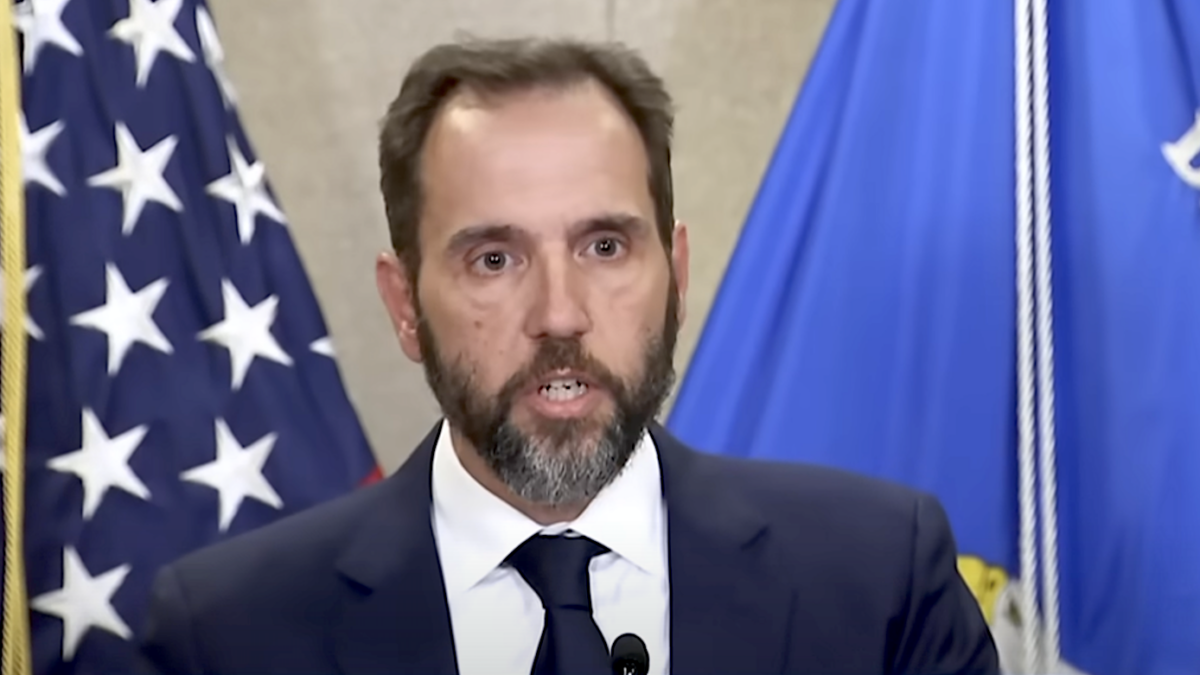




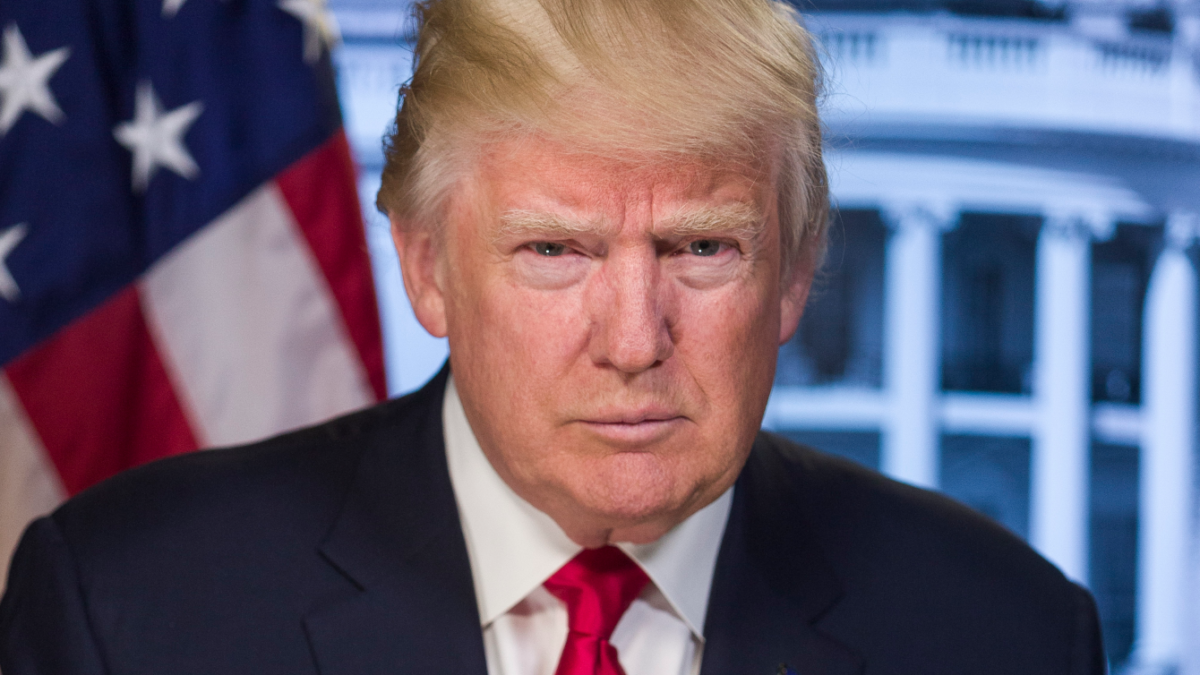

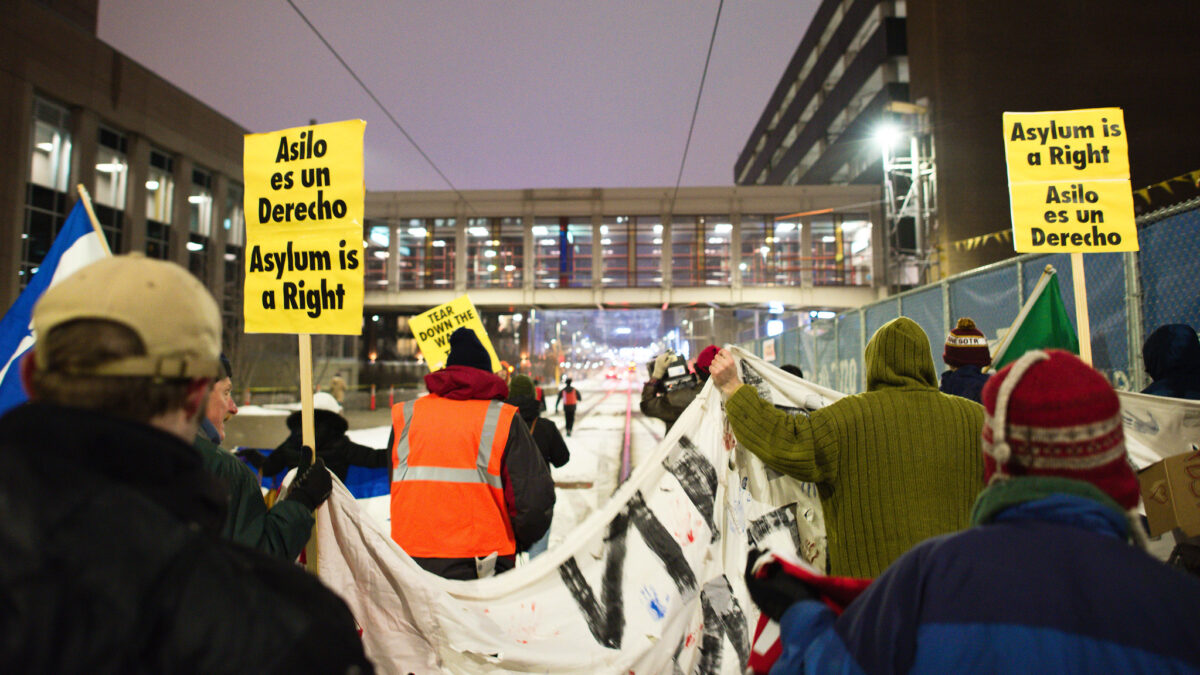




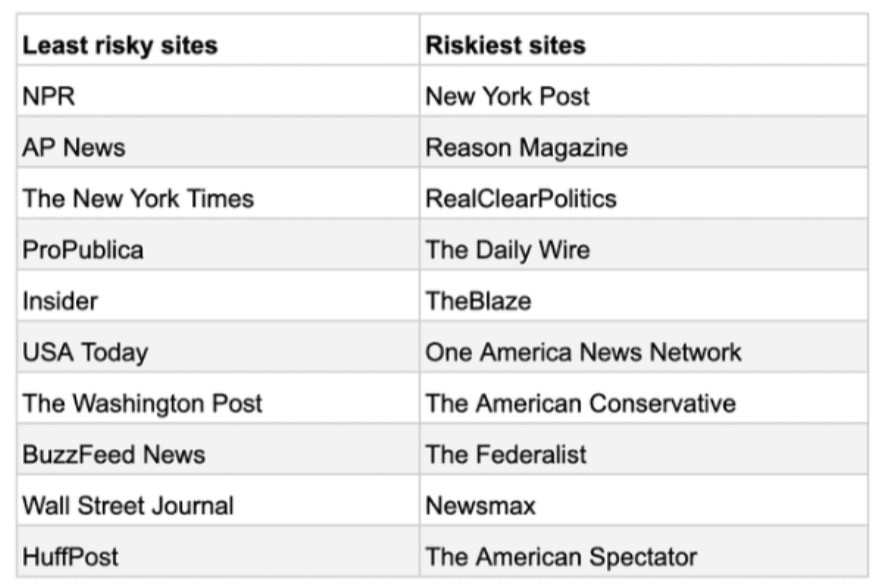

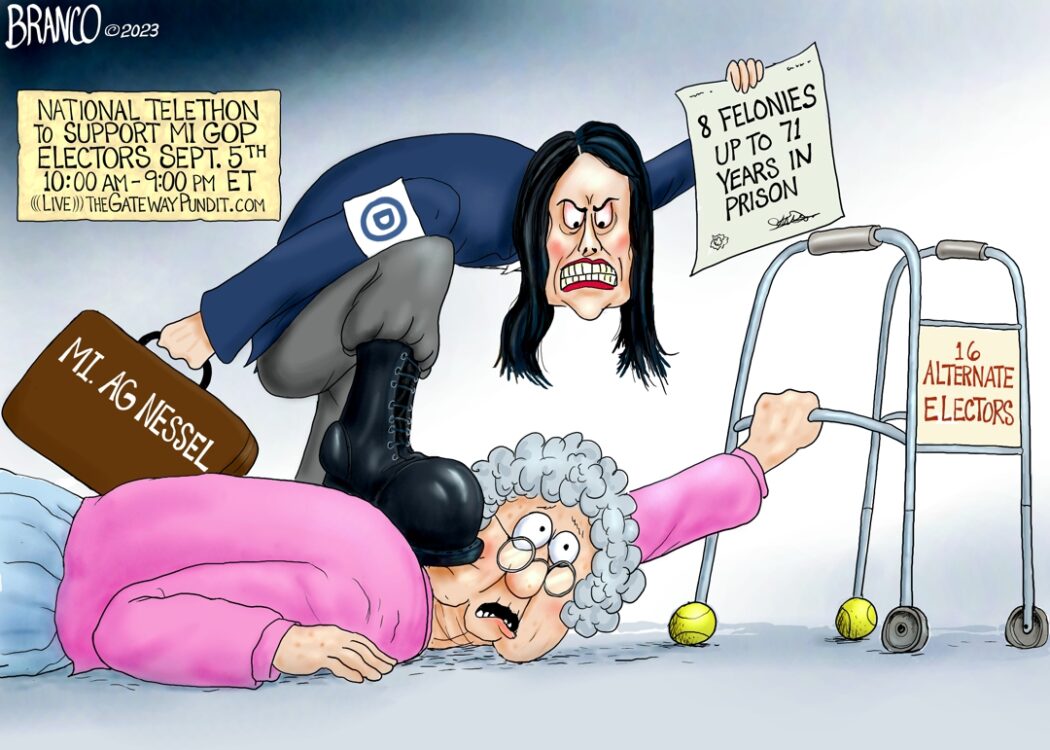
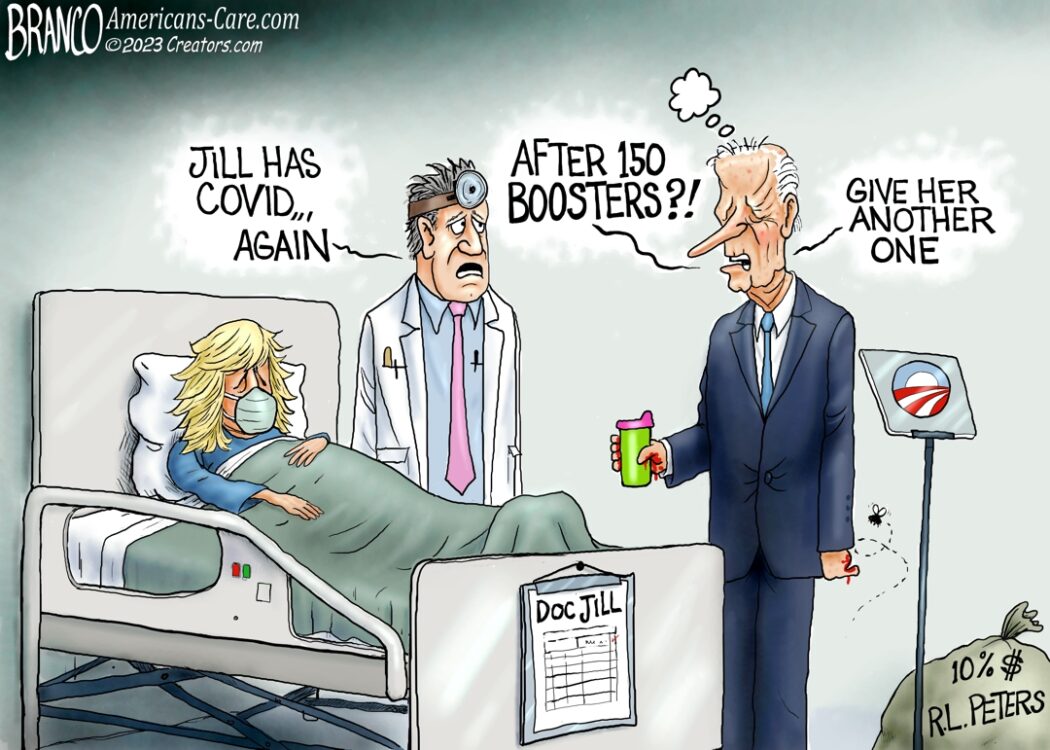

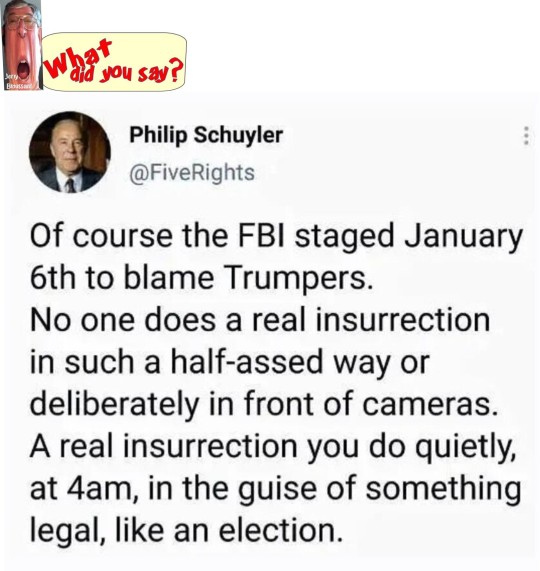

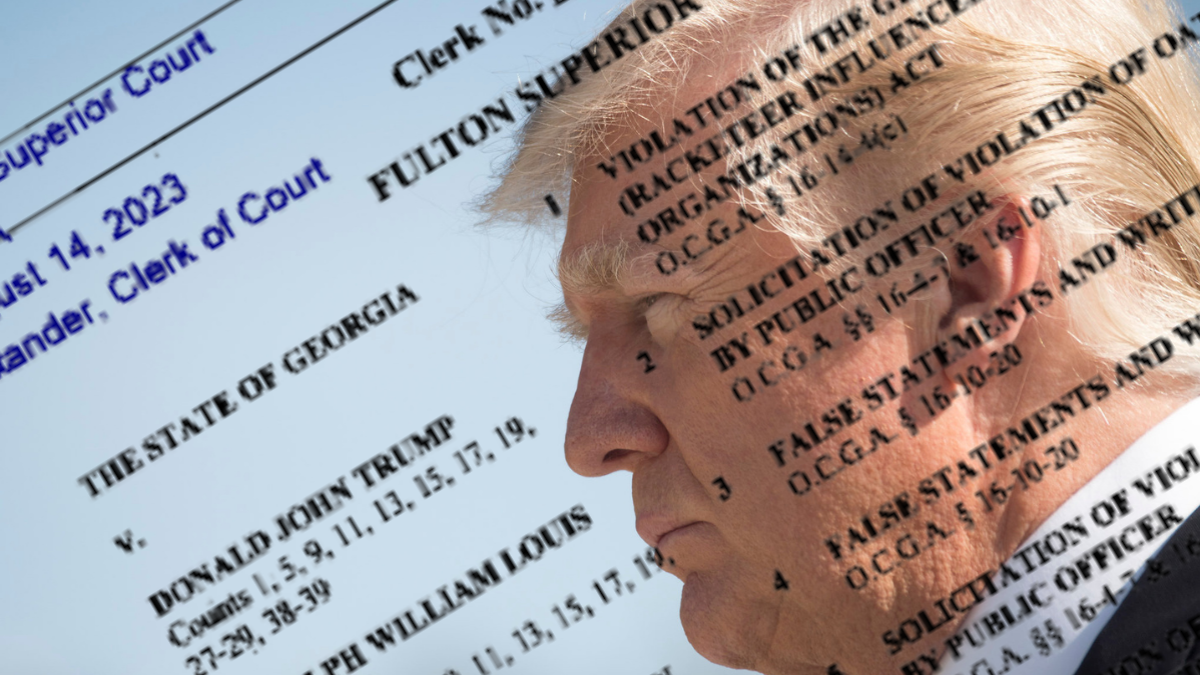
 ELLE PURNELL


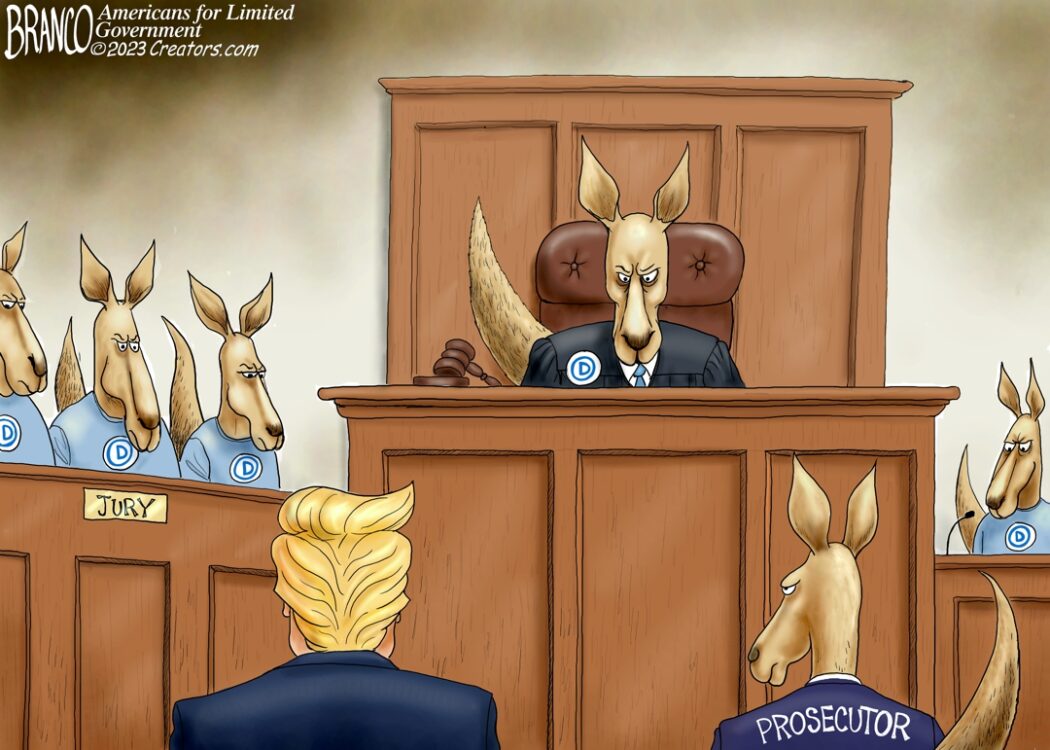

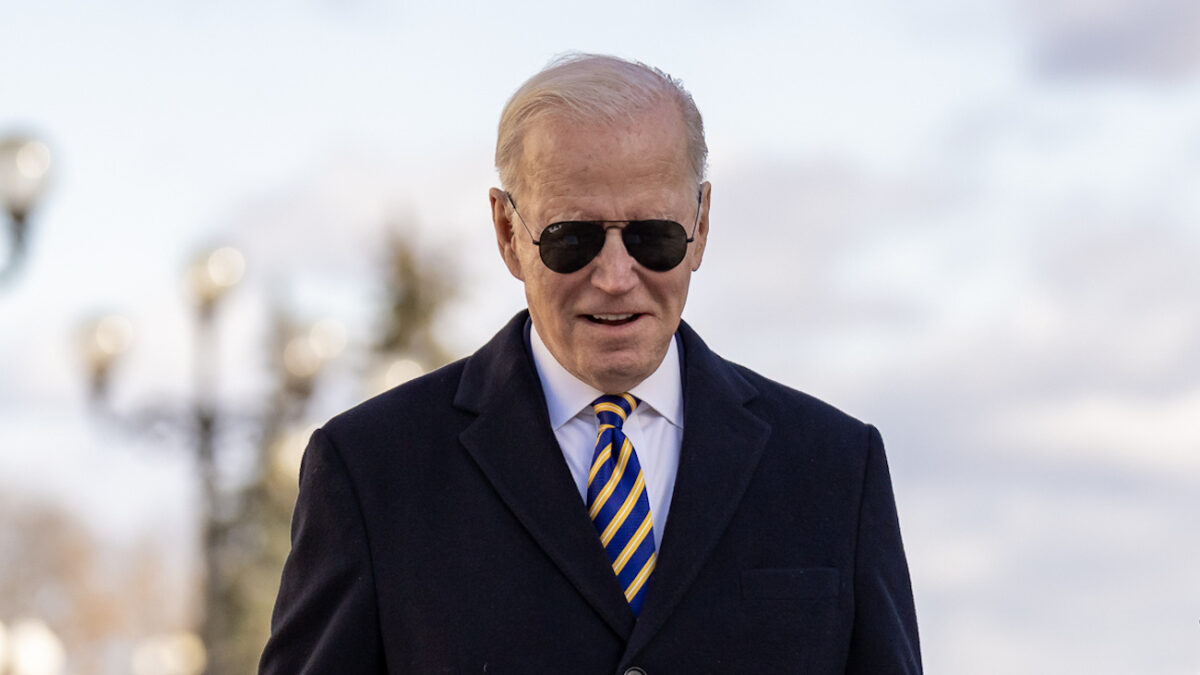
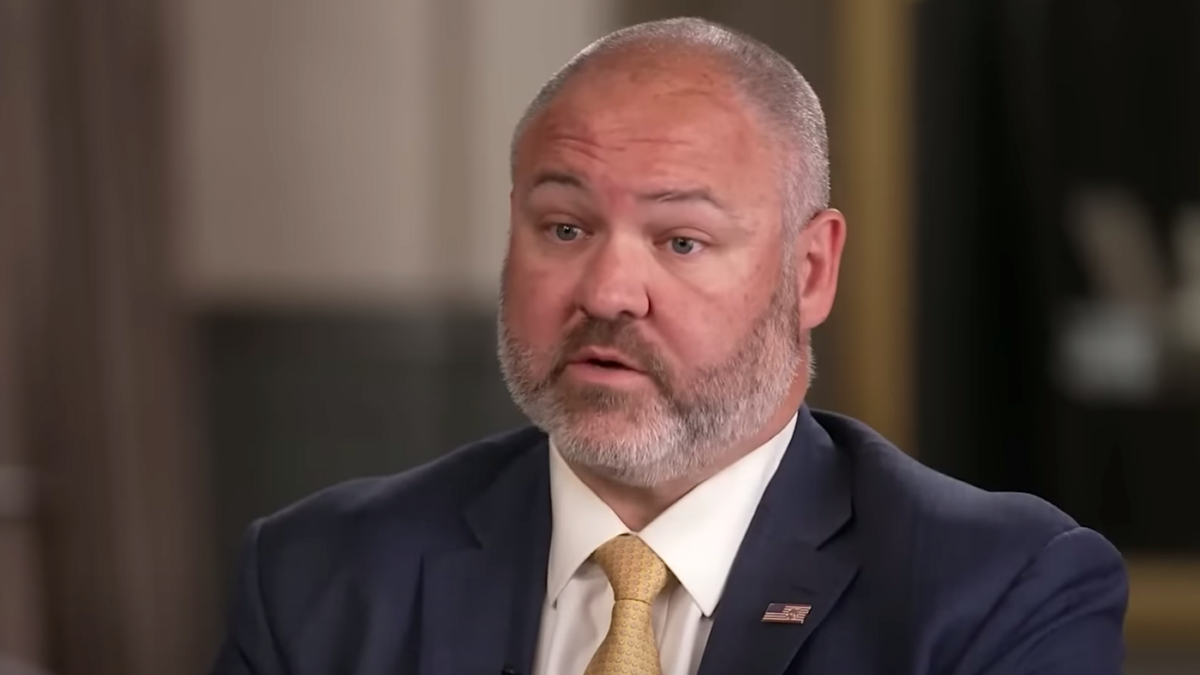
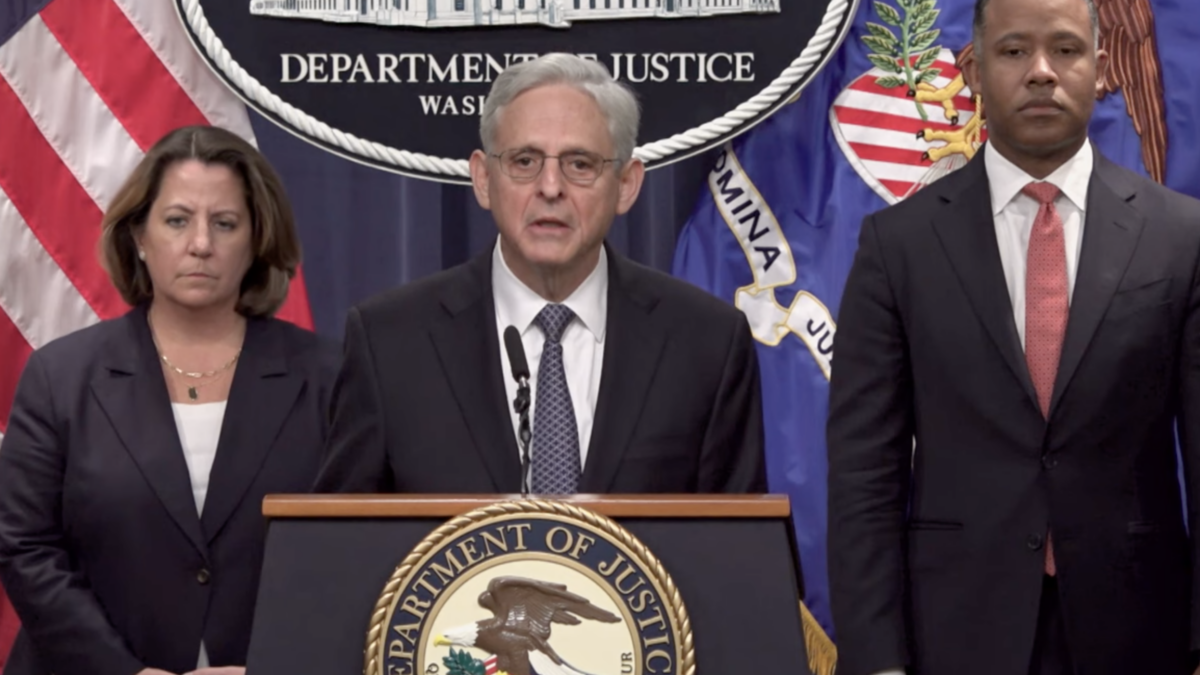


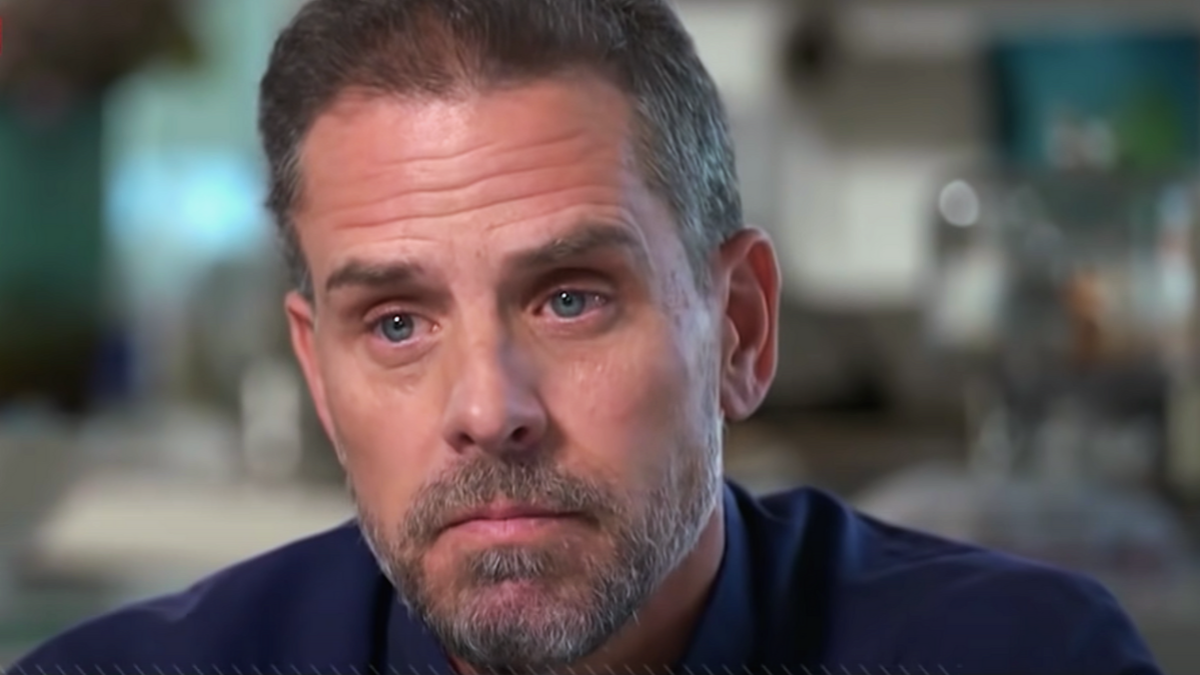
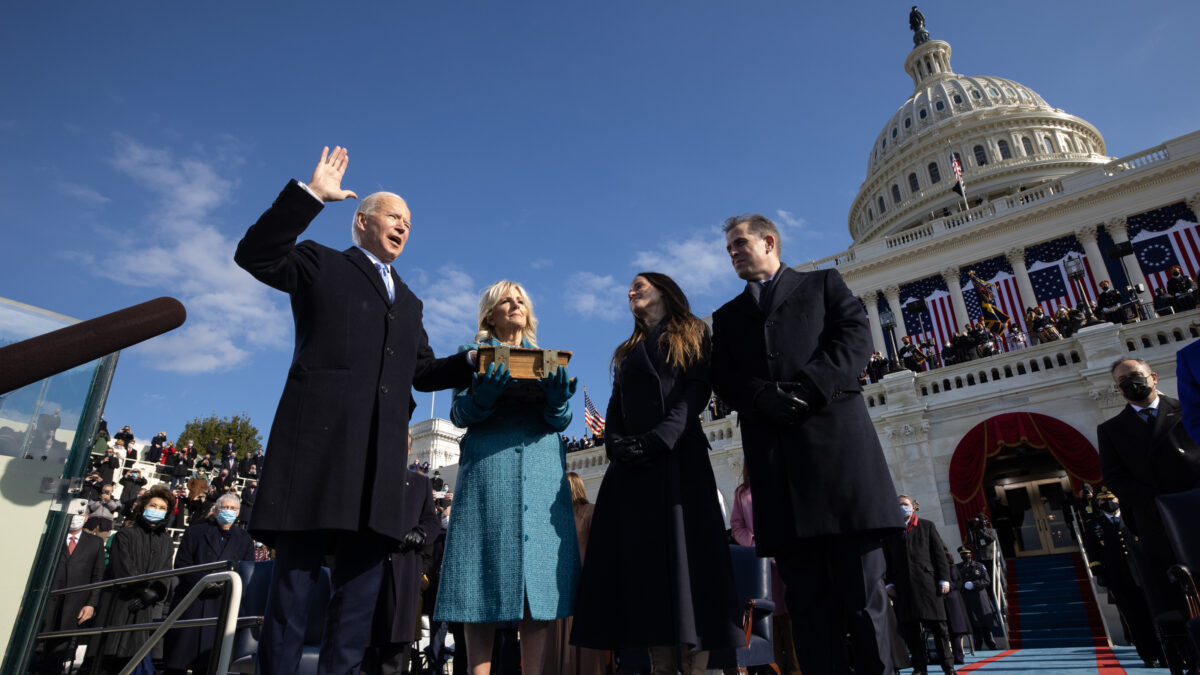
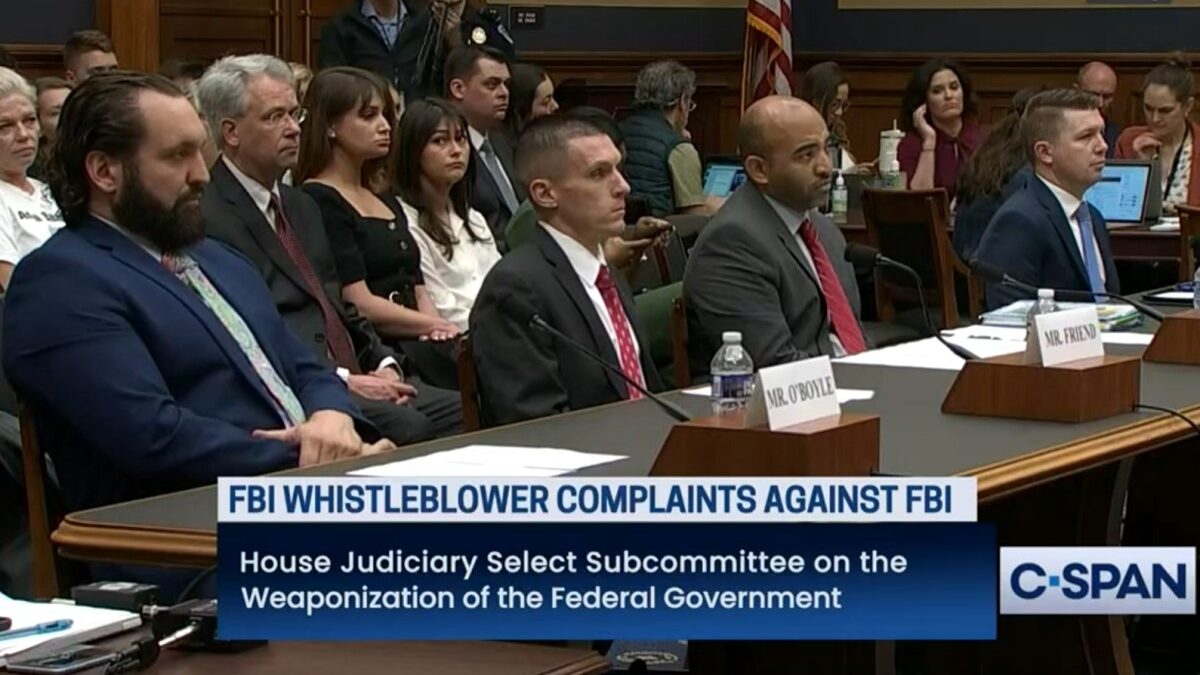




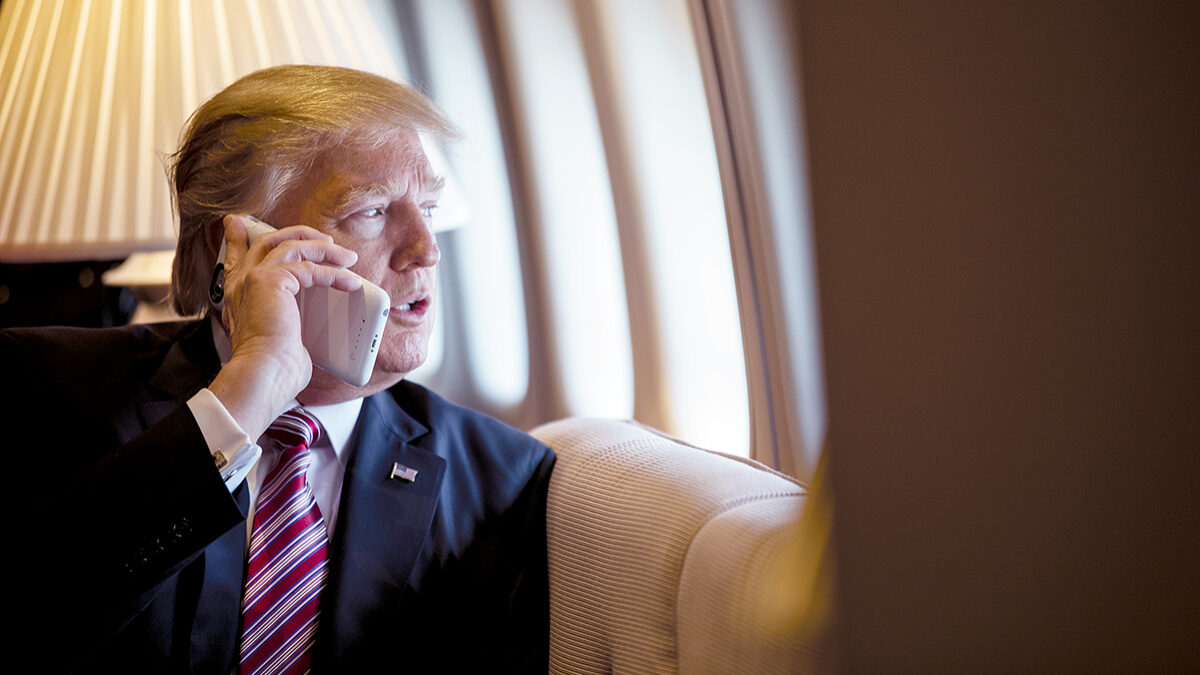
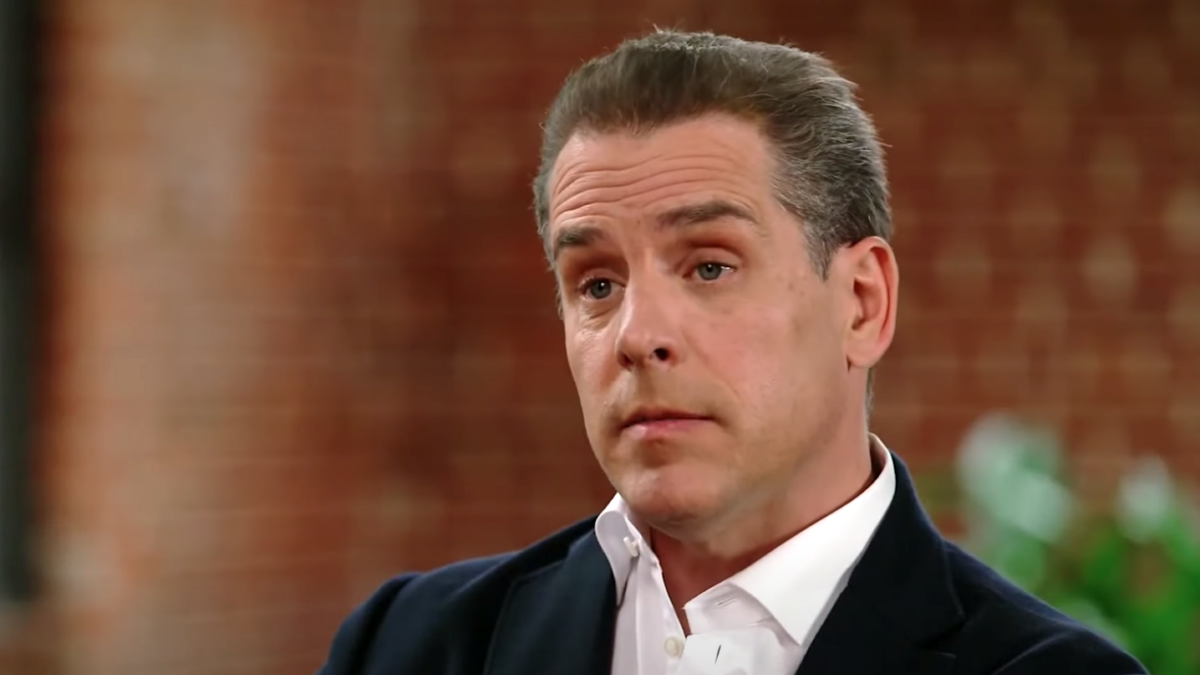
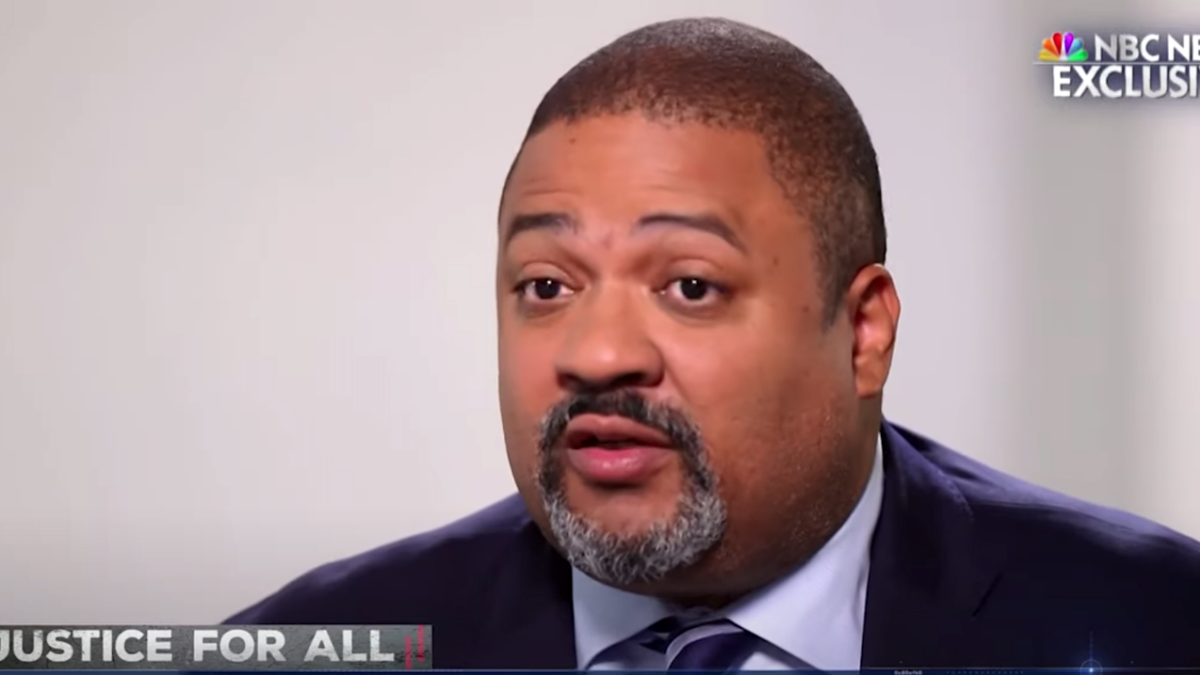
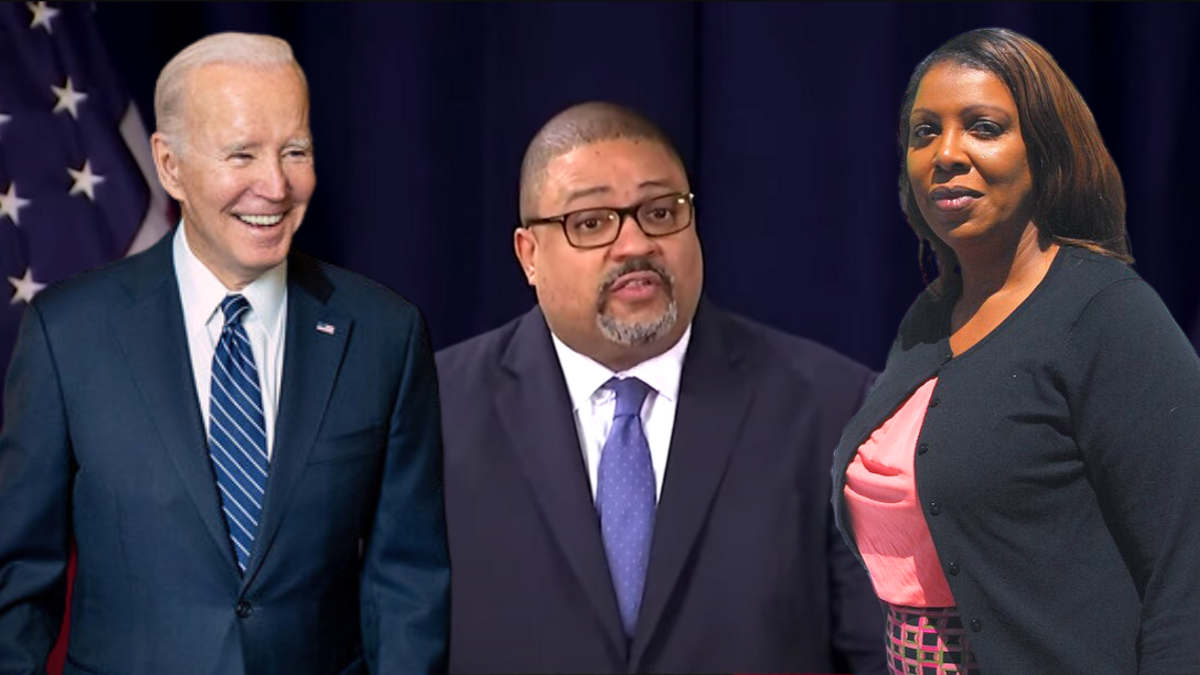
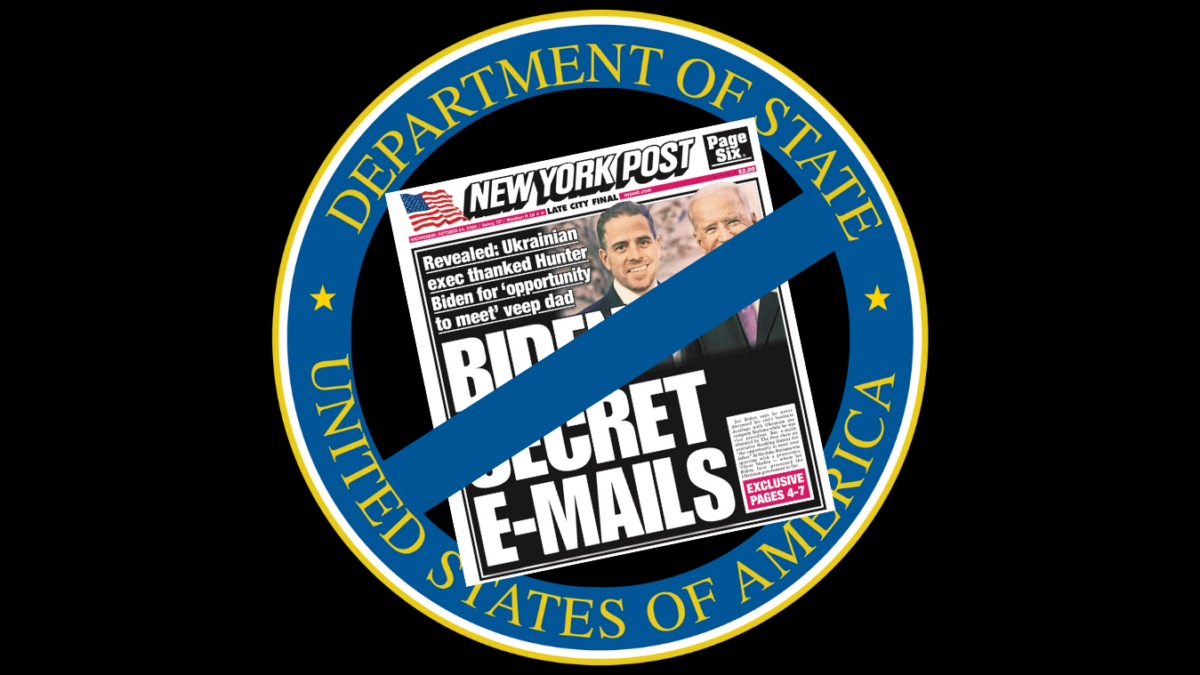


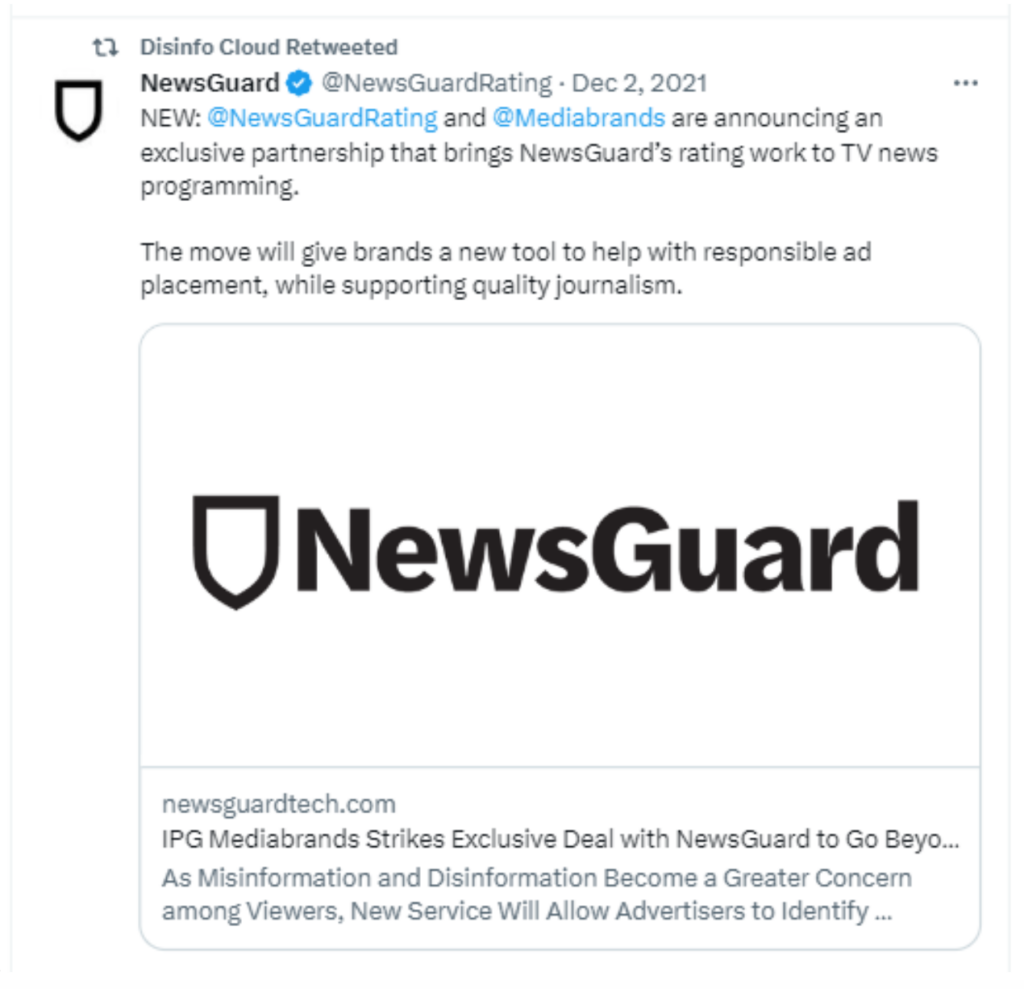
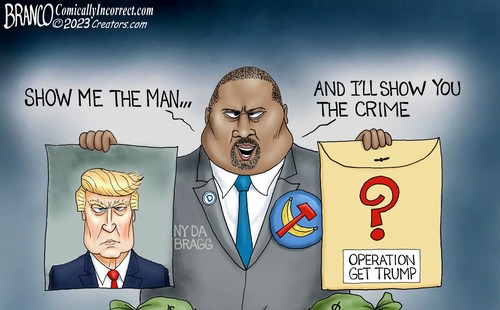
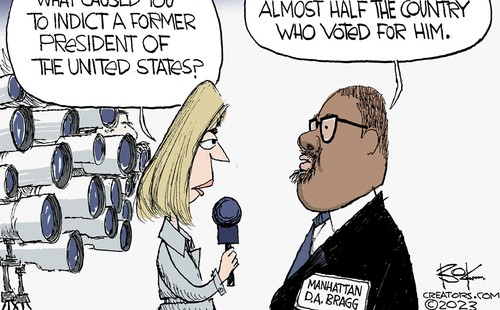

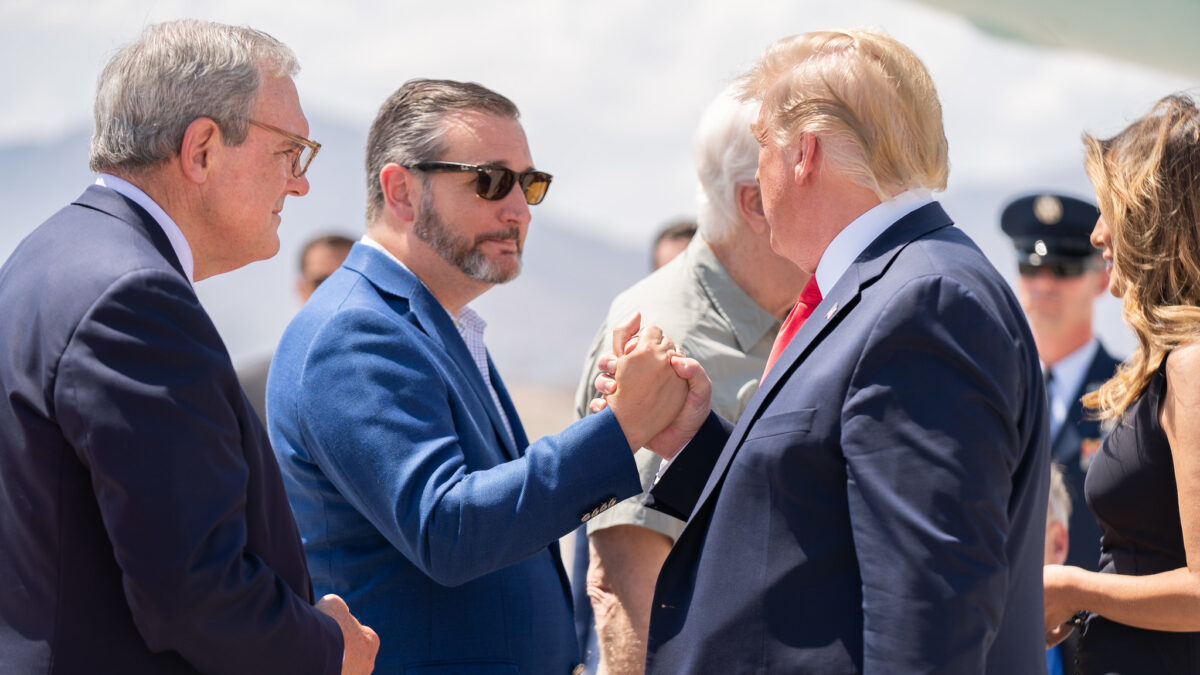
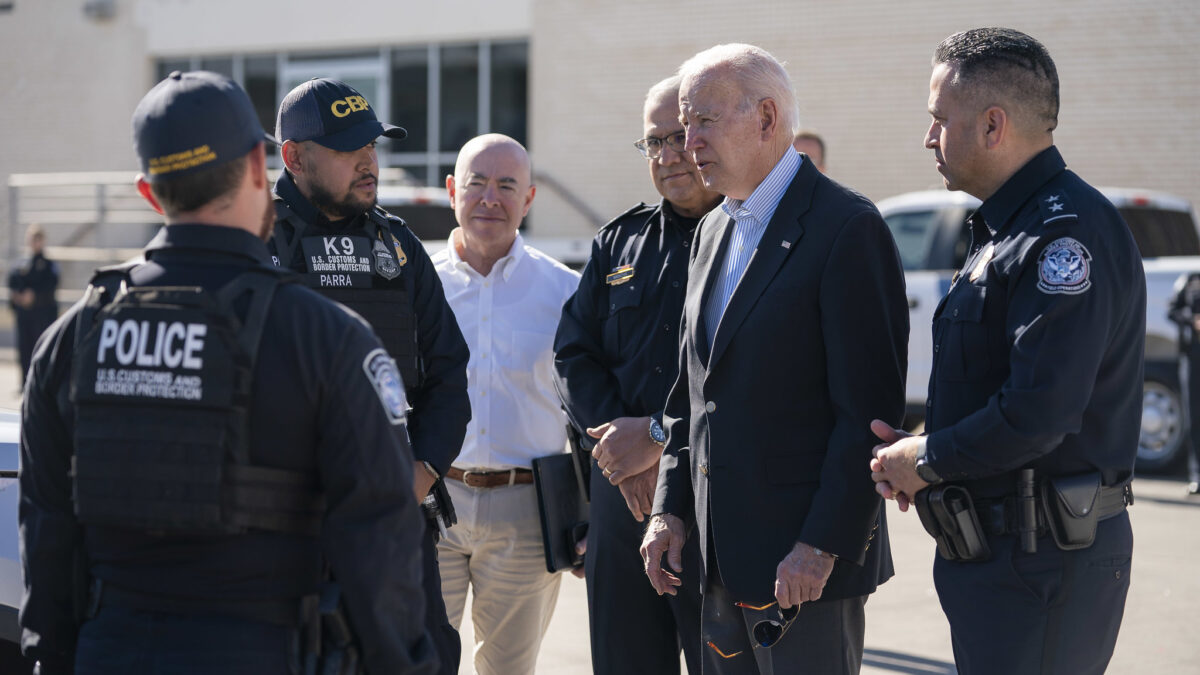


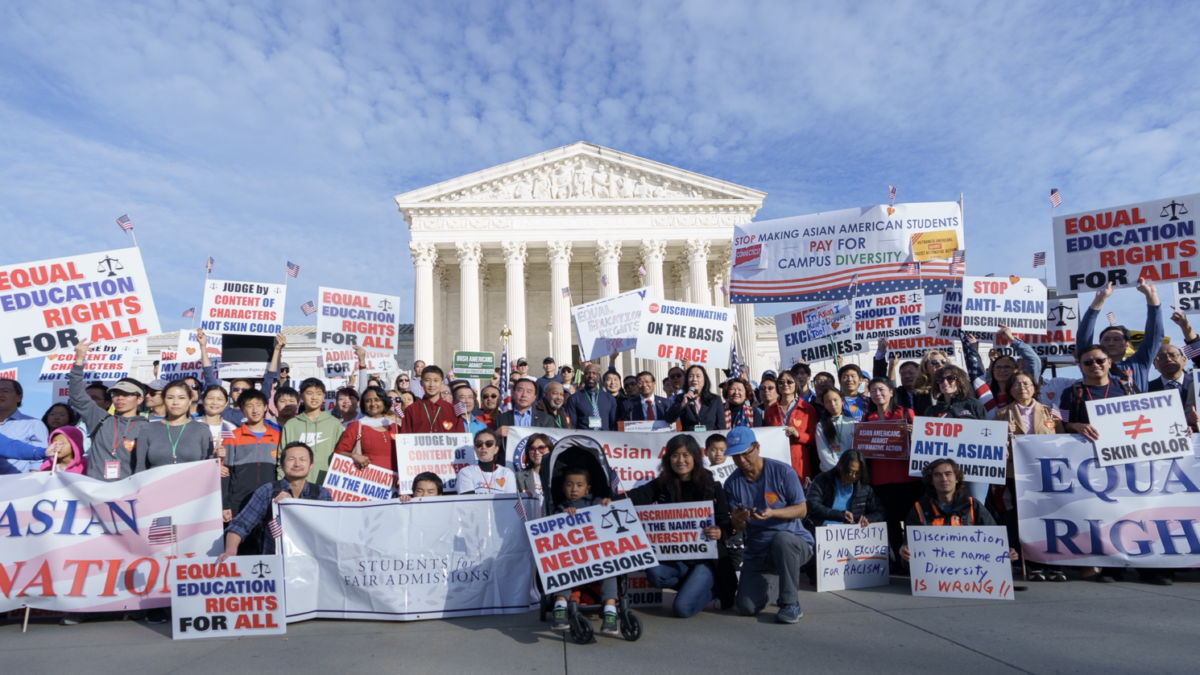


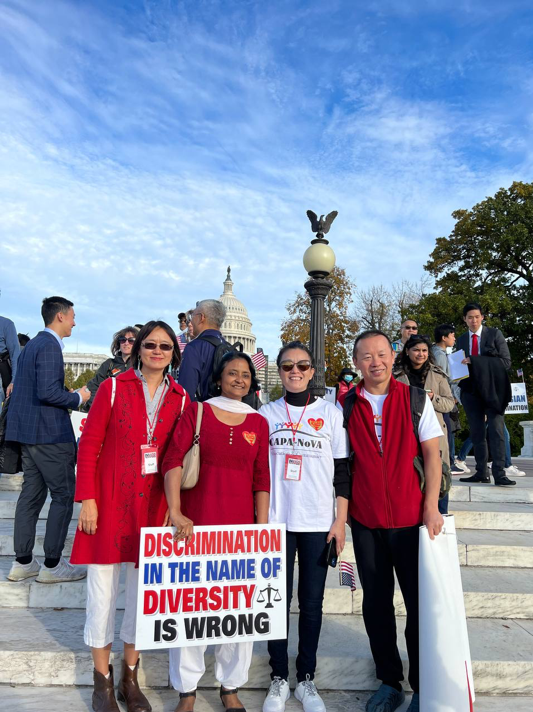
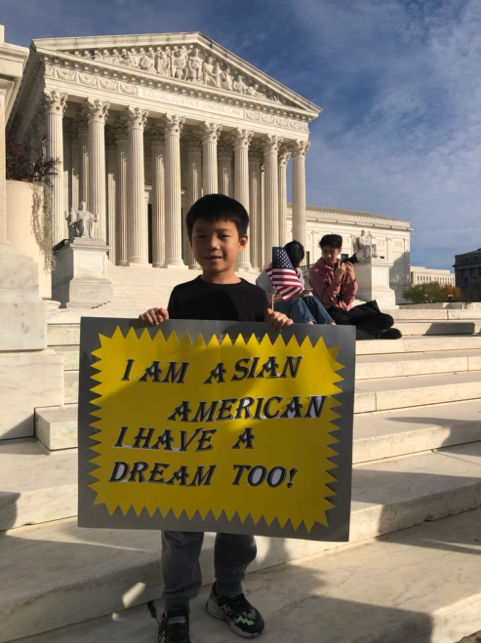



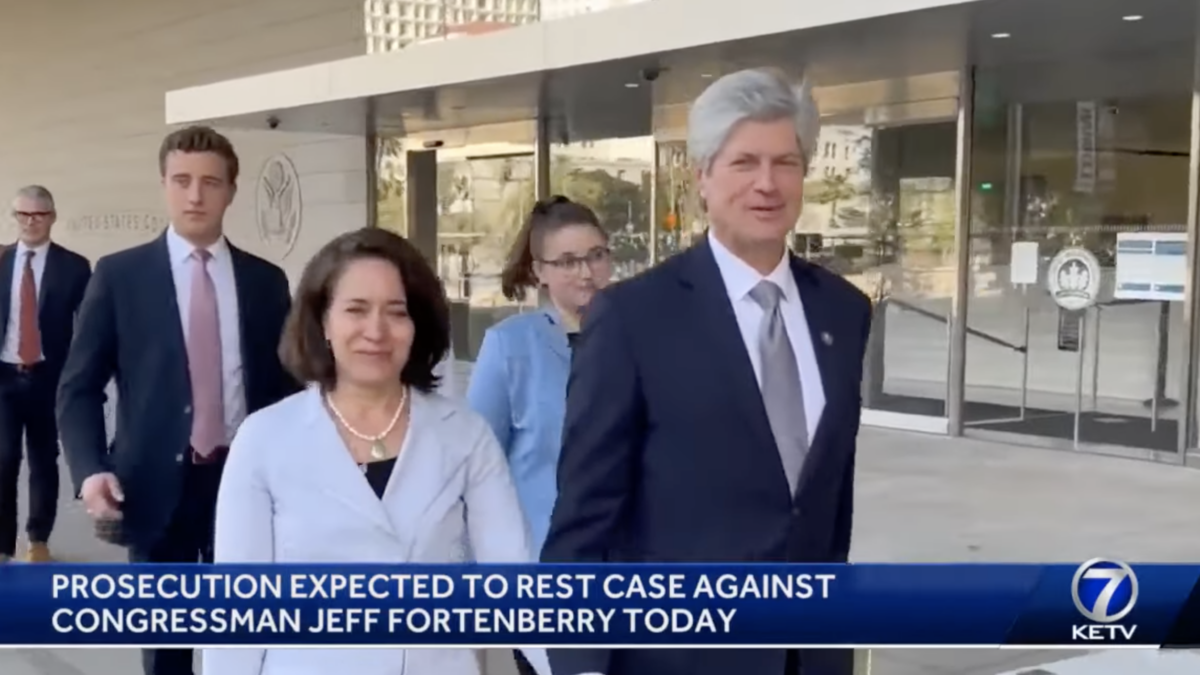
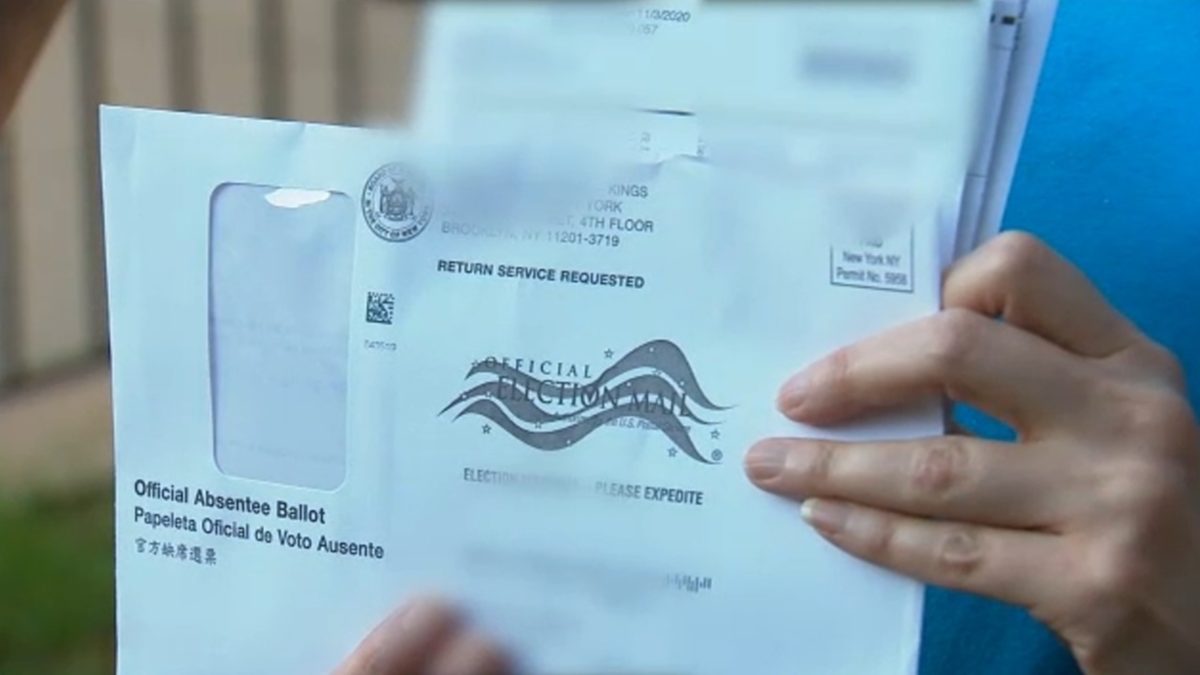

 Demonstrators rally outside the Pennsylvania Capitol Building to protest the continued closure of businesses due to the coronavirus pandemic on May 15, 2020, in Harrisburg, Pennsylvania. (Mark Makela / Getty Images)







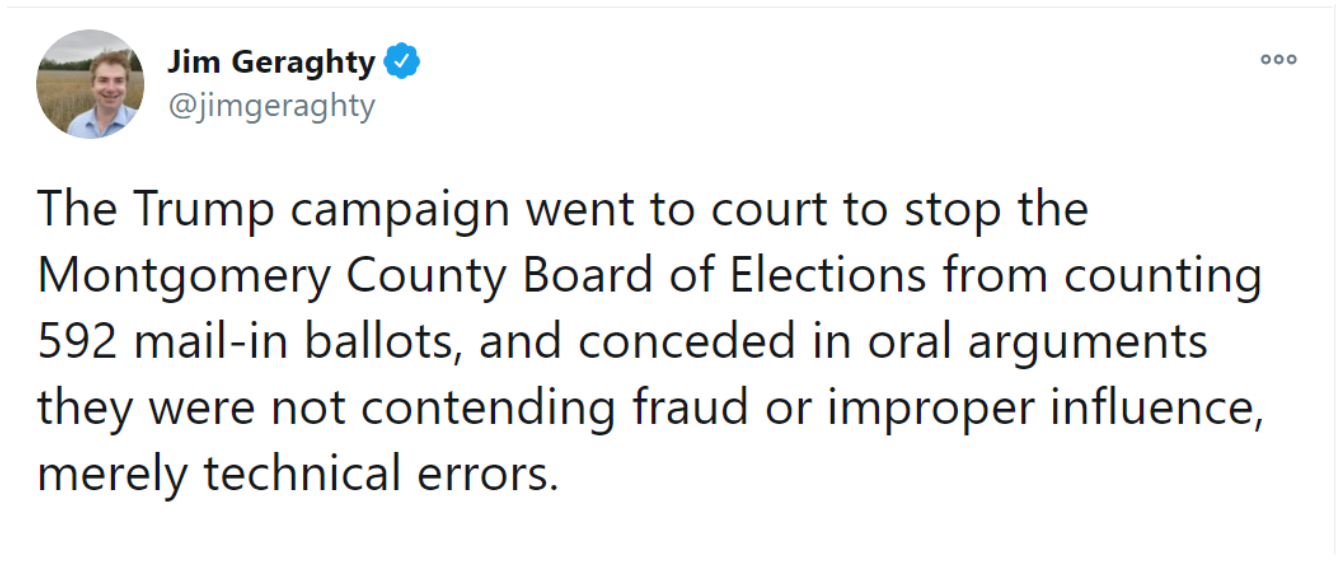

 What Did You Say?

You must be logged in to post a comment.