Welcome to 2025, where we are still uncovering election fraud from the 2020 and 2022 elections. Texas Attorney General Ken Paxton is investigating more than 100 possible noncitizens who may have voted in both the 2020 and 2022 elections, casting more than 200 ballots. In this case, most of the suspected illegal ballots were cast in Harris County. Paxton is also investigating in Guadalupe, Cameron, and Eastland counties, based on information from the Texas Secretary of State.
Add the possible 100 fraudulent voters announced this week to the 33 potential noncitizens who may have voted illegally in 2024. Paxton started investigating those 33 voters in June after the Texas secretary of state made a referral, based on information found in the U.S. Citizenship and Immigration Service’s (USCIS) SAVE database, showing they voted in the 2024 general election.
Some 1,200 federal agencies use SAVE to verify U.S. citizenship or determine current immigration. For example, when an applicant applies for a Social Security Number, a drivers license, or for public housing assistance, the agency will check SAVE to see if they are a citizen. Legally, noncitizens are not allowed to vote in U.S. elections.
“Illegal aliens and foreign nationals must not be allowed to influence Texas elections by casting illegal ballots with impunity. I will not allow it to continue,” Paxton said in a statement. “Thanks to President Trump’s decisive action to help states safeguard the ballot box, this investigation will help Texas hold noncitizens accountable for unlawfully voting in American elections. If you’re a noncitizen who illegally cast a ballot, you will face the full force of the law.”
No one can realistically say fraudulent, noncitizen voting doesn’t happen. There are too many examples to ignore. Sometimes it is a single incident with one voter, like the Chinese student living in Michigan who was improperly registered to vote and is charged with voting the November election. Other times, it is a group of voters, like when Michigan Secretary of State Jocelyn Benson found 15 likely noncitizens across the state voted in November’s election, but she said illegal activity is “very rare.”
So rare, that an audits of voter registration rolls in Iowa found 277 noncitizens registered to vote or actually voted in the 2024 election. In Oregon, the elections director quit after officials discovered more than 300 noncitizens had been registered to vote, and the state’s Department of Motor Vehicles processed more than 54,600 voter registrations, 2021-2024, with an unknown citizenship.
Just last month, the Senate Judiciary Committee announced it is investigating newly declassified FBI documents alleging that in 2020 the Chinese Communist Party was making thousands of fake U.S. driver’s licenses to use to validate fake mail-in ballots. The investigation is ongoing, but we can already see it is a huge scandal. And the list goes on, and on, and on. Not rare.
The remedy is so simple. Mandatory voter identification at voter registration and when voting. The Safeguard American Voter Eligibility (SAVE) Act would keep noncitizens from voting by requiring proof of citizenship when registering to vote. It passed in the House in April and still has not moved in the Senate. It should be a bipartisan issue, but Democrats have claimed that providing identification is a burden that disenfranchises voters.
It is good officials are still digging into how the 2020 election went off the rails, so we understand the weak spots. But it is past time to shore up the election process with simple fixes like the SAVE Act, so in 2030 we are not still trying to figure out what happened in 2028.
Beth Brelje is an elections correspondent for The Federalist. She is an award-winning investigative journalist with decades of media experience.
President Joe Biden has vowed to veto the Safeguard American Voter Eligibility Act, which simply requires proof of citizenship to register to vote in federal elections. His promise was made in reaction to congressional Republicans who want to include it with any continuing resolution required to fund the next fiscal year, which begins on Oct. 1. The president’s adamant opposition to what most Americans support demonstrates just how much Democrats are dedicated to making it easier to cheat in elections.
On Dec. 16, 2020, as chairman of the Senate Committee on Homeland Security and Governmental Affairs, I held a hearing titled, “Examining the Irregularities in the 2020 election.” In spite of the wailing and gnashing of teeth from the election irregularity deniers, there were many indisputable irregularities.
In Wisconsin, 170,000 faulty absentee ballots in Milwaukee and Dane County were improperly counted by election clerks. Representatives of the far-left “Zuckerbucks” program — which is designed to pour left-wing dollars into local election offices, benefiting their Democrat candidates — imposed such heavy-handed direction in Green Bay that the local election clerk resigned from the stress and allowed Zuckerberg’s minions to run the election. “Democracy in the Park”was allowed in Madison, where activists unlawfully collected 17,300 ballots. Seniors in nursing homes voted without the required voting deputies present, bordering on elder abuse for political gain. As was the case in other states, election observers were not allowed to effectively observe the election process.
More recently, as one of many examples of states cleaning voter rolls, Virginia cancelled 6,303 noncitizens’ voter registrations.
Unfortunately, the election irregularity deniers have been so effective — aided and abetted by the corporate media — that these abuses have not only been ignored, but those who wish to cheat in the 2024 election have been able to devise new election fraud schemes. Absent media scrutiny, Republicans are undertaking efforts to stop them.
In one of the most closely contested states, Wisconsin’s governor vetoed nine election reforms passed by the Republican legislature and designed to restore confidence in our state election system. The Wisconsin Election Commission refuses to remove more than 4 million ineligible voters from our out-of-date voter roll (Wisconsin has approximately 3.5 million eligible voters). Election integrity starts with clean voter rolls, and by refusing to clean up Wisconsin’s, Democrats are clearly stating that they’d rather leave room for fraud than increase confidence in our election system.
Following a pressure campaign from Senate Republicans and the Republican National Committee (RNC), Nevada just removed 90,000 voters from its lists. If Nevada can do it, why can’t the Badger State?
Biden’s Executive Order to Register Voters
Nationally, the potential for election interference and voter fraud seems to be growing, with minimal attention being paid to it. Let’s start with President Joe Biden’s executive order directing federal agencies to register voters. Does anyone seriously believe these registration drives will be done in a nonpartisan manner? How many taxpayer dollars will be spent registering individuals most likely to vote for the party of big government and more deficit spending?
The RNC and Trump campaign recently sued the Biden administration to stop this partisan activity. Will courts intervene in time?
States Cleaning Voter Rolls
The Democrats’ open border policy is guaranteed to result in widespread voter fraud. Democrat presidential nominee Harris’ vice-presidential pick, Minnesota Gov. Tim Walz, signed a law giving driver’s licenses to illegal immigrants. That license, together with a utility bill, is all someone needs to register to vote in Minnesota. Democrats claim that because it is illegal for noncitizens to vote, illegal immigrants won’t register. We should be highly skeptical of that being an effective deterrent. Last week, the RNC sent a demand letter to Minnesota’s secretary of state following the revelation that a noncitizen in Minnesota received a ballot that he hadn’t even asked for. That is unlikely to be an isolated incident.
After all, Ohio just purged 499 illegal immigrants from its voter rolls following a multi-phase audit. But that’s in a state with Republican leadership that actually believes in election integrity and wants to make it difficult to cheat. Elsewhere, Boston officials disclosed that 70 illegal aliens contacted county election officials asking to be removed from voter registration lists. How did those Massachusetts noncitizens get registered, and how many remain on the registration lists? While it’s good to see officials in some states taking the lead to purge their voter rolls, there is much more work to be done.
Laundering Donations
In March 2023, journalist James O’Keefe first reported on a campaign financing violation dubbed “smurfing.” Unbeknownst to the “donors,” Federal Election Commission (FEC) reports show in some cases tens of thousands of small dollar donations being made in their names, totaling hundreds of thousands of dollars. One example in Wisconsin detailed five “smurfs” making a combined total of 28,471 donations, worth $401,326. Sen. Tammy Baldwin, D-Wisc., was a recipient of 531 of those donations, worth $5,147. No wonder Democrats report a resounding lead in small dollar donations!
My Senate staff has been pressuring the FEC to investigate these violations, but the FEC won’t even acknowledge whether they are investigating. Republican attorneys general such as Jason Miyares in Virginia have thankfully launched concurrent investigations to demand answers and stop this unfair practice.
Presidential Election
For well over a year, I have publicly expressed my doubts that Biden would be the Democrat nominee. I would generally add that whoever replaced him would immediately be placed on a pedestal and declared the new messiah. But even I am astonished by the extent to which my prediction has come true. Former President Donald Trump is not running against Kamala Harris, he is running against the entire corporate media, who are coordinating their efforts to defeat him.
This is not a new phenomenon. Remember the Russia hoax, which the corporate media cheered on? How about Google manipulating search results to favor Democrats and suppress Republicans? Most “journalists” in corporate media today are merely advocates for the left. Honest, unbiased reporting has largely gone the way of the dinosaur.
As alarming as the reality described above is, I have not written this column to discourage, but as a call to action. The RNC and Trump campaign have recruited 157,000 poll workers and poll watchers across the country ahead of November. Join the effort at ProtectTheVote.com, and make sure to get out and vote as soon as your state allows. We can beat the forces arrayed against us if we turn out in numbers that are too big to rig.
Former Attorney General Bill Barr did not improperly pressure prosecutors to reduce sentencing recommendations for political activist Roger Stone, according to a new government watchdog report. The exoneration of Barr came more than four years after a deluge of media reports alleging wrongdoing.
However, J.P. Cooney, a Justice Department official now serving as Special Counsel Jack Smith’s top deputy, cultivated a politically toxic environment, disseminated baseless conspiracy theories about Trump and his political appointees, and engaged in unprofessional conduct as he oversaw the team making sentencing recommendations, according to the same report.
Cooney is mentioned (as the “Fraud and Public Corruption Section Chief”) a whopping 394 times in the 85-page report released from the Justice Department’s inspector general on July 24. Cooney supervised a team of four attorneys who prosecuted Stone for what the government successfully argued in front of a Washington, D.C., jury were lies and obstruction during Special Counsel Robert Mueller’s investigation into Trump campaign officials. Mueller’s two-year, $32 million investigation was itself spun up by anti-Trump officials in the Justice Department after the Democrat National Committee and Democrat presidential nominee Hillary Clinton bought and paid for an information operation falsely alleging the Trump campaign was in cahoots with Russia to steal the 2016 election. Two members of Cooney’s team also worked on the Mueller investigation.
The Fraud and Public Corruption (FPC) team sought an unprecedented sentence of seven to nine years in prison for Stone, dramatically beyond what others convicted of similar crimes faced. When developing that sentencing goal, the team by its own admission thought the “closest analogue” to the Stone conviction was that of Scooter Libby, a target of a previous special counsel in a highly controversial prosecution. Libby’s proposed sentencing range was 30-37 months and he was sentenced to 30 months, which was derided as “excessive” by former President George W. Bush.
Yet the Cooney team larded up the Stone sentencing memo with every escalatory adjustment it could find, however disputable, to achieve a much harsher sentence and treat Stone differently than the Justice Department treats other defendants.
As soon as Cooney’s supervisors saw what he and his team had planned, “they all agreed that the sentencing recommendation was too high” and expressed grave concern about the situation. Interim U.S. Attorney Timothy Shea, who had started on the job just that week, said he “had never seen [perjury] cases produce a sentence that high, and that he was aware of many violent crimes that did not result in sentences ‘anywhere near’ the sentence the team was recommending for Stone,” according to the report. He noted that the escalatory adjustments were arguably made in error, in at least one case, and that the guidance was completely “out of whack” relative to other cases. Further, Stone was a “first-time offender, older than most offenders, and convicted of a nonviolent crime,” and “comparable cases” were sentenced around two to three years.
Cooney responded to the criticism of his extreme sentencing proposal by spreading an elaborate conspiracy theory with no supporting evidence that Trump, Barr, and Shea were being improperly political. Cooney admitted to investigators that “he had no information suggesting that anyone from Main Justice (i.e., DOJ leadership offices) was involved in the Stone sentencing at this time and no evidence pointing to improper motivations influencing these discussions” when he spread the conspiracy theory with his underlings.
In phone calls and other conversations with his prosecution team, Cooney spread his evidence-free conspiracy theory that “Shea was acting out of fear of then President Trump and, more particularly, fear of the consequences of not seeking a lower sentence for an influential friend of then President Trump.” He continued his conspiracy theories in other conversations. “Prosecutor 1 said that when he asked [Cooney] what was going on, [Cooney] replied that ‘this is coming from Main Justice. Tim Shea is getting pressure from Main Justice about the Stone sentencing recommendation, and Tim Shea is terrified of the President,’” according to the report. Cooney acknowledged he had no evidence to support these statements.
Another prosecutor said Cooney told him that “Shea did not care about Stone or the Stone case, but that Shea was ‘afraid of the President’ and that this fear was driving Shea’s actions,” according to the report. That same prosecutor said Cooney said multiple times that “Shea was afraid of the President and said it ‘with substantial conviction.’” Cooney later acknowledged he had no evidence to support his false claim.
At the same time, reporters began calling the Department of Justice to ask about the sentencing guideline dispute. That meant that at least one person within the department was getting information to reporters at left-wing media outlets to bully Trump appointees to acquiesce to their demands. Partisan bureaucrats had commonly used that tactic throughout the Trump presidency. While strict guidelines opposed unauthorized disclosures to the press, DOJ and FBI officials rarely bothered to investigate such leaks, much less hold employees accountable for them. In many cases, they were the worst offenders. For example, former FBI Director James Comey leaked to the media by disclosing information to an attorney who then passed the information on to The New York Times. The investigative report on the sentencing memos discusses how various DOJ employees denied leaking to the media while also noting they spoke about the sentencing controversy with other attorneys.
Unsurprisingly, the sentencing dispute became a major news story, with the perspective of Cooney’s team adopted by the recipients of the leaks. After the Justice Department issued a second sentencing guideline memo, the four prosecutors all removed themselves from the case and were lavished with praise by left-wing media outlets. Prosecutor Aaron Zelinsky went on to testify in front of Congress about the situation. His claims that the sentencing dispute was guided by politics were untrue, but investigators blamed Cooney for spreading the falsehoods.
The second sentencing memo did not call for a specific jail time but left it to the judge’s discretion. Judge Amy Berman Jackson agreed with the second sentencing memo and ordered Stone to serve 40 months in prison, many years fewer than Cooney’s team had aimed for. Trump commuted Stone’s sentence before he was taken into custody.
In its report, the Justice Department IG said that Cooney’s “speculative comments in meetings with the trial team about the political motivations” of Trump officials “in connection with their handling of the Stone sentencing contributed to an atmosphere of mistrust” that “unnecessarily further complicated an important decision in the case.” It further determined that his baseless comments to the trial team formed a substantial basis for Zelinsky’s explosive but wrong testimony to the House Judiciary Committee on June 24, 2020.
Cooney’s Checkered DOJ Record
Cooney’s track record at DOJ includes many other controversial political actions.
For example, one of the primary instigators of the Russia-collusion hoax was FBI Deputy Director Andrew McCabe, now a CNN contributor. In April 2018, federal investigators issued a criminal referral for just some of the criminal leaks and lies he had engaged in while at the FBI. After sitting on a criminal referral for nearly two years, Cooney announced on Feb. 14, days after the Stone sentencing memo situation, that he had decided to let McCabe get away with the lies and the leaks.
Those who aren’t political allies of Cooney’s receive different treatment. Cooney prosecuted Steve Bannon in 2022 for a contempt of Congress charge related to him not complying with a subpoena from the controversial Jan. 6 Committee comprised exclusively of members hand-selected by Speaker of the House Nancy Pelosi. Bannon, who hosts the popular alternate media program “War Room,” is currently serving his four-month prison sentence. Civil libertarians are concerned about the Biden administration’s imprisonment of powerful media voices during the election season.
Incidentally, Attorney General Merrick Garland was found in contempt of Congress earlier this year for failing to comply with a subpoena from the House Judiciary Committee, which unlike the Jan. 6 Committee is a real committee with members appointed by both Republicans and Democrats, but the Department of Justice has not charged him.
Thwarting Election Integrity
After the extremely controversial 2020 election, Attorney General Barr issued a memorandum allowing the Department of Justice to investigate election irregularities if they were serious and substantiated. “While it is imperative that credible allegations be addressed in a timely and effective manner, it is equally imperative that Department personnel exercise appropriate caution and maintain the Department’s absolute commitment to fairness, neutrality and non-partisanship,” Barr wrote.
While many Americans would hope the Justice Department would investigate election irregularities in a timely fashion, particularly in an election as unprecedented as 2020, Democrat activists were livid. In response, Cooney cooked up a letter of outrage that quickly leaked to the media and helped shut down any meaningful investigations into the election. When The New York Times wrote about the letter, it was clear that Trump officials had already figured out Cooney’s mode of operating.
“On Thursday, [Cooney] said in an email sent to Mr. Barr via Richard P. Donoghue, an official in the deputy attorney general’s office, that the memo should be rescinded because it went against longstanding practices, according to two people with knowledge of the email,” The New York Times wrote. “In response, Mr. Donoghue told Mr. Cooney that he would pass on his complaint but that if it leaked to reporters, he would note that as well. Given that the email was born out of a concern for integrity, Mr. Donoghue said in his reply that he would assure officials ‘that I have a high degree of confidence that it will not be improperly leaked to the media.’”
Somehow the letter simultaneously made it to Cooney’s political allies at left-wing media outlets.
Rabid Pursuit of Trump
Weeks after President Joe Biden was inaugurated, Cooney was still stinging over not being able to put Stone in prison for nearly 10 years. He cooked up a plan, which appeared in The Washington Post and New York Times, to once again go after Roger Stone and other Trump associates in a new Jan. 6-related investigation.
His supervisors noted, “Cooney did not provide evidence that Stone had likely committed a crime — the standard they considered appropriate for looking at a political figure.” Further, his investigative plans were “treading on First Amendment-protected activities.” Nevertheless, he continued pursuing various plans to target Trump affiliates, and the U.S. attorney’s office began pursuing investigations along the lines of what Cooney had proposed, according to reporting.
President Biden and corporate media continued to pressure the Department of Justice and Garland to go after former President Donald Trump, who was widely expected to become Biden’s 2024 opponent. The famously conflict-averse Garland finally relented and put together a special counsel team heavily focused on Cooney and his extreme theories.
Democrat activists have cheered the special counsel for its aggressive actions against Trump, including a shocking raid on his Mar-a-Lago home, exhaustive investigations into communications and finances of Trump and many of his associates, and relentless pushes for courts to rush judgments ahead of the November elections.
Cooney and Smith’s approach has been less successful outside Democrat conversations. “It’s almost hard to believe how comprehensively the hubris and zealotry of anti-Donald Trump lawfare have blown up in their practitioners’ faces,” wrote The Washington Post’s Jason Willick after one major defeat. “Not only did the Supreme Court’s Monday ruling in Trump v. United States create new and enduring presidential immunities against criminal prosecution, but it also eviscerated the fiction of an ‘independent’ Justice Department and even inadvertently threw the validity of Trump’s New York hush money conviction into question.”
Left-wing media outlets such as Talking Points Memo have praised Cooney, noting that he was a partisan activist in college. Cooney, who was president of the College Democrats at Notre Dame University, wrote a column in the school newspaper that regularly praised President Bill Clinton and criticized Independent Counsel Ken Starr and his investigation of Clinton. Cooney once wrote of Starr as a “partisan political hit-man” for investigating Clinton and complained about the $30 million price tag of the investigation. He lamented the country’s “insatiable craving for controversy and scandal” regarding Clinton and worried it would destroy the country.
If you need further proof that Democrats will go to extreme lengths to rig elections in their favor, look no further than the silent coup that occurred Sunday, when it was announced that Joe Biden would not seek reelection this November.
“It has been the greatest honor of my life to serve as your President,” read a letter posted by Biden’s X account. “And while it has been my intention to seek reelection, I believe it is in the best interest of my party and the country for me to stand down and focus solely on fulfilling my duties as President for the remainder of my term.”
The whole episode resembles a storyline from a dystopian horror film. For years, Democrats and their legacy media allies pushed endless propaganda claiming a mentally declining Biden possessed the rigorous stamina required to be president. Just last month, media hacks were parroting debunked talking points put out by the White House claiming videos showcasing Biden’s frailty were “cheap fakes.”
And then the June 27 debate against Donald Trump happened. Realizing they could no longer hide Sleepy Joe’s mental decline and worrying that his cratering approval rating could cost them the 2024 election, the Democrat political machine jumped into action.
These political forces suddenly acknowledged what the general public has known since before the Delaware Democrat assumed the presidency. In a seemingly coordinated campaign, left-wing media acolytes, Democrat politicos, and Hollywood snobs spent the following weeks feigning a newfound concern about Biden’s ailing health and demanding he drop his reelection bid to “protect democracy.”
While Biden initially resisted calls to step aside, the Democrat-led pressure campaign was too big to overcome. Biden — or whoever is running things in the White House — dropped his reelection bid, tossing the 2024 nomination to Vice President Kamala Harris (or whoever the leftist oligarchy controlling the nomination process ultimately decides is the candidate). Like clockwork, these same forces are now praising him for the decision. For the party of “democracy,” it doesn’t matter that millions of Democrat primary voters are now disenfranchised. The machine got what it wanted.
A Repeat of Democrat Election Rigging
Much like their concentrated bid to remove Biden from the 2024 ticket, Democrats’ efforts to rig the 2020 contest involved participation from a variety of left-wing actors, both public and private. Under the guise of Covid, Meta CEO Mark Zuckerberg poured hundreds of millions of dollars into left-wing nonprofits, which then siphoned the funds into local election offices. These “Zuckbucks” — which were heavily directed toward “blue” municipalities — were used to advance Democrat-backed voting policies, amounting to what was effectively a giant Democrat get-out-the-vote operation.
Around the same time, leftist election officials in battleground states such as Pennsylvania, Michigan, and Wisconsin circumvented their states’ respective legislatures by unilaterally changing election procedures regarding unsupervised practices such as mail-in balloting and the use of ballot drop boxes. Several of these actions were later determined to be illegal by state courts.
Democrats’ election rigging got even worse leading up to the November 2020 election. The New York Post’s release of a bombshell report revealing potentially incriminating information about Joe Biden found on Hunter Biden’s laptop prompted one of the largest censorship campaigns in modern American history. Big Tech companies such as Facebook and Twitter suppressed the story with encouragement from the FBI, which had authenticated the laptop a year before the Post published its story.
Equally alarming were the efforts by 51 former intel officials to squash the laptop story by baselessly claiming it bore all the hallmarks of “Russian disinformation.” The CIA reportedly solicited signatures for the letter, which Biden used during a debate with Trump to dismiss criticisms about the laptop’s contents, which detailed the Biden family business. One of the letter’s signatories claimed under oath that a phone call he had with then-Biden campaign official Antony Blinken in the weeks before the election prompted the letter’s creation.
These actions don’t even include the Justice Department’s reported bid to delay an investigation into Hunter over concerns that it could impact the 2020 election.
Expect Nothing Less This November
Democrats’ 2020 and 2024 election-rigging schemes are two sides of the same coin. Both cases show that there is no task the party of “democracy” won’t undertake to ensure its hold on state power. (In fact, Democrat efforts to rig the 2024 general election have been underway since Biden took office.)
Leftists’ success in removing Biden from the 2024 ballot should serve as a wake-up call to normie America about the security of our elections. The Democrat Party is a political force seeking total control over every facet of our government and society. Hoping they’ll play fair this November is a fool’s errand.
Shawn Fleetwood is a staff writer for The Federalist and a graduate of the University of Mary Washington. He previously served as a state content writer for Convention of States Action and his work has been featured in numerous outlets, including RealClearPolitics, RealClearHealth, and Conservative Review. Follow him on Twitter @ShawnFleetwood
There is almost no subject the left won’t lie about. Whether it’s denying basic biology or fabricating “bloodbath” hoaxes about their top Republican rival, no topic is off limits for the Democrat “disinformation” police — and that includes elections.
Since the 2020 election, Democrats and their media allies have worked overtime to smear Americans concerned about the integrity of U.S. elections. No matter how legitimate these concerns may be, the left slanders anyone who challenges controversial elections won by Democrats as so-called “election deniers.”
Putting aside the fact that Democrats have questioned elections they don’t win (see the Trump-Russia collusion hoax), it’s important to highlight that the left regularly lies about America’s elections to further their party’s goal of acquiring and maintaining government power. In service of this goal, no falsehood is too great.
Here are the 10 biggest lies Democrats tell about U.S. elections so you can identify and combat these mistruths.
1. Election Integrity Laws ‘Suppress’ Voters
Under the guise of Covid, many states expanded the use of unsupervised mail-in voting, permanently changing the electoral landscape and how modern elections are conducted. With Covid-era lockdowns now in the rearview mirror, many Republican-controlled states have spent the past several years returning their election systems to pre-Covid practices and moving away from unsupervised methods.
With their election machine that thrives off the insecure mail-in system threatened, Democrats have taken to dishonestly attacking GOP-backed election integrity laws. The most common of these smears is the debunked claim that voter ID laws suppress voters, especially those who aren’t white. Of course, there’s no evidence to support such assertions, as multiplecourt rulings have found.
One of the more egregious examples of these attacks came from President Joe Biden, who grossly labeled a benign 2021 Georgia election law as “Jim Crow on steroids.” Contrary to Democrats’ smears, Georgia experienced record early voter turnout during the state’s 2022 midterms. A poll conducted after the election also revealed that zero percent of black Georgia voters said they had a “poor” experience voting.
2. The 2020 Election Was the ‘Most Secure in American History’
This claim from the Cybersecurity and Infrastructure Security Agency (CISA) — the “nerve center” of the federal government’s censorship operations — is just as inaccurate today as the day it was issued nearly four years ago.
From illegal election rule changes in Michigan and Pennsylvania to the unauthorized use of ballot drop boxes in Wisconsin, the 2020 election was fraught with mischief and irregularities. In unprecedented fashion, Meta CEO Mark Zuckerberg poured hundreds of millions of dollars into left-wing nonprofits, which funneled most of these “Zuckbucks” into election offices in Democrat-majority localities to push Democrat-backed voting policies and get-out-the-vote efforts.
There was also heavy involvement from U.S. intel agencies and officials to help Joe Biden leading up to the election.
Weeks ahead of the 2020 contest, the New York Post dropped a bombshell story documenting the Biden family’s foreign business dealings. Despite having authenticated the laptop as early as November 2019, the FBI spent months leading up to the election pressuring Big Tech companies such as Facebook and Twitter (now X) to be on the lookout for so-called “Russian propaganda” and “hack and leak operations.” Zuckerberg all but admitted during a 2022 interview with podcaster Joe Rogan that the company’s decision to suppress the Post story was based on the FBI’s warning.
The CIA — while allegedly coordinating with the Biden campaign — purportedly solicited signatures for a letter issued by 51 former intel officials claiming Hunter’s laptop was part of a Russian disinformation campaign. Meanwhile, Delaware U.S. Attorney David Weiss reportedly delayed his investigation into Hunter’s alleged tax law violations to avoid negatively affecting Joe’s electoral prospects.
When it comes to defending the chaotic and irregular 2020 election, legacy media have adopted the strategy of pretending that voter fraud never happens. But recent cases of such illegalities show that isn’t true.
In December, the Louisiana Supreme Court let stand a lower court decision that the existence of voter fraud in a local sheriff’s race warranted a new election. While initial results in Caddo Parish’s November sheriff’s race indicated that Democrat Henry Whitehorn defeated Republican John Nickelson by one vote, a lawsuit filed by Nickelson and subsequent legal proceedings revealed there were enough illegal votes to call into question the election outcome.
The judge overseeing the case ultimately determined there were 11 unlawful votes cast in the race, and as such, ordered that a new election be held.
Another recent incident of voter fraud occurred in Bridgeport, Connecticut’s Democrat mayoral primary. Surveillance footage released after the September election showed what appeared to be a city employee affiliated with the incumbent mayor’s campaign “stuffing ballot boxes.” The matter prompted a superior court judge to order a new election.
4. Election Workers Are Under Siege
As America edges closer to the 2024 election, Democrats are ramping up their attacks on election oversight. On an almost weekly basis, regime-approved media outlets run article after article lamenting an alleged wave of “threats” against election workers that they blame on Trump’s 2020 election criticisms.
Of course, these same doomsday predictions didn’t materialize during the 2022 midterms. But that hasn’t stopped the press from continuing to repeat the narrative they have little evidence to support.
As I previously wrote in these pages, Democrat claims that election workers have experienced a spike in threats since the 2020 election are primarily based on “surveys” issued by leftist organizations and unsubstantiated statements from Democrat election officials. Moreover, data produced by the Biden Department of Justice indicates the issue is minimal.
5. Ranked-Choice Voting Is ‘Fair’
Often referred to as “rigged-choice voting” by its critics, ranked-choice voting (RCV) is a system whereby voters rank candidates in order of preference. If no candidate receives more than 50 percent of first-choice votes in the first round of voting, the last-place finisher is eliminated, and his votes are reallocated to the voter’s second-choice candidate. This process continues until one candidate receives a majority of votes.
RCV’s (mostly Democrat) proponents have deceptively attempted to garner support for the system by claiming it brings “fairness” to the voting process. But a quick look into RCV’s history reveals anything but a fair system.
RCV has produced election results that contradict the desires of voters, especially Republican ones. Since adopting the system, Alaska and Maine have produced elections in which the Democrat candidate was the declared winner despite the Republican candidate winning more votes in the first round of voting.
Jurisdictions employing RCV have also experienced inaccurate election results and high rates of discarded ballots.
6. Contingent Electors Are ‘Fake’ and Unlawful
After Arizona Democrat Attorney General Kris Mayes released an indictment alleging 18 Republicans illegally participated in a so-called “fake elector scheme,” media hacks are once again using this dishonest terminology to characterize Trump’s challenging of the 2020 election results as unlawful and unprecedented.
But there’s no such thing as a “fake elector,” and the naming of contingent Republican electors during the 2020 election was neither unprecedented nor unlawful. The process undertaken in states such as Georgia closely mirrored efforts taken during the 1960 presidential contest between John F. Kennedy and Richard Nixon.
Had courts ruled in Trump’s favor in lawsuits disputing the election results in battleground states, the alternate electors would have been in place to ensure the will of the people was exercised.
Deceptively marketed to states as a means to keep their voter rolls updated, ERIC is a widely used voter-roll “management” system founded by far-left activist David Becker that places a higher priority on registering new voters than on cleaning up existing voter rolls. The program inflates voter rolls by requiring member states to contact “eligible but unregistered” residents and encourage them to register to vote.
Concerns about ERIC’s ties to Becker and its refusal to change its bylaws prompted numerous GOP-led states to depart the organization. To salvage ERIC’s reputation, the media launched a seemingly coordinated campaign to position the group as “nonpartisan” and cast its opponents as “conspiracy theorists.” Of course, this coverage fails to disclose ERIC’s relationship with the Center for Election Innovation and Research (CEIR), another Becker-founded nonprofit most notable for its “Zuckbucks” interference in the 2020 election to help Biden and other Democrats.
As The Federalist previously reported, ERIC sends the voter-roll data it receives from states to CEIR. Upon receiving the data, CEIR “then develops targeted mailing lists and sends them back to the states to use for voter registration outreach.” In other words, CEIR — a highly partisan nonprofit with a history of left-wing activism — is creating lists of potential (and likely Democrat) voters for states to register in the lead-up to major elections.
8. Mail-In Voting Is Secure and Reliable
Much like the issue of voter fraud, Democrats have gone to great lengths to convince the American public that mail-in voting has zero problems and is 100 percent secure. But according to left-wing media’s own reporting, that narrative isn’t true.
In recent months, outlets such as NBC News and CBS News have published stories highlighting insecurities within the U.S. postal system. While NBC addressed the effect postal delivery delays could have on mail-in voting during the 2024 election, CBS explored the increasing problem of mail theft.
NBC even cited remarks from Rep. Sylvia Garcia, D-Texas, who expressed concern that mail delivery delays could present “difficulties” and “barriers” to voters during the November election.
9. Democrats Are the Party of ‘Democracy’
Biden and Democrats love to contend that “democracy is on the ballot” this November. The insinuation, of course, is that the republic as we know it will collapse if Trump and Republicans emerge victorious at the ballot box. Yet, for all their professed concerns about “democracy,” Democrats are doing everything in their power to destroy it.
In unprecedented fashion, the left is abusing the legal system in an attempt to imprison and bankrupt their chief political rival ahead of a major election. Spanning dozens of counts, a roughly half-a-billion-dollar fine, and five judicial venues, the Biden Department of Justice and leftist prosecutors are waging lawfare against Donald Trump to hinder his reelection prospects.
10. Biden’s Federal Election Takeover Is Just a ‘Nonpartisan’ Outreach Effort
The seriousness of Executive Order 14019 cannot be overstated. Signed by Biden in March 2021, the directive ordered hundreds of federal agencies to interfere in state and local election administration by using taxpayer dollars to engage in voter registration and get-out-the-vote activities — a policy Congress never authorized.
Under the edict, each department was instructed to draft “a strategic plan” explaining how it intended to fulfill Biden’s order, and to collaborate with so-called “nonpartisan third-party organizations” that have been “approved” by the administration to supply “voter registration services on agency premises.” While Biden and his lackies claim these outside groups are “nonpartisan,” the facts tell a different story.
Good government groups and conservative media have discovered that many of the organizations collaborating with the administration are extremely left-wing, indicating an effort to identify and register likely-Democrat voters. Among those identified are the ACLU and Demos, both of which contributed to a “progress report” tracking agencies’ compliance with the “Bidenbucks” order.
Shawn Fleetwood is a staff writer for The Federalist and a graduate of the University of Mary Washington. He previously served as a state content writer for Convention of States Action and his work has been featured in numerous outlets, including RealClearPolitics, RealClearHealth, and Conservative Review. Follow him on Twitter @ShawnFleetwood
Supreme Court Justice Samuel Alito suggested Thursday during oral arguments regarding presidential immunity that criminalizing individuals just because they question government-run elections would destabilize true democracy.
Special counsel Jack Smith indicted former President Donald Trump for questioning the administration of the 2020 election. The high court is now hearing challenges as to whether presidents have immunity from criminal prosecutions for actions taken while in office that fall within the scope of their presidential duties.
“Let me end with just a question about, what is required for the functioning of a stable democratic society, which is something that we all want?” Alito began. “I’m sure you would agree with me that a stable, democratic society requires that a candidate who loses an election, even a close one, even a hotly contested one, leave office peacefully if that candidate is the incumbent?”
Justice Alito hypothesizes what could happen if presidents don’t have criminal immunity:
“If an incumbent…knows…that the president may be criminally prosecuted by a bitter political opponent, will that not lead us into a cycle that destabilizes the functioning of our country?” pic.twitter.com/zXSJEGMNOo
“Now, if an incumbent who loses a very close, hotly contested election knows that a real possibility after leaving office is not that the president is going to be able to go off in a peaceful retirement but that the president may be criminally prosecuted by a bitter political opponent, will that not lead us into a cycle that destabilizes the functioning of our country as a democracy?” Alito asked. “And we can look around the world and find countries where we have seen this process where the loser gets thrown in jail.”
“So, I think it’s exactly the opposite, Justice Alito,” Dreeben said. “There are lawful mechanisms to contest the results in an election and outside the record, but I think of public knowledge, petitioner and his allies filed dozens of electoral challenges and my understanding is lost all but one that was not outcome determinative in any respect. There were judges that said in order to sustain substantial claims of fraud that would overturn an election results that’s certified by a state, you need evidence, you need proof and none of those things were manifested. So there’s an appropriate way to challenge things through the courts with evidence, if you lose, you accept the results, that has been the nation’s experience.”
“Thank you,” Alito interjected.
Alito appears to warn Democrats that should the high court rule that certain presidential acts are not covered by presidential immunity and Smith’s lawfare case against the former president may continue — true democratic norms would be decimated as partisan politicians could weaponize the justice system to target their opponents.
Smith indicted Trump on charges of conspiracy to obstruct an official proceeding, obstruction of and an attempt to obstruct an official proceeding, and conspiracy against rights. In simpler terms, Smith alleges that Trump’s claims that the 2020 election was stolen were false and that Trump knew they were false.
To support his claims, Smith alleges that since federal agencies like the Department of Homeland Security’s Cybersecurity and Infrastructure Security Agency — which meddled in the 2020 election — told Trump the election wasn’t stolen, and he should have taken that at face value, as pointed out by Federalist Senior Editor John Daniel Davidson.
But objecting to elections is a tale as old as time. Failed presidential candidate Hillary Clinton still claims the 2016 election was stolen while Democratic Reps. Jim McGovern, Pramila Jayapal, Raul Grijalva, Sheila Jackson Lee, Barbara Lee, Maxine Waters — who also called the 2000 election “fraudulent” — and Jamie Raskin all objected to Congress’ certification of electoral votes in 2017 that formally declared Trump the winner, my colleague Tristan Justice details.
The 2004 election was also considered “stolen” by New York Rep. Jerry Nadler who went so far as to declare voting machines need to be investigated.
And even after the Supreme Court ended Al Gore’s attempt to overturn the outcome of the election, there were no steps taken to throw Gore in jail for challenging the contest.
Brianna Lyman is an elections correspondent at The Federalist.
A federal appeals court in Washington on Friday upheld a gag order on former President Donald Trump in his 2020 election interference case but narrowed the restrictions on his speech. The three-judge panel’s ruling modifies the gag order to allow the Republican 2024 presidential front-runner to make disparaging comments about special counsel Jack Smith. But the court upheld the ban on public statements about known or reasonably foreseeable witnesses concerning their potential participation in the case.
“Mr. Trump is a former President and current candidate for the presidency, and there is a strong public interest in what he has to say,” read the decision, which was posted by Politico’s Kyle Cheney on X, formerly known as Twitter.
“But Mr. Trump is also an indicted criminal defendant, and he must stand trial in a courtroom under the same procedures that govern all other criminal defendants. That is what the rule of law means.”
Trump, who has described the gag order as unconstitutional muzzling of his political speech, could appeal the ruling to the full court or to the Supreme Court.
U.S. District Judge Tanya Chutkan imposed the gag order in October, barring Trump from making public statements targeting Smith and other prosecutors, court staff and potential witnesses. The U.S. Court of Appeals for the D.C. Circuit had lifted the gag order while it considered Trump’s challenge. Prosecutors have argued the restrictions are necessary to protect the integrity of the case and shield potential witnesses and others involved in the case from harassment and threats inspired by Trump’s incendiary social media posts.
The order has had a whirlwind trajectory through the courts since prosecutors proposed it, citing Trump’s repeated disparagement of the special counsel, the judge overseeing the case and likely witnesses.
Copyright 2023 The Associated Press. All rights reserved. This material may not be published, broadcast, rewritten or redistributed without permission.
Career Democrat and ABC host George Stephanopoulos completely emasculated Sen. James Lankford of Oklahoma this weekend on his Sunday show. Right at the beginning of the interview, Stephanopoulos advanced a flurry of disinformation and lies, to which Lankford, who purports to be a conservative senator of the burgundy-red state of Oklahoma, bowed down in complete supplication:
Stephanopoulos: Your party’s leading candidate for president was on the stump yesterday repeating lies about the 2020 election. He’s called those convicted in the Jan. 6 insurrection hostages. He faces 91 separate felony counts himself. He’s raised the prospect of executing the former chair of the Joint Chiefs of Staff and terminating parts of the Constitution. In the face of all that and more, are you prepared to support Donald Trump if he’s your party’s nominee?
Oh, for crying out loud. What an absolutely preposterous line of questioning. Any Republican elected official with a room-temperature IQ and even a modicum of self-respect would be livid at the propaganda and lies and immediately push back. But not Lankford. Here’s how he responded:
Lankford: Yes, we haven’t had a single vote yet, George. This is still weeks and weeks away from our first votes that are happening actually in Iowa, then New Hampshire and South Carolina. And there are a lot of people that are going to make that decision. That’s not going to be me making that decision, that’s going to be the American people that actually make that decision.
Stephanopoulos pressed him, and Lankford remained impotent in the face of the questioning. In fact, he was so bad throughout the interview, he even quoted Alejandro Mayorkas, Biden’s controversial homeland security secretary, as a role model on immigration enforcement. The entire state of Oklahoma looked worse as it went on.
Now, Lankford is more than welcome to stay out of the Republican primary or endorse whomever he thinks is the best candidate, but what he should not feel free to do is allow the corrupt media and other Democrats to destroy the country through propaganda and lies. Americans are absolutely desperate for even the tiniest bit of Republican backbone and leadership, not mealy-mouthed kowtowing to the press.
When you claim to be a conservative senator of a state so Republican that two out of every three voters in 2020 voted for Trump, and a lifelong Democrat operative in the media asks you a completely loaded agitprop question, you should hit it out of the park. Like so:
“First off, George, your audience should know that you just regurgitated back a diatribe of lies, mistruths, and Democrat propaganda. I’m not surprised, given your professional background and track record of maliciously pushing the false and dangerous Russia-collusion scam for so many years during and after the 2016 election, but I can’t allow your lies to go uncorrected.
“Second, the public is also wising up to the fact that what the corporate media have spun to them about Jan. 6 hasn’t exactly been the complete truth. Yes, we know your line that this was the worst moment in the history of the world, requiring our FBI to do nothing other than arrest people who were anywhere near the event. Well, that, and arrest pro-lifers who are praying and parents who are attending school board meetings.
“But most Americans know that we have not gotten good answers about why Nancy Pelosi turned down security provisions ahead of what intelligence suggested would be a very contentious day, or what exactly was being done by the federal informants and federal agents who were present for the day’s events. They’re extremely worried about how left-wing rioters and criminals seem to be able to do whatever they want with very few repercussions, even when they’re attacking the Supreme Court, federal courthouses, the White House, churches, homes, and police precincts. And now with the release of some of the videotapes from that day, we see that most of the activity that day was not in any way what was hyped up and presented by the Democrats’ Jan. 6 show trial.
“Finally, the Biden administration is at this moment doing everything in its power to put their leading political opponent in prison. They raided Mar-a-Lago, George. When other countries do things like this, when Putin does stuff like this, we say that means they don’t have free and fair elections. It seems the Democrats’ main strategy this election cycle is to attempt to put effective Republicans in prison, to bankrupt them, and to prevent them from speaking out about what is being done to destroy this country. I’ll note this isn’t working with the American people, as Trump now leads widely in almost all polls against Biden, a strong renunciation of what’s going on.
“So I ask you, George, are you prepared to start focusing on the major policy issues facing the country, or will you continue to push lies and propaganda to help put your political opponents in prison?”
You know, something like that.
To state the obvious here, using small words so that even the absolutely feckless and embarrassingly lame Senate Republicans can understand, praising Mayorkas, failing to correct lies about Republicans, and mumbling about how you’ll vote Republican if you are forced to is not a way to win elections. Yes, I’m sure it’s what Mitch McConnell told Lankford to go out and do, but it yields nothing but failure. The people of Oklahoma deserve an actual man to represent them, not whatever it is they’re getting in Lankford.
You win elections by saying truthful things, not being sad and scared like Lankford and most other Republican senators are. He should be lambasting Stephanopoulos for not covering the major issues facing the country in an even remotely evenhanded or honest way.
That’s how you go from being a party full of absolute losers who are on their back heels constantly to one that makes people want to vote for you.
The Federalist’s Mollie Hemingway and Sean Davis were among several prominent conservatives targeted by a federal censorship operation carried out during the 2020 election, according to a new bombshell congressional report.
Released by the House Select Subcommittee on the Weaponization of the Federal Government on Monday, the interim report documents how the Cybersecurity & Infrastructure Security Agency (CISA) and Global Engagement Center (GEC), which fall within the Department of Homeland Security and the State Department, respectively, colluded with Stanford University to pressure Big Tech companies into censoring what they claimed to be “disinformation” during the 2020 election.
According to the analysis, this operation aimed to censor “true information, jokes and satire, and political opinions,” with prominent conservatives such as Hemingway and Davis being among the prime targets. Other notable targets include the social media accounts of former President Donald Trump, Newsmax, Sen. Thom Tillis of North Carolina, Harmeet Dhillon, and Charlie Kirk, to name a few.
As The Federalist previously reported, CISA, which is often called the “nerve center” of the federal government’s censorship operation, “facilitated meetings between Big Tech companies, and national security and law enforcement agencies to address ‘mis-, dis-, and mal-information’ on social media platforms.” Ahead of the 2020 contest, the agency ramped up its censorship efforts by flagging posts for Big Tech companies it claimed were worthy of being censored, some of which called into question the security of voting practices such as mass, unsupervised mail-in voting.
Meanwhile, as The Federalist’s Margot Cleveland reported, GEC “funded the development of censorship tools and used ‘government employees to act as sales reps pitching the censorship products to Big Tech.’” One of these GEC-funded nongovernmental entities is the Global Disinformation Index, a so-called “disinformation” tracking organization “working to blacklist and defund conservative news sites,” including The Federalist.
At the heart of the federal government’s censorship apparatus, however, was the Election Integrity Partnership (EIP), “a consortium of ‘disinformation’ academics led by Stanford University’s Stanford Internet Observatory” that coordinated with DHS and GEC “to monitor and censor Americans’ online speech in advance of the 2020 presidential election.” According to House Republicans’ Monday report, the initiative was developed “at the request” of CISA during the summer of 2020 and effectively allowed federal officials to “launder [their] censorship activities in hopes of bypassing both the First Amendment and public scrutiny.”
During the 2020 election, federal agencies and government-funded entities submitted so-called “misinformation reports” to EIP. Once acquired, EIP misinformation “analysts” would take posts flagged by the aforementioned entities, find similar examples on other Big Tech platforms, compile them into reports, and forward them to these same platforms “with specific recommendations on how [they] should censor the posts.” These EIP reports, which were known as “Jira tickets,” were hidden from the public and “accessible only to select parties, including federal agencies, universities, and Big Tech,” according to the report.
Among the posts flagged by EIP is a Nov. 4, 2020, tweet from Hemingway, in which The Federalist editor-in-chief reported claims from Georgia insiders who said it was “ridiculous [the] media are refusing to admit Trump has won the state.” The tweet also included a link to an Insider Advantage article calling Georgia for Trump. Another Hemingway post classified as “misinformation” by EIP is a Nov. 8, 2020, tweet linking to a Federalist article titled, “America Won’t Trust Elections Until The Voter Fraud Is Investigated.”
Meanwhile, EIP flagged a Nov. 4, 2020, tweet thread by Davis reporting how Pennsylvania’s Democrat-controlled Supreme Court “gave Pennsylvania Democrats a license to print post-election ballots, fill them out for Biden over the next three days, and record them without a postmark.” The censors also flagged another Nov. 4, 2020, tweet, in which Davis claimed “The absolute best evidence right now that Democrats, media, and Big Tech are conspiring to steal the election is Big Tech censoring anyone and everyone who observes that Big Tech is using corrupt censorship to steal the election for Democrats.”
But it’s not just reporting and claims about the 2020 election that EIP censors were flagging as so-called “misinformation.” Several examples highlighted in House Republicans’ report demonstrate the willingness of federal officials to censor users posting other truthful or satirical information.
In one instance, EIP analysts requested that Twitter, which has since been rebranded as X, censor a Nov. 4, 2020, tweet from Tillis thanking his supporters for propelling him to victory because EIP “deemed his declaration of victory to be premature” despite Tillis winning reelection. In another case, EIP censors flagged an Oct. 24, 2020, tweet from former Arkansas Gov. Mike Huckabee, who jokingly claimed he filled out and submitted mail-in ballots on behalf of his deceased relatives.
“The suppression of conservative politicians and media resulting from this censorship operation deprived countless American voters from exposure to a range of perspectives on the most important political issues in the days and weeks surrounding a general election,” the report reads. “Critically, the EIP conducted its censorship operation at the direction of, in collaboration with CISA, a federal government agency actively seeking to undermine free expression and the sitting President. The significance of these facts cannot be overstated.”
Shawn Fleetwood is a staff writer for The Federalist and a graduate of the University of Mary Washington. He previously served as a state content writer for Convention of States Action and his work has been featured in numerous outlets, including RealClearPolitics, RealClearHealth, and Conservative Review. Follow him on Twitter @ShawnFleetwood
On Friday, the House Judiciary Committee subpoenaed Elvis Chan, the lead FBI agent involved in mass social media censorship, to appear for a September 21, 2023 deposition. Last week’s subpoena followed Chan’s failure to appear for a scheduled voluntary interview to face questioning about the federal government’s role in burying the Hunter Biden laptop story in the month before the 2020 election.
While that scandal is much bigger than Chan, he is first in line to untangling the truth about how the government interfered in the 2020 election by running an info op to convince voters the Hunter Biden’s laptop was Russian disinformation. Given Chan’s testimony in the civil lawsuit brought by Missouri and Louisiana and several individual plaintiffs in Missouri v. Biden, as well as since-uncovered documents from Facebook, the importance of questioning Chan cannot be overstated.
What Chan Said
In Missouri v. Biden, the plaintiffs sued the Biden administration and numerous agencies and government officials, including the FBI and Chan. They alleged the federal defendants violated the First Amendment by, among other things, coercing and significantly encouraging “social-media platforms to censor disfavored [speech].” After filing suit, the plaintiffs filed a motion for a preliminary injunction and then obtained an order allowing for expedited discovery.
Since then, the district court has entered a preliminary injunction barring several federal agencies from coercing tech giants into censoring speech. The Fifth Circuit Court of Appeals narrowed the injunction but upheld many of the lower court’s legal conclusions. The Supreme Court is currently considering the Biden administration’s motion for a stay of the injunction.
What matters to the House’s subpoena of Chan is what the expedited discovery in Missouri v. Biden uncovered. It included the plaintiffs’ deposition of Chan. In his deposition, Chan testified he was one of the “primary” FBI agents who communicated with social media companies about so-called “disinformation.”
Specifically, “During the 2020 election cycle, Chan coordinated meetings between the FBI’s Foreign Influence Task Force (FITF) and at least seven of the major tech giants, including Meta/Facebook, Twitter, Google/YouTube, Yahoo!/Verizon Media, and Microsoft/LinkedIn,” with meetings occurring weekly as the election neared.
In questioning Chan, the plaintiffs’ attorneys pushed him on several points related to the censorship of the Hunter Biden laptop, forcing Chan to acknowledge the FBI regularly raised the possibility of “hack and dump” operations with senior officials at the various tech companies. Those discussions included the FBI warning of a potential hack-and-leak occurring in advance of the 2020 election, much like the Democratic National Committee (DNC) hack and WikiLeaks release of internal emails.
Attorneys for the plaintiffs also quizzed Chan on the identity of the government officials who discussed “hack-and-dump Russian operations” with the tech giants. Chan identified Section Chief Laura Dehmlow, along with four FBI officials who attended Department of Homeland Security Cybersecurity and Infrastructure Security Agency (CISA) meetings. Chan named Brady Olson, William Cone, Judy Chock, and Luke Giannini as some of the individuals who had discussed the supposedly impending hack-and-leak operation. Chan claimed not to recall, though, whether anyone within the FBI suggested he raise the possibility of Russian hack-and-dump operations with the tech giants.
That Chan and others warned big tech of the potential for a pre-election hack-and-dump operation is huge. As Chan also testified, the government had no specific intelligence suggesting there were plans for such an operation. Nonetheless, the warnings prompted Twitter and Facebook to censor the Hunter Biden laptop story following The New York Post’s story breaking.
FBI Played Social Media Companies
While the government had no reason to believe a hack-and-leak operation was in the works, several of the FBI agents involved in warning the social media companies knew Hunter Biden had abandoned his laptop at a computer repair store and that the material on the laptop was genuine. That includes Chan, Demhlow, and at least three other individuals connected to the FBI’s FITF.
Chan did not reveal these details in his Missouri v. Biden deposition. Instead, Dehmlow informed the House of these facts during her deposition. Among other things, Dehmlow testified that soon after The New York Post broke the Biden laptop story, somebody from Twitter asked the FBI whether the laptop was real. An analyst in the FBI’s Criminal Investigative Division confirmed, “Yes, it was.’” An FBI lawyer on the call then immediately interjected, “No further comment.”
Dehmlow further testified that several individuals on the FBI’s FITF knew the laptop was real, including then-FITF Section Chief Brad Benavides and the unit chief. Dehmlow then confirmed that after the call with Twitter, the FBI had internal deliberations about the laptop and that later when Facebook asked about the authenticity of the laptop, Dehmlow responded, “No comment.”
During his deposition in the Missouri v. Biden case, Chan confirmed Dehmlow’s representation that in response to the Facebook inquiry, she had replied, “No comment.” Chan, however, then claimed he was not aware of any other inquiries from social media companies concerning the Hunter Biden laptop.
Was Chan Telling the Truth?
Last month, House Judiciary Chair Jim Jordan revealed his committee had obtained internal documents from Facebook that call into question Chan’s testimony. “I spoke with SSA Elvis Chan (FBI San Francisco) on 15 October 2020, as a follow up to the call with the Foreign Influence Task Force on 14 October,” one Facebook document read, contradicting Chan’s claim that he knew of no other inquiries from social media companies.
“I asked SSA Chan whether there was any update or change. . . as to whether the FBI saw any evidence suggesting foreign sponsorship or direction of the leak of information related to Hunter Biden as published in the New York Post story,” Facebook’s memorandum continued. According to Facebook’s internal document, Chan stated “that he was up to speed on the current state of the matter within the FBI and that there was no current evidence to suggest any foreign connection or direction of the leak.” Chan further assured Facebook “that the FBI would be in contact if any additional information on this was developed through further investigation.”
Chan’s claim to Facebook that he was “up to speed on the current state of the matter” also seemingly conflicted with Chan’s testimony in the Missouri v. Biden case that he had “no internal knowledge of that investigation,” and “that it was brought up after the news story had broke.” It is also difficult to reconcile Chan’s claim — that the laptop was only brought up after the Post ran the story — with Dehmlow’s testimony that several individuals on the FITF knew the laptop was real, including an FBI analyst.
What the House Should Ask Chan
The House should explore these inconsistencies with Chan and further quiz him on both Dehmlow’s testimony and the Facebook documents. Chan should also be quizzed on with whom else he discussed the potential for a hack-and-leak operation.
We know from Chan’s Missouri v. Biden deposition that he had served as the supervisor for the Russia-adept cyber squad that investigated the DNC server hack before the San Francisco office handed it to FBI headquarters. Chan testified in that deposition that he would have discussed national security cyber-investigations involving Russian matters with Sean Newell, a deputy chief at the DOJ National Security Division who had also worked on the DNC hack. Chan should be pushed further on whether Newell or anyone else who worked on the DNC hack had raised the issue of a 2020 hack-and-release repeat.
If so, the question then becomes whether they knew of the existence and authenticity of the Biden laptop. That question proves significant because it appears the hack-and-leak narrative was peddled to the social media companies to prime them to censor the laptop story. So, knowing who knew the laptop story was accurate but still fed the hack-and-leak hysteria will point to the players responsible for interfering in the 2020 election by silencing the truthful reporting of the Hunter Biden laptop story.
Chan may refuse to testify, however, even pursuant to a subpoena, or the Department of Justice may direct Chan not to submit to congressional questioning, forcing Republicans to enforce the subpoena in court. We’ll know tomorrow if either scenario plays out or if Chan comes clean with what he knows.
Margot Cleveland is an investigative journalist and legal analyst and serves as The Federalist’s senior legal correspondent. Margot’s work has been published at The Wall Street Journal, The American Spectator, the New Criterion (forthcoming), National Review Online, Townhall.com, the Daily Signal, USA Today, and the Detroit Free Press. She is also a regular guest on nationally syndicated radio programs and on Fox News, Fox Business, and Newsmax. Cleveland is a lawyer and a graduate of the Notre Dame Law School, where she earned the Hoynes Prive—the law school’s highest honor. She later served for nearly 25 years as a permanent law clerk for a federal appellate judge on the Seventh Circuit Court of Appeals. Cleveland is a former full-time university faculty member and now teaches as an adjunct from time to time. Cleveland is also of counsel for the New Civil Liberties Alliance. Cleveland is on Twitter at @ProfMJCleveland where you can read more about her greatest accomplishments—her dear husband and dear son. The views expressed here are those of Cleveland in her private capacity.
Rudy Giuliani surrendered to authorities in Georgia on Wednesday on charges alleging he acted as former President Donald Trump’s chief co-conspirator in a plot to subvert the 2020 election. The former New York City mayor, celebrated as “America’s mayor” for his leadership after 9/11, is charged with Trump and 17 other people under Georgia’s Racketeer Influenced and Corrupt Organizations Act. His bond has been set at $150,000, second only to Trump’.s $200,000.
Jail records showed he was booked Wednesday afternoon.
Giuliani, 79, is accused of spearheading Trump’s efforts to compel state lawmakers in Georgia and other closely contested states to ignore the will of voters and illegally appoint Electoral College electors favorable to Trump. Georgia was one of several key states Trump lost by slim margins, prompting the Republican and his allies to proclaim, without evidence, that the election was rigged in favor of his Democratic rival Joe Biden. Giuliani is charged with making false statements and soliciting false testimony, conspiring to create phony paperwork, and asking state lawmakers to violate their oath of office to appoint an alternate slate of pro-Trump electors.
Fulton County District Attorney Fani Willis has said that, if convicted, Giuliani will be sentenced to prison.
Giuliani has denied wrongdoing, arguing he had a right to raise questions about what he believed to be election fraud. He has called the indictment “an affront to American democracy” and an “out and out assault on the First Amendment.”
“I’m feeling very, very good about it because I feel like I am defending the rights of all Americans, as I did so many times as a United States attorney,” Giuliani told reporters as he left his apartment in New York on Wednesday, adding that he is “fighting for justice” and has been since he first started representing Trump.
Copyright 2023 The Associated Press. All rights reserved. This material may not be published, broadcast, rewritten or redistributed without permission.
Late Monday, Fulton County District Attorney Fani Willis charged former President Donald Trump and 18 other defendants in a 98-page indictment that included a total of 41 different counts.
The defendants are already fighting back, with Trump’s former chief of staff, Mark Meadows, seeking to remove the case to federal court based on a statute that protects federal officials from state court prosecution for official conduct. More counteroffensives will likely follow, with other former federal officials, including Trump, presumably also seeking removal to federal court, while the remaining defendants will probably expeditiously move to dismiss the indictment on a variety of grounds.
To get a handle on the indictment and to stay current with the various developments, it is helpful to put the charges into one of six buckets, starting with the biggest one: the alleged RICO conspiracy.
Bucket 1: RICO
The Racketeer Influenced and Corrupt Organizations Act (RICO) count runs some 70 pages and says all 19 defendants, “while associated with an enterprise, unlawfully conspired and endeavored to conduct and participate in, directly and indirectly, such enterprise through a pattern of racketeering activity.” The indictment next defines the “enterprise” as “a group of individuals associated in fact,” who “had connections and relationships with one another” and “functioned as a continuing unit for a common purpose of achieving the objectives of the enterprise,” which Willis maintains was “to unlawfully change the outcome of the election in favor of Trump.”
There are several problems with the RICO count, most fundamentally, as Andrew McCarthy explained in an enlightening article, RICO requires an “enterprise,” which, while not necessarily a formal entity, needs to be an identifiable group. The RICO crime, then, is “being a member of the enterprise that commits crimes, not the commission of any particular crime.”
But there must be some sort of “enterprise,” and here Willis conflates the objective — keeping Trump in power — with “the enterprise.” “It was that objective, and not the sustaining of any group, that brought them together; and once that objective was attained or conclusively defeated, the group — to the dubious extent it really was an identifiable group — would (and did) melt away,” McCarthy wrote. It’s a “good sign that you’re not dealing with a RICO enterprise,” the former federal prosecutor explained.
Without an “enterprise,” there can be no RICO crime, and the facts alleged in the indictment are such that the defendants will likely soon seek dismissal of that count. Now, Georgia law differs from federal law on RICO, and there is no saying how the state court will interpret its own RICO statute, but from a legal perspective, the claim is exceedingly weak.
The second fundamental problem with the RICO count is factual: Willis portrays the defendants as trying to unlawfully change the election in Trump’s favor, but the many actions Trump and others took involved legal proceedings and efforts to convince the legislative bodies to use their authority to address what the defendants saw as a fatally flawed election. A court is unlikely to toss the complaint on this ground, however, with factual disputes ones only a jury can resolve.
However, if the court holds, as it appears it should, that the RICO count fails as a matter of law because there was no “enterprise,” then that factual dispute is irrelevant. Likewise, the 160-some “acts” Willis included in the indictment — everything from Trump declaring victory on Nov. 4 to tweeting that followers should watch a television newscast — allegedly in furtherance of the “RICO” conspiracy become irrelevant.
Bucket 2: Alternate Electors
The second-biggest bucket concerns the counts related to the naming of alternative Trump electors. The crimes alleged here range from soliciting individuals to violate their oaths of office, to conspiring to file false statements or documents, to forgery. Counts 2, 6, 8-19, 23, and 37 alleged these and other crimes against various defendants all arising out of Republicans appointing an alternative slate of Trump electors who would vote for Trump in the event he prevailed in his then-pending Georgia lawsuit.
While the legacy media continue to frame these individuals as “fake electors,” as I’ve previously detailed, that is fake news. Rather, legal precedent indicates that alternative electors should be named to protect a candidate challenging the outcome of an election, as Trump was in Georgia and elsewhere. That is precisely what Democrats did in Hawaii in 1960 when Richard Nixon had been declared the victor in the state, but John F. Kennedy’s court contest remained viable.
As a matter of law, these counts should all be dismissed because Republicans naming alternate electors was not a crime — no matter how much the press wants you to believe otherwise.
Bucket 3: Petitioning the Government for Redress
The crimes charged in Counts 5, 28, 38, and 39 fit into a third bucket that consists of efforts by Trump and others to petition the government for redress. Here, the crimes charged include solicitation of violations of oath by public officers and the making of false statements during those efforts, but the common theme is that the defendants sought to have Secretary of State Brad Raffensperger or the Georgia legislature address Trump’s allegations of voting irregularities or fraud.
There is nothing criminal, however, in asking the secretary of state to use his authority to investigate and respond to voting irregularities or to ask the legislature to call a special session to name Trump electors. On the contrary, those activities would seemingly be protected by the constitutional guarantee of the right to petition the government for redress.
Bucket 4: False Statements
The fourth bucket holds numerous counts against a variety of defendants with the common theme being false statements charges. Count 27 alleged false statements were included in one of Trump’s election lawsuits, but lawyers are entitled to rely on information provided for others, making this count weak. Counts 7, 24, 25, and 26 all charged individual defendants with making false statements to Georgia House or Senate committees. The main issue here will be whether the defendants made the statements knowing they were false.
Count 22 charges an attempt to make a false statement and concerns a letter DOJ lawyer Jeff Clark drafted and recommended be sent to the Georgia legislature. As I previously detailed, however, there was no impropriety in Clark’s drafting of that letter. Clark will also likely succeed in having the case against him removed to federal court and then dismissed.
Counts 40 and 41 both involve charges of lying as well, with Count 40 alleging one defendant lied to Fulton County investigators and Count 41 alleging perjury before a grand jury. Given the target on these defendants’ backs, it’s difficult to believe they knowingly lied, but that question may end up being left to a jury to decide.
Bucket 5: Communications Related to Ruby Freeman
Counts 20, 21, 30, and 31 all involve charges concerning efforts to supposedly influence the testimony of Ruby Freeman, who was an election worker at the State Farm Arena. Here, the theory seems to be that some of the defendants attempted to pressure Freeman to lie about what happened during the vote counting. Again, it may be left to a jury to decide this issue.
Bucket 6: Accessing Voting Machines and Election Data
The final category of charges involves efforts by Sidney Powell and others to allegedly illegally access voting machines and election results. Counts 32-36 allege various crimes related to those efforts, including conspiracy to commit election fraud by tampering with machines. Once the defendants charged in those counts respond, it will be easier to assess the criminal theories proffered and any weakness in the claims.
For now, though, watch for the federal court’s holding on whether Meadows, Clark, Trump, and potentially others have the right to remove the case to federal court. Simultaneously, expect the other defendants to seek dismissal of all or part of the indictment, likely narrowing this criminal case down substantially.
Margot Cleveland is The Federalist’s senior legal correspondent. She is also a contributor to National Review Online, the Washington Examiner, Aleteia, and Townhall.com, and has been published in the Wall Street Journal and USA Today. Cleveland is a lawyer and a graduate of the Notre Dame Law School, where she earned the Hoynes Prize—the law school’s highest honor. She later served for nearly 25 years as a permanent law clerk for a federal appellate judge on the Seventh Circuit Court of Appeals. Cleveland is a former full-time university faculty member and now teaches as an adjunct from time to time. As a stay-at-home homeschooling mom of a young son with cystic fibrosis, Cleveland frequently writes on cultural issues related to parenting and special-needs children. Cleveland is on Twitter at @ProfMJCleveland. The views expressed here are those of Cleveland in her private capacity.
Former President Donald Trump pushed back against a 13-count indictment a Georgia grand jury handed down on Monday, saying that an exonerating report will be unveiled next week at his golf club in New Jersey.
“A Large, Complex, Detailed but Irrefutable REPORT on the Presidential Election Fraud which took place in Georgia is almost complete & will be presented by me at a major News Conference at 11:00 A.M. on Monday of next week in Bedminster, New Jersey,” Trump wrote on Truth Social, Tuesday.
“Based on the results of this CONCLUSIVE Report, all charges should be dropped against me & others — There will be a complete EXONERATION! They never went after those that Rigged the Election. They only went after those that fought to find the RIGGERS!”
Trump was indicted by a grand jury in Fulton County, Georgia, for allegedly trying to alter the outcome of the 2020 election in that state, which he lost. A grand jury voted Monday night to charge Trump with 13 felony counts, including violations of the Racketeer Influenced and Corrupt Organizations (RICO) law, as well as violating his oath of office. Several others also were indicted, including former New York City Mayor Rudy Giuliani, who served as one of Trump’s attorneys, and former White House Chief of Staff Mark Meadows.
Trump called Georgia Secretary of State Brad Raffensperger on Jan. 2, 2021, and asked for help to “find” the votes Trump needed to defeat Joe Biden. Trump has admitted to making the call, often referred to the phone call as “perfect” and has repeatedly denied any wrongdoing.
The criminal case comes as Trump dominates in the polls and leads a crowded Republican field of contenders seeking the party’s 2024 presidential nomination. The Georgia indictment is Trump’s fourth this year, following charges in two federal cases and a New York hush-money case.
Corporate media are returning to their favorite question to ask of any and all Republicans who care about the integrity of elections: Did Joe Biden win the 2020 election? A New York Times employee asked Florida Gov. Ron DeSantis the question in Iowa last week. NBC News correspondent Dasha Burns asked a variant of the question, to which DeSantis gave an extended reply about the proper and improper way to run elections. Completely uninterested in his substantive reply, she followed it up with: “Yes or no, did Trump lose the 2020 election?”
The question is never asked in good faith, and you can know that with certainty because none of these reporters even came close to asking it from 2016-2020 when the entirety of the Democrat Party refused to accept the legitimacy of Donald Trump’s election. In fact, they eagerly and actively participated in the Russia-collusion information operation designed to overturn the results of that election. Hillary Clinton was claiming the 2016 election was stolen throughout 2019, and the media generally cheered her on.
But if you need help understanding why the question is never asked in good faith, let’s step out of the realm of politics for a minute and consider the men’s gold medal basketball game of the 1972 Olympics.
The game is one of the most controversial events in Olympic history, with the American men’s team refusing to concede they lost to the Soviet Union. In fact, it’s been more than 50 years and the men on that team have never accepted their silver medals because they still do not believe the game was conducted in a fair fashion. Just last year, the men wanted to have the silver medals donated to the Naismith Memorial Basketball Hall of Fame, but the International Olympic Committee demanded the men officially accept them first before they could be donated. On principle, the men will not take the medals or recognize the legitimacy of the outcome, so the medals remain in limbo.
The team, which is the only team in Olympic history to contest an outcome, has an excellent case that the game was rigged. The Americans had dominated the Olympic sport since it first appeared in the 1936 Olympics. They had won seven gold medals and were the presumptive favorites in 1972. Their record before the final game was an astounding 63-0.
However, the Soviets were very good that year and their older and experienced team was winning the game until the final seconds, when the U.S. player Doug Collins was fouled and sank two free throws, putting the team ahead by one point with one second left on the clock.
An official demanded that an additional two seconds be put back on the clock. When that time expired, the U.S. team began to celebrate and their fans swarmed onto the court. But officials said the clock reset had not been done properly so they put three seconds back on the clock and gave the Soviets another chance. The Soviet team also managed to make an illegal substitution of a player who, with the help of a Soviet Bloc referee interfering in the play, passed to another player who scored the winning point.
The Americans were outraged at how the game was conducted and appealed to a basketball court made up of five judges. However, they lost that appeal 3-2. It is perhaps worth noting that all three judges who voted against the Americans happened to be from communist countries.
The Soviet Union men, for their part, are absolutely defiant that they won a free and fair game. Just a few years ago, Russians put out a very popular movie called “Going Vertical” — also known as “Three Seconds” — about their surprise victory over the Americans. It became “the most-successful Russian film of all time,” according to the Hollywood Reporter.
Can you imagine if reporters cornered the players or their fans and said, “Yes or no, did you lose the 1972 game?” Can you imagine if they badgered each player to utter an affirmation that the Soviets won fair and square or be called “basketball deniers”? Can you imagine how juvenile and idiotic that would sound? Real journalists wouldn’t do any of these things, particularly if they genuinely wanted to understand or accurately convey why the game was so controversial.
Similarly, there is something downright pathological in the media and other Democrat activists’ attempts to silence any and all genuine discussion about the weirdest election of our lifetimes. I researched and reported a full-length book about all of the verifiable problems with the election. These problems include the effort by the same top Democrat lawyer who ran the Russia-collusion hoax to push for the coordinated change of hundreds of election laws and processes, supposedly due to Covid. The vast majority of the significant changes were done in violation of the Constitution’s requirement that state legislatures handle such rules. The changes led to tens of millions of unsupervised ballots flooding into the system at the same time that scrutiny of said ballots was diminished. Mark Zuckerberg, one of the world’s wealthiest and most powerful men, spent more than $400 million to orchestrate the takeover of government election offices by left-wing activists. This get-out-the-vote effort was overwhelmingly focused on the Democrat areas of swing states.
There is also the issue that corporate media moved from pervasive bias into overt propaganda on behalf of Democrats and against Republicans. They invented fake news that was inserted into national debates, such as the false Aisne-Marne story claiming Trump secretly didn’t like American soldiers and the false claim that Russia was paying bounties for dead American soldiers and that Trump didn’t care. They also suppressed completely true stories about the Biden family business of paying for access to Joe Biden. In fact, a cabal of powerful figures conspired to falsely blame as Russian disinformation a laptop belonging to a key member of the Biden family pay-for-play business.
And that doesn’t even mention the fact that the U.S. government conspired with Big Tech companies to run a massive censorship-industrial complex to suppress news and information advantageous to conservative politicians and issues. This censorship-industrial complex also worked and continues to work to elevate left-wing media with a track record of running false information operations, such as the debunked Russia-collusion hoax and the Kavanaugh rape smear.
But let’s get back to the basketball game.
Did the men’s basketball team of the Soviet Union score more points than the United States in 1972? They did. Did they receive the gold medal? They did. Did Joe Biden receive more Electoral College votes than Donald Trump? He did. Was he inaugurated as the 46th president of the United States? He was.
All of those things are true. It is also true that reasonable people on the losing side of both contests believe — for very good reasons — they were not fair. It is sheer gaslighting to use the immense power of the Democrat media and corrupted Department of Justice to say that people are not allowed to oppose the way election contests were conducted or discuss how the manner in which the contests have been conducted affected the outcome.
Fans of the 1972 Soviet men’s basketball team and the 2020 Joe Biden campaign have every right to say they won a free and fair contest. They should not be jailed or persecuted for that view. Some fans and operatives of the current regime want to make it illegal or unacceptable to question or oppose the censorship-industrial complex, the plot to radically change election laws in an unconstitutional fashion, the private takeover of government election laws by left-wing billionaires, or our propaganda press. It’s something one might have expected to find in 1972 Soviet Russia more than in 2023 United States.
When the New York Post broke the news that documents recovered from Hunter Biden’s abandoned laptop implicated Joe Biden in a pay-to-play scandal, the corporate media — to the extent they didn’t frame the story as Russian disinformation — pretended the reporting solely concerned Hunter Biden’s personal life. The scandal, however, was never about Hunter’s sordid sex life and history of drug abuse. Rather, it concerned Joe Biden’s abuse of power as vice president for financial gain. But now it reaches much further — including 10 distinct scandals.
Saturated in Scandal
1. The Many (Uncharged) Crimes of Hunter Biden
While the current scandals swirling around the laptop are unrelated to Hunter Biden’s sex life or drug abuse, the president’s son features in the first scandal: Evidence indicates Hunter Biden committed numerous crimes, including felonies. Evidence suggests Hunter Biden acted as an unregistered foreign agent for, at a minimum, Ukraine and China in violation of the Foreign Agents Registration Act. The confidential human source’s (CHS) reporting suggests Hunter also accepted bribes from Burisma or alternatively helped extort $10 million from the Ukrainian oil and gas company for himself and his father.
IRS whistleblowers and federal prosecutors also believed the evidence supported multiple felony tax counts. Lying on a federal firearm application is a serious felony as well.
The evidence that the president’s son likely engaged in extensive criminal conduct for over a decade is a huge scandal, but it also bred a separate scandal: the DOJ and FBI’s efforts to protect him, No. 7 below.
2. Joe Biden’s Business Lie
Hunter Biden’s laptop also exposed the reality that Joe Biden lied to the American public, dating back to September 2019. During a campaign stop, the then-Democrat presidential candidate snapped at Fox News’ Peter Doocy, claiming: “I’ve never spoken to my son about his overseas business dealings.”
More than two years later, after The Washington Post and New York Times belatedly confirmed the authenticity of the emails recovered from Hunter Biden’s abandoned laptop, Doocy asked then-White House Press Secretary Jen Psaki whether “President Biden still maintains he never discussed overseas business deals with his son Hunter,” to which Psaki replied, “Yes.”
While Biden and his team stuck with that lie for two-plus years, his current press secretary, Karine Jean-Pierre, is attempting to snuff out that scandal by reframing Biden’s denial. “I’ve been asked this question a million times. The answer is not going to change. The answer remains the same: The president was never in business with his son,” Jean-Pierre said on Monday.
The much more serious scandal, however, concerns extensive evidence of Joe Biden’s widespread corruption. Bank and corporate records, suspicious activity reports, emails and text messages recovered from Hunter Biden’s laptop, travel records, reporting from a “highly credible” CHS, and testimony and expected testimony from Hunter Biden’s business partners indicate that Joe Biden, while vice president, exchanged political favors for payments to his family members — with a cut of the cash coming to the “Big Guy.”
People and/or organizations from Romania, Ukraine, Russia, and China, among others, all paid Biden-related business entities millions of dollars, with evidence indicating the now-president received a cut of the bribes. The evidence indicates that in exchange, the individuals received access to the then-vice president. In the case of Ukraine, Biden forced the firing of the prosecutor general who was investigating Burisma, the company where Hunter held a board seat and which allegedly paid Joe and Hunter Biden each $5 million in bribes.
The evidence of Joe Biden’s corruption is bad enough, but the scandal deepens when one considers the president has supplied Ukraine with cluster bombs and billions in American tax dollars.
Cover-Ups
While the first three scandals involve misconduct and likely criminality by Hunter and Joe Biden, there are at least twice as many distinct scandals that flow from cover-up efforts to protect the Bidens.
4. FBI’s Interference in the 2020 Election
By December 2019, the FBI had authenticated the laptop Hunter Biden abandoned at a computer repair shop in Wilmington, Delaware. Yet, knowing the laptop was real and contained spectacularly damaging details implicating Joe Biden in corruption, the FBI spent the months leading up to the November 2020 election grooming tech giants to believe a “hack-and-leak operation” was imminent. The FBI also pushed social media companies to change their terms of service to prohibit the posting of so-called hacked materials.
These combined efforts prompted social media companies to censor the New York Post’s Oct. 14, 2020 blockbuster article, “Smoking-Gun Email Reveals How Hunter Biden Introduced Ukrainian Businessman to VP Dad.” After the story broke and after initially confirming its authenticity to Twitter, the FBI refused to comment on whether the material had been hacked or was Russian disinformation, leading to its continued widespread censorship. Not only did the FBI improperly protect Joe Biden and prompt the censorship of true political speech, it interfered in the 2020 election and likely handed Biden the White House.
5. Intelligence Agencies’ Interference in the 2020 Election
Former and current members of intelligence agencies soon joined the FBI in interfering in the 2020 election. The House Intelligence and Weaponization Committees previously detailed evidence of that interference in their report titled, “How Senior Intelligence Community Officials and the Biden Campaign Worked to Mislead American Voters.”
That report established that the infamous October 2020 letter, which was signed by 51 former intelligence officials and falsely framed the Hunter Biden laptop as Russian disinformation, was concocted by Biden-campaign officials, including now-Secretary of State Antony Blinken, who served as a senior adviser to the Biden campaign. Then-candidate Joe Biden would cite that letter in his final debate with Donald Trump to lie to the American people (again), telling the country the laptop was Russian disinformation.
It is scandalous that scores of former intelligence officials would use their prior positions and reputations to deceive Americans in a way that likely affected the 2020 election. That any of those individuals retained security clearances adds to the scandal, as does the role of the Biden campaign and the involvement of at least one CIA employee in soliciting signatories for the statement.
6. Intel Agencies’ Failure to Protect America Against Foreign Influence
Not only did intelligence agencies interfere in the 2020 election, but in their efforts to protect Joe Biden, they likely also failed to provide necessary defensive briefings, putting Americans at risk.
To protect our country, intelligence officials must have frank discussions with leaders (and candidates) about the risks of foreign malign influence. Given how hard the FBI and intelligence agencies tried to bury the news of the laptop, it seems likely they omitted any reference to the laptop and details contained on it in briefings to then-President Trump, then-candidate Biden, and the Biden campaign.
To date, this scandal has been overlooked and merits further inquiry to determine whether the intelligence apparatus fulfilled its duty to the country or omitted inconvenient facts in briefings to protect Joe Biden. Of particular concern is whether intelligence agencies assessed and warned about the risk that the Russians had stolen a second Hunter Biden laptop that contain materials the Biden son believed rendered him susceptible to blackmail.
7. DOJ and FBI’s Handling of Biden Investigations
When it comes to how the DOJ and FBI handled investigations into Biden family corruption, the evidence of potential misconduct is overwhelming.
Broadly, this scandal includes conflicts of interest between Biden-appointed U.S. attorneys — including the Pennsylvania U.S. attorney handling an investigation into the Jim Biden-connected company Americorp, and the California and D.C. U.S. attorneys who reportedly refused to bring felony charges against Hunter Biden. Likewise, Attorney General Merrick Garland’s conflict of interest proves scandalous given the numerous efforts by the DOJ and FBI headquarters to interfere in the investigations.
Beyond conflicts of interest, the IRS whistleblowers and another whistleblower who’s provided information to Sen. Chuck Grassley, R-Iowa, have revealed numerous instances of DOJ and FBI procedural violations, the burying of evidence such as the FD-1023, the false labeling of derogatory evidence as disinformation, and limits on the investigative steps agents could take. Consequently, the DOJ charged Hunter Biden only with misdemeanors and one firearm felony that could be dropped, and to date it appears no investigation has occurred into Joe Biden or his brother, Jim Biden, on allegations of bribery and money laundering.
While Democrats counter the growing evidence of corruption by wrongly claiming it has not been corroborated, that fact does not vindicate the Bidens: It implicates the DOJ and FBI in a separate scandal.
Cover-Ups of the Cover-Ups
8. DOJ and FBI’s Cover-Up of Failure to Investigate Bidens
Once whistleblowers began exposing the Biden administration’s interference in the family’s pay-to-play investigation, the DOJ and FBI began to cover-up the cover-up. We saw this most clearly when Garland professed that there was no political interference in U.S. Attorney David Weiss’s investigation into Hunter Biden. Garland stressed that, as a Trump holdover, Americans could trust Weiss’s independence.
Garland’s testimony cannot be squared with the extensive interference coming from FBI headquarters and the limitations the DOJ placed on investigative techniques. When Grassley pushed on the point, Garland maintained that Weiss had ultimate charging authority. According to an IRS whistleblower, however, Weiss said otherwise, claiming he wasn’t the ultimate decision-maker.
Here, the cover-up of the cover-up began in earnest, with Garland and Weiss writing a series of letters and making public statements that attempted to obscure the ultimate question of whether Weiss had ultimate authority to charge Hunter Biden and whether DOJ or FBI headquarters interfered in the investigation. This scandal has yet to be unraveled. But on Monday, the DOJ sent a letter to the House Judiciary Committee offering up Weiss to testify — indicating Biden’s Justice Department might be preparing to throw Weiss under the bus.
9. Democrats Lying to Protect Joe Biden
Many Democrats are also wrapped up in lying to protect Joe Biden. Some of these lies predate the election when they spun the laptop as Russian disinformation. But more recently, we saw Democrat Rep. Jamie Raskin lying to the American public about the FD-1023 form. Had former Attorney General William Barr not gone on the record to correct Raskin’s falsehood, the public would have been none the wiser.
Seeking to protect Joe Biden from damning bribery claims, Raskin falsely claimed that Trump appointees Barr and U.S. Attorney Scott Brady had reviewed the CHS’s reporting contained in a June 2020 FD-1023 form and closed out the investigation. Raskin also portrayed the CHS’s reporting as connected to Rudy Giuliani.
But as The Federalist first reported, Barr unequivocally said that Raskin’s claim was “not true.” The investigation into the FD-1023 “wasn’t closed down.” “On the contrary,” Barr stressed, “it was sent to Delaware for further investigation.” Likewise, Barr explained the CHS’s reporting was unrelated to Giuliani.
10. Press Acting as Biden-Run Media
When the Post broke the laptop story, the legacy media either silenced it or framed it as Russian disinformation. Even two years later, after belatedly authenticating the material recovered from Hunter Biden’s computer, the corporate media refused to cover the implications — that the emails, documents, and texts indicated Joe Biden was involved in a massive corruption scandal. The corrupt press still refuses to cover the news fairly, opting instead to brand the evidence as a conspiracy theory.
The media’s refusal to seek and report the truth proves the most dire of all the scandals because without a free press checking government corruption, the corruption will only grow.
Margot Cleveland is The Federalist’s senior legal correspondent. She is also a contributor to National Review Online, the Washington Examiner, Aleteia, and Townhall.com, and has been published in the Wall Street Journal and USA Today. Cleveland is a lawyer and a graduate of the Notre Dame Law School, where she earned the Hoynes Prize—the law school’s highest honor. She later served for nearly 25 years as a permanent law clerk for a federal appellate judge on the Seventh Circuit Court of Appeals. Cleveland is a former full-time university faculty member and now teaches as an adjunct from time to time. As a stay-at-home homeschooling mom of a young son with cystic fibrosis, Cleveland frequently writes on cultural issues related to parenting and special-needs children. Cleveland is on Twitter at @ProfMJCleveland. The views expressed here are those of Cleveland in her private capacity.
If the last two election cycles have proven anything, it’s that Democrats hold an undeniable double standard when it comes to objecting to elections.
The radically different treatment Republicans receive when contesting poorly administered elections intensified this week when Michigan Attorney General Dana Nessel charged 16 Republican electors in her state for participating in what she deemed a “false electors scheme.” Defendants, all 55 years or older, each face eight various conspiracy and forgery felony counts that carry a sentence of five to 14 years in prison each.
“The evidence will demonstrate there was no legal authority for the false electors to purport to act as ‘duly elected presidential electors’ and execute the false electoral documents,” Nessel, an avid anti-“election denier”activist, said in a statement. “Every serious challenge to the election had been denied, dismissed, or otherwise rejected by the time the false electors convened.”
As soon as it was clear that Donald Trump, despite the deep state’s best efforts to hoax him out of the running, would become the 45th president of the United States, Democrats and their allies scrambled to influence electors to reject Americans’ wishes. Corporate media quickly rose to the top as the loudest voice calling for electoral disobedience. Articles demanding state electors “prevent an irresponsible demagogue from taking office” and overrule Americans to install Hillary Clinton as president popped up in the pages of The Atlantic, The Washington Post, the Daily Beast, Vox, and Time.
The New York Times even published an article from a Texas-based Republican elector explaining “Why I Will Not Cast My Electoral Vote for Donald Trump.”
“The Electoral College is essentially an undemocratic system that’s been jury-rigged to make it somewhat more democratic,” another Vox article asserted to reassure any skeptics.
These last-ditch attempts to keep Trump out of the White House were eagerly amplified by people like MSNBC’s Joy Reid and NYT’s Jonathan Weisman, in tweets collated by journalist Michael Tracey.
Propaganda press puppets such as MSNBC’s Chris Hayes, WaPo’s EJ Dionne, and NYT’s Paul Krugman added their two cents about why electors should act on their open disdain for a Trump presidency on Twitter and on TV.
Chris Hayes and Michael Moore pushed for electors to block President-elect Donald Trump from becoming the president on MSNBC.
"They think electors should be persuaded to part with their pledges and vote against Donald Trump."
Jennifer Palmieri, the communications director for the Hillary Clinton 2016 presidential campaign who later bragged about her role in meddling with the 2016 election by spreading the Russia collusion hoax, also joined in on the dogpile.
Clinton’s top political adviser John Podesta urged a foreign intervention intelligence briefing for electors prior to their vote, hoping that news about Russia would fuel the campaign’s efforts to question the legitimacy of Trump’s victory.
Petitions calling on electors to “Make Hillary Clinton President” made their rounds on the internet. These were promoted by celebrities such as singer Pink and their sentiments echoed by movie star Mark Ruffalo.
Video ads of celebrities pleading and pressuring electors to “prevent an unfit candidate from becoming president” by voting against Trump also circulated.
“You have position, the authority, and the opportunity to go down in the books as an American hero who changed the course of history,” the activists claimed in one “Unite For America” campaign video.
When leftists’ partisan ploy to swindle electors didn’t work, they turned to congressional Democrats to object to Trump’s presidential certification. Multiple Democrats attempted to verbally object to the electoral votes from multiple states until then-Vice President Joe Biden was forced to quiet his colleagues’ ramblings about voting machines and Russia collusion to proceed with formally handing Trump the presidency. Even after that, prominent Democrats such as former President Jimmy Carter and failed Democrat presidential candidate Hillary Clinton supported the theory that Trump was illegitimately elected. Polls showed 42 percent of Americans thought the same.
No Such Thing As ‘False Electors’
In her charges, Nessel repeatedly painted the Michigan defendants as “false elector” co-conspirators who participated in a “desperate effort” to “interfere with and overturn our free and fair election process, and along with it, the will of millions of Michigan voters.” Legally, however, there’s no such thing as “false electors.”
“There were contingent Republican electors named consistent with legal precedent to preserve the still ongoing legal challenges to the validity of Georgia’s certified vote,” my colleague Margot Cleveland explained in May when corporate media tried to smear Republican electors in the Peach State.
A similar elector swap to those in Michigan and Georgia happened in Hawaii in 1960. As Cleveland pointed out, it received praise instead of scrutiny because Democrats and their preferred candidate came out on top.
After Richard Nixon was initially declared the victor in Hawaii in 1960, both Nixon’s and John F. Kennedy’s electors decided to meet and “cast their votes for President and Vice President, and certified their own meeting and votes.” The three Hawaii electors, all Democrats, cast their votes for Kennedy.
When state circuit court Judge Ronald Jamieson eventually ruled Kennedy the winner of the presidency, Cleveland said he “stressed the importance of the Democrat electors having met on Dec. 19, as prescribed by the Electoral Count Act, to cast their ballots in favor of Kennedy.”
“That step allowed the Hawaii governor to then certify Kennedy as the winner of Hawaii’s three electoral votes and, in turn, Congress to count Hawaii’s electoral votes in favor of Kennedy,” she continued.
The stark difference between how Democrats and Republicans are treated on the elector issue merely confirms Americans’ worst fears about the nation’s two-tiered system of justice. More Democrats denied that former President Donald Trump won the 2016 election than the people who claimed President Joe Biden wasn’t legitimately elected in 2020 — but it’s Republicans who face jail time for expressing concern.
If you’re a loyal leftist partisan harping on voting machines and Russian “hacking,” objecting to every GOP victory, and demanding electors vote against the will of the people, you’re a hero and protector of democracy. If you do the same to the benefit of a Republican candidate, you’ve fomented a “coup attempt” and betrayed the soul of the nation.
At a time when the justice system is weaponized against Trump and his followers, that’s a damning double standard that not even the most corrupt, partisan actors can ignore.
Jordan Boyd is a staff writer at The Federalist and co-producer of The Federalist Radio Hour. Her work has also been featured in The Daily Wire, Fox News, and RealClearPolitics. Jordan graduated from Baylor University where she majored in political science and minored in journalism. Follow her on Twitter @jordanboydtx.
You might have noticed a media narrative taking shape the last few days about how Florida Gov. Ron DeSantis’ presidential campaign has “stalled.” A Politico Playbook item over the weekend described it as a “failure to launch,” noting that polling for DeSantis peaked in January at 40.5 percent and has since settled in the low 20s amid a barrage of attacks from former President Donald Trump.
Playbook also cited other news outlets recently casting doubt on the DeSantis operation, from fundraising struggles to lack of endorsements to difficulties distinguishing himself from Trump on policy. DeSantis super PAC official Steve Cortes added fuel to the narrative fire in an interview Sunday night, bemoaning the polls and admitting, “clearly Donald Trump is the runaway frontrunner.” One could of course object that it’s only July, that polls don’t mean much this far out from the primaries, and that corporate media want nothing more than to push a DeSantis-is-stalled narrative whether it’s true or not, because they hate and fear him just as they hate and fear Trump.
But maybe there’s something else going on here. If enthusiasm for DeSantis seems lacking, maybe it has little or nothing to do with DeSantis or his campaign. Perhaps what we’re seeing is less about him and still less about 2024 or the upcoming GOP primary scrum, and more about what happened in 2020. Put bluntly, maybe what we’re seeing now is an early sign that what Democrats, Big Tech, and corporate media did in 2020 was inject poison into our political system, and the 2024 election cycle is going to show us just how deadly that poison is.
Recall that 2020 was unlike any election in American history. One need not declare that it was “stolen” to admit that it was obviously rigged. After all, the people and institutions that rigged it have freely admitted what they did. They suppressed the Hunter Biden laptop story, censored what Americans could say on social media, introduced unprecedented changes to our voting system under the pretext of pandemic precautions, and poured hundreds of millions of dollars into putatively nonpartisan local election offices through Mark Zuckerberg-connected nonprofits for the sole purpose of turning out Democrat voters in swing states. Nothing like that has ever happened in American history. And it was all done for the singular purpose of ensuring that Trump would not serve a second term. What’s more, all of that came after four years of the permanent regime in Washington discarding every political norm, bending every rule, and breaking more than a few laws in a failed effort to oust Trump from office during his first term.
Now, maybe you think that’s all nonsense, or just water under the bridge. What’s done is done, we can’t go back, and even if the 2020 election wasn’t on the level, we all just need to move on and go about the 2024 primary season like its business as usual. There’ll be debates and a deluge of political ads and campaign shenanigans. There’ll be a chaotic, rambunctious primary full of zingers and debate moderator tomfoolery, and at the end of it, Republicans will have their nominee and we can all get on with the general election.
Sorry, but that’s not going to happen. It won’t happen because Trump supporters are understandably not willing to forget 2020 and just trundle along through 2024 like none of it happened. Plenty of them will always believe, not without reason, that 2020 was stolen outright. Many millions more believe, with even more reason, that it was rigged unfairly against Trump and that the same forces are at work now to rig it against whomever the GOP nominee turns out to be. Does that mean Trump is somehow entitled to the nomination, or even to another term in the White House? Not necessarily. To the extent that 2020 was stolen, it wasn’t strictly speaking stolen from Trump but from the American people, the voters who cast their ballots for Trump in good faith, trusting that our elections were free and fair.
Now that their faith has proved misplaced, do you think they’re going to line up for a GOP primary and consider each candidate on his or her merits, giving them all a fair hearing? Of course not. As far as they’re concerned, they were robbed of their votes in the last election by a corrupt cabal of powerful elites who are still in control.
Indeed, we know more today about the astounding level of corruption and election-rigging in 2020 than we did at the time. None of the problems have been fixed, and no reparations have been made. You can’t expect these voters to simply move on and act like 2024 is going to be a free and fair election, and accept whatever result the machine coughs up.
To win over GOP primary voters who supported Trump in the past two cycles, these candidates have to speak to the injustice that was done in 2020, they have to admit what happened, name who did it, and affirm that we cannot have a self-governing republic if that’s how our elections are going to be.
And therein lies the problem for a candidate like DeSantis — to say nothing of such winsome and meritorious gunners like Vivek Ramaswamy or Tim Scott. How can you decry what they did to Trump in one breath and in the next proclaim that you’re the best person to redress those grievances? That Trump should stand aside and let you, Nikki Haley, restore faith in American elections and put Democrats in their place.
Maybe it can be done, maybe they can come up with a rationale for their candidacies that will appeal to Trump supporters. It certainly would be a neat trick.
But if you’re trying to explain why an otherwise popular figure like DeSantis isn’t gaining traction among GOP primary voters, the answer has less to do with Trump and more to do with what Democrats did in 2020. No one should expect Trump voters to forgive and forget. Democrats and their accomplices might have thought they were getting rid of Trump once and for all, and maybe they will get rid of him in the end. But right now, it looks like they sowed the wind.
John Daniel Davidson is a senior editor at The Federalist. His writing has appeared in the Wall Street Journal, the Claremont Review of Books, The New York Post, and elsewhere. Follow him on Twitter, @johnddavidson.
The confidential human source (CHS) behind the detailed allegations that then-Vice President Joe Biden agreed to accept money from a foreign national to affect policy decisions was reportedly “highly credible” and used by the FBI in multiple criminal investigations dating back to the Obama administration. Friday’s exclusive by Fox News provides further insight into Sen. Chuck Grassley’s focus on the FBI — as opposed to the Biden family — as the primary scandal in play.
“We aren’t interested in whether or not the accusations against [then]-Vice President Biden are accurate,” Grassley said during an interview last week discussing FBI Director Christopher Wray’s refusal to comply with the congressional subpoena issued for the FD-1023 form. That form, dated June 30, 2020, included detailed information from a CHS to the FBI regarding an agreement by now-President Biden to deliver preferred foreign policy positions for a $5 million payment.
After Grassley revealed he had already seen the FD-1023, Fox News’ Bill Hemmer queried: “How damning is this document to the sitting U.S. president?”
“I don’t know,” responded Grassley, a member of the Senate Judiciary Committee. He stressed that while “there’s accusations” in the FBI report, the congressional oversight committees’ concern is whether “the FBI does its job.” “That’s what we want to know,” he continued.
Friday’s revelation that the CHS was “highly credible” and had served as a source in multiple prior criminal investigations — including ones run under the Obama-Biden administration — proves Grassley is properly focused on the FBI.
Yes, the CHS’s allegations offer more evidence of a Biden family pay-to-play scandal, and unraveling any criminal conduct by the Biden family remains important. But more significant to the future of our country is uncovering government actors responsible for violating the rule of law: America can survive select injustices, but it cannot withstand a corrupt bureaucracy that obstructs justice and interferes in elections.
Yet that is precisely what occurred, according to the whistleblower. He claimed that “in August 2020, FBI Supervisory Intelligence Analyst Brian Auten opened an assessment which was used by a FBI Headquarters’ team to improperly discredit negative Hunter Biden information as disinformation and caused investigative activity to cease.” The whistleblower further alleged that the FBI HQ team that handled the Auten assessment, after concluding the reporting was disinformation, placed the information in a restricted access sub-file that only the particular agents who uncovered the CHS’s information could access.
Now knowing the CHS behind the FD-1023 was not just “trusted,” as Grassley had previously indicated, but “highly credible,” and relied upon in multiple criminal cases dating back to the last time Biden worked for the executive branch, makes the whistleblower’s accusations even more damning because those additional facts mean the agents had reason to believe the buried accusations were true.
Not only does this evidence suggest FBI headquarters obstructed justice, but the date of the CHS’s report indicates those responsible for misbranding the intel as disinformation sought to interfere in the 2020 election.
As Grassley’s colleague in the House, James Comer, revealed, the CHS report was dated June 30, 2020, and while the allegations against candidate Biden came from a “highly credible” CHS, the FBI closed them. According to the whistleblower, FBI headquarters closed out the source even though some of the allegations had already been verified and other details could have been verified.
In contrast, when the bureau received a vague tip from an Australian diplomat of unknown veracity that a low-level Trump volunteer had claimed the Russians possessed dirt on Hillary Clinton, within days FBI headquarters opened an investigation into the Trump campaign.
John Durham’s special counsel report recently lay bare the impropriety of the FBI’s targeting of the Trump campaign based on unverified gossip from an unvetted source. Grassley is now highlighting the converse: the FBI’s improper branding of evidence from a “highly credible” CHS as disinformation to protect the Democrat candidate for president.
This evidence of continuing political bias at the FBI is Grassley’s primary concern, prompting him to call for a “change in the culture.” That change will be a long time coming, however, given that Wray resisted the subpoena and appears poised to fight Grassley and congressional oversight committees every step of the way.
Margot Cleveland is The Federalist’s senior legal correspondent. She is also a contributor to National Review Online, the Washington Examiner, Aleteia, and Townhall.com, and has been published in the Wall Street Journal and USA Today. Cleveland is a lawyer and a graduate of the Notre Dame Law School, where she earned the Hoynes Prize—the law school’s highest honor. She later served for nearly 25 years as a permanent law clerk for a federal appellate judge on the Seventh Circuit Court of Appeals. Cleveland is a former full-time university faculty member and now teaches as an adjunct from time to time. As a stay-at-home homeschooling mom of a young son with cystic fibrosis, Cleveland frequently writes on cultural issues related to parenting and special-needs children. Cleveland is on Twitter at @ProfMJCleveland. The views expressed here are those of Cleveland in her private capacity.
A.F. Branco has taken his two greatest passions, (art and politics) and translated them into cartoons that have been popular all over the country, in various news outlets including NewsMax, Fox News, MSNBC, CBS, ABC, and “The Washington Post.” He has been recognized by such personalities as Rep. Devin Nunes, Dinesh D’Souza, James Woods, Chris Salcedo, Sarah Palin, Larry Elder, Lars Larson, Rush Limbaugh, and President Trump
Headlines recently proclaimed that eight of Trump’s “fake” electors accepted immunity deals. Of course, in reporting the news, the corporate outlets all missed the real story — that the electors’ testimony failed to incriminate anyone, including Trump, and that the county prosecutors engaged in massive misconduct. Equally appalling, however, was the corrupt media’s continued peddling of the “fake electors” narrative.
There were no “fake” electors. There were contingent Republican electors named consistent with legal precedent to preserve the still ongoing legal challenges to the validity of Georgia’s certified vote.
Nor was appointing an alternative slate of electors some cockamamie plan devised by Trump lawyers. On the contrary, Trump’s election lawyers and the contingent electors followed the precise approach Democrats successfully used when the date Congress established for certifying an election came before the legal challenges John F. Kennedy had brought in Hawaii were decided. And that approach allowed Kennedy to be certified the winner of Hawaii’s three electoral votes on Jan. 6, 1961, even though the Aloha State had originally certified Richard Nixon the victor.
The Hawaii scenario in 1960 mirrors in every material respect the facts on the ground in Georgia on Dec. 14, 2020 — the date both the Democrat and Republican presidential electors met and cast their 16 electoral votes for Joe Biden and Donald Trump respectively.
Here’s What Happened in Hawaii Six-0
Election day in 1960 fell on Nov. 8 and pitted Kennedy, a Democrat, against Republican Richard Nixon. The outcome remained unknown for some time, with a total of 93 electoral votes from eight different states undecided in the days following the election. Hawaii was one of those states.
By Dec. 9 of that year, Kennedy had accumulated enough electoral votes to win the White House, but Hawaii’s winner was still in question. While the presidency did not depend on Hawaii’s three electoral votes, Democrats there had challenged the initial returns that gave Nixon a 141-vote edge, or 0.08 percent margin of victory.
Based on the original count in favor of Nixon, the acting governor of Hawaii, Republican James Kealoha, certified the Republican electors on Nov. 28, 1960. On Dec. 13, over the objections of the state attorney general, state circuit court Judge Ronald Jamieson ordered a recount. Then, on Dec. 19, both the Nixon and Kennedy electors met, “cast their votes for President and Vice President, and certified their own meeting and votes.”
In casting their electoral ballots for Kennedy, the three Hawaiian Democrats certified they were the “duly and legally qualified and appointed” electors for president and vice president for the state of Hawaii and that they had been “certified (as such) by the Executive.” The Hawaii electors further attested: “We hereby certify that the lists of all the votes of the state of Hawaii given for President, and of all the votes given for Vice President, are contained herein.”
Two of the three Democrat electors were retired federal judges, William Heen and Delbert Metzger, and Heen personally mailed the Democrat electoral votes to Congress on Dec. 20. In fact, the envelope containing the certificates, further attested: “We hereby certify that the lists of all the votes of the state of Hawaii given for president … are contained herein.”
Ten days later, on Dec. 30, 1960, Judge Jamieson held that Kennedy had won the election. In so holding, Jamieson stressed the importance of the Democrat electors having met on Dec. 19, as prescribed by the Electoral Count Act, to cast their ballots in favor of Kennedy. That step allowed the Hawaii governor to then certify Kennedy as the winner of Hawaii’s three electoral votes and, in turn, Congress to count Hawaii’s electoral votes in favor of Kennedy.
The Peach State Repeat
The Georgia situation in 2020 mirrored the events of 60 years ago in Hawaii.
Election day in 2020 fell on Nov. 3, although by then many ballots had already been cast, given the adoption of mass mail-in and early voting. Trump held a lead in Georgia until the morning of Friday, Nov. 6, when Biden overtook the incumbent. With the margin remaining tight, on Nov. 11, Georgia Secretary of State Brad Raffensperger announced a statewide audit.
Following the audit, Biden remained in the lead by approximately 12,000 votes, leading Raffensperger to certify the election results on Friday, Nov. 20, 2020. Republic Gov. Brian Kemp signed the certification the same day. Then on Nov. 21, Trump requested a recount, as allowed under Georgia law given the closeness of the count.
On Dec. 4, 2020, then-President Trump and Republican elector David Shafer filed suit in a Fulton County state court against Raffensperger, arguing tens of thousands of votes counted in the presidential election had been cast in violation of Georgia law. While Trump’s lawsuit was still pending, on Dec. 7, 2020, based on the recount, Raffensperger recertified Biden as the winner of Georgia’s 16 electoral votes by a margin of 11,779.
Trump and Shafer’s Fulton County lawsuit contesting the election results remained pending on Dec. 14, 2020, the date the presidential electors were required by federal law to meet. Thus, while the Democrat electors met and cast their ballots for Joe Biden, the Republican electors met separately and cast their 16 votes for Trump.
At that time, Shafer made clear the Trump electors had met and cast their votes to ensure Trump’s legal battle in court remained viable. Nonetheless, following Biden’s election, Fulton County Prosecutor Fani Willis targeted the Republican electors as part of her criminal special purpose grand jury investigation.
While the grand jury has since issued a report and been disbanded, Willis agreed to grant immunity to eight of the electors, likely to push them to implicate the other electors. However, their lawyer confirmed in a court filing that none of the electors implicated anyone in criminal activity.
Since then, Shafer’s attorneys, Holly Pierson and Craig Gillen, wrote Willis a detailed letter reviewing the Hawaii precedent. The attorneys noted they had made three prior written requests to meet “to discuss the factual and legal issues” relevant to Shafer’s role as a contingent Trump elector but had “not yet received any response to those requests.”
The 11-page, single-spaced letter then proceeded to detail both the Hawaii precedent for Shafer’s actions following the 2020 election and the legal advice the Republican elector received that “he and the other contingent presidential electors should meet at the state capitol building on December 14, 2020, and perform the duties of a presidential elector to preserve potential remedies in the event Trump et al. v. Raffensperger, et al. was successful.”
In addition to detailing the Hawaii precedent from 1960, Shafer’s lawyers highlighted the fact that in contesting the 2000 election, lawyers for then-Democrat presidential candidate Al Gore cited that very precedent to support his position that two elector slates could be appointed. In fact, Democrat Rep. Patsy Mink of Hawaii suggested the 2000 Florida electoral dispute be resolved based on that Hawaii precedent too. And three Supreme Court justices in Bush v. Gore cited the Hawaii precedent as a basis for allowing the Florida recount to proceed.
As the letter and Hawaii precedent make clear, Shafer and the other Trump electors not only did nothing wrong, but they acted prudentially to ensure that if the state court lawsuit resolved in the president’s favor, Georgia’s electoral votes would be properly counted on Jan. 6, 2020.
Here we see one of the only differences between Trump’s legal challenge and Kennedy’s: The Hawaii state court promptly resolved the merits of Kennedy’s legal challenge, while in violation of the Georgia Election Code that requires lawsuits contesting elections to be heard within 20 days, the Fulton County court delayed assigning a judge to hear Trump’s election dispute and then delayed the first scheduled hearing until Jan. 8, 2021 — two days after Congress certified Biden the winner of the 2020 election.
Now you know the rest of the story. There were no fake electors. The question now is whether Willis will charge Shafer and others with fake crimes.
Margot Cleveland is The Federalist’s senior legal correspondent. She is also a contributor to National Review Online, the Washington Examiner, Aleteia, and Townhall.com, and has been published in the Wall Street Journal and USA Today. Cleveland is a lawyer and a graduate of the Notre Dame Law School, where she earned the Hoynes Prize—the law school’s highest honor. She later served for nearly 25 years as a permanent law clerk for a federal appellate judge on the Seventh Circuit Court of Appeals. Cleveland is a former full-time university faculty member and now teaches as an adjunct from time to time. As a stay-at-home homeschooling mom of a young son with cystic fibrosis, Cleveland frequently writes on cultural issues related to parenting and special-needs children. Cleveland is on Twitter at @ProfMJCleveland. The views expressed here are those of Cleveland in her private capacity.
The Republican National Committee (RNC) is gearing up for next year’s presidential race with the launch of a new department dedicated solely to election integrity. The new internal infrastructure will bring on year-round staff operating new technology designed to facilitate recruitment and litigation, according to a 35-page report shared exclusively with The Federalist.
“The RNC built a historic election integrity program in 2022: we put 80,000 volunteers on the ground, secured key legal victories, and learned how we can grow even stronger in the future,” RNC Chairwoman Ronna McDaniel told The Federalist. “As we prepare for 2024, the RNC will establish a full-time permanent Election Integrity Department that will combine our existing tools to build on our unprecedented progress.”
The report sent to RNC members Thursday details the party’s plans to transform the GOP’s election integrity efforts from pop-up operations into year-round initiatives that remain ongoing immediately after each election. Prior to 2021, the national Republican Party was restricted from engaging in electoral oversight, such as hiring poll watchers over a 1981 consent decree. That meant any initiatives designed to maintain integrity in American elections were patchwork efforts coordinated by independent campaigns with the support of the GOP congressional campaign committees. The decades-long order was lifted in 2018 after more than three decades, and the party officially resumed efforts on poll watching and voter fraud in the 2021-2022 election cycle.
“The need for the RNC to be the permanent and year-round home for the Republican [Election Integrity Operations] is glaringly obvious, and the party is fortunate that we now have that,” the report reads. “For the past two years, the RNC has worked tirelessly as a bridge among those groups with unprecedented cooperation.”
The RNC is now preparing to hire an army to the tune of “tens of thousands” of attorneys and poll watchers with an aggressive litigation strategy to ensure a free and fair election next year.
“Beginning with the successful 2021 operations in Virginia and New Jersey, the RNC established a multifaceted [Election Integrity Operations] program in partnership with the NRSC and NRCC that resulted in dozens of lawsuits,” wrote Ashley MacLeay and Art Wittich, who chaired the RNC committee behind the report.
The fallout from the 2020 election, wherein Democrats exploited lockdown-era protocols to radically expand unsupervised access to the ballot box, has led the GOP to prioritize election integrity as a pillar of the RNC’s 2024 campaign strategy.
Three years ago, Democrat operatives through Facebook’s Center for Tech and Civic Life took over the administration of elections and erected ballot boxes in liberal strongholds to gin up turnout. Mark Zuckerberg’s project gave more than $400 million to the effort, with only a small fraction of the “Zuckbucks” spent in areas won by President Donald Trump.
Other efforts by Democrats to rig the 2020 contest included turning election day into election season, with voters able to cast ballots weeks before November, absent of the typical safeguards that protect against fraud. All happened while Big Tech conspired with the corporate press and even federal intelligence agencies to manipulate public opinion throughout the process.
While Republicans are limited with what they can do to confront the corporate collusion, the new RNC department marks an effort to master the mechanics of modern elections. The GOP is also planning to jump in the ballot harvesting game in states with loose restrictions. The party largely refrained from participating in the mass collection of ballots three years ago to the detriment of Republican candidates who faced Democrat opponents eager to exploit relaxed protocols.
Last fall, the RNC took a two-pronged approach to ballot harvesting: GOP attorneys fought to ban the practice in states such as Arizona, where attorneys were successful, while party workers took advantage of harvesting in states where efforts failed to rein in the rules.
“The RNC ballot harvested where the law allowed it in 2022, helping to secure key congressional wins that flipped the House,” McDaniel told The Federalist. “We will build on and expand those efforts in 2024 where legal while still holding Democrats accountable for bad laws that undermine election integrity.”
Tristan Justice is the western correspondent for The Federalist and the author of Social Justice Redux, a conservative newsletter on culture, health, and wellness. He has also written for The Washington Examiner and The Daily Signal. His work has also been featured in Real Clear Politics and Fox News. Tristan graduated from George Washington University where he majored in political science and minored in journalism. Follow him on Twitter at @JusticeTristan or contact him at Tristan@thefederalist.com. Sign up for Tristan’s email newsletter here.
Elon Musk shared a Federalist article on Twitter this week that detailed how “Zuckbucks” were used to influence the outcome of the 2020 election, and leftists are livid.
On Tuesday, the Twitter CEO linked to an October 2021 article, written by Federalist contributor William Doyle, that examines how Meta CEO Mark Zuckerberg gave hundreds of millions of dollars to nonprofits such as the Center for Tech and Civic Life (CTCL) and the Center for Election Innovation and Research (CEIR) leading up to the 2020 presidential contest. CTCL and CEIR then poured these “Zuckbucks” into local election offices in battleground states around the country to change how elections were administered, such as by expanding unsupervised election protocols like mail-in voting and the use of ballot drop boxes.
Notably, Doyle’s article examines how these grants were heavily skewed toward Democrat-majority counties, essentially making it a massive, privately funded Democrat get-out-the-vote operation. Organizations such as the Capital Research Center have also released detailedanalyses on the partisan distribution of these funds.
While Musk simply referred to the article as “interesting,” that was apparently too much for Washington Post columnist Philip Bump to handle. In response, Bump penned an article titled, “Musk shares baseless election claim with millions of Twitter users,” in which he attempted to smear the Twitter CEO and discredit The Federalist’s article.
“This is a common way in which Musk elevates right-wing rhetoric. He’ll often engage with fringe voices by declaring their commentary to be “concerning” — suggesting it’s just something worth mulling over,” complained Bump in melodramatic fashion.
But then Bump openly admits the purpose of “Zuckbucks” wasn’t to help election offices “promote safe and reliable voting” during the Covid outbreak, as CTCL and CEIR originally claimed, but to increase voter turnout in Democrat-majority areas.
Much of the analysis in the Federalist article centers on the idea that these investments were larger in more-Democratic counties, using that as a peg for the argument that the investments were partisan and critical to Biden’s success.
But that argument is easily countered. CTCL’s investments were often in heavily Democratic areas — because those areas often have lower turnout rates. If you want to increase turnout, the smartest place to try to do so is places where turnout is lowest. In the United States, that’s often lower-income communities and communities that have high populations of Black and Hispanic residents, two groups that often vote heavily Democratic.
In trying to explain away the disparities in “Zuckbucks” distribution, Bump instead admits a Democrat get-out-the-vote effort is exactly what happened. While Zuckerberg’s donations to CTCL and CEIR were marketed as just a good-faith initiative to ensure Covid didn’t disrupt local election administration, House Republicans later discovered that less than 1 percent of CTCL’s 2020 funds were spent on personal protective equipment.
“The argument has gone from: Private funding from CTCL for election administration offices was only meant to help the elections run smoothly,” to “CTCL poured money into Democratic strongholds to boost turnout and that’s a good thing,”tweeted Jason Snead, the executive director of the Honest Elections Project.
Whether they realize it or not, Bump and the Post are admitting the main purpose of “Zuckbucks” was to boost turnout among voters in Democrat strongholds. It’s a remarkable fact that, for once, the Post got right.
Shawn Fleetwood is a Staff Writer for The Federalist and a graduate of the University of Mary Washington. He also serves as a state content writer for Convention of States Action and his work has been featured in numerous outlets, including RealClearPolitics, RealClearHealth, and Conservative Review. Follow him on Twitter @ShawnFleetwood
The interim report of the House Intelligence Committee and Weaponization Subcommittee released Wednesday established extensive coordination between the Biden campaign and those behind the statement signed by 51 former intelligence officials that painted the Hunter Biden laptop as Russian disinformation. More explosive, however, is the fact, first reported on Tuesday by The Federalist, that a Central Intelligence Agency employee solicited a former CIA officer to sign the statement.
Yet there is still much more to unravel to expose the breadth and depth of the info op painting the infamous laptop as Russian disinformation and the government actors involved. Here are five threads that will lead to the truth.
Subpoena All 51 Signatories
As its title stated, the House’s report focused on “How Senior Intelligence Community Officials and the Biden Campaign Worked to Mislead American Voters.” While the October 2020 letter signed by the former intelligence officials is only part of the scandal, it’s a solid entry point to learning the identity of many of those involved.
The report already established Secretary of State Antony Blinken — then a senior adviser to the Biden campaign — contacted Obama’s CIA acting director, Mike Morell, to discuss the New York Post’s reporting on Hunter Biden’s laptop. Morell also testified that speaking with Blinken spurred him to craft the letter in question so Biden could reference it during his final debate against then-President Trump.
The House report highlighted several other plays involved in gathering signatories for the letter and revealed that at least one CIA employee solicited an individual to sign the letter.
The House stressed its investigation is continuing but that neither Blinken nor the CIA have yet to provide documents requested by the committees relating to both the statement and the interactions between its signatories and the CIA. The committees also reportedly scheduled interviews with former CIA Director John Brennan and former Director of National Intelligence James Clapper.
But it is not merely Brennan and Clapper who should be interviewed. While they are two of the most prominent former intelligence officials to have signed the letter, every signatory should be questioned and asked to provide relevant communications. If they refuse, subpoenas should be served and enforced.
Specifically, Brennan, Clapper, and other signatories should be asked to identify anyone they communicated with, or tried to, about the laptop or the letter to reveal the identity of the “nine additional former IC officers” who were unnamed but represented as supporting the letter’s conclusions.
Those 60 people should be asked about everyone with whom they spoke or attempted to speak about the laptop or the letter at any time,including those connected to: 1) the Biden family, 2) the Biden campaign, 3) elected officials, 4) the Democrat Party, 5) politicians opposed to Trump, 6) the media, 7) current government officials, 8) other signatories, 9) foreign governments, and 10) anyone else. All related communications should be obtained.
Based on those findings, any individuals not previously known should be added to the list of those to be questioned and subpoenaed. Those names will likely include many members or allies of the Biden campaign. We already know former Deputy Assistant Secretary of Defense and Biden adviser Michael Carpenter and Andrew Bates, then a Biden campaign spokesman and the director of his “rapid response” team, were involved in pushing the “Russian disinformation” narrative.
Additionally, from Morell’s testimony to House investigators, we know the head of Biden’s campaign, Steve Ricchetti, was involved, given that he arranged to personally thank Morell for the letter. Morell also said Jeremy Bash, whom Morell knew through Beacon Global Strategies, arranged Morell’s conversation with Ricchetti, raising the possibility that Beacon Global Strategies played a role in the plot.
These individuals should be further questioned on their roles related to the letter: Did they draft any language? Propose revisions to the language? We know some of this already from the House report, but there’s more to probe.
Furthermore, all of the signatories should be asked: Had they read the New York Post articles? Did they know of the existence of the laptop or the FBI’s seizure of it? Why did they supposedly believe it was Russian disinformation? Did they have any doubts? Did they watch the final Trump-Biden debate and, if so, did they believe Biden had accurately described their letter? What about Politico’s infamous “Russian disinfo” article? Did they believe Biden or Politico had misrepresented their letter? If so, to whom, if anyone, did they express their concerns? If not, why not?
Probe FBI’s Involvement
The aforementioned strategy is a good starting point, but because members of the Biden campaign and others involved outside the government may not know — or be honest — about who inside the government participated in the election-interference scheme, investigators should simultaneously work from the FBI out.
Congressional oversight committees should start by interviewing and obtaining all relevant documents, voluntarily or by subpoena, from the FBI agents with knowledge of the laptop. They should begin with those who first learned of its existence when the father of John Paul Mac Isaac — the owner of the computer repair store where Hunter had abandoned his laptop — contacted the agency.
According to Mac Isaac, in October 2019, his father, a retired Air Force colonel, reported the laptop to FBI agents in the Albuquerque, New Mexico field office. Mac Isaac’s father spoke with an agent, telling him that his son had “the laptop of the son of a presidential candidate” and that it “has a lot of bad stuff on it, and he needs your help.”
Mac Isaac’s father also told the agent the hard drive contained pornographic material and content that was “geopolitically sensitive,” including “dealing with foreign interests, a pay-for-play scheme linked to the former administration, lots of foreign money.” And while Mac Isaac’s father offered the FBI a copy of the laptop, the agent instead asked to review the repair contract.
After reviewing it, the agent reportedly “consulted with a regional legal officer,” then told Mac Isaac’s father they should “lawyer up” and not “talk to anyone about this.” The agent then directed the repairman’s father to the door.
An agent later reportedly contacted Mac Isaac’s father, who provided the agent with his son’s contact information. Then, “on December 9, 2019, the FBI served a subpoena on John Paul for the computer, the hard drive, and all related paperwork,” which Mac Isaac provided.
Mac Isaac would later claim one of the two FBI agents who retrieved the laptop from his Delaware store suggested he keep quiet. According to Mac Isaac, as the agents were leaving, he quipped, “Hey, lads, I’ll remember to change your names when I write the book.”
At that point, Mac Isaac claimed, “Agent DeMeo paused and turned to face me,” replying: “It is our experience that nothing ever happens to people that don’t talk about these things.”
After seizing the laptop, the “local FBI leadership told employees, ‘You will not look at that Hunter Biden laptop,’” according to multiple whistleblowers. The whistleblowers further alleged that “the FBI did not begin to examine the contents of Hunter Biden’s laptop until after the 2020 presidential election — potentially a year after” retrieving it.
These details give congressional investigators ample leads to uncover who in the FBI knew about the Hunter Biden laptop, beginning in Albuquerque and then moving to the FBI’s Baltimore field office, which holds jurisdiction over Delaware-based investigations.
The agents involved should be questioned to learn what they knew, what they did, and with whom they spoke, including whether they communicated with any member of the Biden family, campaign, or media. Investigators should also obtain the various FBI reports, the subpoena, the warrant used to obtain the subpoena, the chain of custody for the laptop and other seized material, and all written or electronic communications.
Focusing on the FBI is especially important because the day after the Post broke the laptop story, Russia-collusion hoaxer Ken Dilanian, ran an “exclusive” at NBC, reporting that “federal investigators are examining whether emails allegedly describing activities by Joe Biden and his son Hunter and found on a laptop at a Delaware repair shop are linked to a foreign intelligence operation.” The next day, USA Today similarly reported the FBI’s supposed involvement in investigating whether a Russian influence operation was at play. On Oct. 17, 2020, USA Today reiterated that the “federal authorities” are investigating whether the laptop is “disinformation pushed by Russia.”
However, the FBI was not investigating whether the laptop was related to a “foreign intelligence operation,” but instead was investigating Hunter Biden. This FBI leak nonetheless furthered the “Russia disinformation” narrative. In fact, Blinken went on to share one of the USA Today articles with Morell. Then Morell referenced the nonexistent FBI investigation as a justification for the letter, as a text included in the House report shows.
Specifically, Morell texted Marc Polymeropoulos, a former CIA acting chief of operations, saying, “I’m thinking of writing something that says the FBI is investigating whether there is Russia involvement in this thing and that makes sense because it has the feel of a Russian op.” Morell asked Polymeropoulos if he wanted to help with the effort, leading the duo to draft the initial version of the statement together.
Questioning the FBI agents with knowledge of the laptop and obtaining relevant communications would help establish who was behind the leak and whether anyone from the FBI communicated with the Biden campaign, the CIA, or any of the letter’s signatories. Likewise, this line of inquiry would establish if anyone with knowledge of the laptop cautioned social media companies — or suggested other FBI agents warn Big Tech — to expect a “hack-and-leak” operation.
Probe DEA’s Involvement
A third line of inquiry requires looking to the Drug Enforcement Administration and its role in executing a search warrant on the Massachusetts office of Hunter Biden’s former psychiatrist Keith Ablow.
On Oct. 30, 2020, NBC News first reported that during a February 2020 DEA raid on Ablow’s office, agents reportedly recovered a second laptop belonging to Hunter Biden from a safe in Ablow’s basement. The DEA then returned the computer to Hunter’s lawyer George Mesires.
For a year, Ablow had reportedly “made repeated efforts to persuade Hunter Biden to retrieve his computer.” But then the DEA raided Ablow’s office just a few months after the FBI had seized Hunter’s other laptop from Mac Isaac.
The DEA agents involved should be asked whether they knew Ablow possessed the laptop and whether that fact motivated the execution of the search warrant. Did the DEA agents speak with any FBI agents? Did the DEA know of the Delaware U.S. attorney’s investigation into Hunter? Did agents review the laptop before returning it? If not, why not? If so, what information did they discover, and why was the laptop not retained as evidence?
This line of inquiry may prove a dead end, or it could reveal more election interferers.
Dig Into Biden Briefings
Next, investigators should review the intelligence briefings provide to Biden since October 2019 when the FBI first learned of the laptop’s existence. Given the incriminating evidence contained on it, the intelligence briefings should have alerted Joe Biden to the national security risk.
If the briefings included details about the laptop, the individuals involved should be questioned and documents subpoenaed to learn who knew what and did what with the information. But if the briefings did not mention the laptop, investigators should ask those responsible for putting together the briefings about their knowledge of the laptop and their explanation for omitting mention of it.
Investigate the Giuliani Investigators
A fifth line of inquiry should look to those behind the investigation of Rudy Giuliani.
The New York Post’s Miranda Devine previously reported: “[T]he FBI spied on the former mayor’s cloud for two years from May, 2019, a month after he began working as then president Donald Trump’s personal attorney. … So the FBI had access to all Giuliani’s emails and iMessages for two years,” meaning it’s possible the FBI saw Bob Costello’s Aug. 27, 2020, email to Giuliani “telling him of Mac Isaac’s ‘amazing discovery.’”
In that email, Costello wrote: “I am arranging to get a complete copy of the hard drive as it contains lots of materials beyond the Ukraine stuff according to the owner. … The five emails he sent show that Hunter was directly involved in orchestrating his father Joe Biden’s intervention to stop the Ukrainian investigation of Burisma.” The email continued: “I believe that we are on the verge of a game changing production of indisputable evidence of the corruption we have long suspected involving the Biden’s and Ukraine — but there is more.”
The joint committees’ investigation should run down the possibility that those investigating Giuliani had access to his emails and learned of the laptop before the Post’s stories. If so, with whom did the agents share that knowledge? Again, interviews and documents are necessary to determine if any of these FBI agents were responsible for the leaks or communicated with the Biden campaign or Big Tech.
Wednesday’s report provides crucial details about the info ops run on Americans, but there is much more left to investigate to uncover all of the players who helped interfere in the 2020 election.
Margot Cleveland is The Federalist’s senior legal correspondent. She is also a contributor to National Review Online, the Washington Examiner, Aleteia, and Townhall.com, and has been published in the Wall Street Journal and USA Today. Cleveland is a lawyer and a graduate of the Notre Dame Law School, where she earned the Hoynes Prize—the law school’s highest honor. She later served for nearly 25 years as a permanent law clerk for a federal appellate judge on the Seventh Circuit Court of Appeals. Cleveland is a former full-time university faculty member and now teaches as an adjunct from time to time. As a stay-at-home homeschooling mom of a young son with cystic fibrosis, Cleveland frequently writes on cultural issues related to parenting and special-needs children. Cleveland is on Twitter at @ProfMJCleveland. The views expressed here are those of Cleveland in her private capacity.
Contrary to misleading headlines, none of the eight electors granted immunity in Fulton County’s anti-Trump war ‘said anything … incriminating to themselves or anyone else.’
“At Least Eight Trump Electors Have Accepted Immunity in Georgia Investigation,” headlines uniformlyblared on Friday. The legacy outlets echoing that narrative, however, buried the lead, which is that Fulton County’s get-Trump district attorney can’t even find incriminating evidence against the former president when she grants immunity to targets of her criminal investigation. A strong secondary story, also ignored or downplayed by the left-wing media, reveals multiple incidents of alleged misconduct by the D.A.’s office.
The attorney representing eight Republicans targeted by the Fulton County D.A. filed a scathing response on Friday to the D.A. office’s motion to disqualify her from continued representation of her clients. Kimberly Debrow’s 28-page response detailed several previously unknown instances of questionable conduct by prosecutors targeting Donald Trump, his lawyers, and several high-profile Georgia Republicans. And contrary to the misleading headlines of the last several days, Debrow revealed that none of the eight individuals granted immunity “said anything in any of their interviews that was incriminating to themselves or anyone else.”
How We Got Here
Debrow’s response began by providing an important backdrop to Fulton County D.A. Fani Willis’ motion to disqualify Debrow from the still-ongoing probe into supposed “coordinated attempts to unlawfully alter the outcome of the 2020 elections in this state.” Willis’ probe began in earnest in January of 2022, when she obtained permission from the chief judge of Fulton County to impanel a “special grand jury.” While the “special grand jury” lacked the authority to indict anyone, it had subpoena power and was also charged with issuing a report making “recommendations concerning criminal prosecution.”
The special purpose grand jury issued its report earlier this year. Although much of the report remains under seal, in February a state court judge authorized the release of limited excerpts, including the grand jury’s conclusion “that perjury may have been committed by one or more witnesses testifying before it.” However, as I detailed when the story broke, that conclusion is meaningless without context, and the context makes clear that Willis misrepresented to the grand jury — and the American public — the substance of then-President Trump’s telephone call to Georgia Secretary of State Brad Raffensperger on Jan. 2, 2021.
Specifically, Willis falsely portrayed Trump as asking Raffensperger to “‘find 11,780 votes’ in the former President’s favor.” As the transcript of Trump’s conversation with Raffensperger established, however, the then-president did nothing of the sort. Instead, during the call, Trump’s lawyer explained to Raffensperger that “the court is not acting on our petition,” and sought an investigation into several categories of votes that appeared cast in violation of Georgia law.
While Willis branded Trump’s call to Raffensperger a “central focus” of her investigation, as Friday’s court filing reveals, the Fulton County D.A. also targeted Republicans named as “Trump electors” from the 2020 presidential election. Initially, the D.A.’s office told those electors, all 11 of whom were jointly represented by Debrow and fellow attorney Holly Pierson, they were “solely witnesses in the investigation.” Under those circumstances, they voluntarily agreed to be interviewed by Willis’ team. In late April 2022, Nathan Wade, a “private attorney” Willis hired to be special prosecutor, interviewed two electors and then canceled a third interview before unexpectedly subpoenaing the Republicans to testify before the grand jury.
A legal dispute between Wade and the defense attorneys ensued over the extent to which the Fifth Amendment’s right against self-incrimination protected the electors from being forced to respond to questions before the grand jury. Before the court had a chance to rule on the matter, however, Wade informed the court that the D.A.’s office intended to offer immunity to one or more of the electors.
Immunity Talk
While not identifying which of the 11 electors the D.A. would offer immunity to, Wade represented that the D.A. was prepared to offer “full immunity from prosecution for any acts taken related to the December 14, 2020, meeting at the Georgia State Capitol to execute purported electoral college votes in favor of former President Donald J. Trump and former Vice President Michael R. Pence.”
In response, Pierson and Debrow wrote to each of their clients, explained the existence and implications of the potential immunity offers, and noted whether a conflict of interest existed because the lawyers represented all 11 electors, but the D.A. would only be offering some of them immunity. The defense attorneys gave their clients a follow-up 13-page, single-spaced memo that comprehensively detailed the issues and then spoke with each client individually. All 11 electors opted to continue with joint representation and rejected the D.A.’s suggestion of immunity.
At the time, the defense attorneys informed both the court and the D.A.’s office of their clients’ decision, noting first their fundamental distrust of “the motives and intentions of the DA and the investigative team in this case,” and “their perception that this investigation into their lawful conduct is not based on (or even interested in) the facts or the law but instead is politically motivated.”
The defense counsel further noted their clients had “grave concerns” that if they testified truthfully “that neither they nor the other electors committed any illegal act or engaged in any sort of conspiracy with regard to the 2020 election the DA and your team would not accept that truth…” The electors thus feared prosecutors would “charge them with perjury or false statements to law enforcement officials or similar after their truthful, immunized testimony merely because the immunized witness is not in a position to tell the DA’s Office or the grand jury the story they want to hear.”
After the electors rejected the prosecutors’ overtures, the D.A.’s office responded by filing a motion to disqualify Pierson and Debrow, which would force the electors to hire new attorneys. In late November 2022, the court held that joint representation was permissible for 10 of the electors but that a conflict of interest required Chairman David Shafer to be separately represented. The electors and their attorneys then decided Pierson would represent Shafer and Debrow would represent the 10 remaining electors, and the court ruled such representation was permissible, over the D.A.’s objections.
Soon after, Debrow emailed the D.A.’s team to discuss a potential immunity deal, but it was not until April 4, 2023, that prosecutors responded. On April 7, 2023, Wade, the attorney Willis hired to be special prosecutor, provided draft immunity agreements for eight of the 10 electors. The two not offered immunity opted to obtain new legal representation, and Debrow’s remaining eight clients then accepted the revised immunity offers. Thereafter, seven of the eight electors sat for recorded interviews with Wade questioning them on behalf of the D.A.’s office and with Debrow representing them. The final elector was out of the country and thus has not yet been interviewed.
Manipulation and Intimidation
During Wade’s questioning, Debrow claims he attempted to mislead and confuse her clients by suggesting the D.A.’s office had previously made an actual offer of immunity in late 2022, as opposed to merely floating the potential for an immunity deal. In one case, Debrow detailed how, when she attempted to clarify for her client Wade’s misleading questions, the prosecutor threatened to leave, rip up the immunity agreement, and indict the elector.
The D.A.’s office then filed a second motion to disqualify Debrow, falsely representing to the court that “some of the electors represented by Ms. Debrow told members of the investigation team that no potential offer of immunity was ever brought to them in 2022.” The Fulton County D.A. knew that representation was false, Debrow stressed in her response, highlighting the evidence previously presented to both the court and prosecutors that detailed the extensive discussions Debrow had with her clients about the initial immunity outreach.
Willis also sought to force Debrow off the case by arguing some of her clients “stated that another elector represented by Ms. Debrow committed acts that are violations of Georgia law.”
“This statement is categorically false, and provably so,” Debrow countered. Here, Debrow first detailed her extensive legal experience, including her service as an assistant district attorney in three Georgia counties, before stressing she was present for every interview and would have recognized any such incriminating testimony. “Nothing even similar to any such statements were made by any of the interviewed electors,” Debrow said, adding that the transcripts confirmed her representation.
Significantly, Debrow told the court that “none of the interviewed electors said anything in any of their interviews that was incriminating to themselves or anyone else,” meaning they also had not implicated Trump, his lawyers, or any of the other potential targets of Willis’ criminal investigation. That fact was lost on the reporters, however, who since Friday have focused instead on the mere fact that the eight electors had accepted immunity agreements — implying that meant they had dirt to dish.
Ignoring the Real Story
The corporate media were likewise content to ignore the allegations of serious misconduct. Those included Willis’ misrepresentation to the court about whether the electors’ attorney had informed them of the prior immunity discussion and Wade’s alleged attempt to mislead and intimidate one of the witnesses by threatening to indict him.
Wade’s involvement here is particularly ironic given that a Fulton County judge held the special prosecution team could no longer investigate one of the electors, then-state Sen. Burt Jones, because Willis had hosted and headlined a fundraiser for Charlie Bailey — a Democrat seeking to challenge Jones in the general election for lieutenant governor. Wade, like Willis, had donated to Bailey’s campaign.
Noteworthy too is Wade’s work with Willis, as Wade was a private attorney whom Willis specifically hired to work on 2020 election investigation. Willis bringing on a pit bull to further her get-Trump efforts smells disgustingly similar to Manhattan D.A. Alvin Bragg’s use of outside “special assistant district attorneys,” including three from a high-powered, Democrat-connected law firm, to help find a way to indict Trump.
Also appalling is the attempt by Willis’ office to force Debrow off the case — a tactic sadly seen sometimes when a prosecutor proves unable to manipulate a witness into saying what the government wants.
The trial court has yet to rule on the Fulton County D.A.’s motion to disqualify Debrow, and maybe there will be something more of concern that the prosecutor omitted from the motion. But the detailed excerpts included in Debrow’s response brief appear to doom Willis’ attempt to force the electors to hire new attorneys. And if, as Debrow’s represented, the electors said nothing “incriminating to themselves or anyone else,” much more of the Fulton County D.A.’s case is likely doomed too.
Margot Cleveland is The Federalist’s senior legal correspondent. She is also a contributor to National Review Online, the Washington Examiner, Aleteia, and Townhall.com, and has been published in the Wall Street Journal and USA Today. Cleveland is a lawyer and a graduate of the Notre Dame Law School, where she earned the Hoynes Prize—the law school’s highest honor. She later served for nearly 25 years as a permanent law clerk for a federal appellate judge on the Seventh Circuit Court of Appeals. Cleveland is a former full-time university faculty member and now teaches as an adjunct from time to time. As a stay-at-home homeschooling mom of a young son with cystic fibrosis, Cleveland frequently writes on cultural issues related to parenting and special-needs children. Cleveland is on Twitter at @ProfMJCleveland. The views expressed here are those of Cleveland in her private capacity.
Evidence is mounting that both the Biden campaign and the federal governmentinterfered in the 2020 election by running an info op to convince voters the Hunter Biden laptop was Russian disinformation. Missouri and Louisiana have unearthed some of the most damning evidence in their First Amendment lawsuit against the Biden administration, but a close analysis of the court filings suggests the FBI is not being forthright in identifying the players involved.
As part of the lawsuit Missouri and Louisiana’s attorneys general initiated, the states obtained limited initial discovery. Among other things, the plaintiffs obtained a list of government officials who communicated with Twitter about so-called content moderation and the deposition testimony of Elvis Chan, the assistant special agent in charge of the FBI’s San Francisco Cyber Branch.
In his deposition, Chan testified that he is one of the “primary” FBI agents who communicates with social media companies about so-called disinformation. During the 2020 election cycle, Chan coordinated meetings between the FBI’s Foreign Influence Task Force (FITF) and at least seven of the major tech giants, including Meta/Facebook, Twitter, Google/YouTube, Yahoo!/Verizon Media, and Microsoft/LinkedIn. Those meetings occurred at first quarterly and then monthly and weekly as the election neared.
In questioning Chan, attorneys representing Missouri and Louisiana pushed him on several points related to the censorship of the Hunter Biden laptop. The lawyers succeeded in eliciting testimony from Chan that the FBI regularly raised the possibility of “hack and dump” operations with senior officials at the various tech companies. Those discussions included the FBI warning the companies of a potential hack-and-leak occurring shortly before the 2020 election, like the Democratic National Committee hack and WikiLeaks that occurred in 2016.
The plaintiffs also quizzed Chan on the names of any government officials who discussed “hack-and-dump Russian operations” with the tech giants. Chan mentioned Section Chief Laura Dehmlow, “among others.” But Chan then danced around who those others were, saying he couldn’t recollect. Chan eventually identified four FBI officials that attended Department of Homeland Security Cybersecurity and Infrastructure Security Agency (CISA) meetings at which the FBI discussed the risk of hack-and-leak operations. These officials were Brady Olson, William Cone, Judy Chock, and Luke Giannini.
Regarding whether anyone within the FBI suggested Chan should raise the possibility of Russian hack-and-dump operations with the tech giants in 2020, Chan repeatedly said he could “not recall,” but at one point acknowledged, “They may have, but I don’t recollect at this time.”
The plaintiffs in Missouri v. Biden claim Chan’s “I do not recall,” is not credible. They say it is “facially implausible that Chan does not recall whether other federal officials discussed warning platforms about ‘hack-and-leak’ operations during 2020, especially after the fiasco of censorship of the Hunter Biden laptop story.” Furthermore, the plaintiffs added, “the only aspect of [Chan’s] internal discussions with the FBI about hack-and-leak operations that he does not recall is whether someone from the FBI suggested or directed him to raise the issue with social-media platforms.”
Uncovering whether someone — and if so, who — directed Chan or other FBI agents to warn tech companies about a potential hack-and-leak operation is necessary to unravel the extent of the government’s info ops. Did FBI agents with knowledge of either the Hunter Biden laptop or the existence of damaging communications possessed by other governments, such as Ukraine or China, prompt Chan and others to warn of an impending hack-and-leak to protect the Biden family from any fallout?
Chan also appeared less than forthcoming when questioned about whether he had discussed the 2020 election with any of the people involved in the DNC hack. Here, an unnoticed tidbit from Chan’s deposition proves interesting: Chan testified that he served as the supervisor for the Russian cyber squad that investigated the DNC server before the San Francisco office handed it off to FBI headquarters.
When asked whether “subsequent to the 2016 investigation of the hack of the DNC server,” he had “any communications with anyone involved in that investigation about the possibility that a hack-and-leak operation” could happen prior to the 2020 election, Chan initially provided a misleading response, saying he did “not remember discussing the potential for a 2020 election with any of the FBI personnel because they had moved on to different roles.”
Catching Chan’s narrowing of the question from “anyone” to “FBI personnel,” the plaintiffs’ attorney quickly queried, “and people outside the FBI?” Chan then noted he would have discussed national security cyber investigations involving Russian matters with Sean Newell, a deputy chief at the DOJ National Security Division who also worked on the DNC hack. But Chan refused to say whether Newell or anyone else who worked on the DNC hack had raised the issue of a 2020 hack-and-release repeat.
Chan’s reticence raises red flags. But piecing together two exhibits filed in the Missouri v. Biden case reveals a thread to pull to start getting some answers.
Exhibit 23 used during Chan’s deposition includes a series of emails related to the DNC hack that were filed in the special counsel’s criminal prosecution of former Clinton campaign attorney Michael Sussmann. In addition to Chan and Newell, the emails include names of about another dozen government agents.
When those names are cross-checked against the names of the federal officials with whom Twitter “had meetings or discussions” about so-called content moderation issues — a list Twitter provided the plaintiffs in Missouri v. Biden in response to a third-party subpoena — two names overlap: Chan and Jonathan Sills.
Sills, an attorney with the FBI’s Office of General Counsel, appeared in several emails in which Sussmann and the FBI discussed logistical details for conveying a copy of the DNC server data to the FBI. Given Sills was only added to the email threads when they discussed whether the FBI would pay CrowdStrike to make a copy of the data, it seems unlikely Sills had a broader involvement in the DNC hack-and-release investigation.
But why then was Sills communicating with Twitter about so-called content moderation issues? Was it about payments to Twitter? Or something else?
Recall we still don’t know the identities of the “folks in the Baltimore field office and at HQ that are just doing keyword searches for violations,” as then-Twitter legal executive Stacia Cardille complained in a Nov. 3, 2020, email to Jim Baker, the then-deputy general counsel for Twitter. “This is probably the 10th request I have dealt with in the last 5 days,” Cardille noted.
Remember also that the FBI’s Baltimore field office provided coverage to the Delaware U.S. attorney’s office out of which the Hunter Biden investigation was being run — to the extent FBI headquarters allowed.
When reached by phone in his D.C. office, Sills told The Federalist he was not authorized to comment on the matter, which is unfortunate because the people who can comment seem not to recollect the most pertinent points. A follow-up email to Sills went unanswered.
Eventually, though, these threads will all be pulled when discovery occurs in Missouri v. Biden. While some will lead nowhere, as the initial discovery proves, there is much to learn about the government’s involvement in the Hunter Biden info ops and its role in censoring speech on social media.
Margot Cleveland is The Federalist’s senior legal correspondent. She is also a contributor to National Review Online, the Washington Examiner, Aleteia, and Townhall.com, and has been published in the Wall Street Journal and USA Today. Cleveland is a lawyer and a graduate of the Notre Dame Law School, where she earned the Hoynes Prize—the law school’s highest honor. She later served for nearly 25 years as a permanent law clerk for a federal appellate judge on the Seventh Circuit Court of Appeals. Cleveland is a former full-time university faculty member and now teaches as an adjunct from time to time. As a stay-at-home homeschooling mom of a young son with cystic fibrosis, Cleveland frequently writes on cultural issues related to parenting and special-needs children. Cleveland is on Twitter at @ProfMJCleveland. The views expressed here are those of Cleveland in her private capacity.
The members of the Election Integrity Partnership and Virality Project conspired with state, local, and federal government officials to violate the First Amendment rights of social media users, a class-action lawsuit filed on Tuesday in a Louisiana federal court alleged.
Over the course of the 88-page complaint, the named plaintiffs, Gateway Pundit founder Jim Hoft and Co-Director of Health Freedom Louisiana Jill Hines, detailed extensive direct and indirect government involvement with the defendants’ censorship activities, allegedly making the private entities and individuals “state actors” for purposes of the Constitution.
Here are the highlights of the government’s alleged connection to the defendants’ censorship activities.
A Bit About the Defendants
Formed in 2020, the Election Integrity Partnership (EIP) describes itself as a partnership “between four of the nation’s leading institutions focused on understanding misinformation and disinformation in the social media landscape: the Stanford Internet Observatory, the University of Washington’s Center for an Informed Public, Graphika, and the Atlantic Council’s Digital Forensic Research Lab.” In early 2021, the same four entities expanded their focus to address supposed Covid-19 “misinformation” on social media, calling the effort the “Virality Project.”
In both the run-up to the 2020 election and since then, EIP and the Virality Project pushed Big Tech companies to censor speech. Excepting the University of Washington, which was not named in the class-action lawsuit, the institutions involved in the EIP and Virality Project are private entities, and the individuals running those institutions are non-governmental actors. Thus, without more, the censorship efforts would not implicate the First Amendment.
The Alleged Conspiracy
But there was more — much more — a conspiracy between the defendants, according to the complaint. Those defendants include the Stanford Internet Observatory and the Leland Stanford Junior University and its board of trustees, the latter two of which are allegedly legally responsible for the observatory’s conduct; Alex Stamos, the director of the Stanford Internet Observatory; Renée DiResta, the Stanford Internet Observatory’s research manager; the Atlantic Council; the Atlantic Council’s Digital Forensic Research Lab; and Graham Brookie, the senior director of the Atlantic Council’s DFRLab.
In support of the alleged conspiracy, the plaintiffs quoted at length the defendants’ own words, much of it culled from the EIP’s post-election report, but also pulled from interviews and its webpage. Here we see the EIP boast of its “coalition” that exchanged information with “election officials, government agencies,” and “social media platforms.” “The work carried out by the EIP and its partners during the 2020 U.S. election,” the defendants stressed, “united government, academia, civil society, and industry, analyzing across platforms, to address misinformation in real time.”
The united goal, according to the complaint, was censorship. This is clear from Stamos’ Aug. 26, 2020, comment to The New York Times, when the Stanford Observatory director explained that the EIP sought to collaborate with Big Tech to remove “disinformation.” The EIP further explained that it saw itself filling the “critical gap” of monitoring supposed election “misinformation” inside the United States — a gap the EIP recognized existed because the First Amendment prevents the government from censoring speech.
But the EIP did not act alone. In fact, the EIP was created “in consultation” with the Department of Homeland Security’s Cybersecurity and Infrastructure Security Agency, or CISA, with the idea for the EIP allegedly originating from CISA interns who were Stanford students. The CISA then assisted Stanford as it sought to “figure out what the gap was” the EIP needed to address. Two weeks before EIP officially launched, Stanford also met “with CISA to present EIP concept.”
Government Collaboration with EIP
The government continued to work with EIP after its formation. Both federal and state-level government officials submitted “tickets” or reports of supposed misinformation to EIP, which would then submit them to the social media companies for censorship. EIP’s post-election report identified government partners who submitted tips of misinformation, including CISA, the State Department’s Global Engagement Center (GEC), and the Elections Infrastructure Information Sharing and Analysis Center, the last of which received reports of disinformation from state and local government officials. EIP would then forward the complaints to the social media companies for censorship.
CISA also helped EIP by connecting it with election-official groups, such as the National Association of Secretaries of State and the National Association of State Election Directors, both of which represent state and local government officials. CISA facilitated meetings between EIP and those groups as well, leading to censorship requests fed to the EIP and then forwarded to social media companies.
The government’s entanglement with the censorship efforts of EIP was more pronounced when it came to the Center for Internet Security because CISA both funded the Center for Internet Security and directed state and local election officials to report supposed misinformation to it. CISA further connected the Center for Internet Security to EIP, resulting in the former feeding the latter a substantial number of misinformation tickets. EIP then pushed those censorship requests to social media companies.
Later, as the 2020 election neared, CISA coordinated with the Center for Internet Security and EIP “to establish a joint reporting process,” with the three organizations agreeing to “let each other know what they were reporting to platforms like Twitter.”
Overlapping Personnel
The individuals responsible for EIP, including Stamos, DiResta, and Kate Starbird, all “have or had formal roles in CISA.” Both Stamos and Starbird are members of CISA’s Cybersecurity Advisory Committee, while DiResta is a “Subject Matter Expert” for a CISA subcommittee.
Additionally, two of the six CISA members who “took shifts” in reporting supposed misinformation to Big Tech companies apparently worked simultaneously as interns for CISA and at the Stanford Internet Observatory and EIP, reporting “misinformation” to the social media companies on behalf of both CISA and EIP. In fact, the two interns reported “misinformation” to platforms on behalf of CISA by using “EIP ticket numbers.” One of the CISA interns also forwarded a detailed report of supposed “misinformation” from the Election Integrity Partnership to social media companies using CISA’s reporting system.
Coordination with Virality Project
As noted above, after the 2020 election, the Election Integrity Project replicated its censorship efforts to combat so-called Covid “misinformation” through the Virality Project. The Virality Project used the foundations established with the government’s assistance for the EIP and continued to collaborate with government officials and Big Tech.
The Virality Project boasted of its “strong ties with several federal government agencies, most notably the Office of the Surgeon General (OSG) and the CDC.” The Virality Project also identified “federal health agencies” and “state and local public health officials” as “stakeholders” who “provided tips, feedback and requests to assess specific incidents and narratives.” And as was the case with the Election Integrity Project, the Virality Project flagged content for censorship by social media companies, including Twitter, YouTube, Facebook, and Instagram, through a ticket system.
While it was those private platforms that censored Hoft, Hines, and an untold number of other Americans, the class-action complaint establishes it was the government that initiated and pushed for that censorship, while hiding behind EIP and other organizations. And because EIP allegedly conspired with the government to silence the plaintiffs’ speech, the class-action lawsuit seeks to hold it liable too.
The defendants have some time before responding. When they do, they’ll likely seek to have the lawsuit tossed, arguing they aren’t the government and thus could not violate the First Amendment. The detailed allegations of collaboration with the government make it unlikely they will succeed on a motion to dismiss, however, which will mean the plaintiffs will be entitled to discovery — and that’s where we’ll likely see the real evidence of a conspiracy.
Margot Cleveland is The Federalist’s senior legal correspondent. She is also a contributor to National Review Online, the Washington Examiner, Aleteia, and Townhall.com, and has been published in the Wall Street Journal and USA Today. Cleveland is a lawyer and a graduate of the Notre Dame Law School, where she earned the Hoynes Prize—the law school’s highest honor. She later served for nearly 25 years as a permanent law clerk for a federal appellate judge on the Seventh Circuit Court of Appeals. Cleveland is a former full-time university faculty member and now teaches as an adjunct from time to time. As a stay-at-home homeschooling mom of a young son with cystic fibrosis, Cleveland frequently writes on cultural issues related to parenting and special-needs children. Cleveland is on Twitter at @ProfMJCleveland. The views expressed here are those of Cleveland in her private capacity.
Antony Blinken represents neither the beginning nor the end of the info ops run to convince voters the Hunter Biden laptop was Russian disinformation. Revisiting the contemporaneous coverage of the laptop story in light of last week’s revelations about Blinken reveals the scandal extends far beyond the Biden campaign and involves government agents.
Last week, news broke that a former top CIA official, Michael Morell, testified as part of a House Judiciary Committee investigation that Blinken, now-secretary of state and then-Biden campaign senior adviser, had contacted Morell to discuss the New York Post’s Hunter Biden laptop story.
Blinken and Morell reportedly “discussed possible Russian involvement in the spreading of information related to Hunter Biden.” According to Morell, Blinken’s outreach “set in motion” what led to the public statement signed by 51 former intelligence agents that falsely framed the laptop as Russian disinformation.
This revelation is huge — but it’s only a start to understanding the scope of the plot to interfere in the 2020 election by framing the laptop exposing Biden family corruption as foreign disinformation.
The First Clue
The first hint that Blinken’s outreach to Morell was a single spoke in the wheel of the Biden campaign’s deception came from a follow-up email Blinken sent Morell on Oct. 17, 2020. In it, Blinken shared a USA Today article that reported “the FBI was examining whether the Hunter Biden laptop was part of a ‘disinformation campaign.’” The very bottom of Blinken’s email contained the signature block of Andrew Bates, then a Biden campaign spokesman and the director of his “rapid response” team, suggesting Bates had sent the article to Blinken for him to forward to Morell.
Blinken forwarding an article claiming the FBI was investigating the laptop as a potential “disinformation campaign” is hugely significant because we know the FBI was doing no such thing. The FBI knew both that the laptop was authentic and that John Paul Mac Isaac had possession of the hard drive, just as the New York Post had reported, albeit without identifying the computer-store owner by name.
The USA Today article nonetheless furthered the narrative that Morell and the other former intelligence officials would soon parrot in their “Public Statement on the Hunter Biden Emails” — that the emails have “all the classic earmarks of a Russian information operation.”
For those who lived through the Russia-collusion hoax, it was the USA Today article and the presidential campaign’s use of Russia to deflect attention from the Biden scandal that bore the “classic earmarks” of an information operation — one that mimicked Hillary Clinton’s ploy four years prior. Given the similarities between the two Russia hoaxes, it seemed likely the Biden campaign worked with the press to push the Russian-disinformation narrative.
USA Today Didn’t Start the Falsehood
Sure enough, the legacy press began pushing the narrative days before Blinken emailed Morell the article on Oct. 17.
On Oct. 14, 2020, the same day the New York Post broke the first laptop story, Politico ran an article, co-authored by Russia-hoaxer extraordinaire “Fusion Natasha” Bertrand, raising questions about the authenticity of said laptop. “This is a Russian disinformation operation. I’m very comfortable saying that,” Bertrand quoted former Deputy Assistant Secretary of Defense and Biden adviser Michael Carpenter.
At the time, Carpenter also ran the Penn Biden Center — the same place a cache of classified documents from Biden’s time as vice president and senator were discovered in a closet.
Politico also quoted Bates, whose signature block would later appear on Blinken’s email to Morell. Bates spun the scandal as one about Rudy Giuliani, who had provided a copy of the hard drive to the Post, and Giuliani’s supposed connection “to Russian intelligence.”
Intel Community Helped Peddle Russia Hoax 2.0
As was the case with the Russia-collusion hoax, the Biden campaign received an assist from the intelligence community. On Oct. 14, 2020, The New York Times reported that U.S. intelligence analysts “had picked up Russian chatter that stolen Burisma emails” would be released as an “October surprise.”
Burisma, of course, was the Ukrainian energy company that paid Hunter Biden nearly $1 million to sit on its board during his father’s final year as vice president.
The chief concern of the intelligence analysts, the Times reported, “was that the Burisma material would be leaked alongside forged materials in an attempt to hurt Mr. Biden’s candidacy.”
Lying Leakers Advance the Narrative
The next day, another foundational Russia-collusion hoaxer, Ken Dilanian, published an “exclusive” at NBC. Citing “two people familiar with the matter,” Dilanian claimed that “federal investigators are examining whether emails allegedly describing activities by Joe Biden and his son Hunter and found on a laptop at a Delaware repair shop are linked to a foreign intelligence operation.” Dilanian also quoted Bates, who again focused on Giuliani and his alleged connection to Russia.
The Washington Post also embraced the narrative on Oct. 15, reporting, “U.S. intelligence agencies warned the White House last year that President Trump’s personal lawyer Rudolph W. Giuliani was the target of an influence operation by Russian intelligence.” Based on “four former officials,” The Washington Post reported that Giuliani had interacted with people tied to Russian intel.
More Lies Leaked to USA Today
This brings us to USA Today’s Oct. 16, 2020, article, “FBI Probing Whether Emails in New York Post Story About Hunter Biden Are Tied to Russian Disinformation.”
“Federal authorities are investigating whether a Russian influence operation was behind the disclosure of emails purporting to document the Ukrainian and Chinese business dealings of Hunter Biden, the son of Democratic nominee Joe Biden,” USA Today opened its article, citing “a person briefed on the matter” and immediately bringing up Giuliani.
According to USA Today, that person “confirmed the FBI’s involvement but did not elaborate on the scope of the bureau’s review.”
The next day, Oct. 17, USA Today followed up with the article, “A Tabloid Got a Trove of Data on Hunter Biden from Rudy Giuliani. Now, the FBI is Probing a Possible Disinformation Campaign.”
It began by saying the New York Post portrayed the laptop contents as a “smoking gun.” “Enter the FBI,” USA Today interjected, reporting that “federal authorities” are investigating whether the laptop is “disinformation pushed by Russia” and claiming there are many questions about the laptop data’s authenticity.
“Experts say the story has many hallmarks of a disinformation campaign,” it continued, using language strikingly similar to what the former intel officials would use days later.
Blinken Uses Reporting to Prod Morell
It is unclear which of the two USA Today pieces Blinken forwarded to Morell because both articles included the FBI investigation claims. It seems likely, however, that Blinken sent Morrel the second article because USA Today’s Oct. 17 coverage included a quote from supposed “experts” who said the New York Post “story has many hallmarks of a disinformation campaign.”
That language tracked near-perfectly the wording used by the 51 former intelligence officials in their infamous Oct. 19 statement, which claimed the laptop “has all the classic earmarks of a Russian information operation.”
That’s Not All
Morell’s contact with Blinken reportedly went beyond the phone call and email. According to CNN, following his conversation with Blinken, “Morell had conversations with other former intelligence community officials, which is what led to the letter,” and then Morell “circled back to the Biden campaign to let them know that the letter efforts were underway.”
In testimony to House oversight investigators, Morell told how Biden’s campaign helped strategize releasing the statement, according to a letter Reps. Jim Jordan and Michael Turner sent to Blinken last week. Specifically, “Morell testified that he sent an email telling Nick Shapiro, former Deputy Chief of Staff and Senior Advisor to the Director of the CIA John Brennan, that the Biden campaign wanted the statement to go to a particular reporter at the Washington Post first and that he should send the statement to the campaign when he sent the letter to the reporter.” Shapiro was another signatory of the statement.
Politico, however, eventually first broke the story and published the statement, under the headline “Hunter Biden Story is Russian Disinfo, Dozens of Former Intel Officials Say.”
Mission Accomplished
In his testimony to House investigators, Morell “explained that one of his two goals in releasing the statement was to help then-Vice President Biden in the debate and to assist him in winning the election,” Jordan and Turner wrote. In fact, according to attorney Mark Zaid, who represents several of the signatories, “when the draft [statement] was sent out to people to sign, the cover email made clear that it was an effort to help the Biden campaign.”
Both parts of the ploy worked. When the final presidential debate arrived on Oct. 22, 2020, and then-President Trump confronted Biden with the details revealed in Hunter’s “laptop from hell,” Biden responded by telling the American public:
There are 50 former national intelligence folks who said that what he’s accusing me of is a Russian plant. They have said that this has all the … five former heads of the CIA, both parties, say what he’s saying is a bunch of garbage. Nobody believes it except him and his good friend, Rudy Giuliani.
Biden Campaign Thanks Morell for the Assist
Morell testified that after the debate he received a call from Jeremy Bash, who was one of the 51 signatories of the statement. Bash asked Morell if he had a minute to talk to Steve Ricchetti, head of the Biden campaign. Bash testified that he said “yes,” Bash got Ricchetti on the line, and the Biden campaign representative thanked Morell “for putting the statement out.”
More Than Dirty Politics
Morell’s testimony revealed Blinken and the Biden campaign’s role in prompting the bunk statement from the former intel officials. But the contemporaneous media reporting exposes a larger scandal: Representatives of our government helped promote that narrative by falsely telling media outlets the FBI was investigating whether the Hunter Biden laptop was part of a Russian-disinformation campaign.
The FBI’s role in assisting the Biden campaign’s plot transforms this case from one about dirty politics to a scandal involving government interference in the 2020 election. Accordingly, the House oversight committees need to determine which members of the FBI or intelligence agencies were responsible for the false media leak and whether anyone working on behalf of the Biden campaign collaborated with those government actors.
The committees thus need to gather evidence and question not merely Blinken, but every signatory of the statement, especially Bash; members of the Biden campaign, such as Bates and Ricchetti; and Biden advisers, including Carpenter.
While Blinken provides an entry point to unraveling the Russian-disinformation hoax, there is much more to learn.
Margot Cleveland is The Federalist’s senior legal correspondent. She is also a contributor to National Review Online, the Washington Examiner, Aleteia, and Townhall.com, and has been published in the Wall Street Journal and USA Today. Cleveland is a lawyer and a graduate of the Notre Dame Law School, where she earned the Hoynes Prize—the law school’s highest honor. She later served for nearly 25 years as a permanent law clerk for a federal appellate judge on the Seventh Circuit Court of Appeals. Cleveland is a former full-time university faculty member and now teaches as an adjunct from time to time. As a stay-at-home homeschooling mom of a young son with cystic fibrosis, Cleveland frequently writes on cultural issues related to parenting and special-needs children. Cleveland is on Twitter at @ProfMJCleveland. The views expressed here are those of Cleveland in her private capacity.
The federal government peddled technology to Big Tech companies to assist them in censoring Americans’ speech on social media in the run-up to the 2020 election, according to emails Missouri and Louisiana uncovered in their First Amendment lawsuit against the Biden administration. Specifically, the State Department marketed this censorship technology through its Global Engagement Center. In other words, our tax dollars not only funded the development of tools to silence speech that dissented from the regime’s narrative. They also paid for government employees to act as sales reps pitching the censorship products to Big Tech.
I’ve been “tasked with building relationships with technology companies,” Samaruddin Stewart, then a senior adviser for the State Department’s Global Engagement Center or “GEC,” wrote in an early-February 2020 introductory email to LinkedIn, allegedly requesting a meeting. According to the lawsuit, his email also suggested he would be reaching out to other social media companies interested in “countering disinformation.”
On March 9, 2020, Stewart again contacted LinkedIn, referencing an earlier verbal discussion and writing:
I’ll send information [to LinkedIn representatives] about gaining access to Disinfo Cloud — which is a GEC funded platform that offers stakeholders an opportunity to discover companies, technology, and tools that can assist with identifying, understanding, and addressing disinformation.
These two emails are explosive. Yet because they were revealed in two passing paragraphs of the 164-page complaint filed by Missouri, Louisiana, and a handful of other plaintiffs against the Biden administration, they — and their enormous significance — have been overlooked.
‘Cold-Calling’ Big Tech
The Stewart emails establish that in 2020, federal government actors contacted social media giants to promote GEC’s Disinfo Cloud. GEC represented that this government platform provided “companies, technology, and tools” to “assist with identifying, understanding, and addressing disinformation.” Then it gave private tech companies access to Disinfo Cloud.
Almost identical to how GEC described Disinfo Cloud in congressional testimony, the State Department’s webpage marketed it as a “one-stop shop” to “identify and then test tools that counter propaganda and disinformation.” “Fact checking” and “media authentication” are just a couple of the types of technologies available through the dashboard.
GEC didn’t just promote Disinfo Cloud or give Big Tech access to what GEC called“the U.S. government’s online repository.” Government employees at GEC also offered to help private companies identify tools to suit their specific needs. Just “write” to the GEC’s Technology Engagement Division about “what your office needs to counter propaganda and disinformation,” the State Department instructed on its webpage, and the government will “assist” in finding “a technological solution.”
‘Testbed’
Access to Disinfo Cloud, according to the State Department’s webpage, also provides “a gateway” to the GEC’s Technology Engagement Division’s “Testbed,” allowing users to review and test the technology against their unique needs.
While Stewart’s emails don’t expressly mention the “Testbed” feature, the State Department boasts that the “private sector” uses both Disinfo Cloud and Testbed. The GEC’s webpage also invites Disinfo Cloud users to ask “for assistance in identifying a technological solution or draft a test proposal for a tool.” If Disinfo Cloud users can’t find a tool that works for them, the GEC Technology Engagement team stresses it “is open to insights and is here to help implement ideas to move the counter propaganda and disinformation mission forward.”
Infomercials
Deposition testimony by FBI Agent Elvis Chan suggests GEC’s marketing of the censorship tools went beyond making cold calls (or emails) to LinkedIn and other Big Tech companies. It also seemingly went further than providing product advice and samples on Disinfo Cloud: The GEC’s Technology Engagement Division apparently hosted infomercials to help the private vendors market their censorship software.
Chan, the assistant special agent in charge of the cyber branch at the FBI’s San Francisco field office, was “one of the primary people” communicating with social media companies about supposed “disinformation,” and thus is one of the named defendants in Missouri v. Biden. As part of that litigation, the plaintiffs deposed Chan. During questioning, Chan testified that ahead of the 2020 election, he periodically spoke with Stewart, who would meet with the social media companies separately from Chan.
According to Chan, Stewart met with policy individuals with the various social media companies about “different initiatives.” Those initiatives included various kinds of vendor-made software “that they would pilot to see if they could detect malign foreign influence on social media platforms.”
Chan further testified that Stewart and GEC “would provide webinars” from these vendors. As Chan explained, “[T]he State Department was just providing a venue where different vendors could show off their products.” The presentations were open to the general public, said Chan, but the GEC “would invite all sorts of audiences, to include researchers, employees from State Department counterparts, so typically Ministry of Foreign Affairs.” The intended audience, according to Chan, was “State Department-equivalent personnel, social media companies, and researchers.”
Chan said he attended only a couple of the webinars because the companies took only a “surface-level” look at the content, and thus he didn’t consider the technology useful to the FBI. But apparently, it was fine for the State Department to market the same tools to social media companies.
From Chan’s deposition testimony, it appears Stewart, the GEC’s then-senior adviser, made the equivalent of sales calls and hosted infomercials, all for the purpose of pushing various censorship services to social media companies.
It is unclear whether these webinars were in addition to the GEC’s “Tech Demo Series” — at which private vendors showcased their knack for fighting so-called disinformation for “U.S. government counterparts and foreign partners” — or whether, after the GEC sent a full-time representative to Silicon Valley in December of 2019 (presumably Stewart), the Tech Demo Series was opened to the public. However, given that the official Disinfo Cloud Twitter account promoted the Tech Demo Series, it seems likely that GEC expanded its target audience for the series to include the private sector and other Disinfo Cloud users.
Either way, Chan’s deposition testimony reveals our government marketed censorship technology to social media companies through “webinars.” And while Chan claimed he didn’t think GEC endorsed the products, the government expressly represented the Disinfo Cloud technology as tools to “assist” with attacking so-called disinformation.
The Tools
So what exactly were those tools?
From open-source material, it is difficult, if not impossible, to identify the entire dataset of tech companies featured on Disinfo Cloud or participating in the Tech Demo Series. That’s because Disinfo Cloud has “been retired as [a] GEC-sponsored effort,” according to the State Department. The DisinfoCloud.com webpage has also been shuttered.
But because GEC ran various “tech challenges,” giving winners State Department “sponsorship” on the government’s Disinfo Cloud Testbed — advertised as worth $25,000 — among other things, several censorship companies involved can be identified, including NewsGuard, PeakMetrics, and Omelas.
NewsGuard’s censorship technology includes “its unreliable reliability ratings database of thousands of news and information websites and a second database of purported hoaxes,” as I detailed in March. NewsGuard’s winning tech-challenge entry built upon those databases and used“AI and social listening tools to identify the initial source of the hoax,” and to find instances of the hoax being “repeated or amplified” online.
The second winner, PeakMetrics, offered a dashboard for tracking mentions of a topic across multiple media channels with social listening technology. The third winner, Omelas, developed tools to visually map online information.
The government gave these winners the ability to pilot their technology on Disinfo Cloud’s Testbed. Then it promoted Disinfo Cloud to social media giants as offering “access to companies, technology, and tools that can assist with identifying, understanding, and addressing disinformation.”
So were NewsGuard, PeakMetrics, and Omelas among the companies GEC marketed to Big Tech? Did they participate in the government-run Tech Demos and present infomercials to the private sector? Did GEC help these vendors test their products for private companies on the Testbed?
In Practice
Consider the implications, using NewsGuard to illustrate.
NewsGuard rates various media outlets on a 100-point scale and provides a red “unreliable” rating if its “experts” score the news source below 60. The company rates The Federalist “red” and claims it is one of the top-10 “most influential misinformers.” Conversely, some of the outlets that botched the biggest political stories of the century maintain a 100 percent reliability score.
The government awarded NewsGuard a $25,000 prize to develop new technology on Disinfo Cloud, using, in part, that ratings system as a backbone. NewsGuard would later receive an additional $750,000 from the government to advance the development of its censorship technology. PeakMetrics and Omelas also both scored additional government funding of $1.5 and $1 million respectively.
But think about the government’s other behind-the-scenes censorship entanglements. The government, via your tax dollars, funded both Disinfo Cloud, which provided the technology necessary to pilot the program, and the outside contractor, Park Advisors, that managed it.
The State Department’s GEC promoted the companies and technology featured on Disinfo Cloud, and a government liaison working for GEC personally contacted social media companies to encourage them to use the platform. The government also hosted Tech Demo Series for the vendors to market their products to the private sector.
Disinfo Cloud regularly promoted private censorship technology on its official Twitter account and retweeted NewsGuard’s announcement of its partnership with Mediabrands to “bring NewsGaurd’s rating work to TV news programming.
Then beyond promoting the censorship tools, government employees working with GEC helped social media and private-sector businesses identify, test, and tweak the most “appropriate” technology for their “needs.”
And what are those “needs?” Censoring the speech of you and your fellow Americans.
A Scandal Like No Other
This scandal far surpasses the one that formerly ensnared GEC, when it was revealed the State Department awarded the Global Disinformation Index (GDI) — another “ratings” company that blacklists conservative outlets — $100,000 as part of the U.S.-Paris Tech Challenge. GDI also reportedly received money from other government-funded organizations. Those taxpayer funds helped finance GDI’s blacklist of conservative media outlets, which advertisers relied upon to defund dissenters.
But what Stewart’s emails now reveal is that the government is not merely funding censorship research. It is acting as a sales rep to market censorship technology to private companies.
The State Department isn’t skirting the First Amendment. It is driving a stake through its heart.
Margot Cleveland is The Federalist’s senior legal correspondent. She is also a contributor to National Review Online, the Washington Examiner, Aleteia, and Townhall.com, and has been published in the Wall Street Journal and USA Today. Cleveland is a lawyer and a graduate of the Notre Dame Law School, where she earned the Hoynes Prize—the law school’s highest honor. She later served for nearly 25 years as a permanent law clerk for a federal appellate judge on the Seventh Circuit Court of Appeals. Cleveland is a former full-time university faculty member and now teaches as an adjunct from time to time. As a stay-at-home homeschooling mom of a young son with cystic fibrosis, Cleveland frequently writes on cultural issues related to parenting and special-needs children. Cleveland is on Twitter at @ProfMJCleveland. The views expressed here are those of Cleveland in her private capacity.
“It may be possible — if we can take off the tinfoil hat — that there is not a vast conspiracy,” Democrat Colin Allred of Texas scoffed at independent journalist Matt Taibbi during Thursday’s House Judiciary subcommittee hearing. But while Allred was busy deriding Taibbi and fellow witness, journalist Michael Shellenberger, the public was digesting the latest installment of the “Twitter Files” — which contained yet further proof that the government funds and leads a sprawling Censorship Complex.
Taibbi dropped the Twitter thread about an hour before the House Judiciary’s Select Subcommittee on the Weaponization of the Federal Government hearing began. And notwithstanding the breadth and depth of the players revealed in the 17-or-so earlier installments of the “Twitter Files,” Thursday’s reporting exposed even more government-funded organizations pushing Twitter to censor speech.
But yesterday’s thread, titled “The Censorship-Industrial Complex,” did more than merely expand the knowledge base of the various actors: It revealed that government-funded organizations sought the censorship of truthful speech by ordinary Americans.
In his prepared testimony for the subcommittee, Shellenberger spoke of the censorship slide he saw in reviewing the internal Twitter communications. “The bar for bringing in military-grade government monitoring and speech-countering techniques has moved from ‘countering terrorism’ to ‘countering extremism’ to ‘countering simple misinformation.’ Otherwise known as being wrong on the internet,” Shellenberger testified.
“The government no longer needs the predicate of calling you a terrorist or an extremist to deploy government resources to counter your political activity,” Shellenberger continued. “The only predicate it needs is the assertion that the opinion you expressed on social media is wrong.”
Being “wrong” isn’t even a prerequisite for censorship requests, however, with the Virality Project headed out of the Stanford Internet Observatory reportedly pushing “multiple platforms” to censor “true content which might promote vaccine hesitancy.”
An excerpt showed this verboten category included “viral posts of individuals expressing vaccine hesitancy, or stories of true vaccine side effects,” which the so-called disinformation experts acknowledged might “not clearly” be “mis or disinformation, but it may be malinformation (exaggerated or misleading).”
Silencing such speech is bad enough, but the Virality Project “added to this bucket” of “true content” worthy of censorship: “true posts which could fuel hesitancy, such as individual countries banning certain vaccines.”
Let that sink in for a minute. The Virality Project — more on that shortly — pushed “multiple platforms” to take action against individuals posting true news reports of countries banning certain vaccines. And why? Because it might make individuals “hesitant” to receive a Covid shot.
So who is this overlord of information, the Virality Project?
The Stanford Internet Observatory reports that it launched the Virality Project in response to the coronavirus, to conduct “a global study aimed at understanding the disinformation dynamics specific to the COVID-19 crisis.” Stanford expanded the project in January 2020, “with colleagues at New York University, the University of Washington, the National Council on Citizenship, and Graphika.”
Beyond collaboration with state-funded universities, the Virality Project, in its own words, “built strong ties with several federal government agencies, most notably the Office of the Surgeon General (OSG) and the CDC, to facilitate bidirectional situational awareness around emerging narratives.” According to the Virality Project’s 2022 report, “Memes, Magnets, and Microchips Narrative Dynamics Around COVID-19 Vaccines,” “the CDC’s biweekly ‘COVID-19 State of Vaccine Confidence Insights’ reports provided visibility into widespread anti-vaccine and vaccine hesitancy narratives observed by other research efforts.”
The Virality Project’s report also championed its success in engaging six Big Tech platforms — Facebook (including Instagram), Twitter, Google (including YouTube), TikTok, Medium, and Pinterest — using a “ticket” system. The social media platforms would “review and act on” reports from the Virality Project, “in accordance with their policies.”
With the Virality Project working closely with the surgeon general and the CDC, which provided “vaccine hesitancy narratives” to the Stanford team, and the Stanford team then providing censorship requests to the tech giants, the government censorship loop was closed.
Censorship requests were not limited to Covid-19, however, with the Stanford Internet Observatory’s Election Integrity Partnership playing a similar role in providing Twitter — and presumably other Big Tech companies — requests to remove supposed election disinformation.
Earlier “Twitter Files” established that the Election Integrity Partnership was a conduit for censorship requests to Twitter for other government-funded entities, such as the Center for Internet Security. And in addition to receiving millions in government grants, during the 2020 election, the Center for Internet Security partnered with the Cyber and Infrastructure Security Agency at the Department of Homeland Security — again completing the circle of government censorship we saw at play during the 2020 election cycle.
The groups involved in both the Election Integrity Partnership and the Virality Project are also connected by government funding. The Election Integrity Partnership boasted that it “brought together misinformation researchers” from across four organizations: the Stanford Internet Observatory, the University of Washington’s Center for an Informed Public, Graphika, and the Atlantic Council’s Digital Forensic Research Lab. Both Graphika and the University of Washington also partnered with Stanford for the Virality Project, along with individuals from New York University and the National Council on Citizenship.
Beyond the taxpayer-funded state universities involved in the projects, Graphika received numerous Department of Defense contracts and a $3 million grant from the DOD for a 2021-2022 research project related to “Research on Cross-Platform Detection to Counter Malign Influence.” Graphika also received a nearly $2 million grant from the DOD for “research on Co-Citation Network Mapping and had previously researched “network mapping,” or the tracking of how Covid “disinformation” spreads through social media.
The Atlantic Council likewise receives federal funding, including a grant from the State Department’s Global Engagement Center awarded to its Digital Forensics Research Lab. And Stanford rakes in millions in federal grants as well.
The government funding of these censorship conduits is not the only scandal exposed by the “Twitter Files.” Rather, the internal communications of the social media giant also revealed that several censorship requests rested on bogus research.
But really, that is nothing compared to what Thursday’s “Twitter Files” revealed: a request for the censorship of truthful information, including news that certain Covid shots had been banned in some countries. And that censorship request came from a group of so-called disinformation experts closely coordinating with the government and with several partners funded with government grants — just as was the case during the 2020 election.
This all goes to show that sometimes there is a vast conspiracy at play and that the problem is not that someone is donning a tinfoil hat, but that he’s buried his head in the sand.
Margot Cleveland is The Federalist’s senior legal correspondent. She is also a contributor to National Review Online, the Washington Examiner, Aleteia, and Townhall.com, and has been published in the Wall Street Journal and USA Today. Cleveland is a lawyer and a graduate of the Notre Dame Law School, where she earned the Hoynes Prize—the law school’s highest honor. She later served for nearly 25 years as a permanent law clerk for a federal appellate judge on the Seventh Circuit Court of Appeals. Cleveland is a former full-time university faculty member and now teaches as an adjunct from time to time. As a stay-at-home homeschooling mom of a young son with cystic fibrosis, Cleveland frequently writes on cultural issues related to parenting and special-needs children. Cleveland is on Twitter at @ProfMJCleveland. The views expressed here are those of Cleveland in her private capacity.
While federal funding is not solely responsible for the rapid expansion of the Censorship Complex, it is the most troubling because our government is using our money to censor our speech.
While the “Twitter Files” and the Washington Examiner’s coverage of the Global Disinformation Index have revealed an expansive Censorship Complex that seeks to silence Americans for money, politics, ideology, and power, much still needs to be unraveled.
A search of government contracts and grants for the eight fiscal years from 2016 through today for the keywords “misinformation” or “disinformation” reveals 538 federal government grants and 36 contracts were awarded to a wide range of academic institutions and non-governmental organizations.
Mapping out the connections among the various award recipients, the government, and the pro-censorship left will require more work. But this simple snapshot confirms taxpayers’ money is funding the expansion of the Censorship Complex, as the prior eight fiscal years, from 2008 to 2015, reveal the federal government awarded only two federal contracts and seven federal grants for “disinformation” or “misinformation” research.
Likewise, an initial investigation into the nonprofits and academic institutions mentioned in the “Twitter Files” reveals government grants, donations from other liberal nonprofits, and money from leftist billionaires funded the expansion of the Censorship Complex. Research also shows the non-governmental organizations pushing the disinformation narrative are uniformly directed and run by former government employees, left-wing media types, and left-leaning or anti-Trump individuals.
Alliance Securing Democracy
Of the think tanks identified in Twitter communications, Alliance Securing Democracy (ASD) might be the most notorious thanks to Matt Taibbi’s exposé on ASD’s Hamilton 68 dashboard.
Devised by former FBI agent Clint Watts and launched in August of 2017, Hamilton 68 proclaimed its digital dashboard an aid to “help ordinary people, journalists, and other analysts identify Russian messaging themes and detect active disinformation or attack campaigns as soon as they begin.” Based on some 644 accounts that Hamilton 68 claimed it had “selected for their relationship to Russian-sponsored influence and disinformation campaigns,” ASD maintained its dashboard allowed users to track online Russian influence.
The problem is, as Taibbi wrote: “The Twitter Files expose Hamilton 68 as a sham.”
Apparently unbeknownst to ASD, Twitter had reverse-engineered how Hamilton 68 supposedly tracked online Russian influence and found “No evidence to support the statement that the dashboard is a finger on the pulse of Russian information ops.” The entire methodology was flawed.
Yet ASD played a key role in the push to censor speech as supposed “disinformation,” with the dashboard serving as “the source of hundreds if not thousands of mainstream print and TV news stories in the Trump years” by “virtually every major news organization.” In addition to the media spreading disinformation about disinformation, Watts testified before Congress, telling senators that the Hamilton 68 dashboard provided the means for the U.S. government “to have an understanding of what Russia is doing in social media.”
Watts further revealed in his testimony to the Senate Committee on Commerce, Science, and Transportation, that he “tried to provide to the U.S. government directly through multiple agencies” the Hamilton 68 information, telling the lawmakers they should “want to equip our intelligence agencies, our law enforcement agencies, and the Department of Defense with just an understanding … of what Russian active measures are doing around the world.”
Whether any of those “multiple agencies” relied on the inaccurate information included on the Hamilton 68 dashboard is unclear.
Members of the House and Senate did rely on Hamilton 68, however. As I reported earlier this month: “Rep. Adam Schiff and Sens. Dianne Feinstein, Richard Blumenthal, and Sheldon Whitehouse, among others, not only pushed the unfounded claims that Russian bots were behind the trending hashtags, but they also demanded that Twitter and other tech companies investigate and stop such supposed interference.” Democrats pushed this false narrative even when Twitter executives warned staffers that the Russian-interference story didn’t stand.
In addition to Watts, the ASD advisory council includes a cornucopia of former government bigwigs from Democrat administrations: Michael McFaul, a former ambassador to Russia in the Obama administration; Michael Morell, former acting director of the Central Intelligence Agency under President Barack Obama; John Podesta, former chair of Hillary for America and an official in the Clinton and Obama White Houses; and Jake Sullivan, former deputy chief of staff to former Secretary of State Hillary Clinton and a key adviser for both Clinton and Obama during their general elections.
Laura Thornton, who previously worked at the National Democratic Institute, a nonprofit loosely affiliated with the Democrat Party, currently oversees ASD. And Rachael Dean Wilson serves as the managing director for ASD. Wilson previously worked for the late Sen. John McCain for six years, serving as his communications director and adviser to his 2016 re-election campaign.
German Marshall Fund
According to its website, ASD is a project of the German Marshall Fund, which “is heavily funded by the American, German, and Swedish governments.” The fund has also received grants from eBay founder Pierre Omidyar’s Democracy Fund, and George Soros’ Open Society Foundation. The ASD likewise receives financing from left-leaning foundations, such as the Craigslist founder’s Craig Newmark Philanthropies.
The Election Integrity Partnership
Another prominent organization the “Twitter Files” revealed as pushing for censorship — including multiple censorship requests flowing through that group to the tech giant — is the Election Integrity Partnership, which is run out of Stanford’s Internet Observatory.
Stanford’s Internet Observatory launched on June 6, 2019, to “focus on the misuse of social media,” and within two years, the project grew from an initial team of three to a full-time team of 10 assisted by some 76 student research assistants. In 2020, Stanford announced the creation of the Election Integrity Partnership, which “brought together misinformation researchers” from across four organizations: Stanford Internet Observatory, the University of Washington’s Center for an Informed Public, Graphika, and the Atlantic Council’s Digital Forensic Research Lab.
As a private institution, Stanford University is not funded directly with tax dollars, but it receives millions in government grants. Private grants also flow into the California university and directly fund the Election Integrity Partnership, including money from the same foundations that funded the nonprofit behind Hamilton 68, such as money from the Craigslist and eBay founders.
Atlantic Council Project
Further research on the other members of the Election Integrity Partnership reveals the Atlantic Council receives donations and federal grants, including from Facebook, Google, and the U.S. Department of State. And as will be shown shortly, the Atlantic Council is also connected to the Global Disinformation Index.
Graphika
Another member of the Election Integrity Partnership, Graphika, describes itself as a “network analysis company that examines how ideas and influence spread online.” Graphika’s chief innovation officer, Camille Francois “leads the company’s work to detect and mitigate disinformation, media manipulation and harassment.” Francois was previously the principal researcher at Google’s Jigsaw unit.
According to CNBC, one of Francois’ first projects at Graphika was a “secretive” assignment for the U.S. Senate Select Committee on Intelligence. Working with a team of researchers from Oxford University, Graphika analyzed data provided by social media firms to the Senate Intelligence Committee to assess Russia’s exploitation of “the tools and platform of Facebook, Instagram, Twitter, and YouTube to impact U.S. users” and influence elections.
As a private organization, Graphika’s funding details remain obscure, but in congressional testimony, Dr. Vlad Barash he “oversee[s] our work with DARPA and with our colleagues from leading academic institutions on developing and applying cutting edge methods and algorithms for detecting the manipulation of 21st Century networked communications.”
According to government data, Graphika — also known as Octant Data, LLC and Morningside Analytics — received numerous Department of Defense contracts. Additionally, Graphika received a $3 million grant from the DOD for a 2021-2022 research project related to “Research on Cross-Platform Detection to Counter Malign Influence.”
Graphika received a second nearly $2 million grant from the DOD for “research on Co-Citation Network Mapping.” The organization had previously researched “network mapping,” or the tracking of how Covid “disinformation” spreads through social media.
The Center for Internet Security
The “Twitter Files” also made mention of the Center for Internet Security. In 2018, that nonprofit launched the Elections Infrastructure Information Sharing and Analysis Center (EI-ISAC), which “it claims supports the cybersecurity needs of election offices.” As part of those efforts, the Center for Internet Security crafted a one-page document for election officials, with directions for reporting misinformation or disinformation to the EI-ISAC. The federal U.S. Elections Commission would link to the CIS flyer on its government webpage.
The CIS flyer directed election workers to submit supposed “misinformation or disinformation” to the EI-ISAC, stating it would then “forward it to our partners at The Cyber and Infrastructure Security Agency (CISA) at the Department of Homeland Security (DHS).” CISA would then “submit it to the relevant social media platform(s) for review,” including Facebook, Instagram, Twitter, Google, TikTok, Nextdoor, and Snapchat.
CIS further said it would share reports of misinformation or disinformation with the Election Integrity Partnership at Stanford University. And from the “Twitter Files,” we see examples of the Election Integrity Partnership providing the Twitter team CIS’s reports of misinformation or disinformation, prompting the censorship of speech.
The Center for Internet Security is heavily funded by government grants. According to Influence Watch, the nonprofit “provides cyber-security consulting services to local, state, and federal governments,” and has been awarded $115 million in federal grants by the Department of Homeland Security and Department of Defense since 2010. It has received $3.6 million in cybersecurity contracts from numerous federal agencies, according to its webpage, and a $290,000 grant from the eBay founder’s left-leaning Democracy Fund.
The president and CEO of the Center for Internet Security is another former high-level government adviser, John Gilligan. Gilligan “previously served in senior advisory positions in intelligence and security for the United States Airforce, Department of Energy, and White House Cyber Security Commission under the Obama administration.”
Clemson University
Other emails released as part of the “Twitter Files” reveal Clemson University’s role in the push for censorship at Twitter. And as was the case with Hamilton 68’s dashboard, Twitter’s team had concerns about Clemson’s disinformation research.
In one email, Twitter noted that Clemson’s center had asked the tech company to review its “findings regarding the latest list of accounts.” Internal communications show the Twitter team noting that while they saw “some inauthentic behaviors,” they “were unable to attribute the accounts to the IRA,” the Russian “troll” farm.
After noting that Twitter had already shared information with Clemson researchers, the tech giant’s head of safety, Yoel Roth, sent another email. “There is nothing new we’ll learn here, analytically,” Roth said. “We’re not going to attribute these accounts to Russia … absent some solid technical intel (which Clemson have not ever been able to provide).”
Defending Democracy Together
Clemson’s research was used by another group joining the “disinformation” trend, Defending Democracy Together (DDT). In 2018, DDT launched the RussiaTweets.com project to supposedly provide “the evidence of Russian interference in American politics.”
This evidence, according to DDT, came from a list of tweets “compiled and published by Professors Darren Linvill and Patrick Warren,” which purportedly all came from the Russian troll factory, Internet Research Agency (IRA). Both Linvill and Warren hail from Clemson University, raising the question of whether it was the list they provided to Defending Democracy Together that Twitter executives “were unable to attribute” to the IRA.
Defending Democracy Together was founded in 2018, and its leadership consists of Never Trumpers, William “Bill” Kristol, Mona Charen, and Charlie Sykes, as well as DDT’s co-founder and director Sarah Longwell, who has promoted advertisements “to advocate against the policies of the Trump administration and to weaken public support for the Trump presidency.”
Funding for DDT, according to Influence Watch, includes money from left-wing mega-donor and eBay founder Pierre Omidyar through Democracy Fund Voice and from the Hopewell Fund, which is “part of a $600 million network of left-wing funding nonprofits managed by Arabella Advisors in Washington, D.C.” Additionally, OpenSecretsreported that DDT was “the biggest ‘dark money’ spender of 2020,” with DDT spending “$15.4 million in ‘dark money’ during the 2020 election cycle on supporting presidential candidate Joe Biden and opposing former President Donald Trump for reelection.”
The University of Buffalo, Lehigh University, and Northeastern University are likewise involved in the disinformation project, with a Clemson News release revealing that faculty at those universities, along with researchers at the University of Illinois Urbana-Champaign, launched a project titled “Disinformation Range to Improve User Awareness and Resilience to Online Disinformation.” The government, through a $750,000 grant from the National Science Foundation, is supporting those efforts.
The Aspen Institute
The Aspen Institute is also entwined in the Censorship Complex, having hosted in the fall of 2020 “a series of off-the-record briefings to help prepare every major US newsroom and tech platform for potential hack-and-leak operations and a contested post-election environment.” One of the briefings involved a tabletop exercise facilitated by Aspen’s Garrett Graff that posed a hack-and-leak October surprise involving Hunter Biden.
Twitter’s Yoel Roth attended that event just two weeks before the New York Post broke the Hunter Biden laptop story. And soon after that story broke, Graff and his Aspen Institute colleague Vivian Schiller took to Twitter to frame the story as “crap” and “nonsense.” Schiller’s former jobs include CEO at NPR, head of news at Twitter, general manager at The New York Times, and chief digital officer at NBC News.
Soon after Graff and Schiller pushed the Hunter Biden story as misinformation, Twitter blocked the Post’s story and froze the conservative outlet’s account, even though internal communications revealed the Post had not violated Twitter’s terms of service. Despite its extensive coordination with the FBI to prepare to combat foreign election interference, Twitter didn’t ask the bureau if the scandal was Russian disinformation. Instead, Twitter representatives testified to Congress that the company “relied on the tweets of supposed experts, making the tech giant’s decision to censor the Post’s story even more outrageous.”
After the Post broke the Biden family pay-to-play scandal, several left-leaning “journalists” spent the day speaking of “misinformation,” while uniformly ignoring the substance of the story. One must wonder how many of those so-called journalists had attended Aspen’s training session.
Since then, Aspen has expanded its focus on disinformation and misinformation, launching a “Commission on Information Disorder” to develop what the institute calls “actionable public-private responses to the disinformation crisis.”
The Global Disinformation Index
Another nonprofit, the Global Disinformation Index, has already begun pushing an “actionable response to the disinformation crisis,” by pressuring advertisers to dump news outlets based on GDI’s view of their “disinformation risk.” However, as the Washington Examiner revealed in Gabe Kaminsky’s investigative series, the GDI’s December 2022 report, prepared in partnership with the University of Texas-Austin’s Global Disinformation Lab, brands only conservative outlets as the top “riskiest.” Conversely, the “least risky” outlets all lean left, other than The Wall Street Journal, and are also the same outlets that got the most significant news stories of the last decade wrong.
Like the “disinformation” nonprofits named in the “Twitter Files,” GDI has received federal grants and is connected to other left-leaning nonprofits and individuals seeking to censor speech. Its advisers likewise hew left, such as “journalist” Anne Applebaum, who said Hunter Biden’s foreign business dealings were not interesting, and Finn Heinrich of the leftist George Soros’ Open Society group.
The composition of GDI’s “advisory panel” is also noteworthy because the same individuals guiding GDI’s mission to starve conservative sites of advertising dollars are connected to three of the organizations behind the Election Integrity Partnership’s push for censorship at Twitter. That fact would be difficult to discover today, though, as GDI scrubbed its “advisory panel” section of its homepage after the blacklist scandal broke.
According to the archived GDI homepage, advisory panel members include Ben Nimmo, the global lead at Meta; Franziska Roesner, a University of Washington professor; and Camille Francois of Niantic. Nimmo was a founding member of the Atlantic Council’s Digital Forensic Research Lab (DFRLab) and a senior fellow for that lab. He was also “the first director of investigations at Graphika.” Francois also serves as the chair of Graphika’s advisory board and is identified on Graphika’s webpage as its chief innovation officer. Roesner is a faculty member at the University of Washington’s Center for an Informed Public.
Together then, three of the four organizations that partnered with Stanford to run the Election Integrity Partnership, which pushed Twitter to censor speech in advance of the 2020 election, were also connected to the Global Disinformation Index.
Global Engagement Center
A strong connection also exists between GDI and the U.S. government through an arm of the State Department, the Global Engagement Center, which has also made several appearances in the “Twitter Files.”
The Global Engagement Center, which proclaims itself “a data-driven body leading U.S. interagency efforts in proactively addressing foreign adversaries’ attempts to undermine U.S. interests using disinformation and propaganda,” awarded the Global Disinformation Index a $100,000 grant as part of the U.S-Paris Tech Challenge. The State Department sponsored that “Tech Challenge” in “collaboration” with, among others, the Atlantic Council’s Digital Forensic Research Lab, Park Advisors, and Disinfo Cloud. According to a State Department spokesman, the Global Engagement Center began funding Disinfo Cloud in 2018 and also awarded approximately $300,000 to Park Advisors to manage Disinfo Coud to fight “disinformation, terrorism, violent extremism, hate speech.”
The “Twitter Files” revealed that, in addition to funding private organizations pushing for censorship, the State Department’s Global Disinformation Center attempted to insert itself into Twitter’s review and censorship process. When those efforts failed, the Global Disinformation Center pressed its unsupported claims of disinformation to the media.
Additional research is needed to understand the full scope of the Global Engagement Center’s role in the Censorship Complex, but what little is known now suggests the State Department provides load-bearing support for the project. A recent report from the Foundation for Freedom Online also exposes the National Science Foundation as a key funder in “the science of censorship.”
While federal funding is not solely responsible for the rapid expansion of the Censorship Complex, it is the most troubling because our government is using our money to censor our speech.
Margot Cleveland is The Federalist’s senior legal correspondent. She is also a contributor to National Review Online, the Washington Examiner, Aleteia, and Townhall.com, and has been published in the Wall Street Journal and USA Today. Cleveland is a lawyer and a graduate of the Notre Dame Law School, where she earned the Hoynes Prize—the law school’s highest honor. She later served for nearly 25 years as a permanent law clerk for a federal appellate judge on the Seventh Circuit Court of Appeals. Cleveland is a former full-time university faculty member and now teaches as an adjunct from time to time. As a stay-at-home homeschooling mom of a young son with cystic fibrosis, Cleveland frequently writes on cultural issues related to parenting and special-needs children. Cleveland is on Twitter at @ProfMJCleveland. The views expressed here are those of Cleveland in her private capacity.
Unlike the military-industrial complex, the Censorship Complex affects all aspects of governance, controlling the information available to you on every topic.
The Biden administration may have abandoned plans to create a “Disinformation Board,” but a more insidious “Censorship Complex” already exists and is growing at an alarming speed.
This Censorship Complex is bigger than banned Twitter accounts or Democrats’ propensity for groupthink. Its funding and collaboration implicate the government, academia, tech giants, nonprofits, politicians, social media, and the legacy press. Under the guise of combatting so-called misinformation, disinformation, and mal-information, these groups seek to silence speech that threatens the far-left’s ability to control the conversation — and thus the country and the world.
Americans grasped a thread of this reality with the release of the “Twitter Files” and the Washington Examiner’s reporting on the Global Disinformation Index, which revealed the coordinated censorship of speech by government officials, nonprofits, and the media. Yet Americans have no idea of the breadth and depth of the “Censorship Complex” — and how much it threatens the fabric of this country.
In his farewell address in 1961, President Dwight D. Eisenhower cautioned against the “potential for the disastrous rise of misplaced power” via the new sweeping military-industrial complex. Its “total influence — economic, political, even spiritual — [was] felt in every city, every statehouse, every office of the federal government.” Replace “military-industrial” with “censorship,” and you arrive at the reality Americans face today.
Origins of the Censorship Complex
Even with the rise of independent news outlets, until about 2016 the left-leaning corporate media controlled the flow of information. Then Donald Trump entered the political arena and used social media to speak directly to Americans. Despite the Russia hoax and the media’s all-out assault, Trump won, proving the strategic use of social media could prevail against a unified corporate press. The left was terrified.
Of course, Democrats and the media couldn’t admit their previous control over information converted to electoral victories and that for their own self-preservation, they needed to suppress other voices. So instead, the left began pushing the narrative that “disinformation” — including Russian disinformation — from alternative news outlets and social media companies handed Trump the election.
The New York Times first pushed the “disinformation” narrative using the “fake news” moniker after the 2016 election. “The proliferation of fake and hyperpartisan news that has flooded into Americans’ laptops and living rooms has prompted a national soul-searching, with liberals across the country asking how a nation of millions could be marching to such a suspect drumbeat. Fake news, and the proliferation of raw opinion that passes for news, is creating confusion,” the Times wrote, bemoaning the public’s reliance on Facebook.
“Narrowly defined, ‘fake news’ means a made-up story with an intention to deceive, often geared toward getting clicks. But the issue has become a political battering ram, with the left accusing the right of trafficking in disinformation, and the right accusing the left of tarring conservatives as a way to try to censor websites,” the Times wrote, feigning objectivity. But its conclusion? “Fake and hyperpartisan news from the right has been more conspicuous than from the left.”
Two days later, Hillary Clinton repeated the narrative-building phrase, condemning what she called “the epidemic of malicious fake news and false propaganda that flooded social media over the past year.” But then, as if to remind Democrats and the legacy press that he had wrestled control of the narrative from them, Trump branded left-wing outlets “fake news” — and just like that, the catchphrase belonged to him.
Disinformation Is Scarier if It’s Russian
That didn’t deter the left in its mission to destroy alternative channels of communication, however. The media abandoned its “fake news” framing for the “disinformation” buzzword. “Misinformation” and “mal-information” were soon added to the vernacular, with the Department of Homeland Security even defining the terms.
But silencing conservatives would require more than merely labeling their speech as disinformation, so the various elements of the Censorship Complex deployed what they called “the added element of Russian meddling” in the 2016 election, with Clinton amplifying this message and blaming the spread of social media misinformation for her loss.
Priming the public to connect “disinformation” with Russia’s supposed interference in the 2016 election allowed the Censorship Complex to frame demands for censorship as patriotic: a fight against foreign influence to save democracy!
The Censorship Complex Expands
The Censorship Complex’s push to silence speech under the guise of preventing disinformation and election interference hit its stride in 2017, when FBI Director Christopher Wray launched the Foreign Influence Task Force (FITF) purportedly “to identify and counteract malign foreign influence operations targeting the United States.”
The “most widely reported” foreign influence operations these days, Wray said, “are attempts by adversaries — hoping to reach a wide swath of Americans covertly from outside the United States — to use false personas and fabricated stories on social media platforms to discredit U.S. individuals and institutions.” Wray’s statement perfectly echoed the claims Clinton and Democrats had peddled ad nauseam in the press, and it foreshadowed how the Censorship Complex would soon mature.
The launch of the FITF in 2017 brought together numerous representatives from the deep state. The FBI’s Counterintelligence, Cyber, Criminal, and Counterterrorism Divisions worked closely with the Office of the Director of National Intelligence, the Department of Homeland Security, and other intelligence agencies, as well as “state and local enforcement partners and election officials.”
Significantly, the FITF viewed “strategic engagement with U.S. technology companies, including threat indicator sharing,” as crucial to combatting foreign disinformation. That perspective led to the FBI’s hand-in-glove relationship with Twitter, which included monthly and then weekly meetings with the tech giant, some of which CIA representatives attended. This symbiotic relationship also led to the censorship of important — and true — political speech, such as the New York Post’s reporting on the Hunter Biden laptop, which exposed the Biden family’s pay-to-play scandal right before a critical presidential election.
State Department Renovates Its Wing
In 2011, by executive order, the Department of State established the Center for Strategic Counterterrorism Communications to support government agencies’ communications “targeted against violent extremism and terrorist organizations.” While renamed the Global Engagement Center in 2016, the center’s counterterrorism mission remained largely unchanged. But then at the end of that year, Congress expanded the Global Engagement Center’s authority, directing it “to address other foreign state and non-state propaganda and disinformation activities.” And with language straight out of the Russia hoax playbook, the John S. McCain National Defense Authorization Act for Fiscal Year 2019 further refined the Global Engagement Center’s mission:
The purpose of the Center shall be to direct, lead, synchronize, integrate, and coordinate efforts of the Federal Government to recognize, understand, expose, and counter foreign state and foreign non-state propaganda and disinformation efforts aimed at undermining or influencing the policies, security, or stability of the United States and United States allies and partner nations.
Together, the State Department and the many intelligence agencies behind the FITF worked not just with Twitter but with the array of tech giants, such as Google and Facebook, pushing for censorship of supposed mis-, dis-, and mal-information. But the deep state was not alone. The “disinformation” contagion also reached the Hill, nonprofits, think tanks, and academic institutions with both politics and a desire to suckle at the federal teat driving a frenzied expansion of the project. Together these groups pushed for even more silencing of their opponents, and the Censorship Complex boomed.
The danger Eisenhower warned the country of in 1961 is mild in comparison to the threat of the Censorship Complex. Unlike the military-industrial complex that reached only one function of the federal government, the Censorship Complex affects all aspects of governance, controlling the information available to you and your fellow Americans on every topic.
Margot Cleveland is The Federalist’s senior legal correspondent. She is also a contributor to National Review Online, the Washington Examiner, Aleteia, and Townhall.com, and has been published in the Wall Street Journal and USA Today. Cleveland is a lawyer and a graduate of the Notre Dame Law School, where she earned the Hoynes Prize—the law school’s highest honor. She later served for nearly 25 years as a permanent law clerk for a federal appellate judge on the Seventh Circuit Court of Appeals. Cleveland is a former full-time university faculty member and now teaches as an adjunct from time to time. As a stay-at-home homeschooling mom of a young son with cystic fibrosis, Cleveland frequently writes on cultural issues related to parenting and special-needs children. Cleveland is on Twitter at @ProfMJCleveland. The views expressed here are those of Cleveland in her private capacity.
Three of the 10 counties chosen as beneficiaries of a program from the nonprofit that helped fund the private takeover of government election offices in 2020 are refusing to accept those dollars leading up to the 2024 cycle.
Election officials from Brunswick and Forsyth Counties in North Carolina and Ottawa County in Michigan have chosen not to accept funds from the U.S. Alliance for Election Excellence, a program that plans to funnel $80 million in election grants to jurisdictions across the country over the next five years. The alliance is a project of the Center for Tech and Civic Life, one of two groups that funneled over $328 million of private money from Facebook CEO Mark Zuckerberg, known as “Zuckbucks,” to government election offices mostly in the blue counties of swing states, mobilizing Democratic get-out-the-vote efforts and swinging the race in Joe Biden’s favor.
Many of the jurisdictions chosen as recipients for the 2024 cycle lean heavily Democrat and are located in swing states, indicating CTCL is hoping to replicate its successful scheme in the next presidential election in purple states Democrats need to win, such as Michigan, Nevada, Wisconsin, and North Carolina. While CTCL might once again try to hide its efforts by claiming the alliance is also giving money to red counties, expect more than double or triple the funds to be spent on Democratic-leaning counties compared to Republican ones, just like in 2020.
Ottawa County Clerk Justin Roebuck told RealClearInvestigations he will refuse the grant money offered to his county because of transparency concerns. When Roebuck asked the alliance about its criteria for the amount of money given to each county, those running the program refused to give a clear answer.
Tim Tsujii, director of elections for the Forsyth County Board of Elections, told RealClear that Forsyth will not take any grant money because the county has adequate funds to administer its elections. Forsyth and Brunswick Counties will still be part of the alliance, but Tsujii raised concerns about members having to pay a fee for being part of the program.
“There is all this talk about the money going to elections offices and the counties, but what about the money going from the counties to the alliance?” Tsujii said.
To be a part of the alliance, election offices must pay an annual fee, $1,600 for a basic membership or $4,800 for premium, which the CTCL-created program says gives officials access to “coaching,” tutorials, consulting, and any other as-needed handholding, such as revamping voter forms and websites. The alliance also obligates members “to make non-monetary (but highly significant) contributions to the broader activities of the Alliance,” such as participating in its events and sharing election data, documents, and forms.
While the program goes to great lengths to stress its “commitment to nonpartisanship” — “We will never attempt to influence the outcome of any election. Period” — its own founding organization, the Center for Tech and Civic Life, has demonstrated the catastrophic and deeply partisan consequences of welcoming outside groups to infiltrate government election offices.
These three jurisdictions are not the only beneficiaries raising concerns about the integrity of the alliance and the problems associated with accepting its funds. The town of Greenwich, Connecticut, narrowly approved a $500,000 grant from the program after town representatives and concerned residents wrote a letter to their local newspaper signaling their opposition to accepting the grant. The letter cited outside influence by the partisan groups in Greenwich’s election process as one reason to reject the funds.
As RealClearInvestigations noted:
When [Greenwich] residents heard that its elections office was tapped to receive $500,000 in grant money from the CTCL, a member of the town’s legislative council sent an email to the center seeking more information, including audits of the group’s books, a copy of the group’s annual report, and its conflict-of-interest policy.
The CTCL declined to provide the documents, insisting that its audited financials and conflict policies “are not publicly filed documents.”
The alliance has also failed to disclose how exactly the grant money will be used, instead keeping things vague and saying it will vary depending on each office. But if CTCL’s past is prologue, that could mean working with left-wing third-party groups to create absentee ballot forms, targeting likely-Democratic voters by harvesting and curing their ballots, and crafting automatic voter registration systems. The Center for Tech and Civic Life is already hoping to do this on a much broader scale than in 2020. As The Federalist previously reported, CTCL has an elaborate plan to infiltrate more than 8,000 local election departments across the country by 2026.
That county election officials and town leaders are suspicious of the alliance and are starting to opt out of its grant money should set off alarm bells for other jurisdictions committed to conducting free and fair elections. Unless more localities reject these private funds and memberships, CTCL — under the guise of its new U.S. Alliance for Election Excellence program — will once again undermine election integrity in 2024 and beyond.
Victoria Marshall is a staff writer at The Federalist. Her writing has been featured in the New York Post, National Review, and Townhall. She graduated from Hillsdale College in May 2021 with a major in politics and a minor in journalism. Follow her on Twitter @vemrshll.
When the New York Post dropped its bombshell reporting on documents recovered from Hunter Biden’s abandoned laptop in October of 2020, Twitter did not reach out to the FBI to ask whether the reporting was Russian disinformation — despite extensive coordination with the FBI to prepare to combat foreign election interference. Instead, according to testimony at Wednesday’s House Oversight Committee hearing, Twitter relied on the tweets of supposed experts, making the tech giant’s decision to censor the Post’s story even more outrageous.
The House Oversight Committee, now in the hands of Republicans, questioned four former Twitter executives on their decision to censor the Hunter Biden laptop story. Rep. Andy Biggs, R-Ariz., pushed Twitter’s former global head of trust and safety, Yoel Roth, to explain the timing of Twitter’s decision to censor the New York Post story.
Biggs noted that in an 8:51 a.m. email on Oct. 14, 2020, Roth had taken the position that the laptop “isn’t clearly violative of our Hacked Materials Policy.” But then, by 10:12, Roth emailed his colleagues with Twitter’s decision to censor the story, stating that “the key factor informing our approach is consensus from experts monitoring election security and disinformation that this looks a lot like a hack-and-leak operation.”
What cybersecurity experts had Roth consulted between 9 a.m. and 10:15 a.m. on Oct. 14, 2020, the morning the Post story broke, Biggs asked the former Twitter executive.
Roth responded that the experts were ones the Twitter heads were following on the platform. “We were following discussions about this as they unfolded on Twitter,” Roth explained. “Cybersecurity experts were tweeting about this incident and sharing their perspectives, and that informed some of Twitter’s judgment here.”
Rep. Kelly Armstrong, R-N.D., was incredulous: “After 2016, you set up all these teams to deal with Russian interference, foreign interference, having regular meetings with the FBI, you have connections with all of these different government agencies, and you didn’t reach out to them once?”
“That’s right,” Roth said, noting he didn’t think it would be appropriate.
Instead, Twitter relied on the tweets of supposed national security experts.
Who those experts were, Roth didn’t say, but here we have another strange coincidence: In his testimony on Wednesday, Roth told the committee that a few weeks before the Post story dropped, he had participated in an exercise hosted by the Aspen Institute, with other media outlets and social media companies, that posed a hack and leak October surprise involving Hunter Biden. Roth testified that Garrett Graff facilitated that event.
And at 8:23 a.m. on Oct. 14, 2020, after the Post story broke, Graff tweeted his playbook for how the media should react to “this Biden-Burisma crap.”
Graff followed about some 10 minutes later, tweeting, “Also, what a TOTAL coincidence that this fake Hunter Biden scandal drops the literal day after it becomes clear that both of Bill Barr’s other intended October surprises—the Durham investigation and the unmasking investigation—have fallen apart??!”
Not long after Graff began pushing the “fake” Hunter Biden scandal narrative, Vivian Schiller joined in, calling the Hunter Biden story “nonsense” and claiming Graff’s exercise was “to test readiness of some MSM.”
And who is Schiller? According to Graff, Schiller “designed and ran” the Hunter Biden tabletop exercise that Roth participated in. She was also the former head of news at Twitter, in addition to previously being the CEO of NPR, among other gigs.
In addition to Graff and Schiller, CNN’s consultant and so-called national-security expert weighed in at 8:23 a.m., questioning the “amplifying” of the New York Post’s story, stressing that “amplification is the key to disinformation.”
Natasha Bertrand also tweeted an early morning “warning” that a Russian agent had been “teasing misleading or edited Biden material for nearly a year.”
Bertrand, also known as Fusion Natasha for falling for Fusion GPS’s Steele dossier and Alfa Bank hoax, was joined in pushing the disinformation narrative by The Washington Post’s alleged fact-checker Glenn Kessler.
By 8:30 a.m., Kessler had shared The Washington Post’s policy “regarding hacked or leaked materials,” and told Twitter users to “be careful what is in your social media feeds.”
Mother Jones’ D.C. bureau chief David Corn followed with a 9:07 tweet declaring that the “whole story” was predicated on “false Fox/Giuliani talking points” and pronouncing the Post as advancing “disinformation.”
Twitter’s decision to censor the Hunter Biden story was bad enough before, but to think the executives may have relied on so-called experts like these raises the outrage another octave.
Former Twitter Deputy General Counsel James Baker likewise indicated in an email that he had “seen some reliable cybersecurity folks question the authenticity of the emails in another way (i.e., that there is no metadata pertaining to them that has been released and the formatting looks like they could be complete fabrications.)” Baker, however, did not say whether he had spoken with the “cybersecurity folks,” and given that when pushed by the committee he hid behind attorney-client privilege, getting any more answers from Baker seems unlikely.
Beyond learning that Twitter executives opted to rely on the tweets of so-called experts over asking the FBI if the laptop was fake, Wednesday’s hearing consisted mainly of grandstanding — some on both sides of the aisle — and Democrats attempting to make the hearing about Trump when they weren’t complaining that the entire session was a waste of time. One additional salient fact came out, however, in addition to a review of the basics of Twitter’s censorship efforts.
Specifically, Roth clarified for the House committee that the FBI had not previously warned that an expected “hack-and-leak” operation was rumored to likely involve Hunter Biden. Rather, according to Roth’s testimony, the rumor that the hack-and-leak operation would target the Biden son came from another tech company.
Roth claimed in his Wednesday testimony that his Dec. 21, 2020, statement to the Federal Election Commission was being misinterpreted. In that statement, Roth had attested that “since 2018 he had regular meetings with the Office of the Director of National Intelligence, the Department of Homeland Security, the FBI, and industry peers regarding election security.” His signed declaration then noted that the “expectations of hack-and-leak operations were discussed throughout 2020. I also learned in these meetings that there were rumors that a hack-and-leak operation would involve Hunter Biden.”
According to Roth, he should have worded his statement differently because it was not the FBI that had raised Hunter Biden as a potential subject of the hack and leak, but a peer company. One would think, however, that Roth would have clarified this point to his lawyer some two-plus years ago when Twitter’s Covington & Burling attorney represented to the FEC in a cover letter that accompanied Roth’s statement that “reports from the law enforcement agencies even suggested there were rumors that such a hack-and-leak operation would be related to Hunter Biden.”
Clearly, the former Twitter executives seek to separate themselves from the FBI, but “The Twitter Files” make that next to impossible to accomplish. And, really, being beholden to the so-called experts tweeting out warnings of supposed Russian disinformation would hardly be an improvement.
Margot Cleveland is The Federalist’s senior legal correspondent. She is also a contributor to National Review Online, the Washington Examiner, Aleteia, and Townhall.com, and has been published in the Wall Street Journal and USA Today. Cleveland is a lawyer and a graduate of the Notre Dame Law School, where she earned the Hoynes Prize—the law school’s highest honor. She later served for nearly 25 years as a permanent law clerk for a federal appellate judge on the Seventh Circuit Court of Appeals. Cleveland is a former full-time university faculty member and now teaches as an adjunct from time to time. As a stay-at-home homeschooling mom of a young son with cystic fibrosis, Cleveland frequently writes on cultural issues related to parenting and special-needs children. Cleveland is on Twitter at @ProfMJCleveland. The views expressed here are those of Cleveland in her private capacity.
When the bureau’s own former general counsel calls the FBI’s conduct ‘odd,’ it’s clear who’s discrediting the agency: It isn’t conspiracy theorists — it’s the FBI.
Emails released on Saturday as part of the latest dump of the “Twitter Files” reveal that the week before the 2020 presidential election, the FBI field office investigating Hunter Biden sent multiple censorship requests to Twitter — so many in fact, a top attorney for the tech giant found it “odd.” This blockbuster detail from the weekend came mere days after the FBI issued a statement framing coverage of the “Twitter Files” as “misinformation” being peddled by “conspiracy theorists.”
The FBI has “some folks in the Baltimore field office and at HQ that are just doing keyword searches for violations,” then-Twitter legal executive Stacia Cardille stressed in a Nov. 3, 2020, email to Jim Baker, the then-deputy general counsel for Twitter. “This is probably the 10th request I have dealt with in the last 5 days,” Cardille continued, before telling Baker to let her know if he had any other questions.”
Less than an hour later, Baker responded to Cardille, noting it was “odd” that the FBI is “searching for violations of our policies.”
Independent journalist Matt Taibbi published these emails as part of a 50-something Christmas Eve “Twitter Files” thread that he remarked showed “the FBI acting as doorman to a vast program of social media surveillance and censorship, encompassing agencies across the federal government – from the State Department to the Pentagon to the CIA.”
The entire thread is newsworthy, but that FBI agents in both the Baltimore field office and at FBI headquarters were running keyword searches for supposed Twitter violations proves hugely significant because both offices were involved in the Hunter Biden investigation.
While the Delaware U.S. Attorney’s Office is — and was at the time of the 2020 election — handling the investigation into Hunter Biden, reportedly for potential money laundering and tax crimes, there is no separate Delaware FBI field office. Rather, the Baltimore FBI field office covers all of Delaware for the bureau and thus supported (and continues to support) the Delaware U.S. Attorney’s Office in its investigation of Hunter Biden.
We also know from multiple FBI whistleblowers that FBI headquarters entangled itself in the Hunter Biden probe: In July 2022, Sen. Chuck Grassley, R-Iowa, announced that “multiple FBI whistleblowers, including those in senior positions,” had claimed that “in August of 2020, FBI supervisory intelligence analyst Brian Auten opened an assessment, which was used by a team of agents at FBI headquarters to improperly discredit and falsely claim that derogatory information about Biden’s activities was disinformation, causing investigative activity and sourcing to be shut down.”
“The FBI headquarters team allegedly placed their assessment findings in a restricted access subfolder, effectively flagging sources and derogatory evidence related to Hunter Biden as disinformation while shielding the justification for such findings from scrutiny,” according to Grassley.
Given the involvement of both Baltimore FBI and FBI headquarters in the investigation of Hunter Biden — and the latter’s attempt to shut down the probe — the revelation that “some folks in the Baltimore field office and at HQ” were “doing keyword searches for violations,” suggests the FBI undertook a full-court press to interfere in the 2020 election.
Previously released “Twitter Files” and statements from Twitter and Facebook established the FBI lied to the tech giants, representing the Hunter Biden laptop story as Russian disinformation and prompting the censorship of the Biden-family scandal mere weeks before the 2020 election. Internal Twitter communications also revealed that the night before the New York Post published emails from Hunter Biden’s abandoned laptop that implicated Joe Biden in a pay-to-play scandal, “the FBI used a private communications channel to send 10 documents to a top Twitter executive.”
The “Twitter Files” also exposed “Twitter’s contact with the FBI was constant and pervasive, as if it were a subsidiary of the FBI,” as Taibbi explained in an earlier thread. The “Twitter Files” Taibbi previously reported showed that from “January 2020 to November 2022, there were over 150 emails between the FBI and former Twitter Trust and Safety Chief Yoel Roth.” Those communications indicated “agencies like the FBI and DHS regularly sending social media content to Twitter through multiple entry points, pre-flagged for moderation.”
These earlier threads, however, all focused on either communications coming from the San Francisco FBI field office or discussed the monthly and then weekly meetings between Twitter and the federal government’s Foreign Influence Task Force, or FITF. As Taibbi noted, the FBI greatly expanded the number of agents assigned to the FITF following the 2016 election, with the task force swelling to 80 agents.”
With FBI San Francisco and the FITF already liaisoning with Twitter, why then would the Baltimore field office and FBI headquarters have any involvement in communicating with Twitter? And as Saturday’s emails reveal, those officers were not merely passing on information they received, they were, according to a Twitter legal executive, running “keyword” searches — something even Baker, who was previously general counsel for the FBI, found “odd.”
And the Baltimore field office and FBI headquarters conducted these “keyword” searches and shared the results with Twitter for one reason only: to prompt Twitter to censor the speech the week before the 2020 presidential election.
“Odd” doesn’t even begin to capture the situation — which, given the connection between those two FBI offices and the Hunter Biden investigation, suggests a new wing to the Big Tech scandal: one in which FBI agents proactively sought out people and speech to censor for the benefit their politician of choice.
Ironically, the Wednesday before Taibbi broke this latest news, the FBI issued a statement claiming that “the correspondence between the FBI and Twitter show nothing more than examples of our traditional, longstanding and ongoing federal government and private sector engagements, which involve numerous companies over multiple sectors and industries. … It is unfortunate that conspiracy theorists and others are feeding the American public misinformation with the sole purpose of attempting to discredit the agency.”
When the bureau’s own former general counsel calls the FBI’s conduct “odd,” it’s pretty clear who is discrediting the agency: It isn’t conspiracy theorists — it’s the FBI.
Margot Cleveland is The Federalist’s senior legal correspondent. She is also a contributor to National Review Online, the Washington Examiner, Aleteia, and Townhall.com, and has been published in the Wall Street Journal and USA Today. Cleveland is a lawyer and a graduate of the Notre Dame Law School, where she earned the Hoynes Prize—the law school’s highest honor. She later served for nearly 25 years as a permanent law clerk for a federal appellate judge on the Seventh Circuit Court of Appeals. Cleveland is a former full-time university faculty member and now teaches as an adjunct from time to time. As a stay-at-home homeschooling mom of a young son with cystic fibrosis, Cleveland frequently writes on cultural issues related to parenting and special-needs children. Cleveland is on Twitter at @ProfMJCleveland. The views expressed here are those of Cleveland in her private capacity.
Is Google attempting to change the outcome of the 2022 midterm elections with its biased algorithms? Robert Epstein believes the answer is “yes” and claims to have proof.
Epstein, a Ph.D. from Harvard University, has quite an accomplished resume. He formerly served as editor-in-chief of Psychology Today, has published 15 books and currently serves as senior research psychologist at the American Institute for Behavioral Research and Technology.
Leading up to the midterm elections, Epstein and a team of thousands have been monitoring political content being pushed by tech companies like Google and Twitter, and in a Sunday article for the Daily Caller, Epstein revealed those findings.
Epstein’s team has recorded 1.9 million “ephemeral experiences” pushed into users’ feeds by Google in order to convince users to vote a certain way — presumably Democrat given the company’s history of bias. Epstein expects to have recorded 2.5 million of these messages by election day.
Ephemeral content is described by Epstein as “short-lived content that impacts people and then disappears, leaving no trace.”
So, via its search engine, the Google-owned video platform YouTube and other means, Google is pushing messages meant to sway voters in a biased manner that later disappears without a trace. Or rather, it would have disappeared without a trace if Epstein had not mobilized a team of “field agents” — registered voters — to record these messages on over 2,500 computers.
There are many different types of “ephemeral experiences” meant to sway opinion — about a dozen — that Epstein has identified over the course of nearly a decade. This includes bias in search results, search suggestions, voting reminders and interactions with digital personal assistants.
For example, if you look up the candidate of one party, only favorable articles, videos and other results are pushed to the top. Additionally, what Epstein describes as “carefully crafted search suggestions” flash on Google’s search bar when a user begins to enter a term.
According to Epstein, these messages “can shift voting preferences of undecided voters by up to 80 percent in some demographic groups after a single search.”
Reminders to vote were sent more often to liberal voters than to conservatives, and question-and-answer interactions with digital personal assistants manage to “shift the voting preferences of undecided voters” by 40 percent or more, Epstein’s team found.
The psychologist’s team collected and recorded 1.5 million ephemeral experiences of this nature in the lead-up to the 2020 election. They believe these manipulations may have shifted as many as six million votes in favor of Joe Biden.
In 2022, his team found similar results.
“In swing states, and especially in Wisconsin, Arizona and Florida, we are finding a high level of liberal bias in Google search results, but not in search results on Bing (the same pattern we have found in every election since 2016),” Epstein wrote.
“In several swing states, 92 percent of the autoplay videos being fed to YouTube users are coming from liberal news sources (YouTube is owned by Google). Unless Google backs down, it will shift hundreds of thousands of votes on Election Day itself with those brazen targeted go-vote reminders — and we will catch them doing so.”
It shouldn’t come as a shock that Google would find itself ensconced in such controversy. Leaked emails leading up to prior elections have shown the company’s willingness to use biased algorithms to push the subjective values of Google employees and administrators. Leaked emails obtained by The Wall Street Journal in 2018 revealed that Google employees were discussing different methods they could use to “leverage” search functions in order to combat then-President Trump’s travel ban. At the time, Google claimed none of the ideas were implemented.
Epstein does believe there is hope on the horizon, however. According to him, just prior to the 2020 election, his company went public with their findings, prompting three U.S. senators — Ron Johnson, Mike Lee and Ted Cruz — to send Google CEO Sundar Pichai a letter threatening investigation. After the letter was sent, Epstein’s team found that Google manipulations in the Georgia Senate race dropped to zero. This is because, according to one Google whistleblower, the company can turn biased algorithms off and back on again “like flipping a light switch.”
Epstein hopes, going forward, his team can serve as an accountability shield, preventing Google and other tech companies from engaging in partisan antics.
“[T]his time, we will continue to expand the monitoring system, and we will be monitoring content going not just to voters but also to America’s children. By late 2023, we will have a digital shield in place — a panel of more than 20,000 field agents in all 50 states — and we will shame Big Tech into staying clear of our elections and our kids for many years to come,” he wrote.
Michael wrote for a number of entertainment news outlets before joining The Western Journal in 2020 as a staff reporter. He now manages the writing and reporting teams, overseeing the production of commentary, news and original reporting content.
Efforts by the House committee investigating the Jan. 6, 2021, Capitol incursion to examine phone records of the Arizona Republican Party chairwoman have been stymied by a member of the U.S. Supreme Court’s liberal wing.
Justice Elena Kagan on Wednesday temporarily blocked the panel from accessing the phone records of Dr. Kelli Ward and her husband, Mark Ward, according to The Hill.
Kagan’s order was terse, saying, “Upon consideration of the application of counsel for the applicants, it is ordered that the October 22, 2022 order of the United States Court of Appeals for the Ninth Circuit, case No. 22-16473, is hereby stayed pending further order of the undersigned or of the Court.
“Likewise, respondent T-Mobile USA, Inc. is temporarily enjoined from releasing the records requested by the House Select Committee pending further order of the undersigned or of the Court.
“It is further ordered that a response to the application be filed on or before Friday, October 28, 2022, by 5 p.m. (EDT).”
Kagan was involved because she is the justice assigned to handle emergency requests from Arizona.
The Wards had sued to block access to their phone records. After losing their case at the district court level, they appealed, but the U.S. Court of Appeals for the 9th Circuit voted 2-1 to deny their bid to protect their records, according to CNN.
That prompted the emergency appeal to Kagan. “This is an unprecedented case with profound precedential implications for future congressional investigations and political associational rights under the First Amendment,” the Wards said in the appeal.
“In a first-of-its-kind situation, a select committee of the United States Congress, dominated by one political party, has subpoenaed the personal telephone and text message records of a state chair of the rival political party relating to one of the most contentious political events in American history—the 2020 election and the Capitol riot of January 6, 2021.”
The appeal painted the case as potentially setting a dire precedent.
“If Dr. Ward’s telephone and text message records are disclosed, congressional investigators are going to contact every person who communicated with her during and immediately after the tumult of the 2020 election. That is not speculation, it is a certainty. There is no other reason for the Committee to seek this information,” the Wards’ filing said.
“There can be no greater chill on public participation in partisan politics than a call, visit, or subpoena, from federal investigators,” they wrote.
The appellate panel ruled against the Wards, saying the federal subpoena “is substantially related to the important government interest in investigating the causes of the January 6 attack and protecting future elections from similar threats.”
“The investigation, after all, is not about Ward’s politics; it is about her involvement in the events leading up to the January 6 attack, and it seeks to uncover those with whom she communicated in connection with those events,” Judges Barry Silverman and Eric Miller wrote in the majority opinion. “That some of the people with whom Ward communicated may be members of a political party does not establish that the subpoena is likely to reveal ‘sensitive information about [the party’s] members and supporters.’”
The two judges who formed the majority castigated the activities of the Wards, who were electors pledged to former President Donald Trump.
“Ward participated in a scheme to send spurious electoral votes to Congress, a scheme that the committee describes as ‘a key part’ of the ‘effort to overturn the election’ that culminated on Jan. 6,” the opinion said.
In her dissent, Judge Sandra Ikuta said the Wards have valid constitutional rights that were insufficiently considered.
“The communications at issue here between members of a political party about an election implicate a core associational right protected by the First Amendment,” Ikuta wrote.
“Regardless of Ward’s position regarding the 2020 election, her right to engage in discussions with her political associates remains entitled to First Amendment protection against the government’s compelled disclosure of her political affiliations,” the judge said. “We must be vigilant to protect First Amendment rights — even when raised by an individual alleged to have engaged in a nefarious ‘scheme.’”
Jack Davis is a freelance writer who joined The Western Journal in July 2015 and chronicled the campaign that saw President Donald Trump elected. Since then, he has written extensively for The Western Journal on the Trump administration as well as foreign policy and military issues.
Starbucks recently asked the National Labor Relations Board to suspend all pending and ongoing votes to unionize at its U.S. stores due to concerns stemming from mail-in ballots. The franchise’s objections once again raise questions about the credibility of election systems that rely on mail-in ballots.
As with coffee companies, how much more with the American electoral process? With hundreds of millions of dollars of campaign material and increasing numbers of ballots in the mail, postal efficiency and honesty are becoming increasingly vital to free and fair elections.
Ostensibly to address some of these concerns, the U.S. Postal Service (USPS) announced on July 28 that it was creating the Election and Government Mail Services division. Adrienne E. Marshall, a USPS veteran, was named as the division’s first director, with Marc Elias, the Democrat’s foremost lawfare professional and longtime proponent of elections by mail, tweeting out his approval.
The rationale for this new division is that the growing use of mail-in ballots requires extra attention to ensure the greater volume of mailed ballots can be handled by an increasingly overburdened USPS. The USPS reported it delivered more than 135 million ballots in 2020, with 40 million delivered so far this year during the primaries.
Elections conducted by mail have been a longtime goal of Elias and others since long before public health fears over in-person voting during the Covid-19 pandemic. It is instructive to note that most European nations found mail-in ballots to be susceptible to fraud and limited their use.
Among other problems, mail-in ballots can be cast by someone other than the voter, voter ID measures are harder to ensure absent in-person voting with a government-issued ID, and the secret ballot is more easily compromised by professional ballot traffickers who “help” the voter fill in their ballot. Thus, mail-in ballots will be an increasingly important part of the Democratic election playbook.
In related news, President Joe Biden nominated three people to fill vacancies on the nine-member USPS Board of Governors. The board determines the postmaster general, who remains, for now, Louis DeBoy. Biden’s nominees include the former chief counsel for the American Postal Workers Union and the head of the National Vote at Home Institute, a non-profit that pushes for nationwide mail-in voting. Some 80 Democratic members of the U.S. House of Representatives sent a letter to Biden urging action on the board of governor nominees to speed DeJoy’s ouster.
Should the voting public be concerned about the USPS paying closer attention to mail-in ballots? It depends on the trust you place in federal institutions and their employees.
The U.S. Postal Inspection Service is the oldest federal law enforcement branch. Regarding election-related mail, both campaign material and ballots, the Postal Inspection Service says they monitor “political and election mail as it moves through the postal network to prevent, identify and resolve any issues that might interfere with its secure and timely delivery.” All of which sounds great in theory, but what happens if the mail doesn’t get through? Or if it doesn’t get through selectively? Investigating after the fact won’t change election results.
By its own metrics, the USPS claimed it delivered 99.89 percent of mail-in ballots within seven days during the 2020 election. But what if the leadership of the USPS’s heavily unionized workforce decided to put their thumbs on the scale? The National Association of Letter Carriers is an affiliate of the AFL-CIO and endorsed Biden in 2020. It represents 277,000 workers.
The American Postal Workers Union also endorsed Biden. It represents another 330,000 workers and is also under the AFL-CIO umbrella. If there was a concerted effort to hinder election mail, the Postal Inspection Service likely wouldn’t notice it in time to stop it and prevent selective delivery of the mail from tipping an election.
In the case of mail-in ballots, USPS union interference might take the form of an effort to target delays in Republican-heavy areas of both mail-in ballot applications and the ballots themselves. But there are other ways to tip the scales through the mailbox: interfere with mailed campaign materials.
A lot of campaign work involves the organization of presorted mail and delivering it to the appropriate post office loading dock. These mailings feature prominent “election mail” tags that are supposed to guarantee that campaign bulk rate mail was treated as first class. It isn’t impossible that unionized postal workers might seek opportunities to “misplace” the mailings of conservative campaigns.
Two years ago, the USPS conducted an audit of election mail and found that some 68,000 pieces of election materials for the Baltimore mayor primary sat undelivered for five days before the June 2 election. This resulted in much of the campaign mail not being delivered until after most Marylanders had already cast their ballots by mail.
Incumbent Democratic Baltimore Mayor Bernard C. “Jack” Young placed fifth in the primary. Young was seen as moderate and pro-business. Young raised the most money, but he was beaten by a progressive candidate who enjoyed substantial union support, Brandon Scott. Of the late mail, Young speculated, “That might the reason why I didn’t get a lot of votes.”
In what might have been a case of projection, two months later, Maryland Democrats accused the USPS under President Trump of deliberately slowing mail delivery to sabotage the November election. Notably, the president of Baltimore’s American Postal Workers Union promised, “Your mail will be delivered … you will get your vote counted.”
In May 2022, there was abundant evidence suggesting there was a concerted effort by postal workers to swing runoff elections in Texas. The Texas State House of Representatives District 73 is the 32nd most Republican district of the state’s 150. According to an analysis by “The Texan,” the district has a 71 percent Republican partisan lean — meaning that the real contest is in the Republican primary, as there is little chance of a competitive general election. After a three-way primary, the runoff came down to Barron Casteel and Carrie Isaac. The Casteel campaign received financial support from the largest government workers union in the nation, the American Federation of State, County and Municipal Employees (AFSCME), fire and police unions, and the Association of Texas Professional Educators. Given the hard Republican tilt in this district, Casteel would be the best Republican the unions could hope for.
And, as happened in Baltimore in the 2020 primary, delayed campaign mail played a role in this election — though Isaac ended up prevailing by 271 votes out of the 22,207 cast and won by a margin of 1.2 percent.
Interestingly, Republican voters in Hays County reported late mail from the Isaac campaign. In Comal County, Casteel’s home turf, the mail arrived on time. Hays County is served by a sorting center in northeast Austin. Comal County is served out of San Antonio. Isaac’s late pieces featured clear conservative messaging — an endorsement by Sen. Ted Cruz and calls to finish the border wall and to cut property taxes.
Campaign mail today is scanned and tracked. This allowed Isaac’s campaign consultant, Jordan Berry, to know with certainty that six mailers totaling 11,426 pieces targeted at high-propensity Republican households in Hays County were delivered after the election. The six mailers were each dropped on separate days and cost the campaign around $10,000. As might be expected, the late mail had an effect on the election. Isaac, whose husband Jason represented Hays County for eight years, from 2011 to 2019, was expected to win Hays County as it was her home turf. Instead, she narrowly lost to Casteel by 308 votes. In Comal County, where Casteel served as mayor of New Braunfels, Isaac won by 579 votes.
Of the late mail, Berry noted, “Of course, it had a negative effect. The campaign went dark to thousands of voters in the crucial homestretch. And over 15 years of political campaigns, this has never happened to one of our clients. That said, I’ve never seen so much union activity in a Republican primary. This was one of a handful of Republican runoff races where there was a significant difference between the candidates on key issues such as parent empowerment, government unions, and small business policies.”
Labor unions came within a few hundred votes of altering the composition of the Republican caucus in the Texas State House of Representatives, not by campaigning or by deploying manpower but by interfering with the mail. One wonders where else in America this might have happened in the past few years.
Chuck DeVore is Chief National Initiatives Officer at the Texas Public Policy Foundation, a former California legislator, special assistant for foreign affairs in the Reagan-era Pentagon, and a lieutenant colonel in the U.S. Army (retired) Reserve. He’s the author of two books, “The Texas Model: Prosperity in the Lone Star State and Lessons for America,” and “China Attacks,” a novel.
A group of establishment Republicans released a report last week claiming to make “The Conservative Case that Trump Lost and Biden Won the 2020 Presidential Election.”
It is not news that Joe Biden won the 2020 election. The report’s strawman-slaying title is intended to suggest that concerns about the integrity of that election are without merit. But the report itself simply goes through court decisions and recounts, listing how they turned out. It focuses on questions about “fraud,” rather than the significant and extremely well-substantiated concerns Republican voters have about the election.
“Their methodology obscures the vast majority of actual material to consider if one were honestly engaging the problems,” said Capital Research Center President Scott Walter. His group has documented the significant role played by Mark Zuckerberg’s private funding of government election offices, a massive issue that the report almost completely elided.
Other major issues were also downplayed or ignored, even as court cases and investigative reports vindicate some of those concerns. In just the last few weeks, the Wisconsin Supreme Court, for example, ruled that unsupervised ballot drop boxes and third-party ballot trafficking both violate state law. In its report, the group claimed its conservative Republican bona fides were beyond question, asserting that no members “have shifted loyalties to the Democratic Party, and none bear any ill will toward Trump and especially not toward his sincere supporters.”
In fact, the group is a combination of NeverTrumpers and people who thought the Republican Party had gone off the deep end long before Trump’s arrival. The report uses misdirection and red herrings regarding “voter fraud” to avoid talking about genuine and substantiated concerns regarding illegal voting and election integrity. And it is sourced to left-wing corporate media outlets such as The New York Times and The Washington Post, hardly places to go to make any case, much less a credible or conservative one, about the 2020 election.
From the Voter-Rejected Wing of the GOP
Report co-author Thomas Griffith, a former federal judge whose enthusiastic support of Ketanji Brown Jackson was singled out by President Biden in his speech when he nominated her to the Supreme Court, told NeverTrump publication The Dispatch: “The idea is that it’s written by conservatives, for conservatives. We recognize the people who are watching [Morning Joe and CNN] are probably not the people we’re primarily interested in.”
Paul Ryan’s former chief of staff David Hoppe, another co-author, admitted the group got much support for its project from volunteers at high-powered, inside-the-Beltway law firms. Still, corporate media accepted the group’s framing of itself as “conservative.” Even a cursory look at the list revealed that to be overly generous if not completely misleading.
Ted Olson served as former President George W. Bush’s solicitor general, but he is most well known for being the brains and muscle behind the legal campaign to redefine marriage to include same-sex couples. When President Trump sought to have his help to fight against the Russia collusion hoax that so undermined the country, Olson declined to help. He did go on television to publicly disparage the president after declining his request. Olson even tried to get Mitch McConnell to backtrack on his policy of not holding hearings for Justice Antonin Scalia’s replacement until after the 2016 election. Olson is routinely derided by critics as a “conservative attorney for sale,” and someone who has “always been a hired gun.”
Luttig also serves on the advisory board of “The Safeguarding Democracy Project,” led by Richard Hasen, an election law professor who criticizes voter ID laws. Its mission statement claims Republicans who questioned the legitimacy of the 2020 election were acting in bad faith, and that election integrity laws passed after the 2020 election “threaten the cornerstone of American democracy.”
Gordon Smith, one of the report’s co-authors, wasn’t even considered a conservative in the old Republican Party back when he served as a senator from Oregon from 1997-2009. Before he became a high-paid lobbyist for the National Association of Broadcasters, he was assessed the fourth most liberal GOP senator after Olympia Snowe and Susan Collins, both of Maine, and Pennsylvania’s Arlen Specter, who officially joined Democrats in 2009. By 2008, when he was defeated, Smith scored only a 33 out of 100 by the American Conservative Union. Just this year, he declined to endorse a Republican for Oregon’s gubernatorial race.
Former Sen. John Danforth of Missouri, another co-author, thought the Republican Party was too conservative by 2005, arguing in The New York Times that it had become a party overtaken by conservative Christians. Danforth, an Episcopal priest, was a public supporter of efforts to redefine marriage to include same-sex couples. He has said the worst mistake he ever made was supporting Sen. Josh Hawley’s political aspirations.
All of the report’s authors are or were Republican, including Hoppe, but they tend to inhabit parts of the old Republican Party that voters are increasingly rejecting, not just for their weak policy proposals but for their habit of cooperating with left-wing media in its unceasing attempts to undermine the new Republican Party’s political strengths.
The Man Who Lost the Decades-Long Battle for Election Integrity
Two days before the razor-thin 2020 presidential election, report co-author Ben Ginsberg, the long-time dean of establishment Republican election lawyers and former counsel to Bush’s presidential campaigns and Mitt Romney’s presidential campaigns, did one of the most hostile things imaginable to Trump and his voters. He went to The Washington Post to beg Americans to vote for Democrat nominee Joe Biden (“My party is destroying itself on the altar of Trump.”) He and other NeverTrumpers represent exceedingly little of the Republican Party outside of the Beltway, but in an election that came down to 43,000 votes across three states, they should get at least some credit — or if you’re a Republican voter, blame — for pushing Biden and other Democrats over the finish line and bringing the country to where it is today.
Ginsberg, it turns out, bears more responsibility for how the election turned out than most, and his op-ed explains why. It wasn’t just that Ginsberg used his Republican pedigree in order to elevate his hatred of Trump when Republican campaigns desperately needed unity and strength. By November 2020, such tantrums were common among the Republicans who used to control the party. No, it was that he went on an absolute tirade against election integrity itself, adopting every Democrat Party talking point against Republican efforts to secure the ballot box. Two days before the 2020 election had even occurred — and long before this report came out last week — his mind was made up. Proof of systemic fraud simply “doesn’t exist.” He compared concerns about election integrity to a hunt for the “Loch Ness monster.”
He praised practices enabling widespread unsupervised voting, including unattended ballot drop boxes, drive-through voting operations, and third-party ballot trafficking. He belittled concerns about even weak and insufficient verification systems, such as signature matches. He said Republican lawyers fighting against such practices were engaging in “voter suppression,” a common Democrat talking point.
Months after Ginsberg’s 2020 op-ed mocking election concerns, Time magazine itself confirmed what many Republicans suspected: the existence of a “conspiracy” by powerful Democrats to push through these unsupervised voting practices, creating an election system to ensure the outcome they desired. As Time wrote, it was “a well-funded cabal of powerful people, ranging across industries and ideologies, working together behind the scenes to influence perceptions, change rules and laws, steer media coverage and control the flow of information.”
The successful effort to change hundreds of laws and processes across the country to enable tens of millions of unsupervised ballots to flood the system was led by Marc Elias, the same Democrat attorney who had been behind the creation of the Russia collusion hoax, the lie that Trump didn’t win in 2016 but stole the election by colluding with Russia.
Democrats had been working for decades to accomplish these changes. For nearly four decades, it was Ginsberg’s job to fight them. As the Republican Party’s top election lawyer, Ginsberg was supposed to be the person responsible for pushing back against coordinated and well-funded Democrat efforts to expand unsupervised voting and to make it difficult to scrutinize the resulting ballots that were far more susceptible to fraud. It’s not surprising that Republicans fared so poorly against the coordinated Democrat campaign to water down election integrity over the last 20 years given that Ginsberg was the guy supposedly leading their fight.
Early on in my reporting for my best-selling book on the 2020 election, I spoke with dozens of Republican attorneys at the state and federal levels who had found themselves battling this widespread and coordinated takeover of the 2020 election. I asked some of them about Ginsberg’s op-ed and work, and how he compared to Elias.
They told me that Elias doesn’t have much going on in his life other than his election work, and he wakes up each morning with big plans on how to manipulate elections. (A look at his active social media presence supports the characterization.) They explained to me that Elias isn’t as good of an attorney as he promotes himself to be, but he’s the type who will argue whatever he needs to for a client. If that means arguing that voting machines aren’t secure — as his group did in 2020 when trying to overturn the results of Rep. Claudia Tenney’s election in New York, he’ll do it. If it means mocking the idea that voting machines aren’t secure — as his group did in 2020 when battling Trump election challenges that same year, he’ll do that too. He takes whatever side of an issue he needs to in order to secure a favorable outcome for his clients.
These sources noted that Ginsberg, by contrast, usually managed to help Elias and other Democrats in their efforts. They said he was a decent and well-connected Beltway attorney, but he didn’t seem to care much about election integrity, relative to his Democrat counterpart’s efforts. He was a fine lawyer who tended to do a mediocre job, they said. In fact, as soon as he retired, Ginsberg’s written and spoken statements have sounded like they could have come from Elias.
Ginsberg even recently co-founded a group to fight election integrity efforts, claiming that such efforts to ensure transparency and accountability put election officials at risk. His co-founder David Becker, formerly with radical left-wing group People for the American Way, now runs the Center for Election Innovation and Research, one of the two groups Zuckerberg funded during the 2020 election with $419 million. Those funds enabled the private takeover of government election offices in the blue areas of swing states. With Luttig, Ginsberg serves on the advisory board of the Safeguarding Democracy Project, the group opposed to election integrity efforts.
So, What About the Report’s Substance?
The report was presented as an exhaustive look at what happened in the 2020 election. In fact, it only really looked in a cursory fashion at a limited set of lawsuits officially raised by Trump attorneys in the days and weeks after the election.
The report’s co-authors admitted to The Dispatch that the information in the report wasn’t new. Indeed, it’s seemed mostly to be a summation of what law associates might find in Lexis-Nexis — a recitation of legal cases and brief mentions of a few reports and audits in six battleground states. It did not dig deep into any of them, merely restating the circumstances by which cases were dismissed or resolved. And it doesn’t even do a good job with that.
For instance, it characterizes a report from the Wisconsin Institute for Law and Liberty as finding, “no evidence of widespread voter fraud and no evidence of significant problems with voting machines — in fact, they found that Democratic candidates performed worse than expected in areas with Dominion machines.” Of course, “widespread voter fraud” and “voting machines” are red herrings, intended to divert people from dealing with what actually happened to control the election outcome in Wisconsin.
Contrast the report’s summation of the issue in Wisconsin with the actual first statement from the Wisconsin Institute for Law and Liberty on its website for election integrity, which says, “It is almost certain that in Wisconsin’s 2020 election the number of votes that did not comply with existing legal requirements exceeded Joe Biden’s margin of victory.” The Supreme Court of Wisconsin has shown that claim isn’t even up for debate, and while that is not “voter fraud,” per se, many Americans would describe the efforts to enable illegal voting methods as “widespread election fraud.”
The Wisconsin Institute for Law and Liberty’s report was a particularly modest account. Other independent analysts and econometricians analyzing Wisconsin have found that Zuckerberg’s meddling had a far greater impact than they realized. Here’s what a team of academics wrote about the Center for Tech and Civic Life’s takeover of government election offices in Wisconsin’s biggest cities:
Without CTCL involvement in Wisconsin in 2020, Wisconsin would be a solidly red state. We estimate that CTCL’s investment in seven Wisconsin counties resulted in 65,222 votes for Biden that would not have occurred in CTCL’s absence. That’s more than three times as big as the final 20,800-vote margin between Biden and Trump in 2020.
Private funding of elections overwhelmingly went to Democrat areas of swing states, produced skewed results, and violated legal requirements prohibiting partisan effects to nonprofit work. The situation in Wisconsin was so bad that leftist activists funded by the Zuckerberg operation led to multiple resignations of local officials in protest.
The report barely mentions, and therefore fails to adequately deal with, Zuckerberg’s funding and what it paid for, merely mentioning that some legal challenges had cited it. This is despite its central role in the outcomes for multiple swing states, including Pennsylvania, Arizona, and Georgia.
The report does a poor job dealing with Georgia as well. In its opening paragraph on Georgia, the report’s authors write, “Georgia Secretary of State Brad Raffensperger, a conservative Republican, conducted a full manual recount of the five million ballots cast, confirming Biden’s victory. At Trump’s request, election officials then conducted a post-certification recount, which also confirmed Biden’s victory. Secretary Raffensperger, with the assistance of the Georgia Bureau of Investigation, evaluated and rejected numerous claims of fraud.”
There are multiple major problems with this characterization of Georgia. The report authors didn’t seem to understand, or failed to accurately convey, the situation with the Trump lawsuit filed there. To take just one example from that lawsuit, it alleged a serious problem with illegal voting. Shortly after the election, voting data expert Mark Davis noticed a problem of 40,000 votes cast by people who had registered to vote in a county different from the one they had claimed to move to. It was one of the dozens of categories mentioned in the Trump lawsuit, and in the intervening months, it has been confirmed that more illegal votes were cast in this manner than comprises the margin of victory for the race.
One could perform a recount a thousand times and not detect, much less deal with, that problem. A recount would simply recount the ballots, whether they were legal or not legal. As for the suggestion that Raffensperger took seriously, much less rejected, claims of illegal voting, the evidence does not support the claim. He fiercely fought the campaign’s efforts to determine the precise number of illegal votes during the time they needed the information for their lawsuit. After The Federalist reported on this issue last year, and a television station confirmed the existence of the problem, his office was cagey about whether they were going to investigate, much less do anything about it. His office also made excuses for the illegal voting, suggesting it was not a major concern for his office.
The issue isn’t even addressed in the report, and discussions of the lawsuit and how it was handled are completely inadequate and erroneous. The problem with the lawsuit — which did not allege fraud and which had many substantiated claims — was that it could not get a hearing before Jan. 6. The problems the campaign’s legal team had getting a hearing were Kafka-esque, and the report doesn’t seem to understand what the issues were, much less how they were handled.
Other major issues are neglected in the report. Because of the limited scope and lack of depth to the report, it doesn’t even acknowledge, much less give credit, to a 2022 Pennsylvania court decision ruling that all no-excuse mail-in voting in the commonwealth is unconstitutional. In its discussion of the Arizona audit, which found large and systematic problems in election administration, it quotes the response from the hostile Maricopa County Board of Supervisors as definitive. Likewise, it quotes news articles from the Associated Press, Washington Post, New York Times, and other left-wing media outlets as definitive responses to election concerns. This is laughably unserious.
Reports Like This Harm the Republic
When Luttig went to the one-sided Jan. 6 star chamber, he concluded his remarks by saying that Trump and his supporters were “a clear and present danger to American democracy” because of their ongoing concerns about election security. The report repeatedly asserts that the reason why there is a lack of trust in elections is because of Trump and his supporters. In fact, one of the most important reasons to fight the coordinated campaign to weaken election integrity is that the lack of controls that make fraud easier to commit and more difficult to detect is responsible for the lack of trust in elections.
Following the contentious 2000 election, former President Jimmy Carter and Republican James Baker co-chaired the bipartisan Commission on Election Reform. Its 100-plus-page report was called “Building Confidence in U.S. Elections,” and it treated election integrity as vitally important to that goal.
Rather than mocking or dismissing concerns about election integrity as unimportant, the Carter Commission stressed the problems caused by bloated and inaccurate voter rolls, nonexistent or faulty voter-identification procedures, and unsupervised voting. It said these practices threaten elections and democracy, as do misconduct by partisan election officials, the use of inconsistent procedures in different precincts, and an overall lack of transparency. The report noted that mail-in balloting is associated with higher risk of fraud and could also undermine faith in elections.
Making sure that voting is fair is one of the most important issues in the country. That’s why it remains a top concern to Republican voters, even as Washington, D.C., rolls out every member of the establishment to try to force them to fall in line with weak and insecure voting provisions.
If they want to convince voters outside their bubble, they should try far harder than they did with this report.
Mollie Ziegler Hemingway is the Editor-in-Chief of The Federalist. She is Senior Journalism Fellow at Hillsdale College. A Fox News contributor, she is a regular member of the Fox News All-Stars panel on “Special Report with Bret Baier.” Her work has appeared in the Wall Street Journal, USA Today, the Los Angeles Times, the Guardian, the Washington Post, CNN, National Review, GetReligion, Ricochet, Christianity Today, Federal Times, Radio & Records, and many other publications. Mollie was a 2004 recipient of a Robert Novak Journalism Fellowship at The Fund for American Studies and a 2014 Lincoln Fellow of the Claremont Institute. She is the co-author of Justice on Trial: The Kavanaugh Confirmation and the Future of the Supreme Court. She is the author of “Rigged: How the Media, Big Tech, and the Democrats Seized Our Elections.” Reach her at mzhemingway@thefederalist.com
Of all the hysterical leftist reactions to Elon Musk’s purchase of Twitter on Monday, MSNBC host Ari Melber’s was easily the most revealing.
“If you own all of Twitter or Facebook or what have you, you don’t have to explain yourself,”he gravely intoned during his show Monday evening. “You don’t even have to be transparent. You could secretly ban one party’s candidate or all of its candidates, all of its nominees, or you could just secretly turn down the reach of their stuff and turn up the reach of something else, and the rest of us might not even find out about it ‘til after the election.”
You don’t say. This was in fact the way the left used social media to win the 2020 presidential election. They even admitted it openly in a stunning yet largely forgotten February 2021 article in Time magazine entitled “The Secret History of the Shadow Campaign that Saved the 2020 Election.”
“For more than a year, a loosely organized coalition of operatives scrambled to shore up America’s institutions as they came under simultaneous attack from a remorseless pandemic and an autocratically inclined President,” wrote reporter Molly Ball. “Their work touched every aspect of the election.”
And they wanted credit for it, Ball continued, “even though it sounds like a paranoid fever dream — a well-funded cabal of powerful people, ranging across industries and ideologies, working together behind the scenes to influence perceptions, change rules and laws, steer media coverage and control the flow of information.”
Their aim, they insisted, wasn’t to rig the election but to “fortify” it against then-President Donald Trump and his allies, whom they believed to be a threat to democracy itself.
“Their work touched every aspect of the election. They got states to change voting systems and laws and helped secure hundreds of millions in public and private funding. They fended off voter-suppression lawsuits, recruited armies of poll workers and got millions of people to vote by mail for the first time. They successfully pressured social media companies to take a harder line against disinformation and used data-driven strategies to fight viral smears.”
The final piece was critical, especially in the waning days of the campaign, when an October surprise in the form of Hunter Biden’s laptop threatened to derail his father’s candidacy and undo the organized left’s hard work.
The New York Post’s exclusive story dropped like a grenade less than a month before Election Day, providing “smoking-gun emails” showing that the younger Biden introduced his father “to a top executive at a Ukrainian energy firm less than a year before the elder Biden pressured government officials in Ukraine into firing a prosecutor who was investigating the company.”
The emails, the Post explained, were obtained from a computer dropped off and apparently forgotten at a repair shop in Delaware. Under the terms of the repair agreement, the store’s owner took possession of the laptop when it was deemed to be abandoned. Twitter and Facebook, though, determined without any evidence that the emails were actually “hacked materials” and thus distributed in violation of their terms of use agreements.
Facebook quickly acted to limit the reach of the story, while Twitter took the extraordinary step of locking the Post’s account and preventing other users from sharing its story or even pictures from it. Neither Hunter Biden nor the Joe Biden presidential campaign denied that the laptop was Hunter’s, and the younger Biden’s business partner, Tony Bobulinski, went on the record a few days later with documents that confirmed the Post’s reporting, which seemed to uncover an international bribery scheme.
It didn’t matter. Once 50 obviously partisan intelligence officials issued an evidence-free statement calling the laptop materials “Russian disinformation,” it was determined that they would be censored in both legacy and social media.
Of course, more than a year after Biden was safely elected, both The New York Times and Washington Post confirmed that the laptop was genuine, but the censorship did its job: A Media Research Center poll of swing state voters confirmed that 16 percent of Biden supporters would have changed their votes had they heard of the laptop story, including 4 percent who would have switched their vote to Trump. This obviously would have swung the entire election to Trump, but that would have been an unacceptable result for the leftist cabal intent on “fortifying” democracy by stacking the deck against him. In light of the Media Research Center’s findings, social media censorship was very possibly the most effective way they did it. And naturally they had to brag about it in Time.
“Trump’s lies and conspiracy theories, the viral force of social media and the involvement of foreign meddlers made disinformation a broader, deeper threat to the 2020 vote,” Ball reported. “Laura Quinn, a veteran progressive operative who co-founded Catalist, began studying this problem a few years ago. She piloted a nameless, secret project, which she has never before publicly discussed, that tracked disinformation online and tried to figure out how to combat it.”
She ultimately concluded that engaging with this supposedly “toxic content” or trying to debunk it was ineffective, so “the solution, she concluded, was to pressure platforms to enforce their rules, both by removing content or accounts that spread disinformation and by more aggressively policing it in the first place.”
This research armed liberal activists to pressure social media companies like Twitter and Facebook to far more aggressively and creatively enforce their rules, prompting a crackdown on “disinformation” that was in fact completely accurate. Because it was harmful to the effort to “save democracy” and defeat the “autocratic” Trump, it was censored.
“Democracy won in the end,” Ball concluded. “The will of the people prevailed. But it’s crazy, in retrospect, that this is what it took to put on an election in the United States of America.”
This reveals the real threat of Musk’s Twitter takeover: If it is no longer possible to suppress factual information in the name of rescuing democracy from its alleged enemies, then those enemies (read: Republicans) might start winning more elections. And that is simply unacceptable.
Dan O’Donnell is a talk show host with News/Talk 1130 WISN in Milwaukee, Wis. and 1310 WIBA in Madison, Wis., and a columnist for the John K. MacIver Institute.
A new report that analyzed the forthcoming movie from conservative filmmaker Dinesh D’Souza warns that based on the 2020 election, Democrats have a “cunning plan” for the future.
After previewing the documentary “2,000 Mules,” New York Post columnist Miranda Devine wrote that “pesky evidence is starting to emerge of systematic schemes to subvert the electoral process — which must not be allowed to happen again if we are to restore faith in elections.”
Devine called the movie — which debuts next month — “the most compelling evidence to date” concerning the race between then-President Donald Trump and Democrat Joe Biden and said research conducted by the election integrity group True the Vote reveals what appears to be “suspicious ballot harvesting.”
The Western Journal reached out to the Biden White House for comment but did not immediately receive a response.
The research Devine cited relied on sophisticated tracking and surveillance video to reach its conclusions.
True the Vote acquired 3 trillion geo-location signals from cellphones that were near ballot drop boxes and election nonprofits in the weeks leading up to the Nov. 3, 2020 vote.
“Then they went searching for ‘mules,’ operatives who picked up ballots from election NGOs — such as Stacey Abrams’ outfit, ‘Fair Fight Action’ — and then carried them to different drop boxes, depositing between three to 10 ballots in each box before moving to the next,” Devine wrote.
Catherine Engelbrecht, founder of True the Vote, said she chose the term “mule” for the people involved in the operation because “it felt a lot like a cartel, it felt like trafficking … This is in its essence ballot trafficking … You have the collectors. You have the stash houses, which are the nonprofits. And then you have the mules that are doing the drops.”
Devine wrote that the network included individuals in battleground states who collected ballots from organizations that were ostensibly out to help everybody vote and then put them in drop boxes, a few at a time.
“The extent of the operation is jaw-dropping,” she said.
“When a mule is matched with video, you can see the scheme come to life,” she wrote.
Devine noted one snippet from the film.
“A car pulls up at a drop box after midnight. A man gets out, looks around surreptitiously, approaches the box, stuffs in a handful of ballots and hightails it out of there. Then he goes to the next box, again and again,” she wrote.
D’Souza said the efforts of the mules could have swung the election based on his contention that at least 380,000 potentially fraudulent votes were tracked by the project.
“Shockingly, even this narrow way of looking at just our 2,000 mules in these swing states gives Trump the win with 279 electoral votes to Biden’s 259,” he said.
Devine said that’s hard to prove. “There is no way to scrutinize those ballots now and see if they are fraudulent but if we must have drop boxes at election time, they need to be secure and under 24/7 surveillance,” she said.
From @mirandadevine at the New York Post—the newspaper that broke the Hunter Biden story—comes a detailed preview of the evidence in “2000 Mules.” Fasten your seatbelt! @nypost https://t.co/bCAtlcD5zN
Jack Davis is a freelance writer who joined The Western Journal in July 2015 and chronicled the campaign that saw President Donald Trump elected. Since then, he has written extensively for The Western Journal on the Trump administration as well as foreign policy and military issues.
This evidence should be enough for the Pennsylvania legislature to recognize there is a real problem when private money and private actors collaborate with election officials.
The Democrat governor’s office in Pennsylvania colluded with left-wing activists to secure millions of dollars in private money to run get-out-the-vote efforts in blue counties in the swing state in 2020, new, explosive testimony revealed. The Pennsylvania legislature heard this testimony, backed up by email evidence, on Tuesday during the first public hearing on two new bills seeking to block private grants.
Tuesday’s public hearing began with statements by the respective primary sponsors of the bills that seek to ban dark money from elections, with Sen. Lisa Baker speaking in support of Senate Bill 982 and Rep. Eric Nelson encouraging passage of House Bill 2044. Pennsylvania investigative journalist Todd Shepherd then testified at length on the results of his extensive probe into the insertion of private funds into the 2020 election.
With a series of PowerPoint slides, Shepherd revealed to lawmakers that beginning in July 2020, consultants working for leftist organizations coordinated with local election officials and Democrat Gov. Tom Wolf’s office to lobby five blue counties to apply for these private grants. While the grants originated with the nominally non-partisan Center for Tech and Civic Life—an organization that Mark Zuckerberg and Priscilla Chan’s private foundation later infused with some $350 million in cash—emails reveal that a main consultant involved in targeting select counties, Marc Solomon, worked for the Center for Secure and Modern Elections, or the CSME.
“What’s important to know about CSME is that it is not a 501(c)3, but rather it is a fiscally sponsored project of the New Venture Fund,” Shepherd told the Pennsylvania lawmakers. In turn, “the New Venture Fund is managed by Arabella Advisors,” Shepherd continued, noting that “the ‘parent’ group of Arabella, New Venture Fund — they are part of what the Atlantic Magazine identified as ‘The Massive Progressive Dark-Money Group You’ve Never Heard Of.’” In fact, in January, The New York Times called out the New Venture Fund in its article headlined, “Democrats Decried Dark Money. Then they Won with it in 2020,” Shepherd added.
The CSME was not the only left-wing organization involved in lobbying blue counties to obtain grants. The emails also indicate that The Voter Project played a prominent role in this targeted cash giveaway: Following the 2020 election, the lead strategist in Pennsylvania for The Voter Project would brag that The Voter Project “was instrumental in signing up over 3.2 million people to vote by mail and leading the soft-side effort to win the swing state in 2020.”
How the Left Opened This Battlefront
A July 2020 email exposes the beginning of these efforts, with The Voter Project’s Gwen Camp introducing Delaware County’s Christine Reuther to CSME’s Solomon, saying they had “both been hearing about the other’s operations” and “want[ed] to get everyone together to talk about the potential for an official partnership.” According to the testimony, Camp copied Jessica Walls-Lavelle, a special advisor to the chief of staff on election reform in Wolf’s office, on that email, along with The Voters Project lead Pennsylvania strategist Kevin Mack.
In August, other emails show the governor’s staffer, Walls-Lavelle, reaching out to additional blue counties. Solomon passed the good news to his Delaware County contact, Reuther, telling her, “We’ve invited Chester, Montco, and Bucks to apply! They’re on it!”
Another email from August shows Camp, a consultant for The Voters Project, contacting a representative in Lackawanna County, telling the recipient that Camp is working with Jessica Walls-Lavelle, who is “with the Governor’s Office.”
Activists Push for Ballot Trafficking Dropboxes
All five counties lobbied by the left-wing activists, with an assist from Wolf’s office, ended up breaking heavily for Joe Biden, which likely explains why, when Solomon saw in August 2020 that Montgomery County had applied for a $1.2 million grant, he exclaimed, “the third largest county in the state, Philly suburbs!” Solomon then asked his colleagues whether they should turn this “into more of a plan.”
In an email response, Solomon’s cohort noted that the application “raised polling place consolidation as a possibility.” “We should ask what resources they need to make that not happen,” the email continued, suggesting: “Could we push them to use more than 5 drop boxes with more money? Maybe pointing out that Delaware County is using 10 times as many?”
While the right-to-know requests revealed the targeted lobbying of blue counties, there were no emails showing any outreach to core Republican counties until after September 1, 2020. That proves significant, according to Shepherd’s testimony, because when the summer-time targeting of Democratic strongholds took place, the Zuckbucks cash infusion to the CTCL had not yet been announced. Without that cash, there may never have been a chance for the red counties to obtain any funds. (Shepherd also questioned where the earlier CTCL funding came from—something apparently still unknown.)
But even after the new funds came in, the Democrat counties still received a substantially higher cut of the $22.5 million in grants spread across 23 counties, as Shepherd illustrated with powerful graphics, testifying, “Philadelphia had $8.83 cents that could be spent on each ‘Joe Citizen’ registered to vote there, while in Luzerne or Erie County, those counties had about 75 cents to spend on ‘Joe Citizen’ registered voter in those counties.”
Equal Protection Problems
Far from being an outlier, Pennsylvania’s experience matches the growing evidence seen in other states that the Zuckbucks and other leftist money funded state-run get-out-the-vote efforts for Biden. What makes Pennsylvania different, however, is that the emails connect the grant process to government actors and show the state’s collaboration with left-wing political activists to lobby Democrat-only counties. This evidence raises constitutional concerns under the Equal Protection Clause of the U.S. Constitution.
The Supreme Court made clear in Bush v. Gore that “the right to vote is protected in more than the initial allocation of the franchise.” The Equal Protection clause requires both that the right to vote be granted on equal terms, but also that the state “not, by later arbitrary and disparate treatment, value one person’s vote over that of any.” The emails highlighted in Tuesday’s hearing suggest that such “arbitrary and disparate treatment” occurred in 2020, with the governor’s office and select counties as willful participants.
Individuals representing the secretary of state’s office and Philadelphia County also testified at Tuesday’s hearing and attempted to downplay the disparity by stressing that large counties had different needs. Delaware County spent some $600,000 on “Bluecrest mail sorting equipment” one witness stressed, while an election official from Philadelphia county noted it expended huge sums of grant money to purchase modern machines to “open, sort, and tabulate” votes in that county.
But rather than support their “nothing to see here” response, Delaware and Philadelphia County’s purchase of the high-tech Bluecrest mail-sorting equipment highlights a second Equal Protection problem seen in the 2020 election.
As I reported shortly after the election, evidence shows that Philadelphia and other Democrat strongholds illegally engaged in pre-canvasing activities by inspecting mail-in ballots before election day. They did this by weighing the ballots on the Bluecrest sorting equipment to determine if the voter had enclosed the ballot in a “sleeve” as required by state law. Election workers in Philadelphia and other select counties then provided campaign workers the list of allegedly defective ballots—ones without a sleeve—allowing activists to contact the voters, telling them to cast a new vote.
While the Bluecrest sorting equipment used in Philadelphia and Delaware County can detect which ballots are defective based on their thickness or weight, smaller counties without that sophisticated equipment could not conduct such pre-canvas inspections, which in any event violate the state’s election code.
Other Evidence of Vote Mismanagement
Referencing Delaware County’s expenditures proves ironic for a second reason: Whistleblower videos have exposed extensive evidence of systemic problems with the 2020 election in the large Pennsylvania county, including violations of election law and potentially corruption and fraud. Of course, mail-in voting itself is ripe for election fraud, and as the emails show Delaware County had 10 times the number of drop boxes planned over the even larger Montgomery County.
The whistleblower videos in Delaware County also captured election workers discussing the fact that some of the voting machines were missing V-drives, or the removable memory drive that records the vote tallies, and conversing on how to recreate the missing data, which a later video confirmed the county did. Yet, even with this video evidence, Delaware County council member Christine Reuther declared at a recent public meeting, “There were no missing drives. It’s been debunked. It’s been before the board of elections. It’s been addressed in court. There’s been testimony about it. There were no missing drives.”
Reuther is the same council member involved in the early lobbying for Delaware County to apply for private grants.
This evidence should be enough for the Pennsylvania legislature to recognize there is a real problem when private money and private actors collaborate with election officials, especially when they target select counties. But Tuesday’s hearing suggests Democrats don’t care, with one witness opposing the new legislation by framing the bills as part of “the big lie” that Trump won the election.
Without Democrats on board, the bill will be doomed even if it passes the legislature, as last year Wolf vetoed a similar ban on outside money. And we may now know why.
Margot Cleveland is The Federalist’s senior legal correspondent. She is also a contributor to National Review Online, the Washington Examiner, Aleteia, and Townhall.com, and has been published in the Wall Street Journal and USA Today. Cleveland is a lawyer and a graduate of the Notre Dame Law School, where she earned the Hoynes Prize—the law school’s highest honor. She later served for nearly 25 years as a permanent law clerk for a federal appellate judge on the Seventh Circuit Court of Appeals. Cleveland is a former full-time university faculty member and now teaches as an adjunct from time to time. As a stay-at-home homeschooling mom of a young son with cystic fibrosis, Cleveland frequently writes on cultural issues related to parenting and special-needs children. Cleveland is on Twitter at @ProfMJCleveland. The views expressed here are those of Cleveland in her private capacity.
After more than a decade away from electoral politics, former GOP Alaska Gov. Sarah Palin is going back on the ballot for the at-large House seat left vacant by deceased Rep. Don Young who died last month. It’s past time for the former vice-presidential candidate reclaim her stardom as a serious policymaker after the media nearly killed it in 2008.
Meanwhile, Vice President Kamala Harris is everything the media frantically portrayed Palin was about to be 14 years ago. Ignorant, extreme, unprepared, and merely one 70-year-old’s heartbeat away from the presidency. Except while Arizona Sen. John McCain was 71 in 2008, President Joe Biden governs today at 79.
Harris offered her latest word salad this week in what’s become routine for the vice president dragging the administration down with abysmal favorable ratings. Watch what she had to say at a White House event with the prime minister of Jamaica on Wednesday:
VP HARRIS: "One of the issues that has been presented as an issue that is economic in the way of its impact has been the pandemic… we will assist Jamaica in COVID recovery by assisting in terms of the recovery efforts in Jamaica that have been essential." pic.twitter.com/fVSr8Km6co
If it were Palin at the podium, Saturday Night Live (SNL) would lead this weekend’s program with Tina Fey returning to reprise her role as the 2008 vice-presidential candidate. In fact, Fey will probably be back on the late-night skits as Palin once again by the end of the year mocking Palin’s run for the House of Representatives as the comedian did when the conservative lightning rod endorsed Trump in 2016.
Wednesday’s nonsense from Harris at the White House was relatively tame compared to the prior 14 months of nonsensical commentary from the nation’s president on stand-by.
Just last month, Harris appeared to confuse Ukraine as a member of the North Atlantic Treaty Organization (NATO), despite its pending membership of the western security apparatus at the heart of the conflict in eastern Europe.
“I will say what I know we all say and I will say over and over again: the United States stands firmly with the Ukrainian people in defense of the NATO alliance,” Harris said at the annual DNC meeting.
Harris made the same mistake again in a tweet days later.
Palin, in contrast, was depicted as a dunce when she suggested governing the state closest to the Kremlin-controlled landmass along its arctic border enhanced her foreign policy credentials with Russian land visible from Alaskan territory.
“I can see Russia from my house!” Fey mocked the governor on SNL who returned to the weekly comedy program to play the part.
Just 55 miles with islands in between on the Bering Strait however, even Slate conceded that yes, Palin’s was right when she claimed on ABC “you can actually see Russia from land, here in Alaska.”
Palin was asked again later in the campaign by Katie Couric, then at CBS, how governing Alaska equipped her to navigate complex global affairs. Her response wasn’t well-articulated, but it wasn’t outright inaccurate either, certainly not on the scale of misidentifying Ukraine as a NATO state when Russia’s invasion was launched over that very issue.
Palin, the most popular governor in the country wasn’t treated fairly in 2008, whose folksy attitude on the campaign trail was the subject of mockery from reporters who often trapped her in “gotcha questions” in nearly every memorable moment of the election. The same could not be said of Harris, whose unpopularity and extremism failed to propel her own presidential campaign even to the Iowa caucuses. GovTrack rated Harris, not Bernie Sanders or Elizabeth Warren, as the most liberal senator in 2019.
Harris’s pattern of quotable moments, on the other hand, has almost always come unprovoked in prepared speeches, or, as shown above, in a written tweet, with few exceptions. One exception stands out below where Harris explains the crisis in Ukraine as if she were a kindergarten teacher to an audience who are not kindergarteners:
Even after the media’s hostile coverage of the former Alaska governor in 2008, Palin’s popularity never dipped below 50 percent among constituents during her time in office despite her national reputation wrecked by the beltway circus. No vice-presidential candidate ever faced the kind of viscous and sustained character assassination as Palin did, by both the media and her own campaign.
While Biden’s team protected Harris on the trail, Palin’s handlers, Steve Schmidt and Nicole Wallace, were working to undermine the success of their own ticket selling out stories to reporters before the election was over. Wallace didn’t even vote for the campaign that employed the future MSNBC host.
Tristan Justice is the western correspondent for The Federalist. He has also written for The Washington Examiner and The Daily Signal. His work has also been featured in Real Clear Politics and Fox News. Tristan graduated from George Washington University where he majored in political science and minored in journalism. Follow him on Twitter at @JusticeTristan or contact him at Tristan@thefederalist.com.
On March 17, 2022, The New York Times stated it had verified the authenticity of a laptop and its data as belonging to the president’s son, Hunter Biden. This was the same laptop holding information that Twitter, Facebook, and other corporate media immediately suppressed when The New York Post, a right-leaning competitor of The New York Times, reported on it three weeks before the 2020 presidential election.
If they had known about one of the Biden family scandals, such as the Hunter Biden laptop information, 17 percent of Joe Biden’s voters wouldn’t have voted for him, found a 2020 post-election poll. This means big tech’s suppression of this story likely made enough difference to tip Joe Biden into his low-margin win in the Electoral College.
Back in October 2020, Twitter and Facebook immediately responded to The New York Post’s publication of information from Hunter Biden’s laptop by effectively banning it from their platforms that effectively monopolize public discussion. Twitter punished the Post for reporting the repeatedly authenticated laptop information by suspending its account for two weeks.
“What this means is that, in the crucial days leading up to the 2020 presidential election, most of the corporate media spread an absolute lie about The New York Post’s reporting in order to mislead and manipulate the American electorate,”commented independent investigative reporter Glenn Greenwald.
Major National Security Implications
That laptop provides evidence Joe Biden was involved in Hunter Biden’s pay-for-play schemes with foreign oligarchs, an obvious national security risk. Some of these corrupt deals involved Ukraine, a notoriously corrupt country that is currently petitioning the Biden administration to engage militarily with Russia on their behalf.
Russia also has blackmail material on Hunter Biden, according to videos from his laptop, and the FBI knew about this as early as 2019, according to Federalist reporting: “This explosive revelation establishes that either Joe Biden lied to the American public, or the intelligence community lied to him,”wrote Federalist Senior Contributor Margot Cleveland in 2021.
Other Hunter Biden business deals involved China, the United States’ top security threat. Texts between business partners indicate Joe Biden was financially involved in Hunter Biden’s China deals, contrary to Joe Biden’s public claims.
China also has blackmail material on Hunter Biden and possibly on Joe Biden. All of this means major conflicts of interest for the president’s foreign policy at a time of significant global instability. It also was deliberately hidden from the voting public by collusion between big tech companies and the Democrat Party.
Hiding Democrats’ Dangerous Scandals
The same presidential administration that benefitted from Big Tech hiding damning true information is openly colluding with Big Tech to maintain and expand these information operations. White House Press Secretary Jen Psaki told reporters in July 2021, “We’re flagging posts for Facebook that spread disinformation.” Soon after, Psaki confirmed, “We’re in regular touch with social media platforms…about areas where we have concern.” You might call it a public-private partnership.
Democrats have demanded that the Biden administration create a task force to suppress “misinformation” and “disinformation.” What did corporate media and big tech call the laptop information they suppressed in 2020, only for The New York Times to confirm in 2022? That’s right: “Disinformation.” In fact, as Greenwald notes, intelligence operatives immediately enacted a real disinformation campaign against the New York Post reporting in 2020, pushing the false narrative that the Hunter Biden laptop was “disinformation.”
That’s called projection, and you should assume that’s one of the things going on every time the media runs some wild news cycle—such as accusing the Republican president of treasonous collusion with Russia when it’s actually the Democrat presidential candidate who did that.
Reinforcing the Power Hierarchy
This New York Times article, after all the lies and manipulations about the Hunter Biden laptop, is also a chilling public affirmation that the ruling class believes Americans are helpless to choose their own government. They’re even bold enough to confirm their power openly.
Just like requiring only the hired help and those under the thumb of government agencies to wear masks while their masters wine and dine mask-free, The New York Times openly revealing that corporate media including itself, Twitter, and Facebook lied and got away with it is a hierarchy flex. It’s a display of their power. They are saying, “We can lie to Americans and get away with it.”
They’re also flexing their power to say things they won’t allow their political opponents to say. Again, Covid is another clear example, as when Trump advisors such as Scott Atlas faced vicious media smears for pointing out facts that The New York Times finally acknowledged months later, such as that kids don’t need to wear masks and it’s perfectly safe for them to go to school. In the intervening time, children needlessly suffered, but The New York Times doesn’t care. They owned the rubes, and that matters more to them than truth or children’s suffering.
People this corrupt don’t deserve to have media platforms, control of the presidency, or any power of any kind. At the very least, those who use their power this cynically should be respected by absolutely no one.
Big Tech Is a Threat to Democracy
Big Tech is also clearly manipulating public discourse for highly partisan ends. Social media has become what the “big three” cable news networks were decades ago: falsely “nonpartisan” manipulators of elections. Like ABC, CBS, and NBC, Twitter and Facebook’s ability to control culture and politics through brain drips feeding lies into millions of Americans’ minds needs to end, yesterday. This is not a pissing contest. It’s about our continued existence as a nation.
Greenwald notes the corporate press and big tech “all ratified and spread a coordinated disinformation campaign in order to elect Joe Biden and defeat Donald Trump.” That’s not a democracy, no matter how many slogans about that word propaganda outlets put out. It’s tyranny.
When elections are an elaborate charade and their outcomes are openly manipulated by giant special interests, we don’t have self-government, self-determination, democracy, constitutional government, representation, or any of the above. For those of us who love these things because we believe they are our God-given and precious rights and responsibilities, this is a dark reality to behold.
One might call this world the left wants to live in Chinese communism with American characteristics. Well, I don’t want to live in that world, and neither do at least 74 million other Americans. We’re not going to keep being abused by our own government quietly. And we’re not going to believe these liars, no matter what they say.
The top names on everyone’s mind when they hear the word “disinformation” ought to be The New York Times, Twitter, Facebook, The Atlantic, and all their corrupt, self-congratulating Aspen Institute friends. That’s something we can all work to help our neighbors see.
Joy Pullmann is executive editor of The Federalist, a happy wife, and the mother of six children. Sign up here to get early access to her next ebook, “101 Strategies For Living Well Amid Inflation.” Her bestselling ebook is “Classic Books for Young Children.” Mrs. Pullmann identifies as native American and gender natural. She is also the author of “The Education Invasion: How Common Core Fights Parents for Control of American Kids,” from Encounter Books. In 2013-14 she won a Robert Novak journalism fellowship for in-depth reporting on Common Core national education mandates. Joy is a grateful graduate of the Hillsdale College honors and journalism programs.
Big Tech, the corrupt corporate media, and Democrats throttled the completely legitimate Hunter Biden laptop story one month before the November 2020 election by lying that the reporting was Russian disinformation.
Now a year and a half after a mere mention of the story got you nuked from the internet by power-hungry tech oligarchs, and with Joe Biden safely in office, the propaganda press is quietly admitting what conservative media immediately verified: that the story was legitimate all along. The president’s son did abandon his laptop, which contained a treasure trove of damning and compromising information about Hunter Biden’s sketchy foreign business dealings and their connection to the now-president.
On Wednesday, The New York Times stealthily admitted, in an understated article focused on a federal investigation into Hunter’s taxes, that the laptop story was legitimate and that he was under scrutiny for shady relationships with Chinese and Ukrainian energy companies, which might have violated “foreign lobbying and money laundering rules.” The quiet confession that the laptop was real and not “Russian disinformation,” as many Joe Biden advocates claimed without evidence at the time, was buried in the article nearly 25 paragraphs down.
When Hunter disclosed the investigation he downplayed it as something about his taxes. It's way more than that
The New York Post first reported in October 2020 that a “Smoking-gun email” discovered on an abandoned laptop demonstrated “how Hunter Biden introduced Ukrainian businessman to VP dad.”The news was devastating enough to hurt Joe Biden’s chances to topple former President Donald Trump, so the corrupt elites who control our nation’s streams of information banded together to brand the story as misinformation that deserved to be censored and suppressed.
Shortly after the Post broke the news, Politico rushed to publish a letter signed by dozens of former intelligence heads from the CIA, Department of Defense, National Security Agency, and more smearing the laptop story as “Russian disinformation.” These so-called “experts” admitted that they had never seen the laptop nor that they had any evidence to suggest that their “Russia, Russia, Russia” theory was accurate, but the letter quickly became the basis for the left to wage a censorship war on anyone and everyone who amplified the Hunter corruption narrative.
Even when current intelligence leaders confirmed that there was never any evidence that the Hunter laptop story was disinformation, Democrats kept spreading the lies to destroy their ideological opponents.
Hunter Biden story is Russian disinfo, dozens of former intel officials say https://t.co/zRdHxTxVsl
When your job title in the HR Department of your corporation reads "journalist," but all you really want to be is a partisan spokesman for the DNC: pic.twitter.com/OCEfsLDxf1
The New York Times was among many of the deliberately dishonest media outlets (and eager Russia collusion hoaxers) who intentionally downplayed the findings on the laptop and mischaracterized them to save the elder Biden from criticism. Some media companies such as NPR, which eagerly relied on the debunked Steele dossier to push anti-Trump coverage, declined to give the story any coverage at all because they said it “doesn’t amount to much.”
Big Tech also censored the New York Post’s reporting and prevented the story from being circulated on its platforms using phony policies. Twitter claimed the reporting violated its “hacked materials policy,” which it has since refused to enforce, and banned the New York Post from tweeting until it took the article post down.
Facebook also reduced distribution of the bombshell article because the Democrat operatives who staff the Silicon Valley giant claimed the story needed to be “fact-checked,” which even the company has admitted is just a bogus excuse for censorship.
This is part of our standard process to reduce the spread of misinformation. We temporarily reduce distribution pending fact-checker review. https://t.co/vf3CBvLmjj
The same people who knowingly bought into and spread the Russia collusion hoax colluded to deplatform and discredit their political and ideological enemies in the run-up to a highly-contested election. They were successful in their endeavors, with Biden ultimately ousting Trump from office, which is why they can now safely pretend they never lied about and throttled the Hunter Biden laptop story.
That story of deep familial corruption had the potential to change Americans’ votes in the 2020 election. That’s why Big Tech, the corrupt press, and Democrat blue checkmarks deemed themselves the gatekeepers of information for Americans and made the calculated decision to meddle in the election through censorship and suppression.
Despite the New York Times quietly now admitting the legitimacy of the laptop, don’t expect an apology from them or any other corporate media outlets, pundits, Democrats, or Big Tech. They have demonstrated over and over that their missteps are no good-faith journalistic “errors” warranting a “correction” or follow-up story a year and a half later. They will do whatever it takes to empower themselves and their political allies.
Jordan Boyd is a staff writer at The Federalist and co-producer of The Federalist Radio Hour. Her work has also been featured in The Daily Wire and Fox News. Jordan graduated from Baylor University where she majored in political science and minored in journalism. Follow her on Twitter @jordangdavidson.
DirecTV announced in January the digital satellite service would no longer carry One America News Network (OAN), owned by Herring Networks. The decision prompted a lawsuit by OAN in response Tuesday, arguing that DirecTV’s refusal to carry OAN could shut it down entirely.
“We informed Herring Networks that, following a routine internal review, we do not plan to enter into a new contract when our current agreement expires,” the company told USA Today two months ago, without expanding on its definition of an “internal review.”
The decision to drop the channel by OAN’s largest distributor is expected to take OAN off DirecTV airwaves by the end of April and threatens the outlet’s ability to operate in a crowded media environment. It’s essentially canceling the network from cable. Six Republican attorneys general last week issued a letter asking DirecTV to reverse its decision to cancel OAN.
The move also signals a sharp escalation of the weaponizing private market power to silence political dissidents. Silicon Valley has already engaged in rampant censorship, complete with a routine purge of those who don’t propagate the party lines.
Former President Donald Trump, who was banned from Twitter and Facebook at the end of his presidency while the Kremlin remains active on both, condemned the corporate censorship on Monday after calling for a boycott of DirectTV last month if the company owned by AT&T follows through on its decision.
“Time Warner, the owner of Fake News CNN, has just announced that they will be terminating a very popular and wonderful news network (OAN),” Trump said in a statement. “Between heavily indebted Time Warner, and Radical Left comcast, which runs Xfinity, there is a virtual monopoly on news, thereby making what you hear from the LameStream Media largely FAKE, hence the name FAKE NEWS!”
Trump may have confused Time Warner and DirecTV. While DirecTV made its plans clear, no reporting as of this writing suggests Time Warner is planning to follow suit. Neither Time Warner nor representatives for OAN responded to The Federalist’s inquiries.
Corporate collusion to strip a network off the airwaves, beginning with DirecTV’s crusade against OAN, would set a dangerous precedent. The left’s strategy to ban its way to a monopoly on discourse includes opposition silencing and self-righteous fact-checking. Never mind strict standards of censoring disinformation would have kicked every leftist news network off air years ago from endless amplification of the Russian collusion hoax alone.
Today it’s OAN. Tomorrow it could be Newsmax, and eventually Fox News, a more likely predicament if the network didn’t make satellite distributors so much money.
But what’s behind DirecTV’s decision to target OAN? As of now, its rival conservative networks remain untouched.
The move ostensibly comes from sealed findings in the corporate powerhouse’s “internal review” of its relationship with OAN. A spokesperson told NPR in January rising programming costs was driving the decision. The review is likely a smokescreen for executives dissatisfied with the network’s narratives, especially its reporting on the 2020 election.
Three days after Election Day in 2020, AT&T, the majority owner of DirecTV, announced that William Kennard, an alum of both the Clinton and Obama administrations, would chair AT&T’s board of directors. Kennard is also listed as an executive board member of the global equity firm Staple Street Capital. In 2018, Staple Street Capital acquired Dominion Voting Systems, the electoral tabulation company that came under fire after the 2020 election.
Fox News and Newsmax retracted their networks’ reporting on Dominion Voting Systems in the aftermath of the 2020 contest. OAN has not.
Is DirecTV’s move to cancel OAN a business decision for the satellite provider? Or is it a political decision? Regardless, the cancellation of entire news networks by satellite providers is a new level of private censorship against non-leftist views.
Tristan Justice is the western correspondent for The Federalist. He has also written for The Washington Examiner and The Daily Signal. His work has also been featured in Real Clear Politics and Fox News. Tristan graduated from George Washington University where he majored in political science and minored in journalism. Follow him on Twitter at @JusticeTristan or contact him at Tristan@thefederalist.com.
The Biden administration is urging a federal judge not to issue any form of a report about potential flaws in the Dominion Voting Systems’ equipment used in Georgia, even though both sides in a court case over the machines want at least a version of the report to get out.
U.S. District Judge Amy Totenberg is considering releasing a redacted version of a report from J. Alex Halderman, a University of Michigan computer science professor, according to Just the News.
Totenberg shipped the full, unredacted report to the Cybersecurity and Infrastructure Agency, which is part of the Biden administration’s Department of Homeland Security, and has indicated she wants to give the public a redacted version of what Halderman wrote, Just the News reported.
CISA opposes that step, even though Georgia Secretary of State Brad Raffensperger supports the report becoming public, if only to prove his argument that the report isn’t credible.
Lawyers for the plaintiffs in the case have suggested Totenberg release a redacted version of the report within 30 days of when it was sent to CISA, according to The Associated Press.
However, in a filing last week, CISA attorneys urged that the court hold off giving anything to anybody until the agency decides what should be released based on its Coordinated Vulnerability Disclosure process.
The filing states that “premature disclosure of Dr. Halderman’s report, even in redacted form, could, in the event any vulnerabilities ultimately are identified, assist malicious actors and thereby undermine election security.”
The filing states that CISA will let the court know when that review might be completed, and how much information the public ought to have.
The filing also warns that “CISA typically would not release a report such as Dr. Halderman’s at the conclusion of the CVD process; it would, however, disclose necessary information about any vulnerabilities and associated mitigations.”
Even the idea of releasing a redacted version did not find favor with CISA.
“CISA is particularly concerned about dissemination of potential vulnerabilities—even in redacted form—before CISA and the vendor have been able to address them through appropriate mitigation action. Such premature disclosure increases the risk that malicious actors may be able to exploit any vulnerabilities and threaten election security. CISA respectfully submits that, in order to best promote the security of the nation’s critical infrastructure, any vulnerabilities should be disclosed,” the filing said.
The agency said it will offer a timeline at a later date but suggested nothing would happen quickly.
“CISA is thus committed to taking these steps expeditiously and will seek to complete the process as promptly as possible. But the timeline also depends on the actions of a range of other actors outside CISA’s control. A 30-day timeline may be impractical in this situation, despite best efforts and prioritization of this work,” the filing said.
“CISA understands the urgency given the upcoming elections in which this voting equipment is presently planned to be used. Yet CISA can neither control how quickly any necessary mitigation measures are developed, made available, and implemented, nor at this time can CISA anticipate with any degree of reasonable certainty how long the process may take,” the filing said.
In the filing, CISA said that part of its review it must “coordinate between and work with the reporting source of the potential vulnerabilities (here, Dr. Halderman) and the vendor (here, Dominion), to analyze the potential vulnerabilities, including the risk they present; develop mitigation measures to mitigate the risk of the potential vulnerabilities, as needed; facilitate sufficient time for affected end users to obtain, test, and apply any recommended mitigation measures prior to full public disclosure of the potential vulnerability; and strive to ensure accurate and objective disclosures by the vendors.”
The report in question is part of a long-running lawsuit that seeks to change Georgia’s system for voting. More importantly, it is a piece of the wider discussion about potential election fraud in the 2020 presidential election.
To date, no one has produced any evidence or documentation that proves the machines were tampered with in 2020. Dominion, which was the target of multiple post-election allegations, has fought back, suing several of those who claimed its machines were part of an election fraud conspiracy.
In its reporting, the Atlanta Journal-Constitution has indicated that the Halderman report, completed last year, describes how someone could, in theory, hack the system to change votes, without saying whether or not this was ever accomplished.
“Georgia voters face an extreme risk that [ballot marking device]-based attacks could manipulate their individual votes and alter election outcomes,” Halderman declared in a signed statement filed with the court last year, as The Daily Beast reported in January.
In a news release posted to the Georgia Secretary of State Office website on Jan. 27, Raffensperger called for releasing the report — to show that its criticisms of the state’s voting methods is unwarranted.
The report is “not an objective, academic study by a non-biased actor. It is assertions by an individual who is paid to espouse opinions supporting the elimination of electronic voting systems to help a lawsuit brought by liberal activists, including one funded by Stacey Abrams’ Fair Fight Action,” the news release stated.
“Sensationalized media articles and misleading reports from paid activists notwithstanding, Georgia’s election system is safe and secure,” Raffensperger said in the release.
The release included a statement from Dominion President and CEO John Paulos, criticizing the Halderman review.
“Security assessments of any system, including voting systems, should always include a holistic approach of all safeguards in place, including procedural and technical safeguards,” Poulus said in the release.
“There is a reason why U.S. voting systems rely on bipartisan election officials, poll-watchers, distributed passwords, access controls, and audit processes,” Poulus said, adding that Halderman’s review “did not take this approach.”
“Dominion supports all efforts to bring real facts and evidence forward to defend the integrity of our machines and the credibility of Georgia’s elections.”
Jack Davis is a freelance writer who joined The Western Journal in July 2015 and chronicled the campaign that saw President Donald Trump elected. Since then, he has written extensively for The Western Journal on the Trump administration as well as foreign policy and military issues.
Signs outside every physical polling place forbid electioneering. Each state has some form of restriction on political activities near polling locations when voting is taking place. These restrictions are usually on the display of signs, handing out campaign literature, attempting to influence voters, or soliciting votes within a predetermined distance (typically 50 to 200 feet) of a polling place. A list of the specific electioneering prohibitions adopted by each state can be found here.
Opposition to electioneering is the main reason election integrity advocates oppose allowing political activists to provide food and water to voters waiting in line at polling places. What has been portrayed as a measure to starve and dehydrate suffering voters is really a commonsense prohibition against electioneering. Allowing such practices would allow anybody with a few water bottles or a bag of sandwiches an opportunity to harangue, harass, or otherwise intimidate voters who are waiting in line to cast their ballots.
But nobody has yet come to terms with a new type of electioneering that goes hand in hand with universal absentee voting. We call it “remote electioneering” and define it as an attempt to influence or solicit votes among absentee voters between the time they receive their absentee ballot and the time they submit it to their election office. Obviously, the opportunities for what in normal circumstances would qualify as illegal electioneering multiply considerably with absentee voting, since there is no way of knowing the extent to which partisan activists attempt to influence the behavior of absentee voters.
CTCL’s Goal Was to Influence Absentee Voters
But we have a glimpse of the attitudes of Democrat election activists toward electioneering with absentee ballots through Center for Technology and Civic Life (CTCL) documents, which outline the actions that the major recipients of their Covid-19 Response Grant Program would have to fulfill as conditions of keeping their grant money. By the admission of the activist election officials in Wisconsin who were funded by CTCL in 2020, absentee ballot electioneering was one of their major goals. Grant recipients were required to “Encourage and Increase Absentee Voting (By Mail and Early, In-Person),” mainly through providing “assistance” in their completion and the installation of ballot drop boxes. They were also to “dramatically expand strategic voter education & outreach efforts, particularly to historically disenfranchised residents” in states such as Georgia, Pennsylvania, and Wisconsin, which in 2020 were flooded with no-excuse absentee ballots for the first time ever.
We know that absentee ballot electioneering occurred in areas in these states where CTCL had a substantial presence because it was part and parcel of CTCL’s requirement that absentee voting be promoted, assisted, and increased. Ongoing contact between activist election officials and millions of new absentee voters was not only encouraged in areas that received big CTCL money, it was required.
Wisconsin Illustrates Extravagant Plans
The Wisconsin Safe Voting Plan, which served as the basic template for CTCL’s nationwide efforts during the 2020 election, provides documentation of their extravagant plans to use key election offices to electioneer the absentee vote that they were so intent on promoting.
Election officials in Wisconsin who were “on the street” had enough contact with voters to bemoan the fact that “countless [individuals]” in their municipalities attempted to submit cell phone “selfies” as valid photo ID. Explaining to them that this was not a valid form of photo ID and instructing them on how to properly submit valid ID reportedly “took considerable staff time and resources.”
If election officials had such knowledge, they must have had extensive contact with such low-information absentee voters while they were in the process of completing and submitting their ballots. If this were at the polling booth, it would qualify as illegal electioneering because election officials had “extensive contact” with in-person voters who were completing and submitting their ballots.
A great deal of concern was expressed about “Voters who, understandably, were completely confused about the timeline and rules for voting in the midst of a pandemic and required considerable public outreach and individual hand-holding to ensure their right to vote.” Figuratively “holding someone’s hand” as they cast a vote — whether absentee or in person — seems to be the very definition of electioneering.
The city of Green Bay planned to spend $45,000 to employ bilingual “voter navigators” to help residents properly upload valid photo ID, complete their ballots, comply with certification requirements, and offer witness signatures. But it would be illegal for poll workers to help voters complete their ballots when voting in person. Why should it not be illegal for partisan activists to help people complete their absentee ballots?
The city of Racine wished to create a corps of “vote ambassadors.” Racine officials said they would recruit, train, and employ such paid ambassadors to set up at the city’s community centers to assist voters with all aspects of absentee ballot requests. But how do we know that the diplomatic efforts of such “ambassadors” would not be exercised exclusively on behalf of their own partisan interests when “assisting” in the completion of absentee ballots?
Violating Voting Booth’s Sanctity
The sanctity of the voting booth used to be considered one of the sacred traditions of American democracy, as it protects the right of individuals to determine who will represent them in government. But the kind of Democracy™ that involves the indiscriminate mass mailing of no-excuse absentee ballots is a top-down endeavor, where most of the power, initiative, and agency is on the side of Democrat politicians and leftist election activists rather than voters.
Their plan is to influence, cajole, and incentivize the least civically engaged, least informed, most apathetic individuals within their jurisdictions to fill out absentee ballots in a way that validates the consolidation of Democratic Party power. Absentee ballot electioneering is the key to a more modern way of “stuffing the ballot box” in an era where activists have convinced a significant number of people that their voting rights have been fatally compromised if they are not permitted to cast a ballot in whatever way is most effortless for them.
The fact that opportunities for electioneering are so few at the polling place, and so plentiful during the time that elapses between the receipt of absentee ballots and their submission, suggests another reason those who wish to find new ways to interfere in legitimate elections are the most strident advocates of universal mail-in voting. It also provides yet another reason why people who believe in free and fair elections should spare no effort to resolutely oppose no-excuse absentee voting in 2022.
William Doyle, Ph.D., is principal researcher at Caesar Rodney Election Research Institute in Irving, Texas. He specializes in economic history and the private funding of American elections. Previously, he was associate professor and chair in the Department of Economics at the University of Dallas. He can be contacted at doyle@rodneyinstitute.org.
The video (and audio) hits just keep on coming from Delaware County, Pennsylvania, where a whistleblower secretly taped the aftermath of the chaos from the 2020 presidential election. Two recent recordings exclusively obtained by The Federalist from a source with knowledge of the recordings provide further evidence that systemic problems plague the large Pennsylvania county. The newest recordings provide some of the frankest discussion on how bad the behind-the-scenes situation was, with one election worker describing a part of the post-election situation as “abominable” and the attempt to do the impossible—reconcile some precincts’ voter sheets—as “a nightmare.”
The whistleblower, Regina Miller, began recording conversations involving Delaware County officials after she became concerned with what she saw as a contract worker assisting election employees. A source familiar with the videos explained that Miller made the recordings as election workers scrambled to find—and in some cases create—documentation in response to a “Right to Know” request that sought copies of the paperwork that would confirm the accuracy of the vote tallies certified for the 2020 election.
To date, the videos have exposed a wide array of problems with election integrity, including on-tape admissions that the election laws were not complied with, that 80 percent of provisional ballots lacked a proper chain-of-custody, that there were missing removable drives for some of the voting machines, and that election workers “recreated” new drives to response to the Right to Know request.
The most recent video, however, reveals a new area of concern related to the reconciliation of the voting totals in the precincts. Captured on film in this video was a conversation between one election worker and the whistleblower. With boxes of voting sheets lining the basement floor of a Delaware County building, the election worker tells Miller, “There were six precincts in one location and all of the machines were, all of the scanners were, programmed to accept any ballot of those six precincts.”
“It was a nightmare,” the Delaware County official explained, adding that “you couldn’t, there’s no way you could reconcile” the results.
The Pennsylvania Department of State checklist for the November 2020 election explained how the reconciliation process was to proceed. According to the Department of State, each precinct was required to compare the numbered list of voters created at the poll on election day to the number of votes recorded on the voting machines that appeared on the result tapes from the machines at the close of the polls. But with ballots from one precinct scanned into the voting machine of another precinct, as the Delaware County official noted happened, it would “be impossible to reconcile.”
The Pennsylvania election code required the election board to investigate any discrepancies or irregularities among the records. But, again, an investigation could not resolve any discrepancies because the ballots of six separate precincts were improperly comingled. More detail on the widespread problem of missing and comingled machine tapes was also revealed in a second conversation, with this discussion captured only on audio. That discussion began with the whistleblower again noting the chain-of-custody issues previously reported, where provisional ballots were transferred in unlocked bags.
This conversation added more insight to the potential risk caused by the lack of a chain of custody by exposing the number of hands the unsecured ballots passed through, each time providing a new opportunity for fraud. The unsecured ballots went from the “poll workers’ hands, then to return locations, then to the police officers, and then to us,” the whistleblower explained.
Miller then moved on to the issue of the machine tapes and inquired on the best way to have them returned to the county from each precinct. In response, an election worker is heard saying, “They have to be attached to the return sheet and they weren’t.” “We literally have two boxes that we got from the county of tapes,” the unnamed county official continued, “but they didn’t go with any ballot sheet.” Other machine tapes never made their way into the box, however, with the Delaware County official exclaiming: “It was abominable.” “When the community service people cleaned out the cages, they were finding tapes in there because someone just didn’t know what to do,” the election official noted in reference to the locked areas where the election machines are stored after the election. Then “we all panic, is that the fifth tape or the first tape?” he added. Some precinct workers thought if they just sent the tapes back, we’d figure out where they went, the recording continued. “You know, we couldn’t,” he told the whistleblower. When the whistleblower asked if it is a legal requirement or just the practice to staple the tapes to the return sheet, the election official said, “I think it’s a combination of both.”
He’s right. Under Pennsylvania’s election code, the return board must carefully review the tally papers and machine tapes and reconcile them with the general return sheets, but if the tapes are missing, such a reconciliation is impossible. That wasn’t the only reconciliation problem, however, as the undercover recording made clear. “We haven’t even talked about reconciling used and unused ballots,” the election worker noted, which Pennsylvania law also requires to be reconciled.
So now, added to the previous evidence of systemic defects in the 2020 Delaware County Pennsylvania election, we have additional details indicating the county’s mishandling of the last presidential election made it impossible for the county to fully reconcile the recorded votes to the number of votes cast and the number of ballots used and unused. Yet the county certified the election results.
What other counties in what other states likewise certified their election results notwithstanding similar, or worse, problems? We may never know, because what goes on in the canvasing of elections apparently stays in the basements and warehouses dotting every county in our country.
Without video evidence confirming cases of election malfeasance or fraud, politicians on both sides of the aisle will continue to put allegations—even from insiders—down as mere conspiracy theories. Sadly, even when there is video evidence such as here, the story is largely ignored by the corrupt press—or it will be until Democrats next take a beating at the polls.
Given the disaster Joe Biden has been, that is likely imminent.
Margot Cleveland is a senior contributor to The Federalist. She is also a contributor to National Review Online, the Washington Examiner, Aleteia, and Townhall.com, and has been published in the Wall Street Journal and USA Today. Cleveland is a lawyer and a graduate of the Notre Dame Law School, where she earned the Hoynes Prize—the law school’s highest honor. She later served for nearly 25 years as a permanent law clerk for a federal appellate judge on the Seventh Circuit Court of Appeals. Cleveland is a former full-time university faculty member and now teaches as an adjunct from time to time. As a stay-at-home homeschooling mom of a young son with cystic fibrosis, Cleveland frequently writes on cultural issues related to parenting and special-needs children. Cleveland is on Twitter at @ProfMJCleveland. The views expressed here are those of Cleveland in her private capacity.
The 2020 presidential election was unlike any in American history.
Hundreds of laws and processes were changed in the months leading up to the election, sometimes legally and sometimes not, creating chaos, confusion, and uncertainty. Tech oligarch Mark Zuckerberg, one of the world’s wealthiest and most powerful men, spent $419 million — nearly as much as the federal government itself — to interfere in the government’s management of the election in key states.
Powerful tech oligarchs and corrupt propaganda press conspired to keep indisputably important news stories, such as allegations of corruption regarding the Biden family business, hidden from voters in the weeks prior to voting. Information operations were routinely manufactured about President Trump in the closing months of the campaign, including the false claim that Russians paid bounties for dead American soldiers and Trump didn’t care, and that Trump had called dead American soldiers losers. Both were disputed by dozens of on-the-record sources.
Effective conservative voices were censored by the social media arms of the Democrat Party. And all this was done after the establishment spent years running an unprecedented “Resistance” that falsely claimed Trump was a traitor who had colluded with Russia to steal the 2016 election.
It’s not surprising that polls show most Republicans are deeply concerned about the integrity of such an election. If anything, it’s surprising that all of them aren’t screaming from the rooftops about it. But it is interesting and telling how little the media and other Democrats are willing to talk about efforts to rig the election.
Time’s article didn’t come out until February 4, 2021, but in the months prior to its publication, Republicans grew increasingly concerned that the rigging it described had, in fact, happened.
Their desire for free and fair elections they could trust, elections that “well-funded cabals of powerful people” weren’t able to rig, resulted in mass protests following the November election. The fact that the election was exceedingly close didn’t help matters.
Media and other left-wing pollsters had put out preposterous suppression polls to help Biden get over the finish line. For example, the Washington Post’s final poll claimed Biden would win the swing state of Wisconsin by 17 points, indicating a nationwide blowout of historic proportions. (He won it by seven-tenths of a percent.) The actual outcome took weeks to calculate and came down to just 43,000 votes across three states, even closer than Trump’s close victory over Hillary Clinton in 2016.
The media and other Democrats have used the January 6 riot at the Capitol as a way to ignore legitimate concerns about what they did to the election system, and as a way to continue the assault on election security.
As part of their political operation, they have used a propaganda technique of redefining efforts to secure the integrity of elections as attacks on democracy.
The 2020 campaign to destroy election security by flooding the system with tens of millions of mail-in ballots was run by Marc Elias, a braggadocious Democrat attorney and former general counsel for Hillary Clinton who also ran the Russia collusion hoax that seriously damaged the country. In fact, one of his partners in the scheme was recently indicted by prosecutor John Durham for lying about his role in the hoax. Elias and his “well-funded cabal of powerful people” are hoping to make permanent or even expand the weakening of election security.
The propaganda press have also downplayed Zuckerberg’s staggering $419 million expenditure, or falsely presented it as non-partisan help to voters. Independent researchers have shown that the funding dollars overwhelmingly poured into Democrat counties, and particularly such counties in swing states.
The money was used to enable the private takeover of government election offices, erasing the bright red line between campaign operations and government administration of elections. The massive grants were used to run Get Out The Vote operations through these government offices, in a manner that benefited Democrats in overwhelmingly disproportionate ways. The funds were used mostly to register Democrats to vote, encourage Democrats to vote, harvest Democrat ballots, cure defective Democrat ballots, count Democrat ballots, etc.
No right-wing billionaire could have gotten away with even thinking about such an operation, but had he, the media would be all over it. A few hundred thousand dollars in Russian Facebook ads for both Clinton and Trump generated years of hysterical media coverage from the corrupt press. Yet Zuckerberg funding the private takeover of elections to secure Democrat victories has barely been mentioned — much less obsessed over — by most of corporate media.
The media and Democrats’ J6 hysteria is meant as a distraction to keep Americans from properly dealing with the very real problems with how the 2020 election was overseen.
The future of the country rests on the ability of both winners and losers to trust our elections, to make it easy to vote but difficult to cheat, and to have some reasonable level of confidence that voting is conducted privately and without coercion, harvesting, or undue third-party influence.
The media and other Democrats are cartoonishly overhyping the J6 riot to avoid being held accountable for the many ways in which they destroyed election integrity in the months and years leading up to November 2020. Wise people are not fooled by their distraction attempt.
Mollie Ziegler Hemingway is a senior editor at The Federalist. She is Senior Journalism Fellow at Hillsdale College. A Fox News contributor, she is a regular member of the Fox News All-Stars panel on “Special Report with Bret Baier.” Her work has appeared in the Wall Street Journal, USA Today, the Los Angeles Times, the Guardian, the Washington Post, CNN, National Review, GetReligion, Ricochet, Christianity Today, Federal Times, Radio & Records, and many other publications. Mollie was a 2004 recipient of a Robert Novak Journalism Fellowship at The Fund for American Studies and a 2014 Lincoln Fellow of the Claremont Institute. She is the co-author of Justice on Trial: The Kavanaugh Confirmation and the Future of the Supreme Court. She is the author of “Rigged: How the Media, Big Tech, and the Democrats Seized Our Elections.” Reach her at mzhemingway@thefederalist.com
Alengthy New York Times editorial over the weekend has set the stage for this week’s Jan. 6 anniversary coverage. “Every Day Is Jan. 6 Now,” declare the Times editors, warning that Republican lawmakers in 41 states “have been trying to advance the goals of the Jan. 6 rioters — not by breaking laws but by making them.”
The argument itself, that tweaking state election law is somehow a subversion of democracy, is absurd and incredibly lazy. But it’s important to note, if only because it will serve as the baseline narrative for the entire corporate media’s Jan. 6 coverage this week. Their message — they will all have more or less the same message — is simple: all Republicans are insurrectionists, the GOP is the enemy of the people, and the only way to preserve American democracy is to ensure that only Democrats can win elections.
To make this case, the Times’ editors had to stage a kind of linguistic insurrection. Lawful, constitutional efforts by elected representatives to change state election laws amount, in the Times’ telling, to a “bloodless, legalized” insurrection that “that no police officer can arrest and that no prosecutor can try in court.”
That’s no different than saying “speech is violence.” It’s nonsensical. By definition, there’s no such thing as a “bloodless, legalized” insurrection, any more than there could be a “mostly peaceful” riot. That said, the Times editors are wrong about one thing: state laws, including state election laws, can and often are challenged in court.
But the nonsense here serves a purpose. If the Jan. 6 riot can be conflated with perfectly valid GOP-led efforts to shore up state election rules, then perhaps those efforts can be wholly undermined, regardless of what voters in red states want. The irony is that it isn’t GOP lawmakers trying “to wrest control of electoral votes from their own people,” as the Times editors charge; it’s the Democrats and their media allies.
Consider that last year, 44 states enacted some 285 bills related to elections. In blue states, those bills tended to loosen certain election rules and requirements, especially for mail-in and absentee ballots. That makes sense given that Democrats tend to vote by mail-in ballot far more often than Republicans. Making mail-in and absentee voting easier is merely a way to boost Democratic votes in any given state. It’s simple.
By contrast, Republican-led states tended to pass laws limiting or more strictly defining the rules for mail-in and absentee voting, on the theory that absentee balloting is inherently less secure and more susceptible to fraud, especially when paired, as it often is, with practices like ballot-harvesting.
Republican lawmakers’ motivation here was to prevent a repeat of the free-for-all of the 2020 election, which saw a raft of last-minute changes to mail-in and absentee voting rules, justified on account of the pandemic. Many Republicans rightly felt that judges who overruled state legislatures and re-wrote state elections laws by fiat (as happened in Pennsylvania), undermined the integrity of the election.
By passing such reforms, Republican lawmakers were responding to actions taken by Democrats, unelected public health officials, and Democrat-friendly judges to overhaul state election rules ahead of 2020. If you wanted to be disingenuous about it, you could argue that Democrats staged a “bloodless, legalized” insurrection before the 2020 election even took place.
That’s why the Times and the rest of the corporate press want so badly to talk about Jan. 6 instead of getting into the nitty gritty of what these Republican-passed election reforms actually do. You’ll notice the media always describe these laws as “restricting voter access,” even when they do no such thing. The entire conversation is a bit of legerdemain, nothing more. That’s why you’ll never read a piece in the corporate press about how Georgia’s new election law, which President Joe Biden called “Jim Crow on steroids,” actually makes voting easier than it is in Biden’s home state of Delaware.
Remember that when you read breathless remembrances of the Jan. 6 riot at the U.S. Capitol this week. Yes, the riot was bad and should have been put down with overwhelming force — just as the riots all throughout the summer and fall of 2020 should have been.
But the actions of a relatively small group of rioters that day have absolutely nothing to do with the perfectly valid efforts of GOP lawmakers to ensure that election rules are not changed at the last minute by unelected judges or public health officials. Equating the two, pretending they share a common cause and motivation, is a way to discredit the valid arguments of Republicans, smear them as “insurrectionists,” and eventually justify efforts to silence them.
John Daniel Davidson is a senior editor at The Federalist. His writing has appeared in the Wall Street Journal, National Review, Texas Monthly, The Guardian, First Things, the Claremont Review of Books, The New York Post, and elsewhere. Follow him on Twitter, @johnddavidson.
American Family Association
American Family Association (AFA), a non-profit 501(c)(3) organization, was founded in 1977 by Donald E. Wildmon, who was the pastor of First United Methodist Church in Southaven, Mississippi, at the time. Since 1977, AFA has been on the frontlines of Ame
NEWSMAX
News, Opinion, Interviews, Research and discussion
Opinion
American Family Association
American Family Association (AFA), a non-profit 501(c)(3) organization, was founded in 1977 by Donald E. Wildmon, who was the pastor of First United Methodist Church in Southaven, Mississippi, at the time. Since 1977, AFA has been on the frontlines of Ame
American Family Association
American Family Association (AFA), a non-profit 501(c)(3) organization, was founded in 1977 by Donald E. Wildmon, who was the pastor of First United Methodist Church in Southaven, Mississippi, at the time. Since 1977, AFA has been on the frontlines of Ame
You Version
Bible Translations, Devotional Tools and Plans, BLOG, free mobile application; notes and more
Political
American Family Association
American Family Association (AFA), a non-profit 501(c)(3) organization, was founded in 1977 by Donald E. Wildmon, who was the pastor of First United Methodist Church in Southaven, Mississippi, at the time. Since 1977, AFA has been on the frontlines of Ame
NEWSMAX
News, Opinion, Interviews, Research and discussion
Spiritual
American Family Association
American Family Association (AFA), a non-profit 501(c)(3) organization, was founded in 1977 by Donald E. Wildmon, who was the pastor of First United Methodist Church in Southaven, Mississippi, at the time. Since 1977, AFA has been on the frontlines of Ame
Bible Gateway
The Bible Gateway is a tool for reading and researching scripture online — all in the language or translation of your choice! It provides advanced searching capabilities, which allow readers to find and compare particular passages in scripture based on


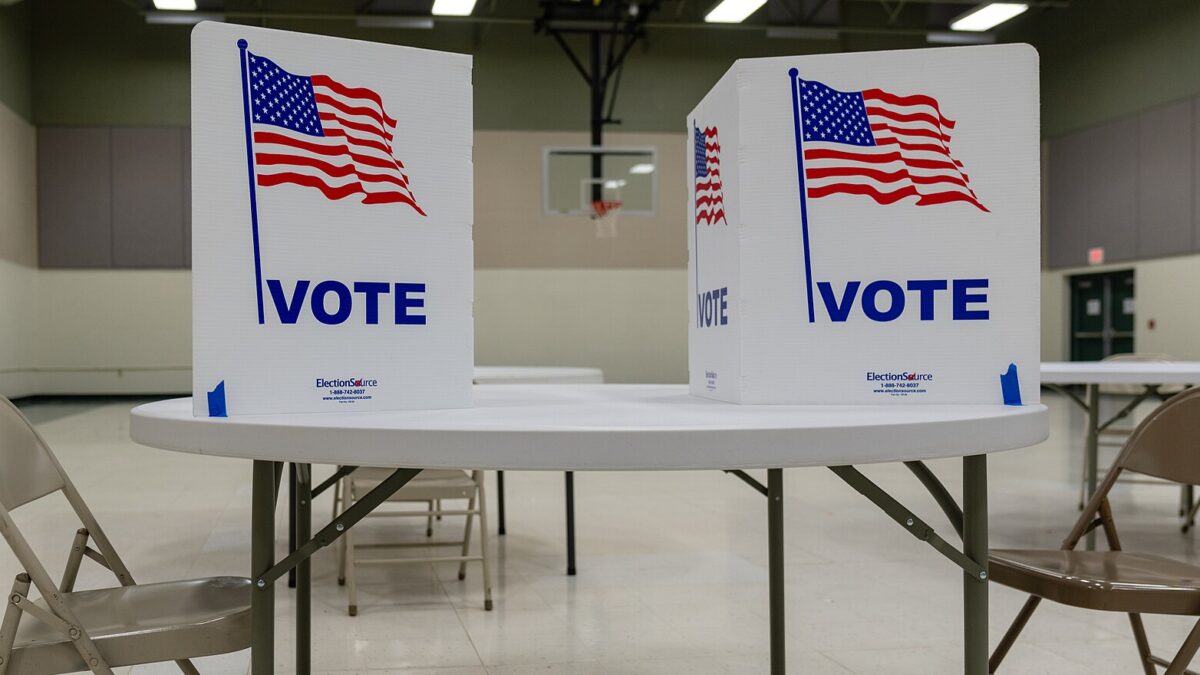

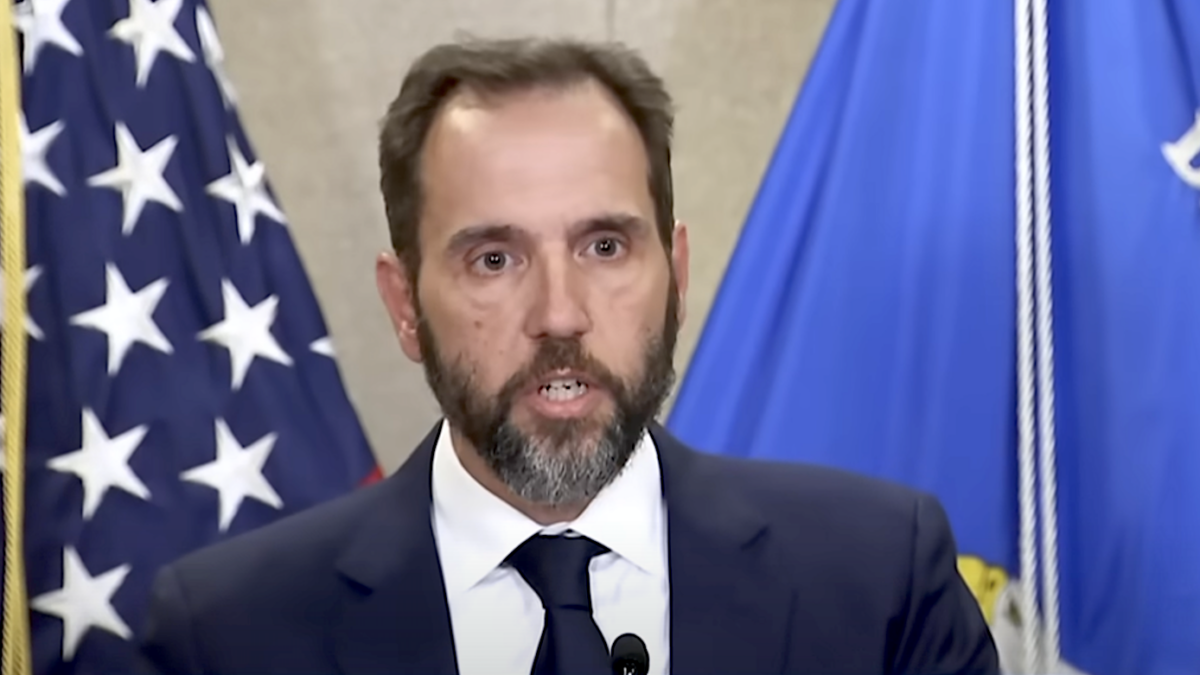

.jpg)






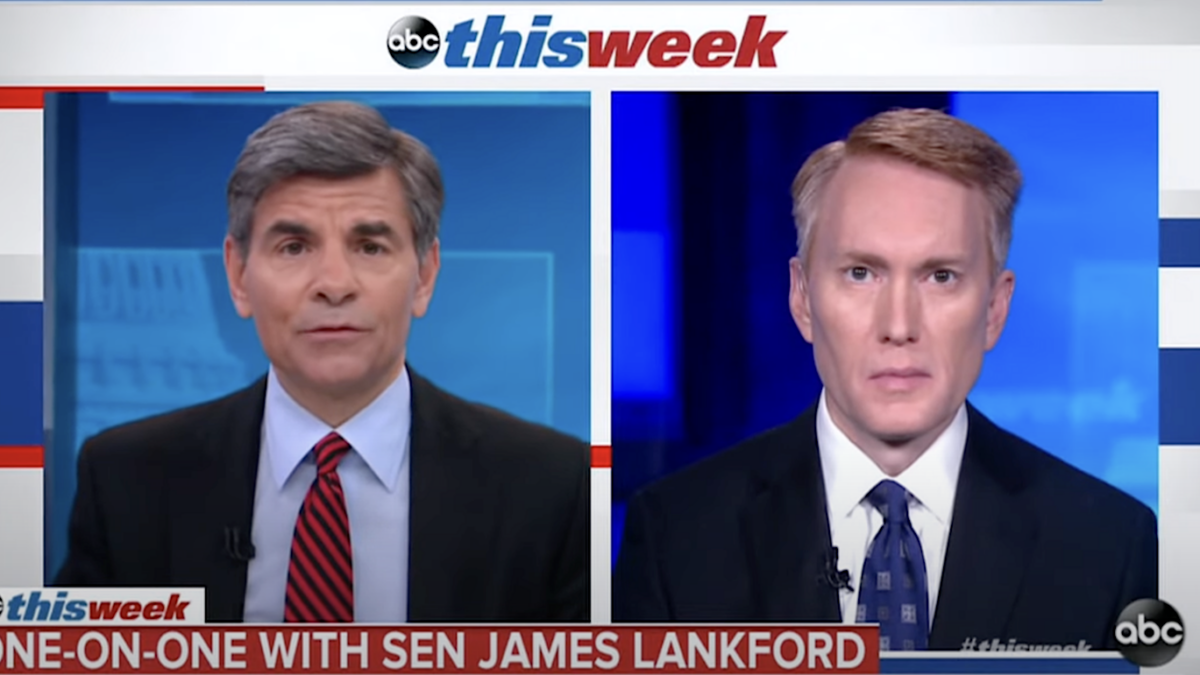



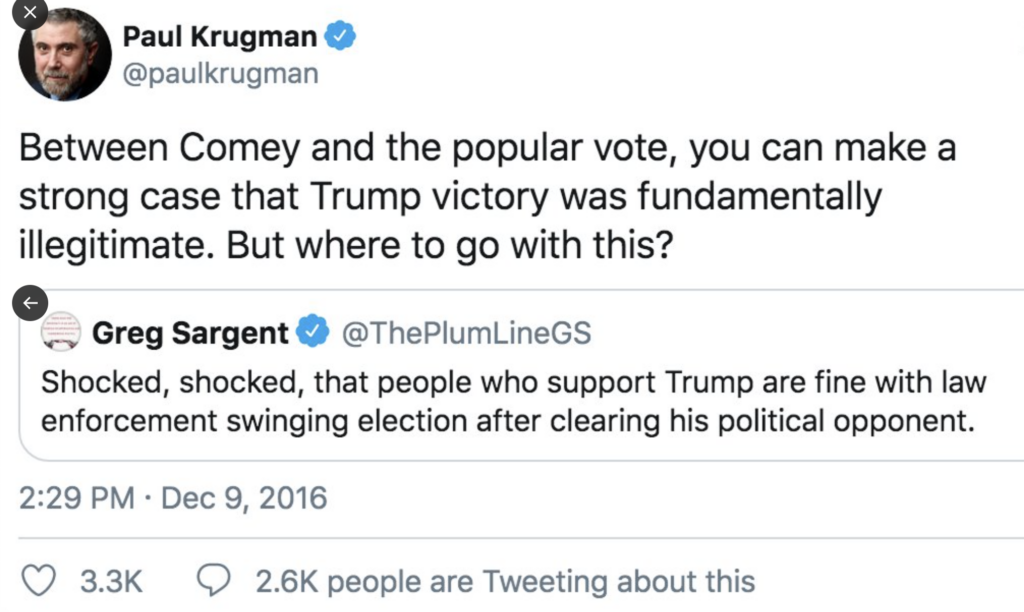
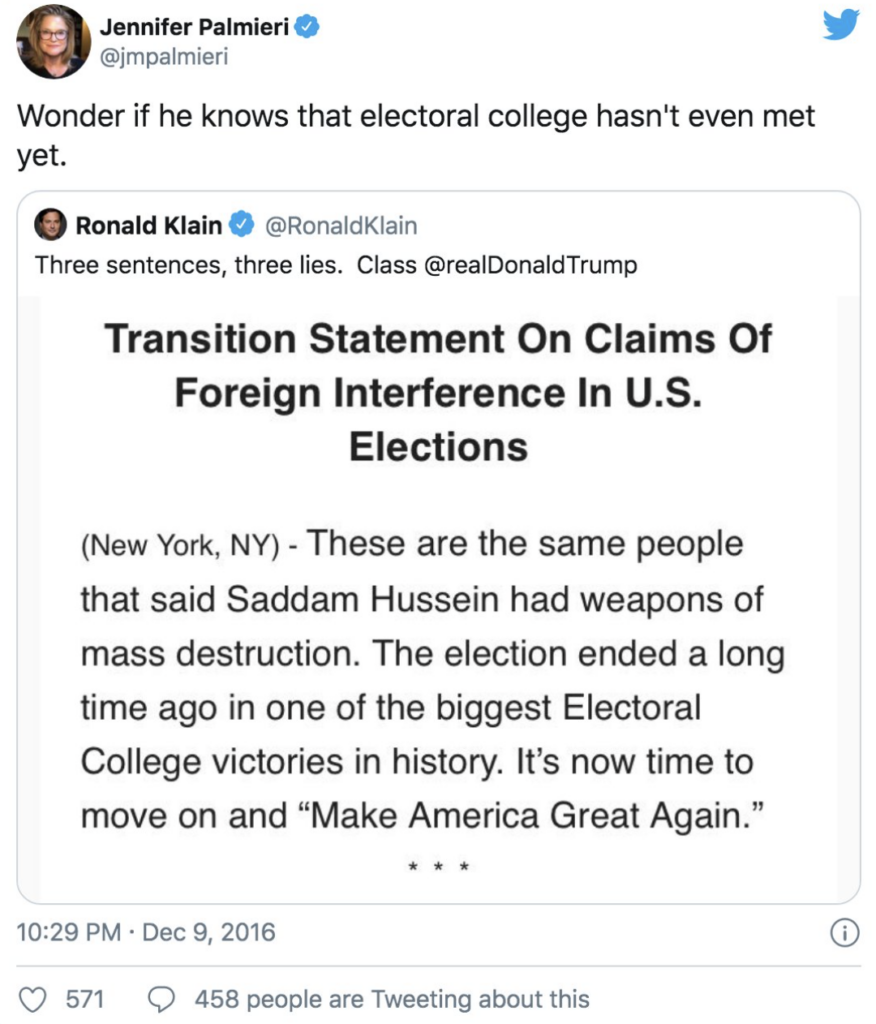
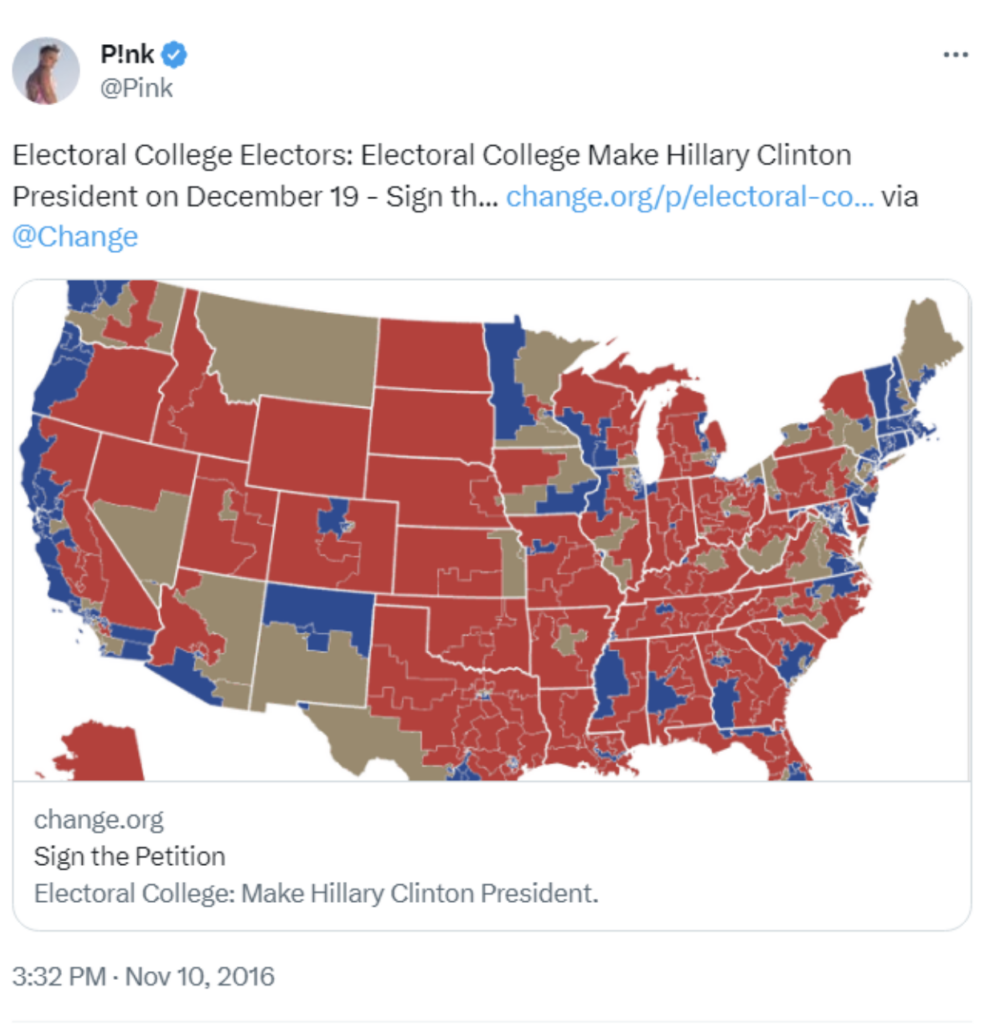
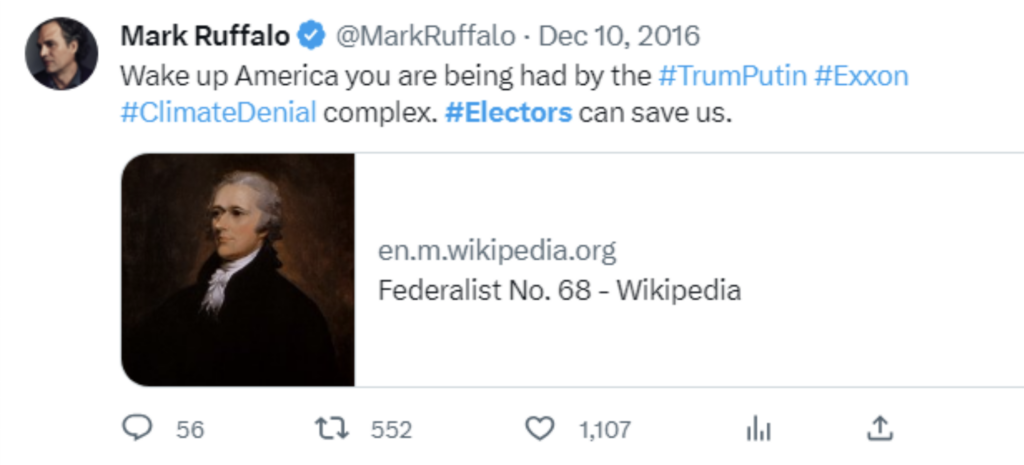

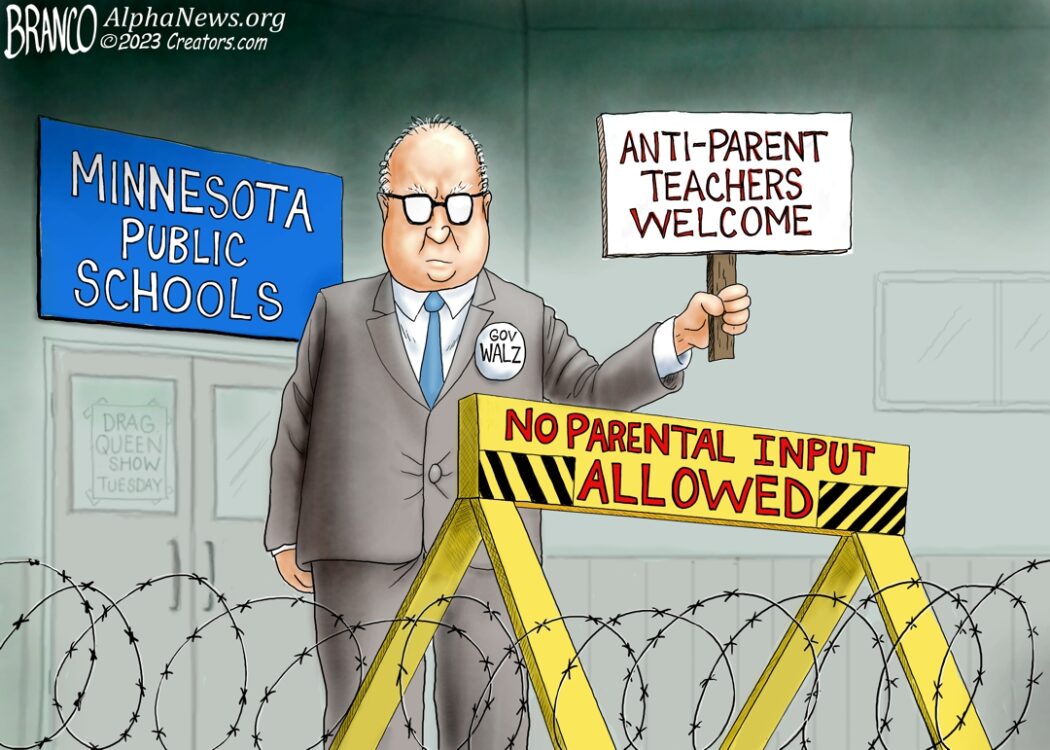
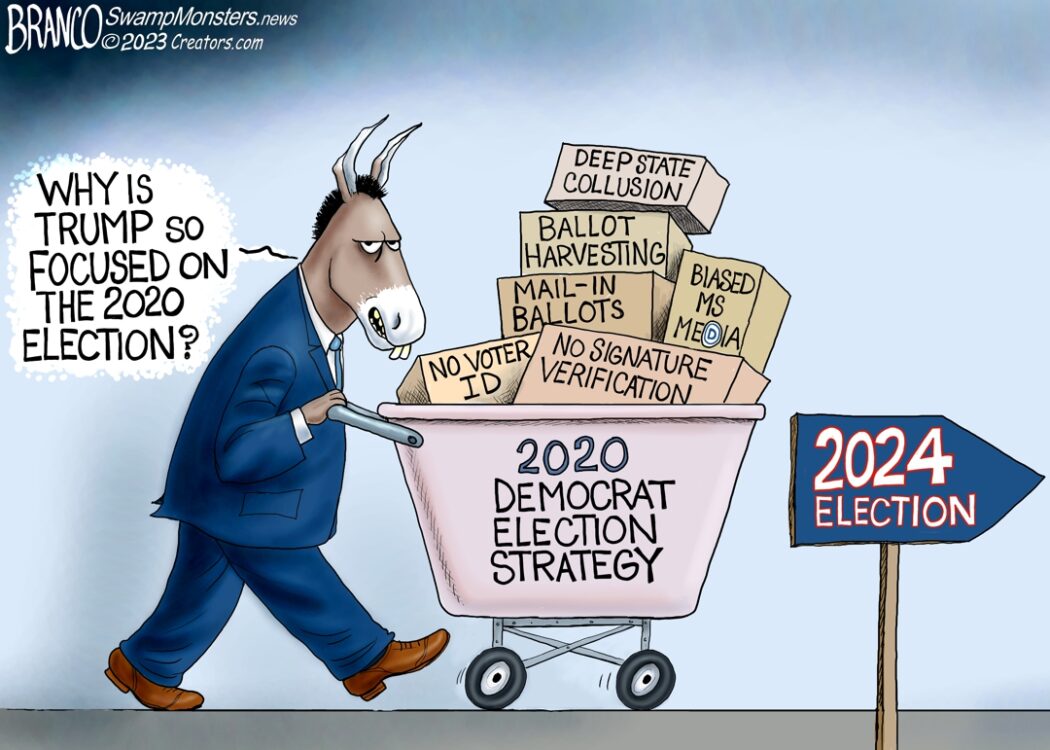



.jpg)


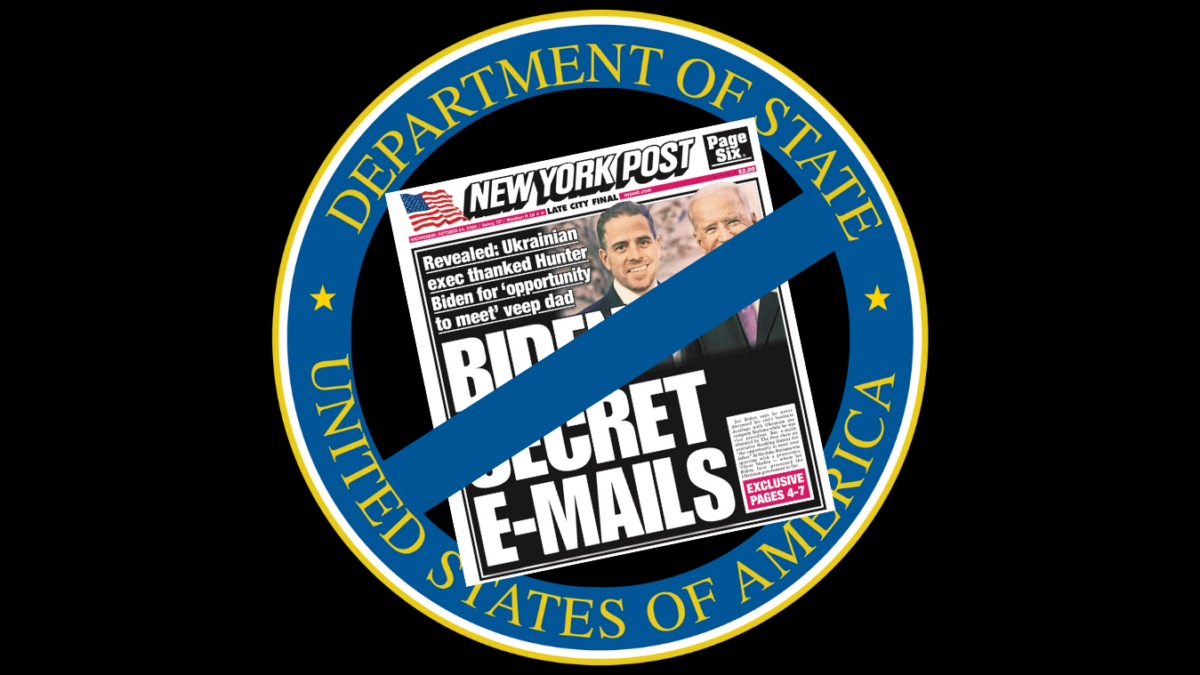

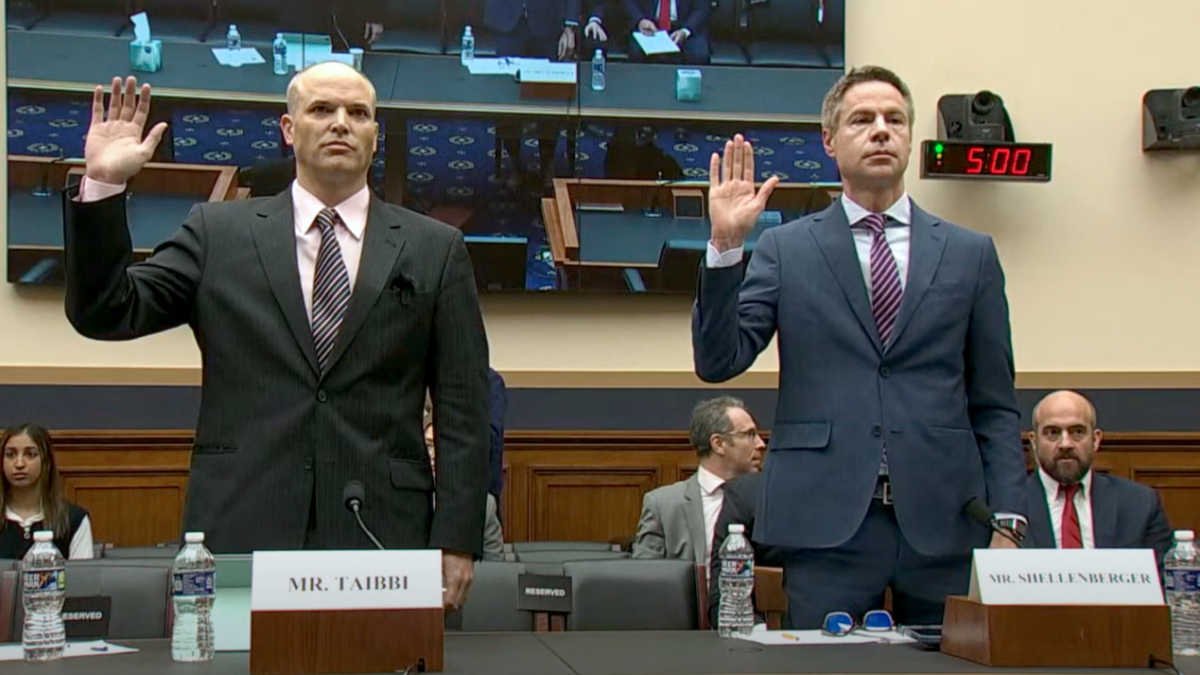
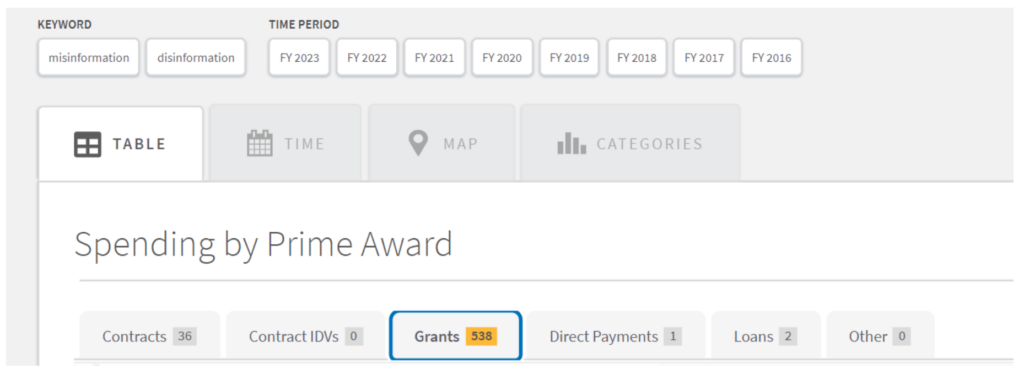
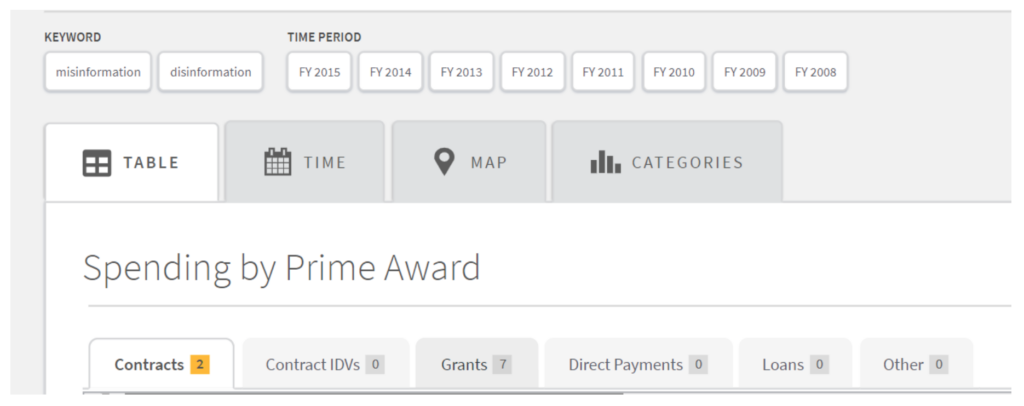
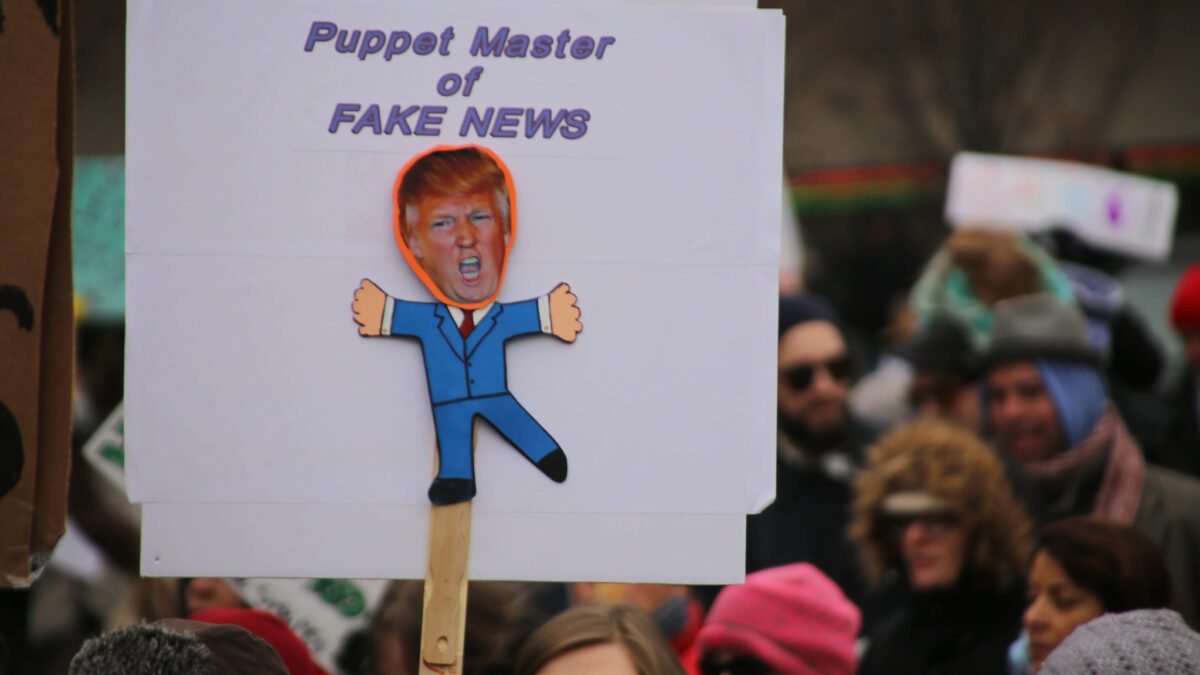
.jpg)


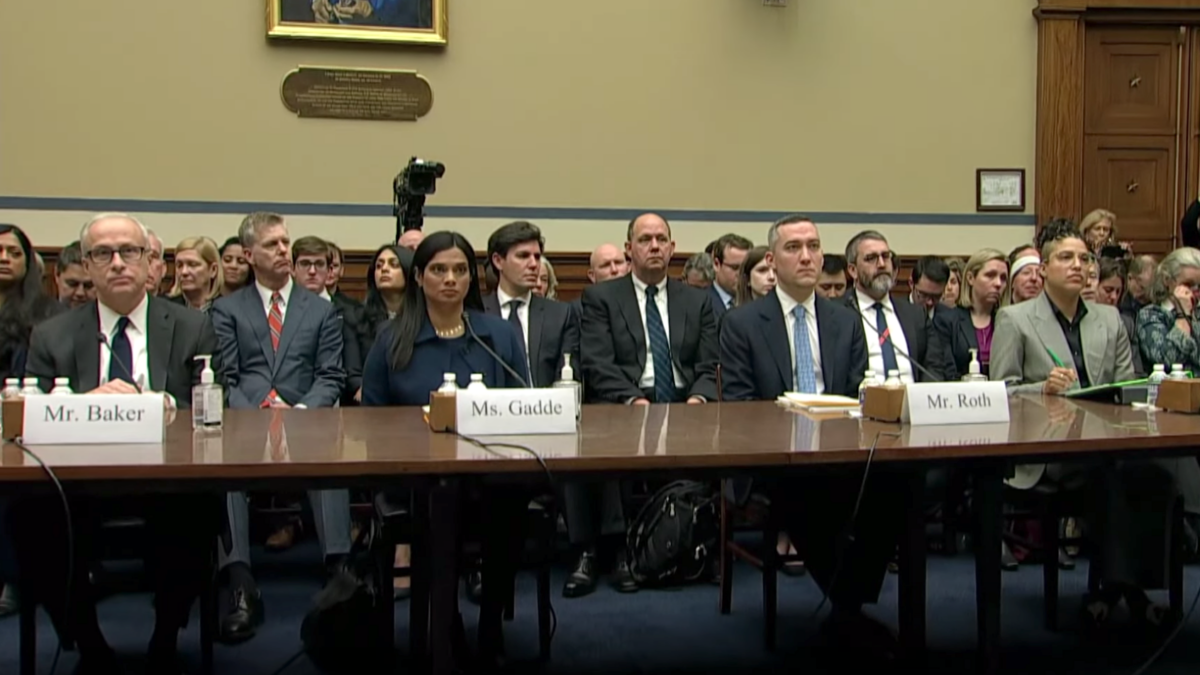
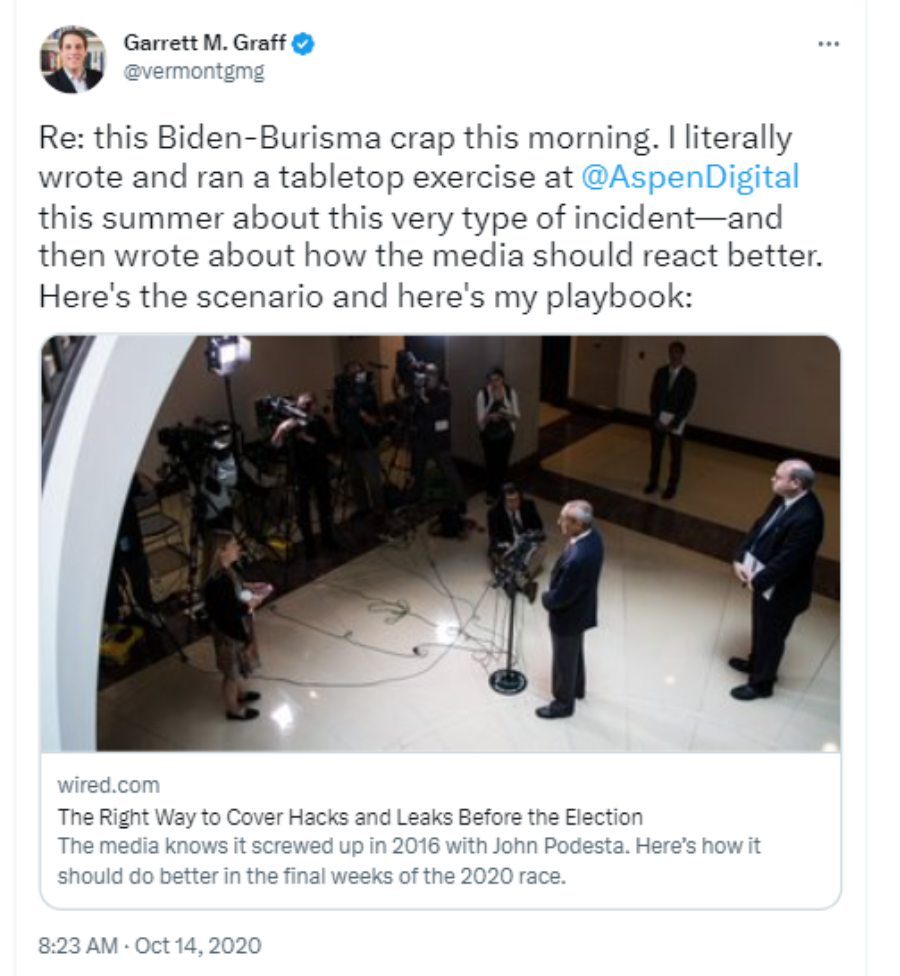
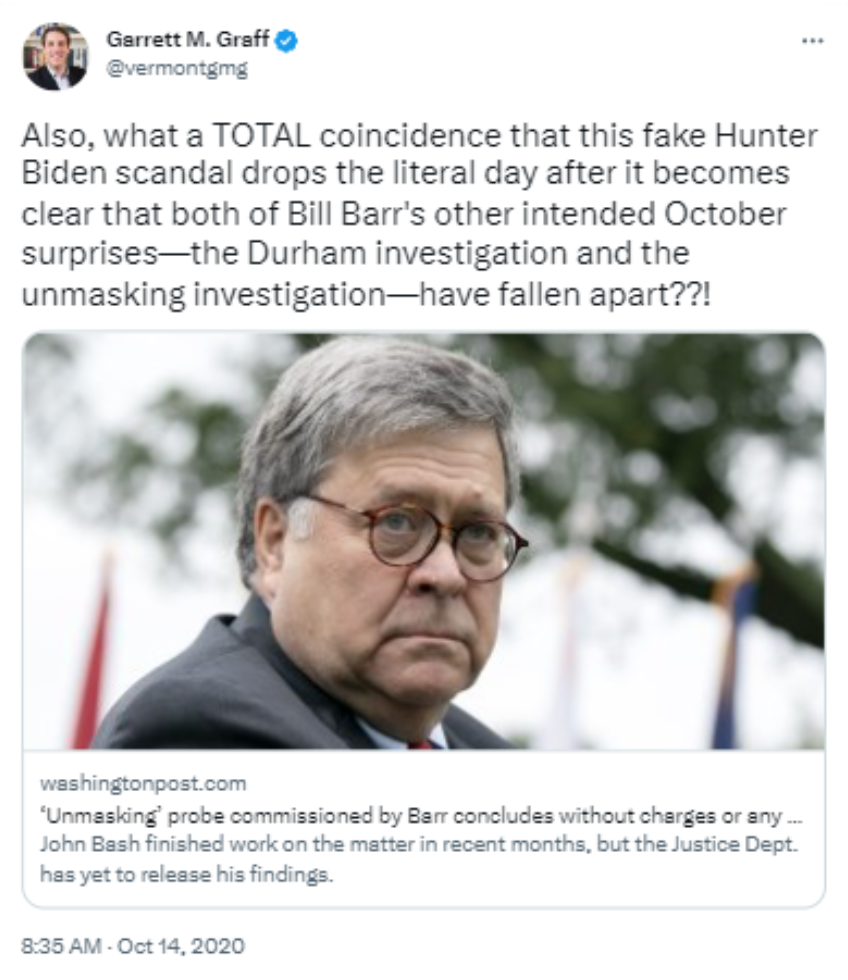
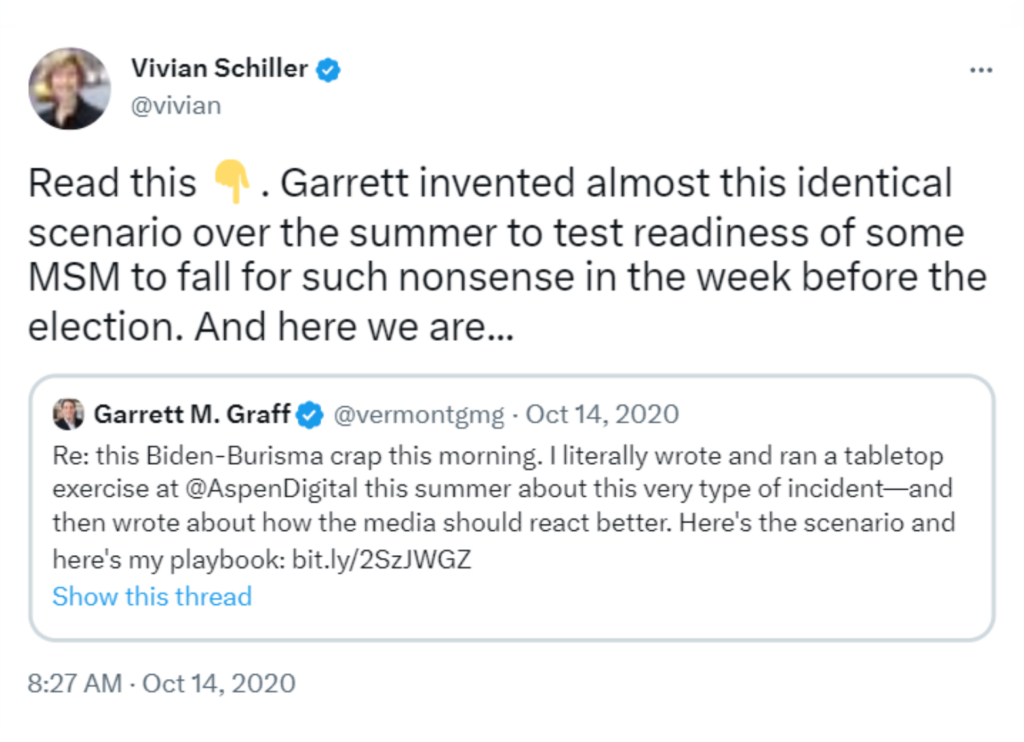
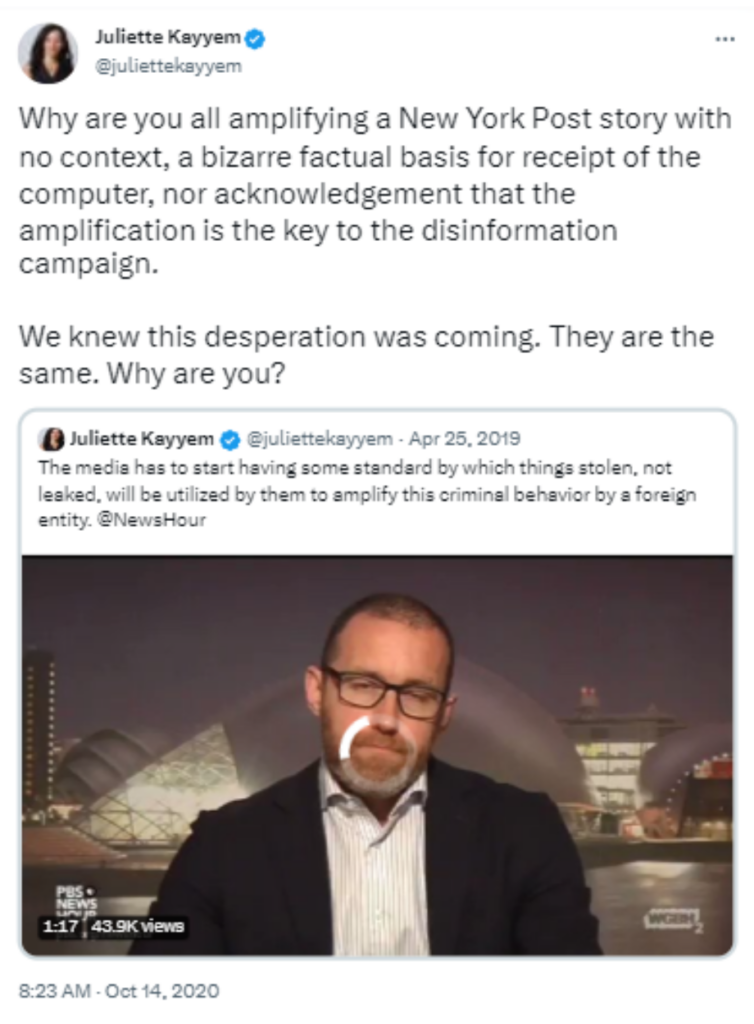
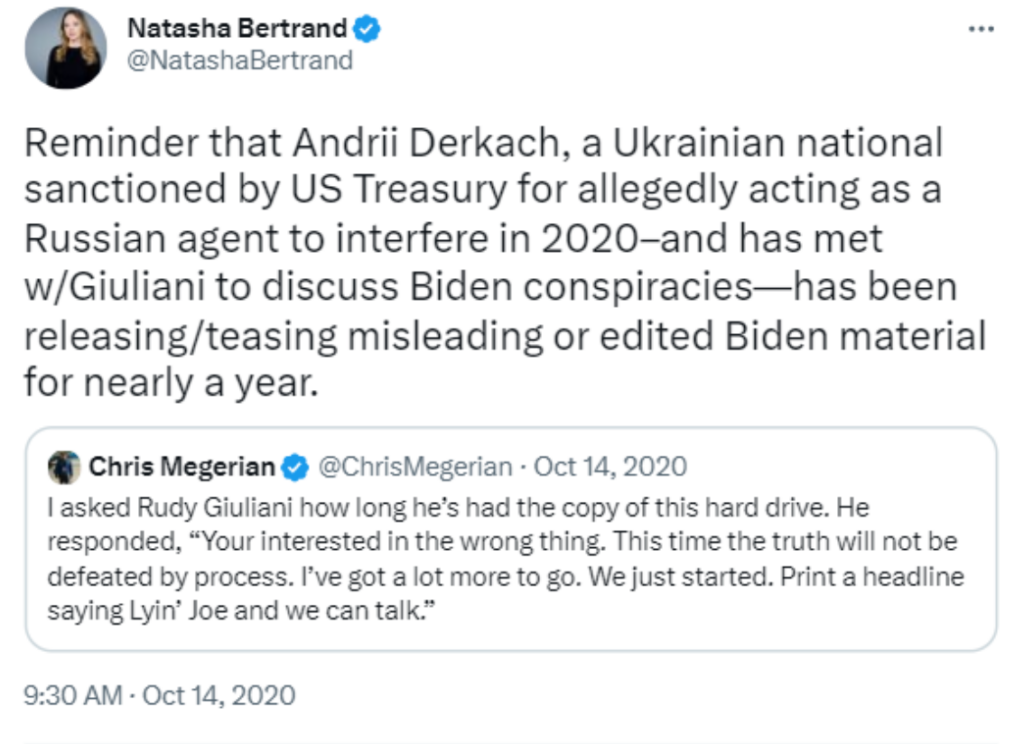
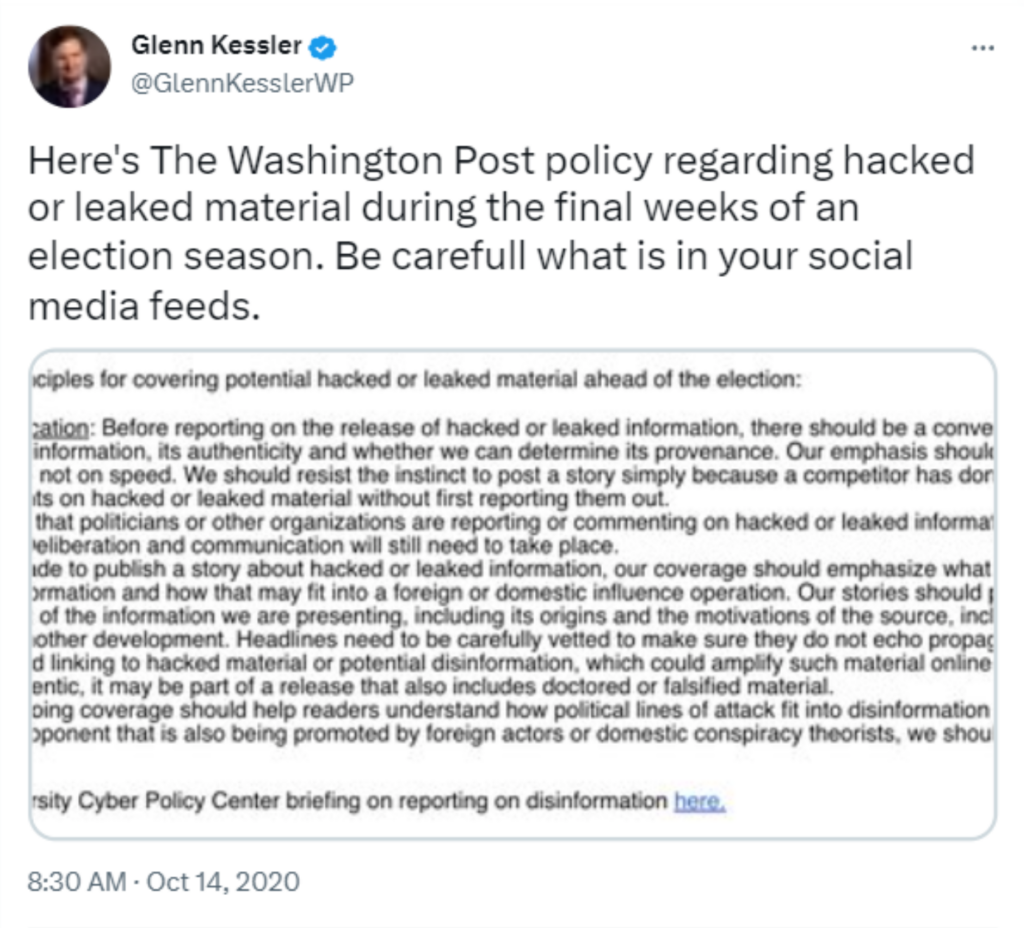
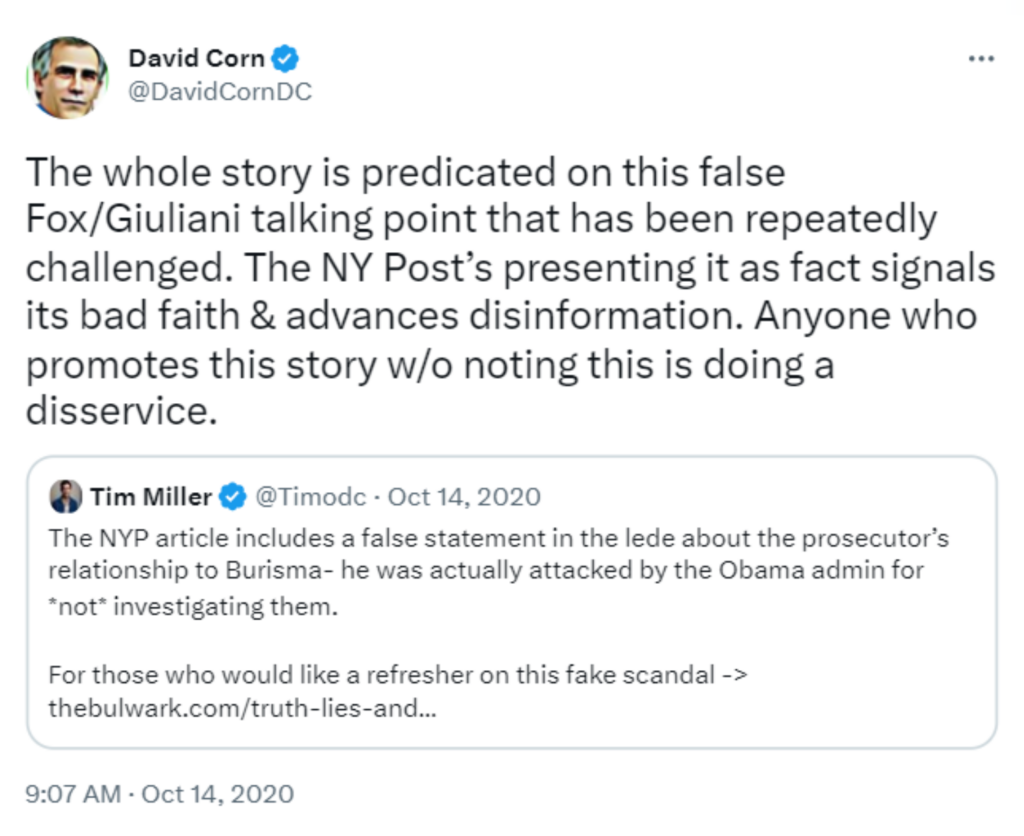
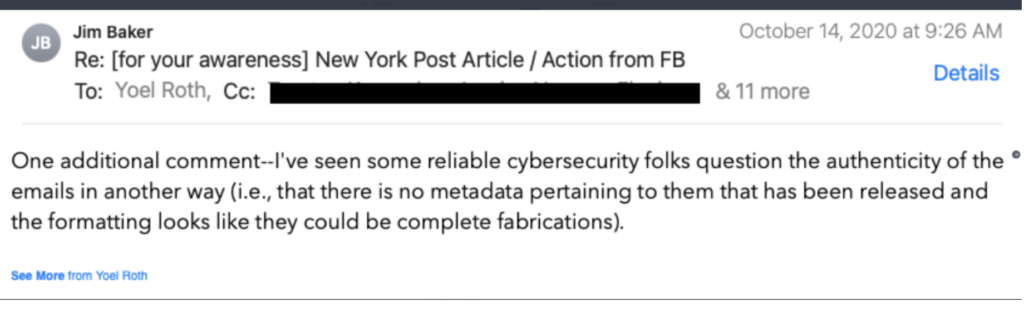










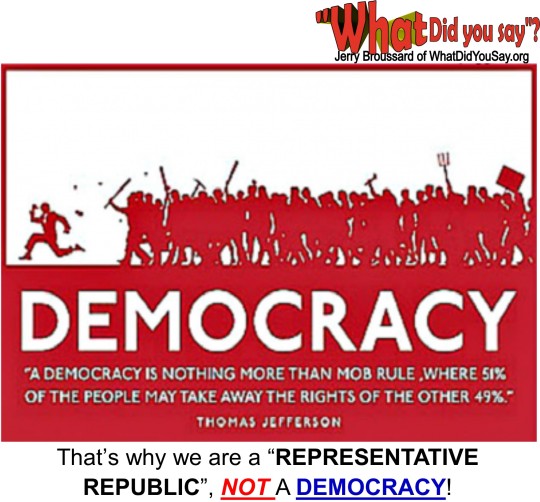
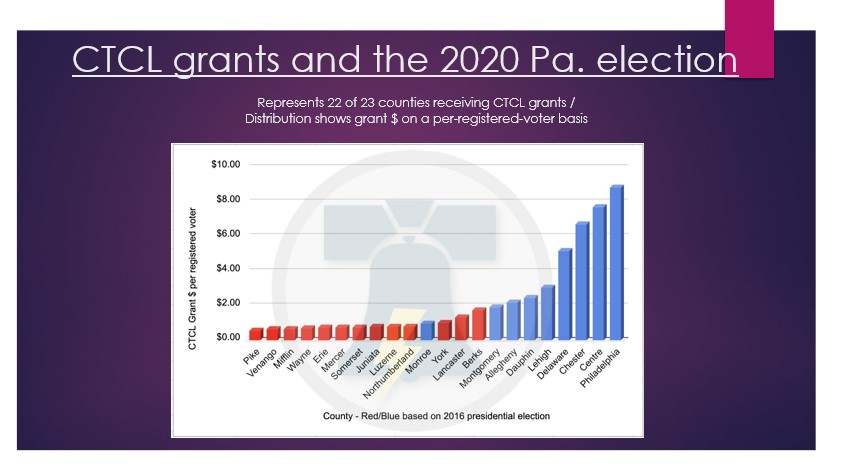



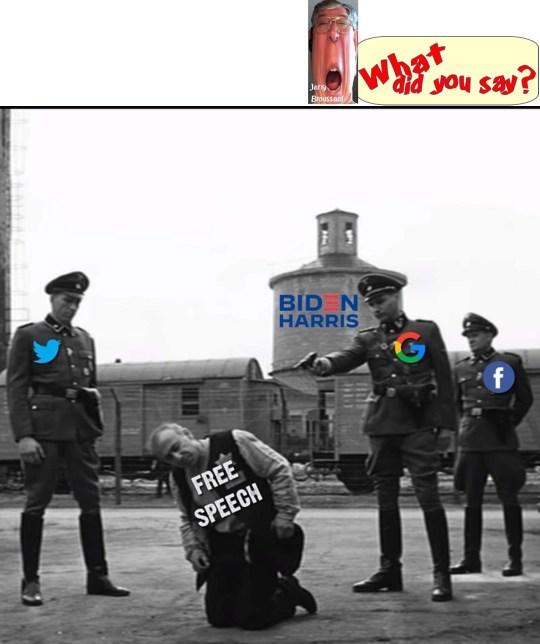
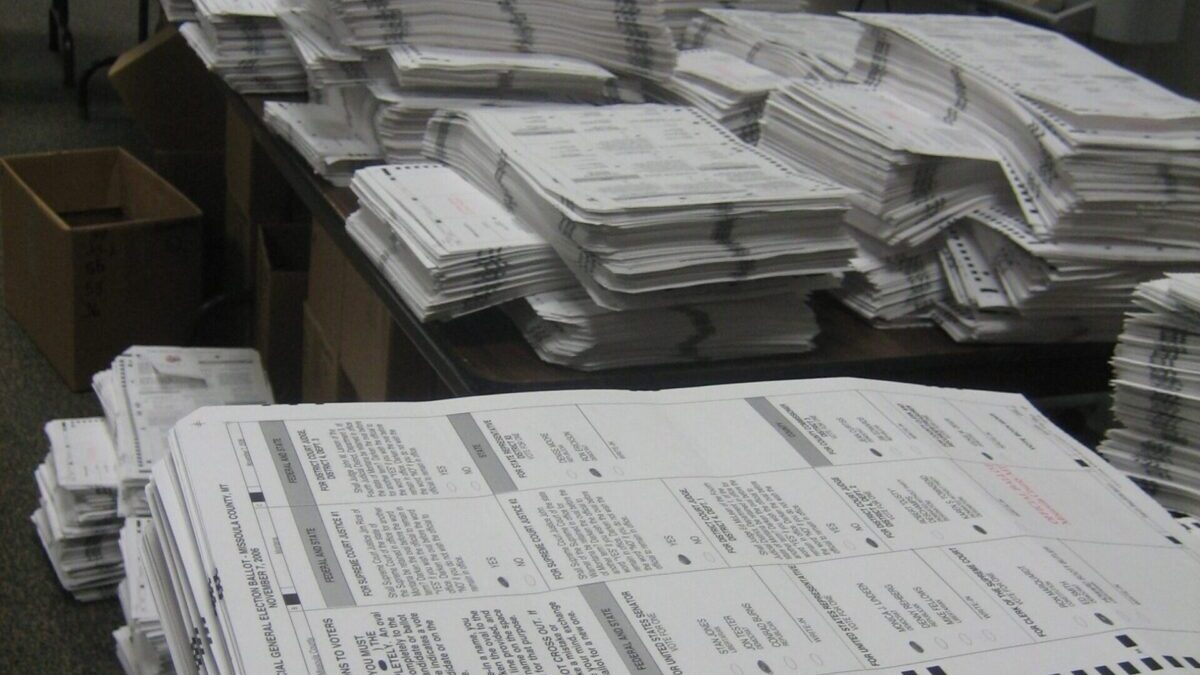


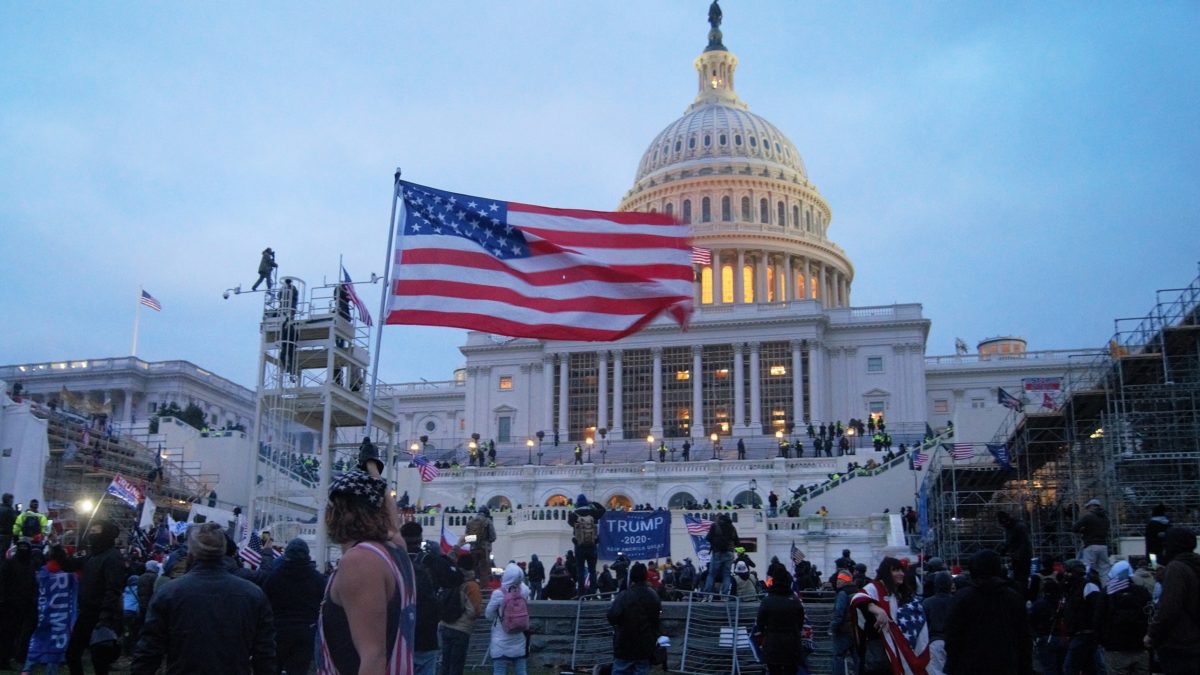

 What Did You Say?
You must be logged in to post a comment.