Perspectives; Thoughts; Comments; Opinions; Discussions

Posts tagged ‘voter ID’

Exclusive: Hundreds Of Ballots Cast By More Than 100 Potential Noncitizens In Texas, AG Says


By: Beth Brelje | July 15, 2025

Read more at https://thefederalist.com/2025/07/15/exclusive-hundreds-of-ballots-cast-by-more-than-100-potential-noncitizens-in-texas-ag-says/

It is good officials are still digging into the 2020 election, but it is past time to repair the election process for future elections.

Author Beth Brelje profile

Beth Brelje

Visit on Twitter@BethBrelje

More Articles

Welcome to 2025, where we are still uncovering election fraud from the 2020 and 2022 elections. Texas Attorney General Ken Paxton is investigating more than 100 possible noncitizens who may have voted in both the 2020 and 2022 elections, casting more than 200 ballots. In this case, most of the suspected illegal ballots were cast in Harris County. Paxton is also investigating in Guadalupe, Cameron, and Eastland counties, based on information from the Texas Secretary of State.

Add the possible 100 fraudulent voters announced this week to the 33 potential noncitizens who may have voted illegally in 2024. Paxton started investigating those 33 voters in June after the Texas secretary of state made a referral, based on information found in the U.S. Citizenship and Immigration Service’s (USCIS) SAVE database, showing they voted in the 2024 general election.

Some 1,200 federal agencies use SAVE to verify U.S. citizenship or determine current immigration. For example, when an applicant applies for a Social Security Number, a drivers license, or for public housing assistance, the agency will check SAVE to see if they are a citizen. Legally, noncitizens are not allowed to vote in U.S. elections.

“Illegal aliens and foreign nationals must not be allowed to influence Texas elections by casting illegal ballots with impunity. I will not allow it to continue,” Paxton said in a statement. “Thanks to President Trump’s decisive action to help states safeguard the ballot box, this investigation will help Texas hold noncitizens accountable for unlawfully voting in American elections. If you’re a noncitizen who illegally cast a ballot, you will face the full force of the law.”

No one can realistically say fraudulent, noncitizen voting doesn’t happen. There are too many examples to ignore. Sometimes it is a single incident with one voter, like the Chinese student living in Michigan who was improperly registered to vote and is charged with voting the November election. Other times, it is a group of voters, like when Michigan Secretary of State Jocelyn Benson found 15 likely noncitizens across the state voted in November’s election, but she said illegal activity is “very rare.”

So rare, that an audits of voter registration rolls in Iowa found 277 noncitizens registered to vote or actually voted in the 2024 election.  In Oregon, the elections director quit after officials discovered more than 300 noncitizens had been registered to vote, and the state’s Department of Motor Vehicles processed more than 54,600 voter registrations, 2021-2024, with an unknown citizenship.

Just last month, the Senate Judiciary Committee announced it is investigating newly declassified FBI documents alleging that in 2020 the Chinese Communist Party was making thousands of fake U.S. driver’s licenses to use to validate fake mail-in ballots. The investigation is ongoing, but we can already see it is a huge scandal. And the list goes on, and on, and on. Not rare.

The remedy is so simple. Mandatory voter identification at voter registration and when voting. The Safeguard American Voter Eligibility (SAVE) Act would keep noncitizens from voting by requiring proof of citizenship when registering to vote. It passed in the House in April and still has not moved in the Senate. It should be a bipartisan issue, but Democrats have claimed that providing identification is a burden that disenfranchises voters.

It is good officials are still digging into how the 2020 election went off the rails, so we understand the weak spots. But it is past time to shore up the election process with simple fixes like the SAVE Act, so in 2030 we are not still trying to figure out what happened in 2028.


Beth Brelje is an elections correspondent for The Federalist. She is an award-winning investigative journalist with decades of media experience.

Today’s Politically INCORRECT Cartoon by A.F. Branco


A.F. Branco Cartoon – Dems Keep Sinking

A.F. Branco | on March 26, 2025 | https://comicallyincorrect.com/a-f-branco-cartoon-dems-keep-sinking/

Rdical Left Policies Sinking the Democrats
A Political Cartoon by A.F. Branco 2025

Facebook Twitter Pinterest Flipboard

A.F. Branco Cartoon – Democrats continue to cling to the radical policies that lost them their last election, such as men in women’s sports, open borders, DEI, no voter ID, and political violence.

BRANCO TOON STORE

Greg Gutfeld on Attacks on Teslas: Democrats Don’t Realize the Only Thing They’re Burning Down is ‘Their F**ked Up Party’ (VIDEO)

Mike LaChance – The Gateway Pundit – March 22, 2025

During a recent monologue on this show, Greg Gutfeld addressed the leftist attacks on Tesla cars, owners and dealerships.
Gutfeld suggests that the attacks demonstrate that the left never really cared about climate change, which certainly seems accurate.
Greg goes on to say that in the end, these attacks are going to hurt the Democrats more than they hurt Elon Musk.
“Why is it whenever Dems get excited they egg on destruction? And what burns is the very thing they claim to champion. Post George Floyd, it was minority businesses, a billion dollars worth, and here it’s electric cars, the holy grail in their divine crusade to save the planet.” READ MORE

DONATE to A.F. Branco Cartoons – Tips accepted and appreciated – $1.00 – $5.00 – $25.00 – $50.00 – it all helps to fund this website and keep the cartoons coming. Also Venmo @AFBranco – THANK YOU!

A.F. Branco has taken his two greatest passions (art and politics) and translated them into cartoons that have been popular all over the country in various news outlets, including NewsMax, Fox News, MSNBC, CBS, ABC, and “The Washington Post.” He has been recognized by such personalities as Rep. Devin Nunes, Dinesh D’Souza, James Woods, Chris Salcedo, Sarah Palin, Larry Elder, Lars Larson, Rush Limbaugh, Elon Musk, and President Trump.

States Kamala Harris Won in 2024 Allow Voter Registration Without Photo ID


| American Patriot

Read more at https://libertyonenews.com/100-of-states-kamala-harris-won-in-2024-allow-voter-registration-without-photo-id/

A startling fact has emerged following the 2024 presidential election: every state won by Kamala Harris, along with Washington, D.C., allows voter registration without requiring a photo ID. This discovery has amplified concerns about election integrity, particularly in a political climate already fraught with division and distrust.

Kamala Harris secured victories in 19 states plus Washington, D.C., all of which allow voters to register without presenting a photo ID. These states include:

  • California
  • Colorado
  • Connecticut
  • Delaware
  • Hawaii
  • Illinois
  • Maine
  • Maryland
  • Massachusetts
  • Minnesota
  • New Jersey
  • New Mexico
  • New York
  • Oregon
  • Rhode Island
  • Vermont
  • Virginia
  • Washington
  • Washington, D.C.

In these states, voters can register using alternative forms of identification, such as utility bills, bank statements, or the last four digits of a Social Security number. Even for first-time voters, a photo ID is not strictly necessary; they can use non-photo documentation. Critics argue that this lack of uniform ID requirements leaves the system vulnerable to manipulation.

The concern over election security isn’t theoretical. It has been highlighted by past voter registration scandals, such as the case involving GBI Strategies in 2020. This firm, contracted by several Democratic-aligned organizations, was found submitting fraudulent voter registrations in Michigan and other states. These included fake names, forged signatures, and false addresses.

Despite widespread alarm, the FBI’s investigation into GBI Strategies has been ongoing for over four years with few details released to the public. Questions about the extent of fraudulent registrations and their impact on elections remain unanswered. Critics contend that such incidents demonstrate how easily the system could be exploited, especially in states with minimal ID requirements.

Proponents of stricter voter ID laws argue that the lack of photo ID requirements in these states undermines the integrity of elections. They point to the possibility of fraudulent registrations and even votes slipping through the cracks, particularly in close races.

Bobbie Gross, a county clerk in Colorado, emphasized the importance of security measures, stating:

“We need secure, transparent elections to maintain public trust. When people question the integrity of the system, it’s our responsibility to show them that safeguards are in place.”

Opponents, however, argue that voter ID laws could disenfranchise voters, particularly those from marginalized communities. They maintain that the risks of voter fraud are minimal compared to the potential harm of preventing eligible voters from participating in elections.

The debate over voter ID laws and election security is emblematic of a broader division in U.S. politics. Many conservatives see stricter ID requirements as essential to safeguarding democracy, while liberals often view them as unnecessary barriers to voting.

The controversy is unlikely to dissipate soon. The National Voter Registration Act and state-specific laws ensure a degree of flexibility in how voters can prove their eligibility. However, critics of these laws argue that without standardized photo ID requirements, the system will remain vulnerable.

The 2024 election results have reignited the push for stricter election laws. Republican lawmakers in several states have already proposed legislation to tighten ID requirements and eliminate loopholes in voter registration processes. Whether these efforts will gain traction remains to be seen, especially in states controlled by Democrats, where such measures are unlikely to pass.

As the nation grapples with these issues, one thing is clear: public trust in the electoral process is crucial. Without it, confidence in democratic institutions could erode further. Transparent and secure elections are not just about preventing fraud; they are about ensuring that every American’s vote is counted fairly and accurately.

Advocates for tighter election laws argue that photo ID requirements are a simple, common-sense solution to potential vulnerabilities. Critics counter that these measures are unnecessary and could suppress voter turnout. The path forward will depend on finding a balance that secures elections while ensuring accessibility for all voters.

Gallup: Over 80 Percent of Americans Support Voter ID and Proof of Citizenship Laws


By: Jonathan Turley | October 25, 2024

Read more at https://jonathanturley.org/2024/10/25/gallop-80-percent-of-americans-support-voter-id-and-proof-of-citizenship-laws/

This week, I wrote about polls that show the public is not buying the apocalyptic predictions of the imminent death of democracy unless Kamala Harris is elected president. Now, a new poll shatters another main talking point of pundits and the press. Democratic candidates, including Vice President Harris, have denounced voter identification laws as “Jim Crow 2.0” attacks on voters. A majority of voters have long supported these laws. According to a new Gallup poll, that majority is now a supermajority.

Despite unrelenting attacks on these laws in the media, eight in ten Americans now support both laws:

With less than two weeks to go in the presidential campaign and voting already underway in many states, 76% of U.S. adults favor the concept of early voting. Two other election law policies are supported by even more Americans — requiring photo identification to vote (84%) and providing proof of citizenship when registering to vote for the first time (83%). …

Majorities of Americans favor a range of election law policies that expand voters’ access to the ballot box, including early voting, automatic voter registration, and sending absentee ballot applications to all eligible voters. They also broadly support measures to limit fraud and ensure election integrity, including requiring photo identification to vote and providing proof of citizenship when first registering to vote.

There are few major political issues today that could show this type of overwhelming support, including from Democrats. Yet, both the Democratic politicians and pundits continue to denounce these laws.  Indeed, the campaign against Georgia resulted in their losing the All-Star Game and its economic benefits. Yet, under these laws, Georgia is setting records in the turnout of voters.

In the meantime, the Biden Administration is continuing to oppose and legally challenge efforts of states like Virginia to remove alleged non-citizens from their voting rolls.

The Federalist’s 2024 Battleground State Elections Guide


By: The Federalist Staff | October 10, 2024

Read more at https://thefederalist.com/2024/10/10/the-federalists-2024-battleground-state-elections-guide/

'I voted' sticker.

Author The Federalist Staff profile

The Federalist Staff

More Articles

With Election Day less than a month away, election processes and early voting are kicking into gear in several swing states around the country. With different election laws and court rulings governing election administration in each state, it can be tough to keep up with the myriad guidelines and rules governing the electoral process. That’s why The Federalist’s 2024 Battleground State Elections Guide is here to help.

From ballot return deadlines to mail-in voting rules, here are all the key dates and information you’ll need to understand the election process in swing states throughout the country this cycle.

Arizona

In-Person Early VotingBegan on Oct. 9 and ends on Nov. 1.

Mail-In Voting: Ballots began to be mailed out Oct. 9.

Ballot Return Deadlines: Mail-in ballots must be returned by 7 p.m. local time on Election Day to be counted. These ballots can be returned via mail or delivered in person. Polling locations for in-person voting on Election Day also close at 7 p.m. local time.

Ballot HarvestingArizona law stipulates that only a “family member, household member or caregiver of the voter” may return the elector’s mail-in ballot.

Mail-In Ballot Signature Requirements: All absentee voters are required to sign the affidavit on the ballot envelope in order for their vote to be tabulated. The envelope signature must match the signature on the voter’s registration form.

Voter ID: Arizona requires in-person voters to present one type of acceptable photo ID or two types of non-photo ID.

Citizenship Requirements: The U.S. Supreme Court recently allowed part of a state law to go into effect that requires eligible electors to provide documentary proof of citizenship when registering to vote via state registration form. Arizonans may still register as federal-only voters with no proof of citizenship. The Arizona Constitution further specifies only U.S. citizens can vote in elections.

Post-Election Day Ballot CuringArizona law permits a “curing” period, in which local officials are authorized to contact voters to correct signature issues on their mail ballots. Any issue must be corrected “not later than the fifth business day after a primary, general or special election that includes a federal office or the third business day after any other election.”

Major Ballot Initiatives: Arizona’s ballot is expected to be stacked with roughly a dozen ballot initiatives this November. Among the most notable are constitutional amendments to effectively legalize late-term abortion (Proposition 139), raise the threshold for citizen-initiated ballot measures (Proposition 134), give the state legislature power to limit the governor’s emergency powers (Proposition 135), and prohibit open primary elections (Proposition 133).

Also set to appear on the ballot is a constitutional amendment that would institute open primaries and allow for the adoption of ranked-choice voting for general elections (Proposition 140). Despite the discovery that roughly 38,000 pairs of signatures gathered in support of the measure were duplicates, the Arizona Supreme Court ruled that votes cast for the measure may count.

For more information on the full list of Arizona ballot measures, see here.

Biggest Election Fights: In September, Arizona election officials discovered roughly 98,000 registered voters lacking documentary proof of citizenship (DPOC) due to an error stemming from how the state’s Motor Vehicle Division shares driver’s license information with the voter registration system. As noted above, individuals who do not provide DPOC may still register as “federal-only” voters and can only cast ballots in federal races.

According to the secretary of state’s office, most of the affected voters are registered Republicans. The Arizona Supreme Court granted these electors the ability to vote full-ballot this November.

The secretary of state’s office revealed on Sept. 30 that election officials found an additional 120,000 voters affected by the issue who lack DPOC.

Georgia

In-Person Early VotingBegins on Oct. 15 and ends on Nov. 1. 

Mail-In VotingAbsentee ballots were sent to UOCAVA voters on Sept. 17.  Registrars began sending out absentee ballots for the general public on Oct. 7. The last day to request a mail-in ballot is Oct. 25. 

Ballot Return Deadlines: Absentee ballots (excluding UOCAVA ballots) must be returned by 7 p.m. local time on Election Day to be counted. These ballots can be returned in person, through the mail, or at a drop box location. Polling locations for in-person voting on Election Day also close at 7 p.m. local time. 

Ballot Harvesting: Georgia does not permit ballot harvesting, but only allows certain family members or a household member to return a voter’s ballot. (A caretaker may also return a disabled voter’s ballot.)

Mail-In Ballot Signature Requirements: Absentee ballot envelopes contain an “oath which must be signed by the voter.” Georgia also “requires the voter’s driver’s license number or state identification card number, which is compared with the voter’s registration record,” according to the National Conference of State Legislatures. If a voter is unable to sign his ballot, Georgia “law requires the voter make a mark,” according to Carroll County’s election website. Ballots lacking a signature or mark are rejected, according to Carroll County. 

Voter ID: “Georgia law requires photo identification when voting, either in person or absentee,” according to the secretary of state’s website. Acceptable forms of identification include any state or federal government-issued photo ID (including a driver’s license or a valid passport), a student ID from a Georgia public college or university, or a military or tribal photo ID.

Citizenship Requirements: Since 2010, Georgians registering to vote have been required to provide evidence of their U.S. citizenship, including a driver’s license or driver’s license number as long as the registrant has previously provided proof of citizenship to the Department of Driver Services. For those who don’t possess any of the accepted citizenship documents, Georgia law tasks the State Election Board with establishing “other documents or methods” for proving a person’s citizenship. However, it appears certain voters may be able to evade some of the safeguards in place.  

Post-Election Day Ballot Curing: Georgia law permits a “curing” period, in which local officials are authorized to contact voters to correct signature issues on their absentee ballots. The “last day for voters to cure timely submitted absentee ballots if they failed to sign the oath or information mismatch” is Nov. 8. 

Major Ballot Initiatives: Georgia will have three initiatives on the November ballot. One would create a Georgia Tax Court “with judicial power and statewide jurisdiction,” the second would provide “for a local option homestead property tax exemption,” and the third “exempts property that is valued at less than $20,000 from the personal property tax,” according to Ballotpedia

Biggest Election Fights: The conservative-led State Election Board has clashed with Democrats and Georgia’s Republican-led secretary of state’s office recently, especially on the topic of whether election officials should be forced to rubber-stamp election results even if they have concerns about the election’s administration.

Republican officials like Fulton County election board member Julie Adams argue they should be able to investigate concerns about the administration of an election before certifying the results, rather than rubber-stamping results they believe are legally dubious.

Democrats are also waging a series of legal challenges against the State Election Board, which has passed a series of rules aimed at ensuring the number of ballots cast matches the number of voters who voted, among other election integrity measures.

Michigan

Voter Registration: Michiganders can register to vote at any time up to 8 p.m. on Election Day. They can register to vote online, by mail, or in person at the local clerk’s office.

In-Person Early Voting: The Michigan Department of State tells voters early voting will be available “for a minimum of nine consecutive days, ending on the Sunday before an election.” So early voting will start Oct. 26 at the latest, but communities can start the process earlier, allowing it to run for as many as 29 days.

Mail-In Voting: Absentee ballots are available beginning 40 days ahead of every election. Voters can request a ballot from the local clerk, and can opt-in to receive absentee ballots ahead of every federal, state, and local election. After Michigan voters approved no-excuse absentee voting in 2018, Proposal 2, which passed in 2022, further instituted mail-in voting practices and myriad other election policies supported by the left.

Ballot Return Deadlines: Voters must return absentee ballots to the local clerk’s office by 8 p.m. on Election Day to be counted, but overseas voters simply need their ballots to be postmarked by Election Day and received by clerks within six days after the election.

Ballot Harvesting: Michigan law allows an immediate family member or “individual residing in your household” to return a voter’s ballot. A voter may also request the clerk who issued a ballot help return it. 

Mail-In Ballot Signature Requirements: Absentee voters must sign the envelope with a signature matching their state ID or voter registration application.

Voter ID: The state requires in-person voters to show a photo ID or sign an affidavit claiming they don’t have one. Acceptable documents include a current student ID or government ID such as (but not limited to) a U.S. passport or state driver’s license. Michigan does not require a copy of an ID to vote by mail.

Citizenship Requirements: It is illegal for noncitizens to vote in federal elections, and voter registration forms and ballot applications require a person to attest that he is a citizen, but Michigan does not require documentary proof of citizenship from would-be voters.

Post-Election Day Ballot Curing: If a signature does not match that in the local clerk’s records, Michigan law requires clerks to contact the voter to “cure” the signature and solve the issue. According to the secretary of state’s office, voters may cure their signatures until 5 p.m. the third day after the election.

Major Ballot Initiatives: Michigan will have no statewide ballot measures in November.

Biggest Election Fights: Democrat Secretary of State Jocelyn Benson fought to keep third-party candidate Robert F. Kennedy Jr. on the ballot and remove independent Cornel West from the ballot, both of which actions would likely help Vice President Kamala Harris’ chances.

The Republican National Committee has filed multiple lawsuits against Benson for her guidance to clerks on handling ballots and her alleged failure to clean the state’s voter rolls. The Public Interest Legal Foundation has also sued Benson for an alleged lack of voter roll maintenance.

Nevada

Voter Registration: The deadline to register online is Oct. 23. Mailed voter registration forms had to be postmarked by Oct. 8.

Nevada also offers same-day registration, in which eligible electors may register and vote in person during the early voting period or on Election Day. Those who choose this option must present a valid Nevada driver’s license or Nevada ID card. Voters will receive their ballots to vote after the registration process is completed.

In-Person Early VotingBegins on Oct. 19 and ends on Nov. 1.

Mail-In Voting: Every registrant listed as “active” on Nevada’s voter rolls is automatically mailed a ballot every election. Voters can request to opt out of this mailing list.

According to the National Conference of State Legislatures, Nevada law does not specify when election officials may start sending mail-in ballots to voters. State law does, however, require these officials to send electors their ballots “not later than the 14 days before the election.”

Ballot Return Deadlines: All ballots that are dropped off in person must be submitted by 7 p.m. local time on Election Day. According to the Nevada secretary of state’s office, “Mail-in ballots that are postmarked on or before the day of the election AND received by the 4th day after election day by 5 p.m., will be accepted as received and processed according to Nevada State law.”

Ballot Harvesting: Nevada law permits any “person authorized by the voter [to] return the mail ballot on behalf of the voter by mail or personal delivery to the county clerk, or any ballot drop box established in the county.”

Mail-In Ballot Signature Requirements: All electors voting via mail must sign the ballot envelope for it to be counted. The envelope signature must match the signature on the voter’s registration form.

Voter ID: Nevada does not require a person to show ID to vote. As summarized by Ballotpedia, state law requires a Nevada in-person voter to “sign his or her name in the election board register at his or her polling place.” That signature is then “compared with the signature on the voter’s original application to vote or another form of identification, such as a driver’s license, a state identification card, military identification, or another government-issued ID.”

Citizenship Requirements: Nevada law requires all eligible residents to be U.S. citizens to vote, although the state constitution does not explicitly stipulate only U.S. citizens can vote. The state does not require documentary proof of citizenship from people voting or registering to vote.

Post-Election Day Ballot CuringNevada law permits a “curing” period, in which local officials are required to contact voters to allow them to correct signature issues on their mail-in ballots or otherwise confirm the signature affixed to the ballot belonged to them. The voter “must provide a signature or a confirmation, as applicable, not later than 5 p.m. on the sixth day following the election” for the ballot to be counted.

Major Ballot Initiatives: There will be seven measures appearing on Nevada’s 2024 ballot, six of which are constitutional amendment proposals. Among the most notable are initiatives instituting ranked-choice voting (Question 3), effectively legalizing late-term abortion (Question 6), and requiring electors to present a valid form of ID in order to vote (Question 7).

[RELATED: Ranked-Choice Voting Is A Nightmare — And It’s On The Ballot In Nevada]

Biggest Election Fights: The top issue raising concerns among election integrity activists in the state is the accuracy of Nevada’s voter rolls. Organizations such as the Public Interest Legal Foundation have documented what appear to be alarming inaccuracies within the voter registration lists, such as finding some registrants’ addresses listed at bars and casinos. Efforts by the Citizen Outreach Foundation to file citizen-led challenges to have these allegedly ineligible registrants removed have been met with resistance by Democrat Secretary of State Cisco Aguilar, whose office recently issued a memo instructing local officials to stop processing the group’s challenges.

North Carolina

Voter Registration: The standard deadline to register to vote is 5 p.m., Oct. 11. However, North Carolinians can register to vote after the Oct. 11 deadline in person at early voting locations.

In-Person Early VotingBegins Oct. 17 and ends at 3 p.m. on Nov. 2.

Mail-In Voting: Any registered voter in North Carolina can vote by mail for any reason. Voters must request the ballot using an absentee ballot request form, either online or with a paper form. This year, voters must request absentee ballots by Oct. 29 at 5 p.m.

Ballot Return Deadlines: Ballots must be returned by Election Day, Nov. 5 at 7:30 p.m. (with exceptions for UOCAVA voters).

Ballot Harvesting: North Carolina law permits a near relative or legal guardian to return a voter’s absentee ballot. It is otherwise a class I felony for anyone to deliver a ballot to a voter or return it for them.

Mail-In Ballot Signature Requirements: Voters must sign their absentee ballot envelope.

Absentee ballots must be filled out in the presence of two adult witnesses who are not disqualified by other state statutes. Those two persons must print and sign their names on the application and certificate, as well as provide their addresses. Voters can also fulfill the requirement with the seal and signature of one notary public.

Voter ID: A photo ID is generally required to vote in North Carolina, but the address on the ID “does not have to match the voter registration records.”

If an in-person voter does not have a voter ID, he will be asked to either complete an ID exception form and vote provisionally, or vote provisionally and return to his county elections office with a valid ID “by the day before [the] county canvass.” North Carolinians voting by mail are required to provide a copy of a photo ID when returning their ballot, but they can also fill out an exception form. Counties are required to count provisional ballots as long as the ID exception forms are “properly completed.”

Exceptions for not showing an ID are expansive, and range from a disability to “work or school schedule” to a religious objection to being photographed. (Being the victim of a declared natural disaster occurring withing 100 days of Election Day also qualifies a voter for an ID exception.) Mail-in voters who are somehow unable to attach a copy of their ID must include either their driver’s license number or the last four digits of their Social Security number.

North Carolina does not require photo ID for voters covered under the Uniformed and Overseas Citizens Absentee Voting Act.

Citizenship Requirements: North Carolina law requires U.S. citizenship to register to vote. However, citizenship documents are not required to register.

Post-Election Day Ballot Curing: North Carolina allows for ballot curing in certain circumstances, including if the voter “did not sign the voter certification,” “signed the application in the wrong place,” or failed to include a copy of a photo ID with an absentee ballot.

Major Ballot Initiatives: North Carolina only has one ballot initiative certified to appear on the ballot this November. The Citizenship Requirement for Voting Amendment was referred to voters by the state legislature and would amend the state constitution to provide that only eligible U.S. citizens can vote in the state. The amendment would prohibit local governments from allowing noncitizens to vote.

Biggest Election Fights: The RNC has filed several lawsuits against the North Carolina State Board of Elections.

The western part of the state was also significantly damaged by Hurricane Helene, which will make it more difficult to vote in the deep-red region of the state, though state officials are in the process of implementing emergency election procedures.

Pennsylvania

Voter Registration: The deadline to register to vote in Pennsylvania is Oct. 21. The state implemented automatic voter registration in September 2023 through the Department of Motor Vehicles. Since then, anyone who gets a driver’s license and is eligible to vote is automatically registered unless they intentionally opted out of voter registration. Pennsylvanians may also register online, by mail, or in person at their county election office.   

In-Person Early Voting: Pennsylvania treats early voting and mail-in voting the same. Voters can go to their county election office, receive a mail-in ballot, vote, and submit this ballot “all in the same visit.” In-person voting starts as soon as counties start mailing out ballots, but that date is different for each county. Voters may check online with the Pennsylvania Department of State to see when their counties’ ballots are ready.

Mail-In Voting: The deadline for requesting a mail-in ballot is Oct. 29. Any registered voter may request a mail-in ballot.

Ballot Return Deadlines: The county must receive a completed ballot by 8 p.m. on Election Day, Nov. 5. Counties will not accept ballots with a postmark of Nov. 5 at 8 p.m.; the ballot must be in hand by then. 

Ballot Harvesting: Voters must return their own ballots, although there are some exceptions for voters with a disability to designate someone, in writing, to deliver their ballot. Former Democratic Gov. Tom Wolf created a stir in 2021 when he casually admitted in a radio interview that his wife violated this rule, by dropping off his ballot for him. It is not allowed in Pennsylvania, even between spouses.

Mail-In Ballot Signature Requirements: Voters mail ballots in a two-envelope system. The inner, secrecy envelope is not marked, but the outer, mailing envelope must be signed and dated.

Voter ID: Voters must provide a driver’s license number or the last four digits of their Social Security number when registering to vote, as required by federal law. Identification is also required the first time a voter casts a vote in a precinct where they will sign a voter roll book, though the ID does not have to include a photo (voters can use a utility bill or bank statement as long as it includes their name and address). After that, no identification is required as long as the voter continues in the same precinct because they sign the book each election. If a Pennsylvania voter moves to a new precinct, he will need to show identification again.

Voters who qualify for a ballot under the Uniformed and Overseas Citizens Absentee Voting Act (UOCAVA) or the Voting Accessibility for the Elderly and Handicapped Act do not need to show ID.

Citizenship Requirements: You must be a U.S. citizen and a resident of Pennsylvania at least 30 days before the next election to register to vote.

Military voters, and those who are registered in Pennsylvania but out of the country, may register to vote through UOCAVA. They may participate in federal and local elections. Pennsylvania also allows voters who once lived in the state but now live overseas and have no intention of returning to vote as “federal” UOCAVA voters. These voters may vote in federal-level elections such as president, vice president, U.S. senator, and congressional representative. They cannot vote in Pennsylvania’s local elections.

Post-Election Day Ballot CuringSome counties give voters notice and opportunity to “cure” mistakes, and some do not. State law tells counties not to count improperly marked ballots, but the Pennsylvania Department of State has issued guidance telling counties to flag ballots in need of curing so voters will receive an automatic notice informing voters they can cure their ballots. This has become a point of controversy.

Biggest Election Fights: Mail-in ballot curing has been under dispute, and in the courts for several years, and in multiple cases. Should counties toss out improperly marked ballots as the election code directs? Or does Pennsylvania Secretary of State Al Schmidt have the authority to override the law and issue guidance to mail-in voters offering them a second chance to mark their outer envelope properly? Counties have been choosing to either follow the law or the guidance, giving voters different responses to the same problem, depending on where they live.

The Republican National Committee (RNC) and the Republican Party of Pennsylvania challenged Schmidt and Pennsylvania’s 67 county boards of elections over this matter. The RNC believes voters should be held to the law as written by the elected General Assembly, which does have the authority to change the law, and so far, hasn’t. Last week, the state supreme court declined to rule on the issue before Election Day.

Wisconsin

Voter Registration: Wisconsin offers same-day voter registration, so eligible Wisconsinites can register to vote in person on Tuesday, Nov. 5, 2024 (Election Day). The deadline to register to vote by mail or online is Oct. 16.

In-Person Early Voting: Counties can offer early voting from Oct. 22 until Nov. 3, although the dates and office hours “vary by municipality.” 

Mail-In Voting: Absentee ballots begin being mailed out 47 days before November’s general election. 

Ballot Return Deadlines: All absentee ballots must be delivered no later than 8 p.m. local time on Election Day. The ballots may be returned via mail or hand-delivered to the polling place or clerk’s election office. 

Ballot Harvesting: Wisconsin law implies that only the voter shall mail the ballot or deliver it in person to the municipal clerk’s office that issued the ballot.

Mail-In Ballot Signature Requirements: All absentee voters must sign and seal the ballot certificate envelope. A witness also is required to sign the envelope and include his address.  Ballots that fail to include the required information are rejected.  

Voter ID: Wisconsin requires in-person voters to show the “original copy of their photo ID” to vote. 

Citizenship Requirements: Wisconsin’s constitution states that “Every United States citizen age 18 or older who is a resident of an election district in this state” is eligible to vote. “Citizenship is documented through a U.S. birth certificate or a Certificate of Naturalization, but proof of citizenship is not required to vote,” notes the Wisconsin Elections Commission. 

Post-Election Day Ballot Curing: This has been an on-again, off-again issue in the Badger State for several years. In February, the Wisconsin Elections Commission voted 5-1 on guidance advising clerks to accept ballots with incomplete ballot witness addresses following a Dane County Court ruling on the curing question. A Waukesha County judge in 2022 had ruled that clerks completing or fixing missing information on absentee ballot envelopes on behalf of the voter violated state law. Concerns over improperly “fixed” ballot envelopes were at issue in the 2020 election, and a subject of unsuccessful Trump campaign lawsuits challenging the results of the election in Wisconsin. A federal judge earlier this year tossed out a lawsuit by Democrat Party fixer Marc Elias’ lawfare group seeking to block Wisconsin election law requiring a witness to sign a voter’s absentee ballot.

Major Ballot Initiatives: Wisconsin voters will decide whether to amend Wisconsin’s constitution to provide that “only” U.S. citizens 18 or older may vote in national, state or local elections. Currently the constitution states that “every” U.S. citizen 18 or older may vote. Citizen Only Voting Amendment advocates argue the existing language leaves a loophole that would allow Wisconsin municipalities and the state to open elections to noncitizens, as has been done in other states and the District of Columbia. 

Biggest Election Fights: Wisconsin’s four-year battle over the widespread use of absentee ballot drop boxes was decided by a new liberal-led court, just in time for the 2024 general election. In a 4-3 ruling in July, the court endorsed the return of absentee ballot drop boxes, opening the door to the same kind of election shenanigans that plagued the Badger State in 2020. The decision overturned the Wisconsin Supreme Court’s 4-3 ruling by the conservative majority in 2022 banning the widespread use of the drop boxes.

For more election news and updates, visit electionbriefing.com.
Newsom Signs Law Barring Huntington Beach Voters from Deciding Their Own Voter ID Laws


By: Brianna Lyman | October 01, 2024

Read more at https://thefederalist.com/2024/10/01/newsom-signs-law-barring-huntington-beach-voters-from-deciding-their-own-voter-id-laws/

California Gov. Gavin Newsom
California’s Warden/Governor Gavin “I do what the hell I want” Newsome

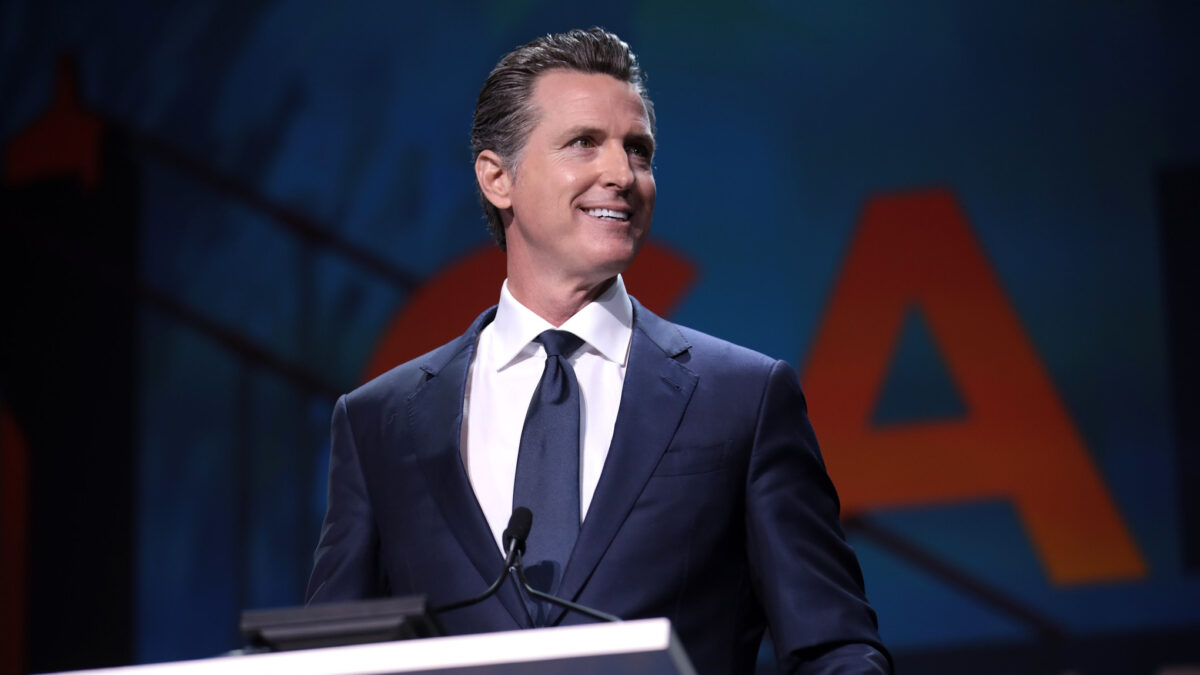
Gov. Gavin Newsom, D-Calif., signed a law Sunday undermining the will of Huntington Beach voters who approved a measure requiring voter ID. The new state law bars cities from adopting such measures. In March, 53.4% of Huntington Beach residents approved a ballot measure that would require voters present identification in order to vote in municipal elections. The measure was slated to take effect in 2026 and also permitted the city to “provide more in-person voting locations” and “monitor ballot drop-boxes.” But Newsom signed into law Sunday legislation that was originally introduced in response to the Huntington Beach city council approving the measure prior to placing it on the ballot. The new law prohibits “a local government from enacting or enforcing any charter provision, ordinance, or regulation requiring a person to present identification for the purpose of voting or submitting a ballot at any polling place, vote center, or other location where ballots are cast or submitted, as specified.”

The state previously sued Huntington Beach in April to prevent the will of the voters (in the name of “democracy”). California Attorney General Rob Bonta sued the city claiming, “the right to freely cast your vote is the foundation of our democracy and Huntington Beach’s voter ID policy flies in the face of this principle.”

It is unclear whether the lawsuit will still be pursued. The Federalist has inquired with Bonta’s office for a status update.

Bonta had previously sent a letter to city officials in September 2023 claiming the measure “conflicts with state law” and falsely alleged voter ID measures “serve to suppress voter participation.” Bonta told city officials to withdraw the measure or else Bonta would take “action.”

Bonta’s suit alleged Huntington Beach’s voter ID provisions were “preempted and invalid” in matters in which “local law conflicts with state law reasonably tailored to the resolution of a statewide concern.”

The suit also argued the measure undermined the authority of the state legislature, “placing the onus on registered voters to establish their eligibility to vote, and groundlessly challenging the right to vote.”

Huntington Beach City Attorney Michael Gates said in response to the suit that the city would fight to “uphold and defend the will of the people,” according to Courthouse News.

Gates argued that state law (at the time the measure was adopted by the city), did not prohibit the city from adopting the ballot measure. Gates pointed to the introduction of the legislation after the proposal was approved by the city council arguing, as reported by Courthouse News, that “this proves that Bonta [is] wrong — if passing voter ID laws was illegal, why was a new bill necessary?”

For more election news and updates, visit electionbriefing.com.


Brianna Lyman is an elections correspondent at The Federalist. Brianna graduated from Fordham University with a degree in International Political Economy. Her work has been featured on Newsmax, Fox News, Fox Business and RealClearPolitics. Follow Brianna on X: @briannalyman2

Author Brianna Lyman profile

Brianna Lyman

Visit on Twitter@briannalyman2

More Articles

Democrat-Controlled States Refuse to Clean Voter Rolls and Fix Election Problems


By: Sen. Ron Johnson | September 03, 2024

Read more at https://thefederalist.com/2024/09/03/democrat-controlled-states-refuse-to-clean-voter-rolls-and-fix-election-problems/

voting booth

Author Sen. Ron Johnson profile

Sen. Ron Johnson

More Articles

President Joe Biden has vowed to veto the Safeguard American Voter Eligibility Act, which simply requires proof of citizenship to register to vote in federal elections. His promise was made in reaction to congressional Republicans who want to include it with any continuing resolution required to fund the next fiscal year, which begins on Oct. 1. The president’s adamant opposition to what most Americans support demonstrates just how much Democrats are dedicated to making it easier to cheat in elections.

On Dec. 16, 2020, as chairman of the Senate Committee on Homeland Security and Governmental Affairs, I held a hearing titled, “Examining the Irregularities in the 2020 election.” In spite of the wailing and gnashing of teeth from the election irregularity deniers, there were many indisputable irregularities.

In Wisconsin, 170,000 faulty absentee ballots in Milwaukee and Dane County were improperly counted by election clerks. Representatives of the far-left “Zuckerbucks” program — which is designed to pour left-wing dollars into local election offices, benefiting their Democrat candidates — imposed such heavy-handed direction in Green Bay that the local election clerk resigned from the stress and allowed Zuckerberg’s minions to run the election. “Democracy in the Park” was allowed in Madison, where activists unlawfully collected 17,300 ballots. Seniors in nursing homes voted without the required voting deputies present, bordering on elder abuse for political gain. As was the case in other states, election observers were not allowed to effectively observe the election process.

More recently, as one of many examples of states cleaning voter rolls, Virginia cancelled 6,303 noncitizens’ voter registrations.

Unfortunately, the election irregularity deniers have been so effective — aided and abetted by the corporate media — that these abuses have not only been ignored, but those who wish to cheat in the 2024 election have been able to devise new election fraud schemes. Absent media scrutiny, Republicans are undertaking efforts to stop them.

In one of the most closely contested states, Wisconsin’s governor vetoed nine election reforms passed by the Republican legislature and designed to restore confidence in our state election system. The Wisconsin Election Commission refuses to remove more than 4 million ineligible voters from our out-of-date voter roll (Wisconsin has approximately 3.5 million eligible voters). Election integrity starts with clean voter rolls, and by refusing to clean up Wisconsin’s, Democrats are clearly stating that they’d rather leave room for fraud than increase confidence in our election system.

Following a pressure campaign from Senate Republicans and the Republican National Committee (RNC), Nevada just removed 90,000 voters from its lists. If Nevada can do it, why can’t the Badger State?

Biden’s Executive Order to Register Voters

Nationally, the potential for election interference and voter fraud seems to be growing, with minimal attention being paid to it. Let’s start with President Joe Biden’s executive order directing federal agencies to register voters. Does anyone seriously believe these registration drives will be done in a nonpartisan manner? How many taxpayer dollars will be spent registering individuals most likely to vote for the party of big government and more deficit spending?

The RNC and Trump campaign recently sued the Biden administration to stop this partisan activity. Will courts intervene in time?

States Cleaning Voter Rolls

The Democrats’ open border policy is guaranteed to result in widespread voter fraud. Democrat presidential nominee Harris’ vice-presidential pick, Minnesota Gov. Tim Walz, signed a law giving driver’s licenses to illegal immigrants. That license, together with a utility bill, is all someone needs to register to vote in Minnesota. Democrats claim that because it is illegal for noncitizens to vote, illegal immigrants won’t register. We should be highly skeptical of that being an effective deterrent. Last week, the RNC sent a demand letter to Minnesota’s secretary of state following the revelation that a noncitizen in Minnesota received a ballot that he hadn’t even asked for. That is unlikely to be an isolated incident.

After all, Ohio just purged 499 illegal immigrants from its voter rolls following a multi-phase audit. But that’s in a state with Republican leadership that actually believes in election integrity and wants to make it difficult to cheat. Elsewhere, Boston officials disclosed that 70 illegal aliens contacted county election officials asking to be removed from voter registration lists. How did those Massachusetts noncitizens get registered, and how many remain on the registration lists? While it’s good to see officials in some states taking the lead to purge their voter rolls, there is much more work to be done.

Laundering Donations

In March 2023, journalist James O’Keefe first reported on a campaign financing violation dubbed “smurfing.” Unbeknownst to the “donors,” Federal Election Commission (FEC) reports show in some cases tens of thousands of small dollar donations being made in their names, totaling hundreds of thousands of dollars. One example in Wisconsin detailed five “smurfs” making a combined total of 28,471 donations, worth $401,326. Sen. Tammy Baldwin, D-Wisc., was a recipient of 531 of those donations, worth $5,147. No wonder Democrats report a resounding lead in small dollar donations!

My Senate staff has been pressuring the FEC to investigate these violations, but the FEC won’t even acknowledge whether they are investigating. Republican attorneys general such as Jason Miyares in Virginia have thankfully launched concurrent investigations to demand answers and stop this unfair practice.

Presidential Election

For well over a year, I have publicly expressed my doubts that Biden would be the Democrat nominee. I would generally add that whoever replaced him would immediately be placed on a pedestal and declared the new messiah. But even I am astonished by the extent to which my prediction has come true. Former President Donald Trump is not running against Kamala Harris, he is running against the entire corporate media, who are coordinating their efforts to defeat him.

This is not a new phenomenon. Remember the Russia hoax, which the corporate media cheered on? How about Google manipulating search results to favor Democrats and suppress Republicans? Most “journalists” in corporate media today are merely advocates for the left. Honest, unbiased reporting has largely gone the way of the dinosaur.

As alarming as the reality described above is, I have not written this column to discourage, but as a call to action. The RNC and Trump campaign have recruited 157,000 poll workers and poll watchers across the country ahead of November. Join the effort at ProtectTheVote.com, and make sure to get out and vote as soon as your state allows. We can beat the forces arrayed against us if we turn out in numbers that are too big to rig.


Sen. Ron Johnson is a Republican from Wisconsin.

Thousands Of Noncitizens on U.S. Voter Rolls Assure Americans the Next Election Will Be Unsafe and Unfair


By: Ben Weingarten | August 15, 2024

Read more at https://thefederalist.com/2024/08/15/thousands-of-noncitizens-on-u-s-voter-rolls-assure-americans-the-next-election-will-be-unsafe-and-unfair/

Vote sign

Author Ben Weingarten profile

Ben Weingarten

Visit on Twitter@bhweingarten

More Articles

More than a dozen jurisdictions run by Democrats — including Washington, D.C., and several adjacent Maryland municipalities — allow noncitizens to vote in some local elections. San Francisco not only permits noncitizens to vote but appointed one to serve on its elections commission.

Such developments, against a backdrop of millions of illegal migrants streaming into the United States under the Biden-Harris administration, bring new urgency to debates over election integrity. Many Republicans fear that a widespread effort is afoot to give noncitizens the full benefits of citizenship, including the right to vote in all elections, on top of benefits already available to illegal aliens in some places, notably driver’s licenses, food stamps, government health care, and work visas.

Although Democrats note that noncitizens may not participate in federal elections and claim there is little evidence noncitizens are voting unlawfully, critics are unmollified.

A RealClearInvestigations analysis of proposed and enacted state and federal laws, along with other reporting and research, suggests that the fight over noncitizen voting is only likely to intensify this year — both in the immediate wake of an expected closely contested presidential election and in its aftermath.

States across the country report that thousands of noncitizens have been discovered on voter rolls in the past decade, with unknown numbers already having voted: 

  • Pennsylvania found 11,000 registrants suspected of being noncitizens after becoming aware of a decades-old “glitch” in the state’s “motor voter” registration system in 2017. It removed 2,500 individuals from the rolls, and it could not verify the citizenship status of the other 8,700 registrants.
  • Virginia has removed over 11,000 registrants from its rolls between 2014 and 2023 — and more than 6,300 from January 2022 to July 2024 alone — upon learning that they had declared themselves noncitizens in other interactions with government, typically in transactions with the state’s department of motor vehicles. House Republicans cited a study showing that of nearly 1,500 noncitizens the Commonwealth removed from rolls from May 2023 to February 2024, 23 percent had cast ballots since February 2019.
  • New Jersey had some 616 self-reported noncitizens in 11 counties “engaged on some level with the statewide registration system,” 9 percent of whom cast ballots, according to a 2017 survey conducted by the Public Interest Legal Foundation.
  • Boston, Massachusetts, officials revealed this year that the city had removed 70 noncitizens from the rolls, some 22 of whom had voted, the removals coming in response to disclosure requests from the Public Interest Legal Foundation.
  • Ohio recently ordered the removal of 499 noncitizens from its voter rolls after removing some 137 other registrants back in May.
  • North Carolina identified more than 1,400 registrants on state voter rolls who did not appear to be naturalized, in an audit conducted prior to the 2014 midterm election. Eighty-nine flagged individuals appeared at the polls to vote, and 24 had their registration challenged; 11 challenges were sustained or justified.
  • Arizona classifies some 42,000 people on its rolls as “federal-only” registrants as of July 1, 2024 — after they had failed to provide the proof of citizenship necessary to vote in state and local races. The state’s bifurcated voter rolls are the result of a 2013 Supreme Court ruling in which a 7-2 majority led by the late Justice Antonin Scalia ruled that federal voter registration requirements — of which documentary proof of citizenship is not one — preempted the state’s standards. 

Other evidence of noncitizen voting has been found in states from California to Illinois

Republicans argue that such examples expose weaknesses in the voter registration and administration process — including that registrants need not provide proof of citizenship to get on the voter rolls. These and other loopholes in state-run systems make elections vulnerable to ineligible noncitizen voters today.

Each side has its own research to support its claims. Democrats cite a study by the Brennan Center for Justice at New York University, finding that local election officials overseeing the tabulation of 23.5 million ballots during the 2016 presidential election identified only 30 potential incidents of noncitizen voting.

Republicans highlight a recent study estimating that 10 percent to 27 percent of noncitizens are illegally registered to vote, and 5 percent to 13 percent will illegally vote in 2024 — a potentially massive number given the illegal alien portion of the noncitizen population alone numbers well over 10 million. Election integrity advocates argue that states have not found many incidents of noncitizen voting for the simple reason that authorities, including the Department of Justice, do not look for it.

“DOJ investigations of illegal voting are all but nonexistent,” Sen. Mike Lee, a Utah Republican, said in a recent floor debate concerning the SAVE (Safeguard American Voter Eligibility) Act, a bill Lee and House colleague Chip Roy, R-Texas, introduced to combat noncitizen voting. After the House passed the measure in July, Democrats blocked the legislation in the upper chamber, where it remains stalled.

“[T]oo many prosecutors refuse to enforce the law even when such illegal behavior is discovered by election officials or others,” Hans von Spakovsky, a former Department of Justice official who now works at the conservative Heritage Foundation, told Congress in May.

Should election officials fail to prevent noncitizens from casting ballots on the front end, J. Christian Adams, a fellow former DOJ official and president of the Public Interest Legal Foundation, told RCI, there is “almost nothing” the public or political parties can do on the back end to identify, challenge, and invalidate noncitizen votes prior to election certification.

Adams’ group has documented myriad electoral races decided by one vote or tied over the last two decades — something he and others argue indicates just how critical it is to combat illegal voting, given the potential impact to tight races up and down ballots.

States generally seem unfazed by the prospect of noncitizen voting. For this article, RealClearInvestigations contacted authorities in the seven states comprising RealClearPolitics’ top battlegrounds: Arizona, Georgia, Michigan, Nevada, North Carolina, Pennsylvania, and Wisconsin. Two states, Michigan and Pennsylvania, did not respond to RCI’s inquiries. Election authorities in the five responsive states maintained that current law is a sufficient deterrent to noncitizen voting, emphasizing that casting a ballot as a foreigner would constitute a criminal offense with grave penalties.

“Someone would have to knowingly and intentionally commit a class 6 Felony if they did vote as a noncitizen, and it would result in the revocation of their legal status in the USA, and they would likely face deportation,” a spokesman for Arizona’s Democrat Secretary of State Adrian Fontes said in a statement. The spokesman said he hoped his statement, which pointed to the state’s voter challenge process and noted other procedures pertaining to citizenship, would “compel” RealClearInvestigations to “clear up [RCI’s] notions and erroneous assumptions.”

Georgia touted its 2022 citizenship audit in correspondence with RCI, the first such review of the voter rolls for citizenship in state history, in which it found that 1,634 people who attempted to register to vote were not verified by the SAVE program. All were in “pending citizenship” status within Georgia’s internal systems, and thus none had been allowed to vote. “Due to the effective processes Georgia has in place to verify U.S citizenship at the time of registration … we are confident noncitizens are not voting in Georgia, and if one ever does, they will be punished to the full extent of the law,” Mike Hassinger, a spokesman for Republican Secretary of State Brad Raffensperger, told RCI.

North Carolina elections board Public Information Director Patrick Gannon told RCI: “We have little evidence of noncitizens voting in elections, and get very few complaints alleging voting by noncitizens.”

He pointed to a 2016 state audit report and the handful of cases alleging noncitizen voting that the bipartisan State Board of Elections has referred to prosecutors since 2017.

Similarly, Wisconsin Elections Commission Public Information Officer Riley Vetterkind told RCI, “There is no evidence to support the idea that noncitizens are voting in Wisconsin in significant numbers.” The spokesperson for the state’s bipartisan commission cited the few instances of suspected election fraud, irregularities, or violations referred to district attorneys by municipal clerks that the state’s elections commission “has been made aware of.”

These messages of reassurance, however, at times come with notes of caution that underpin election integrity advocates’ concerns.

States each have their own independent processes to maintain voter lists. Those processes vary widely in vigor, tempo, and transparency. They are often based on different degrees of access to sources of citizenship status with which to identify ineligible voters. “No state or federal law requires the WEC [Wisconsin Elections Commission] or clerks to verify a voter’s citizenship status beyond requiring the voter to certify that they are a U.S. citizen as a qualification for voter eligibility,” said Vetterkind.

Pennsylvania has asserted that “the Commonwealth has no systematic program to identify and remove non-citizens from the voting rolls.” 

The Public Interest Legal Foundation has litigated against the Keystone State and other jurisdictions just to get a peek into their registration list maintenance processes. As for how states identify potential noncitizens, Gannon said of North Carolina’s audit that “relying on state databases was wildly inaccurate for determining citizenship status.” 

The state passed a law in 2023 requiring that the election board regularly reconcile its registration list with lists provided by state courts of those excused from jury duty due to lack of citizenship — an ad hoc approach commonly used by other states.

Georgia emphasized its use of the Department of Homeland Security’s more robust SAVE tool, which provides “point in time immigration status” for those who have been issued a unique immigration identifier. (This Systematic Alien Verification for Entitlements tool is distinct from the GOP-sponsored legislation with the same acronym.)

Most state officials who responded to RCI’s query emphasized that there are laws on the books permitting third-party challenges to voter eligibility. But this is a measure requiring time, money, and effort. The two former Justice Department officials — Spakovsky and Adams — recently took issue with the view that state audits and scrubs of voter rolls ought to inspire confidence, writing in the Daily Signal:

Because almost no state even attempts to verify that individuals registering to vote are U.S. citizens — and because the federal government, including both the courts and the executive branch, have put up significant barriers to such verification — we don’t really know how many aliens, whether here legally or illegally, are registering and voting.

Rougher Weather Ahead

Whatever the extent of noncitizen registration and voting today, Election Integrity Network leader Cleta Mitchell says conditions are building for a “perfect storm.” Two factors are about to produce it: “the invasion of our country by millions of illegals” and a series of largely Democrat Party-driven efforts to ease voter registration and participation.

Mitchell and others, including The Heritage Foundation’s Oversight Project, have suggested that significant numbers of noncitizens could wind up on the voting rolls under Biden administration Executive Order 14019, which directs every federal agency to register and mobilize voters. 

Officials in Alabama and Mississippi say that under the executive order, which RCI has previously examined, authorities are already attempting to register noncitizens to vote. The Biden administration initiative calls on federal agencies to coordinate with third-party groups in pursuit of its objectives as well. Adams, testifying alongside Spakovsky for the Republican majority before the House Administration Committee in May, said that “most often noncitizens are getting on the rolls through the motor voter registration process or third-party registration drives.” 

Regarding motor-voter registration, the Only Citizens Vote Coalition warns that “many states are now automatically registering people to vote at the time of coming into contact with the DMV unless the person ‘opts out’ of registration.” 

Advocates are also concerned that practices like same-day voter registration and allowing the use of student IDs to vote — IDs that can be issued to foreigners — could lead to noncitizens ending up on voter rolls and potentially voting. 

These issues likely only exacerbate concerns election integrity advocates already have around practices like mail-in voting and ballot harvesting that have become widespread since the 2020 election. A more robust “level of citizenship tracking and verification would almost certainly require legislative change to accomplish,” Wisconsin’s Riley Vetterkind told RCI.

Congressional Republicans have sought to do just that with the SAVE Act, which passed the House on July 10 in a largely party-line vote. Under the existing registration system, applicants attest to their citizenship simply by checking a box, under penalty of perjury. House Speaker Mike Johnson calls this nothing more than an “honor system” that leaves “people who have already proven they have no regard or respect for our laws” undeterred. 

The SAVE Act would close this loophole by requiring that applicants provide proof of citizenship in person when registering to vote in federal elections. Adams has argued that under the less stringent status quo, noncitizens often end up on the voter rolls through no fault of their own — subjecting aliens who often can’t speak English to severe legal liability.

Critics of the SAVE Act, echoing some states, believe those liabilities — including the threat of deportation, jail time, and other punishments — sufficiently curb noncitizen registration and voting.

New York University Brennan Center for Justice President Michael Waldman emphasized in the May congressional hearing, as the Democrat minority’s witness opposite Adams and Spakovsky, that “under current law, noncitizen voting in federal elections is illegal four times over: it is both a state and federal crime to register to vote, and it is both a state and federal crime to vote in federal elections.” 

The liberal think tank did not respond to RCI’s inquiries in connection with this story. Democrat Party leaders from President Biden on down also dismiss evidence of noncitizen voting, claiming it is virtually non-existent.

“Even the conservative CATO Institute has said that ‘noncitizens don’t illegally vote in detectable numbers,’” California Democrat Sen. Alex Padilla noted in a floor speech in response to Mike Lee, referencing a 2020 blog post from the libertarian think tank. 

Democrats also claim the bill’s documentary proof of citizenship requirements disenfranchise potential voters. They point to past evidence indicating that similar state laws in places like Kansas ended up preventing eligible registrants from voting. They also highlight surveys showing millions of Americans lack commonly used documents to prove citizenship, like a passport or birth certificate — two of a number of forms one could present to satisfy the SAVE Act’s requirements.

House Minority Leader Hakeem Jeffries branded the SAVE Act an “extreme MAGA Republican voter suppression bill.”

DHS’s ‘Slow-Walking’

Registration requirements and voter ID laws, which vary by state, do not necessarily prevent ineligible individuals from voting since noncitizens — and, in some cases, illegal aliens — can obtain relevant forms of identification. As Republican Virginia Gov. Glenn Youngkin highlighted in a recent executive order, only three states — his included — require even a full Social Security number to register to vote.

Thus, the SAVE Act would also mandate that states bolster their registration list maintenance practices explicitly to identify and remove noncitizens from voter rolls — including through cross-referencing their lists with more comprehensive data sources.

Only five states currently have access to one resource referenced in the bill, the Department of Homeland Security’s SAVE tool. A House Administration Committee report indicates that DHS is not granting the same level of access to all states and may be “slow-walking” requests to use it. 

‘Significant Inaccuracies’ in the Federal Database

When asked about this allegation, a spokesman for the U.S. Customs and Immigration Service told RCI, “There is an established process agencies must undergo and eligibility criteria agencies must meet to complete SAVE registration.”

“USCIS is committed to working with agencies seeking access to SAVE and processing registration requests as efficiently as possible,” the spokesman added while referring a reporter to several resources on the USCIS website.

Still, these databases are not seen by all as a panacea. “Even using the federal SAVE database, which can only be used to determine current citizenship status for one person at a time, and only when that person has been involved in the federal immigration system, our agency found significant inaccuracies in the data we received,” North Carolina’s Patrick Gannon told RCI in an email. “There is no comprehensive, accurate, or up-to-date database of U.S. citizens that election administrators could use for verification purposes.”

Democrats argue that the more robust voter registration list maintenance demanded by Republicans could leave eligible voters purged. Calling the SAVE Act “nothing other than a solution in search of a problem,” Sen. Padilla blocked the bill in the upper chamber.

With a September spending fight looming in Congress, the House Freedom Caucus is seeking to force the issue by calling on leadership to attach the SAVE Act to any stopgap spending solution — a plan Sen. Lee has also endorsed.

Meanwhile, election integrity advocates like the Only Citizens Vote Coalition are calling for state-level model legislation to combat noncitizen voting. The Heritage Foundation’s Oversight Project has been working to identify vulnerabilities in extant voter registration systems and potential legal violations, publicize them, and press lawmakers to enforce relevant laws to combat noncitizen voting.

The conservative public interest law organization America First Legal recently sent letters to all 50 states instructing them that under existing law, states can and should send requests to the DHS soliciting the citizenship status of registered voters.

America First Legal has also sent demand letters to all 15 Arizona county recorders, compelling them to verify the citizenship of all “federal-only” voters, including through making citizenship requests of DHS — or face legal action.

On Aug. 5, America First Legal filed suit against the Maricopa County Recorder for his alleged failure to act in response to the group’s demand letter. Three days later, the Republican National Committee filed an emergency application at the Supreme Court in a bid to compel Arizona to enforce its proof of citizenship requirements for the 2024 presidential election.

Warning: Extended Lawfare Ahead

These forces on the right are likely to find themselves locked in battle with the left for years to come. 

House Democrats, today in the slim minority, have voted to continue apportioning congressional seats based on total population rather than total citizens in a given jurisdiction; to protect noncitizen voting rights in Washington, D.C.; and, in legislation aimed at providing certain aliens with a path to permanent resident status, to permit authorities to waive unlawful voting as grounds for deeming noncitizens inadmissible. Leftist witnesses were unable or unwilling to affirm that only citizens should be permitted to vote in federal elections during a March Senate Judiciary Committee hearing concerning elections.

As a presidential candidate in 2020, Vice President Kamala Harris signaled her support for providing government health care to illegal aliens. Her presumed running mate, Minnesota Gov. Tim Walz, signed legislation providing benefits for illegal aliens, including state-funded health care, driver’s licenses, and free college tuition.

Those on the left see voting rights, like the expansion of other benefits to noncitizens, as a matter of fairness.

“Immigrants pay taxes, they use city services, their kids go to our public schools. They are part of our community. And they deserve a say in local government,” New York City Council Speaker Corey Johnson said in defending a bill that has been ruled unconstitutional that would have allowed an estimated 800,000 noncitizens to vote in local elections.

The Trump-Vance campaign, by contrast, has called for mass deportation of the illegal alien population (to which Democrats increasingly wish to extend rights and benefits), among other immigration measures the Republicans say aim to protect and support Americans. In contrast to the growing coterie of blue-state jurisdictions embracing noncitizen voting, red states are increasingly passing amendments prohibiting local governments from allowing noncitizens to vote, with Louisiana and Ohio approving such constitutional changes in 2022. Eight more states have citizenship-related ballot measures in the 2024 election.

This article is republished from RealClearInvestigations, with permission.


Ben Weingarten is editor at large for RealClearInvestigations. He is a senior contributor to The Federalist, columnist at Newsweek, and a contributor to the New York Post and Epoch Times, among other publications. Subscribe to his newsletter at weingarten.substack.com, and follow him on Twitter: @bhweingarten.

Alabama Secretary of State Finds 3,000 Potential Noncitizens Registered to Vote


By: Logan Washburn | August 14, 2024

Read more at https://thefederalist.com/2024/08/14/alabama-secretary-of-state-finds-3000-potential-noncitizens-registered-to-vote/

Wes Allen discussing his candidacy for Alabama secretary of state

Author Logan Washburn profile

Logan Washburn

More Articles

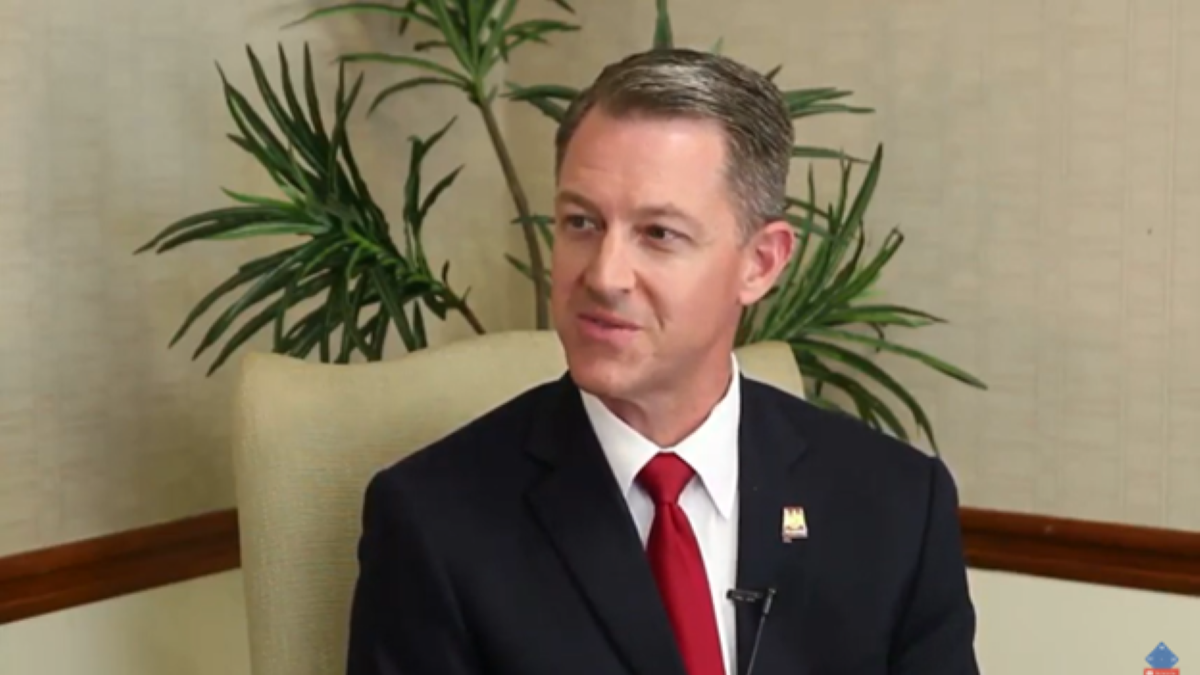
Alabama Secretary of State Wes Allen has discovered more than 3,000 potential noncitizens registered to vote in the state. His office is now taking steps to remove noncitizens from the rolls.

“I will not tolerate the participation of noncitizens in our elections,” Allen said in an Aug. 13 press release. “We have examined the current voter file in an attempt to identify anyone who appears on that list that has been issued a noncitizen identification number.” 

Allen’s office found 3,251 registered voters with noncitizen ID numbers issued by the Department of Homeland Security, according to the release. His office is telling local administrators to “inactivate and initiate steps necessary to remove all individuals who are not United States citizens” from the voter file.

Allen worked with “other state agencies that collect noncitizen identification numbers” and checked them against voter registrations, Laney Rawls, Allen’s director of communications, told The Federalist. She said Allen has made this a “priority” since taking office in January 2023.

Some of these potential noncitizen voters may have become citizens after initially getting noncitizen ID numbers, according to the release.  Allen’s office will inactivate these registrations and allow those who have since become citizens to update their registration with an Alabama driver’s license number, non-driver ID, or the last four digits of their Social Security number, according to Rawls. Allen’s office is still working to determine when the noncitizen ID numbers were issued, Rawls said.

The federal government has denied “repeated requests” to help with the investigation, according to the release. Allen began contacting the DHS’s Citizenship and Immigration Services division in November 2023, requesting a list of noncitizens living in Alabama to cross-reference with the state voter file, according to Rawls. 

“The Office also contacted the White House administration for assistance in getting this data and our requests have been denied,” Rawls said. The “lack of cooperation” prompted Allen to try and solve the issue on his own.

“I am hopeful that in the near future the federal government will change course and be helpful to states as we work to protect our elections,” Allen said in the release. Allen’s office is sending the registrations at issue to Alabama Attorney General Steve Marshall for “further investigation and possible criminal prosecution.”

“This is not a one-time review of our voter file,” Allen said. “We will continue to conduct such reviews to do everything possible to make sure that everyone on our file is an eligible voter.”

Federal mandates have directed state agencies to expand voter registration, including sending forms to noncitizens, according to Rawls. She also said President Joe Biden’s “Executive Order on Promoting Access to Voting” led the government to register voters in Alabama’s federal prisons, where inmates include noncitizens.

The Federalist’s Shawn Fleetwood reported Biden has used the executive order to push voter registration in Mississippi prisons. According to The Daily Signal, the Federal Bureau of Prisons partners with left-leaning groups like the American Civil Liberties Union, the League of Women Voters, and the Campaign Legal Center.

“Unfortunately, the federal government limits the power of states to require proof of citizenship at the time of registration,” Rawls said. Still, Allen has directed local boards of registrars to require an Alabama driver’s license number, non-driver ID, or Social Security number when registering voters.

“Allen has also demanded answers from state and federal agencies conducting these expanded voter registration efforts on how they plan to keep noncitizens from registering to vote in Alabama,” Rawls said.

Allen previously warned citizens of registering to vote through Vote411, citing concerns over data privacy. The Federalist reported that Vote411, which masquerades as a nonpartisan group, uses voter registration forms to shuttle users to a left-wing data harvesting operation. 

In Tennessee, Secretary of State Tre Hargett’s election coordinator Mark Goins sent letters to more than 14,000 potential noncitizens in June, telling them to either update their information or request the state remove them from voter rolls.  

Doug Kufner, communications director for Hargett’s office, told The Federalist at the time that Goins found these registrations after comparing voter registrations to data from the state’s Department of Safety and Homeland Security.

“This data indicates the person may not have been a U.S. citizen at the time of the transaction. The person could have been naturalized since applying for a driver’s license,” Kufner said at the time. “Tennessee law makes it clear that only eligible voters are allowed to participate in Tennessee elections.”

The letters instructed new citizens on how to correct their records, but that didn’t stop the American Civil Liberties Union Foundation from threatening to sue, according to The Associated Press. Hargett’s office sent follow-up letters, clarifying it would not remove registered voters who did not respond to the initial mailing.


Logan Washburn is a staff writer covering election integrity. He graduated from Hillsdale College, served as Christopher Rufo’s editorial assistant, and has bylines in The Wall Street Journal, The Tennessean, and The Daily Caller. Logan is originally from Central Oregon but now lives in rural Michigan.

10 Lies Democrats Tell About Our Elections (And How to Refute Them)


BY: SHAWN FLEETWOOD | MAY 03, 2024

Read more at https://thefederalist.com/2024/05/03/10-lies-democrats-tell-about-our-elections-and-how-to-refute-them/

Voting stickers on voting day sign

Author Shawn Fleetwood profile

SHAWN FLEETWOOD

VISIT ON TWITTER@SHAWNFLEETWOOD

MORE ARTICLES

There is almost no subject the left won’t lie about. Whether it’s denying basic biology or fabricating “bloodbath” hoaxes about their top Republican rival, no topic is off limits for the Democrat “disinformation” police — and that includes elections.

Since the 2020 election, Democrats and their media allies have worked overtime to smear Americans concerned about the integrity of U.S. elections. No matter how legitimate these concerns may be, the left slanders anyone who challenges controversial elections won by Democrats as so-called “election deniers.”

Putting aside the fact that Democrats have questioned elections they don’t win (see the Trump-Russia collusion hoax), it’s important to highlight that the left regularly lies about America’s elections to further their party’s goal of acquiring and maintaining government power. In service of this goal, no falsehood is too great.

Here are the 10 biggest lies Democrats tell about U.S. elections so you can identify and combat these mistruths.

1. Election Integrity Laws ‘Suppress’ Voters

Under the guise of Covid, many states expanded the use of unsupervised mail-in voting, permanently changing the electoral landscape and how modern elections are conducted. With Covid-era lockdowns now in the rearview mirror, many Republican-controlled states have spent the past several years returning their election systems to pre-Covid practices and moving away from unsupervised methods.

With their election machine that thrives off the insecure mail-in system threatened, Democrats have taken to dishonestly attacking GOP-backed election integrity laws. The most common of these smears is the debunked claim that voter ID laws suppress voters, especially those who aren’t white. Of course, there’s no evidence to support such assertions, as multiple court rulings have found.

One of the more egregious examples of these attacks came from President Joe Biden, who grossly labeled a benign 2021 Georgia election law as “Jim Crow on steroids.” Contrary to Democrats’ smears, Georgia experienced record early voter turnout during the state’s 2022 midterms. A poll conducted after the election also revealed that zero percent of black Georgia voters said they had a “poor” experience voting.

2. The 2020 Election Was the ‘Most Secure in American History’

This claim from the Cybersecurity and Infrastructure Security Agency (CISA) — the “nerve center” of the federal government’s censorship operations — is just as inaccurate today as the day it was issued nearly four years ago.

From illegal election rule changes in Michigan and Pennsylvania to the unauthorized use of ballot drop boxes in Wisconsin, the 2020 election was fraught with mischief and irregularities. In unprecedented fashion, Meta CEO Mark Zuckerberg poured hundreds of millions of dollars into left-wing nonprofits, which funneled most of these “Zuckbucks” into election offices in Democrat-majority localities to push Democrat-backed voting policies and get-out-the-vote efforts.

There was also heavy involvement from U.S. intel agencies and officials to help Joe Biden leading up to the election.

Weeks ahead of the 2020 contest, the New York Post dropped a bombshell story documenting the Biden family’s foreign business dealings. Despite having authenticated the laptop as early as November 2019, the FBI spent months leading up to the election pressuring Big Tech companies such as Facebook and Twitter (now X) to be on the lookout for so-called “Russian propaganda” and “hack and leak operations.” Zuckerberg all but admitted during a 2022 interview with podcaster Joe Rogan that the company’s decision to suppress the Post story was based on the FBI’s warning.

The CIA — while allegedly coordinating with the Biden campaign — purportedly solicited signatures for a letter issued by 51 former intel officials claiming Hunter’s laptop was part of a Russian disinformation campaign. Meanwhile, Delaware U.S. Attorney David Weiss reportedly delayed his investigation into Hunter’s alleged tax law violations to avoid negatively affecting Joe’s electoral prospects.

[READ: Docs: CISA Knew Risks Of Mail-In Voting In 2020, But Got Posts About Them Censored Anyway]

3. Voter Fraud Doesn’t Exist

When it comes to defending the chaotic and irregular 2020 election, legacy media have adopted the strategy of pretending that voter fraud never happens. But recent cases of such illegalities show that isn’t true.

In December, the Louisiana Supreme Court let stand a lower court decision that the existence of voter fraud in a local sheriff’s race warranted a new election. While initial results in Caddo Parish’s November sheriff’s race indicated that Democrat Henry Whitehorn defeated Republican John Nickelson by one vote, a lawsuit filed by Nickelson and subsequent legal proceedings revealed there were enough illegal votes to call into question the election outcome.

The judge overseeing the case ultimately determined there were 11 unlawful votes cast in the race, and as such, ordered that a new election be held.

Another recent incident of voter fraud occurred in Bridgeport, Connecticut’s Democrat mayoral primary. Surveillance footage released after the September election showed what appeared to be a city employee affiliated with the incumbent mayor’s campaign “stuffing ballot boxes.” The matter prompted a superior court judge to order a new election.

4. Election Workers Are Under Siege

As America edges closer to the 2024 election, Democrats are ramping up their attacks on election oversight. On an almost weekly basis, regime-approved media outlets run article after article lamenting an alleged wave of “threats” against election workers that they blame on Trump’s 2020 election criticisms.

Of course, these same doomsday predictions didn’t materialize during the 2022 midterms. But that hasn’t stopped the press from continuing to repeat the narrative they have little evidence to support.

As I previously wrote in these pages, Democrat claims that election workers have experienced a spike in threats since the 2020 election are primarily based on “surveys” issued by leftist organizations and unsubstantiated statements from Democrat election officials. Moreover, data produced by the Biden Department of Justice indicates the issue is minimal.

5. Ranked-Choice Voting Is ‘Fair’

Often referred to as “rigged-choice voting” by its critics, ranked-choice voting (RCV) is a system whereby voters rank candidates in order of preference. If no candidate receives more than 50 percent of first-choice votes in the first round of voting, the last-place finisher is eliminated, and his votes are reallocated to the voter’s second-choice candidate. This process continues until one candidate receives a majority of votes.

RCV’s (mostly Democrat) proponents have deceptively attempted to garner support for the system by claiming it brings “fairness” to the voting process. But a quick look into RCV’s history reveals anything but a fair system.

RCV has produced election results that contradict the desires of voters, especially Republican ones. Since adopting the system, Alaska and Maine have produced elections in which the Democrat candidate was the declared winner despite the Republican candidate winning more votes in the first round of voting.

Jurisdictions employing RCV have also experienced inaccurate election results and high rates of discarded ballots.

6. Contingent Electors Are ‘Fake’ and Unlawful

After Arizona Democrat Attorney General Kris Mayes released an indictment alleging 18 Republicans illegally participated in a so-called “fake elector scheme,” media hacks are once again using this dishonest terminology to characterize Trump’s challenging of the 2020 election results as unlawful and unprecedented.

But there’s no such thing as a “fake elector,” and the naming of contingent Republican electors during the 2020 election was neither unprecedented nor unlawful. The process undertaken in states such as Georgia closely mirrored efforts taken during the 1960 presidential contest between John F. Kennedy and Richard Nixon.

[READ: The Left’s 2020 ‘Fake Electors’ Narrative Is Fake News]

Had courts ruled in Trump’s favor in lawsuits disputing the election results in battleground states, the alternate electors would have been in place to ensure the will of the people was exercised.

7. ERIC Is ‘Nonpartisan’

The Electronic Registration Information Center (ERIC) has become a favorite tool of the Democrat election machine — so naturally, the media have rushed to smear its opponents as unhinged crazies.

Deceptively marketed to states as a means to keep their voter rolls updated, ERIC is a widely used voter-roll “management” system founded by far-left activist David Becker that places a higher priority on registering new voters than on cleaning up existing voter rolls. The program inflates voter rolls by requiring member states to contact “eligible but unregistered” residents and encourage them to register to vote.

Concerns about ERIC’s ties to Becker and its refusal to change its bylaws prompted numerous GOP-led states to depart the organization. To salvage ERIC’s reputation, the media launched a seemingly coordinated campaign to position the group as “nonpartisan” and cast its opponents as “conspiracy theorists.” Of course, this coverage fails to disclose ERIC’s relationship with the Center for Election Innovation and Research (CEIR), another Becker-founded nonprofit most notable for its “Zuckbucks” interference in the 2020 election to help Biden and other Democrats.

As The Federalist previously reported, ERIC sends the voter-roll data it receives from states to CEIR. Upon receiving the data, CEIR “then develops targeted mailing lists and sends them back to the states to use for voter registration outreach.” In other words, CEIR — a highly partisan nonprofit with a history of left-wing activism — is creating lists of potential (and likely Democrat) voters for states to register in the lead-up to major elections.

8. Mail-In Voting Is Secure and Reliable

Much like the issue of voter fraud, Democrats have gone to great lengths to convince the American public that mail-in voting has zero problems and is 100 percent secure. But according to left-wing media’s own reporting, that narrative isn’t true.

In recent months, outlets such as NBC News and CBS News have published stories highlighting insecurities within the U.S. postal system. While NBC addressed the effect postal delivery delays could have on mail-in voting during the 2024 election, CBS explored the increasing problem of mail theft.

NBC even cited remarks from Rep. Sylvia Garcia, D-Texas, who expressed concern that mail delivery delays could present “difficulties” and “barriers” to voters during the November election.

9. Democrats Are the Party of ‘Democracy’

Biden and Democrats love to contend that “democracy is on the ballot” this November. The insinuation, of course, is that the republic as we know it will collapse if Trump and Republicans emerge victorious at the ballot box. Yet, for all their professed concerns about “democracy,” Democrats are doing everything in their power to destroy it.

In unprecedented fashion, the left is abusing the legal system in an attempt to imprison and bankrupt their chief political rival ahead of a major election. Spanning dozens of counts, a roughly half-a-billion-dollar fine, and five judicial venues, the Biden Department of Justice and leftist prosecutors are waging lawfare against Donald Trump to hinder his reelection prospects.

10. Biden’s Federal Election Takeover Is Just a ‘Nonpartisan’ Outreach Effort

The seriousness of Executive Order 14019 cannot be overstated. Signed by Biden in March 2021, the directive ordered hundreds of federal agencies to interfere in state and local election administration by using taxpayer dollars to engage in voter registration and get-out-the-vote activities — a policy Congress never authorized.

Under the edict, each department was instructed to draft “a strategic plan” explaining how it intended to fulfill Biden’s order, and to collaborate with so-called “nonpartisan third-party organizations” that have been “approved” by the administration to supply “voter registration services on agency premises.” While Biden and his lackies claim these outside groups are “nonpartisan,” the facts tell a different story.

Good government groups and conservative media have discovered that many of the organizations collaborating with the administration are extremely left-wing, indicating an effort to identify and register likely-Democrat voters. Among those identified are the ACLU and Demos, both of which contributed to a “progress report” tracking agencies’ compliance with the “Bidenbucks” order.


Shawn Fleetwood is a staff writer for The Federalist and a graduate of the University of Mary Washington. He previously served as a state content writer for Convention of States Action and his work has been featured in numerous outlets, including RealClearPolitics, RealClearHealth, and Conservative Review. Follow him on Twitter @ShawnFleetwood

Loophole In ‘Weak’ North Carolina Voter ID Law Lets Just About Anyone Cast A Ballot


BY: BRIANNA LYMAN | MARCH 12, 2024

Read more at https://thefederalist.com/2024/03/12/loophole-in-weak-north-carolina-voter-id-law-lets-just-about-anyone-cast-a-ballot/

Sign in New Hampshire requiring photo ID

Author Brianna Lyman profile

BRIANNA LYMAN

VISIT ON TWITTER@BRIANNALYMAN2

MORE ARTICLES

North Carolinians who didn’t present a photo ID when voting during the presidential primary last week were still permitted to cast a ballot, thanks to exceptions that Soros-backed groups supported including in the state’s voter ID law.

On March 5, more than 1.7 million North Carolina voters were asked to show a photo ID to vote in the presidential primary, in the first major election since the law went into effect. Most of those voters appeared to successfully present an ID and cast a ballot. Still, according to preliminary counts, more than 1,000 voters cast what is known as a “provisional ballot” due to “ID not provided,” according to the state’s election board (NCSBE). Of those more than 1,000 voters, 546 later returned to show their IDs. But another 607 voters never showed a photo ID, instead simply signing a form claiming that a “reasonable impediment” prevented them from presenting an ID.

The Law Doesn’t Actually Compel Voters to Show Photo ID

The North Carolina general assembly initially passed a series of election-related laws in 2013. After facing legal challenges to the voter ID requirement, the state legislature presented a revised voter ID law in 2015 that included the “reasonable impediment” exception, but the U.S. Court of Appeals for the 4th Circuit nevertheless struck down the voter ID requirement in 2016. Republicans spent the next several years fighting in the courts to pass some type of voter ID laws while North Carolinians voted in 2018 to approve a state constitutional amendment establishing a photo ID requirement.

Most recently, the North Carolina Supreme Court — which had flipped from a Democrat-majority to a Republican-majority — overturned a past decision by the same court and thus permitted the photo ID requirement to go into effect.

The current version says that a voter who does not present a photo ID due to a “reasonable impediment” may still cast a provisional ballot so long as he provides “a current utility bill, bank statement, government check, paycheck, or other government document,” his voter registration card, or the last four digits of his Social Security number and birth date.

If a voter still fails to present any of those documents, the law says he can simply complete a declaration stating that he is who he says he is — aka the “honor system.” He must also designate on the form that a “reasonable impediment” — such as disability or illness, lack of transportation, lack of birth certificate or other documents needed to obtain a photo ID, work schedule, or family responsibilities — has prevented him from providing an ID. Other acceptable reasons include a voter having lost his ID or simply “not know[ing] photo ID was required for voting.”

The ID exception form is also accepted for mail-in voters who cannot include a copy of their photo ID with their ballots, according to voting instructions posted by the Mecklenburg County government.

‘Nobody Will Be Turned Away’

Thirty-six other states currently mandate some form of voter ID, but Republicans who have worked on election integrity efforts say North Carolina’s law is the “weakest” of them all.

“You can literally put any kind of excuse you want on the ‘Reasonable Impediment’ form and be given a ballot. It’s not hard at all to vote,” Chairman of the Lee County Republican Party James Womack told The Federalist.

“This ‘Reasonable Impediment’ thing is really a weakness in the law, it’s the weakest voter ID law in the country when you consider almost anyone can walk in and say ‘Oh, I lost my ID’ and cast a provisional ballot,” Womack continued. “They really didn’t make an attempt this year, in Senate Bill 747, to update anything that was in the case of ‘Reasonable Impediment.’”

Executive Director of Voter Integrity Project of North Carolina Jay DeLancy wrote in 2015 after an earlier, similar version of the law was passed that it was a “stunning betrayal” to all state residents who wanted to see “real voter ID” laws. DeLancy said at the time that, while he did not believe Republicans in the legislature purposely gutted the photo ID provisions, “their inexperience in election fraud analysis leads them to believe the new loophole ‘won’t be a big deal’ in our state.”

Provisional ballots can theoretically be rejected, but those cast based on a “reasonable impediment” to providing voter ID can only be rejected if a county elections board unanimously finds that the information a voter gives in the ID exception form is false. It’s unclear, however, how a county board would be able to discern whether a person’s claimed impediment to obtaining an ID is genuine. Besides, Womack noted these voters likely wouldn’t be rejected due to a fear that lawsuits would be lodged alleging voter suppression.

“What they did, this law, neuters the ability of the board to reject those ballots no matter how ridiculous the excuse is that the voter uses,” DeLancy told The Federalist. “It defies common sense.”

DeLancy told The Federalist he believes Republicans in the legislature thought they would be “clever” and include the “reasonable impediment” provision as a way to avoid having the voter ID law tossed.

Womack speculated that then-House Rules Chairman Rep. David Lewis included the last-minute “compromise language” to help the legislation pass. He noted Republicans had to work in bipartisan fashion since, at the time, they did not hold a supermajority in either state legislature and the Reasonable Impediment provision would alleviate concerns from the left that there would be an “undue burden on people who didn’t have photo ID.”

Womack said the provision likely didn’t get much attention since the legislation got stuck in the courts for years but argued that now that it has gone into effect “people are starting to expose its weaknesses.”

“There’s all kinds of excuses you can put on the form and you’ll still be granted the right to vote, nobody will be turned away,” he added.

DeLancy said the provision should be fixed ahead of November’s election “or else” it leaves the door open for potential abuse.

Soros-Linked Group Cheered ‘Reasonable Impediment’ Exception

When North Carolina’s 2013 law was challenged in court shortly after it was signed, the leftist groups behind the legal fight included the NAACP and the Advancement Project. The Advancement Project had received nearly $4 million between 1999 and 2012 from the Soros-funded Open Society Project. The Foundation to Promote Open Society contributed more than half a million to the Advancement Project between 2009 and 2012, according to Influence Watch. Later suits targeting the law were brought by other election-interference groups like the ACLU.

When Republicans proposed a revision adding the “reasonable impediment” exception to the law in 2015, the Soros-backed group Democracy North Carolina spent weeks “encouraging hundreds of citizens to attend and speak out” at hearings regarding the legislation and celebrated the inclusion of the “reasonable impediment” provision.


Brianna Lyman is an elections correspondent at The Federalist.

Not A Single Democrat Witness In Congress Agreed Only Citizens Should Vote In Federal Elections


BY: BRIANNA LYMAN | MARCH 12, 2024

Read more at https://thefederalist.com/2024/03/12/not-a-single-democrat-witness-in-congress-agreed-only-citizens-should-vote-in-federal-elections/

Witnesses testify at Senate Judiciary Hearing

None of Democrats’ witnesses in a congressional hearing Tuesday could say resolutely that they believe only citizens should be able to vote in a federal election.

During a Senate Judiciary Hearing on the John Lewis Voting Rights Act, Republican Utah Sen. Mike Lee asked the witnesses to provide a basic “yes” or “no” answer to a series of questions about non-citizens voting.

“Do you believe that only citizens of the United States should be able to vote in federal elections?” Lee asked each of the witnesses.

“We don’t have a position about non-citizens voting in federal elections, we believe that’s what the current laws are, and so we’re certainly fighting for everyone who is eligible under current law to vote,” Executive Director of The Lawyers’ Committee for Civil Rights Under Law Damon T. Hewitt said.

“That’s a decision of the state law but I want to emphasize –” President of Southwest Voter Registration Education Project Lydia Camarillo said.

“It’s a decision of state law as to who should vote in federal elections?” Lee interjected.

“States decide who gets to vote in various elections, and in federal elections I believe that we should be encouraging people to naturalize and then vote,” Camarillo said.

“Okay but you’re saying that the federal government should have no say in who votes in a federal election?” Lee pressed.

“I don’t have a position on that,” Camarillo responded.

Director of the ACLU’s Voting Rights Project Sophia Lin Lakin told Lee, “Federal law prohibits non-citizens from voting in federal elections and our focus is on enabling all eligible voters to be able to vote and cast their ballot.”

Only two witnesses, counsel at Public Interest Legal Foundation Maureen Riordan and Manager of the Election Law Reform Initiative at the Heritage Foundation Hans von Spakovsky said they do not believe non-citizens should be able to vote. Both were Republican witnesses.

Lee then asked all the witnesses whether “people registering to vote should provide documentary proof of their citizenship in order to register to vote.” Hewitt replied the real question is how asking people to provide proof of citizenship affects them.

“I think your first question kind of answers the second. Based upon the applicable rules, federal or state elections, what have you, we know we have to follow those rules. The question is what is the impact of those rules?” He said in response.

Camarillo called the question “redundant” and said, “It’s already being asked.”

Current federal law stipulates voters must simply check on a form that they are a U.S. citizen, but they do not have to provide any proof.

Lakin flat-out argued asking people to prove they are U.S. citizens to vote amounts to discrimination: “Documentary proof of citizenship or requirements are often discriminatory,” she said.

Riordan and Spakovsky agreed voters should be required to prove they are citizens. Lee said he was troubled that not every witness could simply answer “yes” to both of his questions.

The John Lewis Voting Rights Act seeks to federalize all elections by stripping states and local jurisdictions from making changes to their elections without approval from federal bureaucrats. If the legislation is passed, the U.S. Justice Department could essentially take over an election if its left-wing allies claim minority voters are being harmed by something as simple as requiring an ID or proving citizenship to vote.

A federal judge recently ruled Arizona’s law requiring individuals to prove U.S. citizenship in order to vote in a statewide election is not discriminatory and could proceed after leftists lodged a series of suits.

“Arizona’s interests in preventing non-citizens from voting and promoting public confidence in Arizona’s elections outweighs the limited burden voters might encounter when required to provide” proof of citizenship, U.S. District Judge Susan Bolton ruled.


Brianna Lyman is an elections correspondent at The Federalist.

Author Brianna Lyman profile

BRIANNA LYMAN

VISIT ON TWITTER@BRIANNALYMAN2

MORE ARTICLES

If Democrats Love ‘Democracy,’ Why Do They Attack Election Security Measures Voters Want?


BY: SHAWN FLEETWOOD | FEBRUARY 02, 2024

Read more at https://thefederalist.com/2024/02/02/if-democrats-love-democracy-why-do-they-attack-election-security-measures-voters-want/

Voter registration sign.

Author Shawn Fleetwood profile

SHAWN FLEETWOOD

VISIT ON TWITTER@SHAWNFLEETWOOD

MORE ARTICLES

“We are the party of democracy!”

That’s the asinine campaign message Democrats are using heading into the 2024 election to convince voters that Donald Trump and his “MAGA Republican” supporters are an existential threat to the republic. Because as everyone knows, the political party that attempts to throw its primary political opponent off the ballot and into prisonprosecutes praying pro-lifers; targets practicing Catholics; interferes in elections to its candidates’ benefit; and coordinates with Big Tech to silence dissent online is the standard-bearer of “democracy.”

For all their disingenuous rhetoric about upholding the will of the people, Democrats are actively fighting against Americans’ wishes — especially when it comes to the integrity of U.S. elections.

Last week, the Honest Elections Project (HEP) released a report recommending 14 policies for states to implement to ensure an electoral process that’s fair and accountable to the people. Democrats are actively fighting against many of the commonsense practices outlined in the analysis despite their popularity amongst the American electorate.

Take, for instance, voter ID requirements. In July, the HEP released survey data showing that a whopping 88 percent of U.S. voters back laws requiring eligible citizens to show a form of identification in order to cast their ballot. Polling by Gallup in 2022 produced similar results, with 79 percent of respondents in favor of a photo ID requirement. But that doesn’t seem to matter to Democrats, whose acolytes have spent years ignoring voters’ wishes and engaging in dishonest lawfare to dismantle states’ existing voter ID requirements.

From Ohio to New Hampshire, leftist lawyers and groups have filed frivolous lawsuits aimed at gutting voter ID statutes. Many of these suits are based on unsubstantiated claims that such laws “disenfranchise” nonwhite voters.

While courts across the country have repeatedly determined their “voter suppression” arguments to be bogus, Democrats’ continuous use of nonwhite voters as a crutch to smear popular voter ID laws shows how little respect they have for “democracy.” The aforementioned HEP poll also showed the vast majority of black (82 percent) and Hispanic (83 percent) voters support such requirements in order to vote. Gallup found that 77 percent of nonwhite respondents supported photo ID laws. If Democrats truly respected the will of the American voter, as they regularly claim to do, why are they trying to undercut a policy most of them support?

But it’s not just voter ID requirements. Democrats are actively waging a nationwide campaign to demolish numerous policies recommended by the HEP that ensure secure elections and are supported by the majority of U.S. voters.

While most of the electorate (89 percent) believes “American elections should only be for American citizens,” that hasn’t stopped Democrats from attempting to authorize noncitizen voting throughout the country. Last year, for example, Rhode Island Democrats introduced legislation to authorize localities to allow illegal aliens to vote in their municipal elections. Some cities, such San Francisco, New York City, and Washington, D.C, have already passed measures permitting certain noncitizen voting.

In response to left-wing nonprofits dumping hundreds of millions of Zuckbucks into local election offices during the 2020 election to benefit Joe Biden, elected officials and voters in 27 states enacted measures restricting election offices’ ability to accept and use private monies to administer elections. In response, several of those same Democrat-aligned groups formalized the U.S. Alliance for Election Excellence as a way of circumventing these “Zuckbucks” bans and therefore violating the will of the people in the aforementioned states.

The same dynamic can also be seen regarding mail-in voting. Most voters (66 percent) support terminating no-excuse mail voting “as long as states offer two weeks of early in-person voting, including weekends.” Meanwhile, Democrats — who used the Covid lockdowns as a pretext for expanding the use of vote-by-mail and other insecure election practices — have continued to push unsupervised mail balloting across the country. Some states, such as Nevada, automatically mail individuals listed on the state’s voter rolls a ballot ahead of elections.

Whether it’s banning foreign money in elections, ensuring transparency in the elections process, or backing election audits, the story remains the same: Democrats actively oppose policies supported by voters that bring accountability and security to the U.S. elections system. Their screeds about being the party of “democracy” are a dishonest talking point designed to obfuscate their contradictory actions and smear their political opponents as extremists.


Shawn Fleetwood is a staff writer for The Federalist and a graduate of the University of Mary Washington. He previously served as a state content writer for Convention of States Action and his work has been featured in numerous outlets, including RealClearPolitics, RealClearHealth, and Conservative Review. Follow him on Twitter @ShawnFleetwood

Court: Democrats Have No Evidence To Challenge New Hampshire’s Voter ID Law


BY: SHAWN FLEETWOOD | NOVEMBER 06, 2023

Read more at https://thefederalist.com/2023/11/06/court-democrats-have-no-evidence-to-challenge-new-hampshires-voter-id-law/

A citizen on their way to vote in Minneapolis, MN

A New Hampshire court dismissed Democrat-backed lawsuits contesting the legality of the state’s voter ID law on Wednesday, marking a major win for Republicans and election integrity advocates.

Writing for the Hillsborough Superior Court, Justice Charles Temple ruled that a series of challenges filed against New Hampshire’s voter ID law lacks legal standing because plaintiffs failed to provide evidence showing their ability to vote was impeded by the law in question. In their original lawsuit against New Hampshire’s Republican secretary of state and attorney general, several state voters, along with 603 Forward and Open Democracy Action (two leftist organizations), claimed SB 418 violated provisions of the New Hampshire Constitution.

The Republican National Committee, New Hampshire Republican State Committee, and Restoring Integrity and Trust in Elections (RITE) PAC were intervenor-defendants in the case.

Signed into law by GOP Gov. Chris Sununu last year, SB 418 altered the process by which voters verify their identity when casting their ballot. Under the law, voters who fail to present an approved form of ID would be instructed to fill out an “affidavit ballot,” at which point he or she must then fill out and submit a series of documents proving he or she is eligible to vote. If a voter does not return a copy of the required information within seven days of the election, that voter’s ballot will not be certified.

In his Wednesday ruling, Temple noted how plaintiffs were unable to document any evidence proving their rights were, “or will be,” violated by the law.

“In sum, it seems abundantly clear to the Court that the ‘rights’ at issue in this litigation are the constitutional rights of New Hampshire’s voters, which the organizational plaintiffs maintain have been (or will be) violated by SB 418,” Temple wrote. “However, under long-standing case law, the organizational plaintiffs may only challenge the constitutionality of SB 418 based on an invasion of their own rights. … For the reasons stated above, the plaintiffs have failed to identify the necessary ‘present legal or equitable right’ belonging to them ‘to which the [defendants] [are] asserting an adverse claim.’”

Temple furthermore granted the defendants’ motion to dismiss the plaintiffs’ requests that SB 418 be declared unlawful and an injunction prohibiting its enactment and enforcement.

“Voter ID laws do not harm eligible voters, instead, they identify those people ineligible to vote, including non-citizens,” RITE President Derek Lyons said in a statement celebrating Wednesday’s ruling. “Every case rejecting activists’ attempts to upend state election law helps restore voters’ confidence in the ballot box.”


Shawn Fleetwood is a staff writer for The Federalist and a graduate of the University of Mary Washington. He previously served as a state content writer for Convention of States Action and his work has been featured in numerous outlets, including RealClearPolitics, RealClearHealth, and Conservative Review. Follow him on Twitter @ShawnFleetwood

Author Shawn Fleetwood profile

SHAWN FLEETWOOD

VISIT ON TWITTER@SHAWNFLEETWOOD

MORE ARTICLES

Exclusive: Poll Shows Majority of Americans Support Voter ID, Limited Mail-in Voting


BY: SHAWN FLEETWOOD | JULY 31, 2023

Read more at https://thefederalist.com/2023/07/31/exclusive-poll-shows-majority-of-americans-support-voter-id-limited-mail-in-voting/

voting stickers

New polling provided exclusively to The Federalist shows a vast majority of U.S. voters support election integrity initiatives such as voter ID requirements and limitations on the use of mail-in voting.

Conducted by the Honest Elections Project (HEP) from July 13-16, the survey reveals widespread support among the American electorate for common-sense election integrity policies. According to the poll, 88 percent of Americans support laws mandating voters show a form of ID in order to cast their ballot, including the vast majority of black (82 percent) and Hispanic voters (83 percent). Only 9 percent of those polled opposed ID requirements.

The survey’s findings paint a vastly different picture than the one crafted by legacy media and Democrat politicians, who for years have maliciously smeared voter ID laws as Republican-sponsored tools designed to “suppress” the votes of racial minorities. Two years ago, for example, Democrats and their propaganda press allies used this tactic to smear Georgia’s passage of an election integrity law that contained a provision mandating voter ID for absentee voting. President Joe Biden went so far as to label the bill “Jim Crow on steroids.”

Not only did Georgia experience record early voter turnout ahead of its Nov. 8 general election and Dec. 6 Senate runoff, but a poll conducted after the 2022 midterms revealed zero percent of black Georgia voters said they had a “poor” experience voting in the elections.

The HEP survey also found overwhelming opposition to noncitizens and minors voting in U.S. elections. In recent years, Democrat-controlled cities such as Washington, D.C., have passed measures permitting foreign nationals to vote in their respective municipal elections. Meanwhile, blue localities in states such as Maryland and California have passed measures allowing kids as young as 16 to vote in local elections.

According to HEP’s polling data, 89 percent of voters “think that American elections should only be for American citizens, including 82% of Democrats, 80% of Black voters, and 78% of Hispanic voters.” The survey also found 72 percent of voters oppose dropping the voting age to 16.

But it’s not just voter ID and eligibility where Democrats are out of touch with voters. Among the poll’s notable findings is support for limiting the use of mail-in voting.

In the lead-up to the 2020 election, numerous states used the Covid lockdowns as a pretext for expanding the use of vote-by-mail and other nonsecure election practices. Attempts by GOP-led states to return their respective elections to pre-Covid election rules have predictably been met with pushback from Democrats, who have falsely accused Republicans of “rolling back” so-called voting rights.

Contrary to Democrat claims, HEP’s survey shows over three-fourths (76 percent) of voters believe “voting in person is better than voting by mail.” The data also reveals that 73 percent of Americans “reject automatically sending ballots without a voter’s request,” and 74 percent think practices such as ballot harvesting “should be illegal.” Meanwhile, 89 percent think “every ballot should be received by Election Day.”

The data also indicates two-thirds of voters (66 percent) support terminating no-excuse mail voting “as long as states offer two weeks of early in-person voting, including weekends.” This includes 69 percent of Hispanic voters and 55 percent of black voters, who support limiting the use of mail-in voting to groups such as people with disabilities, elderly citizens, people serving in the military, and those who “will be absent on Election Day.”

The poll additionally found widespread opposition to foreign nationals influencing U.S. elections and support for transparency in the elections process.

“Despite what the far left and many in the mainstream media would have you believe, election integrity measures continue to boast wide support among the American public,” HEP Executive Director Jason Snead said in a statement. “When it comes down to it, election integrity measures that make it easy to vote and hard to cheat are just common sense.”

The HEP survey was conducted among 1,600 registered voters and has a margin of error of 2.45 percent.


Shawn Fleetwood is a staff writer for The Federalist and a graduate of the University of Mary Washington. He previously served as a state content writer for Convention of States Action and his work has been featured in numerous outlets, including RealClearPolitics, RealClearHealth, and Conservative Review. Follow him on Twitter @ShawnFleetwood

Author Shawn Fleetwood profile

SHAWN FLEETWOOD

VISIT ON TWITTER@SHAWNFLEETWOOD

MORE ARTICLES

Over 70 Nonprofits Call On Congress To Pass Republicans’ Election Integrity Bill


BY: SHAWN FLEETWOOD | JULY 14, 2023

Read more at https://thefederalist.com/2023/07/14/over-70-nonprofits-call-on-congress-to-pass-republicans-election-integrity-bill/

someone voting in Alachua County

Author Shawn Fleetwood profile

SHAWN FLEETWOOD

VISIT ON TWITTER@SHAWNFLEETWOOD

MORE ARTICLES

A coalition of over 70 conservative nonprofits sent a letter to House leaders on Wednesday, urging the lower chamber to pass recently introduced legislation that seeks to strengthen the integrity of U.S. elections.

“The undersigned nonprofit organizations and policy leaders write in strong support of the free speech and citizen privacy provisions in the ‘American Confidence in Elections (ACE) Act’ (H.R. 4563) introduced by Congressman Bryan Steil,” the letter reads. “This thoughtful legislation protects and strengthens important First Amendment rights that Americans have enjoyed since the founding of our country.”

The document’s signatories include leaders from organizations such as the Capital Research Center, John Locke Foundation, and the Wisconsin Institute for Law and Liberty, among others.

Introduced on Monday, the American Confidence in Elections Act, or ACE Act, includes numerous provisions designed to close existing loopholes in America’s election system. Among the bill’s notable proposals is a provision repealing President Joe Biden’s March 2021 executive order that instructed hundreds of federal agencies to interfere in the electoral process by using taxpayer money to boost voter registration and get-out-the-vote activities. Under Executive Order 14019, the heads of each agency were additionally required to draft “a strategic plan” explaining how his or her department intends to fulfill Biden’s directive. Despite attempts by good government groups to acquire these plans, the Biden administration has routinely stonewalled such efforts by slow-walking its response to federal court orders and heavily redacting any related documents it has released.

The ACE Act would not only prohibit federal agencies from engaging in voter registration and mobilization activities; it would require them to turn over their strategic plans to Congress “[n]ot later than 30 days after” its enactment.

Other changes to federal election law include those ensuring only U.S. citizens are voting in federal elections. According to a bill summary, the ACE Act incorporates several provisions from Rep. Morgan Griffith’s, R-Va., “NO VOTE for Non-Citizens Act of 2023,” including a requirement that states permitting localities to allow non-citizen voting in their respective elections to place such non-citizens on a voter registration list “separate from the official list of eligible voters with respect to registrants who are citizens of the United States.”

A separate provision mandating “the ballot used for the casting of votes by a noncitizen in such State or local jurisdiction may only include the candidates for the elections for public office in the State or local jurisdiction for which the non-citizen is permitted to vote” was also included.

Notably, the ACE Act also ensures only U.S. governments — not private actors — are responsible for funding election administration. During the 2020 election, nonprofits such as the Center for Tech and Civic Life (CTCL) received hundreds of millions of dollars from Meta CEO Mark Zuckerberg. These “Zuckbucks” were poured into local election offices in battleground states around the country to change how elections were administered; among other things, this was done by expanding unsupervised election protocols like mail-in voting and using ballot drop boxes. To make matters worse, the grants were heavily skewed toward Democrat-majority counties, essentially making it a massive, privately funded Democrat get-out-the-vote operation.

recently published report by Americans for Public Trust details somewhat similar efforts by Hansjörg Wyss, a left-wing Swiss billionaire who, according to the analysis, has “flooded the American political system with hundreds of millions of dollars of foreign dark money” for years. APT had previously filed a complaint with the Federal Election Commission against Wyss in May 2021 for allegedly violating the Federal Election Campaign Act.

The ACE Act furthermore seeks to enhance congressional oversight of Washington, D.C., by enacting a series of provisions aimed at enhancing the district’s election system. Included are requirements for voter ID and regular voter roll maintenance, as well as prohibitions on ballot harvestingranked-choice voting, and mailing ballots “except upon a voter’s request.” The bill would also repeal a law passed by the district’s council last year that allows non-citizens to vote in municipal elections.

Provisions promoting voter ID, strengthening donor disclosure protections, and prohibiting federal “disinformation governance boards” are also included in the bill.

“We urge all Members of Congress to support the strong free speech and citizen privacy provisions in Congressman Bryan Steil’s ‘American Confidence in Elections Act,’” the conservative nonprofits wrote.

The House Administration Committee passed the ACE Act on Thursday; it now awaits a vote from the full House.


Shawn Fleetwood is a staff writer for The Federalist and a graduate of the University of Mary Washington. He previously served as a state content writer for Convention of States Action and his work has been featured in numerous outlets, including RealClearPolitics, RealClearHealth, and Conservative Review. Follow him on Twitter @ShawnFleetwood

Today’s TWO Politically INCORRECT Cartoons by A.F. Branco


A.F. Branco Cartoon – Not Your Kids!

A.F. BRANCO | on May 21, 2023 | https://comicallyincorrect.com/a-f-branco-cartoon-not-your-kids/

Governor Walz welcomes anti-parent teachers while working to exclude parental input.

Walz The Anti-Parent Governor
Cartoon by A.F. Branco ©2023.

A.F. Branco Cartoon – 2020 Hindsight

A.F. BRANCO | on May 22, 2023 | https://comicallyincorrect.com/a-f-branco-cartoon-2020-hindsight/

Trump focused on the 2020 election to prevent the Democrats from cheating again.

Democrat Elction Strategy
Cartoon by A.F. Branco ©2023.

DONATE to A.F.Branco Cartoons – Tips accepted and appreciated – $1.00 – $5.00 – $25.00 – $50.00 – $100 – it all helps to fund this website and keep the cartoons coming. Also Venmo @AFBranco – THANK YOU!

A.F. Branco has taken his two greatest passions, (art and politics) and translated them into cartoons that have been popular all over the country, in various news outlets including NewsMax, Fox News, MSNBC, CBS, ABC, and “The Washington Post.” He has been recognized by such personalities as Rep. Devin Nunes, Dinesh D’Souza, James Woods, Chris Salcedo, Sarah Palin, Larry Elder, Lars Larson, Rush Limbaugh, and President Trump

Court Rulings Give North Carolina And Florida Republicans Major Wins For Election Integrity


BY: SHAWN FLEETWOOD | MAY 01, 2023

Read more at https://thefederalist.com/2023/05/01/court-rulings-give-north-carolina-and-florida-republicans-major-wins-for-election-integrity/

People voting on Election Day

North Carolina and Florida Republicans chalked up major wins last week after a series of court rulings upheld their respective election integrity efforts.

On Friday, the North Carolina Supreme Court overturned its previous decision banning gerrymandered districting in the state. Last year, the court’s then-Democrat majority (4-3) “threw out a state Senate map from the Republican-led state legislature and maintained congressional boundaries that had been drawn up by trial judges.” After Republicans won the state’s two Supreme Court races during the 2022 midterms, the high court’s new conservative majority (5-2) opted to rehear the case earlier this year.

“In its decision today, the Court returns to its tradition of honoring the constitutional roles assigned to each branch,” wrote Chief Justice Paul Newby in Friday’s decision. “This case is not about partisan politics but rather about realigning the proper roles of the judicial and legislative branches. Today we begin to correct course, returning the judiciary to its designated lane.”

In December, the U.S. Supreme Court heard arguments in Moore v. Harper, a case pertaining to the North Carolina redistricting fiasco. As The Federalist’s Margot Cleveland reported, the justices will ultimately decide whether a state court has the ability to usurp the constitutional power of state legislatures and “impose its own map for congressional districts drawn after the decennial census.”

[READ: In Moore v. Harper, SCOTUS Could Decide Who Gets The Final Say In A 2024 Election Dispute]

In addition to gerrymandering, the North Carolina Supreme Court also issued separate rulings upholding a previously passed voter ID law and overruling a trial court decision that permitted convicted felons on probation or parole to vote. In December 2018, the GOP-controlled General Assembly passed a bill mandating citizens show a form of valid ID when voting several weeks after North Carolina voters approved a photo ID constitutional ballot initiative.

In September 2021, a trial court struck down the 2018 statute, repeating the false claim that such laws discriminate against racial minorities. The then-Democrat-controlled Supreme Court affirmed the trial court’s ruling in December. Much like with its prior gerrymandering ruling, the high court’s new Republican majority decided to rehear the case.

According to The News & Observer, a local news outlet, acceptable forms of valid voter ID include a U.S. passport, an unexpired North Carolina driver’s license, a local or state government employee ID card, or a state voter identification card.

Legal Victory for Florida Republicans

Meanwhile, Florida Republicans scored a major victory for election integrity last week after a federal appeals court upheld a 2021 law aimed at enhancing security procedures regarding the use of mail-in ballots and ballot drop boxes. On Thursday, the U.S. Court of Appeals for the 11th Circuit ruled in a 2-1 decision that the March 2022 ruling by U.S. District Judge Mark Walker — an Obama appointee — was severely flawed.

In his decision, Walker alleged that Florida lawmakers demonstrated “intent to discriminate against Black voters” and asserted that the statute is “the stark result[] of a political system that, for well over a century, has overrepresented White Floridians and underrepresented Black and Latino Floridians.” The appeals court disagreed, writing that “the findings of intentional racial discrimination rest on both legal errors and clearly erroneous findings of fact.”

The court further admonished Walker’s faulty legal analysis, particularly his error in claiming that “a racist past is evidence of current intent.”

Under our precedent, this history cannot support a finding of discriminatory intent in this case. Florida’s more recent history does not support a finding of discriminatory intent,” wrote Chief Judge William Pryor.

Notably, Walker is also the judge tasked with overseeing Disney’s ongoing lawsuit against Florida Gov. Ron DeSantis.


Shawn Fleetwood is a Staff Writer for The Federalist and a graduate of the University of Mary Washington. He also serves as a state content writer for Convention of States Action and his work has been featured in numerous outlets, including RealClearPolitics, RealClearHealth, and Conservative Review. Follow him on Twitter @ShawnFleetwood

Author Shawn Fleetwood profile

SHAWN FLEETWOOD

VISIT ON TWITTER@SHAWNFLEETWOOD

MORE ARTICLES

How No-Excuse Absentee Voting Allows Special Interests To Manipulate Voters


REPORTED BY: WILLIAM DOYLE | FEBRUARY 15, 2022

Read more at https://thefederalist.com/2022/02/15/how-no-excuse-absentee-voting-allows-special-interests-to-manipulate-voters/

ballots

Signs outside every physical polling place forbid electioneering. Each state has some form of restriction on political activities near polling locations when voting is taking place. These restrictions are usually on the display of signs, handing out campaign literature, attempting to influence voters, or soliciting votes within a predetermined distance (typically 50 to 200 feet) of a polling place. A list of the specific electioneering prohibitions adopted by each state can be found here.

Opposition to electioneering is the main reason election integrity advocates oppose allowing political activists to provide food and water to voters waiting in line at polling places. What has been portrayed as a measure to starve and dehydrate suffering voters is really a commonsense prohibition against electioneering. Allowing such practices would allow anybody with a few water bottles or a bag of sandwiches an opportunity to harangue, harass, or otherwise intimidate voters who are waiting in line to cast their ballots.

But nobody has yet come to terms with a new type of electioneering that goes hand in hand with universal absentee voting. We call it “remote electioneering” and define it as an attempt to influence or solicit votes among absentee voters between the time they receive their absentee ballot and the time they submit it to their election office. Obviously, the opportunities for what in normal circumstances would qualify as illegal electioneering multiply considerably with absentee voting, since there is no way of knowing the extent to which partisan activists attempt to influence the behavior of absentee voters.

CTCL’s Goal Was to Influence Absentee Voters

But we have a glimpse of the attitudes of Democrat election activists toward electioneering with absentee ballots through Center for Technology and Civic Life (CTCL) documents, which outline the actions that the major recipients of their Covid-19 Response Grant Program would have to fulfill as conditions of keeping their grant money. By the admission of the activist election officials in Wisconsin who were funded by CTCL in 2020, absentee ballot electioneering was one of their major goals. Grant recipients were required to “Encourage and Increase Absentee Voting (By Mail and Early, In-Person),” mainly through providing “assistance” in their completion and the installation of ballot drop boxes. They were also to “dramatically expand strategic voter education & outreach efforts, particularly to historically disenfranchised residents” in states such as Georgia, Pennsylvania, and Wisconsin, which in 2020 were flooded with no-excuse absentee ballots for the first time ever.

We know that absentee ballot electioneering occurred in areas in these states where CTCL had a substantial presence because it was part and parcel of CTCL’s requirement that absentee voting be promoted, assisted, and increased. Ongoing contact between activist election officials and millions of new absentee voters was not only encouraged in areas that received big CTCL money, it was required.

Wisconsin Illustrates Extravagant Plans

The Wisconsin Safe Voting Plan, which served as the basic template for CTCL’s nationwide efforts during the 2020 election, provides documentation of their extravagant plans to use key election offices to electioneer the absentee vote that they were so intent on promoting.

Election officials in Wisconsin who were “on the street” had enough contact with voters to bemoan the fact that “countless [individuals]” in their municipalities attempted to submit cell phone “selfies” as valid photo ID. Explaining to them that this was not a valid form of photo ID and instructing them on how to properly submit valid ID reportedly “took considerable staff time and resources.”

If election officials had such knowledge, they must have had extensive contact with such low-information absentee voters while they were in the process of completing and submitting their ballots. If this were at the polling booth, it would qualify as illegal electioneering because election officials had “extensive contact” with in-person voters who were completing and submitting their ballots.

A great deal of concern was expressed about “Voters who, understandably, were completely confused about the timeline and rules for voting in the midst of a pandemic and required considerable public outreach and individual hand-holding to ensure their right to vote.” Figuratively “holding someone’s hand” as they cast a vote — whether absentee or in person — seems to be the very definition of electioneering.

The city of Green Bay planned to spend $45,000 to employ bilingual “voter navigators” to help residents properly upload valid photo ID, complete their ballots, comply with certification requirements, and offer witness signatures.  But it would be illegal for poll workers to help voters complete their ballots when voting in person. Why should it not be illegal for partisan activists to help people complete their absentee ballots?

The city of Racine wished to create a corps of “vote ambassadors.” Racine officials said they would recruit, train, and employ such paid ambassadors to set up at the city’s community centers to assist voters with all aspects of absentee ballot requests. But how do we know that the diplomatic efforts of such “ambassadors” would not be exercised exclusively on behalf of their own partisan interests when “assisting” in the completion of absentee ballots?

Violating Voting Booth’s Sanctity

The sanctity of the voting booth used to be considered one of the sacred traditions of American democracy, as it protects the right of individuals to determine who will represent them in government. But the kind of Democracy™ that involves the indiscriminate mass mailing of no-excuse absentee ballots is a top-down endeavor, where most of the power, initiative, and agency is on the side of Democrat politicians and leftist election activists rather than voters.

Their plan is to influence, cajole, and incentivize the least civically engaged, least informed, most apathetic individuals within their jurisdictions to fill out absentee ballots in a way that validates the consolidation of Democratic Party power. Absentee ballot electioneering is the key to a more modern way of “stuffing the ballot box” in an era where activists have convinced a significant number of people that their voting rights have been fatally compromised if they are not permitted to cast a ballot in whatever way is most effortless for them.

The fact that opportunities for electioneering are so few at the polling place, and so plentiful during the time that elapses between the receipt of absentee ballots and their submission, suggests another reason those who wish to find new ways to interfere in legitimate elections are the most strident advocates of universal mail-in voting. It also provides yet another reason why people who believe in free and fair elections should spare no effort to resolutely oppose no-excuse absentee voting in 2022.


William Doyle, Ph.D., is principal researcher at Caesar Rodney Election Research Institute in Irving, Texas. He specializes in economic history and the private funding of American elections. Previously, he was associate professor and chair in the Department of Economics at the University of Dallas. He can be contacted at doyle@rodneyinstitute.org.

Today’s Politically INCORRECT Cartoon by A.F. Branco


A.F. Branco Cartoon – Red Standards

A.F. BRANCO on January 25, 2022 | https://comicallyincorrect.com/a-f-branco-cartoon-red-standards/

Corporate America and the Democrats are selling out our humanity in exchange for China’s money.

07 SlavVot DT 1080
Political cartoon by A.F. Branco ©2022.

Donations/Tips accepted and appreciated – $1.00 – $5.00 – $25.00 – $50.00 – $100 – it all helps to fund this website and keep the cartoons coming. Also Venmo @AFBranco – THANK YOU!

A.F. Branco has taken his two greatest passions, (art and politics) and translated them into the cartoons that have been popular all over the country, in various news outlets including “Fox News”, MSNBC, CBS, ABC, and “The Washington Post.” He has been recognized by such personalities as Dinesh D’Souza, James Woods, Sarah Palin, Larry Elder, Lars Larson, Rush Limbaugh, and shared by President Donald Trump.

No, Requiring Voter ID Is Not ‘Jim Crow 2.0’ And It’s Offensive to Say That


REPORTED BY: CURTIS HILL | JANUARY 24, 2022

Read more at https://thefederalist.com/2022/01/24/no-requiring-voter-id-is-not-jim-crow-2-0-and-its-offensive-to-say-that/

Joe Biden talking about voting rights

Whether Mitch McConnell’s boneheaded distinction between African Americans and “Americans” was a misstatement or something more sinister, the fact remains: America will not benefit from federalizing its elections.

The narrative that continues to be stoked by the radical left is that states all over the country are actively denying blacks the right to vote and only the federal government can stop it. At the center of this controversy is the “oppressive” requirement that all voters be required to produce a valid ID, which will disparately affect black voters because everyone knows blacks are more likely than whites to not have an ID.

Joe Biden’s risible claims about voting rights are true to what Malcolm X described as the “trickery” of the white liberal: “The history of the white liberal has been nothing, but a series of trickery designed to make Negroes think that the white liberal was going to solve our problems.” The trickery for today’s white liberal is to manufacture racism by creating the narrative that voter ID is racist and will disproportionately harm blacks. Or that limiting the amount of early voting and other measures that increase ballot vulnerability is inherently racist because blacks won’t vote unless the federal government prods them to the polls because blacks are so dependent on the federal government.

Not only is this narrative unsupported by facts, this lie covers the truth that Democrats don’t want any election laws passed that might catch or stop from voting illegally people Democrats believe will vote Democrat—including voters who don’t want to prove they haven’t voted twice in the same election.

Every black person I know has an ID. Can any supporters of the Freedom To Vote Act or the John Lewis Voting Rights Act produce black people who tried to vote but were turned away because they did not have a valid photo ID? That’s the rap on Georgia and other states’ laws requiring all prospective voters to prove who they claim to be as a protection against claims of voter fraud.

The big deal with these state legislatures tightening security measures is allegedly not that the measures are unnecessary, but that they are discriminatory, racist, and targeted to keep blacks from voting. Democrats must believe that blacks aren’t smart or interested enough to get a photo ID, the central security measure being added to state voting protocols.

For the past year, Joe Biden, Chuck Schumer, and Nancy Pelosi have been “Jim Crowing” that the Georgia law and others like it are racist since black people are more likely than their white counterparts to not have an ID and therefore be denied their vote (for Democrats—because, according to Joe Biden, you ain’t black if you don’t vote Democrat). Really?

What is it about being black that makes one less likely to have identification? Seems like a racist sentiment. Assuming that there is a black adult without identification, we are supposed to presume that black voters without IDs would be so intimidated by a requirement to present an ID that they would rather not vote than stop by the local license branch and get an ID for the cost of a Big Mac and a Coke? Most states like Indiana will waive the minimal fee if necessary.

But if Democrats are right, and requiring identification is indeed racist, why are they only making noise about required ID voting? Shouldn’t they complain about driving, which would be racist because an ID is required to drive? What about opening a bank account, credit application, or ordering a cell phone, cable and ordinary utilities?

All these would have racist implications daily rather than just on Election Day. Yet there’s not a peep about blacks not being able to get a cell phone or cable TV, because that doesn’t get the Democrat his votes.

This all leads to the Democrat solution: kill the Senate filibuster. Of course, we are reminded that the filibuster was the procedural tool used by Democrats and Republicans to oppose civil rights legislation. But the use of the tactic that may have been used against what is now viewed as popular legislation does not make the tactic itself racist in its application.

The filibuster has evolved from its initial incarnation to a procedure that provides the minority party or position the opportunity to be heard. Since both parties have often been in the minority, both parties have benefited and suffered from its deployment.

I know it might be painful for them, but perhaps Democrats should open up their playbook and remember what they did to intimidate and suppress black voters in the first half of the 20th century.

It is unnerving that the Democrat Party draws comparisons to its champions of segregation Bull Connor and George Wallace suggesting that voter ID is a discriminatory tool, the same as the poll tax or the literacy test, that actually prevented blacks from voting in a notoriously humiliating manner. Such comparisons are a disgrace to the honored memory of all who fought and won victories in securing the right to vote.

In the continued invocation of Jim Crow, the euphemism for the abhorrent laws that legally sanctioned segregation, discrimination, and brutality, Biden and his race-baiting big government aim to racialize the filibuster so that all who support its continued use are brandished racist forevermore. I hope blacks in this nation are wearing thin to the leftist patronization that denigrates the proud history of black and white patriots who fought, bled, and died for freedom, independence, and our opportunity to vote.


Curtis Hill is the former attorney general of Indiana.

Today’s Politically INCORRECT Cartoon by A.F. Branco


A.F. Branco Cartoon – Frail Rider

A.F. BRANCO on January 14, 2022 | https://comicallyincorrect.com/a-f-branco-cartoon-frail-rider-2/

If you don’t agree with Biden, you’re Bull Conner, Jefferson Davis, and an evil Domestic Enemy.

Biden’s War on Conservatives
Political cartoon by A.F. Branco ©2021.

Donations/Tips accepted and appreciated – $1.00 – $5.00 – $25.00 – $50.00 – $100 – it all helps to fund this website and keep the cartoons coming. Also Venmo @AFBranco – THANK YOU!

A.F. Branco has taken his two greatest passions, (art and politics) and translated them into the cartoons that have been popular all over the country, in various news outlets including “Fox News”, MSNBC, CBS, ABC, and “The Washington Post.” He has been recognized by such personalities as Dinesh D’Souza, James Woods, Sarah Palin, Larry Elder, Lars Larson, Rush Limbaugh, and shared by President Donald Trump.

Today’s Politically INCORRECT Cartoon by A.F. Branco


A.F. Branco Cartoon – Swamp Thing Returns

A.F. BRANCO on August 24, 2021 | https://comicallyincorrect.com/a-f-branco-cartoon-swamp-thing-returns/

Pelosi is back trying to federalize our elections eliminating voter ID and allowing ballot harvesting.

HR 4 Election Steal Bill
Political cartoon by A.F. Branco ©2021.

Donations/Tips accepted and appreciated – $1.00 –  $5.00 –  $25.00 – $50.00 – $100 –  it all helps to fund this website and keep the cartoons coming. Also Venmo @AFBranco – THANK YOU!

A.F. Branco has taken his two greatest passions, (art and politics) and translated them into the cartoons that have been popular all over the country, in various news outlets including “Fox News”, MSNBC, CBS, ABC, and “The Washington Post.” He has been recognized by such personalities as Dinesh D’Souza, James Woods, Sarah Palin, Larry Elder, Lars Larson, Rush Limbaugh, and shared by President Donald Trump.

Today’s TWO Politically INCORRECT Cartoons by A.F. Branco


A.F. Branco Cartoon – Destructing America

A.F. BRANCO on July 5, 2021 | https://comicallyincorrect.com/a-f-branco-cartoon-destructing-america/

Biden’s radical leftist policies are destroying America.

Biden Destruction Of America
Political cartoon by A.F. Branco ©2021.

A.F. Branco Cartoon – A Slimy Creature

A.F. BRANCO on July 6, 2021 | https://comicallyincorrect.com/a-f-branco-cartoon-a-slimy-creature/

How about we change the Democrat mascot to a hippopotamus type animal and call it “Hypocrat”.

Democrats are Hypocrats
Political cartoon by A.F. Branco ©2021.

A.F. Branco coffee table book “Keep America Laughing (at the left)” ORDER HERE

Donations/Tips accepted and appreciated – $1.00 –  $5.00 –  $25.00 – $50.00 – $100 –  it all helps to fund this website and keep the cartoons coming. Also Venmo @AFBranco – THANK YOU!

A.F. Branco has taken his two greatest passions, (art and politics) and translated them into the cartoons that have been popular all over the country, in various news outlets including “Fox News”, MSNBC, CBS, ABC, and “The Washington Post.” He has been recognized by such personalities as Dinesh D’Souza, James Woods, Sarah Palin, Larry Elder, Lars Larson, Rush Limbaugh, and shared by President Donald Trump.

15 Insane Things In Democrats’ H.R. 1 Bill To Corrupt Elections Forever


On Wednesday, House Democrats passed an 800-page bill that would mandate insecure voting processes and subject voting tallies to partisan manipulation. It’s a slap in the face to the half of Americans, including many Democrats, who believe the 2020 election was riddled with fraud and errors, largely due to the rapid expansion of mail-in balloting and other suspensions of state election laws.

“It is difficult to imagine a legislative proposal more threatening to election integrity and voter confidence,” write 20 Republican attorneys general in a Thursday letter about the ridiculously named For The People Act of 2021, or H.R. 1. Democrats have made the bill their top priority this Congress to permanently cement their current unified control of the federal government.

The bill “would (among other things) implement nationwide the worst changes in election rules that occurred during the 2020 election; go even further in eroding and eliminating basic security protocols that states have in place; and interfere with the ability of states and their citizens to determine the qualifications and eligibility of voters, ensure the accuracy of voter registration rolls, secure the fairness and integrity of elections, and participate and speak freely in the political process,” says a Heritage Foundation analysis.

H.R. 1 broadcasts Democrats’ goals for unending electoral dominance through openly rigged voting processes. It would engineer an unconstitutional federal takeover of state elections for national office. No surprise, then, that Joe Biden says he will sign this legislation if it reaches his desk.

Here are just some of the unconstitutional, absurd, nakedly partisan, and crime-assisting provisions in this bill that 220 House Democrats voted for and every House Republican voted against.

1. Openly Breaks the Constitution

As the attorneys general note, “Under both the Elections Clause of Article I of the Constitution and the Electors Clause of Article II, States have principal—and with presidential elections, exclusive—responsibility to safeguard the manner of holding elections.” This bill would instead unconstitutionally give Congress primacy over state elections, in numerous ways.

Yet the Constitution expressly affords the states, not Congress, the power to determine how presidential electors are selected. Mandating mail-in voting, requiring states to accept late ballots, overriding state voter ID laws, and mandating that states conduct redistricting through unelected commissions all violate states’ constitutional authority in conducting elections.

2. Set Up Star Chambers to Intimidate Judges

The bill would establish a “Commission to Protect Democratic Institutions” that would have the power to force judges to testify before a panel of unelected federal bureaucrats. According to the bill on page 389, the commission, or any member or subcommittee of the commission, may “hold hearings and sit and act at such times and places, take such testimony, receive such evidence, and administer such oaths as the Commission considers advisable.”

This commission, the Heritage analysis finds, “would be given the authority to compel judges to testify and justify their legal decisions, threatening their independent judgment and subjecting them to political pressure and harassment.”

3. Mandate Mail-in Ballots, 10-Day Delay in Results

Rather than reject the 2020 electoral chaos caused by bureaucrats suspending state election laws to further unreliable mail-in voting and suspend legal deadlines for mailed ballots, H.R. 1 would mandate this electoral chaos forever.

The bill mandates universal mail-in balloting and requires states to wait ten days after election day for any outstanding tranches of ballots to be suddenly discovered in Democrat-run strongholds — oops, I mean, allow all ballots to arrive. The Heritage report notes that “no-fault absentee ballots” “are the tool of choice for vote thieves.”

Besides a recipe for chaos and partisan election manipulation, this is unconstitutional. The attorneys general note that “The exclusivity of state power to ‘define the method’ of choosing presidential electors means that Congress may not force states to permit presidential voting by mail or curbside voting.”

4. Eliminate Voter ID Election Security

“Perhaps most egregious is the Act’s limitations on voter ID laws,” write the attorneys general. “Fairly considered, requiring government-issued photo identification at the polls represents nothing more than a best practice for election administration.”

After a brief overview of this history of bipartisan support for voter ID laws, the letter continues: “Voter ID laws remain popular, with thirty-five states requiring some form of documentary personal identification at the polls. Yet the Act would dismantle meaningful voter ID laws by allowing a statement, as a substitute for prior-issued, document-backed identification, to ‘attest[] to the individual’s identity and . . . that the individual is eligible to vote in the election.’ This does little to ensure that voters are who they say they are. Worse, it vitiates the capacity of voter ID requirements to protect against improper interference with voting rights.”

5. Register Millions Of Criminally Present Foreign Citizens to Vote

By forcing states to automatically and duplicatively register all people to vote through government outposts such as motor vehicles, state universities, and welfare agencies, H.R. 1 would register millions of illegal migrants to vote in the United States. According to their own reports on surveys, millions of illegally present foreign citizens vote in the United States, and overwhelmingly for Democrats. Democrats including President Barack Obama have worked to prevent states from enforcing laws against foreign citizens voting in U.S. elections.

This bill would essentially create de facto voting rights for the tens of millions of non-citizens inside the United States. Under this bill, states must automatically register every adult and are legally prohibited from inspecting or checking whether anyone who votes is legally eligible to do so.

The bill also bans courts from enforcing any legal penalties on any foreign citizens who illegally vote in the United States (Section 1015). This bill’s provisions would thus allow anyone inside the United States to vote in its elections with no consequences, even if they are not citizens and have demonstrated contempt for our nation by breaking our laws to take advantage of our freedoms (for as long as they last).

6. Explode Opportunities for Election Cheating

“Adding to the threat of increased voter fraud, the Act would mandate nationwide automatic voter registration and Election Day voter registration,” write the attorneys general. “Such systems would provide too many opportunities for non-citizens and others ineligible to vote to register and cast fraudulent ballots before officials can take preventive action.”

Allowing people to register the same day they vote in 2020 contributed to suspiciously high — near or even above 100 percent — percentages of registered voters reportedly casting ballots in many precincts, often in key locations.

The bill would also “Prevent election officials from checking the eligibility and qualifications of voters and removing ineligible voters,” notes the Heritage analysis. It would require every ballot to be considered legitimate from the get-go, effectively banning provisional ballots.

Those are currently used, for example, when a voter shows up at the polls and records say he already voted or he is registered using incorrect information such as the wrong address. Under this bill, he could still vote without the error being cleared up, and with a regular, not provisional, ballot.

The bill would also eliminate any requirements that a witness sign an absentee ballot, and send absentee ballots for life to everyone who has ever used one. It would also effectively ban matching signatures on absentee ballots to government records of the voter’s signature, such as from a driver’s license record (Section 307).

Therefore, the bill eliminates almost every safeguard meant to protect against fraud and give voters confidence in election results.

7. Prevent Cleaning Up Voter Rolls

If the bill passes into law, “States could not use a combination of voter inactivity and unresponsiveness to maintain voter lists but may instead remove illegitimate voter registrations only where officials obtain some other unspecified ‘objective and reliable evidence that the registrant is ineligible to vote,’” write the 20 state attorneys general. “This attack on reliable methods that states have been using to maintain voters lists without specifying any reasonable permissible alternatives belies any actual interest in preventing voter fraud. The objective, rather, seems to be to prevent meaningful voter list maintenance altogether.”

Moreover, the bill threatens anyone, such as a local election official or poll watcher, who might undertake any questioning of any voter or attempts to establish his or her eligibility to vote. Section 1071 says: “It shall be unlawful for any person, whether acting under color of law or otherwise, to corruptly hinder, interfere with, or prevent another person from registering to vote or to corruptly hinder, interfere with, or prevent another person from aiding another person in registering to vote.” The maximum penalty for this would be up to five years in prison.

8. Unleash Mobs on Political Donors

If passed, the bill would require that political speakers and nonprofit organizations publish the identities of their donors. This would create blacklists for leftist activists to target to prevent their political opponents from the opportunity to speak in public, note the attorneys general.

In addition, the bill would require massive compliance costs for “candidates, citizens, civic groups, unions, corporations, and nonprofit organizations,” says the Heritage Foundation. “Many of these provisions violate the First Amendment, protect incumbents, and reduce the accountability of politicians to the public; its onerous disclosure requirements for nonprofit organizations would subject their members and donors to intimidation and harassment.”

Even the leftist American Civil Liberties Union expressed concern about these provisions in a letter to top House Democrats. These sections of H.R. 1 “could harm political advocacy and expose non-profit donors to harassment and threats of violence should their support for organizations be subject to forced disclosure,” the ACLU wrote.

9. Gerrymander Districts to Favor Democrats

The bill would establish a commission of unelected national bureaucrats to decide where the political boundaries for various districts will be, rather than state elected officials.

“At least when legislatures draw boundary lines voters may punish egregious behavior at the next election; not so with government-by-commission, which trades accountability for mythical expertise and disinterest,” complain the Republican attorneys general about this provision. “The republican form of government inherently rejects the idea that elites have some unique capacity to discern and implement the best policies. The American tradition instead embraces political accountability as the best way to advance the public interest. With respect to political redistricting, no ideal, perfectly balanced congressional boundaries exist, so we should let the people decide, through their elected officials, where to place them.”

10. Make Vote Hacking Easier

The bill’s mass forced voter registration of every person with a record in various state databases comprises “a recipe for massive voter registration fraud by hackers and cyber criminals,” the Heritage analysis finds. Government databases are notorious for breaches of private information by cybercriminals and foreign countries. This would also create numerous duplicate voter registrations that the bill bans state and local officials from cleaning up, potentially assisting individuals in voting multiple times.

11. Let Former Felons Vote Before They’ve Completed Their Sentences

The Heritage analysis says this bill would also “Require states to restore the ability of felons to vote the moment they are out of prison regardless of uncompleted parole, probation, or restitution requirements. Section 2 of the Fourteenth Amendment gives states the constitutional authority to decide when felons who committed crimes against their fellow citizens may vote again. Congress cannot override a constitutional amendment with a statute.”

12. Help 16- and 17-Year-Olds Vote Illegally

H.R. 1 “would also require states to allow 16-year-olds and 17-year-olds to register; when combined with a ban on voter ID and restrictions on the ability to challenge the eligibility of a voter, this would effectively ensure that underage individuals could vote with impunity,” says the Heritage analysis.

In Section 1091, the bill establishes a federal pilot program in public schools to register 12th graders to vote. This is a blatant attempt to push elections Democrat, as polls have shown for decades the younger people are, the more likely they are to vote Democrat.

13. Bans Keeping the Records Necessary for an Election Audit or Recount

In Section 1502, the bill would ban state and local officials from preserving the record of paper ballots that make trustworthy post-election recounts and audits possible. It states: ‘‘The voting system shall not preserve the voter-verified paper ballots in any manner that makes it possible, at any time after the ballot has been cast, to associate a voter with the record of the voter’s vote without the voter’s consent.”

14. Mandates Ballot Drop Boxes

In Section 1907, H.R. 1 would mandate that, beginning 45 days before an election, “In each county in the State, each State shall provide in-person, secured, and clearly labeled drop boxes at which individuals may, at any time during the period described in subsection (b), drop off voted absentee ballots in an election for Federal office.” This allows for the anonymous submission of absentee ballots outside of mail.

It is also a recipe for massive fraud, given that in 2020, when mail-in balloting was massively expanded, more than 26 million ballots were requested and never returned. Since this bill also requires all votes to be presumed valid, anyone could gather up any number of ballots that this law also requires to be mailed to all people listed in every government database, fill them out, and dump them in.

Tens of millions would be available for ventures like these. This bill would also legalize “ballot harvesting,” or authorizing one individual to collect such ballots and turn them in by the barrel.

Even if not one partisan in the entire United States is unscrupulous enough to take advantage of this big cheating opportunity, the mere existence of this possibility would seriously erode public confidence in elections. That should be reason enough for any honest person to oppose it.

15. Giving U.S. Territories Extra Democrat Seats in Congress and the Electoral College

H.R. 1 would form a commission to consider granting five U.S. territories voting rights, but not statehood. This is an open attempt to rig Congress and the presidency in favor of Democrats.

If these territories are granted House, Senate, and Electoral College seats, they could add as many as 10 senators and 18 new Electoral College votes, all almost assuredly filled with Democrats. Notice that at the current construction of the Senate, when a 60-vote majority is needed to pass most items of importance, this plan would give Democrats that insurmountable 60-vote majority to do whatever they want with no obstacles.

Since these remote islands are all welfare states that have chosen to remain dependent on U.S. taxpayer largess rather than developing self-government, they would be poor partners for the existing states, to say the least. Like usual, Democrats don’t even want to challenge them to self-governance. They just want to use them as dependents to expand their political power.

There’s a lot more in this bill, such as that its only limits on voting appear to be regarding absentee ballots for U.S. soldiers. This massive list is not a comprehensive examination.

It should suffice, however, to reveal how insane today’s Democrat Party is that every single House Democrat, save one, voted for this bill. This is a voting bill that only totalitarians seeking a uniparty nation could love.

ABOUT THE AUTHOR:
Joy Pullmann is executive editor of The Federalist, a happy wife, and the mother of six children. Sign up here to get early access to her next book, “How To Control The Internet So It Doesn’t Control You.” Her bestselling ebook is “Classic Books for Young Children.” A Hillsdale College honors graduate, @JoyPullmann is also the author of “The Education Invasion: How Common Core Fights Parents for Control of American Kids,” from Encounter Books.

HILARIOUS Cartoon DESTROYS Liberal Voter ID Arguments


waving flagReported by Cassy Fiano, Wednesday, February 3, 2016

Liberals are always against voter ID laws, saying that it will somehow prevent minorities from voting. But this meme destroys every argument they’ve got.

voter ID

voter ID meme

When the New Hampshire primary commences on Feb. 9, it will make American history by becoming the first-ever primary election to require voter IDs!

Fox News explains:

Tens of thousands of new voters are expected to flood the polls, and they will need to show up with a valid photo ID, which can include a driver’s license, passport, military ID, and even some student ID’s from colleges and schools approved by the state.

Note that this rule first went into effect during the 2012 general election. Its implementation came so late in the year, however, that it was not used during that season’s primary election, and as a result, voter fraud occurred:

Lorin Schneider, Jr., who lives in Massachusetts, pleaded guilty to wrongful voting charges for illegally voting in New Hampshire three times. He cast his ballots in the 2008 presidential election and again in both the presidential primary and general election in 2012. He was fined roughly $7,000, given a suspended prison term and lost his right to vote in the state.

This month, Manchester resident Derek Castonguay also pleaded guilty to voter fraud after prosecutors say he voted illegally and tried to vote twice during the mid-term election in 2014. He also was given a suspended jail term and fined $1,000.

… That said, I expect to hear a lot of moaning and whining from liberals who allege that voter ID laws disfranchise minority voters and are thus racist.More Evidence

Call me a loon, but I think the belief that minorities lack the capability to go and obtain an ID like everybody else is in itself quite racist. Also rather racist is this belief that minorities are too afraid to get their pictures taken.

Yes, the people who say they aren’t racist are the same ones who say that minority voters are just too dumb or poor to go get an ID card, which usually costs less than $15. But remember, they’re not racist at all — they just don’t think minorities can accomplish anything on their own without white liberals holding their hands through it.

All about the vote illegalalienvoters-300x300 Buying votes Picture1 In God We Trust freedom combo 2

Poll: Majority of Americans Favor Voter ID Laws by a Huge Margin


http://www.tpnn.com/2014/05/16/poll-majority-of-americans-favor-voter-id-laws-by-a-huge-margin/

Voter ID 
Democrats like to pretend that voter ID laws are some modern-day disenfranchisement efforts. These same Democrats ask for ID at Democrat events, however, so their logic- and I use that term loosely- is flimsy, to say the least.
Apparently, the bulk of America agrees that there is nothing sinister about voter ID laws as a new poll shows that 7 in 10 registered voters are in favor of identification laws for voting.
I suppose they’re all “racists,” too…
According to a new Fox News poll, 7 in 10 registered voters favored the laws with the majority of blacks and Democrats also polling in favor of them.
The 70 percent who support voter ID laws remains largely unchanged in the past few years. Another 27 percent believe the laws are unnecessary…
 
The survey found majorities of every demographic support the law. Ninety-one percent of Republicans offer support, and 66 percent of independents feel the same.
 
Fifty-five percent of Democrats support the laws, while 43 percent oppose them.
 
Opposition to the laws is highest among black respondents, but even there a bare majority, 51 percent, support them. Forty-six percent of African Americans oppose the laws…
 
The poll asked, “Supporters of these laws say they are necessary to stop ineligible people from voting illegally. Opponents say these laws are unnecessary and mostly discourage legal voters from voting. What do you think?”
 
The poll surveyed 1,025 registered voters and margin of error of plus or minus 3 percent. 
In essence, voter ID laws requires states ask from those looking to vote the same burden of proof that is required to board a plane, drive a car, buy a beer, buy cigarettes, pick-up tickets at will-call, get into an R-rated movie or place a bet.
 
Democrats, in order to win on this issue, must, somehow, demonstrate that it is more unreasonable to ask for an ID at the voting booths than it is for a clerk to ask for ID at a late night showing of a horror movie.
 
All in all, the case against voter ID laws is not only flimsy, it’s downright laughable in its ridiculousness. 
VOTE 02

Prove it: Court rules states can make voters prove citizenship


http://www.washingtontimes.com/news/2014/mar/19/judge-states-can-demand-proof-citizenship-voters/?page=2#ixzz2wXifds6p

Election commission can’t stop voter ID laws

By Stephen Dinan

The Washington Times

Wednesday, March 19, 2014

**FILE** Aaron Belenky shows part of a letter from election officials while standing in front of his apartment in Overland Park, Kan., on Aug. 14, 2013. The letter lists the valid citizenship documents needed to register to vote in Kansas for the first time. Belenky allowed the American Civil Liberties Union to list him as one of three aggrieved voters in a notice sent this week to Kansas Secretary of State Kris Kobach. (Associated Press)A U.S. District Court judge ruled Wednesday that Arizona and Kansas can require anyone registering to vote to prove their citizenship and the federal Election Assistance Commission cannot block them.

The ruling is a boost for states’ rights and marks a setback for President Obama and other liberals who fought stiffer voter ID checks with an argument that they reduce voter turnout.

“This is a huge victory for me, personally, for the states of Kansas and Arizona, and for the whole cause of states’ rights,” said Kansas Secretary of State Kris W. Kobach, who led the challenge. “We’ve seen so many defeats recently in areas where the federal government has been encroaching on states’ authorities, and this time the good guys won.”

In his ruling, Judge Eric F. Melgren said the EAC, which Congress created after the 2000 Florida voting fiasco, must accede to states’ requests for people to provide proof of citizenship when they register to vote.

The judge said the Constitution gives states the power to determine voter qualifications, and if states want to insist on proof of citizenship, the election commission cannot overrule them.

“The EAC’s nondiscretionary duty is to perform the ministerial function of updating the instructions to reflect each state’s laws,” Judge Melgren ruled in a decision out of Kansas. “The court orders the EAC to add the language requested by Arizona and Kansas to the state-specific instructions of the federal mail voter registration form immediately.”

A spokesman for the EAC said the commission was reviewing the decision. The Justice Department, which argued the case before Judge Melgren, didn’t return a message seeking comment.

The ruling comes at a time when both Democrats and Republicans are paying increasing interest to the rules governing campaigns and voting. With the country ideologically split, each side is looking for an advantage at the ballot box.

Democrats say identification checks could prevent some eligible voters from casting ballots. Republicans generally argue for stiffer checks to prevent fraud.

Kansas and Arizona enacted requirements that voters prove their citizenship when they register. State registration forms were changed to add the requirement.

But the federal government, which also distributes voter registration forms in states under the 1993 National Voter Registration Act, or motor-voter law, refused to add the requirement.

Arizona then said it would refuse to process federal forms and ended up in court. Last year, in a case known as Arizona v. Inter Tribal Council of Arizona, the Supreme Court ruled that Arizona couldn’t reject the federal forms.

But the Supreme Court ruling also hinted that if states asked the EAC to include proof of citizenship on forms distributed within their borders, the commission couldn’t refuse.

Arizona and Kansas requested that the EAC change the forms distributed in those states, but the commission refused.

Judge Melgren said he saw clear signs in last year’s Supreme Court ruling that the justices intended for the EAC to follow the wishes of the states.

“On one hand, the ITCA decision acknowledges the broad scope of Congresspower under the Elections Clause, which includes the authority of the NVRA to preempt state law regarding voter registration,” the judge wrote. “But the ITCA opinion also emphasizes the states’ exclusive constitutional authority to set voter qualifications — which Congress may not preempt — and appears to tie that authority with the power of the states to enforce their qualifications.”

Arizona Secretary of State Ken Bennett said the ruling will help clean up voter rolls. About 2,000 people have submitted federal forms in the state but haven’t proved their citizenship, he said.

“With this filing and with this ruling, we have accomplished what we felt was the desire of Arizona voters all along,” Mr. Bennett said.

Wednesday’s ruling was focused on election law, but it comes in the middle of a thorny national debate about U.S. immigration laws. A number of states have pushed for stricter enforcement from the Obama administration and the right to help enforce federal immigration principles.

Mr. Kobach has been at the forefront of those effort

Read more: http://www.washingtontimes.com/news/2014/mar/19/judge-states-can-demand-proof-citizenship-voters/#ixzz2wXiOytac
Follow us: @washtimes on Twitter

Supreme Court Tells Arizona To Ask Obama’s Permission


The States of Texas can require “proof of citizenship” to apply for or renew your drivers license, but Arizona cannot ask for “proof of citizenship” to register to vote. Yes, I know it sounds as confusing at it is maddening. What else would you expect from this mixed up bunch of lawyers running the country. Furthermore, the US Supreme Court, yesterday ruled in favor of the challengers to the Arizona’ Proposition 200 voter I.D. law and found that the state had overstepped its authority by requiring “proof of citizenship” to register to vote in US elections.

The 1993 “National Voter Registration “Motor Voter” Act” established an honor system for federal voter registration tied to driver license applications and renewals. Federal law provides all applicants for Driver Licenses or renewals—in all states—must be offered a “mail -in” voter registration card. Proper I.D. is required, by law, to do business with all state driver licenses issuing authorities as a pre-requisite for receiving your voter registration card, but federal law does not require “proof of citizenship” to register to vote.

The US Constitution provides the federal government broad authority over states regarding election law.

Federal law allows anyone to register to vote by swearing to be a US citizen—simply checking a box on the federal registration form—under penalty of perjury. Yesterday’s Supreme Court ruling upheld that authority.

Unfortunately, perjury is a rarely prosecuted crime at the federal level.

Some states require “proof of citizenship” for D.L. applications and re-newels. Some states do not. In addition, some states (Utah for one) will take a Matricula card issued by the Mexican government as proper ID as they allow non-citizens to drive “conditionally” in their state.

Arizona taxpayers were burned by Arizona lawmakers who failed to perform their due diligence. Federal taxpayers picked up a lot of the cost since the Justice Department had a hand in assisting “The League of Woman voters of Arizona, the “Mexican American Legal Defense Fund” and Arizona Indian Tribes—all tax exempt organizations—in their challenge to Arizona’s “proof of citizenship” voter registration requirement.

Two weeks ago, a sixty something Vietnam veteran was required to show “proof of citizenship” to renew his 30 year old Texas driver license (which has required fingerprint ID for over a decade). He got it all straightened out by bringing his Social Security card, his passport and his DD-14.  He also filled out his voter registration card and checked the box on the federal form swearing he was a US citizen eligible to vote. I rather wish I were there to see and hear that.

Arizona could have saved us all a great deal of money and valued Supreme Court Justice hearing and deliberation time if they had simply copied the laws on the books from any number of states that require “proof of citizenship” to be granted the privilege to drive and by law being offered a federal voter registration mail-in card like they do in Texas.

Texas requires “proof of citizenship” as identification in state driver’s license applications and re-newels. According to the Vietnam Veteran, I mentioned earlier Texas “proof of citizenship” requires a valid Social Security Card and a valid Passport.

Justice Scalia, who authored the majority opinion, with Justices Thomas and Alito dissenting, ruled that the states could not add additional voter registration requirements over current federal laws without permission of the federal government or courts. I cannot say for sure what the Arizona State Constitution or statutes allows for drivers license I.D. laws, but Justice Scalia provided its state’s Attorneys with the proper procedure to petition the Federal Election Assistance Commission for a change in Arizona’s voter registration identification standards. According to Scalia, if the commission denies Arizona’s request, the state can take the federal government back to a lower Federal Court to ask for relief.

Here is the rub.

Since 2011—the year the last two commissioners resigned—the Federal Election Assistance Commission (FEAC) has not been able to seat more commissioners. The President is responsible for FEAC commissioner nominations, which the Senate must confirm. Just like Federal Immigration Judgeships that remain vacant and awaiting Obama nominations.

Since there was a Democratic controlled House, Senate and President from 2008 through 2010 my gut tells me that Obama and his allies, then House Speaker Nancy Pelosi and Senate Majority Leader Harry Reid, may have purposely avoided their obligation to staff this election law assistance program provided by the federal government. Now why would they do that?

Perhaps someone should be asking John Boehner and Mitch McConnell this question. After all what is more important election integrity or immigration reform?

I applaud Arizona’s efforts to control voter fraud. Now, could someone call Jan Brewer and tell her Texas already figured it out.

Tag Cloud