As the State Departments spends $77 million on DEI programs such as e “Intersectional Gender Analysis Training”, Americans should question the effectiveness of such taxpayer-funded initiatives. (Photo illustration: Nora Carol Photography/Getty Images)
The federal government increasingly looks like an Ivy League classroom, combining therapy for fragile souls with indoctrination into specious ideology.
Nowhere is this more apparent than at the State Department, where employees are encouraged to take courses in the name of diversity, equity, inclusion, and accessibility, or DEIA, that stress their differences, trauma, and status on the victim-oppressor continuum.
As reported by The Daily Wire, the State Department spent a whopping $77 million on DEIA programs last year for its staffing shop, the Bureau of Global Talent Management. Just this past month, the State Department offered a training session called “Unveiling the Hidden Wounds: Exploring Racial Trauma and Minority Stress.” It promised a “space for empathy” where “voices are heard, wounds are acknowledged, and action is taken towards justice and equity.”
Then there was “A Conversation on Racial Equity and Social Justice” with Bryan Stevenson, who pulled in $55,000 in donations per minute for a single TED Talk.
Employees could also take the half-day course “Intersectional Gender Analysis Training,” which “explores how gender and systems of power shape an individual’s lived experience.” Alternatively, they could attend a seminar called “Embrace Equity and Inspire Change” or a series of female empowerment sessions such as “Elevating Women in Technology and Beyond.”
Anticipating resistance, the State Department offered the course “Understanding Backlash to DEIA and How to Address It,” in which psychologist Kimberly Rios claimed to “highlight evidence demonstrating that DEIA initiatives can challenge the power, values, status, belonging, and cultural identity of dominant group members, particularly White Americans whose racial identity is important to their sense of self.” Rios will do this, the announcement said with unwitting irony, “to promote intergroup harmony.”
Government employees are required to take a variety of training courses to advance in their careers. Even five years ago, most of these were about doing your job better—courses on leadership, management, and other skills. But in the “woke” era, employees are also subjected to ideological sessions such as those mentioned above. Given what all these courses and speakers cost taxpayers to provide, is there any evidence that they are based on sound information or that they improve the workforce?
Let’s examine one offering more closely.
The State Department runs a “DEIA Distinguished Scholar Speaker Series” that “highlights cutting-edge scientific research,” under which the agency recently brought in Yale professor John Dovidio to give a talk titled “Racism Among the Well-Intentioned—Challenges and Solutions.”
In a 2013 speech, Dovidio said: “About 80% of white Americans will say they are not sexist or they’re not racist … but work with the IAT will show that 60% to 75% of the population are both racist and sexist at an implicit level.”
So, what is this “IAT” that Dovidio cites?
Harvard’s Implicit Association Test is a favorite tool of social scientists who want to prove that people are inherently racist and sexist. This is a necessary premise for critical race theory, which posits that nebulous concepts such as “structural bias” and “systems of oppression” can explain all variances in performance between racial groups rather than individual factors such as education, industry, and behavior. The Implicit Association Test offers the evidence the Left needs to support this theory.
But the Implicit Association Test isn’t an accepted measure of bias. One of its own inventors said, “I and my colleagues and collaborators do not call the IAT results a measure of implicit prejudice [or] implicit racism.”
And in a 2015 review, Hart Blanton of Texas A&M wrote that “all of the meta-analyses converge on the conclusion that … IAT scores are not good predictors of ethnic or racial discrimination and explain, at most, small fractions of the variance in discriminatory behavior in controlled laboratory setting.”
In a 2021 academic paper, Ulrich Schimmack came to the same conclusion, writing that “IATs are widely used without psychometric evidence of construct or predictive validity.”
As far back as 2008, in an article for the American Psychological Association, Beth Azar wrote that a person’s scores on the Implicit Association Test “often change from one test to another.” German Lopez, writing for Vox, took the test two days apart and found that in the first, he “had a slight automatic preference for white people,” and in the second, “a slight automatic preference … in favor of black people.”
Summing up, Greg Mitchell of the University of Virginia said, “The IAT is not yet ready for prime time.”
That’s hardly a firm foundation for using taxpayers’ money to train federal staff in a worldview that will affect their careers and lives. And of course, all of the hours employees spend auto-flagellating with critical race theory is paid time they are not working on matters of national interest.
One can’t put too much blame on race merchants such as Dovidio, Ibram X. Kendi, Ta-Nehisi Coates, and Nikole Hannah-Jones for simply trying to sell their product. But the question is: Why is the government buying it with our money?
Taxpayer-funded institutions shouldn’t pay for courses and speakers whose premises are contentious and whose efforts won’t measurably improve the workforce.
Federal employees are free to explore social theory on their own time. On our dime, they should get on with their real job.
The U.S. Department of State reportedly hired German censors to train American teachers on how to facilitate so-called anti-disinformation efforts in the classroom.
Documents obtained through the Freedom of Information Act (FOIA) by the Media Research Center (MRC) and shared exclusively with The Daily Wire reveal that the State Department paid for trainings for hundreds of teachers “created mostly by German ‘disinformation’ activists.” The “Medialogues on Propaganda,” which featured 11 online training meetings between June 2021 and April 2022 and was attended by some 700 teachers, was funded by a grant from the U.S. Embassy in Berlin.
“The intent was to train teachers to ‘inoculate’ students against disinformation that train them in ‘media literacy,’” The Daily Wire reported. “The State Department sessions were used by its activist organizers to promote products from their for-profit ‘partner,’ Ad Fontes, as well as NewsGuard.”
Ad Fontes is a for-profit firm founded in 2018 that advises advertisers, online platforms, and educators about which websites to either boycott or censor. While the company claims to be impartial, its recommendations show otherwiseby disproportionately targeting conservative media as outlets for clients to avoid.
NewsGuard is a similar “disinformation” group backed by federal grant money. It operates as a browser extension that rates the credibility of news organizations and has been deployed in classrooms. A study published last month by the Media Research Center shows NewsGuard’s credibility ratings “overwhelmingly favored left-leaning outlets over right-leaning ones.” Prominent examples of NewsGuard’s biased ratings include perfect grades for legacy outlets that botched the Hunter Biden laptop story while giving failing grades to conservative websites that got it right.
The federal government’s use of taxpayer funds to back NewsGuard is the subject of a lawsuit from The Federalist, The Daily Wire, and the state of Texas, which are collectively suing the State Department to stop “one of the most audacious, manipulative, secretive, and gravest abuses of power and infringements of First Amendment rights by the federal government in American history.” The case exposes federal censorship efforts beyond the dramatic discoveries in the pending Supreme Court case of Murthy v. Missouri (also known as Missouri v. Biden).
The State Department did not respond to The Federalist’s repeated inquiries about why the agency did not shut down the propagandist trainings by German censors.
The government trainings were reportedly run by Germany’s University of Würzburg’s Media Education & Educational Technology Lab and the University of Rhode Island’s Media Education Lab with Media Literacy Now (MLN), a non-profit group.
“MLN lobbies for mandatory training in schools to fight ‘misinformation’ and ‘online radicalization,’ boasting that it has helped convince 18 states to make laws on media literacy training,” the Daily Wire reported. “And while the Rhode Island Lab wrote an entire report on the importance of ‘media literacy’ without ever defining it, MLN had spoken more clearly, calling it a ‘tool to create the society we all deserve: one that nurtures racial equity, social justice, and true democracy. Media literacy equals cultural change.’”
University of Rhode Island Communications Professor Renee Hobbs is an MLN advisory board member and the founder of the Rhode Island Lab. According to the Daily Wire, Hobbs previously pressed for $60 million in subsidies for “anti-disinformation work like hers — legislation whose momentum rested on the idea that Russians caused Trump to win in 2016, itself a conspiracy.”
Hobbs played host to the state-sponsored “disinformation” seminars while also serving as chair of a National Council of Teachers of English (NCTE) group encouraging teachers to shift their focus to “consumerism and economic injustice.” Hobbs’ Rhode Island Lab also once used a fake, satirical Lego set to encourage teachers to hold student discussions about the Jan. 6, 2021 Capitol riot.
“When asked why the State Department would fund a propaganda seminar aimed at Americans,” the Wire reported, “the State Department told The Daily Wire that with its $30,000 grant to Media Literacy Now, ‘the U.S. Embassy in Germany supported the participation of German participants in the media literacy program you are inquiring about.’”
The current U.S. ambassador to Germany, Amy Gutmann, was sworn in back in April 2022, just as the State Department trainings were purportedly ending. Before becoming Biden’s ambassador in Berlin, however, Gutmann was president of the University of Pennsylvania since 2004. The Penn Biden Center for Diplomacy and Global Engagement was established under Gutmann’s tenure, where about ten classified documents were discovered from Biden’s time as vice president that included “top-secret material.” Biden was paid a nearly seven-figure salary from the Ivy League university despite rare school appearances.
Tristan Justice is the western correspondent for The Federalist and the author of Social Justice Redux, a conservative newsletter on culture, health, and wellness. He has also written for The Washington Examiner and The Daily Signal. His work has also been featured in Real Clear Politics and Fox News. Tristan graduated from George Washington University where he majored in political science and minored in journalism. Follow him on Twitter at @JusticeTristan or contact him at Tristan@thefederalist.com. Sign up for Tristan’s email newsletter here.
Former Secretary of State Mike Pompeo joined “The Faulkner Focus” Tuesday to call out the State Department under the Biden administration, stressing that there is a “wing” of officials aligned with pro-Palestinian “Squad” Democrats. On Monday, a leaked memo showed State Department staffers blasting the administration’s policies toward Israel.
MIKE POMPEO: I wish I could tell you I’m surprised, but having led that organization, the State Department, this is the AOC, Rashida Tlaib wing of the State Department. These are classic appeasers who don’t understand that the Israelis are acting in self-defense. They are taking out a terror threat that killed 1,400 of their citizens. They have not only the right to do it, but an obligation to do it. And so, I saw this at the State Department during my thousand days as Secretary of State. There is a progressive element that sits inside that organization that pulls and pulls and pulls. And we’ve already seen apparently one senior person quit. You know, frankly, I hope folks who don’t understand how to act in America’s interests, I hope they’ll all decide that they no longer want to be part of an important institution, the United States diplomatic corps.
U.S. Secretary of State Antony Blinken speaks at the 2023 Munich Security Conference on Feb. 18, 2023 in Munich. (Photo by Johannes Simon/Getty Images)
State Department staffers wrote a scathing internal memo urging the Biden administration to change its public stance toward Israel and support a ceasefire, Politico has reported. The leaked memo was submitted to the department’s Dissent Channel, where employees are invited to express policy disagreements, the outlet said. It is the latest incident showing internal strife within the department over the U.S. support for its closest ally in the Middle East.
The message reportedly demands the U.S. support a ceasefire and be willing to publicly criticize “Israeli military tactics and treatments of Palestinians,” the outlet reported.
Fox News’ Kristine Parks contributed to this report
For more Culture, Media, Education, Opinion, and channel coverage, visit foxnews.com/media
Hundreds of U.S. families are stranded in Israel without a safe way home after most major airlines canceled routes out of the country and U.S.-bound flights remain unavailable following Hamas’ vicious terrorist attack in the region.
Several thousand Americans traveled to Israel in late September to celebrate the holiday of Sukkot, which spans over several days and has become a popular time for Jewish families to visit the Holy Land. For many in Jerusalem, the holiday celebrations were interrupted by air raid sirens signaling incoming missiles in the region, forcing them to take refuge in designated bomb shelters in their hotels or apartments.
Orthodox Jews there had been off electronics, including their cell phones, and had not known the extent of the bloodshed in southern Israel until Sunday evening when the holiday concluded.That’s when they learned the harrowing details of Hamas’ massacre on Israeli civilians and were informed that their flights home had been canceled indefinitely.
They spent the next several hours scrambling for alternative flights to no avail. Many of them were forced to accept the dreaded reality: They were now stuck in a region bracing for war.
Israeli firefighters extinguish fire at a site struck by a rocket fired from the Gaza Strip in Ashkelon, Israel, on Monday. (AP/Tsafrir Abayov)
“This whole ordeal has been unimaginably stressful,” Moshe K., a resident of New Jersey who was visiting Jerusalem with 10 family members, told Fox News Digital. “I’m embarrassed of how the State Department has done nothing thus far to get us home other than collecting tens of thousands of names of stranded Americans who can’t get a flight out.”
Moshe was scheduled to return home on October 9, two days after Hamas launched its brutal attack in southern Israel, murdering over 700 civilians. He said he fears his family will be stuck in Israel for several more days if the U.S. State Department doesn’t intervene.
When he’s not frantically searching for flights home, Moshe and his family, including his children, elderly parents and young grandchildren, have been spending the past three days in and out of bomb shelters in their rented Jerusalem condo as air raid sirens continue blaring across the country.
Moshe said he was told that Switzerland, Poland, Brazil and other European countries have sent charter planes to evacuate their citizens from the war-torn territory, but Americans have received no word from the consulate about an evacuation plan. U.S. families and individuals have been instructed to fill out an online form requesting help from the State Department, but most of them have not heard back.
“While I fully understand that the State Department also has to sadly deal with killed and captured Americans, they have sufficient manpower to assign people to handle that aspect as well as the evacuation plan. The fact that 80 hours later, absolutely no word has come out as to what that plan is or concrete steps being taken to evacuate thousands who are stranded, is absolutely appalling,” Moshe said.
“Not a word about their ‘evacuation plan’, that at this point looks like it could take a week or so. They should be ashamed,” the worried father said on Monday.
Many other stranded Americans expressed a similar sentiment.
A resident of Clifton, N.J., who asked to be identified only as Rivkie, traveled to Israel with her family at eight months pregnant for the holidays. Her doctor cleared her for international travel because she was scheduled to return home before the start of her ninth month, but with no available return flights or assurances from the U.S. government, Rivkie fears she will be forced to remain in Israel and deliver her baby in a hospital already overwhelmed with wounded war victims.
“This has been so hard on my family, I’m pregnant and I’m slowly running out of days to fly home,” she said. “Why isn’t the U.S. government doing more to help us? European airlines are working to bring their citizens home.”
Rivkie said she’s worried how her young toddlers are processing the chaos, anxiety and deep sadness in the air.
“I’m worried about my kids. This has been traumatic. I took them outside today, and they asked if there will be another ‘boom boom’ soon. They cry every time we have to run into a shelter,” she added.
‘I’m worried about my kids. This has been traumatic. They cry every time we have to run into a shelter.”— Rivkie, Fox News Digital
Many Americans trapped in Israel have been glued to their phones and computers in the hopes of a return flight opening up. If anything does become available, they are booking several flights at a time only for them to be canceled hours later. Some Americans have managed to leave the country with flights headed to Europe and then booked a connecting flight to the U.S. from there.
Chana Rowe, a resident of Queens, N.Y., told Fox News Digital that she has been staying at a hotel in Jerusalem with her family since her flight to JFK this week was canceled. They have been advised not to leave the hotel unless necessary and have spent most of their days holed up in their rooms desperately searching for connecting European flights or private charters to bring them home.
“The past few days have been a nightmare, in so many ways,” Rowe said. “We’ve had to run into the shelter multiple times. It is scary to think that it could be several days before we can leave as the airlines continue to cancel most flights.”
“We are all changed forever. I can’t fathom going back to normal life.”— Chana Rowe, Fox News Digital
“My family and I will never forget this time. We are all traumatized to say the least. There are young children with us who cannot fully grasp what is going on but the devastation, horror and fear in the air is palpable. We are terrified to go outside but we don’t feel completely safe in the hotel either. We are not sure where it is safest,” she added.
Rowe said her family has received no support or communication from the U.S. consulate.
“The U.S. government has not provided any means of support for the Americans that are stuck here,” she told Fox.
For some Americans stranded in the region, there is a deep sense of guilt felt by those trying to leave while their relatives, many of them residents of Israel, stay behind to face the war. The conflicting feelings among the Jewish Americans there – a longing to remain in Israel to support the Jewish State, while fearing for their own safety – has been weighing heavily on them.
The Albrechts were supposed to travel home from Israel this week. As war has broken out since the Hamas terrorist attack, they have endured fear but also felt pride for Israeli tenacity.
“Seeing what Hamas is doing to our fellow Jews is absolutely horrific. Anyone who doesn’t view these actions as acts of pure evil and hatred is inhumane,” Rowe said. “We are all changed forever. I can’t fathom going back to normal life once we do return to New York. I can’t stop thinking about the lives that were taken, those kidnapped, the women and teenagers that were raped, held hostage, for being Jewish. The whole world should be supporting Israel and should be helping out in any way they could.”
“We’re scared, we don’t know what to expect every time we run into a bomb shelter,” she added, “and at the same time, we are filled with deep sadness and feel sick to our stomach for our brothers and sisters just a few hours away who were brutally murdered or are grieving the loss of loved ones.”
Shai Albrecht, a personal trainer and Instagram fitness influencer from Maryland, traveled to Israel for the holidays with her husband and three children, ages five, seven and nine with a scheduled return flight on Monday. Her flight with United Airlines was canceled indefinitely. Albrecht and her children have been using their unplanned time in Israel to support the IDF soldiers who’ve been deployed, buying meals and fundraising for them when they’re not rushing into a bomb shelter.
“We have now had to go into the shelters many times. We have heard about this as American Jews, but to experience it is completely different,” Albrecht said. “There is a fear and sense of insecurity all the time, even when the sirens were not going off. I never realized that I could be so nervous using the bathroom. I keep thinking, if the siren goes off now, will I be able to… grab my kids and get them all in the shelter in 30 seconds? My son seems most impacted, he constantly wants to check the Red Alert App and look outside for missiles,” she told Fox News Digital.
Like Rowe and others, Albrecht said she too has been grappling with conflicting feelings of guilt, fear and trepidation.
“This may be a war-torn country, but it is also my country as a Jew,” she told Fox. “But, I’m also scared. I simultaneously want to run home to my quiet farm in the U.S., but also stay and support my family – literally and figuratively, in Israel. I have a lot of deeply conflicting feelings of fear, guilt, and trepidation for what may come tomorrow.”
“I simultaneously want to run home to my quiet farm in the U.S., but also stay and support my family.”— Shai Albrecht, Fox News Digital
Albrecht said she trusts that the U.S. government will assist “if it gets to the point that our lives are in danger. Depending on how tonight and tomorrow are, I fear that this may get much worse,” she told Fox.
“Again, I am deeply conflicted, I know that I have the privilege to leave in a way my Israeli cousins do not, but also know that the kids school started today and they are missing their home, their friends, and their sense of normalcy. This has given us all a newfound sense of appreciation for the tenacity and dedication of Israelis,” she added.
Until they can return home, Albrecht said she and her family will do their “best to support the Israeli people and show our children that in times of national crisis each of us, no matter where we are located, must step up to help.”
A source familiar with the situation told Fox News that the State Department is working on arranging flights to bring stranded Americans home as soon as possible. The Department is “acutely aware of the currently limited capacity on commercial flights and the high demand from U.S. citizens wanting to depart,” a department spokesperson told Fox News.
“The State Department has teams communicating 24/7 with U.S. citizens and providing them assistance through phone calls, an online form, and the Smart Traveler Enrollment Program,” their statement reads. “Our goal is to assist U.S citizens who want to leave Israel with a safe means of doing so,” they said.
At this time, the State Department encouraged U.S. citizens to “take advantage” of commercial flights that involve transiting a third country if they are unable to book a direct flight to the United States.
“In order to meet high demand for flights, we are also exploring other contract options by air, land, and sea to nearby countries,” the department said, adding that they will continue to provide updates to U.S. citizens who have registered via their online form as information becomes available.
U.S. Secretary of State Antony Blinken. ((Photo by SAUL LOEB/AFP via Getty Images))
The statement comes a day after members of Congress urged Secretary of State Antony Blinken to do everything possible to evacuate Americans out of Israel. Included in the request to Blinken was a push to charter flights out of Israel, as airlines have canceled most flights out of Ben Gurion Airport in Tel Aviv, Israel.
“As the number of casualties continue to rise, our constituents who remain in Israel fear for their lives,” the letter to Blinken reads. “We ask that you consider charter flights and military options for evacuation, simultaneously. At this harrowing moment in Israel’s history, it is more important than ever that every American who is looking to return home has the opportunity to do so.”
Hamas-led forces poured over the Israel-Gaza border on Saturday while residents were sleeping, dragging people, including women and children into the streets, taking some hostage while beheading and brutally murdering others. More than 700 Israelis, including men, women, children and the elderly, were indiscriminately killed in one day — the largest terror attack in a single day in Israel’s history. Two days later, Israel’s military discovered many scenes of unspeakable bloodshed perpetrated by Hamas.
The Hamas attack shocked Israel and the global community and has sparked a war on the Palestinian terrorist organization. More than 1,200 Israelis have been killed, and 25 Americans have been confirmed dead, with others still missing.
The U.S. Embassy in Jerusalem told Fox News Digital that U.S. citizens seeking to be in touch with the U.S. Embassy in Israel should visit the website cacms.state.gov/s/crisis-intake or call +1-833-890-9595 and +1-606-641-0131. Any notifications from the Embassy can be found at https://il.usembassy.gov/category/alert/.
For more Culture, Media, Education, Opinion, and channel coverage, visit foxnews.com/media.
Yael Halon is a reporter for Fox News Digital. Story tips can be sent to yael.halon@fox.com.
The federal government peddled technology to Big Tech companies to assist them in censoring Americans’ speech on social media in the run-up to the 2020 election, according to emails Missouri and Louisiana uncovered in their First Amendment lawsuit against the Biden administration. Specifically, the State Department marketed this censorship technology through its Global Engagement Center. In other words, our tax dollars not only funded the development of tools to silence speech that dissented from the regime’s narrative. They also paid for government employees to act as sales reps pitching the censorship products to Big Tech.
I’ve been “tasked with building relationships with technology companies,” Samaruddin Stewart, then a senior adviser for the State Department’s Global Engagement Center or “GEC,” wrote in an early-February 2020 introductory email to LinkedIn, allegedly requesting a meeting. According to the lawsuit, his email also suggested he would be reaching out to other social media companies interested in “countering disinformation.”
On March 9, 2020, Stewart again contacted LinkedIn, referencing an earlier verbal discussion and writing:
I’ll send information [to LinkedIn representatives] about gaining access to Disinfo Cloud — which is a GEC funded platform that offers stakeholders an opportunity to discover companies, technology, and tools that can assist with identifying, understanding, and addressing disinformation.
These two emails are explosive. Yet because they were revealed in two passing paragraphs of the 164-page complaint filed by Missouri, Louisiana, and a handful of other plaintiffs against the Biden administration, they — and their enormous significance — have been overlooked.
‘Cold-Calling’ Big Tech
The Stewart emails establish that in 2020, federal government actors contacted social media giants to promote GEC’s Disinfo Cloud. GEC represented that this government platform provided “companies, technology, and tools” to “assist with identifying, understanding, and addressing disinformation.” Then it gave private tech companies access to Disinfo Cloud.
Almost identical to how GEC described Disinfo Cloud in congressional testimony, the State Department’s webpage marketed it as a “one-stop shop” to “identify and then test tools that counter propaganda and disinformation.” “Fact checking” and “media authentication” are just a couple of the types of technologies available through the dashboard.
GEC didn’t just promote Disinfo Cloud or give Big Tech access to what GEC called“the U.S. government’s online repository.” Government employees at GEC also offered to help private companies identify tools to suit their specific needs. Just “write” to the GEC’s Technology Engagement Division about “what your office needs to counter propaganda and disinformation,” the State Department instructed on its webpage, and the government will “assist” in finding “a technological solution.”
‘Testbed’
Access to Disinfo Cloud, according to the State Department’s webpage, also provides “a gateway” to the GEC’s Technology Engagement Division’s “Testbed,” allowing users to review and test the technology against their unique needs.
While Stewart’s emails don’t expressly mention the “Testbed” feature, the State Department boasts that the “private sector” uses both Disinfo Cloud and Testbed. The GEC’s webpage also invites Disinfo Cloud users to ask “for assistance in identifying a technological solution or draft a test proposal for a tool.” If Disinfo Cloud users can’t find a tool that works for them, the GEC Technology Engagement team stresses it “is open to insights and is here to help implement ideas to move the counter propaganda and disinformation mission forward.”
Infomercials
Deposition testimony by FBI Agent Elvis Chan suggests GEC’s marketing of the censorship tools went beyond making cold calls (or emails) to LinkedIn and other Big Tech companies. It also seemingly went further than providing product advice and samples on Disinfo Cloud: The GEC’s Technology Engagement Division apparently hosted infomercials to help the private vendors market their censorship software.
Chan, the assistant special agent in charge of the cyber branch at the FBI’s San Francisco field office, was “one of the primary people” communicating with social media companies about supposed “disinformation,” and thus is one of the named defendants in Missouri v. Biden. As part of that litigation, the plaintiffs deposed Chan. During questioning, Chan testified that ahead of the 2020 election, he periodically spoke with Stewart, who would meet with the social media companies separately from Chan.
According to Chan, Stewart met with policy individuals with the various social media companies about “different initiatives.” Those initiatives included various kinds of vendor-made software “that they would pilot to see if they could detect malign foreign influence on social media platforms.”
Chan further testified that Stewart and GEC “would provide webinars” from these vendors. As Chan explained, “[T]he State Department was just providing a venue where different vendors could show off their products.” The presentations were open to the general public, said Chan, but the GEC “would invite all sorts of audiences, to include researchers, employees from State Department counterparts, so typically Ministry of Foreign Affairs.” The intended audience, according to Chan, was “State Department-equivalent personnel, social media companies, and researchers.”
Chan said he attended only a couple of the webinars because the companies took only a “surface-level” look at the content, and thus he didn’t consider the technology useful to the FBI. But apparently, it was fine for the State Department to market the same tools to social media companies.
From Chan’s deposition testimony, it appears Stewart, the GEC’s then-senior adviser, made the equivalent of sales calls and hosted infomercials, all for the purpose of pushing various censorship services to social media companies.
It is unclear whether these webinars were in addition to the GEC’s “Tech Demo Series” — at which private vendors showcased their knack for fighting so-called disinformation for “U.S. government counterparts and foreign partners” — or whether, after the GEC sent a full-time representative to Silicon Valley in December of 2019 (presumably Stewart), the Tech Demo Series was opened to the public. However, given that the official Disinfo Cloud Twitter account promoted the Tech Demo Series, it seems likely that GEC expanded its target audience for the series to include the private sector and other Disinfo Cloud users.
Either way, Chan’s deposition testimony reveals our government marketed censorship technology to social media companies through “webinars.” And while Chan claimed he didn’t think GEC endorsed the products, the government expressly represented the Disinfo Cloud technology as tools to “assist” with attacking so-called disinformation.
The Tools
So what exactly were those tools?
From open-source material, it is difficult, if not impossible, to identify the entire dataset of tech companies featured on Disinfo Cloud or participating in the Tech Demo Series. That’s because Disinfo Cloud has “been retired as [a] GEC-sponsored effort,” according to the State Department. The DisinfoCloud.com webpage has also been shuttered.
But because GEC ran various “tech challenges,” giving winners State Department “sponsorship” on the government’s Disinfo Cloud Testbed — advertised as worth $25,000 — among other things, several censorship companies involved can be identified, including NewsGuard, PeakMetrics, and Omelas.
NewsGuard’s censorship technology includes “its unreliable reliability ratings database of thousands of news and information websites and a second database of purported hoaxes,” as I detailed in March. NewsGuard’s winning tech-challenge entry built upon those databases and used“AI and social listening tools to identify the initial source of the hoax,” and to find instances of the hoax being “repeated or amplified” online.
The second winner, PeakMetrics, offered a dashboard for tracking mentions of a topic across multiple media channels with social listening technology. The third winner, Omelas, developed tools to visually map online information.
The government gave these winners the ability to pilot their technology on Disinfo Cloud’s Testbed. Then it promoted Disinfo Cloud to social media giants as offering “access to companies, technology, and tools that can assist with identifying, understanding, and addressing disinformation.”
So were NewsGuard, PeakMetrics, and Omelas among the companies GEC marketed to Big Tech? Did they participate in the government-run Tech Demos and present infomercials to the private sector? Did GEC help these vendors test their products for private companies on the Testbed?
In Practice
Consider the implications, using NewsGuard to illustrate.
NewsGuard rates various media outlets on a 100-point scale and provides a red “unreliable” rating if its “experts” score the news source below 60. The company rates The Federalist “red” and claims it is one of the top-10 “most influential misinformers.” Conversely, some of the outlets that botched the biggest political stories of the century maintain a 100 percent reliability score.
The government awarded NewsGuard a $25,000 prize to develop new technology on Disinfo Cloud, using, in part, that ratings system as a backbone. NewsGuard would later receive an additional $750,000 from the government to advance the development of its censorship technology. PeakMetrics and Omelas also both scored additional government funding of $1.5 and $1 million respectively.
But think about the government’s other behind-the-scenes censorship entanglements. The government, via your tax dollars, funded both Disinfo Cloud, which provided the technology necessary to pilot the program, and the outside contractor, Park Advisors, that managed it.
The State Department’s GEC promoted the companies and technology featured on Disinfo Cloud, and a government liaison working for GEC personally contacted social media companies to encourage them to use the platform. The government also hosted Tech Demo Series for the vendors to market their products to the private sector.
Disinfo Cloud regularly promoted private censorship technology on its official Twitter account and retweeted NewsGuard’s announcement of its partnership with Mediabrands to “bring NewsGaurd’s rating work to TV news programming.
Then beyond promoting the censorship tools, government employees working with GEC helped social media and private-sector businesses identify, test, and tweak the most “appropriate” technology for their “needs.”
And what are those “needs?” Censoring the speech of you and your fellow Americans.
A Scandal Like No Other
This scandal far surpasses the one that formerly ensnared GEC, when it was revealed the State Department awarded the Global Disinformation Index (GDI) — another “ratings” company that blacklists conservative outlets — $100,000 as part of the U.S.-Paris Tech Challenge. GDI also reportedly received money from other government-funded organizations. Those taxpayer funds helped finance GDI’s blacklist of conservative media outlets, which advertisers relied upon to defund dissenters.
But what Stewart’s emails now reveal is that the government is not merely funding censorship research. It is acting as a sales rep to market censorship technology to private companies.
The State Department isn’t skirting the First Amendment. It is driving a stake through its heart.
Margot Cleveland is The Federalist’s senior legal correspondent. She is also a contributor to National Review Online, the Washington Examiner, Aleteia, and Townhall.com, and has been published in the Wall Street Journal and USA Today. Cleveland is a lawyer and a graduate of the Notre Dame Law School, where she earned the Hoynes Prize—the law school’s highest honor. She later served for nearly 25 years as a permanent law clerk for a federal appellate judge on the Seventh Circuit Court of Appeals. Cleveland is a former full-time university faculty member and now teaches as an adjunct from time to time. As a stay-at-home homeschooling mom of a young son with cystic fibrosis, Cleveland frequently writes on cultural issues related to parenting and special-needs children. Cleveland is on Twitter at @ProfMJCleveland. The views expressed here are those of Cleveland in her private capacity.
While federal funding is not solely responsible for the rapid expansion of the Censorship Complex, it is the most troubling because our government is using our money to censor our speech.
While the “Twitter Files” and the Washington Examiner’s coverage of the Global Disinformation Index have revealed an expansive Censorship Complex that seeks to silence Americans for money, politics, ideology, and power, much still needs to be unraveled.
A search of government contracts and grants for the eight fiscal years from 2016 through today for the keywords “misinformation” or “disinformation” reveals 538 federal government grants and 36 contracts were awarded to a wide range of academic institutions and non-governmental organizations.
Mapping out the connections among the various award recipients, the government, and the pro-censorship left will require more work. But this simple snapshot confirms taxpayers’ money is funding the expansion of the Censorship Complex, as the prior eight fiscal years, from 2008 to 2015, reveal the federal government awarded only two federal contracts and seven federal grants for “disinformation” or “misinformation” research.
Likewise, an initial investigation into the nonprofits and academic institutions mentioned in the “Twitter Files” reveals government grants, donations from other liberal nonprofits, and money from leftist billionaires funded the expansion of the Censorship Complex. Research also shows the non-governmental organizations pushing the disinformation narrative are uniformly directed and run by former government employees, left-wing media types, and left-leaning or anti-Trump individuals.
Alliance Securing Democracy
Of the think tanks identified in Twitter communications, Alliance Securing Democracy (ASD) might be the most notorious thanks to Matt Taibbi’s exposé on ASD’s Hamilton 68 dashboard.
Devised by former FBI agent Clint Watts and launched in August of 2017, Hamilton 68 proclaimed its digital dashboard an aid to “help ordinary people, journalists, and other analysts identify Russian messaging themes and detect active disinformation or attack campaigns as soon as they begin.” Based on some 644 accounts that Hamilton 68 claimed it had “selected for their relationship to Russian-sponsored influence and disinformation campaigns,” ASD maintained its dashboard allowed users to track online Russian influence.
The problem is, as Taibbi wrote: “The Twitter Files expose Hamilton 68 as a sham.”
Apparently unbeknownst to ASD, Twitter had reverse-engineered how Hamilton 68 supposedly tracked online Russian influence and found “No evidence to support the statement that the dashboard is a finger on the pulse of Russian information ops.” The entire methodology was flawed.
Yet ASD played a key role in the push to censor speech as supposed “disinformation,” with the dashboard serving as “the source of hundreds if not thousands of mainstream print and TV news stories in the Trump years” by “virtually every major news organization.” In addition to the media spreading disinformation about disinformation, Watts testified before Congress, telling senators that the Hamilton 68 dashboard provided the means for the U.S. government “to have an understanding of what Russia is doing in social media.”
Watts further revealed in his testimony to the Senate Committee on Commerce, Science, and Transportation, that he “tried to provide to the U.S. government directly through multiple agencies” the Hamilton 68 information, telling the lawmakers they should “want to equip our intelligence agencies, our law enforcement agencies, and the Department of Defense with just an understanding … of what Russian active measures are doing around the world.”
Whether any of those “multiple agencies” relied on the inaccurate information included on the Hamilton 68 dashboard is unclear.
Members of the House and Senate did rely on Hamilton 68, however. As I reported earlier this month: “Rep. Adam Schiff and Sens. Dianne Feinstein, Richard Blumenthal, and Sheldon Whitehouse, among others, not only pushed the unfounded claims that Russian bots were behind the trending hashtags, but they also demanded that Twitter and other tech companies investigate and stop such supposed interference.” Democrats pushed this false narrative even when Twitter executives warned staffers that the Russian-interference story didn’t stand.
In addition to Watts, the ASD advisory council includes a cornucopia of former government bigwigs from Democrat administrations: Michael McFaul, a former ambassador to Russia in the Obama administration; Michael Morell, former acting director of the Central Intelligence Agency under President Barack Obama; John Podesta, former chair of Hillary for America and an official in the Clinton and Obama White Houses; and Jake Sullivan, former deputy chief of staff to former Secretary of State Hillary Clinton and a key adviser for both Clinton and Obama during their general elections.
Laura Thornton, who previously worked at the National Democratic Institute, a nonprofit loosely affiliated with the Democrat Party, currently oversees ASD. And Rachael Dean Wilson serves as the managing director for ASD. Wilson previously worked for the late Sen. John McCain for six years, serving as his communications director and adviser to his 2016 re-election campaign.
German Marshall Fund
According to its website, ASD is a project of the German Marshall Fund, which “is heavily funded by the American, German, and Swedish governments.” The fund has also received grants from eBay founder Pierre Omidyar’s Democracy Fund, and George Soros’ Open Society Foundation. The ASD likewise receives financing from left-leaning foundations, such as the Craigslist founder’s Craig Newmark Philanthropies.
The Election Integrity Partnership
Another prominent organization the “Twitter Files” revealed as pushing for censorship — including multiple censorship requests flowing through that group to the tech giant — is the Election Integrity Partnership, which is run out of Stanford’s Internet Observatory.
Stanford’s Internet Observatory launched on June 6, 2019, to “focus on the misuse of social media,” and within two years, the project grew from an initial team of three to a full-time team of 10 assisted by some 76 student research assistants. In 2020, Stanford announced the creation of the Election Integrity Partnership, which “brought together misinformation researchers” from across four organizations: Stanford Internet Observatory, the University of Washington’s Center for an Informed Public, Graphika, and the Atlantic Council’s Digital Forensic Research Lab.
As a private institution, Stanford University is not funded directly with tax dollars, but it receives millions in government grants. Private grants also flow into the California university and directly fund the Election Integrity Partnership, including money from the same foundations that funded the nonprofit behind Hamilton 68, such as money from the Craigslist and eBay founders.
Atlantic Council Project
Further research on the other members of the Election Integrity Partnership reveals the Atlantic Council receives donations and federal grants, including from Facebook, Google, and the U.S. Department of State. And as will be shown shortly, the Atlantic Council is also connected to the Global Disinformation Index.
Graphika
Another member of the Election Integrity Partnership, Graphika, describes itself as a “network analysis company that examines how ideas and influence spread online.” Graphika’s chief innovation officer, Camille Francois “leads the company’s work to detect and mitigate disinformation, media manipulation and harassment.” Francois was previously the principal researcher at Google’s Jigsaw unit.
According to CNBC, one of Francois’ first projects at Graphika was a “secretive” assignment for the U.S. Senate Select Committee on Intelligence. Working with a team of researchers from Oxford University, Graphika analyzed data provided by social media firms to the Senate Intelligence Committee to assess Russia’s exploitation of “the tools and platform of Facebook, Instagram, Twitter, and YouTube to impact U.S. users” and influence elections.
As a private organization, Graphika’s funding details remain obscure, but in congressional testimony, Dr. Vlad Barash he “oversee[s] our work with DARPA and with our colleagues from leading academic institutions on developing and applying cutting edge methods and algorithms for detecting the manipulation of 21st Century networked communications.”
According to government data, Graphika — also known as Octant Data, LLC and Morningside Analytics — received numerous Department of Defense contracts. Additionally, Graphika received a $3 million grant from the DOD for a 2021-2022 research project related to “Research on Cross-Platform Detection to Counter Malign Influence.”
Graphika received a second nearly $2 million grant from the DOD for “research on Co-Citation Network Mapping.” The organization had previously researched “network mapping,” or the tracking of how Covid “disinformation” spreads through social media.
The Center for Internet Security
The “Twitter Files” also made mention of the Center for Internet Security. In 2018, that nonprofit launched the Elections Infrastructure Information Sharing and Analysis Center (EI-ISAC), which “it claims supports the cybersecurity needs of election offices.” As part of those efforts, the Center for Internet Security crafted a one-page document for election officials, with directions for reporting misinformation or disinformation to the EI-ISAC. The federal U.S. Elections Commission would link to the CIS flyer on its government webpage.
The CIS flyer directed election workers to submit supposed “misinformation or disinformation” to the EI-ISAC, stating it would then “forward it to our partners at The Cyber and Infrastructure Security Agency (CISA) at the Department of Homeland Security (DHS).” CISA would then “submit it to the relevant social media platform(s) for review,” including Facebook, Instagram, Twitter, Google, TikTok, Nextdoor, and Snapchat.
CIS further said it would share reports of misinformation or disinformation with the Election Integrity Partnership at Stanford University. And from the “Twitter Files,” we see examples of the Election Integrity Partnership providing the Twitter team CIS’s reports of misinformation or disinformation, prompting the censorship of speech.
The Center for Internet Security is heavily funded by government grants. According to Influence Watch, the nonprofit “provides cyber-security consulting services to local, state, and federal governments,” and has been awarded $115 million in federal grants by the Department of Homeland Security and Department of Defense since 2010. It has received $3.6 million in cybersecurity contracts from numerous federal agencies, according to its webpage, and a $290,000 grant from the eBay founder’s left-leaning Democracy Fund.
The president and CEO of the Center for Internet Security is another former high-level government adviser, John Gilligan. Gilligan “previously served in senior advisory positions in intelligence and security for the United States Airforce, Department of Energy, and White House Cyber Security Commission under the Obama administration.”
Clemson University
Other emails released as part of the “Twitter Files” reveal Clemson University’s role in the push for censorship at Twitter. And as was the case with Hamilton 68’s dashboard, Twitter’s team had concerns about Clemson’s disinformation research.
In one email, Twitter noted that Clemson’s center had asked the tech company to review its “findings regarding the latest list of accounts.” Internal communications show the Twitter team noting that while they saw “some inauthentic behaviors,” they “were unable to attribute the accounts to the IRA,” the Russian “troll” farm.
After noting that Twitter had already shared information with Clemson researchers, the tech giant’s head of safety, Yoel Roth, sent another email. “There is nothing new we’ll learn here, analytically,” Roth said. “We’re not going to attribute these accounts to Russia … absent some solid technical intel (which Clemson have not ever been able to provide).”
Defending Democracy Together
Clemson’s research was used by another group joining the “disinformation” trend, Defending Democracy Together (DDT). In 2018, DDT launched the RussiaTweets.com project to supposedly provide “the evidence of Russian interference in American politics.”
This evidence, according to DDT, came from a list of tweets “compiled and published by Professors Darren Linvill and Patrick Warren,” which purportedly all came from the Russian troll factory, Internet Research Agency (IRA). Both Linvill and Warren hail from Clemson University, raising the question of whether it was the list they provided to Defending Democracy Together that Twitter executives “were unable to attribute” to the IRA.
Defending Democracy Together was founded in 2018, and its leadership consists of Never Trumpers, William “Bill” Kristol, Mona Charen, and Charlie Sykes, as well as DDT’s co-founder and director Sarah Longwell, who has promoted advertisements “to advocate against the policies of the Trump administration and to weaken public support for the Trump presidency.”
Funding for DDT, according to Influence Watch, includes money from left-wing mega-donor and eBay founder Pierre Omidyar through Democracy Fund Voice and from the Hopewell Fund, which is “part of a $600 million network of left-wing funding nonprofits managed by Arabella Advisors in Washington, D.C.” Additionally, OpenSecretsreported that DDT was “the biggest ‘dark money’ spender of 2020,” with DDT spending “$15.4 million in ‘dark money’ during the 2020 election cycle on supporting presidential candidate Joe Biden and opposing former President Donald Trump for reelection.”
The University of Buffalo, Lehigh University, and Northeastern University are likewise involved in the disinformation project, with a Clemson News release revealing that faculty at those universities, along with researchers at the University of Illinois Urbana-Champaign, launched a project titled “Disinformation Range to Improve User Awareness and Resilience to Online Disinformation.” The government, through a $750,000 grant from the National Science Foundation, is supporting those efforts.
The Aspen Institute
The Aspen Institute is also entwined in the Censorship Complex, having hosted in the fall of 2020 “a series of off-the-record briefings to help prepare every major US newsroom and tech platform for potential hack-and-leak operations and a contested post-election environment.” One of the briefings involved a tabletop exercise facilitated by Aspen’s Garrett Graff that posed a hack-and-leak October surprise involving Hunter Biden.
Twitter’s Yoel Roth attended that event just two weeks before the New York Post broke the Hunter Biden laptop story. And soon after that story broke, Graff and his Aspen Institute colleague Vivian Schiller took to Twitter to frame the story as “crap” and “nonsense.” Schiller’s former jobs include CEO at NPR, head of news at Twitter, general manager at The New York Times, and chief digital officer at NBC News.
Soon after Graff and Schiller pushed the Hunter Biden story as misinformation, Twitter blocked the Post’s story and froze the conservative outlet’s account, even though internal communications revealed the Post had not violated Twitter’s terms of service. Despite its extensive coordination with the FBI to prepare to combat foreign election interference, Twitter didn’t ask the bureau if the scandal was Russian disinformation. Instead, Twitter representatives testified to Congress that the company “relied on the tweets of supposed experts, making the tech giant’s decision to censor the Post’s story even more outrageous.”
After the Post broke the Biden family pay-to-play scandal, several left-leaning “journalists” spent the day speaking of “misinformation,” while uniformly ignoring the substance of the story. One must wonder how many of those so-called journalists had attended Aspen’s training session.
Since then, Aspen has expanded its focus on disinformation and misinformation, launching a “Commission on Information Disorder” to develop what the institute calls “actionable public-private responses to the disinformation crisis.”
The Global Disinformation Index
Another nonprofit, the Global Disinformation Index, has already begun pushing an “actionable response to the disinformation crisis,” by pressuring advertisers to dump news outlets based on GDI’s view of their “disinformation risk.” However, as the Washington Examiner revealed in Gabe Kaminsky’s investigative series, the GDI’s December 2022 report, prepared in partnership with the University of Texas-Austin’s Global Disinformation Lab, brands only conservative outlets as the top “riskiest.” Conversely, the “least risky” outlets all lean left, other than The Wall Street Journal, and are also the same outlets that got the most significant news stories of the last decade wrong.
Like the “disinformation” nonprofits named in the “Twitter Files,” GDI has received federal grants and is connected to other left-leaning nonprofits and individuals seeking to censor speech. Its advisers likewise hew left, such as “journalist” Anne Applebaum, who said Hunter Biden’s foreign business dealings were not interesting, and Finn Heinrich of the leftist George Soros’ Open Society group.
The composition of GDI’s “advisory panel” is also noteworthy because the same individuals guiding GDI’s mission to starve conservative sites of advertising dollars are connected to three of the organizations behind the Election Integrity Partnership’s push for censorship at Twitter. That fact would be difficult to discover today, though, as GDI scrubbed its “advisory panel” section of its homepage after the blacklist scandal broke.
According to the archived GDI homepage, advisory panel members include Ben Nimmo, the global lead at Meta; Franziska Roesner, a University of Washington professor; and Camille Francois of Niantic. Nimmo was a founding member of the Atlantic Council’s Digital Forensic Research Lab (DFRLab) and a senior fellow for that lab. He was also “the first director of investigations at Graphika.” Francois also serves as the chair of Graphika’s advisory board and is identified on Graphika’s webpage as its chief innovation officer. Roesner is a faculty member at the University of Washington’s Center for an Informed Public.
Together then, three of the four organizations that partnered with Stanford to run the Election Integrity Partnership, which pushed Twitter to censor speech in advance of the 2020 election, were also connected to the Global Disinformation Index.
Global Engagement Center
A strong connection also exists between GDI and the U.S. government through an arm of the State Department, the Global Engagement Center, which has also made several appearances in the “Twitter Files.”
The Global Engagement Center, which proclaims itself “a data-driven body leading U.S. interagency efforts in proactively addressing foreign adversaries’ attempts to undermine U.S. interests using disinformation and propaganda,” awarded the Global Disinformation Index a $100,000 grant as part of the U.S-Paris Tech Challenge. The State Department sponsored that “Tech Challenge” in “collaboration” with, among others, the Atlantic Council’s Digital Forensic Research Lab, Park Advisors, and Disinfo Cloud. According to a State Department spokesman, the Global Engagement Center began funding Disinfo Cloud in 2018 and also awarded approximately $300,000 to Park Advisors to manage Disinfo Coud to fight “disinformation, terrorism, violent extremism, hate speech.”
The “Twitter Files” revealed that, in addition to funding private organizations pushing for censorship, the State Department’s Global Disinformation Center attempted to insert itself into Twitter’s review and censorship process. When those efforts failed, the Global Disinformation Center pressed its unsupported claims of disinformation to the media.
Additional research is needed to understand the full scope of the Global Engagement Center’s role in the Censorship Complex, but what little is known now suggests the State Department provides load-bearing support for the project. A recent report from the Foundation for Freedom Online also exposes the National Science Foundation as a key funder in “the science of censorship.”
While federal funding is not solely responsible for the rapid expansion of the Censorship Complex, it is the most troubling because our government is using our money to censor our speech.
Margot Cleveland is The Federalist’s senior legal correspondent. She is also a contributor to National Review Online, the Washington Examiner, Aleteia, and Townhall.com, and has been published in the Wall Street Journal and USA Today. Cleveland is a lawyer and a graduate of the Notre Dame Law School, where she earned the Hoynes Prize—the law school’s highest honor. She later served for nearly 25 years as a permanent law clerk for a federal appellate judge on the Seventh Circuit Court of Appeals. Cleveland is a former full-time university faculty member and now teaches as an adjunct from time to time. As a stay-at-home homeschooling mom of a young son with cystic fibrosis, Cleveland frequently writes on cultural issues related to parenting and special-needs children. Cleveland is on Twitter at @ProfMJCleveland. The views expressed here are those of Cleveland in her private capacity.
Unlike the military-industrial complex, the Censorship Complex affects all aspects of governance, controlling the information available to you on every topic.
The Biden administration may have abandoned plans to create a “Disinformation Board,” but a more insidious “Censorship Complex” already exists and is growing at an alarming speed.
This Censorship Complex is bigger than banned Twitter accounts or Democrats’ propensity for groupthink. Its funding and collaboration implicate the government, academia, tech giants, nonprofits, politicians, social media, and the legacy press. Under the guise of combatting so-called misinformation, disinformation, and mal-information, these groups seek to silence speech that threatens the far-left’s ability to control the conversation — and thus the country and the world.
Americans grasped a thread of this reality with the release of the “Twitter Files” and the Washington Examiner’s reporting on the Global Disinformation Index, which revealed the coordinated censorship of speech by government officials, nonprofits, and the media. Yet Americans have no idea of the breadth and depth of the “Censorship Complex” — and how much it threatens the fabric of this country.
In his farewell address in 1961, President Dwight D. Eisenhower cautioned against the “potential for the disastrous rise of misplaced power” via the new sweeping military-industrial complex. Its “total influence — economic, political, even spiritual — [was] felt in every city, every statehouse, every office of the federal government.” Replace “military-industrial” with “censorship,” and you arrive at the reality Americans face today.
Origins of the Censorship Complex
Even with the rise of independent news outlets, until about 2016 the left-leaning corporate media controlled the flow of information. Then Donald Trump entered the political arena and used social media to speak directly to Americans. Despite the Russia hoax and the media’s all-out assault, Trump won, proving the strategic use of social media could prevail against a unified corporate press. The left was terrified.
Of course, Democrats and the media couldn’t admit their previous control over information converted to electoral victories and that for their own self-preservation, they needed to suppress other voices. So instead, the left began pushing the narrative that “disinformation” — including Russian disinformation — from alternative news outlets and social media companies handed Trump the election.
The New York Times first pushed the “disinformation” narrative using the “fake news” moniker after the 2016 election. “The proliferation of fake and hyperpartisan news that has flooded into Americans’ laptops and living rooms has prompted a national soul-searching, with liberals across the country asking how a nation of millions could be marching to such a suspect drumbeat. Fake news, and the proliferation of raw opinion that passes for news, is creating confusion,” the Times wrote, bemoaning the public’s reliance on Facebook.
“Narrowly defined, ‘fake news’ means a made-up story with an intention to deceive, often geared toward getting clicks. But the issue has become a political battering ram, with the left accusing the right of trafficking in disinformation, and the right accusing the left of tarring conservatives as a way to try to censor websites,” the Times wrote, feigning objectivity. But its conclusion? “Fake and hyperpartisan news from the right has been more conspicuous than from the left.”
Two days later, Hillary Clinton repeated the narrative-building phrase, condemning what she called “the epidemic of malicious fake news and false propaganda that flooded social media over the past year.” But then, as if to remind Democrats and the legacy press that he had wrestled control of the narrative from them, Trump branded left-wing outlets “fake news” — and just like that, the catchphrase belonged to him.
Disinformation Is Scarier if It’s Russian
That didn’t deter the left in its mission to destroy alternative channels of communication, however. The media abandoned its “fake news” framing for the “disinformation” buzzword. “Misinformation” and “mal-information” were soon added to the vernacular, with the Department of Homeland Security even defining the terms.
But silencing conservatives would require more than merely labeling their speech as disinformation, so the various elements of the Censorship Complex deployed what they called “the added element of Russian meddling” in the 2016 election, with Clinton amplifying this message and blaming the spread of social media misinformation for her loss.
Priming the public to connect “disinformation” with Russia’s supposed interference in the 2016 election allowed the Censorship Complex to frame demands for censorship as patriotic: a fight against foreign influence to save democracy!
The Censorship Complex Expands
The Censorship Complex’s push to silence speech under the guise of preventing disinformation and election interference hit its stride in 2017, when FBI Director Christopher Wray launched the Foreign Influence Task Force (FITF) purportedly “to identify and counteract malign foreign influence operations targeting the United States.”
The “most widely reported” foreign influence operations these days, Wray said, “are attempts by adversaries — hoping to reach a wide swath of Americans covertly from outside the United States — to use false personas and fabricated stories on social media platforms to discredit U.S. individuals and institutions.” Wray’s statement perfectly echoed the claims Clinton and Democrats had peddled ad nauseam in the press, and it foreshadowed how the Censorship Complex would soon mature.
The launch of the FITF in 2017 brought together numerous representatives from the deep state. The FBI’s Counterintelligence, Cyber, Criminal, and Counterterrorism Divisions worked closely with the Office of the Director of National Intelligence, the Department of Homeland Security, and other intelligence agencies, as well as “state and local enforcement partners and election officials.”
Significantly, the FITF viewed “strategic engagement with U.S. technology companies, including threat indicator sharing,” as crucial to combatting foreign disinformation. That perspective led to the FBI’s hand-in-glove relationship with Twitter, which included monthly and then weekly meetings with the tech giant, some of which CIA representatives attended. This symbiotic relationship also led to the censorship of important — and true — political speech, such as the New York Post’s reporting on the Hunter Biden laptop, which exposed the Biden family’s pay-to-play scandal right before a critical presidential election.
State Department Renovates Its Wing
In 2011, by executive order, the Department of State established the Center for Strategic Counterterrorism Communications to support government agencies’ communications “targeted against violent extremism and terrorist organizations.” While renamed the Global Engagement Center in 2016, the center’s counterterrorism mission remained largely unchanged. But then at the end of that year, Congress expanded the Global Engagement Center’s authority, directing it “to address other foreign state and non-state propaganda and disinformation activities.” And with language straight out of the Russia hoax playbook, the John S. McCain National Defense Authorization Act for Fiscal Year 2019 further refined the Global Engagement Center’s mission:
The purpose of the Center shall be to direct, lead, synchronize, integrate, and coordinate efforts of the Federal Government to recognize, understand, expose, and counter foreign state and foreign non-state propaganda and disinformation efforts aimed at undermining or influencing the policies, security, or stability of the United States and United States allies and partner nations.
Together, the State Department and the many intelligence agencies behind the FITF worked not just with Twitter but with the array of tech giants, such as Google and Facebook, pushing for censorship of supposed mis-, dis-, and mal-information. But the deep state was not alone. The “disinformation” contagion also reached the Hill, nonprofits, think tanks, and academic institutions with both politics and a desire to suckle at the federal teat driving a frenzied expansion of the project. Together these groups pushed for even more silencing of their opponents, and the Censorship Complex boomed.
The danger Eisenhower warned the country of in 1961 is mild in comparison to the threat of the Censorship Complex. Unlike the military-industrial complex that reached only one function of the federal government, the Censorship Complex affects all aspects of governance, controlling the information available to you and your fellow Americans on every topic.
Margot Cleveland is The Federalist’s senior legal correspondent. She is also a contributor to National Review Online, the Washington Examiner, Aleteia, and Townhall.com, and has been published in the Wall Street Journal and USA Today. Cleveland is a lawyer and a graduate of the Notre Dame Law School, where she earned the Hoynes Prize—the law school’s highest honor. She later served for nearly 25 years as a permanent law clerk for a federal appellate judge on the Seventh Circuit Court of Appeals. Cleveland is a former full-time university faculty member and now teaches as an adjunct from time to time. As a stay-at-home homeschooling mom of a young son with cystic fibrosis, Cleveland frequently writes on cultural issues related to parenting and special-needs children. Cleveland is on Twitter at @ProfMJCleveland. The views expressed here are those of Cleveland in her private capacity.
In a recent addition to the “Twitter Files,” Matt Taibbi revealed to the public how Twitter — the preferred social media platform of politicians, academics, and journalists — co-opted the algorithmic blacklist of a bipartisan neoliberal propaganda outfit known as Hamilton 68.
Hamilton 68 was a digital dashboard that, as my colleague Emily Jashinsky recently discussed, was used to perpetuate and mainstream the myth of Russian interference in American politics through algorithmic censorship and suppression.
But it wasn’t just egghead professors, left-wing activist journalists, and the tragically narcissistic (Adam Schiff) who perpetuated the thoroughly repudiated lie that Russia determined the outcome of the 2016 presidential election by hijacking the internet.
Hamilton 68 was of unique interest to the unelected members of the American government who staff the national bureaucracy and compose the federal civil service. It was — and likely still is — used by these bureaucrats on a regular basis to substantiate and launder bogus intel into the government’s policy-making narrative to further establish a rule of permanent bureaucracy and chip away at the democratic nature of the American republic.
Amanda Milius, a former member of the Trump administration and the former Deputy Assistant Secretary for Content at the State Department, recently confirmed this when speaking to The Federalist.
Outsourcing Intelligence Makes Being Corrupt Easier
According to Milius, from the day Hamilton 68 went online, senior officials at the State Department were elated because it enabled them to effectively outsource large swaths of their information sourcing for communications. Naturally, this was a huge time saver since “everything [was] 100 times redundant,” and having access to pre-sourced and verified intel from somewhere you trust while trying to maintain a fast-paced digital communications bureau with 24-hour access to the rest of the world would be a massive time saver.
Once the department began to process intel from Hamilton 68, they insisted that they could “use it as a tool to track all the Russian misinformation, which at that moment in 2017, was the shiny ball of foreign policy.”
Milius noted that with the election of Donald Trump, there was a distinct shift in the bureaucracy’s expressed priorities. Previously, the federal government had been preoccupied with the Global War on Terrorism (GWOT), but along with Trump’s ascension to the presidency, federal agencies began to place a disproportionate emphasis on utilizing “public-private partnerships” to root out alleged Russian influence.
Another former senior government official recently suggested that information-based operations, a practice that in the digital era found its roots in the GWOT, was found to be useful in the domestic private sector as well. And this is likely how Hamilton 68 came into being. Individuals who had acquired specific skills while serving the country brought those skills home and began using them in service of political goals.
And Milius’ experience with the State Department’s “bot detection” efforts that were meant to keep tabs on people spreading Russian disinformation online substantiates this. She affirmed that the public-private partnership between the federal bureaucracy and Big Tech, in particular, established a sense of comfort and familiarity between the two bodies. Because bureaucrats were able to “take free trips to Silicon Valley and hang out with people from Google and Facebook and Twitter,” the managerial elite in both entities knew they were operating on the same wavelength.
This additional face time likely provided both groups reassurance that their ideological goals were similar and that they would have allies in the quest to delegitimize and stonewall Trump’s presidency.
Swamp Creatures Tend to Be Lazy
Once Hamilton 68 came online, an inordinate amount of attention was placed on 644 Twitter accounts that were flagged as “bots” spreading “Russian disinformation.” Thanks to Taibbi’s reporting, it is now publicly documented that these accounts were overwhelmingly run by American citizens and other Western civilians with no connection to Russia whatsoever. But to people involved in conservative politics at the time, it was clear that Hamilton 68 was a con.
“It was run by the teams that ran Russiagate, so this was yet another arm of their public attack on Trump and Trump supporters,” Milius said. “I was looking at the list of users, and I was like, ‘Bro, my secret handle is on there. Like all my friends are on there. I know these people. They’re not bots.’”
Milius stated that the individuals behind Hamilton 68 were directly providing “someone or multiple people” at the State Department with the lists of accounts being algorithmically monitored.
Such collusion would indicate the government was effectively taking orders from a politically biased third party about which private citizens it should monitor, suppress, and allow to be libeled by the corporate media.
And despite the fact that — as we now can deduce — the people behind Hamilton 68 knew what they were doing was fraudulent, the users who were algorithmically placed on these curated lists had information about them used to source not only news stories about a malicious foreign presence in American domestic issues but as the basis for intel used in reports within federal agencies.
Furthermore, the data analytics included alongside Hamilton 68’s information were frequently drastically inflated to manufacture a sense of severity, Milius said, further indicating to her and to some of those with whom she worked that the entire operation was bogus. When data analysts in the State Department would compare the analytics provided by Hamilton 68 with the actual data from the monitored accounts’ traffic, they would find massive discrepancies, she noted. The people behind Hamilton 68 were blatantly lying, and if people looked in the right places the lies fell apart.
But because their numbers were few and leadership enjoyed the convenience of pre-sourced intel, Hamilton 68 continued to be utilized by the State Department.
The Deep State Is a Hammer; Everything Else Is a Nail
Even Yoel Roth, the former head of trust and safety at Twitter, knew that Hamilton 68 was bogus. There is no reason to believe that GS-15s in the State Department had a good-faith reason to accept it at face value. After all, bureaucrats overwhelmingly favored Hillary Clinton in 2016, so why wouldn’t they take a chance at sabotaging someone they believed would lead the U.S. down the wrong path?
Milius contends that the political bias of entrenched bureaucrats who make decisions in federal agencies played a key role in deciding to utilize a tool like Hamilton 68, subsequently prolonging the narrative of Russian collusion.
“They wanted [Russian collusion] to be true so badly,” she said. “They felt like they were freedom fighters. In their minds, every Trump appointee was probably a Russian plant because, in their minds, Trump was a Russian plant.”
“The whole media pretended that this Russaigate thing was real. It didn’t just affect citizens. It affected everyone who worked in Washington, D.C., which includes everybody that worked with the [State] Department, the CIA, and more,” she continued. “These people were going home at night being told Trump and his people were Russian agents and then would come into work with the idea that they were going to save America from us.”
If Trump and everyone affiliated with him are Russian assets, and Russian assets pose an existential threat to the country, why wouldn’t a well-meaning new hire at the State Department who wants to grow in his career treat an intelligence briefing sourced from Hamilton 68 with the utmost importance if his boss told him to?
What Else Is Being Used Against Us?
Whether they were conditioned by their superiors and Big Tech or not, hundreds if not thousands of entries and mid-level bureaucrats perpetuated the lie the Russian government hijacked American politics. They, along with the corporate media and the universities, went along with this narrative to weaponize society against people — American citizens — who supported a democratically elected president from a major political party.
Taibbi’s reporting shows how Hamilton 68 was used by Big Tech and the corporate media to perpetuate the myth of Russian collusion by unfairly suppressing and regulating speech online. Milius’ experience at the State Department indicates how it was used to weaponize one of the most important parts of the federal government against the American people.
Both narratives likely only give us a look under the hood. We know about the Hamilton dashboard — which is still operational, albeit under the slightly different moniker of Hamilton 2.0 — solely because of the “Twitter Files,” and we know of the use of Hamilton 68 at the State Department because of people like Milius who are willing to share their stories.
We have no reason to believe Hamilton 2.0 isn’t being used by the government, nor do we know whether systems similar to the Hamilton dashboard are being used to curate lists of people on platforms other than Twitter.
But we do know that unelected members of the government are weaponizing themselves against the American people in collaboration with the private sector as they chip away at our democratic republic. This is irrefutable.
So, the question remains: what else is the U.S. government using to monitor its citizens while mobilizing against domestic targets who have done nothing wrong?
Samuel Mangold-Lenett is a staff editor at The Federalist. His writing has been featured in the Daily Wire, Townhall, The American Spectator, and other outlets. He is a 2022 Claremont Institute Publius Fellow. Follow him on Twitter @Mangold_Lenett.
The United States Department of State has just issued its annual watchlist of the world’s worst religious freedom offenders, and strikingly, Nigeria did not make the cut. The country is among the most dangerous in the world to be a Christian, and daily we hear news of abuses imperiling the human rights of all Nigerians. In breaking news: Since at least 2013, the Nigerian military has conducted systematic, wide-scale forced abortions on at least 10,000 women and girls, many of which were kidnapped and raped by Islamist militants.
Yet in spite of clear-cut evidence of mass human rights atrocities, the U.S. government remains silent, failing to designate Nigeria as a “country of particular concern.” Between January 2021 and March 2022, more than 6,000 Christians were targeted and killed in Nigeria. In May of this year, Christian student Deborah Yakubu was stoned to death and her body burned in Sokoto State, Nigeria, after classmates deemed her WhatsApp messages blasphemous. Following this tragedy, Rhoda Ya’u Jatau, a Christian woman from the northeast, is now on trial for blasphemy for sharing a WhatsApp message condemning Deborah’s brutal killing. And earlier this year, humanist Mubarak Bala was sentenced to 24 years in prison for social media posts critical of Islam.
What will it take to break the Biden administration’s silence? Now, Nigeria is garnering international attention as a result of an upcoming case at its Supreme Court challenging a law criminalizing so-called “blasphemous” expression. You can be put to death under Nigerian law for this “crime.” Musician Yahaya Sharif-Aminu, currently imprisoned and facing the death penalty for blasphemy charges, has petitioned the court to protect his fundamental human rights after being convicted under the Sharia Penal Code of Kano State.
In March 2020, Yahaya shared song lyrics via WhatsApp. This simple act would forever change his life. Accused of insulting the Prophet Muhammad for what he shared, his house was burned to the ground by a mob, and he was arrested and charged with blasphemy. Without the support of a lawyer, he was tried, convicted, and sentenced by a local Sharia judge to death by hanging.
Innocent of any crime, Yahaya filed his notice of appeal in November at the Supreme Court, and this potential landmark case could abolish once and for all Northern Nigeria’s Sharia blasphemy law.
Twenty years ago, the 12 states in Northern Nigeria introduced Sharia into their criminal law codes, despite the Nigerian Constitution’s protections for religious freedom. These laws are only supposed to apply to Muslims, but leave little room for theological diversity among Muslims, and could potentially be applied to converts to Christianity or those who have left Islam. It is imperative that the Supreme Court bring justice to Yahaya, saving his life and offering much-needed legal clarity to end the horror of blasphemy laws for all in Nigeria.
International law, including the international treaties to which Nigeria is bound as a party, is unambiguous — the right to religious freedom is for everyone, and nobody should be punished, much less killed, for what they believe. Moreover, Nigeria’s own constitution protects Yahaya’s rights to free expression and religious freedom. Any person of faith or no faith at all can be penalized, and even killed, as a result of a blasphemy accusation. In a country of more than 200 million, split nearly evenly between Christians and Muslims, it is clear that all Nigerians stand to lose under the blasphemy regime.
Blasphemy laws are not unique to Nigeria. Approximately 40 percent of countries in the world have blasphemy laws in some form, and there are currently at least seven countries where a conviction for blasphemy can result in the death penalty. Nigeria has before it a crucial opportunity to step out as an international leader, serving as a model for the abolishment of these dangerous laws.
The world awaits justice for Yahaya. Last week, the U.K. prime minister’s special envoy for freedom of religion or belief, Fiona Bruce, urged “the international human rights community to speak out on behalf of Sharif-Aminu and for Nigeria to repeal its blasphemy laws.” As he fights for his life, let us remember that this is a fight for the human rights of all Nigerians, and stand with him in advocating for the rights of all people to express themselves without fear.
Paul Coleman is the author of Censored and serves as executive director of ADF International overseeing the global, alliance-building legal organization. ADF International is supporting the case of Yahaya Sharif-Aminu at the Supreme Court of Nigeria. Find him on Twitter @Paul_B_Coleman.
Entrenched leftists within the U.S. State Department are supporting the effort to demote Viktor Orban from prime minister of Hungary, if a report in Financial Times is correct. The Biden administration also left Hungary off its invitation list for a forthcoming international virtual Democracy Summit on Dec. 9 and 10 to which some 100 countries were invited.
“Trump and his enablers and those who invaded and attacked our Capitol, they don’t like the world we’re living in and they have that in common with autocratic leaders from Russia to Turkey, from Hungary to Brazil, and so many other places,” Hillary Clinton explained to MSNBC.
Hungary’s Foreign Minister Péter Szijjártó retorted that Clinton’s remarks about the Democracy Summit proved that “the event has a domestic political character, with invitations withheld from countries whose leaders had good ties with former President Donald Trump . . . We need nobody to judge the state of Hungarian democracy as if in a school exam.”
A superficial reading of this would conclude it’s the big bad Central Euro authoritarians complaining about another American-backed regime change, but there’s more to it and this is just the latest connection to a broader ideological war unfolding across the Euro-Atlantic.
The European Culture War
Hungary has been an important point of discussion among U.S. conservatives. Orban’s party, Fidesz, leads a family-friendly conservative government, where women are tax free if they have more than three kids. Orban’s government has also crushed gender studies and other disciplines, defunded universities, closed Hungarian borders to illegal mass migration, stopped LGBT programs targeted towards children as propaganda, and cut down on abortion.
Alongside Poland, Hungary has formed a semi-alliance of Christian conservative central European powers, and has been an example of sorts for Western conservatives. Hungary offers what Sweden does to leftists: an functioning example of what a social-conservative government might look like in practice.
This is drawing attention from liberals and conservatives alike. Rod Dreher of the American Conservative lived in Hungary on a fellowship often writing about it, and Tucker Carlson of Fox News shot a whole documentary for a week from Budapest.
It’s also invited transnational opposition. Germany’s new center-left coalition of red and green parties insisted they will start a full-on culture war with Poland and Hungary while making the European Union a stronger transnational government.
“Countries which do not live up to the EU’s standards should not expect to receive EU money—a clear message to Poland and Hungary. This general approach applies to the United Kingdom as well,” a recent analysis stated, adding that the German coalition wants to make it legal for “trans people to self-identify.”
Meanwhile, Belgium and Netherlands are planning to fund abortion across Poland and Hungary, which limit the practice. “The Dutch parliament adopted a resolution approving the use of state funds to help Polish women obtain abortions, reports Deutsche Welle… The decision follows a similar move in September by Belgium, whose government agreed to provide funding for women in Poland to obtain terminations abroad, as a growing number have done since the near-total abortion ban was introduced,”according to a report.
Just to take one example, consider the implications of Germany allowing self-identification of transgenders, a process that fundamentally goes against biological reality. Given the Schengen borderless mandates within the EU, German transgender individuals could travel everywhere and use their EU special protections to undermine individual national policies about transgenderism, as well as the religious traditions of Hungary and Poland, which are stricter (and, one can say, more democratic) about such rules.
That likely sequence further indicates these countries are not “liberal democracies” (the key word here being liberal), opening them up for further charges of growing authoritarianism, and further clashes in EU courts, the rulings of which are increasingly considered superior to national democracies and lawmaking. In the past that has resulted in the EU clashing with Poland over fossil fuels and with Hungary over LGBT legal preferences and national courts.
Intellectual Compatibility Across Borders
The Polish conservative government, as well as Orban, bear similarities to the socially conservative section within the Republican Party, which consolidated under Donald Trump with increasing exchanges of intellectuals and conferences. The left’s reaction to that ascendence of social conservatives across the globe was therefore somewhat expected, given the new Biden administration staffed with Hillary-era culture warriors. The culture war is transnational, and the battle lines being drawn are naturally ideological as well. On one hand, there’s evangelical internationalist liberalism, which is imperial in nature and is therefore clashing with localist reactions from Virginia schools to villages in Hungary.
“Hungarian-American relations were at their peak during the Trump presidency,” Szijjarto of Hungary also noted when the FT reporter asked why Hungary was the only EU country left out of the planned Democracy summit by Joe Biden. “We have a great deal of respect for the former president, a respect that is mutual. We give the same respect to every elected U.S. president — regardless of what we get in return — but it is clear that those who were on friendly terms with Donald Trump were not invited.”
Hungary was the only country in the EU to be snubbed even when the U.S. State Department coyly added that that was not the case. “As an important part of our bilateral agenda, we continue to press our Hungarian counterparts when we have concerns about developments that erode space for independent media and civil society, curtailed LGBTQI+ rights, and undermined judicial independence,” the State dept said, according to FT. Within hours of its report, someone leaked an old speech of one of Orban’s closest allies that heightened political tensions in the nation.
Democracy Isn’t the Issue; Sexual Chaos Is
Ultimately, however, there are two emerging questions to ponder. One, the complete hypocrisy of the Biden administration is visible. New Zealand, which is growing rapidly authoritarian with vaccine passports, second-grade citizenships, and lockdowns, is invited, but not Hungary, where people can move freely. The undertone of this decision is not lost on conservatives across Europe and possibly the United States: it is not about democracy at all, but about liberalism and sexual rights.
Are Republicans astute enough to see through this, and understand the potential long-term damage the left’s culture war is causing to America’s reputation as the ruling Democratic Party turns increasingly woke, revolutionary, and ideological? Democrats are actively building ideological solidarity and fellowship with other leftist parties across the world, but there’s no such equivalent among conservatives. If it is coming down to a battle of ideas across national boundaries, perhaps cultivating that is something to think about.
The second, and far more crucial, question is: what next for Poland and Hungary and how long can they survive within an openly hostile EU? The combined GDP and manpower of the four conservative central V4-Euro powers led by Poland and Hungary can compete with Germany and France. But at translating that into power, hard and soft, there’s no visible effort of unity.
France and Greece, for example, recently made a bilateral treaty that consolidated their foreign policy into one. There’s no such treaty between Poland and Hungary, or one alongside the UK, for example. Nor is there any visible effort of promoting a socially conservative order across Europe even when the situation is ripe with right-wing voters opposed to a leftist social revolution feeling increasingly voiceless, especially across Northern Europe.
Glimpses of that ideological movement building were once seen in an Orban speech asking Christian refugees from Europe to head to Hungary: “Of course we can give shelter to the real refugees: Germans, Dutch, French, Italians; scared politicians and journalists; Christians who had to flee their own country; those people who want to find here the Europe that they lost at their home,” he said.
If Orban wins re-election this time, against the odds, will we see the consolidation of a conservative bloc right at the heart of Europe? Because the days of hedging might soon be over. When the world turns binary, fence-sitting is usually no longer an option.
Dr. Sumantra Maitra is a national-security fellow at The Center for the National Interest; a non-resident fellow at the James G Martin Center; and an elected early career historian member at the Royal Historical Society. He is a senior contributor to The Federalist, and can be reached on Twitter @MrMaitra.
Mike Pompeo, Matt Boyle / Courtesy State Department
NICOSIA, Cyprus — Secretary of State Mike Pompeo told Breitbart News exclusively that President Donald Trump’s peace deals in the Middle East are “all connected” and stem from recognizing Iran as the primary threat to stability in the region.
Pompeo’s interview came late Saturday night aboard the U.S. Air Force jet transporting him and the U.S. delegation after he met with the president of the Republic of Cyprus, Nicos Anastasiades, whom he visited here after earlier in the day attending the opening of intra-Afghan peace talks in Doha, Qatar. As the jet touched down in Doha late Friday night the previous evening, the deal being rolled out this week between Bahrain and Israel to normalize relations was announced. Previously, the United Arab Emirates (UAE) and Israel announced they were normalizing relations. On Tuesday at the White House, representatives of both Bahrain and UAE are meeting with Trump in addition to Israeli officials including Prime Minister Bibi Netanyahu.
“It’s a great question. They are all connected,” Pompeo told Breitbart News when asked to connect the dots between the Afghan peace talks and these other peace deals being rolled out now. “The president laid down a strategy for how to secure America from instability and threats from the Middle East.”
Pompeo, who is at the White House with Trump and other American officials as part of the historic meetings for the peace deals on Tuesday, said that Trump’s Middle East policy strategy vision began by treating Iran as the main threat in the region.
“It began by recognizing the primary operator for instability, the Islamic Republic of Iran,” Pompeo said. “That central decision has begun to drive all of the elements of our foreign policy in the Middle East. Reduce our footprint in Afghanistan, get our young men and women home. Reduce our footprints in Iraq and Syria, be strong in terms of sanctions and place pressure on the regime, the Islamic Republic of Iran, and then lay out a strategy for Middle East peace which had multiple pieces right?”
Several of the steps that laid the groundwork for these major steps toward Middle East peace, Pompeo told Breitbart News, include recognizing Jerusalem as the capital of Israel and several other steps taken in Israel. That, he said, has lit a path forward for Arab countries in the region for a vision for peace.
“Some of this is reality: Recognize Jerusalem as the capital of Israel, acknowledge that the Golan Heights indeed is Israeli territory. We’ve also made clear that the settlements in the West Bank weren’t necessarily unlawful,” Pompeo said. “All of those things come together to place the conditions where frankly countries in the Middle East can see a path forward for how you can take down risk and grow their economies. We think about these deals between Bahrain and the Emirates as security arrangements. That’s true, but the benefits to the economies of those three countries of opening up trade will be enormous.”
Pompeo, who on Saturday in Doha met with leaders of the Afghan government and Taliban delegations at the beginning of intra-Afghan peace talks as the U.S. is as he told Breitbart News on pace for a full withdrawal of all armed forces by next spring, said the U.S. sees Afghanistan and other countries eventually reaching a place where through “economic benefits” to the region they join other Arab nations in push for peace inside their countries and with the West. He said the hope is even Iran will one day come to the table for a real deal, rather than the flawed Iran deal from former President Barack Obama’s and former Vice President Joe Biden’s administration from which Trump withdrew the United States.
“Those economic benefits are the kind of thing that we hope one day is something we can do in Afghanistan,” Pompeo said. “We’ve made progress in Iraq as well by defeating the caliphate. All of those things come together to reduce risk from the Middle East. We hope that the Iranians will come to see that there is a pathway for them as well, but until they do, the pressure campaign will continue.”
Pompeo also said that while Afghan peace is still a ways away, and that Afghanistan becoming a country like UAE or Bahrain is still even further off, there definitely are other countries in the Middle East that are likely to soon join UAE and Bahrain soon.
“Yes there are,” Pompeo said.
Asked if it is a “peace through strength” doctrine, like what former President Ronald Reagan championed, Pompeo said it is—but the focus from Trump is on “economic strength.” He added that the president is unafraid, as he has demonstrated, to use military force however to demonstrate America’s might if needed.
“It’s absolutely the model, with an emphasis on economic strength,” Pompeo said. “The thing that America does best—our creativity, our innovation, our capacity to create opportunities for good all across the world—it’s absolutely peace through strength. We’re very much focused on making sure if there’s a bad actor, if Qassem Soleimani is threatening America, President Trump will never shy away from using military force. But we’re not going to be engaged in countries doing extended policing when they don’t generate safety and security for the American people.”
This is the second piece from Pompeo’s exclusive interview with Breitbart News. More is forthcoming.
A classified Senate briefing on Iranian plots against the United States turned into a tense clash between top U.S. officials and lawmakers frustrated with President Trump’s strategy toward Tehran.
“I would say there was a lot of heat in that room,” Sen. Ted Cruz, R-Texas, told the Washington Examiner following the Tuesday afternoon briefing.
Key congressional Democrats suggested that President Trump’s administration was preparing for military conflict with the regime based on faulty intelligence or even false pretenses after ambiguous U.S. warnings that Iranian proxies might attack American personnel in Iraq. Secretary of State Mike Pompeo and acting Defense Secretary Patrick Shanahan sought to allay that suspicion in separate meetings, first with House lawmakers and then the Senate Tuesday afternoon.
“Today I walked them through what the Department of Defense has been doing since May 3, when we received credible intelligence about threats to our interests in the Middle East and to American forces, and how we acted on that credible intelligence,” Shanahan told reporters after the Senate briefing. “That intelligence has borne out in attacks, and I would say it’s also deterred attacks. We have deterred attacks based on our re-posturing of assets, deterred attacks against American forces.”
The controversy shifted in the briefing to complaints that they didn’t communicate with Congress enough in recent weeks and a broader protest against the administration’s withdrawal from the 2015 Iran nuclear deal. Vermont Sen. Bernie Sanders, a top contender for the 2020 Democratic presidential nomination, was among the most aggressive in raising the specter of being misled into a conflict with Iran.
“Most Americans know way back when we were lied to about the situation in Vietnam and we went into a war which ended up costing us 59,000 lives, based on a lie,” he said. “In 2003, we were lied to in terms of Iraq supposedly having weapons of mass destruction.”
Sanders refused to answer whether he believes such lies are being told now. “I won’t talk about what we heard in the meeting,”he said. “But let me just say that I worry very much that, intentionally or unintentionally, we create a situation in which a war will take place.”
Senate Minority Leader Chuck Schumer avoided that controversy entirely, focusing only on the frustration that the administration didn’t provide more information to lawmakers over the last three weeks.
“I told the people who were briefing us that I thought the consultation with the American people and the Congress was inadequate,”the New York Democrat told reporters in a brief appearance, without taking additional questions. “Both the American people and the Congress read about a lot of actions in the newspapers and had no idea what was going on. I told them they had to make it better next time.”
Shanahan acknowledged that desire for more information. “We heard feedback that they’d like more conversation,”he said. “They’d also like us to be more communicative with the American public, and we agreed to do more of that.”
Maryland Sen. Ben Cardin, a senior Democrat on the Foreign Relations Committee, conceded that the meeting was a “very helpful”survey of the intelligence reports and U.S. responses. Another lawmaker confirmed that the meeting was testy, but in this telling the confrontation was bipartisan and focused more on the administration’s policies than suspicions that they are fabricating intelligence.
“A number of them questioned the conclusions of the administration about the reaction of the Iranians and what it might lead to,”a Democratic senator, speaking on condition of anonymity, said after the briefing. “I think there’s a lot of us with real misgivings about how serious this is and how much is a creation of the administration’s own provocative policy.”
Shanahan stressed that the administration, which has deployed an aircraft carrier strike group to the Persian Gulf and threatened devastating consequences for attacks on Americans, is trying to avoid a conflict.
“Our biggest focus at this point is to prevent Iranian miscalculation,”he told reporters. “We do not want the situation to escalate.”
Cruz kept the focus on Democratic hostility to Trump and their fidelity to the nuclear agreement that former President Barack Obama’s team negotiated with Iran.
“Far too many congressional Democrats are invested in appeasement for Iran, which manifests in effectively defending the mullahs against maximum pressure,” he told the Washington Examiner.
The State Department poured cold water on Turkish President Recep Tayyip Erdogan’s proposal to swap an American pastor jailed in his country for Fethullah Gulen, a Muslim cleric living in exile in the U.S.
“I can’t imagine that we would go down that road,”State Department spokeswoman Heather Nauert said during a press briefing on Thursday.
“The U.S. wants a pastor from us. You have a pastor of your own; you give him to us, then we return pastor to you,” Erdogan told a group of police officers at the presidential palace in Ankara on Thursday.
Erdogan accuses Gulen, his former ally, of masterminding last July’s failed coup attempt. He has pleaded with Presidents Trump and Obama to extradite Gulen, who lives in self-exile in Pennsylvania. The U.S. government has so far rebuffed the requests.
Brunson, a North Carolina native, has been in jail on bogus terrorism chargessince Oct. 7. He was initially arrested along with his wife, though she has since been released. Turkish authorities have not laid out a case against Brunson, who has been accused in Turkish media of being a follower of Gulen, a sympathizer of Kurdish radicals, and a CIA operative. Gulen’s network of followers and the Kurdish separatist group PKK are both considered terrorist groups in Turkey.
“We continue to advocate for his release. He was wrongfully imprisoned in Turkey, and we’d like to see him brought home,”Nauert said Thursday.
Nauert said that U.S. diplomats have stayed in touch with Brunson, who operated a small Christian church in the coastal city of Izmir. She revealed that Brunson was last visited on Sept. 18.
“This is a very serious issue for us trying to get Pastor Brunson to home. This is a subject that President Trump had raised with President Erdogan not too terribly too long ago,”said Nauert.
Trump and Sec. of State Rex Tillerson have both pressed Erdogan to release Brunson. Erdogan brought up the issue with Trump during a meeting last week. Erdogan was in New York to attend the United Nations General Assembly.
Nauert said she had no updates to offer on the extradition request for Gulen. Despite Erdogan’s lobbying of his American counterparts, Trump and Obama, the process of removing the cleric would go through the federal court system. The Justice Department, which would handle any extradition move, has refused to comment on Gulen.
The growing crisis in North Korea may be dominating the news, but another communist nation may have just attacked American diplomats. A strange but alarming report from BBC News indicates that Cuba may have covertly harmed American embassy officials in Havana.
Several U.S. diplomats have been forced to leave the island country after their residences in Cuba were allegedly targeted by sonic devices which cause serious and possibly permanent hearing loss. It sounds like a plot element from a Cold War thriller novel, but two major news sources — BBC and the Associated Press — are standing by the story.
“Some of the diplomats’ symptoms were so severe that they were forced to cancel their tours early and return to the United States,” reported the AP.
“After months of investigation, U.S. officials concluded that the diplomats had been exposed to an advanced device that operated outside the range of audible sound and had been deployed either inside or outside their residences. It was not immediately clear if the device was a weapon used in a deliberate attack, or had some other purpose,” continued the report.
The U.S. government is also taking the possible covert attack seriously. In response to the incident, two Cuban diplomats have been expelled from Washington, D.C.
“We requested their departure as a reciprocal measure since some U.S. personnel’s assignments in Havana had to be curtailed due to these incidents,”explained Heather Nauert, a spokesperson for the State Department. “Under the Vienna Convention, Cuba has an obligation to take measures to protect diplomats.”
Officials also increased security around the embassy in Havana, as well as the residences where American officials and their families live. If the reports of a covert attack are accurate, the incident could mean a serious blow to budding relations between the United States and the communist island. Diplomatic connections between the two countries were only recently restored by Barack Obama, after decades of an embargo against the Castro regime.
The alleged assault could prove critics of normalized relations to be right: The Cuban government is no friend of the United States, and pretending otherwise could have serious consequences.
A Houston woman detained by China in 2015 arrived back in the United States on Friday after the Trump administration negotiated for her release.
Phan Phan-Gillis, also knows as Sandy Phan-Gillis, had been charged as a spy, a claim she and her family denied. Although the Obama administration protested that charge in 2015, she was held until this week.
On Tuesday, the 57-year-old woman was tried and pronounced guilty, then deported to the United States on Friday without having to serve the three-year term to which she was sentenced.
The Dui Hua Foundation, a human rights organization, said Secretary of State Rex Tillerson had added his influence to the effort to free her.
“Negotiations to secure the release of Ms. Phan-Gillis intensified during Secretary Tillerson’s visit to Beijing in March,”the group said in a statement, adding that the Trump White House helped the State Department “in bringing the negotiations to a successful conclusion.”
Jeff Kamm, who founded Dui Hua, said the overtures President Donald Trump has made to Chinese leaders to improve relations between the two nations were a contributing factor in the release of Phan-Gillis.
“If U.S.-China relations were not going as well as they are right now, I think this outcome would have been different,”she said.
Her release was welcomed in her native Texas.
“I’m relieved that Sandy Phan-Gillis has been released and will soon be reunited with her loved ones in Houston,”said Sen. John Cornyn, R-Texas. “The unlawful detention of an American citizen for more than two years with little to no explanation by Chinese authorities is shameful and unacceptable.”
“I applaud the State Department and thank President Trump for his leadership in securing Sandy’s release,”said Sen. Ted Cruz, R-Texas, who also criticized China for detaining her in the first place.
“It should be noted that Sandy’s purpose in visiting China two years ago was to strengthen commercial and cultural exchanges on behalf of the city of Houston. The Chinese government — cynically and to the astonishment of many — perceived this cultural bridge-builder as a threat. Sandy was unjustly deprived of her liberty for two years, time during which she was denied basic legal protections and her loved ones lacked accurate information about her condition,”Cruz said.
Jeff Gillis said his wife arrived in Los Angeles on Friday.
“Many of Sandy’s friends and family members have been crying tears of joy throughout the day,” he said in an email.
“Sandy was not allowed to speak with her lawyers for well over a year,”Gillis said, adding, “China State Security used torture to force Sandy to make a false confession.”
A frustrated federal judge ordered the State Department to begin producing within five days hundreds of documents on whether required or recommended security training, briefings or courses were completed by former Secretary of State Hillary Clinton and her top aides.
Judge Richard Leon ruled Tuesday in favor of The Daily Caller News Foundation by rejecting the State Department’s motion to dismiss TheDCNF’s Freedom of Information Act lawsuit concerning production of the documents originally sought under the Freedom of Information Act. But he also denied TheDCNF’s request to depose State Department officials.
The State Department has been unable to produce any records confirming that Clinton and her top aides received mandatory annual security briefings about the proper handling of classified materials and the proper methods for conducting secure communications.
In addition to Clinton, TheDCNF seeks the same records for former Clinton Chief of Staff Cheryl Mills, Deputy Chief of Staff Huma Abedin and Advisor Jacob Sullivan.
Leon has been impatient with State Department foot-dragging in releasing the documents. He ordered the department to release one third of the 400 documents by Sept. 26 and the rest of them by Oct. 10.
Bradley Moss, one of the attorneys representing TheDCNF, said “Judge Leon’s Order made clear his frustration with the State Department’s continued obstruction of the FOIA process. State will either meet his deadline or face the consequences of failure.”
FBI Director James Comey told reporters in a July 7 news conference he regarded the former secretary of state as a “careless”federal official when she set up a private and unsecured email server in her New York home. Comey did not end up recommending prosecution of the former secretary of state.
National Security Agency officials were aghast to learn early in Clinton’s term that she insisted on using an unsecured personal Blackberry phone within the confines of her State Department office. Unsecured digital devices are banned from the secretary’s office.
State Department officials admitted in a July 29 response to TheDCNF that their failure to produce the requested documents meant the “courses were not completed” by Clinton or her aides.
Department officials balked at searching computer hard drives in Clinton’s executive offices or in security offices where security awareness training is arranged for all of the department’s 45,000 employees and foreign service officers.
In an Aug. 31 hearing, Leon told Justice Department Attorney Jason Lee the documents should be released before the November election.
“I’m sure you can appreciate Mr. Lee, there is a certain time sensitivity on this issue,”Leon said. “We’re looking down the barrel of a presidential election from now in two months.”
PHOTO: Former President Bill Clinton, his wife Former Secretary of State Hillary Clinton (L) and their daughter Chelsea Clinton speak to guests at the Clinton Global Initiative (CGI) on June 14, 2013 in Chicago.
A series of newly released State Department emails obtained by ABC News offers fresh insight on direct contact between the Clinton Foundation and Hillary Clinton‘s inner circle while she was Secretary of State.
The emails -– released as part of a public records lawsuit by conservative group Citizens United and shared exclusively with ABC — reveal what the group claims is new evidence Foundation allies received special treatment. [Read the emails here.]
WHAT TO KNOW
In one December 2010 email chain with Clinton’s closest aide Huma Abedin, then-top Clinton Foundation official Doug Band offers names for a State Department lunch with Chinese President Hu Jintao scheduled for January 2011.On the list were three executives from organizations that have donated millions to the Clinton Foundation: Bob McCann, the then-president of wealth management at UBS; Dr. Judith Rodin, the president of the Rockefeller Foundation; and Hikmet Ersek, the CEO of Western Union.
According to the Foundation website, the UBS Wealth Management USA has contributed between $500,001 and $1 million to the Foundation; the Rockefeller Foundation has given between $10 million and $25 million, while Western Union and its foundation has contributed between $1 million and $5 million.
Nearly two weeks later, Band followed up on email, specifically requesting Rodin be seated at Vice President Joe Biden’s table. “I’ll ask,” Abedin replied.
In a separate exchange, Abedin forwarded to Band — outside the State Department — an attachment entitled “Updated China RSVP Guest List 1-5-11.” The attachment was not included in the documents received by ABC, but suggests sharing of information ahead of a state visit by President Hu Jintao in late January 2011.
Band declined comment to ABC News. Clinton Foundation spokesman Craig Minassian said the emails “aren’t related to the Clinton Foundation’s work improving lives around the world.”
A representative for McCann told ABC News he did not attend the lunch, while a representative for Ersek said he doesn’t have a “record” of the event. Rodin’s office did not immediately return a request for comment. The State Department said it could not provide a list of attendees.
In addition to State Department functions, Band also corresponded with Abedin about personal requests of some Clinton Foundation supporters.
In January 2011, Band at the Foundation forwarded an email to Abedin on behalf of Gerardo Werthein, a South American businessman who has donated more than $1 million to the Foundation, according to its website.
Calling Werthein a “great friend” and “big supporter,”Band asked Abedin to deliver a message to the U.S. ambassador to Malta on behalf of Werthein. The ambassador was scheduled to meet with the Admor, a religious leader in Malta and associate of Werthein.
Abedin passed on Band’s message to another State Department official asking for delivery to the ambassador’s assistant, writing, “Just want to pass along for info. No need for action.”
A June 2009 email from Band passed on thanks from a Tim Collins to Abedin for bringing him to “some event.”Abedin says, “We invited him into speech in Cairo.” ABC News could not confirm the identity of the Collins who attended the speech. The Clinton Foundation website lists a Timothy Collins, founder of the investment firm Ripplewood Advisors, as a major donor.
“After more than two years of Freedom of Information Act requests and lengthy litigation, the truth is finally coming out,” said David Bossie, president of Citizens United, in a statement. “Hillary Clinton’s senior staff at the State Department routinely worked with the Clinton Foundation to reward big donors with special access and favors for four years.”
The State Department and Clinton campaign both told ABC News that Foundation donors held no special influence or received favors.
When asked about the apparent involvement of a top Clinton Foundation official in requesting invitations for guests for State Department functions, spokeswoman Elizabeth Trudeau told ABC News: “The State Department does not believe it is inappropriate for the administration to consider individuals suggested by outside organizations when deciding who to invite to an official function.”
Clinton campaign spokesman Josh Schwerin said the emails released are a political attack on the Clintons.
“Citizens United is a right-wing group that’s been attacking the Clintons since the 1990s and, once again, is trying to make something out of nothing,”Schwerin told ABC News.
Hillary Lies. It’s been chronicled in print, video, and, of course, the web never forgets. But even for Hillary, THIS one is a doozie.
It’s right up there with the ‘Benghazi-attack-was-caused-a-YouTube-video’.
Hillary has fought back against accusations that she should not have met with Clinton Foundation donors while she was secretary of state. The Democrat nominee fired back on Wednesday after Donald Trump blasted her ties to the charitable organization, saying ‘it is impossible to figure out where the Clinton Foundation ends and the State Department begins.’ Clinton has been accused of using her role in public office for personal gain. The claims come after an AP report revealed how roughly half of 154 people who spoke to Clinton while she led the State Department were donors in some form to the Clinton Foundation.
The AP report said that of 154 people Clinton met, 85 were donors to the tune of a collective $156 million. Read more: Daily Mail
Hillary said, ‘I know there’s a lot of smoke and there is no fire’.
Nevermind that they had to sue the State Department and wait 3 years to get the FOIA request granted. Even still, the AP says that this is just the first part of Hillary’s stint as Secretary of State. They haven’t received the REST of her schedule yet.
No smoke she says. How about this?
Hillary Clinton’s closest State Department aides were closely involved in coordinating events, talking points, and projects with the Clinton Foundation, according to emails, despite ethics agreements that were intended to create a firewall between Clinton’s office and her family’s foundation.
Emails released by the watchdog group Citizens United on Tuesday show Clinton aides Huma Abedin and Cheryl Mills were in regular contact with foundation officials on topics ranging from the programming at Clinton Global Initiative events to Bill Clinton’s public remarks.
While Clinton signed an ethics agreement saying she would not be personally involved with State Department matters related to the Clinton Foundation, her closest staffers were bound by no such restrictions, according to the State Department.
…Clinton signed an ethics agreement before taking office in which she said she would ‘not participate personally and substantially in any particular matter involving specific parties in which the William J. Clinton Foundation (or the Clinton Global Initiative) is a party or represents a party’ unless she applied for and received a waiver under conflict-of-interest laws. Read more: Daily Mail
Hillary’s good pal, Loretta Lynch at the (increasingly-inappropriately-named-under-the-Obama-administration) Department of Justice shrugged off an FBI request for a probe into the Clinton Foundation.
It seems there is a deeper connection between the State Department and the Clinton Foundation daily. Perhaps Julian Assange will release the information he has in the coming days and we can all see what caused so much smoke.
TEL AVIV – A U.S. government security officer serving at the U.S. Special Mission in Benghazi prior to the September 11, 2012 attacks, warned his superiors that lack of adequate security at the compound made serving there a “suicide mission.”
The officer further predicted to his superiors “that there was a very good chance that everybody here was going to die.”
In a devastating indictment, the officer stated that a superior told him “everybody back here in D.C. knows that people are going to die in Benghazi, and nobody cares and nobody is going to care until somebody does die.”
The dramatic testimony was provided to the House Select Committee on Benghazi and contained in a 339-page House Democrat report on Benghazi released on Monday and reviewed in full by Breitbart Jerusalem. The report was issued prior to the release on Tuesday of the Benghazi Committee’s final report.
The Select Committee quoted the officer as “Agent B,”explaining he served in Benghazi from November to December 2011 and was the State Department-provided Regional Security Officer (RSO) there for ten days in December 2011. RSOs are special agents of the State Department’s U.S. Diplomatic Security Service serving overseas.
Agent B says he was getting the “runaround” regarding additional security requests and that he gave his dire prediction to a superior.
When I took over as RSO, I called [the DS Desk Officer], because I was getting the runaround on some physical security requests, complaining to him vigorously, you know, what the problem was.
I told him that, you know—to use frank language, I told him that this was a suicide mission; that there was a very good chance that everybody here was going to die; that there was absolutely no ability here to prevent an attack whatsoever; that we were in a completely vulnerable position, and we needed help fast, we needed it quickly, or we were going to have dire consequences.
Agent B further described the dangerous security conditions and his appeal for what he said were “desperately”needed security upgrades.
Our perimeter security is non-existent, we have walls with lattices that somebody can shoot through; we have walls with footholds people can climb over; we have a 4-foot wall back here; we have no lighting. So all these physical security standards, especially around the perimeter of the building, were completely insufficient, and we needed large amounts of money and this was going to take time, it was going to be expensive, but we needed this desperately to make this place safe.
Agent B said that a superior informed him that DC employees at the State Department expected deaths in Benghazi to such an extent that they were already discussing a security investigation, or Accountability Review Board (ARB), to probe the Benghazi facility following any fatalities there.
[Redacted] told me, he said, [Redacted], everybody back here in D.C. knows that people are going to die in Benghazi, and nobody cares and nobody is going to care until somebody does die. The only thing that you and I can do is save our emails for the ARB that we all know is coming. So this was December of 2011. He made it very clear to me that in DS/IP, in the State Department, and he was speaking very broadly, that everybody knew that deaths in Benghazi were very likely, and that they were already talking about an ARB.
HELP AVAILABLE TO BENGHAZI WHILE UNDER ATTACK
With research by Joshua Klein.
Aaron Klein is Breitbart’s Jerusalem bureau chief and senior investigative reporter. He is a New York Times bestselling author and hosts the popular weekend talk radio program, “Aaron Klein Investigative Radio.” Follow him on Twitter @AaronKleinShow. Follow him on Facebook.
The Clinton campaign has now admitted that the former secretary of state did not turn over to the State Department quite all of her work-related emails.
While that may not serve as a surprise, one email in particular was particularly interesting — an email to her aide Huma Abedin, which the Daily Caller calls “cryptic.”
Her campaign spokesman, Brian Fallon, told Associated Press that “Secretary Clinton had some emails with Huma that Huma did not have, and Huma had some emails with Secretary Clinton that Secretary Clinton did not have.” In one of these emails, Abedin asked Clinton if she wanted to move to a state.gov email account, and while she’s open to it, she’s concerned about leaks.
“I don’t want any risk of the personal being accessible,”Clinton wrote in a now widely reported email.
That November, 2010, email was used in the State Department’s Office of the Inspector General’s condemnation of the former secretary’s security and record-keeping practices. Although it is possible that Clinton failed to turn over the email by accident, it is unlikely. And it’s not the only one.
“There are instances, and they’re identified in the OIG report, where people are aware of emails that involved her that she did not turn over,”said a State Department official.
You don’t say.
State Department spokesman John Kirby said: “While this exchange was not part of the approximately 55,000 pages provided to the State Department by former Secretary Clinton, the exchange was included within the set of documents Ms. Abedin provided the department in response to our March 2015 request.”
But given that Clinton was legally obligated to turn over copies of all work-related email to the State Department upon her departure, why has it taken so long for this information to come forth?
A group of 21 Egyptian Christians, who were seized by ISIS fighters while working in Libya, shown in a video before they were purportedly killed. (Photo: News Pictures/Polaris /Newscom)
<!– A group of 21 Egyptian Christians, who were seized by ISIS fighters while working in Libya, shown in a video before they were purportedly killed. (Photo: News Pictures/Polaris
/Newscom) –>
“‘How is the life there in Iraq?’”
That’s what people ask, said Father Douglas al-Bazi, a priest at the Mar Elia refugee camp in Erbil, Iraq.
“Actually, the easy answer is,there are no life in Iraq.”
Added by WhatDidYouSay.org
Al-Bazi, a former hostage of terrorists, talked about his own treatment at the hands of terrorists. He said he saw his church and car blow up in front of him. He was shot by an AK-47 in his leg, he said, and his captors broke his teeth, nose, and back with a hammer.
“I still keep my shirt when they kidnapped me, and still I look to my blood every day and I remember, and this is what happen even to my people every day,”he said.
Al-Bazi was one of the speakers at a news conference Wednesday on a new report containing evidence of ISIS crimes against Christians that was submitted to the State Department.
“The evidence contained in this report as well as the evidence relied upon by the European Parliament fully support—and I suggest to you compel—the conclusion that reasonable grounds exist to believe the crime of genocide has been committed against Christians in the region,”Carl Anderson, CEO of the Knights of Columbus, said while presenting the report Thursday at a National Press Club news conference.
The report was co-sponsored by the Knights of Columbus, a Catholic society, and In Defense of Christians, a nonprofit organization dedicated to preserving Christianity in the Middle East The 278-pagereport includes a legal brief, 44 Iraqi witness statements, and lists of crimes against Christians, Christians that were murdered, and churches that were attacked, as well as other supplementary materials.
Anderson asked the United States to look to the European Parliament’s recent decision to recognize ISIS’ treatment of religious minorities—including Christians—as genocide, and said that an American declaration excluding Christians would be “contrary to the facts.”
Nina Shea, director of the Center for Religious Freedom at the Hudson Institute, described an incident where a Christian woman witnessed ISIS crucify her husband to the door of their home. Yet, she said the State Department hesitates to include Christians in a formal declaration of genocide against ISIS because the department believes that ISIS views Christians as respected “people of the book” and offers Christians the opportunity to pay a tax. The tax allegedly pays for protection and the right to worship, Shea said. But that’s not respect, she added, it’s extortion.
“The cloth of genocide is not lain overnight,”Bishop Anba Angaelos of the Coptic Orthodox Church in the United Kingdom said at the news conference.
“This has happened over decades. And what we’ve seen is an ongoing persecution that has led to a desensitization that has led to a systematic acceptance of that diminished state as the status quo. And because it was the status quo, limits have been pushed and we are where we are today.”
Johnnie Moore, author of “Defying ISIS: Preserving Christianity in the Place of Its Birth and in Your Own Backyard,”also spoke at the report presentation. He said that earlier this month, Christian women had been handcuffed and shot for their faith.
Over 200 House lawmakers have voiced their support of a declaration of genocide against ISIS for its treatment of Christians and other religious minorities through House Concurrent Resolution 75.
The resolution was introduced in September by Reps. Jeff Fortenberry R-Neb., and Anna Eshoo D-Calif., and defines targeted “atrocities” against Christians and other religious minorities as “war crimes,” “crimes against humanity,” and “genocide.”
The House Foreign Affairs Committee unanimously passed the resolution on March 2. In response, In Defense of Christians President Toufic Baaklini said in a statement:
“[In Defense of Christians] thanks the House Foreign Affairs Committee and the co-sponsors of H. Con. Res. 75 for calling ISIS’ crimes by the rightful name, a statement that will resonate around the world, and urges the House leadership to bring this bill to a vote and the Obama administration and the State Department to officially recognize the genocide.”
Secretary of State John Kerry is expected to make a decision about a declaration of genocide by March 17.
This article has been corrected to reflect the true identify of al-Bazi’s captors.
The Justice Department has granted immunity to a former State Department staffer, who worked on Hillary Clinton’s private email server, as part of a criminal investigation into the possible mishandling of classified information, according to a senior law enforcement official.
The official said the FBI had secured the cooperation of Bryan Pagliano, who worked on Clinton’s 2008 presidential campaign before setting up the server in her New York home in 2009. As the FBI looks to wrap up its investigation in the coming months, agents are likely to want to interview Clinton and her senior aides about the decision to use a private server, how it was set up, and whether any of the participants knew they were sending classified information in emails, current and former officials said.
So far, there is no indication that prosecutors have convened a grand jury in the email investigation to subpoena testimony or documents, which would require the participation of a U.S. attorney’s office.
Spokesmen at the FBI and Justice Department would not discuss the investigation. Pagliano’s attorney, Mark J. MacDougall, also declined to comment.
In a statement, Brian Fallon, a spokesman for the Clinton campaign, said: “As we have said since last summer, Secretary Clinton has been cooperating with the Department of Justice’s security inquiry, including offering in August to meet with them to assist their efforts if needed.”
He also said the campaign is “pleased”that Pagliano, who invoked his Fifth Amendment rights before a congressional panel in September, is now cooperating with prosecutors. The campaign had encouraged Pagliano to testify before Congress.
As part of the inquiry, law enforcement officials will look at the potential damage had the classified information in the emails been exposed. The Clinton campaign has described the probe as a security review. But current and former officials in the FBI and at the Justice Department have said investigators are trying to determine whether a crime was committed.
“There was wrongdoing,”said a former senior law enforcement official. “But was it criminal wrongdoing?”
Clinton has come under fire for using a private e-mail address during her time as secretary of state. The emails are being screened and released in batches. Here are some things we’ve learned from them.
Clinton has since apologized for what happened: “Yes, I should have used two email addresses, one for personal matters and one for my work at the State Department. Not doing so was a mistake. I’m sorry about it, and I take full responsibility.”
Any decision to charge someone would involve Attorney General Loretta E. Lynch, who told Congress when asked last month about the email inquiry: “That matter is being handled by career independent law enforcement agents, FBI agents, as well as the career independent attorneys in the Department of Justice. They follow the evidence, they look at the law and they’ll make a recommendation to me when the time is appropriate.”
She added, “We will review all the facts and all the evidence and come to an independent conclusion as how to best handle it.”
Current and former officials said the conviction of retired four-star general and CIA director David H. Petraeus for mishandling classified information is casting a shadow over the email investigation.
The officials said they think that Petraeus’s actions were more egregious than those of Clinton and her aides because he lied to the FBI, and classified information he shared with his biographer contained top secret code words, identities of covert officers, war strategy and intelligence capabilities. Prosecutors initially threatened to charge him with three felonies, including conspiracy, violating the Espionage Act and lying to the FBI. But after negotiations, Petraeus pleaded guilty to a misdemeanor charge of mishandling classified information.
He was fined $100,000 and sentenced to two years of probation. FBI officials were angered by the deal and predicted it would affect the outcome of other cases involving classified information. Petraeus “was handled so lightly for his offense there isn’t a whole lot you can do,”said a former U.S. law enforcement official who oversaw counterintelligence investigations and described the email controversy as “a lesser set of circumstances.”
The State Department has been analyzing the contents of Clinton’s correspondence, as it has prepared 52,000 pages of Clinton’s emails for public release in batches, a process that began in May and concluded Monday. The State Department has said 2,093 of Clinton’s released emails were redacted in all or part because they contained classified material, the vast majority of them rated “confidential,” the lowest level of sensitivity in the classification system.
Clinton and the State Department have said that none of the material was marked classified at the time it was sent. However, it is the responsibility of individual government officials to properly handle sensitive material.
The email investigation is being conducted by FBI counterintelligence agents and supervised by the Justice Department’s National Security Division.
In a letter filed last month in federal court as part of ongoing civil litigation over Clinton’s emails, the FBI confirmed that it was “working on matters related to former Secretary Clinton’s use of a private email server.”The agency declined to publicly detail the investigation’s “specific focus, scope or potential targets.”
On Tuesday, FBI Director James B. Comey said he was “very close” to the investigation.
Former federal prosecutor Glen Kopp said it is not surprising that agents want to interview Clinton and her aides.
“They are within the zone of interest of the investigation,”he said.
A request to interview her would have to be reviewed by top level officials at both the FBI and the Justice Department, a former official said. As part of those interviews, the FBI would also seek to establish that Clinton and her aides understood the policies and protocols for handling classified information, former officials said.
Clinton’s attorney, David Kendall, declined to comment.
Kendall, who also has represented President Bill Clinton and Petraeus, has navigated similar issues in other cases. During the investigation of President Clinton by independent counsel Ken Starr, for instance, Kendall rebuffed several requests for interviews.
The president was then subpoenaed to appear before a grand jury. In a deal brokered by Kendall, the subpoena was withdrawn and Clinton testified voluntarily in 1998.
Former prosecutors said investigators were probably feeling the pressure of time because of the election. Take action before the election, they said, and you risk being perceived as trying to influence the result. Take action after and face criticism for not letting voters know there was an issue with their preferred candidate.
“The timing is terrible whether you do it before or after,”Kopp said.
The issue of Clinton’s use of a private email server was referred to the FBI in July after the Office of the Inspector General for the Intelligence Community determined that some of the emails that traversed Clinton’s server contained classified material.
Emails that contain material now deemed classified were authored by Clinton but also by many of her top aides, including Jacob Sullivan, who was her director of policy planning and her deputy chief of staff. He is now advising Clinton’s campaign on foreign policy and is thought to be a likely candidate for national security adviser if she is elected president.
The State Department has said that, at the request of intelligence agencies, it has classified 22 Clinton emails as “top secret” and will not release those emails, even in redacted form. “Top secret” is the highest level of classification, reserved for material whose release could cause “exceptionally grave damage to the national security.”
I. Charles McCullough III, the inspector general of the intelligence community, has indicated that some of the material intelligence officials have reviewed contained information that was classified at the time it was sent; the State Department has indicated that it has not analyzed whether the material should have been marked classified when it was sent, only whether it requires classification before being released now.
Rosalind S. Helderman, Julie Tate and Matt Zapotosky contributed to this report.
Democratic presidential candidate Hillary Clinton speaks during a Nevada Democratic caucus rally, Saturday, Feb. 20, 2016, in Las Vegas. (AP Photo/John Locher)
A federal judge questioned the Obama administration’s “good faith” in helping keep former Secretary of State Hillary Clinton’s emails secret for six years and said he may end up issuing a subpoena to force her to turn over her entire account to the government. For now, Judge Emmet G. Sullivan said he will grant limited discovery to Judicial Watch, a conservative legal group that has sued to get a look at Mrs. Clinton’s emails.
That could give the group — and the broader public — answers as to who approved Mrs. Clinton’s unique arrangement, who else in government knew about it and why they shielded it for so long. It also could force Mrs. Clinton to answer questions about how she sorted through her account and decided which messages she didn’t want to turn over to the government.
Judge Sullivan said he is “inclined” to issue a subpoena demanding that Mrs. Clinton and top aide Huma Abedin turn over the entire email system they used. He delayed that decision, saying he will wait to see what he learns from the discovery process, but was irked by answers the Obama administration has given.
“How on earth can the court conclude there is not at minimum a reasonable suspicion of bad faith?”Judge Sullivan said.
With Mrs. Clinton fighting for the presidency, news that her emails could remain a controversy for months is troubling. But Judge Sullivan said it’s all the result of her unique arrangement, in which she rejected use of the State Department’s server and instead conducted all of her official business on an account tied to a server she kept at her home in New York.
“We’re not talking about any federal employee. We’re talking about the secretary of state,” he said.
With Mrs. Clinton out of office and on the campaign trail, it has been left to President Obama and his team to pick up her defense. The administration repeatedly tried to derail Judge Sullivan on Tuesday, saying the State Department has already pleaded with Mrs. Clinton to return any government emails she has.
“State has really done everything it can to get these records,”said Steven Myers, a Justice Department lawyer handling the case for the government.
Mrs. Clinton left office in early 2013. Nearly two years later, and only after prodding by the congressional probe into the 2012 Benghazi terrorist attack, she turned over to the State Department some 32,000 emails covering 55,000 printed pages.
But she said another 30,000 messages were sent during her four years in office that her attorneys deemed to be purely private. She said they dealt with issues such as scheduling her yoga classes or planning her daughter Chelsea’s wedding. She refused to turn over those messages, saying it was her right as a government employee to decide what emails were official records.
Judicial Watch, though, said Mrs. Clinton lost that right when she left the government. The group argued that it should be current government employees, either at the National Archives or the State Department, who make that determination. Judge Sullivan seemed to agree, saying that even if Mrs. Clinton were still in office, it would be some other open-records officer, notMrs. Clinton herself, who would be going through her emails. The judge repeatedly questioned how the State Department could have allowed the situation in the first place.
He said it was clear that top officials knew about Mrs. Clinton’s secret account, yet for years, open-records requests were handled without any of those emails being produced.
“We’re talking about a Cabinet-level official who was accommodated by the government, for reasons unknown,”he said. “This is about the public’s right to know.”
Mrs. Clinton has said she rejected the State Department’s offer of an email account out of convenience for herself. She said she wanted to carry only one device and handle all of her public and private business on it.
The FBI is investigating Mrs. Clinton’s use of the server, where she kept more than 1,700 messages now deemed to have classified information, 22 of which contain top-secret material.
The State Department’s internal watchdog is also looking into the arrangement, Mr. Myers said, pleading with Judge Sullivan to stand down and wait for those investigations to play out.
Judicial Watch’s original open-records request sought information on Ms. Abedin’s own unique arrangement with the State Department, in which she was allowed to work for outside interests while collecting her government salary.
Judicial Watch President Tom Fitton said the organization was happy with the ruling Tuesday.
“It’s a significant victory for public accountability,”he said.
Dozens of other cases also have been filed seeking other messages from Mrs. Clinton, Ms. Abedin and several other top aides.
“Our campaign is accustomed to these right-wing attacks, and they’re going to continue,”Robby Mook told CNN.
The Republican National Committee said that response was curious, given that Judge Sullivan was appointed by President Clinton in 1994.
Judge Sullivan repeatedly questioned how the Obama administration could have allowed the situation, calling it “troubling.” He said the entire process of creating and maintaining the secret email system, which Mrs. Clinton kept at her home in New York, raises questions about whether she was trying to thwart the law. He said he has not come to that conclusion yet.
He also said the State Department has hurt its own case by claiming several times that it had conducted a full search only to later come back and acknowledge it found places it hadn’t checked.
“It just boggles the mind that the State Department allowed this circumstance to arise in the first place,”the judge said.
While the State Department defies a federal court order and delays the final batch of Secretary of State Hillary Clinton’s email until AFTER the first primaries, we’re learning that some of her emails will NEVER see the light of day under any circumstances. In the words of intelligence officials, they are “too damaging” to release.
The intelligence community has now deemed some of Hillary Clinton’s emails “too damaging” to national security to release under any circumstances, according to a U.S. government official close to the ongoing review. A second source, who was not authorized to speak on the record, backed up the finding.
The decision to withhold the documents in full, and not provide even a partial release with redactions, further undercuts claims by the State Department and the Clinton campaign that none of the intelligence in the emails was classified when it hit Clinton’s personal server.
Under the Freedom of Information Act, or FOIA, there is an exemption that allows for highly sensitive, and in this case classified, material to be withheld in full — which means nothing would be released in these cases, not even heavily redacted versions, which has been standard practice with the 1,340 such emails made public so far by the State Department.
The Obama administration today confirmed this in more detail, as the AP reports:
The Obama administration confirmed for the first time Friday that Hillary Clinton’s unsecured home server contained some of the U.S. government’s most closely guarded secrets, censoring 22 emails with material demanding one of the highest levels of classification. The revelation comes just three days before the Iowa presidential nominating caucuses in which Clinton is a candidate.
“The documents are being upgraded at the request of the intelligence community because they contain a category of top secret information,” State Department spokesman John Kirby told the AP, describing the decision to withhold documents in full as “not unusual.” That means they won’t be published online with the rest of the documents, even with blacked-out boxes.
In other words, there are some emails Hillary Clinton sent or received as secretary of state from her own private server that are so damaging and sensitive that they can never be released, even heavily redacted.
And yet we’re supposed to believe Hillary that none of the information involved was classified? I’ll borrow from Mike Huckabee who said he didn’t understand how anybody with an IQ above plant life would support Sanders’ socialist ideas. Similarly, I don’t understand how anyone with an IQ above plant life can believe Hillary’s lines about her emails — or anything else that comes out of her mouth, for that matter.
Meanwhile, as The Hill reports, the State Department today will release just 2,000 more of Hillary’s emails but will delay the final batch of about 7,000 until late February — after the critical first primaries are in the books.
In a court filing late on Thursday evening, the department insisted that it “regrets” its inability to publish the final 7,000 pages on Friday, as a federal court ordered it to do last year.
Yet it defended the delay, blaming an internal oversight and the snowstorm that crippled Washington in the past week.
As the journalist who sued the department to force the emails’ release pointed out, however, that would be after voters in the first four primary states have gone to the polls.
“[I]f the Court allows State to delay release of thousands of pages of Democratic presidential candidate Hillary Clinton’s official work emails, a substantial portion of the electorate will be forced to vote without the benefit of important information to which it is entitled about the performance of one of the candidates for U.S. President while serving as Secretary of State,” lawyers opposing the department’s schedule claimed earlier this week.
Apparently, the “most transparent administration ever” wasn’t concerned about this tiny little issue of timing.
“Upcoming electoral events, while admittedly important to the public, do not change the fact that State needs this reasonable amount of additional time to complete the final stage of this enormous and complex undertaking,” lawyers representing the State Department wrote.
Apparently, even with the extra staff and a special person appointed to oversee the whole debacle process — the “Transparency Coordinator” our current rock star of a secretary of state appointed — the State Department can’t keep its court-appointed deadlines. BTW, does anyone remember who that “Transparency Coordinator” — aka “email czar” — is who’s overseeing the process? Oh yeah, that’s right, it’s Janice Jacobs, the one who donated the maximum amount to none other than Hillary Clinton’s campaign just before being appointed to her role in overseeing Hillary’s email scandal. But I’m sure Jacobs’ support of Hillary for president has absolutely nothing to do with her handling of the email release. Right?
FUBAR.
[Note: This article was written by Michelle Jesse, Associate Editor]
Could the Hillary Clinton e-mail saga end with FBI Director James Comey resigning in protest?
Ken Cuccinelli, the former attorney general of Virginia, knows the laws regarding classified information firsthand. In his private practice, Cuccinelli defended a Marine lieutenant colonel court martialed on charges of possessing such information outside a secure facility. He says Clinton’s actions in the e-mail scandal clearly satisfy all five requirements necessary to sustain charges of mishandling classified material, and constitute a breach perhaps even more glaring than the one for which General David Petraeus was convicted.
Like Petraeus, Clinton was clearly “an employee of the United States government.”
Like Petraeus, Clinton obtained and created “documents and materials containing classified information” through her work at the State Department. In response to a Congressional inquiry earlier this month, I. Charles McCullough, III, the inspector general of the intelligence community, declared that an intelligence official examined “several dozen e-mails containing classified information determined . . . to be . . . CONFIDENTIAL, SECRET, and TOP SECRET/SAP information” residing on Clinton’s server. (SAP is an acronym for ‘special access programs,’ a level of classification above top secret.)
Like Petraeus, Clinton “knowingly removed such documents or materials.”Cuccinelli points out that she actually committed this crime on a significant scale three separate times: First, by setting up her e-mail system to route messages to and through her unsecured server, then by moving the server to Platte River Networks, a private company, in June of 2013, and then by transferring the server’s contents to her private lawyers in 2014.
Like Petraeus, Clinton did not have the authority to remove classified information from secure locations. “Simply being secretary of state does not allow Hillary Clinton to ‘authorize herself’ to deviate from the requirements of retaining and transmitting classified documents, materials, and information,” Cuccinelli says. “There is no known evidence, and Clinton has not asserted, that her arrangement to use the private e-mail server in her home was undertaken with proper authority as it relates to classified documents, materials, or information.”
And like Petraeus, Clinton demonstrated the “intent to retain such documents or materials at an unauthorized location.”A private residence can be an “authorized” location, and non-government servers and networks can be “authorized” to house and transfer classified materials, but there are specific and stringent requirements for such authorization, and there is no indication that Clinton undertook the steps necessary to obtain it for her house, her private server, Platte River Networks, or her lawyers.
“If she had, she would not have offered the ‘my house is guarded by the Secret Service’ excuse,”Cuccinelli says.
As FBI Director, Comey was completely in the loop on the decision to bring charges against Petraeus, so Clinton’s case is familiar territory for him. Cuccinelli says that if the FBI’s handling of Petraeus is any guide, Comey’s agents are likely to recommend a Clinton indictment to the Department of Justice.
Then, the issue becomes really high-stakes.
There is no time limit on how long Attorney General Loretta Lynch and the DOJ can take in reviewing the FBI’s recommendation and the evidence on which it’s based. But if the Department of Justice gives the signal that they’re going to ignore the FBI’s investigations, or drag out their own review past election day, Cuccinelli — along with Judge Andrew Napolitano, Roger Stone, Charles Krauthammer, and other observers — predicts that Comey will resign in protest, and other high-level FBI officials could follow him out the door.
Not many people remember that Comey almost resigned a high-profile law-enforcement job once before, upset because he thought White House politics were overruling the law. Back in 2004, Comey was Attorney General John Ashcroft’s top deputy. The Justice Department determined that the Bush administration’s domestic-surveillance program, run by the National Security Agency, was illegal. Ashcroft was hospitalized at the time with a pancreatic ailment, and his authority had been transferred to Comey during the hospitalization. Then–White House counsel Alberto R. Gonzales and President Bush’s chief of staff, Andrew H. Card Jr., went to the hospital to persuade Ashcroft to re-authorize the program. Comey and then–FBI director Robert Mueller raced to the hospital to lobby Ashcroft against signing the authorization papers.
Ultimately, Bush agreed with the Justice Department’s assessment and scrapped the program. Comey later told Congress that he, Ashcroft, Mueller, and their aides had prepared a mass resignation in case the White House ignored or defied their legal assessment.
To know Jim Comey is also to know his fierce independence and his deep integrity. Like Bob [Mueller], he’s that rarity in Washington sometimes — he doesn’t care about politics; he only cares about getting the job done. At key moments, when it’s mattered most, he joined Bob in standing up for what he believed was right. He was prepared to give up a job he loved rather than be part of something he felt was fundamentally wrong.
Is Comey still prepared to give up the job rather than be part of something he feels is fundamentally wrong? If, as those who know him suspect, it will much harder for the Department of Justice to ignore what his bureau has to say about Clinton’s dangerous misconduct.
— Jim Geraghty is the senior political correspondent for National Review.
The day before the Obama administration was due to slap new sanctions on Iran late last month, Iranian Foreign Minister Javad Zarif warned U.S. Secretary of State John Kerry the move could derail a prisoner deal the two sides had been negotiating in secret for months.Kerry and other top aides to President Barack Obama, who was vacationing in Hawaii, convened a series of conference calls and concluded they could not risk losing the chance to free Americans held by Tehran.
At the last minute, the Obama administration officials decided to delay a package of limited and targeted sanctionsintended to penalize Iran for recent test-firings of a ballistic missile capable of delivering a nuclear warhead. This account of previously unreported internal deliberations was provided by two people with knowledge of the matter.
Those unilateral U.S. sanctions were expected to be imposed quickly now that four Americans, including Washington Post journalist Jason Rezaian, were being released by Iran on Saturday. Eight Iranians accused in the United States of sanctions violations were having charges dropped or sentences commuted on Saturday under the complex prisoner deal, according to court filings and sources familiar with the cases.
The moves came as broader U.S. and international sanctions were set to be lifted after verification that it had met commitments to curb its nuclear program.
But Kerry’s decision not to call Iran’s bluff in December shows how months of clandestine negotiations to free Rezaian and other Americans became deeply intertwined with the final push to implement the nuclear deal, despite the official U.S. line that those efforts were separate.
A U.S. official said on Saturday there was no connection between the nuclear deal and the release of the Americans.
The prisoner swap could also come under scrutiny from critics who have questioned the Obama administration’s resolve in dealing with Iran and ability to follow through on its pledge to keep a hard line on sanctions outside those imposed on its nuclear program.
The episode was one of several diplomatic and military near misses between Iran and the United States in recent weeks, including a quickly defused crisis when 10 U.S. sailors were detained after entering Iranian waters.
TENSE CALLS AND BUREAUCRATIC ERRORS
Details of the prisoner talks were a closely held secret, so even within the Obama administration few people realized how perilously close the swap came to falling through.
On Dec. 29, Kerry told Zarif the United States intended to impose new sanctions on Iran over the missile test firings, which were deemed to have violated a United Nations ban, according to a U.S. official and congressional sources.
Zarif countered that if Washington went ahead, the prisoner swap was off, the sources said.
Kerry spoke by phone that night with Treasury Secretary Jack Lew and a White House official and the decision was made to hold off on any sanctions announcement, they said. Obama’s role in the unfolding drama was not clear.
Zarif’s ability to fend off new U.S. sanctions, even temporarily, may have bought him some breathing space with Iranian hardliners who oppose the terms of nuclear deal. They have insisted that any new sanctions would be a show of bad faith by Washington.
But a bureaucratic misstep almost undid Kerry and Lew’s decision. Word of their last-minute intervention to delay the sanctions never filtered down to working-level officials at the State Department during the holiday lull.
Unaware of the change of plan, the State officials went ahead and quietly informed key congressional offices the next morning about the new Iran sanctions targeting about a dozen companies and individuals. They included copies of a news release that the Treasury Department intended to issue.
Officials then abruptly pulled back, telling congressional staffers the announcement had been “delayed for a few hours,” according to an email seen by Reuters. The next day the State Department emailed that sanctions were delayed because of “evolving diplomatic work that is consistent with our national security interests.”
Administration officials then told some congressional staffers confidentially that something big involving Iran was in the works, in an apparent attempt to tamp down criticism from Capitol Hill, a congressional source said.
Leading lawmakers, including some of Obama’s fellow Democrats, chided the White House for delaying the sanctions package and suggested it could embolden Iran to further threaten its neighbors and destabilize the Middle East.
SMALL CIRCLE OF TRUST
The nuclear deal signed on July 14 between Iran and world powers had been widely hailed as a major boost for Obama’s legacy. But he also faced criticism for refusing to make the accord contingent on Iran’s release of Americans known to be held by Iran. The prisoners, accused of spying and other charges, included Rezaian and several other Iranian-Americans.
At a White House news conference the day after the nuclear accord was signed, Obama bristled at a reporter’s suggestion that while basking in the glow of the foreign policy achievement he was all but ignoring the plight of Americans still detained in Iran.
“You should know better,”he said, adding that U.S. diplomats were “working diligently to try to get them out.”But Obama insisted that linking their fate directly to the nuclear negotiations would have encouraged the Iranians to seek additional concessions.
Once the deal was done, Kerry told his staff to redouble efforts to secure the Americans’ release, a U.S. official said. By that time, Brett McGurk, a State Department official, had already been conducting secret negotiations for months with an unnamed Iranian representative, the official said.
In a sign that Iran was looking for a way forward, officials of the Iranian interests section in Washington – Tehran’s de facto embassy – began meetings in August with some of the 12 Iranians held in the United States for violating sanctions. The aim was to see whether they would be willing to return to Iran if a swap could be arranged, according to a person familiar with the cases.
In recent months, senior Iranian officials repeatedly floated the idea of a prisoner exchange, despite apparent opposition from Iranian hardliners.
Kerry informed only a handful of senior lawmakers on a confidential basis on Thursday night that a release of Americans held in Iran was imminent, a congressional source said.
Obama has had some success in keeping such proceedings under wraps in the past. His aides negotiated a deal in late 2014 that led to Cuba’s release of former U.S. aid contractor Alan Gross and a U.S. intelligence operative while Washington freed three Cuban spies.
But it was a prisoner swap earlier that year – the Taliban’s release of alleged U.S. army deserter Bowe Bergdahl in exchange for five Taliban commanders held at Guantanamo Bay, Cuba – that caused a backlash from Republican lawmakers. They argued that Obama failed to give Congress the legally required notice for transfer of Guantanamo prisoners and questioned whether Bergdahl endangered fellow soldiers by slipping away from his post in Afghanistan, provoking a massive manhunt.
On Saturday, Kerry and Zarif joined with European Union foreign affairs chief Federica Mogherini in Vienna for planned “Implementation Day,” which would end a decade of nuclear sanctions on Iran and unlock billions of dollars of its frozen assets.
With the U.S. prisoners free, Obama may now feel freer to go ahead with the missile sanctions, which are far more limited than the nuclear sanctions program that crippled Iran’s economy. U.S. officials have said that the new financial penalties remain on the table and are likely to be revisited soon.
A Justice Department attorney said that the State Department had no plans to process for release all of the emails submitted by Huma Abedin. | AP Photo
State Department to release Huma Abedin email trove
The State Department has agreed to process for public release an archive of 29,000 pages of emails longtime Hillary Clinton aide Huma Abedin sent or received on a private account while working as deputy chief of staff to Clinton from 2009 to 2013.
Abedin turned over the collection of emails to State last year at the agency’s request following the controversy over the disclosure of Clinton’s exclusive use of a private email account while secretary of state. Unlike Clinton, Abedin had an official email account, but she was among senior officials asked to provide any work-related messages in their personal accounts after State officials became concerned that the agency did not have copies of all the official records it should.
State has been releasing portions of Clinton’s email trove on a monthly basis in connection with a court order, a process that is expected to conclude Jan. 29. That process has led to release of some emails Clinton and Abedin exchanged.
However, a legal filing Monday in a lawsuit brought by the conservative group Judicial Watch indicated State has acceded to a request to process all the emails Abedin turned over, except for news articles and summaries.
“The parties have agreed that State will produce to Judicial Watch responsive, nonexempt records from within the recently received documents, excluding news clippings/briefings contained therein,”said the court filing (posted here).
The schedule the two sides agreed to has the disclosure of the records overlapping significantly with Clinton’s presidential campaign and will have the State Department ramping up release of Abedin’s private emails just as the agency winds down its disclosure of Clinton’s messages.
The agency has agreed to begin reviewing Abedin’s personal-account emails by March at a rate of at least 400 pages a month and disclosing the releasable portion to Judicial Watch, with releases complete by April 2017. U.S. District Court Judge Beryl Howell adopted the proposed schedule as an order later Monday.
“This is just an orderly way of getting these records, subject to court oversight,”Judicial Watch President Tom Fitton said in an interview Monday. “This is a review of each of those documents.”
In all the cases, the former officials or their lawyers selected the potential federal records from among the broader set of personal and work-related officials in the private accounts.
Fitton said the group wants to check Abedin’s messages against Clinton’s to see if the former secretary’s aide may have deemed some emails to be official that Clinton did not turn over to State.
“Obviously, she was as close an aide as you could have had to Mrs. Clinton. If Mrs. Clinton didn’t keep records she should have or destroyed or deleted them, maybe we can find them through Ms. Abedin. And Ms. Abedin’s activities are also controversial,”the conservative activist said.
An attorney for Abedin did not immediately respond to a request for comment.
UPDATE (Monday, 11:27 P.M.): This post has been updated to clarify that State has agreed to process 400 pages of Abedin emails for release each month, not necessarily to disclose that amount.
The New York Times has an interesting story about how the State Department missed the bus on Tashfeen Malik’s Islamist and anti-American social-media posts during her immigration background check. Though we aren’t permitted to read directly what she said on social media, she was apparently quite open in her endorsement of “violent Jihad.” The Times reports that:
Had the authorities found the posts years ago, they might have kept her out of the country. But immigration officials do not routinely review social media as part of their background checks, and there is a debate inside the Department of Homeland Security over whether it is even appropriate to do so.
We don’t get much of an explanation of what exactly “appropriate” means, only that the topic is being debated by government officials. It’s almost as if the Times is scared to actually report the interesting facts — what the posts said, why the government ignores them and may want to keep ignoring them, etc. for fear of what people might do with the facts.
Then there’s this ending:
In a brief telephone interview on Saturday, the sister, Fehda Malik, said Tashfeen Malik was not an extremist, and she rejected the allegations against her sister.
“I am the one who spent most of the time with my sister,” she said. “No one knows her more than me. She had no contact with any militant organization or person, male or female.”
She said her sister was religious, studied the Quran and prayed five times a day. “She knew what was right and what was wrong,” Fehda Malik said. She added that the family was “very worried and tense,” before hanging up the phone.
On social media, Fehda Malik has made provocative comments of her own. In 2011, on the 10th anniversary of the Sept. 11 attacks, she posted a remark on Facebook beside a photo of a plane crashing into the World Trade Center that could be interpreted as anti-American.
Social media comments, by themselves, however, are not always definitive evidence. In Pakistan — as in the United States — there is no shortage of crass and inflammatory language. And it is often difficult to distinguish Islamist sentiments and those driven by political hostility toward the United States. At the time Fehda Malik’s comment was posted, anti-American sentiment in Pakistan was particularly high; four months earlier, American commandos had secretly entered Pakistan and killed Osama bin Laden.
I’ve reread this last bit a bunch of times. I can’t quite figure out what the authors and editors think is going on here. The sister, Fehda, denies that Tashfeen is a radical Islamist. She spent a lot of time with her sister apparently. Weighing against Fehda’s character reference? Tashfeen’s Facebook posts, including the one in which she pledged loyalty to ISIS, not to mention the bodies of 14 dead Americans (and a good deal more wounded). So I’m going to go out on a limb here and say that Fehda’s word doesn’t count for very much.
This is a suspicion the authors themselves seem to corroborate, given that they found a post of hers on the anniversary of the 9/11 attacks that “could be interpreted as anti-American.” Again, we’re not allowed to see the actual comment, but given that it accompanied a picture of a plane crashing into the World Trade Center, and the way the Times phrased all of this, I’m guessing that the proper way to read “could be interpreted” is “only a blithering idiot would disagree” that it was anti-American.
But wait. It gets odder. The Times chooses to end this story with a caution not to read too much into ugly posts on social media by people asking for the privilege — not the right — to move here. After all, “it is often difficult to distinguish Islamist sentiments and those driven by political hostility toward the United States. At the time Fehda Malik’s comment was posted, anti-American sentiment in Pakistan was particularly high; four months earlier, American commandos had secretly entered Pakistan and killed Osama bin Laden.”
Wait. What? I gather they are saying that anti-Americanism and Islamism are different, but occasionally overlapping things. Fair enough. But they also seem to be saying we shouldn’t much care about taking in immigrants who merely hate America on political grounds. That’s weird.
Even more weird is their example of potentially non-Islamist but still anti-American sentiment: Fehda’s outrage over the killing of Osama Bin Laden. Are we supposed to be relieved? “Oh, she’s not an Islamist, she’s just furious we killed Bin Laden for nationalistic reasons.”
So, to sum up: It may be inappropriate to put too much stock in social-media posts because some would-be immigrants just hate America for conventional non-Islamist reasons. After all, the woman who insists her mass-murdering Islamist sister isn’t a radical has posted anti-American screeds out of outrage that the U.S. killed an Islamist terrorist mastermind on Pakistani soil. These distinctions really are complicated, I guess. Better government officials just ignore it all.
Lawmakers in both houses of Congress filed legislation on Tuesday that would formally designate the Muslim Brotherhood a sanctioned terrorist organization, according to an advance copy of the legislation obtained by the Washington Free Beacon.
The legislation outlines the Brotherhood’s long history of sponsoring terrorism and outlines congressional support for it to be designated a global terrorist outfit. The bill also would force Secretary of State John Kerry to explain why the Obama administration has been hesitant to label the Brotherhood a terrorist group.
The Brotherhood’s political wing has been banned in Egypt, where affiliates of the organization overthrew the government and then violently cracked down on its opposition, the United States has avoided labeling the organization a sponsor of terrorism.
Should the State Department refuse to move forward with the designation, the bill would require it to provide a justification for this policy, according to the bill.
Multiple House lawmakers spearheaded a similar effort last year, but the bill failed to become law.
This time around, Sen. Ted Cruz (R., Texas) is heading the legislation in the Senate, while Rep. Mario Diaz-Balart (R., Fla.) is handling the House version of the bill, sources said.
“We have to stop pretending that the Brotherhood are not responsible for the terrorism they advocate and finance,” Cruz told the Free Beacon. “We have to see it for what it is: a key international organization dedicated to waging violent jihad. Since the Obama administration refuses to utter the words’”radical Islamic terrorism,’ and Congress owes it to the American people to tell them the truth about this threat.”
The bill also helps combat the notion that Brotherhood is a peaceful political group, Cruz said.
“This bill puts the lie to the notion that the Muslim Brotherhood is a peaceful political organization that can be a legitimate partner for America,” the lawmaker said. “In 2008 the Justice Department successfully prosecuted the largest terrorism-financing trial in American history arguing that the Muslim Brotherhood directed U.S. affiliates such as the Holy Land Foundation to provide ‘media, money and men’ to Hamas. That support was used for terrorist attacks against Americans and our allies in the Middle East. When they are capable they will try to do the same thing here.”
The bill, which includes a lengthy history of the Brotherhood’s links to radical terrorist leaders and violent incidents, concludes that “the Muslim Brotherhood meets the criteria for designation as a foreign terrorist organization.”
It would require the State Department and other agencies to determine whether the Brotherhood officially meets the requirements to be designated under U.S. law as a terrorist organization.
However, “if the Secretary of State determines that the Muslim Brotherhood does not meet the criteria,”it must submit to Congress “a detailed justification as to which criteria have not been met,”according to the bill.
Muslim Brotherhood affiliates as well as the group’s members have been listed as sponsors of terrorism in the past by the U.S. government. The terrorist group Hamas, a longtime Brotherhood affiliate, has been sanctioned for some time.
The organization garnered international headlines after its rise to power following a coup in Egypt that took down its longtime former leader. While in power, the Brotherhood cracked down on opponents and waged violent campaigns against Christians and others who opposed the group’s radical ideology.
Five countries—Egypt, the United Arab Emirates, Saudi Arabia, Syria, and Russia—already consider the Brotherhood a terrorist organization. Israel, Canada, and the United Kingdom are examining the possibility of designating it a terrorist organization as well.
Lawmakers such as Cruz maintain that the Brotherhood poses a direct threat to U.S. national security, though the Obama administration has held meetings with the organization’s representatives.
A senior member of the Brotherhood was hosted at the White Houselast year, while other representatives of the group have been granted entrance to the United States. Senior U.S. officials have warned in the past that the Brotherhood both in the United States and overseas have backed terrorist acts. “I can say at the outset that elements of the Muslim Brotherhood both here and overseas have supported terrorism,”said Robert Mueller, the former director of the FBI, during testimony in 2011.
Intelligence officials have established that elements of the Brotherhood run terrorist financing operations in the United States. Much of this information, however, remains classified.
Other officials have explained that terror groups such as Hamas, Islamic Jihad, and al Qaeda can all trace their roots back to the Muslim Brotherhood and its leaders.
Cruz has also led congressional efforts to designate Iran’s Revolutionary Guard Corps an official state sponsor of terrorism.
That bill, submitted at the end of September, would likely mitigate the impact of sanctions relief provided to Iran under the recently inked nuclear deal.
“Branches of the [Revolutionary Guard Corps] have murdered hundreds of Americans,”Cruz said in a statement at the time. “They have attacked our allies, notably Israel. They have provided material support for other designated terrorist groups, such as Hezbollah and Hamas. Yet for years the United States has sanctioned [Revolutionary Guard Corps] entities while leaving the organization itself untouched.”
The FBI has seized four State Department computer servers as part of its probe into how classified information was compromised on former Secretary of State Hillary Clinton’s private email system, according to people familiar with the investigation.
The four servers, which were located at the State Department’s headquarters building, were seized by the FBI several weeks ago. They are being checked by technical forensic analysts charged with determining how Top Secret material was sent to Clinton’s private email by State Department aides during her tenure as secretary from 2009 to 2013, said two people familiar with the probe. The people spoke on condition of anonymity because it is an ongoing investigation.
State Department spokesman John Kirby referred questions about the computer servers to the FBI. An FBI spokeswoman, Carol Cratty, declined to comment. No other details about the servers, including whether they are part of the department’s classified system, or used for unclassified information networks, could be learned. A spokesman for the Clinton campaign did not respond to an email request for comment.
Clinton has offered varying explanations for her use of a private email server, initially claiming she had done nothing wrong. Then, under pressure from critics, she said she was sorry people were confused by the practice, later admitting in early September that her use of a private email system had been a mistake.
The State Department uses two separate networks, one for classified information and one for unclassified information. The two networks are kept separate for security reasons. Most classified networks are equipped with audit systems that allow security managers to check who has accessed intelligence or foreign policy secrets.
The FBI is trying to determine the origin of the highly classified information that was found in Clinton emails. However, the task is said to be complicated because those with authority to create classified information have broad authority to label information in one of three categories: Confidential, Secret, and Top Secret.
The FBI is primarily concerned with trying to determine how Top Secret information made its way on to the private server.
Chris Farrell, an investigator with the public interest legal group Judicial Watch, said the State Department has been reluctant to describe the nature of its computer networks as some of the 16 Freedom of Information Act lawsuits the group has filed make their way through the courts.
Farrell said in an interview that the department also has been unwilling to say whether the private email system, used by Clinton and close aides Huma Abedin and Cheryl Mills, should be considered an official State Department network covered by FOIA laws.
Farrell said the seizure of the four State Department servers is likely part of the forensic investigation underway by the FBI into hardware used by Clinton and her aides to send email to the private server.
“In the midst of what I believe to be a forensic examination of the hardware that [Clinton lawyer David] Kendall surrendered on behalf of Mrs. Clinton, any serious national security investigation would seek to track all emails inbound and outbound,”Farrell said. “If they are doing that tracking of email since she was secretary of state, then they would be looking at any email that could have crossed into a State server.”
The servers were part of the State Department bureau of information resource management. The bureau helps the department “to successfully carry out its foreign policy mission by applying modern IT tools, approaches, systems, and information products.”
In addition to improving efforts of “transparent, interconnected diplomacy,”the bureau is “focused on enhancing security for the department’s computer and communications systems.”
The FBI probe of State Department servers is the latest disclosure on the criminal investigation into the private Clinton email server that has embroiled the leading Democratic presidential candidate for several months. The FBI took possession of Clinton’s private email server last summer after classified information was found in some of the more than 30,000 emails Clinton turned over to the State Department. The investigation began after I. Charles McCullough, the intelligence community inspector general, reported to Congress Aug. 11 that Clinton’s private emails included some highly classified information labeled “Top Secret//SI/TK//Noforn.”Information classified at that level is deemed by the government to be very sensitive, requiring strong security protections because its compromise would cause grave damage to U.S. national security.
The politics surrounding the probe prompted FBI Director James Comey to tell reporters last week that the bureau will not be influenced by politics. “One of the main reasons I have a 10-year term is to make sure that this organization stays outside of politics, and if you know my folks, you know that they don’t give a whit about politics,”Comey said, adding that the FBI has devoted sufficient resources and personnel so that the Clinton email probe can be completed in a timely way. Those remarks were the first official confirmation of the investigation.
The State Department contacted Clinton’s lawyer, David E. Kendall, seeking additional emails that were not part of the more than 30,000 emails provided to the department earlier, the Washington Times reported on Tuesday.
The private email server was discovered by the legal public interest group Judicial Watch in late 2014 after the State Department informed the group that it had discovered a new tranche of records. Judicial Watch currently has at least 16 lawsuits related to State Department and other government records.nThe email server material then became the focus of House investigators looking into Clinton’s handling of the terrorist attack on the U.S. diplomatic compound in Benghazi in 2012.
The House investigation of the Benghazi attack was attacked by Clinton this week after Rep. Kevin McCarthy (R., Calif.), the frontrunner to be the next House speaker, said the Benghazi probe was part of a political effort to diminish Clinton’s presidential prospects. Clinton seized on the comments in a New Hampshire town hall meeting this week.
Asked if she would have investigated a member of a Republican administration amid charges of improperly using a personal email account and server, Clinton said, “I would never have done that.”
“Look at the situation they chose to exploit to go after me for political reasons, the death of four Americans in Benghazi,” she continued.
In a sign of increasing worries about the probe at the Clinton campaign, the New York Post reported that an unidentified legal aide to Clinton has advised her to hire a criminal defense lawyer.
The number of communications regarded as classified is about 400, according to the latest State Department release of emails. Three of the new emails released last month were marked secret, including emails relating to Iranian nuclear talks. Security analysts have voiced concerns that foreign hackers may have breached the private email server.
One theory is that Clinton aides who were cleared for access to national security secrets first read classified reports on State Department information system and then “gisted” the material into private emails for Clinton. Clinton spokesman Nick Merrill told the New York Times that none of the candidate’s aides had mishandled classified information. “She and her team took the handling of classified information very seriously, and at home and abroad she communicated with others via secure phone, cable, and in meetings in secure settings,”Merrill said.
The State Department has confirmed to Sen. Chuck Grassley (R., Iowa) in a related development that Clinton currently holds a security clearance for Top Secret, Sensitive Compartmented Information, the highest-level security clearance. The department said Clinton’s clearance was “revalidated” after she left office in 2013 and was done so as part of a standard practice allowing former high-ranking officials to be granted access to secrets.
Critics in Congress have called for Clinton’s clearance to be revoked based on the compromises involved in her use of the private email system.
FILE – In this Dec. 8, 2011, file photo, then-U.S. Secretary of State Hillary Rodham Clinton hands off her mobile phone after arriving to meet with Dutch Foreign Minister Uri Rosenthal at the Ministry of Foreign Affairs in The Hague, Netherlands. Clinton emailed her staff on an iPad as well as a BlackBerry while secretary of state, despite her explanation that she exclusively used a personal email address on a homebrew server so she could carry a single device, according to documents obtained by The Associated Press. (AP Photo/J. Scott Applewhite, Pool/File)
The State Department has instructed former Secretary Hillary Rodham Clinton go back to her Internet companies and try to recover email messages from any personal email accounts that she used during her time in government, saying it appears she didn’t turn over all of her documents. In a letter to Clinton lawyer David E. Kendall, the department said it has become aware of messages Mrs. Clinton sent to other government officials in her first few months in office, but which she did not turn over as part of the more than 30,000 emails she did relinquish last December.
Mrs. Clinton had previously said she used a personal email account — the same one she kept as a senator — to do government business during the first couple of months she was at the State Department. Her campaign said she no longer had access to those messages.
But after some of those messages were produced from the Defense Department, the State Department realized it had a problem.
“As a result, I ask that you confirm that, with regard to her tenure as secretary of state, former SecretaryClinton has provided the department with all federal records in her possession, regardless of their format or the domain on which they were stored or created, that may not otherwise be preserved in the department’s recordkeeping system,” Patrick F. Kennedy, under secretary of state for management, said in the letter, dated Oct. 2.
“To the extent her emails might be found on any internet service and email providers, we encourage you to contact them.” Mr. Kennedy wrote.
Mrs. Clinton’s email practices have become a major problem for her presidential aspirations.
During her time as secretary she rejected use of an account on State Department servers, instead using her personal email for several months, then switching over to an account she kept on a server at her home in New York. Some of her top aides, likewise, did their business on non-State.gov accounts. The arrangement meant that many key communications have been shielded from public disclosure for years, thwarting the intent of open-records laws.
Mrs. Clinton has said her goal was “convenience” for herself, not an effort to circumvent those laws.
Judicial Watch Puts Hillary Clinton on the Spot over Abedin Patronage Job
I’m sure you’ve seen and read the usual DC establishment talking heads professing confusion as to why Hillary Clinton would make the “mistake” in setting up a separate email system to conduct government business as secretary of state. Of course, these types never see the obvious answer – because she had something to hide! And so did a lot of other Obama administration officials, some still running things at the State Department.
If you have any doubt about this, please take a look at the new State Department records we released yesterday that reveal Hillary Clinton personally signed the authorization for Huma Abedin, her then-deputy chief of staff, to become a special government employee.
The records also show that Abedin declined to provide complete information about her husband Anthony Weiner’s financial dealings. The records were uncovered as a result of a court order in a Judicial Watch Freedom of Information Act (FOIA) lawsuit that seeks records about the controversial, to put it charitably, employment status of Abedin (Judicial Watch v. U.S. Department of State (No. 1:13-cv-01363)). The records show also that Abedin used a clintonemail.com account to communicate about her special status. (We know only that Abedin had a clintonemail.com account to conduct business. Neither Clinton nor the State Department are telling who else from the State Department participated in this shady Clinton email system.)
The lieson this particular issue began in February 2014, when the State Department assured Judicial Watch that it had searched several individual offices of the department, including the office of the executive secretary, which would have included the offices of the secretary of State and top staff. Relying upon the State Department’s misrepresentation that the agency conducted a reasonable search, Judicial Watch agreed to dismiss its lawsuit on March 14, 2014. Judge Emmet Sullivan reopened the lawsuit on June 19, 2015, in response to revelations about Clinton’s separate email system.
The newly uncovered documents show that Clinton personally signed the form for Abedin’s appointmentas a “Special Government Employee/ senior advisor to Clinton on March 23, 2012.” The position description form details that Hillary Clinton certifies that Abedin’s “position is necessary to carry out Government functions for which I am responsible.” The Obama State Department blacked out Clinton’s signature on the form, allegedly to protect Clinton’s privacy.
As Politico, which first reported our find, points out, this document suggests that Mrs. Clinton is a liar:
Clinton, in an interview with MSNBC on Sept. 4, said she “was not directly involved” with Abedin’s job arrangement.
“Do you think [Donald Trump] had a point in raising the question of whether it was appropriate for her to be taking a State Department salary and also be paid by an outside company closely associated with your husband, by you?” asked reporter Andrea Mitchell.
“Well, I was not directly involved in that, but everything that she did was approved under the rules as they existed by the State Department,” Clinton said.
Obviously, she was directly involved and, as you’ll see below, the “rules” were violated left and right.
The documents detail Abedin’s “expert” position, which evidently also required a continued top secret clearance:
As a Senior Advisor (Expert) to the Secretary, the incumbent will provide expert advice and guidance on varying issues related to the planning of logistical arrangements for foreign and domestic missions, and for the coordination of the foreign policy requirements, press, and protocol and security components necessary for a successful and sensitive foreign policy mission.
The documents raise questions about whether Abedin’s position complied with a federal law that prevents special government positions created for work already performed by current employees. On June 4, 2012, Abedin states “NO, MY NEW POSITION IS IDENTICAL TO MY OLD POSITION.”
Abedin also expressed concern in March 2012 about the State Department finally paying for her travel from New York. In a March 27, 2012, email about her “conversion to expert appointment,” Abedin writes:
“Have a few questions. One is time sensitive, I need to come down to state tomorrow. Can state start paying for my travel since ny is now my base? I’ve been paying personally for the last 6 months. Thanks.”
The records show that there was a rush to appoint Abedin to the position, which was initially set to begin on April 1, 2012. When Abedin was finally approved in June 2012, she had failed to provide her husband Anthony Weiner’s financial information, despite repeated requests from the State Department.
In a March 21, 2012, email, Cynthia Motley, administrative officer in the State Department, writes to Abedin requesting the financial disclosure information:
Huma, I have been advised to begin the process to convert you from your Non-Career SES position as Senior Adviser (Expert-SGE) in the Office of the Secretary which is to be effective April 1, 2012. In order to initiate the conversion appointment, I will need the following from you as soon as possible:
The attached SF-278 Financial Disclosure Report must be completed for your termination from the Non-Career SES appointment.
On April 3, 2012, in a response to Motely, Abedin begins what turns out to be a lengthy period of non-compliance:
Anthony filed his separate disclosures last june. Nothing has changed. I don’t need to include his stuff on mine, right? Just want to confirm Thanks!
On April 4, Motley again advises Abedin that Weiner’s assets must be disclosed:
I have confirmed with the Legal Office that his assets are imputed to you so his assets are reportable on your OGE-278 which should include all of 2011 and 2012 up to the date.
In May 2012, after Abedin has still failed to file the required disclosures, Sarah Taylor, the chief of the State Department’s financial disclosure division, is forced to contact Abedin in an email marked “Importance: High:”
I have your termination OGE-278 report and the financial disclosure report for the Senior Advisor position. While reviewing your termination OGe-278, I noticed your spouse had several assets that weren’t reported on your report. Can you kindly provide an end of year summary statement so that I can update your report accurately?
After months of non-productive wrangling, Abedin was appointed to the SGE position on June 3, 2012, without having submitted the proper financial disclosure documents for Weiner, as indicated in a June 22 email from Taylor to Marcela Green of the DOS Financial Disclosures Division:
Yes, she [Abedin] was supposed to give me some information regarding her spouse’s assets and she has not done so.
Another email suggests that as of August 29, 2013, Abedin still hadn’t provided the required financial information.
In a June 6, 2012 email, Abedin admits, “I don’t really know [Weiner’s] clients or his work.” This email chain discloses that Abedin had already been cleared for the “other position.”
So if the “rules” had been followed, Abedin would never have gotten her sweetheart job that allowed her to double dip from federal taxpayers and Clinton Foundation/Clinton front operations.
Interestingly, the State Department produced these records after performing a second search of State Department offices. The first search, conducted in early 2014, produced only eight pages. I wonder how these documents were missed in the first place? You can bet we’ll be asking the court the same thing.
This same litigation saw the development of the FBI and Justice Department rejecting an order by Judge Sullivan to produce information about searching for records on the server and other material reportedly taken from Mrs. Clinton. As Judicial Watch responded in a court filing this week:
We still do not know whether the FBI… has possession of the email server that was used by Mrs. Clinton and Ms. Abedin to conduct official government business… We also do not know whether the server purportedly in the possession of the FBI – an assumption based on unsworn statements by third parties – is the actual email server that was used by Mrs. Clinton and Ms. Abedin to conduct official government business… Nor do we know whether any copies of the email server or copies of the records from the email server exist.
These documents show the Huma Abedin received special treatment contrary to law and that Hillary Clinton personally approved a corrupt patronage position.
These new documents are smoking gun evidence of what Hillary Clinton’s separate email server was all about – keeping secret the corruption of her and her top staff.
What else is out there?
Politico reported that, since June 2012, Abedin had been double-dipping, working as a consultant to outside clients while continuing as a top adviser at State. Abedin’s outside clients included Teneo, a strategic consulting firm co-founded by former Bill Clinton counselor Doug Band. According to Fox News, Abedin earned $355,000 as a consultant to Teneo, in addition to her $135,000 SGE compensation.
Teneo describes its activities as providing “the leaders of the world’s most respected companies, nonprofit institutions and governments with a full suite of advisory solutions.” [Emphasis added] Outside of the U.S., it maintains offices in Dubai, London, Dublin, Hong Kong, Brussels, Washington, and Beijing. Teneo was also the subject of various investigative reports, including by the New York Times, which raise questions about its relationship with the Clinton Foundation. This week, Politico also reported that other State Department documents show Abedin was asked to help both the Foundation and Teneo in April 2012.
If JW catching Clinton and Abedin in scams and lies regarding the misuse of public office and your tax dollars isn’t enough for you, then read on….
Clinton Email Games Put Nation at Risk
The Clinton email scandal isn’t only about the subversion of the rule of law. It is about the nation’s security and, frankly, the safety of senior government officials. Mrs. Clinton’s email games, ironically, may have put her own personal safety at risk.
If you have any doubt take a look at the more than 50 pages of new emails from the clintonemail.com server account of Huma Abedin, a former top aide to Hillary Clinton during her tenure in the State Department. The emails discuss seemingly sensitive security and foreign affairs issues and raise questions about the handling of classified material. The documents were obtained as result of Freedom of Information Act (FOIA) lawsuit seeking Huma Abedin’s government business emails conducted on non-state.gov email accounts (Judicial Watch, Inc. v. U.S. Department of State (No. 1:15-cv-00684)). The emails were produced from a search of State Department records, as the agency continues to delay full production of records turned over by Ms. Abedin recently.
In 2012, then-Secretary of State Clinton traveled to Finland (June 27-28), Latvia (June 28), Russia (June 28-29), and Switzerland (June 29-30). On June 26, 2012, former Principal Deputy Executive Secretary Pamela Quanrud writes to Abedin:
Huma – if I could lobby to get to Geneva on Friday night. We have a big data dump to get from beth jones and others there to prep for Saturday, and it would be a lot better for us to work through the night there (with access to classified) than be stuck in St. Pete with no classified at all.
Abedin responds from her huma@clintonemail.com account the next morning (June 27):
i had no idea about no comms
of course
we need secure
makes total sense
Let’s think for a minute about why this matters and what kind of insight that gives us into how Clinton and her team operated in the U.S. State Department.
The emails show Abedin used the non-secure clintonemail.com server to discuss sensitive travel and operations security information that could have placed the personal security of Clinton and other government officials at risk, such as real-time location information while traveling abroad, such as hotel and travel arrangements.
On May 31, 2012, as Clinton and her State Department entourage are traveling in Scandinavia, Abedin writes to Clinton’s then-Special Assistant Lona J. Valmoro:
Abedin to Valmoro: “Let me know when u r leaving.”
Valmoro: “We are en route to airport now. Could we do during the 45 minute drive from Oslo airport to hotel. Everyone can dial into Ops and will have minis.”
Abedin: “When? Who’s in car with her?”
Valmoro: “Cheryl is with her now. If we are wheels up by 9:35 pm, land at 11:25, start call by 11:35 or 5:35 pm EDT?
Abedin: “[I] could barely hear [Hillary Clinton] with the background….”
Can you imagine if these unsecure emails fell into the hands of bad guys? The threat to the safety of top public officials, especially Mrs. Clinton, could have been enormous.
On June 25, 2012, Abedin writes that she is willing to discuss travel details while on a “packed train.” With the subject line “Could we get on the phone together at 11:30 – in advance of the [Russia] trip call?” Abedin writes to several people, including Quanrud:
I see call got moved to noon. We can talk right before then if you want. All shuttles were canceled this morning and I am sitting on a packed train so hard for me to talk but we can def do calls. [Emphasis added]
Other emails provide details of Clinton’s plans and schedules for the 2012 trip that included Russia, including the timing of calls on trip planning.
Other emails show sensitive foreign affairs information is contained on Abedin’s Clinton server account. A June 29, 2012, email discloses a move to hold a meeting concerning Syria in Geneva. Pamela Quanrud writes to Abedin and Valmoro an email with the subject: “UK and P3 meeting requests:”
UK has asked to meet at 8:45 ahead of a 9:30 with UK. US and France to coordinate. Jake thought P3 meeting necessary – what about UK? Should we say yes to 8:45?
Abedin writes back two hours later:
UK meaning hague?
Another email details a request from the Iraqi Foreign Minister for a bilateral discussion with Clinton. Abedin uses her clintonemail.com account to approve the “pull aside,” writing, “fine to add to list.”
Another document shows Abedin approving, weeks ahead of time, the Hanoi Sheraton for Clinton’s trip on July 10-11, 2013, to Vietnam. A June 22, 2012, email from Tulinabo S. Mushingi, who is now the U.S. Ambassador to Burkina Faso, details the hotel options in Hanoi for Abedin, with Sheraton as the number one option. The email details both the luxury and security aspects of the hotel:
The Sheraton hosted the Secretary in July 2010 and October 2010 and much of the hotel staff remains, so they know the drill The July 2010 visit S stayed in the Imperial Suite (shown in attachment and the suite available for this visit); in October 2010, since another Head of State was also in the Sheraton and occupied the Imperial Suite S stayed in the Presidential Suite. The Imperial suite is spacious and very bright and airy, with lake views. It has a large bathroom with Jacuzzi style tub and walk in shower. The Sheraton was redecorated and refurbished within the past 12 months, so it is in excellent condition and is very attractive. From a logistics perspective the hotel is excellent as it has a very large parking area for staging motorcades. It’s location is in close proximity to government buildings where most meetings are likely to be held.
***
P.S. Post reminded us that the entire focus of the Hanoi stop is to promote U.S. businesses and trade. Given the purpose of the stop, the optics of staying at the available quality American name brand hotels would carry the same message, hence another for choosing The Sheraton.
Mushingi also suggests that one other hotel choice is not up to par in that “the suite bathroom is nice, but not quite to the standard of the Sheraton.” Your tax dollars at work ensuring Mrs. Clinton has the best possible luxury bathroom!
On August 8, in response to another JW FOIA lawsuit, Clinton was forced to file a sworn declaration in which she claimed to have turned over to the agency “all my e-mails on clintonemail.com” and conceded “Huma Abedin did have such an account which was used at times for government business.” Again, neither the State Department, Clinton, nor Abedin has provided information about the status of Abedin’s emails (or the emails of any other government employee) on the clintonemail.com server.
What conclusions can we draw from this?
These emails your JW forced out through a federal lawsuit show that Huma Abedin used her separate clintonemail.com account to conduct the most sensitive government business, endangering not only her safety but the safety of Hillary Clinton and countless others. And why on Earth would Ms. Abedin and Mrs. Clinton recklessly use this unsecure system to discuss foreign affairs and sensitive matters such as the Syria conflict?
Hillary Clinton’s email games were a danger to the nation’s security.
The Obama administration is declining to inform Congress about the number of American citizens and troops killed by Iran and its terror proxies, according to a document provided to Congress and obtained by the Washington Free Beacon. The administration was repeatedly asked by Congress to release figures describing how many Americans and Israelis have been killed by Iran’s military and terror activities since the country’s 1979 revolution.
In a series of on-the-record responses obtained exclusively by the Free Beacon, and provided in written form to Sen. Marco Rubio (R., Fla.), Kerry sidestepped the questions on all of the three separate occasions he was asked to provide the figures. The questions come as the United States prepares to unfreeze more than $100 billion in Iranian assets under the terms of the recently inked nuclear deal. Experts fear the Islamic Republic will funnel the cash windfall into its rogue terror operations and proxy groups.
Lawmakers and experts also have expressed concern about portions of the deal that will lift international sanctions on the Iranian Revolutionary Guard Corps (IRGC), as well as Iranian Supreme Leader Ali Khamenei’s financial empire.
In the list of questions submitted to Kerry, Rubio asks: “How many U.S. citizens have been killed by Iran, including by Iran’s terrorist proxies, since 1979?”
The secretary of state declinedto provide an answer, instead saying that the administration takes the murder of American citizens “very seriously.”
“The death of any U.S. citizen due to acts of terrorism is a tragedy that we take very seriously,” Kerry writes. “As the President said in his Aug. 5 speech, a nuclear-armed Iran is a danger to Israel, America and the world.”
“The central goal of the JCPOA [Joint Comprehensive Plan of Action] is to eliminate the imminent threat of a nuclear-armed Iran,” Kerry continued.
When asked a second time by Rubio to specify “How many U.S. troops and soldiers were killed by Iranian-provided weapons or by Iranian-backed militias in Iraq and Afghanistan,”Kerry said, again sidestepping the question.
“We are extraordinarily grateful for the service of the men and women of the United States Armed Forces, and we mourn the loss of every service member,”Kerry writes. “The JCPOA is not about a change in the broader U.S. relationship with Iran. It is about eliminating the biggest and most imminent threat—a nuclear-armed Iran.”
When separately asked to detail “how many Israelis have been killed by Iran, including by Iran’s terrorist proxies since 1979,” Kerry again declined to respond.
“The central goal of the JCPOA is to eliminate the imminent threat that Iran will acquire a nuclear weapon,”Kerry said. “But the JCPOA cannot erase decades of Iranian anti-American and anti-Israeli rhetoric and actions.”
A State Department official told the Free Beacon that no further information on these questions could be provided beyond what Kerry wrote.
Rep. Louie Gohmert (R., Texas) told the Free Beacon that the administration’s reluctance to provide information about Iran’s efforts to kill Americans is “unconscionable.” “It is a fact that Iran is the world’s leading sponsor of terrorism and that they have killed and maimed thousands of upstanding military men and women at the hands of sheer hate,”said Gohmert, who has been a vocal critic of the Iran deal.
“It is unconscionable that the Obama administration is refusing to answer questions on just how many Americans have been killed or maimed by Iran,”the lawmaker said. “One thing we know— Iran says they will continue their efforts to destroy the United States and its people so one hundred billion dollars will allow Iran to kill and maim multiples of the numbers of Americans they already have killed and maimed, making the Obama administration knowing accessories.”
Michael Pregent, director of the advocacy organization Veterans Against the Deal, called it shocking that the administration would not release these figures.
“We find it absurd that the Obama administration and the State Department would deny information on Iran’s direct role in the deaths of Americans in Iraq from sitting U.S. senators,”said Pregent, whose organization has released several ads highlighting Iran’s terror operations against U.S. soldiers.
“For the State Department to protect Iran by keeping information detrimental to Iran’s Quds force and [IRGC Leader] Qasem Soleimani from the American people is an affront to veterans affected by this enemy and service members currently in harms way in Iraq and Afghanistan,” Pregent said.
Recent estimates by U.S. intelligence officials put the number of American soldiers killed by Iran in Iraq and Afghanistan at around 500.
The issue of Iran’s terror funding has emerged as a key concern among critics of the nuclear accord.
A Free Beacon report revealed that Iran has been spending billions of dollars to pay the salaries of terrorists. This includes potentially millions of dollars in monthly payments to pro-government forces in Syria, more than $1 billion in military aid to fighters in Iraq, and about $20 million annually to Hamas terrorists, according to a private report commissioned by Sen. Mark Kirk (R., Ill.).
The report was assembled following a request by Kirk for the Obama administration to disclose its estimates of “Iranian military spending, as well as Iranian assistance to Houthi rebels in Yemen, Shiite militias in Iraq, the Assad government, Hezbollah, and Hamas,”according to a copy of that report.
Kerry additionally discloses in his responses to Rubio that Iran is permitted to test fire ballistic missiles under the nuclear accord.
“It would not be a violation of the JCPOA [Joint Comprehensive Plan of Action] if Iran tested a conventional ballistic missile,”Kerry disclosed in the document.
The daily revelations over classified information finding its way onto Hillary Clinton’s personal email server are raising perplexing questions for former government officials who wonder how classified information made its way onto the former secretary of state’s non-classified server — especially since the two systems are not connected.
“It is hard to move classified documents into the non-classified system. You couldn’t move a document by mistake,”said Willes Lee, a former operations officer for the U.S. Army in Europe and former operations officer for the Joint Chiefs of Staff.
State Department spokesman Alec Gerlach confirmed the two systems don’t connect. “The classified and unclassified system are separate and you cannot email between the two,”Gerlach told Fox News.
The Clinton campaign adamantly denies any emails traversing Clinton’s homebrew server were marked classified at the time. The intelligence community inspector general says “potentially hundreds” of classified emails may be in the mix, but acknowledges at least some were not properly marked.
So if the Clinton denial is to be believed, individuals in her inner circle would have simply typed or scanned classified information into a non-classified system without regard for its contents. In this case, emails would have started in, and stayed in, the unclassified system — albeit improperly, based on the findings of the intelligence inspector general.
But if it turns out emails literally jumped from the classified to the non-classified system — something the State Department claims cannot happen — it would seem to point to Clinton’s staff going to great lengths to create a work-around to do so.
A government employee doing so would commit numerous felonies, according to Bradford Higgins, who served as assistant secretary of state for resource management and chief financial officer from 2006-2009. “A violation, in addition to criminal charges and potential prosecution, would likely mean that person who committed the breach would never again be given a security clearance,”Higgins said.
The State Department has indicated it sees no evidence of this criminal scenario. Classified documents are supposed to be marked, and State Department spokesman John Kirby told reporters at an Aug. 13 briefing “we have no indications” any classification markings were stripped. Clinton’s defense has been that the emails in question were later deemed classified, after they traversed her server.
But Higgins is skeptical. “Emails don’t change from unclassified to classified. The originator of the email decides the classification before it is sent out based on basic protocols, not subsequent readers,” Higgins said. “I believe it would be highly unusual for an unclassified email to later become classified.”
Regardless of how it happened, Lee faulted Clinton and her staff. “It is not as if Hillary Clinton and her staff do not know the rules and the law,” he said. “I think what it is going to come down to is very sloppy, unprofessional procedures,” said Steven Bucci, assistant to former Secretary of Defense Donald Rumsfeld and deputy assistant secretary of defense who is now at The Heritage Foundation.
While government watchdogs looking into the Clinton emails say classified material was improperly sent or received, so far they have not publicly alleged that emails jumped between systems.
I. Charles McCullough, III, inspector general of the intelligence community, and Steve Linick, inspector general for the Department of State, said in a July 24 statement that of 40 emails the State Department allowed them to review in an audit, four contained intelligence community-derived information that remains classified today. But the information did not contain classified markings or dissemination controls, they said.
They said: “This information should never have been transmitted via an unclassified personal system.” McCullough said, though, that “we were informed by State FOIA officials that there are potentially hundreds of classified emails within approximately 30,000 provided by Secretary Clinton.” He reiterated that while emails they saw were not marked as such, some should have been “handled as classified, appropriately marked, and transmitted via a secured network.”
One of the emails that sparked the FBI probe was sent in April 2011 from Clinton aide Huma Abedin and covered intelligence from three agencies, Fox News first reported. Other emails that contained classified information came from diplomats with confidential material, according to the AP.
Pro-Clinton super PAC Correct the Record, which maintained Clinton’s use of personal email followed the precedent of other secretaries of state and she did not violate any laws, said in a recent statement that government agencies often classify information differently from each other and that “government agencies also are notorious for over-classifying material.”
Another security concern is Clinton attorney David Kendall’s possession of thumb drives, which he recently gave the FBI.
The State Department would not provide details on the documents given to Kendall. “Removable drives need to be approved,” Gerlach said, adding that he cannot get into specific security requirements. “Clinton and her staff may have had the ability to use thumb drives, but that would be unusual at the State Department, and it also defeats the purpose of a top secret computer, a classified printer, or what’s known as a Sensitive Compartmented Information Facility (SCIF)”,Higgins said. A SCIF is a room or building where classified material can be reviewed, designed and built so nothing electronic can go in or out except over secured lines.
Higgins noted other differences in how classified and non-classified systems are handled. “At State, your classified hard drive sits in your safe and only comes out for occasional use and must be returned to the safe before you leave at night,” he said. “Even printing out top-secret needs a top-secret printer, which is carefully monitored.”
He added, “As I recall at State, classified computers didn’t have ports for thumb drives to download secret info.”
The security implication is clear, he said: “Everything on her server has been compromised.”
Evidence of sanctions-busting by Soleimani has the potentially to be politically disastrous for the Obama administration. The Iranian general was originally sanctioned for a wide range of terror activities, including against Americans: U.S. military officials estimate that he has the blood of roughly 500 American soldiers on his hands and that the majority of American causalities during the final two years of Iraq were because of his surrogates [a][b].The JCPOA lifted many sanctions against Soleimani were lifted under the final JCPOA, generating a flood of criticism and forcing the administration to go into damage control mode.
At first the State Department denied the concession even existed, with Kerry claiming that it was a different Qassem Soleimani who was being delisted [c]. That was false and so the White House quickly had to concede that the general was indeed getting sanctions relief [d].
Administration officials then shifted to declaring that the delisting was the best they could do: it would occur 8 years into the deal, after the UN’s sanctions authority lapsed, and would never occur on a domestic level at all. In the meantime they emphasized that both sets of sanctions would be vigorously enforced at the international level.
A senior administration official told reporters on July 14 “IRGC Commander Qassem Soleimani will not be delisted at the United Nations… [until] 8 years into the deal, so sanctions are not being lifted early on Qassem Soleimani… his designation under U.S. sanctions will in no way be impacted by the [JCPOA]. Since secondary sanctions remain in place on the U.S. side, this means that sanctions on Qassam Soleimani will still have an international effect” Kerry made the same point on July 29 to the Senate Armed Services “under the United States’ initiative… [Soleimani] will never be relieved of any sanctions” [g]. The talking point was built into a White House memo titled “The Iran Deal: What You Need to Know About the JCPOA” [e]:
The Obama administration was accused Wednesday of giving terrorists an incentive to kidnap as it unveiled a hostage policy overhaul allowing families of U.S. hostages to pay ransom — and allowing the U.S. government to help families communicate with captors. “This doesn’t fix anything,”Rep. Duncan Hunter, R-Calif., a leading critic of the administration’s hostage policy, told Fox News. “The money that we’re going to be paying ISIS is going to be used to buy arms and to buy equipment to fight Americans and to fight the Iraqis.”
But the White House said the changes are being unveiled with the families and victims in mind. “We’re not going to abandon you. We’re going to stand by you,”Obama said of hostages’ families, speaking at the White House on Wednesday. The policy review was formally released shortly before noon, and includes a host of changes beyond the clarifications on ransom discussions — notably, the creation of a new bureaucratic structurefor handling hostage cases. The White House plans to establish a Hostage Recovery Fusion Cell responsible for coordinating the recovery of hostages; a Hostage Response Group responsible for coordinating hostage policies; and the position of “special presidential envoy for hostage affairs.” Obama said this is being done to sync up various efforts, citing past coordination problems.
This framework is also being met with mixed reviews, but much of the attention is on the newly clarified policies for communicating with terrorists. The White House sought the policy review last fall after the deaths of Americans held hostage by Islamic State militants. The families of some of those killed complained about their dealings with the administration, saying they were threatened with criminal prosecution if they pursued paying ransom in exchange for their loved ones’ release.
In response, the administration made clear Wednesday that officials will no longer threaten hostages’ families with prosecution for dealing with and paying ransoms to terrorist captors. The Justice Department said in a written statement: “The department does not intend to add to families’ pain in such cases by suggesting that they could face criminal prosecution.” There is not expected to be any formal change to the law. However, the administration made clear that the Justice Department has never prosecuted anyone for paying ransom and that will continue to be the case. The White House said in a statement that the government still takes a “no concessions” approach, and it continues to be U.S. policy to “deny hostage-takers the benefits of ransom.”But the same statement says this policy does not “preclude engaging in communications with hostage-takers.”
The White House made clear the U.S. government may, then, help facilitate communications with terrorists on behalf of the families. The directive said the U.S. “may assist private efforts” to communicate with hostage-takers, and may even “itself communicate with hostage-takers” to try to rescue hostages. White House counterterrorism adviser Lisa Monaco said the U.S. government, though, would not specifically facilitate ransom payments.
The announcements still amount to a shift in the U.S. approach to hostages. It was considered a major break from past practice last year when the Obama administration traded five Taliban leaders for Sgt. Bowe Bergdahl. The latest policy changes could open the door to more deals, even if they are only struck with families of hostages.
Critics worry they could also encourage more kidnappings, while effectively aiding the enemy.
“The concern that I have is that by lifting that long-held principle [of not paying ransoms], you could be endangering more Americans here and overseas,” House Speaker John Boehner said. “You’re going to have to have the government now facilitating payments from the families here to the terrorists there while at the same time we have troops on the ground … fighting the same people that we’re paying money to,” Hunter said Wednesday. “You’re worth more captured now than you would be otherwise.” Former House intelligence committee chairman Mike Rogers also voiced concern on a local talk radio station Tuesday evening that this would encourage more hostage-taking and ransom demands.
Obama, though, stressed Wednesday that the U.S. government itself would not be paying ransoms.
Four Americans have been killed by the Islamic State since last summer:journalists James Foley and Steven Sotloff and aid workers Peter Kassig and Kayla Mueller. After the release of gruesome videos showing the beheadings of some hostages, Obama approved an airstrike campaign against the Islamic State in both Iraq and Syria.
The families’ anguish has been deepened by the fact that European governments routinely pay ransom for hostages and win their release. The U.S. says its prohibitions against the government and private individuals making any concessions to terrorist demands are aimed both at preventing more kidnappings and blocking more income for terror groups. However, the Obama administration did negotiate with the Taliban last year to win the release of Bergdahl. White House officials say those negotiations were permissible because Obama sees a special responsibility to leave no American service member behind on the battlefield.
Elaine Weinstein, whose husband Warren Weinstein was accidentally killed by a U.S. drone strike in April while being held hostage by Al Qaeda, argued Tuesday against the government making such distinctions between U.S. citizens. “The people who take American citizens working abroad as hostages do not discriminate based on their job or employer, and neither should our government,”Weinstein said in a statement.
The White House invited the families of 82 Americans held hostage since 2001 to participate in the review, and 24 agreed to do so. The National Counterterrorism Center, which oversaw the review, also consulted with hostage experts from the U.S. and other countries. As part of the review’s findings, the White House announced the creation of a hostage recovery “fusion cell” that will coordinate the multiple government agencies involved in such issues. The new office aims to address family frustrations about getting contradictory information from different agencies by creating a single point of contact.
The administration is not acquiescing to the requests of some families to house the fusion cell in the White House’s National Security Council. Instead, the office will be at the FBI, and the director will be affiliated with the FBI. The cell will include representatives from the State Department, Treasury Department, CIA and other key agencies.
Obama also announced the creation of a State Department special envoy post that will head the administration’s dealings with foreign governments on hostage matters.
Fox News’ James Rosen and Doug McKelway and The Associated Press contributed to this report.
TEHRAN, Iran (AP) — With some lawmakers chanting “Death to the America,”Iran’s parliament voted to ban access to military sites, documents and scientists as part of a future deal with world powers over its contested nuclear program.
The bill, if ratified, could complicate the ongoing talks in Vienna between Iran and the six-nation group — the U.S., Britain, France, Russia, China and Germany — as they face a self-imposed June 30 deadline. The talks are focused on reaching a final accord that curbs Iran’s nuclear program in return for the lifting of economic sanctions.
Of 213 lawmakers present on Sunday, 199 voted in favor of the bill, which also demands the complete lifting of all sanctions against Iran as part of any final nuclear accord. The bill must be ratified by the Guardian Council, a constitutional watchdog, to become a law.
The terms stipulated in the bill allow for international inspections of Iranian nuclear sites, but forbid any inspections of military facilities. The bill states in part: “The International Atomic Energy Agency, within the framework of the safeguard agreement, is allowed to carry out conventional inspections of nuclear sites.” However, it concludes that “access to military, security and sensitive non-nuclear sites, as well as documents and scientists, is forbidden.” It also would require Iran’s foreign minister to report to parliament every six months on the process of implementing the accord.
Iran’s nuclear negotiators say they already have agreed to grant United Nations inspectors “managed access”to military sites under strict control and specific circumstances. That right includes allowing inspectors to take environmental samples around military sites. But Iranian officials, including Ayatollah Ali Khameni, have strongly rejected the idea of Iranian scientists being interviewed. In a statement Sunday, the U.S. State Department said inspections remain a key part of any final deal.
All parties “are well aware of what is necessary for a final deal, including the access and transparency that will meet our bottom lines,”the statement said. “We won’t agree to a deal without that.”
Doug Band, Hillary and Bill Clinton Photo: Patrick McMullan ; AP
Just weeks before Hillary Clinton kicked off her campaign for president on Roosevelt Island, a Clinton family loyalist quietly parted ways with the powerful clan. Doug Band, a man once so close to President Bill Clinton that he was considered a surrogate son, left the Clinton Foundation, where he had various board appointments, The Post has learned. Band declined to comment, except to confirm he resigned his position last month. The departure marks the end of a complicated relationship between Band’s controversial consultant corporation, Teneo, and the Clintons.
And while the Clinton Foundation has been under fire for allegedly trading millions of dollars in donations for access to Bill and Hillary Clinton when she was secretary of state, Teneo’s role is less well-known. But Teneo played a part in what author Daniel Halper in his 2014 book “Clinton Inc.,” described as a vast money-making machine. “I think Teneo is not just emblematic of how Clinton Inc. works, it shows the political and financial mess that this whole thing has created,”Halper told The Post.
In a preview of the Clinton Foundation scandals that have dogged Hillary Clinton this year, The New Republic noted the suspicious nature of Band’s work in a 2013 article. “There’s an undertow of transactionalism in the glittering annual dinners, the fixation on celebrity and a certain contingent of donors whose charitable contributions and business interests occupy an uncomfortable proximity. More than anyone else except [Bill] Clinton himself, Band is responsible for creating this culture. And not only did he create it, he has thrived in it.”
Get Rich Quick
Now headquartered on the 45th floor of the Citigroup Center in Manhattan, and with offices around the world, Teneo — Latin for “to guide” — started more modestly in 2009 by business consultant Paul Keary.
Band and Declan Kelly, who had been US economic envoy to Northern Ireland in Hillary Clinton’s State Department, joined the firm in 2011, turning it into a global powerhouse.
Band is a 42-year-old Florida native who started his career at 22 as an intern in the Clinton White House. He earned a law degree, worked his way up at the White House, eventually becoming indispensable to the president as his aide or “body man.” Band was constantly by the president’s side, carrying bags and keeping Clinton on schedule.
When Clinton left office in 2001, Band reportedly turned down a job at Goldman Sachs and stuck with the former president as his personal assistant. Band became the gatekeeper for those wanting access to Clinton. The two were so close that Band was at Clinton’s bedside when he had heart bypass surgery in 2004. It was Band who, in 2005, came up with the idea for the Clinton Global Initiative, a yearly meeting of business bigwigs and heads of state in Manhattan.
Band was paid by Clinton and, once the Global Initiative was up and running, he drew a salary of $110,000 to head the group. But he was also paid an undisclosed extra amount of money by Clinton benefactor Ron Burkle, who sent checks to SGRD, Band’s Florida-based LLC, The Wall Street Journal reported. It was an attempt to keep Band on board with Clinton and not flee to a more lucrative position, the newspaper reported.
Band got rich quickly. By 2003, he bought a $2.1 million condo at the Metropolitan Tower on West 57th Street. He sold it in 2008 for $4.1 million and moved to the tony Essex House on Central Park South, where he still lives in a sprawling apartment.
Band married investment banker Lily Rafii in 2007. Clinton attended the wedding in a Paris chateau even though Band had asked him not to come. “Not only did he come, he made this incredible speech,”Band told a Florida newspaper in 2009.
Band traveled the world with Clinton, even accompanying him to North Korea in 2009 to secure the release of two journalists.
Band, in his bio on the Teneo website, says he was “part of the negotiation team that handled all aspects of Hillary Clinton’s becoming secretary of state.”
Clinton told The Washington Post in 2008, “I’m amazed he still works for me because he could make a lot more money somewhere else.”
‘Promise of Access’
In 2011, Band did branch out on his own, joining the fledgling Teneo and recruiting Bill Clinton to be a member of the advisory board. Clients paid staggering monthly retainers — up to $250,000 — to Band’s company. They were reportedly encouraged to give to the Clinton Foundation and, in turn, foundation donors were encouraged to use the services of Teneo. “The idea for Teneo was to have Fortune 400 companies pay large monthly stipends in exchange for access to Band, Clinton and their massive international network. The group would ‘consult’ with the companies, offer strategic advice and help them overcome issues in various countries across the globe,”Halper wrote in “Clinton Inc.”
But a former Teneo employee told Halper that what the clients really got was nothing, other than an “implicit promise of access to Clinton.”
In addition to Clinton, former British Prime Minister Tony Blair, former US Sen. George Mitchell and Ed Rollins, Ronald Reagan’s campaign manager, all came on board at Teneo.
Clinton was the key to Teneo’s success. “The two needed the president,”a source told Halper. “It was he who they were selling to their corporate clients. Or, more precisely, it was their proximity to power — President Clinton, and his wife, who was then secretary of state — and their own Rolodexes, which were a natural extension of the work they had done over the years for the Clintons.” Clients included Bank of America, Dow Chemical, UBS Wealth Management and Coca-Cola.
In exchange, Bill Clinton was given a contract with Teneo worth $3.5 million, Halper said. It is unclear, however, how much Clinton was actually paid.
The Chelsea Problem
Chelsea Clinton and her husband, Marc Mezvinsky, also wanted to muscle in on the action and asked for an equity stake in the company, Halper reported. But Band refused, seeing too much of a potential conflict in doing business with the daughter of the secretary of state. There may have been some “sibling” rivalry between Band and Chelsea Clinton.
‘She wanted to be famous and rich and have a place to go’ – a source on Chelsea Clinton joining the Clinton Foundation
In 2008, Band told restaurant owner Nino Selimaj to take down Chelsea’s photo from the wall of Osso Buco saying the former first daughter was not a public figure, according to New York magazine. In the end, Bill Clinton’s tenure at Teneo was short-lived.
The Post reported in December 2011 that Teneo had been advising MF Global, the doomed international brokerage firm headed by former New Jersey Gov. Jon Corzine. The firm paid Teneo an eye-popping $125,000 a month as it was imploding and losing millions for its investors.
Although Clinton’s office insisted the former president was not profiting from the MF Global arrangement, Hillary Clinton was said to be furious over the controversy. By February 2012, Clinton stepped down from Teneo. Shortly before he severed ties with the company, Clinton reportedly started to resent how Band and his partner Declan Kelly threw his name around to inflate Teneo’s importance. In one reported instance, Kelly seemed to take public credit for getting Clinton invited to speak at an economic forum in Dublin. But the former president had actually been invited by the Irish prime minister and was said to explode in anger at the suggestion that Teneo had somehow brokered his participation at the event.
But the connection to the Clintons continued. In June 2012, Hillary Clinton’s senior aide Huma Abedin began working as a part-time consultant to Teneo during her final months at the State Department.
Abedin, the wife of disgraced former Congressman Anthony Weiner, was designated a “special government employee,” which allowed her to both work for the State Department and to hold outside gigs. She also consulted for the Clinton Foundation and for Hillary Clinton.
‘The truth is people felt sorry for Huma’ – a source on why Huma Abedin was given a paid job with Teneo
Once the arrangement became known, there was criticism that there was overlap between a private firm and the inner workings of the State Department.
A source close to the negotiations told The Post that the deal came about as a way to help Abedin financially after her husband resigned in the wake of a sexting scandal in June 2011. “The truth is people felt sorry for Huma,”the source said. Asked if Abedin provided any inside intelligence about the State Department for Teneo, the source denied it. “People watch too much ‘House of Cards.’ ”
After Huma’s arrangement with Teneo came to light, Sen. Chuck Grassley, an Iowa Republican, asked the Government Accountability Office to conduct a review of the special government employee exception.
New Business
While it’s not clear whether Band or Teneo will play a part in Hillary Clinton’s presidential campaign, the company has continued to wield influence on a global scale without Bill Clinton on the board. Its website says its executives are involved in everything from sorting out issues around the Greek financial meltdown to working to leverage economic opportunities in Africa. It recently opened offices in the Far East and Brazil.
Tax filings show that Band was last paid by the Clinton Foundation in 2012, when he got $53,000. He remained linked to a European arm of the Clinton Foundation until stepping down last month.
A source told The Post that it became increasingly difficult for Clinton loyalists like Band to work with the Foundation after Chelsea Clinton was brought on board. “She wanted to be famous and rich and have a place to go,”said the source, adding that Chelsea was too inexperienced for the job. “It just didn’t make any sense.”
A few congressmen are fighting to block the planned importation of thousands of Syrian refugees into American cities and towns, arguing that they present a grave security risk because many Syrians have ties to the Sunni rebel groups ISIS and al-Nusra Front.
But the fact is, as President Obama ignores the concerns of U.S. Rep. Michael McCaul, R-Texas, and others on the House Homeland Security Committee, the Syrians have already started to arrive stateside.
Since January, more than 70 U.S. cities have been on the receiving end of a Syrian visitation.
WND has compiled a complete list of cities (see chart below) that received Syrian refugees since Jan. 1. The United Nations High Commissioner for Refugees Antonio Guterres has as many as 11,000 Syrians in a pipelinewaiting for admission into the U.S., which is responsible for screening them for criminal and terrorist activity.
And therein lies the problem.
McCaul has tried to block the arrival of the Syrians based on testimony from FBI counter-terrorism experts. As chairman of the House Homeland Security Committee, he held a hearing on the national security risks of the Syrian refugee program in February and has scheduled a second hearing for June 24. He’s also sent two letters to Obama, urging him not to let the U.N. refugee program become a “jihadist pipeline” into the United States.
The Syrian civil war, now more than four years old, has chased more than 3.8 million Syrians from their homes, according to the U.N., which has about 130,000 it wants to resettle permanently in outside countries. Some of the top destination points in the past few months have been in;
Texas, where the cities of Dallas, Fort Worth and Houston have each received more than 20 Syrians since January.
Chicago has received 42 Syrians so far this year, more than any other city,
while San Diego has taken in 25
and Phoenix 20.
The troubled city of Baltimore has not been left out. It has received 19 Syrians
while Louisville, Kentucky, has taken in 21.
“Baltimore is already suffering with all of the black crime violence (in the wake of the Freddie Gray shooting) and now we’re going to plunk down 19 Syrians,”said Ann Corcoran, who runs the watchdog blog Refugee Resettlement Watch. “It doesn’t make sense.”
WND reported earlier this week that 93 percent of the 922 Syrian refugees resettled into the U.S. since the civil war started in 2011 have been Muslim.The vast majority, 86 percent, have been Sunni Muslims, which means some could have ties to the Sunni rebel groups fighting to bring down the government of President Bashar al-Assad, a Shiite Alowite.
Assad protected the Christian minorities who have now come under brutal attack from ISIS and al-Nusra. Yet, only 4.9 percent of the 922 Syrians brought to the U.S. so far as refugees have been Christians.
Syria is home to one of the world’s oldest Christian communities. It was in Antioch, Syria, where followers of Jesus Christ were first called “Christians,” yet their churches have been destroyed and their families decimated by ISIS and al-Nusra terrorists. Many have watched family members beheaded or shot in front of their eyes. “Syria represents the single largest convergence of Islamic terrorists in history,” McCaul wrote in his June 11 letter to Obama. It also represents the largest refugee crisis.
The United States takes in more U.N.-designated refugees than the rest of the world combined. Of the 130,000 Syrians the U.N wants to permanently resettle, the U.S. is being asked to take half, or about 65,000, by the end of Obama’s term in office. The State Department insists they are “intensely screened” even as the FBI has admitted they are impossible to screen because the U.S. has no “boots on the ground in Syria” and Syria is a “failed state” with no reliable law-enforcement data, said Michael Steinbach, deputy director of the FBI’s counter-terrorism unit, in his Feb. 11 testimony before McCaul’s committee.
Growing ‘pockets of resistance’
The State Department, working through nine private contractors and 350 subcontractors, resettles U.N.-certified refugees into more than 190 cities and towns across America. The refugee program has operated in its current form since Congress passed the Refugee Act of 1980.
Some cities in recent years have begun to push back against the arrival of refugees in their communities, saying they have become a burden on social services and aren’t finding jobs that will support themselves without government assistance. Elected leaders in Clarkston, Georgia, for instance, complained in 2011 to Gov. Nathan Deal, who was able to strike a deal in which no new refugees would be sent to the town other than family members of existing refugees.
The mayors of Lynn and Springfield, Massachusetts, as well as Manchester, New Hampshire, and Athens, Georgia, have also questioned why they can’t have more information and influence over how many refugees get sent to their towns. These have been dubbed “pockets of resistance” by the resettlement agencies working for the federal government. A manual was written by one contractor on how to deal with local grassroots activists who push back against the arrival of refugees.
WND last month uncovered a document authored by one of the federal government’s main resettlement contractors that detailed plans to counter the growing “backlash” that is occurring in many cities that would like to shut the refugee spigot off, or at least slow it down. The report recommended monitoring blogs by activists and turning in some to the left-wing Southern Poverty Law Center which could then brand them as “anti-Muslim” or guilty of “Islamophobia.”
The most recent uprising has been in Spartanburg, South Carolina, in the district of Rep. Trey Gowdy, R-S.C.
Gowdy has tried to gather facts on exactly how the program works so he can answer the questions being asked of him by an organized resistance to World Relief’s plans to resettle 60 refugees from Congo, Syria and other countries over the next year.
So far, no Syrians have arrived in Spartanburg, but they have arrived and will continue to arrive in ever larger numbers in many other cities and towns. The chart below logs the numbers who have arrived just in the past five months.
Some of the questions Gowdy has pressed the State Department to answer are:
Who makes the ultimate decision as to which cities get refugees from what countries?
What variables are taken into consideration when distributing these refugees? Is it done, for instance, according to population density, geography, job and housing availability or availability of welfare benefits?
What local officials are brought into the decision-making process and at what point?
How are the other “stakeholders” chosen in the receiving communities?
How are the financial and economic impacts of the refugees to taxpayer-funded budgets being measured in the various cities where they are sent?
Hiding behind ‘public-private partnerships’
As Gowdy discovered, the State Department dodged most of the questions that concerned Americans have been asking for years.
After Secretary of State John Kerry provided an initial response that Gowdy called vague and “wholly inadequate,” the State Department followed up by saying any further information would have to come from the resettlement agency. In the case of Spartanburg, that would be World Relief, an evangelical agency that contracts with the government on resettlement work. Because it is a private agency, World Relief considers its reports on individual cities to be “proprietary information.” The public is not invited to the quarterly meetings in the receiving communities nor, typically, is the local media.
Approximately 70 percent of World Relief’s revenues last year came from government grants totaling $41.2 million, according to its IRS returns. It also receives funding from foundations such as the Vanguard Charitable Foundation, Mustard Seed Foundation, Soros Fund Charitable Foundation, Pfizer Foundation and Global Impact.
Besides World Relief, the other eight resettlement agencies that contract with the government are the U.S. Conference of Catholic Bishops, Lutheran Immigration and Refugee Service, Church World Service, the Hebrew Immigrant Aid Society, the International Rescue Committee, Episcopal Migration Ministries, U.S. Committee for Refugees and Immigrants, and the Ethiopian Community Development Council. These nine agencies present themselves to local communities as “charities.”
But if they are truly doing the Lord’s work, why are their budgets funded so heavily by the government, and why have they agreed to carry out their work without sharing the gospel message to their refugee clients, many activists have asked.
The nine contractors share the wealth with more than 350 subcontractors. For instance, the U.S. Conference of Catholic Bishops subcontracts with Catholic Charities, while Lutheran Immigration and Refugee Service subcontracts with Lutheran Social Services and Church World Service contracts with affiliates of the National Council of Churches.
Many of the agencies and their myriad subcontractors also accept donations from leftist foundations tied to George Soros, Bill Gates, the Tides Foundation, Walmart, Target, the Komen Foundation, the United Way and many others.
Big money flows into resettlement business
According to research in a new book by James Simpson, an independent investigative journalist, the Lutheran resettlement efforts, which have been very active in bringing Somali refugees into Minnesota among other places, are financed 92 percent by the government. This Lutheran “charity” also receives donations from George Soros’ Open Society Institute, the Ford Foundation, Global Impact, Fidelity Investments, Bank of America and the Annie E. Casey Foundation.
“Hatched by the U.N. and the American Left, the resettlement agenda is dedicated to erasing our culture, traditions and laws, and creating a compliant, welfare-dependent multicultural society with no understanding of America’s constitutional framework and no interest in assimilation. The ultimate target is a voting base large enough for the Left’s long-sought ‘permanent progressive majority.’
“Most people would be shocked to know that America currently takes more refugees from the world’s ghettos than all other refugee resettlement countries in the world combined. The State Department brags about it. Furthermore, most of those refugees are referred to the United States by the U.N. High Commissioner for Refugees (UNHCR). The refugees (and the illegal aliens flooding the southern border from Central America) are then ‘resettled’ by taxpayer funded ‘Voluntary Agencies’ or VOLAGs as they are called.”
And the CEOs of these resettlement agencies get paid handsomely. According to Simpson’s research, they bring in six-figure salaries of between $300,000 and $500,000 per year. Of the nine main resettlement agencies, six are faith-based or as Simpson says, “nominally religious,” because they operate with mainly government cash and they are forbidden by their government contracts from evangelizing their clients, many of whom are Muslim. “All are in it for the money and top staff make high six figures,” Simpson writes. “Together the VOLAGs are paid close to $1 billion in taxpayer dollars to resettle refugees. Two more organizations (including Baptist Family and Children Services) who settle most of the unaccompanied alien children (UAC) brought the total to over $1.3 billion last year.”
Forty-nine of the 50 states, with Wyoming being the lone exception, have a refugee resettlement program in place with the federal government. In most states the governor appoints a refugee resettlement coordinator to handle the shipments of refugees, but in 12 states the contractors handle the refugees with little or no input from the governor’s office.
By KAREN YOURISH, DEREK WATKINS and TOM GIRATIKANON JUNE 17, 2015
Major events:Attacks directed by/linked to ISISAttacks inspired by ISISArrests of suspected ISIS militants or supporters
Outlined countries are where ISIS is conducting regular military operations.
CANADA
France
United States
IRAQ
SYRIA
Morocco
Libya
Egypt
Yemen
Nigeria
Countries in yellow are where ISIS has declared provinces.
Australia
The arrest on Saturday of a Queens college student on charges of conspiring with the Islamic State is just the most recent example of the group’s global strategy, which began about one year ago and has resulted in attacks or arrests in more than a dozen countries.
Late last June, the group, also known as ISIS or ISIL, declared a caliphate, or Islamic state, on the territory it controlled — and started to focus on three parallel tracks:
inciting regional conflict with attacks in Iraq and Syria;
building relationships with jihadist groups that can carry out military operations across the Middle East and North Africa;
and inspiring, and sometimes helping, ISIS sympathizers to conduct attacks in the West.
“The goal,”said Harleen Gambhir, an analyst at the Institute for the Study of War, “is that through these regional affiliates and through efforts to create chaos in the wider world, the organization will be able to expand, and perhaps incite a global apocalyptic war.”
Beginning last fall, ISIS made repeated calls for attacks on the West, especially to followers in countries taking part in the American-led airstrike campaign in Iraq and Syria. So-called lone wolves have responded to these calls with relatively low-tech assaults — shootings, hostage takings, hit-and-runs — that tend to get a lot of attention.
The Queens man was arrested after a months long investigation found that he was planning to attack various New York City landmarks on behalf of the Islamic State, according to the authorities. “Al Qaeda always wanted to do spectacular attacks, but ISIS has reversed it,”said Patrick M. Skinner, a former C.I.A. operations officer now with the Soufan Group. “They don’t do spectacular attacks. They do attacks that generate spectacular reaction.”
ISIS Declares Provinces Across the Region
ISIS activity across the Middle East and North Africa has also surged. The group declared official provinces — or wilayat — in areas of Afghanistan, Algeria, Egypt, Libya, Nigeria, Pakistan, Saudi Arabia and Yemen that had networks loyal to ISIS, many of which have adopted the organization’s signature brutality. It is an “open question” to what extent the core leadership of ISIS is communicating with its affiliates, Mr. Skinner said. While ISIS is providing support to some groups, there is no hard evidence that it is able to direct the activities of a regional wilayat as part of a cohesive campaign.
But Ms. Gambhir noted that a recent rocket attack on a multinational force in the Sinai Peninsula of Egypt may be a sign that ISIS is seeing its abilities mature. The attack could be seen as part of a larger strategy to fracture the American-led airstrike coalition. “We haven’t assessed yet if that’s an intentional orchestration by ISIS,”Ms. Gambhir said. “We’re on heightened alert to look for things like that because it would indicate a new level of capability for the organization.”
Major ISIS Attacks and Arrests Since Last Summer
Attacks directed by/linked to ISISAttacks inspired by ISISArrests of suspected ISIS militants or supporters
Australia, Algeria, Canada, United States, West Bank, Saudi Arabia, France, Libya, Morocco, Belgium, Germany, Israel, Bangladesh, Lebanon, Spain, Egypt, Denmark, Tunisia, Yemen, Afghanistan, Malaysia,
Descriptions of the Major Attacks and Arrests
<!–
–>
Date
Location
Details
<!–
–>
June 17, 2015 Yemen
Yemen
An ISIS branch claimed responsibilty for a series of car bombings in Sana, the capital, that killed at least 30 people.More »
<!–
–>
June 13 New York
New York
A college student in Queens was charged with conspiring to support a foreign terrorist organization after an investigation found he was planning to attack various New York City landmarks on behalf of ISIS.More »
<!–
–>
June 11 Massachusetts
Massachusetts
Two men were charged in Boston with conspiring to help ISIS. A third man was fatally shot the previous week by law enforcement officials who said he had threatened them with a large knife.More »
<!–
–>
June 9 Egypt
Egypt
ISIS’s Sinai province claimed responsibility for firing rockets toward an air base used by an international peacekeeping force.
<!–
–>
June 3 Afghanistan
Afghanistan
ISIS is suspected of beheading 10 members of the Taliban.More »
<!–
–>
May 31 Libya
Libya
A suicide bomber from an ISIS affiliate killed at least four Libyan fighters at a checkpoint.More »
<!–
–>
May 29 Saudi Arabia
Saudi Arabia
One week after a similar attack in the same region, a suicide bomber dressed in women’s clothing detonated an explosive belt near the entrance to a Shiite mosque, killing three people.More »
<!–
–>
May 22 Yemen
Yemen
ISIS claimed responsibility for a bomb attack on a Shiite mosque that injured at least 13 worshipers.
<!–
–>
May 22 Saudi Arabia
Saudi Arabia
In what appeared to be ISIS’s first official claim of an attack in Saudi Arabia, a suicide bomber detonated an explosive at a Shiite mosque during midday prayer, killing at least 21 and injuring 120.More »
<!–
–>
May 3 Texas
Texas
Two men who reportedly supported ISIS and were later acknowledged by ISIS as “soldiers of the caliphate” opened fire in a Dallas suburb outside a Prophet Muhammad cartoon contest.More »
<!–
–>
April 30 Yemen
Yemen
One of ISIS’s Yemen affiliates released a video showing the killing of 15 Yemeni soldiers.
<!–
–>
April 28 Saudi Arabia
Saudi Arabia
Saudi authorities announced they had arrested 65 people accused of forming a terrorist organization related to ISIS.
<!–
–>
April 26 Malaysia
Malaysia
Malaysian authorities arrested 12 men charged with plotting attacks in greater Kuala Lumpur.
<!–
–>
April 19 Libya
Libya
ISIS released a video of militants from two of its Libya affiliates killing dozens of Ethiopian Christians, some by beheading and others by shooting.
<!–
–>
April 19 Minnesota
Minnesota
Six young men from the Somali-American community in Minneapolis were arrested in connection with a plot to join ISIS.More »
<!–
–>
April 18 Australia
Australia
The Australian police arrested five men who they said were inspired by ISIS and planning terrorist attacks.
<!–
–>
April 13 Morocco
Morocco
Moroccan authorities arrested five members of an ISIS-linked cell who were allegedly planning an attack in the Netherlands.
<!–
–>
April 12 Libya
Libya
ISIS’s Tripoli affiliate claimed credit for a bomb that exploded outside the Moroccan Embassy.
<!–
–>
April 12 Egypt
Egypt
ISIS militants killed at least 12 people in three separate attacks on Egyptian security forces.More »
<!–
–>
April 12 Libya
Libya
ISIS’s Tripoli affiliate claimed responsibility for an attack on the South Korean Embassy that killed two local police officers. More »
<!–
–>
April 8 Saudi Arabia
Saudi Arabia
Gunmen opened fire on a police patrol, killing two officers.
<!–
–>
April 5 Malaysia
Malaysia
Malaysian authorities arrested 17 alleged ISIS supporters suspected of planning attacks in Kuala Lumpur.
<!–
–>
April 5 Libya
Libya
ISIS killed at least four people in an attack on a security checkpoint.
<!–
–>
April 4 Afghanistan
Afghanistan
The Afghan vice president accused ISIS of kidnapping 31 civilians in February.
<!–
–>
April 2 Egypt
Egypt
Sinai’s ISIS affiliate killed 13 people with simultaneous car bombs at military checkpoints.More »
<!–
–>
March 26 Illinois
Illinois
Federal authorities arrested an Army National Guardsman who they say tried to travel to Libya to fight on behalf of ISIS and was helping his cousin plot an attack on an American military base.More »
<!–
–>
March 22 Morocco
Morocco
Moroccan authorities arrested 13 people in nine cities linked to ISIS.
<!–
–>
March 20 Yemen
Yemen
An ISIS affiliate claimed responsibility for coordinated suicide strikes on Zaydi Shiite mosques that killed more than 130 people during Friday Prayer.More »
<!–
–>
March 20 Tunisia
Tunisia
Tunisian authorities intercepted an ISIS cell that planned to set off car bombs in multiple cities across the country.
<!–
–>
March 18 Tunisia
Tunisia
ISIS claimed responsibility for an attack on a museum that killed 22 people, almost all European tourists.More »
<!–
–>
March 17 New Jersey
New Jersey
An Air Force veteran recently fired from his job as an airplane mechanic was charged with trying to support ISIS by seeking to join the group.More »
<!–
–>
March 13 Saudi Arabia
Saudi Arabia
Saudi authorities detained two people allegedly planning an attack on the U.S. Embassy in Riyadh.
<!–
–>
Feb. 25 New York
New York
Two men living in Brooklyn were charged with plotting to fight for ISIS. A third was charged with helping organize and fund their activities.More »
<!–
–>
Feb. 20 Libya
Libya
ISIS’s Derna affiliate claimed responsibility for three car bombs that killed at least 40 people.More »
<!–
–>
Feb. 15 Libya
Libya
ISIS released a video that appeared to show its militants in Libya beheading a group of Egyptian Christians who had been kidnapped in January.More »
<!–
–>
Feb. 15 Denmark
Denmark
A Danish-born gunman who was inspired by ISIS went on a violent rampage in Copenhagen, killing two strangers and wounding five police officers.More »
<!–
–>
Feb. 3 France
France
French counterterrorism officers arrested eight people in the northern suburbs of Paris and in the area of the city of Lyon suspected of being part of a network recruiting people to fight in Syria.More »
<!–
–>
Feb. 3 Libya
Libya
ISIS militants were suspected of killing 12 people, including four foreigners, in an attack on an oil field.More »
<!–
–>
Jan. 29 Egypt
Egypt
ISIS’s Sinai affiliate claimed responsibility for coordinated bombings that killed 24 soldiers, six police officers and 14 civilians.More »
<!–
–>
Jan. 27 Libya
Libya
ISIS’s Tripoli affiliate claimed credit for an armed assault on a luxury hotel that killed at least eight people. It was the deadliest attack on Western interests in Libya since the assault on the American diplomatic mission in Benghazi.More »
<!–
–>
Jan. 24 Spain
Spain
The police arrested four men in Ceuta, a Spanish territory bordering Morocco, who were suspected of belonging to an ISIS cell and may have been planning an attack in Spain.More »
<!–
–>
Jan. 23 Lebanon
Lebanon
ISIS attacked an outpost of the Lebanese Armed Forces.
<!–
–>
Jan. 20 France
France
The counterterrorism police raided the southern town of Lunel and arrested five people suspected of being part of a group that had been recruiting people to join militants fighting in Syria.More »
<!–
–>
Jan. 19 Bangladesh
Bangladesh
Bangladeshi authorities arrested four people who said they were with ISIS and wanted to form a caliphate and attack the government.
<!–
–>
Jan. 18 Israel
Israel
Court documents revealed that eight Arab citizens of Israel were charged with supporting and trying to join ISIS.More »
<!–
–>
Jan. 16 Germany
Germany
Police officers in Berlin raided 12 locations to detain five Turks — three of whom were later released — on suspicion of recruiting, financing and helping Turkish and Chechen fighters get to Syria.More »
<!–
–>
Jan. 15 Belgium
Belgium
The Belgian police conducted a dozen raids across the country to prevent “imminent” attacks. Officers killed two men they said were part of an ISIS cell after coming under fire during a raid in Verviers.More »
<!–
–>
Jan. 14 Ohio
Ohio
A Cincinnati man was charged with a plot to attack the U.S. Capitol. In May, the Justice Department charged him with the additional crime of trying to provide material support to ISIS.More »
<!–
–>
Jan. 13 Morocco
Morocco
Moroccan authorities arrested dozens of individuals for supporting ISIS or operating ISIS recruitment cells.
<!–
–>
Jan. 12 Libya
Libya
ISIS’s Tripoli affiliate said they were holding 21 Egyptian Christians captive.More »
<!–
–>
Jan. 11 France
France
A video surfaced of Amedy Coulibaly, one of three gunmen who attacked the newspaper Charlie Hebdo, declaring allegiance to ISIS.More »
<!–
–>
Dec 15, 2014 Australia
Australia
A gunman who said he was acting on ISIS’s behalf seized 17 hostages in a Sydney cafe.More »
<!–
–>
Nov. 22 Saudi Arabia
Saudi Arabia
A Danish executive was shot in his car. A group of ISIS supporters later claimed responsibility.
<!–
–>
November West Bank
West Bank
Israeli security services broke up a Palestinian cell identified with the Islamic State in the West Bank city of Hebron.More »
<!–
–>
Oct 23 New York
New York
A hatchet-wielding man charged at four police officers in Queens. ISIS said the attack was the “direct result” of its September call to action.More »
<!–
–>
Oct 22 Canada
Canada
An Islamic convert shot and killed a soldier who was guarding the National War Memorial in Ottawa, stormed Canada’s parliament and fired multiple times before being shot and killed.More »
<!–
–>
Oct 20 Canada
Canada
A 25-year-old man who had recently adopted radical Islam ran over two soldiers near Montreal, killing one.More »
<!–
–>
Sept. 24 Algeria
Algeria
Militants kidnapped and beheaded a French tourist shortly after the Islamic State called on supporters around the world to harm Europeans in retaliation for airstrikes in Iraq and Syria.More »
<!–
–>
Sept. 23 Australia
Australia
An 18-year-old ISIS sympathizer was shot dead after stabbing two counterterrorism officers outside a Melbourne police station.More »
<!–
–>
Sept. 18 Australia
Australia
A man arrested during a series of counterterrorism raids was charged with conspiring with an ISIS group leader in Syria to behead a random person in Sydney.More »
The nation’s openly gay ambassadors and a State Department envoy say President Obama’s proposed trade agreements “will export our values of equality and tolerance,” and “promote greater justice beyond our borders.”In an op-ed at The Advocate.com, which also ran at White House.gov, the eight openly gay U.S. representatives abroad say “trade policy” is one of the “most promising tools” to advance the meme that the LGBT agenda is the agenda that expresses America’s “values.”
The op-ed’s authors state that they are already promoting the Trans-Pacific Partnership (TPP) and the Transatlantic Trade and Investment Partnership (T-TIP) abroad. “In speaking about these agreements, we often use the word ‘values,’”they write. “We promote transparency, public participation, accountability and the rule of law, and we advocate for our host countries to join us in setting the global standard.”
They continue:
After all, an export is more than just an item we are shipping overseas. It is also a product of the values of the people who created it, which it represents. And while the United States has made important progress in promoting and protecting the human rights of all of its residents, we are constantly reminded of the challenges LGBTI persons continue to face in countries around the world.
We are proud to be part of an Administration that remains deeply committed to the advancement of human rights for all, including LGBTI persons. President Obama recently said that “all people deserve to live free from fear, violence, and discrimination, regardless of who they are or whom they love.” The Administration has backed up those words with actions, including through the issuance of a Presidential Memorandum to advance the human rights of LGBTI persons worldwide. This commitment is also clear in trade priorities like TPP, which would represent a significant expansion of enforceable labor rights, and would support the elimination of discrimination with respect to employment.
The op-ed is signed by the following openly gay ambassadors:
Daniel B. Baer, U.S. Ambassador to the Organization for Security and Cooperation in Europe
John Berry, U.S. Ambassador to Australia
Randy Berry, Special Envoy for the Human Rights of LGBTI Persons
James W. Brewster, U.S. Ambassador to Dominican Republic
James Costos, U.S. Ambassador to Spain
Rufus Gifford, U.S. Ambassador to Denmark
Robert Holleyman, Deputy United States Trade Representative
Ted Osius, U.S. Ambassador to Vietnam
As “Breitbart News reported last week, President Obama also said the Trans-Pacific Partnership (TPP) bill will advance his climate change agenda – and plans some “leverage” of his own. During an interview with Kai Ryssdal of Marketplace, Obama said, “If we want to solve something like climate change, which is one of my highest priorities, then I’ve got to be able to get into places like Malaysia, and say to them, this is in your interest.”
“What leverage do I have to get them to stop deforestation?” he asked. “Well part of the leverage is, if I’m in a trade relationship with them, that allows me to raise standards, now they have to start thinking about how quick they’re chopping down their forests and what kinds of standards they need to apply to environmental conservation.”
The Second Amendment to our U.S. Constitution states, “A well regulated Militia, being necessary to the security of a free State, the right of the people to keep and bear Arms, shall not be infringed.”
That statement is pretty clear to understand and comprehend, yet some folks just can’t seem to get over it. There are liberal progressive folks of the left who feel it is their mission in life to relegate the Second Amendment as meaningless. Now, what I am about to say will probably anger some people but so be it.
I’m often asked about FEMA camps along the interstate, Walmart stores closing, and the impending Operation Jade Helm. I continue to tell people that while you’re running around with your hair on fire concerning yourself about these stories, the Obama administration is doing the “Kansas City Shuffle” — you look right while they go left.
Get a load of THIS quiet assault going on – not just on our Second Amendment, but our First as well.
As reported by theWashington Examiner, “Commonly used and unregulated internet discussions and videos about guns and ammo could be closed down under rules proposed by the State Department, amounting to a “gag order on firearm-related speech,” the National Rifle Association is warning.
“In updating regulations governing international arms sales, State is demanding that anyone who puts technical details about arms and ammo on the web first get the OK from the federal government — or face a fine of up to $1 million and 20 years in jail. According to the NRA, that would include blogs and web forums discussing technical details of common guns and ammunition, the type of info gun owners and ammo reloaders trade all the time.”
“Gunsmiths, manufacturers, reloaders, and do-it-yourselfers could all find themselves muzzled under the rule and unable to distribute or obtain the information they rely on to conduct these activities,” said the NRA in a blog posting. “This latest regulatory assault, published in the June 3 issue of the Federal Register, is as much an affront to the First Amendment as it is to the Second,” warned the NRA’s lobbying shop. “Your action is urgently needed to ensure that online blogs, videos, and web forums devoted to the technical aspects of firearms and ammunition do not become subject to prior review by State Department bureaucrats before they can be published,” it added.”
The result is that the Obama administration is going to assault the First Amendment in order to undermine the Second. Once again the bureaucratic regulatory state has reared its ugly head, developed a rule and posted it to the Federal Registry without the consent and knowledge of the American people, nor their Representatives. This is yet another means by which the Obama administration — aka, the liberal progressive left, is seeking to infringe upon the right of the people to keep and bear arms.
Of course you’re asking, how can this be done and what does the State Department have to do with this?
As the Examiner writes, “At issue is the internet. State is updating International Traffic in Arms Regulations (ITAR), which implement the federal Arms Export Control Act (AECA). The rules govern everything from guns to strategic bombers. The NRA said that the rules predate the internet, and now the federal government wants to regulate technical arms discussions on on the internationally available web.”
As typical for the government gobbledegook, it took State Department 14-pages to explain but the NRA sought to encapsulate their overreach: “With the new proposal published on June 3, the State Department claims to be ‘clarifying’ the rules concerning ‘technical data’ posted online or otherwise ‘released’ into the ‘public domain.’ To the contrary, however, the proposal would institute a massive new prior restraint on free speech. This is because all such releases would require the ‘authorization’ of the government before they occurred. The cumbersome and time-consuming process of obtaining such authorizations, moreover, would make online communication about certain technical aspects of firearms and ammunition essentially impossible.”
Now of course the Obama defenders will say what does this have to do with infringing on the right to keep and bear arms — much ado about nothing. But here is the objective: the government is seeking to restrict the free speech of American gun owners and the gun industry in sharing information pertaining to their ability to keep arms. Furthermore, the government is using regulatory coercion and threat of imprisonment to create behavior modification — not exactly a positive reflection on our governing system.
In addition, the Obama administration is seeking to surrender U.S. Constitutional gun ownership rights to international code — a violation of the sovereignty of our Republic. It’s just another attempt to chip away at our liberty by circumventing the legislative process and our rule of law. THAT is why this matters.
We’re entering that dangerous area of critical mass where America has an executive branch and a president who in their final eighteen months together will complete their fundamental transformation — by any means necessary. The Obama administration and the progressive socialist left have effectively become “da man.” And because they’ve gone down that path, we may be entering a time of warranted civil disobedience. To think, that if I, Allen West, a law-abiding American citizen, were to write technical details or make a video about my Bushmaster AR-15 on this website without prior approval of the State Department, I could face a $1 million fine or 20 years in jail is simply beyond belief and comprehension. Welcome to the new America, courtesy of your friendly neighborhood liberal progressives.
Message to State Department: first of all,teach John Kerry how to ride a bike, then leave us the heck alone and stop trying to undermine our individual rights.
Message to President Obama: get a strategy to defeat ISIS, because we are not going to allow you to disarm our citizenry so your Islamist pals can overtake us here in our homeland. And I say that fully aware that PSD-11 demonstrates the Obama administration’s collusion with the Muslim Brotherhood — and we know exactly what the Brotherhood has intended for America in theirExplanatory Memorandumwritten in 1991 by Mohammed Akhram. In case you don’t know, a secret directive calledPresidential Study Directive-11, or PSD-11 was produced in 2011 and outlines administration support for the Muslim Brotherhood. Of course, no one is allowed to actually read it.
So please folks, instead of FEMA camps, FEMA camps, study the ITAR and realize how the Obama administration is doing everything possible to slowly undermine your right to keep and bear arms. Then, flood State Department phone lines demanding they rescind the unconstitutional rule or face the wrath of American gun owners who will not comply.
“The cash donations Hillary simply has no answer for” Hillary Clinton (Credit: AP/Carolyn Kaster)
Among all the rivers of money that have flowed to the Clinton family, one seems to raise the biggest national security questions of all: the stream of cash that came from 20 foreign governments who relied on weapons export approvals from Hillary Clinton’s State Department.
Federal law designates the secretary of state as “responsible for the continuous supervision and general direction of sales” of arms, military hardware and services to foreign countries. In practice, that meant that Clinton was charged with rejecting or approving weapons deals — and when it came to Clinton Foundation donors, Hillary Clinton’s State Department did a whole lot of approving. While Clinton was secretary of state, her department approved $165 billion worth of commercial arms sales to Clinton Foundation donors. That figure from Clinton’s three full fiscal years in office is almost double the value of arms sales to those countries during the same period of President George W. Bush’s second term.
The Clinton-led State Department also authorized $151 billion of separate Pentagon-brokered deals for 16 of the countries that gave to the Clinton Foundation. That was a 143 percent increase in completed salesto those nations over the same time frame during the Bush administration. The 143 percent increase in U.S. arms sales to Clinton Foundation donors compares to an 80 percent increasein such sales to all countries over the same time period. American military contractors and their affiliates that donated to the Clinton Foundation — and in some cases, helped finance speaking fees to Bill Clinton— also got in on the action. Those firms and their subsidiaries were listed as contractors in $163 billion worth of arms deals authorized by the Clinton State Department.
Under a directive signed by President Clinton in 1995, the State Department is supposed to take foreign governments’ human rights records into account when reviewing arms deals. Yet, Hillary Clinton’s State Department increased approvals of such deals to Clinton Foundation donors that her own agency was sharply criticizing for systematic human rights abuses. As just one of many examples, in its 2011 Human Rights Report, Clinton’s State Department slammed Algeria’s government for imposing “restrictions on freedom of assembly and association,” tolerating “arbitrary killing,” “widespread corruption” and a “lack of judicial independence.” That year, the Algerian government donated $500,000 to the Clinton Foundation and the next year Clinton’s State Department approved a one-year 70 percent increase in military export authorizations to the country. The jump included authorizations for almost 50,000 items classified as “toxicological agents, including chemical agents, biological agents and associated equipment.”The State Department had not authorized the export of any of such items to Algeria the year before.
During Hillary Clinton’s 2009 Senate confirmation hearings, Republican Sen. Richard Lugar said the Clinton Foundation should stop accepting foreign government money. He warned that if it didn’t, “foreign governments and entities may perceive the Clinton Foundation as a means to gain favor with the secretary of state.” The Clintons did not take his advice. Advocates for limits on the political influence of money now say that Lugar was prescient. “The word was out to these groups that one of the best ways to gain access and influence with the Clintons was to give to this foundation,” said Meredith McGehee, policy director at the Campaign Legal Center.
While these arms deals may seem like ancient history, Lawrence Lessig, the director of Harvard University’s Safra Center for Ethics, says they “raise a fundamental question of judgment”— one that is relevant to the 2016 presidential campaign. “Can it really be that the Clintons didn’t recognize the questions these transactions would raise?” he said. “And if they did, what does that say about their sense of the appropriate relationship between private gain and public good?”
David Sirota is a senior writer for the International Business Times and the best-selling author of the books “Hostile Takeover,” “The Uprising” and “Back to Our Future.” E-mail him at ds@davidsirota.com, follow him on Twitter @davidsirota or visit his website at www.davidsirota.com.
Former U.S. Secretary of State Hillary Clinton takes part in a roundtable of young Nevadans discussing immigration as she campaigns for the 2016 Democratic presidential nomination at Rancho High School in Las Vegas, Nevada May 5, 2015. REUTERS/Mike Blake
Sidney Blumenthal emailed Hillary Clinton at least two intelligence reports about Libya which were not included in the trove of 296 emails released by the State Department on Friday. Clinton has claimed that in December she turned over all official government emails she sent or received from her personal account while in office. In turn, the agency has claimed it turned all Clinton emails related to Libya or Benghazi over to the House Select Committee investigating the Benghazi attack.
But a screenshot of Blumenthal’s email inbox, which the Romanian hacker Guccifer published in March 2013, shows two reports about Libya emailed to Clinton which were not released in Friday’s batch. Blumenthal’s hacked inbox shows that he sent a Jan. 15, 2013, report under the subject line “H: Latest Libya intel; internal discussions” and another on Jan. 26 with the subject line “H: Libya security latest.” The State Department release — which was published on the agency’s Freedom of Information Act portal — does not include those two reports. It does, however, include some 20 other intelligence reports Blumenthal sent Clinton about Libya and Benghazi between March 2, 2011. and Dec. 18, 2012.
The discrepancy suggests that the system that Clinton and the State Department have in place to account for her emails failed in some regard. It also raises questions over whether other emails are unaccounted for. Clinton and her team made the unilateral determination about which emails counted as official government records. The State Department had no oversight in the process and likely will not in the future. Clinton’s attorney, David Kendall, denied the Benghazi Committee’s request to inspect a private server Clinton used to maintain the personal email account. Kendall told the committee that the server has been wiped clean.
Blumenthal, a former journalist turned Clinton crony, routinely sent Clinton reports based on intelligence gathered from his own sources. Clinton’s emails show she regularly forwarded the reports to aides to have them circulated to other State Department officials or to print them off for later reading. Blumenthal’s hacked inbox shows other intelligence reports sent to Clinton’s email account — HDR22@clintonemail.com — but it is unclear from their titles if they contain material related to Benghazi or Libya.
It also remains to be seen whether those other reports are included in the 55,000 pages of emails Clinton turned over to State. The agency will likely turn those emails over sometime later this year. The discrepancy has at least three possible explanations: Clinton purposely hid the two reports; she overlooked the emails and failed to turn them over; the State Department has the emails in the larger batch of records provided by Clinton but for some reason failed to turn the two in question over to the Benghazi Committee.
Clinton and her team reportedly used a four-step process to decide which emails to turn over to the State Department. The team searched all Clinton emails for the period between 2007 and 2013 to some 100 State Department and other federal officials. From there, the Clinton team reportedly searched for non-obvious and idiosyncratic terms. Finally, emails were searched for references to “Benghazi” and “Libya.”
Clinton has said she turned over about half of all emails from her personal account. She claimed the others were personal messages which she “chose not to keep.”
Only the most conspiratorial among us suspected that the State Department’s decision to release a tranche of Hillary Clinton’s private emails on the Friday before a long holiday weekend just might be an effort to bury the revelations. Well, just because you’re paranoid doesn’t mean they’re not out to get you.
The journalists who combed through the emails learned, among other things, that State officials spent quite a bit of their time investigating leads sent to Clinton via her longtime associate Sidney Blumenthal. Though Barack Obama’s White House blocked Clinton’s request to add Blumenthal to her staff at State as a speechwriter, it seems that the Clinton confidant served as a key outside advisor to the former secretary of state.
But some of the most compelling details in those emails regarding Clinton’s conduct were in regards to the deadly 2012 attack on a U.S. diplomatic outpost in Benghazi. The emails reveal that the White House regarded Clinton as the “public face of the U.S. effort in Libya” in 2012. “She was instrumental in security the authorization, building the coalition, and tightening the noose around Qadhafi and his regime.” The White House noted that Clinton had been a “critical voice on Libya,” working closely with the president, NATO, and a number of contact groups both during the coalition intervention and in its aftermath. And when officials received a presidential briefing three days after the September 11, 2012 attack that took the life of a U.S. ambassador and three other Americans, Hillary Clinton was asleep.
“I just woke up,”Clinton wrote in an email sent at 10:43 a.m. ET on the morning of Saturday September 15, 2012. Surely, those Republicans tasked with crafting political advertisements in 2016 will not fail to contrast this revelation with Clinton’s famous 2008 spot in which she suggested that she would be a better candidate to take the crisis call that comes in at 3 a.m. When the crisis arrived, Hillary was literally napping.
When Clinton’s first private email account was exposed earlier this year, she belatedly took to a podium at the United Nations to control the spiraling damage that the scandalous revelation was doing to her political prospects. Clinton was asked if she was ever “specifically briefed on the security implications” of using a private email to conduct State affairs. To this inquiry, Clinton launched into a response that centered on the fact that she had never sent classified information over the one “homebrew” server of which the public was aware.
“I did not email any classified material to anyone on my email,”Clinton insisted. “There is no classified material. So I’m certainly well-aware of the classification requirements and did not send classified material.” Once again, America, whether Clinton engaged in any impropriety depends on what the definition of “is” is.
No one asked Clinton about classified information, per se. And it was revealed this week that Clinton had, in fact, received sensitive/unclassified materials via her email account. One of the emails released by the State Department on Friday indicated that the former secretary of state had receive electronic correspondences that included a classified document, but that document was only officially awarded classified status on the same day those emails were released – more than 32 months after the Benghazi attack. Curious.
“I sent Chris Stevens to Benghazi at the height of the Libyan conflict [during the Arab Spring],”Clinton told Langley. “He was eager to go and was very effective. I recommended him as ambassador.” Except that Clinton was apparently not even fully aware of Stevens’ name. In an email sent to her confidants at state on the evening of the attack, Clinton referred to him as Chris Smith, noted that she had received informal confirmation of his death, and asked when that news should be disclosed.
Finally, Clinton seemed to be acutely aware of the political damage that might have been done by the administration’s ill-considered efforts to blame the attacks on a spontaneous demonstration related to a YouTube video. In a September 30 email to her aides at State, Clinton asked if she had ever described the conditions prior to the assault on the Benghazi outpost as a “spontaneous” demonstration. Her aides relieved her of any stress when they noted that she had been appropriately cautious with her words.
Indeed, even Reuters noted that the frequency with which Clinton and her cadre of aides prioritized protecting Clinton’s image in the wake of the deadly attack was conspicuous. “The emails from Clinton’s personal email account made public by the State Department do not appear to contain any revelations that could badly damage her bid for the presidency in 2016 or provide fodder for Republicans who accuse her of being negligent before the Benghazi attacks,”the Reuters dispatch read. “But they offer a glimpse into how Clinton’s team was concerned about her image immediately afterward.”
There is nothing like a little beauty rest to help image maintenance. These emails are only a fraction of those released to the State Department for review, and those are just the emails that Clinton’s team did not summarily delete. Surely, these are not the only embarrassing revelations about Clinton’s behavior at State that will be disclosed in coming days.
A federal judge has reopened an open-records case trying to pry loose some of former Secretary of State Hillary Rodham Clinton’s emails as Judge Reggie B. Walton agreed to a joint request by the State Department and Judicial Watch. (Associated … more >
A federal judge has reopened an open-records case trying to pry loose some of former Secretary of State Hillary Rodham Clinton’s emails, marking the first time a court has taken action on the email scandal. Judge Reggie B. Walton agreed Friday to a joint request by the State Department and Judicial Watch, which sued in 2012 to get a look at some of Mrs. Clinton’s documents concerning a public relations push. Both sides agreed that the revelation that Mrs. Clinton had kept her own email server separate from the government, and exclusively used her own email account created on that server, meant that she had shielded her messages from valid open-records requests.
Now that she has belatedly turned some emails over, the government offered — and Judge Walton confirmed in his ruling — that the agency should search them all to see whether any should have been released to Judicial Watch. “This is the first case that’s been reopened,” Tom Fitton, president of Judicial Watch, said Friday. “It’s a significant development. It points to the fraud by this administration and Mrs. Clinton.”
Judicial Watch has filed a series of open-records requests seeking State Department emails and, when the administration failed to comply, has gone to court to force them. Just last week Judicial Watch filed a new batch of eight lawsuits trying to shake loose some of the secret emails, and said that was just the first round.
The State Department said it doesn’t comment on open-records lawsuits.
Publicly, the department has struggled to handle the inquiries over Mrs. Clinton’s emails. Officials didn’t acknowledge that there were missing emails until prodded by the House committee investigating the 2012 terrorist attack on the U.S. diplomatic post in Benghazi, Libya. After that prod, the department asked Mrs. Clinton to turn over emails that contained government business. She provided about 30,000 emails, but said she discarded another 32,000 she deemed weren’t government business, and then wiped the server. She has refused requests by the Benghazi inquiry chairman, Rep. Trey Gowdy, South Carolina Republican, to turn the server over to a neutral third party.
On Friday, Mr. Gowdy released an interim report detailing his first year of investigation, citing “obstacles and frustrations” in dealing with the administration. He said they have talked with new witnesses who hadn’t been interviewed by any other Benghazi probe, and had unearthed documents that haven’t been part of other investigations. But he said Mrs. Clinton’s emails remain a large question mark, and the State Department still hasn’t turned over emails from her senior staff.
“The State Department has told the committee that it cannot certify that it has turned over all documents responsive to the committee’s request regarding the former secretary’s emails,” Mr. Gowdy said in his report.
Mr. Gowdy also hinted that Congress’s investigative powers may be limited when it comes to trying to force a president and his team to come clean.
“The legislative branch’s constitutional toolbox seems inadequate to uphold our task in seeking the truth,” Mr. Gowdy said, pointing to the administration’s unwillingness to serve subpoenas on itself, neutering much of Congress’s investigative power.
Mr. Fitton said that’s why his group’s lawsuits are so critical, saying Congress’s hands are tied and the Justice Department hasn’t committed to conduct an investigation of another part of the Obama administration.
“It’s going to be independent actions by JW at this point,” Mr. Fitton said. “This is how anything is going to break loose.”
Acting State Department spokesman Marie Harf had several snippy exchanges with reporters on Monday, as she dodged questions about the Iran nuclear agreement and an allegedly corrupt former contract employee at the department.
The first incident happened when one reporter asked Harf how State is able to stop Iran’s destabilizing behavior in other Middle East countries without engaging with Iran on this issue. Harf said State has sanctions and other tools, but said she agrees with the reporter that “it’s a challenge.” (Watch below)
When the reporter protested that he never said it’s a challenge, and implied Harf was dodging his real question, Harf interrupted:
“You don’t think it’s a challenge?”
The exasperated reporter replied, “I’m not here to answer your questions, I’m here to try to get answers to mine.”
Tensions rose again after reporters started asking Harf to confirm whether reports are true that Iran could gain immediate access to as much as $50 billion in frozen assets once the final Iran nuclear deal is signed.
Harf initially said, “that’s not true,”and stressed that all forms of “sanctions relief”would not take effect until Iran fully implements its nuclear commitments under the deal. That goes against a Wall Street Journal report, which said Iran would get access to billions right from the start, once the deal is signed.
When asked if it could be possible that Iran might be able to receive any money once the deal is signed, she dodged by saying it’s a hypothetical that seemed unlikely. But after several questions, she was finally asked whether Iran would get any sort of “signing bonus” just for agreeing to the final deal. Harf seemed to indicate she didn’t actually know, and said she would have to check.
“I’m happy to check again with our team and take another look at the story,” she said.
“Because that is a different thing…” the reporter started.
“I just said I’m happy to look into it,”she shot back. “I understand very well, Matt, the frozen assets that are out there. I think we’re going to move on.”
Near the end of the briefing, Harf was asked about reports that a contract interpreter for the department had been charged with bilking the department out of thousands of dollars. According to Claims Journal, Bersabed Boling, a Spanish-language interpreter, was charged with theft for claiming car mileage and “patient appointments that never happened.”
But Harf refused to say whether the department has opened any investigation into the matter, and declined to answer any other questions.
“For any additional questions on this, I’d refer you to the FBI,” Harf said.
“The FBI is referring us back to State however,” the reporter asked.
Expected to announce her presidential run Sunday, Hillary Clinton has been attempting to rebrand herself: She’s Hillary 2.0, campaigning out of Brooklyn, a more accessible, relatable candidate who learned the lessons of her bruising, failed 2008 bid: From now on, no equivocating, no entitlement, no dubious financial dealings.
How much has changed?
The shady foundation
Founded in 2001 as The Clinton Foundation and renamed the Bill, Hillary & Chelsea Clinton Foundation in 2013, this ostensible philanthropic concern has become a liability.
As reported by the International Business Times last week, while serving as secretary of state, Clinton was lobbied by human rights groups and union leaders to address the Colombian government’s abuse of striking oil workers, some of whom had been threatened at gunpoint by the military. Meanwhile, the oil company in question, Pacific Rubiales, was promising millions to the Clinton Foundation.
Hillary’s State Department wound up publicly hailing Colombia’s commitment to human rights reform — and that statement allowed the United States to continue funding the Colombian military.
Today, the founder of Pacific Rubiales is a board member of the Clinton Foundation.
And as Politico reported last week, a major phosphate company owned by the Moroccan government has just pledged at least $1 million to the foundation. In 2011, Clinton’s State Department assailed Morocco as a corrupt state guilty of “arbitrary arrests and corruption in all branches of government.” Women in Morocco are still subjugated by Islamic rule, yet last September, Hillary Clinton’s public stance on the government had changed.
“A vital hub for economic and cultural exchange,” she called it, one that was “in the midst of dramatic changes.”
The foundation had stopped accepting money from foreign governments in 2009, when Hillary became secretary of state. When she resigned in 2013, the foundation changed this policy, and it has since taken money from Saudi Arabia, the United Arab Emirates and Oman.
The spotty resume
Hillary served as US senator from New York from 2001 to 2009, but her accomplishments are thin. No piece of legislation bears her name. Her tenure came to be defined in the 2008 presidential primaries by her vote for the war in Iraq — which Barack Obama, who had opposed the war, used to chip away at her foreign policy bona fides.
Her accomplishments as secretary of state are as unclear. She traveled to 112 countries, but again, she has nothing of consequence to her name: no peace treaty, no accord, no summit of consequence. Her defenders say she helped restore America’s reputation in the wake of the wars in Iraq and Afghanistan; critics say she was too afraid to make a mistake that would affect her presidential run in 2016.
When asked in 2014 by Diane Sawyer to name her greatest achievement or “signature doctrine,” Hillary could not. “We haven’t had a doctrine since containment worked with the Soviet Union,” she said. “But we’ve had presidents who’ve made some tough calls and some hard choices, some of which have worked, and some of which have not.”
The suspicious finances
Without ever breaking any laws, theClintons have long appearedto be reaping ill-gotten gains. Right before Billwas elected governor of Arkansas, family friend James Blair, who also worked as a lawyer for Tyson Foods, helped her turn $12,000 worth of stock — Hillary only had $1,000 in her accountat the time — into a near-immediate $100,000 profit. She did notdisclose this until her husband’s second year in office.It was during Bill’s first run for president, in 1992, that the Whitewater scandal surfaced. In the 1970s and ’80s, the Clintons and their friends Jim and Susan McDougal had invested in the Whitewater Development Corp.; it was alleged that Clinton, as governor, had pressured a local S&L to loan Susan McDougal $300,000 for real estate investments with the company, and that transactions between an Arkansas bank and Bill Clinton had been concealed.
Neither Clinton was charged, though both McDougals and Gov. Jim Guy Tucker, who served as governor after Clinton, were convicted of fraud.
The spectacular greed
Clinton will likely position herself as the champion of the middle class. Yet in 2014, it was revealed that Clinton, who charges a minimum of $300,000 per speech, also had an extensive list of demands.
Most anyone who hires Hillary to speak must also provide a private jet — a $39 million Gulfstream G450 or better — and put her up in presidential suites. Her standard agreement requires her presence for only 90 minutes, and 50 photos with 100 attendees — no more.
Hillary has defended her enormous speaking fees by saying she and Bill were “not only dead broke, but in debt” when they left the White House.
In 1999, Bill and Hillary bought their house in Chappaqua for $1.7 million, and in 2000 purchased a seven-bedroom in Washington, DC, for $2.85 million. Hillary’s Senate financial disclosure form that year listed their assets at $1.8 million.
In Clintonian fashion, Hillary backed off the “dead broke” statement — sort of. “I regret it. It was inartful,” she said. “But it was accurate.”
The other women
One of the great lessons of 2008, say Hillary’s aides, is that she has learned to run toward history, not from it: Instead of downplaying her gender, she’ll amplify it, running not just as the potential first female president but as a proud feminist.
If so, she may create a new problem for herself: How to explain her decades-long defense of her womanizing husband — a philanderer at best, a predator at worst? In 2014, the papers of Hillary’s late friend Diane Blair were made public; in them, Blair wrote that Hillary dismissed Monica Lewinksy, then a 22-year-old White House intern, as a “narcissistic loony-toon” and insisted that Bill had not abused his power.
As for Bill’s other women — including Paula Jones and Kathleen Willey, who alleged sexual harassment, and Juanita Broaddrick, who accused him of rape — the Clintons often embarked on a “nuts and sluts” campaign, denigrating the accusers.
According to Carl Bernstein’s “A Woman in Charge,” Hillary called Bill’s longtime mistress Gennifer Flowers “trailer trash”; she also encouraged his team to get signed statements from all of Bill’s other women, swearing they’d never had sex with him.
Willey later said that Hillary spearheaded a “terror campaign” against her. “She is the war on women, as far as I’m concerned,” Willey said.
The secret emails
In March, we learned that during her four-year stint as secretary of state, Hillary Clinton conducted all business — political, public and private — solely through her personal email account, on a server in her house.When asked why she didn’t use two emails, one for official business and one for personal use, Hillary said: “I thought it would be easier to just carry one device for my work and for my personal emails instead of two.”
Then an email surfaced that was sent from her iPad, undermining that excuse.
In a press conference to address the controversy, Clinton answered questions with all-too-familiar arrogance, contempt and incredulity that her word should be questioned.
“She came off as defensive and artificially put-off,” one Democratic strategist told New York magazine.
“I’m a huge Hillary Clinton fan,” said another. “But after that press conference, I do have major concerns about her ability as a campaigner and to get elected.”
And both reasons add up to “it’s none of your damn business.” After all she IS Hillary and she answers to different standards than the rest of the world. And Hillary’s email is at the top of the list of things that are none of your business.
The first reason is foreign donations to theClinton Foundation. The Foundation was barred from accepting donations from foreign countries while Hillary was Secretary of State. It appears that they got around that by accepting multi-million dollar contributions from foreign individuals instead. It’s very likely that the server held emails related to those donations and under the definitions used by Hillary’s lawyers, those would not have been archived and would have been wiped from the server.
Starting weeks before Islamic militants attacked the U.S. diplomatic outpost in Benghazi, Libya, longtime Clinton family confidante Sidney Blumenthal supplied intelligence to then Secretary of State Hillary Clinton gathered by a secret network that included a former CIA clandestine service officer, according to hacked emails from Blumenthal’s account.
[…]
Blumenthal’s emails to Clinton, which were directed to her private email account, include at least a dozen detailed reports on events on the deteriorating political and security climate in Libya as well as events in other nations. They came to light after a hacker broke into Blumenthal’s account and have taken on new significance in light of the disclosure that she conducted State Department and personal business exclusively over an email server that she controlled and kept secret from State Department officialsand which only recently was discovered by congressional investigators.
If you take the time to read everything Hillary and her mouthpieces have said about what they turned over to the State Department, they always talk about “her emails.” A Clintonesque parsing of that term would exclude email FROM others to Hillary. After all, everything depends on the meaning of “is.” The State Department says that Blumenthal’s emails were turned over to them and that they turned them over to the Committee. And we have some great land in Florida for you to build your retirement home.
Blumenthal’s emails raise a number of other questions, chief among them would be, does Blumenthal have a security clearance? What was he doing working on Benghazi related matters, he wasn’t a State Department employee, nor, to our knowledge, was he a contractor.
It’s unclear who tasked Blumenthal, known for his fierce loyalty to the Clintons, with preparing detailed intelligence briefs. It’s also not known who was paying him, or where the operation got its money. The memos were marked “confidential” and relied in many cases on “sensitive” sources in the Libyan opposition and Western intelligence and security services. Other reports focused on Egypt, Germany, and Turkey.
Indeed, though they were sent under Blumenthal’s name, the reports appear to have been gathered and prepared by Tyler Drumheller, a former chief of the CIA’s clandestine service in Europe who left the agency in 2005.
The State Department has declined comment on the issue, and even if they did comment, it would come from Marie Harf. Barf. Hillary is, thus far, silent on the issue as well.
American Family Association
American Family Association (AFA), a non-profit 501(c)(3) organization, was founded in 1977 by Donald E. Wildmon, who was the pastor of First United Methodist Church in Southaven, Mississippi, at the time. Since 1977, AFA has been on the frontlines of Ame
NEWSMAX
News, Opinion, Interviews, Research and discussion
Opinion
American Family Association
American Family Association (AFA), a non-profit 501(c)(3) organization, was founded in 1977 by Donald E. Wildmon, who was the pastor of First United Methodist Church in Southaven, Mississippi, at the time. Since 1977, AFA has been on the frontlines of Ame
American Family Association
American Family Association (AFA), a non-profit 501(c)(3) organization, was founded in 1977 by Donald E. Wildmon, who was the pastor of First United Methodist Church in Southaven, Mississippi, at the time. Since 1977, AFA has been on the frontlines of Ame
You Version
Bible Translations, Devotional Tools and Plans, BLOG, free mobile application; notes and more
Political
American Family Association
American Family Association (AFA), a non-profit 501(c)(3) organization, was founded in 1977 by Donald E. Wildmon, who was the pastor of First United Methodist Church in Southaven, Mississippi, at the time. Since 1977, AFA has been on the frontlines of Ame
NEWSMAX
News, Opinion, Interviews, Research and discussion
Spiritual
American Family Association
American Family Association (AFA), a non-profit 501(c)(3) organization, was founded in 1977 by Donald E. Wildmon, who was the pastor of First United Methodist Church in Southaven, Mississippi, at the time. Since 1977, AFA has been on the frontlines of Ame
Bible Gateway
The Bible Gateway is a tool for reading and researching scripture online — all in the language or translation of your choice! It provides advanced searching capabilities, which allow readers to find and compare particular passages in scripture based on


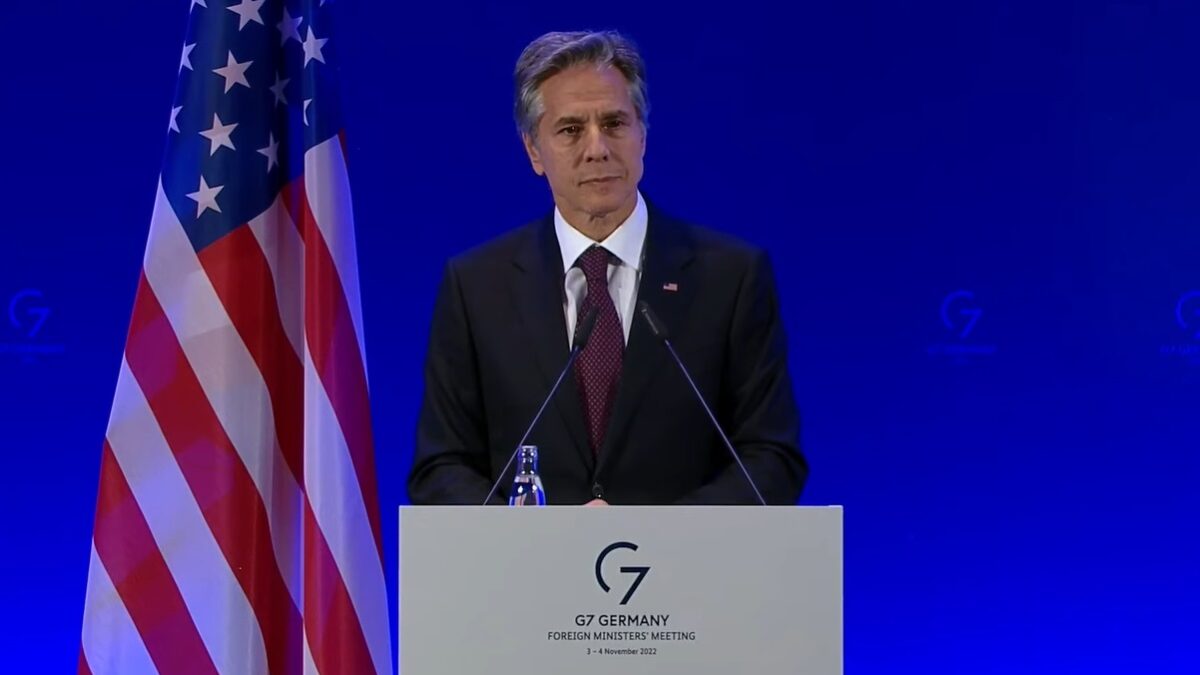


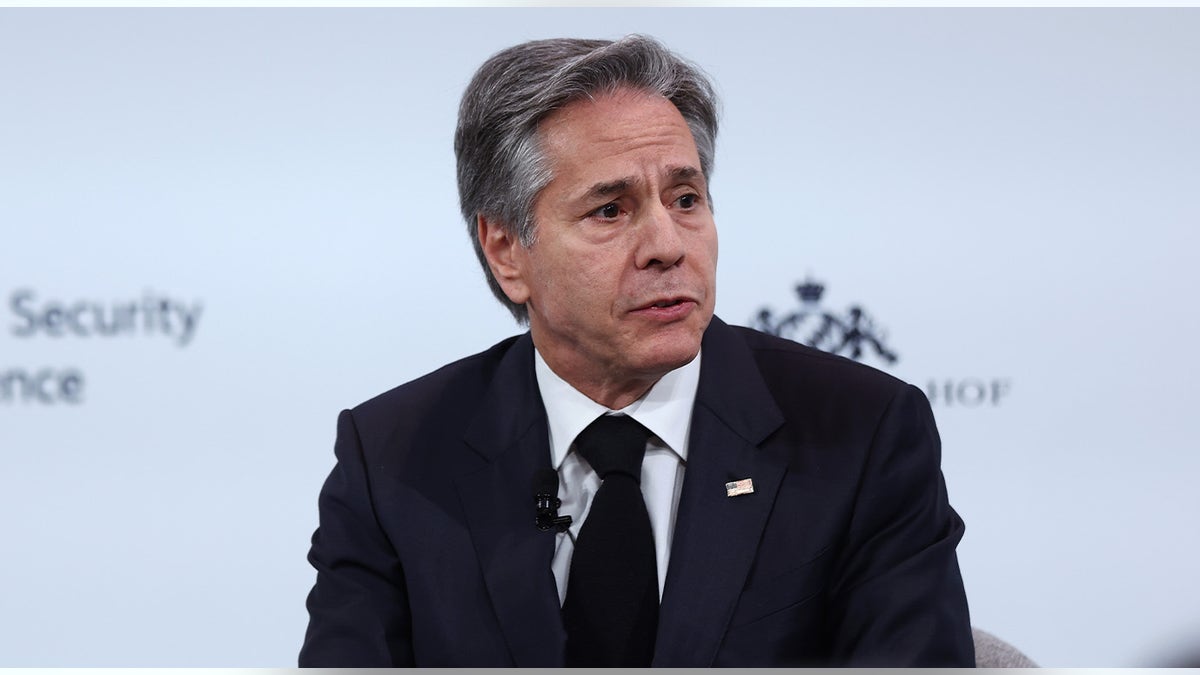
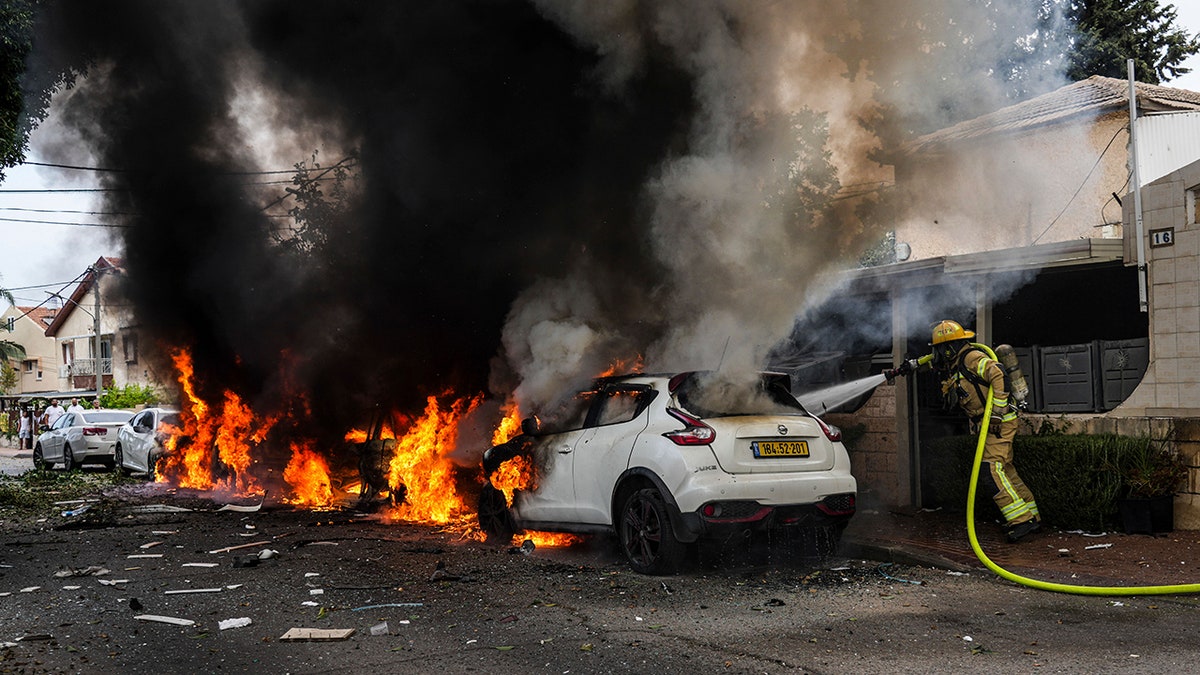
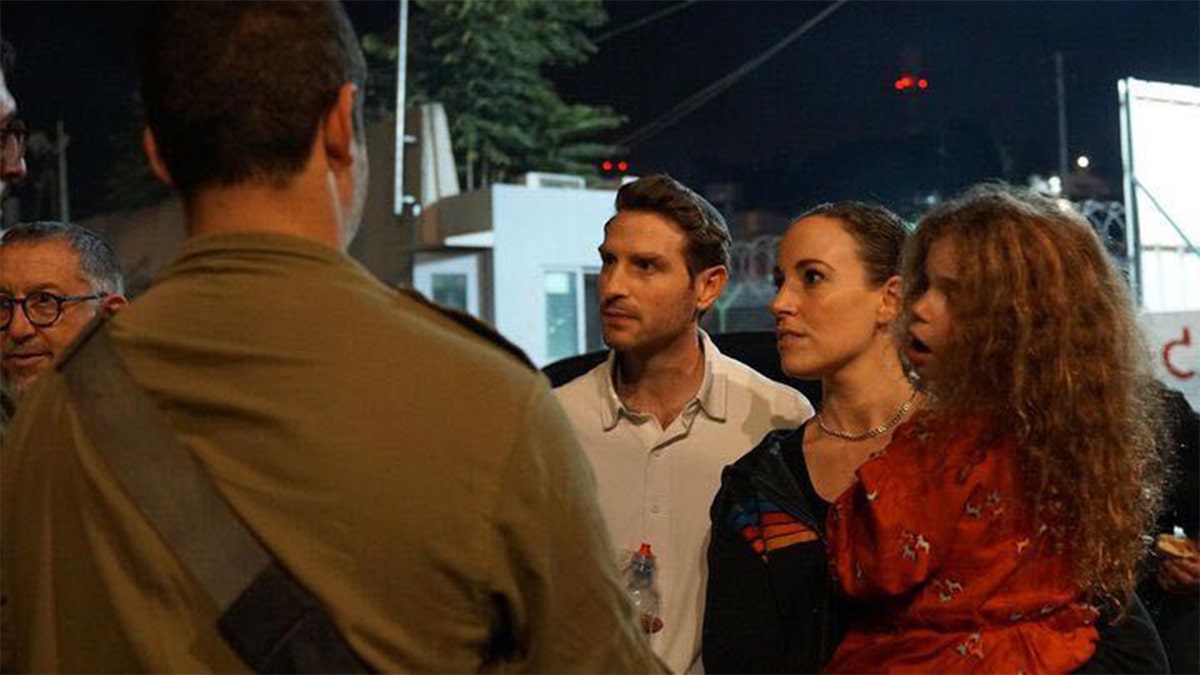

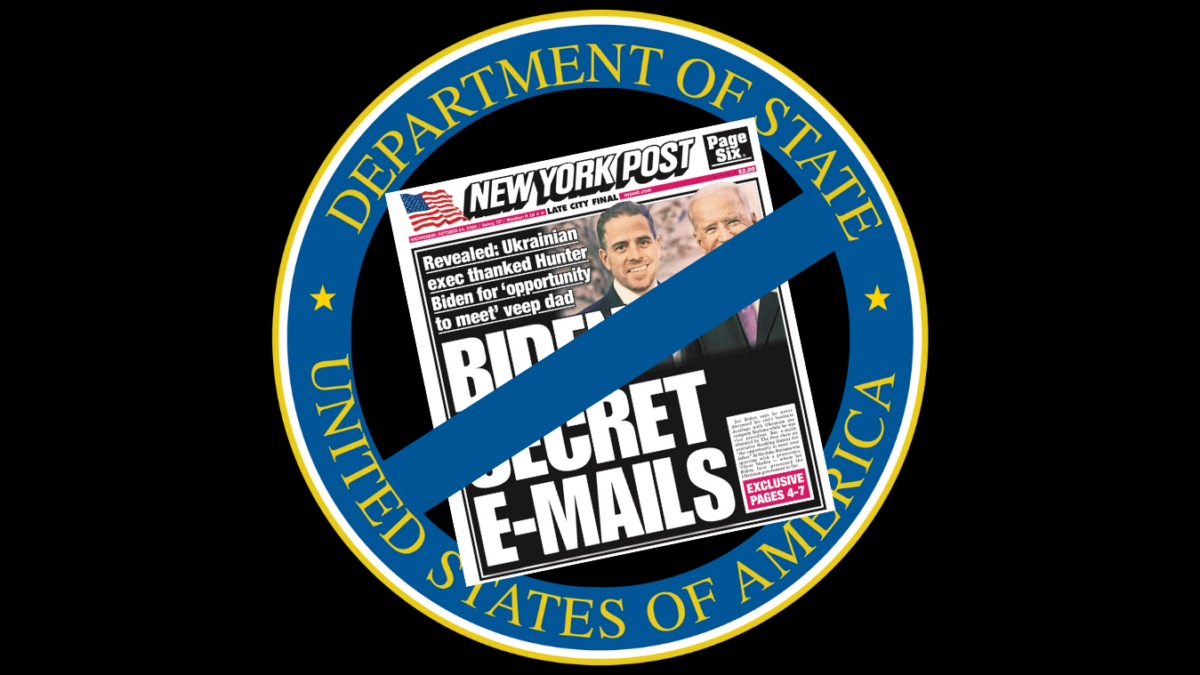

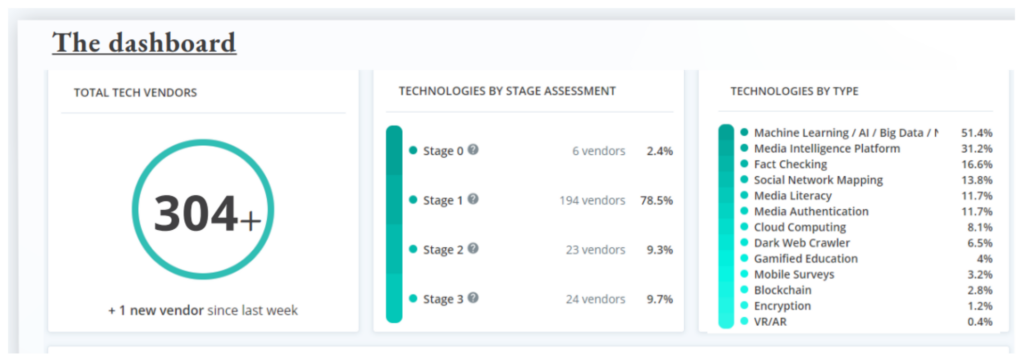
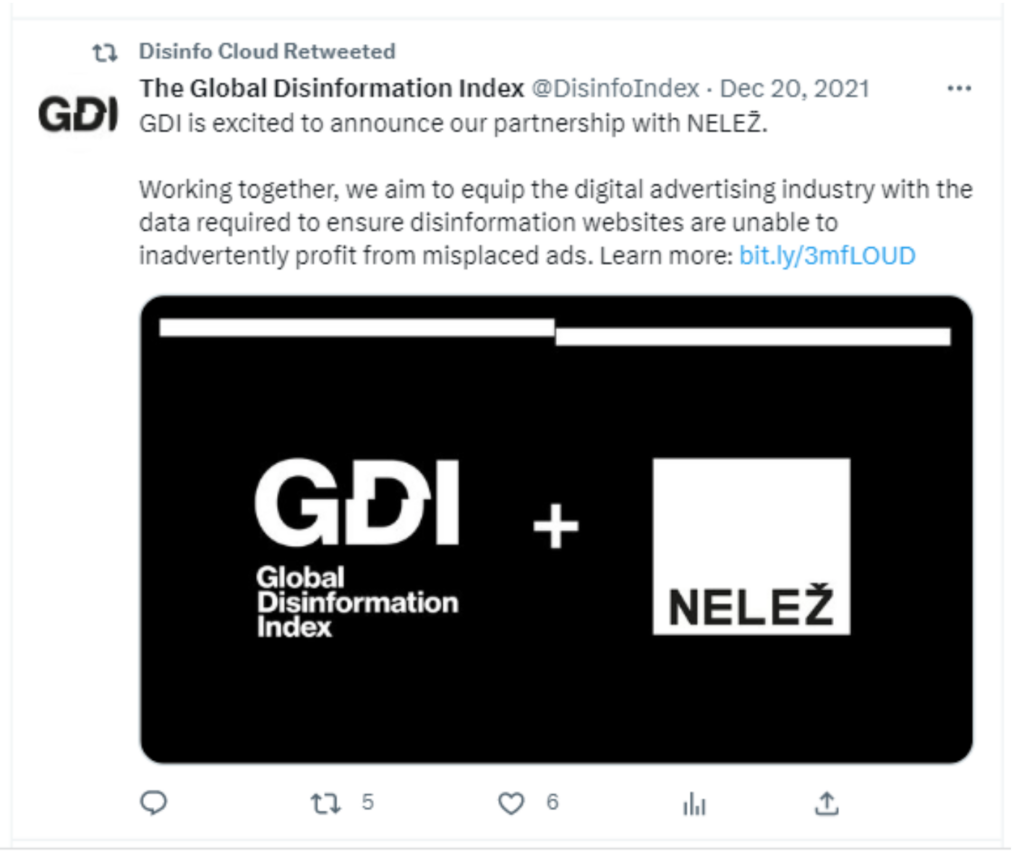
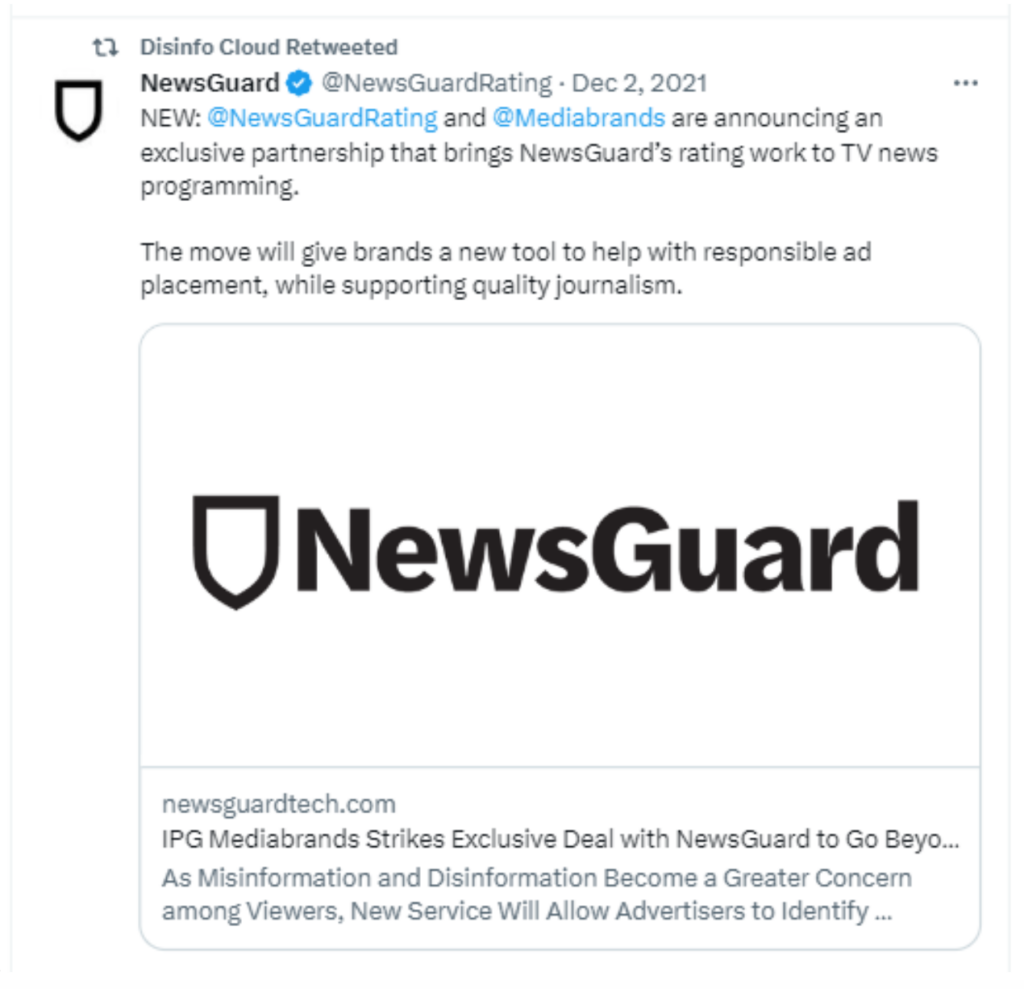
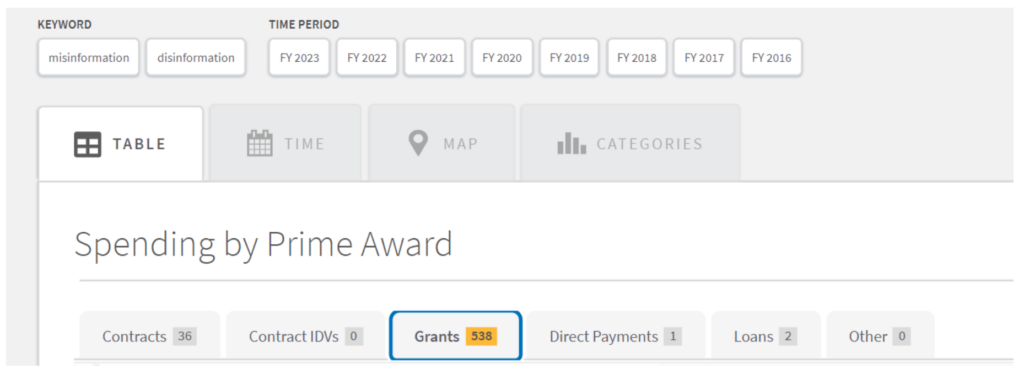
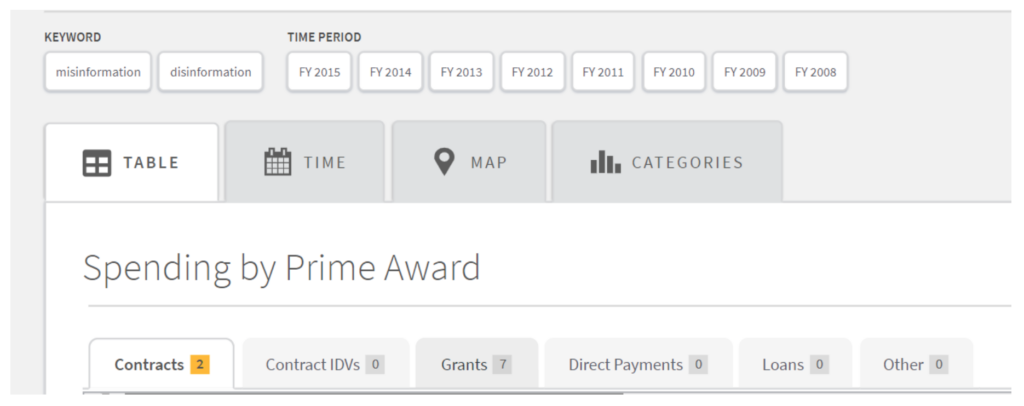
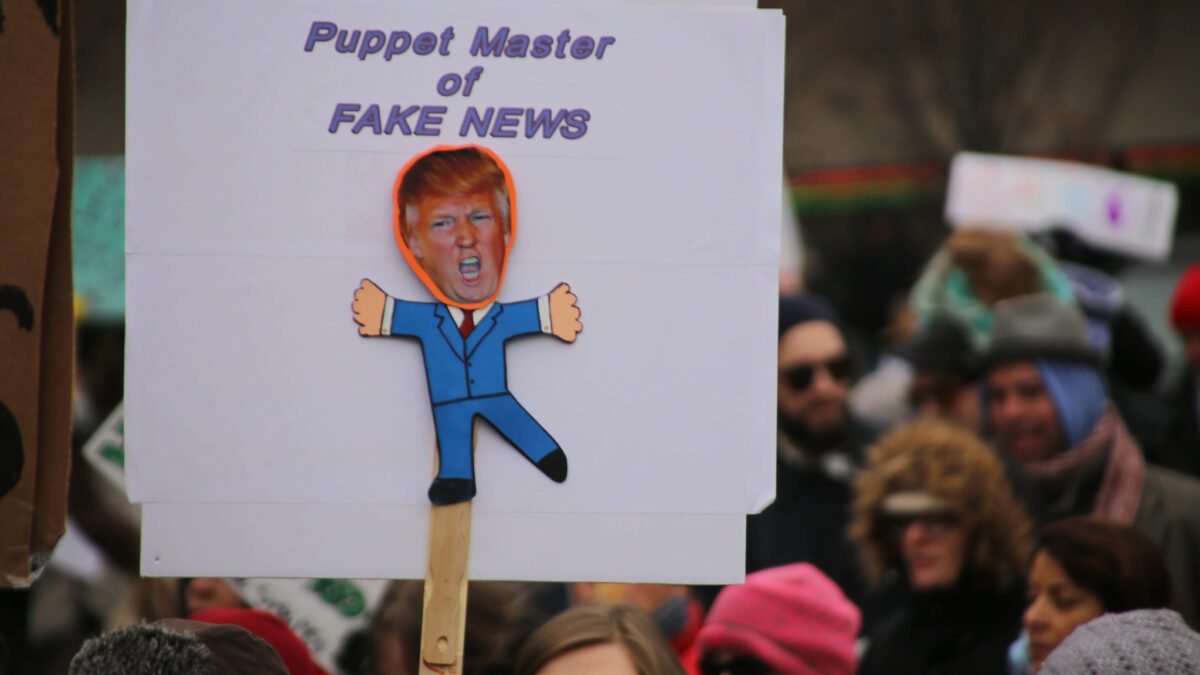






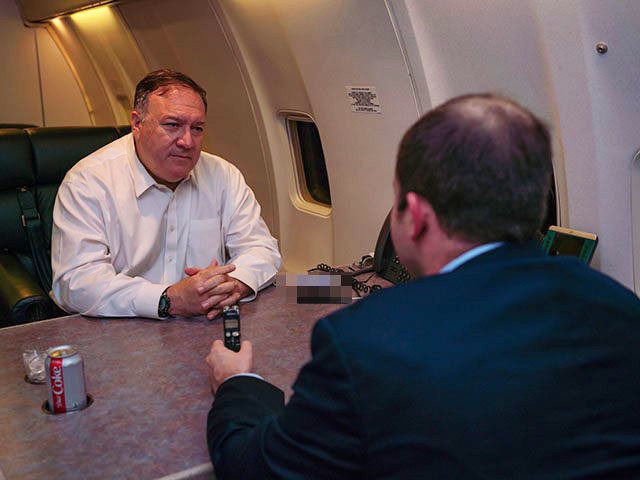


 Authored by Richard Pollock, Reporter, 09/21/2016


 No smoke she says. How about this?
 Hillary’s good pal, Loretta Lynch at the (increasingly-inappropriately-named-under-the-Obama-administration) Department of Justice


 Agent B says he was getting the


 The Clinton campaign has now admitted that the former


 C
C




 What Did You Say?
You must be logged in to post a comment.