For years, many have speculated that Democrat political candidates may be filling social media with fake posts to deceive the public and make their campaigns and causes seem more popular than they are. These claims have often been dismissed, citing that Democrat voters are already more likely to be on the internet compared to their not-as-tech-savvy Republican counterparts. This would suggest that the constant flood of left-leaning content on websites such as Reddit was merely a reflection of the userbase. However, many people simply couldn’t shake the feeling that something was just off, especially in the run up to major elections. Despite my fervent belief that something was amiss, I never had any direct proof that Democrats were actively manipulating social media.
That all changed two weeks ago, when X user @jessiprincey replied to one of my posts with a screenshot from a Discord server, seemingly related to the Harris-Walz campaign:
I immediately messaged Jess, and soon received a link to the Discord server where this operation was taking place. What I’d find there went far beyond algorithmic manipulation. I discovered massive “astroturfing” campaigns operating across multiple platforms. “Astroturfing” is a political and marketing term that describes creating swarms of coordinated and/or paid messages and posts to deceptively create the illusion of support from ordinary people. Essentially, “astroturfing” is the opposite of grassroots support.
In this case, there is a team of volunteers who spam social media with posts that specifically promote Kamala. They then have other users pretend to be random individuals who just happened across the post and decided to comment. It’s no different than a shady company paying a team to write a bunch of fake Amazon reviews about their product to make it appear to be a better and more popular product than it is.
On Amazon, that might result in a product getting more sales. In a U.S. election, it could mean that the falsely advertised candidate receives more votes. This behavior is not only incredibly dishonest, but in many cases, it directly violates the Terms of Service they’ve agreed to by operating on certain social media platforms.
In part one of a three-part series, we’re going to look at how the Harris-Walz campaign has manipulated the popular website Reddit, one of the top social media sites with 500 million users, to publish campaign propaganda.
Astroturfing on Reddit
Reddit is broken into thousands of message boards on discrete topics, known as “subreddits.” The Politics subreddit and several others are being actively targeted by the Harris-Walz campaign, with notable success. Since the Reddit astroturfing operation started, it has rapidly developed an organizational structure — complete with roles for team members, spreadsheets for tracking their analytics, and “Key Messaging” to stick to when making a social media post.
I found that 126 of the top 1,000 posts in the past month on r/Politics were posted by official Harris-Walz campaign volunteers. Owning one out of every eight of all top posts in r/Politics is not an easy feat, and it doesn’t just happen. Here’s how they achieved it.
Every weekday morning, Harris for President staffers like Gabrielle Lynn post the “Daily Messaging Guidance” to the server’s Reddit channel. It usually consists of articles and data that the Harris-Walz campaign wants to boost, as well as “key messaging” that their Reddit volunteers should stick to.
On Gabrielle Lynn’s profile, you’ll find a Staff icon (the blue D), which indicates that she is a paid Democrat staffer. In this case, Gabrielle is a Harris for President staffer.
The links compiled by official Harris-Walz staffers, along with other articles submitted by volunteers, are added to a Google Spreadsheet called “Reddit Organizing.”
Kamala’s “Lead Posters” (people who have demonstrated a “cultural” knowledge of Reddit) then choose which links will resonate best with different Reddit communities. For instance, a link about “how Project 2025 impacts reproductive health” will be directed towards communities with young women as their primary user base, whereas news about Kamala’s Fox News interview “winning over swing state voters” gets directed to Reddit’s Democrat communities, and possibly to people living in swing states.
Harris-Walz campaign volunteers have created a database of more than 100 subreddits — each containing detailed information on what kind of content they permit, what topics perform the best, and any specific notes about each community, such as how much “karma” or cumulative upvotes one needs to post in each subreddit.
After their links have been collected and categorized, volunteer “Posters” will take a handful of the links provided and post them to their assigned subreddits. Kamala’s posters, however, don’t simply spam links haphazardly. They use a calculated, sequential post timing metric to avoid Reddit’s built-in spam filters. Harris-Walz campaign volunteers often discuss their ban-avoidance tactics in their Discord server, while continuing to spam Reddit with their collected links.
Once the users make their Reddit posts, they return to the spreadsheet and update it with a link to their brand-new post.
And why do they collect their post links?
They collect their Reddit links so Kamala’s volunteers can flood the post with likes and comments, thus making them appear more active. This, in turn, triggers the algorithm to make the post appear in more user timelines. Reddit’s post activity algorithm is extremely simple, and can easily be abused, which is known on Reddit as “brigading.”
How Effective is This?
While the Harris-Walz Discord server was created many months ago, the spreadsheet to track their vote manipulation on Reddit was only implemented on Oct. 4.
Over the course of 15 days, this group of volunteers, directed by official Harris-Walz campaign staff, was able to make 2,551 posts to Reddit. So far, they have received more than 5.7 million upvotes and 418,000 comments on those posts, according to their own data:
Currently, they’re posting approximately 120 unique links to Reddit per day.
However, Kamala’s volunteer data wasn’t enough for me. I wanted to know just how effective this campaign has been. So, I exported their spreadsheet and got to work.
Using their oh-so cleverly named “Please Upvote These!” spreadsheet, I filtered the information to find posts exclusively made by official Harris-Walz campaign volunteers. I found 1,728 posts created by 67 unique Harris-Walz campaign volunteers since Oct. 4, many of which received a LOT of traction in a very short time span.
I tagged each of their usernames with a “Kamala Harris Volunteer” label using a browser extension called Reddit Enhancement Suite, and went to their targeted subreddits to determine exactly how successful they’d been.
I found their primary target to be r/Politics, the largest community on Reddit for discussing U.S. politics with more than 8 million members. I sorted the top 1,000 posts of the past month, and what I discovered shocked me.
Of the top 1,000 posts on r/Politics, 126 were written by a user bearing the mark “Kamala Harris Volunteer.”
This means 12.5 percent of the most upvoted content on r/Politics came directly from volunteers of the Harris-Walz campaign.
Remember, this operation has only picked up steam in the last two weeks. On Oct. 17, eight of the 30 hottest posts on r/Politics were created by Harris-Walz campaign volunteers. That’s over 25 percent.
On Oct. 20, 13 of the 100 newest posts were created by Harris-Walz campaign volunteers.
Beyond r/Politics, they also target swing state subreddits, which tend to be a lot smaller in number and far less strictly moderated. They created a collection of swing state subreddits, including communities dedicated to their towns and cities, which streamlines the process of targeting them with Harris-Walz supplied messaging.
Because these communities are small, it’s a lot easier to get their posts to rank. In the week between Oct. 13 and the 20, 10 percent (39 of 400 posts) of top posts in their swing state collection were created by Harris-Walz volunteers, many of whom aren’t even from a swing state.
It’s safe to say that the Harris-Walz astroturfing operation has fundamentally compromised the authenticity of political discussions on Reddit. Kamala is actively ruining the internet by making her campaign look far more popular than it is in reality.
The actions, while seemingly not illegal, directly violate Reddit’s Terms of Service. The volunteers of the Harris-Walz campaign are using multiple accounts to manipulate votes …
and solicit votes from others …
in a group formed to coordinate voting:
These are all direct violations of Reddit’s content policy, which explicitly forbids the types of vote manipulation that is encouraged on the Harris-Walz volunteer Discord server.
Why is This So Effective?
For those unfamiliar with Reddit, the site tends to be very left-leaning, largely due to the biases of activist Reddit moderators. Here’s a recent example:
The following post was made by a Democrat redditor to r/Texas. The call for Democrats specifically to get out and vote was met with heaps of praise and showered with upvotes.
However, when the same text was posted but with “Democrat” and “Kamala” replaced with “Republican” and “Trump,” the post was deleted and the user banned from r/Texas.
It’s unknown if Reddit is aware of the policy violations being performed by the Harris-Walz campaign. While it’s possible that their accounts will be banned when their actions come to light, it is also entirely possible that Reddit is giving the Harris-Walz campaign free rein to violate the rules. In 2018, Reddit’s CEO Steve Huffman plainly stated in an interview with The New Yorker:
I’m confident that Reddit could sway elections. We wouldn’t do it, of course. And I don’t know how many times we could get away with it. But, if we really wanted to, I’m sure Reddit could have swayed at least this election, this once.
The author runs the popular Twitter account @reddit_lies.
Free speech may have taken a beating in the U.S. Supreme Court’s ruling giving Big Government and Big Tech free rein over the First Amendment, but an attorney for the private plaintiffs in the case says the battle is far from over.
NCLA represents the private plaintiffs in the ruling that saw a 6-3 majority in Murthy v. Missouri reverse a lower court’s injunction that blocked the federal government from partnering with social media giants to silence posts it doesn’t like. As my colleague Shawn Fleetwood wrote, the decision — based on an absurd standing argument — effectively frees the Biden administration to continue its censoring operations during the 2024 election.
“The Supreme Court majority has practically erased the First Amendment and permitted government to co-opt private entities, like social media platforms, to accomplish its censorship aims,” NCLA said in a press release following the ruling.
In the majority opinion, Justice Amy Coney Barrett wrote that the plaintiffs failed to establish standing because they did not “demonstrate a substantial risk that, in the near future, they will suffer an injury that is traceable to a Government defendant and redressable by the injunction they seek.”
“Because no plaintiff has carried that burden, none has standing to seek a preliminary injunction,” the decision opines.
‘Truth Can Get You Fired’
But if the past is truly an indicator of the future, it’s difficult to reconcile the standing argument with the speech suppression that occurred, particularly against those who rightly questioned the government’s Covid policies and voiced legitimate concerns over Covid vaccines.
NCLA’s clients, Drs. Jayanta Bhattacharya, Martin Kulldorff, Aaron Kheriaty, and Jill Hines, were all censored for daring to challenge the government’s “disinformation” campaign on the pandemic. It cost Kulldorff his job as a respected professor at Harvard.
“I am no longer a professor of medicine at Harvard. The Harvard motto is Veritas, Latin for truth. But, as I discovered, truth can get you fired. This is my story — a story of a Harvard biostatistician and infectious-disease epidemiologist, clinging to the truth as the world lost its way during the Covid pandemic,” he wrote earlier this year in a column for City Journal. Kulldorff had questioned the lockdowns and vaccine mandates.
"Scientific institutions have enjoyed enormous prestige among the public. The COVID-19 pandemic, and the dreadful performance of the experts and institutions, ended this idyll. – @mgurrihttps://t.co/3KcnfTq0Gj
No one was hurt by the government? The majority opinion asserts that while the Big Tech speech suppressors did have content moderation policies and may have been censoring users, the plaintiffs provided no documentation showing the government coerced the social media giants to do so. As censor-in-chief Joe Biden would say, that’s malarkey.
Younes said the ruling is rooted in some “factual errors” by the majority. The Louisiana District Court Judge who on July 4, 2023, issued the injunction against the government said the executive branch“seems to have assumed a role similar to an Orwellian ‘Ministry of Truth.’” U.S. District Judge Terry Doughty conducted a thorough review of voluminous records showing dozens of agencies communicating with Big Tech companies, according to Younes.
“[There were] probably close to 100 federal officials that we know of who were colluding with, coercing, pressuring, influencing the companies to effectuate their censorship desires,” the attorney said, adding that the justices in the majority appear to have “read the government’s brief and just believed everything they said.”
In his dissent, Justice Samuel Alito warned that the government’s conduct was “blatantly unconstitutional, and the country may come to regret the Court’s failure to say so.”
“Officials who read today’s decision together with Vullo will get the message. If a coercive campaign is carried out with enough sophistication, it may get by. That is not a message this Court should send.”
Difficult but Not Impossible
While the high court remanded the case to the lower court “for further proceedings consistent with this opinion,” Younes said expanded discovery might just stop the overreaching government yet. NCLA plans to go after government and Big Tech communications involving its clients to show the direct harm caused, as demanded in the majority’s standing argument.
“The district court has shown that it believes in our case and … said this is arguably the most massive attack on free speech in the history of the United States, which I agree with,” Younes said. “The federal government was censoring entire narratives, entire lines of thought. If you questioned the efficacy of the vaccines in 2021, even if you were a vaccine expert like our client, Martin Kulldorff, you would be censored on social media, as he was.”
The case may also get an assist from a presidential candidate. Robert F. Kennedy Jr., now running as an independent, had sought to intervene in the Supreme Court case but was turned back by the majority. If anyone knows censorship, it’s RFK Jr., who was blocked from social media as part of what the government and corporate media have described as the “Disinformation Dozen” for challenging the government’s faulty narrative on Covid vaccines. Kennedy has lots of emails showing the Biden administration trying to silence his speech.
As government water carrier USA Today reported, one email shows the Biden administration pouncing after Kennedy suggested baseball legend Hank Aaron’s death may have been caused by his Covid-19 vaccine.
“Wanted to flag the below tweet and am wondering if we can get moving on the process for having it removed ASAP,” the digital director for the White House’s Covid response team wrote in an email to an official at Twitter, the publication reported.
Alito also dissented in the court’s rejection of Kennedy’s motion to join the lawsuit, suggesting standing could be a problem and RFK Jr. could help take away that argument.
“[The Supreme Court is] making it very difficult to bring the case, but they’re not making it impossible,” Younes said.
If the Supreme Court won’t stand up to assaults on the First Amendment, Congress must, said plaintiff Jill Hines, NCLA client and co-director of Health Freedom Louisiana.
“After reviewing the shocking and incriminating evidence indicating a massive government censorship scheme, the Justices erroneously determined to allow the government access to social media companies for the purpose of undermining free speech,” she said in the press release. “Congress must act immediately to defund agencies and third parties actively involved in this broadly pervasive and unconstitutional censorship scheme.”
Matt Kittle is a senior elections correspondent for The Federalist. An award-winning investigative reporter and 30-year veteran of print, broadcast, and online journalism, Kittle previously served as the executive director of Empower Wisconsin.
The Biden administration attempted to distract the Supreme Court from the voluminous evidence of federal abuse of Americans’ speech rights during oral arguments in Murthy v. Missouri Monday. It sounded like several justices followed the feds’ waving red flag.
“The government may not use coercive threats to suppress speech, but it is entitled to speak for itself by informing, persuading, or criticizing private speakers,”said Biden administration lawyer Brian Fletcher in his opening remarks. He and several justices asserted government speech prerogatives that would flip the Constitution upside down.
The government doesn’t have constitutional rights. Constitutional rights belong to the people and restrain the government. The people’s right to speak may not be abridged. Government officials’ speaking, in their official capacities, may certainly be abridged. Indeed, it often must be, precisely to restrict officials from abusing the state’s monopoly on violence to bully citizens into serfdom.
It is obviously un-American and unconstitutional for the government to develop a “hit list” of citizens to mute in the public square through secret pressure on communications monopolies beholden to the government for their monopoly powers. There is simply no way it’s “protected speech” for the feds to use intermediaries to silence anyone who disagrees with them on internet forums where the majority of the nation’s political organizing and information dissemination occurs.
NEITHER THE TIMES NOR ANY OTHER MAJOR NEWS OUTLET HAS EVER ACKNOWLEDGED THE WHITE HOUSE SOUGHT TO CENSOR ME AND MAKE TWITTER BAN ME AT A SECRET MEETING IN APRIL 2021.
What’s happening is not government expressing its views to media, or “encouraging press to suppress their own speech,” as Justice Elena Kagan put it. This is government bullying third parties to suppress Americans’ speech that officials dislike.
In the newspaper analogy, it would be like government threatening an IRS audit or Equal Employment Opportunity Commission (EEOC) investigation, or pulling the business license of The Washington Post if the Post published an op-ed from Jay Bhattacharya. As Norwood v. Harrison established in 1973, that’s blatantly unconstitutional. Government cannot “induce, encourage or promote private persons to accomplish what it is constitutionally forbidden to accomplish.”
Yet, notes Matt Taibbi, some justices and Fletcher “re-framed the outing of extravagantly funded, ongoing content-flagging programs, designed by veterans of foreign counterterrorism operations and targeting the domestic population, as a debate about what Fletcher called ‘classic bully pulpit exhortations.’”
Every Fake Excuse for Censorship Is Already Illegal
We have laws against all the harms the government and several justices put forth as excuses for government censorship. Terrorism is illegal. Promoting terrorism is illegal, as an incitement to treason and violence. Inciting children to injure or murder themselves by jumping out windows — a “hypothetical” brought up by Justice Ketanji Brown Jackson and discussed at length in oral arguments — is illegal.
If someone is spreading terrorist incitements to violence on Facebook, law enforcement needs to go after the terrorist plotters, not Facebook. Just like it’s unjust to punish gun, knife, and tire iron manufacturers for the people who use their products to murder, it’s unjust and unconstitutional for government to effectively commandeer Facebook under the pretext of all the evils people use it to spread. If they have a problem with those evils, they should address those evils directly, not pressure Facebook to do what they can’t get through Congress like it’s some kind of substitute legislature.
It’s also ridiculous to, as Jackson and Fletcher did in oral argument, assume that the government is the only possible solution to every social ill. Do these hypothetically window-jumping children not have parents? Teachers? Older siblings? Neighbors? Would the social media companies not have an interest in preventing their products from being used to promote death, and wouldn’t that be an easy thing to explain publicly? Apparently, Jackson couldn’t conceive of any other solution to problems like these than government censorship, when our society has handled far bigger problems like war, pandemics, and foreign invasion without government censorship for 250 years!
Voters Auditing Government Is Exactly How Our System Should Work
Fletcher described it as a “problem” that in this case, “two states and five individuals are trying to use the Article III courts to audit all of the executive branch’s communications with and about social media platforms.” That’s called transparency, and it’s only a problem if the government is trying to escape accountability to voters for its actions. The people have a fundamental right to audit what their government is doing with public positions, institutions, and funds! How do we have government by consent of the governed if the people can have no idea what their government is doing?
Under federal laws, all communications like those this lawsuit uncovered are public records. Yet these public records are really hard to get. The executive branch has been effectively nullifying open records laws by absurdly lengthening disclosure times — to as long as 636 days — increasingly forcing citizens to wage expensive lawsuits to get federal agencies to cough up records years beyond the legal deadline.
Congress should pass a law forcing the automatic disclosure of all government communications with tech monopolies that don’t concern actual classified information and “national security” designations, which the government expands unlawfully to avoid transparency. No justice should support government secrecy about its speech pressure efforts outside of legitimate national security actions.
Government Is So Big, It’s Always Coercive
Fletcher’s argument also claimed to draw a line between government persuasion and government coercion. The size and minute harassment powers of our government long ago obliterated any such line, if it ever existed. Federal agencies now have the power to try citizens in non-Article III courts, outside constitutional protections for due process. Citizens can be bankrupted long before they finally get to appeal to a real court. That’s why most of them just do whatever the agencies say, even when it’s clearly unlawful.
Federal agencies demand power over almost every facet of life, from puddles in people’s backyards to the temperature of cheese served in a tiny restaurant. If they put a target on any normal citizen’s back, he goes bankrupt after regulatory torture.
As Franklin Roosevelt’s “brain trust” planned, government is now the “senior partner” of every business, giving every “request” from government officials automatic coercion power. Federal agencies have six ways from Sunday of getting back at a noncompliant company, from the EEOC to the Occupational Safety and Health Administration to the Environmental Protection Agency to Health and Human Services to Securities and Exchange Commission investigations and more. Use an accurate pronoun? Investigation. Hire “one too many” white guys? Investigation.
TikTok legislation going through Congress right now would codify federal power to seize social media companies accused of being owned by foreign interests. Shortly after he acquired X, Elon Musk faced a regulatory shakedown costing him tens of millions, and more on the way. He has money like that, but the rest of us don’t.
Speech from a private citizen does not have the threat of violence behind it. Speech from a government official, on the other hand, absolutely does and always has. Government officials have powers that other people don’t, and those powers are easily abused, which is exactly why we have a Constitution. SCOTUS needs to take this crucial context into account, making constitutional protections stronger because the government is far, far outside its constitutional bounds.
Big tech companies’ very business model depends on government regulators and can be destroyed — or kneecapped — at the stroke of an activist president’s pen. Or, at least, that’s what the president said when Facebook and Twitter didn’t do what he wanted: Section 230 should “immediately be revoked.” This is a president who claims the executive power to unilaterally rewrite laws, ignore laws, and ignore Supreme Court decisions. It’s a president who issues orders as press releases so they go into effect months before they can even begin to be challenged in court.
Constitutionally Protected Speech Isn’t Terrorism
If justices buy the administration’s nice-guy pretenses of “concern about terrorism,” and “once in a lifetime pandemic measures,” they didn’t read the briefs in this case and see that is simply a cover for the U.S. government turning counterterrorism tools on its own citizens in an attempt to control election outcomes. This is precisely what the First Amendment was designed to check, and we Americans need our Supreme Court to understand that and act to protect us. Elections mean nothing when the government is secretly keeping voters from talking to each other.
The Supreme Court may not be able to return the country to full constitutional government by eradicating the almost entirely unconstitutional administrative state. But it should enforce as many constitutional boundaries as possible on such agencies. That clearly includes prohibiting all of government from outsourcing to allegedly “private” organizations actions that would be illegal for the government to take.
That includes not just coercive instructions to social media companies, but also developing social media censorship tools and organizations as cutouts for the rogue security state that is targeting peaceful citizens instead of actual terrorists. Even false speech is not domestic terrorism, and no clearheaded Supreme Court justice looking at the evidence could let the Biden administration weaponize antiterrorism measures to strip law-abiding Americans of our fundamental human rights.
Joy Pullmann is executive editor of The Federalist, a happy wife, and the mother of six children. Her ebooks include “Classic Books For Young Children,” and “101 Strategies For Living Well Amid Inflation.” An 18-year education and politics reporter, Joy has testified before nearly two dozen legislatures on education policy and appeared on major media from Fox News to Ben Shapiro to Dennis Prager. Joy is a grateful graduate of the Hillsdale College honors and journalism programs who identifies as native American and gender natural. Her traditionally published books include “The Education Invasion: How Common Core Fights Parents for Control of American Kids,” from Encounter Books.
The social media platforms say, on the one hand, they have every right to act as publishers to curate their platforms any way they see fit. On the other hand, they say they are not publishers to gain legal immunity under Section 230. They can’t be allowed to have it both ways. (Photo: Jonathan Raa/Nur Photo/Getty Images)
Appealing from a big loss they suffered at the 5th U.S. Circuit Court of Appeals, social media platforms are challenging Texas’ social media law that prohibits those companies from engaging in viewpoint discrimination when curating their platforms.
They claim Texas’ law violates their First Amendment rights for compelling them to host content. In other words, the platforms are saying that prohibiting a platform’s viewpoint censorship is effectively the same as forcing students in public schools to salute the American flag and recite the Pledge of Allegiance.
HUH??? What, WHAT?
It’s an odd argument for myriad reasons, but mainly because Big Tech has continually said that they serve as neutral platforms that merely transmit information from one point to another, like an internet service provider or a telephone.
They don’t claim to be publishers, like a newspaper or broadcaster. For example, Mark Zuckerberg told The New York Times that Facebook “explicitly view[s] [itself] as not editors … .” Nor “does [Facebook] want to have editorial judgment over the content that’s in your feed.”
Zuckerberg’s view is consistent with Big Tech’s court representations when seeking legal immunities under Section 230 of the Communications Act. Meta, the parent company of Facebook and Instagram; X, the former Twitter; and Google have all stated that they are neither responsible for, nor materially contribute to, their users’ content to avoid liability for hosting it.
In other words, they are conduits of others’ speech, not speakers themselves.
It’s why their First Amendment argument is patently confusing: You have to be speaking to avail yourself of its protection.
It’s also why the First Amendment has long allowed the government to apply nondiscrimination laws, as Texas did, on communications platforms that merely transmit the speech of others. For instance, telephone companies are prohibited from discriminating against callers.
The courts have upheld nondiscrimination provisions imposed on internet service providers. And the Supreme Court has held that even a property owner must allow expressive activities on his property.
However, platforms say, on the one hand, they have every right to act as publishers to curate their platforms any way they see fit. On the other hand, they say they are not publishers to gain legal immunity under Section 230.
Not only are these two positions contradictory, but they are also inconsistent with the First Amendment’s history and its jurisprudence. The relevant part of the First Amendment states that “Congress shall make no law … abridging the freedom of speech … .” James Madison, when drafting the Free Speech Clause, intended it as a bulwark against government influence over what we can say or do. It doesn’t provide for tech exceptionalism.
Indeed, the opposite is true. Yes, the First Amendment does derive, in part, from Madison’s—and the nation’s—distrust over the concentrated power the government wields. But Madison also knew that private operators, too, could be a source of concentrated authority, and, if left unchecked, could amass more power than the government itself.
Today’s tech behemoths have proven Madison’s skepticism warranted. The power of social media platforms have over speech eclipses that of any sitting president or government. As Supreme Court Justice Clarence Thomas succinctly put it, social media companies can “remove [an] account ‘at any time for any or no reason.’” In this case, Twitter, now X, “unapologetically argues that it could turn around and ban all pro-LGBT speech for no other reason than its employees want to pick on members of that community … .”
And recent history shows that the tech titans aren’t shy at doing just that with impunity.
YouTube blocks and demonetizes users who support certain political candidates or content creators that Google does not favor. What was then still Twitter censored The New York Post for accurate reporting ahead of a consequential election. Facebook even removed posts that shared a study published by the British Medical Journal—one of the oldest and most prestigious medical journals in the world—because the platform believed the study was disinformation for calling some of Pfizer’s data on its COVID-19 vaccines’ effectiveness into question.
It’s clear from their advocacy in this case that Big Tech companies don’t truly care about free speech. What they really care about is liability. If Texas is now going to hold them accountable for these decisions to censor users, then they are going to need another liability shield for that.
Big Tech thinks the First Amendment is the vessel to ensure they have complete immunity from any scrutiny. Candidly, it’s hard to imagine that Madison drafted the First Amendment as a corporate instrument to cut down an individual’s speech, but that’s what they argue. Not to mince words, their aim in this case is to contort the application of the First Amendment to create more protections to void every legislative proposal directed at them. It has almost nothing to do with free speech.
Republican Sen. Josh Hawley forced Meta CEO and Facebook founder Mark Zuckerberg to publicly apologize to the families of children victimized by his company’s addictive algorithms and practices.
During opening remarks to the Senate Judiciary Committee on Wednesday, Zuckerberg, who is on the record as encouraging his kids to play outside instead of use screens, falsely claimed social media doesn’t damage many kids’ happiness and health.
“Mental health is a complex issue, and the existing body of scientific work has not shown a causal link between using social media and young people having more mental health outcomes,” Zuckerberg said.
Facebook CEO Mark Zuckerberg claims that there is no “causal link” between using social media and young people having worse mental health outcomes: pic.twitter.com/QZCE3UWr7G
When Hawley pressed Zuckerberg about the statement later in the hearing, Zuckerberg doubled down.
“What I said is I think it’s important to look at the science. I know it’s — people widely talk about this as if that is something that’s already been proven and I think that the bulk of the scientific evidence does not support that,” Zuckerberg replied.
Hawley spent the next five minutes citing Meta-funded studies that find the opposite. One internal research project conducted by Meta in 2021 determined one in three teenage girls struggling with body image “reported that using Instagram made them feel worse.”
“Teens blame Instagram for increases in the rate of anxiety and depression. This reaction was unprompted and consistent across all groups,” a slide summarizing the study noted.
A Wall Street Journal analysis of the study warned that Meta researchers “repeatedly” found that Instagram “is harmful for a sizable percentage of [young users], most notably teenage girls” but did nothing about it.
Zuckerberg tried to dispute his own company’s findings, but Hawley did not let his excuses slide.
“You’re here testifying to us in public that there’s no link. You’ve been doing this for years. For years, you’ve been coming in public and testifying under oath that there’s absolutely no link, your product is wonderful, the science is nascent, full speed ahead. While internally, you know full well your product is a disaster for teenagers,” Hawley countered, which elicited a round of applause from viewers.
“That’s not true,” Zuckerberg replied.
Must Watch! @HawleyMO eviscerates Mark Zuckerberg for claiming "there’s no link between young people using social media and negative mental health problems."
Senator Hawley then forces Zuckerberg to apologize in person to the parents of children exploited on his platform. pic.twitter.com/36ni1eAKP4
“That’s not a question. Those are facts, Mr. Zuckerberg,” Hawley said, before continuing to list evidence that Meta knows its products endanger their users.
He listed several statistics uncovered by former Facebook executive Arturo Béjar. Béjar testified to a Senate subcommittee last year that high percentages of teen girls were exposed to nudity, unwanted sexual advances, and self-harm content within the last seven days on Meta social media platforms.
“I know you’re familiar with these stats because he sent you an email where he lined it all out. I mean, we’ve got a copy of it right here. My question is, who did you fire for this and who got fired because of that?” Hawley asked.
Zuckerberg danced around the question several times before Hawley answered it for him.
“You didn’t fire anybody, right? You didn’t take any significant actions,” Hawley said.
When Zuckerberg tried to deflect because he didn’t think it was “appropriate” to talk about his hiring and firing decisions, Hawley did not hold back.
“You know who’s sitting behind you? You’ve got families from across the nation whose children are either severely harmed or gone. And you don’t think it’s appropriate to talk about steps that you took? The fact that you didn’t fire somebody?” Hawley asked. “Let me ask you this. Have you compensated any of the victims?”
Zuckerberg confirmed he has not.
“Don’t you think they deserve some compensation for what your platform has done? Help with counseling services help with dealing with the issues that your service has caused?” Hawley pressed, noting that profit drove Meta’s decisions.
As Zuckerberg fumbled for a response, Hawley demanded he turn towards the gallery of onlookers and apologize to the families of children Big Tech has helped harm.
“There’s families of victims here today. Have you apologized to the victims? Would you like to do so now? Well, they’re here. You’re on national television,” Hawley said. “Would you like now to apologize to the victims who have been harmed, but you’re not showing the pictures? Would you like to apologize for what you’ve done to these good people?”
Zuckerberg stood, turned away from his mic, and told the parents holding pictures of their children’s faces that he understood “your families have suffered.”
Jordan Boyd is a staff writer at The Federalist and co-producer of The Federalist Radio Hour. Her work has also been featured in The Daily Wire, Fox News, and RealClearPolitics. Jordan graduated from Baylor University where she majored in political science and minored in journalism. Follow her on Twitter @jordanboydtx.
Brian Murphy, a former FBI agent who once led the intelligence wing of the Department of Homeland Security, reflected last summer on the failures of the Disinformation Governance Board — the panel formed to actively police misinformation. The board, which was proposed in April 2022 after he left DHS, was quickly shelved by the Biden administration in a few short months in the face of criticism that it would be an Orwellian state-sponsored “Ministry of Truth.”
In a July podcast, Murphy said the threat of state-sponsored disinformation meant the executive branch has an “ethical responsibility” to rein in the social media companies. American citizens, he said, must give up “some of your freedoms that you need and deserve so that you get security back.”
The legal problems and public backlash to the Disinformation Governance Board also demonstrated to him that “the government has a major role to play, but they cannot be out in front.”
Murphy, who made headlines late in the Trump administration for improperly building dossiers on journalists, has spent the last few years trying to help the government find ways to suppress and censor speech it doesn’t like without being so “out in front” that it runs afoul of the Constitution. He has proposed that law enforcement and intelligence agencies formalize the process of sharing tips with private sector actors — a “hybrid constellation” including the press, academia, researchers, nonpartisan organizations, and social media companies — to dismantle “misinformation” campaigns before they take hold.
More recently, Murphy has worked to make his vision of countering misinformation a reality by joining a United Kingdom-based tech firm, Logically.AI, whose eponymous product identifies and removes content from social media. Since joining the firm, Murphy has met with military and other government officials in the U.S., many of whom have gone on to contract or pilot Logically’s platform.
Logically says it uses artificial intelligence to keep tabs on over 1 million conversations. It also maintains a public-facing editorial team that produces viral content and liaisons with the traditional news media. It differs from other players in this industry by actively deploying what they call “countermeasures” to dispute or remove problematic content from social media platforms.
The business is even experimenting with natural language models, according to one corporate disclosure, “to generate effective counter speech outputs that can be leveraged to deliver novel solutions for content moderation and fact-checking.” In other words, artificial intelligence-powered bots that produce, in real-time, original arguments to dispute content labeled as misinformation.
In many respects, Logically is fulfilling the role Murphy has articulated for a vast public-private partnership to shape social media content decisions. Its technology has already become a key player in a much larger movement that seeks to clamp down on what the government and others deem misinformation or disinformation. A raft of developing evidence — including the “Twitter Files,” the Moderna Reports, the proposed Government Disinformation Panel, and other reports — has shown how governments and industry are determined to monitor, delegitimize, and sometimes censor protected speech. The story of Logically.AI illustrates how sophisticated this effort has become and its global reach. The use of its technology in Britain and Canada raises red flags as it seeks a stronger foothold in the United States.
Logically was founded in 2017 by a then-22-year-old British entrepreneur named Lyric Jain, who was inspired to form the company to combat what he believed were the lies that pushed the U.K. into voting in favor of Brexit, or leaving the European Union. The once-minor startup now has broad contracts across Europe and India, and has worked closely with Microsoft, Google, PwC, TikTok, and other major firms. Meta contracts with Logically to help the company fact-check content on all of its platforms: WhatsApp, Instagram, and Facebook.
The close ties to Silicon Valley provide unusual reach. “When Logically rates a piece of content as false, Facebook will significantly reduce its distribution so that fewer people see it, apply a warning label to let people know that the content has been rated false, and notify people who try to share it,” Meta and Logically announced in a 2021 press release on the partnership.
Meta and Logically did not respond to repeated requests for comment.
During the 2021 local elections in the U.K., Logically monitored up to “one million pieces of harmful content,” some of which they relayed to government officials, according to a document reviewed by RealClearInvestigations. The firm claimed to spot coordinated activity to manipulate narratives around the election, information they reported to tech giants for takedowns.
The following year, the state of Oregon negotiated with Logically for a wide-ranging effort to monitor campaign-related content during the 2022 midterm elections. In a redacted proposal for the project, Logically noted that it would check claims against its “single source of truth database,” which relied on government data, and would also crack down on “malinformation” — a term of art that refers to accurate information that fuels dangerous narratives. The firm similarly sold Oregon on its ability to pressure social media platforms for content removal.
Oregon state Rep. Ed Diehl has a led push against the state from renewing its work with Logically for the election this year. The company, he said in an interview, violates “our constitutional rights to free speech and privacy” by “flagging true information as false, claiming legitimate dissent is a threat, and then promoting “counter-narratives” against valid forms of public debate.
In response, the Oregon secretary of state’s office, which initiated the contract with Logically, claimed “no authority, ability, or desire to censor speech.” Diehl disputes this. He pointed out that the original proposal with Logically clearly states that its service “enables the opportunity for unlimited takedown attempts” of alleged misinformation content and the ability for the Oregon secretary of state’s office to “flag for removal” any “problematic narratives and content.” The contract document touts Logically as a “trusted entity within the social media community” that gives it “preferred status that enables us to support our client’s needs at a moment’s notice.”
Diehl, who shared a copy of the Logically contract with RCI, called the issue a vital “civil rights” fight, and noted that in an ironic twist, the state’s anti-misinformation speech suppression work further inflames distrust in “election systems and government institutions in general.”
Logically’s reach into the U.S. market is quickly growing. The company has piloted programs for the Chicago Police Department to use artificial intelligence to analyze local rap music and deploy predictions on violence in the community, according to a confidential proposal obtained by RCI. Pentagon records show that the firm is a subcontractor to a program run by the U.S. Army’s elite Special Operations Command for work conducted in 2022 and 2023. Via funding from DHS, Logically also conducts research on gamer culture and radicalization.
The company has claimed in its ethics statements that it will not employ any person who holds “a salaried or prominent position” in government. But records show closely entrenched state influence. For instance, Kevin Gross, a director of the U.S. Navy NAVAIR division, was previously embedded within Logically’s team during a 2022 fellowship program. The exchange program supported Logically’s efforts to assist NATO on the analysis of Russian social media.
Other contracts in the U.S. may be shrouded in secrecy. Logically partners with ThunderCat Technologies, a contracting firm that assists tech companies when competing for government work. Such arrangements have helped tech giants conceal secretive work in the past. Google previously attempted to hide its artificial intelligence drone-targeting contracts with the Defense Department through a similar third-party contracting vendor.
But questions swirl over the methods and reach of the firm as it entrenches itself into American life, especially as Logically angles to play a prominent role in the 2024 presidential election.
Pandemic Policing
In March 2020, as Britain confronted the spread of Covid-19, the government convened a new task force, the Counter Disinformation Unit (CDU). The secretive task force was created with little fanfare but was advertised as a public health measure to protect against dangerous misinformation. Caroline Dinenage, the member of Parliament overseeing media issues, later explained that the unit’s purpose was to provide authoritative sources of information and to “take action to remove misinformation” relating to “misleading narratives related to COVID-19.”
The CDU, it later emerged, had largely outsourced its work to private contractors such as Logically. In January 2021, the company received its first contract from the agency overseeing the CDU, for £400,000, to monitor “potentially harmful disinformation online.” The contracts later swelled, with the U.K. agency that pertains to media issues eventually providing contracts with a combined value of £1.2 million and the Department of Health providing another £1.3 million, for a total of roughly $3.2 million.
That money went into far-reaching surveillance that monitored journalists, activists, and lawmakers who criticized pandemic policies. Logically, according to an investigation last year in the Telegraph, recorded comments from activist Silkie Carlo criticizing vaccine passports in its “Mis/Disinformation” reports.
Logically’s reports similarly collected information on Dr. Alexandre de Figueiredo, a research fellow at the London School of Hygiene and Tropical Medicine. Figueiredo had published reports on the negative ways in which vaccine passports could undermine vaccine confidence and had publicly criticized policies aimed at the mass vaccination of children. Despite his expertise, Logically filed his tweet in a disinformation report to the government. While some of the reports were categorized as evidence of terms of service violations, many were, in fact, routine forms of dissent aired by prominent voices in the U.K. on policies hotly contested by expert opinion.
The documents showing Logically’s role were later uncovered by Carlo’s watchdog group, Big Brother Watch, which produced a detailed report on the surveillance effort. The CDU reports targeted a former judge who argued against coercive lockdowns as a violation of civil liberties and journalists criticizing government corruption. Some of the surveillance documents suggest a mission creep for the unit, as media monitoring emails show that the agency targeted anti-war groups that were vocal against NATO’s policies.
Carlo was surprised to even find her name on posts closely monitored and flagged by Logically. “We found that the company exploits millions of online posts to monitor, record and flag online political dissent to the central government under the banner of countering ‘disinformation,’” she noted in a statement to RCI.
Marketing materials published by Logically suggest its view of Covid-19 went well beyond fact-checking and veered into suppressing dissenting opinions. A case study published by the firm claimed that the #KBF hashtag, referring to Keep Britain Free, an activist group against school and business shutdowns, was a dangerous “anti-vax” narrative. The case study also claimed the suggestion that “the virus was created in a Chinese laboratory” was one of the “conspiracy theories’’ that “have received government support” in the U.S. — despite the fact that a preponderance of evidence now points to a likely lab leak from the Wuhan Institute of Virology as the origin of the pandemic.
Logically was also involved in pandemic work that blurred the line with traditional fact-checking operations. In India, the firm helped actively persuade patients to take the vaccine. In 2021, Jain, the founder and CEO of the company, said in an interview with an Indian news outlet that his company worked “closely with communities that are today vaccine hesitant.” The company, he said, recruited “advocates and evangelists” to shape local opinion.
Questionable Fact-Checking
In 2022, Logically used its technology on behalf of Canadian law enforcement to target the trucker-led “Freedom Convoy” against Covid-19 mandates, according to government records. Logically’s team floated theories that the truckers were “likely influenced by foreign adversaries,” a widely repeated claim used to denigrate the protests as inauthentic.
The push to discredit the Canadian protests showed the overlapping power of Logically’s multiple arms. While its social media surveillance wing fed reports to the Canadian government, its editorial team worked to influence opinion through the news media. When the Financial Times reported on the protest phenomenon, the outlet quoted Murphy, the former FBI man who now works for Logically, who asserted that the truckers were influenced by coordinated “conspiracy theorist groups” in the U.S. and Canada. Vicesimilarly quoted Joe Ondrak, Logically’s head of investigations, to report that the “Freedom Convoy” had generated excitement among global conspiracy theorists. Neither outlet disclosed Logically’s work for Canadian law enforcement at the time.
Other targets of Logically are quick to point out that the firm has taken liberties with what it classifies as misinformation.
Will Jones, the editor of the Daily Sceptic, a British news outlet with a libertarian bent, has detailed an unusual fact-check from Logically Facts, the company’s editorial site. Jones said the site targeted him for pointing out that data in 2022 showed 71 percent of patients hospitalized for Covid-19 were vaccinated. Logically’s fact-check acknowledged Jones had accurately used statistics from the U.K. Health Security Agency, but tried to undermine him by asserting that he was still misleading by suggesting that “vaccines are ineffective.”
But Jones, in a reply, noted that he never made that argument and that Logically was batting away at a straw man. In fact, his original piece plainly took issue with a Guardian article that incorrectly claimed that “COVID-19 has largely become a disease of the unvaccinated.”
Other Logically fact-checks have bizarrely targeted the Daily Sceptic for reporting on news in January 2022 that vaccine mandates might soon be lifted. The site dinged the Daily Sceptic for challenging the evidence behind the vaccine policy and declared, “COVID-19 vaccines have been proven effective in fighting the pandemic.” And yet, at the end of that month, the mandate was lifted for health care workers, and the following month, all other pandemic restrictions were revoked, just as the Daily Sceptic had reported.
“As far as I can work out, it’s a grift,” said Daily Sceptic founder Toby Young, of Logically. “A group of shysters offer to help the government censor any criticism of its policies under the pretense that they’re not silencing dissent — God forbid! — but merely ‘cleansing’ social media of misinformation, disinformation and hate speech.”
Jones was similarly dismissive of the company, which he said disputes anything that runs contrary to popular consensus. “The consensus of course is that set by the people who pay Logically for their services,” Jones added. “The company claims to protect democratic debate by providing access to ‘reliable information,’ but in reality, it is paid to bark and savage on command whenever genuine free speech makes an inconvenient appearance.”
In some cases, Logically has piled on to news stories to help discredit voices of dissent. Last September, the anti-misinformation site leaped into action after British news outlets published reports about sexual misconduct allegations surrounding comedian and online broadcaster Russell Brand — one of the outspoken critics of government policy in Britain, who has been compared to Joe Rogan for his heterodox views and large audience.
Brand, a vocal opponent of pandemic policies, had been targeted by Logically in the past for airing opinions critical of the U.S. and U.K. response to the virus outbreak, and in other moments for criticizing new laws in the European Union that compel social media platforms to take down content.
But the site took dramatic action when the sexual allegations, none of which have been proved in court, were published in the media. Ondrak, Logically’s investigations head, provided different quotes to nearly half a dozen news outlets — including Vice, Wired, the BBC, and two separate articles in The Times — that depicted Brand as a dangerous purveyor of misinformation who had finally been held to account.
“He follows a lot of the ostensibly health yoga retreat, kind of left-leaning, anti-capitalist figures, who got really suckered into Covid skepticism, Covid denialism, and anti-vax, and then spat out of the Great Reset at the other end,” Ondrak told Wired. In one of the articles published by The Times, Ondrak aired frustration on the obstacles of demonetizing Brand from the Rumble streaming network. In an interview with the BBC, Ondrak gave a curious condemnation, noting Brand stops short of airing any actual conspiracy theories or falsehoods but is guilty of giving audiences “the ingredients to make the disinformation themselves.”
Dinenage, the member of Parliament who spearheaded the CDU anti-misinformation push with Logically during the pandemic, also leapt into action. In the immediate aftermath of the scandal, she sent nearly identical letters to Rumble, TikTok, and Meta to demand that the platforms follow YouTube’s lead in demonetizing Brand. Dinenage couched her official request to censor Brand as a part of a public interest inquiry, to protect the “welfare of victims of inappropriate and potentially illegal behaviour.”
Logically’s editorial team went a step further. In its report on the Brand allegations published on Logically Facts, it claimed that social media accounts “trotting out the ‘innocent until proven guilty’ refrain” for the comedian were among those perpetuating “common myths about sexual assault.” The site published a follow-up video reiterating the claim that those seeking the presumption of innocence for Brand, a principle dating back to the Magna Carta, were spreading a dangerous “myth.”
The unusual advocacy campaign against Brand represented a typical approach for a company that has long touted itself as a hammer against spreaders of misinformation. The opportunity to remove Brand from the media ecosystem meant throwing as much at him as possible, despite any clear misinformation or disinformation angle in the sexual assault allegations. Rather, he was a leading critic of government censorship and pandemic policy, so the scandal represented a weakness to be exploited.
Such heavy-handed tactics may be on the horizon for American voters. The firm is now a member of the U.S. Election Infrastructure Information Sharing & Analysis Center, the group managed by the Center for Internet Security that helps facilitate misinformation reports on behalf of election officials across the country. Logically has been in talks with Oregon and other states, as well as DHS, to expand its social media surveillance role for the presidential election later this year.
Previous targets of the company, though, are issuing a warning.
“It appears that Logically’s lucrative and frankly sinister business effectively produced multi-million pound misinformation for the government that may have played a role in the censorship of citizens’ lawful speech,” said Carlo of Big Brother Watch.
“Politicians and senior officials happily pay these grifters millions of pounds to wield the red pen, telling themselves that they’re ‘protecting’ democracy rather than undermining it,” said Young of the Daily Sceptic. “It’s a boondoggle and it should be against the law.”
The Federalist’s Mollie Hemingway and Sean Davis were among several prominent conservatives targeted by a federal censorship operation carried out during the 2020 election, according to a new bombshell congressional report.
Released by the House Select Subcommittee on the Weaponization of the Federal Government on Monday, the interim report documents how the Cybersecurity & Infrastructure Security Agency (CISA) and Global Engagement Center (GEC), which fall within the Department of Homeland Security and the State Department, respectively, colluded with Stanford University to pressure Big Tech companies into censoring what they claimed to be “disinformation” during the 2020 election.
According to the analysis, this operation aimed to censor “true information, jokes and satire, and political opinions,” with prominent conservatives such as Hemingway and Davis being among the prime targets. Other notable targets include the social media accounts of former President Donald Trump, Newsmax, Sen. Thom Tillis of North Carolina, Harmeet Dhillon, and Charlie Kirk, to name a few.
As The Federalist previously reported, CISA, which is often called the “nerve center” of the federal government’s censorship operation, “facilitated meetings between Big Tech companies, and national security and law enforcement agencies to address ‘mis-, dis-, and mal-information’ on social media platforms.” Ahead of the 2020 contest, the agency ramped up its censorship efforts by flagging posts for Big Tech companies it claimed were worthy of being censored, some of which called into question the security of voting practices such as mass, unsupervised mail-in voting.
Meanwhile, as The Federalist’s Margot Cleveland reported, GEC “funded the development of censorship tools and used ‘government employees to act as sales reps pitching the censorship products to Big Tech.’” One of these GEC-funded nongovernmental entities is the Global Disinformation Index, a so-called “disinformation” tracking organization “working to blacklist and defund conservative news sites,” including The Federalist.
At the heart of the federal government’s censorship apparatus, however, was the Election Integrity Partnership (EIP), “a consortium of ‘disinformation’ academics led by Stanford University’s Stanford Internet Observatory” that coordinated with DHS and GEC “to monitor and censor Americans’ online speech in advance of the 2020 presidential election.” According to House Republicans’ Monday report, the initiative was developed “at the request” of CISA during the summer of 2020 and effectively allowed federal officials to “launder [their] censorship activities in hopes of bypassing both the First Amendment and public scrutiny.”
During the 2020 election, federal agencies and government-funded entities submitted so-called “misinformation reports” to EIP. Once acquired, EIP misinformation “analysts” would take posts flagged by the aforementioned entities, find similar examples on other Big Tech platforms, compile them into reports, and forward them to these same platforms “with specific recommendations on how [they] should censor the posts.” These EIP reports, which were known as “Jira tickets,” were hidden from the public and “accessible only to select parties, including federal agencies, universities, and Big Tech,” according to the report.
Among the posts flagged by EIP is a Nov. 4, 2020, tweet from Hemingway, in which The Federalist editor-in-chief reported claims from Georgia insiders who said it was “ridiculous [the] media are refusing to admit Trump has won the state.” The tweet also included a link to an Insider Advantage article calling Georgia for Trump. Another Hemingway post classified as “misinformation” by EIP is a Nov. 8, 2020, tweet linking to a Federalist article titled, “America Won’t Trust Elections Until The Voter Fraud Is Investigated.”
Meanwhile, EIP flagged a Nov. 4, 2020, tweet thread by Davis reporting how Pennsylvania’s Democrat-controlled Supreme Court “gave Pennsylvania Democrats a license to print post-election ballots, fill them out for Biden over the next three days, and record them without a postmark.” The censors also flagged another Nov. 4, 2020, tweet, in which Davis claimed “The absolute best evidence right now that Democrats, media, and Big Tech are conspiring to steal the election is Big Tech censoring anyone and everyone who observes that Big Tech is using corrupt censorship to steal the election for Democrats.”
But it’s not just reporting and claims about the 2020 election that EIP censors were flagging as so-called “misinformation.” Several examples highlighted in House Republicans’ report demonstrate the willingness of federal officials to censor users posting other truthful or satirical information.
In one instance, EIP analysts requested that Twitter, which has since been rebranded as X, censor a Nov. 4, 2020, tweet from Tillis thanking his supporters for propelling him to victory because EIP “deemed his declaration of victory to be premature” despite Tillis winning reelection. In another case, EIP censors flagged an Oct. 24, 2020, tweet from former Arkansas Gov. Mike Huckabee, who jokingly claimed he filled out and submitted mail-in ballots on behalf of his deceased relatives.
“The suppression of conservative politicians and media resulting from this censorship operation deprived countless American voters from exposure to a range of perspectives on the most important political issues in the days and weeks surrounding a general election,” the report reads. “Critically, the EIP conducted its censorship operation at the direction of, in collaboration with CISA, a federal government agency actively seeking to undermine free expression and the sitting President. The significance of these facts cannot be overstated.”
Shawn Fleetwood is a staff writer for The Federalist and a graduate of the University of Mary Washington. He previously served as a state content writer for Convention of States Action and his work has been featured in numerous outlets, including RealClearPolitics, RealClearHealth, and Conservative Review. Follow him on Twitter @ShawnFleetwood
On Friday, the House Judiciary Committee subpoenaed Elvis Chan, the lead FBI agent involved in mass social media censorship, to appear for a September 21, 2023 deposition. Last week’s subpoena followed Chan’s failure to appear for a scheduled voluntary interview to face questioning about the federal government’s role in burying the Hunter Biden laptop story in the month before the 2020 election.
While that scandal is much bigger than Chan, he is first in line to untangling the truth about how the government interfered in the 2020 election by running an info op to convince voters the Hunter Biden’s laptop was Russian disinformation. Given Chan’s testimony in the civil lawsuit brought by Missouri and Louisiana and several individual plaintiffs in Missouri v. Biden, as well as since-uncovered documents from Facebook, the importance of questioning Chan cannot be overstated.
What Chan Said
In Missouri v. Biden, the plaintiffs sued the Biden administration and numerous agencies and government officials, including the FBI and Chan. They alleged the federal defendants violated the First Amendment by, among other things, coercing and significantly encouraging “social-media platforms to censor disfavored [speech].” After filing suit, the plaintiffs filed a motion for a preliminary injunction and then obtained an order allowing for expedited discovery.
Since then, the district court has entered a preliminary injunction barring several federal agencies from coercing tech giants into censoring speech. The Fifth Circuit Court of Appeals narrowed the injunction but upheld many of the lower court’s legal conclusions. The Supreme Court is currently considering the Biden administration’s motion for a stay of the injunction.
What matters to the House’s subpoena of Chan is what the expedited discovery in Missouri v. Biden uncovered. It included the plaintiffs’ deposition of Chan. In his deposition, Chan testified he was one of the “primary” FBI agents who communicated with social media companies about so-called “disinformation.”
Specifically, “During the 2020 election cycle, Chan coordinated meetings between the FBI’s Foreign Influence Task Force (FITF) and at least seven of the major tech giants, including Meta/Facebook, Twitter, Google/YouTube, Yahoo!/Verizon Media, and Microsoft/LinkedIn,” with meetings occurring weekly as the election neared.
In questioning Chan, the plaintiffs’ attorneys pushed him on several points related to the censorship of the Hunter Biden laptop, forcing Chan to acknowledge the FBI regularly raised the possibility of “hack and dump” operations with senior officials at the various tech companies. Those discussions included the FBI warning of a potential hack-and-leak occurring in advance of the 2020 election, much like the Democratic National Committee (DNC) hack and WikiLeaks release of internal emails.
Attorneys for the plaintiffs also quizzed Chan on the identity of the government officials who discussed “hack-and-dump Russian operations” with the tech giants. Chan identified Section Chief Laura Dehmlow, along with four FBI officials who attended Department of Homeland Security Cybersecurity and Infrastructure Security Agency (CISA) meetings. Chan named Brady Olson, William Cone, Judy Chock, and Luke Giannini as some of the individuals who had discussed the supposedly impending hack-and-leak operation. Chan claimed not to recall, though, whether anyone within the FBI suggested he raise the possibility of Russian hack-and-dump operations with the tech giants.
That Chan and others warned big tech of the potential for a pre-election hack-and-dump operation is huge. As Chan also testified, the government had no specific intelligence suggesting there were plans for such an operation. Nonetheless, the warnings prompted Twitter and Facebook to censor the Hunter Biden laptop story following The New York Post’s story breaking.
FBI Played Social Media Companies
While the government had no reason to believe a hack-and-leak operation was in the works, several of the FBI agents involved in warning the social media companies knew Hunter Biden had abandoned his laptop at a computer repair store and that the material on the laptop was genuine. That includes Chan, Demhlow, and at least three other individuals connected to the FBI’s FITF.
Chan did not reveal these details in his Missouri v. Biden deposition. Instead, Dehmlow informed the House of these facts during her deposition. Among other things, Dehmlow testified that soon after The New York Post broke the Biden laptop story, somebody from Twitter asked the FBI whether the laptop was real. An analyst in the FBI’s Criminal Investigative Division confirmed, “Yes, it was.’” An FBI lawyer on the call then immediately interjected, “No further comment.”
Dehmlow further testified that several individuals on the FBI’s FITF knew the laptop was real, including then-FITF Section Chief Brad Benavides and the unit chief. Dehmlow then confirmed that after the call with Twitter, the FBI had internal deliberations about the laptop and that later when Facebook asked about the authenticity of the laptop, Dehmlow responded, “No comment.”
During his deposition in the Missouri v. Biden case, Chan confirmed Dehmlow’s representation that in response to the Facebook inquiry, she had replied, “No comment.” Chan, however, then claimed he was not aware of any other inquiries from social media companies concerning the Hunter Biden laptop.
Was Chan Telling the Truth?
Last month, House Judiciary Chair Jim Jordan revealed his committee had obtained internal documents from Facebook that call into question Chan’s testimony. “I spoke with SSA Elvis Chan (FBI San Francisco) on 15 October 2020, as a follow up to the call with the Foreign Influence Task Force on 14 October,” one Facebook document read, contradicting Chan’s claim that he knew of no other inquiries from social media companies.
“I asked SSA Chan whether there was any update or change. . . as to whether the FBI saw any evidence suggesting foreign sponsorship or direction of the leak of information related to Hunter Biden as published in the New York Post story,” Facebook’s memorandum continued. According to Facebook’s internal document, Chan stated “that he was up to speed on the current state of the matter within the FBI and that there was no current evidence to suggest any foreign connection or direction of the leak.” Chan further assured Facebook “that the FBI would be in contact if any additional information on this was developed through further investigation.”
Chan’s claim to Facebook that he was “up to speed on the current state of the matter” also seemingly conflicted with Chan’s testimony in the Missouri v. Biden case that he had “no internal knowledge of that investigation,” and “that it was brought up after the news story had broke.” It is also difficult to reconcile Chan’s claim — that the laptop was only brought up after the Post ran the story — with Dehmlow’s testimony that several individuals on the FITF knew the laptop was real, including an FBI analyst.
What the House Should Ask Chan
The House should explore these inconsistencies with Chan and further quiz him on both Dehmlow’s testimony and the Facebook documents. Chan should also be quizzed on with whom else he discussed the potential for a hack-and-leak operation.
We know from Chan’s Missouri v. Biden deposition that he had served as the supervisor for the Russia-adept cyber squad that investigated the DNC server hack before the San Francisco office handed it to FBI headquarters. Chan testified in that deposition that he would have discussed national security cyber-investigations involving Russian matters with Sean Newell, a deputy chief at the DOJ National Security Division who had also worked on the DNC hack. Chan should be pushed further on whether Newell or anyone else who worked on the DNC hack had raised the issue of a 2020 hack-and-release repeat.
If so, the question then becomes whether they knew of the existence and authenticity of the Biden laptop. That question proves significant because it appears the hack-and-leak narrative was peddled to the social media companies to prime them to censor the laptop story. So, knowing who knew the laptop story was accurate but still fed the hack-and-leak hysteria will point to the players responsible for interfering in the 2020 election by silencing the truthful reporting of the Hunter Biden laptop story.
Chan may refuse to testify, however, even pursuant to a subpoena, or the Department of Justice may direct Chan not to submit to congressional questioning, forcing Republicans to enforce the subpoena in court. We’ll know tomorrow if either scenario plays out or if Chan comes clean with what he knows.
Margot Cleveland is an investigative journalist and legal analyst and serves as The Federalist’s senior legal correspondent. Margot’s work has been published at The Wall Street Journal, The American Spectator, the New Criterion (forthcoming), National Review Online, Townhall.com, the Daily Signal, USA Today, and the Detroit Free Press. She is also a regular guest on nationally syndicated radio programs and on Fox News, Fox Business, and Newsmax. Cleveland is a lawyer and a graduate of the Notre Dame Law School, where she earned the Hoynes Prive—the law school’s highest honor. She later served for nearly 25 years as a permanent law clerk for a federal appellate judge on the Seventh Circuit Court of Appeals. Cleveland is a former full-time university faculty member and now teaches as an adjunct from time to time. Cleveland is also of counsel for the New Civil Liberties Alliance. Cleveland is on Twitter at @ProfMJCleveland where you can read more about her greatest accomplishments—her dear husband and dear son. The views expressed here are those of Cleveland in her private capacity.
President Joe Biden’s White House demanded an increase of censorship from Facebook in 2021, new emails reveal — confirming once again that the administration believes Americans are stupid.
In part three of what he deemed the “Facebook Files,” Republican Rep. Jim Jordan released more communications obtained from Facebook detailing the immense pressure the Big Tech company received from the executive branch to limit what Americans saw online. Emails show Courtney Rowe, then-White House director of strategic communications and engagement for Covid-19 response, praising Facebook in April 2021 for offering the White House suppression data “broken down by region and demographics.” One sentence later, she petitioned the Big Tech company to answer, “how do we work with you all to push back on it[?]” because she believed that “if someone in rural Arkansas sees something on FB, it’s the truth.”
Jordan said Rowe “mocked Real America’s ability to determine what’s true and what isn’t” because the Biden administration “didn’t think you were smart enough to decide for yourself.”
In April 2021, Biden’s then-Director of Digital Strategy Rob Flaherty also sent Facebook several suppression demands to censor right-wing commentators and publications. According to Flaherty, outlets like the Daily Wire are “polarizing” and not “authoritative news source[s].”
“You wouldn’t have a mechanism to check the material impact?” Flaherty questioned.
On behalf of the White House, Flaherty even asked Facebook to reduce visibility for the New York Post, which debuted reporting about Hunter Biden’s “laptop from hell” and Biden family corruption six months earlier.
“I’m curious – NY Post churning out articles every day… What is supposed to happen to that from Policy perspective. Does that article get a reduction, labels?” Flaherty asked the censors.
Flaherty eventually concluded that his preference for controlling online speech was to convince Facebook to “kick people off” of the social media platform.
“We’re keen on what platforms are doing to reduce the spread of bad information, that platforms are not funneling people towards bad content,” Flaherty wrote. “That’s our primary concern.”
The censors at the Silicon Valley giant explained that they couldn’t “remove” every user or post deemed problematic by the White House but eventually agreed to demote certain posts even when the posts did not explicitly violate Facebook’s terms and conditions.
Facebook claimed that posts complaining about the “government overreach” of the Biden administration’s Covid jab mandates were reduced because they fed a “vaccine negative environment.”
“The company ADMITTED to the White House that it reduced content of certain posts – even if the posts didn’t violate the company’s terms and contained TRUE information,” Jordan explained.
Weaponizing the censorship industrial complex against Americans isn’t the only time Biden and his Democrat cronies have revealed their belief that Americans are stupid and can’t think for themselves. As early as 1988, Biden was telling voters to their faces that they were not credentialed enough to criticize him.
“I think I probably have a much higher IQ than you do, I suspect,” then-Sen. Biden infamously proclaimed to a voter who asked him to explain his lies about his academic track record.
The ruling regime’s contempt for Americans was made even more abundantly clear during the pandemic. While Democrats demonstrated their disdain for their voters with hypocritical visits to hair salons and fancy restaurants during the height of lockdowns, Biden tried to force Covid shots on hardworking Americans who he apparently thought were not educated well enough to thoughtfully reject the jab.
BIDEN: The choice to be unvaccinated "has been fueled by dangerous misinformation on cable tv… I call on the purveyors of these lies and misinformation to stop it. Stop it now." pic.twitter.com/gVKxunkrjK
Jordan Boyd is a staff writer at The Federalist and co-producer of The Federalist Radio Hour. Her work has also been featured in The Daily Wire, Fox News, and RealClearPolitics. Jordan graduated from Baylor University where she majored in political science and minored in journalism. Follow her on Twitter @jordanboydtx.
The First Amendment’s mandate that “Congress shall make no law . . . abridging the freedom of speech” is a guarantee that, no matter how inconvenient to those temporarily holding high office, the people have an absolute right to express their thoughts and opinions. Despite this constitutional requirement, over 200 years ago, President John Adams and the Federalists in Congress used the threat of war with France as a pretext to enact into law the Sedition Act of 1798, which made it a crime for Americans to “print, utter, or publish . . . any false, scandalous, and malicious writing” about the government.
The debate surrounding the Sedition Act was about the nature of freedom of speech. One supporter of the law, Alexander Addison, believed that some opinions were so dangerous that it was in the public interest to suppress them, stating, “Truth has but one side: and listening to error and falsehood is indeed a strange way to discover truth.”
An opponent, Thomas Cooper, presciently argued that the purpose of the Sedition Act was to empower one party to “suppress the opinions of those who differ from them.” Unsurprisingly, all the defendants prosecuted under the Sedition Act would be Republicans.
Sound familiar?
On Independence Day this year, a federal judge issued a preliminary injunction restricting the Biden Administration from collaborating with social media companies to censor and suppress constitutionally protected speech. In his opinion, Judge Terry Doughty stated that the Biden Administration’s efforts to suppress opinions it opposes “arguably involves the most massive attack against free speech in the United States’ history.” It is difficult to disagree with Judge Doughty’s description.
For years, the Biden Administration demanded social media suppress and censor conservatives who dared question the origins of Covid, the effectiveness of masks and lockdowns, and election integrity, among other issues. The Biden Administration was so zealous in its enforcement of censorship, even parody content did not escape its anti-free speech campaign.
And the Biden administration didn’t ask nicely. When then-White House Press Secretary Jen Psaki publicly called on social media companies to censor speech relating to Covid, she mentioned Biden’s support for a “robust anti-trust program,” all but threatening to break up tech giants if they failed to adopt the administration’s censorship policies. Later, the White House announced that it was reviewing policies relating to whether social media should be held legally liable for spreading so-called misinformation. In other words, the Biden administration effectively told social media “Do our bidding, or else.”
The White House was so aggressive that a Twitter representative stated the site was “bombarded” with censorship requests from the executive branch. But that bombardment was not really directed at Twitter — it was a monstrous attack on the free speech rights guaranteed to every American by the First Amendment.
In addition to countless numbers of Americans, I was targeted by the censorship regime. When I posted a video on YouTube to educate the public on the potentially harmful consequences of relying on ineffective cloth masks to prevent transmission of Covid, YouTube took my video down and suspended me for a week.
Americans are a free people and we do not take infringements upon our liberties lightly. The time has come for resistance and to reclaim our God-given right to free expression. Permit me, as a member of the resistance, to present a solution that that restores and protects the First Amendment.
I introduced legislation called the Free Speech Protection Act, which will prohibit federal employees and contractors from using their positions to censor and otherwise attack speech protected by the First Amendment. My legislation will impose penalties for those that violate this rule, as well as empower private citizens to sue the government and executive branch officials for violating their First Amendment rights. Additionally, the bill will mandate frequent publicly accessible reports detailing the communications between an executive branch agency and media organizations, ensure that federal grant money is not used to label media organizations as sources of misinformation or disinformation, and terminates authorities that threaten free speech.
Under my Free Speech Protection Act, the government will no longer be able to cloak itself in secrecy to undermine the First Amendment rights of conservatives, libertarians, liberals, socialists, and all others who wish to exercise their right to free speech and engage in public discourse.
My legislation will make it difficult to hide efforts to censor constitutionally protected speech. Those officials who censor Americans are on notice: if you infringe upon First Amendment rights, under my bill, you will face severe penalties, such as potential debarment from employment by the United States, a civil penalty of no less than $10,000, and revocation of a security clearance. Any administration employee who prizes his livelihood would not dare threaten free speech after my bill becomes law.
Looking back upon his defeat of John Adams for the presidency, Thomas Jefferson wrote, the “revolution of 1800 . . . was a real revolution in the principles of our government as that of [17]76.” Jefferson’s victory was a vindication of the First Amendment as he allowed the Sedition Act to expire and pardoned those convicted for expressing their views.
Once again, the American people are called upon to defend the founding principles over which our forebears fought a revolution. To protect free speech, Congress must prohibit the government’s collusion with Big Tech and other media organizations. Congress must pass the Free Speech Protection Act.
The Federal Trade Commission inappropriately pressured an independent third-party auditing firm to find Twitter had violated the terms of its settlement agreement with the FTC, a motion filed last week in federal court reveals. That misconduct and the FTC’s own repudiation of the terms of the settlement agreement entitle Twitter to vacate the consent order, its lawyers maintain. This latest development holds significance beyond Twitter’s fight with the FTC, however, with the details providing further evidence that the Biden administration targeted Twitter because of its owner Elon Musk’s support for free speech on his platform.
I “felt as if the FTC was trying to influence the outcome of the engagement before it had started,” a CPA with nearly 30 years of experience with the Big Four accounting firm Ernst & Young (EY) testified last month. The FTC’s pressure campaign left EY partner David Roque so unsettled that he sought guidance from another partner concerning controlling ethical standards for CPAs to assess whether his independence had been compromised by the federal agency. Roque’s testimony prompted attorneys for Twitter to seek documents from the FTC to assess whether the federal agency had repeated its pressure campaign with EY’s successors, but the agency refused to provide any details to the social media giant. Twitter responded last week by filing a “Motion for a Protective Order and Relief From Consent Order.”
That motion and its accompanying exhibits provide shocking details of an abusive agency targeting Twitter. When those facts are coupled with the report on the FTC issued earlier this year by the House Weaponization Subcommittee, it seems clear the Biden administration is targeting Twitter because Musk seceded from the Censorship-Industrial Complex.
FTC’s Pre-Musk Enforcement Actions
Thursday’s motion began with the background necessary to appreciate the gravity of the FTC’s scorched-earth campaign against Twitter.
More than a decade ago, the FTC entered into a settlement agreement with Twitter after finding Twitter had violated the Federal Trade Commission Act by misrepresenting the extent it protected user information from unauthorized access. That 2011 settlement agreement resulted in a consent order that required Twitter to establish a “comprehensive information security program” that met specific parameters. The 2011 consent order also required Twitter to obtain an assessment from an independent third-party professional confirming compliance with the terms of the settlement agreement.
From 2011 to 2019, Twitter operated under the 2011 consent order and received about 10 “demand letters” from the FTC seeking additional information. Then in October 2019, Twitter informed the FTC that “some email addresses and phone numbers provided for account security may have been used unintentionally for advertising purposes.” In investigating that report, the FTC sent Twitter another 15 or so demand letters over a two-year period before filing a complaint in a California federal court on May 25, 2022, alleging Twitter had violated the 2011 consent order and Section 5 of the FTC Act by misrepresenting the extent to which Twitter maintained and protected the privacy of nonpublic consumer information.
The next day, the court entered a “Stipulated Order” — meaning Twitter and the FTC had agreed to the terms of that order — “for Civil Penalty, Monetary Judgment, and Injunctive Relief.” That stipulated order allowed the FTC to reopen the 2011 proceeding and enter an updated consent order, which created a new “compliance structure.”
Under the 2022 order, Twitter was required to establish and maintain a “comprehensive privacy and information security program” to “protect[] the privacy, security, confidentiality, and integrity” of certain user information by Nov. 22, 2022. The 2022 consent order also required Twitter to obtain an assessment of its compliance with the terms of the court order by “qualified, objective, independent third-party professionals.”
Musk Makes Waves
Musk entered into an agreement on April 25, 2022, to purchase Twitter, effective Oct. 27, 2022, and one must wonder if that April agreement prompted Twitter’s then-management to enter the May 2022 consent decree, as Twitter’s prior management handcuffed Musk to the terms of the agreement forged with the FTC. Either way, the May 2022 consent order governed Twitter’s operations under Musk’s new management.
While the 2022 consent decree remained unchanged after Musk’s purchase became final, the FTC’s posture toward Twitter changed drastically. As Twitter’s Thursday motion detailed, “in the five months between the signing of the Consent Order on May 25, 2022, and Mr. Musk’s acquisition of Twitter, Inc. on October 27, 2022, the FTC sent Twitter only three demand letters.”
All three letters concerned a whistleblower’s claims that Twitter had violated the Federal Trade Commission Act and the 2011 consent order by making false and misleading statements about its security, privacy, and integrity. The FTC waited nearly two months after receiving the whistleblower’s complaint before serving its first demand letter on Twitter.
FTC Goes Scorched Earth
According to Twitter’s motion for relief from the 2022 consent order, “Musk’s acquisition of Twitter produced a sudden and drastic change in the tone and intensity of the FTC’s investigation into the company.” Among other things, the FTC publicly stated it was “tracking recent developments at Twitter with deep concern.” The FTC also stressed that the revised consent order provided the agency with “new tools to ensure compliance,” and it was “prepared to use them.”
And use them the FTC did: The agency immediately issued two demand letters to Twitter seeking information about workforce reductions and the launch of Twitter Blue. Those demand letters came before Twitter was even required under the 2022 consent decree to have its new programs in place. Since then, Twitter’s attorneys note, the FTC has pummeled Twitter’s corporate owner, X Corp., with “burdensome demand letters” — more than 17 separate demand letters, with some 200 individual demands for information and documents, translates into a new demand letter every two weeks.
FTC Starts Drilling Former Employees
In addition to the FTC’s flurry of demand letters, it began deposing former Twitter employees — five to date — and is currently seeking to question Musk. The FTC also deposed Roque on June 21, 2023, but the questioning backfired. Twitter learned from that deposition, as its lawyers put it in Thursday’s motion, “that the FTC’s harassment campaign was even more extreme and far-reaching than it had imagined.”
Roque was the Ernst & Young partner overseeing the assessment it was hired by Twitter to perform — an assessment mandated by the May 2022 consent decree. Twitter’s previous management retained EY in July 2022 to issue the assessment report of its security measures.
In late February 2023, EY withdrew from the engagement. Many of the FTC’s questions to Roque probed the reasoning for the withdrawal, including the high number of personnel changes and EY’s difficulty in starting the assessment because of Twitter upheaval caused by Musk’s changes.
Deposition Backfires Big Time
During the FTC’s question of Roque about EY’s withdrawal from the engagement and various emails exchanged by partners, the longtime CPA dropped a bombshell: The FTC had so pressured Roque to reach its preconceived conclusion that Twitter had violated the consent decree that Roque sought help researching the ethical standards that govern CPAs to assess whether EY’s independence had been compromised.
Roque revealed that detail when the FTC’s lawyer quizzed him on the meaning of a chat message exchange he had with fellow EY partner Paul Penler on the evening of Feb. 21, 2023, shortly before the Big Four firm announced it was withdrawing from its engagement to assess Twitter’s compliance with the 2022 consent order.
While the actual chat message was filed under seal as Exhibit 16 in support of Twitter’s motion, the transcript of Roque’s questioning was provided to the court, revealing the pertinent aspects of the conversation.
Roque began by asking Penler, “Where is the best place to confirm independence consideration for attest engagement?” About 15 minutes later, Roque followed up by asking whether specific language about an “adverse interest threat” “could work for Twitter?” Roque then commented to Penler that “EY interests are not aligned with Twitter anymore because of the FTC.”
Mild-Mannered CPA Drops Bombshell
After showing Roque a copy of his chat exchange with Penler, the FTC attorney quizzed the EY partner on why he had sent the note and what he meant by the various lines. That’s when the bomb exploded, with Roque explaining he had contacted Penler — who was with EY’s professional practice group, the internal group that was responsible for ensuring the firm adequately followed professional standards — because Roque had concerns about whether the FTC had threatened his independence.
“As we were moving forward with this engagement, we had ongoing discussions with the FTC,” Roque explained. “[D]uring those discussions,” Roque continued, “the FTC kept expressing their opinion more and more adamantly about the extent of procedures Ernst & Young would need to perform based on their expectations. And there was also expectations around the results they would expect us to find based on the information Twitter had already provided to the FTC and the FTC had reviewed.”
Those conversations, Roque testified, made him feel “as if the FTC was trying to influence the outcome of the engagement before it had started,” so he was attempting to assess whether EY had an “adverse threat,” meaning “somebody outside of the arrangement we had with Twitter trying to influence the outcome of our results.”
FTC Spin Falls Flat
After Roque revealed his concerns about the FTC’s conduct, the lawyer for the federal agency pushed him to backtrack by asking leading questions. Rather than hedge, Roque stood firm, as these exchanges show:
FTC Attorney: “To be clear, no one from the FTC directed you to reach a particular conclusion about Twitter’s 22 program, correct?”
Roque: “There was suggestions of what they would expect the outcome to be.”
* * *
FTC Attorney: “No one from the FTC actually told you what EY’s report should say in its conclusions, correct?”
Roque: “There was a conversation where it was conveyed that the FTC would be surprised if there was areas on our report that didn’t have findings based on information the FTC was already aware of, and if Ernst & Young didn’t have findings in those areas, we should expect the FTC would follow up very significantly to understand why we didn’t have similar conclusions.”
Twitter’s Lawyer Pounces
After two fails, the FTC moved on to other questions, but Twitter’s lawyer, Daniel Koffmann, returned to the topic when it was his turn to question Roque. Koffmann asked Roque whether there was a particular meeting with the FTC in which the agency had given him the impression that it “was expecting a certain outcome in the assessment that Ernst & Young was conducting relative to Twitter’s compliance with the consent order.”
Roque mentioned two meetings. He described the first, which was in December 2022, as “interesting” and “surprising” because when EY noted that Twitter, under its new ownership, might opt to terminate its contract with the firm, the FTC was “very adamant about this is absolutely what you will do and this is going to occur, and you’ll produce a report at the end of the day.” Roque found the FTC’s stance “a bit surprising,” since the report was not due for another six to seven months and the federal agency would not know what might transpire during that time period.
Roque further explained that he found the December 2022 meeting “unusual” because the FTC provided “specificity on the execution of very specific types of procedures that they expected to be performed.”
“It was almost as if they were giving us components of our audit program to execute,” Roque said. While EY could perform such a review, it would be a different type of engagement than the one it had entered with Twitter. Rather, EY’s assessment for Twitter was to access, for instance, how security operates and how the user administration process is managed. In conducting that assessment, the firm would look at specific controls. But the FTC was giving EY very specific tests to run, which was inconsistent with a typical audit, Roque explained.
It was the second meeting, which took place in January 2022, that raised real concerns for Roque. It was then, Roque said, that the FTC “started providing areas that they were expecting us to look at.” Roque testified that the FTC “communicated that they would expect Ernst & Young to have findings or exceptions or negative results in certain areas based on what they already understood from an operational standpoint, based on information Twitter had provided, and that if we ended up producing a report that didn’t have findings in those areas, that they would be surprised, and they would be definitely following up with us to understand why we didn’t — why we reached the conclusions we did if they were sort of not reflecting gaps in the controls.”
Roque would go on to agree with Twitter’s attorney that during the January 2022 meeting, “the representatives from the FTC expressed that they believed Ernst & Young’s assessment would lead to findings or exceptions about Twitter’s compliance with the consent order.”
Twitter Takes FTC to Task
A little over a week after Roque’s deposition, Twitter’s legal team wrote the FTC a scathing letter noting that Roque’s alarming testimony “demonstrates that the FTC has resorted to bullying tactics, intimidation, and threats to potential witnesses.”
“It strongly suggests that the FTC has attempted to exert improper influence over witnesses in order to manufacture evidence damaging to X Corp. and Mr. Musk,” the letter continued, adding that Roque’s testimony also raised serious questions about whether the FTC’s bias would render any future enforcement action unconstitutional.
The Twitter letter ended by requesting documents and information from the FTC “to evaluate the nature and scope of the FTC’s misconduct and the remedial measures that will be necessary.” Among other things, Twitter asked for communications between FTC personnel and the company that succeeded EY as Twitter’s independent assessor, as well as another company Twitter considered but did not select to replace EY.
The FTC refused Twitter’s request. In its letter denying Musk access to any documents, Reenah L. Kim, the same attorney who allegedly made the statements to Roque, claimed Twitter’s accusations of so-called “bullying tactics, intimidation, and threats to potential witnesses” by the FTC “are completely unfounded.”
Lots of Legal Implications
Following the FTC’s refusal to provide Twitter the requested documents, Musk’s legal team filed its “Motion for a Protective Order and Relief From Consent Order” with the California federal court where the 2022 consent decree had been entered. In this recently filed motion, Musk’s attorneys argue the FTC “breached” the consent order when it attempted “to dictate and influence the content, procedures, and outcome” of the court-ordered assessment, which the consent decree required to be both “objective” and “independent.”
To support its argument, Twitter highlighted the FTC’s own language in an earlier letter the agency had sent to Twitter’s prior management team discussing the importance of the same “independence” requirement from the first consent decree. That order was clear, the FTC wrote, that “Twitter must obtain periodic security assessments ‘from a qualified, objective, independent third-party professional.’”
The “assessor must be an independent third party — not an employee or agent of either Twitter or the FTC,” the letter continued, adding that if the auditor were indeed an agent of Twitter, “Twitter would be in violation of the Order’s requirement that it obtain a security assessment from an ‘independent third-party’ professional.” The FTC then stressed: “The very purpose of a security or privacy order’s assessment provision is to ensure that evaluation of a respondent’s security or privacy program is truly objective — i.e., unaffected by the interests (or litigation positions) of either the respondent or the FTC.”
The FTC’s interference with EY’s independence thus constituted a violation of the 2022 consent decree, Twitter’s legal team argued, justifying the court vacating that order — or at a minimum modifying it. Twitter also argued in its motion that as a matter of fairness, the consent decree should be set aside given the FTC’s outrageously aggressive demands for documents, compared to its posture toward Twitter prior to Musk’s purchase.
That motion remains pending before federal Magistrate Judge Thomas Hixon, with a hearing set for next month.
Connection to the Censorship Complex
While Twitter’s Thursday motion does not directly connect to the Censorship-Industrial Complex, the FTC’s posture toward Twitter changed following news that Musk intended to purchase the tech giant to make it a free-speech zone. And when Roque’s testimony is considered against the backdrop of evidence previously exposed by the House Subcommittee on the Weaponization of the Federal Government, it seems clear the Biden administration sought to punish Twitter for exiting from the government’s whole-of-society plan to censor supposed misinformation.
The House subcommittee’s March 2023 report, titled “The Weaponization of the Federal Trade Commission: An Agency’s Overreach to Harass Elon Musk’s Twitter,” established the FTC had requested the names of every journalist Musk had provided access to internal communications, which had led to the earth-shattering revelations contained in the “Twitter Files.” Many of the FTC’s other demands, the House report concluded, also “had little to no nexus to users’ privacy and information.” The report thus concluded that the “strong inference” “is that Twitter’s rediscovered focus on free speech [was] being met with politically motivated attempts to thwart Elon Musk’s goals.”
Know-Nothing Khan
House Judiciary Chair Jim Jordan, R-Ohio, attempted to question FTC Chair Lina Khan on Thursday about the agency’s apparent interference with EY’s independence and its connection to the federal government’s efforts to silence speech.
“The FTC has engaged in conduct so irregular and improper that Ernst & Young (‘EY’) — the independent assessor designated under a consent order between Twitter and the FTC to evaluate the company’s privacy, data protection, and information security program — ‘felt as if the FTC was trying to influence the outcome of the engagement before it had started,’” Jordan said.
But Khan claimed she knew nothing about Roque or his deposition testimony.
That doesn’t change the fact that the FTC has been laser-focused on Twitter since Musk revolted against the Censorship-Industrial Complex. Whether Twitter will convince the California federal court that the FTC’s conduct justifies tearing up the consent decree, however, remains to be seen.
Margot Cleveland is The Federalist’s senior legal correspondent. She is also a contributor to National Review Online, the Washington Examiner, Aleteia, and Townhall.com, and has been published in the Wall Street Journal and USA Today. Cleveland is a lawyer and a graduate of the Notre Dame Law School, where she earned the Hoynes Prize—the law school’s highest honor. She later served for nearly 25 years as a permanent law clerk for a federal appellate judge on the Seventh Circuit Court of Appeals. Cleveland is a former full-time university faculty member and now teaches as an adjunct from time to time. As a stay-at-home homeschooling mom of a young son with cystic fibrosis, Cleveland frequently writes on cultural issues related to parenting and special-needs children. Cleveland is on Twitter at @ProfMJCleveland. The views expressed here are those of Cleveland in her private capacity.
FBI Director Christopher Wray sat for nearly four hours of questioning on Wednesday before the House Judiciary Committee. Here are the top takeaways from the hearing.
1. Wray Indicates Foreign Intel Agencies Worked with Big Tech to Silence Speech
The FBI director faced fierce questioning from Republican committee members on the FBI’s efforts to induce Big Tech to censor American speech. Several representatives specifically challenged Wray to justify the FBI passing along requests from the Ukrainian intelligence agency, SBU, to social media companies. The FBI’s role as a conduit for SBU was just revealed on Monday in a report from the House Select Subcommittee on the Weaponization of the Federal Government.
That report revealed that following Russia’s invasion of Ukraine, the SBU enlisted the FBI to forward to American social media companies lists of accounts that allegedly “spread Russian disinformation.” The FBI obliged, sending a flurry of requests for accounts to be removed, including many American accounts, to multiple social media platforms. In fact, the House report highlighted the inclusion of the official, verified, Russian-language account of the U.S. State Department. The House Judiciary Committee queried Wray on how this could happen, while also inquiring why the FBI would assist the SBU in this endeavor, especially in light of Russia’s known infiltration of SBU.
In explaining the FBI’s involvement, Wray stressed that Russia’s invasion of Ukraine in February 2022 had cut off Ukraine’s communications, causing SBU to ask the FBI to contact U.S. companies on their behalf with the list of accounts supposedly spreading Russian disinformation. But as Republicans on the committee highlighted, the account lists in question included American accounts. Thus, the FBI’s involvement triggered the same First Amendment problems as those litigated in Missouri v. Biden.
This testimony also raised a second area of concern, namely the apparent coordination between U.S. social media companies and foreign governments. Wray said he served as an intermediary because Ukraine’s communications system was down. But in that case, it appears SBU would have contacted the American companies on its own behalf, seeking the silencing of Americans’ speech.
So the question for American social media companies is this: Do they accept requests to remove accounts or posts from foreign countries? And do they censor Americans’ speech based on foreign claims of disinformation?
2. Private Corporations Present a Bigger Concern Than Wray
Social media companies are not the only ones who have some explaining to do following Wray’s testimony. Americans should also demand answers from private businesses with access to consumer information, especially those in the financial sector.
This concern flows from Wray’s response to questioning about Bank of America handing the FBI financial records of customers who had purchased firearms within the six months before the Jan. 6, 2021, Capitol riot. Wray defended the FBI’s receipt of this information by noting that “a number of business community partners, all the time, including financial institutions, share information with us about possible criminal activity.” Such activity is entirely lawful, the FBI director maintained, although he added that the FBI opted not to use the Bank of America data to avoid concerns over the bureau obtaining that data.
That the FBI decided not to use the data, however, provides no comfort because Bank of America obviously had no qualms about sharing the information. Further, Wray framed Bank of America’s data sharing as consistent with “business partners” who “all the time” share information about possible criminal activity.
But financial data showing a customer had previously purchased a gun does not represent evidence of “possible criminal activity.” Yet that didn’t stop Bank of America from giving the information to the FBI. So what other financial information is Bank of America providing? And what about other “business partners”?
3. Wray Needs to Read the Court’s Opinion in Missouri v. Biden
The partnership that took main billing during Wednesday’s hearing was that forged between the FBI and social media companies, and Republicans drilled Wray on the coordinated efforts to censor American speech. Throughout the entire hearing, though, Wray unwaveringly maintained the bureau was not responsible for the censorship because the FBI was merely making suggestions that posts involving foreign malign influence be removed.
No one who read the district court’s opinion in Missouri v. Biden could reasonably reach that conclusion. And since the FBI played such a heavy role in the censorship enterprise summarized in that case, the FBI director owes it to the public to actually study that opinion.
DOJ lawyers may be telling Wray the FBI is in the clear, but a federal judge disagreed,
and since the court has ordered the FBI to abandon its unconstitutional conduct, Wray needs to understand precisely what that means. Reading the court’s unfiltered opinion is the only way to see the many ways the FBI violated the First Amendment.
4. So Much Ignorance, So Little Time
Wray was not only ignorant of the facts underlying Missouri v. Biden, but he also revealed several other blind spots. For instance, during the hearing, Wray acknowledged he had previously testified that the FBI had not used Section 702 of the Foreign Intelligence Surveillance Act, which allows the federal government to collect communications of foreign individuals, in its investigation of the Jan. 6 Capitol riot. That ended up not being accurate, however, but Wray was “blissfully ignorant” of that fact when he testified to the contrary to Congress.
Democrat Rep. Eric Swalwell also put on a display of ignorance Wednesday, although in his case it was a feigned ignorance, with the California congressman framing the Hunter Biden laptop as concerning the nudes of a private citizen. While Swalwell may still be fixated on the nudes on the laptop, Republicans’ concern has always been of the evidence of a pay-to-play scandal implicating now-President Biden.
Then there’s Rep. Zoe Lofgren who claimed the GOP majority was engaging in “conspiracy theories” to discredit “one of the premier law enforcement agencies in the United States,” and “without any evidence” trying to “make the case that the FBI is somehow opposed to conservative views.”These20 examples tell a different story.
5. Why Was Auten Anywhere Near Biden Evidence?
Wray and the Democrats weren’t the only ignorant ones, however. Republicans were clueless when it came to understanding why FBI analyst Brian Auten was anywhere near evidence implicating Hunter Biden. After all, Auten had been under internal investigation since 2019 for his role in Crossfire Hurricane. Given the partisan witch hunt that investigation proved to be, why would the bureau allow Auten to play a part in the highly political investigation of Hunter Biden?
Yet it apparently did. A whistleblower has told Sen. Chuck Grassley, R-Iowa, that Auten opened an assessment in August 2020 and that assessment provided other FBI agents the ability to falsely brand derogatory information about Hunter Biden as disinformation.
Wednesday’s testimony by the FBI director shed no light on the question of Auten’s involvement.
6. AG Garland’s the Real Hack Targeting Parents
While Wray was unable to explain Auten’s involvement in the Hunter Biden investigation, he made clear that when it came to the parents-are-terrorists memorandum, that was all Attorney General Merrick Garland’s doing. That testimony proved enlightening by showing that for all of the FBI’s deficiencies, even its director sees the attorney general as more of a hack for targeting parents at school board meetings.
7. Orange Man Bad, FBI Good
Also enlightening were the Democrats’ main lines of questioning. Here, there were two. The leftist lawmakers spent most of their time rehabilitating the FBI, reciting the many important bureau missions, showcasing hero agents, highlighting horrible attacks on FBI offices, and rejoicing in the FBI’s family days. Then the far-left faction merely attacked Donald Trump and MAGA Republicans.
Together these lines of questioning exposed the Democrats as unconcerned by the many abuses Americans have witnessed over the last half-dozen years. And what was unserious appeared downright absurd when Democrat Pramila Jayapal used her allotted time to challenge the FBI director over the bureau’s purchase of citizens’ data, including location data, from various data brokers. Pre-Trump, every Democrat would have been drilling Wray on such abuses of civil liberties, but this week it was only Jayapal.
8. The Speech or Debate Clause Does Some Heavy Lifting
In addition to the Democrats’ two main lines of questioning, a sub-theme of many of the comments concerned the whistleblowers, with Democrats attempting to discredit their testimony. One way they sought to do that was by presenting the whistleblowers as hired tongues. But beginning with Rep. Jerry Nadler, D-N.Y., and continuing through Rep. Sheila Jackson Lee, D-Texas, they made this point by slandering the whistleblowers, falsely stating they had been paid for their testimony.
Of course, the speech or debate clause prevents the whistleblowers from suing the committee members who lied about them, which is precisely why they had no qualms about doing so.
REMEMBER WHAT THE DEMS WERE SAYING ABOUT THE SO-CALLED WHISTLEBLOWER THAT CAME OUT ABOUT PRESIDENT TRUMP? I guess it’s the accused that makes their speech different.
9. Schiff Can’t Stop Lying
Rep. Adam Schiff, D-Calif., is proof of this point because he can’t stop lying. He lied about the Carter Page FISA warrants. And on Wednesday, he lied again about President Donald Trump’s telephone call with the Georgia secretary of state following the November 2020 election.
Unfortunately, “as I’ve been forced to detail time and again because the corrupt media continue to lie about the conversation, the transcript of the call established that Trump did not request that Raffensperger ‘find 11,780 votes.’” As I wrote in February, “It never happened.” Instead, during that “telephone conversation between Trump’s legal team and the secretary of state’s office, Trump’s lawyer explained to Raffensperger that ‘the court is not acting on our petition. They haven’t even assigned a judge.’” Thus the legal team wanted the secretary of state’s office to investigate the violations of Georgia election law because the court refused to do its duty.
Schiff knows this, but he also knows there are no consequences for lying. On the contrary, he might just convince Californians to send him to the Senate so he can follow in Harry “He Didn’t Win, Did He?” Reid’s footsteps.
10. A Mixed Bag on the Pro-Life Question
The final takeaway topic from Wray’s testimony concerned the pro-life question, and Wray presented a mixed bag. On the one hand, he outrageously refused to condemn the FBI agents who decided to use a SWAT-like display of force to arrest a pro-life sidewalk counselor at his family home when the man’s attorney had agreed to arrange for his client to voluntarily appear to face the charges — of which he was later acquitted.
On the other hand, when Rep. Deborah Ross, D-N.C., attempted to frame abortionists and abortion facilities as being increasingly targeted in the wake of Dobbs, Wray corrected the narrative, noting that the uptick in violence has been to pro-life centers, with 70 percent of the cases involving such organizations.
Margot Cleveland is The Federalist’s senior legal correspondent. She is also a contributor to National Review Online, the Washington Examiner, Aleteia, and Townhall.com, and has been published in the Wall Street Journal and USA Today. Cleveland is a lawyer and a graduate of the Notre Dame Law School, where she earned the Hoynes Prize—the law school’s highest honor. She later served for nearly 25 years as a permanent law clerk for a federal appellate judge on the Seventh Circuit Court of Appeals. Cleveland is a former full-time university faculty member and now teaches as an adjunct from time to time. As a stay-at-home homeschooling mom of a young son with cystic fibrosis, Cleveland frequently writes on cultural issues related to parenting and special-needs children. Cleveland is on Twitter at @ProfMJCleveland. The views expressed here are those of Cleveland in her private capacity.
The FBI colluded with a Russian-infiltrated intelligence agency in Ukraine to censor American speech, according to a new document out Monday. In an interim report published by the Select Subcommittee on the Weaponization of the Federal Government, House investigators exposed the FBI’s cooperation with foreign agents to orchestrate online censorship.
“The Committee’s analysis of these ‘disinformation’ registries revealed that the FBI, at the request of the [Security Service of Ukraine (SBU)], flagged for social media companies the authentic accounts of Americans, including a verified U.S. State Department account and those belonging to American journalists,” the report reads. “At times, the FBI would even follow up with the relevant platform to ensure that ‘these accounts were taken down.’”
The SBU was notoriously infiltrated by the Kremlin’s Federal Security Service (FSB), whose agents were instrumental in President Vladimir Putin’s invasion of Ukraine. In March last year, Ukrainian President Volodymyr Zelensky fired the head of the SBU’s Crimean branch, who is accused of being a double agent. Ivan Bakanov, who ran the entire SBU, was let go in July last year over the service’s status as a compromised agency.
The FBI, lawmakers added, “had no legal justification for facilitating the censorship of Americans’ protected speech on social media.”
House investigators compiled the report based on subpoenas to Meta, the parent company of Facebook and Instagram, and Alphabet, which oversees Google and YouTube.
“The inclusion of American accounts on the SBU’s lists indicates that the FBI either did not properly vet the SBU’s requests or was aware of their domestic nature, and nonetheless carried them out,” lawmakers concluded.
At the heart of the operation was FBI Agent Elvis Chan in the San Francisco field office, who served as the “primary liaison” between the FBI and Silicon Valley. Chan also coordinated meetings between the FBI and social media companies during both the 2020 and 2022 elections. House investigators reported the SBU wasn’t purged of Russian agents until months after the Ukrainian security service began colluding with the FBI to censor U.S. citizens.
The FBI and SBU reportedly sent “massive spreadsheets” that contained “thousands of accounts” for censorship to Meta. The FBI also “facilitated” the SBU’s requests for censorship on Alphabet platforms. Posts flagged for removal were often supportive of Ukraine and critical of Putin.
One episode of censorship on Instagram included the suspension of a verified account run by the State Department with the username “@usaporusski.”
“Neither the FBI nor the SBU provides an explanation as to how the U.S. State Department account was ‘involved in disinformation,’” lawmakers noted.
One censorship request also included an American journalist whose name has been redacted.
The government coordination with Silicon Valley ran so deep that Meta even proposed a “24/7 channel” with foreign agents to facilitate censorship. The operation continued at least into May, even after Twitter’s Yoel Roth warned U.S. officials about the SBU’s targeting of American accounts.
“The full extent of the FBI’s collaboration with the SBU to censor American speech is unknown,” investigators wrote, but added, “To be clear, the FBI’s participation in the SBU’s censorship enterprise was a willing and intentional choice by the FBI, involving no fewer than seven agents across the Bureau.”
Tristan Justice is the western correspondent for The Federalist and the author of Social Justice Redux, a conservative newsletter on culture, health, and wellness. He has also written for The Washington Examiner and The Daily Signal. His work has also been featured in Real Clear Politics and Fox News. Tristan graduated from George Washington University where he majored in political science and minored in journalism. Follow him on Twitter at @JusticeTristan or contact him at Tristan@thefederalist.com. Sign up for Tristan’s email newsletter here.
In a preliminary injunction issued against the White House and federal agencies on Tuesday in Missouri v. Biden, Judge Terry Doughty eviscerated government actors for colluding with social media companies to censor users’ protected speech in the name of eliminating “misinformation.”
Doughty, as others have done, compares the government censorship to Orwell’s hypothetical “Ministry of Truth.” But Orwell’s satirical title gives the speech police too much credit: It assumes “truth” is still a functional part of their vocabulary. No, our censors speak in terms of “misinformation.”
The perversion of truth is falsehood; misinformation is just the perversion of information. Truth has a moral component; information doesn’t. Years of moral relativism have eroded our cultural understanding of “truth” as a knowable, agreed-upon concept — and in our modern world, all we’re left with is an infinite supply of information.
Truth, Discerned in Nature by Reason
For most of Western history, philosophers and laymen alike have agreed upon the existence of “truth,” as a factual concept but also as a moral one. Plato said the “true philosophers” were those “who are lovers of the vision of truth,” which he described in terms of an ideal reality that transcended the imperfect reflections of truth, goodness, and beauty in the natural world. Similarly, Cicero believed in the existence of a natural law that could be understood via man’s reason.
Christianity describes the law being written on the hearts of men in similar terms, and presents the good, true, and beautiful as originating from and perfectly fulfilled in the triune God. The Bible refers to Christ as the Logos, the Word of God — a term closely associated with wisdom, reason, and truth. Elsewhere, Christ describes himself as “the way, and the truth, and the life.”
As Christianity and Greek thought spread throughout the West, an emphasis on the comprehension of truth via reason took root. Presuppositions about rational thought and laws of nature spawned mathematic, scientific, and artistic advancements, most famously during the Renaissance. A few centuries later, Enlightenment thinkers began to break away from the theistic grounding of the Western pursuit of truth, elevating reason alone as a sufficient basis for a functioning society. Modernism rejected the Enlightenment obsession with reason, as the booming industrial world sought to overcome nature and its laws and limits. As religious foundations continued to crumble, relativism emerged and completely unmoored itself from traditional assumptions about objective and knowable truth.
Today, we see factual relativism as well as moral. Not only does our prevailing social ethic tolerate individuals’ self-determination of “what’s right for me,” we’ve gone so far as to nod along when a man says he is actually a woman, lacking the philosophical footing to explain why that simply can’t be true.
To “speak your truth,” as distinct from the truth, is a moral victory to be praised according to our prevalent irrational dogma. Our cultural rejection of reason is evident in every field: Look at the deconstructionist sculptures and poetry that pass for art, or the assault on the fixed, rational rules of mathematics.
In this cultural condition, people are no longer equipped to speak in terms of truth, grounded in the divinely appointed laws of nature, discernible by human reason. Those concepts aren’t in our contemporary vocabulary.
“What’s right for me.” “Speak your truth.” These are samples of a culture that rejects all authority except their own. Self-centered, selfish, insecure, afraid of normal society, and moral laws they create their own world with cliches, beliefs, and a language that supports their self-created world. They are a spiritual, and natural law unto themselves.
Rather than blind themselves into society, their self-centered egos demand sociaity change just for them, adapt their language and definition to theirs, and respect their decisions or else they’ll shame you, or bully you (riots and violent demonstrations) into submission.
This is what happened with the homosexual lobby in the beginning of all this mess going back to the 60’s, 70’s, 80’s and 90’s. The bully has made a lot of progress. Now they are so bold that they don’t care we know what they are doing in indoctrinating our children recruiting them into homosexuality. With the help of Margrett Sangers disciples of birth control, they are sterilizing our children through this trans garbage getting children to sterilize themselves through sex change surgeries. Welcome to 2023 Liberalism Psychotics.
Truth Isn’t Fragile, But Regime-Approved Narratives Are
In granting the preliminary injunction, Judge Doughty explains: “It is the purpose of the Free Speech Clause of the First Amendment to preserve an uninhibited marketplace of ideas in which truth will ultimately prevail, rather than to countenance monopolization of the market, whether it be by government itself or private licensee.”
The essential context and goal of meaningful free speech — a world in which ideas are debated openly so that truth may triumph — is no longer feasible when ideas cease to be judged on their merits and are instead judged by the intensity with which a person feels them to be true.
When there is no longer an agreed-upon concept of “truth,” ideas are reduced to those with which you agree and those you don’t. When you can’t rely on your ideas to endure simply because they’re true, contradictory perspectives and ideas become more of a threat.
Enter the pervasive concept of “misinformation.” It’s not a new term — Noah Webster defined it in 1828 as “false account or intelligence received.” The very idea of “misinformation” as it was understood in Webster’s time was basically a photonegative of truth: One could be misinformed, but the “false account” could be understood to be false precisely because it contradicted something true.
But in a post-rational world, “misinformation” means something else. One of the government bureaucrats accused in Missouri v. Biden of working to censor Americans admitted as much, in a very un-self-aware statement: “CISA Director Easterly stated: ‘We live in a world where people talk about alternative facts, post-truth, which I think is really, really dangerous if people get to pick their own facts,’” according to Doughty.
Of course, if everyone is picking his own facts, the government doing so is no different. As Doughty concluded, “The Free Speech Clause was enacted to prohibit just what Director Easterly is wanting to do: allow the government to pick what is true and what is false.” If there is no ultimate truth, then all that’s left is the prevailing narrative and information that challenges that narrative: misinformation. Government censors can make an appeal to reported facts or scientific studies, but man is ultimately fallible and those conclusions have no grounding if they are rooted in no higher law than the men who derive them.
That’s because truth is inseparable from goodness. It’s more than sterile informational accuracy — to be true is to reflect the created order that is ultimately good because its Creator is goodness Himself.
Man possesses the knowledge of good and evil, and it cost him dearly. Until we admit the language of goodness — and its opposite — back into our cultural vocabulary, we’ll be vainly squabbling over “misinformation,” and the most powerful actors will get to define it.
Elle Purnell is an assistant editor at The Federalist, and received her B.A. in government from Patrick Henry College with a minor in journalism. Follow her work on Twitter @_etreynolds.
A preliminary injunction issued Tuesday by U.S. District Judge Terry A. Doughty explicitly prohibits the White House and several federal agencies from violating the First Amendment by directing social media companies to censor Americans.
Up to and even after the injunction’s release, Democrats have insisted that any suggestion the federal government is colluding with Big Tech to censor conservatives (or pretty much any information inconvenient to the current administration) is a “conspiracy” theory. However, in his injunction, Judge Doughty cited shocking evidence that the deep state’s collusion with Big Tech is very much real. Here are 12 of the dozens of damning instances cited by the judge that demonstrate the severity of our government’s illegal partnership with Big Tech.
1. White House Orders RFK Tweet Removal ‘ASAP’
On Jan. 23, 2021, the White House requested Twitter remove a tweet by Robert F. Kennedy Jr. that was critical of Covid-19 vaccines. “Hey folks-Wanted to flag the below tweet and am wondering if we can get moving on the process of having it removed ASAP,” wrote a Biden official. The White House also expressed a desire to “keep an eye out for tweets that fall in this same genre.”
2. White House Requests ‘Immediate’ Ban On Biden Family Member Parody Account
On Feb. 6, 2021, the White House asked Twitter to ban a “parody account linked to Finnegan Biden, Hunter Biden’s daughter and President Biden’s granddaughter.”
“Cannot stress the degree to which this needs to be resolved immediately,” the official wrote to Twitter. “Please remove this account immediately.” The account was banned within 45 minutes, Doughty noted.
3. Twitter Streamlines White House Censorship Requests
On Feb. 7, 2021, Twitter provided the White House with a “Twitter’s Partner Support Portal” that, according to the injunction, “expedited review of flagging content for censorship.” The portal was created because Twitter felt overwhelmed by the large volume of censorship requests coming from the White House and wanted to both prioritize and expedite the administration’s requests.
4. Twitter Promises White House It Will Boost Censorship
On March 1, 2021, after a meeting with White House officials about “misinformation,” Twitter sent a follow-up email promising that it would do more to suppress “misleading information.”
“Thanks again for meeting with us today. As we discussed, we are building on ‘our’ continued efforts to remove the most harmful COVID-19 ‘misleading information’ from the service,” Twitter wrote.
5. Facebook Fulfills White House’s Covid Censorship Requests
Sometime between May and July, a “senior Meta executive” sent emails to White House officials, letting them know that Meta was fulfilling White House “requests” to censor alleged Covid-19 misinformation. The email also said Meta was “expand[ing] penalties” for “Facebook accounts that share misinformation.”
“We think there is considerably more we can do in ‘partnership’ with you and your team to drive behavior,” Meta wrote.
6. Facebook Agrees to More Sweeping White House Covid Vaccine Censorship Demands
On March 21, 2021, Facebook sent an email to the White House recapping a March 19 in-person meeting during which the Biden administration apparently “demanded a consistent point of contact with Facebook, additional data from Facebook, ‘Levers for Tackling Vaccine Hesitancy Content,’ and censorship policies for Meta’s platform WhatsApp.” In response, according to Doughty, Facebook said it was “censoring, removing, and reducing the virality of” anti-vaccine content “that does not contain actionable misinformation.”
7. Facebook Shadowbans Vaccine Content on WhatsApp at Behest of White House
In the same aforementioned email, Facebook also agreed to shadowban anti-Covid vaccine content on Meta-owned WhatsApp. “As you know, in addition to removing vaccine misinformation, we have been focused on reducing the virality of content discouraging vaccines that do not contain actionable misinformation,” the Big Tech company explained.
8. Facebook Boosts White House’s Vaccine Propaganda
On April 13, 2021, the White House asked Facebook multiple times to “amplify” pro-vaccine messaging in the wake of a “temporary halt” of the Johnson & Johnson vaccine. “Re the J & J news, we’re keen to amplify any messaging you want us to project about what this means for people,” Facebook wrote back.
9. White House Demands Censorship of Tucker Carlson Post
On April 14, 2021, a White House official emailed a Facebook executive inquiring into why a Tucker Carlson post with an “anti-vax message” had not been censored. Facebook responded, stating that while the post did not violate community guidelines, it was being “demoted.” Another White House official, unsatisfied with the shadowbanning since Carlson’s post had garnered 40,000 shares, wrote an email demanding an explanation from Facebook. The official also apparently directly called a Facebook executive. Facebook subsequently assured the White House that the video was given a “50% demotion for seven days and stated that it would continue to demote the video.”
10. Twitter Deplatforms Alex Berenson After White House Calls Him ‘Epicenter of Disinfo’
On April 21, officials from the White House and the Department of Health and Human Services met with Twitter for a “Twitter Vaccine Misinfo Briefing.” During the meeting, White House officials “wanted to know” why journalist Alex Berenson had not been “kicked off” Twitter, calling him “the epicenter of disinfo that radiated outwards to the persuadable public.” Berenson was later suspended and eventually deplatformed.
11. Facebook Appeases White House Censorship Demands to Get Back in Biden’s ‘Good Graces’
In July 2021, after intense public and internal pressure from White House officials, including Press Secretary Jen Psaki and President Joe Biden himself, Facebook waged a mass censorship campaign against the “Disinformation Dozen” and anyone connected to them. The “Disinformation Dozen” are 12 users (one of whom is RFK Jr.) who were apparently responsible for the majority of anti-vaccine content. Around that same time, a Facebook official asked one of Biden’s senior advisers for ways to “get back into the White House’s good graces,” adding that Facebook and the White House were “100% on the same team here in fighting this.”
12. White House Successfully Pressures Twitter to Remove Jill Biden Parody Video
On Nov. 30, 2021, the White House emailed Twitter to flag an edited video of First Lady Jill Biden “profanely heckling children while reading to them,” according to the injunction. In response, Twitter slapped a label on the video, warning that it had been “edited for comedic effect.” However, that wasn’t enough for the White House. After several back and forths that included the first lady’s press secretary, Twitter removed the video in December 2021.
The above list is only the tip of the iceberg. The Biden administration’s colossal war on the First Amendment includes an even wider range of targets, such as the Hunter Biden laptop story, the lab-leak theory, anyone who questions the integrity of the 2020 election, anyone who questions the security of voting by mail, anyone who questions climate change, pro-lifers, people who believe in the sex binary, negative posts about the economy, and general criticism of the president. “If the allegations made by Plaintiffs are true, the present case arguably involves the most massive attack against free speech in United States’ history,” wrote Judge Doughty.
Evita Duffy-Alfonso is a staff writer to The Federalist and the co-founder of the Chicago Thinker. She loves the Midwest, lumberjack sports, writing, and her family. Follow her on Twitter at @evitaduffy_1 or contact her at evita@thefederalist.com.
Corporate media mocked widespread conservative outrage over online censorship as a “baseless” and misdirected ploy to gin up controversy and votes, but Missouri v. Biden proves Big Tech and the federal government colluded to suppress “millions of protected free speech postings by American citizens.”
There is hardly a lack of proof that Americans were the subject of years of government-led partisan purges on Twitter, Facebook, and other social media platforms.
Emails, documents, files, and statements show that it was often at the prompting of federal agencies such as the Department of Health and Human Services, the National Institute of Allergy and Infectious Diseases, the Centers for Disease Control and Prevention, the Census Bureau, the Department of Homeland Security, the Department of State, the FBI, and the Department of Justice, as well as the White House, that Big Tech effectively silenced the voices of countless Americans on Covid-19, elections, and criticism of the Biden regime.
In his 155-page memorandum ruling handed down on July 4, Judge Terry Doughty, chief judge of the U.S. District Court for the Western District of Louisiana, asserted that the attorneys general who brought the case will likely see victory in court with their claim that “the United States Government, through the White House and numerous federal agencies, pressured and encouraged social-media companies to suppress free speech.”
“Defendants used meetings and communications with social-media companies to pressure those companies to take down, reduce, and suppress the free speech of American citizens. They flagged posts and provided information on the type of posts they wanted suppressed. They also followed up with directives to the social-media companies to provide them with information as to action the company had taken with regard to the flagged post,” Doughty confirmed.
Even before lockdowns, BLM riots, and the 2020 election, corporate media outlets were smearing conservative claims of Big Tech censorship.
“Google and Facebook aren’t infringing on the right’s freedom of expression, but insisting otherwise is politically convenient,” the Atlantic asserted in 2019.
One year after the Atlantic claimed “there is no evidence” that Americans were suffering suppression of online speech, Pew Research found that “most Americans think social media sites censor political viewpoints.”
American suspicions that the government was involved in the censorship industrial complex only grew and were later confirmed by the “Twitter Files.” When corporate media weren’t ignoring the “Twitter Files” completely, outlets “repeatedly rolled eyes, dismissed, and mocked [the revelations of censorship] as a nothingburger.”
Meanwhile, the Biden administration feigned innocence about its role in limiting Americans’ speech at the same time it was expanding its efforts to muzzle citizens. Corporate media proudly participated in blackouts on information like the Hunter Biden laptop, and other Democrats also joined in the smear campaign.
“It may be possible — if we can take off the tinfoil hat — that there is not a vast conspiracy,” Democrat Rep. Colin Allred of Texas said after the release of the “Twitter Files.”
Missouri v. Biden didn’t uncover a couple of instances of accidental deplatforming, as Big Tech, corporate media, and the Biden White House so often like to claim. Doughty confirmed that attorneys general provided “substantial evidence in support of their claims that they were the victims of a far-reaching and widespread censorship campaign.”
Not only that, but Doughty agreed that Big Tech’s decision to take down:
“Opposition to COVID-19 vaccines;
opposition to COVID-19 masking and lockdowns;
opposition to the lab-leak theory of COVID-19;
opposition to the validity of the 2020 election;
opposition to President Biden’s policies;
statements that the Hunter Biden laptop story was true;
and opposition to policies of the government officials in power” at the behest of the government appears blatantly partisan.
“It is quite telling that each example or category of suppressed speech was conservative in nature. This targeted suppression of conservative ideas is a perfect example of viewpoint discrimination of political speech,” Doughty wrote. “American citizens have the right to engage in free debate about the significant issues affecting the country.”
The First Amendment, Doughty wrote, was designed to protect an “uninhibited marketplace of ideas in which truth will ultimately prevail.” Yet, for years now, the federal government and Big Tech, with cover from corporate media, have repeatedly violated Americans’ right to that “uninhibited marketplace.”
Jordan Boyd is a staff writer at The Federalist and co-producer of The Federalist Radio Hour. Her work has also been featured in The Daily Wire, Fox News, and RealClearPolitics. Jordan graduated from Baylor University where she majored in political science and minored in journalism. Follow her on Twitter @jordanboydtx.
The Biden administration’s war on so-called disinformation included a federal initiative to censor “malinformation,” information that is true but inconvenient to the Democrat ruling regime.
On Monday, lawmakers on the House Select Subcommittee on the Weaponization of the Federal Government published an interim report on the Department of Homeland Security’s “disinformation” programs within the Cybersecurity and Infrastructure Security Agency (CISA). According to the report, CISA “metastasized into the nerve center of the federal government’s domestic surveillance and censorship operations on social media,” and has steadily expanded the scope of its censorship since 2018.
“In 2022 and 2023, in response to growing public and private criticism of CISA’s unconstitutional behavior, CISA attempted to camouflage its activities, duplicitously claiming it serves a purely ‘informational’ role,” the report reads.
CISA ultimately outsourced its dystopian censorship regime to third-party nonprofits and colluded with Big Tech companies to suppress information deemed incorrect or harmful to regime narratives. CISA, lawmakers wrote, “exploited its connections with Big Tech and government-funded non-profits to censor, by proxy, in order to circumvent the First Amendment’s prohibition against government-induced censorship.”
“This included the creation of reporting ‘portals’ which funneled ‘misinformation’ reports directly to social media platforms,” the report says.
The government’s disinformation efforts extended to the censorship of “malinformation,” defined by CISA as “based on fact, but used out of context to mislead, harm, or manipulate.”
“In other words, malinformation is factual information that is objectionable not because it is false or untruthful, but because it is provided without adequate ‘context’ — context as determined by the government,” lawmakers explained.
According to their report, CISA tried to “disguise the true nature” of the agency’s work by “removing references to surveillance and censorship” from its website. President Joe Biden’s Department of Justice also interfered with CISA public records requests to stonewall congressional oversight. The select subcommittee is still waiting on CISA’s compliance with subpoenas.
The select subcommittee held a hearing on the federal government’s disinformation efforts in March featuring two journalists behind the “Twitter Files,” Substack reporters Matt Taibbi and Michael Shellenberger.
“American taxpayers are unwittingly financing the growth and power of a censorship industrial complex run by America’s scientific and technological elite, which endangers our liberties and democracy,” Shellenberger told lawmakers. “The censorship industrial complex combines established methods of psychological manipulation, some developed by the U.S. military during the global war on terror with highly sophisticated tools from computer science.”
“We learned Twitter, Facebook, Google, and other companies developed a formal system for taking in moderation requests from every corner of government, from the FBI, the DHS, the HHS, DoD, the Global Engagement Center at State, even the CIA,” Taibbi added. “A focus of this fast-growing network … is making lists of people whose opinions, beliefs, associations or sympathies are deemed misinformation, disinformation, or malinformation. That last term is just a euphemism for ‘true but inconvenient.’”
MALINFORMATION = Information that’s TRUE, but INCOVENIENT.
Lawmakers made clear in their report Monday that the committee “will continue to investigate CISA’s and other Executive Branch agencies’ entanglement with social media platforms.”
The Department of Homeland Security isn’t the only agency in the Biden administration engaged in the censorship industry. The Biden State Department funded a “Disinformation Index” that blacklisted conservative websites from major advertisers.
Tristan Justice is the western correspondent for The Federalist and the author of Social Justice Redux, a conservative newsletter on culture, health, and wellness. He has also written for The Washington Examiner and The Daily Signal. His work has also been featured in Real Clear Politics and Fox News. Tristan graduated from George Washington University where he majored in political science and minored in journalism. Follow him on Twitter at @JusticeTristan or contact him at Tristan@thefederalist.com. Sign up for Tristan’s email newsletter here.
The Republican National Committee (RNC) is gearing up for next year’s presidential race with the launch of a new department dedicated solely to election integrity. The new internal infrastructure will bring on year-round staff operating new technology designed to facilitate recruitment and litigation, according to a 35-page report shared exclusively with The Federalist.
“The RNC built a historic election integrity program in 2022: we put 80,000 volunteers on the ground, secured key legal victories, and learned how we can grow even stronger in the future,” RNC Chairwoman Ronna McDaniel told The Federalist. “As we prepare for 2024, the RNC will establish a full-time permanent Election Integrity Department that will combine our existing tools to build on our unprecedented progress.”
The report sent to RNC members Thursday details the party’s plans to transform the GOP’s election integrity efforts from pop-up operations into year-round initiatives that remain ongoing immediately after each election. Prior to 2021, the national Republican Party was restricted from engaging in electoral oversight, such as hiring poll watchers over a 1981 consent decree. That meant any initiatives designed to maintain integrity in American elections were patchwork efforts coordinated by independent campaigns with the support of the GOP congressional campaign committees. The decades-long order was lifted in 2018 after more than three decades, and the party officially resumed efforts on poll watching and voter fraud in the 2021-2022 election cycle.
“The need for the RNC to be the permanent and year-round home for the Republican [Election Integrity Operations] is glaringly obvious, and the party is fortunate that we now have that,” the report reads. “For the past two years, the RNC has worked tirelessly as a bridge among those groups with unprecedented cooperation.”
The RNC is now preparing to hire an army to the tune of “tens of thousands” of attorneys and poll watchers with an aggressive litigation strategy to ensure a free and fair election next year.
“Beginning with the successful 2021 operations in Virginia and New Jersey, the RNC established a multifaceted [Election Integrity Operations] program in partnership with the NRSC and NRCC that resulted in dozens of lawsuits,” wrote Ashley MacLeay and Art Wittich, who chaired the RNC committee behind the report.
The fallout from the 2020 election, wherein Democrats exploited lockdown-era protocols to radically expand unsupervised access to the ballot box, has led the GOP to prioritize election integrity as a pillar of the RNC’s 2024 campaign strategy.
Three years ago, Democrat operatives through Facebook’s Center for Tech and Civic Life took over the administration of elections and erected ballot boxes in liberal strongholds to gin up turnout. Mark Zuckerberg’s project gave more than $400 million to the effort, with only a small fraction of the “Zuckbucks” spent in areas won by President Donald Trump.
Other efforts by Democrats to rig the 2020 contest included turning election day into election season, with voters able to cast ballots weeks before November, absent of the typical safeguards that protect against fraud. All happened while Big Tech conspired with the corporate press and even federal intelligence agencies to manipulate public opinion throughout the process.
While Republicans are limited with what they can do to confront the corporate collusion, the new RNC department marks an effort to master the mechanics of modern elections. The GOP is also planning to jump in the ballot harvesting game in states with loose restrictions. The party largely refrained from participating in the mass collection of ballots three years ago to the detriment of Republican candidates who faced Democrat opponents eager to exploit relaxed protocols.
Last fall, the RNC took a two-pronged approach to ballot harvesting: GOP attorneys fought to ban the practice in states such as Arizona, where attorneys were successful, while party workers took advantage of harvesting in states where efforts failed to rein in the rules.
“The RNC ballot harvested where the law allowed it in 2022, helping to secure key congressional wins that flipped the House,” McDaniel told The Federalist. “We will build on and expand those efforts in 2024 where legal while still holding Democrats accountable for bad laws that undermine election integrity.”
Tristan Justice is the western correspondent for The Federalist and the author of Social Justice Redux, a conservative newsletter on culture, health, and wellness. He has also written for The Washington Examiner and The Daily Signal. His work has also been featured in Real Clear Politics and Fox News. Tristan graduated from George Washington University where he majored in political science and minored in journalism. Follow him on Twitter at @JusticeTristan or contact him at Tristan@thefederalist.com. Sign up for Tristan’s email newsletter here.
The interim report of the House Intelligence Committee and Weaponization Subcommittee released Wednesday established extensive coordination between the Biden campaign and those behind the statement signed by 51 former intelligence officials that painted the Hunter Biden laptop as Russian disinformation. More explosive, however, is the fact, first reported on Tuesday by The Federalist, that a Central Intelligence Agency employee solicited a former CIA officer to sign the statement.
Yet there is still much more to unravel to expose the breadth and depth of the info op painting the infamous laptop as Russian disinformation and the government actors involved. Here are five threads that will lead to the truth.
Subpoena All 51 Signatories
As its title stated, the House’s report focused on “How Senior Intelligence Community Officials and the Biden Campaign Worked to Mislead American Voters.” While the October 2020 letter signed by the former intelligence officials is only part of the scandal, it’s a solid entry point to learning the identity of many of those involved.
The report already established Secretary of State Antony Blinken — then a senior adviser to the Biden campaign — contacted Obama’s CIA acting director, Mike Morell, to discuss the New York Post’s reporting on Hunter Biden’s laptop. Morell also testified that speaking with Blinken spurred him to craft the letter in question so Biden could reference it during his final debate against then-President Trump.
The House report highlighted several other plays involved in gathering signatories for the letter and revealed that at least one CIA employee solicited an individual to sign the letter.
The House stressed its investigation is continuing but that neither Blinken nor the CIA have yet to provide documents requested by the committees relating to both the statement and the interactions between its signatories and the CIA. The committees also reportedly scheduled interviews with former CIA Director John Brennan and former Director of National Intelligence James Clapper.
But it is not merely Brennan and Clapper who should be interviewed. While they are two of the most prominent former intelligence officials to have signed the letter, every signatory should be questioned and asked to provide relevant communications. If they refuse, subpoenas should be served and enforced.
Specifically, Brennan, Clapper, and other signatories should be asked to identify anyone they communicated with, or tried to, about the laptop or the letter to reveal the identity of the “nine additional former IC officers” who were unnamed but represented as supporting the letter’s conclusions.
Those 60 people should be asked about everyone with whom they spoke or attempted to speak about the laptop or the letter at any time,including those connected to: 1) the Biden family, 2) the Biden campaign, 3) elected officials, 4) the Democrat Party, 5) politicians opposed to Trump, 6) the media, 7) current government officials, 8) other signatories, 9) foreign governments, and 10) anyone else. All related communications should be obtained.
Based on those findings, any individuals not previously known should be added to the list of those to be questioned and subpoenaed. Those names will likely include many members or allies of the Biden campaign. We already know former Deputy Assistant Secretary of Defense and Biden adviser Michael Carpenter and Andrew Bates, then a Biden campaign spokesman and the director of his “rapid response” team, were involved in pushing the “Russian disinformation” narrative.
Additionally, from Morell’s testimony to House investigators, we know the head of Biden’s campaign, Steve Ricchetti, was involved, given that he arranged to personally thank Morell for the letter. Morell also said Jeremy Bash, whom Morell knew through Beacon Global Strategies, arranged Morell’s conversation with Ricchetti, raising the possibility that Beacon Global Strategies played a role in the plot.
These individuals should be further questioned on their roles related to the letter: Did they draft any language? Propose revisions to the language? We know some of this already from the House report, but there’s more to probe.
Furthermore, all of the signatories should be asked: Had they read the New York Post articles? Did they know of the existence of the laptop or the FBI’s seizure of it? Why did they supposedly believe it was Russian disinformation? Did they have any doubts? Did they watch the final Trump-Biden debate and, if so, did they believe Biden had accurately described their letter? What about Politico’s infamous “Russian disinfo” article? Did they believe Biden or Politico had misrepresented their letter? If so, to whom, if anyone, did they express their concerns? If not, why not?
Probe FBI’s Involvement
The aforementioned strategy is a good starting point, but because members of the Biden campaign and others involved outside the government may not know — or be honest — about who inside the government participated in the election-interference scheme, investigators should simultaneously work from the FBI out.
Congressional oversight committees should start by interviewing and obtaining all relevant documents, voluntarily or by subpoena, from the FBI agents with knowledge of the laptop. They should begin with those who first learned of its existence when the father of John Paul Mac Isaac — the owner of the computer repair store where Hunter had abandoned his laptop — contacted the agency.
According to Mac Isaac, in October 2019, his father, a retired Air Force colonel, reported the laptop to FBI agents in the Albuquerque, New Mexico field office. Mac Isaac’s father spoke with an agent, telling him that his son had “the laptop of the son of a presidential candidate” and that it “has a lot of bad stuff on it, and he needs your help.”
Mac Isaac’s father also told the agent the hard drive contained pornographic material and content that was “geopolitically sensitive,” including “dealing with foreign interests, a pay-for-play scheme linked to the former administration, lots of foreign money.” And while Mac Isaac’s father offered the FBI a copy of the laptop, the agent instead asked to review the repair contract.
After reviewing it, the agent reportedly “consulted with a regional legal officer,” then told Mac Isaac’s father they should “lawyer up” and not “talk to anyone about this.” The agent then directed the repairman’s father to the door.
An agent later reportedly contacted Mac Isaac’s father, who provided the agent with his son’s contact information. Then, “on December 9, 2019, the FBI served a subpoena on John Paul for the computer, the hard drive, and all related paperwork,” which Mac Isaac provided.
Mac Isaac would later claim one of the two FBI agents who retrieved the laptop from his Delaware store suggested he keep quiet. According to Mac Isaac, as the agents were leaving, he quipped, “Hey, lads, I’ll remember to change your names when I write the book.”
At that point, Mac Isaac claimed, “Agent DeMeo paused and turned to face me,” replying: “It is our experience that nothing ever happens to people that don’t talk about these things.”
After seizing the laptop, the “local FBI leadership told employees, ‘You will not look at that Hunter Biden laptop,’” according to multiple whistleblowers. The whistleblowers further alleged that “the FBI did not begin to examine the contents of Hunter Biden’s laptop until after the 2020 presidential election — potentially a year after” retrieving it.
These details give congressional investigators ample leads to uncover who in the FBI knew about the Hunter Biden laptop, beginning in Albuquerque and then moving to the FBI’s Baltimore field office, which holds jurisdiction over Delaware-based investigations.
The agents involved should be questioned to learn what they knew, what they did, and with whom they spoke, including whether they communicated with any member of the Biden family, campaign, or media. Investigators should also obtain the various FBI reports, the subpoena, the warrant used to obtain the subpoena, the chain of custody for the laptop and other seized material, and all written or electronic communications.
Focusing on the FBI is especially important because the day after the Post broke the laptop story, Russia-collusion hoaxer Ken Dilanian, ran an “exclusive” at NBC, reporting that “federal investigators are examining whether emails allegedly describing activities by Joe Biden and his son Hunter and found on a laptop at a Delaware repair shop are linked to a foreign intelligence operation.” The next day, USA Today similarly reported the FBI’s supposed involvement in investigating whether a Russian influence operation was at play. On Oct. 17, 2020, USA Today reiterated that the “federal authorities” are investigating whether the laptop is “disinformation pushed by Russia.”
However, the FBI was not investigating whether the laptop was related to a “foreign intelligence operation,” but instead was investigating Hunter Biden. This FBI leak nonetheless furthered the “Russia disinformation” narrative. In fact, Blinken went on to share one of the USA Today articles with Morell. Then Morell referenced the nonexistent FBI investigation as a justification for the letter, as a text included in the House report shows.
Specifically, Morell texted Marc Polymeropoulos, a former CIA acting chief of operations, saying, “I’m thinking of writing something that says the FBI is investigating whether there is Russia involvement in this thing and that makes sense because it has the feel of a Russian op.” Morell asked Polymeropoulos if he wanted to help with the effort, leading the duo to draft the initial version of the statement together.
Questioning the FBI agents with knowledge of the laptop and obtaining relevant communications would help establish who was behind the leak and whether anyone from the FBI communicated with the Biden campaign, the CIA, or any of the letter’s signatories. Likewise, this line of inquiry would establish if anyone with knowledge of the laptop cautioned social media companies — or suggested other FBI agents warn Big Tech — to expect a “hack-and-leak” operation.
Probe DEA’s Involvement
A third line of inquiry requires looking to the Drug Enforcement Administration and its role in executing a search warrant on the Massachusetts office of Hunter Biden’s former psychiatrist Keith Ablow.
On Oct. 30, 2020, NBC News first reported that during a February 2020 DEA raid on Ablow’s office, agents reportedly recovered a second laptop belonging to Hunter Biden from a safe in Ablow’s basement. The DEA then returned the computer to Hunter’s lawyer George Mesires.
For a year, Ablow had reportedly “made repeated efforts to persuade Hunter Biden to retrieve his computer.” But then the DEA raided Ablow’s office just a few months after the FBI had seized Hunter’s other laptop from Mac Isaac.
The DEA agents involved should be asked whether they knew Ablow possessed the laptop and whether that fact motivated the execution of the search warrant. Did the DEA agents speak with any FBI agents? Did the DEA know of the Delaware U.S. attorney’s investigation into Hunter? Did agents review the laptop before returning it? If not, why not? If so, what information did they discover, and why was the laptop not retained as evidence?
This line of inquiry may prove a dead end, or it could reveal more election interferers.
Dig Into Biden Briefings
Next, investigators should review the intelligence briefings provide to Biden since October 2019 when the FBI first learned of the laptop’s existence. Given the incriminating evidence contained on it, the intelligence briefings should have alerted Joe Biden to the national security risk.
If the briefings included details about the laptop, the individuals involved should be questioned and documents subpoenaed to learn who knew what and did what with the information. But if the briefings did not mention the laptop, investigators should ask those responsible for putting together the briefings about their knowledge of the laptop and their explanation for omitting mention of it.
Investigate the Giuliani Investigators
A fifth line of inquiry should look to those behind the investigation of Rudy Giuliani.
The New York Post’s Miranda Devine previously reported: “[T]he FBI spied on the former mayor’s cloud for two years from May, 2019, a month after he began working as then president Donald Trump’s personal attorney. … So the FBI had access to all Giuliani’s emails and iMessages for two years,” meaning it’s possible the FBI saw Bob Costello’s Aug. 27, 2020, email to Giuliani “telling him of Mac Isaac’s ‘amazing discovery.’”
In that email, Costello wrote: “I am arranging to get a complete copy of the hard drive as it contains lots of materials beyond the Ukraine stuff according to the owner. … The five emails he sent show that Hunter was directly involved in orchestrating his father Joe Biden’s intervention to stop the Ukrainian investigation of Burisma.” The email continued: “I believe that we are on the verge of a game changing production of indisputable evidence of the corruption we have long suspected involving the Biden’s and Ukraine — but there is more.”
The joint committees’ investigation should run down the possibility that those investigating Giuliani had access to his emails and learned of the laptop before the Post’s stories. If so, with whom did the agents share that knowledge? Again, interviews and documents are necessary to determine if any of these FBI agents were responsible for the leaks or communicated with the Biden campaign or Big Tech.
Wednesday’s report provides crucial details about the info ops run on Americans, but there is much more left to investigate to uncover all of the players who helped interfere in the 2020 election.
Margot Cleveland is The Federalist’s senior legal correspondent. She is also a contributor to National Review Online, the Washington Examiner, Aleteia, and Townhall.com, and has been published in the Wall Street Journal and USA Today. Cleveland is a lawyer and a graduate of the Notre Dame Law School, where she earned the Hoynes Prize—the law school’s highest honor. She later served for nearly 25 years as a permanent law clerk for a federal appellate judge on the Seventh Circuit Court of Appeals. Cleveland is a former full-time university faculty member and now teaches as an adjunct from time to time. As a stay-at-home homeschooling mom of a young son with cystic fibrosis, Cleveland frequently writes on cultural issues related to parenting and special-needs children. Cleveland is on Twitter at @ProfMJCleveland. The views expressed here are those of Cleveland in her private capacity.
Tucker Carlson, the former Fox News prime-time host who was ripped from the airwaves last month, announced Tuesday he will be taking his show to Twitter.
“There aren’t many platforms left that allow free speech,” Carlson said in a three-minute video he tweeted. “The last big one remaining in the world, the only one, is Twitter, where we are now.”
Carlson gave few details about the “new version” of his former Fox program but added, “We’ll be bringing some other things too, which we’ll tell you about.”
“But for now we’re just grateful to be here,” Carlson said. As of Wednesday morning, the clip has racked up 78 million views.
Twitter CEO Elon Musk clarified the platform signed no official agreement with Carlson, which could have potentially violated the cable news host’s contract with Fox. The network sidelined its No. 1 prime-time host two years before the expiration of Carlson’s employment agreement, meaning they will be paying him $20 million a year not to do his show.
“On this platform, unlike the one-way street of broadcast, people are able to interact, critique, and refute whatever is said,” Musk wrote in a tweeted statement. “I also want to be clear that we have not signed a deal of any kind whatsoever.”
The exact reasons for Carlson’s abrupt departure remain unknown. Carlson’s last public appearance before going off the air was in the outskirts of Washington, D.C. The 53-year-old broadcaster gave the keynote speech for the Heritage Foundation’s 50th-anniversary gala. Carlson criticized Big Tech’s influence over public opinion by way of censorship.
Twitter, however, “has long served as a place where our national conversation incubates and develops,” Carlson said in his Tuesday video. “Twitter is not a partisan site, everybody’s allowed here, and we think that’s a good thing.”
Carlson’s ouster from Fox News last month triggered an immediate nosedive in network ratings. Meanwhile, leftists celebrated, and a far-left member of Congress cheered “deplatforming works.”
“Tucker Carlson is out at Fox News. Couldn’t have happened to a better guy,” New York Rep. Alexandria Ocasio-Cortez told her 8.6 million followers on Instagram. “Deplatforming works and it is important, and there you go. Good things can happen.”
AOC on Tucker “Deplatforming works and it is important.”
Tristan Justice is the western correspondent for The Federalist and the author of Social Justice Redux, a conservative newsletter on culture, health, and wellness. He has also written for The Washington Examiner and The Daily Signal. His work has also been featured in Real Clear Politics and Fox News. Tristan graduated from George Washington University where he majored in political science and minored in journalism. Follow him on Twitter at @JusticeTristan or contact him at Tristan@thefederalist.com. Sign up for Tristan’s email newsletter here.
Evidence is mounting that both the Biden campaign and the federal governmentinterfered in the 2020 election by running an info op to convince voters the Hunter Biden laptop was Russian disinformation. Missouri and Louisiana have unearthed some of the most damning evidence in their First Amendment lawsuit against the Biden administration, but a close analysis of the court filings suggests the FBI is not being forthright in identifying the players involved.
As part of the lawsuit Missouri and Louisiana’s attorneys general initiated, the states obtained limited initial discovery. Among other things, the plaintiffs obtained a list of government officials who communicated with Twitter about so-called content moderation and the deposition testimony of Elvis Chan, the assistant special agent in charge of the FBI’s San Francisco Cyber Branch.
In his deposition, Chan testified that he is one of the “primary” FBI agents who communicates with social media companies about so-called disinformation. During the 2020 election cycle, Chan coordinated meetings between the FBI’s Foreign Influence Task Force (FITF) and at least seven of the major tech giants, including Meta/Facebook, Twitter, Google/YouTube, Yahoo!/Verizon Media, and Microsoft/LinkedIn. Those meetings occurred at first quarterly and then monthly and weekly as the election neared.
In questioning Chan, attorneys representing Missouri and Louisiana pushed him on several points related to the censorship of the Hunter Biden laptop. The lawyers succeeded in eliciting testimony from Chan that the FBI regularly raised the possibility of “hack and dump” operations with senior officials at the various tech companies. Those discussions included the FBI warning the companies of a potential hack-and-leak occurring shortly before the 2020 election, like the Democratic National Committee hack and WikiLeaks that occurred in 2016.
The plaintiffs also quizzed Chan on the names of any government officials who discussed “hack-and-dump Russian operations” with the tech giants. Chan mentioned Section Chief Laura Dehmlow, “among others.” But Chan then danced around who those others were, saying he couldn’t recollect. Chan eventually identified four FBI officials that attended Department of Homeland Security Cybersecurity and Infrastructure Security Agency (CISA) meetings at which the FBI discussed the risk of hack-and-leak operations. These officials were Brady Olson, William Cone, Judy Chock, and Luke Giannini.
Regarding whether anyone within the FBI suggested Chan should raise the possibility of Russian hack-and-dump operations with the tech giants in 2020, Chan repeatedly said he could “not recall,” but at one point acknowledged, “They may have, but I don’t recollect at this time.”
The plaintiffs in Missouri v. Biden claim Chan’s “I do not recall,” is not credible. They say it is “facially implausible that Chan does not recall whether other federal officials discussed warning platforms about ‘hack-and-leak’ operations during 2020, especially after the fiasco of censorship of the Hunter Biden laptop story.” Furthermore, the plaintiffs added, “the only aspect of [Chan’s] internal discussions with the FBI about hack-and-leak operations that he does not recall is whether someone from the FBI suggested or directed him to raise the issue with social-media platforms.”
Uncovering whether someone — and if so, who — directed Chan or other FBI agents to warn tech companies about a potential hack-and-leak operation is necessary to unravel the extent of the government’s info ops. Did FBI agents with knowledge of either the Hunter Biden laptop or the existence of damaging communications possessed by other governments, such as Ukraine or China, prompt Chan and others to warn of an impending hack-and-leak to protect the Biden family from any fallout?
Chan also appeared less than forthcoming when questioned about whether he had discussed the 2020 election with any of the people involved in the DNC hack. Here, an unnoticed tidbit from Chan’s deposition proves interesting: Chan testified that he served as the supervisor for the Russian cyber squad that investigated the DNC server before the San Francisco office handed it off to FBI headquarters.
When asked whether “subsequent to the 2016 investigation of the hack of the DNC server,” he had “any communications with anyone involved in that investigation about the possibility that a hack-and-leak operation” could happen prior to the 2020 election, Chan initially provided a misleading response, saying he did “not remember discussing the potential for a 2020 election with any of the FBI personnel because they had moved on to different roles.”
Catching Chan’s narrowing of the question from “anyone” to “FBI personnel,” the plaintiffs’ attorney quickly queried, “and people outside the FBI?” Chan then noted he would have discussed national security cyber investigations involving Russian matters with Sean Newell, a deputy chief at the DOJ National Security Division who also worked on the DNC hack. But Chan refused to say whether Newell or anyone else who worked on the DNC hack had raised the issue of a 2020 hack-and-release repeat.
Chan’s reticence raises red flags. But piecing together two exhibits filed in the Missouri v. Biden case reveals a thread to pull to start getting some answers.
Exhibit 23 used during Chan’s deposition includes a series of emails related to the DNC hack that were filed in the special counsel’s criminal prosecution of former Clinton campaign attorney Michael Sussmann. In addition to Chan and Newell, the emails include names of about another dozen government agents.
When those names are cross-checked against the names of the federal officials with whom Twitter “had meetings or discussions” about so-called content moderation issues — a list Twitter provided the plaintiffs in Missouri v. Biden in response to a third-party subpoena — two names overlap: Chan and Jonathan Sills.
Sills, an attorney with the FBI’s Office of General Counsel, appeared in several emails in which Sussmann and the FBI discussed logistical details for conveying a copy of the DNC server data to the FBI. Given Sills was only added to the email threads when they discussed whether the FBI would pay CrowdStrike to make a copy of the data, it seems unlikely Sills had a broader involvement in the DNC hack-and-release investigation.
But why then was Sills communicating with Twitter about so-called content moderation issues? Was it about payments to Twitter? Or something else?
Recall we still don’t know the identities of the “folks in the Baltimore field office and at HQ that are just doing keyword searches for violations,” as then-Twitter legal executive Stacia Cardille complained in a Nov. 3, 2020, email to Jim Baker, the then-deputy general counsel for Twitter. “This is probably the 10th request I have dealt with in the last 5 days,” Cardille noted.
Remember also that the FBI’s Baltimore field office provided coverage to the Delaware U.S. attorney’s office out of which the Hunter Biden investigation was being run — to the extent FBI headquarters allowed.
When reached by phone in his D.C. office, Sills told The Federalist he was not authorized to comment on the matter, which is unfortunate because the people who can comment seem not to recollect the most pertinent points. A follow-up email to Sills went unanswered.
Eventually, though, these threads will all be pulled when discovery occurs in Missouri v. Biden. While some will lead nowhere, as the initial discovery proves, there is much to learn about the government’s involvement in the Hunter Biden info ops and its role in censoring speech on social media.
Margot Cleveland is The Federalist’s senior legal correspondent. She is also a contributor to National Review Online, the Washington Examiner, Aleteia, and Townhall.com, and has been published in the Wall Street Journal and USA Today. Cleveland is a lawyer and a graduate of the Notre Dame Law School, where she earned the Hoynes Prize—the law school’s highest honor. She later served for nearly 25 years as a permanent law clerk for a federal appellate judge on the Seventh Circuit Court of Appeals. Cleveland is a former full-time university faculty member and now teaches as an adjunct from time to time. As a stay-at-home homeschooling mom of a young son with cystic fibrosis, Cleveland frequently writes on cultural issues related to parenting and special-needs children. Cleveland is on Twitter at @ProfMJCleveland. The views expressed here are those of Cleveland in her private capacity.
The members of the Election Integrity Partnership and Virality Project conspired with state, local, and federal government officials to violate the First Amendment rights of social media users, a class-action lawsuit filed on Tuesday in a Louisiana federal court alleged.
Over the course of the 88-page complaint, the named plaintiffs, Gateway Pundit founder Jim Hoft and Co-Director of Health Freedom Louisiana Jill Hines, detailed extensive direct and indirect government involvement with the defendants’ censorship activities, allegedly making the private entities and individuals “state actors” for purposes of the Constitution.
Here are the highlights of the government’s alleged connection to the defendants’ censorship activities.
A Bit About the Defendants
Formed in 2020, the Election Integrity Partnership (EIP) describes itself as a partnership “between four of the nation’s leading institutions focused on understanding misinformation and disinformation in the social media landscape: the Stanford Internet Observatory, the University of Washington’s Center for an Informed Public, Graphika, and the Atlantic Council’s Digital Forensic Research Lab.” In early 2021, the same four entities expanded their focus to address supposed Covid-19 “misinformation” on social media, calling the effort the “Virality Project.”
In both the run-up to the 2020 election and since then, EIP and the Virality Project pushed Big Tech companies to censor speech. Excepting the University of Washington, which was not named in the class-action lawsuit, the institutions involved in the EIP and Virality Project are private entities, and the individuals running those institutions are non-governmental actors. Thus, without more, the censorship efforts would not implicate the First Amendment.
The Alleged Conspiracy
But there was more — much more — a conspiracy between the defendants, according to the complaint. Those defendants include the Stanford Internet Observatory and the Leland Stanford Junior University and its board of trustees, the latter two of which are allegedly legally responsible for the observatory’s conduct; Alex Stamos, the director of the Stanford Internet Observatory; Renée DiResta, the Stanford Internet Observatory’s research manager; the Atlantic Council; the Atlantic Council’s Digital Forensic Research Lab; and Graham Brookie, the senior director of the Atlantic Council’s DFRLab.
In support of the alleged conspiracy, the plaintiffs quoted at length the defendants’ own words, much of it culled from the EIP’s post-election report, but also pulled from interviews and its webpage. Here we see the EIP boast of its “coalition” that exchanged information with “election officials, government agencies,” and “social media platforms.” “The work carried out by the EIP and its partners during the 2020 U.S. election,” the defendants stressed, “united government, academia, civil society, and industry, analyzing across platforms, to address misinformation in real time.”
The united goal, according to the complaint, was censorship. This is clear from Stamos’ Aug. 26, 2020, comment to The New York Times, when the Stanford Observatory director explained that the EIP sought to collaborate with Big Tech to remove “disinformation.” The EIP further explained that it saw itself filling the “critical gap” of monitoring supposed election “misinformation” inside the United States — a gap the EIP recognized existed because the First Amendment prevents the government from censoring speech.
But the EIP did not act alone. In fact, the EIP was created “in consultation” with the Department of Homeland Security’s Cybersecurity and Infrastructure Security Agency, or CISA, with the idea for the EIP allegedly originating from CISA interns who were Stanford students. The CISA then assisted Stanford as it sought to “figure out what the gap was” the EIP needed to address. Two weeks before EIP officially launched, Stanford also met “with CISA to present EIP concept.”
Government Collaboration with EIP
The government continued to work with EIP after its formation. Both federal and state-level government officials submitted “tickets” or reports of supposed misinformation to EIP, which would then submit them to the social media companies for censorship. EIP’s post-election report identified government partners who submitted tips of misinformation, including CISA, the State Department’s Global Engagement Center (GEC), and the Elections Infrastructure Information Sharing and Analysis Center, the last of which received reports of disinformation from state and local government officials. EIP would then forward the complaints to the social media companies for censorship.
CISA also helped EIP by connecting it with election-official groups, such as the National Association of Secretaries of State and the National Association of State Election Directors, both of which represent state and local government officials. CISA facilitated meetings between EIP and those groups as well, leading to censorship requests fed to the EIP and then forwarded to social media companies.
The government’s entanglement with the censorship efforts of EIP was more pronounced when it came to the Center for Internet Security because CISA both funded the Center for Internet Security and directed state and local election officials to report supposed misinformation to it. CISA further connected the Center for Internet Security to EIP, resulting in the former feeding the latter a substantial number of misinformation tickets. EIP then pushed those censorship requests to social media companies.
Later, as the 2020 election neared, CISA coordinated with the Center for Internet Security and EIP “to establish a joint reporting process,” with the three organizations agreeing to “let each other know what they were reporting to platforms like Twitter.”
Overlapping Personnel
The individuals responsible for EIP, including Stamos, DiResta, and Kate Starbird, all “have or had formal roles in CISA.” Both Stamos and Starbird are members of CISA’s Cybersecurity Advisory Committee, while DiResta is a “Subject Matter Expert” for a CISA subcommittee.
Additionally, two of the six CISA members who “took shifts” in reporting supposed misinformation to Big Tech companies apparently worked simultaneously as interns for CISA and at the Stanford Internet Observatory and EIP, reporting “misinformation” to the social media companies on behalf of both CISA and EIP. In fact, the two interns reported “misinformation” to platforms on behalf of CISA by using “EIP ticket numbers.” One of the CISA interns also forwarded a detailed report of supposed “misinformation” from the Election Integrity Partnership to social media companies using CISA’s reporting system.
Coordination with Virality Project
As noted above, after the 2020 election, the Election Integrity Project replicated its censorship efforts to combat so-called Covid “misinformation” through the Virality Project. The Virality Project used the foundations established with the government’s assistance for the EIP and continued to collaborate with government officials and Big Tech.
The Virality Project boasted of its “strong ties with several federal government agencies, most notably the Office of the Surgeon General (OSG) and the CDC.” The Virality Project also identified “federal health agencies” and “state and local public health officials” as “stakeholders” who “provided tips, feedback and requests to assess specific incidents and narratives.” And as was the case with the Election Integrity Project, the Virality Project flagged content for censorship by social media companies, including Twitter, YouTube, Facebook, and Instagram, through a ticket system.
While it was those private platforms that censored Hoft, Hines, and an untold number of other Americans, the class-action complaint establishes it was the government that initiated and pushed for that censorship, while hiding behind EIP and other organizations. And because EIP allegedly conspired with the government to silence the plaintiffs’ speech, the class-action lawsuit seeks to hold it liable too.
The defendants have some time before responding. When they do, they’ll likely seek to have the lawsuit tossed, arguing they aren’t the government and thus could not violate the First Amendment. The detailed allegations of collaboration with the government make it unlikely they will succeed on a motion to dismiss, however, which will mean the plaintiffs will be entitled to discovery — and that’s where we’ll likely see the real evidence of a conspiracy.
Margot Cleveland is The Federalist’s senior legal correspondent. She is also a contributor to National Review Online, the Washington Examiner, Aleteia, and Townhall.com, and has been published in the Wall Street Journal and USA Today. Cleveland is a lawyer and a graduate of the Notre Dame Law School, where she earned the Hoynes Prize—the law school’s highest honor. She later served for nearly 25 years as a permanent law clerk for a federal appellate judge on the Seventh Circuit Court of Appeals. Cleveland is a former full-time university faculty member and now teaches as an adjunct from time to time. As a stay-at-home homeschooling mom of a young son with cystic fibrosis, Cleveland frequently writes on cultural issues related to parenting and special-needs children. Cleveland is on Twitter at @ProfMJCleveland. The views expressed here are those of Cleveland in her private capacity.
Tucker Carlson told attendees at The Heritage Foundation’s 50th-anniversary gala that the biggest variable changing everyday Americans’ lives in recent years is the ruling class’ monopoly on information.
“What do you think over the last 10 or 20 years — whatever timeline you think is appropriate —has changed the most?” Roberts asked. “I mean that socially and culturally, I don’t mean that politically, although you can go there if you want, that has affected everyday Americans’ lives?”
“The lack of information,” Carlson quickly replied.
Despite living in a digital world where data and details are available to everyone with access to the internet, Carlson said normal Americans’ access to the information pipeline is significantly hampered.
“The core promise of the internet was as much information as we’ve ever had at your fingertips, and the result has been a centralization of information. This is deliberate, needless to say, but unnoticed by most people. That results in more controlled information than we could even have imagined more than 20 years ago,” he said. “A lot of information just is not available because it’s digital and it’s controlled by a small number of companies.”
Carlson said “hundreds of millions” of Americans “have no idea what’s going on” because the ruling class does not want them to know the facts.
“It’s not just because they’re dumb or they’re distracted on their iPhones. The whole point of the iPhone was to inform you, and the net effect has been to make people completely ignorant of the core, the actual facts, like the non-disputed facts about a lot of different things. And you saw this, certainly, during covid,” Carlson remarked.
Keeping Americans clueless, Carlson said, is advantageous to those who control information pipelines because it “challenges the idea of democracy, which rests on the notion of an informed voting public, of a citizenry.”
“We don’t have that, and that really, I never would have expected that at all,” Carlson said.
Next, Carlson warned listeners not to throw away hardcopy books and to consider buying “gold and ammo.”
“Definitely don’t throw away your books because they can’t be disappeared, because they exist physically,” Carlson repeated.
Similarly, Carlson said Americans should be keen not to throw away “relationships with other people because they can’t be disappeared either.”
“The material, the physical, things that you can smell, those are the things that you can trust,” Carlson said between a smattering of applause. “Your spouse, your dogs, your children, especially your dogs, but your actual friendships, your college roommates, people in person. As the world becomes more digitized and people live in this kind of this realm that’s disconnected from physical reality, I think the only way to stay sane is to cling more tightly to the things that you can smell.”
Carlson said that he’s “gotten to the point where if I can’t smell it, I’m not dealing with it.”
“Books, relationships, and ammo: Tucker Carlson’s guide to the universe,” Roberts remarked.
“Yes!” Tucker replied.
During the more lighthearted portion of the q-and-a session, Roberts joked that “if things go south for you at Fox News, there’s always a job for your Heritage.”
Mere days after the event and Roberts’ teasing, Fox News abruptly announced that it “mutually agreed to part ways” with the host of “Tucker Carlson Tonight,” which is consistentlyranked the highest-rated cable news show. Carlson has yet to announce his plans for the future.
Jordan Boyd is a staff writer at The Federalist and co-producer of The Federalist Radio Hour. Her work has also been featured in The Daily Wire, Fox News, and RealClearPolitics. Jordan graduated from Baylor University where she majored in political science and minored in journalism. Follow her on Twitter @jordanboydtx.
The Censorship Complex — whereby Big Tech censorship is induced by the government, media, and media-rating businesses — threatens the future of free speech in this country. To understand how and why, Americans need to talk about speech — and the government’s motive to deceive the public.
To frame this discussion, consider these hypotheticals:
Two American soldiers training Ukraine soldiers in Poland cross into the war zone, ambushing and killing five Russian soldiers. Unbeknownst to the American soldiers, a Ukrainian soldier filmed the incident and provides the footage to an independent journalist who authors an article on Substack, providing a link to the video.
Russia uses its intelligence service and “bots” to flood social media with claims that the Ukrainians are misusing 90 percent of American tax dollars. In truth, “only” 40 percent of American tax dollars are being wasted or corruptly usurped — a fact that an independent journalist learns when a government source leaks a Department of Defense report detailing the misappropriation of the funds sent to Ukraine.
A third of Americans disagree with the continued funding of the war in Ukraine and organically prompt #NoMoreMoola to trend. After this organic hashtag trend begins, Russian operatives amplify the hashtag while the Russian-run state media outlet, Russia Today, reports on the hashtag trend.
Following the collapse of the Silicon Valley Bank, the communist Chinese government uses social media to create the false narrative that 10 specifically named financial institutions are bordering on collapsing. In reality, only Bank A1 is financially troubled, but a bank run on any of the 10 banks would cause those banks to collapse too.
In each of these scenarios — and countless others — the government has an incentive to deceive the country. Americans need to recognize this reality to understand the danger posed by the voluntary censorship of speech.
Our government will always seek to quash certain true stories and seed certain false stories: sometimes to protect human life, sometimes to protect our national defense or the economy or public health, sometimes to obtain the upper hand against a foreign adversary, and sometimes to protect the self-interests of its leaders, preferred policy perspectives, and political and personal friends.
Since the founding, America’s free press provided a check on a government seeking to bury the truth, peddle a lie, or promote its leaders’ self-interest. At times, the legacy press may have buried a story or delayed its reporting to protect national security interests, but historically those examples were few and far between.
Even after the left-leaning slant of legacy media outlets took hold and “journalists” became more open to burying (or spinning) stories to protect their favored politicians or policies, new media provided a stronger check and a way for Americans to learn the truth. The rise of social media, citizen journalists, Substack, and blogs added further roadblocks to both government abuse and biased and false reporting.
Donald Trump’s rise, his successful use of social media, and new media’s refusal to join the crusade against Trump caused a fatal case of Stockholm Syndrome, with Big Tech and legacy media outlets welcoming government requests for censorship. With support from both for-profit and nonprofit organizations and academic institutions, a Censorship Complex emerged, embracing the government’s definition of “truth” and seeking to silence any who challenged it, whether it be new media or individual Americans — even experts.
The search for truth suffered as a result, and Americans were deprived of valuable information necessary for self-governance.
We know this because notwithstanding the massive efforts to silence speech, a ragtag group of muckrakers persisted and exposed several official dictates as lies: The Hunter Biden laptop was not Russian disinformation, Covid very well may have escaped from a Wuhan lab, and Trump did not collude with Putin.
But if the Censorship Complex succeeds and silences the few journalists and outlets still willing to challenge the government, Americans will no longer have the means to learn the truth.
Consider again the above hypotheticals. In each of those scenarios, the government — or at least some in the government — has an incentive to bury the truth. In each, it could frame the truth as a foreign disinformation campaign and offer Americans a countervailing lie as the truth.
A populace voluntarily acquiescing in the censorship of speech because it is purportedly foreign misinformation or disinformation will soon face a government that lies, protected by complicit media outlets that repeat those lies as truth, social media websites that ban or censor reporting that challenges the official government narrative, hosting services that deplatform dissenting media outlets, advertisers that starve journalists of compensation, and search engines that hide the results of disfavored viewpoints.
The window is quickly closing on free speech in America, so before it is locked and the curtain thrown shut, we must talk about speech. We need to discuss the circumstances, if any, in which the government should alert reporters and media outlets to supposed foreign disinformation and how. We need to discuss the circumstances, if any, under which Big Tech should censor speech.
Americans need to have this discussion now — before the Censorship Complex makes it impossible to do so.
Margot Cleveland is The Federalist’s senior legal correspondent. She is also a contributor to National Review Online, the Washington Examiner, Aleteia, and Townhall.com, and has been published in the Wall Street Journal and USA Today. Cleveland is a lawyer and a graduate of the Notre Dame Law School, where she earned the Hoynes Prize—the law school’s highest honor. She later served for nearly 25 years as a permanent law clerk for a federal appellate judge on the Seventh Circuit Court of Appeals. Cleveland is a former full-time university faculty member and now teaches as an adjunct from time to time. As a stay-at-home homeschooling mom of a young son with cystic fibrosis, Cleveland frequently writes on cultural issues related to parenting and special-needs children. Cleveland is on Twitter at @ProfMJCleveland. The views expressed here are those of Cleveland in her private capacity.
Unlike the military-industrial complex, the Censorship Complex affects all aspects of governance, controlling the information available to you on every topic.
The Biden administration may have abandoned plans to create a “Disinformation Board,” but a more insidious “Censorship Complex” already exists and is growing at an alarming speed.
This Censorship Complex is bigger than banned Twitter accounts or Democrats’ propensity for groupthink. Its funding and collaboration implicate the government, academia, tech giants, nonprofits, politicians, social media, and the legacy press. Under the guise of combatting so-called misinformation, disinformation, and mal-information, these groups seek to silence speech that threatens the far-left’s ability to control the conversation — and thus the country and the world.
Americans grasped a thread of this reality with the release of the “Twitter Files” and the Washington Examiner’s reporting on the Global Disinformation Index, which revealed the coordinated censorship of speech by government officials, nonprofits, and the media. Yet Americans have no idea of the breadth and depth of the “Censorship Complex” — and how much it threatens the fabric of this country.
In his farewell address in 1961, President Dwight D. Eisenhower cautioned against the “potential for the disastrous rise of misplaced power” via the new sweeping military-industrial complex. Its “total influence — economic, political, even spiritual — [was] felt in every city, every statehouse, every office of the federal government.” Replace “military-industrial” with “censorship,” and you arrive at the reality Americans face today.
Origins of the Censorship Complex
Even with the rise of independent news outlets, until about 2016 the left-leaning corporate media controlled the flow of information. Then Donald Trump entered the political arena and used social media to speak directly to Americans. Despite the Russia hoax and the media’s all-out assault, Trump won, proving the strategic use of social media could prevail against a unified corporate press. The left was terrified.
Of course, Democrats and the media couldn’t admit their previous control over information converted to electoral victories and that for their own self-preservation, they needed to suppress other voices. So instead, the left began pushing the narrative that “disinformation” — including Russian disinformation — from alternative news outlets and social media companies handed Trump the election.
The New York Times first pushed the “disinformation” narrative using the “fake news” moniker after the 2016 election. “The proliferation of fake and hyperpartisan news that has flooded into Americans’ laptops and living rooms has prompted a national soul-searching, with liberals across the country asking how a nation of millions could be marching to such a suspect drumbeat. Fake news, and the proliferation of raw opinion that passes for news, is creating confusion,” the Times wrote, bemoaning the public’s reliance on Facebook.
“Narrowly defined, ‘fake news’ means a made-up story with an intention to deceive, often geared toward getting clicks. But the issue has become a political battering ram, with the left accusing the right of trafficking in disinformation, and the right accusing the left of tarring conservatives as a way to try to censor websites,” the Times wrote, feigning objectivity. But its conclusion? “Fake and hyperpartisan news from the right has been more conspicuous than from the left.”
Two days later, Hillary Clinton repeated the narrative-building phrase, condemning what she called “the epidemic of malicious fake news and false propaganda that flooded social media over the past year.” But then, as if to remind Democrats and the legacy press that he had wrestled control of the narrative from them, Trump branded left-wing outlets “fake news” — and just like that, the catchphrase belonged to him.
Disinformation Is Scarier if It’s Russian
That didn’t deter the left in its mission to destroy alternative channels of communication, however. The media abandoned its “fake news” framing for the “disinformation” buzzword. “Misinformation” and “mal-information” were soon added to the vernacular, with the Department of Homeland Security even defining the terms.
But silencing conservatives would require more than merely labeling their speech as disinformation, so the various elements of the Censorship Complex deployed what they called “the added element of Russian meddling” in the 2016 election, with Clinton amplifying this message and blaming the spread of social media misinformation for her loss.
Priming the public to connect “disinformation” with Russia’s supposed interference in the 2016 election allowed the Censorship Complex to frame demands for censorship as patriotic: a fight against foreign influence to save democracy!
The Censorship Complex Expands
The Censorship Complex’s push to silence speech under the guise of preventing disinformation and election interference hit its stride in 2017, when FBI Director Christopher Wray launched the Foreign Influence Task Force (FITF) purportedly “to identify and counteract malign foreign influence operations targeting the United States.”
The “most widely reported” foreign influence operations these days, Wray said, “are attempts by adversaries — hoping to reach a wide swath of Americans covertly from outside the United States — to use false personas and fabricated stories on social media platforms to discredit U.S. individuals and institutions.” Wray’s statement perfectly echoed the claims Clinton and Democrats had peddled ad nauseam in the press, and it foreshadowed how the Censorship Complex would soon mature.
The launch of the FITF in 2017 brought together numerous representatives from the deep state. The FBI’s Counterintelligence, Cyber, Criminal, and Counterterrorism Divisions worked closely with the Office of the Director of National Intelligence, the Department of Homeland Security, and other intelligence agencies, as well as “state and local enforcement partners and election officials.”
Significantly, the FITF viewed “strategic engagement with U.S. technology companies, including threat indicator sharing,” as crucial to combatting foreign disinformation. That perspective led to the FBI’s hand-in-glove relationship with Twitter, which included monthly and then weekly meetings with the tech giant, some of which CIA representatives attended. This symbiotic relationship also led to the censorship of important — and true — political speech, such as the New York Post’s reporting on the Hunter Biden laptop, which exposed the Biden family’s pay-to-play scandal right before a critical presidential election.
State Department Renovates Its Wing
In 2011, by executive order, the Department of State established the Center for Strategic Counterterrorism Communications to support government agencies’ communications “targeted against violent extremism and terrorist organizations.” While renamed the Global Engagement Center in 2016, the center’s counterterrorism mission remained largely unchanged. But then at the end of that year, Congress expanded the Global Engagement Center’s authority, directing it “to address other foreign state and non-state propaganda and disinformation activities.” And with language straight out of the Russia hoax playbook, the John S. McCain National Defense Authorization Act for Fiscal Year 2019 further refined the Global Engagement Center’s mission:
The purpose of the Center shall be to direct, lead, synchronize, integrate, and coordinate efforts of the Federal Government to recognize, understand, expose, and counter foreign state and foreign non-state propaganda and disinformation efforts aimed at undermining or influencing the policies, security, or stability of the United States and United States allies and partner nations.
Together, the State Department and the many intelligence agencies behind the FITF worked not just with Twitter but with the array of tech giants, such as Google and Facebook, pushing for censorship of supposed mis-, dis-, and mal-information. But the deep state was not alone. The “disinformation” contagion also reached the Hill, nonprofits, think tanks, and academic institutions with both politics and a desire to suckle at the federal teat driving a frenzied expansion of the project. Together these groups pushed for even more silencing of their opponents, and the Censorship Complex boomed.
The danger Eisenhower warned the country of in 1961 is mild in comparison to the threat of the Censorship Complex. Unlike the military-industrial complex that reached only one function of the federal government, the Censorship Complex affects all aspects of governance, controlling the information available to you and your fellow Americans on every topic.
Margot Cleveland is The Federalist’s senior legal correspondent. She is also a contributor to National Review Online, the Washington Examiner, Aleteia, and Townhall.com, and has been published in the Wall Street Journal and USA Today. Cleveland is a lawyer and a graduate of the Notre Dame Law School, where she earned the Hoynes Prize—the law school’s highest honor. She later served for nearly 25 years as a permanent law clerk for a federal appellate judge on the Seventh Circuit Court of Appeals. Cleveland is a former full-time university faculty member and now teaches as an adjunct from time to time. As a stay-at-home homeschooling mom of a young son with cystic fibrosis, Cleveland frequently writes on cultural issues related to parenting and special-needs children. Cleveland is on Twitter at @ProfMJCleveland. The views expressed here are those of Cleveland in her private capacity.
The following is adapted from a talk delivered at Hillsdale College on Feb. 7, 2023.
Elon Musk’s takeover of Twitter last October and the subsequent reporting on the “Twitter Files” by journalists Matt Taibbi, Bari Weiss, and a handful of others beginning in early December is one of the most important news stories of our time. The “Twitter Files” story encompasses, and to a large extent connects, every major political scandal of the Trump-Biden era. Put simply, the “Twitter Files” reveal an unholy alliance between Big Tech and the deep state designed to throttle free speech and maintain an official narrative through censorship and propaganda. This should not just disturb us, it should also prod us to action in defense of the First Amendment, free and fair elections, and indeed our country.
After Musk completed his acquisition of Twitter, he fired a slew of useless or insubordinate employees, instituted new content moderation policies, and tried to reform a woke corporate culture that bordered (and still borders) on parody. In the process, Musk coordinated with Taibbi and Weiss on the publication of a series of stories based on internal Twitter documents related to an array of major political events going back years:
the Hunter Biden laptop scandal, Twitter’s secret policy of shadowbanning,
President Trump’s suspension from Twitter after the Jan. 6 U.S. Capitol riot,
the co-opting of Twitter by the FBI to suppress “election disinformation” ahead of the 2020 election,
Twitter’s involvement in a Pentagon overseas psy-op campaign,
its silencing of dissent from the official Covid narrative,
its complicity in the Russiagate hoax,
and its gradual capitulation to the direct involvement of the U.S. intelligence community — with the FBI as a go-between — in content moderation.
As Taibbi has written, the “Twitter Files” “show the FBI acting as doorman to a vast program of social media surveillance and censorship, encompassing agencies across the federal government — from the State Department to the Pentagon to the CIA.”
The “Twitter Files” contain multitudes, but for the sake of brevity let us consider just three installments and their related implications: the suppression of the Hunter Biden laptop story, the suspension of Trump, and the deputization of Twitter by the FBI. Together, these stories reveal not just a social media company willing to do the bidding of an out-of-control federal bureaucracy, but a federal bureaucracy openly hostile to the First Amendment.
Hunter Biden’s Laptop
On Oct. 14, 2020, the New York Post published its first major exposé based on the contents of Hunter Biden’s laptop, which had been dropped off at a Delaware computer repair shop in April 2019 and never picked up. It was the first of several stories detailing Biden family corruption and revealing the close involvement of Joe Biden in his son’s foreign business ventures in the years during and after Biden’s vice presidency. Hunter, although doing no real work, was making tens of millions of dollars from foreign companies in places like Ukraine and China. The Post’s bombshell reporting shined a bright light on what was happening.
According to the emails on the laptop, Hunter introduced then-Vice President Biden to a top executive at Burisma, a Ukrainian energy company that was paying Hunter (who had no credentials or experience in the energy business) up to $50,000 a month to sit on its board. Soon after this meeting, Vice President Biden pressured the Ukrainian government to fire a prosecutor investigating the company.
In an earlier email, a top Burisma executive asked Hunter for “advice on how you could use your influence” to benefit the company. The Post’s ensuing stories revealed more of the same: a shocking level of corruption and influence-peddling by Hunter Biden, whose emails suggest his father was closely connected to his overseas business ventures. Indeed, those ventures appear to consist entirely of Hunter providing access to Joe Biden.
Twitter did everything in its power to suppress the Biden story. It removed links to the Post’s reporting, appended warnings that they might be “unsafe,” and prevented users from sharing them via direct message — a restriction previously reserved for child pornography and other extreme cases. In an extraordinary step, Twitter also locked the Post’s account and the accounts of people who shared links to its reporting, including White House Press Secretary Kayleigh McEnany. These actions were justified under the pretext that the stories violated Twitter’s hacked-materials policy, even though there was no evidence, then or now, that anything on the laptop was hacked.
Twitter executives at the highest levels were directly involved in these decisions. Former head of legal, policy, and trust Vijaya Gadde, the company’s chief censor, played a key role, as did former head of trust and safety Yoel Roth. Oddly, all this seems to have been done without the knowledge of Twitter’s then-CEO Jack Dorsey. And it was done despite internal pushback from other departments.
“I’m struggling to understand the policy basis for marking this as unsafe,” wrote a Twitter communications executive in an email to Gadde and Roth. “Can we truthfully claim that this is part of the policy?” asked former VP of global communications Brandon Borman. His question was answered by Deputy General Counsel Jim Baker — a former top lawyer for the FBI and the most powerful member of a growing cadre of former FBI employees working at Twitter — who said that “caution is warranted” and that some facts “indicate the materials may have been hacked.”
But there were no such facts, as Baker and other top Twitter executives knew at the time. The laptop was exactly what the Post said it was, and every fact the Post reported was accurate. Other major media outlets like The New York Times and The Washington Post would begrudgingly admit as much 18 months later, after Joe Biden was ensconced in the White House.
If there were no hacked materials in the Post’s reporting, why did Twitter immediately react as if there were? Because long before the Post published its first laptop story, there had been an organized effort by the intelligence community to discredit leaked information about Hunter Biden. The laptop, after all, had been in federal custody since the previous December, when the FBI seized it from the computer repair shop. So the FBI knew very well that it contained evidence of straightforward criminal activity (such as illicit drug use) as well as of corruption and influence-peddling.
The evening before the Post ran its first story on the laptop, FBI Special Agent Elvis Chan sent 10 documents to Roth at Twitter through a special one-way communications channel the FBI had established with the company. For months, the FBI and other federal intelligence agencies had been priming Roth to dismiss news reports about Hunter Biden ahead of the 2020 election as “hack-and-leak” operations by state actors. They had done the same thing with Facebook, whose CEO Mark Zuckerberg admitted as much to Joe Rogan in an August 2022 podcast.
As Michael Shellenberger reported in the seventh installment of the “Twitter Files,” the FBI repeatedly asked Roth and others at Twitter about foreign influence operations on the platform and were repeatedly told there were none of any significance. The FBI also routinely pressured Twitter to hand over data outside the normal search warrant process, which Twitter at first resisted.
In July 2020, Chan arranged for Twitter executives to get top secret security clearances so the FBI could share intelligence about possible threats to the upcoming presidential election. The next month, Chan sent Roth information about a Russian hacking group called APT28. Roth later said that when the Post’s story about Hunter Biden’s laptop broke, “It set off every single one of my finely tuned APT28 hack-and-leak campaign alarm bells.” Even though there was never any evidence that anything on the laptop was hacked, Roth reacted to it just as the FBI had conditioned him to do, using the company’s hacked-materials policy to suppress the story as soon as it appeared, just as the agency suggested it would, less than a month before the election.
Suspending the President
The erosion of Twitter’s content moderation standards would continue after the Hunter Biden laptop scandal, reaching its apogee on Jan. 8, 2021, two days after the Capitol riot. That is when Twitter made the extraordinary decision to suspend President Trump, even though he had not violated any Twitter policies.
As the “Twitter Files” show, the suspension came amid ongoing interactions with federal agencies — interactions that were increasing in frequency in the months leading up to the 2020 election, during which Roth was meeting weekly with the FBI, the Department of Homeland Security, and the Office of the Director of National Intelligence. As the election neared, Twitter’s unevenly applied, rules-based content moderation policies would steadily deteriorate.
Content moderation on Twitter had always been an unstable mix of automatic enforcement of rules and subjective interventions by top executives, most of whom used Twitter’s censorship tools to diminish the reach of Trump and others on the right through shadowbanning and other means. But that was changing. As Taibbi wrote in the third installment of the “Twitter Files”:
As the election approached, senior executives — perhaps under pressure from federal agencies, with whom they met more as time progressed — increasingly struggled with rules, and began to speak of ‘vios’ [violations] as pretexts to do what they’d likely have done anyway.
After Jan. 6, Twitter jettisoned even the appearance of a rules-based moderation policy, suspending Trump for a pair of tweets that top executives falsely claimed were violations of Twitter’s terms of service. The first, sent early in the morning on Jan. 8, stated: “The 75,000,000 great American Patriots who voted for me, AMERICA FIRST, and MAKE AMERICA GREAT AGAIN, will have a GIANT VOICE long into the future. They will not be disrespected or treated unfairly in any way, shape or form!!!” The second, sent about an hour later, simply stated that Trump would not be attending Joe Biden’s inauguration on Jan. 20.
That same day, key Twitter staffers correctly determined that Trump’s tweets did not constitute incitement of violence or violate any other Twitter policies. But pressure kept building from people like Gadde, who wanted to know whether the tweets amounted to “coded incitement to further violence.” Some suggested that Trump’s first tweet might have violated the company’s policy on the glorification of violence. Internal discussions then took an even more bizarre turn. Members of Twitter’s “scaled enforcement team” reportedly viewed Trump “as the leader of a terrorist group responsible for violence/deaths comparable to Christchurch shooter or Hitler and on that basis and on the totality of his Tweets, he should be de-platformed.”
Later on the afternoon of Jan. 8, Twitter announced Trump’s permanent suspension “due to the risk of further incitement of violence” — a nonsense phrase that corresponded to no written Twitter policy. The suspension of a sitting head of state was unprecedented. Twitter had never taken such a step, even with heads of state in Nigeria and Ethiopia who actually had incited violence. Internal deliberations unveiled by the “Twitter Files” show that Trump’s suspension was partly justified based on the “overall context and narrative” of Trump’s words and actions — as one executive put it — “over the course of the election and frankly last 4+ years.”
That is, it was not anything Trump said or did; it was that Twitter’s censors wanted to blame the president for everything that happened on Jan. 6 and remove him from the platform. To do that, they were willing to shift the entire intellectual framework of content moderation from the enforcement of objective rules to the consideration of “context and narrative,” thereby allowing executives to engage in what amounts to viewpoint discrimination.
Private companies, of course, for the most part have the right to engage in viewpoint discrimination — something the government is prohibited from doing by the First Amendment. The problem is that when Twitter suspended Trump, it was operating less like a private company than like an extension of the federal government.
***
Among the most shocking revelations of the “Twitter Files” is the extent to which federal law enforcement and intelligence agencies came to view Twitter as a tool for censorship and narrative control. In part six of the “Twitter Files,” Taibbi chronicles the “constant and pervasive” contact between the FBI and Twitter after January 2020, “as if [Twitter] were a subsidiary.” In particular, the FBI and the Department of Homeland Security wanted Twitter to censor tweets and lock accounts it believed were engaged in “election misinformation,” and would regularly send the company content it had pre-flagged for moderation, essentially dragooning Twitter into what would otherwise be illegal government censorship. Taibbi calls it a “master-canine” relationship. When requests for censorship came in from the feds, Twitter obediently complied — even when the tweets in question were clearly jokes or posted on accounts with few followers.
Some Twitter executives were unsure what to make of this relationship. Policy Director Nick Pickles at one point asked how he should refer to the company’s cooperation with federal law enforcement and intelligence agencies, suggesting it be described in terms of “partnerships.” Time and again, federal agencies stressed the need for close collaboration with their “private sector partners,” using the alleged interference by Russia in the 2016 election as the pretext for a massive government surveillance and censorship regime operating from inside Twitter.
Requests for content moderation, which increasingly resembled demands, came not only from the FBI and DHS, but also from a tangled web of other federal agencies, contractors, and government-affiliated think tanks such as the Election Integrity Project at Stanford University. As Taibbi writes, the lines between government and its “partners” in this effort were “so blurred as to be meaningless.”
The Deputization of Twitter
After the 2016 election, both Twitter and Facebook faced pressure from Democrats and their media allies to root out Russian “election meddling” under the thoroughly debunked theory that a Moscow-based social media influence operation was responsible for Trump’s election victory. In reality, Russia’s supposed meddling amounted to a minuscule ad buy on Facebook and a handful of Twitter bots. But the truth was not acceptable to Democrats, the media, or the anti-Trump federal bureaucracy.
In 2017, Twitter came under tremendous pressure to “keep producing material” on Russian interference, and in response it created a Russia Task Force to hunt for accounts tied to Moscow’s Internet Research Agency. The task force did not find much. Out of some 2,700 accounts reviewed, only two came back as significant, and one of those was Russia Today, a state-backed news outlet.
But in the face of bad press and threats from Democrats in Congress, Twitter executives decided to go along with the official narrative and pretend they had a Russia problem. To placate Washington and avoid costly new regulations, they pledged to “work with [members of Congress] on their desire to legislate.” When someone in Congress leaked the list of the 2,700 accounts Twitter’s task force had reviewed, the media exploded with stories suggesting that Twitter was swarming with Russian bots — and Twitter continued to go along.
After that, as described by Taibbi, “This cycle — threatened legislation wedded to scare headlines pushed by congressional/intel sources, followed by Twitter caving to [content] moderation asks — [came to] be formalized in partnerships with federal law enforcement.”
Late in 2017, Twitter quietly adopted a new policy. In public, it would say that all content moderation took place “at [Twitter’s] sole discretion.” But its internal guidance would stipulate censorship of anything “identified by the U.S. intelligence community as a state-sponsored entity conducting cyber-operations.” Thus Twitter increasingly allowed the intelligence community, the State Department, and a dizzying array of federal and state agencies to submit content moderation requests through the FBI, which Chan suggested could function as “the belly button of the [U.S. government].” These requests would grow and intensify during the Covid pandemic and in the run-up to the 2020 election.
By 2020, there was a torrent of demands for censorship, sometimes with no explanation — just an Excel spreadsheet with a list of accounts to be banned. These demands poured in from FBI offices all over the country, overwhelming Twitter staff. Eventually the government would pay Twitter $3.4 million in compensation. It was a pittance considering the work Twitter did at the government’s behest, but the payment illustrated a stark reality: Twitter, a leading gatekeeper of the digital public square and arguably the most powerful social media platform in the world, had become a subcontractor for the U.S. intelligence community.
***
The “Twitter Files” have revealed or confirmed three important truths about social media and the deep state.
First, the entire concept of “content moderation” is a euphemism for censorship by social media companies that falsely claim to be neutral and unbiased. To the extent they exercise a virtual monopoly on public discourse in the digital era, we should stop thinking of them as private companies that can “do whatever they want,” as libertarians are fond of saying. The companies’ content moderation policies are at best a flimsy justification for banning or blocking whatever their executives do not like. At worst, they provide cover for a policy of pervasive government censorship.
Second, Twitter was taking marching orders from a deep state security apparatus that was created to fight terrorists, not to censor or manipulate public discourse. To the extent that the deep state is using social media companies like Twitter and Facebook to subvert the First Amendment and run information psy-ops on the American public, these companies have become malevolent government actors. As a policy matter, the hands-off, laissez-faire regulatory approach we have taken to them should come to an immediate end.
Third, the administrative state has metastasized into a destructive deep state that threatens to bring about the collapse of America’s constitutional system within our lifetimes. Emblematic of the threat is the fact that “the intelligence community” has proven itself incapable of not interfering in American elections. The FBI in particular has directly meddled in the last two presidential elections to a degree that should call into question its continued existence. Indeed, the FBI’s post-9/11 transformation from a law enforcement agency to a counter-terrorism and intelligence-gathering agency with seemingly limitless remit has been a disaster for civil liberties and the First Amendment. We need either to impose radical reforms or scrap it entirely and start over.
The late great political scientist Angelo Codevilla argued that our response to 9/11 was completely wrong. Instead of erecting a sprawling security and surveillance apparatus to detect and disrupt potential terrorist plots, we should have issued an ultimatum to the regimes that were harboring Al Qaeda: You make war on these terrorists and bring them to justice or we will make war on you. The reason not to do what we did, Codevilla argued, is that a security and surveillance apparatus powerful and pervasive enough to do what we wanted it to do was incompatible with a free society. It might defeat the terrorists, but it would eventually be turned on the American people.
The “Twitter Files” leave little doubt that Codevilla’s prediction has come to pass. The question we face now is whether the American people and their elected representatives will fight back. The fate of the republic rests on the answer.
John Daniel Davidson is a senior editor at The Federalist. His writing has appeared in the Wall Street Journal, the Claremont Review of Books, The New York Post, and elsewhere. Follow him on Twitter, @johnddavidson.
Little more than a decade ago, DEI was just another arcane acronym, a clustering of three ideas, each to be weighed and evaluated against other societal values. The terms diversity, equity, and inclusion weren’t yet being used in the singular, as one all-inclusive, non-negotiable moral imperative. Nor had they coalesced into a bureaucratic juggernaut running roughshod over every aspect of national life.
They are now.
Seemingly in unison, and with almost no debate, nearly every major American institution — including federal, state, and local governments, universities and public schools, hospitals, insurance, media and technology companies, and major retail brands — has agreed that the DEI infrastructure is essential to the nation’s proper functioning.
From Amazon to Walmart, most major corporations have created and staffed DEI offices within their human resources bureaucracy. So have sanitation departments, police departments, physics departments, and the departments of agriculture, commerce, defense, education, and energy. Organizations that once argued against DEI now feel compelled to institute DEI training and hire DEI officers. So have organizations that are already richly diverse, such as the National Basketball Association and the National Football League.
Many of these offices in turn work with a sprawling network of DEI consulting firms, training outfits, trade organizations, and accrediting associations that support their efforts.
“Five years ago, if you said ‘DEI,’ people would’ve thought you were talking about the Digital Education Initiative,” Robert Sellers, University of Michigan’s first chief diversity officer, said in 2020. “Five years ago, if you said DEI was a core value of this institution, you would have an argument.”
Diversity, equity, and inclusion is an intentionally vague term used to describe sanctioned favoritism in the name of social justice. Its Wikipedia entry indicates a lack of agreement on the definition, while Merriam-Webster.com and the Associated Press online style guide have no entry (the AP offers guidance on related terms). Yet however defined, it’s clear DEI is now much more than an academic craze or corporate affectation.
“It’s an industry in every sense of the word,” says Peter Schuck, professor emeritus of law at Yale. “My suspicion is that many of the offices don’t do what they say. But they’re hiring people, giving them titles and pretty good money. I don’t think they do nothing.”
It’s difficult to know how large the DEI Industrial Complex has become. The Bureau of Labor Statistics hasn’t assessed its size. Two decades ago, MIT professor Thomas Kochan estimated that diversity was already an $8 billion-a-year industry. Yet along with the addition of equity, inclusion, and like terms, the industry has surely grown an order of magnitude larger. Six years ago, McKinsey and Company estimated that American companies were spending $8 billion a year on diversity training alone. DEI hiring and training have only accelerated in the years since.
“In the scope and rapidity of institutional embrace,” writes Marti Gurri, a former CIA analyst who studies media and politics, “nothing like it has transpired since the conversion of Constantine.”
Yet in our time, no Roman Emperor has demanded a complete cultural transformation. No law was passed mandating DEI enactment. No federal court ruling has required its implementation. There was no clarion call on the order of President Dwight D. Eisenhower’s “military industrial complex” warning. No genuine public crisis matched the scale of the response.
The sources of this transformation are both deep and fairly recent. On one level, they can be traced back to the egalitarian movements that have long shaped American history — from the nation’s founding, through the Civil War and Reconstruction to the battles for women’s suffrage, the civil rights movement, and same-sex marriage. In other ways, the rapid transformation can seem no more explicable than an eccentric fashion trend, like men of the late 18th century wearing periwigs. However, a few pivot points of recent history bent its arc in DEI’s direction.
The push for affirmative action is the most obvious influence, a program first conceived during the Reconstruction era but then abandoned for nearly a century. Although triumphs for social justice, the Civil Rights Act and Voting Rights acts of the late 1950s and 1960s didn’t stop discrimination; the country would need to take more affirmative steps toward assisting minority groups and achieving more equitable outcomes, proponents argued. A controversial policy from the start (with the Supreme Court expected to curb its use in college admissions this term), affirmative action was further complicated by immigration reforms that allowed for more non-European immigrants, setting off a seismic demographic shift that continues to reverberate.
The diversity movement of the early 1990s was in part an attempt to capitalize on the new multicultural reality. Stressing individual and institutional benefits rather than moral failings, early corporate diversity training programs hewed to traditional values of equality and meritocracy. Creating a diverse workplace, R. Roosevelt Thomas wrote in the Harvard Business Review, in 1990, “should always be a question of pure competence and character unmuddied by birth.”
But in other ways, the recent explosion of DEI initiatives reflects shortcomings of earlier efforts, as suggested by the headline of a 2016 article in the Harvard Business Review, “Why Diversity Fails.” Even as high-achieving first- and second-generation immigrants have thrived in certain industries, particularly STEM fields, people of color remain scarce in senior institutional positions. There is also the deeper issue of what many in the post-George Floyd era have taken to calling systemic or structural racism, citing major disparities for black Americans in education, health care, homeownership, arrests, incarceration, and household wealth.
More recently, a spate of widely publicized police killings of unarmed African Americans has galvanized a growing belief, especially among progressives and especially since Donald Trump’s election, that America is an irredeemably racist nation. In 2020, in the wake of the Floyd murder and in advance of a fraught election, a moral panic set in. Having increased their ranks, social justice entrepreneurs and bureaucrats were poised to implement an ideological agenda and compound their institutional power.
Although no hard numbers exist on the exact size of the industry, the “DEIfication” of America is clear. From Rochester, New York, to San Diego, California, cash-strapped municipalities have found the funds to staff DEI offices. Startups and small companies that once relied on their own employees to promote an inclusive culture now feel compelled to hire diversity consultants and sensitivity trainers to set them straight.
At Ohio State University, for example, the average DEI staff salary is $78,000, according to public information gathered by economist Mark J. Perry of the American Enterprise Institute — about $103,000 with fringe benefits. Not to be outdone by its Big Ten conference rival, the University of Michigan pays its diversity officers $94,000 on average — about $124,000 with benefits. Until he retired from the position last summer, Michigan’s chief diversity officer, Robert Sellers, was paid over $431,000 a year. His wife, Tabbye Chavous, now has the job, at the vice provost rank and a salary of $380,000.
For smaller organizations that cannot afford a full-time equity officer, there are other options for shoring up social justice bona fides — namely, working with any of the hundreds of DEI consulting agencies that have risen like mushrooms after a night’s rain, most of them led by “BIPOC” millennials. With some firms, the social justice goals are unmistakable. The Racial Equity Institute is “committed to the work of anti-racist transformation” and challenging “patterns of power” on behalf of big-name clients like the Harvard Business School, Ben & Jerry’s, and the American Civil Liberties Union. With others, the appeal has less to do with social change than exploring marketing opportunities and creating a “with-it” company culture, where progressive politics complement the office foosball tables and kombucha on tap.
“Diversity wins!” declares the management consultancy McKinsey & Company. Certainly diversity officers have been winning, although opposition is building in Florida and elsewhere, where the wider woke agenda that includes DEI has advanced. Even minimally trained practitioners are in high demand, and signs of their influence abound.
Major tech companies like Google publicly chart the “Black+ and Latinx+” people they’ve hired and assure the public that Artificial Intelligence will prioritize the DEI political agenda. ChapGPT, an AI model that can generate remarkably cogent writing, has been designed with a liberal bias, summarily rejecting requests that don’t conform to the algorithm’s notions of “positivity, equality and inclusivity.”
In education, college students are required to take DEI-prescribed courses. Community college employees in California are evaluated on their DEI competencies. Loyalty oaths to the DEI dogma are demanded of professors. Applicants to tenure-track positions, including those in math and physics, are rejected out of hand if their mandatory DEI statements are found wanting. Increasingly, DEI administrators are involved in hiring, promotion, and course content decisions.
“Academic departments are always thinking, ‘We need to run this by Diversity,’” says Glenn Ricketts, public affairs officer for the National Association of Scholars.
The industry’s reach can also be seen in the many Orwellian examples of exclusion in the name of inclusion, of reprisals in the name of tolerance. Invariably, they feature an agitated clutch of activists browbeating administrators and executives into apologizing for an alleged trespass against an ostensibly vulnerable constituency. When that has been deemed insufficient or when senior executives have sensed a threat to their own legitimacy, they’ve offered up scapegoats on false or flimsy pretexts. That might be a decades-long New York Times reporter, a head curator at a major art museum, an adjunct art history professor, a second-year law student, or a janitor at a pricey New England college. (The list is long.)
Often enough, the inquisitions have turned into public relations debacles for major institutions. But despite the intense criticism and public chagrin, the movement marches on.
The expansion “happened gradually at first, and people didn’t recognize the tremendous growth,” Perry says. “But after George Floyd, it really accelerated. It became supercharged. And nobody wanted to criticize it because they would been seen as racists.”
Not playing along with the DEI protocols can end an academic career. For example, when Gordon Klein, a UCLA accounting lecturer, dismissed a request to grade black students more leniently in 2020, the school’s Equity, Diversity, and Inclusion office intervened to have him put on leave and banned from campus. A counter-protest soon reversed that. However, when Klein also declined to write a DEI statement explaining how his work helped “underrepresented and underserved populations,” he was denied a standard merit raise, despite excellent teaching evaluations. (He is suing for defamation and other alleged harms.)
Scores of professors and students have also been subject to capricious, secretive, and career-destroying investigations by Title IX officers, who work hand-in-glove with DEI administrators, focusing on gender discrimination and sexual harassment. As writer and former Northwestern University film professor Laura Kipnis recounts in “Unwanted Advances,” individuals can be brought up on charges without any semblance of due process, as she was, simply for “wrongthink” — that is, for having expressed thoughts that someone found objectionable.
With activist administrators assuming the role of grand inquisitors, “the traditional ideal of the university — as a refuge for complexity, a setting for free exchange of ideas — is getting buried under an avalanche of platitudes and fear,” she writes. And it would appear that students and professors would have it no other way. By and large, they want more bureaucratic intervention and regulations, not less.
As more institutions create DEI offices and hire ever more managers to run them, the enterprise inevitably becomes self-justifying. According to Parkinson’s Law, bureaucracy needs to create more work, however unnecessary or unproductive, to keep growing. Growth itself becomes the overriding imperative. The DEI movement needs the pretext of inequities, real or contrived, to maintain and expand its bureaucratic presence. As Malcolm Kyeyume, a Swedish commentator and self-described Marxist, writes: “Managerialism requires intermediation and intermediation requires a justifying ideology.”
Ten years ago, Johns Hopkins University political scientist Benjamin Ginsberg found that the ratio of administrators to students had doubled since 1975. With the expansion of DEI, there are more administrators than ever, most of whom have no academic background. On average, according to a Heritage Foundation study, major universities across the country currently employ 45 “diversicrats,” as Perry calls them. With few exceptions, they outnumber the faculty in history departments, often two or three to one.
At Michigan, Perry wasn’t able to find anyone with the words “diversity,” “equity,” or “inclusion” in his job title until 2004; and for the next decade, such positions generally remained centralized at the provost level, working for the university as a whole. But in 2016, Michigan president Mark Schlissel announced that the university would invest $85 million in DEI programs. Soon after, equity offices began to “metastasize like a cancer,” Perry says, across every college, department, and division, from the college of pharmacy to the school’s botanical garden and arboretum, where a full-time DEI manager is now “institutionalizing co-liberatory futures.” All the while, black enrollment at Michigan has dropped by nearly 50 percent since 1996.
Despite the titles and the handsome salaries, most DEI administrative positions are support staff jobs, not teaching or research positions. In contrast with the provisions of Title IX, DEI is not mandated by law; it is entirely optional. DEI officers nevertheless exert enormous influence, in part because so few people oppose them. The thinking seems to be that if you’re against the expanding and intrusive diversity, equity, and inclusion agenda, you must be for the opposite — discrimination, inequality, and exclusion.
“By telling themselves that they’re making the world a better place, they get to throw their weight around,” says Ricketts. “They have a lot of money, a lot of leverage, and a lot of people who just don’t want to butt heads with them — people who just want to go along to get along. People who are thinking, ‘If we embrace DEI, nobody can accuse us of being racist or whatever.’ They’re trying to cover their backsides.”
Some organizations, it seems, are merely trying to keep up with cultural trends.
Consider Tucson, Arizona, where diversity is not a buzzy talking point but an everyday reality. With a population that is 44 percent Hispanic, 43 percent white, and only 4.6 percent black, the city has had no major racial incidents in decades. Yet like hundreds of others communities, Tucson suddenly decided in direct response to the Floyd murder 1,600 miles away that it needed an office of equity.
To many observers, it seemed that the city was just “getting jiggy with it,” pretending to solve a problem that didn’t exist. After a two-year search, it hired Laurice Walker, the youngest chief equity officer in the country, at age 28, with a salary of $145,000 — nearly three and a half times what Tucson’s mayor, Regina Romero, earns.
Not that the mayor is complaining. “I think this position is about putting an equity lens into all that we do,” Romero said in May, by which she means — well, nobody is quite sure what “equity” means, particularly with respect to federal legislation clearly prohibiting positive and negative discrimination alike.
But trying to get out in front of the DEI train can also result in getting run over by it.
When the city council of Asheville, North Carolina, hired Kimberlee Archie as its first equity and inclusion manager, its members probably didn’t anticipate being accused of having a “white supremacy culture.” After all, city manager Debra Campbell is black, as are three of the seven women making up the city council. The council had cut police funding and unanimously approved a reparations resolution.
Archie nevertheless complained that her colleagues still weren’t doing enough to advance racial equity. “What I describe it as is kind of like the bobblehead effect,” she said in 2020. “We’d be in meetings … and people’s heads are nodding as if they are in agreement. However, their actions didn’t back that up.”
The drama in western North Carolina illustrates a dilemma that organizations face going forward. They can pursue an aggressive political agenda in which white supremacy is considered the country’s defining ethos (per The New York Times’ “1619 Project“) and present discrimination as the only remedy to past discrimination (see Ibram X. Kendi). Or they take the path of least resistance, paying rhetorical tribute to DEI enforcers as the “bobbleheads” that Archie disparages but doing little more than that. After all, they still have universities, businesses, and sanitation departments to run, alumni and investors to satisfy, students to teach, research to pursue, roads to be paved, sewage to be treated, costs to be minimized, and profits to be maximized.
Perhaps, too, senior administrators and executives are beginning to realize that, despite the moral panic of 2020, the most culturally diverse country in the world might not be irredeemably racist, even if it’s no longer acceptable to say so. The United States twice elected an African American man named Barack Hussein Obama as president. His first attorney general was a black man, who would be replaced by a black woman. His vice president would pick a woman of mixed race as his running mate. The mayors of 12 of the 20 largest U.S. cities are black, including the four largest cities.
Likewise, many of the people whom Americans most admire — artists, athletes, musicians, scientists, writers — are black. Lately, most winners of MacArthur Foundation “genius” grants are people of color. Gay marriage is legal, and enjoys wide public support, even among conservatives. The disabled, neurodivergent, and gender-divergent are applauded for their courage and resilience. And nonwhite groups, particularly Asians, Latinos, and African immigrants, have been remarkably upwardly mobile (often without official favoritism).
Clearly, troubling disparities persist for African Americans. What’s much less clear is that racism, systemic or not, remains the principal cause of these disparities or that a caste of equity commissars will reverse them. And now, it would seem that narrowing these disparities runs counter to their self-interest.
“I don’t want to deny that there’s genuine goodwill on the part of some of these programs,” says Prof. Schuck, stressing that he hasn’t examined their inner workings. “But some of these conflicts are not capable of being solved by these gestures. They have to justify their own jobs, their own budgets, however. And that creates the potential for a lot of mischief. They end up trafficking in controversy and righteousness, which produces the deformities we’ve been seeing in policies and conduct.”
Still, to hear DEI officers, it’s they who are beleaguered and overwhelmed. Yes, they have important-sounding jobs and rather vague responsibilities. They are accountable to nobody, really. Rather than fighting “the man,” they now are the man, or at least the gender-neutral term for man in this context. But this also means that they are starting to catch flak, particularly as the evidence mounts that the institutions they advise and admonish aren’t actually becoming more fair, open, and welcoming. They’re not even becoming more ethnically diverse.
Like other DEI advocates, the National Association of Diversity Officers in Higher Education has declined to answer questions for this article. Its officers are too busy traveling to conferences to do so, a spokeswoman said.
But at a recent association meeting, Anneliese Singh of Tulane University invoked Rosa Parks’ refusal to take a back seat to discrimination. Although Parks was a housekeeper and diversicrats have comfortable university sinecures, their struggles are analogously distressing, Singh suggested. The latter, too, are on the “front lines” in a harrowing war. However, she said, her colleagues needed to remember what mattered most: Looking out for themselves.
“It is not self-indulgence,” she said, now quoting the feminist and civil rights activist Audre Lord. “It is self-preservation. And that is an act of political warfare.”
For the moment, it’s a war Singh and her DEI colleagues are clearly winning.
This article was originally published by RealClearInvestigations.
A.F. Branco has taken his two greatest passions, (art and politics) and translated them into cartoons that have been popular all over the country, in various news outlets including NewsMax, Fox News, MSNBC, CBS, ABC, and “The Washington Post.” He has been recognized by such personalities as Rep. Devin Nunes, Dinesh D’Souza, James Woods, Chris Salcedo, Sarah Palin, Larry Elder, Lars Larson, Rush Limbaugh, and President Donald Trump.
The media fell head over heels for a shoddy propaganda operation spearheaded by an ex-FBI agent. Twitter, internally, understood the operation to be partisan hackery but never spoke out. Organizations full of influential ex-government officials promoted the operation. And it’s only thanks to Matt Taibbi’s most recent contribution to “The Twitter Files” that we know the full extent of institutional corruption in the mind-boggling case of Hamilton 68.
American intelligence operatives have a history of using credulous reporters to spread disinformation for political purposes. (Remember when President Nixon’s team forged cables about John F. Kennedy and tried to get them in Life? Or the fate of Jean Seberg and her baby, thanks in part to COINTELPRO and the Los Angeles Times?) We’ve learned more and more about this in the years after the Cold War, yet elite media outlets eagerly swallow tactical disinformation when it confirms their priors.
The consequence? Self-appointed disinformation police in government and media shape American politics with actual disinformation, crafted specifically to quiet dissent.
New Information
Given access to Twitter’s internal records by new CEO Elon Musk, Taibbi pulled the company’s communications surrounding Hamilton 68 and reported his findings last Friday. The project styled itself as a “dashboard” that tracked Russian disinformation on Twitter.
As Taibbi wrote, “The secret ingredient in Hamilton 68’s analytic method was a list of 644 accounts supposedly linked ‘to Russian influence activities online.’ It was hidden from the public, but Twitter was in a unique position to recreate Hamilton’s sample by analyzing its Application Program Interface (API) requests, which is how they first ‘reverse-engineered’ Hamilton’s list in late 2017.”
The files unearthed by Taibbi show Twitter’s internal audit of the Hamilton 68 list found it to be, in the words of former executive Yoel Roth, “bullish-t.”
“These accounts are neither strongly Russian nor strongly bots,” another employee said. What Hamilton 68 was passing off as foreign disinformation was largely legitimate speech from anti-establishment American tweeters. Here’s Roth again: “Virtually any conclusion drawn from [the dashboard] will take conversations in conservative circles on Twitter and accuse them of being Russian.”
The “dashboard” confirmed elites’ bizarre anti-Trump Russia-collusion narrative by secretly classifying as Russian activity political speech from Americans with whom they disagreed.
Who ran Hamilton 68? Created by former FBI Special Agent Clint Watts, the project was supported by the Alliance for Securing Democracy and the German Marshall Fund. That means a host of powerful former government officials with long histories in and around intelligence agencies promoted the shoddy research for years or, at the very least, were complicit in Hamilton 68’s work by lending their support. Watts himself is an NBC News and MSNBC contributor. (Bill Kristol is a member of the Alliance’s advisory board.)
Institutional Corruption
It gets so much worse on three fronts: academia, Big Tech, and media.
First, Taibbi notes the suspicious research was promoted uncritically by elite American universities, including Harvard and Princeton. Second, the files show Twitter declined to call out Hamilton 68 publicly, opting to “play a longer game here,” in the words of one employee who now advises Pete Buttigieg at the Department of Transportation.
Third, and most importantly, Twitter’s efforts to privately nudge reporters away from the story failed miserably. Taibbi found, “[Emily] Horne wrote several times that she had no luck in steering journalists away from these hack headlines. ‘Reporters are chafing,’ she wrote, adding, ‘it’s like shouting into a void.’” Horne works for the Biden administration as well.
This is a damning illustration of the institutional corruption rotting American politics and culture. You may wonder how ex-spooks could create a secret list, hide their results, pass off the research as legitimate, convince just about every major media outlet to run with the findings, convince elite universities to run with them, and keep Twitter quiet in the process. The answer is that some institutional powerbrokers are corrupt, some are inexcusably incompetent, and others are a combination.
Media Enable It All
If the media, however, had a semblance of the competence and virtue journalists claim to have, there would be much more incentive for powerful people in other institutions to stop behaving badly.
Watts and Co. did not make an honest mistake. When leftists at Twitter saw the same information, they immediately and literally called BS — privately, at least. Even their warnings could not dissuade dozens of journalists and politicians from blasting Hamilton 68’s findings to millions of Americans for years. This was an attempt to create junk science, hide the results with a laughable excuse, and use it to bolster a false narrative that discredited a political opponent.
“This was an attempt to create junk science, hide the results with a laughable excuse, and use it to bolster a false narrative that discredited a political opponent.“
Journalists did their part and took the bait. Bear in mind that NBC News and MSNBC have used Watts himself as a national security contributor for years, ignoring plenty of evidence that he was a dishonest propagandist using their airwaves to advance the interests of intelligence agencies. They actually used their own “disinformation” reporters to spread more disinformation.
My colleague Mollie Hemingway called this out all the way back in 2018, when the likes of Adam Schiff, Dianne Feinstein, and an astounding array of media outlets were promoting Hamilton 68.
“Hamilton 68 won’t let anyone review their dashboard to determine in any way if they’re tracking actual Russian propaganda bots, or just conservative Americans who, for instance, care about FISA abuse,” Hemingway wrote. “Yet Hamilton 68’s claims are repeated uncritically by a media that asks no questions about the methodology.” (Twitter seemed to be misrepresenting its internal knowledge at the time, as well.)
Five years ago, making that point was met with attacks from anti-Trump activists who engaged in amateur intellectual gymnastics to classify every argument they disliked as Russian propaganda. The effect was to turn down the volume on people who were undercutting the campaign against Trump, empowering their own false narrative. Taibbi’s reporting vindicates the people who pushed back.
Emily Jashinsky is culture editor at The Federalist and host of Federalist Radio Hour. She previously covered politics as a commentary writer for the Washington Examiner. Prior to joining the Examiner, Emily was the spokeswoman for Young America’s Foundation. She’s interviewed leading politicians and entertainers and appeared regularly as a guest on major television news programs, including “Fox News Sunday,” “Media Buzz,” and “The McLaughlin Group.” Her work has been featured in the Wall Street Journal, the New York Post, Real Clear Politics, and more. Emily also serves as director of the National Journalism Center, co-host of the weekly news show “Counter Points: Friday” and a visiting fellow at Independent Women’s Forum. Originally from Wisconsin, she is a graduate of George Washington University.
Censorship-hungry Twitter employees vented to the House Select Committee on Jan. 6 that their company wasn’t authoritarian enough when it came to curbing former President Donald Trump ahead of the 2021 Capitol riot, a newly released 122-page memo shows. “The Twitter Files,” however, prove Big Tech went out of its way to suppress the Republican president long before his ban from the platform on Jan. 8, 2021.
When the Twitter staff, or “Tweeps,” gave witness testimony to the J6 Committee last year, they likely didn’t anticipate a fact-check of their public statements against their internal communications. Then Elon Musk acquired the company in October of 2022 and released internal documents exposing Twitter’s key censorship decisions and election meddling.
Some of the material in the revelations dubbed “The Twitter Files” corroborates what these ex-staffers told the J6 Committee about Twitter’s hesitation to ban Trump until Jan. 8. Many of the uncovered documents and communications, however, prove that long before the riot, Twitter treated Trump differently than it did most world leaders.
Tweeps Agree: Big Tech Not Authoritarian Enough
Anika Navaroli, a member of Twitter’s censorship team, told the J6 Committee in anonymous testimony in July of 2022 that Twitter’s decision to delay the permanent suspension of Trump until after the riot was “absolutely indicative and emblematic of Twitter’s hands-off, willfully ignorant approach to the former President’s rhetoric on the service and on the platform.”
Much like hundreds of Twitter employees who wrote an open letter demanding the president’s permanent suspension, Navaroli claimed she lobbied for the curbing of Trump long before he was banned on Jan. 8, 2021, but her demands for action were ignored.
“For months I had been begging and anticipating and attempting to raise the reality that if nothing — if we made no intervention into what I saw occurring, people were going to die,” Navaroli said in her interview with the Democrat-dominated committee. “On Jan. 5, I realized no intervention was coming. As hard as I had tried to create one or implement one, there was nothing. We were at the whims and the mercy of a violent crowd that was locked and loaded.”
The committee has learned that, on January 5th, there were serious concerns at Twitter about anticipated violence the next day.
"I had been begging… and attempting to raise the reality that… if we made no intervention into what I saw occurring, people were going to die." pic.twitter.com/wjAxwra6XQ
— January 6th Committee (@January6thCmte) July 12, 2022
Navaroli’s frustrations furthered when, after being tasked with evaluating the validity of Trump’s online rhetoric following the Capitol riot, she ultimately dismissed the outgoing president’s tweets as above board under Twitter’s policies.
“I also am not seeing clear or coded incitement in the DJT tweet,” Navaroli wrote in a Slack chat with her colleagues on Jan. 8. “I’ll respond in the elections channel and say that our team has assessed and found no [violations] for the DJT one.”
Navaroli wasn’t alone. Another unnamed member of Twitter’s safety policy team told the J6 Committee that Twitter’s censorship teams weren’t equipped to “find a rationale to suspend the President’s account from the service, and ‘stop the insurrection’” on Jan. 6.
“The team was left to respond to rampant incitement on Twitter under its own initiative, once again without clear instruction,” the committee report states, adding later, “This understaffed, ramshackle made [one of the employees moderating content on Jan. 6] feel like she was a security guard hovering over the Capitol, trying to defend the building as the crowd tweeted out its progress during the course of the assault.”
It’s clear from these accounts that Twitter employees tried to find a cause for deplatforming Trump under the Big Tech company’s then-policies. When they failed to obtain the political results they desired, partisan Twitter executives sidestepped free speech loyalists at the company by changing the rules to target Trump alone. The Capitol riot was simply their catalyst.
Months after Navaroli gave her testimony and Trump was barred from Twitter, members of the J6 Committee were still publicly praising her for “answering the call of the Committee and your country.”
Corporate media such as The Washington Post elevated her as “the most prominent Twitter insider known to have challenged the tech giant’s conduct toward Trump.” Business Insider amplified Navaroli with the headline, “Twitter whistleblower who foresaw the violence of Jan. 6 reveals her identity with an omen for the future of US democracy.”
Navaroli’s testimony, along with other witnesses, helped Democrats conclude that “Trump’s suspension ended the preferential treatment Twitter gave his account for years” and that Big Tech failed to prevent violence by delaying its permanent ban on Trump until after the Capitol riot.
“The former employee’s testimony confirms that Twitter saw President Trump’s potential violent incitement of his supporters as a cause for concern even prior to Election Day but chose not to take effective actions to prevent him from using the platform in this way. Moreover, this failure to act was consistent with Twitter’s longstanding deferential treatment of President Trump,” the report states.
Twitter Did Treat Trump Differently
The effort to permanently bar Trump may have concentrated around the Capitol riot and culminated with a mad scramble on Jan. 8, as Navaroli suggested. Still, as “Twitter Files” journalist Matt Taibbi noted in part three of the exposé, “the intellectual framework was laid in the months preceding the Capitol riots.”
Executives such as Twitter’s former head of trust and safety Yoel Roth, Twitter’s former legal and policy executive Vijaya Gadde, and Twitter’s recently fired general counsel and FBI veteran Jim Baker spent months building a network that could quickly respond to suppression requests and easily strike violative content and users.
“[T]he firm had a vast array of tools for manipulating visibility, most all of which were thrown at Trump (and others) pre-J6,” Taibbi noted.
The treatment Trump received from Twitter’s top censors may have been different, but it was far from the “deferential treatment” the J6 Committee concluded had occurred. Contrary to Tweeps’ testimonies, Trump faced several bouts of censorship including Twitter reducing the reach of his tweets, shadowbanning him, labeling his tweets with warnings, and temporarily suspending his account long before the Capitol riot.
As independent journalist Bari Weiss noted in part five of “The Twitter Files,” the Big Tech company was far more eager to justify that kind of censorship against Trump than to use it against actual dictators.
Twitter staff and executives were so overcome with their hatred for Trump that they were willing to create a reason to deplatform the president. What those employees didn’t anticipate is that their shenanigans would be blown open by “The Twitter Files” mere months after they gave sworn testimony to Democrats in Congress.
As evidenced by “The Twitter Files,” there was nothing stopping Tweeps from deplatforming Trump. In fact, Twitter, cheered by the same Democrats, worked for years to silence its political enemies at whatever cost.
Jordan Boyd is a staff writer at The Federalist and co-producer of The Federalist Radio Hour. Her work has also been featured in The Daily Wire and Fox News. Jordan graduated from Baylor University where she majored in political science and minored in journalism. Follow her on Twitter @jordanboydtx.
Soon after Elon Musk acquired Twitter, he gave a few reporters access to the tech giant’s internal communications, resulting in scandalous revelations about Twitter’s routine collusion with and censorship direction from the FBI — revelations you likely haven’t heard much about from the corporate media.
“The Twitter Files” showed that this symbiotic relationship between the feds and a so-called private company involved the suppression of the Hunter Biden laptop story right before the 2020 election, the silencing of Covid dissenters, and even the squelching of regime-challenging journalists, among other bombshells. According to the communications, the federal government paid Twitter some $3,000,000 for its assistance.
Notwithstanding these explosive revelations, backed up by the internal communications of high-level Twitter executives, the corporate media have ignored the scandals. But why?
Here are five reasons the corrupt press has refused to adequately cover “The Twitter Files.”
1. Giving Credence To Trump’s 2020 Election Claims Would Be Unforgivable
Accurate coverage of “The Twitter Files” would require the media to report on the FBI’s role in burying the Hunter Biden laptop story shortly before the 2020 election. Among other things, “The Twitter Files” revealed the FBI met monthly and then weekly with Twitter’s team, warning them of various foreign efforts to interfere in the election. Those internal communications, when coupled with an earlier statement Yoel Roth, the then-head of Twitter’s site integrity, provided to the Federal Election Commission, establish the FBI was behind Twitter’s censorship of the Hunter Biden story.
“Since 2018 he had regular meetings with the Office of the Director of National Intelligence, the Department of Homeland Security, the FBI, and industry peers regarding election security,” Roth stated. “During these weekly meetings, the federal law enforcement agencies communicated that they expected ‘hack-and-leak operations’ by state actors might occur in the period shortly before the 2020 presidential election, likely in October,” Roth said, adding that from those meetings he learned “that there were rumors that a hack-and-leak operation would involve Hunter Biden.” Roth then explained that those “prior warnings of a hack-and-leak operation and doubts about the provenance of the materials republished in the N.Y. Post articles,” led Twitter to conclude “the materials could have been obtained through hacking.”
When Roth’s statement is read together with the internal emails establishing that Twitter banned the New York Post’s blockbuster reporting under the guise that the materials had been hacked, the FBI’s responsibility for causing the censorship of this politically explosive story is clear. And because the FBI knew Hunter’s laptop had not been hacked and that the materials on it were authentic, by prompting the censorship of the story, the FBI knowingly interfered in the 2020 election.
Or as Donald Trump put it on Truth Social after “The Twitter Files” broke: “The biggest thing to come out of the Twitter Targeting Hoax is that the Presidential Election was RIGGED — And that’s as big as it can get!!!”
For the press to honestly cover “The Twitter Files,” then, would require it to give credence to Trump’s “RIGGED” claims — something it just cannot stomach. Instead, the corrupt media have responded to “The Twitter Files” with silence or spin.
2. Being the Press Means Never Having to Say You’re Sorry
A second reason the press refuses to cover “The Twitter Files” stems from the corrupt media’s inability to acknowledge its own bias, wrongdoing, and hackery. To report on the many scandals exposed by the files would require media elites to face their own involvement in censoring news and their failings as so-called journalists.
While historically, journalists stood in unity with their fellow reporters, when Twitter and other tech companies censored and then deplatformed the New York Post, the press — in the main — remained silent. In contrast, when Musk temporarily suspended reporters’ accounts who had posted location tracking information in violation of Twitter’s new rules, a thud sounded as the same journalists collectively collapsed on their fainting couches.
Not only did these supposed standard-bearers of journalism not condemn the censorship, most ignored the story. Those that did not ignore it, such as NPR, discussed not the details of the scandal, but their justification for ignoring it. “We don’t want to waste our time on stories that are not really stories, and we don’t want to waste the listeners’ and readers’ time on stories that are just pure distractions,” NPR intoned.
Covering “The Twitter Files” now would be an implicit admission that they were wrong not to report on the laptop story and that they were equally amiss in failing to condemn the censorship of the Post.
“The Twitter Files” also raise an uncomfortable set of questions for news outlets, namely: Did the FBI warn legacy media that supposed Russian disinformation, in the form of potentially hacked materials involving Hunter Biden, would drop? Is that why they ignored the story and allowed the censorship of the Post to go unchallenged?
Reporting on “The Twitter Files” would force legacy outlets to confront the potential reality that the FBI had played them and that they were willing to trust the government rather than be a check on its abuse.
“The Twitter Files” also vindicate Musk and counter the media narrative that his Twitter takeover spelled the beginning of the end for the tech giant. Not only did the avalanche of predicted hate speech not materialize, but under Musk’s leadership, Twitter’s newfound transparency has served both the public interest and a (functioning) free press. Reporting on these facts, then, would require the press not only to acknowledge its own failings but to apologize to Musk and admit their own complicity — things they are apparently unable to do.
3. Condemning the Feds Would Shut Down Sources and Hurt Their Heroes
The media are likely also ignoring “The Twitter Files” to protect their sources — both literally and figuratively.
Many of the same FBI agents and governmental officials, such as Rep. Adam Schiff, D-Calif., who pushed for Twitter to censor speech probably serve as regular sources for the legacy media. This scenario is especially likely if the FBI pushed for the press to censor the Hunter Biden story, as it had with Twitter and Facebook. Reporting on “The Twitter Files” would thus force the media to hammer some of the same individuals who give them valuable leaks. Condemning those individuals could shut down various source networks the corrupt media can’t risk.
The media likely also don’t want to “hurt” their sources or the FBI agents who pushed the Russia disinformation lie to tech companies because they see themselves on the same anti-Trump team.
Just as the media refuse to condemn the Department of Justice and FBI agents involved in pushing the Russia-collusion hoax because the press favored the unwarranted attacks on Trump that hamstrung his administration, the leftist media silently applauds the FBI’s interference in the 2020 election because it helped deny Trump a second term.
In this regard, the legacy media and the deep state share the same worldview — that the ends justify the means. The media will thus keep mum about what the FBI did because they’re grateful that intelligence agencies destroyed Trump’s chance to defeat Biden by prompting the censorship of the October surprise.
4. The Russian Bogeyman Must Be Preserved at All Costs
Ignoring “The Twitter Files” also helps the media preserve their Russia, Russia, Russia narrative.
The various “Twitter File” threads revealed several damning details concerning Russia’s supposed interference in American politics. First, they exposed how the FBI and federal intelligence agencies used Russia’s supposed interference in the 2016 election to push for more resources and collaboration with tech giants. Second, the files revealed that, notwithstanding federal agents’ claims, there were no systemic efforts by Russia to use Twitter to interfere in the U.S. elections. To the contrary, the internal communications showed the FBI pushing for evidence of Russian interference and Twitter executives countering that they weren’t seeing issues.
Third, as detailed above, “The Twitter Files” exposed that the Hunter Biden laptop story was not only not Russian disinformation but that the FBI used that excuse anyway to prompt censorship of the story.
Fourth and finally, the internal Twitter communications showed that the trending of the #ReleaseTheMemo hashtag was not prompted by Russian bots or Russian-connected accounts and that Democrats such as Sen. Dianne Feinstein and Schiff’s claims to the contrary were false. Those communications also revealed that even though Twitter negated the Russian-interference theory — telling politicians point blank that the evidence showed #ReleseTheMemo was trending because of organic interest in the hashtag — Democrats and the media continued to push that false storyline.
Reporting on “The Twitter Files” would require the media to first acknowledge they were wrong in their #ReleaseTheMemo hashtag coverage. But what’s more, covering Twitter’s internal communications would force the press to dispel the notion that Russia is the bogeyman behind every Republican candidate and every negative story about Democrats.
Corrupt media need to maintain Russia as the bad guy for future elections, however, and to counter future scandals affecting Democrats. Accurate reporting on “The Twitter Files” would lessen the effects of any later resort to a Russia, Russia, Russia narrative — and the press can’t have that.
5. Reporters Prefer Their Role as Propagandists to Journalists
While there are many practical reasons the press refuses to report on “The Twitter Files,” as a matter of principle, it all comes down to one: The legacy media have none.
The so-called journalists working at outlets that were once the standard by which all journalists were judged today value politics more than they do their professional obligations. Informing the public and providing a check on the rich, the powerful, and the politicians are no longer the end goals of corrupt reporters; rather, they seek to use their power to advance their own personal beliefs and agendas.
In short, the reporters refusing to cover “The Twitter Files” prefer their role as propagandists to journalists.
Margot Cleveland is The Federalist’s senior legal correspondent. She is also a contributor to National Review Online, the Washington Examiner, Aleteia, and Townhall.com, and has been published in the Wall Street Journal and USA Today. Cleveland is a lawyer and a graduate of the Notre Dame Law School, where she earned the Hoynes Prize—the law school’s highest honor. She later served for nearly 25 years as a permanent law clerk for a federal appellate judge on the Seventh Circuit Court of Appeals. Cleveland is a former full-time university faculty member and now teaches as an adjunct from time to time. As a stay-at-home homeschooling mom of a young son with cystic fibrosis, Cleveland frequently writes on cultural issues related to parenting and special-needs children. Cleveland is on Twitter at @ProfMJCleveland. The views expressed here are those of Cleveland in her private capacity.
The Biden administration pressured Facebook to censor Fox News host Tucker Carlson for criticizing the Covid shots, according to newly released White House emails.
President Joe Biden’s administration actively pressured Facebook to censor Fox News host Tucker Carlson for criticizing the Covid shots, according to internal White House communication records obtained by the attorneys general of Missouri and Louisiana.
In an email dated April 14, 2021, then-senior adviser to the president’s Covid response team, Andrew Slavitt, voiced dissatisfaction to a Facebook official that a video of Carlson questioning the left’s universal demand that people get the Covid jab was “Number one” on the platform, to which said official responded that they’d look into the matter. Later that same day, the Facebook representative informed the White House that while the “Tucker Carlson video does not qualify for removal under [Facebook’s] policies,” the company would label the clip with “a pointer to more authoritative COVID information” and work to limit its reach on the platform.
Facebook’s efforts did not meet the administration’s demands for greater censorship, however. In response to the representative, White House Director of Digital Strategy Robert Flaherty questioned how Carlson’s video didn’t violate Facebook’s existing policies and pressured the company to turn over information on the efficacy of its censorship practices.
“How was this not violative? The second half of the segment is raising conspiracy theories about the government hiding that all vaccines aren’t effective,” Flaherty claimed. “Moreover, you say reduced and demoted. What does that mean? There’s 40,000 shares on the video. Who is seeing it now? How many? How effective is that?”
“Not for nothing but last time we did this dance, it ended in an insurrection,” Flaherty added in an apparent reference to the platform’s handling of claims pertaining to the outcome of the 2020 presidential election and subsequent riot at the U.S. Capitol on Jan. 6, 2021.
But the Biden White House’s habit of using Big Tech to silence dissenting voices on Covid-related information didn’t just stop at Carlson. A separate batch of emails released by the Missouri and Louisiana attorneys general reveals a concentrated endeavor between the administration and Facebook to reduce the “virality of vaccine hesitancy content,” even if such posts contained factually accurate information.
“As you know, in addition to removing vaccine misinformation, we have been focused on reducing the virality of content discouraging vaccines that does not contain actionable misinformation,” a Facebook representative told Slavitt in a March 21, 2021, email. “This is often-true content, which we allow at the post level … but it can be framed as sensation, alarmist, or shocking. We’ll remove these Groups, Pages, and Accounts when they are disproportionately promoting this sensationalized content.”
In addition to Facebook, Twitter was also a major player in the collusion efforts between the federal government and Big Tech to further squash free speech online. In an email dated August 11, 2022, Flaherty admonished Twitter for allowing posts contradicting White House claims to circulate on the platform, writing that “if your product is appending misinformation to our tweets[,] that seems like a pretty fundamental issue.”
Flaherty separately accused Twitter in a December 2021 email of “Total Calvinball” and “bending over backwards” to tolerate disfavored speech after the company refused to comply with demands from the administration to censor a video.
“This case is about the Biden Administration’s blatant disregard for the First Amendment and its collusion with social media companies [to] suppress speech it disagrees with,” said Missouri AG Andrew Bailey in a statement. “I will always fight back against unelected bureaucrats who seek to indoctrinate the people of this state by violating our constitutional right to free and open debate.”
The bombshell emails come as a result of an investigation launched last year by Louisiana Attorney General Jeff Landry and then-Missouri AG and now-U.S. Senator Eric Schmitt to uncover collusion efforts between the federal government and Big Tech companies to censor Covid-related posts they deemed misinformation. In addition to obtaining communication records unveiling such corruption, the investigation has scored numerous legal wins allowing Louisiana and Missouri to depose high-ranking administration officials such as Anthony Fauci under oath about their role in these efforts.
According to a transcript of Fauci’s November testimony, the man claiming to “represent science” somehow couldn’t recall relevant information about his role in the federal government’s disastrous Covid response “at least 174 times.” The deposition ranged from topics such as Fauci’s bid to smear authors of “The Great Barrington Declaration,” to his role in attempting to “discredit any theory” that Covid resulted from a lab leak in Wuhan, China.
Shawn Fleetwood is a Staff Writer for The Federalist and a graduate of the University of Mary Washington. He also serves as a state content writer for Convention of States Action and his work has been featured in numerous outlets, including RealClearPolitics, RealClearHealth, and Conservative Review. Follow him on Twitter @ShawnFleetwood
A.F. Branco has taken his two greatest passions, (art and politics) and translated them into cartoons that have been popular all over the country, in various news outlets including NewsMax, Fox News, MSNBC, CBS, ABC, and “The Washington Post.” He has been recognized by such personalities as Rep. Devin Nunes, Dinesh D’Souza, James Woods, Chris Salcedo, Sarah Palin, Larry Elder, Lars Larson, Rush Limbaugh, and President Donald Trump.
New materials released Monday as part of the ‘Twitter Files’ suggest the FBI was extensively involved in crafting the Russian disinformation narrative to kill the Hunter Biden laptop story.
The night before the New York Post published emails recovered from an abandoned Hunter Biden laptop that established Joe Biden’s connections with his son’s business dealings, the FBI used a private communications channel to send 10 documents to a top Twitter executive. While those documents and others remain cloistered at Twitter headquarters — likely because they are designated as classified — additional materials released Monday as part of the “Twitter Files,” part seven, suggest the FBI was extensively involved in crafting the Russian disinformation narrative to kill the Hunter Biden laptop story.
The Latest
“Heads up,” FBI Special Agent Elvis Chan opened an Oct. 13, 2020 late-evening email to Yoel Roth, the then-head of site integrity for Twitter. Chan’s email alerted him to a “Teleporter link” that would allow Roth to download 10 documents. “It is not spam!” Chan stressed, asking Roth to confirm receipt of the link. Two minutes later, at 6:24 p.m., California time, Roth acknowledged he had received the message and downloaded the files.
Chan’s Oct. 13, 2020, email was one of several internal communications published Monday by Michael Shellenberger in his thread on part seven of the “Twitter Files.” While the email contained no further details about the content of the 10 documents provided to the top Twitter executive, that Chan sent the email the evening before the New York Post’s story on the Hunter Biden laptop hit and mere hours after a lawyer for the Biden son had contacted John Paul Mac Isaac, the owner of the computer repair store where Hunter had abandoned his laptop, proves suggestive.
That the email came after normal business hours, via the private one-way communications channel used by the FBI, and included an alert to Roth to watch for the communication all also indicate that the message and the attached 10 documents concerned a matter of urgency. And what could be more urgent than the laptop October surprise?
By 9-something in the morning of Oct. 14, 2020, Jim Baker, the now-former deputy general counsel of Twitter, had already “seen some reliable cybersecurity folks question the authenticity of the emails,” as he told Roth and 11 other colleagues in an email. “The formatting looks like they could be complete fabrications,” Baker explained. Another email also showed Baker had arranged a phone conversation with Matthew Perry in the FBI’s Office of General Counsel for that same day.
For his part, by 10:00 a.m., Roth wrote some 15-plus colleagues that they had decided to block the Post’s Hunter Biden story as hacked material, explaining that a “key factor informing our approach is consensus from experts monitoring election security and disinformation that this looks a lot like a hack-and-leak that learned from the 2016 Wikileaks approach and our policy changes.”
“The suggestion from experts — which rings true,” Roth continued, “is there was a hack that happened separately, and they loaded the hacked materials on the laptop that magically appeared at a repair shop in Delaware (and was coincidentally reviewed in a very invasive way by someone who coincidentally then handed the materials to Rudy Giuliani).”
Those “reliable cybersecurity folks” and “experts monitoring election security and disinformation,” of which Baker and Roth spoke, might not have been connected to the FBI, or the documents Chan sent the prior evening. But if they are, which seems possible — if not likely — the evidence implicating the FBI in lying to interfere in the 2020 election just multiplied exponentially.
Prior to Monday’s “Twitter Files” dump, Roth acknowledged in a statement to the Federal Election Commission that “since 2018 he had regular meetings with the Office of the Director of National Intelligence, the Department of Homeland Security, the FBI, and industry peers regarding election security.” “During these weekly meetings, the federal law enforcement agencies communicated that they expected ‘hack-and-leak operations’ by state actors might occur in the period shortly before the 2020 presidential election, likely in October,” Roth said. Roth further explained that from those meetings he learned “that there were rumors that a hack-and-leak operation would involve Hunter Biden.”
Facebook’s founder Mark Zuckerberg likewise confirmed during an interview with Joe Rogan that the tech giant’s decision to censor the Hunter Biden story stemmed from the FBI basically telling his team, “Hey, just so you know, you should be on high alert.” “[W]e thought there was a lot of Russian propaganda in the 2016 election” Zuckerberg recalled the FBI warning his tech company, adding that the agency told them, “We have it on notice that basically there’s about to be some kind of dump similar to that so just be vigilant.”
“So, when the New York Post broke the Hunter Biden laptop story on Oct. 14, 2020,” Zuckerberg noted, “Facebook treated the story as potentially misinformation, important misinformation for five to seven days while the tech giant’s team could determine whether it was false.”
Of course, the Hunter Biden laptop story was not false and was not part of a “hack-and-leak” operation, and the FBI knew it, having seized the laptop from Mac Isaac in December of 2019. Thus, these statements from Roth and Zuckerberg establish the FBI lied to the tech giants, prompting them to censor the New York Post’s reporting and thereby interfere in the election.
Roth and Zuckerberg’s statements should be enough to cement the FBI’s peddling of false intel to interfere in a presidential election as one of our nation’s worst political scandals. But if the FBI’s Oct. 13, 2020 Teleporter message and documents provide further concrete evidence that the FBI fed Twitter the opinion of supposed experts that the laptop was hacked or fake, it will be difficult for even the propaganda press to keep ignoring the story.
It’s Classified
Unfortunately, Shellenberger references neither the underlying Teleporter message from Oct. 13, 2020, nor the content of the 10 documents. Matt Taibbi — who in his coverage of part six of the “Twitter Files” on Friday also referenced a Chan email from Oct. 16, 2020, directing two high-level Twitter executives to monitor their Teleporter messages for two important documents — likewise did not make any mention of the content of the Teleporter message or the two important documents attached. Why is that?
Another email released in Shellenberger’s thread on Monday provides a clue.
On July 15, 2020, Chan wrote to Roth and another individual at Twitter whose identity was redacted. In that email, Chan proposed “30 days out from the election,” providing Twitter temporary clearances, with Roth and his colleague picking who would receive clearances. And by Sept. 15, 2020, the FBI was adamant that “no impediments to information sharing exist,” including of classified information.
Given that Taibbi and Shellenberger make no mention of the content of the Teleporter messages and attachments and given that Teleporter served as a one-way communications system from the FBI, it seems likely the FBI used Teleporter to transmit classified materials to the select Twitter employees provided temporary security clearance. That possibility would also account for the cryptic way Baker and Roth describe the supposed experts’ view of the authenticity of the Hunter Biden laptop to other Twitter employees who likely lacked clearance.
So, once again, it appears the FBI will hide behind classification markings, just as it did to mask its malfeasance in obtaining four FISA surveillance warrants for Carter Page. But Republicans now hold the majority in the House, meaning there is a chance for the country to learn what Elon Musk can’t tell us.
Margot Cleveland is The Federalist’s senior legal correspondent. She is also a contributor to National Review Online, the Washington Examiner, Aleteia, and Townhall.com, and has been published in the Wall Street Journal and USA Today. Cleveland is a lawyer and a graduate of the Notre Dame Law School, where she earned the Hoynes Prize—the law school’s highest honor. She later served for nearly 25 years as a permanent law clerk for a federal appellate judge on the Seventh Circuit Court of Appeals. Cleveland is a former full-time university faculty member and now teaches as an adjunct from time to time. As a stay-at-home homeschooling mom of a young son with cystic fibrosis, Cleveland frequently writes on cultural issues related to parenting and special-needs children. Cleveland is on Twitter at @ProfMJCleveland. The views expressed here are those of Cleveland in her private capacity.
According to the latest drop of “Twitter Files” from Michael Shellenberger, “As of 2020, there were so many former FBI employees — ‘Bu alumni’ — working at Twitter that they had created their own private Slack channel and a crib sheet to onboard new FBI arrivals.” It appears that Twitter still has 14 employees on the payroll who worked at the FBI and CIA.
In addition to covering what was happening at Twitter, Weingarten details a broader number of suspicious links between Silicon Valley and U.S. intelligence agencies. Given the near-constant string of deep-state scandals and social media censorship we’ve endured in recent years, a big question we should all be trying to answer right now is, “What exactly are all these spooks doing at tech companies?”
So far, the answer appears to be: “They’re almost certainly up to no good.” After the first batch of “Twitter Files” dropped, it was revealed that Elon Musk fired Twitter Deputy General Counsel James Baker. Prior to going to work at Twitter, Baker was a top lawyer at the FBI from 2014 to 2017. In that capacity, he played a significant role in shepherding FBI’s baseless and illegal Russiagate investigation.
In fact, it’s probably safe to assume one of the reasons Baker exited the FBI was to dodge any accountability for the FBI’s reckless and politically motivated attempt to investigate the president of the United States. Twitter was a pretty soft landing.
Or at least it was, until it was revealed that Baker, who was still employed at Twitter as of a few weeks ago, got fired after he intercepted the internal company communications Musk was giving to journalists Matt Taibbi and Bari Weiss to expose the censorship and misdeeds of the company’s previous management. Nobody has quite figured out what he was doing, but there’s widespread speculation Baker may have removed Twitter communications with the FBI or other damning info before it could become public.
Yes, large global corporations need high-level, discreet corporate security, and potentially for benign purposes the particular skillsets that former law enforcement and intelligence personnel provide. However, the situation with Baker makes the problem plenty obvious. If you’re inclined to automatically trust the professionalism and integrity of the FBI and CIA, please have your head examined.
I want to know how many of these FBI and CIA agents are “sheep dipped.” In the intelligence world, “sheep dipping” is a term of art. It describes a tactic whereby a member of the military is “officially discharged from service” to do covert work. In secret, they are still eligible for rank promotions and military benefits.
I first learned the term from my father, because he was “sheep dipped.” He worked for the CIA in Laos in the early 1960s lead-up to the Vietnam War. He was a young Marine officer. During his year in Laos, his normal service records were replaced with records saying he was separated from the Marine Corps, to allow the government to deny any responsibility if anything happened to him. When he returned from Laos, they swapped out the files saying he’d left the Marine Corps with his regular service record, all as if nothing unusual had happened.
Suffice it to say, during this episode, dad witnessed the CIA’s involvement in drug smuggling and other unsavory behavior. The whole episode left a very bad taste in his mouth.
Fun fact I learned earlier this year: The man in charge of CIA operations in Laos when my father was there was the legendary spymaster Ray Cline. One Kennedy assassination conspiracy theory relates that Lee Harvey Oswald, who was still serving in the Marines when he briefly defected to the Soviet Union, didn’t really defect. He was sheep dipped and working for the CIA on an intelligence-gathering mission inside the Soviet Union.
The whole crazy escapade, according to the tale, was possibly organized by Cline, the local CIA station chief at the same time and place as one of Oswald’s previous overseas deployments. For what it’s worth, Cline also happens to be the former father-in-law of Stefan Halper, the dubious paid informant who was the FBI’s source for much of their bogus Trump-Russia investigation.
In case, you’re keeping track, why yes, I did just draw a line, albeit not a particularly straight one, that connects the Kennedy assassination and the Russiagate scandal. (It would have been too digressive to mention Cline and Halper’s connections to Watergate and Iran Contra, but I think you get the drift.)
Now, as clarification, I should say that “sheep dipping” seems to apply mostly to the intel community’s use of military personnel and isn’t necessarily an all-purpose phrase for CIA or FBI undercover work. One of the most annoying things about being subjected to years of completely credulous Russiagate and Steele dossier coverage was every pundit suddenly becoming an armchair expert on espionage and throwing around phrases such as “SIGINT” when we all know they just learned what signals intelligence was 15 minutes ago.
But the point here isn’t to offer up conspiracies about the Kennedy assassination. It’s to make the point that one reason conspiracy theories are so easy to believe is that it’s well-known the Deep-State Industrial Complex employs a lot of tactics such as sheep dipping that are expressly about manipulation and deception.
Combined with so many official denials over the years that turned out to be lies, this makes it impossible to believe intel agencies when they say they aren’t doing something. It was very much denied that American soldiers were in Southeast Asia when my dad was in the jungle learning how to eat soup with chopsticks. More recently, we have very dishonest denials about domestic spying by Obama intelligence officials John Brennan and James Clapper that in a just society should have led to criminal charges.
The FBI response to “Twitter Files” revelations that they were working behind the scenes with the social media network and encouraging censorship is about the furthest thing from reassuring. “The FBI regularly engages with private sector entities to provide information specific to identified foreign malign influence actors’ subversive, undeclared, covert, or criminal activities,” an FBI spokesman told journalist Jon Nicosia. “Private sector entities independently make decisions about what, if any, action they take on their platforms and for their customers after the FBI has notified them.”
Based on what we know, there’s absolutely no reason not to assume that, of the numerous former FBI and CIA employees at Twitter, some weren’t either informally or directly working for intel agencies. Further, it is incredibly alarming that the watchdogs that are supposed to protect us from rogue government agencies eroding our rights can’t be bothered to investigate this.
For most of my life, the corporate media, and the activist left in particular, treated these agencies with extreme skepticism. Revelations such as these would formerly have set off klaxons in newsrooms. But now? “People’s brains are so drowning in partisan muck that the Bernie/AOC left — which still pretends to find the CIA and FBI nefarious if you force them to take a stance — refuses to care about the grave dangers in what [Matt Taibbi] reported about FBI’s role [at Twitter],” says Glenn Greenwald. Worse, Greenwald observes that their shared partisan obsessions mean that the left has completely surrendered to the corporatist imperatives of liberal institutions such as the media. “The only real enemies they see are the Trump movement and GOP. That’s why I use ‘left-liberal’: their core worldviews have merged,” he further observes.
With the exception of an under-resourced conservative media and a few independent lefty journalists such as Taibbi and Greenwald — who have dared to stay true to ideals that most of the journalists now trying to discredit them claimed to hold six years ago — no one is interested in solid evidence suggesting intel agencies have been secretly curbing Americans’ First Amendment rights, and possibly doing so to explicitly influence elections.
The fact that so few people are curious about the nexus between intel agencies and Big Tech, even when the evidence is staring them in the face, should be a national scandal. Americans deserve to know the truth about whether our intel agencies are being used against citizens. We should be concerned that the full extent of what they’ve done — and what they likely continue to do — to us will never be known.
Mark Hemingway is the Book Editor at The Federalist, and was formerly a senior writer at The Weekly Standard. Follow him on Twitter at @heminator
David French, the “principled conservative” who argued drag queen story hours in libraries are “blessings of liberty,” publicly confirmed last week that he’s personally advised Big Tech platforms on how to suppress the speech of people who disagree with leftists.
“A few years ago I was invited to an off-the-record meeting with senior executives at a major social media company,” reads the Atlantic contributor and Dispatch senior editor’s first sentence. In 2020, The Dispatch becamea paid censor to help Facebook suppress conservative ideas using the pretense of “factchecking.”
As a Facebook censor, The Dispatch has helped suppress true information in the service of leftist conversation control. This has included keeping accurate pro-life ads off Facebook in a way that protected the candidacy of Joe Biden and restricted nonviolent political speech. Dispatch CEO Steve Hayes also defended Facebook’s 2020 election interference in the form of throttling a true story about Hunter Biden’s corruption that may financially benefit his father.
The Dispatch claims to be a center-right media organization. It called for Donald Trump’s impeachment, a position opposed by the vast majority of Republican voters.
The pro-life advertisements The Dispatch blocked highlighted the abortion-until-birth positions of 2020 Democrats, including Joe Biden. At the time, the NeverTrump website claimed the ads included “partly false information.”
“Biden has not expressed support for late-term abortions—which, while not being a medical term, generally refers to abortions performed at 21 weeks or later. And neither candidate has voiced support for abortion ‘up to the moment of birth,’” the false Dispatch fact-check stated.
Shortly after The Federalist published an article amplifying the censorship, The Dispatch claimed that the fact check, which remained up on social media for three days before deletion, was still in “draft form” and was published in “error.”
That didn’t stop The Dispatch from continuing to take money to shut up conservatives and conservative causes. For their willingness to participate in Big Tech’s anti-free speech crusade, these suppressors are paid from Facebook’s more than $100 million “fact-checking” investment.
Publications like The Dispatch are not ashamed of their partnership with Facebook. In fact, there is clear indication on both The Dispatch and Facebook’s websites that they are proud to be advancing the goal of silencing anyone they deem problematic together.
Similarly, French is not ashamed of his partnership with Big Tech. If his writing indicates anything, French, the man infamous for performative outrage about the moral failures of Republicans like former President Donald Trump, basks in his role as a censor who can shut dissidents up with the click of a mouse.
Jordan Boyd is a staff writer at The Federalist and co-producer of The Federalist Radio Hour. Her work has also been featured in The Daily Wire and Fox News. Jordan graduated from Baylor University where she majored in political science and minored in journalism. Follow her on Twitter @jordanboydtx.
Part 6 of the “Twitter Files” broke late Friday when independent journalist Matt Taibbi published a 40-something-tweet thread titled: “TWITTER, THE FBI SUBSIDIARY.” Here are six highlights from the latest drop of internal communications bandied back and forth between Twitter executives and government officials.
1. The FBI Was the Hand in Twitter’s Glove
“Twitter’s contact with the FBI was constant and pervasive, as if it were a subsidiary of the FBI,” Taibbi opened his “Twitter Files” thread from Friday. Then over the course of some 45 tweets, Taibbi provided proof from internal communications of the tech giant to support his claim and what Taibbi dubbed both the “master-canine quality of the FBI’s relationship to Twitter” and a “unique one-big-happy-family vibe” between Twitter and the FBI.
For instance, the “Twitter Files” revealed that from “January 2020 to November 2022, there were over 150 emails between the FBI and former Twitter Trust and Safety Chief Yoel Roth.” And the emails and other communications showed “agencies like the FBI and DHS regularly sending social media content to Twitter through multiple entry points, pre-flagged for moderation.” “What stands out,” Taibbi stressed, “is the sheer quantity of reports from the government.”
Twitter’s relationship was not limited to the FBI and the Department of Homeland Security, nor were communications limited to emails, Friday’s installment of the “Twitter Files” revealed. A Sept. 15, 2020 email from a then-legal executive at Twitter, Stacia Cardille, to Jim Baker, who served at the time as deputy general counsel, confirmed these points. The email, titled “Elections Work,” summarized Cardille’s elections-related work and opened by discussing “Government-Industry Sync.”
“I participated in our monthly (soon to be weekly) 90-minute meeting with FBI, DOJ, DHS, ODNI, and industry peers on election threats.” Cardille then noted several items of import — more on those later. Key here, however, is the revelation that Twitter and “industry peers” had monthly and “soon to be weekly” meetings with the “FBI, DOJ, DHS, and ODNI,” or Office of the Director of National Intelligence, showing Twitter was not the only tech company groomed by the feds to spy on and censor Americans, and that it wasn’t merely the FBI involved.
So maybe “hands-in-gloves” is a more apt descriptor.
2. Bloated FBI Task Force Pushed for Silly Censorship
While Cardille’s email to Baker cast Twitter’s relationship with the FBI and other federal organizations as related to “election threats,” the emails exchanged between the feds and Twitter reveal the government regularly pushed Twitter to target select accounts for posts far removed from any semblance of an election threat. Or, as Taibbi reported, “a surprisingly high number are requests by the FBI for Twitter to take action on election misinformation, even involving joke tweets from low-follower accounts.”
For instance, in one Nov. 10, 2022 email, “Fred” wrote, “Hello Twitter contacts,” “FBI San Francisco is notifying you of the below accounts which may potentially constitute violations of Twitter’s Terms of Service for any action or inaction deemed appropriate within Twitter policy.” Four Twitter account names followed, which were all suspended, including “one account whose tweets are almost all jokes,” but the latest of which Twitter considered “civic misinformation.”
Taibbi provided several more examples of the FBI alerting Twitter to accounts that the FBI believed were violating Twitter’s terms of service. Taibbi then provided screen grabs of the offensive accounts while stating that “many of the above accounts were satirical in nature,” and nearly all were “relatively low engagement.”
The FBI’s targeting of such “low engagement” accounts seems strange until you realized the FBI greatly expanded the number of agents assigned to its “social media-focused task force, known as FTIF,” created following the 2016 election. The task force “swelled to 80 agents,” Taibbi noted, before making a profound point: “The ubiquity of the 2016 Russian interference story as stated pretext for building out the censorship machine can’t be overstated. It’s analogous to how 9/11 inspired the expansion of the security state.”
3. Feds Thread the Constitutional Needle — or Try To
While Friday’s drop of the “Twitter Files” revealed the FBI and other federal agencies pushing Twitter to censor users, and Twitter acted as if the “ask” was a “tell,” the communications also show that the agents carefully crafted their requests to avoid triggering the Constitution.
Here it is necessary to understand the current state of First Amendment jurisprudence, which holds that when the government seeks the private censorship of speech, “what matters is the distinction between attempts to convince and attempts to coerce,” and “a public-official defendant who threatens to employ coercive state power to stifle protected speech violates a plaintiff’s First Amendment rights.” Conversely, a mere request does not trigger the Constitution.
Notice, then, the care the FBI used in its communications with Twitter: The FBI focused not on the government’s interest in censoring the speech, but on the Twitter accounts the FBI said it believed were “violating your terms of service.” The agents used the same or similar boilerplate language in the emails Taibbi published on Friday. Those same emails also ended with the caveat that the information provided by the FBI is “for any action or inaction deem[ed] appropriate within Twitter policy.”
An email from the FBI’s National Election Command Post to the San Francisco field office also parrots the key language necessary to avoid triggering the Constitution. Specifically, the FBI’s national election group asked the San Francisco field office to assist in coordinating efforts with Twitter to obtain “any location information associated with the accounts that Twitter will voluntarily provide to aid the FBI in assigning any follow-up deemed necessary to the appropriate FBI field office.” The same email makes clear the FBI would use the necessary “legal process” to obtain access to account-holders’ information.
For all the screaming about the First Amendment, then, and the declaration by many that the “Twitter Files” prove the FBI violated Americans’ constitutional rights by seeking the censorship of speech, these exchanges show the FBI attempting to thread the needle to avoid making Twitter a state actor.
Whether the FBI and Twitter succeeded in these efforts, however, remains to be seen because, as one of the country’s most preeminent First Amendment scholars Eugene Volokh explained in his essay “When Government Urges Private Entities to Restrict Others’ Speech,” there may be “room for courts to shift to a model where the government’s mere encouragement of private speech restrictions is enough to constitute a First Amendment violation on the government’s part.”
4. Are Feds Playing Fast and Loose with Classified Info?
The FBI’s efforts to maintain separation between itself and Twitter to avoid triggering the Constitution apparently didn’t prevent the federal government from sharing classified information. The Sept. 15, 2020 email from Cardille to Baker revealed this concerning detail.
“I explicitly asked if there were any impediments with the ability of the government to share classified information or other relevant information with industry,” Cardille wrote about her most recent “monthly (soon to be weekly) 90-minute meeting with FBI, DOJ, DHS, ODNI, and industry peers on election threads.” The “FBI was adamant that no impediments to information sharing exist,” Cardille told Twitter’s then-deputy general counsel.
How could that be? Do the FBI and other intelligence agencies ignore classification designations when working with the tech industry? Or is the supposed intel the FBI is feeding to the social media giants with the goal of censoring private speech so mundane it isn’t classified? Both scenarios are troubling, just for different reasons.
5. The FBI Outsources Its ‘Misinformation’ Flagging
Another important revelation from part six of the “Twitter Files,” Taibbi concisely punctuated thusly: “What most people think of as the ‘deep state’ is really a tangled collaboration of state agencies, private contractors, and (sometimes state-funded) NGOs. The lines become so blurred as to be meaningless.”
This conclusion followed from Taibbi’s review of communications received by Twitter via its “Partner Support Portal,” which the Center for Internet Security created. The Center for Internet Security, according to Taibbi’s reporting, is a non-governmental organization that serves as a DHS contractor. The Center for Internet Security “describes itself as ‘partners’ with the Cyber and Internet Security Agency (CISA) at the DHS.”
When the Center for Internet Security receives complaints related to supposed election “misinformation,” it says it will “forward it to our partners,” which in addition to the DHS’s Cyber and Infrastructure Security Agency, includes the “Election Integrity Partnership at Stanford University.” In turn, according to the “Twitter Files,” the Stanford University project will report “misinformation” to Twitter.
Taibbi provided an example in which Stanford flagged as misinformation a video it called “legal-heavy.” Then to support the idea that the video represented misinformation, the Center for Internet Security’s analysis of the legal issues was quoted at length. What was unclear from the exchange, however, was whether the Center for Internet Security accurately represented the content of the video or properly analyzed the law, as well as whether the video included other accurate points.
That Twitter would be willing to censor someone’s “legally heavy speech,” based on the say-so of various private third parties, may not implicate the First Amendment, but it is a dangerous squelching of free speech that prevents the public from learning and assessing conflicting viewpoints.
6. Some Very Suspicious Timing
A final and more isolated point from Friday’s Twitter dump concerns an email Taibbi highlighted because it showed the multiple channels Twitter and the FBI used to communicate. In the email Taibbi highlighted, San Francisco Special Agent Elvis Chan wrote to Roth and Cardille to “be on the lookout for a Teleporter message from me with two documents to download.” But that email is suggestive beyond the relevance noted because of the date and the suggestion that the message is significant.
Chan’s email to the high-level Twitter executives was dated Oct. 16, 2020, and began, “Twitter folks, I just got something hot off the presses today” — something apparently so important that Chan directed Roth and Cardille to monitor their Teleporter messages.
Now what could those two documents “hot off the presses” concern? Well, the FBI agent’s email to the Twitter executives came a mere two days after the New York Post broke the Hunter Biden laptop story on Oct. 14, 2020, raising real suspicions that the two documents related to that scandal.
And so, while the “Twitter Files” confirm many previously known facts and reveal some new details, they also raise more questions.
Margot Cleveland is The Federalist’s senior legal correspondent. She is also a contributor to National Review Online, the Washington Examiner, Aleteia, and Townhall.com, and has been published in the Wall Street Journal and USA Today. Cleveland is a lawyer and a graduate of the Notre Dame Law School, where she earned the Hoynes Prize—the law school’s highest honor. She later served for nearly 25 years as a permanent law clerk for a federal appellate judge on the Seventh Circuit Court of Appeals. Cleveland is a former full-time university faculty member and now teaches as an adjunct from time to time. As a stay-at-home homeschooling mom of a young son with cystic fibrosis, Cleveland frequently writes on cultural issues related to parenting and special-needs children. Cleveland is on Twitter at @ProfMJCleveland. The views expressed here are those of Cleveland in her private capacity.
The Human Rights Campaign, an LGBT advocacy organization, has targeted conservative commentator Matt Walsh of The Daily Wire; the person who runs the Libs of TikTok Twitter account; and Seth Dillon, CEO of the satire site The Babylon Bee, accusing them of causing violence in a new report titled “Online Harassment, Offline Violence.”
The report argues, “Anti-equality, online extremists are leading a proactive and coordinated campaign of hate against hospitals and medical providers who offer gender-affirming care for transgender, non-binary and questioning youth.”
The report states it consists of “an informal exploration across Facebook and Twitter” that identifies “24 different hospitals and providers, across 21 states, who were directly attacked online following harassing, inflammatory and misleading posts from Libs of TikTok, Matt Walsh, and other right-wing accounts.”
Relying on misleading allegations of “lies” and “misinformation,” the report draws a line of causation from Libs of TikTok posting a video from a particular hospital detailing its own practices to inevitable online outrage resulting in angry tweets, emails, and phone calls from individuals, causing the hospital to stop youth-oriented transgender advocacy and/or practices and ultimately resulting in legislative efforts to ban the practices in the first place. The report gives examples of hospitals and doctors receiving hostile or angry communications, threats, and specifically, the false bomb threats against Boston Children’s Hospital.
The report insists, “What occurred in Boston is just one example of coordinated campaigns of hate, violence, and harassment being waged both online and offline against health care providers and children’s hospitals simply for providing age-appropriate, best practice, medically necessary medical care to transgender youth.” However, its claim of offline violence remains abstract and assumed. It provides no examples of actual violence.
Accusations of Hate Speech
Detailing what it argues is a coordinated campaign to target pro-LGBT organizations, the report notes: “hate speech accounts such as Libs of TikTok or Matt Walsh, a known transphobe at the alt-right news site The Daily Wire, post an inflammatory message full of disinformation about gender affirming care and call out a specific hospital or doctor by name.” The alleged campaign continues with “right-wing politicians looking to rile up the most extreme members of their base join in spreading the same transphobic rhetoric from their platforms, in some cases going so far as to introduce legislation to regulate children’s hospitals and gender affirming care providers.”
The final “stage” of these campaigns involves hospitals discontinuing transition practices for minors or legislative efforts that heavily regulate or ban said practices. The report concludes by placing responsibility on social media companies, arguing, “Social media companies have a responsibility to act and to not be bystanders while angry mobs intimidate LGBTQ+ people and our allies into silence.” Continuing, “Without intervention from social media companies, this will just lead to more hate speech, more threats, and more violence.”
Again, without citing any actual examples of violence, the report’s implication is that all negative interactions, from tweets to illegal activity like bomb threats, are essentially equal. The report’s authors then go further by arguing direct causation between the posting of information and the dangerous response. Their conclusion is that authorities must prevent or punish those posting the original information, which allegedly “caused” the violence.
Attempt to Silence Criticism
While obviously any form of violence or threats against an individual or organization is wrong and should be handled by the authorities, the popular left-wing argument that responsibility falls to commentators is absurd — even more so as the targets of their anger quite literally share the information left-wing activists post themselves. What the Human Rights Campaign and other LGBT activists stubbornly refuse to consider is that the outrage and anger are perfectly justifiable. Despite activists’ best efforts, many people reasonably view transgender surgeries on minors as barbaric and destructive.
What these organizations are attempting to do is stigmatize anyone who participates in such criticism by accusing them of contributing to any potential violence that may occur. More to the point, they want to intimidate conservative commentators to prevent them from discussing or sharing provocative LGBT activism, often in their own words, in a way that will result in criticism or outrage. So convinced they are morally justified, they view the natural result of the public viewing this information with outrage and legislative pushback as inherently violent and hateful.
In truth, what we see is the very nature of the democracy they champion in action. A children’s hospital boasts of performing elective double-mastectomies on teenagers as young as 15, as the Boston Children’s Hospital does on its website, and the public is rationally outraged. They express their outrage to the hospital and to their elected representatives, who introduce legislation. The left typically champions public protest and the targeting of organizations with phone calls, tweets, and emails when they disagree with a policy or product decision. Such action only appears to become “violence” and “hate” when the left supports what an organization is doing.
In terms of “causing” things like fake bomb threats or threatening voicemails, the idea that illegal behavior from one individual is the fault of a completely unrelated individual is dangerous and irrational. Libs of TikTok sharing a video produced by a children’s hospital is not a direct link to an unstable person calling in a bomb threat later on. Only the person making the call is responsible. Whatever motivated them to do so is entirely within their control. We simply cannot allow the left to continue bullying critics of their agenda by accusing us of causing violence by doing so.
Chad Felix Greene is a senior contributor to The Federalist. He is the author of “Surviving Gender: My Journey Through Gender Dysphoria,” and is a social writer focusing on truth in media, conservative ideas and goals, and true equality under the law. You can follow him on Twitter @chadfelixg.
Before Elon Musk bought Twitter, corporate journalists freely persecuted their political enemies by posting their identities and locations to enable in-person harassment, but not anymore. This week, Musk decided he’s no longer allowing anyone, including journalists, to jeopardize people’s safety via Twitter, and he began temporarily suspending the accounts of offending members of the press.
“Everyone’s going to be treated the same. You’re not special because you’re a journalist,” Musk wrote in a Twitter post.
The crackdown on doxxing is personal for Twitter’s CEO. On Wednesday, Musk reported that his 2-year-old son named “X” was followed by a “crazy stalker” who had mistaken X for Musk. According to Musk, the stalker blocked the car driving his son and “climbed onto the hood.” The incident motivated Musk to suspend several high-profile journalists guilty of doxxing. This caused the corporate media to fly into hysterics. “Elon Musk censors the press,” said one CNN headline.” “[U]nprecedented,” stated the flabbergasted Axios. “Twitter suspends journalists who wrote about owner Elon Musk,” alleged The Associated Press. “Musk has begun banning journalists who have criticized him on Twitter,” whined Washington Post TikTok reporter Taylor Lorenz.
All this outrage is performative. Firstly, Musk made it clear why the journalists are suspended, and it’s not because they “criticized” him, as Lorenz said. “Criticizing me all day long is totally fine, but doxxing my real-time location and endangering my family is not,” wrote Musk.
Secondly, the propaganda press doesn’t care about freedom of the press or free speech. They cheer on and instigate the de-platforming of competing journalists and news organizations. The only thing the media cares about is losing its monopoly on digital discourse and the special treatment it received from pre-Musk Twitter staff.
Before Musk, the corporate media enjoyed gross privileges awarded to them by their ideological allies at Twitter. When Lorenz outed the identity of the formerly anonymous woman who runs the “Libs of TikTok” Twitter account, Lorenz was never disciplined. As the “The Twitter Files” reveal, if Twitter staff did try to sanction left-wing users for violating Twitter rules, senior executives at the company would swoop in behind the scenes and protect them.
Meanwhile, countless conservative journalists were subject to random suspensions, locked accounts, and bans for harassment-free thought crimes. The Federalist’s Senior Editor John Davidson continues to be locked out of his Twitter account because in March he tweeted the truth: Rachel Levine, the U.S. assistant secretary for health, is a man. Levine, a transgender male, is indeed a man and no amount of makeup or surgery will change that, yet Twitter penalized Davidson for promoting “hate speech.” It still is penalizing him.
The Federalist’s CEO and co-founder Sean Davis was also targeted by pre-Musk Twitter and his account is still subject to a shadowban today. That means Davis’s posts are reduced in their ability to reach people. The reason for the shadowban remains unclear, but it’s fair to assume the censorship was politically motivated. The “Twitter Files” revealed how pre-Musk Twitter used shadowbanning to punish ideological dissenters against Twitter’s own terms of use.
Former President Donald Trump was perhaps Twitter’s most high-profile ban. While he was still in office, Twitter nuked Trump’s account. The “Twitter Files” show Twitter moderators admitted at the time of his banning that Trump had not violated any terms of service. The “Twitter Files” also revealed that the very real Hunter Biden laptop story was banished from the app even though it didn’t violate any of Twitter’s stated rules, either.
Unlike conservatives who were political targets of Twitter’s pre-Musk censorship regime, journalists suspended for doxxing are instigating real, physical harm. People outed and targeted by corporate media for expressing conservative views have been fired, had their businesses harassed and ruined, and been targeted for violence. Unlike the shadowbanning of Davis, the banishment of Trump, and the nuking of the Hunter Biden laptop story, doxxing journalists know exactly what Twitter rule they violated. Musk told them in plain words.
The leftist media complex is in a frenzy because it lost some privileges after Elon took over. “Handled,” one Twitter employee wrote to a “connected actor” who requested the deletion of disliked tweets, according to the “Twitter Files.”
That kind of special treatment is over. Twitter’s “rules for thee, but not for me” policy is gone, and the propaganda press is going to have to get used to it.
Evita Duffy is a staff writer to The Federalist and the co-founder of the Chicago Thinker. She loves the Midwest, lumberjack sports, writing, and her family. Follow her on Twitter at @evitaduffy_1 or contact her at evita@thefederalist.com.
Perhaps the most important outcome of these releases is the broadening recognition that Twitter, Facebook, Google, et al., are part of government propaganda operations.
It’s not clear whether Elon Musk’s takeover of Twitter is hostile.
Musk could be motivated by deeply personal reasons to battle Big Tech’s enforcement of Marxist identity politics. Or he could be attempting to do damage control for the regime by duping people who have reason to distrust the regime into believing Twitter is now more trustworthy. There are many other possibilities, too, and it’s impossible for outsiders to know which is true.
After all, the Twitter Files haven’t so far released that much new information. We already knew Big Tech was colluding with federal officials to deny Americans free speech and therefore self-government. We already knew the internet’s dominant infrastructure is completely rigged. We already knew Donald Trump’s Twitter defenestration was based on Twitter employees’ personal animus against him, not any objective reading of company policy.
We already knew Joe Biden is likely owned by foreign oligarchs who pay his son Hunter for access and influence, and that the Hunter Biden laptop story’s suppression was a deep state influence operation that tipped the 2020 election.
Whatever is going on behind the release of the Twitter Files, good things can come of it. This wormhole likely goes very deep, and even what we’re seeing now, quite close to the surface, is alarming and indicative enough. Perhaps the most important outcome of these releases is the broadening recognition that Twitter, Facebook, Google, et al., are part of government propaganda operations.
This is very likely why we’ve been hearing increasing alarms about “protecting democracy.” The existence and prevalence of this chant online is itself a strong indicator that democracy, or the concept of self-rule through free and fair elections, as the basic bloke thinks of it, doesn’t really exist anymore. At least, that’s certainly the case if Big Tech, in collusion with unelected officials who are almost as far-left as Twitter’s employees, selects what information voters may receive.
Twitter censorship directly or indirectly is what led to the horrendously regressive COVID policies, Biden's presidential victory, and why we got the record inflation, energy, crime, illegal immigration and Fentanyl crises. We are here today because of what Twitter did.
This Twitter-capade reveals further details about Big Tech’s function as an arm of U.S. “national security” and “intelligence” agencies. Decades ago, these agencies started going rogue on the formerly inalienable constitutional rights of American citizens, with tacit acquiescence from Congress through repeat authorizations and increased funding. These agencies and the entities they’ve colonized now treat the American people like occupied foreign territory, subject to psychological manipulation and institutional infiltration in a manner reminiscent of the Chinese Communist Party.
In fact, this whole affair emits more than merely a whiff of totalitarian collectivism, both communist and fascist. For one thing, the Twitter Files details about the revolving door between U.S. intelligence agency employees and Twitter — and surely also Google and Facebook — recall that Germany’s infamous National Socialists embedded party operatives on “private” company boards. So does today’s Chinese Communist Party.
One must also consider the possibility, if not absolute likelihood, that many of these “former” U.S. military and intelligence agents working at Twitter and Co. are not actually former, but covert government agents. I hear the practice is called “sheep dipping.” Former Twitter Deputy General Counsel Jim Baker certainly fits that description. So does Vijaya Gadde.
Over the weekend, while we both dealt with obstacles to new searches, it was @BariWeiss who discovered that the person in charge of releasing the files was someone named Jim. When she called to ask “Jim’s” last name, the answer came back: “Jim Baker.”
It’s also noteworthy that a number of these types, including Baker and big fat lying former CIA Director John Brennan, seem to be laundered through CNN and MSNBC stints as “security analysts.” I.e. to use TV to spread regime-desired disinformation, such as to help quash the Hunter Biden laptop story in 2020.
"…multiple episodes suggesting that Twitter had been penetrated by foreign intelligence agencies and/or was complicit in threats to democratic governance" pic.twitter.com/6Nm4ds0rtk
So, twitter employees were working with the FBI and foreign intelligence. And the higher ups were warned and were totally cool with it to the point they fired the whistle blower to silence the story. Just amazing. https://t.co/FxUsK8wajF
This use of spycraft against American citizens seems to be an increasingly recurring and increasingly visible aspect of our post-2016 dystopia. Recall that it appears to have been a feature of the Jan. 6, 2021 “insurrection,” the 2020 Michigan tyrant “kidnapping” false flag operation, the Spygate operation, the attempted FBI entrapment of Sen. Ron Johnson, and many more.
While the vast majority of Americans don’t use Twitter, it has a massive, outsized influence on every American’s everyday life. We saw that in real-time with the consent spiral manufactured, possibly by national security agencies, to impose unprecedented lockdowns in 2020.
Twitter has a fraction of the users of every other major online network, yet it controls the political conversation because of who uses it and how they use it. It’s helpful, even if not literally true, to think of Twitter as an influence operation targeted at Congress, the executive agencies, the corporate media that control the ruling Democrat Party, and other members of the ruling class. That’s who its users overwhelmingly are, especially the most active.
Twitter is where people go to link up to the woke hive mind. That’s why it’s poison to everyone, but especially Republican officeholders.
This is why Republican politicians make some of their stupidest decisions when framed by what they see on Twitter, because the Twitter “consensus” reflects the opposite of their constituents’ views. (This disconnect is a major reason The Federalist exists.) It’s simply a pressure tool for the leftist mob. That’s also why big business leaders are idiots to respond to Twitter mobs — the majority of their customers don’t pay any attention to Twitter.
This information asymmetry has been highly destructive to the American republic but highly useful to the nefarious actors who run our deeply corrupt federal agencies. For one thing, it has allowed the veiled imposition of a vast information iron curtain across Western countries where many people believe themselves to be free citizens. Twitter is the tip of the spear for this growing censorship regime now consisting of a shadowy web between federal officials, social media-sponsored “fact checking” censorship hacks, Big Tech, corporate media, intelligence agencies, and who knows what other entities.
Twitter has been the typical initiator of bans on a person, organization, idea, or conversation from an online voice — and sometimes from basic life necessities such as banking. Then Facebook, Apple, Google, and others follow suit. The other colluding entities get Twitter to do the heavy lifting of canceling a dissenting person, political movement, conversation, or idea, then just file behind and copy Twitter so they avoid blowback.
We now have more evidence to add to the growing pile establishing that Twitter wasn’t just functioning this way because almost all of its employees were far-left Democrat activists. It also has been rigging public conversation, and therefore public life and elections themselves, at the behest of elected and unelected Democrats using their public positions for deeply partisan gain.
The Biden administration admitted it was flagging specific posts for Twitter to take down. It called for Big Tech to inflict “consequences” on those who disagreed with Democrats, and attempted to publicly formalize its evisceration of this vital tool of democracy — free speech — with a “Disinformation Governance Board.” The Biden administration’s national security apparatus openly declared that anyone who doesn’t agree with Democrat politicians could be investigated as a potential “domestic terrorist”!
These government-entwined monopoly platforms obviously exist to disseminate coordinated information operations and kill competing information. They are staffed with de facto or actual intelligence agents at levels high enough to disappear key internal records. Anyone who claims these are simply “private companies” is either not intellectually competent, in denial, or part of the ongoing psy-op to deny Americans the right to make their own political decisions based on genuinely free and open public discussions.
The Covid-19 pandemic has exposed a crisis of confidence in our so-called elites and technocrats, who are supposed to serve the public but instead appear to have been serving themselves. So, what do we do to restore sanity and medical freedom and make sure a public health disaster never happens again? Some suggest “amnesty” for those who went to extremes during the pandemic. Absolutely not. What we need is to recognize what contributed to the insane pandemic response and implement solutions to make sure nothing like it ever happens again.
Now that the GOP has a majority in the House and some members want to hold Anthony Fauci, the director of the National Institute of Allergy and Infectious Disease (NIAID), and others accountable, here are 12 steps Congress can take to curb future pharma corruption and malfeasance.
None of these should be considered partisan since both parties should share the objective of avoiding another pandemic disaster. However, the pharmaceutical and health industry makes substantial contributions to elected officials on both sides of the aisle, with more than $361 million spent on lobbying in 2021 and an all-time high of $92 million in political contributions in 2020 (62 percent to Democrats and 38 percent to Republicans), so implementing reforms will be a challenge no matter who controls the House or the Senate.
Early in 2022, Sen. Rick Scott, R-Fla., published a 12-point plan to rescue America. Curiously, not a single point of his plan addressed the pandemic even though it was the worst health catastrophe in a century that also triggered authoritarian medical mandates and censorship never before seen in this country.
What is the common denominator between the pharmaceutical companies, the public health bureaucracy, medical associations, the corporate media, and Big Tech companies when it comes to censorship and medical misinformation? Money, of course.
According to Statista, the pharmaceutical and medical industry spent $5.6 billion on U.S. television advertising in 2021, second only behind the life and entertainment industry at $10.1 billion. For reference, total U.S. TV ad spending is expected to exceed $68 billion in 2022. According to eMarketer, pharmaceutical and health care companies combined spent an estimated $9.5 billion on digital media in 2020, with 56 percent going toward search advertising, dominated by Google and Facebook, which have aggressively censored medical information that deviated from the official public health narrative. This accounted for about 7.1 percent of all U.S. digital ad spending.
The pharma industry pays, in the form of user fees, for 75 percent of the FDA’s drug review budget, according to Forbes, and 45 percent of its overall budget. One investigation showed that 40 of 107 physician advisers on the FDA committees examined “received more than $10,000 in post hoc earnings or research support from the makers of drugs that the panels voted to approve, or from competing firms.”
According to an analysis by the Journal of American Physicians and Surgeons, the Centers for Disease Control and Prevention (CDC) has numerous conflicts of interest, including openly accepting private gifts through the CDC Foundation, accepting supposedly “prohibited” donations, and “automatic” conflict of interest waivers for advisory committee members. In 2010, the CDC inspector general noted a “systemic lack of oversight” of its ethics program. The CDC uses taxpayer money to develop patents and then receives money from pharma companies in the form of licenses and royalties.
Individual public health officials and scientists, including Fauci and former NIH Director Francis Collins, receive royalties on patents used by the industry, teaching hospitals accept industry donations, and doctors accept “consulting fees,” and other travel and meals payments from pharma companies when they promote their products. Medical associations, such as the American Medical Association, accept pharma money while promoting drug-based medicine and discrediting alternative medicine and other competitors. Some professional societies that are involved with the development of clinical practice guidelines also have financial conflicts of interest.
Is it any wonder why the public health authorities, medical associations and hospitals, the news media, and Big Tech have attempted to censor any information that contradicted the pro-pharma narratives?
Congress could pass one comprehensive law to effectively undercut the corruption behind the censorious Big Tech companies, the corporate media, and the corrupt public health establishment. Such a law would consist of several simple common-sense reforms to combat financial incentives that promote corruption and tyrannical behavior.
Re-impose the ban on direct-to-consumer pharmaceutical advertising. Pharmaceutical companies spend billions of dollars on advertising, which has made both Big Tech and corporate media companies vulnerable to influence, leading to censorship and search engine result manipulation.
Prohibit pharmaceutical companies from contributing to the campaigns of any political candidate or any political action committee for a period of 25 years if they have been fined or agreed to settlements of more than $100 million for violations of the False Claims Act, Medicare fraud, kickbacks, failure to disclose safety data, making misleading statements about drug safety, poor manufacturing practices, or off-label promotion. Since most pharma companies have been fined from hundreds of millions to billions of dollars, this would effectively prohibit them from making political contributions to suppress government oversight and regulation.
Prohibit state medical boards and associations that accept state or federal funds from accepting funds from pharmaceutical companies. Those donations are a corrupting influence on the entire medical establishment, which has backed medical discrimination and tyrannical mandates. Instead, allocate public funds, paid for by higher taxes on pharma products, to support reputable medical boards and professional associations and enforce strict conflict-of-interest policies.
Prohibit medical journals that accept state or federal funds from accepting funds from pharmaceutical companies. Such funding is a corrupting influence on the journals, some of which have censored truthful medical studies or published fraudulent studies designed to suppress alternative treatments or challenge pharmaceutical company safety and efficacy claims. Instead, allocate public funds, paid for by higher taxes on pharma products, to support reputable journals that publish federally funded medical research and enforce strict conflict of interest policies.
Revoke laws granting pharmaceutical companies’ immunity from liability for vaccines or other products that cause death or harm. Pharmaceutical companies will no longer have an incentive to offer products that are improperly tested or do not meet reasonable safety standards and will need to pay more attention to safety. People who are harmed will be able to file lawsuits for financial restitution and bring public attention to the harm that is being done. Also prohibit the government National Vaccine Injury Compensation Program from requiring victims to agree to a non-disclosure (gag) agreement when they settle an injury claim, thus providing public transparency to vaccine injuries.
Require pharmaceutical companies that supply products to deal with a declared public health emergency, or produce products developed with federal research and development funding, to sell at a limited profit margin of, for instance, 5 percent. Pharmaceutical companies should not be allowed to use public funds in a public health emergency to make billions of dollars in profits. This should mitigate any incentive to exaggerate the threat of future pandemics, engage in unsafe gain-of-function research, or push for medical mandates to force the use of pharmaceutical products.
Pass a medical professional bill of rights that prohibits discrimination against medical professionals who do not agree with public health authorities on treatments. This includes threats of firing or decertification and attempts by public officials and medical associations to prevent doctors from lawfully treating patients using off-label medications or questioning the safety, efficacy, and need for pharmaceutical products. Impose civil or criminal penalties for public officials, private organizations, or medical professionals that engage in such discrimination.
Pass a medical consumer bill of rights that prohibits medical coercion and discrimination, including medical mandates that abrogate the doctor-patient relationship without consent or a complete disclosure of risks. Impose civil or criminal penalties for public officials, private organizations, or medical professionals that engage in such discrimination.
Limit corruption in the federal public health establishment by creating independent medical and scientific advisory commissions appointed by state legislatures that can override decisions made by the FDA, CDC, NIAID, and other federal public health bureaucracies. Doctors and scientists appointed to such commissions must be free of financial conflicts of interest with medical industries over which they provide oversight.
Create an independent, publicly funded drug safety monitoring organization that accepts no funding or royalties from pharmaceutical companies and has no role in the promotion or approval of pharmaceutical products. Oversight of this organization will also be provided by scientific advisory commissions appointed by state legislatures, whose members must be free of financial conflicts of interest with the medical industries over which they provide oversight.
Prohibit public health officials from holding investments in medical companies and receiving income from patents related to work conducted while in government service.
Limit terms of office for senior officials in public health to four years and impose a lifetime ban on employment by or representation of a medical company that they previously regulated.
These comprehensive reforms would help to remove corrupting financial incentives and decentralize federal public health oversight. The current environment rewards corruption and tyrannical behavior, which must be fought by eliminating bad incentives and replacing them with higher standards of personal integrity and transparency. There should be no amnesty for bad decisions that resulted in violations of human rights — only accountability and solutions designed to prevent them from ever being made again. As we have long been told, “those who fail to learn from history, are doomed to repeat it.”
David Thalheimer is a graduate of George Washington University, Harvard University, the Air War College, and the National Intelligence University. He retired from the U.S. Air Force as a colonel and now works as an engineer in the field of cybersecurity.
Americans ages 11 to 18 play online for an average of 10 hours per day, according to a study out today by a research team that includes psychologist Jean Twenge, author of “iGen” and “Generation Me.”
The researchers surveyed 1,600 Americans ages 11 to 18 in May 2022. On average, the study participants reported using digital media an average of 10 hours and four minutes per day, on such entertainment activities as social media, video chat, texting, shopping, and gaming.
That’s a total of 70 hours per week spent online, approximately double the average time spent in school. If teens were suddenly banned from screen time, they could use the time freed from solely that to instead hold down both a full-time and a part-time job. Some of this average may include multitasking, such as texting while scrolling Instagram, the study said, but this total of 70 hours per week spent on screens also did not include time spent watching TV.
Low-Class Behavior Rampant in Middle Class
The researchers say their Institute for Family Studies and Wheatley Institute study is the first to examine the effects of family structure on young people’s screen time. They found that teens living with their own biological and married parents still spent an astonishing amount of time on screens, at an average of nine hours per day. Still, that was nearly two hours fewer per day, on average, than children living without a biological parent, who spent an average of 11 hours per day online.
“The adolescents most likely to be depressed, lonely, and dissatisfied with life are heavy digital media users in stepparent, single-parent, or other non-intact families,” write study authors Twenge, Wendy Wang, Jenet Erickson, and Brad Wilcox. “The link between excessive technology use and poor mental health is larger for youth in non-intact families compared to those in intact families.”
So, according to this study’s findings, children in intact families spend an average of 63 hours per week amusing themselves online, while children in broken families spend an average of 77 hours per week amusing themselves online. The study discovered “especially large differences by family structure in youth time spent on gaming and texting. For example, youth in stepfamilies report spending about 50 minutes a day more texting than youth in intact families.”
Other studies on children’s screen use reinforce this finding — that America’s young people are wasting almost all of their waking free time on entertainment instead of personal growth or service to others. As this IFS/Wheatley study points out, this shift has happened extremely quickly, and it’s not all because of the 2020-2022 Covid lockdowns that also arrested American children’s development. Between 2009 and 2017, “the time high school students spent online doubled.”
The study points out that high screen time for adolescents is correlated with depression, loneliness, lack of sleep, and negative body image. It does not mention the opportunity cost of diverting young people’s free time to entertainment consumption instead of personal development that benefits others, such as learning to repair bicycles, playing outside, testing out jobs through work and internships, or working to save for college or marriage.
The study recommends that parents keep electronic devices out of kids’ bedrooms at night, limit screen time to a few hours per day, delay smartphone access to age 16 or 18, keep kids off social media as long as possible, and arrange for their kids to make friends with kids in families with similar boundaries about tech use to help their children socialize with people instead of robots.
Unchallenged mass tech addiction is one more way our morally bankrupt ruling class incentivizes destructive lower-class behaviors instead of encouraging lower classes to raise their standards. This works to erase the middle class by indulging laziness, like the shameful “quiet quitting” PR campaign. This is another form of societal suicide. Laziness cannot maintain, let alone keep advancing, the United States’ world-class level of scientific and cultural advancement.
Nothing worth having comes without strenuous and sustained effort. Internet addictions erase not only willpower but also self-discipline, excellence, and the communication skills needed to work with others and sustain key relationships such as marriages, as Twenge and others’ academic work shows.
This Is a National Crisis
If a child played with Legos for 10 hours a day, every day, his parents or teacher would have him screened for autism and developmental delays. If a child played pretend for 10 hours a day, at any age, he’d be sent to the school psychologist.
If your child did anything for 10 hours a day, you’d be worried about him and work strenuously to bring some balance to his life, for his own good. Parents need to man up and do the hard work of tightly restricting the addictive side of the internet from their kids, for not only their own good but for the sake of our country. Even 30 hours of screen time a week is obviously excessive for kids. Seventy hours of screen time a week is completely out of control, the willful destruction of our future.
“If an unfriendly foreign power had attempted to impose on America the mediocre educational performance that exists today, we might well have viewed it as an act of war,” wrote the National Commission on Excellence in Education in the famous 1983 report, “A Nation At Risk.” “As it stands, we have allowed this to happen to ourselves.”
The same sentiment applies to today’s American youth, but in a far more advanced condition. If a foreign nation had imposed on Americans the destruction of our mental and moral capacity that results from such rampant internet addiction as this study explores, we’d consider it an act of war. In fact, it’s pretty clear that our top foreign adversary created an addictive social media app for the same reason it helps Mexican drug cartels ship fentanyl across our border: because China knows that if they destroy America’s future, they rule the world.
The only thing standing between them and your kids is you, parents. Maybe a few elected officials could stand with us and take down these internet monopolies that make bank strip-mining our future, or at least require real proof of parental consent for children to use addictive tech products, such as a tiny credit card payment. But don’t wait for others to do your job for you. Put down your phone, grab your kids, and make your family motto the title of one of my childhood books: “Do Something Besides Watching TV.”
If your children enter adulthood having done nothing with 25,000 hours of their lives they can never get back, and with their brains destroyed by internet slot machines, that’s on you. You’re the one paying for their phone and letting them self-destruct. Tell them to get a job or read some books or do anything but sabotage themselves and our society. If you don’t, you deserve to be judged the same way as moms who put Mountain Dew in their babies’ bottles.
Google-owned YouTube has been flexing its censorship muscles against conservative voices for a while, but the Big Tech company’s tactics just got even worse: Now, tacked onto the posts of pro-lifers, YouTube is directing users to pro-abortion information.
This means that life-affirming videos — such as those that tell the truth about the grisly details of abortion, share deeply held Catholic beliefs on the sanctity of life, and discuss alternatives to abortion, such as the life-saving pregnancy centers Democrats have slandered — will now have links slapped onto their videos that direct viewers to the pro-abortion talking points they’re advocating against. YouTube is following its predictable partisan pattern, using the cover of “misinformation” and “context” to dehumanize unborn human lives.
YouTube’s purported “context” accompanying the videos reads “abortion health information,” with a definition from the National Library of Medicine (NLM): “An abortion is a procedure to end a pregnancy. It uses medicine or surgery to remove the embryo or fetus and placenta from the uterus. The procedure is done by a licensed healthcare professional.” And though YouTube hides behind the cover of medical “experts” at the NLM, like it did when it censored Covid-19 dissenters, it’s notable that NLM is just another hub of progressive federal government bureaucrats within the National Institutes of Health that plugs abortion and has reportedly published thousands of papers on “racism and medicine.”
YouTube’s “context” disclaimer also includes a link to the NLM’s abortion informational page, which suggests ways to abort a child: “medication abortion” or “procedural abortion.” The former is a chemically induced abortion in the first trimester, during which time babies’ limbs, skeletons, and major organs are fully developing, their hearts are beating strong, and they can taste and feel pain. In this type of abortion, the mother takes a pill that blocks nourishment and blood from the unborn baby, which kills it. The mother then takes a second pill to cause contractions and severe cramping and bleeding, leading to the delivery of her dead child.
“Procedural abortion” after the first trimester entails a dilation and evacuation abortion (D&E), in which an abortionist dilates the mother’s cervix and then uses a suction tube and sopher clamp to kill the unborn child by ripping its body apart limb by limb. The National Library of Medicine page linked by YouTube describes this in wholly dehumanizing terms, describing the dismemberment abortion as “a procedure to remove the pregnancy from the uterus.”
Under the “Learn More” section of this NLM abortion information webpage, it includes links to pages such as “Abortion Care,” “Ending a Pregnancy,” and “Know Your Rights: Reproductive Health Care,” but no pro-life pages or post-abortion testimonies discussing the horrific realities of abortion, such as this Live Action video to which YouTube attached its abortion-sanitizing “context.”
Live Action
“Adding these disclaimers is clear political bias on the part of YouTube against pro-life groups and messaging,” policy analyst Clare Morell told the Catholic News Agency. “Rather than allowing for free speech and debate in today’s modern public square, YouTube is preferring one side and position over the other by adding these disclaimers. And attempting to prejudice viewers against the pro-life position.”
This is certainly not the first time Big Tech has attempted to choke out pro-life perspectives. In August, after pressure from House Democrats, Google announced it would change its search results “to distinguish pro-life pregnancy centers from abortion clinics in search results for people dealing with crisis pregnancies.” In other words, Google would ensure that women exploring abortion online wouldn’t stumble on a wholistic women’s pregnancy center that would give them a different choice.
Google’s YouTube is not new to putting disclaimers on videos in the name of fighting misinformation, either. The tech giant has added so-called context to videos discussing Covid-19 too, and it even went so far as to suspend people from its platform — including Sen. Ron Johnson, R-Wis. — for purportedly “spreading misinformation” on the topic.
Sophia is an intern at The Federalist and a student at Le Moyne College. She majors in English and intends to pursue a career in journalism.
Revolutionary elites who push utopias are always a small minority. In order to get all of society on board, they must enlist mobs to promote the illusion of compliance with their visions. Mobs enforce the narrative, often through violence. They help censor any competing views through intimidation and various forms of book burning.
We ought to study how radical utopian revolutions got a foothold in the past in order to better understand the 21st-century incarnation. Mob action was a major catalyst for the French Revolution, accelerating Maximilien Robespierre’s brutal dechristianization campaign and Jacobin revisions of history. Private life came under direct attack after Russia’s Bolshevik Revolution. Those attacks reached terrifying new heights during Stalin’s Reign of Terror.
Identity politics and pseudoscience played out to a gruesome degree during Adolf Hitler’s Third Reich, causing intense hostilities in the society. And American immigrants from communist China can recall the cruel legacy of mob-led struggle sessions during Chairman Mao Zedong’s Cultural Revolution. Some have publicly expressed alarm at seeing similar dynamics develop in their adopted homeland.
But many who sense the brewing of a totalitarian revolution in the 21st century are puzzled because it doesn’t appear to have a central operator. Yes, there remain many dictators on the world stage, as always. But there is no single figure like Hitler, Lenin, Mao, Robespierre, or even Oliver Cromwell, who has been at the center driving all the changes. There has been no single nation-state leading the charge. No specific revolutionary party. No one corporation giving directives to all.
Rather, it all seems more hydra-headed, coming from all directions and from many different sources with seemingly different interests. Indeed, Big Tech selectively bans political speech on social media platforms like Facebook. Twitter even suspended the account of a sitting U.S. president. Big Media is a mammoth propaganda operation with little actual news reported. Financial institutions became more apt to regulate the donations of their customers, some eager to freeze bank accounts of citizens they deem politically incorrect.
Then there’s the World Economic Forum, whose founder Klaus Schwab has incessantly spoken and written about a “Great Reset,” which would lead to a more centrally controlled social order of the entire world. Over the years Schwab groomed a coterie of young leaders, including Prime Minister of Canada Justin Trudeau and Prime Minister of France Emanuel Macron, who cooperate to establish such an order.
The 2020s also opened with more federal judges blatantly legislating from the bench, more military officers requiring recruits to be indoctrinated in woke ideologies, medical organizations promoting vaccine mandates, and more pediatricians endorsing hormone regimens and genital surgeries on children without parental consent. Meanwhile, academia continued its war on freedom of expression, and K–12 educrats grew increasingly hostile to the parents of the children they supposedly teach.
People felt gut-punched by so many unexpected invasions of privacy and attacks against free speech in a nation trusted to protect it. How did so much sudden disregard for due process arise, so little regard for reason and reality? And from so many different places?
It’s All Tied Together by the Machinery of Loneliness
Although all these developments have come at us from different directions, they have a machinery in common. The common denominator of such revolutions past, present, and future is the weaponization of loneliness. All its features pit people against one another. All were at work in various ways in past revolutions of modern history. And all result in our further atomization, our further separation from one another.
The most critical features are the forces of identity politics, political correctness, and mobs. Identity politics is clearly meant to divide us into hostile groups, such as oppressor and victim, based on race or sex or any other demographic grouping. Political correctness induces us to self-censor, which means we drive ourselves into further isolation by limiting our exchanges with others to avoid the risk of social rejection. Mobs then serve as agitation forces that push propaganda into action. They intimidate others into silence and compliance and finally can cause any agenda—no matter how fringy—to become policy.
Another way to think about the machinery is as a combustion engine that can’t operate without ignited fuel. The fuel is our conformity impulse, and the spark is our fear. Without them, the machinery of loneliness simply can’t operate. So if we cannot shake off our conformity impulse and fear of isolation, we will remain self-silenced, isolated, and obedient to the mob. We will end up lonelier, more exhausted, and conditioned to repeat the cycle.
There Is Hope
The good news is that there is a wealth of neglected research on these matters of social psychology. We need to make that research common knowledge by discussing it often. In the 1950s, psychologist Solomon Asch conducted experiments on the conformity impulse. Later, Asch’s student Stanley Milgram studied the pattern of obedience to malevolent authorities.
In 1960, acclaimed Nobel laureate Elias Canetti produced his classic study on the behavior of mobs, “Crowds and Power.” In 1957, Vance Packard published his explosive bestseller “The Hidden Persuaders,” which explored the uses of depth psychology by advertisers to manipulate people’s desires and fears.
Eminent psychiatrists like Margaret Thaler Singer and Robert Jay Lifton investigated the practice of coercive thought reform. Singer analyzed cult dynamics that led nearly a thousand people in Jonestown, Guyana, to commit “revolutionary suicide” at the order of Jim Jones in 1978. The term “Stockholm syndrome” had already come into circulation to describe the phenomenon of captives bonding with their captors.
Even earlier, however, scholars were reflecting on the dynamics of mobs, including Gustave LeBon, who in 1895 published “The Crowd: A Study of the Popular Mind.” And early in the 20th century, Italian Marxist Antonio Gramsci theorized that the power of culture, especially as expressed through modern communications, shaped social attitudes far more effectively than any appeal to economic interests.
In the 1930s, the neo-Marxists of the Frankfurt School accepted and applied Gramsci’s theory. We can see it in today’s aggressive media campaigns, the shift to “social justice” action in academia, and Big Tech’s censorship of dissenting views.
The key ingredient of groupthink has always been the fear of social isolation, which leads us to be swept up by propaganda. It’s a fear so pervasive that—like fish in water—we are rarely aware of the effect it has on us.
We can see how this phenomenon worked in totalitarian societies like Stalin’s Soviet Union or Nazi Germany, where people betrayed neighbors and even family members to avoid becoming “nonpersons” in society. The great irony here is that by breaking bonds of family and friendship, people only dig themselves in deeper. They cement their dependency on the state while also helping the state destroy the private sphere of life, which is their only path to escape and resistance.
Hence, totalitarians have always targeted the private sphere of life for destruction. The rallying cry “Abolish the family!” comes straight from “The Communist Manifesto.” Nothing could be more alienating to a human being than to be deprived of healthy familial bonds. The ramifications are vast because strong communities depend upon strong families.
Tyrannical systems also seek to abolish traditional religions and the fellowship of the faithful. Opportunities for such societal breakdown today have accelerated as never before. In the extremist reaction against the Dobbs decision, we saw how state and corporate actors supported by media propaganda can promote an antifamily ethos that produces atomization.
How Tech Tears Us Apart
The machinery of loneliness is running in high gear due to the revolution in communications technologies. This revolution handed us each a “device” that draws us into the web of the internet, often in literally hypnotic fashion. The seduction is so powerful that one can reasonably ask if the endgame is a vast hive mind.
The technological media constantly distract us, prod us, probe us, and flood us with suggestions. We each end up knowing a whole lot less about a whole lot more. At the same time, we become increasingly disconnected from real life among our flesh-and-blood brethren.
Communications professor Marshall McLuhan famously warned in 1964 that electronic media acts within each of us as an extension of our central nervous system. We may think we are gleaning the medium for content, but any content is incidental to the real message. The real message, he insisted, is in the medium itself, which rewires us neurologically. As we allow our devices to pull us into the cyberworld, we become isolated by detaching ourselves from the real world.
When we delve into the internet or connect to our devices, we are not consumers. Rather, we are products—raw material for advertisers— as we let the whole world know what we like and what we don’t like, who we know, where we are located, our habits, our dreams, our desires.
We may offer such data in a quest to be connected with others. But we don’t realize how that information is also pure gold for developers of artificial intelligence who can use it to develop algorithms that predict and modify our behaviors, and even program behaviors into us that actually isolate us further. No medieval wizard or alchemist could have imagined such a boon for his designs or such an infrastructure to empower him.
People are now more easily separated through social pressures that involve shunning and vilification, often magnified through propaganda that is exponentially amplified through Big Tech and Big Media. In the meantime, all these drivers of social decay result in institutional decay, which further contributes to a dangerous state of atomization. The subversion of education is key because education is upstream from all the other institutions, including our legislatures, courts, media, the arts, the corporate world, finance, medicine, and even the military.
Once that “march through the institutions” is complete, then the primordial institutions that shelter our private lives—family, faith, and community—are set to come under direct attack. So if our isolation continues unchecked, it easily becomes a tool to dismantle freedom, no matter the intentions of those who act to dismantle it. Nothing is left but the vast mass state directing the lives of individuals, all virtually separated from one another.
Victory in the war against tyranny depends more than anything else on understanding how imposed loneliness works on our psyches and how it is an indispensable tool of totalitarianism. Once comprehended, we can begin to neutralize its effects and defend ourselves against its inherent machinery.
Stella Morabito is a senior contributor at The Federalist. She is author of “The Weaponization of Loneliness: How Tyrants Stoke Our Fear of Isolation to Silence, Divide, and Conquer.” Her essays have appeared in various publications, including the Washington Examiner, American Greatness, Townhall, Public Discourse, and The Human Life Review. In her previous work as an intelligence analyst, Morabito focused on various aspects of Russian and Soviet politics, including communist media and propaganda. Follow Stella on Twitter.
A devout Christian, father, and African-American, Michael Anderson didn’t feel represented by either party and until Jan. 31 of this year, remained politically unaffiliated. But a series of events has led him to align with and campaign alongside conservatives in one of North Carolina’s most liberal counties.
Anderson is an attorney for a Big Tech company in Charlotte. Headquartered just a few miles across the border in South Carolina, his company claims the fifth largest internet footprint in the United States. Higher-ups have a stated goal of widespread “influence.” They are making good on that goal.
On Nov 18, 2021, the CEO stood before an all-employee meeting at the Charlotte location and declared for the “greater good of humanity” it was no longer enough to segregate the workers who had not received a Covid-19 vaccine. They had to be removed entirely. The entire company had been working remotely for nearly two years at that point, Anderson said. The announcement came just before the holidays.
“Hundreds of people found out that day they would be fired unless they submitted to the mandate without an approved medical or religious exemption,” Anderson said.
Anderson reached out to co-workers via an internal Slack channel sharing his concerns and received a flood of responses expressing stress and fear.
“I’ve worked in some difficult places with some difficult people and that was the most difficult week of my career,” Anderson said. “I grew up in a single-parent family below the poverty level. Single mothers [were contacting me]. Pregnant women were contacting me to see whether they could receive a medical exemption. There were so many inequities and unjust consequences to this poorly thought out, draconian mandate.”
About 60 employees linked up. “All these people [losing their jobs] are super high-performing, hardworking people, some who have been in the company for 15-16 years,” Anderson said. “I asked the CEO to change the policy, the director of diversity, the General Counsel; I couldn’t change their minds.”
Anderson began using his legal expertise to assist exemption-seekers. Alongside like-minded freedom fighters, he developed a coalition, ByManyOrByFew, to inform, educate and connect voters.
“I thought we ought to do something to fight against these policies and funnel people toward politicians who were freedom-minded,” he said.
But Anderson didn’t stop there. Within weeks of the company announcement, he decided to run for a North Carolina House seat in Mecklenburg, one of the most Democratic counties in the state. Choosing a party affiliation by now was a no-brainer.
In preparation to testify before the South Carolina House and Ways subcommittee on December 7, 2021, for a workplace vaccination bill that could eventually impact the North Carolina arm of the company he works for, Anderson reached out to both political parties. Not one Democrat would respond, but many Republicans fighting for individual rights did. “Forty-four Caucasians were fighting to protect my rights,” he said.
Vaccines historically have a disparate impact on minorities. Anderson references the Tuskegee Experiment, as one horrific example. He saw history repeating itself with the Covid-19 vaccine, led by a Democratic president.
“When you had these vaccine mandates come out, I placed the blame at the feet of President Biden,” Anderson said. “Although his mandates were ultimately unsuccessful, a lot of companies were encouraged and enabled to have their own vaccine mandates and a private company has a lot more flexibility compared to the government. As a result, by their terms, that caused systemic, institutional racism because it has a disparate impact on minorities.”
That is who Anderson specifically wants to champion; and who Democrats continuously fail to support or outright harm with disastrous policies. Even with the CDC’s recently updated vaccine guidelines, Democratic leaders like Washington, D.C. Mayor Muriel Bowser are pursuing policies that hurt miniorities disproportionately, like a vaccine mandate that would bar 40 percent of D.C. black teenagers from in-person learning.
“My district is 60 percent African American, 20 percent Latino,” Anderson said. “The reason why I like that and that’s where I want to be is not only because I am African American, there’s no demographic flipping faster from Democrat to Republican than Latino. And if you look at the vaccine mandates, there is no race that was hurt worse than African Americans.”
Minority voters have been impacted by other far-left policies, and are expressing their discontent at the polls. A recent interview by NPR with political scientist Ruy Teixeira revealed how Democrats are driving minority voters to flip partisanship, especially in the Latino population.
“…[T]he ultra-progressive wing of the Democratic Party privileging criminal justice reform over public safety,” has become a major concern of minority voters, Teixeira said. “People want to be safe from crime, and that includes a lot of nonwhite voters. It is not a matter for them of choosing between the two, but rather above all, you’ve got to keep our community safe.”
Anderson’s opponent for NC House District 99, Democratic Rep. Nasif Majeed, supported the “ultra-progressive” defunding of the Charlotte police in his previous campaign. Charlotte now has only 1,600 police officers for a city of 1 million people. Three hundred defections or retirements are expected in the near term and salaries start as low as $40,000. A lack of manpower has resulted in unanswered 911 calls and crimes below a felony going entirely unaddressed. “Social justice warriors” are crippling police response, according to local law enforcement.
Democrats’ leftist ideologies ruin cities and Anderson wants to get his town back on track, but he knows reform isn’t possible alongside current Democrats in North Carolina’s House, who hold a majority in the legislature.
A graduate of the University of Pennsylvania Law School, Anderson grew up below the poverty level in a biracial, single-parent home. Progressive policies pressed during the pandemic are driving inequity that entrap and eliminate those the far-left claim to champion, he said. He feels there is no place for him in the Democratic Party right now.
Through door-to-door campaigning, he’s found that many registered Democrats in Charlotte agree.
“I ask people what issues they need represented and how the system is failing them,” Anderson said. “You have to have conversations with people to know.”
Empowered by a Democrat president, Democrat House, and a coalition of Democrat governors, Covid-19 tyranny has driven a new type of minority leader like Anderson to represent an increasingly diverse Republican party — one that engages in the political battle and fights for the now tenuous freedoms once taken for granted.
Ashley Bateman is a policy writer for The Heartland Institute and blogger for Ascension Press. Her work has been featured in The Washington Times, The Daily Caller, The New York Post, The American Thinker and numerous other publications. She previously worked as an adjunct scholar for The Lexington Institute and as editor, writer and photographer for The Warner Weekly, a publication for the American military community in Bamberg, Germany. Ashley is a board member at a Catholic homeschool cooperative in Virginia. She homeschools her four incredible children along with her brilliant engineer/scientist husband who lives in Virginia.
Hardly a day goes by now that we don’t see another appalling example of transgender ideology’s aggressive intolerance in the public square. Recently, the target of that intolerance was an 80-year-old woman in the small town of Port Townsend, Washington, who was permanently banned from her local YMCA pool after she objected to a “trans woman” — a man — in the women’s locker room.
And for daring to speak out about that in public, she and her supporters were attacked this week in broad daylight by a mob of trans activists and Antifa thugs.
According a recent report in the New York Post, the woman, Julie Jaman, confronted a YMCA employee, a “trans woman” named Clementine Adams, in the locker room after Jaman observed that Adams was clearly a man. To Jaman’s credit, she did not mince words.
“I saw a man in a woman’s bathing suit watching maybe four or five little girls pulling down their suits in order to use the toilet,” Jaman told the Post. “I asked if he had a penis and he said it was none of my business. I told that man to ‘get out right now.’”
For exercising what would have been universally praised not long ago as guts and common sense — confronting a man trespassing in a women’s locker room to watch little girls undress — Jaman was accused of “being discriminatory” by the YMCA manager, threatened with the police, and ordered to leave. A member of the YMCA for 35 years, she was subsequently banned from the pool permanently.
Jaman’s ordeal wasn’t over, though. On Monday, Jaman and others gathered to speak out about the local YMCA’s dangerous policy of allowing men into the women’s locker room. As Jaman was speaking, a mob of Antifa militants, including burly, tattooed men, converged on the rally, screaming, “Trans women are women,” in an attempt to intimidate and drown her out. They ripped down the suffragette flags on display behind Jaman, who was visibly shaken and asked, “Are we going to get beat up here?” and asked supporters in the crowd to call the police.
The 80-year-old woman who was banned from her local swimming pool for raising concerns about a male in the female washroom was heckled as she gave a speech tonight.
Eventually, the Antifa mob surrounded Jaman, whose supporters, most of them middle-aged and elderly women, had to form a protective circle around her. Some women were thrown to the ground. Others had their shoes ripped off. Just as black-shirted Antifa men were beginning to tussle with Jaman’s supporters, the police showed up.
It wasn’t enough, though, simply to terrorize and physically assault women exercising their First Amendment rights. The mayor of Port Townsend, a self-described “pervert and deviant” named David J. Faber, praised the mob that went after Jaman and her supporters, calling it an “incredible night” that was “beautiful” and falsely claiming that “Trans and cis-allies alike spoke love & support.”
As copious video evidence posted on Twitter shows, they did no such thing. They engaged in the thuggish intolerance, simmering violence, and blind rage characteristic of the far left — and then they reveled in it, with the likes of Faber praising the mob for their brutality toward an 80-year-old woman who dared to speak up.
Mobs like the one in Port Townsend on Monday, however, are merely the blunt instrument, the Brown Shirts of a much larger effort on the part of the left to sever the relationship between parent and child and reshape society in a way that allows adults, especially adult men, to fulfill their every desire — often at the expense of children.
But that effort isn’t being led by black-shirted Antifa thugs, it’s being led by medical professionals at some of the most prestigious hospitals in the country. In recent weeks, Libs of TikTok, Matt Walsh, Chris Elston (Billboard Chris), and others have been posting publicly available promotional videos and other information from Boston Children’s Hospital touting so-called “gender-affirming care,” which includes chemical castration, mastectomies, hysterectomies, and genital mutilation performed on minors.
Boston Children’s Hospital responded by removing all its videos and information about “gender-affirming care” from its YouTube channel and quietly updating its website to claim (falsely) that gender-related surgeries are only for those over 18.
Meanwhile, Big Tech and the corporate press predictably came to the defense of the hospital. Facebook banned Libs of Tik Tok this week, and NBC News’s Brandy Zadrozny spread misinformation by claiming BCH doesn’t perform genital surgeries on minors. Almost all media coverage of the BCH affair has been framed as far-right activists threatening the hospital and engaging in “stochastic terrorism” when in fact all that Libs of Tik Tok and others have done is post the hospital’s own materials.
The videos are genuinely horrifying. A buttoned-up surgeon calmly explaining phalloplasty to the camera over whimsical music can’t hide the horrifying fact that what’s being described is the cutting off of forearm flesh from a healthy girl to fashion a non-functioning penis. It is barbaric in the extreme, and the attempt to make it sound mundane and palatable in these videos somehow only highlights the barbarity and cruelty of it.
And it’s not just Boston Children’s Hospital. Kaiser Permanente in Oakland, California, has amputated the breasts of a 12-year-old girl and castrated a 16-year-old boy in the name of “gender-affirming care.” Children’s Hospital of Pittsburgh promotes puberty blockers for children. The pediatric gender program director at Yale has admitted on camera she believes children as young as 2 or 3 can be eligible for medical intervention and treatment on their “gender journey.”
In other words, the people and institutions behind this movement are not fringe, they are not the pink-haired youths and black-clad Antifa thugs screaming at old ladies in the streets. They occupy the elite heights of American society. They have real power and influence.
And if you object or protest in any way, they are angling to get you labeled a bigot, a threat to child safety, a terrorist. And you know what that means.
John Daniel Davidson is a senior editor at The Federalist. His writing has appeared in the Wall Street Journal, the Claremont Review of Books, The New York Post, and elsewhere. Follow him on Twitter, @johnddavidson.
‘Gender-Affirming Care’ Is the Opposite of Gender-Affirming and Caring
People don’t like hospitals that hurt children instead of healing them. Boston Children’s Hospital has been deluged with criticism after conservative activists highlighted its own materials promoting medical transition for minors. The hospital has tried to cover up its deeds, but it cannot escape the truth that so-called gender-affirming care isn’t. The euphemistic phrase conceals the brutal realities of medical transition, but these procedures — including puberty blockers, cross-sex hormones, and various surgeries — do not affirm patients’ gender, let alone care for them. Gender-affirming care is a lie and we must stop it.
The tide may be turning against the transgender craze. Across the pond, the United Kingdom’s infamous Tavistock pediatric gender clinic has been shut down, and a massive medical malpractice action has begun against those responsible for rushing children into transition. Here in the U.S., Republican politicians are increasingly willing to stand up against the radical transgender agenda, as even the spineless are realizing that this is a winning issue. And it seems only a matter of time until trial lawyers target America’s aggressive and unregulated gender clinic industry.
Thus, there is hope that regulations and lawsuits will curb the craze for rushing people, especially children, into medical transition. It is even possible to imagine a quiet climb-down in which the political left, and the institutions it controls, realize that radical gender ideology is a loser and sidle away from it. There have been a few signs that this is happening, such as New York Times articles questioning transgender orthodoxy.
Will Proponents Back Down?
But there are no guarantees of victory, in large part because many people may be in too deep to back down. Democrats in general, and the Biden administration in particular, have embraced transgender ideology. They have done everything from putting men in women’s shelters to using school lunch programs for poor children as leverage to force schools to adopt the rainbow agenda, including letting males into girls’ locker rooms. And, of course, pretty much every major left-wing group has followed the LGBT lobby into pushing a radical transgender agenda.
Nor is it only politicians and activists who have staked their credibility on the trans agenda. From education to entertainment to Big Business, a lot of people have embraced transgender ideology, including medically transitioning children. The medical industry in particular has a lot to lose, both in credibility and cash, if the transition train slows down. This may explain why pro-trans research is routinely published even though the studies are mostly lowquality, with some being demonstrably terrible. The goal isn’t to publish good research, but to provide cover for an ideology that is chemically and surgically sterilizing children.
And, of course, there is pride — no, not the rainbow celebrations sponsored by big business, but actual personal pride. Will parents who bought into gender transition admit the harm they have done to their children? Will liberals admit not only that they were wrong, but that Christian conservatives were right? These and similar truths may be too hard for many to accept.
Consequently, we opponents of the transgender agenda must keep the pressure on. We must make sure that those in thrall to transgender ideology — from politicians to academia to the media to Big Tech and Big Business — either abandon it or are defeated. In doing so, it will help to show how the horrifying harms inflicted by gender transition are the result of denying the truth of sex and gender.
Gender-Affirming Care Is a Lie
Gender-affirming care is a lie because gender is not a free-floating metaphysical substance. Gender becomes nonsensical when disconnected from sex, because gender is the social expression of the biological realities of human sex. As Matt Walsh’s recent documentary “What is a Woman?” demonstrates, gender makes no sense without reference to biological sex — it either goes around in circles (e.g. a woman is anyone who identifies as a woman) or descends into crude stereotypes (e.g. a boy who likes pink must be a girl).
We are a sexually dimorphic species; the difference between male and female is essential to the continuation of humanity. Thus, though there is variation in gender expression between individuals, and gender expectations between cultures, gender always has to refer back to our embodied realities as male or female. Thus, there cannot be a gender identity that is deeper, more essential, or more immutable than our sex. And so it is impossible to have “gender-affirming” medical care that attempts to efface the reality of bodily sex.
There are people who are unhappy with their bodies and wish that they were the other sex. But they are not, nor can they become, the other sex — at most they can be chemically and surgically altered to resemble the other sex and attempt to socially live that role. These people need compassion and help in accepting their healthy natural bodies, not chemicals and surgery to contort their bodies into facsimiles of the other sex. Transition is never medically necessary, which is why activists encourage suicide threats from those who identify as transgender — they have to take themselves hostage because they are in no medical danger.
The ugly truth hidden behind the lying promises of “gender-affirming care” is that medical transition always inflicts physical harm for no physical benefit; it damages a patient’s body, rather than healing it.
Gender-affirming care isn’t, and it must be stopped.
Nathanael Blake is a senior contributor to The Federalist and a postdoctoral fellow at the Ethics and Public Policy Center.
In a recently published blog post, Twitter announced its plans to “protect” political discourse ahead of the upcoming U.S. midterm elections by reaffirming its commitment to its “Civic Integrity Policy.” Given Silicon Valley’s tendency to suppress conservative speech while emboldening leftist causes, it is all but certain this policy will be used exclusively for right-wing censorship. And considering the impracticality of introducing regulations prior to the 2022 midterms, the Republican Party must make regulating Big Tech a top priority in order to ensure the integrity of the 2024 presidential election.
According to Twitter, its Civic Integrity Policy “covers the most common types of harmful misleading information about elections and civic events” by flagging “misleading content” and, in some cases, outright suppressing content that contains “false or misleading claim[s].” But, with recent history as a guide, we can see that Twitter does not enforce this policy honestly.
In 2020, just weeks before the presidential election, Twitter suppressed discussion of Hunter Biden’s laptop. The company went so far as to prevent users from sharing the New York Post story exposing the scandal with one another, claiming that its circulation violated the company’s policy on spreading information obtained via hacking. Coincidentally, Twitter did nothing to stop the circulation of leaked copies of Donald Trump’s tax filings.
Why does this matter?
Twitter justified its suppression of speech that favored a Republican incumbent by falsely designating it as ill-begotten misinformation while simultaneously doing nothing to crack down on the likely illegally obtained information that damaged the same incumbent’s reputation among the electorate.
It just so happens that by suppressing negative stories about Joe Biden, Big Tech may have handed him the election as 82 percent of Biden voters in seven swing states were unaware of all of the scandals attached to him. Seventeen percent of these voters said that knowledge of these scandals before voting would have caused them to change their vote.
The company’s integrity policy was applied in ways that specifically targeted speech favorable to the Republican Party. By censoring this speech, Twitter played a direct role in Joe Biden’s ascension to the presidency.
Social media’s utility is largely the provision of a digital town square where people can share information with other people. So, ethically, ought companies that monetize user data obtained from speech-centric platforms not protect speech?
But more importantly, considering how often Big Tech platforms such as Twitter act on behalf of the federal government, they must be held accountable for violating the First Amendment rights of American users. Corporations that function as extensions of the government must be compelled to uphold the constitutional protections of American citizens.
In a July 2021 briefing, former White House Press Secretary Jen Psaki explicitly stated that the Biden administration intended to collaborate with Big Tech to “monitor misinformation more closely” and “proactively address the public’s questions without inadvertently giving a platform to health misinformation that can harm their audiences.” She also acknowledged that the White House intended to reign in counter-regime narratives by “bringing individuals and organizations together to address misinformation.” The White House was so effective at persuading Big Tech to crack down on narratives in opposition to its own that social media companies deplatformed journalists who were too effective at asking questions about Biden’s Covid strategy and Covid vaccine efficacy.
Agents of the government must be subject to the U.S. Constitution and prevented from infringing on the rights of American citizens. And despite what tech executives will say when testifying before Congress, these companies are politically motivated and serve the interests of the political left. Is there any question as to whether Big Tech plans to mobilize in favor of Democrats again in 2024?
It is far too late — and politically impossible — for congressional Republicans to introduce regulatory legislation that would reign in social media platforms like Twitter before the 2022 midterm elections. So, upon reclaiming control of both the House of Representatives and the Senate, the GOP must act to secure digital free speech ahead of the 2024 presidential election.
Samuel Mangold-Lenett is a staff editor at The Federalist. His writing has been featured in the Daily Wire, Townhall, The American Spectator, and other outlets. He is a 2022 Claremont Institute Publius Fellow. Follow him on Twitter @Mangold_Lenett.
Radical gender idealists recently announced they are unhappy with the “current standards in forensic human identification” because those policies “do a disservice to people who do not clearly fit the gender binary.” Instead of simply discovering and classifying the past using contextual clues in human remains, including sex as determined by biological features, there’s a new academic push to project the sexual climate of today on history and offer “a gender-expansive approach to human identification.”
We should have guessed that the same progressives who want to wipe the Founding Fathers’ legacy off the face of the planet would also want you to believe that skeletons from ancient times would be miffed about being “misgendered” by archaeologists and anthropologists. The left’s war on the past shows their ferocious desire to control the future. By normalizing sexual chaos in the now and using that to contextualize the past, transgenderism activists are chipping away at the foundations of humanity. To participate in their charade, you must reject biology on all counts and accept what false narrative is force-fed to you as tolerance and acceptance.
Unfortunately, Americans are buying it. They are adding “pronouns” to their email signatures and Instagram bios. They cheer when Big Tech nukes someone like Jordan Peterson from Twitter for “deadnaming” actress Ellen Page and pointing out that no amount of mutilation will change her sex into accord with her new name, Elliot Page. They collectively moan when they hear another Republican state passed legislation affirming women’s sports or launched an investigation into puberty-blocking drug manufacturers.
The left wants a monopoly on language, definitions, and history because once you control those, you have the power to set the narrative for everyone else — past, present, and future. That’s why institutions from schools to libraries to sports leagues and all the way up to the federal government are plagued with propaganda pretending it’s perfectly fine and normal for immature, underdeveloped children to make life-changing, physically altering, and often irreversible choices.
Biden Assistant Secretary for Health Rachel Levine: We need to “empower” kids to go on puberty blockers and get sex reassignment surgery. pic.twitter.com/CRPRaFYtzK
Thanks to elevation by the corrupt press, pharmaceutical companies, and social media echo chambers, that propaganda is working. Not only has the number of self-proclaimed trans teens nearly doubled since 2017 to 300,000, but a “study found that people 13 to 25 accounted for a disproportionately large share of the transgender population” in the United States.
As The New York Times succinctly put it, “trans identification in recent years has become political dynamite, driven in part by the rise in minors seeking medical treatments.” These “medical treatments,” often touted as life-saving, include chemical castration, genital mutilation, and other irreversible procedures and prescriptions that lack approval from the Food and Drug Administration, but those dangerous risks are memory-holed by the White House and the corporate media. This spin is present throughout the whole trans movement.
Just like it is taboo to mention that there is often regret associated with sculpting bodies into something they are not, it is almost always forbidden to mention the name and life associated with a person before he or she “transitioned.”
Any mention of a “deadname” could evoke a deranged rage because, for the radical gender idealists, any mention of the past that doesn’t comport with their perception of the future must be rejected.
That’s why leftists demand we pretend Lia Thomas wasn’t just an average swimmer in the men’s division before deciding to switch over to the women’s category and destroying the competition there. That’s why Merriam-Webster has repeatedly caved to radical gender activists and updated its definitions to reflect ideology instead of science, truth, and fact.
The left doesn’t just want you to deny biological reality in the present. They want you to ignore that biology was ever valued in the past. Refuse to accept the terms and conditions of their wordplay and reject their attempts to replace fact and science with this radical new orthodoxy on sex. It’s wrong, it’s revisionist, and it’s already harming an entire generation of moldable children at a historic rate.
Jordan Boyd is a staff writer at The Federalist and co-producer of The Federalist Radio Hour. Her work has also been featured in The Daily Wire and Fox News. Jordan graduated from Baylor University where she majored in political science and minored in journalism. Follow her on Twitter @jordanboydtx.
Of all the hysterical leftist reactions to Elon Musk’s purchase of Twitter on Monday, MSNBC host Ari Melber’s was easily the most revealing.
“If you own all of Twitter or Facebook or what have you, you don’t have to explain yourself,”he gravely intoned during his show Monday evening. “You don’t even have to be transparent. You could secretly ban one party’s candidate or all of its candidates, all of its nominees, or you could just secretly turn down the reach of their stuff and turn up the reach of something else, and the rest of us might not even find out about it ‘til after the election.”
You don’t say. This was in fact the way the left used social media to win the 2020 presidential election. They even admitted it openly in a stunning yet largely forgotten February 2021 article in Time magazine entitled “The Secret History of the Shadow Campaign that Saved the 2020 Election.”
“For more than a year, a loosely organized coalition of operatives scrambled to shore up America’s institutions as they came under simultaneous attack from a remorseless pandemic and an autocratically inclined President,” wrote reporter Molly Ball. “Their work touched every aspect of the election.”
And they wanted credit for it, Ball continued, “even though it sounds like a paranoid fever dream — a well-funded cabal of powerful people, ranging across industries and ideologies, working together behind the scenes to influence perceptions, change rules and laws, steer media coverage and control the flow of information.”
Their aim, they insisted, wasn’t to rig the election but to “fortify” it against then-President Donald Trump and his allies, whom they believed to be a threat to democracy itself.
“Their work touched every aspect of the election. They got states to change voting systems and laws and helped secure hundreds of millions in public and private funding. They fended off voter-suppression lawsuits, recruited armies of poll workers and got millions of people to vote by mail for the first time. They successfully pressured social media companies to take a harder line against disinformation and used data-driven strategies to fight viral smears.”
The final piece was critical, especially in the waning days of the campaign, when an October surprise in the form of Hunter Biden’s laptop threatened to derail his father’s candidacy and undo the organized left’s hard work.
The New York Post’s exclusive story dropped like a grenade less than a month before Election Day, providing “smoking-gun emails” showing that the younger Biden introduced his father “to a top executive at a Ukrainian energy firm less than a year before the elder Biden pressured government officials in Ukraine into firing a prosecutor who was investigating the company.”
The emails, the Post explained, were obtained from a computer dropped off and apparently forgotten at a repair shop in Delaware. Under the terms of the repair agreement, the store’s owner took possession of the laptop when it was deemed to be abandoned. Twitter and Facebook, though, determined without any evidence that the emails were actually “hacked materials” and thus distributed in violation of their terms of use agreements.
Facebook quickly acted to limit the reach of the story, while Twitter took the extraordinary step of locking the Post’s account and preventing other users from sharing its story or even pictures from it. Neither Hunter Biden nor the Joe Biden presidential campaign denied that the laptop was Hunter’s, and the younger Biden’s business partner, Tony Bobulinski, went on the record a few days later with documents that confirmed the Post’s reporting, which seemed to uncover an international bribery scheme.
It didn’t matter. Once 50 obviously partisan intelligence officials issued an evidence-free statement calling the laptop materials “Russian disinformation,” it was determined that they would be censored in both legacy and social media.
Of course, more than a year after Biden was safely elected, both The New York Times and Washington Post confirmed that the laptop was genuine, but the censorship did its job: A Media Research Center poll of swing state voters confirmed that 16 percent of Biden supporters would have changed their votes had they heard of the laptop story, including 4 percent who would have switched their vote to Trump. This obviously would have swung the entire election to Trump, but that would have been an unacceptable result for the leftist cabal intent on “fortifying” democracy by stacking the deck against him. In light of the Media Research Center’s findings, social media censorship was very possibly the most effective way they did it. And naturally they had to brag about it in Time.
“Trump’s lies and conspiracy theories, the viral force of social media and the involvement of foreign meddlers made disinformation a broader, deeper threat to the 2020 vote,” Ball reported. “Laura Quinn, a veteran progressive operative who co-founded Catalist, began studying this problem a few years ago. She piloted a nameless, secret project, which she has never before publicly discussed, that tracked disinformation online and tried to figure out how to combat it.”
She ultimately concluded that engaging with this supposedly “toxic content” or trying to debunk it was ineffective, so “the solution, she concluded, was to pressure platforms to enforce their rules, both by removing content or accounts that spread disinformation and by more aggressively policing it in the first place.”
This research armed liberal activists to pressure social media companies like Twitter and Facebook to far more aggressively and creatively enforce their rules, prompting a crackdown on “disinformation” that was in fact completely accurate. Because it was harmful to the effort to “save democracy” and defeat the “autocratic” Trump, it was censored.
“Democracy won in the end,” Ball concluded. “The will of the people prevailed. But it’s crazy, in retrospect, that this is what it took to put on an election in the United States of America.”
This reveals the real threat of Musk’s Twitter takeover: If it is no longer possible to suppress factual information in the name of rescuing democracy from its alleged enemies, then those enemies (read: Republicans) might start winning more elections. And that is simply unacceptable.
Dan O’Donnell is a talk show host with News/Talk 1130 WISN in Milwaukee, Wis. and 1310 WIBA in Madison, Wis., and a columnist for the John K. MacIver Institute.
The lawyer, Vijaya Gadde, has played a major role in some of Twitter’s most controversial decisions, such as removing former President Trump and censoring The New York Post from the platform for reporting an accurate story about the damning Hunter Biden laptop weeks before his father was elected president amid real questions about his involvement in his son’s corruption. Gadde’s political motivations don’t seem to be a mystery. Six days before the 2020 election, Politico profiled her under the headline, “Is Twitter Going Full Resistance? Here’s the Woman Driving the Change.” And it’s pretty clear that she contributed to Twitter making at least one terrible decision. Former Twitter CEO Jack Dorsey would later admit the company made a “total mistake” in censoring the story.
By any reasonable measure, Gadde has earned her fair share of criticism — quite literally. Twitter is reportedly paying her just shy of $17 million a year, and one of the main justifications for such exorbitant executive pay, however flimsy, is public accountability. If you must fall on a sword, I imagine an eight-figure bank balance cushions the blow quite a bit. So on Tuesday, Saagar Enjeti, the co-host of the popular online political show “Turning Points,” tweeted a screenshot of the Politico headline about Gadde crying and observed, “Vijaya Gadde, the top censorship advocate at Twitter who famously gaslit the world on Joe Rogan’s podcast and censored the Hunter Biden laptop story, is very upset about the @elonmusk takeover.” Musk himself decided to reply to Enjeti, adding, “Suspending the Twitter account of a major news organization for publishing a truthful story was obviously incredibly inappropriate.”
That same day, Mike Cernovich, who has a large right-leaning Twitter account, noted that Twitter’s deputy general counsel is Jim Baker, who was previously general counsel of the FBI. While at the FBI, Baker played a very controversial role in the FBI’s discredited investigation into the Trump campaign’s alleged ties to Russia. (In fact, here’s Baker being asked about the process for FISA warrants, which were used by the FBI to spy on the former president: “Do I need to have every one of those details? I mean these things are already quite long. Look, it’s an art, not a science.”)
Musk responded to Cernovich’s tweet: “Sounds pretty bad…”
These two interactions would be pretty thin gruel for a news story on their own merits, but Musk is the richest man in the world, and obviously what the new owner says about Twitter is noteworthy.
Anyway, you wouldn’t believe what the Washington Post did next! Or maybe you will.
The horror only compounds from there. “Musk’s response Tuesday was the first time he targeted specific Twitter executives by using his nearly singular ability to call attention to topics that interest him,” intoned the Post. “Supporters of Musk, a prolific and freewheeling tweeter with 86 million followers, tend to pile on with his viewpoints.”
To be clear, Musk never said anything specific about Gadde, except to imply her role in the decision to ban The New York Post was wrong — an opinion that isn’t controversial and was publicly stated by Twitter’s previous CEO. As for Baker, Musk was commenting on his previous conduct as a public official, which by any accurate assessment was defined by poor judgment. Regardless, “sounds bad” is not exactly committing to a definitive judgment of the man, much less in his current role at Twitter.
(As for what it says that the FBI’s former general counsel went from a disgraceful role in a spy scandal meant to influence the 2016 election to a lucrative gig at a tech company perhaps best known for its clumsy and dishonest attempts to influence the 2020 election… well, let your imagination run wild. There’s no explanation that isn’t disheartening.)
Neither person was “targeted.” The entire story is more accurately restated by the Washington Post expressing shock and dismay that millionaire tech executives might find themselves receiving public criticism from billionaire tech entrepreneurs. That’s a pretty questionable premise for one of the nation’s most influential news outlets to endorse.
As Mike Solana, no stranger to observing the tech industry, put it, “This is a country of over 300 million people. If the rule for acceptable criticism of powerful executives and state propagandists is ‘can’t lead to *someone else* saying something awful,’ you effectively end all vital dissent. Then, that is of course the point.”
Believe me, when you learn how this story was reported, the notion the Post was trying to stifle dissent is not an outrageous assumption. The Post almost entirely ignored the substance of the criticisms leveled at Baker and Gadde and did not make good-faith attempts to include alternate perspectives.
On Wednesday, Enjeti took to Twitter and blasted the Post’s story, which hinged on his interaction with Musk: “WAPO says I did not immediately respond to a request for comment. Complete BS, they emailed *my producer* at 2am EST…7 hours after @elonmusk replied to my tweet with the following RIDICULOUS questions.” Without waiting for Enjeti to respond, the Post published the story in the middle of the night, less than an hour after asking him for comment.
The questions the Post asked were hilariously loaded. Essentially, Enjeti was asked to explain his villainous behavior:
Does [Enjeti] have any concern that mentioning a specific Twitter exec could result in attacks on that exec? What are the responsibilities here? For example, one of the commenters on the tweets made racist comments against Gadde, and said she should be fired.
What does [Enjeti] hope to accomplish by calling out Gadde and getting Musk involved?
Enjeti was rightly disgusted: “This is a great example of how the media smears you. I make a substantive point, randos say something. Now myself and @elonmusk are somehow racist/responsible for them! All to cover up the fact that they substantively agree with censorship.”
Class Warfare
Aside from their desire to prop up an opaque regime of algorithmic censorship produced by an unholy collusion of tech executives and state propagandists, the more benign explanation for the Post’s motivations — and this in no way negates both motives being true — was summed up by Josh Barro: “The idea that the important thing here is the feelings of Twitter employees (especially senior executives) is just so unhinged. Pure class affiliation on the part of journalists, they consider existing Twitter management to be their partners.”
Indeed, class affiliation increasingly explains this bizarre and indefensible media behavior, as well as their growing inability to describe basic realities. Batya Ungar-Sargon has written a very good book on the problem.
However, if there’s a line between class affiliation and class warfare, the corporate media’s pro-censorship crusade has obliterated it. For a long time, I balked at Trump daring to call the media “the enemy of the people,” but it is becoming impossible to ignore that the media’s motives reflect an “Us” vs. “You” mentality. In this case, as Tim Carney notes, “The best way to understand the media is to ask who do they consider ‘us.’ The college educated progressive high-level tech employees are ‘us’ to the average tech reporter.”
As long as we’re talking about class solidarity, it should also be clear that it would be foolish of anyone critical of the current censorship regime to assume that Musk will be a reliable champion of a set of particular values or whatever else you think might be necessary to preserve America’s legacy of prosperity and ordered liberty. There is no need to go out of your way to defend him, he’s just one very wealthy man, and odds are high he will disappoint you. Maybe he won’t sell his soul to China. Maybe he will get us to Mars. But here and now, Musk is more important for what he has revealed than what he has done.
By merely expressing support for a conception of free speech that Americans almost universally agreed on 15 years ago, he threatens to take a battering ram to the doors of The Cathedral. He is a threat to an existing order that corruptly benefits progressive elites, an unaccountable government, and a media too dumb and pliable to realize there’s no glory in defending someone who makes $17 million a year from mean tweets.
It’s not that any thoughtful American doesn’t have serious reservations about an eccentric billionaire presenting himself as a guardian of the right to free speech. The problem is that we’ve been given a choice between Elon Musk and the demented and hostile worldview chronicled in the Washington Post, and the choice is obvious.
Mark Hemingway is the Book Editor at The Federalist, and was formerly a senior writer at The Weekly Standard. Follow him on Twitter at @heminator
American Family Association
American Family Association (AFA), a non-profit 501(c)(3) organization, was founded in 1977 by Donald E. Wildmon, who was the pastor of First United Methodist Church in Southaven, Mississippi, at the time. Since 1977, AFA has been on the frontlines of Ame
NEWSMAX
News, Opinion, Interviews, Research and discussion
Opinion
American Family Association
American Family Association (AFA), a non-profit 501(c)(3) organization, was founded in 1977 by Donald E. Wildmon, who was the pastor of First United Methodist Church in Southaven, Mississippi, at the time. Since 1977, AFA has been on the frontlines of Ame
American Family Association
American Family Association (AFA), a non-profit 501(c)(3) organization, was founded in 1977 by Donald E. Wildmon, who was the pastor of First United Methodist Church in Southaven, Mississippi, at the time. Since 1977, AFA has been on the frontlines of Ame
You Version
Bible Translations, Devotional Tools and Plans, BLOG, free mobile application; notes and more
Political
American Family Association
American Family Association (AFA), a non-profit 501(c)(3) organization, was founded in 1977 by Donald E. Wildmon, who was the pastor of First United Methodist Church in Southaven, Mississippi, at the time. Since 1977, AFA has been on the frontlines of Ame
NEWSMAX
News, Opinion, Interviews, Research and discussion
Spiritual
American Family Association
American Family Association (AFA), a non-profit 501(c)(3) organization, was founded in 1977 by Donald E. Wildmon, who was the pastor of First United Methodist Church in Southaven, Mississippi, at the time. Since 1977, AFA has been on the frontlines of Ame
Bible Gateway
The Bible Gateway is a tool for reading and researching scripture online — all in the language or translation of your choice! It provides advanced searching capabilities, which allow readers to find and compare particular passages in scripture based on

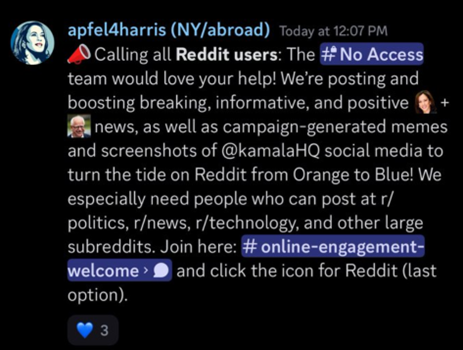



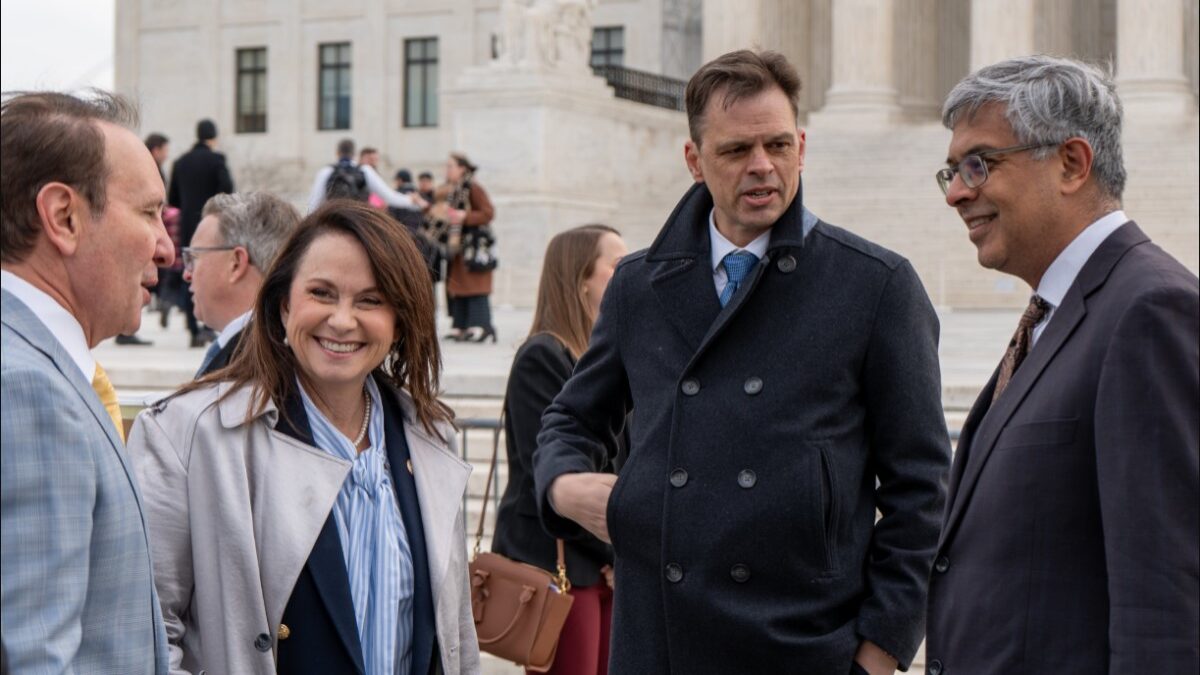



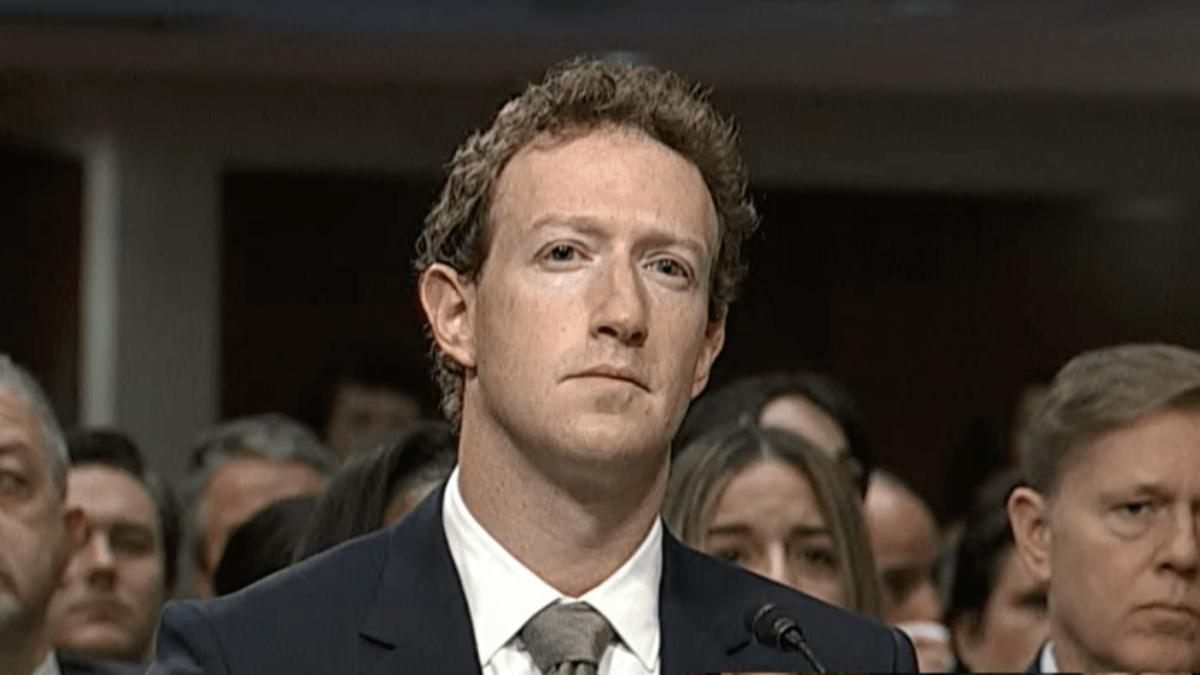




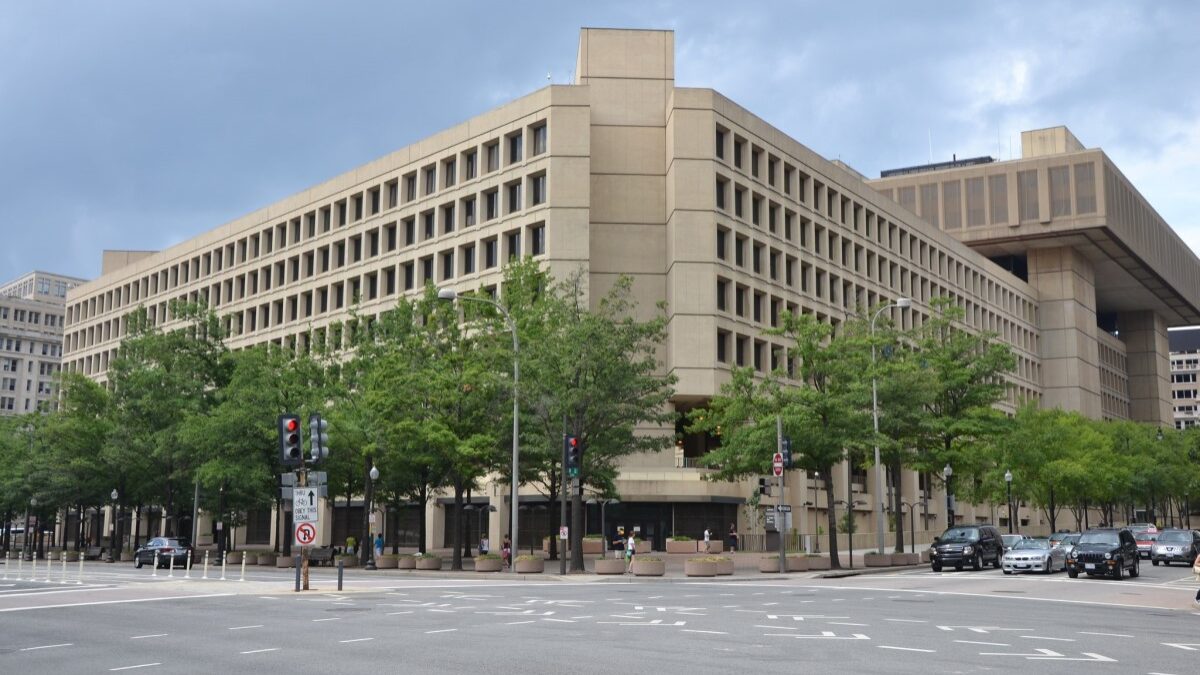

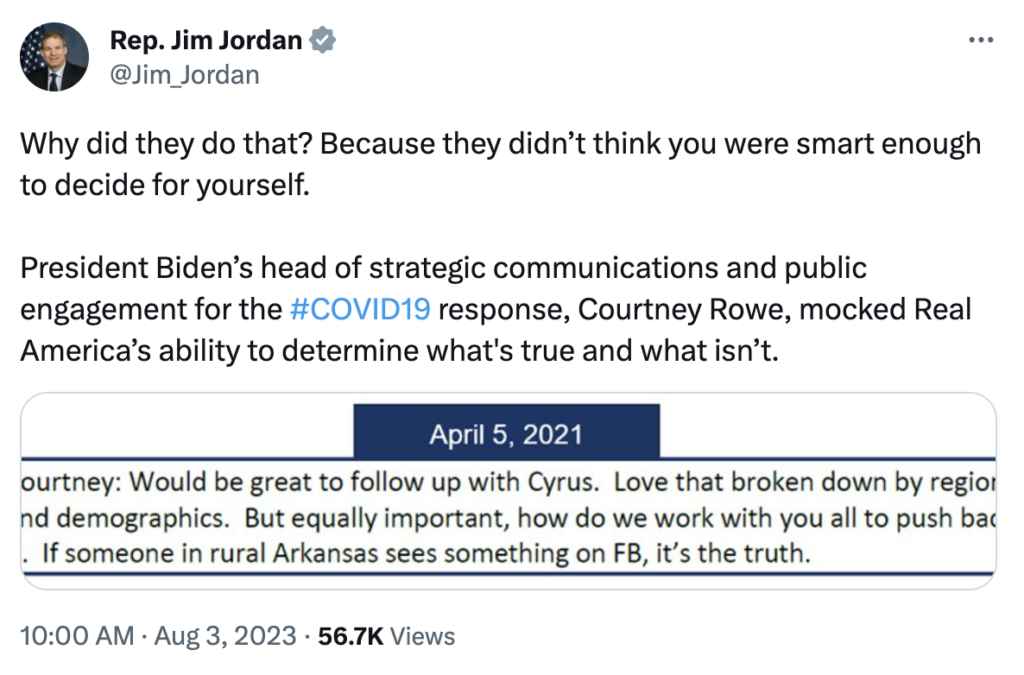
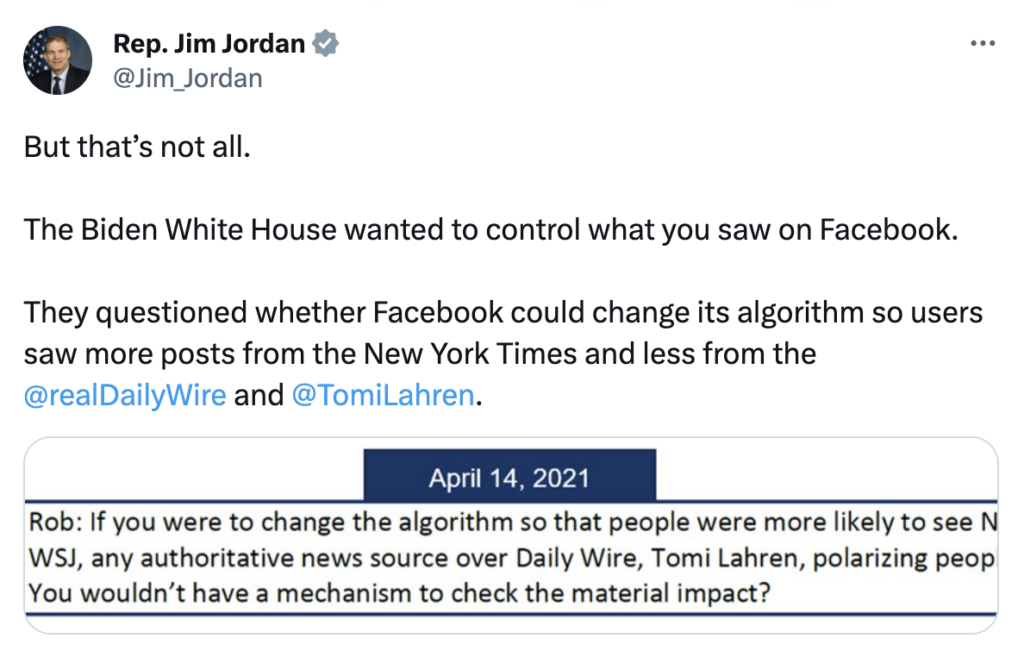
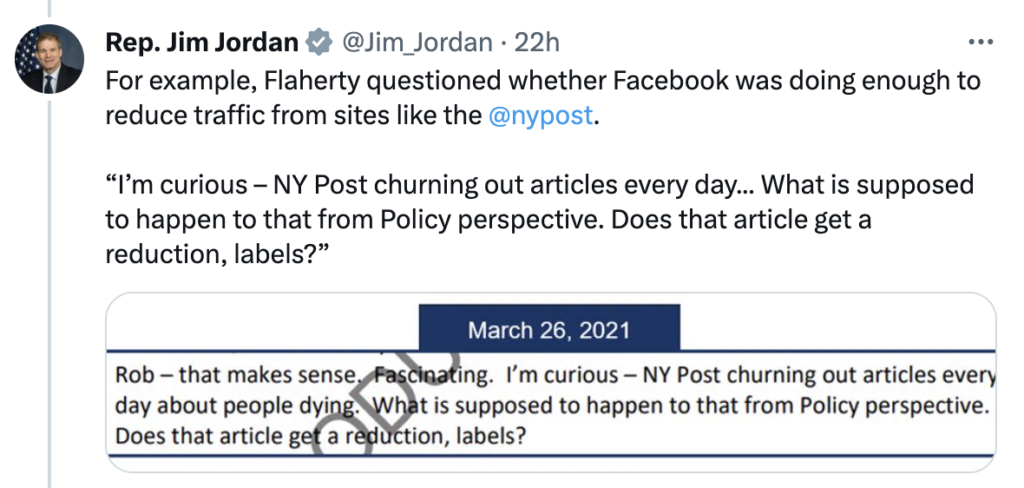
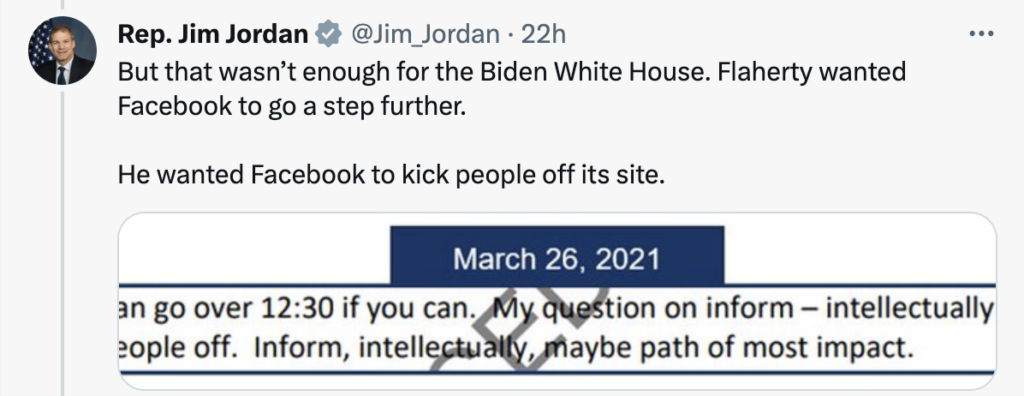
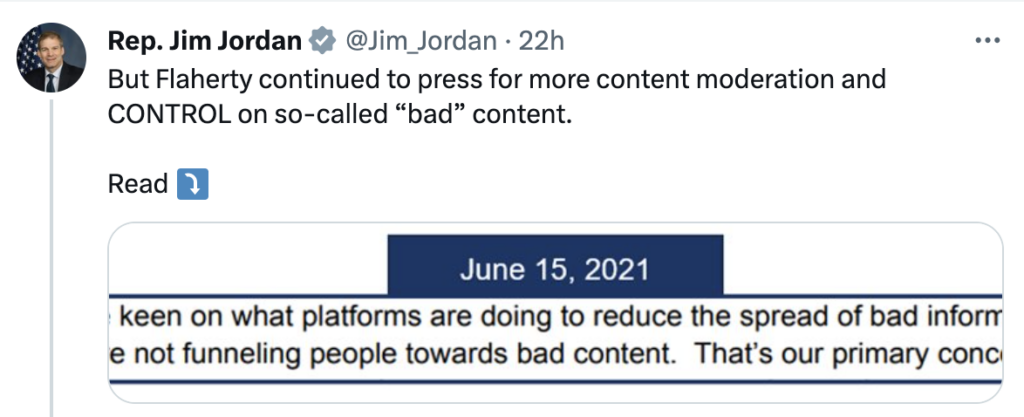
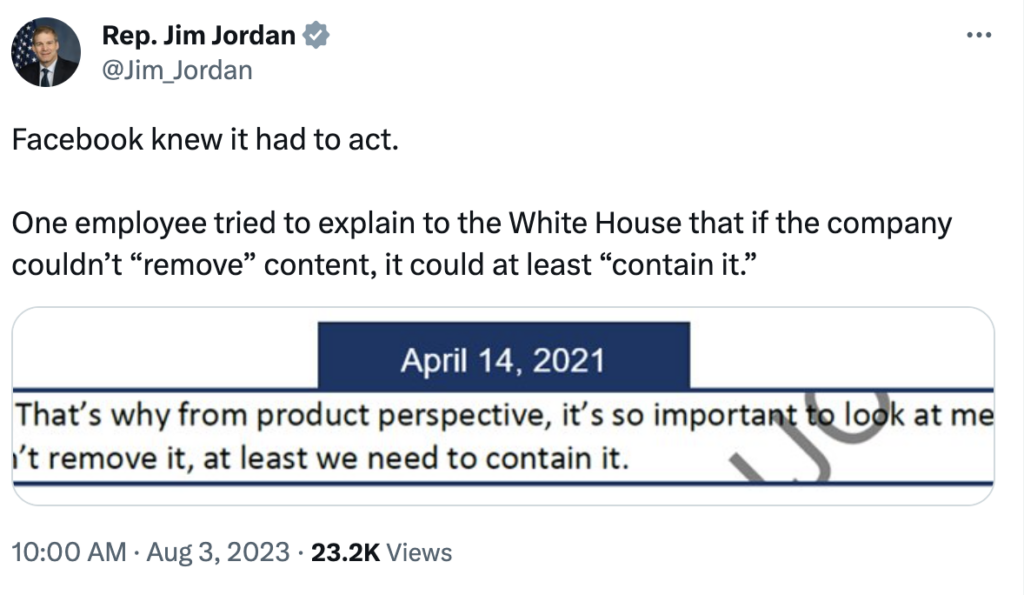
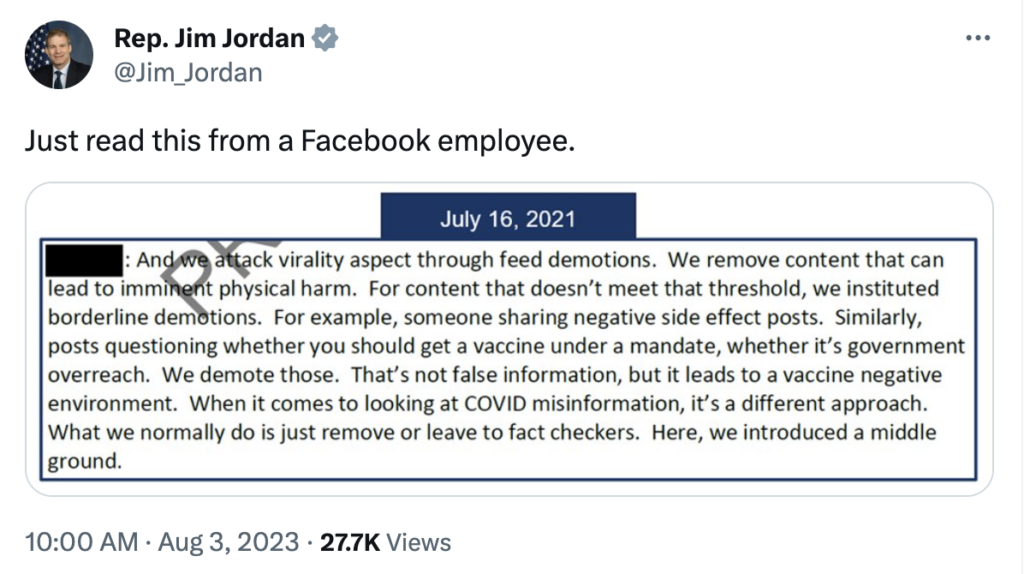










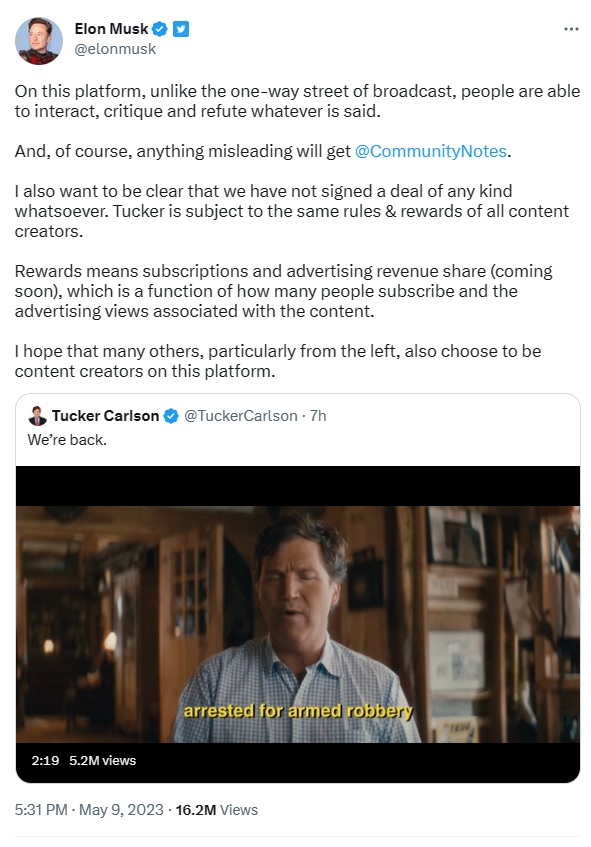


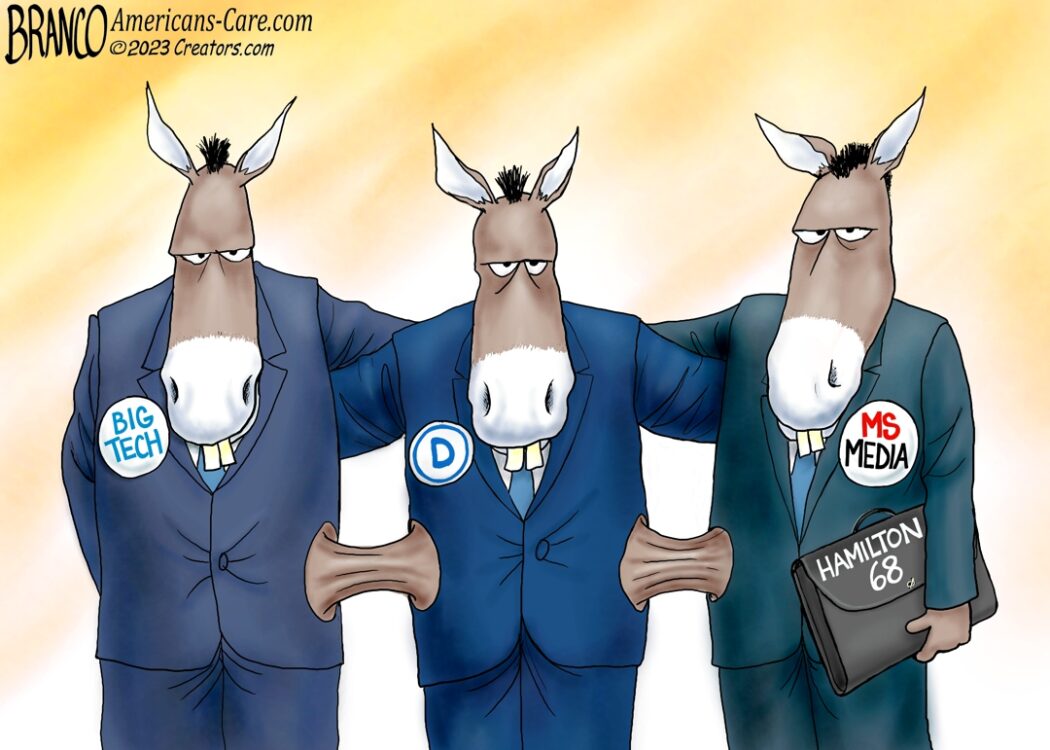

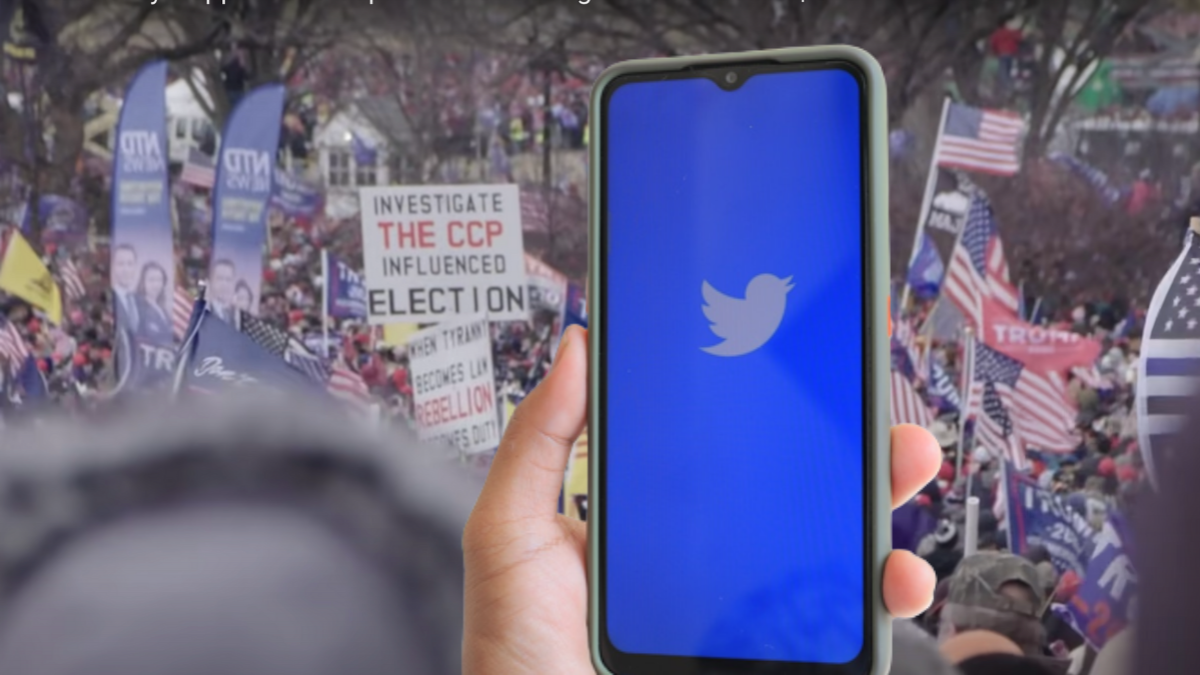
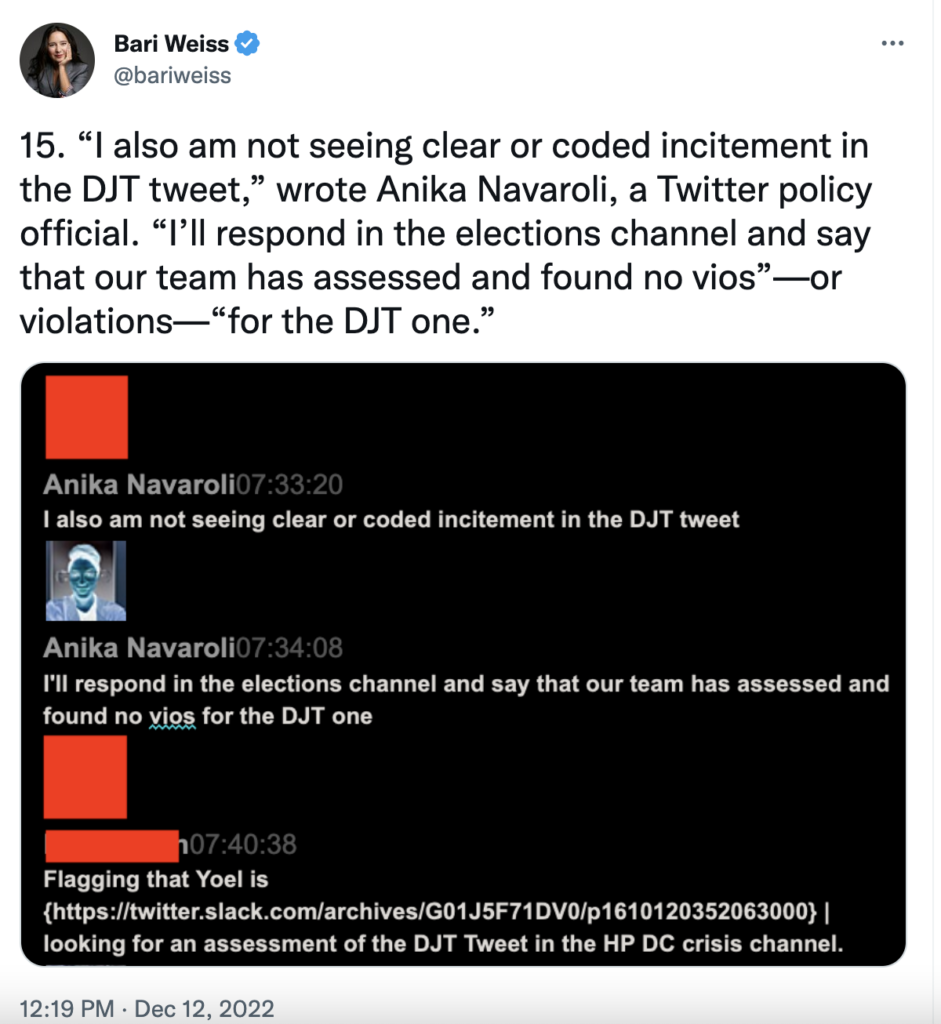
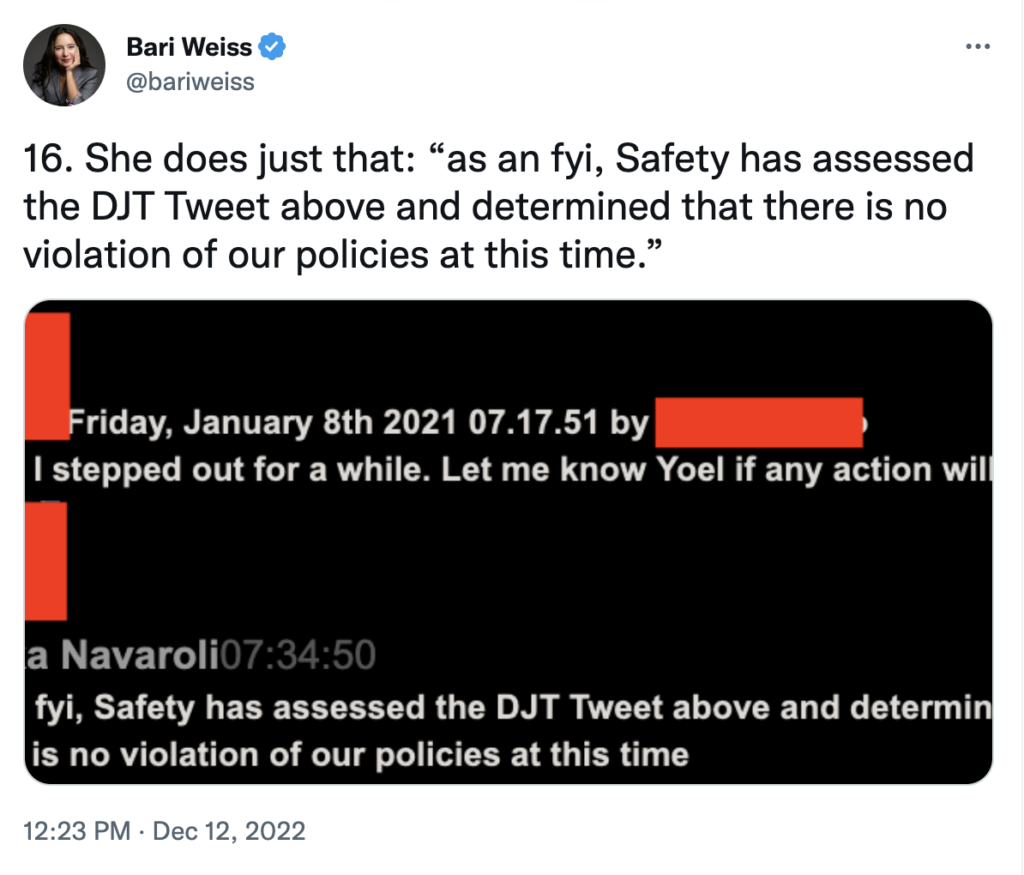
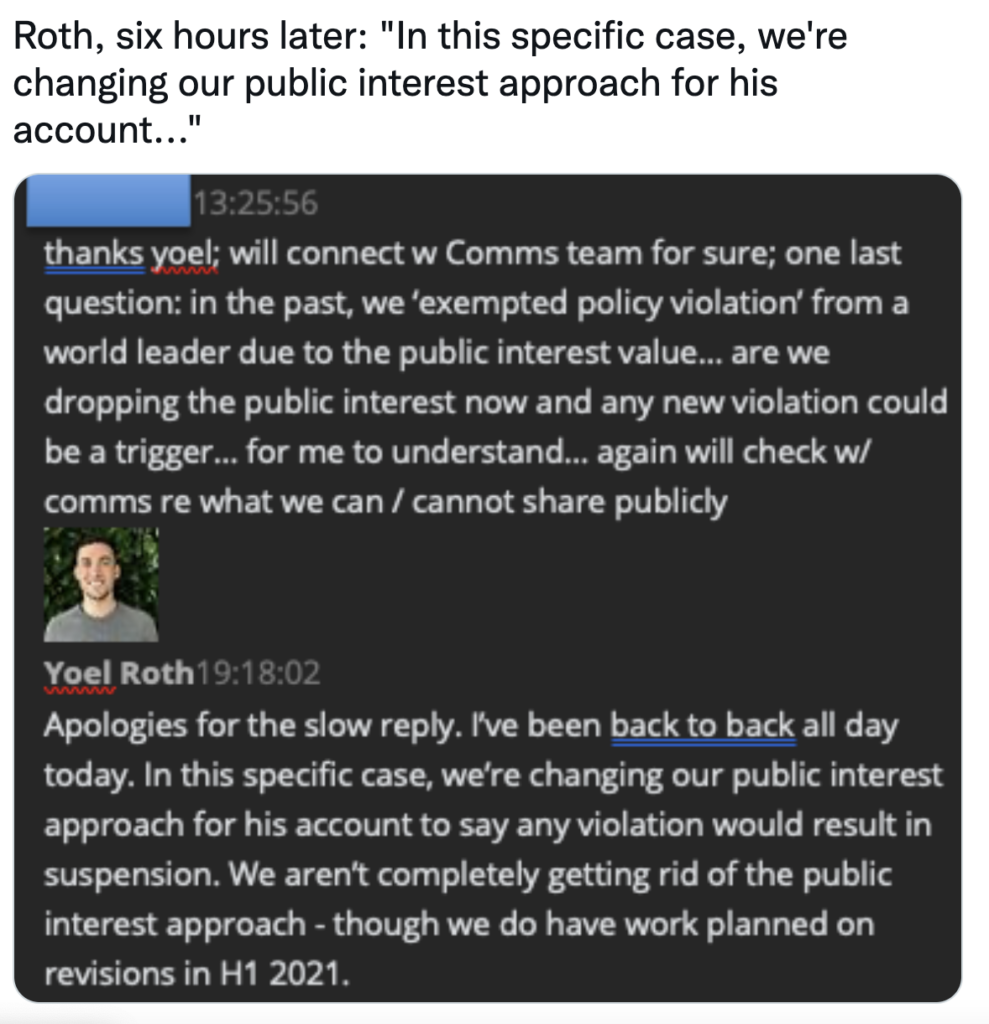
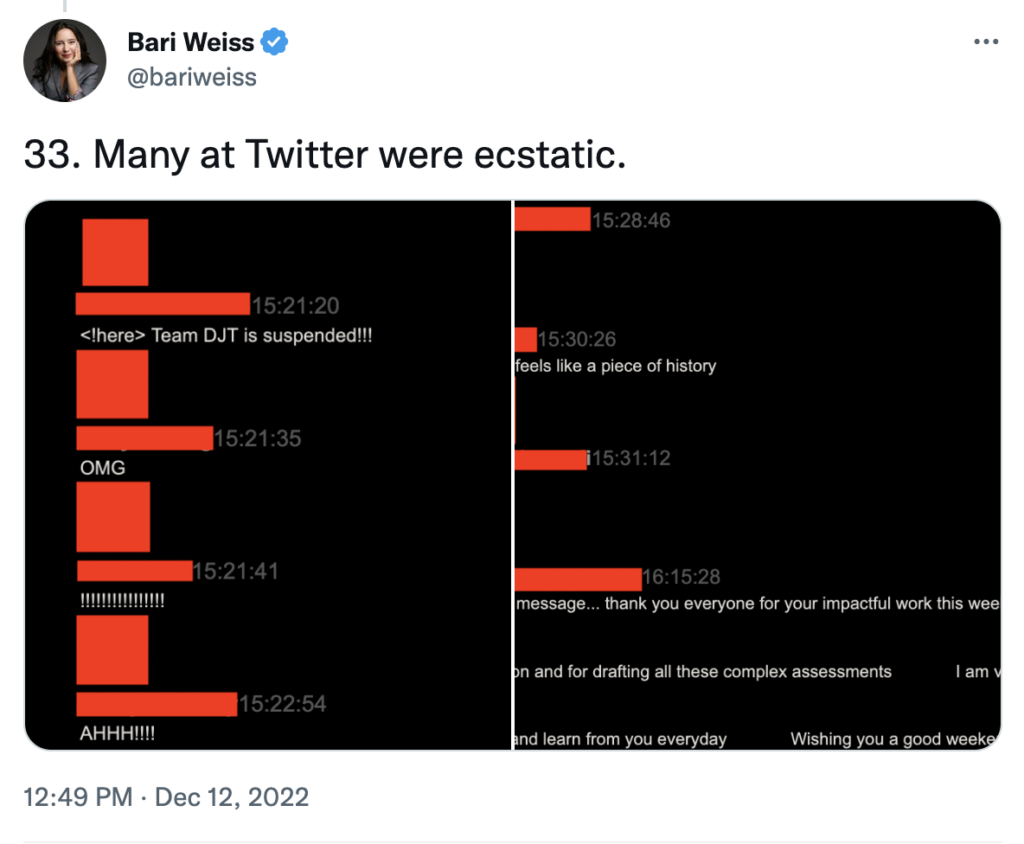
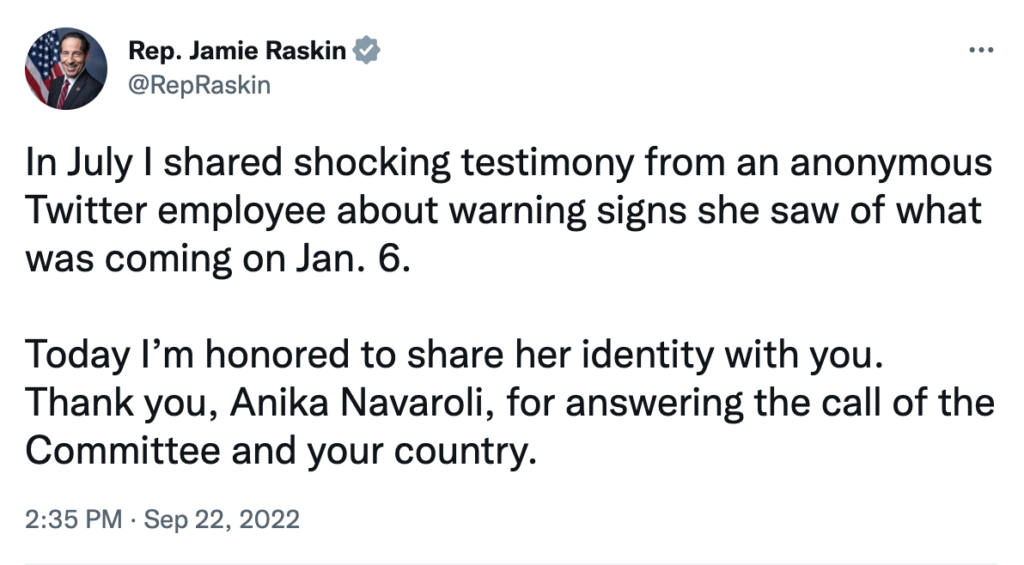
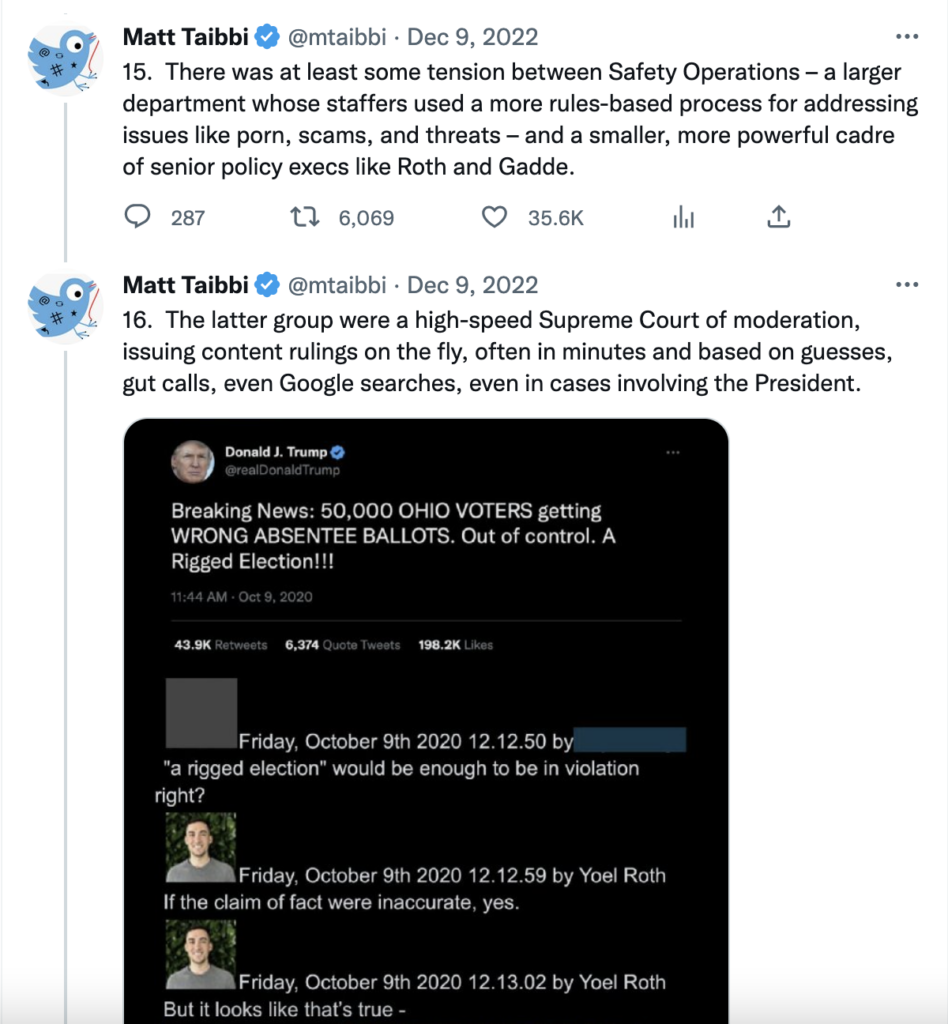
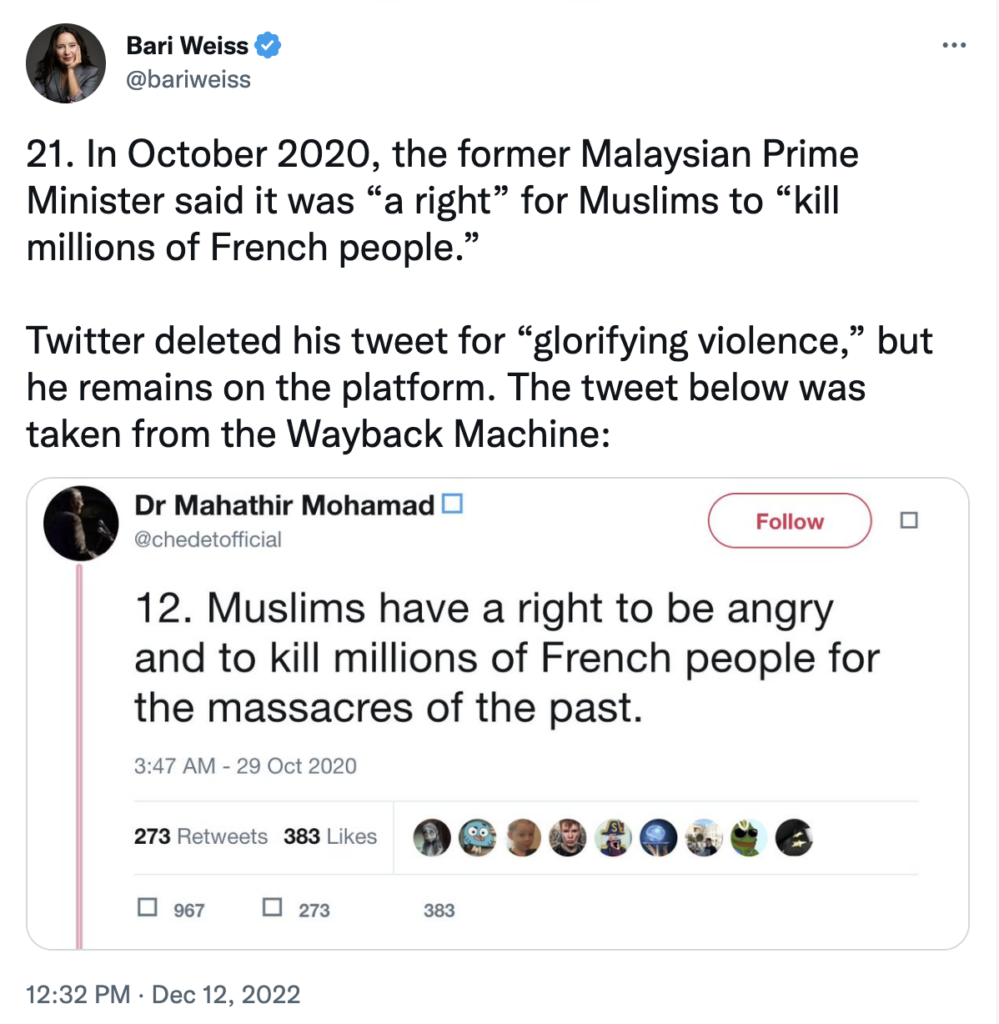
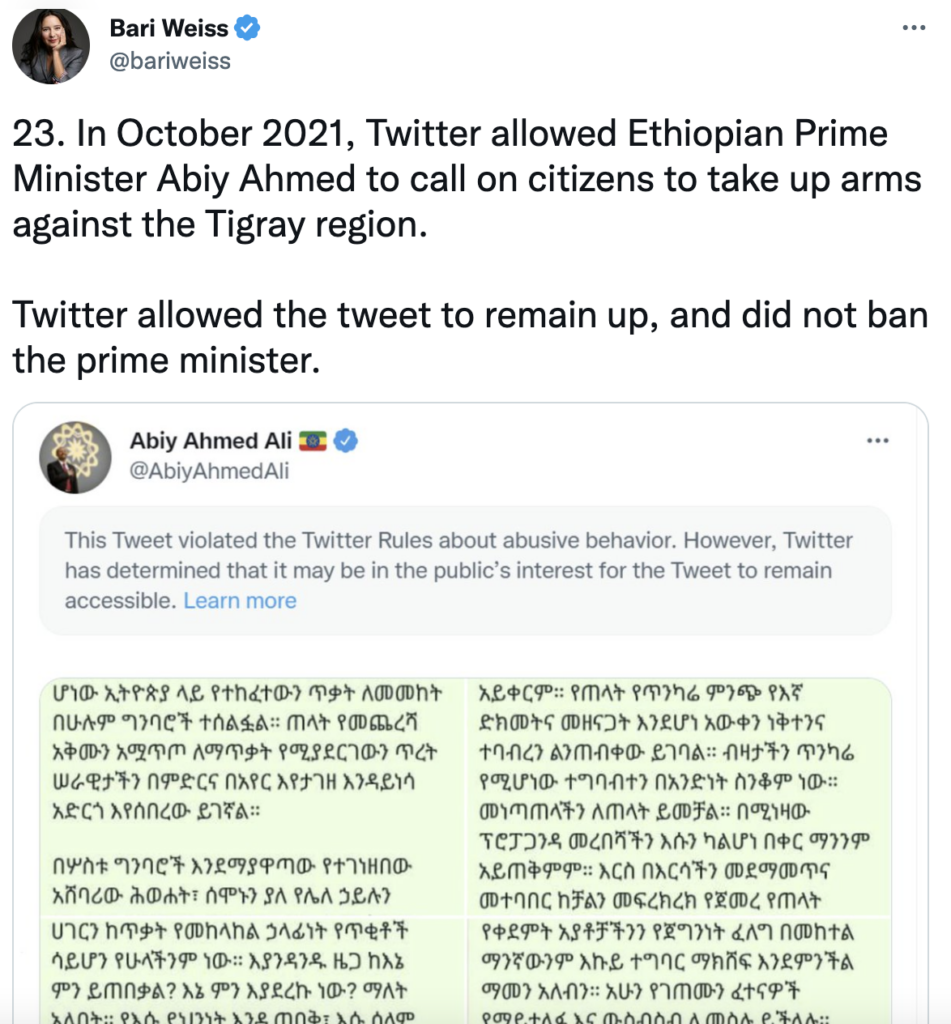
.jpg)
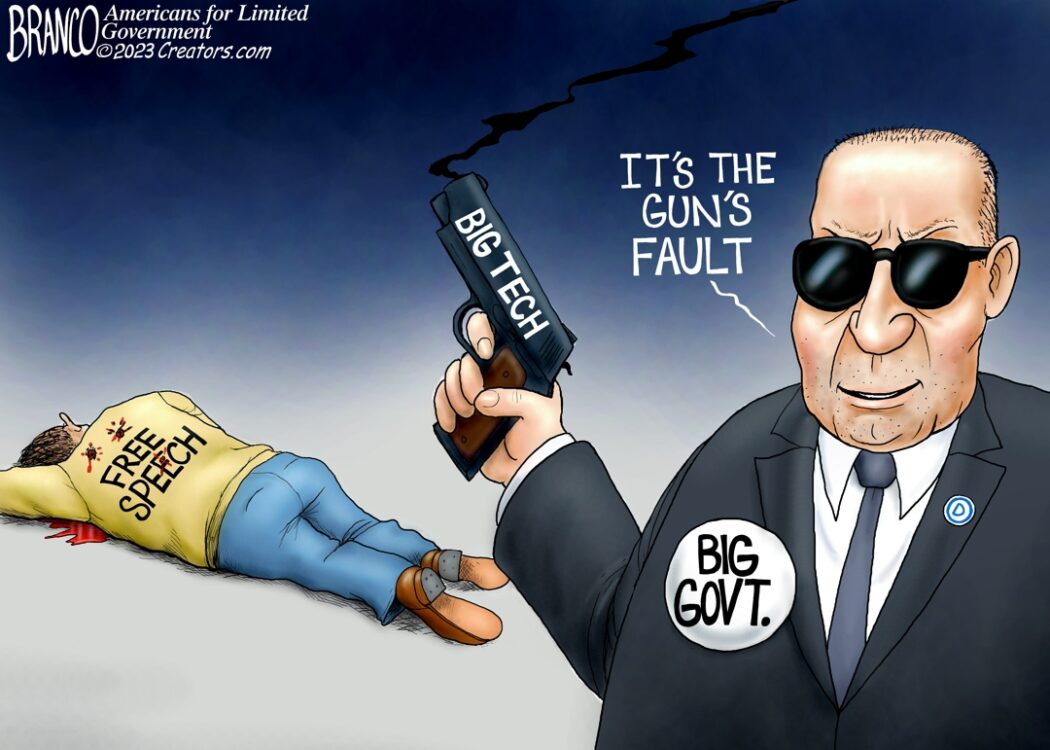
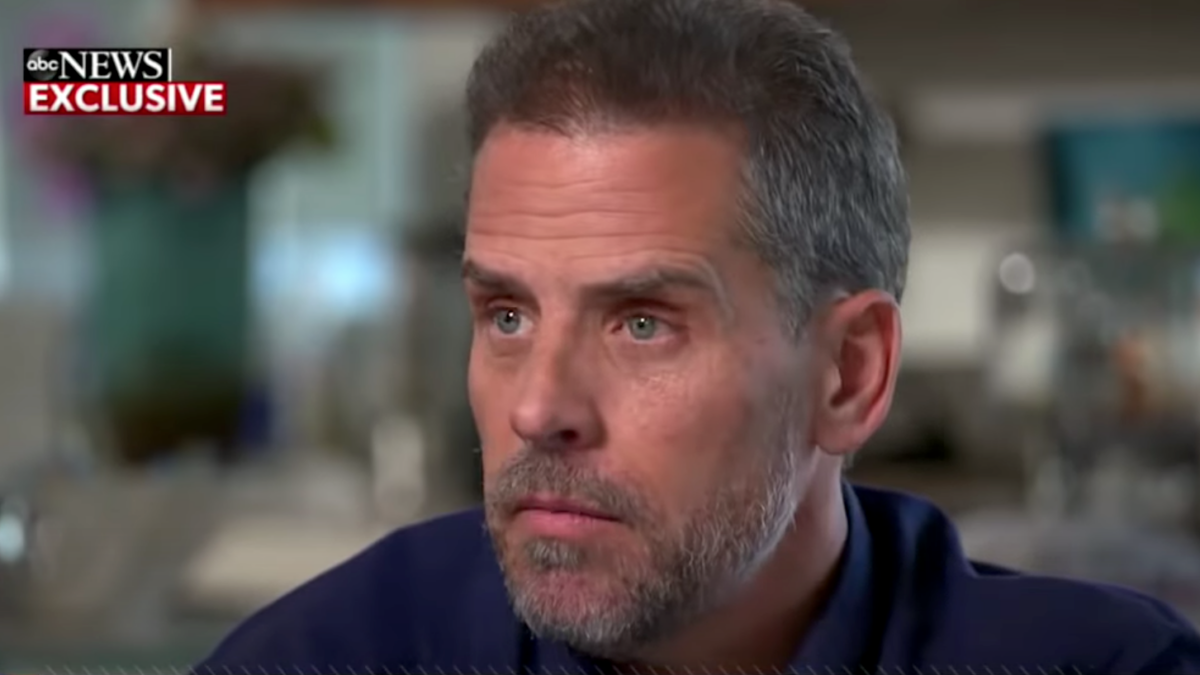







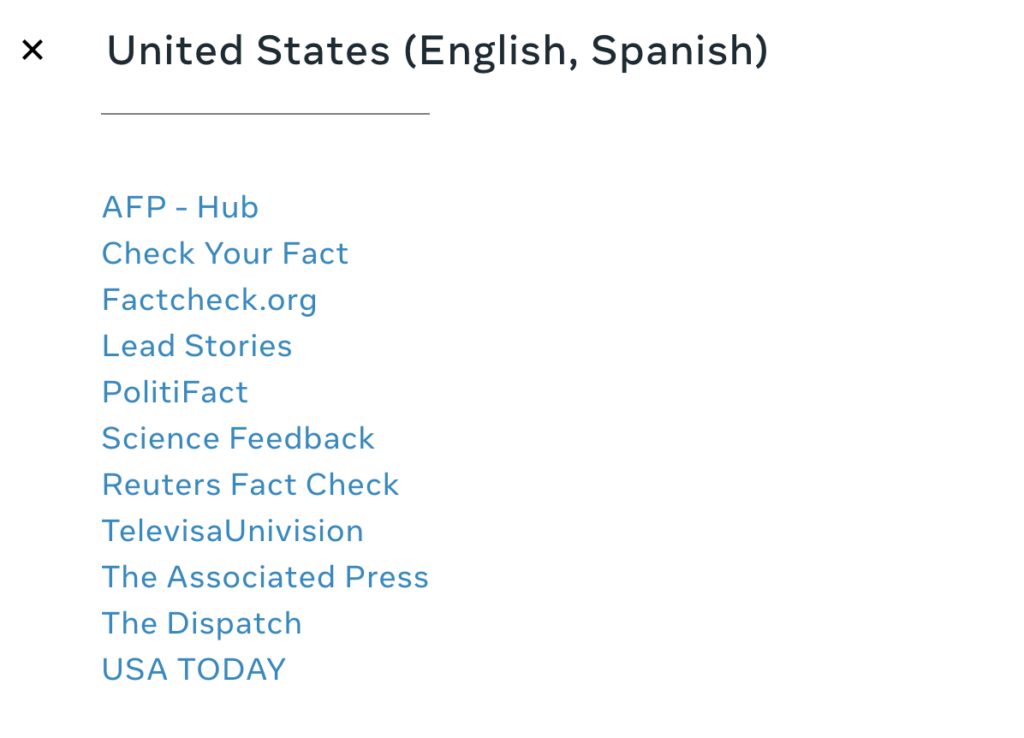






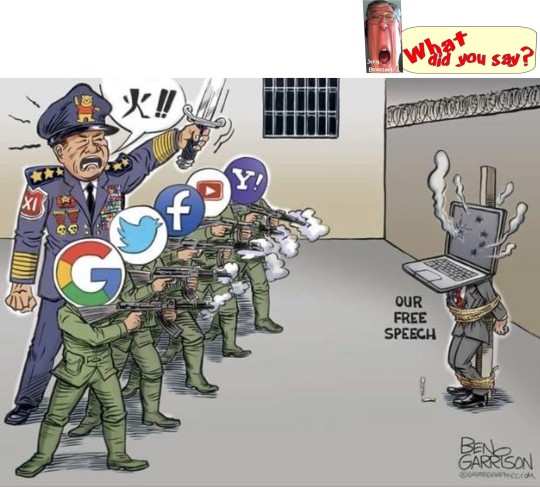




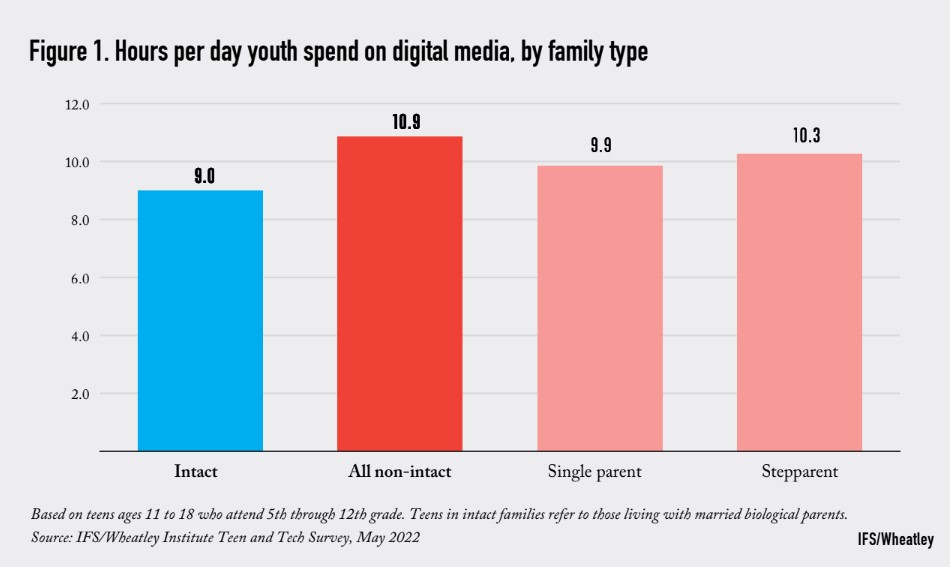
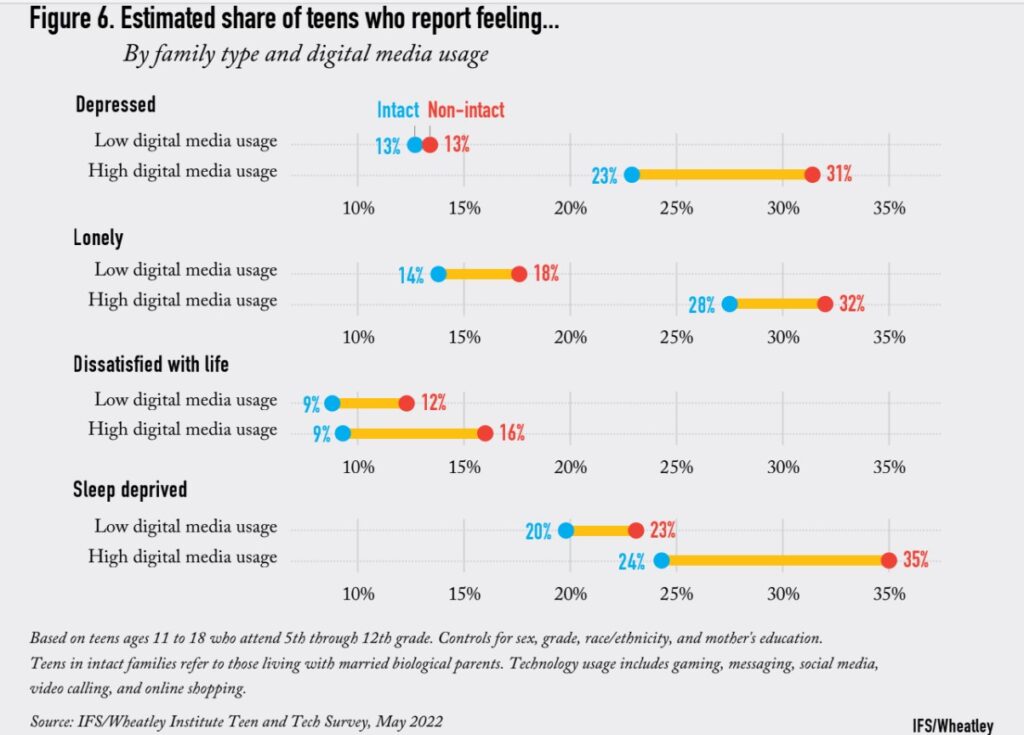







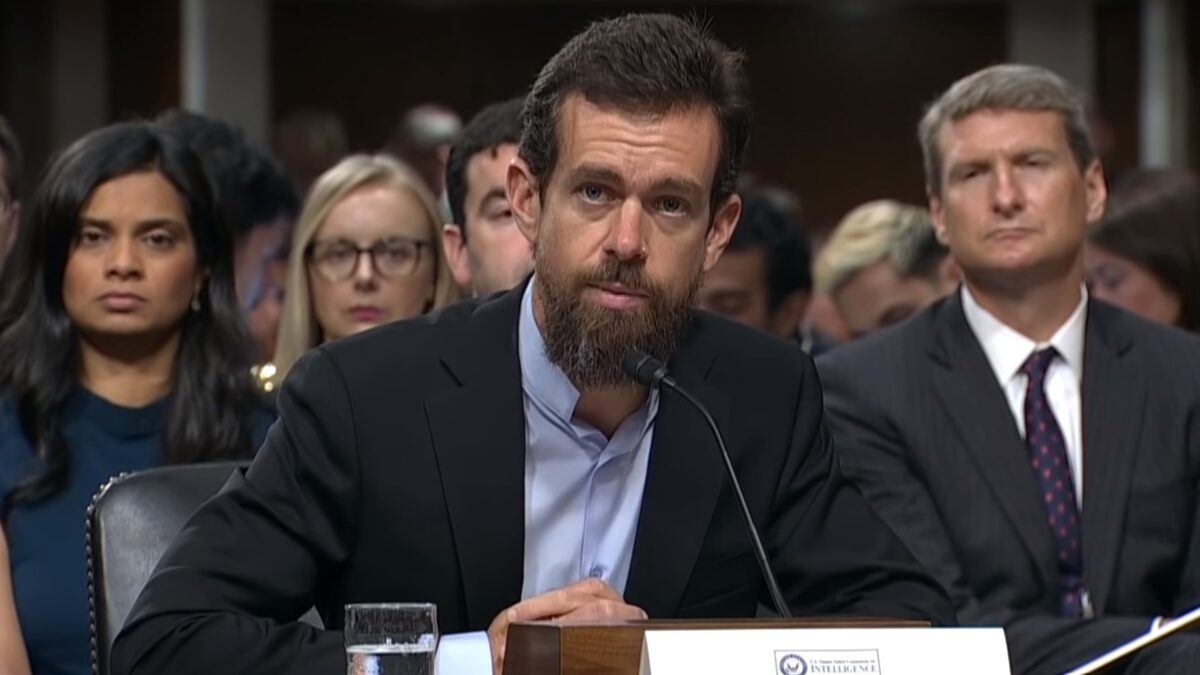





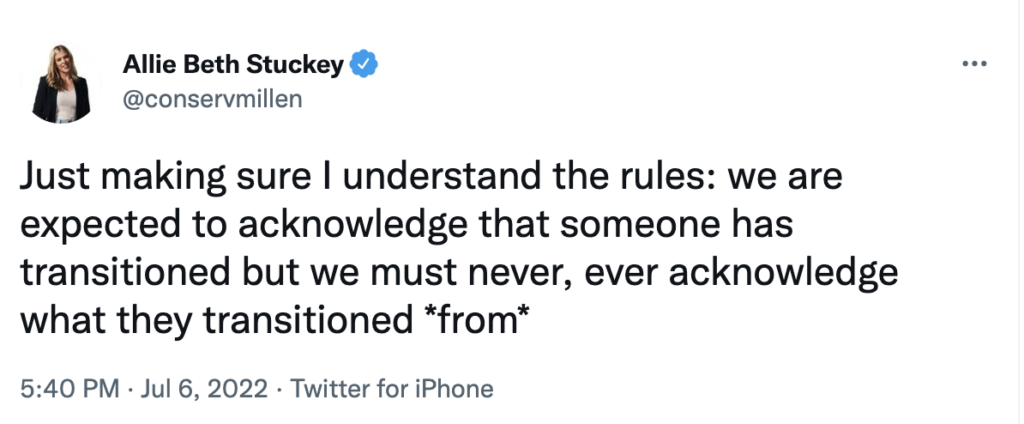
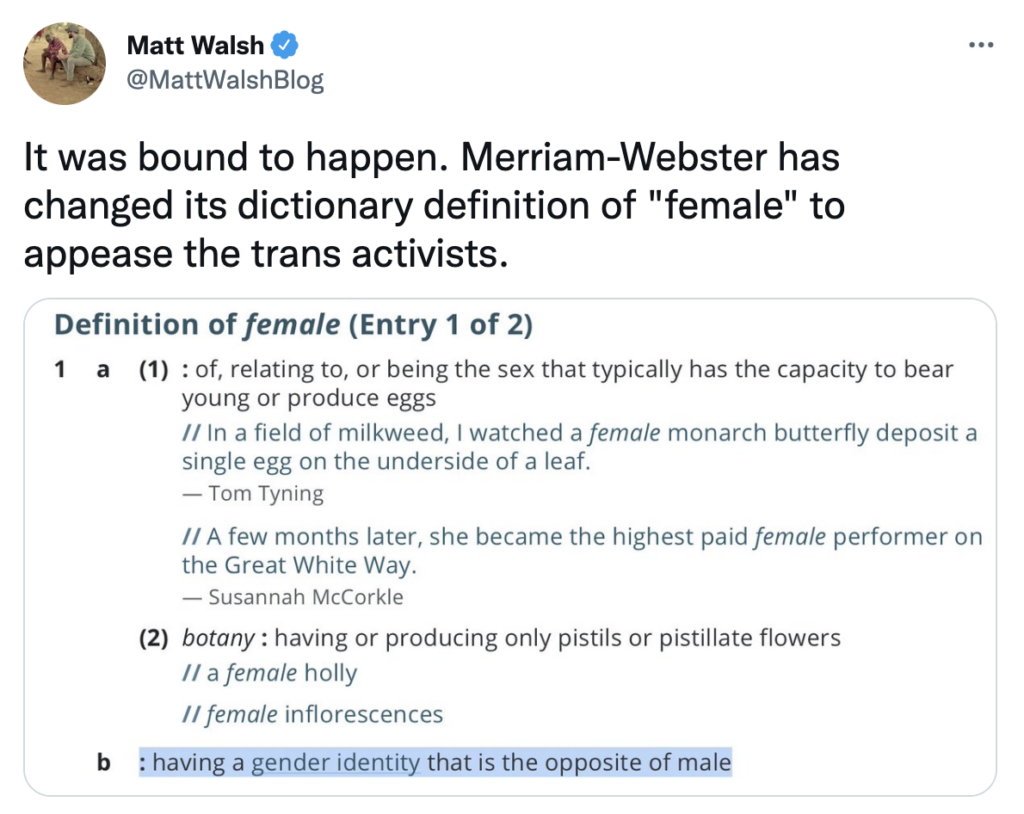


 What Did You Say?
You must be logged in to post a comment.