
 By Stephen Dinan – The Washington Times – Sunday, December 13, 2015
URL of the original posting site: http://www.washingtontimes.com/news/2015/dec/13/dnc-craves-tax-dollars-for-convention
 Already struggling with finances, the Democratic Party has drafted a plan to have taxpayers help pay about $20 million for next summer’s nominating convention, reversing a change Congress approved just a year ago.
Democratic National Committee Chairwoman Debbie Wasserman Schultz, who is also a congresswoman from Florida, has drafted a bill to restore money that both parties used to receive from the federal government to help defray the costs of running their quadrennial conventions.
The Congressional Budget Office revealed the move in a letter released Friday, which said Ms. Wasserman Schultz’s proposal to tap a presidential campaign fund would likely mean each party could get about $20 million in taxpayer money to help with costs.
The DNC is facing tough financial circumstances. The latest report shows it had just $4.7 million in cash on hand as of Oct. 31, less than the $6.9 million in debts the committee reported. By contrast, the Republican National Committee reported $20.4 million in cash, offset by $1.9 million in debts.
Neither the DNC nor Ms. Wasserman Schultz’s congressional office returned messages seeking comment on her plans.
Republican National Committee spokeswoman Allison Moore said the party doesn’t need the help.
“We support no taxpayer funding as long as there’s an alternate way for us to raise the funds to mount a successful convention,” she said in an email.
It was only last year when lawmakers nixed money for the conventions, deciding the political parties and their presidential nominees — who each raised $1 billion in 2012 — didn’t need help from taxpayers anymore. Congress instead called for the money to be used to finance research on children’s diseases at the National Institutes of Health.
Months after the change, however, the two parties began to worry that they wouldn’t be able to pay for their conventions. Democratic and Republican leaders in Congress struck a deal to raise the contribution limits so donors could give nearly $100,000 to convention funds, in addition to other contributions, whose limits were also raised.
Republicans appear to have done better under the new rules than the DNC, which has a troubled financial picture. It has raised $51.2 million this year through Oct. 31 but spent $53.4 million — a bad balance in the year before major elections.
The RNC has raised $89.3 million and spent $74 million. It has stockpiled $20.4 million in cash.
The CBO said Ms. Wasserman Schultz’s legislation would tap into the Presidential Election Campaign Fund — the money taxpayers can earmark on their annual filing forms to help defray the costs of presidential campaigns — and make it available to political conventions.
President Obama and his Republican challenger, Mitt Romney, rejected public financing in 2012. Both candidates decided that they didn’t want to comply with the strict spending limits, which they feared would crimp their ability to flood the airwaves with ads.
That has left the presidential fund with about $290 million. The CBO said that, based on spending in the 2012 conventions, each party likely would get about $20 million under the congresswoman’s proposal.
Based on previous conventions, that would amount to about a quarter of the total cost.
The ban on funding for conventions doesn’t apply to security money. Congress has earmarked about $50 million to help defray costs to state and local law enforcement for securing each convention site since the Sept. 11, 2001, terrorist attacks.
Democrats will gather next year in Philadelphia, and Republicans will hold their convention in Cleveland.





 SO WHAT’S IN THE AGREEMENT?


















 Chuck Ross, Reporter, 12/11/2015




 economic improvement touted by the Obama White House for the past nearly seven years just isn’t happening for most of America. The Pew study also points out that the highest rates of growth among economic classes happened on the edges of the economy, farthest from the center, among the poorest and the wealthiest, demonstrating the growing deep division among Americans economically speaking.


 The lack of notification angered both Republican and Democratic lawmakers at the time. Critics of the swap also argued that it went against U.S. policy not to negotiate with terrorists, and could incentivize more hostage-taking. Critics were further angered that Bergdahl was swapped for five high-ranking Taliban members who were on a list of those not eligible for transfer.


 These are not proclamations on a Friday night document dump where nobody was paying attention. Carter proudly announced these maneuvers in public. And the Drive-Bys, if they were doing their jobs, would be digging into their archives trying to find this. But





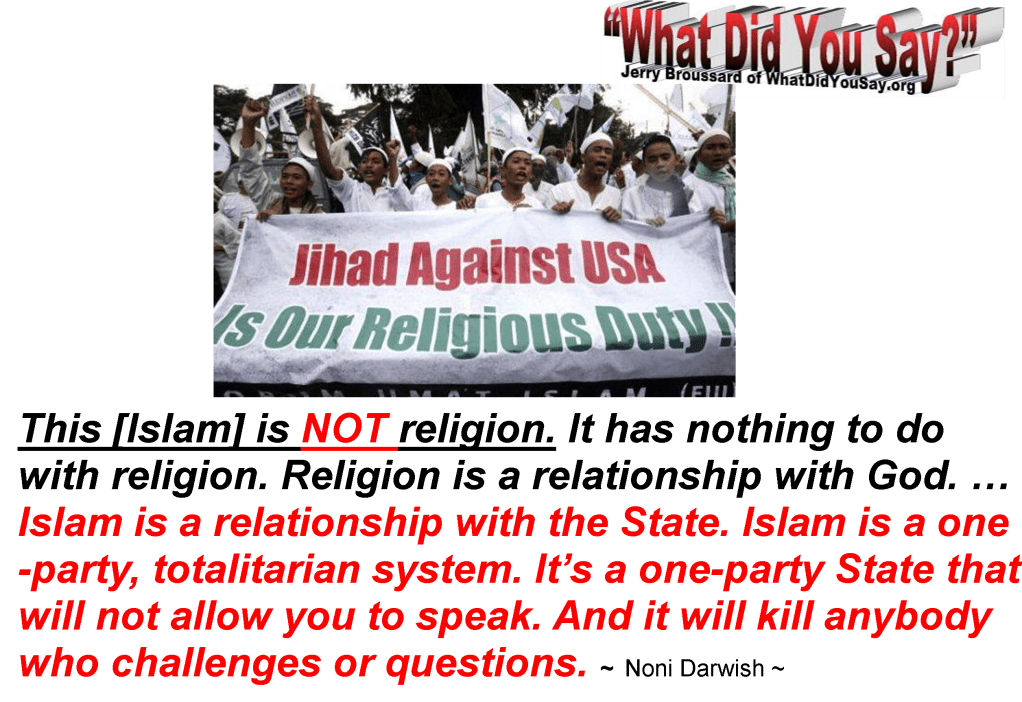


 with his bombastic rhetoric


 That isn’t all,


 Malley has a well-documented history of sympathizing with extremists, which makes this appointment rather outrageous.


 the brakes on the whole


 candidate Donald Trump is that he far too often speaks in vague generalities and rarely offers specifics about where he stands on the issues. That is no longer the case, at least regarding his stance on gun rights and the Second Amendment, as Trump just released his official policy position on his campaign website.
 Constitution, noting that government didn’t create the right, nor can it take it away.
 because it constrained us. Now, with the San Bernardino terror attack, political correctness has moved from being a simple metaphysical horror into something that directly contributed to the deaths of more than a dozen Americans.


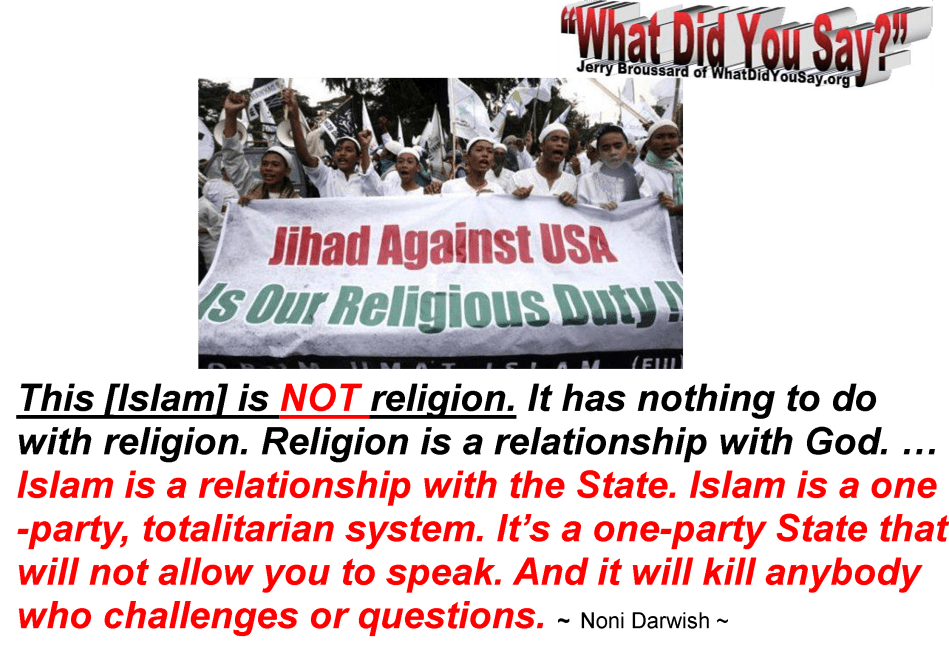





 What Did You Say?

Mike Gonzalez wrote earlier this week on the president’s national address: