Transgender rights supporters and opponent rally outside of the U.S. Supreme Court as the high court hears arguments in a case on transgender health rights on December 04, 2024 in Washington, DC. (Kevin Dietch via Getty Images)
In one of the most-anticipated decisions of its 2024-25 term, United States v. Skrmetti, the Supreme Court held that a Tennessee law prohibiting so-called “gender-affirming” medical interventions for minors does not violate the Fourteenth Amendment’s Equal Protection Clause. That was the only question before the Supreme Court, and it got the answer right.
Tennessee is among more than 20 states that prohibit such medical interventions for minors. Its law, called SB1, allows doctors to prescribe drugs such as puberty blockers and cross-sex hormones or to perform certain surgeries only to treat specific medical conditions. These include congenital defects, disease, or physical injury. It prohibits their use in cases of “gender dysphoria, gender identity disorder, [and] gender incongruence.”
Three minors who wanted to identify with the opposite sex and their parents challenged SB1, arguing that it violated the Fourteenth Amendment’s requirement that states provide the “equal protection of the laws.” They argued that SB1 was just like more familiar laws that discriminate based on sex, which the Supreme Court already held must meet a higher legal standard. The Biden administration also joined the case to oppose the Tennessee law.
The U.S. Court of Appeals for the Sixth Circuit, which includes Tennessee, didn’t buy it and neither did the Supreme Court. Chief Justice John Roberts wrote the 6-3 opinion, refusing to find a “sex-based classification” in a statute that, to state the obvious, does not classify based on sex. SB1 applies to all minors, regardless of sex. The only distinctions it makes are age (it applies to minors, not adults) and the medical use of the particular surgeries and drugs. Neither of these has anything to do with sex.
Every Supreme Court decision has two parts: the judgment, which is typically a yes/no answer to a specific legal question, and the opinion, which explains the reasons for the judgment. The judgment decides the case before the Court and the opinion can impact other cases. Here, Roberts’ opinion addressed some important issues that will no doubt be raised in other cases.
He emphasized, for example, that our understanding of gender is constantly changing and that the advisability and efficacy of medical interventions in cases of gender dysphoria or incongruence is being hotly debated. In fact, Roberts pointed out, several European countries that jumped on the “gender-affirming” care bandwagon have reversed course, “rais[ing] significant concerns regarding the potential harms associated with using puberty blockers and hormones to treat transgender minors.”
In addition, the Court refused to extend its controversial decision in Bostock v. Clayton County from the statutory to the constitutional context. In Bostock, the Supreme Court held that firing someone who is gay or “transgender” amounts to discrimination “because of” sex, violating Title VII of the 1964 Civil Rights Act. Liberal activists want the Supreme Court to reach the same conclusion with respect to the Equal Protection Clause. Roberts refused, explaining the important differences between SB1 and “the logic of Bostock.”
Unless a law discriminates on the basis of things such as race, religion, or sex, courts are not going to second-guess legislative judgments about policy issues. This decision means that gender-related laws like SB1 are in the broad category of matters, such as regulating the practice of medicine generally, that the people and their elected representatives must handle. SB1, Roberts wrote, “clearly meets this standard.”
Like European countries have concluded, the Tennessee legislature argued that any perceived discordance between sex and gender can be resolved by an approach far less invasive and permanent than surgery or drugs and will likely produce better outcomes.
Challenges to similar laws in other states raise the same Equal Protection Clause issue and whether parents have a right, under the Due Process Clause of the same Fourteenth Amendment, to obtain medical interventions for their minor children. This decision should settle the first issue, but the second will likely find its way to the Supreme Court as litigation elsewhere continues.
In recent polls, many Americans say that the Supreme Court decides cases based more on politics than law. The Court can fuel that perception when it makes up rights that are not in the Constitution’s text, or tries to reach a result that is politically, but not judicially, correct. This is not one of those cases. The Court applied basic Equal Protection Clause analysis and came to the obvious, and objectively correct, conclusion. As Roberts concluded, the Equal Protection Clause does not resolve “fierce scientific and policy debates” like those today that relate to gender. That’s our job as citizens.
The refusal by a majority on the U.S. Supreme Court (SCOTUS) to shut down leftists’ lower court judicial coup against President Trump has drawn sharp rebukes from conservatives across America. These critics (correctly) argue that the high court’s unwillingness to stop (and at times, its willingness to participate in) this effort both subverts the power of the executive branch and undermines the will of the more than 77 million Americans who voted for the president in the 2024 election. But it’s not just judicial commentators and everyday citizens who are getting fed up with the justices’ political gamesmanship.
Last week, a three-judge panel on the Fifth Circuit Court of Appeals issued an order“expedit[ing] to the next available randomly designated regular oral argument panel” the case known as A.A.R.P. v. Trump. The matter centers around Trump’s use of the Alien Enemies Act to deport Venezuelan Tren de Aragua gang members.
The order came as part of the lower court’s compliance with a May 16 SCOTUS decision, in which a majority (7-2) on SCOTUS remanded the case back to the Fifth Circuit. As described by Fox News, the ruling — in which Associate Justices Samuel Alito and Clarence Thomas dissented — “revolved around the alleged illegal immigrants not having enough time to reasonably file a challenge to their deportations.”
While the Fifth Circuit panel’s order followed the Supreme Court’s instructions, it also included a multi-page concurring opinion from Judge James Ho. In addition to arguing that the identified Tren de Aragua members “should not be allowed to proceed in this appeal,” the Trump appointee excoriated the high court for the “disrespect” it has shown “the district judge as well as the President and other officials” in the case.
“As an inferior court, we’re duty-bound to follow Supreme Court rulings — whether we agree with them or not. … So, I concur in our order today expediting our consideration of this matter, as directed by the Supreme Court,” Ho wrote. “But I write to state my sincere concerns about how the district judge as well as the President and other officials have been treated in this case. I worry that the disrespect they have been shown will not inspire continued respect for the judiciary, without which we cannot long function.”
Ho went on to note that it “is not the role of the judiciary to check the excesses of the other branches, any more than it’s our role to check the excesses of any other American citizen” — an apparent rebuke to recent remarks by Chief Justice John Roberts. While speaking at an event in his hometown of Buffalo, New York, earlier this month, the Bush appointee tacitly endorsed the concept of judicial supremacy, claiming the courts can unilaterally “strike down … acts of Congress or acts of the president” they believe to be unlawful or unfavorable.
“Judges do not roam the countryside looking for opportunities to chastise government officials for their mistakes,” Ho wrote. “Rather, our job is simply to decide those legal disputes over which Congress has given us jurisdiction.”
Much like Alito did in his dissenting opinion in SCOTUS’s May 16 decision, Ho ardently defended District Court Judge James Wesley Hendrix’s handling of petitioners’ requests for emergency relief, saying he “conducted himself in a reasonable and indeed admirable manner” and “any criticism of [him] is unwarranted and unfortunate.” He further echoed Alito’s criticisms of the Supreme Court’s characterization of Hendrix’s declination to immediately abide by petitioners’ late-night requests as “misleading.”
“We seem to have forgotten that this is a district court — not a Denny’s. This is the first time I’ve ever heard anyone suggest that district judges have a duty to check their dockets at all hours of the night, just in case a party decides to file a motion,” Ho wrote. “If this is going to become the norm, then we should say so. … If this is not to become the norm, then we should admit that this is special treatment being afforded to certain favored litigants like members of Tren de Aragua —and we should stop pretending that Lady Justice is blindfolded.”
The Fifth Circuit judge concluded his fiery opinion by underscoring that Trump deserves the same level of respect all presidents before him have been afforded. He specifically pointed to former President Obama’s attack on the Supreme Court during his 2010 State of the Union address and former President Bill Clinton’s inability to practice law before the high court as examples of presidents who — despite having disagreements with court rulings — were entitled to said respect.
“Yet I doubt that any court would deny any of those Presidents the right to express their views in any pending case to which they are a party, before issuing any ruling. Our current President deserves the same respect,” Ho wrote.
Whether Roberts and his colleagues take Ho’s criticisms seriously remains to be seen. But what is certain is that the longer the high court continues to entertain leftists’ judicial coup, the more credibility it loses with the American people.
Shawn Fleetwood is a staff writer for The Federalist and a graduate of the University of Mary Washington. He previously served as a state content writer for Convention of States Action and his work has been featured in numerous outlets, including RealClearPolitics, RealClearHealth, and Conservative Review. Follow him on Twitter @ShawnFleetwood
The Supreme Court has recently allowed the Trump administration’s ban on transgender individuals serving in the military to go forward. This decision came despite opposition from Justices Elena Kagan, Sonia Sotomayor, and Ketanji Brown Jackson, who stood firmly against the administration’s request. The court’s order was unsigned, yet it marks a significant win for those advocating for traditional military standards.
Many years after the Biden administration had encouraged diversity and inclusion initiatives, the Supreme Court’s decision pauses a ruling by U.S. District Judge Benjamin Settle. Judge Settle, based in Seattle, had previously found Trump’s transgender military ban to be unconstitutional, calling it “unsupported, dramatic and facially unfair.” This ruling has been viewed as a victory for those who prioritize military readiness and cohesion over social experiments.
The Ninth Circuit Court of Appeals in San Francisco had declined to halt Judge Settle’s decision, paving the way for increased liberal protests. Critics of the ban argue that it is another example of discrimination against the LGBTQ community. However, supporters believe it is essential for maintaining the strength and unity of the armed forces.
President Trump, upon returning to office, issued a directive excluding individuals with gender dysphoria from military service. The Biden administration, in contrast, had opened the doors to transgender individuals, some of whom sought expensive gender reassignment surgeries funded by taxpayers. Trump’s administration put an end to this practice, asserting that military resources should be focused on defense rather than personal medical procedures.
There is an ongoing debate about the impact of diversity, equity, and inclusion (DEI) initiatives on military effectiveness. Some argue that individuals who prioritize personal identity over collective mission might not uphold the values required of service members. Critics fear that such policies could lead to a military less prepared to defend the nation in times of crisis.
The exact number of transgender service members remains uncertain, with estimates ranging from 4,240 to 14,000 across all military branches. The discrepancy in numbers highlights the challenges in assessing the impact of the ban on military personnel. Regardless, the Trump administration remains committed to a military that emphasizes traditional values and readiness.
Trump’s appointment of Pete Hegseth as Secretary of Defense has been a turning point for recruitment efforts. Under his leadership, the military has seen an increase in enlistment numbers, reversing the decline experienced during the Biden years. Hegseth’s policies align with a vision of a strong, focused military force.
The Supreme Court’s decision is part of a series of victories for the Trump administration. The court’s rulings have consistently reinforced the administration’s commitment to conservative policies. This latest decision represents a significant step in reshaping military policy to align with these values.
Despite criticism from left-leaning media outlets, the ban is seen by supporters as a necessary measure. They argue that it upholds the integrity and effectiveness of the armed forces. Meanwhile, detractors claim it targets individuals who do not identify with their birth-assigned gender, sparking heated debates.
The Trump administration’s stance on military policy reflects a broader conservative agenda. This approach emphasizes traditional values, national security, and fiscal responsibility. Under this framework, military policies are designed to prioritize defense over social issues.
As the administration moves forward, the impact of these decisions on the military remains a topic of discussion. Proponents believe these steps strengthen the armed forces, ensuring they are well-prepared for any challenges. Critics, however, continue to voice concerns about the exclusion of transgender individuals.
The Supreme Court’s ruling has ignited discussions across the nation. Supporters of the ban argue that it aligns with the values of selflessness and humility required of service members. Opponents, on the other hand, view it as a setback for LGBTQ rights.
While the decision is controversial, it underscores the administration’s focus on military priorities. This approach resonates with those who believe in a disciplined, unified military force. The debate over transgender service members continues to be a focal point in discussions about military policy.
The Trump administration’s policies reflect a broader commitment to conservative principles. This includes a focus on national security and a rejection of policies perceived as social experiments. The administration’s stance is clear: the military’s mission should not be compromised by external pressures.
As the nation watches these developments unfold, the future of military policy remains in the spotlight. Supporters of the ban emphasize the importance of maintaining a strong, cohesive military. Critics continue to challenge the decision, advocating for inclusivity and diversity within the armed forces.
The Supreme Court’s decision has sparked reactions from various corners of the political spectrum. While some celebrate it as a victory for military readiness, others decry it as an attack on personal freedom. The conversation around transgender individuals in the military is far from over, with passionate arguments on both sides.
Judicial Coup: Radical Leftist Judges Wage All-Out War Against President Trump and the Nation — 129 Legal Challenges Filed in Two Months and 64 Injunctions His First Term! MORE THAN ALL US PRESIDENTS COMBINED!
By Jim Hoft – Mar 19, 2025
Since returning to the White House on January 20, 2025, President Donald J. Trump has been met with an unprecedented onslaught of legal challenges from far-left activist judges and groups determined to sabotage his second term in power. Appearing on The War Room with Steve Bannon, Josh Hammer, Senior Counsel for the Article III Project, recently warned that what America is witnessing is not just judicial activism—it’s an outright judicial insurrection. This is similar to how the communist left attacked President Trump using a cadre of radical activist judges his first time in office. Except today, they have super-charged the process. READ MORE
A.F. Branco has taken his two greatest passions (art and politics) and translated them into cartoons that have been popular all over the country in various news outlets, including NewsMax, Fox News, MSNBC, CBS, ABC, and “The Washington Post.” He has been recognized by such personalities as Rep. Devin Nunes, Dinesh D’Souza, James Woods, Chris Salcedo, Sarah Palin, Larry Elder, Lars Larson, Rush Limbaugh, Elon Musk, and President Trump.
What’s happening right now is that Democrats, having been thrown out of power by American voters in a landslide victory for Trump, have decided they’re going to deploy a widely-used tactic from Trump’s first term to thwart the president’s agenda: use the federal judiciary. Under the false pretext that the lower federal courts are part of a “coequal branch of government” with the executive, they’re aiming to shut down Trump’s reform efforts with a fusillade of preliminary injunctions.
In recent days dozens of lawsuits have been filed against the Trump administration by Democrat attorneys general and various left-wing groups. These groups have carefully selected their venues, ensuring the lawsuits come before rabidly anti-Trump activist judges. So far, the tactic seems to be working. As of this past weekend, eight different rulings from the federal bench have temporarily halted the president’s executive orders.
Federal judges in Democrat-majority districts have issued preliminary injunctions blocking Trump’s executive actions to end birthright citizenship, reform and downsize the United States Agency for International Development, and offer buyouts to federal bureaucrats. A federal judge this past weekend blocked Elon Musk’s Department of Government Efficiency and all other political appointees in the Trump administration — including the Treasury secretary and his deputies — from accessing payment data at the Treasury Department.
One judge even issued a restraining order halting a Trump order that would have ensured federal inmates are housed according to biological sex, not transgender identity, and also would have prevented tax dollars from being used to pay for “gender transitions” for federal inmates. (Another judge, appointed by Obama, took the extraordinary step of ordering the administration to pay back every cent of federal funding that’s been paused or canceled — and threatened anyone who violates his order with criminal contempt.)
What all this lawfare amounts to is a kind of judicial coup against the sitting president. By doling out injunctions like they’re USAID grants for LGBTQ awareness programs in Mali, Democrats have been able to hamstring key aspects of Trump’s agenda — at least for the moment. It’s a simple enough tactic. All Democrats have to do is shop for a venue to find the most activist, rabidly anti-Trump federal judges in the country, file their lawsuits, and wait for the injunctions to come raining down.
By doing this, Democrats and their allies in the judiciary turn the Constitution on its head, and effectively govern negatively through injunction, making major reform of the federal bureaucracy impossible. In nearly every case so far, the federal judiciary is siding with the permanent bureaucracy in Washington, preventing the Trump administration from doing anything to reform it despite Trump having campaigned on precisely that promise.
The problem is, as my colleague Sean Davis noted recently on X, federal judges have no actual authority to do this. They can’t decide on their own who the president can talk to or what data he can access. They can’t bind the president at all. According to the U.S. Constitution they’re “inferior” courts and therefore don’t have any authority over the executive branch. Yes, the three branches of the federal government are coequal, but the only part of the federal judiciary that’s equal to the presidency is the Supreme Court, not all the federal district courts scattered across the country.
“John Roberts and SCOTUS have two options here: they can bring these inferior malcontents to heel, or they can get used to the President simply ignoring these inferior courts or Congress eliminating them entirely,” wrote Davis. “Congress created these inferior courts so the Supreme Court wouldn’t have to deal with every federal case by itself. But if these rogue inferior judges are going to routinely issue lawless decisions that the Supreme Court has to deal with anyway, Congress would be well within its rights to just eliminate them.”
The issue might come to a head before Congress gets around to eliminating the federal courts, though. If the Supreme Court steps in on just one of these cases where a federal judge has blocked a lawful executive order from Trump, it might not go well for Democrats. In the 2018 Supreme Court case Trump v. Hawaii, which reversed a lower court’s decision to uphold a nationwide injunction on Trump’s travel ban, Justice Clarence Thomas called into question the idea that a federal judge in Hawaii (or anywhere else) can simply issue an injunction against a presidential executive order and apply it to the entire country.
“District courts, including the one here, have begun imposing universal injunctions without considering their authority to grant such sweeping relief,” wrote Thomas. “These injunctions are beginning to take a toll on the federal court system — preventing legal questions from percolating through the federal courts, encouraging forum shopping, and making every case a national emergency for the courts and for the Executive Branch.”
He went on to say he is “skeptical that district courts have the authority to enter universal injunctions,” that such injunctions didn’t emerge until a century and a half after the Founding, and that they “appear to be inconsistent with longstanding limits on equitable relief and the power of Article III courts. If their popularity continues, this Court must address their legality.”
Only a few weeks into Trump’s second term, the popularity of injunctions is back with a vengeance, which means the Supreme Court might well step in to decide whether any federal district judge, anywhere in the country, can bind the actions of the White House by issuing nationwide injunctions.
It’s long past time to settle this. The American people overwhelmingly elected Trump precisely because they wanted to see his agenda for America enacted. Lower court federal judges, whom no one voted for, have no right to assert their will over and against the will of the American people. The sooner the Supreme Court takes this up and settles the obvious question, the sooner Democrat lawfare against Trump’s agenda will come to an end. Instead of relying on activist judges, Democrats might then have to figure out how to compete at the ballot box — something they are obviously loath to do.
John Daniel Davidson is a senior editor at The Federalist. His writing has appeared in the Wall Street Journal, the Claremont Review of Books, The New York Post, and elsewhere. He is the author of Pagan America: the Decline of Christianity and the Dark Age to Come. Follow him on Twitter, @johnddavidson.
A.F. Branco Cartoon – Minnesota Governor Walz stated that Biden had a bad night during his debate with Trump but continued on to say we all should still support him.
Trump vs. Biden: 4 highlights from the first presidential debate
By Mary Margaret Olohan and Tony Kinnett – June 28, 2024
The president made garbled remarks discussing the need for more Border Patrol officers, to which Trump responded: “I really don’t know what he said. I don’t think he knows what he said either.”
(The Daily Signal) — President Joe Biden and former President Donald Trump squared off on Thursday night in the first of two scheduled debates of the 2024 presidential campaign. CNN hosted the debate, which took place in Atlanta. The network declared that the first presidential debate would be held without a live audience, but would include two commercial breaks — the first presidential debate in history to have ads. CNN also granted the debate moderators a new power; namely, the ability to mute one candidate when the other was speaking. READ MORE…
A.F. Branco Cartoon – Kicking the can till after the election. In a 6-3 decision, the Supreme Court rendered its decision in Murthy v. Missouri where Justice Amy Coney Barrett said, “Neither the individual nor the state plaintiffs have established Article III standing to seek an injunction against any defendant.
SCOTUS Murthy Decision: Coney Barrett Enables Biden’s Mass Censorship Regime
By Benjamin Wetmore – June 27, 2024
Yesterday, in a 6-3 decision, the Supreme Court rendered its decision in Murthy v. Missouri where Justice Amy Coney Barrett said, “Neither the individual nor the state plaintiffs have established Article III standing to seek an injunction against any defendant” meaning that, there is no stopping the government’s censorship regime while the case proceeds at the lower court in Louisiana.
Many legal scholars are of the opinion that the high court is broadcasting its overall views by ruling on procedure here, and that they are not interested in hearing the merits of the rest of this case. Meaning that the Supreme Court justices are signaling to the lower courts to keep the censorship regime in full swing. READ MORE…
A.F. Branco has taken his two greatest passions (art and politics) and translated them into cartoons that have been popular all over the country in various news outlets, including NewsMax, Fox News, MSNBC, CBS, ABC, and “The Washington Post.” He has been recognized by such personalities as Rep. Devin Nunes, Dinesh D’Souza, James Woods, Chris Salcedo, Sarah Palin, Larry Elder, Lars Larson, Rush Limbaugh, and President Trump.
An isolated tent is pitched April 22 near a homeless camp in Chicago’s Humboldt Park. (Photo: Scott Olson/Getty Images)
The Supreme Court issued a 6-3 decision Friday holding that the government may punish the homeless by fines or imprisonment for trespassing or camping on public property.
In 2013, the city of Grants Pass, Oregon, had a population of roughly 38,000 and as many as 600 homeless individuals on any given day. Many of these homeless individuals clustered in encampments that all too frequently serve as a hotbed of disease, addiction, and rampant crime committed by and against the encampment dwellers.
In the case now known as City of Grants Pass v. Johnson, the city responded by enforcing its “camping ban” ordinance, which barred the use of blankets, pillows, and cardboard boxes while sleeping within the city. Violators were subject to a $295 civil fine for initial violations, which could escalate to $1,250 and 30 days in jail for repeat offenders convicted on charges of criminal trespass.
Similar ordinances, of course, have been adopted by many cities and localities throughout the country.
A lawsuit was promptly filed on behalf of a group of homeless individuals challenging the ordinance. The 9th U.S. Circuit Court of Appeals enjoined enforcement of the law, holding that it would violate the cruel and unusual punishments clause of the Eighth Amendment to the Constitution—“Excessive bail shall not be required, nor excessive fines imposed, nor cruel and unusual punishments inflicted”—to fine someone for sleeping on public property if no bed is available at a secular shelter.
In so ruling, the 9th Circuit relied on two earlier Supreme Court decisions—Robinson v. California (1962), which held that a state can’t criminalize the status of being a narcotics addict, and Powell v. Texas (1968), which held that a state may outlaw public drunkenness. These rulings, in the 9th Circuit’s view, barred the government from punishing someone for involuntary conduct, which sleeping ultimately is.
Writing for the majority in the Supreme Court decision issued Friday, Justice Neil Gorsuch resoundingly and rightfully rejected the lower court’s results-oriented interpretation of the high court’s precedents.
Gorsuch held that the enforcement of generally applicable laws regulating camping on public lands doesn’t qualify as “cruel and unusual punishment” and that public camping ordinances “are nothing like the law at issue in Robinson.”
Gorsuch noted that status is not the issue since it “makes no difference whether the charged defendant is currently a person experiencing homelessness, a backpacker on vacation, or a student who abandons his dorm room to camp out in protest on the lawn of a municipal building.”
Further, Gorsuch opined, the ordinance punished conduct, not status, and therefore was fully consistent with the high court’s opinion in the Powell case.
Moreover, he stated, the Constitution’s cruel and unusual punishments clause focuses on the question of “what ‘method or kind of punishment’ a government may impose after a criminal conviction, not on the question whether a government may criminalize particular behavior in the first place or how it may go about securing a conviction for that offense.”
While stating that there was no need to reconsider the Supreme Court’s decision in the Robinson case, Gorsuch noted that the court at the time “expressly recognized the ‘broad power’ States enjoy over the substance of their criminal laws.”
Additionally, Gorsuch noted, the penalties that Grants Pass adopted to prevent homeless encampments weren’t “cruel” because they weren’t remotely similar to the hideously painful punishments—such as drawing and quartering—that the Framers of the Constitution knew. Nor were those penalties “unusual,” he wrote, but rather laws of this ilk are “commonplace.”
Justice Clarence Thomas would have gone further, writing in a concurring opinion that, in his view, the Robinson case was wrongly decided and should be overturned.
In Thomas’s view, the high court’s holding in Robinson that the Constitution prohibits enforcement of laws that criminalize somebody’s status “conflicts with the plain text and history of the Cruel and Unusual Punishments Clause.”
Quoting from an earlier opinion by Justice Antonin Scalia, Thomas opined that for too long and on too many occasions, the Supreme Court has “proclaimed itself sole arbiter of our Nation’s moral standards.”
Justice Sonia Sotomayor, joined by Justices Elena Kagan and Ketanji Brown Jackson, dissented. Sotomayor decried what in her view was the court’s abdication of “its role in safeguarding constitutional liberties for the most vulnerable among us.”
Sotomayor stated: “It is possible to acknowledge and balance the issues facing local governments, the humanity and dignity of homeless people, and our constitutional principles. Instead, the majority focuses almost exclusively on the needs of local governments and leaves the most vulnerable in our society with an impossible choice: Either stay awake or be arrested.”
But in writing this, Sotomayor failed to offer any textual or historical analysis for this seemingly new constitutional right to camp on public lands, at least in the absence of adequate available public housing.
Dealing with homelessness is a difficult and longstanding problem with real consequences for public safety, government budgets, and humanitarian considerations. As Gorsuch recognized in Friday’s opinion, the issue of how to address homelessness “is complex” and the causes of homelessness “are many.”
Although we all may be sympathetic to the plight of the homeless, the Eighth Amendment doesn’t give federal judges primary responsibility “for assessing those causes and devising those responses,” Gorsuch wrote.
The Supreme Court’s decision in the Grants Pass case returns this problem to the political process, which is precisely where it belongs.
After a marathon debate over whether former President Trump should be granted presidential immunity for crimes alleged by Special Counsel Jack Smith, legal experts tell Fox News Digital that most of the Supreme Court justices appear concerned with how the ruling will impact the future functioning of the executive branch.
In nearly three hours of debate on Thursday, the high court wrestled with this question: “Whether and if so to what extent does a former president enjoy presidential immunity from criminal prosecution for conduct alleged to involve official acts during his tenure in office?”
Legal experts told Fox News Digital that while it appeared the majority wasn’t sold on the idea of absolute immunity, they could determine that Trump, and any future former presidents, should be granted a qualified version of it.
“I think the court recognizes that it would be a dangerous precedent if future presidents can prosecute their political rivals,” Mark Brnovich, former attorney general of Arizona, told Fox News Digital.
The Supreme Court in Washington, March 7, 2024. (AP Photo/J. Scott Applewhite, File)
“They will set a limiting principle because, under the prosecutor’s theory, future prosecutors would have a lot of power to persecute their political rivals,” Brnovich said.
Over the course of questioning, the justices seemed generally split along ideological lines.
“If the potential for criminal liability is taken off the table, wouldn’t there be a significant risk that future presidents would be emboldened to commit crimes with abandon while they’re in office?” Justice Ketanji Brown Jackson asked in an exchange with Trump’s lawyer, John Sauer.
“Once we say, ‘No criminal liability, Mr. President, you can do whatever you want,’ I’m worried that we would have a worse problem than the problem of the president feeling constrained to follow the law while he’s in office,” Jackson said.
Supreme Court Justice Ketanji Brown Jackson (Tom Williams/CQ-Roll Call, Inc via Getty Images)
Conversely, Justice Samuel Alito questioned whether limiting immunity for a former president would send the country into a destabilizing cycle.
“If an incumbent who loses a very close, hotly contested election knows that a real possible after leaving office is not that the president is going to be able to go off into a peaceful retirement, but that the president may be criminally prosecuted by a bitter political opponent, will that not lead us into a cycle that destabilizes the functioning of our country as a democracy? And we can look around the world and find countries where we have seen this process, where the loser gets thrown in jail,” Alito remarked.
“We’re writing a rule for the ages,” Justice Neil Gorsuch later stated.
Former President Trump points to supporters during a campaign rally at the Atkinson Country Club on Jan. 16, 2024, in Atkinson, New Hampshire. (Brandon Bell/Getty Images)
John Shu, a constitutional scholar and former official in both Bush administrations, told Fox News Digital that the justices indicated “they believe this case isn’t really about Trump per se. It’s about the Office of the President, what future presidents can do, and whether they’ll be prosecuted for their choices.”
“It’s a very important issue and the Biden administration set a very bad precedent to go after not only a former president, but one who also is challenging Biden’s re-election,” he said.
“What the Biden administration has done here gives the terrible appearance of vindictiveness, and on an international or foreign policy level, it makes us look like just another banana republic that we generally criticize for prosecuting or trying to jail their political opponents,” he stated.
Shu added that “many of the justices perhaps find what Trump did after the 2020 election distasteful.”
“But they also seem uncomfortable with either granting blanket immunity on the one hand, or no immunity at all on the other. As often happens, the middle ground is where the discussions will be,” he said.
John Yoo, a law professor at University of California at Berkeley, said Trump’s argument “had much more success than many court watchers expected.”
“Only the three liberal justices seemed to reject the idea of immunity outright. The six conservative justices recognized the need to prevent future presidents from criminalizing policy and constitutional differences with their predecessors,” Yoo said.
He added that a possible outcome could be that the justices punt the question back to the lower courts and ask them to first determine whether Trump’s actions amounted to “official” or “private” acts, before they decide whether immunity might extend to official acts.
A decision in the case is expected early this summer.
The special counsel’s office declined to comment when reached by Fox News Digital.
Fox News’ Bill Mears and Shannon Bream contributed to this report.
Brianna Herlihy is a politics writer for Fox News Digital.
A healthy little Dutch girl without a proper name died 52 years ago. Scientists keep her kidney’s cells multiplying in a process similar to cancer. They perform increasing numbers of experiments on derivatives of this baby girl’s kidney cells to develop technologies that include taste-testing experiments for PepsiCo. Her vivisection forms “the backbone of the global gene therapy market.”
Scientists call the baby girl HEK 293. HEK stands for “human embryonic kidney,” and 293 means she was the 293rd experiment in a set.
She likely died from an elective abortion, not a miscarriage, concludes a 2006 journal article and many other scientific publications. An older gestational age and harvesting her kidney while still alive would have made her more useful for experimentation, as Planned Parenthood officials affirmed of their baby harvesting operations in 2015.
Like many medications, Covid-19 vaccines and therapeutics were tested on cells made from HEK 293’s kidney. Some of the vaccines have HEK 293 cells inside them. That’s one of several reasons Capt. Rob Nelson, an Air Force chaplain, couldn’t in good conscience accept those treatments despite massive pressure from the military, he told The Federalist in a phone interview.
“I have five [children], and it breaks my heart to think of this. This girl continues to be violated as her cells are replicated over and over again,” he said.
Nelson is one of 38 military chaplains whose petition is now before U.S. Supreme Court Chief Justice John Roberts in the case Alvarado v. Austin. The chaplains say the Department of Defense continues to defy the 2023 National Defense Authorization Act rescinding its Covid vaccine mandate, which the petition says has allowed statistically zero exceptions.
Eliminating People with Strong Ethical Boundaries from the Military
The DOD continues to violate the law by failing to rescind its punishments of conscientious objectors such as denied training and deployments required for promotions, the petition says. In addition, of course, denying soldiers’ religious exercise violates the First Amendment’s guarantee that all Americans can freely exercise their faith in their everyday lives.
That is precisely why the military has chaplains, several told The Federalist. All soldiers, their families, and civilians working for the U.S. military “have a right to believe what they believe and no one can say otherwise. It’s the same reason we can’t have a religious test for federal positions. As a chaplain, my job is to make sure the free exercise of religion is allowed, that nobody infringes upon that inalienable right,” said Army Col. Brad Lewis, a chaplain also party to the suit.
Chaplains usually help determine whether soldiers receive religious accommodations for all sorts of things, from Norse pagans wearing beards to Sikhs wearing turbans and Jews eating kosher. While the military routinely approves such waivers, it told Congress it had denied essentially all religious vaccine waiver requests from soldiers who weren’t almost retired, say the plaintiffs.
“I got in with an age waiver,” Nelson noted of his military service. “They can supposedly give wavers for all kinds of things but not a religious accommodation.”
In its Supreme Court response filed March 27, the DOD claims it has removed all punishments from soldiers imposed “solely” for conscientious objections to vaccines. It claims removing career penalties that arise from banning conscientious objectors from career-promoting training and duties has no “lawful basis.” The DOD also says that because the vaccination requirement has ended, the case is moot.
“By denying religious exemptions, what the military has done is set about the removal of people who are willing to stand on conviction,” Lewis said. He and Nelson noted this dynamic is especially dangerous if cultivated among soldiers, whose job is to kill.
Four Years Deployed to Defend Freedoms the Military Denies Him
Lewis has dedicated more than 30 years of his life to the U.S. military, including 47 months of deployment. He’s taken seven deployments to Afghanistan, six to Iraq, and an entire year away from his wife and four children in South Korea. He’s a fourth-generation Assemblies of God pastor whose father also served in the U.S. military during the Cold War.
Lewis was the senior chaplain on Hawaii’s island of Oahu when the Army recommended him as one of two chaplains in 2020 to receive instruction at the U.S. Army War College.
Image of Col. Brad Lewis by U.S. Army / public domain
War College training is the height of an Army career. It’s preparation for high-level officer assignments. While he studied there, Lewis was ordered to take a Covid vaccine. But his conscience wouldn’t let him.
The immense global pressure for an untested medical treatment alarmed Lewis’ long-developed spiritual spidey senses: “The fact that commerce and travel and careers were hinging on receipt of this vaccine, that bothered me.” It seemed to violate biblical injunctions against total obedience to any state.
Lewis and his wife spent months talking about what to do. They knew objecting could kill his career right as he hit its peak, after decades of personal and family sacrifices.
In the end, he couldn’t violate his duty to obey the still, small voice inside, Lewis says. So he filed for a religious exemption. Like almost every other solely religious exemption of the 37,000 DOD told Congress soldiers filed, it was delayed. Then it was denied. So were Lewis’ appeals. He says his superiors told him he could get vaccinated or get drummed out of the military, but while Lewis was willing to sacrifice his body for his country, he would not sacrifice his soul.
So the Army punished him, first by leaving him with no orders upon graduation from War College. That left Lewis and his wife to sit for 11 months in student housing with no assignment for Lewis while another class of students came and went.
“My career was ended by those 11 months of unrated time,” Lewis said. The inaction the Army forced him into destroyed his ratings in the military’s evaluating system. When Congress ended the vaccine mandate, the military assigned Lewis to a rural post in Maryland, where he mostly oversees civilian contractors across the world who have local pastors to tend their spiritual needs.
He says he’s asked superiors whether he will have any opportunities to use his high-level, taxpayer-provided War College training. Lewis says they repeatedly ignored the question. So he’s filed to retire and will leave the Army for good in early 2025.
“I took real strength in the idea that my faith is more important than some bureaucrat’s opinion of my faith. It sustained me, it got me through,” Lewis said.
After asking The Federalist to provide Lewis’ birth date and Social Security Number and to delay this article’s publication, U.S. Army spokeswoman Heather Hagan, who according to her email signature works in the Pentagon, finally provided this in response to a request for comment: “As a matter of policy, the Army does not comment on ongoing litigation.”
Not Just about Harvesting Killed Babies
Each conscientious objector’s reasoning is in some way unlike all the others’. There are commonalities, but they blend in individual ways, like fingerprints. That’s why religious objections to vaccines are not erased by a European Covid shot called Novavax, which its owner claims was developed and produced with no human embryo brutalization.
Army Chief of Chaplains Thomas Solhjem, who is now retired, highlighted Novavax when it came out in 2022. He ignored many soldiers’ religious objections not based on the vaccines’ use of murdered babies. They include concerns about damaging human health and reproductive capacity, ignoring natural immunity, the ethics of allegedly emergency decrees, the lack of informed consent, and heavy-handed manipulation tactics that include refusing to acknowledge any potentially legitimate conscience objections to the shots whatsoever.
It’s also unlikely any medical intervention today lacks a connection with the discarded little girl. Research done on cells descended from HEK 293’s tiny body is so “ubiquitous” now, wrote Dr. Melissa Moschella in 2020, that “Anyone who wants to completely avoid benefiting from the use of HEK 293 would effectively have to eschew the use of any medical treatments or biological knowledge developed or updated within the past forty years.” Even Tylenol was developed using cells her body generated.
Lewis said Solhjem’s video “blew my mind” because the job of a chaplain is not to negotiate people’s religious beliefs, it’s to support their exercise: “He didn’t say, ‘I stand with you. No matter what your reasons are, you have a right to believe them, and I will stand and die here defending your right.’ … It’s antithetical to what chaplains are supposed to do.”
‘The Department of Defense Is Hostile to Religion’
Several chaplains provided The Federalist “scripts” that military branches sent chaplains to pressure conscientious objectors into compliance rather than ascertain whether their objections were sincere. They include quotes from figures such as imams and preacher Russell Moore supporting vaccination.
But, for example, the Bible doesn’t say Russell Moore is its chief prophet and interpreter. While theologians and church tradition are helpful guides that Christians should take seriously, the final authority over Christianity is the Bible itself, and it says every individual is responsible before God for how he understands and applies it.
“The Department of Defense is hostile to religion,” said the chaplains’ lawyer, Art Schulcz, who is also a veteran. He said the way the DOD handled the vaccine mandate has contributed to the military’s recruiting crisis by repelling recruits and current soldiers with serious faith convictions. In response to ongoing shortfalls, U.S. military branches are lowering enlistment standards and issuing waivers of risk factors such as marijuana use.
The U.S. military’s chaplains “recruiting deficit is extreme,” wrote Rear Adm. Gregory Todd, the Navy’s chief of chaplains, last year.
Joy Pullmann is executive editor of The Federalist, a happy wife, and the mother of six children. Her ebooks include “Classic Books For Young Children,” and “101 Strategies For Living Well Amid Inflation.” An 18-year education and politics reporter, Joy has testified before nearly two dozen legislatures on education policy and appeared on major media from Fox News to Ben Shapiro to Dennis Prager. Joy is a grateful graduate of the Hillsdale College honors and journalism programs who identifies as native American and gender natural. Her traditionally published books include “The Education Invasion: How Common Core Fights Parents for Control of American Kids,” from Encounter Books.
The Biden administration attempted to distract the Supreme Court from the voluminous evidence of federal abuse of Americans’ speech rights during oral arguments in Murthy v. Missouri Monday. It sounded like several justices followed the feds’ waving red flag.
“The government may not use coercive threats to suppress speech, but it is entitled to speak for itself by informing, persuading, or criticizing private speakers,”said Biden administration lawyer Brian Fletcher in his opening remarks. He and several justices asserted government speech prerogatives that would flip the Constitution upside down.
The government doesn’t have constitutional rights. Constitutional rights belong to the people and restrain the government. The people’s right to speak may not be abridged. Government officials’ speaking, in their official capacities, may certainly be abridged. Indeed, it often must be, precisely to restrict officials from abusing the state’s monopoly on violence to bully citizens into serfdom.
It is obviously un-American and unconstitutional for the government to develop a “hit list” of citizens to mute in the public square through secret pressure on communications monopolies beholden to the government for their monopoly powers. There is simply no way it’s “protected speech” for the feds to use intermediaries to silence anyone who disagrees with them on internet forums where the majority of the nation’s political organizing and information dissemination occurs.
NEITHER THE TIMES NOR ANY OTHER MAJOR NEWS OUTLET HAS EVER ACKNOWLEDGED THE WHITE HOUSE SOUGHT TO CENSOR ME AND MAKE TWITTER BAN ME AT A SECRET MEETING IN APRIL 2021.
What’s happening is not government expressing its views to media, or “encouraging press to suppress their own speech,” as Justice Elena Kagan put it. This is government bullying third parties to suppress Americans’ speech that officials dislike.
In the newspaper analogy, it would be like government threatening an IRS audit or Equal Employment Opportunity Commission (EEOC) investigation, or pulling the business license of The Washington Post if the Post published an op-ed from Jay Bhattacharya. As Norwood v. Harrison established in 1973, that’s blatantly unconstitutional. Government cannot “induce, encourage or promote private persons to accomplish what it is constitutionally forbidden to accomplish.”
Yet, notes Matt Taibbi, some justices and Fletcher “re-framed the outing of extravagantly funded, ongoing content-flagging programs, designed by veterans of foreign counterterrorism operations and targeting the domestic population, as a debate about what Fletcher called ‘classic bully pulpit exhortations.’”
Every Fake Excuse for Censorship Is Already Illegal
We have laws against all the harms the government and several justices put forth as excuses for government censorship. Terrorism is illegal. Promoting terrorism is illegal, as an incitement to treason and violence. Inciting children to injure or murder themselves by jumping out windows — a “hypothetical” brought up by Justice Ketanji Brown Jackson and discussed at length in oral arguments — is illegal.
If someone is spreading terrorist incitements to violence on Facebook, law enforcement needs to go after the terrorist plotters, not Facebook. Just like it’s unjust to punish gun, knife, and tire iron manufacturers for the people who use their products to murder, it’s unjust and unconstitutional for government to effectively commandeer Facebook under the pretext of all the evils people use it to spread. If they have a problem with those evils, they should address those evils directly, not pressure Facebook to do what they can’t get through Congress like it’s some kind of substitute legislature.
It’s also ridiculous to, as Jackson and Fletcher did in oral argument, assume that the government is the only possible solution to every social ill. Do these hypothetically window-jumping children not have parents? Teachers? Older siblings? Neighbors? Would the social media companies not have an interest in preventing their products from being used to promote death, and wouldn’t that be an easy thing to explain publicly? Apparently, Jackson couldn’t conceive of any other solution to problems like these than government censorship, when our society has handled far bigger problems like war, pandemics, and foreign invasion without government censorship for 250 years!
Voters Auditing Government Is Exactly How Our System Should Work
Fletcher described it as a “problem” that in this case, “two states and five individuals are trying to use the Article III courts to audit all of the executive branch’s communications with and about social media platforms.” That’s called transparency, and it’s only a problem if the government is trying to escape accountability to voters for its actions. The people have a fundamental right to audit what their government is doing with public positions, institutions, and funds! How do we have government by consent of the governed if the people can have no idea what their government is doing?
Under federal laws, all communications like those this lawsuit uncovered are public records. Yet these public records are really hard to get. The executive branch has been effectively nullifying open records laws by absurdly lengthening disclosure times — to as long as 636 days — increasingly forcing citizens to wage expensive lawsuits to get federal agencies to cough up records years beyond the legal deadline.
Congress should pass a law forcing the automatic disclosure of all government communications with tech monopolies that don’t concern actual classified information and “national security” designations, which the government expands unlawfully to avoid transparency. No justice should support government secrecy about its speech pressure efforts outside of legitimate national security actions.
Government Is So Big, It’s Always Coercive
Fletcher’s argument also claimed to draw a line between government persuasion and government coercion. The size and minute harassment powers of our government long ago obliterated any such line, if it ever existed. Federal agencies now have the power to try citizens in non-Article III courts, outside constitutional protections for due process. Citizens can be bankrupted long before they finally get to appeal to a real court. That’s why most of them just do whatever the agencies say, even when it’s clearly unlawful.
Federal agencies demand power over almost every facet of life, from puddles in people’s backyards to the temperature of cheese served in a tiny restaurant. If they put a target on any normal citizen’s back, he goes bankrupt after regulatory torture.
As Franklin Roosevelt’s “brain trust” planned, government is now the “senior partner” of every business, giving every “request” from government officials automatic coercion power. Federal agencies have six ways from Sunday of getting back at a noncompliant company, from the EEOC to the Occupational Safety and Health Administration to the Environmental Protection Agency to Health and Human Services to Securities and Exchange Commission investigations and more. Use an accurate pronoun? Investigation. Hire “one too many” white guys? Investigation.
TikTok legislation going through Congress right now would codify federal power to seize social media companies accused of being owned by foreign interests. Shortly after he acquired X, Elon Musk faced a regulatory shakedown costing him tens of millions, and more on the way. He has money like that, but the rest of us don’t.
Speech from a private citizen does not have the threat of violence behind it. Speech from a government official, on the other hand, absolutely does and always has. Government officials have powers that other people don’t, and those powers are easily abused, which is exactly why we have a Constitution. SCOTUS needs to take this crucial context into account, making constitutional protections stronger because the government is far, far outside its constitutional bounds.
Big tech companies’ very business model depends on government regulators and can be destroyed — or kneecapped — at the stroke of an activist president’s pen. Or, at least, that’s what the president said when Facebook and Twitter didn’t do what he wanted: Section 230 should “immediately be revoked.” This is a president who claims the executive power to unilaterally rewrite laws, ignore laws, and ignore Supreme Court decisions. It’s a president who issues orders as press releases so they go into effect months before they can even begin to be challenged in court.
Constitutionally Protected Speech Isn’t Terrorism
If justices buy the administration’s nice-guy pretenses of “concern about terrorism,” and “once in a lifetime pandemic measures,” they didn’t read the briefs in this case and see that is simply a cover for the U.S. government turning counterterrorism tools on its own citizens in an attempt to control election outcomes. This is precisely what the First Amendment was designed to check, and we Americans need our Supreme Court to understand that and act to protect us. Elections mean nothing when the government is secretly keeping voters from talking to each other.
The Supreme Court may not be able to return the country to full constitutional government by eradicating the almost entirely unconstitutional administrative state. But it should enforce as many constitutional boundaries as possible on such agencies. That clearly includes prohibiting all of government from outsourcing to allegedly “private” organizations actions that would be illegal for the government to take.
That includes not just coercive instructions to social media companies, but also developing social media censorship tools and organizations as cutouts for the rogue security state that is targeting peaceful citizens instead of actual terrorists. Even false speech is not domestic terrorism, and no clearheaded Supreme Court justice looking at the evidence could let the Biden administration weaponize antiterrorism measures to strip law-abiding Americans of our fundamental human rights.
Joy Pullmann is executive editor of The Federalist, a happy wife, and the mother of six children. Her ebooks include “Classic Books For Young Children,” and “101 Strategies For Living Well Amid Inflation.” An 18-year education and politics reporter, Joy has testified before nearly two dozen legislatures on education policy and appeared on major media from Fox News to Ben Shapiro to Dennis Prager. Joy is a grateful graduate of the Hillsdale College honors and journalism programs who identifies as native American and gender natural. Her traditionally published books include “The Education Invasion: How Common Core Fights Parents for Control of American Kids,” from Encounter Books.
SCOTUS Justice Kentanji Brown Jacson is more proof the left hates the constitution and the limits it places on the government, especially the 1st and 2nd Amendment – Free speech and gun rights. The entire reason for the constitution is to keep a tyrannical government in check against we the people.
JUST IN: US Supreme Court Justice Kentanji Brown Jackson Just Defended The US Government Violating the 1st Amendment During Arguments in Case Sen Rand Paul Calls “the most consequential free speech case in U.S. history”
By Patty McMurray March 18, 2024
This afternoon, Senator Rand Paul (R-KY) tweeted about today’s US Supreme Court case (Murthy v. Missouri) that involves several plaintiffs, including The Gateway Pundit, who have been harmed by censorship by the government and big tech. READ MORE…
A.F. Branco has taken his two greatest passions (art and politics) and translated them into cartoons that have been popular all over the country in various news outlets, including NewsMax, Fox News, MSNBC, CBS, ABC, and “The Washington Post.” He has been recognized by such personalities as Rep. Devin Nunes, Dinesh D’Souza, James Woods, Chris Salcedo, Sarah Palin, Larry Elder, Lars Larson, Rush Limbaugh, and President Trump.
SCOTUS Rules in Trump favor. It is unconstitutional for states to kick a presidential candidate off the ballot based on the 14th Amendment.
Supreme Court Puts Trump Back on Colorado Ballot – UNANIMOUS DECISION – Trump Responds
By Cristina Laila
The US Supreme Court on Monday unanimously ruled Trump can stay on the Colorado primary 2024 ballot. The Supreme Court said the states lack the power to enforce Section 3 of the 14th Amendment to the Constitution against Presidential candidates. “For the reasons given, responsibility for enforcing Section against federal officeholders and candidates rests with Congress and not the States. The judgment of the Colorado Supreme Court therefore cannot stand,” the high court’s ruling said. READ MORE…
A.F. Branco has taken his two greatest passions (art and politics) and translated them into cartoons that have been popular all over the country in various news outlets, including NewsMax, Fox News, MSNBC, CBS, ABC, and “The Washington Post.” He has been recognized by such personalities as Rep. Devin Nunes, Dinesh D’Souza, James Woods, Chris Salcedo, Sarah Palin, Larry Elder, Lars Larson, Rush Limbaugh, and President Trump.
Supreme Court Justice Ketanji Brown Jackson quickly abandoned her “insurrection” questioning on Thursday when former President Donald Trump’s lawyer Jonathan Mitchell pointed out that the term, although used widely by corporate media, Democrats, and Colorado’s lawyers, does not accurately describe the events of the Jan. 6, 2021 Capitol riot.
The exchange occurred during oral arguments for the presidential frontrunner’s challenge to the Colorado Supreme Court’s December 2023 ruling affirming Democrats’ decision to remove Trump from the Centennial State’s 2024 primary ballot.
After going back and forth with Mitchell several times about what constitutes eligibility for constitutional disqualification from holding office, Jackson pivoted to the definition of insurrection.
In a question about “the violent attempts of the petitioner’s supporters in this case to ‘halt the count’ on January 6 qualified as an insurrection as defined by Section 3,” Jackson asked Mitchell to clarify his position on whether or not Trump engaged in “insurrection” during the Capitol riot in 2021.
Jackson clearly sourced her framing from the corporate media and Democrats who, mere minutes into the 2021 Capitol riot, deemed the bedlam a criminal product of Trump.
They immediately lumped the patriotic, law-abiding citizens with concerns about the 2020 election’s legitimacy protesting in D.C. with the people who vandalized Capitol property. Big Tech weaponized this mischaracterization to justify its censorship of Trump’s social media calls for peace. President Joe Biden’s Department of Justice also adopted the sweeping insurrection accusations as its primary motivation to prosecute any and every one of its political enemies in or near the federal building that day.
“I read your opening brief to accept that those events counted as an insurrection but then your reply seemed to suggest that they were not,” Jackson said.
“We never accepted or conceded in our opening brief that this was an insurrection,” Mitchell retorted. “What we said in our opening brief was President Trump did not engage in any act that can plausibly be characterized as insurrection.”
Justice Jackson: "So, your point is that a chaotic effort to overthrow the government is not an insurrection?"
Jonathan Mitchell: "We didn't conceded that it's an effort to overthrow the government either…this was a a riot. It was not an insurrection." pic.twitter.com/dq7gEX9au5
Jackson, unsatisfied with Mitchell’s prompt rejection of her assertion, doubled down.
“So why would it not be?” Jackson pressed. “What is your argument that it’s not? Your reply brief says that it wasn’t because, I think you say, it did not involve an organized attempt to overthrow the government.”
Mitchell conceded “an organized concerted effort to overthrow the government of the United States through violence” is one of the defining factors of an insurrection but said Trump’s actions never met that standard.
“My point is that a chaotic effort to overthrow the government is not an insurrection?” Jackson asked.
“We didn’t concede that it’s an effort to overthrow the government either, Justice Jackson,” Mitchell replied. “None of these criteria were met.”
“This was a riot. It was not an insurrection,” Mitchell concluded. “The events were shameful criminal violence, all of those things, but did not qualify as insurrection as that term is used in Section Three.”
Mitchell continued but was interrupted by Jackson who hurriedly ended her questioning time.
Jordan Boyd is a staff writer at The Federalist and co-producer of The Federalist Radio Hour. Her work has also been featured in The Daily Wire, Fox News, and RealClearPolitics. Jordan graduated from Baylor University where she majored in political science and minored in journalism. Follow her on Twitter @jordanboydtx.
The social media platforms say, on the one hand, they have every right to act as publishers to curate their platforms any way they see fit. On the other hand, they say they are not publishers to gain legal immunity under Section 230. They can’t be allowed to have it both ways. (Photo: Jonathan Raa/Nur Photo/Getty Images)
Appealing from a big loss they suffered at the 5th U.S. Circuit Court of Appeals, social media platforms are challenging Texas’ social media law that prohibits those companies from engaging in viewpoint discrimination when curating their platforms.
They claim Texas’ law violates their First Amendment rights for compelling them to host content. In other words, the platforms are saying that prohibiting a platform’s viewpoint censorship is effectively the same as forcing students in public schools to salute the American flag and recite the Pledge of Allegiance.
HUH??? What, WHAT?
It’s an odd argument for myriad reasons, but mainly because Big Tech has continually said that they serve as neutral platforms that merely transmit information from one point to another, like an internet service provider or a telephone.
They don’t claim to be publishers, like a newspaper or broadcaster. For example, Mark Zuckerberg told The New York Times that Facebook “explicitly view[s] [itself] as not editors … .” Nor “does [Facebook] want to have editorial judgment over the content that’s in your feed.”
Zuckerberg’s view is consistent with Big Tech’s court representations when seeking legal immunities under Section 230 of the Communications Act. Meta, the parent company of Facebook and Instagram; X, the former Twitter; and Google have all stated that they are neither responsible for, nor materially contribute to, their users’ content to avoid liability for hosting it.
In other words, they are conduits of others’ speech, not speakers themselves.
It’s why their First Amendment argument is patently confusing: You have to be speaking to avail yourself of its protection.
It’s also why the First Amendment has long allowed the government to apply nondiscrimination laws, as Texas did, on communications platforms that merely transmit the speech of others. For instance, telephone companies are prohibited from discriminating against callers.
The courts have upheld nondiscrimination provisions imposed on internet service providers. And the Supreme Court has held that even a property owner must allow expressive activities on his property.
However, platforms say, on the one hand, they have every right to act as publishers to curate their platforms any way they see fit. On the other hand, they say they are not publishers to gain legal immunity under Section 230.
Not only are these two positions contradictory, but they are also inconsistent with the First Amendment’s history and its jurisprudence. The relevant part of the First Amendment states that “Congress shall make no law … abridging the freedom of speech … .” James Madison, when drafting the Free Speech Clause, intended it as a bulwark against government influence over what we can say or do. It doesn’t provide for tech exceptionalism.
Indeed, the opposite is true. Yes, the First Amendment does derive, in part, from Madison’s—and the nation’s—distrust over the concentrated power the government wields. But Madison also knew that private operators, too, could be a source of concentrated authority, and, if left unchecked, could amass more power than the government itself.
Today’s tech behemoths have proven Madison’s skepticism warranted. The power of social media platforms have over speech eclipses that of any sitting president or government. As Supreme Court Justice Clarence Thomas succinctly put it, social media companies can “remove [an] account ‘at any time for any or no reason.’” In this case, Twitter, now X, “unapologetically argues that it could turn around and ban all pro-LGBT speech for no other reason than its employees want to pick on members of that community … .”
And recent history shows that the tech titans aren’t shy at doing just that with impunity.
YouTube blocks and demonetizes users who support certain political candidates or content creators that Google does not favor. What was then still Twitter censored The New York Post for accurate reporting ahead of a consequential election. Facebook even removed posts that shared a study published by the British Medical Journal—one of the oldest and most prestigious medical journals in the world—because the platform believed the study was disinformation for calling some of Pfizer’s data on its COVID-19 vaccines’ effectiveness into question.
It’s clear from their advocacy in this case that Big Tech companies don’t truly care about free speech. What they really care about is liability. If Texas is now going to hold them accountable for these decisions to censor users, then they are going to need another liability shield for that.
Big Tech thinks the First Amendment is the vessel to ensure they have complete immunity from any scrutiny. Candidly, it’s hard to imagine that Madison drafted the First Amendment as a corporate instrument to cut down an individual’s speech, but that’s what they argue. Not to mince words, their aim in this case is to contort the application of the First Amendment to create more protections to void every legislative proposal directed at them. It has almost nothing to do with free speech.
A talking point cropping up on social media and press contends that Texas Governor Greg Abbott is “ignoring” or “defying” the Supreme Court by continuing to erect fencing along the U.S.-Mexican border. This is wrong.
Abbott can’t ignore the Supreme Court because Texas wasn’t ordered to do anything. SCOTUS vacated an order against the Department of Homeland Security [sic] that stopped the Feds from cutting down razor fencing along the border. Nothing says that Texas can’t erect the fencing.
Though, you must marvel at the breathtaking audacity of Democrats suddenly treating the court’s (non-existent) words as if they were sacred text. This very week, President Joe Biden again ignored the court, rolling out yet another iteration of his unconstitutional student “loan forgiveness” program. Biden habitually circumvents, ignores, defies, attacks, and demeans SCOTUS — and Democrats cheer him on along the way. Senate leaders and “dark money” fake media organizations like ProPublica have poured millions into delegitimizing and smearing the court to undermine its authority.
Now, it is true that Biden has the power to ratchet up the fight, take federal control of the border, and implement any policy he desires — or, more specifically, any non-policy he desires. The Biden administration is standing in the way of Texas’ efforts to enforce state and federal law. Once that happens, we can have our constitutional crisis.
As a political matter, the case tells us that the border mayhem is not only a matter of historic incompetence but is also driven by ideology. Many Democrats believe limiting illegal immigration is immoral. They believe anyone who wants to walk over the border should be able to do so without any incumbrances.
This week, White House Press Secretary Karine Jean-Pierre claimed that razorwire at the southern border is ineffective and gets “in the way” of law enforcement. I’m no expert on border control, admittedly, but I am relatively certain that any fence is better than what is happening now.
A few years back, Nancy Pelosi distilled the left’s view on physical barriers when she called them an “immorality,” the “least effective way to protect the border,” and too expensive. “I can’t think of any reason why anyone would think it’s a good idea — unless this has something to do with something else,” the then House Speaker said. None of that is true, either. The idea that real fences and walls can’t mitigate the movement of people is undermined by looking at the entirety of history. The least effective way is probably what we’re doing now.
The “something else,” of course, is meant to call you a racist. The reality is that Mexico is the top origin country for legal immigrants. Most Americans still see immigration as a net positive. The lawlessness at the border, and now in major cities, is helping undermine that sentiment.
One of the vital jobs of the federal government is to protect the sovereignty, borders, and citizens of the nation — even more important than creating “book ban” czars or banning Zyn packets. But not only has Biden abdicated his responsibility on that front, he wants to stop others from doing their duty, as well. But sometimes, it seems like the lawlessness is the point.
By a vote of 5-4, with two conservative justices joining the liberals, the Supreme Court has ruled that federal agents can cut razor wire installed along the Texas-Mexico border while a lawsuit over the wire continues. The Border Patrol Union and its agents who have spoken to reporters favor the razor wire installation because it is working in that section of the state in keeping migrants, criminals, and fentanyl out, but that apparently doesn’t matter to the court.
While the emergency appeal of a lower court ruling upholding the action by Texas did not require an explanation for their votes, it likely is because the majority felt the Constitution grants power to the federal government over individual states when it comes to border control. The obvious question which the court did not address: why is the federal government not enforcing immigration laws which migrants are breaking to enter the country?
Suppose a Mexican army — no, forget an army — suppose a ragtag bunch of drug dealers decided to invade Texas, the governor acted to stop them — including installing more razor wire — and the Biden administration did nothing to stop them? Would the High Court be OK with that? The effect is the same as if an army of any kind was crossing the border.
How many more murders, rapes and drug deaths are to be tolerated before the administration begins to enforce laws passed by Congress and signed by presidents of both parties? If this is not a violation of Biden’s Oath of Office, what would qualify?
A statement from White House spokesperson Angelo Fernandez Hernandez is laughable: “Texas’ political stunts, like placing razor wire near the border, simply makes it harder and more dangerous for frontline personnel to do their jobs.” Except, as anyone can plainly see from watching pictures of tens of thousands of migrants streaming across the border, they are not doing their jobs because the Biden administration won’t let them.
Even President Biden recently stated the obvious when he said after months of denials by himself and his Homeland Security Secretary Alejandro Mayorkas that the bord er is not secure. If his previous statements weren’t lies, we need a new definition of the word.
Texas Republican Gov. Greg Abbott said in response to the court ruling that the razor wire is an “effective deterrent” to the illegal crossings and “I will continue to defend Texas’ constitutional authority to secure the border.”
Local police and the Department of Public Safety officers have been arresting migrants on trespassing charges, but ultimately they will be turned over to Immigration and Customs Enforcement (ICE) which is likely to continue releasing them into the country. From there they will likely head to already overcrowded cities seeking low-paying jobs, taking playground and other spaces from school children and in the case of New York, depositing human waste in parks, in the streets and in some cases in cups they leave on the doorsteps of local residents.
That this will — and already is — a major issue in this year’s presidential race is clear. According to a new Harvard CAPS-Harris poll. “More voters pointed to immigration than to inflation as a top policy concern. The survey found that 35 percent of respondents listed immigration as their paramount concern among an array of issues, with inflation in a close second, named by 32 percent of respondents.”
Beware Democrats. You are on the wrong side of this issue.
The Department of Justice has renewed its push for the Supreme Court to act on an ongoing legal dispute between Texas and the federal government after a dramatic move in which Texas seized control of a park near the border and blocked Border Patrol from entering.
“Texas’s new actions since the government’s filing demonstrate an escalation of the State’s measures to block Border Patrol’s ability to patrol or even to surveil the border and be in a position to respond to emergencies,” the DOJ told the high court in an overnight supplemental filing on Friday.
The Texas National Guard seized Shelby Park in Eagle Pass, Texas and set up razor wire and fences to block off the area. Eagle Pass has been one of the hottest spots of migrant crossings in the three-year border crisis and Shelby Park is a key staging area for processing during the enormous migrant surges the state has seen.
In a statement, the Texas Military Dept. said it has maintained a presence in the park since 2021, including with security points and temporary barriers.
“The current posture is to prepare for future illegal immigrant surges and to restrict access to organizations that perpetuate illegal immigrant crossings in the park and greater Eagle Pass area,” it said.
Jan 11 2024: Texas troopers secure Shelby Park near Eagle Pass. (Fox News)
Senior Customs and Border Protection (CBP) sources later confirmed that Border Patrol is being blocked at two areas of operation in Eagle Pass and said that agents pulled resources to avoid a confrontation. In the overnight filing, the DOJ says Border Patrol learned of the new barriers late on Wednesday and says that the barriers stop Border Patrol from reaching the Rio Grande Reiver in certain areas.
“It also includes the staging area that Border Patrol has used to evaluate and begin inspecting migrants that it has apprehended along this stretch of the border,” the administration said.
The government says that Border Patrol had requested access to use a boat ramp and to access the staging area but were refused access.
The move ramps up an ongoing dispute between Texas and the administration over Texas’ setting up of razor wire along the southern border to stop illegal crossings. The Biden administration was recently blocked by an appeals court from cutting or damaging the wire, and asked the Supreme Court to intervene as a result. The administration said the wire was preventing agents from apprehending migrants and accessing parts of the border.
The latest filing comes as part of the case, with the DOJ pointing to claims Texas had previously made that agents could access the border via boat or road without cutting the wire, and said that now the one safe and operationally practical boat ramp was blocked.
“Because Border Patrol can no longer access or view this stretch of the border, Texas has effectively prevented Border Patrol from monitoring the border to determine whether a migrant requires the emergency aid that the court of appeals expressly excepted from the injunction,” it argues.
The filing argues that the new actions have “changed the situation on the ground from the account in prior filings in this Court, including Texas’s opposition.’
“Those developments reinforce the need for this Court to vacate the court of appeals’ injunction, and to do so as soon as possible,” the DOJ says. “This Court should vacate the injunction pending appeal in order to restore Border Patrol’s access to the border it is charged with patrolling and the migrants it is responsible for apprehending, inspecting, and processing.”
It’s one of several ongoing disputes between the Biden administration and Texas over the southern border. The government has sued Texas over its establishment of buoys along the Rio Grande and a recent anti-illegal immigration law that allows for state and local police to arrest illegal immigrants.
Texas has stood by its policies, saying that it is acting where the Biden administration has failed to secure the border.
“Texas is holding the line at our southern border with miles of additional razor wire and anti-climb barriers to deter and repel the record-high levels of illegal immigration invited by President Biden’s reckless open border policies. Instead of enforcing federal immigration laws, the Biden Administration allows unfettered access for Mexican cartels to smuggle people into our country,” Abbott spokesperson Renae Eze said on Thursday.
Meanwhile, the Border Patrol Union backed Abbott, saying he is enhancing operations, not harming them.
“His seizing control of Shelby Park allows our agents to deploy to troubled spots that experience high numbers of gotaways. Governor Abbott’s actions should be seen as a force multiplier,” National Border Patrol Council Brandon Judd said in a statement.
Fox News Bill Melugin and Griff Jenkins contributed to this report.
Adam Shaw is a politics reporter for Fox News Digital, primarily covering immigration and border security.
Last week, the Supreme Court rejected Special Counsel Jack Smith’s request that the high court fast-track an appeal by former President Donald Trump claiming immunity from the charges related to the violence at the Capitol on Jan. 6, 2021. While the immunity questions will likely return to the Supreme Court after the D.C. Circuit weighs in on the issues, before then the justices will consider the validity of two of the four charges levied against the former president — and it is likely a majority of the Supreme Court will rule that the “crimes” the special counsel charged are not crimes at all. Here’s your laws plainer.
Smith charged Trump in a four-count indictment in a federal court in D.C., seeking to hold the former president and 2024 GOP front-runner criminally responsible for the events of Jan. 6, 2021. Specifically, the indictment charged Trump with conspiracy to defraud the United States, conspiracy against rights, conspiracy to obstruct an official proceeding, and obstruction of and attempt to obstruct an official proceeding.
While all four theories of criminal liability are weak, the Supreme Court will soon decide whether the events of Jan. 6 qualify as criminal obstruction of an official proceeding under Section 1512 of the federal criminal code in United States v. Fischer.
Earlier this month, the Supreme Court agreed to hear Joseph Fischer’s appeal that presents the question of whether 18 U.S.C. § 1512(c) criminalizes acts unrelated to investigations and evidence that obstructs an “official proceeding.” Fischer, like Trump, was charged with violating § 1512(c) by engaging in conduct on Jan. 6 that obstructed the certification of the electoral vote.
The question for the Supreme Court in the Fischer case is one of statutory interpretation. Thus, to understand the issue requires a detailed study of the specific language of § 1512(c). That section, titled “Witness, Victim, or Informant Tampering,” provides:
(c) Whoever corruptly —
(1) alters, destroys, mutilates, or conceals a record, document, or other object, or attempts to do so, with the intent to impair the object’s integrity or availability for use in an official proceeding; or
(2) otherwise obstructs, influences, or impedes any official proceeding, or attempts to do so,
shall be fined under this title or imprisoned not more than 20 years, or both.
Fischer and Trump, as well as scores of other Jan. 6 defendants, were charged with violating subsection 2 of § 1512(c) by “otherwise” obstructing or impeding the certification of the electoral vote. In Fischer’s case, he asked the trial court to dismiss the § 1512(c) charge, arguing the statute only criminalized conduct that rendered evidence unavailable to an “official proceeding.” The district court agreed and dismissed the § 1512(c) count against Fischer. The government appealed to the D.C. Circuit Court of Appeals, which in a 2-1 decision reversed the lower court, with the two-judge majority holding that § 1512(c) criminalized any conduct that obstructed or impeded an official proceeding, whether that conduct impaired the availability of evidence or not, leading the Supreme Court to grant certiorari.
While forecasting the outcome of an appeal from the Supreme Court always leaves room for error, for several reasons the high court seems likely to hold that § 1512(c) does not reach the conduct of Fischer, Trump, or other Jan. 6 defendants. Most predictive is the Supreme Court’s earlier decision in the case Begay v. United States, which interpreted another statute that, like § 1512(c), used an “otherwise” catchall clause.
In Begay, the question before the court was the meaning of a section of the Armed Career Criminal Act that imposed a heightened punishment for individuals with three or more prior convictions for violent felonies or serious drug offenses. The act defined a “violent felony” as “any crime punishable by imprisonment for a term exceeding one year” that “has as an element the use, attempted use, or threatened use of physical force against the person of another,” or “is burglary, arson, or extortion, involves use of explosives, or otherwise involves conduct that presents a serious potential risk of physical injury to another” (emphasis added).
The majority in Begay held the defendant’s prior felony DUI conviction did not constitute a “violent felony” under the “otherwise” language of the statute because “the provision’s listed examples — burglary, arson, extortion, or crimes involving the use of explosives — illustrate the kinds of crimes that fall within the statute’s scope,” and “their presence indicates that the statute covers only similar crimes, rather than every crime that ‘presents a serious potential risk of physical injury to another.’”
In reaching this conclusion, the Begay court stressed that in interpreting statutes, courts must seek “to give effect … to every clause and word” of the statute. The majority further reasoned that if the “otherwise” language meant to cover all crimes that present a “serious potential risk of physical injury,” there would have been no reason for Congress to have included the examples.
The holding and reasoning underlying the Begay decision should compel a similar conclusion in the Fischer case, namely that subsection 2 of § 1512(c) only criminalizes conduct that “otherwise” obstructs an “official proceeding” if the conduct charged is similar to the conduct covered by subsection 1. After all, if Congress sought to criminalize any conduct impairing an official proceeding, why then would subsection 1 be needed?
The conduct prohibited by subsection 1 of § 1512(c) all concerns the impairment of evidence for an official proceeding, by criminalizing the alteration, destruction, mutilation, or concealment of “a record, document, or other object…” Thus, under Begay’s reasoning, to constitute a crime under subsection 2 of § 1512(c), the indictment must charge that Fischer (or the other defendants) “otherwise” impaired evidence for use in an official proceeding.
Nowhere in the indictment returned against Fischer is there an allegation that he somehow impaired evidence relevant to an official proceeding. So, if the Supreme Court follows the reasoning of Begay, as a matter of law, then Fischer did not violate § 1512(c), and that charge against him should be dismissed. Likewise, the § 1512(c) charge against Trump, which also did not allege an impairment of evidence, would fail, as would the second count alleging Trump conspired to violate that statute.
With the Supreme Court deciding the Fischer appeal this term, the reasonable response would be for Smith to put the brakes on the criminal trial against Trump to await a ruling from the high court. The special counsel and the district court, however, have both proven themselves anything but reasonable and have revealed their real goal is to obtain a conviction against Trump before the 2024 election, which is now less than one year away.
But as the Fischer case may soon prove, the convictions Smith seeks may be for crimes that don’t exist. Sadly, half the country doesn’t seem to care.
Margot Cleveland is an investigative journalist and legal analyst and serves as The Federalist’s senior legal correspondent. Margot’s work has been published at The Wall Street Journal, The American Spectator, the New Criterion (forthcoming), National Review Online, Townhall.com, the Daily Signal, USA Today, and the Detroit Free Press. She is also a regular guest on nationally syndicated radio programs and on Fox News, Fox Business, and Newsmax. Cleveland is a lawyer and a graduate of the Notre Dame Law School, where she earned the Hoynes Prive—the law school’s highest honor. She later served for nearly 25 years as a permanent law clerk for a federal appellate judge on the Seventh Circuit Court of Appeals. Cleveland is a former full-time university faculty member and now teaches as an adjunct from time to time. Cleveland is also of counsel for the New Civil Liberties Alliance. Cleveland is on Twitter at @ProfMJCleveland where you can read more about her greatest accomplishments—her dear husband and dear son. The views expressed here are those of Cleveland in her private capacity.
With states moving to ban former President Donald Trump from appearing on ballots, a quick resolution must be reached in the Supreme Court concerning the 14th Amendment of the U.S. Constitution and how it applies to the upcoming presidential primaries, former New Jersey Superior Court Judge Andrew Napolitano told Newsmax on Friday.
“State constitutions mean different things in different states,” Napolitano told Newsmax’s “Wake Up America.” “All of this begs for a final — and Chief Justice [John] Roberts, if you’re listening — quick resolution so that we all know what the law is, and we all know how the 14th Amendment is going to be applied.”
Napolitano’s comments come after Maine Secretary of State Shenna Bellows, a Democrat, Thursday removed Trump from the state’s presidential primary ballot, citing the Constitution’s 14th Amendment Civil War-era insurrection clause.
“I was a little dumbfounded by it because this is a decision made by an appointed state official, the secretary of state, after no charges were filed, after no trial, after no hearing, after no investigation, just on the basis of which she perceived happened on Jan. 6,” said Napolitano.
“Maine, Michigan, California, Colorado, all of those states … are interpreting a clause in the U.S. Constitution and each is interpreting it differently.”
There is a principle of law, federal supremacy, which means that the U.S. Constitution can’t have different meanings in different states, he added.
“[Bellows] does have the authority to do this,” Napolitano said. “This is a defect in the system. An individual should not have this authority.”
Trump is planning to appeal the Maine case, “and there will be a hearing again, just like the hearing they had in Colorado,” said Napolitano. “It’s time for the Supreme Court to rule on the appeal of the Colorado case and set forth the standards for any disqualification based on the 14th Amendment. My opinion is that disqualification can’t happen without an allegation and a trial and proof of guilt.”
The Supreme Court’s next conference day will be on Jan. 5, Napolitano said, so by then it should be known which appeals cases will be heard.
“There are other things we’re waiting for, not the least of which applies to former President Trump, but this one they have to rule on quickly,” said Napolitano. “Ballots are usually printed in January, so I think we’re going to get a very quick decision. In my opinion, Colorado will be reversed and standards will be set down.”
Napolitano also commented on the call for documents concerning claims from House Republicans that President Joe Biden allegedly was involved in his son Hunter’s decision not to testify in a closed-door deposition.
“It rises to the level of idiocy because Hunter Biden was there,” said Napolitano. “He should have gone into the hearing, taking the oath, and invoked the Fifth Amendment. His Fifth Amendment right is profound. He’s been indicted twice. He doesn’t have to answer anything about anything involving the issues under those two indictments.”
But if Hunter’s “goofball father” told him to show up and “thumb his nose at Congress and hold a press conference outside the Capitol building is inviting a citation for contempt. …It’s terrible advice, but it’s not impeachable.”
About NEWSMAX TV:
NEWSMAX is the fastest-growing cable news channel in America!
Find Newsmax channel in your home via cable and satellite systems – More Info Here
Watch Newsmax+ on your home TV app or smartphone and watch it anywhere! Try it for FREE — See More Here: NewsmaxPlus.com
The U.S. State Department is violating the U.S. Constitution by funding technology to silence Americans who question government claims, says a lawsuit filed Tuesday by The Federalist, The Daily Wire, and the state of Texas.
The three are suing to stop “one of the most audacious, manipulative, secretive, and gravest abuses of power and infringements of First Amendment rights by the federal government in American history,” says the lawsuit. It exposes federal censorship activities even beyond the dramatic discoveries in a pending U.S. Supreme Court case, Murthy v. Missouri (also known as Missouri v. Biden).
This lawsuit alleges the State Department is illegally using a counterterrorism center intended to fight foreign “disinformation” instead to stop American citizens from speaking and listening to information government officials dislike. Other recent investigations have also found government counterterrorism resources and tactics being used to shape American public opinion and policy.
Through grants and product development assistance to private entities including the Global Disinformation Index (GDI) and NewsGuard, the lawsuit alleges, the State Department “is actively intervening in the news-media market to render disfavored press outlets unprofitable by funding the infrastructure, development, and marketing and promotion of censorship technology and private censorship enterprises to covertly suppress speech of a segment of the American press.”
This is just the latest in a series of major investigations and court cases in the last year to uncover multiple federal censorship efforts laundered through private cutouts. The “Twitter Files,” a series of investigative journalist reports, uncovered that dozens of federal agencies pressured virtually all social media monopolies to hide and punish tens of millions of posts and users.
Missouri v. Bidenfound this federal censorship complex has included government officials changing the content moderation and user policies of social media monopolies through threats to destroy their business models. House of Representatives investigations have uncovered U.S. national security and spy agencies creating “private” organizations to circumvent the Constitution’s prohibition on federal officials abridging Americans’ speech. These false-front organizations deliberately avoid creating records subject to transparency laws and congressional oversight, public records show.
Congressional investigations in November revealed that federal officials have specifically targeted The Federalist’s reporting for internet censorship.
In which Sean Davis was censored for saying the best evidence against the integrity of the election was the fact that Democrats/media/Big Tech were censoring anyone who observed their censorship efforts related to the election. pic.twitter.com/r6NdbnSx1f
‘Coordinating the Government’s Efforts to Silence Speech’
The Fifth Circuit refrained from stopping the State Department’s participation in the “vast censorship enterprise” that Murthy v. Missouri uncovered because, the court said, it hadn’t seen enough evidence of that agency’s involvement. This new lawsuit from Texas, The Federalist, and The Daily Wire provides such evidence.
Even though Congress and the Constitution have banned the federal government from silencing Americans, the State Department’s Global Engagement Center (GEC) has morphed into “the lead in coordinating the government’s efforts to silence speech,” the lawsuit says. The lawsuit names as defendants the U.S. State Department, GEC, and multiple department officials including Secretary of State Antony Blinken. GEC originated as a counterterrorism agency created by an executive order from President Obama.
Through GEC, the State Department evaluated more than 365 different tools for scrubbing the internet of disfavored information, the lawsuit says. The department also pays millions to develop multiple internet disinformation “tools.” It also runs tests on censorship technologies and awards government prize money to those most effective at controlling what Americans say and hear online, the lawsuit says.
State then shares these censorship technologies with companies, favored media outlets, academics, and government agencies. It markets these government-funded censorship technologies to Silicon Valley companies including Facebook, X, and LinkedIn. The tools included “supposed fact-checking technologies, media literacy tools, media intelligence platforms, social network mapping, and machine learning/artificial intelligence technology,” the lawsuit says.
At least two of the censorship tools the State Department has funded, developed, and awarded have targeted The Federalist and The Daily Wire, the lawsuit says. NewsGuard and GDI wield these tools developed with government assistance to deprive government-criticizing news outlets, including The Federalist and The Daily Wire, of operating funds.
They do this by rating conservative outlets poorly, falsely claiming these outlets purvey “disinformation” and are “unreliable.” That deprives leftists’ media competitors of high-value ad dollars from the big companies that use these rating systems. Such companies include YouTube, Facebook, Snapchat, Best Buy, Exxon Mobil, Kellogg, MasterCard, and Verizon.
“Advertising companies that subscribe to GDI’s blacklist refuse to place ads with disfavored news sources, cutting off revenue streams and leaving the blacklisted outlets unable to compete with the approved ‘low risk’ media outlets — often legacy news,” the lawsuit says.
Boosting Disinformation While Claiming the Opposite
Ratings companies like NewsGuard and GDI base their low ratings of outlets like The Federalist at least in part on politically charged “fact checks” of a tiny percentage of the outlets’ articles. While these companies’ full ratings criteria are secret, in December 2022 GDI published a top 10 list of its most favored and most disfavored news outlets. The Federalist and Daily Wire appear on GDI’s 10 “riskiest” list.
All of the outlets on GDI’s “least risky” list have helped spread some of the government’s biggest disinformation operations in the last decade. Those include the Russia-collusion hoax and Hunter Biden laptop stories, which influenced national elections in favor of Democrats. The 10 “least risky” outlets have also widely published notable misinformation such as claims that Covid vaccines prevent disease transmission, the Covington student insult hoax, and evidence-free claims that Supreme Court Justice Brett Kavanaugh is a serial gang rapist.
This federal censorship-industrial complex’s numerous disinformation operations include the Hamilton 68 effort. In contrast, The Federalist not only reported all these stories accurately from the beginning but for most led the reporting pack that proved it. GDI rated The Daily Wire’s “risk level” as “high” and The Federalist’s “risk level” as “maximum.”
While technologies and enterprises the State Department promotes push corporate media’s biggest purveyors of propaganda, they also “blacklist” The Federalist and Daily Wire, the lawsuit says, “negatively impacting Media Plaintiffs’ ability to circulate and distribute their publications to both current and potential audiences, and intentionally destroying the Media Plaintiffs’ ability to obtain advertisers.” Microsoft, for example, uses NewsGuard technology “to train Bing Chat.”
The lawsuit is filed in the U.S. federal court for the Eastern District of Texas. It seeks a court declaration that the State Department’s funding, testing, pressuring, and promoting of internet censorship tools is unconstitutional and an order that it end.
Joy Pullmann is executive editor of The Federalist, a happy wife, and the mother of six children. Her ebooks include “The Read-Aloud Advent Calendar,” “The Advent Prepbook,” and “101 Strategies For Living Well Amid Inflation.” An 18-year education and politics reporter, Joy has testified before nearly two dozen legislatures on education policy and appeared on major media from Fox News to Ben Shapiro to Dennis Prager. Joy is a grateful graduate of the Hillsdale College honors and journalism programs who identifies as native American and gender natural. Her traditionally published books include “The Education Invasion: How Common Core Fights Parents for Control of American Kids,” from Encounter Books.
Dozens of congressional GOP lawmakers led by House Speaker Kevin McCarthy, R-Calif., are calling on the Supreme Court to curtail the administrative state’s power through a rollback of the 1984 Chevron decision.
On Monday, McCarthy filed an amicus brief by the House general counsel on behalf of the lower chamber supporting a legal challenge to the nearly 40-year precedent that gives federal agencies wide latitude to interpret congressional statutes.
“As part of our Commitment to America, House Republicans pledged to hold Washington accountable,” McCarthy said in a statement. “The Chevron framework makes it easier for unelected bureaucrats to weaponize federal regulations against the American people. The Court should rein in the power of unelected bureaucrats and restore the separation of powers.”
In May, the Supreme Court granted certiorari in Loper Bright Enterprises v. Raimondo, setting the stage for a landmark decision that could narrow the scope of bureaucratic agencies to unilaterally impose burdensome rules and regulations. The conservative majority on the court led by Chief Justice John Roberts already signaled its willingness to “rein in” the administrative state last summer with its decision in EPA v. West Virginia. In that case, justices struck down the Obama administration’s Clean Power Plan, ruling the Constitution did not allow federal agencies to circumvent Congress by implementing broad regulations to wide effect.
In 1984, the Supreme Court established “Chevron deference” in Chevron v. Natural Resources Defense Council, broadly defined as allowing administrative agencies to substitute their own interpretation of congressional statutes when a particular issue is implicit. Justices on the current court have debated whether the 1984 case law has been properly interpreted. Regardless, Republicans say its application has been abused by a burgeoning administrative state run by unelected bureaucrats.
Three dozen lawmakers, led by Sen. Ted Cruz, R-Texas, and Rep. Mike Johnson, R-La., filed another brief on Monday in support of a challenge to the Chevron ruling. The brief includes 18 total signatories from the upper chamber, including Minority Leader Mitch McConnell, and 18 from the House.
“Decades of application of Chevron deference have facilitated the exercise of functions by the executive branch that more properly belong to the legislative and judicial branches,” the brief reads. “Agencies exploit general or broad terms in statutes to engage in policymaking functions of questionable legality with the assumption that courts will grant deference and not independently evaluate the lawfulness of those agency interpretations.”
The court will revisit the nearly four-decade-old doctrine in Loper Bright Enterprises v. Raimondo, with New Jersey fishermen objecting to rules from the Commerce Department that would force commercial fishing vessels to pay federal observers. Such on-board monitoring could cost more than $700 a day and about a fifth of fishermen’s profits, according to the Cause of Action Institute, which is representing the plaintiffs.
Tristan Justice is the western correspondent for The Federalist and the author of Social Justice Redux, a conservative newsletter on culture, health, and wellness. He has also written for The Washington Examiner and The Daily Signal. His work has also been featured in Real Clear Politics and Fox News. Tristan graduated from George Washington University where he majored in political science and minored in journalism. Follow him on Twitter at @JusticeTristan or contact him at Tristan@thefederalist.com. Sign up for Tristan’s email newsletter here.
The attacks on Justice Clarence Thomas for his friendship with Texas billionaire Harlan Crow not only continue an illegitimate political pressure campaign against the Supreme Court but also expose the moral vacuum that is Washington, D.C.
ProPublica, a website funded by liberal millionaires, the Washington Post, a newspaper owned by a billionaire, and The New York Times, a media company long owned by a wealthy family, have runs stories over the last month claiming that Thomas has violated ethics codes governing federal judges.
“This tangled web around Justice Clarence Thomas just gets worse and worse by the day,” Senate Judiciary Committee Chair Dick Durbin, D-IL, said this week. Several of his colleagues have called for an investigation into Thomas and have made demands for confidential financial information from Crow.
But a close look shows that this supposed scandal amounts to little more than an accounting error that has never given rise to claims of scandal before, at least when liberal judges were involved. (In the interests of full disclosure, I served as a law clerk for Thomas at the Supreme Court and have had the honor to participate in panels and conferences with him.)
Supreme Court Justice Clarence Thomas will survive the manufactured attacks on his ethics. (Reuters/Jonathan Ernst)
In the first ProPublica report, critics attacked Thomas for failing to report in his financial disclosure forms that Crow had hosted him for trips on his private jet, yacht, and lodge. The financial reporting rules did not require disclosure of hospitality from personal friends – indeed, only in March, after these trips took place, did the federal judiciary decide that judges in future should report private jet travel or stays at commercial hotels.
Although the article implied that Crow sought to buy influence with Thomas, the former runs a construction and real estate company that has no business before the Court. These critics will also want the IRS to force all of us to start reporting and paying taxes whenever we stay overnight at a friend’s home, take a ride in a car or enjoy a meal with buddies.
The second attack occurred over Crow’s 2014 purchase of Thomas’s childhood home in Savannah, where the latter’s mother was still living at the time. Crow paid $133,363 for the property (Zillow appears to value the house now at more than $300,000) because he reportedly wanted to turn it into a museum about the justice’s youth.
Crow has an affection for Americana – he has filled his office complex in Dallas with paintings, statutes, historical documents and memorabilia about the United States. Thomas, who had a one-third interest in the property, did not list the sale in his financial disclosure forms because he lost money on the deal; this was an error, but a small one that he will surely correct.
But a close look shows that this supposed scandal amounts to little more than an accounting error that has never given rise to claims of scandal before, at least when liberal judges were involved.
It pales in comparison to other justices who have failed to recuse themselves in cases where the parties had paid them literally millions of dollars or have failed to report stock sales and spousal income. Don’t search for the stories attacking these liberal justices; no one thought much about it until after the ProPublica stories last month.
The third attack reveals the moral emptiness of the Washington scandal machine at its worst. Thomas took in a grand-nephew who was struggling and sought to raise him, much as his own grandfather had taken over his own upbringing. Crow paid for a few years of private school for the young boy. Thomas didn’t report it because the judicial ethics code only requires disclosure of such a gift if the boy had been his direct son, not a ward.
Society should admire a man, who had already raised his own son, taking on responsibility for an at-risk youth. If anything, society should encourage more adults to support children who face difficult environments or don’t have the resources for a good education. But inside the Beltway, unelected media censors attack a morally good act simply because it wasn’t reported on the right form.
The thinness of these accusations, or, as former attorney general Michael Mukasey suggested, their hallucinatory quality, reveals that something else is going on. The first and most obvious agenda behind these attacks is the broader assault on the institution of the Supreme Court.
Many Democrats during the 2020 elections promised that they would pack the Supreme Court because, thanks to then-President Donald Trump’s appointments of Neil Gorsuch, Brett Kavanaugh and Amy Coney Barrett, it had come to hold a 6-3 conservative majority. As the court deliberated over the Dobbs abortion case last year, someone at the court then took the unprecedented step of leaking the opinion, which prompted an assassination attempt on Kavanaugh. Now that the conservative majority has overturned Roe v. Wade and expanded religious, speech and gun rights, furious leftists are rolling out a coordinated attack on the justices’ private friendships, finances and activities.
The left’s assault on the record of Justice Clarence Thomas are part of an organized effort to attack the credibility of the Supreme Court. (Collection of the Supreme Court of the United States via Getty Images)
Democratic senators won’t succeed in forcing any of the conservative justices to resign from the court, unless they can somehow convince a majority of the Republican House and two-thirds of their Senate colleagues to agree to impeach. But they want to undermine the legitimacy of the Supreme Court now so they can attack its independence in the future. If Biden retains the presidency and Democrats win back the House, court-packing legislation won’t be far behind.
Journalists should not blindly advance such an obvious political agenda, but the pretend financial scandal feeds their own biases. Leftist politicians, and their media and academic helpers, have long targeted Thomas as being too weak for the job or some kind of race traitor. Current Minority Leader Hakeem Jeffries, for example, once accused Thomas of being a “house negro.”
Commentators accused Thomas of simply following Justice Antonin Scalia and having no voice of his own. It seems undeniable that these attacks are racist in nature. Where are the articles that accuse Justice Samuel Alito, the author of the Dobbs opinion of being led around by an intellectually superior colleague, or that attack Kavanaugh for being unfaithful to the interests of Irish-Americans.
Critics attack Thomas because he is a Black man who, by thinking for himself, has arrived at conservative constitutional principles at odds with the leftist civil rights leadership.
As the court deliberated over the Dobbs abortion case last year, someone at the court then took the unprecedented step of leaking the opinion, which prompted an assassination attempt on Kavanaugh.
In the Washington world dominated by a Democratic president and Senate, assisted by a sympathetic media and academy, only power explains the manufactured scandal over the Supreme Court, not morality. These critics are confronting a court that, for the first time in almost 90 years, is not helping them impose their vision of the future upon an unwilling American people. They are willing to go to the extreme lengths of devising a false ethics scandal, unguided by any true sense of morality, to remove an obstacle to their progressive plans. After all, if the goal is ending social inequality, stopping racism or fighting global warming, true believers will not allow a little thing that judicial independence stand in their way. They forget that our nation depends not on the dictates of government, but on the intimate connections of friendship, family and local attachments that explain Thomas.
Only in the Washington of today would morality become a matter of checking off boxes. Thomas’s critics would substitute ethics forms for asking the proper question of whether our judges and other leaders are actually doing the right thing.
Senator Sheldon Whitehouse, D-RI, one of Thomas’s accusers, no doubt has legions of lawyers and accountants who fill out his campaign finance forms correctly, while he continues to be a member of an all-White beach club.
Supreme Court justice Clarence Thomas has been the subject of sharp attacks throughout his tenure since 1991. They have all failed. (Photo by Tasos Katopodis/Getty Images)
Other members of Congress may file the right financial disclosure forms, even as they openly include legislative earmarks that sacrifice the public good for the benefit of favored corporations or campaign contributors. They cannot actually overcome the moral integrity of Justice Thomas – to which even retired justice Stephen Breyer recently attested – so instead they throw up a cloud of reporting violations.
What Americans confused by this blizzard of accusations should ask is whether the justices of the Supreme Court have failed in their moral and constitutional duty to remain impartial in deciding cases, not whether they have failed in the Beltway’s gotcha ethics game. On this score, Thomas’s answer is a no.
John Yoo is a professor of law at UC Berkeley and a Trustee of Pacific Legal Foundation, a nonprofit legal organization that defends Americans’ individual liberty and constitutional rights.
The anti-abortion activist group Susan B. Anthony Pro-Life America came out of a meeting with former President Donald Trump Tuesday praising him for his anti-abortion positions despite a falling out last month over his affirmation of the U.S. Supreme Court’s Dobbs decision reversing the 1973 Roe v. Wade ruling that allowed abortions nationwide, reverting it back to the states to decide individually.
“This afternoon I joined Sen. Lindsey Graham, R-S.C., and Tony Perkins for a terrific meeting with President Trump. His presidency was the most consequential in American history for the pro-life cause,” SBA Pro-Life America President Marjorie Dannenfelser said in a statement Tuesday. “During the meeting, President Trump reiterated his opposition to the extreme Democratic position of abortion on demand, up until the moment of birth, paid for by taxpayers — and even in some cases after the child is born.
“President Trump believes such a position is unworthy of a great nation and believes the American people will rebel against such a radical position that aligns us with China and North Korea.”
The organization said it is a “network of more than 1 million pro-life Americans nationwide” that is dedicated to ending abortion by electing national leaders and advocating for laws that save lives.”
“President Trump knows the vast majority of Americans oppose brutal late-term abortions when the child can feel pain and suck their thumbs,” she said in the statement. “President Trump reiterated that any federal legislation protecting these children would need to include the exceptions for life of the mother and in cases of rape and incest.
“Protecting unborn children capable of feeling pain would align America with the civilized world and with 47 out of 50 European nations.”
While speaking positively about the meeting at Trump’s Mar-a-Lago estate in Florida, calling it “terrific,” Dannenfelser said she was also speaking with other GOP candidates about their positions, The Associated Press reported.
“I am not aligning with Trump,” Dannenfelser said in the report. “I’ve had similar conversations with all other GOP presidential hopefuls.”
The meeting comes two weeks after the organization expressed displeasure with Trump’s stance on the Dobbs decision, claiming the court “got it right” by allowing the states to decide the issue individually.
According to the AP report, she said Trump held a “morally indefensible position for a self-proclaimed pro-life presidential candidate.”
“Saying that the issue should only be decided at the states is an endorsement of abortion up until the moment of birth, even brutal late-term abortions in states like California, Illinois, New York and New Jersey,” she said in a statement April 20. “The only way to save these children is through federal protections, such as a 15-week federal minimum standard when the unborn child can feel excruciating pain.
“We will oppose any presidential candidate who refuses to embrace at a minimum a 15-week national standard to stop painful late-term abortions while allowing states to enact further protections.”
The 12 Republicans who voted to advance the bill last week are gaslighting the American public about its real purpose.
It’s not hard to game out what happens if the misnamed Respect for Marriage Act passes, codifying Obergefell and enshrining gay marriage in federal law. Everyone, including the dozen Republican senators who voted to advance the legislation last week, knows exactly what will happen. It’s not some big mystery.
What will happen is this: Christians, Jews, Muslims, and anyone else who dares maintain that marriage is a lifelong conjugal union between one man and one woman — the definition of marriage for thousands of years until the U.S. Supreme Court descended from Mount Sinai with Obergefell v. Hodges inscribed on stone tablets — will be branded a bigot and driven from the public square and marketplace.
Anyone who owns a small business related to the wedding industry — photographers, bakers, website designers, venue owners, caterers, florists — will be sued into oblivion if they refuse services to same-sex couples. Religious colleges and universities will lose their tax-exempt status. Religious institutions of every kind, if they hold to their teachings and traditions about marriage, will face an onslaught from the Department of Justice and the federal bureaucracy.
To paraphrase George Orwell’s famous line, if you want a picture of the future under the Respect for Marriage Act, imagine a boot stamping on Jack Phillips’ face — forever.
The untrammeled exercise of power and the vigorous crushing of dissent is the entire purpose of the proposed law. There can be no other possible justification for it. Michael New, an assistant professor at the Busch School of Business at The Catholic University of America, recently told The Daily Signal that Catholic colleges and universities in particular might face ruinous lawsuits and loss of federal funding if the bill is signed into law.
“Suppose a Catholic college refused to allow a same-sex married couple to live in college owned graduate student housing for families, they might be subject to all kinds of litigation,” he said. “Such a college might lose its nonprofit status. Their students might lose eligibility for federal financial aid and their faculty might lose eligibility from research grants from government agencies.”
Well, yes. Of course all that would happen. Democrats and left-wing activists hear these kinds of concerns from people like New and think, “Good. Let them face ruinous litigation. Let them lose funding. Ghettoize them. Crush them. Grind their institutions into dust. They deserve it, the bigots.”
All the more appalling, then, that 12 Republican senators voted to advance the bill knowing full well what it will do. One wishes the explanation is just that these lawmakers are too stupid to understand what the purpose of the proposed law really is and what its effect will obviously be, but that’s wishful thinking. If they’re going to support this bill, though, do they have to pretend that we’re all too stupid to understand how it will work? Does Dan Sullivan, the second-worst U.S. senator from Alaska, who once supported a constitutional amendment to ban gay marriage in the long-ago of 2014, really believe that the Respect for Marriage Act makes “important advances” in religious liberty? Does Sen. Thom Tillis of North Carolina, who 10 years ago as speaker of the statehouse supported a constitutional amendment to ban same-sex marriage in his state, really think the anemic amendments he and other GOP senators offered to the bill will “advance religious freedom” and “age well”?
All the Republicans who voted to advance the bill last week issued some version of the nonsense Sullivan and Tillis spouted. None of them believe a word of it. They just hope you buy it.
But you don’t have to. Roger Severino of the Heritage Foundation helpfully walked through these specious claims one by one, explaining why they’re wrong. No, the bill won’t provide religious institutions with meaningful protections. Yes, the bill could certainly be used as a basis for the Internal Revenue Service to deny tax-exempt status to religious organizations that don’t toe the line on gay marriage. Yes, it could also be used to deny grants, licenses, or contracts. No, weak language about preserving the Religious Freedom Restoration Act is not enough to prevent harm to religious liberty. And so on.
The justification for the bill is just as outlandish and offensive as the argument that it presents no danger to religious Americans. In the wake of the Dobbs decision this summer, we were warned that some future Supreme Court opinion, following Justice Clarence Thomas’s logic, could overturn Obergefell and other substantive due process rulings such as Loving v. Virginia, which struck down state laws banning interracial marriage.
The purpose of this claim, in case it isn’t bone-crushingly obvious, is to lump opponents of gay marriage in with opponents of interracial marriage, to smear them as bigots who aren’t just on the wrong side of history, but who are about to be on the receiving end of a federal government empowered to go after them.
And if you think that can’t really be how proponents of the Respect for Marriage Act think about traditional-minded Americans, go ask Jack Phillips how he’s faring after winning his Supreme Court case in 2018.
John Daniel Davidson is a senior editor at The Federalist. His writing has appeared in the Wall Street Journal, the Claremont Review of Books, The New York Post, and elsewhere. Follow him on Twitter, @johnddavidson.
WASHINGTON, D.C. — On Monday morning, I swept through the marbled halls of the Supreme Court of the United States, off First Street NE here in the nation’s capital, to enter the highest room of jurisprudence in the land. The sound of my footsteps muffled atop thick carpeting, the blinds on the massive windows mostly drawn and the room packed with rows upon rows of chairs, slowly filling.
A daughter of India who grew up in Morgantown, West Virginia, little could I know that over the next four-and-a-half-hours I would ride an emotional rollercoaster as three so-called “liberal” justices and four attorneys overlooked, erased, and tried to gaslight the truth of Asian Americans who face discrimination — or as the ideologues call it, “systemic racism” — in admissions to Harvard University and the University of North Carolina at Chapel Hill.
If not for fierce questioning from the court’s six conservative justices and the arguments of two attorneys for the plaintiffs, Students for Fair Admissions, Asian Americans would have been erased in the courtroom that day — much as they have been nationwide by “equity warriors” for whom we are an inconvenient minority. Instead, this is my prediction for the rulings, expected next year: a 6-2 victory by Asian American families and students over Harvard and a 6-3 win over the University of North Carolina at Chapel Hill.
Born in India, I was on an emotional roller coaster today in the Supreme Court, listening to 3 justices + 4 lawyers try to gaslight America on the reality of anti-Asian racism. Fortunately, 4 justices argued fiercely. My bet: 6-2, Harvard loses. 6-3 UNC loses. America wins 💯 🇺🇸 pic.twitter.com/IsQ1yK8Ny1
In 332 pages of court transcripts, “diversity” was referenced 202 times, most of the time by the universities’ lawyers and the three justices that supported them, with “Asian” mentioned only 81 times. The universities’ lawyers, the sympathetic U.S. solicitor general, and the three like-minded justices spoke many times about supporting “students of color,” “minorities” and “diversity” but most often excluded Asian Americans. Ironically, the three liberal justices waxed eloquently about “diversity” without once noting the obvious: There wasn’t an Asian American justice beside them.
In the most defining moment of the day, Harvard’s attorney, Seth Waxman, tried to downplay “race” as a “determinative factor” in admissions to Harvard, noting that it was just like, “you know,” being “an oboe player in a year in which the Harvard-Ratcliffe orchestra needs an oboe player will be the tip.”
Chief Justice John Roberts shot that comparison down immediately.
“Yeah. We did not fight a civil war about oboe players,” he said firmly.
“I—,” Waxman tried to interrupt.
Roberts continued, undeterred. “We did fight a Civil War to eliminate racial discrimination, and that’s why it’s a matter of — of considerable concern.”
Across the country, parents listening to the proceedings laughed and cheered. The day before, many of those parents, with names like Jack Ouyang, Wai Wah Chin, Eva Guo, Suparna Dutta, Yuyan Zhou, and Harry Jackson, stood on the steps of the Supreme Court at an “Equal Education Rights for All” rally with signs promoting simple ideas. “Stop Anti-Asian Discrimination.” “Diversity ≠ Skin Color.” Together, over the past years, we had become accidental activists in the war on merit and Asian American students.
Since late August, parents had been meeting at 9 p.m. on Thursday nights over Zoom to ready for the rally, trading messages through the week on WeChat, Telegram, and Signal. CNN and Fox News featured their voices in their coverage of the case. Chinese-language newspapers put news of the rally on their front pages. But inside the Supreme Court, to the lawyers for the universities and the three justices who supported them, it felt as if we were invisible.
‘Gas lighters’
I’d first visited the nation’s capital decades ago as an 18-year-old intern in the summer of 1983, but this was my first time in the Supreme Court hearing room. It is about the size of a soccer field. At 57, I had to be a witness for the approximately 22 million Asian Americans living in the United States, about one of every 15 people, most hailing from 19 countries and the fastest-growing racial group in the U.S., according to Pew Research Center.
In response to a K-12 education system that has largely failed black and Hispanic students, officials at Harvard and UNC-Chapel Hill have allegedly rigged their admissions processes with “race-conscious” standards that discriminate against Asian American students to boost the number of black, Hispanic, and other “underrepresented minorities,” known today as “URMs.”
I brought two books into the Supreme Court with me: the big red book, “Critical Race Theory: The Key Writings That Formed the Movement,” and the yearbook for the class of 2021 from my son’s alma mater, Thomas Jefferson High School for Science and Technology, in Alexandria, Virginia, a magnet school known as “TJ,” where about 70 percent of the students are Asian American.
The yearbook theme was simple, “We know exactly how you feel.” Unfortunately, activists for the tenets of critical race theory don’t even pretend to want to know how we feel, and I witnessed this tone-deaf callousness from the three activist justices: Associate Justices Ketanji Brown Jackson, Elena Kagan, and Sonia Sotomayor. In my notebook, I penned their three names under “Gas Lighters.”
These three justices infused their questions, comments, and analysis with the politics and worldview of critical race theory, the ideology that teaches that society’s injustices must be corrected through the lens of race. Kagan wondered whether “people who have been kicked in the teeth by our society for centuries” can get a “thumb on the scale” instead of “white men.” She spoke about “our color blindness, whatever that means, because our society is not color blind in its effects.” Sotomayor punctuated many a question with “correct?” For example, she said schools are working to examine the “whole” student as “equals” — “correct?”
Quickly, Kagan found a kindred spirit in the country’s solicitor general, Elizabeth Prelogar, who spoke so sing-song it took a careful ear to recognize the disturbing worldview of critical race theory in her words. To the plaintiff’s argument on the “color-blind interpretation of the Constitution,” she said, “There’s nothing in history to support that.”
Under “Fierce Against Racism,” I wrote four names: Chief Justice John Roberts and Associate Justices Samuel Alito, Clarence Thomas, and Brett Kavanaugh. Under “Sympathetic” to the plaintiffs, I penned two names: Associate Justices Neil Gorsuch and Amy Coney Barrett.
Photo/Asra Nomani
Prophets of critical race theory, such as author Ibram X. Kendi, have spread a toxic, unbelievable, and illiberal idea: “The only remedy to past discrimination is present discrimination.” Asian American students have been their sacrificial lambs in their racial experiment, with K-12 schools like TJ in the crosshairs of their war on merit.
In December 2020, after the killing of George Floyd turned educrats into activists, the 12-0 Democratic school board in Fairfax County, Virginia, eliminated the merit-based admissions tests to the school and replaced them with a “holistic” process that would increase the number of black, Hispanic, and other “URM” students, assigning “bonus points” to racially engineer the student body. A group we started, Coalition for TJ, filed a lawsuit with attorneys from a public-interest nonprofit, Pacific Legal Foundation.
In early 2022, a federal judge ruled that the new admissions process is “blatantly unconstitutional,” but the “UnFairfax” school board, as we like to call it, is appealing the case, and it will likely end up in the U.S. Supreme Court as early as fall 2023.
‘Asian’ Does Not Appear
On Monday, to hear the three “Gas Lighters” and the university’s lawyers, you wouldn’t have even known they were weighing the effect of systemic racism against Asian Americans. In fact, at one point, Alito turned to David Hinojosa, an attorney representing current and former students at UNC-Chapel Hill supporting race in admissions and said: “I was struck by the fact that the word ‘Asian’ does not appear one time in your brief. Yet Asians have been subject to de jure segregation. They have been subjected to many forms of mistreatment and discrimination, including internment.”
Like a magician, Hinojosa said there was no mention of “Asian” in his brief because, voila, a “record” of discrimination against Asian Americans “actually doesn’t exist.” He instructed the court to take it up with Harvard.
When Alito pressed the Harvard attorney, Waxman, on why Asian American students received a lower “personal score” than other students on character traits, including “integrity, courage, kindness, and empathy,” the Harvard lawyer did a tap-dance, saying the “syllogism” of the question was “wrong,” then asserted that the personal score difference is a “slight numerical disparity” that doesn’t reveal any “evidence of discrimination in admissions outcomes against Asian Americans,” because it’s “simply a number” that “fades into the background.”
Simply a number.
“They think we’re that stupid.”
Alito pounced with the obvious question: “If it doesn’t matter, why do you do it?” Waxman dismissed the “personal score” as a “matter of triage” for overwhelmed admissions officers.
What about “affinity groups,” the controversial new tool for separating and segregating students in housing, discussion groups, and elsewhere in schools by race and other identity markers, asked Justice Amy Coney Barrett? Oh, they have “incredible benefits,” gushed Hinojosa.
Photo/Asra Nomani
In the 1920s, Harvard President Lawrence Lowell discriminated in admissions against another group: Jewish students, because he believed there was a “Jew problem” with the overrepresentation of Jewish students at the school. In gaslighting back then, Harvard officials said they weren’t discriminating against Jewish students but just putting in place a “holistic” admissions process.
Now, in his closing remarks, Cameron Norris, an attorney for Students for Fair Admissions, said, “Harvard thankfully does say it is ashamed of its history of Jewish discrimination. I hope someday it says the same about how it’s treating Asians.”
Asra Nomani is a senior contributor at The Federalist. A former Wall Street Journal reporter, Nomani writes a regular newsletter, Asra InvestigatesAsra Investigates, with breaking news and analysis on the frontlines of culture and politics. She is a senior fellow in the practice of journalism at the Independent Women’s Network and a cofounder of the Coalition for TJ, a grassroots parent group, and of the Pearl Project, an investigative reporting initiative. She can be reached at asra@asranomani.com and @AsraNomani.
MSNBC host Tiffany Cross recently went on a rant about Supreme Court Justice Clarence Thomas in which she referred to him as “Tom” (short for the derogatory term “Uncle Tom”) and invoked a series of other ugly and disrespectful names. But while Cross and her fellow leftwing TV hosts have been spewing hatred, Thomas has been laying out a jurisprudence of faithfulness to the text of the Constitution that now represents a view held by the majority of justices on the Supreme Court. This view does away with the nonexistent constitutional “right” to abortion while reigning in out-of-control federal agencies and giving the Bill of Rights the respect it deserves.
Cross criticized Thomas for not representing black men in his jurisprudence, but where did she get the idea that a supreme court justice is supposed to represent a constituency? In our system of government, a judge’s job is to decide cases according to the Constitution and the law, without regard to any person. Take, for instance, Justice Sonya Sotomayor’s views on affirmative action. It is certainly not her job to represent the median views of Hispanics, 68 percent of whom oppose race being a factor in college admissions, yet she continues to support racially preferential admissions systems that categorize people by their heritage and not their merits.
Contrary to Cross’s claim, working-class black Americans historically have been in agreement with Thomas’ views on virtually every contentious issue. Thomas has long been opposed to affirmative action and racial preference programs, and so are most black Americans. According to a 2022 poll from Pew Research Center, 59 percent of black Americans are against race factoring into college admissions. It is unlikely Cross is a part of this 59 percent.
Justice Thomas has opined for thirty years that there is no constitutional right to abortion. According to a 2020 Gallup article, from 2001-2007, only 24 percent of black Americans believed abortion should be legal in all circumstances. From 2017-2020, only 32 percent did. In a May 2022 YouGov poll, 81 percent percent of black respondents said that abortion should be banned after the 25th week. Cross likely is unwilling to tolerate any limit on abortions up to the moment of birth, which would put her far outside the mainstream of black Americans.
Thomas has ruled that there is no constitutional right to same-sex marriage. While that is wholly different than whether one supports or supports same-sex marriage, it is notable that a large percentage of black Americans have, until very recently, been opposed to the practice. According to Pew Research, only 21 percent of black Americans supported same-sex marriage in 2004, only 30 percent in 2010, and 51 percent in 2019, and now it is 59 percent.
On topics where Thomas has not ruled from the bench, it is noteworthy that 81 percent of black parents support school choice, but the NAACP opposes school choice.Sixty-nine percent of black Americans support Voter ID laws. Only 28 percent of black Americans support leftist calls to defund the nation’s police.
Why do Cross and black leadership groups, like the NAACP, continue to be so out of touch with the black Americans they claim to represent? Why do they prioritize the goals set by rich white socialists? Perhaps it is because the NAACP receives significant funding from a majority of white leftwing organizations and labor unions and, therefore, may feel obligated to parrot the views of their funders. Certainly, that’s what happened in 1991 when the NAACP opposed Justice Thomas’ nomination at the insistence of the white labor unions, despite his support in the black community. Cross works for, in her own words, “a white-run media” company, and she pushes far-left views, whereas Thomas has a lifetime appointment and answers only to the Constitution and his conscience.
Elites have worked to destroy Thomas for years because, among other things, he exposes how out of step they are with the concerns of everyday black Americans. Thomas has argued for affirmative action programs that help students of all races from disadvantaged backgrounds, but the major beneficiaries of racial set-aside programs are wealthy blacks and Hispanics. A recent analysis showed that 71 percent of blacks and Hispanics at Harvard were from wealthy families. These wealthy individuals prevent the truly disadvantaged members of their communities from getting ahead.
During her tirade, Cross also attempted to smear Thomas by mentioning the ridiculous “pubic hair on a Coke can” comment that Anita Hill bizarrely claimed Thomas made to her many years ago. But the majority of the American people – men and women – did not believe Anita Hill’s testimony at Thomas’ confirmation hearings in 1991. A New York Times/CBS News poll showed people believed Thomas by 58-24 percent. Only 26 percent percent of women believed Anita Hill.
In 1998, Anita Hill was interviewed by Tim Russert on “Meet the Press,” where she trashed two women who claimed to have been sexually harassed or assaulted by then-President Bill Clinton, one of whom Clinton later settled with out of court for $850,000. After Hill had zealously defended Clinton, Russert asked if there were a double standard on harassment allegations for liberals and conservatives. Hill said there is a double standard, saying, “We live in a political world, and the reality is that … there are … larger issues other than just individual behavior.” Hill meant thatif you are pro-abortion, women’s groups will give you a pass if you sexually assault or harass women. Despite Hill being a blatant fraud, Cross still used her antics to smear Thomas.
The left and the out-of-touch black leadership have attacked Thomas since he joined the Reagan administration forty years ago. Nevertheless, he does not care what they think or say. Cross’s attacks may play well to her leftist audience, but that’s not a lot of people, given she is the second lowest-rated show on the lowest-rated cable news network.
Nevertheless, it’s important to respond to these attacks to demonstrate how out of touch she and her colleagues are. On the other hand, Thomas will continue building a long-lasting legacy by writing well-reasoned opinions and persuading a majority of his colleagues to join him in ruling in a manner that is faithful to the Constitution.
Mark Paoletta served as a lawyer in the George H.W. Bush White House Counsel’s office and worked on the confirmation of Justice Thomas. He is a senior fellow at Center for Renewing America, and partner at Schaerr Jaffe.
U.S. Supreme Court Chief Justice John Roberts is back in the public spotlight and his latest remarks on judicial integrity are turning heads. Appearing at the 10th Circuit Bench and Bar Conference in Colorado Springs, Colorado on Friday, the chief justice spoke about the perceived credibility of the Supreme Court among the American public and how disagreeing with its opinions “is not a basis for questioning [its] legitimacy.”
“The court has always decided controversial cases and decisions have always been subject to intense criticism, and that is entirely appropriate,” Roberts said. “But I don’t understand the connection between the opinions people disagree with and the legitimacy of the Supreme Court.”
Following the Supreme Court’s rulings on several hot-button issues this past session, such as the striking down of Roe v. Wade and upholding of Second Amendment rights, Democrats and their sycophants in legacy media have been quick to vilify the high court and call into question its ability to operate as an independent body simply because a majority of justices didn’t give them the outcomes they wanted. While it’s fair for Roberts to push back against such logic and distinguish the legitimacy of the high court from its judicial decisions, his next comments were impossible to take seriously.
“If the court doesn’t retain its legitimate function of interpreting the Constitution, I’m not sure who would take up that mantle,” the chief justice said. “You don’t want the political branches telling you what the law is, and you don’t want public opinion to be the guide about what the appropriate decision is.”
For someone who holds the rank of chief justice, the lack of self-awareness from Roberts is stunning. Throughout his tenure on the Supreme Court, Roberts’s judicial decision-making on various high-profile cases has been guided by “public opinion.”
When the court was considering the constitutionality of Obamacare in the 2012 NFIB v. Sebelius case, for instance, Roberts reportedly took extensive actions behind the scenes to alter the Supreme Court’s final decision on the matter, even though Obamacare is obviously unconstitutional. After initially siding with his Republican-appointed colleagues in striking down the individual mandate of the Affordable Care Act (ACA) “on the grounds that it went beyond Congress’s power to regulate interstate commerce,” Roberts got cold feet over fears of potential public blowback over the high court’s impending decision and worked with his Democrat-appointed colleagues to change it.
As reported by SCOTUS biographer Joan Biskupic in her book, “The Chief,” Roberts’s bid to play politics led him to form a deal with leftist Justices Stephen Breyer and Elena Kagan that upheld and struck down certain portions of the ACA.
“After trying unsuccessfully to find a middle way with [Justice Anthony] Kennedy, who was ‘unusually firm’ and even ‘put off’ by the courtship, Roberts turned to the Court’s two moderate liberals, Stephen Breyer and Elena Kagan,” a review of “The Chief” published in The Atlantic reads. “The threesome negotiated a compromise decision that upheld the ACA’s individual mandate under Congress’s taxing power, while striking down the Medicaid expansion.”
Biskupic’s reporting echoes findings released by CBS News’ Jan Crawford. She in 2012 reported that “Roberts pays attention to media coverage” and that “[a]s chief justice, he is keenly aware of his leadership role on the court” and “is sensitive to how the court is perceived by the public.”
In spite of his efforts to maintain the court’s favorability as measured by often-biased poll results, Roberts’s games in the NFIB v. Sebelius case did the exact opposite. As detailed in their bestselling book, “Justice on Trial: The Kavanaugh Confirmation and the Future of the Supreme Court,” Federalist Editor-in-Chief Mollie Hemingway and President of the Judicial Crisis Network Carrie Severino detail how “Pew [Research] reported that after the decision the Court remained at its all-time-low 52 percent approval.”
“The accepted narrative, even among those who welcomed the chief’s decision, was that he changed his legal position not on principle but in response to public pressure,” Hemingway and Severino write. “The right lost respect for him, and the decision won him no friends on the left, which still portrays him as unforgivably conservative and a craven political operative. It was a regrettable outcome for anyone concerned about the legitimacy of the Court.”
Roberts’s deference to the consistently changing and poll-manipulated opinions of the American public at the expense of upholding the Constitution didn’t stop at the Obamacare ruling, either. Over the years, Roberts has routinely abandoned originalism for political activism, with the court’s 2022 Dobbs v. Jackson Women’s Health Organization decision striking down Roe‘s made-up “constitutional right” to an abortion serving as a more recent example.
Despite Justices Clarence Thomas, Samuel Alito, Neil Gorsuch, Brett Kavanaugh, and Amy Coney Barrett all correctly maintaining that the precedent established in Roe was unconstitutional garbage, Roberts attempted — yet again — to play politician and convince one of his Republican-appointed colleagues to change his or her vote before the opinion was released. Originally reported by The Washington Post and later Biskupic, Roberts directed his lobbying to save Roe toward justices including Brett Kavanaugh, which “continued through the final weeks of the [2021-2022] session.”
“Multiple sources told CNN that Roberts’ overtures this spring, particularly to Kavanaugh, raised fears among conservatives and hope among liberals that the chief could change the outcome in the most closely watched case in decades,” Biskupic writes. “Once the draft was published by Politico, conservatives pressed their colleagues to try to hasten release of the final decision, lest anything suddenly threaten their majority.”
The report went on to detail how the abrupt May leak of the Supreme Court’s majority draft opinion in Dobbs “thwarted” Roberts’ efforts, with Biskupic noting how the chief justice “can usually work in private, seeking and offering concessions, without anyone beyond the court knowing how he or other individual justices have voted or what they may be writing.”
In the final opinion, Roberts ultimately sided with the leftist justices of the court in upholding Roe, while also voting with his Republican-appointed colleagues to uphold the Mississippi 15-week abortion law as constitutional.
Whether he wants to admit it to himself or not, a decline in public confidence in the Supreme Court isn’t due to any originalist rulings, but to Roberts’s political activism. The role of a judge is — and always has been — to apply the Constitution as it was originally written by the Founders; not manipulate the law to satisfy some personal desire for public approval.
In abdicating his responsibility as a justice, Roberts has given the country every reason to be skeptical of the court’s ability to operate freely from the politics that plague America’s societal discourse. If the chief justice had any interest in ensuring the future of the Supreme Court’s legitimacy, he would quit acting like Mitch McConnell in a robe and start behaving like the judge he was appointed to be.
Shawn Fleetwood is a Staff Writer for The Federalist and a graduate of the University of Mary Washington. He also serves as a state content writer for Convention of States Action and his work has been featured in numerous outlets, including RealClearPolitics, RealClearHealth, and Conservative Review. Follow him on Twitter @ShawnFleetwood
Anti-abortion campaigners celebrate outside the U.S. Supreme Court in Washington, D.C., on June 24, 2022. – The U.S. Supreme Court on Friday ended the legalization of abortion nationwide in one of the most divisive and bitterly fought issues in American political life. The court overturned the 1973 “Roe v Wade” decision and said individual states can permit or restrict the procedure themselves. | OLIVIER DOULIERY/AFP via Getty Images
From at least 1962 when the U.S. Supreme Court ruled official prayer in schools unconstitutional (Engel v. Vitale), followed the next year by banning official scripture reading (Abingdon School Districtv Schempp), the United States of America has been more often ruled by at least five lawyers in black robes than by the government “of the people, by the people, for the people,” which our forefathers intended.
As a Baptist, I actually agreed with these decisions, but polling was running 80% against the court and these decisions would never have been made law through legislation.
As our greatest president, Abraham Lincoln so wisely said, we have a government that is dedicated to the proposition that “All men are created equal,” and have the inalienable right to “life, liberty” and the “pursuit of happiness.”
Our first president, George Washington, noted that we did not have a king, but a Constitution.
Starting with the Earl Warren Supreme Court in the 1950s, the nation’s highest court began gathering greater and greater power unto itself as Congress and the Executive Branch acquiesced and surrendered more and more authority to the Supreme Court. That dangerous imbalance allowed the progressives to win most of the victories they have won over the last half-century by judicial fiat and edict, not by the people’s elected representatives (the Congress and the President).
Why? Because most of what they wanted to do they could not get passed by Congress.
The classic example of this was the Obergefell decision legalizing same-sex marriage. In 2015, Chief Justice John Roberts issued a blistering dissent to the Obergefell decision sanctioning same-sex marriage. In doing so, for the very first time in his tenure as a justice, which began in 2005, he read his opinion out loud from the bench, which is a justice’s way of putting an exclamation point on his dissent.
Chief Justice Roberts argued that the issue of same-sex marriage should be decided by the people in a public policy political process, not by imperial edict from unelected justices.
“Just who do we think we are?” Roberts asked his fellow justices. He explained that such a momentous decision changing the definition of marriage to include same-sex couples should be adjudicated by “the people, acting through their elected representatives,” not by “five lawyers who happen to hold commissions authorizing them to resolve legal disputes under the law.” Thus, he excoriated his fellow justices for “stealing this issue from the people.”
Now, the Supreme Court has done an about-face and returned the power of governing to the people. Contrary to what the mass mainstream media are saying, the Supreme Court did not “end democracy” by overturning the Roe v. Wade decision. In fact, they struck down an imperial dictate from a Supreme Court that ignored the Constitution and sought to impose its view of abortions on the nation — and 63 million American babies died.
Finally, after half a century, the issue of abortion has been returned to the people of each of the fifty states, and they will decide, by democratic processes when and under what circumstances a baby’s life can be taken in their state.
In 2022, the Supreme Court reclaimed its proper role through several dramatic decisions in the 2021-2022 Supreme Court session. In Kennedy v. Bremerton School District, the court said a high school coach did not have his First Amendment rights to free exercise as an American citizen when he steps on public school property. In Carson v. Makin the court ruled that a state does not have to furnish tuition aid to public school students, but if they do so, they cannot discriminate by disallowing students attending religious schools from receiving such aid.
In West Virginia v. Environmental Protection Agency, the justices said that Congress can no longer surrender its powers to unelected bureaucrats in the federal administrative state. In essence, the court told Congress“to get off its lazy backside and resume the people’s work.”
Congress can still regulate emissions from coal plants, but they must pass specific laws rather than pass them off to faceless bureaucrats.
And of course, supremely in Dobbs v. Jackson Women’s Health Organization, the Court said Roe v. Wade was an attempt by the Court to seize the issue of abortion from the American people. Even the late Justice Ruth Bader Ginsburg felt that Roe was a badly decided decision and made the abortion issue more divisive than it would otherwise have been.
The mass media and the Democrat chattering classes are hysterically proclaiming from the rooftops and everywhere else that the Supreme Court has “killed democracy.” What utter nonsense. The Supreme Court restored the government “of the people, by the people, for the people” to its rightful place. Now, the people of the United States will decide in each state when, and under what circumstances, a baby can be legally killed in their state.
It was the Supreme Court’s action in 1973 in Roe that violated previous practice, not the Supreme Court in 2022.
What the Supreme Court surfaced was a fundamental difference in philosophy concerning what the Supreme Court’s role should be in the American government.
The first view, the original intent view, believes that there are three federal constitutional branches with each having its assigned duties with the judicial branch to protect the constitutional system as a neutral arbiter.
The second view is that the constitution is an ancient and obsolete document written by dead white men over 200 years ago. The Supreme Court’s role should be to perform legal acrobatics and verbal double talk to ram through the progressive left’s agenda (Cf. Francis Menton, “there are two fundamentally irreconcilable constitutional visions,” Manhattan Contrarian).
The 2022 court has largely returned to the first vision and the progressive left is hysterical at the apparent failure of the second vision.
The American people have been profoundly misled by the American press as to what Roe v. Wade actually did. The Harvard-Harris poll, conducted after Dobbs was released, reveals the extent of that deception.
The polling shared that 55% of Americans opposed overturning Roe while 45% supported it. The poll further revealed that 72% of those polled said they supported abortion up to 15 weeks gestation (the precise limit in Dobbs) and 49% wanted to limit abortions to be abolished at six weeks gestation.
So, it turns out a significant majority didn’t support everything in the radical Roe regime and didn’t know that under Roe, America was one of the 10 most abortive nations in the world.
Americans, thanks to the Supreme Court, our decisions about our nation’s future have been placed back in our own hands. A passage in Paul’s letter to the Ephesians comes to mind, “so be careful how you live. Don’t live like fools, but like those who are wise. Make the most of every opportunity in these evil days. Don’t act thoughtlessly but understand what the Lord wants you to do” (Eph. 5:14-17), New Living Translation.
Dr. Richard Land, BA (Princeton, magna cum laude); D.Phil. (Oxford); Th.M (New Orleans Seminary). Dr. Land served as President of Southern Evangelical Seminary from July 2013 until July 2021. Upon his retirement, he was honored as President Emeritus and he continues to serve as an Adjunct Professor of Theology & Ethics. Dr. Land previously served as President of the Southern Baptist Convention’s Ethics & Religious Liberty Commission (1988-2013) where he was also honored as President Emeritus upon his retirement. Dr. Land has also served as an Executive Editor and columnist for The Christian Post since 2011.
Dr. Land explores many timely and critical topics in his daily radio feature, “Bringing Every Thought Captive,” and in his weekly column for CP.
US-Hungarian Billionaire George Soros declared war on the US Supreme Court and the Republican Party in an Op-Ed on his propaganda site Project Syndicate, on July 4th, of all days.
“The American public has been alarmed and aroused by the US Supreme Court’s growing extremism“, Soros claimed. “But voters need to recognize the Court’s radical majority for what it is: part of a carefully laid plan to turn the US into a repressive regime.“
Ever since the fall of the Iron Curtain in 1989, George Soros has leveraged $32 billion in “donations” for his influence-peddling system called “Open Society Foundations” to manipulate governments and market prices in the ultimate insider trading deal. Working with the EU and USAID, Open Society wages war on conservative governments around the world with so-called Color Revolutions, and bears key responsibility for the current war in Ukraine.
Nevertheless, Soros has the chuzpah to claim that “democracy is now gravely endangered” by anyone who dares oppose him. While Soros correctly warns of the danger of autocratic regimes in Russia and China, his treasonous screed claims “the threat to the US from the domestic enemies of democracy is even greater.”
For the Hungarian-born naturalized citizen, these “domestic enemies” include the current Supreme Court, “which is dominated by far-right extremists, and Donald Trump’s Republican Party, which placed those extremists on the Court.”
Soros sees the danger from this “radicalized” Supreme Court in its strict Originalist approach to the Law: “Justice Samuel Alito, the author of the majority opinion, based his ruling on the assertion that the Fourteenth Amendment protects only those rights that were generally recognized in 1868, when the amendment was ratified. But this argument endangers many other rights that have been recognized since then, among them the right to contraception, same-sex marriage, and LGBTQ rights.”
Soros seems to acknowledge that many of the “Rights” claimed by activist courts, such as the “right to contraception, same-sex marriage, and LGBTQ rights”, are not actually to be found in the Constitution and would need to be passed by the legislature, not by activist judges.
“There is only one way to rein in the Supreme Court: throw the Republican Party out of office in a landslide”, Soros writes, while acknowledging it will not be easy:
“But when it comes to organizing a landslide victory against the radicalized Republicans, opponents face almost insuperable obstacles. Republicans have not only stacked the Supreme Court and many lower courts with extremist judges. In states such as Florida, Georgia, and Texas, they have enacted a raft of laws that make voting very difficult.’
While these laws focus on disenfranchising African-Americans, other minorities, and young voters generally, their ultimate goal is to help Republicans win elections. As a Florida federal judge recently wrote in striking down one of these laws, they were enacted “with the intent to restructure Florida’s election system in ways that favor the Republican Party over the Democratic Party.”
“These laws would be bad enough if they only targeted who can vote. But Republicans are now going even further, by attacking the vote-counting and election-certification process. From changing the law to make subversion of the electoral system easier, to recruiting believers in Trump’s big lie that the 2020 election was stolen from him to oversee the process, we are watching Republicans attack our system of democracy from every angle. And here, too, the radical Supreme Court has done its part, gutting the federal Voting Rights Act and allowing naked partisan redistricting to weaken minority voting power.”
“We must do everything we can to prevent” the Republicans from gaining power in November 2022, Soros writes, seemingly opening the floodgates for another round of no-holds-barred Democrat cheating.
Fortunately, American patriots now know what is at stake, after the historic fraud of 2020, and are organizing in projects like the Precinct Strategy.
Democrats might not believe in the Constitution, but unlike Republicans who slavishly worship the federal courts, Democrats understand that courts wield “neither force nor will” in implementing their rulings on society. This is becoming increasingly evident for those seeking to defend themselves in the seven states that do not automatically issue carry permits.
Last week, as I was headed out the door, my 12-year-old asked me why I wasn’t immediately carrying in light of the ruling in New York State Rifle & Pistol Association, Inc. v. Bruen, stating unambiguously that Maryland’s requirement for a “good and substantial reason” to carry is unconstitutional. I had to explain to him that in Maryland the Constitution doesn’t matter and that ultimately, a court cannot mandate a particular permitting scheme. “Oh, so you mean the state will just take forever to rewrite the permitting process and then throw up obstacles at every step?” Well, now my son knows why we want to flee from this tyrannical state.
We all remember the images from red states the minute the Supreme Court redefined marriage in Obergefell after thousands of years of history and tradition dating back to Adam and Eve. Within less than two weeks after the court invented a right from thin air and declared our entire history and tradition unconstitutional, all of the remaining states that did not recognize gay unions as marriages were issuing licenses. There were no court cases in the lower courts, waiting time for changes to the state’s marriage laws to be rewritten, or dilatory tactics employed by the states to thwart the ruling. Marriage had been redefined for all time the minute the ruling came down from the majority led by Justice Anthony Kennedy.
Contrast that to the ruling in Bruen, which categorically stated that it was unconstitutional based on the plain meaning of the Bill of Rights for seven states to deny the right to carry. Yet here we are, two weeks later, and there is no guarantee that any of us will be able to carry soon, even though these are the very states with exploding crime rates.
To this day, Maryland is still requiring an extensive permitting process to even purchase a gun for your home for the first time, much less carry outside your home. The state is still banning numerous common 9mm pistols and rifles, as well as sale of magazines with more than 10 rounds. Yet despite a remand order from the Supreme Court, Maryland Attorney General Brian Frosh was defiant, claiming these guns “pose grave risks to public safety,” and asserted that “Marylanders have a right to be protected from these dangerous weapons.” He noted that “Despite the Bruen ruling, the state’s law remains in effect.” The Massachusetts AG promised to continue enforcing the current law too.
Where was this sentiment when the courts ruled that red states had to treat men like women and non-marriages like marriages? The Maryland attorney general is actually not wrong about the power of the Supreme Court, just about the Constitution. In other words, a court doesn’t rip a statute out of the books. It’s just that if the state takes action against someone pursuant to that law, the courts will overturn the conviction. However, in order to get a permit of any sort, even on par with the liberally issued ones in the “shall issue” states, the state needs to come up with a new licensing scheme. It’s quite evident some of the blue states like Maryland will take their time. Although the Maryland governor, Larry Hogan, did issue an order to the state police to end the “good and substantial reason” limitation, he did mention that the order has “no impact on other permitting requirements and protocols.” The expensive and cumbersome process is still bogging me down, something we would never accept for any other fundamental right spelled out in plain language in the Constitution.
New York went a step further. The state responded to Bruen by toughening its carry laws! Just before the July 4 weekend, the state legislature passed a law banning carry in the following places: government buildings, health care facilities, places of worship, libraries, public playgrounds and parks, day care facilities, summer camps, addiction and mental health centers, shelters, public transit, bars, theaters, stadiums, museums, polling places, and casinos. The law also creates an automatic “no carry” standard as the default on private property unless the owners affirmatively permit it.
Gov. Kathy Hochul just signed the bill, as if Bruen never happened.
We’ve taken swift action to protect New Yorkers.
Our new legislation includes restrictions on where those with concealed carry permits are allowed to bring their guns. pic.twitter.com/BsbUEwqf8z
— Governor Kathy Hochul (@GovKathyHochul) July 2, 2022
In other words, the blue states are responding to the court ruling by saying, “All right, people generally have the right to carry some sort of firearm under some sort of circumstance in some place.” They will engage in a game of legal “catch me if you can,” forcing a new lawsuit on each and every regulation. Remember, it took 14 years to apply the unambiguous language of Heller to the right to carry outside one’s home.
New Jersey plans to increase training requirements, limit places people can carry, similar to New York, impose microstamping technology on guns, and a public nuisance law that will allow the government to harass gun dealers. The microstamping was pioneered by California, when the state banned any guns produced after the date of the microstamping law without that technology being on the guns. It essentially precludes people from owning many popular guns on the market.
For its part, California is looking to restrict concealed carry to those 21 and older; require in-person interviews with the applicant and at least three character references; and allow sheriffs and police chiefs to consider applicants’ public statements as they weigh whether the individual is dangerous.
Delaware also responded to the court’s ruling by further banning more common weapons, even after the Supreme Court remanded a case on “assault weapons” bans back to the lower courts, in clear indication that such laws are precluded by Bruen.
The blue-state strategy was best summed up by UCLA law professor Adam Winkler. “This case is not the final word,”said Winkler. Obviously, what they are doing is illegal because it violates an undeniable right written in plain language in the Constitution. But they are not wrong that the states and other branches of government can use other levers of power to practically limit the court’s application. Perhaps red states need to learn a thing or two for the next time the federal courts issue a categorical right for men to use female bathrooms or for a horse and a donkey to get a marriage license. Courts aren’t the final say; the Constitution is. In the case of self-defense, they two happen to have finally aligned.
A.F. Branco has taken his two greatest passions, (art and politics) and translated them into cartoons that have been popular all over the country, in various news outlets including “Fox News”, MSNBC, CBS, ABC, and “The Washington Post.” He has been recognized by such personalities as Dinesh D’Souza, James Woods, Sarah Palin, Larry Elder, Lars Larson, Rush Limbaugh, and President Donald Trump.
A.F. Branco has taken his two greatest passions, (art and politics) and translated them into cartoons that have been popular all over the country, in various news outlets including “Fox News”, MSNBC, CBS, ABC, and “The Washington Post.” He has been recognized by such personalities as Dinesh D’Souza, James Woods, Sarah Palin, Larry Elder, Lars Larson, Rush Limbaugh, and President Donald Trump.
Activists hold a banner in front of the US Supreme Court in Washington, DC, on June 18, 2020. The U.S. Supreme Court rejected President Donald Trump’s move to rescind the DACA program that offers protections to 700,000 undocumented migrants brought to the US as children. | NICHOLAS KAMM/AFP via Getty Images
For the majority of my life, I held fairly traditional views on illegal immigration. It was based in my trust that America’s democratic political systems are rooted in liberty, justice, and fairness.
However, meeting Jose changed me.
Like me, Jose is a Baptist minister and fellow believer in Jesus Christ. We both were raised in America, graduated from an American education system, and have a family and community we love. Where we are different is that as a teenager, Jose became aware that he wasn’t an American citizen but instead an undocumented immigrant, limiting his opportunities and delivering uncertainty around his future in the only country he knew as home.
Jose exposed me to the fact that there are millions of people like him who are deemed illegal immigrants and did not choose this status when they first arrived in America at the age of 2 or even 11. In fact, many did not learn until later that they were not born in the U.S. Our society has labeled this population as “Dreamers,” and despite our American value of fairness, there is no path for them to make the right choice someone else made on their behalf.
Imagine celebrating your high school graduation only to be blindsided with new information that you don’t have legal government documents and there is no solution to fix it. You can’t pursue the careers you were taught to aspire to while in high school. You can’t leave the country for a mission trip overseas. You can’t get caught with a broken car light while driving to the grocery store.
In 2012, after years of Congress debating and failing to create an earned path to legal status for Dreamers, the Deferred Action for Childhood Arrivals (DACA) was introduced as a presidential executive order.
This policy created a special opportunity for Jose and roughly 600,000 other individuals to work legally, pursue college, buy a house and not fear deportation.
DACA also continues to face legal challenges and could be struck down by the courts at any moment this year. Jose would be faced with renewed risks of deportation and removal from his church, his family, and his community.
Americans are faced with a moral gravity to make things right for our neighbors like Jose. But fairness and justice for this unique population can only be permanently secured by Congress.
Voters are calling out for it and don’t want to wait until after the midterm elections. The National Immigration Forum published a poll in February that shows 8 in 10 voters support a pathway for legal status for Dreamers coupled with border security policies and smart visa reform to deliver a reliable workforce for farmers and ranchers.
In my home state, I find hope in U.S. Senator Alex Padilla’s (D-CA) promotion of the “Citizenship for Essential Workers Act” and in Congressman David Valadeo’s (R-CA-21) political courage to vote for the 2021 American Dream and Promise Act. Both sides can come together and show us how to live up to our own ideals as a nation. This is the year to get the right decisions across the finish line for Dreamers and for our country.
Alan Cross is the pastor of Petaluma Valley Baptist Church in Petaluma, California.
Anti-abortion campaigners celebrate outside the U.S. Supreme Court in Washington, D.C., on June 24, 2022. – The U.S. Supreme Court on Friday ended legalized abortion nationwide in one of the most divisive and bitterly fought issues in American political life. The court overturned the landmark 1973 Roe v. Wade decision and said individual states can permit or restrict the procedure themselves. | OLIVIER DOULIERY/AFP via Getty Images
Updated at 1:54 p.m. ET on June 28.
Abortion has now become illegal in several states following the U.S. Supreme Court’s ruling in Dobbs v. Jackson Women’s Health Organization stating that the Constitution doesn’t contain a right to abortion. The Dobbs decision, released Friday, reverses the 1973 Roe v. Wade decision that legalized abortion nationwide. The legality of abortion will now be decided on a state-by-state basis. As The Christian Post previously reported, 21 states will either completely ban or more severely restrict abortion than they did pre-Roe following the reversal of the decision.
The pro-abortion Guttmacher Institute has identified 13 states that have “trigger laws” that would ban abortion in the event of Roe’s reversal: Arkansas, Idaho, Kentucky, Louisiana, Mississippi, Missouri, North Dakota, Oklahoma, South Dakota, Tennessee, Texas, Utah and Wyoming. In the days immediately following the Dobbs decision, abortion bans have already gone into effect in 11 states, although a lower court judge has already struck down two of them as unconstitutional.
Missouri became the first state to ban abortion following the Dobbs decision Friday, with Republican Attorney General Eric Schmitt issuing an opinion declaring that “the United States Supreme Court has overruled, in whole in part, Roe v. Wade,” thereby granting “the state of Missouri the authority to regulate abortion to the extent set forth” in section 188.017 of the “Right to Life of the Unborn Child Act.” This portion of the law proclaims that “notwithstanding any other provision of law to the contrary, no abortion shall be performed or induced upon a woman, except in cases of medical emergency.”
Section B of the Right to Life of the Unborn Child Act stated that “the enactment of this section shall only become effective upon notification to the revisor of statutes by an opinion by the attorney general of Missouri, a proclamation by the governor of Missouri, or the adoption of a concurrent resolution by the Missouri general assembly” that the Supreme Court has overruled Roe.
South Dakota Gov. Kristi Noem, a Republican, announced Friday that “we have a law on the books that makes abortion illegal immediately, except to preserve the life of the mother.”
Oklahoma Attorney General John O’Connor, a Republican, sent a letter to the state’s governor and the leaders of the state legislature Friday informing them that “As a result of Dobbs, the authority of the state of Oklahoma to prohibit abortion has been confirmed, and the state of Oklahoma may enforce Section 861 of Title 21 of the Oklahoma statutes or enact a similar statute prohibiting abortion throughout pregnancy.”
The law O’Connor was referring to makes performing an abortion a felony unless it’s “necessary to preserve” the life of the mother. On Friday, the office of Ohio’s Republican Gov. Mike DeWine published a statement indicating that “U.S. District Judge Michael Barrett lifted the preliminary injunction which had prevented the state of Ohio from enforcing or complying with Senate Bill 23,” which bans abortions after a baby’s heartbeat can be detected. Barrett’s decision enables the state to ban all abortions after six weeks of gestation.
Alabama Attorney General Steve Marshall, a Republican, announced Friday that the Alabama Human Life Protection Act, which bans elective abortions in the state, will now take effect following the Dobbs decision.
“The state of Alabama’s emergency motion to lift the injunction and reinstate Alabama’s 2019 law, which prohibits abortions in most instances, has been granted,” he said. “Both the federal district court and the plaintiffs recognized that there is no basis for a continued stay of the duly-enacted law in light of the U.S. Supreme Court’s decision in Dobbs v. Jackson Women’s Health Organization.”
“Thus, Alabama’s law, making elective abortions a felony is now enforceable,” Marshall added. “Anyone who takes an unborn life in violation of the law will be prosecuted, with penalties ranging from 10 to 99 years for abortion providers.”
The office of Arkansas Attorney General Leslie Rutledge, a Republican, published an announcement Friday certifying that Dobbs “overrules the central holding of Roe v. Wade” and “reaffirms the state’s authority to protect unborn life.” Rutledge’s office stressed that “Arkansas has enacted and defended laws that prohibit elective abortion,” which can now go into effect following the Dobbs decision.
Additionally, Kentucky Attorney General Daniel Cameron published an advisory opinion Friday noting that “the prohibitions on performing abortions” in the state’s Human Life Protection Act “became effective on June 24, 2022, the date on which the Supreme Court issued its decision in Dobbs.”
Louisiana Attorney General Jeff Landry, a Republican, took to Twitter Friday to announce that “Because of #SCOTUS ruling in #Dobbs, Louisiana’s trigger law banning #abortion is now in effect.” However, on Monday, the pro-abortion group Center for Reproductive Rights reported on Twitter that “#Louisiana’s trigger bans have been BLOCKED by a state court in response to our lawsuit filed earlier today” and therefore, “abortion care is resuming in Louisiana.”
— Center for Reproductive Rights (@ReproRights) June 27, 2022
John Fellows, the general counsel of the Utah Legislature, wrote a letter to lawmakers Friday explaining that Abortion Prohibition Amendments enacted in 2020 will take effect now that “a court of binding authority has held that a state may prohibit the abortion of an unborn child at any time during the gestational period, subject to the exceptions enumerated in this bill.”
The pro-abortion group Utah Abortion Fund announced on Twitter Monday that “the Utah Courts have granted a 14 day restraining order on the trigger ban,” allowing elective abortions to continue taking place there for the next two weeks.
As of Monday, June 27, elective abortions remain legal in Utah for 14 days. A Utah court just blocked the state’s abortion ban. Effective immediately, UTAF is reopening our health line to support as many folks as we can! pic.twitter.com/883BD0IlKd
— Utah Abortion Fund (@UTabortionfund) June 28, 2022
On Monday, Attorney General Lynn Fitch of Mississippi, the state whose 15-week abortion ban was at the center of the Dobbs case, reported on Twitter that: “Today I certified Mississippi’s trigger law and I am excited for our State to move forward in this new post-Roe era to empower women and promote life!”
Today, I certified Mississippi’s trigger law and I am excited for our State to move forward in this new post-Roe era to empower women and promote life! pic.twitter.com/Bd1EJTvRD4
On Monday, the office of South Carolina’s Republican Attorney General Alan Wilson published a statement noting that the state’s Heartbeat Bill banning abortions after six weeks gestation had gone into effect because a judge serving on the U.S. District Court of South Carolina stayed the injunction blocking state officials from enforcing it following the Dobbs decision.
A 12th state, Texas, will ban abortions within the next month. An advisory opinion from the state’s Republican Attorney General Ken Paxton reveals that “the Human Life Protection Act of 2021,” which “prohibits abortions in most circumstances and takes effect on the 30th day after ‘issuance of a United States Supreme Court judgment in a decision overruling, wholly or partly, Roe v. Wade.’”
North Dakota will also ban abortions beginning July 28, as the state’s Republican Attorney General Drew Wrigley explained in a letter to the North Dakota Legislative Council Tuesday. Wrigley credited the Dobbs decision for removing the “legal barriers to enforcement” of a state law banning abortions with exceptions in cases of rape or incest and to save the life of the mother. The abortion ban will go into effect 30 days after Wrigley’s letter certifying that the “preconditions for enforcement” of the law have been satisfied.
The additional states projected to ban or severely restrict abortion in the near future are Arizona, Georgia, Idaho, Iowa, North Carolina, Tennessee, West Virginia and Wyoming.
Republican Mississippi Gov. Tate Reeves said he will ban abortions in his state following the Supreme Court’s decision to overturn Roe v. Wade on Friday, vowing to create a “culture of life.”
The Supreme Court handed down a 6-3 decision in Dobbs v. Jackson Women’s Health Organization, a case focused on a Mississippi law that banned abortion after 15 weeks, on Friday, finding there is no constitutional right to an abortion. Reeves applauded the decision for returning the power to strict abortion procedures to the states, and pledged to work toward banning abortions.
“I think that the majority of Americans actually believe what we believe on this case. They now have the ability to go to their local elected representatives and each individual state has the ability to pass whatever abortion laws that they think are most appropriate for their elected citizenry,” Reeves told The Daily Caller News Foundation in an interview. “In our state, we’re not going to allow for abortions.”
“If some other states want to then that’s their prerogative, but I think the reason the far-left is so spun up about this case is because they know that so many Americans don’t believe in third-trimester abortion, so many Americans believe that there ought to be reasonable restrictions on abortions even in states like California and New York,” Reeves said.
“Not only are we prepared to work to create a culture of life – we’ve already begun the process,” he said. “We invested millions and millions of dollars this year in our child protection services agency. We have invested in pregnancy resource centers so those individuals that find themselves in unwanted pregnancies have a place to go, a resource such that they can be helped and guided through the process.”
“Our job is to say it is not just about winning a court case, it’s about creating a culture of life, and in Mississippi, that’s exactly what we are doing,” Reeves said.
Demonstrators gather outside the United States Supreme Court as the court rules in the Dobbs v Women’s Health Organization abortion case, overturning the landmark Roe v Wade abortion decision in Washington, U.S., June 24, 2022. REUTERS/Michael Mccoy
“The reality is when I ran for office, I know that the people that elected me, elected me to do what I thought was right,” Reeves said. “And what I believe to be right is to follow God’s will.”
“Honestly, when I run for re-election if this case causes me to lose re-election, then so be it because the reality is … people across America want their elected leaders to stand up for right,” he said. “And in my mind, that’s exactly what we’ve done.”
The White House did not immediately respond to TheDCNF’s comment request.
The Blue Ridge Pregnancy Center in Lynchburg, Virginia, was vandalized hours after the U.S. Supreme Court reversed the Roe v. Wade decision legalizing abortion nationwide, June 25, 2022. | Facebook/Blue Ridge Pregnancy Center
A pro-life pregnancy center in Virginia has become the first anti-abortion organization to face vandalism since the United States Supreme Court reversed the Roe v. Wade decision that legalized abortion nationwide.
Early Saturday morning, hours after the Supreme Court ruled in Dobbs v. Jackson Women’s Health Organization that the Constitution does not contain a right to abortion, pro-abortion activists vandalized Blue Ridge Pregnancy Center in Lynchburg, Virginia. While several pro-life pregnancy centers and churches have found themselves subject to varying degrees of vandalism since Politico first published a leaked draft opinion in the Dobbs case eight weeks ago, the attack on Blue Ridge Pregnancy Center is the first to take place since the publication of the Dobbs decision.
One image of the vandalism shared on Facebook by the Lynchburg Police Department shows the words “Jane’s Revenge” spray-painted on the ground in front of the facility, with the “A” in the phrase written like the symbol for the anarchist movement. The symbol for the anarchist movement was also spray-painted onto the side of the building.
A group of pro-abortion activists calling themselves Jane’s Revenge has taken credit for many acts of vandalism against churches and pro-life pregnancy centers in recent weeks. They have also called on pro-life organizations to disband and declared “open season” on such groups in a communique released two weeks ago. Republican federal lawmakers have called on the Department of Justice to take action against the group in response to the aforementioned threat.
The FBI has already announced an investigation into attacks against “pregnancy resource centers and faith-based organizations across the country.” Last year, the U.S. Department of Homeland Security included both pro-life and pro-abortion groups on a list of “domestic violent extremists” that “pose an elevated threat to the homeland in 2021.”
Another image of the property damage at Blue Ridge Pregnancy Center reveals graffiti declaring, “If abortion ain’t safe you ain’t safe.” Additional images of the vandalism illustrated a broken window at the facility, along with the words “Vote blue LOL” spray-painted on the side of the building.
The Blue Ridge Pregnancy Center in Lynchburg, Virginia, was vandalized hours after the U.S. Supreme Court reversed the Roe v. Wade decision legalizing abortion nationwide, June 25, 2022. | Facebook/Blue Ridge Pregnancy Center
The Blue Ridge Pregnancy Center in Lynchburg, Virginia, was vandalized hours after the U.S. Supreme Court reversed the Roe v. Wade decision legalizing abortion nationwide, June 25, 2022. | Facebook/Blue Ridge Pregnancy Center
The Lynchburg Police Department also provided a still image of security camera footage documenting “four masked individuals” who committed the acts of vandalism. The timestamp showed the perpetrators gathered outside the facility at around 1:20 a.m.
Susan Campbell, executive director of Blue Ridge Pregnancy Center, reacted to the targeting of her business in a statement posted on Facebook Saturday: “BRPC has been vandalized greatly and we need the support of our community now more than ever. If you are available to give financial support for additional security, and lots of prayers, we would greatly appreciate you. We know God has [His] Hand over our center and the work at BRPC is not finished.”
Campbell also posted additional pictures of the vandalism, including the defacement of a streetside sign advertising the facility with a symbol for the anarchist movement.
Virginia Gov. Glenn Youngkin, a Republican, condemned the vandalism of Blue Ridge Pregnancy Center in a tweet Saturday. “There is no room for this in Virginia, breaking the law is unacceptable,” he said. “This is not how we find common ground. Virginia State Police stands ready to support local law enforcement as they investigate.”
There is no room for this in Virginia, breaking the law is unacceptable. This is not how we find common ground. Virginia State Police stands ready to support local law enforcement as they investigate.
There is no room for this in Virginia, breaking the law is unacceptable. This is not how we find common ground. Virginia State Police stands ready to support local law enforcement as they investigate.https://t.co/BONC83jKgj
— Governor Glenn Youngkin (@GovernorVA) June 26, 2022
In a statement issued following the Dobbs decision, Youngkin said he plans to “take every action I can to protect life” now that “the Supreme Court of the United States has rightfully returned power to the people and their elected representatives in the states.”
Maintaining that “Virginians want fewer abortions, not more abortions,” he insisted that “we can build a bipartisan consensus on protecting the life of unborn children, especially when they begin to feel pain in the womb, and importantly supporting mothers and families who choose life.”
“I’ve asked Senator Siobhan Dunnavant, Senator Steve Newman, Delegate Kathy Byron and Delegate Margaret Ransone to join us in an effort to bring together legislators and advocates from across the Commonwealth on this issue to find areas where we can agree and chart the most successful path forward,” Youngkin added. “I’ve asked them to do the important work needed and be prepared to introduce legislation when the General Assembly returns in January.”
Youngkin’s comments reflect the fact that with Roe overturned, the legality of abortion will be decided on a state-by-state basis. Virginia is one of 10 states that will continue enforcing existing abortion laws and/or restrictions until new legislation is passed. Currently, Virginia bans abortions after the second trimester of pregnancy.
Twenty-one states will either completely ban or more severely restrict abortion than they do now and 16 states will continue allowing abortions throughout most or all of pregnancy as the right to abortion has been codified into law. Three additional states could soon enact changes to their abortion laws depending on the results of possible ballot referendums on the matter.
Coach Joe Kennedy at the Bremerton High School football field. | Courtesy of First Liberty Institute
The United States Supreme Court has ruled that a Washington school district was wrong to punish a high school football coach for praying on the field after games. In a decision released Monday morning, the Supreme Court ruled 6-3 that the Bremerton School District discriminated against Coach Joe Kennedy.
Justice Neil Gorsuch delivered the court’s opinion, being joined by Chief Justice John Roberts and Justices Clarence Thomas, Samuel Alito, Amy Coney Barrett and Brett Kavanaugh.
“Kennedy prayed during a period when school employees were free to speak with a friend, call for a reservation at a restaurant, check email, or attend to other personal matters. He offered his prayers quietly while his students were otherwise occupied. Still, the Bremerton School District disciplined him anyway,” wrote Gorsuch.
“Both the Free Exercise and Free Speech Clauses of the First Amendment protect expressions like Mr. Kennedy’s … The Constitution and the best of our traditions counsel mutual respect and tolerance, not censorship and suppression, for religious and nonreligious views alike.”
In response to today’s opinion, Kennedy said, “This is just so awesome. All I’ve ever wanted was to be back on the field with my guys. I am incredibly grateful to the Supreme Court, my fantastic legal team, and everyone who has supported us. I thank God for answering our prayers and sustaining my family through this long battle.”
Kelly Shackelford, president, CEO and chief counsel for First Liberty, a religious liberty law firm based in Plano, Texas, which represented Kennedy, hailed the court’s decision as a “tremendous victory for Coach Kennedy and religious liberty for all Americans.”
“Our Constitution protects the right of every American to engage in private religious expression, including praying in public, without fear of getting fired,” she added. “We are grateful that the Supreme Court recognized what the Constitution and law have always said — Americans are free to live out their faith in public.”
Justice Sonia Sotomayor wrote a dissent, joined by Justices Stephen Breyer and Elena Kagan, in which she argued that “this Court consistently has recognized that school officials leading prayer is constitutionally impermissible.”
“Official-led prayer strikes at the core of our constitutional protections for the religious liberty of students and their parents, as embodied in both the Establishment Clause and the Free Exercise Clause of the First Amendment,” she wrote.
“This decision does a disservice to schools and the young citizens they serve, as well as to our Nation’s longstanding commitment to the separation of church and state.”
Paul Cement, former U.S. Solicitor General and First Liberty network attorney who argued Kennedy’s case before the Justices, said, “After seven long years, Coach Kennedy can finally return to the place he belongs — coaching football and quietly praying by himself after the game. This is a great victory for Coach Kennedy and the First Amendment.”
A devout Christian, Kennedy had a practice of going to the 50-yard line after high school football games and praying, often with fans and students joining him. In 2015, the school district suspended Kennedy for praying on the field after games and later decided not to renew his contract because of his refusal to stop praying on the field. Kennedy sued the school district in 2016, accusing them of violating his religious freedom.
Earlier this year, Shackelford said First Liberty was representing Kennedy because “No teacher or coach should lose their job for simply expressing their faith while in public.”
A three-judge panel of the U.S. Court of Appeals for the Ninth Circuit ruled against the coach in 2017, while the Supreme Court initially refused to hear his case in 2019. In March of last year, a three-judge panel of the Ninth Circuit again ruled against Kennedy, with Judge Milan D. Smith Jr. authoring the unanimous opinion.
“[T]here is no doubt that an objective observer, familiar with the history of Kennedy’s practice, would view his demonstrations as BSD’s endorsement of a particular faith. For that reason, BSD had adequate justification for its treatment of Kennedy,” wrote Smith.
“BSD had a compelling state interest to avoid violating the Establishment Clause, and it tried repeatedly to work with Kennedy to develop an accommodation for him that would avoid violating the Establishment Clause while nevertheless offering him options that were narrowly tailored to protect his rights …”
In January, the Supreme Court agreed to hear an appeal in the case and heard oral arguments in late April, with the justices debating whether Kennedy’s prayer practice was coercive.
It’s the body of government closest to the people, yet it’s the most forgotten, overshadowed, and weakened body in recent years. However, with the Dobbs opinion returning the power to regulate abortions to state legislatures, we now have the opportunity to focus our attention on legislative elections, sessions, and policies and settle our acerbic cultural and legal differences in the most prudent and democratic process.
We are an irrevocably divided nation, and it will only get worse over time. We can’t agree on the definition of a marriage, a woman, a citizen, a criminal, a fundamental right, or the purpose of our existence, much less the purpose of our government. We can either continue forging ahead with a winner-take-all approach to politics and have the federal executive bureaucracy – the least accountable and transparent branch of government and most distant from the people – decide every important political question. Or we settle those debates in state legislatures – the branch closest to the people where most members are elected every two years.
Whether you abhor abortion as murder or think it’s the greatest sacrament of virtue, the reality is that red states are going to ban abortions (many already have) and the blue states are going to obsessively expand access to them. Unlike the seven justices who initially banned all regulation of abortion in 1973, all those legislators in each state will be subject to removal every two or four years. For the most part, the legislators will vote in a way that reflects the values of the majority in their areas. This is the self-sorting process we’ve always needed. This dynamic needs to expand to every other important issue of our time. It’s not a perfect process, but it’s much better than where we are today, and it will allow us to live side by side harmoniously in a de facto amicable separation, albeit with shared custody over certain issues that are national in scope.
In the coming months, conservatives will be trained by their favorite Fox News media figures to obsess about the potential of a RINO takeover of Congress and the coming presidential election, even though the latter won’t even be relevant, policy-wise, until 2025. But the reality is that Republicans control trifecta supermajorities in a number of states today and will only expand that dominance next year. Come January, they have the ability to make those states de facto sanctuaries for our rights and values – if only we focus our pressure on elected state Republicans and educate them concerning the enormity of their power. It’s time to use it.
In his national design for governance, Madison explained the state vs. federal arrangement in Federalist #45 as follows:
“The powers delegated by the proposed Constitution to the Federal Government, are few and defined. Those which are to remain in the State Governments are numerous and indefinite. The former will be exercised principally on external objects, as war, peace, negotiation, and foreign commerce; with which last the power of taxation will for the most part be connected. The powers reserved to the several States will extend to all the objects, which, in the ordinary course of affairs, concern the lives, liberties and properties of the people; and the internal order, improvement, and prosperity of the State.”
Think about issues like COVID fascism and transgenderism. Internal order, liberties, and property, etc. – this can all be rectified at a state level. Anything outside war and foreign commerce is fair game. This is where conservatives failed to act during the lockdowns and COVID fascism. They should have activated the legislatures immediately and forced debate for the states to immediately reject the federal policies. It’s still not too late to change course.
In responding to the Biden administration’s immoral and illegal policies and edicts over the next two and a half years, conservatives should have a one-track mind and be singularly focused on how they can pressure their legislatures to interpose against the federal tyranny. Conservatives have long been distracted away from a state legislative focus, but perhaps the Democrats will teach them how it’s done. Believe me, the blue states will immediately take action and juice up funding for abortion while expanding its legal scope – perhaps even to after the birth of the baby.
Likewise, most GOP legislatures and attorneys general seem to have acted swiftly to immediately ban abortion at the first opportunity. But we now need to see this swiftness on other issues as well. For example, Biden’s Department of Education just promulgated a rule putting any school or university on the hook for sexual harassment if they don’t call men who think they are women by female pronouns. This is the sort of illegal federal regulation that states must immediately stop. Legislatures should instantly convene and block its implementation within their states.
The big problem we have in legislatures, though, is that so many of them are only in session for a few months a year. In states like Texas, they are only in session every other year. This means that, for example with COVID, when you have federal and state executive branches suspending the republic, we often have to wait months or years for legislatures to act. It was OK to have a part-time legislature when we had a part-time executive branch and the legislature was the only organ of government that legislated. However, now that the federal and state departments of health and education legislate 365 days a year without any checks or balances, the concept of a part-time legislature actually harms us.
As such, conservatives must begin pushing reforms to make it easier to call legislatures back into session, and it should not be tied to the whims of the governors. We don’t need state legislatures voting on bills all year, but we must reserve the prerogative to get them back into session at a moment’s notice to interpose against tyranny.
For years, Republicans have accumulated a ton of power in many states, have done nothing with it, and have failed to clean up their own cultural Marxist swamps within state-run agencies. Abortion was the only red line conservative voters established and held their elected representatives to. It succeeded beyond our wildest dreams. Now it’s time we harness that energy for issues like medical freedom, Pfizer liability, transgenderism, illegal immigration, crime, First Amendment protections, and interposition against the tyrannical Biden administration. What the Dobbs victory has clearly shown is that we will only enjoy the rights and policies commensurate with our desire to fight for them.
A person holds up a sign reading “Ruth Sent Us” as pro-choice activists gather outside the U.S. Courthouse to defend abortion rights in downtown Los Angeles on May 3, 2022. | Frederic J. Brown/AFP via Getty Images
Every freedom-loving American should be appalled at the violence and threats of violence against U.S. government employees. We have witnessed the chilling sight of a potential assassination of a sitting Supreme Court Justice at his personal residence.
We have had to witness through national media film clips hundreds of American citizens protesting in front of the justices’ homes.
Around the country we hear and see spreading reports of acts of violence against crisis pregnancy centers (whose only aim is to save the lives of the unborn and to minister to their mothers).
Circulars and posters have popped up, declaring: “Call to Action night of rage.” These “woke warriors” declare: “TO OUR OPPRESSORS: If ABORTIONS are not SAFE, THEN YOU’RE NOT EITHER.” Some crisis pregnancy centers have been targeted with firebombs.
Now we have the even more dangerous specter of thousands of elected officials, openly declaring that they will not enforce abortion-related laws.
First, most of these protestors, or recalcitrant public officials, have been whipped into a frenzy by political operatives (including mass media) that have misinformed them that this is true. Thus, they proclaim “if Roe is overturned, democracy dies!”
Nothing could be further from the actual truth. If Roe is overturned, democracy is restored in America. The citizens of each state will decide for themselves when and under what circumstances abortions would take place — a decision taken out of their hands by an imperial Supreme Court 48 years ago.
Given the current mood in the country, it is critically important to know the facts.
I cannot think, however, of a greater threat to our nation’s rule of law, the bedrock of our entire legal system, than having public officials exercise a self-proclaimed “right” to disobey and ignore laws with which they are in disagreement — laws which they have taken an oath to enforce.
It is bad enough when private citizens refuse to obey the nation’s laws. When elected officials refuse to fulfill their oath of office, society has descended into a dark and dangerous place. The other day a very disturbing headline appeared in newspapers, “If Roe falls, some DAs won’t enforce abortion ban.”
In both red states and blue states, you have District Attorneys and other public officials who are openly declaring that they will not enforce laws they have taken an oath to uphold.
As I said earlier, I cannot think of anything more destructive to the rule of law (a precious and fragile thing that Americans too often take for granted since it has always been part of the “furniture in the room” ever since the ratification of the Constitution in 1789).
Once the rule of law is imperiled, it is a swift descent into oligarchy and then insurrection and chaos.
Back in 1960, during one of the most intriguing presidential elections in our entire history as a nation, one huge issue was the fact that the Democrat candidate for president, Sen. John F. Kennedy, was a Roman Catholic and a Roman Catholic had never been elected to the presidency.
This was a big deal! You must remember that you are dealing here with a pre-Vatican II Roman Catholicism, which could give formidable pause to your average American Protestant. Would the pope tell the president what to do under the threat of excommunication?
So on September 12, 1960, a memorable weekday night during that hot and very contested campaign, which in the end would be decided by less than 100,000 votes (less than one vote per precinct nationwide), then Sen. John Kennedy came to my hometown of Houston, Texas, to answer the question of whether his Catholic beliefs would compromise his oath of allegiance if he were to be victorious.
I was in my 14th year and new to all things political. Democrat presidential candidate John F. Kennedy was going to address the Greater Houston Ministerial Association (made up of Protestant ministers, including my pastor) on the question of his Catholicism — and he was going to take questions. Trust me, it was a big deal!
JFK was clearly miffed that he was having to address the issue at all. Near the beginning, he says, “because I am a Catholic and no Catholic has ever been elected President, … it is apparently necessary for me to state once again what kind of America I believe in!”
JFK then observes,
“Contrary to common newspaper usage, I am not the Catholic candidate for President. I am the Democratic Pary’s candidate for President who happens also to be Catholic. I do not speak for my church on public matters — and the church does not speak for me.”
Then the president gets down to the heart of the issue. Having declared his allegiance to religious liberty as defined in the First Amendment, JFK states:
“Whatever issue may come before me as President…I will make my decision…in accordance with what my conscience tells me to be in the national interest, and without regard to outside religious pressures or dictates. And no power or threat of punishment could cause me to do otherwise.”
In other words, his Roman Catholic faith informs his conscience, and he would be guided by his, not the Roman Catholic hierarchy’s, conscience. The “no power or threat of punishment” undoubtedly refers to the threat of papal excommunication.
Then JFK, in my opinion, “threads the needle” perfectly by saying:
“If the time should ever come…when my office would require me to either violate my conscience or violate the national interest, then I would resign the office. I hope any conscientious public servant would do the same.”
JFK was laying down a fundamental marker. He would not violate his conscience or his oath of office in which, if elected, he would, “solemnly swear that I will faithfully execute the office of the President of the United States, and will to the best of my ability, preserve, protect, and defend the Constitution…so help me God.”
This should be an example for every elected official in the United States. You have sworn an oath to uphold the law as it is, not as you would like for it to be. If you cannot in conscience do so, resign and then protest the law as a private citizen. Just ignoring the laws you have sworn to uphold is not an option — and some might legitimately call it treason.
Dr. Richard Land, BA (Princeton, magna cum laude); D.Phil. (Oxford); Th.M (New Orleans Seminary). Dr. Land served as President of Southern Evangelical Seminary from July 2013 until July 2021. Upon his retirement, he was honored as President Emeritus and he continues to serve as an Adjunct Professor of Theology & Ethics. Dr. Land previously served as President of the Southern Baptist Convention’s Ethics & Religious Liberty Commission (1988-2013) where he was also honored as President Emeritus upon his retirement. Dr. Land has also served as an Executive Editor and columnist for The Christian Post since 2011.
Dr. Land explores many timely and critical topics in his daily radio feature, “Bringing Every Thought Captive,” and in his weekly column for CP.
Antifa expert Andy Ngo on Friday posted screenshots of tweets from Antifa-affiliated groups and other radical leftists around the country calling for a “night of rage” and similar actions in the wake of the U.S. Supreme Court’s overturn of Roe v. Wade, which has permitted abortion nationwide for nearly 50 years. In a Twitter thread that he promised to update, Ngo first warned that the violent anarchist group Jane’s Revenge — which has claimed responsibility for a number of attacks on pro-life groups since the leak of the Roe v. Wade overturn draft — has updated its flyers and is calling for violence Friday night:
In anticipation of the striking down of Roe v Wade, a far-left #Antifa-linked group named Jane’s Revenge carried out violent attacks on pregnancy resource centers across the US for weeks. Their current flyers in DC call for mass violence tonight: https://t.co/OioJvM0NUupic.twitter.com/ezSL4YDuN6
Ngo also tweeted that the Washington, D.C., chapter of the Youth Liberation Front — another “violent Antifa group” — is “calling for people to wear black, mask up & to meet at Folger Park at 7:30 p.m. The YLF was responsible for months of extreme violence in Portland & Seattle in 2020.”
He added that Antifa in Portland already made plans for violence Thursday and announced a “direct action gathering starting at 5:30 pm PT at Lownsdale Square — the same location they occupied in 2020 & used as a base to carry out mass violence & arson.”
#Antifa in Portland, OR already made plans for violence since yesterday. They've now announced a direct action gathering starting at 5:30 pm PT at Lownsdale Square, the same location they occupied in 2020 & used as a base to carry out mass violence & arson.https://t.co/za3xTcMGtTpic.twitter.com/tJ3BSwDvFp
Ngo also pointed to an “Anifa account representing members in DC, Maryland & Virginia” from which a tweet read, “Is your bag packed? Let’s f***ing go.”
He added that the “Florida chapter of #Antifa group Revolutionary Abolition tells comrades to ‘bloc up.’ This refers to wearing black clothing & black masks to hide identities during crimes.” Ngo also said the group “retweeted a post calling for addresses of the family of their target.”
The Florida chapter of #Antifa group Revolutionary Abolition tells comrades to "bloc up." This refers to wearing black clothing & black masks to hide identities during crimes. They also retweeted a post calling for addresses of the family of their targets.https://t.co/9ccewupIJdpic.twitter.com/3NoJmoyJjz
Ngo also mentioned that “far-left writer” Gretchen Felker-Martin, who he said penned a “novel where two trans people murder their targets,” called for “violence.” One of Felker-Martin’s Friday tweets read, “Enough is enough with peaceful protest.”
Ngo added that the “far-left Abolitionist Law Center”— anticipating that its “comrades will be arrested for crimes” — is “calling for people to donate to abortion & bail funds. Many far-left groups exist in US to provide legal support & bail money to violent far-left extremists.”
In anticipation their comrades will be arrested for crimes, the far-left Abolitionist Law Center is calling for people to donate to abortion & bail funds. Many far-left groups exist in US to provide legal support & bail money to violent far-left extremists.https://t.co/Pbdgq4r48cpic.twitter.com/mzZsOdcy74
A pro-choice activist holds up a sign during a rally in front of the U.S. Supreme Court in response to the leaked Supreme Court draft decision to overturn Roe v. Wade on May 3, 2022, in Washington, D.C. | Alex Wong/Getty Images
The U.S. Department of Homeland Security is warning that some pro-abortion extremists have expressed a desire to burn down the U.S. Supreme Court building if the 1973 Supreme Court decision that legalized abortion nationwide is overturned.
A Department of Homeland Security memo published May 13, obtained by Axios, warns that violent threats directed at Supreme Court justices and others involved in the abortion debate, such as politicians, members of the clergy and healthcare providers “are likely to persist and may increase leading up to and following the issuing in the Court’s official ruling” in Dobbs v. Jackson Women’s Health.
The memo comes amid protests of an initial draft opinion written by Justice Samuel Alito. the draft indicates that a majority of justices are poised to reverse Roe v. Wade, the 1973 Supreme Court decision that legalized abortion nationwide. Politico published the leaked draft opinion on May 2, but the draft is not final.
The prospect of Roe’s reversal, which would send the abortion issue back to states to decide, has already led to acts of vandalism and violence at churches and pro-life pregnancy centers. Protesters have also descended upon the homes of the six Supreme Court justices appointed by Republican presidents, five of whom signed onto the draft of the majority opinion in Dobbs.
Axios reports that the U.S. government is gearing up for a potential surge in political violence once the Supreme Court decision is released, and law enforcement agencies are investigating social media threats to burn down or storm the Supreme Court building and murders justices and their clerks. According to CBS News, the National Capital Region Threat Intelligence Consortium has referred over two dozen online posts to its partner agencies to investigate. Some of those posts spoke of “burning down or storming the U.S. Supreme Court and murdering Justices and their clerks, members of Congress, and lawful demonstrators.”
Although the violence in recent weeks has been directed at churches and pro-life pregnancy centers, the DHS memo expresses concern that “some racially or ethnically motivated violent extremists’ embrace of pro-life narratives may be linked to the perception of wanting to ‘save white children’ and ‘fight white genocide.'”
At the same time, the document stresses that “mere advocacy of political or social positions, political activism, use of strong rhetoric, or generalized philosophic embrace of violent tactics does not constitute domestic violent extremism or illegal activity and is constitutionally protected.”
A DHS spokesperson told Axios that the agency is “committed to protecting Americans’ freedom of speech and other civil rights and civil liberties, including the right to peacefully protest.”
“DHS is also committed to working with our partners across every level of government and the private sector to share timely information and intelligence, prevent all forms of violence, and support law enforcement efforts to keep our communities safe,” the DHS spokesperson said.
Last week’s DHS memo follows an earlier warning from the agency that predates the debate about the Dobbs case.
Shortly after the riot at the U.S. Capitol in January 2021, DHS included “abortion-related domestic violent extremists” on a list of groups that “pose an elevated threat to the homeland in 2021.” The U.S. Department of Homeland Security is not the only government agency concerned about the possibility of increased violence following the Dobbs decision.
The Virginia Fusion Center, a partnership between the Virginia State Police and the Virginia Department of Emergency Management to “improve the Commonwealth of Virginia’s preparedness against terrorist attacks,” has compiled a document warning its Shield members to “be prepared for a potential increase in abortion-related events, rallies and protests with the potential for violence and criminal activity.”
“We have seen groups from both sides of the issue begin to organize, plan and execute a variety of gatherings and protests,” the organization stated. “We expect these gatherings to increase in intensity as the date of the official decision approaches. Some may become violent.”
The Virginia Fusion Center also predicted that an “increase in abortion-related protests and marches could attract the attention of other violent extremists or mass attackers with motives unrelated to abortion.” This could include “groups or individuals interested in attacking large crowds and those with grievances against women, such as involuntary celibate (Incel) violent extremists.”
The Virginia Fusion Center also anticipated that activists on both sides of the abortion debate would find themselves subject to “merciless doxing, or the release of personal information to increase targeted attacks,” as has already happened to Supreme Court justices.
Recalling that a Planned Parenthood facility in Los Angeles was subject to a cyberattack that led to the theft of patient information, the Virginia Fusion Center maintained that “similar attacks could occur due to heightened tensions.”
A decision in the Dobbs case is expected by the end of June.
The Women’s March has promised to embark on a “Summer of Rage” on behalf of Roe, insisting that “We won’t rest until abortion rights are protected.”
The group will conclude the summer with a “Women’s Convention” in Houston, Texas. While congressional Democrats have sought to codify the right to abortion into law by passing the Women’s Health Protection Act, their efforts have stalled in the evenly divided U.S. Senate.
Our Summer of Rage is officially beginning.
We’re prepared to rage for Roe all summer, culminating in a Women’s Convention in Houston, Texas.
If Roe is overturned as expected, 21 states will either ban or restrict abortions more than they currently do, 16 states have codified abortion access in state law, 10 states will continue to enforce their current abortion laws and/or restrictions and voters in the remaining three states may have the opportunity to weigh in on their abortion laws at the ballot box in the near future.
Supreme Court Justice Samuel Alito delivered a virtual speech at George Mason University’s Antonin Scalia Law School on Thursday. This was his first public appearance since a SCOTUS insider leaked the upcoming Roe v. Wade decision to the liberal press.
A SCOTUS insider leaked the decision to far-left media outlet Politico which ran it last week. The leak happened to coincide with the release of the documentary “2000 Mules” that proved the 2020 election was stolen by a network of leftist ballot traffickers in the battleground states.
Alito told the audience on Thursday after being asked about the decision, “The court right now, we had our conference this morning, we’re doing our work. We’re taking new cases, we’re headed toward the end of the term, which is also a frenetic time as we get our opinions out.”
The FBI and law enforcement still have not found the leaker after a two week investigation. It’s funny how bad they are when the culprit is helping the leftist cause.
Samuel Alito, the Supreme Court justice who authored the leaked draft majority opinion showing the court is preparing to strike down landmark Roe v. Wade abortion rights, addressed the leak for the first time Thursday.
“This is a subject I told myself I wasn’t going to talk about today regarding, you know — given all the circumstances,” Alito said at an event at the Antonin Scalia Law School at George Mason University, in response to a question about how the justices were getting along, according to The Washington Post.
“The court right now, we had our conference this morning, we’re doing our work. We’re taking new cases, we’re headed toward the end of the term, which is always a frenetic time as we get our opinions out,” Alito said.
“So that’s where we are,” he continued.
Chief Justice John Roberts told a meeting of lawyers and judges at a judicial conference in Atlanta on May 5 that he hoped “one bad apple” would not change “people’s perception” of the Supreme Court, according to CNN.
Jim Hoft is the founder and editor of The Gateway Pundit, one of the top conservative news outlets in America. Jim was awarded the Reed Irvine Accuracy in Media Award in 2013 and is the proud recipient of the Breitbart Award for Excellence in Online Journalism from the Americans for Prosperity Foundation in May 2016.
The opinions expressed by columnists are their own and do not necessarily represent the views of Townhall.com, and WhatDidYouSay.org.
Source: AP Photo/Jacquelyn Martin
I guess Democrats realized that having feminist harpies fan out across the airwaves to shriek about the vital importance of aborting babies wasn’t helping, because we all woke up Monday morning to …
A NEW SURGE OF CORONAVIRUS!
Maybe that will distract the dingbats. They probably all think they have “long-haul COVID.”
In response to the Supreme Court’s leaked draft opinion returning abortion to the states, Hillary Clinton said: “Any American who says, ‘Look, I’m not a woman, this doesn’t affect me. I’m not Black, that doesn’t affect me. I’m not gay, that doesn’t affect me’ — once you allow this kind of extreme power to take hold, you have no idea who they will come for next.”
On the other hand …
1) Women themselves don’t seem to view abortion as a “women’s rights” issue — in fact, a lot of polls show women more opposed to abortion than men. Nobody’s wondering, for example, how Justice Amy Coney Barrett voted.
2) The “extreme power” Hillary’s talking about is: Letting people vote.
3) Idea! Maybe wait for what comes next to talk about what comes next.
Rep. Eric Swalwell, D-Calif., tweeted: “The Republicans won’t stop with banning abortion. They want to ban interracial marriage. Do you want to save that? Well, then you should probably vote.”
Yes — doubtless in an opinion written by Clarence Thomas.
Always on top of things, President Joe Biden’s response to the abortion opinion was to talk about … gay kids being thrown out of school. “What happens,” the advanced dementia patient asked, “if you have states change the law saying that children who are LGBTQ can’t be in classrooms with other children?”
Wha …?
Why does every liberal argument about allowing Americans to vote on abortion immediately veer off into apocalyptic warnings about something else entirely? I’m beginning to suspect abortion is not as beloved as liberals claim it is. As Biden wrote in his 2007 book, “Promises to Keep”: “If we tried to make this a referendum on abortion rights … we’d lose.”
And yet, we keep being hectored about the runaway popularity of Roe v. Wade. Apparently, poll respondents just don’t want feminists to yell at them. Yes, absolutely, Roe is great. I don’t hate women, please leave me alone.
According to The New York Times — and I don’t think they’re exaggerating the opposition to abortion — two-thirds of Americans oppose abortion after the first trimester. That’s 12 weeks. The Mississippi abortion law that’s going to turn women into birthing machines bans abortion after 15 weeks.
Also inadvertently admitted in the Times: What percentage of abortions do you think take place after the first trimester? Answer: 8%.
That’s what the termagants are shrieking about? The 8% of abortions opposed by a substantial majority of Americans? No wonder they keep changing the subject to black people.
The winner of the most clinically insane response to the draft opinion is Amanda Taub of The New York Times. She explained that opposition to abortion is a sneaky way of opposing … women in the workforce? Contraception? Secularists?
Nope. Desegregation!
Taub begins with the counterfactual proposition that evangelicals don’t really care about abortion. (Because, c’mon, who would care about that?)
Her evidence: “It is hard to imagine now, but at the time Roe v. Wade was decided, in 1973, abortion was not a major issue for the American right, or even for evangelical Christians. …”
Hmmm, why might that be? Maybe it’s because, until Roe, abortion was a crime in almost every state in the Union. Three-quarters of the states banned abortion at every stage of pregnancy. All this is admitted in the Roe opinion itself.
As Justice Samuel Alito’s draft puts it:
“Until the latter part of the 20th century, there was no support in American law for a constitutional right to obtain an abortion. Zero. None. No state constitutional provision had recognized such a right. Until a few years before Roe was handed down, no federal or state court had recognized such a right.”
Hey, Amanda! It is hard to imagine, but matricide isn’t a major issue for the American right, either. On the other hand, if the Supreme Court suddenly discovers a “constitutional right” to kill your mother, I would expect that to change
But the sleuth Taub presses on:
“The shift [to pro-life] was not spurred by abortion itself, but by desegregation. After the Supreme Court ordered schools in the South to desegregate, many white parents pulled their children from public schools and sent them to all-white private schools … the I.R.S. revoked those schools’ tax-exempt status, provoking widespread anger among white evangelical Christians and catalyzing their new role as a powerful conservative force in American politics.”
I’m sure the creation of private religious academies had nothing to do with the court banning prayer in the public schools, then banning prohibitions on teaching Darwinism and sex ed. Why would Christians care about any of that?
By the way, where did this champion of desegregation go to high school? ANSWER: Amanda Taub went to a university “lab” school that is only 5% black in a town that is 18% black.
The gigantic hypocrite concludes: “Publicly opposing desegregation was not really socially acceptable or palatable to a broader coalition. But opposing abortion was.”
Whereas the Taubs relied on admissions testing and grades to ensure their daughter went to a segregated school.
Democratic Party: Get these lunatics away from the media!
A.F. Branco has taken his two greatest passions, (art and politics) and translated them into cartoons that have been popular all over the country, in various news outlets including “Fox News”, MSNBC, CBS, ABC, and “The Washington Post.” He has been recognized by such personalities as Dinesh D’Souza, James Woods, Sarah Palin, Larry Elder, Lars Larson, Rush Limbaugh, and President Donald Trump.
Leftists do not like legislative bodies and believe they should wield the least power precisely for the very reason Madison said: “In republican government, the legislative authority necessarily predominates.” Legislators are elected by the people, constantly stand for re-election (most state legislators are in cycle every two years), all the proceedings are publicized, there are several layers of public votes, and the process in every state (except Nebraska) is bicameral. This is why leftists instead love the courts and bureaucracies, because they can achieve their goals without the disinfecting power of public scrutiny and without the deterrent of public reprisal.
Anyone who supports democratic values should embrace the opportunity to steer contentious issues away from the courts and toward legislative bodies. Obviously, state legislatures are the best suited to deal with contentious issues – not only because they are the closest to the people but also because there are 50 states. We have a divided country and can easily sort out our divisions through a degree of political and even physical self-separating. The reality is that not a single Democrat-controlled state will vote to curtail abortions, because the Supreme Court did nothing but reverse the judicial interference in the issue to ensure that legislatures are free to deal with it.
In light of the fallout from the impending reversal of Roe, there is an uncanny and somewhat perverse political dichotomy unfolding between the two parties. Republicans seem to be defending the “independence” of the court and exalting it to this supreme status above the other branches. Democrats, on the other hand, are trying to delegitimize judicial power because of the perception that they will face a long-term conservative majority on the court. However, if both sides really placed democratic values over politics, they would agree to a grand bargain to devolve power on every contentious issue to the states. This would mean that all cases adjudicating novel rights that only leftists believe in would be dealt with in the respective states. But it would also mean that cases dealing with gun rights would be up to the states.
Don’t get me wrong, I fully believe that there is a difference between bogus rights and foundational rights spelled out in the federal Constitution, such as self-defense, and that should be binding on the states. Ideally, we have the right to petition a federal court for redress if our gun rights are infringed upon. But if that is going to allow courts to perpetuate judicial supremacy and use it as a cudgel over red states, I’m more than glad to devolve all these issues to the states.
Such an arrangement would unfortunately cement the status of blue states as incorrigible Marxist dictatorships, but they are already there anyway. The courts – including the so-called conservative Supreme Court – have barely laid a glove on the COVID fascist regime in blue states. And many courts have prevented red states from blocking these tyrannical laws, such as federal courts requiring red states and counties to have mask mandates.
Conservatives would be naive not to push for a grand bargain ending judicial supremacy. We would benefit so much more than we lose. At present, we rarely benefit from judicial oversight when blue states violate foundational rights, yet we get crushed in red states by the courts vitiating every commonsense policy by creating phantom rights. As of now, we have a “conservative” Supreme Court that has prevented red states from cleaning up homeless encampments, from defining marriage, from keeping the sexes separate in private bathrooms and dressing rooms, from keeping sports sperate, from enforcing immigration law, and from many aspects of fighting crime.
However, let us not forget that for those who still like judicial oversight over broadly political issues, it’s not like the state legislatures won’t have competition. Overshadowed in the politics of the U.S. Supreme Court is the fact that all 50 states have their own constitutions and state judiciaries, including courts of last resort. Let’s not forget, it wasn’t until 1875, in the twilight of the Reconstruction era, that Congress transferred authority over most constitutional questions from state courts to lower federal courts, and it wasn’t until 1914 that Congress granted the Supreme Court appellate jurisdiction over all cases heard by state supreme courts.
Thus, all these decisions we see from the federal courts creating phantom rights can still be done on the state level with regard to the state constitutions – for better or worse. If Democrats so fervently want to enshrine their morals and political aspirations into constitutions, they can do so in the states they control.
Except there is one difference. State judiciaries, for the most part, are elected either initially or through retention ballot. There are only seven states where the voters never get a crack at judicial selection: Delaware, Hawaii, Massachusetts, New Hampshire, New Jersey, Rhode Island, and Virginia. Most of them are solid blue states, and Rhode Island is the only state that mirrors the federal system, in which the judges are never subject to review by the voters and serve a lifetime tenure. In four of those states, the judges are subject to a specific term and must at least stand for re-nomination before the legislature, and New Hampshire and Massachusetts have an age tenure limit of 70.
Inevitably, given the polarization of our society, we disagree not only on policy but on the Constitution itself. This is why any case implicating a constitutional right will invariably be political. Thus, if we are going to place politics in the courts, it’s better to do it in the bodies that are elected and closer to the people.
Collectively, this will make state judicial elections great again and will make state legislatures more consequential and powerful. If we are going to have the courts decide every political and social issue, let’s at least have this debate at the local level. Yes, there will be times when the labyrinth of state laws and constitutionally protected rights might get confusing and even clash, but I’d rather a patchwork of law than uniformity of tyranny.
This is also a wake-up call to conservatives in red states. Many conservatives focus solely on congressional elections, but they need to pay attention to state judicial races. A lot of red states have non-partisan elections, which allows stealth leftists to glide into office. It might be a good idea to make these elections partisan. Let’s face it: There is nothing in politics that is not partisan, especially as it relates to the most consequential legal questions. Let’s be open about it and sort out our disagreements through the diversity of the 50 states. That is the only way to agree to disagree in an agreeable fashion.
Pro-abortion activists marched to the residences of Supreme Court Justices John Roberts and Brett Kavanaugh on Saturday night. The protests right outside of the homes of the Supreme Court justices were backlash to a leaked draft decision that indicates that the U.S. Supreme Court could potentially overturn the controversial Roe v. Wade decision. Roughly 100 pro-abortion activists gathered outside the homes of the Supreme Court justices in Chevy Chase, Maryland. The flyer for the demonstration called for “reproductive freedom.”
In videos posted to social media, protesters are heard chanting, “Keep abortion safe and legal,” “You don’t care if people die,” “The whole world is watching,” “We will not go back,” and “My body, my choice.”
The protesters drew hangers outside the homes of the Supreme Court justices. The pro-abortion activists held up signs that read, “F*** your God” and “Abortion is healthcare.”
Douglas Blair – a news producer at the Daily Signal who covered the protests – noted, “The energy is markedly more negative outside Kavanaugh’s house. The anger has become much more palpable than outside any other justices’ house.”
The energy is markedly more negative outside Kavanaugh’s house. The anger has become much more palpable than outside any other justices’ house.
“The time for civility is over, man,” a protester told Bloomberg. “Being polite doesn’t get you anywhere.”
Another protester called the possible overturning of Roe V. Wade “bulls**t,” and said, “You don’t get to take away our bodily autonomy and enjoy your Saturday night at home – you get to do one or the other.”
“This is personal, so we’re going to take it to the personal space,” the activist said. “They did this, not us.”
The @DailySignal spoke with one of the protesters before the march to the justices’ houses. Here’s what she had to say.
Police showed up to disperse the protesters. One police officer appears to be informing the protesters that the demonstration is a violation of 18 U.S. Code § 1507 – Picketing or parading.
18 U.S.C. § 1507 states:
Whoever, with the intent of interfering with, obstructing, or impeding the administration of justice, or with the intent of influencing any judge, juror, witness, or court officer, in the discharge of his duty, pickets or parades in or near a building housing a court of the United States, or in or near a building or residence occupied or used by such judge, juror, witness, or court officer, or with such intent uses any sound-truck or similar device or resorts to any other demonstration in or near any such building or residence, shall be fined under this title or imprisoned not more than one year, or both.
Protestors arguing with cops. They say arrests might start happening soon.
It was not clear if either justice and their family were at the residences during the protests. Kavanaugh has two daughters – both of whom are minors. Roberts has two adopted children.
Last week, White House press secretary Jen Psaki was asked about the planned protests outside the homes of U.S. Supreme Court justices, and she said, “We certainly encourage people to keep it peaceful and not resort to any level of violence.”
The far-left activist organization ShutDown DC has already planned a march at the home of Supreme Court Justice Samuel Alito.
The evening of Monday, May 9, we will hold a vigil for all these rights that Alito is threatening to take away. Because it’s been impossible to reach him at the Supreme Court (especially now with the enormous fences), we will do it at his home. At 7:30 pm we will gather at a nearby location and walk together to his house. At the foot of his driveway, on the public street, we will light candles and speakers will share their testimony. We will hold a moment of silence for the rights we know are ours, then walk back together to the meeting location.
Ruth Sent Us — another far-left activist group named after late liberal Justice Ruth Bader Ginsburg — announced a “Walk-By Wednesday” protest on May 11 “at the homes of the six extremist justices, three in Virginia and three in Maryland.”
Last week, Sen. Marco Rubio (R-Fla.) floated the idea that the leaked opinion was done so to “intimidate” the justices.
“The next time you hear the far left preaching about how they are fighting to preserve our Republic’s institutions & norms remember how they leaked a Supreme Court opinion in an attempt to intimidate the justices on abortion,” Rubio wrote on Twitter.
On Friday, CNN warned that the leak of the Supreme Court potentially overturning Roe v. Wade could ignite protests by the “far-right.”
“CNN has learned that the U.S. Capitol police are bracing for large demonstrations that are being organized by far-right groups to protest abortion rights,”said CNN guest host Alex Marquardt.
Liberals continued their outrage about Roe v. Wade on Thursday when they railed against Republican Sen. Susan Collins of Maine for refusing to vote with Democrats to codify abortion rights. Collins was asked by CNN’s Manu Raju if she would join Democrats on the vote, and she said she would not because it would infringe on conscience rights of Catholic churches.
“That right has been enshrined in law for a long time,” said Collins.
Many on the left disagreed and took to social media to assail Collins for her decision.
“Susan Collins wants you to know she supports abortion as long as she doesn’t need to do anything to actually support abortion,”responded Democratic strategist Max Burns.
“Susan Collins can go f*** herself,” read one angry tweet with more than 10k likes.
“I heard the Capitol Police had to assist Susan Collins today because her uterus was desperately trying to get the f*** away from her,”read another angry tweet.
“When Madeline Albright said ‘there is a special place in hell for women who don’t help other women’ – she was talking about Susan Collins,” said another critic.
“Susan Collins is a despicable spineless shell of a former human hollowed out with a fascist slingblade and stuffed with the putrid malignant cells of dead racist nazi misogynistic concerned moralistic f***burgers drinking the runoff of nuclear waste cocktails,” read another tweet with 800 likes.
Officials of the Biden administration are panicking about their inability to stop the Supreme Court from reversing the Roe v. Wade decision according to a report from the Washington Post Thursday. In response to the passions arising because of the leaked decisions, officials have elected to set up a security fence around the Supreme Court building in Washington, D.C.
Here’s more about the Roe v. Wade debate:
Security fencing erected at U.S. Supreme Court ahead of final Roe v. Wade abortion decision www.youtube.com
With all the hatred the Left is displaying, the screaming and name calling, the spewing of hate, riots, threats and more, I thought it would be appropriate to remind everyone what some of God’s Words says about hate.- Jerry Broussard
1 John 4:19-20 We love because God first loved us. Whoever says, “I love God,” but hates his brother is a liar. The one who does not love his brother whom he has seen cannot love the God whom he has not seen.
1 John 2:8-11 Again, a new commandment I write unto you, which thing is true in him and in you: because the darkness is past, and the true light now shineth. He that saith he is in the light, and hateth his brother, is in darkness even until now. He that loveth his brother abideth in the light, and there is none occasion of stumbling in him. But he that hateth his brother is in darkness, and walketh in darkness, and knoweth not whither he goeth, because that darkness hath blinded his eyes.
1 John 1:6 If we claim to have fellowship with him and yet walk in the darkness, we lie and do not live out the truth.
1 John 3:14-15 If we love our Christian brothers and sisters, it proves that we have passed from death to life. But a person who has no love is still dead. Anyone who hates another brother or sister is really a murderer at heart. And you know that murderers don’t have eternal life within them.
Leviticus 19:17-18 You must not hate your brother in your heart. You must surely reprove your fellow citizen so that you do not incur sin on account of him. You must not take vengeance or bear a grudge against the children of your people, but you must love your neighbor as yourself. I am the LORD.
Proverbs 10:12 Hatred stirs up conflict, but love covers over all wrongs.
1 Peter 4:8 And above all things have fervent charity among yourselves: for charity shall cover the multitude of sins.
1 John 4:7 Beloved, let us love one another: for love is of God; and every one that loveth is born of God, and knoweth God.
Proverbs 6:16-19 There are six things the Lord hates— no, seven things he detests: haughty eyes, a lying tongue, hands that kill the innocent, a heart that plots evil, feet that race to do wrong, a false witness who pours out lies, a person who sows discord in a family.
Matthew 5:23-24 So if you are presenting a sacrifice at the altar in the Temple and you suddenly remember that someone has something against you, leave your sacrifice there at the altar. Go and be reconciled to that person. Then come and offer your sacrifice to God.
Hebrews 12:15 Look after each other so that none of you fails to receive the grace of God. Watch out that no poisonous root of bitterness grows up to trouble you, corrupting many.
Ephesians 4:31 Get rid of all bitterness, rage and anger, brawling and slander, along with every form of malice.
Matthew 10:22 And all nations will hate you because you are my followers. But everyone who endures to the end will be saved.
Matthew 24:9 “Then you will be arrested, persecuted, and killed. You will be hated all over the world because you are my followers.
Galatians 5:20-21 Idolatry, witchcraft, hatred, variance, emulations, wrath, strife, seditions, heresies, Envyings, murders, drunkenness, revellings, and such like: of the which I tell you before, as I have also told you in time past, that they which do such things shall not inherit the kingdom of God.
A.F. Branco has taken his two greatest passions, (art and politics) and translated them into cartoons that have been popular all over the country, in various news outlets including “Fox News”, MSNBC, CBS, ABC, and “The Washington Post.” He has been recognized by such personalities as Dinesh D’Souza, James Woods, Sarah Palin, Larry Elder, Lars Larson, Rush Limbaugh, and President Donald Trump.
Pro-life and pro-choice demonstrators gather in front of the U.S. Supreme Court in Washington, D.C., on May 3, 2022. | BRENDAN SMIALOWSKI/AFP via Getty Images
At 15 weeks, unborn babies have a heartbeat, can sense pain, respond to physical stimulation, taste, hiccup, move around, and open and close their hands. This is the basis of the Dobbs v. Jackson case that seeks to overturn Roe v. Wade and restrict abortions after 15 weeks.
While many celebrate this provision for life, others are working diligently to implement policies to keep access to abortions readily available. Examples of Uber and Lyft covering legal fees or companies paying travel expenses for employees to get abortions have been discussed. But one rapidly expanding loophole still lurking in the shadows is the newfound access to abortifacient drugs via direct mail that was made possible in 2021 due to telehealth extensions during the Covid-19 lockdowns.
Abortifacient drugs, mifepristone, misoprostol, and levonorgestrel, are currently authorized before a baby reaches ten weeks’ gestation. But the question that has not been answered is how a doctor can verify gestational age without seeing their patient in person or how they can provide care for health complications that may arise from the drugs. The adage, “where there is a will, there is a way,” rings true as this loophole protects the profits for drug companies and doctors from the SCOTUS ruling, enabling them to collect their dues without seeing or treating their patients.
Sadly, we are seeing a significant shift in this direction. According to the pro-abortion Guttmacher Institute, 2020 was the first year that more than half (54%) of all abortions performed in the U.S. were done with drugs instead of instruments. This reality is alarming, but perhaps even more disturbing is that almost every pro-life investor is profiting from these abortifacient drugs through companies they hold in their portfolios. Meaning that those who are advocating for life are unknowingly profiting from death. Let that sink in… Grieve over this, but do not despair. There is grace and mercy for our unknowing involvement.
However, healthy conviction and accountability come with learning the truth, and action is needed for every Christian to remove their investments and profits from companies that are manufacturing, distributing, and financially supporting the products that are responsible for ending the lives of tens of millions of unborn children.
So, who are these companies? Meet the Abortion Drug “Dirty Dozen” companies leading the charge in manufacturing and distributing the abortifacient drugs mifepristone, misoprostol, and levonorgestrel.
We cannot allow our influential dollars to remain invested in these companies and profit from their products that end life.
So what can we do?
1. Invest biblically. Screen your investments with Inspire Insight to find out if your 401k and other investments include any company engaging in the abortion industry. If you need help, Inspire Advisors can help give you a free impact report that will compare your current portfolio with a pro-life, biblically aligned equivalent.
2.Make connections. The abortion industry is not only found in your portfolios. It’s also in non-profit endowments, church retirement plans, and seminary scholarship funds. Are you an alum, donor, or have a professional relationship with a Christian university or ministry endowment? Please help us connect with the right people to start the conversation in transitioning them out.
3. Magnify the message. Spread the word to your friends, social media connections, church, and local communities. Too few know and understand the need for our investments to glorify God and align with our values.
4. Pray! Without the Lord, we labor in vain. We need to invoke the King of Kings to go before us, grant us success, and keep us faithful to His cause for His glory!
It is a tragedy and horror that pro-life Christians are invested in the abortion industry. But we do not have to be. If pro-lifers want to see an end to abortion in our time, we need to put our money where our mouth is. We need to hold ourselves and our institutions accountable to keep the dollars we invest and donate out of the abortion industry and close the doors to this loophole.
Robert Netzly is the CEO of Inspire Investing and frequent contributor on The Christian Post, FOX, The Wall Street Journal, Bloomberg, The New York Times and other major media. Read more from Robert in his #1 bestselling book Biblically Responsible Investing, available at Amazon.com and other major retailers.
The opinions expressed by columnists are their own and do not necessarily represent the views of Townhall.com, WhatDidYouSay.org.
Source: AP Photo/Andrew Harnik
When the draft Supreme Court opinion overruling “Roe v. Wade” leaked on Monday, my first thought was: WHY COULDN’T THEY WAIT UNTIL NEXT YEAR? (“Roe” is in quotes because Planned Parenthood v. Casey already overruled Roe, but “Roe” is still used to describe the nonexistent right to abortion.)
Yes, it’s human life we’re talking about. Millions of babies are killed in their mothers’ wombs each year — it’s a massacre. On the other hand, I thought, ending late-terms might end the midterms.
But then I read Justice Samuel Alito’s opinion and was intellectually offended all over again by the idea that one of our precious constitutional rights, enshrined in a founding document, is the right to kill an unborn baby. Anyone complaining about the decision should be required to cite the exact parts Alito got wrong. Be specific. And keep in mind, no important discussion of constitutional law has ever begun with the words, “My vagina …”
The Nation magazine’s Elie Mystal took a stab at it by completely misstating Alito’s argument, then saying, “the Founding Fathers were racist, misogynist jerkfaces.” (I was planning on writing a scholarly and nuanced treatise on the framers, but Mystal just stole my title!)
I also noticed that, outside of the media, no one seems especially bothered by the decision. Or to have noticed it. In groups of liberal women, apolitical women, black and Puerto Rican women, no one is talking about the case.
They’re probably right. The end of a court-managed “constitutional” right to abortion isn’t going to produce the Roemageddon Democrats are predicting.
More than half of the country already lives in states where abortion will always be legal, subsidized and sacralized. For those who don’t, Harvard should set up an abortion scholarship program. Instead of spending $100 million “investigating” slavery, the university could buy bus tickets for girls who need to go to another state for an abortion.
The Mississippi law being upheld in this case — contrary to everything I’ve heard on MSNBC — is shockingly reasonable.
It states:
“Except in a medical emergency or in the case of a severe fetal abnormality, a person shall not intentionally or knowingly perform or induce an abortion of an unborn human being if the probable gestational age of the unborn human being has been determined to be greater than fifteen (15) weeks.”
The Mississippi legislature provided a series of factual findings:
at eight weeks gestational age the “unborn human being begins to move in the womb”;
at nine weeks “all basic physiological functions are present”;
at 10 weeks “vital organs begin to function,” and “hair, fingernails, and toenails begin to form”;
at 11 weeks “an unborn human being’s diaphragm is developing,” and he or she “may move about freely in the womb;” and
at 12 weeks the “unborn human being” has “taken on the human form in all relevant respects.”
After 15 weeks, the legislature found, most abortions involve crushing and tearing the fetus apart.
Laws should always err on the side against the decision-maker, and the decision-maker on the length of gestation is going to be the abortionist. (Which is also why “rape” and “incest” exceptions swallow the whole law. By the way, whatever happened to the morning-after pill?)
So we’re really talking about four to five months.
That’s not enough time? Give me a break, you freaks. I don’t think voters are going to say, Ukraine, inflation, the border, crime, transgenders in kindergarten — OH MY GOD, I CAN ONLY GET AN ABORTION FOR FOUR MONTHS???
Some states will surely roll back the right to abortion more than 15 weeks. Oh well. The abortion ladies will have to travel to other states the same way gunners do now to practice their marksmanship, shoppers do to get plastic bags, or breathers do to take off their masks.
With a patchwork of laws, we’ll be able to see which regulations do best at reducing abortion, illegitimacy (which soared in lockstep with the legalization of abortion), venereal diseases, suicides and false claims of rape when women are pressured into having sex, undeterred by the risk of pregnancy. We’ll call it “federalism.”
Watching MSNBC’s reaction also reminded me that everybody hates the feminists. The ladies couldn’t even keep the “#MeToo” movement going. How long did that last? Fifteen minutes? And a lot of the cases were egregious. But a month later, transgenders were canceling J.K. Rowling and women’s sports.
Now they’re hysterically babbling about the court banning contraception, interracial marriages and requiring forced sterilizations. I guess they don’t think their arguments about the abortion ruling are particularly strong, so they have to warn about scary rulings to come.
Finally, President Joe Biden has put Vice President Kamala Harris in charge of the response to this decision. Previously, she was put in charge of the border, and then Ukraine. Any day now, we’ll find out she was in charge of the Challenger space shuttle.
Maybe I’m just in a cheery mood, what with the imminent conclusion to this hideous chapter in U.S history. Who knows? Let’s wait nine months and see.
I have only two absolutely definite predictions flowing from the leak of the abortion opinion:
1) Liberals are about to start claiming that black people not only are incapable of getting IDs to vote, but are also incapable of knowing that they’ve been pregnant for four months. (And then: NIGHTMARE! THEY’LL HAVE TO GET A BUS TO NEW YORK OR CALIFORNIA!)
2) As for the leaker, if the perp turns out to be a conservative who was trying to pressure Chief Justice John Roberts or Justice Neil Gorsuch, he will be ruined for life. If he turns out to be a clerk for one of the liberals, he will get a book contract and a regular spot on MSNBC.
American Family Association
American Family Association (AFA), a non-profit 501(c)(3) organization, was founded in 1977 by Donald E. Wildmon, who was the pastor of First United Methodist Church in Southaven, Mississippi, at the time. Since 1977, AFA has been on the frontlines of Ame
NEWSMAX
News, Opinion, Interviews, Research and discussion
Opinion
American Family Association
American Family Association (AFA), a non-profit 501(c)(3) organization, was founded in 1977 by Donald E. Wildmon, who was the pastor of First United Methodist Church in Southaven, Mississippi, at the time. Since 1977, AFA has been on the frontlines of Ame
American Family Association
American Family Association (AFA), a non-profit 501(c)(3) organization, was founded in 1977 by Donald E. Wildmon, who was the pastor of First United Methodist Church in Southaven, Mississippi, at the time. Since 1977, AFA has been on the frontlines of Ame
You Version
Bible Translations, Devotional Tools and Plans, BLOG, free mobile application; notes and more
Political
American Family Association
American Family Association (AFA), a non-profit 501(c)(3) organization, was founded in 1977 by Donald E. Wildmon, who was the pastor of First United Methodist Church in Southaven, Mississippi, at the time. Since 1977, AFA has been on the frontlines of Ame
NEWSMAX
News, Opinion, Interviews, Research and discussion
Spiritual
American Family Association
American Family Association (AFA), a non-profit 501(c)(3) organization, was founded in 1977 by Donald E. Wildmon, who was the pastor of First United Methodist Church in Southaven, Mississippi, at the time. Since 1977, AFA has been on the frontlines of Ame
Bible Gateway
The Bible Gateway is a tool for reading and researching scripture online — all in the language or translation of your choice! It provides advanced searching capabilities, which allow readers to find and compare particular passages in scripture based on






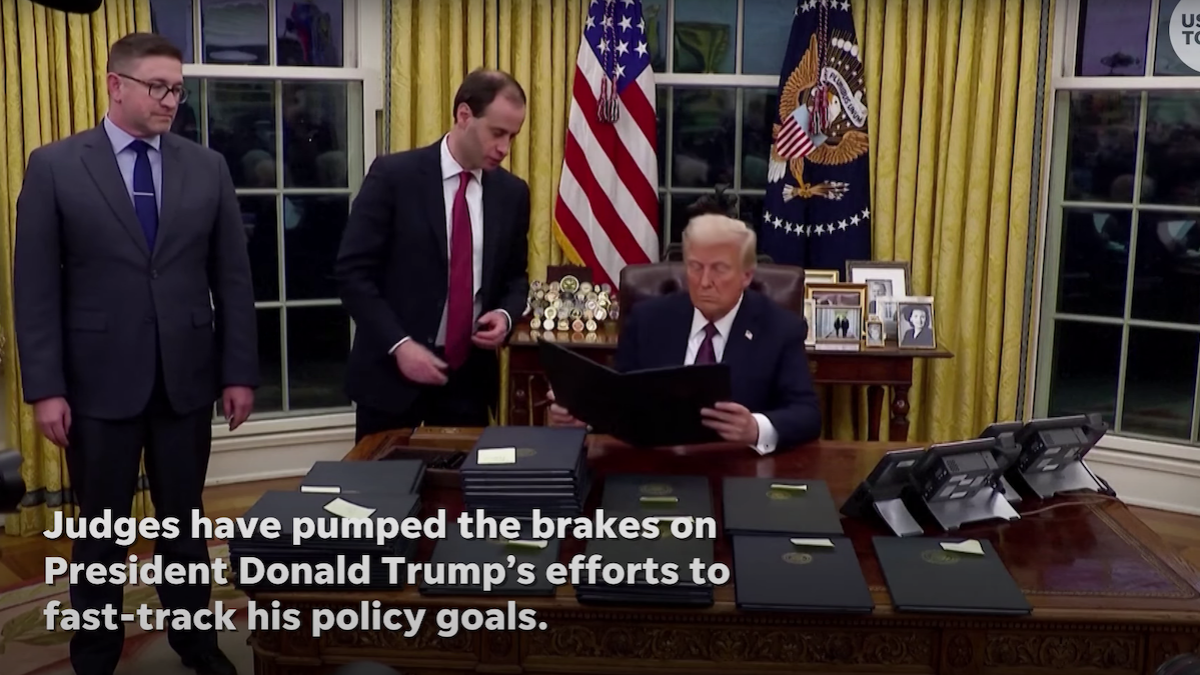

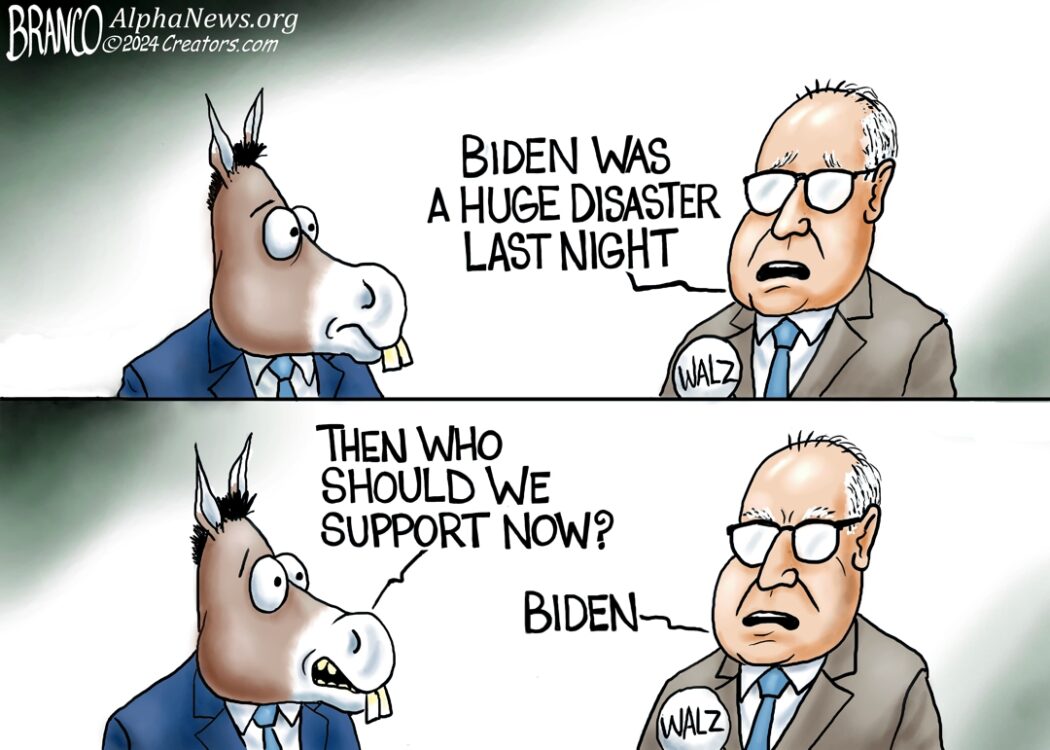
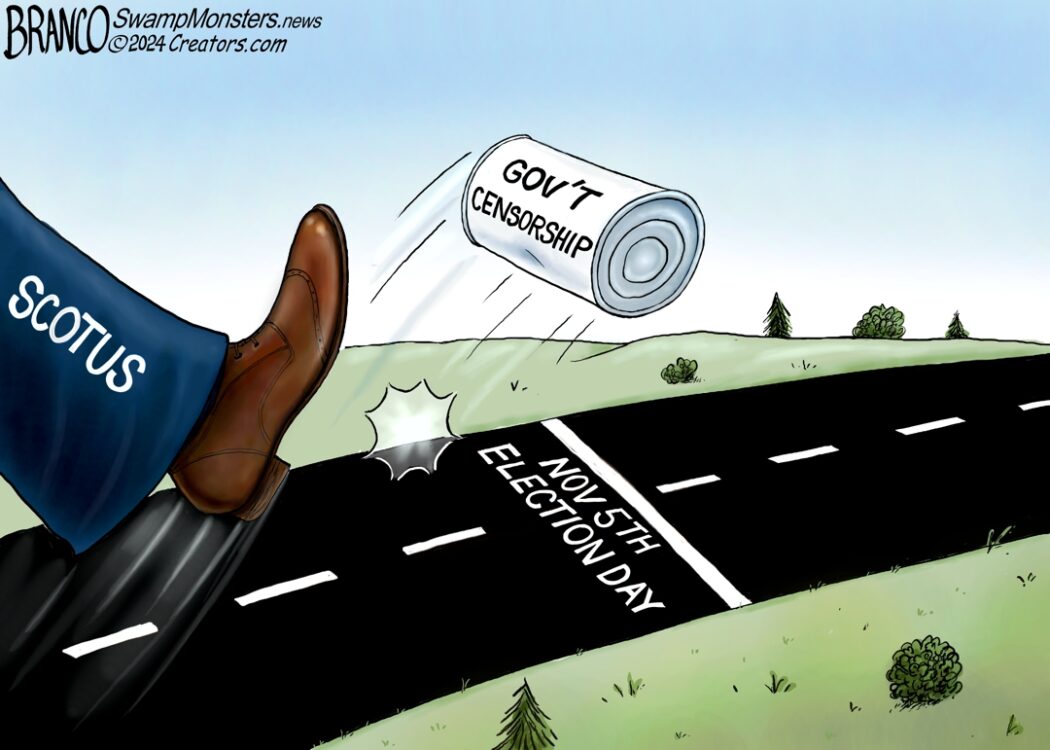



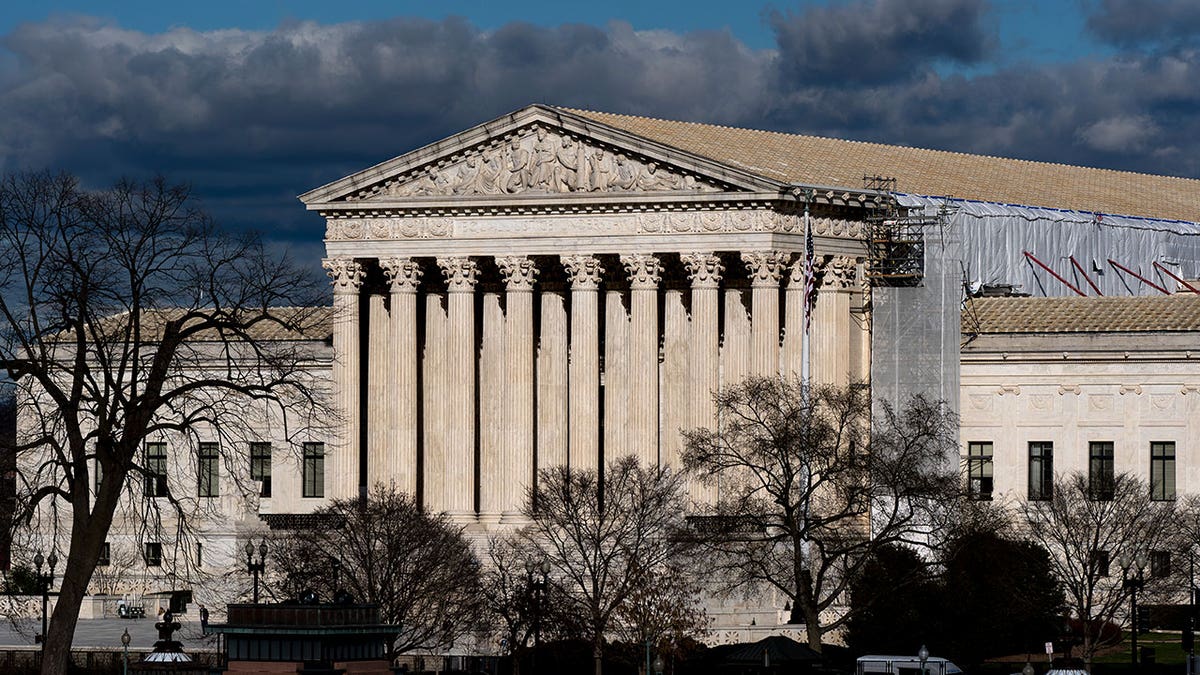
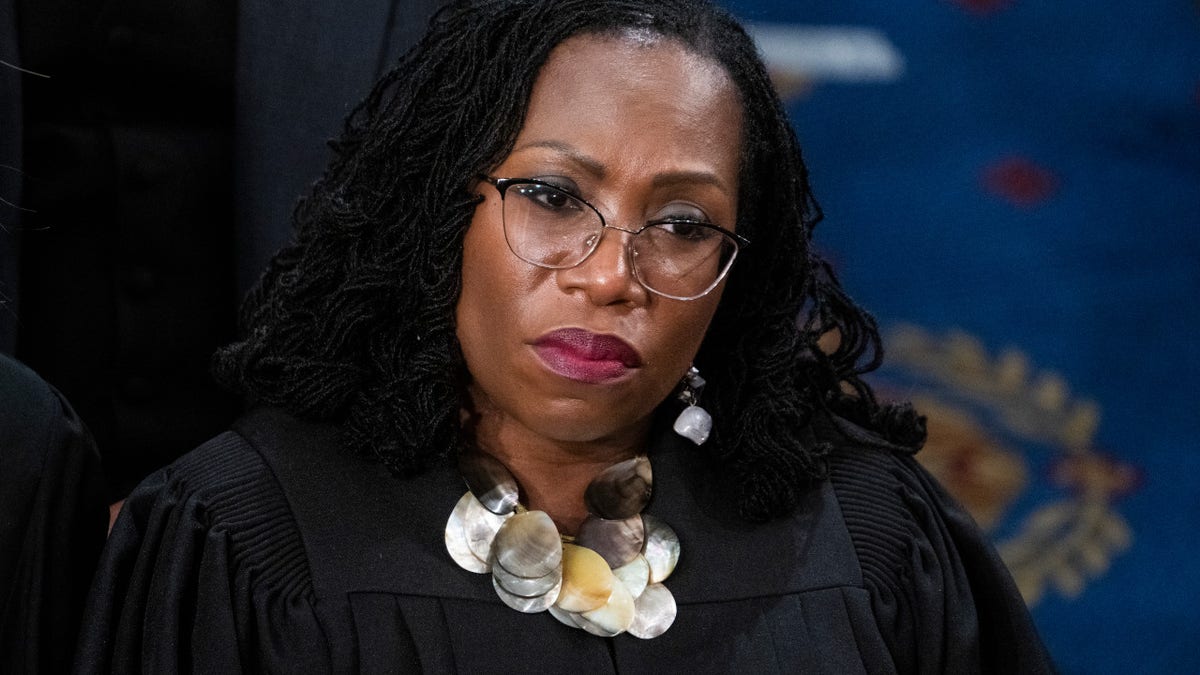
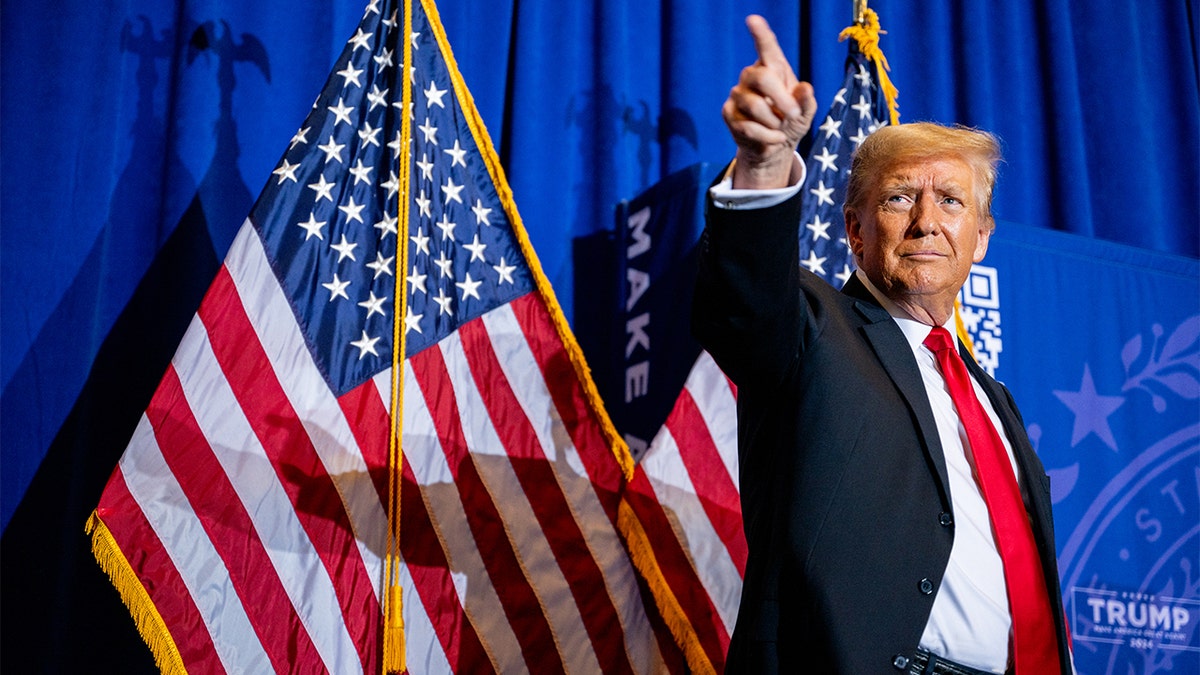





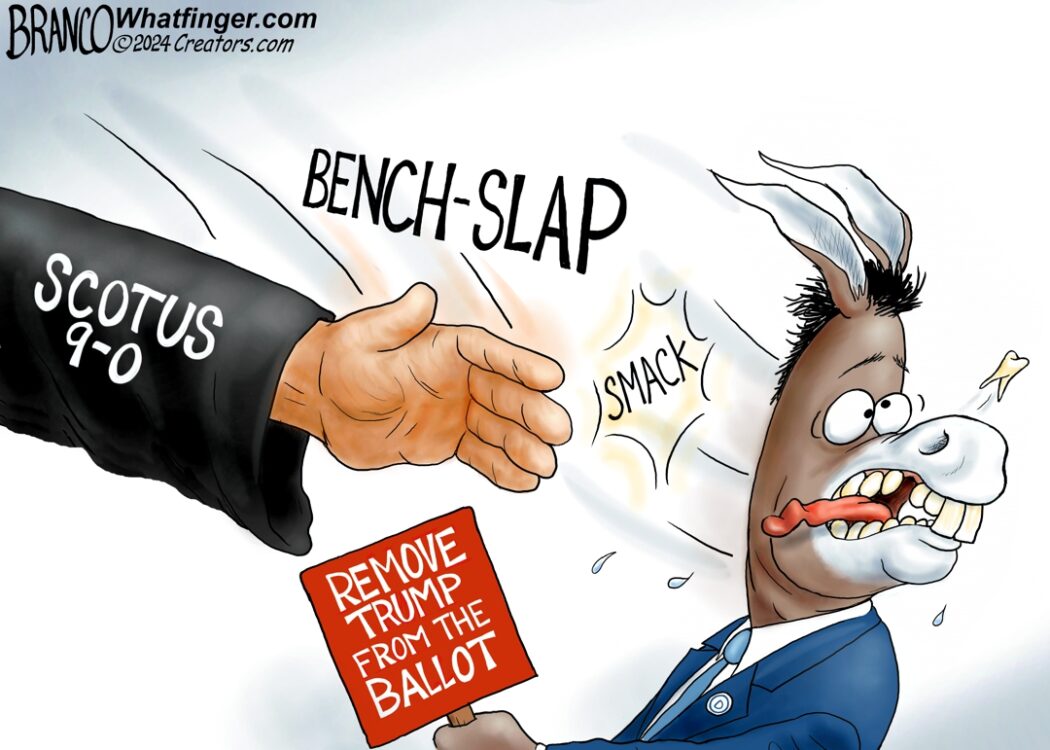
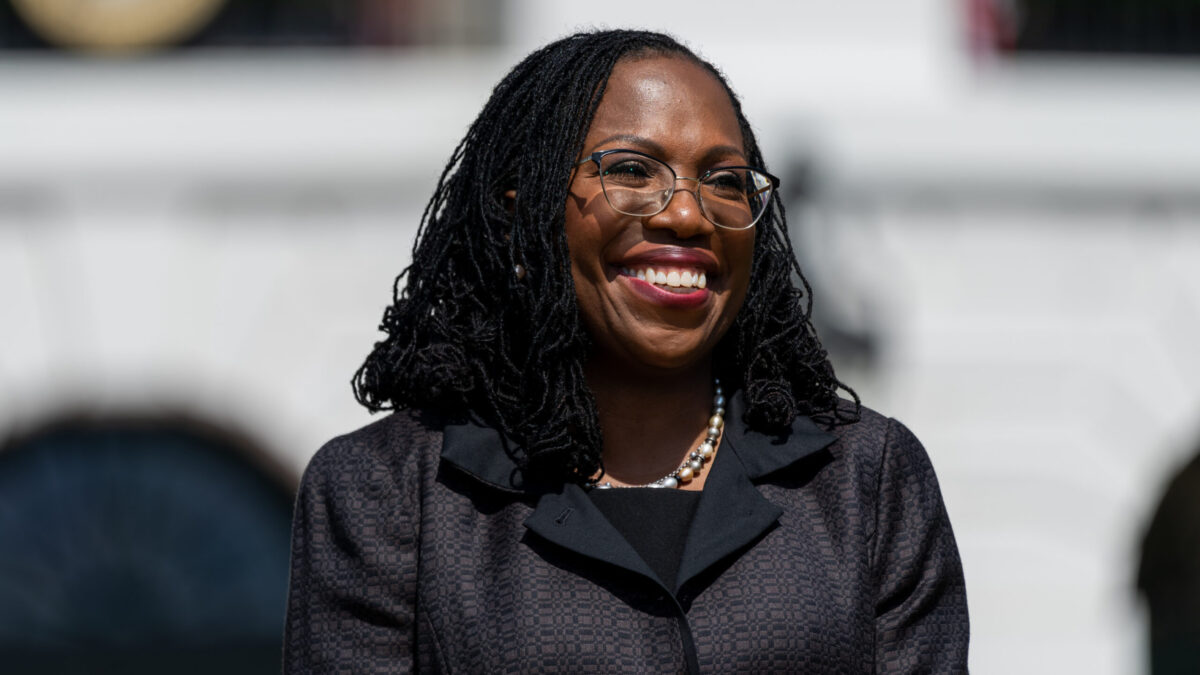





 By
By 
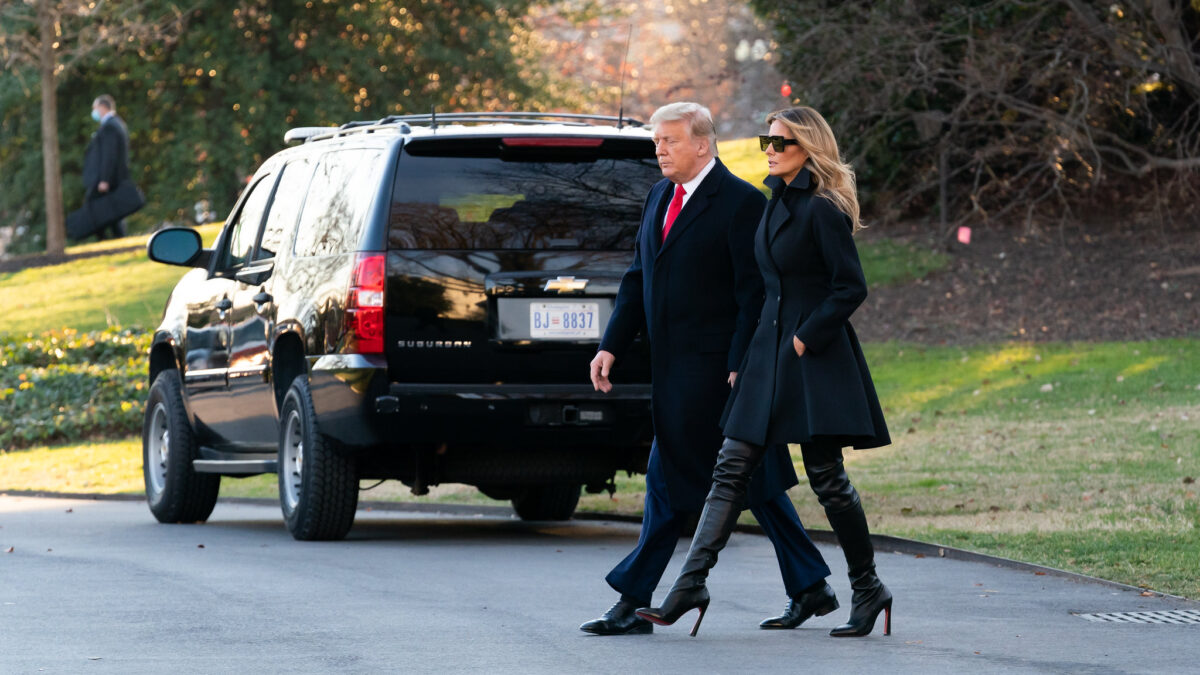

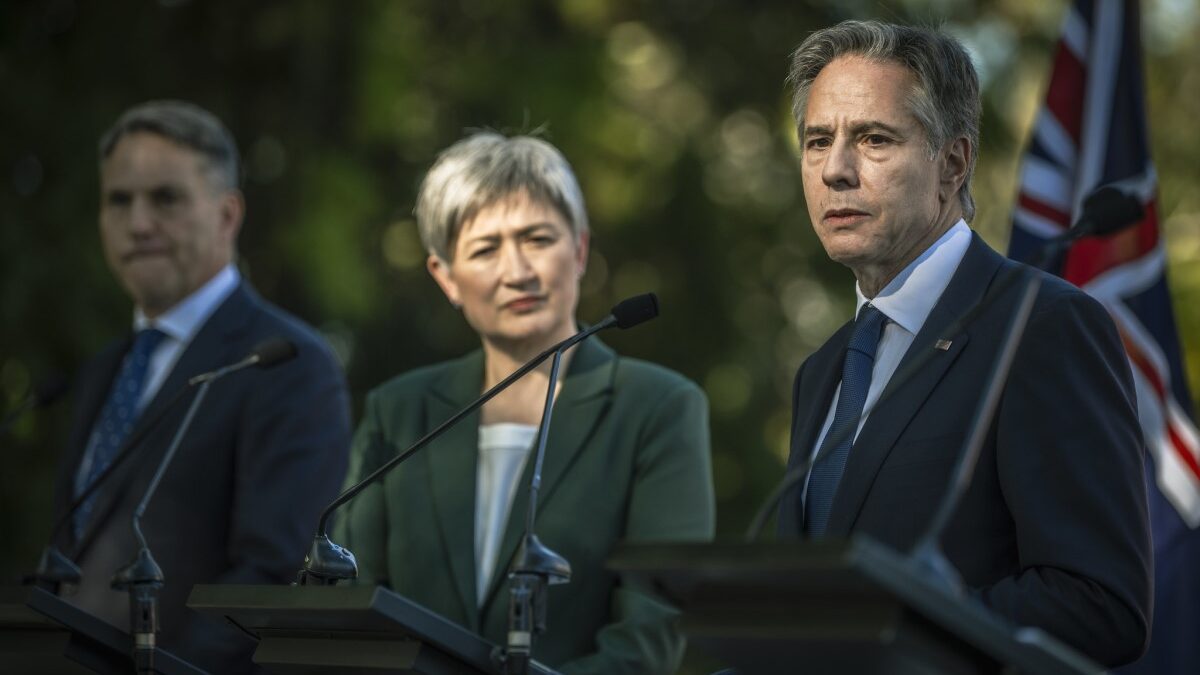
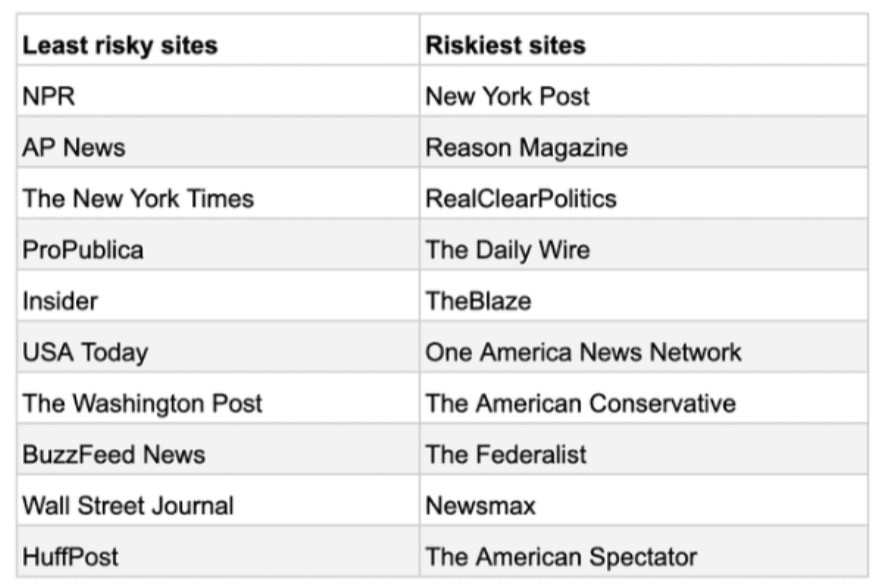
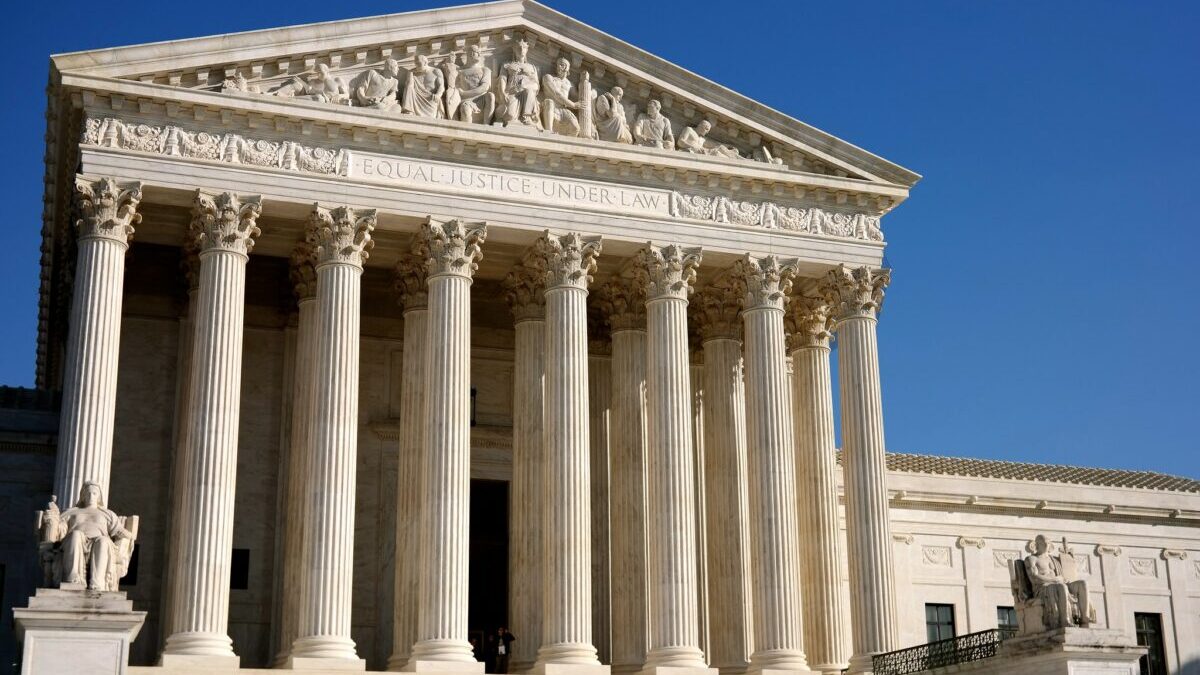

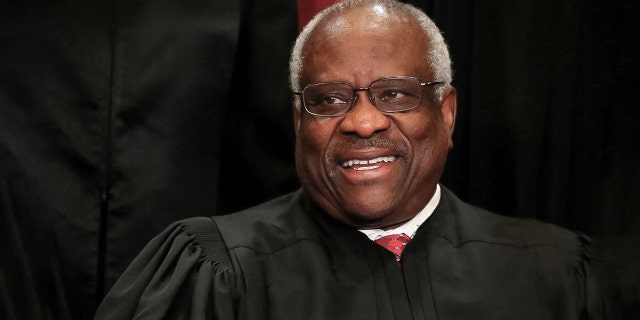

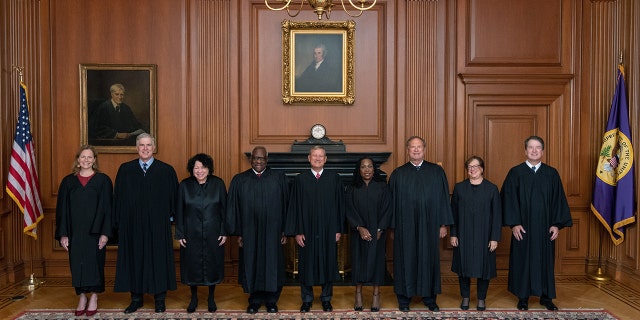
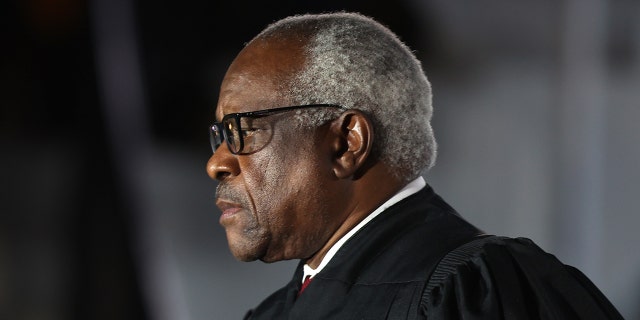
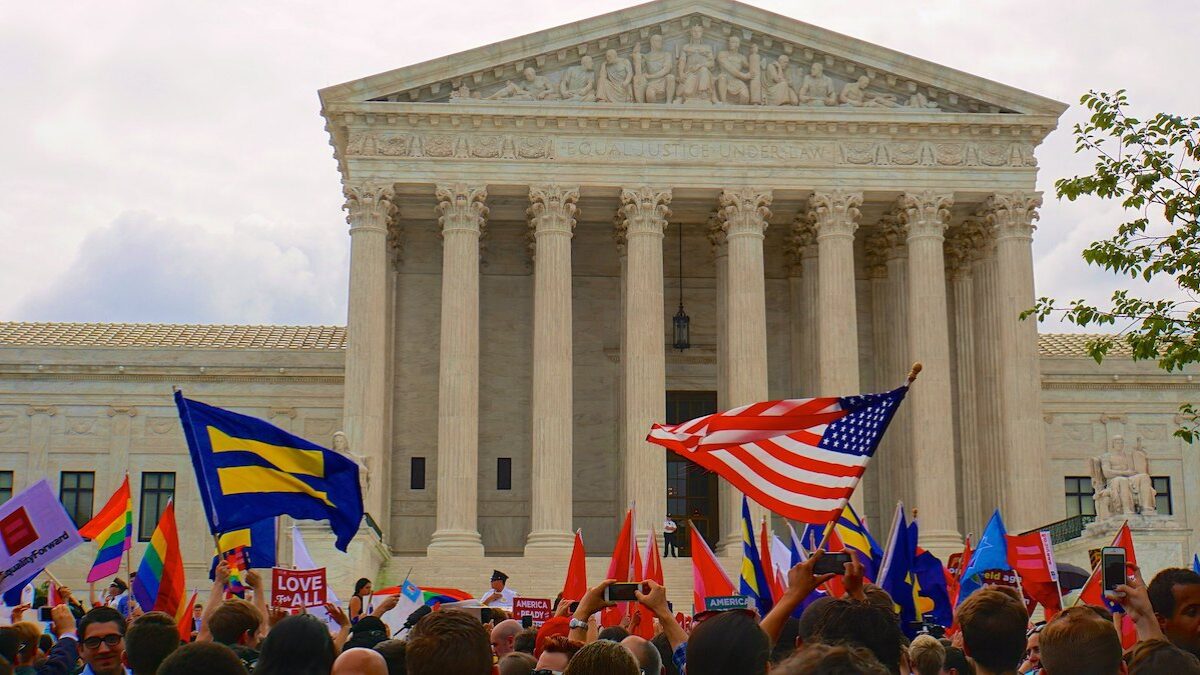

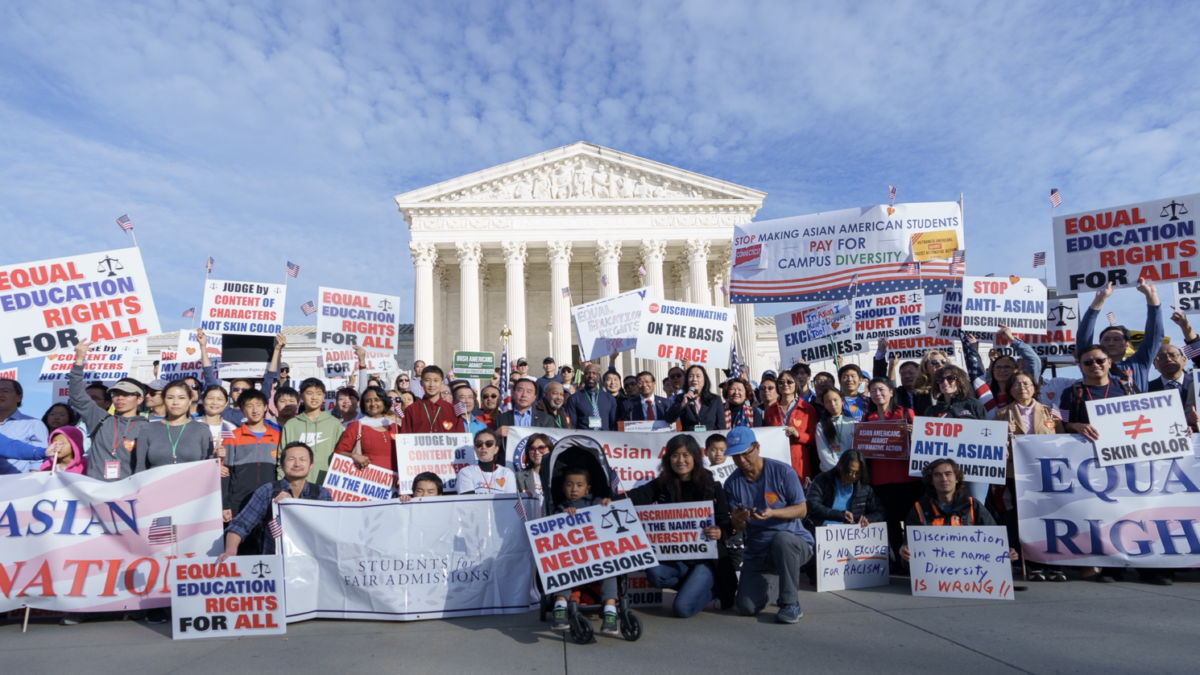


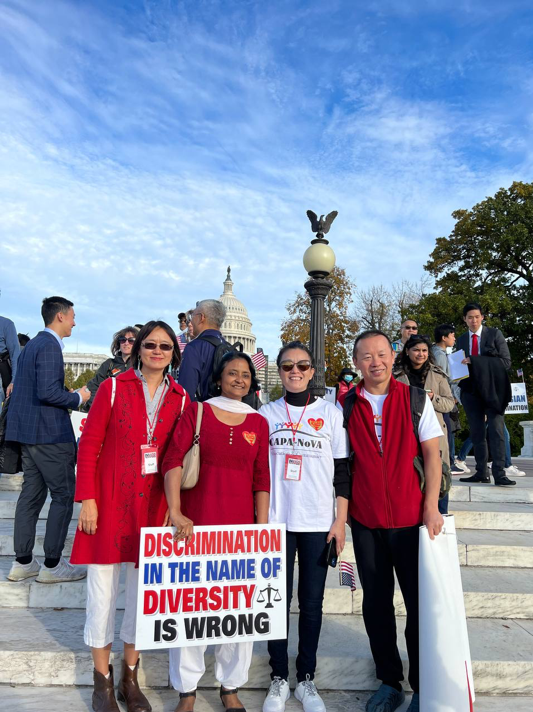

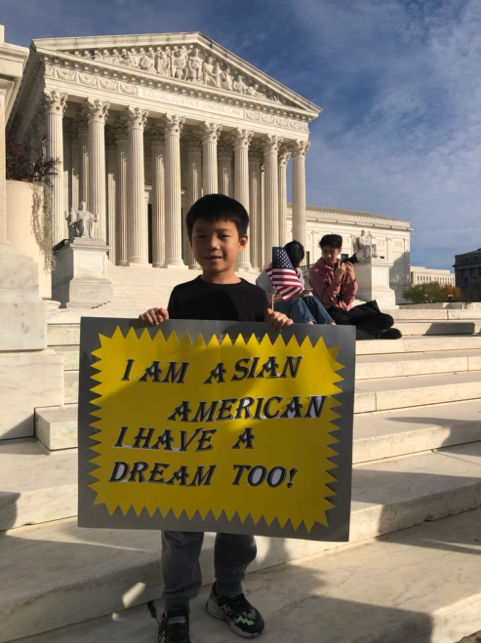
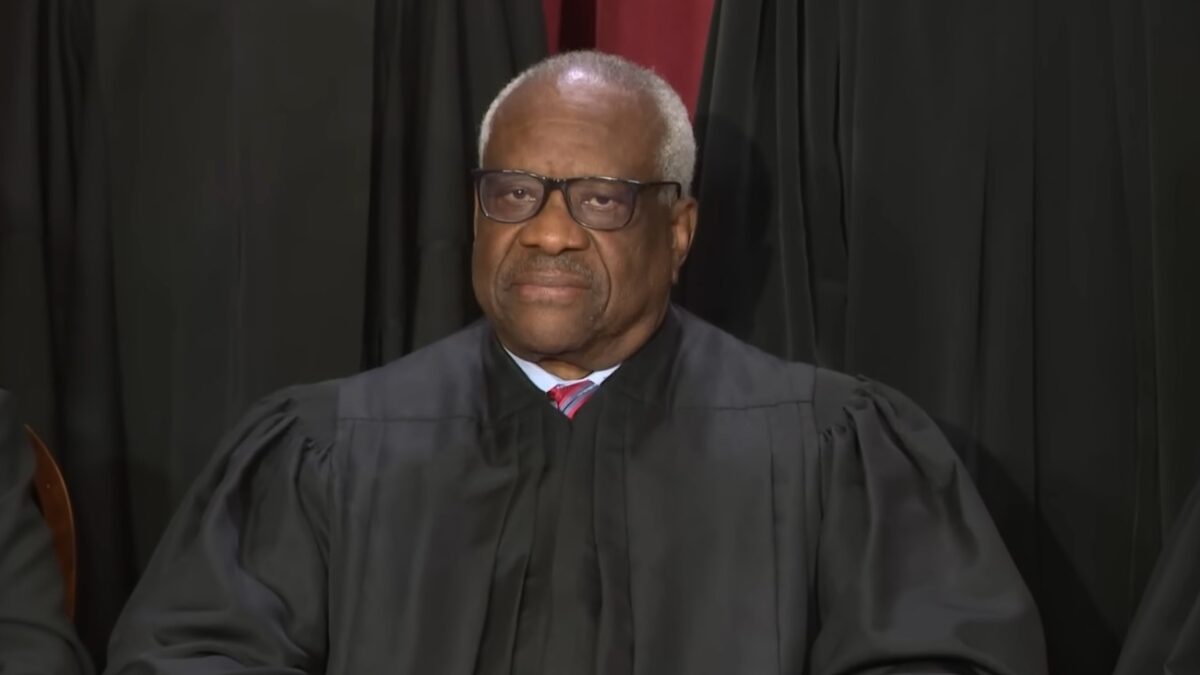

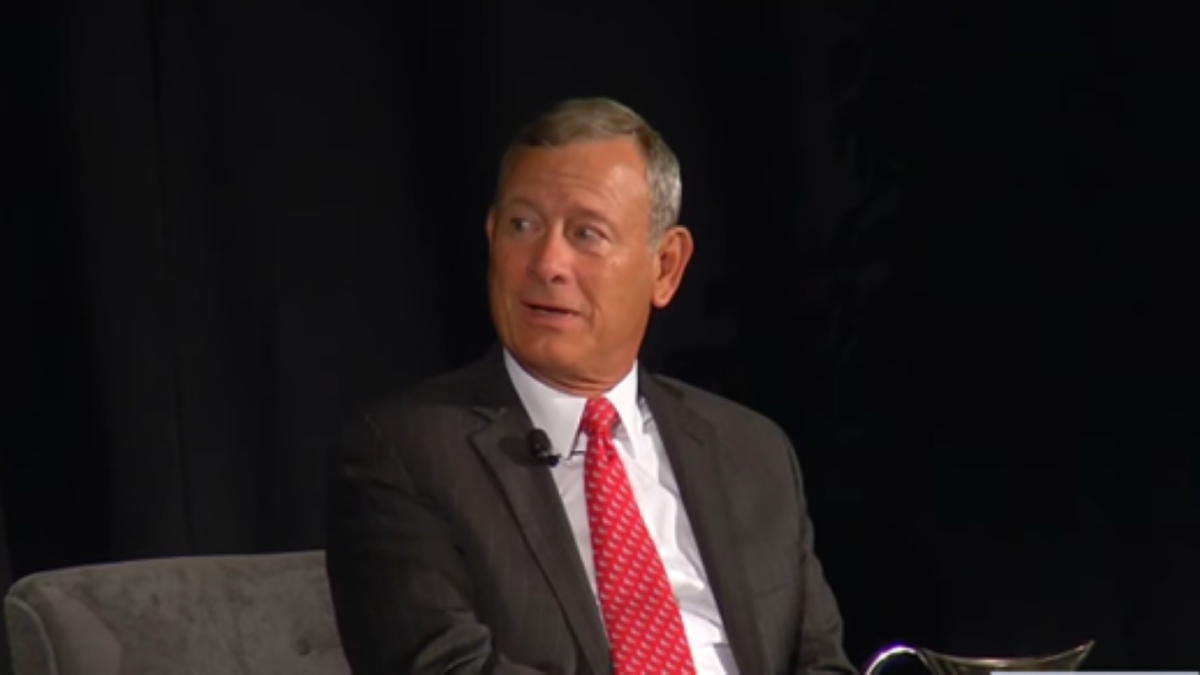



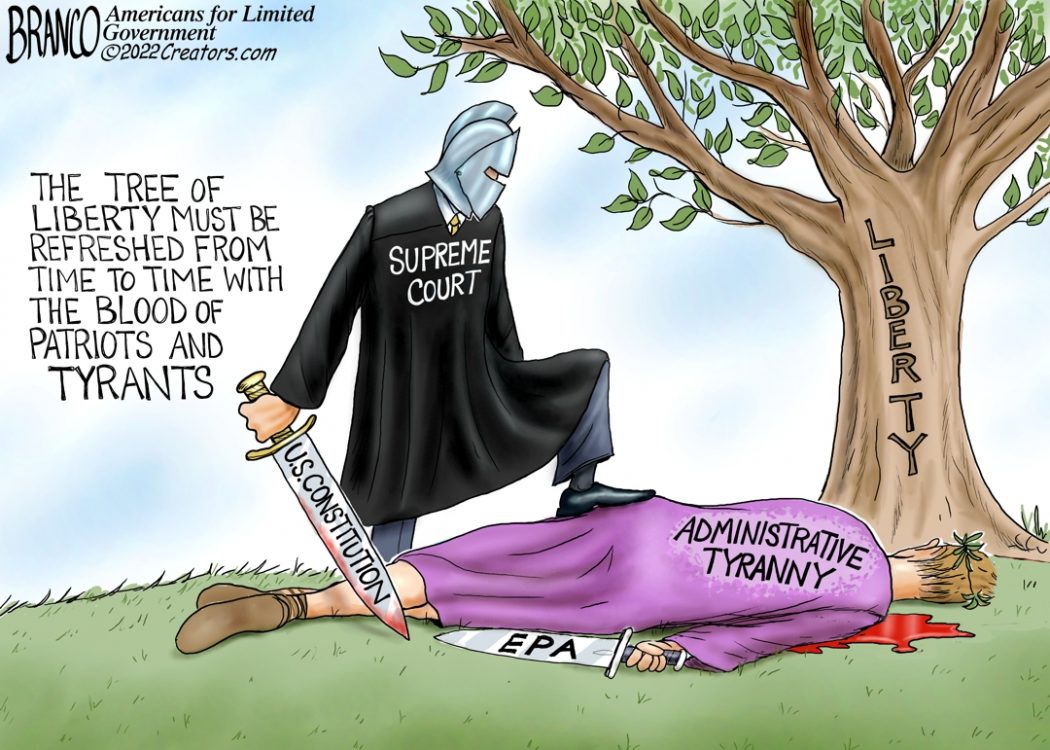
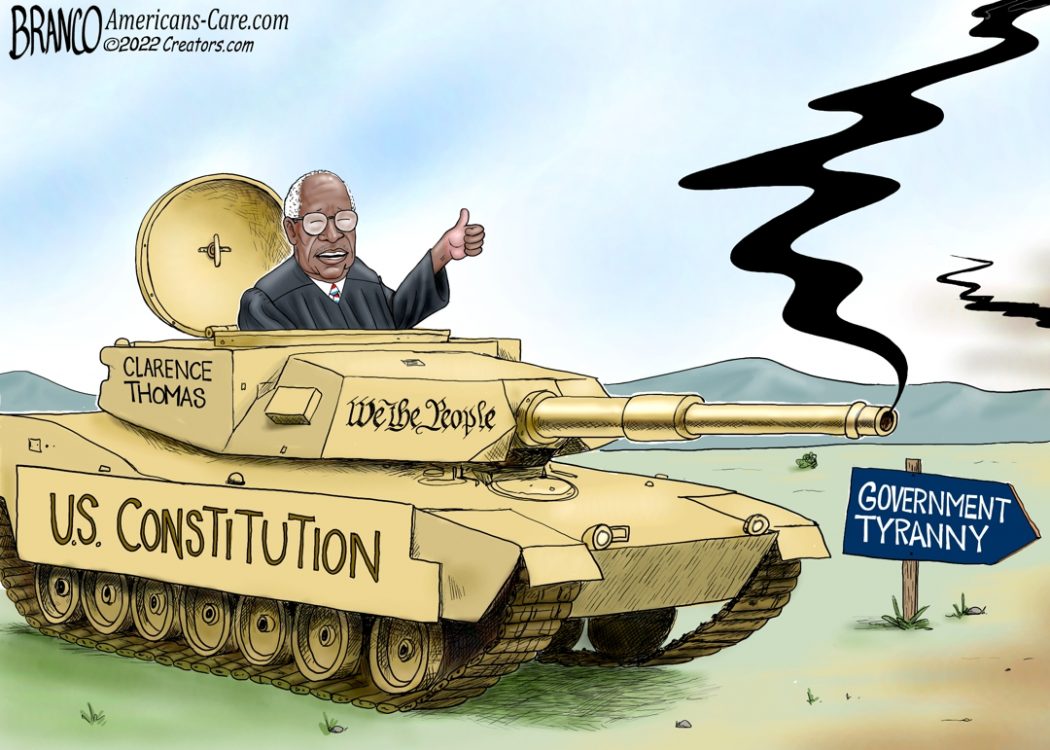


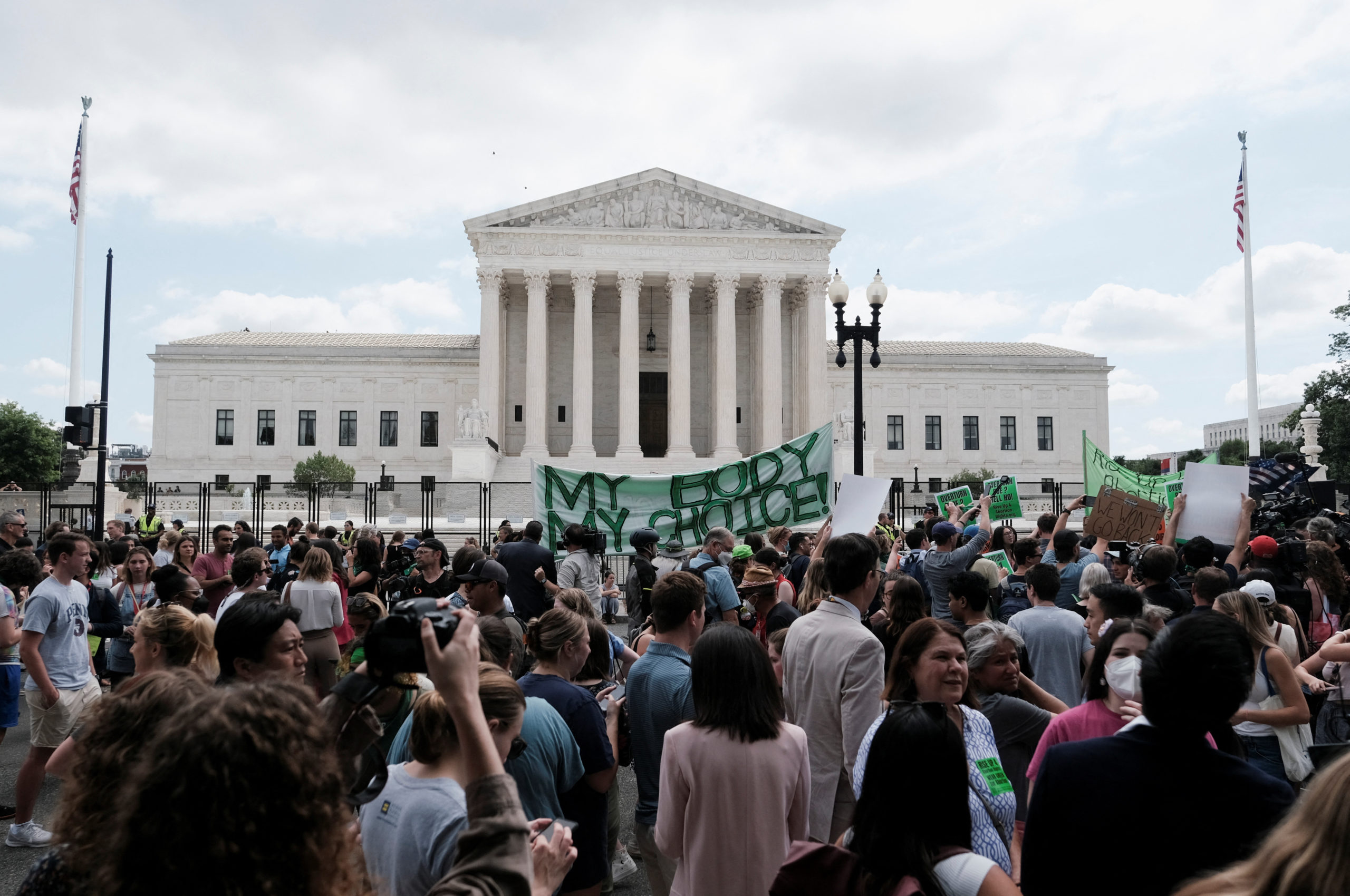


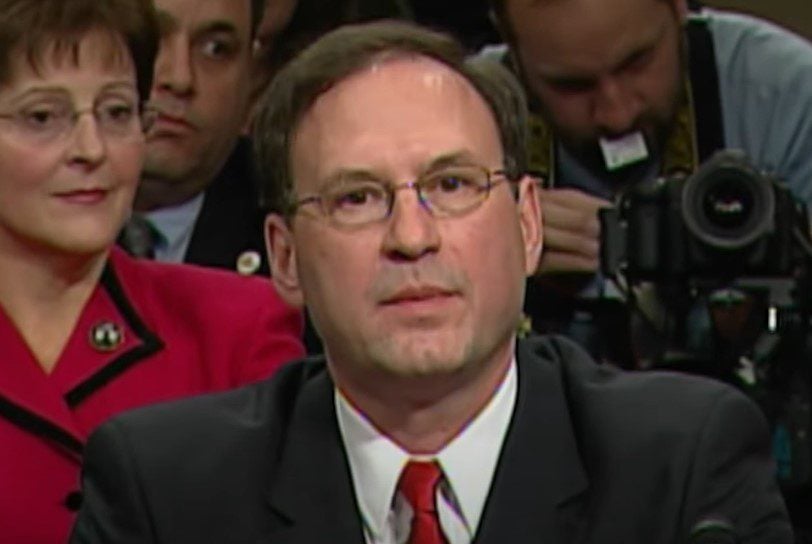

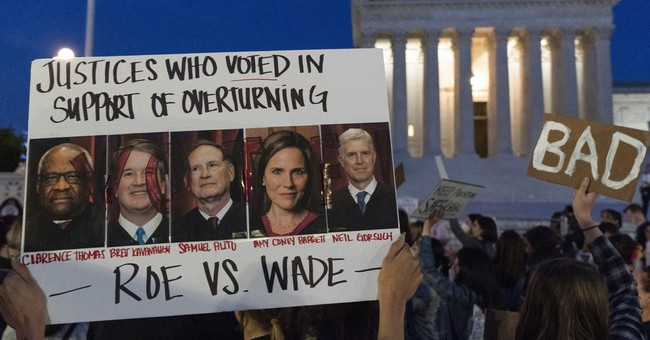
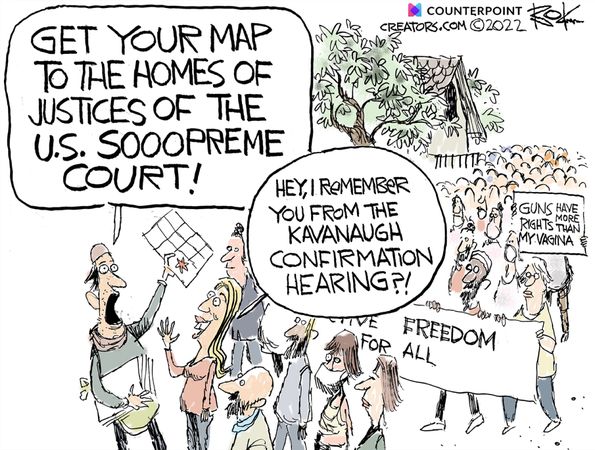
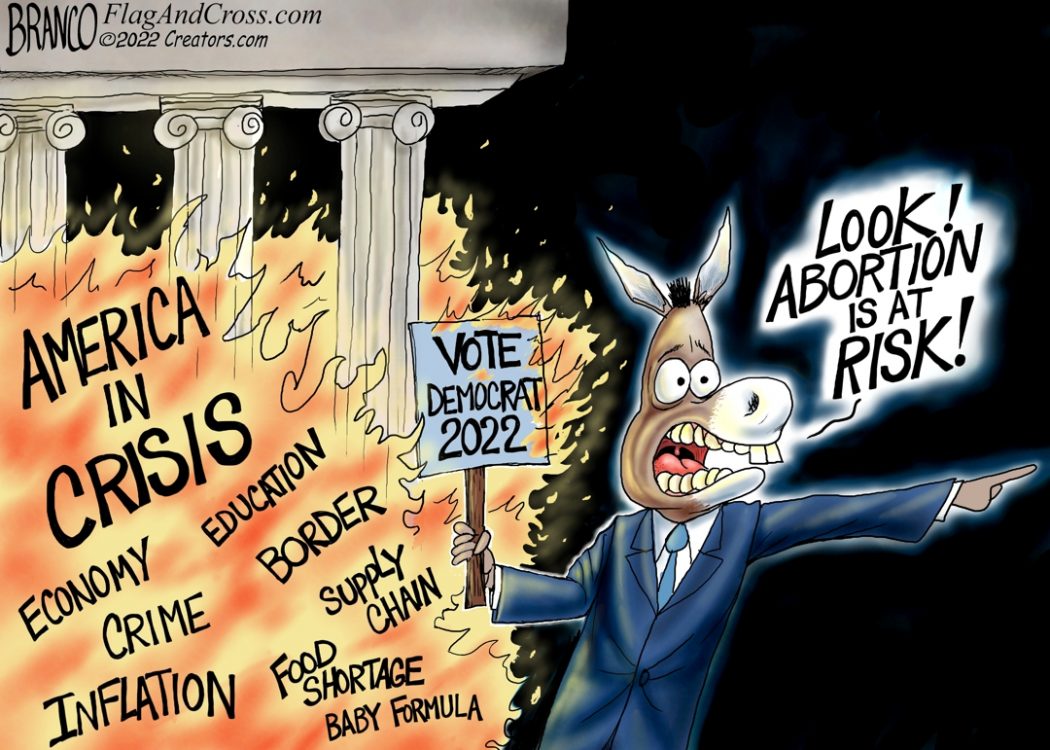


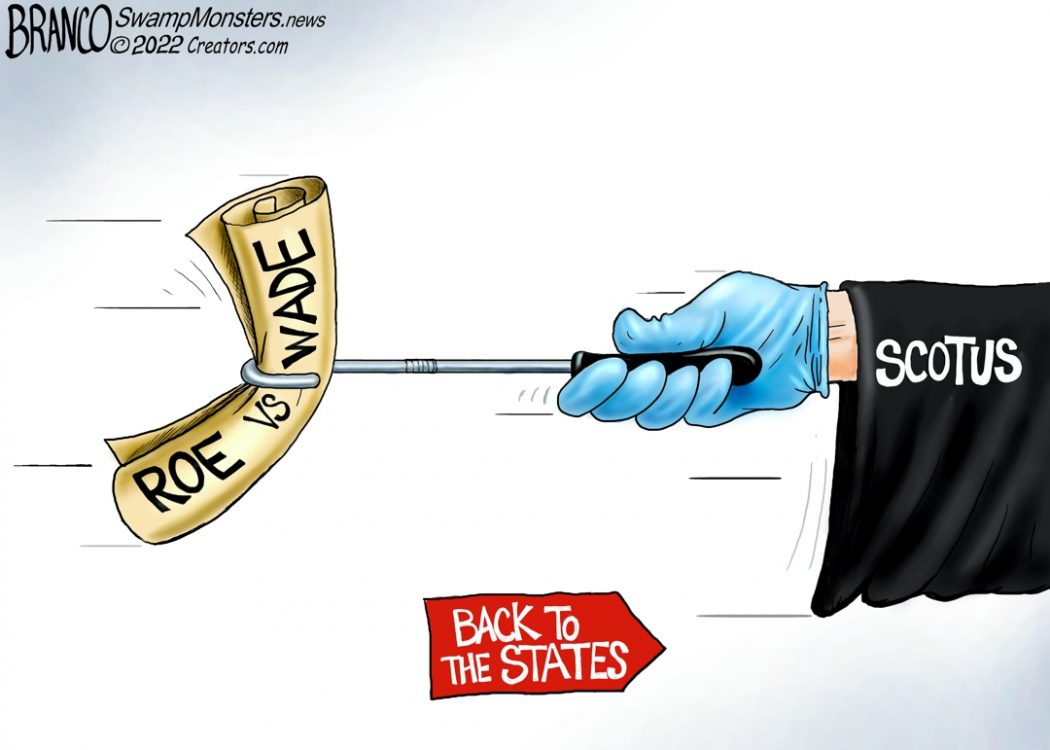


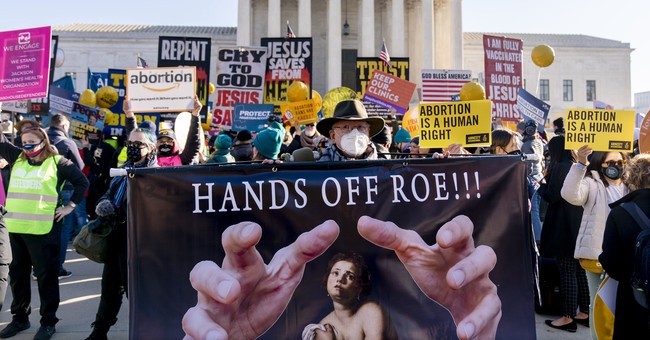
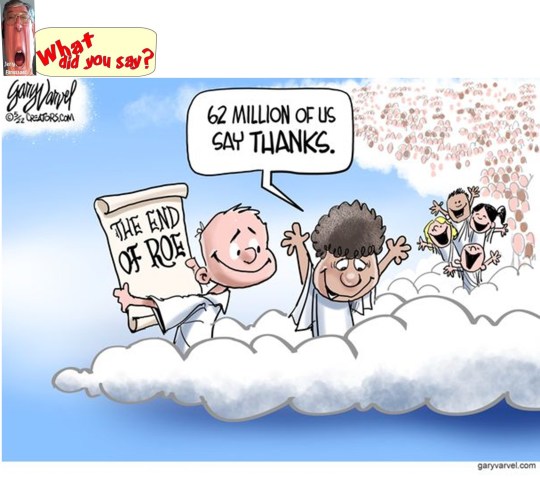
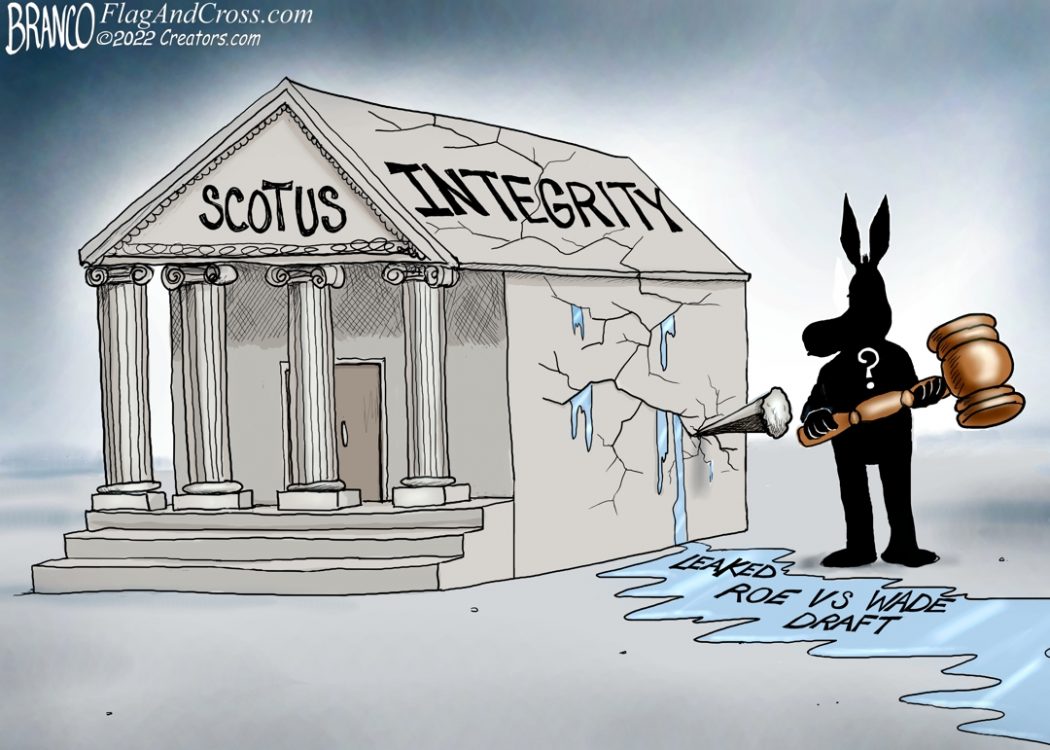


 What Did You Say?
You must be logged in to post a comment.