Perspectives; Thoughts; Comments; Opinions; Discussions

Posts tagged ‘Mitch McConnell’


Elbridge Colby Is the Right Man to Carry Out Trump’s America First Mandate

By: Charlie Kirk | February 18, 2025

Read more at https://thefederalist.com/2025/02/18/elbridge-colby-is-the-right-man-to-carry-out-trumps-america-first-mandate/


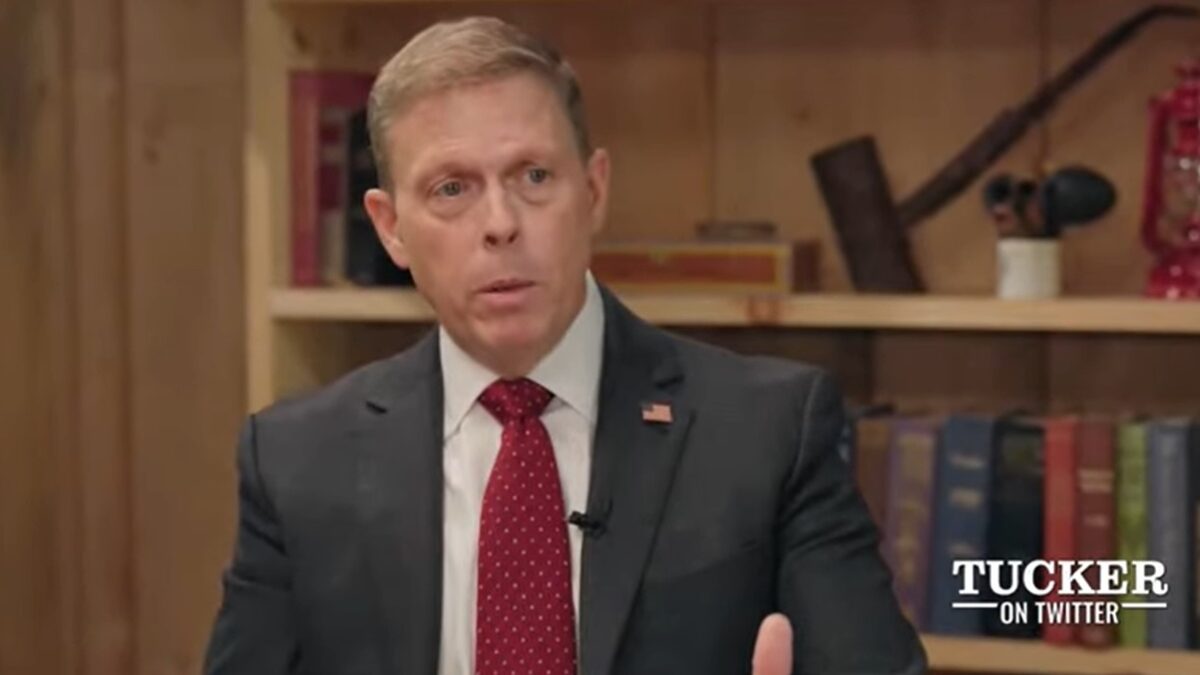
Elbridge Colby speaking on stage
Elbridge Colby will actually do what Americans have given Trump a clear mandate to do, and for that reason, the D.C. blob is desperate to stop him.

Author Charlie Kirk profile

Charlie Kirk

More Articles

President Trump was elected with a mandate — a mandate to rethink the core assumptions of Washington, D.C., that have led this country to disaster after disaster. A mandate to put America first instead of last. To fulfill his mandate, the president needs to be able to make the appointments of his choosing without being sabotaged by the members of his own party that he carried to victory in November.

Yet right now, a fight has broken out over the nomination of Elbridge Colby to be undersecretary of defense for policy, the top strategy official at the Pentagon. Make no mistake: This is a make-or-break moment for whether Donald Trump’s America First foreign policy will succeed — or even happen. Colby is being attacked precisely because his opponents recognize he is the most effective and able person to put Trump’s America First approach into effect. He must be confirmed and empowered. 

Who is Colby? Colby has an establishment background. But don’t be fooled: He has been arguing against the disastrous Bush-Cheney foreign policy regime since he was in college. Colby instead embraces a foreign policy of genuine peace through strength, one that avoids wars while protecting our authentic interests, gets our allies to do their part, and focuses on the top threats to Americans rather than irrelevant distractions. 

Look back over Colby’s written record, and you will see that he was arguing for Trump’s America First approach long before it was popular — in fact, before Trump himself even arrived on the political scene. Colby paid the price for his advocacy, repeatedly losing out on high-powered jobs he could have easily received if he’d been willing to play along with the D.C. consensus.

Colby served Trump loyally and ably at the Pentagon during his first term, producing the landmark defense strategy shift that refocused the Defense Department on China, a central Trump goal. As great America First conservatives like Tucker Carlson and Jim Banks point out, Colby’s acclaimed book The Strategy of Denial is a guidebook for how to put an America First foreign policy into practice. Indeed, a Politico profile of him in 2023 was literally titled, “Elbridge Colby Wants to Finish What Donald Trump Started.” Even when almost every other foreign policy expert lambasted President Trump, Colby never did, enthusiastically and publicly supporting Trump in his historic 2024 campaign. 

So why is Colby being attacked? The fact is, despite what they say in public, many Republican politicians want to frustrate President Trump’s attempt to change American foreign policy. They want to revive the disastrous foreign policy of George W. Bush, Dick Cheney, and Mitch McConnell. These America Last Republicans think they can manipulate President Trump and his top officials the same way they tried to do in his first term.

They don’t even deny it. For instance, one anonymous senator recently said: “I think Tulsi Gabbard is flawed, but [is] she going to be harmful? No, because I think that there are going to [be] enough strong intelligence people around her.” GOP senators openly plan to tout Trump’s goals in public, then sabotage them in private. That same anonymous senator also said: “When it comes to those nominees below the Cabinet who may be less on people’s radar, who will be able to facilitate things, that’s where I think it can be dangerous.”

And that’s precisely why they see Colby as such a threat. He is so effective, so knowledgeable, and so genuine in his conviction for an America First foreign policy that he cannot be manipulated or controlled. Colby will actually do what the American people have given President Trump a clear mandate to do, and for that reason, the D.C. blob must stop him.

Colby’s nomination is a fork in the road not just for President Trump and his administration but for the country. If Colby is scalped by the secret cabal of bitter-ender neoconservatives, it will cut the legs out from under President Trump’s America First foreign policy, and it will chill any other nominees who follow in Colby’s wake.

People are watching to see whether President Trump’s administration will deliver real change, putting Americans first and ending the endless wars. If committed and loyal stalwarts like Colby are allowed to be taken down by those who want to return to the era of Dick Cheney, then it would be a disaster for the country — and supporters of the president will remember who was responsible.


Charlie Kirk is the founder and CEO of Turning Point USA, and host of The Charlie Kirk Show, a nationally syndicated radio show and one of the most listened to conservative podcasts in the country.

The SAVE Act Could Hit Filibuster Wall In New Republican-Led Senate


By: M.D. Kittle | November 19, 2024

Read more at https://thefederalist.com/2024/11/19/the-save-act-could-hit-filibuster-wall-in-new-republican-led-senate/

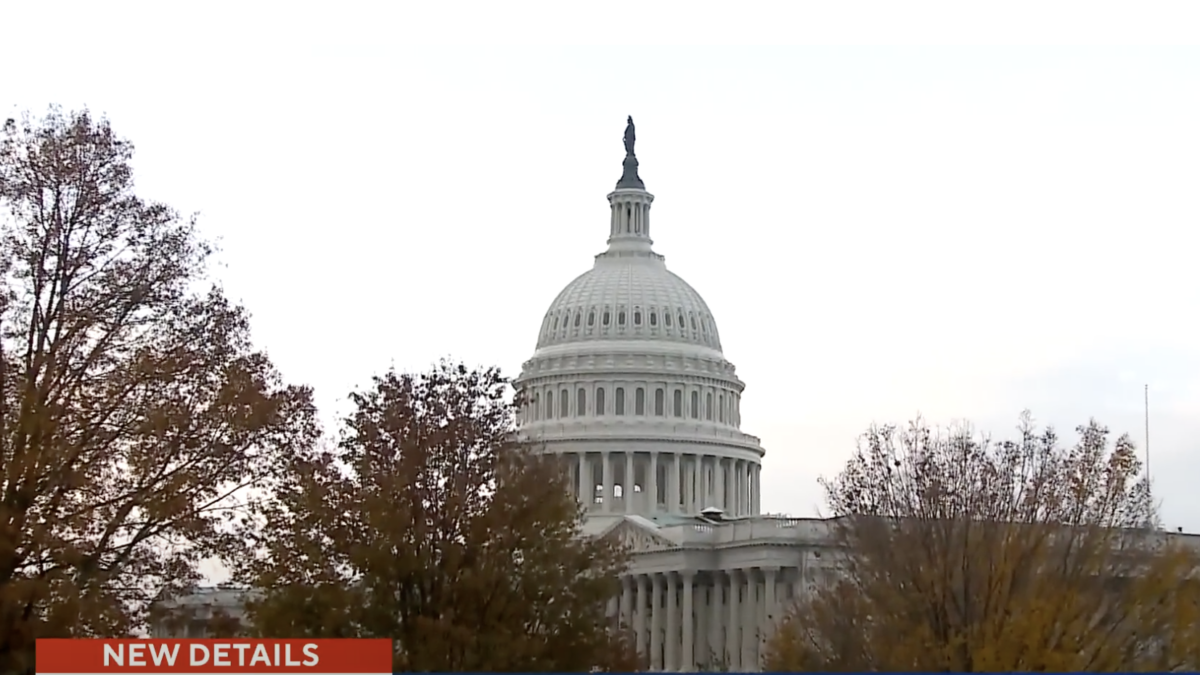
View of the U.S. Capitol Building in November.
‘The Democrats are not into compromising on issues that will cost them power,’ Rep. Glenn Grothman said of the election integrity bill.

Author M.D. Kittle profile

M.D. Kittle

More Articles

Having clinched the federal government trifecta, Republicans have the opportunity in the next Congress to move through legislation they could only have dreamed of over the past six years. Will they squander this golden opportunity to pass conservative reforms?

In particular, can the SAVE Act, a key election integrity measure, be saved from the Senate filibuster? Perhaps, but there’s disagreement even among members of Wisconsin’s GOP congressional delegation on the fate of the Safeguard American Voter Eligibility (SAVE) Act in the upcoming session. The bill requires individuals to show documentary proof of U.S. citizenship in federal elections, as it directs states to remove noncitizens from their voter rolls. The measure passed the Republican-controlled House in July along party lines, with a scant five Democrats voting for it. Dems insisted that the protections are unnecessary because it’s already illegal for foreign nationals to vote in elections. But current law is nothing more than an honor system without the ability to require proof of citizenship at the point of registration. 

As The Federalist has reported, thousands of illegal immigrants and other foreign nationals have shown up on voter lists across the country. 
The SAVE Act has languished in a Senate that had no interest in ensuring only U.S. citizens vote in elections.  Attached to a stopgap government spending proposal in September, the bill died a miserable death in the House. 

But Nov. 5, 2024, delivered a red wave, a sea change election that will put former President Donald Trump back in the White House, place Republicans back in control of the Senate, and allow the Grand Old Party to keep its majority in the House. Expectations are high — as they were in 2017 and 2018 when Republicans also held the trifecta with Trump in charge of the executive branch — that conservatives will be able to push through an array of government reforms. 

Not so fast, some say. 

‘Tool to Defend’

“Any election law is going to be tough in the Senate,” Rep. Glenn Grothman, told me Monday on the “Vicki McKenna Show” in Milwaukee. Grothman, who represents Wisconsin’s 6th Congressional District, said the filibuster, requiring 60 votes in the Senate to pass most legislation, will make it nearly impossible to get the SAVE Act, border security, and other bills through the august upper house. 

It would seem there isn’t much appetite for ditching the filibuster, especially in a Senate run by newly elected Majority Leader John Thune, R-S.D., a longtime protege of Senate Republican Leader and 60-vote threshold defender Mitch McConnell. Fellow McConnell stooge Texas Sen. John Cornyn recently told NBC News that there’s “unanimity” among Senate Republicans on preserving the filibuster — even if President-elect Trump again calls for senators to dump it. 

“Senators have a tendency to defend their power, just like everybody else does. I don’t know a lot of wimps in the United States Senate,” Sen. Kevin Cramer, R-N.D., told the news outlet. “I think we’ve all lived through the possibility of losing the filibuster as a tool to defend. And I would be surprised if there were enough Republicans who thought that we should change it now.”

‘On the Other Foot’

When Democrats controlled Congress and the White House, they pushed to bypass the filibuster to pass an election integrity nightmare “voting rights act,” but couldn’t quite get the 60 votes needed to suspend the rule. That was in January 2022, just days before Dems turned over control of the House to Republicans and saw their majority in the Senate diminished to a slim 51 seats. McConnell congratulated renegade Democrats, Sens. Joe Manchin of West Virginia and Kyrsten Sinema of Arizona, for their “courage” to resist the pressure to loosen the rule. McConnell warned Democrats “that in the very near future the shoe might be on the other foot.”  Nearly three years later, Manchin and Sinema are on their way out of the Senate and the “shoe” is definitely about to be on the other foot. 

‘We Can Get There’

Grothman agrees the filibuster has “prevented a lot of horrible things from passing” under Democrat control, from packing the Supreme Court to statehood for the District of Columbia and Puerto Rico. “So, I can’t say it’s horrible when the Republican senators say we’re going to require 60 votes for all policy changes, but it sure is going to be frustrating because I don’t think we can save the country unless we make changes in immigration law, and I don’t think we can save the country unless we make changes to election law.” 

The Wisconsin congressman said there is no compromising with Democrats on either issue. 

“I don’t think they’ll ever give us the SAVE act,” Grothman said. “The Democrats are not into compromising on issues that will cost them power. They just aren’t.”

Grothman’s colleague, Rep. Scott Fitzgerald, said the SAVE Act is a priority and can pass both houses, but it will take negotiations to get there. Fitzgerald, who represents Wisconsin’s 5th Congressional District, said he’d like to see the legislation move from the Senate to the House this time around. 

“Even though [Republicans] are going to have the majority over there, there are going to be some specific senators that probably are going to need to get some of the things that were in the SAVE Act to agree to it,” the lawmaker told me last week on the “Vicki McKenna Show.“That could become the negotiations between the houses to sign off from.” 

Rep. Bryan Steil, Wisconsin’s 1st Congressional District congressman, said Republicans have an opportunity to take election security and integrity bills previously passed in the House and get them to Trump’s desk. Steil, chairman of the House Administration Committee, acknowledges the filibuster may well be a challenge, but he sees the potential for some Senate Democrats to cross the aisle on bills that have the backing of the majority of voters. 

“Obviously, President Biden had no interest in putting forward common-sense election integrity provisions,” Steil told me. “With a Republican Senate and a Republican House and President Trump in the White House, I’m of a view we can get there.” 


Matt Kittle is a senior elections correspondent for The Federalist. An award-winning investigative reporter and 30-year veteran of print, broadcast, and online journalism, Kittle previously served as the executive director of Empower Wisconsin.

Gallup Poll: Biden’s Border Invasion Is Americans’ No. 1 Worry


BY: M.D. KITTLE | FEBRUARY 27, 2024

Read more at https://thefederalist.com/2024/02/27/gallup-poll-bidens-border-invasion-is-americans-no-1-worry/

migrants flee at southwest border

Author M.D. Kittle profile

M.D. KITTLE

MORE ARTICLES

A New Gallup poll finds a record-high number of Americans believe illegal immigration is a “critical threat” to the nation’s vital interests. Voters are clearly blaming President Joe Biden and his band of leftists for the invasion the nation has endured over the past three years. 

The latest survey of more than 1,000 adults nationwide, conducted Feb. 1-20, shows 55 percent of U.S. respondents believe that “large numbers of immigrants entering the United States illegally” is a “critical threat” to the nation — up 8 percentage points from last year’s poll. The significant majority of Americans deeply concerned about illegal immigration surpasses the previous high of 50 percent recorded in 2004, according to Gallup. 

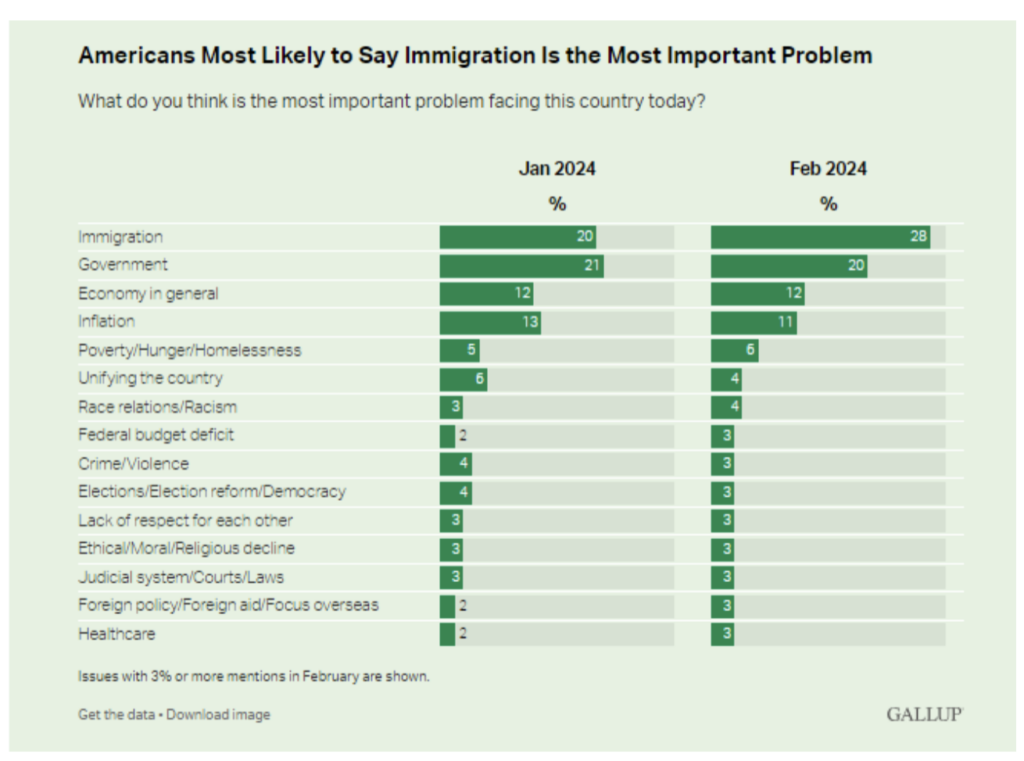
“Significantly more Americans name immigration as the most important problem facing the U.S. (28%) than did a month ago (20%),” the famed national pollster notes. “Immigration has now passed the government as the most often cited problem, after the two issues tied for the top position the past two months.”

Concern over the illegal immigration crisis is at the highest level in the 40-plus years Gallup has been tracking the issue. 

The poll finds congressional job approval, long in the basement, dipped to just 12 percent. It’s the lowest approval rating for the legislative body since November 2015, when it hit 11 percent, and just a few points above its rock bottom of 9 percent in November 2013. 

Gallup conducted the poll as a ludicrous border “reform” bill, which was really just a Trojan horse for more Ukraine funding and would have codified the continuing illegal immigration threat, faltered in the U.S. Senate. The deal, puppeteered in large part by Senate Minority Leader Mitch McConnell, R-Ky., would have faced a near-certain death in the Republican-controlled House. 

Biden’s job performance on immigration has sunk to 28 percent, a personal low for the Democrat, according to the new Gallup poll. That’s down from a CBS poll last month that found just 32 percent of respondents approved of Biden’s handling of border security, an all-time low at that time. The latest monthly Harvard CAPS/Harris poll, released on Monday, records a 35 percent approval rating for Biden on immigration, his lowest rating on any issue in that survey. 

“While many Americans regard the economy, generally, or inflation, specifically, as the most important problem facing the U.S., far more name immigration,” Gallup notes in an overview of the poll. “Immigration now sits alone at the top of the most important problem list, something it has done only occasionally in Gallup’s trend and not since 2019.”

Biden’s Border Debacle Hitting Home

Not even the coddling accomplice media can cover for the addled president and the disasters his immigration policies have wrought. The let-‘em-all-in left certainly can’t hide from the stark numbers. 

In fiscal year 2020, the last full year of President Donald Trump’s tenure, U.S. Customs and Border Protection recorded about 400,000 encounters of illegal aliens attempting to enter the southwest United States. Three years later, on Biden’s watch, agents encountered 2.4 million illegal immigrants at the border with Mexico, 3.2 million nationwide.  

Facing abysmal poll numbers and a real threat to his reelection chances, Biden audaciously told 30 of the nation’s governors last week that his hands are tied on cleaning up the mess he’s made. In a bald-faced lie for the ages, the president barked at a White House meeting that he’s not to blame for the border debacle and that the governors need to “show a little spine” and urge their members of Congress to pass the “bipartisan security bill” that recently went down in flames. 

Half of the nation’s governors are standing with Texas in its right to defend itself against the invasion of illegal immigrants attempting to flood the Lone Star State. The Biden administration has fought against Gov. Greg Abbott’s efforts to “fill the dangerous gaps created by the Biden Administration’s refusal to secure the border,” according to the governor’s office. 

“Every individual who is apprehended or arrested and every ounce of drugs seized would have otherwise made their way into communities across Texas and the nation due to President Joe Biden’s open border policies,” stated an Abbott press release issued after the governor welcomed 13 of his fellow Republican governors to Eagle Pass, a border town overtaken by illegal aliens. 

Biden’s helpless act isn’t playing well with Americans. Ira Mehlman, media director for the Federation for American Immigration Reform (FAIR), said the president has had the authority to tighten security at the southwest border since he took office at noon, Jan. 20, 2021 — if nothing else, by leaving things alone.

“The law is not only clear that he not only can enforce immigration laws, he is required to enforce them and he simply has been ignoring them,” the immigration reform activist told me last week on the “Simon Conway Show” on WHO in Des Moines. 

In fact, Biden has signed an array of executive orders — early and often — reversing Trump’s work on securing the border. One of his first acts as president was killing construction of his predecessor’s border wall. Biden brought back catch-and-release and ended the remain-in-Mexico policy, among other executive actions that have effectively erased the United States’ southwest border. 

“I’m not making new law. I’m eliminating bad policy,” Biden said at the time. 

The results have been devastating, well beyond the border. Americans from the largest cities dealing with the massive influx of illegal aliens to small towns confronting rising crime and a fatal fentanyl epidemic are on the frontlines of Biden’s war on the border. 

Last week, 22-year-old University of Georgia nursing student Laken Hope Riley was assaulted, kidnapped, and murdered. An illegal immigrant from Venezuela has been arrested in connection with the crime, according to law enforcement, and is reportedly “expected to be charged with malice murder, felony murder, aggravated battery, aggravated assault, false imprisonment, kidnapping, hindering a 911 call and concealing the death of another.” As my Federalist colleague Jordan Boyd writes, corporate media are trying to cover up that inconvenient truth, but Americans know the deadly consequences of Biden’s open border policies. The latest poll numbers confirm it.

Organizations like the Job Creators Network want to make sure Americans don’t forget who is responsible for the border invasion. JCN recently put up a billboard in New York City’s Times Square featuring a video of NYPD officers being beaten by a group of illegal immigrants. The billboard’s message to the president — and the country: “Hey Joe! If cops aren’t safe because of your open borders, nobody is.” 


Matt Kittle is a senior elections correspondent for The Federalist. An award-winning investigative reporter and 30-year veteran of print, broadcast, and online journalism, Kittle previously served as the executive director of Empower Wisconsin.

Speaker Johnson ‘Very Optimistic’ on Avoiding Govt Shutdown


By Newsmax Wires    |   Tuesday, 27 February 2024 02:01 PM EST

Read more at https://www.newsmax.com/us/biden-kamala-harris-chuck-schumer/2024/02/27/id/1155135/

Speaker Johnson 'Very Optimistic' on Avoiding Govt Shutdown
(Roberto Schmidt/Getty Images)

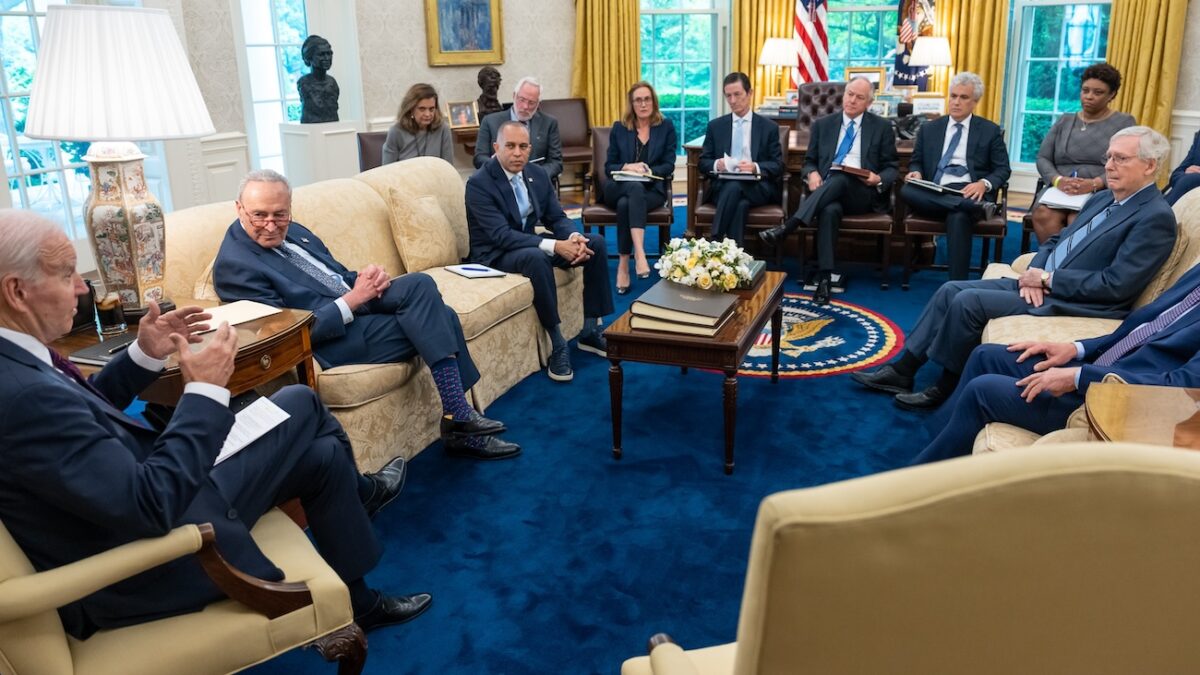
House Speaker Mike Johnson was “very optimistic” after Tuesday’s meeting with President Joe Biden and the other three top Congressional leaders that a government shutdown will  be averted before Friday’s deadline.

“We have been working in good faith around the clock every single day for months and weeks and over the last several days, quite literally around the clock to get that job done. We’re very optimistic,” Republican Johnson told reporters after the meeting with President Joe Biden, Vice President Kamala Harris, Senate Majority Leader Chuck Schumer, Minority Leader Mitch McConnell, and House Minority Leader Hakeem Jeffries.

“We believe that we can get to agreement on these issues and prevent a government shutdown, and that’s our first responsibility,” Johnson added.

In the meeting, Biden warned the leaders of the consequences of failing to move quickly to pass funding to avoid a looming partial government shutdown and send weapons to Ukraine, or face dire consequences.

“We’ve got a lot of work to do,” Biden said in the Oval Office, with Vice President Kamala Harris at his side and the four leaders sitting on couches nearby.

The meeting left the president optimistic  of avoiding a shutdown, Jeffries said, according to Politico.

Senate Minority Leader Mitch McConnell told reporters at the Capitol that the meeting focused mainly on keeping the government open, “which I think we all can agree on.”

The White House meeting came almost two months after Johnson and Schumer agreed on a $1.59 trillion discretionary spending level for the fiscal year that began on Oct. 1. Despite that deal, Congress has failed to pass spending bills to fund the government, largely due to in-fighting by Republicans who control the House of Representatives by a thin majority.

Biden said he believed a solution could be reached on funding the government by a Friday deadline to avoid a partial government shutdown, which he said would be damaging to the U.S. economy.Ukraine funding becomes more urgent every day, Biden said.

“I think the consequences of inaction are dire,” he said of Ukraine.

The spending bill is being held up by demands from ultra-conservative Republicans in the House who want to see spending cuts and policy positions injected into how dollars are spent. A group of hard-right Republicans has brought the government to the brink of a shutdown or a partial shutdown three times in the past six months.

Schumer and Johnson traded accusations in recent days over who was to blame for the stalemate. On Monday, Schumer told reporters that “Democrats are doing everything we can to avoid a shutdown.”

The first batch of government funding, which includes money for agencies that oversee agriculture and transportation, will run out on Friday at midnight, while funding for some agencies including the Pentagon and the State Department will expire on March 8. The government spending package is separate from the national security aid bill that includes Ukraine and Israel funding.

The House is under pressure to pass the $95 billion national security package that bolsters aid for Ukraine, Israel as well as the Indo-Pacific. That legislation cleared the Senate on a 70-29 vote earlier this month, but Johnson has resisted putting up the aid bill for a vote in the House.

The White House has ramped up public pressure on Johnson in recent weeks as Ukraine marked the second anniversary of the Russian invasion.

“What the president wants to see is we want to make sure that the national security interests of the American people gets put first and is not used as a political football,” Jean-Pierre said. “We want to make sure that gets done.”

This report contains material from Reuters.

© 2024 Newsmax. All rights reserved.

Dispatch From Eagle Pass: Biden Officials Won’t Enforce Laws But ‘Don’t Want Anyone Else To’ Either


BY: M.D. KITTLE | FEBRUARY 13, 2024

Read more at https://thefederalist.com/2024/02/13/dispatch-from-eagle-pass-biden-officials-wont-enforce-laws-but-dont-want-anyone-else-to-either/

Author M.D. Kittle profile

M.D. KITTLE

MORE ARTICLES

In his appearance Sunday on NBC News’ “Meet the Press,” embattled U.S. Homeland Security Secretary Alejandro Mayorkas did what any failed political leader possessing little integrity and less self-awareness would do: He blamed others for his mistakes. Asked whether he bears any responsibility for the nightmare the Biden administration has wrought at the U.S. southern border and beyond, Mayorkas effectively said, don’t look at us

“It certainly is a crisis and we don’t bear responsibility for a broken system, and we’re dealing a tremendous amount within that broken system,” he told moderator Kristen Welker. 

Maybe the secretary should talk to the people living in and around the border towns, local law enforcement, and his own U.S. Border Patrol agents. 

Ira Mehlman and the folks from FAIR — the Federation for American Immigration Reform — did just that earlier this month. 

“Ask the people at the border in Texas. They think the blame belongs squarely with [the Biden administration],” the FAIR media director told me Monday morning on “Need to Know With Jeff Angelo” on NewsRadio 1040 in Des Moines. 

Earlier this month, Mehlman and his traveling companions saw the illegal immigration crisis firsthand at Eagle Pass, a south Texas city of about 28,000 people bordering Piedras Negras, Mexico, across the Rio Grande. As the Dallas Morning News explained, “Eagle Pass, with two small international bridges, features relatively gentle Rio Grande currents that invite migrant crossings. It became a focal point of Texas action in December when the arrival of tens of thousands of migrants over multiple weeks overwhelmed Border Patrol agents and city resources.”

The border town has become a hive of humanity, as its population swells from a wave of illegal aliens pouring over the border on promises of easy entry from President Joe Biden and his nearly impeached Homeland Security chief. U.S. Customs and Border Protection still has yet to post numbers for January apprehensions at the Southwest border, but December saw a new all-time monthly record with more than 300,000 migrant apprehensions. Eagle Pass and its Del Rio sector alone have recorded a whopping 152,252 encounters in the first three months of the federal fiscal year, beginning in October, according to the agency.  

Eagle Pass is now ground zero in a standoff between the state of Texas and the Biden administration, just as it is Exhibit A in the administration’s chaotic immigration policy. Gov. Greg Abbott, backed by several states, ordered state National Guard troops to stand guard at Eagle Pass’s gates and erect razor wire to check the invasion. A divided 5-4 U.S. Supreme Court order gave the administration the go-ahead to cut the wire, but Abbott is holding firm, arguing his state is under attack and the president is doing nothing to stop it. Abbott stands on his constitutional obligation to defend and protect his state, and the United States at large, from invasion.  

“The message from the Biden administration is: Not only don’t we want to enforce immigration laws, we don’t want anyone else to do it,” Mehlman said. 

The immigration reform activist says, from what he saw on his latest trip to Eagle Pass, Abbott’s strategy is working. And, from what’s he’s heard from law enforcement officials, there have been few attempts from federal authorities to remove the deterrents Texas has put in place. Abbott has said his Operation Lone Star has reduced illegal immigration numbers, a claim backed by a new Washington Examiner analysis. 

“The numbers show how the percentage of arrests in Texas versus other border states has shifted. In 2021, 69% of illegal immigrant arrests across the southern border occurred in Texas,” the publication reported on Monday.

“As Abbott stepped up security at the start of the Biden administration in 2021, arrests of illegal crossers began to fall and dropped to just 34% last month.”

“This is a manageable problem, as Gov. Abbott has now demonstrated. If you deter people from coming across you will see the results almost immediately,” Mehlman said. 

Mehlman does acknowledge, however, that the migrants are simply rerouting to Arizona and California, border states led by leftist governors committed to Biden’s open border policies. 

Shifting blame, Mayorkas insists Congress is the “only one who can fix” the five-alarm border fire that he and Biden have dumped gasoline on. The secretary conveniently omits the many Trump-era policies the president has reversed and the orders he could sign to turn the tide of the illegal immigration flood. My colleague Tristan Justice last week detailed the dozens of times Biden has gutted border security since he took the oath of office. 

The U.S. Senate’s bad joke of a border deal that died an ignominious death last week would have essentially codified the Biden administration’s awful policy to date. Mehlman and other critics say it would have exacerbated the crisis. He said Senate Minority Leader Mitch McConnell, R-Ky., and his top negotiator, Sen. James Lankford, R-Okla., “sold out” the House’s “good” version of the bill, creating a “lose-lose situation” for lawmakers serious about border security. 

Meanwhile, last week’s failed effort by House Republicans to impeach Mayorkas is regrouping. Speaker Mike Johnson appears to believe his fellow Republicans will have the numbers —narrowly — this time around as Majority Leader Steve Scalise, R-La., is back to political business after undergoing cancer treatment during last week’s vote. 

Mehlman said Mayorkas deserves to be impeached. 

“He has undermined the enforcement of our immigration laws, he has violated his oath of office and he’s been derelict in his duty as secretary of Homeland Security,” the Federation for American Immigration Reform official said. 


Matt Kittle is a senior elections correspondent for The Federalist. An award-winning investigative reporter and 30-year veteran of print, broadcast, and online journalism, Kittle previously served as the executive director of Empower Wisconsin.

A Real Border Solution Would Punish Mexican Cartels, Not Bribe Them


BY: JOHN DANIEL DAVIDSON | FEBRUARY 06, 2024

Read more at https://thefederalist.com/2024/02/06/a-real-border-solution-would-punish-mexican-cartels-not-bribe-them/

AMLO

Author John Daniel Davidson profile

JOHN DANIEL DAVIDSON

VISIT ON TWITTER@JOHNDDAVIDSON

MORE ARTICLES

A lot of ink has been spilled in recent days about the Senate’s $118 billion border bill, most of it detailing just how awful the proposed legislation is — awful, that is, if your goal is actually to secure the border. The bill creates a new baseline of admitting 1.8 million illegal immigrants annually, doles out work permits and green cards on the whim of federal bureaucrats, and funnels billions of tax dollars to the same NGOs that have for years facilitated mass illegal border crossings. And that’s just for starters.

But not much has been said about Mexico’s role in the new immigration regime this legislation would create. In fact, Mexico is barely mentioned at all in the 370-page bill. That’s odd considering that no border enforcement mechanism that actually keeps illegal immigrants out of the U.S. will work without some level of Mexican involvement.

Consider that the so-called “bipartisan” legislation, crafted behind closed doors by Senate Majority Leader Chuck Schumer and Minority Leader Mitch McConnell, includes a “border emergency authority” to shut down the border if 5,000 illegal immigrants are arrested daily over seven consecutive days or 8,500 are arrested in a single day. Setting aside that this would cement into law nearly 2 million illegal immigrants every year, what would happen to all those illegal immigrants arrested in the U.S. after the border is “shut down” under this emergency authority?

Apparently, they would all be sent back to Mexico. But why would Mexico agree to that? Admitting hundreds of thousands of foreign nationals into northern Mexican border towns after they’ve already crossed into the U.S. would create massive problems for a country already beset by record-breaking violence and crippling levels of corruption.

The answer is that the Senate bill hopes to bribe Mexican President Andrés Manuel López Obrador. Buried in the bill (on page 85) is a $415 million slush fund “to increase foreign country capacity to accept and integrate returned and removed individuals.” The unnamed foreign country here is almost certainly Mexico, which is where the “removed individuals” would be sent once the border is “shut down.” Another $850 million in the bill is set aside for undefined “International Disaster Assistance” to “address humanitarian needs in the Western Hemisphere.” Again, the likely recipient of the bulk of these funds will be Mexico.

For his part, López Obrador, popularly known as AMLO, has been candid about his desire for the United States to pay for Mexico’s cooperation on the border. Last month, following a high-level visit of Biden officials to Mexico City in December, AMLO reportedly demanded $20 billion from the Biden administration to help tackle the “root causes” of illegal immigration, as well as sweeping reforms to U.S.-Cuba policy and 10 million visas for Mexican nationals currently living in the United States.

In this context, it’s hard not to see the hundreds of millions of dollars set aside in the border bill as a down payment on AMLO’s demands. At best, it’s a quid pro quo for cooperation on the border. At worst, it’s a ransom payment to a hostile neighbor with ill intent.

Now, one might argue that Schumer and McConnell and the Biden administration are just doing the practical thing here and securing Mexico’s cooperation. But such a view belies a misunderstanding of the relevant history and Mexico’s malign role in the border crisis.

For many decades now, the default assumption in Washington was that Mexico is our partner, that we can’t solve illegal immigration without Mexico’s help. But that’s only half true. The reality is that Mexico is not a partner, not a friendly neighbor with whom we can cooperate to solve this problem, but an antagonist. Over the last 15 or so years, the merging of Mexico’s most powerful cartels with certain elements of the Mexican state means that much of the border crisis is being directed and facilitated by the cartels in collaboration with Mexico’s National Guard and the National Institute of Migration, the federal agency in charge of migration in Mexico.

On top of that, it’s now a well-established fact that AMLO himself is cooperating with the Sinaloa cartel, the country’s most powerful, and has been for many years. A long and detailed report published by ProPublica last week chronicled Sinaloa’s bankrolling of AMLO’s 2006 presidential campaign, which appears to have been the beginning of a long partnership that has now borne fruit — for both parties. Sinaloa has helped consolidate electoral victories for AMLO’s left-wing Morena party in the last two election cycles, while AMLO has pursued a policy of placating the cartels and disavowing the drug war — “hugs, not bullets,” as he put it on the campaign trail in 2018.

That AMLO’s administration has been compromised by its association with the cartels, or that the cartels have figured out how to monetize illegal immigration, isn’t some conspiracy theory but well-established fact. Given that reality, it stands to reason that if AMLO is going to cooperate with the Biden administration to reduce the flow of illegal immigration into the U.S. at the expense of the cartel networks with which he is politically allied, he’s going to want compensation. After all, the illegal immigrant black market was worth an estimated $13 billion a year as of July 2022, and is likely much more than that now, not counting the $56 billion in remittances to Mexico from the U.S. every year.

Put bluntly, that’s what the $415 million slush fund is really for, to make up for lost revenue that would otherwise go to the cartels, smuggling networks, and corrupt elements of Mexican officialdom. And it’s likely just a first installment.

Given all this, what other ways could we secure Mexico’s cooperation on the border crisis? Recent history suggests that sticks work better than carrots. In 2019, amid a much smaller border crisis, President Trump famously threatened to slap a tariff on all Mexican goods coming over the border unless the Mexican government did more to crack down on the caravans wending their way north through the country. If Trump had followed through, it would have collapsed the Mexican economy in short order, and everyone knew it.

Sure enough, the newly elected AMLO got the message. Arrests at the border soon began to plummet. The caravans were dispersed, and most never made it to the border. By the time Trump left office, illegal border-crossings were at historic lows.

That changed the month after Biden took office, and we have more or less been in crisis since then. Under Biden, almost nothing has been asked of Mexico, even as illegal immigration reached historic levels. Yet Biden hasn’t threatened AMLO’s government with a thing, and of course, the lack of consequences has incentivized more bad behavior from a corrupt Mexican state and the cartels that profit off the crisis.

If Senate Republicans were serious about convincing Mexico to accept expelled or deported illegal immigrants under a new U.S. border policy, they would treat our southern neighbor as the antagonist it actually is and threaten massive tariffs or some other economic penalties. As for the cartels, Republicans need to start making a more forceful case for going to war with them. Otherwise, there’s no way to get either the fentanyl or border crises under control.

The last thing you would do with such a neighbor, under these circumstances, is offer a bribe, validating the corruption right at the heart of the border crisis. Yet that’s exactly what the Senate bill does.


John Daniel Davidson is a senior editor at The Federalist. His writing has appeared in the Wall Street Journal, the Claremont Review of Books, The New York Post, and elsewhere. He is the author of the forthcoming book, Pagan America: the Decline of Christianity and the Dark Age to Come, to be published in March 2024. Follow him on Twitter, @johnddavidson.

Senate Border Bill Is Nothing but a Democrat Propaganda Op


BY: KYLEE GRISWOLD | FEBRUARY 06, 2024

Read more at https://thefederalist.com/2024/02/06/senate-border-bill-is-nothing-but-a-democrat-propaganda-op/

Biden walking along the border

Author Kylee Griswold profile

KYLEE GRISWOLD

VISIT ON TWITTER@KYLEEZEMPEL

MORE ARTICLES

After the much-anticipated “bipartisan” Ukraine and border bill finally dropped on Sunday, it took little time to confirm that all 370 pages are worse than intelligent observers predicted. The $118 billion boondoggle is dead on arrival in the House. For Democrats and their accomplice media, however, the legislation and House Republicans’ response to it are going exactly as planned.

Not only did national disgrace Sen. Mitch McConnell (feat. useful idiot James Lankford) work tirelessly with Senate Majority Leader Chuck Schumer on this bill to keep America’s borders open, give out amnesty Oprah-style, and write more blank checks to Ukraine and Hamas sympathizers in the Middle East, they also helped the corrupt corporate media run a propaganda operation against House Republicans and the rest of the GOP. Worse, they’re deliberately running it during an election year to boost Joe Biden on the border issue — which the near-dead incumbent has aided and abetted, and voters say is top of mind next to Bidenomics.

The Republican-majority House predictably isn’t going for the bill. Why would they? It would allow nearly 2 million illegal aliens into the country in one year — as long as the numbers stay below 5,000 entries per day for seven consecutive days, or below 8,500 border encounters in a single day — before triggering “emergency authority” for the Department of Homeland Security and closing the border. Even then there are exceptions.

Worse, if Biden decides it’s in the “national interest” to beckon some more Democrat representation padding and likely future voters across the Rio Grande, he can unilaterally suspend the border closure for 45 days per year. There’s more where that came from.

If GOP members of Congress had taken the bait, Democrats would have come out on top, having

convinced their political foes not only to continue funding a no-win forever war in Eastern Europe but also to keep letting illegal aliens into the country virtually unrestricted. Bonus: A codified open border could hamstring “the fixer” Donald Trump if he wins the general election later this year, zapping his political power to rehabilitate U.S. security and sovereignty.

Yet even without the House conceding to the bill, Democrats win anyway. Now Biden and his accomplice media can simply blame Republicans for not solving the crisis this administration caused. That’s exactly what’s happening, starting with Biden pointing fingers at Republicans:

Working with my administration, the United States Senate has done the hard work it takes to reach a bipartisan agreement. Now, House Republicans have to decide. Do they want to solve the problem? Or do they want to keep playing politics with the border?

Biden’s media lapdogs dutifully advanced the narrative, which they’d already been spinning before the text of the bill was even released.

“GOP Blames Biden for Border Crisis That GOP Refuses to Solve,” blared one Daily Beast headline. “Republicans are yelling about a crisis at the border. But they’re also unwilling to do anything to address it for fear that it’d give Joe Biden a political win,” the subheading continued, taking its talking points straight from the president and Senate Democrats like Chris Murphy.

“Why Republicans Don’t Want To Solve the Border Problem — But do want to make deals to cut taxes,” read another headline in New York Magazine’s Intelligencer by Jonathan Chait.

“Republicans Who Screamed About A Crisis On The Border Now Oppose A Plan To Fix It,” said HuffPost, claiming Republicans oppose the border bill not because it’s nightmarish but because they want to hurt Biden. “Border Patrol Supports ‘Strong’ Immigration Deal. Republicans Don’t Care,” wrote Rolling Stone.

Vanity Fair claimed, “Republicans Don’t Want to Lose Their Favorite 2024 Talking Point,” with Bloomberg opting for a simple, “House Republicans Don’t Want to Fix the Border.”

Cable television has been as bad. A host of MSNBC’s “Morning Joe” said the “bipartisan border deal is doomed to fail … because Republicans have turned on it.” The “Today” show framed the gridlock as Republicans “threaten[ing] to block the border bill they negotiated,” as if McConnell and his sidekick colluding with Democrats behind closed doors amounts to a good-faith bipartisan negotiation.

This run-of-the-mill propaganda is to be expected from the corporate media, but it’s just so brazen considering Republicans’ efforts to secure the border earlier in Biden’s term and Democrats’ subsequent refusal to cooperate.

We’re all old enough to remember less than a year ago when the House passed a stronger border bill that would have restarted Trump-era border wall construction, required aliens to remain in Mexico while waiting out their usually fraudulent asylum claims, restricted asylum eligibility to legal ports of entry, enacted harsher punishments for overstaying expired visas, kept Title 42-esque “expulsion authority” in place, and supplied border authorities with additional grant funding. Senate Democrats wouldn’t lift a finger.

But sure. It’s Republicans “playing politics.”


Kylee Griswold is the editorial director of The Federalist. She previously worked as the copy editor for the Washington Examiner magazine and as an editor and producer at National Geographic. She holds a B.S. in Communication Arts/Speech and an A.S. in Criminal Justice and writes on topics including feminism and gender issues, religion, and the media. Follow her on Twitter @kyleezempel.

Senator Mike Lee Op-ed: Schumer And McConnell Want Senators to Pass Their $106B Border Bill Without Reading It? Hell No


BY: Senator MIKE LEE, (R-UT) | FEBRUARY 02, 2024

Read more at https://thefederalist.com/2024/02/02/schumer-and-mcconnell-want-senators-to-pass-their-106b-border-bill-without-reading-it-hell-no/

Joe Biden meets with Chuck Schumer, Mitch McConnell, and others

Yesterday, a reporter standing outside the Senate chamber told me that after four months of secrecy, The Firm™️ plans to release the text of the $106 billion supplemental aid/border-security package — possibly as soon as today. Wasting no time, she then asked, “If you get the bill by tomorrow, will you be ready to vote on it by Tuesday?”

The words “hell no” escaped my mouth before I could stop them. Those are strong words where I come from. (Sorry, Mom.)

The reporter immediately understood that my frustration was not directed at her. Rather, it was directed at the Law Firm of Schumer & McConnell (The Firm™️), which is perpetually trying to normalize a corrupt approach to legislating, in which The Firm™️:

  1. Spends months drafting legislation in complete secrecy
  2. Aggressively markets that legislation based not on its details and practical implications (good and bad), but only on its broadest, least-controversial objectives
  3. Lets members see bill text for the first time only a few days (sometimes a few hours) before an arbitrary deadline imposed by The Firm™️ itself, always with a contrived sense of urgency
  4. Forces a vote on the legislation on or before that deadline, denying senators any real opportunity to read, digest, and debate the measure on its merits, much less introduce, consider, and vote on amendments to fix any perceived problems with the bill or otherwise improve it.

Whenever The Firm™️ engages in this practice, it largely excludes nearly every senator from the constitutionally prescribed process in which all senators are supposed to participate. By so doing, The Firm™️ effectively disenfranchises hundreds of millions of Americans — at least for purposes relevant to the legislation at hand — and that’s tragic. It’s also un-American, uncivil, uncollegial, and really uncool.

So why does The Firm™️ do it?

Every time The Firm™️ utilizes this approach and the bill passes — and it nearly always does — The Firm™️ becomes more powerful.

The high success rate is largely attributable to the fact that The Firm™️ has become very adept at (a) enlisting the help of the (freakishly cooperative) corporate media, (b) exerting peer pressure in a way that makes what you experienced in middle school look mild by comparison, and (c) rewarding those who consistently vote with The Firm™️ with various privileges that The Firm™️ is uniquely capable of offering, such as committee assignments, help with campaign fundraising, and a whole host of other widely coveted things that The Firm™️ is free to distribute in any manner it pleases.

It’s through this process that The Firm™️ passes most major spending legislation. And it’s through this process that The Firm™️ likely intends to pass the still-secret, $106 billion supplemental aid/border-security package, which The Firm™️ has spent four months negotiating with the luxury of obsessing over every sentence, word, period, and comma.

I still don’t know exactly what’s in this bill, although I have serious concerns with it based on the few details The Firm™️ has been willing to share. But under no circumstances should this bill — which would fund military operations in three distant parts of the world and make massive, permanent changes to immigration law — be passed next week.

Nor should it be passed until we have had adequate time to read the bill, discuss it with constituents, debate it, offer amendments, and vote on those amendments.

There’s no universe in which those things will happen by next week.

Depending on how long it is and the complexity of its provisions, the minimum period of time we should devote to this bill after it’s released should be measured in weeks or months, not days or hours.


Mike Lee is a U.S. Senator from Utah and author of “Our Lost Constitution: The Willful Subversion of America’s Founding Document.”

Despite Growing Opposition And Serious Problems At Home, Democrats Make Ukraine Funding Their Top Priority


BY: MOLLIE HEMINGWAY | OCTOBER 02, 2023

Read more at https://thefederalist.com/2023/10/02/despite-growing-opposition-and-serious-problems-at-home-democrats-make-ukraine-funding-their-top-priority/

Chuck Schumer

Author Mollie Hemingway profile

MOLLIE HEMINGWAY

VISIT ON TWITTER@MZHEMINGWAY

MORE ARTICLES

Congress averted a government shutdown this weekend, agreeing to 45 days of funding to give members time to pass appropriations bills for the full year. Incredibly, Democrats seemed prepared to shut down the government over their desire for increases in Ukraine war funding. Republicans, by contrast, bucked Senate leader Mitch McConnell to keep the government open without such funding.

While shutdown battles have become common, this one had absurd moments. Democrats tried to delay votes with everything from “magic minutes,” which allow party leaders to speak at length, to Democrat Rep. Jamaal Bowman pulling a fire alarm in the middle of a vote, forcing the evacuation of a House office building.

With hundreds of Jan. 6 protesters facing excessive sentences, which Department of Justice prosecutors say is because they attempted to delay or obstruct an official congressional proceeding, some Americans began demanding the elected member of Congress be held to the same excruciating standard. Bowman, a former school principal, later claimed he didn’t understand how fire alarms work.

Even after the House passed the bill, Democrat Sen. Michael Bennet of Colorado further delayed the eventual passage by placing a hold on the bill. The procedural delays were partly a result of efforts to force a shutdown that could be blamed on Republicans. Conventional wisdom in Washington is that Republicans get blamed for government shutdowns regardless of who is responsible.

Democrats Willing to Shut Down over Ukraine

However, Democrats’ delays were also about a demand for additional Ukraine funding. Some Republicans, such as Senate Minority Leader Mitch McConnell, also want U.S. taxpayers to finance even more of the war against Russia, which has descended into an expensive quagmire.

“Despite nine months of bloody fighting, less than 500 square miles of territory have changed hands since the start of the year. A prolonged stalemate could weaken Western support for Ukraine,” reported The New York Times last week.

That’s exactly what has happened. Congress has approved around $113 billion in four rounds of funding. Many polls show significantly weakening support for additional funding. In fact, some 55 percent of Americans oppose additional funding, according to a poll from the left-wing media outlet CNN. That percentage goes up to 71 percent for Republicans. Additional funding for Ukraine is supported by 62 percent of Democrats, according to the poll. Incidentally, CNN joined other corporate media in suppressing discussion of these numbers during the weekend shutdown battle, which hinged on Ukraine funding.

“The press never even mentions that Ukraine war funding has become incredibly unpopular with actual Republican voters and an increasing number of independents,” one social media analyst noted. “It’s always framed on every network like some fringe position when it’s actually the majority of Americans.”

Democrats are enthusiastically adopting the Bush-era foreign policy of supporting lengthy U.S.-led wars with a tenuous or even deleterious effect on national security. These wars tend to have very little strategy other than avoiding quick resolution. Such long wars enable years or even decades of financing of the defense industry, which some Ukraine war supporters point to as a benefit for Americans. Democrats are even adopting the Bush-era claim that such wars need to be fought to advance “democracy.”

Partisan Divide On The Issue Rears Head

On Friday night, the lack of additional funding for Ukraine caused Senate Appropriations Committee Chairwoman Patty Murray, D-Wash., to object to Sen. Ron Johnson’s, R-Wis., request on the Senate floor to pass a clean two-week funding extension.

“The Dems are about to shut down the government over Ukraine. I actually can’t believe it, but here we are,” Sen. J.D. Vance, R-Ohio, said in a social media post.

The Senate then pushed a bill that would give an additional $6 billion to fund the proxy war against Russia in Ukraine. Speaker of the House Kevin McCarthy dismissed it out of hand and said the House would propose something instead. A few days prior, House Republicans were able to strip $300 million in Ukraine funding from a bill that was being debated.

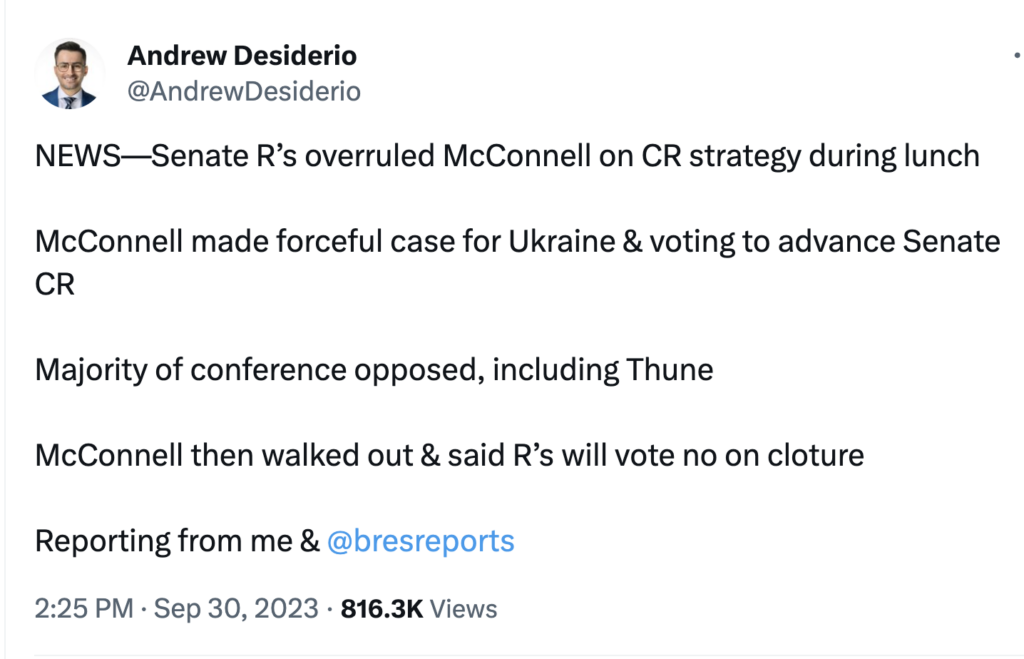
Back in the Senate, McConnell failed to get fellow Republicans to sign onto his plan to force Ukraine funding instead of allowing House Republicans to work on a funding bill without it. Punchbowl’s John Bresnahan and Andrew Desiderio had perhaps the most intriguing reporting of the weekend with this vignette:

Senate sources said it was the first time they could remember that Republican senators didn’t seem to fear repercussions for disagreeing with McConnell, particularly on a prominent issue on which he’d staked out a clear position. It was unclear whether senators overruled McConnell because his mental and physical weakness has left him vulnerable or simply because they recognize how strongly Republican voters feel about funding an expensive war without a clear strategy for success.

House Democrats dug in, passing around a one-page sheet lambasting McCarthy for his continuing resolution, almost all of which focused on Democrats’ desire for U.S. taxpayers to finance the Ukraine war.

The Senate prepared to hotline, or fast track, their vote on the House bill that did not include war funding. That’s when Bennett held it up over the Ukraine issue.

The pressure for funding could not have been more intense. “Senior administration officials” pressured McConnell, saying that Ukraine could not be sustained without funding in this weekend’s bill.

“It’s rumored that Pentagon officials are on their way over to the Capitol to lobby for Schumer-McConnell. The Military Industrial Complex™️ doesn’t like to lose,” wrote Sen. Mike Lee, R-Utah, on Saturday.

Russia-collusion hoaxer Michael McFaul trotted out the same type of argument that has been used to bully Americans to stay in drawn-out wars for decades. “If the US pulls back on our support from Ukraine now, we radically diminish our credibility to deter a Chinese invasion of Taiwan,” he said.

Ukraine War Enthusiasts Pressure McCarthy

The Ukraine war enthusiasts only allowed the stopgap funding measure to proceed on the grounds they’d soon get a vote on whether to send another major aid package to Ukraine.

“We will not stop fighting for more economic and security assistance for Ukraine,” Schumer said.

“We cannot under any circumstances allow American support for Ukraine to be interrupted. I fully expect the Speaker will keep his commitment to the people of Ukraine and secure passage of the support needed to help Ukraine at this critical moment,” President Biden said in his announcement on the funding measure. He said he’d made a deal with McCarthy to vote on additional funding.

House Democrats said, “When the House returns, we expect Speaker McCarthy to advance a bill to the House Floor for an up-or-down vote that supports Ukraine, consistent with his commitment to making sure that Vladimir Putin, Russia and authoritarianism are defeated. We must stand with the Ukrainian people until victory is won.”

Nearly every Democrat and a fair number of Republicans want to continue funding the Ukraine war, despite the results of previous rounds of funding. They’ll likely succeed, but the vote will be harder.

Conservative Republicans such as Sen. Rand Paul, R-Ky., will be on guard. “When I said I’d do everything I could to stop the US government from being held hostage to Ukraine, I meant it. We cannot continue to put the needs of other countries above our own. We cannot save Ukraine by dooming the U.S. economy. I’m grateful to all Members of Congress who stood with me, but the battle to fund our government isn’t over yet — the forever-war crowd will return,” he wrote.

Democrats’ campaign strategy of emphasizing Ukraine war funding at a time of economic distress for many Americans will be interesting to watch.


Mollie Ziegler Hemingway is the Editor-in-Chief of The Federalist. She is Senior Journalism Fellow at Hillsdale College and a Fox News contributor. She is the co-author of Justice on Trial: The Kavanaugh Confirmation and the Future of the Supreme Court. She is the author of “Rigged: How the Media, Big Tech, and the Democrats Seized Our Elections.” Reach her at mzhemingway@thefederalist.com

7 Revelations From Ex-Capitol Police Chief That Explode Democrats’ Jan. 6 Narrative


BY: TRISTAN JUSTICE | AUGUST 11, 2023

Read more at https://thefederalist.com/2023/08/11/7-revelations-from-ex-capitol-police-chief-that-explode-democrats-jan-6-narrative/

Steven Sund

TRISTAN JUSTICE

VISIT ON TWITTER@JUSTICETRISTAN

MORE ARTICLES

Ex-Capitol Police Chief Steven Sund is determined to set the record straight on what happened at the Jan. 6 Capitol riot more than two years ago.

After writing a book that challenged the groupthink of corporate media and the partisan Jan. 6 Committee, Sund sat down for an interview with former Fox News host Tucker Carlson. According to Carlson, the interview with Sund was scheduled to air on the network April 24, the same day Fox News announced the anchor’s termination. (Another already-taped interview, with a Federalist senior contributor, was also stifled). Fox News refused to release the footage of Sund’s conversation with Carlson, so the pair recorded another sit-down published on Twitter Thursday.

“[Sund] knew more about what happened than virtually anyone else in the United States,” Carlson said. “Yet congressional investigators weren’t interested in talking to him. The media, not interested in talking to him. But we were.”

[RELATED: Everything You Need To Know About Tucker Carlson’s J6 Tapes]

1. DHS, FBI Hid Intelligence From Capitol Police

Sund went on to make explosive allegations of federal misconduct related to the Capitol chaos that raised more questions than answers about how and why the complex was left vulnerable. The Capitol Police, Sund said, were left in the dark about a cascade of intelligence gathered by the FBI and Department of Homeland Security that warned about the rally turning violent.

The intelligence that Capitol Police gathered, Sund said, indicated a level of political activity similar to previous rallies that featured “limited skirmishes” with counter-protesters.

“Coming into it,” Sund said, Capitol Police received “absolutely zero” of the “intelligence that we know now existed talking about attacking the Capitol, killing my police officers, attacking members of Congress, and killing members of Congress.”

“None of that was included in the intelligence coming up,” Sund said. “We now know FBI, DHS was swimming in that intelligence. We also know now that the military seemed to have some very concerning intelligence as well. “

“None of the intelligence,” Sund said, was shared with the Capitol Police chief.

“I’ve done many national security events and this was handled differently,” Sund added. “No intelligence, no [Joint Intelligence Bulletin], no coordination, no discussion in advance.”

2. Milley Wanted to Shut Down D.C. Ahead Of Jan. 6

Military officials were so concerned about the intelligence that warned of an explosive riot that the chairman of the joint chiefs of staff, Mark Milley, considered preemptively shutting down the city.

“Acting Secretary of Defense [Christopher] Miller and General Milley had both discussed locking down the city of Washington D.C. because they were so worried about violence at the Capitol on Jan. 6,” Sund said.

According to Sund, the two Pentagon leaders discussed even revoking permits on Capitol Hill out of concern for violence.

“You know who issues the permits on Capitol Hill for demonstrations?” Sund said. “I do. You know who wasn’t told? Me.”

On Jan. 4, however, Miller signed a memo “restricting the National Guard from carrying the various weapons, any weapons, any civil disobedience equipment that would be utilized for the very demonstrations or violence he sees coming.”

3. Congressional Leadership Denied National Guard Requests Before and During Riot

Despite federal intelligence warning of mass upheaval amid the joint session of Congress, Sund explained how he was denied preemptive deployment of the National Guard twice in the days leading up to the riot. On Jan. 3, 2021, Sund sought approval from congressional leadership for guard deployment as was still required by law.

“I was denied twice because of optics and because the intelligence didn’t support us,” Sund said. “I was denied by Paul Irving, House sergeant-at-arms, and also Mike Stenger, Senate sergeant-at-arms.”

Irving served under the direction of House Speaker Nancy Pelosi and Stenger reported to GOP Senate Majority Leader Mitch McConnell.

The former Capitol Police chief said he was forced to beg for National Guard assistance as the turmoil escalated. While the riot grew, Sund said he called House Sergeant-at-Arms Irving to demand reinforcements from the nearby Guard troops.

“I’m told by Paul Irving, ‘I’m gonna run it up the chain, I’ll get back to you,’” Sund said. “His chain would be up to Nancy Pelosi. He didn’t have to do that but he wouldn’t give me authorization.”

Irving was allowed to authorize the deployment without Pelosi’s approval in the event of an emergency, Sund said. The former speaker’s office confirmed to The New York Times that Pelosi herself was asked to dispatch the National Guard.

Sund said Stenger was called next, who in turn said, “Let’s wait to hear what we hear from Paul [Irving].”

“For the next 71 minutes I make 32 calls,” Sund said, with no help from congressional leadership.

4. Secret Service Turned Over One Text to J6 Committee

While Sund made dozens of calls from the Capitol command center, the first agency to come to the police chief’s assistance was the Secret Service.

“One of the first people to offer assistance was United States Secret Service,” Sund said. “By law, I shouldn’t have requested their assistance … until I had approval. But I’m looking at my men and women having their asses handed to them and my first thought was ‘f-ck it, I will take whatever discipline there is. Send me whatever you got.’”

“That was the one text Secret Service turned over,” Sund added.

The agency had apparently deleted text messages from Jan. 5-6, 2021, that were subpoenaed by the House select committee probing the riot last summer. The only message turned over was Sund’s out-of-order request for support.

5. New Jersey State Police Arrived to Help Before National Guard

While Sund was begging congressional leaders to greenlight assistance from the National Guard, New Jersey State Police were on their way to reinforce Capitol Police.

The 150 to 180 National Guard troops who were “within eyesight” of the Capitol, Sund told Carlson, were put in vehicles and driven around the complex back to the D.C. Armory. Instead, Sund received the evening troops, who didn’t arrive on the scene until 6 p.m. By that point, according to Sund, the Capitol was under control.

“While I’m begging for assistance,” Sund said, “the Pentagon sent in resources to generals’ houses to protect their homes but not me.”

By the time the National Guard finally showed up, Sund noted, “New Jersey State Police [had] beat them to the Capitol.”

National Guardsmen were then positioned in front of the Capitol to take “pictures for military magazines” as “heroes” of Jan. 6.

6. Sund Wasn’t Told About Federal Informants Present at the Capitol

In the fall of 2021, The New York Times confirmed the presence of at least one federal informant at the Jan. 6 Capitol riot after the paper dismissed such claims as a conspiracy theory. The former Capitol police chief, however, was kept in the dark on undercover operations with “no idea” how many were in the crowd. The Justice Department had even deployed special commandos with “shoot to kill authority” at the Capitol, according to Newsweek.

“Not to share that in the intelligence,” Sund said, “that’s concerning.”

7. Lawmakers Didn’t Want Sund to Testify

In the aftermath of the Capitol riot, lawmakers began to schedule hearings on the security failures while the fever grew to launch a snap impeachment of the outgoing president.

“I fought to testify,” Sund said, but “they didn’t want me to testify in the Senate hearing.”

The hearing in the upper chamber was initially limited to current Capitol employees. Sund was excluded from the lineup because he was immediately dismissed from his job as chief of police after the riot. Irving and Stenger would have also initially been excluded. The trio of security officers eventually testified in the upper chamber after Trump’s acquittal in February 2021, with Sund the only one to appear in person.

Meanwhile Pelosi, who was in charge of the Capitol as speaker of the House, was “off limits” to investigation — leaving open questions such as whether the speaker was briefed on the potential for violence from other agencies. The House speaker even blocked Republican access to relevant documents ignored by the Democrats’ Jan. 6 Committee.


Tristan Justice is the western correspondent for The Federalist and the author of Social Justice Redux, a conservative newsletter on culture, health, and wellness. He has also written for The Washington Examiner and The Daily Signal. His work has also been featured in Real Clear Politics and Fox News. Tristan graduated from George Washington University where he majored in political science and minored in journalism. Follow him on Twitter at @JusticeTristan or contact him at Tristan@thefederalist.com. Sign up for Tristan’s email newsletter here.

Republicans Deserve a Senate Leader Willing to Defend Their Interests Over Democrats’


BY: TRISTAN JUSTICE | AUGUST 01, 2023

Read more at https://thefederalist.com/2023/08/01/republicans-deserve-a-senate-leader-willing-to-defend-their-interests-over-democrats/

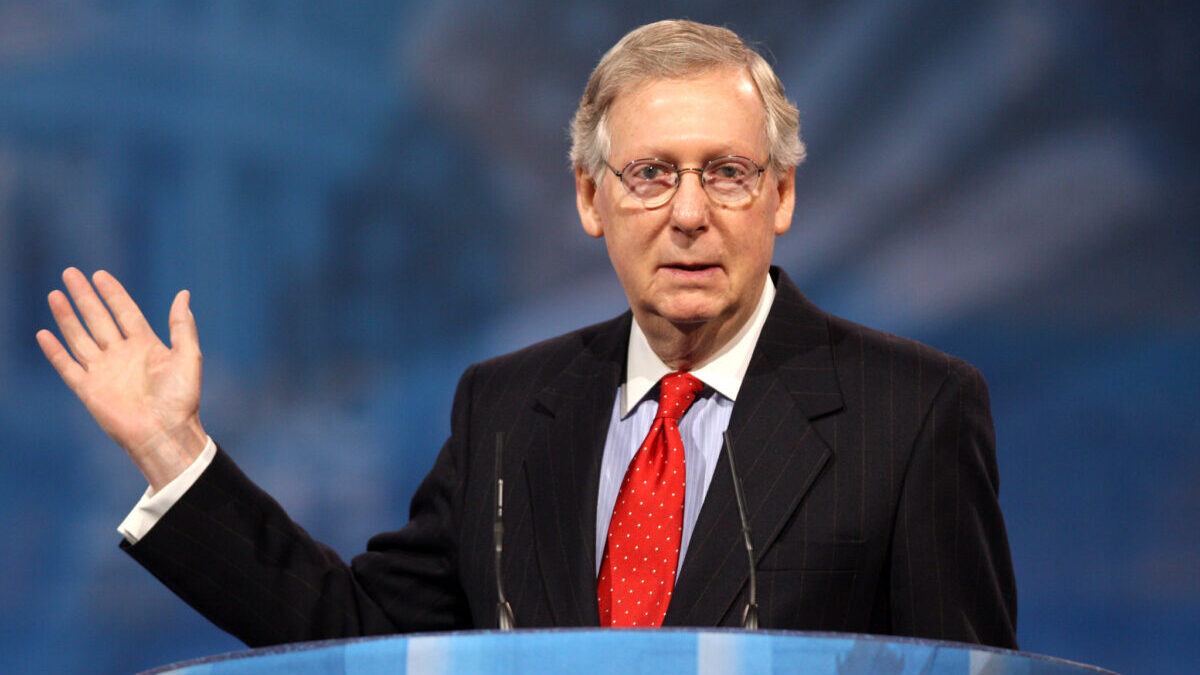
Mitch McConnell

While the Biden administration faces escalating calls for impeachment, either of the homeland security secretary, the attorney general, or even the president himself as evidence mounts over myriad scandals, Republicans’ top Senate lawmaker is distracted.

Instead of directing his ire at President Joe Biden for his influence-peddling schemes with corrupt overseas actors, Senate Minority Leader Mitch McConnell piled onto the media onslaught against a freshman representative from Wisconsin who cussed out some teenagers at the Capitol. GOP Rep. Derrick Van Orden stirred up controversy last week when he went on a tirade against some interns with the Senate page program who were lying in the Capitol rotunda, which the congressman says he considered disrespectful.

“Wake the fuck up you little sh-ts. … What the f-ck are you all doing? Get the f-ck out of here,” Van Orden said, telling the group they were “defiling the space,” according to one page’s recollection of the incident. The Wisconsin lawmaker was defiant, explaining on a local radio show, “The people who have brought this up are not serious people.”

Nor are the Republicans who have remained silent on the administration’s series of scandals but have been quick to get behind the Democrats’ latest outrage circus.

The Van Orden outburst drew swift condemnation from Senate Majority Leader Chuck Schumer of New York. “I was shocked when I heard about it, and I am further shocked at his refusal to apologize to these young people,” Schumer said.

McConnell didn’t hesitate to make the outrage bipartisan. According to Politico, McConnell was clear to “associate myself with the remarks of the majority leader.”

“Everybody on this side of the aisle feels exactly the same way,” McConnell added.

If only Republicans had a leader in the upper chamber who dared stand up for Republicans. The problem is not that Van Orden’s eruption at a couple of teenagers is excusable. The problem is McConnell’s regular participation in Democrats’ smear campaigns against other Republicans while the GOP Senate leader remains silent on the administration’s corruption scandals. Last week, McConnell declined to comment at all on House Republicans’ impeachment push.

It’s far from the first time the Republican Senate leader has peddled the Democrats’ latest political narratives. In March, McConnell condemned Fox News for the network airing the Jan. 6 tapes presented by Tucker Carlson. The tapes undermined the Democrats’ narratives of a “deadly insurrection,” the basis for their snap impeachment of outgoing President Donald Trump.

“With regard to the presentation on Fox News last night, I want to associate myself entirely with the opinion of the chief of the Capitol Police about what happened on Jan. 6,” McConnell told reporters on Capitol Hill following Carlson’s first installment of the J6 tapes. Hours earlier, Capitol Police Chief Tom Manger had sent a memo to his department that called Carlson’s coverage “filled with offensive and misleading conclusions.”

The comments led even Elon Musk to begin to question whether McConnell was actually a Republican. “I keep forgetting which party he belongs to,” Musk wrote on Twitter.

After the FBI raid of former President Donald Trump’s Florida residence at Mar-a-Lago, McConnell didn’t condemn the weaponization of federal law enforcement. Instead, the Republican Senate leader endorsed more funding for the federal bureau. This followed the octogenarian lawmaker sabotaging Republicans’ midterm efforts to reclaim the Senate. McConnell was more interested in maintaining an establishment minority he could control than in achieving a GOP majority that aligned more with Trump’s vision for the party.

Republicans have a right to expect far better from their No. 1 leader in the Senate. Considering McConnell’s recent health problems, new leadership could come sooner rather than later. His successor would be wise to adopt a new approach that puts voters first.


Tristan Justice is the western correspondent for The Federalist and the author of Social Justice Redux, a conservative newsletter on culture, health, and wellness. He has also written for The Washington Examiner and The Daily Signal. His work has also been featured in Real Clear Politics and Fox News. Tristan graduated from George Washington University where he majored in political science and minored in journalism. Follow him on Twitter at @JusticeTristan or contact him at Tristan@thefederalist.com. Sign up for Tristan’s email newsletter here.

Author Tristan Justice profile

TRISTAN JUSTICE

VISIT ON TWITTER@JUSTICETRISTAN

MORE ARTICLES

Feinstein, Fetterman, and Biden Illustrate Democrats’ Double Standard on Mental Acuity


BY: JONATHAN S. TOBIN | APRIL 21, 2023

Read more at https://thefederalist.com/2023/04/21/feinstein-fetterman-and-biden-show-democrats-double-standard-on-mental-acuity/

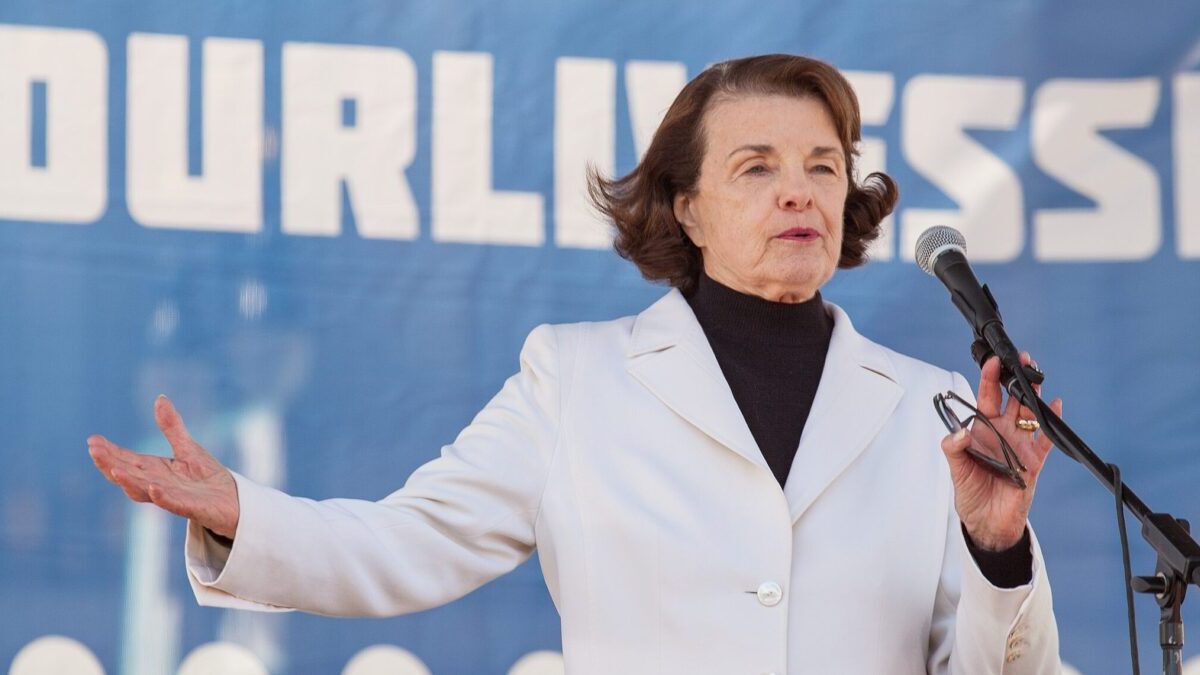
Sen. Dianne Feinstein
The push to force the California senator’s resignation is hypocritical and raises questions about what will happen in a Biden second term.

Author Jonathan S. Tobin profile

JONATHAN S. TOBIN

VISIT ON TWITTER@JONATHANS_TOBIN

MORE ARTICLES

This week, Sen. John Fetterman, D-Pa., went back to work after spending several weeks away from Congress due to being hospitalized for severe depression. But while Democrats, who were sorely pressed to maintain their narrow majority in his absence, celebrated his return, C-Span video of him chairing a Senate subcommittee provided sobering evidence of the recovering stroke victim’s limitations. Much like his disastrous election debate last October, at the hearing, Fetterman’s halting speech, barely understandable comments, and inability to communicate without electronic aid illustrated his incapacity. 

But while Democrats are quick to slam as bigots anyone who had the temerity to notice Fetterman’s problems, they are not feeling quite so generous about another member of their Senate caucus. The double standard creates an ominous precedent that ought to hang over the 2024 presidential election.

While they’ve been circling the wagons around Fetterman, Democrats have been pressuring Sen. Dianne Feinstein, D-Calif., to resign due to the perception that she lacks the physical energy or the mental acuity to do her job. But unfortunately for Senate Majority Leader Chuck Schumer, D-N.Y., and the California Democrats who want to replace her, the ailing 89-year-old has refused to step down, though she has already announced she won’t run for re-election next year.

Feinstein vs. Fetterman

Feinstein was hospitalized for shingles in February and has remained absent since then. With no date set for her return, the vacancy on the Judiciary Committee, where her absence leaves the Democrats without a majority, has created a serious problem for the efforts of the Biden administration and Schumer to confirm federal judges. The duel between the ailing Feinstein and her party has, at least for the moment, benefited Republicans. But the implications of the controversy go beyond its impact on her desire to stay on until her term expires in January 2025.

There are currently four senators who are over 80, including Minority Leader Mitch McConnell, R-Ky., who returned this week from an extended medical absence after a fall. Thirty senators are in their 70s. Whatever one thinks about the question of elderly senators serving, the campaign to push Feinstein out of her seat sets an interesting precedent.

Democrats have reacted to questions posed by Fetterman’s obvious limitations as a senator with both denial and an attempt to shame skeptics with pious rhetoric about ableism. They have attempted to depict him as a poster child for tolerance for those who suffer from mental health issues.

But they are indifferent to criticisms of their effort to push Feinstein out of her seat on the grounds of ageism, which have just as much validity as their defense of Fetterman.

Feinstein vs. Biden

Even worse, their belief that Feinstein’s diminishing capacities render her ineligible for a seat in the Senate stands in even starker contrast to the position President Joe Biden’s mental state has placed Democrats in.

Ever since Biden became their presumptive presidential nominee in March of 2020, ignoring his decline has become a political necessity for Democrats, and even more so with each passing month. At the very least, his never-ending stream of gaffes, frequent confusion in public, and erratic behavior raises questions about his mental acuity. Yet the corporate media treat questions about his health as off limits and proof of the bad morals of conservatives.

Still, as was the case with Feinstein until recently, the 80-year-old Biden remains fit enough to silence inquiries from Democrats. As president, it’s far easier to shield him from public scrutiny. More importantly, most in the party are coming to terms with the fact that they may be stuck with him for the 2024 election.

No matter his mental state, having spent his entire life working to become president, Biden clearly has no intention of giving up after only one term. He will have to be dragged from the White House kicking and screaming. The obvious alternatives — Vice President Kamala Harris or California Gov. Gavin Newsom — lack much appeal for the party’s grassroots or its donor class. So, many on the left are convinced Biden may be their best bet for victory next year, especially if the election is a rematch of the 2020 race against former President Donald Trump.

Double Standard

Yet whether you think Democrats’ decision to get rid of someone who can’t do her job is sensible or insensitive and nasty, it does raise questions about the same standard not being applied to Fetterman and most especially to Biden.

Feinstein has met her Democratic colleagues halfway by asking to be replaced on the Judiciary Committee so they can continue confirming leftist judges at an even faster pace than McConnell confirmed conservatives during the Trump administration. But replacing her on the committee requires GOP acquiescence and, for understandable reasons, Republicans are only too happy to let the current stalemate created by her absence continue. That’s led to mounting anger from Democrats, who think Feinstein is being selfish.

The empty seat on the Judiciary Committee has turned the issue into a crisis for Democrats, but many of them have been pushing for her resignation for years. Feinstein’s voting record can’t be criticized by the left, but she has at times engaged in collegial or commonsensical behavior that they regard as insufficiently woke.

Feinstein Too Reasonable for Some

In 2019, she enraged global warming extremists when she brusquely lectured a group of visiting schoolchildren about the importance of compromise when they began to virtue signal to her about not supporting the most alarmist environmental measures.

Just as bad from their point of view were allegations that she behaved decently toward conservative judicial nominees such as Justice Amy Coney Barrett, which some characterized as treating her with “kid gloves.” That’s despite the fact that Feinstein had intolerantly targeted her for her Catholic faith, saying that “the dogma lives loudly within you.”

That goes a long way toward explaining why Feinstein’s incapacity has been an issue for left-wingers who have no problem tolerating a leftist like Fetterman, who, leaving aside his hospitalization for depression, also still needs special equipment to be able to understand his colleagues and who appears to converse only with difficulty.

But there’s more at stake in this discussion than the Democrats’ hypocrisy on the question of fitness for office.

What if Biden’s Health Can’t Be Hid?

Democrats appear to be serious about asking the American people to re-elect an already diminished man who will be 82 in January 2025 and presumably serve until he’s 86. So, the idea that the questions they are currently raising about Feinstein can’t be raised about Biden ought to be a bridge too far even for inveterate Trump haters.

Just as important, they need to ask themselves in the coming year what they will do if Biden’s health continues to decline and ultimately puts him in the same position as Feinstein, where the problems can no longer be concealed. By declaring that questions about Biden’s mental acuity are off-limits or in bad taste, they are essentially setting up a situation where Harris being forced to step in and govern is a realistic possibility sometime in the next five years.

The only realistic alternative to simply hoping and praying Biden will continue to decline at a slow enough rate that his problems can continue to be concealed or smoothed over without political consequences is to begin asking the same hard questions about his health that they are currently posing to Feinstein. It remains to be seen whether anyone of consequence in the party has the guts or the wisdom to point this out before it is too late.


Jonathan S. Tobin is a senior contributor to The Federalist, editor in chief of JNS.org, and a columnist for Newsweek. Follow him on Twitter at @jonathans_tobin.

We Wouldn’t Need Tucker Carlson If The Jan. 6 Committee Hadn’t Put On A Partisan Show Trial


BY: DAVID HARSANYI | MARCH 09, 2023

Read more at https://thefederalist.com/2023/03/09/we-wouldnt-need-tucker-carlson-if-the-jan-6-committee-hadnt-put-on-a-partisan-show-trial/

Tucker Carlson
If we had transparency and a functioning press, people wouldn’t need to turn elsewhere.

Author David Harsanyi profile

DAVID HARSANYI

VISIT ON TWITTER@DAVIDHARSANYI

MORE ARTICLES

Thanks to House Speaker Kevin McCarthy, Fox News host Tucker Carlson now has access to more than 40,000 hours of unreleased surveillance video from the Jan. 6 riot. It’s created quite a bit of consternation and anger in the media. Of course, if the Select Committee on the Jan. 6 Attack, handpicked by Nancy Pelosi, hadn’t withheld inconvenient evidence from the public in the first place, then McCarthy wouldn’t have had the chance to give the Fox News host anything. Republicans have Fox. The Jan. 6 committee has virtually every other outlet.

Mitch McConnell is also outraged by Carlson’s framing of the surveillance video. Perhaps if the Kentucky senator had voiced outrage when the committee handed unfettered access to a former producer of “Good Morning America” and “Nightline,” so he could create a slick, selectively edited program that made Jan. 6 look like the September Massacres of the French Revolution, we wouldn’t be here. It says a lot about McConnell that he’s more upset by a media personality sharing videos than he is about Chuck Schumer, a government official, demanding a private company censor journalism.  

[RELATED: Dear Mitch McConnell: You Were Not Elected To Do The Bidding Of Chuck Schumer And CNN]

“I could take footage from World War II, find a little piece of it, and convince somebody it’s the moon landing,” former Jan. 6 committee member Adam Kinzinger told CNN’s Anderson Cooper last night. “There’s footage of soldiers [in Vietnam] at their bases hanging out in Saigon,” Cooper responded. “… You can take video of anybody in the course of a day.”

You can. And you can also take footage showing soldiers in Vietnam abusing civilians to create the perception that most servicemen abused civilians. The “mostly peaceful” formulation, typically used by liberals to whitewash leftist violence, is shameful. And so is the partisan fearmongering surrounding Jan. 6.

It’s difficult for me to muster any sympathy for the nutjobs who entered the Capitol building. It’s implausible that most of them didn’t understand what they were doing was wrong, dangerous, or illegal, whether they were just milling about or banging on doors or vandalizing offices. Many, of course, acted in threatening and violent ways. It was a national embarrassment.  

None of that makes the dishonest political revisionism of the Jan. 6 committee any truer. It’s clear the QAnon Shaman wasn’t moments away from overthrowing the republic and declaring Donald Trump the king of America. It wasn’t anywhere close to “the worst attack on our democracy since the Civil War” or the new Pearl Harbor or 9/11. Which is why Democrats conflate the actions of rioters with those of the thousands of people who protested the election results outside, the president who enflamed the crowd with conspiratorial rhetoric, and the politicians who were inside voting on certification. Wrong or right, conspiracists or not, the latter people did not do anything illegal.

Put it this way, the central difference between Jan 6, 2021, and the last day or two of May 2020, when Secret Service agents had to stick Donald Trump into a bunker for hours as a throng of “protesters” began overwhelming security at the White House, some throwing rocks and bottles and trying to break down barricades, was the effectiveness of the police.  

Then again, QAnon Shaman, like anyone else accused of rioting, deserves a fair trial. If his lawyer is telling the truth, the defense had no access to video of cops peacefully escorting the man around the Capitol. We have no clue if that footage is exculpatory, but it is clearly relevant. QAnon Shaman was sentenced to over three years in prison, with another nearly three years of probation.

If Cooper were a member of a functioning press, he would have been grilling Kinzinger about his committee’s lack of transparency and denial of basic due process. Pelosi blocked members who could have asked for answers regarding security breakdowns or demanded the release of countervailing evidence or tempered the hyperbole and grandstanding that dominated the hearings.

Cooper knows that journalists “selectively” edit and cherry-pick video all the time. He knows that the Jan. 6 committee “selectively” edited and cherry-picked video, as well. Maybe seeing both narratives gives us a far better sense of what happened that day. There was a riot, not a coup d’etat. And the media should be elated that we have more footage for the historical record. Then again, that was never the point, was it?


David Harsanyi is a senior editor at The Federalist, a nationally syndicated columnist, a Happy Warrior columnist at National Review, and author of five books—the most recent, Eurotrash: Why America Must Reject the Failed Ideas of a Dying Continent. He has appeared on Fox News, C-SPAN, CNN, MSNBC, NPR, ABC World News Tonight, NBC Nightly News and radio talk shows across the country. Follow him on Twitter, @davidharsanyi.

GOP Can’t Be Successful Until Mitch McConnell Is Gone


BY: MOLLIE HEMINGWAY | DECEMBER 21, 2022

Read more at https://www.conservativereview.com/gop-cant-be-successful-until-mitch-mcconnell-is-gone-2658993483.html

Mitch McConnell speaking, close-up
Republican voters are desperately concerned about the country and are looking for bold and persuasive leadership instead of comfort with a few small, intermittent successes.

Author Mollie Hemingway profile

MOLLIE HEMINGWAY

VISIT ON TWITTER@MZHEMINGWAY

MORE ARTICLES

Comments Senate Minority Leader Mitch McConnell made on Tuesday show why he has become the single biggest obstacle to GOP success.

The Kentucky Republican claimed giving more money to Ukraine is “the No. 1 priority for the United States right now, according to most Republicans.” The new $1.7 trillion Democrat spending bill he enthusiastically supports would give Ukraine another roughly $45 billion in assistance, bringing the total over the past eight months to more than $100 billion, a staggering figure even if it weren’t happening during a time of inflation, looming recession, and other serious domestic problems.

The comment about Republican priorities is so false as to be completely delusional. Among the many concerns Republican voters have with Washington, D.C., a failure to give even more money to Ukraine simply does not rank.

large coalition of conservative groups, including the Heritage Foundation and the Conservative Partnership Institute, publicly opposed ramming through more Ukraine support during the lame-duck session before Republicans take over control of the House on Jan. 3, 2023. Strong pluralities and majorities of Republicans have told pollsters they want decreases, not increases, in foreign spending and global military involvement.

Many Republican voters support helping Ukraine fight Russia’s unjust invasion, but it is absolutely nowhere near their top issue, contrary to McConnell’s false claim. It ranked higher as a priority before American taxpayers gave Ukraine more than was given to their war effort by nearly every other country in the world combined. But even at the height of support for the effort, before it turned into a massive proxy war with an unclear relationship to the U.S. national interest, it was not the top issue for Republicans, coming behind the economy and the U.S. border.

A majority of Americans polled a few months ago said more money should be given to Ukraine only after wealthy European countries match what Americans have already sent — something nowhere near happening.

Republicans care deeply about borders and national sovereignty, but they rank the protection of their own open border far above the protection of the borders of other countries. It is worth remembering that the longest government shutdown in U.S. history occurred in 2019 over a fight between Congress and President Donald Trump over whether to commit a relatively paltry $5 billion to protect our country’s southern border, which Congress had refused to fund.

About that $1.7 Trillion Spending Package

Another comment from McConnell also shocked Republicans. Of the $1.7 trillion left-wing spending spree McConnell is working so hard to help Democrats pass, he said, unbelievably, that he was “pretty proud of the fact that with a Democratic president, Democratic House, and Democratic Senate, we were able to achieve through this omnibus spending bill essentially all of our priorities.” As an indication of how deeply sick and broken and unserious the Senate is, no one had even begun to read the lengthy bill, which was put forward just hours before votes began.

The American people voted for Republicans to take over control of the House of Representatives, and House Republicans had begged McConnell to push for a smaller, short-term bill to keep the government funded while also giving them a rare opportunity to weigh in on Biden’s policy goals. McConnell allies dismissed House Republican Leader Kevin McCarthy and other House members who tried to persuade Republican senators not to support Democrats’ spending frenzy.

Budgets are policy documents, and the only leverage Republicans have is to wait a few weeks for when they will have a much stronger hand to weigh in on every issue that matters. By ramming through the $1.7 trillion package during the lame-duck session, Republicans will have significantly less ability over the next year to fight against Democrats’ destruction of rule of law in the Department of Justice, the failure to protect American borders, the destruction of the military, and Democrat collusion with Big Tech to suppress conservatives and their ideas.

The spending bill McConnell asserted was good for all of his priorities rewards the FBI with brand new headquarters and ups the funding for the DOJ to enable it to go after even more of its political opponents while protecting its political allies.

It’s perhaps worth remembering that during the 2020 Georgia runoff campaign, McConnell blocked efforts to increase funding for Americans who had their businesses and jobs shut down by government mandate during the response to Covid-19. Spending is not a problem for him, so long as the right people receive the funds.

Republicans Need a Leader Who Shares Their Goals

What support McConnell has from Republicans largely comes from doing his job well when it comes to judicial nominations. I myself co-wrote a book on the topic. He is rightly praised for his work in getting conservative judges and justices confirmed and for stopping one liberal judicial nominee, Merrick Garland. It is not praiseworthy, however, that he encouraged President Trump to nominate Garland as attorney general and voted to confirm him when President Biden did nominate him.

It is noteworthy that Senate Majority Leader Chuck Schumer has matched McConnell’s record on judges, and with far less fanfare from his allies. Perhaps Democrats demand more of their leaders than competence at only a few aspects of their job. That Schumer is capable of doing what McConnell has done shows it’s not a particularly unique skill set.

McConnell allies also like to say McConnell is good at stopping Democrat legislation. Indeed, McConnell did contribute to what few successes there were in the last two years, such as stopping the poorly named Equality Act. Certainly, he played small ball well enough to keep Sens. Joe Manchin of West Virginia and Kyrsten Sinema of Arizona from voting to get rid of the filibuster. Again, whatever frustration Republican voters have with McConnell should not keep them from acknowledging these limited successes.

However, Republican voters are desperately concerned about the country and are looking for bold and persuasive leadership instead of comfort with a few small, intermittent successes. They also seek leaders who don’t hate them. Frustration with McConnell’s well-known and long-established disdain for Republican voters is becoming a serious problem.

The politically toxic McConnell has continuously ranked as the country’s least popular politician, well behind Biden, Vice President Kamala Harris, Speaker of the House Nancy Pelosi, and Senate Majority Leader Chuck Schumer. He is so disliked by Americans that he is underwater by an average of 35.3 points in polls gauging his favorability.

Unfortunately for Republicans, he has been the top elected Republican in the country for the last two years, a period marked mostly by inexcusable impotence, fecklessness, and muddled messaging from the GOP.

Rather than present a coherent and persuasive vision of what Republican control of the Senate might look like, or even demonstrating consistent opposition to Democrat policies, too often McConnell overtly or covertly helped Democrats pass their signature policy goals. He had his deputy Sen. John Cornyn negotiate a bill to restrict Second Amendment rights. He notoriously and embarrassingly caved on a promise to help Democrats get huge numbers to pass their CHIPS subsidy, giving Biden a huge win he could celebrate with Commerce Secretary Gina Raimondo two weeks before the midterm elections.

McConnell also famously trashed Republican candidates and the voters who selected them, refused to advocate strenuously for the candidates, and failed to develop or pursue a persuasive message to Americans for voting to give Republicans control of the Senate.

When Democrats poured $75 million — not even counting the outside spending — into defending Mark Kelly’s Senate seat in Arizona, McConnell left Republican challenger Blake Masters high and dry. Masters had only $9 million. Instead, McConnell interfered in Alaska’s Senate race even though the top two contenders were both Republican. He gave his valuable cash to weak Republican Lisa Murkowski, the candidate who did not even win the Alaska Republican Party’s endorsement! Murkowski is known for not voting to confirm Brett Kavanaugh to the Supreme Court, among other notable decisions.

After the disappointing midterm loss, McConnell blamed others. He also allowed a dozen Republican senators to vote for a bill that would enable assaults on Republican voters who, on religious grounds, oppose redefining marriage.

So long as Mitch McConnell is the top elected Republican in D.C., eagerly trashing Republican voters, vociferously advocating for Democrat policy goals, pushing $1.7 trillion Democrat spending packages, and weakly fighting for whatever Republican goals he can be bothered to pursue, Republicans have a major problem. This is beyond obvious.

Everyone outside D.C. knows this even if few inside D.C. are willing to acknowledge it. Until they do, the Republican Party will continue to suffer.


Mollie Ziegler Hemingway is the Editor-in-Chief of The Federalist. She is Senior Journalism Fellow at Hillsdale College and a Fox News contributor. She is the co-author of Justice on Trial: The Kavanaugh Confirmation and the Future of the Supreme Court. She is the author of “Rigged: How the Media, Big Tech, and the Democrats Seized Our Elections.” Reach her at mzhemingway@thefederalist.com

McConnell Wins Senate GOP Leadership Vote After Rick Scott Challenge


By: ARJUN SINGH, CONTRIBUTOR | November 16, 2022

Read more at https://dailycaller.com/2022/11/16/mcconnell-wins-senate-gop-leadership-vote-after-rick-scott-challenge/

ezgif.com-gif-maker (71)
Bill Clark/Getty Images

Republican Sen. Mitch McConnell of Kentucky has been reelected the Leader of the Senate Republican Conference after a last-minute challenge from his colleague, Sen. Rick Scott of Florida, on Wednesday. McConnell won the support of 37 members of the conference to continue as leader of the Senate GOP, a role he has held since 2007. He will continue as the Senate Minority Leader in the 118th Congress after Republicans failed to oust Democrats from the Senate majority in this year’s midterm elections.

McConnell had been challenged by Sen. Rick Scott, who heads the National Republican Senatorial Committee, for the job after Scott announced on Tuesday, during a luncheon with other GOP Senators, that he would do so. The move, part of a long-running feud between Scott and McConnell, caught many members of the conference by surprise.

The McConnell-Scott feud stems from a dispute over the funding of battleground Senate candidates in this year’s midterm election. McConnell’s affiliated Super PAC, the Senate Leadership Fund (SLF), raised and spent over $250 million this electoral cycle to elect Republicans, and was the top outside spender (i.e., not contributing directly to candidate committees, but spending independently to influence the race) on Senate elections in the United States. The SLF withdrew funding from Republican Senate candidates in New Hampshire and Arizona, which were widely seen as critical-to-win races for the GOP to gain a majority in the Senate. Both Republican candidates, Blake Masters in Arizona and Don Bolduc in New Hampshire, lost to Democratic Sens. Mark Kelly and Maggie Hassan even as pre-election polls showed them in close races. The SLF also spent significant amounts of money in Alaska, seeking to defend Republican Sen. Lisa Murkowski, a close McConnell ally who was being challenged by Republican candidate Kelly Tshibaka in the general election under the state’s new Ranked Choice Voting system. Tshibaka and the Alaska Republican Party later criticized the SLF for wasting resources on opposing her candidacy.

McConnell had openly mused that “there’s probably a greater likelihood the House flips than the Senate,” in an appearance in Kentucky in August, which was widely reported. He lamented that “candidate quality has a lot to do with the outcome,” which was interpreted as criticism of former President Donald Trump, who endorsed candidates who won GOP Senate primaries in Arizona, Pennsylvania and Nevada yet, later, lost the general election. Shortly after McConnell’s comments, Scott acknowledged in an interview with Politico that he had a “strategic disagreement” with McConnell about funding races, and later implicitly criticized him for “treasonous…trash-talking our Republican candidates” in an op-ed for the Washington Examiner.

Scott’s bid to become Senate Republicans’ leader had been endorsed by Republican Sens. Mike Braun of Indiana and Ron Johnson of Wisconsin, while Sen. Josh Hawley of Missouri said that he does not support McConnell’s continuance in office, though he didn’t expressly endorse Scott. Other GOP Senators, such as Ted Cruz of Texas, Lindsey Graham of South Carolina, Marco Rubio of Florida and Mike Lee of Utah, had called for the vote to be delayed until after Georgia’s Senate runoff election.

McConnell and Scott’s offices did not immediately respond to a request for comment.

Today’s Politically INCORRECT Cartoon by A.F. Branco


A.F. Branco Cartoon – Payday

A.F. BRANCO | on November 16, 2022 | https://comicallyincorrect.com/a-f-branco-cartoon-payday/

Mitch McConnell stabbed America in the back in order to keep his job as GOP leader in the Senate.

Mictch McConnell Payoff
Political cartoon by A.F. Branco ©2022.

DONATE to A.F.Branco Cartoons – Tips accepted and appreciated – $1.00 – $5.00 – $25.00 – $50.00 – $100 – it all helps to fund this website and keep the cartoons coming. Also Venmo @AFBranco – THANK YOU!

A.F. Branco has taken his two greatest passions, (art and politics) and translated them into cartoons that have been popular all over the country, in various news outlets including NewsMax, Fox News, MSNBC, CBS, ABC, and “The Washington Post.” He has been recognized by such personalities as Rep. Devin Nunes, Dinesh D’Souza, James Woods, Chris Salcedo, Sarah Palin, Larry Elder, Lars Larson, Rush Limbaugh, and President Donald Trump.

Democrats Have Arrested, Prosecuted, And Raided Their Enemies. There’s Only One Way to Make Them Stop


BY: CHRISTOPHER BEDFORD | AUGUST 10, 2022

Read more at https://thefederalist.com/2022/08/10/democrats-have-arrested-prosecuted-and-raided-their-enemies-theres-only-one-way-to-make-them-stop/

President Joe Biden, first lady Jill Biden, Vice President Kamala Harris and second gentleman Douglas Emhoff in June 2022. White House/Adam Schultz.

Author Christopher Bedford profile

CHRISTOPHER BEDFORD

VISIT ON TWITTER@CBEDFORDDC

MORE ARTICLES

Arrests and convictions over contempt of Congress. Police enforcement of bureaucratic and relatively obscure archivist laws. FBI raids on former presidents (and future political opponents?). In their rage, the Democratic Congress and administration have written a vicious battle plan — one that conservatives will do well to follow when they return to power if they’re at all serious about restoring any semblance of respect for law in our country. In weeks past, there’s little reason to believe conservatives are; but Monday night’s raid might finally have changed that.

Just over one year after President Joe Biden’s election to the White House, his Department of Justice arrested Steve Bannon, President Donald Trump’s former political director. Bannon was arrested for contempt of Congress, or, refusing to answer a congressional subpoena. After he was convicted last month, Bannon became the first American to face a prison sentence for contempt since the House Un-American Activities Committee sent 10 uncooperative, suspected Hollywood communists to prison in 1948. In the more than 70 years between the Hollywood Ten’s sentencings and Bannon’s conviction, contempt of Congress had devolved into more of a political tool used to investigate the other party, but rarely brought to its legal conclusion.

While Democrats tried to prosecute contempt of Congress twice during the Reagan years, the administration only let one prosecution come to pass (in which the defendant was ultimately found innocent of contempt). Decades later, when Republicans tried to bring a similar case against President Barack Obama’s obstinate attorney general, Eric Holder declined to prosecute himself, citing executive privilege. Two years later, when Republicans sought answers from the IRS’s Lois Lerner over her targeting of political opponents, Holder also declined to prosecute. Later, when Democrats tried to bring criminal contempt charges against Trump’s secretary of commerce and attorney general, Bill Barr similarly declined to prosecute himself.

Criminal enforcement is extremely rare because the reality is Congress can refer who they like, but the administration prosecutes whomever the administration chooses to prosecute.

The Biden administration has made clear they’ll prosecute their political opponents every chance they get. That means that despite Republican House Minority Leader Kevin McCarthy’s threat to hold Attorney General Merrick Garland accountable in the next Congress, he will only be empowered to hold Garland accountable under a Republican administration (unless he complies with Republican congressional oversight, which he won’t).

True: Arresting an administration official after he’s left office is a dangerous precedent, but it’s one Democrats gleefully set this past year. And contempt of Congress is far from the only weapon the administration has wielded against their out-of-power opponents: Tuesday’s raid of former President Donald Trump’s home, for example, reportedly centered on his handling of classified information (and the Watergate-era Presidential Records Act).

While politicians such as Hillary Clinton have been accused of similar crimes, prosecution is extremely rare — and focuses on the most egregious cases. For example, Bill Clinton’s national security adviser, Sandy Berger, was prosecuted in 2004 for stealing and destroying classified documents on the Clinton administration’s handling of terrorism prior to his testimony before the 9/11 Commission. Gen. David Petraeus was similarly charged for sharing classified documents with his mistress. Neither Berger nor Petraeus was charged with so much as a felony, instead pleading guilty to misdemeanors. Neither Berger nor Petraeus’s homes were ever raided, either, and, neither man ever served a day in prison. Most importantly, neither was a former president of the opposing party — nor a potential political opponent in the next general election.

That’s what makes the FBI’s raid of Trump’s Mar-a-Lago home so shocking — so disconcerting that voices from former Democratic New York Gov. Andrew Cuomo to the liberal Bloomberg editorial board to D.C.-groupthink mouthpiece Playbook have all voiced their unease.

These liberals’ unease stands in contrast with Republican Senate Leader Mitch McConnell, who ignored a reporter’s Tuesday afternoon question on the subject and didn’t issue so much as a peep of concern for the first 23 hours after the raid was publicized. He was joined in his silence by Senate Republican Whip John Thune (who issued a statement at the same time, Tuesday night), Senate Republican Policy Committee Chairman Roy Blunt (who remained silent as of 9 p.m. on Tuesday), and the Senate’s premier “thoughtful conservative” cosplayer, Ben Sasse. Why the silence? While after five years of increasingly unrealistic (and unproven) conspiracies and accusations against the former president, some Republicans still somehow trust the FBI. The reality is that others, such as McConnell, are pleased by the raid. But regardless of their private thoughts and motivations, their impotent silence in the face of the Biden administration’s charges, arrests, and raids on its political opponents exposes their inability to handle the crisis the American state finds itself in.

While over the coming years, still other Republicans will cite this dead norm or that gutted precedent as they hesitate to use the Democrats’ own battle plans back on them, one-sided disarmament is no strategy at all. The only way to fight back is to make the kinds of people who’ve weaponized and undermined the American state suffer for their actions. They’ve arrested their enemies, revived obscure rules as pretexts for partisan attacks, and raided their opponents’ homes, and they won’t be sorry until they’ve felt the same pain.

They aren’t sorry at all — yet.


Christopher Bedford is a senior editor at The Federalist, a founding partner of RightForge, vice chairman of Young Americans for Freedom, a board member at The Daily Caller News Foundation and National Journalism Center, and the author of “The Art of the Donald.” His work has been featured in The American Mind, National Review, the New York Post and the Daily Caller, where he led the Daily Caller News Foundation and spent eight years. A frequent guest on Fox News and Fox Business, he was raised in Massachusetts and lives across the river from D.C. Follow him on Twitter.

A Biden Climate Emergency Would Unleash Unconstitutional Actions


BY: CHUCK DEVORE | JULY 21, 2022

Read more at https://thefederalist.com/2022/07/21/a-biden-climate-emergency-would-unleash-unconstitutional-actions/

Earth

Biden is considering invoking considerable powers, but executive actions taken for a ‘climate emergency’ would be unconstitutional.

Author Chuck DeVore profile

CHUCK DEVORE

VISIT ON TWITTER@CHUCKDEVORE

MORE ARTICLES

The left is pressuring President Joe Biden to declare a climate emergency and his consideration of this declaration is a sign of desperation and weakness. Executive actions taken as a result of a “climate emergency” would die in the U.S. Supreme Court (more on that later).  

The reason Biden may declare a climate emergency is simple: His green agenda has stalled. Persistent inflation, led by rising energy costs, and a nation likely in recession, has reduced the likelihood that a narrowly divided Congress will approve the application of additional environmental leaches to an anemic economy.

It appears green dreams are the ultimate First World luxury good — it’s all fun and games until the average family shells out $5,000 a year more for gas, food, electricity, and rent. Yet the left demands more. Elected representatives are a roadblock. The people don’t know what’s best for them. The Vanguard of the Proletariat have met and decided that if Congress won’t act, then an array of administrative acronyms led by the dogmatic theoreticians of the White House — none of whom who have run a business — will.

The powers Biden is considering invoking are considerable, though none of them were intended by Congress to do what administration is preparing to do. Even a short summary is terrifyingly breathtaking in ambition and disingenuous creativity.

Burdensome Regulations

In March, the Securities and Exchange Commission (SEC) proposed a rule to require “climate-related disclosures for investors.” This rule, if finalized, would deal further hammer blows to the domestic oil and gas industry — just after Biden was forced to go hat in hand to Saudi Arabia to beg Crown Prince Mohammed bin Salman for more oil. It would do that by requiring publicly traded companies to detail their greenhouse gas emissions, including those of their suppliers, whether they are publicly traded or not. In other words, privately held firms, family-owned companies, and individual proprietorships would be burdened with costly reporting requirements, causing more money to be put into paperwork and less money to be put into productive activity.

Next, just because the Supreme Court rolled back regulatory power in June’s West Virginia v. Environmental Protection Agency (EPA) decision doesn’t mean that the EPA won’t still be used to achieve climate goals in ways Congress never authorized. For instance, it’s expected that the EPA will issue new particulate thresholds that would have the practical effect of regulating all combustion for energy and transportation purposes. Particulates are small particles that, in today’s era of clean air, are mostly generated by farming, wildfires, and construction activities — modern combustion is remarkably clean. However, because ambient levels of particulates are very hard to push below a certain level, there will always be an excuse to squeeze for more until every vehicle powered by hydrocarbons is removed from the road or curbed by fees. Put another way, it’s a war on using hydrocarbons to make energy or power vehicles.

Misuse of the Law

The declaration of a climate emergency would also embolden the Biden administration to invoke Section 202 of the Federal Power Act. This law, clearly intended by Congress to be used only in time of war or an emergency due to an increased demand for electricity or a shortage of electricity, will be used to shift electrical power from regions that have responsibly planned for their power needs to states that have gone green and, as a result, have made their grids vulnerable to the vicissitudes of weather. This means that the federal government could literally divert power contracted for by Arizona and shift it to California — a version of this happened a year ago. Essentially, a maximalist use of Section 202 will allow leftwing Biden appointees to turn the power off wherever they choose — all for environmental justice and the planet, of course.

Finally, Biden’s environmental zealots are looking to the Defense Production Act (DPA) to commandeer any part of the economy they feel should be drafted into the fight against climate change. Former President Donald Trump used the DPA to order 3M to produce N95 masks and General Motors to produce ventilators for the federal government. Biden invoked it for Covid-19 purposes as well and then improbably expanded its use to (try to) address the baby formula shortage. With the DPA now unleashed for decidedly non-war applications, the ability to muck with all aspects of the economy for the “climate emergency” are endless.

Administrative State in Retreat

Fortunately, due to the unlikely success of the duo of Trump and Sen. Mitch McConnell (R-Ky.), the federal bench was well-provisioned with constitutionally minded jurists. As a result, the unbridled powers of the administrative state have been in retreat.

Former six-term Indiana Republican Congressman John Hostettler, vice president of federal affairs with the Texas Public Policy Foundation, observes that, “Justice Alito’s concurrence in Gundy v. United States was a clear signal that he is willing to put an end to the administrative state if the right case comes before the Supreme Court. And the left knows it.”

Hostettler was referring to Justice Samuel Alito’s 2019 opinion, which was characterized by his colleague, Justice Neil Gorsuch, as “not join[ing] either the [court] plurality’s constitutional or statutory analysis,” In it, Alito stated:

The Constitution confers on Congress certain “legislative [p]owers,” Art. I, §1, and does not permit Congress to delegate them to another branch of the Government…. Nevertheless, since 1935, the Court has uniformly rejected nondelegation arguments and has upheld provisions that authorized agencies to adopt important rules pursuant to extraordinarily capacious standards….


If a majority of this Court were willing to reconsider the approach we have taken for the past 84 years, I would support that effort. But because a majority is not willing to do that, it would be freakish to single out the provision at issue here for special treatment.

Moreover, Hostettler maintains, “Given the addition of the likely votes of Justices [Brett] Kavanaugh and [Amy Coney] Barrett, there’s even more cause for optimism that the High Court is likely to do what Congress seems unable to accomplish. That optimism was bolstered with the outcome in West Virginia v. EPA. Although West Virginia wasn’t the nondelegation case that Alito’s previous pronouncement called for, it’s close enough to stiffen the resolve of Constitutionalists to come up with the right case so that the Court’s majority can further cement its direction on the ‘major question’ doctrine — the concept that if an agency seeks to regulate on a ‘major question’ the statute must clearly grant that express authority.”

For this reason, Hostettler is confident that the Biden administration’s climate emergency overreach would “do to the expansive power of the administrative state what Dobbs did to Roe v. Wade.”

In war there are casualties — and Biden’s climate war threatens to claim the once-mighty power of unelected bureaucrats and left-wing appointees to rule our lives without our votes.  


Chuck DeVore is vice president of national initiatives at the Texas Public Policy Foundation, a former California legislator, special assistant for foreign affairs in the Reagan-era Pentagon, and a lieutenant colonel in the U.S. Army (retired) Reserve. He’s the author of two books, “The Texas Model: Prosperity in the Lone Star State and Lessons for America,” and “China Attacks,” a novel.

The 14 Republicans Who Voted to Advance Democrats’ Gun Control Wish List Just Betrayed Their Base


REPORTED BY: JORDAN BOYD | JUNE 22, 2022

Read more at https://thefederalist.com/2022/06/22/the-14-republicans-who-voted-to-advance-democrats-gun-control-wish-list-just-betrayed-their-base/

Mitch McConnell Axios interview

GOP leadership handed thousands of voters’ constitutional rights on a silver platter to Democrats by pushing the bill.

Author Jordan Boyd profile

JORDAN BOYD

VISIT ON TWITTER@JORDANBOYDTX

MORE ARTICLES

Fourteen Republican senators betrayed their voter base on Tuesday night when they voted to advance a gun control bill that concedes key constitutional ground to Democrats and their gun-grabbing wish list.

Senate Minority Leader Mitch McConnell, his pick for lead negotiator Sen. John Cornyn, and nine GOPers committed to passing restrictive gun legislation last week. When the “bipartisan” group of senators finally produced the rushed bill’s text, Republican Sens. Joni Ernst, Todd Young, Shelley Moore Capito, and Lisa Murkowski joined the legislation’s authors (except for Sen. Pat Toomey, who was absent) to ram it through the upper chamber and then to the House of Representatives as soon as possible.

At a time when inflation exacerbated by federal spending is at all-time highs, more than a dozen Republican senators voted to proceed with legislation that funnels billions of dollars to states and government agencies, including the FBI, under the guise of stopping future deadly shootings like the one in Uvalde where 19 children and two teachers died after a shooter entered an elementary school through a backdoor and was not stopped by law enforcement until an hour later.

In reality, the bill is littered with vague language about “dating partners” and red flag laws, which allow law enforcement to temporarily confiscate guns from someone the government deems a danger to the public or themselves, which could be easily exploited by partisan bureaucrats.

The senators promoting this bill have provided little evidence that provisions such as “enhancing” background checks on gun buyers under 21 years of age will actually deter criminals from committing crimes that are already illegal yet it’s been hailed by Democrats and their cronies in the corrupt corporate media as the biggest firearm legislation since 1994.

That’s why pro-Second Amendment groups such as the National Rifle Association strongly opposed the legislation as soon as the full text was released.

“This legislation can be abused to restrict lawful gun purchases, infringe upon the rights of law-abiding Americans, and use federal dollars to fund gun control measures being adopted by state and local politicians,” the NRA said in a statement. “This bill leaves too much discretion in the hands of government officials and also contains undefined and overbroad provisions – inviting interference with our constitutional freedoms.”

Polling suggests that a plurality of American voters also believe red flag laws, like those encouraged by bullies in Congress, can and will be abused by the government and could even be used to root out political enemies. Specifically, more than 72 percent of Republican voters oppose red flag laws on the grounds that they could be easily turned against anyone who disagrees with the regime.

Some of those voters with strong convictions against gun restrictions were likely in states such as Kentucky, Texas, North Carolina, South Carolina, Maine, Louisiana, Missouri, Utah, Ohio, West Virginia, Iowa, Alaska, and Indiana, many of which are Republican-controlled. But instead of their interests being accurately represented by the politicians sworn to consider their concerns in Washington, thousands of voters’ constitutional rights were handed on a silver platter to Democrats by GOP leadership.

Congressional Democrats like Murphy and their allies in corporate media have already admitted that they received “considerably more than [Democrats] hoped for initially.”

That’s why Cornyn was loudly booed and heckled for the duration of his speech at the Lone Star State’s GOP convention last week. Despite facing significant backlash from his home state, Cornyn showed no remorse for failing to protect Texas constituents’ Second Amendment rights.

Instead, he doubled down and smeared the people who elected him to office as a “mob.”

This lack of remorse from Cornyn and other Republicans is not only shameful but alarming. As I noted in my column on this gun bill last week, “If Republicans were willing to cave on the Second Amendment, how much emotional manipulation will it take for them to surrender on other key conservative issues?”

While a significant portion of the gun control bill is a nothing-burger focused on more inflation-fueling funding and only some gun-grabbing, Republican willingness to support it is an act of betrayal against Americans and the Constitution. It shows that the politicians already in or slated for GOP leadership are willing to give concession after concession to Democrats without regard for the voters who elected them.


Jordan Boyd is a staff writer at The Federalist and co-producer of The Federalist Radio Hour. Her work has also been featured in The Daily Wire and Fox News. Jordan graduated from Baylor University where she majored in political science and minored in journalism. Follow her on Twitter @jordanboydtx.

Senate Republicans Trash Rick Scott for Telling Voters How He’ll Work for Them


REPORTED BY: RACHEL BOVARD | MARCH 03, 2022

Read more at https://www.conservativereview.com/senate-republicans-trash-rick-scott-for-telling-voters-how-hell-work-for-them-2656832919.html/

Rick Scott and Donald Trump

Sen. Rick Scott recently did what no one else in the Republican Senate thought important: he released an agenda ahead of the 2022 midterm elections. Up to this point, Senate Republicans, led by Mitch McConnell, appeared content to proudly run on no strategy at all, convinced that simply pointing at Democrats and shrieking about how bad they are will crown them victorious.

As a point of electoral politics, this is not completely irrational. Polling shows Democratic policy failures and broad cultural overreaches are driving voters to Republicans in record numbers. But as I’ve written previously, a content-free campaign only gets you so far. In many cases, the voters now identifying with Republicans are non-traditional GOP voters. To get them to stick around—that is, to actually expand the base of the party while continuing to motivate traditional base voters—you have to tell them what you’re for, what you’re going to do. And then you have to go and do it.

Establishment politicians dislike agendas because they’re a measure of accountability. An agenda is a tangible reminder of what a majority said they were going to do. On the contrary, traditional establishment rhetoric routinely plays down expectations about what’s possible, makes vague hand gestures about “the long game” (usually undefined), and generally avoids anything that would force them to roll up their sleeves and attempt to legislate on the hard things—that is, what their base voters care about.

What the establishment prefers to do is what McConnell has always done: run on nothing except how bad the other guy is. But the absence of an agenda is a tacit acknowledgment of an agenda. And the agenda-in-the-absence-of-an-agenda is always the same: Wall Street wins, and so do lobbyists on K Street and the defense industrial base. Having no stated priorities just means the priorities are open to the highest bidder, or that the priorities of the status quo prevail.

Scott Leads, and GOP Leadership Excoriates Him

Enter Scott. Not content to follow the strategy of blandly grinning at the base while committing to addressing none of their concerns, Scott and his team wrote their own agenda—60 pages of it. The 11-point overview covers everything from border security to asserting the primacy of the nuclear family, declaring basic facts of biology, election integrity, and taking on Big Tech. It’s a broad and sweeping look at the issues, from economics to culture, that are roiling Americans all over the country.

For his efforts, Scott was not applauded, at least not in Washington. Rather, he was immediately savaged by his own leadership. McConnell and his allies reportedly excoriated Scott in a meeting behind closed doors, followed by a press conference where McConnell, when asked about Scott’s proposal, felt the need to remind everyone that “If we’re fortunate enough to have the majority next year, I’ll be the majority leader.” Someone’s feeling touchy. (The conference-wide election for majority leader will occur in the days following November’s election.)

McConnell, who ripped the Republican National Committee for justifiably censuring Republican Reps. Liz Cheney and Adam Kinzinger because “we support all members of our party, regardless of their positions on some issues,” apparently doesn’t support Scott’s attempt to articulate where he stands—and where he thinks the party should stand. Instead of cultivating the creativity and leadership expressed in Scott’s effort, McConnell dismissed it as an affront to his own power.

He also took issue with one of the bullet points in Scott’s sweeping agenda, specifically the proposal that roughly 60 percent of Americans who don’t pay income tax should be brought into tax parity. After feeling the need to remind everyone that he, not Scott, will be the incoming majority leader, McConnell stated, “We will not have as part of our agenda a bill that raises taxes on half the American people….”

Fair enough. Scott unveiled a 60-page, detailed proposal, and not everyone is going to agree on the full substance. But to dismiss the full proposal because of a bullet point is an obvious attempt to kneecap the effort entirely, not provide constructive feedback. Moreover, McConnell has, in the past, supported income tax parity, telling CBS News in 2012 that “Between 45 percent and 50 percent of Americans pay no income tax at all. We have an extraordinarily progressive tax code already. It is a mess and needs to be revisited again.”

But McConnell’s flip-flop on the issue will hardly bother him, because his fixation on Scott’s agenda isn’t about the substance, it’s about the perceived affront to his own authority. McConnell notoriously rules the Senate—constructed as a body of equals—with an iron fist. Although only when it suits him.

I Can Lead, Just Not on Anything Voters Want

Just two weeks ago, McConnell and his leadership team cried helplessness in the face of four of their own members failing to show up for a vote to take down what remains of Joe Biden’s federal vaccine mandate. Due to Democratic absences, Republicans could have prevailed on the vote, which failed 46-47 due to Sens. Jim Inhofe, Mitt Romney, Richard Burr, and Lindsey Graham choosing to be elsewhere. Inhofe was said to be with his ailing wife. Graham had jetted off to a defense junket in Germany. Romney and Burr were simply not there. Curiously, McConnell was not outraged by this embarrassing failure of senators to heed his authority. Perhaps that was because the vote—hugely important to the GOP base—wasn’t treated as important by the Senate GOP leadership.

Wittingly or not, McConnell’s failure to lead on a midterm agenda has opened the door for senators who will. Scott should be applauded for his effort, particularly as it’s already achieving results. At the end of the press conference in which he trashed Scott’s agenda, McConnell, who has previously said voters will find out the agenda when they re-elect the Senate GOP, was forced to issue the bare outline of one: inflation, energy, defense, the border, and crime.

This has none of the detail or comprehensive thoughtfulness exhibited by Scott’s effort, but right now, it’s all GOP voters have to hang their hat on. And the fact that it exists at all is because Scott saw a leadership breach and stepped squarely into it. Good on him.


Rachel Bovard is The Federalist’s senior tech columnist and the senior director of policy at the Conservative Partnership Institute. She has more than a decade of policy experience in Washington and has served in both the House and Senate in various roles, including as a legislative director and policy director for the Senate Steering Committee under the successive chairmanships of Sen. Pat Toomey and Sen. Mike Lee. She also served as director of policy services for The Heritage Foundation.

‘It’s Hypocritical, Dangerous And Disgraceful’: Biden Slams Republicans Amid Debt Limit Debacle


Reported by SHELBY TALCOTT | SENIOR WHITE HOUSE CORRESPONDENT | October 04, 2021

Read more at https://dailycaller.com/2021/10/04/joe-biden-slams-republicans-debt-limit-vote/

Joe Biden, debt ceiling, Republicans
[Screenshot/CNN]

President Joe Biden slammed Republicans for not helping Democrats raise the debt limit on Monday and warned that he can’t promise the country won’t reach the ceiling in a few weeks time.

“Not only are Republicans refusing to do their job, but they’re threatening to use their power to prevent us from doing our job – saving the economy from a catastrophic event. I think, quite frankly, it’s hypocritical, dangerous and disgraceful,” the president said at the White House.

The administration is in the midst of juggling multiple crises – the president’s bipartisan bill and his Build Back Better agenda is stalled amid Democratic infighting, Congress is nearing it’s Oct. 18 deadline to raise the debt ceiling and Panama is warning of another possible influx of migrants heading to the U.S.

WATCH:

Senator Minority Leader Mitch McConnell said Democrats should use reconciliation to raise the debt ceiling. House Speaker Nancy Pelosi and Senate Majority Leader Chuck Schumer are against this measure, though Schumer at first noted it’s “one option” that’s “on the table.”

“There is no chance, no chance the Republican conference will go out of our way to help Democrats conserve their time and energy so they can resume ramming through partisan socialism as fast as possible,” McConnell previously said.

Biden said that “raising the debt limit is usually a bipartisan undertaking” and said it’s only needed now “in part because of the reckless tax and spending policies under the previous Trump administration.” 

“In four years, they incurred nearly $8 trillion – in four years, $8 trillion in additional debt and bills we have to now pay off,” Biden declared. “That’s more than a quarter of the entire debt incurred now outstanding after more than 200 years. And Republicans in Congress raised the debt three times when Donald Trump was president, and each time with Democrats’ support. But now they won’t raise it even though they’re responsible for more than $8 trillion in bills incurred in four years under the previous administration.”

“That’s what we’d be paying off,” he continued. “They won’t raise it even though defaulting on the debt would lead to self-inflicted wound that takes our economy over a cliff and risks jobs and retirement savings, social security benefits, salaries for service members, benefits for veterans and so much more.”

Biden voted against increasing the debt limit in 2006 during former President George W. Bush’s time in office. This vote came amid warnings from that administration that defaulting would negatively affect the economy, The New York Times reported.

“White House officials say Mr. Biden’s vote was symbolic, noting that the ability of Republicans to raise the debt ceiling was never in question,” The Times added.

When pressed by a reporter on the likelihood of reaching the debt limit, Biden issued a warning that he can’t guarantee it won’t happen.

“I can’t believe that will be the end result because the consequence is so dire. I don’t believe it. But can I guarantee it? If I could, I would, but I can’t,” the president said, adding that it’s “up to Mitch McConnell.”

The president noted he had received and read a letter sent by McConnell regarding the debt ceiling. McConnell remained steadfastly opposed to helping with the process and told Biden it’s “time” for him “to engage directly with congressional Democrats on this matter.”

“Your lieutenants in Congress must understand that you do not want your unified Democratic government to sleepwalk toward an avoidable catastrophe when they have had nearly three months’ notice to do their job,” McConnell wrote according to Politico.

McConnell noted Biden’s own past opposing raising the debt limit and declared “your view then is our view now.” Biden told reporters he plans to speak to McConnell regarding the letter. 

Congressmen Across The Board Demand Biden Respond To ‘Murderous’ Terrorist Attack, Keep Americans Safe


Reported by MICHAEL GINSBERG | GENERAL ASSIGNMENT REPORTER | August 26, 2021

Read more at https://dailycaller.com/2021/08/26/afghanistan-terrorist-attack-isis-khorasan-joe-biden-mitch-mcconnell-chuck-schumer/

Senators Meet For Weekly Policy Luncheons On Capitol Hill
(Photo by Alex Wong/Getty Images)

Members of Congress in both parties are demanding that President Joe Biden respond to the ISIS-Khorasan Province terrorist attack that has killed at least 12 Americans.

The attack outside Hamid Karzai International Airport made Thursday the deadliest day for Americans in Afghanistan since Aug. 6, 2011, and the third-deadliest day throughout the 20-year-long war. Two ISIS-Khorasan Province suicide bombers detonated explosive vests before gunmen opened fire on a crowd, U.S. Central Command Commander Gen. Kenneth McKenzie told reporters.

“This murderous attack offers the clearest possible reminder that terrorists will not stop fighting the United States just because our politicians grow tired of fighting them,” Senate Minority Leader and Kentucky Republican Mitch McConnell said in a statement. “I remain concerned that terrorists worldwide will be emboldened by our retreat, by this attack, and by the establishment of a radical Islamic terror state in Afghanistan. We need to redouble our global efforts to confront these barbarian enemies who want to kill Americans and attack our homeland.”

McConnell’s counterpart, Democratic New York Sen. Chuck Schumer, declared that “it must be made clear to the world that the terrorists who perpetrated this will be sought and be brought to justice.”

“The U.S. cannot and will not be silent in the face of these attacks – we must bring to justice the terrorists who committed these heinous acts as we work to extract others from harm’s way,” Democratic Maryland Sen. Chris Van Hollen added. “We must work to establish stability on the ground and remain focused on securing the safety of U.S. citizens, our troops, and our Afghan partners.”

House Minority Leader and Republican California Rep. Kevin McCarthy called on Speaker of the House Nancy Pelosi to “bring Congress back before Aug. 31 so we can be briefed thoroughly by the Administration and prohibit the withdrawal of our troops until every American is safely out.”

House Republicans were briefed by Biden administration officials on Tuesday. 

Pelosi did not commit to bringing the House back from recess, but she did say that “Committees of Jurisdiction will continue to hold briefings on Afghanistan.”

Democratic New Jersey Sen. Bob Menendez appeared to take a shot at the Biden administration’s withdrawal policy, declaring, “We can’t trust the Taliban with Americans’ security.”

Republican Nebraska Sen. Ben Sasse urged Biden to “rip up the Aug. 31 [withdrawal] deadline and defend evacuation routes by expanding the perimeter around the Kabul airport or by retaking Bagram” Air Force Base.

Four Republicans, Missouri Sen. Josh Hawley, Tennessee Sen. Marsha Blackburn, Georgia Rep. Mark Green and North Carolina Rep. Mark Walker called on Biden to resign.

Senate Passes The Largest Infrastructure Package In Decades, Over A Dozen Republicans Vote In Favor


Reported by ANDREW TRUNSKY | POLITICAL REPORTER | August 10, 2021

Read more at https://dailycaller.com/2021/08/10/senate-passes-infrastructure-package-dozen-republicans-join-dems-kyrsten-sinema-rob-portman-joe-biden/

Lawmakers Continue To Work On Bipartisan Infrastructure Deal On Capitol Hill
(Alex Wong/Getty Images)

The Senate on Tuesday passed its bipartisan infrastructure bill, moving what would be the largest public works package in decades one step closer to becoming law months after negotiations first began. The bill, which advocates praised as the largest investment in America’s infrastructure since the construction of the interstate highway system in the 1950s, passed 69-30. Nineteen Republicans joined every Democrat in voting for the package.

The legislation, titled the Infrastructure Investment and Jobs Act (IIJA), was on a glide path to passage after beating a Senate filibuster Sunday night, when 68 senators voted to end debate.

Arizona Sen. Kyrsten Sinema, the bill’s lead Democratic negotiator, said Monday on the Senate floor that the bill would “make America stronger and safer, create good-paying jobs and expand economic opportunities across the country,” and praised her colleagues for their commitment to reaching an agreement. “This is what it looks like when elected leaders take a step toward healing our country’s divisions rather than feeding [them],” she added.

The IIJA costs $1.2 trillion over eight years, $550 billion of which is new government spending, and puts hundreds of billions of federal dollars toward roads, bridges, ports, broadband and more. It was led by Ohio Sen. Rob Portman on the Republican side, and was the product of negotiations among 22 senators and President Joe Biden.

“[This is] landmark and needed legislation in fixing our roads, railroads, our ports, electrical grid and more,” Portman said on the floor. “I’m proud of what was done on that … It will improve the lives of all Americans. It’s long-term spending to repair and replace and build assets that will last for decades.”

Talks first began with West Virginia Republican Sen. Shelley Moore Capito, but collapsed after she and the White House could not agree on the overall size and scope of the bill. Negotiations then shifted to the bipartisan group, but remained precarious for weeks as they struggled to compromise on how to finance the new spending and what it should cover.

It was late July when Portman announced that the group had reached agreement on the “major issues,” and that Republicans were ready to move forward. 

Sen. Kyrsten Sinema speaks after the bipartisan bill cleared its first procedural vote in July. (Alex Wong/Getty Images)

Sen. Kyrsten Sinema speaks after the bipartisan bill cleared its first procedural vote in July. (Alex Wong/Getty Images)

The bill cleared its first procedural vote hours later with the support of 17 Republicans, including Senate Majority Leader Mitch McConnell, a clear indication that it had the necessary support to beat a filibuster and pass. Two days later, 16 Republicans joined Democrats in officially voting to begin debate.

Senators originally sought to pass the bill last week or over the weekend, but were blocked from doing so by Tennessee Republican Sen. Bill Hagerty, who refused to forgo hours of scheduled debate. He cited the Congressional Budget Office’s estimate that the bill would add $256 billion to the deficit over the next 10 years, arguing that the legislation was not fully paid for, unlike what its negotiators previously said.

Hagerty’s delays earned praise from former President Donald Trump on Sunday, who had repeatedly tried to intimidate Republicans into opposing the package. In multiple email statements he disparaged McConnell for supporting the bill, calling it a “disgrace” and the “beginning of the Green New Deal,” and floated backing primary challengers against other Republicans who backed it. 

With the IIJA’s passing, senators are now set to take up their budget resolution, keeping them in Washington for another marathon session with dozens of politically tricky amendment votes and eating into their prized August recess. The mammoth resolution, unveiled by Vermont Independent Sen. Bernie Sanders on Monday, addresses priorities omitted from the infrastructure bill including health care, climate change and immigration and as outlined costs $3.5 trillion.

“This legislation in so many ways begins to address the working families of our country,” Sanders said on the Senate floor Monday. “But in one important way, maybe the most important, is as we address the needs of our people in health care and education and climate, we are going to create many millions of good-paying jobs that the American people desperately need.” 

Sen. Bernie Sanders authored Democrats' $3.5 trillion budget, which he has acknowledged will likely pass on party lines. (Win McNamee/Getty Images)

Sen. Bernie Sanders authored Democrats’ $3.5 trillion budget, which he has acknowledged will likely pass on party lines. (Win McNamee/Getty Images)

While Republicans unanimously oppose the reconciliation package, Senate rules allow for Democrats to pass it with just a simple majority vote, meaning that it could pass strictly along party lines if their caucus all votes for it.

McConnell on Tuesday accused Democrats of playing “Russian roulette with our country” and said the budget would be the “largest peacetime tax hike on record.”

“This new reckless taxing and spending spree will fall like a hammer blow on workers and middle-class families,” McConnell said. “If all 50 Democrats want to help [Budget Committee] Chairman Sanders hurt middle-class families … well, that’s their prerogative, but we’re going to argue it out right here on the floor at some length.”

Several progressives, however, have sought to tie the bipartisan bill with the reconciliation package, with some in the House hinging their support for the former on Senate Democrats passing the latter. In an attempt to hold her narrow majority together, House Speaker Nancy Pelosi has said that she will not bring the bipartisan bill up for a vote until the Senate passes the reconciliation package as well, despite moderates urging her to bring up the infrastructure package as soon as possible. 

Others have also been critical of the infrastructure bill, which was adopted as a substitute for the $715 billion surface transportation bill that the House passed in July, arguing that it inadequately invests in climate, housing, child care and more.

Oregon Democratic Rep. Peter DeFazio, the chair of the House Transportation Committee, reportedly called the bill “crap” after a deal was reached, lamenting the fact that it omitted large swaths of the transportation bill he authored and disregarding the White House’s endorsement of it.

“I could give a damn about the White House. We’re an independent branch of government,” he told reporters in July. “They cut this deal. I didn’t sign off on it.”

McConnell Votes In Favor Of Rand Paul’s Motion To Dismiss Trump’s Impeachment Trial, Five GOP Senators Opposed


Reported by HENRY RODGERS, SENIOR CONGRESSIONAL CORRESPONDENT | January 26, 2021

Read more at https://www.conservativereview.com/mcconnell-votes-in-favor-of-rand-pauls-motion-to-dismiss-trumps-impeachment-trial-five-gop-senators-opposed-2650145477.html/

THESE FIVE GOP SENATORS VOTED TO TABLE THE MOTION: 

  • Maine Sen. Collins

  • Alaska Sen. Lisa Murkowski

  • Utah Sen. Mitt Romney

  • Nebraska Sen. Ben Sasse

  • Pennsylvania Sen. Pat Toomey

In order to convict Trump in the Senate, Democrats will need 17 Republican senators to side with every Democrat. (RELATED: Schumer Says Impeachment Trial Will Move Quickly, Won’t Need A Lot Of Witnesses)

Members were sworn in for trial on Tuesday. The arguments will start the week of Feb. 8, Schumer announced.

Mitch McConnell: Capitol Rioters Were ‘Fed Lies‘ and ‘Provoked by the President’ and Others


Reported by HANNAH BLEAU | 

Read more at https://www.breitbart.com/politics/2021/01/19/mitch-mcconnell-capitol-rioters-were-fed-lies-and-provoked-by-the-president-and-others/

WASHINGTON, DC – NOVEMBER 19: Senate Majority Leader Mitch McConnell (R-KY) speaks during his weekly press conference at the U.S. Capitol on November 19, 2019 in Washington, DC. Republicans spoke about their desire to work on their legislative agenda despite the impeachment hearings in the House. (Photo by Alex Edelman/Getty …

Speaking on the Senate floor on Tuesday, McConnell said that the “mob was fed lies” and “provoked by the president and other powerful people” — effectively echoing the claims made by his Democrat colleagues, who accuse Trump of inciting the chaos that descended upon the Capitol that day.

“The mob was fed lies. They were provoked by the president and other powerful people, and they tried to use fear and violence to stop a specific proceeding of the first branch of the federal government which they did not like,” the Kentucky Republican said.

“But we pressed on. We stood together and said an angry mob would not get veto power over the rule of law in our nation,” he continued:


McConnell’s remarks echo the statements made by many of his Democrat colleagues, who contend that Trump incited the violence despite the fact that he, at no point during his “Save America” speech, urged supporters to engage in lawless and violent acts. As the chaos unfolded, Trump — who at the time had access to his personal Twitter account — repeatedly called for protesters to respect law enforcement and refrain from violence.

“Please support our Capitol Police and Law Enforcement. They are truly on the side of our Country. Stay peaceful!” he wrote on Twitter shortly after 2:30 p.m. Eastern.

Less than an hour later, the president wrote, “I am asking for everyone at the U.S. Capitol to remain peaceful. No violence! Remember, WE are the Party of Law & Order – respect the Law and our great men and women in Blue. Thank you!”

However, one week later, the House impeached Trump for the second time, with the single article asserting that Trump incited members of the crowd.

“President Trump gravely endangered the security of the United States and its institutions of Government He threatened the integrity of the democratic system, interfered with the peaceful transfer of power, and imperiled a coequal branch of Government,” the article states.

“He thereby betrayed his trust as President, to the manifest injury of the people of the United States,” it adds.

Ten House Republicans joined Democrats in supporting impeachment. While House Minority Leader Kevin McCarthy (R-CA) openly opposed impeachment, he too suggested that Trump “bears responsibility for Wednesday’s attack on Congress by mob rioters.”

“He should have immediately denounced the mob when he saw what was unfolding,” he said on the House floor last week.

“These facts require immediate action of President Trump — accept his share of responsibility, quell the brewing unrest, and ensure President-elect Biden is able to successfully begin his term,” he continued.

McCarthy told House Republicans earlier this month that Trump “told him he bears some of the responsibility for the Washington, DC, riots,” as Breitbart News detailed.

McConnell has not revealed if he would vote to convict Trump in the Senate impeachment trial, stating that he intends to “listen to the legal arguments when they are presented to the Senate.” He has reportedly told colleagues that their decision will be a “vote of conscience.”

Mitch McConnell Urges Senate To Override Trump’s NDAA Veto


Reported by ANDERS HAGSTROM, WHITE HOUSE CORRESPONDENT | December 29, 2020

Read more at https://dailycaller.com/2020/12/29/mitch-mcconnell-trump-ndaa-veto/

Senate Majority Leader Mitch McConnell urged his colleagues to vote to override President Donald Trump’s veto of the National Defense Authorization Act (NDAA) on Tuesday.

Trump vetoed the NDAA last week, and the House of Representatives has already voted to override the veto with a two-thirds majority, making the Senate the final hurdle for approving the funding. The NDAA passed the Senate originally with a 84-13 majority on December 11, but the grounds have shifted somewhat.

Independent Vermont Sen. Bernie Sanders has vowed to filibuster any attempt at an override on the NDAA bill until McConnell allows a vote on the $2,000 COVID-19 direct relief payments. Trump called for the increase from $600 to $2,000 last week, a proposition Democrats have endorsed but many Republicans have not. (RELATED: The Numbers In Georgia Point To Two Tossup Races)

“McConnell and the Senate want to expedite the override vote and I understand that,” Sanders told reporters Monday evening. “But I’m not going to allow that to happen unless there is a vote, no matter how long that takes, on the $2,000 direct payment.”

The House voted in favor of the increase to $2,000 on Monday, leaving McConnell and the Senate as the final obstacle. Senate Minority Leader Chuck Schumer attempted to pass the $2,000 increase by unanimous consent during Tuesday session, but McConnell blocked the move.


Trump originally objected to the NDAA because Congress refused to include provisions in the bill that would dismantle Section 230, the law that governs how internet companies moderate third-party content. Trump also objected to provisions in the bill seeking to rename military bases currently named after Confederate figures.

Biden’s Campaign Manager Calls Republicans ‘A Bunch Of F**kers,’ Then Calls For Unity


Reported by VIRGINIA KRUTA, ASSOCIATE EDITOR | December 15, 2020

Read more at https://www.conservativereview.com/bidens-campaign-manager-calls-republicans-a-bunch-of-f-kers-then-calls-for-unity-2649514497.html/

Jen O’Malley Dillon referred to Republicans as “a bunch of f**kers” during a Glamour magazine interview that was published Tuesday. O’Malley Dillon, who managed former Democratic Texas Rep. Beto O’Rourke’s presidential campaign before taking on the same role for President-Elect Joe Biden, spoke with author Glennon Doyle about running two back-to-back campaigns with small children and what she expected as she took on her new role in the Biden administration: deputy chief of staff. (RELATED: REPORT: Biden Expected To Name 3 More Top White House Aides)

O’Malley Dillon told Doyle that one of the ways Biden had been able to connect with American voters was his focus on unity as the ultimate goal.

“The president-elect was able to connect with people over this sense of unity. In the primary, people would mock him, like, ‘You think you can work with Republicans?’ I’m not saying they’re not a bunch of f**kers. Mitch McConnell is terrible,” she explained. “But this sense that you couldn’t wish for that, you couldn’t wish for this bipartisan ideal? He rejected that. From start to finish, he set out with this idea that unity was possible, that together we are stronger, that we, as a country, need healing, and our politics needs that too.”

O’Malley Dillon also argued for more compromise in politics, saying that she knew how difficult that was in a nation so polarized.

“I get that you’re not supposed to talk politics at the holiday dinner. Well, f**k that. It’s because we don’t do that that we are in this situation now,” she said, adding, “I also think, as in love, compromise is a good thing. The atmosphere in the world now is like, ‘Oh, if you compromise, you don’t believe in something.’ No, it’s: I believe in it so much that I’m going to work to find a path we can both go down together.”

WATCH: Mitch McConnell EXCORIATES Dems’ Election Hypocrisy


Reported by Leonardo Briceno, The Post Millennial |

Senate Majority Leader Mitch McConnell heatedly criticized Democrats in congress for their reaction to conservative’s skepticism of the 2020 presidential election. A presumed confidence in the election and an expectation for the immediate acceptance of its results is, in McConnell’s view, a matter of hypocrisy.

McConnell pointed out that Democrats have spent the last four years questioning the validity of the presidential election that put Trump in office—even in going so far as to blame Russian involvement for the President’s victory in 2016.

Now that a number of conservative voices—including legal challenges from the Trump campaign—have expressed concerns about the legitimacy of the vote, McConnell says Democrats don’t have a leg to stand on if they’re going to try to criticize that concern.

“Let’s not have any lecture about how the president should immediately, cheerfully accept the preliminary election results from the same characters who spend four years refusing to accept the validity of the last election and who insinuated this election would be illegitimate too,” McConnell said.

Recounts have been requested by the Trump campaign in Wisconsin, Arizona, and Pennsylvania. These recounts have been largely criticized by leftward political figures as illegitimate attempts by Donald Trump to hang on to the presidency.

The Kentucky senator debunked Democratic claims that Donald Trump’s legal challenge to some voting results were a threat to the integrity of the election process.

“A few legal inquiries from the President do not exactly spell the end of the republic,” McConnell said. “We will wake up on January 21 still blessed to live in the greatest nation the world has ever seen. And in no small part that is because we respect the rule of law, we trust our institutions and neither of those things is outweighed by partisans or the press.”

The official results of the presidential election will be declared by Congress in January after recounts have been conducted.

McConnell tries to unify GOP


Reported 

Friction among Senate Republicans on the next round of coronavirus relief legislation and a suddenly shaky stock market has eroded President Trump’s leverage in the ongoing standoff with Democrats.  Senate Majority Leader Mitch McConnell (R-Ky.) was still searching Tuesday afternoon for 51 Republican votes for a half-trillion-dollar economic relief package that he hopes will put pressure on Speaker Nancy Pelosi (D-Calif.) and Senate Minority Leader Charles Schumer (D-N.Y.) to soften their demands.

Meanwhile, the stock markets in the past week have suffered their worst one-day drops since the coronavirus first froze the U.S. economy in March. On Tuesday, the Dow Jones Industrial Average and the S&P 500 dropped 632 points and 95 points, respectively — more than 2 percent each — while the tech-heavy Nasdaq composite dropped 465 points, or 4.11 percent.

While the stock markets surged upward through July and August, the start of September has brought a stark shift in sentiment. Coronavirus infections are expected to spike when the fall temperatures drop and there doesn’t appear to be a clear path to getting another federal relief package.

“Trump needs a package just because the stock market has been declining. There is a possibility that COVID infections will increase in the fall and we know the economy is a big variable in how people vote,” said Darrell West, director of governance studies at the Brookings Institution.

“Republicans want to protect the Senate and protect the presidency and they’re going to need a deal,” he said.

Federal Reserve Chairman Jerome Powell warned Congress during testimony in June that “significant uncertainty” remained in the economy and that “support would be well-placed at this time.” The recent big drop in the stock indices is a significant political development because Trump often cites Wall Street to argue that the economy is making a strong recovery.

“The Dow Jones Industrial just closed above 29,000! You are so lucky to have me as your President. With Joe Hiden’ it would crash,” Trump tweeted exuberantly on Sept. 2, just before the markets started tumbling.

Another relief package passed by Congress, especially one as large as what Pelosi and Schumer want, is expected to give another boost to the markets.

“You live by the sword and you die by the sword. If you’re claiming credit when the market is high, you have a problem when the market drops,” West said.

One Republican senator who wants a larger relief bill said the market turmoil “ought to” put pressure on the White House and colleagues to agree to more federal aid. But the lawmaker, who requested anonymity to discuss Trump’s motives, conceded “I’m having trouble mapping out a scenario one way or another.”

Pelosi on Tuesday seized on calls by Fed officials for more fiscal stimulus from Congress as well as divisions among Republicans to press her growing leverage.

“The chairman of the Fed and other Fed leaders around the country have said clearly that we need a stimulus, that we need a boost,” she noted in an interview with Bloomberg’s “Balance of Power.”

At the same time she slammed McConnell’s revised relief bill, which is estimated to cost around a half-trillion dollars, as “pathetic.” She pointed out it is roughly “half of what [Treasury] Secretary [Steven] Mnuchin has proposed.”

“They are not even in agreement. They are in disarray,” she said of Republicans.

The Senate Republican bill needs 60 votes to overcome an anticipated Democratic filibuster and pass. It will fall well short of that threshold, but McConnell is hoping to get at least a simple majority in favor of it so he can argue that Democrats are acting as obstructionists.

He said on the Senate floor Tuesday that he will schedule a vote this week and indicated to reporters in the hallway that it would happen Thursday.

“Republicans are making yet another overture,” McConnell said.

Conservatives such as Sens. Josh Hawley (R-Mo.), Rand Paul (R-Ky.), Mike Lee (R-Utah) and Ron Johnson (R-Wis.) are skeptical about spending hundreds of billions of dollars in more federal aid and are pushing for concessions from the GOP leadership. With all Democrats likely to oppose the Republican bill, McConnell can only afford three defections.

Paul on Tuesday said he would oppose the measure.

“We don’t have any money up here. I’m not for borrowing any more money,” he said.

Johnson on Tuesday afternoon said he would support the bill after McConnell and Mnuchin agreed to repurpose about $350 billion in funding from the $2.2 trillion CARES Act passed in March to new relief measures. He said the revised bill would add only $150 billion to $300 billion to the deficit, though he cautioned the numbers aren’t final yet. Johnson said he worked closely with the GOP leadership and Mnuchin to make changes to the measure to make it more appealing to conservatives but didn’t know if it would get 51 votes.

“We’ll see what all ends up happening. We’ll probably have a discussion. There might be some further arm twisting,” he said.

Hawley, a rising conservative star, is pressing for a fully refundable tax credit for homeschooling expenses such as books, technology and laboratory equipment. His proposal was not in the bill as of Tuesday afternoon and he remains undecided. Sen. Ted Cruz (R-Texas) used his leverage with Republican leaders to gain two years of tax credits for individuals and businesses that donate to nonprofit scholarship funds, a proposal designed to help subsidize private school tuition.

There are also questions as to whether more-moderate Republicans in tough reelection races such as Sens. Susan Collins (Maine) and Cory Gardner (Colo.) will be satisfied with the smaller price tag for the revised package, and the lack of additional federal aid for state and local governments, other than money set aside for schools.

Without the repurposed federal funding offsetting some of its cost, the package would be in the range of $500 billion to $700 billion, according to Senate GOP aides. The Republican bill, which McConnell unveiled Tuesday, would provide $300 a week in federal unemployment assistance, a second round of Paycheck Protection Program loans, $105 billion to help reopen classrooms and $16 billion in more money for COVID-19 testing.

Failure to win a simple majority vote for a largely symbolic bill would be another setback for the White House and Senate Republicans, who declined to put the $1.1 trillion coronavirus relief proposal they drafted in July on the Senate floor because of divisions within their conference. Plans to vote during the first week of August on proposals to extend federal unemployment assistance and to fund a second round of small-business loans were scrapped after disagreements again broke out among Republican senators.

Democrats, however, have stayed unified behind their own proposal, the $3.4 trillion HEROES Act, which the House passed in May, as well as a trimmed-down $2.2 trillion proposal that Pelosi and Schumer offered to White House negotiators in late August.

Pelosi and Schumer on Monday said McConnell’s bill was “headed nowhere” and dismissed it as a “political” gesture.

Trump appointments blitz a ‘shock wave’ to liberal 9th Circuit


Reported by Madison Dibble | February 24, 2020 12:41 PM

President Trump and the Republican-controlled Senate have taken the reliably liberal 9th U.S. Circuit Court of Appeals and tilted it to the Right. The 9th Circuit is the largest circuit court, covering many of the West Coast states, including California, Hawaii, and Arizona. The court just received its 10th judge from the Trump administration, effectively changing the court’s liberal makeup into a more ideologically diverse lineup. In just three years, Senate Majority Leader Mitch McConnell and Trump joined forces to place more justices to lifetime appointments on the 9th Circuit than President Barack Obama did in his eight years in office.

One judge from the circuit said the rapid influx of Trump appointees had been jarring, telling the Los Angeles Times, “Ten new people at once sends a shock wave through the system.”

Many of Trump’s appointments have been praised by their peers on the 9th Circuit, but others appear to be rattled. For instance, Judge Daniel Collins has been criticized for his “combative” objections to other judges on the circuit.

“Collins has definitely bulldozed his way around here already in a short time,” one judge from the 9th Circuit said. “Either he doesn’t care or doesn’t realize that he has offended half the court already.”

Democratic-appointed judges still hold a slight majority in the circuit, with 16 appointees compared with 13 Republican appointees, but 9th Circuit Judge Milan Smith Jr., an appointee of George W. Bush, said Trump’s judicial picks were about to take over.

“Trump has effectively flipped the circuit,” Smith said. “You will see a sea change in the 9th Circuit on day-to-day decisions.”

Democratic appointees have controlled the 9th Circuit Court since 1978, when federal law changed to add 10 seats to the court, allowing President Jimmy Carter to select every judge to fill the openings. President Ronald Reagan got only three nominations on the circuit, and appointees from President Bill Clinton and Obama built out the rest of the former liberal stronghold.

Because the court was reliably liberal, it was often the go-to court to challenge Trump’s policies, often forcing a review from the Supreme Court. In the early days of Trump’s presidency, the 9th Circuit struck down his “travel ban” from several Muslim-majority countries and deemed many of his immigration policies unconstitutional. The Supreme Court overturned many of the rulings from the 9th Circuit. Still, delays caused by the lower courts can hinder the president’s policies from moving forward when he wants them to begin.

In total, Trump has appointed 51 circuit court judges to lifetime appointments alongside the two justices he landed on the Supreme Court. McConnell, a Kentucky Republican, has joked that his motto while leading the GOP majority in the Senate is to “leave no vacancy behind.”

Today’s Politically INCORRECT Cartoon by A.F. Branco


A.F. Branco Cartoon – Hurry Up and Wait

Tortoise and the Hairbrained – Democrats in the House were urgently in a hurry to impeach President Trump only to withhold passing it on to the Senate.
Pelosi Withholds Impeachment from SenatePolitical cartoon A.F. Branco ©2019.
See more Legal Insurrection Branco cartoons, click here.

A.F. Branco 13/Month 2020 Calendar here.

A.F. Branco Coffee Table Book “Make America Laugh again”

take our poll – story continues below
  • Will impeaching the President backfire on Democrats in the next election?

A.F. Branco has taken his two greatest passions, (art and politics) and translated them into the cartoons that have been popular all over the country, in various news outlets including “Fox News”, MSNBC, CBS, ABC and “The Washington Post.” He has been recognized by such personalities as Dinesh D’Souza, James Woods, Sarah Palin, Larry Elder, Lars Larson, Rush Limbaugh, and has had his toons tweeted by President Trump.

High anxiety hits Senate over raising debt ceiling


Reported

Senators are growing anxious that they might have to vote to raise the nation’s debt ceiling in a matter of weeks given new estimates that the government could hit its borrowing limit earlier than expected. The debt limit was exceeded earlier this year, and the Treasury Department is now taking steps known as “extraordinary measures” to prevent the government from going over its borrowing limit.

Lawmakers had hoped they would be able to avoid the politically painful vote to raise the debt ceiling until the fall — and that it could be packaged with other legislation to fund the government and set budget caps on spending. But that could be much more difficult if Treasury’s ability to prevent the government from going over its borrowing limit ends in mid-September — just days after lawmakers would be set to return from their summer recess.

“I think we need to hustle to a caps deal as soon as we possibly can and include the debt limit in it, no doubt,” said Sen. Shelley Moore Capito (R-W.Va.), a member of the Senate Appropriations Committee.

The debt limit has been far from the front page and has been essentially put on the back burner as lawmakers debate the treatment of migrants at the border and battle over nominations and spending bills. Members of the Appropriations Committee on Tuesday were openly skeptical about whether their colleagues would jump on the issue.

“The question is, will anybody act until the urgency is on top of us?” said Senate Appropriations Committee Chairman Richard Shelby (R-Ala.). “We need to avoid the brink.”

Failing to raise the debt ceiling would be a catastrophic move that could roil worldwide financial markets. Shelby said the mere possibility that the debt ceiling could be breached in September should give “more sense of urgency” to Congress taking quick action, while Capito said it was not in “anybody’s best interest to have that fight in September up against the debt limit.”

A study released this week by the Bipartisan Policy Center said there was a “significant risk” that the government could reach its debt limit in early September unless Congress raises the cap. The estimate was a shift from its previous forecast, which estimated the debt limit could be reached in October or November, which would give Congress more breathing room.

The earlier timeline comes after Treasury Secretary Steven Mnuchin told Congress in May that the debt ceiling increase could happen in “late summer.”

Sen. John Thune (S.D.), the No. 2 Senate Republican, said it would be “preferable” for Congress to deal with the debt ceiling before leaving for the August recess, adding that a mid-September deadline “puts a lot of pressure” on lawmakers to act.

“We could write a caps deal and attach the debt limit to it, to kind of get those issues resolved before August, which I think would be in everybody’s best interest,” Thune said.

Getting a deal done this month leaves little room for error, and few are optimistic such a timeline will be met. The House is scheduled to leave town on July 26, while the Senate is set for vacation on Aug. 2. Lawmakers would return after Labor Day, on Sept. 9, which could give them less than a week to cobble together a deal.

Speaker Nancy Pelosi (D-Calif.) on Tuesday didn’t rule out action on the debt ceiling this month.

“We’ll see how those conversations go. We certainly do not want any default on the part of the full faith and credit of the United States of America,” she said. “That’s never been what we’ve been about, but there are those on the Republican side who have embraced that again and again. So, we’ll see.”

Senate Majority Leader Mitch McConnell (R-Ky.) appeared confident during a weekly leadership press conference that lawmakers wouldn’t let the United States default on its debt, but he didn’t offer a clear pathway to approving a debt ceiling increase.

“Time is running out, and if we’re going to avoid having either short- or long-term CR or either a short- or long-term debt ceiling increase, it’s time that we got serious on a bipartisan basis to try to work this out and not have the kind of chaos that goes along with our inability to come together on these important issues,” McConnell said. A CR, or continuing resolution, would fund the government at current spending levels.

Asked if Congress had to raise the debt ceiling before the August recess, McConnell sidestepped the question, saying lawmakers are in close contact with Mnuchin about the timeline but that he doesn’t “think there’s any chance that we’ll allow the country to default.”

Broader budget talks on the debt ceiling and government funding unraveled last month, with the White House floating a one-year CR and debt ceiling hike. Senate Republicans are hoping to jumpstart the negotiations with new meetings as soon as this week, though nothing was on the books as of Tuesday afternoon.

The spending deal is also crucial, as spending cuts triggered by an earlier budgetary law would snap into effect in January if Congress does not approve new spending levels. The debt ceiling fight has always had an earlier deadline, but the new estimates are moving it up further.

Shelby argued that it makes sense to link the two issues but didn’t rule out that the debt ceiling could get a stand-alone vote, or be attached to another must-pass bill, in a time crunch.

“The path is a good question,” Shelby said. “You could raise the debt ceiling without getting a caps deal, but it makes more sense to me that if you can run them parallel, they are two big issues staring us in the face.”


Democrats plot strategy to win back Senate


Written

Democrats plot strategy to win back Senate
© Greg Nash

Democrats planning their bid to win back control of the Senate will run hard against the Washington swamp next year, repurposing one of President Trump’s most effective campaign messages from the 2016 election as their own.

Top party operatives are poll-testing messages aimed at winning over voters who are fed up with a gridlocked capital, searching for ways to build an advantage among swing voters who may still like Trump, but not the senators who are seeking reelection in 2020.

And while Democrats could not convince some of their best-known candidates to forgo long shot presidential campaigns in favor of bids for Senate seats, the party will now rely on a once-unorthodox stable of candidates with little or no experience in elected office. 

It is a strategy reminiscent of 2006 and 2018, when House Democrats ousted Republican majorities on the backs of candidates with unusual profiles. This year, the stable of Senate Democratic candidates includes more women and veterans than has been typical in recent cycles.

“In races around the country, there are strong Democrats stepping up to run who fit their states and will be a breath of fresh air with new perspectives to bring to the Senate,” said Sen. Catherine Cortez Masto (D-Nev.), who heads the Democratic Senatorial Campaign Committee.

When former Rep. Beto O’Rourke (D) and Rep. Joaquin Castro (D) opted against challenging Sen. John Cornyn (R-Texas), Democrats turned to M.J. Hegar, a veteran and businesswoman who lost a closer than expected bid for Congress last year. 

In Iowa, another former congressional candidate, Theresa Greenfield, is Democrats’ preferred candidate against Sen. Joni Ernst (R), though she faces a primary fight.

Arizona Sen. Martha McSally (R) will face Mark Kelly, the retired astronaut making his first run for public office. In North Carolina and Maine, Democrats recruited two state legislators to challenge Sens. Thom Tillis (R-N.C.) and Susan Collins (R-Maine). 

Those candidates will pitch themselves as fresh-faced outsiders who can shake up a corrupt and broken political system — even if, as is the case in Texas, Iowa and North Carolina, the favored Democratic candidate has lost a race before.

“In this race for Senate, it’s time for somebody who will stand up and fight, to build an economy that works for everybody, for the health care that each family deserves, and to reform the corrupt political system in Washington,” former North Carolina state Sen. Cal Cunningham (D) said in a video announcing his bid to unseat Tillis.

Complicating matters for Democrats, only two states that voted for Hillary Clinton in 2016 have incumbent
Republican senators today: Maine and Colorado. To win back the Senate majority, Democrats must win states like North Carolina, Arizona, Iowa and even Texas — all states that gave Trump their electoral votes three years ago and where he remains either popular or at least competitive today.

That has Democrats also focusing on a different villain: Senate Majority Leader Mitch McConnell (R-Ky.). Several Democratic groups are testing whether portraying Republican senators as McConnell’s minions can be effective. 

Those surveys and public polls show McConnell is surprisingly well-known, and not in a good way. 

A Harvard-Harris Poll survey conducted in May pegged McConnell’s favorable rating at just 23 percent, lower than Speaker Nancy Pelosi (D-Calif.), at 36 percent, or Senate Minority Leader Charles Schumer (D-N.Y.), at 27 percent. His unfavorable rating stood at 44 percent, lower than Pelosi’s 50 percent but higher than every other politician tested except Trump, Clinton and Vice President Pence.

In a poll conducted for the Democratic group End Citizens United, Global Strategies Group found reading messages against McConnell moved voters toward Democratic candidates more effectively than messages against Trump or the Republican Congress at large.

“Mitch McConnell is beholden to special interests and he’s blocking progress on everything from making prescription drugs more affordable to addressing political corruption to making health care more affordable,” said Patrick Burgwinkle, who heads communications for End Citizens United.

McConnell appears twice in Maine House Speaker Sara Gideon’s (D) video announcing her bid against Collins. Greenfield lumped Ernst and McConnell together in her own video. In Texas, Hegar called Cornyn “that tall guy lurking behind” McConnell.

More than half of the 295 advertisements the Democratic Senatorial Campaign Committee is currently running on Facebook show McConnell’s image or mention his name.

Attacks against national party leaders are nothing new to Republicans, who spent several cycles using Pelosi as shorthand to tie every prominent Democratic challenger to liberal San Francisco values.

Republicans aren’t convinced that McConnell will be the poison pill that they saw in Pelosi.

“You use party leaders in midterms to polarize an electorate when you have registration advantages in the state or district. In a presidential election the electorate is polarized and motivated. The middle isn’t making a decision to show up for a presidential election based upon a three-way bank shot in the side-pocket about whether a senator serves in the same conference as somebody else,” said Josh Holmes, a longtime Senate Republican strategist and top aide to McConnell.

“The reality for him is that any resource spent attacking Mitch McConnell is a resource that is not used to attack his Republican colleagues, and that’s just the way he likes it,” Holmes said.

But Democrats hope the focus on corruption can be the beginning of a discussion of other issues, too: That health care costs rise because of pressure from special interest groups or that gun safety legislation has not passed because of the power of the National Rifle Association.

Democrats “can make the case that Mitch McConnell and special interests in Washington are the ones preventing these priorities from being addressed,” Burgwinkle said.

Mitch McConnell pushes forward with rule change to speed lower-level confirmations


Reported by    Monday, April 1, 2019 at 8:30pm

No change for SCOTUS, Appeals Court, Cabinet and senior nominees, “[b]ut for most other nominations – for the hundreds of lower-level nominations that every new president makes – post-cloture debate time would be reduced from 30 hours to 2 hours.”

https://www.youtube.com/watch?v=cldpQa_kCwI

Mitch McConnell has been a bad boy (in the eyes of Democrats) according to my email inbox:

PFAW Statement on McConnell’s Threatened Rules Change: A Naked Power Grab Based on Lies and Distortions

WASHINGTON — In response to Mitch McConnell’s threat to break the Senate’s rules yet again in order to expedite GOP efforts to confirm as many of Donald Trump’s nominees as possible, People For the American Way Executive Vice President Marge Baker issued the following statement:

“There’s literally no one in the world with less credibility to accuse Democrats of obstructing the confirmation process than Mitch McConnell. His latest effort to break the Senate’s rules is a naked power grab based on lies and distortions. By attempting to speed up Republicans’ confirmation machine, Senator McConnell is trying to ensure that nominees to lifetime seats on the federal bench receive as little scrutiny as possible. That’s not because of Democratic obstruction—the Senate has confirmed almost the same number of district court nominees for Donald Trump as it did for President Obama, and far more circuit court nominees. It’s because time and again these nominees have been shown to be embarrassingly unfit. But Senator McConnell’s answer isn’t to find better nominees; it’s just to make sure there’s less transparency for the entire process.

“Judicial nominees, if confirmed, serve for life. And several of the nominees awaiting votes have frighteningly extreme records when it comes to opposing reproductive freedom, attacking the rights of LGBTQ people, undermining voting rights, and enabling torture. Rushing these nominees through the process would be profoundly irresponsible.” …

So what’s all the hysteria about?

McConnell is finally doing what has been threatened for over a year, to reduce floor “debate” time to get around Democrat obstruction where they invoke 30 hours of debate even for non-controversial non-debatable nominees. That drags out the process interminably.

McConnell explained the problem in a Politico Op-Ed, Time to Stop the Democrats’ Obstruction:

It took six months of partisan delays — and several railroad accidents — before Democrats let the Senate confirm a federal railroad administrator, even though none of them actually voted against the nominee in the end.

It’s been 354 days and counting in Senate purgatory for the president’s nominee to head the National Highway Traffic Safety Administration. Two-hundred eighty-seven days and counting for the under secretary of state for management. Noncontroversial lower court nominees have languished for weeks and weeks — for no discernible reason — before they, too, were confirmed unanimously. These are just a few examples of the historic obstruction Senate Democrats have visited upon President Trump’s nominees for two years and counting.

Since January 2017, for the first time in memory, a minority has exploited procedure to systematically obstruct a president from staffing up his administration. This new, across-the-board obstruction is unfair to the president and, more importantly, to the American people. Left unchecked, it is guaranteed to create an unsustainable precedent that would see every future presidency of either party obstructed in the same mindless way.

The Senate needs to restore normalcy. And this week, we will vote to do just that….

… in President Trump’s first two years? We had to hold a stunning 128 cloture votes to advance nominations. Our Democratic colleagues made the Senate jump over five times as many hurdles as in the equivalent periods in the Carter, Reagan, Bush, Clinton, Bush and Obama administrations combined….

The all-encompassing, systematic nature of this obstruction is not part of the Senate’s important tradition of minority rights. It is a new departure from that tradition.

Here is McConnell’s statement, made on the floor of the Senate, in part:

“So today, I am filing cloture on a resolution that takes that bipartisan effort as its blueprint. This resolution from Senator Blunt and Senator Lankford would implement very similar steps and make them a permanent part of the Senate going forward. The Supreme Court, circuit courts, cabinet-level executive positions, and certain independent boards and commissions would not change.

“But for most other nominations – for the hundreds of lower-level nominations that every new president makes – post-cloture debate time would be reduced from 30 hours to 2 hours. This would keep the floor moving. It would facilitate more efficient consent agreements. And most importantly, it would allow the administration — finally, two years into its tenure — to staff numerous important positions that remain unfilled, with nominees who have been languishing.

“This resolution has come up through regular order, through the Rules Committee. And next week, we will vote on it. It deserves the same kind of bipartisan vote that Sen. Schumer and Sen. Reid’s proposal received back during the Obama Administration. I understand that many of my Democratic colleagues have indicated they would be all for this reform as long as it doesn’t go into effect until 2021, when they obviously hope someone else might be in the White House. But they’re reluctant to support it now.

“Give me a break. That is unfair on its face. My Democratic colleagues were more than happy to support a similar proposal in 2013 under President Obama. They whisper in our ears privately that they’d support it now if it took effect in 2021. But they can’t support it now, especially under these unprecedented circumstances, simply because we have a Republican president. So look, fair is fair. Members of this body should only support reforms that they would be ready to support in the minority as they are in the majority. Put another way, if my side is in the minority two years from now, I don’t think this will be unfair – it will not disadvantage us in the wake of a new Democratic president. This is a change the institution needs, a change the institution made already basically with a two-year experiment when President Obama was in office. This is a reform that every member should embrace — when their party controls the White House and when it does not control the White House.

This should help speed along the process, particularly for judicial nominees. There remain many empty seats to fill, and Republicans want as many as possible filled prior to the 2020 election, just in case.

Here are the numbers on vacancies from Carrie Severino as of March 25, 2019:

Current and known future vacancies:  167

Courts of Appeals:  10

District/Specialty Courts*: 157

Pending nominees for current and known future vacancies:  66

Courts of Appeals: 6

District/Specialty Courts*:  60


More Politically INCORRECT Cartoons


JERRY BROUSSARD PICK OF THE DAY POLITICAL CARTOON: “FANTASTIC IMAGE BY LISA BENSON


Mitch McConnell Gets Bad News… Asked To Step Down


Reported 

URL of the original posting site: https://www.westernjournalism.com/conservatives-demand-mcconnel-step-down-as-senate-leader/?

Advertisement – story continues below

Senate Majority Leader Mitch McConnell, R-Ky., has been hit with a heavy vote of no confidence from conservative groups around the country. On Wednesday, leaders from several conservative organizations called on McConnell to abdicate his position, citing a list of broken promises he made to Republican voters.

They are calling on not only McConnell, but also members of his leadership team, to step down.

“You and the rest of your leadership team were given the majority because you pledged to stop the steady flow of illegal immigration,” states their letter to McConnell, according to Fox News. “You have done nothing. You pledged to reduce the size of this oppressive federal government. You have done nothing. You pledged to reduce, and ultimately eliminate the out-of-control deficit spending that is bankrupting America. You have done nothing. You promised to repeal Obamacare, ‘root and branch.’ You have done nothing. You promised tax reform. You have done nothing.”

Disgruntled conservatives held a news conference in Washington, D.C. to address their concerns and desire to see the leadership team dissolved.

“We call on all five members of the GOP Senate leadership to step down, or for their caucus to remove them as soon as possible,” Ken Cuccinelli, the president of the Senate Conservatives Fund, said at the conference.

Advertisement – story continues below

The Senate Conservatives Fund, founded in 2008 by former Senator Jim DeMint, has worked for years to elect more conservative GOP candidates to the upper chamber in Congress. The group has regularly clashed with the more moderate wing of GOP leadership. The SCF wasn’t the only group calling for McConnell to vacate his position.

Members from FreedomWorks, For America and the Tea Party Patriots also joined the chorus in demanding GOP Senate leaders step aside after failing to enact conservative legislation, despite voters giving the Republican Party full control of Washington, D.C. on Election Day.

This is not the first time conservatives have called on McConnell to step down as majority leader, but the ferocity of Wednesday’s press conference certainly puts an added weight on Republican lawmakers to get things done this legislative session.

The letter and press conference come as congressional Republicans are currently working to enact tax reform. GOP leaders so far have not succeeded in repealing Obamacare, failing several times to push through their own GOP health care bills. Republicans are hoping tax reform will be an issue the entire party can rally behind.

“If this was a football team, and you’d lost this many times, you’d start seriously considering firing the coaches,” said For America President David Bozell.

Despite all agreeing that they’d wish to see McConnell go, many conservative leaders are not certain who they would like to see as a replacement.

“If I had to pick someone, I’d love to draft like Pat Toomey maybe,” FreedomWorks President Adam Brandon said, referring to the GOP Pennsylvania senator. “There’s a lot of different people out there who I think could unite this caucus and actually lead on some issues.”

Jenny Beth Martin, co-founder of the Tea Party Patriots group, said she could see herself supporting Georgia GOP Senator David Perdue. “I’m from Georgia, so I’m not opposed to him,” Martin explained, touting the junior senator’s extensive business background as a former CEO.

Conservative candidates are taking notice as well. As the 2018 election cycle begins to heat up, many pro-Trump candidates are hoping to gain traction by displaying stronger support for the president.

“With rare exception, GOP senators blocking Trump’s agenda are impediments we can not afford. Double that for Senate leaders,” Ron Wallace, a Republican candidate for U.S. Senate in Virginia, said in a statement to Western Journalism.

Wallace is an insurgent candidate hoping to win the GOP primary and take on incumbent Democrat Senator Tim Kaine. Wallace is running on a pro-Trump platform and believes it’s imperative the GOP majority pass what they promised to do.

“The American People voted for Tax Cuts, Border Walls, Rapid Growth, Excellent Law Enforcement, and Better Education. I expect strong proactive policies to make those outcomes possible and deliver cost-effective solutions, by whatever means may be necessary,” he said.

House passes budget, paving way for tax reform


Reported

House passes budget, paving way for tax reform


The House passed its 2018 budget resolution Thursday in a party-line vote that represents a step toward its goal of sending tax-reform legislation to President Trump. In a 219-206 vote, lawmakers approved a budget resolution for 2018 that sets up a process for shielding the GOP tax bill from a filibuster in the Senate.

A total of 18 Republicans voted against the resolution, along with all the Democrats who were present.

GOP lawmakers hailed the vote as meaningful because of the tax measure.

ADVERTISEMENT

“We haven’t reformed this tax system since 1986. We need to pass this budget so we can help bring more jobs, fairer taxes and bigger paychecks for people across this country,” Speaker Paul Ryan (R-Wis.) said during House floor debate.

Democrats lambasted it for the same reason.

“This budget isn’t about conservative policy or reducing the size of our debt and deficits. It’s not even about American families. This budget is about one thing — using budget reconciliation to ram through giant tax giveaways to the wealthy and big corporations — and to do it without bipartisan support,” said Rep. John Yarmuth (D-Ky.), the ranking member of the House Budget Committee.

The budget reconciliation rules would allow Republicans in the Senate to pass tax reform without any Democratic votes, though Senate Majority Leader Mitch McConnell (R-Ky.) can only afford two defections. Republicans used the same strategy for ObamaCare repeal but failed, and are hoping for a better outcome on taxes.

Yet there are already signs of trouble, with some Republicans questioning whether the tax proposal would add too much to the deficit, and others balking at plans to eliminate a deduction for state and local taxes. The tax plan is now estimated to add $1.5 trillion to the deficit over a decade, but that figure would grow if the state and local tax deduction is not eliminated.

Republicans have yet to secure a major legislative win despite having unified control of government. They hope to secure a tax win by the end of the year, which is an ambitious timeline.

The GOP tax reform framework unveiled last week would cut the top tax rate for the wealthy and lower taxes for businesses. The proposal would consolidate the current seven individual tax brackets into three, with rates of 12 percent, 25 percent and 35 percent. Committees may choose to establish a fourth rate above 35 percent for the wealthiest Americans. The current top individual rate is 39.6 percent. 

House Republicans are far behind schedule in passing the budget, which is normally approved in the spring. Thursday’s vote comes five days into the new fiscal year, and a month after the House passed all 12 of its spending bills for 2018. 

The government is operating under a temporary spending measure that runs out on December 8. Congress and Trump must strike a new deal to prevent a shutdown after that deadline. The House budget is in many ways an opening bid in that battle. 

Like the already-passed spending bills, it would increase defense spending by $72 billion, and cut nondefense spending by $5 billion. The Senate’s plan keeps overall funding levels steady.

It also includes plans for trillions of dollars in spending cuts over a decade, including from programs such as Medicare and Medicaid, but does include enforcement mechanisms to enact those plans. The budget outline, for example, assumes the adoption of a House-passed ObamaCare repeal bill that has not advanced.

The House budget leaves no room for tax reform to add to the deficit. Instead, it provides instructions for $203 billion in spending cuts from welfare programs in areas such as nutritional assistance and education. 

To unlock the reconciliation rules for tax reform, lawmakers will likely have to go to conference to sort out differences with the Senate’s budget resolution. The upper chamber’s version is being marked up in committee Thursday and is expected to move to the Senate floor in two weeks. 

The Senate budget carves out $1.5 trillion in possible tax cuts for the reform effort, a figure the House is expected to agree to. The Senate is not expected to accept the $203 billion in mandatory cuts from the House budget, but House Budget Committee Chairman Diane Black (R-Tenn.) said she will fight to keep them in. 

Senate approves resolution condemning white supremacist groups


Reported

Senate approves resolution condemning white supremacist groups

The Senate easily passed a resolution on Monday condemning white supremacist organizations and urging President Trump to speak out against hate groups. The resolution — introduced last week by Sens. Mark Warner (D-Va.), Johnny Isakson (R-Ga.), Tim Kaine (D-Va.) and Cory Gardner (R-Colo.) — cleared the upper chamber by unanimous consent. 

The Senate measure formally condemns “the violence and domestic terrorist attack” that occurred last month around a white supremacist rally in Charlottesville, Va. 
 
In addition to urging Trump and the administration to publicly push back against hate groups, the resolution urges Trump and his Cabinet to “address the growing prevalence of those hate groups in the United States.”
 
ADVERTISEMENT

Senators want Attorney General Jeff Sessions and the Department of Homeland Security to investigate “all acts of violence, intimidation and domestic terrorism” by white supremacists, white nationalists or associated groups and prevent them “from fomenting and facilitating additional violence.” 

 
The resolution formally gained the backing of 55 senators, including Senate Majority Leader Mitch McConnell (R-Ky.), before it passed the Senate on Monday night. 
 
Trump received widespread criticism for his response to violence in Virginia last month, including saying during a press conference that both what he called “alt-left” and white nationalist groups and there were “very fine people” on both sides.
 
The rally began began as a protest against the Charlottesville City Council’s decision to remove a statue of Confederate Gen. Robert E. Lee, but turned violent and led to the death of one counter protestor. 

Senate Republicans unveil revised healthcare bill


Reported

Senate Republican leaders on Thursday unveiled a revised version of their bill to repeal and replace ObamaCare as they race toward a high-stakes vote next week. The measure includes changes intended to win over additional votes, with leadership making concessions aimed at bringing both conservatives and moderates on board. (READ THE BILL HERE.)

But Senate Majority Leader Mitch McConnell (R-Ky.) is facing a tough task in finding enough votes to pass the bill. Sens. Susan Collins (R-Maine) and Rand Paul (R-Ky.) appear to be firmly against the measure, and one other defection would kill the bill. Overall, McConnell appears to have shifted the revised bill more toward the conservatives than the moderates.

Importantly, the bill largely keeps the Medicaid sections the same, meaning that deeper cuts to the program will still begin in 2025, and the funds for ObamaCare’s expansion of Medicaid will still end in 2024. The changes to Medicaid have emerged as a top concern for moderates such as Sens. Rob Portman (R-Ohio), Shelley Moore Capito (R-W.Va.) and Lisa Murkowski (R-Alaska).

The Congressional Budget Office (CBO) found that those Medicaid changes in the original bill would result in 15 million fewer people being enrolled in the program and cut spending by $772 billion over 10 years.

Collins said she still plans to vote against a motion to proceed to the bill, adding that the legislation should move through the normal committee process.

“My strong inclination and current intention is to vote no on the motion to proceed,” Collins told reporters after leaving a briefing on the legislation.

“The only way I’d change my mind is if there’s something in the new bill that wasn’t discussed or that I didn’t fully understand or the CBO estimate comes out and says they fixed the Medicaid cuts, which I don’t think that’s going to happen.”

For the conservatives, the measure includes a version of an amendment from Sens. Ted Cruz (R-Texas) and Mike Lee  (R-Utah) aimed at allowing insurers to offer plans that do not meet all of ObamaCare’s regulations, including those protecting people with pre-existing conditions and mandating that plans cover certain services, such as maternity care and mental healthcare.

Conservatives argue the change would allow healthier people to buy cheaper plans, but moderates and many healthcare experts warn that premiums would spike for the sick people remaining in the more generous insurance plans.

Cruz said he will support the bill so long as the provisions he sees as a priority are not changed in amendment votes on the floor.

“If this is the bill, I will support this bill,” Cruz told reporters after a meeting of GOP senators. “Now, if it’s amended and we lose the protections that lower premiums, my view could well change.”

Senate Republicans had vowed to not change the ObamaCare protections for people from being charged more based on their health in their bill, which is why the debate over the Cruz-Lee amendment has been heated. A Senate GOP aide said Thursday it is possible that the Cruz amendment would not be analyzed by the CBO in time for the vote next week. It is possible the Department of Health and Human Services could provide an alternative analysis.

Lee cautioned that he was not involved in the changes to the proposal, including the amendment, and would have to review the new language before deciding whether to support it. The bill does include new funding, $70 billion over seven years, aimed at easing costs for those sick people remaining in the ObamaCare plans.

However, the new measure does not boost the generosity of the tax credits, as some moderates wanted. It still replaces ObamaCare’s tax credits to help people afford insurance with a smaller, scaled-down tax credit that provides less assistance.

The Kaiser Family Foundation found premium costs would increase an average of 74 percent for the most popular healthcare plan, given the reduced assistance in the GOP bill.

The new measure will leave in place two ObamaCare taxes on the wealthy, in a departure from the initial bill.

That original measure lacked the support to pass, as more moderate members pointed to the CBO’s finding that 22 million fewer people would have insurance over a decade.

Senate Republicans are now awaiting a new score of the revised legislation from the CBO, which could come early next week.

The new bill does include $45 billion to fight opioid addiction, but moderates such as Capito and Portman who hail from states where the problem is rampant have said they also want changes to the Medicaid portion of the legislation.

Portman said his position on the bill had not changed, but he did not give a clear answer on whether he’d back his party on the procedural vote.

“I’m the same position I’ve been in. I’m looking at the language,” he said.

Capito also said she doesn’t know whether she’ll vote to proceed to the bill.

“We have another meeting this afternoon on the Medicaid cuts,” she told reporters. “I need to really look at it, look at the score; I still have concerns.”

Asked if she would vote for the motion to proceed next week, she said, “Wait and see.”

In a change that could appeal to Murkowski, the bill sets aside 1 percent of the stability funds for states with costs that are 75 percent above the national average, which would benefit high-cost states like Alaska.

— This story was updated at 3:15 p.m. Alexander Bolton contributed.

Today’s Politically INCORRECT Cartoons from TOWNHALL.COM


Pelosi: ‘Hundreds Of Thousands’ Will Die If GOP Health Care Bill Passes


Reported 

URL of the original posting site: http://www.westernjournalism.com/pelosi-hundreds-of-thousands-will-die-if-gop-health-care-bill-passes/

The California congresswoman went on to contend that Republicans should join with Democrats to fix Obamacare, not scrap it, and she argued that Republicans are currently sabotaging the law. According to Pelosi, the GOP House and Senate bills are “systemically, structurally, they are very, very harmful to the American people. They will raise costs, with fewer benefits. …They will undermine Medicare.” The minority leader likely meant to refer to “Medicaid,” because neither GOP bill seeks to change Medicare.

As reported by Western Journalism, Obamacare has failed to live up to many of the promises made by former President Barack Obama and the Democrats.

Perhaps the most infamous promise broken was Obama’s claim, both before and after the bill’s passage, that “If you like your health care plan, you can keep it.”

Politifact named this promise the “Lie of the Year” in 2013, as over four million cancellation letters went out to policy holders that year, and such letters continued in the years thereafter.

Despite the insurance mandates contained in Obamacare, the former president promised that premiums would go down an average of $2,500 a year per family of four, thereby living up to the name “Affordable Care Act.” However, the opposite proved to be true, and Politifact listed Obama’s assurance as a “Promise Broken.”

The average nationwide premium cost has increased by 99 percent for individuals and 140 percent for families from 2013 through February 2017, according to an eHealth report.

Moreover, the Heritage Foundation determined that 70 percent of U.S. counties have only one or two insurers offering coverage through the Obamacare exchange. Some areas of the country could face having no insurers on the exchange at all in 2018, according to Bloomberg.

Despite the law’s major failings, Senate Minority Whip Dick Durbin, D-Ill., joined with Pelosi in arguing that the only solution is to fix Obamacare.

Appearing on Fox News Sunday, Durbin pointed to the Republican plan to provide Medicaid funds to the states in block grants as something he could not support. He added that the Republican plan would result in 23 million less people obtaining health insurance, which is what the Congressional Budget Office projected would be the result over 10 years.

Sen. John Barrasso, R-Wyo., responded, “The amount of dollars going into Medicaid continues to go up year after year. So if Senator Durbin refers to a cut, only in Washington is giving more each year, something you can conceive as a cut, if it doesn’t go up as fast as he would like it to go up.”

Under Obamacare, the Medicaid rolls grew by approximately 12 million people, thanks to new eligibility guidelines. Over 70 million are now enrolled in the program, or about one in every five Americans.

Michael Cannon, director of health policy studies with the Cato Institute, told Western Journalism that even the so-called cuts designed to slow the growth of Medicaid should be viewed with skepticism.

Cannon explained that proposed legislation does not call for true block grants, but rather matching grants based on the number of Medicaid enrollees in each state. States can increase the grant cap simply by increasing the number of enrollees.

Further, Cannon noted, in both the Senate and the House plans, the restraints in the increase in Medicaid spending are not due to take effect until the 2020s, after multiple intervening federal elections. Therefore, he believes the chances of them being repealed is high, particularly since many Republican governors support Obamacare’s Medicaid expansion.

“This is a Medicaid expansion repeal that was designed never to take effect,” he said.

Senate confirms Gorsuch to Supreme Court, giving Trump big win


The Senate on Friday confirmed Neil Gorsuch to the Supreme Court, giving President Trump the biggest victory of his first 100 days in office. The 54-45 vote caps a bitter political battle that began with the death of Justice Antonin Scalia more than a year ago and resulted in the Senate triggering the “nuclear option,” breaking Democrats’ blockade and ending filibusters for Supreme Court nominees.

Three Democrats facing reelection next year in strongly pro-Trump states voted for Gorsuch: Sens. Joe Manchin (W.Va.), Heidi Heitkamp (N.D.), and Joe Donnelly (Ind.).

ADVERTISEMENT

But two Democrats facing reelection in 2018 in states Trump won by double digits — Sens. Claire McCaskill (Mo.) and Jon Tester (Mont.) — voted no, a reflection of Trump’s slumping approval rating among independents and the boiling rage of the Democratic base over his 2016 electoral victory.

Gorsuch will be sworn in as the Supreme Court’s 101st associate justice on Monday. 

Chief Justice John Roberts is set to administer the Constitutional Oath in a private ceremony at 9 a.m., and Justice Anthony Kennedy will administer the oath at a public ceremony at the White House later in the morning.

Senate Democratic Leader Charles Schumer (N.Y.) said the fight will leave a scorch mark on the Senate because Republicans employed the nuclear option.

“It will make this body a more partisan place. It will make the cooling saucer of the Senate considerably hotter, and I believe it will make the Supreme Court more of a partisan place,” Schumer said on the Senate floor Friday.

Senate Majority Leader Mitch McConnell (R-Ky.), however, argued that the change to the filibuster, which Republicans made with a party-line vote Thursday, would restore the Senate to its tradition of not filibustering judicial nominees.

He praised Gorsuch’s credentials Friday as “sterling,” his record as “excellent” and his judicial temperament as “ideal.” He said he wished “that important aspects of this process had played out differently” but held out hope that “today is a new day” and that Democrats would not hold a grudge as the chamber considers other priorities this year.

“I hope my Democratic friends will take this moment to reflect and perhaps consider a turning point in their outlook going forward,” he said.

Some Democrats questioned whether it was worth getting into a showdown with McConnell over Gorsuch and losing their power to filibuster future Supreme Court nominees. These few dissenters thought it might be tougher for Republicans to change the rules if a swing seat on the court became open later on in Trump’s term, when he might have less political capital.  Democratic leaders, however, disagreed, arguing that McConnell would be just as likely like to change the rules in the future.

Democrats tried to block Gorsuch because they said his rulings tended to favor powerful interests over average people and also because they were still furious over Republicans’ treatment of Merrick Garland, whom President Obama nominated a year ago to fill the vacancy left by Scalia.

McConnell announced immediately after Scalia’s death that Garland would not receive consideration by the GOP-controlled Senate and that the winner of the presidential election should pick the nominee. Democrats argued that decision broke 230 years of precedent and would best be remedied by Gorsuch withdrawing and Trump picking a “more mainstream candidate.”

That proposal went nowhere as Republicans argued that Trump made clear during last year’s campaign that he would pick a judge from a list of 21 conservatives, on which Gorsuch was included.

A CNN exit poll showed that 56 percent of Trump voters said the Supreme Court was “the important factor” in their votes, and 46 percent said it was “an important factor.”

Gorsuch isn’t likely to change the most recent ideological balance of the court as he replaces one of its most outspoken and conservative jurists. He called Scalia a “mentor” at his confirmation hearings and, like his predecessor did, takes an “originalist” approach to the law meant to hew to the intentions of the Founding Fathers and follow legal language strictly. That approach became a sticking point for Democrats, who criticized him for relying on what they called overly literal readings of the law to decide in favor of those in power, such as a trucking company in TransAm Trucking v. Administrative Review Board that fired a driver who refused to stay for hours with a disabled vehicle in freezing weather.

Republicans countered by touting Gorsuch’s academic and professional credentials; his clerkships with two Supreme Court justices, Anthony Kennedy and Byron White; his unanimous rating of well-qualified by the American Bar Association; and his record of deciding with the majority in 99 percent of the cases he heard.

Gorsuch appeared poised to sail through the Senate as Democrats earlier this year were more focused on Trump’s more controversial Cabinet appointees, such as Secretary of Education Betsy DeVos and Attorney General Jeff Sessions. Democrats had failed to dig up any seriously damaging writings, statements or indiscretions, and even Ruth Bader Ginsburg, the most liberal justice on the high court, said Gorsuch was “very easy to get along with.”

The lack of strong early resistance angered liberal groups, including NARAL Pro-Choice America, MoveOn.Org and the Services Employee International Union, which wrote a stern letter to Democratic senators early last month exhorting them to “do better.” The Judicial Crisis Network, a conservative group backing Gorsuch, countered pressure from the left by launching a $10 million advertising campaign to bolster his nomination. The National Rifle Association also poured in $1 million to help Gorsuch.

It became apparent Monday,  when several Democrats who were on the fence came out against his nomination, that Gorsuch would not win confirmation unless Republicans moved to eliminate the filibuster. By Monday evening, 42 Democrats and one Independent, Sen. Bernie Sanders (Vt.), had announced they would block the final vote. McConnell announced the next day that he had the votes to trigger the nuclear option. 

Vice President Pence presided over the vote. Sen. Johnny Isakson (R-Ga.), who recently underwent back surgery, missed it.

– Updated at 12:47 p.m.

Senate goes ‘nuclear’ to advance Trump Supreme Court pick


The Senate voted Thursday to move forward with Neil Gorsuch’s Supreme Court nomination after Republicans took a historic step that lowers the vote threshold for high court nominees to a simple majority.  Senators voted 55-45 to end debate on Gorsuch’s nomination, setting up a final confirmation vote for Friday. Thanks to a procedural move that changed Senate rules earlier Thursday, a simple majority was needed to move forward.

Democrats had successfully blocked Gorsuch’s nomination from getting 60 votes earlier, prompting Republicans to employ the “nuclear option,” which effectively ends filibusters for all Supreme Court nominees. Democrats tried to delay the rule change vote by offering motions to postpone a vote and to adjourn the chamber, but both fell short as Republicans stayed unified.

Democratic Sens. Joe Manchin (W.Va.), Heidi Heitkamp (N.D.) and Joe Donnelly (Ind.) voted with Republicans to allow President Trump’s pick to move forward.

ADVERTISEMENT

Republicans defended the party-line vote on the nuclear option, saying Democrats were to blame for blocking Gorsuch, who they believe is eminently qualified to sit on the Supreme Court.Senate Judiciary Committee Chairman Chuck Grassley (R-Iowa) argued that Democrats should “come to their senses.” 

“The truth of the matter is that throughout this process, the minority led by their leader has been desperately searching for a justification for their preplanned filibuster,” he said ahead of Thursday’s votes.

Majority Leader Mitch McConnell (R-Ky.) added that the current stalemate was part of a decades-long Democratic effort to “politicize the courts and the confirmation process.” 

“The opposition to this particular nominee is more about the man that nominated him and the party he represents than the nominee himself,” he said. 

Republicans hinted for weeks that Trump’s nominee would be confirmed one way or another. McConnell confirmed during a leadership press conference that he had the votes to go nuclear if needed. Republicans appeared resigned to the tactics, arguing if Democrats won’t support Gorsuch — who received the American Bar Association’s highest rating — they won’t allow any GOP nominee to join the Supreme Court.

But Democrats made a last-minute pledge for Republicans to back down and change the nominee, an argument that never gained traction with GOP senators.

“It doesn’t have to be this way,” Senate Minority Leader Charles Schumer (D-N.Y.) said. “When a nominee doesn’t get enough votes for confirmation the answer is not to change the rules, it’s to change the nominee.”

Sen. Jeff Merkley (D-Ore.) during an eleventh-hour press conference blasted the GOP tactics, saying it “is just wrong to pack the court through this stolen seat.” 

“That’s why it’s so important that we still in the few hours that we have left hopefully stop this really crime against the Constitution,” he said. 

Progressives groups also stepped up their attacks heading into Thursday’s vote, warning that Republicans will be to blame for going “nuclear.”  The People’s Defense — a coalition of roughly a dozen progressive groups led by NARAL Pro-Choice America — released a digital ad campaign targeting Republicans in Arizona, Alaska, Maine, Nevada and South Carolina, warning them that “history is watching.”

Sens. Jeff Flake (Ariz.) and Dean Heller (Nev.), among those being targeted by outside groups, are Republicans’ two most vulnerable incumbents. Schumer echoed that from the Senate floor on Thursday, saying that Republicans “had other choices. They’ve chosen this one.” 

“The responsibility for changing the rules will fall on Republicans and Leader McConnell’s shoulders,” he said. 

Democrats remain deeply bitter of Republicans treatment of Merrick Garland, whom former President Barack Obama’s nominated to fill the vacancy created by Justice Antonin Scalia’s death in February 2016. GOP leaders refused to give Garland a hearing or a vote. Sen. Dick Durbin (D-Ill.) argued that the current stalemate over the Supreme Court dates back Scalia’s death and “what we’re facing today is the fallout.” 

But the hardball tactics drew skepticism from both Republican and Democratic senators, who held around-the-clock negotiations to try to prevent the rule change but ultimately failed.

Told that by a reporter that some people think the Senate will function better without the filibuster, Sen. John McCain (R-Ariz.) fired back: “Whoever said that is a stupid idiot.” 

Sen. Michael Bennet (D-Colo.) also warned that without the need for 60 votes to break a filibuster, Trump might easily appoint Attorney General Jeff Sessions or EPA Administrator Scott Pruitt to the Supreme Court in the future.

“Partisanship should give way to patriotism,” said Bennet, who backed ending debate on Gorsuch’s nomination earlier Thursday but voted against it in the second vote. “If we go down this road we will undermine the minorities ability to check this administration and all those who follow.”

Senate confirms Carson to lead HUD


waving flag disclaimerAuthored

The Senate on Thursday confirmed Ben Carson to be President Trump’s secretary of Housing and Urban Development (HUD). The final vote was 58-41. Carson needed a simple majority to be approved.

Democratic Sens. Joe Manchin (W.Va.), Mark Warner (Va.), Heidi Heitkamp (N.D.), Sherrod Brown (Ohio), Jon Tester (Mont.), Joe Donnelly (Ind.) and Independent Sen. Angus King (Maine) joined all Republicans in backing Carson. Sen. Johnny Isakson (R-Ga.) did not vote.
The former neurosurgeon wasn’t a top target for Senate Democrats. But Carson’s nomination and lack of government experience has divided the caucus.
Top Democrats — including Senate Minority Leader Charles Schumer (N.Y.) and Sen. Dick Durbin (Ill.) — voted against Carson’s nomination earlier this week.

ADVERTISEMENT

But red-state Democrats, including Manchin, Donnelly and Heitkamp, voted with Republicans to support him.

Republicans have rallied around Carson’s nomination. Senate Majority Leader Mitch McConnell (R-Ky.) predicted ahead of the vote that he would be confirmed with bipartisan support. “[He] can begin bringing much needed reforms to the Department of Housing and Urban Development,” he said from the Senate floor.
Sen. Mike Crapo (R-Idaho) also urged his colleagues to support Carson. “Once Dr. Carson is confirmed we can begin working on several important issues under HUD’s jurisdiction,” he said.
Carson easily cleared the Senate Banking Committee in late January, picking up the support of liberal senators elizabeth-lieawatha-warrenincluding Brown and Elizabeth Warren (D-Mass.). Warren defended her committee vote amid backlash from progressive outside groups, writing on a Facebook post: “Yes, he is not the nominee I wanted. But ‘the nominee I wanted’ is not the test.” Warren didn’t vote for Carson during the Senate’s procedural vote on Wednesday, and she voted against him again Thursday.
Carson’s nomination has been largely free of controversy. Senators only questioned Carson for 2 1/2 hours during his confirmation hearing, in contrast to more controversial picks — including Attorney General Jeff Sessions — who faced hours of intense grilling. Democrats have voiced public skepticism about Carson’s qualifications, noting that the onetime presidential candidate also previously questioned whether he was fit to run a federal agency.
“Having me as a federal bureaucrat would be like a fish out of water,” he said in November, on the heels of rumors that he would be considered for Trump’s Cabinet.
Carson, a conservative Christian, also received some criticism for suggesting that LGBT Americans don’t deserve “extra rights.” picture2
But neither impeded his nomination. Crapo thanked Brown from the Senate floor for being willing to work with him to get Carson to the Senate floor for a vote.  It is unclear how Carson will shape the agency. He told lawmakers in his confirmation hearing that he wants to have “listening sessions” with housing officials around the country. He was also noncommittal about upholding an Obama-era rule that beefed up a fair housing law.

EXCLUSIVE: Gravy Train Flows Wide And Deep At Elizabeth Warren’s Consumer Agency


waving flagAuthored by Photo of Richard Pollock Richard Pollock | Reporter | 8:51 PM 02/07/2017

Pay is flowing so generously at the Consumer Financial Protection Bureau (CFPB) that hundreds of bureaucrats there receive more than most members of Congress.

  • The Senate majority and minority leaders are paid $193,000 annually. Two hundred and one CFPB employees outdo Sens. Mitch McConnell and Charles Schumer in pay.
  • Speaker of the House Paul Ryan of Wisconsin receives $223,000 per year, but that’s less than what 54 CFPB employees are paid.
  • Another 170 CFPB employees earn more than the secretaries of defense and state, the attorney general and the director of national intelligence. All cabinet salaries are capped at $199,700, but not at the bureau. Thirty-nine CFPB employees earn more than the $230,000 paid to Vice President Mike Pence.
  • A total of 198 CFPB employees also earn more than their ultimate boss, Federal Reserve Chairwoman Janet Yellin, who is paid $201,700.
  • Overall, 449 CFPB employees get at least $100,000 per year and 228 CFPB are paid more than $200,000, according to publicly available 2016 data.

These findings are part of a Daily Caller News Foundation Investigative Group salary analysis for the consumer agency that was founded by Sen. Elizabeth Warren of Massachusetts and then-President Barack Obama in 2011.  The agency was created under the Dodd-Frank Act to serve as a consumer agency protecting the poor against financial fraud.

Warren deliberately placed the agency inside the Federal Reserve Board. As a result, the salaries there do not have to conform to the pay scale set for federal workers at all other department and agencies.not-okay

CFPB spokesman Samuel Gilford justified the high salaries by citing Dodd-Frank’s section 1013, saying “compensation at the CFPB is set pursuant to the federal law that established the agency.”

“It’s ironic that the agency that is supposed to be looking out for the ‘little guy’ is actually padding the pockets of their own employees with exorbitant salaries,” David Williams, president of the Taxpayer Protection Alliance, told TheDCNF. The top salary at CFPB is reserved for Gail Hillebrand, the associate director for consumer education. She received $259,500 in 2016.i-am-definitly-not-okay-with-that

Not only do CFPB employees earn more than most of America’s top leaders, but 240 CFPB employees earn more than all 50 governors. The highest current salary for a sitting Democratic governor is Pennsylvania’s Tom Wolf, who is paid $187,818, according to Ballotpedia.

CFPB now is an embattled agency with congressional calls for its elimination. Others favor sharply reorganizing it and removing CFPB from the Federal Reserve Board so it can operate like a regular agency with congressional oversight. Unlike all other federal departments and agencies, Congress cannot set its budget or enact reforms at the agency due to the Dodd-Frank restrictions.picture4

Rep. Sean Duffy of Wisconsin, chairman of the House Financial Services oversight and investigations subcommittee, told TheDCNF that it’s “outrageous” CFPB continues to “use taxpayer dollars to pay themselves lavishly. This is just another reminder that the CFPB must be reined in and held accountable to the American people. The CFPB is one of the most unaccountable agencies in the federal government.”

Grover Norquist, president of Americans for Tax Reform, called CFPB, “one more secret part of Dodd Frank, hidden away from the American people’s eyes.” Norquist said the Dodd-Frank Act is “Obamacare for the financial world. The fact that 170 earn more than sitting cabinet members and many more than the Vice President just shows how out of line the CFPB is.”

Paul H. Kupiec, resident fellow at the American Enterprise Institute, compared the salaries of federal employees at financial regulatory agencies and found that most federal bureaucrats earn more than those in the private banking sector.

Kupiec worked for a decade at the Federal Reserve, and later at FDIC, Freddie Mac and at the International Monetary Fund. He found in a 2014 study that federal workers “earned average total compensation that exceeded the average total employee compensation paid by 99.9 percent of all banks that filed regulatory reports in 2012.“As a group, those lucky enough to find employment at any of these bank regulatory agencies earned average total compensation that exceeded the average total employee compensation paid by 99.9 percent of all banks that filed regulatory reports in 2012,” he concluded.

“There’s kind of been a nuclear war in terms of salary and benefit between these agencies trying to one-up each other,” Kupiec told TheDCNF in an interview. “Nobody looks at it. And nobody stops them.”i-am-definitly-not-okay-with-that

Follow Richard on Twitter

McConnell: If GOP unites, we will win


waving flagAuthored

McConnell: If GOP unites, we will win / © Greg Nash

Sen. Mitch McConnell (R-Ky.) has a clear and simple message for his party: Success depends on unity.

In an interview with The Hill, the Senate majority leader said he has told his GOP colleagues not to expect any help from Democrats on an array of legislative priorities.

ADVERTISEMENT

In contrast to past years, when McConnell had to face down rebellions from conservative colleagues — most notably Texas Sen. Ted Cruz (R) — the entire Senate GOP conference appears to be on the same page. How long that lasts remains uncertain, however.

“The only way you can achieve success in an environment like now, where there’s not much bipartisanship, is for us to have our act together and to work out our differences among ourselves,” McConnell said Friday.amen

During former President Obama’s administration, McConnell said he had to contend with “individuals” in the Senate and House who “just really enjoy the publicity associated with doing something the vast majority of Republicans didn’t agree with, and it was a great headline producer.”no-more-rinos-2

After a highly unusual and charged election year, McConnell is looking forward to making new laws in 2017. Against the odds, McConnell preserved his GOP majority in November and now has a willing partner in the White House. The relationship between President Trump and McConnell was tenuous at best throughout 2016. But times have changed. McConnell, who refused to answer questions about Trump in the fall, last week compared him to President Andrew Jackson, the nation’s first populist commander in chief.

Ten Senate Democrats are running for reelection in 2018 in states that Trump won last year. McConnell is expecting that Senate Minority Leader Charles Schumer(D-N.Y.) will pull out all the stops to keep them from defecting on big votes.

“We’re not anticipating much Democratic cooperation here,” he said with a laugh.

He says most Democrats are “not interested” in working with the GOP on legislation to repeal and replace parts of ObamaCare and to overhaul the tax code. As a result, Republicans are looking to pass those bills on party-line votes under a special budgetary process that protects them from filibusters. 

“When you’re taking that path, you better have your people all lined up, because if you can’t get your own guys together, particularly in the Senate, you can’t get where you want to go,” he said.

Republicans have control of the White House and both chambers of Congress for the first time in a decade, and they know they have a limited amount of time to enact major legislative initiatives such as comprehensive tax reform, which was last accomplished in 1986. At that time, Democrats and Republicans worked together to revamp the tax code. McConnell, who was a backbencher back then, said such a bipartisan endeavor is just not possible now — it’s “a different era.”

Despite the high stakes and the pressure, McConnell seemed comfortable and at ease throughout The Hill’s interview. He stayed on message and calmly dodged questions about policies Republicans have not yet decided on.

McConnell in 2015 became majority leader, his dream job ever since he worked as a junior aide to late Sen. Marlow Cook (R-Ky.).

The Senate electoral map looks quite good for Republicans, who have only eight seats up for reelection in 2018, while Democrats will have to defend 25.

But McConnell, 74, says anything can happen, chuckling over the brimming confidence of Democratic colleagues last year who thought they were a lock to win back the upper chamber. Before the election, media outlets were publishing profiles of Schumer, assuming he would be the next Senate majority leader.

“I sat here and observed on a daily basis my soon-to-be counterpart, Sen. Schumer, giving interviews on his agenda, measuring the curtains,” he recalled with a wry smile.

McConnell, who has a reputation as one of the shrewdest tacticians on Capitol Hill but sometimes draws criticism even from GOP colleagues for being too focused on politics, says he’s now entirely focused on governing.

“Rather than becoming consumed about what might happen in 2018, we need to try to succeed,” he said.

McConnell, an institutionalist who reveres the Senate, said Republicans don’t work for Trump. He pointedly noted that the Senate decides its own rules when asked about pressure from the White House to strip senators of the power to filibuster Supreme Court nominees.

Over the years, conservative groups have taken shots at McConnell on a variety of issues. But they have no complaints about his decision to not vote on Merrick Garland, Obama’s 2016 Supreme Court nominee. Now, late Justice Antonin Scalia’s seat will be filled with a conservative. Trump is scheduled to announce his pick on Tuesday (UPDATE: Tonight).

Trump and McConnell are both dealmakers, but they don’t see eye-to-eye on trade, Russian sanctions and other matters. What’s more important than their differences, McConnell said, is their shared desire to cut tax rates, simplify the tax code and reverse what he calls the “rampage” of overregulation under Obama. He says regulatory excess is the chief culprit responsible for the nation’s tepid economic recovery and scoffs at the Democratic narrative that frames Obama as a savior who turned around a national economy severely damaged by former President George W. Bush’s mismanagement.

“Obama didn’t have a single year of 3 percent growth, and the statute of limitations on blaming Bush ran out a long time ago,” he said.

Unlike Trump, McConnell rarely talks publicly about the stock market. But it has gone up because of Trump’s victory, McConnell said.

“Everybody I know who watches the market thinks the reason it has been booming is the expectation of regulatory relief and tax reform,” he said.

As partisan as the atmosphere is in Washington, McConnell knows that he’ll still need centrist Democrats to join him for the 115th Congress to be a success. He says that Republicans cannot entirely replace ObamaCare under reconciliation — the special budget process that empowers the majority party to enact legislation with only 51 votes. Some healthcare reforms, such as allowing companies to sell insurance across state lines or other policy changes that have a negligible budgetary impact must be adopted with 60 votes. That means winning over centrists such as Sen. Joe Manchin (D-W.Va.) and Heidi Heitkamp (D-N.D.), who are up for reelection next year.

“[Red-state Democrats] will be necessary,” he concedes.

After spending the past two years playing defense, when Republicans had to defend 24 Senate seats in the 2016 election cycle, McConnell — an avid sports fan — is eager to play offense.

“I’m assuming that each of them will be calculating whether it’s to their advantage to be cooperative or not,” he said of the 10 Democrats up for reelection in pro-Trump states.

“I’m hoping that frequently they will conclude that it’s actually good for them to be helpful to us,” he said.

Cruz, DeSantis push for congressional term limits


waving flagAuthored

Cruz, DeSantis push for congressional term limits / © Getty Images

Sen. Ted Cruz (R-Texas) and Rep. Ron DeSantis (R-Fla.) are pushing for an amendment to the Constitution to place term limits on lawmakers, arguing the move will help overhaul Washington.

“The American people resoundingly agreed on Election Day, and President-elect Donald Trump has committed to putting government back to work for the American people,” Cruz said in a statement on Tuesday. “It is well past time to put an end to the cronyism and deceit that has transformed Washington into a graveyard of good intentions.” 
 partyof-deceit-spin-and-lies
Under an amendment the two GOP lawmakers filed on Tuesday, House members would be allowed to serve three two-year terms and senators would be able to serve two six-year terms.
ADVERTISEMENT
DeSantis added that the measure would be a “first step toward reforming Capitol Hill.” 

GOP Sens. Deb Fischer (Neb.), Ron Johnson (Wis.), Thom Tillis (N.C.), Marco Rubio (Fla.), Mike Lee (Utah) and David Perdue (Ga.) are backing the proposal. Cruz and DeSantis previously pledged in a Washington Post op-ed to introduce the measure this year. stupid

According to the resolution, any congressional term before the amendment becomes law wouldn’t be taken into account when determining if a lawmaker can run for reelection or not. Trump backed term limits during his White House run, but the measure could face an uphill battle in Congress.

Neither House Speaker Paul Ryan (R-Wis.), who has said he supports term limits, nor Senate Majority Leader Mitch McConnell (R-Ky.) has signaled it could come up for a vote. McConnell appeared to shut down Trump’s push after the election, telling reporters, “We have term limits — they’re called elections.”

In addition to clearing Congress, the Cruz-DeSantis proposal would also need to be ratified by three-fourths of state legislatures before going into effect.

Cruz accuses McConnell of working for Dems


waving flagBy  Susan Ferrechio (@susanferrechio) 10/29/2015

Sen. Ted Cruz, the Texas Republican presidential candidate, conducted a 90-minute takedown late Thursday of his own Majority Leader, Mitch McConnell, who he characterized by name as a weak leader unwilling to fight for conservative causes. Cruz, a Tea Party conservative, frequently bucks Senate GOP leaders and has on at least one other occasion criticized McConnell in a Senate floor speech.

But late Thursday, he took on McConnell with renewed antipathy, using pie charts to demonstrate that the Kentucky no more rinosRepublican has bolstered the Democratic agenda rather than conservative goals during his ten-month tenure. “Why is a Republican majority leader fighting to accomplish the priorities of the Democratic minority?” Cruz asked.

Cruz criticized a broad budget and debt limit deal the Senate is scheduled to vote on early Friday, arguing that the accord gave President Obama and Democrats all that they wanted, with nothing in return for Republicans seeking to rein in spending and shrink the debt.

Many conservatives have waved off as insignificant a provision in the bill that aims to cut the cost of the nearly insolvent Social Security Disability Insurance program with heightened fraud scrutiny.

The legislation increases spending by $80 billion over two years, breaking budget caps. It also suspends the nation’s $18.1 trillion borrowing limit until March 2017.

“This means that Republican majorities in both parties will be extracting nothing significant from President Obama,” Cruz said in opposition to the bill. “This deal means that Republican leadership will have fully surrendered.”AMEN

Cruz’s drubbing didn’t stop with the budget.

Using pie charts, Cruz made the case that McConnell has helped to pass legislation opposed by the majority of Senate Republicans but supported by the majority of Democrats.

Climate change legislation and an amendment to revive the Export-Import were among the measures brought to the floor despite opposition from a majority of Republicans, Cruz noted. The provisions passed with mostly Democratic support.

Cruz said McConnell should employ an old GOP House rule to bring to the floor only legislation that has a majority of Republican Senators backing it. He said the established congressional leaders aren’t looking out for ordinary Americans but rather big corporations, who cut them checks for them at D.C. cocktail parties and reward them later with million-dollar jobs.

Cruz also targeted now former Speaker John Boehner, who retires Friday. Boehner wrote much of the budget deal Cruz opposes. “The lame duck speaker, on his way out, will no doubt land in a plush easy chair, in the Washington D.C. cartel, and will soon be making millions of dollars, living off the cartel,” Cruz said. GOPNoSpineCartoon

Cruz said Americans are onto the scheme and are tired of Republicans making promises on the campaign trail, only to shy away from big fights once elected. “That frustration is driving every day, the growing rage from the American people,” Cruz said.AMEN

McConnell has traditionally chosen to avoid responding to Cruz’s attacks and has discouraged other GOP lawmakers from defending him on the Senate floor. Most Senate Republicans support McConnell and have privately and publicly accused Cruz of using floor diatribes to raise campaign cash from the conservative base and support for his presidential bid. 

Jim Manley, a former top aide to Minority Leader Harry Reid, D-Nev., said Cruz had taken an unprecedented step in attacking McConnell Thursday night. “I have never, EVER, seen anything like it,” Manley said on Twitter. “McConnell should not dignify with a response, but wow.”

Delusional Mental Illness Gibberish In God We Trust freedom combo 2

Tag Cloud