Below is my column in the New York Post on President Joe Biden’s call to reform the Supreme Court by ending lifetime tenure for Supreme Court justices.
Here is the column:
President (and Supreme Court Chief Justice) William Howard Taft once said, “presidents come and go, but the Supreme Court goes on forever.” But not if Joe Biden has his way. Indeed, both the president and Court as we know it could be gone.
In a failed attempt to save his nomination, Biden offered to “reform” the Court by imposing an 18-year term limit that would jettison the three most senior conservative justices. ith only six months left in his presidency, Biden’s efforts are likely to fail, but, unfortunately, could set the stage for activists under a Harris Administration in seeking to change the Court forever.
For more than 50 years, Biden staunchly refused to play politics with the Supreme Court and support calls for “reforms” from the left of his party.
For a politician who has long been criticized for changing positions with the polls on issues from abortion to criminal justice to gun rights, the Court was one of the few areas of true principle for Biden. Even though he refused to answer questions on packing the Court in the 2020 election, he ultimately rejected the call as president.
Yet Biden’s final principle fell this month when facing the premature and involuntary end of his candidacy. Faced with being a one-term president, the Supreme Court would have to be sacrificed. Biden opted for the least of the evils in pushing for term limits rather than court packing. It was the more popular option for Biden to yield on. Voters have always loved term limits.
The Associated Press-NORC Center for Public Affairs Research found 67% of Americans, including 82% of Democrats and 57% of Republicans, support a proposal to set finite terms for justices. But there were few law professors and even fewer Democratic members clamoring for term limits until conservatives secured a stable majority on the Court. Then, suddenly, the Court had to be “reformed” without delay.
It is no accident that the first three justices who would be term limited off the Court are conservatives: Clarence Thomas (after 33 years on the Court), Chief Justice John Roberts (after 19 years), and Justice Samuel Alito (after 18 years).
Think, however, about the iconic decisions we would have lost with term limits in place. Liberal Justice Williams Douglas’s 36 years on the Court would have literally been cut in half. He would have been kicked off in 1957. His famous opinions like Griswold v. Connecticut (1965), striking down bans on contraceptives, would not have been written — an ironic result for those seeking limits after the Court’s ruling in Dobbs.
Likewise, liberal icon Ruth Bader Ginsberg’s tenure would have ended in 2011 before she wrote her famous dissent Shelby County v. Holder (2013), defending voting rights.
Anthony Kennedy’s term would have ended in 2011 rather than 2018, before he wrote opinions such as United States v. Windsor, striking down the Defense of Marriage Act.
Obviously, other justices could have written opinions in these cases, but the point is that many justices wrote their best opinions after 18 years on the Court. Moreover, the Framers clearly wanted these positions as lifetime appointments as an added protection against political pressure or influence.
For more than two centuries, presidents have struggled with the Supreme Court, but none (until now) have attempted to end life tenure on the Court. Presidents have served as the firewall for the anger and radicalism that has periodically engulfed the Court. Now President Biden is leading the mob for changing this institution for the first time since its founding.
It is a testament to what I call “an age of rage” in my new book. After years of supporting the Court when it was setting aside conservative precedent, liberals now want the Court changed to dump or dilute the majority. It is unlikely to end there. After sending Thomas, Roberts, and Alito packing, many want to go further and pack the Court itself.
Democratic leaders such as Sen. Elizabeth Warren (D-Mass.) have called for outright court packing — a proposal that Vice President Kamala Harris has suggested that she might support. Where Biden is a political opportunist in belatedly joining this movement, Harris is a true believer from the far left. If she is elected, the Congress is still likely to be closely divided. That will only increase pressure to convert the Court into an alternative avenue for social and political reform.
Harvard professor Michael Klarman warned that all of the plans to change the country were ultimately dependent on packing the court. With the 2020 election, he stated that Democrats could change the election system to guarantee Republicans “will never win another election.”
Notably, if Biden were to seek this change as a legislative matter without a constitutional amendment, future Congresses could short terms further from 18 to 8 years or even less.
In his speech, Biden declared that he wanted the membership of the Court changed with greater “regularity.” If Congress has this authority, it could change the occupants of the Court faster than a South Beach timeshare condo. That is clearly the opposite of what the Framers intended, but Biden insists that these times are different, and democracy will only be safeguarded by attacking one of our core stabilizing institutions.
According to the Washington Post, the president made his pledge in a Zoom call to the left-wing Congressional Progressive Caucus, chaired by Rep. Pramila Jayapal (D-Wash.) and co-chaired by Rep. Ilhan Omar (D-Minn.). It did not succeed in resuscitating his candidacy.
The pledge will be dead on arrival with Congress. What is left is a King Lear-like tragedy of a president, betrayed by those closest to him, and wandering the land for continued relevance. History will show a pitiful figure who offered up the Court as the cost of staying in power, only to lose his candidacy and his legacy.
Jonathan Turley is a Fox News Media contributor and the Shapiro professor of public interest law at George Washington University. He is the author of “The Indispensable Right: Free Speech in an Age of Rage.”
Below is my column in The Hill on the recent notice that this blog is now being formally “reviewed” by NewsGuard, a company that I just criticized in a prior Hill column as a threat to free speech. The questions from NewsGuard were revealing and concerning. Today, I have posted the response of NewsGuard’s co-founder Gordon Crovitz as well as my response to his arguments.
Here are is the column:
Recently, I wrote a Hill column criticizing NewsGuard, a rating operation being used to warn users, advertisers, educators and funders away from media outlets based on how it views the outlets’ “credibility and transparency.” Roughly a week later, NewsGuard came knocking at my door. My blog, Res Ipsa (jonathanturley.org), is now being reviewed and the questions sent by NewsGuard were alarming, but not surprising.
I do not know whether the sudden interest in my site was prompted by my column. I have previously criticized NewsGuard as one of the most sophisticated operations being used to “white list” and “black list” sites. My new book, “The Indispensable Right: Free Speech in an Age of Rage,” details how such sites fit into a massive censorship system that one federal court called “Orwellian.”
For any site criticizing the media or the Biden administration, the most chilling words today are “I’m from NewsGuard and I am here to rate you.”
Conservatives have long accused the company of targeting conservative and libertarian sites and carrying out the agenda of its co-founder Steven Brill. Conversely, many media outlets have heralded his efforts to identify disinformation sites for advertisers and agencies.
Brill and his co-founder, L. Gordon Crovitz, want their company to be the media version of the Standard & Poor’s rating for financial institutions. However, unlike the S&P, which looks at financial reports, NewsGuard rates highly subjective judgments like “credibility” based on whether they publish “clearly and significantly false or egregiously misleading” information. They even offer a “Nutrition Label” for consumers of information.
Of course, what Brill considers nutritious may not be the preferred diet of many in the country. But they might not get a choice since the goal is to allow other companies and carriers to use the ratings to disfavor or censor non-nutritious sites.
The rating of sites is arguably the most effective way of silencing or marginalizing opposing views. I previously wrote about other sites supported by the Biden administration that performed a similar function, including the Global Disinformation Index (GDI). GDI then released a list of the 10 most dangerous sites, all of which are popular with conservatives, libertarians and independents. GDI warned advertisers that they were accepting “reputational and brand risk” by “financially supporting disinformation online.” The blacklisted sites included Reason, a respected libertarian-oriented source of news and commentary about the government. However, HuffPost, a far left media outlet, was included among the 10 sites at lowest risk of spreading disinformation.
When NewsGuard came looking for Res Ipsa, the questions sounded like they came directly from CGI. I was first asked for information on the financial or revenue sources used to support my blog, on which I republish my opinion pieces from various newspapers and publish original blog columns.
Given NewsGuard’s reputation, the email would ordinarily trigger panic on many sites. But I pay not to have advertising, and the closest I come to financial support would be my wife, since we live in a community property state. If NewsGuard wants to blacklist me with my wife, it is a bit late. Trust me, she knows.
NewsGuard also claimed that it could not find a single correction on my site. In fact, there is a location for readers marked “corrections” to register objections and corrections to postings on the site. I also occasionally post corrections,changes and clarifications.
NewsGuard also made bizarre inquiries, including about why I called my blog “Res Ipsa Liquitur [sic] – the thing itself speaks. Could you explain the reason to this non-lawyer?” Res ipsa loquitur is defined in the header as “The thing itself speaks,” which I think speaks for itself.
But one concern was particularly illuminating:
“I cannot find any information on the site that would signal to readers that the site’s content reflects a conservative or libertarian perspective, as is evident in your articles. Why is this perspective not disclosed to give readers a sense of the site’s point of view?”
I have historically been criticized as a liberal, conservative or a libertarian depending on the particular op-eds. I certainly admit to libertarian viewpoints, though I hold many traditional liberal views. For example, I have been outspoken for decades in favor same-sex marriage, environmental protection, free speech and other individual rights. I am a registered Democrat who has defended reporters, activists and academics on the left for years in both courts and columns.
The blog has thousands of postings that cut across the ideological spectrum. What I have not done is suspend my legal judgment when cases touch on the interests of conservatives or Donald Trump. While I have criticized Trump in the past, I have also objected to some of the efforts to impeach or convict him on dubious legal theories.
Yet, NewsGuard appears to believe that I should label myself as conservative or libertarian as a warning or notice to any innocent strays who may wander on to my blog. It does not appear that NewsGuard makes the same objection to HuffPost or the New Republic, which run overwhelmingly liberal posts. Yet, alleged conservative or libertarian sites are expected to post a warning as if they were porn sites.
NewsGuard is not alone in employing this technique. Mainstream media outlets often label me as a “conservative professor” in reporting my viewpoints. They do not ordinarily label professors with pronounced liberal views or anti-Trump writings as “liberal.”
Studies show that the vast majority of law professors run from the left to the far left. A study found that only 9 percent of law school professors at the top 50 law schools identify as conservative. A 2017 study found only 15 percent of faculties overall were conservative.
It is rare for the media to identify those professors as “liberal,” including many professors on the far left who regularly denounce conservatives or Republicans. It is simply treated as not worth mentioning. Yet, anyone libertarian or right of center gets the moniker as a warning that their viewpoint should considered in weighing their conclusions. Yet, NewsGuard is in the business of labeling people . . . and warning advertisers. It considers my writings to be conservative or libertarian and wants to know “Why is this perspective not disclosed to give readers a sense of the site’s point of view?”
It does not matter that my views cut across the ideological spectrum or that I do not agree with NewsGuard’s label. Indeed, while I clearly hold libertarian views, libertarians run a spectrum from liberal to conservative. The common article of faith is the maximization of individual rights, while there is considerable disagreement on many policies. Steven Brill is considered a diehard liberal. Would it be fair to add a notice or qualifier of “liberal” to any of his columns or opinions?
It does not matter. Apparently from where NewsGuard reviewers sit, I am a de facto conservative or libertarian who needs to wear a digital bell to warn others.
It is a system that includes what Elon Musk correctly called “the advertising boycott racket.” Musk was responding to another such group pushing a rating system as an euphemism for blacklisting. For targeted sites, NewsGuard is now the leading racketeer in that system. It makes millions of dollars by rating sites — a new and profitable enterprise with dozens of other academic and for-profit groups. They have commoditized free speech in blacklisting and potentially silencing others. If you are the Standard & Poor’s of political discourse, you can rate sites out of existence by making them a type of junk bond blog.
Yet, the fact that I have no advertisers or sponsors to scare off does not mean that NewsGuard cannot undermine the site. The company has reportedly received federal contracts, which some in Congress have sought to block. It is also allied with organizations like Turnitin to control what teachers and students will read or use in schools. The powerful American Federation of Teachers, which has been criticized for its far left political alliances with Democratic candidates, has also pushed NewsGuard for schools.
This is why my book calls for a number of reforms, including barring federal funds for groups engaged in censoring, rating or blacklisting sites. NewsGuard shows that such legislation cannot come soon enough.
N.B.: The original version of this column included MSNBC as an example of liberal sites that do not post their own ideological bent or label. I later heard from NewsGuard that they did indeed mark down MSNBC for failing to make such a disclosure, so I removed it from this blog column. I posted a response today on why I continue to oppose rating systems such as NewsGuard.
On the weekend, I ran a column critical of NewsGuard and its recent notification of this blog that it was being “rated.” NewsGuard co-founder Gordon Crovitz responded to that column the next day. We have previously exchanged emails on my concerns over rating systems generally, including the Global Disinformation Index (which is not related to NewsGuard). I noted the concerns over bias from conservatives and members of Congress, but my primary concern remains with the concept of a rating system for media sites and blogs. While NewsGuard has given high ratings to some conservative sites, I generally oppose media rating systems due to free speech concerns and the use of these systems by the current anti-free speech movement.
I have always found Gordon to be open and frank about these subjects and I wanted readers on the blog to hear the opposing view from him directly. He was kind enough to consent to my posting the following. I will be posting a response to Gordon separately in the hopes that we can use this controversy as a foundation for a much needed discussion of rating systems and their impact on free speech.
Here is his response:
Jonathan:
We welcome the publicity, but your complaints in your July 27 commentary in the Hill about NewsGuard seem based on some misunderstandings.
First, we launched NewsGuard in 2018 as an alternative either to the Silicon Valley platforms secretly putting their thumbs on the scale for news and information sites or for calls to have the government censor social media and other online speech. Digital platforms were (and are) secretly rating news and information websites, with no disclosure about their criteria and no way for the people running the websites even to find out how they were rated. The only other entity rating news and information sites at the time we launched was GDI, which as you have written is a left-wing advocacy group–which like the digital platforms does not disclose its criteria or let publishers know how they are rated (except when information escapes such as the top 10 list of “risky” sites, which as you noted are all conservative or libertarian sites).
As I have written as a (libertarian-leaning) conservative former publisher, including in this recent Washington Examiner article https://www.washingtonexaminer.com/opinion/3091369/advertisers-fear-supporting-journalism-heres-how-to-fix-that/, I wouldn’t trust the platforms or a left-wing advocacy group either. We launched NewsGuard as the transparent and apolitical alternative, with the goal of giving news consumers basic information about websites they encounter online.
We reach out to the people running news and information websites for several purposes. We want to be sure we correctly assess sites based on our nine criteria. We’re a journalistic enterprise, so would always reach out for comment before concluding a site fails any of our criteria. We often quote the people running websites to provide more context about their site, whether they fail any criteria or not. More than a quarter of the websites we’ve rated have taken steps, usually relating to greater transparency, to get higher ratings.
In your column, you asserted that NewsGuard treats liberal sites preferentially compared with how we treat conservative or libertarian sites. This is false, as the many high scores for conservative and libertarian sites–and low scores for liberal sites–makes clear. You’ll see examples in the Washington Examiner article I linked to above. (There are right-wing sites like OAN that get low ratings such as for its Dominion Voting Systems claims, and there are left-wing sites that get low ratings for false claims such as about Donald Trump.)
In your Hill article, you claimed that “it does not appear” that we expect left-wing sites to disclose their point of view to readers. You gave the example of MSNBC. I am attaching our publicly available rating for this website. You will see it fails our criterion relating to news/opinion for failing to disclose its orientation. The MSNBC website scores lower than Fox News using our criteria because MSNBC fails to disclose its orientation whereas the website for Fox News does disclose its. (MSNBC also fails our criterion for gathering and presenting responsibly due to claims it made about Trump, Ron DeSantis, Steve Bannon and others.)
We also anticipated even back when we launched that there would be calls for government censorship if secret and partisan ratings were the only ones available in the market. I would have thought, including based on your recent book, that you’d especially welcome an accountable market alternative to censorship.
Finally, I appreciated your obituary for Bob Zimmer and your calls for the Chicago Principles to be widely adopted. (Whether our UChicago fully lives up to them is a topic for another day–I prefer the more energetic approach of Ed Levi to today’s more appeasing practices.) More information about websites is an exercise of free speech, and when done with transparent apolitical criteria equally applied seems to me a market solution you should support, not criticize or fear.
For years, former CNN Anchor Lynne Russell was the familiar face of Headline News for the country. She may soon be making headlines again as the lead plaintiff in what could prove a major Second Amendment challenge in Washington, D.C. Russell is challenging the city’s prohibition on “off-body” carrying of weapons, including keeping a handgun in a purse. That type of off-body carry is precisely what may have saved Russell’s life in a shootout with an armed assailant in 2015. Russell’s nightmare began when the armed assailant grabbed her outside of their motel in Albuquerque, New Mexico and forced her into her room. He then threw her across the room on to the bed as her husband, Chuck De Caro, a former CNN correspondent, was coming out of the shower.
Russell then had the amazing calmness and control to suggest to her husband that there might be something in her purse that the man would want. Inside was her gun and De Caro pulled it out and exchanged fire with the man. He was shot three times but survived. The assailant did not.
Both Russell and De Caro showed amazing courage. The fact that De Caro could come out of a shower naked and immediately engage a gunman in a shootout is worthy of a Die Hard sequel.
Russell is now leading the fight for others, particularly women, who use off-body carry for self-protection. For many women, a holster is not a convenient option with dresses and other outfits. Indeed, there are guns and purses specifically designed for women to blend into clothing styles.
2344.1A licensee shall carry any pistol in a manner that it is entirely hidden from view of the public when carried on or about a person, or when in a vehicle in such a way as it is entirely hidden from view of the public.
2344.2A licensee shall carry any pistol in a holster on their person in a firmly secure manner that is reasonably designed to prevent loss, theft, or accidental discharge of the pistol.
It is not just a matter of style. A holster on a dress outfit is more likely to stand out and could serve as an attraction for felons who are seeking to steal a weapon.
The Russell challenge seems quite strong to me. Under the post-Bruen jurisprudence, it will be difficult for the District to show historical support for limiting gun rights to on-body-carry situations. While the District is citing a contemporary New Jersey law, that is not quite the historical support that the Court has previously demanded. The Court held that “when the Second Amendment’s plain text covers an individual’s conduct, the Constitution presumptively protects that conduct.” To overcome that presumption “the government must demonstrate that the regulation is consistent with this Nation’s historical tradition of firearm regulation.”
It is doubtful that any early gun laws barred carrying weapons off body. Indeed, the most common weapons like muskets necessarily were carried on horseback or kept at arm’s reach.
I have previously written how New York, D.C., and Chicago are examples of Democratic cities that routinely commit lasting self-inflicted wounds to gun control efforts with poorly conceived and poorly drafted measures. In 2008, the District of Columbia brought us District of Columbia v. Heller, the watershed decision declaring that the Second Amendment protects the individual right of gun possession. In 2010, Chicago brought us McDonald v. City of Chicago, in which the Court declared that that right is incorporated against state and local government.
These cities are the gifts that keep on giving for gun rights advocates. Politically, local officials are heralded for any gun control legislation, and they are rarely blamed for major losses that come later in the courts — losses that often expand the reach of prior cases.
The case is Russell et.al. v. District of Columbia et.al. Case number 2024-cv-1820.
District Court Judge David Carter delivered a crushing blow against free speech rights in elementary schools in an outrageous case out of Orange County. Principal Jesus Becerra at Viejo Elementary punished a seven-year-old girl named B.B. in the lawsuit for writing “any life” under a “Black Lives Matter” picture. Judge Carter issued a sweeping decision that said that she has no free speech rights in the matter due to her age and that the school is allowed to engage in raw censorship. He is now being appealed.
The message from the school seems to be that black lives matter but free speech does not. The school found a kindred spirit in Judge David Carter.
After a lesson on Martin Luther King, B.B. gave her picture to a friend, believing the inclusive image of four shapes of different races and the words would be comforting to a friend. However, when that child showed the picture to a parent, a complaint was filed that B.B.’s picture was insensitive and offensive. Becerra responded by disciplining the child for her inclusive picture.
Becerra should be fired, but his extreme views and lack of judgment is hardly unique in education. The far greater damage was created by Carter’s opinion.
Judge Carter ruled that B.B. has no free speech to protect due to her age, but that “students have the right to be free from speech that denigrates their race while at school.”
Judge Carter added that “an elementary school … is not a marketplace of ideas… Thus, the downside of regulating speech there is not as significant as it is in high schools, where students are approaching voting age and controversial speech could spark conducive conversation.”
The court leaves a vacuum of protected rights that he fills with what seems unchecked authority for the school: “a parent might second-guess (the principal’s) conclusion, but his decision to discipline B.B. belongs to him, not the federal courts.”
In my view, Judge Carter is dead wrong, though I expect he will find support among some of the judges on the Ninth Circuit.
The Court applies the famous ruling in Tinker v. Des Moines Indep. Cmty. Sch. Dist., 393 U.S. 503 (1969), as a license for sweeping censorship and discipline. Yet, the Court held in Tinker that students have free speech rights and that any restrictions require evidence of “interference, actual or nascent, with the schools’ work or collision with the rights of other students to be secure and to be let alone.” It then imposes a high standard that it must “materially disrupt[] classwork or involves substantial disorder or invasion of the rights of others.” This disruption must be “caused by something more than a mere desire to avoid the discomfort and unpleasantness that always accompany an unpopular viewpoint.”
However, what is more disturbing is the disconnection of the right from anything but a narrow functionalist view of free speech. In my new book, “The Indispensable Right: Free Speech in an Age of Rage,” I criticize the functionalist approaches that tie the protection of free speech to its function in advancing a democracy.
I argue for a return to the view of free speech as a natural or human right — a view that was popular at the beginning of our Republic but soon lost to functionalist rationales. Those rationales allow for the type of endless trade-offs evident in the Carter decision.
Carter’s functionalist or instrumentalist approach makes it easier to simply discard any free speech rights in elementary students. In my view, they have free speech rights as human beings as do their parents. Under Carter’s approach, schools can engage in a wide array of indoctrination by declaring opposing political and social views to be “disruptive.”
Ironically, my book criticizes Judge Carter in another case over his failure to consider free speech concerns. In his decision in the January 6th case involving John Eastman, Carter dismisses his arguments that he had a right to present his novel theory against certification of the election.
While many of us disagreed with Eastman, there was a concern over efforts to strip lawyers of their bar licenses and even use criminal charges against such figures. However, what concerned me the most was sweeping language used by Carter in his decision.
Carter’s narrow view of free speech and his expansive view of state authority is hardly unique. B.B. is devoid of free speech protections even in this outrageously abusive case. The reason is that she is not of an age where her speech is viewed as worthy of protection. It is an example of the distortive and corrosive effect of functionalism in free speech jurisprudence in my view.
Below is my column in the New York Post on the ruling against Nina Jankowicz in her defamation case. It turns out that calling opposing views defamation is no better than calling them disinformation.
Here is the column:
For free speech advocates, there are few images more chilling than that of Nina Jankowicz singing her now-infamous tune as “the Mary Poppins of Disinformation.” The woman who would become known as the “Disinformation Czar” sang a cheerful TikTok parody of “Supercalifragilisticexpialidocious” to rally people to the cause of censorship.
When the press caught wind of President Biden’s plan to appoint Jankowicz as head of the Department of Homeland Security’s new “disinformation board,” Fox News said she “intended to censor Americans’ speech.” The backlash was swift. Plans for the board were suspended, and Jankowicz resigned in 2022. She then sued Fox News for defamation.
On Monday, the case was dismissed. But Chief Judge Colm Connolly, a Delaware Democrat, didn’t just say it was legally unfounded — he demolished the claims of figures like Jankowicz that they are really not engaged in censorship.
These figures gleefully worked to silence others with the support of millions in public dollars for years. Yet, when exposed to criticism, they often portrayed themselves as victims with an obliging and supportive media.
They all took a page from Mary Poppins, who “taught us the most wonderful word!” In this case, the word is “disinformation”, and it is certainly not connected to “censorship.” Rather you are supposed to call the barring, blacklisting and throttling of opposing views “content moderation.”
Jankowicz took that not-so-noble lie to a new level. After losing her job, she launched a campaign soliciting funds to sue those who called her a censor. I was highly critical of these efforts as trying to use defamation as another tool to chill critics and shut down criticism. It was a telling lawsuit, as Jankowicz simply labeled criticism of her as “defamation” — just as she labeled opposing views “disinformation.” The objections to her work were called false and she insisted that she was really not seeking to censor people with her work.
Connolly made fast work of that effort. After holding that people are allowed to criticize Jankowicz as protected opinion, the court added:
“I agree that Jankowicz has not pleaded facts from which it could plausibly be inferred that the challenged statements regarding intended censorship by Jankowicz are not substantially true. On the contrary … censorship is commonly understood to encompass efforts to scrutinize and examine speech in order to suppress certain communications.
“The Disinformation Governance Board was formed precisely to examine citizens’ speech and, in coordination with the private sector, identify ‘misinformation,’ ‘disinformation,’ and ‘malinformation.’ … that objective is fairly characterized as a form of censorship.”
Of course, in America’s burgeoning censorship infrastructure, the entire decision is likely to be viewed as some form of disinformation, misinformation or malinformation. After all, even true facts can be deemed censorable by the Biden-Harris administration.
I testified previously before Congress on how Jen Easterly, who heads the Cybersecurity and Infrastructure Security Agency, extended her agency’s mandate over critical infrastructure to include “our cognitive infrastructure.” The resulting censorship efforts included combating “malinformation” — described as information “based on fact, but used out of context to mislead, harm, or manipulate.”
Thus, referring to Jankowicz as engaged in censorship on this defunct board may be true, but could still be treated as “malinformation.”
As I discuss in my book, these setbacks are unlikely to deter the corporate, academic and government figures aligned in our current anti-free speech movement. Millions of government and private dollars are flowing to universities and organizations engaged in targeting or blacklisting individuals and groups. It is now a growing industry unto itself.
The new censors have gone corporate and mainstream. Silencing others is now a calling, a profession. They have literally made free speech into a commodity that can be packaged and controlled for profit.
Yet Confucius once said that “the beginning of wisdom is the ability to call things by their right names.” This opinion takes a large step toward such wisdom.
If figures like Jankowicz want to continue to make money silencing others, we can at least call them for what we believe they are: censors.
Jonathan Turley is a Fox News Media contributor and the Shapiro professor of public interest law at George Washington University. He is the author of “The Indispensable Right: Free Speech in an Age of Rage.” (Turley appears as a legal analyst on Fox, but nothing in this column is written on behalf of Fox Corp.)
The United States Court of Appeals for the Eighth Circuit has handed down a major ruling in Worth v. Jacobson in favor of the Second Amendment. The opinion by Judge Duane Benton upholds a lower court in striking down a Minnesota law limiting gun permits for persons 21 years old. It is a question that could find its way to the Supreme Court once splits among the circuits develop.
As noted by scholars such as Stephen Halbrook, it is also the first appellate court to rely on the Supreme Court’s recent decision in Rahimi, which gun rights advocates argued might be a break in the dam of Second Amendment protections. That dubious claim is even less compelling after reading this opinion.
Minnesota has joined states like New York and Illinois in advancing weak arguments to the benefit of gun rights advocates. It argued that, since the Founding, states have restricted guns in the hands of “irresponsible or dangerous groups, such as 18 to 20-year-olds.” That proposition was left virtually unsupported as was the suggestion that 18 to 20-year-olds are a public danger.
Moreover, the court ruled that it would not matter:
“Minnesota states that from the founding, states have had the power to regulate guns in the hands of irresponsible or dangerous groups, such as 18 to 20year-olds. At the step one ‘plain text’ analysis, a claim that a group is ‘irresponsible’ or ‘dangerous’ does not remove them from the definition of the people.”
Minnesota also argued that the plaintiffs were required to shoulder their burden in showing that they are covered by the Second Amendment. It noted that they “did not submit expert reports or facts about the Second Amendment’s text.” That argument is meritless. They are clearly “people” under the Constitution. The court held:
“Ordinary, law-abiding, adult citizens that are 18 to 20-year-olds are members of the people because: (1) they are members of the political community under Heller’s “political community” definition; (2) the people has a fixed definition, though not fixed contents; (3) they are adults; and (4) the Second Amendment does not have a freestanding, extratextual dangerousness catchall.”
The Worth decision by Judge Benton is a tour de force on the Second Amendment. It is well-reasoned and, in my view, right on the law.
Below is my Hill column on President Joe Biden shifting his position on the Supreme Court and agreeing to “limits” on the Supreme Court. This ran before President Biden finally consented to withdraw from the race. It makes this last-ditch effort even more tragic for his legacy. He resisted these calls for 50 years, including roughly four years of his presidency. He only succumbed in the final six months as he struggled to save his candidacy. It did not work, but his pledge will outlast his presidency.
As I mentioned in the column, the ploy might not work, and Biden might not make it past the convention. The pledge, however, will remain and now Biden is committed to the ill-conceived legislation. After what I called “succession by defenestration” in yesterday’s column, Vice President Kamala Harris will likely want to show continuity in fulfilling this pledge. Indeed, judging from her past statements, she may double down on pushing for new limits. The irony is that his offer did not close the deal with the party for Biden, but he will now likely seek to fulfill the deal in limiting the Court.
Here is the earlier column (without changes due to the announcement):
This week, President Joe Biden finally named a price. As a growing number of panicked Democrats moved to force him off the ticket before the convention, Biden has offered something that the far left has demanded for years: limiting the Supreme Court. It was another defining moment for Biden, and it was far from complimentary.
Winston Churchill once purportedly asked an English socialite at a dinner if her principles would prevent her from sleeping with him for 5 million pounds. The socialite admitted that it would be hard to turn down such a fortune. Churchill then offered five pounds. When his aghast antagonist asked, “What type of woman do you think I am?” Churchill replied “We’ve already established that. Now we are haggling about the price.”
This week, Biden finally stopped haggling and set his price.
According to the Washington Post, the president held a Zoom call with the left-wing Congressional Progressive Caucus, chaired by Rep. Pramila Jayapal (D.-Wash.) and co-chaired by Rep. Ilhan Omar (D-Minn.). He thrilled them by agreeing to “come out with a major initiative on limiting the court.” He added that he was looking to them for support because “I need some help.” Even the New York Times noted the timing as a shift in his position that would appeal to the far left of his party.
It was another reversal for the president prompted by political expediency like his flipping on the filibuster rule and, years ago, on abortion.
In the 2020 election, many of us were highly critical of Biden for refusing to reveal his position on packing the Supreme Court and other so-called reform proposals. It was one of the major issues in the election, but Biden refused to tell voters where he stood to avoid alienating both moderates and the far left. Liberal professors, pundits and politicians, including Sen. Elizabeth Warren (D-Mass.), continued to demand that the court be packed with an instant liberal majority.
During his administration, Biden sought to appease his base by establishing a commission that explored absurd, radical proposals for changing the court. As many of us predicted, Biden waited years and later admitted that he had no intention to pack the court. He then decided to run for reelection and faced a revolt in his party, including hysteria over his dismal polling numbers.
If those numbers were 10 points higher, the Supreme Court might be safe for another 10 years. However, it is now just another price for power.
In decades of public service, Biden has shown an impressive moral and political flexibility. He has shifted on almost every major issue as polls made his earlier positions unpopular, or when trying to appeal to a larger Democratic constituency. From abortion to gun rights to criminal justice, Biden does not allow principle to stand in the way of politics, and the politics today could not be more dire.
What is most striking about a term limits proposal is that it is completely removed from the substance of the left’s complaints. Ironically, while many believe that President Biden is too enfeebled to serve as president, no one has credibly made that claim about the older justices.
Oral arguments show that members such as Justice Clarence Thomas are active and impressive in questioning counsel in oral argument. One can certainly disagree with Thomas’s jurisprudential views, but there is no basis to question his mental acuity. The irony is crushing. Faced with calls for him to step aside due to his own cognitive decline, Biden is seeking to win reelection by pushing aside justices who are clearly more mentally fit for their own positions.
Term limits would hit conservatives harder than liberals on the court. It is reminiscent of President Franklin Delano Roosevelt’s transparent and nonsensical 1937 effort to appoint a new justice for any justice who reaches the age of 70 and refuses to resign.
It just so happened that the age rule would negate the elderly “Four Horsemen” who were standing in the way of his New Deal legislation and allow him to instantly pack the court with six new Democratically selected members. When the court suddenly began to approve his programs in what was called “the switch in time that saved nine,” Democrats dropped the scheme.
Biden appears set to try to limit the court through legislation rather than a constitutional amendment since he knows that he could never get an amendment through Congress or the requisite three-quarters of state legislatures. It is not clear whether the new scheme would pass constitutional muster. Ultimately, it would have to be reviewed by . . . you guessed it . . . the Supreme Court.
The Biden legislation will likely be no more consequential than his Supreme Court commission. But it will be a cathartic moment for the far left, and it dangles the prospect of other changes, including court packing, if Democrats can secure both houses of Congress.
Those calls will only increase as advocates call for changing the court “by any means necessary.” We have already seen protesters harass justices at their homes and law professors encouraging the mob to get “more aggressive” in targeting individual justices.
The saddest aspect of this announcement is not what it says about the Supreme Court. The court was designed by the Framers to withstand such attacks. It was designed for this very moment.
The saddest aspect is what it says about a president who is done haggling. With a mutiny building in his party, President Biden is signaling that everything must go in a political Black Friday clearance. The Supreme Court is just the latest political commodity. But Biden has to wonder if this is all worth the prize even if he is able to make it beyond the Democratic National Convention.
Tell us this, Mr. President: When the haggling is over, what will be left of your legacy beyond your final asking price?
Below is my column in the Hill on the withdrawal of President Joe Biden from the 2024 election. After weeks of Democrats and the media raising the alarm of his mental capacity, Biden finally gave up his public refusal to step aside. Harris will now be the nominee through succession by defenestration or being tossed from a window. Yet, there remains a lingering question of Biden’s capacity to serve for another six months as president.
Here is the column:
President Joe Biden’s decision to withdraw as the Democratic Party’s nominee solved an immediate problem for his party. Biden has plummeted in the polls as the vast majority of voters concluded that he is too diminished by age to serve another term. Yet, it has now created several new problems, including the obvious problem of a president who is viewed as incapable of running for an office that he continues to hold.
The Democratic Party essentially created its own political version of the 25th Amendment in forcing Biden off the ticket. This decision was about as voluntary as leaving a building by way of a window on the 46th floor. That is particularly the case when you are thrown out of the window by your closest friends.
The unseemly image of succession by defenestration will soon be whitewashed by a media that will praise Biden after weeks of declaring him incompetent and enfeebled.
That, however, leaves the lingering question after the fall. How can Biden remain in office when he is incapable of running for the office? Biden is notably vague about the reason for his withdrawal after maintaining for days that he will be the party’s nominee. He simply says that it is in the best interests of the country.
The Democratic establishment has two equally unappealing options.
First, it could argue that Biden was withdrawing out of recognition that he is no longer politically viable. But that makes a mockery out of the democratic process. Millions of people went through the primary elections to select him as their nominee. Now he would be set aside and replaced by a vote of the party establishment like a shift in the Russian politburo.
Second, it could admit that Biden was, as stated for weeks in the media and by figures like Special Counsel Robert Hur, greatly diminished both mentally and physically. However, that makes this withdrawal an admission that could trigger a fight under the 25th Amendment. The development could create a new constitutional controversy. The 25th Amendment was written with largely physical disabilities in mind. If a president is comatose, the incapacity is obvious and Section 4 allows the vice president and a majority of the Cabinet to sign a declaration to Congress that a president is incapable of holding office.
However, Harris is eager to avoid the image of Brutus in the dispatching of the president. To support such a declaration would risk Biden proclaiming “Et tu, Kamala?” to the nation. The key to succession by defenestration is not to be seen as the hand that pushes the president out the window. Politics follows the same rules as the mafia for capo di tutti i capi: Kill a don, never be a don. While sometimes honored in the breach in the mob, it is hardly an auspicious path for a politician.
There is, however, another intriguing possibility.
Section 4 provides that a president’s fitness can be put before Congress when the “Vice President and a majority of either the principal officers of the executive departments or such other body as Congress may by law provide.”
Previously Democrats have cited that language to suggest that they could create their own body to force former President Donald Trump out of office. Indeed, Rep. Jaime Raskin (D-Md.) sponsored legislation called the Oversight Commission on Presidential Capacity Act to create a commission empowered to examine a president to Congress on the president’s capacity. It would circumvent the necessity of getting Harris to be the primary hand that dispatched a president.
The question is whether Congress will now make this decision to warrant an investigation or even a Raskin-like bill. This is different than President Lyndon Johnson’s decision on March 31, 1968, that “I shall not seek, and I will not accept the nomination of my party for another term as your president.” That was before any primaries. In this case, Biden won a primary in which the Democratic Party obstructed anyone who would challenge him and barred any debate.
Millions voted for him, and tens of millions of dollars were contributed to his campaign. He is now withdrawing weeks before accepting the nomination. That unprecedented decision alone would warrant a House investigation into Biden’s continuing capacity to serve in an office that he no longer believes he can run to occupy after January 2025.
Before this decision, a special counsel cited President Biden’s diminished faculties as a reason not to indict him for unlawfully retaining and handling classified material. Now, the president is effectively saying that, in addition to being allegedly too diminished to be prosecuted, he is too diminished to run for the office that he currently holds.
The question is whether Biden has ended the fight to retain his nomination only to trigger a fight to retain his office.
Below is my column in USA Today on the decision to dismiss the Florida case against former president Donald Trump. The decision will soon force the Eleventh Circuit and possibly the Supreme Court in the wonderland of Special Counsels.
Here is the column:
In “Alice’s Adventures in Wonderland,” the Mad Hatter asks Alice, “Why is a raven like a writing desk?” It turned out that the Mad Hatter had no better idea than Alice. In her 93-page order, U.S. District Judge Aileen Cannon seemed to face the same dilemma when she asked special counsel Jack Smith why a private citizen is like a confirmed U.S. attorney. On Monday, she dismissed the criminal case against former President Donald Trump over his handling of classified documents, ruling that Smith’s appointment as special counsel was unlawful.
Cannon has struggled with the assertion of Attorney General Merrick Garland that he may pick private citizens to serve as special counsels and exercise greater authority than a federal prosecutor without any appointment under the Constitution or clear statutory authority. The Biden administration has argued that even asking about its authority is as absurd and frivolous as asking about ravens and writing desks. It notes that most courts have dismissed these claims with little argument or consideration.
Yet, Cannon kept coming back to the question: Why is a private citizen like a confirmed U.S. attorney?
Justice Clarence Thomas raised same issue in Trump immunity case
“If this unprecedented prosecution is to proceed, it must be conducted by someone duly authorized to do so by the American people,” Thomas wrote. “The lower courts should thus answer these essential questions concerning the Special Counsel’s appointment before proceeding.”
Someone just did. Cannon found the question neither frivolous nor easy. After all, we have a demanding constitutional process for the presidential appointment of a U.S. attorney and the Senate confirmation of that nominee. Yet, the Justice Department has argued that Garland can either follow that constitutional process or just grab any private citizen (like former top Justice Department official Jack Smith) to exercise more power than a federal prosecutor. Moreover, he can make such unilateral appointments by the gross if he wants.
Cannon also noted that the special counsel is pulling funds from the Treasury ($12 million by the latest count) without any clear appropriation from Congress.
Article I, Section 9, Clause 7 of the Constitution states, “No Money shall be drawn from the Treasury, but in Consequence of Appropriations made by Law.” Yet, Smith is pulling money under a permanent indefinite appropriation reserved for an “independent counsel.”
He is not an independent counsel, however, because the Independent Counsel Act expired in 1999. This means Smith must show some “other law” granting him this authority. The court said that he failed to do so.
‘Very little oversight or supervision’
Cannon noted that “there does appear to be a ‘tradition’ of appointing special-attorney-like figures in moments of political scandal throughout the country’s history. But very few, if any, of these figures actually resemble the position of Special Counsel Smith. Mr. Smith is a private citizen exercising the full power of a United States Attorney, and with very little oversight or supervision.”
From the outset, I have maintained that the Florida case was the greatest threat to Trump. Where the other cases had serious constitutional, statutory and evidentiary flaws, the Florida case was based on well-established laws and precedent.
It was not the law but the lawyer who proved to be the problem. Jack Smith was himself the argument that would bring down his case − at least for now.
The special counsel said Monday that he will appeal, but the decision makes any trial in Florida before the election virtually impossible. That in itself is a huge victory for Trump.
Smith still has a second case in Washington, D.C., with an ideal judge and jury pool. However, the Supreme Court recently ripped the wings off that case by first limiting the use of obstruction charges (which constitute half of the four counts against Trump) and then declared that Trump is either absolutely immune or presumptively immune on a wide array of acts and evidence impacting the indictment.
U.S. District Judge Tanya Chutkan has proved very favorable to Smith in moving away obstacles to try Trump before the election. However, perhaps for that reason, the Supreme Court went out of its way to narrow her range of movement on these questions.
Thus, even if Chutkan refuses to reconsider the constitutional issues on Smith’s appointment, she will be hard pressed to hold a trial before the election and even harder pressed to make it stick on appeal.
In the end, the appointment question has good-faith arguments on both sides, which Judge Cannon acknowledged in her detailed opinion. She could be reversed on appeal, but this issue seems likely to go to the Supreme Court.
Immunity case could go up to Inauguration Day
Convicting Trump either before or after the election seems to be Smith’s overriding priority. The Washington Post reported this month that the special counsel is prepared to pursue the conviction of Trump until Jan. 20, when Trump would take the oath of office if elected in November.
The problem for Smith is now another question worthy of the Mad Hatter: What can crawl and fly with only hands but no legs or wings?
The answer is the one thing that Smith no longer has: time.
Below is my column in the New York Post on the opinion of Judge Aileen Cannon. Once again, Democracy is “under attack” because a judge ruled against the prosecution in a Trump case. Indeed, law professors and legal experts are demanding the removal of Cannon for having the temerity to adopt an opposing view of the underlying constitutional claim.
Here is the column:
“This is how republics collapse.”Those ominous words captured the hand-wringing, hair-pulling reaction to the dismissal of the Florida case against Donald Trump by Judge Aileen Cannon. It was not just that she reached a conclusion long supported by some conservative lawyers and a Supreme Court justice. To rule in favor of Trump in such a dismissal is, once again, the end of Democracy as we know it.
The 93-page order methodically goes through the governing cases and statutes for the appointment of prosecutors. There has long been a debate over how an attorney general like Merrick Garland can circumvent the constitutional process for the appointment of a U.S. Attorney and unilaterally elevate a citizen to wield even greater power.
With the expiration of the Independent Counsel Act in 1999, attorneys general have long relied upon their inherent authority to appoint “inferior officers” to special counsel investigations. The issue has never been conclusively ruled upon by the Supreme Court, even though lower courts have rejected this challenge.
The Trump ruling is certainly an outlier and the odds favor prosecutor Jack Smith on appeal. Many point to a challenge in 2019 in the D.C. Circuit to the appointment of Robert Mueller. The court found that “binding precedent establishes that Congress has ‘by law’ vested authority in the Attorney General to appoint the Special Counsel as an inferior officer.”
That is the view of many lawyers and judges. However, Judge Cannon disagreed and found a lack of clear authority for both the appointment and the appropriations used for Smith. Nevertheless, legal experts were incredulous and irate. Jed Shugerman, a Boston University Law professor, is quoted as expressing shock that Judge Cannon is essentially saying, “I’m not bound by the DC Circuit, and I think they misinterpret this.”
He added that it showed an “astonishing level of dismissiveness.”
However, in point of fact, Judge Cannon is not bound by the D.C. Circuit. As a federal judge in Florida, she is bound by the 11th Circuit and, of course, the Supreme Court. She is allowed to reach a different conclusion on a matter of law.
Laurence Tribe, a law professor at Harvard University, declared that “Judge Cannon just did the unthinkable,” He added, “This finally gives Jack Smith an opportunity to seek her removal from the case. I think the case for doing so is very strong.” (Tribe previously declared that he was certain “without any doubt, beyond a reasonable doubt, beyond any doubt” that Trump could be charged with the attempted murder of former Vice President Michael Pence).
It does not matter to these critics that other lawyers and judges agree with Judge Cannon.
Justice Clarence Thomas recently expressed the same view in the Trump immunity decision in his concurrence. He did not view this as a settled question and wrote “if this unprecedented prosecution is to proceed, it must be conducted by someone duly authorized to do so by the American people. The lower courts should thus answer these essential questions concerning the special counsel’s appointment before proceeding.”
Yet these experts believe that a judge without a direct controlling case on the question should be removed for reaching the same conclusion as a member of the Supreme Court and at least two former U.S. Attorneys General.
Of course, these experts would be aghast at any suggestion that D.C. District Court Judge Tanya Chutkan should be removed after being reversed by the Supreme Court in the recent immunity opinion.
Such experts are not raising questions of bias over Chutkin’s rulings in favor of Smith or the similar pattern of Manhattan Judge Juan Merchan.
Yet Cannon is viewed as not simply wrong, but partisan in ruling for Trump.
How do republics collapse?
When judges are pressured or removed for ruling against favored parties.
When the system is undermined by leading political leaders who go to the steps of the Supreme Court to threaten justices that they “will pay the price” for ruling against one side.
Alexander Hamilton once said that the Republic is preserved “through the medium of courts of justice, whose duty it must be to declare all acts contrary to the manifest tenor of the Constitution void.”
That does not mean that the trial courts are always right. That is why we have appellate courts. However, conflicting decisions are the norm in cases that make it to the Supreme Court. Indeed, the justices often wait for such divisions to occur before they finally resolve long-standing questions.
These demands for the removal of Judge Cannon are simply extensions of the same group think culture of the “defenders of Democracy.”This Republic will not “collapse” if Judge Cannon is right or if she is wrong. It is safe as long as judges are able to rule according to their understanding of the law, regardless of the demands of the perpetually and emphatically enraged.
Below is my column in Fox.com on renewed attacks on free speech and the apologists for this anti-free speech movement, including most recently comedian Jon Stewart. From moves to amend the First Amendment to mocking those being targeted, the left is pushing back at polls and efforts to restore free speech values.
Here is the column:
“The First Amendment Is Out of Control.” That headline in a recent column in the New York Times warned Americans of a menace lurking around them and threatening their livelihoods and very lives. That menace is free speech, and the media and academia are ramping up attacks on a right that once defined us as a people.
In my new book “The Indispensable Right: Free Speech in an Age of Rage,” I discuss how we are living in the most dangerous anti-free speech period in our history. An alliance of the government, corporations, academia, and media have assembled to create an unprecedented system of censorship, blacklisting, and speech regulation. This movement is expanding and accelerating in its effort to curtail the right that Supreme Court Justice Louis Brandeis once called “indispensable” to our constitutional system.
It is, of course, no easy task to convince a free people to give up a core part of identity and liberty. You have to make them afraid. Very afraid.
The current anti-free speech movement in the United States has its origins in higher education, where faculty have long argued that free speech is harmful. Starting in secondary schools, we have raised a generation of speech phobics who believe that opposing views are triggering and dangerous. Anti-free speech books have been heralded in the media. University of Michigan Law Professor and MSNBC legal analyst Barbara McQuade has written how dangerous free speech is for the nation. Her book, “Attack from Within,”describes how free speech is what she calls the “Achilles Heel” of America, portraying this right not as the value that defines this nation but the threat that lurks within it.
McQuade and many on the left are working to convince people that “disinformation” is a threat to them, and that free speech is the vehicle that makes them vulnerable. It is a clarion’s call that has been pushed by President Joe Biden who claims that companies refusing to censor citizens are “killing people.” The Biden administration has sought to use disinformation to justify an unprecedented system of censorship.
As I have laid out in testimony before Congress, Jen Easterly, who heads the Cybersecurity and Infrastructure Security Agency, extended her agency’s mandate over “critical infrastructure” to include “our cognitive infrastructure.” The resulting censorship efforts included combating “malinformation” – described as information “based on fact, but used out of context to mislead, harm, or manipulate.” So, you can cite true facts but still be censored for misleading others.
The media has been running an unrelenting line of anti-free speech columns. Recently, the New York Times ran a column by former Biden official and Columbia University law professor Tim Wu describing how the First Amendment was “out of control” in protecting too much speech. Wu insists that the First Amendment is now “beginning to threaten many of the essential jobs of the state, such as protecting national security and the safety and privacy of its citizens.” He bizarrely claims that the First Amendment “now mostly protects corporate interests.”
So free speech not only threatens your life, your job, and your privacy, but serves corporate masters. Ready to sign your rights away?
Wait, there is more.
There is a movement afoot to rewrite the First Amendment through an amendment. George Washington University Law School Professor Mary Anne Franks believes that the First Amendment is “aggressively individualistic” and needs to be rewritten to “redo” the work of the Framers.
Her new amendment suggestion replaces the clear statement in favor of a convoluted, ambiguous statement of free speech that will be “subject to responsibility for abuses.” It then adds that “all conflicts of such rights shall be resolved in accordance with the principle of equality and dignity of all persons.” Franks has also dismissed objections to the censorship on social media and insisted that “the Internet model of free speech is little more than cacophony, where the loudest, most provocative, or most unlikeable voice dominates . . . If we want to protect free speech, we should not only resist the attempt to remake college campuses in the image of the Internet but consider the benefits of remaking the Internet in the image of the university.”
Franks is certainly correct that those “unlikeable voices” are rarely heard in academia today. As discussed in my book, faculties have largely purged conservative, Republican, libertarian, and dissenting professors. The discussion on most campuses now runs from the left to far left without that pesky “cacophony” of opposing viewpoints.
Experts at leading universities were fired or stripped of positions for questioning COVID claims. Conservative faculty have been hounded from schools and conservative sites have been targeted by government-funded programs. Thousands have been banned from social media.
What is particularly maddening for many in the free speech community is how the left has responded to opposition to censorship and blacklisting. Some are claiming to be victims by those who criticize their work to target individuals and groups as disinformation.
Others, like comedian Jon Stewart mock those who object to the erosion of free speech by noting that conservatives are making these objections on television or online. So, according to Stewart, how can there be a problem if you are able to still object? The suggestion is that there can be no threat to free speech unless people are completely silenced.
Stewart insists that “we are surrounded by and inundated with more speech than has ever existed in the history of communication.” In other words, because people can still speak, the well-documented systems of censorship and blacklisting must not be so bad.
It is not clear what Stewart would accept as sufficient censorship. In universities, polls show both faculty and students afraid to speak openly. The government has funded a host of programs to pressure the source of revenue of conservative sites and to target dissenting voices. Yet, because we are raising objections to these trends, Stewart laughs at the very notion that free speech is under fire. After all, he is doing just fine.
What appears to be a punchline to Stewart is a bit more serious for others who have their livelihoods threatened by the anti-free speech movement. Stewart has the benefit of being a liberal comedian on a liberal network. Try being a conservative comedian today getting air time on most cable outlets or college campuses. Like so many academics, everything seems just fine to them. With the purging of opposition viewpoints, those who remain have little to complain about.
The effort to assure citizens that “there is nothing to see here” is belied by a massive censorship system described by one federal court as “Orwellian.” Conservatives face cancel campaigns and blacklisting in academic and media forums.
As I discussed in my new book, conservative North Carolina professor Dr. Mike Adams faced calls for termination for years with investigations and cancel campaigns. He repeatedly had to go to court to defend his right to continue to teach. He was then again targeted after an inflammatory tweet. He was done. Under pressure from the university, he agreed to resign with a settlement. Four years ago this month, Adams went home just days before his final day as a professor. He then committed suicide.
Many others have resigned or retired. For them, the anti-speech movement takes away everything that brings meaning to an intellectual life from publications to associations to even employment. It is a chilling message to others not to join the “cacophony of … unlikeable voices.”
Some citizens seem sufficiently afraid or angry to surrender their free speech rights. They have lost faith in free speech. For the rest of us, their crisis of faith cannot be allowed to become a contagion. We must have a reawakening in this country that, despite our many divisions, we remain united by this indispensable human right.
Jonathan Turley is a Fox News Media contributor and the Shapiro Professor of Public Interest Law at George Washington University. He is the author of “The Indispensable Right: Free Speech in an Age of Rage” (Simon & Schuster, June 18, 2024).
Below is my column in The Hill on the over-wrought reaction to the Supreme Court decision in Trump v. United States. Commentators seemed to compete for the most alarmist accounts from court-sanctioned death squads to political assassinations to the death of democracy. From the coverage of the immunity decision, one would think that the Madisonian Democracy was being replaced by a John Wick Republic. The academic and media accounts have little basis in the actual opinion. Despite the prediction of Rachel Maddow that this was a “Death Squad Ruling,” the only thing that seemed to die was objective reporting and commentary in the wake of the decision.
Here is the column:
On MSNBC, Rachel Maddow warned that the Supreme Court had just unleashed death squads to roam our streets. CNN legal analyst Norm Eisen announced that murder was now legal (at least for presidents), while others predicted that the ruling on presidential immunity would invite “tyranny.”
Anyone reading the coverage would conclude that James Madison has been replaced by John Wick in a new “Baba Yaga” Republic.
President Biden fueled the sense of panic in an address that repeated widespread false claims about the decision in Trump v. United States. Biden told the country that “for all practical purposes, today’s decision almost certainly means that there are virtually no limits on what a president can do.”
That, of course, is not true.
I have long opposed sweeping presidential privileges and powers. I have long argued that a sitting president can be criminally charged in office. But the portrayal of this Supreme Court opinion by the left and the media is wildly off base.
As it has in the past, the court adopted a three-tiered approach to presidential powers based on the source of a presidential action. Chief Justice John Roberts cited Youngstown Sheet and Tube Co. v. Sawyer, in which the court ruled against President Harry Truman’s takeover of steel mills. In his famous concurrence to Youngstown, Justice Robert Jackson broke down the balance of executive and legislative authority between three types of actions. In the first, a president acts with express or implied authority from Congress. In the second, he acts where Congress is silent (“the zone of twilight” area). In the third, the president acts in defiance of Congress.
In this decision, the court adopted a similar sliding scale. It held that presidents enjoy absolute immunity for actions that fall within their “exclusive sphere of constitutional authority” while they enjoy presumptive immunity for other official acts. They do not enjoy immunity for unofficial or private actions.
The proceedings in Manhattan after the decision belie the claims that a president can now commit murder with impunity. Judge Juan Merchan is likely to find that Trump’s conduct in office in approving payments related to Stormy Daniels fall into the third, unprotected category. While some of the testimony may have intruded into protected areas, most experts anticipate that the court will reject dismissal of charges under an absolute immunity claim. Judges in the other Trump prosecutions will be performing the same inquiry, though the impact is likely to be much greater in the case of the special counsel in Washington, D.C.
In fairness to critics, Justice Sonia Sotomayor’s dissent gave credence to their hyperbolic theories. Sotomayor wrote: “The president of the United States is the most powerful person in the country, and possibly the world. When he uses his official powers in any way, under the majority’s reasoning, he now will be insulated from criminal prosecution. Orders the Navy’s SEAL Team 6 to assassinate a political rival? Immune. Organizes a military coup to hold onto power? Immune. Takes a bribe in exchange for a pardon? Immune. Immune, immune, immune.”
The dissent ignores parts of the majority opinion that expressly refute such claims. For example, the majority discussed how prosecutors could present evidence in a bribery case that a president “allegedly demanded, received, accepted, or agreed to receive or accept in return for being influenced in the performance of the act.” The prosecution can overcome the presumption of immunity with such evidence.
Indeed, the majority stated that Trump’s alleged “private scheme with private actors” to create alternative slates of electors “cannot be neatly categorized as falling within a particular presidential function.” If that is established by the trial court, then Trump’s actions would not be protected by any sort of immunity.
In defining official functions, the Court referenced constitutional and statutory authority. It also recognized that a president must be able to speak to the public on matters of public interest, as Trump did on Jan. 6, 2021. While some of us believe that Trump’s speech was entirely protected under the First Amendment, the justices suggested that it was also protected as a matter of immunity.
That is a far cry from a green light for death squads. The idea that Trump could not order a slate of fake electors but could order a slew of political assassinations finds little support in the actual opinion.
Sotomayor is suggesting that the president could just declare that killing an opponent is in the national security interest. However, various laws contradict the claim that such acts are left to the discretion of the president. Not only would the military likely refuse such an unlawful order, but no court would consider it a core constitutional function. The opinion draws lines with ample protection for presidents. The court cited opinions and practices going back decades for such breathing space.
Ironically, Biden’s hyperbolic account of the court’s opinion only serves to highlight the decision of former President Barack Obama and his vice president, Joe Biden,to kill an American citizen, Anwar al-Awlaki, in a drone attack without a charge, let alone a conviction.
Former Attorney General Eric Holder announced the Obama administration’s “kill list” policy to a group of lawyers and judges at Northwestern University Law School and received not condemnation but applause. Under Holder, the Obama administration fought every effort of the al-Awlaki family to seek information on the killing and insisted that courts had no role to play in such cases.
Yet, in the wake of the immunity decision, Holder expressed shock at the implication of the presidential power.
Could Obama and Biden be charged with murder for what they did? Most say no, because they were acting in fulfillment of their national security authority. If so, could they simply declare a political opponent to be an enemy combatant? They actually did maintain, years before this Supreme Court opinion, that such a decision was left to them and figures such as Holder.
Likewise, Biden as president has been repeatedly found to have violated the Constitution, exercising racial discrimination and seeking to excuse billions in debt illegally.
The court was trying to find a middle path in addressing such controversies. In doing so, it rejected the extreme arguments of both the Trump team and the lower courts.
Putting aside the three-tiered approach, even a finding of presidential immunity does not mean that, as Biden falsely claimed, “there are virtually no limits on what a president can do.” It only concerns when a president can be personally charged. Federal courts can enjoin presidents from unlawful conduct, Congress can investigate presidents under oversight authority, impeach them and remove them from office.
The decision does not bar any and all prosecutions of presidents. It is still true, as stated by Alexander Hamilton in Federalist No. 65, that presidents remain subject to the criminal justice system. After impeachment and removal from office, he stressed, the president, ”will still be liable to prosecution and punishment in the ordinary course of law.”
The opinion delineated those areas and evidence that may be barred from prosecution while allowing that prosecution is possible in other cases.
That nuance is lost in our current political environment. Biden and his allies spent months claiming that democracy will end, and gay people will simply all be “disappeared” if he is defeated. So, there was admittedly little room left to escalate his rhetoric aside from death squads and a government based on a political “Assassin’s Creed.”
After all, these finer constitutional points are not nearly as riveting as the image of death squads roaming our streets. However, to paraphrase Mark Twain, the reports of democracy’s death are greatly exaggerated.
Douglas Adams, author of The Hitchhiker’s Guide to the Galaxy, wrote “The President [of the Galaxy] in particular is very much a figurehead—he wields no real power whatsoever. […] His job is not to wield power but to draw attention away from it.” This week, Rep. Daniel Goldman (D-NY) seemed to be taking the Hitchhiker’s Guide as a guide for government. When asked about the alarming physical and mental decline of President Joe Biden, Goldman suggested that it really does not matter. In responding to a call for Biden’s removal under the 25th Amendment, Goldman suggested that the Republic is safe because it is safely in the hands of people around Biden. It is an argument that flips the 25th Amendment on its head and embraces the idea of a figurehead president.
After the Hur report was released noting the diminishment of the President’s faculties, Goldman was one of the most vocal in shouting the Special Counsel down. He went public declaring that the President is “sharper than anyone I’ve spoken to” on public policy issues.
He has continued brushed away the growing calls for President Biden to step aside as incapable of serving another four years. Indeed, some are calling for an investigation into whether he can carry out the duties of his office until January 2025.
“So, let’s not just focus on Joe Biden here. Let’s focus on the people around him, the administration, the policies, and most importantly, the appreciation and protection for the rule of law and our democracy that Donald Trump, every single day, has vowed to take down.”
He added that Biden is “vibrant” and that “the reality is that Joe Biden has surrounded himself with an incredibly capable team with almost no turnover.”
Other Democrats have attempted to avoid the manifest confusion and infirmity of the president. This includes Democrats who repeatedly called for formal action to remove former President Donald Trump under the 25th Amendment, including Reps. Nancy Pelosi, D-Calif.; Pramila Jayapal, D-Wash.; Jamie Raskin, D-Md.; Maxine Waters, D-Calif., and Sen. Chuck Schumer, D-N.Y.
However, it was Goldman who, as usual, came up with the most vertigo-triggering spin.
The 25th Amendment was designed to specifically avoid a figurehead presidency where family or aides perform critical functions of the office. That was indeed the concern with presidents like Woodrow Wilson when a stroke left him incapable to function as president. His wife Edith hid the truth from the public and the Congress as she and others carried out his functions.
He also had “an incredibly capable team” around him, but they were not elected president.
In the meantime, the media is still struggling to explain to the public why they did not disclose the President’s condition earlier while promulgating the “cheap fake” narrative. For weeks heading into the debate, media outlets repeated the claim that videos showing Biden’s confusion were false and misleading. Some are now reportedly admitting that they did not want to confirm “right-wing media” accounts — an admission of shaping the news for political purposes.
The greatest threat to President Biden may ultimately be the political calculus. For most of these members, their loyalty to Biden ends at the point that he endangers their own hold on power. A couple dozen members are reportedly preparing a letter calling for possible removal in the hope that they can replace Biden with someone who has a better chance of beating Trump. It is no easy feat, but Democratic operatives are furiously working out the complications under federal election laws and state laws.
In the meantime, the 25th Amendment process is looming. More citizens may become convinced by what Pelosi said about then President Donald Trump: “Congress has a constitutional duty to lay out the process by which a president’s incapacity and the president of any party is determined…A president’s fitness for office must be determined by science and facts.”
President Joe Biden delivered an address from the White House last night on the presidential immunity decision by the Supreme Court. While pledging that he will defend the rule of law, President Biden misrepresented what that law is in the aftermath of Trump v. United States. While we have often discussed false constitutional claims by the President as well as other false statements, an address of this kind is particularly concerning in misleading citizens on the meaning of one of the most important decisions in history.
As I have previously written, I am not someone who has favored expansive presidential powers. As a Madisonian scholar, I favor Congress in most disputes with presidents. However, I saw good-faith arguments on both sides of this case and the Court adopted a middle road on immunity — rejecting the extreme positions of both the Trump team and the lower court.
One of the most glaring moments in the address came when President Biden declared that “for all…for all practical purposes, today’s decision almost certainly means that there are virtually no limits on what a president can do.”
That is not true.
The Court found that there was absolute immunity for actions that fall within their “exclusive sphere of constitutional authority” while they enjoy presumptive immunity for other official acts. They do not enjoy immunity for unofficial, or private, actions.
The Court has often adopted tiered approaches in balancing the powers of the branches. For example, in his famous concurrence to Youngstown Sheet & Tube Co. v. Sawyer, 343 U.S. 579 (1952), Justice Robert Jackson broke down the line of authority between Congress and the White House into three groups where the President is acting with express or implied authority from Congress; where Congress is silent (“the zone of twilight” area); and where the President is acting in defiance of Congress.
Here the Court separated cases into actions taken in core areas of executive authority, official actions taken outside those core areas, and unofficial actions. Actions deemed personal or unofficial are not protected under this ruling.
It is certainly true that the case affords considerable immunity, including for conversations with subordinates. However, this did not spring suddenly from the head Zeus. As Chief Justice John Roberts lays out in the majority opinion, there has long been robust protections afforded to presidents.
There are also a host of checks and balances on executive authority in our constitutional system. This includes judicial intervention to prevent violations of the law as well as impeachment for high crimes and misdemeanors.
President Biden’s hyper-ventilated response is crushingly ironic. He was vice president when President Barack Obama killed an American citizen without a trial or a charge. When former Attorney General Eric Holder announced the “kill list” policy (that included the right to kill any American citizen), he was met with applause, not condemnation.
The Obama-Biden administration then fought every effort by the family to sue the government. President Biden would have been outraged by any attempt of a Republican district attorney to charge him or President Obama with murder. He would also be outraged by prosecutors pursuing criminal charges for the deaths associated with the deluge of undocumented persons over the Southern border.
In his address, President Biden also claimed that “the law would no longer” define “the limits of the presidency.” That is also untrue. This case was remanded for the purpose of defining what of these functions would be deemed private as opposed to official. Even on official actions, former president Donald Trump could be prosecuted if the presumptive immunity is rebutted by prosecutors.
What was most glaring for many civil libertarians was President Biden’s portrayal of himself as a paragon of constitutional fealty. He declared that “I know I will respect the limits of the presidential powers as I have for the last three-and-a-half years.” That was also untrue. President Biden has racked up an impressive array of losses in federal courts where he was found to have violated the constitution. This includes rulings that his administration has exceeded his authority and engaged in racial discrimination in federal programs. Indeed, Biden has often displayed a cavalier attitude toward such violations.
For example, the Biden administration was found to have violated the Constitution in its imposition of a nationwide eviction moratorium through the Centers for Disease Control and Prevention (CDC). Biden admitted that his White House counsel and most legal experts told him the move was unconstitutional. But he ignored their advice and went with that of Harvard University Professor Laurence Tribe, the one person who would tell him what he wanted to hear. It was, of course, then quickly found to be unconstitutional.
Biden showed the same disregard over the unconstitutionality of his effort to unilaterally forgive roughly half a trillion dollars in student debt. Courts have already enjoined that effort as presumptively unconstitutional (though an appellate court in one of those cases relaxed aspects of the injunction).
While some of us have challenged these predictions, the other presidential candidates are missing a far more compelling argument going into this election. While democracy is not on the ballot this election, free speech is.
For many of us in the free speech community, President Biden has become the most anti-free speech president since John Adams. As discussed in my new book, “The Indispensable Right: Free Speech in an Age of Rage,” the Biden Administration has helped fund and maintain an unprecedented censorship system in the United States.
That record is hardly supportive for a president claiming to be the defender, if not the savior, of the Constitution.
Below is my column in the New York Post on the Supreme Court’s historic presidential immunity decision. I am not someone who has favored expansive presidential powers. As a Madisonian scholar, I favor Congress in most disputes with presidents. Yet, the reaction to the Court’s decision has been baffling from academics who did not raise a whimper of opposition when President Barack Obama killed an American citizen without a trial or a charge. When former Attorney General Eric Holder announced the “kill list” policy (that included the right to kill any American citizen), he was met with applause, not condemnation. Moreover, even the government conceded before the Supreme Court that official acts did deserve protection from prosecution. The issue was only where to draw that line. The Court found that there was absolute immunity for actions that fall within their “exclusive sphere of constitutional authority” while they enjoy presumptive immunity for other official acts. They do not enjoy immunity for unofficial, or private, actions.
I felt that there were good-faith arguments on both sides of this issue. The reaction, however, of politicians and pundits is to again denounce and even threaten the justices. Rage has again replaced reason as commentators misrepresent the opinion and race to the bottom in reckless rhetoric. It is not clear what these paper-bag pundits are more upset about: the fact that the Court ruled in favor of immunity or that the Court again failed to yield to years of harassment and threats from the left. What they fail to understand is that this is precisely the moment that the Court was designed for.
Here is the column:
Within minutes of the Supreme Court’s decision on presidential immunity, liberal politicians and pundits seemed to move from hyperbole to hyperventilation. When not breathing into paper bags, critics predicted, again, the end of the republic. CNN’s Van Jones declared that it was “almost a license to thug, in a way.”
Sen. Richard Blumenthal (D-Conn.) declared: “My stomach turns with fear and anger that our democracy can be so endangered by an out-of-control court” and denounced six justices as “extreme and nakedly partisan hacks — politicians in robes.”
Blumenthal has previously shown greater intestinal fortitude, as when he threatened the justices that they would either rule as Democrats demanded or face “seismic” changes to their court.
Jones warned the justices that “politically it’s bad” for them to rule this way. The comment captures the misguided analysis of many media outlets. The Supreme Court was designed to be unpopular; to take stands that are politically unpopular but constitutionally correct.
Court independence
Indeed, the Democrats have become the very threat that the court was meant to resist. Recently, senators demanded that Chief Justice John Roberts appear to answer to them for his own decisions. (Roberts wisely declined.)
Senate Majority Leader Chuck Schumer previously declared in front of the Supreme Court, “I want to tell you, [Neil] Gorsuch, I want to tell you, [Brett] Kavanaugh, you have released the whirlwind, and you will pay the price.” Now Rep. Alexandria Ocasio-Cortez (D-NY) announced that she will seek the impeachment of all six of the conservative justices. She was immediately joined by other Democratic members.
Notably, scholars have long disagreed where to draw the line on presidential immunity. The court adopted a middle approach that rejected extreme arguments on both sides. Yet, because Ocasio-Cortez disagrees with their decision, she has declared that this “is an assault on American democracy. It is up to Congress to defend our nation from this authoritarian capture.”
Previously, Ocasio-Cortez admitted that she does not understand why we even have a Supreme Court. She asked “How much does the current structure benefit us? And I don’t think it does.”
Other members, such as Sen. Elizabeth Warren (D-Mass.), have called for packing the Court with additional members to immediately secure a liberal majority to rule as she desires.
For these pundits and politicians, justice is merely an extension of politics and subject to the whims of the majority. These are same voices who chastised Judge Aileen Cannon for “slowwalking” her decisions by holding hearings on constitutional questions. They pointed to Judge Tanya Chutkan, who supported the efforts of special counsel Jack Smith to try Trump before the election, turning her court into a rocket docket. Chutkan quickly set aside this challenge, as well as other objections from Trump.
Indeed, at the oral argument, Chief Justice Roberts marveled at the conclusory analysis by Patricia Ann Millett in upholding Chutkan. He referred to the opinion celebrated by the left as little more than declaring “a former president can be prosecuted because he’s being prosecuted.” Chutkan and the DC Circuit were fast but ultimately wrong. Indeed, the Supreme Court noted that the judge created little record for the basis of her decisions.
In a perverted sense, Democrats are giving the public a powerful lesson in constitutional law. As Alexander Hamilton stated in The Federalist No. 78, judicial independence “is the best expedient which can be devised in any government to secure a steady, upright and impartial administration of the laws.”
This is the moment that the Framers envisioned in creating the Court under Article III of the Constitution. It would be our bulwark even when politicians lose faith in our Constitution and seek to dictate justice for those who they dislike.
An ‘Age of Rage’
In my new book, “The Indispensable Right: Free Speech in an Age of Rage.” I discuss other such moments in our history. This is not our first age of rage. During periods of intense fear or anger, people often turn on free speech or other rights as inconvenient or outdated.
We have heard the same voices of the faithless today. MSNBC commentator Elie Mystal has called the Constitution “trash” and argued that we should simply just dump it. Law professors Ryan D. Doerfler of Harvard and Samuel Moyn of Yale called for the Constitution to be “radically altered” to “reclaim America from constitutionalism.”
None of these threats or bloviating will work. The court is designed to stand against everyone and everything except for the Constitution. It was forged for this moment.
Jonathan Turley is the J.B. and Maurice C. Shapiro professor of public interest law at the George Washington University School of Law.
The debate last night was chilling for many citizens as President Joe Biden clearly struggled to stay focused and responsive. It appeared to put on display what Special Counsel Robert Hur saw in his interview before concluding that Biden’s loss of mental capacity would make a prosecution difficult. What may be equally troubling for Democrats and the media is a poll that came out just before the debate that shows more swing-state voters see former President Donald Trump rather than President Joe Biden as protecting democracy.
According to a new poll from the Washington Post and the Schar School of Policy and Government at George Mason University, if “democracy is on the ballot,” the majority of the public believes that threat comes from elsewhere, including possibly Biden himself.
Over half of the respondents told the Washington Post that threats to democracy are extremely important to their vote for president. However, 44% said they think Trump would do a better job at handling those threats. Only 33% of respondents said they believe Biden would be better for democracy.
Many citizens are alarmed by prosecutions like the one in Manhattan where the legal system seems to have been weaponized against political opponents.
The poll not only shows the diminishing faith in the President but also in the press. The media has been unrelenting in pushing the narrative that this election is a choice between democracy and tyranny. The public is clearly tuning out the media message. This is only the latest example of that widening gap. Indeed, the whole “Let’s Go Brandon” chant is as much a criticism of the media as it is President Biden.
I have previously written that democracy is not on the ballot, but free speech is. The Biden Administration has chilling analogies to the Adams Administration in the weaponization of the legal system and the crackdown on free speech. What should most concern Biden is the possibility of another aspect of history repeating itself: a defeat like the one in 1800.
The anti-free speech movement has flourished largely in the echo chambers of academia and the media. It is time for the public to render its judgment. Free speech is again on the ballot. It is time for the public to decide.
Below is my column in USA Today on why the opponents of President Joe Biden should make free speech the focus of this election. With the Supreme Court taking an off ramp in Murthy v. Missouri on Internet censorship, the free speech community is left, for now, with the political process to protect free speech. It is a potentially unifying issue for many Americans who are alarmed by the current anti-free speech movement. I have previously written that the Biden Administration has chilling analogies to the Adams Administration in the weaponization of the legal system and the crackdown on free speech. What should most concern Biden is the possibility of another aspect of history repeating itself: a defeat like the one in 1800.
The 2024 election is looking strikingly similar to the election of 1800 and, if so, it does not bode well for Biden. In my book “The Indispensable Right: Free Speech in an Age of Rage,” released last week, I discuss our long struggle with free speech as a nation. It is an unvarnished history with powerful stories of our heroes and villains in the struggle to define what Justice Louis Brandeis called our “indispensable right.”
One of the greatest villains in that history was President John Adams, who used the Alien and Sedition Acts to arrest his political opponents – including journalists, members of Congress and others. Many of those prosecuted by the Adams administration were Jeffersonians. In the election of 1800, Thomas Jefferson ran on the issue and defeated Adams.
Government efforts to limit free speech are Orwellian
We are now seeing what is arguably the most dangerous anti-free speech movement in our history. President Joe Biden is, in my view, the most anti-free speech president since Adams. Under his administration, we have seen a massive censorship system funded and directed by the government.A federal judge described the system as “Orwellian” in its scope and impact.
Biden has repeatedly called for greater censorship and accused social media companies of “killing people” by not silencing more dissenting voices. Other Democrats such as Sen. Elizabeth Warren of Massachusetts have pushed for restrictions on “unacceptable” speech. The Biden administration seeks to censor even true statements as disinformation.
For example, I testified before Congress last year on how Jen Easterly, who heads the Cybersecurity and Infrastructure Security Agency, extended her agency’s mandate over critical infrastructure to include “our cognitive infrastructure.” The resulting censorship efforts included combating “malinformation” – described as information “based on fact, but used out of context to mislead, harm, or manipulate.”
The left has picked up the cudgels of censorship and blacklisting once used against them. During the McCarthy period, liberals were called “communist sympathizers.” Now, conservative justices are called“insurrectionist sympathizers.”
Candidates should call out Biden on censorship
In this election, Robert F. Kennedy Jr., Jill Stein, Donald Trump and Cornel West should talk about the threats against free speech at every debate and stump speech. They will have to overcome a news media that has been complicit in the attacks on free speech, but these candidates can break through by raising it as a key issue dividing Biden from the rest of the field.
So far, the anti-free speech movement has flourished largely in the echo chambers of academia and the media. It is time for the public to render its judgment.
As discussed in my book, we are hardwired for free speech. It is in our DNA. Despite these periods of crackdowns on free speech, we have always rejected those who wanted to regulate the views of others. Jefferson called the Federalists “the reign of the witches.” (Ironically, Jefferson would himself prosecute critics, though not to the same extent as Adams).
Attacks on free speech have returned with a vengeance before another presidential election. After fighting in the courts and in the public to expand censorship, Biden should now have to defend it with the voters. Let’s have at it, as we did in 1800.
Free speech is again on the ballot. It is time for the public to decide.
Below is my column in The Hill on last week’s cases and the sharp contrast to the handling of the Trump case in Manhattan. Two of these cases hold particular resonance with some of us who criticized Bragg’s prosecution.
Here is the column:
In 1976, Saul Steinburg’s hilarious “View of the World from 9th Avenue” was published on the cover of the New Yorker. The map showed Manhattan occupying most of the known world with wilderness on the other side of the Hudson River between New York and San Francisco. The cartoon captured the distorted view New Yorkers have of the rest of the country.
Roughly 50 years later, the image has flipped for many. With the Trump trial, Manhattan has become a type of legal wilderness where prosecutors use the legal system to hunt down political rivals and thrill their own supporters. New York Attorney General Letitia James (D) ran on a pledge to bag former president Donald Trump. (She also sought to dissolve the National Rifle Association.)
Manhattan District Attorney Alvin Bragg also pledged to get Trump. Neither specified how they would do it, but both were elected, and both were lionized for bringing controversial cases against Trump.
Just beyond the Hudson River, the response to these cases has been far less positive. James secured an obscene civil penalty of almost half a billion dollars without having to show there was a single victim or dollar lost from alleged overvaluation of assets.
Through various contortions, Bragg converted a dead misdemeanor case into 34 felonies in an unprecedented prosecution. New Yorkers and the media insisted that such selective prosecution was in defense of the “rule of law.”
This week in the Supreme Court, a glimpse of the legal landscape outside of Manhattan came more sharply into view. It looked very different as the Supreme Court, with a strong conservative majority, defended the rights of defendants and upheld core principles that are being systematically gutted in New York.
In Gonzalez v. Trevino, the court held in favor of Sylvia Gonzalez, who had been arrested in Castle Hills, Texas in 2019 on a trumped-up charge of tampering with government records. She had briefly misplaced a petition on a table at a public meeting.
This was a blatant case of selective prosecution by officials whom Gonzalez had criticized. She was the only person charged in the last 10 years under the state’s records laws for temporarily misplacing a document. She argued that virtually every one of the prior 215 felony indictments involved the use or creation of fake government IDs.
Although the charges were later dropped, the case reeked of political retaliation and selective prosecution. There is no evidence that anyone else has faced such a charge in similar circumstances. Yet when she sued, the appellate court threw her case out, requiring Gonzales to shoulder an overwhelming burden of proof to establish selective prosecution for her political speech. The justices, on the other hand, reduced that burden, allowing Gonzalez togo back and make the case for selective prosecution.
Unlike the Trump case, the criminal charges against Gonzales were thrown out before trial. For Trump, selective prosecution claims were summarily dismissed, even though no case like Bragg’s appears to have ever been brought before.
The Bragg case is raw political prosecution. No one seriously argues that Bragg would have brought this case against anyone other than Trump. Indeed, his predecessor rejected the case. Yet people were literally dancing in the streets when I came out of the courthouse after the verdict against Trump. In fact, the selectivity of the prosecution was precisely why it was so thrilling for New Yorkers.
Another case decided this week was Erlinger v. United States. The justices ruled 6-3 (and not along the standard ideological lines) to send back a case in which Paul Erlinger had been convicted of unlawful possession of a firearm as a felon. He was given an enhanced sentence for having three prior convictions for violent felonies or serious drug offenses. However, the court denied him the right to have a jury rule on the key issue of whether these prior offenses occurred on different occasions.
The court ruled that a jury had to decide this issue unanimously under a standard of beyond reasonable doubt. This is in contrast to how the Trump case was handled, in which jurors could disagree on key aspects of the crime yet still convict the defendant.
In Trump’s trial, Judge Juan Merchan effectively guaranteed a conviction by telling jurors that they did not have to agree with specificity on what had occurred in the case to convict Trump. The only way to get beyond the passage of the statute of limitations on the dead misdemeanor for falsifying business records had been to allege that the bookkeeping violation in question occurred to conceal another crime. Bragg did not bother to state clearly what that crime was, originally alluding to four different crimes.
It was not until the end of the case that Merchan would lay out three possible crimes for the jury. All the way up to the final instructions in the case, legal analysts on CNN and other outlets expressed doubt about what the actual theory of the criminal conduct was in the case.
Despite spending little time on these secondary crimes at trial, Merchan told the jury that they could convict if they believed that invoices and other documents had been falsified to hide federal election violations, other falsification violations or a tax violation.
Those are very different theories of a criminal conspiracy. Under one theory, Trump was hiding an affair with a porn actress with the payment of hush money before the election. Under another theory, he was trying to reduce a tax burden for someone else (that part was left hazy). As a third alternative, he might have falsified the documents to hide the falsification of other documents, a perfectly spellbinding circular theory.
If those sound like they could be three different cases, then you are right. Yet Merchan told the jurors that they did not have to agree on which fact-pattern or conspiracy had occurred. They could split 4-4-4 on the secondary crime motivating the misdemeanors and just declare that some secondary crime was involved.
That was all that is required in New York when in pursuit of Trump.
Neither of these two cases is controlling in the Trump case, although there are two others pending on the use of obstruction (Fischer v. United States) and presidential immunity (Trump v. United States) that could affect some of the cases against Trump. But Gonzales and Erlinger demonstrate the high level of protections that we normally afford criminal defendants. A court with a 6-3 conservative majority just ruled for the rights of all defendants in defense of the rule of law.
That is not how the law is seen from 9th Avenue.
It all comes down to the legal map. As even CNN senior legal analyst Elie Honig observed, this case of contorting the law for a selective prosecution would not have succeeded outside of an anti-Trump district.
On the New Yorker map circa 2024, once you cross the Hudson River eastward, you enter a legal wilderness.
Jonathan Turley is the J.B. and Maurice C. Shapiro Professor of Public Interest Law at the George Washington University School of Law.He is the author of “The Indispensable Right: Free Speech in an Age of Rage” (Simon and Schuster, 2024).
The Kindle and audiotape versions are now immediately available. The book itself can be mailed directly from Amazon or purchased locally. We were surprised that Barnes & Noble put in on display a couple days early.
This book has been 30 years in the making for me. It is a relief to see it released at long last. While the book challenges the anti-free speech movement sweeping over our campuses, corporations, and Congress, I hope that it will also offer some common grounds on a core constitutional value that defines us as a people.
From the book:
“We are justifiably proud of our protection of free speech, particularly at a time when the right is in decline around the world. Yet our often mythic view of free speech ignores our systemic denial of this right. If we are to understand this right, we have to recognize our history through the figures and failures that shaped us. We have to ask difficult questions about the limits of our tolerance for the speech of others, including those who we view as hateful or harmful. We cannot focus on just the redemptive moments when our rage subsided and reason pre- vailed. We remain a nation grappling with what free speech means to us as a people. What follows is meant to be the unvarnished story of free speech in America. For better or worse, it is our story.”
“Jonathan Turley’s magnum opus should be required reading for everyone who cares about free speech—certainly including anyone who questions or criticizes strong free speech protection. This a unique synthesis of the historical, philosophical, artistic, and even physiological bases for protecting free speech as a right to which all human beings are inherently entitled, and Turley provides riveting accounts of the courageous individuals, throughout history, who have struggled and sacrificed in order to exercise and defend the right. The Indispensable Right is an indispensable book.” —Nadine Strossen, former president of the American Civil Liberties Union
“Brilliant and intellectually honest, Jonathan Turley has few peers as a legal scholar today. With The Indispensable Right, he has given us a robust reexamination and defense of free speech as a right. Rich with historical content and insight, this superbly-written book calls out both the left and the right for attacks on free speech while offering in the final chapter a path forward.” —William P. Barr, former Attorney General and author of the No. 1 New York Times bestseller One Damn Thing After Another.
“This efficient volume is packed with indispensable information delivered with proper passion. Jonathan Turley surveys the fraught history of “the indispensable right” and today’s dismayingly broad retreat from its defense. He is especially illuminating on how the concept of “harm” from speech has been broadened to serve the interest of censors.” —George F. Will, Pulitzer Prize winner and Washington Post columnist.
“The First Amendment has consumed Jonathan Turley for more than thirty years. Lucky for us that he waited until now, amidst a climate of unprecedented rage rhetoric, to deliver a master class on the unvarnished history of free speech in America. The Indispensable Right is enlightening and engaging. It is also cautionary tale against state overcorrection of the often acrimonious, free exchange of ideas that are an essential part of the human experience.” —Michael Smerconish, host of CNN’s “Smerconish”
“During these often-bitter times, Jonathan Turley is my “go-to” commentator for smart, clear and honest analysis on any difficult legal controversy.” —Jim Webb, former Democratic U.S. Senator, Secretary of the Navy, and bestselling author
“Jonathan Turley’s book is the rarest of accomplishments: a timely and brilliantly original yet disciplined and historically grounded treatment of free speech. He dispels the view that our current social turmoil is “uncharted waters”—from the 1790’s Whiskey Rebels to the 1920’s Wobblies to the 1950’s communists, we’ve been here before—and argues persuasively that free speech is a human need and that we must resist the urge to restrict speech as “disinformation” or “seditious” or offensive to “woke” sensibilities.” —Michael B. Mukasey, former Attorney General and U.S. District Judge
“Jonathan Turley is one of the most astute and most honest analysts of the intersection of politics and law. Thirty years in the making, this book brilliantly proposes means for preserving the most important Constitutional right: the right to free speech. Elegantly written, exhaustively researched, and passionately argued, Turley has given us a superb and necessary tract for our time.” —Stephen B. Presser, Raoul Berger Professor of Legal History Emeritus, Northwestern University School of Law
“Jonathan Turley recognizes free speech as an essential good—an activity that is central to our very nature as human beings. This is in sharp contrast with those who defend free speech as merely instrumental to some other value, like democracy or the pursuit of truth; rationales that are then used to justify limiting speech in ways that obstruct human flourishing. In this important book, he explains why free speech has historically come under threat during periods of rage and proposes policies that will protect freedom of speech from those who would today destroy this indispensable right.” —Randy E. Barnett, Patrick Hotung Professor of Constitutional Law, Georgetown University Law Center
“The Indispensable Right is a courageous, provocative case by one of America’s most prolific public intellectuals for resurrecting natural law or embracing an autonomous basis for the protection of free speech. Not all First Amendment defenders will be persuaded––but one needn’t sign on to Turley’s robust view of free speech to appreciate the unique clarity and deep historical research he brings to his argument. Read this insightful book to understand the peril of today’s broad-based assault on free speech.”
—Michael J. Glennon, Professor of Constitutional and International Law, Tufts University, author of Free Speech and Turbulent Freedom: The Dangerous Allure of Censorship in the Digital Era.
“A vigorous defense of free speech, a right enshrined but often hobbled or outright abrogated. A smart book that invites argument—civil argument, that is, with good faith and tolerance.”
—Kirkus Book Reviews
“Turley has written a learned and bracing book, rigorously detailed and unfailingly evenhanded. For all his grim recounting of the assaults on free speech, his is ultimately a buoyant book.”
The book has been 30 years in the making. The book explores our struggle with free speech and why we continue to grapple with the meaning of this core, defining right. It does so in part through the stories of courageous figures who refused to yield to the demands of others to be silent, even at the risk of their own lives. The book seeks to reexamine the essence of this right and how, after a brief moment of clarity at our founding, we abandoned its true foundation as a natural or autonomous right. Many agree with Justice Louis Brandeis that free speech is indispensable but not why it is indispensable. That lack of proper foundation has left the right vulnerable to continual tradeoffs and contractions, particularly in what is now arguably the most dangerous anti-free speech period in our history.
Here is an excerpt from the book for those interested in obtaining a copy:
Free speech is a human right. It is the free expression of thought that is the essence of being human. As will be discussed in chapter 2, free speech is often justified in functionalist terms; it is protected because it is necessary for a democratic process and the protection of other rights. That is certainly true. Brandeis’s view of the right’s indispensability was due to the fact that most rights are realized through acts of expression, from the free press to association to religious exercise. However, it is more than the sum of its practical benefits. It is the natural condition of humans to speak. It is compelled silence or agreement that is unnatural. That is why it takes coercion or threats to compel silence from others.
We rarely teach the philosophy of free speech to young students. They largely learn a rote understanding of the First Amendment and a functionalist explanation on how the free speech right protects other rights. If students even receive civics lessons, there is little time or inclination to teach the relationship of speech to the essential qualities of being human. Natural and autonomous theories tie free speech to a preexistent or immutable status. As such, it is not the creation of the Constitution, but rather embodied in that document. There remains considerable debate over how natural rights theory motivated the Framers. What is clear is that these men were moved in the eighteenth century to create something that was a radical departure from what came before it.
As historian Leonard Levy observed, “liberty of expression barely existed in principle and practice in the American colonies,” let alone other nations around the world. What possessed James Madison to draft the First Amendment in absolutist terms was likely a mix of the experiential and the philosophical. The Framers had experienced the denial of free speech at the hands of the Crown, but it would have been an easy matter to expressly protect political speech. Rather than replicate what came before, the Framers spoke of protecting all speech from abridgment from the government. These were men who often spoke of the “unalienable” rights of humans in defining the role of the government. A transcendent right to free speech was consistent with the concepts of natural rights that emerged from the Enlightenment.
One of the most influential philosophers for the Framers (and a host of later philosophers like Voltaire) was John Locke. In 1689, Locke published his masterpiece, Two Treatises of Government, on the foundation for civil society and government. He described a “state of nature” and how God created the Earth with all that creation left in common for the use of mankind. Locke then presented his “labor theory” of property as a natural right that flowed from this divine gift. According to Locke, people have a right to property by removing something found in nature and mixing it with their labor. Through his labor, man becomes a creator by “join[ing] it to something that is his own.” In other words, God gave Man the ability to create and claim the creations “mixed with his labor” as his own. What was left in common for the use of all was converted into private property through individual enterprise. Yet Locke added a “proviso” that you must still leave “enough and as good” for others. Many writers have explored both the labor theory and the proviso in defining the right to property, particularly against efforts of government to distribute wealth. It also raises a question of why God would leave everything in common and then allow Man to “make it his own property.” The reason, I suggest, is that humans are themselves creators with a common need to express themselves in the world around them. Putting aside the desire to procreate as itself an act of creation, the desire to create objects or expressions is irresistible for most people, from the simple act of doodling to the construction of the Great Wall of China. It is seen from the drawings in the cave of Lascaux from 17,000 BCE to the graffiti on walls in New York City in the twenty-first century. Creation is the expression of ourselves, the projection into the world of our values and visions.
Consider the center of Michelangelo’s magnificent Sistine Chapel. People have debated for centuries of what the image of God touching Man was meant to depict. For many, the image is taken as giving life or an element of divinity. However, what is the divinity passed to Man? Perhaps that touch is not the act of creation but the power of creation. After all, the scriptures maintain that Man is both the creation of God but also made in the image of God. What is divine is the ability to change the world around us, to create. When Renaissance painter and writer Giorgio Vasari described Michelangelo, he used “the divine Michelangelo” to capture the provenance of his creations. The very terms create, and creation are semantically and conceptually tied to the ultimate “Creator.” To again bring in Locke, it is to use what is left in common to express ourselves in unique ways. Just as Man was created from clay, God left us clay to form our own creations from the state of nature.
To be human is to create, and these creations are a form of speech. Under this view, whether it is a column or a cake or a cathedral, creation is a quintessentially human act. Without such expression, we are human in form alone; realized clay, but clay alone, from the original act of creation.
What makes us human is obviously a subject heavily infused with subjectivity and religiosity. How one views the essential elements of humanity depends on how one views the potential and position of humans. Like other animals, we procreate; we experience pain and pleasure. We share chemical, muscular, and emotive impulses with other animals. There is even some evidence that other species have sentience. New studies indicate that other animals have an awareness of their existence and cognitive abilities long assumed to be uniquely human. We share 98.7 percent of our genetic sequencing with great apes like chimpanzees and bonobos. Does that make us more conversant, less hairy apes? We also share 80 percent with a cow, and 61 percent with a fruit fly. There is even a 60 percent overlap with a banana. The effort to distinguish a human from a banana is easy with comparisons from color to complexity. However, it is easier to explain why we are not a banana than it is to explain what makes us human beings.
Humans are more than talking bananas, despite our shared genetic sequencing. Whether that is due to the “divine touch” captured in the Sistine Chapel or some other element will continue to occupy philosophers and theologians for centuries to come. Yet understanding the essence of humanity is not entirely a debate over metaphysical points. There are some physical elements that distinguish humans in how we interact with the world around us. In her book The Creative Brain, neuroscientist Nancy Andreasen notes that the human brain is wired to all nonlinear thought and “when the brain/mind thinks in a free and unencumbered fashion, it uses its most human and complex parts.”
Neurological studies suggest that the human brain is hardwired for expression. The evolution of innovative capabilities offered a survival advantage, including the ability to communicate and motivate through pictures and words. These include “basic biological needs in animals such as live-or-die (dire necessity), physical energy conservation, and survival through deception.” This may have been responsible for creating the drive for innovation and expression in humans: “Given adaptive evolutionary processes, it is reasonable to assume that all of these have become interwoven into the underlying brain mechanisms of creativity in humans.”
The frontal lobe was the last part of the human brain to evolve and addresses the complex cognitive functions that are closely associated with being human. The oldest part of the brain is often called the reptilian brain containing the brain stem and the cerebellum. Much as in other animals, it controls our bodily functions, from heart rate to balance. The limbic brain added key components for creative thought and high cognitive functioning. Containing the hippocampus, the amygdala, and the hypothalamus, the limbic brain gives us our powerful emotions and memories. Scientists have long identified the neocortex, including the frontal lobe, as affording humans higher capacities for language, imagination, and abstract thought. Neuroscientists believe that “subcortical brain circuits” evolved late in the development of “the forebrain bundle” and are the key to our curiosity and creativity.
Our early understanding of these physiological differences often came from intentional or accidental denials of stimulus or speech. It also came from the loss of the function of brain areas. Much of this early knowledge came from tragic stories like that of Phineas Gage and his tamping iron.
In September 1848, Gage, twenty-five, was working as a railroad foreman in Cavendish, Vermont. His crew was removing rock to lay track and, as the foreman, it fell to Gage to set the charge. A hole was drilled, and explosives stuffed into the bottom. The next step was to pack sand over the TNT using a tamping iron. The iron was 43 inches long, 1.25 inches in diameter, and weighed 13.25 pounds. Gage shoved it down the hole but accidentally sparked the explosive. It was a nearly lethal mistake. Gage had built an effective cannon out of rock and was staring directly down the barrel. The rod shot straight out of the hole and entered Gage’s left cheek and passed through the top of his skull. Brain matter and blood covered Gage as he was blown a fair distance from the hole. The crew was horrified.
They assumed Gage was dead and were shocked when he regained consciousness and walked to a nearby oxcart to be taken to a doctor. In the cart, Gage was seen writing in his workbook, and he could recognize figures like Dr. John Martyn Harlow, who came to treat him. Despite Gage’s extraordinary demeanor, Harlow expected his patient to die. That prognosis was understandable given the massive wound and the bleeding, which continued for two days. Gage then developed an infection that left him semiconscious for a month. His friends prepared a coffin for him. However, Gage did not die. The rod had blown away part of his brain’s frontal lobe. Harlow recognized that this was a unique opportunity to better understand the function of that body part by observing changes after its removal. It was clearly not necessary for life, but it was necessary to being fully human. Even on the evening of the accident, Gage was conversant and could remember names and other details.
After a month, Gage was able to travel to New Hampshire to continue his convalescence at his parents’ home. Yet, more than just the loss of sight in one eye, Gage was an altogether changed man. He was more aggressive and had problems maintaining relationships. He became abusive and a heavy drinker. He had a hard time holding down a job. Despite being described as a model foreman, the mining company did not want him back. Gage would take various jobs including driving coaches in Chile and would even travel with his rod as a human curiosity with American showman P. T. Barnum. He would eventually die from what was described as epileptic seizures in 1860 at the age of thirty-six.
Some changes in Gage’s personality were clearly related to the trauma of having a metal rod blown through his head. Moreover, some of the changes in Gage dissipated over time. Yet there remained lasting changes. His friends stated that his personality was different, and some described him as more impulsive, socially inappropriate, and as possessing what were described as “animal propensities.” In his study, Dr. Harlow recounted how Gage’s supervisors:
regarded him as the most efficient and capable foreman . . . considered the change in his mind so marked that they could not give him his place again. . . . He is fitful, irreverent, indulging at times in the grossest profanity (which was not previously his custom), manifesting but little deference for his fellows, impatient of restraint or advice when it conflicts with his desires. . . . A child in his intellectual capacity and manifestations, he has the animal passions of a strong man. . . .His mind was radically changed, so decidedly that his friends and acquaintances said he was “no longer Gage.”
Some of these changes have been tied to the loss of parts of the brain connected to emotional processing. The tamping iron is now believed to have destroyed roughly 11 percent of the white matter in Gage’s frontal lobe and 4 percent of his cerebral cortex. Later studies showed evidence of damage to the left and right prefrontal cortices. Studies of traumatic brain injury (TBI) show how creativity can be lost with these areas of the brain. Gage’s wound not only removed part of the frontal lobe but caused traumatic injury to much of what remained after the rod was blown through his head.
Whether by divine creation or evolutionary change, humans are creative beings. The loss of parts of the brain has been shown to have profound impacts. Even in monkeys, the removal of prefrontal lobes produced changes in personality. However, for humans, the loss of areas of the limbic and neocortex can limit those functions allowing for creative expression—the very areas that distinguish humans from other primates. Neuroscience studies have found that the “inordinate capacity for creativity [in humans] reflects the unique neurological organization of the human brain.” It was not just that Gage was viewed as having “animal propensities,” he lacked human characteristics. Creative thinking requires the ability to project images; to apply concepts to new forms of application or expression. It necessitates “fundamental cognitive processes such as working memory, attention, planning, cognitive flexibility, mentalizing, and abstract thinking.” These are functions contained in prefrontal areas of the brain. What Gage lost may have been not just part of his brain but part of his essential humanity. Without the ability to be creative and to express himself, the explosion was de-evolutionary, arguably returning Gage to an earlier state of primate. He was still physiologically human but lacked the full capacity for human expression.
That returns us to Michelangelo’s touch. Some have noted the framing over the image of God is in the shape of the human brain. God’s image appears over what can be interpreted as the limbic system, and his right arm extends to the prefrontal cortex, the areas that most distinguish human beings from other primates. Michelangelo was an anatomist who began dissecting corpses at age seventeen. In a 1990 paper published in the Journal of the American Medical Association, Dr. Frank Meshberger showed how the depiction in The Creation of Adam in the central panel appeared to be an anatomical cross section of the human brain. The anatomical overlay raises the question of what Michelangelo was trying to convey beyond a humanistic element. For example, by literally embedding the Almighty in the human brain, it could be viewed as bestowing the divine gift of creation and transcendent thought.
To be denied the gift of creation is to leave humans in a state far from divine. The Gage story allowed science to judge what happened to creativity and other human characteristics when an actual part of the human body was removed. The loss of certain environmental elements can produce similar effects on humans. As a lawyer that began his career working with prisoners, I have long observed the rapid decline of clients in segregation where inmates are cut off from most human contact or avenues for expression for prolonged periods of time. The impact of such isolation is often immediate and pronounced. Human beings are inherently social animals and require forms of expression or avenues of interaction. In one study of segregation, researchers found dramatically heightened levels of depression, anxiety, hallucinations, and other forms of mental illness. One common complaint is “a perceived loss of identity.” It is a profound by-product of being deprived the interaction with others that we can lose our sense of ourselves, or self-identity. In a curious way, we need others to be ourselves.
Clearly, various elements are in play in segregated conditions that include sensory deprivation, monotonous routine, and strict confinement. However, studies show a need for inmates to be able to break from monotony and have exposure and interaction with different expressive elements. This is not simply psychological but physiological. One recent study looked at the impact of isolation of Antarctic expeditioners. These individuals could speak with each other and work on tasks associated with their expedition, including journals. But the range of intellectual stimulation and expression was sharply limited by the monotonous and confined conditions. Research found evidence of a shrinking hippocampus in the subjects. The seahorse-shaped region embedded in the temporal lobe of the brain is key to memory and creativity. In his work on creativity in the human brain, Dr. Roger Beaty noted that “memory, imagination, and creative thinking all activated the bilateral hippocampus.” The studies on isolation suggest that humans forced into limiting or monotonous existences can experience actual physical losses affecting the capacity for creativity. They can lose their full potential for the range of human creative thought.
Isolation studies do not prove human nature or its essential elements. Yet the question remains: What is uniquely human? There exists a driving desire in humans to create, to express, to invent, and to build. While bees and termites can create intricate structures, humans constantly break from the status quo and seek new forms and concepts. It is not merely an effort to survive. Indeed, the iconic image of the starving artist attests to how this creative drive can be the denial of every other aspect of life. It is an irresistible, even involuntary impulse. Mozart, when once asked about his music composition, admitted “whence and how they come. I know not; nor can I force them.” Nor can many deny them, from artistic to political expression—even at one’s peril. As Dr. Andreasen noted, “[A]t the neural level associations begin to form where they did not previously exist, and some of these associations are perilously novel.”
It is a drive that everyone exhibits in ways that can be grand or gross. Even neighbors who spend weeks creating elaborate Halloween or holiday displays seem to be fulfilling a deeper human impulse. As evidenced by the neurological studies, we are constructed for creative thought, for remembering and imagining, and for projecting thoughts into the future to create new realities. That process involves expression in myriad forms. It is an impulse that is irresistible for many. It is also an impulse that can threaten the status quo, which is why the earlier forms of government sought to control the expression of divergent thoughts.
Below is my column in The Hill on the latest calls to protect democracy with distinctly undemocratic measures. Former presidential candidate Hillary Clinton insisted that the 2024 election was our D-Day, suggesting that voters would have to fight the GOP like the Nazis in World War II. Clinton previously called on Europe to censor American citizens when Twitter sought to dismantle its censorship program and called her defeat in the 2016 election “illegitimate.” Yet, for many civil libertarians, the “defenders of democracy” are the very threat to democracy going into the 2024 election.
Here is the column:
In 2024, the greatest test for our Constitution may be whether it can survive the “Defenders of Democracy.”
Ronald Reagan often said, “The nine most terrifying words in the English language are: I’m from the government and I’m here to help.” Today, Reagan’s line cannot compare with the line that sends many of us into a fetal position: “I’m a Democrat and I am here to save democracy.”
The jump scare claim is that unless citizens vote for democrats, the end of democracy will begin shortly. In 2022, House Majority Whip Rep. James Clyburn (D-S.C.) told “Fox News Sunday” that “democracy will be ending” if Democrats lost the midterms.
The rhetoric has continued to ramp up with the upcoming election.
From President Joe Biden to a host of progressive politicians and pundits, the 2024 election is all about saving democracy. The public has been told that if the Democrats lose power, citizens will be living in a tyrannical hellscape. Vice President Kamala Harris stated in one interview that 2024 “genuinely could be” the last democratic election in America’s history. Dozens of Democrats have said that democracy will end if Biden is not reelected.
The Washington Post even ran an op-ed titled, “A Trump dictatorship is increasingly inevitable. We should stop pretending.”
Many Americans have tuned out the overheated rhetoric, as shown by Donald Trump’s continuing lead in many polls even after his conviction in Manhattan. The warnings also ignore that our system has checks and balances that protected democracy for centuries as the world’s oldest and most successful constitutional system. These dire predictions would require all three branches to fail in an unprecedented fashion.
While these figures cite the Capitol riot on Jan 6., 2021 as evidence of the pending collapse of democracy, the system worked as designed on that day. Congress refused to be deterred by the riot and virtually every court (including many presided over by Trump-appointed judges) rejected challenges to the election.
The most obvious threats today to the democratic system are coming from the left, not the right.
Democratic secretaries of state sought to block Trump from the ballot in 2024, and Democratic members sought to bar roughly 120 colleagues from their respective ballots. It seemed that the greatest threat to democracy was its exercise by voters. Fortunately, a unanimous Supreme Court rejected the theory and added, “Nothing in the Constitution requires that we endure such chaos.”
There has also been a push by Democrats to keep third-party candidates off ballots. Again, the last thing democracy needs is for voters to have more democratic choice.
In New York, Democratic congressional candidate Paula Collins even suggested that, after the election, the focus must be on “re-education” of MAGA voters, although she acknowledged that “that sounds like a rather, a re-education camp. I don’t think we really want to call it that. I’m sure we can find another way to phrase it.”
Democratic operatives are using the same rationalization to call for biased reporting to help Biden get reelected.
Democratic strategist James Carville this week demanded more “slanted” media coverage against Donald Trump to save democracy. Carville was triggered by New York Times editor Joe Kahn suggesting that the newspaper report the news in a fair and neutral manner. The suggestion sent many pundits into vapors at the very thought of reembracing objectivity in journalism.
“I don’t have anything against slanted coverage,” Carville insisted. “I really don’t, I would have something against it at most other times in American history, but not right now. F— your objectivity. The real objectivity in this country right now is we’re either going to have a Constitution or we’re not.”
It was particularly galling to hear the call for “slanted coverage” in the same week that the Hunter Biden laptop was authenticated and used as evidence in his Delaware trial. The government has called the widely reported claim that the laptop was “Russian disinformation” a debunked “conspiracy theory.” Carville was making his pitch for more biased reporting to the very media that buried the laptop story before the last election and spent two years in denial of its authenticity.
Yet, many journalists agree with Carville. Some journalism schools have been teaching that reporters need to dump concepts of objectivity and neutrality to achieve political and social reforms.
This week, reporters were irate after Washington Post publisher and CEO William Lewis issued a blunt message that the newspaper could not survive after losing half of its readership and tens of millions of dollars last year. He told the staff: “People are not reading your stuff. Right. I can’t sugarcoat it anymore.”
The fear that these newspapers might cover Biden and Trump in a fair and balanced way was immediately denounced as . . . wait for it . . . a threat to democracy. After Carville’s meltdown, the Washington Post’s Margaret Sullivan warned Kahn and others that “our very democracy is on the brink, and how the Times covers that existential threat is of extraordinary importance.” She then asked whether the paper will “forthrightly identify the problems posed by a radicalized Republican Party that is increasingly dedicated to lies, bad-faith attacks and the destruction of democratic norms.” Sullivan expressed alarm that the media would “try to cut the situation straight down the middle as if we were still in the old days — an era that no longer exists?”
The “era” appears to be the golden age of journalism when most Americans respected and patronized the same media outlets. Now, citizens are fleeing mainstream media, and polls indicate that they view reporters as pursuing the very political agendas embraced by figures like Carville and Sullivan.
Many voters are also responding to what they see as the politicalization of the criminal justice system, particularly with Trump’s recent trial in Manhattan. Again, these cases are being embraced as key to “defending democracy” when many citizens view them as the very antithesis of a nation committed to the rule of law.
This glaring disconnect was evident when President Joe Biden spoke on the top of the Point-du-Hoc in Normandy on the 80th anniversary of D-Day. Biden again used the event to suggest that democracy was in danger in the United States with the upcoming election. Yet, Biden has overseen widespread government censorship with federal agencies targeting those with opposing views on everything from elections and climate change to COVID-19 and transgender policies.
As Democratic secretaries of state sought to bar Trump from ballots, Biden refused to oppose the efforts. When liberal law professors and members demanded to pack the Supreme Court to guarantee a liberal majority, Biden refused to denounce it during the last campaign.
This is why some in the country may view Biden and the Democrats as existential threats not just to democracy, but to themselves. They see a party that is engaged in efforts to cleanse ballots (of Republicans), censor dissenting voices and prosecute political opponents. That is not exactly what propelled those men to climb the cliff of Pointe-du-Hoc in 1944.
Fortunately, our democracy does not depend on any president. It was designed by James Madison to withstand the worst, not the best, motivations of our leaders. After all, Madison wrote in Federalist #51, “If Men were angels, no government would be necessary.”
The system that he designed has withstood political, economic and social crises, including a civil war. It may even protect us from today’s “defenders of democracy.”
We have been discussing the dubious constitutional basis for President Joe Biden withholding the audio tapes of his interview with special counsel Robert Hur. I have previously written that the claim of privilege makes little sense when the transcript of the interview has already been released. It seems curious that Biden is claiming to be the president “who cannot be heard” in withholding the audio version. It just got wackier as the Justice Department seeks to create a new type of “Deepfake privilege” that would effectively blow away all existing limits on the use of the privilege when it comes to audio or visual records of a president.
Multiple committees are investigating Biden for possible impeachment and conducting oversight on the handling of the investigation into his retention and mishandling of classified material over decades. Classified documents were found in various locations where Biden lived or worked, including his garage. The mishandling of classified material is uncontestable. Broken boxes, unprotected areas and lack of tracking are all obvious from the photos.
Biden made the situation even worse with a disastrous press conference in which he attacked Hur and misrepresented his findings.
Hur’s ultimate conclusion that Biden’s diminished cognitive abilities would undermine any prosecution left many dumbfounded. After all, the man who is too feeble to prosecute is not only running a superpower with a massive nuclear arsenal but running for reelection to add four more years in office.
From impeachment to oversight to the 25th Amendment (allowing the removal of a president for incapacities), there are ample reasons for Congress to demand information and evidence from the government on these questions. Congress is also interested in looking at repeated omissions for “inaudible” statements. Under this sweeping theory that Biden can legitimately withhold these recordings under executive privilege, any president could withhold any evidence of incapacity or criminality.
As previously explained, the claim that the audiotape but not the transcript remains privileged is hard to square with precedent or logic. However, now the Justice Department appears to be pivoting with a new claim with a late Friday filing. The filing obtained by Politicostates that the audiotape must be withheld due to the risk that it could be altered by artificial intelligence and passed off as authentic in a deepfake release: “The passage of time and advancements in audio, artificial intelligence, and ‘deep fake’ technologies only amplify concerns about malicious manipulation of audio files.”
Consider the implications of that argument for a second. It would mean that any visual or audio recording of the President could be withheld due to the danger of digital or other manipulation. It would eviscerate any existing limits on privilege assertions.
It is also absurd since you could create such fake recordings using the transcript and Biden’s voice from countless interviews through AI programs. The Justice Department acknowledges that obvious logical disconnect by noting that the release would make any fake version more credible.
“To be sure, other raw material to create a deepfake of President Biden’s voice is already available, but release of the audio recording presents unique risks: if it were public knowledge that the audio recording has been released, it becomes easier for malicious actors to pass off an altered file as the true recording.”
The filing is logically and legally absurd. It is also dangerous.
For a president who is already carefully insulated from questions and controlled in public appearances, the argument would allow staff to completely control any public or, more importantly, congressional review of his actual speech and discourse.
In seeking to prevent “malicious actors” from altering reality, the government is claiming the right to frame reality as an inherent constitutional prerogative.
The argument ignores that, if an audiotape is released, it is harder to pass off a fake as genuine. As it stands, actors can claim tapes as leaked or derived from other sources. In the absence of an official tape, such arguments can be difficult to refute.
The fact that this spurious argument is being made by Merrick Garland’s Justice Department is another disappointing sign that he has abandoned his pledge to remain apolitical in office. This litigation is clearly designed for one overriding purpose: to delay any release until after the election when it cannot harm the President.
It is the legal version of a deepfake — misrepresenting the law to mislead citizens into believing that they are better off with less information on the credibility and competence of their president.
“Democracy is on the ballot.” That mantra of President Joe Biden and other Democrats has suggested that “this may be our last election” if the Republicans win in 2024. A few of us have noted that the Democrats seem keener on claiming the mantle of the defenders of democracy than actually practicing it. Democrats have sought to disqualify Donald Trump and dozens of Republicans from ballots; block third party candidates, censor and blacklist of those with opposing views; and weaponize the legal system against their opponents. Most recently, in California, democracy is truly on the ballot and the Democrats are on the wrong side.
California has always prided itself on the ability of citizens to vote on changes in the law directly through referenda and ballot measures. That is precisely what citizens are attempting to do with a measure that would require voter approval of any tax increase, including a two-thirds vote for some local taxes. It is called the Taxpayer Protection Act and it is a duly qualified statewide ballot measure slated for the November 2024 ballot.
The state Democrats are apoplectic over the prospect of citizen control over revenue and taxes. What was a quaint element of democratic empowerment is now challenging a core vehicle of Democratic power. So, Gov. Gavin Newsom and other Democratic leaders have taken the issue to the state Supreme Court to demand that citizens be denied the right to decide the issue.
In oral arguments, the attorney supporting the challenge explained to the justices that citizens are simply not equipped to deal with the complexities of taxation and should not be allowed to render such a decision.
In a prior decision, Associate Justice Mariano-Florentino Cuéllar wrote that “Whether the context involves taxation or not, all of these cases underscore how courts preserve and liberally construe the public’s statewide and local initiative power. Indeed, we resolve doubts about the scope of the initiative power in its favor whenever possible and we narrowly construe provisions that would burden or limit the exercise of that power.”
Half of the Court seemed to be inclined to deny the public the right to decide the question.
The Court, however, may wait until after the election to render a decision on the limits of democracy in California.
Today I will have the pleasure of participating in a debate titled Civil Disagreements: Presidential Self Pardons. I will be debating Professor Brian Kalt, who believes that the presidents do not have the authority to pardon themselves. I will be taking the opposing position. The debate will be held entirely online. The debate is sponsored by Reform for Illinois, the American Bar Association, the Chicago Chapter of the American Constitution Society, and the Chicago Lawyers Chapter of the Federalist Society
I have long maintained that presidents do have the authority to grant self-pardons. That does not mean that I approve of the practice as a policy matter, but the question, in my view, rests with a president in using the authority granted under Article II, Section 2, of the Constitution, which defines the pardon power as allowing a president to “grant reprieves and pardons for offenses against the United States, except in cases of impeachment.”
I value the effort of these two legal groups to foster civil and substantive dialogue on these questions and look forward to the debate with Professor Kalt.
The debate will begin at 1pm (ET) and participants can register here.
Below is my column in USA Today on the effort to impeach President Joe Biden over his freezing of arms shipments to Israel. While one can strongly disagree with the policy or the motivation behind the action, it is not a high crime and misdemeanor in my view.
Here is the column:
After the two impeachments of former President Donald Trump, Congress seems to be on a hair-trigger for anything that can be plausibly, or even implausibly, defined as a high crime and misdemeanor. The latest example is the impeachment resolution introduced against President Joe Biden over his decision to withhold arms from Israel in an attempt to prevent an operation in Rafah to destroy Hamas’ remaining military units. While there is much to question about Biden’s motivations and his means to pressure Israel, it is not an impeachable offense.
The sponsor of the impeachment resolution, Florida Republican Rep. Cory Mills, maintains that “President Biden abused the powers of his office by soliciting a ‘quid pro quo’ with Israel while leveraging vital military aid for policy changes. This egregious action not only compromised the credibility of the United States but also undermined the interests of our longstanding ally.”
On the surface, there is an obvious appeal for Republicans to use these grounds to impeach Biden. After all, in 2019, Democrats impeached Trump on the basis of a phone call to Ukrainian President Volodymyr Zelenskyy in which the president threatened to withhold military aid to that country. Democrats insisted that Trump used the threat to deny aid as a way to encourage Zelenskyy to investigate Biden for corruption in Ukraine.
Political analysts on the left and the right have acknowledged that Biden’s hardened stance toward Israel is due to his faltering poll numbers and the threat that he could lose Michigan and Minnesota in the upcoming election. A loss in Michigan, where the state’s large Muslim population has rejected Biden’s past support for Israel, would likely doom his chances for reelection.
Presidents often make decisions based on politics
Even assuming that Biden’s recent changes were motivated by politics in Michigan (which I believe is a fair assessment), it would not be a high crime and misdemeanor. Presidents routinely act out of political interests. Indeed, a democracy involves using one’s voting power to influence politicians like Biden to change policy. The more than 100,000 “uncommitted” votes in Michigan’s Democratic primary clearly spooked the Biden White House.
To impeach presidents for such discretionary conduct would make impeachment a type of “vote of no confidence” device used in countries like the United Kingdom. That is not the purpose of impeachment, which was meant to be a rarely-used measure to address the most egregious forms of presidential misconduct.
The recent resolution falls into a type of “just desserts” rationale for impeachment. I testified in the first Trump impeachment and opposed it on constitutional grounds. I warned Democrats that they would rue the day that they lowered the standard and short-circuited the process for impeachment.
At the time, I told the House Judiciary Committee: “President Trump will not be our last president and what we leave in the wake of this scandal will shape our democracy for generations to come. I am concerned about lowering impeachment standards to fit a paucity of evidence and an abundance of anger. If the House proceeds solely on the Ukrainian allegations, this impeachment would stand out among modern impeachments as the shortest proceeding, with the thinnest evidentiary record, and the narrowest grounds ever used to impeach a president. That does not bode well for future presidents who are working in a country often sharply and, at times, bitterly divided.”
Democrats were wrong then; Republicans are wrong now
After ignoring that warning, Democrats went a step further in the second impeachment in 2021 and used what I called a “snap impeachment” in an attempt to punish Trump for his role in the Jan. 6, 2021 attack on the U.S. Capitol.
It would be an easy thing to say “well, turnabout is fair play, so a pox upon their house.” The problem is that this is the people’s house, and we all are harmed by the destruction of the impeachment process. Democrats were wrong in 2019 and 2021 to impeach Trump, but yielding to the same political motives now is no virtue.
Ironically, the new impeachment resolution does precisely what Biden is accused of doing: using constitutionally bestowed powers for raw political purposes.
The White House has insisted that this latest effort is “ridiculous.” Except that isn’t ridiculous given Democrats’ past actions. But it is equally wrong.
In 2023, I testified in the Biden impeachment hearing and said that I believed that there was sufficient basis − and potential impeachable conduct − to justify an inquiry into the Biden corruption scandal. Without prejudging the outcome of that investigation, it was clear that, if proven, some of the allegations would meet the demanding standard under Article II, Section 4 of the Constitution.
The new allegations would not. Even if Biden were shown to be hampering Israel’s war to help him win Michigan, it would not be sufficient. The line between politics and policy has always been imprecise, if not imperceptible. All presidents are first and foremost political creatures. They often use the most noble sentiments to hide the basest interests. There is a place to render a verdict on such cynical calculations, but it is not on the floor of the House. It is rather in thousands of polling places on Nov. 5.
Jonathan Turley is the Shapiro professor of Public Interest Law at George Washington University. Follow him on X, formerly Twitter: @JonathanTurley
The Trump short list for vice presidential candidates is reportedly down to Ohio Senator, J.D. Vance, Florida Sen. Marco Rubio, South Carolina Sen. Tim Scott and North Dakota Gov. Doug Burgum. Rubio is a favorite for many due to his record in the Senate and his appeal to hispanic voters (where the GOP is hoping to make gains in the coming election). The problem is not Rubio or his record, but his residence.
TheTwelfth Amendment contains a habitation or “favorite sons” provision: “The Electors shall meet in their respective states and vote by ballot for President and Vice-President, one of whom, at least, shall not be an inhabitant of the same state with themselves.”
The risk is that Florida’s electoral votes could be challenged in any election since both Trump and Rubio reside in the state. That is a chunk of 30 votes in a close election. In addition other states which sought to block Trump from the ballot like Colorado could try this new tack to derail his campaign.
The most obvious option is for either Trump or Rubio to move. The easiest would be for Trump to move since Rubio represents Florida. That could include either New York or New Jersey (where his Bedminster property is located).
That option would be costly for Trump in terms of taxes. Moreover, Trump is desperately trying to get out of New York where he is effectively shackled to the defense table as his opponent, President Joe Biden, campaigns around the country.
The funny thing is that Trump has been campaigning in New York and drawing some large crowds. It would be the height of irony if Trump ends up making New York competitive with a mix of the time forced to be in the state and a change of residency.
Alternatively, Rubio could resign from the Senate and focus on running with a residence in a different state. He could also attempt a more creative approach and just change residency for the election.
Under Article I, Section 3, Clause 3:
No Person shall be a Senator who shall not have attained to the Age of thirty Years and been nine Years a Citizen of the United States, and who shall not, when elected, be an Inhabitant of that State for which he shall be chosen.
Rubio can argue that he was “an Inhabitant” of Florida “when elected.” Given the recent controversy over the appointment of Democratic Senator Laphonza Butler, it could be hard for some Democrats to object.
Yet, there will be some who will no doubt try. In 2000, Dick Cheney was challenged by three Texas residents when he moved back to Wyoming. They failed.
Ultimately, it could also be challenged in Congress under the Electoral Count Reform Act.
Despite declaring the challenge to the Biden election was an attack on democracy, Democratic members previously challenged Republican presidents in Congress, including Jan. 6th committee head Bennie Thompson (D-Miss.) and Rep. Jamie Raskin (D-Md.)
In other words, it could be done but it would likely draw challenges. Then again, why should this part of the election be any different from every other part?
Below is my column in the New York Post on yesterday’s oral arguments on presidential immunity. As expected, with the exception of the three liberal justices, the Court appears to be struggling to find a more nuanced approach that would avoid the extreme positions of both parties. Rather than take a header off either cliff, the justices seem interested in a controlled descent into the depths of Article II.
Here is the column:
Writer Ray Bradbury once said, “Living at risk is jumping off the cliff and building your wings on the way down.”
In Thursday’s case before the Supreme Court on the immunity of former President Donald Trump, nine justices appear to be feverishly working with feathers and glue on a plunge into a constitutional abyss. It has been almost 50 years since the high court ruled presidents have absolute immunity from civil lawsuits in Nixon v. Fitzgerald. The court held ex-President Richard Nixon had such immunity for acts taken “within the ‘outer perimeter’ of his official responsibility.”
Yet in 1974’s United States v. Nixon, the court ruled a president is not immune from a criminal subpoena. Nixon was forced to comply with a subpoena for his White House tapes in the Watergate scandal from special counsel Leon Jaworski. Since then, the court has avoided any significant ruling on the extension of immunity to a criminal case — until now.
There are cliffs on both sides of this case. If the court were to embrace special counsel Jack Smith’s arguments, a president would have no immunity from criminal charges, even for official acts taken in his presidency. It would leave a president without protection from endless charges from politically motivated prosecutors.
If the court were to embrace Trump counsel’s arguments, a president would have complete immunity. It would leave a president largely unaccountable under the criminal code for any criminal acts.
The first cliff is made obvious by the lower-court opinion. While the media have largely focused on extreme examples of president-ordered assassinations and coups, the justices are clearly as concerned with the sweeping implications of the DC Circuit opinion.
Chief Justice John Roberts noted the DC Circuit failed to make any “focused” analysis of the underlying acts, instead offering little more than a judicial shrug.
Roberts read its statement that “a former president can be prosecuted for his official acts because the fact of the prosecution means that the former president has acted in defiance of the laws” and noted it sounds like “a former president can be prosecuted because he is being prosecuted.”
If the justices want insight into the implications of denying any immunity, they just need to look north to New York City.
The ongoing prosecution of Trump is legally absurd but has resulted in the leading presidential candidate not only being gagged but prevented from campaigning.
Alvin Bragg is the very personification of the danger immunity is meant to avoid.
With cliffs to the left and the right, the justices are looking at a free-fall dive into the scope of constitutional and criminal law as they apply to presidential conduct. They may be looking not for a foothold as much as a shorter drop.
Some of the justices are likely to be seeking a third option where a president has some immunity under a more limited and less tautological standard than the one the DC Circuit offered. The problem for the court is presidential privilege and immunity decisions are meant to give presidents breathing room by laying out bright lines within which they can operate. Ambiguity defeats the purpose of such immunity. So does a test that turns on the motivation of an official act.
The special counsel insists, for example, Trump was acting for his personal interest in challenging certification and raising electoral fraud since he was the other candidate. But what if he wasn’t on the ballot — would it have been an official function to raise such concerns for other candidates?
When pressed on the line between official and nonofficial conduct, the special counsel just dismissed such concerns and said Trump was clearly acting as an office-seeker not an officeholder.
Likewise, the special counsel argued the protection for presidents must rest with the good motivations and judgment of prosecutors.
It was effectively a “Trust us, we’re the government” assurance. Justice Samuel Alito and others questioned whether such reliance is well placed after decades of prosecutors’ proven abuses.
Finally, if there is no immunity, could President Barack Obama be prosecuted for ordering the killing of a citizen by drone attack and then killing his son in a second drone attack? The government insisted there is an exception for such acts from the murder statute.
In the end, neither party offers a particularly inviting path. No immunity or complete immunity each holds obvious dangers.
I have long opposed sweeping arguments of immunity from criminal charges for presidents. The devil is in the details, and many justices are struggling with how to define official versus nonofficial conduct.
The line-drawing proved maddening for the justices in the oral argument. The most they could say is similar to the story of the man who jumped off a building. As he passes an office window halfway down, another man calls out to ask how he’s doing. The jumper responds, “So far so good.”
As the justices work on a new set of legal wings, anything is possible as the nation waits for the court to hit ground zero in the middle of the 2024 presidential election.
In a city of flacks, Ian Sams is prototypical. Quotable, punchy, and fast on social media, he stays ahead of the news cycle. Those traits are greatly valued by clients in this city where losing control of a narrative can allow a controversy to metastasize into a full fledge scandal. What is different is the client. Sams, a well–known Democratic operative, is not working for a Democratic campaign, but a Democratic president and speaks for the White House Counsel.
That position continues to raise eyebrows, as it did this week when Sams issued insulting and taunting postings after the House Oversight Committee asked the President to answer ten questions from its impeachment inquiry. Sams posted images of signs mocking the inquiry next to his title reading “White House spokesman for oversight and investigations. Deputy Assistant to the President & Senior Advisor to WH Counsel’s Office.”
The White House Counsel’s office has historically avoided engaging in political spin and attacks. It prides itself on representing the office of the Presidency, not the president as a person. President Biden has personal counsel to look after his interests as an individual. What is striking is that his personal counsel has shown far more circumspection and restraint in responding to such inquiries.
Sams has been previously questioned by the White House press corps over the accuracy of his statements and that fact that he is routinely cited as speaking for White House Counsel’s office on a variety of legal questions but lacks any law degree. He was also the subject of a complaint from the head of White House press corps over his giving them “marching orders” on how to control the allegations against the President.
Sams’s statements often are long on sarcasm and short on substance. Even normally favorable outlets like CNN have noted Sams’s refusal to address specific questions while lashing out at the Special Counsel or others.
Sams has a long resume as a political staffer. He graduated from the University of Alabama with a degree in political science, where he was president of the College Democrats. He went on to work with the Democratic Senatorial Campaign Committee (DSCC) in Washington, D. C. as well as Democratic candidates, including but not limited to Sen. Tim Kaine (Va.), Tom Carper (Del.), and Hillary Clinton. He also worked for the Democratic National Committee in Washington, D. C.
That is an impressive resume for any flack, and I do not fault Sams for his aggressive style or his clientele. Indeed, I do not even blame him for his work at the White House. I blame White House Counsel Ed Siskel, who has used Sams to materially change the role and function of his office in this corruption scandal. Siskel previously worked in the Obama Administration and was one of his students at the University of Chicago. His use of Sams has returned the office to an earlier, more partisan operation.
The White House Counsel’s office has been headed by some of Washington’s most revered legal figures from Lloyd Cutler to Boyden Gray. These were lawyers with strong Republican or Democratic alliances who were both aggressive and protective in support of their presidents. However, they maintained strict lines in offering objective (and sometimes unwelcomed) advice to presidents in the interest of their offices. They were adamant in maintaining space between the political and legal operations of the White House.
There have been White House counsels who lost that objectivity and separation to the great peril to themselves and their office. Nixon had John Ehrlichman, Chuck Colson, and John Dean — all of whom were convicted or pleaded guilty to criminal offenses.
The office under Siskel has returned to earlier models of partisan White House Counsel. The first such office holder, then called Special Counsel, was New York Judge Samuel Rosenman who made no pretense of any independent or apolitical role in working for Franklin Delano Roosevelt. He trained and was followed by Clark Clifford who was aggressively political.
Presidents have also routinely selected close friends or loyalists for the role. The office could be used as a counterfoil to the Attorney General, who often pursued conflicting institutional interests.
Yet, as the White House Counsel’s office grew, it took on greater ethical and reporting responsibilities. The culture changed to protecting the presidency as much as the president, including giving unwelcomed advice. That was the case in the final days of the Trump Administration when Pat Cipollone confronted the President on election fraud claims and actively pushed back on private counsel like Rudy Giuliani. During the impeachments, Cipollone was circumspect and restrained. He was rarely in the public eye and his office issued comparably few responses to media stories.
In past years, it was often difficult to get a statement on the record from the White House Counsel’s office, which routinely referred anything even remotely political to the Chief of Staff or the Press Secretary.
That has changed with Sams, who has issued statements from the White House Counsel’s office with the speed and the sarcasm of a DNC flack. This is often in response to requests for the legal position of the office to a major filing or legal claim.
He is unrelenting and, by all appearances, entirely unrestrained. Every day, there are Sams-I-am missives that border on the Seussian: “You do not like them. So, you say. Try them! Try them! And you may. Try them and you may, I say.”
I have previously raised concerns over the role of Sams in the impeachment inquiry. In my testimony in the first Biden impeachment hearing, I noted that the Biden White House was approaching a dangerous line in pushing false claims on the corruption scandal, including repeating President Biden’s past denials that he never spoke to his son or had knowledge of his son’s foreign dealings. It can lead to the same blurred lines that led to not just the impeachment articles but the criminal charges in the Nixon Administration.
Those concerns became magnified this month when the House sent the ten questions to the President to address glaring contradictions in his past public statements. Sams immediately responded on behalf of the White House Counsel:
“LOL. Comer knows 20+ witnesses have testified that POTUS did nothing wrong. He knows that the hundreds of thousands of pages of records he’s received have refuted his false allegations. This is a sad stunt at the end of a dead impeachment. Call it a day, pal.”
Again, it is the type of posting that one would expect from the DNC, not the WHC. Yet, Siskel clearly approves of this type of taunting, sarcastic response from an office that has fought to maintain its image of professionalism and prudence.
Sams, not Siskel, is now the face of the White House Counsel’s office. That is certainly welcomed by the Biden campaign, but it is often difficult to distinguish postings between the two operations. With an impeachment inquiry in the field, that aggressive media role can produce more than favorable media articles. It can become the basis for actual impeachment articles.
Below is my column on Fox.com for the hearing this week on the corruption scandal involving the Biden family. For years, the Democrats have opposed any effort to investigate the Bidens, including as part of the current impeachment inquiry. Various members misrepresented my earlier testimony during the hearing on the basis for the impeachment inquiry. Members like Rep. Jamie Raskin (D., Md.) stated that I joined other witnesses in saying that there was nothing that could remotely be impeachable in these allegations. That is demonstrably untrue. My testimony stated the opposite. I refused to pre-judge the evidence, but stated that there was ample basis for the inquiry and laid out various impeachable offenses that could be brought if ultimately supported by evidence. I also discussed those potential offenses in columns. The purpose of the hearing was not to declare an impeachment on the first day of the inquiry. Unlike the two prior impeachments by many of these same Democratic members, this impeachment inquiry sought to create a record of evidence and testimony to support any action that the House might take.
Here is the column:
In the 1966 movie “A Man for All Seasons,” Sir Thomas More faces Richard Rich, an ambitious office seeker who would ultimately lie and betray him. In this British historical drama, More warns Rich that “when a man takes an oath, he’s holding his own self in his own hands like water, and if he opens his fingers then, he needn’t hope to find himself again.”
This week, Democrats appear to have finally drained away what remained of themselves and their party. For years, Democratic members and the media have demanded any evidence of the direct involvement or knowledge of President Joe Biden of the influence-peddling operation of his son, Hunter, and his brothers, James and Frank.
In the hearing, witnesses testified under oath about specific meetings with Joe Biden discussing these foreign dealings and the family business interests. Bank records were introduced showing the transfers of millions going to Hunter and various Biden family members.
Faced with the evidence that the president lied about his lack of any knowledge or involvement in the influence peddling, the Democrats opened their fingers wider.
Rep. Dan Goldman, D., N.Y., captured the problem for Democrats in even addressing any of the mounting evidence contradicting the president. Yet, Goldman has long shown a willingness to rush in where angels fear to tread.
In previous attacks, Goldman repeatedly hit the Bidens with friendly fire when eliciting damaging answers from witnesses. Goldman has a habit of raising the worst evidence that his colleagues have avoided. In one hearing, he stumbled badly in raising the WhatsApp message where Hunter told a Chinese businessman that his father was sitting next to him and would not be pleased unless he sent him money. On another occasion, he prompted an IRS whistleblower to note that an email Goldman read into the record was actually a direct contradiction of the denials of the president.
In the latest misstep, Goldman pressed former Biden partner Tony Bobulinski on a proposal shared with Hunter and others to reserve 10% for “the Big Guy.” In other emails, Bobulinski was told to use such codes to avoid mentioning Joe Biden’s name. He was expressly identified as “the Big Guy.” Video
Goldman snapped at Bobulinski, “Did anyone ever respond to that email?”
Bobulinski responded “Yes, they did numerous times. Hunter himself did.”
Goldman blurted out “you’re right” before angrily reclaiming his time to cut him off.
Things did not prove any easier for other members. Rep. Alexandria Ocasio-Cortez, D., N.Y., imploded by mocking Bobulinski and challenging him “It is simple, you name the crime. Did you watch him steal something?”
Bobulinski proceeded to rattle off a series of possible criminal acts and Ocasio-Cortez cut him off. She then bizarrely pretended that he did not just list the crimes and barked “What is the crime, sir? Specifically?”
Bobulinski was not the only one confused and noted “you ask and answer the question, I answered the question, RICO, you’re obviously not familiar with…”
That is when Ocasio-Cortez again cut him off with “Excuse me, sir. Excuse me, sir. Excuse me, sir. RICO is not a crime, it is a category. What is the crime?”
With that, it appears that Trump has now been cleared of charges in Atlanta by no one other than Alexandria Ocasio-Cortez. Racketeering is a crime and some of the crimes referenced by Bobulinski are commonly part of such conspiracies.
The exchange captured the lunacy of the hearing as Democrats demanded evidence and then ignored it when it was repeatedly offered by witnesses and members.
Yet, Ocasio-Cortez was illuminating on one point. Neither she nor her colleagues were willing to admit the obvious. Few people now disagree that Hunter was openly engaging in influence peddling, which is a form of corruption that the government has long fought around the world. It is also clear that Joe Biden knew of that influence peddling not just from his son but newspaper accounts. He had knowledge of the corruption and facilitated it. However, Ocasio-Cortez wanted to ignore the millions of dollars acquired in influence peddling to press a witness on whether he saw the president steal something like a purse or a hubcap.
The Democrats have allowed their very identity to drip through their open fingers. They have become a party that calls for censorship, ballot cleansing, and court packing. Now they are dismissing allegations of raw influence peddling after opposing every effort to investigate it.
Those who raise free speech or free press concerns now face a McCarthy-like mantra from Democratic members that they are nothing more than fellow travelers of Russia as we head into yet another election. Some Democratic members have called for criminal charges against reporters or demanded the names of sources. MSNBC contributor and former Sen. Claire McCaskill even attacked former and current members testifying in favor of free speech as “Putin apologists” and Putin lovers.
As a lifelong Democrat from a politically active Chicago family, I can no longer recognize the party from my youth. We once stood for something other than the next election or hating others.
By the end of the hearing, virtually every Democratic member had attacked the witnesses and denied the obvious corruption surrounding the Biden family. They had become a party of Richard Riches. Of course, this unified effort to deny the obvious left little time to look down at what remained in their hands. They had owned the moment when the party fought to shield one of the most extensive and lucrative influence peddling operations in history.
After that ignoble effort, there was little reason to look down since they “needn’t hope to find [themselves] again.”
Jonathan Turley is the Shapiro professor of public interest law at George Washington University and a practicing criminal defense attorney. He is a Fox News contributor.
Calling it “one on a huge list of priorities,” Rep. Jamie Raskin (D., Md.) announced that he will be reintroducing a prior bill with Reps. Debbie Wasserman Schultz and Eric Swalwell to disqualify not just Trump but a large number of Republicans from taking office. The alternative, it appears, is unthinkable: allowing the public to choose their next president and representatives in Congress. It appears that the last thing Democrats want is for the unanimous decision to actually lead to an outbreak of democracy. Where the Court expressly warned of “chaos” in elections, Raskin and others appear eager to be agents of chaos in Congress.
Soon after the decision, Raskin went on the air at CNN to assure people that he and his colleagues would not stand by and allow the right to vote be restored to citizens in the upcoming election. He pledged to offer a prior bill that would declare Jan. 6 an “insurrection” and that those involved “engaged in insurrection.”
I previously wrote about these “ballot cleansing” efforts because it would not just disqualify Trump but potentially dozens of sitting Republican members of Congress. Rep. Bill Pascrell (D-NJ) sought to bar 126 members of Congress under the same theory. Similar legislation offered by Rep. Cori Bush (D-Mo.) to disqualify members got 63 co-sponsors, all Democrats.
Raskin’s participation in this effort is crushingly ironic. In 2016, he sought to block certification of the 2016 election under the very same law as violent protests were occurring before the inauguration. The prior bills were sweeping and included members who did not engage in any violent acts (no member has been charged with such violence or even incitement) but merely opposed certification.
Raskin recently offered a particularly Orwellian argument for the disqualification of Trump and his colleagues in Congress: “If you think about it, of all of the forms of disqualification that we have, the one that disqualifies people for engaging in insurrection is the most democratic because it’s the one where people choose themselves to be disqualified.” In other words, preventing voters from voting is “the most democratic” because these people choose to oppose certification . . . as he did in 2016.
After the ruling, Raskin added the curious claim that the justices “didn’t exactly disagree with [the disqualification theory]. They just said that they’re not the ones to figure it out. It’s not going to be a matter for judicial resolution under Section 3 of the 14th Amendment, but it’s up to Congress to enforce it.”
That was sharply different from the pre-decision Raskin who insisted that there was no real question legally and that the case before the justices was “their opportunity to behave like real Supreme Court justices.”
Well, they did act as “real Supreme Court justices” by unanimously opposing what the Court described as the “chaos” that would unfold with such state disqualification efforts. Raskin, however, is seeking a new avenue for chaos through Congress.
Raskin’s statement is also bizarre in claiming that somehow the justices agreed with him and the others pushing disqualification. No one, not even the Trump team, questioned that Congress could act to bar people from office. It is expressly stated in the Constitution. It is not an “argument” but a fact.
Of course, the Democrats would need to craft the legislation correctly to satisfy the standard and secure the support of both houses. Neither appears likely at this point.
However, Raskin is succeeding in one respect. He and his colleagues have bulldozed any moral high ground after January 6th. Most of us condemned the riot on that day as a desecration of our constitutional process. Yet, the Democrats have responded with the most anti-democratic efforts to prevent voters from exercising their rights in the upcoming election. For these members, citizens cannot be trusted with this power as Trump tops national polls as the leading choice for the presidency. It is the political version of the Big Gulp law, voters like consumers have to be protected against their own unhealthy choices.
Raskin has continued to accuse the nine justices of being cowards in not supporting ballot cleansing. He told CNN that the court “doesn’t like the ultimate and inescapable implications of just enforcing the Constitution, as written.” In other words, all nine justices, including the three liberals justices, are disregarding clear constitutional mandates to protect Trump. It is the same delusional view echoed by other liberals who were enraged by the decision. Former MSNBC host Keith Olbermann declared that “the Supreme Court has betrayed democracy. Its members including Jackson, Kagan and Sotomayor have proved themselves inept at reading comprehension. And collectively the ‘court’ has shown itself to be corrupt and illegitimate. It must be dissolved.”
After all, nothing says democracy like ballot cleansing and dissolving courts before a national election.
With the resumption of efforts to disqualify Republicans from running on ballots, Raskin and his colleagues seem to be channeling the spirit of former Mayor Dick Daley in the 1968 Democratic convention in Chicago.
With allegations of abuse by the police in cracking down on protests, Daley declared “the policeman isn’t there to create disorder; the policeman is there to preserve disorder.” With Democrats preparing to return to Chicago for their convention this year, Raskin and others appear to be responding to the Court that “the party isn’t there to create chaos, the party is there to preserve chaos.”
The U.S. State Department is violating the U.S. Constitution by funding technology to silence Americans who question government claims, says a lawsuit filed Tuesday by The Federalist, The Daily Wire, and the state of Texas.
The three are suing to stop “one of the most audacious, manipulative, secretive, and gravest abuses of power and infringements of First Amendment rights by the federal government in American history,” says the lawsuit. It exposes federal censorship activities even beyond the dramatic discoveries in a pending U.S. Supreme Court case, Murthy v. Missouri (also known as Missouri v. Biden).
This lawsuit alleges the State Department is illegally using a counterterrorism center intended to fight foreign “disinformation” instead to stop American citizens from speaking and listening to information government officials dislike. Other recent investigations have also found government counterterrorism resources and tactics being used to shape American public opinion and policy.
Through grants and product development assistance to private entities including the Global Disinformation Index (GDI) and NewsGuard, the lawsuit alleges, the State Department “is actively intervening in the news-media market to render disfavored press outlets unprofitable by funding the infrastructure, development, and marketing and promotion of censorship technology and private censorship enterprises to covertly suppress speech of a segment of the American press.”
This is just the latest in a series of major investigations and court cases in the last year to uncover multiple federal censorship efforts laundered through private cutouts. The “Twitter Files,” a series of investigative journalist reports, uncovered that dozens of federal agencies pressured virtually all social media monopolies to hide and punish tens of millions of posts and users.
Missouri v. Bidenfound this federal censorship complex has included government officials changing the content moderation and user policies of social media monopolies through threats to destroy their business models. House of Representatives investigations have uncovered U.S. national security and spy agencies creating “private” organizations to circumvent the Constitution’s prohibition on federal officials abridging Americans’ speech. These false-front organizations deliberately avoid creating records subject to transparency laws and congressional oversight, public records show.
Congressional investigations in November revealed that federal officials have specifically targeted The Federalist’s reporting for internet censorship.
In which Sean Davis was censored for saying the best evidence against the integrity of the election was the fact that Democrats/media/Big Tech were censoring anyone who observed their censorship efforts related to the election. pic.twitter.com/r6NdbnSx1f
‘Coordinating the Government’s Efforts to Silence Speech’
The Fifth Circuit refrained from stopping the State Department’s participation in the “vast censorship enterprise” that Murthy v. Missouri uncovered because, the court said, it hadn’t seen enough evidence of that agency’s involvement. This new lawsuit from Texas, The Federalist, and The Daily Wire provides such evidence.
Even though Congress and the Constitution have banned the federal government from silencing Americans, the State Department’s Global Engagement Center (GEC) has morphed into “the lead in coordinating the government’s efforts to silence speech,” the lawsuit says. The lawsuit names as defendants the U.S. State Department, GEC, and multiple department officials including Secretary of State Antony Blinken. GEC originated as a counterterrorism agency created by an executive order from President Obama.
Through GEC, the State Department evaluated more than 365 different tools for scrubbing the internet of disfavored information, the lawsuit says. The department also pays millions to develop multiple internet disinformation “tools.” It also runs tests on censorship technologies and awards government prize money to those most effective at controlling what Americans say and hear online, the lawsuit says.
State then shares these censorship technologies with companies, favored media outlets, academics, and government agencies. It markets these government-funded censorship technologies to Silicon Valley companies including Facebook, X, and LinkedIn. The tools included “supposed fact-checking technologies, media literacy tools, media intelligence platforms, social network mapping, and machine learning/artificial intelligence technology,” the lawsuit says.
At least two of the censorship tools the State Department has funded, developed, and awarded have targeted The Federalist and The Daily Wire, the lawsuit says. NewsGuard and GDI wield these tools developed with government assistance to deprive government-criticizing news outlets, including The Federalist and The Daily Wire, of operating funds.
They do this by rating conservative outlets poorly, falsely claiming these outlets purvey “disinformation” and are “unreliable.” That deprives leftists’ media competitors of high-value ad dollars from the big companies that use these rating systems. Such companies include YouTube, Facebook, Snapchat, Best Buy, Exxon Mobil, Kellogg, MasterCard, and Verizon.
“Advertising companies that subscribe to GDI’s blacklist refuse to place ads with disfavored news sources, cutting off revenue streams and leaving the blacklisted outlets unable to compete with the approved ‘low risk’ media outlets — often legacy news,” the lawsuit says.
Boosting Disinformation While Claiming the Opposite
Ratings companies like NewsGuard and GDI base their low ratings of outlets like The Federalist at least in part on politically charged “fact checks” of a tiny percentage of the outlets’ articles. While these companies’ full ratings criteria are secret, in December 2022 GDI published a top 10 list of its most favored and most disfavored news outlets. The Federalist and Daily Wire appear on GDI’s 10 “riskiest” list.
All of the outlets on GDI’s “least risky” list have helped spread some of the government’s biggest disinformation operations in the last decade. Those include the Russia-collusion hoax and Hunter Biden laptop stories, which influenced national elections in favor of Democrats. The 10 “least risky” outlets have also widely published notable misinformation such as claims that Covid vaccines prevent disease transmission, the Covington student insult hoax, and evidence-free claims that Supreme Court Justice Brett Kavanaugh is a serial gang rapist.
This federal censorship-industrial complex’s numerous disinformation operations include the Hamilton 68 effort. In contrast, The Federalist not only reported all these stories accurately from the beginning but for most led the reporting pack that proved it. GDI rated The Daily Wire’s “risk level” as “high” and The Federalist’s “risk level” as “maximum.”
While technologies and enterprises the State Department promotes push corporate media’s biggest purveyors of propaganda, they also “blacklist” The Federalist and Daily Wire, the lawsuit says, “negatively impacting Media Plaintiffs’ ability to circulate and distribute their publications to both current and potential audiences, and intentionally destroying the Media Plaintiffs’ ability to obtain advertisers.” Microsoft, for example, uses NewsGuard technology “to train Bing Chat.”
The lawsuit is filed in the U.S. federal court for the Eastern District of Texas. It seeks a court declaration that the State Department’s funding, testing, pressuring, and promoting of internet censorship tools is unconstitutional and an order that it end.
Joy Pullmann is executive editor of The Federalist, a happy wife, and the mother of six children. Her ebooks include “The Read-Aloud Advent Calendar,” “The Advent Prepbook,” and “101 Strategies For Living Well Amid Inflation.” An 18-year education and politics reporter, Joy has testified before nearly two dozen legislatures on education policy and appeared on major media from Fox News to Ben Shapiro to Dennis Prager. Joy is a grateful graduate of the Hillsdale College honors and journalism programs who identifies as native American and gender natural. Her traditionally published books include “The Education Invasion: How Common Core Fights Parents for Control of American Kids,” from Encounter Books.
On Thursday afternoon, three Fifth Circuit Court of Appeals judges heard Biden administration arguments to let government keep pressuring social media monopolies to ban ideas they don’t like from the internet. On July 4, a lower court had ordered the Biden administration to cease what it called “arguably … the most massive attack against free speech in United States’ history.” The Fifth Circuit paused that injunction on July 14 and heard oral arguments against it on Aug. 10 in Missouri v. Biden.
In this major case likely to hit the U.S. Supreme Court, the Biden administration is fighting to stop American citizens from sharing messages government officials don’t like. This case uncovered reams of White House and other high-level officials threatening internet monopolies with the end of their entire business model if they didn’t ban speech by Democrats’ political opponents.
“It’s far beyond the scope of what people realize,” says a lawyer for the plaintiffs, Zhonette Brown, of the public interest firm New Civil Liberties Alliance (NCLA).
Internal documents Twitter divulged under new owner Elon Musk provided more proof that social media monopolies are silencing Americans from Tucker Carlson and Robert F. Kennedy Jr. to millions of non-famous citizens at the behest of government pressure. Here are some key takeaways from Thursday’s oral arguments and earlier revelations from this massive First Amendment case.
1. By the Government’s Own Definition, It’s Censoring
Key to Thursday’s arguments was the question of coercion: Did government demands of internet monopolies equal coercion, or were those merely officials advocating for their views?
“If the government was doing something like that in a coercive manner, then that could be the subject of a proper injunction,” Department of Justice lawyer Daniel Bentele Hahs Tenny told the court in his opening remarks. “The problem is that what you would have to do is say, ‘Here is what the government is doing that’s coercive, and I’m enjoining that.’”
Judge Don Willett responded: “How do you define coercive?”
Tenny: “I don’t think there’s too much disagreement on this point. Coercive is where a reasonable person would construe it to be backed by a threat of government action against a party if it didn’t comply.”
That’s exactly what the government did, the voluminous documents already discovered in this case show. In just one of the examples, Meta executive Nick Clegg, a former high-ranking U.K. official, told his bosses Mark Zuckerberg and Sheryl Sandberg: “We are facing continued pressure from external stakeholders, including the White House and the press, to remove more COVID-19 vaccine discouraging content” (emphasis original).
Clegg also characterized to colleagues an interaction with Andy Slavitt, a White House Covid adviser, this way: “[H]e was outraged – not too strong a word to describe his reaction – that we did not remove this post” of a meme about trial lawyers getting 10 years of vaccine-injured clients from government mandates.
2. Government Officials Treated Internet Monopolies Like Their Subordinates
The Fifth Circuit panel demonstrated familiarity with the numerous examples of this kind of government behavior, such as this email exchange between White House digital director Rob Flaherty and Facebook, in which Flaherty swears at Facebook engineers, “Are you guys f-cking serious? I want an answer on what happened here and I want it today.”
“What appears to be in the record are these irate messages from time to time from high-ranking government officials that say, “You didn’t do this yet,’” Judge Jennifer Walker Elrod told Tenny. “And that’s my toning down the language. … So it’s like, ‘Jump!’ and, ‘How high?’”
The judges also noted the White House publicly threatened the business model of all online communications monopolies through potentially revoking Section 230 and launching antitrust lawsuits. The lawsuit documentation shows leading Democrats making the same public threats, including House Speaker Nancy Pelosi and multiple U.S. senators.
Joe Biden even threatenedto hold Zuckerberg criminally liable for not running Facebook the way Biden wanted. In office, Biden also famously accused Facebook of “killing people” by not doing enough to spread the administration’s message and suppress opposing messages. FBI agent Elvis Chan‘s deposition in this case noted federal officials showed adverse legislation to social media monopolies’ leaders as examples of what the government would do to them if they didn’t ban Americans’ speech.
“It’s not like, ‘We think this would be a good public policy and we want to explain to you why that would be a good policy,” Elrod said. “There seems to be some very close relationship that they’re having these — ‘This isn’t being done fast enough’ you know, like it’s a supervisor complaining about a worker.”
3. Judges Likened Government Behavior to Mobsters
Tenny claimed there was no “or else” explaining what the government “would do” if the internet monopolies didn’t obey, so there was no government coercion present.
“This is an analogy, probably an inapt analogy, so if you’ll excuse me — like if somebody is in these movies we see with the mob or something. They don’t spell out things but they have these ongoing relationships and they never actually say, ‘Go do this or else you’re going to have this consequence,’ but everybody just knows,” Elrod replied. “And I’m certainly not equating the federal government with anybody in illegal organized crime, but there are certain relationships that people know things without always saying the ‘Or else.’”
Willett followed that up by commenting the case documentation makes it look like the government is “relying on a fairly unsubtle kind of strong-arming and veiled or not so veiled threats. ‘That’s a really nice social media platform you got there, it’d be a shame if something happened to it.’”
4. Censorship Is Election Interference
The lead attorney for the plaintiffs, John Sauer, initiated this case as Louisiana’s solicitor general. In representing state government interests to the judges, he noted that elected officials have to pay attention to what their constituents are saying online, or they won’t have a good read on what voters what them to do in office.
“We’ve gotta be able to craft messages and know what policies we’re adopting to be responsive to our citizens,” he summarized from statements submitted to the court from multiple state officials. “…Going back to 1863, as everyone knows, going back to the Federalist number 56 where [Bill of Rights author James] Madison said it, everyone knows state legislators have a sovereign interest in knowing what their constituents think and feel, and that’s directly impacted.”
When the federal government silences some Americans’ views online, Sauer said, it makes it harder for elected representatives to actually represent them. Two of the state injuries the plaintiffs assert against the federal government’s censorship are “Interference with our ability to hear our constituents’ voices on social media” and “interference with our ability to have a fair and unbiased process for our people to organize and petition the government for grievances.”
Court documents also revealed the Cybersecurity and Infrastructure Security Agency, a federal agency, set up a private entity to ban and throttle election-related online speech Democrats dislike. Much of the information choked by this algorithmic censorship operation is true, such as the legitimacy of Hunter Biden’s laptop, investigations and members of Congress have noted.
“They invented a whole new word, ‘mal-information,’ to justify going after the censorship of true speech and ideas,” Sauer said last month in a public discussion of the case that YouTube banned.
5. Democrats Want Free Speech for Themselves While Banning It for Their Enemies
The oral arguments also got into the FBI’s 2020 election interference in telling online monopolies that The New York Post’s reporting on Hunter Biden’s laptop was foreign disinformation. Tenny claimed the FBI refused to comment on the laptop because it was a pending investigation.
Yet the FBI and other federal intelligence agencies actually did comment on the laptop by calling it “foreign disinformation,” both privately to the internet monopolies and publicly. This was false, and the FBI knew it. The lower court ruled this deception constituted coercion because it caused people to act on false information.
As Ben Weingarten notes, these lies and FBI-demanded online content bans to protect them benefitted Joe Biden in the 2020 election:
According to Elvis Chan (pdf), an FBI official leading engagement with the social media platforms, while the bureau didn’t explicitly ask the companies to change their hacked material policies, it did frequently follow up to ask whether they had changed said policies, as the FBI wanted to know how they would treat such materials.
The judges almost broached an important question: If the First Amendment protects the FBI’s lies that Hunter Biden’s laptop was disinformation, for which not one federal employee has been disciplined, how can it allow for criminalizing the same behavior by average Americans by labeling their views “disinformation” and “mal-information”?
6. Today’s Internet Is Still Massively Rigged
Taibbi also noted that court documents show the Biden administration got mad enough to fire the F-bomb at social media companies when the algorithmic censorship they demand affected Biden’s Instagram account. Instagram instantly fixed the issue for the White House, but not for non-powerful Americans.
It’s clear from the case documents and other disclosures such as the “Twitter Files” and “Facebook Files” that the algorithms controlling what Americans see online are now deeply, massively rigged. That rigging is multilayered. It includes all this government coercion of entities including Apple, Google, LinkedIn, Meta, Snapchat, Tiktok, and Twitter going back to at least 2017, as well as pressure operations from corporate media and internal employee groups.
Beyond algorithm changes, social media monopolies have also changed their terms of service in response to government demands, the NCLA attorneys noted last month. So government control of public discourse will continue even if the Fifth Circuit reinstates the injunction.
Tenny told the Fifth Circuit the Covid-era censorship that ignited this case is over because the government currently deems Covid not an emergency. In court, Sauer cited YouTube banning two weeks ago a video of attorneys discussing this case as more proof this massive censorship persists. He also cited court documents showing Americans still can’t post social media messages about censored topics.
“Attorneys present gave estimates ranging from a few weeks to two months for the panel to rule” on whether to reinstate an injunction against more of this government behavior, reported Taibbi, who attended the oral arguments in New Orleans, Louisiana. The previous injunction includes exceptions for crimes such as sex trafficking.
“The government wants to be doing something that it shouldn’t be doing, and they really, really want to be doing it,” said NCLA attorney John Vecchione in the discussion YouTube banned.
Joy Pullmann is executive editor of The Federalist, a happy wife, and the mother of six children. Her latest ebook is “101 Strategies For Living Well Amid Inflation.” Her bestselling ebook is “Classic Books for Young Children.” An 18-year education and politics reporter, Joy has testified before nearly two dozen legislatures on education policy and appeared on major media from Fox News to Ben Shapiro to Dennis Prager. Joy is a grateful graduate of the Hillsdale College honors and journalism programs who identifies as native American and gender natural. Her several books include “The Education Invasion: How Common Core Fights Parents for Control of American Kids,” from Encounter Books.
Dozens of congressional GOP lawmakers led by House Speaker Kevin McCarthy, R-Calif., are calling on the Supreme Court to curtail the administrative state’s power through a rollback of the 1984 Chevron decision.
On Monday, McCarthy filed an amicus brief by the House general counsel on behalf of the lower chamber supporting a legal challenge to the nearly 40-year precedent that gives federal agencies wide latitude to interpret congressional statutes.
“As part of our Commitment to America, House Republicans pledged to hold Washington accountable,” McCarthy said in a statement. “The Chevron framework makes it easier for unelected bureaucrats to weaponize federal regulations against the American people. The Court should rein in the power of unelected bureaucrats and restore the separation of powers.”
In May, the Supreme Court granted certiorari in Loper Bright Enterprises v. Raimondo, setting the stage for a landmark decision that could narrow the scope of bureaucratic agencies to unilaterally impose burdensome rules and regulations. The conservative majority on the court led by Chief Justice John Roberts already signaled its willingness to “rein in” the administrative state last summer with its decision in EPA v. West Virginia. In that case, justices struck down the Obama administration’s Clean Power Plan, ruling the Constitution did not allow federal agencies to circumvent Congress by implementing broad regulations to wide effect.
In 1984, the Supreme Court established “Chevron deference” in Chevron v. Natural Resources Defense Council, broadly defined as allowing administrative agencies to substitute their own interpretation of congressional statutes when a particular issue is implicit. Justices on the current court have debated whether the 1984 case law has been properly interpreted. Regardless, Republicans say its application has been abused by a burgeoning administrative state run by unelected bureaucrats.
Three dozen lawmakers, led by Sen. Ted Cruz, R-Texas, and Rep. Mike Johnson, R-La., filed another brief on Monday in support of a challenge to the Chevron ruling. The brief includes 18 total signatories from the upper chamber, including Minority Leader Mitch McConnell, and 18 from the House.
“Decades of application of Chevron deference have facilitated the exercise of functions by the executive branch that more properly belong to the legislative and judicial branches,” the brief reads. “Agencies exploit general or broad terms in statutes to engage in policymaking functions of questionable legality with the assumption that courts will grant deference and not independently evaluate the lawfulness of those agency interpretations.”
The court will revisit the nearly four-decade-old doctrine in Loper Bright Enterprises v. Raimondo, with New Jersey fishermen objecting to rules from the Commerce Department that would force commercial fishing vessels to pay federal observers. Such on-board monitoring could cost more than $700 a day and about a fifth of fishermen’s profits, according to the Cause of Action Institute, which is representing the plaintiffs.
Tristan Justice is the western correspondent for The Federalist and the author of Social Justice Redux, a conservative newsletter on culture, health, and wellness. He has also written for The Washington Examiner and The Daily Signal. His work has also been featured in Real Clear Politics and Fox News. Tristan graduated from George Washington University where he majored in political science and minored in journalism. Follow him on Twitter at @JusticeTristan or contact him at Tristan@thefederalist.com. Sign up for Tristan’s email newsletter here.
Religious devotion, the keystone of ordered liberty in the West, has been under systematic assault by anti-religious forces Barr called an ‘atheocracy.’
The West is facing its deepest civilizational crisis since Jesus Christ resurrected, and addressing the crisis requires removing militant secularists’ monopoly on education, former U.S. attorney general William Barr told a packed Christian conference in Chicago, Ill. on Saturday.
“We are going through a fateful crisis in western civilization. This is the deepest crisis we’ve faced in my mind since Christ,” Barr said. “That’s because our whole civilization is based on the Judeo-Christian tradition and that tradition is under sustained attack by increasingly militant secular forces.”
In a reprise of a 2019 speech at Notre Dame University that met massive corporate media backlash, Barr told the audience U.S. public schools have become hostile to traditional religion while wresting control of American children’s upbringing from their parents. This is a threat to the entire Western order, Barr said, because the unique American system of self-government cannot exist without a citizenry that is committed to traditional religion.
That’s because there are only two ways to restrain people from following disordered passions, Barr said: internal restraints, which are largely provided by one’s beliefs; and external restraints, which are typically provided by government. So, in order to have a limited government, Barr noted in an explicit echo of the American Founders, citizens must practice self-restraint. Such self-restraint is primarily developed through religious devotion, he said. But religious observance, the keystone of ordered liberty in the West, has been under systematic assault by anti-religious forces Barr called an “atheocracy,” his amalgam of the words “atheist theocracy.” These anti-religious forces now control the minds of American kids due to their monopoly on U.S. education institutions.
“The threat today is not that religious people are about to establish a theocracy in the United States, it is that militant secularists are trying to establish an atheocracy,” Barr said. Barr also spoke to The Federalist about the asymmetric justice being carried out under Joe Biden by the agency he has led twice, the U.S. Department of Justice.
In a 2021 interview with the legal nonprofit Alliance Defending Freedom, Barr said anti-religion leftists have effectively turned public schools into “secular-progressive madrassas.” In his Chicago speech on Saturday, the nation’s former top lawyer told the audience this state of affairs is likely a violation of the Constitution’s ban on government establishment of one religion over others, as well as a violation of the Free Exercise Clause that forbids the government from interfering with Americans’ religious obligations.
“What we’re living through is not a situation where religion is intruding into the government’s rightful arena, it’s exactly the opposite: It’s that government and politics is usurping the role of religion,” Barr said.
Barr told the sold-out Chicago audience at the 2022 conference of the Christian radio show “Issues, Etc.” that American politics now aligns with religious beliefs. The dichotomy in American life is no longer about prudential issues but religious ones: whether one acknowledges an objective, external, unchanging reality ordered by a transcendent deity or whether one insists the material world is all there is, which makes one’s god the self.
This anti-God materialism now maps onto and fuels political leftism, Barr said:
When a purely materialist worldview takes hold in society, it’s drawn to a messianic utopianism. Its adherents become enthralled with the idea that the meaning of life, what gives them purpose and meaning, is to be found in the quest for a perfect earthly society. The manipulation of the material world to achieve some form of nirvana here on earth. And the means used is achieving political power.
The main obstacle to this earthly paradise is the existing structure, conventions and superstitions like religion. Any obstacle to our earthly paradise has to be torn down.
These ideas are represented by the progressive movement in the United States. It basically is an ersatz religion that gives them a sort of truncated version of the place filled by religion in people’s lives. It also explains the bitterness in our politics today. Because once you adopt this view, then your political opponents aren’t just disagreeing with you, they’re evil. They are standing in the way of the salvation of mankind.
…Another part of this revolutionary era and the consequences we have been witnessing over the last couple of hundred years is a worldview that boils questions of morality solely down to an individual’s internal feelings. And their interior sense of pleasure and satisfaction. That’s how we gauge acts, whether people feel internally satisfied. And anything that advances that feeling is good, and anything that constrains or restricts that feeling is bad. This is a fundamental change in the worldview of the West.
Because the U.S. Supreme Court and other American political institutions have turned public schools from essentially Christian schools into essentially anti-Christian schools, Barr said, the U.S. school system has been erasing the faith required to sustain limited government. Multiple studies provide evidence this is true.
Banning Christianity from education created a moral vacuum that has ultimately been filled badly with political leftism. This has not only increasingly turned younger American generations against their own faith, families, and country, it has turned public schools into indoctrination camps.
“Personal and civic moral systems don’t just sort of hover in the air,” Barr explained. “They have to rest on an explanatory foundation, a metaphysical foundation. When people tell you to do something, you ask ‘Why?’ Why is it necessary to be good and what is it that consists of being good? So, the extent to which an education seeks to contribute to a student’s moral formation, it necessarily invades the space of religion when explaining what the moral values are and how they should be inherited.”
Thanks to the current Supreme Court’s adherence to the original Constitution as written, Barr said he thinks this is an opportune moment for both court and legislative work to address this existential national crisis.
“Public education was established as a melting pot that would establish a common American identity. How are the public schools doing on that front?” Barr asked, at which the audience burst into laughter. He continued: “The curriculum is now attacking the fundamental legitimacy of our form of government and our founding documents. That’s no way to bring us together as a nation.”
The most direct way to resolve this constitutional and existential crisis in American education is to end the government monopoly over the provision of education, Barr said, with full school choice. (The form of school choice that offers the fewest opportunities for hostile bureaucrats to interfere with parent choices, by the way, is education savings accounts.)
“The variety of American beliefs now makes a monopoly on education untenable,” Barr said. “You can’t finesse it anymore. You can’t pretend what’s being taught in schools is compatible with traditional religion, nor can you pretend schools are neutral anymore.”
Because anti-religious public schools hold a monopoly on public education funds, Barr noted, parents are forced to fight mostly ineffectively over what public schools teach, such as transgender ideology to kindergarteners and anti-white racism. Allowing parents to take their children’s public education dollars to institutions that match their beliefs will end such culture wars, he said, as well as help families more effectively pass their republic-sustaining faith on to their children.
This alone can’t solve the entire existential crisis of the West, Barr conceded: “It’s not a panacea, but I cannot see a way out for us and the way for Christian citizens to live in peace in this republic until we address the educational system.”
Joy Pullmann is executive editor of The Federalist, a happy wife, and the mother of six children. Sign up here to get early access to her next ebook, “101 Strategies For Living Well Amid Inflation.” Her bestselling ebook is “Classic Books for Young Children.” Mrs. Pullmann identifies as native American and gender natural. She is also the author of “The Education Invasion: How Common Core Fights Parents for Control of American Kids,” from Encounter Books. In 2013-14 she won a Robert Novak journalism fellowship for in-depth reporting on Common Core national education mandates. Joy is a grateful graduate of the Hillsdale College honors and journalism programs.
American Family Association
American Family Association (AFA), a non-profit 501(c)(3) organization, was founded in 1977 by Donald E. Wildmon, who was the pastor of First United Methodist Church in Southaven, Mississippi, at the time. Since 1977, AFA has been on the frontlines of Ame
NEWSMAX
News, Opinion, Interviews, Research and discussion
Opinion
American Family Association
American Family Association (AFA), a non-profit 501(c)(3) organization, was founded in 1977 by Donald E. Wildmon, who was the pastor of First United Methodist Church in Southaven, Mississippi, at the time. Since 1977, AFA has been on the frontlines of Ame
American Family Association
American Family Association (AFA), a non-profit 501(c)(3) organization, was founded in 1977 by Donald E. Wildmon, who was the pastor of First United Methodist Church in Southaven, Mississippi, at the time. Since 1977, AFA has been on the frontlines of Ame
You Version
Bible Translations, Devotional Tools and Plans, BLOG, free mobile application; notes and more
Political
American Family Association
American Family Association (AFA), a non-profit 501(c)(3) organization, was founded in 1977 by Donald E. Wildmon, who was the pastor of First United Methodist Church in Southaven, Mississippi, at the time. Since 1977, AFA has been on the frontlines of Ame
NEWSMAX
News, Opinion, Interviews, Research and discussion
Spiritual
American Family Association
American Family Association (AFA), a non-profit 501(c)(3) organization, was founded in 1977 by Donald E. Wildmon, who was the pastor of First United Methodist Church in Southaven, Mississippi, at the time. Since 1977, AFA has been on the frontlines of Ame
Bible Gateway
The Bible Gateway is a tool for reading and researching scripture online — all in the language or translation of your choice! It provides advanced searching capabilities, which allow readers to find and compare particular passages in scripture based on


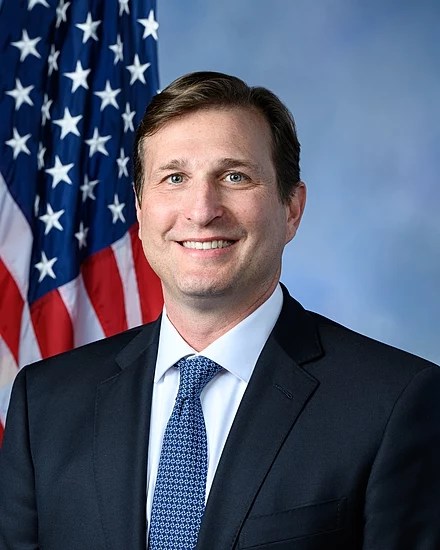


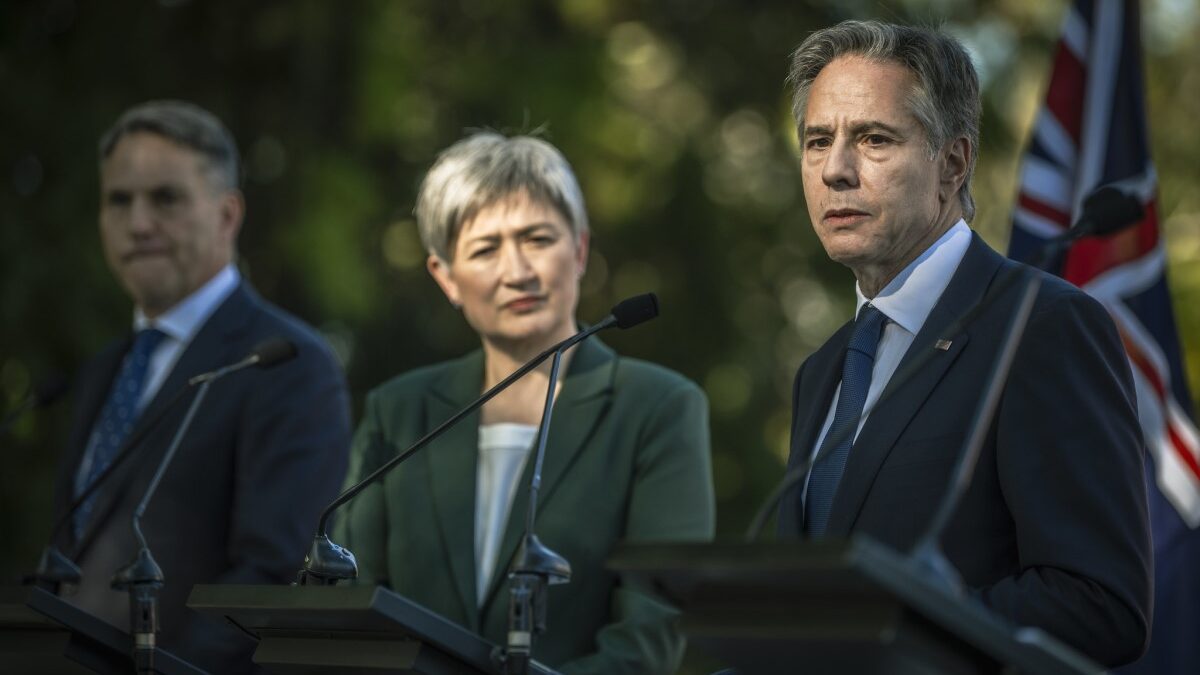

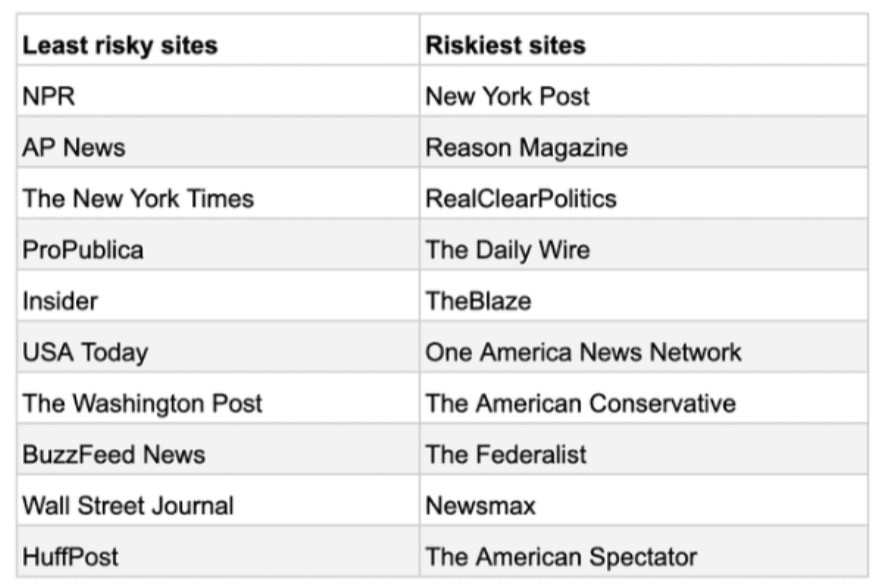
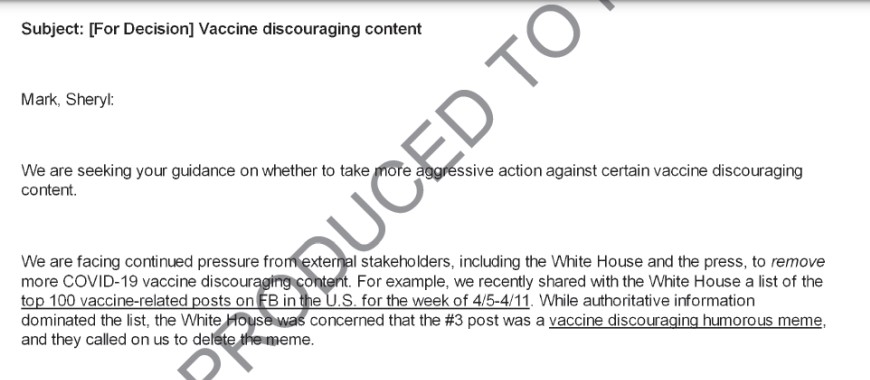
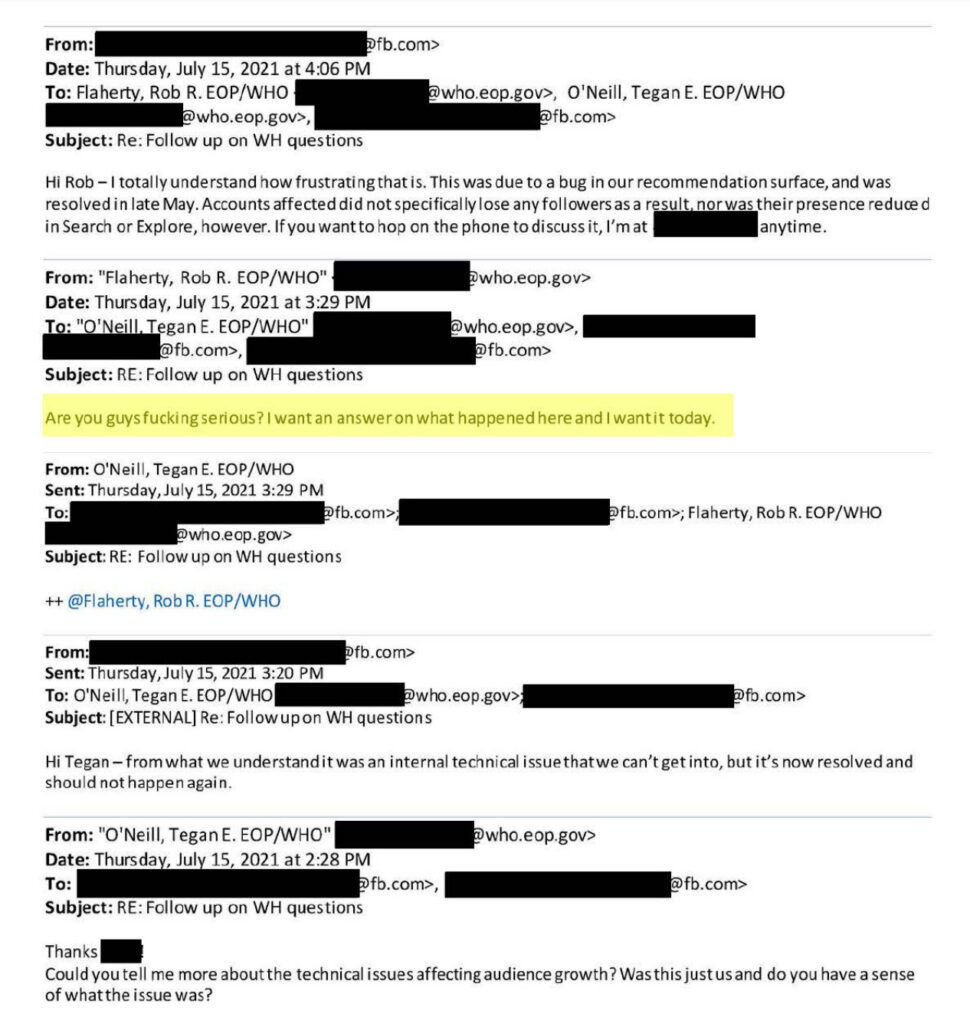

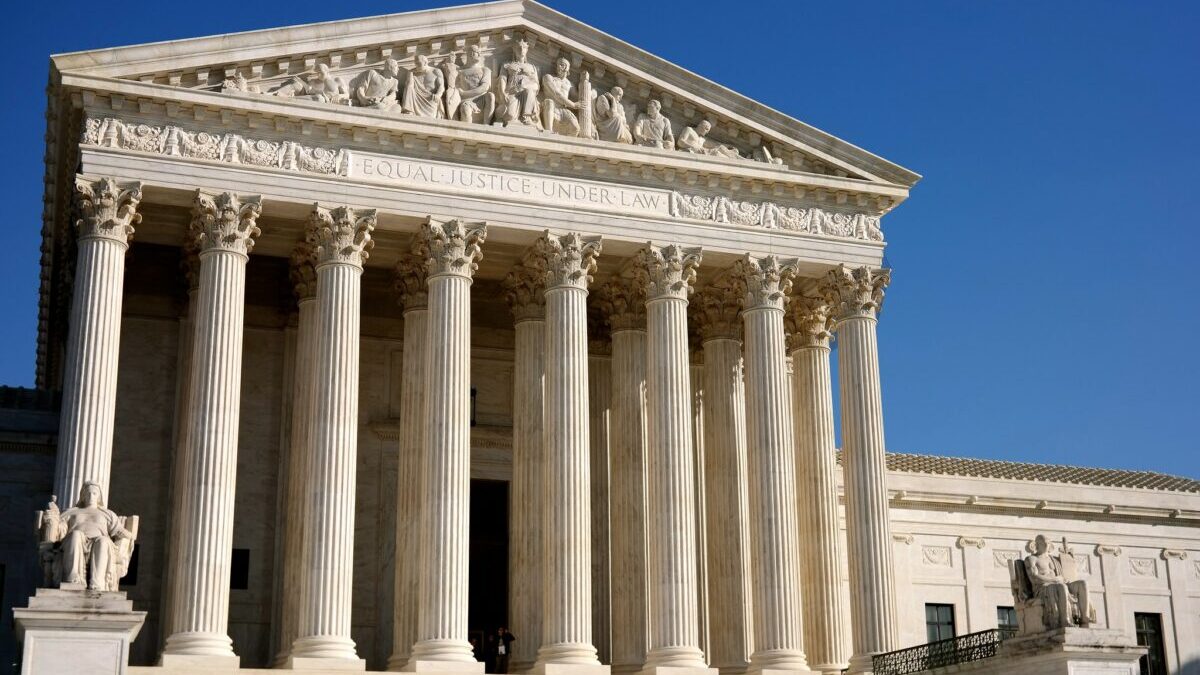



 What Did You Say?
You must be logged in to post a comment.