Perspectives; Thoughts; Comments; Opinions; Discussions

Posts tagged ‘RELATIONSHIPS’

To Address the Loneliness Epidemic, the Feds Want to Control Your Town and Friends


BY: STELLA MORABITO | MAY 30, 2023
Read more at https://thefederalist.com/2023/05/30/to-address-the-loneliness-epidemic-the-feds-want-to-control-your-town-and-friends/

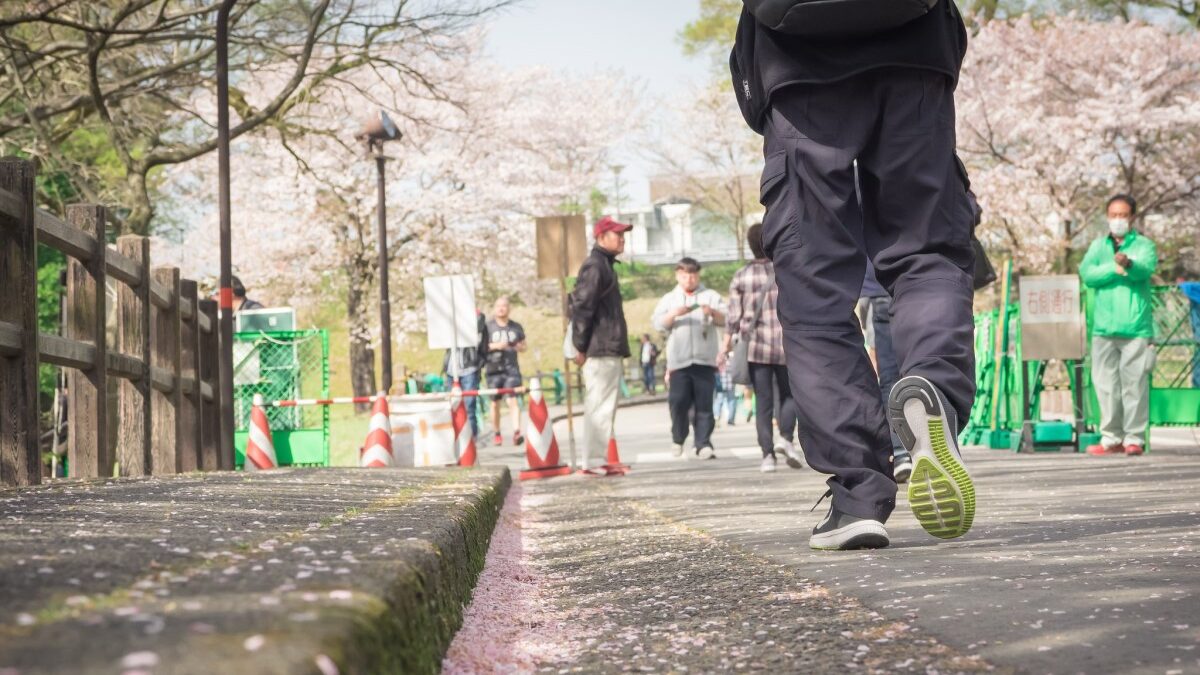
person walking in park, lonely

Author Stella Morabito profile

STELLA MORABITO

VISIT ON TWITTER@STELLA_MORABITO

MORE ARTICLES

U.S. Surgeon General Vivek Murthy recently released an advisory titled “Our Epidemic of Loneliness and Isolation.” It warns that social isolation is a major public health problem. The 81-page document presents six government-directed “pillars” of action to address the health hazards of social isolation.

On the surface, these six directives may look innocuous, but they present a clear and present danger to the autonomy of our private lives and relationships. The project is potentially so massive in scope that it’s not an overstatement to say it threatens to regulate our freedom of association in ways we never could have imagined.

Let’s look in greater depth at those pillars and the risks they pose.

‘Building a Social Infrastructure’

The first stated goal is to “strengthen social infrastructure in local communities.” It defines “social infrastructure” as the regular events and institutions that make up community life, and says the federal government should both fund local organizations and direct how they’re structured, including their locations. This can only mean that all local communities must answer to the federal bureaucracy in the quest to strengthen social connections among people.

Social infrastructure, the report says, includes physical parts of a community, such as housing, libraries, parks and recreation spaces, transport systems, and so forth. The report expresses concern that some people have better access to such locations than other people, and recommends federal interventions.

Those are likely to be used to promote densified housing along the lines of the “15-minute city” (more accurately termed 15-minute ghettoes), as well as the eventual dismantling of single-family housing. The goal of replacing private vehicles with public transportation fits easily into this scheme too.

I don’t presume that this plan will, by itself, drive wholesale changes in our physical infrastructure. But it would certainly provide authority and justification for changes supported by radical environmentalists, all of which diminish our freedoms.

The advisory warns that participation is mandatory if the plan is to work: “It will take all of us — individuals, families, schools, and workplaces, health care and public health systems, technology companies, governments, faith organizations, and communities — working together…”

The report’s proposed infrastructure to solve the problem of social isolation seems designed to lock everybody into compliance with and dependence upon federal mandates. Local control is then lost.

We end up with a massive federal infrastructure that can monitor the levels of social connection and disconnection in every nook and cranny of society. As described in the report, this would mean every institution, every governmental department, every volunteer association, every locality, every church, every faith community, every organization, every club, every service club, every sports league, and so on, would likely be assessed and “strengthened” to promote social connection.

‘Enact Pro-Connection Public Policies Everywhere’

According to the second pillar, “Government has a responsibility to use its authority to monitor and mitigate the public health harm caused by policies, products, and services that drive social disconnection.” How will these be tracked and mitigated? It “requires establishing cross-departmental leadership to develop and oversee an overarching social connection strategy. Diversity, equity, inclusion, [DEI] and accessibility are critical components of any such strategy.”

In other words, some people are more socially connected than others, and that’s not fair. They enjoy benefits — as in “unearned privileges” — that put others at a disadvantage. So, the government needs to intervene for the sake of equity to “spread the wealth” of social connections.

DEI is a creature of identity politics, which serves to erase human individuality and replace it with demographic identity markers that label people as either oppressors or victims, thus cultivating more resentments and hostilities in society. By injecting the codes of DEI into all social relationships, we’re bound to become even more divided, alienated, and lonely. And the federal government is bound to become even more authoritarian and meddlesome in our personal relationships and social interactions.

‘Mobilize the Health Sector’

Another threat to the private sphere of life comes under the directive to “mobilize the health sector” by expanding “public health surveillance and interventions.” This sounds very much like tracking your social connections and intervening when the bureaucracy deems it necessary. Big Brother sitting in on your doctor visits and therapy sessions?

The report indicates that health care workers will be trained to track cases of what the government views as social connection and disconnection. As they obediently report to the federal bureaucracy, most individual and local control will be lost. Medicine is bound to become more federalized and less private than ever when answering to these mandates.

Consider also that mental health practitioners are already suggesting that signs of racial or cultural bias should be classified as a mental illness.

Consider also that mental health practitioners are already suggesting that signs of racial or cultural bias should be classified as a mental illness. “

Of course, to the promoters of DEI, all white people are inherently racially biased, simply because of their skin color. This brings to mind the disturbing practice in the Soviet Union of consigning political dissenters to psychiatric treatment. The official line was that you must be mentally ill if you disagree with communism.

‘Reform Digital Environments’

The advisory recognizes that overuse of the internet and social media can drive people deeper into social isolation. But it also promotes centralized government control over technology development, especially in human interactions: “We must learn more by requiring data transparency from technology companies,” it says. So, government would decide how to design and use such technologies. It would very likely compel technology companies to provide data to the government on Americans’ social connections.

The advisory also backs the “development of pro-connection technologieswith the goal of creating “safe” environments and “safeguarding the well-being of users.” Such phrasing has been used in recent years to justify censorship under the guise of protecting certain demographics.

In light of the importance of DEI to the overall strategy, this sounds ominously like a call for further “protection,” i.e., government control of the private sphere. Again, the primary director of all these remedies is the federal bureaucracy, not a trusted family member, friend, pastor, or neighbor.

‘Deepening Our Knowledge’

The fifth pillar of the advisory pushes a “research agenda” that enlists all “stakeholders” — that means every level of government, every organization, every corporation, every school, every family, every individual — to deepen their knowledge about social connection and disconnection. Of course, the advisory has already predetermined the outcome of much of this research, and we can be reasonably confident this research will reflect the outlook offered by the advisory. After all, that’s how researchers get grants and research contracts.

I imagine institutions will publicize their “studies” through a media monopoly that promotes the preferred narrative on what kinds of relationships we should have, what we can and can’t talk about. Essentially, we’ll get a flood of government propaganda about their preferences for human relationships.

In the context of today’s censorship regime, this means promoting a single narrative that will drown any competing views offered by critics and the public with the favored views of government and corporate interests, parroted endlessly by Big Media.

‘Cultivate a Culture of Social Connection’

Finally, the advisory advocates for cultivating “a culture of connection,” one based on “kindness, respect, service, and commitment to one another.” This sounds lovely, doesn’t it? Unfortunately, our government’s relentless push for woke policies tells us that we cannot expect to understand those terms as traditional virtues.

Rather, such terms will likely be used in woke Orwellian fashion, to direct our social interactions and behaviors. For example, not dating a transgender person is now labeled unkind and “transphobic.” “Gender affirming care” — i.e., castration and mutilation of children — is the only “respectful” way of treating gender dysphoria. Your “responsibility” is to comply without question.

The advisory also calls for the media and the arts to promote stories that encourage “connection,” most likely in the Orwellian sense that wokeness demands. Further, the report cautions that certain kinds of social connection are harmful for individuals and society. It warns that too much like-mindedness can lead to extremism and violence.

We should be very skeptical of the federal government’s role in deciding which groups it deems acceptable, given its growing politicization of law enforcement, its attempts to silence concerned parents at school board meetings by labeling them “domestic terrorists,” and its overall undermining of due process and the Bill of Rights.

The Historical Pattern of Big Government Is Atomization, Not Social Connection

Ironies abound in this advisory. The pretext for government injecting itself into our personal lives is to rescue us from the misery of our loneliness epidemic. Never mind that government policies are largely to blame for family breakdown, welfare dependency, urban blight, attacks on free speech, attacks on privacy, and countless other developments that result in an acute sense of isolation and polarization.

Never mind that the proven prescription for loneliness is the opposite: a private sphere of life where intact families raise their children with a sense of virtue; where institutions of faith give people a sense of order and purpose in life; and where friends can confide in one another without meddlers eavesdropping on their conversations. This sphere of life — the private sphere — is the fount of freedom, love, and trust that nurtures social connections. It can only thrive in privacy.

But this private sphere seems to be in the crosshairs of Murthy’s massive government project to “fix” the social connections of all Americans. The government will doubtless enlist a media monopoly and Big Tech for support in monitoring those connections.

Given the current direction of this administration’s policies, it will also deploy heavy-handed political censorship — of which Murthy already proved a huge fan during Covid — to enforce compliance and punish dissent. Such censorship heightens the fear of speaking openly, which only builds more walls between people. Ironically, we would end up more atomized than ever.

The Tentacles of Bureaucracy

This may sound over the top to a general reader who may find the advisory benign and even welcoming, and perhaps just a narrowly focused plan to address a recognized health issue.

I am very skeptical about that for two reasons. The first is the natural inclinations of bureaucracies populated by “experts.” Bureaucracies never shrink. They continuously bloat. That’s the nature of the beast. Their protectors keep pushing their relevance on some issue or problem. Their experts — who will always “know better” than anyone else — will present solutions to be deployed by the bureaucracy. Compliance will then be demanded. And the bureaucracy will continue to bloat until its tentacles strangle every area of life.

The second reason for skepticism is history, which is filled with examples of governments invading the private sphere of life, specifically the institutions of family, faith, and community. That private sphere is still the most decentralized area of life, the one in which individuals are most able to think and speak freely, unless the government invades. Communist China, the Soviet Union, and Nazi Germany are prime examples in the 20th century of government invading the private sphere.

Eminent sociologist Robert Nisbet wrote about the deep-seated tendency of governments to hijack the functions of the mediating institutions of family, faith, and community. When the government takes over those functions, we lose those institutions as buffer zones between the isolated individual and the all-powerful state. We become powerless in the resulting isolation.

Nisbet posed this rhetorical question: “What remains then, but to rescue the masses from their loneliness, their hopelessness, and despair, by leading them into the promised land of the absolute, redemptive State?”

I believe the surgeon general’s advisory vindicates Nisbet’s point. Indeed, the state creates the malady and then offers its authority as the only cure as it rushes into the vacuum. The strategy for doing so seems evident in the report’s “six pillars.”

Where Does It All End?

No one can say for sure where this “Ministry of Loneliness” proposal will end up. History — particularly recent history — has warned us about such projects. The goals of this advisory may seem unobjectionable, but the concern is about who decides how we connect socially.

When the “who” is the federal government, we should remember that the pattern of the mass state is always to induce loyalty to the mass state. That pattern always comes with a push to surrender our loyalty to one another as individual human beings capable of real kindness and real love. That amounts to something I call the weaponization of loneliness.

We must insist on making our own decisions to live as free individuals. That means pushing back in any way possible against potential intrusions in the private sphere of life. It means rejecting the pseudo-intimacy and pseudo-connection that our federal government seems intent on foisting upon us in exchange for control of our private lives and relationships. Otherwise, we end up in much worse isolation that renders us powerless and unfree.

Stella Morabito is a senior contributor at The Federalist. She is author of “The Weaponization of Loneliness: How Tyrants Stoke Our Fear of Isolation to Silence, Divide, and Conquer.” Her essays have appeared in various publications, including the Washington Examiner, American Greatness, Townhall, Public Discourse, and The Human Life Review. In her previous work as an intelligence analyst, Morabito focused on various aspects of Russian and Soviet politics, including communist media and propaganda. Follow Stella on Twitter.

7 Important Social Benefits Kids Develop From Homeschooling


BY: JOY PULLMANN | APRIL 17, 2023

Read more at https://thefederalist.com/2023/04/17/7-important-social-benefits-kids-develop-from-homeschooling/

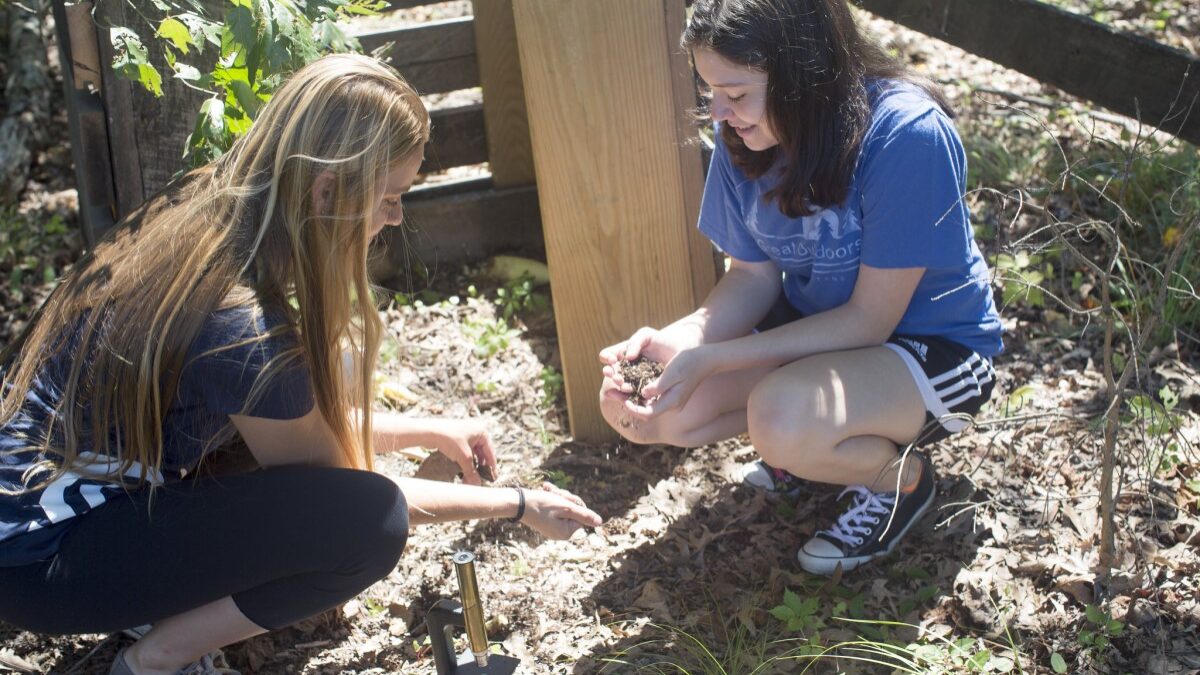
Homeschoolers crouch on the ground
From high interaction with homeschooled families and graduates in multiple environments, professional and personal, I’ve definitely noticed differences.

Author Joy Pullmann profile

JOY PULLMANN

VISIT ON TWITTER@JOYPULLMANN

MORE ARTICLES

Homeschooling rose to 1 in 10 American kids in 2021 due to lockdowns, and the number has remained high even as lockdowns abated. Most families who began homeschooling due to lockdowns say they don’t plan to go back.

Despite the steady increase in homeschooling since its revival in the 1980s, families who choose this way of raising their children often face fearful responses from family and friends. Chief among the concerns is what people often call “socialization.” Sometimes, they mean, “Will your kids have any friends?” Other times, they mean, “Will your kids understand social cues and how to get along with normies?”

Yes, you can find homeschooling kids who dress oddly and don’t know how to carry on a basic conversation. But you can find people like that anywhere. As anyone who attended a public school can confirm, people who can’t make eye contact and are otherwise antisocial persist in that environment, too.

Homeschooled or public schooled? Impossible to tell. (Charlie Llewellin / Flickr / CC BY SA 2.0)

From high interaction with homeschooled families and graduates in multiple environments, professional and personal, I’ve definitely noticed differences. On balance, these differences tend to favor homeschoolers. Here are just seven I’ve observed that are also often obtainable in small schools.

1. Independent Thinking

It’s common for the “good” kids in public school to work hard to learn what the teacher wants and give it to her. They have a tendency to become compliers. “Just tell me what you want, and I’ll do it.”

Now, homeschooled kids often also want to please Mom and Dad, but the ability to negotiate with a parent in ways one can’t with a teacher often encourages mental independence. They have freedom to read widely and extra free time in which to develop and personalize their sense of self. They also tend to get more long conversations with their parents because of homeschooling’s extremely small class sizes.

All these cultivate independent habits of thought. They teach people to develop their interests and personalities, and to follow arguments all the way to their conclusions. These things also teach students to spend time comparing and contrasting ideas for real, in a way that shapes one’s soul for life, not as a human version of ChatGPT.

Homeschoolers are also used to being unusual. They’re used to being asked questions like, “Do you have any friends?” and given the cold shoulder by public-school kids at events like sports and family gatherings.

Sometimes this turns a homeschooled kid desperate and makes him more peer-dependent, especially if he’s a sociable child and doesn’t spend enough time with friends. So he’s desperate for friends and therefore works overly hard to conform to negative peer pressure. I’ve seen this also with conservative kids. They accept peers’ or culture’s shaming and rejection of their social differences and therefore can more easily turn into antagonists against their own group.

Thus we have entities like Homeschoolers Anonymous, which argues that because some homeschooling families are abusive, homeschooling rather than the family is the problem. (You don’t hear that same argument about public schooling, which has a far higher rate of child abuse than homeschooling does. But I digress.)

If parents observe and address these social dynamics, mostly by helping their children find friends who build them up instead of savage their family’s choices, homeschoolers do tend to emerge into adulthood as independent thinkers. They tend to be quite comfortable with nonconformity, bringing new perspectives into their communities. This strengthens our society, especially now, as political correctness is metastasizing into a totalitarian social credit system.

2. More Practice with Multi-Age Relationships

Since they are so strongly family-oriented, homeschoolers break out of our society’s artificial, factory-school model of corralling people with those who happen to be born in the same calendar year. Homeschooled kids are far more comfortable making friends with anyone, not just those their exact same age.

They drop by for tea at the old lady’s down the block (true story). Bigger kids play comfortably with babies and toddlers. They know how because they have little siblings and cousins they are around more often because they’re not in school all day. This makes many homeschoolers even more socially capable than peers who falsely believe that one can only be friends with a person who looks and acts just like them. It expands their horizons and their relationship skills.

Freedom from same-age exclusivity has academic benefits as well as social benefits. Everyone understands that no person is exactly mentally on track with every other person his age. An 8-year-old may be strong in math but weak in spelling, compared to those of his age. Homeschooling allows the flexibility to meet children academically outside of the “average” peer.

Being too far ahead of one’s class makes bright kids bored, and being too far behind his class makes struggling students despair. Teaching right at a person’s actual level instead of his artificially imposed level is the most effective instruction possible.

3. More Prosocial Habits and Expectations

For decades, parents have moved to the suburbs to raise their kids because they didn’t want their children in environments shaped by poverty. As Thomas Sowell and others have chronicled, America’s urban and rural poor share many antisocial behaviors that keep them down and drag others with them. These include higher rates of violence and nonmarital sex and other coarse and life-damaging behavior such as openly disrespecting authority.

Homeschooling takes the protection of moving to the suburbs a step further. That’s an increasingly prudent step as our entire culture seems hell-bent on downward mobility.

Simply the widespread adoption of smartphones for children immediately degrades entire social ecosystems such as schools, because children are too immature to handle attention-destroying notifications and open internet access. Ten-year-old girls don’t need to see pornographic drawings and get propositioned to join a threesome because their badly parented peers watch YouTube videos of lesbian sex (true stories — from the suburbs).

In an environment like this, sometimes the only possible way to ensure your child actually has a childhood is to homeschool. It would be better if our society decided to protect children from living in social cesspools like this, but most of our parents and institutions have so far refused. That leaves it up to sane parents and churches. Homeschooling is one way to allow children an innocent childhood so they encounter this world’s violence and sex when they are ready.

4. Better Ability to Choose Friends

It’s always been prudent to select one’s companions carefully. Friends strongly affect who you are. Families who pay $50,000 a year for so-called “elite” private schools and then send their children to morally bankrupt Ivies know this. Their values are degraded, but the underlying impetus is correct: One’s companions can determine the course of one’s entire life. This is true for adults and even more so for children.

The thing about public school is that anyone can and does go there. We don’t live in the 1950s, when one could more reliably count on both the average parent and most institutions to be sane and responsible.

Today’s average parent is checked out and lets his kids be mentored by creepy strangers on the internet and other kids who are mentored by creepy strangers on the internet. Today’s average institution is run by apathetic box-checkers whose lack of moral fiber tends to let antisocial people and woke inmates turn everything into an asylum.

This means parents today can’t count on most other people to encourage their families toward the good. Sending children to public school (and allowing them unsupervised internet access) not only prevents parents from carefully selecting their children’s major influences but also ensures their impressionable children will repeatedly encounter sick perversions they are too immature to handle.

Homeschooling (and private schooling) families have far greater control over their companions than do those who allow our degraded public square to mess with their kids’ minds, and therefore can more intentionally manage this key determinant of a family’s character.

5. Better Family Relationships

A complaint I often hear about homeschooling that unintentionally reveals its speaker’s lack of character is: “I just couldn’t be with my kids all day long!” Parents shouldn’t avoid helping their kids mature by farming out their parenting to others. Others don’t do as good a job of it as parents will. It’s also an abdication of their responsibility that has bad consequences for them, their children, their community, and all of society.

Yes, children are annoying. Every person is annoying sometimes. Mature adults realize we’re also annoying sometimes and that a currently annoying person will usually get over it. This isn’t a children problem, it’s a people problem.

Yes, children can be more directly annoying than adults because they are more actively driven by their passions. That’s one top characteristic of immaturity. Yet kids’ natural immaturity isn’t worse because it’s more obvious than most adults’.

When an adult seeks arousal, he might use internet porn, blast loud music in public spaces, or zone out on a video game. A child seeking arousal might wander around whistling or run in circles around the kitchen. He might bang the same song on the piano 20 times a day or tease his sister 30 times just to get a reaction (guess how I came up with these examples).

But Jordan Peterson is right that kids are mostly as annoying as their parents allow them to be. Some parents allow their children to maintain habits of complaining, whining, arguing with parents when they say no, teasing siblings, or fighting. Other parents build and enforce appropriate behavior boundaries in their family life.

By putting family members in more constant direct contact with each other, homeschooling gives parents increased opportunities for character building and habit formation. If parents do this work, it definitely pays off. It also tends to pay off both short- and long-term.

Children who are required by active parents to daily practice self-discipline tend to become better adults — better fellow citizens, better parents, better neighbors, mothers, and fathers. Unlike unparented children, they are also mostly a pleasure to be around — just like adults.

6. More Creative Hobbies and Entrepreneurial Instincts

Because they don’t have to waste so much time being controlled as part of a herd in large classes and schools, homeschoolers tend to have a lot more free time that they don’t spend watching TV. This makes homeschoolers extremely creative and active people, on average, which lends itself to entrepreneurial instincts.

With all the free time they gain from not having to move at a pace constrained by 22 other people, homeschoolers tend to develop strong hobbies and skills. The average homeschooler is involved in more than five community activities such as piano lessons, scouts, and karate, and is more likely to volunteer than public-schooled kids, according to studies.

Cultivating personal interests is not only good in itself, but it also leads to other goods, such as a penchant for social and economic entrepreneurship. Homeschooled students are used to being self-directed and managing their own time and interests. That makes them more likely to develop their own creative pursuits and I think explains why there are so many homeschooling families running high-traffic channels on YouTube.

7. A More Individual Personality

Some combination of the high personalization and high control of one’s time in homeschooling, as well as the lack of personality flattening that comes from harsh peer pressure, seems to make homeschoolers often very much more developed individuals. This reality is a bit ineffable, partly because it’s so varied in its expression.

While most people seem to come out of public schools slotted into some mass marketing consumer profile — punk, valedictorian, LGBT, SJW, jock, geek, nerd, or some other role defined and assigned by corporate conglomerates — homeschoolers tend not to fit into these kinds of boxes very easily.

Partly I think it’s because they have less awareness that these boxes even exist, because of their lower exposure to mass media through both screens and peers. Partly I think it arises out of their years of freedom to deeply explore nooks and crannies of human existence that aren’t part of mass culture, like Victorian clothing, historical re-enactment replicas, or Scottish literature.

Sometimes this reality manifests in slight oddities, like wearing nonstandard clothing, taking longer pauses in a conversation (or being more likely to monologue at people), knowing swing and folk dance steps, and not getting pop culture references. But I prefer these kinds of oddities to encountering a bearded man in a dress or to hearing some crappy song blare out of someone’s speakers that sounds essentially like every other crappy song that has blared out of speakers since the 1960s.

This also makes homeschoolers really interesting people to talk to. They have actual interests in their lives and unusual ways of seeing the world because more of their ideas haven’t come to them via the dreary mass marketing that in our society badly substitutes for legitimate culture. So no, often homeschoolers don’t act like zombies who download their brains from the corporate cloud, but that’s a good thing.


Joy Pullmann is executive editor of The Federalist, a happy wife, and the mother of six children. Her just-published ebook is “101 Strategies For Living Well Amid Inflation.” Her bestselling ebook is “Classic Books for Young Children.” Mrs. Pullmann identifies as native American and gender natural. Her many books include “The Education Invasion: How Common Core Fights Parents for Control of American Kids,” from Encounter Books. Joy is also a grateful graduate of the Hillsdale College honors and journalism programs.

Too Dead to Live and Too Alive to Die, Gen Z is Generation Zombie


BY: FORREST ROBINSON | APRIL 13, 2023

Read more at https://thefederalist.com/2023/04/13/too-dead-to-live-and-too-alive-to-die-gen-z-is-generation-zombie/

zombie crew walking toward the camera
An undead generation has emerged — a horde of Gen Z zombies mindlessly marching, ready to mobilize but not thrive.

Author Forrest Robinson profile

FORREST ROBINSON

VISIT ON TWITTER@FOZ89107323

MORE ARTICLES

Does Generation Z take anything seriously? Earnestness is “cringe,” being in love makes one a “simp,” and ambition makes one a “try-hard.”

There is a “deeper ideology lurking in the minds of younger millennials & Gen Z,” as Esmé Partridge writes, “the rejection of idealism in all its forms.” Disenchanted with the world, plagued by hopelessness and nihilism, we have become a generation of zombies — a group of youth that is too dead to live and too alive to die. 

No Purpose or Place

In the 1920s, famed novelist F. Scott Fitzgerald described his lost generation as one that had “grown up to find all gods dead, all wars fought, and all faith in man shaken.” 

A century later, Gen Z finds itself in a similar position. The past haunts us, and a stormy future looms over the horizon. Even in our happiest moments, we’ve come to expect something bad just around the corner. Anxiousness afflicts many Zoomers — more than half of us already think humanity is doomed.

Though we share similarities with past generations, Gen Z is unique. Some argue Zoomers will eventually outgrow their crazy beliefs in the same way hippies eventually got jobs and created families. Millennials, however, are only getting more liberal as they age, breaking one of the oldest rules in politics. According to a recent Gallup poll, roughly 1 in 5 Gen Z adults says he or she is LGBTQ.

First and foremost, Gen Z craves distinction. They want to differentiate themselves from the masses by changing the world through fighting climate change, institutional racism, capitalism — you name it. This might explain why 1 in 4 people aged 16-25 wants to become an influencer when he or she grows up.

Why the thirst for power and status? Humans need goals that require effort to attain. We are like archers who need a clear and higher target. The popularity of figures such as Jordan Peterson shows that, especially for young men, it is no longer clear what that target is.

A Developmental Crisis

In the book “iGen,” Jean Twenge observes that more than previous generations, Zoomers aren’t growing up. We don’t have a meaningful target anymore. Gen Z is dating less, quitting jobsnot attending church, and spending half its waking time online. If Zoomers need attention, they use Instagram. Bored? Netflix or Youtube. Horny? Pornhub. Hungry? UberEats.

It’s not surprising that pundits like Jesse Singal and Jonathan Haidt blame social media for Gen Z’s stunted growth. Apps such as TikTok and Instagram have no doubt profoundly affected us, but blaming social media for Gen Z’s mental health epidemic is only half-correct.

Before we had Instagram, we had liberalism. As Patrick Deneen once wrote, “It is less a matter of our technology ‘making us’ than of our deeper political commitments shaping our technology.”

Jaded and Conformist

Inauthenticity has reached its peak with Gen Z. To be part of the in-group, a Zoomer must adopt a live-and-let-live attitude and remain blasé at all times, unattached to all people and things. Like Gen X, they avoid sincerity, choosing instead to be ironic, humorous, or just plain passionless.

For Zoomers, being serious is “cringe.” They dislike partisan politics because it’s rooted in taking differences seriously. Gen Z is disproportionately liberal not because they are passionate card-carrying Democrats — although some of them are — but because they are apathetic. They just want to be left alone by what the media portray as Bible thumpers, old white politicians, and conservatives. 

It is revealing that the only time Gen Z ever seems mobilized to take things seriously is when a police officer kills a black man or abortion is restricted. Gen Z is so well catechized into its political religion that within minutes, like a flock of sheep, millions of Zoomers suddenly start sharing infographics, donation pages, and memes all over social media. Gen Z only cares about a particular issue when a so-called victim group is allegedly oppressed, or there’s a threat to its autonomy. As soon as the latest political trend goes away, Zoomers stop caring.

A Generation Without Love

The sexual revolution of the ’60s didn’t bring about communism, as Wilhelm Reich hoped, but capitalism in the sexual market. Now driven by a desire for recognition, Zoomers want sexual empowerment above all else.

To that end, Zoomers avoid caring about finding relationships. As one study found, “only one in 10 Gen Z members say they are ‘committed to being committed,’” preferring solitude (or situationships) to real relationships. 

Since seeking commitment is now perceived as exerting pressure, young people must put up a facade of unseriousness and just look for green flags so as not to alienate the person they desire.

Even in a relationship, the psychoanalyzing doesn’t cease. Zoomers analyze texts, obsess over appearance, and worry that their romantic interests are dating other people from Tinder. This perpetual state of uncertainty is so exhausting that many are choosing to either throw out sexual rules completely or abstain from relationships altogether.

Repressed and Insecure

With religious values and sexual norms no longer fixed, many Zoomers struggle to nail down a sense of worth and are thus insecure. Not expressing their real personalities or feelings, these Zoomers live in a perpetual state of “LARPing” and suffer from main character syndrome.

Given their repression of “cringe” thoughts and feelings the in-group might not like, Gen Z’s higher likelihood of engaging in self-harm is unsurprising. To escape the torturous emptiness so many Zoomers find themselves in today, many reach for a razor blade or a smartphone. Either Zoomers gobble down drugs for mental illness, harm themselves, or vainly attempt to produce a sense of self with endless selfies and videos for their followers.

The Zoomers’ obsession with “mental health” and “normalizing” certain behaviors is a byproduct of their unstable self-image. Without knowing how to make sense of their emotions, they outsource the task of understanding themselves to therapists. 

Godless and Selfish

More than anything, Gen Z wants to feel alive. They turned out in droves to support BLM in 2020 because it enabled them to experience the emotional highs and lows of religion without the responsibilities. As Twitter user Zero HP Lovecraft wrote, “Christians are persecuted by bureaucrats, tamely and passively,” while black people “are persecuted by cops with guns and gas grenades. … Only one of these is exciting.” In other words, one belief system feels boring and uninteresting, the other eventful and real — hence why many gravitate toward the latter.

Even many modern so-called Christians, as Rod Dreher observed, use religion as “a psychological adjunct to life, a buffer to the harshness of the materialistic, individualistic lives they actually want to lead.” In the context of Zoomers, that makes religion — and its secular woke derivatives — a supposed stimulant for attaining health and well-being. Since Gen Z now worships the “God within,” there has been a rise in gnostic beliefsself-improvement and wellness cults, astrology and tarot, and, of course, LGBT orthodoxy.

In our post-religious society, life has been reduced to a biological process that must be optimized for the sake of social approval. Instead of prayer, we use painkillers. Instead of aspiring toward good works that glorify God, we engage in meaningless activities that glorify ourselves. And out of that reality has emerged the next undead generation. The horde of Gen Z zombies is mindlessly marching, ready to mobilize but not thrive.


Forrest Robinson is a student at Gordon College in Wenham, Ma. He frequently posts threads on his Twitter @Foz89107323.

Tag Cloud