As Donald Trump and Kamala Harris race for the presidency, their boosters are insisting the stakes couldn’t be higher for the future of our nation. But Americans have already given up on the future and are demonstrating this despair in the most fundamental way: Americans are not begetting more Americans.
The birthrate in the USA has hit another record low. Though the U.S. is not yet at complete demographic collapse (e.g. South Korea or Japan), American fertility is still way below replacement rate. Regardless of whom voters choose in November, they are already issuing a vote of no confidence in the future by literally refusing to beget people to live in it.
Collapsing fertility will cause a plethora of problems — good luck sustaining economic growth and paying for entitlement programs with an aging, shrinking population. Importing high levels of immigrants to maintain workforce levels is beset with its own difficulties. But highlighting the challenges of a future with few children will not encourage people to have more kids; people will not decide to breed just because it might boost GDP in a few decades. Indeed, dwelling on the problems of a below-replacement world might even be counterproductive from a pro-natal standpoint, as it just reinforces anxiety about the future.
Neither candidate can fix this. Harris may be trying to float on a media froth of “Joy!” but the DNC’s celebration of sterility and abortion, including Planned Parenthood providing not just free vasectomies but even free abortions right outside the convention, is perhaps the most grotesque example of baby-hating anti-natalism ever in American politics. And though the GOP might look better by comparison, Trump has been stampeding the GOP away from social conservatism (to say nothing of his personal example).
Politicians are not going to save America from despairing self-extinction. And tempting as it is, we cannot just blame them for the failures of American men and women to form stable relationships and have children together. Yes, there have been unfavorable cultural, economic, and political forces, but though these may be mitigating factors, they do not negate personal responsibility. Americans have chosen the decline of America.
However, there is an upside to this, which is that we can improve matters without relying on politicians. Yes, political action is important; policies from taxes to education to housing and more matter enormously to family formation and flourishing and thank God for the people doing good work on these issues.
But we should not sit around waiting for government to fix everything. It is not just that even well-intentioned and generous pro-family policies have often proven disappointing but that individual choices still matter. People can choose to prioritize family life even when culture, policy, and the economy make it difficult.
However, we need more than just exhortations to individual virtue: We need the help of others. Fortunately, government is not the only domain of collective action. As the process of family formation — from dating to raising children and sustaining a marriage — is breaking down to the point of incomprehensibility in much of our culture, America’s churches in particular have an opportunity to step into the gaps left by the fraying bonds of family and community.
Men and women need guidance in coming together to form and sustain marriages. Likewise, it is not good for parents to have to handle child-rearing all by themselves. It does take a village — but the government, and especially the federal bureaucracy, is a behemoth, not a village.
As important as help, from meals to rides to babysitting and beyond, can be, churches can provide that which is even more valuable: instruction, examples, belonging, and love. This community is what will actually make people want to marry, have children, and stay married while raising their kids well. Pundits worrying about the long-term political and economic implications of declining marriage and low birthrates won’t actually do it. What will work is if people believe in family life as important to what it means to live well and if they believe it is not only desirable but also attainable. For this, they need examples and assistance.
To be meaningful, pro-natalism has to mean more than just pumping out babies for the future of the nation. Rather, it must explain why babies are good in themselves and why marriage and parenthood are the vocations to which most of us are called and which we should joyfully embrace. Indeed, this will likely be one of the church’s most effective means of evangelization. Amid our cultural and relational wasteland, it will increasingly fall to the church to teach people how to live well despite the troubles of this life. And valuing babies’ overindulgence, ambition, and avarice is a good place to start.
Even the best efforts may not be enough to save our nation. But it is clear that there is only hope for our nation’s future if citizens place their hope in something greater than America.
Nathanael Blake is a senior contributor to The Federalist and a postdoctoral fellow at the Ethics and Public Policy Center.
These days, when she gets ready for school, the hair will be done. Perhaps it will be a braid of some sort, perhaps it will be curled. Earrings will be selected. A light and subtle application of age-appropriate makeup usually follows. The only constant is that she will always put on a skirt.
It didn’t used to be this way. When younger, she was quite the tomboy. There were the fights over getting her hair cut short, fights she lost not because we’re that controlling, but because short hair has to be cut more frequently and we didn’t want to add monthly visits to the stylist to the calendar. The uniform was shorts or pants and a polo for school, nicer pants and tops for dressier occasions, and athletic gear for casual moments. Jewelry was a no-go, even the pearls and things that grandmothers like to give to be worn at church.
She never suffered from dysphoria. She always knew she was a girl. It bothered her how often she was mistaken for a boy, not connecting the dots between her preferred functional form of attire and how it was virtually indistinguishable from the clothing sported by little boys. She was horrified when a classmate exhorted her to “just get the surgery.” That was reading too much into the truth, which was that she just wanted to play, to roughhouse, and to get outside. Dresses and skirts didn’t lend themselves to such things.
Once puberty arrived, the interests largely remained, but the video tutorials on how to do different braids and requests for new earrings joined them. It’s also when she looked at me earnestly in the car one evening and said, “I’m glad you and Mom aren’t liberals. You would’ve tried to turn me into a boy.”
While there are people across the political spectrum who recognize the realities of biology, statistically speaking, she wasn’t necessarily wrong in her proclamation. If she’d been born to this mom, this mom, or this mom, things could have turned out much differently. Thankfully, she was born to us, and we don’t hold retrograde opinions about the imaginary relationship between preferred clothing, toys, activities, and sex.
Not everyone is so enlightened, though, instead preferring to categorize children based on rigid stereotypes about how superficial things define us as boys and girls, men and women. Countless stories, like those linked above, of parents realizing their daughter was “transgender,” start with “I knew my son [sic] was trans when…” and revolve around such stereotypical markers. She didn’t like the color pink (once hated in our house, now one of her favorites), dresses, or games associated with little girls. Ergo, she must be a boy!
All one has to do to make such a logical leap is ignore the fact that prepubescent kids are, by definition, not sexual creatures and, as such, not much thinking in terms of true masculinity and femininity. They are just thinking about what interests them, not how those interests align with or diverge from their sex. It’s misguided parents who swoop in and make those assumptions.
This viewpoint is especially incomprehensible when one realizes that tomboys have long been with us. They were once staples of literature and other entertainment, from Laura Ingalls to Jo in Little Women to Pippi Longstocking. That they enjoyed clothing or activities more typical of boys wasn’t reason to attempt to muck around with their biology, and it still isn’t reason now.
If you have a daughter, you have a daughter. Her preferred clothing and activities do not define her, particularly when she’s young. Maybe she just finds pants more comfortable or likes playing in the dirt more than playing with a Barbie. If you let her grow up as a girl, those preferences may stick or they may, as in our case, shift in more traditionally feminine ways. In either case, it is not our job as parents to guide them toward self-destruction, but toward self-fulfillment and flourishing.
Let your tomboy be a tomboy. As a father, enjoy that you can get out and do more rough-and-tumble things with her. As a mother, enjoy that she isn’t raiding your closet or makeup tray. To do otherwise, to make the destructive assumption that because she doesn’t fit a stereotype she must have been “born in the wrong body,” is to abdicate your responsibility as a parent, to punish her with pseudoscience, and to saddle her with a lifetime of legitimate suffering, not the imaginary kind that arises from preferring blue to pink.
This author is a regular Federalist contributor.
This byline marks several different individuals, granted anonymity in cases where publishing an article on The Federalist would credibly threaten close personal relationships, their safety, or their jobs. We verify the identities of those who publish anonymously with The Federalist.
From high interaction with homeschooled families and graduates in multiple environments, professional and personal, I’ve definitely noticed differences.
Homeschooling rose to 1 in 10 American kids in 2021 due to lockdowns, and the number has remained high even as lockdowns abated. Most families who began homeschooling due to lockdowns say they don’t plan to go back.
Despite the steady increase in homeschooling since its revival in the 1980s, families who choose this way of raising their children often face fearful responses from family and friends. Chief among the concerns is what people often call “socialization.” Sometimes, they mean, “Will your kids have any friends?” Other times, they mean, “Will your kids understand social cues and how to get along with normies?”
Yes, you can find homeschooling kids who dress oddly and don’t know how to carry on a basic conversation. But you can find people like that anywhere. As anyone who attended a public school can confirm, people who can’t make eye contact and are otherwise antisocial persist in that environment, too.
From high interaction with homeschooled families and graduates in multiple environments, professional and personal, I’ve definitely noticed differences. On balance, these differences tend to favor homeschoolers. Here are just seven I’ve observed that are also often obtainable in small schools.
1. Independent Thinking
It’s common for the “good” kids in public school to work hard to learn what the teacher wants and give it to her. They have a tendency to become compliers. “Just tell me what you want, and I’ll do it.”
Now, homeschooled kids often also want to please Mom and Dad, but the ability to negotiate with a parent in ways one can’t with a teacher often encourages mental independence. They have freedom to read widely and extra free time in which to develop and personalize their sense of self. They also tend to get more long conversations with their parents because of homeschooling’s extremely small class sizes.
All these cultivate independent habits of thought. They teach people to develop their interests and personalities, and to follow arguments all the way to their conclusions. These things also teach students to spend time comparing and contrasting ideas for real, in a way that shapes one’s soul for life, not as a human version of ChatGPT.
Homeschoolers are also used to being unusual. They’re used to being asked questions like, “Do you have any friends?” and given the cold shoulder by public-school kids at events like sports and family gatherings.
Sometimes this turns a homeschooled kid desperate and makes him more peer-dependent, especially if he’s a sociable child and doesn’t spend enough time with friends. So he’s desperate for friends and therefore works overly hard to conform to negative peer pressure. I’ve seen this also with conservative kids. They accept peers’ or culture’s shaming and rejection of their social differences and therefore can more easily turn into antagonists against their own group.
Thus we have entities like Homeschoolers Anonymous, which argues that because some homeschooling families are abusive, homeschooling rather than the family is the problem. (You don’t hear that same argument about public schooling, which has a far higher rate of child abuse than homeschooling does. But I digress.)
If parents observe and address these social dynamics, mostly by helping their children find friends who build them up instead of savage their family’s choices, homeschoolers do tend to emerge into adulthood as independent thinkers. They tend to be quite comfortable with nonconformity, bringing new perspectives into their communities. This strengthens our society, especially now, as political correctness is metastasizing into a totalitarian social credit system.
2. More Practice with Multi-Age Relationships
Since they are so strongly family-oriented, homeschoolers break out of our society’s artificial, factory-school model of corralling people with those who happen to be born in the same calendar year. Homeschooled kids are far more comfortable making friends with anyone, not just those their exact same age.
They drop by for tea at the old lady’s down the block (true story). Bigger kids play comfortably with babies and toddlers. They know how because they have little siblings and cousins they are around more often because they’re not in school all day. This makes many homeschoolers even more socially capable than peers who falsely believe that one can only be friends with a person who looks and acts just like them. It expands their horizons and their relationship skills.
Freedom from same-age exclusivity has academic benefits as well as social benefits. Everyone understands that no person is exactly mentally on track with every other person his age. An 8-year-old may be strong in math but weak in spelling, compared to those of his age. Homeschooling allows the flexibility to meet children academically outside of the “average” peer.
Being too far ahead of one’s class makes bright kids bored, and being too far behind his class makes struggling students despair. Teaching right at a person’s actual level instead of his artificially imposed level is the most effective instruction possible.
3. More Prosocial Habits and Expectations
For decades, parents have moved to the suburbs to raise their kids because they didn’t want their children in environments shaped by poverty. As Thomas Sowell and others have chronicled, America’s urban and rural poor share many antisocial behaviors that keep them down and drag others with them. These include higher rates of violence and nonmarital sex and other coarse and life-damaging behavior such as openly disrespecting authority.
Homeschooling takes the protection of moving to the suburbs a step further. That’s an increasingly prudent step as our entire culture seems hell-bent on downward mobility.
Simply the widespread adoption of smartphones for children immediately degrades entire social ecosystems such as schools, because children are too immature to handle attention-destroying notifications and open internet access. Ten-year-old girls don’t need to see pornographic drawings and get propositioned to join a threesome because their badly parented peers watch YouTube videos of lesbian sex (true stories — from the suburbs).
In an environment like this, sometimes the only possible way to ensure your child actually has a childhood is to homeschool. It would be better if our society decided to protect children from living in social cesspools like this, but most of our parents and institutions have so far refused. That leaves it up to sane parents and churches. Homeschooling is one way to allow children an innocent childhood so they encounter this world’s violence and sex when they are ready.
4. Better Ability to Choose Friends
It’s always been prudent to select one’s companions carefully. Friends strongly affect who you are. Families who pay $50,000 a year for so-called “elite” private schools and then send their children to morally bankrupt Ivies know this. Their values are degraded, but the underlying impetus is correct: One’s companions can determine the course of one’s entire life. This is true for adults and even more so for children.
The thing about public school is that anyone can and does go there. We don’t live in the 1950s, when one could more reliably count on both the average parent and most institutions to be sane and responsible.
Today’s average parent is checked out and lets his kids be mentored by creepy strangers on the internet and other kids who are mentored by creepy strangers on the internet. Today’s average institution is run by apathetic box-checkers whose lack of moral fiber tends to let antisocial people and woke inmates turn everything into an asylum.
This means parents today can’t count on most other people to encourage their families toward the good. Sending children to public school (and allowing them unsupervised internet access) not only prevents parents from carefully selecting their children’s major influences but also ensures their impressionable children will repeatedly encounter sick perversions they are too immature to handle.
Homeschooling (and private schooling) families have far greater control over their companions than do those who allow our degraded public square to mess with their kids’ minds, and therefore can more intentionally manage this key determinant of a family’s character.
5. Better Family Relationships
A complaint I often hear about homeschooling that unintentionally reveals its speaker’s lack of character is: “I just couldn’t be with my kids all day long!” Parents shouldn’t avoid helping their kids mature by farming out their parenting to others. Others don’t do as good a job of it as parents will. It’s also an abdication of their responsibility that has bad consequences for them, their children, their community, and all of society.
Yes, children are annoying. Every person is annoying sometimes. Mature adults realize we’re also annoying sometimes and that a currently annoying person will usually get over it. This isn’t a children problem, it’s a people problem.
Yes, children can be more directly annoying than adults because they are more actively driven by their passions. That’s one top characteristic of immaturity. Yet kids’ natural immaturity isn’t worse because it’s more obvious than most adults’.
When an adult seeks arousal, he might use internet porn, blast loud music in public spaces, or zone out on a video game. A child seeking arousal might wander around whistling or run in circles around the kitchen. He might bang the same song on the piano 20 times a day or tease his sister 30 times just to get a reaction (guess how I came up with these examples).
But Jordan Peterson is right that kids are mostly as annoying as their parents allow them to be. Some parents allow their children to maintain habits of complaining, whining, arguing with parents when they say no, teasing siblings, or fighting. Other parents build and enforce appropriate behavior boundaries in their family life.
By putting family members in more constant direct contact with each other, homeschooling gives parents increased opportunities for character building and habit formation. If parents do this work, it definitely pays off. It also tends to pay off both short- and long-term.
Children who are required by active parents to daily practice self-discipline tend to become better adults — better fellow citizens, better parents, better neighbors, mothers, and fathers. Unlike unparented children, they are also mostly a pleasure to be around — just like adults.
6. More Creative Hobbies and Entrepreneurial Instincts
Because they don’t have to waste so much time being controlled as part of a herd in large classes and schools, homeschoolers tend to have a lot more free time that they don’t spend watching TV. This makes homeschoolers extremely creative and active people, on average, which lends itself to entrepreneurial instincts.
With all the free time they gain from not having to move at a pace constrained by 22 other people, homeschoolers tend to develop strong hobbies and skills. The average homeschooler is involved in more than five community activities such as piano lessons, scouts, and karate, and is more likely to volunteer than public-schooled kids, according to studies.
Cultivating personal interests is not only good in itself, but it also leads to other goods, such as a penchant for social and economic entrepreneurship. Homeschooled students are used to being self-directed and managing their own time and interests. That makes them more likely to develop their own creative pursuits and I think explains why there are so many homeschooling families running high-traffic channels on YouTube.
7. A More Individual Personality
Some combination of the high personalization and high control of one’s time in homeschooling, as well as the lack of personality flattening that comes from harsh peer pressure, seems to make homeschoolers often very much more developed individuals. This reality is a bit ineffable, partly because it’s so varied in its expression.
While most people seem to come out of public schools slotted into some mass marketing consumer profile — punk, valedictorian, LGBT, SJW, jock, geek, nerd, or some other role defined and assigned by corporate conglomerates — homeschoolers tend not to fit into these kinds of boxes very easily.
Partly I think it’s because they have less awareness that these boxes even exist, because of their lower exposure to mass media through both screens and peers. Partly I think it arises out of their years of freedom to deeply explore nooks and crannies of human existence that aren’t part of mass culture, like Victorian clothing, historical re-enactment replicas, or Scottish literature.
Sometimes this reality manifests in slight oddities, like wearing nonstandard clothing, taking longer pauses in a conversation (or being more likely to monologue at people), knowing swing and folk dance steps, and not getting pop culture references. But I prefer these kinds of oddities to encountering a bearded man in a dress or to hearing some crappy song blare out of someone’s speakers that sounds essentially like every other crappy song that has blared out of speakers since the 1960s.
This also makes homeschoolers really interesting people to talk to. They have actual interests in their lives and unusual ways of seeing the world because more of their ideas haven’t come to them via the dreary mass marketing that in our society badly substitutes for legitimate culture. So no, often homeschoolers don’t act like zombies who download their brains from the corporate cloud, but that’s a good thing.
About a year and a half ago, I noticed that my son — let’s call him Andy — was putting rainbow stickers on his phone. And a friend alerted me that Andy rebuked her daughter in a group chat for being “so cisgender.” I did some delicate digging, and it became clear: My child, then 13, was flirting with going “trans.”
He’s not alone. The number of transgender-identifying kids is up 20 to 40 times since a decade ago, to 1.5 percent of all teens. And the gender facilities that say they are the experts have been unmasked. Videos and statements have revealed that doctors in these so-called clinics are willing to give 15-year-old girls double mastectomies and call it treatment.
I wasn’t about to send my son off for experimental medical interventions that didn’t treat any underlying psychological issues. In this, I think I’m representative of the silent (and bullied) majority. Still, what could I do?
The first thing I had to do was to realize that the gender cult is powerful, and I can’t control the choices and feelings of my kid. I had to accept my limits, but that didn’t mean I was helpless. Parents are still the most important influence on their kids.
Finding a New School
I was lucky: My son was at a private school that did not push kids, behind their parents’ backs, into exploring alternate sexualities and getting “treated” by lifetime medicalization. If my son had been at a trans-affirming school — which means just about any public school — I would have been undermined at every turn.
At this school, however, he did have a cohort of “rebel” friends who all seemed to identify themselves as gender-questioning. And the school itself was not academically challenging enough for Andy. So I focused on academics, and we looked for a new school that would be a better fit on that score — and still supportive of my values. Finding one gave him a fresh start and a new peer group.
Building Real Identity
Next, I decided I would not provoke Andy by debating gender and trans issues. Maria Keffler in her book “Desist, Detrans, and Detox” reminds parents that transgenderism in adolescents is less about sex and more about identity, identity, and identity. A few decades ago, Andy probably would have worked through his teenage crises by going goth or arguing with me about religion. These days, becoming one of the letters in LGTB is the shortcut to being interesting, not “basic.”
Well, I didn’t want to make gender-bending the way he was going to differentiate himself from his parents. If he had been openly claiming a different so-called gender identity, maybe I would have been more confrontational about it. But since he was just flirting with being trans, not yet eloping, I decided not to make the topic of the sexes even more important than it already was. Instead, I focused on helping him build an identity in a healthy way.
I made it a priority to compliment him, every day, praising him for all the good things he is. Every time I “caught him” being funny, smart, helpful, generous, thoughtful, or kind, I noted it out loud. Every day, multiple times a day. I tried to help him see that these things are more important to his identity than some exotic “gender.” I also tried to help him feel more at home in his skin. He was given lessons in a sport he enjoys, so he could experience his body being strong and agile. Whatever reduced his alienation from his body, I encouraged.
Open-Ended Questioning
Next, I focused on building our relationship. I asked a lot of open-ended questions, and I made goofy jokes. We laughed a lot. I learned about him and signaled that I was interested in learning more. De-escalating tension and increasing the joy between us was key.
If Andy wanted to wear a vintage shirt that looked like it belonged on a French aristocrat from a few centuries ago, I just shrugged and let it pass. As long as what he chose was somewhere within the boundaries of socially acceptable male clothing, I didn’t make a fuss. After all, being a man (or a woman) is large enough to encompass differences in style, personality, and interest. It’s the trans movement that stereotypes the sexes, telling us that a sensitive, artistic boy must actually be a girl. Nonsense! My son could be a man and wear pastels.
When opportunities arose in everyday life, I pointed out the differences between men and women. In talking about school athletics, I would casually observe, “Oh, in high school, the athletic teams are divided by sex, because by puberty, boys develop more muscles and have more lung capacity than girls.” I never made these into arguments, just objective remarks.
In fact, we didn’t talk about so-called gender much, although I was prepared to. I coached myself on how to respond with neutrality and interest. I was determined only to ask questions. “I’m not clear how, if gender is socially constructed, that it is also an infallible identity deep inside the person?” “Help me understand. If gender is fluid and changeable, why should people get surgeries to alter their bodies permanently?” Books and essays pointing out transgenderism’s inconsistencies helped me clarify my thoughts. Still, I vowed I would only provide my own answers when Andy asked me a question — only, that is, when he was truly curious about my thinking.
I did take Andy to one talk on gender by a speaker who was calm and sympathetic but still supportive of my values. When he asked why he had to go, I simply said, “It’s an important topic, and this point of view is not well-represented in the culture.” Afterward, when I asked him what he thought, he said, “It was fine,” in a tone of voice that indicated the opposite. I dropped it; the talk still gave him a lot to chew on, even if he didn’t want to admit it.
Limiting Technology
One other piece was key: technology. Much trans proselytizing happens online, with anonymous adults love-bombing vulnerable kids. These adults sell the idea that acceptance can be found only in their new trans family and not in their real home. Some parents need to take drastic steps regarding their kids’ online presence. Fortunately, the screen problem was one I had been addressing for a long time, so I could be more moderate.
Andy did not have a smartphone, although even flip phones these days have internet browsers. I gave him a new phone designed for kids, one that had some carefully curated apps but no internet browser. For computer time, he was limited to an hour a day, and I trusted the internet filters I managed on his computer to keep him off the porn sites and the sexually explicit forums that cater to trans-questioning kids. All that limited (but didn’t eliminate) his exposure to pro-trans pressure. As a bonus, I got a much more cheerful kid at home who wasn’t always in front of a screen.
The point of all of this was threefold: to be the good guy, to distract him from all gender talk all the time, and to provide other identity options than the trans one.
Upping My Parenting
Lastly, I played the long game. Even when I didn’t believe it, I kept repeating to myself that the universe wouldn’t give me a kid that I couldn’t care for. That I had his best interests at heart — and online trans gurus didn’t — and I could wait this out with patience. I prioritized him when we had downtime in the evenings, not my phone. And I did the things I needed to, like sleeping enough and getting my own support system, so I could be available to him. Should I have been doing all of this all along as a parent? Well, of course, and in fact, it’s not like I had to do a total 180 when this emergency happened. Some of these things I was already doing, sort of. But I still needed to level up my parenting.
This summer, when he decorated a new phone, there were no rainbow stickers on it.
I wouldn’t say we are out of the woods, but he seems uninterested in the whole gender question. His wardrobe choices are less outrageous, and he’s not anxious, angry, and approval-seeking. Instead, he’s engaged and happy at school and at home, and he doesn’t need to be “different” according to the trans script. He’s happier being different just as himself. That makes me one happy parent.
This byline marks several different individuals, granted anonymity in cases where publishing an article on The Federalist would credibly threaten close personal relationships, their safety, or their jobs. We verify the identities of those who publish anonymously with The Federalist.
Americans ages 11 to 18 play online for an average of 10 hours per day, according to a study out today by a research team that includes psychologist Jean Twenge, author of “iGen” and “Generation Me.”
The researchers surveyed 1,600 Americans ages 11 to 18 in May 2022. On average, the study participants reported using digital media an average of 10 hours and four minutes per day, on such entertainment activities as social media, video chat, texting, shopping, and gaming.
That’s a total of 70 hours per week spent online, approximately double the average time spent in school. If teens were suddenly banned from screen time, they could use the time freed from solely that to instead hold down both a full-time and a part-time job. Some of this average may include multitasking, such as texting while scrolling Instagram, the study said, but this total of 70 hours per week spent on screens also did not include time spent watching TV.
Low-Class Behavior Rampant in Middle Class
The researchers say their Institute for Family Studies and Wheatley Institute study is the first to examine the effects of family structure on young people’s screen time. They found that teens living with their own biological and married parents still spent an astonishing amount of time on screens, at an average of nine hours per day. Still, that was nearly two hours fewer per day, on average, than children living without a biological parent, who spent an average of 11 hours per day online.
“The adolescents most likely to be depressed, lonely, and dissatisfied with life are heavy digital media users in stepparent, single-parent, or other non-intact families,” write study authors Twenge, Wendy Wang, Jenet Erickson, and Brad Wilcox. “The link between excessive technology use and poor mental health is larger for youth in non-intact families compared to those in intact families.”
So, according to this study’s findings, children in intact families spend an average of 63 hours per week amusing themselves online, while children in broken families spend an average of 77 hours per week amusing themselves online. The study discovered “especially large differences by family structure in youth time spent on gaming and texting. For example, youth in stepfamilies report spending about 50 minutes a day more texting than youth in intact families.”
Other studies on children’s screen use reinforce this finding — that America’s young people are wasting almost all of their waking free time on entertainment instead of personal growth or service to others. As this IFS/Wheatley study points out, this shift has happened extremely quickly, and it’s not all because of the 2020-2022 Covid lockdowns that also arrested American children’s development. Between 2009 and 2017, “the time high school students spent online doubled.”
The study points out that high screen time for adolescents is correlated with depression, loneliness, lack of sleep, and negative body image. It does not mention the opportunity cost of diverting young people’s free time to entertainment consumption instead of personal development that benefits others, such as learning to repair bicycles, playing outside, testing out jobs through work and internships, or working to save for college or marriage.
The study recommends that parents keep electronic devices out of kids’ bedrooms at night, limit screen time to a few hours per day, delay smartphone access to age 16 or 18, keep kids off social media as long as possible, and arrange for their kids to make friends with kids in families with similar boundaries about tech use to help their children socialize with people instead of robots.
Unchallenged mass tech addiction is one more way our morally bankrupt ruling class incentivizes destructive lower-class behaviors instead of encouraging lower classes to raise their standards. This works to erase the middle class by indulging laziness, like the shameful “quiet quitting” PR campaign. This is another form of societal suicide. Laziness cannot maintain, let alone keep advancing, the United States’ world-class level of scientific and cultural advancement.
Nothing worth having comes without strenuous and sustained effort. Internet addictions erase not only willpower but also self-discipline, excellence, and the communication skills needed to work with others and sustain key relationships such as marriages, as Twenge and others’ academic work shows.
This Is a National Crisis
If a child played with Legos for 10 hours a day, every day, his parents or teacher would have him screened for autism and developmental delays. If a child played pretend for 10 hours a day, at any age, he’d be sent to the school psychologist.
If your child did anything for 10 hours a day, you’d be worried about him and work strenuously to bring some balance to his life, for his own good. Parents need to man up and do the hard work of tightly restricting the addictive side of the internet from their kids, for not only their own good but for the sake of our country. Even 30 hours of screen time a week is obviously excessive for kids. Seventy hours of screen time a week is completely out of control, the willful destruction of our future.
“If an unfriendly foreign power had attempted to impose on America the mediocre educational performance that exists today, we might well have viewed it as an act of war,” wrote the National Commission on Excellence in Education in the famous 1983 report, “A Nation At Risk.” “As it stands, we have allowed this to happen to ourselves.”
The same sentiment applies to today’s American youth, but in a far more advanced condition. If a foreign nation had imposed on Americans the destruction of our mental and moral capacity that results from such rampant internet addiction as this study explores, we’d consider it an act of war. In fact, it’s pretty clear that our top foreign adversary created an addictive social media app for the same reason it helps Mexican drug cartels ship fentanyl across our border: because China knows that if they destroy America’s future, they rule the world.
The only thing standing between them and your kids is you, parents. Maybe a few elected officials could stand with us and take down these internet monopolies that make bank strip-mining our future, or at least require real proof of parental consent for children to use addictive tech products, such as a tiny credit card payment. But don’t wait for others to do your job for you. Put down your phone, grab your kids, and make your family motto the title of one of my childhood books: “Do Something Besides Watching TV.”
If your children enter adulthood having done nothing with 25,000 hours of their lives they can never get back, and with their brains destroyed by internet slot machines, that’s on you. You’re the one paying for their phone and letting them self-destruct. Tell them to get a job or read some books or do anything but sabotage themselves and our society. If you don’t, you deserve to be judged the same way as moms who put Mountain Dew in their babies’ bottles.
Police are often placed in situations where they have to make life-or-death decisions in an instant.
Thanks to the attitudes of the establishment media, the results of those consequential choices usually only get publicized if police can be blamed for making the wrong call.
However, now dramatic body cam footage was released where police successfully handled a dangerous situation in which a 4-year-old boy used his father’s gun to open fire on the officers. They were able to disarm the child before anyone got hurt.
Multiple versions of the body cam recordings were shared in a YouTube video. Watch:
ABC4 in Utah linked highlights from the videos and summarized the events that took place on February 21. The police were summoned when “employees reported that a man brandished a gun in the drive-thru after his order was incorrect.”
Sadaat Johnson, 27, was in the McDonald’s drive-thru with two children in the car, a 4-year-old and a 3-year-old.
Johnson did not comply with police instructions, and the situation escalated until officers were forced to pull Johnson from the vehicle.
The video does not show what happened next in the car. While the police were making the arrest of Johnson, the 4-year-old boy picked up the gun. An officer saw the weapon and shouted “Gun!”
Should kids be taught to be respectful to the police?Yes No
Completing this poll entitles you to The Western Journal news updates free of charge. You may opt out at anytime. You also agree to our Privacy Policy and Terms of Use.
ABC4 reported, “The officer used his hand to sweep the gun away and the gun went off, hitting the upper part of the McDonald’s building. The officer then yelled at the person inside of the car to drop the gun, and after looking inside the car, realized that it was a small child.”
The children can be heard crying as they exit the car. The officers ask “Are you all right, kid?” and try to reassure them: “It’s okay, it’s okay.”
The discharge may have been accidental. However as reported in the New York Post, “The investigation showed that Johnson then ‘told the child to shoot at the police,’ authorities said. It was not clear exactly when he gave the order and it was not caught in the bodycam clip.”
“The boy — who was taken into protective custody — said he shot at the cops because ‘he wanted his daddy back,’ according to court records obtained by ABC4.”
Johnson also explained to the authorities “this wasn’t the first time his 4-year-old child had gotten his hands on a gun.”
Johnson ended up pleading guilty to two third-degree felonies, child abuse or neglect and aggravated assault. Johnson was sentenced to 120 days in jail, three years of probation and courses on anger management and parenting. He can no longer own guns.
A huge contributing factor to this near-disaster was Johnson’s disrespect and disregard for the police. This attitude leads to more danger in police interactions, despite the absurd progressive activist campaign to defund the police based on claims that it’s police presence that starts the problems.
This is not to say law enforcement does not need some reform. But it needs to be reform that puts police back into serving and protecting communities, rather than abusing citizens on behalf of the political class.
Police should also question even their own self-serving agendas. The Utah body cam footage was in stark contrast to footage from the mass shooting in Uvalde, Texas. There, the cams caught almost 400 law enforcement personnel unable to handle a lone shooter for almost an hour, while kids died.
In the Utah case though, it is a testament to God’s mercy and the police that no one was killed or injured through the careless abuse of firearms. There could have been causalities of officers, kids or both.
The trouble was caused due to a series of bad decisions and actions by Sadaat Johnson, as much as some want to blame the gun or the cops instead.
Richard Bledsoe is an author and internationally exhibiting artist. His writings on culture and politics have been featured in The Masculinist, Instapundit and American Thinker. You can view more of his work at Remodernamerica.com.
For almost as long as Covid-19’s been around, parent anger at local school boards over this or that issue has been a reoccurring major news story. We’ve all seen the viral social media videos and Facebook posts of parents skewering their local elected school boards over critical race theory, unscientific and abusive mask mandates, maddening repeat quarantines of healthy children, and other educational corruption that wrecks children’s ability to learn.
We’ve also seen those viral videos have little effect on what the school board or state board of education subsequently decides. So parents have filed lawsuits and are mounting primary and general election challenges, all of which are great and a healthy part of self-government.
What these strategies don’t do is provide immediate relief to children, whom parents claim are being abused, taught racism, and denied their right to an education. They require children to continue to be abused at least until the next election cycle or until three or five or more years when lawsuits finally reach the highest court that will hear them. That’s a third of a child’s education years.
These strategies also are predicated on the assumption that the people who have created these outrageously irrational and abusive school climates should continue to be trusted to run schools. The entire leadership teams of most schools, school districts, and state education bureaucracies have disqualified themselves from leading any children at all by the kinds of abuses parents charge, but just filing a lawsuit or kicking a few school board members out of office will still leave almost all corrupt educators controlling millions of kids in perpetuity.
If you can’t trust a principal or superintendent to keep teachers from teaching racism and to accurately assess children’s needs and vulnerabilities through Covid even though the data on that is plentiful and clear, how can you trust any other of such persons’ judgment calls?
More than being restrained by a lucky court order merely from putting toddlers in masks, a person whose judgment is so corrupt shouldn’t be making any decisions about children. A person who puts a toddler in a mask, or allows teachers to shame children based on their skin color, cannot be trusted to do just about anything else important and needs to find a new and more productive line of work. Errors this bad are completely disqualifying, and they will not be rectified by merely changing a few surface policies such as the quarantining of healthy kids.
The fact that parents keep their children in schools they charge are teaching racism or delaying crucial development with Covid irrationality gives the schools all they need to keep ignoring the parents. Parents are saying one thing while doing another. They are voting with their feet, and their feet are voting for what they themselves acknowledge is oppression.
So it’s no surprise that school boards, principals, and other entities disregard what the parents say. What the parents say has no, or no immediate, enforcement. And therefore it really isn’t credible. No wonder the school districts don’t take them seriously.
If the parents wanted to be truly effective — as well as truly honest — they would pull their children from schools en masse until problems of such serious magnitude were resolved favorably. Sickouts and mass protests are highly effective forms of warfare on children waged by teachers unions all the time. But parents so far haven’t responded in kind.
Why is that? Why are parents all bark and no bite with their school complaints? Possibly they don’t know how to be effective. And possibly, many aren’t willing to make the big sacrifices required to enforce their beliefs. They can see that something very serious is wrong, but they aren’t willing or able to fix it. They’re still waiting on others to fix things for them.
They, and their children, will wait a very long time for that. They will certainly wait long past Covidtide. And that’s why public schools are as bad as they are — the people who are supposed to hold them accountable refuse to do exactly that even while claiming to.
In the end, schools and parents are basically fighting over something underneath all these disputes that almost nobody mentions: money. Schools get public education money, not parents. It gives them the power to abuse children while parents complain yet keep putting that mask on their kindergartener every single day, even after he throws up in it at school or it prevents him from being able to read or speak properly.
School boards don’t care about complaints. They care about money. As long as they have it, and parents don’t take it, schools will continue to do whatever they want to children. And American children will continue to be unhappy, uneducated, and unprepared for life while everyone pretends it’s someone else’s fault.
It’s clear that American parents have a codependent relationship with the schools they claim to despise. They are in fact enabling the very abuse they complain about. So while it is entirely legitimate to go yell at school boards and vote bad people out of office, it’s also time for parents to engage in some critical thinking about their own choices that enable this situation. As long as public schools continue to get money no matter what they do, this situation will continue, no matter how many uncomfortable meetings and lawsuits parents instigate.
If state legislatures do not yank money from America’s abusive public school systems, parents must yank their kids. Trust, me, it will work. It might already be happening.
Joy Pullmann is executive editor of The Federalist, a happy wife, and the mother of six children. Her bestselling ebook is “Classic Books for Young Children.” Sign up here to get early access to her next book, “How To Control The Internet So It Doesn’t Control You.” Mrs. Pullmann identifies as native American and gender natural. She is also the author of “The Education Invasion: How Common Core Fights Parents for Control of American Kids,” from Encounter Books. In 2013-14 she won a Robert Novak journalism fellowship for in-depth reporting on Common Core national education mandates. Joy is a grateful graduate of the Hillsdale College honors and journalism programs.
Democrats’ current proposed $3.5 trillion welfare expansion would effectively ban faithful Christians from profiting from federal subsidies for separating infants and toddlers from their families. The current text of Democrats’ massive “Build Back Better” entitlement bill contains provisions that would require religious child-care providers to disavow longstanding theology about sex in order to receive federal child-care funds under a massive new early childhood program.
“The Democrats went out of their way to make sure and prohibit religious care providers from receiving any of these funds, and unanimously rejected an amendment to allow all child-care providers to be eligible for grants, including religious providers,” said Rep. Jackie Walorski, R-Indiana, the ranking member on the House’s subcommittee on Worker and Family Support.
Democrats’ legislation would create a new federally controlled child-care entitlement available to the majority of families in the nation. The legislation authorizes up to $20 billion in the program’s first year, $30 billion in its second, $40 billion in its third, and an unlimited amount after that. The estimated cost of this program over the next ten years is $400 billion.
“Making faith-based providers of child-care and pre-kindergarten into recipients of federal financial assistance triggers federal compliance obligations and non-discrimination provisions,” note the leaders of several religious organizations in an opposition letter to Senate Democrats last week.
This means potentially forcing religious organizations to deny all theology that acknowledges basic truths about human biology and reproduction. Given the state of federal “nondiscrimination” law, this could include forcing religious organizations to allow males into female bathrooms, hire transgender babysitters, and teach small children that men can turn themselves into women and that theologically condemned sex acts are in fact morally good.
Just one-third of American children younger than five are placed in center-based care, according to federal statistics. Sixty-three percent of American kids ages five and younger are cared for by family, and 11 percent by a babysitter or nanny. Most American kids ages 0 to 5 who do have regular childcare are away from their parents only part-time. Among the minority of American families who enroll young children in full-time care, 53 percent currently choose a religious facility, according to a January 2021 survey of parents from the Bipartisan Policy Center. Family care was parents’ top preference for their children, with religious-based care the second-most preferred option in the BPC poll.
Democrats’ bill would also likely dramatically increase the costs of childcare by increasing the licensing requirements for people the government pays to babysit tiny children. Most child care workers have low education levels, but states usually don’t raise their licensing requirements because that would reduce the availability of government-controlled child care.
Numerous studies have found that the quality of language and interaction available to a child in infancy and early childhood is extremely important to that child’s intellectual and social development. Studies have also found that frequent one-on-one interaction between a small child and his parents benefits early language development even if the child’s parents are poorly educated. This effect disappears, however, if that poorly educated mother is employed to care for many tiny children at once instead of one of her own to whom she can fully dedicate her attention and conversation time.
Research also resoundingly finds that living with married parents provides far bigger positive benefits to children for their entire lives than does attending an early childhood program.
Large early childhood programs are of notoriously poor quality. The major existing such program, Head Start, has failed to improve attendees’ education and life prospects in all the quality research done on the program that has spent some $250 billion from taxpayers since it began in 1965. In fact, federal research has found that children who participated in Head Start later learned less in math and behaved worse than peers who didn’t participate.
The research that shows any long-term benefit to children of attending early childhood programs derives such results from small-scale, boutique programs that employed teachers and support staff such as doctors who were much better educated than the typical daycare or preschool employee.
Research also shows mass programs that separate small children from their parents decrease children’s intellectual abilities and increase their aggression, risky behavior, and later likelihood of committing crimes. They also tend to erode parenting skills. The more time a small child spends away from his mother, the worse such negative effects tend to get.
“The amount of hours spent in day care each week during the first four years of life was the key child care predictor of behavioral problems,”writes social scientist Dr. Jenet Erickson in a review of several such studies. “In fact, the statistical effect size of the relationship between day care hours and caregiver reports of behavioral problems at age four and a half was so strong that it was comparable to the effect of poverty. Importantly, these statistical effects did not diminish as children aged.”
High-quality studies found that children who attended Tennessee’s state-run pre-K program had worse behavior and academic outcomes than children who did not. Children who attended Quebec’s universal early childcare program were 22 percent more likely to be convicted of a crime in young adulthood compared to children who did not participate in the program. Children separated from their parents in their youngest years through Quebec’s program also demonstrated greater emotional fragility that lasted into adulthood.
“The left is at war with religion and family-centered things. They think cradle to grave, government knows best,” Walorski said.
Walorski has sponsored legislation that would expand tax-free savings accounts families can use to pay for their own child care, tutoring, enrichment activities such as music lessons and summer camp, and more.
Glenn Youngkin’s gubernatorial win in Virginia sent a clear message to government bureaucrats: treat parents with more respect. Parents are paramount to their kids’ welfare and education, and they have a right to be angry when treated otherwise. Yet parents should also reflect on how we got here and consider how they share at least some of the blame.
For decades, public schools have encroached on some basic parental responsibilities — from feeding kids to health care to helping with homework. Is it any wonder school officials view themselves as the leading authorities on your children?
Consider that, today, a huge number of kids are dropped off at schools before the classes even begin, as early as 6:30 a.m. Kids are watched and fed a simple breakfast. This program, known as “before care,” allows parents to head to work early, which may be necessary for parents who work an early shift. Yet it’s also used by parents who want an early start to the day and a hassle- and kid-free morning.
Many parents also seem happy to let schools feed their kids. The school lunch program, originally designed to help low-income families, is now feeding any child, regardless of need. In fact, according to the School Lunch Association, 7.7 million students paid full price for a school lunch in 2019, meaning the child’s family did not qualify for a reduced or free school lunch.
The full price for a school lunch varies but it averages at about $2.48 for elementary school and $2.74 for high school. Even with rising inflation, that’s enough to make a simple meal for a child. Yet so many parents who could easily do this themselves instead opt to let the school feed their kids because it’s convenient.
The U.S. Department of Agriculture also funds weekend, holiday, and summer meal programs. This is on top of the generous food assistance that’s already provided to needy families through various programs. During the COVID shutdown of schools, even wealthy moms partook of these free food giveaways, since the USDA waived all requirements to show enrollment in the school meal program.
Working late? No sweat! Like the “before care” program, most schools now offer “after care” programs so that parents can work late. Participating students are typically assisted with their homework and fed. Not having to do homework with your kid sounds nice, but it also robs parents of knowing what is being taught and how their kid is doing with his or her schoolwork.
Students are even able to seek medical treatment without their parents’ consent. In Alexandria, Virginia, the high school’s “Teen Wellness Center” will alert parents if a child is seen for a cold, acne, or a few other minor illnesses. But parents are not informed if their child is there for a pregnancy test, diagnosis, and treatment of a sexually transmitted disease (including HIV), a prescription for birth control, “behavior change counseling,” mental health counseling, or substance abuse counseling. These services are all offered free of charge, so at no point would a student need to inform a parent.
Those who advocate for keeping children’s medical care private from parents often cite concerns about abuse arising from a parent finding out about their child’s sexual activity or its consequences. Yet school officials seem less concerned about the harms that could result from letting a child navigate these traumatic and potentially life-altering health conditions without assistance from their parents.
As for discipline, parents rarely have a place at the table. While schools used to be willing to contact parents, share information, and work as partners in setting kids on a better path, today, restorative justice programs cut out parents (and law enforcement), and reduce discipline to a performative joke.
If parents want to be respected by school officials, they need to stop ceding parenting basics to others. By placing these duties in the hands of teachers and school officials, parents have weakened their case that they are the primary caregivers for their children. I’m glad parents are fighting for their rights, but they should never have given up so much authority over their children’s upbringing in the first place.
Julie Gunlock directs the Independent Women’s Network and its Center for Progress and Innovation. She is the author of “From Cupcakes to Chemicals: How the Culture of Alarmism Makes Us Afraid of Everything and How to Fight Back.”
Americans have two political parties, both of which we loathe. We take turns punishing one by rewarding the other. Our political elites depend on this vicious cycle, and it’s why the only thing both parties ever seem to agree on is screwing ordinary Americans like a two-headed weasel in heat.
It’s easy to think it’s merely that vicious cycle at work in Virginia’s recent election upset: Democrats came out hard in favor of enabling bathroom rape, teaching kids that white skin is evil, and alerting the FBI about parents who expressed concern over such things.
So they got punished for it, and now Republicans have a new opportunity to squander. After that, Americans would normally punish the GOP for failing their mandate by reelecting Democrats who finally rediscovered how to shut up about their true intentions for five minutes.
But the opportunity presented to Virginia Republicans goes beyond another chance for the GOP to suckle on a fresh serving of voters’ goodwill. The massive rightward shift in Virginia wasn’t just business as usual. It was driven by a growing number of parents choosing to reclaim their authority over their households.
Parents Awaken to Their Responsibilities
Providence has given parents the awesome responsibility to raise and provide for the well-being of their children. Like any true responsibility, it comes with the authority to carry it out. When parents are unable to fulfill those responsibilities alone, they delegate.
For example, if parents cannot reliably protect their household from murderers, rapists, and robbers, they collaborate with institutions that can. If they cannot adequately educate their children alone, they enlist the help of teachers. This delegation is ultimately why any and every government institution exists: to assist families in some way or another.
It is precisely this authority Democrat Terry McAuliffe openly tried to usurp. As a result, the election became a referendum on whether children belong to the state. Enough parents were willing to say “no” that a blue state turned red overnight.
Parents can be tricked into delegating their authority to the unfit if they can plausibly tell themselves their children will be fine. The public school system is proof enough of that.
But the past couple of years have rapidly eroded that plausibility. We’ve seen schools forcibly cover children’s faces and isolate them from friends over an illness that poses virtually no threat to them. Remote learning also exposed their curriculum to an extent most parents had never witnessed before. The promotion of sexual degeneracy by schools is likewise coming home to roost more and more often.
Justice Delayed Is Justice Denied
It’s also not just Virginia and not just the schools. Our state and federal governments have spent two years devastating our economy, stripping our stores bare, and inflating our currency, making it harder than ever to care for our children. Our media has spent even longer lying to us about all this and more, and it is only doubling down on censorship for the sake of our elites. Worst of all, the Biden-Harris administration has tried to threaten our families with destitution unless we submit to vaccines whose risks often far outstrip any potential benefit.
These are not things parents will forget—especially when committed by those to whom we delegated our authority for the sake of our children. There are also limits to how long any parent is willing to simply wait and hope for improvement before taking action for our children’s sake.
This reclamation of authority by parents is still a work in progress, certainly—McAuliffe only lost by two points, after all. But it is in progress, and it’s not easily reversible.
Once a parent realizes someone has threatened his child, he will never trust that person again. If parents cannot disassociate the people threatening them from the institutions these people run, then they will not trust the institutions either.
Nobody who’s gotten a good look at the true face of progressivism is going to forget it anytime soon. This new dynamic is not stopping. It is accelerating.
If Republicans Don’t Use Their Power, They’re Toast
That brings us to the opportunity for Republicans. I’ve seen a lot of people are calling this a seismic shift in government. But the only reason parents voted for Republicans is that they still hold out hope that the GOP might willingly serve on their behalf.
Should that hope prove false, parents won’t stop trying to reclaim their authority; they will just start doing so in even more earth-shaking ways. One way or another, America’s vicious two-party cycle is not going to persist for much longer. This is the bare minimum Republican office-holders need to do to keep that hope alive.
First, education needs to be addressed, and a few token policy changes aren’t going to cut it. Those faculty and administrators who betrayed parents’ trust need to be removed.
The person who was distributing pornography to your children in school, for example, won’t suddenly become trustworthy because someone makes a rule. The same is true of teachers and administrators who hate your child because of her skin tone. Those people need to go—some fired, some even prosecuted.
Public universities that train teachers to act this way likewise need to be addressed. No program peddling degeneracy and critical race theory to aspiring educators should receive any state funding.
To the timid who complain, “But that’s cancel culture!” I simply respond, “Yes.” If someone starts shooting at your children, you aren’t “sinking to their level” by returning fire. It is parents’ moral obligation to fight back. Leftist institutions chose to escalate to this level of aggression, and they can choke on the consequences.
Yes, this will certainly be a long and difficult battle, which is why parents should immediately be given school choice until it’s resolved. Let parents take their tax dollars away from these errant institutions so they can enlist the help of real schools instead.
Faith In Election Integrity Must Be Restored
Republicans’ second job should be to decisively end voter fraud in their municipalities so parents are guaranteed a voice in their government. There is no point in winning votes if we lose on counting votes.
Do a full forensic investigation of elections you won whether you think there was fraud or not. Prosecute every violation you find whether it made a difference in the outcome or not. And after the investigation, enact common-sense fraud control to address everything you found.
Americans deserve to have confidence in their elections, and parents need to know they still have a say. Republicans need to teach by example that any state or municipality that refuses to transparently ensure the fairness of its elections is doing so because they have something to hide.
Third, Republicans need to use their state and local offices to protect people against the corporations and the federal government that are actively attacking families. Ban corporate mask and vaccine mandates. Provide compensation and other assistance for people being fired for their consciences. Enact laws explicitly holding corporations responsible for the side-effects of any medical treatment they mandate. And, of course, prevent schools from forcing vaccines and other procedures on students—or encouraging such things behind their backs.
Sanctuary States for Right Voters
Now that federal officials are trying to classify outspoken parents as domestic terrorists, states and municipalities will also need to protect their people from those agencies. Republicans should be as diligent about creating sanctuary cities for their own people as the Democrats are about creating sanctuaries for illegal aliens.
Republicans and other conservatives have been great at making careers out of complaining about the left, but that isn’t going to cut it anymore. Parents are finally acting like parents again and taking back their God-given authority. They are offering Republicans a chance to assist them. They aren’t going to stop taking action just because Republicans fail yet again.
The left can complain about white women voting for white kids all they want, but mothers and fathers are almost always going to vote for their children—not because they’re white, but because they’re their children. No adequate parent really cares about someone’s motive for viciously attacking his family; parents are still going to defend their kids no matter what it takes.
Matthew’s writing may be found at The 96th Thesis. You can also follow him on Twitter @matt_e_cochran or subscribe to his YouTube Channel, Lutheran in a Strange Land. He holds an MA from Concordia Theological Seminary.
If there’s one lesson to be learned from the red sweep in Virginia this week, it’s that politicians, schools boards, and education administrators shouldn’t mess with parents, especially on the well-being of their children. Many more school districts across other states still have to learn this lesson, and to that end, one Wisconsin parent is enlisting the help of attorneys to go after her son’s public school.
On Wednesday, counsel for the Wisconsin Institute for Law and Liberty (WILL) sent a letter to the school district of Kenosha, the scene of violent riots last summer and the site of the ongoing trial of Kyle Rittenhouse, threatening legal action if the Kenosha Unified School District does not allow a concerned parent to observe her son’s class as required by federal law.
It started when the mother of a student at the Kenosha School of Technology Enhanced Curriculum, a public charter school, became concerned about her son’s dropping grades. According to WILL, the student had reported a bevy of classroom disruptions that contributed to his struggle, including fighting, profanities, racial epithets, and property damage, as well as a new math curriculum that does not involve homework nor a textbook.
In September, the mom decided to take action, figuring the best way to help her son succeed would be to observe and understand his learning environment. She requested access to see his classroom for herself, but both the school district and the school reportedly denied her requests multiple times, giving her inconsistent rationale as to why she couldn’t enter.
For instance, Bill Haithcock, the chief of school leadership for the district, allegedly told the mother that an in-person observation by her would serve “no educational program,” ignoring the school’s charter contract, which says, “Parents are important partners in the educational program at KTEC.” Haithcock reportedly further noted that he didn’t think it was the “best idea right now” to “expos[e] the class to an outside visitor.”
However, as the WILL letter notes, the district’s policies and social media pages indicate that many other types of visitors such as mentors, chaperones, and nonprofits are welcomed.
Other times, the school district allegedly told the mother that as a parent, she was “not connected to the educational curriculum” and that allowing her to visit the classroom would open the floodgates of other parents wanting to observe. WILL hopes Kenosha schools change course and “view parents as partners in the education of children.”
According to federal law signed by the Obama administration in 2015, these denials are illegal, as WILL argues in its letter. Under the Every Student Succeeds Act, public schools must have systems in place that involve parents in educational settings, meaning the Kenosha district must have a policy that grants parents the “observation of classroom activities.”
This is just the tip of the iceberg of parents’ rights in their children’s education. They also have a right to access curriculum, see progress reports, engage in communication with staff, schedule yearly parent-teacher conferences, and participate in their kid’s classes.
The Kenosha school district does have policies in place for parent involvement and “classroom visits,” yet it has so far stonewalled this concerned parent.
In response to The Federalist’s request for comment, the Kenosha Unified School District’s Chief Communications Officer Tanya Ruder said, “KUSD is aware of the WILL letter and is working with legal counsel to review the matter at hand.” The Kenosha School of Technology Enhanced Curriculum did not respond to a request for comment by press time.
WILL said it hopes Kenosha schools change course and “view parents as partners in the education of children.”
“Public school classrooms should not be a ‘black box.’ Parents have the right to know what is being taught in classrooms,” said WILL Deputy Counsel Dan Lennington.
This controversy over whether parents are partners in their children’s education or whether they should be staying out of schools has shown to have remarkable electoral significance this week, especially in the Virginia gubernatorial race. After candidate and former governor Terry McAuliffe said, “I don’t think parents should be telling schools what they should teach” and doubled down on keeping parental involvement out of public schools, Republican candidate and parent advocate Glenn Youngkin won the race in the same state President Joe Biden won by 10+ points just one year ago.
“Federal and state laws impose simple and straightforward transparency requirements on public schools such as allowing parents to sit in on classes and the right to view curriculum,” Lennington told The Federalist. “But if public schools continue to treat parents as adversaries by concealing what’s going on inside school buildings, they face the real risk of an electoral backlash, like we just saw in Virginia.”
Kylee Zempel is an assistant editor at The Federalist. Follow her on Twitter @kyleezempel.
If there’s one good thing that came out of school closures, it’s that parents finally had a window into what their kids were being exposed to in the classroom — and many were horrified by what they saw.
That’s exactly what happened in Carmel, Indiana, where parents learned the full scope of the perversion being peddled to their children. The school libraries there are filled with storybooks pushing radical transgender ideology, lessons on masturbation for middle schoolers, and novels with explicit sexual scenes including one describing a bloody rape.
At a meeting of the Carmel Clay School Board on Monday, outraged parents took turns reading excerpts from these materials. They are so objectionable that it’s necessary to issue more than our usual warning of graphic content. Watch at your own risk — but keep in mind, this smut is being made available to schoolchildren.
WARNING: The following video contains graphic language that some viewers will find offensive.
One parent spoke out against the “global campaign to promote sexualized material to grade school children which is heralded by the UN, championed by Planned Parenthood and is now making its way into the Carmel schools.”
She noted some of the titles available at elementary schools, including “Introducing Teddy: A Gentle Story About Gender and Friendship,” which uses a teddy bear to teach kids that gender isn’t determined by biology. There is also “Sparkle Boy,” about a toddler’s cross-dressing tendencies, and “Call Me Max,” in which a kindergarten girl gets a teacher to call her by a boy’s name.
(Whatever happened to reading Dr. Seuss books to schoolchildren? Oh, right — canceled by the woke mob.)
Another parent read from a novel available to Carmel high schoolers that includes a pornographic scene explicitly describing characters engaged in various sex acts. It’s too obscene to even summarize.
A third parent read from the book “It’s Perfectly Normal,” which is available to middle school children and promoted by Planned Parenthood. It teaches kids how to masturbate and is filled with nitty-gritty details.
A book called “Crank” details a disturbing rape that transpires when a young couple goes into the woods to get drunk and high on meth.
“If I had known you were just going to lay there, I wouldn’t have bothered,” the rapist tells his victim on the car ride home.
The video of Monday’s school board meeting was uploaded to YouTube by the group Unify Carmel, which is raising the alarm on the wokeism pervading the city’s public schools.
Alvin Lui, a parent activist, told WIBC in May that he fled California to escape radical leftist ideology — only to find it in his new home in Indiana.
“If I [raised] my daughter in California, the schools and the culture there would teach her that her two most important things in life [are] that she’s Asian and she’s female,” he said.
Lui said he began to worry about his daughter’s new school when he saw ideas like critical race theory make their way into the curriculum, a change that no doubt came about when the district hired its first “diversity, equity and inclusion officer” in January.
“We saw a lot of little things before other people saw it because we’ve lived through it previously,” Lui said. “So for my wife and I, it kind of feels like we’re living through that same nightmare all over again except in the very beginning.”
Parents have already begun pushing back against other items on the woke agenda, but Monday’s meeting in Carmel revealed the sexual indecency introduced to children in public schools.
“If I were to read it to you, you wouldn’t be able to air it because it would be against FCC obscenity laws,” Lui told WXIN-TV. “Everyone was uncomfortable, and these are adults.”
To his credit, Carmel Clay Superintendent Dr. Michael Beresford said he wasn’t aware of the books until the meeting and pledged to look into them. Carmel certainly isn’t the only place where so-called educators are sexualizing children — leftists are hard at work across the country. They know that sexually active kids make great abortion clients for Planned Parenthood and turn into Democratic voters when they become impoverished single parents.
Transgender advocates know that if they can get a hold of kindergarten minds, they can recruit a generation of confused children. The doctors who prescribe the puberty blockers and perform the “transition” surgeries can get that much richer.
Beyond the political sphere, what we have here is a battle for the hearts and souls of American children. This perversion tailored to kids stems from a diabolical determination to spoil their innocence and set them up for a life of servitude to sin. Whether they know it or not, the teachers giving smut to their students are cooperating with the dark powers that would turn us away from God by shackling us to our basest desires. There’s no surer way to do that than to expose children to this filth early and often.
Americans now have the opportunity to see and hear exactly what’s going on in public schools — and it’s our job to do exactly what these parents did on Monday.
Christine earned her bachelor’s degree from Seton Hall University, where she studied communications and Latin. She left her career in the insurance industry to become a freelance writer and stay-at-home mother.@CFavocciFacebook
American Family Association
American Family Association (AFA), a non-profit 501(c)(3) organization, was founded in 1977 by Donald E. Wildmon, who was the pastor of First United Methodist Church in Southaven, Mississippi, at the time. Since 1977, AFA has been on the frontlines of Ame
NEWSMAX
News, Opinion, Interviews, Research and discussion
Opinion
American Family Association
American Family Association (AFA), a non-profit 501(c)(3) organization, was founded in 1977 by Donald E. Wildmon, who was the pastor of First United Methodist Church in Southaven, Mississippi, at the time. Since 1977, AFA has been on the frontlines of Ame
American Family Association
American Family Association (AFA), a non-profit 501(c)(3) organization, was founded in 1977 by Donald E. Wildmon, who was the pastor of First United Methodist Church in Southaven, Mississippi, at the time. Since 1977, AFA has been on the frontlines of Ame
You Version
Bible Translations, Devotional Tools and Plans, BLOG, free mobile application; notes and more
Political
American Family Association
American Family Association (AFA), a non-profit 501(c)(3) organization, was founded in 1977 by Donald E. Wildmon, who was the pastor of First United Methodist Church in Southaven, Mississippi, at the time. Since 1977, AFA has been on the frontlines of Ame
NEWSMAX
News, Opinion, Interviews, Research and discussion
Spiritual
American Family Association
American Family Association (AFA), a non-profit 501(c)(3) organization, was founded in 1977 by Donald E. Wildmon, who was the pastor of First United Methodist Church in Southaven, Mississippi, at the time. Since 1977, AFA has been on the frontlines of Ame
Bible Gateway
The Bible Gateway is a tool for reading and researching scripture online — all in the language or translation of your choice! It provides advanced searching capabilities, which allow readers to find and compare particular passages in scripture based on










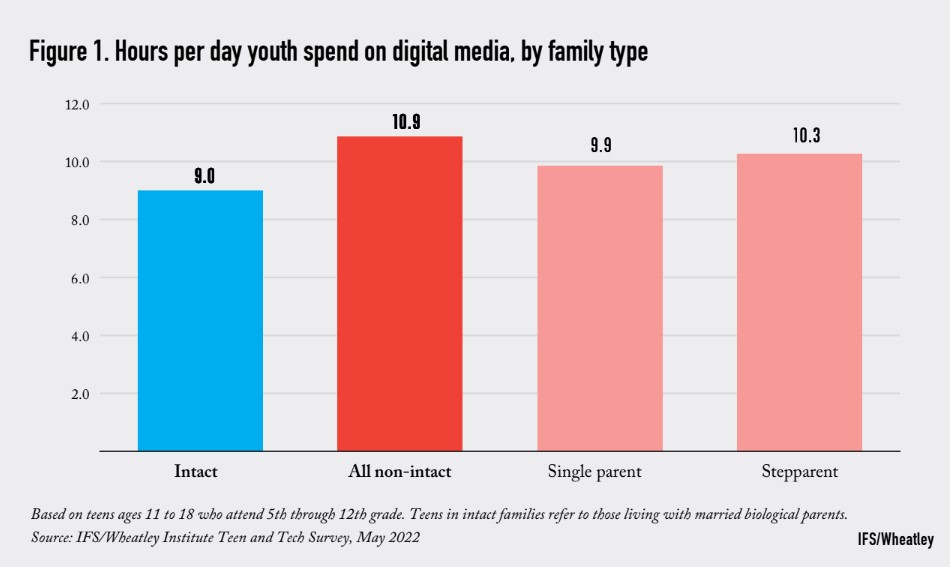
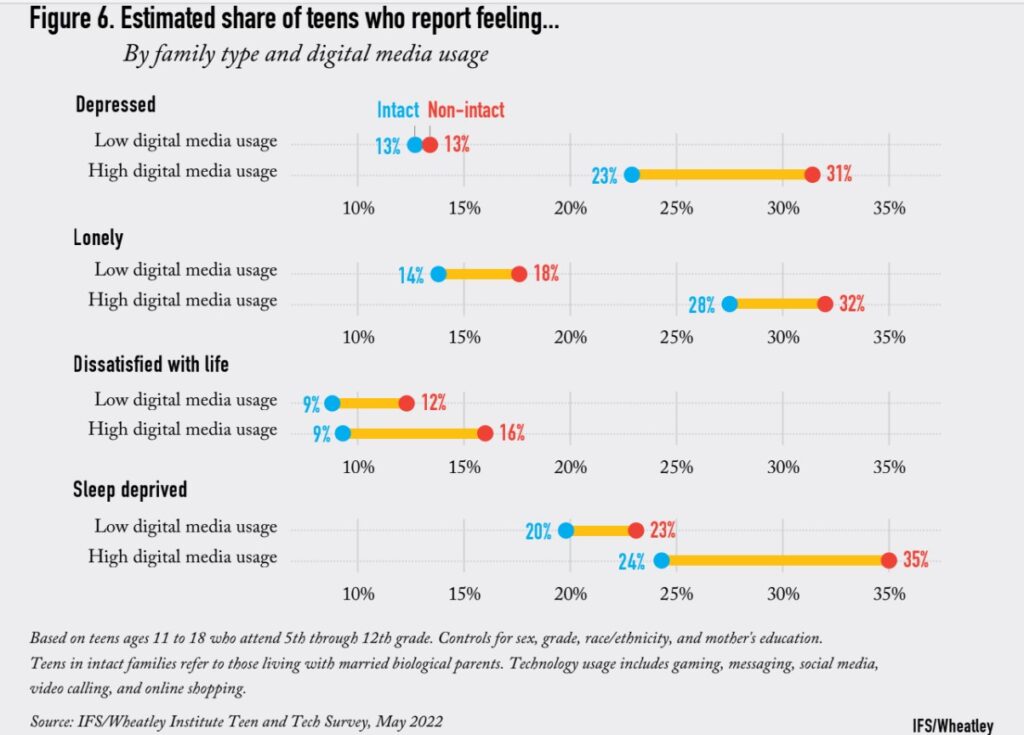











 What Did You Say?

You must be logged in to post a comment.