By Massive Margins, Voters in Eight States Say Only Citizens Can Vote in Their Elections
By: M.D. Kittle | November 08, 2024

M.D. Kittle
As divided as America may be, this election showed there’s one thing most Americans agree on: Only U.S. citizens should vote in U.S. elections.
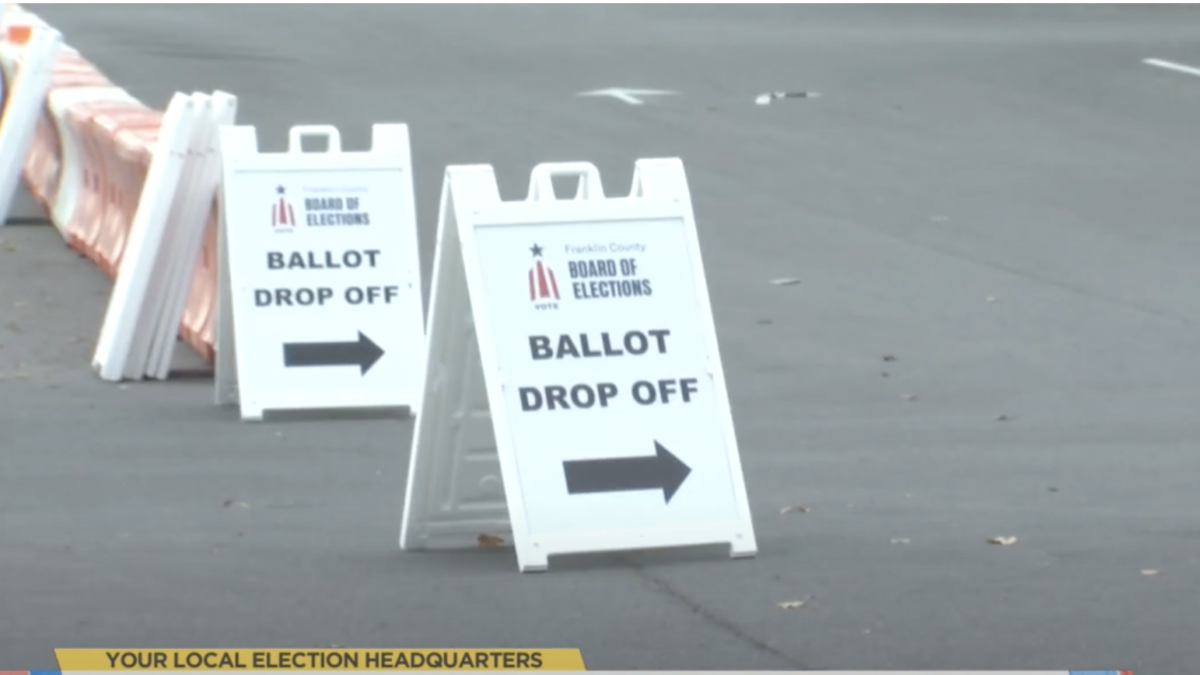
Voters this week in eight states — Idaho, Iowa, Kentucky, Missouri, North Carolina, Oklahoma, South Carolina, and Wisconsin — overwhelmingly approved constitutional amendment ballot questions seeking to ensure noncitizens cannot vote in state and local elections. Foreign nationals are already barred from voting in federal elections.
“We’re so often told about how divided we are in the United States, but on Tuesday we had Republicans, Democrats and independents come together in overwhelming numbers declaring that only citizens would be able to vote” in elections, a jubilant Will Martin, Wisconsin state director of Americans for Citizen Voting, told The Federalist in a phone interview this week.
The Badger State’s Citizen-Only Voting Amendment (COVA) was endorsed by more than 70 percent of voters in Tuesday’s election, according to unofficial tallies. Support topped 65 percent in each of the states with COVA questions on the ballot, according to unofficial results reported by state news organizations. In Iowa, the referendum passed with 76 percent support. In South Carolina, the ballot question earned the approval of a whopping 86 percent of voters.
In Missouri, the same ballot question amending the state constitution to make clear only citizens can vote in Show Me State elections also knocked out ranked-choice voting by a two-to-one margin.
Before Election Day, COVA advocates felt confident, but Wisconsin presented the biggest challenge. Jack Tomczak, vice president for Citizen Outreach for Americans for Citizen Voting, told The Federalist that the amendment faced “well-funded” opposition led by the leftist League of Women Voters. More than three dozen leftist groups lent their names and resources to an effort to defeat the referendum. Martin said opponents ran “shameful” ads falsely warning voters that military personnel wouldn’t be able to vote in Wisconsin elections if the amendment passed.
In Idaho, Democrat lawmakers claimed noncitizens could be barred from voting in private elections, including homeowner associations and parent-teacher associations elections. The amendment ballot questions had nothing to do with such races, just as they don’t involve federal election law.
‘Being Diminished’
Opponents, assisted by the accomplice media, pushed the left’s false talking point that foreign nationals voting in elections is nearly nonexistent and that the constitutions in Wisconsin and the other states already bar noncitizens from voting.
“Passage of the amendments marks the latest chapter of Republican’s [sic] ongoing efforts to put unfounded claims of noncitizen voting at the center of a broader political strategy,” Democratic Party mouthpiece NBC News reported this week.
In the words of outgoing acting President Joe Biden, malarky.
As The Federalist has reported, the vast majority of states’ constitutions include language that “every” citizen meeting age and residency requirements is eligible to vote. The amendments demand that “only” U.S. citizens meeting the requirements are electors.
Opponents of the COVA movement insist there’s no difference. The “every” phrasing opens the door to noncitizens being allowed to vote in state and local elections, as is the case in California, Maryland, Vermont and the District of Columbia.
In September, Frederick became the largest city in Maryland to allow noncitizens to vote in its elections. The Board of Aldermen voted 4-1 to give green card and illegal immigrants the right to cast ballots. Kelly Russell was the sole dissenting vote.
“I have talked to many people who worked to get their citizenship in order to vote who do not agree to that, who feel that their efforts and all the hard work that they did is being diminished by this,” she said, according to Fox45 News in Baltimore.
Takoma Park, Maryland, has allowed foreign nationals to vote in local elections for more than 30 years. All told, a dozen Maryland municipalities open the franchise to noncitizens. They can because there’s nothing in the state constitution that prevents them from doing so.
‘Common Sense’ Movement
Wisconsin legislative Democrats have voted en bloc against resolutions to take the citizen-only amendment to the voters. While they insist noncitizens illegally voting in elections isn’t an issue, it is. Noncitizens have voted in U.S. elections and thousands have shown up on state voter rolls this election cycle.

The problems are only magnified by an unprecedented 10 million U.S. Border Patrol encounters with illegal aliens in the nearly four years that Biden and Vice President Kamala Harris have been in office. While it is a felony for foreign nationals to vote in U.S. elections, incidents are difficult to track and not a priority for many prosecutors.
“There are at least 25 million non-citizens in the country according to the Census Bureau and no federal enforcement mechanism to ensure their names don’t appear on the voters rolls,” Paige Terryberry, senior research fellow at the Foundation for Government Accountability, told The Federalist in September. “Right now, the Biden-Harris administration is using welfare offices, DMVs, Public housing, healthercare.gov and more to register voters, and they aren’t verifying citizenship at these locations. States can act too, but the SAVE Act is the only thing that can fix this problem nationwide before the election.”
Each illegal vote diminishes those of eligible voters.
Since 2018, 14 states have added, or have voted to add, citizenship requirements to their constitutions, according to Ballotpedia.
Martin noted that swing state Wisconsin is a “50-50” state, as evident by former President Donald Trump’s victory in the so-called “blue wall” state by a little over 28,000 votes. Still, the ballot question scored majorities in 71 of 72 counties, Martin said.
The COVA advocate said the issue is part of a sea change in America, a return to basic guiding values.
“Theres a movement in this country toward common sense,” Martin said. “People are tired of people trying to interpret for them, people are tired of being told what to think.”
For more election news and updates, visit electionbriefing.com




.jpg)






 Reported by


 Columbia police on Wednesday arrested a 53-year-old man who allegedly pulled a teenage family member out of Hickman High School by her hair and slapped her.


 , Posted: Wednesday, May 13, 2015


 The thing is, doing so is what actually hurts the American people.




 What Did You Say?


This was the most misguided filibuster since Wendy Davis tried (and failed) to block Texas from adopting reasonable limits on late-term abortions and commonsense clinic safety standards.
As we have seen in Indiana, Georgia, and West Virginia, big business and the left have once again teamed up with government actors to form a triumvirate of cultural cronyism aiming to block popular religious freedom protections.
Missouri’s proposal is sound public policy and should be adopted. It ensures continued religious freedom, a freedom that is acutely threatened in the wake of the Supreme Court’s redefinition of marriage last summer. Those who remain true to their religious beliefs about marriage need protection from government discrimination like never before, and the Missouri proposal provides just that.
Opponents of the Missouri proposal nevertheless claim that it will lead to widespread LGBT discrimination. This is false.
The Missouri proposal does not take anything away from anyone. It specifically says that it shall not take away anyone’s right to a government marriage license, to receive government benefits (such as health insurance or tax deductions), or to visit a sick spouse in a hospital.
The proposal is an anti–discrimination measure that protects the rights of all Missourians to be free from government punishment and coercion when they live out their beliefs about marriage.
The Missouri proposal would protect this freedom by a constitutional amendment, which means that once the protections are in place, people of faith will be insulated from state judges or politicians that are (or may become) hostile to religious freedom. It means the people of Missouri get a direct say in their own governance. It means that religious freedom is protected for all, both now and in the future.
The protections in SJR 39 are precise, clear, and concrete—so much so that a filibustering senator was asked to point to a provision, any provision, in the proposal that was discriminatory but was unable to.
This is because the Missouri proposal would prevent discriminatory government action, not unleash it. Here are some examples:
In short, like the federal First Amendment Defense Act on which it is based, the Missouri proposal would guarantee that religious institutions can retain their religious identity in private life, in public life, and in service to the poor and the needy in the community.
The proposal also protects people like Barronelle Stutzman, a 70-year-old florist from Washington state who was happy to serve gays and lesbians but was sued, fined, and harassed because she declined, based on her Christian faith, to make custom floral arrangements to celebrate a same-sex wedding. It would likewise protect the Klein family of Oregon, who were fined $135,000 for declining to make a cake celebrating a same-sex wedding in violation of their faith.
Contrary to the mischaracterizations of opponents, the Missouri proposal protects only “closely held” businesses, only when they provide goods or services “of expressional or artistic creation” and only in the context of wedding celebrations and marriages that they cannot in good conscience endorse. In practice, this means family-owned bakers, florists, and photographers would be protected when providing custom wedding services, but not Hilton hotels.
The people of Missouri should get to decide whether their state will be an inclusive place that protects reasonable and long-standing religious beliefs about marriage now and for the generations to come. This proposed constitutional amendment will give them that chance if only the obstructionists using extreme tactics get out of the way.