A proposal is circulating in Washington to dump President Joe Biden and hold a “blitz primary” to choose a replacement. The proposal is the work of Rosa Brooks, a Georgetown University law professor who worked in the Obama and Clinton administrations, and Ted Dintersmith, a venture capitalist and education philanthropist. The proposal is gaining support with party insiders and repeats the hyperbolic claim that this is essential to avoid a “democracy-ending defeat.” It is disappointing to see a law professor repeating this unfounded alarmist claim. Yet, the most glaring contradiction is found in the stated desire to give delegates a choice after the party worked to prevent any choice for voters in state primaries.
The authors promise an “uplifting” path in which candidates would pledge not to attack each other. They would then have a few weeks as named celebrities like Oprah and Taylor Swift would moderate discussions. Delegates would then use ranked voting before the August 19th convention.
The authors proclaim that “we can limp to shameful, avoidable democracy-ending defeat. Or Democrats can make this Our Finest Hour. While we hope for help from Lord Almighty, the Lord helps those who help themselves.”
One wrinkle is that Biden himself spent Sunday pledging again that he is not stepping aside. He also continued his penchant for bizarre statements like stating that “even when I was running for Senate, each time I ran – quite frankly, not a joke – Philadelphia, in particularly, got me across the line. No, I’m not joking. No, I mean it, seriously. Organizationally and in terms of fundraising, the whole deal.”
Either Biden was confessing to using Pennsylvania votes to win elections in Delaware or he was hopelessly confused. Seriously.
The “finest hour” for the party is coming a bit late given the concerted effort of the Democratic establishment to strip away opposing candidates from ballots and crush anyone offering an alternative to Biden. At the same time, both the press and pundits attacked those who raised the President’s infirmity, including calling unedited videos “cheap fakes.”
At the same time, the Democratic establishment opposed any debate where Biden’s infirmities might have been observed when there was still time for voters to make another choice. They did so even though every poll showed the majority of Democratic voters thought Biden was too old and wanted an alternative choice. (Notably, I also favored a debate in the GOP primary. While Trump did not participate in any debate, he was widely available for media questions and pressers).
Now, after quashing opposing candidates when the public would have had a chance to make a state-by-state choice, insiders are calling for an “uplifting” blitz election by the party establishment and activists.
I am still curious how this will work. Donors gave money to the Biden-Harris ticket. That money would now have to be used for different candidates. Absent a formal acceptance to the alternative slate, it could raise tough questions under federal election laws. Likewise, the DNC is coming up on a number of states with drop-dead dates for ballot changes. Finally, there is the rather awkward problem of a President who is still very much alive and running.
As Biden objects over and over again that he will not step aside, Brooks and Dintersmith are already planning his political eulogy where Biden would be celebrated as a “modern-day George Washington.”
Once again, the Democratic Party seems to be channeling Monty Python in planning for a departure of a president who does not want to go.
Below is my column in the New York Post on the vicious attacks being directed at Judge Aileen Cannon as she addresses pre-trial motions in the Florida prosecution of former president Donald Trump. The sheer hypocrisy in the media is overwhelming after denouncing any criticism of Judge Juan Merchan in the Manhattan prosecution. For Cannon, it is nothing short of a press pile-on.
Here is the column:
The politicians, the press, and pundits are in a feeding frenzy around Judge Aileen Cannon, the federal judge presiding in the Florida case against former President Donald Trump. There is a torrent of hit pieces and petty attacks on virtually every media platform. What is impressive is the complete lack of self-awareness over the hypocrisy of these attacks. Just a few weeks ago, the New York Times and other media outlets went into vapors when anyone uttered criticism of Manhattan Justice Juan Merchan in another Trump case.
In 2020, Judge Cannon was confirmed in a bipartisan vote, with the support of liberals such as Senator Patrick Leahy (D-Vt.) and Dianne Feinstein (D-Cal.). Now she is being denounced as a “partisan, petty prima donna, “wacko, crazy, loony, nutty, ridiculous, and outlandish,” and a “right-wing hack.” From the descriptions in the Washington Post, New York Times and virtually every mainstream media outlet, you would think that Cannon was a freak in the courtroom, raving uncontrollably at any passerby.
These critics often stress that she is an appointee of Trump, even though many Trump appointees have ruled against the former president on 2020 election issues. And these same figures denounced Trump for attacking the perceived political bias of Democratic nominees in some of his cases.
Cannon was randomly selected, as opposed to Merchan, who was hand-picked to try Trump even though he is a political donor to President Joe Biden and has a daughter who is a major Democratic operative. Yet these same figures denounced those who questioned Merchan’s refusal to step aside or criticized his rulings against Trump throughout the trial.
In reality, the “loose Cannon” spin is utterly disconnected with her actual rulings.
She has ruled for and against both parties on major issues. That includes the rejection of major motions filed by the Trump team and most recently challenged Trump counsel on their claims that the Special Counsel is part of “a shadow government.”
Notably, when Cannon recently rejected the main motion for dismissal by the Trump team, the Washington Post buried that fact in an article titled “Judge Cannon Strikes Paragraph in Trump Classified Document Indictment.” The suggestion was that the striking of a single paragraph was more newsworthy than insisting that Trump go to trial on these counts. (Also buried in the article is a recognition that the removal of this one paragraph “does not have a substantive effect on the case.”)
Most recently, the left expressed nothing short of horror that Judge Cannon allowed the Trump team to argue a point of constitutional law in a hearing. Scholars and former prosecutors (including former attorneys general) have argued that the appointment of special counsels like Smith are unconstitutional. This is a novel and intriguing constitutional objection that is based on the text of the Constitution, which requires that high-ranking executive officers like U.S. Attorneys be appointed under statute or nominated by the president (and confirmed by the Senate).
Yet after the expiration of the Independent Counsel Act in Jun 1999, the Justice Department asserts the right to take any private citizen like Smith and effectively give him greater authority than a U.S. Attorney. This glaring inconsistency has led to a number of challenges. Thus far, they have been unsuccessful, but none have gone to the Supreme Court. Cannon wanted to hear oral arguments before ruling on the question. That decision has sent the politicians and reporters into another frenzy of faux outrage and indignation.
MSNBC legal analyst and NYU law professor Melissa Murray went on with host Chris Hayes to tell Judge Cannon to “stay in her lane” and mock her consideration of constitutional claim:
“Girl, stay in your lane. Stay. In. Your. Lane. So, yes, not only has the issue of whether the special counsel comports with the structures of constitutional law, that’s been settled. That’s been addressed in multiple courts. Settled. We don’t have to rehash that … If this were an actual issue it would ultimately be decided by the Supreme Court, not by a district court judge in Fort Pierce, Florida.”
It is a baffling lecture. Cannon is precisely in her lane in hearing a claim without controlling authority. The fact is that the Supreme Court has not ruled on the issue and many lawyers have objected to the summary treatment given the claim by other courts. The point of creating a record is to allow a full review that could well end up at the Supreme Court.
Who isn’t staying in their lane? Cannon’s colleagues.
The New York Times recently reported that two judges attempted to get Cannon to hand off the case when it was randomly assigned to her. So, the suggestion is that two of her colleagues breached any sense of collegiality and confidentiality to contribute to a hit piece on Cannon.
It is worth noting that there was no reason for Cannon to decline the selection, particularly not due to her appointment by Trump. A variety of Trump appointees have ruled against Trump on matters without a hint of objection from the left.
While it is true that Cannon was just put on the bench a couple years ago, that did not seem to bother these same pundits in the Georgia case. Fulton County Superior Court Judge Scott McAfee was put on the bench only shortly before being assigned the Georgia case against Trump and associates.
Cannon is a true American success story and, if she were only to rule in favor of the left, she would certainly be the subject of glowing stories of how she went from being born in Cali, Colombia to joining the federal bench. Her mother escaped Cuba after the revolution, and she grew up with a deep-seated faith in the rule of law. She graduated from Duke University and, after a stint as a journalist, graduated from Michigan Law School magna cum laude.
Yet there will be no “American dream” stories for Cannon like the ones that ran for Sonia Sotomayor after her nomination.
Cannon is a Republican and has the temerity to follow a conservative jurisprudence. For the media, that makes her unworthy (much like the lack of coverage on Justice Clarence Thomas’ incredible life story).
There is little chance that the scorched Earth campaign against Cannon will work. When your family escapes Communist Cuba and then the drug-ravaged city of Cali, partisan media hit pieces are hardly intimidating. That may be frustrating for many in the media, but she is fulfilling the purpose of Article III of the Framers. She will rule and she will not yield.
Jonathan Turley is the J.B. and Maurice C. Shapiro Professor of Public Interest Law at the George Washington University School of Law.He is the author of “The Indispensable Right: Free Speech in an Age of Rage” (Simon and Schuster, 2024).
In my new book, The Indispensable Right: Free Speech in an Age of Rage, and a recent academic work, I discuss a new rationale being used by administrators to punish free speech: threatening academic collegiality or campus tranquility. I was discussing the Fourth Circuit case of Porter v. Board of Trustees of North Carolina State University, which was unfortunately not reviewed by the Supreme Court. Now, as feared, it is being replicated by the Sixth Circuit in Gruber v. Tenn. Tech. Bd. of Trustees. The result is a new and serious threat to free speech in higher education to curtail speech where it would be “likely to cause disruption” or undermine the “fostering [of] a collegial educational environment.”
The Porter case involved the targeting of a conservative faculty member who opposed diversity views. Given the purging of conservative professors from faculties and the intolerance on our campuses, the use of collegiality to justify disciplinary action is likely to fall more heavily on the dwindling number of conservatives.
However, Gruber involved professors who spoke out against a conservative colleague. As previously addressed by Keith Whittington, the case involved Professor Andrew Donadio, who serves as the faculty advisor for the local chapter of Turning Point USA at Tennessee Tech University.
Donadio was attacked by Professor Julia Gruber and Instructor Andrew Smith who hold strikingly anti-free speech views that are evident in the flyers that they put up around campus denouncing the “hate and hypocrisy” of “Professor Donadio and Turning Point USA.” In addition to saying that his views are “not welcome at Tennessee Tech,” they declared that there should be “no unity with racists” and that “hate speech is not free speech.”
Gruber and Smith are only the latest examples of academics who reject free speech rights for others, but still demand that their own views be protected. Fortunately for them, the free speech community supports free speech regardless of its inherent merits or the hypocrisy of speakers.
Provost Lori Bruce disciplined Gruber and Smith under Policy 600, requiring faculty members “to conduct themselves fairly, honestly, in good faith, and in accordance with the highest ethical and professional standards.”
As with Porter, the use of a lack of collegiality has long been used against those with unpopular views. I previously wrote:
“The lack of collegiality and professionalism has long been shibboleth for those have sought to block minorities and women from appointments. Many objected to the claims of ‘lack of collegiality’ and bad ‘temperament’ raised against figures like Justice Sotomayor when she was nominated for the Court. Indeed, the American Association of University Professors has stressed that collegiality is often a coded or biased basis for discrimination. It cautioned against this use since, “[i]n the heat of making important academic decisions regarding hiring, promotion, and tenure, it would be easy to confuse collegiality with the expectation that a faculty member display ‘enthusiasm,’ or evince ‘a constructive attitude’ that ‘will foster harmony.’” Indeed, collegiality is commonly defined as being “cooperative,” a virtue that is hard to display when you are a dissenting voice on a matter of intense and passionate debate with your colleagues.”
Nevertheless, Sixth Circuit Judges Richard Griffin, Helene White, and Eric Murphy upheld the lower court decision supporting the university:
When deciding whether the plaintiff engaged in protected activity, we first determine whether the action constitutes speech on a matter of public concern, and if it does, we apply the “Pickering balancing test” to determine whether the plaintiff’s interest in commenting outweighs the defendant’s interest as an employer in promoting the efficiency of the public services it performs through its employees. The balancing test considers the manner, time, and place of the expressive action, and the pertinent considerations include whether the action (1) impairs discipline by superiors or harmony among coworkers, (2) negatively affects close working relationships for which personal loyalty and confidence are necessary, (3) impedes performance of the speaker’s duties or interferes with the employer’s regular operations, and (4) undermines the employer’s mission….
TTU does not dispute that the district court properly concluded that the plaintiffs’ speech was a matter of public concern. Even so, as the district also properly concluded, the plaintiffs’ distribution of the flyers was not protected speech because their speech interest was outweighed by TTU’s interest in preventing a disruption to its pedagogical and collegial environment….
At the outset, the “manner” of the plaintiffs’ speech decreased its expressive value and increased TTU’s operational interests. Plaintiffs did not speak in the classroom or through scholarship, where professors’ “rights to academic freedom and freedom of expression are paramount.”
Nor is this a simple case of one professor raising a race-related issue with another or expressing disagreement with a group’s ideology, perhaps one-on-one or in a more private setting. Instead, the plaintiffs posted flyers in an academic building at a time they knew students would be on campus for class and posted an additional flyer the next day. Those flyers were highly likely to cause disruption, and they did so in several ways.
Specifically, the flyers identified Donadio as a “racist college professor” and branded members of Turning Point USA as “racist students.” They stated in bold text that the professor and group’s “hate & hypocrisy are not welcome at Tennessee Tech.” The dissemination of “disrespectful, demeaning, insulting, and rude” messages targeting a colleague and students—regardless of whether some accusations may have had basis in fact—to the entire university community undoubtably threatened to disrupt TTU’s learning environment and academic mission.
For one, flyers that publicly attack a colleague as racist and threaten that the colleague is on the anonymous author’s “list” certainly “impairs … harmony among co-workers.” {Plaintiffs protest that they did not interact with Donadio professionally, so there was no harmony to impair. But even if the professors did not work closely together, they were nonetheless colleagues on TTU’s faculty, and it was not unreasonable for Bruce to conclude that on-campus and public accusations of racism—even between colleagues who did not work together—could cause disruption of the university’s operations.}
Perhaps more critically, by attacking students, the flyers threatened the core of TTU’s educational “mission” and undermined the plaintiffs’ ability to perform their teaching “duties.” The flyers insinuated that, like Donadio, all students who were members of Turning Point USA were racist. The accusations harmed these students’ educations.
For example, one Turning Point USA member, having been deemed a racist, missed class because of the fallout. In addition, the accusations affected the plaintiffs’ effectiveness in the classroom. Students in the club, or those considering joining the club, who were taking courses with Gruber and Smith might reasonably fear the potential treatment they would receive in class due to differing political views. This case is thus factually distinguishable from cases like Pickering, where a teacher was disciplined for writing a letter to a local newspaper criticizing the school district that was “in no way directed towards any person with whom [the teacher] would normally be in contact in the course of his daily work as a teacher.” And most basically, TTU has ‘an interest in fostering a collegial educational environment.’ Permitting professors to circulate flyers with personal attacks on colleagues and students undoubtably undermines that interest.
To be sure, the flyers were quickly collected and affected only a handful of students and professors. But evidence of widespread disruption is not necessary: it was reasonable for Bruce to believe that, had the flyers remained posted, they could have caused far greater disruption.
Lastly, the “place” of the plaintiffs’ speech undermines their interests even further. Even if they did not undertake this speech pursuant to their official duties, they also did not engage in it away from campus as private citizens. Rather than make their claims on their personal Facebook pages or in a local newspaper, they chose to use TTU’s own property as the billboard for their speech. But public employers have greater interest in regulating speech “at the office” (or here on campus) than they do away from the public employers’ property. Indeed, the conclusion that the First Amendment protected the plaintiffs’ speech would mean that TTU remained powerless to remove the flyers off of its property. So this case raises no concern that TTU sought to “leverage” its employment relationship with the plaintiffs to regulate their speech “outside” the context of its university functions.
All told, the Pickering balancing test weighs against the plaintiffs’ speech being protected. The flyers, which attacked a professor and student organization and stated that they were not welcome on campus, created a reasonable threat of disrupting TTU’s academic mission and is the type of speech that a learning institution has a strong interest in preventing. Under the Pickering balancing test, TTU’s interest in preventing a potential disruption to its pedagogical and collegial environment outweighed the plaintiffs’ interest in distributing the flyers. Thus, the plaintiffs’ speech was not protected, foreclosing their First Amendment retaliation claim.
The allowance for censorship and sanctions for speech “likely to cause disruption” would gut free speech protections on campus. The court suggests that the ability of the university to crack down on the speech was magnified by the fact that others might be particularly interested in their views or exposed to them. It is enough that it threatened the tranquility of campus and the collegiality of the faculty.
This week we discussed an analogous position at Harvard where Lawrence Bobo, the Dean of Social Science, rejected views of free speech as a “blank check” and said that criticizing university leaders like himself or school policies are now viewed as “outside the bounds of acceptable professional conduct.”
The refusal of the Court to take the Porter decision was crushing for many of us in the free speech community and academia. Hopefully, Gruber will receive a more favorable review in light of the expanding threat to free speech to “foster a collegial educational environment.”
In my book out this week, The Indispensable Right: Free Speech in an Age of Rage, I write about the anti-free speech movement that has swept over higher education and how administrators and faculty hold a view of free speech as harmful. Now Harvard is again at the heart of a free speech fight after Lawrence Bobo, the Dean of Social Science, rejected views of free speech as a “blank check” and said that criticizing university leaders like himself or school policies are now viewed as “outside the bounds of acceptable professional conduct.”
Bobo warns that public criticism of the school could “cross a line into sanctionable violations.”
“A faculty member’s right to free speech does not amount to a blank check to engage in behaviors that plainly incite external actors — be it the media, alumni, donors, federal agencies, or the government — to intervene in Harvard’s affairs. Along with freedom of expression and the protection of tenure comes a responsibility to exercise good professional judgment and to refrain from conscious action that would seriously harm the University and its independence.”
The column adopts every jingoistic rationale used by anti-free speech critics today, including the invocation of the Holmes “crowded theater” analogy:
“But many faculty at Harvard enjoy an external stature that also opens to them much broader platforms for potential advocacy. Figures such as Raj Chetty ’00, Henry Louis Gates Jr., Jill Lepore, or Steven A. Pinker have well-earned notoriety that reaches far beyond the academy.
Would it simply be an ordinary act of free speech for those faculty to repeatedly denounce the University, its students, fellow faculty, or leadership? The truth is that free speech has limits — it’s why you can’t escape sanction for shouting “fire” in a crowded theater.”
First and foremost, the ability of faculty to speak out on public disputes should not depend on whether you are more popular or visible. However, it is the theater analogy that is most galling.
I have an entire chapter in The Indispensable Right that addresses the fallacies surrounding this line out of the Holmes opinion. It is arguably the most damaging single line ever written by a Supreme Court justice in the area of free speech.
I have previously written about the irony of liberals adopting the analogy, which was used to crack down on socialists and dissenters on the left.
One of the most telling moments came in a congressional hearing when I warned of the dangers of repeating the abuses of prior periods like the Red Scare, when censorship and blacklisting were the norm. In response, Rep. Dan Goldman, D-New York, invoked Oliver Wendell Holmes’ view that free speech does not give a person the right to yell fire in a crowded theater. In other words, citizens had to be silenced because their views are dangerous to others.
When I attempted to point out that the line came from a case justifying the imprisonment of socialists for their political viewpoints, Goldman cut me off and “reclaimed his time.”
Other Democrats have used the line as a mantra, despite its origins in one of our most abusive anti-free speech periods during which the government targeted political dissidents on the left.
Dean Bobo is now the latest academic to embrace the theater rationale to justify the silencing of dissent. At Harvard, he is suggesting that the entire university is now a crowded theater and criticizing the university leadership is a cry of “Fire.” It is that easy.
By punishing criticism of the school’s leadership and policies, Bobo believes that they can look “forward to calmer times” on campus. It is precisely the type of artificial silence that academics have been enforcing against conservatives, libertarians, and dissenters for years. It is the approach that reduced our schools to an academic echo chamber.
The reference to Professor Steven Pinker is particularly ironic. As we have previously discussed, Pinker was targeted for exercising free speech. In past controversies, most Harvard faculty members have been conspicuously silent as colleagues were targeted by cancel campaigns. It was the same at other universities.
As faculties effectively purged their ranks of conservative or Republican members, the silence was deafening. Others either supported such campaigns or justified them. Notably, over 75 percent of the Harvard faculty identify as “liberal” or “very liberal.”
Then the Gaza protests began and some of these same faculty found themselves the targets of mobs. Suddenly, free speech became an urgent matter to address. Fortunately for these liberal professors, the free speech community is used to opportunistic allies. Where “fair weather friends” are often ridiculed, free speech relies on “foul-weather friends,” those who suddenly see the need to protect a diversity of opinions when they feel threatened.
Bobo’s arguments are consistent with years of rationales for silencing or investigating dissenting faculty for years. It violates the very foundation for academia in free speech and academic freedom. The university is free to punish students or faculty for unlawful conduct. However, when it comes to their viewpoints, there should be a bright line of protection.
Of course, this criticism is likely to trigger another common fallacy used to rationalize speech controls: as a private university Harvard is not subject to the First Amendment and thus this is not a true free speech issue.
As discussed previously, free speech values go beyond the First Amendment whether it is a controversy on social media or campuses. For years, anti-free-speech figures have dismissed free speech objections to social media or academic censorship by stressing that the First Amendment applies only to the government, not private companies or institutions. The distinction was always a dishonest effort to evade the implications of speech controls, whether implemented by the government or corporations.
The First Amendment was never the exclusive definition of free speech. Free speech is viewed by many of us as a human right; the First Amendment only deals with one source for limiting it. Free speech can be undermined by private corporations as well as government agencies. This threat is even greater when politicians openly use corporations and universities to achieve indirectly what they cannot achieve directly.
Dean Bobo’s desire for “calmer times” would come at too high a price for free speech as well as Harvard.
There is a controversy in Oregon over a proposed change in the ethics rule from the Oregon Medical Board. At issue is the use of “microaggressions” to discipline doctors and to make reporting such transgressions mandatory for all doctors. It seems before you can give stitches, you have to join snitches under one of the most ambiguous categories of prescribed speech.
I have been a critic of microaggression rules on college campuses and discuss this trend in my book out this week, The Indispensable Right: Free Speech in an Age of Rage. In past debates over this category of offensive speech, I have objected that it is hopelessly vague and highly controversial.
: a comment or action that subtly and often unconsciously or unintentionally expresses a prejudiced attitude toward a member of a marginalized group (such as a racial minority)
A digital photo project run by a Fordham University student about “racial microaggressions” features minority students holding up signs with comments like “You’re really pretty … for a dark-skin girl.”—Jinnie Spiegler
There is a real and worthy conversation taking place in this country now, particularly among young people, around the idea of microaggressions—slight, often unintended discriminatory comments or behaviors.—Charles M. Blow
also: behavior or speech that is characterized by such comments or actions
… argues that the power of microaggression lies in its invisibility to the perpetrator, who typically finds it difficult to believe that he or she possesses biased attitudes.—Emily Skop
That ambiguity creates a threat to free speech through a chilling effect on speakers who are unsure of what will be considered microaggressive. Terms ranging from “melting pot” to phrases like “pulling oneself up by your own bootstraps” have been declared racist. Some of those have been identified by Columbia professor Derald Wing Sue, cited by Oregon’s state government as a “microaggressions expert.”
Professor Sue considers statements like “Everyone can succeed if they just work hard enough!” as an example of a microaggression. Sue’s work on “microassaults,” “microinsults,” and “microinvalidations” are being effectively adopted by the Board.
Notably, when I have objected to this category, advocates have insisted that they are merely voluntary and instructive, not mandatory. I have long argued that they are used in a mandatory fashion by triggering investigations of professors and would inevitably be made mandatory.
That appears to be happening in Oregon. A couple of conservative sites have covered the controversy.
Under the new ethics rule from the Oregon Medical Board, “unprofessional conduct” (over which a doctor can lose his or her license) will include microaggressions:
“In the practice of medicine, podiatry, or acupuncture, discrimination through unfair treatment characterized by implicit and explicit bias, including microaggressions, or indirect or subtle behaviors that reflect negative attitudes or beliefs about a non-majority group.”
The new section “J” ranks microaggressions with fraud, sexual assault, and ordering unnecessary or harmful surgeries.
Oregon Medical Board states that
“The proposed rule amendments update the definition of “unprofessional conduct” to include discrimination in the practice of medicine, podiatry, and acupuncture, which would make discrimination a ground for discipline. The proposed rule may favorably impact racial equity by making discrimination a ground for discipline for OMB licensees. It is not known how the other proposed rule amendments will impact racial equity in the state.”
The incorporation of microaggressions under the new ethic rules is precisely what some of us have been warning about for years. As is often the case, activists begin by insisting that language monitoring is purely instructional and optional before codifying those rules in mandatory terms.
We have seen the same trajectory in other areas like land acknowledgments where the line between the optimal and the mandatory is hard to discern. As discussed in my book:
“What began as voluntary statements have become either expressly or implicitly mandatory…George Brown College in Toronto requires faculty and students alike to agree to a land acknowledgment statement to even gain access to virtual classrooms. While such statements are portrayed as optional, they are often enforced as compulsory. The University of Washington encouraged faculty to add a prewritten ‘Indigenous land acknowledgment’ statement to their syllabi. The recommended statement states that ‘The University of Washington acknowledges the Coast Salish peoples of this land, the land which touches the shared waters of all tribes and bands within the Suquamish, Tulalip and Muckleshoot nations.’
Computer science professor Stuart Reges decided to write his own statement. He declared…’I acknowledge that by the labor theory of property the Coast Salish people can claim historical ownership of almost none of the land currently occupied by the University of Washington.’ … He was told that, while the university statement is optional, his statement was unacceptable because it questioned the indigenous land claim of the Coast Salish people. Reges’s dissenting statement was removed, and the university emailed his students offering an apology for their professor’s ‘offensive’ opinion and advising them on ‘three ways students could file complaints against’ him.”
Federal courts have ruled in favor of academics in disputes over microaggression rules, but the movement is expanding beyond campuses, as shown in Oregon.
I have no objection to the sharing of views of others on how certain phrases are received. I have dropped certain terms or phrases even though I did not see why a term or phrase is insulting. When others have a reasoned basis for objecting to language, I err on the side of caution to avoid making others uncomfortable. Yet, this category of speech was created to encompass a broad, ill-defined range of speech that falls below outright discriminatory or harassing language. That makes for a dangerously vague standard for a mandatory reporting rule.
The free speech concern is how such microaggressive terms can be used to curtail or punish speech, including supporting complaints for formal investigations. Disciplinary actions often seem based on how language is received rather than intended. Schools need to be clear as to whether microaggressive language can be the basis for bias complaints and actions.
Consider again the language from the Oregon Medical Board. It would encompass any “indirect or subtle behaviors that reflect negative attitudes or beliefs about a non-majority group.” The standard is heavily laden with subjectivity. (Notably, it does not include making such comments about any majority group, presumably whites or males).
The board then amplifies the standard by making it mandatory for other doctors to report colleagues. Under the proposed ruled,
“a licensee must report within 10 business days to the Board any information that appears to show that a licensee is or may be medically incompetent or is or may be guilty of unprofessional or dishonorable conduct or is or may be a licensee with a physical incapacity.”
So, doctors will have to police any “indirect or subtle behaviors” that “reflect negative attitudes or beliefs” . . . or face discipline themselves.
The Hippocratic oath is based on the pledge that doctors will “first do no harm.” Unfortunately, that pledge does not appear to apply to free speech in Oregon. Rather than merely publish opinions on phrases or practices that can be seen as microaggressive, the Oregon Medical Board is about to impose an ambiguous speech regulation that is likely viewed by some doctors as turning them into social-warrior snitches.
The Oregon Medical Board should remove the microaggressive provision. Sometimes the best treatment is the least intrusive.
A new poll conducted by NORC at the University of Chicago (commissioned by the Foundation for Individual Rights and Expression) shows that only 28% of Americans have a lot of trust in higher education. Academia has continued to alienate much of the country as an orthodox echo chamber. As with media outlets, the result has been falling interest and trust in these institutions. The poll asked, “How much confidence, if any, do you have in U.S. colleges and universities?”
Only 28% said they had a “great deal of confidence in colleges and universities.” Not surprisingly, given the ideological balance at most schools, the highest levels of trust came from Democrats and liberals. However, even this group only showed a 40% high confidence rate. Among Republicans, it drops to 12% and among independents it drops to 28%.
For most businesses, such negative reactions would be viewed as catastrophic. For academia, it will not matter a whit.
It is still personally beneficial for professors and administrators to push ideological agendas and maintain the lack of intellectual diversity on campuses. These professors are not challenged in their writings or their statements. They dominate publications, awards, and associations. In the meantime, these schools still receive sufficient support from alumni and, in the case of public universities, public funding.
This could not come at a worse time as many decide that college is simply not worth the money. At the same time, falling birthrates are impacting dropping applications. Others have little interest in going to institutions where they must hide their political viewpoints or values.
We have seen the same phenomenon in the media where media outlets are collapsing in viewership or readership, but reporters are resisting every effort to return to a more neutral and objective basis for coverage. Recently, the Washington Post’s new publisher and CEO William Lewis dropped a truth bomb on his writers by telling them “Let’s not sugarcoat it…We are losing large amounts of money. Your audience has halved in recent years. People are not reading your stuff. Right. I can’t sugarcoat it anymore.”
The response from the media has been a campaign against Lewis and another editor tasked with saving the newspaper from itself. The New York Times, National Public Radio, and other outlets have piled on Lewis with a series of attack pieces. This is being actively and openly supported by reporters at the Post and could well work in pressuring owner Jeff Bezos. The result will be to stay the course of plunging trust and readership at a paper that is hemorrhaging money and readers.
We need great universities and great newspapers as a nation. We need Princeton and the Post. That is why this trend is so alarming. These are hardened silos that seem impenetrable to efforts to restore trust in their product.
The Kindle and audiotape versions are now immediately available. The book itself can be mailed directly from Amazon or purchased locally. We were surprised that Barnes & Noble put in on display a couple days early.
This book has been 30 years in the making for me. It is a relief to see it released at long last. While the book challenges the anti-free speech movement sweeping over our campuses, corporations, and Congress, I hope that it will also offer some common grounds on a core constitutional value that defines us as a people.
From the book:
“We are justifiably proud of our protection of free speech, particularly at a time when the right is in decline around the world. Yet our often mythic view of free speech ignores our systemic denial of this right. If we are to understand this right, we have to recognize our history through the figures and failures that shaped us. We have to ask difficult questions about the limits of our tolerance for the speech of others, including those who we view as hateful or harmful. We cannot focus on just the redemptive moments when our rage subsided and reason pre- vailed. We remain a nation grappling with what free speech means to us as a people. What follows is meant to be the unvarnished story of free speech in America. For better or worse, it is our story.”
“Jonathan Turley’s magnum opus should be required reading for everyone who cares about free speech—certainly including anyone who questions or criticizes strong free speech protection. This a unique synthesis of the historical, philosophical, artistic, and even physiological bases for protecting free speech as a right to which all human beings are inherently entitled, and Turley provides riveting accounts of the courageous individuals, throughout history, who have struggled and sacrificed in order to exercise and defend the right. The Indispensable Right is an indispensable book.” —Nadine Strossen, former president of the American Civil Liberties Union
“Brilliant and intellectually honest, Jonathan Turley has few peers as a legal scholar today. With The Indispensable Right, he has given us a robust reexamination and defense of free speech as a right. Rich with historical content and insight, this superbly-written book calls out both the left and the right for attacks on free speech while offering in the final chapter a path forward.” —William P. Barr, former Attorney General and author of the No. 1 New York Times bestseller One Damn Thing After Another.
“This efficient volume is packed with indispensable information delivered with proper passion. Jonathan Turley surveys the fraught history of “the indispensable right” and today’s dismayingly broad retreat from its defense. He is especially illuminating on how the concept of “harm” from speech has been broadened to serve the interest of censors.” —George F. Will, Pulitzer Prize winner and Washington Post columnist.
“The First Amendment has consumed Jonathan Turley for more than thirty years. Lucky for us that he waited until now, amidst a climate of unprecedented rage rhetoric, to deliver a master class on the unvarnished history of free speech in America. The Indispensable Right is enlightening and engaging. It is also cautionary tale against state overcorrection of the often acrimonious, free exchange of ideas that are an essential part of the human experience.” —Michael Smerconish, host of CNN’s “Smerconish”
“During these often-bitter times, Jonathan Turley is my “go-to” commentator for smart, clear and honest analysis on any difficult legal controversy.” —Jim Webb, former Democratic U.S. Senator, Secretary of the Navy, and bestselling author
“Jonathan Turley’s book is the rarest of accomplishments: a timely and brilliantly original yet disciplined and historically grounded treatment of free speech. He dispels the view that our current social turmoil is “uncharted waters”—from the 1790’s Whiskey Rebels to the 1920’s Wobblies to the 1950’s communists, we’ve been here before—and argues persuasively that free speech is a human need and that we must resist the urge to restrict speech as “disinformation” or “seditious” or offensive to “woke” sensibilities.” —Michael B. Mukasey, former Attorney General and U.S. District Judge
“Jonathan Turley is one of the most astute and most honest analysts of the intersection of politics and law. Thirty years in the making, this book brilliantly proposes means for preserving the most important Constitutional right: the right to free speech. Elegantly written, exhaustively researched, and passionately argued, Turley has given us a superb and necessary tract for our time.” —Stephen B. Presser, Raoul Berger Professor of Legal History Emeritus, Northwestern University School of Law
“Jonathan Turley recognizes free speech as an essential good—an activity that is central to our very nature as human beings. This is in sharp contrast with those who defend free speech as merely instrumental to some other value, like democracy or the pursuit of truth; rationales that are then used to justify limiting speech in ways that obstruct human flourishing. In this important book, he explains why free speech has historically come under threat during periods of rage and proposes policies that will protect freedom of speech from those who would today destroy this indispensable right.” —Randy E. Barnett, Patrick Hotung Professor of Constitutional Law, Georgetown University Law Center
“The Indispensable Right is a courageous, provocative case by one of America’s most prolific public intellectuals for resurrecting natural law or embracing an autonomous basis for the protection of free speech. Not all First Amendment defenders will be persuaded––but one needn’t sign on to Turley’s robust view of free speech to appreciate the unique clarity and deep historical research he brings to his argument. Read this insightful book to understand the peril of today’s broad-based assault on free speech.”
—Michael J. Glennon, Professor of Constitutional and International Law, Tufts University, author of Free Speech and Turbulent Freedom: The Dangerous Allure of Censorship in the Digital Era.
“A vigorous defense of free speech, a right enshrined but often hobbled or outright abrogated. A smart book that invites argument—civil argument, that is, with good faith and tolerance.”
—Kirkus Book Reviews
“Turley has written a learned and bracing book, rigorously detailed and unfailingly evenhanded. For all his grim recounting of the assaults on free speech, his is ultimately a buoyant book.”
We have previously discussed the view of Michigan Law Professor and MSNBC legal analyst Barbara McQuade on free speech. We have strikingly different views on free speech. McQuade just published “Attack from Within: How Disinformation Is Sabotaging America” and calls free speech our “Achilles heel.” My book, The Indispensable Right: Free Speech in an Age of Rage, is out in the coming days with a more robust view of free speech.
Notably, McQuade’s call to limit free speech is justified as needed to combat disinformation, misinformation, and malinformation. Yet, McQuade just went public with a full-throated defense of what the U.S. government now calls a “conspiracy theory.” She maintains that the Hunter Biden laptop should still be discounted or dismissed as Russian disinformation.
In her comments, Professor McQuade joins the Post’s Philip Bump as one of the last dogs in this fight. Most media figures have long accepted the view of the U.S. government that the Hunter Biden laptop is “real” and authenticated.
I have previously disagreed with Professor McQuade on issues such as her belief that former president Donald Trump could be charged with manslaughter over the January 6th riot. Yet, those disagreements represent materially different understandings of the operative legal standards. Harvard Professor Laurence Tribe went even further in arguing that Trump could be charged with attempted murder. Academics can disagree on such matters and free speech allows us to hash out our differences.
However, I was still surprised by the effort to resurrect the Russian disinformation claim. Professor McQuade noted that the agent at the Biden trial could not say with certainty that nothing was changed to the laptop before it was obtained by agents from the computer shop. However, FBI agent Erika Jensen said that there was no evidence tampering.
That space, however, was big enough to drive a conspiracy theory through on X:
Trying again!
This week, FBI Agent Erika Jensen testified at the trial of Hunter Biden about the abandoned laptop that a repair shop owner gave to Robert Costello, attorney for Rudy Giuliani, shortly before the 2020 election. At the time, 50 former senior intelligence officers…
As noted by @emptywheel, however, questions remain about the chain of custody of the laptop, and [FBI] Agent [Erika] Jensen testified that she was unable to say whether the laptop was tampered with before the FBI obtained it.
And, as @AshaRangappa has noted, even if the content was authentic, it still may have been a Russian influence operation, just like the DNC hack-and-leak operation, designed to sow discord. If so, mission accomplished! […] Therefore, it remains unknown whether Russia was involved with the scheme, and it is still correct to say that the laptop has “all of the hallmarks of a Russian intelligence operation.”
Under this theory, any negative stories found in documents or electronic sources can have “the hallmarks of a Russian intelligence operation” in any given election. That same skepticism, of course, did not apply to the Steele dossier, which was secretly funded by the Clinton campaign and found by U.S. intelligence as containing possible Russian disinformation.
It is a variation on proving a negative. McQuade and others appear to be arguing that you must prove that there was no Russian involvement before giving weight to the damaging contents of the laptop.
Of course, there still has been no showing of any fake file or email. To the contrary, the most damaging emails on influence peddling and other potential criminal conduct have been verified. Yet, McQuade is repeating the claim that “even if the content was authentic, it still may have been a Russian influence operation.” There is also the more obvious explanation that Hunter abandoned his laptop at a computer shop and it was given to the FBI.
What is striking is how advocates are now abandoning the claims of false emails and files in favor of an argument that it may be true but still disinformation. This is consistent with the positions of many academics and the Biden Administration. The Cybersecurity and Infrastructure Security Agency (CISA) maintains this position.
CISA head Jen Easterly declared that her agency’s mandate over critical infrastructure would be extended to include “our cognitive infrastructure.” That includes not just “disinformation” and “misinformation,” but combating “malinformation” – described as information “based on fact, but used out of context to mislead, harm, or manipulate.”
The chain of custody argument continues to be used in Congress despite the federal court and federal agencies recognizing the authenticity of the laptop. The Delaware jury also did not appear persuaded by the claims of Hunter Biden’s defense counsel. It is, in my view, transparently evasive. The issue remains the files on the laptop detailing a massive influence peddling operation and a myriad of criminal acts committed by the President’s son. None of those files have been challenged by evidence of tampering or planting.
Ironically, the continued effort to keep this theory alive seems precisely the type of disinformation that Professor McQuade has cited in justifying limits on free speech.
There are obviously many media and academic figures who are heavily invested in what the government now calls a “conspiracy theory.” I previously discussed how the Bidens have succeeded in a Houdini-like trick in making this elephant of a scandal disappear from the public stage. They did so by enlisting the media in the illusion. Houdini knew the trick would work because the audience wanted the elephant to disappear.
Various posters on social media have featured a video of a graduating McGill University student appearing to spit on the Dean and another faculty member. She then produced a sign demanding divestment from Israel. As she appeared to spit on the President Deep Saini and the other faculty member, the audience can be heard cheering. The school later reportedly edited out the ugly incident and would not confirm that it will be taking any action against the student.
In the video, the student can be seen making the spitting gestures while wearing a keffiyeh and holding a sign that reads “Divest from death.”
The university did not deny that the incident was edited out and simply stated that “multimedia staff often cut to different angles during the livestream to focus on different aspects of the ceremony, which allows students and their families to celebrate an important milestone.”
The incident is only the latest such protest at graduations. In another protest recently (by an animal activist), interim Harvard President Alan M. Garber was hit by green glitter. Brittany A. Drake, the activist, pleaded not guilty to three counts of felony criminal charges.
McGill has not committed to seeking any discipline, let alone such charges, for the student.
The incident captures the breakdown of civility and respect at our institutions of higher education. This conduct has been reinforced by professors and administrators for years in pushing activism over academics. McGill students have declared that “free speech does not exist outside of its social context” and sought to strip professors of academic titles due to their holding opposing views. There has also been a lack of discipline for students who have engaged in the disruption of events and even classes.
McGill is one of the world’s finest universities, but it has shown little principle or courage in facing disruptive and disgraceful conduct in the past. Simply deleting the scene of the student spitting at the President will do little to address this trend. As academics, we need to reassert control over our campuses and stand firmly against conduct to disrupt events or classes.
UCLA Professor Hannah Appel has accused the school of human rights violations amounting to “torture” in the treatment of pro-Palestinian protesters. The reason is the denial of water and food from being brought into a building being unlawfully occupied by protesters, even though the students were free to leave at any time.
Appel teaches in the anthropology department in the areas of “transnational capitalism and finance,” “the economic imagination,” and “anti-capitalist and abolitionist social movements.”
She is also a member of Faculty for Justice in Palestine at UCLA. The Daily Bruin reports that a brief sit-in protest was held at the campus’s Dodd Hall. The students were soon cleared from the building. In the interim, Appel made her accusation of torture tactics. In a video posted on X, Appel is seen declaring “even if this is unlawful which, of course, I don’t think it is […] you cannot deny people to send in water in an effort to get them to do something against their will.” While the students were free to leave at any time, Appel objected that “you cannot use a mechanism of torture” to force people to leave. In another video Appel objects that she and other faculty were not allowed to bring food and water to the encampment demonstrators. Notably, Appel repeats a threat from faculty at various schools that they may withhold their grades in protest to pressure schools to drop any charges or allegations against protesters: “When the university sees that folks are withholding grades, they get scared. They’re scared because we’re flexing our collective power, and optimally, that fear drives them to the bargaining table, and then we win.”
Such threats have already worked as universities have caved to demands at schools like Northwestern or dropped charges against students. Yet, these professors are using the grades of students to coerce universities. It is grossly unfair to students who were not involved in the protests or may oppose these protests. They have right to their grades and these professors have a contractual obligation to supply them. They should not be a tool for faculty protests.
Professors were free to join these students in occupying university buildings so long as they were willing to bear the consequences for their actions. To withhold grades to achieve political ends should be treated as a serious violation of faculty rules of conduct.
As for the torture allegation, Appel is dead wrong. There was no denial of food or water. The students had access to both, outside of the building. Unlawful occupation of a building does not create an obligation on the part of the university to support the occupiers. To call this a human rights violation is to belittle the deprivations of true victims of torture and other abuses.
Today I will have the pleasure of participating in a debate titled Civil Disagreements: Presidential Self Pardons. I will be debating Professor Brian Kalt, who believes that the presidents do not have the authority to pardon themselves. I will be taking the opposing position. The debate will be held entirely online. The debate is sponsored by Reform for Illinois, the American Bar Association, the Chicago Chapter of the American Constitution Society, and the Chicago Lawyers Chapter of the Federalist Society
I have long maintained that presidents do have the authority to grant self-pardons. That does not mean that I approve of the practice as a policy matter, but the question, in my view, rests with a president in using the authority granted under Article II, Section 2, of the Constitution, which defines the pardon power as allowing a president to “grant reprieves and pardons for offenses against the United States, except in cases of impeachment.”
I value the effort of these two legal groups to foster civil and substantive dialogue on these questions and look forward to the debate with Professor Kalt.
The debate will begin at 1pm (ET) and participants can register here.
In higher education, there is a virtual cottage industry of academics declaring everything from math to meritocracy to be forms of white supremacy and racism. Now, it appears romance will be added to the list. University of California Santa Barbara Black Studies Professor Sabrina Strings has written how romance promotes white supremacy and “global pigmentocracy.”In The End of Love: Racism, Sexism, and the Death of Romance, Strings recounts having “endured” her own bad relationships and maintains that “Romance is an old white cultural institution that began in the Middle Ages.” In an interview with The Current, Strings explains that “I am only one of the millions of Gen X-to-Gen Z women who have endured a seemingly endless array of miserable relationships with men.” In viewing romance through her own lens, Strings comes up with distinctly different views of literature and famous relationships. For example, many people have read the story of Lancelot and Guinevere, a story of forbidden love that introduced disharmony and disaster to King Arthur’s Round Table. It is a story of love and eventual betrayal. It is both irresistible and irrational. Many accounts show Lancelot rescuing Guinevere and, torn by their mutual loyalty to King Arthur, the couple finally succumbs to the inexorable pull of love to each other. It is a tragedy of love and loyalty that leaves everyone in ruin. Arthur would die of wounds in the later battles, Guinevere would die in a convent, and Lancelot would, according to some accounts, die as a hermit. It is a powerful tale of how love can overwhelm all other considerations and shatter every other bond.
That is not exactly how Professor Strings sees it. She says that the tale is really about how a man of lower status is trying to secure greater power and prestige by seducing a higher class European Christian woman: “Love is very much about generosity, but romance is very much about what you can get from somebody, especially if you’re a man who is social climbing.”
Professor Strings zeros in on the beauty and whiteness of Guinevere. She notes that the queen was viewed as irresistibly attractive and pale in complexion:
“We can easily recognize these features today as those representing the apex of whiteness, even though race did not exist at the time of Troyes’s writing. Nevertheless, to the extent that some of these representations occurred before the seventeenth century dawn of race science, they have what historians have called a ‘proto-racist’ bent. Indeed, scholars have shown that the preference for light skin, hair, and eyes existed prior to the advent of racism, and that these characteristics were co-opted by it and enlisted for the purpose of installing a global pigmentocracy.”
The “whiteness” could also simply reflect the racial makeup of the historical characters as opposed to any “global pigmentocracy.” Yet, according to Professor Strings, romance is about “women who are not peak white or are ‘insufficiently white’ are subject deservedly to deceit, manipulation, assault and rape.”
Professor Strings previously wrote a 2019 book about how “fatphobia” is rooted in racism.
In today’s academic environment, there often seems a rush to racialize common practices, customs, or terminology. Publications clamor for such articles and discovering another hidden racist element in society can bring academic accolades. However, others have already staked out many areas such as mathematics, astrophysics, statistics, meritocracy, climate change, dieting, tipping, skiing, chess, and organized pantries. Most recently, the American Psychological Association declared that merit-based hiring may be racist. Even robots are now declared to be part of the supremacist menace because they are often made of white plastic. Indeed, it now appears that both romance and marriage are vehicles for white supremacy. We previously discussed the writings of George Mason Professor Bethany Letiecq on how marriage advances “White, heteropatriarchal supremacy in America.” Nevertheless, the Strings book has met with acclaim and praise from many. Ms. Magazinepraised the book as espousing the foundations of romance in “the white supremacist cishetallo patriarchy. Personal, historical, rigorous and readable, this is a fresh and essential feminist analysis on sexism, whiteness and toxic masculinity.” Other reviews note that Strings “challeng[es]readers to accept the end of love as they know it and to embrace more queer and feminist ideas of love, equity and partnership.”
We are now exactly one month from the release of my new book, The Indispensable Right: Free Speech in an Age of Rage. I am happy to share the reviews from writers, academics, journalists, and civil libertarians of the book, which is available for pre-order here. Those ordering now will have the first prints shipped to them on June 18th.
I am deeply grateful to these early reviewers for their generous comments about the book. It is meant to offer a comprehensive look at the meaning, history, and current threats to free speech in America. While it may displease or discomfort others in these fields, it is offered as a foundation for restoring this truly indispensable right.
Reviews of the Turley book:
“Jonathan Turley’s magnum opus should be required reading for everyone who cares about free speech—certainly including anyone who questions or criticizes strong free speech protection. This a unique synthesis of the historical, philosophical, artistic, and even physiological bases for protecting free speech as a right to which all human beings are inherently entitled, and Turley provides riveting accounts of the courageous individuals, throughout history, who have struggled and sacrificed in order to exercise and defend the right. The Indispensable Right is an indispensable book.” —Nadine Strossen, former president of the American Civil Liberties Union
“Brilliant and intellectually honest, Jonathan Turley has few peers as a legal scholar today. With The Indispensable Right, he has given us a robust reexamination and defense of free speech as a right. Rich with historical content and insight, this superbly-written book calls out both the left and the right for attacks on free speech while offering in the final chapter a path forward.” —William P. Barr, former Attorney General and author of the No. 1 New York Times bestseller One Damn Thing After Another.
“This efficient volume is packed with indispensable information delivered with proper passion. Jonathan Turley surveys the fraught history of “the indispensable right” and today’s dismayingly broad retreat from its defense. He is especially illuminating on how the concept of “harm” from speech has been broadened to serve the interest of censors.” —George F. Will, Pulitzer Prize winner and Washington Post columnist.
“The First Amendment has consumed Jonathan Turley for more than thirty years. Lucky for us that he waited until now, amidst a climate of unprecedented rage rhetoric, to deliver a master class on the unvarnished history of free speech in America. The Indispensable Right is enlightening and engaging. It is also a cautionary tale against state overcorrection of the often acrimonious, free exchange of ideas that are an essential part of the human experience.” —Michael Smerconish, host of CNN’s “Smerconish”
“During these often-bitter times, Jonathan Turley is my “go-to” commentator for smart, clear and honest analysis on any difficult legal controversy.” —Jim Webb, former Democratic U.S. Senator, Secretary of the Navy, and bestselling author
“Jonathan Turley’s book is the rarest of accomplishments: a timely and brilliantly original yet disciplined and historically grounded treatment of free speech. He dispels the view that our current social turmoil is ‘uncharted waters’—from the 1790’s Whiskey Rebels to the 1920’s Wobblies to the 1950’s communists, we’ve been here before—and argues persuasively that free speech is a human need and that we must resist the urge to restrict speech as ‘disinformation’ or ‘seditious’ or offensive to ‘woke’ sensibilities.” —Michael B. Mukasey, former Attorney General and U.S. District Judge
“Jonathan Turley is one of the most astute and most honest analysts of the intersection of politics and law. Thirty years in the making, this book brilliantly proposes means for preserving the most important Constitutional right: the right to free speech. Elegantly written, exhaustively researched, and passionately argued, Turley has given us a superb and necessary tract for our time.” —Stephen B. Presser, Raoul Berger Professor of Legal History Emeritus, Northwestern University School of Law
“Jonathan Turley recognizes free speech as an essential good—an activity that is central to our very nature as human beings. This is in sharp contrast with those who defend free speech as merely instrumental to some other value, like democracy or the pursuit of truth; rationales that are then used to justify limiting speech in ways that obstruct human flourishing. In this important book, he explains why free speech has historically come under threat during periods of rage and proposes policies that will protect freedom of speech from those who would today destroy this indispensable right.” —Randy E. Barnett, Patrick Hotung Professor of Constitutional Law, Georgetown University Law Center
“The Indispensable Right is a courageous, provocative case by one of America’s most prolific public intellectuals for resurrecting natural law or embracing an autonomous basis for the protection of free speech. Not all First Amendment defenders will be persuaded––but one needn’t sign on to Turley’s robust view of free speech to appreciate the unique clarity and deep historical research he brings to his argument. Read this insightful book to understand the peril of today’s broad-based assault on free speech.”
—Michael J. Glennon, Professor of Constitutional and International Law, Tufts University, author of Free Speech and Turbulent Freedom: The Dangerous Allure of Censorship in the Digital Era.
“Extraordinary and needed.”
—Keith E. Whittington, William Nelson Cromwell professor of politics at Princeton University
A vigorous defense of free speech, a right enshrined but often hobbled or outright abrogated. A smart book that invites argument—civil argument, that is, with good faith and tolerance.
Sonoma State University President Mike Lee has been suspended after sending out an email yielding to the demands of pro-Palestinian students and faculty. In a Wednesday statement, California State University Chancellor Mildred Garcia criticized Lee for “insubordination” and placed him on administrative leave. Lee had only been in the position for 20 months.
The action was taken soon after Lee’s Tuesday memo in which he announced four “points of agreement” with protesters encamped on the school’s Person Lawn. This included disclosure of university vendor contracts and pursuing “divestment strategies.” It further adopted an “Academic Boycott,” that will avoid formal collaborations that are “sponsored by, or represent, the Israeli state academic and research institutions.”
Sonoma State University is not the first to cave to protesters. In addition to schools like Columbia canceling their commencements, Northwestern (my alma mater) is the ultimate example of administrators picking the path of least resistance in the face of radicalized students. Recently, seven out of 11 members of the “President’s Advisory Committee on Preventing Antisemitism and Hate” resigned in protest.
Under the controversial agreement, the school will admit five Palestinian students each year, support two Palestinian faculty members annually, create special housing for Muslim students, and add students to Committees to review purchases from Israeli businesses.
Notably, at Columbia, the faculty overwhelmingly passed a vote of no confidence this week in President Nemat Shafik for her actions “to have our students arrested, and to impose a lockdown of our campus with continuing police presence.” These students occupied critical areas of campus, took over a building, trashed school property, and held workers briefly against their will.
On my own campus of George Washington, we are still not allowed access to our offices without prior approval and high fencing now blocks off much of the campus. With commencement this weekend, it may have the feel of graduating from the Gulag Archipelago for some of our students.
For those of us who have criticized the cancel culture in higher education for years, the attacks and shunning have been unrelenting. The media has played a role in that culture and none more prominently than the New York Times. Recently, however, the mob came for liberal professors and media who have remained silent for years as conservatives and others were targeted on campus. Suddenly, there is a new interest in free speech and academic freedom, including by the Times editors who blamed cancel culture for the recent demonstrations and disruptions on campus.
Until good liberals were targeted on campus, cancel culture was treated as free speech. It did not matter that preventing others from speaking or being heard is the very antithesis of free speech.
The New York Times reached true infamy in the controversy over publishing Sen. Tom Cotton’s (R., Ark.) op-ed where he argued for the possible use of national guard to quell violent riots around the White House. It was one of the lowest points in the history of modern American journalism. Cotton was calling for the use of the troops to restore order in Washington after days of rioting around the White House. While Congress would “call in the troops” six months later to quell the rioting at the Capitol on January 6th, New York Times reporters and columnists called the column historically inaccurate and politically inciteful.
Reporters insisted that Cotton was even endangering them by suggesting the use of troops and insisted that the newspaper cannot feature people who advocate political violence. One year later, the New York Times published a column by an academicwho had previously declared that there is nothing wrong with murdering conservatives and Republicans.
Now, however, liberal professors and writers are being targeted. After years of turning a blind eye to conservative and libertarian figures being purged from faculties or canceled in events, the Times is alarmed that …students and other demonstrators disrupting college campuses this spring are being taught the wrong lesson — for as admirable as it can be to stand up for your beliefs, there are no guarantees that doing so will be without consequence.
What is most striking is how the editors chastise administrators for lacking the courage that they have not shown for years in standing up to their cultural warriors:
For several years, many university leaders have failed to act as their students and faculty have shown ever greater readiness to block an expanding range of views that they deem wrong or beyond the pale. Some scholars report that this has had a chilling effect on their work, making them less willing to participate in the academy or in the wider world of public discourse. The price of pushing boundaries, particularly with more conservative ideas, has become higher and higher…
It has not gone unnoticed — on campuses but also by members of Congress and by the public writ large — that many of those who are now demanding the right to protest have previously sought to curtail the speech of those whom they declared hateful.
It is certainly good to see the “Old Gray Lady” have second thoughts about cancel culture. However, she might want to look inwardly before casting more cultural stones.
The University of Washington became the latest scene of Antifa violence this week with an attack on a conservative reporter and several other people. Antifa often attacks reporters who are critical of their actions and the videotape shows at least one person bleeding after the attack on reporter, Jonathan Choe, and his team. The attack came before an event Tuesday at the University of Washington featuring Charlie Kirk, founder of Turning Point USA, which released the video.
BREAKING: FRONTLINES reporter @choeshow and his security were attacked by members of ANTIFA near the anti-Israel encampment at the University of Washington.
Cops were called to the scene and are now investigating.
The University of Washington issued a statement that campus police “are busy keeping the Turning Point USA event and other areas of campus as safe as possible. We take any assault seriously, and UWPD will be investigating these incidents, gathering statements and video footage that may be available.”
As I have written, it has long been the “Keyser Söze” of the anti-free speech movement, a loosely aligned group that employs measures to avoid easy detection or association. Yet, FBI Director Chris Wray has repeatedly pushed back on the denials of Antifa’s work or violence. In one hearing, Wray stated “And we have quite a number” — and “Antifa is a real thing. It’s not a fiction.”
We have continued to follow the attacks and arrests of Antifa followers across the country.
Some Democrats have played a dangerous game in supporting or excusing the work of Antifa. Former Democratic National Committee deputy chair Keith Ellison, now the Minnesota attorney general, once said Antifa would “strike fear in the heart” of Trump. This was after Antifa had been involved in numerous acts of violence and its website was banned in Germany. His own son, Minneapolis City Council member Jeremiah Ellison, declared his allegiance to Antifa in the heat of the protests this summer. During a prior hearing, Democratic senators refused to clearly denounce Antifa and falsely suggested that the far right was the primary cause of recent violence. Likewise, Joe Biden has dismissed objections to Antifa as just “an idea.”
It is at its base a movement at war with free speech, defining the right itself as a tool of oppression. That purpose is evident in what is called the “bible” of the Antifa movement: Rutgers Professor Mark Bray’s Antifa: The Anti-Fascist Handbook.
Bray emphasizes the struggle of the movement against free speech: “At the heart of the anti-fascist outlook is a rejection of the classical liberal phrase that says, ‘I disapprove of what you say but I will defend to the death your right to say it.’”
Bray admits that “most Americans in Antifa have been anarchists or antiauthoritarian communists… From that standpoint, ‘free speech’ as such is merely a bourgeois fantasy unworthy of consideration.” It is an illusion designed to promote what Antifa is resisting “white supremacy, hetero-patriarchy, ultra-nationalism, authoritarianism, and genocide.” Thus, all of these opposing figures are deemed fascistic and thus unworthy of being heard.
Bray quotes one Antifa member as summing up their approach to free speech as a “nonargument . . . you have the right to speak but you also have the right to be shut up.”
We previously discussed the case involving another Antifa member who was convicted after taking an ax to the door of Sen. John Hoeven’s office in Fargo. He was given no jail time, and the FBI even returned his ax. He later mocked the government by posting on social media “Look what the FBI were kind enough to give back to me!”
For those who have sought to deny the existence of Antifa, this is Antifa.
Woody Allen once said that “80 percent of success is showing up.” Yesterday, Columbia University established its academic corollary: 80 percent of defeat is not showing up. In a disgraceful decision that deprived students of one of the most memorable moments of their lives, the university yielded to protesters who have occupied parts of the campus and buildings. Instead, graduates will be allowed to go to small-scale graduations. It is a profile of cowardice that will stain the record of Columbia for years to come.
Notably, the graduation is ordinarily held on the space where students set up an encampment, but that space was finally cleared by police last week. It did not matter. Columbia stated that “holding a large commencement ceremony on our campus presented security concerns that unfortunately proved insurmountable…Like our students, we are deeply disappointed with this outcome.”
“Insurmountable?” It is your campus. These are your students. Hold the damn commencement.
Columbia said the security advisers identified “too many variables” for holding the commencement and that adding security would only trigger the protesters. So, the solution, once again, is to do precisely what the protesters wanted.
Schools like University of Southern California said late last month that it was canceling its main commencement ceremony, citing similar security concerns. Protesters disrupted the commencement at University of Michigan this weekend. However, Michigan did not yield. They handled the disruption and held their ground. They held their commencement.
The decision by Columbia is consistent with how administrators have approached disruptive protests for years. While some of us have called upon schools to suspend or to expel students preventing others from speaking on campus, universities have yielded over and over again. Indeed, citing security concerns became an easy way for schools to cancel conservative speakers while professing neutrality on the content of their views. Faculty have not only encouraged but participated in such cancel campaigns.
Even classes have been stopped by protesters at places like Northwestern without any repercussions for the students. Northwestern (my alma mater) is the ultimate example of administrators picking the path of least resistance in the face of radicalized students. Recently, seven out of 11 members of the “President’s Advisory Committee on Preventing Antisemitism and Hate” resigned in protest.
Under the controversial agreement, the school will admit five Palestinian students each year, support two Palestinian faculty members annually, create special housing for Muslim students, and add students to Committees to review purchases from Israeli businesses.
Columbia has been consistently ranked at the very bottom of schools for free speech due to its intolerance for opposing viewpoints and failure to protect a diversity of opinions on campus. Even the dean of its leading journalism school has warned against the “weaponization of free speech.” One of Columbia’s centers publicly complained when Justice Brett Kavanaugh was allowed to speak on campus.
When Columbia finally drew the line at protesters damaging and taking over buildings, the response from many students and faculty was outrage.
After Hamilton Hall was cleared by police, the editors of Columbia Law Review asked for the cancelation of exams because they were emotionally compromised. The editors wrote that the clearing of the unauthorized encampment constituted traumatic “violence” that left them “irrevocably shaken” and “unable to focus.” They were joined by editors of five other law journals, including the Columbia Human Rights Law Review & A Jailhouse Lawyer’s Manual.
They portrayed the trauma as the appearance of counter protesters and police on campus, accusing a “white supremacist, neo-fascist hate group” of “storming” campus. The Columbia students told the university that “many are unwell at this time and cannot study or concentrate while their peers are being hauled to jail.”
Columbia then faced threats of protests at the commencement, so it solved the problem by doing what the protesters were demanding. Of course, it did not solve the problem. Columbia is the problem. It is an example of how administrators have yielded control over their campuses to the loudest and most aggressive elements in their community.
Higher education is not supposed to be an academic version of the Hunger Games where the last person standing wins in a contest of attrition.
It is perhaps only appropriate that Columbia’s final lesson for graduates should be a continuation of years of yielding to the demands of those who dictate what can be said or done on campus.
Many of these students were denied commencement ceremonies four years ago. They worked to get into Columbia and many of their families had to make huge sacrifices to allow them to study at the university. As protests ramped up, they found themselves barred from campus and told again to take remote classes. A Jewish professor’s access card was deactivated because his presence on campus was viewed as too inflammatory for the protesters.
When they are finally ready to celebrate that moment, they have been told, again, that commencement is cancelled. However, this is not due to a pandemic but protesters. They will have to go to smaller graduations that are less objectionable to the radical elements of the student body.
Henry David Thoreau once said, “The path of least resistance leads to crooked rivers and crooked men.” It has the same effect on higher education. There was a clear path open to Columbia. Hold the commencement and hold any disrupters accountable. In choosing to yield, President Nemat “Minouche” Shafik has abandoned not just these graduates but the integrity of Columbia.
For years, I have written about the analogy of what is happening on our campuses to the French Revolution, including faculty enablers becoming the targets of radical groups. Many faculty were silent as conservatives and libertarians were purged from faculties. Some even supported cancel campaigns against professors and speakers with opposing views. Now the analogy has become even more poignant on my campus of George Washington University after protesters held mock tribunals and called for the heads of the President, Provost, and Board of Trustees to be cut off by guillotine. A video has emerged over the weekend from the enactment outside of my office with students gleefully cheering for the beheading of faculty, administrators, and board members. They specifically “convicted” President Ellen Granberg, Provost Christopher Bracey, the Board of Trustees, @GWPolice, and others according to the poster of the video.
Shocked to see this blatant act of culturally appropriating the Robespierrian traditions of the indigenous peoples of France. https://t.co/BJQZ0RPigz
— Francis Joseph Beckwith (@FrancisBeckwith) May 6, 2024
I discussed earlier how the D.C. police refused to clear the street outside of the law school and next to the quad. In D.C., it often matters what you are protesting in determining whether action will be taken.
As for the guillotine video, the Post Millennial reported on the scene:
In the mock tribunal, the woman asks, “How do the people find you?”
The crowd shouts, “Guilty!” then “Guillotine! Guillotine! Guillotine!”
“Bracey, Bracey, we see you! You assault students too. Off to the motherf*cking gallows with you,” the woman chants, along with the gleeful activists.
Moving on to the Board of Trustees, she states “On the charges of having a vested interest in the genocide of Palestinian people as they profit off Zionist weapons and purchases that you refuse to divest the apartheid as they line their pockets. The people find you.”
“Guilty!” The crowd screams with a mix of mob rage and joy.
“To the Guillotine!” the girl yells. “Board of Trustees, we charge you with genocide. I hope all that money is gonna save you when you’re rotting in jail.”
The crowd calls out President Grandberg, as well. “On the charges of using our tuition dollars to fund genocide, and selling out students to Zionist interest, the people find you?”
“Guilty!” The crowd yells.
“As you already know where I am sending her,” she adds, referring to the guillotine. “Her and her f*ck *ss bob.”
Fortunately, we got rid of shop in many schools years ago so the actual construction of a gallows may prove challenging. Amazon can deliver a guillotine but it is only five inches tall so it might be a bit of a Spinal Tap moment for the new Jacobins.
Few of us expect tumbrils to roll in Foggy Bottom. These students clearly thought that this was funny and no one believes that they are turning into little Robespierres. However, the rhetoric of these protests have displayed violent and unhinged elements – fueled by radical activists from Antifa and other organizations.
The protesters have already succeeded in forcing concessions from universities like Brown, Northwestern, and Rutgers. The growing protests have also clearly spooked the White House, particularly with the chant “Genocide Joe” catching on across the country. At GW, that image was projected over the large flag hung by the school.
The protesters are likely to take solace in the fact that the Biden Administration just reportedly put a hold on an ammunition transfer to Israel. It is not clear if this will be a mere symbolic hold that will be lifted or something more significant. Israel is preparing the long-announced offensive in Rafah in southern Gaza where the remaining Hamas fighters are located.
In recent years, there has been much discussion of the claims of “trauma” by students caused by court rulings and other events. These developments are often cited as a basis for the cancellation of exam or classes. Conservative speakers, case decisions, and protests have all been cited in the past for such demands as well as the creation of therapy tents and trauma counseling. Now, editors of the Columbia Law Review (and editors of other journals) have called for the outright cancellation of exams due to the trauma of watching recent protests on campus. This is indeed a learning moment. Law students need to be able to face such moments without shutting down due to the stress. Our profession is filled with stress and trauma. It is the environment in which we operate. In those moments, we do not have the option of being a no-show. We make our appearance and speak for others.
Such claims have been commonplace. Black Harvard and Georgetown law students demanded exam cancellation after the death of Michael Brown in 2014. Administrators and faculty foster these claims by calling free speech “harmful” and “triggering” for students.
Students have also complained of the trauma of taking classes by faculty who do not recognize “white privilege” or classes that touch on certain crimes. After Trump was elected in 2016, universities set up “safe areas” and trauma tents for students.
The editors of the Columbia Law Review are virtually guaranteed their picks of top jobs after graduation. Yet, they told the law school that the clearing of the unauthorized encampment constituted traumatic “violence” that left them “irrevocably shaken” and “unable to focus.” They were joined by editors of five other law journals, including the Columbia Human Rights Law Review & A Jailhouse Lawyer’s Manual.
They portrayed the trauma as the appearance of counter protesters and police on campus, accusing a “white supremacist, neo-fascist hate group” of “storming” campus.
The Columbia students told the university that “many are unwell at this time and cannot study or concentrate while their peers are being hauled to jail.”
The law school has postponed exams due to the protests but has not cancelled the exams.
The students offered an alternative but not preferred option of allowing them to take exams pass/fail. However, they emphasized that “instituting an optional Pass/Fail policy is not really optional when employers will see that some students have grades and others do not… [T]his leaves room for the introduction of extreme bias into the hiring process.”
It is true that law firms are likely to look for students who can handle high-stress situations. This letter suggests the opposite of students at the very top of the Columbia law class.
More importantly, the question is how such law students are emotionally prepared for the pressures of practice when such protests shut them down and leave them “unable to focus.” However, they have been educated in systems that have fostered the sense of victimization or trauma from opposing views.
While often called the “trophy generation,” it sometimes seems like this is becoming the trauma generation. I do not blame these students. Teachers and administrators have reinforced this view. That was evident in the controversial cancelling of a federal judge at Stanford Law School last year.
The Stanford Federalist Society invited Judge Stuart Kyle Duncan of the United States Court of Appeals for the Fifth Circuit to speak on campus. It is a great opportunity to hear the views of one of the highest ranked judicial officers in the country. However, liberal students decided that allowing a conservative judge to speak on campus is intolerable and set about to “deplatform” him by shouting him down. It was reminiscent of an equally disgraceful event at Yale Law School when another conservative speaker was similarly canceled — the law students then objected to the fact that campus police were present.
In this event, Duncan was planning to speak on the topic: “The Fifth Circuit in Conversation with the Supreme Court: Covid, Guns, and Twitter.” A video shows that the students prevented Duncan from speaking and the judge asked for an administrator to be called in to allow the event to proceed.
Dean Tirien Steinback then took the stage and, instead of simply demanding that the students allow for the event to proceed, Steinback launched into a babbling attack on the judge for seeking to be heard despite such objections.
Steinbach explained “I had to write something down because I am so uncomfortable up here. And I don’t say that for sympathy, I just say that I am deeply, deeply uncomfortable.”
Steinbach declared “It’s uncomfortable to say that for many people here, you’re work has caused harm.” After a perfunctory nod to free speech, Steinbach proceeded to eviscerate it to the delight of the law students. She continued “again I still ask, is the juice worth the squeeze?” “Is it worth the pain that this causes, the division that this causes? Do you have something so incredibly important to say about Twitter and guns and Covid that that is worth this impact on the division of these people.”
These students have spent years with such faculty telling them that they are fragile, vulnerable victims. However, our clients are often victims with traumatic injuries that must be addressed. Securing an equally vulnerable and triggered lawyer is not going to help them much.
Outside of the Columbia Law Review offices is a thing called life. It is neither predictable nor comfortable. We enter the lives of our clients when they are often failing apart. We have to bring our skills and support at those moments without the assistance of a trauma tent or emotional coach. We also cannot ask judges for postponements to allow us to process the stress of the moment.
This is not meant to be another “buck up buttercup” dismissal. I understand that the campus faced disruption and that many feel deeply about the underlying issues. That passion is needed. Young lawyers should be motivated to right wrongs in this world. I also understand that many of these law students likely had friends who were arrested or involved in the protests. However, our clients look to us for strength not fragility in such moments.
The response from Columbia Law School should be simple: see you at the exams.
Now this could truly be educational. Students protesting on our campuses have been offered free scholarships at Shiraz University in Fars. So, while Northwestern has reached a settlement with protesters to give scholarships to Palestinian students and positions to Palestinian faculty, U.S. protesters can now go to Iran for their education.
Mohammad Moazzeni, head of Shiraz University told media that “students and even professors who have been expelled or threatened with expulsion can continue their studies at Shiraz University and I think that other universities in Shiraz as well as Fars Province are also prepared [to provide the conditions].”
Warning: vegan meals are not available at Iranian protests. Instead, it has ordered the arrest and killing of writers and artists while holding such fun events as a cartoon competition on the Holocaust.
While expungements are not a common feature of the criminal justice system, it does have unique elements like judicially ordered blindings. Likewise, where else can you go where a criminal defendant was ordered to be executed by being tied into a burlap bag and thrown down a cliff with sharp rocks?
Some universities clearly have space after students were arrested for protesting the death sentence given a rapper. That includes Shiraz University where the Iranian regime’s Ministry of Intelligence and Security (MOIS) arrested students for protests.
The good thing is that U.S. students are already covering up their faces. Iranian women have faced arrest for being photographed without hijabs.
Students like Khymani James, the Columbia organizer declaring that “Zionists don’t deserve to live” have the right viewpoint but may find that the Iranian officials are less supportive in other respects.
Just a year studying abroad in Iran is worth a lifetime of education.
So Iranian universities are making the ultimate pitch to come for the free education and stay for the free amputations.
Professor Shai Davidai, an assistant professor at Columbia Business School, was reportedly denied access to the main campus on Friday as his school ID was “deactivated” during the recent protests over the Israeli-Gaza conflict. What was equally concerning is that the university did so for his own protection out of concern that, as an outspoken Jewish faculty member, he could not walk around the campus safely. It was reminiscent of the recent controversy of a man in London threatened with arrest because being “quite openly Jewish” would trigger pro-Palestinian protesters.
The most basic obligation of a university is to ensure the safety of its faculty and students from physical assaults. If there is a problem on campus, it is found in those students or faculty who would threaten a Jewish professor if he were to walk on campus.
This is not part of the debate over what language is considered a threat or hateful rhetoric. This is barring a professor because his status alone makes his presence inflammatory or dangerous. I cannot imagine how the solution was barring the potential victim of religious-based bigotry and violence.
We have not heard from Columbia University on the “deactivation.” Unless Professor Davidai is lying, someone cut off his access in the university. The university owes him and the Columbia community an immediate explanation. Indeed, University President Nemat “Minouche” Shafik should have issued a statement yesterday.
There are calls for Shafik to resign. That position is not helped by the silence on the barring of a faculty member. If the accounts are untrue, Shafik needs to say so. If they are true, she needs to explain the basis for this extraordinary action. I cannot imagine the basis for such a deactivation since Shafik has not been accused of any threatening conduct himself.
As major donors like Robert Kraft pull their financial support from Columbia, the school will need to respond more quickly and transparently to such controversies. That can start by reactivating the card of Professor Davidai and supplying whatever security is needed to allow him and others to walk around campus without fear of assault.
A year ago, Stanford University was embroiled in controversy after federal appellate Judge Kyle Duncan was shouted down by law students. Now a survey by FIRE has found that a majority of students believe that Duncan should have been cancelled. Seventy-five percent believe that it is appropriate to shout down speakers. A year ago, I wrote a critical column on the ridiculous response of Stanford President Marc Tessier-Lavigne and Law School Dean Jenny Martinez who declined to punish any students. Instead all students were required to watch a widely mocked video on free speech.
The Stanford Federalist Society invited Judge Duncan of the United States Court of Appeals for the Fifth Circuit to speak on campus. However, liberal students, including members from the National Lawyers Guild, decided that allowing a conservative judge to speak on campus is intolerable and set about to “deplatform” him by shouting him down. In this event, Duncan was planning to speak on the topic: “The Fifth Circuit in Conversation with the Supreme Court: Covid, Guns, and Twitter.”
A video showed that the students prevented Duncan from speaking from the very beginning. Many called him a racist while others hurled insults like one yelling “We hope your daughters get raped.”Duncan was unable to continue and asked for an administrator to assist him. Dean Steinbach then took the stage and criticized the judge for seeking to be heard despite such objections. Steinbach, who was put on leave, later doubled down in defending her widely criticized actions.
Given the tepid response of the university, it is hardly surprising that students believe that stopping others from speaking is a form of free speech.
Another 36% stated that using physical violence to shut down a campus speaker is “always,” “sometimes,” or “rarely” acceptable.
75% said the same about shouting down a speaker to prevent them from speaking.
Not surprising, only six percent of conservative students now feel comfortable disagreeing with professors.
The survey is consistent with other surveys and polling in higher education.
These students have been taught for years that “speech is violence” and harmful. They have also been told by figures such as Pines that silencing others is an act of free speech. Academics and deans have said that there is no free speech protection for offensive or “disingenuous” speech. In one instance, former CUNY Law Dean Mary Lu Bilek insisted that disrupting a speech on free speech is itself free speech.
Even schools that purportedly forbid such interruptions rarely punish students who engage in them. For example, students disrupted a Northwestern class due to a guest speaker from Immigration and Customs Enforcement (after the class had heard from an undocumented
immigrant). The university let the protesters into the room after they promised not to disrupt the class. They proceeded to stop the class and then gave interviews to the media proudly disclosing their names and celebrating the cancellation. Northwestern did nothing beyond express “disappointment.”
At Stanford, law students received a mixed message in the law school denouncing the silencing of opposing views but refusing to hold any students or groups accountable. These schools are enablers of the anti-free speech movement and the rising of a generation of speech phobics. As I discuss in my forthcoming book, The Indispensable Right: Free Speech in an Age of Rage, academics and administrators continue to foster an environment of orthodoxy and viewpoint intolerance in higher education. This survey vividly demonstrates how schools like Stanford mouth commitments to free speech while sending a completely different message in the actual actions that it takes in the face of anti-free speech campaigns.
Cornell Professor Randy O. Wayne has filed a criminal complaint against Monica Cornejo, an assistant professor of interpersonal communication, for her disruption of the recent speech by conservative commentator Ann Coulter. As we discussed, Cornell Provost Michael Kotlikoff extended the invitation after an earlier event was interrupted by protesters and declared that the university would not allow the exercise of free speech to be blocked by activists. In defiance of that policy, Cornejo proceeded to interrupt the event with heckling and profanities.
In an email, Professor Wayne confirmed that on Wednesday April 17, the day after the event, he filed a criminal complaint with the Cornell University Police. The listed offense was disorderly conduct. While this was filed with the university police, the state definition of disorderly conduct under § 240.20 states:
A person is guilty of disorderly conduct when, with intent to cause public inconvenience, annoyance or alarm, or recklessly creating a risk thereof:
1. He engages in fighting or in violent, tumultuous or threatening behavior; or
2. He makes unreasonable noise; or
3. In a public place, he uses abusive or obscene language, or makes an obscene gesture; or
4. Without lawful authority, he disturbs any lawful assembly or meeting of persons; or
5. He obstructs vehicular or pedestrian traffic; or
6. He congregates with other persons in a public place and refuses to comply with a lawful order of the police to disperse; or
7. He creates a hazardous or physically offensive condition by any act which serves no legitimate purpose.
Disorderly conduct is a violation.
Cornejo is accused of repeatedly interrupting and making an obscene gesture at the event before being forced to leave. It is not clear if the university also filed a complaint, but none was listed. Indeed, at the time of this posting, Wayne’s complaint was not listed on the university police website.
Cornejo is described in media reports as “one of the first undocumented tenure-track faculty members at Cornell.” She was interrupting a speech by Coulter titled “Immigration: The Conspiracy to End America.”
In a 36-second video posted by The College Fix officers indicate that she is under arrest for “disorderly conduct.” According to the site, she repeatedly responded, “don’t touch me — do not touch me,” and tells them “I am a faculty member.” (I could not make out the last reported statement on the tape itself).
Putting the criminal charges aside, the question is what Cornell will do about a faculty member who openly defied the free speech policies of the university and sought to prevent others from hearing opposing views. As I discussed in the earlier column, she is just the latest faculty member to engage in such anti-free speech conduct on campuses. Why should students heed the warnings of Cornell when their own faculty show contempt for these protections?
Randy Wayne had a critical role in arranging the visit by Coulter. We have also previously discussed his challenging of universities policies and actions in the past.
A free speech panel is scheduled to be a held on campus on April 23.
Monica Cornejo, an assistant professor of interpersonal communication, was forcibly removed from a Cornell University event this week after disrupting a speech by conservative commentator Ann Coulter. She is only the latest faculty member to seek to prevent others from hearing opposing views. The question now is what Cornell will do about her conduct.
To its credit, Cornell resolved to reinvite Coulter to speak after a prior event was disrupted by protesters. On March 13, Cornell Provost Michael Kotlikoff stated that:
“Having been deeply troubled by an invited speaker at Cornell (any speaker) being shouted down and unable to present their views, I agreed that there could be few more powerful demonstrations of Cornell’s commitment to free expression than to have Ms. Coulter return to campus and present her views.”
Kotlikoff should be commended for taking a principled stance in favor of free speech.
The question, however, is how he will handle Cornejo. In a 36-second video posted by The College Fix officers indicate that she is under arrest for “disorderly conduct.” According to the site, she repeatedly responded“don’t touch me — do not touch me,” and tells them “I am a faculty member.” (I could not make out the last reported statement on the tape itself).
WATCH: Police forcibly remove an outraged 'undocumented' Cornell professor who repeatedly disrupted Ann Coulter's talk titled 'Immigration: The Conspiracy to End America'
Cornejo is described in media reports as “one of the first undocumented tenure-track faculty members at Cornell.” She was interrupting a speech by Coulter titled “Immigration: The Conspiracy To End America.”
“Dr. Monica Cornejo is an Assistant Professor in Interpersonal Communication in the Department of Communication at the College of Agriculture and Life Sciences. Dr. Cornejo’s research uses qualitative and quantitative methodologies to examine the structural barriers that lead to inequities among undocumented immigrants, how undocumented immigrants draw on communication identity management and advocacy strategies to challenge those barriers, and how those strategies relate to undocumented immigrants’ health and wellbeing.
…Dr. Cornejo focuses on teaching students about different ways in which interpersonal communication can reduce or create disparities and inequities in the United States (e.g., discrimination towards sexual orientation minorities and immigrant communities), as well as the strategies members of minoritized communities (and allies, co-conspirators, families) utilize to challenge the disparities and inequities that position minoritized group members in a second-class position.”
I have previously written that universities must draw a clear distinction between free speech and this type of disruptive conduct. Cornejo has every right to protest outside of the event. However, preventing others from speaking or hearing opposing views is not free speech. It is the antithesis of free speech. It will continue until universities show the courage to discipline faculty or students engaging in such conduct.
The removal of Cornejo showed a commitment to free speech by the school. Often schools remain passive or enforce a heckler’s veto in such cases.
Yet, removal alone is not sufficient. Protesters will often plan a series of disruptions to effectively shutdown an event. Moreover, the university stated publicly that it wanted to show that such an event could occur on campus without disruption. This faculty member defied that policy and elected to heckle and disrupt the event.
At Hunter College in New York, Professor Shellyne Rodríguez was shown trashing a pro-life display of students.
She was captured on a videotape telling the students that “you’re not educating s–t […] This is f–king propaganda. What are you going to do, like, anti-trans next? This is bulls–t. This is violent. You’re triggering my students.”
Unlike the professor, the students remained calm and respectful. One even said “sorry” to the accusation that being pro-life was triggering for her students.
Rodríguez continued to rave, stating, “No you’re not — because you can’t even have a f–king baby. So, you don’t even know what that is. Get this s–t the f–k out of here.” In an Instagram post, she is then shown trashing the table.
Another recent example comes from the State University of New York at Albany, where sociology professor Renee Overdyke shut down a pro-life display and then resisted arrest. One student is heard screaming, “She’s a [expletive] professor.”
That of course is the point. She is a professor and was teaching these students that they do not have to allow others to speak if they oppose their viewpoints.
In watching their faculty engage in such conduct, one can understand why students believe that they have license to prevent others from speaking on campus. The only way to change that view is to suspend, fire, or expel those who seek to prevent others hearing opposing views by disrupting events. Again, the universities must show equal commitment in protecting their right to protest outside of events. Yet, disrupting a class or event from within these spaces is a denial of the essential commitment of higher education to the free exchange of ideas.
UC Berkeley’s law school dean, Erwin Chemerinsky, and his wife, law professor Catherine Fisk, faced a bizarre scene this week when third-year students invited into their home for a dinner held a disruptive protest and refused to leave. The students accused Fisk of assault after she tried to pull a microphone from the hands of Malak Afaneh, leader of Berkeley Law Students for Justice in Palestine.
Afaneh has been featured by Berkeley on its website discussing how “As a proud Muslim immigrant, a first gen, low income student, and a survivor, I know exactly what it feels like to not have anyone in your corner.” She added:
“As leaders at Berkeley Law, we have the privilege of being in spaces where we can gain access surrounding the U.S. legal system, information that is gatekept and withheld from the very communities that often need it the most.”
It appears that one of those privileged spaces was the Dean’s home. Chemerinsky was warned that protests might be held at his home. Moreover, flyers appeared around campus opposing the dinners. Chemerinsky discussed this threat in a statement to the school:
“The students responsible for this had the leaders of our student government tell me that if we did not cancel the dinners, they would protest at them. I was sad to hear this but made clear that we would not be intimidated and that the dinners would go forward for those who wanted to attend. I said that I assumed that any protest would not be disruptive.”
The Berkeley Law Students for Justice in Palestine depicted Dean Chemerinsky in a cartoon with a bloody knife and fork, which were denounced as anti-Semitic and raised images of the ancient blood libel against Jews.
Others attacks Chemerinsky as effectively a Zionist operative.
Once at the dinner, Afaneh and others began their protest. She started by saying “as-salamu alaykum” — or peace and blessings to you — when Fisk took hold of her and tried to take away her microphone.
There are already petitions to seek punishment for the “assault.” One petition states:
“On the last day of Ramadan, UC Berkeley Law Professor Catherine Fisk, and Dean Chemerinsky’s wife, assaulted a Palestinian Muslim hijabi law student that was exercising her First Amendment rights to draw attention to UC complicity in the genocide of the Palestinian people. Fisk and Chemerinsky would rather resort to violently assaulting one of their students than face the truth of their support for genocide.”
The suggestion is that you have a First Amendment right to enter a private residence, stage a loud protest, refuse to leave, and prevent others from associating.
Technically there was physical contact but no police complaint has been filed. Even under torts, there is a notion of molliter manus imposuit or “he gently laid hands upon.” The doctrine is used as a defense for using limited, reasonable force to keep the peace or respond to trespass to land or chattel.
Both Fisk and Chemerinsky can be heard saying that this is their home and that the protest must stop. Eventually, Afaneh and ten other students left the dinner.
“The dinner, which was meant to celebrate graduating students, was obviously disrupted and disturbed. I am enormously sad that we have students who are so rude as to come into my home, in my backyard, and use this social occasion for their political agenda.”
The problem is that these students have been told for years that deplatforming and disrupting events are forms of free speech. This has been an issue of contention with some academics who believe that free speech includes the right to silence others. Student newspapers have declared opposing speech to be outside of the protections of free speech. Academics and deans have said that there is no free speech protection for offensive or “disingenuous” speech. CUNY Law Dean Mary Lu Bilek showed how far this trend has gone. When conservative law professor Josh Blackman was stopped from speaking about “the importance of free speech,” Bilek insisted that disrupting the speech on free speech was free speech. (Bilek later cancelled herself and resigned after she made a single analogy to acting like a “slaveholder” as a self-criticism for failing to achieve equity and reparations for black faculty and students). Berkeley has lost cases in court over its failure to protect free speech.
Many faculty and deans remained quiet for years as conservatives, libertarians, and dissenters were cancelled on campus or deplatformed. It is only recently that some have become openly alarmed over the anti-free speech movement that they have fostered either directly or through their silence. In this case, the students felt justified to stop a dinner event in a private home. They also showed little fear that they would face any repercussions for their actions.
Ironically, I raise this very hypothetical in my torts classes each year. I also invite my students to my house for dinners. When we get to trespass, I present the hypothetical of what would occur if some of them refused to leave and what my options might be. The Chemerinsky home just became that very hypothetical.
For many of us, the lack of civility and respect by the students is disturbing but hardly surprising. There are many students who feel enabled for years by administrators and faculty at schools like Berkeley.
Dean Chemerinsky can be criticized for fueling this rage by denouncing conservative justices as “partisan hacks” simply because he disagrees with their jurisprudential views. Nevertheless, Chemerinsky has had a long and widely respected career as a scholar and administrator.
Clearly, neither Chemerinsky nor Professor Fisk deserved this disruption or the lack of respect. They refused to yield to the threats over this dinner and I respect them for that. Chemerinsky has tried to navigate the tensions on campus while supporting free speech rights. Chemerinsky and Fisk open their home to hold these dinners and most students clearly value and respect their gracious hospitality.
I also would not fault the Dean for declining to pursue discipline over the incident since this occurred in a private residence. However, I take a harsher view of disruptions of classes and public events. The protesters can demonstrate outside of a room or a hall to express their opposition to a speaker. What they cannot do is prevent others from speaking or hearing opposing views. Those responsible for such disruptions should be suspended or, for repeat offenders, expelled.
Regrettably, the scene that unfolded at the home of Dean Chemerinsky will be viewed by many as a triumph rather than an embarrassment for their cause. Disruption has become the touchstone of protests in higher education. At the same time, schools like UCLA have paid “activists-in-residence” or now bestow degrees in activism.
We now have a culture of disruption that has been consistently fostered by academics and administrators on our campuses. When asked “why the home of a dean?”, these students would likely shrug and answer “why not?”
In that sense, this is the ultimate example of the chickens literally coming home to roost. These students have been enabled for years into believing that such acts of disruption are commendable and that others must yield in the cancellation of events. For weeks, they demanded that these dinners be halted despite other students wanting to attend. In that sense, the appearance in an actual home is alarming, but hardly unexpected in our current environment.
For students such as Afaneh, it is just part of “the privilege of being in spaces” to continue one’s activism.
There has been much discussion about the controversial mandatory lecture for first-year medical students at the University of California Los Angeles from a pro-Palestinian speaker accused of anti-Semitic postings and racist rhetoric. However, there is less attention to the fact that Lisa “Tiny” Gray-Garcia was appearing because she is one of UCLA’s paid Activists-in-Residence.
Gray-Garica is described by UCLA as “a formerly unhoused and incarcerated poverty scholar who prefers to keep their face covered in public.”
UCLA also faced a controversy this week over a scheduled lecture by Dr. Helena Hansen titled “Beyond Magic Bullets: Whiteness as a Structural Driver of the Opioid Crisis.” Hansen blames whiteness for the recent opioid crisis. She is also the author of “Whiteout: How Racial Capitalism Changed the Color of Opioids in America. The Hansen lecture was reportedly changes without any comment from UCLA.”
In her two-hour lecture, Gray-Garcia dismissed modern medicine as “white science” and told the medical students to engage in a prayer to “mama Earth.” Students were expected to pray and affirm that “Mama Earth was never meant to be bought, sold, pimped or played.”
It was part of what was billed as a talk on “Housing (In)justice in LA: Addressing Unhousing and Practicing Solidarity.”
A complaint filed after the lecture alleges that students were expected to chant “Free, free Palestine” and when one student refused to stand during one prayer, an unidentified UCLA faculty member asked for the pupil’s name. The complaint alleges that students were concerned that they would face repercussions if they did not chant and pray on command.
In the lecture, posted online, Gray-Garcia keeps her face covered with a keffiyeh while veering off into a diatribe over the Gaza Strip. She also attacked the concept and defense of private property as “crapitalist lies” that kill “black, brown and houseless people.”
On the video, she exclaims “Not only are our bodies considered unclean in public, not only are our lives criminalized for being outside without a roof, but politricksters use us for their campaigns.”
Gray-Garcia was undeterred by the complaint or the criticism, posting on X the next day: “As we hold our relatives in Occupied Palestine, and all of Mama Earth in prayer and love, we need to make connections.”
There have been ample objections to this indoctrination session at UCLA, but the school has been criticized for years for its viewpoint intolerance and orthodoxy. However, what is most disturbing is the decision of the university that higher education should have paid “activists-in-residence.” At a school notorious for excluding conservative and libertarian voices, it is doubtful that it would embrace a pro-life or anti-transgender activist in residence. Instead, the faculty can enlist the support of activists to push an ideological agenda in mandatory sessions like this one.
UCLA Luskin Professor Ananya Roy, who created the residency program, heralded how the activists-in-residence is part of “our effort to turn the university inside out.” Roy added that “at the Institute, we organize knowledge within, against and beyond the university. The Activist-in-Residence program brings to the university the movement scholars and public intellectuals who are teachers and guides for this praxis.”
The faculty, including Anastasia Loukaitou-Sideris who is the Interim Dean of the Luskin School of Public Affairs at UCLA, obviously support this view of higher education.
The question is why taxpayers and donors should support such school-sponsored activism. I previously wrote about the “radical chic” of academia as well as the new focus on “activism” as a field of study.
Arizona State University offers a BA program entirely on “community advocacy and social policy” that focuses on “historically under-served individuals, families and communities.” Students “complete courses in two core areas: diversity and oppressed populations and social issues and interventions.” Many schools offer “advocacy and social justice studies.” At the University of Massachusetts at Amherst, students are offered the opportunity to “study social justice with distinguished instructors from a wide range of academic departments, from Afro-American Studies to Women, Gender, Sexuality Studies.”
Camden County College offers a diversity and social justice degree based on the advocacy work of the Black Lives Matter movement and the COVID-19 pandemic, which “revealed the depth of social inequality and its life-or-death consequences.” Others offer “a certificate of proficiency in social justice and an A.S. degree in Human Services, Social Justice Advocacy.”
Many of us encourage political activism and engagement of our students. They need to bring their passion and voices to the debates today over issues ranging from abortion to the environment to wars. We have long benefited from intellectual activists in our country, but they were intellectuals first and activists second. They were thought-leaders who used classic education to advance societal change.
Gray-Garcia embodies how academics are destroying the very intellectual foundation for higher education. Incorporating such “activists-in-residence” are extremely popular moves for faculty at schools like UCLA. However, they are hijacking higher education for their own political and professional purposes. The problem is that few have the courage to oppose such programs out of fear that they will be the next to be targeted in a cancel campaign or university investigation. Most remain in cringing silence as bizarre scenes like the one at UCLA play out on campus.
The one UCLA student who refused to pray on command was a courageous exception. However, we should all pray for the future of American higher education if Gray-Garcia is the measure of American intellectual thought.
I have been a criminal defense attorney for my entire career, but there is a case out of Berkeley, California that is a real head scratcher. David Xu was the chief metallurgist for a company called Berkeley Engineering and Research (BEAR) and was caught on tape trying to poison a colleague. His actions are blamed for not only causing harm to Rong Yuan, but her parents. After spending only 10 days in jail, Alameda County prosecutors and a judge signed off on a probation deal in the case.
Xu was arrested back in 2019 after Yuan became suspicious that her illness (which she thought might be cancer) might be related to a water bottle that she used at work. When her parents used the bottle to cook, they also became ill. She set up a spy camera at work and caught David Xu tampering with the water bottle. It was tested and found to contain “extraordinarily high levels of cadmium, a poisonous heavy metal.”
That seems a pretty strong case for two counts of poisoning and an attempted murder prosecution. Yet, the prosecutors dropped the attempted murder charge and accepted a plea on the two poisoning counts. Then a probation officer recommended no jail time. The officer wrote that
“The defendant is highly educated and living at home with his wife and children. He is employed and earning a stable income. Although this matter represents the first and only offense, it was serious in nature and could have resulted in death or serious illness of the victims…. It is the hopes of this deputy that the defendant will take advantage of this second chance and can satisfactorily complete this probation.”
Alameda County DA Pamela Price
Even on the two poisoning counts, one would expect some jail time. This man hurt three people and could have killed a colleague. Yet, Alameda County DA Pamela Price signed off on letting Xu spend less than two weeks in jail for his crimes.
It is not clear what it takes to get actual jYet, Alameda County DA Pamela Price signed off on letting Xu spend less than two weeks in jail for his crimes. ail time in Alameda County under Price. The San Francisco Chronicle was unable to get sentencing data from her office and Price is the subject of a recall campaign over her lax enforcement record.
“Academic freedom” in American universities is nonexistent. There is zero freedom to be anything other than a leftist, which is why nonleftists are an endangered species in academia. Universities only use “academic freedom” to defend their left-wing fellow travelers from criticism and accountability.
There is zero desire for critical independent thought in modern American academia, because modern American academia is little more than a Marxist madrassa used to train and indoctrinate the next generation of left-wing shock troops. Academia uses “academic freedom” in the same way it uses “diversity” — as a way to exclude anyone who rejects left-wing identity ideology. Universities want ideological diversity in the same way bacteria crave bleach. They want actual academic freedom in the same way cockroaches want sunlight.
Never forget that to leftists, words have no fixed meaning. Words are weapons. Nothing more, and nothing less. “Diversity” means they get to hire left-wing, dead-eyed, purple-haired, barely literate white freaks who hate Jews, and black conservatives will just have to suck it. “Academic freedom” means they get to hire low-IQ, left-wing plagiarists whose entire livelihoods depend on the success of the left-wing machine, not brilliant analysts whose research rejects global warming or Covid alarmism nonsense.
Every single left-wing institution has the same rules and the same hiring practices.
At the Pentagon, delusional and drug-addled male perverts who think putting on a skirt and ladyface is the pinnacle of valor get promoted, while decorated combat veterans who reject heart attack juice in the guise of a fake vaccine get fired. On Wall Street, throwing other people’s money at failed global warming plays that will never be economically sustainable will get you promoted much faster than successfully investing in technologies viewed to be a threat by the regime. In Hollywood, a script trashing America as racist and evil will get greenlit faster than Alec Baldwin drawing down on a camera crew. But if you want to make a film praising the American founding? Good luck with that.
And in government, there’s no surer guarantee of lifelong employment for midwit morons than pledging allegiance to whatever delusion the regime is peddling on any given day, because the left-wing machine will defend anyone from anything, no matter how horrific, as long as that person marches to the beat of the regime’s drum.
This is the modern state of America, and it is true across every industry and major institution of power. One election will not fix it. One resignation will not fix it. Removing the rot that’s compromising the entire foundation of this country will require ruthlessly tearing down, fumigating, and rebuilding every single institution that has been infiltrated by the left.
This won’t be accomplished by politicians, or journalists, or celebrities, or hedge fund managers. It can only be accomplished by you demanding it and refusing to give in until the rot has been eliminated. Are you up for it? I hope so. Because if you’re not, this country doesn’t stand a chance.
Sean Davis is CEO and co-founder of The Federalist. He previously worked as an economic policy adviser to Gov. Rick Perry, as CFO of Daily Caller, and as chief investigator for Sen. Tom Coburn. He was named by The Hill as one of the top congressional staffers under the age of 35 for his role in spearheading the enactment of the law that created USASpending.gov. Sean received a BBA in finance from Texas Tech University and an MBA in finance and entrepreneurial management from the Wharton School. He can be reached via e-mail at sean@thefederalist.com.
The board of Harvard unanimously voted to retain the university’s president Claudine Gay despite her public refusal to say that calls for genocide of Jewish students would contradict Harvard’s code of conduct — and subsequent allegations of past plagiarism.
“Our extensive deliberations affirm our confidence that President Gay is the right leader to help our community heal and to address the very serious societal issues we are facing,” the Harvard Corporation announced in a statement on Tuesday.
Gay kept her position despite both credible allegations of plagiarism and an abysmal performance alongside other university presidents before the House Education and the Workforce Committee. On Capitol Hill last week, Gay along with the presidents of the Massachusetts Institute of Technology and the University of Pennsylvania refused to testify that calls for Jewish genocide violate student codes of conduct — despite their schools’ histories of punishing students for conservative speech.
“We embrace a commitment to free expression even of views that are objectionable, offensive, hateful,” Gay said. “It’s when that speech crosses into conduct that violates our policies against bullying, harassment, intimidation.”
Gay’s peers offered lawmakers similar answers when it came to confronting students who called for the genocide of Jews at their respective schools. University of Pennsylvania President M. Elizabeth Magill resigned from her role on Saturday after donors responded to her disastrous testimony by pulling contributions. Ross Stevens, a hedge fund manager who graduated from the University of Pennsylvania’s Wharton Business School, threatened to withdraw a $100 million donation from his alma mater — and he was only one donor to threaten to pull funding.
Investor and Harvard alumnus Bill Ackman claimed that Gay’s poor performance had cost Harvard more than a billion dollars. But somehow Gay survived both poor reactions from donors and allegations of plagiarism, a chief sin in academia — and it was likely not a coincidence.
Gay is the first black woman to run the university that is one of the nation’s oldest and most prestigious institutions in higher education.
“She assumed leadership with high expectations, but her tenure, which began this summer, has been mired in scandal,” Chris Rufo reported Monday in City Journal. “As dean and then as president, Gay has been accused of bullying colleagues, suppressing free speech, overseeing a racist admissions program, and, following the Hamas terror campaign against Israel, failing to stand up to rampant anti-Semitism on campus.” She landed the top job at Harvard despite having only authored 11 peer-reviewed articles, four of which have now come under allegations of plagiarism.
Gay, however, is among one of the most protected classes according to the left’s hierarchy of victimhood. Firing not just a woman but a black woman would be blasphemous against the religion of identity politics.
“A white male would probably already be gone,” observed Carol Swain, a retired professor from Vanderbilt and Princeton whose work was apparently plagiarized by Gay.
Swain, who is black, told Fox News that “obviously” Harvard “did not have the courage to fire its first black president.”
The New York Post reported Monday night that Harvard University even threatened the paper months ago over the Post’s own probe into Gay’s allegations of plagiarism. Yet, as dean, Gay reportedly forced “dozens” of students to leave campus over violations of academic integrity codes.
So-called diversity, equity, and inclusion (DEI) initiatives such as the programs endorsed by Gay, however, have begun to replace merit-based standards in academia, government, and business, with physical characteristics becoming a factor in employment eligibility. The vice president and a Supreme Court justice were both explicitly chosen based on their sex and skin color.
In the Soviet Union, residents needed a party card to guarantee their employment and other benefits unavailable to the rest of the country. In America today, special perks are now afforded to those who meet the criteria of preferred classes, from race to sexual orientation.
DEI is welfare for idiots who are unemployable in the absence of identity politics. In the Soviet Union, the party card was a guarantee of employment and perks unavailable to the unwashed masses. In America in 2023, identity politics serves the same purpose. With the right skin…
Tristan Justice is the western correspondent for The Federalist and the author of Social Justice Redux, a conservative newsletter on culture, health, and wellness. He has also written for The Washington Examiner and The Daily Signal. His work has also been featured in Real Clear Politics and Fox News. Tristan graduated from George Washington University where he majored in political science and minored in journalism. Follow him on Twitter at @JusticeTristan or contact him at Tristan@thefederalist.com. Sign up for Tristan’s email newsletter here.
The culture of free speech that for so long characterized American academia is dead. Increasingly, struggle sessions and violent eruptions are how the nation’s best and brightest choose to handle the ideas, individuals, and situations that make them uncomfortable.
Earlier this month, Fifth Circuit Court of Appeals Judge Kyle Duncan was invited by the Stanford Federalist Society to their law school to give a talk titled “Covid, Guns, and Twitter.” What ensued is what has become the norm. A coalition of the dysgenic and well-dressed filled a lecture hall to shout down and demean a federal judge while a school diversity administrator chastised him with prepared remarks.
Disagreement is OK and clearly would have been welcomed by Duncan, but when students feel emboldened to tell a federal judge, “We hope your daughters get raped,” as one individual allegedly did, a course correction is desperately needed.
“This is a talk about another talk,” Duncan quipped to inform those in the audience who were unaware that he would be, in part, discussing the incident at Stanford.
In a general defense of student protests, Duncan stated, “It’s a great country where you can harshly criticize federal judges and nothing bad will happen to you. … The students at Stanford and other elite law schools swim in an ocean of free speech. … Has any group of people ever been so privileged?”
Continuing, the judge referenced a memo published on March 22 by the dean of Stanford Law, Jenny Martinez, in which she condemned the disruptions and “threatening messages directed at members of [the Stanford Law] community” and pledged to adopt stricter policies regarding event disruption.
Martinez’s memo specifically contrasts student protests with malicious disruptions, noting that universities, as institutions, have unique obligations to curtail the latter in the pursuit of academic freedom through the enforcement of conduct codes and administrative policies. And as Duncan noted, a rigid commitment to the cause of academic freedom is absolutely vital to both the preservation of the university system and American society.
The universities that, at one point in time, were renowned for their unyielding commitment to free speech and the relentless pursuit of excellence in all things, to this day — despite the diminishing quality of graduates — still churn out leaders in every single sector.
Noting the undeniable trend of woke radicalization among young people in elite universities and the threat it poses to the maintenance of civil order and liberal democracy, Duncan asked, “What would happen if the cast of mind in that Stanford classroom becomes the norm in legislatures, in courts, in universities, in boardrooms, in business, in churches?”
“We must resist this at all costs,” Duncan continued. “Otherwise, we will cease to have [the] rule of law.”
Toward the end of her memo, Martinez also ruled out disciplining the individuals who disrupted Duncan’s lecture at Stanford Law, as it would be onerous to discern which students “crossed the line into disruptive heckling while others engaged in constitutionally protected non-disruptive protest” and that university administrators sent “conflicting signals about whether what was happening was acceptable or not.”
Instead, the offending students — along with the rest of the law school’s student body — will be required to attend a “mandatory half-day session in spring quarter for all students on the topic of freedom of speech and the norms of the legal profession.”
In the final moments of his speech at Notre Dame, Duncan mentioned he was “cautiously encouraged” by this measure as it indicated Stanford Law’s leadership was in some form committed to fighting for the foundational principles of American academia. He also noted that the point of the struggle session wasn’t purely to intimidate or dissuade him. After all, he’s a federal judge — he has life tenure; his future is secure.
The point of heckling Duncan, denying him a chance to make his case, and even wishing rape upon his children was to make an example out of him and to intimidate the students who invited him to speak. The disruptors want to destroy what is left of American civil society and replace it with an even more omnipresent woke authoritarianism, further preventing the dissemination of dissent. In order to accomplish this, they need future generations of leaders — their classmates — to be afraid, so they jeer and they threaten.
This ethos, one that is undeniably a well-established, if not the dominant, worldview on American campuses, cannot be remedied through scolding. Half-day sessions “on the topic of freedom of speech and the norms of the legal profession” might knock some sense into a couple of dozen Stanford Law students, but what about every other campus in the U.S.?
Days after the incident at Stanford Law, militant Antifa groups descended upon the University of California, Davis, in an attempt to prevent Charlie Kirk, founder of the conservative student organization Turning Point USA, from speaking on campus. Prior to the event, Gary May, the chancellor of UC Davis, circulated a video claiming Kirk “advocated for violence against transgender individuals.” Ultimately, the militants were unsuccessful in their attempts, but unlike at Stanford, the disruptors attempted violence and destroyed public property in the pursuit of denying an individual’s right to free speech.
NEW VIDEO: Violent leftwing agitators just smashed through windows outside of the event venue here at UC Davis. Reports are that some of this group made their way into the building before police successfully removed them. Pray for peace and safety for all involved. 🙏 pic.twitter.com/IbZd2v9pRn
How much longer can we continue to delude ourselves about free speech? There are, to be sure, legal protections for speech, but the leftists who control the institutions where these protections are most needed (academia, Big Tech, et al.) actively eschew and chip away at them in collaboration with the federal government.
A more muscular approach to protect the speech of Americans is needed.
In 2019, President Donald Trump issued an executive order requiring American universities “to foster environments that promote open, intellectually engaging, and diverse debate [ ] through compliance with the First Amendment” in order to access specific federal funds.
But even this, as we can see, didn’t — rather, it couldn’t — address the underlying ideological issues at play.
Sure, threatening to cut off federal grants might encourage university administrators to be more vigilant in their defense of (or less hostile in their attacks on) free speech. But, at the end of the day, the left controls these institutions and interprets “free speech” in a way that is fundamentally at odds with the American founding and the First Amendment; speech must be contained within their preferred paradigm, or else it and anything descending from it is an affront to their very existence and must be eradicated.
Back at Stanford Law, Tirien Steinbach, the diversity administrator who chastised Duncan, has been put on leave, and per Martinez’s memo, an explicit role of other Stanford Law administrators moving forward “will be to ensure that university rules on disruption of events will be followed, and all staff will receive additional training in that regard.”
So perhaps Duncan is right to be somewhat optimistic.
Samuel Mangold-Lenett is a staff editor at The Federalist. His writing has been featured in the Daily Wire, Townhall, The American Spectator, and other outlets. He is a 2022 Claremont Institute Publius Fellow. Follow him on Twitter @Mangold_Lenett.
Little more than a decade ago, DEI was just another arcane acronym, a clustering of three ideas, each to be weighed and evaluated against other societal values. The terms diversity, equity, and inclusion weren’t yet being used in the singular, as one all-inclusive, non-negotiable moral imperative. Nor had they coalesced into a bureaucratic juggernaut running roughshod over every aspect of national life.
They are now.
Seemingly in unison, and with almost no debate, nearly every major American institution — including federal, state, and local governments, universities and public schools, hospitals, insurance, media and technology companies, and major retail brands — has agreed that the DEI infrastructure is essential to the nation’s proper functioning.
From Amazon to Walmart, most major corporations have created and staffed DEI offices within their human resources bureaucracy. So have sanitation departments, police departments, physics departments, and the departments of agriculture, commerce, defense, education, and energy. Organizations that once argued against DEI now feel compelled to institute DEI training and hire DEI officers. So have organizations that are already richly diverse, such as the National Basketball Association and the National Football League.
Many of these offices in turn work with a sprawling network of DEI consulting firms, training outfits, trade organizations, and accrediting associations that support their efforts.
“Five years ago, if you said ‘DEI,’ people would’ve thought you were talking about the Digital Education Initiative,” Robert Sellers, University of Michigan’s first chief diversity officer, said in 2020. “Five years ago, if you said DEI was a core value of this institution, you would have an argument.”
Diversity, equity, and inclusion is an intentionally vague term used to describe sanctioned favoritism in the name of social justice. Its Wikipedia entry indicates a lack of agreement on the definition, while Merriam-Webster.com and the Associated Press online style guide have no entry (the AP offers guidance on related terms). Yet however defined, it’s clear DEI is now much more than an academic craze or corporate affectation.
“It’s an industry in every sense of the word,” says Peter Schuck, professor emeritus of law at Yale. “My suspicion is that many of the offices don’t do what they say. But they’re hiring people, giving them titles and pretty good money. I don’t think they do nothing.”
It’s difficult to know how large the DEI Industrial Complex has become. The Bureau of Labor Statistics hasn’t assessed its size. Two decades ago, MIT professor Thomas Kochan estimated that diversity was already an $8 billion-a-year industry. Yet along with the addition of equity, inclusion, and like terms, the industry has surely grown an order of magnitude larger. Six years ago, McKinsey and Company estimated that American companies were spending $8 billion a year on diversity training alone. DEI hiring and training have only accelerated in the years since.
“In the scope and rapidity of institutional embrace,” writes Marti Gurri, a former CIA analyst who studies media and politics, “nothing like it has transpired since the conversion of Constantine.”
Yet in our time, no Roman Emperor has demanded a complete cultural transformation. No law was passed mandating DEI enactment. No federal court ruling has required its implementation. There was no clarion call on the order of President Dwight D. Eisenhower’s “military industrial complex” warning. No genuine public crisis matched the scale of the response.
The sources of this transformation are both deep and fairly recent. On one level, they can be traced back to the egalitarian movements that have long shaped American history — from the nation’s founding, through the Civil War and Reconstruction to the battles for women’s suffrage, the civil rights movement, and same-sex marriage. In other ways, the rapid transformation can seem no more explicable than an eccentric fashion trend, like men of the late 18th century wearing periwigs. However, a few pivot points of recent history bent its arc in DEI’s direction.
The push for affirmative action is the most obvious influence, a program first conceived during the Reconstruction era but then abandoned for nearly a century. Although triumphs for social justice, the Civil Rights Act and Voting Rights acts of the late 1950s and 1960s didn’t stop discrimination; the country would need to take more affirmative steps toward assisting minority groups and achieving more equitable outcomes, proponents argued. A controversial policy from the start (with the Supreme Court expected to curb its use in college admissions this term), affirmative action was further complicated by immigration reforms that allowed for more non-European immigrants, setting off a seismic demographic shift that continues to reverberate.
The diversity movement of the early 1990s was in part an attempt to capitalize on the new multicultural reality. Stressing individual and institutional benefits rather than moral failings, early corporate diversity training programs hewed to traditional values of equality and meritocracy. Creating a diverse workplace, R. Roosevelt Thomas wrote in the Harvard Business Review, in 1990, “should always be a question of pure competence and character unmuddied by birth.”
But in other ways, the recent explosion of DEI initiatives reflects shortcomings of earlier efforts, as suggested by the headline of a 2016 article in the Harvard Business Review, “Why Diversity Fails.” Even as high-achieving first- and second-generation immigrants have thrived in certain industries, particularly STEM fields, people of color remain scarce in senior institutional positions. There is also the deeper issue of what many in the post-George Floyd era have taken to calling systemic or structural racism, citing major disparities for black Americans in education, health care, homeownership, arrests, incarceration, and household wealth.
More recently, a spate of widely publicized police killings of unarmed African Americans has galvanized a growing belief, especially among progressives and especially since Donald Trump’s election, that America is an irredeemably racist nation. In 2020, in the wake of the Floyd murder and in advance of a fraught election, a moral panic set in. Having increased their ranks, social justice entrepreneurs and bureaucrats were poised to implement an ideological agenda and compound their institutional power.
Although no hard numbers exist on the exact size of the industry, the “DEIfication” of America is clear. From Rochester, New York, to San Diego, California, cash-strapped municipalities have found the funds to staff DEI offices. Startups and small companies that once relied on their own employees to promote an inclusive culture now feel compelled to hire diversity consultants and sensitivity trainers to set them straight.
At Ohio State University, for example, the average DEI staff salary is $78,000, according to public information gathered by economist Mark J. Perry of the American Enterprise Institute — about $103,000 with fringe benefits. Not to be outdone by its Big Ten conference rival, the University of Michigan pays its diversity officers $94,000 on average — about $124,000 with benefits. Until he retired from the position last summer, Michigan’s chief diversity officer, Robert Sellers, was paid over $431,000 a year. His wife, Tabbye Chavous, now has the job, at the vice provost rank and a salary of $380,000.
For smaller organizations that cannot afford a full-time equity officer, there are other options for shoring up social justice bona fides — namely, working with any of the hundreds of DEI consulting agencies that have risen like mushrooms after a night’s rain, most of them led by “BIPOC” millennials. With some firms, the social justice goals are unmistakable. The Racial Equity Institute is “committed to the work of anti-racist transformation” and challenging “patterns of power” on behalf of big-name clients like the Harvard Business School, Ben & Jerry’s, and the American Civil Liberties Union. With others, the appeal has less to do with social change than exploring marketing opportunities and creating a “with-it” company culture, where progressive politics complement the office foosball tables and kombucha on tap.
“Diversity wins!” declares the management consultancy McKinsey & Company. Certainly diversity officers have been winning, although opposition is building in Florida and elsewhere, where the wider woke agenda that includes DEI has advanced. Even minimally trained practitioners are in high demand, and signs of their influence abound.
Major tech companies like Google publicly chart the “Black+ and Latinx+” people they’ve hired and assure the public that Artificial Intelligence will prioritize the DEI political agenda. ChapGPT, an AI model that can generate remarkably cogent writing, has been designed with a liberal bias, summarily rejecting requests that don’t conform to the algorithm’s notions of “positivity, equality and inclusivity.”
In education, college students are required to take DEI-prescribed courses. Community college employees in California are evaluated on their DEI competencies. Loyalty oaths to the DEI dogma are demanded of professors. Applicants to tenure-track positions, including those in math and physics, are rejected out of hand if their mandatory DEI statements are found wanting. Increasingly, DEI administrators are involved in hiring, promotion, and course content decisions.
“Academic departments are always thinking, ‘We need to run this by Diversity,’” says Glenn Ricketts, public affairs officer for the National Association of Scholars.
The industry’s reach can also be seen in the many Orwellian examples of exclusion in the name of inclusion, of reprisals in the name of tolerance. Invariably, they feature an agitated clutch of activists browbeating administrators and executives into apologizing for an alleged trespass against an ostensibly vulnerable constituency. When that has been deemed insufficient or when senior executives have sensed a threat to their own legitimacy, they’ve offered up scapegoats on false or flimsy pretexts. That might be a decades-long New York Times reporter, a head curator at a major art museum, an adjunct art history professor, a second-year law student, or a janitor at a pricey New England college. (The list is long.)
Often enough, the inquisitions have turned into public relations debacles for major institutions. But despite the intense criticism and public chagrin, the movement marches on.
The expansion “happened gradually at first, and people didn’t recognize the tremendous growth,” Perry says. “But after George Floyd, it really accelerated. It became supercharged. And nobody wanted to criticize it because they would been seen as racists.”
Not playing along with the DEI protocols can end an academic career. For example, when Gordon Klein, a UCLA accounting lecturer, dismissed a request to grade black students more leniently in 2020, the school’s Equity, Diversity, and Inclusion office intervened to have him put on leave and banned from campus. A counter-protest soon reversed that. However, when Klein also declined to write a DEI statement explaining how his work helped “underrepresented and underserved populations,” he was denied a standard merit raise, despite excellent teaching evaluations. (He is suing for defamation and other alleged harms.)
Scores of professors and students have also been subject to capricious, secretive, and career-destroying investigations by Title IX officers, who work hand-in-glove with DEI administrators, focusing on gender discrimination and sexual harassment. As writer and former Northwestern University film professor Laura Kipnis recounts in “Unwanted Advances,” individuals can be brought up on charges without any semblance of due process, as she was, simply for “wrongthink” — that is, for having expressed thoughts that someone found objectionable.
With activist administrators assuming the role of grand inquisitors, “the traditional ideal of the university — as a refuge for complexity, a setting for free exchange of ideas — is getting buried under an avalanche of platitudes and fear,” she writes. And it would appear that students and professors would have it no other way. By and large, they want more bureaucratic intervention and regulations, not less.
As more institutions create DEI offices and hire ever more managers to run them, the enterprise inevitably becomes self-justifying. According to Parkinson’s Law, bureaucracy needs to create more work, however unnecessary or unproductive, to keep growing. Growth itself becomes the overriding imperative. The DEI movement needs the pretext of inequities, real or contrived, to maintain and expand its bureaucratic presence. As Malcolm Kyeyume, a Swedish commentator and self-described Marxist, writes: “Managerialism requires intermediation and intermediation requires a justifying ideology.”
Ten years ago, Johns Hopkins University political scientist Benjamin Ginsberg found that the ratio of administrators to students had doubled since 1975. With the expansion of DEI, there are more administrators than ever, most of whom have no academic background. On average, according to a Heritage Foundation study, major universities across the country currently employ 45 “diversicrats,” as Perry calls them. With few exceptions, they outnumber the faculty in history departments, often two or three to one.
At Michigan, Perry wasn’t able to find anyone with the words “diversity,” “equity,” or “inclusion” in his job title until 2004; and for the next decade, such positions generally remained centralized at the provost level, working for the university as a whole. But in 2016, Michigan president Mark Schlissel announced that the university would invest $85 million in DEI programs. Soon after, equity offices began to “metastasize like a cancer,” Perry says, across every college, department, and division, from the college of pharmacy to the school’s botanical garden and arboretum, where a full-time DEI manager is now “institutionalizing co-liberatory futures.” All the while, black enrollment at Michigan has dropped by nearly 50 percent since 1996.
Despite the titles and the handsome salaries, most DEI administrative positions are support staff jobs, not teaching or research positions. In contrast with the provisions of Title IX, DEI is not mandated by law; it is entirely optional. DEI officers nevertheless exert enormous influence, in part because so few people oppose them. The thinking seems to be that if you’re against the expanding and intrusive diversity, equity, and inclusion agenda, you must be for the opposite — discrimination, inequality, and exclusion.
“By telling themselves that they’re making the world a better place, they get to throw their weight around,” says Ricketts. “They have a lot of money, a lot of leverage, and a lot of people who just don’t want to butt heads with them — people who just want to go along to get along. People who are thinking, ‘If we embrace DEI, nobody can accuse us of being racist or whatever.’ They’re trying to cover their backsides.”
Some organizations, it seems, are merely trying to keep up with cultural trends.
Consider Tucson, Arizona, where diversity is not a buzzy talking point but an everyday reality. With a population that is 44 percent Hispanic, 43 percent white, and only 4.6 percent black, the city has had no major racial incidents in decades. Yet like hundreds of others communities, Tucson suddenly decided in direct response to the Floyd murder 1,600 miles away that it needed an office of equity.
To many observers, it seemed that the city was just “getting jiggy with it,” pretending to solve a problem that didn’t exist. After a two-year search, it hired Laurice Walker, the youngest chief equity officer in the country, at age 28, with a salary of $145,000 — nearly three and a half times what Tucson’s mayor, Regina Romero, earns.
Not that the mayor is complaining. “I think this position is about putting an equity lens into all that we do,” Romero said in May, by which she means — well, nobody is quite sure what “equity” means, particularly with respect to federal legislation clearly prohibiting positive and negative discrimination alike.
But trying to get out in front of the DEI train can also result in getting run over by it.
When the city council of Asheville, North Carolina, hired Kimberlee Archie as its first equity and inclusion manager, its members probably didn’t anticipate being accused of having a “white supremacy culture.” After all, city manager Debra Campbell is black, as are three of the seven women making up the city council. The council had cut police funding and unanimously approved a reparations resolution.
Archie nevertheless complained that her colleagues still weren’t doing enough to advance racial equity. “What I describe it as is kind of like the bobblehead effect,” she said in 2020. “We’d be in meetings … and people’s heads are nodding as if they are in agreement. However, their actions didn’t back that up.”
The drama in western North Carolina illustrates a dilemma that organizations face going forward. They can pursue an aggressive political agenda in which white supremacy is considered the country’s defining ethos (per The New York Times’ “1619 Project“) and present discrimination as the only remedy to past discrimination (see Ibram X. Kendi). Or they take the path of least resistance, paying rhetorical tribute to DEI enforcers as the “bobbleheads” that Archie disparages but doing little more than that. After all, they still have universities, businesses, and sanitation departments to run, alumni and investors to satisfy, students to teach, research to pursue, roads to be paved, sewage to be treated, costs to be minimized, and profits to be maximized.
Perhaps, too, senior administrators and executives are beginning to realize that, despite the moral panic of 2020, the most culturally diverse country in the world might not be irredeemably racist, even if it’s no longer acceptable to say so. The United States twice elected an African American man named Barack Hussein Obama as president. His first attorney general was a black man, who would be replaced by a black woman. His vice president would pick a woman of mixed race as his running mate. The mayors of 12 of the 20 largest U.S. cities are black, including the four largest cities.
Likewise, many of the people whom Americans most admire — artists, athletes, musicians, scientists, writers — are black. Lately, most winners of MacArthur Foundation “genius” grants are people of color. Gay marriage is legal, and enjoys wide public support, even among conservatives. The disabled, neurodivergent, and gender-divergent are applauded for their courage and resilience. And nonwhite groups, particularly Asians, Latinos, and African immigrants, have been remarkably upwardly mobile (often without official favoritism).
Clearly, troubling disparities persist for African Americans. What’s much less clear is that racism, systemic or not, remains the principal cause of these disparities or that a caste of equity commissars will reverse them. And now, it would seem that narrowing these disparities runs counter to their self-interest.
“I don’t want to deny that there’s genuine goodwill on the part of some of these programs,” says Prof. Schuck, stressing that he hasn’t examined their inner workings. “But some of these conflicts are not capable of being solved by these gestures. They have to justify their own jobs, their own budgets, however. And that creates the potential for a lot of mischief. They end up trafficking in controversy and righteousness, which produces the deformities we’ve been seeing in policies and conduct.”
Still, to hear DEI officers, it’s they who are beleaguered and overwhelmed. Yes, they have important-sounding jobs and rather vague responsibilities. They are accountable to nobody, really. Rather than fighting “the man,” they now are the man, or at least the gender-neutral term for man in this context. But this also means that they are starting to catch flak, particularly as the evidence mounts that the institutions they advise and admonish aren’t actually becoming more fair, open, and welcoming. They’re not even becoming more ethnically diverse.
Like other DEI advocates, the National Association of Diversity Officers in Higher Education has declined to answer questions for this article. Its officers are too busy traveling to conferences to do so, a spokeswoman said.
But at a recent association meeting, Anneliese Singh of Tulane University invoked Rosa Parks’ refusal to take a back seat to discrimination. Although Parks was a housekeeper and diversicrats have comfortable university sinecures, their struggles are analogously distressing, Singh suggested. The latter, too, are on the “front lines” in a harrowing war. However, she said, her colleagues needed to remember what mattered most: Looking out for themselves.
“It is not self-indulgence,” she said, now quoting the feminist and civil rights activist Audre Lord. “It is self-preservation. And that is an act of political warfare.”
For the moment, it’s a war Singh and her DEI colleagues are clearly winning.
This article was originally published by RealClearInvestigations.
The Cultural Research Center (CRC) is out with a new study comparing the number of American parents of children under age 13 who hold a biblical Christian worldview with those who adhere to competing secular alternatives. The results are a damning indictment of Americans’ rejection of or simple indifference to a biblical worldview.
Across all parents of pre-teens, only 2 percent hold a biblical worldview, which is defined as “consistently interpreting and responding to life situations based on biblical principles and teachings.” Those with a biblical worldview believe the Bible is the inerrant word of God containing all moral truths.
Among all respondents, other measured worldviews (such as secular humanism, nihilism, postmodernism, etc.) garnered even fewer adherents. Fully 94 percent subscribed to “a blending of multiple worldviews in which no single life philosophy is dominant.”
The needle scarcely moves for all self-identified Christians (not just pre-teen parents). Only 6 percent of them look at and interpret the world through a biblical lens; that number rises to 21 percent among those attending evangelical Protestant churches.
The fact that the biblical Christian worldview has become so insignificant in the culture should be of concern to all Americans because our country, including its governing principles and legal system, was based on our founders’ biblical worldview.
All around, we see the results of our abandonment of the biblical worldview. According to CRC research, more than half of the population accepts that truth is subjective.
Without objective truth, there is no way to determine what’s real and no moral absolutes to distinguish right from wrong. So we hear the popular “my truth” refrain as the justification for any idea or behavior depending upon what feels right at the time.
Why Worldview Matters
Professor Mikael Stenmark defines worldview as “beliefs, values, and attitudes that … constitute [people’s] basic understanding of (a) who they are, what the world is like, and what their place in it is, (b) what they should do to live a good and meaningful life, and (c) what they can say, know and rationally believe about these things.”
A dividing line between a secular and a biblical worldview is the belief in how the world came to exist. Secularists hold that reality consists entirely of physical matter and forces, which can only be explained through science. For the secularist, the Big Bang and Darwinian evolution explain how all things came to be.
Those with a biblical worldview believe in an all-encompassing divine mind — i.e., God — who rules over and maintains physical matter and forces. The theistic worldview is founded on the core belief that God exists and is the creator of all things.
It is easy to see why the biblical worldview is all but extinct in the culture. Every living generation — baby boomers, Gen X, millennials, and many of the silent generation (pre-1945) — has been educated predominantly in a secular or naturalistic worldview based on the prevailing science of the Big Bang and Darwinian evolution.
Science Declares God Is Dead
The only “official” science approved to be taught in the primary grades through post-graduate education is the anti-faith naturalistic one. It’s virtually illegal to teach anything that hints at creation science or intelligent design. The National Center for Science Education proudly displays ten major court cases, including a Supreme Court ruling, that essentially ban the teaching of intelligent design.
It’s not just the education system. Mathematician and philosopher William Dembski calls the scientific establishment’s approach to intelligent design a “zero-concession policy.”
For example, the American Association for the Advancement of Science (AAAS) issued a statement claiming “There is no significant controversy within the scientific community about the validity of the theory of evolution. The current controversy surrounding the teaching of evolution is not a scientific one.”
Scientists and post-graduate students who dare to challenge naturalistic-science orthodoxy are subject to professional ridicule, or loss of jobs or research funds. Peer-review journals reject their submissions, as do scientific conferences and meetings.
It’s not in support of science that the establishment defends its official position so vehemently, but to protect its secular worldview. And the American Civil Liberties Union backs them up with legal firepower a detailed statement about why students must be protected against intelligent design at all costs.
Truth Will Come Out
Not all scientists are so didactic. But the “vital few” in control have effectively kept any serious discussion of intelligent design from the rest of the scientific community. However, when they are presented with evidence supporting intelligent design, many discover truth there.
That includes scientists like astronomer Allan Sandage, who studied under Edwin Hubble and continued his work after Hubble died. Sandage’s study of astronomy and astrophysics led him to conclude there is “evidence for what can only be described as a supernatural event,” or what he called a “creation event.”
Plenty of members in the scientific community see much to challenge in Darwinian doctrine. More than 1,000 academics and scientists have signed the Dissent from Darwinism petition stating, “We are skeptical of claims for the ability of random mutation and natural selection to account for the complexity of life. Careful examination of the evidence for Darwinian theory should be encouraged.”
The number of acclaimed scientists who challenge the establishment’s orthodoxy is growing thanks to the work of places like the Discovery Institute, the research arm of the Center for Science and Culture.
Rekindling the Discussion
The education and scientific establishments have become co-conspirators in propagating their secular worldview and banishing the biblical one. But there is hope. Belief in God “as described in the Bible” is still held by a 54 percent majority of Americans, according to a 2022 poll reported by The Federalist’s Jordan Boyd.
Noting that 72 percent of Americans agree the nation’s moral compass is “pointed in the wrong direction,” she writes, “As generations age and the push for secularism and the erasure of faith continues in American establishments such as public schools, younger people are losing spiritual influence and instruction, and with it their faith.”
That is the ultimate goal of our society’s ruling institutions, including government, education, science, medicine, and business. They are determined to wipe out faith by indoctrinating all into their secular worldview using the Big Bang and evolution as the cudgel.
So far, the scientific establishment has been successful in shutting down discussion that the Bible might be true from beginning to end. But continuing research in intelligent design and more scientists who question science’s naturalistic orthodoxy will arm the public with information to support the biblical worldview and loosen the stranglehold of the secular one on our youth and culture.
“Let there be light,” God said in Genesis 1:3. “And there was light.” Jesus said in John 8:32, “You will know the truth, and the truth will set you free.” That day isn’t here yet, but we pray it comes quickly.
Pamela Danziger is a market researcher specializing in the study of consumer behavior and motivation. Author of ten books, she shares insights as a senior contributor on Forbes.com. And as a Christian, she is co-founder of Faith Underground. She holds an M.L.S. from University of Maryland and B.A. in English Literature from Penn State.
“Marxism, Anarchism, and the Black Radical Tradition,” “Witchcraft and the Cultural Imagination,” “Trans-bodies in Horror Cinema,” “The Problem of Whiteness,” and “Transnational Queer Politics and Practices” are not course titles invented by “The Babylon Bee” to mock the state of America’s universities. Rather, they are real classes I came across this year while scrolling through the course listings for the University of Chicago’s winter quarter.
As a senior, I had flexibility in my schedule to take a class simply for the joy of learning, irrespective of whether it fulfilled a graduation requirement. This should have been an enjoyable experience. Instead, the process left me fearful of the close-minded young people being inculcated by my school and so many other academic institutions.
As a politically conservative student, I am accustomed to being in the classroom minority. To be clear, I was not looking for a course that would reinforce my conservative beliefs (even if I was, “conservative” classes simply do not exist). All I wanted was to take a class that was not explicitly partisan by its very title or course description. I desired to be in a class where I would actually learn,with the help of a fair and open-minded professor who is intellectually confident enough to include multiple perspectives in his assigned readings. Unfortunately, it was incredibly easy to find swaths of leftist courses but quite difficult to come across classes aimed at genuine intellectual exploration.
There is a reason explicitly leftist courses like “The Problem of Whiteness” are prevalent, but it is impossible to take “conservative” classes and hard to even find open-minded ones. In recent years, conservative or middle-of-the-road professors have been weeded out or forced into self-censorship by a rigid, punitive academic culture. If a professor does not agree with the majority of his colleagues or dares to depart from left-wing orthodoxy, he is threatened and punished by fellow educators and students (even in the STEM fields).
While it is demoralizing for conservative students to never have our views and ideas discussed, much less validated, we at least have the advantage of constantly being intellectually challenged. Sadly, I cannot say the same for my leftist peers, who can fill their entire course schedule with classes that reaffirm their preconceived worldviews.
Graduating after being virtually unchallenged for four years is not only a disservice to students; it’s dangerous for our country. A 2017 study by P. J. Henry and Jaime Napier showed that “education is related to greater ideological prejudice,” finding that the higher one’s education level, the stronger his political intolerance. This is the obvious byproduct of leftist thought saturating the academy—more time spent there necessarily fosters a one-sided sense of intellectual superiority. A more recent 2021 study done by the Foundation for Individual Rights in Education found that 66 percent of students said they supported shouting down speakers. Shockingly, 23 percent of student respondents support using violence to stop a speaker. Both numbers have spiked since 2020.
By indoctrinating and coddling young people, American universities are breeding intolerance. We are already seeing the effects of this indoctrination. Young leftists have disavowed our founding documents and fathers, and they censor, fire, harass, and publicly slander anyone who dares think differently from them.
Consider that our federal bureaucracies, the chambers of Congress, and the boardrooms of America’s most powerful corporations have only received the first wave of woke young people. Subsequent waves will be even more intolerant. Thanks to their immersion in the left-wing academic monoculture, the next generation will undoubtedly cement the downfall of the American mind and limit frighteningly more liberty in their wake.
Evita Duffy is a senior contributor to The Federalist, co-founder of the Chicago Thinker, and a senior at the University of Chicago, where she studies American History. She loves the Midwest, lumberjack sports, writing, & her family. Follow her on Twitter at @evitaduffy_1 or contact her at evitapduffy@uchicago.eduEVITA DUFFYVISIT ON TWITTER@EVITADUFFY_1MORE ARTICLES
Allyn Walker, a former professor at Old Dominion University who identifies as non-binary, resigned last month following criticism stemming from Walker’s views on pedophilia. Walker argued that pedophiles should be destigmatized by identifying them as “minor-attracted persons” (“MAPs”) rather than the pejorative term “pedophile,” because attraction to children is a sexual orientation and not immoral.
The pretense is that pedophiles are more likely to seek treatment if their sexual proclivities are destigmatized. Instead of relying on empirical evidence to determine the reasons for those proclivities or strategies that will keep children safe, Walker relies on queer theoretical tools to argue that pedophiles are wrongly oppressed by society’s power structures as a group of the most “hated folk devils of our time.”
What Is Queer Theory?
Walker is a queer sociologist and criminologist who uses the lens of queer theory to explain human society and crime. Like other critical theories, queer theory seeks a collective critical consciousness that will identify and dismantle identity power structures and dynamics. Queer theory seeks to unite oppressed groups that fall outside the privileged normative language categories of sex (male or female) and sexuality (straight, gay, bisexual) into a single, oppressed banner of queer. To do this, it relies on the postmodern knowledge principle, which rejects objective knowledge and favors “knowledges” that arise from the lived experiences of individuals of certain identity groups.
Queer Theory’s Application to Pedophilia
Walker uses theoretical tools to problematize the treatment of pedophilia as a sexual perversion to achieve her agenda. She uses the power of language to advocate for the new acronym “MAP” and blurs boundaries of sexuality. The focus is on the collective oppression of pedophiles. Using a “deconstructionist” perspective, Walker argues that pedophilia is a “social construct.” She boldly concludes that sexual attraction to minors is not morally offensive and claims that the vilification of pedophilia is more about control of sexual minorities than it is about the health or safety of children.
Shockingly, this normalization of pedophilia is not unique to Walker. Another professor at ODU, Vanessa Panfil, has worked extensively with Walker on at least one scholarly article advocating for the destigmatization of pedophilia. Panfil appears to still be gainfully employed at ODU. In addition, Michel Foucault (whom Walker cites extensively) petitioned for the removal of sexual consent laws in France. Similarly, Gayle Rubin defended pedophilia in her 1984 essay“Thinking Sex.”
Missing from Walker’s analysis, and the analyses of many who think similarly, are the true victims of pedophilia: children. Walker advocates for the use of “engrossing and high quality” pornography for pedophiles to resist their sexual attraction to children. Unfortunately, Walker seems to assume that the only victims of child pornography are the people who are prosecuted for it and does not consider the trauma inflicted on children who are trafficked and used in the creation of this “high-quality porn.”
Walker uses the theoretical tools of queer theory to justify a personal view that adults should be free to fantasize and sexualize children — so long as they do not touch them. She has seized on queer theory’s position in the social justice movement to justify what appears to be the next logical step for queer theory’s dismantling of sexual norms. This must be dismissed outright.
Queer Theory in Schools
Unfortunately, queer theory’s rejection of “social constructs” designed to protect the most innocent — even the outright rejection of “childhood innocence” — has spread as far as grade school pedagogy. The “gender unicorn” is taught to small children in schools and books like “Gender Queer,” which contains pornographic comics, are in public school libraries. Social-emotional learning surveys from vendors like Panorama Education ask children in detail about their sexual preferences.
In the name of “dismantling power structures and dynamics” around sexuality, queer theorists must make things that were once taboo (like sexualizing children) no longer taboo. Queer theorists excuse the immorality of pedophilia away because it helps them achieve their own agenda. For example, they would claim that queer pedagogy prevents queer children from being “othered” at school. Yet, that conclusion assumes that children should be sexualized in the first place. Furthermore, to reach that conclusion, the benefits of queer children not being “othered” must outweigh the risks of sexualizing children and of exposing them to books and information that would — at least in some states — run afoul of obscenity laws.
That conclusion is far from settled. In fact, given the obscenity laws currently in place in certain states, it would seem that our society has determined that sexualizing children remains off-limits to private individuals — and so it should remain with schools.
Before we allow ourselves to be swayed by any theoretical excuses to change the societal norms that protect children, we must all decide how far our collective moral consciousness will allow the social justice movement to go in its exploitation of our boundaries. I suggest that we have allowed it to go quite far enough. The sexualization of children has no place in schools or in our society. It is simply one boundary that should not be exploited.
Jennifer Rawls is a practicing attorney and single mother. In her free time, she has spent the past year trying to understand why children are being sexualized and indoctrinated with political agendas in school.
After witnessing Twix’s latest ad or hearing about Sex Offender Story Time, you might have mistakenly assumed that the left’s push to sexualize children and normalize pedophilia couldn’t be any more blatant. But alas, the word “restraint” isn’t in the vocabulary of those whose insatiable hunger for the most potent forms of moral rot have driven them to take bites out of the few remaining taboos that we haven’t “progressed” past quite yet.
The latest attempt to normalize pedophilia comes from Allyn Walker, an assistant professor at Old Dominion University who uses the nonsensical pronouns “they/them” and has advocated for pedophilia to be “destigmatized,” calling for pedophiles to instead be referred to with the insultingly euphemistic term “minor attracted persons.”
Walker is the author of the book “A Long, Dark Shadow: Minor Attracted People and Their Pursuit Of Dignity,” which challenges “widespread assumptions that persons who are preferentially attracted to minors—often referred to as ‘pedophiles’—are necessarily also predators and sex offenders, this book takes readers into the lives of non-offending minor-attracted persons (MAPs).”
Walker’s attempt to legitimize non-offending pedophiles isn’t the first of its kind. Vice also looked into allegedly “non-offending” pedophiles, including a foster parent pseudonymously called Gary who, to no one’s surprise but everyone’s horror, was accused by one of his foster children’s biological mothers of sexually abusing her daughter.
There was also a man dubbed Ian who was so non-offending that he felt comfortable testing himself by working at a job that “involved children directly.” You might be a tad skeptical if your friend who was recovering from alcoholism took a job managing the local liquor store. That skepticism is all the more warranted when we’re running the risk of children being groomed and abused instead of overindulgence in a few too many handles of Old No. 7.
The Intellectualization Of Pedophilic Pathology
Take a look at this viral video where Walker promotes the book and explains why Walker uses the term MAP, saying that the phrase is “less stigmatizing than other terms like pedophile.”
That’s the point. Pedophiles are stigmatized because pedophilia is and deserves to be accurately seen as unspeakably reprehensible. Stigmas are a way we socially communicate this reprehensibility. Any word, framing, or action that chips away at this stigma inevitably breaks down the guardrails against such evil actions.
Yet again we witness an instance of the left siding with the oppressor while pretending to advocate for the victim, this time under the guise of academic inquiry. One has to wonder if Walker has ever considered that our sympathies should lie not with pedophiles who don’t appreciate being called what they are but instead with their victims. Walker’s book intends to help pedophiles pursue dignity. How does a child robbed of his or her innocence pursue his or her sense of dignity?
After hiding comments on Twitter concerning the controversy, Old Dominion released a thoroughly insulting statement in support of Walker opening with the line, “An academic community plays a valuable role in the quest for knowledge.” It also included a statement from Walker, who wrote, “I want to be clear: child sexual abuse is an inexcusable crime. As an assistant professor of sociology and criminal justice, the goal of my research is to prevent crime.”
Framing this conversation as if it is a legitimate field of research that one delves into out of altruism doesn’t fool anybody when you come out and openly say that you’re trying to make pedophilia “less stigmatizing.” It becomes even more transparent when we discover who’s behind this movement and when all social and political indicators point towards a coordinated attempt to sacrifice children’s safety and innocence at the altar of limitless tolerance, the promotion of which has framed the unrelenting degradation of all moral standards as one of our society’s defining moral imperatives.
Meet the Groups Trying to Normalize Pedophilia
Walker is unfortunately not alone in the desire to normalize pedophilia. In defense of the term MAP, Walker cites an organization called B4U-ACT, a pedophile advocacy group. It was founded by a man named Michael Melsheimer, who was convicted of a heinous crime. Wondering what it is? Don’t think too hard. Bank robbery? Nope. Gambling? No. Jaywalking? Not quite. Melsheimer was a convicted pedophile who had served a sentence in federal prison.
In case there is somehow any confusion regarding the group’s character, note that their “About Us” page lists their values and mission without even once articulating a desire to mitigate sexual assault. Its FAQ section includes lines like, “We see minor-attracted people as whole human beings … not as criminals or ‘deviants’ who need to be controlled” as well as “We are not advocating treatment to change sexual feelings.” Allow me to ask, what exactly occurs when the sexual desires of someone who is attracted to children aren’t changed and then subsequently aren’t controlled?
B4U-ACT is not the only organization running cover for pedophiles. In fact, the video of Walker detailing Walker’s reasons for wanting to rebrand pedophilia comes from a conversation hosted by the Prostasia Foundation, which advocates for the same evil as B4U-ACT.
Here’s a section of Prostasia’s website called “Our campaign against doll bans.” What type of dolls exactly? Sex dolls that “governments define as ‘childlike.” The organization also works alongside the “MAP Support Club,” a “peer support chat” for pedophiles. It just so happens that the minimum age to join the chat is 13.
If you point out that taking children and sticking them in group chats with pedophiles sounds more like a recipe for child grooming than it does abuse prevention, Prostasia might just accuse you of being far right.
The organization’s talk with Walker was also conducted by their communications director Noah Berlatsky, who has a history of publicly advocating for pedophiles, whom he complains are part of a “stigmatized group.”
4W’s article “Prostasia Goal Is To Normalize Pedophilia” points out that the organization has also been home to other unsavory characters, including sex offenders Jeff White and Guy Hamilton-Smith.
‘Progress’ Doesn’t Have An Off Switch
If it feels like there is no limit to the degeneracy, and in this case genuine evil, that the left will attempt to mainstream, it’s because there isn’t one. “Tolerance” is a key staple of leftwing rhetoric, but no parameters have ever been set. Tolerance is not a virtue in and of itself. It is entirely dependent on what your society is tolerant of. For a wide swath of the left, their answer seems to be all sexual behaviors, with no limits.
There is no off switch to progress, no regulating mechanism within progressive ideology that can ever account for this degree of moral decline. Our rapidly decaying social standards and taboos used to be capable of slowing our descent, but now the brake lines have been cut.
You might get fired if you refuse to play into a transgender co-worker’s delusions and use biologically accurate pronouns. You might suffer the same fate if you come out too vocally against critical race theory in your child’s classroom or if you refuse a COVID-19 vaccine.
The unending march of “progress” has resulted in a society where any of these offenses against neo-liberal totalitarianism and woke ideology might leave you without a job, but you’ll be granted support from your university for being a pedophilia sympathizer, which is now entirely system-approved.
Progressivism evidently can’t be trusted to regulate itself. Any hope to stop and eventually reverse our decline lies solely within the prospect of a right that eschews the left’s bankrupt moral framework and the language used to justify it. Now that we know where it leads, we have no other option.
Neither Old Dominion University nor Walker responded to requests for comment.
Spencer Lindquist is an intern at the Federalist and a senior at Pepperdine University where he studies Political Science and Rhetoric and Leadership and serves as Pepperdine’s College Republicans President and the Chief of Staff of the California College Republicans. You can follow him on Twitter @SpencerLndqst and reach him at LSpencerLindquist@gmail.com.
American Family Association
American Family Association (AFA), a non-profit 501(c)(3) organization, was founded in 1977 by Donald E. Wildmon, who was the pastor of First United Methodist Church in Southaven, Mississippi, at the time. Since 1977, AFA has been on the frontlines of Ame
NEWSMAX
News, Opinion, Interviews, Research and discussion
Opinion
American Family Association
American Family Association (AFA), a non-profit 501(c)(3) organization, was founded in 1977 by Donald E. Wildmon, who was the pastor of First United Methodist Church in Southaven, Mississippi, at the time. Since 1977, AFA has been on the frontlines of Ame
American Family Association
American Family Association (AFA), a non-profit 501(c)(3) organization, was founded in 1977 by Donald E. Wildmon, who was the pastor of First United Methodist Church in Southaven, Mississippi, at the time. Since 1977, AFA has been on the frontlines of Ame
You Version
Bible Translations, Devotional Tools and Plans, BLOG, free mobile application; notes and more
Political
American Family Association
American Family Association (AFA), a non-profit 501(c)(3) organization, was founded in 1977 by Donald E. Wildmon, who was the pastor of First United Methodist Church in Southaven, Mississippi, at the time. Since 1977, AFA has been on the frontlines of Ame
NEWSMAX
News, Opinion, Interviews, Research and discussion
Spiritual
American Family Association
American Family Association (AFA), a non-profit 501(c)(3) organization, was founded in 1977 by Donald E. Wildmon, who was the pastor of First United Methodist Church in Southaven, Mississippi, at the time. Since 1977, AFA has been on the frontlines of Ame
Bible Gateway
The Bible Gateway is a tool for reading and researching scripture online — all in the language or translation of your choice! It provides advanced searching capabilities, which allow readers to find and compare particular passages in scripture based on





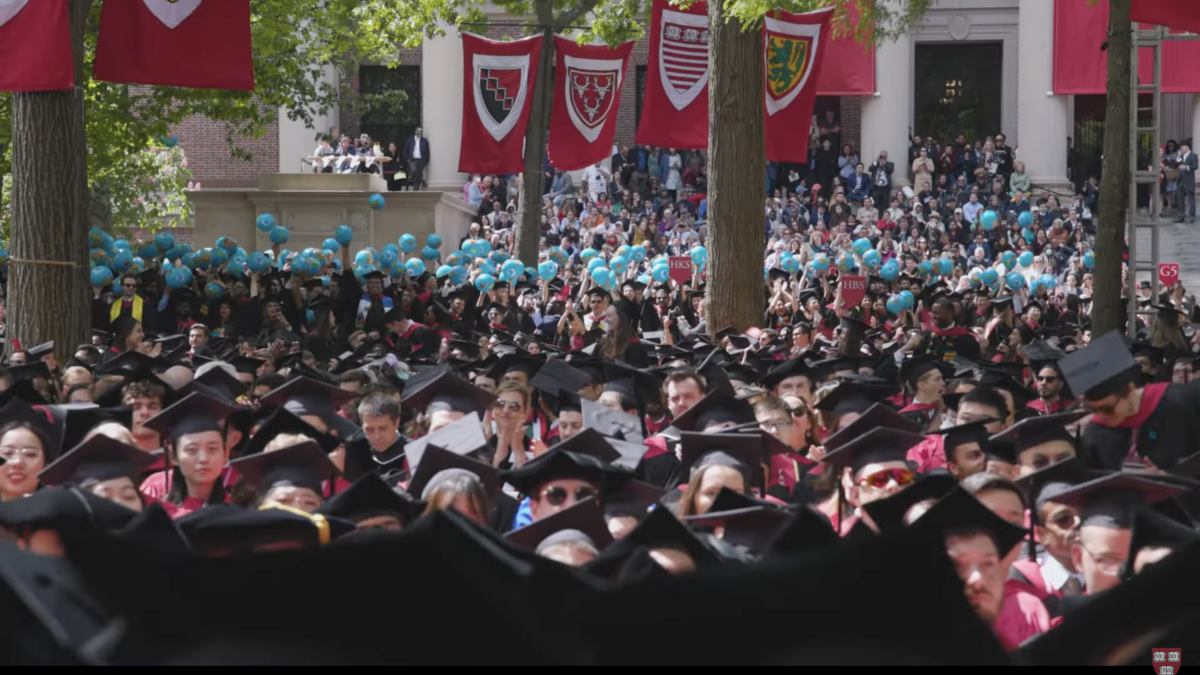
.jpg)




.jpg)






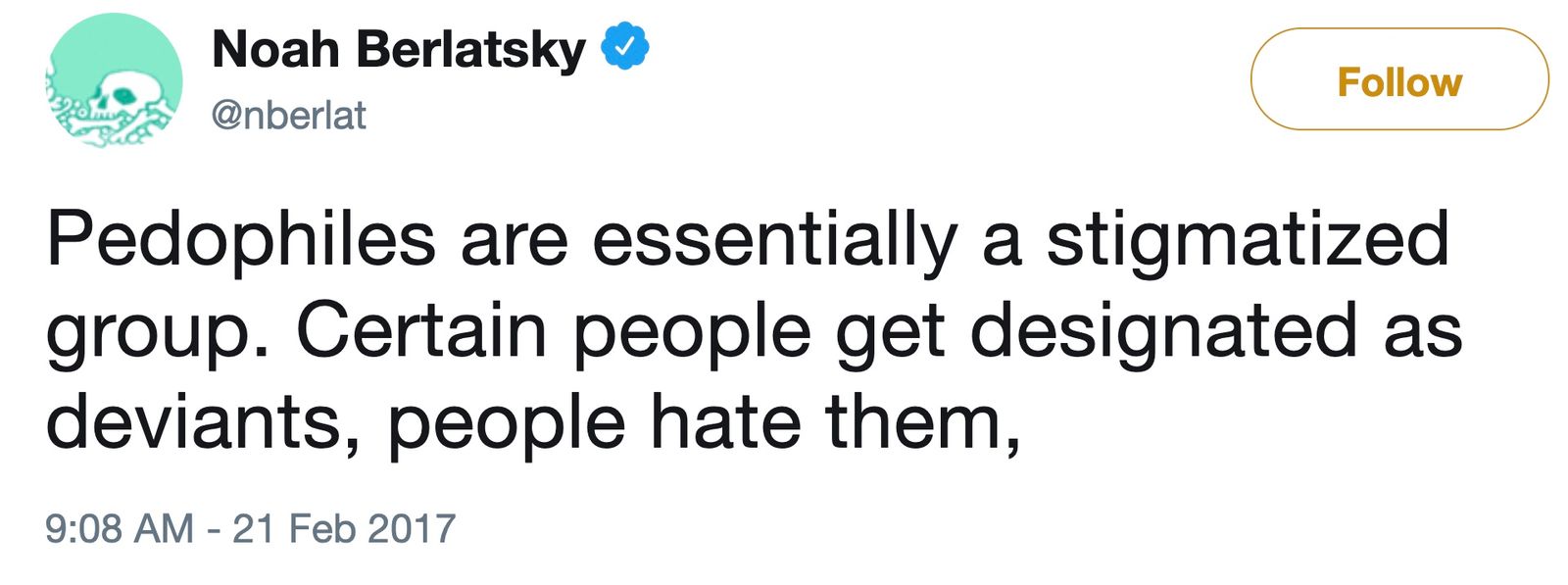

 What Did You Say?
You must be logged in to post a comment.