
Perspectives; Thoughts; Comments; Opinions; Discussions

Posts tagged ‘GDP’

Politicians Won’t Fix America’s Child Deficit, But Churches Can


By: Nathanael Blake | August 26, 2024

Read more at https://thefederalist.com/2024/08/26/americans-forfeit-hope-by-forgoing-families/
couple sitting on a couch watching Netflix

Author Nathanael Blake profile

Nathanael Blake

More Articles

As Donald Trump and Kamala Harris race for the presidency, their boosters are insisting the stakes couldn’t be higher for the future of our nation. But Americans have already given up on the future and are demonstrating this despair in the most fundamental way: Americans are not begetting more Americans. 

The birthrate in the USA has hit another record low. Though the U.S. is not yet at complete demographic collapse (e.g. South Korea or Japan), American fertility is still way below replacement rate. Regardless of whom voters choose in November, they are already issuing a vote of no confidence in the future by literally refusing to beget people to live in it.

Collapsing fertility will cause a plethora of problems — good luck sustaining economic growth and paying for entitlement programs with an aging, shrinking population. Importing high levels of immigrants to maintain workforce levels is beset with its own difficulties. But highlighting the challenges of a future with few children will not encourage people to have more kids; people will not decide to breed just because it might boost GDP in a few decades. Indeed, dwelling on the problems of a below-replacement world might even be counterproductive from a pro-natal standpoint, as it just reinforces anxiety about the future.

Neither candidate can fix this. Harris may be trying to float on a media froth of “Joy!” but the DNC’s celebration of sterility and abortion, including Planned Parenthood providing not just free vasectomies but even free abortions right outside the convention, is perhaps the most grotesque example of baby-hating anti-natalism ever in American politics. And though the GOP might look better by comparison, Trump has been stampeding the GOP away from social conservatism (to say nothing of his personal example).

Politicians are not going to save America from despairing self-extinction. And tempting as it is, we cannot just blame them for the failures of American men and women to form stable relationships and have children together. Yes, there have been unfavorable cultural, economic, and political forces, but though these may be mitigating factors, they do not negate personal responsibility. Americans have chosen the decline of America.

However, there is an upside to this, which is that we can improve matters without relying on politicians. Yes, political action is important; policies from taxes to education to housing and more matter enormously to family formation and flourishing and thank God for the people doing good work on these issues. 

But we should not sit around waiting for government to fix everything. It is not just that even well-intentioned and generous pro-family policies have often proven disappointing but that individual choices still matter. People can choose to prioritize family life even when culture, policy, and the economy make it difficult. 

However, we need more than just exhortations to individual virtue: We need the help of others. Fortunately, government is not the only domain of collective action. As the process of family formation — from dating to raising children and sustaining a marriage — is breaking down to the point of incomprehensibility in much of our culture, America’s churches in particular have an opportunity to step into the gaps left by the fraying bonds of family and community. 

Men and women need guidance in coming together to form and sustain marriages. Likewise, it is not good for parents to have to handle child-rearing all by themselves. It does take a village — but the government, and especially the federal bureaucracy, is a behemoth, not a village. 

As important as help, from meals to rides to babysitting and beyond, can be, churches can provide that which is even more valuable: instruction, examples, belonging, and love. This community is what will actually make people want to marry, have children, and stay married while raising their kids well. Pundits worrying about the long-term political and economic implications of declining marriage and low birthrates won’t actually do it. What will work is if people believe in family life as important to what it means to live well and if they believe it is not only desirable but also attainable. For this, they need examples and assistance.

To be meaningful, pro-natalism has to mean more than just pumping out babies for the future of the nation. Rather, it must explain why babies are good in themselves and why marriage and parenthood are the vocations to which most of us are called and which we should joyfully embrace. Indeed, this will likely be one of the church’s most effective means of evangelization. Amid our cultural and relational wasteland, it will increasingly fall to the church to teach people how to live well despite the troubles of this life. And valuing babies’ overindulgence, ambition, and avarice is a good place to start.

Even the best efforts may not be enough to save our nation. But it is clear that there is only hope for our nation’s future if citizens place their hope in something greater than America.

Nathanael Blake is a senior contributor to The Federalist and a postdoctoral fellow at the Ethics and Public Policy Center.

If China’s Yuan Usurps The Dollar, The World Economy Will Be At Communists’ Whims


BY: MACKENZIE BETTLE | APRIL 17, 2023

Read more at https://thefederalist.com/2023/04/17/if-chinas-yuan-usurps-the-dollar-the-world-economy-will-be-at-communists-whims/

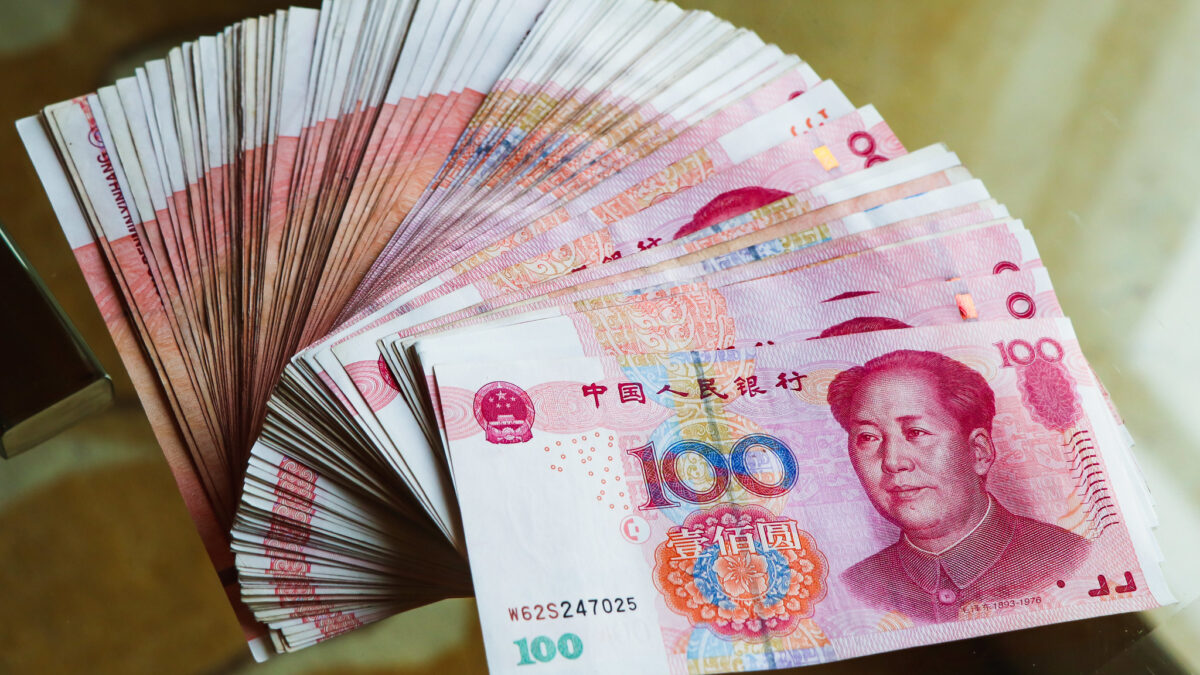
Chinese 100 yuan bills
If the Chinese yuan were to become the global reserve currency, it would, in essence, give the CCP the ability to cripple entire nations.

Author Mackenzie Bettle profile

MACKENZIE BETTLE

MORE ARTICLES

In July 1944, 44 delegates from Allied countries came together during World War II in Bretton Wood, New Hampshire. The goal? Devise an international currency system to manage foreign exchange that would disadvantage no country and effectively facilitate post-war rebuilding and commerce. The outcome: The U.S. greenback would be the world’s reserve currency.

It has been almost 80 years since, and all nations have been better off with a United States dollar-dominated world. World gross domestic product (GDP) in 1940 was $7.81 trillion. For 2023, the world GDP is expected to be $112.6 trillion. That is an increase of 1,441 percent. Billions of people have been lifted out of poverty because of this.

China is working overtime to disrupt the dollar-dominated world economy. The significance of the dollar losing its premier position cannot be overstated. The Biden administration should not overlook this.

Most Americans may be unaware of crucial transactions occurring around the globe recently. And who could blame them? All the corporate media’s main headlines have been over the now-public indictment of former President Donald Trump, over factually weak allegations involving hush-money payments to a porn star.

The indictment of a former president is a crossing-of-the-Rubicon moment in American history. But displacing the dollar as the world’s reserve currency, as China and Russia have both made known is their objective, has analogous ramifications for the world. But while the world watches Trump’s indictment, they are missing China’s transactions with some of our major allies and trading partners in the yuan. Notably, China is doing this with nations that need better stewards.

Bloomberg News reported in February 2023 that the Inevitable Rise of the Petroyuan (yuan used to settle Middle East oil transactions) was a “myth.” One month later, Saudi Arabia and OPEC are now considering just that.

In our republic, the founders “separated the purse from the sword.” With the passing of the Federal Reserve Act of 1913, Congress further separated the purse from our elected representatives by giving the Federal Reserve power over the nation’s money supply.

China has no such separation of powers. President Xi Jinping wields both the sword and purse. What that means if the yuan were to become the global reserve currency is giving the Chinese Communist Party effective control over the money supply for the entire world. The United States would still have the dollar, but it would require exchanging for the yuan to transact with other nations.

Inflation and deflation can both have devastating effects on the economy. Deflation is what caused the Great Depression. Inflation, as we all feel the pain currently, caused an entire decade to be lost in the 1970s.

Allowing China to become the facilitator of the currency used in global commerce, such as the dollar is now, would be to give unprecedented powers to a communist dictatorship. The ebbs and flows of the global economic apparatus would be subject to a hostile foreign power that has no issue retaliating against other sovereign nations that disagree with them.

If the Chinese yuan were to become the global reserve currency, it would, in essence, give the CCP the ability to cripple entire nations. With a country as hostile as China, entire sovereign nations would be subject to the whims of the communists who run their countries. The CCP could arbitrarily restrict credit, enact sanctions, block entire nations from global commerce vis a vis foreign exchange prohibition, and use any of the other vast economic warfare tools the global reserve currency brings. Of course, unless nations decide to toe the Communist Party line.

The world would be like when we were younger and our financial life was dependent upon allowances given to us by our parents. Except in this case, instead of doing chores, nations would have to accept genocidepersecution of minorities, and the desecration of civil rights. We can bet governments would likely have to become complicit. That is not out of the realm of possibility when dealing with actors such as communists.


Mackenzie Alan Bettle graduated from Arizona State’s W.P. Carey School of Business with a bachelor’s in business, law, and economics, summa cum laude, and received his Juris Doctorate from Seton Hall University Law School with an emphasis on law and economics. He is a practicing attorney in Phoenix, Arizona. He loves business, politics, economics, law, football, and his two fluffy Havanese dogs, Jack and Kobe.

Reporter uses top Biden adviser’s own words to undercut attempt to redefine recession: ‘What changed?’


By CHRIS ENLOE | July 28, 2022

Read more at https://www.theblaze.com/news/brian-deese-2008-recession-definition/

The White House was confronted Wednesday over previous comments a top Biden administration adviser made that contradicts the administration’s narrative on “recession.”

On Thursday, the Bureau of Economic Analysis announced the U.S. economy shrank 0.9% in the second quarter of 2022, thus meeting the standard definition of recession, which is two consecutive quarters of GDP contraction. The National Bureau of Economic Research, however, has not officially declared a recession.

In anticipation of the BEA’s report, the White House has been downplaying the accepted definition of recession. According to White House officials, two consecutive quarters of negative GDP growth is not the “technical” definition. Brian Deese, director of the National Economic Council, strongly reiterated this claim during the White House press briefing on Tuesday.

“Two negative quarters of GDP growth is not the technical definition of recession. It’s not the definition that economists have traditionally relied on,” Deese said. “There is an organization called the National Bureau of Economic Research, and what they do is they look at a broad range of data in deciding whether or not a recession has occurred.”

In 2008, when he worked for Hillary Clinton’s presidential campaign, Deese said the “technical” definition of recession is, in fact, two consecutive quarters of GDP contraction.

“What Senator Clinton has said is that of course economists have a technical definition of recession, which is two consecutive quarters of negative growth,” Deese said in March 2008.

The comments were made as then-President George W. Bush tried to alleviate recessionary fears. At the time and as Deese’s comment reflect, Democrats seized on the moment to emphasize the unfortunate economic circumstances to help Democrats in the 2008 presidential election.

Fox News correspondent Peter Doocy asked White House press secretary Karine Jean-Pierre about the glaring contradiction on Wednesday, asking why the White House wants to “redefine” the word “recession” while at the same time downplaying the inflation crisis.

“If things are going so great, though, then why is it that White House officials are trying to redefine ‘recession?'” Doocy asked.

When Jean-Pierre claimed the White House is not redefining recession, Doocy pulled out Deese’s 2008 remarks.

“What changed?” Doocy asked. “What’s the difference other than who the president is?”

Jean-Pierre, however, did not directly respond to the question, instead reiterating the Biden administration’s recession narrative.

WSJ: The Tax Cuts Will Grow the Economy by Much More than Expected


Mark Wilson/Getty Images

Reported by John Carney | 18 Dec 2017

URL of the original posting site: http://www.breitbart.com/big-government/2017/12/18/wsj-the-tax-cuts-will-grow-the-economy-by-much-more-than-expected/

Tax cuts are going to grow the economy by much more than expected.

That’s the verdict of the Wall Street Journal‘s prestigious “Heard on the Street” column. Importantly, Heard on the Street is run by the news side of the WSJ, not its tax-cut loving editorial page. So there’s no particular pro-tax cut or pro-Republican bias at work here.

Justin Lahart of Heard writes:

There were several surprises for investors when Republicans unveiled their final tax bill Friday, but the most significant is that they add up to a bigger boost to economic growth next year.

The bigger stimulus could fundamentally change how the market behaves in 2018. Sales and profits will be stronger than most investors expect. But with the unemployment rate low, wage pressures will mount faster, and inflation should pick up more. If the tax plan passes, as seems likely, it could lead the Federal Reserve to raise rates faster, putting the bond market at risk.

The tax plan was always expected to juice the economy, but the Senate version, which passed after the House approved its bill, had relatively modest short-term stimulus. While the stock market kept rising in anticipation of a cut, the bond market hardly budged. The bill unveiled Friday front-loaded more than $200 billion in stimulus for next year. Economists had been penciling in a boost of about a third of a percentage point next year. Now that is looking way low.

Some of the pro-growth changes include eliminating any delay to the corporate tax cuts, lowering of the top individual rate, lowering rates for most taxpayers, and increasing the child tax credit. The latter is particularly important because middle-class households are “more likely to spend extra income than the rich.”

The tax bill could increase GDP by 1.3 percent, Lahart writes.

That’s an additional full percentage point gain from what economists had been expecting based on earlier bills.

(Full disclosure: I used to work for Heard on the Street and consider Lahart a personal friend. He’s had me over to his apartment for fish.)

Treasury Secretary: $18T Debt Is Not ‘The Most Pressing Concern Today’


waving flagBy Susan Jones | June 18, 2015

U.S. Treasury Secretary Jacob Lew chairs the Financial Stability Oversight Council, which grew out of the 2010 Dodd-Frank law. (AP File Photo)

(CNSNews.com) – How can you talk about vulnerabilities in the U.S. financial system without mentioning the $18-trillion-and-growing U.S. debt, Rep. Blaine Luetkemeyer (R-Mo.) asked Treasury Secretary Jacob Lew on Wednesday. “I don’t think it is the most pressing concern today because we have controlled the rate of growth,” Lew told the House Financial Services Committee.

“I don’t think right now that debt 20, 30 years from now is the thing that’s holding our economy back,” Lew told the hearing focusing on the annual report of the Financial Stability Oversight Council (FSOC).

Lew chairs the FSOC, a body formed in 2010 to respond to emerging risks to the U.S. financial system. “I think if you look at the risks to our economy from federal spending and debt, we are in a much better position now than we were six and a half years ago,” Lew told Luetkemeyer. Lew later noted that “debt as a percentage of GDP has stabilized for this period of time. We have made enormous progress, it was climbing, and it has stabilized.”

Luetkemeyer pointed to a June 16 Congressional Budget Office report that warns: “If current laws remained generally unchanged, federal debt held by the public would exceed 100 percent of GDP by 2040 and continue on an upward path relative to the size of the economy — a trend that could not be sustained indefinitely.”Spiraling

But Lew said that CBO report “makes clear that over the next ten years, we’re in a pretty stable place.”

The report projects that under current law, federal debt held by the public would decline slightly relative to GDP over the next few years…After that, however, growing budget deficits — caused mainly by the aging of the population and rising health care costs — would push debt back to, and then above, its current high level. The deficit would grow from less than 3 percent of GDP this year to more than 6 percent in 2040. At that point, 25 years from now, federal debt held by the public would exceed 100 percent of GDP.”

Lew told Congress, “I think the thing in that report that people are concerned about is the long-term. And obviously there are still long-term issues.” … I think if you look at where we were, where we were in 2008, 2009, we were careening towards a very treacherous place. We’ve stabilized it and it’s improving. We still have long-term challenges and–“

Luetkemeer interrupted, telling Lew, “The point I’m trying to make is, CBO points out the debt is a problem for our economy, and yet your report does nothing, says nothing about it, and you are supposed to be an agency that points out these problems. Why is — my question is, why did you not point out that debt is a problem for our economy?”

“I — our report appropriately looks at the threats to financial stability,” Lew responded.

“So you don’t consider it a threat?” the congressman asked.

“I think that if you look at what we have — where we are today versus six years ago, the federal deficit has been brought under control for the next decade. We are in…a period where we need to get the economy growing. I totally agree with you, our conversation should be about what can we do to grow the economy,” Lew continued. “And we know there are things we could do. We could have an infrastructure program in place. We could have immigration reform. There’s lots of things we could do to grow our economy. I don’t think right now that debt 20, 30 years from now is the thing that’s holding our economy back.”

Luetkemeyer said he thinks Lew has “missed the boat…We’ve dropped the ball on this.”DO NOT JACKASS

Rep. Robert Pittenger (R-N.C.) asked Lew several times if he sees the debt as a threat: “Is it a vital concern to you today?”

“I don’t think it is the most pressing concern today because we have controlled the rate of growth,” Lew replied.

“So $18 trillion, that’s not a concern?” Pittenger followed up.

“As a percentage of GDP, we’ve stabilized the deficit and the growth of the debt,” Lew said. “In the next ten  years, we have a stable debt and deficit situtation.”

Rep. Jeb Hensarling (R-Texas), chairman of the House Financial Services Committee, noted that the national debt is $18 trillion and counting. He called it “perhaps one of the greatest existential threats that we face,” and he noted that more debt has been incurred under President Obama than in the nation’s first 200 years.Cloward Pevin with explanation

“This is beyond negligent, it is beyond egregious. It is dangerous and, frankly, it is offensive,” Hensarling said.

freedom combo 2

Tag Cloud