Below is my column in the New York Post on the prestigious award given to Stanford Professor Dr. Jay Bhattacharya last week and what it has to say about those who censored, blacklisted, and vilified him for the last four years. In celebrating his fight for “intellectual freedom,” the National Academy effectively condemned those who joined the mob against him as well as the many professors who stayed silent as he and others were targeted.
Here is the column:
Few in the media seemed eager to attend a ceremony last week in Washington, D.C., where the prestigious American Academy of Sciences and Letters was awarding its top intellectual freedom award. The problem may have been the recipient: Stanford Professor Dr. Jay Bhattacharya.
Bhattacharya has spent years being vilified by the media over his dissenting views on the pandemic. As one of the signatories of the 2020 Great Barrington Declaration, he was canceled, censored, and even received death threats.
That open letter called on government officials and public health authorities to rethink the mandatory lockdowns and other extreme measures in light of past pandemics.
All the signatories became targets of an orthodoxy enforced by an alliance of political, corporate, media, and academic groups. Most were blocked on social media despite being accomplished scientists with expertise in this area.
It did not matter those positions once denounced as “conspiracy theories” have been recognized or embraced by many. Some argued that there was no need to shut down schools, which has led to a crisis in mental illness among the young and the loss of critical years of education. Other nations heeded such advice with more limited shutdowns (including keeping schools open) and did not experience our losses.
Federal agencies now support the lab theory as the most likely based on the scientific evidence.
Likewise, many questioned the efficacy of those blue surgical masks and supported natural immunity to the virus — both positions were later recognized by the government.
Others questioned the six-foot rule used to shut down many businesses as unsupported by science. In congressional testimony, Dr. Anthony Fauci recently admitted that the 6-foot rule “sort of just appeared” and “wasn’t based on data.” Yet not only did the rule result in heavily enforced rules (and meltdowns) in public areas, but the media also further ostracized dissenting critics.
Again, Fauci and other scientists did little to stand up for these scientists or call for free speech to be protected. As I discuss in my new book, “The Indispensable Right,” the result is that we never really had a national debate on many of these issues and the result of massive social and economic costs.
I spoke at the University of Chicago with Bhattacharya and other dissenting scientists in the front row a couple of years ago. After the event, I asked them how many had been welcomed back to their faculties or associations since the recognition of some of their positions. They all said that they were still treated as pariahs for challenging the groupthink culture.
Now the scientific community is recognizing the courage shown by Bhattacharya and others with its annual Robert J. Zimmer Medal for Intellectual Freedom.
So, what about all of those in government, academia, and the media who spent years hounding these scientists?
Biden Administration officials and Democratic members targeted Bhattacharya and demanded his censorship. For example, Rep. Raja Krishnamoorthi (D-Ill.) attacked Bhattacharya and others who challenged the official narrative during the pandemic. Krishnamoorthi expressed outrage that the scientists were even allowed to testify as “a purveyor of COVID-19 misinformation.”
Journalists and columnists also supported the censorship and blacklisting of these scientists. In the Los Angeles Times, columnist Michael Hiltzik decried how “we’re living in an upside-down world” because Stanford allowed these scientists to speak at a scientific forum. He was outraged that, while “Bhattacharya’s name doesn’t appear in the event announcement,” he was an event organizer. Hiltzik also wrote a column titled “The COVID lab leak claim isn’t just an attack on science, but a threat to public health.”
Then there are those lionized censors at Twitter who shadow-banned Bhattacharya. As former CEO Parag Agrawal generally explained, the “focus [was] less on thinking about free speech … [but[ who can be heard.”
None of this means that Bhattacharya or others were right in all of their views. Instead, many of the most influential voices in the media, government, and academia worked to prevent this discussion from occurring when it was most needed.
There is still a debate over Bhattacharya’s “herd immunity” theories, but there is little debate over the herd mentality used to cancel him.
The Academy was right to honor Bhattacharya. It is equally right to condemn all those who sought to silence a scientist who is now being praised for resisting their campaign to silence him and others.
Below is my column in The Hill on the recent poll of university professors in this election. It speaks volumes about the composition of higher education today. Here is the column: The 2024 presidential election is shaping up to be the single most divisive election in our history. The public is split right down the middle with almost every group splintering between former president Donald Trump and Vice President Kamala Harris. There is, however, one group that seems almost unanimous: professors.
A new survey of more than 1,000 professors shows that seventy-eight percent will vote for Harris and only eight percent will vote for Trump. Other than a poll of the Democratic National Committee, there are few groups that are more reliably Democratic or liberal.
For anyone in higher education, the result is hardly surprising. The poll tracks what we already know about the gradual purging of departments around the country of conservative, libertarian, and dissenting professors. Indeed, the lack of political and intellectual diversity may be turning some donors and even applicants from higher education. With failing revenue and applications, universities are starting to re-embrace commitments to neutrality on political issues.
Some, however, are doubling down on advocacy and orthodoxy.
In an op-ed this week, Wesleyan University President Michael Roth called on universities to reject “institutional neutrality” and officially support Kamala Harris. Calling neutrality “a retreat,” Roth compared Trump’s election to the rise of the Nazis and insisted that schools should “give up the popular pastime of criticizing the woke and call out instead the overt racism.”
He added, without a hint of self-awareness or irony, that “we should not be silenced because of fears of appearing partisan.”
That ideological echo chamber is hardly an enticement for many who are facing rising high tuition costs with relatively little hope of being taught by faculty with opposing views.
There are obviously many reasons why faculty may reject Trump specifically, but this poll also tracks more generally the self-identification and contributions of faculty.
A Georgetown study recently found that only nine percent of law school professors identify as conservative at the top 50 law schools — almost identical to the percentage of Trump voters found in the new poll.
Notably, Roth acknowledged that the current lack of intellectual diversity in higher education had become so extreme that there might be a need for “an affirmative action program for conservatives.” However, he and others continue to saw feverishly on the branch upon which we all sit in higher education in calling for even greater political advocacy.
There is little evidence that faculty members have any interest in changing this culture or creating greater diversity at schools. In places like North Carolina State University a study found that Democrats outnumbered Republicans 20 to 1.
Recently, I had a debate at Harvard Law School with Professor Randall Kennedy on whether Harvard protects free speech and intellectual diversity. This year, Harvard found itself in a familiar spot on the annual ranking of Foundation for Individual Rights and Expression (FIRE): dead last among 251 universities and colleges. Harvard has long dismissed calls for greater free speech protections or intellectual diversity. It shows. The Harvard Crimson has documented how the school’s departments have virtually eliminated Republicans. In one study of multiple departments last year, they found that more than 75 percent of the faculty self-identified as “liberal” or “very liberal.”
Only 5 percent identified as “conservative,” and only 0.4% as “very conservative.”
Consider that, according to Gallup, the U.S. population is roughly equally divided among conservatives (36%), moderates (35%), and liberals (26%). So, Harvard has three times the number of liberals as the nation at large and less than three percent identify as “conservative’ rather than 35% nationally.
Among law school faculty who have donated more than $200 to a political party, a breathtaking 91 percent of the Harvard faculty gave to democrats. The student body shows the same bias of selection. Harvard Crimson previously found that only 7 percent of incoming students identified as conservative. For the vast majority of liberal faculty and students, Harvard amplifies rather than stifles their viewpoints.
This does not happen randomly. Indeed, if a business reduced the number of women or minorities to less than 5 percent, a court would likely find de facto discrimination. Yet, Kennedy rejected the notion that the elite school should strive to “look more like America.”
It is not just that schools like Harvard “do not look like America,” it does not even look like liberal Massachusetts, which is almost 30 percent Republican. Our students are being educated by faculty taken from the same liberal elite of just 26 percent of our nation.
Some sites like Above the Law have supported the exclusion of conservative faculty. Senior Editor Joe Patrice defended “predominantly liberal faculties” by arguing that hiring a conservative law professor is akin to allowing a believer in geocentrism to teach at a university.
The result is that law students at schools like Harvard have relatively few faculty to reflect the views of half of the judiciary and the majority of the Supreme Court. Likewise, having a faculty that ranges from the left to the far left further marginalizes the small number of conservative students. The impact of this academic echo chamber is evident in surveys showing that 28 percent of Harvard students engaged in self-censorship — a figure doubling since just 2021.
Given my respect for Professor Kennedy, I was surprised that he dismissed the sharp rise in students saying that they did not feel comfortable speaking in classes. Referring to them as “conservative snowflakes,” he insisted that they simply had to have the courage of their convictions. This ignores that they depend upon professors for recommendations and their challenging the orthodoxy at the school can threaten their standing.
Moreover, Kennedy defended cancel campaigns or “disinvitations” of speakers as a form of free speech. As students see faculty supporting the cancelling of conservative or libertarian or dissenting speakers, it is hardly an invitation to speak freely yourself in class.
There was a hopeful aspect, however, to the debate. Before the debate the large audience voted heavily in favor of Harvard’s position. However, after the debate, they overwhelming voted against Harvard’s position on free speech. It is an example of how exposure to opposing views can change the bias or assumptions in higher education.
There is little likelihood that Harvard or higher education will change. It is like the old joke about how many psychiatrists it takes to change a light bulb. The answer is just one, but the bulb really has to want to change.
Academics like Erwin Chemerinsky, dean of the UC Berkeley law school, have denounced conservative justices as mere “partisan hacks.” Other faculty have joined in claims that Trump and his supporters are “fascists” out to destroy democracy. It is only likely to get worse after the election.
The political polling of professors reflects the near complete cleansing of colleges of conservative faculty. The question is whether donors or applicants will continue to support an echo chamber that has become ideologically deafening.
Below is my column in the New York Post on the growing hysteria among press and pundits proclaiming the imminent end of democracy if Kamala Harris is not elected. The predictions of mass roundups, disappearances, and tyranny ignore a constitutional system that has survived for over two centuries as the oldest and most stable democracy in the world. More importantly, the public appears to agree that democracy is under threat but appear to hold a very different notion of where that threat is coming from.
Here is the column:
“Democracy dies in darkness” is the Washington Post’s slogan, but can it handle the light?
The Post has been doggedly portraying the election between former President Donald Trump and Vice President Kamala Harris as a choice between tyranny (Trump) and democracy (Harris). Yet when it commissioned a poll on threats to democracy shortly before the election, it did not quite work out.
Voters in swing states believe that Trump is more likely to protect democracy than Kamala Harris, who is running on a “save democracy” platform. The poll sampled 5,016 registered voters in Arizona, Georgia, Michigan, Nevada, North Carolina, Pennsylvania and Wisconsin. When asked whether Trump or Harris “would do a better job” of “defending against threats to democracy,” 43% picked Trump while 40% picked Harris.
Notably, this was the same result when President Biden was the nominee. While over half said that threats to democracy were important to them, the voters trusted Trump (44%) more than Biden (33%) in protecting democracy.
Even with the slight improvement for Harris, the result was crushing for not just many in the Harris campaign but the press and pundits who have been unrelenting in announcing the end of democracy if Harris is not elected.
I have long criticized the apocalyptic, democracy-ending predictions of Biden, Harris and others as ignoring the safeguards in our system against authoritarian power. Nevertheless, Harris supporters have ratcheted up the rhetoric to a level of pure hysteria. Recently, Michael Cohen, a convicted felon and Trump’s disbarred former lawyer, told MSNBC that if Trump wins the election, he will “get rid of the judiciary and get rid of the Congress.”
Recently, MSNBC host Al Sharpton and regular Donny Deutsch warned viewers that they will likely be added to an enemies “list” for some type of roundup after a Trump election. MSNBC host Rachel Maddow also joined in the theme of a final stand before the gulag: “For that matter, what convinces you that these massive camps he’s planning are only for migrants? So, yes, I’m worried about me — but only as much as I’m worried about all of us.” Rep. Alexandria Ocasio-Cortez (D-NY) was quick to add her own name to a list that seems to be constantly updated by the media. She told podcast host Kara Swisher, “I mean, it sounds nuts, but I wouldn’t be surprised if this guy threw me in jail.”
On ABC’s “The View,” the hosts are becoming indistinguishable from tinfoil-hatted subway prophets. Whoopi Goldberg even explained how Trump is already committed to being a dictator who will “put you people away … take all the journalists … take all the gay folks … move you all around and disappear you.”
Of course, assuming that Cohen is wrong that there will be no courts after a Trump victory, this would require federal judges to sign off on the rounding up of MSNBC personalities, all gay people, all reporters, and, of course, Whoopi Goldberg. All that is required is for over two centuries of constitutional order to fail suddenly, and for virtually every constitutional actor in our system to suddenly embrace tyranny.
Those pushing this hysteria often curiously cite the January 6 riot as proof that the end is near. Yet that horrible day was the vindication, not the expiration, of our constitutional system. The system worked. The riot was put down. Congress, including Republicans, reassembled and certified Biden as the next president. In the courts, many Trump-appointed judges ruled against challenges to the election. Our system was put through a Cat 5 stress test and did not even sway for a moment. Nevertheless, the same voices are being heard on the same media outlets with doomsday scenarios.
Former Acting US Solicitor General Neal Katyal told MSNBC’s “Morning Joe” ominously, “We are looking at a very possible constitutional crisis and one that’s going to make January 6, 2021, look like a dress rehearsal. And this year, the rogues have had four years to go pro and perfect the big lie.”
In other words: Be afraid, very afraid.
Then, in a New York Times column, Katyal lays out scenarios premised on a complete breakdown of the oldest and most stable democratic system in history. It is like telling passengers on an ocean liner that we will all drown and then whispering that this is “assuming the crew intentionally scuttles the ship, all bulkheads and sealed departments fail, and every lifeboat and life preserver is discarded.”
But then we are all going to die.The only way to avoid that watery grave (with the death of democracy itself)? Vote Democratic.
There is, however, some good news in all of this: Despite years of alarmist predictions from Biden, Harris, the press, and pundits, the public is not buying it. It is not because they particularly like Trump. Many of his supporters seem poised to vote for him despite viewing him as polarizing and, at times, obnoxious.
No, it is because the American voter has a certain innate resistance to being played as a chump. Many of the same figures claiming that democracy is at stake supported ballot cleansing to remove Trump and others from the ballots. They supported the weaponization of the legal process in New York against Trump. Likewise, as Harris insists that she is the only hope for fundamental rights, many cannot fail to notice that she is supporting an unprecedented system of censorship that one court called “Orwellian.”
None of this means that the choice between Trump and Harris is easy. However, Harris’ claim to be the only hope for democracy is proving as tin eared as running on pure “joy.”
Voters are clearly demanding more than a political pitch of abject fear mixed with illusive joy.
Below is my column in the New York Post on the recent interview of Democratic Vice-Presidential nominee Gov. Tim Walz defending his record on free speech. The interview with Fox host Shannon Bream only magnified concerns over what I previously described as the most anti-free speech ticket in centuries.
Here is the column:
Roughly five centuries ago, a new dance first reported in Augsburg, Germany was promptly dubbed the “waltz” after the German term for “to roll or revolve.” Today, there is no nimbler performer of that dizzying dance than Democratic vice-presidential nominee Tim Walz.
Indeed, “Walzing” has become the Minnesota governor’s signature political two-step after his controversial statements on his allegedly socialist views, eliminating the electoral college and other topics. On Sunday, Walz’s dance partner was Fox News host Shannon Bream, who seemed to be fighting vertigo as the candidate tried to deflect his shocking prior statements on free speech.
Bream asked Walz about his prior declaration that there is “no guarantee to free speech on misinformation or hate speech”— a statement that runs counter to decades of Supreme Court decisions. Walz notably did not deny or retract his statement. Instead, his interview ironically became itself a flagrant example of misinformation.
First of all, misinformation and hate speech are not exceptions to the First Amendment: Whether it is the cross burnings of infamous figures like KKK leader Clarence Brandenburg or the Nazis who marched in Skokie, Ill., hate speech is protected. Yet both Harris and Walz are true believers in the righteousness of censorship for disinformation, misinformation and malinformation.
The Biden administration defines misinformation as “false, but not created or shared with the intention of causing harm” — meaning it would subject you to censorship even if you are not intending harm. It defines malinformation as “based on fact, but used out of context to mislead, harm, or manipulate.” So, you can post “true facts,” but would still be subject to censorship if you are viewed as misleading others with your pesky truth-telling.
Furthermore, “book bans” are not equivalent to the Harris-Walz censorship policies. After years of supporting censorship and blacklisting, Democrats are attempting to deflect questions by claiming that the GOP is the greater threat.
“We’re seeing censorship coming in the form of book banning’s in different places,” Walz told Bream. “We’re seeing attempts in schools.”
First, a reality check: The Biden-Harris administration has helped fund and actively support the largest censorship system in our history, a system described by one federal court as “Orwellian.” These are actual and unrelenting efforts to target individuals and groups for opposing views on subjects ranging from gender identity to climate change to COVID to election fraud. While Walz and others rarely specifically reference the book bans in question, Florida is one state whose laws concern age limits on access to graphic or sexual material in schools.
School districts have always been given wide latitude in making such decisions on curriculum or library policies. Indeed, while rarely mentioned by the media, the left has demanded the banning or alteration of a number of classic books, including “To Kill a Mockingbird” and “Of Mice and Men,” under diversity or equity rationales.
I have long opposed actual book bans perpetrated by both the left and the right. However, school districts have always made such access and curriculum decisions.
Finally, Walz and others often sell censorship by citing the dangers of child pornography or of threats made against individuals. Walz on Sunday followed Hillary Clinton’s recent pro-censorship campaign as he employed such misdirection.
“The issue on this was the hate speech and the protected hate speech — speech that’s aimed at creating violence, speech that’s aimed at threats to individuals,” he claimed. “That’s what we’re talking about in this.”
First, he’d said there is no protected hate speech. Second, the law already provides ample protections against threats toward individuals. What’s most striking is that, after years of unapologetically embracing censorship (often under the Orwellian term “content moderation”), the left does not seem to want to discuss it in this election.
Democrats in Congress opposed every major effort to investigate the role of the Biden administration in the social-media censorship system it constructed. Many denied any such connection. Elon Musk ended much of that debate with the release of the Twitter Files showing thousands of emails from the administration targeting individuals and groups with opposing views.
Now the public is being asked to vote for the most anti-free speech ticket in centuries — but neither Harris nor Walz want to talk about it in any detail. The result may be the largest bait-and-switch in history. Walz, Clinton and others also falsely claim they are simply trying to stop things like child pornography — which is already covered by existing criminal laws.
But what many on the left want is to regain what Clinton called their loss of “control” over what we are allowed to say or hear on social media.
Make no mistake about it: The “Walzing” of free speech is one dance you would be wise to decline. Otherwise, do not be surprised if, when the music stops, you find yourself without both your partner and your free speech.
Below is my column in The Hill on the release of the filing by Special Counsel Jack Smith just weeks before the election. Even Judge Tanya Chutkan described the move as “irregular,” but still ordered the release. While the usual voices heralded the move, others, including the CNN senior legal analyst, denounced the release as a raw political act by the court and the Special Counsel. The problem is that it was not in the least bit surprising.
Here is the column:
“The most stupendous and atrocious fraud.” Those words from federal prosecutors could have been ripped from the filing this week of Special Counsel Jack Smith defending his prosecution of former President Donald Trump.
Yet they were actually from a Justice Department filing 184 years ago, just days from the 1840 presidential election. Democratic President Martin Van Buren was struggling for reelection against Whig William Henry Harrison, and his Justice Department waited until just before voters went to the polls to allege that Whig Party officials had paid Pennsylvanians to travel to New York to vote for Whig candidates two years earlier. It was considered by many to be the first “October Surprise,” the last-minute pre-election scandal or major event intended to sway voters.
To avoid such allegations of political manipulation of cases, the Justice Department has long followed a policy against making potentially influential filings within 60 or 90 days of an election. One section of the Justice Department manual states“Federal prosecutors… may never select the timing of any action, including investigative steps, criminal charges, or statements, for the purpose of affecting any election.”
Jack Smith, however, has long dismissed such considerations. For years, Smith has been unrelenting in his demands for a trial before the election. He has even demanded that Donald Trump be barred from standard appellate options in order to expedite his trial. Smith never fully explained the necessity of holding a trial before the election beyond suggesting that voters should see the trial and the results — assaulting the very premise of the Justice Department’s rule against such actions just before elections.
After the Supreme Court rendered parts of his indictment against Trump presumptively unconstitutional, Smith made clear that he was prepared to prosecute Trump up to the very day of his inauguration. True to his reputation and record, Smith refused to drop the main allegations against Trump to avoid official decisions or acts that the court found to be protected in Trump v. United States. Instead, he stripped out some prior evidence linked to Trump’s presidency, including witnesses serving in the White House. Yet the same underlying allegations remain. Smith just repeatedly uses references to Trump as acting as “a private citizen.”
It is like a customer complaining that he did not order a Coke and the waiter pouring it into a Mountain Dew bottle and saying, “Done!”
Smith even refused to drop the obstruction of official proceedings, despite another recent Supreme Court decision (Fischer v. United States) rendering that charge presumptively invalid.
Smith is making his case not to Judge Tanya Chutkan, but to America’s voters. Chutkan has consistently ruled with Smith to help him expedite the case. She permitted his hastened “rocket docket” despite declaring that she would not consider the election schedule as a factor in the pace of filings or even of the trial itself.
For critics, Judge Chutkan has proven far too motivated in the case. Indeed, many thought that she should have recused herself given her statement from a sentencing hearing of a Jan. 6 rioter in 2022. Chutkan said that the rioters “were there in fealty, in loyalty, to one man — not to the Constitution.” She added then “[i]t’s a blind loyalty to one person who, by the way, remains free to this day.” That “one person” was then brought to her courtroom for trial by Smith.
In their latest move, Chutkan and Smith used the Supreme Court decision to file a type of preemptive defense — an excuse to lay out the allegations against Trump in a 165-page filing filled with damaging accounts and testimonials against Trump, just weeks ahead of the election.
Even Chutkin herself acknowledged that Smith’s request was “procedurally irregular,” but she still allowed it. This was a premature exercise that would ordinarily occur months later, after defense filings. She could have scheduled such filings just a few weeks from now. She could have easily kept the filing under seal to avoid the appearance of political machinations. But the political effect appears to be the point. Chutkin again selected the most politically impactful option, at Smith’s urging.
This was so“irregular” that ordinarily anti-Trump legal analysts, such as CNN’s senior legal analyst Elie Honig, denounced Smith’s filing as “an unprincipled, norm-breaking practice.” He added that “Smith has essentially abandoned any pretense; he’ll bend any rule, switch up on any practice — so long as he gets to chip away at Trump’s electoral prospects.”
Others, as expected, applauded the filing as not just well-directed but well-timed. Smith was making his closing election argument to voters because he knows that the 2024 election will be the largest jury verdict in history. If voters reelect Trump, then neither Chutkin nor Smith will likely see a jury in the case. This is why they must convict Trump now in the public eye, or else admit to an effective acquittal by plebiscite.
Their timing could well backfire. The weaponization of the legal system is central to this election, including the role of the Justice Department in pushing the debunked Russia-collusion allegations from the 2016 race. For many, the content of Smith’s filing is not nearly as important as the time stamp over the case caption. Titled a “Motion for Immunity Determination,” it seems more like a “Motion for an Election Determination.”
Smith’s raw political calculation should be troubling for anyone who values the rule of law. None of this excuses anything in these allegations against Trump. But the most disturbing part of Smith’s October Surprise was that it was not in the least bit surprising.
Below is my column in the Hill on the rough week for New York Attorney General Letitia James in court. James has campaigned on lawfare, and the Democratic New York voters have wildly supported her weaponization of the legal system against Trump and others. Now some judges are balking…
Here is the column:
In an age of lawfare, New York Attorney General Letitia James has always embraced the total war option. Her very appeal has been her willingness to use any means against political opponents. James first ran for her office by pledging to bag Donald Trump on something, anything. She did not specify the violation, only that she would deliver the ultimate trophy kill for Democratic voters. James follows the view of what Prussian General Carl von Clausewitz said about war, law is merely politics “by other means.”
Yet, the political success of James in weaponizing her office has been in stark contrast with her legal setbacks in courts. James earlier sought to use her office to disband the National Rifle Association, the most powerful gun rights organization in the country, due to self-dealing and corruption of executives. James notably did not target liberal groups accused of similar violations. The ridiculous effort to disband the NRA collapsed in court.
It did not matter. James knew that such efforts were performative and that New York voters did not care if such attacks failed. She will continue to win the lawfare battles, even if she loses the war.
This week, two of James’s best-known campaigns were struggling in court.
James is best known for her fraud case against Trump, in which she secured a $464 million fine and a ban on Trump from the New York real estate business for three years. That penalty, which has now risen to $489 million with interest, was in a case where no one had lost a dime due to the alleged inaccurate property valuations in bank loans secured by the Trump organization. Not only where the banks fully paid on the loans and made considerable profits, but they wanted to make additional loans to the Trump organization.
In appellate arguments this week, James’s office faced openly skeptical justices who raised the very arguments that some of us have made for years about the ludicrous fine imposed by Judge Arthur Engoron. Justice David Friedman noted that this law “is supposed to protect the market and the consumers — I don’t see it here.”
His colleague Justice Peter Moulton told her office “The immense penalty in this case is troubling” and added, “How do you tether the amount that was assessed by [Engoron] to the harm that was caused here where the parties left these transactions happy?”
The answer, of course, is the case was never about markets. It was about politics. The fact that the banks were “happy” is immaterial. Happiness in New York is a political, not legal calculus. The justices did not rule this week, but an opinion could be issued within a month.
In the same week, James faced a stinging defeat in another popular cause. James had targeted pro-life organizations for spreading supposed “disinformation” in not just opposing the use of mifepristone (the abortion pill used in the majority of abortions in the United States), but in advocating the use of reversal procedures if mothers change their minds before taking the second drug in the treatment regimen.
Critics charge that, while there are some studies showing successful reversal cases, the treatment remains unproven and unapproved. It remains an intense debate. James, however, wanted to end the debate. She targeted pregnancy centers and was then sued by two pro-life ministries, Summit Life Outreach Center and the Evergreen Association.
Judge John Sinatra Jr. blocked James‘s crackdown as a denial of free speech. Notably, these centers were not profiting by sharing this information or advocating such reversal treatment. James merely declared that people advocating such reversal treatments are engaged in “spreading dangerous misinformation by advertising…without any medical and scientific proof.”
It is a familiar rationale on the left and discussed in my latest book, “The Indispensable Right: Free Speech in an Age of Rage.”It is the same rationale that led to the banning and blacklisting of experts during the pandemic for views that have now been vindicated on the efficacy of masks and other issues. They were silenced by those who declared their viewpoints as dangerously unproven or unapproved, but who were themselves wrong.
James claimed a right to crack down on views that she deemed unproven, even by those who were seeking only to disseminate information rather than sell products. It did not seem to matter to her that, in the 2018 in NIFLA v. Becerra, the Supreme Court rejected the effort by California Attorney General Xavier Becerra (now the secretary of Health and Human Services) to require crisis pregnancy centers to refer abortions. The court refused to create an exception for requiring speech from licensed professionals.
After the effort failed to force doctors to disseminate pro-abortion information in California, James sought to prevent others from disseminating pro-life information in New York. The court ruled that, under the First Amendment, government officials cannot simply declare certain views as “disinformation” as a pretext to censor disfavored speech.
If there are harmful or fraudulent products or practices, the government has ample powers to target businesses and professionals involved with them. James, however, was seeking to silence those who advocate for a treatment that is unproven but not unlawful.
James’s legacy now includes an effort to disband a civil rights organization, deny free speech and secure confiscatory fines against her political opponents. Yet she is lionized by the media and politicians in an election that is billed as “saving democracy.”
In the end, James knows her audience, and it is not appellate judges. It does not matter to her if she is found to be violating the Constitution or abusing opponents. She has converted the New York legal system into a series of thrill-kills.
Below is my column in the Wall Street Journal on the growing counter-constitutional movement in the United States. This assault on the Constitution is being led by law professors who have lost their faith in the defining principles and institutions of our Republic.
Here is the column:
Kamala Harris declared in Tuesday’s debate that a vote for her is a vote “to end the approach that is about attacking the foundations of our democracy ’cause you don’t like the outcome.” She was alluding to the 2021 Capitol riot, but she and her party are also attacking the foundations of our democracy: the Supreme Court and the freedom of speech.
Several candidates for the 2020 presidential nomination, including Ms. Harris, said they were open to the idea of packing the court by expanding the number of seats. Mr. Biden opposed the idea, but a week after he exited the 2024 presidential race, he announced a “bold plan” to “reform” the high court. It would pack the court via term limits and also impose a “binding code of conduct,” aimed at conservative justices.
Ms. Harris quickly endorsed the proposal in a statement, citing a “clear crisis of confidence” in the court owing to “decision after decision overturning long-standing precedent.” She might as well have added “because you don’t like the outcome.” Sen. Sheldon Whitehouse (D., R.I.) has already introduced ethics and term-limits legislation and said Ms. Harris’s campaign has told him “That your bills are precisely aligned with what we are talking about.”
The attacks on the court are part of a growing counter constitutional movement that began in higher education and seems recently to have reached a critical mass in the media and politics. The past few months have seen an explosion of books and articles laying out a new vision of “democracy” unconstrained by constitutional limits on majority power.
Erwin Chemerinsky, dean of the UC Berkeley law school, is author of “No Democracy Lasts Forever: How the Constitution Threatens the United States,” published last month. In a 2021 Los Angeles Times op-ed, he described conservative justices as “partisan hacks.”
In the New York Times, book critic Jennifer Szalai scoffs at what she calls “Constitution worship.” She writes: “Americans have long assumed that the Constitution could save us; a growing chorus now wonders whether we need to be saved from it.” She frets that by limiting the power of the majority, the Constitution “can end up fostering the widespread cynicism that helps authoritarianism grow.”
In a 2022 New York Times op-ed, “The Constitution Is Broken and Should Not Be Reclaimed,” law professors Ryan D. Doerfler of Harvard and Samuel Moyn of Yale called for liberals to “reclaim America from constitutionalism.”
Others have railed against individual rights. In my new book on free speech, I discuss this movement against what many professors deride as “rights talk.” Barbara McQuade of the University of Michigan Law School has called free speech America’s “Achilles’ heel.”
In another Times op-ed, “The First Amendment Is Out of Control,” Columbia law professor Tim Wu, a former Biden White House aide, asserts that free speech “now mostly protects corporate interests” and threatens “essential jobs of the state, such as protecting national security and the safety and privacy of its citizens.”
George Washington University Law’s Mary Ann Franks complains that the First Amendment (and also the Second) is too “aggressively individualistic” and endangers “domestic tranquility” and “general welfare.”
Mainstream Democrats are listening to radical voices. “How much does the current structure benefit us?” Rep. Alexandria Ocasio-Cortez (D., N.Y.) said in 2021, explaining her support for a court-packing bill. “I don’t think it does.” Kelley Robinson, president of the Human Rights Campaign, said at the Democratic National Committee’s “LGBTQ+ Kickoff” that “we’ve got to reimagine” democracy “in a way that is more revolutionary than . . . that little piece of paper.” Both AOC and Ms. Robinson later spoke to the convention itself.
The Nation’s Elie Mystal calls the Constitution “trash” and urges the abolition of the U.S. Senate. Rosa Brooks of Georgetown Law School complains that Americans are “slaves” to the Constitution.
Without counter majoritarian protections and institutions, politics would be reduced to raw power. That’s what some have in mind. In an October 2020 interview, Harvard law professor Michael Klarman laid out a plan for Democrats should they win the White House and both congressional chambers. They would enact “democracy-entrenching legislation,” which would ensure that “the Republican Party will never win another election” unless it moved to the left. The problem: “The Supreme Court could strike down everything I just described, and that’s something the Democrats need to fix.”
Trashing the Constitution gives professors and pundits a license to violate norms. The Washington Monthly reports that at a Georgetown conference, Prof. Josh Chafetz suggested that Congress retaliate against conservative justices by refusing to fund law clerks or “cutting off the Supreme Court’s air conditioning budget.” When the audience laughed, Harvard’s Mr. Doerfler snapped back: “It should not be a laugh line. This is a political contest, these are the tools of retaliation available, and they should be completely normalized.”
The cry for radical constitutional change is shortsighted. The constitutional system was designed for bad times, not only good times. It seeks to protect individual rights, minority factions and smaller states from the tyranny of the majority. The result is a system that forces compromise. It doesn’t protect us from political divisions any more than good medical care protects us from cancer. Rather it allows the body politic to survive political afflictions by pushing factions toward negotiation and moderation.
When Benjamin Franklin said the framers had created “a republic, if you can keep it,” he meant that we needed to keep faith in the Constitution. Law professors mistook their own crisis of faith for a constitutional crisis. They have become a sort of priesthood of atheists, keeping their frocks while doffing their faith. The true danger to the American democratic system lies with politicians who would follow their lead and destroy our institutions in pursuit of political advantage.
Below is my column in the Hill on the effort of Democratic officials to keep Robert Kennedy on the ballot in swing states after seeking to block actual candidates from the same ballots. It is all in the name of democracy.
Here is the column:
In 1968, in the midst of Democratic convention riots, Chicago Mayor Richard Daley famously declared, “The policeman isn’t there to create disorder; the policeman is there to preserve disorder.”
Democratic state election officials appear to have adopted a similar approach to the upcoming election. In states such as North Carolina and Michigan, Democrats are fighting to keep the name of Robert Kennedy, Jr. on the ballot even though he withdrew from the race and endorsed former president Donald Trump. These are key states where the misplacement of even 1 percent of votes could turn the outcome of not just the state but the entire election.
In Michigan, Democratic Secretary of State Jocelyn Benson recently fought to keep third-party candidate Cornel West off the ballot. Unlike Kennedy, who is viewed as likely to drain votes from Trump, West is viewed as pulling votes from Vice President Kamala Harris, particularly among those opposed to her policies toward Israel.
A court ruled against Benson and said that she was adopting an artificially narrow interpretation to keep Kennedy on the ballot.
In North Carolina, where Trump and Harris are in a statistical tie, Democrats also refused to remove Kennedy’s name. An appellate court this week ordered them to do so to avoid the obvious confusion for voters.
Recently, the same Democratic officials sought to block West from the ballot due to his campaign causing “partisan mischief.”
These efforts are being pursued in other states such as Wisconsin (another key state), where Democrats on the election board blocked a Republican effort to remove Kennedy’s name.
In Michigan and North Carolina, officials have the distinction of fighting to keep a popular candidate from the ballot while fighting to retain a non-existent candidate.
It is all in the name of protecting democracy from itself.
Previously, Democrats in Florida and North Carolina fought to block other Democrats from appearing on primary ballots. Candidates like Rep. Dean Phillips (D-Minn.), author Marianne Williamson and commentator Cenk Uygur faced concerted campaigns by election officials and advocates to prevent voters from having a choice in the primary.
After preventing a meaningful primary and securing the nomination for President Biden, Democrats later handed the nomination to Harris without a single vote from a single primary voter.
Democratic activists are now calling it an election by “acclamation,” like a political version of the immaculate conception in which a candidate is simply conceived by the party elite. It is enough to make the Chinese Central Committee blush.
Harris was then walled off from the media to avoid any unscripted interactions, including by putting earbuds in her ears in what many called a clearly fake call to avoid press questions.
At the same time, Democratic supporters are now arguing that it is not necessary for Harris to offer detailed plans or agree to interviews in a campaign that is selling “joy” and “good vibes” like political valium. Others appear to believe that saving democracy means holding Harris to a different, more deferential standard. New York Times editorial board member Mara Gay appeared on MSNBC’s “Morning Joe” to defend treating Harris differently: “I think the challenge, not just for journalists, but really for the country, is that not only is Donald Trump a threat, but, you know, it lowers the bar. So, I don’t think it’s unacceptable,”she said.
Somewhere in that double negative, journalism perished. In my new book, I discuss how journalists are now sometimes taught to dispense with both neutrality and objectivity in favor of framing the news for viewers and readers. You see, it is all about saving democracy. Gay explained: “The context is difficult because of the extremism of the Republican Party, because of how extreme Donald Trump is, it’s hard to hold both candidates accountable equally, because one is committed to democracy and is functioning as a normal candidate from a normal American party, and the other is not.”
This was echoed by “Morning Joe” host Joe Scarborough, who said that life as we know it would end unless Harris is elected, telling viewers that the “autocrat” Trump would throw opponents in jail and take media outlets off the air: “So, yeah, the threats to democracy are real,” he said. “But [so are] the threats to the free market, the threats to free enterprise, to our economy.”
Other guests amplified that dire message further and criticized people for covering how Harris is changing her positions and refusing to offer details on policies. It appears that this election is simply too important for substantive debate. After all, Harris has said that 2024 “genuinely could be”the last democratic election in America’s history. The last thing we need is a substantive election at this precarious time.
The omitted details include Harris’s support for policies that many of us view as a direct threat to our constitutional system, including censorship and court packing.
Both candidates have much to address that they would prefer to ignore. The media is correct to press Trump on many of these issues. Yet, the success of any democratic system is dependent on three key elements: participation, information and choice. Getting the vote out takes on a menacing meaning if voters are being protected from the distractions of facts. Winning at any cost is no virtue in a democracy, even when claiming to be a defender of democracy.
Below is my column in the New York Post on the sudden guilty plea from Hunter Biden in his federal tax case. It was not the plea but the timing of the plea that was the surprise. What is missing is any cognizable legal strategy in waiting until the first day of the trial to make a “naked plea” when it offered the least possible benefit to him. It was like waiting for the water to reach the deck of the Titanic before asking about swimming lessons. He was a tad late and then unsuccessfully sought to plead guilty without admitting guilt.
Here is the column:
Hunter Biden just showed the perils of playing the game of chicken with yourself. For months, many of us have marveled at the sight of Hunter careening toward a cliff while declaring publicly that he was prepared to go all the way. The Justice Department was never going over the cliff because they had nothing to gain or lose in open-and-shut cases in Delaware and California. There was never a serious question of convicting Hunter of these crimes, just a will of the Justice Department to secure them.
Special Counsel David Weiss inexplicably allowed serious felonies to expire, refused to bring obvious crimes as an unregistered foreign agent, and sought to cut an embarrassing sweetheart deal with Hunter to avoid any jail time on a couple of minor crimes. The deal then collapsed in open court when a judge balked at a provision that would give Hunter sweeping immunity for any crime. When she asked the federal prosecutor if he had ever seen such a plea bargain offered a defendant other than the President’s son, he admitted that he had not.
That is when the chest pounding began. Unwilling to accept anything but the sweetheart deal, Hunter’s defense counsel told the prosecutors in court to “just rip it up.” They did and Weiss was forced to actually prosecute Hunter.
According to the Justice Department, Weiss continued to try to cut a plea bargain with Hunter but was rebuffed by the defense. They then went to Delaware, the home of the Bidens, and tried to convince a sympathetic jury that Hunter was a drug addict who was not responsible for his action as well as other unsupported claims. It failed in spectacular fashion with a conviction on all counts.
Hunter then floored it for the California cliff on the tax charges as the Justice Department and most of us watched confused about how he was trying to intimidate. He hit the brakes as the trial was beginning. Hunter has succeeded in putting himself in the worst possible position for a plea. He waited until he had little to trade and reportedly did not even inform the prosecutors of his decision.
But it gets worse. If he had agreed to a less generous plea deal last year, he could have secured a recommended sentence on both the gun and tax charges. Instead, he will go into this sentencing with a past criminal record, an aggravating factor that could reduce the benefit of the belated plea. In the end, Hunter had nothing to offer, nothing to bargain. He plead guilty to all nine counts.
This decision may still be based more on political than legal calculations. Hunter was almost certain to be convicted. But it would have taken time as his father’s administration (and pardon authority) wanes. If Hunter still hopes for a presidential commutation or pardon, the chances of such executive action is dramatically improved after a sentencing. The White House rarely considers pardons before a trial and sentencing. Indeed, they often wait for appeals to run their course.
Moreover, a demand for jail time seems likely from the Justice Department given this history and it is equally likely to be granted. If that sentence is lengthy, it will add pressure on President Biden to take action with a commutation or pardon. If President Biden does violate his promise to not pardon Hunter, it would not be a surprise for many. In 2022, I wrote that the President could resign or withdraw as a candidate and pardon Hunter.
I referred to this as “break-the-glass option”: “He would end his political career with an act as a father, which some would condemn but most would understand.”
The plea also avoided the massive influence peddling operation of the Biden family from being aired in open court.
The refusal of the Justice Department to charge Hunter as an unregistered foreign agent stands in flagrant contradiction to past and current cases under the Foreign Agents Registration Act (FARA).
None of this explains the logic of Hunter’s criminal defense strategy. A legal one-man game of chicken is certainly engrossing to watch but leaves most lawyers wincing rather than flinching as the spectacle unfolds.
Below is my column in the Hill on the victory of Elon Musk last week against the liberal media outlet, Media Matters. This follows similar recent victories by others against CNN and the New York Times to clear paths to trials. For those who have embraced advocacy journalism as the new model for media, a bill is coming due in the form of defamation and disparagement lawsuits.
Here is the column:
This week, a federal judge ruled that a lawsuit by Elon Musk against Media Matters can move forward in what could prove a significant case not just for the liberal outlet but the entire media industry. The decision comes at the same time as other court wins for former Alaska Gov. Sarah Palin (R) against the New York Times and a Navy veteran against CNN.
For years, media organizations and journalism schools have expressly abandoned objectivity in favor of advocacy journalism. This abandonment of neutrality has coincided, unsurprisingly, with a drop in public faith in media to record lows.
Former New York Times writer (and now Howard University journalism professor) Nikole Hannah-Jones has been lionized for declaring that “all journalism is activism.”Emilio Garcia-Ruiz, editor-in-chief at the San Francisco Chronicle, similarly announced that “Objectivity has got to go.”
“J-Schools” have been teaching students for years to discard old-fashioned ideas of simply reporting facts and as stated at the University of Texas at Austin, to “leave neutrality behind.”
In a series of interviews with more than 75 media leaders, Leonard Downie Jr., former Washington Post executive editor, and Andrew Heyward, former CBS News president, reaffirmed this new vision of journalism. Downie explained that objectivity is viewed as a trap and reporters “feel it negates many of their own identities, life experiences and cultural contexts, keeping them from pursuing truth in their work.”
As the public abandons mainstream media for alternative news sources, news organizations are now facing the added costs of bias in the form of defamation and disparagement lawsuits. Media lawyers are citing protections secured by the “old media” while their clients are publicly espousing their intention to frame the news to advance political and social agendas.
CNN, for example, is now facing a trial in a lawsuit by Navy veteran Zachary Young, the subject of an alleged hit piece over his work to extract endangered people from Afghanistan after the Taliban takeover. In a Nov. 11, 2021, segment on CNN’s “The Lead with Jake Tapper,” the host tells his audience ominously how CNN correspondent Alex Marquardt discovered “Afghans trying to get out of the country face a black market full of promises, demands of exorbitant fees, and no guarantee of safety or success.” Marquardt named Young and his company in claiming that “desperate Afghans are being exploited” and need to pay “exorbitant, often impossible amounts” to flee the country.
Discovery revealed how Marquardt said that he wanted to “nail this Zachary Young mfucker.” After promising to “nail” Young, CNN editor Matthew Philips responded: “gonna hold you to that cowboy!” That sentiment was echoed by other CNN staff. In allowing the case to go to trial, a judge found not just evidence of actual malice by CNN but grounds for potential punitive damages.
Likewise, Palin recently won a major appeal before the United States Court of Appeals for the Second Circuit, which found that Palin was denied a fair trial in a case against the New York Times.
In 2017, liberal activist and Bernie Sanders (I-Vt.) supporter James T. Hodgkinson attempted to massacre Republican members of Congress on a baseball diamond, nearly killing Rep. Steve Scalise (R-La.). The New York Times, eager to shift the narrative, ran an editorial suggesting that Palin had inspired or incited Jared Loughner’s 2011 shooting of then-U.S. Rep. Gabrielle Giffords (D-Ariz.).
The Times’ editors stated that SarahPAC, Palin’s political action committee, had posted a graphic that put a crosshair on a U.S. map representing Giffords’ district before she was shot, suggesting that this was direct incitement to violence. In reality, Palin’s graphic “targeting” about 20 vulnerable House Democrats all across the country is typical of graphics used in political campaigns by both parties for many decades. No evidence has ever been offered that Giffords’ deranged shooter even saw it.
But Musk’s lawsuit may be the most defining for our age of advocacy journalism. He is suing Media Matters, the left-wing outlet founded by David Brock, whom Time described as“one of the most influential operatives in the Democratic Party.” Although Brock is no longer with the site, Media Matters has long been accused of being a weaponized media outlet for the left. After Musk dismantled the censorship system at Twitter, he became something of an obsession for Media Matters, which targeted his revenue sources. The outlet ran a report suggesting that advertisements of major corporations were being posted next to pro-Nazi posts or otherwise hateful content on the platform. As I discuss in my new book, this effort mirrored similar moves by the anti-free speech movement against Musk to force him to restore censorship systems.
Companies including Apple, IBM, Comcast and Lionsgate Entertainment quickly joined the effective boycott to squeeze Musk. The problem is that it is hard to squeeze the world’s richest man financially. Musk told the companies to pound sand and told his lawyers to file suit.
The allegations in the lawsuit read like a textbook on advocacy journalism. Media Matters is accused of knowingly misrepresenting the real user experience by manipulating the algorithms to produce the pairing alleged in its story.
The complaint accuses Media Matters of running its manipulation to produce extremely unlikely pairings, such that one toxic match appeared for “only one viewer (out of more than 500 million) on all of X: Media Matters.” In other words, the organization wanted to write a hit piece connecting X to pro-Nazi material and proceeded to artificially create pairings between that material and corporate advertisements. It then ran the story as news.
Indeed, two defendant employees of Media Matters did not deny that they were aware of the alleged manipulation and that they were seeking to poison the well for advertisers in order to drain advertising revenues for X.
Although the media covered another judge blocking an effort by state officials to sue Media Matters over the anti-Musk effort, there has been comparably less coverage of the green light for the lawsuit in Texas.
U.S. District Judge Reed O’Connor of the Northern District of Texas rejected an effort to dismiss the case on jurisdictional and other grounds. Musk will be able to continue his claims of tortious interference with existing contracts, business disparagement and tortious interference with prospective economic advantage.
Not surprisingly, although the media has heralded lawsuits like the one by Dominion Voting System against Fox News (which led to a large settlement), they are overwhelmingly hostile toward the Musk lawsuits. It is not hard to see why. The Media Matters lawsuit directly challenges the ability of media outlets to create false narratives to advance a political agenda. As with the CNN and New York Times cases, it can expose how the media first decides on a conclusion and then frames or even invents the facts to support it.
While rejecting the longstanding principles of journalism such as objectivity, these media outlets are citing the cases and defenses secured by those now-outdated media organizations. They want to be advocates, but they also want to be protected as journalists.
These cases still face tough challenges, including challenging jury pools in places like New York. However, they are exposing the bias that now characterizes much of American journalism.
In the age of advocacy journalism, a bill has come due. That is why Musk’s lawsuit against Media Matters . . . well . . . matters.
Jonathan Turley is a Fox News Media contributor and the Shapiro Professor of Public Interest Law at George Washington University. He is the author of “The Indispensable Right: Free Speech in an Age of Rage” (Simon & Schuster, June 18, 2024).
Below is my column in The Hill on the sudden embrace of bipartisanship in Washington … by some of the most partisan figures in our political system. Press and pundits are suddenly reframing Vice President Kamala Harris as a moderate while heralding Justice Amy Coney Barrett for her independence. It is enough to give you vertigo from the media and political spin.
Here is the column:
The late New York Gov. Mario Cuomo once famously observed that “you campaign in poetry; you govern in prose.“ One of the greatest poetic licenses in this election has been the claim of bipartisanship from some of the most rigid partisans in our politics.
Many in the media are reinventing history to appeal to citizens who want more moderation in government. This theme was picked up by Minnesota Gov. Tim Walz in his speech before the Democratic National Convention, when he claimed that Vice President Harris was not just a moderate but “never hesitated to reach across that aisle if it meant improving your lives, and she’s always done it with energy, with passion and with joy.”
Harris was one of the most liberal members of the Senate and was never viewed as someone likely to form a compromise on key votes. She was not one of the Democrats commonly referenced as moderates in that body on close votes. Harris was even rated to the left of socialist Sen. Bernie Sanders (I-Vt.). After her ranking by GovTrack was cited widely in the media as showing her as the most liberal member of the Senate, the site took down the page, which had been up for years. Harris is now to be portrayed as a moderate, whether it is true or not.
What was so striking is that Harris was valued by supporters precisely for being so uncompromising and consistently voting with the left. In her prior unsuccessful presidential run, she moved even further left. Harris was the only candidate other than Sanders to say that she wanted to abolish private insurance plans, a position which, like so many others, she has now recanted.
These same advocates of bipartisanship are lionizing Republicans who support Harris while demonizing Robert Kennedy Jr. for doing the same for Trump. To them, one is a profile of courage, the other a profile of corruption.
The poetry of politics was also evident this week after Justice Amy Coney Barrett joined the three liberal justices in voting in dissent in a case involving Arizona’s voter identification law. Barrett was praised for opposing the ruling to set aside a lower court order blocking enforcement of a 2022 law requiring registered voters to provide proof of citizenship. The majority (with the liberal justices) also blocked a provision that would have prevented tens of thousands of prior voters in Arizona from voting.
Conservatives were irate at Barrett, particularly after Virginia claimed to have found hundreds of non-citizens on its voting rolls. Other states such as Georgia found a smaller number of non-citizens registering to vote, but polls show widespread support for voter ID laws. None of that seemed to matter to Barrett, who ruled based on her conscience and understanding of the law. The left’s response to Barrett’s vote was the most telling. Her willingness to cross the ideological divide was celebrated. These are some of the same voices who denounced Barrett in her confirmation hearing as a robotic conservative stooge.
Few Democrats were willing to vote for this obviously qualified nominee. That included the newly minted moderate Harris, who voted “nay.”
While some of us at the time challenged this media narrative, given Barrett’s impressive scholarship and proven independence, she was denounced by senators, and her home was even targeted by protesters. Bloody dolls were thrown on her lawn with her young children inside after the location was revealed by activists. Some of these activists might even take credit for Barrett’s repeated votes with the left of the court. But it is not their coercion, but Barrett’s convictions that led to these votes. She has always been a jurist who shows a willingness to follow her principles wherever they take her.
Barrett continues (with Justices Roberts and Kavanaugh) to moderate many decisions with three colleagues on both ends of rulings. Roberts and Kavanaugh routinely rank as the most likely to vote with the majority of the court. This brings us back to the poetry. In her confirmation hearings, senators such as Sen. Sheldon Whitehouse (D-R.I.) attacked her nomination in the same way that they attacked the nomination of Justice Neil Gorsuch. Whitehouse portrayed both nominees as adding guaranteed votes for a conservative agenda, reading off the many decisions where conservatives voted as a block.
As I stated in my own testimony in the Gorsuch confirmation hearing, Whitehouse and his colleagues often seem to ignore that the liberal justices in those cases also voted like a block. Justice Sotomayor shows the same low percentage of voting with the opposite end of the court as do her colleagues Justices Alito and Thomas. Yet in her case, the pattern of voting was not viewed as partisan, but as simply getting cases right.
Both Gorsuch and Barrett have routinely voted with their liberal colleagues in major cases, despite the attacks of critics on their independence and integrity.
Most cases before the Supreme Court do not break along ideological lines, despite the portrayal in the media. Indeed, most are resolved unanimously (roughly half) or nearly unanimously by the court.
Take the 2023 cases. Only half of the 6-3 splits featured the six conservative and three liberal justices on opposite sides. Only eight percent (five of 57 cases) were decided 6-3 with the six Republican appointee/three Democratic split. The rest mixed up alliances. The least likely to join the majority of their colleagues were the three liberal justices, Sotomayor, Kagan and Jackson.
The liberal justices, however, are rarely portrayed as ideologues in the media, which consistently portrays the court as controlled by a six-conservative block of rigid partisans. In reality, they are all conscientious jurists trying to get cases right from their jurisprudential viewpoints. The consistency in voting reflects their adherence to their fundamental principles.
Politicians and pundits, ignoring the facts, continue to claim that the court is dysfunctional and ideologically divided. When elections or nominations come along, Democrats attack those on the other side as refusing to compromise or “cross the aisle.”
Many value the poetry of bipartisanship in politics but demand the prose of strict partisanship in governance. Calling Harris a moderate and Barrett a partisan is just part of the poetic license of American politics.
Below is my column in the New York Post on the withdrawal of Robert Kennedy, Jr. from the presidential race and his endorsement of former President Donald Trump. Kennedy’s speech resonated with many long-time Democrats who have found themselves estranged from the party. While Kennedy remains an independent, it is a cautionary tale that is being missed in the “joy” theme of the Democratic National Convention. The fact is that new Republicans are often not the product of ideology and association but anxiety and exclusion. Democrats make Republicans.
Here is the column:
The withdrawal of Robert F. Kennedy Jr. from the presidential race and his endorsement of former President Donald Trump was yet another extraordinary moment in an election that has been anything but predictable. Only a year ago, it would have been unthinkable that a sitting president would be effectively forced off a ticket and replaced by a candidate who did not secure a single vote for president.
Now, the nephew of John F. Kennedy and son of the Robert F. Kennedy has not just withdrawn from the Democratic Party but endorsed the Republican nominee. Amidst all of the claimed “joy” of the Democratic National Convention, there is a sobering reality that is being ignored by the ecstatic press and pundits: this is how Democrats make Republicans.
There is an old expression that “a conservative is a liberal who has been mugged.”
Irving Kristol explained the neoconservative movement was built by Democrats “mugged by reality.”
Kennedy has not become a Republican but rather joined the roughly half of Americans now identifying as independents. While this country is solidly under the hold of a duopoly of power in the two main parties, only 25% of the country identify as Democrats, and 25% as Republicans.
Kennedy’s departure from the Democrats has been mocked in the press. However, when he spoke on his withdrawal, many of us who have been lifetime members of the party identified with his remarks.
I come from a politically active liberal Democratic family in Chicago. I spent much of my life working for liberals since I first came to Washington as a Democratic House page in the 1970s. I did stints on the Hill or on campaigns with Democrats ranging from Rep. Sid Yates (Ill.) to Sen. William Proxmire (Wis.) to Mo Udall (Arz.). I even worked on the campaign and ran for delegate for RFK Jr.’s uncle, Sen. Ted Kennedy.
Then the party changed. Where once they defended free speech, Democrats have rallied behind censorship and blacklisting of those with opposing views. They have sought to block dozens of Republicans from ballots, including former President Trump. To make matters worse, they have done so in the supposed name of democracy.
Those actions were raised by Kennedy in his powerful and poignant withdrawal speech. He detailed how the Democratic party moved to stop him from running against President Biden in the primary, including efforts to block him from ballots. It was an ironic moment. After harassing candidates like RFK and Minnesota Rep. Dean Phillips, the Democratic leadership then simply installed their choice at the convention in an unprecedented bait-and-switch.
There could have been a substantive primary that exposed the diminished mental state of Biden and allowed for a democratic choice on the best nominee. Instead, the Democrats prevented such choices from being made and selected a leader with all of the transparency and deliberation of a party Congress in China. Kennedy said that the Democratic Party has virtually shoved him and other voters into the arms of Donald Trump and the Republican Party.
Kennedy observed that “I began this journey as a Democrat, the party of my father, my uncle, the party which I pledged my own allegiance to long before I was old enough to vote.”
He said that his party was the one that championed free speech, government transparency, and opposed unjust wars. “True to its name, it was the party of democracy.”
He said that the party has turned its back on all of the values that once defined it. For former Democrats like Kennedy, running on “joy” is no substitute for these profound changes in the party.
Indeed, the DNC bordered on the creepy as speaker after speaker sold the idea that, if voters could just swallow the Harris candidacy, they would immediately experience joy like some political prozac commercial.
It is not clear whether the red pill/blue pill pitch will be enough, or whether Kennedy’s endorsement will turn the critical votes in swing states.
However, the DNC showed how Democrats make Republicans. The unrelenting identity politics and claims of defending democracy (while opposing democratic choice) only reaffirmed for many that there is no longer a big tent in the party of Roosevelt and Kennedy. There is a serious question whether John F. Kennedy would recognize or support the current Democratic Party. It now rejects many of his core, mainstream values. His nephew highlighted the irony of how the party not only worked to block the ability of opponents to challenge President Biden but worked to “conceal the cognitive decline of the sitting president.”
Even the Washington Post recently admitted that “the 81-year-old had shown signs of slipping for a long time, but his inner circle worked to conceal his decline.” However, the Post failed to note that Vice President Kamala Harris was part of that inner circle. Indeed, she has been touting her close work with Biden in her campaign.
There is little recognition that, if true, it means that Harris, the White House, and leading Democrats lied to the public about Biden’s mental decline for their own political interests.
For Kennedy, it was all too much “and, most sadly … in the name of saving Democracy, the Democratic Party set itself to dismantling it, lacking confidence in its candidate, that its candidate could win in a fair election at the voting booth.”
Below is my column in The Hill on my call for a bill that would bar federal funding of any program and grant to censor, blacklist, or target individuals or sites based on their content. It is time to get the U.S. government out of the censorship business. The column discusses the proposal in my new book, “The Indispensable Right: Free Speech in an Age of Rage” to block any further funding for the current system of corporate, academic, and government programs targeting opposing or dissenting views.
Here is the column:
It is time to get the United States out of the censorship business for good. In the last three years, the House of Representatives has disclosed a massive censorship system run in part with federal funding and with coordination with federal officials. A federal court described this system as truly “Orwellian.”
The Biden Administration has made speech regulation a priority in targeting disinformation, misinformation or malinformation. President Joe Biden even said that companies refusing to censor citizens were “killing people.” His administration has now created an anti-free speech record that is only rivaled by the Adams Administration, which used the Alien and Sedition Acts to arrest political opponents.
Jen Easterly, who heads the Cybersecurity and Infrastructure Security Agency, is an example of how speech controls and censorship have become mainstream. Her agency was created to work on our critical infrastructure, but Easterly declared that the mandate would now include policing “our cognitive infrastructure.” That includes combating “malinformation,” or information “based on fact, but used out of context to mislead, harm, or manipulate.”
I have testified for years about the censorship system. For much of that time, Democrats insisted that there was no proof of any coordination or funding from the government. Such evidence did indeed exist, but Democrats worked to block any investigation to confirm what we already knew about government officials targeting individuals and groups for throttling, bans, and blacklisting.
Then Elon Musk bought Twitter. The release of the Twitter Files destroyed any plausible deniability of the government’s role in this censorship system. Various agencies had employees working with social media companies to target those with opposing or disfavored views. At the same time, we learned of grants from the federal government supporting blacklisting and targeting operations.
That includes efforts to quietly choke off the revenue of disfavored sites by pressuring advertisers and donors.
While companies like Facebook have continued to fight to conceal their coordination with the government, the Twitter Files pulled back the curtain to expose the system. Indeed, Democrats largely abandoned their denials and turned to full-throated defenses of censorship, even calling free speech advocates “Putin-lovers” and “insurrectionist sympathizers.”
In 1800, Thomas Jefferson defeated John Adams in the only election where free speech was a primary issue for voters. It should be again. Vice President Kamala Harris is known as a supporter for these censorship and blacklisting operations. She can now defend that record and convince Americans that they need to have less free speech. This debate should ideally focus on one simple legislative proposal. In my new book, I suggest various measures that can regain the ground that we have lost on free speech. One such measure is a federal law that would ban any federal funding of any offices or programs (government, academic, or corporate) that rate, target, censor, throttle, or seek to take adverse action against individuals or groups based on their viewpoints in public forums or social media.
There can be easy exceptions to this ban for individuals or groups engaging in criminal conduct or unlawful foreign interference with elections. Threatening individuals or trafficking in child pornography constitute conduct, not speech. They are criminal acts under the federal code. Nothing in this law would prevent the government from speaking in its own voice. If Secretary of Homeland Security Alejandro Mayorkas wants to challenge claims made about him or his agency, he can do so on the agency website or make his case to the media. That is the essence of free speech. What he cannot do is create a Disinformation Governance Board to regulate the speech of citizens or groups.
In my prior testimony to Congress, I warned about the use of what I called “censorship by surrogate” through which agencies did indirectly what they are barred from doing directly under the First Amendment.
This new law will not put an end to the burgeoning anti-free speech movement. It will not end the new market for groups making millions in seeking to silence or strangle sites with opposing views. However, it will create a wall of separation of the government from censorship systems.
It would also offer a simple and clear line for the 2024 election. Candidates will have to take sides on free speech. If candidates like Harris want to continue to support the government in blacklisting or censoring citizens, they should own it. We spent years of politicians engaging in cynical denials of the government’s role in censorship. If these politicians are “all in” with censorship, then they should be honest about it and let voters make the same choice that was made in 1800.
With billions to play with and enabling allies in Congress to conceal federal operations, speech regulation is an irresistible temptation for the government. We have seen how this temptation quickly becomes an insatiable appetite for government officials seeking to silence rather than answer critics.
Let’s get our government out of the business of rating, throttling blacklisting, and censoring citizens. It is time to pass a free speech protection act.
Below is my column in The Hill on why a Harris-Walz Administration would be a nightmare for free speech. A long-standing advocate for censorship and other speech controls, Vice President Kamala Harris just added an equally menacing candidate to her ticket for 2024.
Here is the column:
The selection of Minnesota Gov. Tim Walz (D) as the running mate for Vice President Kamala Harris has led to intense debates over crime policy, war claims, gender identity policies and other issues. Some attacks have, in my view, been inaccurate or overwrought. However, the greatest danger from this ticket is neither speculative nor sensational. A Harris-Walz administration would be a nightmare for free speech.
For over three years, the Biden-Harris administration has sustained an unrelenting attack on the freedom of speech, from supporting a massive censorship system (described by a federal court as an “Orwellian Ministry of Truth“) to funding blacklisting operations targeting groups and individuals with opposing views.
President Biden made censorship a central part of his legacy, even accusing social media companies of “killing people” for failing to increase levels of censorship. Democrats in Congress pushed that agenda by demanding censorship on subjects ranging from climate change to gender identity — even to banking policy — in the name of combatting “disinformation.”
The administration also created offices like the Disinformation Governance Board before it was shut down after public outcry. But it quickly shifted this censorship work to other offices and groups.
As vice president, Harris has long supported these anti-free speech policies. The addition of Walz completes a perfect nightmare for free speech advocates. Walz has shown not only a shocking disregard for free speech values but an equally shocking lack of understanding of the First Amendment.
Walz went on MSNBC to support censoring disinformation and declared, “There’s no guarantee to free speech on misinformation or hate speech, and especially around our democracy.” Ironically, this false claim, repeated by many Democrats, constitutes one of the most dangerous forms of disinformation. It is being used to convince a free people to give up some of their freedom with a “nothing to see here” pitch.
In prior testimony before Congress on the censorship system under the Biden administration, I was taken aback when the committee’s ranking Democrat, Del. Stacey Plaskett (D-Virgin Islands), declared, “I hope that [all members] recognize that there is speech that is not constitutionally protected,” and then referenced hate speech as an example.
That false claim has been echoed by others such as Sen. Ben Cardin (D-Md.), who is a lawyer. “If you espouse hate,” he said, “…you’re not protected under the First Amendment.” Former Democratic presidential candidate Howard Dean declared the identical position: “Hate speech is not protected by the First Amendment.”
Even some dictionaries now espouse this false premise, defining “hate speech” as “Speech not protected by the First Amendment, because it is intended to foster hatred against individuals or groups based on race, religion, gender, sexual preference, place of national origin, or other improper classification.”
The Supreme Court has consistently rejected the claim of Gov. Walz. For example, in the 2016 Matal v. Tam decision, the court stressed that this precise position “strikes at the heart of the First Amendment. Speech that demeans on the basis of race, ethnicity, gender, religion, age, disability, or any other similar ground is hateful; but the proudest boast of our free speech jurisprudence is that we protect the freedom to express ‘the thought that we hate.’”
As the new Democratic vice-presidential candidate, Walz is running alongside one of the most enthusiastic supporters of censorship and blacklisting systems. In her failed 2020 presidential bid, Harris ran on censorship and pledged that her administration “will hold social media platforms accountable for the hate infiltrating their platforms, because they have a responsibility to help fight against this threat to our democracy.”
In October 2019, Harris dramatically spoke directly to Facebook’s Mark Zuckerberg, insisting“This is not a matter of free speech….This is a matter of holding corporate America and these Big Tech companies responsible and accountable for what they are facilitating.” She asked voters to join her in the effort.
They didn’t, but Harris ultimately succeeded in the Biden-Harris administration to an unprecedented degree with a comprehensive federal effort to target and silence individuals and groups on social media.
In my new book, “The Indispensable Right: Free Speech in an Age of Rage,”I detailed how President Biden is the most anti-free speech president since John Adams. Unlike Adams, I have never viewed Biden as the driving force behind the massive censorship and blacklisting operations supported by his subordinates, including Harris. That is not to say that Biden does not share the shame in these measures. He was willing to sacrifice not only free speech but also institutions like the Supreme Court in a desperate effort to rescue his failing nomination.
The substitution of Harris for Biden makes this the second election in which free speech is the key issue for voters. In 1800, Thomas Jefferson defeated Adams, in large part based on his pledge to reverse the anti-free speech policies of the prior administration, including the use of the Alien and Sedition Acts to arrest his opponents.
With the addition of Walz, Democrats now have arguably the most anti-free speech ticket of a major party in more than two centuries. Both candidates are committed to using disinformation, misinformation and malinformation as justifications for speech controls. The third category has been emphasized by the Biden-Harris administration, which explained that it is information “based on fact, but used out of context to mislead, harm, or manipulate.”
Walz has the advantage in joining this anti-free speech ticket without the burden of knowledge of what is protected under the First Amendment.
With the Harris-Walz ticket, we have come full circle to the very debate at the start of this republic. The warnings of the Founders to reject the siren’s call of censorship remain tragically relevant today. Free speech was and remains our “indispensable right.”
As Benjamin Franklin warned, “In those wretched countries where a man cannot call his tongue his own, he can scarce call anything his own. Whoever would overthrow the liberty of a nation must begin by subduing the freeness of speech….Without freedom of thought there can be no such thing as wisdom, and no such thing as public liberty without freedom of speech, which is the right of every man.”
With her selection of Walz, Harris has decided to put free speech on the ballot in this election. It is a debate that our nation should welcome, as it did in 1800. The Biden-Harris administration has notably toned down its anti-free speech efforts as the election approaches. Leading censorship advocates have also gone mostly silent. If successful, a Harris-Walz administration is expected to bring back those policies and personalities with a vengeance. That could be radically enhanced if the Democrats take both houses of Congress and once again block investigations into their censorship programs.
The media has worked very hard to present Harris and Walz as the “happy warriors.” Indeed, they may be that and much more. The question is what they are happy about in their war against free speech.
We have previously discussed schools such as Harvard, Yale, and even courts removing portraits of white people in the name of inclusivity despite complaints that the left is engaging in its own form of racism. The media as praised these efforts and, in one case, MSNBC’s Rachel Maddow spurred Rockefeller University to change what she derided as the “Dude Wall.” Now Canada’s Dalhousie University Medical School has joined these ranks in ordering the removal of former “old” and “white” deans in a campaign to “put people first” … with some obvious exceptions.
Dean of Medicine David Anderson announced the portrait cleansing in a message as part of the school’s “Valuing People” initiative. He declared that showing former white deans was inimical to “creating positive, safe, and inclusive environments for people to thrive.”
He claimed that the appearance of white people in the portraits make students feel unwelcomed and “dominated by senior male white leaders.” In other words, their race was viewed as interfering with maintaining a healthy and friendly environment.
This exclusion was all done in the name of inclusion, part of the Orwellian logic of today’s culture in higher education.
What is lost is the history of the institution and the recognition of those who built the medical school regardless of their race. Whatever they may have done for the school has been now superseded by their race and gender. As greater gender and racial diversity is achieved, those portraits show an institutional progression that is reflective of a changing society and profession.
Below is my column in The Hill on the controversies surrounding the Paris Olympics. Criticisms of the Opening Ceremony continue with the Vatican weighing in this week to condemn the scenes discussed below.
Here is the column:
“I wanted no part of politics.” Those words of Jesse Owens after the 1936 Olympics echoed in my mind as I watched the string of controversies emerge from the Paris games.
From the scenes in the Opening Ceremony to even the food service in the Olympic village, the 2024 Olympics sometimes seemed like a clash not of individual athletes but of political agendas.
The Opening Ceremony of director Thomas Jolly is still raising protests from religious and other groups over two controversial segments. In one scene, three young people are shown flirting in a library while reading books like “Les Liaisons Dangereuses” (Dangerous Liaisons) and “Le Diable au Corps” (Devil in the Flesh). They then run to an apartment for what was clearly a threesome sex-romp, culminating in the participants pushing the cameraman out of the bedroom.
Many people (including me) could not care less about who or how many people you have sex with. Many also would prefer not to have to explain to kids watching what the scene meant if they failed to pick up the meaning from the hot stairway kissing scene.
Then there was the feast scene, featuring DJ and producer Barbara Butch, described as “an LGBTQ+ icon who calls herself a ‘love activist.’” For many, the tableau evoked Leonardo da Vinci’s “The Last Supper” — an image that was brought home for many by the Christ-like halo worn by Butch in the center.
For the record, I loved many parts of the Opening Ceremony with its stunning imagery and wonderful music. I also welcomed the inclusion of scenes with gay or trans people to show the diversity of French culture.
But for games that are supposed to serve as a shared experience for a world composed of many religions, cultures and practices, these two scenes were gratuitously divisive. Why was a threesome sex romp so vital to the vision of these Olympics?
For many, the hoisting of the Olympic flag upside down seemed to capture the approach of the French organizers. The games are supposed to capture our shared love of sports and ability to come together as a world for these games.
But that was only the beginning of the controversies, as the games appeared to make political and social divisions into an Olympic sport. It seemed like every aspect of the games, no matter how small, had to “make a point.”
For example, the environmentalists prevailed in pushing a green agenda that succeeded in not only producing possibly more carbon emissions but certainly pushing many nations over the edge.
Athletes have complained that their performances were undermined by the conditions at the village. That included “green beds” made of cardboard — beds that are ideal for recycling and a nightmare to actually sleep on. Athletes complained that they competed with little sleep on the beds designed by some woke Marquis de Sade.
Air conditioning was a “non” at the Paris Olympics, leaving athletes sweltering on their cardboard beds. It was so miserable that various countries flew in air units to make the rooms inhabitable.
Then there was the food shortage. Many blamed the push for plant-based food to lower the games’ carbon footprint. The result was that many teams, given their athletes’ need for high-protein and high-calorie meals, turned up their noses at the “reasonable,” “sustainable” choices and flew in not just their own food but also their own chefs.
None of this, of course, was about the athletes, who were left literally scavenging for meat. Their food and living conditions were meant to send a message, much like the opening ceremony, that was separate from them or their competitions. It seems like only interest groups were cheering, as athletes literally sweated it out before even going to compete.
Ironically, the many planes and trucks used to ship air conditioning units, food, and staff to Paris likely wiped out any climate benefits.
The games then became the focus of an even more intense debate over the decision to allow transgender athletes to compete in women’s sports.
Imane Khelif of Algeria defeated Angela Carini of Italy in just 46 seconds in the ring. Carini tapped out, stating that in her entire career she had never been hit that hard.
It was later revealed that Khelif and another boxer, Lin Yu‑ting of Taiwan, had failed to meet gender eligibility tests at the Women’s World Boxing Championships in New Delhi just last year. (It should be noted that Khelif is not a transgender athlete but someone listed with differences of sexual development, known as DSDs.) Khelif and Yu-ting competed in the last Olympics without medaling. (Yu-ting won a fight on Friday in the women’s 57kg category against Uzbekistan’s Sitora Turdibekova to reach the quarterfinals.)
In fairness, the Olympics, like all federations, is struggling with this issue and it is not the responsibility of the French organizers. Yet the theme of the games also outraged some civil libertarians. For example, there was another controversy at the start of the games when France announced that its Muslim athletes would not be allowed to wear their hijabs, or hair coverings, a decision that some of us condemned as a gratuitous denial of their faith. France is infamous for barring religious garb in public as part of its secularist tradition.
At the same time, French authorities have announced that charges are being considered against critics of the participants and organizers of the “Last Supper” scene.
There is little debate that direct, intentional threats should be prosecuted as they are in the U.S. But France is now one of the most anti-free speech nations in the West, with its sweeping criminalization of speech that can be interpreted as “inciting” or “intimidating” others.
These measures reflect the most glaring disconnect in the Opening Ceremony where the French motto of Liberty, Equality and Fraternity (“liberté, égalité, fraternité”) was celebrated.
In today’s France, “liberté” is no longer valued. Individual rights of religion and speech are routinely sacrificed in the name of “equity” and “fraternity.”
Many in this country believe that we should follow the same path. As I discuss in my new book The Indispensable Right: Free Speech in an Age of Rage,” this movement has reached our shores, with many calling for individual rights like free speech to be limited by goals of equity. There is even a movement to amend the First Amendment as “aggressively individualistic.”
In spite of our best efforts, the athletes of the Paris games continue to inspire us. Ratings are soaring. I have been glued to the television and have already fallen into the habit of gasping in shock when a gymnast steps slightly out of bounds after doing a routine that would have left me crippled for life for just attempting. They make us believe that anything is possible, even superhuman feats.
There are times when athletes cannot escape the politics of our age. When Owens won four gold medals with Hitler watching, there was no missing the transcendent meaning of his achievement.
That message, however, was far more powerful because it was delivered by an athlete as part of his competition. The problem with the Paris games is that they are trying to make it more about us than it is about them.
Below is my column in the New York Post on President Joe Biden’s call to reform the Supreme Court by ending lifetime tenure for Supreme Court justices.
Here is the column:
President (and Supreme Court Chief Justice) William Howard Taft once said, “presidents come and go, but the Supreme Court goes on forever.” But not if Joe Biden has his way. Indeed, both the president and Court as we know it could be gone.
In a failed attempt to save his nomination, Biden offered to “reform” the Court by imposing an 18-year term limit that would jettison the three most senior conservative justices. ith only six months left in his presidency, Biden’s efforts are likely to fail, but, unfortunately, could set the stage for activists under a Harris Administration in seeking to change the Court forever.
For more than 50 years, Biden staunchly refused to play politics with the Supreme Court and support calls for “reforms” from the left of his party.
For a politician who has long been criticized for changing positions with the polls on issues from abortion to criminal justice to gun rights, the Court was one of the few areas of true principle for Biden. Even though he refused to answer questions on packing the Court in the 2020 election, he ultimately rejected the call as president.
Yet Biden’s final principle fell this month when facing the premature and involuntary end of his candidacy. Faced with being a one-term president, the Supreme Court would have to be sacrificed. Biden opted for the least of the evils in pushing for term limits rather than court packing. It was the more popular option for Biden to yield on. Voters have always loved term limits.
The Associated Press-NORC Center for Public Affairs Research found 67% of Americans, including 82% of Democrats and 57% of Republicans, support a proposal to set finite terms for justices. But there were few law professors and even fewer Democratic members clamoring for term limits until conservatives secured a stable majority on the Court. Then, suddenly, the Court had to be “reformed” without delay.
It is no accident that the first three justices who would be term limited off the Court are conservatives: Clarence Thomas (after 33 years on the Court), Chief Justice John Roberts (after 19 years), and Justice Samuel Alito (after 18 years).
Think, however, about the iconic decisions we would have lost with term limits in place. Liberal Justice Williams Douglas’s 36 years on the Court would have literally been cut in half. He would have been kicked off in 1957. His famous opinions like Griswold v. Connecticut (1965), striking down bans on contraceptives, would not have been written — an ironic result for those seeking limits after the Court’s ruling in Dobbs.
Likewise, liberal icon Ruth Bader Ginsberg’s tenure would have ended in 2011 before she wrote her famous dissent Shelby County v. Holder (2013), defending voting rights.
Anthony Kennedy’s term would have ended in 2011 rather than 2018, before he wrote opinions such as United States v. Windsor, striking down the Defense of Marriage Act.
Obviously, other justices could have written opinions in these cases, but the point is that many justices wrote their best opinions after 18 years on the Court. Moreover, the Framers clearly wanted these positions as lifetime appointments as an added protection against political pressure or influence.
For more than two centuries, presidents have struggled with the Supreme Court, but none (until now) have attempted to end life tenure on the Court. Presidents have served as the firewall for the anger and radicalism that has periodically engulfed the Court. Now President Biden is leading the mob for changing this institution for the first time since its founding.
It is a testament to what I call “an age of rage” in my new book. After years of supporting the Court when it was setting aside conservative precedent, liberals now want the Court changed to dump or dilute the majority. It is unlikely to end there. After sending Thomas, Roberts, and Alito packing, many want to go further and pack the Court itself.
Democratic leaders such as Sen. Elizabeth Warren (D-Mass.) have called for outright court packing — a proposal that Vice President Kamala Harris has suggested that she might support. Where Biden is a political opportunist in belatedly joining this movement, Harris is a true believer from the far left. If she is elected, the Congress is still likely to be closely divided. That will only increase pressure to convert the Court into an alternative avenue for social and political reform.
Harvard professor Michael Klarman warned that all of the plans to change the country were ultimately dependent on packing the court. With the 2020 election, he stated that Democrats could change the election system to guarantee Republicans “will never win another election.”
Notably, if Biden were to seek this change as a legislative matter without a constitutional amendment, future Congresses could short terms further from 18 to 8 years or even less.
In his speech, Biden declared that he wanted the membership of the Court changed with greater “regularity.” If Congress has this authority, it could change the occupants of the Court faster than a South Beach timeshare condo. That is clearly the opposite of what the Framers intended, but Biden insists that these times are different, and democracy will only be safeguarded by attacking one of our core stabilizing institutions.
According to the Washington Post, the president made his pledge in a Zoom call to the left-wing Congressional Progressive Caucus, chaired by Rep. Pramila Jayapal (D-Wash.) and co-chaired by Rep. Ilhan Omar (D-Minn.). It did not succeed in resuscitating his candidacy.
The pledge will be dead on arrival with Congress. What is left is a King Lear-like tragedy of a president, betrayed by those closest to him, and wandering the land for continued relevance. History will show a pitiful figure who offered up the Court as the cost of staying in power, only to lose his candidacy and his legacy.
Jonathan Turley is a Fox News Media contributor and the Shapiro professor of public interest law at George Washington University. He is the author of “The Indispensable Right: Free Speech in an Age of Rage.”
Below is my column in The Hill on the recent notice that this blog is now being formally “reviewed” by NewsGuard, a company that I just criticized in a prior Hill column as a threat to free speech. The questions from NewsGuard were revealing and concerning. Today, I have posted the response of NewsGuard’s co-founder Gordon Crovitz as well as my response to his arguments.
Here are is the column:
Recently, I wrote a Hill column criticizing NewsGuard, a rating operation being used to warn users, advertisers, educators and funders away from media outlets based on how it views the outlets’ “credibility and transparency.” Roughly a week later, NewsGuard came knocking at my door. My blog, Res Ipsa (jonathanturley.org), is now being reviewed and the questions sent by NewsGuard were alarming, but not surprising.
I do not know whether the sudden interest in my site was prompted by my column. I have previously criticized NewsGuard as one of the most sophisticated operations being used to “white list” and “black list” sites. My new book, “The Indispensable Right: Free Speech in an Age of Rage,” details how such sites fit into a massive censorship system that one federal court called “Orwellian.”
For any site criticizing the media or the Biden administration, the most chilling words today are “I’m from NewsGuard and I am here to rate you.”
Conservatives have long accused the company of targeting conservative and libertarian sites and carrying out the agenda of its co-founder Steven Brill. Conversely, many media outlets have heralded his efforts to identify disinformation sites for advertisers and agencies.
Brill and his co-founder, L. Gordon Crovitz, want their company to be the media version of the Standard & Poor’s rating for financial institutions. However, unlike the S&P, which looks at financial reports, NewsGuard rates highly subjective judgments like “credibility” based on whether they publish “clearly and significantly false or egregiously misleading” information. They even offer a “Nutrition Label” for consumers of information.
Of course, what Brill considers nutritious may not be the preferred diet of many in the country. But they might not get a choice since the goal is to allow other companies and carriers to use the ratings to disfavor or censor non-nutritious sites.
The rating of sites is arguably the most effective way of silencing or marginalizing opposing views. I previously wrote about other sites supported by the Biden administration that performed a similar function, including the Global Disinformation Index (GDI). GDI then released a list of the 10 most dangerous sites, all of which are popular with conservatives, libertarians and independents. GDI warned advertisers that they were accepting “reputational and brand risk” by “financially supporting disinformation online.” The blacklisted sites included Reason, a respected libertarian-oriented source of news and commentary about the government. However, HuffPost, a far left media outlet, was included among the 10 sites at lowest risk of spreading disinformation.
When NewsGuard came looking for Res Ipsa, the questions sounded like they came directly from CGI. I was first asked for information on the financial or revenue sources used to support my blog, on which I republish my opinion pieces from various newspapers and publish original blog columns.
Given NewsGuard’s reputation, the email would ordinarily trigger panic on many sites. But I pay not to have advertising, and the closest I come to financial support would be my wife, since we live in a community property state. If NewsGuard wants to blacklist me with my wife, it is a bit late. Trust me, she knows.
NewsGuard also claimed that it could not find a single correction on my site. In fact, there is a location for readers marked “corrections” to register objections and corrections to postings on the site. I also occasionally post corrections,changes and clarifications.
NewsGuard also made bizarre inquiries, including about why I called my blog “Res Ipsa Liquitur [sic] – the thing itself speaks. Could you explain the reason to this non-lawyer?” Res ipsa loquitur is defined in the header as “The thing itself speaks,” which I think speaks for itself.
But one concern was particularly illuminating:
“I cannot find any information on the site that would signal to readers that the site’s content reflects a conservative or libertarian perspective, as is evident in your articles. Why is this perspective not disclosed to give readers a sense of the site’s point of view?”
I have historically been criticized as a liberal, conservative or a libertarian depending on the particular op-eds. I certainly admit to libertarian viewpoints, though I hold many traditional liberal views. For example, I have been outspoken for decades in favor same-sex marriage, environmental protection, free speech and other individual rights. I am a registered Democrat who has defended reporters, activists and academics on the left for years in both courts and columns.
The blog has thousands of postings that cut across the ideological spectrum. What I have not done is suspend my legal judgment when cases touch on the interests of conservatives or Donald Trump. While I have criticized Trump in the past, I have also objected to some of the efforts to impeach or convict him on dubious legal theories.
Yet, NewsGuard appears to believe that I should label myself as conservative or libertarian as a warning or notice to any innocent strays who may wander on to my blog. It does not appear that NewsGuard makes the same objection to HuffPost or the New Republic, which run overwhelmingly liberal posts. Yet, alleged conservative or libertarian sites are expected to post a warning as if they were porn sites.
NewsGuard is not alone in employing this technique. Mainstream media outlets often label me as a “conservative professor” in reporting my viewpoints. They do not ordinarily label professors with pronounced liberal views or anti-Trump writings as “liberal.”
Studies show that the vast majority of law professors run from the left to the far left. A study found that only 9 percent of law school professors at the top 50 law schools identify as conservative. A 2017 study found only 15 percent of faculties overall were conservative.
It is rare for the media to identify those professors as “liberal,” including many professors on the far left who regularly denounce conservatives or Republicans. It is simply treated as not worth mentioning. Yet, anyone libertarian or right of center gets the moniker as a warning that their viewpoint should considered in weighing their conclusions. Yet, NewsGuard is in the business of labeling people . . . and warning advertisers. It considers my writings to be conservative or libertarian and wants to know “Why is this perspective not disclosed to give readers a sense of the site’s point of view?”
It does not matter that my views cut across the ideological spectrum or that I do not agree with NewsGuard’s label. Indeed, while I clearly hold libertarian views, libertarians run a spectrum from liberal to conservative. The common article of faith is the maximization of individual rights, while there is considerable disagreement on many policies. Steven Brill is considered a diehard liberal. Would it be fair to add a notice or qualifier of “liberal” to any of his columns or opinions?
It does not matter. Apparently from where NewsGuard reviewers sit, I am a de facto conservative or libertarian who needs to wear a digital bell to warn others.
It is a system that includes what Elon Musk correctly called “the advertising boycott racket.” Musk was responding to another such group pushing a rating system as an euphemism for blacklisting. For targeted sites, NewsGuard is now the leading racketeer in that system. It makes millions of dollars by rating sites — a new and profitable enterprise with dozens of other academic and for-profit groups. They have commoditized free speech in blacklisting and potentially silencing others. If you are the Standard & Poor’s of political discourse, you can rate sites out of existence by making them a type of junk bond blog.
Yet, the fact that I have no advertisers or sponsors to scare off does not mean that NewsGuard cannot undermine the site. The company has reportedly received federal contracts, which some in Congress have sought to block. It is also allied with organizations like Turnitin to control what teachers and students will read or use in schools. The powerful American Federation of Teachers, which has been criticized for its far left political alliances with Democratic candidates, has also pushed NewsGuard for schools.
This is why my book calls for a number of reforms, including barring federal funds for groups engaged in censoring, rating or blacklisting sites. NewsGuard shows that such legislation cannot come soon enough.
N.B.: The original version of this column included MSNBC as an example of liberal sites that do not post their own ideological bent or label. I later heard from NewsGuard that they did indeed mark down MSNBC for failing to make such a disclosure, so I removed it from this blog column. I posted a response today on why I continue to oppose rating systems such as NewsGuard.
On the weekend, I ran a column critical of NewsGuard and its recent notification of this blog that it was being “rated.” NewsGuard co-founder Gordon Crovitz responded to that column the next day. We have previously exchanged emails on my concerns over rating systems generally, including the Global Disinformation Index (which is not related to NewsGuard). I noted the concerns over bias from conservatives and members of Congress, but my primary concern remains with the concept of a rating system for media sites and blogs. While NewsGuard has given high ratings to some conservative sites, I generally oppose media rating systems due to free speech concerns and the use of these systems by the current anti-free speech movement.
I have always found Gordon to be open and frank about these subjects and I wanted readers on the blog to hear the opposing view from him directly. He was kind enough to consent to my posting the following. I will be posting a response to Gordon separately in the hopes that we can use this controversy as a foundation for a much needed discussion of rating systems and their impact on free speech.
Here is his response:
Jonathan:
We welcome the publicity, but your complaints in your July 27 commentary in the Hill about NewsGuard seem based on some misunderstandings.
First, we launched NewsGuard in 2018 as an alternative either to the Silicon Valley platforms secretly putting their thumbs on the scale for news and information sites or for calls to have the government censor social media and other online speech. Digital platforms were (and are) secretly rating news and information websites, with no disclosure about their criteria and no way for the people running the websites even to find out how they were rated. The only other entity rating news and information sites at the time we launched was GDI, which as you have written is a left-wing advocacy group–which like the digital platforms does not disclose its criteria or let publishers know how they are rated (except when information escapes such as the top 10 list of “risky” sites, which as you noted are all conservative or libertarian sites).
As I have written as a (libertarian-leaning) conservative former publisher, including in this recent Washington Examiner article https://www.washingtonexaminer.com/opinion/3091369/advertisers-fear-supporting-journalism-heres-how-to-fix-that/, I wouldn’t trust the platforms or a left-wing advocacy group either. We launched NewsGuard as the transparent and apolitical alternative, with the goal of giving news consumers basic information about websites they encounter online.
We reach out to the people running news and information websites for several purposes. We want to be sure we correctly assess sites based on our nine criteria. We’re a journalistic enterprise, so would always reach out for comment before concluding a site fails any of our criteria. We often quote the people running websites to provide more context about their site, whether they fail any criteria or not. More than a quarter of the websites we’ve rated have taken steps, usually relating to greater transparency, to get higher ratings.
In your column, you asserted that NewsGuard treats liberal sites preferentially compared with how we treat conservative or libertarian sites. This is false, as the many high scores for conservative and libertarian sites–and low scores for liberal sites–makes clear. You’ll see examples in the Washington Examiner article I linked to above. (There are right-wing sites like OAN that get low ratings such as for its Dominion Voting Systems claims, and there are left-wing sites that get low ratings for false claims such as about Donald Trump.)
In your Hill article, you claimed that “it does not appear” that we expect left-wing sites to disclose their point of view to readers. You gave the example of MSNBC. I am attaching our publicly available rating for this website. You will see it fails our criterion relating to news/opinion for failing to disclose its orientation. The MSNBC website scores lower than Fox News using our criteria because MSNBC fails to disclose its orientation whereas the website for Fox News does disclose its. (MSNBC also fails our criterion for gathering and presenting responsibly due to claims it made about Trump, Ron DeSantis, Steve Bannon and others.)
We also anticipated even back when we launched that there would be calls for government censorship if secret and partisan ratings were the only ones available in the market. I would have thought, including based on your recent book, that you’d especially welcome an accountable market alternative to censorship.
Finally, I appreciated your obituary for Bob Zimmer and your calls for the Chicago Principles to be widely adopted. (Whether our UChicago fully lives up to them is a topic for another day–I prefer the more energetic approach of Ed Levi to today’s more appeasing practices.) More information about websites is an exercise of free speech, and when done with transparent apolitical criteria equally applied seems to me a market solution you should support, not criticize or fear.
Below is my Hill column on President Joe Biden shifting his position on the Supreme Court and agreeing to “limits” on the Supreme Court. This ran before President Biden finally consented to withdraw from the race. It makes this last-ditch effort even more tragic for his legacy. He resisted these calls for 50 years, including roughly four years of his presidency. He only succumbed in the final six months as he struggled to save his candidacy. It did not work, but his pledge will outlast his presidency.
As I mentioned in the column, the ploy might not work, and Biden might not make it past the convention. The pledge, however, will remain and now Biden is committed to the ill-conceived legislation. After what I called “succession by defenestration” in yesterday’s column, Vice President Kamala Harris will likely want to show continuity in fulfilling this pledge. Indeed, judging from her past statements, she may double down on pushing for new limits. The irony is that his offer did not close the deal with the party for Biden, but he will now likely seek to fulfill the deal in limiting the Court.
Here is the earlier column (without changes due to the announcement):
This week, President Joe Biden finally named a price. As a growing number of panicked Democrats moved to force him off the ticket before the convention, Biden has offered something that the far left has demanded for years: limiting the Supreme Court. It was another defining moment for Biden, and it was far from complimentary.
Winston Churchill once purportedly asked an English socialite at a dinner if her principles would prevent her from sleeping with him for 5 million pounds. The socialite admitted that it would be hard to turn down such a fortune. Churchill then offered five pounds. When his aghast antagonist asked, “What type of woman do you think I am?” Churchill replied “We’ve already established that. Now we are haggling about the price.”
This week, Biden finally stopped haggling and set his price.
According to the Washington Post, the president held a Zoom call with the left-wing Congressional Progressive Caucus, chaired by Rep. Pramila Jayapal (D.-Wash.) and co-chaired by Rep. Ilhan Omar (D-Minn.). He thrilled them by agreeing to “come out with a major initiative on limiting the court.” He added that he was looking to them for support because “I need some help.” Even the New York Times noted the timing as a shift in his position that would appeal to the far left of his party.
It was another reversal for the president prompted by political expediency like his flipping on the filibuster rule and, years ago, on abortion.
In the 2020 election, many of us were highly critical of Biden for refusing to reveal his position on packing the Supreme Court and other so-called reform proposals. It was one of the major issues in the election, but Biden refused to tell voters where he stood to avoid alienating both moderates and the far left. Liberal professors, pundits and politicians, including Sen. Elizabeth Warren (D-Mass.), continued to demand that the court be packed with an instant liberal majority.
During his administration, Biden sought to appease his base by establishing a commission that explored absurd, radical proposals for changing the court. As many of us predicted, Biden waited years and later admitted that he had no intention to pack the court. He then decided to run for reelection and faced a revolt in his party, including hysteria over his dismal polling numbers.
If those numbers were 10 points higher, the Supreme Court might be safe for another 10 years. However, it is now just another price for power.
In decades of public service, Biden has shown an impressive moral and political flexibility. He has shifted on almost every major issue as polls made his earlier positions unpopular, or when trying to appeal to a larger Democratic constituency. From abortion to gun rights to criminal justice, Biden does not allow principle to stand in the way of politics, and the politics today could not be more dire.
What is most striking about a term limits proposal is that it is completely removed from the substance of the left’s complaints. Ironically, while many believe that President Biden is too enfeebled to serve as president, no one has credibly made that claim about the older justices.
Oral arguments show that members such as Justice Clarence Thomas are active and impressive in questioning counsel in oral argument. One can certainly disagree with Thomas’s jurisprudential views, but there is no basis to question his mental acuity. The irony is crushing. Faced with calls for him to step aside due to his own cognitive decline, Biden is seeking to win reelection by pushing aside justices who are clearly more mentally fit for their own positions.
Term limits would hit conservatives harder than liberals on the court. It is reminiscent of President Franklin Delano Roosevelt’s transparent and nonsensical 1937 effort to appoint a new justice for any justice who reaches the age of 70 and refuses to resign.
It just so happened that the age rule would negate the elderly “Four Horsemen” who were standing in the way of his New Deal legislation and allow him to instantly pack the court with six new Democratically selected members. When the court suddenly began to approve his programs in what was called “the switch in time that saved nine,” Democrats dropped the scheme.
Biden appears set to try to limit the court through legislation rather than a constitutional amendment since he knows that he could never get an amendment through Congress or the requisite three-quarters of state legislatures. It is not clear whether the new scheme would pass constitutional muster. Ultimately, it would have to be reviewed by . . . you guessed it . . . the Supreme Court.
The Biden legislation will likely be no more consequential than his Supreme Court commission. But it will be a cathartic moment for the far left, and it dangles the prospect of other changes, including court packing, if Democrats can secure both houses of Congress.
Those calls will only increase as advocates call for changing the court “by any means necessary.” We have already seen protesters harass justices at their homes and law professors encouraging the mob to get “more aggressive” in targeting individual justices.
The saddest aspect of this announcement is not what it says about the Supreme Court. The court was designed by the Framers to withstand such attacks. It was designed for this very moment.
The saddest aspect is what it says about a president who is done haggling. With a mutiny building in his party, President Biden is signaling that everything must go in a political Black Friday clearance. The Supreme Court is just the latest political commodity. But Biden has to wonder if this is all worth the prize even if he is able to make it beyond the Democratic National Convention.
Tell us this, Mr. President: When the haggling is over, what will be left of your legacy beyond your final asking price?
Below is my column in the Hill on the withdrawal of President Joe Biden from the 2024 election. After weeks of Democrats and the media raising the alarm of his mental capacity, Biden finally gave up his public refusal to step aside. Harris will now be the nominee through succession by defenestration or being tossed from a window. Yet, there remains a lingering question of Biden’s capacity to serve for another six months as president.
Here is the column:
President Joe Biden’s decision to withdraw as the Democratic Party’s nominee solved an immediate problem for his party. Biden has plummeted in the polls as the vast majority of voters concluded that he is too diminished by age to serve another term. Yet, it has now created several new problems, including the obvious problem of a president who is viewed as incapable of running for an office that he continues to hold.
The Democratic Party essentially created its own political version of the 25th Amendment in forcing Biden off the ticket. This decision was about as voluntary as leaving a building by way of a window on the 46th floor. That is particularly the case when you are thrown out of the window by your closest friends.
The unseemly image of succession by defenestration will soon be whitewashed by a media that will praise Biden after weeks of declaring him incompetent and enfeebled.
That, however, leaves the lingering question after the fall. How can Biden remain in office when he is incapable of running for the office? Biden is notably vague about the reason for his withdrawal after maintaining for days that he will be the party’s nominee. He simply says that it is in the best interests of the country.
The Democratic establishment has two equally unappealing options.
First, it could argue that Biden was withdrawing out of recognition that he is no longer politically viable. But that makes a mockery out of the democratic process. Millions of people went through the primary elections to select him as their nominee. Now he would be set aside and replaced by a vote of the party establishment like a shift in the Russian politburo.
Second, it could admit that Biden was, as stated for weeks in the media and by figures like Special Counsel Robert Hur, greatly diminished both mentally and physically. However, that makes this withdrawal an admission that could trigger a fight under the 25th Amendment. The development could create a new constitutional controversy. The 25th Amendment was written with largely physical disabilities in mind. If a president is comatose, the incapacity is obvious and Section 4 allows the vice president and a majority of the Cabinet to sign a declaration to Congress that a president is incapable of holding office.
However, Harris is eager to avoid the image of Brutus in the dispatching of the president. To support such a declaration would risk Biden proclaiming “Et tu, Kamala?” to the nation. The key to succession by defenestration is not to be seen as the hand that pushes the president out the window. Politics follows the same rules as the mafia for capo di tutti i capi: Kill a don, never be a don. While sometimes honored in the breach in the mob, it is hardly an auspicious path for a politician.
There is, however, another intriguing possibility.
Section 4 provides that a president’s fitness can be put before Congress when the “Vice President and a majority of either the principal officers of the executive departments or such other body as Congress may by law provide.”
Previously Democrats have cited that language to suggest that they could create their own body to force former President Donald Trump out of office. Indeed, Rep. Jaime Raskin (D-Md.) sponsored legislation called the Oversight Commission on Presidential Capacity Act to create a commission empowered to examine a president to Congress on the president’s capacity. It would circumvent the necessity of getting Harris to be the primary hand that dispatched a president.
The question is whether Congress will now make this decision to warrant an investigation or even a Raskin-like bill. This is different than President Lyndon Johnson’s decision on March 31, 1968, that “I shall not seek, and I will not accept the nomination of my party for another term as your president.” That was before any primaries. In this case, Biden won a primary in which the Democratic Party obstructed anyone who would challenge him and barred any debate.
Millions voted for him, and tens of millions of dollars were contributed to his campaign. He is now withdrawing weeks before accepting the nomination. That unprecedented decision alone would warrant a House investigation into Biden’s continuing capacity to serve in an office that he no longer believes he can run to occupy after January 2025.
Before this decision, a special counsel cited President Biden’s diminished faculties as a reason not to indict him for unlawfully retaining and handling classified material. Now, the president is effectively saying that, in addition to being allegedly too diminished to be prosecuted, he is too diminished to run for the office that he currently holds.
The question is whether Biden has ended the fight to retain his nomination only to trigger a fight to retain his office.
Below is my column in USA Today on the decision to dismiss the Florida case against former president Donald Trump. The decision will soon force the Eleventh Circuit and possibly the Supreme Court in the wonderland of Special Counsels.
Here is the column:
In “Alice’s Adventures in Wonderland,” the Mad Hatter asks Alice, “Why is a raven like a writing desk?” It turned out that the Mad Hatter had no better idea than Alice. In her 93-page order, U.S. District Judge Aileen Cannon seemed to face the same dilemma when she asked special counsel Jack Smith why a private citizen is like a confirmed U.S. attorney. On Monday, she dismissed the criminal case against former President Donald Trump over his handling of classified documents, ruling that Smith’s appointment as special counsel was unlawful.
Cannon has struggled with the assertion of Attorney General Merrick Garland that he may pick private citizens to serve as special counsels and exercise greater authority than a federal prosecutor without any appointment under the Constitution or clear statutory authority. The Biden administration has argued that even asking about its authority is as absurd and frivolous as asking about ravens and writing desks. It notes that most courts have dismissed these claims with little argument or consideration.
Yet, Cannon kept coming back to the question: Why is a private citizen like a confirmed U.S. attorney?
Justice Clarence Thomas raised same issue in Trump immunity case
“If this unprecedented prosecution is to proceed, it must be conducted by someone duly authorized to do so by the American people,” Thomas wrote. “The lower courts should thus answer these essential questions concerning the Special Counsel’s appointment before proceeding.”
Someone just did. Cannon found the question neither frivolous nor easy. After all, we have a demanding constitutional process for the presidential appointment of a U.S. attorney and the Senate confirmation of that nominee. Yet, the Justice Department has argued that Garland can either follow that constitutional process or just grab any private citizen (like former top Justice Department official Jack Smith) to exercise more power than a federal prosecutor. Moreover, he can make such unilateral appointments by the gross if he wants.
Cannon also noted that the special counsel is pulling funds from the Treasury ($12 million by the latest count) without any clear appropriation from Congress.
Article I, Section 9, Clause 7 of the Constitution states, “No Money shall be drawn from the Treasury, but in Consequence of Appropriations made by Law.” Yet, Smith is pulling money under a permanent indefinite appropriation reserved for an “independent counsel.”
He is not an independent counsel, however, because the Independent Counsel Act expired in 1999. This means Smith must show some “other law” granting him this authority. The court said that he failed to do so.
‘Very little oversight or supervision’
Cannon noted that “there does appear to be a ‘tradition’ of appointing special-attorney-like figures in moments of political scandal throughout the country’s history. But very few, if any, of these figures actually resemble the position of Special Counsel Smith. Mr. Smith is a private citizen exercising the full power of a United States Attorney, and with very little oversight or supervision.”
From the outset, I have maintained that the Florida case was the greatest threat to Trump. Where the other cases had serious constitutional, statutory and evidentiary flaws, the Florida case was based on well-established laws and precedent.
It was not the law but the lawyer who proved to be the problem. Jack Smith was himself the argument that would bring down his case − at least for now.
The special counsel said Monday that he will appeal, but the decision makes any trial in Florida before the election virtually impossible. That in itself is a huge victory for Trump.
Smith still has a second case in Washington, D.C., with an ideal judge and jury pool. However, the Supreme Court recently ripped the wings off that case by first limiting the use of obstruction charges (which constitute half of the four counts against Trump) and then declared that Trump is either absolutely immune or presumptively immune on a wide array of acts and evidence impacting the indictment.
U.S. District Judge Tanya Chutkan has proved very favorable to Smith in moving away obstacles to try Trump before the election. However, perhaps for that reason, the Supreme Court went out of its way to narrow her range of movement on these questions.
Thus, even if Chutkan refuses to reconsider the constitutional issues on Smith’s appointment, she will be hard pressed to hold a trial before the election and even harder pressed to make it stick on appeal.
In the end, the appointment question has good-faith arguments on both sides, which Judge Cannon acknowledged in her detailed opinion. She could be reversed on appeal, but this issue seems likely to go to the Supreme Court.
Immunity case could go up to Inauguration Day
Convicting Trump either before or after the election seems to be Smith’s overriding priority. The Washington Post reported this month that the special counsel is prepared to pursue the conviction of Trump until Jan. 20, when Trump would take the oath of office if elected in November.
The problem for Smith is now another question worthy of the Mad Hatter: What can crawl and fly with only hands but no legs or wings?
The answer is the one thing that Smith no longer has: time.
Below is my column in the New York Post on the opinion of Judge Aileen Cannon. Once again, Democracy is “under attack” because a judge ruled against the prosecution in a Trump case. Indeed, law professors and legal experts are demanding the removal of Cannon for having the temerity to adopt an opposing view of the underlying constitutional claim.
Here is the column:
“This is how republics collapse.”Those ominous words captured the hand-wringing, hair-pulling reaction to the dismissal of the Florida case against Donald Trump by Judge Aileen Cannon. It was not just that she reached a conclusion long supported by some conservative lawyers and a Supreme Court justice. To rule in favor of Trump in such a dismissal is, once again, the end of Democracy as we know it.
The 93-page order methodically goes through the governing cases and statutes for the appointment of prosecutors. There has long been a debate over how an attorney general like Merrick Garland can circumvent the constitutional process for the appointment of a U.S. Attorney and unilaterally elevate a citizen to wield even greater power.
With the expiration of the Independent Counsel Act in 1999, attorneys general have long relied upon their inherent authority to appoint “inferior officers” to special counsel investigations. The issue has never been conclusively ruled upon by the Supreme Court, even though lower courts have rejected this challenge.
The Trump ruling is certainly an outlier and the odds favor prosecutor Jack Smith on appeal. Many point to a challenge in 2019 in the D.C. Circuit to the appointment of Robert Mueller. The court found that “binding precedent establishes that Congress has ‘by law’ vested authority in the Attorney General to appoint the Special Counsel as an inferior officer.”
That is the view of many lawyers and judges. However, Judge Cannon disagreed and found a lack of clear authority for both the appointment and the appropriations used for Smith. Nevertheless, legal experts were incredulous and irate. Jed Shugerman, a Boston University Law professor, is quoted as expressing shock that Judge Cannon is essentially saying, “I’m not bound by the DC Circuit, and I think they misinterpret this.”
He added that it showed an “astonishing level of dismissiveness.”
However, in point of fact, Judge Cannon is not bound by the D.C. Circuit. As a federal judge in Florida, she is bound by the 11th Circuit and, of course, the Supreme Court. She is allowed to reach a different conclusion on a matter of law.
Laurence Tribe, a law professor at Harvard University, declared that “Judge Cannon just did the unthinkable,” He added, “This finally gives Jack Smith an opportunity to seek her removal from the case. I think the case for doing so is very strong.” (Tribe previously declared that he was certain “without any doubt, beyond a reasonable doubt, beyond any doubt” that Trump could be charged with the attempted murder of former Vice President Michael Pence).
It does not matter to these critics that other lawyers and judges agree with Judge Cannon.
Justice Clarence Thomas recently expressed the same view in the Trump immunity decision in his concurrence. He did not view this as a settled question and wrote “if this unprecedented prosecution is to proceed, it must be conducted by someone duly authorized to do so by the American people. The lower courts should thus answer these essential questions concerning the special counsel’s appointment before proceeding.”
Yet these experts believe that a judge without a direct controlling case on the question should be removed for reaching the same conclusion as a member of the Supreme Court and at least two former U.S. Attorneys General.
Of course, these experts would be aghast at any suggestion that D.C. District Court Judge Tanya Chutkan should be removed after being reversed by the Supreme Court in the recent immunity opinion.
Such experts are not raising questions of bias over Chutkin’s rulings in favor of Smith or the similar pattern of Manhattan Judge Juan Merchan.
Yet Cannon is viewed as not simply wrong, but partisan in ruling for Trump.
How do republics collapse?
When judges are pressured or removed for ruling against favored parties.
When the system is undermined by leading political leaders who go to the steps of the Supreme Court to threaten justices that they “will pay the price” for ruling against one side.
Alexander Hamilton once said that the Republic is preserved “through the medium of courts of justice, whose duty it must be to declare all acts contrary to the manifest tenor of the Constitution void.”
That does not mean that the trial courts are always right. That is why we have appellate courts. However, conflicting decisions are the norm in cases that make it to the Supreme Court. Indeed, the justices often wait for such divisions to occur before they finally resolve long-standing questions.
These demands for the removal of Judge Cannon are simply extensions of the same group think culture of the “defenders of Democracy.”This Republic will not “collapse” if Judge Cannon is right or if she is wrong. It is safe as long as judges are able to rule according to their understanding of the law, regardless of the demands of the perpetually and emphatically enraged.
Below is my column in the Hill on the recent report of the House Judiciary Committee and the disclosure of yet another effort to silence opposing viewpoints by squeezing the revenue of individuals or groups, including Elon Musk and Joe Rogan.
Here is the column:
Few Americans have ever heard of the Global Alliance for Responsible Media, let alone understand how it shapes what they read and hear in news and commentary. That may soon change.
An alarming new report of the House Judiciary Committee details this organization’s work to censor conservative and opposing viewpoints in the media by targeting figures such as Joe Rogan and entire social media platforms such as X (formerly Twitter).
It is part of a massive censorship system that a federal court recently described as “Orwellian.” The sophistication of this system makes authoritarian regimes like China’s and Iran’s look like mere amateurs in censorship and blacklisting.
In my new book, “The Indispensable Right: Free Speech in the Age of Rage,” I discuss our history of speech crackdowns and how this is arguably the most dangerous anti-free speech period that we have faced as a nation. The reason is an unprecedented alliance of government, corporate, academic and media institutions supporting censorship and the targeting of largely conservative viewpoints.
As discussed in the book, there is a crushing irony to the current anti-free speech movement. During the Red Scare and the McCarthy period, it was the left that was targeted with blacklisting, censorship and arrests. It is now the left that has constructed a global censorship system that exceeds anything that Joe McCarthy even dreamt of in the control of news and commentary.
Through the years, I have testified repeatedly in Congress on this system supported enthusiastically by President Biden and his administration. It has proven to be a frustrating game of whack-a-mole for civil libertarians. The Democrats in Congress have uniformly opposed any investigation or action on censorship while denying for years that there was a coordinated effort between government and corporations. When we were successful in uncovering components of this system, they were often quickly shut down as the work shifted to other components and assets.
One of the most insidious efforts has been to strangle the financial life out of conservative or libertarian sites by targeting their donors and advertisers. This is where the left has excelled beyond anything that has come before in speech crackdowns. Years ago, I wrote about the Biden administration supporting efforts like the Global Disinformation Index to discourage advertisers from supporting certain sites. All of the 10 riskiest sites targeted by the index were popular with conservatives, libertarians and independents. That included Reason.org and a group of libertarian and conservative law professors who simply write about cases and legal controversies. The Global Disinformation Index warned advertisers against “financially supporting disinformation online.” At the same time, HuffPost, a far-left media outlet, was included among the 10 sites at lowest risk of spreading disinformation.
Once that index’s work and bias was disclosed, government officials quickly disavowed the funding. It was a familiar pattern. Within a few years, we found that the work had been shifted instead to groups like the Global Alliance for Responsible Media, which is the same thing on steroids. It is the creation of a powerful and largely unknown group called the World Federation of Advertisers, which has huge sway over the advertising industry and was quickly used by liberal activists to silence opposing views and sites by cutting off their revenue streams.
These censorship groups typically proclaim that they are merely trying to promote “brand safety” when they target for suppression the same sites that challenge the political and media establishment. The group states that it “unites marketers, media agencies, media platforms, industry associations, and advertising technology solutions providers to safeguard the potential of digital media by reducing the availability and monetization of harmful content online.”
That “harmful content” seems to be the very same sites long targeted by the Biden administration and its allies in business, the media and academia.
The internal communications of these censorship groups demonstrate their contributors’ underlying agenda. In one conversation between Global Alliance for Responsible Media co-founder Rob Rakowitz and individuals with an associated “GroupM,” two executives explained to Rakowitz how they identified sites that they did not like and simply monitored them until they could find something that crossed the line. An example is the Daily Wire, a site hated by liberals for its conservative viewpoints and critiques of mainstream media.
In describing how they work to bag such sites, John Montgomery, executive vice president of Global Brand Safety, explained: “There is an interesting parallel here with Breitbart. Before Breitbart crossed the line and started spouting blatant misinformation, we had long discussions about whether we should include them on our exclusion lists. As much as we hated their ideology and bulls–t, we couldn’t really justify blocking them for misguided opinion. We watched them very carefully and it didn’t take long for them to cross the line.”
In other words, they preselected the sites and then followed their every move like a patrol unit following a car to wait for them to go one mile per hour over the limit. This is called “deplatforming,” a favorite term from higher education, whereby liberal groups organize to shout down and block speakers with opposing views. The Global Alliance for Responsible Media is too sophisticated to simply bullhorn groups into silence. Instead, it strangles them financially.
Those who do not yield, from Elon Musk’s X to mega-podcaster Joe Rogan, were quickly added to the list to be deplatformed. Musk is particularly dangerous because he was responsible for blowing the lid off the censorship system by releasing the “Twitter Files,” detailing coordination between government and social media companies to silence citizens and groups. To this day, companies like Facebook continue to fight efforts to disclose their own censorship files.
Musk has threatened to sue in light of the report. “Having seen the evidence unearthed today by Congress, X has no choice but to file suit against the perpetrators and collaborators in the advertising boycott racket,” he said.
A lawsuit would be difficult to maintain. These groups have a right to organize to silence opposing views just as book burners have a right to burn books. However, deplatforming, book burning and blacklisting have long been anathema to free speech values. They are efforts to prevent opposing views from being heard rather than to respond to such views on the merits.
And Musk is right in describing this as a “racket.” There is now a disinformation cottage industry where a wide array of academic and private groups are raking in a fortune targeting individuals and other groups for blacklisting, banning and censorship.
There are other groups working in tandem in this effort. For example, Newsguard was created by to Chief Executive Officers Steven Brill and Gordon Crovitz to monitor and effectively blacklist media that they deemed misinformative or false. The site uses mainstream journalists to rate news sites, even though many of these sites have challenged the bias of the mainstream media.
Once again, the apparatus serves to shield that bias in targeting disfavored sites. The Biden administration has extended contracts with Newsguard to incorporate the system, and it is even being used in schools, despite complaints that it shows the very same pro-Democrat and left-wing bias.
There is a reason why projects such as the Global Disinformation Index have been largely concealed from public view. There is a reason Facebook and other companies have fought mightily to conceal their own censorship files. The anti-free speech movement is not a popular movement.
A majority of the public continues to oppose censorship. This is a movement that came from higher education and has been pushed by the political and media establishment, not the public.
That is why many of us in the free speech community are hoping that the 2024 election will become a referendum on censorship. Biden has given a full-throated endorsement of these efforts, even to the point of claiming that companies that do not censor American citizens are “killing people.” He presides over the most anti-free speech administration since John Adams.
So now, let him defend it with voters.
In 1800, that did not work out well for Adams, who was defeated by Thomas Jefferson. Jefferson had run on restoring freedom of speech. The public can now flip the script. It is time to defund and deplatform America’s censors.
Below is my column in Fox.com on renewed attacks on free speech and the apologists for this anti-free speech movement, including most recently comedian Jon Stewart. From moves to amend the First Amendment to mocking those being targeted, the left is pushing back at polls and efforts to restore free speech values.
Here is the column:
“The First Amendment Is Out of Control.” That headline in a recent column in the New York Times warned Americans of a menace lurking around them and threatening their livelihoods and very lives. That menace is free speech, and the media and academia are ramping up attacks on a right that once defined us as a people.
In my new book “The Indispensable Right: Free Speech in an Age of Rage,” I discuss how we are living in the most dangerous anti-free speech period in our history. An alliance of the government, corporations, academia, and media have assembled to create an unprecedented system of censorship, blacklisting, and speech regulation. This movement is expanding and accelerating in its effort to curtail the right that Supreme Court Justice Louis Brandeis once called “indispensable” to our constitutional system.
It is, of course, no easy task to convince a free people to give up a core part of identity and liberty. You have to make them afraid. Very afraid.
The current anti-free speech movement in the United States has its origins in higher education, where faculty have long argued that free speech is harmful. Starting in secondary schools, we have raised a generation of speech phobics who believe that opposing views are triggering and dangerous. Anti-free speech books have been heralded in the media. University of Michigan Law Professor and MSNBC legal analyst Barbara McQuade has written how dangerous free speech is for the nation. Her book, “Attack from Within,”describes how free speech is what she calls the “Achilles Heel” of America, portraying this right not as the value that defines this nation but the threat that lurks within it.
McQuade and many on the left are working to convince people that “disinformation” is a threat to them, and that free speech is the vehicle that makes them vulnerable. It is a clarion’s call that has been pushed by President Joe Biden who claims that companies refusing to censor citizens are “killing people.” The Biden administration has sought to use disinformation to justify an unprecedented system of censorship.
As I have laid out in testimony before Congress, Jen Easterly, who heads the Cybersecurity and Infrastructure Security Agency, extended her agency’s mandate over “critical infrastructure” to include “our cognitive infrastructure.” The resulting censorship efforts included combating “malinformation” – described as information “based on fact, but used out of context to mislead, harm, or manipulate.” So, you can cite true facts but still be censored for misleading others.
The media has been running an unrelenting line of anti-free speech columns. Recently, the New York Times ran a column by former Biden official and Columbia University law professor Tim Wu describing how the First Amendment was “out of control” in protecting too much speech. Wu insists that the First Amendment is now “beginning to threaten many of the essential jobs of the state, such as protecting national security and the safety and privacy of its citizens.” He bizarrely claims that the First Amendment “now mostly protects corporate interests.”
So free speech not only threatens your life, your job, and your privacy, but serves corporate masters. Ready to sign your rights away?
Wait, there is more.
There is a movement afoot to rewrite the First Amendment through an amendment. George Washington University Law School Professor Mary Anne Franks believes that the First Amendment is “aggressively individualistic” and needs to be rewritten to “redo” the work of the Framers.
Her new amendment suggestion replaces the clear statement in favor of a convoluted, ambiguous statement of free speech that will be “subject to responsibility for abuses.” It then adds that “all conflicts of such rights shall be resolved in accordance with the principle of equality and dignity of all persons.” Franks has also dismissed objections to the censorship on social media and insisted that “the Internet model of free speech is little more than cacophony, where the loudest, most provocative, or most unlikeable voice dominates . . . If we want to protect free speech, we should not only resist the attempt to remake college campuses in the image of the Internet but consider the benefits of remaking the Internet in the image of the university.”
Franks is certainly correct that those “unlikeable voices” are rarely heard in academia today. As discussed in my book, faculties have largely purged conservative, Republican, libertarian, and dissenting professors. The discussion on most campuses now runs from the left to far left without that pesky “cacophony” of opposing viewpoints.
Experts at leading universities were fired or stripped of positions for questioning COVID claims. Conservative faculty have been hounded from schools and conservative sites have been targeted by government-funded programs. Thousands have been banned from social media.
What is particularly maddening for many in the free speech community is how the left has responded to opposition to censorship and blacklisting. Some are claiming to be victims by those who criticize their work to target individuals and groups as disinformation.
Others, like comedian Jon Stewart mock those who object to the erosion of free speech by noting that conservatives are making these objections on television or online. So, according to Stewart, how can there be a problem if you are able to still object? The suggestion is that there can be no threat to free speech unless people are completely silenced.
Stewart insists that “we are surrounded by and inundated with more speech than has ever existed in the history of communication.” In other words, because people can still speak, the well-documented systems of censorship and blacklisting must not be so bad.
It is not clear what Stewart would accept as sufficient censorship. In universities, polls show both faculty and students afraid to speak openly. The government has funded a host of programs to pressure the source of revenue of conservative sites and to target dissenting voices. Yet, because we are raising objections to these trends, Stewart laughs at the very notion that free speech is under fire. After all, he is doing just fine.
What appears to be a punchline to Stewart is a bit more serious for others who have their livelihoods threatened by the anti-free speech movement. Stewart has the benefit of being a liberal comedian on a liberal network. Try being a conservative comedian today getting air time on most cable outlets or college campuses. Like so many academics, everything seems just fine to them. With the purging of opposition viewpoints, those who remain have little to complain about.
The effort to assure citizens that “there is nothing to see here” is belied by a massive censorship system described by one federal court as “Orwellian.” Conservatives face cancel campaigns and blacklisting in academic and media forums.
As I discussed in my new book, conservative North Carolina professor Dr. Mike Adams faced calls for termination for years with investigations and cancel campaigns. He repeatedly had to go to court to defend his right to continue to teach. He was then again targeted after an inflammatory tweet. He was done. Under pressure from the university, he agreed to resign with a settlement. Four years ago this month, Adams went home just days before his final day as a professor. He then committed suicide.
Many others have resigned or retired. For them, the anti-speech movement takes away everything that brings meaning to an intellectual life from publications to associations to even employment. It is a chilling message to others not to join the “cacophony of … unlikeable voices.”
Some citizens seem sufficiently afraid or angry to surrender their free speech rights. They have lost faith in free speech. For the rest of us, their crisis of faith cannot be allowed to become a contagion. We must have a reawakening in this country that, despite our many divisions, we remain united by this indispensable human right.
Jonathan Turley is a Fox News Media contributor and the Shapiro Professor of Public Interest Law at George Washington University. He is the author of “The Indispensable Right: Free Speech in an Age of Rage” (Simon & Schuster, June 18, 2024).
Below is my column in The Hill on the over-wrought reaction to the Supreme Court decision in Trump v. United States. Commentators seemed to compete for the most alarmist accounts from court-sanctioned death squads to political assassinations to the death of democracy. From the coverage of the immunity decision, one would think that the Madisonian Democracy was being replaced by a John Wick Republic. The academic and media accounts have little basis in the actual opinion. Despite the prediction of Rachel Maddow that this was a “Death Squad Ruling,” the only thing that seemed to die was objective reporting and commentary in the wake of the decision.
Here is the column:
On MSNBC, Rachel Maddow warned that the Supreme Court had just unleashed death squads to roam our streets. CNN legal analyst Norm Eisen announced that murder was now legal (at least for presidents), while others predicted that the ruling on presidential immunity would invite “tyranny.”
Anyone reading the coverage would conclude that James Madison has been replaced by John Wick in a new “Baba Yaga” Republic.
President Biden fueled the sense of panic in an address that repeated widespread false claims about the decision in Trump v. United States. Biden told the country that “for all practical purposes, today’s decision almost certainly means that there are virtually no limits on what a president can do.”
That, of course, is not true.
I have long opposed sweeping presidential privileges and powers. I have long argued that a sitting president can be criminally charged in office. But the portrayal of this Supreme Court opinion by the left and the media is wildly off base.
As it has in the past, the court adopted a three-tiered approach to presidential powers based on the source of a presidential action. Chief Justice John Roberts cited Youngstown Sheet and Tube Co. v. Sawyer, in which the court ruled against President Harry Truman’s takeover of steel mills. In his famous concurrence to Youngstown, Justice Robert Jackson broke down the balance of executive and legislative authority between three types of actions. In the first, a president acts with express or implied authority from Congress. In the second, he acts where Congress is silent (“the zone of twilight” area). In the third, the president acts in defiance of Congress.
In this decision, the court adopted a similar sliding scale. It held that presidents enjoy absolute immunity for actions that fall within their “exclusive sphere of constitutional authority” while they enjoy presumptive immunity for other official acts. They do not enjoy immunity for unofficial or private actions.
The proceedings in Manhattan after the decision belie the claims that a president can now commit murder with impunity. Judge Juan Merchan is likely to find that Trump’s conduct in office in approving payments related to Stormy Daniels fall into the third, unprotected category. While some of the testimony may have intruded into protected areas, most experts anticipate that the court will reject dismissal of charges under an absolute immunity claim. Judges in the other Trump prosecutions will be performing the same inquiry, though the impact is likely to be much greater in the case of the special counsel in Washington, D.C.
In fairness to critics, Justice Sonia Sotomayor’s dissent gave credence to their hyperbolic theories. Sotomayor wrote: “The president of the United States is the most powerful person in the country, and possibly the world. When he uses his official powers in any way, under the majority’s reasoning, he now will be insulated from criminal prosecution. Orders the Navy’s SEAL Team 6 to assassinate a political rival? Immune. Organizes a military coup to hold onto power? Immune. Takes a bribe in exchange for a pardon? Immune. Immune, immune, immune.”
The dissent ignores parts of the majority opinion that expressly refute such claims. For example, the majority discussed how prosecutors could present evidence in a bribery case that a president “allegedly demanded, received, accepted, or agreed to receive or accept in return for being influenced in the performance of the act.” The prosecution can overcome the presumption of immunity with such evidence.
Indeed, the majority stated that Trump’s alleged “private scheme with private actors” to create alternative slates of electors “cannot be neatly categorized as falling within a particular presidential function.” If that is established by the trial court, then Trump’s actions would not be protected by any sort of immunity.
In defining official functions, the Court referenced constitutional and statutory authority. It also recognized that a president must be able to speak to the public on matters of public interest, as Trump did on Jan. 6, 2021. While some of us believe that Trump’s speech was entirely protected under the First Amendment, the justices suggested that it was also protected as a matter of immunity.
That is a far cry from a green light for death squads. The idea that Trump could not order a slate of fake electors but could order a slew of political assassinations finds little support in the actual opinion.
Sotomayor is suggesting that the president could just declare that killing an opponent is in the national security interest. However, various laws contradict the claim that such acts are left to the discretion of the president. Not only would the military likely refuse such an unlawful order, but no court would consider it a core constitutional function. The opinion draws lines with ample protection for presidents. The court cited opinions and practices going back decades for such breathing space.
Ironically, Biden’s hyperbolic account of the court’s opinion only serves to highlight the decision of former President Barack Obama and his vice president, Joe Biden,to kill an American citizen, Anwar al-Awlaki, in a drone attack without a charge, let alone a conviction.
Former Attorney General Eric Holder announced the Obama administration’s “kill list” policy to a group of lawyers and judges at Northwestern University Law School and received not condemnation but applause. Under Holder, the Obama administration fought every effort of the al-Awlaki family to seek information on the killing and insisted that courts had no role to play in such cases.
Yet, in the wake of the immunity decision, Holder expressed shock at the implication of the presidential power.
Could Obama and Biden be charged with murder for what they did? Most say no, because they were acting in fulfillment of their national security authority. If so, could they simply declare a political opponent to be an enemy combatant? They actually did maintain, years before this Supreme Court opinion, that such a decision was left to them and figures such as Holder.
Likewise, Biden as president has been repeatedly found to have violated the Constitution, exercising racial discrimination and seeking to excuse billions in debt illegally.
The court was trying to find a middle path in addressing such controversies. In doing so, it rejected the extreme arguments of both the Trump team and the lower courts.
Putting aside the three-tiered approach, even a finding of presidential immunity does not mean that, as Biden falsely claimed, “there are virtually no limits on what a president can do.” It only concerns when a president can be personally charged. Federal courts can enjoin presidents from unlawful conduct, Congress can investigate presidents under oversight authority, impeach them and remove them from office.
The decision does not bar any and all prosecutions of presidents. It is still true, as stated by Alexander Hamilton in Federalist No. 65, that presidents remain subject to the criminal justice system. After impeachment and removal from office, he stressed, the president, ”will still be liable to prosecution and punishment in the ordinary course of law.”
The opinion delineated those areas and evidence that may be barred from prosecution while allowing that prosecution is possible in other cases.
That nuance is lost in our current political environment. Biden and his allies spent months claiming that democracy will end, and gay people will simply all be “disappeared” if he is defeated. So, there was admittedly little room left to escalate his rhetoric aside from death squads and a government based on a political “Assassin’s Creed.”
After all, these finer constitutional points are not nearly as riveting as the image of death squads roaming our streets. However, to paraphrase Mark Twain, the reports of democracy’s death are greatly exaggerated.
Below is my column in the New York Post on the Supreme Court’s historic presidential immunity decision. I am not someone who has favored expansive presidential powers. As a Madisonian scholar, I favor Congress in most disputes with presidents. Yet, the reaction to the Court’s decision has been baffling from academics who did not raise a whimper of opposition when President Barack Obama killed an American citizen without a trial or a charge. When former Attorney General Eric Holder announced the “kill list” policy (that included the right to kill any American citizen), he was met with applause, not condemnation. Moreover, even the government conceded before the Supreme Court that official acts did deserve protection from prosecution. The issue was only where to draw that line. The Court found that there was absolute immunity for actions that fall within their “exclusive sphere of constitutional authority” while they enjoy presumptive immunity for other official acts. They do not enjoy immunity for unofficial, or private, actions.
I felt that there were good-faith arguments on both sides of this issue. The reaction, however, of politicians and pundits is to again denounce and even threaten the justices. Rage has again replaced reason as commentators misrepresent the opinion and race to the bottom in reckless rhetoric. It is not clear what these paper-bag pundits are more upset about: the fact that the Court ruled in favor of immunity or that the Court again failed to yield to years of harassment and threats from the left. What they fail to understand is that this is precisely the moment that the Court was designed for.
Here is the column:
Within minutes of the Supreme Court’s decision on presidential immunity, liberal politicians and pundits seemed to move from hyperbole to hyperventilation. When not breathing into paper bags, critics predicted, again, the end of the republic. CNN’s Van Jones declared that it was “almost a license to thug, in a way.”
Sen. Richard Blumenthal (D-Conn.) declared: “My stomach turns with fear and anger that our democracy can be so endangered by an out-of-control court” and denounced six justices as “extreme and nakedly partisan hacks — politicians in robes.”
Blumenthal has previously shown greater intestinal fortitude, as when he threatened the justices that they would either rule as Democrats demanded or face “seismic” changes to their court.
Jones warned the justices that “politically it’s bad” for them to rule this way. The comment captures the misguided analysis of many media outlets. The Supreme Court was designed to be unpopular; to take stands that are politically unpopular but constitutionally correct.
Court independence
Indeed, the Democrats have become the very threat that the court was meant to resist. Recently, senators demanded that Chief Justice John Roberts appear to answer to them for his own decisions. (Roberts wisely declined.)
Senate Majority Leader Chuck Schumer previously declared in front of the Supreme Court, “I want to tell you, [Neil] Gorsuch, I want to tell you, [Brett] Kavanaugh, you have released the whirlwind, and you will pay the price.” Now Rep. Alexandria Ocasio-Cortez (D-NY) announced that she will seek the impeachment of all six of the conservative justices. She was immediately joined by other Democratic members.
Notably, scholars have long disagreed where to draw the line on presidential immunity. The court adopted a middle approach that rejected extreme arguments on both sides. Yet, because Ocasio-Cortez disagrees with their decision, she has declared that this “is an assault on American democracy. It is up to Congress to defend our nation from this authoritarian capture.”
Previously, Ocasio-Cortez admitted that she does not understand why we even have a Supreme Court. She asked “How much does the current structure benefit us? And I don’t think it does.”
Other members, such as Sen. Elizabeth Warren (D-Mass.), have called for packing the Court with additional members to immediately secure a liberal majority to rule as she desires.
For these pundits and politicians, justice is merely an extension of politics and subject to the whims of the majority. These are same voices who chastised Judge Aileen Cannon for “slowwalking” her decisions by holding hearings on constitutional questions. They pointed to Judge Tanya Chutkan, who supported the efforts of special counsel Jack Smith to try Trump before the election, turning her court into a rocket docket. Chutkan quickly set aside this challenge, as well as other objections from Trump.
Indeed, at the oral argument, Chief Justice Roberts marveled at the conclusory analysis by Patricia Ann Millett in upholding Chutkan. He referred to the opinion celebrated by the left as little more than declaring “a former president can be prosecuted because he’s being prosecuted.” Chutkan and the DC Circuit were fast but ultimately wrong. Indeed, the Supreme Court noted that the judge created little record for the basis of her decisions.
In a perverted sense, Democrats are giving the public a powerful lesson in constitutional law. As Alexander Hamilton stated in The Federalist No. 78, judicial independence “is the best expedient which can be devised in any government to secure a steady, upright and impartial administration of the laws.”
This is the moment that the Framers envisioned in creating the Court under Article III of the Constitution. It would be our bulwark even when politicians lose faith in our Constitution and seek to dictate justice for those who they dislike.
An ‘Age of Rage’
In my new book, “The Indispensable Right: Free Speech in an Age of Rage.” I discuss other such moments in our history. This is not our first age of rage. During periods of intense fear or anger, people often turn on free speech or other rights as inconvenient or outdated.
We have heard the same voices of the faithless today. MSNBC commentator Elie Mystal has called the Constitution “trash” and argued that we should simply just dump it. Law professors Ryan D. Doerfler of Harvard and Samuel Moyn of Yale called for the Constitution to be “radically altered” to “reclaim America from constitutionalism.”
None of these threats or bloviating will work. The court is designed to stand against everyone and everything except for the Constitution. It was forged for this moment.
Jonathan Turley is the J.B. and Maurice C. Shapiro professor of public interest law at the George Washington University School of Law.
Below is my column in USA Today on why the opponents of President Joe Biden should make free speech the focus of this election. With the Supreme Court taking an off ramp in Murthy v. Missouri on Internet censorship, the free speech community is left, for now, with the political process to protect free speech. It is a potentially unifying issue for many Americans who are alarmed by the current anti-free speech movement. I have previously written that the Biden Administration has chilling analogies to the Adams Administration in the weaponization of the legal system and the crackdown on free speech. What should most concern Biden is the possibility of another aspect of history repeating itself: a defeat like the one in 1800.
The 2024 election is looking strikingly similar to the election of 1800 and, if so, it does not bode well for Biden. In my book “The Indispensable Right: Free Speech in an Age of Rage,” released last week, I discuss our long struggle with free speech as a nation. It is an unvarnished history with powerful stories of our heroes and villains in the struggle to define what Justice Louis Brandeis called our “indispensable right.”
One of the greatest villains in that history was President John Adams, who used the Alien and Sedition Acts to arrest his political opponents – including journalists, members of Congress and others. Many of those prosecuted by the Adams administration were Jeffersonians. In the election of 1800, Thomas Jefferson ran on the issue and defeated Adams.
Government efforts to limit free speech are Orwellian
We are now seeing what is arguably the most dangerous anti-free speech movement in our history. President Joe Biden is, in my view, the most anti-free speech president since Adams. Under his administration, we have seen a massive censorship system funded and directed by the government.A federal judge described the system as “Orwellian” in its scope and impact.
Biden has repeatedly called for greater censorship and accused social media companies of “killing people” by not silencing more dissenting voices. Other Democrats such as Sen. Elizabeth Warren of Massachusetts have pushed for restrictions on “unacceptable” speech. The Biden administration seeks to censor even true statements as disinformation.
For example, I testified before Congress last year on how Jen Easterly, who heads the Cybersecurity and Infrastructure Security Agency, extended her agency’s mandate over critical infrastructure to include “our cognitive infrastructure.” The resulting censorship efforts included combating “malinformation” – described as information “based on fact, but used out of context to mislead, harm, or manipulate.”
The left has picked up the cudgels of censorship and blacklisting once used against them. During the McCarthy period, liberals were called “communist sympathizers.” Now, conservative justices are called“insurrectionist sympathizers.”
Candidates should call out Biden on censorship
In this election, Robert F. Kennedy Jr., Jill Stein, Donald Trump and Cornel West should talk about the threats against free speech at every debate and stump speech. They will have to overcome a news media that has been complicit in the attacks on free speech, but these candidates can break through by raising it as a key issue dividing Biden from the rest of the field.
So far, the anti-free speech movement has flourished largely in the echo chambers of academia and the media. It is time for the public to render its judgment.
As discussed in my book, we are hardwired for free speech. It is in our DNA. Despite these periods of crackdowns on free speech, we have always rejected those who wanted to regulate the views of others. Jefferson called the Federalists “the reign of the witches.” (Ironically, Jefferson would himself prosecute critics, though not to the same extent as Adams).
Attacks on free speech have returned with a vengeance before another presidential election. After fighting in the courts and in the public to expand censorship, Biden should now have to defend it with the voters. Let’s have at it, as we did in 1800.
Free speech is again on the ballot. It is time for the public to decide.
Below is my column on Fox.com on my book and how our current “age of rage” may be the most dangerous for free speech, but it is not our first such period in history. Indeed, the current debate is returning this nation to the very debate that erupted at the start of our Republic.
Here is the column:
As the nation heads into the July 4th holiday, we have rarely been more divided as a people. Ironically, we are still debating the core values that define us, particularly the right to free speech. Indeed, “debate” hardly captures the rising anger and animosity from campuses to Congress. hat is also nothing new.
While I have called this “an age of rage,” it is not our first. The United States was born in rage.
Roughly 250 years ago, a group calling itself the Sons of Liberty boarded three ships and dumped almost 100,000 pounds of English tea into the Boston harbor. The “Boston Tea Party” is still celebrated as an act of defiance that helped spark the American Revolution.
It was also an act of rage, a key moment that is the focus of my book out this week, “The Indispensable Right: Free Speech in an Age of Rage.” As a nation, we have gone through almost cyclic periods of unhinged rage, including periods of what I call “state rage.” The first victim has always been free speech, including in our current age of rage. Indeed, this is arguably the most dangerous anti-free speech period in our history.
“The Indispensable Right“ is a reference to the description of Justice Louis Brandeis of core value in our nation. It is also a reference that captures our inherent conflict with free speech. Brandeis and his colleague Oliver Wendell Holmes are enshrined as civil libertarians who became the “great dissenters,” arguing for rights that remained unrealized for decades.
Yet, these two jurists would support some of the most abusive denials of free speech in our history. Holmes would supply the single most regrettable line of any opinion: that free speech protections do not allow citizens to shout fire in a crowded theater. That paraphrasing of his decision in Schenck v. United States continues to be used today as a rationalization for censorship and limits on free speech.
On free speech, Brandeis and Holmes were no heroes. Our true heroes are detailed in this book, a collection of true dissenters — anarchists, unionists, communists, feminists and others who risked everything to fight for their right to speak.
George Bernard Shaw once said “a reasonable man adjusts himself to the world. An unreasonable man expects the world to adjust itself to him. Therefore, all progress is made by unreasonable people.”
These are stories of wonderfully unreasonable people like Anita Whitney, a feminist who left a family of privilege to fight for social and political justice. The descendent of a family on the Mayflower and niece of Supreme Court Justice Cyrus W. Field, Whitney defied threats of the police that she would be arrested if she spoke in California in 1919 in Oakland.
With police standing around on stage, she refused to be silent and spoke against the lynchings of Blacks occurring around the country. Her abusive conviction would ultimately go before the court (with Brandeis and Holmes) and they would vote to uphold it.
Time and again, this country has abandoned our free speech values as political dissidents were met with state rage in the form of mass crackdowns and imprisonments. It is an unvarnished story of free speech in America and for better or worse, it is our story. Yet, we have much to learn from this history as this pattern now repeats itself. The book explains why we are living in the most dangerous anti-free speech period in our history.
In the past, free speech has found natural allies in academia and the media. That has changed with a type of triumvirate — the government, corporations, and academia — in a powerful alliance against free speech values.
Ironically, while these groups refer to the unprecedented threat of “fake news” and “disinformation,” those were the very same rationales used first by the Crown and then the U.S. government to crack down on free speech in the early American republic.
The difference is the magnitude of the current censorship system from campuses to corporations to Congress. Law professors are even calling for changing the First Amendment as advancing an “excessively individualistic” view of free speech. The amendment would allow the government to curtail speech to achieve “equity” and protect “dignity.”
Others, including President Biden, have called for greater censorship while politicians and pundits denounce defenders of free speech as “Putin lovers” and “insurrectionist sympathizers.”
Despite watching the alarming rise of this anti-free speech movement and the rapid loss of protections in the West, there is still reason to be hopeful. For those of us who believe that free speech is a human right, there is an inherent and inescapable optimism. We are wired for free speech as humans. We need to speak freely, to project part of ourselves into the world around us. It is essential to being fully human.
In the end, this alliance may reduce our appetite for free speech but we will never truly lose our taste for it. It is in our DNA. That is why this is not our first or our last age of rage. However, it is not the rage that defines us. It is free speech that defines us.
Jonathan Turley is a Fox News Media contributor and the Shapiro Professor of Public Interest Law at George Washington University. He is the author of “The Indispensable Right: Free Speech in an Age of Rage” (Simon & Schuster, June 18, 2024).
Below is my column in the New York Post on the vicious attacks being directed at Judge Aileen Cannon as she addresses pre-trial motions in the Florida prosecution of former president Donald Trump. The sheer hypocrisy in the media is overwhelming after denouncing any criticism of Judge Juan Merchan in the Manhattan prosecution. For Cannon, it is nothing short of a press pile-on.
Here is the column:
The politicians, the press, and pundits are in a feeding frenzy around Judge Aileen Cannon, the federal judge presiding in the Florida case against former President Donald Trump. There is a torrent of hit pieces and petty attacks on virtually every media platform. What is impressive is the complete lack of self-awareness over the hypocrisy of these attacks. Just a few weeks ago, the New York Times and other media outlets went into vapors when anyone uttered criticism of Manhattan Justice Juan Merchan in another Trump case.
In 2020, Judge Cannon was confirmed in a bipartisan vote, with the support of liberals such as Senator Patrick Leahy (D-Vt.) and Dianne Feinstein (D-Cal.). Now she is being denounced as a “partisan, petty prima donna, “wacko, crazy, loony, nutty, ridiculous, and outlandish,” and a “right-wing hack.” From the descriptions in the Washington Post, New York Times and virtually every mainstream media outlet, you would think that Cannon was a freak in the courtroom, raving uncontrollably at any passerby.
These critics often stress that she is an appointee of Trump, even though many Trump appointees have ruled against the former president on 2020 election issues. And these same figures denounced Trump for attacking the perceived political bias of Democratic nominees in some of his cases.
Cannon was randomly selected, as opposed to Merchan, who was hand-picked to try Trump even though he is a political donor to President Joe Biden and has a daughter who is a major Democratic operative. Yet these same figures denounced those who questioned Merchan’s refusal to step aside or criticized his rulings against Trump throughout the trial.
In reality, the “loose Cannon” spin is utterly disconnected with her actual rulings.
She has ruled for and against both parties on major issues. That includes the rejection of major motions filed by the Trump team and most recently challenged Trump counsel on their claims that the Special Counsel is part of “a shadow government.”
Notably, when Cannon recently rejected the main motion for dismissal by the Trump team, the Washington Post buried that fact in an article titled “Judge Cannon Strikes Paragraph in Trump Classified Document Indictment.” The suggestion was that the striking of a single paragraph was more newsworthy than insisting that Trump go to trial on these counts. (Also buried in the article is a recognition that the removal of this one paragraph “does not have a substantive effect on the case.”)
Most recently, the left expressed nothing short of horror that Judge Cannon allowed the Trump team to argue a point of constitutional law in a hearing. Scholars and former prosecutors (including former attorneys general) have argued that the appointment of special counsels like Smith are unconstitutional. This is a novel and intriguing constitutional objection that is based on the text of the Constitution, which requires that high-ranking executive officers like U.S. Attorneys be appointed under statute or nominated by the president (and confirmed by the Senate).
Yet after the expiration of the Independent Counsel Act in Jun 1999, the Justice Department asserts the right to take any private citizen like Smith and effectively give him greater authority than a U.S. Attorney. This glaring inconsistency has led to a number of challenges. Thus far, they have been unsuccessful, but none have gone to the Supreme Court. Cannon wanted to hear oral arguments before ruling on the question. That decision has sent the politicians and reporters into another frenzy of faux outrage and indignation.
MSNBC legal analyst and NYU law professor Melissa Murray went on with host Chris Hayes to tell Judge Cannon to “stay in her lane” and mock her consideration of constitutional claim:
“Girl, stay in your lane. Stay. In. Your. Lane. So, yes, not only has the issue of whether the special counsel comports with the structures of constitutional law, that’s been settled. That’s been addressed in multiple courts. Settled. We don’t have to rehash that … If this were an actual issue it would ultimately be decided by the Supreme Court, not by a district court judge in Fort Pierce, Florida.”
It is a baffling lecture. Cannon is precisely in her lane in hearing a claim without controlling authority. The fact is that the Supreme Court has not ruled on the issue and many lawyers have objected to the summary treatment given the claim by other courts. The point of creating a record is to allow a full review that could well end up at the Supreme Court.
Who isn’t staying in their lane? Cannon’s colleagues.
The New York Times recently reported that two judges attempted to get Cannon to hand off the case when it was randomly assigned to her. So, the suggestion is that two of her colleagues breached any sense of collegiality and confidentiality to contribute to a hit piece on Cannon.
It is worth noting that there was no reason for Cannon to decline the selection, particularly not due to her appointment by Trump. A variety of Trump appointees have ruled against Trump on matters without a hint of objection from the left.
While it is true that Cannon was just put on the bench a couple years ago, that did not seem to bother these same pundits in the Georgia case. Fulton County Superior Court Judge Scott McAfee was put on the bench only shortly before being assigned the Georgia case against Trump and associates.
Cannon is a true American success story and, if she were only to rule in favor of the left, she would certainly be the subject of glowing stories of how she went from being born in Cali, Colombia to joining the federal bench. Her mother escaped Cuba after the revolution, and she grew up with a deep-seated faith in the rule of law. She graduated from Duke University and, after a stint as a journalist, graduated from Michigan Law School magna cum laude.
Yet there will be no “American dream” stories for Cannon like the ones that ran for Sonia Sotomayor after her nomination.
Cannon is a Republican and has the temerity to follow a conservative jurisprudence. For the media, that makes her unworthy (much like the lack of coverage on Justice Clarence Thomas’ incredible life story).
There is little chance that the scorched Earth campaign against Cannon will work. When your family escapes Communist Cuba and then the drug-ravaged city of Cali, partisan media hit pieces are hardly intimidating. That may be frustrating for many in the media, but she is fulfilling the purpose of Article III of the Framers. She will rule and she will not yield.
Jonathan Turley is the J.B. and Maurice C. Shapiro Professor of Public Interest Law at the George Washington University School of Law.He is the author of “The Indispensable Right: Free Speech in an Age of Rage” (Simon and Schuster, 2024).
Below is my column in The Hill on last week’s cases and the sharp contrast to the handling of the Trump case in Manhattan. Two of these cases hold particular resonance with some of us who criticized Bragg’s prosecution.
Here is the column:
In 1976, Saul Steinburg’s hilarious “View of the World from 9th Avenue” was published on the cover of the New Yorker. The map showed Manhattan occupying most of the known world with wilderness on the other side of the Hudson River between New York and San Francisco. The cartoon captured the distorted view New Yorkers have of the rest of the country.
Roughly 50 years later, the image has flipped for many. With the Trump trial, Manhattan has become a type of legal wilderness where prosecutors use the legal system to hunt down political rivals and thrill their own supporters. New York Attorney General Letitia James (D) ran on a pledge to bag former president Donald Trump. (She also sought to dissolve the National Rifle Association.)
Manhattan District Attorney Alvin Bragg also pledged to get Trump. Neither specified how they would do it, but both were elected, and both were lionized for bringing controversial cases against Trump.
Just beyond the Hudson River, the response to these cases has been far less positive. James secured an obscene civil penalty of almost half a billion dollars without having to show there was a single victim or dollar lost from alleged overvaluation of assets.
Through various contortions, Bragg converted a dead misdemeanor case into 34 felonies in an unprecedented prosecution. New Yorkers and the media insisted that such selective prosecution was in defense of the “rule of law.”
This week in the Supreme Court, a glimpse of the legal landscape outside of Manhattan came more sharply into view. It looked very different as the Supreme Court, with a strong conservative majority, defended the rights of defendants and upheld core principles that are being systematically gutted in New York.
In Gonzalez v. Trevino, the court held in favor of Sylvia Gonzalez, who had been arrested in Castle Hills, Texas in 2019 on a trumped-up charge of tampering with government records. She had briefly misplaced a petition on a table at a public meeting.
This was a blatant case of selective prosecution by officials whom Gonzalez had criticized. She was the only person charged in the last 10 years under the state’s records laws for temporarily misplacing a document. She argued that virtually every one of the prior 215 felony indictments involved the use or creation of fake government IDs.
Although the charges were later dropped, the case reeked of political retaliation and selective prosecution. There is no evidence that anyone else has faced such a charge in similar circumstances. Yet when she sued, the appellate court threw her case out, requiring Gonzales to shoulder an overwhelming burden of proof to establish selective prosecution for her political speech. The justices, on the other hand, reduced that burden, allowing Gonzalez togo back and make the case for selective prosecution.
Unlike the Trump case, the criminal charges against Gonzales were thrown out before trial. For Trump, selective prosecution claims were summarily dismissed, even though no case like Bragg’s appears to have ever been brought before.
The Bragg case is raw political prosecution. No one seriously argues that Bragg would have brought this case against anyone other than Trump. Indeed, his predecessor rejected the case. Yet people were literally dancing in the streets when I came out of the courthouse after the verdict against Trump. In fact, the selectivity of the prosecution was precisely why it was so thrilling for New Yorkers.
Another case decided this week was Erlinger v. United States. The justices ruled 6-3 (and not along the standard ideological lines) to send back a case in which Paul Erlinger had been convicted of unlawful possession of a firearm as a felon. He was given an enhanced sentence for having three prior convictions for violent felonies or serious drug offenses. However, the court denied him the right to have a jury rule on the key issue of whether these prior offenses occurred on different occasions.
The court ruled that a jury had to decide this issue unanimously under a standard of beyond reasonable doubt. This is in contrast to how the Trump case was handled, in which jurors could disagree on key aspects of the crime yet still convict the defendant.
In Trump’s trial, Judge Juan Merchan effectively guaranteed a conviction by telling jurors that they did not have to agree with specificity on what had occurred in the case to convict Trump. The only way to get beyond the passage of the statute of limitations on the dead misdemeanor for falsifying business records had been to allege that the bookkeeping violation in question occurred to conceal another crime. Bragg did not bother to state clearly what that crime was, originally alluding to four different crimes.
It was not until the end of the case that Merchan would lay out three possible crimes for the jury. All the way up to the final instructions in the case, legal analysts on CNN and other outlets expressed doubt about what the actual theory of the criminal conduct was in the case.
Despite spending little time on these secondary crimes at trial, Merchan told the jury that they could convict if they believed that invoices and other documents had been falsified to hide federal election violations, other falsification violations or a tax violation.
Those are very different theories of a criminal conspiracy. Under one theory, Trump was hiding an affair with a porn actress with the payment of hush money before the election. Under another theory, he was trying to reduce a tax burden for someone else (that part was left hazy). As a third alternative, he might have falsified the documents to hide the falsification of other documents, a perfectly spellbinding circular theory.
If those sound like they could be three different cases, then you are right. Yet Merchan told the jurors that they did not have to agree on which fact-pattern or conspiracy had occurred. They could split 4-4-4 on the secondary crime motivating the misdemeanors and just declare that some secondary crime was involved.
That was all that is required in New York when in pursuit of Trump.
Neither of these two cases is controlling in the Trump case, although there are two others pending on the use of obstruction (Fischer v. United States) and presidential immunity (Trump v. United States) that could affect some of the cases against Trump. But Gonzales and Erlinger demonstrate the high level of protections that we normally afford criminal defendants. A court with a 6-3 conservative majority just ruled for the rights of all defendants in defense of the rule of law.
That is not how the law is seen from 9th Avenue.
It all comes down to the legal map. As even CNN senior legal analyst Elie Honig observed, this case of contorting the law for a selective prosecution would not have succeeded outside of an anti-Trump district.
On the New Yorker map circa 2024, once you cross the Hudson River eastward, you enter a legal wilderness.
Jonathan Turley is the J.B. and Maurice C. Shapiro Professor of Public Interest Law at the George Washington University School of Law.He is the author of “The Indispensable Right: Free Speech in an Age of Rage” (Simon and Schuster, 2024).
Below is my column in The Hill on the renewed attacks on Justice Samuel Alito after a liberal activist secretly taped a dinner conversation with him and his wife. The feigned outrage of pundits and politicians is absurdly unconnected to anything even remotely surprising or unethical in the comments.
Here is the column:
In a world of moral relativism, Lauren Windsor may reign supreme. The Democratic activist recently lied to justices in order to record answers at a dinner.
In an interview with CNN, the filmmaker (who has been lionized by many in the media for her dishonesty) cheerfully explained that she lies to “elicit truths that serve the greater public good.” The “greater good” is to contribute to a campaign of harassment and attacks on Supreme Court justices by academics, the media and Democratic members. The chief target of these efforts lately has been the author of the decision that overturned Roe v. Wade, Justice Samuel Alito.
For years, the left has maintained a well-funded, unrelenting campaign against the court and its conservative majority. This has included an effort by such figures as Sen. Elizabeth Warren (D., Mass.) to pack the court immediately with a liberal majority. Warren declared that the court must be packed because it is daring to oppose “widely held public opinion.”
The statement, of course, ignores that the court was designed to resist public pressure (and even members of Congress) in order to protect the constitutional rights and liberties of minority groups.
Unsurprisingly, the usual suspects have assembled again to call for resignations and impeachments after Windsor’s surreptitious taping of both Alito and Chief Justice John Roberts. That includes Warren, who declared that “Alito is an extremist who is out of touch with mainstream America. His rising power on the Supreme Court is a threat to our democracy.”
It did not matter that what Windsor captured on her secret recording was neither surprising nor unethical. Pretending to be a religious conservative at a dinner of the Supreme Court Historical Society, Windsor successfully induced the deeply religious Alito to say . . . wait for it . . . that he believes the country should return to a place of “godliness.”
It was an otherworldly moment as this notoriously anti-conservative activist asked an unsuspecting Alito why the nation was so filled with rage. In the recording, Alito laments the divisions in the country, stating, “I wish I knew. I don’t know. It’s easy to blame the media, but I do blame them because they do nothing but criticize us. And so, they have really eroded trust in the court…American citizens in general need to work on this to heal this polarization because it’s very dangerous.”
When pushed on what the court can do, Alito again answered honestly: “I don’t think it’s something we can do. We have a very defined role, and we need to do what we’re supposed to do. But this is a bigger problem. This is way above us.”
There is nothing even slightly controversial there. But the quote being repeated, often in isolation, was when Alito acknowledged that, while “there can be a way of working, a way of living together peacefully…it’s difficult, you know, because there are differences on fundamental things that really can’t be compromised. They really can’t be compromised. So, it’s not like you are going to split the difference.”
Warren and others already prove that very point on the left, as do many on the right. Again, this is not at all controversial. We are divided because people hold irreconcilable beliefs on which they are unwilling to compromise. Imagine the reaction of liberals if Justice Sonia Sotomayor suddenly “compromised” on abortion rights.
But pundits and politicians have since lined up, feigning vapors at the thought of a justice saying privately that he believed in “godliness” and had little hope of “compromise” on many issues.
Warren seemed beside herself with shock, acting as if Alito’s bland, obvious observation were some clear sign of political bias: “I am most concerned about the appearance that Justice Alito has prejudged cases that will come before him. That is one of the biggest sins that a judge or justice can commit.” Bear in mind, these are the words of a senator seeking to pack the court with an ideological majority to give predictable rulings on major cases.
Likewise, Sen. Sheldon Whitehouse (D-R.I.) declared the tape to be proof that Alito is “a movement activist,” while Sen. Richard Blumenthal (D.-Conn.) denounced Alito’s “outrageous” behavior. Of course, the lying democratic activist was not outrageous, but the justice was outrageous in sharing his observation in a private conversation that the nation is irreconcilably divided on major issues.
Warren, Whitehouse, Blumenthal and many of the same pundits were strangely silent when liberal justices such as Ruth Bader Ginsburg engaged in actual partisanship, as when she openly opposed the election of Donald Trump and discussed cases and controversies that might come before her. There was no demand for a resignation when Justice Sonia Sotomayor called upon students to politically oppose pro-life laws after acknowledging, “they tell me I shouldn’t.” There were no vapors at the thought of justices expressing their political sentiments from the left.
Media even cleaned up interviews for liberal justices. Katie Couric famously deleted disparaging comments made by Ginsburg about players kneeling during the National Anthem at NFL games, even though that matter could have ended up before the Supreme Court.
What is most galling is the pile-on over not just this manufactured controversy, but the earlier controversy over flags. Years ago, one of the best reporters at the Washington Post investigated a report that the Alitos had flown an upside-down American flag, to see if it was a political statement associated with Trump. Robert Barnes interviewed neighbors and concluded that it was not Justice Alito but his wife Martha-Ann who had hoisted the flag. Mrs. Alito, he learned, was responding to an ongoing spat with a neighbor.
Barnes and the Post responsibly decided not to run the story. That type of journalistic restraint is now anathema in our age of rage, with reporters denouncing the Post for failing to run a “blockbuster” story.
This was then amplified when the public was told that Mrs. Alito had also hoisted at one of their properties the Revolutionary War-era “Appeal to Heaven” flag, which has enjoyed something of a revival since it featured in the introductory sequence of the acclaimed 2008 miniseries on the career of President John Adams.
It is not clear how that story was a “blockbuster” — that a justice has a wife with a flag fetish, which includes flying the historic Pine Tree Flag. (Tellingly and amusingly, after the left added that flag to its list of Alito’s transgressions, Democratic politicians suddenly had to scramble to remove it from their own buildings to clear the way for the outrage.)
Of course, Windsor also targeted Mrs. Alito in her secret recordings at the dinner. The media again pounced on a line where she complained of “feminazi” critics and added, “Don’t get angry. Get even!”
That statement followed her suggestion that they may sue for defamation, and that “there’s a five-year defamation statute of limitations.” She also added that her husband had tried to keep her from flying her flags and getting into neighborhood spats, but that “he never controls me.” Indeed, she said he had prevailed on her not to fly a Sacred Heart of Jesus flag, but that she was not giving up the ghost even on that flag.
Windsor generously allowed that a Supreme Court spouse “certainly” has a right to speak, before adding that expected “but!” Such liberty, she asserted, may not apply to Mrs. Alito “when your spouse is one of the most powerful men in the country, you know, with his fingers on the scale, literally, of justice. I mean, are we going to say that we are going to do away with impartiality, the bedrock principle of our democracy, of our jurisprudence? Is it okay?”
Well, the answer is yes, Miss Windsor. It is okay.
We do not require justices to divorce outspoken or irascible spouses. We do not punish them for speaking freely in private conversations with bottom-feeding gotcha activists who secretly record them at dinners. Justices are even allowed to have strong opinions about controversial issues in dinner conversations. Strong personal opinions do not on their own constitute conflicts of interest.
None of this will matter, of course. Democrats will continue to chase Alito around the Beltway like a scene out of Lord of the Flies. The absurd demands for meetings with justices and threats of subpoenas will continue to thrill liberal voters. It is all part of the threats made by Senate Majority Leader Charles Schumer (D-N.Y.) on the steps of the Supreme Court. Schumer threatened the conservative justices, “You have released the whirlwind and you will pay the price! You won’t know what hit you if you go forward with these awful decisions.”
It is an extension of the pledge by activists to change the court “by any means necessary.” While thankfully denouncing the attempted assassination of Justice Bret Kavanaugh, liberals have proposed “more aggressive” targeting of justices at their homes, bribing conservatives to retire, and literally cutting off the justices’ air conditioning.
As Windsor explained, it is all just for “the greater good.”
Jonathan Turley is the J.B. and Maurice C. Shapiro Professor of Public Interest Law at the George Washington University Law School. He is the author of The Indispensable Right: Free Speech in an Age of Rage (Simon & Schuster 2024)
Below is my column in the New York Post on the conviction of Hunter Biden in Delaware and how his nullification strategy may have backfired. As discussed below, empathy can turn into insult when jurors are given patently implausible theories by the defense. Hunter finally found a group of people who were unwilling to see him as immune from responsibility for his conduct. Hunter literally came up a donut short of a defense in Wilmington.
Here is the column:
The conviction of Hunter Biden on all of the federal gun counts created a surprising new precedent in Delaware … for Hunter Biden. In terms of the law, this was the easiest judgment since the Jussie Smollett verdict. (Actually the Biden jury took a third of the time with a verdict in just three hours.)
For Hunter Biden, though, this was the first time he’s ever been held accountable for any criminal conduct, be it drug use, or prostitution, or tax evasion, or violations of various federal laws. To have that moment come in the hometown of the Bidens likely only magnified the shock.
Last year, I described the growing legal problems of Hunter Biden as the cost of “legal gluttony.” The Bidens have always been adept at avoiding accountability, particularly for the extensive influence-peddling operation that raked in millions in foreign payments.
That appetite for special treatment proved the undoing of Hunter, much like his appetite in other areas of his life. Hunter and his team expected the same level of immunity when he worked with special counsel David Weiss to cut an astonishing deal to avoid any real punishment for these or other crimes. Even before the deal was cut, Weiss allowed major crimes to expire under the statute of limitations (despite having an agreement to extend that period). He also agreed to a deal that would have avoided any jail time and would have given Hunter an immunity bath that would have drowned the entire criminal code. Hunter and his legal team succeeded in securing this sweetheart deal, which shocked many of us.
More importantly, it shocked US District Judge Maryellen Noreika, who only had to question the immunity provision to have the entire agreement fall apart in open court. The prosecutor admitted that he had never seen a plea bargain like this in his long career. That’s when the legal gluttony became even more pronounced. Rather than fight to preserve key elements of the plea agreement, defense counsel said, “Just rip it up.” Later, the special counsel said the Hunter defense team would not agree to a compromise agreement and instead forced the matter to trial.
I wrote before the trial that the defense was insane to try the case rather than plead guilty. A plea would have virtually guaranteed that there would be no jail time in the case. Instead, the defense launched an open jury nullification effort to get the jury to simply ignore the evidence. In the hometown of the Bidens, this was the best jury pool that Hunter could hope for. However, the nullification strategy was another manifestation of a gluttonous appetite.
Hunter Biden was still demanding a pass in a case where guilt was unavoidably and undeniably obvious to everyone. Defense counsel Abbe Lowell made a series of defenses that collapsed within the first two days in spectacular fashion.
Lowell suggested that someone else checked the box on the form and that Hunter may have had a brief window of sobriety or non-drug use. Hunter’s own words played from his audiobook knocked down much of those arguments, and a store employee recounted watching Hunter fill out the form.
In the first interview with a juror, Fox News seemed to confirm that the Biden defense overplayed its hand. The juror raised the text messages showing Hunter trying to score drugs at a 7-Eleven. Lowell suggested that he might have been at the store buying a donut. However, the juror noted that Hunter stated in his book that the 7-Eleven was his favorite spot for buying drugs, just as his texts indicated. He clearly viewed the story as more hole than donut. It is an example of how an all-you-can-eat defense can fail to even get a donut from a sympathetic jury.
The problem now is that this all played out in front of the judge who will now sentence Hunter.
Noreika witnessed the attempt to secure the sweetheart deal and then the disaster in open court. She watched as a defendant not only refused to admit guilt but decided to put on an obvious jury nullification defense.
That history could weigh in favor of a short jail stint for Hunter, a risk that would have been effectively eliminated by a guilty plea.
Hunter will now face an even greater risk in Los Angeles on the more serious counts of tax evasion. It is, again, an open-and-shut case.
I expect that he will plead guilty in that case. If Delaware made any impression on Hunter, it is that there are real costs to allowing your appetite to exceed your limitations.
Jonathan Turley is an attorney and professor at George Washington University Law School.
Below is my column in The Hill on the latest calls to protect democracy with distinctly undemocratic measures. Former presidential candidate Hillary Clinton insisted that the 2024 election was our D-Day, suggesting that voters would have to fight the GOP like the Nazis in World War II. Clinton previously called on Europe to censor American citizens when Twitter sought to dismantle its censorship program and called her defeat in the 2016 election “illegitimate.” Yet, for many civil libertarians, the “defenders of democracy” are the very threat to democracy going into the 2024 election.
Here is the column:
In 2024, the greatest test for our Constitution may be whether it can survive the “Defenders of Democracy.”
Ronald Reagan often said, “The nine most terrifying words in the English language are: I’m from the government and I’m here to help.” Today, Reagan’s line cannot compare with the line that sends many of us into a fetal position: “I’m a Democrat and I am here to save democracy.”
The jump scare claim is that unless citizens vote for democrats, the end of democracy will begin shortly. In 2022, House Majority Whip Rep. James Clyburn (D-S.C.) told “Fox News Sunday” that “democracy will be ending” if Democrats lost the midterms.
The rhetoric has continued to ramp up with the upcoming election.
From President Joe Biden to a host of progressive politicians and pundits, the 2024 election is all about saving democracy. The public has been told that if the Democrats lose power, citizens will be living in a tyrannical hellscape. Vice President Kamala Harris stated in one interview that 2024 “genuinely could be” the last democratic election in America’s history. Dozens of Democrats have said that democracy will end if Biden is not reelected.
The Washington Post even ran an op-ed titled, “A Trump dictatorship is increasingly inevitable. We should stop pretending.”
Many Americans have tuned out the overheated rhetoric, as shown by Donald Trump’s continuing lead in many polls even after his conviction in Manhattan. The warnings also ignore that our system has checks and balances that protected democracy for centuries as the world’s oldest and most successful constitutional system. These dire predictions would require all three branches to fail in an unprecedented fashion.
While these figures cite the Capitol riot on Jan 6., 2021 as evidence of the pending collapse of democracy, the system worked as designed on that day. Congress refused to be deterred by the riot and virtually every court (including many presided over by Trump-appointed judges) rejected challenges to the election.
The most obvious threats today to the democratic system are coming from the left, not the right.
Democratic secretaries of state sought to block Trump from the ballot in 2024, and Democratic members sought to bar roughly 120 colleagues from their respective ballots. It seemed that the greatest threat to democracy was its exercise by voters. Fortunately, a unanimous Supreme Court rejected the theory and added, “Nothing in the Constitution requires that we endure such chaos.”
There has also been a push by Democrats to keep third-party candidates off ballots. Again, the last thing democracy needs is for voters to have more democratic choice.
In New York, Democratic congressional candidate Paula Collins even suggested that, after the election, the focus must be on “re-education” of MAGA voters, although she acknowledged that “that sounds like a rather, a re-education camp. I don’t think we really want to call it that. I’m sure we can find another way to phrase it.”
Democratic operatives are using the same rationalization to call for biased reporting to help Biden get reelected.
Democratic strategist James Carville this week demanded more “slanted” media coverage against Donald Trump to save democracy. Carville was triggered by New York Times editor Joe Kahn suggesting that the newspaper report the news in a fair and neutral manner. The suggestion sent many pundits into vapors at the very thought of reembracing objectivity in journalism.
“I don’t have anything against slanted coverage,” Carville insisted. “I really don’t, I would have something against it at most other times in American history, but not right now. F— your objectivity. The real objectivity in this country right now is we’re either going to have a Constitution or we’re not.”
It was particularly galling to hear the call for “slanted coverage” in the same week that the Hunter Biden laptop was authenticated and used as evidence in his Delaware trial. The government has called the widely reported claim that the laptop was “Russian disinformation” a debunked “conspiracy theory.” Carville was making his pitch for more biased reporting to the very media that buried the laptop story before the last election and spent two years in denial of its authenticity.
Yet, many journalists agree with Carville. Some journalism schools have been teaching that reporters need to dump concepts of objectivity and neutrality to achieve political and social reforms.
This week, reporters were irate after Washington Post publisher and CEO William Lewis issued a blunt message that the newspaper could not survive after losing half of its readership and tens of millions of dollars last year. He told the staff: “People are not reading your stuff. Right. I can’t sugarcoat it anymore.”
The fear that these newspapers might cover Biden and Trump in a fair and balanced way was immediately denounced as . . . wait for it . . . a threat to democracy. After Carville’s meltdown, the Washington Post’s Margaret Sullivan warned Kahn and others that “our very democracy is on the brink, and how the Times covers that existential threat is of extraordinary importance.” She then asked whether the paper will “forthrightly identify the problems posed by a radicalized Republican Party that is increasingly dedicated to lies, bad-faith attacks and the destruction of democratic norms.” Sullivan expressed alarm that the media would “try to cut the situation straight down the middle as if we were still in the old days — an era that no longer exists?”
The “era” appears to be the golden age of journalism when most Americans respected and patronized the same media outlets. Now, citizens are fleeing mainstream media, and polls indicate that they view reporters as pursuing the very political agendas embraced by figures like Carville and Sullivan.
Many voters are also responding to what they see as the politicalization of the criminal justice system, particularly with Trump’s recent trial in Manhattan. Again, these cases are being embraced as key to “defending democracy” when many citizens view them as the very antithesis of a nation committed to the rule of law.
This glaring disconnect was evident when President Joe Biden spoke on the top of the Point-du-Hoc in Normandy on the 80th anniversary of D-Day. Biden again used the event to suggest that democracy was in danger in the United States with the upcoming election. Yet, Biden has overseen widespread government censorship with federal agencies targeting those with opposing views on everything from elections and climate change to COVID-19 and transgender policies.
As Democratic secretaries of state sought to bar Trump from ballots, Biden refused to oppose the efforts. When liberal law professors and members demanded to pack the Supreme Court to guarantee a liberal majority, Biden refused to denounce it during the last campaign.
This is why some in the country may view Biden and the Democrats as existential threats not just to democracy, but to themselves. They see a party that is engaged in efforts to cleanse ballots (of Republicans), censor dissenting voices and prosecute political opponents. That is not exactly what propelled those men to climb the cliff of Pointe-du-Hoc in 1944.
Fortunately, our democracy does not depend on any president. It was designed by James Madison to withstand the worst, not the best, motivations of our leaders. After all, Madison wrote in Federalist #51, “If Men were angels, no government would be necessary.”
The system that he designed has withstood political, economic and social crises, including a civil war. It may even protect us from today’s “defenders of democracy.”
Below is my column in the New York Post on the first day of testimony in the trial of Hunter Biden. Every claim of the defense seemed to collapse in the first two days of the trial. The defense argued that Hunter did not check the box on the gun form, so the prosecutors called the employee who watched him fill out the form. It claimed he was not using drugs at the time, so the prosecutors read texts from the next day in which Hunter sought to buy crack and called a series of witnesses on his continual use of crack during the period. The defense previously claimed the laptop showed evidence of tampering, so the prosecutor called a FBI agent establishing that there is no evidence of tampering and that the laptop is authentic. The defense claimed that Hunter just wandered into the store and was pressured to buy a gun, so prosecutors called an employee who testified that Hunter came in specifically wanting to buy a gun. As previously discussed, the lack of a defense is becoming glaringly obvious as is the nullification strategy.
Here is the column:
On the first day of his trial, Hunter Biden spoke to the jury . . . against himself. The prosecutors in his Wilmington gun trial read long excerpts from Hunter’s book on his long addiction to drugs and his self-proclaimed “superpower — finding crack anytime, anywhere.”
Listening to himself was the President’s son, whose counsel had just suggested that Hunter may have had a brief moment where he was drinking as opposed to snorting or smoking.
Accordingly, defense counsel Abby Lowell suggested, Hunter did not “knowingly” deny that he was using drugs when he purchased a .38-caliber Colt Cobra revolver from the StarQuest Shooters and Survival Supply in Wilmington, Del. Somehow the argument is that — for a brief moment on October 12, 2018 — Hunter forgot that he was a superpowered junkie. The problem is that the next prosecution witness is likely to be, again, Hunter Biden.
The day after he bought the gun, Hunter was texting a guy named “Mookie” to score drugs behind a minor league baseball stadium. Mookie appears to have come through for Hunter since the next day (two days after denying that he used drugs), Hunter allegedly texted Hallie Biden that he was “waiting for a dealer named Mookie.”
Then, two days after the gun purchase, Hunter texted, “I was sleeping on a car smoking crack on 4th street and Rodney.” That corner appears less than a mile and half from the federal courthouse where Hunter is sitting. It is roughly five miles from the gun shop where he denied using drugs.
Hallie will also testify. She was the widow of Hunter’s deceased brother and started an intimate relationship with Hunter after Beau’s death. She was also allegedly doing crack. Yet, when Hallie saw the gun in the console of Hunter’s car, she had the presence of mind to realize he was an unstable addict. She took the gun and threw it into a dumpster behind a restaurant.
The brutal start of the hearing raises the question — again — of why Hunter decided to go to trial. There is no viable defense. The most that the defense can come up with is a claim that someone else may have completed the form, or that he had a moment of sobriety before heading off to meet Mookie.
In his book, Hunter describes an addiction that led him to smoke crack almost every 15 minutes. That would seem likely to come to mind when you are given a form asking, “Are you an unlawful user of, or addicted to, marijuana or any depressant, stimulant, narcotic drug, or any other controlled substance?”
Certainly his need for drugs was much on Hunter’s mind when he was texting Mookie.
Indeed, not long after the purchase, the Biden family held an intervention at their Delaware home to deal with Hunter’s raging addiction.
These defenses are about as convincing as saying that your client got locked into the bank vault after losing his way to the restroom . . . hours after the bank closed.
So why present unbelievable defenses in Wilmington? Because it is Wilmington. This is Biden’s hometown. The President maintains his residence in the city and remains the town’s favorite son.
As if the jury needed any reminder, First Lady Jill Biden sitting behind Hunter brings home that this is a Biden trial in Bidentown. The combination of sympathy for a reformed addict and identification with the Bidens could be enough for a jury nullification strategy. The defense is not asking the jury to consider the evidence. It is asking the jury to ignore it.
Every juror appeared to confirm knowing someone with a drug addiction, including siblings or other relatives. Given that panel, Hunter could well take the stand to describe his addiction and lack of clarity of thought.
Hunter’s book offers moving descriptions of his struggle with addiction and could sway some jurors, especially given the relatively minor criminal charges. Wilmington for Biden is the opposite of Manhattan for Trump. This is a town that overwhelmingly voted for Biden in 2016 and 2020. It is a great jury pool for the defense. Viewed through a nullification defense, it does not matter how absurd the actual defense is in the case.
It is merely a pretense. Whether it is sympathy for a drug addict or a Biden, the defense clearly hopes that the jury will look beyond the evidence and the crime in this case.
Jonathan Turley is an attorney and professor at George Washington University Law School.
Below is my column in The Hill on the start of the Hunter Biden trial and the elements of a classic jury nullification strategy by the defense. It is not clear that it will work in an otherwise open-and-shut case, but it might. What is clear is that it may be all that Biden has short of the Rapture.
Here is the column:
There was an interesting development this week in the Hunter Biden gun trial: the fact that there will indeed be a Hunter Biden gun trial. That development is surprising only because there do not appear to be any facts in dispute in this case. And the primary witness against Hunter Biden will be Hunter Biden himself.
The sole issue in this case is whether Biden filed a false gun form (ATF Form 4473) in which, as a condition for his purchase of a .38-caliber Colt Cobra revolver from the StarQuest Shooters and Survival Supply in Wilmington, Del., he stated that he was not a user of drugs.
Biden’s counsel, Abbe Lowell, previously suggested that his client may have had a window of sobriety when he signed the form, but then returned to his addiction afterward. But then Hunter himself blew that theory away with his public comments and books. Lowell then suggested in court that someone else may have checked the box on the form.
In the interim, Lowell has brought a litany of challenges. At one point, he claimed that the government must fulfill a prior dead plea agreement. At another, he adopted an argument of the National Rifle Association challenging the underlying statute.
The defense also failed this week to call a last-minute witness who would testify that Hunter may not have known that he was an addict. The defense was accused of essentially hiding the ball with the expert’s expected testimony so Judge Maryellen Noreika barred the appearance of the Columbia professor.
Yet, again, Hunter Biden himself would have destroyed the defense. The form asks if Hunter was a user of drugs, not just an addict: “Are you an unlawful user of, or addicted to, marijuana or any depressant, stimulant, narcotic drug, or any other controlled substance?”
Hunter wrote how he was a user of a wide array of drugs for years. It is hard to imagine he thought himself as clean as a clergyman in Wilmington in 2018.
So why wouldn’t Hunter just plead guilty? Even without his earlier plea deal, a guilty plea could significantly reinforce a request to avoid jail time in the case. It would also avoid an embarrassing trial for himself and his father during a presidential election.
While Hunter could always throw in the towel before the start of testimony, there is currently no discernible strategy beyond hoping that a pending case in the Supreme Court might undermine the indictment.
There may also be another possible strategy in play: jury nullification.
Unlike Donald Trump in Manhattan, Delaware is Biden country. The chance that he will get strong supporters of his father on the jury is an almost statistical certainty. In 2020, Joe Biden received roughly 60 percent of the vote over Donald Trump in the state. Having first lady Jill Biden, who is extremely popular, at the trial will only reinforce the connection.
In addition to a favorable jury pool, Biden may be hoping that testimony on his travails with drugs will prompt one or more jurors to ignore the law and vote to acquit. Notably, virtually all of the selected jurors have said that they know of someone who has struggled with drugs.
Indeed, Judge Noreika already appears to suspect such a strategy. Noreika rejected the effort of the defense to introduce an altered version of the federal firearms form created by the gun store employees. They argue that the alteration showed a political bias on the part of the prosecutors. The court found the document “irrelevant” and chastised the defense team for pursuing “conspiratorial” theories and an effort to confuse or mislead the jury.
She noted that the use of the altered form would be “unduly prejudicial and invites (jury) nullification.”
Jury nullification arguments have long been banned or discouraged in many courtrooms. Nevertheless, jury nullification has its advocates. For example, Georgetown Law Professor Paul Butler has called for Black jurors to refuse to convict Black defendants of drug crimes. Butler has said that “my goal is the subversion of the present criminal justice system.”
Hunter Biden is obviously not the primary concern of Professor Butler in the impact of drug prosecutions on the Black community. However, he has also argued that “jury nullification is just part of an arsenal of tools to end the failed “war on drugs.”
Biden’s case has all of the characteristics of a nullification defense. Even if he cannot secure acquittal, the combination of political and social elements at play in Delaware could produce a hung jury.
Trying a Biden in Delaware is a challenge for any prosecutor, even without the potential sympathies for a reformed drug addict. With the first lady sitting behind him, the family ties will be on full display. There is an understandable parental desire to show emotional support for Hunter, but prosecutors cannot be thrilled by the potential effect on jurors in the pro-Biden state.
Wilmington is President Biden’s hometown, where he still maintains a family residence. In Wilmington itself in 2020, Biden received 26,698 votes to Trump’s 3,580.
The hope is that, as President Biden once said, “Delaware is about getting everyone in the room, no matter how tough the problem, no matter how big the disagreement, and staying in the room until we figure it out.” Most everyone is in the courtroom and the hope is that at least some of these jurors will “figure it out” in their favor.
Perhaps Hunter put it best: “The single best thing is, family comes first. Over everything. I can’t think of anything that has been more pervasive and played a larger part in my life than that simple lesson.”
The defense may be hoping that, for some jurors, “family [will] come first … over everything,” particularly over the evidence.
Jonathan Turley is the J.B. and Maurice C. Shapiro Professor of Public Interest Law at the George Washington University Law School.
Below is my column on Fox.com on the closure of the government and defense cases in the Trump trial. It is clear that the government is going to achieve its objective in avoiding a direct verdict and giving this matter to the jury, which it hopes that the paucity of direct evidence of a crime will be overcome with an abundance of hostility to Donald Trump. As I previously have written, I am still hopeful that these jurors will vindicate the New York legal system with at least a hung jury. In the end, we will see if a Manhattan jury will exercise blind justice or willful blindness.
Here is the column:
With closing arguments scheduled for Tuesday, May 28, the prosecution of former President Donald Trump will finally head to a jury. Judge Juan Merchan has refused every opportunity to bring an end to this politically manufactured prosecution. Now it will be up to 12 New Yorkers to do what neither the court nor the prosecutors were willing to do: adhere to the rule of law regardless of the identity of the defendant.
Merchan has allowed the government to bring back into life a dead misdemeanor and convert it into 34 felony counts of falsifying business records in the first degree. To accomplish this legal regeneration, Manhattan District Attorney Alvin Bragg has vaguely referenced a variety of crimes that Trump allegedly was trying to conceal through the business record violations.
The problem is that he has left the secondary crime mired in uncertainty to the point that experts on various networks are still debating what the underlying theory is in the case.
Indeed, Bragg is expected to finally state with clarity what he is alleging… at the closing arguments of the case.
In the meantime, the prosecution is pushing to make it easier for the jury to convict. First, they have vaguely referenced a variety of possible offenses from tax to election violations. Bragg initially laid out four possible predicate crimes. It is down to three – a tax crime and violations of state or federal election law.
Merchan has ruled that the jury does not have to agree on what crimes were being covered up so the jury could literally have three different views of what happened in the case and still convict Trump.
Prosecutors are also seeking to effectively shorten the playing field by allowing the jurors to convict on a lower standard of proof for the key term in using “unlawful means.” The defense wants the jury instructed that it must find that such use of “unlawful means” was done with willful intent.
The prosecutors do not want to use that higher standard. For the defense, it is effectively reducing the field to the end zone to make it easier for the prosecution to score.
In the last few days, the Bragg strategy has come into sharper focus in one respect. Bragg is not counting on the evidence or the law. He is counting on the jury. Call it the Lawrence O’Donnell factor.
After Michael Cohen imploded on the stand in the trial, even experts and hosts on MSNBC and CNN stated that his admissions and contradictions were devastating. Cohen is not only accused of committing perjury in his testimony, but he matter-of-factly detailed how he stole tens of thousands of dollars from the Trump organization.
After being disbarred and convicted as a serial perjurer, Cohen waited for the statute of limitations to run on larceny to admit that he stole as much as $50,000 by pocketing money intended for a contractor.
Liberal commentators acknowledged the fact that Cohen had committed a far more serious offense than the converted misdemeanor against Trump (but was never charged). Yet, one figure stepped forward to assure the public that all was well.
MSNBC host O’Donnell said that he watched the testimony, and that Cohen did wonderfully. Keep in mind that Trump’s lawyer Todd Blanche asked Cohen point blank: “So you stole from the Trump organization, right?” Cohen answered unequivocally: “Yes, sir.”
O’Donnell, however, rushed outside to declare that Cohen was merely acquiring a bonus that he thought that he deserved as a type of “self-help”:
“Cohen [was trying] to rebalance the bonus he thought he deserved. And it still came out as less than the bonus he thought he deserved and the bonus he had gotten the year before.”
In other words, he first determined that his employer should pay him more and then elected to lie to his employer and steal the money. It is akin to New Jersey Democrat Sen. Bob Menendez claiming, in his nearby trial, that the gold bars and cash found in his home were just his effort to secure a well-deserved bonus for his public service.
O’Donnell was widely mocked for his galactic spin. However, he reflects the greatest danger for the Trump team. O’Donnell was showing a type of willful blindness; a refusal to acknowledge even the most shocking disclosures in the trial.
Some of the jurors admitted that MSNBC is one on their news sources and they exhibit the same all-consuming O’Donnell obsession with Trump. If so, they could listen to contradiction to contradiction and simply not recognize them like the MSNBC host. For some, Cohen could burst into flames on the stand, but their eyes will not move from the person behind the defense table.
Many viewers have been raised in an echo chamber of news coverage where they avoid opposing facts on both the left and the right. They actively tailor their news to fulfill a narrative or viewpoint. A jury of O’Donnell’s peers would convict Trump even if the Angel Gabriel appeared at trial as a defense character witness.
It is the ultimate jury instruction not from the court but from the community. With jurors “back in the world” for six days and going to holiday cookouts and events, they will likely hear much of that social judgment and the need to “rebalance” the political ledger through this case.
Jonathan Turley is the Shapiro professor of public interest law at George Washington University and a practicing criminal defense attorney. He is a Fox News contributor.
Below is my column on Fox.com on the approaching end of the Trump trial in Manhattan. With the dramatic implosion of Michael Cohen on the stand on Thursday with the exposure of another alleged lie told under oath, even hosts and commentators on CNN are now criticizing the prosecution and doubting the basis for any conviction. CNN anchor Anderson Cooper admitted that he would “absolutely” have doubts after Cohen’s testimony. CNN’s legal analyst Elie Honig declared “I don’t think I’ve ever seen a star cooperating witness get his knees chopped out quite as clearly and dramatically.” He previously stated that this case would never have been brought outside of a deep blue, anti-Trump district. Other legal experts, including on CNN and MSNBC, admitted that they did not get the legal theory of the prosecution or understand the still mysterious crime that was being concealed by the alleged book-keeping errors. The question is whether the jury itself is realizing that they are being played by the prosecution.
Here is the column:
In the movie “Quiz Show,” about the rigging of a 1950s television game show, the character Mark Van Doren warns his corrupted son that “if you look around the table and you can’t tell who the sucker is, it’s you.”
As the trial of former President Donald Trump careens toward its conclusion, one has to wonder if the jurors are wondering the same question.
For any discerning juror, the trial has been conspicuously lacking any clear statement from the prosecutors of what crime Trump was attempting to commit by allegedly mischaracterizing payments as “legal expenses.” Even liberal legal experts have continued to express doubt over what crime is being alleged as the government rests its case.
There is also the failure of the prosecutors to establish that Trump even knew of how payments were denoted or that these denotations were actually fraudulent in denoting payments to a lawyer as legal expenses.
The judge has allowed this dangerously undefined case to proceed without demanding greater clarity from the prosecution.
Jurors may also suspect that there is more to meet the eye about the players themselves. While the jurors are likely unaware of these facts, everyone “around the table” has controversial connections. Indeed, for many, the judge, prosecutors, and witnesses seem as random or coincidental as the cast from “Ocean’s Eleven.” Let’s look at three key things.
1. The Prosecutors
First, there are the prosecutors. Manhattan District Attorney Alvin Bragg originally (as did his predecessor) rejected this ridiculous legal theory and further stated that he could not imagine ever bringing a case where he would call former Trump personal attorney Michael Cohen, let alone make him the entirety of a prosecution.
Bragg’s suspension of the case led prosecutor Mark F. Pomerantz to resign. Pomerantz then wrote a book on the prosecution despite his colleagues objecting that he was undermining their work. Many of us viewed the book as unethical and unprofessional, but it worked. The pressure campaign forced Bragg to green-light the prosecution.
Pomerantz also met with Cohen in pushing the case.
Bragg then selected Matthew Colangelo to lead the case. Colangelo was third in command of the Justice Department and gave up that plum position to lead the case against Trump. Colangelo was also paid by the Democratic National Committee for “political consulting.” So a former high-ranking official in the Biden Justice Department and a past consultant to the DNC is leading the prosecution.
2. The Judge
Judge Juan Merchan has been criticized not only because he is a political donor to President Biden but his daughter is a high-ranking Democratic political operative who has raised millions in campaigns against Trump and the GOP. Merchan, however, was not randomly selected. He was specifically selected for the case due to his handling of an earlier Trump-related case.
3. The Star Witness
Michael Cohen’s checkered history as a convicted, disbarred serial perjurer is well known. Now, Rep. Dan Goldman, D-N.Y., is under fire after disclosing that “I have met with [Cohen] a number of times to prepare him.”
Goldman in turn paid Merchan’s daughter, Loren Merchan, more than $157,000 dollars for political consulting.
Outside the courtroom, there is little effort to avoid or hide such conflicts. While Democrats would be outraged if the situation were flipped in a prosecution of Biden, the cross-pollination between the DOJ, DNC, and Democratic operatives is dismissed as irrelevant by many in the media.
Moreover, there is little outrage in New York that, in a presidential campaign where the weaponization of the legal system is a major issue, Trump is not allowed to discuss Cohen, Colangelo, or these conflicts. A New York Supreme Court judge is literally controlling what Trump can say in a presidential campaign about the alleged lawfare being waged against him.
The most striking aspect of these controversial associations is how little was done to avoid even the appearance of conflicts of interests. There were many judges available who were not donors or have children with such prominent political interests in the case. Bragg could have selected someone who was not imported by the Biden administration or someone who had not been paid by the DNC.
There was no concern over the obvious appearance of a politically motivated and stacked criminal case. Whether or not these figures are conflicted or compromised, no effort was taken to assure citizens that any such controversies are avoided in the selection of the key players in this case.
What will be interesting is how the jury will react when, after casting its verdict, the members learn of these undisclosed associations. This entire production was constructed for their benefit to get them to convict Trump despite the absence of a clear crime or direct evidence.
They were the marks and, like any good grift, the prosecutors were hoping that their desire for a Trump conviction would blind them to the con.
Bragg, Colangelo and others may be wrong. Putting aside the chance that Judge Merchan could summon up the courage to end this case before it goes to the jury, the grift may have been a bit too obvious.
New Yorkers are a curious breed. Yes, they overwhelmingly hate Trump, but they also universally hate being treated like chumps. When they get this case, they just might look around the courtroom and decide that they are the suckers in a crooked game.
Jonathan Turley is the Shapiro professor of public interest law at George Washington University and a practicing criminal defense attorney. He is a Fox News contributor.
Below is my column on Fox.com on the approaching end of the Trump trial in Manhattan. With the dramatic implosion of Michael Cohen on the stand on Thursday with the exposure of another alleged lie told under oath, even hosts and commentators on CNN are now criticizing the prosecution and doubting the basis for any conviction. CNN anchor Anderson Cooper admitted that he would “absolutely” have doubts after Cohen’s testimony. CNN’s legal analyst Elie Honig declared“I don’t think I’ve ever seen a star cooperating witness get his knees chopped out quite as clearly and dramatically.” He previously stated that this case would never have been brought outside of a deep blue, anti-Trump district. Other legal experts, including on CNN and MSNBC, admitted that they did not get the legal theory of the prosecution or understand the still mysterious crime that was being concealed by the alleged book-keeping errors. The question is whether the jury itself is realizing that they are being played by the prosecution.
Here is the column:
In the movie “Quiz Show,” about the rigging of a 1950s television game show, the character Mark Van Doren warns his corrupted son that “if you look around the table and you can’t tell who the sucker is, it’s you.”
As the trial of former President Donald Trump careens toward its conclusion, one has to wonder if the jurors are wondering the same question. For any discerning juror, the trial has been conspicuously lacking any clear statement from the prosecutors of what crime Trump was attempting to commit by allegedly mischaracterizing payments as “legal expenses.” Even liberal legal experts have continued to express doubt over what crime is being alleged as the government rests its case.
There is also the failure of the prosecutors to establish that Trump even knew of how payments were denoted or that these denotations were actually fraudulent in denoting payments to a lawyer as legal expenses.
The judge has allowed this dangerously undefined case to proceed without demanding greater clarity from the prosecution.
Jurors may also suspect that there is more to meet the eye about the players themselves. While the jurors are likely unaware of these facts, everyone “around the table” has controversial connections. Indeed, for many, the judge, prosecutors, and witnesses seem as random or coincidental as the cast from “Ocean’s Eleven.” Let’s look at three key things.
1. The Prosecutors
First, there are the prosecutors. Manhattan District Attorney Alvin Bragg originally (as did his predecessor) rejected this ridiculous legal theory and further stated that he could not imagine ever bringing a case where he would call former Trump personal attorney Michael Cohen, let alone make him the entirety of a prosecution.
Bragg’s suspension of the case led prosecutor Mark F. Pomerantz to resign. Pomerantz then wrote a book on the prosecution despite his colleagues objecting that he was undermining their work. Many of us viewed the book as unethical and unprofessional, but it worked. The pressure campaign forced Bragg to green-light the prosecution.
Pomerantz also met with Cohen in pushing the case.
Bragg then selected Matthew Colangelo to lead the case. Colangelo was third in command of the Justice Department and gave up that plum position to lead the case against Trump. Colangelo was also paid by the Democratic National Committee for “political consulting.” So, a former high-ranking official in the Biden Justice Department and a past consultant to the DNC is leading the prosecution.
2. The Judge
Judge Juan Merchan has been criticized not only because he is a political donor to President Biden but his daughter is a high-ranking Democratic political operative who has raised millions in campaigns against Trump and the GOP. Merchan, however, was not randomly selected. He was specifically selected for the case due to his handling of an earlier Trump-related case.
3. The Star Witness
Michael Cohen’s checkered history as a convicted, disbarred serial perjurer is well known. Now, Rep. Dan Goldman, D-N.Y., is under fire after disclosing that “I have met with [Cohen] a number of times to prepare him.” Goldman in turn paid Merchan’s daughter, Loren Merchan, more than $157,000 dollars for political consulting.
Outside the courtroom, there is little effort to avoid or hide such conflicts. While Democrats would be outraged if the situation were flipped in a prosecution of Biden, the cross-pollination between the DOJ, DNC, and Democratic operatives is dismissed as irrelevant by many in the media.
Moreover, there is little outrage in New York that, in a presidential campaign where the weaponization of the legal system is a major issue, Trump is not allowed to discuss Cohen, Colangelo, or these conflicts. A New York Supreme Court judge is literally controlling what Trump can say in a presidential campaign about the alleged lawfare being waged against him.
The most striking aspect of these controversial associations is how little was done to avoid even the appearance of conflicts of interests. There were many judges available who were not donors or have children with such prominent political interests in the case. Bragg could have selected someone who was not imported by the Biden administration or someone who had not been paid by the DNC.
There was no concern over the obvious appearance of a politically motivated and stacked criminal case. Whether or not these figures are conflicted or compromised, no effort was taken to assure citizens that any such controversies are avoided in the selection of the key players in this case.
What will be interesting is how the jury will react when, after casting its verdict, the members learn of these undisclosed associations. This entire production was constructed for their benefit to get them to convict Trump despite the absence of a clear crime or direct evidence.
They were the marks and, like any good grift, the prosecutors were hoping that their desire for a Trump conviction would blind them to the con.
Bragg, Colangelo and others may be wrong. Putting aside the chance that Judge Merchan could summon up the courage to end this case before it goes to the jury, the grift may have been a bit too obvious.
New Yorkers are a curious breed. Yes, they overwhelmingly hate Trump, but they also universally hate being treated like chumps. When they get this case, they just might look around the courtroom and decide that they are the suckers in a crooked game.
Jonathan Turley is the Shapiro professor of public interest law at George Washington University and a practicing criminal defense attorney. He is a Fox News contributor.
Below is my column in USA Today on the effort to impeach President Joe Biden over his freezing of arms shipments to Israel. While one can strongly disagree with the policy or the motivation behind the action, it is not a high crime and misdemeanor in my view.
Here is the column:
After the two impeachments of former President Donald Trump, Congress seems to be on a hair-trigger for anything that can be plausibly, or even implausibly, defined as a high crime and misdemeanor. The latest example is the impeachment resolution introduced against President Joe Biden over his decision to withhold arms from Israel in an attempt to prevent an operation in Rafah to destroy Hamas’ remaining military units. While there is much to question about Biden’s motivations and his means to pressure Israel, it is not an impeachable offense.
The sponsor of the impeachment resolution, Florida Republican Rep. Cory Mills, maintains that “President Biden abused the powers of his office by soliciting a ‘quid pro quo’ with Israel while leveraging vital military aid for policy changes. This egregious action not only compromised the credibility of the United States but also undermined the interests of our longstanding ally.”
On the surface, there is an obvious appeal for Republicans to use these grounds to impeach Biden. After all, in 2019, Democrats impeached Trump on the basis of a phone call to Ukrainian President Volodymyr Zelenskyy in which the president threatened to withhold military aid to that country. Democrats insisted that Trump used the threat to deny aid as a way to encourage Zelenskyy to investigate Biden for corruption in Ukraine.
Political analysts on the left and the right have acknowledged that Biden’s hardened stance toward Israel is due to his faltering poll numbers and the threat that he could lose Michigan and Minnesota in the upcoming election. A loss in Michigan, where the state’s large Muslim population has rejected Biden’s past support for Israel, would likely doom his chances for reelection.
Presidents often make decisions based on politics
Even assuming that Biden’s recent changes were motivated by politics in Michigan (which I believe is a fair assessment), it would not be a high crime and misdemeanor. Presidents routinely act out of political interests. Indeed, a democracy involves using one’s voting power to influence politicians like Biden to change policy. The more than 100,000 “uncommitted” votes in Michigan’s Democratic primary clearly spooked the Biden White House.
To impeach presidents for such discretionary conduct would make impeachment a type of “vote of no confidence” device used in countries like the United Kingdom. That is not the purpose of impeachment, which was meant to be a rarely-used measure to address the most egregious forms of presidential misconduct.
The recent resolution falls into a type of “just desserts” rationale for impeachment. I testified in the first Trump impeachment and opposed it on constitutional grounds. I warned Democrats that they would rue the day that they lowered the standard and short-circuited the process for impeachment.
At the time, I told the House Judiciary Committee: “President Trump will not be our last president and what we leave in the wake of this scandal will shape our democracy for generations to come. I am concerned about lowering impeachment standards to fit a paucity of evidence and an abundance of anger. If the House proceeds solely on the Ukrainian allegations, this impeachment would stand out among modern impeachments as the shortest proceeding, with the thinnest evidentiary record, and the narrowest grounds ever used to impeach a president. That does not bode well for future presidents who are working in a country often sharply and, at times, bitterly divided.”
Democrats were wrong then; Republicans are wrong now
After ignoring that warning, Democrats went a step further in the second impeachment in 2021 and used what I called a “snap impeachment” in an attempt to punish Trump for his role in the Jan. 6, 2021 attack on the U.S. Capitol.
It would be an easy thing to say “well, turnabout is fair play, so a pox upon their house.” The problem is that this is the people’s house, and we all are harmed by the destruction of the impeachment process. Democrats were wrong in 2019 and 2021 to impeach Trump, but yielding to the same political motives now is no virtue.
Ironically, the new impeachment resolution does precisely what Biden is accused of doing: using constitutionally bestowed powers for raw political purposes.
The White House has insisted that this latest effort is “ridiculous.” Except that isn’t ridiculous given Democrats’ past actions. But it is equally wrong.
In 2023, I testified in the Biden impeachment hearing and said that I believed that there was sufficient basis − and potential impeachable conduct − to justify an inquiry into the Biden corruption scandal. Without prejudging the outcome of that investigation, it was clear that, if proven, some of the allegations would meet the demanding standard under Article II, Section 4 of the Constitution.
The new allegations would not. Even if Biden were shown to be hampering Israel’s war to help him win Michigan, it would not be sufficient. The line between politics and policy has always been imprecise, if not imperceptible. All presidents are first and foremost political creatures. They often use the most noble sentiments to hide the basest interests. There is a place to render a verdict on such cynical calculations, but it is not on the floor of the House. It is rather in thousands of polling places on Nov. 5.
Jonathan Turley is the Shapiro professor of Public Interest Law at George Washington University. Follow him on X, formerly Twitter: @JonathanTurley
Below is a slightly expanded version of my column in the New York Post on the first day of cross examination for Michael Cohen. He still has one day of cross examination ahead of him on Thursday. With the government resting after Cohen’s cross examination, I believe that an honest judge would have no alternative but to grant a motion for a directed verdict and end the case before it goes to the jury. Judge Juan Merchan will now have to give the full measure of his commitment to the rule of law. Given the failure to support the elements of any crime or even to establish the falsity of recording payments as legal expenses, this trial seemed to stumble through the motions of a trial. Michael Cohen was only the final proof of a raw political exercise. For critics, some of Cohen’s answers appear clearly false or misleading. Like their star witness, the prosecutors have shown that they simply do not take the law very seriously when there is an advantage to be taken. Cohen has truly found a home with the office of Manhattan District Attorney Alvin Bragg.
Here is the column:
On Tuesday, the prosecution surprised many by suddenly announcing that it would rest its case against former president Donald Trump with the completion of testimony by Michael Cohen. It was surprising because the prosecution never clearly stated the crime that it was proving, the elements of that crime, or even why denoting payments related to Stormy Daniels were not properly recorded as legal expenses. Indeed, the only thing the prosecutors proved was that, in the pantheon of dishonesty, there are liars, pathological liars . . . and Michael Cohen.
Cohen spent the last two days insisting that he used to be a liar but lied to help former President Donald Trump. If that is the thrust of his testimony, it is just the latest lie told by Cohen under oath. Cohen has lied to Congress, courts, special counsels, the IRS, the banks, and virtually every creature that walks or crawls on the face of the Earth. Notably, his past conviction for business and tax fraud were not taken in the interests of Trump but himself.
When he admitted on the stand that he lied during his prior plea agreement, that was not to assist Trump who he had already denounced. It was to advance his own interests. There is every indication that Cohen is still lying.
Cohen repeatedly said that he could not remember even recent calls after recounting calls from eight years ago with crystal clarity. He said that he could not remember key exchanges and statements. However, these paled in comparison to other glaring moments. Take, for example, his testimony on his unethical decision to secretly record a Sept. 6, 2016 telephone call with Trump. It was a breathtaking betrayal that most lawyers would not contemplate, let alone carry out.
When asked by the prosecutors about that act, Cohen bizarrely claimed that he did so to guarantee that David Pecker, the former publisher of the National Enquirer, would “remain loyal to Mr. Trump.”
No one seriously believes that this is true. It does not even make sense. Pecker was speaking to Trump about the payments and even met with him at the White House. Playing for him a call with Trump would produce nothing but confusion rather than pressure for Pecker. Moreover, why would Cohen tape the call without letting Trump know? The obvious motive was to squirrel away material to use against Trump if he ever needed a little leverage.
Again, it was for Cohen.
Cohen’s testimony showed that he has consistently acted in his sole interest. After portraying his sudden cooperation with prosecutors as a type of Road to Damascus, jurors learned that all roads lead back to Cohen and his bank accounts. After telling the jury that he has dedicated his life to righting the wrongs of Trump and holding him accountable, he admitted that he repeatedly acted to undermine the prosecution in order to make a buck.
Told by prosecutors to stop doing public interviews, Cohen did not care. He did roughly two dozen television appearances and recorded hundreds of podcast episodes. He admitted that Trump is mentioned in virtually every episode, of which he did roughly four a week. He recounted how he raked in millions on books, including one titled “Revenge.” He admitted that he is selling items like a $32 shirt with a photo of Trump in a jumpsuit behind bars and a coffee mug with the phrase “send him to the big house, not the White House.” He is also peddling a reality show called “The Fixer,” in which he promises viewers, “I am your fixer.”
After just a few hours of cross examination, it was clear that Cohen is the same grifter saving himself — one Venmo at a time. Yet, Cohen continued to reframe reality in his own self-constructed image.
When asked about his TikTok antics, he portrayed his postings as a type of sleep deprivation therapy, explaining that “having a difficult time sleeping and [he] found an out.”
No sane prosecutor would rely on Cohen, let alone make him the entirety of their case.
The prosecutors did not even bother to show that Trump was responsible for or knew about how the payments were recorded on ledgers and business records. They also just shrugged away the need to show why denoting these payments as “legal expenses” was fraudulent — or what the correct description might be. Those details might be demanded in any other courtroom, but this is New York and the defendant is Donald Trump.
For Bragg and his team, it is all about what they can get out of this case despite the law. In that sense, they found a kindred spirit in their star witness, and Michael Cohen has finally found a place that values what he calls on his reality show promo his “particular set of skills.”
Jonathan Turley is an attorney and professor at George Washington University Law School.
Below is an expanded version of my column in the New York Post on the start of the Trump trial and much awaited explanation of District Attorney Alvin Bragg on the underlying alleged criminal conduct. The curious aspect of the case is that the prosecutors are stressing that they will prove largely uncontested facts. Indeed, if all of these facts of payments, non-disclosure agreements, and affairs are proven many of us (including liberal legal experts) are doubtful that there is any cognizable crime.
Here is the column:
For many of us in the legal community, the case of Manhattan District Attorney Alvin Bragg against former president Donald Trump borders on the legally obscene: an openly political prosecution based on a theory that even some liberal pundits have dismissed. Yet, this week the prosecution seemed like they were actually making a case for obscenity.
No, it was not the gratuitous introduction of an uncharged alleged tryst with a former Playboy bunny or planned details on the relationship with a former porn star. It was the criminal theory itself that seemed crafted around the standard for obscenity famously described by Supreme Court Justice Potter Stewart in the case of Jacobellis v. Ohio, 378 U.S. 184 (1964): “I shall not today attempt further to define [it] … But I know it when I see it.”
After months of confusion of what crime they were alleging in the indictment, the prosecution offered a new theory that is so ambiguous and undefined that it would have made Justice Stewart blush.
New York prosecutor Joshua Steinglass told the jury that one of the crimes that Trump allegedly committed in listing the payments to Stormy Daniels as a “legal expense” was New York Law 17-152. This law states “Any two or more persons who conspire to promote or prevent the election of any person to a public office by unlawful means and which conspiracy is acted upon by one or more of the parties thereto, shall be guilty of a misdemeanor.”
So they are arguing that Trump committed a crime by conspiring to unlawfully promote his own candidacy. He did this by paying to quash a potentially embarrassing story and then reimbursing his lawyer with other legal expenses.
Confused? You are not alone.
It is not a crime to pay money for the nondisclosure of an alleged affair. Moreover, it is also not a federal election offense (which is the other crime alleged by Bragg) to pay such money as a personal or legal expense. It is not treated under federal law as a political contribution to yourself.
Yet, somehow the characterization of this payment as a legal expense is being treated as an illegal conspiracy to promote one’s own candidacy in New York.
The Trump cases have highlighted a couple of New York’s absurdly ambiguous laws. Under another law, New York Attorney General Letitia James secured an almost half of billion dollar judgment against Trump for loans where the alleged victims not only did not lose a dime but were eager for more business from his company. The law does not actually require any loss to a victim to impose a roughly $500 million penalty against a defendant that James pledged to bag in her campaign for office. While the over and under valuing of assets is common in the real estate area, James singled out Trump.
James declined to explain how this law could be used against other businesses since actual losses or injuries are not viewed as necessary. Businesses would just have to trust her and her judgment. In other words, the law could have sweeping applications, but we will know a violation under the civil law when we see it.
As with James, Bragg saw it in Trump. His predecessor did not see it. He declined charging on this basis. Bragg did to. He stopped the investigation. However, after a pressure campaign, Bragg might not be able to see the crime, but he certainly saw the political consequences of not charging Trump.
In New York, prosecutors are expected to have extreme legal myopia: they can see no farther than Trump to the exclusion of any implication for the legal system or legal ethics. Of course, neither he nor his office has never seen this type of criminal case in any other defendant. Ever.
We have never seen a case like this one where a dead misdemeanor from 2016 could be revived as a felony just before any election in 2024. The misdemeanors in this case, including falsifying these payments, expired with the passage of the statute of limitations. But Bragg (with the help of Matthew Colangelo, a former top official in the Biden Justice Department) zapped it back into life by alleging a federal election crime that the Justice Department itself rejected as a basis for any criminal charge.
So now there is a second crime that is hard for most of us to see, at least outside of New York. Trump is accused of conspiring to promote his own candidacy by mislabeling this payment, even though it was part of a larger legal payment to his former counsel, Michael Cohen.
They do not see a crime in analogous mislabeling of payments by Democratic candidates. Take Hillary Clinton who served as senator from New York and ran for president against Trump. For months before the 2016 election, Hillary Clinton’s campaign denied that it had funded the infamous Steele dossier behind the debunked Russian collusion claims. That was untrue. When reporters tried to report on the funding story, one journalist said Elias that “pushed back vigorously, saying ‘You (or your sources) are wrong.’”
While the funds were part of the campaign budget, they were listed as legal expenses and the Clinton people continued to insist that such payments to a former intelligence figure to put together the dossier was a legal expenditure.
It is not clear if Trump even knew how this money was characterized on ledgers or records. He paid the money to his lawyer, who had put together this settlement over the nondisclosure agreement. Cohen will soon go on the stand and tell the jury that they should send his former client to jail for following his legal advice.
In addition to running for president, Trump was a married host of a hit television show. There were ample reasons to secure an NDA to bury the story. Even if money was paid to bury these stories with the election in mind, it is not unusual or illegal. There was generally no need to list such payments as a campaign contribution because they were not a campaign contribution in the view of the federal government.
It is not even clear how this matter was supposed to be noted in records. What if the Trump employee put “legal settlement in personal matter” or “nuisance payment”? Would those words be the difference?
Again, it is not clear. But that does not appear to matter in New York. The crime may not be clear or even comprehensible. However, the identity of the defendant could not be clearer, and the prosecutors are hoping that the jury, like themselves, will look no further.
Below is my column in Fox.com on the superseding indictment of Sen. Bob Menendez (D., N.J.), who faces new charges after the cooperation of a former associate. The new charges only magnified the striking similarities between the corruption scandals involving Menendez and Hunter Biden. The timing could not be more interesting given filings the same week by Hunter Biden claiming selective prosecution.
Here is the column:
Sen. Bob Menendez, D-N.J., was in court this week for another superseding indictment brought by federal prosecutors in the Southern District of New York. Rather than the four original counts, he now faces 18 counts with his wife, Nadine Arslanian Menendez, and alleged co-conspirators Wael Hana and Fred Daibes.
What is most notable is not the proliferation of counts but the lack of comparative charges in the pending case against Hunter Biden. Some of us have long raised concerns over the striking similarity in the alleged conduct in both cases, but the absence of similar charges against the president’s son. That contrast just got even greater.
The allegations in the two cases draw obvious comparisons.
Menendez is accused of accepting a $60,000 Mercedes-Benz as part of the corrupt practices. In Hunter’s case, it was a $142,000 Fisker sports car. For Menendez, there were gold bars worth up to $120,000. For Biden, there was the diamond allegedly worth $80,000. Underlying both cases are core allegations of influence peddling and corruption. However, the Justice Department threw the book at Menendez while minimizing the charges against Biden. That includes charging Menendez as an unregistered foreign agent under the Foreign Agents Registration Act (FARA). Many of us have said for years that the treatment of Hunter under FARA departs significantly from the treatment of various Trump figures like former Trump campaign chair Paul Manafort as well as Menendez.
Now, there is a new layer of troubling comparisons to be drawn in the two cases.
The superseding indictment incorporates new charges after the plea and cooperation of Menendez’s former co-defendant and businessman Jose Uribe.
Uribe appears to have supplied the basis for some of the new charges, including a telling account with Nadine Menendez. She allegedly asked Uribe what he would say to law enforcement about the payments used for a Mercedes-Benz convertible and Uribe said that he could say that the payment were a “loan.” Nadine Menendez responded that “sounded good.”
The loan discussion hit a familiar cord with those of us who have written about the Biden corruption scandal. The Bidens have repeatedly referred to payment from foreign sources as “loans.” That most notoriously included millions given by his counsel Kevin Morris. In some cases, foreign money was received by President Joe Biden’s brother James and then immediately sent to the president’s personal account marked as a loan repayment. James admitted that the $40,000 was coming from the Chinese.
The Justice Department in the Menendez case dismissed the claim of loans as merely a transparent effort to hide influence peddling. That includes not just the convertible payment but more than $23,000 that one businessman made toward the senator’s wife’s mortgage.
Menendez and Biden share the array of luxury gifts, cars, and loans. However, the most important common denominator was the underlying corruption. Both cases are classic examples of influence peddling, which has long been a cottage industry in Washington, D.C. What they do not share is the same level of prosecution or press support. Menendez is a pariah in Washington and Hunter is the president’s son.
Menendez is blamed by many inside the Beltway not for being corrupt but for being open about it. The fact that others have been prosecuted for conduct similar to his own has not stopped Hunter from claiming victim status. He has told courts that even the few charges brought against him are evidence of selective prosecution.
In the most recent filing, Special Counsel David Weiss dismissed many of Hunter’s claims as “patently false” and noted that Hunter Biden virtually flaunted his violations and engaged in obvious efforts to evade taxes and hide his crimes. Weiss further noted that other defendants did not write “a memoir in which they made countless statements proving their crimes and drawing further attention to their criminal conduct.” It was a devastating take-down of Hunter’s claims, but it did not address the conspicuous omission of charges brought against Menendez, including FARA charges.
It also does not address the fact that the Justice Department not only allowed the statute of limitations to run on major crimes but sought to finalize an obscene plea agreement with no jail time for Hunter. It only fell apart when a judge decided to ask a couple of cursory questions of the prosecutor, who admitted that he had never seen an agreement this generous for a defendant. Weiss noted in his filing that they filed new charges only after Hunter’s legal counsel refused to change the agreement and insisted that it remained fully enforceable.
As Hunter continues to claim to be the victim of selective prosecution in various courts, judges need only to look over the Menendez case to see the truth of the matter. Hunter is not the victim of selective prosecution but the beneficiary of special treatment in the legal system.
Jonathan Turley is the Shapiro professor of public interest law at George Washington University and a practicing criminal defense attorney. He is a Fox News contributor.
Calling it “one on a huge list of priorities,” Rep. Jamie Raskin (D., Md.) announced that he will be reintroducing a prior bill with Reps. Debbie Wasserman Schultz and Eric Swalwell to disqualify not just Trump but a large number of Republicans from taking office. The alternative, it appears, is unthinkable: allowing the public to choose their next president and representatives in Congress. It appears that the last thing Democrats want is for the unanimous decision to actually lead to an outbreak of democracy. Where the Court expressly warned of “chaos” in elections, Raskin and others appear eager to be agents of chaos in Congress.
Soon after the decision, Raskin went on the air at CNN to assure people that he and his colleagues would not stand by and allow the right to vote be restored to citizens in the upcoming election. He pledged to offer a prior bill that would declare Jan. 6 an “insurrection” and that those involved “engaged in insurrection.”
I previously wrote about these “ballot cleansing” efforts because it would not just disqualify Trump but potentially dozens of sitting Republican members of Congress. Rep. Bill Pascrell (D-NJ) sought to bar 126 members of Congress under the same theory. Similar legislation offered by Rep. Cori Bush (D-Mo.) to disqualify members got 63 co-sponsors, all Democrats.
Raskin’s participation in this effort is crushingly ironic. In 2016, he sought to block certification of the 2016 election under the very same law as violent protests were occurring before the inauguration. The prior bills were sweeping and included members who did not engage in any violent acts (no member has been charged with such violence or even incitement) but merely opposed certification.
Raskin recently offered a particularly Orwellian argument for the disqualification of Trump and his colleagues in Congress: “If you think about it, of all of the forms of disqualification that we have, the one that disqualifies people for engaging in insurrection is the most democratic because it’s the one where people choose themselves to be disqualified.” In other words, preventing voters from voting is “the most democratic” because these people choose to oppose certification . . . as he did in 2016.
After the ruling, Raskin added the curious claim that the justices “didn’t exactly disagree with [the disqualification theory]. They just said that they’re not the ones to figure it out. It’s not going to be a matter for judicial resolution under Section 3 of the 14th Amendment, but it’s up to Congress to enforce it.”
That was sharply different from the pre-decision Raskin who insisted that there was no real question legally and that the case before the justices was “their opportunity to behave like real Supreme Court justices.”
Well, they did act as “real Supreme Court justices” by unanimously opposing what the Court described as the “chaos” that would unfold with such state disqualification efforts. Raskin, however, is seeking a new avenue for chaos through Congress.
Raskin’s statement is also bizarre in claiming that somehow the justices agreed with him and the others pushing disqualification. No one, not even the Trump team, questioned that Congress could act to bar people from office. It is expressly stated in the Constitution. It is not an “argument” but a fact.
Of course, the Democrats would need to craft the legislation correctly to satisfy the standard and secure the support of both houses. Neither appears likely at this point.
However, Raskin is succeeding in one respect. He and his colleagues have bulldozed any moral high ground after January 6th. Most of us condemned the riot on that day as a desecration of our constitutional process. Yet, the Democrats have responded with the most anti-democratic efforts to prevent voters from exercising their rights in the upcoming election. For these members, citizens cannot be trusted with this power as Trump tops national polls as the leading choice for the presidency. It is the political version of the Big Gulp law, voters like consumers have to be protected against their own unhealthy choices.
Raskin has continued to accuse the nine justices of being cowards in not supporting ballot cleansing. He told CNN that the court “doesn’t like the ultimate and inescapable implications of just enforcing the Constitution, as written.” In other words, all nine justices, including the three liberals justices, are disregarding clear constitutional mandates to protect Trump. It is the same delusional view echoed by other liberals who were enraged by the decision. Former MSNBC host Keith Olbermann declared that “the Supreme Court has betrayed democracy. Its members including Jackson, Kagan and Sotomayor have proved themselves inept at reading comprehension. And collectively the ‘court’ has shown itself to be corrupt and illegitimate. It must be dissolved.”
After all, nothing says democracy like ballot cleansing and dissolving courts before a national election.
With the resumption of efforts to disqualify Republicans from running on ballots, Raskin and his colleagues seem to be channeling the spirit of former Mayor Dick Daley in the 1968 Democratic convention in Chicago.
With allegations of abuse by the police in cracking down on protests, Daley declared “the policeman isn’t there to create disorder; the policeman is there to preserve disorder.” With Democrats preparing to return to Chicago for their convention this year, Raskin and others appear to be responding to the Court that “the party isn’t there to create chaos, the party is there to preserve chaos.”
American Family Association
American Family Association (AFA), a non-profit 501(c)(3) organization, was founded in 1977 by Donald E. Wildmon, who was the pastor of First United Methodist Church in Southaven, Mississippi, at the time. Since 1977, AFA has been on the frontlines of Ame
NEWSMAX
News, Opinion, Interviews, Research and discussion
Opinion
American Family Association
American Family Association (AFA), a non-profit 501(c)(3) organization, was founded in 1977 by Donald E. Wildmon, who was the pastor of First United Methodist Church in Southaven, Mississippi, at the time. Since 1977, AFA has been on the frontlines of Ame
American Family Association
American Family Association (AFA), a non-profit 501(c)(3) organization, was founded in 1977 by Donald E. Wildmon, who was the pastor of First United Methodist Church in Southaven, Mississippi, at the time. Since 1977, AFA has been on the frontlines of Ame
You Version
Bible Translations, Devotional Tools and Plans, BLOG, free mobile application; notes and more
Political
American Family Association
American Family Association (AFA), a non-profit 501(c)(3) organization, was founded in 1977 by Donald E. Wildmon, who was the pastor of First United Methodist Church in Southaven, Mississippi, at the time. Since 1977, AFA has been on the frontlines of Ame
NEWSMAX
News, Opinion, Interviews, Research and discussion
Spiritual
American Family Association
American Family Association (AFA), a non-profit 501(c)(3) organization, was founded in 1977 by Donald E. Wildmon, who was the pastor of First United Methodist Church in Southaven, Mississippi, at the time. Since 1977, AFA has been on the frontlines of Ame
Bible Gateway
The Bible Gateway is a tool for reading and researching scripture online — all in the language or translation of your choice! It provides advanced searching capabilities, which allow readers to find and compare particular passages in scripture based on





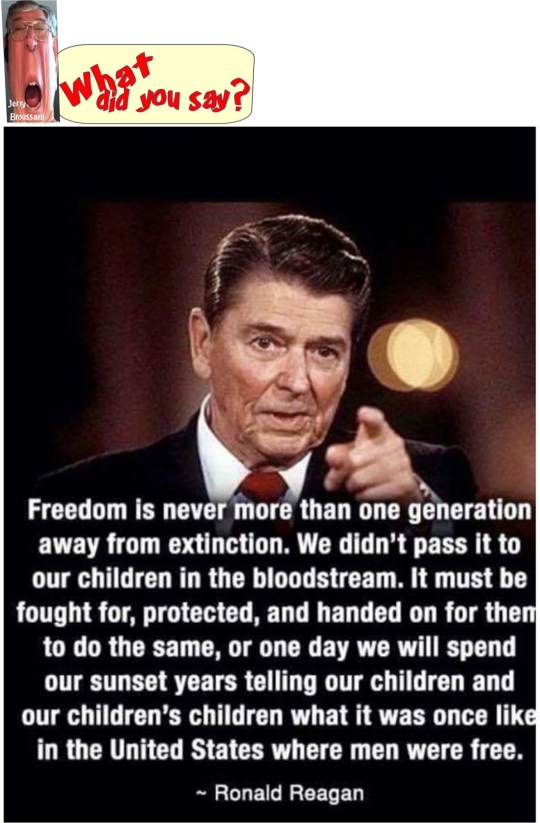
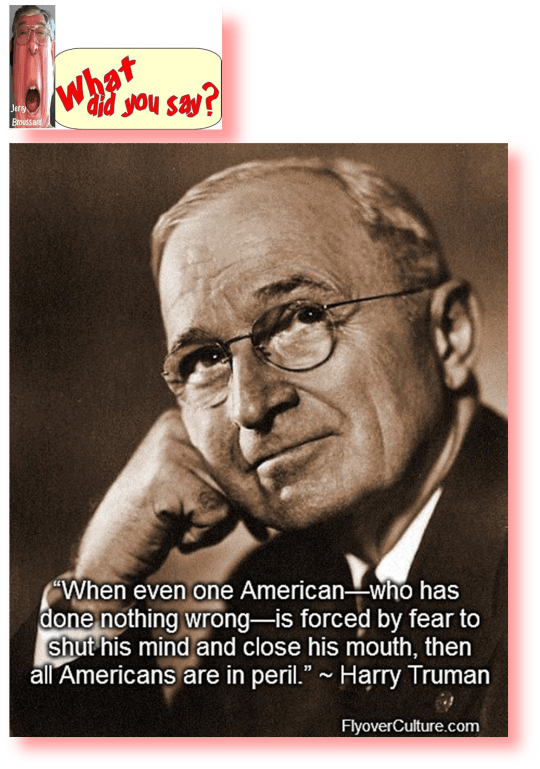







 What Did You Say?
You must be logged in to post a comment.