We previously discussed the defamation case against NYU Law Professor and MSNBC legal analyst Andrew Weissmann. He is being sued by lawyer Stefan Passantino after Weissmann said that he coached former Trump White House aide Cassidy Hutchinson to “lie” to Congress. At the time, I wrote that “it is hard to see how Weissmann can avoid a trial.” U.S. District Judge Loren AliKhan apparently agrees. She just rejected Weissmann’s motion to dismiss the case.
The controversial former aide to Special Counsel Robert Mueller (and NYU law professor) is being sued after declaring that attorney Stefan Passantino (who represented Hutchinson before Congress) told her to lie.
Weissmann’s controversial commentary was not a surprise to many critics.
Many of us questioned Mueller hiring Weissmann given his reputation for stretching legal authority and perceived political bias. Weissmann reportedly congratulated acting Attorney General Sally Yates after she ordered the Justice Department not to assist President Donald Trump on his immigration ban. The Supreme Court would ultimately affirm Trump’s underlying authority, but Yates refused to allow the Justice Department to assist a sitting president in defending that authority. Weissmann gushed in an email to her, writing “I am so proud. And in awe. Thank you so much.”
What Weissmann often lacked in precedent, he made up for in hyperbole. That signature is at the heart of the current lawsuit. On September 13, 2023, Weissmann was referring to Judy Hunt and noted on Twitter (now X) that “Hunt also is Cassidy Hutchinson’s good lawyer. (Not the one who coached her to lie).”
In making this claim against Passantino, Weissmann actually triggered the “per se” defamation standard twice. These are categories that have been treated as defamatory per se. The allegation against Passantino would not only constitute criminal conduct but also unethical professional conduct. Passantino denounces the statement as an “insidious lie” and “smear.”
AliKahn noted that “At her fifth deposition, Ms. Hutchinson discussed a line of questioning from her first deposition about the January 6 incident in the Presidential limousine,” AliKhan wrote. “She explained that, during a break after facing repeated questions on the topic, she had told Mr. Passantino in private, ‘I’m f*****. I just lied.’ Mr. Passantino responded, ‘You didn’t lie. . . . They don’t know what you know, Cassidy. They don’t know that you can recall some of these things. So, you [sic] saying ‘I don’t recall’ is an entirely acceptable response to this.’”
Hutchinson repeatedly confirmed that Passantino “never told me to lie,” “didn’t tell me to lie,” and “He told me not to lie.”
While Judge AliKhan on Monday tossed out the second count in the complaint as lacking foundation for the claim of financial harm, she refused to dismiss Passantino’s defamation claim and moved the case forward toward trial. That could prove embarrassing as Passantino’s team searches for evidence of malice in his emails and other communications.
We have been discussing how colleges and universities have been using security concerns as a way to bar conservative and libertarian speakers. Another barrier has been the imposition of prohibitive security fees as a condition for such speakers to appear on campus, fees generally not required for liberal speakers. Now, in a significant free speech victory, U.S. District Judge David Urias has enjoined the University of New Mexico from imposing a $5,400 security fee for former collegiate swimmer and activist Riley Gaines after speaking on campus. UNM has a history of cancellation campaigns against conservative and libertarian speakers, as previously discussed on this blog.
Gaines has become a national figure in her campaign against biologically male students competing in women’s sports. While it is a position that is supported by an overwhelming majority of Americans, faculty and students have repeatedly targeted Gaines with cancel campaigns and disruptive protests. In this case, UNM originally demanded over $10,000. The lawsuit brought by the Leadership Institute named UNM President Garnett Stokes and other UNM officials as defendants. Judge Urias was legitimately suspicious of the demand and found that it violated the First Amendment.
In his 16-page order in Leadership Institute v. Stokes(D.N.M.), Judge Urias noted that Gaines travels with her own security (itself a sad statement about this Age of Rage). The court noted the rather fluid standard applied to Gaines:
[T]he quote of over $10,000 was for every officer UNM employed—thirty-three officers; nearly one for every three attendees the students expected. When TP-UNM asked why Defendant Stump intended to assign every officer to the Gaines event, and whether it was because of the speaker or the inviting organization, he responded that “it’s all based on individual assessments,” that they were looking at the “individual,” and that “there is not a criteria [sic].”
He also told the students that if an organization were to screen the Barbie movie in a venue on campus, he likely would not require even a single officer because the UNM police were “not worried about the Barbie movie.” He then said that security was “consistent” in how it assessed fees “to Turning Point” in the past. He described past TP-UNM events featuring other conservative speakers that generated protests at UNM. A few times during the meeting, he reiterated that UNM assesses security fees on a “case-by-case basis.” …
Notably, the court detailed how fewer than 10 protesters actually showed up and demonstrated outside of the room. Nevertheless, UNM hit Turning Point with the fee for twenty-seven officers at the event who charged for a total of 95.25 hours.
The court applied the holding in Forsyth County v. Nationalist Movement (1992) in which the Supreme Court held that the government can impose extra security fees due to the controversial status of speakers or groups. In writing for a 5-4 majority, Justice Henry Blackmun held that “Nothing in the law or its application prevents the official from encouraging some views and discouraging others through the arbitrary application of fees. The First Amendment prohibits the vesting of such unbridled discretion in a government official.”
Judge Urias found precisely such a barrier imposed by the UNM:
When a policy allows “appraisal of facts, the exercise of judgment, and the formation of an opinion by the licensing authority, the danger of censorship and of abridgment of our precious First Amendment freedoms is too great to be permitted[.]” Forsyth County.… Although the question in this case is closer than that in Forsyth, the Court nonetheless finds that Plaintiffs have demonstrated the security fee policy in this case is similar enough to render it overly broad. Although the policy lists criteria for officials to consider when assessing event security, such as venue size and location, the list ultimately leaves the decision of how much to charge for security up to the whim of university officials. For example, the policy does not explain a method for determining how much more security is required for a small venue as compared to a large one, or for a daytime event as compared to a nighttime event.
Significantly, the policy states that the “basic cost of security … will be charged to all groups” based on a schedule of charges that the UNM Police Department has on its website, but despite this, the department does not actually delineate the amount of this “basic cost of security.” Though the security fee policy also states that the police department “regularly” updates the “schedule of charges based on the factors” and that “[t]he basic cost of security according to this schedule will be charged to all groups,” there is no schedule of charges.
Additionally, the preamble to the policy indicates that university officials “may” assess security fees but does not provide guidance for when they may or may not assess these fees, which contributes to the problem of allowing university officials overly broad discretion. In sum, Plaintiffs have shown a substantial likelihood of success on the merits of their overbreadth claim because the security fee policy does not contain limiting language that includes “narrowly drawn, reasonable and definite standards[,]” and it does not include anything to prevent UNM administrators from exercising their discretion in a content-based manner….
The ruling is a notable victory for free speech in creating additional precedent against the use of security fees as a deterrent to groups in inviting targeted speakers like Riley Gaines. Conservative groups have long complained that far left speakers are rarely targeted by cancel campaigns and even more rarely hit with these security fees. In past cases, a security deposit is demanded upfront, creating a barrier for many groups.
Author and cultural critic Fran Lebowitz added voice to the unhinged calls on the left for trashing the Supreme Court. As I discussed recently in the Wall Street Journal (and in my book), there is a growing counter-constitutional movement in the United States led by law professors, pundits, and celebrities. Lebowitz amplified those calls in a radical demand to simply get rid of the Court.
Lebowitz called for President Joe Biden to “dissolve the Supreme Court” despite the fact that it would violate the Constitution and remove one of the most critical protections against executive and legislative abuse. Lebowitz insisted that the Supreme Court is a “disgrace” because, in a reference to Donald Trump, it is “completely his.” To the wild applause of the New York audience, she added: “It’s so disgraceful, this court, that it shouldn’t even be allowed to be called the Supreme Court. It’s an insult to Motown. Basically, it’s a harem. It’s Trump’s harem.” Her views aligned with others on the left who have attacked the Constitution, the Court, and even rights like free speech as now threats to our democracy.
Senate Majority Leader Chuck Schumer previously declared in front of the Supreme Court, “I want to tell you, [Neil] Gorsuch, I want to tell you, [Brett] Kavanaugh, you have released the whirlwind, and you will pay the price.”
Rep. Alexandria Ocasio-Cortez (D-NY) announced that she wants the impeachment of all six of the conservative justices. She was immediately joined by other Democratic members. Previously, Ocasio-Cortez admitted that she does not understand why we even have a Supreme Court. She asked “How much does the current structure benefit us? And I don’t think it does.”
Other members, such as Sen. Elizabeth Warren (D-Mass.), have called for packing the Court with additional members to immediately secure a liberal majority to rule as she desires.
Sen. Sheldon Whitehouse (D., RI), has assured voters that Vice President Kamala Harris will support the packing of the Court with a liberal majority.
Despite supporting censorship to combat “disinformation,” many on the left now eagerly spread disinformation about the Court and its rulings. Lebowitz repeated false claims about the Court’s ruling on presidential immunity, stating that the decision makes the president a “king” who “can do whatever you want.”
In reality, the Court followed the same approach that it has taken in prior conflicts between the branches. As it has in the past, the Court adopted a three-tiered approach to presidential powers based on the source of a presidential action. Chief Justice John Roberts cited Youngstown Sheet and Tube Co. v. Sawyer, in which the court ruled against President Harry Truman’s takeover of steel mills.
In his famous concurrence to Youngstown, Justice Robert Jackson broke down the balance of executive and legislative authority between three types of actions. In the first, a president acts with express or implied authority from Congress. In the second, he acts where Congress is silent (“the zone of twilight” area). In the third, the president acts in defiance of Congress.
In this decision, the court adopted a similar sliding scale. It held that presidents enjoy absolute immunity for actions that fall within their “exclusive sphere of constitutional authority” while they enjoy presumptive immunity for other official acts. They do not enjoy immunity for unofficial or private actions.
None of these matters. Facts do not matter. Many on the left are calling for the trashing of the Constitution based on wildly inaccurate claims.
Erwin Chemerinsky, dean of the UC Berkeley law school, is author of “No Democracy Lasts Forever: How the Constitution Threatens the United States,” published last month. In a 2021 Los Angeles Times op-ed, he described conservative justices as “partisan hacks.”
In the New York Times, book critic Jennifer Szalai scoffs at what she calls “Constitution worship.” She writes: “Americans have long assumed that the Constitution could save us; a growing chorus now wonders whether we need to be saved from it.” She frets that by limiting the power of the majority, the Constitution “can end up fostering the widespread cynicism that helps authoritarianism grow.”
In a 2022 New York Times op-ed, “The Constitution Is Broken and Should Not Be Reclaimed,” law professors Ryan D. Doerfler of Harvard and Samuel Moyn of Yale called for liberals to “reclaim America from constitutionalism.”
Lebowitz previously said that Trump should be killed with the help of the Saudi government.
Lebowitz is demonstrably wrong about the voting record of the justices. In reality, the Court continues to rule largely by unanimous, or nearly unanimous decisions. After April, unanimity stood at 46 percent of cases. Of the 22 6-3 decisions, only half broke along ideological lines. That is the same as the 11 such cases last term.
The average for unanimous decisions has been roughly 43 percent. The rate is back up to 48 percent for the last term. When you add the nearly unanimous opinions, it is the vast majority of cases. Moreover, Sotomayor agreed with Roberts in 71% of cases Kavanaugh and Barrett agreed with Sotomayor roughly 70% of the time.
In critical decisions, conservative justices like Gorsuch and Barrett have joined their liberal colleagues and the Court has repeatedly voted against positions supported by Donald Trump.
Again, none of these matters. Lebowitz and others are falsely telling the public that the Court is difunctionally and ideologically divided. Of course, even if you accept the false premise, the problem is not with the liberal justices always voting as a block but the conservatives doing so. The liberals are not robotic, they are simply right.
Below is my column in the Hill on the rough week for New York Attorney General Letitia James in court. James has campaigned on lawfare, and the Democratic New York voters have wildly supported her weaponization of the legal system against Trump and others. Now some judges are balking…
Here is the column:
In an age of lawfare, New York Attorney General Letitia James has always embraced the total war option. Her very appeal has been her willingness to use any means against political opponents. James first ran for her office by pledging to bag Donald Trump on something, anything. She did not specify the violation, only that she would deliver the ultimate trophy kill for Democratic voters. James follows the view of what Prussian General Carl von Clausewitz said about war, law is merely politics “by other means.”
Yet, the political success of James in weaponizing her office has been in stark contrast with her legal setbacks in courts. James earlier sought to use her office to disband the National Rifle Association, the most powerful gun rights organization in the country, due to self-dealing and corruption of executives. James notably did not target liberal groups accused of similar violations. The ridiculous effort to disband the NRA collapsed in court.
It did not matter. James knew that such efforts were performative and that New York voters did not care if such attacks failed. She will continue to win the lawfare battles, even if she loses the war.
This week, two of James’s best-known campaigns were struggling in court.
James is best known for her fraud case against Trump, in which she secured a $464 million fine and a ban on Trump from the New York real estate business for three years. That penalty, which has now risen to $489 million with interest, was in a case where no one had lost a dime due to the alleged inaccurate property valuations in bank loans secured by the Trump organization. Not only where the banks fully paid on the loans and made considerable profits, but they wanted to make additional loans to the Trump organization.
In appellate arguments this week, James’s office faced openly skeptical justices who raised the very arguments that some of us have made for years about the ludicrous fine imposed by Judge Arthur Engoron. Justice David Friedman noted that this law “is supposed to protect the market and the consumers — I don’t see it here.”
His colleague Justice Peter Moulton told her office “The immense penalty in this case is troubling” and added, “How do you tether the amount that was assessed by [Engoron] to the harm that was caused here where the parties left these transactions happy?”
The answer, of course, is the case was never about markets. It was about politics. The fact that the banks were “happy” is immaterial. Happiness in New York is a political, not legal calculus. The justices did not rule this week, but an opinion could be issued within a month.
In the same week, James faced a stinging defeat in another popular cause. James had targeted pro-life organizations for spreading supposed “disinformation” in not just opposing the use of mifepristone (the abortion pill used in the majority of abortions in the United States), but in advocating the use of reversal procedures if mothers change their minds before taking the second drug in the treatment regimen.
Critics charge that, while there are some studies showing successful reversal cases, the treatment remains unproven and unapproved. It remains an intense debate. James, however, wanted to end the debate. She targeted pregnancy centers and was then sued by two pro-life ministries, Summit Life Outreach Center and the Evergreen Association.
Judge John Sinatra Jr. blocked James‘s crackdown as a denial of free speech. Notably, these centers were not profiting by sharing this information or advocating such reversal treatment. James merely declared that people advocating such reversal treatments are engaged in “spreading dangerous misinformation by advertising…without any medical and scientific proof.”
It is a familiar rationale on the left and discussed in my latest book, “The Indispensable Right: Free Speech in an Age of Rage.”It is the same rationale that led to the banning and blacklisting of experts during the pandemic for views that have now been vindicated on the efficacy of masks and other issues. They were silenced by those who declared their viewpoints as dangerously unproven or unapproved, but who were themselves wrong.
James claimed a right to crack down on views that she deemed unproven, even by those who were seeking only to disseminate information rather than sell products. It did not seem to matter to her that, in the 2018 in NIFLA v. Becerra, the Supreme Court rejected the effort by California Attorney General Xavier Becerra (now the secretary of Health and Human Services) to require crisis pregnancy centers to refer abortions. The court refused to create an exception for requiring speech from licensed professionals.
After the effort failed to force doctors to disseminate pro-abortion information in California, James sought to prevent others from disseminating pro-life information in New York. The court ruled that, under the First Amendment, government officials cannot simply declare certain views as “disinformation” as a pretext to censor disfavored speech.
If there are harmful or fraudulent products or practices, the government has ample powers to target businesses and professionals involved with them. James, however, was seeking to silence those who advocate for a treatment that is unproven but not unlawful.
James’s legacy now includes an effort to disband a civil rights organization, deny free speech and secure confiscatory fines against her political opponents. Yet she is lionized by the media and politicians in an election that is billed as “saving democracy.”
In the end, James knows her audience, and it is not appellate judges. It does not matter to her if she is found to be violating the Constitution or abusing opponents. She has converted the New York legal system into a series of thrill-kills.
Below is my column in the New York Post on the indictment of Mayor Eric Adams. The most serious charges may be the foreign campaign contributions. However, the indictment is not nearly as overwhelming as suggested by the government. That may be why they are openly threatening Adams associates to cooperate or face ruin.
Here is the column:
The federal five-count indictment of New York Mayor Eric Adams is on its face a damning document of alleged public corruption. The government is alleging that Turkish officials saw Adams as a rising star in the Democratic Party and started to groom him for influence.
However, once beyond the details of the opulent rooms and flight upgrades, there may be less here than meets the eye in some of these charges. The campaign-contribution violations raise serious problems for Adams in the alleged solicitation of unlawful foreign contributions. Yet the counts must be read with caution. We have not seen the specific defenses to the allegations of using “straw men” to funnel unlawful contributions and the alleged favors bestowed on contributors. Indictments are one-sided and highly slanted interpretations of the facts by prosecutors to secure a conviction.
For example, many of the gifts from Turkish sources were realized in the form of upgrades on flights to business class or expensive hotel suites. It is not clear what Adams knew of the logistics for such travel or their inclusion in annual reports. Despite their public personas, many populist politicians tend to be a pampered class who expect to be feted in the best quarters as they speak as the “voice of the people.”
That was captured most vividly by NYC Rep. Alexandria Ocasio-Cortez sashaying at the Met Gala in a designer dress reading “tax the rich.” It was a scene with a crushing irony. The dress itself was worth more than some people make in a year, and it was just “loaned” to AOC despite being made specifically for her. She also did not pay for her ticket, which would cost $35,000.
It triggered an ethics investigation and allegations of ethical violations. In one night, Ocasio-Cortez flaunted roughly half of the value of the alleged Adams gifts as she paraded as a social warrior among the social elite. The truly hilarious aspect was that it was the elite who were thrilled by the demonstration and subsidized it.
The Adams allegations would constitute a fairly crude form of corruption by today’s standards. For the Biden family, it looks like small potatoes. Adams lacked a Hunter and the type of labyrinth of accounts maintained by the Bidens to funnel millions from foreign sources.
One of the most discussed allegations concerns a high-rise building built by Turkish friends in Manhattan to serve as their new consulate. The Turks wanted the building opened before the arrival of the Turkish president in 2021, strongman Recep Tayyip Erdoğan. The problem is that, according to prosecutors, New York Fire Department officials found an array of dangerous defects in the building and believed that it was a fire risk. They refused to allow the building to open until it met those standards. The government alleges that Turkish officials immediately dialed up their well-groomed ally, Adams, and told him that it was “his turn” to support Turkey. Adams intervened and prosecutors say that FDNY officials were afraid for their jobs.
Once again, however, Adams has defenses. He can argue that New York is the home of the United Nations and a large population of diplomats and international organizations. This was a foreign country seeking to open a consulate and he intervened to avoid an embarrassing diplomatic tiff.
Suggesting that a push to cut short fire inspections may be difficult to maintain under a bribery theory. That was the type of expansive case that government attorney Jack Smith used against former Virginia Republican Gov. Robert McDonnell and it failed spectacularly before the Supreme Court. There are other reasons besides flight upgrades why Adams might have facilitated a speed up of building approvals.
In the end, this is a Bob Menendez-lite indictment. Failing to publicly list how you moved from economy to business class on flights is hardly the stuff of “All the King’s Men.” It is more like “All the King’s Upgrades.” The biggest problem for Adams is that the US Attorney’s Office went public with a threat for all of those who do not cooperate and pledged that more will be “held accountable.” In other words, the indictment amplified the tune in a game of musical chairs. Anyone close to Adams may want to sit down before the music stops. That means that Adams can expect close associates to be testifying against him with the enthusiasm of those threatened with ruin by federal prosecutors.
If Eric Adams is convicted, it will be at the hands of his associates. The jury will not be particularly sympathetic with a politician snaring the Bentley Suite at the St. Regis Istanbul. Prosecutors love to play on such opulence like their use of Paul Manafort’s $15,000 Ostrich coat.
Combined with former friends and associates, it may be enough for the ultimate upgrade for Adams from business class to a federal cellblock.
Judges on a New York appeals court were open-minded and receptive to the possibility of reversing or reducing the $454 million civil fraud judgment in New York Attorney General Letitia James’ lawsuit against former President Trump. Trump appealed the civil fraud ruling that demanded he pay more than $450 million. The former president’s attorneys called New York Judge Arthur Engoron’s ruling “draconian, unlawful, and unconstitutional.”
Engoron ruled that Trump and other defendants were liable for persistent and repeated fraud, falsifying business records, issuing false financial statements, conspiracy to falsify false financial statements, insurance fraud and conspiracy to commit insurance fraud. A five-judge panel on a New York appeals court in Manhattan Thursday heard oral arguments on the appeal. The former president did not attend oral arguments Thursday but was instead represented by his legal team.
Trump attorney D. John Sauer argued that James’ lawsuit stretched New York consumer protection laws and said there were “no victims” and “no complaints” of Trump’s business from lenders and insurers.
New York Attorney General Letitia James speaks during the Congressional Black Caucus Foundation Annual Legislative Conference National Town Hall on September 21, 2023, in Washington, DC. (Jemal Countess/Getty Images for Congressional Black Caucus Foundation)
Sauer said the cause “involves a clear-cut violation of the statute of limitations,” pointing to transactions used in the non-jury civil fraud trial that dated back more than a decade.
Sauer said that if the verdict is not overturned, “people can’t do business in real estate” without fear.
The Appellate Division typically rules about a month after arguments are complete, meaning a final decision could come before Election Day on Nov. 5.
Judge Peter H. Moulton questioned if James’ lawsuit turned into “something it was not meant to do.” Moulton said the “immense penalty in this case is troubling.” But the state argued that there is evidence to support the verdict.
In September 2023, before the non-jury trial began, Engoron ruled that Trump and the Trump Organization had committed fraud while building his real estate empire by deceiving banks, insurers and others by overvaluing his assets and exaggerating his net worth on paperwork used in making deals and securing financing. Trump was hit with an initial penalty of $355 million. That sum is quickly increasing via interest accruals of approximately $112,000 a day until paid in full, now sitting around $470 million.
NEW YORK, NEW YORK – NOVEMBER 13: Justice Arthur Engoron presides over the civil fraud trial of former President Donald Trump and his children at New York State Supreme Court on November 13, 2023, in New York City. ((Photo by Erin Schaff-Pool/Getty Images))
Trump, the 2024 presumptive GOP presidential nominee, and his legal team had appealed and requested a stay on his $454 million civil fraud judgment. Trump’s legal team said the initial requested bond was “unprecedented for a private company,” and said to post it in the judgment’s full amount was a “practical impossibility.”
An appeals court slashed former President Trump’s bond payment in March, and the former president paid $175 million. Trump has vowed to fight the case “all the way up to the U.S. Supreme Court if necessary.”
Trump and his family denied any wrongdoing, with the former president saying his assets had been undervalued. Trump’s legal team insisted that his financial statements had disclaimers and made it clear to banks that they should conduct their own assessments.
Former U.S. President Donald Trump speaks to the media as he arrives for the start of his civil fraud trial at New York State Supreme Court on October 02, 2023, in New York City. (Michael M. Santiago/Getty Images)
Throughout the trial, Trump attorneys brought witnesses, including former Deutsche Bank top executives, who testified the banks sought additional business from Trump, whom they viewed as a “whale of a client.” Trump’s defense also brought in expert witnesses, including New York University accounting professor Eli Bartov, who reviewed the Trump financial statements at issue in the case and said he found no evidence of accounting fraud. Bartov testified last month that Trump’s financial statements did not violate accounting principles, and he suggested that anything problematic – like a huge year-to-year leap in the estimated value of his Trump Tower penthouse – was simply an error.
“My main finding is that there is no evidence whatsoever of any accounting fraud,” Bartov testified. Trump’s financial statements, he said, “were not materially misstated.”
The Associated Press contributed to this report.
Brooke Singman is a political correspondent and reporter for Fox News Digital, Fox News Channel and FOX Business.
New York Mayor Eric Adams speaks at a press conference Thursday before appearing in court after his indictment. (Timothy A. Clary/AFP/Getty Images)
Did New York Mayor Eric Adams, a Democrat and former police captain, accept foreign bribes and foreign campaign contributions? That’s the key issue in the federal indictment of New York’s mayor just handed down by a federal grand jury led by Damian Williams, the U.S. attorney for the Southern District of New York.
The indictment charges Adams with five felonies under federal law that could result in his spending a long time in prison, including wire fraud, solicitation and receipt of campaign contributions from a foreign national, and outright bribery.
The indictment claims that when Adams became Brooklyn borough president in 2014, he “sought and accepted … valuable benefits, such as luxury international travel” from “wealthy foreign businesspeople including at least one Turkish government official seeking to gain influence over him.”
In 2018, when Adams made public his plan to run for mayor, the indictment alleges that he “not only accepted but sought illegal campaign contributions to his 2021 mayoral campaign, as well as other things of value, from foreign nationals.” As Adams’ “prominence and power grew” and it became clear that he was going to become mayor of the Big Apple, those “foreign-national benefactors sought to cash in on the corrupt relationship,” the indictment alleges. It claims that Adams agreed, “providing favorable treatment” and “granting requests” from them.
The indictment describes an elaborate scheme to hide illegal foreign campaign contributions as well as corporate donations and individual donations exceeding the legal limits.
“Overseas contributors” used “straw donors,” U.S. nationals who falsely claimed they were making the donations that actually were from foreign nationals. Businesses evaded a ban on corporate contributions by using their employees to make those contributions, reimbursing the employees through corporate accounts. And “wealthy individuals” also used straw donors to evade laws “restricting the amount any one person can donate to a candidate,” the indictment says.
Adams also is accused of defrauding the City of New York through its public funding program for political campaigns. The city has a program that “matches small-dollar contributions from individual city residents with up to eight times their amount in public funds.”
The indictment claims that Adams applied for matching funds for the straw donor contributions he received; despite knowing they were fraudulent donations. The result? Adams’ 2021 mayoral campaign received $10 million in public funds that he shouldn’t have gotten.
The indictment says that the same Turkish government official who funneled illegal campaign contributions to Adams, referred to in the indictment as a “senior official in the Turkish diplomatic establishment,” also arranged “free or discounted travel on Turkey’s national airline.”
The official also arranged “free rooms at opulent hotels, free meals at high-end restaurants, and free luxurious entertainment” for Adams “and his companions” in Turkey, the indictment says.
Adams’ passport must have quite a number of U.S. Customs stamps in it, since the “free or discounted” travel apparently included trips to “France, China, Sri Lanka, India, Hungary, and Turkey itself.”
To illustrate the “opulent hotels,” the indictment contains photos of some of the hotels Adams stayed in, including two photos of the Bentley Suite bedroom and bathroom at the St. Regis Hotel in Istanbul. Adams paid less than $600 for a suite that normally costs $7,000 for two nights, the indictment alleges.
An essential part of the government’s prosecution is the claim that Adams not only knew about all of this, but that he “and others working at his direction, repeatedly took steps to shield his solicitation and acceptance of these benefits from public scrutiny.” Those efforts, the indictment alleges, included not disclosing the travel benefits he received on the city’s required annual financial disclosure form as well as creating “fake paper trails, falsely suggesting he had paid” for the travel benefits his generous overseas benefactor financed.
The mayor also was apparently diligent in deleting “messages with others involved in his misconduct” to destroy evidence, although the indictment is replete with email and text messages captured by government investigators.
Part of the quid pro quo for all of these benefits, according to the indictment, was the Turkish official telling Adams that he had to override the New York Fire Department in order “to facilitate the opening of a new Turkish consular building” without a fire inspection “in time for a high-profile visit by Turkey’s president.”
“Adams did as instruct,” the indictment says, and the responsible fire official “was told that he would lose his job if he failed to acquiesce.” The building was allowed to open. If the scheme had not worked, the indictment alleges, the “building would have failed an FDNY inspection.”
The indictment also alleges that Adams successfully intervened on behalf of others who illegally funneled money to him, such as a businessman who wanted help with the city’s “Department of Buildings.”
The five criminal counts against Adams allege violations of 18 U.S.C. §1342 and §1343; 52 U.S.C. §30121 and §30109; and 18 U.S.C. §2 and §666. These federal statutes cover conspiracy to commit wire fraud, wire fraud, federal program bribery, soliciting and receiving campaign donations from foreign nationals, and plain, old-fashioned bribery.
If you’re wondering how a federal prosecutor has jurisdiction over campaign contributions being made to a local mayoral campaign, it is because 52 U.S.C. §30121 bans all political contributions by foreigners in federal, state, and local elections.
Congress has the constitutional authority for this because of its power over foreign aliens and immigration, which includes the ability to keep them out of all of our elections, not just federal elections.
In the final paragraph of the indictment, the government asks for forfeiture by Adams of “all property, real and personal, that constitutes or is derived from proceeds traceable to the commission” of his misdeeds. That means that in addition to long jail time, Adams—if convicted—could be on the hook for millions of dollars in criminal forfeiture and civil penalties.
No one should doubt that these are very serious, very substantial charges, although Adams is presumed to be innocent until he is found guilty or decides to plead guilty. But all of the information in the indictment seems to indicate that federal prosecutors and agents conducted an in-depth, thorough investigation.
If Adams decides to fight the charges instead of trying to negotiate a plea deal with the government, we may be looking at a very long, very expensive process before the case is resolved.
Most Americans, 58%, said they cannot express their private opinions publicly, and 61% admit to “self-silencing” their political views. (FL-photography/iStock/Getty Images)
Rebeka Zeljko is a reporter who covers politics for the Daily Caller News Foundation.
Most Americans, 58%, said they cannot express their private opinions publicly, and 61% admit to “self-silencing” their political views, according to the survey. At the same time, Americans publicly claim to have higher trust in our institutions than they do in private.
Only 36% of Democrats publicly said that they trust the government to tell the truth, but only 5% agreed with the statement in private, according to the survey. Similarly, 42% of Democrats publicly report that they trust the media to tell the truth, while just 9% reiterated this belief in private.
Skepticism is even more apparent among Republicans, with 14% publicly saying they trust the government to tell the truth while just 2% hold this belief privately, according to the study. At the same time, just 16% of Republicans publicly trust the media to tell the truth, while just 3% agreed with the statement in private.
Just 37% of Americans publicly believe that we live in a mostly fair society, while just 7% privately agree with the sentiment, according to the survey.
While polarization is at the forefront of many political conversations, the study reveals Americans privately agree on many issues.
The vast majority of Americans, 90%, are privately on the “same side” of roughly two-thirds of political issues ranging from abortion to school choice and legal immigration, according to the survey.
When it comes to defunding the police, 28% of Gen Z and 27% of Democrats publicly supported the movement, according to the survey. However, only 2% of Gen Z and 3% of Democrats privately support the same movement, which parallels the 1% support among Baby Boomers and Republicans.
The Populace Research/YouGov study surveyed 19,879 respondents from May 16 to June 24.
Below is my column in the Wall Street Journal on the growing counter-constitutional movement in the United States. This assault on the Constitution is being led by law professors who have lost their faith in the defining principles and institutions of our Republic.
Here is the column:
Kamala Harris declared in Tuesday’s debate that a vote for her is a vote “to end the approach that is about attacking the foundations of our democracy ’cause you don’t like the outcome.” She was alluding to the 2021 Capitol riot, but she and her party are also attacking the foundations of our democracy: the Supreme Court and the freedom of speech.
Several candidates for the 2020 presidential nomination, including Ms. Harris, said they were open to the idea of packing the court by expanding the number of seats. Mr. Biden opposed the idea, but a week after he exited the 2024 presidential race, he announced a “bold plan” to “reform” the high court. It would pack the court via term limits and also impose a “binding code of conduct,” aimed at conservative justices.
Ms. Harris quickly endorsed the proposal in a statement, citing a “clear crisis of confidence” in the court owing to “decision after decision overturning long-standing precedent.” She might as well have added “because you don’t like the outcome.” Sen. Sheldon Whitehouse (D., R.I.) has already introduced ethics and term-limits legislation and said Ms. Harris’s campaign has told him “That your bills are precisely aligned with what we are talking about.”
The attacks on the court are part of a growing counter constitutional movement that began in higher education and seems recently to have reached a critical mass in the media and politics. The past few months have seen an explosion of books and articles laying out a new vision of “democracy” unconstrained by constitutional limits on majority power.
Erwin Chemerinsky, dean of the UC Berkeley law school, is author of “No Democracy Lasts Forever: How the Constitution Threatens the United States,” published last month. In a 2021 Los Angeles Times op-ed, he described conservative justices as “partisan hacks.”
In the New York Times, book critic Jennifer Szalai scoffs at what she calls “Constitution worship.” She writes: “Americans have long assumed that the Constitution could save us; a growing chorus now wonders whether we need to be saved from it.” She frets that by limiting the power of the majority, the Constitution “can end up fostering the widespread cynicism that helps authoritarianism grow.”
In a 2022 New York Times op-ed, “The Constitution Is Broken and Should Not Be Reclaimed,” law professors Ryan D. Doerfler of Harvard and Samuel Moyn of Yale called for liberals to “reclaim America from constitutionalism.”
Others have railed against individual rights. In my new book on free speech, I discuss this movement against what many professors deride as “rights talk.” Barbara McQuade of the University of Michigan Law School has called free speech America’s “Achilles’ heel.”
In another Times op-ed, “The First Amendment Is Out of Control,” Columbia law professor Tim Wu, a former Biden White House aide, asserts that free speech “now mostly protects corporate interests” and threatens “essential jobs of the state, such as protecting national security and the safety and privacy of its citizens.”
George Washington University Law’s Mary Ann Franks complains that the First Amendment (and also the Second) is too “aggressively individualistic” and endangers “domestic tranquility” and “general welfare.”
Mainstream Democrats are listening to radical voices. “How much does the current structure benefit us?” Rep. Alexandria Ocasio-Cortez (D., N.Y.) said in 2021, explaining her support for a court-packing bill. “I don’t think it does.” Kelley Robinson, president of the Human Rights Campaign, said at the Democratic National Committee’s “LGBTQ+ Kickoff” that “we’ve got to reimagine” democracy “in a way that is more revolutionary than . . . that little piece of paper.” Both AOC and Ms. Robinson later spoke to the convention itself.
The Nation’s Elie Mystal calls the Constitution “trash” and urges the abolition of the U.S. Senate. Rosa Brooks of Georgetown Law School complains that Americans are “slaves” to the Constitution.
Without counter majoritarian protections and institutions, politics would be reduced to raw power. That’s what some have in mind. In an October 2020 interview, Harvard law professor Michael Klarman laid out a plan for Democrats should they win the White House and both congressional chambers. They would enact “democracy-entrenching legislation,” which would ensure that “the Republican Party will never win another election” unless it moved to the left. The problem: “The Supreme Court could strike down everything I just described, and that’s something the Democrats need to fix.”
Trashing the Constitution gives professors and pundits a license to violate norms. The Washington Monthly reports that at a Georgetown conference, Prof. Josh Chafetz suggested that Congress retaliate against conservative justices by refusing to fund law clerks or “cutting off the Supreme Court’s air conditioning budget.” When the audience laughed, Harvard’s Mr. Doerfler snapped back: “It should not be a laugh line. This is a political contest, these are the tools of retaliation available, and they should be completely normalized.”
The cry for radical constitutional change is shortsighted. The constitutional system was designed for bad times, not only good times. It seeks to protect individual rights, minority factions and smaller states from the tyranny of the majority. The result is a system that forces compromise. It doesn’t protect us from political divisions any more than good medical care protects us from cancer. Rather it allows the body politic to survive political afflictions by pushing factions toward negotiation and moderation.
When Benjamin Franklin said the framers had created “a republic, if you can keep it,” he meant that we needed to keep faith in the Constitution. Law professors mistook their own crisis of faith for a constitutional crisis. They have become a sort of priesthood of atheists, keeping their frocks while doffing their faith. The true danger to the American democratic system lies with politicians who would follow their lead and destroy our institutions in pursuit of political advantage.
Below is my column in The Hill on a growing crisis at the Supreme Court for Chief Justice John Roberts. A new breach of confidentiality shows cultural crisis at the Court. While the earlier leaking of the Dobbs decision could have come from a clerk, much of the recent information could only have originated with a justice.
Here is the column:
Chief Justice John Roberts has always been “a man more sinned against than sinning.” That line from Shakespeare’s “King Lear” seems increasingly apt for the head of our highest court. Roberts was installed almost exactly 20 years ago and soon found himself grappling with a series of controversies that have rocked the court as an institution. He is now faced with another monumental scandal, after the New York Times published leaked confidential information that could only have come from one of the nine members of the court.
By most accounts, Roberts is popular with his colleagues and someone with an unquestioning institutional knowledge and loyalty. He is, in many respects, the ideal chief justice: engaging, empathetic, and unfailingly respectful of the court’s justices and staff. Roberts has been chief justice during some of the court’s most contentious times. Major decisions like overturning Roe v. Wade (which Roberts sought to avoid) have galvanized many against the court.
According to recent polling, fewer than half of Americans (47 percent) hold a favorable opinion of the court (51 percent have an unfavorable view). Of course, that level of support should inspire envy in the court’s critics in Congress (18 percent approval) and the media (which only 32 percent trust).
Some, however, want to express their dissatisfaction more directly and even permanently. This week, Alaskan Panos Anastasiou, 76, was indicted with 22 federal charges for threatening to torture and kill the six conservative justices. Another man, Nicolas Roske, 28, will go on trial next June for attempting to assassinate Associate Justice Brett Kavanaugh.
In the meantime, law professors have rallied the mob, calling for them to be more aggressive against the conservative justices and even calling for Congress to cut off their air conditioning to make them retire.
Politicians have also fueled the rage against the court. On one infamous occasion, Senate Majority Leader Chuck Schumer (D-N.Y.) declared in front of the Supreme Court, “I want to tell you, [Neil] Gorsuch, I want to tell you, [Brett] Kavanaugh, you have released the whirlwind, and you will pay the price.”
Yet, it is what has occurred inside the court that should be most troubling for Roberts. On May 2, 2022, someone inside the court leaked to Politico a copy of the draft of the opinion in Dobbs v. Jackson Women’s Health Organization overturning Roe v. Wade. It was one of the greatest breaches of ethics in the court’s history. The subsequent investigation failed to produce any charges for the culprit or culprits.
Now, the New York Times has published highly detailed accounts of the internal deliberations of the court. The account seemed largely directed at the conservative justices and Roberts. Some of the information on deliberations in three cases (Trump v. Anderson, Fischer v. United States, and Trump v. United States) had to come either directly or indirectly from a justice. Some of these deliberations were confined to members of the court.
Seeing a pattern in this and past leaks, one law professor, Josh Blackmun, even went so far as to suggest that it is “likely that [Justice Elena] Kagan, or at least Kagan surrogates, are behind these leaks.” That remains pure speculation. Yet after the earlier Dobbs leak, Roberts is now dealing with leaks coming out of the confidential conference sessions and memoranda of the justices. This occurs after Roberts pledged that security protocols had been strengthened to protect confidentiality.
The disclosure of this information to third parties violates Canon 4(D)(5) of judicial ethics: “A judge should not disclose or use nonpublic information acquired in a judicial capacity for any purpose unrelated to the judge’s official duties.”
Roberts and the court have long maintained that judicial ethics rules that apply to other federal judges are merely advisory for them. However, some in Congress are now pushing for new binding ethics rules that could make fundamental changes to the court. Justice Kagan is supporting the ethical changes, which would allow lower court judges to render judgment on the justices. Justice Ketanji Brown Jackson also declared publicly that she does not “have any problem” with an enforceable ethics code for the Supreme Court.
A truly “enforceable” code would presumably allow the lower court judges appointed by the chief justice to compel the removal of a justice from a given case. That could flip the outcome on a closely divided court.
Given the latest leak, what would such a panel do with a justice who has breached the confidentiality of internal judicial deliberations? Under the Constitution, a justice can be removed by Congress only through impeachment. Impeachment of a justice has happened only once, in 1805, when Associate Justice Samuel Chase was acquitted.
Roberts has the demeanor and decency of a great chief justice. Despite those strengths, however, some are now wondering if he has the drive and determination to confront his colleagues on a worsening situation at the court. Many years ago, I believed that Roberts erred in failing to publicly rebuke Justice Samuel Alito for publicly displaying disagreement with President Barack Obama during a State of the Union address. Although I was sympathetic with Alito’s objections to Obama’s misleading statements about the Citizens United ruling, it was still a breach of judicial decorum.
Roberts is a good chief in bad times. He can hardly be blamed for the alleged abandonment of the most fundamental ethical principles by justices or clerks. Yet, the court is now in an undeniable crisis of faith. For decades, institutional faith and fealty have maintained confidentiality and civility. Once again, that tradition has been shattered by the reckless and self-serving conduct of those entrusted with the court’s business.
For a man who truly reveres the court, it is an almost Lear-like betrayal of an isolated and even tragic figure. It is time for an institutional reckoning for Roberts in calling his colleagues to account.
While there have been a few prior leaks, the Supreme Court has been largely immune from the weaponized leaks so characteristic of Washington. In a city that floats on leaks, the court was an island of integrity. And more has been lost at the court than just confidentiality. There is a loss of confidence, even innocence, at an institution that once aspired to be something more than a source for the New York Times.
California has triggered the first lawsuit over its controversial new laws that require social media companies to censor fake images created by artificial intelligence, known as deepfakes as well as barring the posting of images. A video creator is suing the State of California after his use of a parody of Vice President Kamala Harris was banned. The law raises serious and novel constitutional questions under the First Amendment.
Gov. Gavin Newsom signed A.B. 2839, expanding the time period that bars the knowing posting of deceptive AI-generated or manipulated content about the election. He also signed A.B. 2655, requiring social media companies to remove or label deceptive or digitally altered AI-generated content within 72 hours of a complaint. A third bill, A.B. 2355, requires election advertisements to disclose whether they use AI-generated or manipulated content.
The American Civil Liberties Union of California, Foundation for Individual Rights and Expression (FIRE), the California News Publishers Association and the California Broadcasters Association opposed the legislation on first amendment grounds.
Elon Musk recently reposted the image of Christopher Kohls, who he defended as fighting for that “absolute Constitutional right to lampoon politicians he believes should not be elected.”
Kohls objected that the new law requires a new font size for the labeling that would fill up the entire screen of his video.
In the complaint below, Kohls noted “[w]hile the obviously far-fetched and over-the-top content of the video make its satirical nature clear, Plaintiff entitled the video ‘Kamala Harris Campaign Ad PARODY.’”
AB 2389 covers “deepfakes,” when “[a] candidate for any federal, state, or local elected office in California portrayed as doing or saying something that the candidate did not do or say if the content is reasonably likely to harm the reputation or electoral prospects of a candidate.”
The exceptions for satire, parody, and news reporting only apply when they are accompanied by a disclaimer. The law is vague and could be used to cover a wide array of political speech. It is not clear what defines satire or parody under the exception. Likewise, “materially deceptive content,” is defined as “audio or visual media that is digitally created or modified, and that includes, but is not limited to, deepfakes and the output of chatbots, such that it would falsely appear to a reasonable person to be an authentic record of the content depicted in the media.”
The Kohls complaint argues that the law flips the burden to creators to establish a defense.
One of the more interesting legal issues is how the law defines “malice.” The legislators lifted the definition from New York Times v. Sullivan on defamation to define the element as the statute requires “malice.” This term does not require any particular ill-intent, but instead applies a definition of “knowing the materially deceptive content was false or with a reckless disregard for the truth.”
That is the long-standing standard for public officials and public figures subject to the higher standard of defamation. However, it is not clear that it will suffice for a law with potential criminal liability and a law with sweeping limits on political speech.
Opinion and satire are generally exempted from defamation actions. Satire can sometimes be litigated as a matter of “false light,” but the standard can become blurred. The intent is clearly to create a false impression of the speaker in making fun of a figure like Harris. Drawing lines between honest and malicious satire is often difficult. Under a false light claim, a person can sue when a publication or image implies something that is both highly offensive and untrue. Where defamation deals with false statements, false light deals with false implications.
For example, in Gill v. Curtis Publ’g Co., 239 P.2d 630 (Cal. 1952), the court considered a “Ladies Home Journal” article that was highly critical of couples who claimed to be cases of “love at first sight.” The article suggested that such impulses were more sexual than serious. The magazine included a photo of a couple, with the caption, “[p]ublicized as glamorous, desirable, ‘love at first sight’ is a bad risk.” The couple was unaware that the photo was used and never consented to its inclusion in the magazine. They prevailed in an action for false light given the suggestion that they were one of these sexualized, “wrong” attractions.
In 1967, the Supreme Court handed down Time, Inc. v. Hill, which held that a family suing Life Magazine for false light must shoulder the burden of the actual malice standard under New York Times v. Sullivan. Justice William Brennan wrote that the majority opinion held that states cannot judge in favor of plaintiffs “to redress false reports of matters of public interest in the absence of proof that the defendant published the report with knowledge of its falsity or reckless disregard of the truth.”
This line is equally difficult under the tort’s standard for the commercial appropriation of use or likeness.
Parody and satire can constitute appropriation of names or likenesses (called the right to publicity). The courts, including the Ninth Circuit, have made a distinctly unfunny mess of such cases. Past tort cases generally have favored celebrities and resulted in rulings like White v. Samsung, a perfectly ludicrous ruling in which Vanna White successfully sued over the use of a robot with a blonde wig turning cards as the appropriation of her name or likeness. It appears no blonde being — robotic or human — may turn cards on a fake game show.
There is also the interesting question of when disclaimers (which are often upheld) ruin the creative message. The complaint argues:
“Disclaimers tend to spoil the joke and initialize the audience. This is why Kohls chooses to announce his parody videos from the title, allowing the entire real estate of the video itself to resemble the sorts of political ads he lampoons. The humor comes from the juxtaposition of over-the-top statements by the AI generated ‘narrator,’ contrasted with the seemingly earnest style of the video as if it were a genuine campaign ad.”
The complaint below has eight counts from (facial and applied) challenges under the First Amendment to due process claims under the Fourteenth Amendment.
Today I was addressing federal and state judges in Ohio on the Supreme Court, including the threatening environment faced by the justices. In the middle of the speech, the media reported that an Alaska man was arrested for threatening to assassinate six members of the Supreme Court and harm two family members. While the government has not confirmed the identities of the justices, some media outlets are reporting, that Panos Anastasiou, 76, threatened the six conservative justices.
The vile threats targeted Thomas (who is apparently Supreme Court Justice 1) using racist language and lynching threats, including one reading “Hopefully N—– [Supreme Court Justice 1] and his white trailer trash n—– loving wife insurrectionist wife are visiting.”
Politicians and pundits have continued to fuel the rage in our society, including attacks on the justices. In one infamous occasion, Senate Majority Leader Chuck Schumer stood in front of the Court and declared “I want to tell you, Gorsuch. I want to tell you, Kavanaugh. You have released the whirlwind, and you will pay the price!” Schumer warned. “You won’t know what hit you if you go forward with these awful decisions.”
We have continued to follow the attacks and arrests of Antifa followers across the country. Some Democrats have played a dangerous game in supporting or excusing the work of Antifa, one of the most violent anti-free speech groups in the world. Former Democratic National Committee deputy chair Keith Ellison, now the Minnesota attorney general, once said Antifa would “strike fear in the heart” of Trump. This was after Antifa had been involved in numerous acts of violence and its website was banned in Germany.
On a nightly basis, pundits accuse the justices of “killing democracy” or support a coup — hyperbolic language that is taken as true by many in society. That audience includes many who believe that the rage gives them license to save the Republic by killing such threats. I have previously stated that his reckless rhetoric has increased the threat against justices, including some who have had to wear bullet-proof vests to simply go out into the public.
Today I discussed how violent rhetoric against the Court is on the rise. In addition, people are normalizing violence amid polarizing political claims. Some 52% of Biden supporters say Republicans are now a threat to American life while 47% of Trump supporters say the same about Democrats. At the same time, 26 million Americans now reportedly view violence as justified. Even law professors and other academics are embracing more aggressive stances toward the justices.
Georgetown Law Professor Josh Chafetz and others are interested in taking a more active approach to making continuation on the Court as unpleasant as possible — at least for conservatives. Chafetz previously declared that the “mob is right” in targeting and harassing justices, and he told a law school panel in 2022 that “I want to suggest that courts are the enemy, and always have been.” He suggested that Congress should retaliate against conservative justices by considering the withdrawal of funding for law clerks or even “cutting off the Supreme Court’s air conditioning budget.” When the audience laughed at that absurd suggestion, it reportedly triggered fellow panelist and Harvard law professor Ryan Doerfler, who shot back at the crowd: “It should not be a laugh line. This is a political contest, these are the tools of retaliation available, and they should be completely normalized.” He added that liberals should destroy the idea that the Court is an “untouchable entity and you’re on the road to authoritarianism if you stand up against it.”
Other academics have engaged in or simply brush off objections to violence.
Speaking on MSNBC’s The Rachel Maddow Show this week, Clinton was asked about continued allegations of Russian efforts to disseminate Russian propaganda in the United States. Clinton responded:
Hillary Clinton has long been one of the most anti-free speech figures in American politics, including calling upon European officials to force Elon Musk to censor American citizens under the infamous Digital Services Act (DSA). She is now suggesting the arrest of Americans who spread what she considers disinformation. It is a crushingly ironic moment since it was her campaign that funded the infamous Steele dossier and spread false stories of Russian collusion during her presidential campaign. Presumably, that disinformation would not be treated as criminal viewpoints.
“I think it’s important to indict the Russians, just as Muller indicted a lot of Russians who were engaged in direct election interference and boosting Trump back in 2016. But I also think there are Americans who are engaged in this kind of propaganda. And whether they should be civilly or even in some cases criminally charged is something that would be a better deterrence, because the Russians are unlikely, except in a very few cases, to ever stand trial in the United States.”
The interview was chillingly consistent with Clinton long antagonism toward free speech.
START AROUND THE 9TH MINUTE. SHE WANTS AMERICANS LIKE ME PROSECUTED FOR PUBLISHING THE TRUTH.
Clinton, of course, was not challenged by Maddow on the fact that her campaign was the conduit for disinformation linked to Russian intelligence services. Not only did U.S. intelligence believe that the Clinton campaign was used to make the debunked claims, but it was clearly done for purely political purposes.
Clinton efforts were so obvious by July 2016 that former CIA Director John Brennan briefed former President Obama on Hillary Clinton’s alleged “plan” to tie then-candidate Donald Trump to Russia as “a means of distracting the public from her use of a private email server.” The Russian investigation was launched days after this briefing.
(MSNBC/via YouTube)
Her general counsel, Marc Elias, his former partner Michael Sussmann, and the campaign were later found involved in not just spreading the false claims from the Steele dossier but other false stories like the Alfa Bank conspiracy claim.
It was Elias who managed the legal budget for the campaign. We now know that the campaign hid the funding of the Steele dossier as a legal expense.
New York Times reporter Ken Vogel said that Elias denied involvement in the anti-Trump dossier. When Vogel tried to report the story, he said that Elias “pushed back vigorously, saying ‘You (or your sources) are wrong.’” Times reporter Maggie Haberman declared, “Folks involved in funding this lied about it, and with sanctimony, for a year.”
Elias was also seated next to John Podesta, Clinton’s campaign chairman, when he was asked about the role of the campaign, he denied categorically any contractual agreement with Fusion GPS. Even assuming that Podesta was kept in the dark, the Durham Report clearly shows that Elias knew and played an active role in pushing this effort.
The Clinton campaign lied to the media, spread false claims of Russian disinformation, and was accused of being a conduit for Russian intelligence. So, would the “better deterrence” have been for Clinton herself to be arrested?
Sussmann ultimately did stand trial but was acquitted. Notably, John Durham noted that “no one at Fusion GPS … would agree to voluntarily speak with the Office” while both the DNC and Clinton campaign invoked privileges to refuse to answer certain questions.
For a person who is on her fourth memoir, Clinton is remarkably hostile to free speech. Notably, in all of these memoirs, she does not address her prominent role in calling for the censorship and now arrest of those with opposing views. She also does not discuss how her campaign lied to the media and funded the Steele dossier. Perhaps that is coming in the fifth memoir. What is clear is that Clinton herself has no fear that such prosecution would ever await her. She is one of those who may silence others but not be silenced. The public is to be protected from views that she deemed disinformation, misinformation, or malinformation.
To that end, as one of the guardians of truth, Clinton chastised the media for not being more consistently anti-Trump, a daunting prospect since the media has been accused of running almost 90 percent negative stories on Trump. Nevertheless, shortly after the second assassination attack on Trump, Clinton called Trump a danger to the world and added that “I don’t understand why it’s so difficult for the press to have a consistent narrative about how dangerous Trump is.”
Ideally, between the arrests of those accused of disinformation and an effective state media, Clinton hopes to rein in errant thoughts and viewpoints.
In the interview, Maddow did not have even a slight objection to the implications of arresting people with criminal viewpoints. Censorship and criminal prosecutions are such mainstream concepts that they are as unsurprising as a fourth Clinton memoir.
We have been discussing a slew of books and interviews by academics denouncing the Constitution or individual rights as a threat to democracy. The latest is Brown University Political Science Professor Corey Brettschneider who is warning about the “dangers of the Constitution.” It is all part of a counter-constitutional movement challenging the very documents that have protected freedoms for centuries. It is hardly a perfect record, but it has served the country and its citizens well. Brettschneider explained to the Brown Daily Herald that the constitution is not only a danger to us all, but “the traditional checks and balances don’t work, and that impeachment and the Supreme Court have failed to check rogue presidents.” He warned that “it could be that we’re at the moment where American democracy doesn’t survive.” The reason appears in large part Trump. Like many, Brettschneider brushes over the fact that the system has worked as designed, including after the Jan. 6th riot. Notably, I agree with aspects of the book in highlighting the courageous struggle of dissenters in our history and the criticism of figures like John Adams, who is also criticized in my new book, “The Indispensable Right: Free Speech in an Age of Rage.”
Moreover, he is correct that abusive presidents have avoided impeachment, and the Court has historically failed to protect individual rights. We both criticize those failures, particularly by the Court. Ultimately, however, the Court did embrace more robust views of individual rights and has repeatedly blocked the overreach of presidents.
Brettschneider describes what he calls “constitutional constituencies” in their struggle against such abuses.
“These constitutional constituencies, the citizens readers of the Constitution who played a critical role in defending and furthering our democracy, therefore disrupt a standard story told by constitutional law scholars and political scientists – experts who declare that checks on the president come mainly from Congress or the Supreme Court or locate the foundation of our democracy with the writers of the Constitution in 1787.”
He adds “If history is any guide, today’s crisis makes this a time ripe for constitutional recovery. In that sense, this book offers hope for current citizens seeking to restore democracy.”
While the book is about historical abuses by presidents and the struggle against them, the book’s pitch pushes all of the anxiety buttons: “Imagine an American president who imprisoned critics, promoted white supremacy, and sought to undermine the law to commit crimes without consequence.” (The book addresses five prior presidents and the pitch does not make direct reference to Trump).
I have no objection to those who speak out against Trump or his conduct. That is part of a worthy national debate in this election year. However, more professors and pundits are suggesting that it is not just Trump but our Constitution that is threatening our democracy. While others have called the Constitution “trash” in their books, Brettschneider is a bit more circumspect in his interview and reportedly calls the Constitution a “dangerous document.”
The remarks of Professor Brettschneider is part of a growing library of books and interviews attacking the Constitution. As discussed earlier, law professors have led this effort. For example, in a New York Times column, “The Constitution Is Broken and Should Not Be Reclaimed,” law professors Ryan D. Doerfler of Harvard and Samuel Moyn of Yale called for the Constitution to be “radically altered” to “reclaim America from constitutionalism.”
Other professors have called for amending the First Amendment and have attacked free speech as a danger.
The United States Constitution is the oldest and most successful Constitution in history. It has survived crises that have destroyed other nations. Yet, we are a people who have not experienced true tyranny. We can lose our appreciation for how fortunate we are to have this system and the stability that it has afforded this country.
In challenging constitutional values like the system of checks and balances, these academics are seeking to strip away the very elements that have forced compromise and moderation throughout our history. It is the very genius of James Madison that allowed the most pluralistic nation on Earth to govern as one.
The post-constitutional world that some professors describe is no doubt attractive to many. It promises more immediate gains from raw political power. However, it would endanger all rights by reducing the guardrails that have served us so well for centuries.
The United States Court of Appeals for the Sixth Circuit handed down a major victory for free speech this week in favor of a professor challenging his treatment by the University of Louisville. In Josephson v. Ganzel, a unanimous panel ruled for Dr. Allan Josephson who was subject to adverse actions after he publicly expressed skepticism over some treatments for youth diagnosed with gender dysphoria. The decision is important because it deals with qualified immunity and reaffirms liability for the denial of free speech protections.
Writing for the panel (including Senior Judge Ronald Lee Gilman and Judge Allen Griffin), Judge Andre Mathis found that university officials could not claim immunity in the denial of free speech protections for faculty.
We previously discussed this case. Josephson was a professor of psychiatry at the medical school and had success at the school after serving as the Division Chief of the Division of Child and Adolescent Psychiatry and Psychology at the University of Louisville for nearly 15 years. He has 35 years of experience in the field. His apparent good standing at the school changed dramatically when he participated in a discussion of the treatment of childhood gender dysphoria at an event in October 2017 sponsored by a conservative think tank, the Heritage Foundation. He expressed his reservations with some treatments and his public comments were reported back to his colleagues.
Dr. Josephson argued that children are not mature enough to make such major, permanent decisions and that 80-95 percent of children claiming gender dysphoria eventually accept their biological sex over time without such treatment. Those views are widely shared by others and have been cited as the basis for states adopting bans on conversion treatments for young children.
His commentary triggered a backlash at the school, which led to a decision not to renew his contract. When sued, the school invoked the Eleventh Amendment and claimed qualified immunity. The district court correctly rejected that claim, and the Sixth Circuit just affirmed that denial.
The university was seeking protection that would have insulated anti-free speech practices from liability, a dangerous prospect that could have dramatically accelerated the growing intolerance on campuses. The University of Louisville was arguing that they could punish faculty for public statements without fear of liability as state officers.
Judge Mathis and his colleagues made fast work of this insidious and dangerous claim:
Defendants argue that they are entitled to qualified immunity for two main reasons. First, they argue it was not clearly established that each Defendant’s conduct, in isolation, was an adverse action sufficient to show retaliation against a professor because of his protected speech. Second, they argue it was not clearly established that the First Amendment protected statements like those Josephson made in October 2017.
Resolving Defendants’ first argument is not complicated. Defendants argue that Josephson’s rights were not clearly established because no court had specifically addressed whether isolated actions against a professor because of his speech were adverse actions. In other words, Defendants believe they can act as they choose until there is a case on all fours. We disagree. As we have explained, “we do not require an earlier decision that is ‘directly on point.’” McElhaney v. Williams, 81 F.4th 550, 556–57 (6th Cir. 2023) (quoting Mullenix v. Luna, 577 U.S. 7, 12 (2015)). At the same time, “‘existing precedent’ must place the contours of the right ‘beyond debate.’” Id. (quoting Mullenix, 577 U.S. at 12).
During the relevant period, it was beyond debate that “the First Amendment bar[red] retaliation for protected speech.” Crawford-El v. Britton, 523 U.S. 574, 592 (1998). By the fall of 2017, both the Supreme Court and this court had held that, absent a disruption of government operations, a public university may not retaliate against a professor for speaking on issues of social or political concern. Pickering, 391 U.S. at 574; Hardy v. Jefferson Cmty. Coll., 260 F.3d 671, 682 (6th Cir. 2001). And we had established that a retaliatory “adverse action” is one that “would deter a person of ordinary firmness from continuing to engage in that conduct.” Thaddeus-X, 175 F.3d at 394. We had further established that campaigns of harassment, when considered as a whole, may amount to adverse actions. See Fritz, 592 F.3d at 724; Thaddeus-X, 175 F.3d at 398; Bloch, 156 F.3d at 678. It was also established that legitimate threats “to the nature and existence of one’s ongoing employment is of a similar character to the other recognized forms of adverse action—termination, refusal to hire, etc.—even if perpetrated by a third party who is not the employer.” Fritz, 592 F.3d at 728. We have, moreover, “repeatedly held that ‘[a]n act taken in retaliation for the exercise of a constitutionally protected right is actionable under § 1983 even if the act, when taken for a different reason, would have been proper.’” Wenk v. O’Reilly, 783 F.3d 585, 595 (6th Cir. 2015) (alteration in original) (emphasis omitted) (quoting Bloch, 156 F.3d at 681–82). Thus, a reasonable university official during the relevant period would have understood that he could not lawfully terminate or threaten the economic livelihood of a professor because of his protected speech.
Defendants’ second argument does not fare much better. That is because the protected nature of Josephson’s speech was also clearly established. “To be clearly established, a legal principle must have a sufficiently clear foundation in then-existing precedent.” District of Columbia v. Wesby, 583 U.S. 48, 63 (2018). The principle “must be settled law.” Id. (internal quotation marks omitted). Settled law “means it is dictated by controlling authority or a robust consensus of cases of persuasive authority.” Id. (internal quotation marks omitted).
In the First Amendment retaliation context, “we ask whether any reasonable official would have understood that [Josephson’s] speech was protected, and thus that the official could not retaliate against him.” McElhaney, 81 F.4th at 557. The answer: It is, and has been, clearly established that public employees have a right to speak “on a matter of public concern regarding issues outside of one’s day-to-day job responsibilities, absent a showing that Pickering balancing favors the government’s particular interest in promoting efficiency or public safety.” Ashford, 89 F.4th at 975 (first citing Buddenberg v. Weisdack, 939 F.3d 732, 739–40 (6th Cir. 2019); then citing Westmoreland v. Sutherland, 662 F.3d 714, 718–19 (6th Cir. 2011)).
It can no doubt be difficult to determine if speech is public or private. See DeCrane, 12 F.4th at 599 (“[W]e have recognized that it can be ‘challenging’ to distinguish public from private speech.” (citation omitted)). Even so, by 2012, “[w]e had held that employees speak as private citizens (not public employees) at least when they speak on their own initiative to those outside their chains of command and when their speech was not part of their official or de facto duties.” Id. at 599–600 (citing Handy-Clay v. City of Memphis, 695 F.3d 531, 542–43 (6th Cir. 2012)). “Would this ‘firmly established’ rule have ‘immediately’ alerted a reasonable person No. 23-5293 Josephson v. Ganzel, et al. Page 22 that” Josephson spoke in his private capacity? See id. at 600 (quoting Wesby, 583 U.S. at 64). We think so.
Defendants also argue that Josephson’s Heritage Foundation panel remarks were a part of his official duties. Even if that were the case, it was clearly established that such speech is protected. See Meriwether, 992 F.3d at 505; Hardy, 260 F.3d at 680; Bonnell v. Lorenzo, 241 F.3d 800, 823 (6th Cir. 2001) (“[A] professor’s rights to academic freedom and freedom of expression are paramount in the academic setting.”).
After a recent blow to academic freedom and free speech by the United States Court of Appeals for the Fourth Circuit, this is a heartening opinion. It is particularly important because, as I have previously written in columns and my new book, public universities will be key to any effort to restore free speech values to higher education.
Higher education has already plunged in trust among citizens under the current administrators and faculty at our colleges and universities. They are destroying the very institutions that sustain them. Public universities can be a strong line of defense for free speech, offering students not just free speech environments but the direct protection of the First Amendment. Not surprisingly, the annual survey of free speech on campuses tends to have public universities at the top of the list of the most protective institutions with a few private standouts.
As shown by the University of Louisville’s medical faculty, administrators and faculty are not necessarily any more inclined to protect diversity of thought at public universities. However, the applicability of the First Amendment subjects them to greater accountability in the courts. In this case, the University of Louisville was seeking to reduce that accountability.
I have written about how taxpayers and legislators can exercise their own power to demand more diversified and tolerant environments at these schools. In the meantime, faculty and students can turn to state schools for greater protections for speech and more diverse environments. This case will help in that effort.
In the 1999 cult classic The Blair Witch Project, one character tells his friends “I could help you, but I’d rather stand here and record.” For free speech advocates, we often feel that other citizens have become passive observers as an anti-free speech movement grows around us, threatening our “indispensable right.”
One of the most infamous figures in this movement has been former British Prime Minister Tony Blair, who has long been the smiling face of censorship. As the head of the Labour Party, Blair pushed through some of the early crackdowns on free speech in the United Kingdom. He is now calling for global censorship to expand these efforts.
In an interview on LBC Radio, Blair declared:
“The world is going to have to come together and agree on some rules around social media platforms. It’s not just how people can provoke hostility and hatred, but I think… the impact on young people particularly when they’ve got access to mobile phones very young, and they are reading a whole lot of stuff and receiving a whole lot of stuff that I think is really messing with their minds in a big way.”
We recently discussed how the UK is already using recent rioting to crackdown further on those with opposing or “toxic” views. For years, I have been writing about the decline of free speech in the United Kingdom and the steady stream of arrests.
While most of us find Brock’s views repellent and hateful, they were confined to his head and his room. Yet, Judge Peter Lodder QC dismissed free speech or free thought concerns with a truly Orwellian statement: “I do not sentence you for your political views, but the extremity of those views informs the assessment of dangerousness.” Lodder lambasted Brock for holding Nazi and other hateful values:
“[i]t is clear that you are a right-wing extremist, your enthusiasm for this repulsive and toxic ideology is demonstrated by the graphic and racist iconography which you have studied and appeared to share with others…”
Even though Lodder agreed that the defendant was older, had limited mobility, and “there was no evidence of disseminating to others,” he still sent him to prison for holding extremist views. After the sentencing Detective Chief Superintendent Kath Barnes, Head of Counter Terrorism Policing Southeast (CTPSE), warned others that he was going to prison because he “showed a clear right-wing ideology with the evidence seized from his possessions during the investigation….We are committed to tackling all forms of toxic ideology which has the potential to threaten public safety and security.”
Blair’s views have been echoed by Speaker of the House Sir Lindsay Hoyle who declared:
“Misinformation is dangerous. Social media is good but it’s also bad when people are using it in a way that could cause a riot, threat, intimidation, suggesting that we should attack somebody, it’s not acceptable. What we’ve got to do is factually correct what’s up there, if not I think the government has to think long and hard about what they are going to do about social media and what are they going to put through parliament as a bill.’
“I believe it should be across, it doesn’t matter what country you are in, the fact is that misinformation is dangerous and no misinformation, or threats, or intimidation should be allowed to be carried out on social media platforms.”
As with the effort in Brazil to block X entirely for refusing to censor political opponents of the government, Blair’s call for global censorship is where the movement is going next.
Notably, after Musk purchased Twitter, Hillary Clinton called upon European officials to force him to censor American citizens under the infamous Digital Services Act (DSA). Recently, Democratic leaders like Minnesota Attorney General Keith Ellison praised Brazil for its action to prevent citizens from having access to unfettered news sources.
Interviews like the one with Tony Blair are not just jump scares meant to intimidate or scare others. They reflect a comprehensive campaign from our political elite to enforce censorship on a national and transnational scale. If you think that this latest Blair Witch Project is just another scary production, you have not been paying attention.
Silicon Valley investor Roger McNamee this weekend went on MSNBC’s “Last Word” and called for the arrest of Elon Musk for “undermining” the federal government by sharing his opinions on X.
McNamee is the latest denizen of the global elite to call for criminalizing speech to silence those with opposing views. McNamee is the founding partner of Elevation Partners and has a colorful history as a band member, a volunteer for Eugene McCarthy and a protester against Vietnam.
As discussed in my book “The Indispensable Right: Free Speech in an Age of Rage”, he is like many liberal baby boomers now joining the anti-free speech movement. They have decided that free speech, once the defining right for the left, is now an existential threat.
McNamee’s rationale for criminalizing speech is chillingly shallow and irrational. He declared that somehow Musk’s political views made him a danger as the head of companies of major importance to the United States. It does not bother him when CEOs adopt far left views, just Musk opposing some of those views:
“You have somebody who runs a really strategic defense and aerospace projects for the federal government who’s actively undermining the government that’s paying him. And somewhere in that is a legal case that needs to be prosecuted.”
Perish the thought that a CEO might undermine the government. McNamee is using the government contracts with SpaceX as a reason to censor Musk’s political and social views.
“The critical element in thinking about Elon Musk is that, like any American, he has a right to his own opinion, and he has a right to express his opinion. However, that right is not unlimited. He is under some special limitations that would not apply to normal people because his company, specifically Starlink and SpaceX are government contractors and, as such, he has obligations to the government that would, for any normal person, and should for him, require him to moderate his speech in the interest of national security.”
So, according to McNamee, if your company makes something that the government wants (including rescuing the currently stranded astronauts in space), he must give up his right to express political views, including against censorship.
McNamee embraces the power of the government to dictate viewpoints or at least silence certain views as a matter of national security. It is no accident that the overriding objective is to “get Musk.” Musk has proven the single greatest barrier to the global anti-free speech movement.
As with the effort in Brazil to block X entirely for refusing to censor political opponents of the government, McNamee’s call for state-driven censorship is where the movement is going next.
Notably, after Musk purchased Twitter, Hillary Clinton called upon European officials to force him to censor American citizens under the infamous Digital Services Act (DSA). Recently, Democratic leaders like Minnesota Attorney General Keith Ellison praised Brazil for its action to prevent citizens from having access to unfettered news sources.
What is most striking about these efforts is that they occurred after the failure of Plan A: to get Americans to embrace censorship. Facebook even ran a creepy campaign to try to get young people to accept censorship, or “content moderation.” The commercials show people like “Joshan” who says that he “grew up with the internet.” Joshan mocks how much computers have changed and then objects how privacy and censorship have not evolved as much as our technology. As Joshan calls for “the blending of the real world and the internet world,” content moderation is presented as part of this not-so-brave new world. Joshan and his equally eager colleagues Chava and Adam were presented by Facebook as the shiny happy faces of young people longing to be content modified. They were all born in 1996 — the sweet spot for censors who saw young people as allies to reduce free speech.
It did not work. Despite some erosion of free speech among young people, it takes a great deal to get a free people to give up their freedoms. Plan B is now to accomplish this objective of speech controls through national and global regulation. Figures like McNamee and Bill Gates are ready to support this brave new world of speech regulation by global censors.
While claiming unprecedented threats from “disinformation,” these are the same voices and rationales discussed in my book that have been used for centuries to limit the speech of others. They are selling the same defective product with the promise that less freedom will lead to a better life.
For global elites like McNamee, free speech is not just dispensable but distracting. Only fools would listen to these voices in trading away our indispensable right.
Below is my column in the New York Post on the sudden guilty plea from Hunter Biden in his federal tax case. It was not the plea but the timing of the plea that was the surprise. What is missing is any cognizable legal strategy in waiting until the first day of the trial to make a “naked plea” when it offered the least possible benefit to him. It was like waiting for the water to reach the deck of the Titanic before asking about swimming lessons. He was a tad late and then unsuccessfully sought to plead guilty without admitting guilt.
Here is the column:
Hunter Biden just showed the perils of playing the game of chicken with yourself. For months, many of us have marveled at the sight of Hunter careening toward a cliff while declaring publicly that he was prepared to go all the way. The Justice Department was never going over the cliff because they had nothing to gain or lose in open-and-shut cases in Delaware and California. There was never a serious question of convicting Hunter of these crimes, just a will of the Justice Department to secure them.
Special Counsel David Weiss inexplicably allowed serious felonies to expire, refused to bring obvious crimes as an unregistered foreign agent, and sought to cut an embarrassing sweetheart deal with Hunter to avoid any jail time on a couple of minor crimes. The deal then collapsed in open court when a judge balked at a provision that would give Hunter sweeping immunity for any crime. When she asked the federal prosecutor if he had ever seen such a plea bargain offered a defendant other than the President’s son, he admitted that he had not.
That is when the chest pounding began. Unwilling to accept anything but the sweetheart deal, Hunter’s defense counsel told the prosecutors in court to “just rip it up.” They did and Weiss was forced to actually prosecute Hunter.
According to the Justice Department, Weiss continued to try to cut a plea bargain with Hunter but was rebuffed by the defense. They then went to Delaware, the home of the Bidens, and tried to convince a sympathetic jury that Hunter was a drug addict who was not responsible for his action as well as other unsupported claims. It failed in spectacular fashion with a conviction on all counts.
Hunter then floored it for the California cliff on the tax charges as the Justice Department and most of us watched confused about how he was trying to intimidate. He hit the brakes as the trial was beginning. Hunter has succeeded in putting himself in the worst possible position for a plea. He waited until he had little to trade and reportedly did not even inform the prosecutors of his decision.
But it gets worse. If he had agreed to a less generous plea deal last year, he could have secured a recommended sentence on both the gun and tax charges. Instead, he will go into this sentencing with a past criminal record, an aggravating factor that could reduce the benefit of the belated plea. In the end, Hunter had nothing to offer, nothing to bargain. He plead guilty to all nine counts.
This decision may still be based more on political than legal calculations. Hunter was almost certain to be convicted. But it would have taken time as his father’s administration (and pardon authority) wanes. If Hunter still hopes for a presidential commutation or pardon, the chances of such executive action is dramatically improved after a sentencing. The White House rarely considers pardons before a trial and sentencing. Indeed, they often wait for appeals to run their course.
Moreover, a demand for jail time seems likely from the Justice Department given this history and it is equally likely to be granted. If that sentence is lengthy, it will add pressure on President Biden to take action with a commutation or pardon. If President Biden does violate his promise to not pardon Hunter, it would not be a surprise for many. In 2022, I wrote that the President could resign or withdraw as a candidate and pardon Hunter.
I referred to this as “break-the-glass option”: “He would end his political career with an act as a father, which some would condemn but most would understand.”
The plea also avoided the massive influence peddling operation of the Biden family from being aired in open court.
The refusal of the Justice Department to charge Hunter as an unregistered foreign agent stands in flagrant contradiction to past and current cases under the Foreign Agents Registration Act (FARA).
None of this explains the logic of Hunter’s criminal defense strategy. A legal one-man game of chicken is certainly engrossing to watch but leaves most lawyers wincing rather than flinching as the spectacle unfolds.
I previously wrote how a Harris-Walz Administration would be a nightmare for free speech. Both candidates have shown pronounced anti-free speech values. Now, X owner Elon Musk and former independent presidential candidate Robert F. Kennedy Jr. have posted a Harris interview to show the depths of the hostility of Harris to unfettered free speech. I have long argued that Trump and the third-party candidates should make free speech a central issue in this campaign. That has not happened. Kennedy was the only candidate who was substantially and regularly talking about free speech in this election. Yet, Musk and Kennedy are still trying to raise the chilling potential of a Harris-Walz Administration.
In my book “The Indispensable Right: Free Speech in an Age of Rage,” I discuss how the Biden-Harris Administration has proven to be the most anti-free speech administration since John Adams. That includes a massive censorship system described by one federal judge as perfectly “Orwellian.”
In the CNN interview, Harris displays many of the anti-free speech inclinations discussed earlier. She strongly suggests that X should be shut down if it does not yield to demands for speech regulation.
What is most chilling is how censorship and closure are Harris’s default positions when faced with unfettered speech. She declares to CNN that such unregulated free speech “has to stop” and that there is a danger to the country when people are allowed to “directly speak[] to millions and millions of people without any level of oversight and regulation.”
Harris discussed her view that then-President Trump’s Twitter account should be shut down because the public had to be protected from harmful viewpoints.
“And when you’re talking about Donald Trump, he has 65 million Twitter followers, he has proven himself to be willing to obstruct justice – just ask Bob Mueller. You can look at the manifesto from the shooter in El Paso to know that what Donald Trump says on Twitter impacts peoples’ perceptions about what they should and should not do.”
Harris demanded that Trump’s account “should be taken down” and that there be uniformity in the censorship of American citizens:
“And the bottom line is that you can’t say that you have one rule for Facebook and you have a different rule for Twitter. The same rule has to apply, which is that there has to be a responsibility that is placed on these social media sites to understand their power… They are speaking to millions of people without any level of oversight or regulation. And that has to stop.”
In other words, free speech should be set to the lowest common denominator of speech regulation to protect citizens from dangerous viewpoints. Harris’s views have been echoed by many Democratic leaders, including Hillary Clinton who (after Musk purchased Twitter) called upon European censors to force him to censor American citizens under the infamous Digital Services Act (DSA).
Other Democratic leaders have praised Brazil for banning X after Musk balked at censoring conservatives at the demand of the socialist government. Brazil is where this anti-free speech movement is clearly heading and could prove a critical testing ground for national bans on sites which refuse to engage in comprehensive censorship. As Harris clearly states in the CNN interview, there cannot be “one rule for Facebook and you have a different rule for Twitter.” Rather, everyone must censor or face imminent government shutdowns.
The “joy” being sold by Harris includes the promise of the removal of viewpoints that many on the left feel are intolerable or triggering on social media. Where Biden was viewed as an opportunist in embracing censorship, Harris is a true believer. Like Walz, she has long espoused a shockingly narrow view of free speech that is reflective of the wider anti-free speech movement in higher education.
Harris often speaks of free speech as if it is a privilege bestowed by the government like a license and that you can be taken off the road if you are viewed as a reckless driver.
Trump and the third-party candidates are clearly not forcing Harris to address her record on free speech. Yet, polls show that the majority of Americans still oppose censorship and favor free speech.
In my book, I propose various steps to restore free speech in America, including a law that would bar federal funds for censorship, including grants and other funding that target individuals and sites over the content of their views. The government can still speak in its own voice, and it can still prosecute those who commit crimes on the Internet or engage in criminal conspiracies. Harris should be asked if she would oppose such legislation.
For free speech advocates, the 2024 election is looking strikingly similar to the election of 1800. One of the greatest villains in our history discussed in my book was President John Adams, who used the Alien and Sedition Acts to arrest his political opponents – including journalists, members of Congress and others. Many of those prosecuted by the Adams administration were Jeffersonians. In the election of 1800, Thomas Jefferson ran on the issue and defeated Adams.
It was the only presidential election in our history where free speech was a central issue for voters. It should be again. While democracy is really not on the ballot this election, free speech is.
The 2023 Nashville school shooter responsible for the deaths of half a dozen Christians expressed disdain for Christianity and her parents’ biblical beliefs, according to a copy of her long-hidden manifesto released on Tuesday. Obtained and published by The Tennessee Star, the 90-page journal documents the mental breakdown of Audrey Hale leading up to her attack on The Covenant School in Nashville, Tennessee, in March 2023. Hale, who identified as a male, killed six people during her rampage, including three small children.
The journal released by the Star offers insight into Hale’s gender confusion and how it induced her apparent disdain for Christianity. In one segment of the document, she seemingly lamented biblical teaching that all children are made in the image of God, writing, “If God won’t give me a boy body in heaven, then Jesus is a f-ggot.”
She also attacked her parents for apparently holding similar beliefs, writing that “conservative religion gay sh-t makes them believe that the child they are given should stay that way.”
“Father is delusional … tells me ‘it gets better + better,’” Hale separately wrote. “OLD MAN, YOU’RE FULL OF SH-T. You don’t feel good every damn day. F-GGOT F-CK.”
“A terrible feeling to know that I am nothing of the gender I was born of,” she added.
Hale’s writings also indicate an alleged fascination with left-wing racial politics. In the early pages of the journal, she wrote, “No brown girls, no love,” and “Brown love is the most beautiful kind.”
As Evita Duffy-Alfonso previously wrote in these pages, contents from Hale’s spiral notebook published last year by conservative commentator Steven Crowder allegedly showed “that the transgender-identifying killer targeted Christian school children because they are white.” Both the journal and notebook were recovered by law enforcement from Hale’s vehicle following the horrific attack, according to the Star.
“[G]oing to fancy private schools with those fancy khakis + sports backpacks w/ their daddies mustangs + convertibles,” Hale purportedly wrote in the notebook. “I wish to shoot you weak-ss d-cks w/ your mop yellow hair wanna kill all you little crackers!!! Bunch of little f-ggots w/ your white privileges.”
Tuesday’s release of the journal comes amid year-long efforts by local and federal authorities to keep its contents hidden from the public. A month after the shooting, Metro Nashville Council Member Courtney Johnston told the New York Post the FBI defended its refusal to release the manifesto by claiming, as she described, it “was a blueprint on total destruction” and “would be astronomically dangerous” if it fell into the “wrong person’s hands.”
Shawn Fleetwood is a staff writer for The Federalist and a graduate of the University of Mary Washington. He previously served as a state content writer for Convention of States Action and his work has been featured in numerous outlets, including RealClearPolitics, RealClearHealth, and Conservative Review. Follow him on Twitter @ShawnFleetwood
Former Kansas Gov. Sam Brownback (middle) speaks while on a religious liberty panel as part of The Christian Post’s “Politics in the Pews” event at Fellowship Church in Grapevine, Texas, on Aug. 27, 2024. He was joined by First Liberty Institute Senior Counsel Jeremy Dys (second from left), former high school football coach Joe Kennedy (second from right) and FRC Senior Fellow Meg Kilgannon (left). Christian Post reporter Ian M. Giatti (right) moderated the panel. | The Christian Post
Editors’ note: This is part 14 of The Christian Post’s year-long articles series “Politics in the Pews: Evangelical Christian engagement in elections from the Moral Majority to today.” In this series, we will look at issues pertaining to election integrity and new ways of getting out the vote, including churches participating in ballot collection. We’ll also look at issues Evangelicals say matter most to them ahead of the presidential election and the political engagement of diverse groups, politically and ethnically. Read part 1, part 2, part 3, part 4, part 5, part 6, part 7, part 8, part 9, part 10, part 11, part 12 and part 13 at the links provided.
GRAPEVINE, Texas — Former U.S. Ambassador-at-Large for International Religious Freedom Sam Brownback and other experts warned earlier this week that Christians must continue to fight for religious freedom in American culture even if they are achieving major political or legal victories. The panelists gathered Tuesday as an extension of The Christian Post’s “Politics in the Pews” podcast and article series to discuss diminishing religious liberty in the United States and the growing threats to religious freedom, including the Equality Act and the politicization of the U.S. Supreme Court.
The panel, which was one of three moderated at Fellowship Church by Christian Post reporter and podcaster Ian M. Giatti, included insights from former GOP Kansas Gov. Brownback, First Liberty Senior Counsel Jeremy Dys, Family Research Council Senior Fellow Meg Kilgannon and Joseph Kennedy, the former football coach fired for praying on the field who won his case before the U.S. Supreme Court in 2022.
‘You’re going to have to fight’
Brownback, who resigned as Kansas governor in 2018 to serve as U.S. ambassador-at-large for international religious freedom under former President Donald Trump until 2021, emphasized the importance of standing up for religious freedom and the need for individuals to be proactive in defending their rights. Even if Christians like Kennedy are victorious in court under the current 6-3 conservative makeup, Brownback suggested that American Christians are going to have to fight for their religious freedom if they hope to maintain it.
“The Supreme Court doesn’t set the culture of the country; we do, it’s the people,” Brownback said. “But if you’re not willing to go out and exercise and find it and push for it — really, the bigger issue is you’re just not willing to stand up and fight a little bit, because you’re going to have to fight a little bit to do this — it won’t matter.”
He spoke of a time when he asked Supreme Court Justice Samuel Alito if religious freedom will persist in the U.S., to which the Roman Catholic reportedly said, “You’ll have it in the law, but I’m not sure you’ll have it in the culture.”
Brownback said some Christians are beginning to face financial persecution as major U.S. banks have allegedly started “de-banking” religious organizations such as his National Committee for Religious Freedom (NCRF). NCRF, a multi-faith 501(c)4 political action nonprofit, made headlines in 2022 when it alleged that JPMorgan Chase shuttered its bank account without explanation after demanding a list of its donors, the candidates they support and potential political donations.
NCRF’s situation is not unique, and Bank of America prompted a letter from 15 Republican state attorneys general earlier this year alleging the company “is responsible for some of the worst-known instances of debanking” while at the same time cooperating with the federal government to provide “innocuous” private information to paint some conservative customers as “potential domestic terrorists.”
Brownback said he is personally aware of a woman who heads a crisis pregnancy center and was recently denied Directors and Officers (D&O) insurance because the insurance company told her they did not approve of what she was doing.
“It’s de-insurance and de-platforming, de-banking, and it’s this effort to suffocate,” he said. “And we’ve got every right on our side. We’ve got the Free Exercise Clause, and now we’ve got a Supreme Court, that’s defined it and said, ‘You have this right to do this.'”
“I don’t care what other people think about it, you have a free constitutional right to exercise your faith, but we’ve got to fight for it,” he added.
Resetting the standards
Kennedy, an 18-year Marine veteran and former assistant coach for the varsity football team at Bremerton High School in Washington state, faced suspension and eventual firing in 2015 for kneeling in prayer at the 50-yard line after games. His case reached the U.S. Supreme Court, which ruled in 2022 that his prayers were protected by the First Amendment.
The court ruled 6-3 in favor of Kennedy and upheld the constitutional right of public-school employees to engage in brief, personal private prayer, which effectively overturned the 1971 Supreme Court decision in Lemon v. Kurtzman, which had established the three-prong “Lemon test.” The Lemon test permitted the government to be involved in religion only if it served a secular purpose, did not inhibit or advance religion and did not result in excessive entanglement of church and state.
Jeremy Dys, who serves as senior counsel at First Liberty Institute and represented Kennedy, explained the landmark nature of the Supreme Court ruling in Kennedy’s case.
First Liberty Institute Senior Counsel Jeremy Dys (second from left) speaks during The Christian Post’s “Politics in the Pews” event at Fellowship Church in Grapevine, Texas, on Aug. 27. 2024. He was joined by former Kansas Gov. Sam Brownback (middle), Coach Joe Kennedy (second from right) and FRC senior fellow Meg Kilgannon (left). Christian Post reporter Ian M. Giatti (right) moderated the panel. | The Christian Post
“It says that our religious speech is doubly protected, because what Lemon had done was to set up this, this fake battle between the two clauses in the Constitution governing religious expression — the Establishment Clause, which prevents the government from telling you what you should believe and how you should believe it — and the Free Exercise Clause, which guarantees your right to be able to express your religious beliefs.”
Dys said Kennedy’s case allowed the Supreme Court to decide that the Lemon test was a misreading of the U.S. Constitution and that the two clauses were intended to complement each other “to maximize your religious freedoms, to restrain the government from telling you what to believe and how to believe it, and to also give you the space to engage your freedom size of religion.”
Dys said that Kennedy’s case reset the standards back to the Constitution and “reminded everybody of the freedoms we once had in this country, that for four generations we have allowed to wither and die in the vine because the Supreme Court and other courts have said so.”
“We won the case; we won you the freedom back,” said Dys. “Go do something with it. I need you to go be a free people again.”
Dys also warned that if the Left succeeds in its purported goal of politicizing the Supreme Court by expanding the number of judges or imposing term limits, victories like the one Kennedy achieved will become less likely.
“If we don’t have fair umpires behind the plate, there’s nothing I can do to get the game fair,” he said.
Equality Act
Kilgannon, who serves as a senior fellow for education studies at the Christian conservative advocacy group Family Research Council, warned about the potential dangers posed to people of faith by the Equality Act championed by Democrats in Congress, which she noted is at odds with biblical values and has received the full-throated support of Vice President Kamala Harris. The act would codify discrimination protections based on sexual orientation and gender identity into federal law.
“We see so often it’s these questions surrounding human life and human sexuality, where our values as Christians come in direct contrast to what those kinds of proposals would entail and require us to say things that aren’t true, to agree with things we don’t believe in, and to promote those things and to endorse those things,” she said.
“And we simply cannot do that as Christians. We can’t do it for ourselves, but we also can’t do it because it’s not good for anybody, even the people who believe those things are true. And so, we really must stand fast against those kinds of pressures.”
During a recent “Politics in the Pews” podcast, Kilgannon said supporters of the Equality Act, such as Harris, are trying to use civil rights as a “skin suit” to enshrine sexuality and gender identity protections into law, which she warned would pose a threat to religious liberty.
‘Strap on the brass knuckles’
The panelists emphasized the importance of using truth and legal action to combat the threats to religious liberty. Dys noted that “there is a time and a place” for Christians “to be kind and gentle and good,” but added that for some Christians, there is “a time to strap on the brass knuckles and punch back and take back what is rightfully yours.”
“That is not in any way designed to foment violence,” he added. “Do not read into that at all, but that is metaphorically the position we find ourselves in today.”
Dys urged the audience to maintain the confidence of those who possess the truth, the Word of God and the protections of the U.S. Constitution.
“Take that confidence forward and move into the territory that you possess today,” he said.
When Giatti asked the panel their advice for the average Christian to make their voices heard, Kennedy jumped in and noted that while he might not be able to provide an in-depth answer like his fellow panelists, he believes the answer is simple and starts with men spiritually leading their own families.
“It starts on your knees in prayer,” he said, adding that “men need to feed their families and stand up and be men.” He also urged them to get involved in their local school districts and make small decisions about which companies they will subsidize.
“Not everybody is called to fight up in everybody’s face but support the people who are on the front lines,” he added. “Everybody can do that.”
Below is my column in the Hill on the victory of Elon Musk last week against the liberal media outlet, Media Matters. This follows similar recent victories by others against CNN and the New York Times to clear paths to trials. For those who have embraced advocacy journalism as the new model for media, a bill is coming due in the form of defamation and disparagement lawsuits.
Here is the column:
This week, a federal judge ruled that a lawsuit by Elon Musk against Media Matters can move forward in what could prove a significant case not just for the liberal outlet but the entire media industry. The decision comes at the same time as other court wins for former Alaska Gov. Sarah Palin (R) against the New York Times and a Navy veteran against CNN.
For years, media organizations and journalism schools have expressly abandoned objectivity in favor of advocacy journalism. This abandonment of neutrality has coincided, unsurprisingly, with a drop in public faith in media to record lows.
Former New York Times writer (and now Howard University journalism professor) Nikole Hannah-Jones has been lionized for declaring that “all journalism is activism.”Emilio Garcia-Ruiz, editor-in-chief at the San Francisco Chronicle, similarly announced that “Objectivity has got to go.”
“J-Schools” have been teaching students for years to discard old-fashioned ideas of simply reporting facts and as stated at the University of Texas at Austin, to “leave neutrality behind.”
In a series of interviews with more than 75 media leaders, Leonard Downie Jr., former Washington Post executive editor, and Andrew Heyward, former CBS News president, reaffirmed this new vision of journalism. Downie explained that objectivity is viewed as a trap and reporters “feel it negates many of their own identities, life experiences and cultural contexts, keeping them from pursuing truth in their work.”
As the public abandons mainstream media for alternative news sources, news organizations are now facing the added costs of bias in the form of defamation and disparagement lawsuits. Media lawyers are citing protections secured by the “old media” while their clients are publicly espousing their intention to frame the news to advance political and social agendas.
CNN, for example, is now facing a trial in a lawsuit by Navy veteran Zachary Young, the subject of an alleged hit piece over his work to extract endangered people from Afghanistan after the Taliban takeover. In a Nov. 11, 2021, segment on CNN’s “The Lead with Jake Tapper,” the host tells his audience ominously how CNN correspondent Alex Marquardt discovered “Afghans trying to get out of the country face a black market full of promises, demands of exorbitant fees, and no guarantee of safety or success.” Marquardt named Young and his company in claiming that “desperate Afghans are being exploited” and need to pay “exorbitant, often impossible amounts” to flee the country.
Discovery revealed how Marquardt said that he wanted to “nail this Zachary Young mfucker.” After promising to “nail” Young, CNN editor Matthew Philips responded: “gonna hold you to that cowboy!” That sentiment was echoed by other CNN staff. In allowing the case to go to trial, a judge found not just evidence of actual malice by CNN but grounds for potential punitive damages.
Likewise, Palin recently won a major appeal before the United States Court of Appeals for the Second Circuit, which found that Palin was denied a fair trial in a case against the New York Times.
In 2017, liberal activist and Bernie Sanders (I-Vt.) supporter James T. Hodgkinson attempted to massacre Republican members of Congress on a baseball diamond, nearly killing Rep. Steve Scalise (R-La.). The New York Times, eager to shift the narrative, ran an editorial suggesting that Palin had inspired or incited Jared Loughner’s 2011 shooting of then-U.S. Rep. Gabrielle Giffords (D-Ariz.).
The Times’ editors stated that SarahPAC, Palin’s political action committee, had posted a graphic that put a crosshair on a U.S. map representing Giffords’ district before she was shot, suggesting that this was direct incitement to violence. In reality, Palin’s graphic “targeting” about 20 vulnerable House Democrats all across the country is typical of graphics used in political campaigns by both parties for many decades. No evidence has ever been offered that Giffords’ deranged shooter even saw it.
But Musk’s lawsuit may be the most defining for our age of advocacy journalism. He is suing Media Matters, the left-wing outlet founded by David Brock, whom Time described as“one of the most influential operatives in the Democratic Party.” Although Brock is no longer with the site, Media Matters has long been accused of being a weaponized media outlet for the left. After Musk dismantled the censorship system at Twitter, he became something of an obsession for Media Matters, which targeted his revenue sources. The outlet ran a report suggesting that advertisements of major corporations were being posted next to pro-Nazi posts or otherwise hateful content on the platform. As I discuss in my new book, this effort mirrored similar moves by the anti-free speech movement against Musk to force him to restore censorship systems.
Companies including Apple, IBM, Comcast and Lionsgate Entertainment quickly joined the effective boycott to squeeze Musk. The problem is that it is hard to squeeze the world’s richest man financially. Musk told the companies to pound sand and told his lawyers to file suit.
The allegations in the lawsuit read like a textbook on advocacy journalism. Media Matters is accused of knowingly misrepresenting the real user experience by manipulating the algorithms to produce the pairing alleged in its story.
The complaint accuses Media Matters of running its manipulation to produce extremely unlikely pairings, such that one toxic match appeared for “only one viewer (out of more than 500 million) on all of X: Media Matters.” In other words, the organization wanted to write a hit piece connecting X to pro-Nazi material and proceeded to artificially create pairings between that material and corporate advertisements. It then ran the story as news.
Indeed, two defendant employees of Media Matters did not deny that they were aware of the alleged manipulation and that they were seeking to poison the well for advertisers in order to drain advertising revenues for X.
Although the media covered another judge blocking an effort by state officials to sue Media Matters over the anti-Musk effort, there has been comparably less coverage of the green light for the lawsuit in Texas.
U.S. District Judge Reed O’Connor of the Northern District of Texas rejected an effort to dismiss the case on jurisdictional and other grounds. Musk will be able to continue his claims of tortious interference with existing contracts, business disparagement and tortious interference with prospective economic advantage.
Not surprisingly, although the media has heralded lawsuits like the one by Dominion Voting System against Fox News (which led to a large settlement), they are overwhelmingly hostile toward the Musk lawsuits. It is not hard to see why. The Media Matters lawsuit directly challenges the ability of media outlets to create false narratives to advance a political agenda. As with the CNN and New York Times cases, it can expose how the media first decides on a conclusion and then frames or even invents the facts to support it.
While rejecting the longstanding principles of journalism such as objectivity, these media outlets are citing the cases and defenses secured by those now-outdated media organizations. They want to be advocates, but they also want to be protected as journalists.
These cases still face tough challenges, including challenging jury pools in places like New York. However, they are exposing the bias that now characterizes much of American journalism.
In the age of advocacy journalism, a bill has come due. That is why Musk’s lawsuit against Media Matters . . . well . . . matters.
Jonathan Turley is a Fox News Media contributor and the Shapiro Professor of Public Interest Law at George Washington University. He is the author of “The Indispensable Right: Free Speech in an Age of Rage” (Simon & Schuster, June 18, 2024).
We have previously discussed the anti-free speech views of Clinton’s former Labor Secretary, Robert Reich, who has tried to sell citizens on the perfectly Orwellian view that more freedom means tyranny when it comes to the freedom of expression. He also demanded that former president Donald Trump be banned from ballots as a “traitor” — all in the name of protecting democracy from itself. Last week, Reich wrote a column declaring Elon Musk “out of control” in his refusal to censor citizens and appeared to call for his arrest.
Reich has long been a prominent voice in the anti-free speech movement discussed in my recent book, The Indispensable Right: Free Speech in an Age of Rage. Indeed, he has given a voice to the rage in calling for others to be silenced or arrested.
Elon Musk has long been the primary target of Reich and his allies after dismantling the censorship system at Twitter, now X. Reich called Musk’s purchase of Twitter with a pledge to reduce censorship to be “dangerous nonsense.”
Notably, Reich’s friend, Hillary Clinton, was one of the first to call for a crackdown on Musk after his purchase of Twitter. Hillary Clinton and other Democratic figures turned to Europe and called upon them to use their Digital Services Act to force censorship against Americans.
Reich has always shown a chilling fluidity in how free speech is protected and argued that public interest should be able to trump the right of any citizens in espousing views that he believes are dangerous.
In denouncing Musk, Reich encouraged a campaign to counter his efforts to resist censorship. He wrote that Musk “may be the richest man in the world. He may own one of the world’s most influential social media platforms. But that doesn’t mean we’re powerless to stop him.”
Like Hillary Clinton, Reich is calling on foreign governments and censors to silence American citizens including Musk: “Regulators around the world should threaten Musk with arrest if he doesn’t stop disseminating lies and hate on X.”
He even appears willing to undermine national security programs to stop unfettered free speech. He called for the U.S. government to cut off contracts with his companies despite their critical role in various national security efforts, including the possible rescue of the stranded two astronauts currently in space. None of that matters to Reich who appears to view free speech as a greater threat to our nation: “Why is the US government allowing Musk’s satellites and rocket launchers to become crucial to the nation’s security when he’s shown utter disregard for the public interest? Why give Musk more economic power when he repeatedly abuses it and demonstrates contempt for the public good?”
Reich’s call to regulate speech in the public interest is the Siren’s Call of every authoritarian regime in history. He will presumably tell us what speech is no longer tolerable for public policy reasons. Our “Indispensable Right” will, according to Reich, be safely in the hands of the European censors who can protect us from errant and dangerous thoughts.
As he explained earlier, “the kinds of things that we do about this is, focus less on thinking about free speech, but thinking about how the times have changed.” In this way, speech regulations can keep us “moving towards how we recommend content and … how we direct people’s attention is leading to a healthy public conversation that is most participatory.”
The “healthy public conversation” with Robert Reich increasingly appears to be his talking and the rest of us listening.
Jonathan Turley is a Fox News Media contributor and the Shapiro Professor of Public Interest Law at George Washington University. He is the author of “The Indispensable Right: Free Speech in an Age of Rage” (Simon & Schuster, June 18, 2024).
We have been discussing Democratic leaders and activists who have been calling for revolutionary change and a rejection of the foundation of the American constitutional system. The latest is Human Rights Campaign president Kelley Robinson, who spoke at the National Democratic Convention. In an earlier speech, Robinson rejected what she referred to as the Founders’ “little piece of paper” and called for the reimagining of our constitutional system.
The voices calling for radical change have been growing for years, including among law professors and legal commentators. Viewers now get a steady diet of figures like MSNBC commentator Elie Mystal who called the U.S. Constitution “trash” and argued that we should simply just dump it.
I was recently called for a response to Robinson’s call. Yet, it is not clear if Robinson is speaking about the Declaration of Independence or the Constitution as that “little piece of paper.” However, she insists that “[i]n this moment, we’ve got to reimagine it with people that look and love like us at the center.”
Robinson added:
“And I think for us right now is about reimagining freedom and this American story in a way that is more revolutionary than what our Founders actually put down on that little piece of paper, but instead is the type of democracy that is by and for all of the people in this country. That’s the opportunity that we have.”
Her comments did include positive views of the progress made under the current system:
“The story of America is the story of progress towards freedom. In just a few generations, my family went from being enslaved in Mississippi to the first free Black family in Muscatine, Iowa, to preparing to elect President Kamala Harris. Progress is happening my friends!”
As someone who has supported LGBT rights for over four decades, I have nothing but admiration for those who fight for equal rights for everyone to be able to live their lives according to their own values and associations. However, a radical “reimagining” of our constitutional system is a popular and growing call on the left. It is often left vague in terms of what such a reimagination would entail, but suggests structural, not just policy, changes.
It is that “little piece of paper” that has secured the equal rights for members of this community.
Assuming that the “little piece of paper” is a reference to the Madisonian constitution, it is a “type of democracy” that has proven the oldest and most successful constitutional system in the history of the world. It has survived precisely because it was designed for the most pluralistic nation in the world. It allows for tremendous social and political changes but does so within a framework that protects individual rights.
Before we start “reimagining” our way out of the most stable constitutional system in history, we may want to consider how the alternatives have been faring around the world.
It is that “little piece of paper” that introduced a revolutionary concept of governance that permits a nation of rivaling factions and values to govern as one. That does not mean that we do not have deep and at times bitter divisions. However, we are joined in a common article of faith in the Constitution.
While he spoke more about democracy in general, Churchill’s famous comment could as easily refer to the Madisonian system: it may be “the worst form of Government except for all those other forms that have been tried from time to time.”
Communist Goals from “The Naked Communist” was read on the floor of the House of Representatives on January 10th, 1963 by U.S. Congressman Albert S. Herlong, Jr. of Florida.
The Naked Communist was written by ex-FBI agent Cleon Skousen in 1953. He describes the Marxist strategy during the Cold War.
Maybe we need someone to read these communist goals again. Send this article to your Senators and Congressmen and ask them to read this on the floor of both houses.
1. U.S. acceptance of coexistence as the only alternative to atomic war. 2. U.S. willingness to capitulate in preference to engaging in atomic war. 3. Develop the illusion that total disarmament [by] the United States would be a demonstration of moral strength. 4. Permit free trade between all nations regardless of Communist affiliation and regardless of whether or not items could be used for war. 5. Extension of long-term loans to Russia and Soviet satellites. 6. Provide American aid to all nations regardless of Communist domination. 7. Grant recognition of Red China. Admission of Red China to the U.N. 8. Set up East and West Germany as separate states in spite of Khrushchev’s promise in 1955 to settle the German question by free elections under supervision of the U.N. 9. Prolong the conferences to ban atomic tests because the United States has agreed to suspend tests as long as negotiations are in progress. 10. Allow all Soviet satellites individual representation in the U.N. 11. Promote the U.N. as the only hope for mankind. If its charter is rewritten, demand that it be set up as a one-world government with its own independent armed forces. (Some Communist leaders believe the world can be taken over as easily by the U.N. as by Moscow. Sometimes these two centers compete with each other as they are now doing in the Congo.) 12. Resist any attempt to outlaw the Communist Party. 13. Do away with all loyalty oaths. 14. Continue giving Russia access to the U.S. Patent Office. 15. Capture one or both of the political parties in the United States. 16. Use technical decisions of the courts to weaken basic American institutions by claiming their activities violate civil rights.
17. Get control of the schools. Use them as transmission belts for socialism and current Communist propaganda. Soften the curriculum. Get control of teachers’ associations. Put the party line in textbooks. 18. Gain control of all student newspapers. 19. Use student riots to foment public protests against programs or organizations which are under Communist attack. 20. Infiltrate the press. Get control of book-review assignments, editorial writing, policy-making positions. 21. Gain control of key positions in radio, TV, and motion pictures. 22. Continue discrediting American culture by degrading all forms of artistic expression. An American Communist cell was told to “eliminate all good sculpture from parks and buildings, substitute shapeless, awkward and meaningless forms.” 23. Control art critics and directors of art museums. “Our plan is to promote ugliness, repulsive, meaningless art.” 24. Eliminate all laws governing obscenity by calling them “censorship” and a violation of free speech and free press. 25. Break down cultural standards of morality by promoting pornography and obscenity in books, magazines, motion pictures, radio, and TV. 26. Present homosexuality, degeneracy and promiscuity as “normal, natural, healthy.” 27. Infiltrate the churches and replace revealed religion with “social” religion. Discredit the Bible and emphasize the need for intellectual maturity, which does not need a “religious crutch.” 28. Eliminate prayer or any phase of religious expression in the schools on the ground that it violates the principle of “separation of church and state.”
29. Discredit the American Constitution by calling it inadequate, old-fashioned, out of step with modern needs, a hindrance to cooperation between nations on a worldwide basis. 30. Discredit the American Founding Fathers. Present them as selfish aristocrats who had no concern for the “common man.” 31. Belittle all forms of American culture and discourage the teaching of American history on the ground that it was only a minor part of the “big picture.” Give more emphasis to Russian history since the Communists took over. 32. Support any socialist movement to give centralized control over any part of the culture–education, social agencies, welfare programs, mental health clinics, etc. 33. Eliminate all laws or procedures which interfere with the operation of the Communist apparatus. 34. Eliminate the House Committee on Un-American Activities.
35. Discredit and eventually dismantle the FBI. 36. Infiltrate and gain control of more unions. 37. Infiltrate and gain control of big business. 38. Transfer some of the powers of arrest from the police to social agencies. Treat all behavioral problems as psychiatric disorders which no one but psychiatrists can understand [or treat]. 39. Dominate the psychiatric profession and use mental health laws as a means of gaining coercive control over those who oppose Communist goals. 40. Discredit the family as an institution. Encourage promiscuity and easy divorce.
41. Emphasize the need to raise children away from the negative influence of parents. Attribute prejudices, mental blocks and retarding of children to suppressive influence of parents. 42. Create the impression that violence and insurrection are legitimate aspects of the American tradition; that students and special-interest groups should rise up and use [“]united force[“] to solve economic, political or social problems. 43. Overthrow all colonial governments before native populations are ready for self-government. 44. Internationalize the Panama Canal. 45. Repeal the Connally reservation so the United States cannot prevent the World Court from seizing jurisdiction [over domestic problems. Give the World Court jurisdiction] over nations and individuals alike.
The Naked Communist was written by ex-FBI agent Cleon Skousen in 1953. He describes the Marxist strategy during the Cold War.
President Ronald Reagan said of the book: “No one is better qualified to discuss the threat to this nation from communism. You will be alarmed, you will be informed and you’ll be glad you heard him.”
Marxist Strategy & Communist Goals
Completed to Date
01
U.S. acceptance of coexistence as the only alternative to atomic war.
DONE
02
U.S. willingness to capitulate in preference to engaging in atomic war.
DONE
03
Develop the illusion that total disarmament [by] the United States would be a demonstration of moral strength.
Working under Obama
04
Permit free trade between all nations regardless of Communist affiliation and regardless of whether or not items could be used for war.
DONE
05
Extension of long-term loans to Russia and Soviet satellites.
06
Provide American aid to all nations regardless of Communist domination.
DONE
07
Grant recognition of Red China. Admission of Red China to the U.N.
DONE
08
Set up East and West Germany as separate states in spite of Khrushchev’s promise in 1955 to settle the German question by free elections under supervision of the U.N.
DONE
09
Prolong the conferences to ban atomic tests because the United States has agreed to suspend tests as long as negotiations are in progress.
10
Allow all Soviet satellites individual representation in the U.N.
11
Promote the U.N. as the only hope for mankind. If its charter is rewritten, demand that it be set up as a one-world government with its own independent armed forces. (Some Communist leaders believe the world can be taken over as easily by the U.N. as by Moscow. Sometimes these two centers compete with each other as they are now doing in the Congo.)
12
Resist any attempt to outlaw the Communist Party.
DONE
13
Do away with all loyalty oaths.
DONE
14
Continue giving Russia access to the U.S. Patent Office.
15
Capture one or both of the political parties in the United States.
DONE
16
Use technical decisions of the courts to weaken basic American institutions by claiming their activities violate civil rights.
DONE
17
Get control of the schools. Use them as transmission belts for socialism and current Communist propaganda. Soften the curriculum. Get control of teachers’ associations. Put the party line in textbooks.
DONE
18
Gain control of all student newspapers.
WORKING
19
Use student riots to foment public protests against programs or organizations which are under Communist attack.
DONE
20
Infiltrate the press. Get control of book-review assignments, editorial writing, policy-making positions.
DONE
21
Gain control of key positions in radio, TV, and motion pictures.
DONE
22
Continue discrediting American culture by degrading all forms of artistic expression. An American Communist cell was told to “eliminate all good sculpture from parks and buildings, substitute shapeless, awkward and meaningless forms.”
DONE
23
Control art critics and directors of art museums. “Our plan is to promote ugliness, repulsive, meaningless art.”
DONE
24
Eliminate all laws governing obscenity by calling them “censorship” and a violation of free speech and free press.
WORKING
25
Break down cultural standards of morality by promoting pornography and obscenity in books, magazines, motion pictures, radio, and TV.
DONE and getting worse
26
Present homosexuality, degeneracy and promiscuity as “normal, natural, healthy.”
DONE
27
Infiltrate the churches and replace revealed religion with “social” religion. Discredit the Bible and emphasize the need for intellectual maturity, which does not need a “religious crutch.”
WORKING
28
Eliminate prayer or any phase of religious expression in the schools on the ground that it violates the principle of “separation of church and state.”
DONE
29
Discredit the American Constitution by calling it inadequate, old-fashioned, out of step with modern needs, a hindrance to cooperation between nations on a worldwide basis.
DONE and GROWING
30
Discredit the American Founding Fathers. Present them as selfish aristocrats who had no concern for the “common man.”
DONE and GROWING
31
Belittle all forms of American culture and discourage the teaching of American history on the ground that it was only a minor part of the “big picture.” Give more emphasis to Russian history since the Communists took over.
DONE and GROWING
32
Support any socialist movement to give centralized control over any part of the culture–education, social agencies, welfare programs, mental health clinics, etc.
WORKING
33
Eliminate all laws or procedures, which interfere with the operation of the Communist apparatus.
WORKING
34
Eliminate the House Committee on Un-American Activities.
????
35
Discredit and eventually dismantle the FBI.
WORKING
36
Infiltrate and gain control of more unions.
DONE and GROWING
37
Infiltrate and gain control of big business.
WORKING
38
Transfer some of the powers of arrest from the police to social agencies. Treat all behavioral problems as psychiatric disorders which no one but psychiatrists can understand [or treat].
WORKING
39
Dominate the psychiatric profession and use mental health laws as a means of gaining coercive control over those who oppose Communist goals.
WORKING
40
Discredit the family as an institution. Encourage promiscuity and easy divorce.
DONE and GROWING
41
Emphasize the need to raise children away from the negative influence of parents.
WORKING
42
Create the impression that violence and insurrection are legitimate aspects of the American tradition; that students and special-interest groups should rise up and use [“]united force[“] to solve economic, political or social problems.
DONE and GROWING
43
Overthrow all colonial governments before native populations are ready for self-government.
WORKING
44
Internationalize the Panama Canal. (Thank you President Jimmy Carter)
DONE
45
Repeal the Connally reservation so the United States cannot prevent the World Court from seizing jurisdiction [over domestic problems. Give the World Court jurisdiction] over nations and individuals alike.
Loved ones of students killed in school shootings slammed Vice President Kamala Harris after unearthed comments from 2019 surfaced this week, detailing that Harris supports removing police officers from schools.
“My brother was killed in the Sandy Hook Elementary School shooting because of liberal policies like the one Kamala is pushing here… I wish there had been a police officer there to protect him. Students need more protection, not less!,” school safety advocate JT Lewis posted to X. Lewis’ younger brother, six-year-old Jesse Lewis, was killed in the 2012 Sandy Hook shooting in Connecticut that left 26 children and staffers dead.
Lewis was reacting to unearthed footage of Harris in 2019, when she was a California senator, declaring her support of removing police officers from schools in an effort to “demilitarize” campuses.
“What we need to do about … demilitarizing our schools and taking police officers out of schools. We need to deal with the reality and speak the truth about the inequities around school discipline. Where in particular, Black and Brown boys are being expelled and or suspended as young as, I’ve seen, as young as in elementary school,”Harris said in 2019 in South Carolina, when she served as a California senator running for president during the 2020 cycle.
Vice President Kamala Harris speaks at the American Federation of Teachers’ 88th National Convention on July 25, 2024, in Houston, Texas. (Montinique Monroe/Getty Images)
Harris joined the 2019 Presidential Justice Forum at Benedict College in Columbia, South Carolina, in October of that year before she dropped out of the 2020 race and was announced as President Biden’s running mate. A college student asked Harris how she would go about expunging the records of juveniles to allow them to attend college, including expunging “a criminal offense,” not “just a marijuana expungement.”
The Connecticut House of Representatives passed the state’s largest gun control initiative since the 2012 Sandy Hook Elementary School shooting in a 96-51 vote. (AP Photo/Robert F. Bukaty, File)
“That’s a great question and a great point, because when we talk about reform of the criminal justice system, we’ve got to understand that the juvenile justice system is in dire need of reform, and I know that. And I’ve seen it,” Harris responded, touting her 2020 campaign’s “plan of action” on criminal justice reform.
“I will end solitary confinement of juveniles, which includes what we need to do to talk about and have a commitment for less incarceration of juveniles. And have guidelines in terms of exactly what those, those numbers should be, because right now, in so many states, children are being incarcerated for … a child being incarcerated for a couple of days is traumatic, much less the weeks, months and years that we’re seeing that happen,” she explained.
Fox News Digital reached out to the Harris presidential campaign earlier this week inquiring whether she still supports removing police officers from schools, but did not receive a reply.
Crews use heavy equipment to tear down the 1200 building of Marjory Stoneman Douglas High School on Friday, June 14, 2024, in Parkland, Fla. On February 14, 2018, a gunman entered the school and killed 17 people. (Miami Herald)
Other family members of school-shooting victims joined Lewis in their condemnation of Harris’ 2019 comments, including Ryan Petty and Andrew Pollack, two dads who lost their respective teenage daughters in the tragic Stoneman Douglas High School shooting in 2018.
“Wreckless. Radical. Kamala wants to make schools less safe. Your kids aren’t safe with Kamala Harris in office,” Petty, who lost his 14-year-old daughter Alaina Petty in the 2018 shooting, tweeted in response to the Trump War Room posting footage of Harris’ comments.
People visit the memorial for the victims of Marjory Stoneman Douglas High School shooting in Parkland, Florida, which killed 17 people, on the fifth anniversary of the massacre on February 14, 2023. Seventeen people were killed, and another seventeen were injured after a 19-year-old former student opened fire at the school on February 14, 2018. (Photo by Chandan Khanna/AFP via Getty Images) (Chandan Khanna/AFP via Getty Images)
“This is sickening. My daughter was killed because Parkland didn’t have enough security. We need more school resource officers — not fewer!” Pollack, whose 18-year-old daughter Meadow Pollack was killed in the same shooting, posted on X.
Harris’ comments declaring support for the removal of officers from schools were made ahead of 2020’s summer of protests and riots in response to the killing of George Floyd during a police interaction on Memorial Day of that year. Floyd’s death reignited calls from activists to defund the police, which had a cascading effect across the country as liberal cities moved to slash police budgets, and school boards also voted to sever ties with police departments.
Researchers with the outlet Education Week found in 2022 that at least 50 school districts between May 2020 through June 2022 had removed officers from school campuses or slashed budgets for school officers. The plans to remove officers from schools, however, were short-lived in many jurisdictions, as violence broke out on campuses when students returned to the classrooms following the pandemic and its lockdowns.
In the face of violence, such as a shooting at a Denver high school, or repeated fights within the Alexandria, Virginia, school district, education officials from coast to coast backtracked on removing officers, welcoming them back to campuses in an effort to curb crime.
Vice President Harris has not sat down for an interview or held a press conference since emerging as the Democratic presidential nominee. (Andrew Harnik/Getty Images)
Harris officially accepted the Democratic Party’s presidential nomination in Chicago last week. She rose to the top of the ticket after President Biden dropped out of the race last month amid mounting concerns over his mental acuity.
Republican presidential nominee Donald Trump issued a full statement on special counsel Jack Smith’s reissuing his Washington, D.C., indictment Tuesday:
“In an effort to resurrect a ‘dead’ Witch Hunt in Washington, D.C., in an act of desperation, and in order to save face, the illegally appointed ‘Special Counsel’ Deranged Jack Smith, has brought a ridiculous new Indictment against me, which has all the problems of the old Indictment, and should be dismissed IMMEDIATELY. His Florida Document Hoax Case has been completely dismissed. This is merely an attempt to INTERFERE WITH THE ELECTION and distract the American People from the catastrophes Kamala Harris has inflicted on our Nation, like the Border Invasion, Migrant Crime, Rampant Inflation, the threat of World War III, and more….’
“….For them to do this immediately after our Supreme Court Victory on Immunity and more, is shocking. I’ve also been informed by my attorneys, that you’re not even allowed to bring cases literally right before an Election – A direct assault on Democracy! This is an unprecedented abuse of the Criminal Justice System. The case has to do with ‘Conspiracy to Obstruct the 2020 Presidential Election,’ when they are the ones that did the obstructing of the Election, not me. They cheated on the Election, and they go after me for ‘cheating on the Election.’ Interestingly, this comes at the exact same time as Mark Zuckerberg of Facebook has admitted to concealing massive amounts of information, such as Hunter Biden’s Laptop from Hell, which is a direct acknowledgment that the 2020 Presidential Election was MANIPULATED and RIGGED by the DOJ. What they are doing now is the single greatest sabotage of our Democracy in History….’
“….This travesty is now on Comrade Kamala Harris, who is actively pushing it, rather than immediately calling for its dismissal, as should be done. This is for Third World Countries and Banana Republics, not for the U.S.A.! As Jack Smith knows, the whole case should be thrown out and dismissed on Presidential Immunity grounds, as already ruled unequivocally by the U.S. Supreme Court. Smith rewrote the exact same case in an effort to circumvent the Supreme Court Decision. The people of our Country will see what is happening with all of these corrupt lawsuits against me and will REJECT them by giving me an overwhelming Victory on November 5th for President of the United States….’
“….No Presidential Candidate, or Candidate for any Office, has ever had to put up with all of this Lawfare and Weaponization directly out of the Office of a Political Opponent. They’ve Weaponized local D.A.s and Attorney Generals, and anybody else that will listen, to Interfere with the upcoming 2024 Presidential Election – Never been done before. This is now Kamala’s Weaponized System against her Political Opponent. All of these Scams will fail, just as Deranged Jack’s Hoax in Florida has been fully dismissed, and we will win the Most Important Election in the History of our Country on November 5th. MAKE AMERICA GREAT AGAIN!”‘
For months, we have been discussing the concerted effort of Democrats to bar challengers to President Joe Biden from primary ballots and block third-party candidates like Robert F. Kennedy, Jr. and Cornel West from appearing on the November ballots. As both Joe Biden and Kamala Harris insisted that “Democracy is on the ballot,” their allies sought to deny the ability of voters to cast their ballots for other candidates. Now, a state judge has issued a stinging denial of the effort of Democratic officials to block West from the Michigan ballots.
Democratic Secretary of State Jocelyn Benson helped lead the effort to prevent citizens from being able to vote for West in Michigan. Judge James Robert Redford issued the ruling days after West was kicked off the ballot due to technical issues.
West issued a statement: “Victory in Michigan! We brought thousands of voices to the table, and the court listened, rejecting the Democrats’ technical challenges. This is a win for democracy and for every person fighting for truth, justice, and love. Onward!” He is running with Black Lives Matter co-founder Melina Abdullah.
Democrats are still pushing to strip them from the ballots in other states to prevent voters from having a choice in the election. Another such effort failed in Maine recently.
The press and pundits have been largely silent about this effort despite the glaring contradiction with the campaign rhetoric of the DNC on saving democracy from imminent destruction. The media does not appear at all alarmed or critical of the effort to limit democratic choice. The Washington Post stated clinically “Democrats are taking third-party threats seriously this time.” Taking it seriously appears to mean using legal means to keep them from the ballots.
It is true that the main political parties have challenged qualification signatures and paperwork in the past. However, the reports indicate a systemic effort geared toward reducing the choices for voters. What is striking is that this is coming from democratic groups and the DNC, which are raising money on the “save democracy” narrative. The contradiction is spellbinding. On the same sites promising to oppose the third-party candidates, the DNC and other groups push the narrative that only the Democrats are working to protect the right to vote.
The Post reports that Democrats have studied the Hillary Clinton campaign and vowed not to allow third party candidates to drain away millions of voters as they did in 2016. This well-funded campaign to block other candidates is continuing. It was cited by Kennedy as one of the reasons that he pulled out of the race and endorsed former president Donald Trump.
West is now a threat with independents looking for an alternative to Trump and Harris. West has long been a charismatic figure in academia. Decades ago, I was his editor on what may have been his first law review publication as a young, rising divinity professor at Princeton.
One does not have to support Trump, West, or the other third-party opponents to find this effort repulsive. While some of us have challenged that hyperbolic claim that this “may be our last election,” the one thing that may not be on the ballot is choice, if the self-appointed defenders of Democracy have anything to say about it.
Below is my column in The Hill on the sudden embrace of bipartisanship in Washington … by some of the most partisan figures in our political system. Press and pundits are suddenly reframing Vice President Kamala Harris as a moderate while heralding Justice Amy Coney Barrett for her independence. It is enough to give you vertigo from the media and political spin.
Here is the column:
The late New York Gov. Mario Cuomo once famously observed that “you campaign in poetry; you govern in prose.“ One of the greatest poetic licenses in this election has been the claim of bipartisanship from some of the most rigid partisans in our politics.
Many in the media are reinventing history to appeal to citizens who want more moderation in government. This theme was picked up by Minnesota Gov. Tim Walz in his speech before the Democratic National Convention, when he claimed that Vice President Harris was not just a moderate but “never hesitated to reach across that aisle if it meant improving your lives, and she’s always done it with energy, with passion and with joy.”
Harris was one of the most liberal members of the Senate and was never viewed as someone likely to form a compromise on key votes. She was not one of the Democrats commonly referenced as moderates in that body on close votes. Harris was even rated to the left of socialist Sen. Bernie Sanders (I-Vt.). After her ranking by GovTrack was cited widely in the media as showing her as the most liberal member of the Senate, the site took down the page, which had been up for years. Harris is now to be portrayed as a moderate, whether it is true or not.
What was so striking is that Harris was valued by supporters precisely for being so uncompromising and consistently voting with the left. In her prior unsuccessful presidential run, she moved even further left. Harris was the only candidate other than Sanders to say that she wanted to abolish private insurance plans, a position which, like so many others, she has now recanted.
These same advocates of bipartisanship are lionizing Republicans who support Harris while demonizing Robert Kennedy Jr. for doing the same for Trump. To them, one is a profile of courage, the other a profile of corruption.
The poetry of politics was also evident this week after Justice Amy Coney Barrett joined the three liberal justices in voting in dissent in a case involving Arizona’s voter identification law. Barrett was praised for opposing the ruling to set aside a lower court order blocking enforcement of a 2022 law requiring registered voters to provide proof of citizenship. The majority (with the liberal justices) also blocked a provision that would have prevented tens of thousands of prior voters in Arizona from voting.
Conservatives were irate at Barrett, particularly after Virginia claimed to have found hundreds of non-citizens on its voting rolls. Other states such as Georgia found a smaller number of non-citizens registering to vote, but polls show widespread support for voter ID laws. None of that seemed to matter to Barrett, who ruled based on her conscience and understanding of the law. The left’s response to Barrett’s vote was the most telling. Her willingness to cross the ideological divide was celebrated. These are some of the same voices who denounced Barrett in her confirmation hearing as a robotic conservative stooge.
Few Democrats were willing to vote for this obviously qualified nominee. That included the newly minted moderate Harris, who voted “nay.”
While some of us at the time challenged this media narrative, given Barrett’s impressive scholarship and proven independence, she was denounced by senators, and her home was even targeted by protesters. Bloody dolls were thrown on her lawn with her young children inside after the location was revealed by activists. Some of these activists might even take credit for Barrett’s repeated votes with the left of the court. But it is not their coercion, but Barrett’s convictions that led to these votes. She has always been a jurist who shows a willingness to follow her principles wherever they take her.
Barrett continues (with Justices Roberts and Kavanaugh) to moderate many decisions with three colleagues on both ends of rulings. Roberts and Kavanaugh routinely rank as the most likely to vote with the majority of the court. This brings us back to the poetry. In her confirmation hearings, senators such as Sen. Sheldon Whitehouse (D-R.I.) attacked her nomination in the same way that they attacked the nomination of Justice Neil Gorsuch. Whitehouse portrayed both nominees as adding guaranteed votes for a conservative agenda, reading off the many decisions where conservatives voted as a block.
As I stated in my own testimony in the Gorsuch confirmation hearing, Whitehouse and his colleagues often seem to ignore that the liberal justices in those cases also voted like a block. Justice Sotomayor shows the same low percentage of voting with the opposite end of the court as do her colleagues Justices Alito and Thomas. Yet in her case, the pattern of voting was not viewed as partisan, but as simply getting cases right.
Both Gorsuch and Barrett have routinely voted with their liberal colleagues in major cases, despite the attacks of critics on their independence and integrity.
Most cases before the Supreme Court do not break along ideological lines, despite the portrayal in the media. Indeed, most are resolved unanimously (roughly half) or nearly unanimously by the court.
Take the 2023 cases. Only half of the 6-3 splits featured the six conservative and three liberal justices on opposite sides. Only eight percent (five of 57 cases) were decided 6-3 with the six Republican appointee/three Democratic split. The rest mixed up alliances. The least likely to join the majority of their colleagues were the three liberal justices, Sotomayor, Kagan and Jackson.
The liberal justices, however, are rarely portrayed as ideologues in the media, which consistently portrays the court as controlled by a six-conservative block of rigid partisans. In reality, they are all conscientious jurists trying to get cases right from their jurisprudential viewpoints. The consistency in voting reflects their adherence to their fundamental principles.
Politicians and pundits, ignoring the facts, continue to claim that the court is dysfunctional and ideologically divided. When elections or nominations come along, Democrats attack those on the other side as refusing to compromise or “cross the aisle.”
Many value the poetry of bipartisanship in politics but demand the prose of strict partisanship in governance. Calling Harris a moderate and Barrett a partisan is just part of the poetic license of American politics.
Below is my column in the New York Post on the withdrawal of Robert Kennedy, Jr. from the presidential race and his endorsement of former President Donald Trump. Kennedy’s speech resonated with many long-time Democrats who have found themselves estranged from the party. While Kennedy remains an independent, it is a cautionary tale that is being missed in the “joy” theme of the Democratic National Convention. The fact is that new Republicans are often not the product of ideology and association but anxiety and exclusion. Democrats make Republicans.
Here is the column:
The withdrawal of Robert F. Kennedy Jr. from the presidential race and his endorsement of former President Donald Trump was yet another extraordinary moment in an election that has been anything but predictable. Only a year ago, it would have been unthinkable that a sitting president would be effectively forced off a ticket and replaced by a candidate who did not secure a single vote for president.
Now, the nephew of John F. Kennedy and son of the Robert F. Kennedy has not just withdrawn from the Democratic Party but endorsed the Republican nominee. Amidst all of the claimed “joy” of the Democratic National Convention, there is a sobering reality that is being ignored by the ecstatic press and pundits: this is how Democrats make Republicans.
There is an old expression that “a conservative is a liberal who has been mugged.”
Irving Kristol explained the neoconservative movement was built by Democrats “mugged by reality.”
Kennedy has not become a Republican but rather joined the roughly half of Americans now identifying as independents. While this country is solidly under the hold of a duopoly of power in the two main parties, only 25% of the country identify as Democrats, and 25% as Republicans.
Kennedy’s departure from the Democrats has been mocked in the press. However, when he spoke on his withdrawal, many of us who have been lifetime members of the party identified with his remarks.
I come from a politically active liberal Democratic family in Chicago. I spent much of my life working for liberals since I first came to Washington as a Democratic House page in the 1970s. I did stints on the Hill or on campaigns with Democrats ranging from Rep. Sid Yates (Ill.) to Sen. William Proxmire (Wis.) to Mo Udall (Arz.). I even worked on the campaign and ran for delegate for RFK Jr.’s uncle, Sen. Ted Kennedy.
Then the party changed. Where once they defended free speech, Democrats have rallied behind censorship and blacklisting of those with opposing views. They have sought to block dozens of Republicans from ballots, including former President Trump. To make matters worse, they have done so in the supposed name of democracy.
Those actions were raised by Kennedy in his powerful and poignant withdrawal speech. He detailed how the Democratic party moved to stop him from running against President Biden in the primary, including efforts to block him from ballots. It was an ironic moment. After harassing candidates like RFK and Minnesota Rep. Dean Phillips, the Democratic leadership then simply installed their choice at the convention in an unprecedented bait-and-switch.
There could have been a substantive primary that exposed the diminished mental state of Biden and allowed for a democratic choice on the best nominee. Instead, the Democrats prevented such choices from being made and selected a leader with all of the transparency and deliberation of a party Congress in China. Kennedy said that the Democratic Party has virtually shoved him and other voters into the arms of Donald Trump and the Republican Party.
Kennedy observed that “I began this journey as a Democrat, the party of my father, my uncle, the party which I pledged my own allegiance to long before I was old enough to vote.”
He said that his party was the one that championed free speech, government transparency, and opposed unjust wars. “True to its name, it was the party of democracy.”
He said that the party has turned its back on all of the values that once defined it. For former Democrats like Kennedy, running on “joy” is no substitute for these profound changes in the party.
Indeed, the DNC bordered on the creepy as speaker after speaker sold the idea that, if voters could just swallow the Harris candidacy, they would immediately experience joy like some political prozac commercial.
It is not clear whether the red pill/blue pill pitch will be enough, or whether Kennedy’s endorsement will turn the critical votes in swing states.
However, the DNC showed how Democrats make Republicans. The unrelenting identity politics and claims of defending democracy (while opposing democratic choice) only reaffirmed for many that there is no longer a big tent in the party of Roosevelt and Kennedy. There is a serious question whether John F. Kennedy would recognize or support the current Democratic Party. It now rejects many of his core, mainstream values. His nephew highlighted the irony of how the party not only worked to block the ability of opponents to challenge President Biden but worked to “conceal the cognitive decline of the sitting president.”
Even the Washington Post recently admitted that “the 81-year-old had shown signs of slipping for a long time, but his inner circle worked to conceal his decline.” However, the Post failed to note that Vice President Kamala Harris was part of that inner circle. Indeed, she has been touting her close work with Biden in her campaign.
There is little recognition that, if true, it means that Harris, the White House, and leading Democrats lied to the public about Biden’s mental decline for their own political interests.
For Kennedy, it was all too much “and, most sadly … in the name of saving Democracy, the Democratic Party set itself to dismantling it, lacking confidence in its candidate, that its candidate could win in a fair election at the voting booth.”
Elon Musk put it simply: “#FreePavel.” For many, a hashtag of one billionaire calling for the release of another billionaire is hardly a compelling cause. Telegram CEO Pavel Durov, 39, is neither a familiar nor sympathetic figure for most Americans. However, for free speech advocates, Durov’s arrest is a chilling escalation of global censors in using European laws to control speech on the Internet.
The press and pundits heralded the arrest and played up the allegations that Durov is under investigation for fraud and child abuse. Some might think from the headlines that Durov is himself being investigated for committing such crimes. While we have not seen anything akin to a charging sheet, reports indicate that French authorities took the action because of his refusal to yield to their demands to censor content on his messaging app.
Others have been ecstatic that censors could soon come for Musk. Retired Lt. Col. Alexander Vindman, who testified in the Trump impeachment proceedings, declared“There’s a growing intolerance for platforming disinfo & malign influence & a growing appetite for accountability. Musk should be nervous.”
Social media is now the dominant form of communication between people. It surpasses telephones. There is, however, a major difference in how such communications are protected. There would be an outcry if AT&T broke into a telephone call to object to the views of the parties and cut off access to the telephone lines until they moderated their views.
The Europeans have been threatening to hold executives liable for how others use their sites. Imagine if a mobster used a telephone to do business and the FBI arrested the CEO of AT&T.
The implication of this case goes far beyond Durov. Social media sites allow large numbers of people to communicate and to associate. They share values or viewpoints, including some that most of us find offensive or repulsive. However, free speech should protect the right of people to associate so long as they do not commit crimes.
Under free speech principles, those crimes should not include viewpoints or ideology. If individuals are engaging in child pornography or human trafficking, they should be arrested. That is conduct, not just speech.
While the media emphasizes the allegations that there are people engaged in fraud or child porn, officials add that Durov has failed to remove viewpoints that they consider extreme or offensive. French officials have cited the failure to engage in greater “content moderation,” the euphemism of censorship.
We have been discussing how countries like France and the United Kingdom have been ramping up anti-free speech crackdowns. Recently, the European Union threatened Musk that he could be charged if he did not censor political speech in this election, including any information deemed by the EU to be false in his interview with Donald Trump.
European Commissioner for Internal Markets and Services Thierry Breton issued a threatening message to Musk, “We are monitoring the potential risks in the EU associated with the dissemination of content that may incite violence, hate and racism in conjunction with major political — or societal — events around the world, including debates and interviews in the context of elections.”
The law behind these threats is the Digital Services Act. The act bars speech that is viewed as “disinformation” or “incitement.” European Commission Executive Vice President Margrethe Vestager celebrated its passage by declaring that it is “not a slogan anymore, that what is illegal offline should also be seen and dealt with as illegal online. Now it is a real thing. Democracy’s back.”
In addition to Musk, Robert Kennedy Jr. has denounced the arrest.
This action is not due to the encryption capacity or child porn rationales. European officials have been making the same threats against other sites over the failure to censor views that they deem unacceptable.
Rumble CEO Chris Pavlovski wrote “France has threatened Rumble, and now they have crossed a red line by arresting Telegram’s CEO, Pavel Durov, reportedly for not censoring speech.”
Telegram has over 900 million users and allows large groups of people to communicate across different channels. The New York Times reported that officials have targeted the company for its failure, among other things, in allowing “far-right extremist groups” to use the app.
After Elon Musk bought Twitter and dismantled most of the company’s censorship program, many on the left went bonkers. That fury only increased when Musk released the “Twitter files,” confirming the long-denied coordination and support by the government in targeting and suppressing speech. In response, Hillary Clinton and other Democratic figures turned to Europe and called upon them to use their Digital Services Act to force censorship against Americans.
The EU immediately responded by threatening Musk with confiscatory penalties against not just his company but himself. He would have to resume massive censorship or else face ruin.
Notably, Durov left Russia in 2014 after refusing to comply with Kremlin demands to shut down opposition groups on his VK social network. He later left VK and co-founded Telegram.
European regulators have objected to what they view as misinformation on Telegram about the Ukraine war. Yet, Telegram is also a popular source for Russians to get unfiltered information on the war. It allows them to evade Russian censors due to its encryption capacity.
Americans should not be deceived or distracted by the Durov case. The underlying claim of authority by these officials will impact all users of social media. They are making the long anticipated move to target CEOs to get them to yield as did the executives at sites like Facebook. The fear is that, once these executives are forced into cringing obedience, Europe can regulate speech on a global level.
Attorneys General from Texas, Idaho, and 14 other states filed suit against the Biden-Harris administration on Friday over a new policy that would allow 1 million illegal immigrants a pathway to citizenship without having to first leave the United States.
America First Legal also joined the lawsuit against the policy titled “Keeping Families Together,” which took effect on Monday. The policy, first announced by the White House in June, would allow 500,000 families and another 50,000 stepchildren under 21, already in the country illegally, to apply for lawful permanent residence while paroling in place.
The AGs and Stephen Miller of AFL said that violates the Administrative Procedures Act, among other issues.
“Under Joe Biden and Kamala Harris, the federal government is actively working to turn the United States into a nation without borders and a country without laws. I will not let this happen. Biden’s new parole workaround unilaterally grants the opportunity for citizenship to unvetted aliens whose first act on American soil was to break our laws. This violates the Constitution and actively worsens the illegal immigration disaster that is hurting Texas and our country,” Texas Attorney General Ken Paxton said in a statement.
AGs from Alabama, Arkansas, Florida, Georgia, Iowa, Kansas, Louisiana, Missouri, North Dakota, Ohio, South Carolina, South Dakota, Tennessee, and Wyoming also joined onto the lawsuit filed in the U.S. District Court for the Eastern District of Texas.
The suit accuses the Biden-Harris administration — “dissatisfied with the system Congress created, and for blatant political purposes” — of trying to create its own immigration system.
Further, it says “DHS ‘cannot use that power to parole aliens en masse,’ which is precisely what PIP amounts to.” The suit says that the policy “incentivizes illegal immigration.”
Said Miller, “It is brazenly unlawful, a deadly accelerant to the ruinous border invasion, and we will use every lawful tool to stop it.”
We have previously discussed the cancel campaigns targeting JK Rowling, the author of the Harry Potter series. Rowling was not only the greatest selling author of all time but a wildly popular writer until she publicly opposed certain transgender policies as inimical to the advances in feminism. Now, she is the target of a lawsuit by Algerian boxer Imane Khelif, the gold-medal winning athlete who had previously failed a gender test to confirm that she is a female fighter. We previously discussed that global debate, but Khelif is now accusing Rowling out of many thousands of critics of being a cyberbully. X owner Elon Musk has also been named in the lawsuit.
She held her ground after Scotland passed a draconian law, the Hate Crime and Public Order (Scotland) Act 2021. The new crime under the law covers “stirring up hatred” relating to age, disability, religion, sexual orientation, transgender identity or being intersex. That crime covers insulting comments and anything “that a reasonable person would consider to be threatening or abusive.”
Rowling has been the target of a global campaign due to her rejection of transgender laws and policies. Many on the left have unleashed book bans and burnings. I have been critical of that campaign. Even third parties who have supported Rowling’s right to free speech have been targeted in cancel campaigns.
Rowling previously posted various responses to the controversy on her X account on August 7, including: “For the record, bombarding me with pictures of athletic women to ‘teach’ me that women don’t all look like Barbie is like spamming me with pics of differently shaped potatoes to prove rocks are edible. I can still see the difference and you look frankly bonkers.”
She later also posted: “Commentators pretending critics of the IOC’s reliance on documents rather than sex testing think Khelif is trans are straw-manning. I don’t claim Khelif is trans. My objection, and that of many others, is to male violence against women becoming an Olympic sport.”
She further wrote on X how she was concerned over both boxers challenged over their gender at the Olympics: “What will it take to end this insanity? A female boxer left with life-altering injuries? A female boxer killed?”
France has eviscerated free speech protections over the last few decades with speech criminalization laws. There is some question whether the French laws would apply to tweets made outside of the country. These laws criminalize speech under vague standards referring to “inciting” or “intimidating” others based on race or religion. For example, fashion designer John Galliano has been found guilty in a French court on charges of making anti-Semitic comments against at least three people in a Paris bar. At his sentencing, Judge Anne Marie Sauteraud read out a list of the bad words used by Galliano to Geraldine Bloch and Philippe Virgitti, including using ‘dirty whore” in criticism.
In another case, the father of French conservative presidential candidate Marine Le Pen was fined because he had called people from the Roma minority “smelly.” A French teenager was charged for criticizing Islam as a “religion of hate.”
Rowling has every right to be heard on the Olympic boxing controversy. This debate raises core issues that touch on a wide array of political speech. Khelif has the ability to refute these claims through the exercise of her own free speech. As in the past battles fought by Rowley, her effort to advocate for women’s rights is also a major test over free speech in Europe.
The crackdown on free speech continues in the United Kingdom as officials use recent rioting to justify a roundup of citizens who they view as “pushing harmful and hateful beliefs.” The government is ramping up arrests of those with “extremist ideologies” in the latest wave of arrests. The crackdown includes those accused of misogynist views. In my book, “The Indispensable Right: Free Speech in an Age of Rage,” I discuss how difficult it is to get a free people to give up freedoms. They have to be afraid, very afraid. For that reason, governments tend to attack free speech during periods of public anger or fear. That pattern is playing out, yet again, in the United Kingdom. The recent anti-immigration riots have given officials a renewed opportunity to use anti-free speech laws to target those with opposing views. For years, I have been writing about the decline of free speech in the United Kingdom and the steady stream of arrests. A man was convicted for sending a tweet while drunk referring to dead soldiers. Another was arrested for an anti-police t-shirt. Another was arrested for calling the Irish boyfriend of his ex-girlfriend a “leprechaun.” Yet another was arrested for singing “Kung Fu Fighting.” A teenager was arrested for protesting outside of a Scientology center with a sign calling the religion a “cult.” Last year, Nicholas Brock, 52, was convicted of a thought crime in Maidenhead, Berkshire. The neo-Nazi was given a four-year sentence for what the court called his “toxic ideology” based on the contents of the home he shared with his mother in Maidenhead, Berkshire.
While most of us find Brock’s views repellent and hateful, they were confined to his head and his room. Yet, Judge Peter Lodder QC dismissed free speech or free thought concerns with a truly Orwellian statement: “I do not sentence you for your political views, but the extremity of those views informs the assessment of dangerousness.”
Lodder lambasted Brock for holding Nazi and other hateful values:
“[i]t is clear that you are a right-wing extremist, your enthusiasm for this repulsive and toxic ideology is demonstrated by the graphic and racist iconography which you have studied and appeared to share with others…”
Even though Lodder agreed that the defendant was older, had limited mobility, and “there was no evidence of disseminating to others,” he still sent him to prison for holding extremist views.
After the sentencing Detective Chief Superintendent Kath Barnes, Head of Counter Terrorism Policing South East (CTPSE), warned others that he was going to prison because he “showed a clear right-wing ideology with the evidence seized from his possessions during the investigation….We are committed to tackling all forms of toxic ideology which has the potential to threaten public safety and security.”
“Toxic ideology” also appears to be the target of Ireland’s proposed Criminal Justice (Incitement to Violence or Hatred and Hate Offences) law. It covers the possession of material deemed hateful. The law is a free speech nightmare. The law makes it a crime to possess “harmful material” as well as “condoning, denying or grossly trivializing genocide, war crimes, crimes against humanity and crimes against peace.” The law expressly states the intent to combat “forms and expressions of racism and xenophobia by means of criminal law.”
The Brock case proved, as feared, a harbinger of what was to come. The home secretary, Yvette Cooper, has vowed to crack down on people “pushing harmful and hateful beliefs.” That includes what she calls extreme misogyny.
Cooper said that the problem revealed by the recent protests was “gaps in the current system” and stressed that “it’s not OK any more to ignore the massive growing threat caused by online hatred towards women and for us to ignore it because we’re worried about the line, rather than making sure the line is in the right place as we would do with any other extremist ideology.”
She added: “For too long governments have failed to address the rise in extremism, both online and on our streets, and we’ve seen the number of young people radicalized online grow. Hateful incitement of all kinds fractures and frays the very fabric of our communities and our democracy.”
For free speech advocates, it is chilling to hear UK officials state that they have been too lax on free speech in the past and must now take censorship and arrests more aggressively. The United Kingdom has a myriad of laws criminalizing speech with vague terms allowing for arbitrary enforcement. For example, Public Order Act 1986 prohibits any expressions of racial hatred, defined as hatred against a group of persons by reason of the group’s color, race, nationality (including citizenship) or ethnic or national origins.
Section 18 of the Act specifically includes any speech that is “threatening, abusive, or insulting.” An arrest does not have to be based on a showing of intent to “stir up racial hatred,” but can merely be based on a charge that “having regard to all the circumstances racial hatred is likely to be stirred up thereby.”
For those Americans who have remained silent during as this anti-free speech movement grows, you need only to look to the United Kingdom to see what this movement means for our “indispensable right.” That wave has now reached our shores, and it will require each one of us to defend a right that defines us all.
The Department of Justice (DOJ) continues to hound pro-life activists who go to abortion businesses and try to convince pregnant women not to kill their babies.
A Detroit, Michigan, jury found seven pro-lifers guilty Tuesday of engaging in a civil rights conspiracy and violating the Freedom of Access to Clinic Entrances (FACE) Act for standing and sitting in front of the door of the Northland Family Planning Clinic in Sterling Heights, Michigan, Aug. 27, 2020.
The 1994 Clinton-era FACE Act makes it a federal crime to intimidate or interfere with someone getting an abortion. Combined with the conspiracy charge the DOJ has added to recent FACE charges, the combined convictions carry a penalty of up to 11 years and up to $250,000 in fines. In this case, the conspiracy was about posting and live-streaming the group’s actions on social media.
According to the DOJ indictment, those convicted in this case sat in front of the abortion business’ door and refused to move when women tried to get inside. Later, the police asked them to move and they did not move until they were arrested.
Guided by faith, those convicted in this case say the Bible specifically tells them to act on behalf of voiceless babies scheduled for abortion, citing Proverbs 24:11, “Rescue those who are being taken away to death; hold back those who are stumbling to the slaughter.”
The convicted include Calvin Zastrow, a Michigan preacher, and his daughter Eva Zastrow, 26, a missionary worker; and Chester Gallagher of Tennessee, a former police officer who left his job and joined the pro-life movement when he realized they were trying to stop a “murder in progress,” as he often says.
Gallagher presented defense arguments on his own behalf but was aided by Thomas More Society attorneys.
“Yet again, the Biden-Harris Department of Justice has decided to characterize the actions of peaceful pro-lifers as a felony ‘Conspiracy Against Rights,’ punishable by over a decade in federal prison. After the overturning of Roe v. Wade, we believe the FACE Act to be unconstitutional, and we will continue to advocate on behalf of peaceful pro-life citizens like Chet Gallagher, Lauren Handy, and Paul Vaughn, who have been targeted with harsh prosecution by this Department of Justice,” Thomas More Society Senior Counsel Steve Crampton said in a statement. “We also believe that the U.S. Supreme Court’s recent decision in Fischer v. United States confirms that the Department of Justice’s novel strategy to inflict maximize pain upon peaceful pro-lifers by adding a charge of felony Conspiracy Against Rights cannot be squared with the law and we stand ready to make that case.”
Also found guilty were Justin Phillips, a missionary, and Joel Curry, 31, an evangelist, both of Michigan.
“Apparently there were 40 babies scheduled to die that day, at least six to nine women came back. That means at least 30 women had reconsidered,” Curry told The Federalist in a phone interview after the guilty verdict. He was grateful they were not taken immediately to prison, as has happened in previous FACE cases. The convicted will be sentenced at a later date.
Heather Idoni, 59, a mother of 15, including 10 adopted from Ukraine, was also found guilty. Idoni, a former Christian bookstore owner, is currently held in federal prison for a previous FACE Act conviction in Washington, D.C.
Also convicted was Eva Edl, 89, of South Carolina.
Both Edl and Idoni believe they may die before being released from prison. If they are sentenced to the full 11 years, Edl would be 100 at the end of the sentence. These two have another FACE violation for blocking a door at a Saginaw, Michigan, abortion mill on April 16, 2021.
As a child, Edl was taken by train cattle car as a prisoner to the Gakova concentration camp in Yugoslavia, where she faced starvation and was surrounded by death, but ultimately was able to escape.
If people in her town would have stood on the train tracks to block the train and spoken up about the children being taken to the camp, Edl has said in interviews, the government might have stopped sooner. Today she considers sitting in front of the doors of abortion businesses her way of sitting on the train tracks.
Cracking Down on FACE
Most of the pro-life activists in this case have been going to abortion businesses for years and have often been successful at persuading women to save their babies’ lives. Many offer women continued help after they decide to continue their pregnancy.
None had been charged with FACE in previous years, but charges started coming after the Supreme Court’s June 2022 Dobbs decision, which overturned Roe. v. Wade. Soon President Joe Biden issued an executive order directing his administration to address possible “heightened safety and security risks related to the provision of reproductive healthcare services.”
In July 2022, the DOJ announced it was forming the Reproductive Rights Task Force, listing enforcement of the FACE Act as one of its goals.
Since the formation of the task force, the DOJ has reached back in time and charged pro-lifers with the FACE Act multiple times. Calvin Zastrow, Eva Zastrow, Heather Idoni, Eva Edl, and Chester Gallagher were previously found guilty in January for praying, singing church hymns, blocking the door, and talking to women at a Tennessee abortion mill in March 2021. They were not charged until October 2022. By the time they were charged, Tennessee had outlawed abortion except in rare cases, and the abortion mill where they prayed has suspended its operations.
Earlier this week U.S. Rep. Chip Roy, R-Texas, sent a letter to FBI Director Christopher Wray questioning the DOJ’s weaponization of the FACE Act against pro-life Americans.
“Since January 2021, the Civil Rights Division has charged 24 FACE Act cases against 55 defendants, with only two of these cases — consisting of five defendants — originating from attacks on pregnancy resource centers. This data is particularly troubling in light of the fact that there have been at least 90 individual cases of attacks on pro-life organizations and pregnancy resource centers since the May 2022 leak of the Supreme Court’s draft opinion for the Dobbs v. Jackson Women’s Health Organization case.”
But at a recent hearing, Wray testified it was the opposite: that more abortion-related violent extremism investigations focused on violence against pro-life facilities.
Roy’s letter requests that documents proving Wray’s claim be provided to the Committee on the Judiciary by Sept. 2.
Former President Donald Trump said in June that if elected, he would let those charged with the FACE Act out of prison.
Beth Brelje is an elections correspondent for The Federalist. She is an award-winning investigative journalist with decades of media experience.
Below is my column in the New York Post on the complaints of Jewish groups that they were denied permits to march in Chicago during the Democratic National Convention while other groups, including pro-Palestinian groups, were allowed to do so. There is a crushing irony in Chicago given the decision in 1978 to allow Nazis to march in nearby Skokie, but Jews could not march in Chicago in 2024.
Here is the column:
This week, citizens will gather in Chicago during the Democratic National Convention to voice their support for Israel and protest the abuses of Hamas. However, this largely Jewish gathering will not be marching. Instead, they will gather on a small private lot blocks away from the convention as thousands of pro-Palestinian protesters march through the streets. The reason is that Democratic Mayor Brandon Johnson has refused to grant their request for a permit.
While pro-Palestinian protesters have been given an array of accommodations by the city (and received a shoutout from President Joe Biden in his convention address), the Jewish protesters are only able to gather due to the donation of a private lot by an owner for their use. Even as pro-Palestinian protesters veered off approved routes and tore down security fencing, it will be the Jewish protesters who will reportedly remain confined to this private lot under the watchful eye of the Chicago Police Department.
Besides pro-Palestinian protesters, pro-abortion protesters have been allowed to march, and Planned Parenthood is celebrating the nomination of Vice President Kamala Harris with free abortions.
So Jewish protesters get to watch as favored groups parade in abortion pill outfits, but they cannot march with the images of the Hamas hostages in Gaza.
Josh Weiner, co-founder of Chicago Jewish Alliance, confirmed that the group was not granted permits, so all they could do is walk around such approved protests to “make our presence felt.”He added that“pro-Palestine protesters have gotten multiple permits, including a march, which seems to be a little bit weighted on one side.”
For Chicagoans like myself, the treatment of the pro-Israel protesters at the DNC could not be more ironic or disturbing. Forty-six years ago, Nazis were allowed to march through Skokie, Illinois, despite the presence of thousands of Holocaust survivors in the largely Jewish city. The Skokie case is considered one of the milestone moments for free speech, allowing a small group of anti-Semites and racists to march despite the overwhelming opposition in the public. The Nazis were outnumbered 70-1 by counterprotesters and soon receded into obscurity.
Now roughly five decades later, Jewish marchers are being effectively blocked from marching through the city of Chicago, presumably because they would be “too disruptive.” The city’s passive aggressive approach is fooling no one.
The Johnson administration has been coordinating plans for the convention with the Democratic leadership. The record in this case shows a transparently hostile response to the Jewish protesters. Despite putting in their request in June, the Jewish protesters were denied while pro-Palestinian protesters were granted permission to march. The city slow-walked the permit request. When the permit was not granted, it then said that the Jewish groups failed to apply in time when they renewed their requests multiple times. The groups have accused the city of simply not responding to their repeated efforts to address the permits.
Yet Hatem Abudayyeh, executive director of the Arab American Action Network, said that the mayor had personally reached out to reemphasize his support: “The mayor has said from the very beginning that he supports the protest movement. The protest movement is what brought him to City Hall. . . . He said, ‘I understand that struggle. Because I am part of a national liberation struggle as well.’”
It was equally clear that many Democrats did not want Jews to march. This is unfortunately nothing new for those who support Israel. At Columbia, a professor had his school access card deactivated and was told not to come on campus because his presence might enrage anti-Israel protesters.
In England, a Jewish man was told that he could not walk on a street because “you are quite openly Jewish” and it might trigger pro-Palestinian marchers.
The treatment of the Jewish groups in Chicago outside of the convention stands in sharp contrast to what is being said inside the convention. Speaker after speaker has declared the party to be the champion of the Constitution and free speech. The one thing that organizers cannot abide in a celebration of constitutional freedom is the actual exercise of those freedoms by unpopular groups.
In only five decades, Jewish groups have become too controversial to march. Instead, the Israeli-American Council has given up waiting for a permit to march and will host a Hostage Square display on private property.
The irony is crushing for many of us who lived through the 1978 controversy. While the Nazis could march in Skokie, these Jews will not be marching in Chicago.
Three years ago, we discussed the conviction of a British man for “toxic ideologies,” under the draconian laws criminalizing inciteful or dangerous speech. The erosion of free speech appears to have only accelerated in the UK. As is often the case, the attacks on free speech increase during periods of unrest, anger or fear. With the recent anti-immigration riots, British authorities have used their laws to round up a large number of citizens expressing anti-immigrant views and some have already been convicted. Those cases include Wayne O’Rourke, 35, who has been sentenced to three years in prison for “stirring up racial hatred.”
As I have previously written, the riots were triggered by false reports spread online about the person responsible for an attack at a Taylor Swift-themed dance event that left three girls dead and others wounded. Despite false claims about his being an asylum seeker, the alleged culprit was an 18-year-old British citizen born to Rwandan parents. The government and news outlets were quick to challenge these accounts, but violent riots have raged across the country, including such despicable acts as burning immigrant housing. There is no question that the government should crack down on such violence and arrest those engaging in criminal conduct. However, the government immediately pursued those who were expressing hateful or inciteful views.
In my book, “The Indispensable Right: Free Speech in an Age of Rage,” I discuss the collapse of free speech protections in Europe and the United Kingdom specifically. That discussion includes the case of Nicholas Brock, 52, who was convicted for his collection of racist and extreme right material in his home. Detective Chief Superintendent Kath Barnes, Head of Counter Terrorism Policing South East (CTPSE) acknowledged that others might collect such items for historical or academic purposes but Brock crossed the line because he agreed with the underlying views:
“From the overwhelming evidence shown to the jury, it is clear Brock had material which demonstrates he went far beyond the legitimate actions of a military collector…Brock showed a clear right-wing ideology with the evidence seized from his possessions during the investigation….We are committed to tackling all forms of toxic ideology which has the potential to threaten public safety and security.”
That “commitment” is evident in a slew of arrests after the recent riots.
The United Kingdom is an example of what I describe as a pattern of “rage rhetoric” becoming “state rage” in these periods of unrest.
Once again, many of these postings are worthy of condemnation as racist and inflammatory. Many of us have done so. Defending free speech is not a defense of the underlying viewpoints but rather the right to express opposing viewpoints. Good speech can then rebut the bad speech.
The United Kingdom is now committed to silencing opposing views through censorship and criminal charges. As discussed in the book, such laws have never succeeded in history. Not once. They have never killed “toxic ideologies” or deterred any movement. What they do is suppress the free speech of everyone in an ill-conceived effort to legislatively ban hate in society.
An example is found in Germany, which has long had some of the harshest censorship and criminalization laws. According to polling, only 18 percent of Germans feel free to express their opinions in public. Fifty-nine percent of Germans do not even feel free expressing themselves in private among friends. Only 17 percent feel free to express themselves on the internet. They have silenced the wrong people, but there is now a massive censorship bureaucracy in Europe and the desire to silence opposing voices has become insatiable.
Recently, I wrote about the chilling message of Metropolitan Police Commissioner Sir Mark Rowley that not only will British authorities arrest citizens for anti-immigration postings but may pursue others in countries like the United States for stirring up trouble. Now, they are imprisoning “keyboard warriors,” who express inciteful thoughts.
According to the local Lincolnshire Free Press, O’Rourke encouraged his 90,000 followers to join the protests and told them how to remain anonymous during protests. That is similar to many posts on the left by groups like Antifa. O’Rourke wrote such postings as “People of Southport where the f**k are you, get out on the street,” “give them hell lads,” and “Sunderland, go on lads.”
Notably, his counsel Lucia Harrington assured the court that her client wants to “re-educate” himself on these issues. His self-imposed “reeducation” was not enough for Judge Catarina Sjolin Knight, who denounced O’Rourke and “[t]he flames fanned by keyboard warriors like you.”
Lincolnshire Chief Superintendent Kate Anderson promised more such cases for those espousing disfavored views: “This charge demonstrates that we will take fast and decisive action against anyone suspected of sharing harmful content online. We retain a commitment to proactively police and keep people safe across the county.”
Many others have been similarly charged. That includes first offender William Nelson Morgan, 69, who was seen holding a stick and refusing to disperse at a protest at a library in West Yorkshire. He was sentenced to two years and eight months in prison even though he did not take part in rioting. While there can be legitimate charges and penalties for a failure to disperse, the roughly three-year sentence seems fueled on the content of his viewpoints rather than his specific actions.
Likewise, Billy Thompson, 31, received 12 weeks in jail for posting emojis depicting minorities and a gun with inflammatory language. He did not participate in the rioting. There are many more such cases being reported daily.
As in Germany, years of prosecuting free speech has achieved nothing beyond chilling the speech of all citizens. For years, I have been writing about the decline of free speech in the United Kingdom and the steady stream of arrests.
There is an alternative to criminalizing speech. You can punish criminal conduct including proportionate sentencing for the failure to disperse. You can then allow free speech to combat false or hateful viewpoints. British politicians have acknowledged that a large number of citizens hold anti-immigration views. Cracking down on such viewpoints will change few minds and likely only reaffirm the anger directed against the government. Opposition to these laws has fallen to a dwindling number of free speech advocates in the UK, including author J.K. Rowling. Rowling has opposed a Scottish law, the Hate Crime and Public Order (Scotland) Act 2021, that criminalizes speech viewed as “stirring up hatred” relating to age, disability, religion, sexual orientation, transgender identity or being intersex. That crime covers insulting comments and anything “that a reasonable person would consider to be threatening or abusive.”
For those in the United States who have remained silent in the face of our own anti-free speech movement, Europe offers a glimpse into our future if we do not fight to preserve this indispensable right.
Below is my column in The Hill on the move of the European Union to force Elon Musk to censor X users, including political speech leading up to the 2024 election. The column discusses this Rockwell painting, which we often use in discussing free speech controversies.
Here is the column:
Eighty years ago, the U.S. government launched a war bond campaign featuring a painting by artist Norman Rockwell in the struggle against the authoritarian threat from Europe. The picture they chose was Rockwell’s Freedom of Speech depicting a man rising to speak his mind at a local council meeting in Vermont. The image rallied the nation around what Louis Brandeis called our “indispensable right.”
Now, that very right is again under attack from another European government, which is claiming the right to censor what Americans are allowed to say about politics, science and other subjects. Indeed, the threat from the European Union may succeed in curtailing American freedom to an extent that the Axis powers could not have imagined. They may win, and our leaders have not said a thing yet about it.
In my book “The Indispensable Right: Free Speech in an Age of Rage,” I discuss the inspiration for Rockwell’s painting: a young selectman in Vermont named James “Buddy” Edgerton. The descendent of a Revolutionary War hero, Edgerton stood up as the lone dissenter to a plan to build a new schoolhouse over the lack of funding for such construction.
For Rockwell, the scene was a riveting example of how one man in this country can stand alone and be heard despite overwhelming opposition to his views. It was, for Rockwell (and for many of us), the quintessential American moment. In the 1940s, people like Edgerton had to travel to small board meetings or public spaces to speak their mind. Today, the vast majority of political speech occurs over the Internet and specifically social media. That is why the internet is the single greatest advancement for free speech since the printing press. It is also the reason governments have spent decades seeking to control speech over the internet, to regulate what people can say or read.
One of the greatest threats to free speech today is the European Digital Services Act. The act bars speech that is viewed as “disinformation” or “incitement.” European Commission Executive Vice President Margrethe Vestager celebrated its passage by declaring that it is “not a slogan anymore, that what is illegal offline should also be seen and dealt with as illegal online. Now it is a real thing. Democracy’s back.”
In Europe, free speech is in free fall. Germany, France, the United Kingdom and other countries have eviscerated free speech by criminalizing speech deemed inciteful or degrading to individuals or groups. The result had made little difference to the neo-Nazi movement in countries like Germany, which is reaching record numbers. It has, however, silenced the rest of society. According to polling, only 18 percent of Germans feel free to express their opinions in public. Fifty-nine percent of Germans do not even feel free expressing themselves in private among friends. Only 17 percent feel free to express themselves on the internet. They have silenced the wrong people, but there is now a massive censorship bureaucracy in Europe and the desire to silence opposing voices has become insatiable.
Some in this country have the same taste for speech-regulation. After Elon Musk bought Twitter and dismantled most of the company’s censorship program, many on the left went bonkers. That fury only increased when Musk released the “Twitter files,” confirming the long-denied coordination and support by the government in targeting and suppressing speech.
In response, Hillary Clinton and other Democratic figures turned to Europe and called upon them to use their Digital Services Act to force censorship against Americans. The EU immediately responded by threatening Musk with confiscatory penalties against not just his company but himself. He would have to resume massive censorship or else face ruin.
It was a case of the irresistible force meeting the immovable object. The anti-free speech movement had finally found the one man who could not be bullied, coerced or threatened into submission. Musk’s defiance has only magnified the unrelenting attacks against him in the media, academia and government. If Musk can be broken, these figures will once again exercise effective control over a large swath of speech globally.
This campaign recently came to a head when Musk had the audacity to interview former president Donald Trump. In anticipation of the interview, one of the most notorious anti-free speech figures in the world went ballistic. European Commissioner for Internal Markets and Services Thierry Breton issued a threatening message to Musk, “We are monitoring the potential risks in the EU associated with the dissemination of content that may incite violence, hate and racism in conjunction with major political — or societal — events around the world, including debates and interviews in the context of elections.”
While offering a passing nod to the freedom of speech, he warned Musk that “all proportionate and effective mitigation measures are put in place regarding the amplification of harmful content in connection with relevant events.” In other words, be afraid, be very afraid. Musk responded with “Bonjour!” and then suggested that Breton perform a physically challenging sexual act.
To recap, the EU is now moving to force censorship upon American citizens to meet its own demands of what is false, demeaning or inciting. And that includes censorship even of our leading political candidates for the presidency. The response from the Biden administration was not a presidential statement warning any foreign government from seeking to limit our rights or even Secretary of State Antony Blinken calling the EU ambassador to his office for an expression of displeasure.
That’s because Biden and Harris are not displeased with but supportive of letting the EU do what they are barred from doing under our Constitution. This administration is arguably the most anti-free speech government since John Adams signed the Sedition Act. They have supported a massive system of censorship, blacklisting and targeting of opposing voices. Democratic members have given full-throated support for censorship, including pushing social media companies to expand in areas ranging from climate control to gender identity.
So, after only 80 years, our leaders are silent as a European government threatens to reduce our political speech to the lowest common denominator, which they will set according to their own values. Not a shot will be fired as Biden and Harris simply yield our rights to a global governing system.
But we do not have to go quietly into this night. Free speech remains a human right that is part of our DNA as Americans. We can fight back and protect millions of Edgertons who want to express their views regardless of the judgment of the majority.
I previously called for legislation to get the U.S. government out of the censorship business domestically. We also need new legislation to keep other countries from regulating the speech of our own citizens and companies. While this country has long threatened retaliation in combatting market barriers in other countries, we need to do the same thing for free speech. We need a federal law that opposes the intrusion of the Digital Services Act into the U.S. If free speech is truly the “indispensable right” of all Americans, we need to treat this threat as an attack on our very existence. It is not only the rawest form of foreign intervention into an election, but a foreign attack on our very freedoms. This is why we must pass a Digital Freedom Act.
“It is not hateful to demand fairness in sports for girls,” Samantha Ponder posted on X in 2023. (Thaddaeus McAdams/WireImage)
Turns out defending women’s sports is a no-go if you want a long career at ESPN. Samantha Ponder, host of “Sunday NFL Countdown,” has been fired, according to The Athletic. Supposedly Ponder, who was reportedly in a three-year, $3 million-plus contract, was axed “for financial reasons, as ESPN nears the conclusion of its fiscal year at the end of September,” the sports publication owned by The New York Times reported.
Yeah, right.
Just this January, ESPN put out a glowing press release about how “Sunday NFL Countdown” was thriving. The show “earned its most-watched regular season since 2019 and its second-best since 2016 … . The viewership marks a significant 8% jump from the 2022 season and was up 15% from the 2021 season,” the sports network boasted, noting additionally that “Sunday NFL Countdown” had increased its audience among women and young adults.
Maybe the spike in viewers for the 2023 season was because Ponder was expressing popular views.
Ponder made waves in May of 2023 when she retweeted former collegiate swimming champion Riley Gaines, who competed against Lia Thomas, a biological male, and has since become an outspoken advocate of banning men from women’s sports.
I barely said anything publicly abt this issue & I’ve had so many ppl msg me, stop me in the street to say thank you+ tell me stories abt girls who are afraid to speak up for fear of lost employment/being called hateful. It is not hateful to demand fairness in sports for girls https://t.co/teNoMDWNW4
— Samantha Steele Ponder (@samponder) May 25, 2023
“It is not hateful to demand fairness in sports for girls,” Ponder wrote on X. When a user accused of her being a “transphobe,” Ponder responded, “call me whatever names you want, but it doesn’t change the fact that it is inherently unfair for biological males to compete in female sports. It’s literally the reason they were separate in the first place + the reason we needed Title IX[.]”
But that wasn’t the end of the controversy.
USA Today sports columnist Nancy Armour warned, “Don’t be fooled by the people who screech about ‘fairness’ to cloak their bigotry toward transgender girls and women … . This is, and always was, about hate, fear, and ignorance.”
It’s likely Ponder also received backlash from ESPN honchos for her posts. Her former colleague, Sage Steele, told Gaines her own social media posts about Thomas earned her a scolding. “I was asked to stop tweeting about it. I was asked to stop doing anything, saying anything about it on social media because I was offending others at the company,” Steele said in December, according to the New York Post.
Meanwhile, it’s not like ESPN was banning all talk about transgender participation in women’s sports. In March of 2023, the network honored Lia Thomas during a special on … Women’s History Month.
But it’s Ponder, Steele, and Gaines—not ESPN or Nancy Armour—who are expressing the view held by most Americans. A 2023 Gallup poll found that 69% of Americans believe that athletes should only be able to play “on teams that match birth gender.” In January, a poll by NORC at the University of Chicago found that 66% of Americans thought transgender girls should never or rarely be allowed to play on girls’ teams.
More recently, Ponder praised Italian boxer Angela Carini, who forfeited her Paris Olympics boxing match on Aug. 1against Algerian Imane Khelif, who seems likely to have XY chromosomes, not XX chromosomes. “Proud of this woman,” wrote Ponder of Carini. (Khelif, meanwhile, went on to win the gold medal for women’s boxing in Paris.)
Earlier this year, Ponder also defended Kansas City Chiefs kicker Harrison Butker, who came under fire from the Left for advocating, in a commencement speech at a Catholic college, traditional values and suggesting women would find fulfillment as wives and mothers.
— Samantha Steele Ponder (@samponder) May 17, 2024
In an Instagram story, Ponder decried a petition to fire Butker as “unamerican.”
“Personally, I agreed with a few things he said … especially that most women are more excited/proud of their families than their day jobs,” she wrote, although Ponder also noted some areas she disagreed with Butker on.
If the bosses at ESPN were wise, they’d realize that Ponder’s views are the same as those of many of their audience members. Firing Ponder, who has been with the network since 2011, sends a clear message that genuinely feminist sports fans aren’t welcome. Sure, the network might point to football analyst Kirk Herbstreit, who recently shared his own views about transgender athletes. Responding to the question “Do men belong in women’s sports?” Herbstreit wrote, “Of course not.”
But while Herbstreit hasn’t been fired (yet), he’s also a man. Ponder, as ESPN executives probably realize all too well, is more compelling on this issue. “Ponder had emerged as the only female voice inside Disney since Sage Steele’s departure to speak out against ‘trans women’ (as in men) competing in women’s sports,” writes OutKick’s Bobby Burack.
So, Ponder had to go.
If ESPN was about making money, it’s unlikely the popular Ponder would be fired. But like too many companies these days, ESPN seems to be about forcing its values on all Americans, not making money. No doubt, Ponder will land at another outlet. But Americans shouldn’t forget that ESPN has effectively sided with the men who want to be in women’s locker rooms and stealing records and wins from hardworking female athletes, not the women who just want a fair shot to compete.
We previously discussed the defamation lawsuit against CNN and the curious effort to use Taliban law to dismiss the lawsuit by Navy veteran Zachary Young. The litigation has not been going well for the network and it just lost another key motion to block an effort to depose Jake Tapper. Worse yet, the court appears to have questioned the veracity of the host in a sworn deposition on his lack of knowledge over the financial subject matter of the deposition.
CNN recently lost a recent major ruling when the court found that there was evidence of malice by CNN to support the higher standard needed for defamation. The evidence in the case is remarkably bad for the network after discovery of internal memoranda and emails.
The report at the heart of the case aired on a Nov. 11, 2021, segment on CNN’s “The Lead with Jake Tapper” and was shared on social media and (a different version) on CNN’s website. In the segment, Tapper tells his audience ominously how CNN correspondent Alex Marquardt discovered “Afghans trying to get out of the country face a black market full of promises, demands of exorbitant fees, and no guarantee of safety or success.”
Marquardt piled on in the segment, claiming that “desperate Afghans are being exploited” and need to pay “exorbitant, often impossible amounts” to flee the country. He then named Young and his company as the example of that startling claim.
The damages in the case could be massive but Young had to satisfy the higher New York Times v. Sullivan standard of “actual malice” with a showing of knowing falsehood or a reckless disregard of the truth. Judge Roberts found that “Young sufficiently proffered evidence of actual malice, express malice, and a level of conduct outrageous enough to open the door for him to seek punitive damages.”
The evidence included messages from Marquardt that he wanted to “nail this Zachary Young mfucker” and thought the story would be Young’s “funeral.” After promising to “nail” Young, CNN editor Matthew Philips responded: “gonna hold you to that cowboy!” Likewise, CNN senior editor Fuzz Hogan described Young as “a shit.”
As is often done by media, CNN allegedly gave Young only two hours to respond before the story ran. It is a typical ploy of the press to claim that they waited for a response while giving the target the smallest possible window. In this case, Young was able to respond in the short time and Marquardt messaged a colleague, “fucking Young just texted.”
The case now appears to have moved into a second discovery period over CNN’s finances. The plaintiff’s counsel wants to depose Tapper. I can certainly understand Tapper’s counsel in trying to block the deposition on finances. I am not sure how much Tapper would know about the finances, but the court clearly did not take well to his declaration.
NewsBusters previously reported, CNN had filed a motion for a protective order in which CNN counsel Allison Lovelady insisted that the Plaintiff only wanted a deposition so they could use it to “harass CNN and Mr. Tapper.” However, the court shot down the effort and reportedly stated “I kind of have a hard time believing what Mr. Tapper put in that declaration.” Since that is a sworn declaration made under penalty of perjury, it was a stinging rebuke.
Unlike the earlier depositions, this stage is confined to finances and possible penalties. The defense team clearly believes the deposition is an effort to re-open fact deposition testimony that should be now foreclosed. There is always a risk to any witness from the added exposure to renewed questioning. However, it is hard to get a protective order on conclusory assurances of no relevant knowledge. The court clearly believes that Tapper could have some relevant information since he holds one of the most lucrative contracts at CNN and is familiar with the corporate finances in relation to his show.
Tapper’s counsel also attempted other “Hail Mary” motions seeking to delay any deposition until rulings on other cases dealing with punitive damages. CNN lost a critical motion in seeking to bar punitive damages. That is, of course, the big-ticket item for the network in this type of case. To limit Young to compensatory damages would make any damages manageable for the company, even if a verdict would damage its reputation.
In one tense exchange, the counsel argued over a motion to force Young to appear personally for settlement discussions. His counsel explained that it was difficult for him because of an injury he sustained while in the Navy, which made it difficult to sit for long periods. CNN’s lead counsel Deanna K. Shullman shot back “So do I, your Honor!” “I have to leave the State of Florida to get to Bay County. CNN has to travel from the state of Georgia.” CNN prevailed on that and one other motion on an extension of time. CNN is trying to delay the January trial date, but Young’s counsel has indicated that it wants to stick with that date and has little interest in settlement.
Tapper, however, will now have to appear on the financial questions in the ongoing litigation.
Local law enforcement officers stand guard outside of former President Donald Trump’s Mar-a-Lago estate in Palm Beach, Florida, on Aug. 9, 2022, the day after it was raided by the FBI in what Trump called an act of “prosecutorial misconduct.” (Giorgio Viera/AFP/Getty Images)
Harold Hutchison is a contributor to The Daily Caller News Foundation.
DAILY CALLER NEWS FOUNDATION—George Washington University law professor Jonathan Turley said Monday that former President Donald Trump would find it “difficult to prevail” in his potential $100 million suit against the Justice Department over a raid for classified documents at his Mar-a-Lago estate in Palm Beach, Florida.
Trump’s attorneys filed an administrative claim with the Justice Department over the Aug. 8, 2022, raid on Mar-a-Lago and the subsequent indictment secured by special counsel Jack Smith on Monday, a preliminary step before actually suing, that accuses the FBI and DOJ of “malicious political prosecution aimed at affecting an electoral outcome to prevent former President Donald Trump from being reelected,” the New York Post reported.
Turley noted that, like Trump as president, the DOJ has “[its] own form of immunity,” which could come into play should Trump’s lawyers actually file a lawsuit.
“Well, I think he is going to find greater political traction than legal traction on this type of case. The odds are against him,” Turley said. “This is a very difficult type of case to prevail on against the Justice Department. They’re given their own form of immunity, ironically, for discretionary functions.”
“Now, to get around that, what the Trump team is saying is that the Supreme Court has established that this was unconstitutional, that there are privileges or protections here, that you shouldn’t have gone forward with this,” Turley continued.
“That remains an issue on appeal as to what extent the president has those protections, the Supreme Court itself said, at least with regards to the presidential immunity aspects that they have not ruled on this previously. So, this is the type of area the courts tend to not like to be pulled into. So, the odds are against the Trump team on this. What they do get potentially is discovery, but that’s a two-way street. The Department of Justice then gets discovery, as well, against the Trump team.”
U.S. District Court Judge Aileen Cannon of the Southern District of Florida dismissed the charges against Trump in the classified documents case in July, ruling that Smith was unlawfully appointed as special counsel. Cannon previously ordered the appointment of a special master to review documents seized during the Mar-a-Lago raid, but the ruling was later overturned on appeal by the U.S. Court of Appeals for the 11th Circuit.
“The Supreme Court said that you are not protected for acts that are personal in nature, but you’re also not protected for official acts that are done for personal reasons. That’s a sort of gray area,” Turley said. “They established these three sets of cases, and the courts have to determine where this falls. Now the court in Florida did dismiss this case, and the Trump team has arguments here that are not frivolous.”
The law professor said that even with Trump’s cooperation with some FBI requests prior to the raid, he may not have a good case.
“The bets on this one have got to go in favor of the Justice Department,” Turley said.
Below is my column in The Hill on my call for a bill that would bar federal funding of any program and grant to censor, blacklist, or target individuals or sites based on their content. It is time to get the U.S. government out of the censorship business. The column discusses the proposal in my new book, “The Indispensable Right: Free Speech in an Age of Rage” to block any further funding for the current system of corporate, academic, and government programs targeting opposing or dissenting views.
Here is the column:
It is time to get the United States out of the censorship business for good. In the last three years, the House of Representatives has disclosed a massive censorship system run in part with federal funding and with coordination with federal officials. A federal court described this system as truly “Orwellian.”
The Biden Administration has made speech regulation a priority in targeting disinformation, misinformation or malinformation. President Joe Biden even said that companies refusing to censor citizens were “killing people.” His administration has now created an anti-free speech record that is only rivaled by the Adams Administration, which used the Alien and Sedition Acts to arrest political opponents.
Jen Easterly, who heads the Cybersecurity and Infrastructure Security Agency, is an example of how speech controls and censorship have become mainstream. Her agency was created to work on our critical infrastructure, but Easterly declared that the mandate would now include policing “our cognitive infrastructure.” That includes combating “malinformation,” or information “based on fact, but used out of context to mislead, harm, or manipulate.”
I have testified for years about the censorship system. For much of that time, Democrats insisted that there was no proof of any coordination or funding from the government. Such evidence did indeed exist, but Democrats worked to block any investigation to confirm what we already knew about government officials targeting individuals and groups for throttling, bans, and blacklisting.
Then Elon Musk bought Twitter. The release of the Twitter Files destroyed any plausible deniability of the government’s role in this censorship system. Various agencies had employees working with social media companies to target those with opposing or disfavored views. At the same time, we learned of grants from the federal government supporting blacklisting and targeting operations.
That includes efforts to quietly choke off the revenue of disfavored sites by pressuring advertisers and donors.
While companies like Facebook have continued to fight to conceal their coordination with the government, the Twitter Files pulled back the curtain to expose the system. Indeed, Democrats largely abandoned their denials and turned to full-throated defenses of censorship, even calling free speech advocates “Putin-lovers” and “insurrectionist sympathizers.”
In 1800, Thomas Jefferson defeated John Adams in the only election where free speech was a primary issue for voters. It should be again. Vice President Kamala Harris is known as a supporter for these censorship and blacklisting operations. She can now defend that record and convince Americans that they need to have less free speech. This debate should ideally focus on one simple legislative proposal. In my new book, I suggest various measures that can regain the ground that we have lost on free speech. One such measure is a federal law that would ban any federal funding of any offices or programs (government, academic, or corporate) that rate, target, censor, throttle, or seek to take adverse action against individuals or groups based on their viewpoints in public forums or social media.
There can be easy exceptions to this ban for individuals or groups engaging in criminal conduct or unlawful foreign interference with elections. Threatening individuals or trafficking in child pornography constitute conduct, not speech. They are criminal acts under the federal code. Nothing in this law would prevent the government from speaking in its own voice. If Secretary of Homeland Security Alejandro Mayorkas wants to challenge claims made about him or his agency, he can do so on the agency website or make his case to the media. That is the essence of free speech. What he cannot do is create a Disinformation Governance Board to regulate the speech of citizens or groups.
In my prior testimony to Congress, I warned about the use of what I called “censorship by surrogate” through which agencies did indirectly what they are barred from doing directly under the First Amendment.
This new law will not put an end to the burgeoning anti-free speech movement. It will not end the new market for groups making millions in seeking to silence or strangle sites with opposing views. However, it will create a wall of separation of the government from censorship systems.
It would also offer a simple and clear line for the 2024 election. Candidates will have to take sides on free speech. If candidates like Harris want to continue to support the government in blacklisting or censoring citizens, they should own it. We spent years of politicians engaging in cynical denials of the government’s role in censorship. If these politicians are “all in” with censorship, then they should be honest about it and let voters make the same choice that was made in 1800.
With billions to play with and enabling allies in Congress to conceal federal operations, speech regulation is an irresistible temptation for the government. We have seen how this temptation quickly becomes an insatiable appetite for government officials seeking to silence rather than answer critics.
Let’s get our government out of the business of rating, throttling blacklisting, and censoring citizens. It is time to pass a free speech protection act.
In my new book on free speech, I discuss at length how the mainstream media has joined an alliance with the government and corporations in favor of censorship and blacklisting. The Washington Post, however, appears to be taking its anti-free speech campaign to a new level with open calls for a crackdown. The newspaper offered no objection or even qualification after its reporter, Cleve Wootson Jr., appeared to call upon the White House to censor the interview of Elon Musk with former President Donald Trump. Under the guise of a question, Wootson told White House Press Secretary Karine Jean-Pierre that censoring its leading political opponent is “an America issue.”
During Monday’s press briefing, the Washington Post’s Cleve Wootson Jr. flagged the interview and said“I think that misinformation on Twitter is not just a campaign issue…it’s an America issue.” After making that affirmative statement, Wootson then asked
“…What role does the White House, or the president have in sort of stopping that or stopping the spread of that or sort of intervening in that? Some of that was about campaign misinformation, but, you know, it’s a wider thing, right?”
Note how his question was really a political statement. Wootson begins by stating as a fact that Musk and X are engaging in disinformation, and it is a threat to the country. He then asks a perfunctory softball question at the end to maintain appearances. Jean-Pierre’s response was equally telling. While noting that this is a private company, she praised the Washington Post for calling for action, saying “[i]t is incredibly important to call that out, as you’re doing. I just don’t have any specifics on what we have been doing internally.”
So, let’s recap. The Washington Post used a White House presser to call for censorship of one of the leading candidates for the White House and then demanded to know what the White House would do about it. The censorship was framed as an “America issue.”
There was a time when a reporter calling for censorship of a political opponent would have been a matter for immediate termination in the media. Instead, the newspaper that prides itself on the slogan “Democracy dies in Darkness,” has been entirely silent. No correction. No qualification. The Washington Post has long run columns supporting censorship of information that it deems disinformation or misinformation. For many of us in the free speech community, it has become one of the most hostile newspapers to free speech values.
Now censorship has become “an America issue” for the Washington Post. The collapse of any semblance of support for free speech is complete.
The call for censorship for disinformation is ironic given the Post’s publication of a series of false stories and conspiracy theories. When confronted about columnists with demonstrably false statements, the Post simply shrugged. One of the most striking examples was after its columnist Philip Bump had a meltdown in an interview when confronted over past false claims. After I wrote a column about the litany of such false claims, the Post surprised many of us by issuing a statement that they stood by all of Bump’s reporting, including false columns on the Lafayette Park protests, Hunter Biden laptop and other stories. That was long after other media debunked the claims, but the Post stood by the false reporting.
The decline of the Post has followed a familiar pattern. The editors and reporters simply wrote off half of their audience and became a publication for largely liberal and Democratic readers. In these difficult economic times with limited revenue sources, it is a lethal decision.
Robert Lewis, a British media executive who joined the Post earlier this year, reportedly got into a “heated exchange” with a staffer. Lewis explained that, while reporters were protesting measures to expand readership, the very survival of the paper was now at stake:
“We are going to turn this thing around, but let’s not sugarcoat it. It needs turning around,” Lewis said. “We are losing large amounts of money. Your audience has halved in recent years. People are not reading your stuff. Right. I can’t sugarcoat it anymore.”
Other staffers could not get beyond the gender and race of those who would be overseeing them. One staffer complained “we now have four White men running three newsrooms.” The Post has been buying out staff to avoid mass layoffs, but reporters are up in arms over the effort to turn the newspaper around. Yet, in this case, a reporter openly advocated for censorship and pushed the White House to take action against X and Trump; to use government authority to “intervene” to stop Trump from being able to make certain claims on social media.
We have previously written how the level of advocacy and bias in the press has created a danger of a de facto state media in the United States. It is possible to have such a system by consent rather than coercion. The Biden White House has become more open in its marching orders to media, including a letter drafted by the Biden White House Legal Counsel’s Office calling for major media to “ramp up their scrutiny” of House Republicans. President Biden has even instructed reporters “[t]hat is not the judgment of the press” when asked tough questions.
To the credit of the Post, it is not killing “democracy in the darkness.” This incident occurred in the light of day for all to see as its reporter pushed the White House for the censoring of political opponents.
The Supreme Court’s decision in Loper Bright v. Raimondo was a win for the separation of powers. (mj0007/iStock/ Getty Images)
To hear Vice President Kamala Harris tell it, the Supreme Court’s decision this summer to curb the federal bureaucracy’s authority to interpret vague laws so as to favor giving itself more power threatens everything from clean water and air, accessible health care, and sound financial markets to safe products and worker safety.
Well, don’t believe everything you hear.
The court’s decision doesn’t spell doom for medicine, industry, or the environment, but it is important for a different reason; namely, the separation of powers and an important check on government power.
In schools that still teach civics, kids learn that the three branches of government have different jobs: The legislative branch makes the law, the judicial branch interprets it, and the executive branch enforces it. That separation of power, America’s Founders said, protects our freedom by preventing too much power from ending up in too few hands.
At least that’s the theory. The separation of powers works only if the branches actually stay in their own lanes. The Supreme Court’s June 28 decision in Loper Bright v. Raimondo was a big step toward making that happen.
More than ever, the rules and regulations that govern our lives come from bureaucrats in powerful executive branch agencies. Implementing Congress’ statutes is not as simple as delivering a package to a particular address. Sometimes laws are unclear, and figuring out what Congress meant by what it enacted may take some work. How can we make sure that agencies don’t cross the line from interpreting what Congress meant to changing statutes altogether?
The Supreme Court blurred that line in a 1984 decision, Chevron v. National Resources Defense Council, by requiring that courts must accept “permissible” agency interpretations of statutory provisions that are “ambiguous” or “silent” about a particular issue.
Needless to say, those interpretations are in the eye of the bureaucratic beholder. The upshot of Chevron is that bureaucrats will often have almost free rein to define their own power and how to use it.
Loper Bright, in which the Supreme Court overruled Chevron, is a good example of how this paradigm can go wrong.
In 1976, Congress enacted a statute to manage the coastal fishery industry. The National Marine Fisheries Service implements this statute through regional fishery management councils. The statute allows the agency to require that “one or more observers be carried on board” domestic vessels for data collection and to require that two categories of such vessels bear the cost of those observers, which can top $700 per day.
The agency, however, began requiring that fishing vessels outside those categories also pay for observers, and Atlantic herring fishermen sued. The lower courts, citing Chevron, upheld the regulation, but the Supreme Court disagreed. Chief Justice John Roberts, writing for the majority, explained that America’s Founders designed a system in the “interpretation of the laws” would be the “proper and peculiar province of the courts.”
Don’t get us wrong. One of us worked in the U.S. Senate for a long time and saw how the legislative sausage is made. Congress enacts statutes with vague or unclear language, without defining important terms or answering key policy questions. It’s almost as if Congress figures that unelected bureaucrats will finish the job of lawmaking for them. Chevron, in fact, practically invited them to do so.
Article III of the Constitution, however, forecloses that option by assigning the “the judicial Power of the United States [to] one supreme Court, and in such inferior Courts as the Congress may from time to time ordain and establish.” Interpretation of statutes—that is, determining what a legislature meant by what it enacted—is a core element of judicial power.
The point is that, as the Supreme Court put it in Marbury v. Madison, it is “emphatically the province and duty of the judicial department to say what the law is.”
Chevron turned that design on its head. In his concurring opinion in Loper Bright, Justice Clarence Thomas explained that the deference required by Chevron “compromises [the] separation of powers” by both “curb[ing] the judicial power afforded to courts” and “expand[ing] agencies’ executive power beyond constitutional limits.”
That obviously does not mean that courts should ignore the judgment or opinion of agencies. That input can be helpful, but it cannot take the place of courts doing what they alone have the authority to do. Nor does a statute’s subject matter make any difference: Agencies have no more lawmaking power when a statute concerns the environment than when it involves something much more pedestrian.
So, while Harris’ complaints about Loper Bright are emphatic, they are completely unjustified. Agencies will still be able to enforce clear statutes that protect industry, health, and the environment. But Chevron deference went too far. It invited agencies to abuse judicial power when the law was unclear.
That breached the separation of powers. Therefore, Chevron had to go.
Thankfully, our system of government prioritizes individual liberty over collective government power. In Loper Bright, the Supreme Court took an important step toward getting those priorities back in order.
In my new book on free speech and various columns, I write about the European Digital Services Act (DSA) as one of the greatest assaults on free speech in history. One of the most notorious anti-free speech figures in the world is European Commissioner for Internal Markets and Services Thierry Breton. Where some censor’s express reluctance in their work, Breton is chillingly enthusiastic in threatening those with opposing views with charges and financial ruin. The latest is Elon Musk for his decision to interview former President Donald Trump.
After Musk bought Twitter and pledged to dismantle much of the company’s massive censorship system, Breton went after the company at the urging of Hillary Clinton.
For those who criticized the European Union as a dangerous step toward a transnational governance system, Breton is the personification of their worst fears. He has wielded the sweeping powers and vague standards of the DSA to force companies to engage in comprehensive censorship regardless of national laws or their own values.
As I wrote in the book:
“Under the DSA, users are ’empowered to report illegal content online and online platforms will have to act quickly.’ This includes speech that is viewed not only as ‘disinformation’ but also ‘incitement.’ European Commission Executive Vice President Margrethe Vestager has been one of the most prominent voices seeking international censorship. At the passage of the DSA, Vestager was ecstatic in declaring that it is ‘not a slogan anymore, that what is illegal offline should also be seen and dealt with as illegal online. Now it is a real thing. Democracy’s back.’”
This week, Breton was irate that Musk was giving Trump a forum on X, formerly Twitter. He was not the only one. The interview was interrupted by what Musk said was a distributed denial-of-service (DDS) attack by people trying to prevent the interview.
Notably, a DDS attack interrupted a prior interview with Republican Gov. Ron DeSantis. Like Breton, many were working tirelessly to prevent others from hearing opposing views.
Breton threatened Musk that the EU was watching and that the Trump interview could bring crippling sanctions under the DSA: “As there is a risk of amplification of potentially harmful content in [the EU] in connection with events with major audience around the world, I sent this letter to @elonmusk.”
As in the past, Breton refused to recognize that he was interfering with elections in another country. Sitting in his EU office, he demanded that whatever is discussed in the interview should satisfy his own content standards: “As the relevant content is accessible to EU users and being amplified also in our jurisdiction, we cannot exclude potential spillovers in the EU.” Breton expressly warned that the censors were watching. Breton wrote of the Musk-Trump interview: “Therefore, we are monitoring the potential risks in the EU associated with the dissemination of content that may incite violence, hate and racism in conjunction with major political – or societal – events around the world, including debates and interviews in the context of elections.” Breton added his perfunctory mantra that free expression is fine, but only if he does not consider it “harmful.”
“This notably means, on one hand, that freedom of expression and of information, including media freedom and pluralism, are effectively protected and, on the other hand, that all proportionate and effective mitigation measures are put in place regarding the amplification of harmful content in connection with relevant events, including live streaming, which, if unaddressed, might increase the risk profile of X and generate detrimental effects on civic discourse and public security.”
He then threatened to impose ruinous financial penalties until Musk censored others, including potentially one of two leading presidential candidates in the United States. Musk responded with a defiant message that began with “Bonjour!” He added a vulgar Tropic Thunder reference.
Breton is one of the key figures in an anti-free speech movement that has swept over Europe. It is now using the DSA, as many of us predicted, to force other countries to censor their citizens and even their leaders. It is free speech regulated to the lowest common denominator, the level set by the EU and Breton.
There is a crushing irony. The left has made “foreign interference” with elections a mantra of claiming to be defending democracy. Yet, it applauds EU censors threatening companies that carry an interview with a targeted American politician. It also supports importing such censorship and blacklisting systems to the United States. When you agree with the censorship, it is not viewed as interference, but an intervention.
If citizens want to see where the anti-free speech movement will take us in the United States, they need only to look at Europe where free speech is in a virtual free fall. As I wrote in “The Indispensable Right: Free Speech in an Age of Rage”:
“The impact of these laws was evident in a poll of German citizens. Only 18 percent of Germans feel free to express their opinions in public. Fifty-nine percent of Germans did not even feel free expressing themselves in private among friends. And just 17 percent felt free to express themselves on the internet. The only true success of censorship has been the forced or compelled silence of those with opposing views. That pretense of social harmony is treated as success even though few minds are changed as fewer voices are heard in society.”
Musk may be the only individual with sufficient money and commitment to stand up to the EU and the global censors. That is precisely why Musk is being targeted by so many in the media, academia, and government. It is also why many of us support X and its struggle against the EU and Breton.
We have previously discussed controversial sentences handed down in cases involving rioters on January 6th, including sentencing orders that, in my view, violate First Amendment rights. That included the case of Daniel Goodwyn, who pleaded guilty to a single misdemeanor count of entering and remaining in a restricted building. That crime would ordinarily not involve any jail time for a first offender. However, Judge Reggie B. Walton of the United States District Court for the District of Columbia decided that he would use the case to regulate what Goodwyn was reading and communicating with a chilling probation order. After the case was sent back by the D.C. Circuit, Walton doubled down on his extraordinary order. Now the D.C. Circuit has refused to hear an emergency appeal.
Judge Walton has attracted controversy and criticism over his public comments about former President Donald Trump and the other issues. He caused a stir in Washington after doing an interview with CNN in which he rebuked former President Donald Trump for his criticism of judges and their family members. Walton previously called Trump a “charlatan,” and said that “I don’t think he cares about democracy, only power.”
Critics charged that Walton’s public statements ran afoul of Canon 3A(6) of the Code of Conduct for United States Judges, which states: “A judge should not make public comment on the merits of a matter pending or impending in any court.”
Walton then triggered criticism over his handling of the Goodwin case. The case involved Daniel Goodwyn, 35, of Corinth, Texas, who pleaded guilty on Jan. 31, 2023, to one misdemeanor count of entering and remaining in a restricted building or grounds without lawful authority. That is a relatively minor offense, but Walton imposed a 60-day jail sentence in June 2023 with these ongoing conditions on his online reading and speech.
Walton reportedly noted that Goodwyn spread “disinformation” during a broadcast of “Tucker Carlson Tonight” on March 14, 2023, and ordered that Mr. Goodwyn’s computer be subject to “monitoring and inspection” by a probation agent to check if he spread Jan. 6 disinformation during the term of his supervised release.
After accepting the plea to a single misdemeanor, Walton expressed scorn for Goodwyn appearing “gleeful” on Jan. 6 and his “egging on” other rioters. He asked his defense counsel “why I should feel that he doesn’t pose a risk to our democracy?”
As a condition for supervised release, DOJ pushed the monitoring conditions and found a judge who seemed eager to impose it.
The order reflects the utter impunity shown by the Justice Department in its pursuit of January 6th defendants. Justice Department official Michael Sherwin proudly declared in a television interview that “our office wanted to ensure that there was shock and awe … it worked because we saw through media posts that people were afraid to come back to D.C. because they’re, like, ‘If we go there, we’re gonna get charged.’ … We wanted to take out those individuals that essentially were thumbing their noses at the public for what they did.”
Sherwin was celebrated for his pledge to use such draconian means to send a message to others in the country. (Sherwin has left the Justice Department and is now a partner at Kobre & Kim).
Walton was rebuked by the United States Court of Appeals for the District of Columbia for a surveillance order of Goodwin to detect any spreading of “disinformation” or “misinformation.”
In my new book, “The Indispensable Right: Free Speech in an Age of Rage,” I discussed concerns over the cases like Goodwyn’s and their implications for free speech. I participated in the coverage on January 6th and criticized President Trump’s speech while he was giving it. I disagreed with the legal claims made to oppose certification. However, the “shock and awe” campaign of the Justice Department, in my view, has trampled on free speech rights in cases that range from Goodwyn to the prosecutions of Trump himself.
Many of us were relieved when appellate judges (Gregory Katsas, Neomi Rao, and Bradley Garcia) rebuked Walton and held that “[t]he district court plainly erred in imposing the computer-monitoring condition without considering whether it was ‘reasonably related’ to the relevant sentencing factors and involved ‘no greater deprivation of liberty than is reasonably necessary’ to achieve the purposes behind the sentencing.”
They sent the case back but, to the surprise of few, Judge Walton proceeded to double down on the monitoring while implausibly declaring “I don’t want to chill anyone’s First Amendment rights.”
For some reason, Walton believes that barring an individual from reviewing and engaging in political speech does not “chill” his First Amendment rights.
Most of us were appalled by the riot and the underlying views of figures like Goodwyn, who is a self-proclaimed member of the Proud Boys. He was rightfully arrested and should be punished for his conduct. The question is not the legitimacy of punishment, but the scope of that punishment.
Prosecutor Brian Brady detailed how the Justice Department has in place a new system using artificial intelligence to monitor the reading and statements of citizens like Goodwyn. The Justice Department brushed aside the free speech concerns since Goodwyn remains under court supervision, even though he pleaded guilty to only a single misdemeanor.
Brady described a virtual AI driven thought program. The justification was that Goodwyn refused to abandon his extreme political views:
“Throughout the pendency of Goodwyn’s case, he has made untruthful statements regarding his conduct and the events of the day, he has used websites and social media to place targets on police officers who defended the Capitol, and he has used these platforms to publish and view extremist media. Imposing the requested [monitoring] conditions would protect the public from further dissemination of misinformation… [and] provide specific deterrence from him committing similar crimes.”
So now federal courts can use a single misdemeanor for unlawful entry in a federal building for less than 40 seconds to “protect the public from … dissemination of misinformation” on the government.
That was all Walton needed to hear. Relying on a record supplied by the Justice Department, Walton said in the hearing that Goodwyn is still engaging “in the same type of rhetoric” that fomented the Jan. 6 violence. He added that he was concerned about Goodwyn spreading “false narratives” when we are “on the heels of another election.”
Walton merely added the DOJ record to his renewed sentencing conditions.
Defense counsel then returned to the D.C. Circuit to seek an emergency stay but Judges Florence Pan and Bradley Garcia denied the motion, holding that “Appellant has not satisfied the stringent requirements for a stay pending appeal” to prevent further “false narratives.”
That drew a pointed dissent from Judge Gregory Katsas who stated:
Daniel Goodwyn pleaded guilty to one count of knowingly entering or remaining in a restricted building or grounds, in violation of 18 U.S.C. § 1752(a)(1). Goodwyn entered the Capitol and remained inside for a total of 36 seconds. He did not use force to enter, did not assault police officers, and neither took nor damaged any government property. When police instructed Goodwyn to leave the building, he did so.
…
On appeal, this Court vacated the condition … We further instructed the district court, if it wished to impose a new computer- monitoring condition on remand, to “explain its reasoning,” to “develop the record in support of its decision,” and to ensure that the condition complies with section 3583(d) and with the Constitution.
The district court reimposed the same condition on remand. In an oral hearing, the court said that Goodwyn had made statements on social media that “can be, it seems to me, construed as” urging a repeat of January 6, particularly “on the heels of another election.” In its written order, the court elaborated on what it called Goodwyn’s “concerning online activity.”This included posting exhortations to “#StopTheSteal!” and “#FightForTrump,” soliciting donations to fund his travel to Washington, posing for a livestream while inside the Capitol, confirming his presence there by text, and tweeting opinions such as: “They WANT a revolution. They’re proving our point. They don’t represent us. They hate us.” Id. at 3–4. In addressing what the court described as Goodwyn pushing “false narratives” about January 6 after-the-fact, the court, quoting from the government’s brief, led with the fact Goodwyn “sat for an interview with Tucker Carlson on Fox News Channel.” Id. at 4. Finally, in concluding that computer monitoring was reasonably related to Goodwyn’s offense, the court reasoned that monitoring would prevent Goodwyn from raising funds to support potential future crimes and would separate him “from extremist media, rehabilitating him.”
Judge Katsas stated that Goodwyn was likely to prevail on the merits and that his colleagues allowed the denial of First Amendment rights to continue in the interim.
The Walton order reflects the erosion of support for the First Amendment, even on our courts. It is reminiscent of our previous discussion of how courts have criminalized “toxic ideologies” as part of the crackdown on free speech in the United Kingdom.
For over a year, Special Counsel Jack Smith has made one element the overriding priority in his prosecution of former president Donald Trump: speed. Smith repeatedly moved to curtail Trump’s appellate rights and demand expedited appeals to try to secure a conviction before the election. In that effort, he found an equally motivated judge in U.S. District Judge Tanya S. Chutkan, who virtually turned her court into a rocket docket to try Trump. Now, in a neck-breaking change of direction, Smith is trying to slow down Chutkan who appears again ready to pull out the stops in this case.
After the mandate in the case was returned to her, Judge Chutkan immediately resumed her high-speed scheduling to look at the pre-trial issues after the Court reversed her earlier rulings on the basis of presidential immunity.
The past problem with a court making speed the priority is that it does not allow much time to create a record. The remand will now require Judge Chutkan to do so on the question of what charges and evidence may be barred under the ruling in Trump v. United States.
As it has in the past, the c=Court adopted a three-tiered approach to presidential powers based on the source of a presidential action. Chief Justice John Roberts cited Youngstown Sheet and Tube Co. v. Sawyer, in which the court ruled against President Harry Truman’s takeover of steel mills.
In his famous concurrence to Youngstown, Justice Robert Jackson broke down the balance of executive and legislative authority between three types of actions. In the first, a president acts with express or implied authority from Congress. In the second, he acts where Congress is silent (“the zone of twilight” area). In the third, the president acts in defiance of Congress.
In this decision, the Court adopted a similar sliding scale. It held that presidents enjoy absolute immunity for actions that fall within their “exclusive sphere of constitutional authority” while they enjoy presumptive immunity for other official acts. They do not enjoy immunity for unofficial or private actions.
Only hours after receiving the mandate, Judge Chutkin scheduled an Aug. 16 conference to lay out the schedule and issues going forward. The former version of Jack Smith would have been delighted. He did not even see the need for the right for an en banc appeal in previously pushing for a pre-election trial.
Now, however, Smith is telling Judge Chutkin to slow down already.
Smith told the court that “The Government continues to assess the new precedent set forth last month in the Supreme Court’s decision in Trump v. United States. Although those consultations are well underway, the Government has not finalized its position on the most appropriate schedule for the parties to brief issues related to the decision.”
He has asked for a three-week delay to further consider what he wants to do. It is not clear if the press and pundits will now charge Smith with “slow walking” the case.
The question is whether Smith is considering a drastic move in light of the calendar and the ruling. There is, of course, always the possibility that he either throws in the towel or opts for a post-election trial. That would certainly go against the grain of Smith, who has always pushed both the law and the calendar to the breaking point. However, as some of us have been arguing for months, he may no longer view a trial as a plausible objective.
There is also the possibility that Smith will do something that some of us have discussed over the last year: pare down his case. Smith has always been undone by his appetite. As shown in his 8-0 reversal in his conviction of former Virginia Governor Bob McDonnell, Smith has rarely shown moderation as a prosecutor.
His overloaded criminal complaints created this disaster for his team. In Florida, Smith unwisely loaded up the prosecution with controversial charges on the retention of classified material. It not only triggered difficult challenges but slowed the case to a crawl as the parties dealt with classification laws. Had he proceeded solely on obstruction charges, he might have secured his trial before the election (and before the recent ruling on immunity). Even if the reduced case was heard by the Court on immunity, an obstruction case would have been far stronger for Smith.
The same is true with the D.C. case. Smith loaded up the case to raise the January 6th speech and other issues. Most were unnecessary, but Smith used his press conference to denounce the January 6th riot.
A three-week delay will give Smith ample time (in addition to the weeks following the Supreme Court decision) to deliberate. However, it will take roughly a month off the calendar for just internal debate with the election only three months away.
So, even with a judge who appears chomping at the bit to resume the fast track to trial, Smith now wants more time. Even before this request, it was hard to see how a trial could be held before the election. Now it seems a virtual certainty that any trial will have to await the results of the election. As I wrote in 2023, the odds were against a federal trial before the election, which would convert the voters into the largest jury in history.
Special Counsel David Weiss appears to have finally made the long-awaited case exposing years of concealment and political corruption. No, it is not the case against Hunter Biden. The allegations of tax fraud in California are obvious and unavoidable. Weiss just made the case against the Justice Department and himself in protecting Hunter Biden from the most damaging charges of being an unregistered foreign agent. In a new filing, Weiss released evidence on Hunter seeking money to advance the interests of a Romanian on United States policy.
I have previously testified on the Foreign Agents Registration Act and have previously written about the disturbing disconnect in the treatment of the President’s son as opposed to figures like Paul Manafort. The charge was always one of the greatest fears of the White House. If Hunter Biden was a foreign agent, it would magnify the influence peddling scandal and further link his conduct to work of his father as vice president and later president.
What was previously known about millions received from China, Russia, and other countries made such a charge obvious. In the past, the Justice Department has used the charge early and often in high-profile cases to pressure defendants and force cooperation or plea agreements. During the Trump Administration, an official could not go to Epcot without drawing a FARA charge from DOJ.
This charge has been a favorite of the DOJ before the President’s son was implicated in a massive influence peddling scheme with foreign figures.
Here is the definition used in such cases:
A “foreign agent” is defined as “(1) any person who acts as an agent, representative, employee, or servant, or any person who acts in any other capacity at the order, request, or under the direction or control, of a foreign principal or of a person any of whose activities are directly or indirectly supervised, directed, controlled, financed, or subsidized in whole or in major part by a foreign principal, and who directly or through any other person— (i) engages within the United States in political activities for or in the interests of such foreign principal; (ii) acts within the United States as a public relations counsel, publicity agent, information-service employee or political consultant for or in the interests of such foreign principal; (iii) within the United States solicits, collects, disburses, or dispenses contributions, loans, money, or other things of value for or in the interest of such foreign principal; or (iv) within the United States represents the interests of such foreign principal before any agency or official of the Government of the United States; and (2) any person who agrees, consents, assumes or purports to act as, or who is or holds himself out to be, whether or not pursuant to contractual relationship, an agent of a foreign principal as defined in clause (1) of this subsection.”
For years, I have expressed alarm at the special treatment afforded to Hunter Biden on the charges. Many of us have also criticized Weiss for allowing the most serious tax charges to expire despite being able to extend the statute of limitations. He has yet to offer a compelling reason why prosecutors would ever allow viable felony charges to expire when they could have extended that period.
Now, Biden is seeking to avoid conviction under the tax charges in California. He is repeating the claims that failed in his recent gun violation. He is claiming that he was an addict and not responsible for his criminal conduct, even though he was flying around the world collecting millions from foreign sources.
To rebut that claim, Weiss’ team said they plan to introduce evidence showing his sophisticated scheme to tap foreign sources interested in influencing the government and federal policy.
In the filing below, Weiss opposes the Biden team effort to exclude the evidence of his working for the Romanians. Senior assistant special counsel Derek Hines writes in the filing that “[t]he evidence of what the defendant agreed to do and did do for [the businessman] demonstrates the defendant’s state of mind and intent during the relevant tax years charged in the indictment. It is also evidence that the defendant’s actions do not reflect someone with a diminished capacity, given that he agreed to attempt to influence U.S. public policy and receive millions of dollars pursuant to an oral agreement.”
That sounds a lot like seeking the work of a foreign agent. Here is the language from FARA:
“The first category of evidence the defendant seeks to exclude is any “reference to allegations that Mr. Biden (1) acted on behalf of a foreign principal to influence U.S. policy and public opinion . . .” Motion at 3 (emphasis added). The government does not intend to reference allegations at trial. Rather, the government will introduce the evidence described above, including that the defendant and Business Associate 1 received compensation from a foreign principal who was attempting to influence U.S. policy and public opinion and cause the United States to investigate the Romanian investigation of G.P in Romania.” (emphasis added)
It is a curious argument. It is akin to saying that we know that he stole the car because he used it in the kidnapping. It leaves most people wondering why you did not charge on the kidnapping crime.
The fact is that this is only one of an array of such contracts that have been detailed by the House Oversight Committee and other House committees. The other foreign dealings reportedly involved Hunter reaching out to government officials while his father was vice president. That includes the controversy over Joe Biden’s sudden decision to issue an ultimatum to the Ukrainian government.
In a 2018 interview at the Council on Foreign Relations, Biden bragged that he unilaterally withheld a billion dollars in US aid from the Ukrainians to force them to fire prosecutor general Viktor Shokin.
The Ukrainians balked, but Biden gave them an ultimatum: “I looked at them and said, ‘I’m leaving in six hours. If the prosecutor is not fired, you’re not getting the money.’ Well, son of a bitch. He got fired.”
However, a State Department memo is shedding disturbing light on that account and shredding aspects of Biden’s justification for the action. It directly contradicts Biden’s insistence that he took this extraordinary stand because there was little hope for the anti-corruption efforts in Ukraine if Shokin remained prosecutor.
The Oct. 1, 2015, memo summarizes the recommendation of the Interagency Policy Committee that was handling the anti-corruption efforts in Ukraine: “Ukraine has made sufficient progress on its reform agenda to justify a third guarantee.” One senior official even complimented Shokin on his progress in fighting corruption. So, Biden was told to deliver on the federal aid but elected to unilaterally demand Shokin be fired.
In testimony from Devon Archer, a business associate of Hunter Biden, we learned that Burisma executives made the removal of Shokin a top priority and raised it with Hunter. He described how the need to neutralize Shokin was raised with Hunter and how “a call to Washington” was made in response. While Archer also said that “the narrative spun to me was that Shokin was under control,” he and others also heard concerns over Shokin and the risks of the investigation.
Other transactions directly requested intervention on matters being addressed by the Obama-Biden Administration.
So, now, the Justice Department is citing some of these dealings to show a conscious and premeditated effort to shake down foreigners to influence U.S. policy. Weiss now maintains that “The defendant did receive compensation from a foreign principal to attempt to influence U.S. policy and public opinion, as alleged in the indictment, and this evidence is relevant.”
They have made more than the case against Hunter Biden. They have made a conclusive and overwhelming case against themselves in slow walking and minimizing charges against the President’s son.
Senate Majority Leader Chuck Schumer (D., N.Y.) has introduced the “No Kings Act” with great fanfare and the support of most of his Democratic colleagues. Liberal groups have heralded the measure to legislatively reverse the ruling in Trump v. United States. It is obviously popular with the press and pundits. It is also entirely unconstitutional in my view. The “No Kings Act” is not just a cynical abdication of responsibility by Democrats but would constitute the virtual decapitation of the Constitution.
I have previously written about the false claims made about the Supreme Court’s decision by President Joe Biden, Vice President Kamala Harris and other leading democrats. The press and pundits have reached a new level of sensationalism and hysteria in the coverage with MSNBC’s Rachel Maddow even claiming that it was a “death squad ruling.”
The Trump Decision
The Court actually rejected the most extreme positions of both the Trump team and the lower courts.
As it has in the past, the Court adopted a three-tiered approach to presidential powers based on the source of a presidential action. Chief Justice John Roberts cited Youngstown Sheet and Tube Co. v. Sawyer, in which the court ruled against President Harry Truman’s takeover of steel mills.
In his famous concurrence to Youngstown, Justice Robert Jackson broke down the balance of executive and legislative authority between three types of actions. In the first, a president acts with express or implied authority from Congress. In the second, he acts where Congress is silent (“the zone of twilight” area). In the third, the president acts in defiance of Congress.
In this decision, the court adopted a similar sliding scale. It held that presidents enjoy absolute immunity for actions that fall within their “exclusive sphere of constitutional authority” while they enjoy presumptive immunity for other official acts. They do not enjoy immunity for unofficial or private actions.
Where the coverage has been wildly inaccurate, the No Kings Act is cynically dishonest.
To his credit, President Joe Biden was at least honest in proposing a constitutional amendment to overturn the decision in Trump. However, that was dead on arrival in Congress since under Article V it would require a two-thirds majority vote in both houses and then ratification by three-fourths of the states.
The Democrats are seeking to circumvent that process with simple majority votes with the No Kings Act. The bill is being presented as a jurisdiction-stripping measure, not an effort to dictate outcomes.
Congress does have authority to change the jurisdiction of the federal courts. That authority was recognized by the Court itself in Ex parte McCardle (1869). Chief Justice Salmon Chase ruled that it did have the authority “to make exceptions to the appellate jurisdiction of this court.” However, Chase also emphasized that the law did “not affect the jurisdiction which was previously exercised” so that prior decisions would remain fully enforceable.
Moreover, shortly after McCardle, the Court ruled in United States v. Klein (1871), that Congress may not use its authority of court jurisdiction to lay out a “rule of decision” for the Supreme Court, or effectively dictate results in court cases.
The No Kings Act
The No Kings Act does more than just strip jurisdiction and makes no secret of its purpose in dictating the outcome of future cases.
It purports in Section 2 to “clarify that a President or Vice President is not entitled to any form of immunity from criminal prosecution for violations of the criminal laws of the United States unless specified by Congress.”
That is a rather Orwellian view of “clarification” since it directly contradicts the opinion in declaring in the very next section that “[a] President, former President, Vice President, or former Vice President shall not be entitled to any form of immunity (whether absolute, presumptive, or otherwise) from criminal laws of the United States unless specified by Congress.”
Schumer and most of the Democratic senators actually believe that they can simply instruct lower courts to ignore a Supreme Court ruling on the meaning of the Constitution. It would undermine the basis of Marbury v. Madison after 221 years.
To be sure, it is stated in strictly jurisdictional terms. Yet, it crafts the jurisdictional changes to mirror the decision and future immunity claims.
The bill declares that federal courts “may not consider whether an alleged violation of any criminal laws of the United States committed by a President or Vice President was within the conclusive or preclusive constitutional authority of a President or Vice President or was related to the official duties of a President or Vice President unless directed by Congress.”
But the Democrats are not done yet. Section 4 actually removes the Supreme Court from such questions and makes appellate courts the effective highest courts of the land when it comes to presidential immunity:
“The Supreme Court of the United States shall have no appellate jurisdiction, on the basis that an alleged criminal act was within the conclusive or preclusive constitutional authority of a President or Vice President or on the basis that an alleged criminal act was related to the official duties of a President or Vice President.”
Notably, this is one of the wacky ideas put forward by the President’s Supreme Court Commission. After all, why pack the Court if you can just gut it?
Of course, some sponsors like Elizabeth Warren (D., Mass.) want to both pack the Court and strip it of authority. Presumably, once packed, the authority to act as a court would be at least restored with the liberal majority.
By making the D.C. Circuit (where most of these cases are likely to be litigated) the highest court of the land on the question, the Democrats are engaging in the rawest form of forum shopping. The D.C. Circuit is expected to remain in the control of Democratic appointees for years. (The Act expressly makes the D.C. courts the only place to bring a civil action in this area and states that “a decision of the United States Court of Appeals for the District of Columbia Circuit shall be final and not appealable to the Supreme Court of the United States.”)
The Supreme Court of the United States shall have no appellate jurisdiction to declare any provision of this Act (including this section) unconstitutional or to bar or restrain the enforcement or application of any provision of this Act (including this section) on the ground of its unconstitutionality.
But wait there is more.
The No Kings Act reads like a fairy tale read by Democratic senators to their grandchildren at night. Not only would the evil conservative justices be vanquished by a lower court controlled by Democratic appointees, but the bill is filled with other wish list items from the far left. It would strip the Court of the ability to take other cases, to dismiss a criminal proceeding, to suppress evidence, and to grant a writ of habeas corpus, or “the Great Writ” that is the foundation of Anglo-American law for centuries.
The Democrats even legislatively dictate that any review of the law must meet a standard of its choosing. They dictate that “[a] court of the United States shall presume that a provision of this Act (including this section) or the enforcement or application of any such provision is constitutional unless it is demonstrated by clear and convincing evidence that such provision or its enforcement or application is unconstitutional.” Thus, even the clear and convincing provision of the Act must be subject to a clear and convincing evidence review.
The Death of Marbury?
Again, Democrats are insisting that they are merely changing the jurisdiction of the Court and not ordering outcomes. However, the sponsors make clear that this is meant to “reaffirm that the President is not immune to legal accountability.” Sponsors like Sen. Sheldon Whitehouse (D., R.I.) declared that “Congress has the power to undo the damage of this decision” by a “captured Court.”
The greatest irony is that the Democrats are practically reverting to the position of critics of Marbury v. Madison, who argued that the Framers never intended the Supreme Court to be the final arbiter of what the law means. That principle has been the touchstone of American law since 1803, but the Democrats would now effectively revert to the English approach under the guise of jurisdiction stripping legislation. Before the Revolution, the Parliament could dictate what the law meant on such cases, overriding the courts. On a practical level, the Democrats would regress to that pre-Marbury approach.
Marbury introduced a critical stabilizing element in our system that contributed greatly to the oldest and most successful constitutional system in history. Democrats would now toss much of that aside in a spasm of partisan anger. Calling the No Kings Act a jurisdiction stripping bill does not conceal its intent or its implications for our system.
It is all a rather curious position for the party that claims to be defending the rule of law. The No Kings Act would constitute a radical change in our constitutional system to allow popular justice to be meted out through legislative fiat.
Sponsors like Sen. Jeanne Shaheen, D-N.H., previously promised a “revolution” if the conservatives did not rule as the Democrats demanded. They have now fulfilled those threats, though few expected that they would undo the work following our own Revolution.
Just to be sure that the sponsorship of this infamous legislation is not soon forgotten, here are the senators willing to adopt this Constitution-destroying measure:
Chuck Schumer (D-NY), Mazie Hirono (D-HI), Brian Schatz (D-HI), Ben Ray Luján (D-NM), Jack Reed (D-RI), Richard Blumenthal (D-CT), Tom Carper (D-DE), Peter Welch (D-VT), John Hickenlooper (D-CO), Bob Casey (D-PA), Chris Coons (D-DE), Jeanne Shaheen (D-NH), Tammy Baldwin (D-WI), Jeff Merkley (D-OR), Ben Cardin (D-MD), Dick Durbin (D-IL), Elizabeth Warren (D-MA), Patty Murray (D-WA), Chris Van Hollen (D-MD), Ed Markey (D-MA), Tammy Duckworth (D-IL), Amy Klobuchar (D-MN), Laphonza Butler (D-CA), Sheldon Whitehouse (D-RI), Bernie Sanders (I-VT), Cory Booker (D-NJ), Kirsten Gillibrand (D-NY), Ron Wyden (D-OR), Angus King (I-ME), Martin Heinrich (D-NM), Debbie Stabenow (D-MI), Alex Padilla (D-CA), Gary Peters (D-MI), and Raphael Warnock (D-GA).
CNN has been fighting a defamation case brought after a segment by Jake Tapper that accused Zachary Young and his company Nemex Enterprises Inc. of preying on people seeking to flee Afghanistan, even suggesting that he was a type of human trafficker. CNN’s new motion for summary judgment raised eyebrows in citing Sharia law to say that what Young was doing in rescuing people was unlawful under Islamic restrictions.
CNN recently lost a recent major ruling from Judge L. Clayton Roberts in which he found that there was evidence of malice by CNN to support the higher standard needed for defamation. The evidence in the case is remarkably bad for the network after discovery of internal memoranda and emails.
The report at the heart of the case aired on Nov. 11, 2021, segment on CNN’s “The Lead with Jake Tapper” and was shared on social media and (a different version on) CNN’s website. In the segment, Tapper tells his audience ominously how CNN correspondent Alex Marquardt discovered “Afghans trying to get out of the country face a black market full of promises, demands of exorbitant fees, and no guarantee of safety or success.”
Marquardt piled on in the segment, claiming that “desperate Afghans are being exploited” and need to pay “exorbitant, often impossible amounts” to flee the country. He then named Young and his company as the example of that startling claim.
The damages in the case could be massive but Young had to satisfy the higher New York Times v. Sullivan standard of “actual malice” with a showing of knowing falsehood or a reckless disregard of the truth. Judge Roberts found that “Young sufficiently proffered evidence of actual malice, express malice, and a level of conduct outrageous enough to open the door for him to seek punitive damages.”
The evidence included messages from Marquardt that he wanted to “nail this Zachary Young mfucker” and thought the story would be Young’s “funeral.” After promising to “nail” Young, CNN editor Matthew Philips responded: “gonna hold you to that cowboy!” Likewise, CNN senior editor Fuzz Hogan described Young as “a shit.”
As is often done by media, CNN allegedly gave Young only two hours to respond before the story ran. It is a typical ploy of the press to claim that they waited for a response while giving the target the smallest possible window.
In this case, Young was able to respond in the short time and Marquardt messaged a colleague, “f__king Young just texted.”
After losing the earlier motion on malice, CNN’s lead counsel Deanna K. Shullman surprised many in the motion of summary judgment by turning to Sharia law in defense of CNN. She argued that
“this entire defamation case centers on Young’s accusation that CNN implied he engaged in illegal conduct when he arranged, for a substantial fee, to have women smuggled out of Afghanistan…[D]iscovery has indicated that those activities he orchestrated and funded, which involved moving women out of Afghanistan, almost certainly were illegal under Taliban rule.”
Young’s counsel objected and noted that the allegations were never that “what Young and other private operators were doing was illegal under Taliban law.”
It is hard to see how CNN would prevail on this summary judgment motion. At most, this would seem a question that requires a finding of fact from a jury. I would be surprised if jurors agree with CNN that the outrage expressed by the network was based on the violation of the draconian, oppressive laws of the Taliban. Those were the very laws that these people were desperately trying to escape.
We have been discussing media rating systems being used to target advertisers and revenue sources for certain cites and companies. NewsGuard and the Global Alliance for Responsible Media (GARM) have been criticized as the most sophisticated components of a modern blacklisting system targeting conservative or dissenting voices. I recently had a series of exchanges with NewsGuard after a critical column. Now, the House Judiciary Committee under Chairman Rep. Jim Jordan (R-Ohio) is moving forward in demanding documents and records from leading companies utilizing the GARM system, a company that I have previously criticized. It is a welcomed effort for anyone who is concerned over the use of these blacklisting systems to curtail free speech. However, time is of the essence.
The demand to preserve evidence went to various companies, including Adidas, American Express, Bayer, BP, Carhartt, Chanel, CVS and General Motors.
In my new book, I discuss the rating systems as a new and insidious form of blacklisting. Notably, Elon Musk has now filed a lawsuit against GARM and may be able to get more evidence out in discovery on the operations of this outfit.
It is an effort to strangle the financial life out of sites by targeting their donors and advertisers. This is where the left has excelled beyond anything that has come before in speech crackdowns.
Years ago, I wrote about the Biden administration supporting efforts like the Global Disinformation Index (GDI) to discourage advertisers from supporting certain sites. All of the 10 riskiest sites targeted by the index were popular with conservatives, libertarians and independents. That included Reason.org and a group of libertarian and conservative law professors who simply write about cases and legal controversies. GDI warned advertisers against “financially supporting disinformation online.” At the same time, HuffPost, a far-left media outlet, was included among the 10 sites at lowest risk of spreading disinformation.
Once GDI’s work and bias was disclosed, government officials quickly disavowed the funding. It was a familiar pattern. Within a few years, we found that the work had been shifted instead to groups like the GARM, which is the same thing on steroids. It is the creation of a powerful and largely unknown group called the World Federation of Advertisers (WFA), which has huge sway over the advertising industry and was quickly used by liberal activists to silence opposing views and sites by cutting off their revenue streams.
Notably, Rob Rakowitz, head of GARM, pushed GDI and embraced its work. In an email to GARM members obtained by the committee last month, Rakowitz wrote that he wanted to “ensure you’re working with an inclusion and exclusion list that is informed by trusted partners such as NewsGuard and GDI — both partners to GARM and many of our members.”
GARM is being used by WFA to achieve what GDI failed to accomplish. The WFA site refers to Rakowitz as “a career change agent” who will “remove harmful content from ad-supported digital media.”
Rakowitz’s views on free speech are chilling and his work shows how these systems can be used to conceal bias in targeting the revenue of sites with opposing views.
Rakowitz has denounced the “extreme global interpretation of the US Constitution” and how civil libertarians cite “‘principles for governance’ and applying them as literal law from 230 years ago (made by white men exclusively).”
He appears to be referring to free speech. If so, it is deeply troubling. Some of us believe that free speech is a human right, not just an American right. Those “white men” include philosophers from the Enlightenment whose ideas were incorporated in the Framer’s view of inalienable rights like free speech.
The threat against free speech today is being led by private groups seeking to exercise an unprecedented level of control over what people can read and discuss.
Pundits and politicians, including President Joe Biden and former President Barack Obama, have justified their calls for censorship (or “content moderation” for polite company) by stressing that the First Amendment only applies to the government, not private companies. That distinction allows Obama to declare himself to be “pretty close to a First Amendment absolutist.” He did not call himself a “free speech absolutist” because he favors censorship for views that he considers to be “lies,” “disinformation,” or “quackery.”
The distinction has always been a disingenuous evasion. The First Amendment is not the sole or exclusive definition of free speech. Censorship on social media is equally, if not more, damaging for free speech. Those who value free speech should oppose blacklisting systems, as was the case during the McCarthy period. Now that conservatives and libertarians are being blacklisted, it is suddenly less troubling for many on the left.
Rakowitz now wields massive influence over public discourse in this collaboration with corporations and groups like GDI. As was done to the left during the McCarthy period, blacklisting systems are now being used to control public access to information by choking off the revenue of sites.
The current anti-free speech movement is the most dangerous in history due precisely to this sophistication and the unprecedented alliance of corporate, media, academic, and government interests.
GARM and other media rating systems have been embraced by many who would prefer to silence opposing voices than respond to them. Rakowitz was wildly popular at Davos in calling for a “safer” Internet that would target dangerous sites much like GDI: “GARM has been officially recognized as a key project for 2020 within the WEF’s platform on Shaping the Future of Media Entertainment and Culture.”
The House committees are pushing forward with a sense of urgency. It is clear that the investigations in government-supported censorship and these blacklisting operations will end if the Democrats retake the house. It is expected that these companies will seek to delay any disclosures in the hope that the House will change hands and this system will again be allowed to recede back into the darkness.
American Family Association
American Family Association (AFA), a non-profit 501(c)(3) organization, was founded in 1977 by Donald E. Wildmon, who was the pastor of First United Methodist Church in Southaven, Mississippi, at the time. Since 1977, AFA has been on the frontlines of Ame
NEWSMAX
News, Opinion, Interviews, Research and discussion
Opinion
American Family Association
American Family Association (AFA), a non-profit 501(c)(3) organization, was founded in 1977 by Donald E. Wildmon, who was the pastor of First United Methodist Church in Southaven, Mississippi, at the time. Since 1977, AFA has been on the frontlines of Ame
American Family Association
American Family Association (AFA), a non-profit 501(c)(3) organization, was founded in 1977 by Donald E. Wildmon, who was the pastor of First United Methodist Church in Southaven, Mississippi, at the time. Since 1977, AFA has been on the frontlines of Ame
You Version
Bible Translations, Devotional Tools and Plans, BLOG, free mobile application; notes and more
Political
American Family Association
American Family Association (AFA), a non-profit 501(c)(3) organization, was founded in 1977 by Donald E. Wildmon, who was the pastor of First United Methodist Church in Southaven, Mississippi, at the time. Since 1977, AFA has been on the frontlines of Ame
NEWSMAX
News, Opinion, Interviews, Research and discussion
Spiritual
American Family Association
American Family Association (AFA), a non-profit 501(c)(3) organization, was founded in 1977 by Donald E. Wildmon, who was the pastor of First United Methodist Church in Southaven, Mississippi, at the time. Since 1977, AFA has been on the frontlines of Ame
Bible Gateway
The Bible Gateway is a tool for reading and researching scripture online — all in the language or translation of your choice! It provides advanced searching capabilities, which allow readers to find and compare particular passages in scripture based on



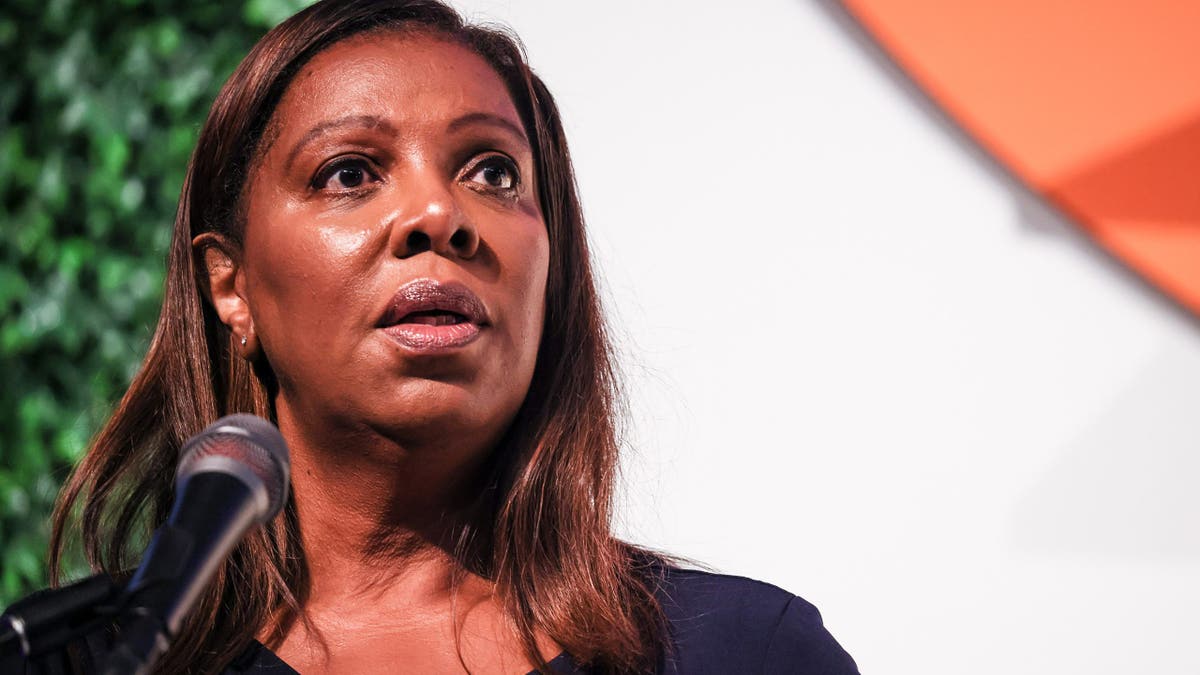
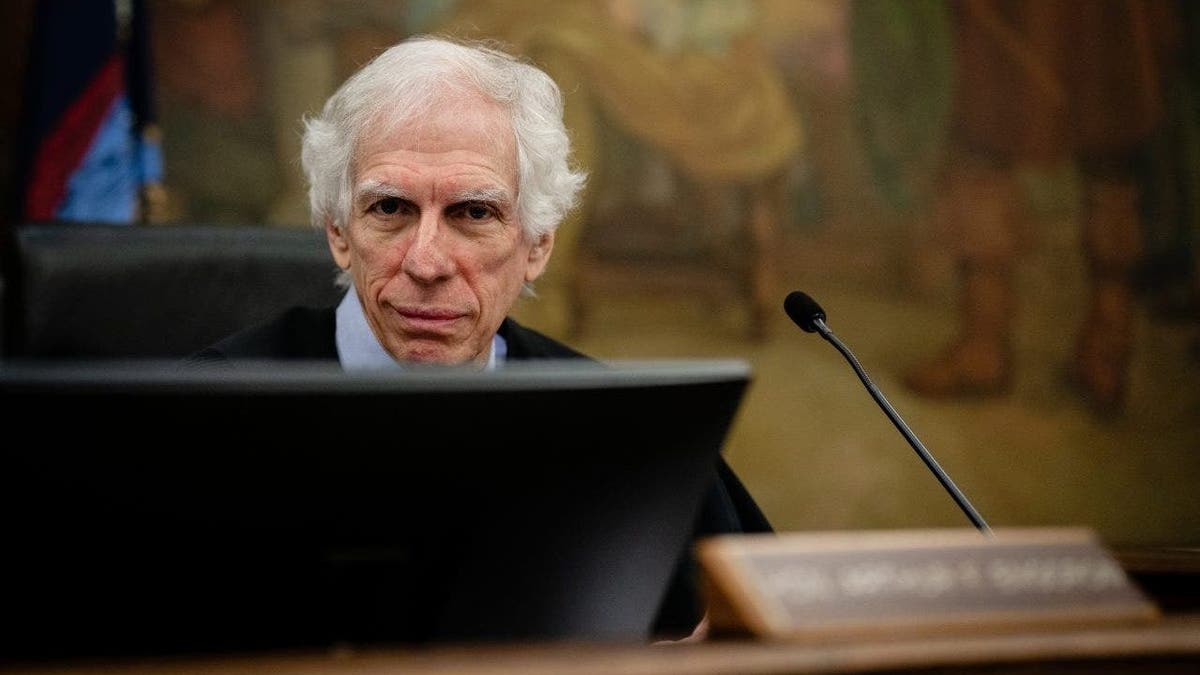
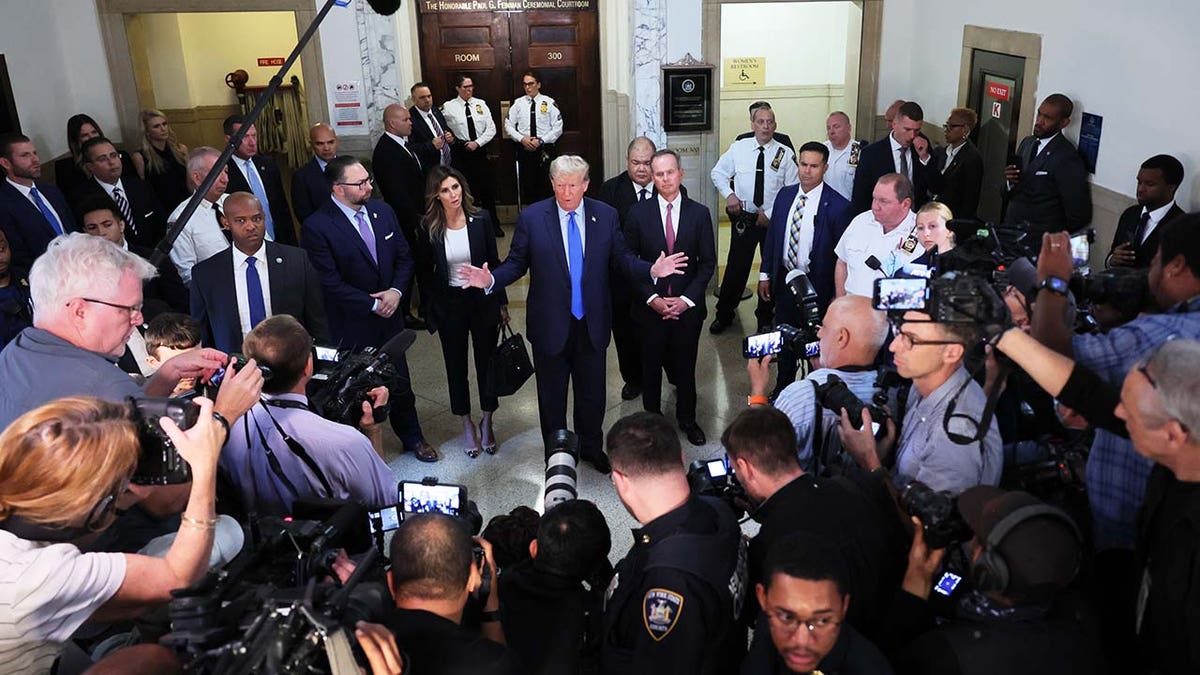
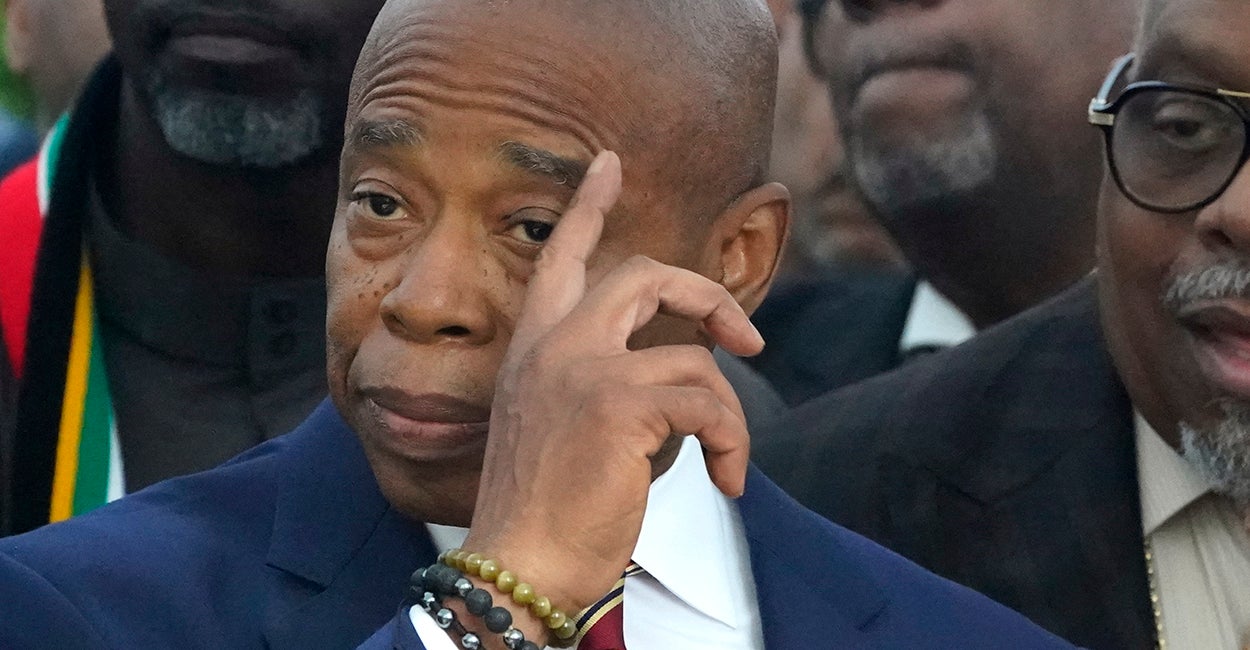



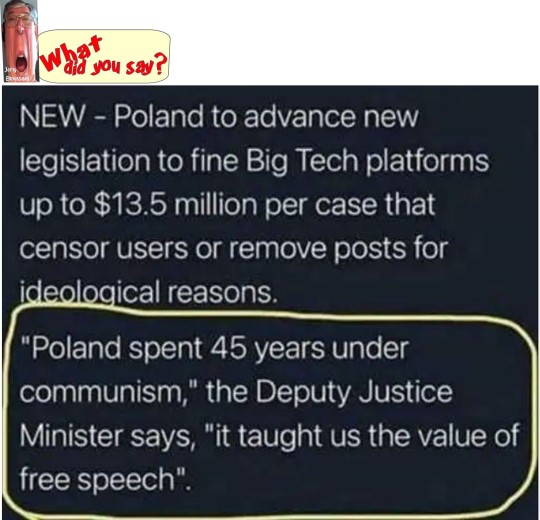


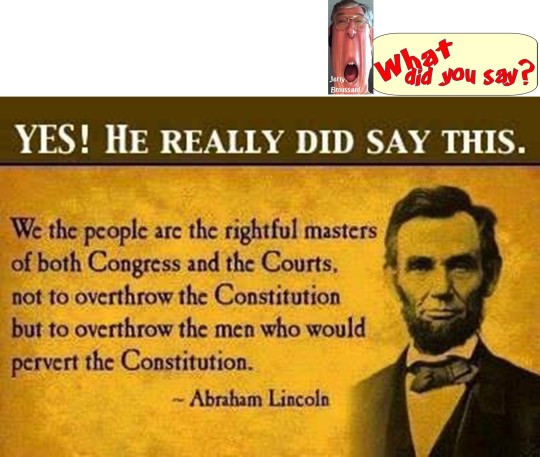


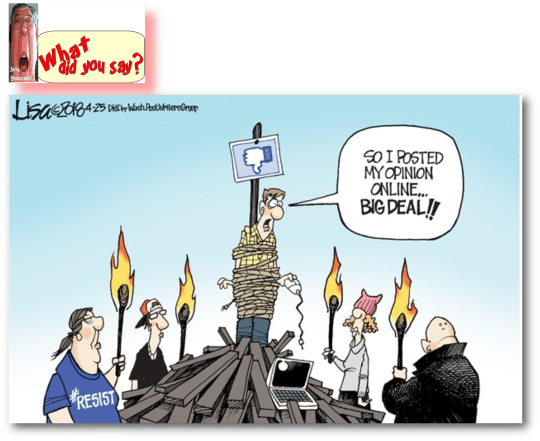



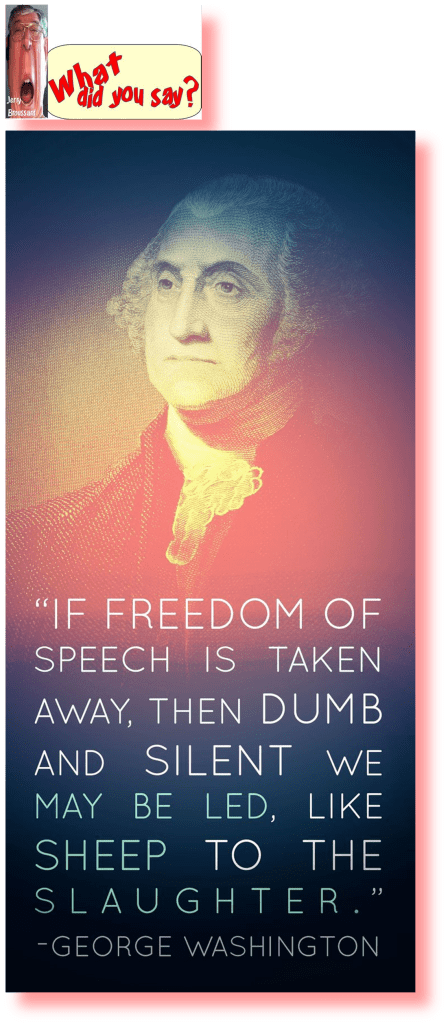


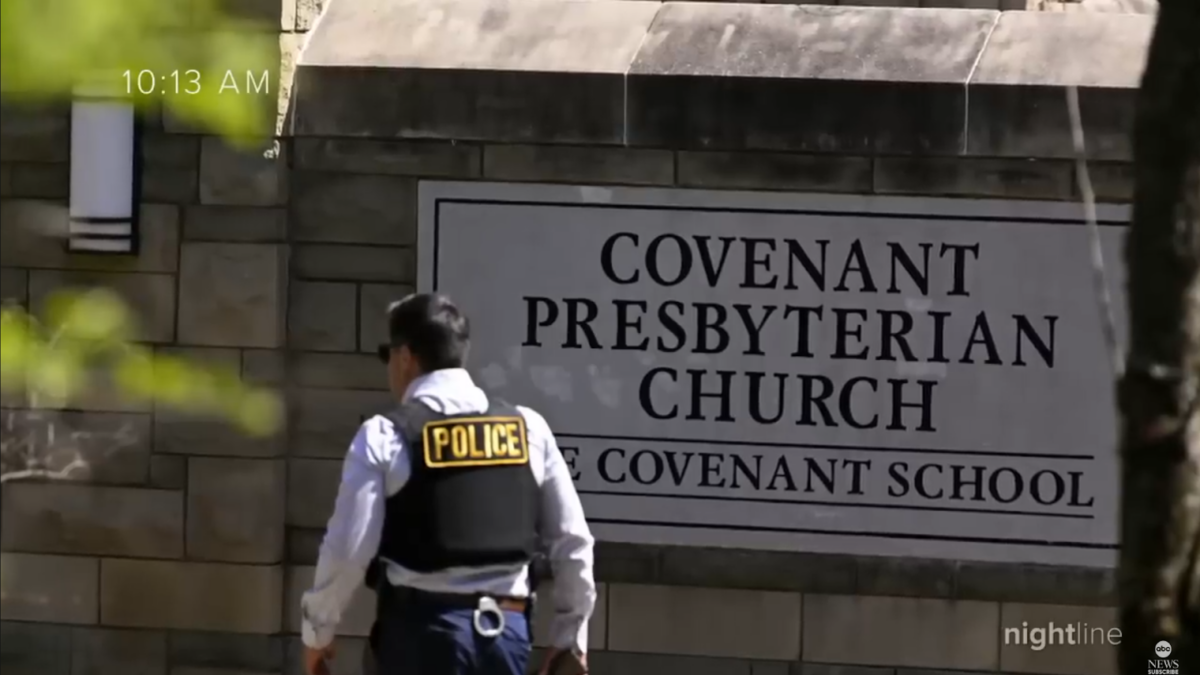





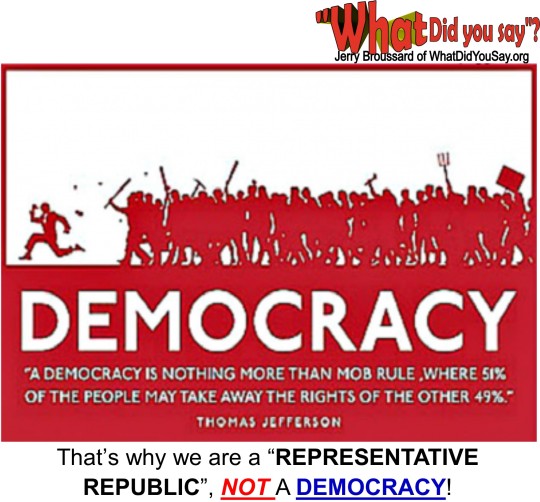

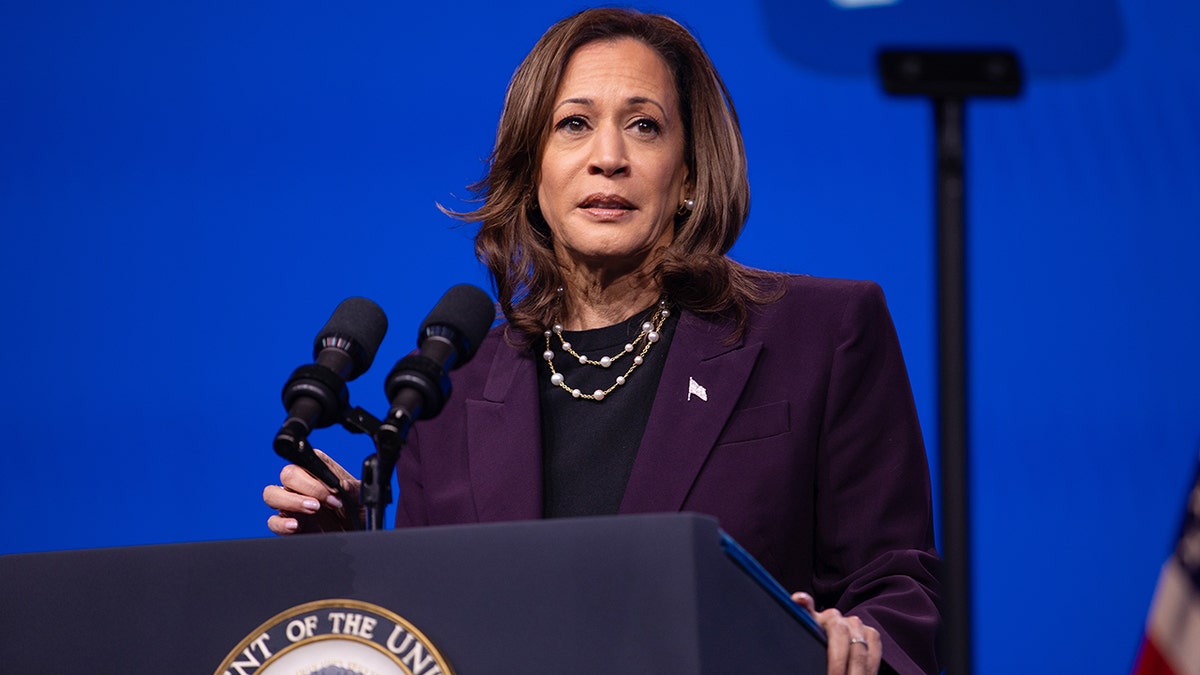
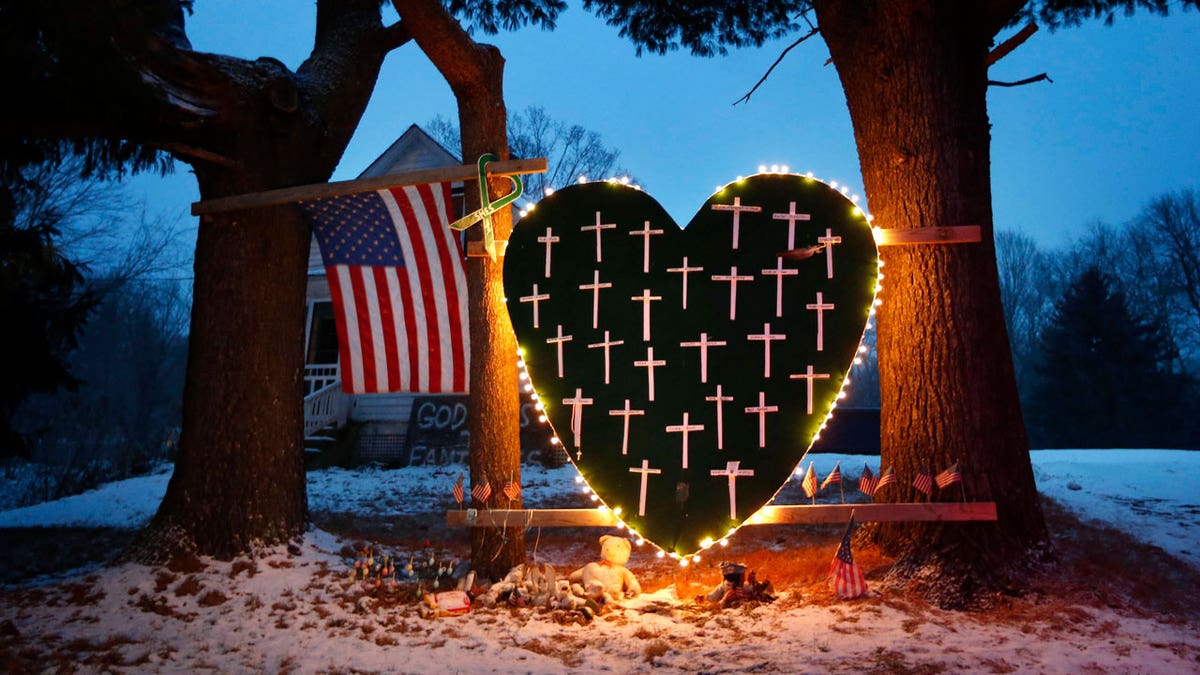


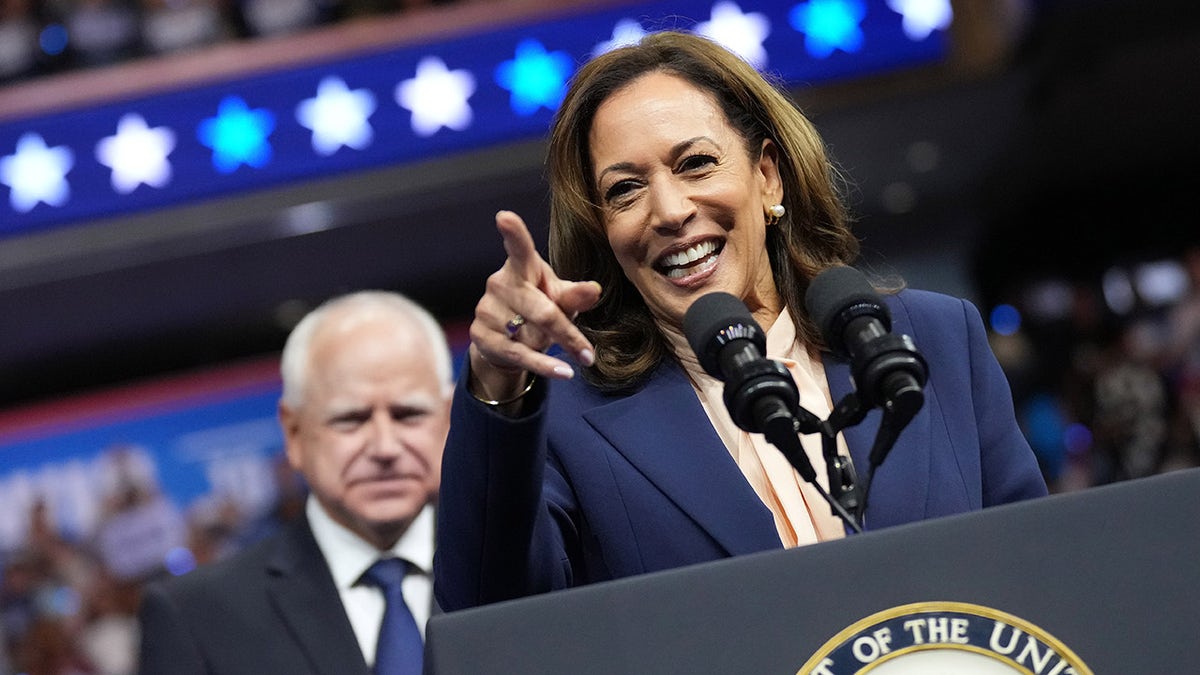




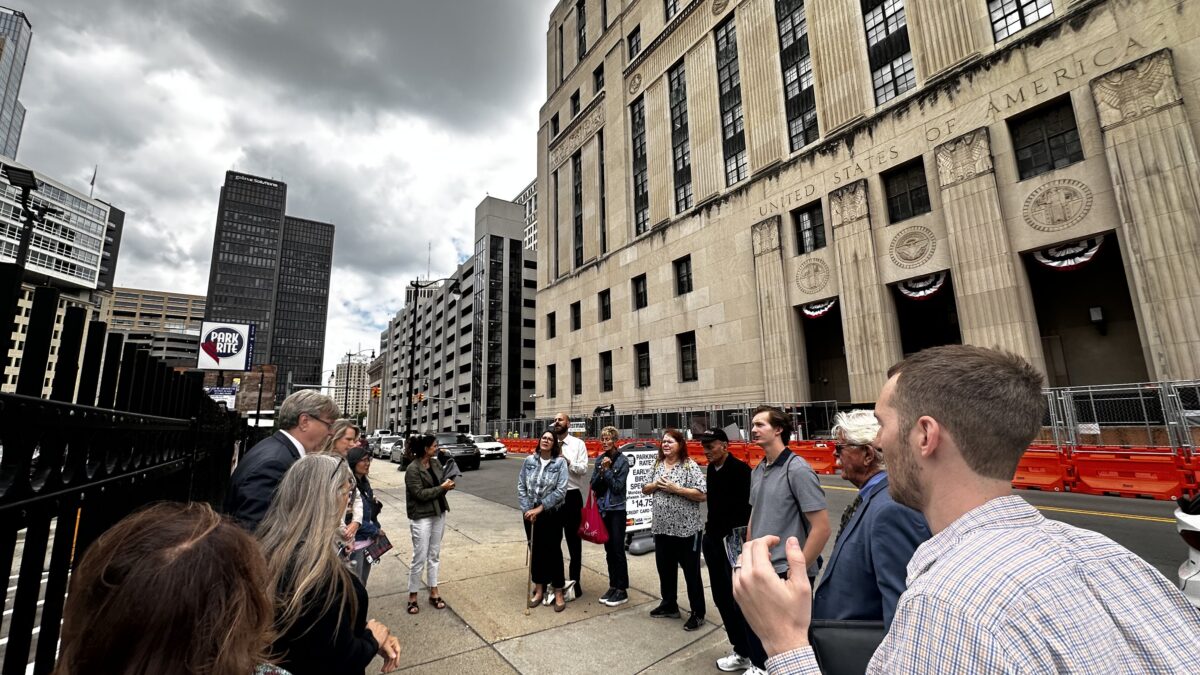










 What Did You Say?
You must be logged in to post a comment.