EXCLUSIVE: Immigration and Customs Enforcement (ICE) made a high-profile arrest on Monday in Maryland.
DHS told Fox News Digital that Joel Armando Mejia-Benitez, 38, is a “validated MS-13 gang member” from El Salvador who had no visas “approved or pending” at the moment of his arrest.
“ICE Baltimore arrested Joel Armando Mejia-Benitez an MS-13 gang member with an Interpol Red Notice. He first entered the country illegally in 2005 and was deported. He then reentered our country at an unknown date before he was arrested by HSI Baltimore in 2014. He was issued a notice to appear and released back into Silver Spring, MD,” DHS Assistant Secretary Tricia McLaughlin told Fox News Digital in an exclusive statement.
An Interpol Red Notice is put out by the international legal group asking to “locate and provisionally arrest” somebody. It’s not considered an “international arrest warrant,” but it’s meant to make sure a person is taken into custody for further legal action, according to Interpol’s website. The Red Notice database has over 6,500 individuals.
“This criminal illegal gang member and suspected terrorist should have never been released into our country. Thanks to President Trump and Secretary Noem, he is off our streets and will soon be out of our country,” McLaughlin continued.
The latest arrest comes as ICE touts over 65,000 illegal alien removals and over 66,000 arrests since Trump took office in January, including thousands with existing criminal convictions on top of being in the United States illegally.
Homeland Security Secretary Kristi Noem, left, and White House border czar Tom Homan speak with reporters at the White House, Wednesday, Jan. 29, 2025, in Washington. (AP Photo/Alex Brandon)
“The brave men and women of ICE protect our families, friends and neighbors by removing public safety and national security threats from our communities,” ICE acting Director Todd M. Lyons said in a statement. “During President Trump’s first 100 days, ICE alone has arrested over 65,000 illegal aliens — including 2,288 gang members from Tren de Aragua, MS-13, 18th Street and other gangs. Additionally, 1,329 were accused or convicted of sex offenses, and 498 were accused or convicted of murder.”
Many alleged gang members have been to CECOT in El Salvador, which has garnered praise, but it’s also ignited a major debate about who qualifies for due process.
This image shows the border wall separating Mexico from the U.S. in San Diego Sector. (Fox News)
The Trump administration has made the argument that members of designated foreign terrorist organization, which includes MS-13 and Tren de Aragua, do not go through the same legal processes, whereas many others, including Democrats, have argued to the contrary.
Meanwhile, encounters at the border have taken a nosedive in recent months.
Cameron Arcand is a politics writer at Fox News Digital in Washington D.C. Story tips can be sent to Cameron.Arcand@Fox.com and on Twitter: @cameron_arcand
When Elon Musk announced in February that there were 10 million Social Security numbers belonging to holders apparently aged 120 years and older, instead of acknowledging the great potential for fraudulent activity, the corporate media downplayed the concerns. They insisted that Social Security fraud is “not very common” and maligned the Trump administration’s efforts to purge the federal government of waste and abuse. However, multiple instances of Social Security fraud confirmed in April alone are a reminder that the system has enabled abuse for years.
According to the Social Security database, these are the numbers of people in each age bucket with the death field set to FALSE!
Maybe Twilight is real and there are a lot of vampires collecting Social Security 🤣🤣 pic.twitter.com/ltb06VX98Z
In late March, DOGE announced that, following a “major cleanup” of records, 9.9 million number holders listed with ages 120 years and older “have now been marked deceased.” (While people do live past 100, the oldest person who ever lived in modern times was Jeanne Louise Calment, of France, who died in 1997 at 122 years old.)
Corporate media and so-called experts have claimed that the listed ages of these centenarian number holders may be the result of “coding quirks” in the system and that efforts to mark these number holders as deceased could lead to more errors. But this does not change the fact that unused Social Security numbers marked as live are ripe for fraud.
What can you do with a spare Social Security number? You could register to vote again or sign up for social welfare, like housing, health insurance, cash assistance, and SNAP. Noncitizens can get a job, and of course, collect Social Security retirement or disability benefits.
Last month, a White House fact sheet, citing an inspector general report from 2024, noted how “The Social Security Administration made an estimated $72 billion in improper payments between 2015 and 2022.”
Social Security Fraud Is Alive And Well
Last week, Wendy Stone of Rochester, New York, pleaded guilty to “conversion/unlawful conveyance of government money, which carries a maximum penalty of 10 years in prison and a $250,000 fine,” according to U.S. Attorney Michael DiGiacomo’s office.
Back in 2022, Stone went to the home of an acquaintance and found that person had died a few days earlier. Stone didn’t report the death to authorities. Instead, she moved the body to the basement of the home, stuffed it in a storage bin, and covered it in bleach, occasionally topping off the bleach to keep the body covered. It remained there from December 2022 to September 2023, the DOJ release explains. Stone, 63, “improperly collected” $7,900 of the victim’s Supplemental Security Income money, which is administered by the Social Security Administration, and used the victim’s Social Security number “to activate a new debit card.” Stone also later falsely claimed the victim lived with her to receive $1,070 in SNAP benefits, according to the release.
On April 9, Mavious Redmond of Austin, Minnesota, pleaded guilty to committing Social Security fraud for 25 years, roughly half her life. Redmond, 54, “collected more than $360,000 in Social Security payments intended for her mother,” who died in 1999, the DOJ said in an April 14 release.
“On multiple occasions, Redmond impersonated her deceased mother to keep her fraud scheme going,” reads the statement from Acting U.S. Attorney Lisa D. Kirkpatrick’s office. “For example, on June 4, 2024, Redmond personally visited the SSA office, posing as her deceased mother, and submitted a fraudulent SS-5 Application for Social Security Form using her mother’s name, date of birth, Social Security number, and forging her deceased mother’s signature.”
Deborah Bailey, 68, from Piscataway, New Jersey, pleaded guilty to theft of public money after claiming her dead mother’s Social Security retirement money for eight years after her death. After Bailey’s mom died in 2016, she didn’t tell the Social Security Administration, and an investigation revealed she withdrew more than $150,000 “in retirement benefits” from her mom’s bank account between 2016 and 2024. She faces sentencing in August, according to a DOJ release from U.S. Attorney Alina Habba’s Office.
Reynaldo Martinez of Pawtucket, Rhode Island, admitted togetting his mitts on 40 SNAP cards using “stolen identities and stolen or fraudulent Social Security numbers.”
“Court documents reflect that Martinez appeared in person at multiple Rhode Island Department of Human Services offices and filed applications for SNAP benefits,” according to a DOJ release from April 2. “He did this by presenting fraudulent drivers’ licenses in various names but depicting his own photograph, and using Social Security numbers assigned to others, including that of a deceased individual, living adult citizens, and at least one juvenile.”
He admitted to receiving more than $33,000 in SNAP free food benefits. Martinez also admitted to cashing “altered” U.S. Treasury checks, which can be tax refunds, Social Security, or other benefits. Martinez pleaded guilty and will be sentenced in July, according to the DOJ. He was arrested and convicted multiple times in the past on other fraud and criminal charges, “dating back to 2012.”
Still, the desperate media really want the Trump administration to stop looking for fraud.
Last week, President Trump signed a memorandum aimed at “preventing illegal aliens from obtaining Social Security Act benefits.” Without missing a beat, Axios’ Jason Lalljee wrote under the headline: “Trump aids Musk’s Social Security fraud hunt, despite lack of evidence.”
But while the media cry about Trump eradicating fraud, and protesters key Teslas to punish Musk over DOGE findings, there are plentiful examples of Social Security fraud. The above are just a few admissions from April alone.
Not every mismarked 150-year-old Social Security number is connected to fraud, but for those and others that are, one person can bleed years of funding from the program, threatening its solvency and the security of those who truly need it.
Beth Brelje is an elections correspondent for The Federalist. She is an award-winning investigative journalist with decades of media experience.
There is controversy at George Mason University after Nicholas Decker, an economics PhD student published an essay asking “When Must We Kill Them?” in reference to Trump and his supporters. The essay captures the growing violent ideation on the left, fueled by rage rhetoric from politicians and commentators. The danger is that, for some on the extremes of our society, the question is not “when must we kill them?” but “when can we kill them?”
On his Substack “Homo Economicus,” Decker warns that “evil has come to America” and that Trump is “engaged in barbarism” and seeking “to destroy the institutions which oppose” him. He then suggests that the answer may be murder and violence.
“What remains for us to decide is when we fight,” Decker writes. “If the present administration wills it, it could sweep away the courts, it could sweep away democracy, and it could sweep away freedom. Protest is useful only insofar as it can affect action. Our words might sway the hearts of men, but not of beasts.‘
“If the present administration chooses this course, then the questions of the day can be settled not with legislation, but with blood and iron. In short, we must decide when we must kill them.“
This is obviously just the reckless rhetoric of one individual. However, it is indicative of a larger and growing problem on the left where people are increasingly turning to political violence. Rage gives people a sense of license to break free from basic norms of civility, decency, and even legality.
Decker is an example of that unhinged hatred masquerading as logic.
I found the essay deeply depressing. This is a student who clearly must be interested in teaching, but has not only undermined his chances of teaching but has adopted the very antithesis of an intellectual life.
Yet, I do not believe that this essay should be the basis for prosecution. The university has referred the matter to federal and state authorities for investigation. I have long opposed violent speech from being criminalized.
As someone who has received death threats for years from the left, I do not take such viewpoints lightly. However, I have long disagreed with sedition and violent speech prosecutions as a general matter.
College is often a time when students dabble with extreme or controversial viewpoints. Most quickly return to the center and moderate their positions. Some yield to the impulse to shock or to unsettle others. Again, it does not excuse the chilling statements made in this essay. While Decker added that “violence is a last resort,” he still maintains that it is an option. He ignores that Trump is the product of a democratic process and that the legal process is working to sort out these disputes.
Trump is likely to prevail in some cases, but not all. Our system does not guarantee that you will prevail in such controversies, and failure to succeed is not a license to use violence “as a last resort.”
What I am more concerned about is the culture that is producing such increasingly violent rhetoric on our campuses. Many current faculty have long espoused such violent positions. Indeed, some faculty members continue to make the news for violent political acts.
Of course, some professors have gone further and committed acts of political violence. Such conduct should be prosecuted and those faculty members fired. However, even in those extreme cases, liberal faculty have often rallied around their colleagues.
At Hunter College in New York, Professor Shellyne Rodríguez was shown trashing a pro-life display of students.
She was captured on a videotape telling the students that “you’re not educating s–t […] This is f–king propaganda. What are you going to do, like, anti-trans next? This is bulls–t. This is violent. You’re triggering my students.”
Unlike the professor, the students remained calm and respectful. One even said “sorry” to the accusation that being pro-life was triggering for her students.
Rodríguez continued to rave, stating, “No you’re not — because you can’t even have a f–king baby. So, you don’t even know what that is. Get this s–t the f–k out of here.” In an Instagram post, she is then shown trashing the table.
Another example comes from the State University of New York at Albany, where sociology professor Renee Overdyke shut down a pro-life display and then resisted arrest. One student is heard screaming, “She’s a [expletive] professor.” That, of course, is the point.
This student is voicing the same rage that he has heard from teachers and commentators. The current generation of faculty and administrators has created this atmosphere of political radicalism and moral relativism on campuses.
I genuinely feel saddened by Decker’s essay because we likely share a desire to teach and to be part of an intellectual community. The most essential part of that life is to defend a diversity of viewpoints and oppose violence as a means to force ideological compliance in others. I hope that Decker and others in our community will come to understand that in time.
The Supreme Court’s continuing failure to define lower courts’ authority is wreaking havoc on the reputation of the courts — and our constitutional order.
The Supreme Court has interceded six times in less than three months to rein in federal judges who improperly exceeded their Article III authority and infringed on the Article II authority of President Donald Trump. Yet the high court continues to issue mealy-mouthed opinions which serve only to exacerbate the ongoing battle between the Executive and Judicial branches of government. And now there is a constitutional crisis primed to explode this week in a federal court in Maryland over the removal of an El Salvadoran — courtesy of the justices’ latest baby-splitting foray on Thursday.
On Thursday last, in Noem v. Garcia, the Supreme Court issued a short two-page order on President Trump’s application asking the justices to vacate an injunction issued by Maryland federal judge Paula Xinis. That injunction, issued on April 4, 2025, ordered the Trump Administration “to facilitate and effectuate the return of Plaintiff Kilmar Armando Abrego Garcia to the United States by no later than 11:59 PM on Monday, April 7, 2025.” The lower court further held that the “preliminary relief is issued to restore the status quo and to preserve Abrego Garcia’s access to due process in accordance with the Constitution and governing immigration statutes.”
After the Fourth Circuit refused to stay Judge Xinis’ order, the Trump Administration filed an application with the Supreme Court seeking an immediate stay followed by vacatur of the injunction. In its application, the Trump Administration acknowledged that Garcia had been wrongly removed to El Salvador, agreeing that there was an order barring Garcia’s return to his native homeland. However, the Trump Administration stressed that the order also concluded Garcia, as an alien illegally present in the United States, was subject to removal under federal law — just not to El Salvador. The immigration judge also rejected Garcia’s petition for asylum and for withholding of removal under CAT, or the Convention Against Torture. The Board of Immigration Appeals upheld those decisions.
Further, while Garcia had been wrongly removed to El Salvador, the Trump Administration argued that Judge Xinis lacked the authority to order him to “facilitate and effectuate” Garcia’s return. First, it was not for a federal judge to tell the Executive branch how to engage in diplomatic relations. And second, the president lacks the ability to control a foreign sovereign, making it impossible for him to “effectuate” Garcia’s return to the United States. Finally, Judge Xinis’ order improperly directs the Trump Administration to admit Garcia even though he is a member of MS-13, which has been designated a terrorist organization.
Chief Judge John Roberts granted the Trump Administration an administrative stay, thereby nixing the April 7, 2025 deadline for the president to have “effectuated” Garcia’s return to the United States. Then on April 10, 2025, the Supreme Court entered an order stating the Trump Administration’s “application is granted in part and denied in part, subject to the direction of this order.”
But what precisely were those directions? Well, first, there was the deadline, which had already come and gone, and so the Court stated: “[T]he deadline imposed by the District Court has now passed. To that extent, the Government’s emergency application is effectively granted in part and the deadline in the challenged order is no longer effective.”
The Supreme Court then said that “[t]he rest of the District Court’s order remains in effect but requires clarification on remand.” Here, the high court explained what parts of the lower court order it believed proper, namely to “require the Government to ‘facilitate’ Abrego Garcia’s release from custody in El Salvador and to ensure that his case is handled as it would have been had he not been improperly sent to El Salvador.” However, “[t]he intended scope of the term ‘effectuate,” the Supreme Court explained, is “unclear, and may exceed the District Court’s authority.” The Supreme Court ended by stating “[t]he District Court should clarify its directive, with due regard for the deference owed to the Executive Branch in the conduct of foreign affairs.” But “the Government should be prepared to share what it can concerning the steps it has taken and the prospect of further steps,” the Supreme Court added.
What exactly does any of that mean?
To Judge Xinis it meant she merely needed to clarify what “effectuate” means. But rather than do that, the Barack Obama appointee just dropped that directive from her injunction, amending her order “to DIRECT that Defendants take all available steps to facilitate the return of Abrego Garcia to the United States as soon as possible.”
She further directed the Trump Administration to file “a supplemental declaration from an individual with personal knowledge, addressing the following: (1) the current physical location and custodial status of Abrego Garcia; (2) what steps, if any, Defendants have taken to facilitate Abrego Garcia’s immediate return to the United States; and (3) what additional steps Defendants will take, and when, to facilitate his return.”
Late Thursday, Judge Xinis ordered the Trump administration to file that declaration by 9:30 a.m. on Friday, even though the Supreme Court’s order only dropped Thursday evening around 7:00 p.m. The Maryland-based federal judge then denied the government’s motion for extension of time until Tuesday to file the declaration, but she gave them an additional two hours.
Unsurprisingly, 11:30 a.m. came and went without the declaration being filed. Soon after, the Trump Administration filed a response to the court’s amended injunction, noting it was “unable to provide the information requested by the Court on the impracticable deadline set by the Court hours after the Supreme Court issued its order.” The government’s response continued:
“Defendants are not in a position where they ‘can’ share any information requested by the Court. That is the reality. Defendants received the order late in the evening last night. They are reviewing the order and actively evaluating next steps. It is unreasonable and impracticable for Defendants to reveal potential steps before those steps are reviewed, agreed upon, and vetted. Foreign affairs cannot operate on judicial timelines, in part because it involves sensitive country-specific considerations wholly inappropriate for judicial review.”
Rather than re-evaluate her position, Judge Xinis doubled down, finding “Defendants have failed to comply with this Court’s Order,” and stating, “Defendants made no meaningful effort to comply.” She then entered a further order requiring the Trump Administration to file daily, on or before 5:00 p.m., “a declaration made by an individual with personal knowledge as to any information regarding: (1) the current physical location and custodial status of Abrego Garcia; (2) what steps, if any, Defendants have taken to facilitate his immediate return to the United States; (3) what additional steps Defendants will take, and when, to facilitate his return.”
Judge Xinis added that if plaintiffs wanted any additional relief, they should file a motion by Saturday at 5:00 p.m. Garcia’s attorneys filed the suggested Motion on Saturday, asking the court to grant “three additional types of relief.”
First, the El Salvadoran’s lawyers asked the Court to order the government to, by end of day on Monday: (a) request “its agents and contractors release Abrego Garcia from custody in El Salvador pursuant to the contract or arrangement providing for his detention there at the Government’s direction; (b) dispatch personnel to accompany Abrego Garcia upon his release from [the El Salvadoran prison] to ensure his safe passage to the aircraft that will return him to the United States; (c) [p]rovide air transportation for Abrego Garcia to return to Maryland, because he may not be in current possession of sufficient identification to board a commercial flight; and (d) “[g]rant Abrego Garcia parole” and “prepare all paperwork and forms required to allow him to reenter the United States.”
Second, Garcia’s attorneys asked for the Court to grant their client discovery including production of the Trump Administration’s contract with El Salvador concerning detentions at the prison. The illegal alien’s attorneys further requested the court direct the Trump Administration to produce witnesses for the hearing scheduled for Tuesday. Specifically, Garcia’s attorneys wanted to question representatives from the Department of Homeland Security, the Department of Justice, and the Department of State, concerning: “(i) Abrego Garcia’s current physical location and custodial status; (ii) what steps, if any, the Government has taken to facilitate Abrego Garcia’s return to the United States; (iii) whether the Government has informed officials at CECOT that it wishes Abrego Garcia to be released into U.S. custody; and (iv) what, if any, additional steps the Government intends to take, and when, to facilitate Abrego Garcia’s return.”
Finally, the plaintiff’s attorneys requested the court order the government to show cause why they should not be held in contempt for violating the Court’s command that they file a declaration by Friday at 11:30 a.m.
Shortly after Garcia’s motion hit the docket, the Trump Administration filed its first required daily declaration. That declaration attested that, based on official reporting from our Embassy in San Salvador, “Abrego Garcia is currently being held in the Terrorism Confinement Center in El Salvador.” “He is alive and secure in that facility,” the declaration continued, adding: “He is detained pursuant to the sovereign, domestic authority of El Salvador.” The second daily declaration, filed yesterday, stated the government’s declarant had nothing to add to those facts.
Judge Xinis has not yet ruled on the plaintiff’s motion, but given her refusal to respond reasonably to the Trump Administration’s request for an extension of time to file the declaration, her utter failure to show any deference to the Trump Administration’s handling of foreign affairs, and that the declarations said nothing of efforts by the Trump Administration to obtain Garcia’s release from prison, it seems likely she will grant Garcia much of what he requests.
Yet, those requests, as the Trump Administration pointed out yesterday in its response brief, directly infringe on the president’s Article II authority. “The federal courts have no authority to direct the Executive Branch to conduct foreign relations in a particular way or engage with a foreign sovereign in a given manner,” the Trump Administration wrote. Rather, “[t]hat is the ‘exclusive power of the President as the sole organ of the federal government in the field of international relations.’”
While the Supreme Court has declared that “[s]uch power is ‘conclusive and preclusive,’ and beyond the reach of the federal courts’ equitable authority,” given her orders to date, Judge Xinis is unlikely to stand down. Rather, expect the Obama appointee to enter another scathing order demanding details and actions. But with its core executive powers at stake, the Trump Administration cannot comply.
The justices should have foreseen this standoff and defused the situation last week by clearly defining the limits of the lower court’s authority. The Supreme Court’s continuing failure to do so is wreaking havoc on the reputation of the courts — and our constitutional order.
Margot Cleveland is an investigative journalist and legal analyst and serves as The Federalist’s senior legal correspondent. Margot’s work has been published at The Wall Street Journal, The American Spectator, the New Criterion, National Review Online, Townhall.com, the Daily Signal, USA Today, and the Detroit Free Press. She is also a regular guest on nationally syndicated radio programs and on Fox News, Fox Business, and Newsmax. Cleveland is a lawyer and a graduate of the Notre Dame Law School, where she earned the Hoynes Prize—the law school’s highest honor. She later served for nearly 25 years as a permanent law clerk for a federal appellate judge on the Seventh Circuit Court of Appeals. Cleveland is a former full-time university faculty member and now teaches as an adjunct from time to time. Cleveland is also of counsel for the New Civil Liberties Alliance. Cleveland is on Twitter at @ProfMJCleveland where you can read more about her greatest accomplishments—her dear husband and dear son. The views expressed here are those of Cleveland in her private capacity.
Attorney Chris Madel said, “Today is a complete vindication for Liz Collin, Dr. Chaix, and Alpha News—and a complete victory for the First Amendment.” On Tuesday, Judge Edward T. Wahl dismissed the defamation lawsuit filed by Katie Blackwell—the Assistant Chief of Operations for the Minneapolis Police Department—against Alpha News, senior reporter Liz Collin, director Dr. JC Chaix, and others. In filing the lawsuit, Blackwell and her attorneys labelled Alpha News and the other defendants as “extremists.” They claimed that “this lawsuit involves the politically motivated attack on a respected member of the Minneapolis Police Department who was maliciously defamed with respect to her performance of the duties of her employment and profession by extremists who are more interested in shaping a narrative and provoking outrage than in communicating any version of truth.”… READ MORE
A.F. Branco Cartoon – People suspect that many Democrats and some Republicans are being paid off through CCP money and that it’s influencing their vote on China trade policies, all the while calling Trump a Putin puppet without evidence.
Progressive Anti-Audit Democrats Took Communist-Sponsored Trips to China; “Collaborated Extensively” With CCP
By Julian Conradson – The Gateway Pundit – Aug 19, 2021
Multiple prominent Democrats who have been leading the charge against efforts to audit the 2020 election were just exposed for their “extensive collaboration” with one of the Chinese Communist Party’s most influential propaganda groups. According to an exclusive report byThe National Pulse , “NewDEAL Leaders,” a radical-progressive Democrat ‘network’ comprised of state and local elected officials, has repeatedly sent lawmakers on trips to China that were paid for by the CCP, and have essentially been colluding with America’s foremost adversary since at least 2016. The trips were paid for by funds from the People’s Liberation Army of China, with the express intent to “influence” US policy decisions. READ MORE
A.F. Branco has taken his two greatest passions (art and politics) and translated them into cartoons that have been popular all over the country in various news outlets, including NewsMax, Fox News, MSNBC, CBS, ABC, and “The Washington Post.” He has been recognized by such personalities as Rep. Devin Nunes, Dinesh D’Souza, James Woods, Chris Salcedo, Sarah Palin, Larry Elder, Lars Larson, Rush Limbaugh, Elon Musk, and President Trump.
Parental rights are emerging as one of the major civil liberties movements of this generation — and one of the greatest conflicts between the right and the left in this country. For example, the United States Court of Appeals for the First Circuit ruled schools can hide a change of gender in young children from their parents. Now, Colorado is poised to pass a law that would threaten the custody rights of parents who “deadname” or “misgender” their own children. If a parent does not adopt a child’s new pronouns or name, they could be found to have exercised “coercive control” and lose custody in divorce proceedings in favor of a more enlightened parent.
As someone who grew up in an Italian family, I must confess that I thought “coercive control” of a parent was called . . . well . . . parenting. I can still remember my Sicilian mother brandishing a broom in front of our door to prevent one of my sisters from going out with a boy that she did not like. She simply declared “I gave you life, I can take it away” and my sister went back upstairs.
I admit the Italian parental style can be a bit shocking for outsiders and misunderstood by many. (My Irish father would sit bemused in the kitchen). In reality, it was all drama, but you knew that it conveyed not anger but love.
Under the new proposal, House Bill 25-1312, Colorado would use the “Kelly Loving Act” to make “deadnaming” and “misgendering” children a factor in child custody disputes. Referring to your child’s biological gender or given name or pronoun would now be considered harmful and abusive, inviting a court to take your child away from you as a coercive parent.
“Section 2 provides that, when making child custody decisions and determining the best interests of a child for purposes of parenting time, a court shall consider deadnaming, misgendering, or threatening to publish material related to an individual’s gender-affirming health-care services as types of coercive control. A court shall consider reports of coercive control when determining the allocation of parental responsibilities in accordance with the best interests of the child.”
So, the state will require parents to adopt a gender, name, and pronoun that they believe are harmful for their children. Many such parents may believe that a young child should proceed slowly and not make such changes as they consider the implications of such decisions.
One question is whether this would be limited to custody proceedings or eventually expand to families generally. If this is deemed abusive or harmful during custody battles, it would also be presumably abusive or harmful outside of such proceedings. The fear is that the underlying conclusions could support a view of a household being abusive and not being in the best interests of the child.
Notably, the Supreme Court will now be considering a Colorado case involving a ban on counselors offering “conversion therapy” for children. Under the state rule, a counselor can lose her license if she agrees to such counseling at the request of her parents. The U.S. Court of Appeals for the 10th Circuit tossed the challenge, ruling that conversion therapy is harmful and the rule is part of an effort to regulate the healthcare profession.
“This bill is the bare minimum of what we can do as a state, and the fact that we have to legislate for people to not bully and misgender and deadname people because of whatever insecurities they might have is sad to me. Why can’t we just respect one another? Why can’t we just understand that someone else’s identity has nothing to do with me or you?”
The bill passed the committee on a straight party vote with Republicans in opposition. I believe that the Democrats are not just ignoring parental rights but political realities. They will find that this is not a partisan issue. It is a primal issue. For parents, Democratic politicians like Garcia fail to “understand” that it has a lot “to do with them.” They are the parents of these children. If Democrats do not “understand” that, they are likely soon to find that out.
George Washington University law professor Jonathan Turley (Alex Wong/Getty Images)
Prominent conservative legal scholars on Monday debated the proper legal response to liberal federal judges’ injunctions against actions by the Trump administration. From legislation that would alter the judiciary’s powers to introducing articles of impeachment, the commentators offered varying solutions to the current controversy over the separation of powers in a panel discussion at The Heritage Foundation.
Central to the discussion was Washington, D.C.-based U.S. District Court Judge James Boasberg’s injunction against deportation flights leaving the United States, which the panelists unanimously criticized. George Washington University law professor Jonathan Turley was in the camp of urging Congress and the White House to refrain from combating the judiciary too fiercely.
“Where I’ve been critical of the administration is often on the rhetoric, and I think it has committed some unforced errors,” said Turley. “They’ve got to really pick the hills to fight on.”
The judicial scholars at a panel discussion Monday were unanimously critical of federal Judge James Boasberg’s injunctions against the Trump administration. (Carolyn Van Houten/The Washington Post via Getty Images)
Turley added that he does not support impeaching judges, and that he thinks the legal system will sort out judicial overreach. A number of members of the House of Representatives have already introduced articles of impeachment against judges who have issued injunctions against Trump administration actions.
“I also don’t agree with limiting jurisdiction or limiting funds. I believe we have the world’s greatest judicial system, and it’s working. Injunctions have been lifted. The Supreme Court just recently again ruled in favor of the Trump administration,” Turley said.
Additionally, the GWU law professor warned against what he sees as a dangerous precedent of ignoring court rulings, which would likely continue in future administrations. However, Mike Davis, the president of the conservative advocacy group Article III Project, disagreed with Turley. Davis argued that the scope of injunctions was so beyond the norm that impeachments were necessary.
Mike Davis of the Article III Project (Dominic Gwinn/Middle East Images/AFP via Getty Images)
Davis spoke at length of Boasberg’s order for American deportation flights to be returned to the United States. He described that as an “unacceptable” instance of judicial overreach that damages “the president’s ability to conduct foreign affairs.”
“It’s a red line, and that’s the reason I have called for the impeachment of Judge Boasberg. I have called for the Trump administration to ignore his order. I’ve never done this before” he said. “This is a very serious matter for the judiciary’s legitimacy.”
One point of agreement uniting all of the panelists, however, was that the judges were in the wrong for their far-reaching rulings. Turley indicated he was open to supporting legislation that would require more than one judge to sign off on national injunctions against a president’s executive orders.
“I would like to see at a minimum, any class action has to go through a separate three-judge panel with very narrow conditions, under which a national injunction can be held. I would also like to see Congress collapse the time for appeal,” Turley said.
Sen. Mike Lee, R-Utah, and Rep. Darrell Issa, R-Calif., have introduced legislation that would require that nationwide injunctions be approved by a three-judge panel.
Hans von Spakovsky, a senior legal fellow in The Heritage Foundation’s Meese Center for Legal and Judicial Studies, agreed with the case for allowing Congress to limit judges’ authority and requiring multiple rulings for there to be a nationwide injunction. He alluded to laws passed by Congress during the civil rights movement to enforce equal voting laws, arguing that these establish a precedent for the proposed legislation.
“When the Voting Rights Act was passed in 1965 … they didn’t trust some of the federal judges in the Southern courts who had been put forward by the Democratic Party, that they would rule the right way on certain voting cases, and so they set up a system of a three-judge panel … and so, we’ve done this before. It’s something that could be done again.”
Below is my column in the Hill on the rising political violence on the left. Many have found an irresistible release from both reason and responsibility in rage. A new study found more people embracing political violence. Joel Finkelstein, the lead author of the report, stated that “what was formerly taboo culturally has become acceptable… We are seeing a clear shift – glorification, increased attempts and changing norms – all converging into what we define as ‘assassination culture.’” Roughly 40 percent reportedly found it somewhat justifiable to burn a Tesla or even to kill Donald Trump.
Here is the column:
“We should replace our piece of crap Constitution.”
Those words from author Elie Mystal, a regular commentator on MSNBC, are hardly surprising from someone who previously called the Constitution “trash” and urged not just the abolition of the U.S. Senate but also of “all voter registration laws.” But Mystal’s radical rhetoric is becoming mainstream on the left, as shown by his best-selling books and popular media appearances.
There is a counter-constitutional movement building in law schools and across the country. And although Mystal has not advocated violence, some on the left are turning to political violence and criminal acts. It is part of the “righteous rage” that many of them see as absolving them from the basic demands not only of civility but of legality. They are part of a rising class of American Jacobins — bourgeois revolutionaries increasingly prepared to trash everything, from cars to the Constitution.
The Jacobins were a radical group in France that propelled that country into the worst excesses of the French Revolution. They were largely affluent citizens, including journalists, professors, lawyers, and others who shredded existing laws and destroyed property. It would ultimately lead not only to the blood-soaked “Reign of Terror” but also to the demise of the Jacobins themselves as more radical groups turned against them.
Of course, it is not revolution on the minds of most of these individuals. It is rage. Rage is the ultimate drug. It offers a release from longstanding social norms — a license to do those things long repressed by individuals who viewed themselves as decent, law-abiding citizens. Across the country, liberals are destroying Tesla cars, torching dealerships and charging stations, and even allegedly hitting political dissenters with their cars.
Last week, affluent liberal shoppers admitted that they are shoplifting from Whole Foods to strike back at Jeff Bezos for working with the Trump administration and moving the Washington Post back to the political center. They are also enraged at Mark Zuckerberg for restoring free speech protections at Meta.
One “20-something communications professional” in Washington explained“If a billionaire can steal from me, I can scrape a little off the top, too.” These affluent shoplifters portrayed themselves as Robin Hoods. Of course, that is assuming Robin Hood was stealing organic fruit from the rich and giving it to himself.
On college campuses, affluent students and even professors are engaging in political violence. Just this week, University of Wisconsin Professor José Felipe Alvergue, head of the English Department, turned over the table of College Republicans supporting a conservative for the Wisconsin Supreme Court. He reportedly declared, “The time for this is over!” Likewise, a mob this week attacked a conservative display and tent on the campus of the University of California-Davis as campus police passively watched. The Antifa protesters, carrying a large banner with the slogan “ACAB” or “all cops are bastards,” trashed the tent and carried it off.
Of course, many of the American Jacobins are themselves bourgeois or even affluent figures. And they are finding a host of enablers telling them that the Constitution itself is a threat, and that the legal system has been corrupted by oligarchs, white supremacists, or reactionaries. This includes leading academics and commentators who are denouncing the Constitution and core American values. Erwin Chemerinsky, dean of the UC Berkeley Law School, is the author of “No Democracy Lasts Forever: How the Constitution Threatens the United States.”
In a New York Times op-ed, “The Constitution Is Broken and Should Not Be Reclaimed,” law professors Ryan D. Doerfler of Harvard and Samuel Moyn of Yale called for the nation to “reclaim America from constitutionalism.”
Commentator Jennifer Szalai has scoffed at what she called “Constitution worship.” “Americans have long assumed that the Constitution could save us,” she wrote. “A growing chorus now wonders whether we need to be saved from it.”
Members of Congress such as Rep. Jasmine Crockett (D-Texas) have called for Tesla CEO Elon Musk to be “taken down” and said that Democrats have to be “OK with punching.” Some take such words as a justification to violently attack a system supposedly advancing the white supremacy or fascism. Fortunately, such violence has been confined so far to a minority of radicalized individuals, but there is an undeniable increase in such violent, threatening speech and in actual violence.
The one thing the American Jacobins will not admit is that they like the rage and the release that it brings them. From shoplifting to arson to attempted assassination, the rejection of our legal system brings them freedom to act outside of morality and to take whatever they want.
Democratic leaders see these “protests” as needed popularism to combat Trump — to make followers “strike ready” and “to stand up and fight back.”
For a politician, a mob can become irresistible if you can steer it against your opponents. The problem is controlling the mob once it has broken free of the bounds of legal and personal accountability.
We have been following the rise of political violence on the left since the Trump election. In reality, attacks on conservative and pro-life faculty and students is nothing new. Today, I am speaking at the University of North Carolina in Chapel Hill on free speech after a student recently trashed a pro-life table on the campus in Asheville. Now, on the campus of the University of Wisconsin-Eau Claire, a professor allegedly trashed a table of the College Republicans over their support for Wisconsin Supreme Court candidate Brad Schimel. The accused José Felipe Alvergue, is not just a professor but the chair of the English department.
Tatiana Bobrowicz, the chair of the College Republicans at the school, said she set up the table supporting Schimel outside the student center about 8:30 a.m. Tuesday, with candy, doughnuts and literature. Then a man walked up and demanded to know what they were doing. He accused them of being too close to a polling location (which was located in the nearby student center).
Bobrowicz tried to explain that they were not in violation (which allows for tables beyond 100 feet) and that location was approved by the university. She then said that the man declared “the time for this is over,” flipped the table over and then walked away.
Bobrowicz immediately called the police and the UW-Eau Claire identified the man as José Felipe Alvergue, the chair of the English department. He has been put on leave by the university.
In his university bio, Alvergue identifies as “a member of the Salvadoran diaspora.” He adds this rather cryptic statement about “unlocking empathy”:
” I believe that we can’t unlock the empathy hidden behind words if we don’t understand what is at stake in the risk writers and artists take when they decide to transform the matter which makes up the world around them into the story words communicate.”
He is now charged with disorderly conduct, according to Wisconsin court records. While this is a relatively minor crime, it was a crime committed against both students and free speech on campus. He must appear for a court appearance on May 7. He would be hardly unique in advocating or even being convicted of political violence on campus.
At Hunter College in New York, Professor Shellyne Rodríguez was shown trashing a pro-life display of students.
She was captured on a videotape telling the students that “you’re not educating s–t […] This is f–king propaganda. What are you going to do, like, anti-trans next? This is bulls–t. This is violent. You’re triggering my students.”
Unlike the professor, the students remained calm and respectful. One even said “sorry” to the accusation that being pro-life was triggering for her students.
Rodríguez continued to rave, stating, “No you’re not — because you can’t even have a f–king baby. So, you don’t even know what that is. Get this s–t the f–k out of here.” In an Instagram post, she is then shown trashing the table. Hunter College, however, did not consider this unhinged attack to be sufficient to terminate Rodríguez.
Another example comes from the State University of New York at Albany, where sociology professor Renee Overdyke shut down a pro-life display and then resisted arrest. One student is heard screaming, “She’s a [expletive] professor.” That of course is the point.
If convicted, Alvergue would be not just guilty of the underlying charge but committing political violence against students. There does not appear to have been mitigating circumstances or any provocation other than students who hold an opposing view from his own.
He then walked away rather than address the matter with the students and the authorities. If convicted, the question is whether conservative students should have to wait for Alvergue to find a way to “unlock [his] empathy” through what is clearly uncontrollable rage.
Below is my column in The Hill on the President stating that he is not joking about pursuing a third term. The statement lit up the media. However, it works better as a jump scare for liberals than a credible claim for the courts.
Here is the column:
The late Justice Antonin Scalia famously said that Congress does not “hide elephants in mouseholes.” His point was that courts are skeptical of using minor provisions in a statute to achieve sweeping new legal changes.
The challenge of stuffing an elephant into a mousehole came to mind this week after President Donald Trump said that he is “not joking” about considering a third term and that experts told him it is possible under the Constitution.
One often has to take such moments with a heavy dose of skepticism from a president who clearly relished handing snake-in-a-can soundbites to the media just to watch the resulting screams. If so, he was not disappointed. The media went into renewed vapors as commentators pronounced, yet again, the death of democracy.
However, given the president’s statement, it is important to be clear about the basis for this theory, which has long been something of a parlor game for law professors on how a president might be able to circumvent the two-term limitation imposed by the 22nd Amendment.
Let’s start with the language. Ratified in 1951, the amendment was passed ironically by Republicans who were reacting to Franklin Delano Roosevelt’s decision to break from the tradition of two-term presidencies by seeking a third term. The intent was clear. They believed that serving more than two terms exposed the country to the danger of a politician occupying the office for life or prolonged periods. To prevent that, the amendment states:
“No person shall be elected to the office of the president more than twice, and no person who has held the office of president, or acted as president, for more than two years of a term to which some other person was elected president shall be elected to the office of the president more than once.”
Notably, the language includes those who were not necessarily elected to the office but “held” the office for more than two years (presumably through succession to the office due to a vacancy).
Few seriously doubt the intent of the amendment to prevent any person serving a third term to force a change of leadership in the nation. That is when the mousehole comes in. The amendment refers to a person being “elected.” Thus, some advocates claim that the amendment does not prevent a president from “serving” a third term — only being “elected” to such a term.
This strained interpretation would mean that the drafters were solely aggrieved by the thought of someone running for the office and not serving in the office. There is no compelling historical support for that interpretation.
Under this interpretation, a two-term president could engineer a third term by running for vice president and having the elected president then resign after the inauguration. The problem with this tactic is another amendment. The 12th amendment states that “no person constitutionally ineligible to the office of President shall be eligible to that of Vice-President of the United States.”
Trump could not run for vice president because he is ineligible to be president. Accordingly, he would likely be barred from many state ballots from running for vice president.
Yet, there is an even smaller mousehole. Trump could have two people run for president and vice president as stand-in officeholders while he could engineer his election as Speaker of the House of Representatives. After the election, they could both resign, and Trump would be third in the line of succession. Putting aside the considerable level of faith in both the president and vice president resigning, the maneuver would make a mockery of the constitutional design behind the amendments.
It would also make leading Republican candidate’s mockeries as types of “mini-mes” for Trump. Even the debate of such a maneuver before the election would demean figures like Vice President J.D. Vance as mere cutouts in a Constitutional sleight-of-hand.
The fueling of this talk also works in favor of those politicians and commentators who continue to claim that Trump is an autocrat committed to the destruction of the American democracy. It suggests that Trump is open to trashing constitutional traditions or language to achieve prolonged power. In fairness to those advocating this theory, this is not an assault on democracy or a call for tyranny. It is an effort to use clever interpretations of the Constitution to allow for a third term. Voters would be aware of this maneuver when going to the polls (which is doubtful), and courts would have to uphold the interpretation (which is even more doubtful).
In the end, the powder is not worth the prize in raising this prospect. President Trump has carried off the political comeback of the century. His administration is set to make history with sweeping changes that continue to garner considerable support among the public. This claim will only undermine that legacy, and the support needed to achieve it.
Jonathan Turley is a Fox News Media contributor and the Shapiro Professor of Public Interest Law at George Washington University. He is the author of “The Indispensable Right: Free Speech in an Age of Rage” (Simon & Schuster, June 18, 2024).
Below is my column in the New York Post on the increasing political violence on the left, particularly targeting Elon Musk, his companies, and his clients. There have been more arrests of people engaging in property destruction. What is most striking, however, is how Democrats have torched their core beliefs to pursue a scorched Earth campaign against Musk.
Here is the column:
In this “Age of Rage, it is common for people to become the very thing that they despise in others, jettisoning their most cherished values to strike out at those they hate. Since the election, Democrats have shown that very self-destructive quality of rage in adopting anti-immigrant, anti-free speech, anti-labor, and even anti-environmental positions to get at Donald Trump or his supporters. It consumes every part of a person. It is addictive, and it is contagious. What these rage addicts will not admit, however, is that they like it; they need it.
This time, they are targeting Elon Musk, whose dealerships, charging stations, and customers have been hit by political violence from the left. While other billionaires from George Soros to Mark Zuckerberg have spent big on elections for the left, Musk is somehow uniquely evil because he gives money to Republicans and supports the Trump Administration.
This scorched Earth campaign was evident this week in New York, where democratic legislators are again moving to weaponize state laws for political purposes — just like they did with Trump. New York state Sen. Pat Fahy (D-Albany) is pledging to bar Musk from direct sales in the state.
Notably, Fahy has been a longtime advocate of electric vehicles. The move will make it more difficult not just for Musk but other EV dealers to survive, but climate change policies be damned. Fahy and her colleagues want to get at Musk in any way they can.
Fahy explained, “No matter what we do, we’ve got to take this from Elon Musk. He’s part of an effort to go backwards.”
The move is not unique:
* The left decries political violence like January 6th but is largely silent as Teslas are set on fire and Cybertrucks are covered with graffiti. It promotes boycotts and rallies with a wink at the vandals. As the violence increases around the country, the left has held protests featuring signs like “Burn a Tesla, Save Democracy.”
* Democrats have made the defense of immigration a core issue and have objected even to the use of the term “illegal” or “unlawful” to refer to those crossing the Southern border. Yet, they have attacked Musk due to his status as a naturalized citizen. He is denounced as a “foreigner” “meddling” in our government. Some questioned Musk’s loyalty because he is a naturalized American.
* Those who insist that they believe in free speech are supporting censorship and opposing Musk for restoring free speech protections on X.
* In California, labor advocates oppose expanded operations from SpaceX that would benefit workers in the state. California Coastal Commissioner Gretchen Newsom tried to block increased SpaceX launches despite their benefit for both the California economy and national security. Because he “aggressively injected himself into the presidential race,” it does not matter that this would cost money and labor opportunities. Retaliation for “hopping about the country, spewing and tweeting political falsehoods” was more important.
Still, the greatest hypocrisy may be found in the Democrats’ willingness to abandon environmental priorities for political revenge. It is a contest of virtue-signaling. Fighting for Mother Earth is fine on most days, but nothing compares to destroying Elon Musk.
Lawmakers and advocates are also pressuring pension funds to divest from Tesla while trying to force Tesla showrooms to close — at the cost of New York jobs.
Tesla is an American company making and selling cars in this country. It sells more electric vehicles in the US and New York than any other manufacturer. Yet it must now be destroyed because, unlike a Soros or a Zuckerberg, Musk’s political views are not acceptable to the left.
Tesla was allowed to operate five locations to directly sell to consumers under a 2014 deal because it was viewed as good for New York jobs, the New York economy, and, most importantly, the environment.
None of that matters now.
Fahy explained, “The bottom line is, Tesla has lost their right to promote these when they’re part of an administration that wants to go backwards. Elon Musk was handed a privilege here.”
It also does not matter that companies like Rivian and Lucid (and their employees) will be caught in the crossfire. Nothing matters but revenge.
Many Democrats seem to have lost a capacity for shame. They are disgusted only by the refusal of others to yield to their demands, not the use of any means to achieve political ends. The question is, what do Democrats like Fahy now stand for when everything they are is now defined by those they hate?
You ever wonder what would happen if the Department of Education had to compete in the free market? Yeah, it’d be toast before lunch. No bailouts, no excuses, just a long-overdue tombstone that reads: “Here lies a bloated bureaucracy that did nothing but burn your money and babysit mediocrity.”
But because this mess is taxpayer-funded, it’s still limping along, hemorrhaging billions while test scores plummet and administrators polish their nameplates.
Billions Spent, Nothing to Show
The Department of Education was created in 1979 — right around the time disco mercifully died. Unfortunately, only one of those two stayed dead. Fast forward to 2023: the Department’s budget was a whopping $79.6 billion — and that’s not even counting the $120 billion they tossed on top in pandemic relief. That’s nearly $200 billion in a couple years. For that kind of cash, you’d expect students to be splitting atoms or at least knowing how to spell “government.”
But no — math and reading scores are in free fall, American students are getting curb-stomped in international rankings, and colleges are forced to teach freshmen how to read at a 9th-grade level. We’re not investing in education — we’re investing in excuses.
Imagine If This Was a Business
Picture this: Ford spends $200 billion and then sells fewer cars with worse safety records and no innovation. Shareholders would riot. The CEO would be kicked out so fast they’d leave skid marks.
Now look at the Department of Education: same level of failure, but instead of firings, we get raises and more budget requests. Why? Because they don’t answer to you. They answer to no one. There’s no competition, no consequences, and no customer service hotline. Just taxpayer dollars flowing like a busted fire hydrant.
The Nation’s Report Card: F
In 2022, the National Assessment of Educational Progress (NAEP) showed that math and reading scores for 9-year-olds hit their lowest point in decades. Not just bad — historic failure.
U.S. students ranked 28th out of 37 countries in math. Japan’s at the top. We’re chilling with the bottom third, clutching our participation trophies and blaming “equity gaps.”
And the kicker? From 2018 to 2022, our average math score dropped 13 points. That’s not a dip — that’s a nosedive with no parachute.
But don’t worry, the Department of Education is on it. They’re forming a task force. Translation: they’re going to schedule a lot of Zoom calls, spend $50 million on “equity consultants,” and absolutely nothing will change.
Bureaucracy: The Real Curriculum
Let’s talk about where your money really goes. Hint: it’s not teachers, students, or even books.
A massive chunk of the Department’s budget disappears into a labyrinth of administrative costs. Money filters through federal programs, state agencies, and school districts, shrinking like a bar of soap at every stop — until what’s left for actual classrooms is about enough to buy a handful of glue sticks and a couple packs of dry-erase markers.
Meanwhile, your local superintendent just got a new leather chair and a raise for… well, existing.
No Incentive, No Progress
In business, if your product sucks, you fix it. Or you die. Simple.
But in government? If your product sucks, you blame society, lobby for more money, and slap a rainbow sticker on the failure so nobody questions it.
Remember Blockbuster? They had the money, the brand, and the reach. But they didn’t adapt. Netflix ate their lunch, dinner, and midnight snack. Now Blockbuster’s a meme — and the Department of Education is headed down the same path if we let it.
Only difference? Netflix didn’t use your money.
What Needs to Happen?
Trump’s move to abolish the Department of Education isn’t radical — it’s common sense. If it were a company, it’d be delisted by now. We don’t need more bureaucracy. We need bold, state-led reforms that put parents and students first — not union bosses and overpaid administrators.
So what should we do?
Decentralize it: Let states handle education. California wants drag queen story hour and pronoun worksheets. Fine. Florida wants phonics and discipline. Also, fine. Let the states compete.
School choice: Give parents the ability to walk away from failure. That’s how the free market fixes things — it lets bad products die.
Outcome-based funding: No more blank checks. If your district can’t improve test scores, you don’t get a raise — you get a restructure.
Cut the fat: Fire the bureaucrats pushing paper and give that money to teachers who actually move the needle.
Final Thoughts
The Department of Education isn’t just failing — it’s making failure look like a strategy. We’ve built a system that protects mediocrity, punishes excellence, and gaslights the public into thinking more money is the answer. It’s not. The answer is accountability, competition, and local control.
If this agency were a business, it’d have been gone yesterday. But because it’s a government program, it lingers — burning cash, lowering standards, and calling itself “progress.” It’s time we call it what it is: a sinking ship that never should’ve set sail.
And if that makes me “anti-education,” then fine. I’ll wear it like a badge — right next to my “I prefer competent adults teaching kids” sticker.
WE’D LOVE TO HEAR YOUR THOUGHTS! PLEASE COMMENT BELOW. JIMMY
Yesterday, there was a curious aspect to the coverage of the video of a woman attacking a young man for wearing a MAGA hat. Ignored by many mainstream outlets, conservative news sites described the woman as a “Karen” who got “karma.” The video below was viewed as a funny payback as the woman fell while chasing the man from the New York subway car. However, the incident is not karma but a crime. This is political violence perpetrated on the New York subway, and yet no one in New York seems to be calling for the arrest of this person.
If you watch the video, the woman starts by harassing the young man in the subway car. She is shown yelling, “If you f—-ing voted for Trump, you’re a racist!… He’s a racist!”
One can dismiss the verbal attacks as an exercise of free speech. However, she then grabs and comes into contact with the young man (around the 45 second mark) as she chases him from the car:
I get the sense of karma as the woman does a face plant on the subway platform while trying to continue her attack on the fleeing individual. However, this should be neither funny nor acceptable. It is political violence, and the woman appears to believe that she has a license in New York City to assault anyone wearing a MAGA hat.
This is where what I call “rage rhetoric” turns into political violence. As I wrote in my book, “The indispensable Right,” that is the curious aspect of rage:
“What few today want to admit is that they like it. They like the freedom that it affords, the ability to hate and harass without a sense of responsibility. It is evident all around us as people engage in language and conduct that they repudiate in others. We have become a nation of rage addicts; flailing against anyone or anything that stands in opposition to our own truths.‘
“Like all addictions, there is not only a dependency on rage but an intolerance for opposing views. The difference between rage and reason is often one’s own views. If one agrees with underlying grievance, rage is viewed as passion or justified fury at injustice. If one disagrees with those views, it takes on a more threatening and unhinged quality. We seem to spend much of our time today raging at each other. Despite the amplification of views on both sides, there is also an increasing intolerance for opposing views. Those views are treated as simply harmful and offensive—and, therefore, intolerable. Indeed, to voice free speech principles in a time of rage is to invite the rage of the mob.”
There should be zero tolerance for political violence like this on New York subways. Answer me this: if this was a man chasing and assaulting a woman from a subway car for wearing a Harris-Walz hat, would there be the same relative silence in terms of an investigation and criminal charges?
When this person moved from verbal assaults to actual physical assaults, it became a crime, not karma.
The problem is that New York only has an assault law, not a battery law. You can pursue battery as a civil tort in New York, but few Trump supporters would have faith in receiving a fair hearing before a New York jury on such a case.
The New York assault law allows for third degrees of assault charges. However, even the lowest charge of assault in the third degree requires that the individual intentionally or recklessly causes physical injury to another person.
§ 120.00 Assault in the third degree.
A person is guilty of assault in the third degree when: 1. With intent to cause physical injury to another person, he causes such injury to such person or to a third person; or 2. He recklessly causes physical injury to another person; or 3. With criminal negligence, he causes physical injury to another person by means of a deadly weapon or a dangerous instrument. Assault in the third degree is a class A misdemeanor.
This could be established by the fact that she appears to grab and possibly strike the victim. However, the law is vague, and prosecutors could claim that the touching was insufficient to bring a viable case.
There is also criminal harassment under Penal § 240.26:
§ 240.26 Harassment in the second degree.
A person is guilty of harassment in the second degree when, with intent to harass, annoy or alarm another person: 1. He or she strikes, shoves, kicks or otherwise subjects such other person to physical contact, or attempts or threatens to do the same; or 2. He or she follows a person in or about a public place or places; or 3. He or she engages in a course of conduct or repeatedly commits acts which alarm or seriously annoy such other person, and which serve no legitimate purpose. … Harassment in the second degree is a violation.
I have always had qualms about some of this language in terms of vagueness and free speech, particularly subsection 3. However, subsection 1 clearly applies to physical assaults for the purpose of harassment.
The point is that police have the ability to charge this type of political violence. Yet, there is nothing but crickets from Democratic New York politicians and prosecutors. A video shows a citizen being struck and chased from the subway for wearing a MAGA hat and it is either ignored or treated as another humorous event on the New York subway system.
When did political violence become just a cost of riding the subway for conservatives or libertarians? The lack of outrage shows how this age of rage has dulled our senses to such extreme conduct. This is about conduct not speech. When this person went from raving to assault, she crossed over into the criminal code. The problem is that such protections are only meaningful if New York prosecutors and police are prepared to enforce them.
I hope that the NYPD will take this seriously and announce a search for this culprit. Otherwise, the enforcement of the criminal code becomes little more than a matter of fleeting karma.
The Ninth Circuit Court of Appeals, often regarded as the most liberal in the United States, delivered an unexpected triumph for the Trump Administration. In a recent decision, a three-judge panel blocked a Seattle district court’s order that aimed to force the Trump Administration to restart refugee admissions. This decision allows President Trump to maintain his pause on new refugee entries, a move that aligns with conservative values of prioritizing national security.
According to Politico, the Trump Administration is still obligated to process refugees who were approved prior to January 20. The ruling clarifies that these individuals are not affected by Trump’s executive order, which sought to pause the influx of new refugees. Notably, two judges on the panel, Barry Silverman and Ana De Alba, were appointed by Bill Clinton and Joe Biden, while the third, Bridget Bade, was a Trump appointee.
Gateway Pundit highlighted that District Judge Jamal Whitehead, appointed by Biden, had previously blocked Trump’s efforts to halt the refugee resettlement program. This program has seen years of misuse under Democratic administrations, often compromising national interests. Trump’s Executive Order 14155, titled “Realigning the United States Refugee Admissions Program,” was signed two months ago and effectively halted the U.S. Refugee Admissions Program as of January 27, 2025.
The executive order not only stopped new refugees from entering the U.S. but also cut federal funding to organizations aiding refugees, even those already residing in the country. This suspension is intended to stay in place until it is determined that resuming the program aligns with American interests. Judge Whitehead’s ruling criticized Trump’s actions, calling them an “effective nullification of congressional will” regarding refugee admissions.
Despite Whitehead’s claims, the President’s authority to control refugee admissions is substantial, though not without limits. Whitehead’s desire to admit potentially dangerous refugees was a step too far, even for the Ninth Circuit Court. The court’s decision underscores the importance of maintaining a firm stance on immigration and national security.
Fox News reported that the ruling is seen as a significant win for those advocating for stricter immigration controls. Conservatives argue that the refugee program has been manipulated for years, posing risks to national security. The decision by the Ninth Circuit suggests a growing recognition of these concerns, even among traditionally liberal judges.
The New York Post emphasized that Trump’s executive order is a necessary measure to protect American citizens. By pausing refugee admissions, the administration aims to reassess and realign the program with the nation’s priorities. This approach reflects a commitment to putting America’s interests first, a core tenet of conservative ideology.
The decision by the Ninth Circuit Court is a testament to the enduring influence of policies that prioritize national safety. It highlights a shift in judicial perspectives, validating the Trump Administration’s efforts to strengthen border security. Newsmax noted that this ruling could set a precedent for future cases involving immigration and national security.
Conservatives view this victory as a reinforcement of their stance on immigration. By ensuring that refugee admissions align with U.S. interests, the administration is safeguarding the nation’s sovereignty. This decision is a reminder that America must remain vigilant in its immigration policies to protect its citizens.
The ruling also calls into question the motivations behind Democratic efforts to expand refugee admissions. Critics argue that such policies often disregard potential threats to national security. The Ninth Circuit’s decision is a clear message that the safety of American citizens should be the foremost concern.
While Democrats may continue to push for relaxed immigration policies, this ruling serves as a significant check on those ambitions. It reaffirms the President’s authority to regulate immigration in a manner that is consistent with national interests. This is a win for those who believe in a strong, secure America.
For years, the refugee resettlement program has been a contentious issue, often dividing political lines. Conservatives argue that unchecked admissions can lead to vulnerabilities in national security. This ruling is a step towards addressing those concerns and ensuring a balanced approach to immigration.
As the debate over immigration continues, this decision by the Ninth Circuit Court will likely resonate across the political spectrum. It underscores the importance of maintaining a robust immigration policy that prioritizes the safety and well-being of American citizens. The ruling is a significant development in the ongoing discussion about the role of refugees in the United States.
This outcome is a reminder that the courts can play a crucial role in shaping immigration policy. It reflects a growing awareness of the challenges posed by the current refugee system. By upholding the Trump Administration’s pause on refugee admissions, the Ninth Circuit has set a precedent for future legal battles.
Ultimately, this decision is a victory for those who believe in strong leadership and decisive action on immigration. It affirms the need for policies that are in line with American values and priorities. As the nation grapples with complex immigration issues, this ruling provides clarity and direction for the future.
The United States District Court for the District of Columbia, the source of many of the cases interfering with President Donald Trump’s authority, has 15 judges, (Counting Chief Judge James Boasberg) and five of them were born outside the United States.
While country of origin doesn’t come up in most jobs, it is worth asking if judges with ties to foreign nations and cultures are the right ones to make decisions affecting the U.S. military or immigration.
The concept of foreign-born judges is a newer phenomenon in this district. In addition to the 15 main judges, the D.C. District has 10 older, senior judges who still occasionally hear cases in the district. This group, nominated as far back as Ronald Reagan the 1980s, were all born in the U.S.
But starting in 2014, former President Barack Obama appointed Judge Tanya Sue Chutkan, born in Kingston, Jamaica. She was in the U.S. by 1979, attending George Washington University. Before sitting on federal court, she had no experience as a judge. Chutkan is overseeing the legal challenge to DOGE’s work to slash excess government spending.
Obama also appointed Judge Amit P. Mehta to the D.C. court. Mehta also had no previous experience as a judge. Mehta was born in Patan, Gujarat, India. He and his parents came to the U.S. when he was a baby, age one. He was raised in Maryland. Mehta will oversee four January 6 civil cases that aim to blame Trump for injuries and squeeze money, court time, and political embarrassment out of him.
The other three foreign born judges were nominated by former President Joe Biden.
Judge Ana Cecilia Reyes was nominated in 2021, also with no prior experience as a judge. She was born in Montevideo, Uruguay and moved to Spain, and while still a child, moved to Louisville, Kentucky, where she grew up. She is the first openly LGBT Latina to be appointed to this court. Reyes presided over an objection to Trump’s executive order declaring “gender dysphoria” as “inconsistent” with the “high standards for troop readiness,” as The Federalist’s Shawn Fleetwood reported. Reyes blocked Trump’s order with a preliminary injunction.
The first Muslim and Arab American in the D.C. district court, Judge Amir Hatem Mahdy Ali was born and raised in Canada to Egyptian parents. According to his Questionnaire for Judicial Nominees, Ali was not required to register for the U.S. Selective Service. That is because he was not a citizen until 2019. He graduated from the University of Waterloo in Ontario, Canada with a software engineering degree in 2008 and then attended Harvard Law School in the U.S., graduating with a law degree in 2011. He worked as a volunteer on Biden’s 2020 transition team and for a phone bank in support of Biden’s presidential campaign. He worked for some nonprofits but never served as a judge until Biden appointed him in 2024. Amir has written extensively and negatively about Trump’s so-called “Travel ban,” a 2017 Executive Order which restricted travel to the U.S. from seven predominantly Muslim countries for 90 days.
In his writing, he said, “prejudice and intolerance” were “the very hallmark of [Trump’s] campaign against Muslims.”
Before he was a judge, Ali spoke at the National Press Foundation and gave tips to reporters about how to cover the courts.
When confirmed, Amir was a member of the Capital Area Muslim Bar Association; Muslim American Judicial Advisory Council; National Arab American Bar Association; National Association of Criminal Defense Lawyers; National Police Accountability Project; and the Native American Bar Association of D.C., among others.
Ali single handedly restored $2 billion in USAID spending to foreign nonprofit contractors that the Trump Administration had paused for 90 days, in a stunning overreach of authority last month.
The newest judge on the D.C. District Court is also foreign born.
Before slinking out of office, Biden and his handlers got Judge Sparkle Sooknanan confirmed. She was sworn in Jan. 2, 2025. Born in the dual-island nation Trinidad and Tobago in 1983, she left her home country at age 16 to pursue college and graduated from Brooklyn Law School in 2010.
She was a law clerk for Supreme Court Justice Sonia Sotomayor, and during the Biden Administration she was the principal deputy assistant attorney general in the Civil Rights Division for the Department of Justice before Biden tapped her for her first ever judge gig in the D.C. Court, according to her Questionnairefor Judicial Nominees.
Last week, Sooknanan dutifully did her part to slow Trump’s agenda, ordering the reinstatement of Democrat Susan Grundmann to the Federal Labor Relations Authority, a move that keeps the board in a Democrat majority.
None of these cases have gone in front of conservative judges in conservative states, say in Missouri or South Dakota. They all happened to land in the laps of judges that have spoken out or ruled against Trump or his policies in the past.
Out of all the judges in the nation, all five foreign-born judges of the D.C. District court managed to get their fingerprints on a controversial Trump case.
Evidence that judges have seized control of our country.
Federal injunctions, by president: 🔵 Barack Obama: 12 🔴 Donald Trump, 1st term: 64 🔵 Joe Biden: 14 🔴 Donald Trump, 2nd term (2 months): 15
The United States is in the midst of a soft coup. Not the violent kind that takes out a nation’s leader, but one orchestrated by judicial actions that choke off executive power before our eyes.
We have seen other obvious, corrupt schemes in plain sight before. The Biden basement presidential campaign of 2019; the “insurrection” that wasn’t; the mask and vaccine mandates; the Biden is mentally competent story; the “flawless” Afghan withdrawal; the “secure” borders; and the incompetent candidate swap to Kamala Harris, made Americans realize the best chance we have to stop corruption is to vote it out.
The public did its part by voting in a clear mandate for Trump’s agenda. But corruption is still visible, though court decisions by unelected activist judges. The only remedy now is for the Supreme Court to step in and this time, get its hands dirty, deliberate, and make real decisions based on the Constitution.
Beth Brelje is an elections correspondent for The Federalist. She is an award-winning investigative journalist with decades of media experience.
After speaking at the National Press Club, I will be testifying today before the Subcommittee on the Constitution of the Senate Committee on the Judiciary on free speech and censorship. My testimony is below.
The hearing, titled “The Censorship Industrial Complex” will be held in Room 226 of the Dirksen Senate Office Building at 2 p.m.
We now know a great deal about the censorship system developed under the Biden Administration in coordination with academic and corporate units. Indeed, the release of new information since January has proven a windfall for those of us who have been seeking greater transparency for years. There is still much to be done. It is essential for Congress to complete this work and allow for total transparency on the past funding and coordination by the government.
The past efforts to block investigations and withhold information on the censorship system have failed. However, the motivation is telling. While publicly declaring the need to combat misinformation, disinformation, and malinformation, the Biden Administration and its allies in the censorship system struggled to withhold information on their actual targets or actions. The reason again is obvious. The public understands the threat to free speech and strongly supports an investigation into the FBI’s role in censoring social media.
Almost 250 years ago, Tom Paine famously wrote that “These are the times that try men’s souls: The summer soldier and the sunshine patriot will, in this crisis, shrink from the service of his country; but he that stands it now, deserves the love and thanks of man and woman.” That was the first line of a work published by Thomas Paine in the Pennsylvania Journal on December 19, 1776, a work which would become known as “The American Crisis.”
We are living through a new crisis in the fight for free speech. The anti-free speech movement that has swept over Europe has now reached our shores. The United States remains a final line of defense for free speech, a nation founded on free speech as our indispensable right as a free people. This is a crisis of faith as the “summer soldier and sunshine patriot” finds every excuse for remaining silent as others are censored or canceled for their views. Congress must step forward to demand both greater transparency and protection for free speech. This new “American crisis” can be our greatest American moment in speaking in one voice – Democrats, Republicans, and Independents – in support of the right that defines us as a people.
A high-ranking figure from the notorious Venezuelan street gang, Tren de Aragua, has been apprehended in connection with the alleged murders of two women in Illinois. Ricardo Gonzales, aged 32, was captured in Cobb County, Georgia, during a coordinated effort by the U.S. Marshals Service Southeast Regional Fugitive Task Force, the Chicago Police Department, and ICE. “This defendant’s crimes against American women are horrific, and he is exactly the type of Alien Enemy the Trump administration is fighting to remove from this country in order to make America safe again,” stated Attorney General Pam Bondi.
Gonzales has a troubled past, including a mugshot from a speeding and driving without a license arrest in Cobb County back in 2000. He was wanted for allegedly kidnapping and murdering two women, and for attempted murder. Authorities allege that on January 28, Gonzales kidnapped three women, took them to an alley in Chicago, and shot them in the head, leaving two dead.
Currently, Gonzales is held in the Cobb County Jail, awaiting extradition to Chicago. As the net closed around him, five more individuals were arrested and taken to ICE detention centers. Salvadoran police are also involved, working with the U.S. to deport gang members back to their home countries.
The Cobb County Sheriff’s Office and the Chicago Police Department have not yet commented on the situation. “This case is a reflection of the tireless work the U.S. Marshal Service and partnering agencies put in to make sure justice has its day in court,” expressed USMS Acting Director Mark Pittella. The arrest is part of ongoing efforts to keep communities safe and maintain public security.
This arrest coincided with the resumption of U.S. deportation flights to Venezuela, following a deal between President Trump and Venezuelan President Nicolás Maduro. This agreement ended a standoff where Maduro initially refused to accept deportees from the U.S. A flight carrying 199 illegal Venezuelan aliens, including gang members, headed to Honduras as part of this arrangement.
The deportation flights have been a significant move to ensure that Venezuela fulfills its obligation to accept its citizens. “Venezuela is obligated to accept its repatriated citizens from the U.S.,” stated Secretary of State Marco Rubio. Approximately 350 migrants have been deported back to Venezuela recently.
Efforts to maintain national security and the integrity of U.S. borders continue to be a focal point. With strong leadership, the administration aims to protect the American people from threats posed by illegal alien criminals. The partnership between various law enforcement agencies showcases the commitment to justice and safety.
The situation highlights the need for strict immigration controls and the importance of international cooperation. The Trump administration’s policies reflect a commitment to national security and the rule of law. By removing dangerous individuals, the administration seeks to ensure peace and safety for all citizens.
The collaboration between the U.S. and other nations, like El Salvador, demonstrates the global effort to combat gang violence. These international agreements are crucial in addressing the root causes of crime and ensuring public safety. The administration’s dedication to these principles remains steadfast.
As more deportation flights occur, the message is clear: the U.S. will not be a haven for criminals. Through decisive action, the administration is working to restore law and order. The partnership with other countries strengthens this resolve.
Ensuring justice and safety is a priority for the Trump administration. By working with international partners, the U.S. is committed to a safer world. The ongoing efforts highlight the importance of strong leadership and decisive action.
This case serves as a reminder of the challenges faced in maintaining national security. Through cooperation and determination, these challenges can be met. The administration’s policies continue to focus on protecting American lives.
With the continued efforts of law enforcement and international partners, the future looks promising. The dedication to justice and security remains unwavering. The actions taken reflect a commitment to the values that keep America strong.
The path forward requires vigilance and cooperation. By working together, the U.S. and its partners can ensure a safer and more secure world. The commitment to these principles is the cornerstone of the administration’s policies.
The arrest and deportation efforts are a testament to the power of collaboration. By joining forces, law enforcement can effectively combat crime. The administration’s dedication to these efforts remains firm.
As the fight against crime continues, the focus remains on protecting citizens. Through strong leadership and international cooperation, safety can be achieved. The resolve to maintain security is clear and unwavering.
Brittany Mays is a dedicated mother and passionate conservative news and opinion writer. With a sharp eye for current events and a commitment to traditional values, Brittany delivers thoughtful commentary on the issues shaping today’s world. Balancing her role as a parent with her love for writing, she strives to inspire others with her insights on faith, family, and freedom.
Colt McAbee, a former sheriff’s deputy, is working to piece his life back together after his Jan. 6 conviction was overturned. The U.S. Court of Appeals for the District of Columbia Circuit threw out his criminal case, and the U.S. district court dismissed it as moot. It’s a relief for McAbee, but the label of “insurrectionist” still hangs heavy, mostly from the left.
McAbee shared his frustrations, telling Blaze News, “At the end of the day, it’s just words on paper.” He feels that no matter the court’s decision, opinions are hard to change. While he points out the damage done by the left, he believes they unfairly label him and others as domestic terrorists.
After his release from federal prison on a chilly January day, thanks to a pardon from President Trump, McAbee was greeted by his wife and mother-in-law shouting “FREEDOM.” It’s a moment of joy amidst the ongoing challenges. Finding a job and financial stability for his family remains a struggle for McAbee.
His case drew significant attention, with accusations that he intended to commit violence against police in Washington, D.C. The government painted him as a rogue officer, but McAbee maintains his innocence. Blaze News documented his journey, and his former lawyer, William Shipley, called the case a “manifest injustice.”
Despite the legal victory, McAbee’s battle isn’t over. He’s still fighting for his rights in Tennessee and trying to move past the shadow of his conviction. The path forward is uncertain, but McAbee is determined to reclaim his life.
McAbee’s story resonates with those who feel targeted by a biased system. Many see him as a symbol of resilience against what they perceive as an overreaching government. His experience highlights the broader narrative of distrust in institutions by conservative circles.
The pardon from President Trump was a pivotal moment for many Jan. 6 defendants. It’s seen as a corrective measure against what some believe were politically motivated prosecutions. McAbee’s release is part of a larger debate on justice and accountability.
The ongoing discourse about Jan. 6 continues to divide opinions across the nation. For McAbee, the personal toll is a reminder of the human impact behind the headlines. His journey underscores the challenges faced by those caught in the political crossfire.
McAbee’s case is a microcosm of a larger cultural conflict. It reflects the tension between differing views on law and order. His fight for redemption is watched closely by those who share his perspective.
The left’s narrative of insurrection is contested by many on the right. They argue that the events of Jan. 6 are mischaracterized to serve political ends. McAbee’s story is a part of this broader contestation.
His situation is a testament to the complexities of modern political discourse. It’s a world where labels and judgments can overshadow truth and justice. For McAbee, the struggle is not just legal, but ideological.
In the aftermath of Jan. 6, the country remains deeply divided. McAbee’s experience is a reminder of the personal stories behind political events. His fight for dignity is emblematic of a much larger debate.
The ongoing impact of Jan. 6 on individual lives is profound. McAbee’s story is one of many that illustrate the lasting effects. It’s a narrative of resilience in the face of adversity.
For McAbee, rebuilding his life is a priority, but it’s not easy. The stigma of his conviction lingers, affecting both personal and professional prospects. Yet, his determination to persevere is unwavering.
His journey is a reflection of the challenges faced by many in similar circumstances. It’s a struggle for identity and acceptance in a polarized society. McAbee’s story is a reminder of the human cost of political conflict.
The broader implications of McAbee’s case continue to reverberate. It’s a symbol of the ongoing battle over narrative and truth. For those who support him, it’s a fight against perceived injustice.
As McAbee looks to the future, his focus is on healing and progress. It’s a path fraught with challenges, but one he is committed to pursuing. His story is a testament to the power of resilience and hope.
In the end, McAbee’s journey is about more than just one man. It’s a reflection of a nation’s struggle with its identity and values. His case is a chapter in the ongoing story of America’s political landscape.
Southwest Key Programs, once known for running the largest network of shelters for unaccompanied migrant kids, has come under the spotlight for taking $3 billion in taxpayer money during the Biden administration. This nonprofit operated more than two dozen facilities spread across Texas, Arizona, and California. Inquiries were made to the DOJ for clarity on the dismissal of the lawsuit against Southwest Key.
Between fiscal years 2021 and 2024, the organization received billions to provide shelter services to children crossing the border alone, without parents or guardians. During this period, the nonprofit bumped up the salaries of several top executives significantly. Tax filings reveal that the vice president, Veronica Delgado-Savage, saw her salary rise by nearly 10%, from $297,792 in 2021 to $326,086 in 2023.
The chief information officer, Andy Harper, experienced a 198% pay increase, going from $214,356 to $637,806.
Geraldo Rivera, who moved up from senior vice president to chief program officer, received a 78% salary boost, climbing from $312,791 to $555,998.
Meanwhile, human resources chief Jose Arroyo-Davila’s pay shot up by 114%, from $308,694 to $661,298.
CEO Anselmo Villarreal’s paycheck soared by 139%, from $491,642 to $1,174,551 over those years.
The New York Post reported that 12 other senior staffers also enjoyed raises ranging from 10% to 112%. It’s important to note that these significant pay hikes took place during the initial two years of Biden’s presidency.
At the same time, Southwest Key was mired in allegations that some of its employees had sexually abused children in their care between 2015 and 2023. The nonprofit faced a lawsuit from the Biden administration’s Department of Justice in 2024 over these troubling allegations. The DOJ claimed that staff members had subjected unaccompanied minors to unlawful sexual harassment and abuse.
Southwest Key did not provide a comment to the Post when asked. Last week, the Trump administration took decisive action, cutting off the nonprofit from receiving any more children and relocating those already in their shelters. The Health and Human Services and Justice Departments labeled it a move to end sexual abuse and harassment.
Interestingly, the Trump administration also withdrew the federal lawsuit against Southwest Key. As a consequence, Southwest Key had to furlough its employees. Last week, the organization expressed satisfaction that the lawsuit was dropped and firmly denied any claims of child sexual abuse in their shelters.
They emphasized that no settlement or payment was required. However, due to a sudden freeze in federal funding and a stop placement order from the Office of Refugee Resettlement, they had to make the tough call to furlough around 5,000 employees. This decision impacted staff and programs across the country.
A representative for Senator Chuck Grassley of Iowa told the Post, “It is disgusting that vulnerable children suffered sexual abuse under Southwest Key’s watch.” Senator Grassley has reached out to the DOJ for more information on why the lawsuit was dismissed. He looks forward to having a follow-up conversation soon.
Stories like these highlight the importance of accountability and oversight, especially when taxpayer money is involved. The public deserves to know how funds are being used and to ensure that vulnerable children are protected. Such situations remind us of the need for vigilance and transparency in the use of federal resources.
These revelations about Southwest Key pose serious questions about the integrity of nonprofit organizations receiving government contracts. The significant raises for executives during a time of alleged misconduct raise eyebrows and demand deeper investigation. Ensuring that organizations entrusted with the care of children are held to the highest standards is crucial.
The case of Southwest Key brings to light the challenges in balancing the need for humanitarian aid with strict oversight. With billions in taxpayer dollars at stake, maintaining public trust is essential. As the story unfolds, it serves as a reminder of the ongoing need for transparency and accountability in government-funded programs.
Southwest Key’s situation underscores the vital role that watchdogs play in our society. It’s critical to safeguard the interests of children and taxpayers alike. The public expects and deserves nothing less than the highest ethical standards in all dealings involving public funds.
Brittany Mays is a dedicated mother and passionate conservative news and opinion writer. With a sharp eye for current events and a commitment to traditional values, Brittany delivers thoughtful commentary on the issues shaping today’s world. Balancing her role as a parent with her love for writing, she strives to inspire others with her insights on faith, family, and freedom.
Judicial Coup: Radical Leftist Judges Wage All-Out War Against President Trump and the Nation — 129 Legal Challenges Filed in Two Months and 64 Injunctions His First Term! MORE THAN ALL US PRESIDENTS COMBINED!
By Jim Hoft – Mar 19, 2025
Since returning to the White House on January 20, 2025, President Donald J. Trump has been met with an unprecedented onslaught of legal challenges from far-left activist judges and groups determined to sabotage his second term in power. Appearing on The War Room with Steve Bannon, Josh Hammer, Senior Counsel for the Article III Project, recently warned that what America is witnessing is not just judicial activism—it’s an outright judicial insurrection. This is similar to how the communist left attacked President Trump using a cadre of radical activist judges his first time in office. Except today, they have super-charged the process. READ MORE
A.F. Branco has taken his two greatest passions (art and politics) and translated them into cartoons that have been popular all over the country in various news outlets, including NewsMax, Fox News, MSNBC, CBS, ABC, and “The Washington Post.” He has been recognized by such personalities as Rep. Devin Nunes, Dinesh D’Souza, James Woods, Chris Salcedo, Sarah Palin, Larry Elder, Lars Larson, Rush Limbaugh, Elon Musk, and President Trump.
Attorney Alan Dershowitz highlighted various strategies available to President Donald Trump and Congress to counteract a judge’s decision that temporarily blocked the deportation of over 200 members of the Tren de Aragua (TdA) prison gang. The judge in question, United States District Judge James Boasberg of the District of Columbia, issued an injunction ordering the Trump administration to halt deportations. Trump had previously cited the Alien Enemies Act of 1798 to expedite the removal of the gang members.
Dershowitz noted that the language within the Alien Enemies Act might have given Judge Boasberg leeway to stop the deportations. However, he asserted that Trump had multiple avenues to remove TdA members, many of whom lacked proper documentation. The legal expert also mentioned that these options could also help manage Boasberg’s influence over the situation.
“What I don’t understand, maybe my listeners can explain it to me, is why the administration invoked this Alien 1798 French exclusion law that requires that there be either an invasion or declared war,” Dershowitz remarked.
He questioned whether Venezuela, potentially complicit in the situation, could be considered as involved in a declared war or invasion. The complexity of the law, he said, allowed the judge to scrutinize its application.
Dershowitz pondered the consequences if the administration had opted for a different legal approach. “What if they had said, ‘Look, these guys are gang members. They’re murderers. They’re rapists. They’re bringing in fentanyl,’” he mused.
The question of whether the judge would have reacted differently remained unanswered, but Dershowitz emphasized its importance.
President Trump has actively pursued measures to tackle illegal immigration, issuing several executive orders to this end. Notably, he designated Mexican drug cartels, TdA, and MS-13 as foreign terrorist organizations. This highlights the administration’s commitment to addressing the threats posed by violent gangs.
“I think Congress can do more to facilitate the exit of these bad guys,” Dershowitz argued. He suggested that legislative action could limit the jurisdiction of courts, preventing judges from one district from influencing decisions in another. Such measures could streamline the process of deporting dangerous individuals.
Recalling his teaching days, Dershowitz discussed the legal complexities surrounding the Vietnam War. Debates about the war’s constitutionality and the role of courts and presidential decisions were common. He recognized the importance of checks and balances in navigating such intricate issues.
Dershowitz dismissed the idea that Trump’s actions created a constitutional crisis. He asserted that Congress has the power to reshape the judiciary by adjusting the number and jurisdiction of district courts. This legislative authority, he said, could avert potential constitutional conflicts.
“Congress clearly has the authority,” Dershowitz stated. He pointed out that the Constitution does not specify the number or location of lower courts, leaving these decisions to Congress. By exercising this power, Congress can play a more significant role in shaping the judicial landscape.
Despite the current legal challenges, Dershowitz emphasized there is no constitutional crisis. He urged Congress to take proactive steps in legislating on complex legal matters to prevent future disputes. The potential for Congress to have a greater impact on these issues is clear.
Dershowitz’s insights shed light on the intricate interplay between the executive branch, the judiciary, and Congress.
The current situation underscores the ongoing debate about immigration law and the powers of different branches of government. As the nation grapples with these challenges, finding effective solutions remains paramount.
Darnell Thompkins is a Canadian-born American and conservative opinion writer who brings a unique perspective to political and cultural discussions. Passionate about traditional values and individual freedoms, Darnell’s commentary reflects his commitment to fostering meaningful dialogue. When he’s not writing, he enjoys watching hockey and celebrating the sport that connects his Canadian roots with his American journey.
Four years ago, we first discussed the case of Professor Jason Kilborn, who was investigated and punished for using a pair of racial slurs as part of an exam in his civil procedure course. I was critical of the actions of the John Marshall Law School at the University of Illinois (Chicago) as inimical to both free speech and academic freedom. Now, the United States Court of Appeals has reversed a district court’s dismissal of his free speech claims. The UofI will continue to spend huge amounts of money in fighting the protections for academics in their classrooms. It is not simply administrators wasting public funds but spending public funds against the public interest.
Professor Kilborn’s Civil Procedure II exam described how an employee quit “after she attended a meeting in which other managers expressed their anger at Plaintiff, calling her a ‘n___’ and ‘b___’ [sic].”
The use of the racial slurs led to a complaint in a letter from the Black Law Students Association and later a petition which called for Kilborn to be stripped of his committee assignments and other reforms. The Petition stated:
The slur shocked students created a momentous distraction and caused unnecessary distress and anxiety for those taking the exam. Considering the subject matter, and the call of the question, the use of the “n____” and “b____” was certainly unwarranted as it did not serve any educational purpose. The question was culturally insensitive and tone-deaf. It lacked basic civility and respect for the student body, especially considering our social justice efforts this year.
The integration of this dark and vile verbiage on a Civil Procedure II exam was inexcusable and appropriate measures of accountability must be executed by the UIC administration.
My objection was to the measures taken against Professor Kilborn, which I do believe undermine academic freedom. He was suspended and put on administrative leave because of a complaint that in my view was a denial of his pedagogical privileges. He was ultimately denied a raise. He was also required to undergo drug testing, agree to a medical examination, and complete eight weeks of diversity training.
I was also concerned by the position of University of Illinois-Chicago Chancellor Michael Amiridis when the university disputed the claim that the use of the terms was “pedagogical relevant” or “necessarily germane to the study of civil procedure.” That is a statement that drives to the very core of academic freedom.
Just because Kilborn teaches Civil Procedure does not mean that hypotheticals raising racial discrimination are not germane. The best Civil Procedure teachers show how these rules can raise difficult political, social, and constitutional issues when applied in different contexts. Moreover, professors have been pushed by universities and various academic groups to incorporate greater consideration of social justice and racial equality issues in their classes.
Professor Kilborn wrote an exam question that included the censored versions of words that are commonly found in media articles and academic publications. For that, he was publicly suspended and ostracized.
An appellate court’s decision found the lower court erred in dismissing Kilborn’s retaliation claim without giving a full consideration to his First Amendment protections.
The panel declined to apply Garcetti v. Ceballos, 547 U.S. 410, 418 (2006) as controlling. In that case, the Supreme Court found that public employees are not speaking as citizens when they make statements pursuant to their official duties.” The panel held:
“We decline the University officials’ invitation to extend Garcetti to speech involving university teaching and scholar-ship when the Supreme Court was unwilling to do so. Nor are we alone. Every other circuit to decide the issue has recognized that Garcetti does not apply to university teaching or scholarship.’
According to a FOIA request from the University of Illinois system, UIC Law has already burned through $1.2 million in the case. Rather than discipline these officials who denied basic protections for Kilborn, the school continues to add to the costly effort in the court.
The question is how long the university will burn through funds to fight these core rights afforded to all professors.
U.S. Supreme Court Chief Justice John Roberts presides over impeachment proceedings for President Donald Trump in the Senate at the U.S. Capitol on Jan. 21, 2020, in Washington, D.C. | Senate Television via Getty Images
U.S. Supreme Court Chief Justice John Roberts issued a rare public statement Tuesday in an apparent rebuke of President Donald Trump, who has called for the impeachment of a federal district judge after he attempted to block the deportation of Venezuelan gang members in the U.S. illegally.
“For more than two centuries, it has been established that impeachment is not an appropriate response to disagreement concerning a judicial decision. The normal appellate review process exists for that purpose,” Roberts said.
Roberts’ scolding came shortly after Trump unleashed a statement on Truth Social blasting Judge James E. Boasberg, who has served as chief judge of the U.S. District Court for the District of Columbia since 2023.
“This Radical Left Lunatic of a Judge, a troublemaker and agitator who was sadly appointed by Barack Hussein Obama, was not elected President — He didn’t WIN the popular VOTE (by a lot!), he didn’t WIN ALL SEVEN SWING STATES, he didn’t WIN 2,750 to 525 Counties, HE DIDN’T WIN ANYTHING! I WON FOR MANY REASONS, IN AN OVERWHELMING MANDATE, BUT FIGHTING ILLEGAL IMMIGRATION MAY HAVE BEEN THE NUMBER ONE REASON FOR THIS HISTORIC VICTORY,” Trump said.
Trump went on to call for Boasberg’s impeachment.
“I’m just doing what the VOTERS wanted me to do. This judge, like many of the Crooked Judges’ I am forced to appear before, should be IMPEACHED!!! WE DON’T WANT VICIOUS, VIOLENT, AND DEMENTED CRIMINALS, MANY OF THEM DERANGED MURDERERS, IN OUR COUNTRY. MAKE AMERICA GREAT AGAIN!!!” the president added.
Former President George W. Bush appointed Boasberg as an associate judge of the D.C. Superior Court in 2002, and former President Barack Obama nominated him to the D.C. District Court in 2011.
Boasberg has been front-and-center in the news since he blocked Trump’s invocation of the Alien Enemies Act of 1798 to deport Venezuelan nationals who are in the U.S. illegally on Saturday.
The administration claims the deportees are members of Tren de Aragua, a transnational criminal organization and U.S.-designated Foreign Terrorist Organization.
While the deportees were in the air, Boasberg issued a temporary restraining order demanding that the administration turn around aircraft deporting the alleged gang members to El Salvador. The administration is arguing that Boasberg’s ruling did not apply because the aircraft were over international waters at the time.
Freshman Rep. Brandon Gill, R-Texas, filed articles of impeachment against Boasberg in the U.S. House of Representatives on Tuesday.
“He is guilty of high crimes and misdemeanors and should be removed from office,” Gill said.
🚨 I just introduced Articles of Impeachment against radical activist Judge James Boasberg.
He is guilty of high crimes and misdemeanors and should be removed from office. pic.twitter.com/MO6UjQ6wBb
— Congressman Brandon Gill (@RepBrandonGill) March 18, 2025
Roberts, a George W. Bush appointee who likened judges to “umpires” with “a limited role” during his U.S. Senate confirmation hearing in 2005, has publicly rebuked Trump before.
In 2018, he issued a statement after Trump went after Judge Jon Tigar of the U.S. District Court for the Northern District of California. Trump dismissed him as an “Obama judge” after he blocked the administration from enforcing a rule that would deny asylum to anyone who entered the U.S. from somewhere other than a designated port of entry.
“We do not have Obama judges or Trump judges, Bush judges or Clinton judges. What we have is an extraordinary group of dedicated judges doing their level best to do equal right to those appearing before them,” Roberts said at the time.
Boasberg’s injunction and the administration’s response have set off a firestorm of debate regarding the separation of powers and the limits of both judicial and executive authority under the U.S. Constitution.
During an appearance Monday on CNN, White House Deputy Chief of Staff Stephen Miller explained the legal reasoning behind the president’s use of the 18th century law, which Miller argued applies because the U.S. is experiencing an invasion by alien criminal gangs “at the direction of the Venezuelan government.”
WATCH IN FULL: White House Deputy Chief of Staff @StephenM schools Fake News CNN's @kasie on the Constitution, the separation of powers, and the rule of law. pic.twitter.com/2TMnKyBLwk
Miller also maintained that federal district court judges do not have the authority to restrict the president’s use of executive power to repel invasion.
“When the president is exercising his Article II powers to defend the country against an invasion, or to repel a foreign terrorist that is unlawfully in the country, he is exercising his powers as commander-in-chief,” Miller said as CNN anchor Kasie Hunt attempted to interrupt him.
“The district court has no ability to in any way restrain the president’s authorities under the Alien Enemies Act, or simply to conduct the foreign affairs of the United States,” Miller later added.
The Alien Enemies Act of 1798, part of the broader Alien and Sedition Acts signed into law by former President John Adams, has been invoked significantly only three times in U.S. history, all during wartime. It was used against British nationals during the War of 1812, against German nationals during World War I, and against German, Japanese and Italian nationals during World War II.
The U.S. transported 261 illegals to El Salvador, including 137 deported under the Alien Enemies Act, 101 Venezuelans deported via Title 8, and 23 MS-13 gang members, White House press secretary Karoline Leavitt said Monday during a press briefing.
This week, the Ninth Circuit delivered a significant victory for free speech after Professor Lars Jensen won a critical reversal against Truckee Meadows Community College in Reno. Jensen had criticized the school’s lower standards. Jensen objected in 2020 and 2021 to proposed curriculum changes that he argued would have allowed remedial math classes to count for college credit. He distributed a flyer at an event detailing his concerns and warning that a student would be allowed to graduate from college while only being “ready for middle school math.”
TMCC Dean Julie Ellsworth told Jensen not to circulate his fliers during the break at the event, but he refused to relent. Ellsworth warned him that there would be consequences for his “disobeying” her.
In the two performance reviews following the confrontation, Jensen’s department chair suggested he receive an “excellent” rating, but Ellsworth gave him “unsatisfactory” ratings for “insubordination.” That designation required Jensen to undergo review for possible termination.
District Court Judge Larry Hicks dismissed the case in 2023. Now the Ninth Circuit has reversed Judge Hicks and found that Jensen is entitled to his day in court. Moreover, the panel found that Judge Hicks erred in refusing to allow Jensen to amend his complaint.
The panel applied the Pickering standard that we have previously discussed. The Court has held that, when a public employer retaliates against an employee for workplace-related speech, the First Amendment requires “balanc[ing] . . . the interests of the [public employee], as a citizen, in commenting upon matters of public concern and the interest of the State, as an employer, in promoting the efficiency of the public services it performs through its employees.” Pickering v. Bd. of Educ., 391 U.S. 563, 568 (1968).
That standard, in turn, triggers a five-part inquiry:
“(1) whether the plaintiff spoke on a matter of public concern; (2) whether the plaintiff spoke as a private citizen or public employee; (3) whether the plaintiff’s protected speech was a substantial or motivating factor in the adverse employment action; (4) whether the state had an adequate justification for treating the employee differently from other members of the general public; and (5) whether the state would have taken the adverse employment action even absent the protected speech.” Eng v. Cooley, 552 F.3d 1062, 1070 (9th Cir. 2009).
The Ninth Circuit ruled that:
“Jensen’s criticism of the changes in TMCC’s mathematics curriculum addressed a matter of public concern. “[T]he preferable manner of operating [a] school system . . . clearly concerns an issue of general public interest.” Pickering, 391 U.S. at 571. The handout Jensen distributed at the Math Summit spoke to the preferable manner of operating TMCC, specifically its math department. Jensen described how the math department’s lowered standards would impact almost a third of TMCC’s degree and certificate programs and how graduates would consequently have inadequate math and technical skills when entering the job market. Jensen also grounded his criticism in the effect these lower standards would have on the community, noting that employers in the surrounding area subsidize TMCC through their taxes and expect competent graduates in return. The decline of TMCC’s educational standards and the resulting impact on the community is a matter of public concern.”
The ruling remands the case back to the District Court of Nevada, where Jensen’s First Amendment claims can proceed. He may also choose to amend his other claims as necessary to proceed alongside them. Jensen is also represented by Nevada attorney John Nolan, who brought the lawsuit and wrote the briefs filed with the Ninth Circuit.
Democrats can’t win without cheating. It’s as essential to their strategy as dead voters in Chicago or suitcases of ballots in Georgia.
The 2020 election wasn’t just a heist; it was a smash-and-grab in broad daylight. And if Democrats could cheat the election, they certainly weren’t going to leave their fundraising to chance. Enter ACT Blue—the money laundering service dressed up as a donation platform. It’s been the piggy bank of the Left for years, and now, the hammer is finally coming down.
This report was back in 2023, though the crimes of ACT Blue will eventually be determined to have happened from inception of the group.
James O’Keefe and others exposed ACT Blue’s shady dealings long ago. From phantom donors to improbable donation patterns, ACT Blue has been the digital equivalent of an offshore account in the Cayman Islands, but for Democrats who don’t want to get their hands too dirty—at least not publicly. Yet, despite mountains of evidence, the media yawned, Republicans twiddled their thumbs, and the system chugged along, laundering money like a Vegas casino on a Saturday night.
Now, as the Democratic Party lurches from one disaster to the next—from the Biden cognitive decline saga to the desperate anointment of Kamala Harris as their last-minute presidential stand-in—ACT Blue is taking on water faster than their fraudulent donation reports can plug the holes.
When Seven Executives Vanish in Three Weeks, It’s Not a Coincidence
The New York Times recently reported that ACT Blue is in “turmoil.” Not a little corporate reshuffling, not a strategic realignment—full-blown panic mode. Seven top executives have mysteriously exited stage left in the past three weeks, some of whom had been with the organization for over a decade. And what did these longtime insiders say about their sudden departures? Absolutely nothing. That kind of silence isn’t just suspicious; it’s screaming “Don’t ask us unless you have a subpoena.”
Meanwhile, the last remaining lawyer in ACT Blue’s general counsel’s office was locked out of his email and placed on leave after sending internal messages reminding everyone that “we have Whistleblower Policies for a reason.” Translation: the ship is going down, and someone tried to send up a distress flare. The response? Smash the flare gun and throw the guy overboard.
Even the unions representing ACT Blue employees are alarmed. Two separate unions are demanding the hiring of an independent investigator to dig into what’s really happening. When even the activist class is panicking, you know something serious is brewing.
Where Did $16 Billion Go? Asking for a Friend (or an Attorney General)
In the past 20 years, more than $16 billion has passed through ACT Blue’s platform. That’s enough money to buy every Democrat in Washington a beachfront home (and maybe some for their grandkids, too). But as money laundering experts have pointed out, the numbers don’t add up. A recent analysis of over 200 million Federal Election Commission records uncovered donation patterns so bizarre that even a third-world dictator would blush.
Hundreds of donations of exactly $2.50 from the same individual.
Elderly individuals or first-time donors suddenly making dozens of contributions in rapid succession.
Donations far greater than the donor could reasonably afford.
Registered voters suddenly contributing to candidates of the opposing party—because nothing says grassroots enthusiasm like financially supporting the person you allegedly hate.
These are not glitches or anomalies; they’re part of a pattern of systemic fraud that should have been obvious from the start. And now that the operation is unraveling, Republicans are (finally) asking state attorneys general to investigate. Not that we should hold our breath—after all, we’ve seen this movie before. But with the heat ACT Blue is feeling, even their usual allies in the justice system might have to pretend to care.
ACT Blue Becomes ACT Black and Blue
The implosion of ACT Blue comes at a time when the Democratic Party can least afford another scandal. They’re already limping into the 2024 election with a candidate so unpopular that they had to swap him out for Kamala Harris—a woman whose own presidential campaign was so bad that she dropped out before her home state even got to vote. Yet, somehow, we’re supposed to believe that she’s setting fundraising records? Please.
ACT Blue’s money machine kept the illusion alive for years, feeding a media narrative that Democrats had enthusiastic grassroots support. In reality, they were just laundering cash and cooking the books like a failing restaurant owner trying to hide the missing inventory.
Now, with executives jumping ship, whistleblowers sounding the alarm, and investigators circling like sharks, ACT Blue is learning the hard way that fraud, like Biden’s presidency, has an expiration date. And as their empire crumbles, one has to wonder: Is this the beginning of the end for the Left’s most effective scam, or just another scandal they’ll survive because the media refuses to report on it?
Today, the U.S. Supreme Court will hear a case with potentially sweeping implications for discrimination cases. Ames v. Ohio Department of Youth Service involves an Ohio woman, Marlean Ames, who claims she was discriminated against for being straight as less-qualified LGBT colleagues in Ohio’s youth corrections system were promoted. Ames alleged that she was treated differently due to her heterosexuality at the Ohio Department of Youth Services, resulting in not just a demotion but a pay cut in violation of Title VII of the Civil Rights Act of 1964.
Ames started working at the Ohio Department of Youth Services in 2004 as an executive secretary and was promoted several times, ultimately reaching program administrator. In 2017, Ames was given a new supervisor, Ginine Trim, who is openly gay. She alleges that she met or exceeded performance review standards but was discriminated against due to being straight. Her case was dismissed by the lower courts using a three-step process for handling discrimination cases based on indirect evidence under McDonnell Douglas Corp. v. Green (1973).
Under that test, plaintiffs must first present sufficient evidence of discrimination but also requires an added burden for those individuals who are part of a majority group. The test requires plaintiffs like Ames to provide additional “background circumstances” to “support the suspicion that the defendant is that unusual employer who discriminates against the majority.”
She is arguing that all parties should bear the same burden. In her filing, she calls for the Court to reject the precedent:
“Judges must actually treat plaintiffs differently, by first separating them into majority and minority groups, and then imposing a ‘background circumstances’ requirement on the former but not the latter. In other words, to enforce Title VII’s broad rule of workplace equality, courts must apply the law unequally.”
In reviewing her claim, the U.S. Court of Appeals for the 6th Circuit called the matter an “easy” call at the preliminary stage. It noted that Ames could not show that a member of a minority group made the allegedly discriminatory decision, or with evidence demonstrating a pattern of discrimination against members of the majority group.
Judge Raymond Kethledge criticized the court’s requirement that Ames show special “background circumstances” because she is straight. Such a rule, he argued, “discriminates” “on the very grounds that the statute forbids.”
Ames argues that the test’s “background circumstances” component conflicts with the text of Title VII of the Civil Rights Act, which prohibits discrimination “against any individual with respect to the terms of conditions of employment because of that individual’s sex” or other protected characteristic. She argues “that the law as applied demands something more of her than the law as written.”
The Court could break from McDonnell Douglas Corp. v. Green and continue the push of Chief Justice John Roberts in Students for Fair Admissions v. Harvard College to make the Constitution’s guarantee of equal treatment “universal in its application.”
Judge Tanya Chutkan, appointed by former President Obama, recently made a decision regarding a motion involving the Trump administration and Elon Musk. The case involved 14 Democrat state attorneys general who claimed that President Trump violated the Appointments Clause of the Constitution. They argued that the creation of DOGE and Musk’s role within it granted him “unchecked power.”
The attorneys general from predominantly blue states like Arizona and California filed this lawsuit. They contended that since Musk is not Senate-confirmed, he should not have the authority to issue orders to the executive branch. Their argument centered on the belief that Musk’s appointment violated constitutional provisions. This is not the first time the Appointments Clause has been the center of legal battles in Judge Chutkan’s court. President Trump’s legal team previously argued that the appointment of special counsel Jack Smith violated the same clause. Judge Chutkan dismissed that motion, though not every court has followed suit.
Judge Aileen Cannon dismissed a classified documents case based on similar constitutional grounds. The ongoing legal drama continued as Judge Chutkan expressed skepticism about the emergency restraining order request. She asked the plaintiffs to narrow its scope before making a decision.
On Tuesday, Judge Chutkan ultimately denied the request for a temporary restraining order. In her written decision, she stated, “Plaintiffs have not carried their burden of showing that they will suffer imminent, irreparable harm absent a temporary restraining order.” Her decision was based on the information presented in court.
Despite denying the restraining order, Judge Chutkan acknowledged the significance of the Appointments Clause issue. She noted that there are questions about Musk’s role and whether it breaches constitutional guidelines. The court must ensure that its actions remain within legal boundaries.
In response to the lawsuit, the Trump administration provided clarification on Musk’s authority. Elon Musk’s role, according to Joshua Fisher, is that of a non-career Special Government Employee. This position places him within the White House Office, and it is not subject to Senate confirmation.
The debate over Musk’s role highlights ongoing tensions between the executive branch and constitutional interpretations. The DOGE initiative and Musk’s involvement have drawn scrutiny from those concerned about executive overreach. However, the Trump administration maintains that Musk’s position is lawful.
Conservative news outlets such as Fox News and Newsmax have covered this story extensively. They report on the broader implications of the case and its potential impact on presidential authority. The debate around Musk’s role reflects broader discussions on executive power.
Judge Chutkan’s decision is not the end of the legal challenges facing Musk and DOGE. Further deliberations and potential appeals could change the course of this legal battle. The attorneys general may continue to press their case in pursuit of a different outcome.
The case also underscores the political divide in the United States. Conservative leaders argue for a strict interpretation of the Constitution, while others push for broader governmental oversight. These ideological differences are at the heart of many contemporary legal disputes.
The outcome of this case could have ramifications for how power is distributed within the executive branch. It raises questions about the balance between presidential authority and constitutional checks and balances. The resolution of these issues remains to be seen.
Judge Chutkan’s decision is a reminder of the complex interplay between law and politics. It demonstrates the challenges of navigating constitutional questions in a politically charged environment. The case serves as a microcosm of larger national debates. While Judge Chutkan’s ruling is significant, it is part of a broader legal landscape. The courts continue to play a critical role in interpreting and applying constitutional principles. This case, like many others, highlights the importance of judicial oversight.
In the coming months, the legal community will closely watch how this issue develops. The case has the potential to influence future appointments and executive actions. For now, the focus remains on the implications of Judge Chutkan’s decision.
This ongoing legal battle serves as a testament to the enduring nature of constitutional debates. It reflects the dynamic nature of American democracy and the constant evolution of its legal system. The resolution of such cases shapes the future of governance.
It is astounding that this issue remains largely underreported by the mainstream media. The recent investigation spearheaded by Rep. Marjorie Taylor Greene and her subcommittee, lovingly dubbed DOGE, has unveiled a staggering $2.7 trillion in improper payments made by the US government since 2003. This number is both shocking and sobering, yet the liberal media has largely chosen not to highlight these findings which paint a concerning picture of government waste and ineptitude.
Earlier this week, Real America’s Voice’s Brian Glenn directly addressed White House Press Secretary Karoline Leavitt regarding the massive fraud unveiled by DOGE. Glenn put on record that this substantial mismanagement involved Medicare and Medicaid payments going overseas and payments being issued to ineligible recipients. Yet, his query echoes in rooms occupied by those more concerned with pushing political agendas than confronting harsh truths.
Brian Glenn questioned: “I want to go back to DOGE for just a second. Earlier the subcommittee headed by Chairman Marjorie Taylor Greene, her and her staff discovered $2.7 trillion in improper payments to Medicare, Medicaid, overseas, to people who should not have gotten it, some in this room might have missed that press conference. Can you elaborate on what the President is thinking at this point?”
In response, Leavitt underscored the systematic fraud, waste, and abuse that have occurred, mentioning: “Well, again, that’s another example, there is a very long list of the fraud, waste, and abuse that DOGE is identifying on a daily basis. Elon Musk also talked yesterday about Social Security payments that are going out the door for people who are no longer with us, unfortunately.”
$2.7 TRILLION of YOUR money.
Down the drain.
💸💸💸
Tomorrow, the @DOGECommittee will EXPOSE the waste, fraud, and abuse of improper payments doled out by the federal government.
She pointed out the millions of dollars potentially lost to fraudulent contracts, saying, “I would say that is certainly fraud. There is also a lot of contracts they’ve identified that, just as a hypothetical example, are a million bucks been only $500,000 went out the door, so where’s the rest of that cash? And so, that’s the thing — those are the things that DOGE is working on every single day.”
Leavitt also reminded the public of President Trump’s campaign promise to tackle such inefficiencies, adding, “I would just are mind everybody in this room, this is what President Trump campaigned on doing. He’s delivering on a promise that 77 million people elected him to do.”
This crucial issue remains sidelined by a liberal media that prefers to focus on narratives that support their biases and sensationalist stories, rather than the staggering bureaucratic failures exposed by a duly elected subcommittee.
Below is my column on Fox.com on the bizarre controversy surrounding New Jersey Gov. Phil Murphy and his suggestion that he was housing an illegal migrant in his home. It is a new version of Murphy’s Law on how virtue signaling can turn into a virtual nightmare for Democrats over immigration.
Here is the column:
For years, engineers have cited Murphy’s Law that “anything that can go wrong will go wrong.” The law is attributed to aerospace engineer Edward A. Murphy Jr. from the 1940s. However, this week, the law seems re-written by New Jersey Gov. Phil Murphy, who is under fire after suggesting that he may be sheltering an undocumented woman above his garage.
Murphy was being interviewed by the liberal group Blue Wave New Jersey and thrilled his Democratic base by indicating that he had given sanctuary to an undocumented person in his home. It was a curious moment when, after promising sanctuary, Murphy not only appeared to out his guest but then taunted ICE to come and try to take her. After seemingly staking out the immigrant like a sacrificial goat in a lion hunt, Murphy’s virtue signaling summoned the authorities. And now, the Iceman Cometh.
Trump’s border czar Tom Homan vowed to “look into” the Governor’s house guest.
The interview illustrated how some strive to prove their progressive bona fides at the cost of those they claim to be protecting. It is akin to the good people of Martha’s Vineyard singing to undocumented persons just before shipping them off to a distant military base.
Of course, Murphy appeared to struggle with calling her an undocumented migrant, let alone an illegal alien. Instead. she was described by the governor as a person “whose immigration status is not yet at the point that they are trying to get it to.”
Murphy explained how
“Tammy and I were talking about – I don’t want to get into too much detail, but there is someone in our broader universe whose immigration status is not yet at the point that they are trying to get it to. And we said, you know what? Let’s have her live at our house above our garage.”
You could almost hear the cooing from the crowd. Murphy then added the taunt to the tell: “And good luck to the feds coming in to try to get her.” Of course, the most important “details” for the woman are her status and location.
The most important detail for Murphy was to suggest that he and Tammy have a real live undocumented person housed above their cars. Not a poster or pamphlet on undocumented entry, but a real undocumented person. Of course, what can be lost in such moments is not just the person’s identity but her humanity. She did not seem like a real person at all . . . more like some prop or novelty item to brag about. What was so striking about the interview is that ICE is not generally rounding up undocumented persons. Rather they have focused on aliens who have committed criminal acts. While Murphy and others have issued chest-pounding declarations to defy the federal government, the public is overwhelmingly in support of the effort. Murphy previously declared that he would “fight to the death” against Trump’s agenda.
A recent poll by The New York Times and Ipsos found that an astronomical 88 percent of citizens supported “deporting immigrants who are here illegally and have criminal records.”
Within days of the Trump Administration coming into office, thousands of such targets were located and arrested. For other immigrants, there is still a comfort in numbers. With millions allowed into the country under President Biden, most are keeping a low profile in the knowledge that they are not the priority for ICE.
However, when a governor openly taunts the government and advocates the use of private homes as sanctuaries, he forces the hand of the government. It is even more problematic if this is the governor’s public residence or under the protection of state officers. Murphy may be using such state resources to violate federal law.
It was not clear what the status of Murphy’s guest was. The governor’s breathless account of his own courageous stand suggested that she would be subject to deportation, if discovered.
Under Section 1324 of Title 8 of the United States Code, it is unlawful when anyone “conceals, harbors, or shields from detection, or attempts to conceal, harbor, or shield from detection, such alien in any place, including any building or any means of transportation.”
That is when Murphy’s law kicked in with a vengeance. After his boast about “hav[ing] her live at our house above our garage,”a close associate later suggested that it was all a type of liberal projection. It is now claimed that he never actually made the offer to the person, but “mentioned to someone else that they could move in if they want, so I think that’s where some of the misunderstanding was.” The source also added that “The person wasn’t undocumented. The person was a legal resident of the United States of America.”
Ok, let’s get this straight. Murphy did an interview with a liberal group on how he agreed to “have her live at our house above our garage” but could not share any other details to be safe. Nevertheless, Murphy warned about the reception if “the feds com[e] in to try to get her.” Yet, his associate is now claiming that there is no harbored illegal to get. Not only was she never in the garage, but she is perfectly legal and is not subject to deportation. It was like Murphy bragging that he has Chris Christie living above his garage. It is hardly the stuff of Harriett Tubman and the Underground Railroad.
The bizarre controversy, however, has greater importance in what Murphy was struggling to convey. He and other governors are pledging to bar any cooperation with the federal government in the deportation of unlawful immigrants. The latest example was Wisconsin Gov. Tony Evers, who pledged to continue to defy federal enforcement even at the loss of substantial state aid. As with Murphy’s faux resident refugee, the declarations in states from Illinois to New Jersey to Massachusetts will force the hand of the federal government. While the federal government cannot “commandeer” state officials in the enforcement of federal law, it also does not have to subsidize those officials in frustrating enforcement efforts. The Trump Administration is expected to move to block funds for sanctuary states and cities. So, in addition to billions being spent on housing and benefits, these states will lose billions in federal aid.
What is most striking is that it never mattered if the Murphy claim was true or not. For many, it was another “I am Spartacus Moment” from a New Jersey Democratic politician that fell comically flat. Gov. Murphy’s law should be a cautionary tale for all of his Democratic colleagues in state houses. Virtue signaling can summon costs not just for themselves but for their states.
The United States will “hopefully” start moving migrants to a detention facility in Guantanamo Bay, Cuba, within 30 days, The Washington Post reported on Friday, citing House border czar Tom Homan.
The facility was first announced by President Donald Trump on Wednesday.
“Hopefully within 30 days we’ll start moving people there,” Homan told the newspaper.
Homan said he planned to travel to the U.S. naval base at Guantanamo Bay in the coming weeks to oversee the fast-tracked construction of the facility. Although Trump said the facility would hold as many as 30,000 migrants, Homan said they would probably start with a small number, according to The Washington Post.
The U.S. naval base in Guantanamo Bay already houses a migrant facility – separate from the high-security U.S. prison for foreign terrorism suspects – that has been used on occasion for decades, including to hold Haitians and Cubans picked up at sea.
With the election of Donald Trump, the federal government and both local and educational authorities are on a collision course over immigration policies. Many states and cities have reaffirmed that they will oppose any deportation efforts, including another recent chest-pounding interview by Illinois Gov. J.B. Pritzker. It is likely that the federal government will squeeze federal funding for sanctuary states and cities, though such efforts can trigger “commandeering” and other legal challenges. Universities may be in a more precarious position, but some like the Los Rios Community College District in California are doubling down on plans to oppose any federal enforcement efforts.
Various university and college presidents have reaffirmed their support for undocumented students and staff, including most recently Fordham University President Tania Tetlow. However, the Los Rios Community College District seems to have laid out a more concrete plan to oppose federal enforcement, a plan that was referenced in a January 28 email. The district covers American River College, Cosumnes River College, Folsom Lake College, and Sacramento City College.
The email states that “[t]here have been reports all over the country of increased immigration raids in association with Executive Orders tied to immigration enforcement.” It seeks to address the “[f]ear … widespread throughout the undocumented and ally communities about their safety and the safety of their families and loved ones.”
Just after Trump’s election, Los Rios published a “Compact in Support of Undocumented and DACA Students and Employees,” including the possible concealment of immigration status.
Here are the eight commitments:
Los Rios will do everything in its power to fight for the rights of our immigrant and undocumented students and employees and will always do everything possible to uphold the values of our institutions.
Los Rios stands with state and local leaders who have pledged to do everything possible to defend the rights and protections of immigrant and undocumented Californians.
Los Rios commits to advocating for a permanent legislative solution to the Deferred Action for Childhood Arrivals (DACA) and a pathway to citizenship for our immigrant communities.
Los Rios will immediately provide additional resources to our Undocumented Resource Centers.
The Los Rios Police reaffirms its commitment to not participate in immigration-related activities, including arresting and/or detaining students, consistent with organizational values and state law.
Los Rios will protect students’ rights and confidentiality and will not share the immigration status of students or employees.
Los Rios, its colleges, and partners will do a full review of internal policies and regulations to ensure that we are doing everything possible to protect the rights of students and employees.
The Los Rios Colleges Foundation will create Dream Center Funds with resources for each college, administered by the Undocumented Resource Center on each campus. The Foundation will encourage other community members, employees, and private and corporate funders to give support to undocumented students to help remove critical barriers to their success, such as paying for DACA renewal fees, legal fees, purchasing laptops, and additional resources.
Number 6 is particularly interesting in promising an active role to conceal or withhold immigration status information.
We have been down this road before. Schools previously fought this battle over efforts to bar military recruiters. While I have been a vocal supporter of gay rights on many fronts, I was one of those who opposed the litigation that my law school joined. At the time, I stated that it was not only a clear loser on the law but also represented a type of hypocrisy: We insist that we cannot allow discrimination, but if money is at stake, we will allow it.
In Rumsfeld v. Forum for Academic and Institutional Rights, Inc., 547 U.S. 47 (2006), the Supreme Court unanimously ruled that the federal government, under the Solomon Amendment, could constitutionally withhold funding from universities if they barred military recruiters from interviewing students. The Solomon Amendment denied federal funding to an institution of higher education that “has a policy or practice … that either prohibits, or in effect prevents” the military “from gaining access to campuses, or access to students … on campuses, for purposes of military recruiting in a manner that is at least equal in quality and scope to the access to campuses and to students that is provided to any other employer.” 10 U. S. C. A. §983(b) (Supp. 2005).
It is easier to limit funds for universities, but it can still raise constitutional problems from free speech to associational rights.
In Rumsfeld v. FAIR, Chief Justice John Roberts noted that such laws could run afoul of the unconstitutional conditions doctrine “if Congress could not directly require universities to provide military recruiters equal access to their students.” He then added:
“This case does not require us to determine when a condition placed on university funding goes beyond the ‘reasonable’ choice offered in Grove City and becomes an unconstitutional condition. It is clear that a funding condition cannot be unconstitutional if it could be constitutionally imposed directly. See Speiser v. Randall, 357 U. S. 513, 526 (1958). Because the First Amendment would not prevent Congress from directly imposing the Solomon Amendment’s access requirement, the statute does not place an unconstitutional condition on the receipt of federal funds.
The Solomon Amendment neither limits what law schools may say nor requires them to say anything. Law schools remain free under the statute to express whatever views they may have on the military’s congressionally mandated employment policy, all the while retaining eligibility for federal funds. See Tr. of Oral Arg. 25 (Solicitor General acknowledging that law schools “could put signs on the bulletin board next to the door, they could engage in speech, they could help organize student protests”). As a general matter, the Solomon Amendment regulates conduct, not speech. It affects what law schools must do—afford equal access to military recruiters—not what they may or may not say.”
The coming challenges could raise the question left open in Rumsfeld v. FAIR. However, the question is whether universities, particularly state institutions, want to go down this road of confrontation rather than cooperation.
Over the weekend, a tragic incident unfolded in Indiana where a J6 protester, previously pardoned by President Trump, was fatally shot by a police officer. FOX 32 Chicago reported at 4:15 p.m. local time on Sunday that 42-year-old Matthew W. Huttle from Hobart, Indiana, was stopped by a deputy sheriff from Jasper County during a traffic stop near the Pulaski County line. Authorities alleged that the officer attempted to make an arrest, but Huttle resisted the process. This resistance led to a confrontation, resulting in the deputy discharging his firearm and fatally injuring Huttle.
The Jasper County Sheriff’s Office issued a statement explaining the event: “An altercation took place between the suspect and the officer, which resulted in the officer firing his weapon and fatally wounding the suspect.” This tragic event involves immense grief for the family and friends of Huttle, and underlines the crucial need for transparency and accountability within law enforcement agencies.
Huttle’s involvement in the January 6 protests led to his persecution by what many see as a biased judicial process, orchestrated under the Biden administration. Labeling these protesters as political prisoners, Huttle was detained in Boise, Idaho, on November 28, 2022, for his participation in the protest. His actions on that day included recording his entry into the Capitol’s Senate Wing and moving through several hallways, which led to federal authorities charging him with several misdemeanor offenses.
The unfolding narrative, as reported by the Northwest Indiana Times, mentioned Huttle was sentenced to half a year in federal prison. However, he was released on July 17. Just last week, Huttle was among the J6 protesters granted a pardon by President Trump, underscoring the commitment of Trump to stand against what many believe to be a corrupt and politically motivated judiciary.
Jasper County Sheriff Patrick Williamson addressed the unfortunate incident by requesting a thorough investigation from the Indiana State Police to ensure full transparency. The officer involved has been placed on paid administrative leave, which aligns with their established protocol in such circumstances. “Our condolences go out to the family of the deceased as any loss of life is traumatic to those that were close to Mr. Huttle,” he stated, promising to release the officer’s identity pending approval from the State Police Detectives.
Adding to the complexities of the situation, Richard “Bigo” Barnett, another J6 protester from Arkansas who was sentenced to a lengthy prison term for reportedly minor offenses, expressed his concerns and suspicions about the incident.
I want to know every damn detail. Right now I would be pretty touchy if someone tried to arrest me and put me through hell again and they better have a valid reason. I live in a right to carry state. Indiana is also a right to carry state. 2A https://t.co/BZbpYmbHYH
Barnett stated: “I want to know every d*mn detail,” highlighting the fear and anxiety among J6 protesters about being targeted again. Barnett emphasized the importance of justified law enforcement interactions, noting his own states and Indiana’s right to carry laws, advocating for Second Amendment rights and questioning the motives behind such arrests.
The student union of Leeds University has suspended a third-year philosophy and theology student, Connie Shaw, for what were declared “gender critical” views. Shaw’s transgression was to discuss her concerns over transgender ideology. We have previously seen student governments or bodies engage in such anti-free speech activities. Ultimately, it is the responsibility of the school administration to maintain free-speech protections on campuses.
Shaw wrote an article, “Gender Madness at the University of Leeds,” questioning the university’s “gender expression fund.” She also interviewed Irish comedian Graham Linehan, an outspoken critic of transgender policies.
She promptly received a “notice of suspension” after she allegedly brought the radio station into “disrepute” because of her “social media activity,” according to The Telegraph.
We have previously discussed how free speech is in a free fall in the United Kingdom. This latest case seems to build on prior moves against “toxic ideologies.”
While most of us find Brock’s views repellent and hateful, they were confined to his head and his room. Yet, Judge Peter Lodder QC dismissed free speech or free thought concerns with a truly Orwellian statement: “I do not sentence you for your political views, but the extremity of those views informs the assessment of dangerousness.”
Lodder lambasted Brock for holding Nazi and other hateful values:
“[i]t is clear that you are a right-wing extremist, your enthusiasm for this repulsive and toxic ideology is demonstrated by the graphic and racist iconography which you have studied and appeared to share with others…”
Even though Lodder agreed that the defendant was older, had limited mobility, and “there was no evidence of disseminating to others,” he still sent him to prison for holding extremist views.
After the sentencing Detective Chief Superintendent Kath Barnes, Head of Counter Terrorism Policing South East (CTPSE), warned others that he was going to prison because he “showed a clear right-wing ideology with the evidence seized from his possessions during the investigation….We are committed to tackling all forms of toxic ideology which has the potential to threaten public safety and security.”
“Toxic ideology” also appears to be the target of Ireland’s proposed Criminal Justice (Incitement to Violence or Hatred and Hate Offences) law. It covers the possession of material deemed hateful. The law is a free speech nightmare. The law makes it a crime to possess “harmful material” as well as “condoning, denying or grossly trivialising genocide, war crimes, crimes against humanity and crimes against peace.” The law expressly states the intent to combat “forms and expressions of racism and xenophobia by means of criminal law.”
Clearly, Shaw did not confine her views to herself. She wanted to engage and challenge others. She wanted to test her ideas against those who believe strongly in transgender values. Instead of an exchange of differing viewpoints, she received a suspension from further expression by the student group.
The fact that students took the action in Leeds should not change the significance for the free speech community. Universities often allow students to carry out anti-free speech agendas in the name of student self-governance. However, students come to our institutions to learn in an environment of free speech and self-exploration. Administrators cannot simply shrug and walk away as students seek to silence dissenting or opposing viewpoints.
The British government has created a culture of speech criminalization and censorship. This culture infects every aspect of life, from government to the media to academia. It even distorts the view of a group of students engaged in journalism who seek to punish the expression of opposing views. Rather than view this as a great opportunity for a passionate debate, the students prefer to silence or suspend one side in a growing debate around the world. In the ultimate doublespeak, they are enforcing a strict rule of intolerance in the name of tolerance.
I understand that the students have strong views opposing those of Shaw. Those are counter views that should be given the same opportunity of expression. Let’s have the debate rather than focusing on how to silence one side.
EXCLUSIVE: The Justice Department is firing more than a dozen key officials who worked on Special Counsel Jack Smith’s team prosecuting President Donald Trump, after Acting Attorney General James McHenry said they could not be trusted in “faithfully implementing the president’s agenda,” Fox News Digital has learned.
McHenry has transmitted a letter to each official notifying them of their termination, a Justice Department official exclusively told Fox News Digital.
It is unclear how many officials received that letter. The names of the individuals were not immediately released.
Donald Trump and Jack Smith (Getty Images)
“Today, Acting Attorney General James McHenry terminated the employment of a number of DOJ officials who played a significant role in prosecuting President Trump,” a DOJ official told Fox News Digital. “In light of their actions, the Acting Attorney General does not trust these officials to assist in faithfully implementing the President’s agenda.”
This action “is consistent with the mission of ending the weaponization of government,” the official told Fox News Digital.
The move comes after the Justice Department reassigned more than a dozen officials in the first week of the Trump administration to a Sanctuary City task force and other measures.
It also comes after Trump vowed to end the weaponization of the federal government.
Former Attorney General Merrick Garland appointed Smith, a former Justice Department official, as special counsel in November 2022. Smith, a former assistant U.S. attorney and chief to the DOJ’s public integrity section, led the investigation into Trump’s retention of classified documents after leaving the White House and whether the former president obstructed the federal government’s investigation into the matter.
Smith was also tasked with overseeing the investigation into whether Trump or other officials and entities interfered with the peaceful transfer of power following the 2020 presidential election, including the certification of the Electoral College vote on Jan. 6, 2021.
Smith charged Trump in both cases, but Trump pleaded not guilty.
House Judiciary Committee Chairman Jim Jordan created the subcommittee on the Weaponization of the Federal Government during the previous Congress. (Andrew Harnik/The Associated Press)
The classified records case was dismissed in July 2024 by U.S. District Court for the Southern District of Florida Judge Aileen Cannon, who ruled that Smith was unlawfully appointed as special counsel.
Smith charged Trump in the U.S. District Court for Washington D.C. in his 2020 election case, but after Trump was elected president, Smith sought to dismiss the case. Judge Tanya Chutkan granted that request.
Both cases were dismissed.
Brooke Singman is a political correspondent and reporter for Fox News Digital, Fox News Channel and FOX Business.
Below is my column in The Hill on the furious response of some judges in Washington over the Trump pardons. One judge, however, may have ventured too far in effectively banishing commuted defendants from Washington, D.C. without his prior approval.
Here is the column:
Even though President Trump had made it a campaign pledge to pardon those involved in the Jan. 6, 2021 Capitol riot, the roughly 1,500 pardons Trump issued on his first day produced familiar reactions from politicians and pundits.
In Philadelphia, District Attorney Larry Krasner pledged to pursue those pardoned or commuted with new charges on the state level — eclipsing Manhattan District Attorney Alvin Bragg in repackaging federal crimes as state offenses. Others cited the pardons as evidence of an even greater plot or purpose. On MSNBC, former NAACP Legal Defense and Educational Fund head Sherrilyn Ifill declared that the pardons were all part of a plan to build an army of “brownshirts.”
Not to be outdone, Rep. Jamie Raskin (D-Md.) warned that Trump was issuing pardons to create a “reserve army of political foot soldiers to act on behalf of MAGA and Donald Trump.”
Such hyperbole, particularly the Nazi references, is now commonplace. Indeed, the left jumped the shark on the Nazi-mania and death-of-democracy mantra months ago. This week, however, some of the most strident comments seem to be coming from the federal bench itself. Indeed, some judges used dismissal hearings to launch into what seemed at points like cable-ready commentary. Take District Court Judge Tanya Chutkan, an Obama appointee who had previously presided over Trump’s election interference case.
Chutkan had been criticized for failing to recuse herself from that case after she made highly controversial statements about Trump from the bench. In a sentencing hearing of a Jan. 6 rioter in 2022, Chutkan said that the rioters “were there in fealty, in loyalty, to one man — not to the Constitution.” She added then, “[i]t’s a blind loyalty to one person who, by the way, remains free to this day.” That “one person” was still under investigation at the time and, when Trump was charged, Chutkan refused to let the case go. She then pursued Trump with a vigor second only to Special Counsel Jack Smith.
In the latest hearing, Chutkan again decided to use the bench to amplify her own views of the pardons and Jan. 6. She proclaimed that the pardons could not change the “tragic truth” and “cannot whitewash the blood, feces and terror that the mob left in its wake. And it cannot repair the jagged breach in America’s sacred tradition of peacefully transitioning power.”
In fairness, judges often express the gravity of offenses at sentencing, and most of us certainly share the strong revulsion over what occurred on Jan. 6. However, these cases are being dismissed after an election whose winner explicitly pledged to close the prosecutions through executive clemency.
The defendant in her courtroom was there to have a required dismissal entered in his case, not to hear Judge Chutkan speaking truth to power. In this case, she is the power. It is the power to rule dispassionately on the specific case before her. It is not the power to hold court on the merits of presidential decisions.
Down the hall, Chutkan’s colleague Judge Beryl Howell, also an Obama appointee, lashed out at Trump’s actions, writing,“[T]his Court cannot let stand the revisionist myth relayed in this presidential pronouncement.”
Yet, all of that paled in comparison to what their colleague U.S. District Judge Amit Mehta, also an Obama appointee, did with his Jan. 6 cases. He ordered J6 defendants to seek prior approval before going to Capitol Hill or even coming within any of the 69 square miles of the nation’s Capital. Thus, Mehta practically banished Oath Keepers founder Stewart Rhodes and seven other defendants. It does not appear that the Trump Justice Department requested such restrictions, but Mehta was able to impose them because those defendants had received commutations rather than pardons. A commutation does not require the dismissal of a case, and courts are generally allowed to set conditions for released defendants.
However, these are new conditions imposed after presidential commutations. More importantly, they could affect the exercise of First Amendment rights from free speech to free association to the right to petition the government. For example, Rhodes and others would have to disclose intended meetings with members of Congress or participation in political events. Rhodes previously asked to speak to the House committee that investigated the riot, but the Democrat-controlled committee refused to allow it. (A Yale law graduate, Rhodes insisted that the hearing be conducted in public, the very condition Hunter Biden made with the support of some of these same members.)
What if Rhodes now wants to meet privately with members to supply his testimony? He would need Mehta to approve it and potentially make such plans public.
In my book, “The Indispensable Right,” I discuss the J6 cases and serious concerns over what a top Justice Department official called the “shock and awe” campaign to make an example of the defendants by throwing the book at them.
Nevertheless, even though I opposed the seditious conspiracy charges on legal grounds, I did not support the pardoning of violent offenders who attacked police officers.
The court system plays a key role in either tamping down or fueling rage in society. The book details how “rage rhetoric” often became state rage during periods of crackdowns on free speech. Over the last two centuries, some judges used their courtrooms to lash out at political opponents, anarchists, unionists or communists.
I was particularly concerned in these cases with sentences that seemed visceral, even gratuitous, in denying free speech rights. In Washington, judges-imposed limits on what political views defendants could read or share. For example, Judge Reggie B. Walton, a Bush appointee who had previously called Trump a “charlatan,” had before him a typical Jan. 6 case — that of Daniel Goodwyn, 35, of Corinth, Texas. Goodwyn pleaded guilty on Jan. 31, 2023, to one misdemeanor count of entering and remaining in a restricted building. It is a minor offense that generated little jail time.
However, Walton faulted Goodwyn for appearing on Fox News and spreading “disinformation,” and so he ordered the government to monitor what he was viewing and discussing. The D.C. Circuit Court of Appeals rebuked Walton for that surveillance order, but he doubled down. On remand, the Biden Justice Department insisted that Goodwyn was unrepentant and still viewing “extremist media.”
Walton, therefore, determined that the risk was too great in Goodwyn spreading “false narratives” when we are “on the heels of another election.”
Now, his colleague is similarly ordering that those freed under Trump’s commutations will disclose and seek approval to go to the Capitol to speak with members or other citizens.
Many of us have long viewed the Jan. 6 riot as a desecration of our constitutional process. Few people want to defend Rhodes or either the Oath Keepers or the Proud Boys. However, the First Amendment was not written to protect popular speech or popular individuals.
The Mehta order should not push President Trump toward converting these commutations into pardons. It should also not prevent us from questioning the court’s authority to regulate the exercise of First Amendment rights.
On Friday, the Supreme Court agreed to review a potentially blockbuster religion clause case in Oklahoma Charter School Board v. Drummond. However, there is a catch. While the lawyers representing St. Isidore of Seville Catholic Virtual School may need every vote they can get in this heavily contested area; they may have to prevail without Justice Amy Coney Barrett who recused herself for an unstated reason.
The case could bring clarity to an area long mired in 5-4 decisions. The question presented is “whether a state violates the First Amendment’s free exercise clause by excluding privately run religious schools from the state’s charter-school program solely because the schools are religious.”
The basis for the recusal is a mystery. Barrett was on the faculty at Notre Dame University and has close ties to the institution. Notre Dame Law Professor Nicole Garnett has been involved in the case and the Notre Dame Religious Liberty Clinic is on the brief for St. Isidore.
St. Isidore of Seville Catholic Virtual School is a Roman Catholic institution focused on digital learning.
The lower court ruled that such funding of a religious school is unconstitutional. Before the Oklahoma Supreme Court, Oklahoma Attorney General, Gentner Drummond, prevailed in arguing that the charter school board violated state law, the Oklahoma Constitution, and the U.S. Constitution. He insisted that the board should not have chartered the school because “St. Isidore’s educational philosophy is to establish and operate the school as a Catholic school.” He also opposed review by the Supreme Court, warning that the school intends to “serve the evangelizing mission of the church.”
The case could produce one of the most consequential decisions on the separation of Church and State in decades. Given her past interest and writing in the area, it would be ironic for Barrett to miss this ruling.
It is reminiscent of Justice Ketanji Brown Jackson’s recusal in the Harvard affirmative action case due to her close ties to that institution. However, for Jackson, it was immaterial since she was allowed to vote in the sister case involving the University of North Carolina.
A.F. Branco Cartoon – It seems Biden has pardoned almost every criminal in Washington, DC, but missed one of the biggest of all, Hillary. She must be feeling left out and hung out to dry. Will she ever answer for her crimes? Benghazi, 30,000 missing emails, and the Russia collusion hoax come to mind.
LOATHSOME: Biden Regime Reportedly Considering Preemptive Pardons for Several of Trump’s Enemies Including Liz Cheney, Adam Schiff, and Anthony Fauci
By Cullen Linebarge – The Gateway Pundit – Dec 4, 2024
The lawless Biden regime is not satisfied with the White House occupant’s pardon of his ne’er do well son Hunter and is looking to give even more of the political class’s worst characters a complete pass on their crimes. Politico on Wednesday dropped an explosive report that Biden’s handlers are strongly considering issuing preemptive several current and former government officials who they believe will be in the incoming Trump administration’s crosshairs. The outlet notes that the Regime has become even more panicked since Trump announced he was picking MAGA hero Kash Patel to drain the Deep State swamp and ensure those who persecuted Trump do not escape punishment. READ MORE
A.F. Branco has taken his two greatest passions (art and politics) and translated them into cartoons that have been popular all over the country in various news outlets, including NewsMax, Fox News, MSNBC, CBS, ABC, and “The Washington Post.” He has been recognized by such personalities as Rep. Devin Nunes, Dinesh D’Souza, James Woods, Chris Salcedo, Sarah Palin, Larry Elder, Lars Larson, Rush Limbaugh, and President Trump.
Amid newly inaugurated President Donald Trump’s pardon of nearly 1,500 January 6 protesters, anti-abortion groups are calling on the president to pardon a 76-year-old grandmother and 20 others who were imprisoned and prosecuted for pro-life protests under the Biden Department of Justice.
One group, the Thomas More Society, a law firm specializing in pro-life cases, filed a petition to the new president in which it laid out the legal grounds for him to issue pardons and pointed out how President Joe Biden abused the justice system to target these pro-life activists.
Steve Crampton, a senior counsel at the Thomas More Society, told Fox News Digital that it is “absolutely vital” these activists be pardoned to restore equality under the law.
“We hope by President Trump’s actions here that he will restore some sanity and rule of law to the approach of the Department of Justice and the FBI, but also help move this culture back toward a culture of life rather than one of death,” said Crampton. “This small act on his part would, in fact, serve to kind of ignite a momentous movement toward restoring a respect for life in this nation that’s so desperately needed.”
President Trump signs pardons for Jan. 6 defendants in the Oval Office at the White House on Inauguration Day, Jan. 20, 2025. (Reuters/Carlos Barria)
Trump indicated several times during his campaign that he is open to issuing pardons for some of these pro-lifers who were prosecuted under a federal law called the Freedom of Clinic Entrances (FACE) Act. The activists were convicted of FACE Act violations for participating in various “sit-in” protests inside abortion clinics in Washington, D.C., Nashville, Detroit, Long Island and Manhattan.
According to the Thomas More Society, Biden’s Department of Justice used the FACE Act to increase sentences for crimes that would otherwise have been simple trespassing charges. The group says Biden sought to make examples of these pro-lifers, prosecuting them to the fullest extent of the law, despite their sit-in protests inside abortion clinics being entirely peaceful and with no threat of violence or intimidation.
Now that Trump is back in the White House, the Thomas More Society believes he can restore justice for these 21 activists and, in so doing, help restore confidence and trust in the justice system among the American people.
“In my lifetime, I’ve never seen a president honor his campaign promises the way this president has,” said Crampton. “So, we’re very hopeful that he will do so again in this case. And for these people who are really just salt of the earth, the best kind of folks that ought to be in their communities doing good rather than behind bars.”
Lauren Handy, director of activism for Progressive Anti-Abortion Uprising, in Washington, D.C. on April 2, 2022. (Eric Lee for The Washington Post via Getty Images)
Of the 21 activists prosecuted under the Biden administration’s use of the FACE Act, nine are currently in prison. Several of those in prison are elderly, with three, Jean Marshall, Paullette Harlow and Joan Andrews Bell, in their 70s. The eldest is Bell, who, at 76, has seven adult children and seven grandchildren. She was sentenced to over two years in prison. One activist, Heather Idoni, 59, who was sentenced to two years, has undergone serious health difficulties and suffered a minor stroke while in prison.
The longest prison sentence went to 31-year-old Lauren Handy, who is currently serving a nearly five-year sentence for her role in organizing a 2020 sit-in protest at the Washington, D.C., Surgi-Clinic run by Dr. Cesare Santangelo.
Also facing prison time is 89-year-old Eva Edl, a survivor of a communist concentration camp, who has been active in the pro-life movement for decades.
Anti-abortion demonstrators in front of the Supreme Court building, on the day justices heard arguments in the Mississippi abortion rights case, in Washington, Dec. 1, 2021. (Reuters/Jonathan Ernst)
“Down is up and up is down in this case,” said Crampton. “These people are folks who, some of them, have adopted several special-needs children from places like Ukraine. Some are missionaries to China and Ukraine and the worst places on the planet, going out of their way to do good to people that are in desperate need. These are folks that ought to be receiving those citizenship medals that President Biden is handing out to the likes of George Soros, who is trying to destroy our nation.”
“We must restore the rule of law,” he went on. “The questioning of Mr. Trump’s Cabinet appointees this past week, ironically enough, from the left, points again and again, back to the need not to single out political opponents for prosecution and so forth.”
“We have recently undertaken a disrespect for the rule of law that has undermined any respect for authority in general, let alone the law in particular,” he said. “So, I really think that this also is a small step back to restoring that absolutely essential respect for the rule of law that we must have if America is to survive.”
Peter Pinedo is a politics writer for Fox News Digital.
Below is my column in the New York Post on the pardoning of the January 6th defendants by President Donald Trump. The scope of the pardon appears broader than some had hoped. What is clear is that any such relief should not extend to violent actors, particularly those who attacked police officers. However, the Justice Department itself may have made the strongest case for presidential pardons.
Here is the column:
On January 20, 2025, the “shock and awe” campaign of the Justice Department came to an end as President Donald Trump pardoned 1,500 January 6th defendants.
Four years ago, the Justice Department set out to send a chilling message to the nation. In an interview with CBS News a year later, Justice Department official Michael Sherwin indicated that they wanted to send a message with the harsh treatment of defendants. Sherwin explained that “our office wanted to ensure that there was shock and awe … it worked because we saw through media posts that people were afraid to come back to D.C. because they’re, like, ‘If we go there, we’re gonna get charged.’ … We wanted to take out those individuals that essentially were thumbing their noses at the public for what they did.”
The awe is gone but the shock remains at the Justice Department. If Sherwin and his colleagues hoped to “Trump proof” the nation, they failed in spectacular fashion. While there was ample basis for criminal charges, the excessive treatment of some of the January 6th defendants undermined the credibility of their prosecutions for many.
That is no easy feat.
Most of us denounced the January 6th riot as a desecration of our constitutional process. Those who engaged in the rioting, and most importantly the violence, needed to be punished. However, what followed left many increasingly uneasy. The Justice Department rounded up hundreds and, even though most were charged with relatively minor crimes of unlawful entry or trespass, the Justice Department opposed the release of many from jail and sought absurdly long sentences in some cases. It also sought restrictions on defendants that raised troubling first amendment concerns.
In my recent book, “Indispensable Right,” I discuss these cases and their troubling elements.
A good example is the handling of the most well-known case of the so-called QAnon Shaman. Bare-chested, wearing an animal headdress, horns, and red-white-and-blue face paint, Jake Angeli Chansley became the iconic image of the riot.
Seeking to make examples of these defendants, the Justice Department took special measures in hammering Chansley. He was held in solitary confinement and denied bail.
Chansley was treated more harshly because of his visibility. It was his costume, not his conduct, that seemed to drive the sentencing. In the hearing, Judge Royce Lamberth noted, “He made himself the image of the riot, didn’t he? For good or bad, he made himself the very image of this whole event.”
Lamberth hit Chansley with a heavy 41-month sentence for “obstructing a federal proceeding.”
However, long withheld footage, showed recently that Chansley (like hundreds of people that day) simply walked into the Capitol past police officers and was then escorted by officers through the Capitol. At one point, two officers not only appear to guide him to the floor but actually try to open locked doors for him. Chansley is shown walking unimpeded through a large number of armed officers with his four-foot flag-draped spear and horned Viking helmet on his way to the Senate floor.
Does that make Chansley’s actions acceptable, let alone commendable? Of course not. He deserved to be arrested and punished. However, what many saw was a troubled individual being made an example for others.
In my book, I discuss how, in history, “rage rhetoric” was allowed to become “state rage.” This is one such case.
Trump ran on the promise to pardon these defendants and secured not just the White House but the popular vote. It was not just the public that rejected the narrative of January 6th as an “insurrection.”
In the recent Supreme Court decision in Fischer v. U.S. to reject hundreds of charges in January 6th cases for the obstruction of legal proceedings, the Court left most cases as simply a mass trespass and unlawful entry.
The shock may be gone for these defendants, but it may only be beginning for the Justice Department and the FBI.
When the campaign of Hillary Clinton secretly funded the infamous Steele Dossier to launch the Russian conspiracy investigation, it was the Justice Department that was not just the willing but eager partner.
The “insurance policy” described by former FBI official Peter Strzok was redeemed in investigations that derailed much of Trump’s first term.
Later, it was the Justice Department again that pursued a no-holds-barred effort to convict Trump before the election.
The Justice Department is the hardest of silos in Washington to reform. Unlike most departments, it is largely homogenous, with thousands of lawyers who share professional and cultural ties. It is a department composed of people who are by their very definition, litigious.
Trump insisted on selecting an Attorney General, nominee Pam Bondi, who has no past ties or identification with the department. For the Justice Department, it must feel like the Visigoths arriving at the gates of Rome . . . only to be let in by the citizens.
According to polling, the public ultimately found the “barbarians” less threatening than those who have insisted that Rome would fall. That must certainly be shocking for many in Washington, but the record of the Justice Department showed how the awe can become awful when officials feel the license of state rage.
In following the defamation trial against CNN by veteran Zachary Young, we have previously (here, here, and here) marveled at how bad things were going for the network. It appears that they are getting even worse. This has been a brutal week as CNN figures, including host Jake Tapper, took the stand. If “this is CNN,” the judge (and possibly the jury) are not liking what they are seeing. The report at the heart of the case aired on CNN’s “The Lead with Jake Tapper” on Nov. 11, 2021, and was shared on social media and (a different version on) CNN’s website. In the segment, Tapper told his audience ominously how CNN correspondent Alex Marquardt discovered that “Afghans trying to get out of the country face a black market full of promises, demands of exorbitant fees, and no guarantee of safety or success.” Marquardt piled on in the segment, claiming that “desperate Afghans are being exploited” and need to pay “exorbitant, often impossible amounts” to flee the country. He then named Young and his company as an example of that startling claim. The evidence included messages from Marquardt that he wanted to “nail this Zachary Young mf**ker” and thought the story would be Young’s “funeral.” After promising to “nail” Young, CNN editor Matthew Philips responded: “gonna hold you to that cowboy!” Likewise, CNN senior editor Fuzz Hogan described Young as “a shit.” As is often done by media, CNN allegedly gave Young only two hours to respond before the story ran. It is a typical ploy of the press to claim that they waited for a response while giving the target the smallest possible window. In this case, Young was able to respond in the short time and Marquardt messaged a colleague, “f**king Young just texted.” In the last week, Tapper was seen on video by the jury and was mocked for claiming under oath that he “doesn’t pay attention to ratings,” a claim that could make him unique as a network host. While Tapper can argue that he was referencing the following of daily numbers, critics hammered him by showing repeated clips where he discussed ratings. However, the most damaging testimony may have come from top producers who told the jurors that they opposed the modest apology given to Young on air. Since Young seemed to do well before the jury, the testimony of senior editor Fuzz Hogan, CNN correspondent Alex Marquardt, CNN producer Michael Conte, CNN’s executive vice president of editorial Virginia Moseley, and CNN supervising producer Michael Callahan undermined any effort to portray the network as seeking to amend a wrong or reduce damage to Young.
Arguably, the worst moment came with an argument by CNN’s lead attorney, David Axelrod. Axelrod introduced a document that he claimed was a smoking gun and showed that Young was a liar. Pointing dramatically at Young and waiving the document in the air, Axelrod declared that he had the proof:
“Plaintiff’s entire case, sitting right there, is that after the publications, he couldn’t get any work…Mr. Young knew, when he filed this lawsuit that he had entered into a new consulting agreement with a government contractor one month after CNN’s publication. This entire lawsuit was a fraud on this court. It was a fraud on CNN. This man knew it. I don’t know what they know. But when this came up in discovery, CNN’s counsel asked Mr. Young about the Helios connection, and he completely lied in his deposition. Over and over again, he made up some incredible ruse that Helios just had his security clearance because it was a company that held security clearances. It makes no sense. He knew at that time that he had a consulting agreement with Helios Global and he didn’t disclose it. It was an outright lie.”
However, it turned out that the document merely was Young’s application to maintain his security clearance.
Young’s attorney, Vel Freedman, later laid waste to CNN. He told the court that Young had lost his security clearance back in 2022 and that he hadn’t been aware of that until he double-checked after his testimony in the case. Freedman asked for the right to present a witness who would testify on the issue and Axelrod objected. Judge Henry had had enough and blew up at CNN. He read back Axelrod’s comments and said “You called him a liar multiple times there.” He told Axelrod that he owed an apology to the plaintiff. After telling CNN that “this isn’t Kindergarten,” he added “Right now, your credibility with me, Mr. Axelrod, is about none.”
That is never a good thing to hear from a judge.
Axelrod apologized but the damage is clearly considerable.
The most chilling aspect from a litigation perspective? Axelrod replaced the earlier lead counsel who also imploded in court over ill-considered arguments.
None of this bodes well for the network. Alienating the judge is obviously never good, but it also could have a material impact if there is an award that CNN wants reduced by a order of remittitur. In addition, having top producers expressing a lack of regret and even opposition to the on-air apology could push such damages higher for a jury. Both sides are arguing that “this is CNN,” but these moments are building a more negative view of what that is.
This week, North Dakota State University is under fire for its statement of diversity, equity, and inclusion goals, including from the Foundation for Individual Rights and Expression (FIRE). The university issued a “statement of inclusivity” that included a pledge to combat “violence in language or in action.” The notion of “violent speech” is a touchstone for the anti-free speech community, which treats the expression of viewpoints as akin to physical attacks on students.
While this is merely a university statement, the inclusion of combatting violent speech as a priority was concerning for many. As I have previously written in columns and my recent book on free speech, violent speech has long been a rallying cry in higher education.
The redefinition of opposing views as “violence” is a favorite excuse for violent groups like Antifa, which continue to physically assault speakers with pro-life and other disfavored views. As explained by Rutgers Professor Mark Bray in his “Antifa: The Anti-Fascist Handbook,” the group believes that “‘free speech’ as such is merely a bourgeois fantasy unworthy of consideration.”
As one Antifa member explained, free speech is a “nonargument…you have the right to speak but you also have the right to be shut up.” When people criticized Antifa for its violent philosophy, MSNBC’s Joy Reid responded to the critics that “you might be the fascist.”
The Pride Office website at the University of Colorado (Boulder) declared that misgendering people can be considered an “act of violence.”
University of Michigan economics professor Justin Wolfers declared that some of those boycotting the store Target over its line of Pride Month clothing were engaging in “literal terrorism.” (He insists that he was referring to those confronting Target employees.)
The diversity, equity, and inclusion statement at North Dakota State University maintains that the College of Business aims to help students “feel safe” and provide “space to be their own person.” However, the question is how treating speech as violence provides a safe space for free speech on campus.
Blurring the line between speech and violence can lead to censorship and viewpoint intolerance at a university. Speech directed at individuals to threaten them is actionable and potentially criminal. However, sweeping claims that speech is violence are the mantra being used in higher education to rationalize speech codes and censorship. Free speech requires bright lines of protection to avoid the chilling effect of arbitrary or capricious enforcement.
North Dakota State University would be wise to revise its policy statement.
The release of the first part of Jack Smith’s report at midnight was the special counsel’s version of the Supreme Court’s Dobbs decision: we had seen it before. Putting aside the public filings where Smith fought to get this information out before the election, there was little new in the report. What the report did not contain is an explanation of how Smith destroyed his own cases against Trump. However, one notable element was Smith’s reliance on a dubious concurrence by Justice Ketanji Brown Jackson, the subject of a prior column on what would be an interpretation that was too clever by half.
Much of the report was vintage Smith in dismissing countervailing precedent and insisting that he could “obtain and sustain a conviction at trial.” He may be right about obtaining a conviction before a D.C. jury and a highly motivated judge against Trump. However, he would not have been able to sustain any conviction — and this report makes that abundantly clear.
Smith repeats the same conclusory evidence, such as citing how Trump said “fight” ten times in his January 6th speech. He minimized the immunity decision by removing some evidence but kept largely the original indictment. However, the treatment of the obstruction claims was the most telling and indicative of Smith, who has repeatedly lost cases due to overextending constitutional and statutory authority.
The Supreme Court’s decision in Fischer v. United States rejecting the use of obstruction of legal proceedings against January 6th defendants will potentially impact hundreds of cases. For some, it may lead to dismissals or, in the cases with multiple charges, resentencings. One of those cases that will be impacted is the pending prosecution of former president Donald Trump who is facing four charges, including two obstruction counts. It was not clear if Special Counsel Jack Smith would yield to the decision or possibly take the dubious path laid out by Justice Ketanji Brown Jackson in her concurrence.
However, Smith tended to push the law to the breaking point to bag defendants. That was the case when his conviction of former Virginia Governor Robert F. McDonnell was unanimously reversed as overextending another law.
As I wrote previously after the decision, “It is doubtful that [Smith] will go quietly into the night after the Fischer decision.” In most cases, a prosecutor would go back and secure a superseding indictment in light of the loss of the obstruction claims. Those claims were central to the narrative of the government under the Trump indictment. However, I wrote that it “is not Smith’s style” to yield to precedent and that he would likely “take a not-so-subtle hint from Jackson in her concurrence.”
Jackson supported the majority in finding that the obstruction provision, Section 1512(c), was enacted after the Enron case to address the destruction of documents and records.
Section 1512(c)(1) prohibits corruptly obstructing an official proceeding by altering, destroying, mutilating, or concealing a record, document, or other object with the intent to impair the object’s integrity or availability for use in an official proceeding. However, a second provision under subsection (c)(2) allowed for charges that would “otherwise” obstruct, influence, or impede an official proceeding. The Court held that the obstruction cases under Section 1512(c)(2) must be tied to impairing the integrity or availability of evidence.
However, in a single justice concurrence, she added a way that Smith and other prosecutors might still be able to shoehorn January 6th into a Section 1512 offense:
“That official proceeding [Congress’s certification of the Electoral College vote] plainly used certain records, documents, or objects—including, among others, those relating to the electoral votes themselves. And it might well be that Fischer’s conduct, as alleged here, involved the impairment (or the attempted impairment) of the availability or integrity of things used during the January 6 proceeding “in ways other than those specified in (c)(1).” Ante, at 8. If so, then Fischer’s prosecution under §1512(c)(2) can, and should, proceed. That issue remains available for the lower courts to determine on remand.”
Once again, no other justice joined Jackson in the concurrence.
Right on cue, Smith revealed that he was going to do precisely what I feared in taking a position supported by a single justice. In his report, Smith wrote:
“Mr. Trump’s and his co-conspirators’ obstruction involved replacing valid elector certificates from the contested states with false ones they had manufactured-the Office anticipated the possibility of such a result in Fischer and confirmed that the evidence would prove Mr. Trump’s guilt beyond a reasonable doubt even under a narrow interpretation of Section 1512(c)(2).”
Just saying that a proceeding involves “certain records” is transparently artificial and forced. Even the submission of an alternative slate of electors is not the destruction of electors certified by the secretaries of state.
Those challenges under the same loose theory could have been viewed as attempting to negate or destroy certifications from the states. It would have likely, in my view, result in another reversal. However, Smith is always about securing convictions more than sustaining appeals. That is why he filed the second case in D.C., where he was given the best possible judge for the prosecution, a judge viewed by many as predisposed against Trump.
In a sentencing hearing of a Jan. 6 rioter in 2022, Chutkan had said that the rioters “were there in fealty, in loyalty, to one man — not to the Constitution.” She added then, “[i]t’s a blind loyalty to one person who, by the way, remains free to this day.” That “one person” was then brought to her for trial by Smith.
So Smith was going to proceed on the theory of a single justice with the help of a favorable jury and a motivated judge. Little has changed with Smith since his unanimous reversal in the McDonnell case, which seems much of the reason that he was appointed.
Below is my column in The Hill on the one thing that the forthcoming report of Special Counsel Jack Smith will not address: how he destroyed his own case against Donald Trump. Smith will be something of a tragic figure for future special counsels. The only thing missing is a shirt reading, “I spent over two years and $50 million dollars and all I got was this lousy t-shirt (and a redacted report).”
Here is the column:
The expected release of Special Counsel Jack Smith’s report will occur as early as this weekend, albeit without those sections dealing with the Florida documents case. (Other defendants are still facing prosecution in that case.) However, the most glaring omission will be arguably an explanation of how Smith lost this war without firing a single shot in a trial.
After more than two years, two separate cases and countless appeals (not to mention more than $50 million spent), Smith left without presenting a single witness, let alone charge, at trial. It is an example of how a general can have the largest army and unlimited resources and yet defeat himself with a series of miscalculations.
History probably won’t be kind to Smith, whose record bespeaks a “parade general” — a prosecutor who offered more pretense than progress in the prosecution of an American president.
Indeed, this report will be one of Smith’s last chances to display a case that notably never got close to an actual trial. One-sided and unfiltered, it will have all of the thrill of a Sousa march of a regiment in full dress. We know because we have seen much of this before. At every juncture, Smith has taken his case out on parade in the court of public opinion.
The Smith report will reportedly concern only the Washington case alleging crimes related to Jan. 6 and the 2020 election — a case that was always a bridge too far for Smith.
When first appointed, Smith had a straightforward and relatively easy case to make against Trump over his removal and retention of presidential materials. The case was not without controversy. Some of us questioned the selective nature of the prosecution given past violations by other presidents, particularly as shown by the violations of President Biden going back decades found by another special counsel.
However, the case originally focused on the conspiracy and false statements during the federal investigation into the documents at Mar-a-Lago. Those are well-established crimes that Smith could have brought to trial quickly with a solid shot for conviction.
But Smith’s undoing has always been his appetite. That was evident when he was unanimously reversed by the Supreme Court in his case against former Virginia Gov. Bob McDonnell (R).
In Florida, Smith was in signature form. He took a simple case and loaded it up with press-grabbing charges regarding the retention of classified material. In so doing, he slowed the case to a crawl. As a defense lawyer who has handled classified documents cases, I said at the outset that I did not believe he could get this case to a jury before the 2024 election, and that after that election, Smith might not have a case to present. Smith had outmaneuvered himself.
Then came the Washington filing, the subject of this forthcoming report. It was another vintage Smith moment. Smith played to the public in a case that pushed both the Constitution and statutoryprovisions beyond the breaking point. He simply could not resist, and he was only encouraged after the assignment of Judge Tanya Chutkan, a judge viewed by many as predisposed against Trump.
In a sentencing hearing of a Jan. 6 rioter in 2022, Chutkan had said that the rioters “were there in fealty, in loyalty, to one man — not to the Constitution.” She added then, “[i]t’s a blind loyalty to one person who, by the way, remains free to this day.” That “one person” was then brought to her for trial by Smith.
The D.C. case was doomed from the outset by both a prosecutor and judge who, in their zeal to bag Trump, yielded to every temptation. As time ticked away, Smith became almost apoplectic in demanding an expedited path to trial, including cutting short appeals. After refusing to recuse herself, Chutkan seemed to indulge Smith at every turn. But the Supreme Court failed to agree that speed should trump substance in such reviews.
With both cases slipping out of his grasp, Smith then threw a final Hail Mary. He asked Chutkan to let him file what was basically a 165-page summary of this report against Trump before the election. There was no apparent reason for the public release of the filing, except to influence the election — a motivation long barred by Justice Department rules. Chutkan, of course, allowed it anyway, despite admitting that the request was “procedurally irregular.” It did not work. Although the press and pundits eagerly repeated the allegations in the filing, the public had long ago reached its own conclusion and rendered its own verdict in November.
In my view, Smith’s D.C. case would never have been upheld, even if he had made it to a favorable jury in front of a motivated judge. As established by the court in Trump v. United States,Smith could not rely on much of his complaint due to violating constitutionally protected areas.
Smith responded to the immunity decision again in typical Smith fashion, largely keeping the same claims with minimal changes. His new indictment was to indictments what shrinkflation is to consumer products — the same package with less content. As in the McDonnell case, Smith was going for conviction at all costs, despite a high likelihood of the case eventually being overturned.
Then the public effectively put an end to both cases by electing Trump.
The Smith investigation should be a case study for future prosecutors in what not to do. An abundance of appetite and arrogance can prove as deadly as a paucity of evidence and authority.
Ironically, Smith will not be the only special counsel offering such a cautionary tale. The report of Special Counsel David Weiss into the Hunter Biden controversy will also be released soon. Weiss was widely denounced for allowing major crimes to lapse against Hunter Biden and offering an embarrassing sweetheart plea deal that collapsed in open court. Notably, Weiss succeeded by minimizing his charges (for the wrong reason). In that way, Weiss has one claim that Smith does not: He made it to court and secured a conviction. Indeed, he was about to prosecute a second case when President Biden pardoned his son.
Weiss’s report will likely only increase questions over his failure to pursue Hunter more aggressively. For Smith, the question is whether he was too aggressive, to the detriment of his own prosecution.
Prosecutions are not the sole measure of success for a special prosecutor. At times, the report itself can be of equal, if not greater, importance to the public.
This is not one of those cases.
The public will be given Smith’s detailed account of a case that was never brought and would likely never have held up. At more than $50 million, it is arguably the biggest flop since “The Adventures of Pluto Nash.“The difference is that it did not take more than two years to watch Eddie Murphy’s film disaster, and the actor did not then write up a report on how good the movie really was.
The New Hampshire Supreme Court just handed down a victory for free speech in Attorney General v. Hood.As is often the case, defending free speech means supporting viewpoints that most of us find grotesque and hateful. However, the justices rejected the position of the Portsmouth Police Department that it could force the removal of a racist banner from an overpass. Such signs and flags are commonly allowed, but the police and prosecutors insisted that racist messages “interfered with the rights” of other citizens. The controversy began on July 30, 2022, when a group of roughly ten people with NSC-131, a “pro-white, street-oriented fraternity dedicated to raising authentic resistance to the enemies of [its] people in the New England area,” hung banners from the overpass, including one reading “KEEP NEW ENGLAND WHITE.”
The police informed the leader, Christopher Hood, that they were violating a Portsmouth municipal ordinance that prohibited hanging banners from the overpass without a permit. While the group removed the banners, it later posted statements on the incident. The state responded by filing complaints against the defendants seeking civil penalties and injunctive relief for their alleged violation of RSA 354-B:1.
Notably, the state did not deny that groups routinely hang flags and signs from overpasses. However, it claimed that hanging banners reading “Keep New England White” was “motivated by race and interfered with the lawful activities of 2 others.”
N.H. Stats. 354-B:1 provides,
All persons have the right to engage in lawful activities and to exercise and enjoy the rights secured by the [constitutions and laws] without being subject to actual or threatened physical force or violence against them or any other person or by actual or threatened damage to or trespass on property when such actual or threatened conduct is motivated by race, color, religion, national origin, ancestry, sexual orientation, sex, gender identity, or disability….
It shall be unlawful for any person to interfere or attempt to interfere with the rights secured by this chapter.
The justices held that the enforcement in this case violated the New Hampshire Constitution’s free speech provision:
[T]he State alleged that the defendants “trespassed upon the property of the State of New Hampshire and the City of Portsmouth when [they and other individuals] displayed banners reading ‘Keep New England White’ from the overpass without a permit.” In objecting to Hood’s motion to dismiss, the State argued that “[t]he defendant displayed a banner upon the fencing—causing a thing to enter upon land in possession of another, without any prior authorization from city or state authorities.” Because the State alleged that the defendants intentionally invaded the property of another, and because “[t]he State, no less than a private owner of property, has power to preserve the property under its control for the use to which it is lawfully dedicated,” we conclude that the State’s complaints sufficiently alleged a civil trespass.
Nonetheless, we must next determine whether the State’s proposed construction of the Act, applying the aforementioned definition of trespass, violates the defendants’ constitutional rights to free speech…
Government property generally falls into three categories — traditional public forums, designated public forums, and limited public forums. Here, the trial court correctly reasoned that because “application of the Civil Rights Act requires no consideration of the relevant forum or the nature of the underlying regulations as to that forum,” it applies “with equal force in traditional public fora as it does in limited or nonpublic fora.” We agree with the trial court’s assessment and proceed to the regulation at issue.
Government regulation of speech is content-based if a law applies to a particular type of speech because of the topic discussed or the idea or message expressed. The State argues that the Act “does not become a content or viewpoint-based action because the State relies upon a defendant’s speech.” Rather, it maintains that “[c]onsidering an actor’s motivation to assess whether that remedy may be warranted has no impact on the person’s right to freedom of speech, even when proof of motivation relies upon evidence of the person’s speech, because a person’s motivation has always been a proper consideration.” We disagree.
The Act prohibits threatened and actual conduct only when “motivated by race, color, national origin, ancestry, sexual orientation, sex, gender identity, or disability.” Thus, we agree with the trial court’s assessment that “[b]ecause the Civil Rights Act’s additional sanctions apply only where a speaker is ‘motivated by race’ or another protected characteristic, it is ‘content-based’ in that it ‘applies to … particular speech because of the topic discussed or the idea or message expressed.’”
Content-based restrictions must be narrowly tailored to serve a compelling government interest. The State asserts that the requirement that a trespass be unprivileged or otherwise unlawful functions as a limitation sufficient to prevent its construction of the Act from being unconstitutionally overbroad. We are not persuaded. The trial court determined, and we agree, that although “prohibiting or discouraging interference with the lawful rights of others by way of bias-motivated conduct (including actual trespass) is a compelling government interest,” the State’s construction of the Act “is overly broad and not narrowly tailored to that end because, so construed, the Civil Rights Act applies in numerous circumstances which have no relation to this interest.”
The ruling is notable in part because of the position of various Democratic leaders that hate speech is not protected under the First Amendment. I have spent years contesting that false claim, including in my recent book “The Indispensable Right: Free Speech in an Age of Rage.”
Ironically, this false claim, repeated by many Democrats, constitutes one of the most dangerous forms of disinformation. It is being used to convince a free people to give up some of their freedom with a “nothing to see here” pitch.
In prior testimony before Congress on the censorship system under the Biden administration, I was taken aback when the committee’s ranking Democrat, Del. Stacey Plaskett (D-Virgin Islands), declared, “I hope that [all members] recognize that there is speech that is not constitutionally protected,” and then referenced hate speech as an example.
That false claim has been echoed by others such as Sen. Ben Cardin (D-Md.), who is a lawyer. “If you espouse hate,” he said, “…you’re not protected under the First Amendment.” Former Democratic presidential candidate Howard Dean declared the identical position: “Hate speech is not protected by the First Amendment.”
Even some dictionaries now espouse this false premise, defining “hate speech” as “Speech not protected by the First Amendment, because it is intended to foster hatred against individuals or groups based on race, religion, gender, sexual preference, place of national origin, or other improper classification.”
The Supreme Court has consistently rejected Gov. Walz’s claim. For example, in the 2016 Matal v. Tam decision, the court stressed that this precise position “strikes at the heart of the First Amendment. Speech that demeans on the basis of race, ethnicity, gender, religion, age, disability, or any other similar ground is hateful; but the proudest boast of our free speech jurisprudence is that we protect the freedom to express ‘the thought that we hate.’”
The audio tape of President-elect Trump’s New York City sentencing hearing was released to the public on Friday, giving insight into the unprecedented conviction against a former president where Trump was ultimately sentenced to an unconditional discharge.
“This has been a very terrible experience,” Trump, who virtually attended the criminal trial sentencing hearing, told the New York City courtroom on Friday morning. “I think it’s been a tremendous setback for New York and the New York court system.”
“This is a case that Alvin Bragg did not want to bring. He thought it was, from what I read and from what I hear, inappropriately handled before he got there. And a gentleman from a law firm came in and acted as a district attorney,” the president-elect continued. “And that gentleman, from what I heard, was a criminal or almost criminal in what he did. It was very inappropriate. It was somebody involved with my political opponent.”
“I think it’s an embarrassment to New York and New York has a lot of problems, but this is a great embarrassment,” he added.
At one point, Trump, appearing virtually, leaned forward, looking at Judge Juan Merchan, and referenced the November election, suggesting that it represented a repudiation of this case.
“It’s been a political witch hunt,” Trump explained. “It was done to damage my reputation so that I’d lose the election. And obviously, that didn’t work. And the people of our country got to see this firsthand because they watched the case in your courtroom. They got to see this firsthand. And then they voted, and I won.”
Assistant District Attorney Josh Steinglass stated that there was “overwhelming evidence to support the jury’s verdict” and was critical of Trump, claiming the president-elect “has caused enduring damage to public perception of the criminal justice system and has placed officers of the court in harm’s way”with the comments he publicly made during the trial.
“I very, very much disagree with much of what the government just said about this case, about the legitimacy of what happened in this courtroom during the trial and about President Trump’s conduct fighting this case from before it was indicted, while it was indicted, to the jury’s verdict, and even to this day,” Trump’s attorney Todd Blanche said in response to the prosecution.
Former President Trump appears in court for arraignment before Judge Juan Merchan following his surrender to New York authorities at the New York County Criminal Court in April 2024. (Seth Wenig-Pool Photo via USA TODAY)
During the hearing, Merchan defended the actions he took along the way.
“The imposition of sentence is one of the most difficult decisions that any criminal court judge is called to make,” Merchan said, noting the court “must consider the facts of the case along with any aggravating or mitigating circumstances.”
Merchan reflected on the case, saying that “never before has this court been presented with such a unique set of circumstances.” The judge said it was an “extraordinary case” with media interest and heightened security but said that once the courtroom doors were closed, the trial itself “was not any more unique or extraordinary” than any other case.
Merchan acknowledged that Trump is afforded significant legal protections but argued that “one power they do not provide is the power to erase a jury verdict.”
“Sir, I wish you Godspeed as you assume the second term in office,” Merchan said at the close of the hearing.
In this courtroom sketch, Justice Juan Merchan instructs the jury at Manhattan state court in New York City on May 29, 2024, before deliberations during former President Trump’s criminal trial over charges that he falsified business records to conceal money paid to silence porn star Stormy Daniels in 2016. (Reuters/Jane Rosenberg)
Merchan’s unconditional discharge sentence means there is no punishment imposed: no jail time, fines or probation. The sentence also preserves Trump’s ability to appeal the conviction.
“After careful analysis, this court determined that the only lawful sentence that permits entry of judgment of conviction is an unconditional discharge,” Merchan said Friday. “At this time, I impose that sentence to cover all 34 counts.”
Trump’s team said in court that they will appeal the conviction, and he will be sworn in as the 47th president of the United States on Jan. 20.
Fox News Digital’s Brooke Singman contributed to this report.
Andrew Mark Miller is a reporter at Fox News. Find him on Twitter @andymarkmiller and email tips to AndrewMark.Miller@Fox.com.
Below is my column at Fox.com on the sentencing of President-Elect Donald Trump. The conviction should be overturned on appeal. However, the most lasting judgment will be against the New York court system itself in allowing this travesty of justice to occur.
Here is the column:
With the sentencing of Donald Trump Friday, the final verdict on the New York criminal trial of the president-elect is in. The verdict is not the one that led to no jail or probation for the incoming president. Acting Justice Juan Merchan has brought down the gavel on the New York legal system as a whole.
Once considered the premier legal system in the country, figures like New York Attorney General Letitia James, Manhattan District Attorney Alvin Bragg, Justices Arthur F. Engoron and Juan Merchan have caused the system to be weaponized for political purposes. Trump will walk away from this trial and into the White House in less than two weeks, but the New York system will walk into infamy after this day.
The case has long been denounced by objective legal observers, including intense Trump critics, as a legal absurdity. Even CNN’s senior legal analyst Elie Honig denounced the case as legally flawed and unprecedented while Sen. John Fetterman, D-Pa., simply called it total “b—s–t.”
It is a case based on a non-crime. Bragg took a long-dead misdemeanor and zapped it back into life with a novel and unfounded theory. By using federal violations that were never charged, let alone tried, Bragg turned a misdemeanor into dozens of felonies and essentially tried Trump for federal offenses.
Merchan not only allowed those charges to be brought to trial but then added layers of reversible errors in the effort to bag Trump at any cost. For that, he was lionized by the liberal media and many New Yorkers. However, Trump still managed to pull in 3.6 million New York votes, or 42.7%, in the 2024 election. After all of the lawfare and every advantage (including a heavily biased media and a larger war chest), Vice President Kamala Harris lost hundreds of thousands of votes in 2024 in comparison to Joe Biden just four years earlier.
Many polls showed that the public saw the Manhattan criminal case for what it was: raw lawfare targeting a leading political opponent. The election itself felt like the largest verdict in history as citizens rejected the political, legal, and media establishments in one of our nation’s most historic elections.
The New York court system will now have a chance to redeem itself, but few are holding their breath. The appellate court has still not ruled on an appeal of Attorney General Lettia James’s equally absurd civil lawsuit against Trump. Despite judges expressing skepticism over Engoron’s use of a law to impose a grotesque $455 million in fines and interest, we are still waiting for a decision.
Most are waiting for this criminal case to escape the vortex of the New York court system. With this appeal, this peddler’s wagon of reversible errors will finally pull up in front of the Supreme Court itself.
With its ruling on Thursday night, the setting for a decision could not be better for Trump. The Supreme Court has again demonstrated that it has shown restraint and independence in these cases. In response to the ruling, Trump struck the perfect note Thursday night and declined to criticize the Court, stating that “This is a long way from finished and I respect the court’s opinion.”
The ultimate penalty on Friday morning from Judge Merchan reflects the lack of seriousness in the case. It was more inflated than the Goodyear blimp, pumped up by hot rage and rhetoric. The sentence was the pinprick that showed the massive void within this case.
The verdict is in. The New York legal system has rendered it against itself.
Jonathan Turley is a Fox News Media contributor and the Shapiro Professor of Public Interest Law at George Washington University. He is the author of “The Indispensable Right: Free Speech in an Age of Rage” (Simon & Schuster, June 18, 2024).
Below is my column in the Hill on the sentencing this week of President-Elect Donald Trump in Manhattan. Judge Juan Merchan waited to schedule the hearing for just ten days before the inauguration, limiting the time available to appeal. His order suggests that, if there is any interruption or delay in his sentencing, he might follow the advice of Manhattan District Attorney Alvin Bragg and suspend sentencing for four years, a terrible option that we previously discussed. One could call that passively aggressive, but it seems quite actively aggressive.
Here is the column:
At 9:30 a.m. on Jan. 10, 2025, the curtain will fall on the longest performance of “Hamlet” in history. Acting Justice Juan Merchan will finally decide whether “to be or not to be” the judge to sentence Trump to jail. (Spoiler alert: He appears set to avoid a jail sentence and likely reversal.)
Since Trump’s conviction in May 2024, Merchan has contemplated his sentencing options. This was to be the orange-jump-suit moment many longed for over years of unrequited lawfare. They will likely be disappointed. As some of us noted after the verdict, this type of case would often result in an unconditional discharge or a sentence without jail time. That prediction became more likely after Trump was reelected in November. Limits on Trump’s freedom or liberty would likely result in a fast reversal, and Merchan knew it.
While various pundits predicted that Trump “will go to jail” after the trial, more realistic lawfare warriors had other ideas. The next best thing was to suspend proceedings and leave Trump in a type of legal suspended animation. Merchan would hold a leash on the president as a criminal defendant awaiting punishment. But the whole point of a trophy-kill case is the trophy itself. Merchan will not disappoint. While indicating that he is inclined to a sentence without jail or probation, he will finalize the conviction of Trump just 10 days before his inauguration. In so doing, he will formally label the president-elect a convicted felon.
It will be punishment by soundbite. Trump will become the first convicted felon to be sworn into office, a historical footnote that will be repeated mantra-like in the media. Merchan seems at points to be writing the actual talking points for the talking heads. In his order, he states grandly that the jurors found that this “was the premediated and continuous deception by the leader of the free world.” He then adds that he could not vacate the conviction because it would … constitute a disproportionate result and cause immeasurable damage to the citizenry’s confidence in the Rule of Law.”
Of course, this did not work out as many hoped. That apparently includes President Biden. Last week, the Washington Post reported that Biden was irate over the Justice Department’s failure to prosecute Trump more quickly to secure a conviction before the election. He also reportedly regretted his appointment of Attorney General Merrick Garland as insufficiently aggressive in pursuing Trump. It appears Garland was not sufficiently Bragg-like for Biden’s lawfare tastes.
The sentencing, however, will have another impact. Trump will finally be able to appeal this horrendous case. It has always been a target-rich opportunity for appeal, but Trump could not launch a comprehensive appeal until after he was sentenced.
Those appellate issues include charges based on a novel criminal theory through which…..
“This body and this nation has [sic] a territories and a colonies problem.” Those words from Del. Stacey Plaskett echoed in the House chamber this week as the delegate interrupted the election of the House speaker to demand a vote for herself and the representatives of other non-states. The problem, however, is not with the House but with Plaskett and other members in demanding the violation of Article I of the Constitution.
After her election in 2015, Plaskett has often shown a certain disregard for constitutional principles and protections. Despite being a lawyer, Plaskett has insisted in Congress that hate speech is not constitutionally protected, a demonstrably false assertion. Where there is overwhelming evidence of a censorship system that a court called “Orwellian,” Plaskett has repeatedly denied the evidence presented before her committee. When a journalist testified on the evidence of that censorship system, Plaskett suggested his possible arrest. (Plaskett suggested that respected journalist Matt Taibbi had committed perjury due to an error that he made, not in testimony but in a tweet that he later corrected).
However, ignoring the free speech or free press values pales in comparison to what Plaskett was suggesting this week in nullifying critical language in Article I.
Article I, Section 2, states:
“The House of Representatives shall be composed of Members chosen every second Year by the People of the several States, and the Electors in each State shall have the Qualifications requisite for Electors of the most numerous Branch in the States Legislature.”
The ability to vote in the House is expressly limited to the elected representatives of “the several states.” Nevertheless, as the vote was being taken on the eventual election of Speaker Mike Johnson (R., La.), Plaskett rose to demand recognition and to know why she was not allowed to vote:
“I note that the names of representatives from American Samoa, Guam, Northern Mariana, Puerto Rico, the Virgin Islands, and the District of Columbia were not called, representing, collectively, 4 million Americans. Mr. Speaker, collectively, the largest per capita of veterans in this country.”
The presiding member asked a rather poignant question in response: “Does the gentlelady have a problem?”
The answer was decidedly “yes.”
Plaskett responded, “I asked why they were not called. I asked why they were not called from the parliamentarian, please.”
The response was obvious:
“Delegates-elect and the resident commissioner-elect are not qualified to vote/ Representatives-elect are the only individuals qualified to vote in the election of the speaker. As provided in Section 36 of the House rules and manual, the speaker is elected by a majority of the members-elect voting by surname.”
Plaskett then declared “This body and this nation has a territory and a colonies problem. What was supposed to be temporary has now, effectively, become permanent. We must do something about this.”
As Plaskett’s mike was cut off, she objected “But I have a voice!” as Democrats gave her a standing ovation………
MSNBC host Lawrence O’Donnell is under fire this week for using the terrorist attack on Bourbon Street in New Orleans to attack the United States Army as a greater threat than those crossing our Southern border. The statement is a vintage example of why many are turning away from legacy or mainstream media, including MSNBC (which has lost nearly half its audience since the election).
O’Donnell has long maintained his show as something of a safe space for the left, including declaring that no Trump supporter would be allowed to speak on his show because they are all “liars,” a label that now applies to a majority of American voters in the last election.
Yet, this statement stands out for many in its unhinged effort to spin the tragedy into a more favorable liberal talking point.
O’Donnell declared:
“The simple fact is, this country has suffered more deadly terrorism at the hands of American-born citizens who are veterans of the United States military than people who have crossed into this country at the southern border. It is very clear from the evidence that if you want to worry about terrorism in this country, the United States Army is a much bigger problem than the southern border.”
There are two curious elements to O’Donnell’s comment. The first is that Army training somehow makes veterans greater threats of terrorism. The military also tends to instill patriotism and public service in its members. Moreover, O’Donnell was referencing the fact that Shamsud-Din Jabbar served in the Army, even though he was largely trained as a human resources and information technology expert. His attack was not a McVeigh-like truck bomb, but the use of the truck itself — an unfortunately common terrorist method that hardly speaks to any Army training.
Second, O’Donnell makes reference to those crossing the Southern Border as opposed to others who have either crossed any border or have entered this country legally. Again, the suggestion is that there is something about military training worthy of special concern. Khalid Sheikh Mohammed, Tamerlan Tsarnaev, Dzhokhar Tsarnaev, Zacarias Moussaoui, Richard Colvin Reid, James T. Hodgkinson, Thomas Matthew Crooks, Darrell Edward Brooks Jr., and others may beg to differ.
O’Donnell made specific reference to Timothy McVeigh, the domestic terrorist behind the Oklahoma City bombing in 1995:
“Timothy McVeigh parked a truck outside that building loaded with explosives in an act of homegrown American terrorism. Timothy McVeigh’s hatred of the American government was not tamed in any way by his service in the American military. So, too, with America’s latest terrorist attack in New Orleans on New Year’s Eve, with an American military veteran driving a pickup truck through a crowd to murder 14 people.”
Ok, McVeigh and Jabbar became extremists after they served in the military. However, all terrorists make such ………
Today, the Georgia Court of Appeals disqualified Fulton County District Attorney Fani Willis and her team in the prosecution of President-elect Donald Trump. The final collapse of the House of Willis came after months of her spending enormous amounts of time and money to try to stay at the lead of the high-profile case. Lawfare holds little value unless you are the lead warrior.
For over a year, some have criticized Willis for her refusal to recuse herself. When her hiring of her former lover was first disclosed, Willis could have done the right thing for her office, the case, and the public. She could have recused herself and may have preserved her office’s ability to continue with the case.
She was then given a further opportunity to do the right thing by Fulton County Superior Court Judge Scott McAfee who disqualified her former lover, Nathan Wade, and found an “appearance of impropriety.”
He, however, left it up to Willis to recuse herself after criticizing her conduct. Some of us noted that the finding did not jive with the order. If there was an “appearance of impropriety,” it would obviously continue with Willis remaining at the lead in the case. However, Willis let the case go dormant and committed her office to the fight to preserve her role. Now, the appellate court has forced her off the case and ordered a new office to take over any prosecution. The court ruled that
“[a]fter carefully considering the trial court’s findings in its order, we conclude that it erred by failing to disqualify DA Willis and her office. The remedy crafted by the trial court to prevent an ongoing appearance of impropriety did nothing to address the appearance of impropriety that existed at times when DA Willis was exercising her broad pretrial discretion about who to prosecute and what charges to bring.”
The court admitted that Willis had forced the hand of the court by her refusal to do the right thing in the lower court. It recognized that “an appearance of impropriety generally is not enough to support disqualification, this is the rare case in which disqualification is mandated and no other remedy will suffice to restore public confidence in the integrity of these proceedings.”
Accordingly, it reversed McAffee and found that if “the elected district attorney is wholly disqualified from this case, ‘the assistant district attorneys — whose only power to prosecute a case is derived from the constitutional authority of the district attorney who appointed them — have no authority to proceed.’”
The opinion made clear that these cases cannot become the vanity projects of prosecutors. They are expected to do the right thing, even when the right thing does not come easily personally or politically.
The center of the case now shifts to another prosecutor who will have to decide whether it wants to continue the case and what (and who) to prosecute.
As I have previously written, the Georgia case has viable crimes against others for offenses such as unlawful entry into restricted areas. The case against Trump was deeply flawed. It read like a legal version of six degrees from Kevin Bacon. As my friend and fellow analyst Andy McCarthy noted, this is the first racketeering case that any of us have seen where the strongest connection between the parties was being named in the charging documents.
A new prosecutor should drop the Trump charges and end this ridiculous lawfare enterprise. If not, the case will likely collapse by its own weight due to the attenuated racketeering theory or other legal problems, including the use of evidence barred under the recent presidential immunity decision.
In the end, Willis was reelected by the voters of Atlanta who clearly accepted or supported the weaponization of the criminal justice system to target political opponents. The millions spent in the case were just treated as a cost of doing the business of lawfare.
Hopefully, a new prosecution office will restore a modicum of integrity to the Georgia legal system. It is now time to end this circus as the ringmaster leaves the center ring.
As an academic and a legal commentator, I have sometimes disagreed with the United States Supreme Court, but I often stress the good-faith differences in how certain rights or protections are interpreted. One case, however, has long stood out for me as wildly off base and wrongly decided: Kelo v. New London. The case allowed the government to seize property from one private party and then give it to another private party. There is now a petition before the Supreme Court that would allow it to reconsider this pernicious precedent. The Court should grant review in Bowers v. Oneida County Industrial Development Agency precisely for that purpose.
Many of us expressed outrage at the actions of the city leaders of New London, Connecticut, when they used eminent domain to seize the property of citizens against their will to give it to the Pfizer corporation. This anger grew with the inexplicable decision of the Supreme Court in Kelo v. City of New London to uphold the abusive action. After all the pain that the city caused its own residents and the $80 million it spent to buy and bulldoze the property, it came to nothing. Pfizer later announced that it was closing the facility — leaving the city worse off than when it began.
I will not repeat my fundamental disagreement with the interpretation of the eminent domain power. For my prior testimony on the Kelo decision, click here.
The Bowers case involves New York developer Bryan Bowers who challenged the decision of a county redevelopment agency to condemn his property and then give it to another developer to use as a private parking lot. Most states prohibit this abusive practice but not New York.
Justice Chase (not long after the Bill of Rights was written) rejected this type of abuse:
“An act of the Legislature (for I cannot call it a law) contrary to the great first principles of the social compact, cannot be considered a rightful exercise of legislative authority … . A few instances will suffice to explain what I mean… . [A] law that takes property from A. and gives it to B: It is against all reason and justice, for a people to entrust a Legislature with such powers; and, therefore, it cannot be presumed that they have done it.” Calder v. Bull, 3 Dall. 386, 388 (1798) (emphasis deleted).
Much has changed on the Court since 2005. It is possible that the new majority could finally correct the mistake made in Kelo. While most states have barred this abusive practice, states like New York still leave property owners at the mercy of local officials who use eminent domain to transfer property between citizens.
For Susette Kelo, she had little chance to fight a major pharmaceutical company for her home. The Supreme Court just looked on passively after local officials seized her home because she was not nearly as valuable to them as Pfizer. This abusive use of eminent domain is not just an invitation for corrupt dealings but a denial of the core protections of individual citizens under our Constitution.
It is time for Kelo to be set aside. The Court has that opportunity with Bowers.
Crime scene tape stretches around Abundant Life Christian School as police continue to investigate the shooting committed by 15-year-old student Natalie Rupnow on Dec. 17, in Madison, Wisconsin. (Scott Olson/Getty Images)
Just days before Christian students’ scheduled vacation to celebrate the birth of Jesus Christ, a lonely and radicalized high school student opened fire inside Abundant Life Christian School in Madison, Wisconsin, killing two people and wounding six more. Police say 15-year-old Natalie Rupnow, who went by the name “Samantha,” opened fire with a 9mm handgun during study hall before turning the gun on herself. Now, an apparent manifesto shows the child’s turbulent home life, isolation, adoption of neo-Nazi views, idolization of school shooters, and her wish to further “evolution” drove her to the brink.
Two Remain in Critical Condition
Rupnow attended Abundant Life, a Christian school founded in 1978, with approximately 400 students from kindergarten through high school, serving 200 families across 56 churches in Dane County. She opened fire in a room of students of mixed ages, killing one teenage student and one teacher. Six people were injured: one teacher and five students. Two of the victims were released from SSM Health St. Mary’s Hospital on Monday. Two victims remain in critical condition.
A second grade teacher called 911 to report the shooting at 10:57 a.m. (The local police chief originally reported erroneously that a second grade student made the call.) Police officers responded to the scene immediately, with 17 ambulances and numerous fire trucks. Law enforcement officers found Rupnow bleeding profusely from an apparently self-inflicted gunshot at 11:05 a.m. Rupnow was pronounced dead from suicide in the ambulance en route to a local hospital. The school notified parents at 11:29 a.m.
Rebekah Smith, the mother of a fellow student, told The New York Times that she believed Rupnow had enrolled as a new student in the Christian school at the beginning of the year, in hopes it would help her turn her life around.
The school does not have a metal detector or dedicated, on-campus security personnel, but has security protocols and participated in a government program to harden soft targets against mass shootings. The school kept all doors locked, conducted lockdown and evacuation drills, and broadcast an announcement telling students, “Lockdown. This is not a drill.” Pastor Kellen Lewis, whose four children attend the school, said its safety measures “probably helped save some lives” and “gave my kids that very important sense of agency—that no matter what was going on, they knew what to do.”
Parents and community leaders continue searching for what drove the teenager to murder her fellow students, with many drawing a parallel between Rupnow’s shooting and last March’s mass shooting at Nashville’s Covenant School by Audrey “Aidan” Hale. The 28-year-old Hale, who identified as transgender, killed six people: three children in the third grade class and three adults.
“I don’t know whether [the shooter] was transgender or not,” said Shon Barnes, police chief in the famously liberal city of Madison, on Monday. “I don’t think that whatever happened today has anything to do with how she or he or they may have wanted to identify. And I wish people would kind of leave their own personal biases out of this.”
“At this time, identifying a motive is our top priority. But at this time, it appears that the motive was a combination of factors,” Barnes added Tuesday. Police have begun scouring social media profiles identified with Rupnow, saying she appears to have idolized school shooters and adopted the neo-Nazi views espoused by the Columbine shooters.
A purported manifesto may offer insight into the mixture of toxic traits that sent the 15-year-old over the edge.
Purported Manifesto Shows Divorce, Hatred of Humanity, Racism, and Support for ‘the Revolution’
One link on Rupnow’s social media accounts linked to a document purported to be her manifesto. A reporter for Reduxx said, after speaking with Rupnow’s boyfriend, she verified the authenticity of a six-page manifesto titled “War Against Humanity.” In it, Rupnow expresses her admiration for the Columbine High School shooters, as well as racial collectivist terrorist Patrick Crusius, and Brazilian school shooter Guilherme Taucci.
“Humanity is filth,” she wrote. “My parents are scum.” The document notes her parents divorced, although she claims it did not affect her at all.
“I’ve grown to hate people, and society,” she wrote. “[A]ll of you and the world have done is pick on me and tease me.” Rupnow wrote of “getting teased and pushed around” at school, where “I always got picked on.”
“My so-called family never included me because I was too weird for them. … My father will always make me stand out in the worst possible way,” stated the manifesto. “I hate humanity for forcing me into this little hole.”
The manifesto expresses profound isolation, which observers believe she filled with harmful online content. “[M]y parents admit they didn’t want me. … I’m always the one who sat out or sat in another room because they didn’t want to interact with me at any point in time, then I stayed in my room all day long and all night and after and before school as well,” she wrote.
“I planned on shooting myself a while ago, but I thought maybe its [sic] better for evolution” to engage in a mass shooting.
Rupnow engages in racially charged rhetoric, indicating another possible motive for her shooting.
“The human scum is color, and how people are raised,” she wrote. She also used a racial epithet for black people.
“The Revolution should be well,” she said. “I am part of the real thought and the real revolution.”
“We need revolution,” she insisted.
“The wolf hunts its prey. … There is nothing more than filth,” the document concluded.
Police are aware of the manifesto but have not officially said Rupnow authored it. “A document about this shooting is circulating at this time on social media, but we have not verified its authenticity,” said Barnes.
Democrats Promote Gun Control
Democrats seized on the tragedy to promote gun control legislation. “Jill and I are praying for all the victims today,” said President Joe Biden in a statement released Monday, before pivoting promptly to eroding Americans’ Second Amendment rights. “Congress must pass commonsense gun safety laws: Universal background checks. A national red flag law. A ban on assault weapons and high-capacity magazines.” Vice President Kamala Harris promoted a similar litany of gun restrictions Monday evening, including regulations of how law-abiding citizens store firearms at home.
None of those proposals would have apparently affected the Abundant Life Christian School shooting. “I got the weapons by lies and manipulation and my fathers [sic] stupidity,” wrote Rupnow in her alleged manifesto. “There would have been no way to change what has happened.”
A Family in Crisis
Family experts say family breakdown leads to loneliness, which can lead to resentment and online radicalization. “This seems to be a family in crisis, and in a way, it could be really anyone’s family. She wrote about feeling very alone, and it seemed that she spent a lot of time alone and a lot of time on the internet, and she had come to sort of idolize other school shooters,” said Meg Kilgannon, senior fellow for Education Studies at Family Research Council. “I hope that the families that are listening to this show and families everywhere will spend the holidays with their kids, really engaging with them and looking honestly at your own family and saying: ‘Is there a child of mine who’s feeling left out, who’s feeling alone? And how much time are they in their room, behind closed doors? And do I need to just go in that room with them and just sit with them and be with them?’”
Rupnow, like other recent school shooters, is female—a trend Kilgannon mourns. “We have a pornified culture, and we also have an incredible glorification of violence in our culture. Both are a function of being in a culture of death rather than a culture of life,” Kilgannon told“Washington Watch,” guest hosted by former congressman Jody Hice, on Tuesday. “The result of that is going to be that it’s not just going to be the boys who will take these aggressive actions, but you’re going to see this behavior adopted by the girls. And that really, for me as a woman, is very, very chilling and very sad.”
As of this writing, the school remains closed. It posted the following notice on its website:
“In response to the devastating tragedy at Abundant Life Christian School (ALCS) on Monday, December 16, United Way of Dane County has established the Abundant Life Christian School Emergency and Recovery Fund. All funds raised will go directly to ALCS to support those impacted by the tragic events. To give, visit www.unitedwaydanecounty.org or text help4ALCS to 40403.”
Barnes said, “We have to come together and do everything we can to support our students to prevent news conferences like these from happening again and again and again.”
‘Christ Came to Us in a Family’
Hice found the alleged manifesto “heartbreaking,” but said her violence should serve as a wake-up call “for those parents who think that a Christian school is all they need.”
Kilgannon agreed that, while attending a Christian school gives children “a huge advantage,” it can “never replace the relationship that we’ll have with our own children and that our children will have with each other if we’re blessed with more than one child. Christ came to us in a family. He could have come as King of the universe, but He chose to come humbly into a family.”
“He adopted us into His family,” noted Hice.
“Of course, I want to offer every parent in this situation love, consolation, and grace—whether it’s the parents of the perpetrator or her victims,” Kilgannon told The Washington Stand exclusively. “We all have questions we need to ask, and answer, as parents. Were there any warning signs missed by the parents and the school? Are there drugs (prescription or not) involved that increased suicidal ideation over time? How is her therapist coping? Are we praying for all these issues? Are we loving our difficult people enough especially in these challenging times? The family is in crisis. At this holy time of year, let’s take whatever time we have and spend it with our loved ones, aspiring to love each other more and more each day.”
American Family Association
American Family Association (AFA), a non-profit 501(c)(3) organization, was founded in 1977 by Donald E. Wildmon, who was the pastor of First United Methodist Church in Southaven, Mississippi, at the time. Since 1977, AFA has been on the frontlines of Ame
NEWSMAX
News, Opinion, Interviews, Research and discussion
Opinion
American Family Association
American Family Association (AFA), a non-profit 501(c)(3) organization, was founded in 1977 by Donald E. Wildmon, who was the pastor of First United Methodist Church in Southaven, Mississippi, at the time. Since 1977, AFA has been on the frontlines of Ame
American Family Association
American Family Association (AFA), a non-profit 501(c)(3) organization, was founded in 1977 by Donald E. Wildmon, who was the pastor of First United Methodist Church in Southaven, Mississippi, at the time. Since 1977, AFA has been on the frontlines of Ame
You Version
Bible Translations, Devotional Tools and Plans, BLOG, free mobile application; notes and more
Political
American Family Association
American Family Association (AFA), a non-profit 501(c)(3) organization, was founded in 1977 by Donald E. Wildmon, who was the pastor of First United Methodist Church in Southaven, Mississippi, at the time. Since 1977, AFA has been on the frontlines of Ame
NEWSMAX
News, Opinion, Interviews, Research and discussion
Spiritual
American Family Association
American Family Association (AFA), a non-profit 501(c)(3) organization, was founded in 1977 by Donald E. Wildmon, who was the pastor of First United Methodist Church in Southaven, Mississippi, at the time. Since 1977, AFA has been on the frontlines of Ame
Bible Gateway
The Bible Gateway is a tool for reading and researching scripture online — all in the language or translation of your choice! It provides advanced searching capabilities, which allow readers to find and compare particular passages in scripture based on


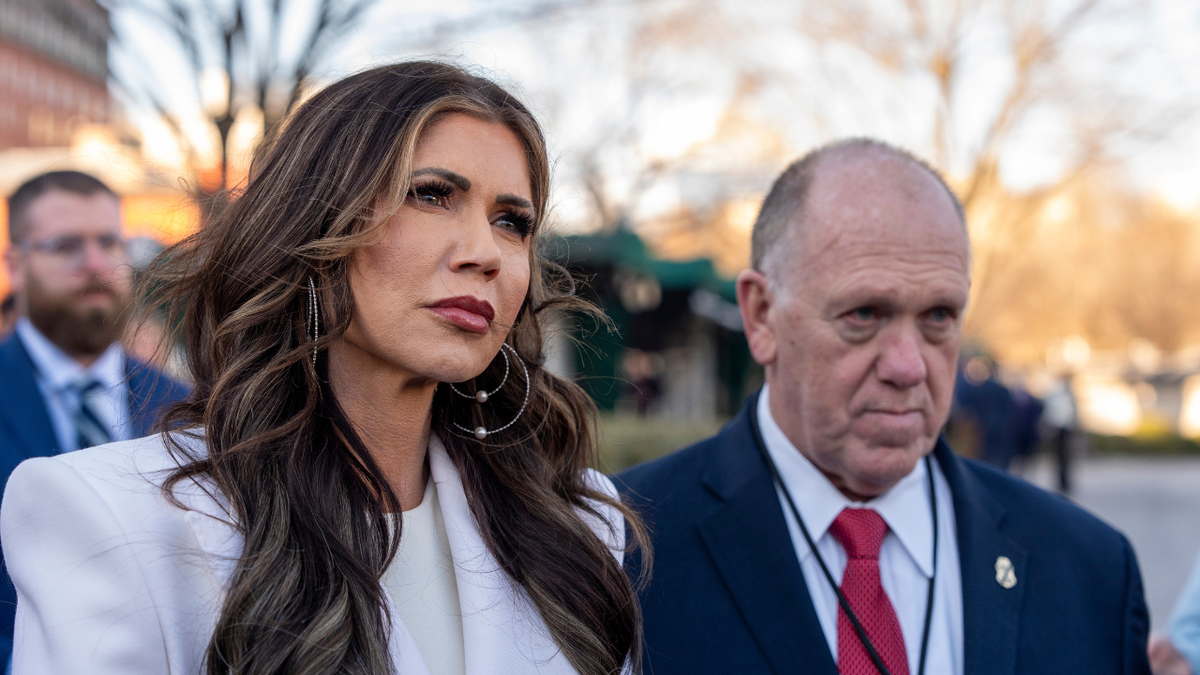





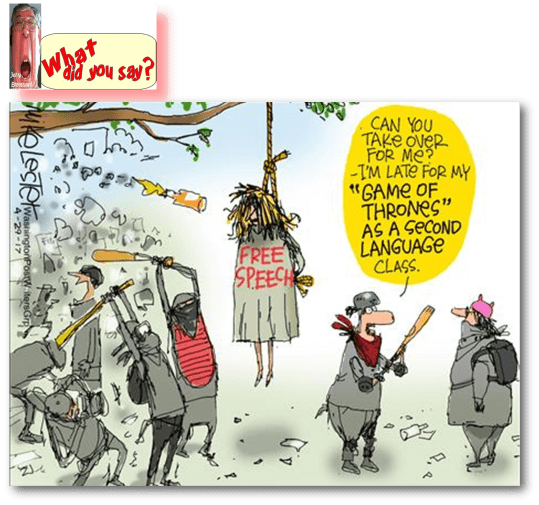



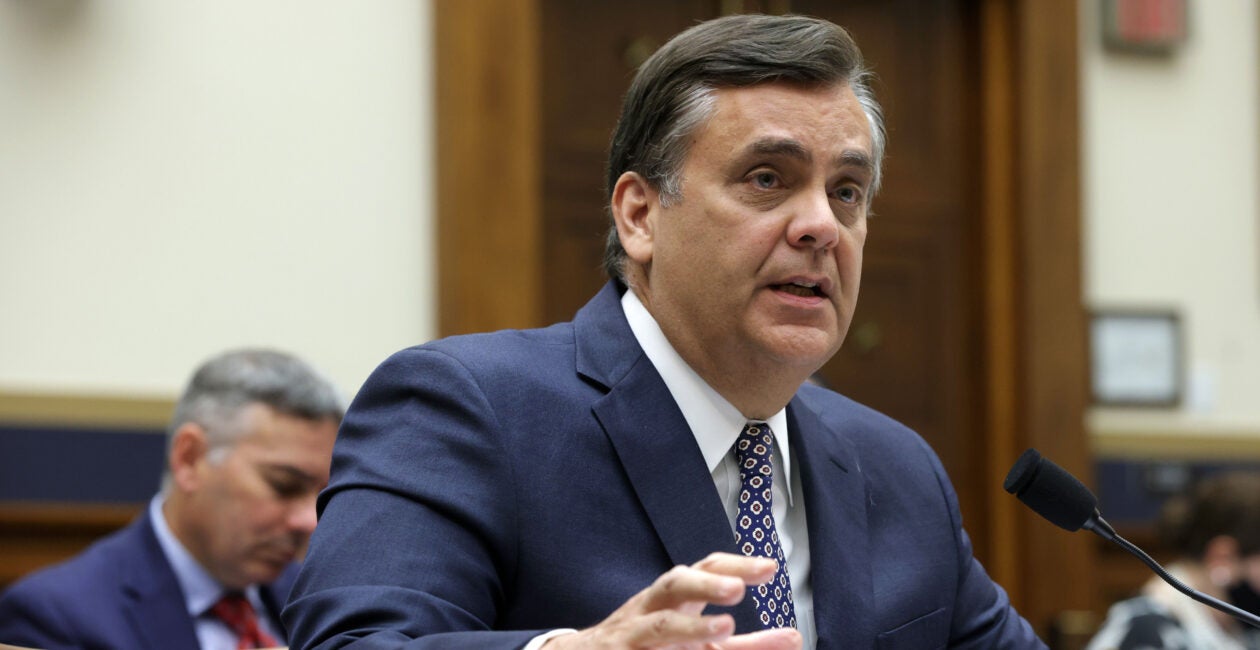



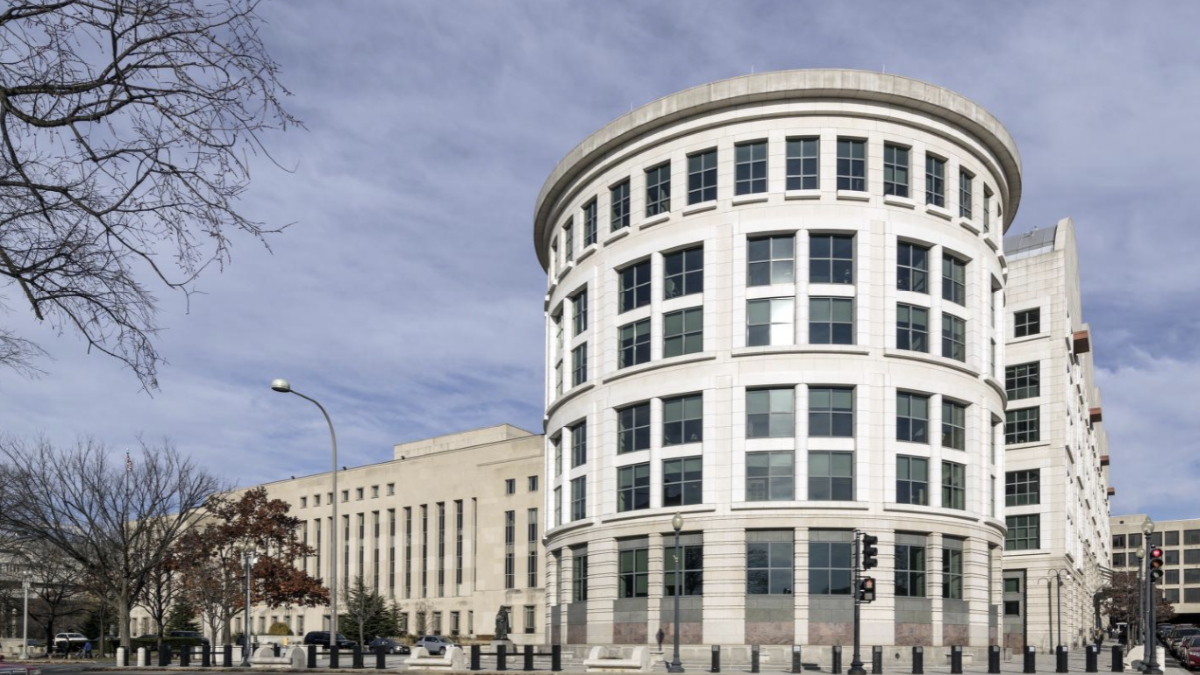


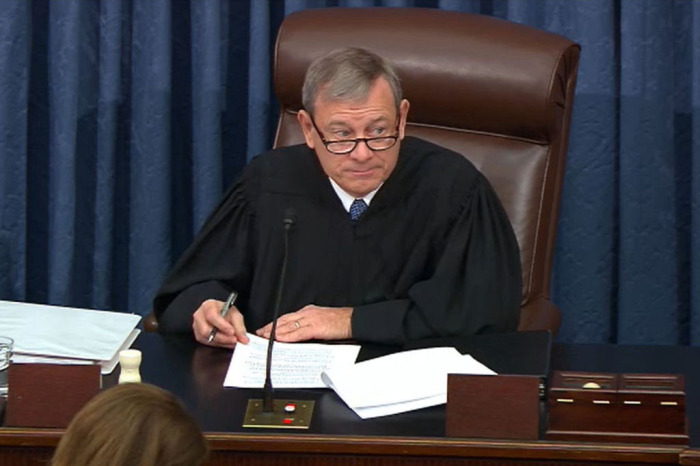









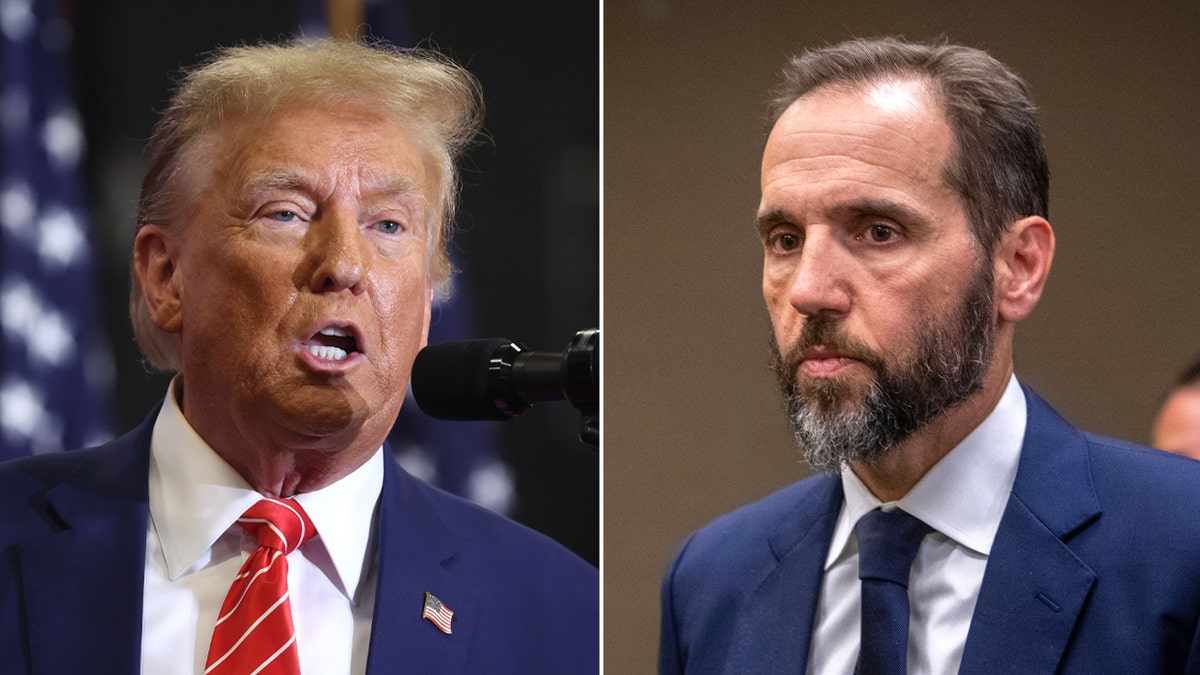


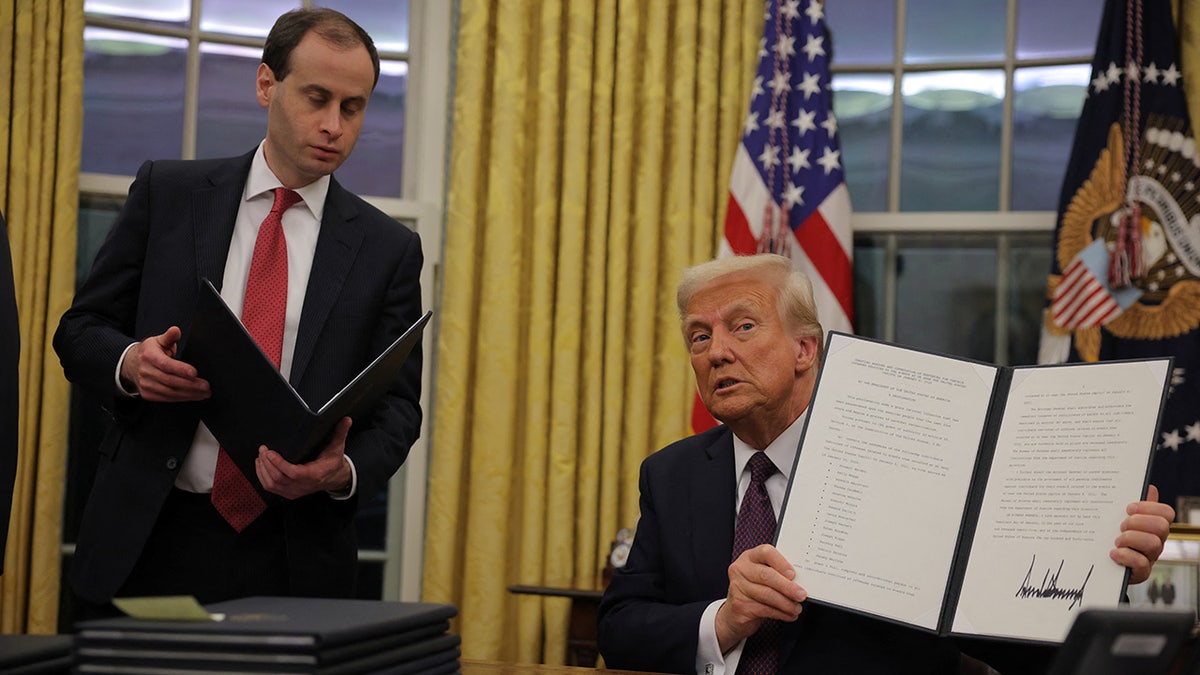
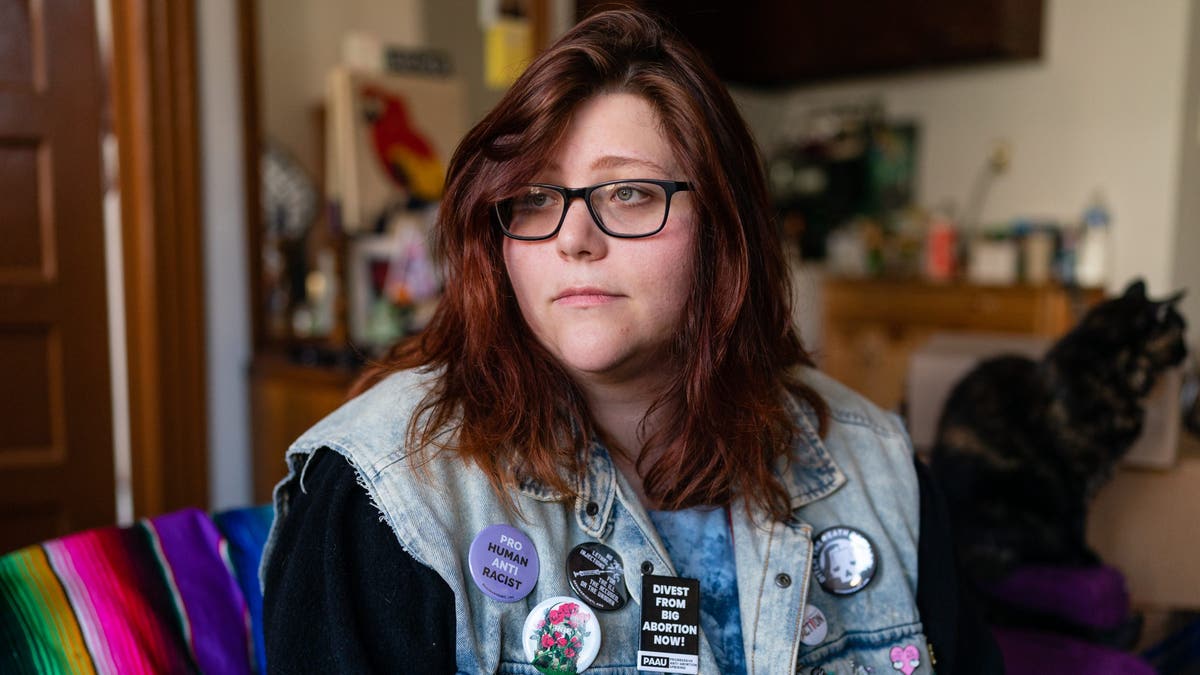
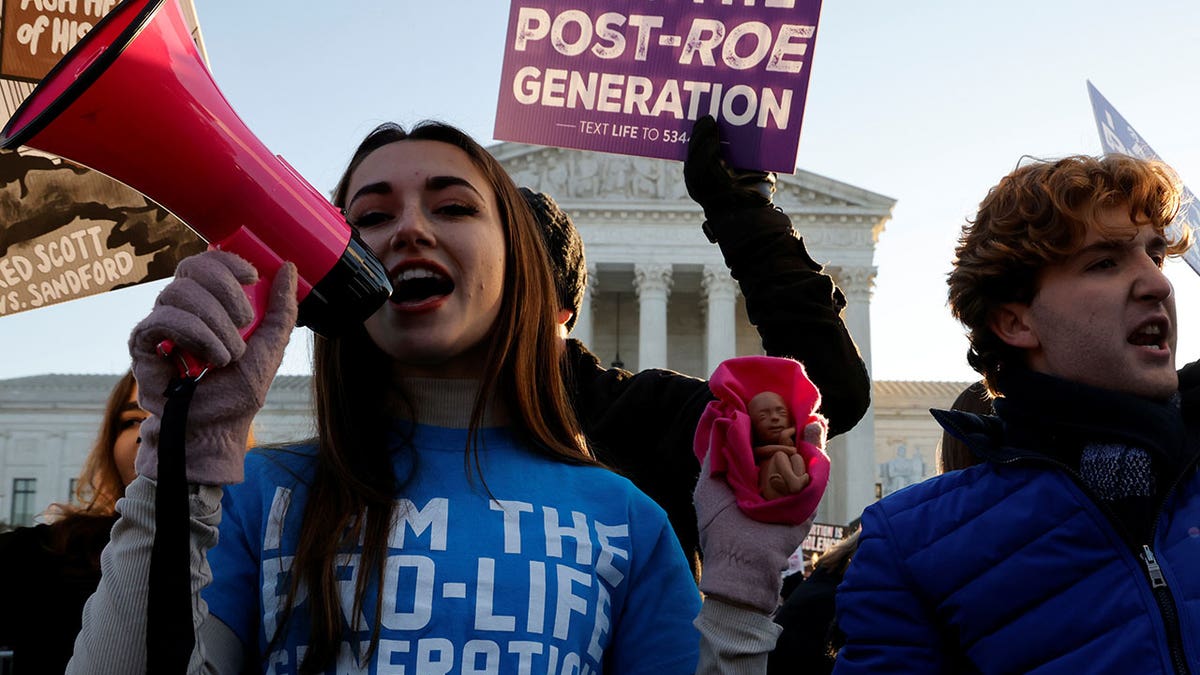



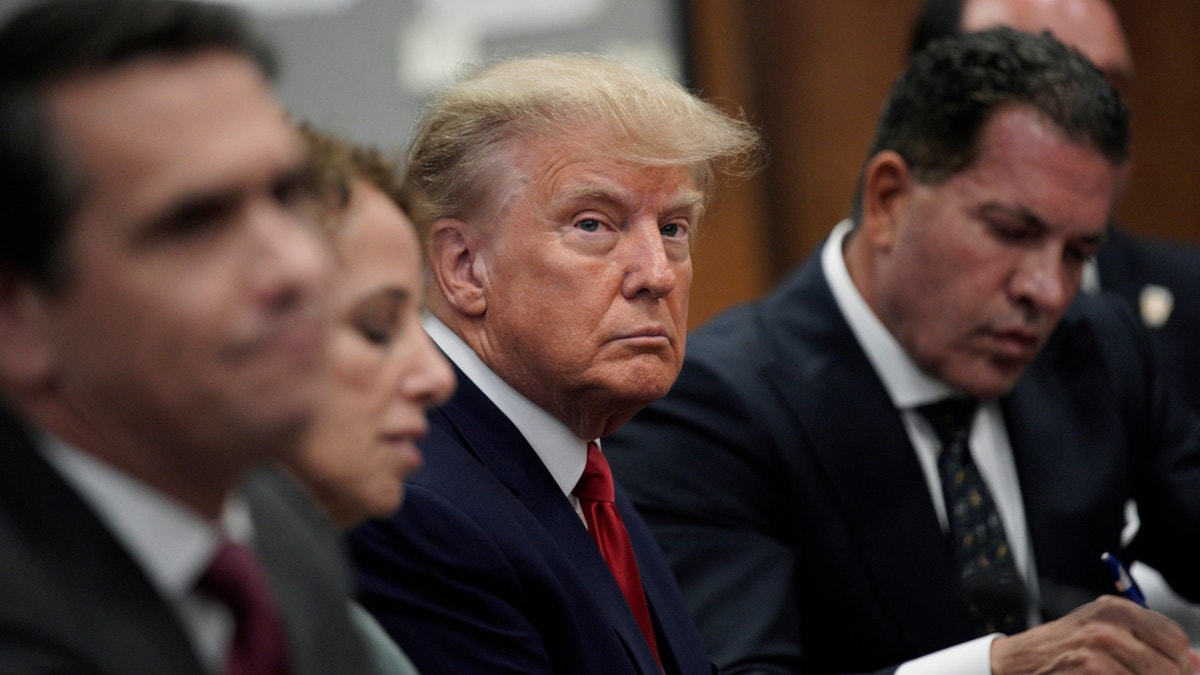
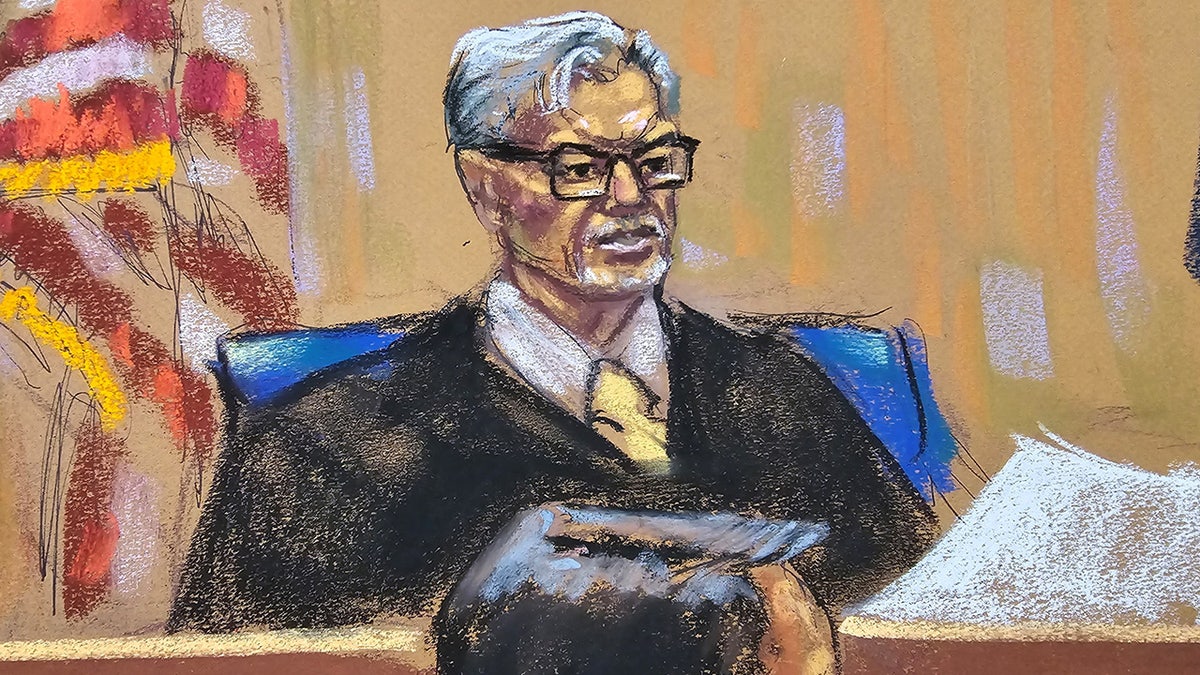


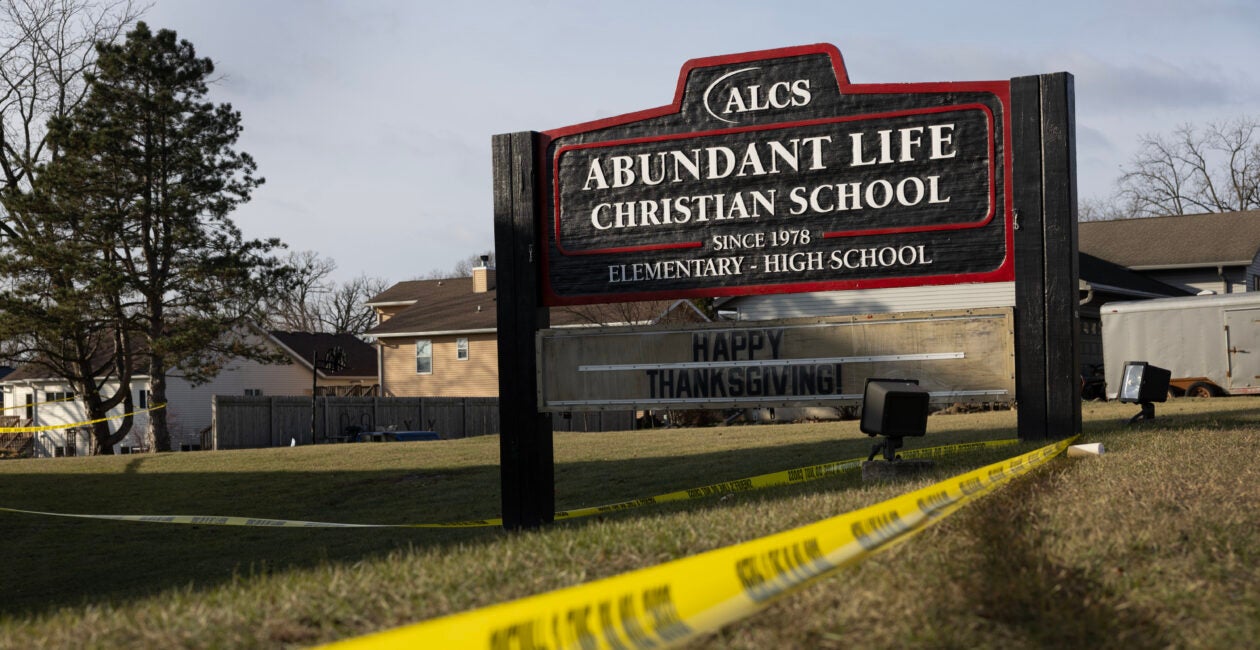


 What Did You Say?
You must be logged in to post a comment.