Perspectives; Thoughts; Comments; Opinions; Discussions

Posts tagged ‘voter registration’

The Federalist’s 2024 Battleground State Elections Guide


By: The Federalist Staff | October 10, 2024

Read more at https://thefederalist.com/2024/10/10/the-federalists-2024-battleground-state-elections-guide/

'I voted' sticker.

Author The Federalist Staff profile

The Federalist Staff

More Articles

With Election Day less than a month away, election processes and early voting are kicking into gear in several swing states around the country. With different election laws and court rulings governing election administration in each state, it can be tough to keep up with the myriad guidelines and rules governing the electoral process. That’s why The Federalist’s 2024 Battleground State Elections Guide is here to help.

From ballot return deadlines to mail-in voting rules, here are all the key dates and information you’ll need to understand the election process in swing states throughout the country this cycle.

Arizona

In-Person Early VotingBegan on Oct. 9 and ends on Nov. 1.

Mail-In Voting: Ballots began to be mailed out Oct. 9.

Ballot Return Deadlines: Mail-in ballots must be returned by 7 p.m. local time on Election Day to be counted. These ballots can be returned via mail or delivered in person. Polling locations for in-person voting on Election Day also close at 7 p.m. local time.

Ballot HarvestingArizona law stipulates that only a “family member, household member or caregiver of the voter” may return the elector’s mail-in ballot.

Mail-In Ballot Signature Requirements: All absentee voters are required to sign the affidavit on the ballot envelope in order for their vote to be tabulated. The envelope signature must match the signature on the voter’s registration form.

Voter ID: Arizona requires in-person voters to present one type of acceptable photo ID or two types of non-photo ID.

Citizenship Requirements: The U.S. Supreme Court recently allowed part of a state law to go into effect that requires eligible electors to provide documentary proof of citizenship when registering to vote via state registration form. Arizonans may still register as federal-only voters with no proof of citizenship. The Arizona Constitution further specifies only U.S. citizens can vote in elections.

Post-Election Day Ballot CuringArizona law permits a “curing” period, in which local officials are authorized to contact voters to correct signature issues on their mail ballots. Any issue must be corrected “not later than the fifth business day after a primary, general or special election that includes a federal office or the third business day after any other election.”

Major Ballot Initiatives: Arizona’s ballot is expected to be stacked with roughly a dozen ballot initiatives this November. Among the most notable are constitutional amendments to effectively legalize late-term abortion (Proposition 139), raise the threshold for citizen-initiated ballot measures (Proposition 134), give the state legislature power to limit the governor’s emergency powers (Proposition 135), and prohibit open primary elections (Proposition 133).

Also set to appear on the ballot is a constitutional amendment that would institute open primaries and allow for the adoption of ranked-choice voting for general elections (Proposition 140). Despite the discovery that roughly 38,000 pairs of signatures gathered in support of the measure were duplicates, the Arizona Supreme Court ruled that votes cast for the measure may count.

For more information on the full list of Arizona ballot measures, see here.

Biggest Election Fights: In September, Arizona election officials discovered roughly 98,000 registered voters lacking documentary proof of citizenship (DPOC) due to an error stemming from how the state’s Motor Vehicle Division shares driver’s license information with the voter registration system. As noted above, individuals who do not provide DPOC may still register as “federal-only” voters and can only cast ballots in federal races.

According to the secretary of state’s office, most of the affected voters are registered Republicans. The Arizona Supreme Court granted these electors the ability to vote full-ballot this November.

The secretary of state’s office revealed on Sept. 30 that election officials found an additional 120,000 voters affected by the issue who lack DPOC.

Georgia

In-Person Early VotingBegins on Oct. 15 and ends on Nov. 1. 

Mail-In VotingAbsentee ballots were sent to UOCAVA voters on Sept. 17.  Registrars began sending out absentee ballots for the general public on Oct. 7. The last day to request a mail-in ballot is Oct. 25. 

Ballot Return Deadlines: Absentee ballots (excluding UOCAVA ballots) must be returned by 7 p.m. local time on Election Day to be counted. These ballots can be returned in person, through the mail, or at a drop box location. Polling locations for in-person voting on Election Day also close at 7 p.m. local time. 

Ballot Harvesting: Georgia does not permit ballot harvesting, but only allows certain family members or a household member to return a voter’s ballot. (A caretaker may also return a disabled voter’s ballot.)

Mail-In Ballot Signature Requirements: Absentee ballot envelopes contain an “oath which must be signed by the voter.” Georgia also “requires the voter’s driver’s license number or state identification card number, which is compared with the voter’s registration record,” according to the National Conference of State Legislatures. If a voter is unable to sign his ballot, Georgia “law requires the voter make a mark,” according to Carroll County’s election website. Ballots lacking a signature or mark are rejected, according to Carroll County. 

Voter ID: “Georgia law requires photo identification when voting, either in person or absentee,” according to the secretary of state’s website. Acceptable forms of identification include any state or federal government-issued photo ID (including a driver’s license or a valid passport), a student ID from a Georgia public college or university, or a military or tribal photo ID.

Citizenship Requirements: Since 2010, Georgians registering to vote have been required to provide evidence of their U.S. citizenship, including a driver’s license or driver’s license number as long as the registrant has previously provided proof of citizenship to the Department of Driver Services. For those who don’t possess any of the accepted citizenship documents, Georgia law tasks the State Election Board with establishing “other documents or methods” for proving a person’s citizenship. However, it appears certain voters may be able to evade some of the safeguards in place.  

Post-Election Day Ballot Curing: Georgia law permits a “curing” period, in which local officials are authorized to contact voters to correct signature issues on their absentee ballots. The “last day for voters to cure timely submitted absentee ballots if they failed to sign the oath or information mismatch” is Nov. 8. 

Major Ballot Initiatives: Georgia will have three initiatives on the November ballot. One would create a Georgia Tax Court “with judicial power and statewide jurisdiction,” the second would provide “for a local option homestead property tax exemption,” and the third “exempts property that is valued at less than $20,000 from the personal property tax,” according to Ballotpedia

Biggest Election Fights: The conservative-led State Election Board has clashed with Democrats and Georgia’s Republican-led secretary of state’s office recently, especially on the topic of whether election officials should be forced to rubber-stamp election results even if they have concerns about the election’s administration.

Republican officials like Fulton County election board member Julie Adams argue they should be able to investigate concerns about the administration of an election before certifying the results, rather than rubber-stamping results they believe are legally dubious.

Democrats are also waging a series of legal challenges against the State Election Board, which has passed a series of rules aimed at ensuring the number of ballots cast matches the number of voters who voted, among other election integrity measures.

Michigan

Voter Registration: Michiganders can register to vote at any time up to 8 p.m. on Election Day. They can register to vote online, by mail, or in person at the local clerk’s office.

In-Person Early Voting: The Michigan Department of State tells voters early voting will be available “for a minimum of nine consecutive days, ending on the Sunday before an election.” So early voting will start Oct. 26 at the latest, but communities can start the process earlier, allowing it to run for as many as 29 days.

Mail-In Voting: Absentee ballots are available beginning 40 days ahead of every election. Voters can request a ballot from the local clerk, and can opt-in to receive absentee ballots ahead of every federal, state, and local election. After Michigan voters approved no-excuse absentee voting in 2018, Proposal 2, which passed in 2022, further instituted mail-in voting practices and myriad other election policies supported by the left.

Ballot Return Deadlines: Voters must return absentee ballots to the local clerk’s office by 8 p.m. on Election Day to be counted, but overseas voters simply need their ballots to be postmarked by Election Day and received by clerks within six days after the election.

Ballot Harvesting: Michigan law allows an immediate family member or “individual residing in your household” to return a voter’s ballot. A voter may also request the clerk who issued a ballot help return it. 

Mail-In Ballot Signature Requirements: Absentee voters must sign the envelope with a signature matching their state ID or voter registration application.

Voter ID: The state requires in-person voters to show a photo ID or sign an affidavit claiming they don’t have one. Acceptable documents include a current student ID or government ID such as (but not limited to) a U.S. passport or state driver’s license. Michigan does not require a copy of an ID to vote by mail.

Citizenship Requirements: It is illegal for noncitizens to vote in federal elections, and voter registration forms and ballot applications require a person to attest that he is a citizen, but Michigan does not require documentary proof of citizenship from would-be voters.

Post-Election Day Ballot Curing: If a signature does not match that in the local clerk’s records, Michigan law requires clerks to contact the voter to “cure” the signature and solve the issue. According to the secretary of state’s office, voters may cure their signatures until 5 p.m. the third day after the election.

Major Ballot Initiatives: Michigan will have no statewide ballot measures in November.

Biggest Election Fights: Democrat Secretary of State Jocelyn Benson fought to keep third-party candidate Robert F. Kennedy Jr. on the ballot and remove independent Cornel West from the ballot, both of which actions would likely help Vice President Kamala Harris’ chances.

The Republican National Committee has filed multiple lawsuits against Benson for her guidance to clerks on handling ballots and her alleged failure to clean the state’s voter rolls. The Public Interest Legal Foundation has also sued Benson for an alleged lack of voter roll maintenance.

Nevada

Voter Registration: The deadline to register online is Oct. 23. Mailed voter registration forms had to be postmarked by Oct. 8.

Nevada also offers same-day registration, in which eligible electors may register and vote in person during the early voting period or on Election Day. Those who choose this option must present a valid Nevada driver’s license or Nevada ID card. Voters will receive their ballots to vote after the registration process is completed.

In-Person Early VotingBegins on Oct. 19 and ends on Nov. 1.

Mail-In Voting: Every registrant listed as “active” on Nevada’s voter rolls is automatically mailed a ballot every election. Voters can request to opt out of this mailing list.

According to the National Conference of State Legislatures, Nevada law does not specify when election officials may start sending mail-in ballots to voters. State law does, however, require these officials to send electors their ballots “not later than the 14 days before the election.”

Ballot Return Deadlines: All ballots that are dropped off in person must be submitted by 7 p.m. local time on Election Day. According to the Nevada secretary of state’s office, “Mail-in ballots that are postmarked on or before the day of the election AND received by the 4th day after election day by 5 p.m., will be accepted as received and processed according to Nevada State law.”

Ballot Harvesting: Nevada law permits any “person authorized by the voter [to] return the mail ballot on behalf of the voter by mail or personal delivery to the county clerk, or any ballot drop box established in the county.”

Mail-In Ballot Signature Requirements: All electors voting via mail must sign the ballot envelope for it to be counted. The envelope signature must match the signature on the voter’s registration form.

Voter ID: Nevada does not require a person to show ID to vote. As summarized by Ballotpedia, state law requires a Nevada in-person voter to “sign his or her name in the election board register at his or her polling place.” That signature is then “compared with the signature on the voter’s original application to vote or another form of identification, such as a driver’s license, a state identification card, military identification, or another government-issued ID.”

Citizenship Requirements: Nevada law requires all eligible residents to be U.S. citizens to vote, although the state constitution does not explicitly stipulate only U.S. citizens can vote. The state does not require documentary proof of citizenship from people voting or registering to vote.

Post-Election Day Ballot CuringNevada law permits a “curing” period, in which local officials are required to contact voters to allow them to correct signature issues on their mail-in ballots or otherwise confirm the signature affixed to the ballot belonged to them. The voter “must provide a signature or a confirmation, as applicable, not later than 5 p.m. on the sixth day following the election” for the ballot to be counted.

Major Ballot Initiatives: There will be seven measures appearing on Nevada’s 2024 ballot, six of which are constitutional amendment proposals. Among the most notable are initiatives instituting ranked-choice voting (Question 3), effectively legalizing late-term abortion (Question 6), and requiring electors to present a valid form of ID in order to vote (Question 7).

[RELATED: Ranked-Choice Voting Is A Nightmare — And It’s On The Ballot In Nevada]

Biggest Election Fights: The top issue raising concerns among election integrity activists in the state is the accuracy of Nevada’s voter rolls. Organizations such as the Public Interest Legal Foundation have documented what appear to be alarming inaccuracies within the voter registration lists, such as finding some registrants’ addresses listed at bars and casinos. Efforts by the Citizen Outreach Foundation to file citizen-led challenges to have these allegedly ineligible registrants removed have been met with resistance by Democrat Secretary of State Cisco Aguilar, whose office recently issued a memo instructing local officials to stop processing the group’s challenges.

North Carolina

Voter Registration: The standard deadline to register to vote is 5 p.m., Oct. 11. However, North Carolinians can register to vote after the Oct. 11 deadline in person at early voting locations.

In-Person Early VotingBegins Oct. 17 and ends at 3 p.m. on Nov. 2.

Mail-In Voting: Any registered voter in North Carolina can vote by mail for any reason. Voters must request the ballot using an absentee ballot request form, either online or with a paper form. This year, voters must request absentee ballots by Oct. 29 at 5 p.m.

Ballot Return Deadlines: Ballots must be returned by Election Day, Nov. 5 at 7:30 p.m. (with exceptions for UOCAVA voters).

Ballot Harvesting: North Carolina law permits a near relative or legal guardian to return a voter’s absentee ballot. It is otherwise a class I felony for anyone to deliver a ballot to a voter or return it for them.

Mail-In Ballot Signature Requirements: Voters must sign their absentee ballot envelope.

Absentee ballots must be filled out in the presence of two adult witnesses who are not disqualified by other state statutes. Those two persons must print and sign their names on the application and certificate, as well as provide their addresses. Voters can also fulfill the requirement with the seal and signature of one notary public.

Voter ID: A photo ID is generally required to vote in North Carolina, but the address on the ID “does not have to match the voter registration records.”

If an in-person voter does not have a voter ID, he will be asked to either complete an ID exception form and vote provisionally, or vote provisionally and return to his county elections office with a valid ID “by the day before [the] county canvass.” North Carolinians voting by mail are required to provide a copy of a photo ID when returning their ballot, but they can also fill out an exception form. Counties are required to count provisional ballots as long as the ID exception forms are “properly completed.”

Exceptions for not showing an ID are expansive, and range from a disability to “work or school schedule” to a religious objection to being photographed. (Being the victim of a declared natural disaster occurring withing 100 days of Election Day also qualifies a voter for an ID exception.) Mail-in voters who are somehow unable to attach a copy of their ID must include either their driver’s license number or the last four digits of their Social Security number.

North Carolina does not require photo ID for voters covered under the Uniformed and Overseas Citizens Absentee Voting Act.

Citizenship Requirements: North Carolina law requires U.S. citizenship to register to vote. However, citizenship documents are not required to register.

Post-Election Day Ballot Curing: North Carolina allows for ballot curing in certain circumstances, including if the voter “did not sign the voter certification,” “signed the application in the wrong place,” or failed to include a copy of a photo ID with an absentee ballot.

Major Ballot Initiatives: North Carolina only has one ballot initiative certified to appear on the ballot this November. The Citizenship Requirement for Voting Amendment was referred to voters by the state legislature and would amend the state constitution to provide that only eligible U.S. citizens can vote in the state. The amendment would prohibit local governments from allowing noncitizens to vote.

Biggest Election Fights: The RNC has filed several lawsuits against the North Carolina State Board of Elections.

The western part of the state was also significantly damaged by Hurricane Helene, which will make it more difficult to vote in the deep-red region of the state, though state officials are in the process of implementing emergency election procedures.

Pennsylvania

Voter Registration: The deadline to register to vote in Pennsylvania is Oct. 21. The state implemented automatic voter registration in September 2023 through the Department of Motor Vehicles. Since then, anyone who gets a driver’s license and is eligible to vote is automatically registered unless they intentionally opted out of voter registration. Pennsylvanians may also register online, by mail, or in person at their county election office.   

In-Person Early Voting: Pennsylvania treats early voting and mail-in voting the same. Voters can go to their county election office, receive a mail-in ballot, vote, and submit this ballot “all in the same visit.” In-person voting starts as soon as counties start mailing out ballots, but that date is different for each county. Voters may check online with the Pennsylvania Department of State to see when their counties’ ballots are ready.

Mail-In Voting: The deadline for requesting a mail-in ballot is Oct. 29. Any registered voter may request a mail-in ballot.

Ballot Return Deadlines: The county must receive a completed ballot by 8 p.m. on Election Day, Nov. 5. Counties will not accept ballots with a postmark of Nov. 5 at 8 p.m.; the ballot must be in hand by then. 

Ballot Harvesting: Voters must return their own ballots, although there are some exceptions for voters with a disability to designate someone, in writing, to deliver their ballot. Former Democratic Gov. Tom Wolf created a stir in 2021 when he casually admitted in a radio interview that his wife violated this rule, by dropping off his ballot for him. It is not allowed in Pennsylvania, even between spouses.

Mail-In Ballot Signature Requirements: Voters mail ballots in a two-envelope system. The inner, secrecy envelope is not marked, but the outer, mailing envelope must be signed and dated.

Voter ID: Voters must provide a driver’s license number or the last four digits of their Social Security number when registering to vote, as required by federal law. Identification is also required the first time a voter casts a vote in a precinct where they will sign a voter roll book, though the ID does not have to include a photo (voters can use a utility bill or bank statement as long as it includes their name and address). After that, no identification is required as long as the voter continues in the same precinct because they sign the book each election. If a Pennsylvania voter moves to a new precinct, he will need to show identification again.

Voters who qualify for a ballot under the Uniformed and Overseas Citizens Absentee Voting Act (UOCAVA) or the Voting Accessibility for the Elderly and Handicapped Act do not need to show ID.

Citizenship Requirements: You must be a U.S. citizen and a resident of Pennsylvania at least 30 days before the next election to register to vote.

Military voters, and those who are registered in Pennsylvania but out of the country, may register to vote through UOCAVA. They may participate in federal and local elections. Pennsylvania also allows voters who once lived in the state but now live overseas and have no intention of returning to vote as “federal” UOCAVA voters. These voters may vote in federal-level elections such as president, vice president, U.S. senator, and congressional representative. They cannot vote in Pennsylvania’s local elections.

Post-Election Day Ballot CuringSome counties give voters notice and opportunity to “cure” mistakes, and some do not. State law tells counties not to count improperly marked ballots, but the Pennsylvania Department of State has issued guidance telling counties to flag ballots in need of curing so voters will receive an automatic notice informing voters they can cure their ballots. This has become a point of controversy.

Biggest Election Fights: Mail-in ballot curing has been under dispute, and in the courts for several years, and in multiple cases. Should counties toss out improperly marked ballots as the election code directs? Or does Pennsylvania Secretary of State Al Schmidt have the authority to override the law and issue guidance to mail-in voters offering them a second chance to mark their outer envelope properly? Counties have been choosing to either follow the law or the guidance, giving voters different responses to the same problem, depending on where they live.

The Republican National Committee (RNC) and the Republican Party of Pennsylvania challenged Schmidt and Pennsylvania’s 67 county boards of elections over this matter. The RNC believes voters should be held to the law as written by the elected General Assembly, which does have the authority to change the law, and so far, hasn’t. Last week, the state supreme court declined to rule on the issue before Election Day.

Wisconsin

Voter Registration: Wisconsin offers same-day voter registration, so eligible Wisconsinites can register to vote in person on Tuesday, Nov. 5, 2024 (Election Day). The deadline to register to vote by mail or online is Oct. 16.

In-Person Early Voting: Counties can offer early voting from Oct. 22 until Nov. 3, although the dates and office hours “vary by municipality.” 

Mail-In Voting: Absentee ballots begin being mailed out 47 days before November’s general election. 

Ballot Return Deadlines: All absentee ballots must be delivered no later than 8 p.m. local time on Election Day. The ballots may be returned via mail or hand-delivered to the polling place or clerk’s election office. 

Ballot Harvesting: Wisconsin law implies that only the voter shall mail the ballot or deliver it in person to the municipal clerk’s office that issued the ballot.

Mail-In Ballot Signature Requirements: All absentee voters must sign and seal the ballot certificate envelope. A witness also is required to sign the envelope and include his address.  Ballots that fail to include the required information are rejected.  

Voter ID: Wisconsin requires in-person voters to show the “original copy of their photo ID” to vote. 

Citizenship Requirements: Wisconsin’s constitution states that “Every United States citizen age 18 or older who is a resident of an election district in this state” is eligible to vote. “Citizenship is documented through a U.S. birth certificate or a Certificate of Naturalization, but proof of citizenship is not required to vote,” notes the Wisconsin Elections Commission. 

Post-Election Day Ballot Curing: This has been an on-again, off-again issue in the Badger State for several years. In February, the Wisconsin Elections Commission voted 5-1 on guidance advising clerks to accept ballots with incomplete ballot witness addresses following a Dane County Court ruling on the curing question. A Waukesha County judge in 2022 had ruled that clerks completing or fixing missing information on absentee ballot envelopes on behalf of the voter violated state law. Concerns over improperly “fixed” ballot envelopes were at issue in the 2020 election, and a subject of unsuccessful Trump campaign lawsuits challenging the results of the election in Wisconsin. A federal judge earlier this year tossed out a lawsuit by Democrat Party fixer Marc Elias’ lawfare group seeking to block Wisconsin election law requiring a witness to sign a voter’s absentee ballot.

Major Ballot Initiatives: Wisconsin voters will decide whether to amend Wisconsin’s constitution to provide that “only” U.S. citizens 18 or older may vote in national, state or local elections. Currently the constitution states that “every” U.S. citizen 18 or older may vote. Citizen Only Voting Amendment advocates argue the existing language leaves a loophole that would allow Wisconsin municipalities and the state to open elections to noncitizens, as has been done in other states and the District of Columbia. 

Biggest Election Fights: Wisconsin’s four-year battle over the widespread use of absentee ballot drop boxes was decided by a new liberal-led court, just in time for the 2024 general election. In a 4-3 ruling in July, the court endorsed the return of absentee ballot drop boxes, opening the door to the same kind of election shenanigans that plagued the Badger State in 2020. The decision overturned the Wisconsin Supreme Court’s 4-3 ruling by the conservative majority in 2022 banning the widespread use of the drop boxes.

For more election news and updates, visit electionbriefing.com.

Oklahoma Removes 450,000 Ineligible Voters from Rolls, Including More Than 5,000 Felons


By: Logan Washburn | September 20, 2024

Read more at https://thefederalist.com/2024/09/20/oklahoma-removes-450000-ineligible-voters-from-rolls-including-over-5000-felons/

Gov. Kevin Stitt speaking at an event.

Author Logan Washburn profile

Logan Washburn

More Articles

Oklahoma election officials have removed more than 450,000 ineligible voters from the state’s rolls ahead of November’s election.

“Voting is our most sacred duty as Americans — and every Oklahoman wants to know their vote is securely cast and properly counted,” said Republican Gov. Kevin Stitt in a press release

State election officials have removed 453,000 total ineligible voters since 2021, Stitt’s office announced Wednesday. 

As part of “routine voter list maintenance,” the state has removed 5,607 felons, 14,993 duplicate registrations, 97,065 dead voters, and 143,682 voters who moved out of state, according to the release. During address verification, officials also canceled 194,962 inactive voters.

Stitt’s office has been working with legislators, the state election board, and the secretary of state on voter list maintenance. Officials are using technology like artificial intelligence to “protect our elections,” said Secretary of State Josh Cockroft in the release.

“We’ve aggressively pursued policies to ensure voting is secure and accurate,” Cockroft said. “Every eligible citizen will have their vote counted and their voice heard.”

Oklahoma allows “only eligible voters” to take part in elections, according to the release. The state’s June primaries had a “100% voter verification match,” KOSU reported.

Stitt formed a Campaign Finance and Election Threats Task Force in November 2023, according to the release. The task force works to “assess the electoral process, scrutinize foreign investment in campaigns, and ensure Oklahoma elections are the safest in the nation.”

The task force recommended random post-election audits, banning ranked-choice voting, regulating the use of AI, changing contribution limits by “non-corporate entities,” banning foreign campaign expenditures, and working with Native American tribes to enforce election law, according to state documents

“This Task Force was charged with investigating the most critical aspect of our republic: ensuring our elections are free and fair,” Stitt said in an April press release, encouraging state legislators to adopt the recommendations. 

Paul Ziriax said in the latest press release that successful recounts and post-election audits have “proven the accuracy of Oklahoma’s voting system.”

“Our laws and procedures are designed to ensure the integrity and security of our elections,” Ziriax said. 

Texas recently announced the removal of 1.1 million ineligible voters from the rolls during routine maintenance ahead of November’s election, as The Federalist previously reported. Other states have taken similar steps to deal with ineligible voters on the rolls.

Virginia Gov. Glenn Youngkin revealed in an executive order in August that the state’s department of elections had removed more than 6,300 noncitizens from the voter rolls, as The Federalist reported. The same month, Alabama Secretary of State Wes Allen announced his office found more than 3,000 potential noncitizens registered to vote. Earlier this year, Ohio discovered more than 100 noncitizens registered to vote, spurring the state to clean its voter rolls.

For more election news and updates, visit electionbriefing.com.


Logan Washburn is a staff writer covering election integrity. He graduated from Hillsdale College, served as Christopher Rufo’s editorial assistant, and has bylines in The Wall Street Journal, The Tennessean, and The Daily Caller. Logan is originally from Central Oregon but now lives in rural Michigan.

Texas AG Investigates Possible Illegal Voter Registrations


By: Logan Washburn | August 22, 2024

Read more at https://thefederalist.com/2024/08/22/texas-ag-investigates-possible-illegal-voter-registrations/

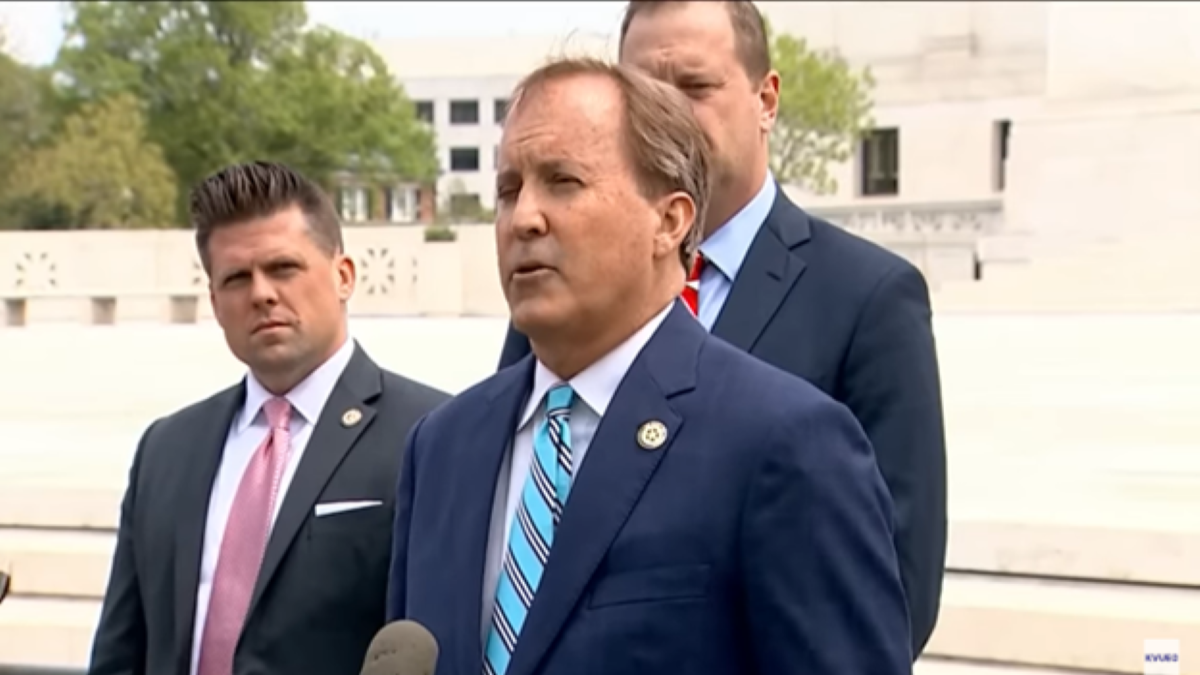
Texas AG Ken Paxton giving a press conference

Texas Attorney General Ken Paxton is investigating reports of nonprofits illegally registering noncitizens to vote.

“Nonprofit organizations have been located outside Texas Department of Public Safety Driver License offices, operating booths offering to assist in voter registration for persons doing business,” reads an Aug. 21 press release from Paxton’s office.

Investigators with Paxton’s Election Integrity Unit recently performed “undercover operations” in “major metropolitan areas” regarding possible registration of noncitizens to vote, according to the release. Investigators have “already confirmed” nonprofit registration efforts outside Texas DPS offices. 

“If eligible citizens can legally register to vote when conducting their business at a DPS office, why would they need a second opportunity to register with a booth outside?” Paxton said in the release. “The Biden-Harris Administration has intentionally flooded our country with illegal aliens, and without proper safeguards, foreign nationals can illegally influence elections at the local, state, and national level.”

The attorney general’s office is continuing an “ongoing investigation,” Paxton said in a statement to The Federalist.

“We cannot provide more information at this time,” Paxton said. “It is encouraging that these booths are now prohibited from operating on DPS property.” 

The DPS had allegedly been tacitly allowing these efforts near driver’s license offices, according to Texas Scorecard. But due to Paxton’s investigation, the department “temporarily prohibited” voter registration groups from operating on its property.

“It is a crime to vote — or to register to vote — if you are not a United States Citizen,” Paxton said in the release. “Any wrongdoing will be punished to the fullest extent of the law.” 

It is a “crime in Texas to lie about one’s citizenship” or to help another person do so when registering to vote, according to the release. The crime brings a punishment of up to two years in a state jail and a $10,000 fine. It is also illegal in Texas for noncitizens to vote or help someone else do so. Violations bring a punishment of up to 20 years in prison and a $10,000 fine. 

“Texans are deeply troubled by the possibility that organizations purporting to assist with voter registration are illegally registering noncitizens to vote in our elections,” the release said.

Republican Gov. Greg Abbott echoed a similar sentiment on X, referring to Paxton’s investigation.

“Illegally registering non-citizens to vote won’t be tolerated in Texas. It’s a crime,” Abbott said. “We won’t let cheaters influence elections in Texas.”


Logan Washburn is a staff writer covering election integrity. He graduated from Hillsdale College, served as Christopher Rufo’s editorial assistant, and has bylines in The Wall Street Journal, The Tennessean, and The Daily Caller. Logan is originally from Central Oregon but now lives in rural Michigan.

Author Logan Washburn profile

Logan Washburn

More Articles

Thousands Of Noncitizens on U.S. Voter Rolls Assure Americans the Next Election Will Be Unsafe and Unfair


By: Ben Weingarten | August 15, 2024

Read more at https://thefederalist.com/2024/08/15/thousands-of-noncitizens-on-u-s-voter-rolls-assure-americans-the-next-election-will-be-unsafe-and-unfair/

Vote sign

Author Ben Weingarten profile

Ben Weingarten

Visit on Twitter@bhweingarten

More Articles

More than a dozen jurisdictions run by Democrats — including Washington, D.C., and several adjacent Maryland municipalities — allow noncitizens to vote in some local elections. San Francisco not only permits noncitizens to vote but appointed one to serve on its elections commission.

Such developments, against a backdrop of millions of illegal migrants streaming into the United States under the Biden-Harris administration, bring new urgency to debates over election integrity. Many Republicans fear that a widespread effort is afoot to give noncitizens the full benefits of citizenship, including the right to vote in all elections, on top of benefits already available to illegal aliens in some places, notably driver’s licenses, food stamps, government health care, and work visas.

Although Democrats note that noncitizens may not participate in federal elections and claim there is little evidence noncitizens are voting unlawfully, critics are unmollified.

A RealClearInvestigations analysis of proposed and enacted state and federal laws, along with other reporting and research, suggests that the fight over noncitizen voting is only likely to intensify this year — both in the immediate wake of an expected closely contested presidential election and in its aftermath.

States across the country report that thousands of noncitizens have been discovered on voter rolls in the past decade, with unknown numbers already having voted: 

  • Pennsylvania found 11,000 registrants suspected of being noncitizens after becoming aware of a decades-old “glitch” in the state’s “motor voter” registration system in 2017. It removed 2,500 individuals from the rolls, and it could not verify the citizenship status of the other 8,700 registrants.
  • Virginia has removed over 11,000 registrants from its rolls between 2014 and 2023 — and more than 6,300 from January 2022 to July 2024 alone — upon learning that they had declared themselves noncitizens in other interactions with government, typically in transactions with the state’s department of motor vehicles. House Republicans cited a study showing that of nearly 1,500 noncitizens the Commonwealth removed from rolls from May 2023 to February 2024, 23 percent had cast ballots since February 2019.
  • New Jersey had some 616 self-reported noncitizens in 11 counties “engaged on some level with the statewide registration system,” 9 percent of whom cast ballots, according to a 2017 survey conducted by the Public Interest Legal Foundation.
  • Boston, Massachusetts, officials revealed this year that the city had removed 70 noncitizens from the rolls, some 22 of whom had voted, the removals coming in response to disclosure requests from the Public Interest Legal Foundation.
  • Ohio recently ordered the removal of 499 noncitizens from its voter rolls after removing some 137 other registrants back in May.
  • North Carolina identified more than 1,400 registrants on state voter rolls who did not appear to be naturalized, in an audit conducted prior to the 2014 midterm election. Eighty-nine flagged individuals appeared at the polls to vote, and 24 had their registration challenged; 11 challenges were sustained or justified.
  • Arizona classifies some 42,000 people on its rolls as “federal-only” registrants as of July 1, 2024 — after they had failed to provide the proof of citizenship necessary to vote in state and local races. The state’s bifurcated voter rolls are the result of a 2013 Supreme Court ruling in which a 7-2 majority led by the late Justice Antonin Scalia ruled that federal voter registration requirements — of which documentary proof of citizenship is not one — preempted the state’s standards. 

Other evidence of noncitizen voting has been found in states from California to Illinois

Republicans argue that such examples expose weaknesses in the voter registration and administration process — including that registrants need not provide proof of citizenship to get on the voter rolls. These and other loopholes in state-run systems make elections vulnerable to ineligible noncitizen voters today.

Each side has its own research to support its claims. Democrats cite a study by the Brennan Center for Justice at New York University, finding that local election officials overseeing the tabulation of 23.5 million ballots during the 2016 presidential election identified only 30 potential incidents of noncitizen voting.

Republicans highlight a recent study estimating that 10 percent to 27 percent of noncitizens are illegally registered to vote, and 5 percent to 13 percent will illegally vote in 2024 — a potentially massive number given the illegal alien portion of the noncitizen population alone numbers well over 10 million. Election integrity advocates argue that states have not found many incidents of noncitizen voting for the simple reason that authorities, including the Department of Justice, do not look for it.

“DOJ investigations of illegal voting are all but nonexistent,” Sen. Mike Lee, a Utah Republican, said in a recent floor debate concerning the SAVE (Safeguard American Voter Eligibility) Act, a bill Lee and House colleague Chip Roy, R-Texas, introduced to combat noncitizen voting. After the House passed the measure in July, Democrats blocked the legislation in the upper chamber, where it remains stalled.

“[T]oo many prosecutors refuse to enforce the law even when such illegal behavior is discovered by election officials or others,” Hans von Spakovsky, a former Department of Justice official who now works at the conservative Heritage Foundation, told Congress in May.

Should election officials fail to prevent noncitizens from casting ballots on the front end, J. Christian Adams, a fellow former DOJ official and president of the Public Interest Legal Foundation, told RCI, there is “almost nothing” the public or political parties can do on the back end to identify, challenge, and invalidate noncitizen votes prior to election certification.

Adams’ group has documented myriad electoral races decided by one vote or tied over the last two decades — something he and others argue indicates just how critical it is to combat illegal voting, given the potential impact to tight races up and down ballots.

States generally seem unfazed by the prospect of noncitizen voting. For this article, RealClearInvestigations contacted authorities in the seven states comprising RealClearPolitics’ top battlegrounds: Arizona, Georgia, Michigan, Nevada, North Carolina, Pennsylvania, and Wisconsin. Two states, Michigan and Pennsylvania, did not respond to RCI’s inquiries. Election authorities in the five responsive states maintained that current law is a sufficient deterrent to noncitizen voting, emphasizing that casting a ballot as a foreigner would constitute a criminal offense with grave penalties.

“Someone would have to knowingly and intentionally commit a class 6 Felony if they did vote as a noncitizen, and it would result in the revocation of their legal status in the USA, and they would likely face deportation,” a spokesman for Arizona’s Democrat Secretary of State Adrian Fontes said in a statement. The spokesman said he hoped his statement, which pointed to the state’s voter challenge process and noted other procedures pertaining to citizenship, would “compel” RealClearInvestigations to “clear up [RCI’s] notions and erroneous assumptions.”

Georgia touted its 2022 citizenship audit in correspondence with RCI, the first such review of the voter rolls for citizenship in state history, in which it found that 1,634 people who attempted to register to vote were not verified by the SAVE program. All were in “pending citizenship” status within Georgia’s internal systems, and thus none had been allowed to vote. “Due to the effective processes Georgia has in place to verify U.S citizenship at the time of registration … we are confident noncitizens are not voting in Georgia, and if one ever does, they will be punished to the full extent of the law,” Mike Hassinger, a spokesman for Republican Secretary of State Brad Raffensperger, told RCI.

North Carolina elections board Public Information Director Patrick Gannon told RCI: “We have little evidence of noncitizens voting in elections, and get very few complaints alleging voting by noncitizens.”

He pointed to a 2016 state audit report and the handful of cases alleging noncitizen voting that the bipartisan State Board of Elections has referred to prosecutors since 2017.

Similarly, Wisconsin Elections Commission Public Information Officer Riley Vetterkind told RCI, “There is no evidence to support the idea that noncitizens are voting in Wisconsin in significant numbers.” The spokesperson for the state’s bipartisan commission cited the few instances of suspected election fraud, irregularities, or violations referred to district attorneys by municipal clerks that the state’s elections commission “has been made aware of.”

These messages of reassurance, however, at times come with notes of caution that underpin election integrity advocates’ concerns.

States each have their own independent processes to maintain voter lists. Those processes vary widely in vigor, tempo, and transparency. They are often based on different degrees of access to sources of citizenship status with which to identify ineligible voters. “No state or federal law requires the WEC [Wisconsin Elections Commission] or clerks to verify a voter’s citizenship status beyond requiring the voter to certify that they are a U.S. citizen as a qualification for voter eligibility,” said Vetterkind.

Pennsylvania has asserted that “the Commonwealth has no systematic program to identify and remove non-citizens from the voting rolls.” 

The Public Interest Legal Foundation has litigated against the Keystone State and other jurisdictions just to get a peek into their registration list maintenance processes. As for how states identify potential noncitizens, Gannon said of North Carolina’s audit that “relying on state databases was wildly inaccurate for determining citizenship status.” 

The state passed a law in 2023 requiring that the election board regularly reconcile its registration list with lists provided by state courts of those excused from jury duty due to lack of citizenship — an ad hoc approach commonly used by other states.

Georgia emphasized its use of the Department of Homeland Security’s more robust SAVE tool, which provides “point in time immigration status” for those who have been issued a unique immigration identifier. (This Systematic Alien Verification for Entitlements tool is distinct from the GOP-sponsored legislation with the same acronym.)

Most state officials who responded to RCI’s query emphasized that there are laws on the books permitting third-party challenges to voter eligibility. But this is a measure requiring time, money, and effort. The two former Justice Department officials — Spakovsky and Adams — recently took issue with the view that state audits and scrubs of voter rolls ought to inspire confidence, writing in the Daily Signal:

Because almost no state even attempts to verify that individuals registering to vote are U.S. citizens — and because the federal government, including both the courts and the executive branch, have put up significant barriers to such verification — we don’t really know how many aliens, whether here legally or illegally, are registering and voting.

Rougher Weather Ahead

Whatever the extent of noncitizen registration and voting today, Election Integrity Network leader Cleta Mitchell says conditions are building for a “perfect storm.” Two factors are about to produce it: “the invasion of our country by millions of illegals” and a series of largely Democrat Party-driven efforts to ease voter registration and participation.

Mitchell and others, including The Heritage Foundation’s Oversight Project, have suggested that significant numbers of noncitizens could wind up on the voting rolls under Biden administration Executive Order 14019, which directs every federal agency to register and mobilize voters. 

Officials in Alabama and Mississippi say that under the executive order, which RCI has previously examined, authorities are already attempting to register noncitizens to vote. The Biden administration initiative calls on federal agencies to coordinate with third-party groups in pursuit of its objectives as well. Adams, testifying alongside Spakovsky for the Republican majority before the House Administration Committee in May, said that “most often noncitizens are getting on the rolls through the motor voter registration process or third-party registration drives.” 

Regarding motor-voter registration, the Only Citizens Vote Coalition warns that “many states are now automatically registering people to vote at the time of coming into contact with the DMV unless the person ‘opts out’ of registration.” 

Advocates are also concerned that practices like same-day voter registration and allowing the use of student IDs to vote — IDs that can be issued to foreigners — could lead to noncitizens ending up on voter rolls and potentially voting. 

These issues likely only exacerbate concerns election integrity advocates already have around practices like mail-in voting and ballot harvesting that have become widespread since the 2020 election. A more robust “level of citizenship tracking and verification would almost certainly require legislative change to accomplish,” Wisconsin’s Riley Vetterkind told RCI.

Congressional Republicans have sought to do just that with the SAVE Act, which passed the House on July 10 in a largely party-line vote. Under the existing registration system, applicants attest to their citizenship simply by checking a box, under penalty of perjury. House Speaker Mike Johnson calls this nothing more than an “honor system” that leaves “people who have already proven they have no regard or respect for our laws” undeterred. 

The SAVE Act would close this loophole by requiring that applicants provide proof of citizenship in person when registering to vote in federal elections. Adams has argued that under the less stringent status quo, noncitizens often end up on the voter rolls through no fault of their own — subjecting aliens who often can’t speak English to severe legal liability.

Critics of the SAVE Act, echoing some states, believe those liabilities — including the threat of deportation, jail time, and other punishments — sufficiently curb noncitizen registration and voting.

New York University Brennan Center for Justice President Michael Waldman emphasized in the May congressional hearing, as the Democrat minority’s witness opposite Adams and Spakovsky, that “under current law, noncitizen voting in federal elections is illegal four times over: it is both a state and federal crime to register to vote, and it is both a state and federal crime to vote in federal elections.” 

The liberal think tank did not respond to RCI’s inquiries in connection with this story. Democrat Party leaders from President Biden on down also dismiss evidence of noncitizen voting, claiming it is virtually non-existent.

“Even the conservative CATO Institute has said that ‘noncitizens don’t illegally vote in detectable numbers,’” California Democrat Sen. Alex Padilla noted in a floor speech in response to Mike Lee, referencing a 2020 blog post from the libertarian think tank. 

Democrats also claim the bill’s documentary proof of citizenship requirements disenfranchise potential voters. They point to past evidence indicating that similar state laws in places like Kansas ended up preventing eligible registrants from voting. They also highlight surveys showing millions of Americans lack commonly used documents to prove citizenship, like a passport or birth certificate — two of a number of forms one could present to satisfy the SAVE Act’s requirements.

House Minority Leader Hakeem Jeffries branded the SAVE Act an “extreme MAGA Republican voter suppression bill.”

DHS’s ‘Slow-Walking’

Registration requirements and voter ID laws, which vary by state, do not necessarily prevent ineligible individuals from voting since noncitizens — and, in some cases, illegal aliens — can obtain relevant forms of identification. As Republican Virginia Gov. Glenn Youngkin highlighted in a recent executive order, only three states — his included — require even a full Social Security number to register to vote.

Thus, the SAVE Act would also mandate that states bolster their registration list maintenance practices explicitly to identify and remove noncitizens from voter rolls — including through cross-referencing their lists with more comprehensive data sources.

Only five states currently have access to one resource referenced in the bill, the Department of Homeland Security’s SAVE tool. A House Administration Committee report indicates that DHS is not granting the same level of access to all states and may be “slow-walking” requests to use it. 

‘Significant Inaccuracies’ in the Federal Database

When asked about this allegation, a spokesman for the U.S. Customs and Immigration Service told RCI, “There is an established process agencies must undergo and eligibility criteria agencies must meet to complete SAVE registration.”

“USCIS is committed to working with agencies seeking access to SAVE and processing registration requests as efficiently as possible,” the spokesman added while referring a reporter to several resources on the USCIS website.

Still, these databases are not seen by all as a panacea. “Even using the federal SAVE database, which can only be used to determine current citizenship status for one person at a time, and only when that person has been involved in the federal immigration system, our agency found significant inaccuracies in the data we received,” North Carolina’s Patrick Gannon told RCI in an email. “There is no comprehensive, accurate, or up-to-date database of U.S. citizens that election administrators could use for verification purposes.”

Democrats argue that the more robust voter registration list maintenance demanded by Republicans could leave eligible voters purged. Calling the SAVE Act “nothing other than a solution in search of a problem,” Sen. Padilla blocked the bill in the upper chamber.

With a September spending fight looming in Congress, the House Freedom Caucus is seeking to force the issue by calling on leadership to attach the SAVE Act to any stopgap spending solution — a plan Sen. Lee has also endorsed.

Meanwhile, election integrity advocates like the Only Citizens Vote Coalition are calling for state-level model legislation to combat noncitizen voting. The Heritage Foundation’s Oversight Project has been working to identify vulnerabilities in extant voter registration systems and potential legal violations, publicize them, and press lawmakers to enforce relevant laws to combat noncitizen voting.

The conservative public interest law organization America First Legal recently sent letters to all 50 states instructing them that under existing law, states can and should send requests to the DHS soliciting the citizenship status of registered voters.

America First Legal has also sent demand letters to all 15 Arizona county recorders, compelling them to verify the citizenship of all “federal-only” voters, including through making citizenship requests of DHS — or face legal action.

On Aug. 5, America First Legal filed suit against the Maricopa County Recorder for his alleged failure to act in response to the group’s demand letter. Three days later, the Republican National Committee filed an emergency application at the Supreme Court in a bid to compel Arizona to enforce its proof of citizenship requirements for the 2024 presidential election.

Warning: Extended Lawfare Ahead

These forces on the right are likely to find themselves locked in battle with the left for years to come. 

House Democrats, today in the slim minority, have voted to continue apportioning congressional seats based on total population rather than total citizens in a given jurisdiction; to protect noncitizen voting rights in Washington, D.C.; and, in legislation aimed at providing certain aliens with a path to permanent resident status, to permit authorities to waive unlawful voting as grounds for deeming noncitizens inadmissible. Leftist witnesses were unable or unwilling to affirm that only citizens should be permitted to vote in federal elections during a March Senate Judiciary Committee hearing concerning elections.

As a presidential candidate in 2020, Vice President Kamala Harris signaled her support for providing government health care to illegal aliens. Her presumed running mate, Minnesota Gov. Tim Walz, signed legislation providing benefits for illegal aliens, including state-funded health care, driver’s licenses, and free college tuition.

Those on the left see voting rights, like the expansion of other benefits to noncitizens, as a matter of fairness.

“Immigrants pay taxes, they use city services, their kids go to our public schools. They are part of our community. And they deserve a say in local government,” New York City Council Speaker Corey Johnson said in defending a bill that has been ruled unconstitutional that would have allowed an estimated 800,000 noncitizens to vote in local elections.

The Trump-Vance campaign, by contrast, has called for mass deportation of the illegal alien population (to which Democrats increasingly wish to extend rights and benefits), among other immigration measures the Republicans say aim to protect and support Americans. In contrast to the growing coterie of blue-state jurisdictions embracing noncitizen voting, red states are increasingly passing amendments prohibiting local governments from allowing noncitizens to vote, with Louisiana and Ohio approving such constitutional changes in 2022. Eight more states have citizenship-related ballot measures in the 2024 election.

This article is republished from RealClearInvestigations, with permission.


Ben Weingarten is editor at large for RealClearInvestigations. He is a senior contributor to The Federalist, columnist at Newsweek, and a contributor to the New York Post and Epoch Times, among other publications. Subscribe to his newsletter at weingarten.substack.com, and follow him on Twitter: @bhweingarten.

Alabama Secretary of State Finds 3,000 Potential Noncitizens Registered to Vote


By: Logan Washburn | August 14, 2024

Read more at https://thefederalist.com/2024/08/14/alabama-secretary-of-state-finds-3000-potential-noncitizens-registered-to-vote/

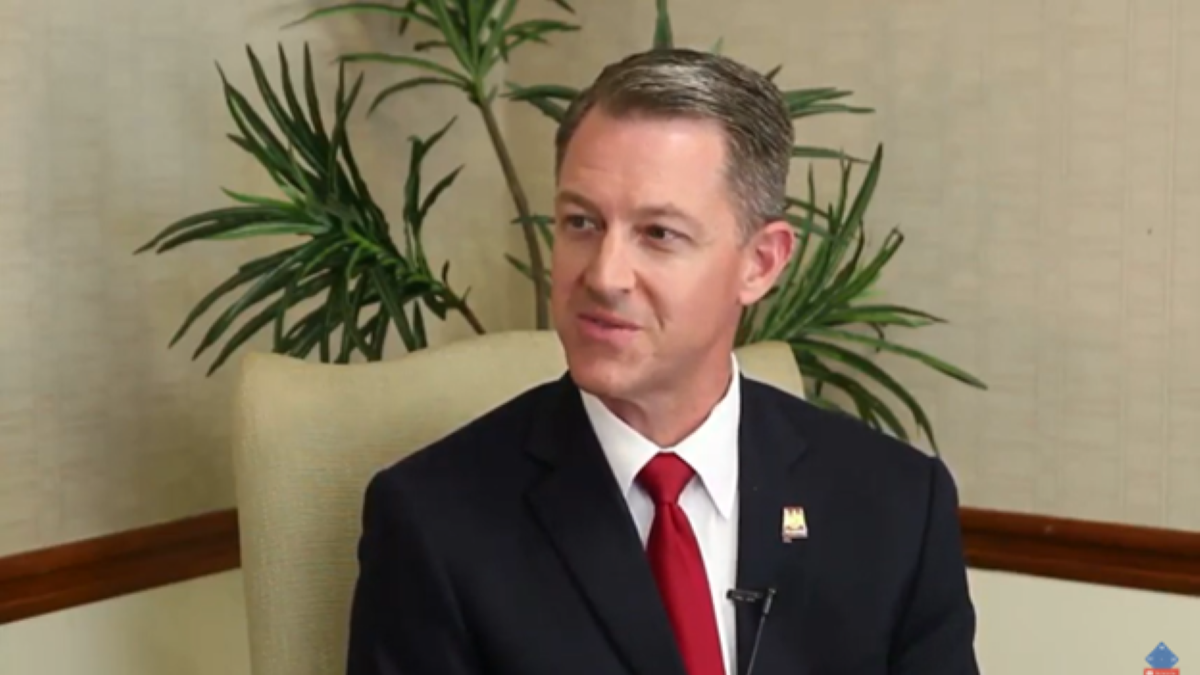
Wes Allen discussing his candidacy for Alabama secretary of state

Author Logan Washburn profile

Logan Washburn

More Articles

Alabama Secretary of State Wes Allen has discovered more than 3,000 potential noncitizens registered to vote in the state. His office is now taking steps to remove noncitizens from the rolls.

“I will not tolerate the participation of noncitizens in our elections,” Allen said in an Aug. 13 press release. “We have examined the current voter file in an attempt to identify anyone who appears on that list that has been issued a noncitizen identification number.” 

Allen’s office found 3,251 registered voters with noncitizen ID numbers issued by the Department of Homeland Security, according to the release. His office is telling local administrators to “inactivate and initiate steps necessary to remove all individuals who are not United States citizens” from the voter file.

Allen worked with “other state agencies that collect noncitizen identification numbers” and checked them against voter registrations, Laney Rawls, Allen’s director of communications, told The Federalist. She said Allen has made this a “priority” since taking office in January 2023.

Some of these potential noncitizen voters may have become citizens after initially getting noncitizen ID numbers, according to the release.  Allen’s office will inactivate these registrations and allow those who have since become citizens to update their registration with an Alabama driver’s license number, non-driver ID, or the last four digits of their Social Security number, according to Rawls. Allen’s office is still working to determine when the noncitizen ID numbers were issued, Rawls said.

The federal government has denied “repeated requests” to help with the investigation, according to the release. Allen began contacting the DHS’s Citizenship and Immigration Services division in November 2023, requesting a list of noncitizens living in Alabama to cross-reference with the state voter file, according to Rawls. 

“The Office also contacted the White House administration for assistance in getting this data and our requests have been denied,” Rawls said. The “lack of cooperation” prompted Allen to try and solve the issue on his own.

“I am hopeful that in the near future the federal government will change course and be helpful to states as we work to protect our elections,” Allen said in the release. Allen’s office is sending the registrations at issue to Alabama Attorney General Steve Marshall for “further investigation and possible criminal prosecution.”

“This is not a one-time review of our voter file,” Allen said. “We will continue to conduct such reviews to do everything possible to make sure that everyone on our file is an eligible voter.”

Federal mandates have directed state agencies to expand voter registration, including sending forms to noncitizens, according to Rawls. She also said President Joe Biden’s “Executive Order on Promoting Access to Voting” led the government to register voters in Alabama’s federal prisons, where inmates include noncitizens.

The Federalist’s Shawn Fleetwood reported Biden has used the executive order to push voter registration in Mississippi prisons. According to The Daily Signal, the Federal Bureau of Prisons partners with left-leaning groups like the American Civil Liberties Union, the League of Women Voters, and the Campaign Legal Center.

“Unfortunately, the federal government limits the power of states to require proof of citizenship at the time of registration,” Rawls said. Still, Allen has directed local boards of registrars to require an Alabama driver’s license number, non-driver ID, or Social Security number when registering voters.

“Allen has also demanded answers from state and federal agencies conducting these expanded voter registration efforts on how they plan to keep noncitizens from registering to vote in Alabama,” Rawls said.

Allen previously warned citizens of registering to vote through Vote411, citing concerns over data privacy. The Federalist reported that Vote411, which masquerades as a nonpartisan group, uses voter registration forms to shuttle users to a left-wing data harvesting operation. 

In Tennessee, Secretary of State Tre Hargett’s election coordinator Mark Goins sent letters to more than 14,000 potential noncitizens in June, telling them to either update their information or request the state remove them from voter rolls.  

Doug Kufner, communications director for Hargett’s office, told The Federalist at the time that Goins found these registrations after comparing voter registrations to data from the state’s Department of Safety and Homeland Security.

“This data indicates the person may not have been a U.S. citizen at the time of the transaction. The person could have been naturalized since applying for a driver’s license,” Kufner said at the time. “Tennessee law makes it clear that only eligible voters are allowed to participate in Tennessee elections.”

The letters instructed new citizens on how to correct their records, but that didn’t stop the American Civil Liberties Union Foundation from threatening to sue, according to The Associated Press. Hargett’s office sent follow-up letters, clarifying it would not remove registered voters who did not respond to the initial mailing.


Logan Washburn is a staff writer covering election integrity. He graduated from Hillsdale College, served as Christopher Rufo’s editorial assistant, and has bylines in The Wall Street Journal, The Tennessean, and The Daily Caller. Logan is originally from Central Oregon but now lives in rural Michigan.

Report: America Has Nearly 300,000 Double-Registered Voters


By: Logan Washburn | August 01, 2024

Read more at https://thefederalist.com/2024/08/01/report-america-has-nearly-300000-double-registered-voters/

A ballot being dropped into a ballot drop box.

Author Logan Washburn profile

Logan Washburn

More Articles

A watchdog group has uncovered close to 300,000 voters registered in two or more states, including thousands of double voters. 

“Registrars aren’t doing their jobs,” Linda Szynkowicz, CEO of the nonprofit Fight Voter Fraud, told The Federalist. “Stop telling me the voter rolls are fine. They’re not.”

Fight Voter Fraud found 297,856 voters registered in two or more states, according to a report released last week. Nearly all of these voters only registered in two states, but 3,112 registered in three states and 24 registered in four or more.

The report also found 3,170 people who voted at least twice in elections from 2016 to 2022. While most only double voted once, 248 double voted twice, 194 double voted three times, and 180 double voted four times. 

Fight Voter Fraud’s report included data for all 50 states, of which Florida had the most double registrations — more than 37,000 — along with 312 who voted multiple times in elections. California had similar numbers, with more than 36,000 double registered, and 732 who voted multiple times. States including Indiana, Kentucky, New Jersey, New York, and Texas also had over 10,000 double registrations.

Fight Voter Fraud found one individual who voted twice in North Carolina and once in Florida in 2020, according to Szynkowicz.

“This is the lowest hanging fruit,” she said. 

If someone was registered for an absentee ballot in one state, but moved and registered in a new state, officials might still send the absentee ballot and someone could potentially vote in their name, according to Szynkowicz.

Fight Voter Fraud announced July 30 that more than 500 dead voters were still registered in Connecticut. 

“Even with the dead people voting, whether it’s someone impersonating or someone who gets the absentee ballot request form,” Szynkowicz said, “it’s all over the place.”

Voting more than once is a violation of federal law with a penalty of up to five years in prison or a fine of up to $10,000. Anyone who “knowingly or willfully” provides false information about “name, address or period of residence” in a voting district is subject to similar penalties. 

The group compared the National Change of Address system with state voter rolls to find the dual registrations, then verified the results with “commercial data,” according to Szynkowicz.  

“We don’t just take things and throw it against the wall to see what sticks. All of our stuff is going to stick,” she said, noting that election integrity advocates may have removed some dual registrants since the report first included them five months ago. 

Because the data excludes those who did not file with the NCOA system, the report said, the “actual numbers could be significantly higher.”

“People don’t understand, you can’t be registered in more than one location,” Szynkowicz said. “They assume that if they register somewhere else — the ones who unknowingly are double registered — that they’ll automatically be removed. That’s not the case.”


Logan Washburn is a staff writer covering election integrity. He graduated from Hillsdale College, served as Christopher Rufo’s editorial assistant, and has bylines in The Wall Street Journal, The Tennessean, and The Daily Caller. Logan is originally from Central Oregon but now lives in rural Michigan.

Meet The Shadowy Left-Wing Nonprofit Harvesting Voter Data to Juice Democrat Turnout


BY: SHAWN FLEETWOOD | JULY 08, 2024

Read more at https://thefederalist.com/2024/07/08/meet-the-shadowy-left-wing-nonprofit-harvesting-voter-data-to-juice-democrat-turnout/

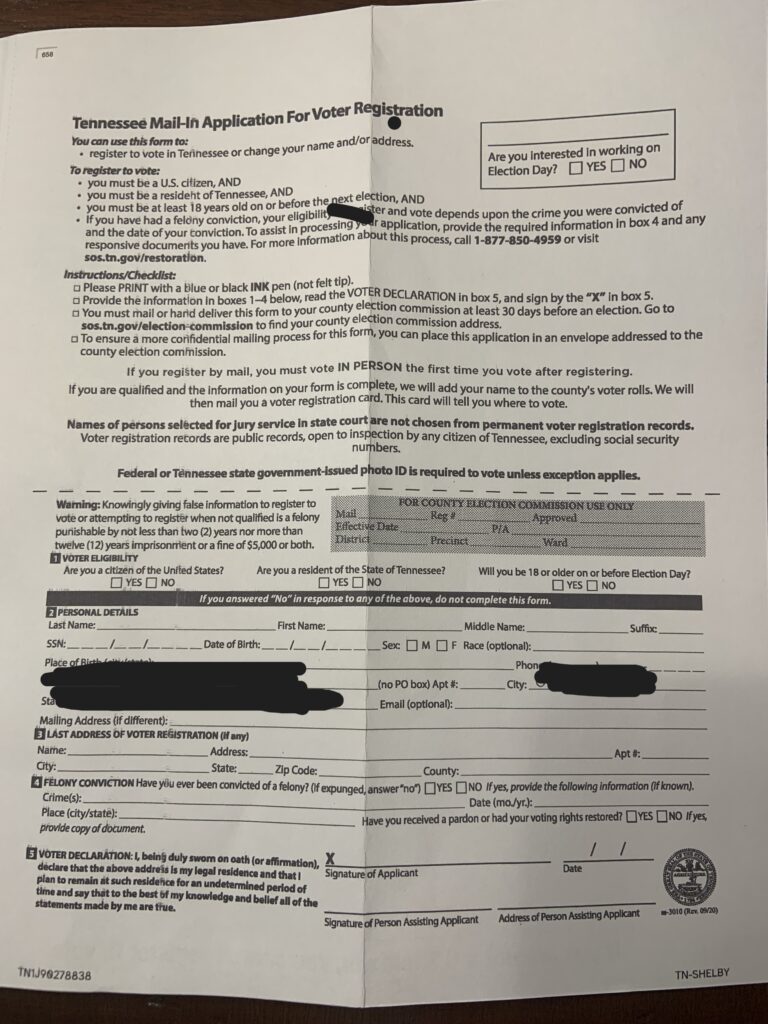
Screenshot of VPC voter registration form.

Author Shawn Fleetwood profile

SHAWN FLEETWOOD

VISIT ON TWITTER@SHAWNFLEETWOOD

MORE ARTICLES

In an era of U.S. elections where ballots — not voters — are the favored currency, nonprofit voter registration has become instrumental in determining which candidate comes out on top at the ballot box.

While conservatives have largely failed to recognize the necessity of such operations in driving Republican voter turnout, leftists haven’t. Unlike their opponents, Democrats have amassed a well-funded machine that’s accumulated their party massive electoral wins in recent cycles, even as the head of their party remains widely unpopular among the American electorate.

Central to Democrats’ efforts is the Voter Participation Center (VPC), a left-wing nonprofit that, despite claiming to be “nonpartisan,” aims to create a “New American Majority” by facilitating “registration of numerous Democratic-leaning voting populations” such as “unmarried women, [racial] minorities and millennials,” according to InfluenceWatch.

Originally known as Women’s Voices Women Vote prior to 2011, VPC was founded by Page Gardner, a prominent Democrat political operative connected to the Kennedy family, with help from John Podesta, the chair of Hillary Clinton’s 2016 presidential campaign. Today, the group is run by Tom Lopach, a Democrat operative and head of the Center for Voter Information (CVI), VPC’s “sister” organization that helps it conduct partisan get-out-the-vote operations.

A 2023 Restoration of America report shows just how influential VPC and CVI’s voter outreach has been in recent elections. During the 2020 contest, for example, the groups’ registration-by-mail campaign purportedly produced an additional 272,443 votes, most of which came from battleground states such as Arizona, Pennsylvania, and Michigan. Those figures are higher than the vote totals VPC claimed it netted during the 2016 and 2018 election cycles.

But VPC isn’t your typical GOTV nonprofit. A closer look at the group’s operations reveals how it uses voter data harvested through its registration efforts to enhance the left’s election machine.

How VPC Operates

VPC’s primary method of registering its “New American Majority” is through the use of mailers it sends to prospective electors.

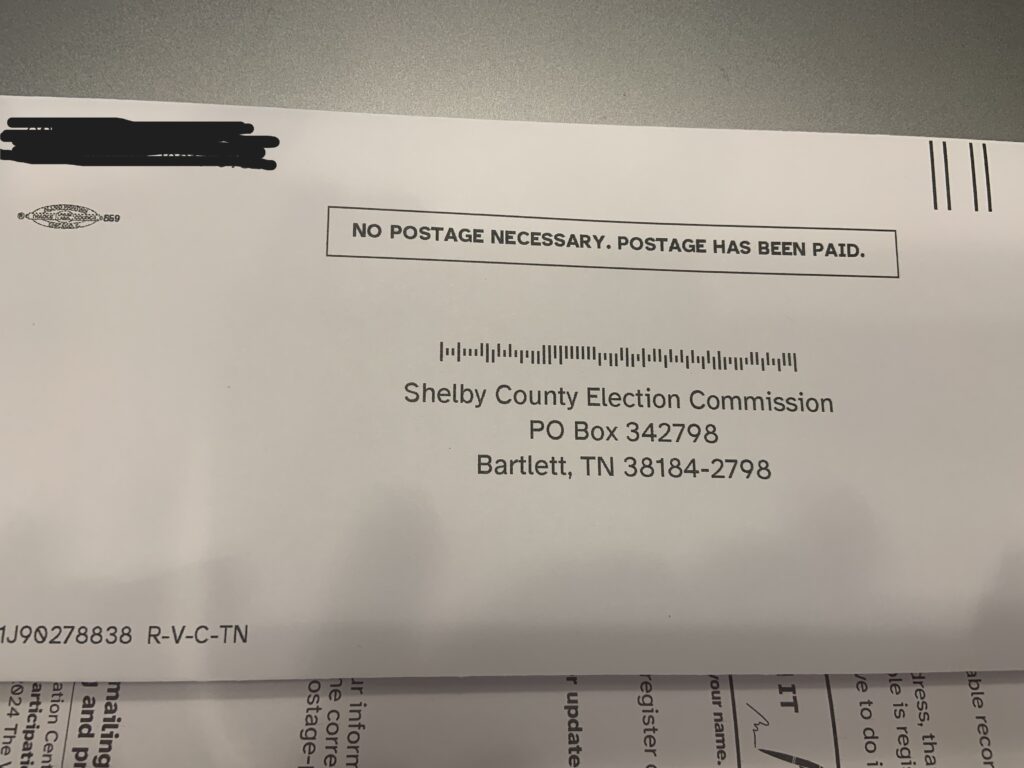
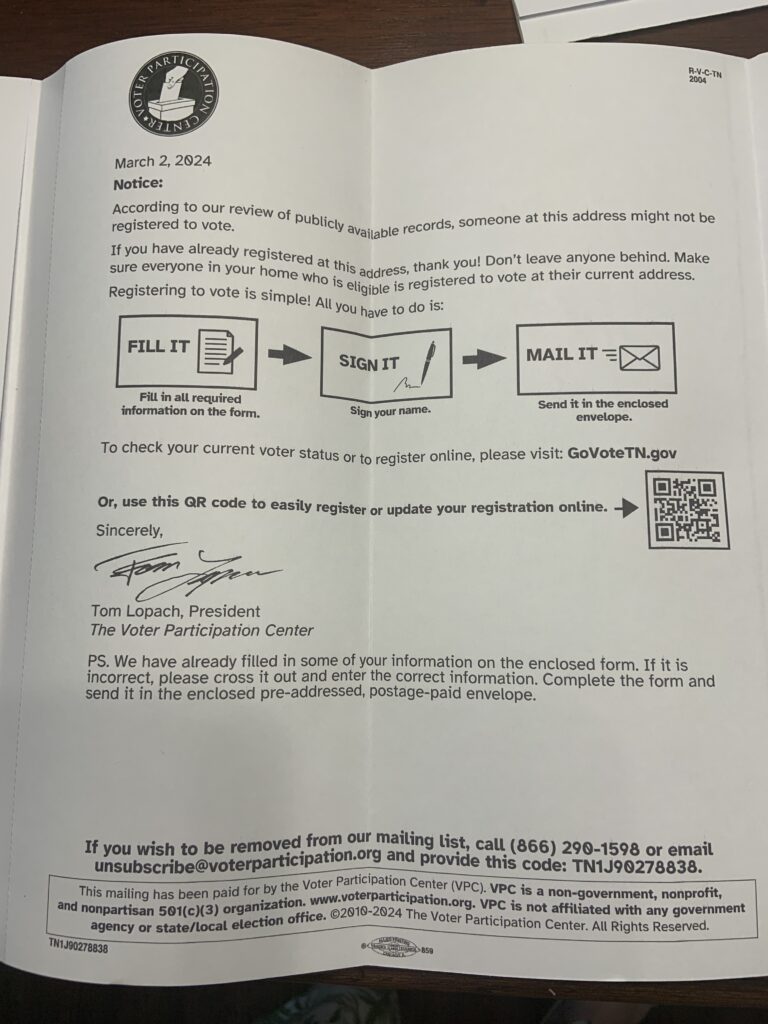
After accumulating “commercial and public data to identify people who are eligible to vote but who need to register,” the group sends registration forms to households it believes are occupied by these eligible voters. A Tennessee registration form sent to a state resident and provided to The Federalist shows how VPC pre-populates information about the individual on these forms, such as their address.

The form also comes with a pre-paid postage envelope that includes the recipient’s return address already filled out. The envelope is addressed to the local county election office.

Communication records obtained by The Federalist show how VPC notifies state election offices about its plans to disburse these materials to prospective voters prior to doing so.

On Dec. 15, 2023, for example, VPC Deputy Director of Partnerships and Outreach Sarah Mitchell sent an email notifying Virginia Elections Commissioner Susan Beals and members of the commonwealth’s elections department of VPC’s plans to mail voter registration forms to prospective voters on March 21. Mitchell claimed the March mailings would be the “first of three large scale voter registration mailings” the group plans to send to Virginians in 2024 and sent to “people who are turning 18 and newly eligible to register to vote, people who have moved between counties or into your state and according to our records need to update their registration, and addresses where our records show unregistered voters likely live.”

Mitchell sent a follow-up email on March 7, notifying the aforementioned officials that VPC’s second batch of voter registration mailers would be distributed to residents around June 28.

[RELATED: Why Did This Left-Wing Elections Group Send An Iraqi Refugee A Voter Registration Form?]

Speaking with The Federalist, Ned Jones, director of the Citizens Election Research Center of the Election Integrity Network, explained that sending multiple mailings to potential voters appears to be a strategy that allows VPC to narrow down its list of which voters it should direct its GOTV efforts toward as Election Day nears.

It seems to be their attempt to “get a feel for who’s going to vote and who might not,” Jones said. “It’s really complex.”

VPC’s multiple mailings in Virginia match a strategy the group has deployed in other states, according to Jones.

Voter Data Collection

Encouraging voters to mail their voter registration applications to their local election office is just one aspect of VPC’s strategy, however. The group also provides prospective electors with an option to register through its online portal.

Included in VPC’s mailings is a paper with a QR code that individuals can scan with their phones. After clicking on the link, users are taken to an online registration portal operated by VPC and Rock the Vote (RTV), “a left-progressive-aligned organization … whose stated mission is to engage and ‘build the political power of young people,’” according to InfluenceWatch.

Users are required to enter their email address and zip code before proceeding. Upon continuing through the process, these users are required to provide personal information, such as their full name, address, and date of birth. They’re also asked to answer a series of questions, such as “Is this your first time registering to vote?” and “Why are you registering to vote?”

In a March 5 email to Beals and Virginia’s election officials, Mitchell claimed that including a QR code on its mailings has “resulted in a roughly 20% shift from recipients returning [VPC’s] mail applications to instead filling out online voter registration applications.” She separately contended in an email sent to these same officials two days later that “close to 50% of the young people who received [VPC’s] mail chose to register [online].”

What’s most alarming, however, is that registering through the VPC-RTV portal allows these groups to acquire voters’ personal data and share it with other third parties. Located at the bottom of the registration page is RTV’s privacy policy, which stipulates that it may share an individual’s “personal information” with “partners and organizations with principles and missions that overlap with those of RTV,” “affiliates and companies with whom [RTV] share[s] common ownership,” and other listed third parties.

Data classified as “personal” by RTV includes an individual’s identifiers (name, address, Social Security number), demographic information (race, sex, marital status), professional information (employer), internet activity information (IP address, language preferences, device ID), and non-precise geolocation information (“geolocation derived from [a user’s] IP address”).

The amount of information collected by RTV is dependent on how a user interacts with its online services, according to the privacy policy.

RTV does, however, allow users to “opt out” of “supporter list exchanges.” (That’s when RTV shares users’ identifier information with “named partners and other organizations with principles and/or missions that overlap with those of RTV”).

Neither VPC nor RTV responded to The Federalist’s request for comment on what specific third parties they share personal voter data acquired through the voter registration portal with. Nor did either group respond when pressed on how long they have been collaborating on voter registration activities.

Growing Concerns

VPC’s antics have drawn attention from prominent GOP election officials.

AlabamaLouisiana, and Mississippi’s secretaries of state have issued press releases in recent months warning voters that VPC’s mailers are not official correspondence from their respective offices. Alabama Secretary of State Allen West went a step further by “officially discourag[ing]” the “targeted” mailings, which he said represents “partisan interference by out-of-state, third-party organizations [that] is unnecessary, confusing, and counterproductive.”

Concerns about VPC’s partisanship are not new. Last week, the Capital Research Center’s Parker Thayer shared a photo of what appears to be a VPC mailing with former First Lady Michelle Obama on the cover.

VPC did not respond to The Federalist’s request for comment on how it can claim to be a “nonpartisan” organization while using Obama’s likeness on its mailers.

“Putting Michelle Obama on the front of a voter registration form is obviously a tactic to filter out Republicans, who will be more likely to throw it out after assuming it’s a Democrat fundraiser,” Thayer wrote.

Legal Remedies

Legislative efforts aimed at stymying third-party groups from flooding states with election mailers have largely failed to materialize, according to Jones. Even in states where such legislation passed, left-wing groups immediately sued to stop its implementation.

That’s what happened three years ago in Georgia, when state Republicans passed SB 202, a benign election integrity measure that included a provision prohibiting third parties from mailing pre-filled absentee ballot applications to voters. Shortly after Gov. Brian Kemp signed the measure into law, Democrat-aligned groups launched a barrage of lawsuits baselessly alleging the statute suppressed voters, particularly racial minorities.

A federal judge shot down Democrat groups’ request that a preliminary injunction be placed on the law in October, ruling plaintiffs failed to show evidence SB 202 “intentionally discriminate[s] against black voters.”

While legislative fixes to VPC’s shenanigans are lacking, some conservative legal groups are taking action against the Democrat-aligned organization ahead of the 2024 election. On June 24, Restoring Integrity and Trust in Elections (RITE) filed a complaint with the North Carolina State Board of Elections against VPC, CVI, and Rock the Vote “for unlawfully collecting and retaining personally identifiable information (‘PII’) from voter registration applications.”

RITE alleged that the aforementioned groups violated North Carolina law, which prohibits “any person who is not an elections official or who is not otherwise authorized by law to retain a registrant’s signature, full or partial Social Security number, date of birth, or the identity of the public agency at which the registrant registered.” The legal group additionally asked the board to investigate the groups based upon these allegations.

“The board of elections must investigate and, if necessary, put a stop to this outrageous betrayal of voter trust,” RITE President Derek Lyons said in a statement. “Retaining personally identifiable information demonstrates that groups like this may be more interested in their own agendas than in merely registering voters.”


Shawn Fleetwood is a staff writer for The Federalist and a graduate of the University of Mary Washington. He previously served as a state content writer for Convention of States Action and his work has been featured in numerous outlets, including RealClearPolitics, RealClearHealth, and Conservative Review. Follow him on Twitter @ShawnFleetwood


Without The SAVE Act, The Only Thing Keeping Foreigners from Voting Is the Honor System

BY: MIKE LEE | MAY 13, 2024

Read more at https://thefederalist.com/2024/05/13/without-the-save-act-the-only-thing-keeping-foreigners-from-voting-is-the-honor-system/

Someone holding an 'election integrity' sign.

Author Mike Lee profile

MIKE LEE

MORE ARTICLES

Congressional Democrats insist that the SAVE Act — which requires proof of citizenship to establish eligibility to vote in federal elections — is unnecessary because federal law (18 USC § 611) already prohibits noncitizens from voting in federal elections. Those making this argument ignore a glaring problem: the government officials who register voters and conduct federal elections aren’t allowed to require proof of citizenship.

It’s therefore shockingly easy for noncitizens to vote in federal elections, leaving our elections dangerously vulnerable to foreign interference. Anyone — even an illegal alien or other noncitizen — can register to vote in federal elections, just by checking a box and signing a form. This is all on the honor system. No proof of citizenship is required.

It’s not just that state officials — who are responsible for federal voter registration and elections in our country — don’t verify citizenship in this context; it’s that the Supreme Court has told them that they’re not allowed to do so. In Arizona v. Inter Tribal Council of Arizona, Inc., 570 U.S. 1 (2013), the Court held that the National Voter Registration Act (NVRA, also known as the “Motor Voter” law) prohibits states from requiring proof of citizenship when processing federal voter registration forms.

The SAVE Act would fix this gaping loophole by requiring anyone registering to vote in federal elections to provide proof of citizenship. It would also require states to review existing federal voter registration files and remove all noncitizens.

Remember: every state issues driver’s licenses to noncitizens, and 19 states issue them to illegal aliens. This, coupled with the Motor Voter law and the Supreme Court’s ruling, makes it shockingly easy for aliens — legal and illegal — to vote in federal elections, even though they’re prohibited from doing so. Considering that there are now nearly 30 million noncitizens in the U.S., including about 12 million who have entered illegally since the last presidential election, we desperately need the SAVE Act.

While Democrats are already mocking the SAVE Act, they don’t dispute that noncitizens shouldn’t vote in federal elections. Rather, they insist that there’s no need for the bill because noncitizens — being prohibited by law from voting in federal elections — categorically do not vote in such elections. That argument fails for one simple reason: it implausibly assumes universal compliance with a law that has become breathtakingly easy (and correspondingly tempting) to violate.

Some say that noncitizens wouldn’t dare register to vote in federal elections, as doing so is illegal and could adversely affect their present or future immigration status. Even if this assumption were correct with regard to many (or even most) noncitizens in the U.S., that still wouldn’t disprove the need for the SAVE Act.

If even a tiny percentage of America’s 30 million noncitizens were to vote, they could change the outcome of a close federal election. And, as noted by the Immigration Accountability Project, it’s odd for the left to insist so vehemently that illegal aliens don’t vote, given that congressional Democrats have inserted language “to waive inadmissibility for illegal voting in all [their] amnesty bills.”

Democrats can’t have it both ways; they can’t (1) credibly say that illegal aliens don’t vote in federal elections, and then (2) expect us to forget their own proposals, which assume the opposite is true. In any event, and regardless of how many (or few) noncitizens may have voted in the past, why not take steps to prevent it from happening in the future?

The sanctity of your vote is at stake. Now more than ever, we need to make sure that our elections are fair, lawfully conducted, and free of foreign influence. To do that, it’s imperative that Congress pass the SAVE Act.

All of the democrats’ arguments are just as ridiculous. This guy has something to say about them.


Mike Lee is a U.S. Senator from Utah and author of “Our Lost Constitution: The Willful Subversion of America’s Founding Document.”

Alabama Secretary Of State Warns Of ‘Misleading’ Voter Registration Mailer By Leftist Group


BY: M.D. KITTLE | MARCH 26, 2024

Read more at https://thefederalist.com/2024/03/26/alabama-secretary-of-state-warns-of-misleading-voter-registration-mailer-by-leftist-group/

A sticker declaring, I Voted, with American flag.

Author M.D. Kittle profile

M.D. KITTLE

MORE ARTICLES

Two groups are running a “misleading, unsolicited mass mailing of pre-filled voter registration forms targeting Alabama mailboxes,” according to an alert from Alabama Secretary of State Wes Allen. In his warning, Allen says his office has “officially discouraged” the mailer, which is in no way affiliated with the state. 

Perhaps it’s no surprise that left-wing groups founded by an old Clinton family friend are behind the effort. According to the secretary of state’s office, the Voter Participation Center and Center for Voter Information have said they intend at least two rounds of mass mailings. 

“On two occasions, this Office was contacted on behalf of Voter Participation Center and Center for Voter Information regarding a mailer they planned to send to Alabama citizens,” Allen said in the alert. “In response, I strongly discouraged the group’s plan to mass mail our citizens.”

According to activist tracker InfluenceWatch, the Voter Participation Center (VPC) was launched in 2003 as Women’s Voices Women Vote, before expanding its mission and changing its name nearly a decade later. 

“The group initially focused on registering the strongly Democratic-leaning voting bloc of single women to vote; today, the group organizes registration of numerous Democratic-leaning voting populations,” InfluenceWatch reports

Founded with help from former President Bill Clinton’s chief of staff John Podesta, the leftist nonprofit has been heavily scrutinized for trying to “register animals, dead people, infants and felons to vote,” according to a 2012 Judicial Watch probe. The center has ties to Big Labor, including the AFL-CIO.

The VPC’s “questionable tactics to undermine the electoral process have caused concerns in several states, including New Mexico, Florida, Wisconsin and Virginia,” the Judicial Watch investigative report states. “VPC forms are deceiving and appear to be official when they are not, according to a news report that links a picture of the mailer. The VPC has also defended the famously corrupt Association of Community Organizations for Reform Now (ACORN) during its various scandals.”

The Voter Participation Center and its partner nonprofit, the Center for Voter Information, were at it again in the 2020 presidential election, to the concern of election officials in several states. As left-leaning Propublica reported at the time, the Democrat-tied groups conducted a “massive campaign to register voters and promote mail-in voting.”

“The nonprofits aim to send 340 million pieces of mail this election cycle, with a focus on two dozen key states. The groups describe themselves as nonpartisan, but they were founded by a former Democratic operative, and the organization has spent at least $47,142 this cycle to promote former Vice President Joe Biden’s presidential bid and $40,065 supporting other Democrats, according to public filings,” Propublica reported on Oct. 23, 2020, just 11 days before the election. 

Propublica’s figures were a drop in the bucket. Tax filings subsequently reviewed by the Hill found the Voter Participation Center spent more than $100 million, a sevenfold increase from what the organization spent on the 2016 presidential election.  

Like other leftist groups, the center used the cover of Covid to defend its get-out-the-vote efforts targeting Democrats. 

“At a time when in-person voter contact was sidelined for health and safety reasons, the Voter Participation Center really stood up and did the work that was needed to help register voters, to help voters learn about and sign up to vote by mail, and to educate voters on early voting in person, voting by mail and how to vote safely on election day,” Tom Lopach, the group’s CEO, told the Hill at the time. Lopach, as the publication noted, is a longtime Democrat operative who previously served as “executive director of the Democratic Senatorial Campaign Committee and a former chief of staff” to Democrat Sen. Jon Tester

Allen said his office has in previous elections cycles received complaints from Alabama residents about “incorrect pre-filled voter registration forms” much like the ones from the Voter Participation Center. 

“This type of targeted, partisan interference by out-of-state, third-party organizations is unnecessary, confusing, and counterproductive,” the secretary of state said. 

“Alabama citizens can rest assured that the Alabama Secretary of State’s office and local election officials are well-equipped to handle voter registration in Alabama,” Allen added. “Trusted voter registration and election information can be found on the Secretary of State’s official website.”


Matt Kittle is a senior elections correspondent for The Federalist. An award-winning investigative reporter and 30-year veteran of print, broadcast, and online journalism, Kittle previously served as the executive director of Empower Wisconsin.

Media Lie About This Leftist-Linked Voter Roll ‘Maintenance’ Group to Protect Democrats’ Election Machine


BY: SHAWN FLEETWOOD | DECEMBER 18, 2023

Read more at https://thefederalist.com/2023/12/18/media-lie-about-this-leftist-linked-voter-roll-maintenance-group-to-protect-democrats-election-machine/

I voted stickers on Election Day 2020

Author Shawn Fleetwood profile

SHAWN FLEETWOOD

VISIT ON TWITTER@SHAWNFLEETWOOD

MORE ARTICLES

Over the past two weeks, regime-approved press outlets have run several articles rushing to the defense of leftists’ latest scheme to inflate voter rolls with likely-Democrat voters: the Electronic Registration Information Center. Otherwise known as ERIC, this organization is a widely used voter-roll “management” system founded by Democrat activist David Becker that was “sold to states as a quick and easy way to update their voter rolls.” In reality, ERIC’s membership agreement places a higher priority on registering new voters than on cleaning up existing voter rolls.

The program inflates voter rolls by requiring member states to contact “eligible but unregistered” residents to encourage them to register to vote. When a state becomes an ERIC member, it is required to submit “all active and inactive voter files,” “all licensing or identification records contained in the motor vehicles database,” and any state files related to “voter registration functions” to the organization, which then compares this information with that submitted by other member states.

It’s after this process that ERIC compiles updated voter-roll information — including lists of voters who have multiple registrations, moved, or died, and lists of “eligible but unregistered” voters — and sends it to member states. As Victoria Marshall wrote in these pages, ERIC mandates that states engage in voter list maintenance “only after [they have] independently validated” the data they receive from the organization. In other words, “if a state does not independently validate the ERIC data, it is not required to clean its voter rolls.”

ERIC’s ties to Becker — who has since resigned from his role as a nonvoting ERIC board member — and its refusal to change its bylaws have prompted a flurry of GOP election officials to withdraw their states from the organization within the past two years. Included in this growing list are the states of Virginia, Florida, Ohio, Texas, and several others. Some of these jurisdictions, including VirginiaOhio, and Alabama, have since formed separate interstate voter data-sharing pacts to serve as an ERIC replacement.

In light of ERIC’s steady collapse, Votebeat’s Jen Fifield and Rolling Stone’s Adam Rawnsley and Asawin Suebsaeng have painted these GOP officials as “conspiracy theorists” and fomented Democrat accusations that these states are struggling to effectively share and maintain accurate voter rolls. While handing out “far-right” and “MAGA Republican” labels like candy on Halloween, these “reporters” weave a web of deception to obscure the organization’s role in Democrats’ election machine.

Both articles’ writers, for example, attempt to pin the source of Republican election officials’ concerns with ERIC on a 2022 Gateway Pundit piece about the organization, which they quickly dismiss as riddled with “conspiracy theories.” Of course, nowhere in their articles do these so-called “journalists” bother to explore one of the — if not the — most alarming details about ERIC: the group’s ties to the Center for Election Innovation and Research (CEIR), a Becker-founded nonprofit responsible for interfering in the 2020 election to help Democrats.

CEIR and the Center for Tech and Civic Life collectively received hundreds of millions of dollars from Meta CEO Mark Zuckerberg leading up to the 2020 contest. These “Zuckbucks” were then poured into local election offices throughout the country to push sloppy Democrat-backed voting policies, such as mass mail-in voting and the widespread use of ballot drop boxes. Analyses have shown these grants were heavily skewed toward Democrat municipalities, especially in swing states, effectively making it a giant Democrat get-out-the-vote operation.

As The Federalist previously reported and communication records have indicated, CEIR enjoys a transactional relationship with ERIC, which sends the voter-roll data it receives from states to CEIR. Upon receiving the data, CEIR “then develops targeted mailing lists and sends them back to the states to use for voter registration outreach.” In other words, CEIR — a highly partisan nonprofit with a history of left-wing activism — is creating lists of potential (and likely Democrat) voters for states to register in the lead-up to major elections.

Convenient how that incredibly important detail didn’t make it into the Votebeat and Rolling Stone articles, isn’t it?

Fifield then took things a step further by advancing the contrived narrative that Republican officials whose states left ERIC are having difficulty sharing voter data with other states and ensuring accuracy within their voter rolls. She bases this claim upon internal documents obtained by American Oversight, a left-wing nonprofit dedicated to “filing open records requests targeting Republican interests.”

Contrary to Fifield’s activist “reporting,” several GOP secretaries of state whose jurisdictions have departed ERIC have publicly testified under oath that they haven’t experienced any issues with managing their voter rolls since withdrawing from the organization. In October, Secretaries of State Frank LaRose of Ohio and Cord Byrd of Florida spoke before a Pennsylvania Senate committee hearing about their respective experiences with ERIC and maintaining accurate voter registration lists since departing the program.

When asked if he thought states can keep voter rolls clean without ERIC, LaRose replied, “100 percent,” and went on to debunk Democrats’ sky-is-falling talking points about what will happen if states withdraw from the organization.

ERIC “has only existed for the last 10 or 12 years, and states have had this responsibility for a long time to maintain accurate voter rolls,” LaRose said. “States absolutely can maintain the accuracy of their voter rolls if they’re intentional about it. And it’s important to use all the different tools at your disposal.”

LaRose went on to describe Ohio’s various processes of removing deceased voters, noncitizens, and other ineligible voters from its voter registration lists. He also discussed the effectiveness of data-sharing pacts with other states and noted Ohio’s intent to formulate these agreements with more states ahead of the 2024 election.

Meanwhile, Byrd explained how interstate data-sharing agreements have allowed Florida to possess greater control over its voter data, saying, “We know exactly what we’re sharing with the other state [and] they know what they’re sharing with us.” Byrd expressed hope that “through these different [memorandums of understanding] … a consistent standard will be created” when it comes to states exchanging voter data.

ERIC’s role in the left’s get-out-the-vote apparatus is bigger than Democrats are willing to admit — and that’s exactly why their regime-approved media allies will never tell their readers the truth about it.


Shawn Fleetwood is a staff writer for The Federalist and a graduate of the University of Mary Washington. He previously served as a state content writer for Convention of States Action and his work has been featured in numerous outlets, including RealClearPolitics, RealClearHealth, and Conservative Review. Follow him on Twitter @ShawnFleetwood

10 Ways Democrats Are Already Rigging The 2024 Election


BY: SHAWN FLEETWOOD | OCTOBER 05, 2023

Read more at https://thefederalist.com/2023/10/05/10-ways-democrats-are-already-rigging-the-2024-election/

Biden frowning

Author Shawn Fleetwood profile

SHAWN FLEETWOOD

VISIT ON TWITTER@SHAWNFLEETWOOD

MORE ARTICLES

It’s no secret by now that Democrats love rigging elections in their favor.

During the 2016 contest, agencies such as the Department of Justice (DOJ) and FBI willingly partook in a Hillary Clinton campaign-funded operation to convince the American public that Donald Trump colluded with Vladimir Putin and the Russian government to steal the election. The FBI didn’t just launch an investigation into Trump based on “uncorroborated intelligence”; it used the Clinton-funded Steele dossier to obtain a FISA warrant to spy on his campaign.

These kinds of nefarious activities continued into the 2020 election, in which these agencies (along with the CIA) worked overtime to discredit damaging reporting about then-candidate Joe Biden. These departments even went so far as to pressure Big Tech platforms in the months leading up to the election to censor information like the Hunter Biden laptop story when it became public. Like clockwork, these companies acquiesced.

And who could forget Meta CEO Mark Zuckerberg, whose “Zuckbucks” flooded local election offices in key battleground states to change how elections were administered and effectively fund a Democrat get-out-the-vote operation?

Now, as the country hurtles towards another intense presidential election, Democrats are once again putting their feet on the electoral scale to rig the 2024 contest in their favor.

1. FBI Targeting of Conservatives

Another facet of so-called “law enforcement” agencies’ election interference is their blatant targeting of conservatives. Within the past few years, the FBI has been caught directing its fire at parents attending school board meetingsCatholics who attend Latin Mass, and innocent pro-lifers, to name a few.

Given these actions, it wasn’t shocking when Newsweek reported on Wednesday that the agency is gearing up to single out supporters of former President Donald Trump as “domestic terrorists” ahead of the 2024 contest. As The Federalist’s Jordan Boyd reported, “Testimony from more than a ‘dozen current or former government officials who specialize in terrorism’ to Newsweek confirmed that this increase in targeting was born out of the FBI’s decision to lump Trump supporters into its expanded definition of ‘domestic extremism.’”

2. Protecting Joe Biden

Former business associates, IRS and FBI whistleblowers, bank recordstext messagesemails, reporting from a “highly credible” informant, and even President Joe Biden himself have all corroborated different aspects of the latter’s involvement in his family’s corrupt foreign business ventures. But according to Democrats and their legacy media allies, this is just evidence of a father’s love for his son.

From the moment mountains of evidence began piling up, implicating Biden in playing a major role in his family’s international influence-peddling scheme, Democrats have done all they can to hide, excuse, and obfuscate the massive scandal surrounding the sitting president. With help from the DOJ — which almost got away with offering Biden’s son, Hunter, a sweetheart plea agreement to evade future criminal charges and has routinely hindered investigative efforts into the Bidens — these acts represent a clear attempt by Democrats to hide damning information about the sitting president from the American public ahead of the 2024 election.

3. Trump Indictments

Who needs free and fair elections when you can just throw your political opponents behind bars ahead of a major election? Spanning four separate cases and 91 felony counts, the DOJ and leftist prosecutors’ seemingly coordinated efforts to imprison Trump could not represent a more obvious attempt to interfere in the election process.

4. Zuckbucks 2.0

While 25 states passed legislation banning or restricting the use of “Zuckbucks” in elections, that hasn’t stopped nonprofits like the Center for Tech and Civic Life (CTCL) — one of the Zuckerberg-funded groups that meddled in the 2020 election — from attempting to replicate their 2020 strategy for future elections.

Last year, CTCL and other left-wing groups launched the U.S. Alliance for Election Excellence, an $80 million venture designed to “systematically influence every aspect of election administration” and advance Democrat-backed voting policies in local election offices. Through the use of “scholarships” and low entrance fees, the coalition seeks to make the 2020 private hijacking of election offices look like child’s play.

5. Big Tech Censorship

It’s not surprising the same agencies that pushed Big Tech platforms to censor the Hunter Biden laptop story ahead of the 2020 election would continue their censorship practices years later. As indicated in several federal court rulings, the Biden administration has been actively colluding with social media giants like Facebook to suppress commentary and facts posted online that it claims are examples of “misinformation.” Equally alarming is that in spite of these rulings barring such authoritarian behavior, the administration has continued to appeal the decisions to regain the power to stifle speech online.

And these actions don’t even include the efforts undertaken by left-wing groups such as Vote.org, which have pressured Big Tech platforms to adopt plans to combat so-called “election disinformation.”

6. Passing Lax Election Laws

Sometimes the only way to win the game is to change the rules in your favor — and that’s exactly what Democrats have been doing to America’s election laws.

After expanding insecure voting practices such as mass unsupervised mail-in voting and the use of ballot drop boxes during the 2020 election, Democrat-controlled state legislatures have sought to enshrine these policies into law across the country. States such as New Mexico, Minnesota, and Michigan have all adopted sloppy election procedures under the guise of “democracy” and so-called “voting rights.”

7. Lawfare Against Election Integrity Laws

Meanwhile, in states where Democrats don’t hold power, the DOJ and leftist lawyers have stepped in to launch dishonest lawsuits against Republican-backed election integrity laws. For example, the DOJ launched a lawsuit against a Georgia election integrity law requiring voter ID in June 2021, in which the agency parroted the lie that Georgia’s law was designed to “deny[] or abridg[e]” nonwhite Americans’ right to vote.

8. Partisan Voter Registration Paid for by U.S. Taxpayers

Shortly after taking office, Biden took the unprecedented step of ordering hundreds of federal agencies to interfere in state and local election administration. Executive Order 14019 mandated all departments use U.S. taxpayer money to boost voter registration and get-out-the-vote activities. Agencies were also instructed to develop “a strategic plan” explaining how they intended to fulfill this directive.

While the Biden administration has routinely stonewalled efforts by good government groups to acquire these plans, available information reveals an apparently partisan venture aimed at registering voters who are likely to support Democrats. Recent reporting from The Daily Signal indicates agencies such as the Indian Health Service are collaborating with leftist groups like Demos and the ACLU to “register and turn out voters” under Executive Order 14019.

9. Media Attacks on Election Oversight

The Biden bribery scandal isn’t the only subject legacy media continue to lie about. In the months leading up to and after the 2022 midterms, media propagandists launched a full-scale attack on GOP voters seeking to legally observe the elections process. Despite their repeated insistence of a widespread conspiracy of Republicans threatening election officials, there is no evidence to suggest such an assertion is true. In fact, Biden’s own DOJ all but admitted as much last year.

The corporate press’s goals in regurgitating this false narrative are to both cast their political opponents as extremists and dissuade conservatives who have legitimate concerns about election integrity from partaking in legal forms of electoral oversight (such as poll watching).

10. Left-wing Nonprofit Voter Registration Ops

While federal law prohibits tax-exempt 501(c)(3) groups from engaging in partisan voter registration, that hasn’t stopped left-wing nonprofits from skirting the legal system by targeting voting demographics favorable to Democrats.

Organizations such as Restoration of America and Capital Research Center have issued reports in recent months detailing how leftist billionaires bankroll nonprofit groups to register likely-Democrat voters. Instead of explicitly stating they’re registering voters for the Democrat Party, groups like the Voter Registration Project target “people of color,” women, and young people. In other words, they specifically aim to register demographics likely to vote for Democrats.


Shawn Fleetwood is a staff writer for The Federalist and a graduate of the University of Mary Washington. He previously served as a state content writer for Convention of States Action and his work has been featured in numerous outlets, including RealClearPolitics, RealClearHealth, and Conservative Review. Follow him on Twitter @ShawnFleetwood

Democrats Want Their Private Security Looking Over GOP Poll Watchers’ Shoulders


BY: SHAWN FLEETWOOD | AUGUST 18, 2023

Read more at https://thefederalist.com/2023/08/18/democrats-want-their-private-security-looking-over-gop-poll-watchers-shoulders/

2016 election party

Author Shawn Fleetwood profile

SHAWN FLEETWOOD

VISIT ON TWITTER@SHAWNFLEETWOOD

MORE ARTICLES

A Democrat group is launching a multi-million-dollar initiative to provide election offices with private security ahead of the 2024 elections and police so-called “disinformation,” according to a new report.

On Tuesday, The New York Times revealed the Democratic Association of Secretaries of State (DASS) is gearing up to launch Value the Vote, a new nonprofit organization purportedly designed to pay “for private security for election officials of both parties, register[ing] new voters,” and fighting what the group claims to be “disinformation.” The $10 million initiative is reportedly aiming its “initial[]” focus at five key battleground states: Arizona, Georgia, Nevada, North Carolina, and Wisconsin.

The venture has already raised $2.5 million, according to DASS Executive Director Travis Brimm.

As indicated by The Times, the founding of Value the Vote is based on the debunked lie that there is a growing, widespread problem of Republicans threatening election workers across the country. Of course, the lack of evidence to support such an assertion hasn’t stopped legacy media from regurgitating their Democrat allies’ phony narratives in order to paint Republican voters as extremists and dissuade conservatives from partaking in legitimate forms of electoral oversight.

In their remarks to The Times, Brimm and DASS officials claimed Value the Vote “will provide equal funding opportunities to both Democratic and Republican election officials, but how the distribution will work in practice is unclear.” Brimm also indicated “election officials could request grants to pay for private security themselves and that Values the Vote would also proactively offer private security.”

According to Hans von Spakovsky, a senior legal fellow at the Heritage Foundation, the group’s issuance of private grants to election offices could very well be unlawful. “Most states make it illegal for anyone to be stationed in a polling place except for election officials and designated poll watchers, and that ban would include ‘private’ security guards,” von Spakovsky told The Federalist.

Von Spakovsky further contended the stationing of private security guards at election offices and polling sites could constitute a violation of section 11(b) of the 1965 Voting Rights Act, which states that no one “shall intimidate, threaten, or coerce, or attempt to intimidate, threaten, or coerce,” any individual who is “voting or attempting to vote” or “urging or aiding any person to vote or attempt to vote.”

“The presence of such private law enforcement could scare individuals attempting to vote and deter them from asking election officials questions. This would particularly be the case if those guards were armed,” von Spakovsky said.

Value the Vote’s issuance of grants and services to election offices may also conflict with existing statutes in 25 states prohibiting or restricting election officials’ use of private money to conduct elections. These laws, which election integrity advocates often refer to as “Zuckbucks” bans, were passed in response to Meta CEO Mark Zuckerberg’s actions in the 2020 election.

During that contest, Zuckerberg gave hundreds of millions of dollars to nonprofits such as the Center for Tech and Civic Life, which in turn poured these “Zuckbucks” into local election offices in battleground states around the country to change how elections were administered. The funds were ultimately used to expand unsupervised election protocols like mail-in voting and using ballot drop boxes. To make matters worse, these grants were heavily skewed toward Democrat-majority counties, essentially making it a massive, privately funded Democrat get-out-the-vote operation.

As detailed by Federalist Editor-in-Chief Mollie Hemingway in her national bestseller, “Rigged: How the Media, Big Tech, and the Democrats Seized Our Elections,” Zuckerberg “didn’t just help Democrats by censoring their political opponents,” his financing of “liberal groups running partisan get-out-the-vote operations” was “the means by which [Democrat] activists achieved their ‘revolution’ and changed the course of the 2020 election.”

“It was a genius plan,” Hemingway wrote. “And because no one ever imagined that a coordinated operation could pull off the privatization of the election system, laws were not built to combat it.”

In addition to financing private security for election offices, Value the Vote is also purportedly planning to confront so-called “election misinformation” through the use of “paid digital advertising,” as well as engage in voter registration efforts that favor Democrats. While federal law prohibits nonprofits from engaging in partisan voter registration, The Times reported that Value the Vote’s registration plans “align with typical Democratic efforts, focusing heavily on Black and Latino communities.”

As The Federalist previously reported, left-wing nonprofits have regularly abused their nonprofit status by aiming their registration efforts at demographics favorable to Democrats.


Shawn Fleetwood is a staff writer for The Federalist and a graduate of the University of Mary Washington. He previously served as a state content writer for Convention of States Action and his work has been featured in numerous outlets, including RealClearPolitics, RealClearHealth, and Conservative Review. Follow him on Twitter @ShawnFleetwood

Over 70 Nonprofits Call On Congress To Pass Republicans’ Election Integrity Bill


BY: SHAWN FLEETWOOD | JULY 14, 2023

Read more at https://thefederalist.com/2023/07/14/over-70-nonprofits-call-on-congress-to-pass-republicans-election-integrity-bill/

someone voting in Alachua County

Author Shawn Fleetwood profile

SHAWN FLEETWOOD

VISIT ON TWITTER@SHAWNFLEETWOOD

MORE ARTICLES

A coalition of over 70 conservative nonprofits sent a letter to House leaders on Wednesday, urging the lower chamber to pass recently introduced legislation that seeks to strengthen the integrity of U.S. elections.

“The undersigned nonprofit organizations and policy leaders write in strong support of the free speech and citizen privacy provisions in the ‘American Confidence in Elections (ACE) Act’ (H.R. 4563) introduced by Congressman Bryan Steil,” the letter reads. “This thoughtful legislation protects and strengthens important First Amendment rights that Americans have enjoyed since the founding of our country.”

The document’s signatories include leaders from organizations such as the Capital Research Center, John Locke Foundation, and the Wisconsin Institute for Law and Liberty, among others.

Introduced on Monday, the American Confidence in Elections Act, or ACE Act, includes numerous provisions designed to close existing loopholes in America’s election system. Among the bill’s notable proposals is a provision repealing President Joe Biden’s March 2021 executive order that instructed hundreds of federal agencies to interfere in the electoral process by using taxpayer money to boost voter registration and get-out-the-vote activities. Under Executive Order 14019, the heads of each agency were additionally required to draft “a strategic plan” explaining how his or her department intends to fulfill Biden’s directive. Despite attempts by good government groups to acquire these plans, the Biden administration has routinely stonewalled such efforts by slow-walking its response to federal court orders and heavily redacting any related documents it has released.

The ACE Act would not only prohibit federal agencies from engaging in voter registration and mobilization activities; it would require them to turn over their strategic plans to Congress “[n]ot later than 30 days after” its enactment.

Other changes to federal election law include those ensuring only U.S. citizens are voting in federal elections. According to a bill summary, the ACE Act incorporates several provisions from Rep. Morgan Griffith’s, R-Va., “NO VOTE for Non-Citizens Act of 2023,” including a requirement that states permitting localities to allow non-citizen voting in their respective elections to place such non-citizens on a voter registration list “separate from the official list of eligible voters with respect to registrants who are citizens of the United States.”

A separate provision mandating “the ballot used for the casting of votes by a noncitizen in such State or local jurisdiction may only include the candidates for the elections for public office in the State or local jurisdiction for which the non-citizen is permitted to vote” was also included.

Notably, the ACE Act also ensures only U.S. governments — not private actors — are responsible for funding election administration. During the 2020 election, nonprofits such as the Center for Tech and Civic Life (CTCL) received hundreds of millions of dollars from Meta CEO Mark Zuckerberg. These “Zuckbucks” were poured into local election offices in battleground states around the country to change how elections were administered; among other things, this was done by expanding unsupervised election protocols like mail-in voting and using ballot drop boxes. To make matters worse, the grants were heavily skewed toward Democrat-majority counties, essentially making it a massive, privately funded Democrat get-out-the-vote operation.

recently published report by Americans for Public Trust details somewhat similar efforts by Hansjörg Wyss, a left-wing Swiss billionaire who, according to the analysis, has “flooded the American political system with hundreds of millions of dollars of foreign dark money” for years. APT had previously filed a complaint with the Federal Election Commission against Wyss in May 2021 for allegedly violating the Federal Election Campaign Act.

The ACE Act furthermore seeks to enhance congressional oversight of Washington, D.C., by enacting a series of provisions aimed at enhancing the district’s election system. Included are requirements for voter ID and regular voter roll maintenance, as well as prohibitions on ballot harvestingranked-choice voting, and mailing ballots “except upon a voter’s request.” The bill would also repeal a law passed by the district’s council last year that allows non-citizens to vote in municipal elections.

Provisions promoting voter ID, strengthening donor disclosure protections, and prohibiting federal “disinformation governance boards” are also included in the bill.

“We urge all Members of Congress to support the strong free speech and citizen privacy provisions in Congressman Bryan Steil’s ‘American Confidence in Elections Act,’” the conservative nonprofits wrote.

The House Administration Committee passed the ACE Act on Thursday; it now awaits a vote from the full House.


Shawn Fleetwood is a staff writer for The Federalist and a graduate of the University of Mary Washington. He previously served as a state content writer for Convention of States Action and his work has been featured in numerous outlets, including RealClearPolitics, RealClearHealth, and Conservative Review. Follow him on Twitter @ShawnFleetwood

Senate Republicans Demand Biden Forfeit Info Over His Attempt To Federally Interfere In U.S. Elections


BY: SHAWN FLEETWOOD | MAY 15, 2023

Read more at https://thefederalist.com/2023/05/15/senate-republicans-demand-biden-forfeit-info-over-his-attempt-to-federally-interfere-in-u-s-elections/

Sen. James Lankford giving a speech at CPAC

Senate Republicans are demanding President Joe Biden hand over documents related to his March 2021 executive order directing federal agencies to interfere in state and local elections.

On Wednesday, 13 Senate Republicans sent a letter to Biden requesting his administration forfeit documents related to Executive Order 14019, which required hundreds of federal agencies to interfere in the electoral process by using taxpayer money to boost voter registration and get-out-the-vote activities. As The Federalist previously reported, voter registration efforts are almost always a partisan venture and often involve left-wing groups that abuse their nonprofit status to target likely-Democrat voters.

“First, while we all agree that increased voter participation is a good thing, the job of federal agencies is to perform their defined missions in a nonpartisan way, not use their taxpayer funds for clandestine voter mobilization and election-turnout operations,” the senators wrote. “Second, it seems doubtful that Congress approved all federal agencies to use appropriated funds for the purpose of voter mobilization.”

Under Executive Order 14019, the heads of each agency were required to draft “a strategic plan” explaining how his or her department intends to fulfill Biden’s directive. Despite attempts by good government groups to acquire these plans, the Biden administration has routinely stonewalled such efforts by slow-walking its response to federal court orders and heavily redacting any related documents it has released.

In their letter, Senate Republicans are demanding the White House provide them with copies of these strategic plans, as well as a “full accounting of all federal funding used to-date” to comply with the order, by May 23.

“Therefore, reviewing the agency plans is critical to understanding the degree to which implementation of this order has resulted in improper uses of federal resources,” the senators wrote.

Signatories of the letter include Republican Sens. Bill Hagerty of Tennessee, Mitch McConnell of Kentucky, Deb Fischer of Nebraska, Ted Budd of North Carolina, Rick Scott of Florida, Mike Braun of Indiana, Mike Lee of Utah, Cindy Hyde-Smith and Roger Wicker of Mississippi, Shelley Moore Capito of West Virginia, James Lankford of Oklahoma, Ted Cruz of Texas, Ron Johnson of Wisconsin, and Katie Britt of Alabama.

Most recently, Budd, along with New York GOP Rep. Claudia Tenney, introduced the Promoting Free and Fair Elections Act, which, in addition to requiring federal agencies to disclose their strategic plans to Congress, would prohibit federal agencies from using federal funds to “solicit or enter into an agreement with a nongovernmental organization to conduct voter registration or voter mobilization activities.”

The bill would furthermore amend the Higher Education Act of 1965 to bar public universities from using taxpayer-funded Federal Work Study programs to pay college students to engage in voter registration campaigns. In April 2022, the Biden administration told colleges they could use work-study funds to partake in such activities. Having taxpayers fund get-out-the-vote efforts in this way had previously not been allowed.


Shawn Fleetwood is a Staff Writer for The Federalist and a graduate of the University of Mary Washington. He also serves as a state content writer for Convention of States Action and his work has been featured in numerous outlets, including RealClearPolitics, RealClearHealth, and Conservative Review. Follow him on Twitter @ShawnFleetwood

Author Shawn Fleetwood profile

SHAWN FLEETWOOD

VISIT ON TWITTER@SHAWNFLEETWOOD

MORE ARTICLES

Ohio, Iowa Withdraw from Democrat Operative-Controlled Voter Roll ‘Maintenance’ Group ERIC


BY: VICTORIA MARSHALL | MARCH 20, 2023

Read more at https://thefederalist.com/2023/03/20/ohio-iowa-withdraw-from-democrat-operative-controlled-voter-roll-maintenance-group-eric/

voter registration tablet

Ohio and Iowa are the latest states to withdraw from the Electronic Registration Information Center (ERIC), an interstate voter list maintenance group controlled by Democratic operatives, after a meeting of its board failed to deliver the aforementioned states’ requested reforms.

The two midwestern states follow in the steps of Florida, Missouri, and West Virginia, which withdrew from the alliance in early March over ERIC’s failure to remove its founder, Democrat operative David Becker, from its board, and its requirement that member states conduct voter registration outreach to eligible but unregistered residents in their states. Louisiana and Alabama withdrew last year.

In response to Florida, Missouri, and West Virginia’s withdrawal from the group, Ohio Secretary of State Frank LaRose sent a letter to ERIC threatening Ohio’s departure if the board did not remove Becker — or “ex-officio members” — from its bylaws and cut the requirement for states to conduct partisan voter registration outreach. Instead, states should utilize ERIC’s data-sharing services “in the manner which they believe best serves their local interests,” LaRose argued.

While Becker seemingly complied with one of LaRose’s demands by tweeting that he would not seek renomination to ERIC’s board, ERIC refused to execute LaRose’s other reforms during a March 17 board meeting.

At the meeting, two proposals were put to a vote: changing ERIC’s bylaws to allow states to choose how they utilize ERIC’s data, and pairing the voter registration outreach requirement to a report that helps states catch double voting. Both proposals failed to pass because ERIC’s bylaws require an 80 percent majority before making a change.

“ERIC has chosen repeatedly to ignore demands to embrace reforms that would bolster confidence in its performance, encourage growth in its membership, and ensure not only its present stability but also its durability,” LaRose wrote in a letter announcing Ohio’s withdrawal on March 17. “Rather, you have chosen to double-down on poor strategic decisions, which have only resulted in the transformation of a previously bipartisan organization to one that appears to favor only the interests of one political party.”

Iowa Secretary of State Paul Pate told Politico that the failed votes prevent ERIC members from doing what’s best for their states.

“Ultimately, the departure of several key states and today’s vote is going to impact the ability for ERIC to be an effective tool for the State of Iowa,” Pate said. “My office will be recommending resigning our membership from ERIC.”

As previously reported by The Federalist, ERIC is a voter roll management system used by nearly 30 states and the District of Columbia. It was created under the guise of helping states clean their rolls — i.e., remove dead and duplicate registrants — but does more to inflate them.

As a part of the alliance, member states are required to contact eligible but unregistered residents to register to vote. ERIC creates these lists of unregistered residents and sends them to member states to contact themselves. Given ERIC’s partisan origins and alliance with the Center for Election Innovation and Research (CEIR) — one of two groups that funneled $419 million in grants from Facebook founder Mark Zuckerberg to mostly-blue areas of swing states during the 2020 election — it’s likely ERIC targets Democrat-leaning residents to register.

Despite ERIC’s obvious ties to the left, corporate media outlets are characterizing states that have withdrawn from the organization and its critics as “conspiracy theorists” who are peddling disinformation. Thankfully, states like Ohio and Iowa have ignored this intimidation campaign.

“I cannot justify the use of Ohio’s tax dollars for an organization that seems intent on rejecting meaningful accountability, publicly maligning my motives, and waging a relentless campaign of misinformation about this effort,” LaRose wrote. “Additionally, I cannot accept the board’s refusal – for a third time – to adopt basic reforms to the use of ERIC’s data-sharing services.”

Alaska and Texas are two more member states considering withdrawing from ERIC.


Victoria Marshall is a staff writer at The Federalist. Her writing has been featured in the New York Post, National Review, and Townhall. She graduated from Hillsdale College in May 2021 with a major in politics and a minor in journalism. Follow her on Twitter @vemrshll.

Author Victoria Marshall profile

VICTORIA MARSHALL

VISIT ON TWITTER@VEMRSHLL

MORE ARTICLES

Here’s Where GOP Election Officials Stand On Their State’s Ties To A Leftist-Controlled Voter Roll ‘Maintenance’ Group


BY: SHAWN FLEETWOOD | MARCH 15, 2023

Read more at https://thefederalist.com/2023/03/15/heres-where-gop-election-officials-stand-on-their-states-ties-to-a-leftist-controlled-voter-roll-maintenance-group/

A bunch of 'I voted' stickers on a surface
The Federalist pressed GOP state election officials about their participation in the Electronic Registration Information Center.

Author Shawn Fleetwood profile

SHAWN FLEETWOOD

VISIT ON TWITTER@SHAWNFLEETWOOD

MORE ARTICLES

Since Missouri, Florida, and West Virginia’s recent withdrawal from the Electronic Registration Information Center (ERIC) — a widely used voter-roll management group with ties to left-wing activists — last week, America’s legacy media have been in freak-out mode. In uniform fashion, leftist outlets have labeled the legitimate concerns raised by the aforementioned states as “conspiracy theories” promoted by “election deniers” and “right-wing media.”

As The Federalist’s Victoria Marshall reported, publications like The New York Times and Associated Press have gone out of their way to run grossly dishonest headlines such as “G.O.P. States Abandon Bipartisan Voting Integrity Group, Yielding to Conspiracy Theories” and “Election conspiracies fuel dispute over voter fraud system.” Predictably, these articles whitewash the issues surrounding ERIC, particularly its refusal to “require member states to participate in addressing multi-state voter fraud” and allowance “for a hyper-partisan individual to be an ex-officio non-voting member on its governance board.”

While painted as a nonpartisan venture by corporate media, ERIC is a voter-roll management system founded by far-left activist David Becker that was sold to states as a “quick and easy way” to administer their voter rolls. When states become ERIC members, they give voter data to the group — including the records of unregistered voters. Currently, ERIC has control of voter-roll data in more than half of states and the District of Columbia.

In addition to founding ERIC, Becker is also notable for launching the Center for Election Innovation and Research (CEIR), one of the major groups that received millions of dollars from Meta CEO Mark Zuckerberg in the lead-up to the 2020 election. Such grants were then poured into local election offices throughout the country to push Democrat-backed voting policies. Analyses have shown these “Zuckbucks” were heavily skewed toward Democrat municipalities, especially in swing states, effectively making it a giant Democrat “get out the vote” operation.

As The Federalist reported, ERIC transmits the voter-roll data it receives from states to CEIR, which “then develops targeted mailing lists and sends them back to the states to use for voter registration outreach.”

While currently a non-voting member of ERIC’s board, Becker announced on Tuesday he “will not accept renomination” to the board “when [his] term expires this week,” citing Republican criticisms of the group.

Despite these alarming ties, there are still several leading GOP state election officials who continue to participate in ERIC. In light of Missouri, Florida, and West Virginia’s collective withdrawal from the coalition, The Federalist reached out to these officials to inquire whether they’re reconsidering their state’s ERIC membership.

Alaska

While speaking with state lawmakers last week, Alaska’s Division of Elections director Carol Beecher revealed she was reconsidering the state’s partnership with ERIC, citing membership costs as the primary reason. A spokeswoman from the Alaska lieutenant governor’s office confirmed this assertion but noted the state “has not decided on whether to continue” as an ERIC member.

“List maintenance is an essential process to ensure our voter list is as accurate and current as possible, and ERIC is one of the tools that Alaska uses to assist in this process,” spokeswoman Tiffany Montemayor told The Federalist. Montemayor did not, however, address whether Alaska shares the concerns about ERIC raised by Missouri, Florida, and West Virginia.

Georgia

When pressed by The Federalist on whether Georgia Secretary of State Brad Raffensberger was reconsidering his state’s ERIC membership and if he shared the concerns espoused by the three aforementioned states, Raffensberger spokesman Mike Hassinger declined to answer, instead replying, “If you really believe that ERIC is ‘an interstate alliance controlled by Democrat operatives that encourages partisan outreach efforts under the guise of simple voter roll maintenance,’ you’re an idiot.”

Ohio

While once describing ERIC as “one of the best fraud-fighting tools that we have,” Ohio Secretary of State Frank LaRose has reversed course and is threatening to withdraw his state from the organization. In a letter sent to ERIC Executive Director Shane Hamlin last week, LaRose demanded the group comply with his proposed reforms in its Friday meeting.

“I will not accept the status quo as an outcome of the next meeting,” LaRose wrote. “Anything short of the reforms mentioned above will result in action up to an[d] including our withdrawal from membership.”

As The Federalist reported, “LaRose’s proposed reforms include removing ‘ex-officio membership positions’ from ERIC’s bylaws so as to cut left-wing activist David Becker from its board, as well as no longer requiring states to send out voter registration mailers to unregistered residents.”

Iowa

According to the Associated Press, Iowa GOP Secretary of State Paul Pate is among the nation’s leading Republican election officials “who said they [have] no intention” of leaving ERIC and who have “signaled strong support for the effort.”

“ERIC is an effective tool for ensuring the integrity of Iowa’s voter rolls,” Pate told the outlet.

Texas

In Texas, state lawmakers have introduced legislation that, according to The Texas Tribune, would end the state’s participation in ERIC. Under HB 2809, the Texas secretary of state would be required to “cooperate with other states and jurisdictions to develop systems to compare voters, voter history, and voter registration lists to identify voters: whose addresses have changed,” “who have been convicted of a felony,” or “who are registered to vote in more than one state.”

A companion bill (SB 1070) has also been introduced in the state Senate.

Virginia

Unlike most U.S. jurisdictions, Virginia doesn’t have a secretary of state, meaning the state’s elections department is tasked with overseeing election administration. When pressed on whether the department is reconsidering its participation in ERIC in light of Florida, Missouri, and West Virginia’s decision to withdraw, an agency spokeswoman didn’t provide a definitive answer on the matter.

“The Department of Elections engages in ongoing and extensive list file maintenance processes,” she said. “If there are any changes made to any of these processes, they will be announced publicly.”

South Carolina

In a statement provided to The Federalist, South Carolina State Election Commission spokesman John Catalano said that while the commission has “many sources of information to remove unqualified voters for a variety of reasons,” ERIC is currently their “only source for access to critical sets of data,” including the Social Security Administration’s death files and the “list of South Carolina voters who have registered in other states.”

“While our state’s health department provides us with reports of people who have died in South Carolina, these reports do not include South Carolinians who die outside the state’s borders. The Social Security Administration death data we receive through ERIC allows us to identify these voters and make them inactive,” Catalano said. “The State Election Commission’s view is that ERIC is a valuable and currently irreplaceable tool that allows us to remove unqualified voters from the voter registration rolls.”

Leading GOP state election officials from Kentucky, Texas, Pennsylvania, Iowa, and Utah did not respond to The Federalist’s request for comment.

This article has been updated to include a statement from South Carolina’s state election commission.


Shawn Fleetwood is a Staff Writer for The Federalist and a graduate of the University of Mary Washington. He also serves as a state content writer for Convention of States Action and his work has been featured in numerous outlets, including RealClearPolitics, RealClearHealth, and Conservative Review. Follow him on Twitter @ShawnFleetwood

Lawsuit Forces Los Angeles County To Remove 1.2 Million Ineligible Voters From Rolls


BY: VICTORIA MARSHALL | FEBRUARY 27, 2023

Read more at https://thefederalist.com/2023/02/27/lawsuit-forces-los-angeles-county-to-remove-1-2-million-ineligible-voters-from-rolls/

voter sticker

Los Angeles County, California confirmed it had removed 1.2 million ineligible voters from its rolls thanks to a settlement with the conservative advocacy group Judicial Watch, the group announced Friday. Judicial Watch filed the lawsuit in 2017 on behalf of itself and four registered voters in Los Angeles County. Election Integrity Project California, Inc., another public interest group, was also a part of the lawsuit.

Under the agreement, Los Angeles had to send 1.6 million address confirmation notices to voters listed “inactive” on its voter rolls. According to the National Voter Registration Act — which requires states to maintain accurate voter rolls — states and counties must remove from their voting rolls voters who do not respond to such mailers and do not vote in the next two federal elections.

In its most recent progress report for complying with the settlement, Los Angeles told Judicial Watch it had removed a total of 1.2 million ineligible voters from its rolls. Last year, the county revealed that 634,000 of its inactive voters hadn’t voted in the past 10 years.

Back in 2017 when Judicial Watch first filed its lawsuit, it argued Los Angeles County had more registered voters than residents eligible to register and the “highest number of inactive registrations of any single county in the country.” According to data from the U.S. Election Assistance Commission at that time, voter registration for the county was 112 percent of its adult citizen population.

“This long overdue voter roll clean-up of 1.2 million registrations in Los Angeles County is a historic victory and means California elections are less at risk for fraud,” said Judicial Watch President Tom Fitton in a statement. “Building on this success, Judicial Watch will continue its lawsuits and activism to clean up voter rolls and to promote and protect cleaner elections.”

This isn’t the first lawsuit of its kind by Judicial Watch. New York City recently removed 441,083 ineligible voters from its voter rolls after reaching a settlement with the conservative advocacy group. North Carolina also removed more than 430,000 ineligible registrants from its rolls due to a similar lawsuit, and Kentucky agreed to do the same in response to a lawsuit.

The Public Interest Legal Foundation is another good government group that has filed lawsuits to compel states including Michigan and Pennsylvania to clean their voter rolls to guard against potential election fraud.


Victoria Marshall is a staff writer at The Federalist. Her writing has been featured in the New York Post, National Review, and Townhall. She graduated from Hillsdale College in May 2021 with a major in politics and a minor in journalism. Follow her on Twitter @vemrshll.

Author Victoria Marshall profile

VICTORIA MARSHALL

VISIT ON TWITTER@VEMRSHLL

MORE ARTICLES

If Biden’s Federal Elections Takeover Is ‘Free and Fair,’ Why Are the Plans Completely Redacted?


BY: VICTORIA MARSHALL | FEBRUARY 09, 2023

Read more at https://thefederalist.com/2023/02/09/if-bidens-federal-elections-takeover-is-free-and-fair-why-are-the-plans-completely-redacted/

"vote here" sign
Despite finally fulfilling a FOIA request, Biden’s Department of the Interior sent Citizens United a heavily-redacted document.

Author Victoria Marshall profile

VICTORIA MARSHALL

VISIT ON TWITTER@VEMRSHLL

MORE ARTICLES

After several executive agencies in the Biden administration were sued for refusing to comply with Freedom of Information Act requests from conservative advocacy group Citizens United over the White House’s attempt to federalize elections, the Department of the Interior’s (DOI) Bureau of Indian Affairs finally turned over its first batch of requested documents. There’s one problem: More than half of the 54-page document is completely redacted.

“The Biden administration is the least transparent in history, and these absurd redactions are just the latest example. What are they trying to hide from the American people?” Citizens United President David Bossie told The Federalist.

As The Federalist previously reported, in March 2021, President Joe Biden issued an executive order directing hundreds of federal agencies to engage in a federal takeover of election administration. It also permitted federal agencies to work with “nonpartisan” third-party entities to get voters registered, yet left-wing dark money group Demos publicly admitted it’s worked with federal agencies, “in close partnership with the ACLU and other allies,” to advance the aims of Biden’s directive.

Such an order set off alarm bells among Republicans and good government groups, reminiscent of the widespread takeover of government election offices by Democratic activists and donors in the blue counties of key swing states during the 2020 presidential election. Through their infiltration of state and local offices, Democrats were able to conduct partisan get-out-the-vote operations and swing the election in then-candidate Biden’s favor. This order is a taxpayer-funded version of that effort, turning federal agencies — including those that dole out federal benefits — into voter registration hubs and partisan get-out-the-vote centers.

Citizens United wanted to find out more about it, which is why last June, it filed FOIA requests with the DOI and State Department seeking email and text messages that mentioned both the executive order and the Hatch Act, a law that prohibits executive branch employees from engaging in election activities. When the agencies failed to comply, Citizens United sued. On Jan. 31, DOI sent its first round of documents per Citizens United’s request.

But the 54-page PDF sent to Citizens United is mostly redacted, save for logistical emails between White House staff and agency department heads. The plan and implementation scheme for the “Promoting Access to Voting” executive order itself are completely redacted.

In a cover letter sent with the documents, the Biden administration defended the redactions under U.S.C. § 552(b)(5), which allows agencies to withhold information under the “Presidential Communications Privilege” (exists to ensure “the President’s ability to obtain candid and informed opinions from his advisors and to make decisions confidentially”) and the “Deliberative Process Privilege” (“protects the decision-making process of government agencies and encourages the frank exchange of ideas on legal or policy matters”).

But according to Jason Foster, president and founder of Empower Oversight, a transparency and government accountability group that frequently files FOIA requests, these redactions are a prime example of the federal government’s blatant over-redacting and censorship.

“Federal bureaucrats do everything in their power to conceal information from the public,” Foster told The Federalist. “Whether it’s over-classification or improper redactions and stonewalling Freedom of Information Act requests, they instinctively err on the side of hiding information to avoid embarrassment, conceal misconduct, or cover up corruption. It’s up to Congress to reform the FOIA process, and in the meantime, it’s up to independent organizations to sue aggressively to force the federal government to comply with transparency laws.”

While good government groups can sue over improper redactions, this process can usually take about a year to uncover just one document from a series of files, those familiar with the matter said. Now that Republicans control the House of Representatives, however, they have the power to compel the federal government to produce non-redacted versions of requested documents, a Citizens United official told The Federalist.

During the 117th Congress, nine House Republicans wrote a letter to the White House raising concerns about the executive order, specifically regarding the fact that the order supplants the authority of the states to set election law and administer elections under the Constitution. When asked about the Biden administration’s secrecy over its election’s directive, Freshman Rep. Harriet Hageman, R-Wyo., who chairs the Natural Resources Subcommittee on Indian and Insular Affairs, echoed her colleague’s sentiments.

“Everyone should have concerns about this executive order and the involvement of any federal agency in our election process,” Hageman told The Federalist. “First and foremost, elections are the constitutional responsibility of the states, not our federal bureaucracy. This is yet another example of the federal government overstepping its authority and infringing upon states’ rights. Even if this order was well intended — and I have serious doubts that it was — it is unconstitutional.”

Hageman emphasized that the White House cannot get away with such extensive redactions of election-related processes.

“Large-scale redactions are not in the spirit of the Freedom of Information Act,” Hageman added. “This is one of the few tools we have to hold our government accountable. Are we to accept that the information is classified to such an extent that the document is unable to be coherently interpreted? Sunshine is the best disinfectant, and the federal government cannot be allowed to continue to obscure and obstruct.”

Of particular interest in the 54-page document is a draft letter on page 32 from Indian Affairs Assistant Secretary Bryan Newland to White House Domestic Policy Advisor Susan Rice, formerly President Obama’s national security advisor and “right-hand woman” who is known for her involvement in spying on the Trump campaign in 2015 and lying about it. In that role, she also spread lies about the terrorist attack on the U.S. consulate in Benghazi, helped Obama staffers target Trump’s incoming National Security Advisor Michael Flynn, and turned a blind eye to the Biden family’s foreign business affairs.

One line in the draft letter reads: “The plan promotes voter registration and voter participation (REDACTED) and the Department’s agency action to achieve these objectives.” The redacted portion might point to a Hatch Act violation, a Citizens United official told The Federalist.

“These documents relating to the Biden White House’s efforts to turn the federal workforce into a partisan voter registration committee must be released to the public in their entirety,” Bossie said. “Congress must investigate this executive order to see if the Biden Administration is violating the Hatch Act on a massive scale.” 

When asked why the Interior Department isn’t being transparent with the public about Biden’s federal takeover of elections, the Bureau of Indian Affairs referred The Federalist to the U.S.C. § 552(b)(5) exemptions in the cover letter sent to Citizens United.


Victoria Marshall is a staff writer at The Federalist. Her writing has been featured in the New York Post, National Review, and Townhall. She graduated from Hillsdale College in May 2021 with a major in politics and a minor in journalism. Follow her on Twitter @vemrshll.

Harvesting Low-Effort Votes Is Working Great for Democrats, So They’re Going for More


BY: VICTORIA MARSHALL | DECEMBER 28, 2022

Read more at https://thefederalist.com/2022/12/28/harvesting-low-effort-votes-is-working-great-for-democrats-so-theyre-going-for-more/

Election 2020
While some congressional Republicans might think the post-2020 election integrity fight is over, that couldn’t be farther from the truth.

Author Victoria Marshall profile

VICTORIA MARSHALL

VISIT ON TWITTER@VEMRSHLL

MORE ARTICLES

The dust of the 2022 midterm contests has barely settled and Democrats — invigorated by the Red Wave that evaporated under extended lax voting policies — are out to make sweeping changes to our nation’s election laws once again.

Think back to 2020, when Democratic governors and unsuspecting Republican lawmakers made unprecedented changes to state election policies in the name of Covid that included mandating universal mail-in balloting and a month of early voting. Some states have kept these changes permanently. But Democrats are not satisfied, and why should they be? With their gubernatorial power retained (they kept all but one of the governor’s offices) and newfound control of state legislatures in both Michigan and Minnesota, Democrats are keen to ram through a whole gamut of unprecedented and unconstitutional changes. It’s working, so they’re going to keep doing it.

As The New York Times reported, Democrats’ list of policy proposals for 2023 includes expanding automatic voter registration systems, preregistering teenagers to vote, granting the franchise to felons, and criminalizing what the left thinks is election “misinformation.” Of course, all these policy prescriptions have little to do with “voting rights,” but Democrats package them as such, and slander their opponents as — you guessed it — racists. 

Make no mistake about what these proposals are meant to accomplish. Take automatic voter registration. The New York Times notes that such a system — already adopted by 20 states — “adds anyone whose information is on file with a government agency — such as a department of motor vehicles or a social services bureau — to [a state’s] voter rolls unless they opt out.”

During the 2020 election, Michigan’s Democratic Secretary of State Jocelyn Benson sent out automatic voter registration forms to all eligible Michigan residents. As a result of the mailer, 114,000 people were automatically added to Michigan’s voter rolls. Many were duplicate and otherwise inaccurate registrations. By padding state voter rolls with new unlikely voters, Democrats can target unsuspecting blocs of voters, harvest their ballots, and put their candidates over the top. Various leftist 501(c)(3) nonprofit organizations are solely dedicated to this.

As I’ve previously reported regarding Democratic attempts to court high school-age kids, multiple left-wing organizations are targeting young people to effectively propagandize them into future Democratic Party voters. As two-thirds of Gen Z voters backed Democrats this past midterm election cycle, Democrats are hoping to capitalize on this emerging voting bloc while also setting their sights on even younger kids. While leftist organizations have tried to couch their outreach efforts as bipartisan, Democrat politicians admit they’re going after younger voters to benefit the left.

“[Targeting young people] is something the left’s been pushing for quite a while — along with enfranchising noncitizens and automatic restoration of felon voting rights,” executive director of the Honest Elections Project Jason Snead told me earlier this month. “They’re always looking for new people to bring into the election system and calculating the targeted groups who will be more likely to vote Democratic.”

Along with making the state a key player in their efforts to pad voter rolls in their favor, Democrats are also intent on criminalizing any information that could hurt their electoral prospects. Known Democratic Party hack and Michigan Secretary of State Joycelyn Benson told the New York Times that she wants new rules and penalties for individuals peddling “misinformation” in election mailers or language on proposed ballot amendments. 

The greatest threats to our democracy right now continue to be the intentional spread of misinformation and the threats and harassment of election officials that emerge from those efforts,” Benson said.

With Democrats’ history of using Big Tech to label the New York Post’s verified story on Hunter Biden as misinformation and its subsequent censorship during the 2020 election, as well as myriad true scientific claims that countered the bureaucracy’s Covid narrative, it’s clear Benson and fellow Democrats’ desire to censor “misinformation” is code for cracking down on any information Democrats don’t like.

What’s To Be Done

Republicans must be wary of Democratic efforts to fortify elections in 2023 and beyond. While some congressional Republicans might think the post-2020 election integrity fight is over, that couldn’t be farther from the truth. Democrats have a massive ground game advantage over Republicans already, and if they pass these policy proposals — under the insufferable label of “voting rights” — in key swing states, that advantage will only grow to an insurmountable one. Republicans must realize election integrity is not a seasonal push nor a battle isolated to 2020. Rather, they must be on offense for years to come. 


Victoria Marshall is a staff writer at The Federalist. Her writing has been featured in the New York Post, National Review, and Townhall. She graduated from Hillsdale College in May 2021 with a major in politics and a minor in journalism. Follow her on Twitter @vemrshll.

The Real Foreign Interference in Our Elections Is Happening at Your Local DMV


REPORTED BY: J. CHRISTIAN ADAMS | FEBRUARY 03, 2022

Read more at https://thefederalist.com/2022/02/03/the-real-foreign-interference-in-our-elections-is-happening-at-your-local-dmv/

person filling out voter registration form

Foreigners are voting in our elections. It isn’t just in the sanctuary city of New York, where 800,000 foreigners just got the power to vote in municipal elections. Foreigners voting occurs all over the country. Over the past few years, the Public Interest Legal Foundation, of which I am president, has uncovered government records showing foreigners voting in PennsylvaniaTexasNew Jersey, and California.

Voter fraud deniers do not want to talk about the fact that foreigners are registering and voting in U.S. elections. They forget that the foreigners voting in American elections are sometimes victims of third-party voter registration drives that jeopardize their immigration status. These voter registration drives sign anyone up without regard to eligibility.

States are also victimizing these foreigners. Pennsylvania let aliens register to vote for more than two decades on a broken department of motor vehicles registration process. Unwitting aliens often don’t know they aren’t allowed to register and vote. Meanwhile, committing an election crime such as illegal voting subjects them to deportation. The only winner is the political party that reliably gets their votes.

Just this week, we uncovered more evidence of foreigners voting in our elections, this time in the swing state of North Carolina. In 2019, the North Carolina State Board of Elections denied the foundation access to documents relating to foreigners registering and voting, so the foundation sued the board. Following a ruling by the Fourth Circuit Court of Appeals affirming that the National Voter Registration Act requires disclosure of these documents, the board agreed to settle the case. In the settlement, the board agreed to disclose the records relating to foreigners registering and voting. There have already been 38 indictments of foreigners registering to vote and some casting ballots. These records will conclusively show how many foreigners have been voting in North Carolina elections.

Inspecting these list maintenance documents serves an important purpose by allowing one to identify how foreigners are getting registered to vote. That is a key first step to improve the system and ensure that these errors do not continue to happen.

Often, it is the fault of the government. For example, a voter registration form will have a question at the top asking if the potential registrant is an American. One may check “no” and, due to errors by local elections officials, still get registered to vote. The same mistakes can happen when the potential registrant leaves the checkbox blank. The mistake may also be on the part of the potential registrant, incorrectly checking the box attesting that he or she is a U.S. citizen. The bottom line is foreigners are registering and voting in states across the country.

Nobody should want this. Only Americans should be electing American leaders. States need to examine their voter list maintenance procedures and ensure they are keeping non-citizens off the voter rolls.

We will continue the effort to catalog and expose government mistakes and election malfeasance. Americans have a right to know about the vulnerabilities in our election system.


Senator Marco Rubio Op-ed: Democrats’ Voting Rules Takeover Is a Threat to Democracy


Commentary BY: Sen. MARCO RUBIO | JANUARY 12, 2022

Read more at https://thefederalist.com/2022/01/12/democrats-voting-rules-takeover-is-a-threat-to-democracy/

Chuck Schumer

When Senate Majority Leader Chuck Schumer, D-N.Y., announced Senate Democrats’ New Year’s resolution to abolish the filibuster and ram through a partisan federal takeover of election administration, he framed it as an attempt to protect “free and fair elections,” the “foundation of our democracy,” from state governments. In reality, it is the leftist elites and their corporate allies, not the states, that pose the greatest threat to our constitutional system.

Free and fair elections are the foundation of our democracy, but the Democrats’ concerns about election rights are totally baseless. Progressives from all over the country — from President Joe Biden to Georgia gubernatorial candidate Stacey Abrams and Schumer  claim that Republicans are passing “voter suppression laws” to exclude their political opponents from the vote.

In reality, it is easier to vote in 2022 than it ever has been. Voter registration has been streamlined, and record turnouts show that Americans of all backgrounds are freely exercising their rights.

The left’s proposed reforms would restrict Americans’ freedom, not expand it. Legalizing ballot harvesting, for instance, would present more opportunities for corruption.

More generally, taking election administration powers away from the states and handing them to the federal government would not eliminate the potential for abusing those powers, it would just make it easier for officials in Washington, D.C., to abuse them — and it would further undermine our system of federalism.

In 2020, when election integrity fears swept other parts of the country, the state of Florida conducted its elections with peace, security from interference, and respect for all citizens, all in the midst of a worldwide pandemic. This is proof that with strong leadership, state governments are perfectly capable of holding the responsibility of election administration. Ironically, this year will be the first time that the president’s home state of Delaware allows in-person early voting, whereas Florida has had it for years. 

Left’s Broader Effort to Consolidate Power

Democrats’ campaign to centralize elections is part of a broader effort to consolidate power in the hands of a leftist elite class. This class wants to use that power to silence and disempower anyone who dissents from their radical progressive agenda.

Case in point: the very same people who said in 2005 that restricting the filibuster would mean losing to “the passions of the moment” and spell “doomsday for democracy” — Biden and Schumer  — want to eliminate the rule now that they are in power.

This power grab masquerading as democracy reform is bigger than just what goes on in the Senate. In 2020, leftist politicians closed churches and restricted in-home religious services while they let political protests, and eventually full-scale riots, go unnoticed. In 2021, critical race theory advocates indoctrinated our children and tried to remove parents from our schools. And this year, the Biden administration will begin forcing millions of Americans to get a Covid-19 vaccine to keep their jobs.

Collaboration from Communists and Corporations

In this movement, the political left has been aided by social media giants and mega-corporations. To gain favor with the Marxists in Washington, D.C., Facebook, YouTube, and Twitter censor dissenting voices, labeling unpopular views as “misinformation.” Amazon blacklists conservative authors. And banks that taxpayers bailed out in 2008 cancel accounts based on Orwellian “reputational risk.”

Of course, behind closed doors many of these same companies are in bed with a genocidal regime, the Chinese Communist Party. While they are eager to appear human rights champions, they lobby for trading goods made with slave labor and protect communist propaganda from negative customer reviews. It makes sense that corporations comfortable with totalitarianism abroad would be happy to silence dissent in the United States.

Those of us who are not on board with the progressive agenda should take note. America is still a free nation, and it will take some time before the situation here begins to resemble the dystopia that is communist China. But if it can happen anywhere, it can happen here, and censorship and consolidation of power are two important steps on the road to tyranny.

Americans need to remember where the greatest threats to our democracy really lie. If we focus our attention on exaggerated problems and imaginary fears, rather than the leftist elite power grab unfolding before our very eyes, we do so at our own peril.


Featured Posts by 1776coalition.com


Poll: Opposition to Trump impeachment jumps 10% among independents

by John Gage | Washington Examiner
November 20, 2019

More independents oppose the impeachment proceedings against President Trump than support them, according to a recent poll conducted after the beginning of public testimony.

A Morning Consult- Politico poll released Tuesday said 47% of independents “oppose the current impeachment inquiry,” while only 40% of independents support impeachment. The poll represents a 10% drop in support among independents for the impeachment.

Overall, opposition increased to 45%, while support for impeachment dropped from 50% to 48%. The decrease in support follows the start of the second week of testimony by impeachment witnesses.

House Democrats opened the impeachment proceedings against Trump, claiming he threatened to withhold aid from the Ukrainian government if they did not investigate former Vice President Joe Biden. The poll was taken by 1,994 United States voters between Nov. 15 and 17.

Complaint: TX Democrat Party Sent Altered Voter Registration Forms to Noncitizens


Posted on October 18th, 2018

URL of the original posting site: https://publicinterestlegal.org/blog/complaint-tx-democrat-party-sent-altered-voter-registration-forms-to-noncitizens/

(INDIANAPOLIS, IN.) – October 18, 2018: the Public Interest Legal Foundation (PILF) today alerted local, state, and federal law enforcement to campaign mailers directed at noncitizens in south Texas which encouraged voter registration via altered forms indicating they were U.S. citizens.

Texas Democrat Party mailers circulated around the Rio Grande Valley region of south Texas landed in the hands of lawfully present noncitizens in late September and early October. The envelopes contained voter registration applications where the answers to questions “Are you a United States Citizen?” and “Will you be 18 years of age on or before election day?” were pre-printed “Yes” for each.


“Noncitizens usually register to vote at the prompting of another party—usually a DMV clerk,” PILF President and General Counsel J. Christian Adams said. “Today, we are raising awareness to how the Texas Democrat Party—unintentionally or otherwise—is offering voter registration to noncitizens. Without some form of official intervention, confused noncitizens rather than the Texas Dems will end up paying the consequences of this matter.”

The letters from PILF went to district attorneys in the region, in addition to Texas and federal officers, explains why pre-printing answers about eligibility are problematic:

[W]hen Congress passed the NVRA, it envisioned a registrant making two separate affirmations of citizenship – both the checkbox as well as the signature attestation. This enables prosecutors to easier establish intent and state of mind when noncitizens illegally register to vote.

The Foundation urges the recipients of the referral to “investigate if and how many returned applications arrived in your local county elections office(s) … The Foundation yields to your office in addition to the state and local election officials on how best to protect ineligible registrants from casting ballots during the 2018 Election.”

Attached with the Foundation’s referral is an affidavit from a former employee of the 229th Judicial District Attorney, David. C. Kifuri, Jr., who initially came forward with the documents in question.

Digital versions of the referral letter and Kifuri affidavit are linked here.

Public Interest Legal Foundation (PILF) is a 501(c)(3) public interest law firm dedicated to election integrity. The Foundation exists to assist states and others to aid the cause of election integrity and fight against lawlessness in American elections. Drawing on numerous experts in the field, PILF seeks to protect the right to vote and preserve the Constitutional framework of American elections.

HORROR: Terror Group Rallies American Muslims In Effort To End Donald Trump


waving flagBy: Davis on March 26, 2016

URL of the original posting site: http://conservativetribune.com/terror-group-muslims

While billionaire businessman Donald Trump has enjoyed a large amount of popularity among Republicans and independents, many groups, and even a few countries, have been working hard to stop his rise.

The New York Times reported that the Council on American-Islamic Relations and other radical Islamic groups in America are attempting to register Muslims as voters in the hope of stopping Trump at the ballot box. CAIR, which according to Breitbart has been linked by the FBI to several terror groups, has decided that rather than condemn the actions of the Islamic State terror group, they would prefer to stop the man speaking out against radical Islamic terrorism.

“The fear and apprehension in the American Muslim community has never been at this level,” Ibrahim Hooper, a spokesman for CAIR, stated. “The anti-Islamic tidal wave is spurring civic participation.”Bull

America Never Forget

That supposed “anti-islamic tidal wave,” to the degree that it exists at all, would be actually the result of the population getting sick and tired of radical Islamic terror attacks occurring on a regular basis. But let’s not worry about little things like truth and logic when there is political hay to be made.

Bigotry, we’re afraid, will never die. But perhaps if the Muslim community would stand up, accept that their religion has a problem, and work to fix that problem, they wouldn’t have to be treated with as much fear and suspicion.

“The community is very anxious and afraid about our security with all the rhetoric that we hear,” said Ghazala Salam, the president of the American Muslim Democratic Caucus of Florida.culture of deceit and lies

Americans are afraid about their security and safety because radical Islamic terrorists have been trying to infiltrate our country — with some success already — and trying to kill all of us. Somehow being “afraid” of hurtful words doesn’t seem on the same level as being afraid of hearing “Allahu Akbar” and then gunshots or a massive explosion.

If only CAIR would work as hard at eliminating radical Islamic terrorism as they do fighting Republicans. If they put that kind of effort into it, we wouldn’t need to even talk about them anymore.

H/T Breitbart

Die true battle Picture1 In God We Trust freedom combo 2

Election Group: 141 U.S. Counties Have More Registered Voters Than People


waving flagBY:  August 27, 2015

Voters / AP

A public interest law firm is threatening to bring lawsuits against more than 100 counties across the United States that appear to have more registered voters than living residents.

The Public Interest Legal Foundation (PILF), a law firm dedicated to election integrity based in Indiana, recently sent statutory notice letters to election officials in 141 counties putting them on notice of their discoveries. The group says if action is not taken to correct the questionable voter rolls, they will bring lawsuits against every single county on the list.

“Corrupted voter rolls provide the perfect environment for voter fraud,” said J. Christian Adams, president and general counsel of PILF. “Close elections tainted by voter fraud turned control of the United States Senate in 2009. Too much is at stake in 2016 to allow that to happen again.”

The statutory notice letters argue the counties are violating the National Voter Registration Act (NVRA) and urge them to correct the issue, claiming their voter rolls contain a substantially high amount of ineligible voters. The group used federally produced data to come to their conclusions.

“Voter rolls across America have been discovered that contain substantial numbers of ineligible voters, resulting in the possible disenfranchisement of legally eligible voters via ballot dilution that threatens to subvert the nation’s electoral process,” a sample letter sent to the counties reads.

“Based on our comparison of publicly available information published by the U.S. Census Bureau and the federal Election Assistance Commission, your county is failing to comply with Section 8 of the NVRA,” it continues. “Federal law requires election officials to conduct a reasonable effort to maintain voter registration lists free of dead voters, ineligible voters and voters who have moved away.”

“In short, your county has significantly more voters on the registration rolls than it has eligible live voters and is thus not reasonably maintaining the rolls.”The Voting DEAD

According to PILF, the 141 counties targeted for their suspicious voter rolls span across 21 states and include: Michigan (24 counties), Kentucky (18), Illinois (17), Indiana (11), Alabama (10), Colorado (10), Texas (9), Nebraska (7), New Mexico (5), South Dakota (5), Kansas (4), Mississippi (4), Louisiana (3), West Virginia (3), Georgia (2), Iowa (2), Montana (2), and North Carolina (2), as well as Arizona, Missouri, and New York (1 each).

Data provided by the group also shows that some counties have voter registration rates that exceed 150 percent.

Franklin County, located in Illinois, contains the highest voter registration rate of any county on the list at 190 percent. Franklin is followed by Pulaski County, also located in Illinois. Pulaski boasts a 176 percent voter registration rate, according to the group.

Adams said former Attorney General Eric Holder and current AG Loretta Lynch refused to enforce the law because they don’t have a problem with corrupted voter rolls.

“Eric Holder and Loretta Lynch have deliberately refused to enforce this law because they have no problem with corrupted voter rolls,” Christian Adams told the Washington Free Beacon in an email statement. “They don’t like the law, so they don’t enforce it. It’s a pattern that has come to characterize this Justice Department.”

Partyof Deceit Spin and Lies In God We Trust freedom combo 2

Obamacare exchange sends couple voter registration form pre-marked as Democrat


http://libertyunyielding.com/2014/03/30/couple-receives-voter-registration-form-pre-marked-democratic-obamacare-exchange/#tusSJmJcHkdxurQi.99

By Howard Portnoy on March 30, 2014 at 10:04 am

Last October, LU staff reported that Obamacare exchanges offered visitors an option to register to vote. Brian Cook, a spokesman for Medicare and Medicaid Services, was quoted as saying the exchanges were required to include that option under the 1993 National Voter Registration Act (NVRA).

But does that law also empower the exchanges to automatically register enrollees and, if so, as Democrats? That’s what happened to a La Mesa, Calif., couple. ABC News 10 reports that the couple, who asked not to be identified, received an envelope from Covered California, the state’s Obamacare exchange. Inside was a registration card pre-marked with an “x” in the box next to Democratic Party.

The husband told reporters:

I’m an old guy and I never would have noticed it, except I have an accountant that notices every dot and dash on a piece of paper as a wife.

SEE NEWS REPORT BELOW:

Voter

Covered California began mailing out voter registration cards to all enrollees last week after being threatened with a lawsuit by the League of Women Voters, Young Invincibles, other pro-Obamacare voting rights groups, and the ACLU. Their argument, presented in a 6-page letter mailed to Debra Bowen, the California Secretary of State, noted an “obligation on the part of public assistance agencies to provide voter registration services.” Their petition, which cited Section 7 of the NVRA, was based rather loosely on that provision, which reads:

Section 7 of the Act requires states to offer voter registration opportunities at all offices that provide public assistance and all offices that provide state-funded programs primarily engaged in providing services to persons with disabilities. Each applicant for any of these services, renewal of services, or address changes must be provided with a voter registration form of a declination form as well as assistance in completing the form and forwarding the completed application to the appropriate state or local election official. [Emphasis added]

Whether a website can reasonably be called an “office” is open to debate. What is not debatable is the illegality of selecting a party affiliation for private citizens.

There are other problems, noted by the couple:

[T]here’s an awful lot of people who are going to get this that are already registered and they don’t need to. I can see that, but I can’t see putting x on the form before it’s given to me in a little bitty box that nobody’s really going to notice.

Anne Gonzales, a spokeswoman for Covered California, told reporters that the application forms come directly from the Secretary of State’s office, with no fields pre-marked, adding that the couple should contact the Secretary of State, which “takes these violations of election law extremely seriously.” The couple claims they did reach out to the Secretary of State’s office and were unable to get hold of anyone. They then tried contacting the San Diego County Registrar of Voters, which told them to contact Covered California.

Is anybody having fun yet?

Complete Message


ABOUT THE AUTHOR:

Howard Portnoy has written for HotAir, NewsBusters, Weasel Zippers, Conservative Firing Line, RedCounty, and New York’s Daily News. He has one published novel, Hot Rain, (G. P. Putnam’s Sons), and has been a guest on Radio Vice Online with Jim Vicevich, The Alana Burke Show, and The George Espenlaub Show.

Tag Cloud