The American Academy of Pediatrics (AAP) recently reaffirmed its 2018 position on youth who suffer from gender dysphoria while simultaneously calling on a systematic review of the evidence of how to treat such children. Looking back on the AAP’s 2018 statement, as pediatricians, we both agree with the 2018 report that we “must protect youth who identify as Transgender and Gender Diverse from discrimination and violence.” It’s our job to protect children.
However, we do not think the 2018 report is following the millennia-old tenet of “do no harm.” The conclusions included in that 2018 position recommend that youth who identify as transgender have access to “comprehensive, gender-affirming, and developmentally appropriate health care” that is covered by insurance.
The increasing call in the U.S. for the daily release of hormones into young bodies, or extensive surgical procedures, with scant evidence of benefit while our European counterparts are restricting gender transitions for youth is doing more than raising eyebrows. This push, plus demands that it be covered by insurance at a time when so many other claims are being denied is not only potentially causing long-term harm to young people, but further eroding trust in our U.S. medical system.
Those AAP conclusions were published a year after Dr. Rachel Levine, who identifies as transgender and is now a high-level HHS secretary, sent an email to the co-founder of the Children’s Hospital of Philadelphia gender clinic, writing: “I know that we had discussed at US PATH [Professional Association for Transgender Health] the possibility of gender confirmation surgery for young people under 18 years of age. This could include top surgery for trans young men and top and bottom surgery for trans young women. Is there any literature to support this protocol?”
The reply: “I’m not aware of existing literature but it is certainly happening. I think we’ve had more than 10 patients who have had chest surgery under 18 (as young as 15) and 1 bottom surgery (17).”
Despite the lack of evidence, nearly $17 million tax dollars has been spent on pediatric gender transition treatments in recent years in Pennsylvania alone.
“There is not a full range of evidence to support the treatments that we’re using,” said the director of the gender clinic at Chicago’s largest children’s hospital. His reward for not following evidence-based medicine is a $5.7 million grant from the NIH.
The FDA recently issued a warning against using some of the puberty blockers due to short-term neurological side effects. No one knows the long-term effects of introducing the hormones to a young brain or what the forever term use will bring to the future of these patients.
Despite the warnings, 14,726 minors with gender dysphoria started hormone treatment from 2017 through 2021. And 832 irreversible surgeries were performed on minors for gender dysphoria between 2019-2021. These numbers are expected to rise as gender dysphoria diagnoses have tripled between those years, at an accelerating pace.
When the AAP is going about reviewing the evidence, they—and all pediatric professionals—might want to fully dissect a survey that is often cited by proponents of gender transitions for minors: The Report of the 2015 U.S. Transgender Survey. The survey of 27,000 individuals recruited responses using advocacy organizations, and of note, detransitioners were excluded. There were other jarring red flags in this survey: There were no baseline mental health questions of survey respondents, respondents were asked to recall how they felt years earlier, and 25% of respondents came from 3 states (California, New York and Washington). Remarkably, the survey asked respondents if they sought any of a list of “gender-affirming care” and excluded them if they did not seek hormones. Colloquially, we call that cherry-picking.
The survey, put together by a group of self-professed social justice advocates, had very low numbers of adolescents, and yet has been used in recent years to justify the increase in medical treatment of gender-questioning youth.
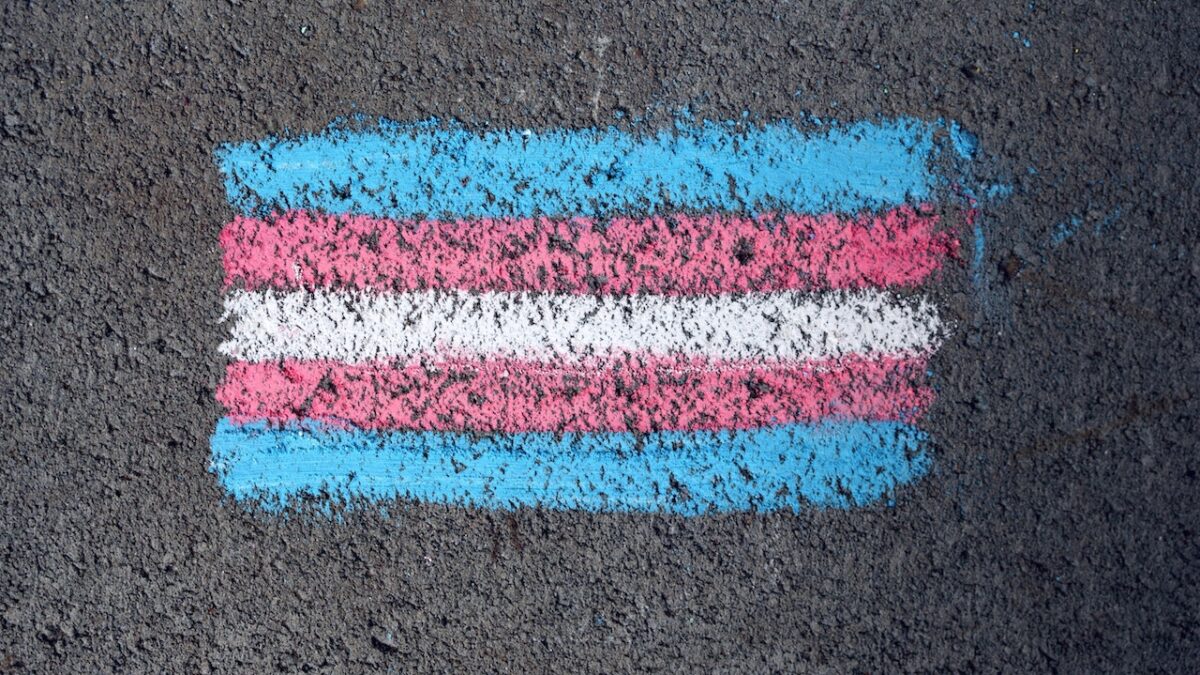
Stickers in the shape of a heart with a trans flag are pictured during a conversation about trans care, equity and access, during National Trans Visibility Month with the Rainbow Room, a program of Planned Parenthood Keystone, in Doylestown, Pennsylvania, U.S., March 29, 2023. REUTERS/Hannah Beier/File Photo (REUTERS/Hannah Beier/File Photo)
The Journal “Pediatrics” relied on this survey for a paper in 2020.The same physician author from the 2020 Pediatrics paper used the survey for another “second look” paper. This 2022 second look was funded by the American Academy of Child & Adolescent Psychiatry, itself supported financially by pharma corporations Arbor and Pfizer. Both produce hormones used in gender transitions.
The 2022 second look of the survey spawned a series of sensational headlines. “Trans teens who get gender-affirming hormones are healthier and happier as adults,” trumpeted Today. “Transgender children who get hormone therapy enjoy better mental health,” claimed USA Today.
It’s good that the AAP is performing a systematic review. They would do well to be transparent, thorough and honest. They might want to comment on the perverse incentives that could have led to over-treatment in years past. And above all, they must remember: Primum non nocere.
Nikki Johnson, M.D. is a Cleveland-area pediatrician.
Marion Mass, M.D. is a Philadelphia-area pediatrician and a fellow at Independent Women’s Forum.
About a year and a half ago, I noticed that my son — let’s call him Andy — was putting rainbow stickers on his phone. And a friend alerted me that Andy rebuked her daughter in a group chat for being “so cisgender.” I did some delicate digging, and it became clear: My child, then 13, was flirting with going “trans.”
He’s not alone. The number of transgender-identifying kids is up 20 to 40 times since a decade ago, to 1.5 percent of all teens. And the gender facilities that say they are the experts have been unmasked. Videos and statements have revealed that doctors in these so-called clinics are willing to give 15-year-old girls double mastectomies and call it treatment.
I wasn’t about to send my son off for experimental medical interventions that didn’t treat any underlying psychological issues. In this, I think I’m representative of the silent (and bullied) majority. Still, what could I do?
The first thing I had to do was to realize that the gender cult is powerful, and I can’t control the choices and feelings of my kid. I had to accept my limits, but that didn’t mean I was helpless. Parents are still the most important influence on their kids.
Finding a New School
I was lucky: My son was at a private school that did not push kids, behind their parents’ backs, into exploring alternate sexualities and getting “treated” by lifetime medicalization. If my son had been at a trans-affirming school — which means just about any public school — I would have been undermined at every turn.
At this school, however, he did have a cohort of “rebel” friends who all seemed to identify themselves as gender-questioning. And the school itself was not academically challenging enough for Andy. So I focused on academics, and we looked for a new school that would be a better fit on that score — and still supportive of my values. Finding one gave him a fresh start and a new peer group.
Building Real Identity
Next, I decided I would not provoke Andy by debating gender and trans issues. Maria Keffler in her book “Desist, Detrans, and Detox” reminds parents that transgenderism in adolescents is less about sex and more about identity, identity, and identity. A few decades ago, Andy probably would have worked through his teenage crises by going goth or arguing with me about religion. These days, becoming one of the letters in LGTB is the shortcut to being interesting, not “basic.”
Well, I didn’t want to make gender-bending the way he was going to differentiate himself from his parents. If he had been openly claiming a different so-called gender identity, maybe I would have been more confrontational about it. But since he was just flirting with being trans, not yet eloping, I decided not to make the topic of the sexes even more important than it already was. Instead, I focused on helping him build an identity in a healthy way.
I made it a priority to compliment him, every day, praising him for all the good things he is. Every time I “caught him” being funny, smart, helpful, generous, thoughtful, or kind, I noted it out loud. Every day, multiple times a day. I tried to help him see that these things are more important to his identity than some exotic “gender.” I also tried to help him feel more at home in his skin. He was given lessons in a sport he enjoys, so he could experience his body being strong and agile. Whatever reduced his alienation from his body, I encouraged.
Open-Ended Questioning
Next, I focused on building our relationship. I asked a lot of open-ended questions, and I made goofy jokes. We laughed a lot. I learned about him and signaled that I was interested in learning more. De-escalating tension and increasing the joy between us was key.
If Andy wanted to wear a vintage shirt that looked like it belonged on a French aristocrat from a few centuries ago, I just shrugged and let it pass. As long as what he chose was somewhere within the boundaries of socially acceptable male clothing, I didn’t make a fuss. After all, being a man (or a woman) is large enough to encompass differences in style, personality, and interest. It’s the trans movement that stereotypes the sexes, telling us that a sensitive, artistic boy must actually be a girl. Nonsense! My son could be a man and wear pastels.
When opportunities arose in everyday life, I pointed out the differences between men and women. In talking about school athletics, I would casually observe, “Oh, in high school, the athletic teams are divided by sex, because by puberty, boys develop more muscles and have more lung capacity than girls.” I never made these into arguments, just objective remarks.
In fact, we didn’t talk about so-called gender much, although I was prepared to. I coached myself on how to respond with neutrality and interest. I was determined only to ask questions. “I’m not clear how, if gender is socially constructed, that it is also an infallible identity deep inside the person?” “Help me understand. If gender is fluid and changeable, why should people get surgeries to alter their bodies permanently?” Books and essays pointing out transgenderism’s inconsistencies helped me clarify my thoughts. Still, I vowed I would only provide my own answers when Andy asked me a question — only, that is, when he was truly curious about my thinking.
I did take Andy to one talk on gender by a speaker who was calm and sympathetic but still supportive of my values. When he asked why he had to go, I simply said, “It’s an important topic, and this point of view is not well-represented in the culture.” Afterward, when I asked him what he thought, he said, “It was fine,” in a tone of voice that indicated the opposite. I dropped it; the talk still gave him a lot to chew on, even if he didn’t want to admit it.
Limiting Technology
One other piece was key: technology. Much trans proselytizing happens online, with anonymous adults love-bombing vulnerable kids. These adults sell the idea that acceptance can be found only in their new trans family and not in their real home. Some parents need to take drastic steps regarding their kids’ online presence. Fortunately, the screen problem was one I had been addressing for a long time, so I could be more moderate.
Andy did not have a smartphone, although even flip phones these days have internet browsers. I gave him a new phone designed for kids, one that had some carefully curated apps but no internet browser. For computer time, he was limited to an hour a day, and I trusted the internet filters I managed on his computer to keep him off the porn sites and the sexually explicit forums that cater to trans-questioning kids. All that limited (but didn’t eliminate) his exposure to pro-trans pressure. As a bonus, I got a much more cheerful kid at home who wasn’t always in front of a screen.
The point of all of this was threefold: to be the good guy, to distract him from all gender talk all the time, and to provide other identity options than the trans one.
Upping My Parenting
Lastly, I played the long game. Even when I didn’t believe it, I kept repeating to myself that the universe wouldn’t give me a kid that I couldn’t care for. That I had his best interests at heart — and online trans gurus didn’t — and I could wait this out with patience. I prioritized him when we had downtime in the evenings, not my phone. And I did the things I needed to, like sleeping enough and getting my own support system, so I could be available to him. Should I have been doing all of this all along as a parent? Well, of course, and in fact, it’s not like I had to do a total 180 when this emergency happened. Some of these things I was already doing, sort of. But I still needed to level up my parenting.
This summer, when he decorated a new phone, there were no rainbow stickers on it.
I wouldn’t say we are out of the woods, but he seems uninterested in the whole gender question. His wardrobe choices are less outrageous, and he’s not anxious, angry, and approval-seeking. Instead, he’s engaged and happy at school and at home, and he doesn’t need to be “different” according to the trans script. He’s happier being different just as himself. That makes me one happy parent.
This byline marks several different individuals, granted anonymity in cases where publishing an article on The Federalist would credibly threaten close personal relationships, their safety, or their jobs. We verify the identities of those who publish anonymously with The Federalist.
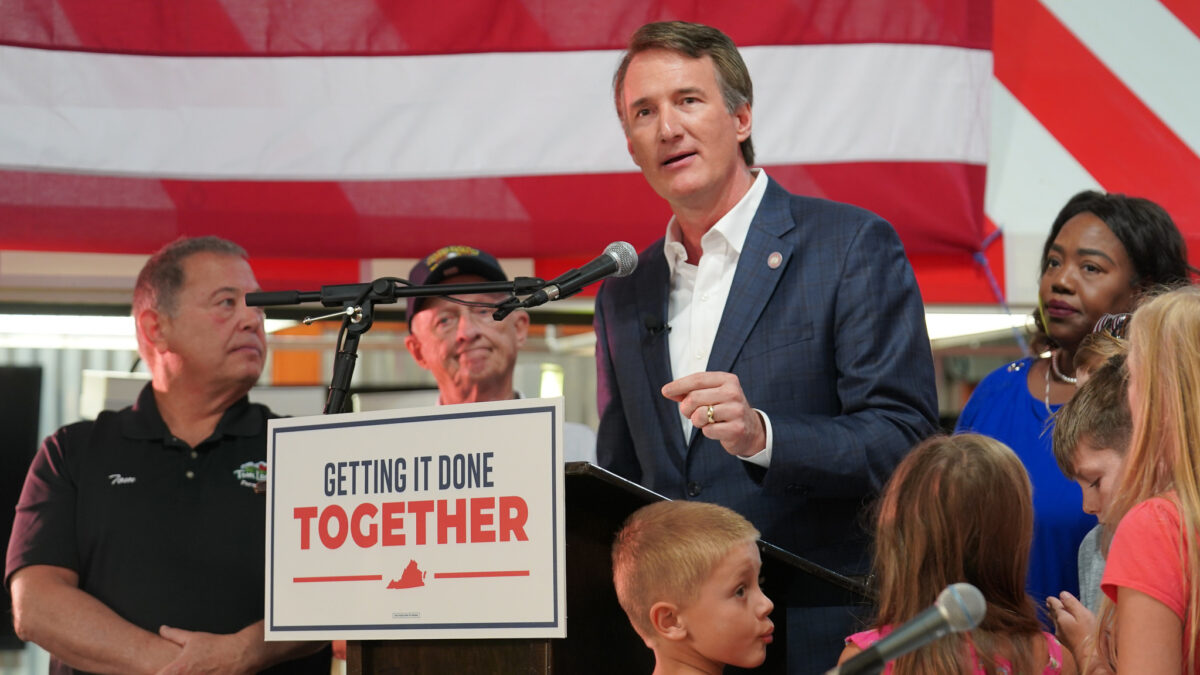
Last week, Virginia Gov. Glenn Youngkin further delivered on his gubernatorial campaign promise to give parents more control over their children’s education. The Virginia Department of Education issued new model policies specifically directed at resisting the radical gender ideology that has become commonplace even in the Commonwealth’s elementary schools.
The New Model Policies
Virginia’s new model policies explicitly state that students’ participation in school programming and use of school facilities such as bathrooms or locker rooms should be based on their biological sex and that modifications should be offered only to the extent required under federal law. They also assert that students who are minors must be referred to by the name and pronouns in their official records unless there is explicit parental approval for the use of something else. And they also declare that schools may not conceal information about a student’s so-called gender identity from his or her parents and that parents must be given the opportunity to object before any gender-related counseling services are offered.
The document reads: “Parents have the right to instill in and nurture values and beliefs for their own children and make decisions concerning their children’s education and upbringing in accordance with their customs, faith, and family culture.” In a rebuke to those officials and administrators who have encouraged wrongly named gender-affirming “care,” it explains: “Parents are in the best position to work with their children and, where appropriate, their children’s health care providers.”
The new model policies are subject to a 30-day period for public comment that begins later this month. Following that period, in accordance with a 2020 state law, school boards across the Old Dominion must adopt policies that are “consistent with” those of the state’s Department of Education. Macaulay Porter, a spokeswoman for Youngkin, noted that the updated guidance “delivers on the governor’s commitment to preserving parental rights and upholding the dignity and respect of all public school students.”
A Personal Anecdote
I can personally speak to how widespread the promotion of gender ideology has become, at least in Fairfax County, where I attended school for 12 years and then worked as a high-school history teacher. The very day after Virginia’s Department of Education issued this new guidance, my family attended a picnic in our neighborhood. My two eldest children (ages 9 and 7) were playing a game with other neighborhood kids, including, a bit awkwardly, a teenage girl who attends the local public high school. During the game, and when my wife and I were not nearby to overhear, this teenager told my children that she identifies as both a girl and a boy and that there are “72 genders.”
My wife and I homeschool our children. It wasn’t something I was eager to do — my extended family has been attending county public schools since the 1960s, and I was proud of my experience in FCPS 20 years ago. But I knew things had changed very dramatically in the last two decades, and I wanted to shield my children from ideas and behaviors that are not commensurate with their maturity. Simply put, prepubescent children don’t need seminars in gender fluidity and sexual experimentation. But over this past weekend, an FCPS-educated teenager took it upon herself to impart those ideas to my children.
As confusing as this was for my children — and as upsetting as it was to my wife and me — I do not level much blame at this teenager for taking away part of their innocence and forcing us to have conversations with our children about gender and sex we had been hoping to delay just a few more years. I blame FCPS teachers and administrators who welcomed this gender ideology in schools. And I blame smartphones and social media for proliferating these ideas with little parental oversight.
Protecting Our Children
Left-wing corporate media and Democratic politicians, of course, have been quick to attack Youngkin over his new policy. “Virginia has moved to restrict the rights of trans students in its public schools,” reads a mid-September headline from NPR. The Department of Education’s guidance “calls for the misgendering and outing of children in schools where they’re supposed to be safe. Absolutely shameful,” tweeted Virginia Democratic Del. Mike Mullin.
Think about the fact that in my kids’ very first interaction with a public school-educated teenager, she couldn’t help but share the confused, biologically inaccurate gender ideology she has been wrongly told is the most important part of her identity. That speaks to the pervasive nature and aggressiveness of this ideology and its adherents. Think about how many kids have had their lives thrown into chaos by adults who tell them they may be a boy in a girl’s body, “gender fluid,” or some other nonsense that may very well cause them permanent physical and emotional damage.
Thankfully, our kids trust their parents enough and have a solid enough understanding of what makes boys different from girls that we could have a brief, open, and hopefully instructive conversation about what they experienced on a neighborhood playground. Youngkin’s edict aims to ensure those conversations happen in the home, guided by loving parents, and less influenced by the confused ideology of bureaucrats who don’t have your children’s best interests at heart.
Casey Chalk is a senior contributor at The Federalist and an editor and columnist at The New Oxford Review. He has a bachelor’s in history and master’s in teaching from the University of Virginia and a master’s in theology from Christendom College. He is the author of The Persecuted: True Stories of Courageous Christians Living Their Faith in Muslim Lands.
American Family Association
American Family Association (AFA), a non-profit 501(c)(3) organization, was founded in 1977 by Donald E. Wildmon, who was the pastor of First United Methodist Church in Southaven, Mississippi, at the time. Since 1977, AFA has been on the frontlines of Ame
NEWSMAX
News, Opinion, Interviews, Research and discussion
Opinion
American Family Association
American Family Association (AFA), a non-profit 501(c)(3) organization, was founded in 1977 by Donald E. Wildmon, who was the pastor of First United Methodist Church in Southaven, Mississippi, at the time. Since 1977, AFA has been on the frontlines of Ame
American Family Association
American Family Association (AFA), a non-profit 501(c)(3) organization, was founded in 1977 by Donald E. Wildmon, who was the pastor of First United Methodist Church in Southaven, Mississippi, at the time. Since 1977, AFA has been on the frontlines of Ame
You Version
Bible Translations, Devotional Tools and Plans, BLOG, free mobile application; notes and more
Political
American Family Association
American Family Association (AFA), a non-profit 501(c)(3) organization, was founded in 1977 by Donald E. Wildmon, who was the pastor of First United Methodist Church in Southaven, Mississippi, at the time. Since 1977, AFA has been on the frontlines of Ame
NEWSMAX
News, Opinion, Interviews, Research and discussion
Spiritual
American Family Association
American Family Association (AFA), a non-profit 501(c)(3) organization, was founded in 1977 by Donald E. Wildmon, who was the pastor of First United Methodist Church in Southaven, Mississippi, at the time. Since 1977, AFA has been on the frontlines of Ame
Bible Gateway
The Bible Gateway is a tool for reading and researching scripture online — all in the language or translation of your choice! It provides advanced searching capabilities, which allow readers to find and compare particular passages in scripture based on









 What Did You Say?
You must be logged in to post a comment.