Yesterday, the Supreme Court held the long-awaited argument in Louisiana v. Callais, considering an appeal of Louisiana’s congressional map. The two majority-black districts are being challenged under the 15th Amendment and the Equal Protection Clause of the 14th Amendment as unconstitutionally gerrymandered on the basis of race. The case could result in a rejection of race-based congressional districting under Section 2 of the Voting Rights Act.
Notably, the Louisiana case was previously argued, but on the last day before the summer recess, the court issued an order setting the case for a second oral argument in the 2025-26 term. It later directed the litigants to file briefs addressing:
“whether the State’s intentional creation of a second majority-minority district violates either the 14th Amendment or the 15th Amendment, which bars the government from denying or restricting voting rights based on race.”
On Wednesday, I was addressing the annual conference of chief judges, speaking on the Supreme Court. I discussed some of the current cases, including Louisiana v. Callais. I noted that there may now be a majority in favor of a significant change on Section 2, but that some of us would be listening for Justices Brett Kavanaugh and Amy Coney Barrett as indicators of the Court balance.
We did hear from Kavanaugh and Barrett and the challengers could take heart in the skepticism that they expressed over the indefinite use of race in such districting.
The oral argument took an interesting turn when Justice Ketanji Brown Jackson sought to push back on the need to show a discriminatory intent. She interjected:
“I guess I’m thinking of it, of the fact that remedial action, absent discriminatory intent, is really not a new idea in the civil rights laws. And my kind of paradigmatic example of this is something like the ADA. Congress passed the Americans with Disabilities Act against the backdrop of a world that was generally not accessible to people with disabilities.‘
“And so, it was discriminatory in effect because these folks were not able to access these buildings. And it didn’t matter whether the person who built the building or the person who owned the building intended for them to be exclusionary. That’s irrelevant.‘
“Congress said the facilities have to be made equally open to people with disabilities if readily possible. I guess I don’t understand why that’s not what’s happening here. The idea in Section 2 is that we are responding to current-day manifestations of past and present decisions that disadvantage minorities and make it so that they don’t have equal access to the voting system.’
“They’re disabled. In fact, we use the word disabled in Milligan. We say that’s a way in which you see that these processes are not equally open.”
Justice Jackson appears to be referring to this paragraph in Allen v. Milligan:
“Individuals thus lack an equal opportunity to participate in the political process when a State’s electoral structure operates in a manner that “minimize[s] or cancel[s] out the[ir] voting strength.” Id., at 47. That occurs where an individual is disabled from “enter[ing] into the political process in a reliable and meaningful manner” “in the light of past and present reality, political and otherwise.” White, 412 U. S., at 767, 770. A district is not equally open, in other words, when minority voters face—unlike their majority peers—bloc voting along racial lines, arising against the backdrop of substantial racial discrimination within the State, that renders a minority vote unequal to a vote by a nonminority voter.” (emphasis added)
The court was not making an analogy to the ADA (though, in fairness to Justice Jackson, she was not suggesting that it made that point). It is also worth noting that Chief Justice John Roberts wrote:
“We have understood the language of §2 against the background of the hard-fought compromise that Congress struck. To that end, we have reiterated that §2 turns on the presence of discriminatory effects, not discriminatory intent.”
Milligan was deeply fractured and the question is whether five justices would now elect to set aside or reframe some of these former rulings.
During the oral argument, Roberts seemed to do precisely that in the use of Milligan, remarking “That case took the existing precedent as a given, it was a case in which we were considering Alabama’s particular challenge based on … what turned out to be an improper evidentiary showing.”
Moreover, Justice Kavanaugh (who was one of the concurrences in Milligan) suggested that we might have reached “the end point” on such race-based districting: “[T]his Court’s cases in a variety of contexts have said that race-based remedies are permissible for a period of time, sometimes for a long period of time, decades in some cases, but … they should not be indefinite and should have a[n] end point.”
Now, back to the ADA analogy.
The disabled face permanent and ongoing physical disabilities in accessing buildings and spaces. While Jackson was stressing that intent does not matter when it comes to discrimination against the disabled, the question of the other justices is whether the use of race-based districts will continue indefinitely. The ADA is permanent because the disabilities are permanent. The analogy plays into the very point of justices like Kavanaugh on whether race-based districting would continue ad infinitum.
If the oral argument is a reflection of the eventual votes of the justices, there now seems to be a working majority of justices willing to bring “an end point” to race-based districting. The result would have tremendous legal and political impact.
Legally, one of the most litigated areas of elections would be largely curtailed. The Voting Rights Act would still be used to prevent measures to inhibit voting and to protect the right to vote for every citizen. However, the constant districting controversies over guaranteeing majority black districts would come to an end.
The move would also be a major additional move of the Roberts court to eliminate the use of race-based classifications in society from college admissions to election districting. In a 2007 case, Chief Justice John Roberts stated that position most succinctly by declaring that the “way to stop discriminating on the basis of race is to stop discriminating on the basis of race.”
Politically, any loss of such gerrymandering on the basis of race could impact the Democrats who hold the vast majority of these districts.
Of course, the Court could again fracture as it did in Milligan on the rationale for any opinion. What was notable about the oral argument is that there appeared to be at least five justices considering a threshold rejection of race-based districting under Section 2 of the Voting Rights Act.
The warning was stark. At issue was a privileged class that has long dictated policy despite countervailing public opinion. At issue, the luminary warned, is nothing short of democracy itself. No, it was not the continued rallies of Sen. Bernie Sanders (I., VT) to “fight oligarchy.” It was Justice Clarence Thomas rallying his colleagues to fight technocracy, or government by experts. He warned against allowing “elite sentiment” to “distort and stifle democratic debate.” Yet, the story is even more profound of an elite class which succumbed to the Icarian gene and fell to Earth due to hubris and excess.
In his concurrence in United States v. Skrmetti, a case upholding Tennessee’s ban on adolescent transgender treatments, Thomas called for his colleagues to stand against an “expert class” that has dictated both policy and legal conclusions in the United States. The reference to “experts” is often used to insulate an opinion as self-evidently true on a given question when they speak as a group. It distinguishes the informed from the casual; the certifiably authoritative from the merely interested. Yet, what constitutes an “expert” can be little more than an advanced degree, and the “overwhelming opinion of experts” can be little more than groupthink.
Thomas warned his colleagues that “[t]here are particularly good reasons to question the expert class here, as recent revelations suggest that leading voices in this area have relied on questionable evidence and have allowed ideology to influence their medical guidance.”
Indeed, those “good reasons” have become increasingly obvious to those outside of the Beltway. The public saw experts line up during the pandemic to support mandatory uses of surgical masks, shutting down schools, and requiring the ruinous six-foot rule of separation. Many of these rules were later found lacking in scientific support. At the same time, dissenting experts, including the signatories of the Great Barrington Declaration, were blacklisted, censored, or fired for challenging these views.
We have seen the same orthodoxy on issues ranging from gender dysphoria to COVID measures.
In his concurrence, Thomas lashed out at the virtual mantra in court papers and the media of an “overwhelming medical consensus” in favor of transitioning children. This is often cited as the conclusive judgment of experts as opposed to citizens who overwhelmingly oppose treatments for children, including castration or surgical removal of genitalia. Thomas insisted that “so-called experts have no license to countermand the ‘wisdom, fairness, or logic of legislative choices.’”
For decades, citizens largely identified the government with bringing modern approaches to programs eliminating long-standing social ills from poverty to illiteracy to inequality. Roughly 100 years ago, the New Deal of Franklin Delano Roosevelt transformed the government’s role in American life. A generation of experts brought new ideas of electrification, education, and economics to the country.
This veneration was furthered by Kennedy’s assemblage of “the best and the brightest” and Johnson’s “Great Society” reformers.
The courts later followed with greater and greater deference afforded to these experts, including the establishment of the “Chevron doctrine” insulating agency decisions from substantial judicial review. The Supreme Court ruled that courts were poorly equipped to second-guess the expertise of agency experts.
The Reagan Revolution challenged those assumptions. Reagan famously told voters that “the nine most terrifying words in the English language are: I’m from the Government, and I’m here to help.”
Over the years, the mystique took on a more menacing aspect for many in the country as they watched academic and scientific groups become more advocates than experts. There seemed to be a shift from making for a better life to making us better people through progressive social agendas.
The result has been a dramatic change in trust for higher education and, by extension, the supremacy of the expert class. According to Gallup, only a third of Americans today have great confidence in higher education and roughly the same number have little or no confidence. That is a drop of over twenty percent in the last ten years.
Other polling shows drops in the trust for state and local public health officials as well as the U.S. Centers for Disease Control and Prevention (CDC).
The decline of the expert class can be traced to the changes in higher education over the last couple of decades. As I discuss in my book The Indispensable Right, an orthodoxy has taken hold of most universities with a purging of conservative, libertarian, and dissenting faculty. Within these ideological echo chambers, appointments, publications, and grants often seem to turn on conclusions that favor political agendas.
Over the years, dissenting faculty members have been forced out of scientific and academic organizations for challenging preferred conclusions on subjects ranging from transgender transitions to COVID-19 protections to climate change. Some were barred from speaking at universities or blacklisted for their opposing views.
As shown during COVID, many of the exiled experts were ultimately proven correct in challenging the efficacy of surgical masks or the need to shut down our schools and businesses. Scientists moved like a herd of lemmings on the origin of the virus, crushing those who suggested that the most likely explanation is a lab leak (a position that federal agencies would later embrace).
Scientists have worked with the government in suppressing dissenting views. At the end of last year, The Wall Street. Journal released a report on how the Biden administration suppressed dissenting views supporting the lab leak theory, as dissenting scientists were blacklisted and targeted. When experts within the Biden Administration found that the lab theory was the most likely explanation for COVID-19, they were told not to share their data publicly and were warned about being “off the reservation.”
British pediatrician Hilary Cass published a review for NHS England that cast doubt on gender-identity treatments for children and young people. The research reportedly led to an aggressive campaign by the World Professional Association for Transgender Health (WPATH) to suppress the results.
The gravitational pull of social agendas has overwhelmed not just scientific judgment but common sense. For example, there has been a push to treat gender as a socially constructed myth. A University of Pittsburgh anthropology professor declared that you cannot tell the gender of an individual from their bones – a widely ridiculed assertion.
The editor-in-chief of Scientific American Laura Helmuth made her own contribution to gender ideology by tweeting out a statement with a 2017 article in Audubon Notebook stating “White-throated sparrows have four chromosomally distinct sexes that pair up in fascinating ways. P.S. Nature is amazing[.] P.P.S. Sex is not binary.”
Various experts cried fowl and noted that her point was ideologically driven and scientifically absurd. (Helmuth later resigned after posting a profanity-laden attack on social media calling Trump voters “fascists” and bigots).
In many cases, dissenting views on social or political issues are treated as disqualifying for any research. At Cornell, professors signed a letter denouncing“informed commentary” critical of violent protests as racist.
In 2020, Harald Uhlig, the senior editor of the prestigious Journal of Political Economy and the Bruce Allen and Barbara Ritzenthaler Professor in Economics at the University of Chicago, criticized Black Lives Matter and the movement to defund the police. The response was a campaign to remove Uhlig from the Journal. Writers like economist Paul Krugman insisted that he was now “yet another privileged white man” attacking the “less fortunate.”
The University of Pittsburgh Medical Center removed Associate Professor of Medicine Norman Wang from his position as Program Director of the Electrophysiology Fellowship after he wrote an article in a peer-reviewed journal questioning the use of affirmative action in medical schools admissions. (Later, the Supreme Court would declare such use of race as unconstitutional race discrimination).
Another controversy arose in 2024 just before the Supreme Court considered access to mifepristone, one of two drugs used for abortions by mail. District Judge Matthew Kacsmaryk relied on two studies that showed harm from the use of the pill.
The Sage journal Health Services Research and Managerial Epidemiology was widely criticized by abortion advocates for publishing the studies. One month before the oral argument, the studies were conveniently retracted and a review published that found the conclusions “invalidated in whole or in part.”
Justices and judges will often take favorable studies as gospel in supporting their legal conclusions. In her dissent in the University of North Carolina affirmative action case, Justice Ketanji Brown Jackson triggered a controversy in citing a 2020 study from a friend-of-the-court brief by the Association of American Medical Colleges. Jackson claimed that race-based admissions “saves lives” because having a Black physician more than doubles the likelihood of the survival of high-risk Black babies. The claim of the brief and the flawed methodology of the study was shredded by critics.
The fact is that it is easy to produce near uniformity of experts since most universities now run from the left to the far left. The combination of biased hiring practices has left most departments with few or no conservative faculty members. As a result, the media can report that liberal positions are supported overwhelmingly by “experts.”
For example, it is now common for the media to report signed letters or petitions of law professors denouncing conservative positions or rulings. It rarely mentions that most law schools have only a couple of conservative faculty members. It is like getting a pro-papal petition from the College of Cardinals. Nevertheless, the coverage leaves the impression that opposing views on transgenderism, gun rights, or other subjects are absurd and rejected by virtually all “experts.”
Both the courts and the public, however, appear to be losing their awe for the expert class. The Supreme Court recently tossed the Chevron Doctrine and called for courts to resume their prior scrutiny of agency decisions.
None of this means that courts or the public should disregard science or experts. Indeed, many experts still follow core principles of unbiased inquiry and discourse. However, good science requires open inquiry and a diversity of viewpoints. Citizens are rejecting science by plebiscite, the self-authenticating petitions where academics purported to speak for an expert class.
The expert class lost the public when they replaced objectivity with orthodoxy. No matter how many experts claim that gender is a social myth, the public is not likely to dispense with reality. The rise and fall of the expert class is a story of the costs of arrogance and excess. Higher education has created a privileged class of social warriors who abandoned core principles of neutrality and objectivity in research. It is an Icarian generation of scholars who flew too close to the sun and fell to Earth in the eyes of the public.
Transgender rights supporters and opponent rally outside of the U.S. Supreme Court as the high court hears arguments in a case on transgender health rights on December 04, 2024 in Washington, DC. (Kevin Dietch via Getty Images)
In one of the most-anticipated decisions of its 2024-25 term, United States v. Skrmetti, the Supreme Court held that a Tennessee law prohibiting so-called “gender-affirming” medical interventions for minors does not violate the Fourteenth Amendment’s Equal Protection Clause. That was the only question before the Supreme Court, and it got the answer right.
Tennessee is among more than 20 states that prohibit such medical interventions for minors. Its law, called SB1, allows doctors to prescribe drugs such as puberty blockers and cross-sex hormones or to perform certain surgeries only to treat specific medical conditions. These include congenital defects, disease, or physical injury. It prohibits their use in cases of “gender dysphoria, gender identity disorder, [and] gender incongruence.”
Three minors who wanted to identify with the opposite sex and their parents challenged SB1, arguing that it violated the Fourteenth Amendment’s requirement that states provide the “equal protection of the laws.” They argued that SB1 was just like more familiar laws that discriminate based on sex, which the Supreme Court already held must meet a higher legal standard. The Biden administration also joined the case to oppose the Tennessee law.
The U.S. Court of Appeals for the Sixth Circuit, which includes Tennessee, didn’t buy it and neither did the Supreme Court. Chief Justice John Roberts wrote the 6-3 opinion, refusing to find a “sex-based classification” in a statute that, to state the obvious, does not classify based on sex. SB1 applies to all minors, regardless of sex. The only distinctions it makes are age (it applies to minors, not adults) and the medical use of the particular surgeries and drugs. Neither of these has anything to do with sex.
Every Supreme Court decision has two parts: the judgment, which is typically a yes/no answer to a specific legal question, and the opinion, which explains the reasons for the judgment. The judgment decides the case before the Court and the opinion can impact other cases. Here, Roberts’ opinion addressed some important issues that will no doubt be raised in other cases.
He emphasized, for example, that our understanding of gender is constantly changing and that the advisability and efficacy of medical interventions in cases of gender dysphoria or incongruence is being hotly debated. In fact, Roberts pointed out, several European countries that jumped on the “gender-affirming” care bandwagon have reversed course, “rais[ing] significant concerns regarding the potential harms associated with using puberty blockers and hormones to treat transgender minors.”
In addition, the Court refused to extend its controversial decision in Bostock v. Clayton County from the statutory to the constitutional context. In Bostock, the Supreme Court held that firing someone who is gay or “transgender” amounts to discrimination “because of” sex, violating Title VII of the 1964 Civil Rights Act. Liberal activists want the Supreme Court to reach the same conclusion with respect to the Equal Protection Clause. Roberts refused, explaining the important differences between SB1 and “the logic of Bostock.”
Unless a law discriminates on the basis of things such as race, religion, or sex, courts are not going to second-guess legislative judgments about policy issues. This decision means that gender-related laws like SB1 are in the broad category of matters, such as regulating the practice of medicine generally, that the people and their elected representatives must handle. SB1, Roberts wrote, “clearly meets this standard.”
Like European countries have concluded, the Tennessee legislature argued that any perceived discordance between sex and gender can be resolved by an approach far less invasive and permanent than surgery or drugs and will likely produce better outcomes.
Challenges to similar laws in other states raise the same Equal Protection Clause issue and whether parents have a right, under the Due Process Clause of the same Fourteenth Amendment, to obtain medical interventions for their minor children. This decision should settle the first issue, but the second will likely find its way to the Supreme Court as litigation elsewhere continues.
In recent polls, many Americans say that the Supreme Court decides cases based more on politics than law. The Court can fuel that perception when it makes up rights that are not in the Constitution’s text, or tries to reach a result that is politically, but not judicially, correct. This is not one of those cases. The Court applied basic Equal Protection Clause analysis and came to the obvious, and objectively correct, conclusion. As Roberts concluded, the Equal Protection Clause does not resolve “fierce scientific and policy debates” like those today that relate to gender. That’s our job as citizens.
The U.S. Supreme Court Friday permitted billionaire Elon Musk’s Department of Government Efficiency, a key player in President Donald Trump’s drive to slash the federal workforce, broad access to personal information on millions of Americans in Social Security Administration data systems while a legal challenge plays out.
At the request of the Justice Department, the justices put on hold Maryland-based U.S. District Judge Ellen Hollander’s order that had largely blocked DOGE’s access to “personally identifiable information” in data such as medical and financial records while litigation proceeds in a lower court.
Hollander found that allowing DOGE unfettered access likely would violate a federal privacy law.
Yesterday, the Supreme Court handed down three major cases with unanimous decisions. One, Ames v. Ohio Department of Youth Services, raises additional questions over diversity, equity, and inclusion (DEI) programs that have been widely used in higher education and businesses. There is no reason to believe that DEI measures are DOA, but the decision is likely to accelerate challenges based on reverse discrimination after the Court rejected the imposition of an added burden for members of any “majority group” including straight, white males.
The immediate question before the Court was a circuit split over the standard that applies to a member of a “majority” group who claims that he or she was treated unfairly based on majority characteristics. The Sixth Circuit, along with four other circuits, held that such litigants must shoulder additional pleading burdens under Title VII of the Civil Rights Act.
Many of us have long argued that this long-standing rule was itself discriminatory and at odds with both constitutional and statutory authority. It was a bizarre interpretation of a law that barred employees from discriminating based on “race, color, religion, sex, and national origin.” That would ordinarily require a plaintiff to support a claim of disparate treatment by showing that she applied for a position for which she was qualified but was rejected under circumstances giving rise to an inference of unlawful discrimination. However, judges began to add their own burden of white, male or straight litigants in requiring them to show additional “background circumstances” that show the defendant is an “unusual employer” that discriminates against majority groups.
In this case, Marlean Ames, a heterosexual woman, claimed that she was demoted at the Ohio Department of Youth Services after Ginine Trim, a gay woman, replaced her supervisor. Trim hired a younger gay man allegedly based on sexual orientation. Both the district court and the Sixth Circuit dismissed the complaint because Ames failed to identify any other “background circumstances” that demonstrated her employer discriminated against heterosexual women. Justice Ketanji Brown Jackson wrote for a unanimous Supreme Court that reversed the Sixth Circuit and rejected the “additional circumstances” test as at odds with the plain text of Title VII.
“As a textual matter, Title VII’s disparate-treatment provision draws no distinctions between majority-group plaintiffs and minority-group plaintiffs. Rather, the provision makes it unlawful “to fail or refuse to hire or to discharge any individual, or otherwise to discriminate against any individual with respect to his compensation, terms, conditions, or privileges of employment, because of such individual’s race, color, religion, sex, or national origin.” The “law’s focus on individuals rather than groups [is] anything but academic.” Bostock v. Clayton County (2020). By establishing the same protections for every “individual”—without regard to that individual’s membership in a minority or majority group—Congress left no room for courts to impose special requirements on majority-group plaintiffs alone.”
Justice Thomas, joined by Justice Gorsuch, filed a concurrence that chastised lower courts and “judges creating a textual legal rules and frameworks.”
The opinion has broader implications for businesses and higher education where DEI has been used to brush aside such reverse discrimination claims. Often such claims are mocked as suggesting that members of a majority group are “victims.” While not imposing this specific “add-on,” these controversies involve much of the same bias against reverse discrimination claims. Litigants complain that they often face greater demand and resistance to their claims as opposed to employees who are part of minority groups.
Various legal groups insisted that the Sixth Circuit was correct and that majority-group litigants should shoulder an added burden, including the NAACP Legal Defense and Educational Fund, National Women’s Law Center, Latino Justice, National Employment Law Project and Asian American Legal Defense and Education Fund. The views of these groups could not garner a single vote on the Court.
The Ames decision is a welcome development in bringing greater uniformity in the treatment of discrimination claims. It is also a shot across the bow of businesses and universities that have used DEI to dismiss the countervailing interests and claims of majority-group employees.
The refusal by a majority on the U.S. Supreme Court (SCOTUS) to shut down leftists’ lower court judicial coup against President Trump has drawn sharp rebukes from conservatives across America. These critics (correctly) argue that the high court’s unwillingness to stop (and at times, its willingness to participate in) this effort both subverts the power of the executive branch and undermines the will of the more than 77 million Americans who voted for the president in the 2024 election. But it’s not just judicial commentators and everyday citizens who are getting fed up with the justices’ political gamesmanship.
Last week, a three-judge panel on the Fifth Circuit Court of Appeals issued an order“expedit[ing] to the next available randomly designated regular oral argument panel” the case known as A.A.R.P. v. Trump. The matter centers around Trump’s use of the Alien Enemies Act to deport Venezuelan Tren de Aragua gang members.
The order came as part of the lower court’s compliance with a May 16 SCOTUS decision, in which a majority (7-2) on SCOTUS remanded the case back to the Fifth Circuit. As described by Fox News, the ruling — in which Associate Justices Samuel Alito and Clarence Thomas dissented — “revolved around the alleged illegal immigrants not having enough time to reasonably file a challenge to their deportations.”
While the Fifth Circuit panel’s order followed the Supreme Court’s instructions, it also included a multi-page concurring opinion from Judge James Ho. In addition to arguing that the identified Tren de Aragua members “should not be allowed to proceed in this appeal,” the Trump appointee excoriated the high court for the “disrespect” it has shown “the district judge as well as the President and other officials” in the case.
“As an inferior court, we’re duty-bound to follow Supreme Court rulings — whether we agree with them or not. … So, I concur in our order today expediting our consideration of this matter, as directed by the Supreme Court,” Ho wrote. “But I write to state my sincere concerns about how the district judge as well as the President and other officials have been treated in this case. I worry that the disrespect they have been shown will not inspire continued respect for the judiciary, without which we cannot long function.”
Ho went on to note that it “is not the role of the judiciary to check the excesses of the other branches, any more than it’s our role to check the excesses of any other American citizen” — an apparent rebuke to recent remarks by Chief Justice John Roberts. While speaking at an event in his hometown of Buffalo, New York, earlier this month, the Bush appointee tacitly endorsed the concept of judicial supremacy, claiming the courts can unilaterally “strike down … acts of Congress or acts of the president” they believe to be unlawful or unfavorable.
“Judges do not roam the countryside looking for opportunities to chastise government officials for their mistakes,” Ho wrote. “Rather, our job is simply to decide those legal disputes over which Congress has given us jurisdiction.”
Much like Alito did in his dissenting opinion in SCOTUS’s May 16 decision, Ho ardently defended District Court Judge James Wesley Hendrix’s handling of petitioners’ requests for emergency relief, saying he “conducted himself in a reasonable and indeed admirable manner” and “any criticism of [him] is unwarranted and unfortunate.” He further echoed Alito’s criticisms of the Supreme Court’s characterization of Hendrix’s declination to immediately abide by petitioners’ late-night requests as “misleading.”
“We seem to have forgotten that this is a district court — not a Denny’s. This is the first time I’ve ever heard anyone suggest that district judges have a duty to check their dockets at all hours of the night, just in case a party decides to file a motion,” Ho wrote. “If this is going to become the norm, then we should say so. … If this is not to become the norm, then we should admit that this is special treatment being afforded to certain favored litigants like members of Tren de Aragua —and we should stop pretending that Lady Justice is blindfolded.”
The Fifth Circuit judge concluded his fiery opinion by underscoring that Trump deserves the same level of respect all presidents before him have been afforded. He specifically pointed to former President Obama’s attack on the Supreme Court during his 2010 State of the Union address and former President Bill Clinton’s inability to practice law before the high court as examples of presidents who — despite having disagreements with court rulings — were entitled to said respect.
“Yet I doubt that any court would deny any of those Presidents the right to express their views in any pending case to which they are a party, before issuing any ruling. Our current President deserves the same respect,” Ho wrote.
Whether Roberts and his colleagues take Ho’s criticisms seriously remains to be seen. But what is certain is that the longer the high court continues to entertain leftists’ judicial coup, the more credibility it loses with the American people.
Shawn Fleetwood is a staff writer for The Federalist and a graduate of the University of Mary Washington. He previously served as a state content writer for Convention of States Action and his work has been featured in numerous outlets, including RealClearPolitics, RealClearHealth, and Conservative Review. Follow him on Twitter @ShawnFleetwood
Five years ago, I wrote about a federal judge who, in my view, had discarded any resemblance of judicial restraint and judgment in a public screed against Republicans, Donald Trump, and the Supreme Court. The Wisconsin judge represented the final death of irony: a jurist who failed to see the conflict in lashing out at what he called judicial bias in a political diatribe that would have made MSNBC’s Lawrence O’Donnell blush.
His name is Lynn Adelman.
I was wrong in 2020. Irony is very much alive.
This week, a judge was randomly selected to preside at the trial of Milwaukee County Circuit Judge Hannah Dugan. A critic of Trump’s immigration policies, Dugan is accused of obstructing federal law enforcement and facilitating the escape of an unlawful immigrant.
The judge assigned to the Dugan case? You guessed it. Lynn Adelman, 85.
A judge is expected to come to a case like this one without the burden of his own baggage. Judge Adelman is carrying more baggage than Amtrak in Wisconsin.
The selection of Adelman shows how political commentary by judges undermines the legitimacy of the court system. Now, in a case that has divided the nation, the public will have to rely on a judge who discarded his own obligations as a judge to lash out at conservatives, Trump, and conservative jurists.
Adelman was a long-standing Democratic politician who tried repeatedly and unsuccessfully to run for Congress during his 20-year tenure in the Wisconsin Senate. For critics, Adelman never set aside his political agenda after President Bill Clinton nominated him for the federal bench. Adelman was sharply rebuked for ignoring controlling Supreme Court precedent to rule in favor of a Democratic challenge over voting identification rules just before a critical election. Adelman blocked the law before the election despite a Supreme Court case issued years earlier in Crawford v. Marion County Election Board, 553 U.S. 181 (2008), rejecting a similar challenge.
The United States Court of Appeals for the Seventh Circuit issued a stinging reversal, explaining to Adelman that in “our hierarchical judicial system, a district court cannot declare a statute unconstitutional just because he thinks (with or without the support of a political scientist) that the dissent was right and the majority wrong.”
Adelman, however, was apparently undeterred. In 2020, he wrote a law review article for Harvard Law & Policy Review, titled “The Roberts Court’s Assault on Democracy.”
Adelman attacked what he described as a “hard-right majority” that is “actively participating in undermining American democracy.” He also struck out at Trump as “an autocrat… disinclined to buck the wealthy individuals and corporations who control his party.”
Adelman was later admonished by the Civility Committee for the Seventh Circuit Court of Appeals for his public political attacks as “inconsistent with a judge’s duty to promote public confidence in the integrity and impartiality of the judiciary and as reflecting adversely on the judge’s impartiality.”
The costs of such extrajudicial commentary became vividly clear this week. Judge Dugan is being called a “hero” by Democratic politicians and pundits for helping an individual evade federal arrest. At least one judge has pledged to do the same in her courtroom. On the other side, many are appalled by Dugan’s conduct as fundamentally at odds with the role of a jurist in either the state or federal system.
There are weighty issues in the case and the public has a right to expect a fair trial with a judge who will not be swayed by his own political viewpoints. Dugan already had the advantage of a trial before a jury taken from one of the most liberal districts in the country. She will now have a judge who was himself sanctioned for political statements and reversed for ignoring controlling precedent.
This problem is growing within our courts, including at the Supreme Court. I recently wrote about public commentary by Justices Sonia Sotomayor and Elena Kagan that created distractions this month in cases before the Supreme Court. The public has a right to expect more from jurists. The price of the ticket to the bench is to set aside one’s political agenda and political commentary. When you don that robe, you must discard your politics. Some, however, seem to cling to both the bias and the bench.
The message for the public could not be worse this week. In a case involving a Democratic judge accused of discarding basic judicial principles, a random selection produced a Democratic judge reversed for discarding basic judicial principles.
For conservatives, these cases reaffirm a view of a dual-track legal system. Lawfare has been raging in blue cities like New York where President Trump faced judges denounced for their political associations or past commentary. In Washington, Trump was assigned a federal judge who previously appeared to lament that Trump was not a criminal defendant in her courtroom. She was then randomly assigned Trump’s case after he was charged by Special Counsel Jack Smith.
We have the greatest legal system in the world, but it cannot survive long without the faith and support of the public. That is why judicial ethics rules bar not just conflicts of interest but the appearance of a conflict of interest. The perception of political bias robs our courts of their inherent legitimacy and authority for citizens.
Just as Adelman lashed out at most of the Supreme Court as lacking credibility, he can hardly expect conservatives and Republicans to find him a credible choice in the Dugan case. That is why I was wrong five years ago. Irony is not entirely dead. It is just uniformly ignored.
On Sunday it was revealed to the public that President Joe Biden had been diagnosed with a “more aggressive form” of prostate cancer that has metastasized to the bone. Dr. Zeke Emanuel said Monday on MSNBC that it’s more likely Biden “had it while he was president.” That means that on top of the obvious cognitive impairment, Biden may have also been suffering from an aggressive cancer, further calling into question who was actually making key decisions during his administration.
Here are five of the most consequential decisions of the Biden presidency that, in light of this diagnosis, have many Americans asking whether Biden was truly the one behind them.
Appointment of Justice Ketanji Brown Jackson
Biden nominated Ketanji Brown Jackson to fill the Supreme Court seat left vacant after Justice Stephen Breyer stepped down in 2022. Prior to taking office, Biden made nominating a black woman to the Supreme Court a top priority, as pointed out by The Federalist’s Jordan Boyd. Jackson had notable shortcomings — including the inability to define what a woman is because she is “not a biologist.”
Pardons And Commutations, Oh My!
Biden gave preemptive pardons to former Rep. Liz Cheney, Dr. Anthony Fauci, Gen. Mark Milley, Adam Schiff and others who sat on the Select Committee to Investigate the January 6th Attack on the United States Capitol as well as to the “police officers from the D.C. Metropolitan Police Department or the U.S. Capitol Police who testified before” the committee, according to The Lawfare Institute.
Biden also issued pardons to his brother, James Biden, James’ wife Sara, his other brother Francis T. Biden, and his sister Valerie T. Owens along with her husband John T. Owens.
As noted by The Federalist’s Beth Brelje, “To be pardoned for a crime, there must be a crime. None of the people on this list have been charged for the awful ways they harmed people in their official capacities.”
Biden also announced in December that he was granting 39 pardons and 1,499 commutations in what his administration described as the “largest single-day grant of clemency in modern history.”
Weeks before that set of pardons and commutations, Biden quietly commuted the sentences of two Chinese spies. In one case, Yanjun Xu was convicted in 2022 for “conspiracy to commit economic espionage; conspiracy to commit trade secret theft; attempted economic espionage by theft or fraud; attempted theft of trade secrets by taking or deception.”
But Biden’s commutation said “it is in the national interest that the term of imprisonment related to the aforesaid conviction not be served in its entirety.”
The Deadly Afghanistan Withdrawal
On August 26,2021, thirteen U.S. service members were killed during what has now become known as the botched Afghanistan withdrawal. The same withdrawal also left thousands of Americans, U.S. allies and their families stranded. A report from the State Department later confirmed that Biden’s execution of the withdrawal “posed significant challenges for the Department.”
Biden rushed the withdrawal which “compounded the difficulties the Department faced in mitigating the loss of the military’s key enablers,” the report found. Biden’s lack of planning “had serious consequences for the viability of the Afghan government and its security.”
Notably, Biden also left billions of dollars of U.S. military equipment behind for U.S. enemies to use while allowing hundreds of Afghans on the Pentagon’s watchlist to enter the U.S. without proper vetting.
Open Borders
Biden allowed millions of illegal aliens to flood the country — and made it easier for them to do so. As explained by Tristan Justice in these pages, Biden stopped construction of the border wall, “expanded the ‘illegal’ Deferred Action for Childhood Arrivals (DACA) program,” reversed “Trump-era executive orders that enforced immigration law,” issued a deportation moratorium, lost track of thousands of children illegally in the country, resurrected an Obama-era parole program for illegals and more.
Despite the urgent need for border security, Biden falsely claimed he lacked the authority to secure the border and said he had “done all I can do.”
As The Federalist’s John Daniel Davidson pointed out, “A secure border was always within reach” during the Biden years but “Biden and the Democrats sold out their fellow Americans, threw open the borders, and then pretended they had no choice in the matter.”
COVID
Biden issued an announcement about a purported vaccine mandate for private companies employing 100 people or more just months after taking office. Biden also, as reported by Boyd, encouraged businesses “to adopt vaccine mandated and plotted a vaccine passport program that would deny Americans work or access to society based on their Covid-19 vaccination status.” The Biden administration also required all federal employees and contractors to get the vaccine or lose their jobs.
Brianna Lyman is an elections correspondent at The Federalist. Brianna graduated from Fordham University with a degree in International Political Economy. Her work has been featured on Newsmax, Fox News, Fox Business and RealClearPolitics. Follow Brianna on X: @briannalyman2
Today, the United States Supreme Court will hear three consolidated cases in Trump v. CASA on the growing use of national or universal injunctions. This is a matter submitted on the “shadow docket” and the underlying cases concern the controversy over “birthright citizenship.” However, the merits of those claims are not at issue. Instead, the Trump Administration has made a “modest request” for the Court to limit the scope of lower-court injunctions to their immediate districts and parties, challenging the right of such courts to bind an Administration across the nation.
The case is the consolidation of three matters: Trump v. CASA out of Maryland; Trump v. Washington out of Washington State, and Trump v. New Jersey, out of Massachusetts. These cases also present standing issues since the Administration challenges the argument that there is a cognizable “injury” to individuals who may travel to the states bringing the actions.
However, the main question is the scope of injunctions.
As I have previously written, district court judges have issued a record number of injunctions in the first 100 days of the Trump Administration. Under President George W. Bush, there were only six such injunctions, which increased to 12 under Obama. However, when Trump came to office, he faced 64 such orders in his first term.
When Biden and the Democrats returned to office, it fell back to 14. That was not due to more modest measures. Biden did precisely what Trump did in seeking to negate virtually all of his predecessors’ orders and then seek sweeping new legal reforms. He was repeatedly found to have violated the Constitution, but there was no torrent of preliminary injunctions at the start of his term.
Yet, when Trump returned to office, the number of national injunctions soared again in the first 100 days and surpassed the number for the entirety of Biden’s term.
This is a rare argument. First, it is a shadow docket filing that usually results in summary decisions without oral argument. Moreover, this matter came after what is commonly viewed as the final day for oral arguments. The Court granted a rare late oral argument, reflecting that multiple justices view this matter sufficiently serious to warrant a break from standard operating procedures.
Rather than arguing a “question presented” on birthright citizenship, the Administration is solely looking for limits on the district courts as appeals continue on the “important constitutional questions” raised by birthright citizenship.
The Administration argues that the Constitution does not give judges the power to issue universal injunctions and that courts are limited to addressing the cases before them in a given district. The Administration acknowledges that class actions can create the basis for universal injunctions, offering a moderate resolution to the Court. In such cases, if the parties can meet the standard for a national class, they can seek a national or universal injunction.
In today’s arguments (which I will be covering for Fox and on X), we can expect to hear from justices who have previously been critical of universal injunctions, including Justice Clarence Thomas, who, in his concurring opinion in Trump v. Hawaii, called them “legally and historically dubious.”
Likewise, Justices Gorsuch and Alito have criticized such injunctions. In a prior dissent to an emergency filing in Department of State v. AIDS Vaccine Advocacy Coalition, Alito was joined by Thomas, Gorsuch, and Kavanaugh in stating that the government “has a strong argument that the District Court’s order violates the principle that a federal court may not issue an equitable remedy that is ‘more burdensome than necessary to’ redress the plaintiff’s injuries.”
Many of us will be watching three members the most closely: Chief Justice John Roberts and Associate Justices Elena Kagan and Amy Coney Barrett. Roberts is the ultimate institutionalist, and we should see in his argument how he views the impact of such injunctions on the court system as a whole. He is very protective of the courts’ inherent authority but may also have misgivings about the scope of these orders.
During the Biden Administration, Justice Kagan has previously criticized universal injunctions. In an interview at Northwestern University Law School, Kagan flagged the “forum shopping” by litigants in filing cases before favorable courts:
“You look at something like that and you think, that can’t be right. In the Trump years, people used to go to the Northern District of California, and in the Biden years, they go to Texas. It just can’t be right that one district judge can stop a nationwide policy in its tracks and leave it stopped for the years that it takes to go through the normal process.”
Justice Barrett previously joined with Kavanaugh in stating that the power of district courts to enter a universal injunction “is an important question that could warrant our review in the future.”
U.S. Solicitor General D. John Sauer will argue the government’s case.
Jeremy Feigenbaum, New Jersey’s solicitor general, will argue for the state and local governments and Kelsi Corkran, the Supreme Court director at Georgetown’s Institute for Constitutional Advocacy and Protection, will argue for the private individuals and groups.
Jonathan Turley is the Shapiro Professor of Public Interest Law at George Washington University where he teaches a course on the Supreme Court and the Constitution.
The Supreme Court’s continuing failure to define lower courts’ authority is wreaking havoc on the reputation of the courts — and our constitutional order.
The Supreme Court has interceded six times in less than three months to rein in federal judges who improperly exceeded their Article III authority and infringed on the Article II authority of President Donald Trump. Yet the high court continues to issue mealy-mouthed opinions which serve only to exacerbate the ongoing battle between the Executive and Judicial branches of government. And now there is a constitutional crisis primed to explode this week in a federal court in Maryland over the removal of an El Salvadoran — courtesy of the justices’ latest baby-splitting foray on Thursday.
On Thursday last, in Noem v. Garcia, the Supreme Court issued a short two-page order on President Trump’s application asking the justices to vacate an injunction issued by Maryland federal judge Paula Xinis. That injunction, issued on April 4, 2025, ordered the Trump Administration “to facilitate and effectuate the return of Plaintiff Kilmar Armando Abrego Garcia to the United States by no later than 11:59 PM on Monday, April 7, 2025.” The lower court further held that the “preliminary relief is issued to restore the status quo and to preserve Abrego Garcia’s access to due process in accordance with the Constitution and governing immigration statutes.”
After the Fourth Circuit refused to stay Judge Xinis’ order, the Trump Administration filed an application with the Supreme Court seeking an immediate stay followed by vacatur of the injunction. In its application, the Trump Administration acknowledged that Garcia had been wrongly removed to El Salvador, agreeing that there was an order barring Garcia’s return to his native homeland. However, the Trump Administration stressed that the order also concluded Garcia, as an alien illegally present in the United States, was subject to removal under federal law — just not to El Salvador. The immigration judge also rejected Garcia’s petition for asylum and for withholding of removal under CAT, or the Convention Against Torture. The Board of Immigration Appeals upheld those decisions.
Further, while Garcia had been wrongly removed to El Salvador, the Trump Administration argued that Judge Xinis lacked the authority to order him to “facilitate and effectuate” Garcia’s return. First, it was not for a federal judge to tell the Executive branch how to engage in diplomatic relations. And second, the president lacks the ability to control a foreign sovereign, making it impossible for him to “effectuate” Garcia’s return to the United States. Finally, Judge Xinis’ order improperly directs the Trump Administration to admit Garcia even though he is a member of MS-13, which has been designated a terrorist organization.
Chief Judge John Roberts granted the Trump Administration an administrative stay, thereby nixing the April 7, 2025 deadline for the president to have “effectuated” Garcia’s return to the United States. Then on April 10, 2025, the Supreme Court entered an order stating the Trump Administration’s “application is granted in part and denied in part, subject to the direction of this order.”
But what precisely were those directions? Well, first, there was the deadline, which had already come and gone, and so the Court stated: “[T]he deadline imposed by the District Court has now passed. To that extent, the Government’s emergency application is effectively granted in part and the deadline in the challenged order is no longer effective.”
The Supreme Court then said that “[t]he rest of the District Court’s order remains in effect but requires clarification on remand.” Here, the high court explained what parts of the lower court order it believed proper, namely to “require the Government to ‘facilitate’ Abrego Garcia’s release from custody in El Salvador and to ensure that his case is handled as it would have been had he not been improperly sent to El Salvador.” However, “[t]he intended scope of the term ‘effectuate,” the Supreme Court explained, is “unclear, and may exceed the District Court’s authority.” The Supreme Court ended by stating “[t]he District Court should clarify its directive, with due regard for the deference owed to the Executive Branch in the conduct of foreign affairs.” But “the Government should be prepared to share what it can concerning the steps it has taken and the prospect of further steps,” the Supreme Court added.
What exactly does any of that mean?
To Judge Xinis it meant she merely needed to clarify what “effectuate” means. But rather than do that, the Barack Obama appointee just dropped that directive from her injunction, amending her order “to DIRECT that Defendants take all available steps to facilitate the return of Abrego Garcia to the United States as soon as possible.”
She further directed the Trump Administration to file “a supplemental declaration from an individual with personal knowledge, addressing the following: (1) the current physical location and custodial status of Abrego Garcia; (2) what steps, if any, Defendants have taken to facilitate Abrego Garcia’s immediate return to the United States; and (3) what additional steps Defendants will take, and when, to facilitate his return.”
Late Thursday, Judge Xinis ordered the Trump administration to file that declaration by 9:30 a.m. on Friday, even though the Supreme Court’s order only dropped Thursday evening around 7:00 p.m. The Maryland-based federal judge then denied the government’s motion for extension of time until Tuesday to file the declaration, but she gave them an additional two hours.
Unsurprisingly, 11:30 a.m. came and went without the declaration being filed. Soon after, the Trump Administration filed a response to the court’s amended injunction, noting it was “unable to provide the information requested by the Court on the impracticable deadline set by the Court hours after the Supreme Court issued its order.” The government’s response continued:
“Defendants are not in a position where they ‘can’ share any information requested by the Court. That is the reality. Defendants received the order late in the evening last night. They are reviewing the order and actively evaluating next steps. It is unreasonable and impracticable for Defendants to reveal potential steps before those steps are reviewed, agreed upon, and vetted. Foreign affairs cannot operate on judicial timelines, in part because it involves sensitive country-specific considerations wholly inappropriate for judicial review.”
Rather than re-evaluate her position, Judge Xinis doubled down, finding “Defendants have failed to comply with this Court’s Order,” and stating, “Defendants made no meaningful effort to comply.” She then entered a further order requiring the Trump Administration to file daily, on or before 5:00 p.m., “a declaration made by an individual with personal knowledge as to any information regarding: (1) the current physical location and custodial status of Abrego Garcia; (2) what steps, if any, Defendants have taken to facilitate his immediate return to the United States; (3) what additional steps Defendants will take, and when, to facilitate his return.”
Judge Xinis added that if plaintiffs wanted any additional relief, they should file a motion by Saturday at 5:00 p.m. Garcia’s attorneys filed the suggested Motion on Saturday, asking the court to grant “three additional types of relief.”
First, the El Salvadoran’s lawyers asked the Court to order the government to, by end of day on Monday: (a) request “its agents and contractors release Abrego Garcia from custody in El Salvador pursuant to the contract or arrangement providing for his detention there at the Government’s direction; (b) dispatch personnel to accompany Abrego Garcia upon his release from [the El Salvadoran prison] to ensure his safe passage to the aircraft that will return him to the United States; (c) [p]rovide air transportation for Abrego Garcia to return to Maryland, because he may not be in current possession of sufficient identification to board a commercial flight; and (d) “[g]rant Abrego Garcia parole” and “prepare all paperwork and forms required to allow him to reenter the United States.”
Second, Garcia’s attorneys asked for the Court to grant their client discovery including production of the Trump Administration’s contract with El Salvador concerning detentions at the prison. The illegal alien’s attorneys further requested the court direct the Trump Administration to produce witnesses for the hearing scheduled for Tuesday. Specifically, Garcia’s attorneys wanted to question representatives from the Department of Homeland Security, the Department of Justice, and the Department of State, concerning: “(i) Abrego Garcia’s current physical location and custodial status; (ii) what steps, if any, the Government has taken to facilitate Abrego Garcia’s return to the United States; (iii) whether the Government has informed officials at CECOT that it wishes Abrego Garcia to be released into U.S. custody; and (iv) what, if any, additional steps the Government intends to take, and when, to facilitate Abrego Garcia’s return.”
Finally, the plaintiff’s attorneys requested the court order the government to show cause why they should not be held in contempt for violating the Court’s command that they file a declaration by Friday at 11:30 a.m.
Shortly after Garcia’s motion hit the docket, the Trump Administration filed its first required daily declaration. That declaration attested that, based on official reporting from our Embassy in San Salvador, “Abrego Garcia is currently being held in the Terrorism Confinement Center in El Salvador.” “He is alive and secure in that facility,” the declaration continued, adding: “He is detained pursuant to the sovereign, domestic authority of El Salvador.” The second daily declaration, filed yesterday, stated the government’s declarant had nothing to add to those facts.
Judge Xinis has not yet ruled on the plaintiff’s motion, but given her refusal to respond reasonably to the Trump Administration’s request for an extension of time to file the declaration, her utter failure to show any deference to the Trump Administration’s handling of foreign affairs, and that the declarations said nothing of efforts by the Trump Administration to obtain Garcia’s release from prison, it seems likely she will grant Garcia much of what he requests.
Yet, those requests, as the Trump Administration pointed out yesterday in its response brief, directly infringe on the president’s Article II authority. “The federal courts have no authority to direct the Executive Branch to conduct foreign relations in a particular way or engage with a foreign sovereign in a given manner,” the Trump Administration wrote. Rather, “[t]hat is the ‘exclusive power of the President as the sole organ of the federal government in the field of international relations.’”
While the Supreme Court has declared that “[s]uch power is ‘conclusive and preclusive,’ and beyond the reach of the federal courts’ equitable authority,” given her orders to date, Judge Xinis is unlikely to stand down. Rather, expect the Obama appointee to enter another scathing order demanding details and actions. But with its core executive powers at stake, the Trump Administration cannot comply.
The justices should have foreseen this standoff and defused the situation last week by clearly defining the limits of the lower court’s authority. The Supreme Court’s continuing failure to do so is wreaking havoc on the reputation of the courts — and our constitutional order.
Margot Cleveland is an investigative journalist and legal analyst and serves as The Federalist’s senior legal correspondent. Margot’s work has been published at The Wall Street Journal, The American Spectator, the New Criterion, National Review Online, Townhall.com, the Daily Signal, USA Today, and the Detroit Free Press. She is also a regular guest on nationally syndicated radio programs and on Fox News, Fox Business, and Newsmax. Cleveland is a lawyer and a graduate of the Notre Dame Law School, where she earned the Hoynes Prize—the law school’s highest honor. She later served for nearly 25 years as a permanent law clerk for a federal appellate judge on the Seventh Circuit Court of Appeals. Cleveland is a former full-time university faculty member and now teaches as an adjunct from time to time. Cleveland is also of counsel for the New Civil Liberties Alliance. Cleveland is on Twitter at @ProfMJCleveland where you can read more about her greatest accomplishments—her dear husband and dear son. The views expressed here are those of Cleveland in her private capacity.
Today, the U.S. Supreme Court will hear a case with potentially sweeping implications for discrimination cases. Ames v. Ohio Department of Youth Service involves an Ohio woman, Marlean Ames, who claims she was discriminated against for being straight as less-qualified LGBT colleagues in Ohio’s youth corrections system were promoted. Ames alleged that she was treated differently due to her heterosexuality at the Ohio Department of Youth Services, resulting in not just a demotion but a pay cut in violation of Title VII of the Civil Rights Act of 1964.
Ames started working at the Ohio Department of Youth Services in 2004 as an executive secretary and was promoted several times, ultimately reaching program administrator. In 2017, Ames was given a new supervisor, Ginine Trim, who is openly gay. She alleges that she met or exceeded performance review standards but was discriminated against due to being straight. Her case was dismissed by the lower courts using a three-step process for handling discrimination cases based on indirect evidence under McDonnell Douglas Corp. v. Green (1973).
Under that test, plaintiffs must first present sufficient evidence of discrimination but also requires an added burden for those individuals who are part of a majority group. The test requires plaintiffs like Ames to provide additional “background circumstances” to “support the suspicion that the defendant is that unusual employer who discriminates against the majority.”
She is arguing that all parties should bear the same burden. In her filing, she calls for the Court to reject the precedent:
“Judges must actually treat plaintiffs differently, by first separating them into majority and minority groups, and then imposing a ‘background circumstances’ requirement on the former but not the latter. In other words, to enforce Title VII’s broad rule of workplace equality, courts must apply the law unequally.”
In reviewing her claim, the U.S. Court of Appeals for the 6th Circuit called the matter an “easy” call at the preliminary stage. It noted that Ames could not show that a member of a minority group made the allegedly discriminatory decision, or with evidence demonstrating a pattern of discrimination against members of the majority group.
Judge Raymond Kethledge criticized the court’s requirement that Ames show special “background circumstances” because she is straight. Such a rule, he argued, “discriminates” “on the very grounds that the statute forbids.”
Ames argues that the test’s “background circumstances” component conflicts with the text of Title VII of the Civil Rights Act, which prohibits discrimination “against any individual with respect to the terms of conditions of employment because of that individual’s sex” or other protected characteristic. She argues “that the law as applied demands something more of her than the law as written.”
The Court could break from McDonnell Douglas Corp. v. Green and continue the push of Chief Justice John Roberts in Students for Fair Admissions v. Harvard College to make the Constitution’s guarantee of equal treatment “universal in its application.”
On Friday, the Supreme Court agreed to review a potentially blockbuster religion clause case in Oklahoma Charter School Board v. Drummond. However, there is a catch. While the lawyers representing St. Isidore of Seville Catholic Virtual School may need every vote they can get in this heavily contested area; they may have to prevail without Justice Amy Coney Barrett who recused herself for an unstated reason.
The case could bring clarity to an area long mired in 5-4 decisions. The question presented is “whether a state violates the First Amendment’s free exercise clause by excluding privately run religious schools from the state’s charter-school program solely because the schools are religious.”
The basis for the recusal is a mystery. Barrett was on the faculty at Notre Dame University and has close ties to the institution. Notre Dame Law Professor Nicole Garnett has been involved in the case and the Notre Dame Religious Liberty Clinic is on the brief for St. Isidore.
St. Isidore of Seville Catholic Virtual School is a Roman Catholic institution focused on digital learning.
The lower court ruled that such funding of a religious school is unconstitutional. Before the Oklahoma Supreme Court, Oklahoma Attorney General, Gentner Drummond, prevailed in arguing that the charter school board violated state law, the Oklahoma Constitution, and the U.S. Constitution. He insisted that the board should not have chartered the school because “St. Isidore’s educational philosophy is to establish and operate the school as a Catholic school.” He also opposed review by the Supreme Court, warning that the school intends to “serve the evangelizing mission of the church.”
The case could produce one of the most consequential decisions on the separation of Church and State in decades. Given her past interest and writing in the area, it would be ironic for Barrett to miss this ruling.
It is reminiscent of Justice Ketanji Brown Jackson’s recusal in the Harvard affirmative action case due to her close ties to that institution. However, for Jackson, it was immaterial since she was allowed to vote in the sister case involving the University of North Carolina.
The release of the first part of Jack Smith’s report at midnight was the special counsel’s version of the Supreme Court’s Dobbs decision: we had seen it before. Putting aside the public filings where Smith fought to get this information out before the election, there was little new in the report. What the report did not contain is an explanation of how Smith destroyed his own cases against Trump. However, one notable element was Smith’s reliance on a dubious concurrence by Justice Ketanji Brown Jackson, the subject of a prior column on what would be an interpretation that was too clever by half.
Much of the report was vintage Smith in dismissing countervailing precedent and insisting that he could “obtain and sustain a conviction at trial.” He may be right about obtaining a conviction before a D.C. jury and a highly motivated judge against Trump. However, he would not have been able to sustain any conviction — and this report makes that abundantly clear.
Smith repeats the same conclusory evidence, such as citing how Trump said “fight” ten times in his January 6th speech. He minimized the immunity decision by removing some evidence but kept largely the original indictment. However, the treatment of the obstruction claims was the most telling and indicative of Smith, who has repeatedly lost cases due to overextending constitutional and statutory authority.
The Supreme Court’s decision in Fischer v. United States rejecting the use of obstruction of legal proceedings against January 6th defendants will potentially impact hundreds of cases. For some, it may lead to dismissals or, in the cases with multiple charges, resentencings. One of those cases that will be impacted is the pending prosecution of former president Donald Trump who is facing four charges, including two obstruction counts. It was not clear if Special Counsel Jack Smith would yield to the decision or possibly take the dubious path laid out by Justice Ketanji Brown Jackson in her concurrence.
However, Smith tended to push the law to the breaking point to bag defendants. That was the case when his conviction of former Virginia Governor Robert F. McDonnell was unanimously reversed as overextending another law.
As I wrote previously after the decision, “It is doubtful that [Smith] will go quietly into the night after the Fischer decision.” In most cases, a prosecutor would go back and secure a superseding indictment in light of the loss of the obstruction claims. Those claims were central to the narrative of the government under the Trump indictment. However, I wrote that it “is not Smith’s style” to yield to precedent and that he would likely “take a not-so-subtle hint from Jackson in her concurrence.”
Jackson supported the majority in finding that the obstruction provision, Section 1512(c), was enacted after the Enron case to address the destruction of documents and records.
Section 1512(c)(1) prohibits corruptly obstructing an official proceeding by altering, destroying, mutilating, or concealing a record, document, or other object with the intent to impair the object’s integrity or availability for use in an official proceeding. However, a second provision under subsection (c)(2) allowed for charges that would “otherwise” obstruct, influence, or impede an official proceeding. The Court held that the obstruction cases under Section 1512(c)(2) must be tied to impairing the integrity or availability of evidence.
However, in a single justice concurrence, she added a way that Smith and other prosecutors might still be able to shoehorn January 6th into a Section 1512 offense:
“That official proceeding [Congress’s certification of the Electoral College vote] plainly used certain records, documents, or objects—including, among others, those relating to the electoral votes themselves. And it might well be that Fischer’s conduct, as alleged here, involved the impairment (or the attempted impairment) of the availability or integrity of things used during the January 6 proceeding “in ways other than those specified in (c)(1).” Ante, at 8. If so, then Fischer’s prosecution under §1512(c)(2) can, and should, proceed. That issue remains available for the lower courts to determine on remand.”
Once again, no other justice joined Jackson in the concurrence.
Right on cue, Smith revealed that he was going to do precisely what I feared in taking a position supported by a single justice. In his report, Smith wrote:
“Mr. Trump’s and his co-conspirators’ obstruction involved replacing valid elector certificates from the contested states with false ones they had manufactured-the Office anticipated the possibility of such a result in Fischer and confirmed that the evidence would prove Mr. Trump’s guilt beyond a reasonable doubt even under a narrow interpretation of Section 1512(c)(2).”
Just saying that a proceeding involves “certain records” is transparently artificial and forced. Even the submission of an alternative slate of electors is not the destruction of electors certified by the secretaries of state.
Those challenges under the same loose theory could have been viewed as attempting to negate or destroy certifications from the states. It would have likely, in my view, result in another reversal. However, Smith is always about securing convictions more than sustaining appeals. That is why he filed the second case in D.C., where he was given the best possible judge for the prosecution, a judge viewed by many as predisposed against Trump.
In a sentencing hearing of a Jan. 6 rioter in 2022, Chutkan had said that the rioters “were there in fealty, in loyalty, to one man — not to the Constitution.” She added then, “[i]t’s a blind loyalty to one person who, by the way, remains free to this day.” That “one person” was then brought to her for trial by Smith.
So Smith was going to proceed on the theory of a single justice with the help of a favorable jury and a motivated judge. Little has changed with Smith since his unanimous reversal in the McDonnell case, which seems much of the reason that he was appointed.
As an academic and a legal commentator, I have sometimes disagreed with the United States Supreme Court, but I often stress the good-faith differences in how certain rights or protections are interpreted. One case, however, has long stood out for me as wildly off base and wrongly decided: Kelo v. New London. The case allowed the government to seize property from one private party and then give it to another private party. There is now a petition before the Supreme Court that would allow it to reconsider this pernicious precedent. The Court should grant review in Bowers v. Oneida County Industrial Development Agency precisely for that purpose.
Many of us expressed outrage at the actions of the city leaders of New London, Connecticut, when they used eminent domain to seize the property of citizens against their will to give it to the Pfizer corporation. This anger grew with the inexplicable decision of the Supreme Court in Kelo v. City of New London to uphold the abusive action. After all the pain that the city caused its own residents and the $80 million it spent to buy and bulldoze the property, it came to nothing. Pfizer later announced that it was closing the facility — leaving the city worse off than when it began.
I will not repeat my fundamental disagreement with the interpretation of the eminent domain power. For my prior testimony on the Kelo decision, click here.
The Bowers case involves New York developer Bryan Bowers who challenged the decision of a county redevelopment agency to condemn his property and then give it to another developer to use as a private parking lot. Most states prohibit this abusive practice but not New York.
Justice Chase (not long after the Bill of Rights was written) rejected this type of abuse:
“An act of the Legislature (for I cannot call it a law) contrary to the great first principles of the social compact, cannot be considered a rightful exercise of legislative authority … . A few instances will suffice to explain what I mean… . [A] law that takes property from A. and gives it to B: It is against all reason and justice, for a people to entrust a Legislature with such powers; and, therefore, it cannot be presumed that they have done it.” Calder v. Bull, 3 Dall. 386, 388 (1798) (emphasis deleted).
Much has changed on the Court since 2005. It is possible that the new majority could finally correct the mistake made in Kelo. While most states have barred this abusive practice, states like New York still leave property owners at the mercy of local officials who use eminent domain to transfer property between citizens.
For Susette Kelo, she had little chance to fight a major pharmaceutical company for her home. The Supreme Court just looked on passively after local officials seized her home because she was not nearly as valuable to them as Pfizer. This abusive use of eminent domain is not just an invitation for corrupt dealings but a denial of the core protections of individual citizens under our Constitution.
It is time for Kelo to be set aside. The Court has that opportunity with Bowers.
Supreme Court Justice Sonia Sotomayor is under fire today for seemingly dismissing medical concerns over the risks of puberty blockers and gender surgeries for minors with a comparison to taking Aspirin. In the oral arguments in United States v. Skrmetti, Sotomayor pointed out that there are risks to any medical procedure or drug. However, the analogy belittled the concerns of many parents and groups over the research on the dangers of these treatments. It also highlighted how the Biden Administration and liberal justices were discarding countervailing research inconveniently at odds with their preferred legal conclusion.
The Biden administration is challenging Tennessee’s law banning gender-changing drugs and procedures for minors. That state cites studies that indicate serious complications or risks associated with the treatments for children.
While the conservative justices acknowledged studies on both sides of the debate over risks, the liberal justices seemed to dismiss studies that were inconsistent with striking down the law as a violation of the Equal Protection Clause of the 14th Amendment. That issue produced a difficult moment for Solicitor General Elizabeth Prelogar when Supreme Court Justice Samuel Alito confronted her about statements made in her filing with the Court.
Alito quoted Prelogar’s petition to the Court that claimed that there was “overwhelming evidence” supporting the use of puberty blockers and hormone treatments as safe with positive results for children. Justice Alito, however, cited extensive countervailing research from European countries showing significant risks and potential harm. The World Health Organization has recognized these risks and lack of evidence supporting these procedures and researchers in Finland recently published a study showing that suicides among kids with gender dysphoria are extremely rare in contradiction to one of the common arguments made for adolescent treatment.
Alito also cited the United Kingdom’s Cass Review, released shortly after her filing. The Cass study found scant evidence that the benefits of transgender treatment are greater than the risks. He then delivered the haymaker: “I wonder if you would like to stand by the statement in your position or if you think it would now be appropriate to modify that and withdraw your statement.”
🔥🔥🔥Supreme Court Justice Samuel Alito presses Elizabeth Prelogar on the experimental nature of "gender-affirming care."
American Civil Liberties Union attorney Chase Strangio (who has previously argued that children as young as two years old can identify themselves as transgender) seemed to later acknowledge that very few gender-dysphoric children actually go through with suicide but insisted that the procedures reduce suicidal inclinations.
Justice Sotomayor seemed intent on defusing the problem with the opposing scientific research in her exchange with Tennessee Solicitor General Matthew Rice. In his argument, Rice stated that “they cannot eliminate the risk of detransitioners, so it becomes a pure exercise of weighing benefits versus risk. And the question of how many minors have to have their bodies irreparably harmed for unproven benefits is one that is best left to the legislature.”
That is when Sotomayor interjected: “I’m sorry, counselor. Every medical treatment has a risk — even taking Aspirin. There is always going to be a percentage of the population under any medical treatment that is going to suffer a harm.”
According to studies, aspirin can have potential side effects that are largely quite mild. The studies cited by the state are raising far more serious risks and medical changes, including irreversible double mastectomies, genital surgeries, sterilization and infertility. There can also be long-term effects in bone growth, bone density, and other developmental areas. Those risks have led European countries to change their policies on the treatments pending further study.
Rice: "How many minors have to have their bodies irreparably harmed for unproven benefits?"
The point is not that the justices should resolve this medical debate, but that it is properly resolved elsewhere, including in the state legislative process.
Sotomayor’s aspirin analogy seemed gratuitously dismissive for many and reminiscent of the response to scientists who questioned Covid protocols and policies from the six-foot rule to mask efficacy.
Stanford Professor Dr. Jay Bhattacharya (who is now nominated to lead the National Institutes of Health) and others were vilified by the media over their dissenting views on the pandemic and efforts to show countervailing research. He and others signed the 2020 Great Barrington Declaration that called on government officials and public health authorities to rethink the mandatory lockdowns and other extreme measures in light of past pandemics.
All the signatories became targets of an orthodoxy enforced by an alliance of political, corporate, media, and academic groups. Most were blocked on social media despite being accomplished scientists with expertise in this area.
Some scientists argued that there was no need to shut down schools, which has led to a crisis in mental illness among the young and the loss of critical years of education. Others argued that the virus’s origin was likely the Chinese research lab in Wuhan. That position was denounced by the Washington Post as a “debunked” coronavirus “conspiracy theory.” The New York Times Science and Health reporter Apoorva Mandavilli called any mention of the lab theory “racist.”
Federal agencies now support the lab theory as the most likely based on the scientific evidence.
Likewise, many questioned the efficacy of those blue surgical masks and supported natural immunity to the virus — both positions were later recognized by the government.
Others questioned the six-foot rule used to shut down many businesses as unsupported by science. In congressional testimony, Dr. Anthony Fauci recently admitted that the 6-foot rule “sort of just appeared” and “wasn’t based on data.” Yet not only did the rule result in heavily enforced rules (and meltdowns) in public areas, the media further ostracized dissenting critics.
Again, Fauci and other scientists did little to stand up for these scientists or call for free speech to be protected. As I discuss in my new book, “The Indispensable Right,” the result is that we never really had a national debate on many of these issues and the result of massive social and economic costs.
For scientists attacked and deplatformed for years, Sotomayor’s statements were painfully familiar. They also cited European and countervailing studies that the media dismissed as fringe views or conspiratorial viewpoints. In the same way, Justice Sotomayor’s analogy seemed to treat those raising these concerns (including parents) as akin to questioning the risks of aspirin. The import seemed to be that stopping taking aspirin based on minor concerns would be ridiculous and so too are objections to gender changing treatments and procedures.
The fact is some analogies are poorly chosen or misunderstood. However, the thrust of the comments from the justice were dismissive of the science supporting Tennessee and the 23 states with similar laws. That is roughly half of the states which want to adopt a more cautious approach. No one was arguing against adults being able to opt for such treatment, but these states do not want children to be subject to the treatments in light of this ongoing debate.
Democracy appears to be losing its appeal on the left. After campaigning on panic politics and predicting the imminent death of democracy, some on the left are now calling to burn the system down in light of Republicans not only taking both houses and the White House but Trump likely winning the popular vote.
Some seem to believe that what happened on November 5th is a license to become a modern version of Guy Fawkes (“Remember, remember, the 5th of November; Gunpowder, treason and plot; I see no reason; Why gunpowder treason; Should ever be forgot”).
Protesters after the election called for tearing down the system as a whole, insisting that “Trump is not an individual. He’s a figurehead of a system that’s rotten.” Even before the election, law professors and law deans called for a break from the Constitution. Those voices will likely be amplified after the massive electoral loss by Democrats.
Others are seeking to evade the results of the election to still bring Harris to power. CNN’s Bakari Sellers wants to pressure Supreme Court Justice Sonia Sotomayor to resign and replace her with Harris. Former Harris aide Jamal Simmons wants Biden to resign to allow Harris to become president despite the vote of the majority.
It is an ironic twist after Democratic politicians and pundits repeated the mantra that, if we did not elect Harris, this might be our last election. After losing that election, democracy appears to be the problem. The majority of Americans voting for Trump have been called“anti-American” by Gov. Hochul. Other politicians and pundits have called them racists, misogynists, or weaklings seeking domination by strongmen and bullies.
The problem is now with young and minority voters. Trump won white women voters by eight points at 53 percent. Harris actually fell slightly in the support of women overall. Conversely, roughly 43 percent of men voted for Harris. Forty percent of women under 30 voted for Trump. Even CNN reports that Trump’s performance was the best among young people (18-29 years old) in 20 years, Black voters in 48 years, and Hispanic voters in more than 50 years.
THIS IS A SPOOF. IT ASKS THE QUESTION, WHAT IF THIS DID HAPPEN?
So, it appears that it is time to move on. The call for Biden to simply do what the public did not want to do (in making Harris president) is particularly ironic. Many voters were repulsed by the Democrats simply making Harris the nominee after all the primaries were over. This was the candidate who could not garner any appreciable votes in the prior presidential primaries before being made Vice President by Biden. Now, the idea is that she would be elevated by the unilateral act of Biden.
Without a hint of self-awareness or recognition of the hypocrisy, Simmons insisted that this would “Fulfill [Biden’s] last promise — to be transitional.” Most people understood that to mean democratically transitional in opening the way for the election of new leadership. He did so after he was forced to step aside after winning every Democratic primary and tens of millions of votes.
Nevertheless, Simmons argued that “Democrats have to learn drama and transparency and doing things that the public wanna see is the time.” That would certainly be dramatic as well as anti-Democratic. Yet, Simmons explained that “this is the moment for us to change the entire perspective of how Democrats operate.” Indeed, it would. It would confirm that the Democratic Party is an effective oligarchy, the very thing that they just campaigned against.
Sellers is more modest. He just wants Harris on the Supreme Court. At no point in history has anyone suggested that Harris was a leading legal mind. Nothing in her history suggests that she is a competent, let alone promising, candidate for the highest court. Harris has previously suggested her support for possible radical changes on the Court, including court packing. She is also a decidedly anti-free speech figure in American politics.
None of that matters any more than the results of the election. Harris would be put on the Court not due to any specific talents or skills but because it would be “consequential.” He wrapped up by saying “let Republicans go crazy, ape, I’m even mentioning that option.”
Others are not pushing Harris but are pushing Sotomayor to resign to allow for one of the fastest confirmations in history. Under this theory, a lame duck president would muscle through a confirmation before Trump could come into power. Of course, that ignores the possibility that you could vacate the seat and then fall short in the sharply divided Senate. That includes the possible loss of senators who might balk at such a maneuver, including outgoing Democratic Sens. Joe Manchin and Kyrsten Sinema.
The one option that does not appear to be popular is to listen to the voters and actually return the Democratic Party back toward the center of our politics. The problem is now the voters themselves.
French Prime Minister Georges Clemenceau once famously insisted that “War is too important to be left to the generals.” The Democrats appear to be working on a new view that democracy is too important to be left to the voters.
Below is my column in Fox.com on the impact of the reelection of Donald Trump and the flipping of the Senate for the Supreme Court. The election may have proven one of the most critical for the Court in its history.
Here is the column:
In 1937, it was said that a critical shift of one justice in a case ended the move to pack the Court by Franklin Delano Roosevelt. It was described as the “shift in time saves nine.” In 2024, a shift in the Senate may have had the same impact. Trump’s victory means that absent a renewal of the court-packing scheme and other extreme measures of the left, the Court will remain unchanged institutionally for at least a decade.
The expectation is that Associate Justice Clarence Thomas could use this perfect time to retire and ensure that his seat will be filled with a fellow conservative jurist. Justice Samuel Alito may also consider this a good time for a safe harbor departure. They have a couple of years before they reach the redline for nominations before the next election.
The election means that court-packing schemes are now effectively scuttled despite the support of Democratic senators like Elizabeth Warren (D., Mass.) and Sheldon Whitehouse (D., R.I.). Given Kamala Harris’s reported support, the Supreme Court dodged one of the greatest threats to its integrity in its history.
The impact on the law will also be pronounced. Returning the issue of abortion to the states will remain unchanged. A younger generation will grow up in a country where the voters of each state are allowed to determine what limits to place on abortions.
Likewise, gun rights and religious rights will continue to be robustly protected. The checks on the administrative state are also likely to be strengthened. Pushes for wealth taxes and other measures will likely receive an even more skeptical court.
The possible appointment of two new justices would likely give Trump a total of five to six nominees on the court. Liberals previously insisted that it was time for Justice Sonia Sotomayor to leave the Court, a campaign that I opposed. The appointment of seven of the nine justices by a single president would be unprecedented. (I expect, as with the calls to “end the filibuster” as undemocratic, the liberal campaign to push Sotomayor to retire ended around 2:30 am on Tuesday night).
Trump has shown commendable judgment in his prior nominations. All three—Gorsuch, Kavanaugh, and Barrett—are extraordinary jurists who have already created considerable legacies. I testified at Neil Gorsuch’s Senate confirmation hearing and still consider him one of the most consequential and brilliant additions to the Court in decades.
These justices were subjected to appalling treatment during their confirmation process, including attacks on Barrett for her adopting Haitian children. New Trump nominees can expect the same scorched-earth campaign from the media and the left, but they will have a reliable Senate majority for confirmation.
These justices have shown the intellect and integrity that bring credit to the Court, including each voting in key cases with their liberal colleagues when their principles demanded it. Trump can cement his legacy by continuing that legacy over the next four years with nominees of the same caliber.
In this way, the election may prove the key moment in ending one of the most threatening periods of the Court’s existence. With the loss of the control of the Senate, the push for new limits on the Court and calls for investigations of conservative justices will subside for now. However, the rage in the media and academia will only likely increase.
Both media and academic commentators pushed for sweeping constitutional changes, including packing the Court or curtailing its jurisdiction. Many saw the Harris-Walz Administration as the vehicle for such extreme measures. Harris herself pledged to “reform” the Court.
Erwin Chemerinsky, dean of the UC Berkeley law school, called for the scrapping of key constitutional elements in his “No Democracy Lasts Forever: How the Constitution Threatens the United States.” In a Los Angeles Times op-ed, he described conservative justices as “partisan hacks.”
In the New York Times, book critic Jennifer Szalai denounced what she calls “Constitution worship” and warned that “Americans have long assumed that the Constitution could save us; a growing chorus now wonders whether we need to be saved from it.” She frets that by limiting the power of the majority, the Constitution “can end up fostering the widespread cynicism that helps authoritarianism grow.”
In a New York Times op-ed, “The Constitution Is Broken and Should Not Be Reclaimed,” law professors Ryan D. Doerfler of Harvard and Samuel Moyn of Yale called for liberals to “reclaim America from constitutionalism.”
Other law professors have denounced the “constitutional cult” and the First Amendment as the Achilles Heel of America. Given that the majority of voters reject panic politics and radical agendas, these figures are likely to become more activist and aggressive.
I recently debated a Harvard professor at Harvard Law School on the lack of free speech and intellectual diversity at the school. I noted that Harvard had more than 75 percent of the faculty self-identified as “liberal” or “very liberal.” Only 5 percent identified as “conservative,” and only 0.4% as “very conservative.” It is not that Harvard does not resemble America; it does not even resemble Massachusetts in its virtual purging of conservative or Republican professors.
We just had a country where the majority of voters chose Donald Trump. Among law school faculty who donated more than $200 to a political party, 91 percent of the Harvard faculty gave to Democrats. Yet, the professor rejected the idea that Harvard faculty or its students should look like America (only 7 percent of incoming students identified as conservative). So, while the Supreme Court has a strong majority of conservatives and roughly half of the federal judges are conservative, Harvard law students will continue to be taught by professors who overwhelmingly reject those values, and some even reject “constitutionalism.”
The result is that the Court will continue to be demonized while the media and academia maintain their hardened ideological silos. The rage will continue and likely rise in the coming years. However, this critical institution just moved out of harm’s way in this election. It will remain the key stabilizing institution in the most successful constitutional system in history.
Jonathan Turley is the Shapiro Professor of Public Interest Law at George Washington University and the author of “The Indispensable Right: Free Speech in an Age of Rage.” He teaches a course on the Constitution and the Supreme Court.
The Republican National Committee has filed an emergency stay application with the U.S. Supreme Court after the Pennsylvania Supreme Court voted to allow provisional ballots for those who had improperly cast mail-in ballots in Pennsylvania.
Last week, the Pennsylvania Supreme Court ruled 4-3 that voters in the state who had improperly cast their mail ballots, such as not using a secure envelope, would be permitted to cast a provisional ballot on Election Day. But state law does not allow for such provisional ballots.
The RNC’s filing noted that Pennsylvania law does not permit provisional ballots under such circumstances and has accused the state’s highest court of seeking to rewrite state law to fit their members’ political preference.
“When the legislature says that certain ballots can never be counted, a state court cannot blue-pencil that clear command into always. And here, the General Assembly could not have been clearer,” the RNC’s attorneys wrote.
RNC Chair Michael Whatley said in a statement: “Pennsylvania law has critically important safeguards to ensure every legal vote is counted properly. We have filed an emergency application in the Supreme Court to preserve those safeguards. Pennsylvanians’ mail ballots must be protected for our country’s most important election.”
Judge Samuel Alito, who handles emergency appeals arising from Pennsylvania, ordered the parties to respond to the RNC’s application by Wednesday. The RNC is seeking a ruling by Friday in advance of next week’s election. As noted in The Hill, the case is one of four election-related emergency motions at the Supreme Court currently pending.
In prior columns, academic articles, and my book, “The Indispensable Right, I discuss the never-ending litigation targeting Jack Phillips, the Christian baker who declined to make cakes that violated his religious beliefs. Phillips continues to be the subject of continuing lawsuits despite the Supreme Court upholding his right to decline to make expressive products for ceremonies or celebrations that he finds immoral. Now the Colorado Supreme Court has dismissed an action brought by a transgender lawyer against the cake shop and its owner.
Phillips has been the target of an unrelenting litigation campaign for over a decade.
In 2012, Charlie Craig and David Mullins asked Phillips to make a cake for their same-sex marriage. As a devout Christian, Phillips declined. He would sell any pre-made cakes to customers, but said that he could not morally make a cake for same-sex marriages.
That refusal turned Phillips’ tiny bakery into ground zero for the long-standing battle between religious rights and anti-discrimination laws. The Colorado Civil Rights Commission found that Phillips must make the cakes under the Colorado Anti-Discrimination Act (CADA).
The case went all the way to the Supreme Court in what many of us hoped would be a final resolution of this conflict. I had long criticized the framing of the case (and other cases) under the religious clauses as opposed to taking this as a matter of free speech. In the end, the Supreme Court punted in a maddening 2018 decision that technically ruled in favor of Phillips based on a finding that the Commission showed anti-religious bias against Phillips.
As a result, Phillips was thrown back into an endless grind of litigation as activists targeted his bakery for additional challenges by demanding cakes with other messages that Phillips found offensive.
In 2023, the Supreme Court delivered a major victory for free speech in 303 Creative v. Elenis when it ruled that Lorie Smith, a Christian website designer, could refuse service to a same-sex marriage. Justice Neil Gorsuch wrote “the framers designed the Free Speech Clause of the First Amendment to protect the ‘freedom to think as you will and to speak as you think.’ … They did so because they saw the freedom of speech ‘both as an end and as a means.’”
The decision was not just a vindication for Smith but Phillips. However, Phillips continued to languish in the Colorado system, spending over a decade in non-stop challenges and lawsuits. Because the Supreme Court could not reach a clear resolution, it left Phillips to the continued pursuit of activists targeting his bakery.
The latest dispute began when Autumn Scardina spoke to the wife of Phillips and requested a pink cake with blue frosting to celebrate her gender transition. When the shop declined, Scardina filed an anti-discrimination claim with the Colorado Civil Rights Division (“the Division”) under section 24-34-306, C.R.S. (2024).
In her complaint, Scardina suggested that this was not a targeting of the famous cake shop but merely an effort to get a birthday cake.
In the complaint, Scardina wrote: “Ms. Scardina repeatedly heard Defendants’ advertisements that they were “happy” to sell birthday cakes to LGBT individuals. Hopeful that these claims were true, on June 26, 2017, Ms. Scardina called Masterpiece Cakeshop from Denver to order a birthday cake for her upcoming birthday.”
The shop said that they could make such a cake. However, “Ms. Scardina then informed Masterpiece Cakeshop that the requested design had personal significance for her because it reflects her status as a transgender female.” When the shop noted that it did not make cakes for gender transitions, Scardina insisted that it was for her birthday.
Having established the basis for the lawsuit, she then filed an administrative action. Eventually, however, she jumped from the administrative process into the courts. That would prove the procedural problem for the Colorado Supreme Court.
Scardina prevailed in the lower courts but the case was dismissed by the Colorado Supreme Court on technical grounds.
Justice Melissa Hart wrote in the Colorado Supreme Court’s majority opinion that
“The underlying constitutional question this case raises has become the focus of intense public debate: How should governments balance the rights of transgender individuals to be free from discrimination in places of public accommodation with the rights of religious business owners when they are operating in the public market? We cannot answer that question.”
The most notable aspect of this opinion is that, after a decade, Phillips is still being dragged through the courts despite the fact that the Supreme Court has recognized his free speech right to decline such contracts.
Alliance Defending Freedom (ADF) has defended Phillips and Jake Warner, ADF senior counsel, stated “Enough is enough. Jack has been dragged through courts for over a decade. It’s time to leave him alone.”
It is doubtful that activists will heed that request.
Author and cultural critic Fran Lebowitz added voice to the unhinged calls on the left for trashing the Supreme Court. As I discussed recently in the Wall Street Journal (and in my book), there is a growing counter-constitutional movement in the United States led by law professors, pundits, and celebrities. Lebowitz amplified those calls in a radical demand to simply get rid of the Court.
Lebowitz called for President Joe Biden to “dissolve the Supreme Court” despite the fact that it would violate the Constitution and remove one of the most critical protections against executive and legislative abuse. Lebowitz insisted that the Supreme Court is a “disgrace” because, in a reference to Donald Trump, it is “completely his.” To the wild applause of the New York audience, she added: “It’s so disgraceful, this court, that it shouldn’t even be allowed to be called the Supreme Court. It’s an insult to Motown. Basically, it’s a harem. It’s Trump’s harem.” Her views aligned with others on the left who have attacked the Constitution, the Court, and even rights like free speech as now threats to our democracy.
Senate Majority Leader Chuck Schumer previously declared in front of the Supreme Court, “I want to tell you, [Neil] Gorsuch, I want to tell you, [Brett] Kavanaugh, you have released the whirlwind, and you will pay the price.”
Rep. Alexandria Ocasio-Cortez (D-NY) announced that she wants the impeachment of all six of the conservative justices. She was immediately joined by other Democratic members. Previously, Ocasio-Cortez admitted that she does not understand why we even have a Supreme Court. She asked “How much does the current structure benefit us? And I don’t think it does.”
Other members, such as Sen. Elizabeth Warren (D-Mass.), have called for packing the Court with additional members to immediately secure a liberal majority to rule as she desires.
Sen. Sheldon Whitehouse (D., RI), has assured voters that Vice President Kamala Harris will support the packing of the Court with a liberal majority.
Despite supporting censorship to combat “disinformation,” many on the left now eagerly spread disinformation about the Court and its rulings. Lebowitz repeated false claims about the Court’s ruling on presidential immunity, stating that the decision makes the president a “king” who “can do whatever you want.”
In reality, the Court followed the same approach that it has taken in prior conflicts between the branches. As it has in the past, the Court adopted a three-tiered approach to presidential powers based on the source of a presidential action. Chief Justice John Roberts cited Youngstown Sheet and Tube Co. v. Sawyer, in which the court ruled against President Harry Truman’s takeover of steel mills.
In his famous concurrence to Youngstown, Justice Robert Jackson broke down the balance of executive and legislative authority between three types of actions. In the first, a president acts with express or implied authority from Congress. In the second, he acts where Congress is silent (“the zone of twilight” area). In the third, the president acts in defiance of Congress.
In this decision, the court adopted a similar sliding scale. It held that presidents enjoy absolute immunity for actions that fall within their “exclusive sphere of constitutional authority” while they enjoy presumptive immunity for other official acts. They do not enjoy immunity for unofficial or private actions.
None of these matters. Facts do not matter. Many on the left are calling for the trashing of the Constitution based on wildly inaccurate claims.
Erwin Chemerinsky, dean of the UC Berkeley law school, is author of “No Democracy Lasts Forever: How the Constitution Threatens the United States,” published last month. In a 2021 Los Angeles Times op-ed, he described conservative justices as “partisan hacks.”
In the New York Times, book critic Jennifer Szalai scoffs at what she calls “Constitution worship.” She writes: “Americans have long assumed that the Constitution could save us; a growing chorus now wonders whether we need to be saved from it.” She frets that by limiting the power of the majority, the Constitution “can end up fostering the widespread cynicism that helps authoritarianism grow.”
In a 2022 New York Times op-ed, “The Constitution Is Broken and Should Not Be Reclaimed,” law professors Ryan D. Doerfler of Harvard and Samuel Moyn of Yale called for liberals to “reclaim America from constitutionalism.”
Lebowitz previously said that Trump should be killed with the help of the Saudi government.
Lebowitz is demonstrably wrong about the voting record of the justices. In reality, the Court continues to rule largely by unanimous, or nearly unanimous decisions. After April, unanimity stood at 46 percent of cases. Of the 22 6-3 decisions, only half broke along ideological lines. That is the same as the 11 such cases last term.
The average for unanimous decisions has been roughly 43 percent. The rate is back up to 48 percent for the last term. When you add the nearly unanimous opinions, it is the vast majority of cases. Moreover, Sotomayor agreed with Roberts in 71% of cases Kavanaugh and Barrett agreed with Sotomayor roughly 70% of the time.
In critical decisions, conservative justices like Gorsuch and Barrett have joined their liberal colleagues and the Court has repeatedly voted against positions supported by Donald Trump.
Again, none of these matters. Lebowitz and others are falsely telling the public that the Court is difunctionally and ideologically divided. Of course, even if you accept the false premise, the problem is not with the liberal justices always voting as a block but the conservatives doing so. The liberals are not robotic, they are simply right.
Below is my column in The Hill on a growing crisis at the Supreme Court for Chief Justice John Roberts. A new breach of confidentiality shows cultural crisis at the Court. While the earlier leaking of the Dobbs decision could have come from a clerk, much of the recent information could only have originated with a justice.
Here is the column:
Chief Justice John Roberts has always been “a man more sinned against than sinning.” That line from Shakespeare’s “King Lear” seems increasingly apt for the head of our highest court. Roberts was installed almost exactly 20 years ago and soon found himself grappling with a series of controversies that have rocked the court as an institution. He is now faced with another monumental scandal, after the New York Times published leaked confidential information that could only have come from one of the nine members of the court.
By most accounts, Roberts is popular with his colleagues and someone with an unquestioning institutional knowledge and loyalty. He is, in many respects, the ideal chief justice: engaging, empathetic, and unfailingly respectful of the court’s justices and staff. Roberts has been chief justice during some of the court’s most contentious times. Major decisions like overturning Roe v. Wade (which Roberts sought to avoid) have galvanized many against the court.
According to recent polling, fewer than half of Americans (47 percent) hold a favorable opinion of the court (51 percent have an unfavorable view). Of course, that level of support should inspire envy in the court’s critics in Congress (18 percent approval) and the media (which only 32 percent trust).
Some, however, want to express their dissatisfaction more directly and even permanently. This week, Alaskan Panos Anastasiou, 76, was indicted with 22 federal charges for threatening to torture and kill the six conservative justices. Another man, Nicolas Roske, 28, will go on trial next June for attempting to assassinate Associate Justice Brett Kavanaugh.
In the meantime, law professors have rallied the mob, calling for them to be more aggressive against the conservative justices and even calling for Congress to cut off their air conditioning to make them retire.
Politicians have also fueled the rage against the court. On one infamous occasion, Senate Majority Leader Chuck Schumer (D-N.Y.) declared in front of the Supreme Court, “I want to tell you, [Neil] Gorsuch, I want to tell you, [Brett] Kavanaugh, you have released the whirlwind, and you will pay the price.”
Yet, it is what has occurred inside the court that should be most troubling for Roberts. On May 2, 2022, someone inside the court leaked to Politico a copy of the draft of the opinion in Dobbs v. Jackson Women’s Health Organization overturning Roe v. Wade. It was one of the greatest breaches of ethics in the court’s history. The subsequent investigation failed to produce any charges for the culprit or culprits.
Now, the New York Times has published highly detailed accounts of the internal deliberations of the court. The account seemed largely directed at the conservative justices and Roberts. Some of the information on deliberations in three cases (Trump v. Anderson, Fischer v. United States, and Trump v. United States) had to come either directly or indirectly from a justice. Some of these deliberations were confined to members of the court.
Seeing a pattern in this and past leaks, one law professor, Josh Blackmun, even went so far as to suggest that it is “likely that [Justice Elena] Kagan, or at least Kagan surrogates, are behind these leaks.” That remains pure speculation. Yet after the earlier Dobbs leak, Roberts is now dealing with leaks coming out of the confidential conference sessions and memoranda of the justices. This occurs after Roberts pledged that security protocols had been strengthened to protect confidentiality.
The disclosure of this information to third parties violates Canon 4(D)(5) of judicial ethics: “A judge should not disclose or use nonpublic information acquired in a judicial capacity for any purpose unrelated to the judge’s official duties.”
Roberts and the court have long maintained that judicial ethics rules that apply to other federal judges are merely advisory for them. However, some in Congress are now pushing for new binding ethics rules that could make fundamental changes to the court. Justice Kagan is supporting the ethical changes, which would allow lower court judges to render judgment on the justices. Justice Ketanji Brown Jackson also declared publicly that she does not “have any problem” with an enforceable ethics code for the Supreme Court.
A truly “enforceable” code would presumably allow the lower court judges appointed by the chief justice to compel the removal of a justice from a given case. That could flip the outcome on a closely divided court.
Given the latest leak, what would such a panel do with a justice who has breached the confidentiality of internal judicial deliberations? Under the Constitution, a justice can be removed by Congress only through impeachment. Impeachment of a justice has happened only once, in 1805, when Associate Justice Samuel Chase was acquitted.
Roberts has the demeanor and decency of a great chief justice. Despite those strengths, however, some are now wondering if he has the drive and determination to confront his colleagues on a worsening situation at the court. Many years ago, I believed that Roberts erred in failing to publicly rebuke Justice Samuel Alito for publicly displaying disagreement with President Barack Obama during a State of the Union address. Although I was sympathetic with Alito’s objections to Obama’s misleading statements about the Citizens United ruling, it was still a breach of judicial decorum.
Roberts is a good chief in bad times. He can hardly be blamed for the alleged abandonment of the most fundamental ethical principles by justices or clerks. Yet, the court is now in an undeniable crisis of faith. For decades, institutional faith and fealty have maintained confidentiality and civility. Once again, that tradition has been shattered by the reckless and self-serving conduct of those entrusted with the court’s business.
For a man who truly reveres the court, it is an almost Lear-like betrayal of an isolated and even tragic figure. It is time for an institutional reckoning for Roberts in calling his colleagues to account.
While there have been a few prior leaks, the Supreme Court has been largely immune from the weaponized leaks so characteristic of Washington. In a city that floats on leaks, the court was an island of integrity. And more has been lost at the court than just confidentiality. There is a loss of confidence, even innocence, at an institution that once aspired to be something more than a source for the New York Times.
Below is my column in The Hill on the sudden embrace of bipartisanship in Washington … by some of the most partisan figures in our political system. Press and pundits are suddenly reframing Vice President Kamala Harris as a moderate while heralding Justice Amy Coney Barrett for her independence. It is enough to give you vertigo from the media and political spin.
Here is the column:
The late New York Gov. Mario Cuomo once famously observed that “you campaign in poetry; you govern in prose.“ One of the greatest poetic licenses in this election has been the claim of bipartisanship from some of the most rigid partisans in our politics.
Many in the media are reinventing history to appeal to citizens who want more moderation in government. This theme was picked up by Minnesota Gov. Tim Walz in his speech before the Democratic National Convention, when he claimed that Vice President Harris was not just a moderate but “never hesitated to reach across that aisle if it meant improving your lives, and she’s always done it with energy, with passion and with joy.”
Harris was one of the most liberal members of the Senate and was never viewed as someone likely to form a compromise on key votes. She was not one of the Democrats commonly referenced as moderates in that body on close votes. Harris was even rated to the left of socialist Sen. Bernie Sanders (I-Vt.). After her ranking by GovTrack was cited widely in the media as showing her as the most liberal member of the Senate, the site took down the page, which had been up for years. Harris is now to be portrayed as a moderate, whether it is true or not.
What was so striking is that Harris was valued by supporters precisely for being so uncompromising and consistently voting with the left. In her prior unsuccessful presidential run, she moved even further left. Harris was the only candidate other than Sanders to say that she wanted to abolish private insurance plans, a position which, like so many others, she has now recanted.
These same advocates of bipartisanship are lionizing Republicans who support Harris while demonizing Robert Kennedy Jr. for doing the same for Trump. To them, one is a profile of courage, the other a profile of corruption.
The poetry of politics was also evident this week after Justice Amy Coney Barrett joined the three liberal justices in voting in dissent in a case involving Arizona’s voter identification law. Barrett was praised for opposing the ruling to set aside a lower court order blocking enforcement of a 2022 law requiring registered voters to provide proof of citizenship. The majority (with the liberal justices) also blocked a provision that would have prevented tens of thousands of prior voters in Arizona from voting.
Conservatives were irate at Barrett, particularly after Virginia claimed to have found hundreds of non-citizens on its voting rolls. Other states such as Georgia found a smaller number of non-citizens registering to vote, but polls show widespread support for voter ID laws. None of that seemed to matter to Barrett, who ruled based on her conscience and understanding of the law. The left’s response to Barrett’s vote was the most telling. Her willingness to cross the ideological divide was celebrated. These are some of the same voices who denounced Barrett in her confirmation hearing as a robotic conservative stooge.
Few Democrats were willing to vote for this obviously qualified nominee. That included the newly minted moderate Harris, who voted “nay.”
While some of us at the time challenged this media narrative, given Barrett’s impressive scholarship and proven independence, she was denounced by senators, and her home was even targeted by protesters. Bloody dolls were thrown on her lawn with her young children inside after the location was revealed by activists. Some of these activists might even take credit for Barrett’s repeated votes with the left of the court. But it is not their coercion, but Barrett’s convictions that led to these votes. She has always been a jurist who shows a willingness to follow her principles wherever they take her.
Barrett continues (with Justices Roberts and Kavanaugh) to moderate many decisions with three colleagues on both ends of rulings. Roberts and Kavanaugh routinely rank as the most likely to vote with the majority of the court. This brings us back to the poetry. In her confirmation hearings, senators such as Sen. Sheldon Whitehouse (D-R.I.) attacked her nomination in the same way that they attacked the nomination of Justice Neil Gorsuch. Whitehouse portrayed both nominees as adding guaranteed votes for a conservative agenda, reading off the many decisions where conservatives voted as a block.
As I stated in my own testimony in the Gorsuch confirmation hearing, Whitehouse and his colleagues often seem to ignore that the liberal justices in those cases also voted like a block. Justice Sotomayor shows the same low percentage of voting with the opposite end of the court as do her colleagues Justices Alito and Thomas. Yet in her case, the pattern of voting was not viewed as partisan, but as simply getting cases right.
Both Gorsuch and Barrett have routinely voted with their liberal colleagues in major cases, despite the attacks of critics on their independence and integrity.
Most cases before the Supreme Court do not break along ideological lines, despite the portrayal in the media. Indeed, most are resolved unanimously (roughly half) or nearly unanimously by the court.
Take the 2023 cases. Only half of the 6-3 splits featured the six conservative and three liberal justices on opposite sides. Only eight percent (five of 57 cases) were decided 6-3 with the six Republican appointee/three Democratic split. The rest mixed up alliances. The least likely to join the majority of their colleagues were the three liberal justices, Sotomayor, Kagan and Jackson.
The liberal justices, however, are rarely portrayed as ideologues in the media, which consistently portrays the court as controlled by a six-conservative block of rigid partisans. In reality, they are all conscientious jurists trying to get cases right from their jurisprudential viewpoints. The consistency in voting reflects their adherence to their fundamental principles.
Politicians and pundits, ignoring the facts, continue to claim that the court is dysfunctional and ideologically divided. When elections or nominations come along, Democrats attack those on the other side as refusing to compromise or “cross the aisle.”
Many value the poetry of bipartisanship in politics but demand the prose of strict partisanship in governance. Calling Harris a moderate and Barrett a partisan is just part of the poetic license of American politics.
The Supreme Court’s decision in Loper Bright v. Raimondo was a win for the separation of powers. (mj0007/iStock/ Getty Images)
To hear Vice President Kamala Harris tell it, the Supreme Court’s decision this summer to curb the federal bureaucracy’s authority to interpret vague laws so as to favor giving itself more power threatens everything from clean water and air, accessible health care, and sound financial markets to safe products and worker safety.
Well, don’t believe everything you hear.
The court’s decision doesn’t spell doom for medicine, industry, or the environment, but it is important for a different reason; namely, the separation of powers and an important check on government power.
In schools that still teach civics, kids learn that the three branches of government have different jobs: The legislative branch makes the law, the judicial branch interprets it, and the executive branch enforces it. That separation of power, America’s Founders said, protects our freedom by preventing too much power from ending up in too few hands.
At least that’s the theory. The separation of powers works only if the branches actually stay in their own lanes. The Supreme Court’s June 28 decision in Loper Bright v. Raimondo was a big step toward making that happen.
More than ever, the rules and regulations that govern our lives come from bureaucrats in powerful executive branch agencies. Implementing Congress’ statutes is not as simple as delivering a package to a particular address. Sometimes laws are unclear, and figuring out what Congress meant by what it enacted may take some work. How can we make sure that agencies don’t cross the line from interpreting what Congress meant to changing statutes altogether?
The Supreme Court blurred that line in a 1984 decision, Chevron v. National Resources Defense Council, by requiring that courts must accept “permissible” agency interpretations of statutory provisions that are “ambiguous” or “silent” about a particular issue.
Needless to say, those interpretations are in the eye of the bureaucratic beholder. The upshot of Chevron is that bureaucrats will often have almost free rein to define their own power and how to use it.
Loper Bright, in which the Supreme Court overruled Chevron, is a good example of how this paradigm can go wrong.
In 1976, Congress enacted a statute to manage the coastal fishery industry. The National Marine Fisheries Service implements this statute through regional fishery management councils. The statute allows the agency to require that “one or more observers be carried on board” domestic vessels for data collection and to require that two categories of such vessels bear the cost of those observers, which can top $700 per day.
The agency, however, began requiring that fishing vessels outside those categories also pay for observers, and Atlantic herring fishermen sued. The lower courts, citing Chevron, upheld the regulation, but the Supreme Court disagreed. Chief Justice John Roberts, writing for the majority, explained that America’s Founders designed a system in the “interpretation of the laws” would be the “proper and peculiar province of the courts.”
Don’t get us wrong. One of us worked in the U.S. Senate for a long time and saw how the legislative sausage is made. Congress enacts statutes with vague or unclear language, without defining important terms or answering key policy questions. It’s almost as if Congress figures that unelected bureaucrats will finish the job of lawmaking for them. Chevron, in fact, practically invited them to do so.
Article III of the Constitution, however, forecloses that option by assigning the “the judicial Power of the United States [to] one supreme Court, and in such inferior Courts as the Congress may from time to time ordain and establish.” Interpretation of statutes—that is, determining what a legislature meant by what it enacted—is a core element of judicial power.
The point is that, as the Supreme Court put it in Marbury v. Madison, it is “emphatically the province and duty of the judicial department to say what the law is.”
Chevron turned that design on its head. In his concurring opinion in Loper Bright, Justice Clarence Thomas explained that the deference required by Chevron “compromises [the] separation of powers” by both “curb[ing] the judicial power afforded to courts” and “expand[ing] agencies’ executive power beyond constitutional limits.”
That obviously does not mean that courts should ignore the judgment or opinion of agencies. That input can be helpful, but it cannot take the place of courts doing what they alone have the authority to do. Nor does a statute’s subject matter make any difference: Agencies have no more lawmaking power when a statute concerns the environment than when it involves something much more pedestrian.
So, while Harris’ complaints about Loper Bright are emphatic, they are completely unjustified. Agencies will still be able to enforce clear statutes that protect industry, health, and the environment. But Chevron deference went too far. It invited agencies to abuse judicial power when the law was unclear.
That breached the separation of powers. Therefore, Chevron had to go.
Thankfully, our system of government prioritizes individual liberty over collective government power. In Loper Bright, the Supreme Court took an important step toward getting those priorities back in order.
Senate Majority Leader Chuck Schumer (D., N.Y.) has introduced the “No Kings Act” with great fanfare and the support of most of his Democratic colleagues. Liberal groups have heralded the measure to legislatively reverse the ruling in Trump v. United States. It is obviously popular with the press and pundits. It is also entirely unconstitutional in my view. The “No Kings Act” is not just a cynical abdication of responsibility by Democrats but would constitute the virtual decapitation of the Constitution.
I have previously written about the false claims made about the Supreme Court’s decision by President Joe Biden, Vice President Kamala Harris and other leading democrats. The press and pundits have reached a new level of sensationalism and hysteria in the coverage with MSNBC’s Rachel Maddow even claiming that it was a “death squad ruling.”
The Trump Decision
The Court actually rejected the most extreme positions of both the Trump team and the lower courts.
As it has in the past, the Court adopted a three-tiered approach to presidential powers based on the source of a presidential action. Chief Justice John Roberts cited Youngstown Sheet and Tube Co. v. Sawyer, in which the court ruled against President Harry Truman’s takeover of steel mills.
In his famous concurrence to Youngstown, Justice Robert Jackson broke down the balance of executive and legislative authority between three types of actions. In the first, a president acts with express or implied authority from Congress. In the second, he acts where Congress is silent (“the zone of twilight” area). In the third, the president acts in defiance of Congress.
In this decision, the court adopted a similar sliding scale. It held that presidents enjoy absolute immunity for actions that fall within their “exclusive sphere of constitutional authority” while they enjoy presumptive immunity for other official acts. They do not enjoy immunity for unofficial or private actions.
Where the coverage has been wildly inaccurate, the No Kings Act is cynically dishonest.
To his credit, President Joe Biden was at least honest in proposing a constitutional amendment to overturn the decision in Trump. However, that was dead on arrival in Congress since under Article V it would require a two-thirds majority vote in both houses and then ratification by three-fourths of the states.
The Democrats are seeking to circumvent that process with simple majority votes with the No Kings Act. The bill is being presented as a jurisdiction-stripping measure, not an effort to dictate outcomes.
Congress does have authority to change the jurisdiction of the federal courts. That authority was recognized by the Court itself in Ex parte McCardle (1869). Chief Justice Salmon Chase ruled that it did have the authority “to make exceptions to the appellate jurisdiction of this court.” However, Chase also emphasized that the law did “not affect the jurisdiction which was previously exercised” so that prior decisions would remain fully enforceable.
Moreover, shortly after McCardle, the Court ruled in United States v. Klein (1871), that Congress may not use its authority of court jurisdiction to lay out a “rule of decision” for the Supreme Court, or effectively dictate results in court cases.
The No Kings Act
The No Kings Act does more than just strip jurisdiction and makes no secret of its purpose in dictating the outcome of future cases.
It purports in Section 2 to “clarify that a President or Vice President is not entitled to any form of immunity from criminal prosecution for violations of the criminal laws of the United States unless specified by Congress.”
That is a rather Orwellian view of “clarification” since it directly contradicts the opinion in declaring in the very next section that “[a] President, former President, Vice President, or former Vice President shall not be entitled to any form of immunity (whether absolute, presumptive, or otherwise) from criminal laws of the United States unless specified by Congress.”
Schumer and most of the Democratic senators actually believe that they can simply instruct lower courts to ignore a Supreme Court ruling on the meaning of the Constitution. It would undermine the basis of Marbury v. Madison after 221 years.
To be sure, it is stated in strictly jurisdictional terms. Yet, it crafts the jurisdictional changes to mirror the decision and future immunity claims.
The bill declares that federal courts “may not consider whether an alleged violation of any criminal laws of the United States committed by a President or Vice President was within the conclusive or preclusive constitutional authority of a President or Vice President or was related to the official duties of a President or Vice President unless directed by Congress.”
But the Democrats are not done yet. Section 4 actually removes the Supreme Court from such questions and makes appellate courts the effective highest courts of the land when it comes to presidential immunity:
“The Supreme Court of the United States shall have no appellate jurisdiction, on the basis that an alleged criminal act was within the conclusive or preclusive constitutional authority of a President or Vice President or on the basis that an alleged criminal act was related to the official duties of a President or Vice President.”
Notably, this is one of the wacky ideas put forward by the President’s Supreme Court Commission. After all, why pack the Court if you can just gut it?
Of course, some sponsors like Elizabeth Warren (D., Mass.) want to both pack the Court and strip it of authority. Presumably, once packed, the authority to act as a court would be at least restored with the liberal majority.
By making the D.C. Circuit (where most of these cases are likely to be litigated) the highest court of the land on the question, the Democrats are engaging in the rawest form of forum shopping. The D.C. Circuit is expected to remain in the control of Democratic appointees for years. (The Act expressly makes the D.C. courts the only place to bring a civil action in this area and states that “a decision of the United States Court of Appeals for the District of Columbia Circuit shall be final and not appealable to the Supreme Court of the United States.”)
The Supreme Court of the United States shall have no appellate jurisdiction to declare any provision of this Act (including this section) unconstitutional or to bar or restrain the enforcement or application of any provision of this Act (including this section) on the ground of its unconstitutionality.
But wait there is more.
The No Kings Act reads like a fairy tale read by Democratic senators to their grandchildren at night. Not only would the evil conservative justices be vanquished by a lower court controlled by Democratic appointees, but the bill is filled with other wish list items from the far left. It would strip the Court of the ability to take other cases, to dismiss a criminal proceeding, to suppress evidence, and to grant a writ of habeas corpus, or “the Great Writ” that is the foundation of Anglo-American law for centuries.
The Democrats even legislatively dictate that any review of the law must meet a standard of its choosing. They dictate that “[a] court of the United States shall presume that a provision of this Act (including this section) or the enforcement or application of any such provision is constitutional unless it is demonstrated by clear and convincing evidence that such provision or its enforcement or application is unconstitutional.” Thus, even the clear and convincing provision of the Act must be subject to a clear and convincing evidence review.
The Death of Marbury?
Again, Democrats are insisting that they are merely changing the jurisdiction of the Court and not ordering outcomes. However, the sponsors make clear that this is meant to “reaffirm that the President is not immune to legal accountability.” Sponsors like Sen. Sheldon Whitehouse (D., R.I.) declared that “Congress has the power to undo the damage of this decision” by a “captured Court.”
The greatest irony is that the Democrats are practically reverting to the position of critics of Marbury v. Madison, who argued that the Framers never intended the Supreme Court to be the final arbiter of what the law means. That principle has been the touchstone of American law since 1803, but the Democrats would now effectively revert to the English approach under the guise of jurisdiction stripping legislation. Before the Revolution, the Parliament could dictate what the law meant on such cases, overriding the courts. On a practical level, the Democrats would regress to that pre-Marbury approach.
Marbury introduced a critical stabilizing element in our system that contributed greatly to the oldest and most successful constitutional system in history. Democrats would now toss much of that aside in a spasm of partisan anger. Calling the No Kings Act a jurisdiction stripping bill does not conceal its intent or its implications for our system.
It is all a rather curious position for the party that claims to be defending the rule of law. The No Kings Act would constitute a radical change in our constitutional system to allow popular justice to be meted out through legislative fiat.
Sponsors like Sen. Jeanne Shaheen, D-N.H., previously promised a “revolution” if the conservatives did not rule as the Democrats demanded. They have now fulfilled those threats, though few expected that they would undo the work following our own Revolution.
Just to be sure that the sponsorship of this infamous legislation is not soon forgotten, here are the senators willing to adopt this Constitution-destroying measure:
Chuck Schumer (D-NY), Mazie Hirono (D-HI), Brian Schatz (D-HI), Ben Ray Luján (D-NM), Jack Reed (D-RI), Richard Blumenthal (D-CT), Tom Carper (D-DE), Peter Welch (D-VT), John Hickenlooper (D-CO), Bob Casey (D-PA), Chris Coons (D-DE), Jeanne Shaheen (D-NH), Tammy Baldwin (D-WI), Jeff Merkley (D-OR), Ben Cardin (D-MD), Dick Durbin (D-IL), Elizabeth Warren (D-MA), Patty Murray (D-WA), Chris Van Hollen (D-MD), Ed Markey (D-MA), Tammy Duckworth (D-IL), Amy Klobuchar (D-MN), Laphonza Butler (D-CA), Sheldon Whitehouse (D-RI), Bernie Sanders (I-VT), Cory Booker (D-NJ), Kirsten Gillibrand (D-NY), Ron Wyden (D-OR), Angus King (I-ME), Martin Heinrich (D-NM), Debbie Stabenow (D-MI), Alex Padilla (D-CA), Gary Peters (D-MI), and Raphael Warnock (D-GA).
Katelynn Richardson covers courts as a reporter for the Daily Caller News Foundation.
DAILY CALLER NEWS FOUNDATION—Senate Majority Leader Chuck Schumer introduced a bill on Thursday intended to reverse the Supreme Court’s decision on presidential immunity. The New York Democrat’s “No Kings Act” bill has more than two dozen Democratic co-sponsors and comes as a direct response to the Supreme Court’s Trump v. United States ruling, which found that presidents have immunity from prosecution for official acts taken in office, according to ABC News. The bill would clarify that it is Congress’ responsibility to determine who federal criminal law applies to, not the Supreme Court, according to NBC News.
President Joe Biden unveiled multiple proposals on Monday to reshape the Supreme Court, including a constitutional amendment to make it clear “no president is above the law or immune from prosecution for crimes committed while in office.”
He also proposed placing term limits on Supreme Court justices and called on Congress to pass a code of conduct for the justices.
Schumer said in a statement to NBC News that the Supreme Court’s ruling “threw out centuries of precedent and anointed Trump and subsequent presidents as kings above the law.”
“Given the dangerous and consequential implications of the Court’s ruling, legislation would be the fastest and most efficient method to correcting the grave precedent the Trump ruling presented,” Schumer said, according to NBC News. “With this glaring and partisan overreach, Congress has an obligation—and a constitutional authority—to act as a check and balance to the judicial branch.”
“We conclude that under our constitutional structure of separated powers, the nature of presidential power requires that a former president have some immunity from criminal prosecution for official acts during his tenure in office,” Chief Justice John Roberts wrote in the July 1 decision.
In her dissent, Justice Sonia Sotomayor claimed the majority’s decision meant “the president is now a king above the law.”
Schumer did not immediately respond to a request for comment.
Below is my column in the New York Post on President Joe Biden’s call to reform the Supreme Court by ending lifetime tenure for Supreme Court justices.
Here is the column:
President (and Supreme Court Chief Justice) William Howard Taft once said, “presidents come and go, but the Supreme Court goes on forever.” But not if Joe Biden has his way. Indeed, both the president and Court as we know it could be gone.
In a failed attempt to save his nomination, Biden offered to “reform” the Court by imposing an 18-year term limit that would jettison the three most senior conservative justices. ith only six months left in his presidency, Biden’s efforts are likely to fail, but, unfortunately, could set the stage for activists under a Harris Administration in seeking to change the Court forever.
For more than 50 years, Biden staunchly refused to play politics with the Supreme Court and support calls for “reforms” from the left of his party.
For a politician who has long been criticized for changing positions with the polls on issues from abortion to criminal justice to gun rights, the Court was one of the few areas of true principle for Biden. Even though he refused to answer questions on packing the Court in the 2020 election, he ultimately rejected the call as president.
Yet Biden’s final principle fell this month when facing the premature and involuntary end of his candidacy. Faced with being a one-term president, the Supreme Court would have to be sacrificed. Biden opted for the least of the evils in pushing for term limits rather than court packing. It was the more popular option for Biden to yield on. Voters have always loved term limits.
The Associated Press-NORC Center for Public Affairs Research found 67% of Americans, including 82% of Democrats and 57% of Republicans, support a proposal to set finite terms for justices. But there were few law professors and even fewer Democratic members clamoring for term limits until conservatives secured a stable majority on the Court. Then, suddenly, the Court had to be “reformed” without delay.
It is no accident that the first three justices who would be term limited off the Court are conservatives: Clarence Thomas (after 33 years on the Court), Chief Justice John Roberts (after 19 years), and Justice Samuel Alito (after 18 years).
Think, however, about the iconic decisions we would have lost with term limits in place. Liberal Justice Williams Douglas’s 36 years on the Court would have literally been cut in half. He would have been kicked off in 1957. His famous opinions like Griswold v. Connecticut (1965), striking down bans on contraceptives, would not have been written — an ironic result for those seeking limits after the Court’s ruling in Dobbs.
Likewise, liberal icon Ruth Bader Ginsberg’s tenure would have ended in 2011 before she wrote her famous dissent Shelby County v. Holder (2013), defending voting rights.
Anthony Kennedy’s term would have ended in 2011 rather than 2018, before he wrote opinions such as United States v. Windsor, striking down the Defense of Marriage Act.
Obviously, other justices could have written opinions in these cases, but the point is that many justices wrote their best opinions after 18 years on the Court. Moreover, the Framers clearly wanted these positions as lifetime appointments as an added protection against political pressure or influence.
For more than two centuries, presidents have struggled with the Supreme Court, but none (until now) have attempted to end life tenure on the Court. Presidents have served as the firewall for the anger and radicalism that has periodically engulfed the Court. Now President Biden is leading the mob for changing this institution for the first time since its founding.
It is a testament to what I call “an age of rage” in my new book. After years of supporting the Court when it was setting aside conservative precedent, liberals now want the Court changed to dump or dilute the majority. It is unlikely to end there. After sending Thomas, Roberts, and Alito packing, many want to go further and pack the Court itself.
Democratic leaders such as Sen. Elizabeth Warren (D-Mass.) have called for outright court packing — a proposal that Vice President Kamala Harris has suggested that she might support. Where Biden is a political opportunist in belatedly joining this movement, Harris is a true believer from the far left. If she is elected, the Congress is still likely to be closely divided. That will only increase pressure to convert the Court into an alternative avenue for social and political reform.
Harvard professor Michael Klarman warned that all of the plans to change the country were ultimately dependent on packing the court. With the 2020 election, he stated that Democrats could change the election system to guarantee Republicans “will never win another election.”
Notably, if Biden were to seek this change as a legislative matter without a constitutional amendment, future Congresses could short terms further from 18 to 8 years or even less.
In his speech, Biden declared that he wanted the membership of the Court changed with greater “regularity.” If Congress has this authority, it could change the occupants of the Court faster than a South Beach timeshare condo. That is clearly the opposite of what the Framers intended, but Biden insists that these times are different, and democracy will only be safeguarded by attacking one of our core stabilizing institutions.
According to the Washington Post, the president made his pledge in a Zoom call to the left-wing Congressional Progressive Caucus, chaired by Rep. Pramila Jayapal (D-Wash.) and co-chaired by Rep. Ilhan Omar (D-Minn.). It did not succeed in resuscitating his candidacy.
The pledge will be dead on arrival with Congress. What is left is a King Lear-like tragedy of a president, betrayed by those closest to him, and wandering the land for continued relevance. History will show a pitiful figure who offered up the Court as the cost of staying in power, only to lose his candidacy and his legacy.
Jonathan Turley is a Fox News Media contributor and the Shapiro professor of public interest law at George Washington University. He is the author of “The Indispensable Right: Free Speech in an Age of Rage.”
With some hard work, pluck, the right boyfriend, and a bit of genetic luck, Kamala Harris has found her way onto the presidential ballot without having to secure a single primary vote. Don’t tell me the American Dream is dead.
Sure, Harris is a demagogue who speaks in cringy, swirling, impenetrable platitudes. And sure, according to Joe Biden, Kamala was an identity hire. But “Morning Joe” says we’re not supposed to talk about any of that. So, let’s discuss her record and stated positions.
It seems like a lifetime ago that Biden named Harris his running mate. What you may not recall is that the media tried to gaslight us into believing the California senator was another apolitical dealmaker.
Former Clinton fixer George Stephanopoulos said Harris was “the middle-of-the-road, moderate wing of the Democratic Party.” The New York Times called her a “pragmatic moderate,” while the Associated Press focused on her “centrist record.” And so on.
A “small c conservative,” one Washington Post columnist wrote. The only problem was, according to GovTrack, Harris’ record in the Senate was to the left of red-diaper baby Bernie Sanders. She was least likely of any senator to join in any bipartisan bills.
That’s fine. Bipartisan bills are the pits. Harris wasn’t handed a Senate seat by her former beau and California political kingpin Willie Brown to waste her time legislating with a bunch of pinheads. She was there to run for the presidency. In her truncated first term, few excelled more at smearing their political opponents. Remember when Harris moderately accused Brett Kavanaugh of gang rape?
This false perception of moderation stems from Harris’ time as prosecutor and AG. Harris liked to brag about using “a huge stick” as a prosecutor in San Francisco, where she regularly threatened poor parents with jail time in her efforts to craft social policy — which wasn’t her job. It’s true that Harris threw a lot of people in jail to bolster her political fortunes. Some of them likely innocent. And judging from her disposition, she would throw a lot of more people into jail, if she could.
When pro-life journalist David Daleiden published videos of Planned Parenthood executives nonchalantly discussing the selling of body parts, Harris had his home raided, seized evidence, and then tried to throw him in prison. She later teamed up with the abortion mill to write legislation that would squash the free speech rights of other pro-lifers.
Like any good authoritarian, Harris enforces whatever laws she sees fit to enforce whenever she sees fit. One of the reasons Kamala allegedly opposed the nomination of Neil Gorsuch was that the judge “consistently valued legalisms” — which is to say, respected the Constitution — “over real lives.”
Kamala was never one for legalism. When candidate Biden argued that Harris’ promise to issue an executive order unilaterally banning access to certain guns would be unconstitutional, she retorted: “I would just say: Hey, Joe, instead of saying ‘No we can’t,’ let’s say yes, we can,’” before cackling at the very notion that presidents couldn’t do whatever they wanted.
As a national candidate, Kamala said she believed immigration laws should be treated as civil, rather than criminal, offenses. So, of course, Biden gave Kamala the job of border czar — she did not perform admirably, to say the least — where she noted that one of the “root causes” of the problem was a “lack of climate resilience,” before sending corrupt regimes hundreds of millions of dollars.
As a candidate, Harris supported abolishing private health insurance — “Let’s eliminate all of that. Let’s move on,” she told CNN. In addition to nationalizing health care and education, Kamala wants the government to control the manufacturing sector, the auto industry, food … and any industry that emits carbon.
Harris was in favor of getting rid of the filibuster to overturn state voting laws, nationalizing abortion on demand until birth, and passing the Green New Deal — an authoritarian takeover of the economy written by Alexandria Ocasio-Cortez, which would not only ban all fossil fuels force Americans to retrofit every building in in the country, eliminate air travel and meat, create government-guaranteed jobs, among many other authoritarian measures.
Perhaps the only thing that grosses out the vice president more than individual rights are practicing Catholics.
Kamala is the kind of person who will raise money to bail out race rioters out of prison but try to stop orthodox Catholics from serving on the bench. “Are you or have you ever been a member of the Knights of Columbus?” is basically what Kamala asked Brian Buescher, a Trump judicial nominee.
It wasn’t a big jump for a senator who treats charitable Christian organizations as fifth columnists to co-sponsor of the “Equality Act,” which would have compelled religious hospitals to perform gender transition surgeries and shut down religious foster care organizations, among other things.
On foreign policy, we don’t really know, though we can guess. This week, Harris wouldn’t even greet Benjamin Netanyahu, the prime minister of the only liberal democracy in the Middle East. She reportedly won’t sit behind him during his speech to Congress. A few weeks ago, the same Kamala said antisemitic pro-Hamas campus protesters showed“exactly what the human emotion should be.” In the past she has openly protested with Islamic Republic propagandists from the National Iranian American Council. To be fair, in some ways her disposition comports more with the latter than the former.
When I say Harris is an authoritarian, I’m not contending she’s Hitler. I am saying she is a fan of obedience to authority, especially of Democrat-run government, at the expense of personal freedom in ways that are deeply un-American. That’s a bad trend in politics, in general, but it’s difficult to think of many politicians more wedded to the idea than Kamala Harris.
The United States Court of Appeals for the Eighth Circuit has handed down a major ruling in Worth v. Jacobson in favor of the Second Amendment. The opinion by Judge Duane Benton upholds a lower court in striking down a Minnesota law limiting gun permits for persons 21 years old. It is a question that could find its way to the Supreme Court once splits among the circuits develop.
As noted by scholars such as Stephen Halbrook, it is also the first appellate court to rely on the Supreme Court’s recent decision in Rahimi, which gun rights advocates argued might be a break in the dam of Second Amendment protections. That dubious claim is even less compelling after reading this opinion.
Minnesota has joined states like New York and Illinois in advancing weak arguments to the benefit of gun rights advocates. It argued that, since the Founding, states have restricted guns in the hands of “irresponsible or dangerous groups, such as 18 to 20-year-olds.” That proposition was left virtually unsupported as was the suggestion that 18 to 20-year-olds are a public danger.
Moreover, the court ruled that it would not matter:
“Minnesota states that from the founding, states have had the power to regulate guns in the hands of irresponsible or dangerous groups, such as 18 to 20year-olds. At the step one ‘plain text’ analysis, a claim that a group is ‘irresponsible’ or ‘dangerous’ does not remove them from the definition of the people.”
Minnesota also argued that the plaintiffs were required to shoulder their burden in showing that they are covered by the Second Amendment. It noted that they “did not submit expert reports or facts about the Second Amendment’s text.” That argument is meritless. They are clearly “people” under the Constitution. The court held:
“Ordinary, law-abiding, adult citizens that are 18 to 20-year-olds are members of the people because: (1) they are members of the political community under Heller’s “political community” definition; (2) the people has a fixed definition, though not fixed contents; (3) they are adults; and (4) the Second Amendment does not have a freestanding, extratextual dangerousness catchall.”
The Worth decision by Judge Benton is a tour de force on the Second Amendment. It is well-reasoned and, in my view, right on the law.
Below is my Hill column on President Joe Biden shifting his position on the Supreme Court and agreeing to “limits” on the Supreme Court. This ran before President Biden finally consented to withdraw from the race. It makes this last-ditch effort even more tragic for his legacy. He resisted these calls for 50 years, including roughly four years of his presidency. He only succumbed in the final six months as he struggled to save his candidacy. It did not work, but his pledge will outlast his presidency.
As I mentioned in the column, the ploy might not work, and Biden might not make it past the convention. The pledge, however, will remain and now Biden is committed to the ill-conceived legislation. After what I called “succession by defenestration” in yesterday’s column, Vice President Kamala Harris will likely want to show continuity in fulfilling this pledge. Indeed, judging from her past statements, she may double down on pushing for new limits. The irony is that his offer did not close the deal with the party for Biden, but he will now likely seek to fulfill the deal in limiting the Court.
Here is the earlier column (without changes due to the announcement):
This week, President Joe Biden finally named a price. As a growing number of panicked Democrats moved to force him off the ticket before the convention, Biden has offered something that the far left has demanded for years: limiting the Supreme Court. It was another defining moment for Biden, and it was far from complimentary.
Winston Churchill once purportedly asked an English socialite at a dinner if her principles would prevent her from sleeping with him for 5 million pounds. The socialite admitted that it would be hard to turn down such a fortune. Churchill then offered five pounds. When his aghast antagonist asked, “What type of woman do you think I am?” Churchill replied “We’ve already established that. Now we are haggling about the price.”
This week, Biden finally stopped haggling and set his price.
According to the Washington Post, the president held a Zoom call with the left-wing Congressional Progressive Caucus, chaired by Rep. Pramila Jayapal (D.-Wash.) and co-chaired by Rep. Ilhan Omar (D-Minn.). He thrilled them by agreeing to “come out with a major initiative on limiting the court.” He added that he was looking to them for support because “I need some help.” Even the New York Times noted the timing as a shift in his position that would appeal to the far left of his party.
It was another reversal for the president prompted by political expediency like his flipping on the filibuster rule and, years ago, on abortion.
In the 2020 election, many of us were highly critical of Biden for refusing to reveal his position on packing the Supreme Court and other so-called reform proposals. It was one of the major issues in the election, but Biden refused to tell voters where he stood to avoid alienating both moderates and the far left. Liberal professors, pundits and politicians, including Sen. Elizabeth Warren (D-Mass.), continued to demand that the court be packed with an instant liberal majority.
During his administration, Biden sought to appease his base by establishing a commission that explored absurd, radical proposals for changing the court. As many of us predicted, Biden waited years and later admitted that he had no intention to pack the court. He then decided to run for reelection and faced a revolt in his party, including hysteria over his dismal polling numbers.
If those numbers were 10 points higher, the Supreme Court might be safe for another 10 years. However, it is now just another price for power.
In decades of public service, Biden has shown an impressive moral and political flexibility. He has shifted on almost every major issue as polls made his earlier positions unpopular, or when trying to appeal to a larger Democratic constituency. From abortion to gun rights to criminal justice, Biden does not allow principle to stand in the way of politics, and the politics today could not be more dire.
What is most striking about a term limits proposal is that it is completely removed from the substance of the left’s complaints. Ironically, while many believe that President Biden is too enfeebled to serve as president, no one has credibly made that claim about the older justices.
Oral arguments show that members such as Justice Clarence Thomas are active and impressive in questioning counsel in oral argument. One can certainly disagree with Thomas’s jurisprudential views, but there is no basis to question his mental acuity. The irony is crushing. Faced with calls for him to step aside due to his own cognitive decline, Biden is seeking to win reelection by pushing aside justices who are clearly more mentally fit for their own positions.
Term limits would hit conservatives harder than liberals on the court. It is reminiscent of President Franklin Delano Roosevelt’s transparent and nonsensical 1937 effort to appoint a new justice for any justice who reaches the age of 70 and refuses to resign.
It just so happened that the age rule would negate the elderly “Four Horsemen” who were standing in the way of his New Deal legislation and allow him to instantly pack the court with six new Democratically selected members. When the court suddenly began to approve his programs in what was called “the switch in time that saved nine,” Democrats dropped the scheme.
Biden appears set to try to limit the court through legislation rather than a constitutional amendment since he knows that he could never get an amendment through Congress or the requisite three-quarters of state legislatures. It is not clear whether the new scheme would pass constitutional muster. Ultimately, it would have to be reviewed by . . . you guessed it . . . the Supreme Court.
The Biden legislation will likely be no more consequential than his Supreme Court commission. But it will be a cathartic moment for the far left, and it dangles the prospect of other changes, including court packing, if Democrats can secure both houses of Congress.
Those calls will only increase as advocates call for changing the court “by any means necessary.” We have already seen protesters harass justices at their homes and law professors encouraging the mob to get “more aggressive” in targeting individual justices.
The saddest aspect of this announcement is not what it says about the Supreme Court. The court was designed by the Framers to withstand such attacks. It was designed for this very moment.
The saddest aspect is what it says about a president who is done haggling. With a mutiny building in his party, President Biden is signaling that everything must go in a political Black Friday clearance. The Supreme Court is just the latest political commodity. But Biden has to wonder if this is all worth the prize even if he is able to make it beyond the Democratic National Convention.
Tell us this, Mr. President: When the haggling is over, what will be left of your legacy beyond your final asking price?
Below is my column in The Hill on the over-wrought reaction to the Supreme Court decision in Trump v. United States. Commentators seemed to compete for the most alarmist accounts from court-sanctioned death squads to political assassinations to the death of democracy. From the coverage of the immunity decision, one would think that the Madisonian Democracy was being replaced by a John Wick Republic. The academic and media accounts have little basis in the actual opinion. Despite the prediction of Rachel Maddow that this was a “Death Squad Ruling,” the only thing that seemed to die was objective reporting and commentary in the wake of the decision.
Here is the column:
On MSNBC, Rachel Maddow warned that the Supreme Court had just unleashed death squads to roam our streets. CNN legal analyst Norm Eisen announced that murder was now legal (at least for presidents), while others predicted that the ruling on presidential immunity would invite “tyranny.”
Anyone reading the coverage would conclude that James Madison has been replaced by John Wick in a new “Baba Yaga” Republic.
President Biden fueled the sense of panic in an address that repeated widespread false claims about the decision in Trump v. United States. Biden told the country that “for all practical purposes, today’s decision almost certainly means that there are virtually no limits on what a president can do.”
That, of course, is not true.
I have long opposed sweeping presidential privileges and powers. I have long argued that a sitting president can be criminally charged in office. But the portrayal of this Supreme Court opinion by the left and the media is wildly off base.
As it has in the past, the court adopted a three-tiered approach to presidential powers based on the source of a presidential action. Chief Justice John Roberts cited Youngstown Sheet and Tube Co. v. Sawyer, in which the court ruled against President Harry Truman’s takeover of steel mills. In his famous concurrence to Youngstown, Justice Robert Jackson broke down the balance of executive and legislative authority between three types of actions. In the first, a president acts with express or implied authority from Congress. In the second, he acts where Congress is silent (“the zone of twilight” area). In the third, the president acts in defiance of Congress.
In this decision, the court adopted a similar sliding scale. It held that presidents enjoy absolute immunity for actions that fall within their “exclusive sphere of constitutional authority” while they enjoy presumptive immunity for other official acts. They do not enjoy immunity for unofficial or private actions.
The proceedings in Manhattan after the decision belie the claims that a president can now commit murder with impunity. Judge Juan Merchan is likely to find that Trump’s conduct in office in approving payments related to Stormy Daniels fall into the third, unprotected category. While some of the testimony may have intruded into protected areas, most experts anticipate that the court will reject dismissal of charges under an absolute immunity claim. Judges in the other Trump prosecutions will be performing the same inquiry, though the impact is likely to be much greater in the case of the special counsel in Washington, D.C.
In fairness to critics, Justice Sonia Sotomayor’s dissent gave credence to their hyperbolic theories. Sotomayor wrote: “The president of the United States is the most powerful person in the country, and possibly the world. When he uses his official powers in any way, under the majority’s reasoning, he now will be insulated from criminal prosecution. Orders the Navy’s SEAL Team 6 to assassinate a political rival? Immune. Organizes a military coup to hold onto power? Immune. Takes a bribe in exchange for a pardon? Immune. Immune, immune, immune.”
The dissent ignores parts of the majority opinion that expressly refute such claims. For example, the majority discussed how prosecutors could present evidence in a bribery case that a president “allegedly demanded, received, accepted, or agreed to receive or accept in return for being influenced in the performance of the act.” The prosecution can overcome the presumption of immunity with such evidence.
Indeed, the majority stated that Trump’s alleged “private scheme with private actors” to create alternative slates of electors “cannot be neatly categorized as falling within a particular presidential function.” If that is established by the trial court, then Trump’s actions would not be protected by any sort of immunity.
In defining official functions, the Court referenced constitutional and statutory authority. It also recognized that a president must be able to speak to the public on matters of public interest, as Trump did on Jan. 6, 2021. While some of us believe that Trump’s speech was entirely protected under the First Amendment, the justices suggested that it was also protected as a matter of immunity.
That is a far cry from a green light for death squads. The idea that Trump could not order a slate of fake electors but could order a slew of political assassinations finds little support in the actual opinion.
Sotomayor is suggesting that the president could just declare that killing an opponent is in the national security interest. However, various laws contradict the claim that such acts are left to the discretion of the president. Not only would the military likely refuse such an unlawful order, but no court would consider it a core constitutional function. The opinion draws lines with ample protection for presidents. The court cited opinions and practices going back decades for such breathing space.
Ironically, Biden’s hyperbolic account of the court’s opinion only serves to highlight the decision of former President Barack Obama and his vice president, Joe Biden,to kill an American citizen, Anwar al-Awlaki, in a drone attack without a charge, let alone a conviction.
Former Attorney General Eric Holder announced the Obama administration’s “kill list” policy to a group of lawyers and judges at Northwestern University Law School and received not condemnation but applause. Under Holder, the Obama administration fought every effort of the al-Awlaki family to seek information on the killing and insisted that courts had no role to play in such cases.
Yet, in the wake of the immunity decision, Holder expressed shock at the implication of the presidential power.
Could Obama and Biden be charged with murder for what they did? Most say no, because they were acting in fulfillment of their national security authority. If so, could they simply declare a political opponent to be an enemy combatant? They actually did maintain, years before this Supreme Court opinion, that such a decision was left to them and figures such as Holder.
Likewise, Biden as president has been repeatedly found to have violated the Constitution, exercising racial discrimination and seeking to excuse billions in debt illegally.
The court was trying to find a middle path in addressing such controversies. In doing so, it rejected the extreme arguments of both the Trump team and the lower courts.
Putting aside the three-tiered approach, even a finding of presidential immunity does not mean that, as Biden falsely claimed, “there are virtually no limits on what a president can do.” It only concerns when a president can be personally charged. Federal courts can enjoin presidents from unlawful conduct, Congress can investigate presidents under oversight authority, impeach them and remove them from office.
The decision does not bar any and all prosecutions of presidents. It is still true, as stated by Alexander Hamilton in Federalist No. 65, that presidents remain subject to the criminal justice system. After impeachment and removal from office, he stressed, the president, ”will still be liable to prosecution and punishment in the ordinary course of law.”
The opinion delineated those areas and evidence that may be barred from prosecution while allowing that prosecution is possible in other cases.
That nuance is lost in our current political environment. Biden and his allies spent months claiming that democracy will end, and gay people will simply all be “disappeared” if he is defeated. So, there was admittedly little room left to escalate his rhetoric aside from death squads and a government based on a political “Assassin’s Creed.”
After all, these finer constitutional points are not nearly as riveting as the image of death squads roaming our streets. However, to paraphrase Mark Twain, the reports of democracy’s death are greatly exaggerated.
Former President Donald Trump listens during his debate with President Joe Biden on Thursday night on CNN. (Photo: Justin Sullivan/Getty Images)
In what is undoubtedly one of the most significant constitutional decisions it has ever issued with respect to the separation of powers and the powers of the presidency, the Supreme Court issued a 6-3 decision Monday saying that former presidents are entitled to broad immunity from criminal prosecution after they leave office for acts committed while in office.
The decision in Trump v. U.S., with a majority opinion written by Chief Justice John Roberts, is just as historic as the high court’s March 4 decision in Trump v. Anderson, in which the court held unanimously that Trump could not be disqualified from the presidential ballot under the insurrection clause of the 14th Amendment.
The Supreme Court’s decision in Trump v. U.S. is one, however, that will likely have a bigger impact on how presidents are likely to act in the future while in office.
In the wake of criminal charges that brought against him by special counsel Jack Smith for acts Trump undertook while contesting the outcome of the 2020 presidential election and during the events of Jan. 6, 2021, Trump asked the Supreme Court to decide whether a former president has absolute immunity from criminal prosecution for his “official” acts as president.
This is an issue of first impression before the high court. The closest case on point is Nixon v. Fitzgerald (1982), in which the court held that a president has absolute immunity from civil liability arising from any acts “within the ‘outer perimeter’ of his official responsibility.”
Trump argued that former presidents should be absolutely immune from criminal prosecution for any “official acts” they undertook as president, with the sole exception being for acts which led to a president’s impeachment by the House of Representatives and subsequent removal from office by the Senate after a trial.
As support, Trump cites the Constitution’s impeachment judgment clause, which provides: “Judgment in Cases of Impeachment shall not extend further than to removal from Office, and disqualification to hold and enjoy any Office of honor, Trust or Profit under the United States: but the Party convicted shall nevertheless be liable and subject to Indictment, Trial, Judgment and Punishment, according to Law.”
Trump noted that, although the Democrat-run House impeached him twice while in office, the Senate acquitted him both times following a trial. Moreover, Trump claims, the second impeachment trial covered “much of the same conduct charged in the indictment.”
Judge Tanya Chutkan, who is presiding over the D.C. criminal case, rejected Trump’s immunity claim, holding that a former president “may be subject to federal investigation, indictment, prosecution, conviction, and punishment for any criminal acts undertaken while in office.” Her ruling was affirmed on appeal by the U.S. Court of Appeals for the D.C. Circuit, which declined even to extend the Fitzgerald standard to the criminal context.
Writing in Federalist No. 70, Alexander Hamilton decried feebleness in a president and said that an effective president must be vigorous and ever-prepared to act energetically, decisively, and with dispatch if he is to best serve our national interests. The president of the United States, Hamilton wrote, should never hesitate out of fear of the possibility of being criminally prosecuted after leaving office for decisions he made while in office—especially in times of crisis.
While rejecting Trump’s broader argument premised on the impeachment judgment clause—Roberts stated in his majority opinion that “the text of the Clause provides little support for such an absolute immunity”—the Supreme Court, sensitive to the concerns raised by Hamilton and by the Fitzgerald court, still gave Trump’s lawyers most of what they wanted. The high court provided Trump (and all future former presidents) with a broad measure of protection for official actions he and others undertake while in office.
Indeed, Roberts noted that while former presidents are less likely to be prosecuted than they are to be sued, the threat of being sent to prison would no doubt have a far greater chilling effect than the possibility of paying a civil monetary judgment.
Roberts noted that, although a president shares certain powers with Congress, Article II of the Constitution vests certain powers—such as the power to issue pardons, veto legislation, nominate judges, or negotiate treaties—exclusively with the president. The court made it clear that presidents are absolutely immune for actions taken within their exclusive constitutional authority.
The high court stated that, as Trump’s lawyers had conceded during oral argument, former presidents are not immune for unofficial acts that they undertake in office (Bill Clinton’s deposition testimony, where he likely perjured himself, in the Paula Jones case would be a quintessential example of an unofficial act undertaken while he was still in office). But the court provided some guidance about how to distinguish between what is an official act and what is an unofficial act, while leaving it up to the trial court take the first crack at applying these standards to the allegations against Trump.
Borrowing from Fitzgerald, the court held that former presidents are presumptively immune from prosecution for actions they undertook within the outer perimeter of their official responsibilities, and that it is the prosecution’s burden to present enough evidence to overcome that presumption by showing that such a prosecution would pose no “dangers of intrusion upon the authority and functions of the Executive Branch.”
Moreover, Roberts stated, a reviewing court may not inquire into a president’s motives, since conducting such a “highly intrusive” inquiry would undoubtedly involve courts examining sensitive internal deliberations based on mere allegations of wrongdoing. Such “broad-reaching discovery,” Roberts wrote, could “seriously cripple the President’s exercise of his official duties.”
Furthermore, the Supreme Court added that testimony or private records of the president or his advisers probing such conduct may not be admitted as evidence at trial, adding to the government’s burden of persuasion.
While leaving many issues for the trial court and, potentially, the D.C. Circuit to ponder, the high court’s majority did dispatch some allegations against Trump. The court held that Trump’s discussions with Justice Department officials clearly fell on the side of official acts that fall within a president’s “conclusive and preclusive” authority for which he cannot be prosecuted (which may also have an impact on pending criminal charges against former Assistant Attorney General Jeff Clark).
The majority also cast serious doubt—without deciding the issue—on the viability of the charges against Trump stemming from his communications with then-Vice President Mike Pence. The court noted that communications between presidents and vice presidents about the scope of their official responsibilities are considered official acts, which would seemingly cover the scope of Pence’s duties under the Constitution and the Electoral Counts Act with respect to the Electoral College certification process.
However, since the vice president is also the president of the Senate, a legislative body, the Supreme Court remanded this issue to the trial court to assess whether a prosecution involving Trump’s alleged attempts to influence Pence’s oversight of the certification proceedings would “pose any dangers of intrusion on the authority and functions of the Executive branch.”
The court touched upon—again, without deciding—other aspects of the case against Trump. These included Trump’s interactions with state officials claiming that the election results in those states were tainted by fraud and his involvement in arranging for contingent electors (referred to as “fake” electors by the mainstream media) to cast votes for him in states where there was still ongoing litigation. Roberts said that this would involve “a close analysis of the indictment’s extensive and interrelated allegations.”
Regarding Trump’s speeches and social media posts on and around Jan. 6, 2021, when the Capitol riot occurred, Roberts left open the possibility that some of those remarks, “perhaps as a candidate for office or party leader,” might fall on the side of unofficial conduct. But the chief justice added that “Presidents possess extraordinary power to speak to his fellow citizens and on their behalf,” and as a result, “most of a President’s public communications are likely to fall comfortably within the outer perimeter of his official responsibilities.”
Roberts concluded his majority opinion by stating:
The President enjoys no immunity for his unofficial acts, and not everything the President does is official. The President is not above the law. But Congress may not criminalize the President’s conduct in carrying out the responsibilities of the Executive Branch under the Constitution. And the system of separated powers designed by the Framers has always demanded an energetic, independent Executive. The President therefore may not be prosecuted for exercising his core constitutional powers, and he is entitled, at a minimum, to a presumptive immunity from prosecution for all his official acts. That immunity applies equally to all occupants of the Oval Office, regardless of politics, policy, or party.
Precisely so!
Once the case is remanded to the lower court, Chutkan will have to assess the impact of Monday’s decision. The thumb on the scale will favor Trump, not the special counsel. Moreover, Chutkan also will have to grapple with the extent to which Fischer v. U.S., which the high court announced Friday, applies to Trump.
In Fischer, the Supreme Court ruled in favor of one of the Jan. 6 defendants and narrowed the scope of 18 U.S.C. § 1512, a federal statute enacted in the wake of the Enron scandal that addresses obstruction of an official proceeding. Two of the four charges pending against Trump in that case allege violations of that section of the code.
Chutkan may also decide to take up an issue raised by Justice Clarence Thomas in a concurring opinion, and which Judge Aileen Cannon is currently considering in the Florida classified documents case—whether Smith’s designation as special counsel by the Justice Department violates the Constitution’s appointments clause, since Smith was neither nominated by a president nor confirmed by the Senate to that position. Thomas left no doubt what he thinks about that issue.
All of this makes it extremely unlikely that Trump’s D.C. case will be heard before the Nov. 5 election, if ever. Monday’s ruling will also have a dramatic effect on the pending charges against Trump in Fulton County, Georgia, potentially crippling that already-troubled prosecution as well.
The Supreme Court’s decision in Fischer v. United States rejecting the use of obstruction of legal proceedings against January 6th defendants will potentially impact hundreds of cases. For some, it may lead to dismissals or, in the cases with multiple charges, resentencings. One of those cases that will be impacted is the pending prosecution of former president Donald Trump who is facing four charges, including two obstruction counts. However, it is not clear if Special Counsel Jack Smith will yield to the decision or possibly take the dubious path laid out by Justice Ketanji Brown Jackson in her concurrence.
Smith has long tended to push the law to the breaking point to bag defendants. That was the case when his conviction of former Virginia Governor Robert F. McDonnell was unanimously reversed as overextending another law.
It is doubtful that he will go quietly into the night after the Fischer decision. In most cases, a prosecutor would go back and secure a superseding indictment in light of the loss of the obstruction claims. Those claims were central to the narrative of the government under the current indictment.
That is not Smith’s style. He may decide to push even harder for a trial before the election on the remaining counts. Smith has made the trial before the election an overriding priority throughout his appointment. He also has a very favorable and motivated judge in United States District Judge Tanya Chutkan.
He could also take a not-so-subtle hint from Jackson in her concurrence. Jackson supported the majority in finding that the obstruction provision, Section 1512(c), was enacted after the Enron case to address the destruction of documents and records.
Section 1512(c)(1) prohibits corruptly obstructing an official proceeding by altering, destroying, mutilating, or concealing a record, document, or other object with the intent to impair the object’s integrity or availability for use in an official proceeding. However, a second provision under subsection (c)(2) allowed for charges that would “otherwise” obstruct, influence, or impede an official proceeding. The Court held that the obstruction cases under Section 1512(c)(2) must be tied to impairing the integrity or availability of evidence.
However, in a single justice concurrence, she added a way that Smith and other prosecutors might still be able to shoehorn January 6th into a Section 1512 offense:
“That official proceeding [Congress’s certification of the Electoral College vote] plainly used certain records, documents, or objects—including, among others, those relating to the electoral votes themselves. See Tr. of Oral Arg. 65–67. And it might well be that Fischer’s conduct, as alleged here, involved the impairment (or the attempted impairment) of the availability or integrity of things used during the January 6 proceeding “in ways other than those specified in (c)(1).” Ante, at 8. If so, then Fischer’s prosecution under §1512(c)(2) can, and should, proceed. That issue remains available for the lower courts to determine on remand.”
Notably, no other justice joined Jackson in the concurrence. However, Smith and Chutkan could reason that it was not expressly rejected and presumably, the three justices in dissent would support the broader reading since they were willing to sign off on the ultimate extension of the obstruction of justice statute. That includes Justice Amy Coney Barrett.
However, that still leaves less than a majority and an application that runs against the grain of the opinion. Just saying that a proceeding involves “certain records” is transparently artificial and forced. Even the submission of an alternative slate of electors is not the destruction of electors certified by the secretaries of state.
Those challenges under the same loose theory could have been viewed as attempting to negate or destroy certifications from the states. It would likely, in my view, result in another reversal. It is, in my view, too clever by half.
That may not concern Smith who may still want to use the obstruction counts to increase the likelihood of convictions on the other counts. In such a circumstance, the overturning of the two obstruction convictions might still leave the conviction for conspiracy to defraud the United States and conspiracy against the rights of citizens.
We will see in the coming weeks, but Smith is likely waiting for the other shoe to drop in the Trump immunity case. That could add additional complications if the case is remanded by the Court for further proceedings. There is little time for a trial before November if the district court must hold hearings on claims that statements or actions were taken by Trump as part of his office.
Chutkan sought to meet Smith’s demand for a trial before the election by converting her court into a virtual rocket docket. The cost of the fast pace was that she created little record on these issues. That might have to be done in a remand and will exhaust additional days on the rapidly shrinking calendar for Smith.
Either way, Monday will throw the final card on the table for Smith and the Court will determine if what is left in his hand. It may not deter Smith. It often seems like both bad gamblers and special counsels tend to double down on weak hands. If history is any measure, Smith is likely to bet the farm on whatever remains.
The problem is that the farm does not belong to him.
Harvard Law School professor emeritus Alan Dershowitz says the Supreme Court’s ruling Friday that raised the legal bar for prosecutors pursuing obstruction charges against Jan. 6 protesters is a victory for civil liberties.
The justices ruled 6-3 to throw out a lower court’s decision that had allowed a charge of corruptly obstructing an official proceeding — the congressional certification of President Joe Biden’s victory over former President Donald Trump that the rioters sought to prevent — against defendant Joseph Fischer, a former police officer. The justice directed the lower court to reconsider the matter.
“It’s so interesting because it’s the conservative justices who are giving some meaning to civil liberties and the liberal justices who are saying lock them up and throw them in jail,” Dershowitz said on Newsmax TV’s “National Report.”
“It shows the partisan nature of the judiciary.”
The justices ruled that the charge of obstructing an official proceeding, enacted in 2002 in response to the financial scandal that brought down Enron Corp., must include proof that defendants tried to tamper with or destroy documents. Only some of the people who entered the Capitol on Jan. 6, 2021, fall into that category, the court ruled.
The court, in the decision authored by Chief Justice John Roberts, ruled that an obstruction conviction requires prosecutors to show that a defendant “impaired the availability or integrity” of documents other records related to an official proceeding – or attempted to do so.
Dershowitz said the ruling is good for civil liberties.
“This is a victory for civil liberties, a victory for truly liberal people, but also a victory for Republicans and for Trump,” the famed legal scholar said.
He also said the ruling could benefit those who engaged in anti-Israel and anti-Semitic protesters on college campuses.
“You can’t give rights to some people without giving rights to other people,” Dershowitz said.
“This may give rights to all protesters. This is a ruling by conservative justices that is very supportive of civil liberties. It really is a very dramatic demonstration of how partisanship is more important than principle, even for some justices of the Supreme Court.”
Overall, Dershowitz said he was happy with the ruling.
“I think it’s a good day for America, a good day for protesters, a good day for civil liberties,” Dershowitz said. “This was a necessary response to the over broadening of criminal law.”
About NEWSMAX TV:
NEWSMAX is the fastest-growing cable news channel in America!
Find Newsmax channel in your home via cable and satellite systems – More Info Here
Watch Newsmax+ on your home TV app or smartphone and watch it anywhere! Try it for FREE – See More Here: NewsmaxPlus.com
An isolated tent is pitched April 22 near a homeless camp in Chicago’s Humboldt Park. (Photo: Scott Olson/Getty Images)
The Supreme Court issued a 6-3 decision Friday holding that the government may punish the homeless by fines or imprisonment for trespassing or camping on public property.
In 2013, the city of Grants Pass, Oregon, had a population of roughly 38,000 and as many as 600 homeless individuals on any given day. Many of these homeless individuals clustered in encampments that all too frequently serve as a hotbed of disease, addiction, and rampant crime committed by and against the encampment dwellers.
In the case now known as City of Grants Pass v. Johnson, the city responded by enforcing its “camping ban” ordinance, which barred the use of blankets, pillows, and cardboard boxes while sleeping within the city. Violators were subject to a $295 civil fine for initial violations, which could escalate to $1,250 and 30 days in jail for repeat offenders convicted on charges of criminal trespass.
Similar ordinances, of course, have been adopted by many cities and localities throughout the country.
A lawsuit was promptly filed on behalf of a group of homeless individuals challenging the ordinance. The 9th U.S. Circuit Court of Appeals enjoined enforcement of the law, holding that it would violate the cruel and unusual punishments clause of the Eighth Amendment to the Constitution—“Excessive bail shall not be required, nor excessive fines imposed, nor cruel and unusual punishments inflicted”—to fine someone for sleeping on public property if no bed is available at a secular shelter.
In so ruling, the 9th Circuit relied on two earlier Supreme Court decisions—Robinson v. California (1962), which held that a state can’t criminalize the status of being a narcotics addict, and Powell v. Texas (1968), which held that a state may outlaw public drunkenness. These rulings, in the 9th Circuit’s view, barred the government from punishing someone for involuntary conduct, which sleeping ultimately is.
Writing for the majority in the Supreme Court decision issued Friday, Justice Neil Gorsuch resoundingly and rightfully rejected the lower court’s results-oriented interpretation of the high court’s precedents.
Gorsuch held that the enforcement of generally applicable laws regulating camping on public lands doesn’t qualify as “cruel and unusual punishment” and that public camping ordinances “are nothing like the law at issue in Robinson.”
Gorsuch noted that status is not the issue since it “makes no difference whether the charged defendant is currently a person experiencing homelessness, a backpacker on vacation, or a student who abandons his dorm room to camp out in protest on the lawn of a municipal building.”
Further, Gorsuch opined, the ordinance punished conduct, not status, and therefore was fully consistent with the high court’s opinion in the Powell case.
Moreover, he stated, the Constitution’s cruel and unusual punishments clause focuses on the question of “what ‘method or kind of punishment’ a government may impose after a criminal conviction, not on the question whether a government may criminalize particular behavior in the first place or how it may go about securing a conviction for that offense.”
While stating that there was no need to reconsider the Supreme Court’s decision in the Robinson case, Gorsuch noted that the court at the time “expressly recognized the ‘broad power’ States enjoy over the substance of their criminal laws.”
Additionally, Gorsuch noted, the penalties that Grants Pass adopted to prevent homeless encampments weren’t “cruel” because they weren’t remotely similar to the hideously painful punishments—such as drawing and quartering—that the Framers of the Constitution knew. Nor were those penalties “unusual,” he wrote, but rather laws of this ilk are “commonplace.”
Justice Clarence Thomas would have gone further, writing in a concurring opinion that, in his view, the Robinson case was wrongly decided and should be overturned.
In Thomas’s view, the high court’s holding in Robinson that the Constitution prohibits enforcement of laws that criminalize somebody’s status “conflicts with the plain text and history of the Cruel and Unusual Punishments Clause.”
Quoting from an earlier opinion by Justice Antonin Scalia, Thomas opined that for too long and on too many occasions, the Supreme Court has “proclaimed itself sole arbiter of our Nation’s moral standards.”
Justice Sonia Sotomayor, joined by Justices Elena Kagan and Ketanji Brown Jackson, dissented. Sotomayor decried what in her view was the court’s abdication of “its role in safeguarding constitutional liberties for the most vulnerable among us.”
Sotomayor stated: “It is possible to acknowledge and balance the issues facing local governments, the humanity and dignity of homeless people, and our constitutional principles. Instead, the majority focuses almost exclusively on the needs of local governments and leaves the most vulnerable in our society with an impossible choice: Either stay awake or be arrested.”
But in writing this, Sotomayor failed to offer any textual or historical analysis for this seemingly new constitutional right to camp on public lands, at least in the absence of adequate available public housing.
Dealing with homelessness is a difficult and longstanding problem with real consequences for public safety, government budgets, and humanitarian considerations. As Gorsuch recognized in Friday’s opinion, the issue of how to address homelessness “is complex” and the causes of homelessness “are many.”
Although we all may be sympathetic to the plight of the homeless, the Eighth Amendment doesn’t give federal judges primary responsibility “for assessing those causes and devising those responses,” Gorsuch wrote.
The Supreme Court’s decision in the Grants Pass case returns this problem to the political process, which is precisely where it belongs.
Below is my column in The Hill on last week’s cases and the sharp contrast to the handling of the Trump case in Manhattan. Two of these cases hold particular resonance with some of us who criticized Bragg’s prosecution.
Here is the column:
In 1976, Saul Steinburg’s hilarious “View of the World from 9th Avenue” was published on the cover of the New Yorker. The map showed Manhattan occupying most of the known world with wilderness on the other side of the Hudson River between New York and San Francisco. The cartoon captured the distorted view New Yorkers have of the rest of the country.
Roughly 50 years later, the image has flipped for many. With the Trump trial, Manhattan has become a type of legal wilderness where prosecutors use the legal system to hunt down political rivals and thrill their own supporters. New York Attorney General Letitia James (D) ran on a pledge to bag former president Donald Trump. (She also sought to dissolve the National Rifle Association.)
Manhattan District Attorney Alvin Bragg also pledged to get Trump. Neither specified how they would do it, but both were elected, and both were lionized for bringing controversial cases against Trump.
Just beyond the Hudson River, the response to these cases has been far less positive. James secured an obscene civil penalty of almost half a billion dollars without having to show there was a single victim or dollar lost from alleged overvaluation of assets.
Through various contortions, Bragg converted a dead misdemeanor case into 34 felonies in an unprecedented prosecution. New Yorkers and the media insisted that such selective prosecution was in defense of the “rule of law.”
This week in the Supreme Court, a glimpse of the legal landscape outside of Manhattan came more sharply into view. It looked very different as the Supreme Court, with a strong conservative majority, defended the rights of defendants and upheld core principles that are being systematically gutted in New York.
In Gonzalez v. Trevino, the court held in favor of Sylvia Gonzalez, who had been arrested in Castle Hills, Texas in 2019 on a trumped-up charge of tampering with government records. She had briefly misplaced a petition on a table at a public meeting.
This was a blatant case of selective prosecution by officials whom Gonzalez had criticized. She was the only person charged in the last 10 years under the state’s records laws for temporarily misplacing a document. She argued that virtually every one of the prior 215 felony indictments involved the use or creation of fake government IDs.
Although the charges were later dropped, the case reeked of political retaliation and selective prosecution. There is no evidence that anyone else has faced such a charge in similar circumstances. Yet when she sued, the appellate court threw her case out, requiring Gonzales to shoulder an overwhelming burden of proof to establish selective prosecution for her political speech. The justices, on the other hand, reduced that burden, allowing Gonzalez togo back and make the case for selective prosecution.
Unlike the Trump case, the criminal charges against Gonzales were thrown out before trial. For Trump, selective prosecution claims were summarily dismissed, even though no case like Bragg’s appears to have ever been brought before.
The Bragg case is raw political prosecution. No one seriously argues that Bragg would have brought this case against anyone other than Trump. Indeed, his predecessor rejected the case. Yet people were literally dancing in the streets when I came out of the courthouse after the verdict against Trump. In fact, the selectivity of the prosecution was precisely why it was so thrilling for New Yorkers.
Another case decided this week was Erlinger v. United States. The justices ruled 6-3 (and not along the standard ideological lines) to send back a case in which Paul Erlinger had been convicted of unlawful possession of a firearm as a felon. He was given an enhanced sentence for having three prior convictions for violent felonies or serious drug offenses. However, the court denied him the right to have a jury rule on the key issue of whether these prior offenses occurred on different occasions.
The court ruled that a jury had to decide this issue unanimously under a standard of beyond reasonable doubt. This is in contrast to how the Trump case was handled, in which jurors could disagree on key aspects of the crime yet still convict the defendant.
In Trump’s trial, Judge Juan Merchan effectively guaranteed a conviction by telling jurors that they did not have to agree with specificity on what had occurred in the case to convict Trump. The only way to get beyond the passage of the statute of limitations on the dead misdemeanor for falsifying business records had been to allege that the bookkeeping violation in question occurred to conceal another crime. Bragg did not bother to state clearly what that crime was, originally alluding to four different crimes.
It was not until the end of the case that Merchan would lay out three possible crimes for the jury. All the way up to the final instructions in the case, legal analysts on CNN and other outlets expressed doubt about what the actual theory of the criminal conduct was in the case.
Despite spending little time on these secondary crimes at trial, Merchan told the jury that they could convict if they believed that invoices and other documents had been falsified to hide federal election violations, other falsification violations or a tax violation.
Those are very different theories of a criminal conspiracy. Under one theory, Trump was hiding an affair with a porn actress with the payment of hush money before the election. Under another theory, he was trying to reduce a tax burden for someone else (that part was left hazy). As a third alternative, he might have falsified the documents to hide the falsification of other documents, a perfectly spellbinding circular theory.
If those sound like they could be three different cases, then you are right. Yet Merchan told the jurors that they did not have to agree on which fact-pattern or conspiracy had occurred. They could split 4-4-4 on the secondary crime motivating the misdemeanors and just declare that some secondary crime was involved.
That was all that is required in New York when in pursuit of Trump.
Neither of these two cases is controlling in the Trump case, although there are two others pending on the use of obstruction (Fischer v. United States) and presidential immunity (Trump v. United States) that could affect some of the cases against Trump. But Gonzales and Erlinger demonstrate the high level of protections that we normally afford criminal defendants. A court with a 6-3 conservative majority just ruled for the rights of all defendants in defense of the rule of law.
That is not how the law is seen from 9th Avenue.
It all comes down to the legal map. As even CNN senior legal analyst Elie Honig observed, this case of contorting the law for a selective prosecution would not have succeeded outside of an anti-Trump district.
On the New Yorker map circa 2024, once you cross the Hudson River eastward, you enter a legal wilderness.
Jonathan Turley is the J.B. and Maurice C. Shapiro Professor of Public Interest Law at the George Washington University School of Law.He is the author of “The Indispensable Right: Free Speech in an Age of Rage” (Simon and Schuster, 2024).
Senate Majority Leader Chuck Schumer, D-N.Y., said he is planning to hold a vote on legislation to bar gun bump stocks after the Supreme Court invalidated a ban on them.
“The Senate can help restore this public safety rule, and next week, it will try. As majority leader, I have the ability to allow a unanimous consent vote, and we’ll see just what Republican MAGAs do: Will they allow it to go forward, or will they cower to MAGA and hurt the American people?” Schumer said Sunday.
In a 6-3 ruling, the Supreme Court upheld a lower court’s decision that sided with Michael Cargill, a gun shop owner from Austin, Texas, who challenged the ban on bump stocks. The devices enable semiautomatic rifles to fire rapidly like machine guns. The court’s liberal minority dissented from the decision.
“The only way to permanently close this loophole is through legislation,” Schumer said after the ruling. “Bump stocks have played a devastating role in many of the horrific mass shootings in our country, but, sadly, it’s no surprise to see the Supreme Court roll back this necessary public safety rule as they push their out-of-touch, extreme agenda. They’re even further to the right of Donald Trump.”
Schumer has planned a series of votes in the Senate to help boost embattled incumbents and divide Republicans on key issues.
President Joe Biden, who blasted the Supreme Court ruling Friday, said he would sign a bill banning bump stocks immediately if it reached his desk.
“Americans should not have to live in fear of this mass devastation,” Biden said.
The bump stock ban was enacted by the Trump administration in 2017 after a Las Vegas concert shooting in which 60 people were killed.
Below is my column in The Hill on the renewed attacks on Justice Samuel Alito after a liberal activist secretly taped a dinner conversation with him and his wife. The feigned outrage of pundits and politicians is absurdly unconnected to anything even remotely surprising or unethical in the comments.
Here is the column:
In a world of moral relativism, Lauren Windsor may reign supreme. The Democratic activist recently lied to justices in order to record answers at a dinner.
In an interview with CNN, the filmmaker (who has been lionized by many in the media for her dishonesty) cheerfully explained that she lies to “elicit truths that serve the greater public good.” The “greater good” is to contribute to a campaign of harassment and attacks on Supreme Court justices by academics, the media and Democratic members. The chief target of these efforts lately has been the author of the decision that overturned Roe v. Wade, Justice Samuel Alito.
For years, the left has maintained a well-funded, unrelenting campaign against the court and its conservative majority. This has included an effort by such figures as Sen. Elizabeth Warren (D., Mass.) to pack the court immediately with a liberal majority. Warren declared that the court must be packed because it is daring to oppose “widely held public opinion.”
The statement, of course, ignores that the court was designed to resist public pressure (and even members of Congress) in order to protect the constitutional rights and liberties of minority groups.
Unsurprisingly, the usual suspects have assembled again to call for resignations and impeachments after Windsor’s surreptitious taping of both Alito and Chief Justice John Roberts. That includes Warren, who declared that “Alito is an extremist who is out of touch with mainstream America. His rising power on the Supreme Court is a threat to our democracy.”
It did not matter that what Windsor captured on her secret recording was neither surprising nor unethical. Pretending to be a religious conservative at a dinner of the Supreme Court Historical Society, Windsor successfully induced the deeply religious Alito to say . . . wait for it . . . that he believes the country should return to a place of “godliness.”
It was an otherworldly moment as this notoriously anti-conservative activist asked an unsuspecting Alito why the nation was so filled with rage. In the recording, Alito laments the divisions in the country, stating, “I wish I knew. I don’t know. It’s easy to blame the media, but I do blame them because they do nothing but criticize us. And so, they have really eroded trust in the court…American citizens in general need to work on this to heal this polarization because it’s very dangerous.”
When pushed on what the court can do, Alito again answered honestly: “I don’t think it’s something we can do. We have a very defined role, and we need to do what we’re supposed to do. But this is a bigger problem. This is way above us.”
There is nothing even slightly controversial there. But the quote being repeated, often in isolation, was when Alito acknowledged that, while “there can be a way of working, a way of living together peacefully…it’s difficult, you know, because there are differences on fundamental things that really can’t be compromised. They really can’t be compromised. So, it’s not like you are going to split the difference.”
Warren and others already prove that very point on the left, as do many on the right. Again, this is not at all controversial. We are divided because people hold irreconcilable beliefs on which they are unwilling to compromise. Imagine the reaction of liberals if Justice Sonia Sotomayor suddenly “compromised” on abortion rights.
But pundits and politicians have since lined up, feigning vapors at the thought of a justice saying privately that he believed in “godliness” and had little hope of “compromise” on many issues.
Warren seemed beside herself with shock, acting as if Alito’s bland, obvious observation were some clear sign of political bias: “I am most concerned about the appearance that Justice Alito has prejudged cases that will come before him. That is one of the biggest sins that a judge or justice can commit.” Bear in mind, these are the words of a senator seeking to pack the court with an ideological majority to give predictable rulings on major cases.
Likewise, Sen. Sheldon Whitehouse (D-R.I.) declared the tape to be proof that Alito is “a movement activist,” while Sen. Richard Blumenthal (D.-Conn.) denounced Alito’s “outrageous” behavior. Of course, the lying democratic activist was not outrageous, but the justice was outrageous in sharing his observation in a private conversation that the nation is irreconcilably divided on major issues.
Warren, Whitehouse, Blumenthal and many of the same pundits were strangely silent when liberal justices such as Ruth Bader Ginsburg engaged in actual partisanship, as when she openly opposed the election of Donald Trump and discussed cases and controversies that might come before her. There was no demand for a resignation when Justice Sonia Sotomayor called upon students to politically oppose pro-life laws after acknowledging, “they tell me I shouldn’t.” There were no vapors at the thought of justices expressing their political sentiments from the left.
Media even cleaned up interviews for liberal justices. Katie Couric famously deleted disparaging comments made by Ginsburg about players kneeling during the National Anthem at NFL games, even though that matter could have ended up before the Supreme Court.
What is most galling is the pile-on over not just this manufactured controversy, but the earlier controversy over flags. Years ago, one of the best reporters at the Washington Post investigated a report that the Alitos had flown an upside-down American flag, to see if it was a political statement associated with Trump. Robert Barnes interviewed neighbors and concluded that it was not Justice Alito but his wife Martha-Ann who had hoisted the flag. Mrs. Alito, he learned, was responding to an ongoing spat with a neighbor.
Barnes and the Post responsibly decided not to run the story. That type of journalistic restraint is now anathema in our age of rage, with reporters denouncing the Post for failing to run a “blockbuster” story.
This was then amplified when the public was told that Mrs. Alito had also hoisted at one of their properties the Revolutionary War-era “Appeal to Heaven” flag, which has enjoyed something of a revival since it featured in the introductory sequence of the acclaimed 2008 miniseries on the career of President John Adams.
It is not clear how that story was a “blockbuster” — that a justice has a wife with a flag fetish, which includes flying the historic Pine Tree Flag. (Tellingly and amusingly, after the left added that flag to its list of Alito’s transgressions, Democratic politicians suddenly had to scramble to remove it from their own buildings to clear the way for the outrage.)
Of course, Windsor also targeted Mrs. Alito in her secret recordings at the dinner. The media again pounced on a line where she complained of “feminazi” critics and added, “Don’t get angry. Get even!”
That statement followed her suggestion that they may sue for defamation, and that “there’s a five-year defamation statute of limitations.” She also added that her husband had tried to keep her from flying her flags and getting into neighborhood spats, but that “he never controls me.” Indeed, she said he had prevailed on her not to fly a Sacred Heart of Jesus flag, but that she was not giving up the ghost even on that flag.
Windsor generously allowed that a Supreme Court spouse “certainly” has a right to speak, before adding that expected “but!” Such liberty, she asserted, may not apply to Mrs. Alito “when your spouse is one of the most powerful men in the country, you know, with his fingers on the scale, literally, of justice. I mean, are we going to say that we are going to do away with impartiality, the bedrock principle of our democracy, of our jurisprudence? Is it okay?”
Well, the answer is yes, Miss Windsor. It is okay.
We do not require justices to divorce outspoken or irascible spouses. We do not punish them for speaking freely in private conversations with bottom-feeding gotcha activists who secretly record them at dinners. Justices are even allowed to have strong opinions about controversial issues in dinner conversations. Strong personal opinions do not on their own constitute conflicts of interest.
None of this will matter, of course. Democrats will continue to chase Alito around the Beltway like a scene out of Lord of the Flies. The absurd demands for meetings with justices and threats of subpoenas will continue to thrill liberal voters. It is all part of the threats made by Senate Majority Leader Charles Schumer (D-N.Y.) on the steps of the Supreme Court. Schumer threatened the conservative justices, “You have released the whirlwind and you will pay the price! You won’t know what hit you if you go forward with these awful decisions.”
It is an extension of the pledge by activists to change the court “by any means necessary.” While thankfully denouncing the attempted assassination of Justice Bret Kavanaugh, liberals have proposed “more aggressive” targeting of justices at their homes, bribing conservatives to retire, and literally cutting off the justices’ air conditioning.
As Windsor explained, it is all just for “the greater good.”
Jonathan Turley is the J.B. and Maurice C. Shapiro Professor of Public Interest Law at the George Washington University Law School. He is the author of The Indispensable Right: Free Speech in an Age of Rage (Simon & Schuster 2024)
When Robert Mueller appointed Andrew Weissmann as one of his top advisers, many of us warned that it was a poor choice. Weissmann seemed intent to prove those objections correct in increasingly unhinged and partisan statements. This week, he ratcheted up the rhetoric even further in claiming that the nation is “one vote away” from the end of democracy if the Supreme Court does not embrace the sweeping claims of Special Counsel Jack Smith.
At the time of his appointment, many Republicans objected to Weissmann’s status as a democratic donor, including his reported attendance of the election night party for Hillary Clinton in 2016. My objection was not to his political affiliations but to his professional history, which included extreme interpretations that were ultimately rejected by courts. Weissmann was responsible for the overextension of an obstruction provision in a jury instruction that led the Supreme Court to reverse the conviction in the Arthur Andersen case in 2005.
Now he is predicting the end of democracy if the Court remand the immunity case for further proceedings. Weissmann told MSNBC anchor Jen Psaki on Sunday:
I think that it’s important to remember that at the outset, the court had already given Donald Trump the win that he was seeking, which is the delay of the DC trial.
So going into this, this was all upside for him. I mean, I think he had to be thinking, I’m making this really outlandish argument, with ramifications that couldn’t possibly be squared with the text and history. The text of the Constitution or the history of the presidency? So, it’s all upside if the court would actually bite on this. And so, what was surprising is that there were justices who actually were taking this seriously. And it just was, frankly, shocking.
Remember, going into this, the given was that private conduct was certainly not, immunized from criminal liability. What everyone’s talking about now is, hey, maybe they think that some of this is private and they can go forward, but that was what was given going into this. And the reason people are thinking that is because there seem to be four justices who were really taking Donald Trump’s claim of criminal immunity seriously. And we are.
I mean, I know it sounds like hyperbole, but I think your opening is so correct that we are essentially, as Neil put it, one vote away from sort of the end of democracy as we know it with checks and balances. And to say it’s an imperial presidency that would be created is, it’s frankly saying it would be a king, he would be criminally immune. And that that is what is so shocking is how close we are.
And we are really on the razor’s edge of that kind of result. But for the chief justice.
Just for the record, it sounds less “like hyperbole” than hysteria. The justices were exploring the implications of the sweeping arguments on both sides of the immunity question. What they were not willing to do (as does Weissmann) is simply dismiss any arguments of official status on the part of the accused. That would establish a dangerous ambiguity for the future as prosecutors claim that political statements are private matters for the purpose of prosecution.
Ironically, Weissmann’s lack of concern for the implications of such an interpretation is reminiscent of his prior sweeping arguments as a prosecutor that led to the stinging defeat in the Anderson case.
Of course, there is another possibility is that the justices were not seeking the end of democracy. The Court was honestly trying to get this standard correct not just for this case but future cases. To do so, it will require a record on the underlying actions rather than the categorical threshold judgment made by the district court. The argument showed justices exploring how to avoid a parade of horribles on either extreme with a more moderate approach.
As I previously noted, it has been almost 50 years since the high court ruled presidents have absolute immunity from civil lawsuits in Nixon v. Fitzgerald. That protection applied to acts taken “within the ‘outer perimeter’ of his official responsibility.”
Apparently, that immunity did not endanger democracy.
In United States v. Nixon, the court also ruled a president is not immune from a criminal subpoena. Nixon was forced to comply with a subpoena for his White House tapes in the Watergate scandal from special counsel Leon Jaworski. Since then, the court has avoided any significant ruling on the extension of immunity to a criminal case — until now.
There are cliffs on both sides of this case. If the court were to embrace special counsel Jack Smith’s arguments, a president would have no immunity from criminal charges, even for official acts taken in his presidency. It would leave a president without protection from endless charges from politically motivated prosecutors.
If the court were to embrace Trump counsel’s arguments, a president would have complete immunity. It would leave a president largely unaccountable under the criminal code for any criminal acts.
The first cliff is made obvious by the lower-court opinion. While the media have largely focused on extreme examples of president-ordered assassinations and coups, the justices are clearly as concerned with the sweeping implications of the DC Circuit opinion.
Chief Justice John Roberts noted the DC Circuit failed to make any “focused” analysis of the underlying acts, instead offering little more than a judicial shrug. Roberts read its statement that “a former president can be prosecuted for his official acts because the fact of the prosecution means that the former president has acted in defiance of the laws” and noted it sounds like “a former president can be prosecuted because he is being prosecuted.”
Weissmann is not concerned with the clear politicization of the criminal justice system by Bragg just before one of the most consequential elections in our history.
No, the threat is that justices may want to balance the interests over immunity by rejecting the extreme arguments on both sides. They may try to pursue a course that allows for immunity for official acts or functions while rejecting immunity for non-official acts. Some or all of Trump’s actions or statements could well fall into the unprotected category.
The sense of alarm expressed by legal experts is that the Court would not simply sign off on the absolutist arguments of Smith and, most importantly, allow for a trial before the election.
So how will democracy end if the Court adopts a middle road on immunity? It appears to come down to the loss of a possible conviction to influence the outcome of the election.
At the same time, MSNBC guests are also calling, again, for the packing of the Supreme Court. While conservative justices have repeatedly voted with the Biden Administration, it does not matter. They want the Court packed to guarantee outcomes with the appointment of reliable liberal justices. All of this is being defended in the name of democracy, as was ballot cleansing.
The problem with the escalating rhetoric is that there is not much room for further hysterics. Where does Weissmann and others go from here after predicting the imminent death of democracy?
Pundits have now predicted the creation of camps for democrats, killing journalists and homosexuals, the death of the free press, and tyranny. That leaves only systemic mutilations and Roman decimation. For lawyers to fuel this hysteria is a sad commentary on the state of our country. Whether a true crisis of faith or simple opportunism, it disregards centuries of constitutional history in overcoming every threat and obstacle. We have the oldest and most stable constitutional system in the world. To suddenly embrace tyranny would require all three branches, and the citizens as a whole, to shred an elaborate system of checks and balances.
We are better than that . . . and these inflammatory predictions.
Below is my column in the New York Post on yesterday’s oral arguments on presidential immunity. As expected, with the exception of the three liberal justices, the Court appears to be struggling to find a more nuanced approach that would avoid the extreme positions of both parties. Rather than take a header off either cliff, the justices seem interested in a controlled descent into the depths of Article II.
Here is the column:
Writer Ray Bradbury once said, “Living at risk is jumping off the cliff and building your wings on the way down.”
In Thursday’s case before the Supreme Court on the immunity of former President Donald Trump, nine justices appear to be feverishly working with feathers and glue on a plunge into a constitutional abyss. It has been almost 50 years since the high court ruled presidents have absolute immunity from civil lawsuits in Nixon v. Fitzgerald. The court held ex-President Richard Nixon had such immunity for acts taken “within the ‘outer perimeter’ of his official responsibility.”
Yet in 1974’s United States v. Nixon, the court ruled a president is not immune from a criminal subpoena. Nixon was forced to comply with a subpoena for his White House tapes in the Watergate scandal from special counsel Leon Jaworski. Since then, the court has avoided any significant ruling on the extension of immunity to a criminal case — until now.
There are cliffs on both sides of this case. If the court were to embrace special counsel Jack Smith’s arguments, a president would have no immunity from criminal charges, even for official acts taken in his presidency. It would leave a president without protection from endless charges from politically motivated prosecutors.
If the court were to embrace Trump counsel’s arguments, a president would have complete immunity. It would leave a president largely unaccountable under the criminal code for any criminal acts.
The first cliff is made obvious by the lower-court opinion. While the media have largely focused on extreme examples of president-ordered assassinations and coups, the justices are clearly as concerned with the sweeping implications of the DC Circuit opinion.
Chief Justice John Roberts noted the DC Circuit failed to make any “focused” analysis of the underlying acts, instead offering little more than a judicial shrug.
Roberts read its statement that “a former president can be prosecuted for his official acts because the fact of the prosecution means that the former president has acted in defiance of the laws” and noted it sounds like “a former president can be prosecuted because he is being prosecuted.”
If the justices want insight into the implications of denying any immunity, they just need to look north to New York City.
The ongoing prosecution of Trump is legally absurd but has resulted in the leading presidential candidate not only being gagged but prevented from campaigning.
Alvin Bragg is the very personification of the danger immunity is meant to avoid.
With cliffs to the left and the right, the justices are looking at a free-fall dive into the scope of constitutional and criminal law as they apply to presidential conduct. They may be looking not for a foothold as much as a shorter drop.
Some of the justices are likely to be seeking a third option where a president has some immunity under a more limited and less tautological standard than the one the DC Circuit offered. The problem for the court is presidential privilege and immunity decisions are meant to give presidents breathing room by laying out bright lines within which they can operate. Ambiguity defeats the purpose of such immunity. So does a test that turns on the motivation of an official act.
The special counsel insists, for example, Trump was acting for his personal interest in challenging certification and raising electoral fraud since he was the other candidate. But what if he wasn’t on the ballot — would it have been an official function to raise such concerns for other candidates?
When pressed on the line between official and nonofficial conduct, the special counsel just dismissed such concerns and said Trump was clearly acting as an office-seeker not an officeholder.
Likewise, the special counsel argued the protection for presidents must rest with the good motivations and judgment of prosecutors.
It was effectively a “Trust us, we’re the government” assurance. Justice Samuel Alito and others questioned whether such reliance is well placed after decades of prosecutors’ proven abuses.
Finally, if there is no immunity, could President Barack Obama be prosecuted for ordering the killing of a citizen by drone attack and then killing his son in a second drone attack? The government insisted there is an exception for such acts from the murder statute.
In the end, neither party offers a particularly inviting path. No immunity or complete immunity each holds obvious dangers.
I have long opposed sweeping arguments of immunity from criminal charges for presidents. The devil is in the details, and many justices are struggling with how to define official versus nonofficial conduct.
The line-drawing proved maddening for the justices in the oral argument. The most they could say is similar to the story of the man who jumped off a building. As he passes an office window halfway down, another man calls out to ask how he’s doing. The jumper responds, “So far so good.”
As the justices work on a new set of legal wings, anything is possible as the nation waits for the court to hit ground zero in the middle of the 2024 presidential election.
Supreme Court Justice Samuel Alito suggested Thursday during oral arguments regarding presidential immunity that criminalizing individuals just because they question government-run elections would destabilize true democracy.
Special counsel Jack Smith indicted former President Donald Trump for questioning the administration of the 2020 election. The high court is now hearing challenges as to whether presidents have immunity from criminal prosecutions for actions taken while in office that fall within the scope of their presidential duties.
“Let me end with just a question about, what is required for the functioning of a stable democratic society, which is something that we all want?” Alito began. “I’m sure you would agree with me that a stable, democratic society requires that a candidate who loses an election, even a close one, even a hotly contested one, leave office peacefully if that candidate is the incumbent?”
Justice Alito hypothesizes what could happen if presidents don’t have criminal immunity:
“If an incumbent…knows…that the president may be criminally prosecuted by a bitter political opponent, will that not lead us into a cycle that destabilizes the functioning of our country?” pic.twitter.com/zXSJEGMNOo
“Now, if an incumbent who loses a very close, hotly contested election knows that a real possibility after leaving office is not that the president is going to be able to go off in a peaceful retirement but that the president may be criminally prosecuted by a bitter political opponent, will that not lead us into a cycle that destabilizes the functioning of our country as a democracy?” Alito asked. “And we can look around the world and find countries where we have seen this process where the loser gets thrown in jail.”
“So, I think it’s exactly the opposite, Justice Alito,” Dreeben said. “There are lawful mechanisms to contest the results in an election and outside the record, but I think of public knowledge, petitioner and his allies filed dozens of electoral challenges and my understanding is lost all but one that was not outcome determinative in any respect. There were judges that said in order to sustain substantial claims of fraud that would overturn an election results that’s certified by a state, you need evidence, you need proof and none of those things were manifested. So there’s an appropriate way to challenge things through the courts with evidence, if you lose, you accept the results, that has been the nation’s experience.”
“Thank you,” Alito interjected.
Alito appears to warn Democrats that should the high court rule that certain presidential acts are not covered by presidential immunity and Smith’s lawfare case against the former president may continue — true democratic norms would be decimated as partisan politicians could weaponize the justice system to target their opponents.
Smith indicted Trump on charges of conspiracy to obstruct an official proceeding, obstruction of and an attempt to obstruct an official proceeding, and conspiracy against rights. In simpler terms, Smith alleges that Trump’s claims that the 2020 election was stolen were false and that Trump knew they were false.
To support his claims, Smith alleges that since federal agencies like the Department of Homeland Security’s Cybersecurity and Infrastructure Security Agency — which meddled in the 2020 election — told Trump the election wasn’t stolen, and he should have taken that at face value, as pointed out by Federalist Senior Editor John Daniel Davidson.
But objecting to elections is a tale as old as time. Failed presidential candidate Hillary Clinton still claims the 2016 election was stolen while Democratic Reps. Jim McGovern, Pramila Jayapal, Raul Grijalva, Sheila Jackson Lee, Barbara Lee, Maxine Waters — who also called the 2000 election “fraudulent” — and Jamie Raskin all objected to Congress’ certification of electoral votes in 2017 that formally declared Trump the winner, my colleague Tristan Justice details.
The 2004 election was also considered “stolen” by New York Rep. Jerry Nadler who went so far as to declare voting machines need to be investigated.
And even after the Supreme Court ended Al Gore’s attempt to overturn the outcome of the election, there were no steps taken to throw Gore in jail for challenging the contest.
Brianna Lyman is an elections correspondent at The Federalist.
After a marathon debate over whether former President Trump should be granted presidential immunity for crimes alleged by Special Counsel Jack Smith, legal experts tell Fox News Digital that most of the Supreme Court justices appear concerned with how the ruling will impact the future functioning of the executive branch.
In nearly three hours of debate on Thursday, the high court wrestled with this question: “Whether and if so to what extent does a former president enjoy presidential immunity from criminal prosecution for conduct alleged to involve official acts during his tenure in office?”
Legal experts told Fox News Digital that while it appeared the majority wasn’t sold on the idea of absolute immunity, they could determine that Trump, and any future former presidents, should be granted a qualified version of it.
“I think the court recognizes that it would be a dangerous precedent if future presidents can prosecute their political rivals,” Mark Brnovich, former attorney general of Arizona, told Fox News Digital.
The Supreme Court in Washington, March 7, 2024. (AP Photo/J. Scott Applewhite, File)
“They will set a limiting principle because, under the prosecutor’s theory, future prosecutors would have a lot of power to persecute their political rivals,” Brnovich said.
Over the course of questioning, the justices seemed generally split along ideological lines.
“If the potential for criminal liability is taken off the table, wouldn’t there be a significant risk that future presidents would be emboldened to commit crimes with abandon while they’re in office?” Justice Ketanji Brown Jackson asked in an exchange with Trump’s lawyer, John Sauer.
“Once we say, ‘No criminal liability, Mr. President, you can do whatever you want,’ I’m worried that we would have a worse problem than the problem of the president feeling constrained to follow the law while he’s in office,” Jackson said.
Supreme Court Justice Ketanji Brown Jackson (Tom Williams/CQ-Roll Call, Inc via Getty Images)
Conversely, Justice Samuel Alito questioned whether limiting immunity for a former president would send the country into a destabilizing cycle.
“If an incumbent who loses a very close, hotly contested election knows that a real possible after leaving office is not that the president is going to be able to go off into a peaceful retirement, but that the president may be criminally prosecuted by a bitter political opponent, will that not lead us into a cycle that destabilizes the functioning of our country as a democracy? And we can look around the world and find countries where we have seen this process, where the loser gets thrown in jail,” Alito remarked.
“We’re writing a rule for the ages,” Justice Neil Gorsuch later stated.
Former President Trump points to supporters during a campaign rally at the Atkinson Country Club on Jan. 16, 2024, in Atkinson, New Hampshire. (Brandon Bell/Getty Images)
John Shu, a constitutional scholar and former official in both Bush administrations, told Fox News Digital that the justices indicated “they believe this case isn’t really about Trump per se. It’s about the Office of the President, what future presidents can do, and whether they’ll be prosecuted for their choices.”
“It’s a very important issue and the Biden administration set a very bad precedent to go after not only a former president, but one who also is challenging Biden’s re-election,” he said.
“What the Biden administration has done here gives the terrible appearance of vindictiveness, and on an international or foreign policy level, it makes us look like just another banana republic that we generally criticize for prosecuting or trying to jail their political opponents,” he stated.
Shu added that “many of the justices perhaps find what Trump did after the 2020 election distasteful.”
“But they also seem uncomfortable with either granting blanket immunity on the one hand, or no immunity at all on the other. As often happens, the middle ground is where the discussions will be,” he said.
John Yoo, a law professor at University of California at Berkeley, said Trump’s argument “had much more success than many court watchers expected.”
“Only the three liberal justices seemed to reject the idea of immunity outright. The six conservative justices recognized the need to prevent future presidents from criminalizing policy and constitutional differences with their predecessors,” Yoo said.
He added that a possible outcome could be that the justices punt the question back to the lower courts and ask them to first determine whether Trump’s actions amounted to “official” or “private” acts, before they decide whether immunity might extend to official acts.
A decision in the case is expected early this summer.
The special counsel’s office declined to comment when reached by Fox News Digital.
Fox News’ Bill Mears and Shannon Bream contributed to this report.
Brianna Herlihy is a politics writer for Fox News Digital.
Demonstrators participate in a protest outside the U.S. Supreme Court on April 25, 2024, in Washington, D.C. The Supreme Court heard oral arguments in the Trump v. United States, a case about presidential immunity from prosecution on obstruction and conspiracy charges. (Photo: Kevin Dietsch/Getty Images)
Supreme Court justices on Thursday appeared to signal they may hand former President Donald Trump a partial victory in his presidential immunity case by possibly sending it back to a lower court.
Trump’s attorney Dean John Sauer argued that presidents should have constitutional immunity from prosecution for official acts conducted during their presidency. Chief Justice John Roberts, as well as justices Neil Gorsuch and Brett Kavanaugh, brought up the potential for the Supreme Court to send the case back to the United States Court of Appeals for the District of Columbia, which could delay a trial on Trump’s election interference case until at least after the election, according to Politico.
A three-judge appeals court panel unanimously rejected Trump’s immunity claim in a Feb. 6 ruling in the case originating from an indictment Jack Smithsecured against the former president over his efforts to contest the results of the 2020 election.
Roberts pressed Department of Justice (DOJ) counselor to Smith, Michael Dreeben, asking if the appeals court and the DOJ were arguing that Trump lacked immunity by default because he had been indicted.
“They said that there is no reason to worry because the prosecutor will act in good faith and there is no reason to worry because a grand jury will have returned the indictment,” Roberts said. “Now, you know how easy it is in many cases for a prosecutor to get a grand jury to bring an indictment and reliance on the good faith of the prosecutor may not be enough in some cases, I‘m not suggesting here, so if it’s tautological, if those are the only protections the court gave that is no longer your position, you are not defending that position, why shouldn’t we send it back to the court of appeals or issue an opinion making clear that that’s not the law?”
“Well, I am defending the court of appeals’ judgment and I do think there are layered safeguards the court can take into account that will ameliorate concerns about unduly chilling presidential conduct,” Dreeben responded. “That concerns us. We are not endorsing a regime that we think would expose former presidents to criminal prosecutions in bad faith, for political animus, without adequate evidence. A politically driven prosecution would violate the Constitution … It’s not something within the arsenal of prosecutors to do.”
Moreover, Justice Amy Coney Barrett indicated the possibility of establishing a test for presidential protection from prosecution, that would not quite be absolute immunity, which could also lead to delays if lower courts rule on it, according to Politico.
Justice Clarence Thomas questioned Dreeben about why no other president has faced prosecutions before Trump.
“Over the not-so-distant past … certain presidents have engaged in various activity, coups or operations like Operation Mongoose, when I was a teenager, and yet there were no prosecutions,” Thomas said. “Why? If what you’re saying is right, it would seem that would have been ripe for criminal prosecution of someone.”
“So, Justice Thomas, I think this is a central question,” Dreeben responded. “The reason why there have not been prior criminal prosecutions is that there were not crimes.”
Justice Elena Kagan characterized Sauer’s argument that a president may have criminal immunity for staging a coup after she presented him with a hypothetical as “sound[ing] bad,” which Trump’s attorney agreed with.
“It certainly sounds very bad, and that’s why the framers have a whole series of structural checks that have successfully, for the last two hundred and thirty-four years, prevented that very kind of extreme hypothetical. And that is the wisdom of the framers,” Trump’s attorney argued.
Jury selection for 12 jurors wrapped up Thursday in Manhattan District Attorney Alvin Bragg’s lawfare against former President Donald Trump, with the next phase of the trial expected to begin as early as Monday. But with two selected jurors booted for potential bias and perjury and at least one juror who made clear she doesn’t like Trump’s “persona,” can he really get a fair trial?
Who Are the Jurors?
After two of the initial seven selected jurors were struck from the panel, another seven were chosen Thursday. The jurors will hear Bragg’s claim that Trump broke the law by allegedly classifying payments made by his then-lawyer, Michael Cohen, to pornographer Stormy Daniels as part of a nondisclosure agreement as “legal fees” instead of campaign expenditures. Federal prosecutors in the Southern District of New York declined to charge Trump in 2018.
The final selection of jurors is as follows:
A salesman originally from Ireland who follows MSNBC, The New York Times, the Daily Mail, and Fox News. This juror is reportedly set to serve as the case’s foreman, according to ABC News.
A corporate lawyer from Oregon who reads the NYT, Google News, and the Wall Street Journal. The juror “suggested that he could infer the former president’s intent without ‘reading his mind,’” according to ABC News.
A man who works in finance and follows Michael Cohen — a convicted liar and the prosecution’s star witness— on social media. The juror also said he believes Trump did some good for the nation, The New York Times reported.
A lawyer who told the court he has “political views as to the Trump presidency” in that he agrees with some policies but disagrees with others, according to The Times.
A product development manager who said she did not like Trump’s “persona,” according to ABC News.
A female health care worker who enjoys faith-based podcasts.
A woman who “works in an educational setting” and acknowledged that because Trump “was our president, everyone knows who he is,” according to The Times.
A businessman who likes to listen to podcasts on behavioral psychology.
A retired wealth managerwho claims he has no opinions that would hinder his ability to be impartial.
An engineer who said, “No, not really,” when asked if he has strong feelings about Trump, according to the NYT.
An English teacher from Harlem who appreciated Trump speaking “his mind,” according to ABC News.
A female who works in technology and relies on the NYT, Google, Facebook and TikTok for news. According to the NYT, “she said she probably has different beliefs than Mr. Trump, but that ‘this is a free country.’”
Two jurors were struck Thursday, one who admitted her inability to be impartial and another who had a possible history of vandalizing conservative political posters. One female juror told the court “outside influences” could impact her decision-making and expressed concerns about her identity becoming public, according to the Associated Press (AP).
“Yesterday alone I had friends, colleagues and family push things to my phone regarding questioning my identity as a juror,” the woman reportedly said. “I don’t believe at this point that I can be fair and unbiased and let the outside influences not affect my decision making in the courtroom.”
A second juror was dismissed after the prosecution argued he may have been dishonest about his past when he claimed he had never been arrested. “Prosecutors said they found an article about a person with the same name who had been arrested in the 1990s for tearing down posters pertaining to the political right in suburban Westchester County,” the AP reported.
Will These Jurors Deliver a ‘Common Sense Judgment’?
The Supreme Court held in the 1975 case Taylor v. Louisiana that “The purpose of a jury is to guard against the exercise of arbitrary power — to make available the common sense judgment of the community as a hedge against the overzealous or mistaken prosecutor … or biased response of a judge.”
The Sixth Amendment is designed to protect the accused from any arbitrary and capricious trials perpetrated by a weaponized government. A jury of the accused’s peers is meant to check the power of the government, a right created in response to the British courts’ habit of permitting judges to compel juries to change their verdict if the outcome was not favored by the judge.
But from what we know of the Manhattan jury pool, it’s not clear these New Yorkers will be willing to check the government on a case that experts on both sides of the aisle have called “dubious.” New York County, which encompasses Manhattan, voted for Joe Biden over Trump 87 percent to 12 percent in 2020.
Trump’s lawyer objected to one potential juror who posted a video of a crowd of people celebrating Biden’s 2020 victory. Judge Juan Merchan decided to chastise Trump instead and refused to strike the potential juror for cause.
Another potential juror who was excused because of a job conflict told reporters outside of the courthouse that while she believes it is important for Trump to get a fair trial, she did not “approve of what he did as president.“
Meanwhile of the dozen jurors selected, a number said they get their news from corporate media like The New York Times — one of the outlets that spent years disparaging Trump and spreading false information about him.
Three NYT reporters won Pulitzer Prizes for their “reporting” on the Russia-collusion hoax, which they based on anonymous sources. But FBI official Peter Strzok, who ran the investigation into the alleged collusion, privately acknowledged the report was filled with “misleading and inaccurate” information, as pointed out by The Federalist’s Mollie Hemingway.
Other jurors cited Google as a news source. Google “interfered” in elections at least 41 times over the past 16 years to harm candidates “who threatened [Google’s] left-wing candidate of choice,” a study from the Media Research Center found. In 2020, corporate media and Big Tech suppressed a bombshell report about the Biden family’s corrupt foreign business dealings mere weeks before the presidential election, adding to a pattern of burying negative press about Trump’s opponent while spreading lies about Trump.
Brianna Lyman is an elections correspondent at The Federalist.
Today, the U.S. Supreme Court will take up Fischer v. United States, a case that could fundamentally change many cases of January 6th defendants, including the prosecution of former president Donald Trump. The case involves the interpretation of a federal statute prohibiting obstruction of congressional inquiries and investigations.
“Whoever corruptly—(1) alters, destroys, mutilates, or conceals a record, document, or other object, or attempts to do so, with the intent to impair the object’s integrity or availability for use in an official proceeding; or (2) otherwise obstructs, influences, or impedes any official proceeding, or attempts to do so, shall be fined under this title or imprisoned not more than 20 years, or both.”
Joseph Fischer was charged with various offenses, but U.S. District Judge Carl J. Nichols of the District of Columbia dismissed the 1512(c)2 charges. Judge Nichols found that the statute is exclusively directed to crimes related to documents, records, or other objects.
The D.C. Circuit reversed and held that Section 1512(c)(2) is a “catch all” provision that encompasses all forms of obstructive conduct. Circuit Judge Florence Pan ruled that the “natural, broad reading of the statute is consistent with prior interpretations of the words it uses and the structure it employs.” However, Judge Gregory Katsas dissented and rejected “the government’s all-encompassing reading.”
The Court will now consider the question of whether the U.S. Court of Appeals for the District of Columbia Circuit erred in construing 18 U.S.C. § 1512(c), which prohibits obstruction of congressional inquiries and investigations, to include acts unrelated to investigations and evidence.
The law itself was not designed for this purpose. It was part of the Sarbanes-Oxley Act of 2002 and has been described as “prompted by the exposure of Enron’s massive accounting fraud and revelations that the company’s outside auditor, Arthur Andersen LLP, had systematically destroyed potentially incriminating documents.”
Oral argument is today and I will be covering the arguments on X (Twitter).
Back to the oral argument, Prelogar admitted to Justice Alito that a minimal interference could potentially qualify, but questioned the likelihood of such a case. Alito hit her with how she would define minimal and said that the interruption of the Court "sounds minimal to me"…
The Court just ended argument. The three liberal justices offered support for the government and Justice Barrett seemed on the fence at points. It is hard to tell where Barrett may end up. However, there was clearly a skepticism from four justices, including Chief Justice Roberts
…The oral argument favored the defendants and could result in a wider impact on dozens of cases, including the prosecution of former President Trump. The loss of the obstruction counts for Jack Smith would undermine his narrative, but he could proceed on the remaining counts.
President Joe Biden campaigned in swing-state Wisconsin on Monday to sell his latest student loan bailout program, a multibillion-dollar election-year bribe that delivers a shaky middle finger to the Supreme Court. Not surprisingly, the Democrat’s friends in the accomplice media regurgitated White House talking points on Biden’s Plan B loan- and interest-forgiveness initiative without mentioning the cost to federal debt-burdened U.S. taxpayers.
Under the proposal, debt would be canceled for people already eligible for certain federal student loan forgiveness programs. It would also cancel debt for anyone who began repaying their undergraduate loans more than 20 years ago, or graduate loans more than 25 years ago…
According to a press release, the plan would eliminate all accrued interest for 23 million people and cancel out debt for 4 million people.
The federally subsidized public radio outlet didn’t bother with details like the price tag to taxpayers. Neither did the Milwaukee Journal Sentinel in its promotional piece for Biden’s new bailout. At least The New York Times, while performing its role of Biden administration water carrier, acknowledged, “Officials did not say how much the new plan would cost in coming years, but critics have said it could increase inflation and add to the federal debt by billions of dollars.”
How could it not? The New York Post estimated Biden’s latest bribe could rival his last failed student debt forgiveness program, a $400 billion-plus unconstitutional behemoth.
Who is going to pay to shrink student loan debt for 23 million borrowers? The complete bailout of 4 million Americans? Debt buyouts of $5,000 or better for 10 million college loan debt holders (More than $50 billion on that account alone)?
Taxpayers. Taxpayers with student loan debt. Taxpayers without student loan debt. Taxpayers of all kinds, particularly future taxpayers. Because unless Biden and Congress suddenly wake up and begin wholesale cutting government programs to deal with a $34.6 trillion U.S. debt — and rapidly rising — this borrower forgiveness plan will be borne by today’s consumers and future generations.
“We’re giving people a chance to make it,” Biden told an assemblage of liberals gathered in a gymnasium at Madison Area Technical College in Wisconsin’s capital city. The Democrat will need to roll up huge vote totals again in the big-government city and left-heavy Dane County if he wants to win Wisconsin, a critical battleground he won by a razor-thin margin in 2020.
“Today, too many Americans — especially young people — are saddled with unsustainable debts in exchange for college,” Biden said in a 15-minute mumbling speech as a historic solar eclipse darkened wide swaths of the nation’s skies. An ominous sign?
‘Presidential Do-Over’
You didn’t need special glasses to see that Biden’s bailout, coming less than seven months before the presidential election, is designed to help bailout the octogenarian’s slumping poll numbers. The most recent RealClearPolitics average of polls shows Biden and former President Donald Trump in a dead heat nationally. But Trump leads Biden in six of the seven swing states, which have a significant say over who will occupy the White House next year, according to a Wall Street Journal poll. Biden leads only in Wisconsin, by 3 percentage points, according to the poll. Trump leads by as much as 8 points in North Carolina, and as few as 2 points in Michigan.
“Biden wants to use your tax dollars to buy votes because more and more young people are supporting President Trump,” Republican National Committee Chairman Michael Whatley said in a statement. He called Biden’s trip to Wisconsin the Bankrupting American Tour.
“Biden’s student loan bailout for the wealthy was already struck down by the Supreme Court and his policies are driving historic inflation,” Whatley added.
Indeed. Biden’s previous $400 billion student debt bailout order aimed at 43 million borrowers was released in the summer of 2022, months before the midterm elections. The Supreme Court struck down his executive fiat, declaring it an unconstitutional overreach of the executive branch. Biden has since dabbled around the edges, waving his presidential pen to knock out smaller amounts of outstanding student loan payments.
The Times called it a “presidential do-over.” That’s not a thing. At least it doesn’t appear to be a legal thing.
Last month, Kansas led 11 states in a lawsuit against Biden’s so-called SAVE Plan, which has canceled loans for more than 150,000 borrowers, according to the White House. The states charge that the president has again overstepped his authority and defied the Supreme Court.
The Job Creators Network Foundation sued the Biden administration over its debt cancellation initiative struck down by the high court. The lawsuit, filed in Texas federal court, blocked the bailout at the district level and halted the application process, “allowing the legal challenge to go to the Supreme Court,” according to the conservative advocacy organization.
‘A Blank Check’
Elaine Parker, president of the Job Creators Network, said Biden’s latest bailout suffers from the same fundamental problems. It illegally bypasses Congress and does nothing to hold the nation’s colleges and universities accountable for making much of the existing mess through exorbitant higher education costs.
“In fact, every time this administration forgives more loans, it’s a blank check to these universities telling them to keep raising their tuition like they have been and overcharging these students,” Parker told me Monday afternoon on “The Vicki McKenna Show.”
“The Biden administration is lawlessly ignoring the Supreme Court and Congress by launching another massive student loan bailout program… He is acting as a King, not a president,” – @Elaine_Parkerhttps://t.co/dI20l0P6Ic
— Job Creators Network (@JobCreatorsUSA) April 8, 2024
Biden’s boss, President Barack Obama, drove the massive federal takeover of the student loan program that has proved so costly. Former U.S. Rep. John J. Faso laid out the Obama-inflicted wound in September 2022. The New York Republican noted that Obama promoted the federal takeover of student lending as part of the bill that brought us Obamacare — the Affordable Care Act — in 2010. Another example of why you don’t pull a Pelosi and pass a bill “so you can find out what’s in it.”
“At that time, Obama proclaimed that by cutting out the ‘middleman’, taxpayers would save $68 billion. Banks would no longer underwrite student loans and the federal government would directly lend to students,” Faso wrote. “Every one of Obama’s promises turned out to be untrue. The program didn’t save any money. Loan defaults increased. Colleges accelerated increases in tuitions and fees and student debt skyrocketed. Today’s student loan mess was caused largely by Obama’s failed program.”
As he pitched his new attempted end-around of the Supreme Court ruling, Biden surely hoped the student loan debt-laden “folks” in swing-state Wisconsin would repay his taxpayer-funded generosity with their votes in November. The White says the new program could take effect “early this fall,” or not long before the election, the New York Post reported. Impeccable timing.
As Parker noted, Congress passed bipartisan legislation last year blocking Biden’s student loan bailouts by executive fiat. Biden vetoed it. She said other reforms are stuck in the Senate.
“Senate Democrats do not want to take it up and discuss anything remotely close to solutions because they are in an election year and their goal is to buy these votes,” she said.
Listen to the full interview with Elaine Parker of the Job Creators Network Foundation.
Matt Kittle is a senior elections correspondent for The Federalist. An award-winning investigative reporter and 30-year veteran of print, broadcast, and online journalism, Kittle previously served as the executive director of Empower Wisconsin.
A healthy little Dutch girl without a proper name died 52 years ago. Scientists keep her kidney’s cells multiplying in a process similar to cancer. They perform increasing numbers of experiments on derivatives of this baby girl’s kidney cells to develop technologies that include taste-testing experiments for PepsiCo. Her vivisection forms “the backbone of the global gene therapy market.”
Scientists call the baby girl HEK 293. HEK stands for “human embryonic kidney,” and 293 means she was the 293rd experiment in a set.
She likely died from an elective abortion, not a miscarriage, concludes a 2006 journal article and many other scientific publications. An older gestational age and harvesting her kidney while still alive would have made her more useful for experimentation, as Planned Parenthood officials affirmed of their baby harvesting operations in 2015.
Like many medications, Covid-19 vaccines and therapeutics were tested on cells made from HEK 293’s kidney. Some of the vaccines have HEK 293 cells inside them. That’s one of several reasons Capt. Rob Nelson, an Air Force chaplain, couldn’t in good conscience accept those treatments despite massive pressure from the military, he told The Federalist in a phone interview.
“I have five [children], and it breaks my heart to think of this. This girl continues to be violated as her cells are replicated over and over again,” he said.
Nelson is one of 38 military chaplains whose petition is now before U.S. Supreme Court Chief Justice John Roberts in the case Alvarado v. Austin. The chaplains say the Department of Defense continues to defy the 2023 National Defense Authorization Act rescinding its Covid vaccine mandate, which the petition says has allowed statistically zero exceptions.
Eliminating People with Strong Ethical Boundaries from the Military
The DOD continues to violate the law by failing to rescind its punishments of conscientious objectors such as denied training and deployments required for promotions, the petition says. In addition, of course, denying soldiers’ religious exercise violates the First Amendment’s guarantee that all Americans can freely exercise their faith in their everyday lives.
That is precisely why the military has chaplains, several told The Federalist. All soldiers, their families, and civilians working for the U.S. military “have a right to believe what they believe and no one can say otherwise. It’s the same reason we can’t have a religious test for federal positions. As a chaplain, my job is to make sure the free exercise of religion is allowed, that nobody infringes upon that inalienable right,” said Army Col. Brad Lewis, a chaplain also party to the suit.
Chaplains usually help determine whether soldiers receive religious accommodations for all sorts of things, from Norse pagans wearing beards to Sikhs wearing turbans and Jews eating kosher. While the military routinely approves such waivers, it told Congress it had denied essentially all religious vaccine waiver requests from soldiers who weren’t almost retired, say the plaintiffs.
“I got in with an age waiver,” Nelson noted of his military service. “They can supposedly give wavers for all kinds of things but not a religious accommodation.”
In its Supreme Court response filed March 27, the DOD claims it has removed all punishments from soldiers imposed “solely” for conscientious objections to vaccines. It claims removing career penalties that arise from banning conscientious objectors from career-promoting training and duties has no “lawful basis.” The DOD also says that because the vaccination requirement has ended, the case is moot.
“By denying religious exemptions, what the military has done is set about the removal of people who are willing to stand on conviction,” Lewis said. He and Nelson noted this dynamic is especially dangerous if cultivated among soldiers, whose job is to kill.
Four Years Deployed to Defend Freedoms the Military Denies Him
Lewis has dedicated more than 30 years of his life to the U.S. military, including 47 months of deployment. He’s taken seven deployments to Afghanistan, six to Iraq, and an entire year away from his wife and four children in South Korea. He’s a fourth-generation Assemblies of God pastor whose father also served in the U.S. military during the Cold War.
Lewis was the senior chaplain on Hawaii’s island of Oahu when the Army recommended him as one of two chaplains in 2020 to receive instruction at the U.S. Army War College.
Image of Col. Brad Lewis by U.S. Army / public domain
War College training is the height of an Army career. It’s preparation for high-level officer assignments. While he studied there, Lewis was ordered to take a Covid vaccine. But his conscience wouldn’t let him.
The immense global pressure for an untested medical treatment alarmed Lewis’ long-developed spiritual spidey senses: “The fact that commerce and travel and careers were hinging on receipt of this vaccine, that bothered me.” It seemed to violate biblical injunctions against total obedience to any state.
Lewis and his wife spent months talking about what to do. They knew objecting could kill his career right as he hit its peak, after decades of personal and family sacrifices.
In the end, he couldn’t violate his duty to obey the still, small voice inside, Lewis says. So he filed for a religious exemption. Like almost every other solely religious exemption of the 37,000 DOD told Congress soldiers filed, it was delayed. Then it was denied. So were Lewis’ appeals. He says his superiors told him he could get vaccinated or get drummed out of the military, but while Lewis was willing to sacrifice his body for his country, he would not sacrifice his soul.
So the Army punished him, first by leaving him with no orders upon graduation from War College. That left Lewis and his wife to sit for 11 months in student housing with no assignment for Lewis while another class of students came and went.
“My career was ended by those 11 months of unrated time,” Lewis said. The inaction the Army forced him into destroyed his ratings in the military’s evaluating system. When Congress ended the vaccine mandate, the military assigned Lewis to a rural post in Maryland, where he mostly oversees civilian contractors across the world who have local pastors to tend their spiritual needs.
He says he’s asked superiors whether he will have any opportunities to use his high-level, taxpayer-provided War College training. Lewis says they repeatedly ignored the question. So he’s filed to retire and will leave the Army for good in early 2025.
“I took real strength in the idea that my faith is more important than some bureaucrat’s opinion of my faith. It sustained me, it got me through,” Lewis said.
After asking The Federalist to provide Lewis’ birth date and Social Security Number and to delay this article’s publication, U.S. Army spokeswoman Heather Hagan, who according to her email signature works in the Pentagon, finally provided this in response to a request for comment: “As a matter of policy, the Army does not comment on ongoing litigation.”
Not Just about Harvesting Killed Babies
Each conscientious objector’s reasoning is in some way unlike all the others’. There are commonalities, but they blend in individual ways, like fingerprints. That’s why religious objections to vaccines are not erased by a European Covid shot called Novavax, which its owner claims was developed and produced with no human embryo brutalization.
Army Chief of Chaplains Thomas Solhjem, who is now retired, highlighted Novavax when it came out in 2022. He ignored many soldiers’ religious objections not based on the vaccines’ use of murdered babies. They include concerns about damaging human health and reproductive capacity, ignoring natural immunity, the ethics of allegedly emergency decrees, the lack of informed consent, and heavy-handed manipulation tactics that include refusing to acknowledge any potentially legitimate conscience objections to the shots whatsoever.
It’s also unlikely any medical intervention today lacks a connection with the discarded little girl. Research done on cells descended from HEK 293’s tiny body is so “ubiquitous” now, wrote Dr. Melissa Moschella in 2020, that “Anyone who wants to completely avoid benefiting from the use of HEK 293 would effectively have to eschew the use of any medical treatments or biological knowledge developed or updated within the past forty years.” Even Tylenol was developed using cells her body generated.
Lewis said Solhjem’s video “blew my mind” because the job of a chaplain is not to negotiate people’s religious beliefs, it’s to support their exercise: “He didn’t say, ‘I stand with you. No matter what your reasons are, you have a right to believe them, and I will stand and die here defending your right.’ … It’s antithetical to what chaplains are supposed to do.”
‘The Department of Defense Is Hostile to Religion’
Several chaplains provided The Federalist “scripts” that military branches sent chaplains to pressure conscientious objectors into compliance rather than ascertain whether their objections were sincere. They include quotes from figures such as imams and preacher Russell Moore supporting vaccination.
But, for example, the Bible doesn’t say Russell Moore is its chief prophet and interpreter. While theologians and church tradition are helpful guides that Christians should take seriously, the final authority over Christianity is the Bible itself, and it says every individual is responsible before God for how he understands and applies it.
“The Department of Defense is hostile to religion,” said the chaplains’ lawyer, Art Schulcz, who is also a veteran. He said the way the DOD handled the vaccine mandate has contributed to the military’s recruiting crisis by repelling recruits and current soldiers with serious faith convictions. In response to ongoing shortfalls, U.S. military branches are lowering enlistment standards and issuing waivers of risk factors such as marijuana use.
The U.S. military’s chaplains “recruiting deficit is extreme,” wrote Rear Adm. Gregory Todd, the Navy’s chief of chaplains, last year.
Joy Pullmann is executive editor of The Federalist, a happy wife, and the mother of six children. Her ebooks include “Classic Books For Young Children,” and “101 Strategies For Living Well Amid Inflation.” An 18-year education and politics reporter, Joy has testified before nearly two dozen legislatures on education policy and appeared on major media from Fox News to Ben Shapiro to Dennis Prager. Joy is a grateful graduate of the Hillsdale College honors and journalism programs who identifies as native American and gender natural. Her traditionally published books include “The Education Invasion: How Common Core Fights Parents for Control of American Kids,” from Encounter Books.
Below is my column in the Hill on the return of the Comstock Act to the national debate. The controversial law came up in oral arguments over the access to the abortion pill in the Supreme Court. The history of the Act, and its namesake, remains a blot on our legal system. The repeal of the Comstock Act is long overdue.
Here is the column:
For the free speech community, the recent oral arguments over the expanded access to the abortion pill, mifepristone, contained a chilling jump-scare as two justices raised the applicability of the Comstock Act. That 151-year-old law banned the mailing of materials that were deemed “obscene, lewd, [or] lascivious.” The ban included everything ranging from contraception to pornography. It remains one of the most glaring attacks on free speech principles in our federal code.
The relevance of the Comstock Act to the issue of the availability of mifepristone is highly contested and unlikely to draw a majority on the Court. Indeed, while this same argument has been embraced by lower court judges, Justices Clarence Thomas and Samuel Alito appear to be outliers on the Supreme Court in raising its possible relevance in this case.
For some of us, this is a painful reminder that the law continues to linger on our books. In my forthcoming book, “The Indispensable Right: Free Speech in an Age of Rage,” I criticize the Comstock Act and call for Congress to repeal it as a protection of free speech. It still reflects the intolerance and arbitrariness of its namesake, the poisonous figure Anthony Comstock.
For the free speech community, naming a law after Comstock is akin to naming a law on business ethics after Bernie Madoff. Comstock personified the hate and intolerance that sustains censorship systems. He was born to a large, religious Calvinist farming family in New Canaan, Conn. Even in that deeply religious community, he was viewed as especially rigid in his moral views. During the Civil War, when most people were dealing with the horrors of mass casualties, Comstock was denouncing other soldiers for their use of profanity. Comstock was so widely disliked that, when a reporter once asked an assistant whether he had been punched in the face that morning, the assistant responded, “Probably.”
As the founder of the New York Society for the Suppression of Vice, Comstock set about his work of “saving the young from contamination” and “Devil traps.” His view of obscenity stretched from lascivious lifestyles to feminism to contraception. He campaigned against women who challenged social and business barriers. For example, he was unrelenting in his efforts to imprison Victoria Claflin Woodhull and her sister Tennessee “Tennie” Claflin. The two women had committed the offenses of not only setting up their own brokerage house in New York, but also publishing a newspaper openly discussing sexual freedoms.
Comstock was able to secure the appointment as a mail inspector and promised to use the position to perform a needed “weeding in God’s garden.” He ramped up his campaign against blasphemy and the writings of “infidels” and “free lusters.”
In the case of Woodhull and Claflin, Comstock pushed to have them arrested over the publication of their newspaper. After they defied him and continued to publish, he went to Connecticut to mail copies of the paper to an alias. He then used the mailing to have the sisters re-arrested for a federal misdemeanor for the interstate mailing. When supporters bailed them out, he had them arrested again.
Despite his lack of success, Comstock was able to get members of Congress to pass the Comstock Act. Always eager to prove their own virtue, members codified his agenda against “obscene, lewd, or lascivious” material. There he remains, lurking in codified form within our federal code. The act survives for the same reason it was first enacted: Members fear the stigma of rescinding a law purportedly barring obscene material.
It does not matter that we have ample laws criminalizing the transmission of material such as child pornography. Moreover, the Justice Department has maintained in an internal memo that the law should only be enforced where prosecutors can establish intent by the sender that the material will be used for unlawful purposes. Medically harmful or threatening material can also be subject to criminal or civil actions under other laws.
The applicability of this law to “lewd and lascivious” speech would likely be struck down, but it remains on the books as a statutory affront to our free speech values. Some Democratic members, such as Rep. Cori Bush (D-Mo.), have called for the Comstock Act to be rescinded.
For the free speech community, these members are uncertain champions in any fight against censorship. Democrats in Congress have overwhelmingly supported censorship and blacklisting of those deemed spreaders of disinformation, misinformation, and malinformation. Some of these members are now using McCarthyist attacks against those who criticize the president or testify for free speech. However, the free speech community is used to fleeting allies that rise and recede with the politics of the moment.
The Comstock Act is a relic from one of the most anti-free speech periods in our history. Countless citizens were abused under Comstock and his later-eponymous law. They are the victims of those who professed to “weed God’s garden” to rid our nation of “infidels” and “free lusters.”
The repeal of the Comstock Act will not materially change the case over the abortion pill or other related cases. It would, however, bring closure to a disgraceful period of history where social and political dissenters were isolated, ostracized, or imprisoned for their views. Ultimately, the most indecent thing revealed by Congress in passing the Comstock Act was the act itself.
The question is whether our current leaders have the courage to stand with liberty over zealotry and repeal the Comstock Act.
Jonathan Turley is the J.B. and Maurice C. Shapiro Professor of Public Interest Law at the George Washington University Law School.
Below is my column on the three major free speech cases heard by the Supreme Court in the last month. The three cases (Murthy v. Missouri, National Rifle Association of America v. Vullo, and Gonzalez v. Trevino) could hold the balance for whether free speech will be protected in the coming years from increasing censorship and targeting by the government.
Here is the column:
This month, the Supreme Court reviewed a trifecta of free speech cases that has government and civil libertarians alike on edge. While each of the cases raises an insular issue, they collectively run across the waterfront of free speech controversies facing this country.
For some of us, what was most chilling from oral arguments were the sentiments voiced by justices on the left of the court, particularly Justice Ketanji Brown Jackson. The court may now be reflecting the shift among liberal scholars and politicians away from freedom of speech and in favor of greater government speech regulation.
In my forthcoming book, “The Indispensable Right: Free Speech in an Age of Rage,” I explore the evolution of free speech in the United States, including the failure of the Supreme Court to protect free speech during periods of political unrest. Although a new revolutionary view of free speech emerged at the founding of the republic, it was quickly lost due to the regressive views of the federal courts over centuries of conflicted decisions.
We are now living through one of the most anti-free speech periods in our history. On our campuses, law professors are leading a movement to limit free speech under the pretext of combating hate speech or disinformation. A dangerous triumvirate has formed as government, corporate and academic interests have aligned to push limitations of free expression.
That triumvirate is now before the Supreme Court, which is looking at cases where government officials targeted critics, dissenting websites and revenue sources.
What was disconcerting was to hear many of those same voices from our campuses echoed this week on the court itself.
In Murthy v. Missouri, the court is considering a massive censorship system coordinated by federal agencies and social media companies. This effort was ramped up under President Joe Biden, who is arguably the most anti-free speech president since John Adams. Biden has accused companies of “killing people” by resisting demands to censor opposing views. Even though the administration was dead wrong on many pandemic-related issues, ranging from the origin of COVID-19 to the efficacy of masks, thousands were banned, throttled or blacklisted for pointing this out.
Biden’s sole nominee on the court, Justice Ketanji Brown Jackson, has long been an enigma on the issue of free speech. That is why these oral arguments had some alarming moments. While her two liberal colleagues suggested that some communications may not be coercive as opposed to persuasive, Jackson would have none of it. She believed that coercion is perfectly fine under the right circumstances, including during periods like a pandemic or other national emergencies claimed by the government. When dangerous information is spotted on social media sites in such periods, she seemed to insist, the government should feel free to “tell them to take it down.”
The sweeping quality of Jackson’s remarks shows that the relativistic views of free speech may now have a new champion on the court.
In a second case, National Rifle Association of America v. Vullo, the court considered an effort by a New York regulator to discourage banks and insurers from working with the NRA. Maria Vullo, who ran New York’s Department of Financial Services, allegedly used her office to pressure these businesses to cut off financial support for the nation’s leading gun rights organization.
As with Murthy, the Vullo case captures one of the principal tactics used by the anti-free speech movement in attacking the advertisers and businesses of targeted individuals and groups. One such government grant resulted in a list of the 10 most dangerous sites for advertisers to avoid, a list that happened to consist of popular conservative and libertarian news sites.
The idea of a Democratic New York regulator targeting a conservative civil rights organization did not appear particularly troubling in oral argument for some of the justices. In fact, the views expressed by some of the justices were appallingly dismissive. Justice Elena Kagan asked, “if reputational risk is a real thing, and if gun companies or gun advocacy groups impose that kind of reputational risk, isn’t it a bank regulator’s job to point that out?”
In the third case, Gonzalez v. Trevino, the court was considering the arrest of Sylvia Gonzalez, a 72-year-old former councilwoman in Castle Hills, Texas. She earned the ire of the sheriff, mayor and other officials with her criticisms of their conduct. She was subsequently charged with inappropriately removing a government document (a citizen petition) that she had mistakenly put with other papers. The charges were later dropped. The case smacked of retaliation — there is no evidence that anyone else has faced such a charge in similar circumstances.
The case resonates with many who believe that the legal system is being politically weaponized in this country. Many of us are appalled by the Gonzales case. However, in this case, the support for the government seemed to come from the right of the court, including the author of a prior decision limiting such challenges, Chief Justice John Roberts.
The free speech trifecta, therefore, covers the three areas of greatest concern for the free speech community: censorship, blacklisting and weaponization. The resulting opinions could curtail or magnify such abuses. For example, the social media case (Murthy) seemed to trouble the justices as to where to draw a line on coercion. If the court simply declines to draw such a line and rules for the government, it will likely fuel new censorship efforts by federal agencies.
What is disconcerting about the views expressed by Justices Kagan, Jackson and Sonia Sotomayor in two of the cases is not that they are outliers. The problem is that liberal justices long acted as the bulwark for free speech on the court. They are now viewed as the weakest link, often dismissive or hostile to free speech arguments.
When Justice Jackson defends the right of the government to coerce speech, she follows a long legacy of speech relativists on the court, including the earlier Justice Robert Jackson. He had warned that the court needed to approach speech prosecutions with “a little practical wisdom,” so as not to “convert the constitutional Bill of Rights into a suicide pact.”
The current Justice Jackson seemed to channel the same practicalities over principle in stressing that “you’ve got the First Amendment operating in an environment of threatening circumstances from the government’s perspective.”
The view of speech as harm or violence is all the rage on college campuses, and also in many Western countries where free speech is in a free fall. France, Canada and the United Kingdom now regularly arrest people for expressing hateful or controversial viewpoints. Those same anti-free speech arguments are now being heard in our own Congress and colleges in the U.S.
It is not clear how the court will decide these cases. One fear is that it could retreat to blurry lines that leave us all uncertain about what speech is protected. In an area that demands bright lines to prevent the chilling effect on speech, such vague outcomes could be lethal.
The government loves ambiguity when it comes to speech regulation. It now may have found new voices on the left side of the court to join in the ignoble effort of combating free speech. That renewed effort to introduce “a little practical wisdom” could mean a lot less freedom for Americans.
Jonathan Turley is the J.B. and Maurice C. Shapiro professor of Public Interest Law at the George Washington University Law School, where he teaches a class on the Constitution and the Supreme Court.
The Biden administration attempted to distract the Supreme Court from the voluminous evidence of federal abuse of Americans’ speech rights during oral arguments in Murthy v. Missouri Monday. It sounded like several justices followed the feds’ waving red flag.
“The government may not use coercive threats to suppress speech, but it is entitled to speak for itself by informing, persuading, or criticizing private speakers,”said Biden administration lawyer Brian Fletcher in his opening remarks. He and several justices asserted government speech prerogatives that would flip the Constitution upside down.
The government doesn’t have constitutional rights. Constitutional rights belong to the people and restrain the government. The people’s right to speak may not be abridged. Government officials’ speaking, in their official capacities, may certainly be abridged. Indeed, it often must be, precisely to restrict officials from abusing the state’s monopoly on violence to bully citizens into serfdom.
It is obviously un-American and unconstitutional for the government to develop a “hit list” of citizens to mute in the public square through secret pressure on communications monopolies beholden to the government for their monopoly powers. There is simply no way it’s “protected speech” for the feds to use intermediaries to silence anyone who disagrees with them on internet forums where the majority of the nation’s political organizing and information dissemination occurs.
NEITHER THE TIMES NOR ANY OTHER MAJOR NEWS OUTLET HAS EVER ACKNOWLEDGED THE WHITE HOUSE SOUGHT TO CENSOR ME AND MAKE TWITTER BAN ME AT A SECRET MEETING IN APRIL 2021.
What’s happening is not government expressing its views to media, or “encouraging press to suppress their own speech,” as Justice Elena Kagan put it. This is government bullying third parties to suppress Americans’ speech that officials dislike.
In the newspaper analogy, it would be like government threatening an IRS audit or Equal Employment Opportunity Commission (EEOC) investigation, or pulling the business license of The Washington Post if the Post published an op-ed from Jay Bhattacharya. As Norwood v. Harrison established in 1973, that’s blatantly unconstitutional. Government cannot “induce, encourage or promote private persons to accomplish what it is constitutionally forbidden to accomplish.”
Yet, notes Matt Taibbi, some justices and Fletcher “re-framed the outing of extravagantly funded, ongoing content-flagging programs, designed by veterans of foreign counterterrorism operations and targeting the domestic population, as a debate about what Fletcher called ‘classic bully pulpit exhortations.’”
Every Fake Excuse for Censorship Is Already Illegal
We have laws against all the harms the government and several justices put forth as excuses for government censorship. Terrorism is illegal. Promoting terrorism is illegal, as an incitement to treason and violence. Inciting children to injure or murder themselves by jumping out windows — a “hypothetical” brought up by Justice Ketanji Brown Jackson and discussed at length in oral arguments — is illegal.
If someone is spreading terrorist incitements to violence on Facebook, law enforcement needs to go after the terrorist plotters, not Facebook. Just like it’s unjust to punish gun, knife, and tire iron manufacturers for the people who use their products to murder, it’s unjust and unconstitutional for government to effectively commandeer Facebook under the pretext of all the evils people use it to spread. If they have a problem with those evils, they should address those evils directly, not pressure Facebook to do what they can’t get through Congress like it’s some kind of substitute legislature.
It’s also ridiculous to, as Jackson and Fletcher did in oral argument, assume that the government is the only possible solution to every social ill. Do these hypothetically window-jumping children not have parents? Teachers? Older siblings? Neighbors? Would the social media companies not have an interest in preventing their products from being used to promote death, and wouldn’t that be an easy thing to explain publicly? Apparently, Jackson couldn’t conceive of any other solution to problems like these than government censorship, when our society has handled far bigger problems like war, pandemics, and foreign invasion without government censorship for 250 years!
Voters Auditing Government Is Exactly How Our System Should Work
Fletcher described it as a “problem” that in this case, “two states and five individuals are trying to use the Article III courts to audit all of the executive branch’s communications with and about social media platforms.” That’s called transparency, and it’s only a problem if the government is trying to escape accountability to voters for its actions. The people have a fundamental right to audit what their government is doing with public positions, institutions, and funds! How do we have government by consent of the governed if the people can have no idea what their government is doing?
Under federal laws, all communications like those this lawsuit uncovered are public records. Yet these public records are really hard to get. The executive branch has been effectively nullifying open records laws by absurdly lengthening disclosure times — to as long as 636 days — increasingly forcing citizens to wage expensive lawsuits to get federal agencies to cough up records years beyond the legal deadline.
Congress should pass a law forcing the automatic disclosure of all government communications with tech monopolies that don’t concern actual classified information and “national security” designations, which the government expands unlawfully to avoid transparency. No justice should support government secrecy about its speech pressure efforts outside of legitimate national security actions.
Government Is So Big, It’s Always Coercive
Fletcher’s argument also claimed to draw a line between government persuasion and government coercion. The size and minute harassment powers of our government long ago obliterated any such line, if it ever existed. Federal agencies now have the power to try citizens in non-Article III courts, outside constitutional protections for due process. Citizens can be bankrupted long before they finally get to appeal to a real court. That’s why most of them just do whatever the agencies say, even when it’s clearly unlawful.
Federal agencies demand power over almost every facet of life, from puddles in people’s backyards to the temperature of cheese served in a tiny restaurant. If they put a target on any normal citizen’s back, he goes bankrupt after regulatory torture.
As Franklin Roosevelt’s “brain trust” planned, government is now the “senior partner” of every business, giving every “request” from government officials automatic coercion power. Federal agencies have six ways from Sunday of getting back at a noncompliant company, from the EEOC to the Occupational Safety and Health Administration to the Environmental Protection Agency to Health and Human Services to Securities and Exchange Commission investigations and more. Use an accurate pronoun? Investigation. Hire “one too many” white guys? Investigation.
TikTok legislation going through Congress right now would codify federal power to seize social media companies accused of being owned by foreign interests. Shortly after he acquired X, Elon Musk faced a regulatory shakedown costing him tens of millions, and more on the way. He has money like that, but the rest of us don’t.
Speech from a private citizen does not have the threat of violence behind it. Speech from a government official, on the other hand, absolutely does and always has. Government officials have powers that other people don’t, and those powers are easily abused, which is exactly why we have a Constitution. SCOTUS needs to take this crucial context into account, making constitutional protections stronger because the government is far, far outside its constitutional bounds.
Big tech companies’ very business model depends on government regulators and can be destroyed — or kneecapped — at the stroke of an activist president’s pen. Or, at least, that’s what the president said when Facebook and Twitter didn’t do what he wanted: Section 230 should “immediately be revoked.” This is a president who claims the executive power to unilaterally rewrite laws, ignore laws, and ignore Supreme Court decisions. It’s a president who issues orders as press releases so they go into effect months before they can even begin to be challenged in court.
Constitutionally Protected Speech Isn’t Terrorism
If justices buy the administration’s nice-guy pretenses of “concern about terrorism,” and “once in a lifetime pandemic measures,” they didn’t read the briefs in this case and see that is simply a cover for the U.S. government turning counterterrorism tools on its own citizens in an attempt to control election outcomes. This is precisely what the First Amendment was designed to check, and we Americans need our Supreme Court to understand that and act to protect us. Elections mean nothing when the government is secretly keeping voters from talking to each other.
The Supreme Court may not be able to return the country to full constitutional government by eradicating the almost entirely unconstitutional administrative state. But it should enforce as many constitutional boundaries as possible on such agencies. That clearly includes prohibiting all of government from outsourcing to allegedly “private” organizations actions that would be illegal for the government to take.
That includes not just coercive instructions to social media companies, but also developing social media censorship tools and organizations as cutouts for the rogue security state that is targeting peaceful citizens instead of actual terrorists. Even false speech is not domestic terrorism, and no clearheaded Supreme Court justice looking at the evidence could let the Biden administration weaponize antiterrorism measures to strip law-abiding Americans of our fundamental human rights.
Joy Pullmann is executive editor of The Federalist, a happy wife, and the mother of six children. Her ebooks include “Classic Books For Young Children,” and “101 Strategies For Living Well Amid Inflation.” An 18-year education and politics reporter, Joy has testified before nearly two dozen legislatures on education policy and appeared on major media from Fox News to Ben Shapiro to Dennis Prager. Joy is a grateful graduate of the Hillsdale College honors and journalism programs who identifies as native American and gender natural. Her traditionally published books include “The Education Invasion: How Common Core Fights Parents for Control of American Kids,” from Encounter Books.
Progressive groups are renewing calls to expand the number of seats on the U.S. Supreme Court after the court’s ruling to prevent Colorado from removing former President Donald Trump from the ballot. The justices unanimously ruled to overturn the Colorado Supreme Court’s decision that barred Trump from the Republican primary ballot and cited the Constitution’s anti-insurrectionist clause.
The progressive judicial groups Demand Justice and Women’s March posted calls on X to “expand the court” after the ruling. Carrie Severino, president of the conservative group JCN, criticized the calls in a statement to the Washington Examiner.
“Right on cue, left-wing dark money groups are calling for court-packing when they get a decision they don’t like (including one that was unanimous on the judgment),” Severino said.
“It’s telling that, to change this decision, they would have to add ten Justices, and it suggests they do not think that even Justices [Sonia] Sotomayor, [Elana] Kagan, and [Ketanji Brown] Jackson are liberal enough for them. It shows how radical and out of touch these groups are and how reflexively partisan a judge would have to be to meet their standards.”
American Family Association
American Family Association (AFA), a non-profit 501(c)(3) organization, was founded in 1977 by Donald E. Wildmon, who was the pastor of First United Methodist Church in Southaven, Mississippi, at the time. Since 1977, AFA has been on the frontlines of Ame
NEWSMAX
News, Opinion, Interviews, Research and discussion
Opinion
American Family Association
American Family Association (AFA), a non-profit 501(c)(3) organization, was founded in 1977 by Donald E. Wildmon, who was the pastor of First United Methodist Church in Southaven, Mississippi, at the time. Since 1977, AFA has been on the frontlines of Ame
American Family Association
American Family Association (AFA), a non-profit 501(c)(3) organization, was founded in 1977 by Donald E. Wildmon, who was the pastor of First United Methodist Church in Southaven, Mississippi, at the time. Since 1977, AFA has been on the frontlines of Ame
You Version
Bible Translations, Devotional Tools and Plans, BLOG, free mobile application; notes and more
Political
American Family Association
American Family Association (AFA), a non-profit 501(c)(3) organization, was founded in 1977 by Donald E. Wildmon, who was the pastor of First United Methodist Church in Southaven, Mississippi, at the time. Since 1977, AFA has been on the frontlines of Ame
NEWSMAX
News, Opinion, Interviews, Research and discussion
Spiritual
American Family Association
American Family Association (AFA), a non-profit 501(c)(3) organization, was founded in 1977 by Donald E. Wildmon, who was the pastor of First United Methodist Church in Southaven, Mississippi, at the time. Since 1977, AFA has been on the frontlines of Ame
Bible Gateway
The Bible Gateway is a tool for reading and researching scripture online — all in the language or translation of your choice! It provides advanced searching capabilities, which allow readers to find and compare particular passages in scripture based on









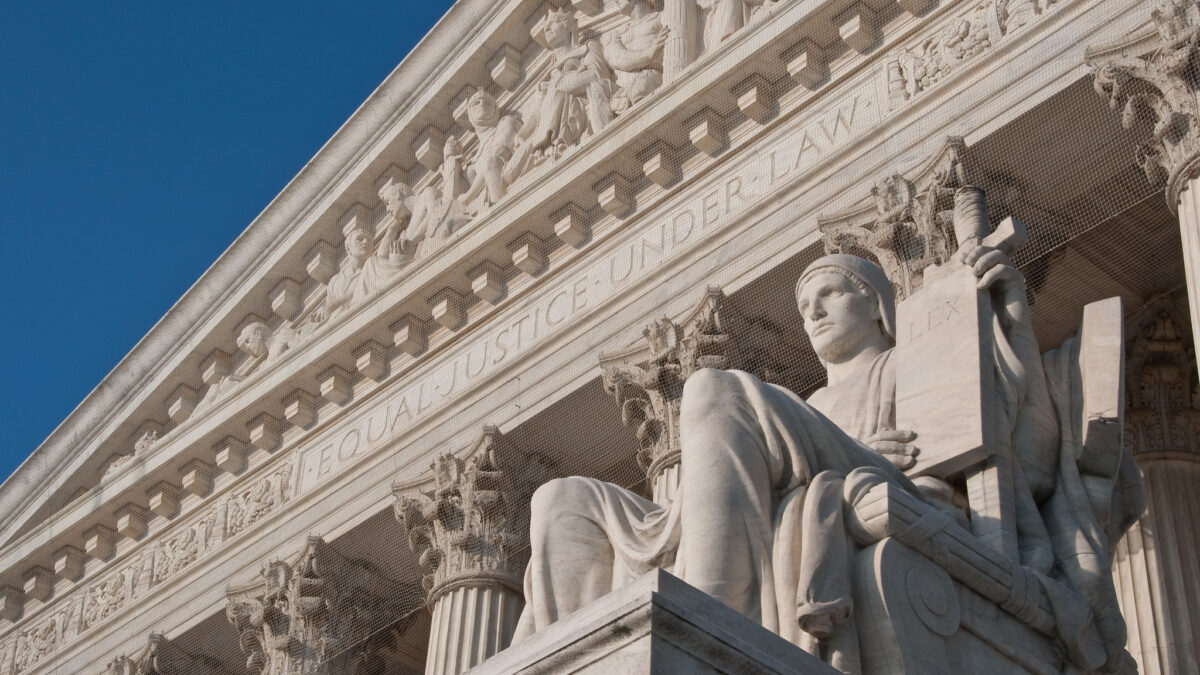






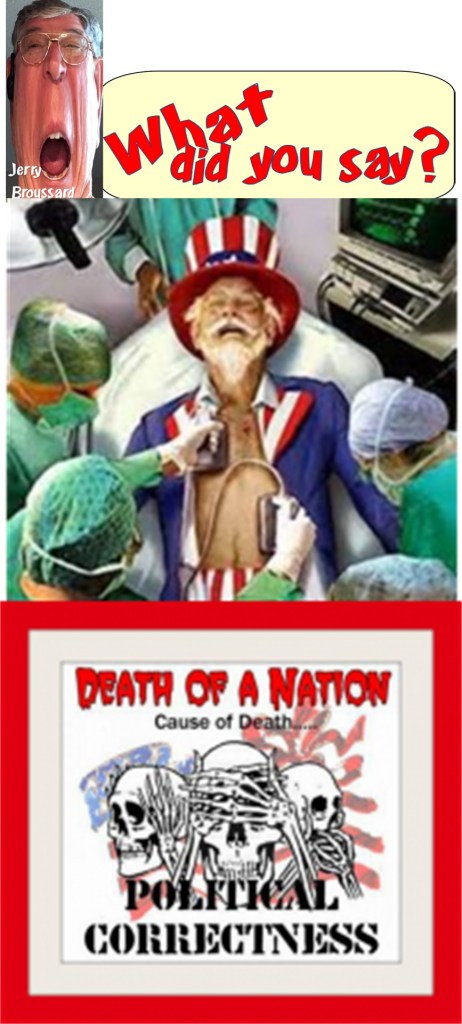







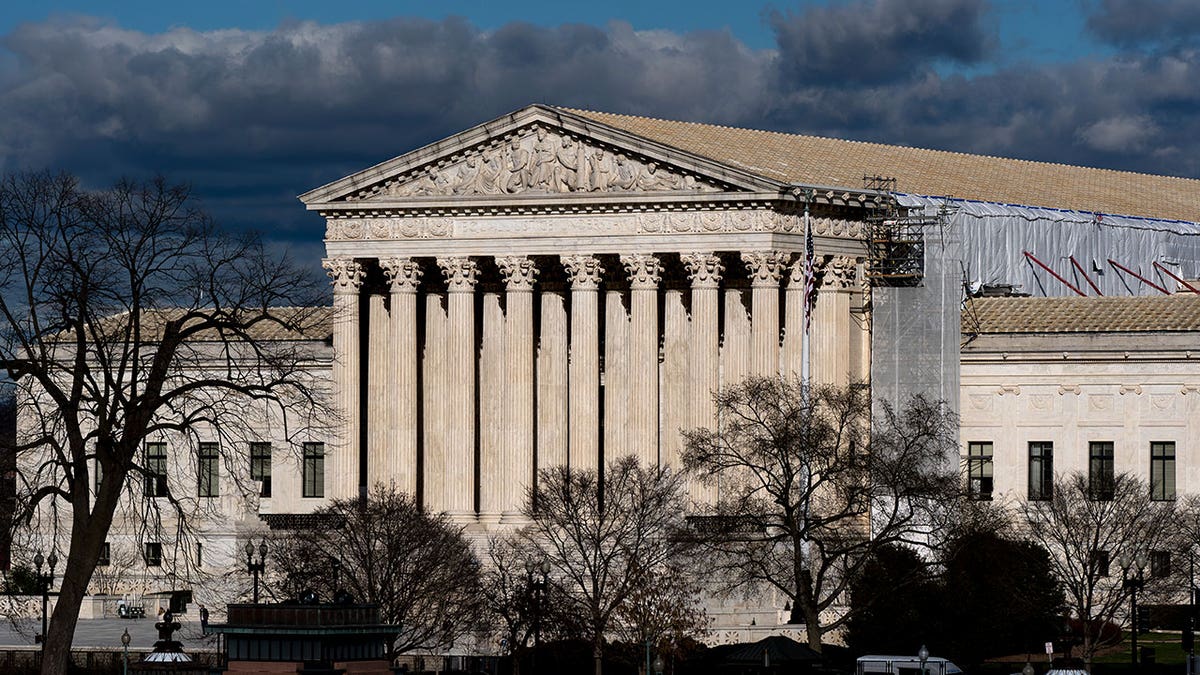
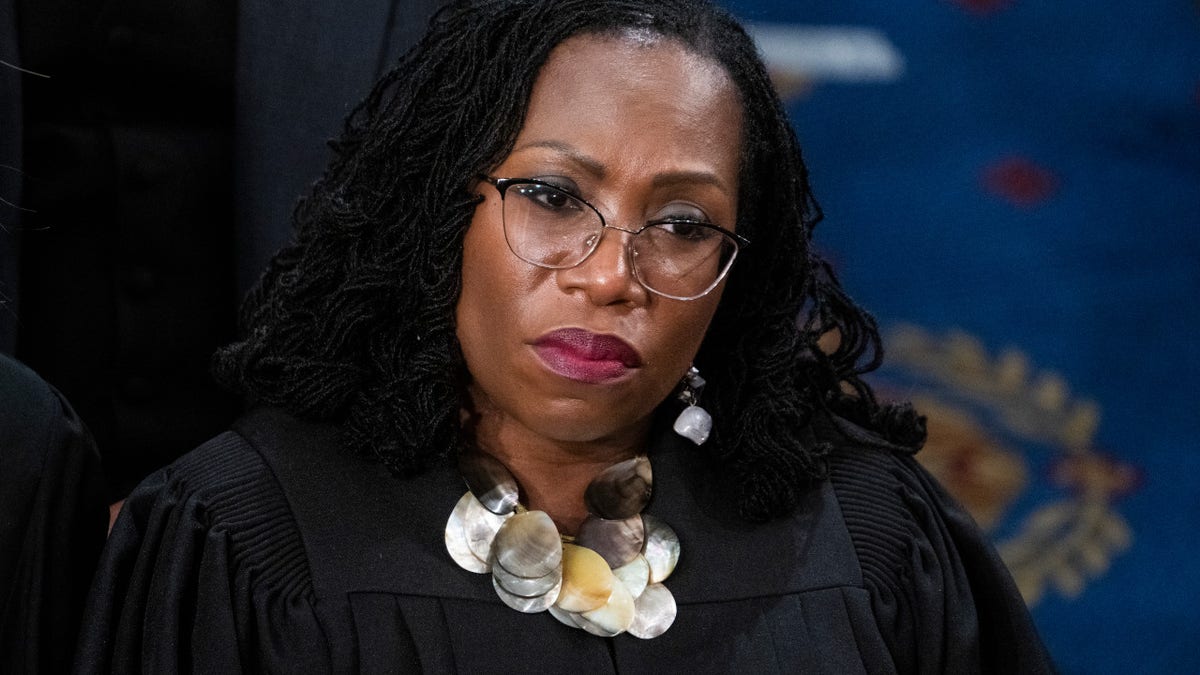
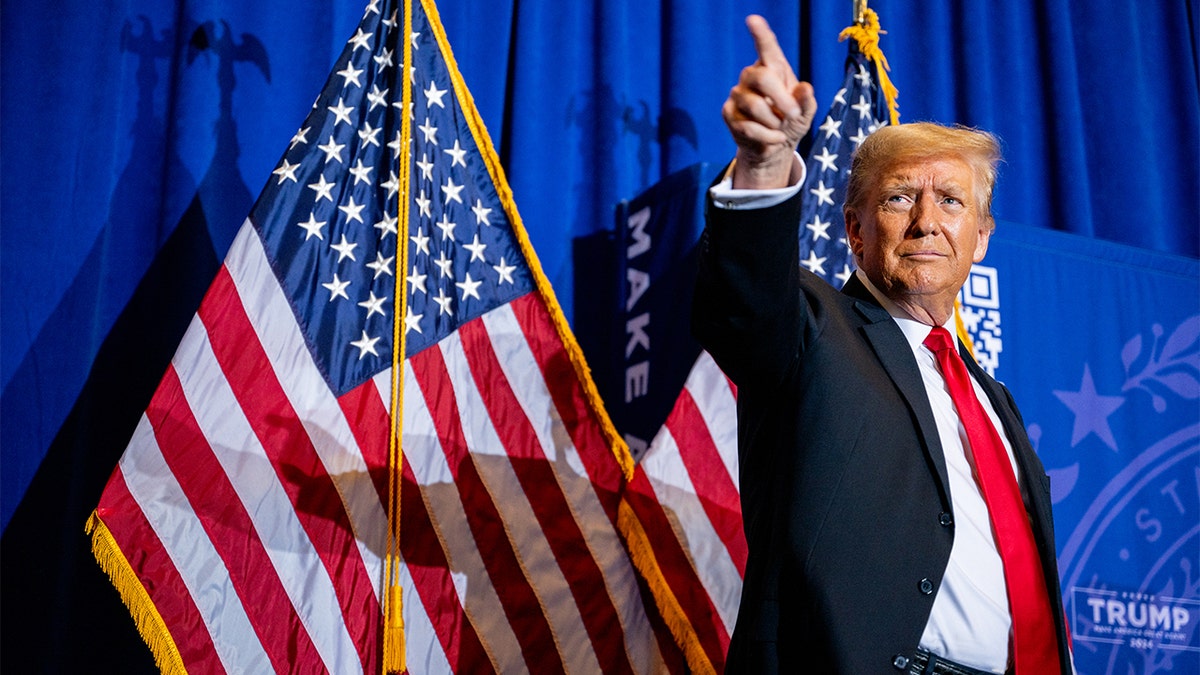
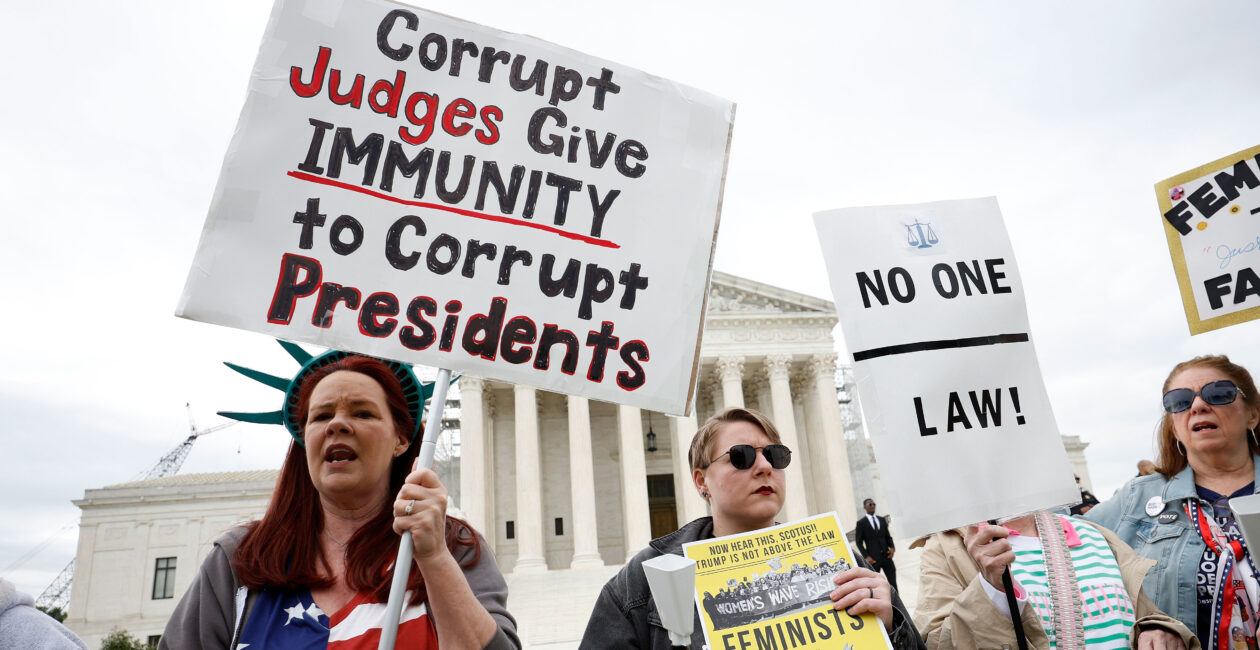











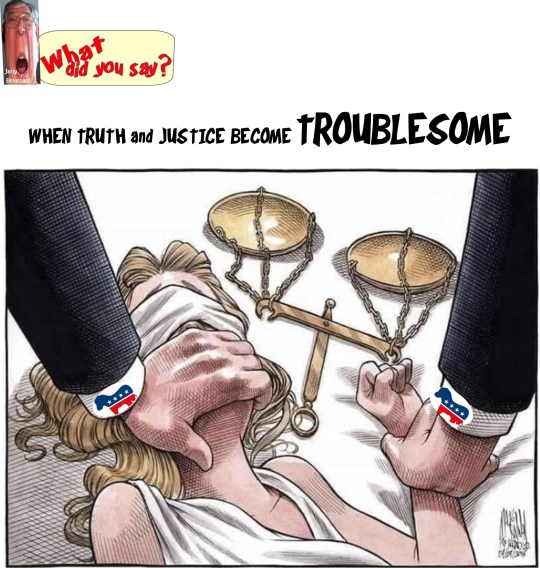

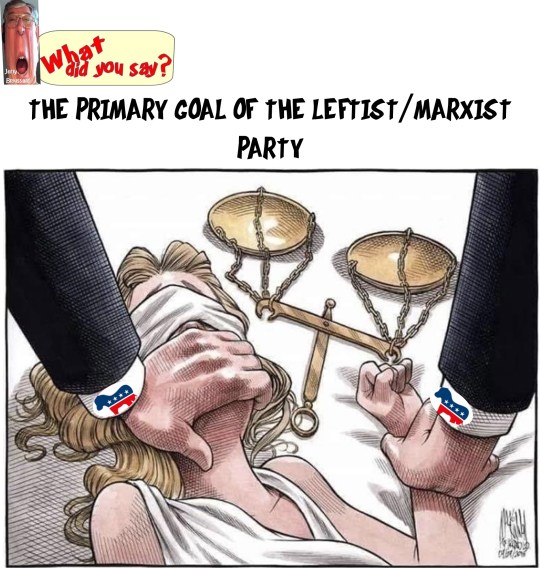
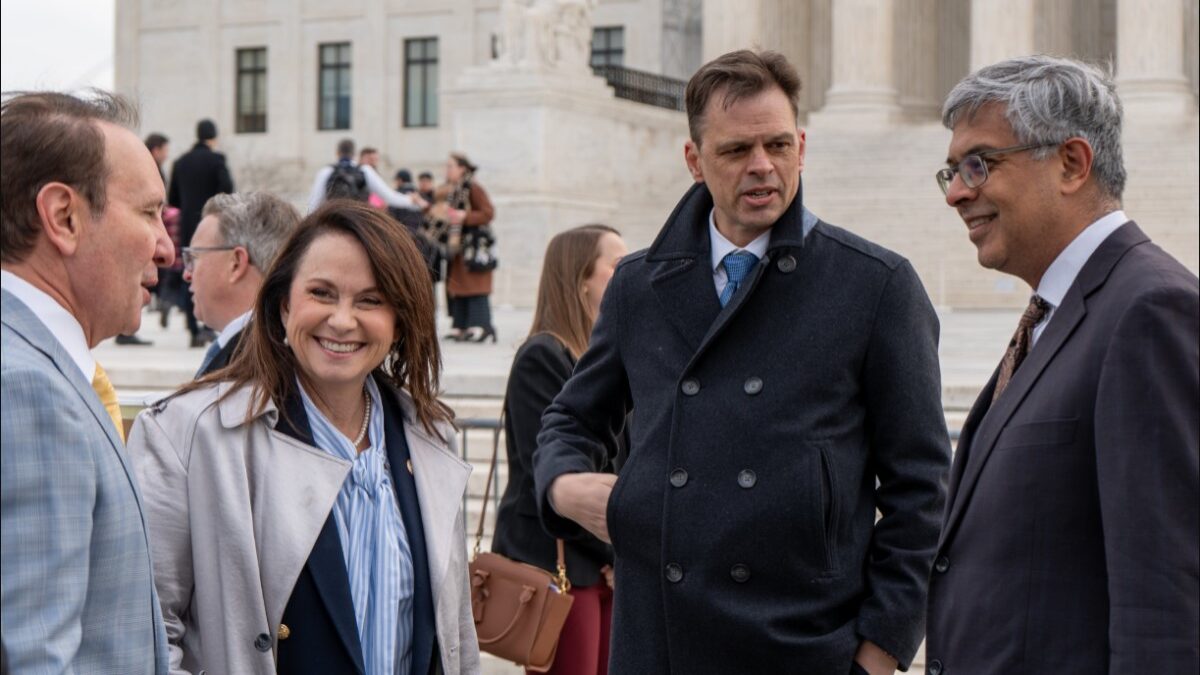


 What Did You Say?
You must be logged in to post a comment.