
Perspectives; Thoughts; Comments; Opinions; Discussions

Posts tagged ‘lawyers’

American Bar Association Requiring All Law Schools to Push DEI, Displacing Constitutional Law


BY: MONROE HARLESS | JUNE 18, 2024
Read more at https://thefederalist.com/2024/06/18/american-bar-association-requiring-all-law-schools-to-push-dei-displacing-constitutional-law/

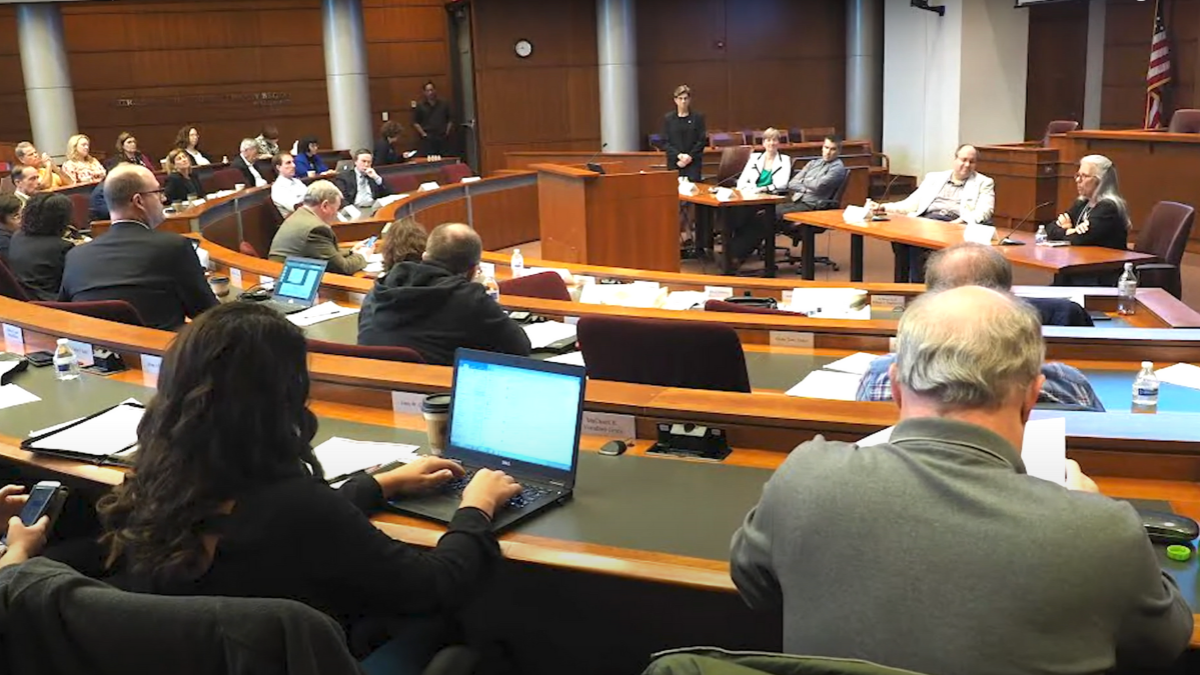
IU Robert H. McKinney Law School classroom

Author Monroe Harless profile

MONROE HARLESS

VISIT ON TWITTER@MONROEHARLESS

MORE ARTICLES

When Indiana University implemented DEI standards in its law school curriculum, Professor John Lawrence Hill warned the state legislature about attempts by “extreme idealogues to indoctrinate students” that “fly in the face” of America’s legal foundations.

Addressed to Indiana State Sens. Jeff Raatz and John Crane, Hill’s letter challenges the university’s new mandatory “responsible lawyering” course for first-year law students, introduced to comply with the American Bar Association’s (ABA) “cross-cultural competency” requirements. Hill argues that this move politicizes legal education.

“This class is guaranteed to further polarize and politicize the law school environment and represents yet another attempt by the academic Left to provide a platform for extreme idealogues to indoctrinate students who are essentially academic hostages,” Hill wrote in his letter. “DEI is now ‘in’ at the McKinney school….”

In an interview with The Federalist, Hill, a professor at Indiana University Robert H. McKinney School of Law (IU McKinney) says that issues with the ABA’s DEI requirements are long-standing.

A New ABA Requirement

In February 2022, the ABA introduced a new standard for legal education. Standard 303(c) reads, “A law school shall provide education to law students on bias, cross-cultural competency, and racism: (1) at the start of the program of legal education, and (2) at least once again before graduation.”

This marks the first time the ABA has mandated non-legal coursework in law school curriculum.

Hill learned of the new ABA requirement when he was serving on the law school’s academic affairs committee, which was tasked with implementing curricular reform. At the time, Hill chalked it up to an “unnecessary” addition to students’ legal education.

Once Hill departed from the committee, however, the university faculty capitalized on the new ABA instructions. Although standard 303(c) can be satisfied through orientation sessions, lectures, or “other educational experiences,” the faculty at IU McKinney opted to create a mandatory DEI course.

“[As] things developed, and I saw the way it was going … it wasn’t just unnecessary. It’s been baleful,” Hill says. “I mean, it’s really been … used as a predicate to make other changes.”

DEI at the Expense of Constitutional Law

In order to introduce new DEI coursework, the committee gave three proposals to the faculty. Two of them involved moving constitutional law to the second year, a major departure from traditional law school curriculum. Hill says this provoked a “huge faculty fight.”

“Every single one of us took constitutional law in the first year. Every single law student has taken Con Law in the first year for a century,” Hill recalls telling the faculty. “Why is it that all of a sudden our students can’t do this?”

In a memo, Hill urged the faculty to reject the abandonment of constitutional education for first-year students. Hill says he suggested a number of alternatives, including reducing the hours of one of his own classes, civil procedure. 

“People freaked out at the memo,” Hill remembers. “There was a lot of anger.”

As a professor of constitutional law himself, Hill viewed the proposals to move constitutional law as particularly egregious.

“I believe that the real reason for throwing Constitutional Law out of the first year is plainly ideological,” Hill wrote in his letter to state senators. “Our Constitution enshrines and projects the values of liberty, individuality, and equality under the law.  These values, which have served our nation for over 235 years, fly in the face of the DEI paradigm.”

In April, the faculty agreed to keep constitutional law in the first-year curriculum while still incorporating the “responsible lawyering” course. The new curriculum will take effect this fall.

“The law school has not considered or approved a 1-hour Diversity, Equity, and Inclusion (DEI) course,” a spokeswoman for IU McKinney said in a statement to The Federalist. “A new 1L course, Responsible Lawyering, will include professional identity formation, consistent with ABA Standard 303, among other professionalism topics.”

However, “responsible lawyering” was added in direct response to the ABA’s DEI agenda. According to the ABA, this type of coursework will “reinforce the skill of cultural competency and their obligation as future lawyers to work to eliminate racism in the legal profession.” Hill describes this curriculum as a sign of more leftist change down the road.

“In law, sometimes a case is called a signal. It may be more modest in terms of what it actually rules, but it signals a change … a new way of doing things. The ABA requirement was cover, and it was a signal that … law schools can make changes, including pretty dramatic changes,” Hill says. “Many people in our faculty said this is a cover. The ABA has given us cover. That term was used specifically by other faculty members.”

According to Hill, these changes run deeper than some may think. 

“What ties all this together is that there is an ideological agenda. Some people understand that consciously. They embrace it. They pursue it. A lot of other people just sort of go along, understanding the current. You know, people can sense when political currents are changing or where they’re moving, and so they sort of move with it, without really sharing the goal as such. But I think that this was something that came down from on high [that is] ideological, deeply ideological.”

In an interview with The Federalist, Raatz confirmed he is investigating the matter personally. 

“We can all be sensitive to one another, but to mandate diversity, equity, inclusion … what does that really mean?” Raatz, a recipient of Hill’s letter, told The Federalist. “To just be frank about it, I’m not a proponent of DEI, honestly, and I’m going to determine just what their parameters are, and we’ll go from there.”

Fighting a DEI Agenda

Hill sent his letter to Raatz and Crane on Saturday afternoon. The senators are members of the Indiana Senate Education and Career Development Committee, and Hill hopes making them aware of the situation could lead to action. 

“I have taught at McKinney for 21 years. I love this school and I love our students,” Hill wrote. “I hope that there might be something that you and your colleagues in the Indiana House and Senate might be able to do to respond to these developments.”

In the meantime, his concern is primarily for the quality of education at IU McKinney. 

“When I started teaching, I was middle of the road. I wasn’t, you know, a wild-eyed progressive, but I wasn’t a libertarian or a conservative, either. I tried to kind of find the middle way, but I started to see the extent to which our textbooks, the way people teach classes, who gets tenure, who’s elevated — I mean, there’s so much of politics in it.”

Today, Hill says he still has hope for the law school — and for Americans.

“The most important thing is that you get everything accurate,” Hill told The Federalist. “I think once people know, it makes it harder for the powers that be to continue to advance these causes. I mean, everyone is aware of what’s going on. People are smart. Americans are smart. Once they’re aware of what’s going on, how it’s going on, it removes the cover for people who are trying to essentially push these values, these courses.”

Monroe Harless is a summer intern at The Federalist. She is a recent graduate of the University of Georgia with degrees in journalism and political science.

WashPost: Trump Told Lawyers No to Making Deal on Docs


By Eric Mack    |   Thursday, 15 June 2023 12:01 PM EDT

Read more at https://www.newsmax.com/politics/donald-trump-fbi-indictment/2023/06/15/id/1123684/

Former President Donald Trump was unwilling to negotiate with Justice Department investigators last fall, firm in his belief his documents were protected under the Presidential Records Act (PRA), according to The Washington Post. Christopher Kise, one of Trump’s new attorneys, reportedly sought to approach the investigators before special counsel Jack Smith was appointed by Attorney General Merrick Garland, seeking to “take the temperature down” and make a deal that would avoid a federal indictment. But Trump reportedly rejected that route, preferring to take a legal stance that was ruled on in the “Clinton socks case” against Judicial Watch’s Tom Fitton.

Trump has been taking advice from Fitton — at times against the advice of his own hired legal counsel — about the Clinton socks case, the PRA precedent, and his legal right to retain items he did not want to surrender to the National Archives, according to the Post. Kise, a former Florida solicitor general, declined to comment to The Washington Post.

“President Trump has consistently been in full compliance with the Presidential Records Act, which is the only law that applies to Presidents and their records,” a Trump spokesman wrote in a statement to Newsmax. 

“In the course of negotiations over the return of the documents, President Trump told the lead DOJ official, ‘anything you need from us, just let us know.’ Sadly, the weaponized DOJ rejected this offer of cooperation and conducted an unnecessary and unconstitutional raid on the President’s home in order to inflict maximum political damage on the leading presidential candidate. 

“The Biden regime’s despicable efforts are failing. President Trump maintains a commanding lead in the polls and is poised to reclaim the White House for the American people and make our country great again.”

The National Archives has long rejected Trump’s claims.

“The PRA requires that all records created by presidents (and vice presidents) be turned over to the National Archives and Records Administration (NARA) at the end of their administrations,” it wrote in a June 9 statement as Smith unsealed the 37-count indictment against Trump.

“The PRA treats the records of the president and those of the vice president in almost the same manner such that, in most cases below, president and vice president can be used interchangeably.”

Instead of using the PRA as the basis for the indictment, Smith’s charges reference the Espionage Act of 1917.

Fitton has made the case that the charges against Trump allege no crime and “won’t survive scrutiny.”

“I testified before the grand jury for four hours, and there were a few questions, I guess, they needed to check off in terms of potential criminal activity related to classified information and such, but most of the time was spent arguing with obviously partisan lawyers about policy debates,” Fitton said on Newsmax’s “Eric Bolling The Balance” on Monday before Trump’s arrest and arraignment. “And after four hours, I thought, ‘Why am I being questioned on this First Amendment activity?’

“I saw firsthand that this was a politicized process.

“They set it up so they could concoct and manufacture obstruction when, in fact, there was no obstruction. They left out the fact that [Trump] cooperated and told the senior Justice Department official in his home, ‘You can have whatever you want.’ And he directed his attorneys, right in front of him, ‘Give them anything they want.’ That didn’t make it into the indictment. This indictment is evidence of corruption by the Justice Department.”

Fitton told the Post that he dined with Trump on Monday, telling the paper he was giving Trump advice but declined to elaborate.

“I think what is lacking is the lawyers saying, ‘I took this to be obstruction,'” Fitton told the Post. “Where is the conspiracy? I don’t understand any of it. I think this is a trap. They had no business asking for the records … and they’ve manufactured an obstruction charge out of that. There are core constitutional issues that the indictment avoids, and the obstruction charge seems weak to me.”

Smith’s grand jury heard from a number of witnesses who were asked about Fitton’s role in advising Trump, according to the Post. Fitton has been publicly active in seeking to get Biden’s Senate records made public, which could include documents related to Tara Reade’s allegations of sexual misconduct when Biden was a senator.

Reade, fearing for her life, fled to Russia seeking asylum. Reade, who worked as a staff assistant in 1992-1993 for then-Sen. Biden, D-Del., has alleged Biden sexually assaulted her and had filed a Senate personnel complaint, which alleged Biden actively withheld from being released from the University of Delaware.

The Clinton socks case Trump has repeatedly mentioned as precedent for the retention of records was originally related to Fitton’s Judicial Watch in 2012, which former President Barack Obama-appointed Judge Amy Berman Jackson ruled NARA could not force former President Bill Clinton to turn over audio tapes he kept in his sock drawer. Jackson has been frequently used by the Justice Department against Trump-related officials, lending credence to House Republican arguments there is a weaponization of justice and the government against Trump and conservatives.

Fitton told the Post he remains convinced Trump lawyers “should have been more aggressive in fighting the subpoenas and fighting for Trump.”

Related Stories:

© 2023 Newsmax. All rights reserved.

Manhattan D.A. Enlisted a Who’s Who of Biden Admin Buddies for Trump Takedown


BY: MARGOT CLEVELAND | APRIL 12, 2023

Read more at https://thefederalist.com/2023/04/12/manhattan-d-a-enlisted-a-whos-who-of-biden-admin-buddies-for-trump-takedown/

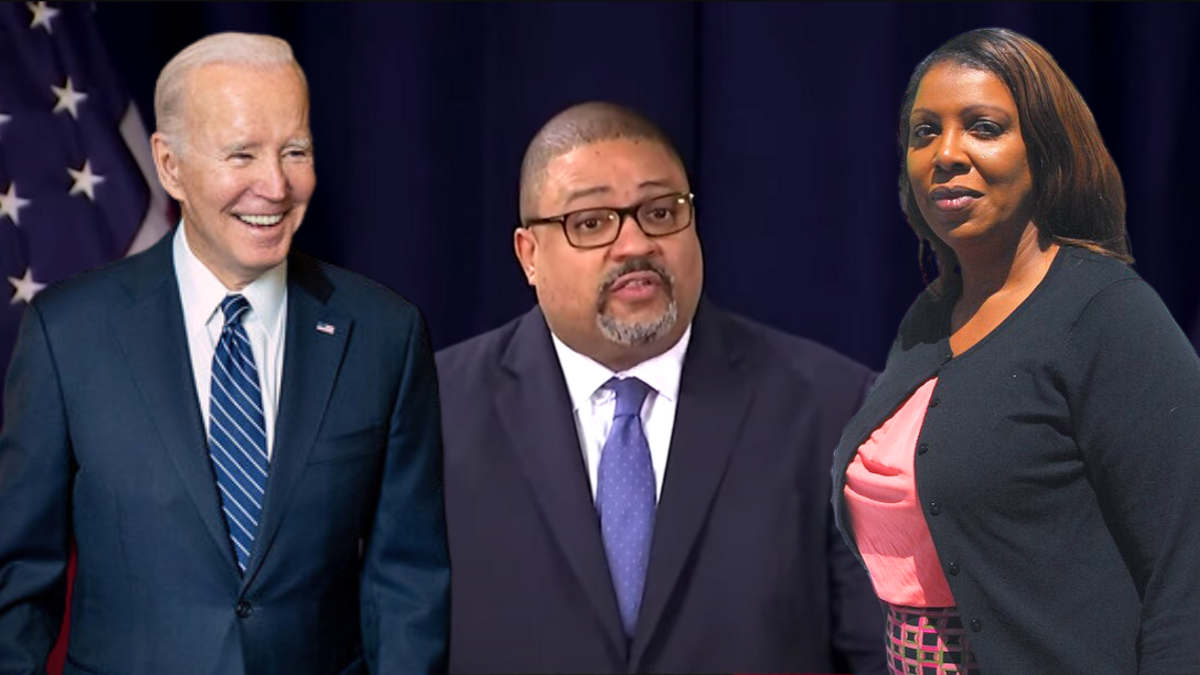
Manhattan D.A. Alvin Bragg with Joe Biden and NY AG Letitia James
There’s quite a pattern to the Manhattan D.A. office’s unprecedented use of outside, Democrat-connected lawyers to investigate Trump.

Author Margot Cleveland profile

MARGOT CLEVELAND

VISIT ON TWITTER@PROFMJCLEVELAND

MORE ARTICLES

A New York City law firm with “strong ties” to Democrats and the Biden administration, and a big-time fundraiser for both, lent the Manhattan district attorney three lawyers to help him take down Donald Trump. This cohort included former Special Assistant District Attorney Mark F. Pomerantz, whose leaked resignation letter appears responsible for the Manhattan prosecutor’s decision to indict Trump.

Manhattan D.A. Alvin Bragg became the first prosecutor to bring criminal charges against a former president when he moved forward last week with the arraignment of Trump on 34 counts of falsifying business records. The pathetic, barebones indictment was quickly denounced by pundits on both sides of the political aisle. Then on Friday, the House Judiciary Committee raised additional concerns about the role Matthew Colangelo, the former No. 3 man in the Biden administration’s Department of Justice, played in the targeting of Trump.

While Bragg’s hiring of Colangelo to reportedly “jump-start” the investigation into Trump further indicates the indictment was politically motivated, the Manhattan D.A. office’s unprecedented use of outside, Democrat-connected lawyers to investigate Trump pre-dates Colangelo’s arrival by nearly a year.

A Pattern

In early to mid-February of 2021, Bragg’s predecessor, District Attorney Cyrus Vance, arranged for private criminal defense attorney and former federal prosecutor Mark Pomerantz to be a special assistant district attorney for the Manhattan D.A.’s office. Pomerantz, whom The New York Times noted was to work “solely on the Trump investigation,” took a temporary leave of absence from his law firm, Paul, Weiss, Rifkind, Wharton & Garrison, where he had defended former Sen. Robert Torricelli, D-N.J., against alleged campaign finance violations. But even before being sworn in as a special assistant to the Manhattan D.A., Pomerantz had reportedly “been helping with the case informally for months…” 

According to the Times, “the hiring of an outsider is a highly unusual move for a prosecutor’s office.” One must wonder, then, how much more unusual it is for the Manhattan D.A.’s office to receive the “informal” assistance of a private criminal defense attorney. The legacy news outlet, however, justified the hiring of Pomerantz based on the “usual complexity” of “the two-and-a-half-year investigation of the former president and his family business.” 

A few months later, the D.A.’s office welcomed two more outsiders, Elyssa Abuhoff and Caroline Williamson, who also both took leaves of absence from the New York powerhouse Paul, Weiss to work on the Trump investigation as special assistant district attorneys.

For a law firm to lend not one but three lawyers to the Manhattan D.A.’s office seems rather magnanimous, until you consider Paul, Weiss’s previous generosity to Joe Biden. During Biden’s White House run, the law firm hosted a $2,800-per-plate fundraiser for about 100 guests. 

The chair of the Paul, Weiss law firm, Brad Karp, also topped the list of Biden fundraisers, bundling at least $100,000 for the then-candidate. “As someone who cares passionately about preserving the rule of law, safeguarding our democracy and protecting fundamental liberties, I’ve been delighted to do everything I possibly can to support the Joe Biden/Kamala Harris ticket,” Karp wrote in an email.

Karp’s support of the Democrat presidential ticket isn’t surprising given that his fellow Paul, Weiss partner Robert Schumer is Senate Majority Leader Chuck Schumer’s brother. 

Biden’s connection to the firm, however, dates much further back, with the former secretary of homeland security in the Obama-Biden administration, Jeh Johnson, also heralding from Paul, Weiss. Once elected president, Biden nominated Jonathan Kanter, a former partner of Paul, Weiss, to serve as the top antitrust enforcement official at the Justice Department. In fact, according to Bloomberg, Paul, Weiss has “emerge[d] as Biden-Era N.Y. Power Center.”

A Resignation

The three Paul, Weiss alumni sent to the Manhattan D.A.’s office to bolster the Trump investigations would all make news, but for different reasons. Pomerantz first garnered headlines when he resigned as a special assistant district attorney in early 2022, after Bragg became Manhattan’s D.A.

In his resignation letter, leaked to The New York Times, Pomerantz said that in late 2021, Bragg’s predecessor, Vance, had “concluded that the facts warranted prosecution, and he directed the team to present evidence to a grand jury and to seek an indictment of Mr. Trump and other defendants as soon as reasonably possible.” But after replacing Vance as D.A., Bragg decided “not to go forward with the grand jury presentation and not to seek criminal charges at the present time,” Pomerantz wrote, adding, “The investigation has been suspended indefinitely.”

What Pomerantz’s letter did not say, however, was that in late 2021, “at least three career prosecutors asked to move off the investigation,” reportedly “concerned that the investigation was moving too quickly, without clear evidence to support possible charges.” Instead, in his resignation, Pomerantz declared he believes “Donald Trump is guilty of numerous felony violations,” that “the public interest warrants the criminal prosecution of Mr. Trump,” and that “such a prosecution should be brought without any further delay.” 

Pomerantz later rejoined Paul, Weiss, Rifkind, Wharton & Garrison and authored a book about the Trump investigation.

Pomerantz’s letter and his claims that Bragg had suspended the Trump probe triggered a political firestorm, which the Manhattan D.A. sought to quell by telling the public the investigation was ongoing.

Criminal Charges

Meanwhile, the Manhattan D.A.’s office pushed forward in its criminal case against the Trump Corporation. A grand jury had indicted the Trump Corporation in late June of 2021 on charges it engaged in a scheme to avoid paying taxes on the salaries of high-level executives by instead funneling compensation through perks, such as luxury apartments and cars. A second Trump corporation would later be added to the criminal case that went to trial in late 2022.

The trial team that prosecuted the case included the other two Paul, Weiss attorneys on loan to the Manhattan D.A.’s office: Abuhoff and Williamson. Bragg borrowed a third outside attorney, Gary T. Fishman, from New York’s Democrat Attorney General Letitia James. Along with three regular members of the Manhattan D.A.’s office, the three “special assistant district attorneys” helped convict the Trump-related business entities in early December 2022. 

After securing convictions of the two Trump corporations, Abuhoff and Williamson ended their “special assistant district attorney” relationship with Bragg’s office in December 2022 and went back to Paul, Weiss — a return that would be short-lived. Abuhoff rejoined the Manhattan D.A.’s office in February 2023, and Williamson returned the next month, but now both as regular members of the staff. 

So short was their time back at Paul, Weiss, in fact, that one must wonder if the firm paid them bonuses following their departure from the Manhattan D.A.’s office. The Federalist posed this question to Paul, Weiss, but the inquiry went unanswered. Paul, Weiss also did not respond to questions concerning whether the lawyers received any compensation or Paul, Weiss benefits while on leave to the D.A.’s office. 

Abuhoff and Williamson’s return to the D.A.’s office followed the news that in early December, Bragg had hired Matthew Colangelo from the Biden DOJ to “jump-start” the office’s investigation into Trump. Upon his inauguration, Biden had appointed Colangelo to serve in the No. 3 slot at the DOJ, showing the trust Biden has in the lawyer now charged with taking down his opponent Trump. 

Colangelo had also previously worked in the Obama-Biden administration and as chief counsel and executive deputy attorney general in A.G. James’ office, where he and Fishman reportedly investigated Trump. As noted above, James would later lend Fishman to the Manhattan D.A.’s office, keeping with her campaign promise to “be a real pain in the -ss” to Trump. It’s no wonder House Judiciary Chair Jim Jordan is concerned about Colangelo’s role in the unprecedented indictment.

Connecting the Dots

But the issue goes much beyond Colangelo, for it seems likely Bragg never would have hired Colangelo had Pomerantz’s resignation letter never been leaked to The New York Times. It’s outrageous that Pomerantz was reportedly “informally” advising the former Manhattan D.A. while working for the “Biden-Era N.Y. Power Center” law firm with extensive connections to Democrats. Equally outrageous is the fact that the same law firm lent the D.A.’s office three lawyers to bolster the Trump investigation.

It seems Bragg was swayed by New York politics to alter the communist boast of Joseph Stalin’s secret police chief, Lavrentiy Beria: “Show me the man and I’ll show you the crime.” The Manhattan D.A. had the man but couldn’t find the crime. 

“Lend me your top attorneys to show me a crime,” is the new motto of the political machine New York Democrats built to purge the country, communist style, of Trump. That should horrify every American.


Margot Cleveland is The Federalist’s senior legal correspondent. She is also a contributor to National Review Online, the Washington Examiner, Aleteia, and Townhall.com, and has been published in the Wall Street Journal and USA Today. Cleveland is a lawyer and a graduate of the Notre Dame Law School, where she earned the Hoynes Prize—the law school’s highest honor. She later served for nearly 25 years as a permanent law clerk for a federal appellate judge on the Seventh Circuit Court of Appeals. Cleveland is a former full-time university faculty member and now teaches as an adjunct from time to time. As a stay-at-home homeschooling mom of a young son with cystic fibrosis, Cleveland frequently writes on cultural issues related to parenting and special-needs children. Cleveland is on Twitter at @ProfMJCleveland. The views expressed here are those of Cleveland in her private capacity.

Democrats’ Unconstitutional Crusade to Disbar Texas AG Ken Paxton Shows How Far They’ll Go to Win Elections


BY: MARGOT CLEVELAND | FEBRUARY 13, 2023

Read more at https://thefederalist.com/2023/02/13/democrats-unconstitutional-crusade-to-disbar-texas-ag-ken-paxton-shows-how-far-theyll-go-to-win-elections/

Texas AG Ken Paxton
Democrats are working overtime to make it so painful for attorneys to represent Republicans in election cases that the next candidate will be unable to find lawyers willing to battle on their behalf.

Author Margot Cleveland profile

MARGOT CLEVELAND

VISIT ON TWITTER@PROFMJCLEVELAND

MORE ARTICLES

A state court judge refused to halt the Texas Bar’s assault on Attorney General Ken Paxton for his decision to challenge several swing states’ execution of the 2020 election in Texas v. Pennsylvania, a little-noticed perfunctory order published in late January revealed.

While the partisan targeting of Paxton represents but one of the many attempts by Democrats to weaponize state bars to dissuade attorneys from representing Republicans, court documents obtained by The Federalist reveal that in the case of the Texas attorney general, the bar went nuclear.

In March of 2022, as Paxton prepared to face Land Commissioner George P. Bush in the May 2022 GOP runoff for attorney general, news leaked that the State Bar of Texas intended to advance an ethics complaint against the Republican attorney general. Then, soon after Paxton prevailed in the primary, on May 25, 2022, the Commission for Lawyer Discipline, which is a standing committee of the State Bar of Texas, filed a disciplinary complaint against Paxton in the Collin County, Texas district court. 

While the Texas Bar’s disciplinary complaint represents an outrageous and unconstitutional attack on the attorney general, as will be detailed shortly, the backstory is nearly as troubling — both the machinations underlying the charge against Paxton and, more broadly, the barrage of politicized bar complaints pursued against Republican lawyers who provided legal advice or litigated various issues in the aftermath of the November 2020 general election.

Bars Gone Rogue

The D.C. Bar’s investigation into former Trump administration Assistant Attorney General Jeff Clark based on a complaint from Sen. Dick Durbin, D-Ill., exemplifies the partisan co-opting of the various professional responsibility boards charged with overseeing attorneys’ conduct. 

In Clark’s case, the ethics charge was both “demonstrably false and premised on the fraudulent narratives pushed by the partisan politicians running the Jan. 6 show trial and their partners in the press.” Yet Clark has been forced to fight for his livelihood because the D.C. Bar allowed Democrats to convert a disagreement over Clark’s legal opinion into a question of professional ethics. Clark has attempted to put a halt to the proceedings by moving to remove the case to the federal district court, but Clark’s motion has been stalled there for several months.

More recently, the California State Bar joined in the political witch hunt when it filed a 35-page, 11-count disciplinary complaint against attorney and former law professor John Eastman. The California State Bar’s complaint alleged Eastman’s engagement “in a course of conduct to plan, promote, and assist then-President Trump in executing a strategy, unsupported by facts or law, to overturn the legitimate results of the 2020 presidential election by obstructing the count of electoral votes of certain states.” As I wrote at the time:

The 11 charges against Eastman prove troubling throughout, with the State Bar of California proposing to discipline Eastman for presenting legal analyses to his client, Trump, and for speaking publicly on his views about the election, with the bar even attempting to hold Eastman responsible for any violence that occurred on Jan. 6. The disciplinary complaint also misrepresents numerous arguments Eastman and others made concerning the 2020 election, falsely equating claims of violations of election law with fraud.

Eastman’s long and costly battle against the California Bar is only beginning. And that is precisely the point of involving state bars: to make it so painful for attorneys to represent Republicans in election cases that the next presidential candidate — or senatorial or congressional candidate — will be unable to find lawyers willing to battle on their behalf.

A Broader Campaign

These efforts are well-coordinated and well-funded, with the group 65 Project launching in March of 2022 ethics complaints against 10 lawyers who worked on election lawsuits following the 2020 presidential election. According to Influence Watch, “65 Project was ‘devised’ by Democratic consultant and former Clinton administration official Melissa Moss,” and is managed by attorney Michael Teter, a former litigation associate with the DNC-connected law firm Perkins Coie. David Brock, of Media Matters fame, advises the group, and the advisory board includes, among others, the former U.S. Senate Majority Leader Tom Daschle, D-S.D. 

The 65 Project reportedly “seeks to disbar 111 lawyers from 26 states in total,” but is “not targeting any Democratic-aligned attorneys who have challenged election laws or results in the past.” Rather, the project’s sole aim is Republican lawyers, such as Eastman, with the group pushing for Eastman’s disbarment from the Supreme Court Bar.

It is not merely private attorneys the Democrat project targets, however. In September, the 65 Project filed complaints against the attorneys general of 15 states, including Alabama, Arkansas, Florida, Indiana, Kansas, Louisiana, Mississippi, Missouri, Montana, Nebraska, Oklahoma, South Carolina, Tennessee, Utah, and West Virginia, advocating the bars in those states take disciplinary action against the attorneys general for conduct related to the 2020 election.

Texas AG Paxton didn’t make the list, though, because local Democrats had already taken up the charge. And here, the backstory reveals the troubling politicization of state bars is not limited to Democratic-connected groups like the 65 Project or to the bars in leftist locales such as D.C. and California.

Anti-Paxton Crusade

In Paxton’s case, the state bar received at least 85 complaints about Paxton related to Texas v. Pennsylvania. The Office of Chief Disciplinary Counsel reviewed the complaints and dismissed them, finding “the information alleged did not demonstrate Professional Misconduct.” But then four attorneys appealed the dismissal, including one who, according to court filings, was the president of the Galveston Island Democrats and a friend of a Democrat seeking to run against Paxton for attorney general in the then-upcoming 2022 election. 

An appeals body within the Texas State Board reversed the dismissal of the complaints, and later a fifth complaint was added to the charges against Paxton. Paxton was then forced to respond to the allegations, which itself proved difficult because they consisted of vague rhetoric, such as claims that Paxton “violated his duty and obligations as a Texas attorney” and “filed an utterly frivolous lawsuit,” bringing “shame and disrespect to the State of Texas and the legal community of Texas.”

Nonetheless, Paxton filed a detailed response, expanded on the theories Texas asserted in the Texas v. Pennsylvania case, and provided the bar with an extensive discussion of the factual and legal basis underpinning the court filings. The Texas Bar then handed the complaints over to what Paxton described as “an investigatory panel comprised of six unelected lawyers and activists from Travis County.” 

As Paxton’s later court filings would stress, “as a group, the panel donated thousands of dollars to federal, state, and local candidates and causes opposed to Attorney General Paxton.” “What’s more,” Paxton argued in opposing the bar’s case against him, “members of the panel voted consistently in Democratic primaries for over a decade. Several have maintained highly partisan social media accounts hostile to Paxton.” 

Unsurprisingly, the partisan panel found “just cause” existed to believe that Paxton had violated a catch-all provision of the Rules of Professional Conduct, namely the canon prohibiting attorneys from engaging “in conduct involving dishonesty, fraud, deceit, or misrepresentation.”

But in making this finding and filing a disciplinary petition in the state court, the Texas Bar wholely ignored the fundamental flaw in its crusade against Paxton — and one of constitutional dimension: The state bar, as a bureaucratic arm of the judicial branch, violates the Texas Constitution’s guarantee of separation of powers by challenging Paxton’s execution of his duties as attorney general.

Separation of Powers

Paxton concisely exposed this reality in his briefing, first quoting Texas precedent that teaches: “The Texas Separation of Powers provision is violated … when one branch unduly interferes with another branch so that the other branch cannot effectively exercise its constitutionally assigned powers.” “The Commission’s suit against the Attorney General violates the Separation-of-Powers doctrine,” Paxton continued, because the “decision to file Texas v. Pennsylvania is committed entirely to the Attorney General’s discretion. No quasi-judicial body like the Commission can police the decisions of a duly elected, statewide constitutional officer of the executive branch.” 

In seeking the dismissal of the state bar complaint against him based on separation-of-powers principles, Paxton’s argument shows the politicization process becomes nuclear when the target is the state’s attorney general, writing: “Unelected administrarors from the judicial branch attempting to stand in judgment of the elected attorney general who is the sole executive officers with the authority to represent the State of Texas in the Supreme Court of the United States.”

While it is bad enough that the state bar has been used as a sword to attack political enemies, such as Eastman in California and Clark in D.C., to deter attorneys in the future from representing unpopular cases or parties, the weaponization of the state bar against a state’s attorney general is not a difference in degree, but a difference in kind. As Paxton wrote:

No other attorney in Texas, no one else on the planet can bring a lawsuit on behalf of the State … but we’ve got an administrative arm of the judicial branch, unelected state bureaucrats telling the chief legal officer of the State of Texas how he can exercise his sole prerogative and his exclusive authority to bring a civil lawsuit on behalf of the State of Texas.

Yet unelected bureaucrats — many of whom are political enemies of Paxton — have put the attorney general literally on trial for exercising the executive function with which he was constitutionally charged. And while Paxton fully briefed his position — that as a matter of constitutional law and the doctrine of separation of powers, the court lacked jurisdiction to proceed on the bar’s complaint against him — the trial judge summarily rejected Paxton’s motion, merely stating the motion was “denied.”

Paxton has yet to state publicly whether he plans to appeal the denial of his motion to dismiss to the Texas Court of Appeals. But as a matter of principle he should; this case represents not merely an attack on him personally, but on the position of attorney general.

The Federalist obtained copies of the relevant court filings and they are available hereherehereherehere, and here.


Margot Cleveland is The Federalist’s senior legal correspondent. She is also a contributor to National Review Online, the Washington Examiner, Aleteia, and Townhall.com, and has been published in the Wall Street Journal and USA Today. Cleveland is a lawyer and a graduate of the Notre Dame Law School, where she earned the Hoynes Prize—the law school’s highest honor. She later served for nearly 25 years as a permanent law clerk for a federal appellate judge on the Seventh Circuit Court of Appeals. Cleveland is a former full-time university faculty member and now teaches as an adjunct from time to time. As a stay-at-home homeschooling mom of a young son with cystic fibrosis, Cleveland frequently writes on cultural issues related to parenting and special-needs children. Cleveland is on Twitter at @ProfMJCleveland. The views expressed here are those of Cleveland in her private capacity.

ALERT: Obama Hires Huge New “Staff” for Secret Project That Will Put Every American in Danger


waving flagReported By: Kim Smith on January 7, 2016

URL of the original posting site: http://conservativetribune.com/obama-hires-new-staff-danger
Tyrant Obama

Obama continues to put this country in danger daily. In an attempt to squeeze in as much leftist regulation before he leaves office in 2017, it looks like our commander in chief wants to expand the Justice Department’s pardon office, causing many to suspect he’s about to offer presidential pardons to a new assortment of criminals and put Americans at greater risk.

The Department of Justice recently listed openings for 16 lawyers in its Office of the Pardon Attorney, which organizes petitions for clemency and makes recommendations to the attorney general for them, according to the Washington Free Beacon.

The job descriptions state the new lawyers will assist “the president in the exercise of executive clemency.” The move stirred speculation that Obama will work toward an effort to grant presidential pardons to a variety of criminals, specifically drug offenders.

A new clemency initiative has been in the works at the Justice Department for over a year now, and outside organizations predict the measure could free up to 20,000 convicted inmates from federal prisons. The measure has many government watchdog groups concerned, as it could lead to the release of thousands who are in the country illegally or those convicted of committing major drug offenses.

One congressional source familiar with the move criticized the president for abusing the presidential right to grant pardons.

“This fits perfectly with the administration’s two-term agenda of eroding the rule of law in America,” the source told the Free Beacon. “While the president certainly has the constitutional power to pardon, I shudder thinking about how he plans to use it, given his determination to release dangerous criminals.”

We do, too.

Obama has already worked to lessen the sentences of many prisoners — a pro-criminal move that already put the lives of Americans in danger. He’s also released dozens of dangerous radical Islamic terrorists from the Guantanamo Bay detention facility, some of whom have returned to the battlefield against American interests.

If it is true that he does plan to grant clemency to more prisoners, it simply reaffirms that Obama’s agenda comes before the safety of Americans.

tyrants obama- Marxist tyrant In God We Trust freedom combo 2

From the Lighter Sirde


waving flagHow Do Court Reporters Keep Straight Faces?

These are from a book called Disorder in the Courts and are things people actually said in court, word for word, taken down and published by court reporters that had the torment of staying calm while the exchanges were taking place.

ATTORNEY: What was the first thing your husband said to you that morning? WITNESS: He said, ‘Where am I, Cathy?’ ATTORNEY: And why did that upset you? WITNESS: My name is Susan!

_______________________________

ATTORNEY: What gear were you in at the moment of the impact?

WITNESS: Gucci sweats and Reeboks.

____________________________________________

ATTORNEY: Are you sexually active?

WITNESS: No, I just lie there.

____________________________________________

ATTORNEY: What is your date of birth?

WITNESS: July 18th.

ATTORNEY: What year?

WITNESS: Every year.

_____________________________________

ATTORNEY: How old is your son, the one living with you?

WITNESS: Thirty-eight or thirty-five, I can’t remember which.

ATTORNEY: How long has he lived with you?

WITNESS: Forty-five years.

_________________________________

ATTORNEY: This myasthenia gravis, does it affect your memory at all?

WITNESS: Yes.

ATTORNEY: And in what ways does it affect your memory?

WITNESS: I forget..

ATTORNEY: You forget? Can you give us an example of something you forgot? ___________________________________________

ATTORNEY: Now doctor, isn’t it true that when a person dies in his sleep, he doesn’t know about it until the next morning?

WITNESS: Did you actually pass the bar exam?

____________________________________

ATTORNEY: The youngest son, the 20-year-old, how old is he?

WITNESS: He’s 20, much like your IQ.

___________________________________________

ATTORNEY: Were you present when your picture was taken?

WITNESS: Are you sh–ting me?

_________________________________________

ATTORNEY: So the date of conception (of the baby) was August 8th?

WITNESS: Yes. A

TTORNEY: And what were you doing at that time?

WITNESS: Getting laid

____________________________________________

ATTORNEY: She had three children , right?

WITNESS: Yes.

ATTORNEY: How many were boys?

WITNESS: None.

ATTORNEY: Were there any girls?

WITNESS: Your Honor, I think I need a different attorney. Can I get a new attorney? ____________________________________________

ATTORNEY: How was your first marriage terminated?

WITNESS: By death..

ATTORNEY: And by whose death was it terminated?

WITNESS: Take a guess.

___________________________________________

ATTORNEY: Can you describe the individual?

WITNESS: He was about medium height and had a beard

ATTORNEY: Was this a male or a female?

WITNESS: Unless the Circus was in town I’m going with male.

_____________________________________

ATTORNEY: Is your appearance here this morning pursuant to a deposition notice which I sent to your attorney?

WITNESS: No, this is how I dress when I go to work.

______________________________________

ATTORNEY: Doctor , how many of your autopsies have you performed on dead people?

WITNESS: All of them. The live ones put up too much of a fight.

_________________________________________

ATTORNEY: ALL your responses MUST be oral, OK? What school did you go to?

WITNESS: Oral…

_________________________________________

ATTORNEY: Do you recall the time that you examined the body?

WITNESS: The autopsy started around 8:30 PM

ATTORNEY: And Mr. Denton was dead at the time?

WITNESS: If not, he was by the time I finished.

____________________________________________

ATTORNEY: Are you qualified to give a urine sample?

WITNESS: Are you qualified to ask that question?

______________________________________

And last:

ATTORNEY: Doctor, before you performed the autopsy, did you check for a pulse?

WITNESS: No.

ATTORNEY: Did you check for blood pressure?

WITNESS: No.

ATTORNEY: Did you check for breathing?

WITNESS: No..

ATTORNEY: So, then it is possible that the patient was alive when you began the autopsy?

WITNESS: No.

ATTORNEY: How can you be so sure, Doctor?

WITNESS: Because his brain was sitting on my desk in a jar.

ATTORNEY: I see, but could the patient have still been alive, nevertheless?

WITNESS: Yes, it is possible that he could have been alive and practicing law.

freedom combo 2

Tag Cloud