FIRST ON FOX: House Republicans are introducing a joint resolution disapproving of the Biden administration’s new “digital discrimination” rules package, which they describe as a power grab by the federal government over the internet.
The Congressional Review Act (CRA) resolution of disapproval, which is led by Republican Reps. Andrew Clyde and Buddy Carter of Georgia and co-sponsored by 65 House Republicans, aims to nullify the Federal Communications Commission’s (FCC) new digital equity rules package that went into effect this month as part of President Biden’s Infrastructure Investment and Jobs Act.
“Under the guise of ‘equity,’ the Biden Administration is attempting to radically expand the federal government’s control of all internet services and infrastructure,” Clyde said in a statement to Fox News Digital. “The FCC’s so-called ‘digital discrimination’ rule hands bureaucrats unmitigated regulatory authority that will undoubtedly impede innovation, burden consumers, and generate censorship concerns. Given the Biden Administration’s long history of weaponizing agencies against the American people, Congress should not let this unconstitutional power grab go unchecked.”
Rep. Andrew Clyde, left, President Biden and Rep. Buddy Carter (Getty Images)
A resolution of disapproval under the CRA allows lawmakers to object to rules being put forward by the administration. The FCC rules package the Republicans are targeting, which was ratified by the commission on Nov. 15 and went into effect Jan. 15, implements a section of Biden’s 2021 infrastructure bill that aims to prevent digital discrimination of access to broadband services based on income level, race, ethnicity, color, religion or national origin.
“These rules will protect civil rights, lower costs, and increase Internet access for Americans across the country,” Vice President Harris said in a Nov. 15 statement.
According to the FCC, the new rules allow it to “protect consumers by directly addressing companies’ policies and practices if they differentially impact consumers’ access to broadband internet access service or are intended to do so” and to apply those protections “to ensure communities see equitable broadband deployment, network upgrades, and maintenance.”
The Federal Communications Commission seal (Pavlo Gonchar/SOPA Images/LightRocket via Getty Images)
However, critics of the package argue it could have the opposite effect by widening the so-called “digital divide,” which refers to unequal access to digital technology.
“Yet again, the Biden administration is attempting to push its ideology through heavy-handed government controls,” Carter, who is co-leading the resolution, told Fox News Digital in a statement. “This time, the Federal Communications Commission (FCC) plans to enact widespread regulations on every aspect of our internet’s functionality. This FCC ‘Digital Discrimination’ rule will undoubtedly widen the digital divide by stifling future investment in broadband deployments. Not only is it unconstitutional, but it goes against the very core of free market capitalism. Congress must block the FCC’s totalitarian overreach.”
FCC Chair Jessica Rosenworcel (Kevin Dietsch)
Multiple outside groups have also endorsed the GOP resolution, including Heritage Action for America, Americans for Tax Reform, Taxpayers Protection Alliance (TPA) and Americans for Prosperity, among others.
“TPA is happy to support Rep. Carter’s CRA of the FCC’s order on digital discrimination. The order represents a massive extension of government power into broadband networks and is a solution in search of a problem,” TPA President David Williams said in a statement provided to Fox News Digital. “Notably, embracing a disparate impact standard, which ignores a vast number of economic factors that shape market decisions, will inevitably result in regulators telling companies to alter their policies based on the race of their customers. We encourage all members to support Rep. Carter’s CRA and hold the FCC accountable for this unnecessary proposal.”
Carr said in November, prior to their ratification, that the rules give the “Administrative State effective control of all Internet services and infrastructure.”
“President Biden has called on the FCC to adopt new rules of breathtaking scope,” Carr said. “Those rules would give the federal government a roving mandate to micromanage nearly every aspect of how the Internet functions — from how ISPs allocate capital and where they build, to the services that consumers can purchase; from the profits that ISPs can realize and how they market and advertise services, to the discounts and promotions that consumers can receive.”
“Talk about central planning,” he added. “I oppose President Biden’s plan.”
White House spokesperson Robyn Patterson previously defended the president’s plan in a statement to Fox News Digital when asked about Carr’s comments in November.
“President Biden believes no parent should have to drive to a McDonald’s parking lot so their kid can do their homework online,” Patterson wrote. “That’s why he worked with Democrats and Republicans alike to pass the Bipartisan Infrastructure Law to ensure every American has access to affordable, reliable high-speed internet.”
The House Republicans’ CRA resolution, which is expected to be filed Tuesday, would have to pass the House and Democrat-controlled Senate before making it to Biden’s desk.
Fox News Digital reached out to the White House for comment.
The FCC declined to comment on the resolution but pointed Fox News Digital to a Nov. 15 statement by FCC Chair Jessica Rosenworcel, who said, “The language is broad. But Congress was explicit —these rules have to ‘facilitate equal access to broadband.’ As part of this goal, Congress also told us we need to prevent and eliminate digital discrimination of access. That means our rules would miss the mark if they cover just discriminatory intent because we would fall short of meeting our statutory obligation to ‘facilitate equal access’ to broadband. As a result, we define digital discrimination to include disparate treatment and disparate impact. I believe this approach puts us both on the right side of history and the right side of the law.”
Jessica Chasmar is an editor on the politics team for Fox News and Fox Business. Story tips can be sent to Jessica.Chasmar@fox.com.
The Federalist’s Mollie Hemingway and Sean Davis were among several prominent conservatives targeted by a federal censorship operation carried out during the 2020 election, according to a new bombshell congressional report.
Released by the House Select Subcommittee on the Weaponization of the Federal Government on Monday, the interim report documents how the Cybersecurity & Infrastructure Security Agency (CISA) and Global Engagement Center (GEC), which fall within the Department of Homeland Security and the State Department, respectively, colluded with Stanford University to pressure Big Tech companies into censoring what they claimed to be “disinformation” during the 2020 election.
According to the analysis, this operation aimed to censor “true information, jokes and satire, and political opinions,” with prominent conservatives such as Hemingway and Davis being among the prime targets. Other notable targets include the social media accounts of former President Donald Trump, Newsmax, Sen. Thom Tillis of North Carolina, Harmeet Dhillon, and Charlie Kirk, to name a few.
As The Federalist previously reported, CISA, which is often called the “nerve center” of the federal government’s censorship operation, “facilitated meetings between Big Tech companies, and national security and law enforcement agencies to address ‘mis-, dis-, and mal-information’ on social media platforms.” Ahead of the 2020 contest, the agency ramped up its censorship efforts by flagging posts for Big Tech companies it claimed were worthy of being censored, some of which called into question the security of voting practices such as mass, unsupervised mail-in voting.
Meanwhile, as The Federalist’s Margot Cleveland reported, GEC “funded the development of censorship tools and used ‘government employees to act as sales reps pitching the censorship products to Big Tech.’” One of these GEC-funded nongovernmental entities is the Global Disinformation Index, a so-called “disinformation” tracking organization “working to blacklist and defund conservative news sites,” including The Federalist.
At the heart of the federal government’s censorship apparatus, however, was the Election Integrity Partnership (EIP), “a consortium of ‘disinformation’ academics led by Stanford University’s Stanford Internet Observatory” that coordinated with DHS and GEC “to monitor and censor Americans’ online speech in advance of the 2020 presidential election.” According to House Republicans’ Monday report, the initiative was developed “at the request” of CISA during the summer of 2020 and effectively allowed federal officials to “launder [their] censorship activities in hopes of bypassing both the First Amendment and public scrutiny.”
During the 2020 election, federal agencies and government-funded entities submitted so-called “misinformation reports” to EIP. Once acquired, EIP misinformation “analysts” would take posts flagged by the aforementioned entities, find similar examples on other Big Tech platforms, compile them into reports, and forward them to these same platforms “with specific recommendations on how [they] should censor the posts.” These EIP reports, which were known as “Jira tickets,” were hidden from the public and “accessible only to select parties, including federal agencies, universities, and Big Tech,” according to the report.
Among the posts flagged by EIP is a Nov. 4, 2020, tweet from Hemingway, in which The Federalist editor-in-chief reported claims from Georgia insiders who said it was “ridiculous [the] media are refusing to admit Trump has won the state.” The tweet also included a link to an Insider Advantage article calling Georgia for Trump. Another Hemingway post classified as “misinformation” by EIP is a Nov. 8, 2020, tweet linking to a Federalist article titled, “America Won’t Trust Elections Until The Voter Fraud Is Investigated.”
Meanwhile, EIP flagged a Nov. 4, 2020, tweet thread by Davis reporting how Pennsylvania’s Democrat-controlled Supreme Court “gave Pennsylvania Democrats a license to print post-election ballots, fill them out for Biden over the next three days, and record them without a postmark.” The censors also flagged another Nov. 4, 2020, tweet, in which Davis claimed “The absolute best evidence right now that Democrats, media, and Big Tech are conspiring to steal the election is Big Tech censoring anyone and everyone who observes that Big Tech is using corrupt censorship to steal the election for Democrats.”
But it’s not just reporting and claims about the 2020 election that EIP censors were flagging as so-called “misinformation.” Several examples highlighted in House Republicans’ report demonstrate the willingness of federal officials to censor users posting other truthful or satirical information.
In one instance, EIP analysts requested that Twitter, which has since been rebranded as X, censor a Nov. 4, 2020, tweet from Tillis thanking his supporters for propelling him to victory because EIP “deemed his declaration of victory to be premature” despite Tillis winning reelection. In another case, EIP censors flagged an Oct. 24, 2020, tweet from former Arkansas Gov. Mike Huckabee, who jokingly claimed he filled out and submitted mail-in ballots on behalf of his deceased relatives.
“The suppression of conservative politicians and media resulting from this censorship operation deprived countless American voters from exposure to a range of perspectives on the most important political issues in the days and weeks surrounding a general election,” the report reads. “Critically, the EIP conducted its censorship operation at the direction of, in collaboration with CISA, a federal government agency actively seeking to undermine free expression and the sitting President. The significance of these facts cannot be overstated.”
Shawn Fleetwood is a staff writer for The Federalist and a graduate of the University of Mary Washington. He previously served as a state content writer for Convention of States Action and his work has been featured in numerous outlets, including RealClearPolitics, RealClearHealth, and Conservative Review. Follow him on Twitter @ShawnFleetwood
In a letter to President Joe Biden, four House Republicans say they are “deeply opposed to any potential attempts to parole into the U.S. Palestinians en masse.” Pictured: Palestinians carry belongings as they seek refuge Oct. 9 in schools operated by a U.N. agency in the Al-Fakhoura area of the northern Gaza Strip. (Photo: Mohammed Zaanoun/Middle East Images/AFP/Getty Images)
Republican lawmakers led by Rep. Josh Brecheen, R-Okla., are trying to discourage the Biden administration from taking in Palestinian refugees and resettling them in the U.S., according to a letter dated Monday and obtained first by the Daily Caller News Foundation.
Rep. Jamaal Bowman, D-N.Y., had requested that the U.S. take in Palestinian refugees after Hamas terrorists infiltrated Israel on Oct. 7, and killed, kidnapped, and raped hundreds of civilians. Now, House Republicans request that President Joe Biden ask Egypt to take in Palestinian refugees and not abuse his authority to bring in foreign populations, according to Brecheen’s letter, also signed by Reps. Jeff Duncan of South Carolina, Andy Ogles of Tennessee, and Clay Higgins of Louisiana.
Enough is enough! Denmark took in 321 Palestinian refugees in 1992.
By 2019, 64% had been convicted of a crime (including 34% of their children too).
“In light of recent news that members of your party are encouraging Palestinians to be paroled into the United States following Hamas’ attack on innocent Israelis on Oct. 7, 2023, we write to you to remind the administration that no authority exists to grant categorical parole and we are deeply opposed to any potential attempts to parole into the U.S. Palestinians en masse following Israel’s counteroffensive against Hamas in Gaza,” the four GOP lawmakers say in their letter to Biden.
They then refer to a report from the Department of Homeland Security’s Office of the Inspector General.
“Given concerns of terror attacks in our homeland, it is important as ever that matters are not made worse by attempting to parole Palestinians into our country. This should be obvious considering the DHS OIG report of Operation Allies Refuge, which found your claim false that Afghans paroled by your administration ‘already completed extensive background checks,’ and that information from many Afghan refugees like name, date of birth, identification number, and travel document data, was inaccurate, incomplete or missing,” the lawmakers wrote.
Two former senior homeland security officials, Chad Wolf and Mark Morgan, recently told the Daily Caller News Foundation that the U.S. doesn’t have sufficient intelligence sharing with Hamas to vet refugees for terrorism ties.
Approximately 57% of those who live in the Gaza Strip maintain an opinion of Hamas that is at least “somewhat positive,” according to a recent poll from the Washington Institute.
“At this critical time, our nation must remain committed to defending our homeland,” the letter to Biden from the four House Republicans says. “We remind you that you do not have the authority to grant parole en masse as specified under existing U.S. law. We oppose any efforts to parole into the U.S. any Palestinians from Gaza.”
The House of Representatives’ bid to elect a new speaker ended in another stalemate on Wednesday after 22 Republicans voted against front-runner Rep. Jim Jordan, R-Ohio.
Wednesday’s vote marks the second in which enough Republicans defected to kneecap Jordan’s speakership bid. On Tuesday, 20 GOPers — including Reps. Ken Buck of Colorado, Don Bacon of Nebraska, and Jen Kiggans of Virginia — voted for House members other than Jordan. These members and many others also voted against Jordan in Wednesday’s vote.
As The Daily Caller reported, Jordan needs at least 217 votes to become speaker. Meanwhile, Democrats are casting their votes for House Minority Leader Hakeem Jeffries.
BREAKING: Jim Jordan lost 22 votes on the second ballot for Speaker:
While the speaker’s gavel remains up for grabs, some moderate Republicans are reportedly floating the idea of colluding with Democrats to pass a resolution expanding the powers of the chamber’s interim speaker. According to Fox News, the effort is being spearheaded by Rep. Dave Joyce, R-Ohio, and has gained support from other establishment Republicans, such as Rep. Carlos Gimenez of Florida, and Rep. Nick LaLota of New York.
Gimenez and LaLota are among the nearly two dozen Republicans to vote against Jordan’s speakership bid.
Republicans Hate Their Base
While not perfect, Jordan as House speaker would be a major upgrade for GOP voters. Not only does he sport a more conservative voting record than former Speaker Kevin McCarthy and Majority Leader Steve Scalise, R-La., he’s also one of the founding members of the House Freedom Caucus.
So why, despite a groundswell of support among conservative voters, have a handful of Republicans decided to tank Jordan’s speakership bid? While anonymously sourced conspiracies are likely to dominate legacy media’s coverage of the issue, the real answer is likely much simpler: Many of these Republicans despise their voters.
Don’t take my word for it. Bacon admitted as much when complaining to reporters earlier this week about the “pressure campaign back home” for him to back Jordan as speaker. The Nebraska congressman went on to say the reason he opposed Jordan’s initial speakership bid was to stick it to the few House Republicans who ousted McCarthy and prevented Scalise from becoming speaker.
“You don’t have a process where I play by the rules and some people can’t — and they get what they wanted, and now I’m supposed to play by the rules,” Bacon whined.
So, to recap: A grown man serving in the U.S. Congress is actively defying the will of his voters to spite some of his colleagues.
As petty and pathetic as his actions are, Bacon is merely a symptom of the greater cancer that’s infected the GOP establishment for years. On the campaign trail, these Republicans make grandiose pledges to stand up for conservative values and “drain the swamp,” only to discard such promises once they get to Washington.
It’s not that they forget what they promised. It’s that they never intended to fight for their voters in the first place. Whether on religious freedom, illegal immigration, or federal spending, conservatives can always count on the Republican establishment to sell them out.
If Republicans like Bacon spent as much time fighting Democrats as they did stabbing their own voters in the back, the battle for America’s soul would look more like a fight between two rivals than the one-sided shellacking Democrats are dolling out on a weekly basis.
Shawn Fleetwood is a staff writer for The Federalist and a graduate of the University of Mary Washington. He previously served as a state content writer for Convention of States Action and his work has been featured in numerous outlets, including RealClearPolitics, RealClearHealth, and Conservative Review. Follow him on Twitter @ShawnFleetwood
‘These are allegations of abuse of power, obstruction, and corruption, and they warrant further investigation by the House of Representatives,’ McCarthy said.
House Speaker Kevin McCarthy announced on Tuesday that the House of Representatives will be opening a formal impeachment inquiry into President Joe Biden to further investigate growing evidence and allegations surrounding the president’s family business dealings.
“These are allegations of abuse of power, obstruction, and corruption, and they warrant further investigation by the House of Representatives,” McCarthy said during Tuesday’s press conference. “That’s why today, I’m directing our House committee[s] to open a formal impeachment inquiry into President Joe Biden.”
In his remarks, McCarthy highlighted how House Republicans’ investigations into the Bidens’ business ventures revealed that Joe Biden lied when he claimed he had no knowledge of his son Hunter’s business deals. More specifically, McCarthy alluded to “eyewitnesses” to those dealings such as Mykola Zlochevsky, the head of Burisma Holdings, the Ukrainian energy company on whose board Hunter sat. According to intelligence obtained by Iowa Sen. Chuck Grassley, Zlochevsky has claimed to possess 17 audio recordings of conversations with the Bidens, two of which purportedly involve then-Vice President Joe Biden.
WhatsApp messages included in testimony by IRS whistleblower Gary Shapley further indicate Joe’s involvement in Hunter’s business affairs. In one message allegedly sent to Chinese businessman Henry Zhao, Hunter threatened to use his father’s political power to extort unfulfilled “promises and assurances” from Zhao.
“I am sitting here with my father and we would like to understand why the commitment made has not been fulfilled,” the message reads. Hunter also purportedly indicated his “ability” to “forever hold a grudge that you will regret” with help from “the man sitting next to me and every person he knows” if Zhao did not meet his demands.
Hunter’s former business partner Devon Archer also testified to at least 24 times Joe spoke with his son’s business associates. Curiously, since these revelations became public, the White House has shifted its narrative from claiming Joe never “discussed” business dealings with Hunter to now claiming the president “has never been in business with his son.”
During Tuesday’s press conference, McCarthy also pointed to Joe’s use of his office to “coordinate with Hunter Biden’s business partners about Hunter’s role in Burisma.” An FD-1023 obtained by Grassley’s office containing intel from a “highly credible” confidential human source (CHS) offers further evidence the then-vice president was instrumental in the firing of a Ukrainian prosecutor investigating Burisma. It also contains allegations that the Bidens were paid $10 million for Joe’s role in firing the prosecutor.
McCarthy also highlighted House Republicans’ discovery earlier this year that the Bidens were paid millions of dollars by foreign companies during and after Joe’s time in the Obama White House. As The Federalist’s Jordan Boyd previously reported, a review of bank records conducted by the House Oversight Committee “confirmed that at least nine Biden family members, including some children, received millions in diluted payments from foreign companies during and shortly after Joe’s vice presidency.”
McCarthy further emphasized the role the Department of Justice has played in protecting the Bidens from both criminal probes and congressional inquiries. According to testimony by IRS whistleblowers, federal prosecutors concealed critical documents from tax investigators probing Hunter Biden while officials from the Justice Department sought to undermine the IRS’s investigative efforts. One of the whistleblowers had previously alleged in May that his investigative team had been removed from the Biden tax probe at the behest of the DOJ.
In addition to its alleged interference in the IRS tax probe, the DOJ also sought to give legal immunity to Hunter regarding charges filed against him earlier this year. A Delaware judge ultimately exposed the agreement for what it was — a sweetheart deal designed to protect Hunter and, by default, Joe from future prosecution.
“The American people deserve to know that the public offices are not for sale, and that the federal government is not being used to cover up the actions of a politically associated family,” McCarthy said.
The impeachment inquiry will be led by Republican Reps. James Comer, Jim Jordan, and Jason Smith, according to McCarthy.
I want to go on the record in opposition to any impeachment proceedings. Since the President Clinton disaster, each Congress has had payback on their collective brains.
STOP IT! We have far more important issues to deal with. We have to stop this cycle of payback, or every administration will have to deal with this foolishness.
Shawn Fleetwood is a staff writer for The Federalist and a graduate of the University of Mary Washington. He previously served as a state content writer for Convention of States Action and his work has been featured in numerous outlets, including RealClearPolitics, RealClearHealth, and Conservative Review. Follow him on Twitter @ShawnFleetwood
Republicans on the House Judiciary Committee sent a letter to Fulton County District Attorney Fani Willis on Thursday demanding the Democrat prosecutor provide answers over her indictment of former President Donald Trump and his associates.
“Your indictment and prosecution implicate substantial federal interests, and the circumstances surrounding your actions raise serious concerns about whether they are politically motivated,” the letter reads.
Last week, Willis announced her office would be charging Trump and 18 of his associates for what she claims was an attempt to “conspire[] and endeavor[] to conduct and participate in criminal enterprise” to overturn the results of the 2020 election. Included in the bogus 98-page indictment are several acts Willis contends contributed to the “furtherance” of the so-called conspiracy, such as tweets issued by Trump encouraging people to watch Georgia legislative oversight hearings on TV and a text message asking for phone numbers sent by former White House Chief of Staff Mark Meadows.
In their letter to Willis, Republicans on the House Judiciary Committee questioned the Fulton County DA’s rationale for charging Trump and his associates and raised several examples indicating her prosecution of the former president is “politically motivated.” Among those cited is Willis’ purported launch of a new campaign fundraising site “that highlighted [her] investigation into President Trump” several days before her office indicted the former commander-in-chief.
Also referenced are public remarks by Emily Kohrs, the forewoman of the special grand jury convened by Willis, who openly bragged during interviews with regime-approved media “about her excitement at the prospect of subpoenaing President Trump and getting to swear him in.” The letter also invoked the decision by Fulton County’s superior court clerk to prematurely release “a list of criminal charges against President Trump reportedly hours before the vote of the grand jury.”
While a statement issued by the court clerk’s office originally claimed the document showing the charges against Trump was “fictitious,” the clerk later asserted it was a “mishap” and that “when [she] hit save, it went to the press queue.”
In explaining their rationale for federal oversight of the Georgia-based indictments, House Republicans referenced Willis’ alleged attempt to “use state criminal law to regulate the conduct of federal officers acting in their official capacities,” such as that of Trump and Meadows. The letter additionally raised questions about the involvement of Department of Justice Special Counsel Jack Smith and whether Willis’ office “coordinated” with Smith “during the course of [her] investigation.”
“News outlets have reported that your office and Mr. Smith ‘interviewed many of the same witnesses and reviewed much of the same evidence’ in reaching your decision to indict President Trump,” the letter reads. “The House Committee on the Judiciary (Committee) thus may investigate whether federal law enforcement agencies or officials were involved in your investigation or indictment.”
As such, House Republicans are demanding Willis turn over any and all documents related to her office’s “receipt and use of federal funds,” communications with the Smith and the DOJ, and communications between her office and any federal agency regarding her investigation into Trump and his associates by Sept. 7.
Shawn Fleetwood is a staff writer for The Federalist and a graduate of the University of Mary Washington. He previously served as a state content writer for Convention of States Action and his work has been featured in numerous outlets, including RealClearPolitics, RealClearHealth, and Conservative Review. Follow him on Twitter @ShawnFleetwood
FIRST ON FOX: House Republican Conference Chair Rep. Elise Stefanik, R-N.Y., is blasting a “damning photo” showing then-Vice President Joe Biden with his Hunter Biden-linked current adviser aboard an Air Force Two flight during his infamous 2015 trip to Ukraine.
Amos Hochstein, President Biden’s current special presidential coordinator, was apparently in communication with Hunter and Hunter’s associates at Ukrainian energy company Burisma Holdings when the first son was serving on the firm’s board, according to emails previously reported by Fox News Digital.
A photo taken by White House photographer David Lienemann shows Biden being briefed by Hochstein aboard Air Force Two on his way to meet Ukrainian leaders in Kiev on Dec. 6, 2015, when he threatened to withhold $1 billion in U.S. aid if they did not fire their top prosecutor, Viktor Shokin.
“This damning picture of then Vice President Joe Biden on Air Force Two en route to Ukraine talking with Amos Hochstein is just further evidence that Biden and senior officials in the Biden Administration not only knew of Hunter Biden’s corrupt foreign business dealings, but also that Joe Biden was intimately involved while Vice President,” Stefanik told Fox News Digital in a statement.
This photo taken by White House photographer David Lienemann shows Vice President Joe Biden being briefed by Amos Hochstein, right, aboard Air Force Two on his way to Ukraine on Dec. 6, 2015. (White House photographer David Lienemann)
“At the time of this photo, Hochstein was in communication with Hunter Biden and Burisma where Hunter served on the board,” she continued. “We also know that this photo was taken on Air Force Two ahead of Joe Biden’s now infamous meeting with Ukrainian President Petro Poroshenko, where Biden threatened to have aid withheld if a Ukrainian prosecutor investigating Burisma was not fired.”
“All evidence points directly to Joe Biden being deeply compromised. House Republicans will leave no stone unturned in our investigations into Biden’s involvement in his family’s influence peddling scheme,” Stefanik added.
President Biden, Amos Hochstein and Hunter Biden (Getty Images)
Hochstein, who served as special envoy and coordinator for international energy affairs under the Obama-Biden administration, was tapped as Biden’s special coordinator for global infrastructure and energy security in August 2021, and he was made special presidential coordinator to Biden in February 2022.
Fox News Digital reported in June that in the summer of 2014, shortly after joining the board of Ukrainian energy firm Burisma Holdings, Hunter and his associates at Burisma and his now-defunct Rosemont Seneca Partners discussed speaking with Hochstein for contacts who could help navigate a new tax in Ukraine on private energy companies.
On July 31, 2014, top Burisma executive Vadym Pozharskyi expressed frustration in an email to the group that the Ukrainian parliament had “voted in favor of the package of laws, among which is a draft law on raising the tax for private gas producers.”
Amos Hochstein, senior energy security adviser for the U.S. Department of State, listens as President Biden speaks in the Roosevelt Room of the White House on Oct. 19, 2022. (Al Drago/Bloomberg via Getty Images)
Minutes later, Heather King, who did crisis communications for Burisma at the time and was in frequent communication with Hunter, said she was concerned by the news.
“This news is very concerning,” she wrote. “I assume you will be sending an email to the State Dept today about this? We will also get you connected with the US Embassy contact so you can hopefully meet with the guy Hochstein recommended as soon as possible.”
Nearly two months later, on Sept. 24, 2014, Pozharskyi emailed another communications consultant, Georgette Spanjich, and copied King, Burisma lobbyist David Leiter and Burisma board member Devon Archer, writing that “Ukrainian authorities are still pushing for further legislative initiatives which are going to cause even more damage to the gas industry.”
Amos Hochstein, special envoy and coordinator for international energy affairs, is interviewed in Houston on Aug. 15, 2016. (James Nielsen/Houston Chronicle via Getty Images)
“I am genuinely looking forward to your ideas on how we could influence this process,” Pozharskyi wrote. “Please, note that I am going to share this information with the US embassy here in Kyiv, as well as the office of Mr Amos Hochstein in the States.”
On Nov. 13, 2014, seven weeks after Pozharskyi said he would forward Burisma’s response to the Ukrainian tax hike to Hochstein’s office, Hochstein attended a meeting at Biden’s Naval Observatory residence, according to White House visitor logs. The next day, Eric Schwerin, the then-president of Rosemont Seneca Partners, sent Hunter a link, without comment, to Hochstein’s biography on the State Department’s website.
Eric Schwerin sent Hunter Biden a link to Amos Hochstein’s biography on the State Department’s website. (Fox News)
Three days later, on Nov. 17, 2014, Hochstein met with Kathy Chung, according to the White House visitor logs. Chung was Biden’s executive assistant at the time and now serves as the Pentagon’s deputy director of protocol. A few days later, Hunter asked Schwerin to send Hochstein’s contact information to Archer, Hunter’s fellow Burisma board member and a co-founder of Rosemont Seneca Partners.
A couple of weeks later, on Dec. 11, 2014, Hochstein met with Biden and Chung in two separate meetings and later attended a holiday party at Biden’s residence that same day. Four days later, Hochstein attended a “meeting” at the vice president’s residence, according to White House visitor logs.
Four months later, on April 16, 2015, Hochstein met with Biden in the West Wing of the White House, the visitor logs show. That meeting took place the same day that Hunter introduced his father to Burisma executive Pozharskyi and other business associates from Kazakhstan and Russia during a dinner at Café Milano in Washington, D.C., Fox News Digital previously reported. It is unclear whether Burisma or Pozharskyi’s visit to Washington, D.C., was mentioned during that meeting.
Then-Vice President Joe Biden and Amos J. Hochstein, special envoy and coordinator for international energy affairs, talk during the Caribbean Energy Security Summit at the State Department in Washington, D.C., on Jan. 26, 2015. (Brendan Smialowski/AFP via Getty Images)
The day after the dinner, Hunter received an email from Pozharskyi that read, “Dear Hunter, thank you for inviting me to DC and giving an opportunity to meet your father and spent [sic] some time together.”
Two months later, on June 17, 2015, Hochstein met with Biden twice, according to the visitor logs. He met with Biden again the next month in the West Wing on July 13, 2015, and with Chung again months later on Nov. 2, 2015.
According to a Senate Republican report on Hunter’s business dealings released in December 2020, testimony and public records show that Hochstein in October 2015 raised concerns with both Biden and Hunter that Hunter’s position on Burisma’s board enabled Russian disinformation efforts and risked undermining U.S. policy in Ukraine.
Senior adviser for energy security Amos Hochstein and Saudi Arabia’s Energy Minister Prince Abdulaziz bin Salman al-Saud speak after signing bilateral agreements during an investment agreement signing ceremony in the Red Sea coastal city of Jeddah on July 15, 2022. (Amer Hilabi/AFP via Getty Images)
Victoria Nuland, who was serving as assistant secretary of state for European and Eurasian Affairs in 2015, testified to Congress in 2020 that Hochstein had another conversation about Hunter’s position on Burisma’s board with Biden on the way to Ukraine in 2015, according to the Senate report, during the same plane ride shown in the photograph criticized by Stefanik.
During Hochstein’s testimony in the 2020 report, he recounted that he spoke with Biden about Burisma in the West Wing of the White House in October 2015. According to visitor logs, he visited the White House three times in October 2015, with two of the visits occurring in the West Wing and the other on the second floor of the West Wing.
“We were starting to think about a trip to Ukraine, and I wanted to make sure that he [Vice President Biden] was aware that there was an increase in chatter on media outlets close to Russians and corrupt oligarchs-owned media outlets about undermining his message — to try to undermine his [Vice President Biden’s] message and including Hunter Biden being part of the board of Burisma,” Hochstein told Congress, according to the report.
According to Hochstein, Biden told Hunter about the meeting, prompting Hunter to request a meeting with Hochstein, according to the 2020 Senate Republican report.
“You are all set to meet with Amos on Friday at 4pm for coffee,” Joan Mayer emailed Hunter on Nov. 3, 2015, referring to their Nov. 6 meeting. She later emailed Hunter to let him know the Nov. 6 meeting with Hochstein at a Starbucks in Georgetown had been moved to 3 p.m. Hochstein met with Biden in the White House Situation Room the day before on Nov. 5, 2015, the visitor logs say.
Joan Mayer emailed Hunter Biden to let him know the Nov. 6 meeting with Amos Hochstein at a Starbucks in Georgetown had been moved to 3 p.m. (Fox News)
“Well, he [Hunter] asked me for a meeting,” Hochstein said in his testimony. “I think he wanted to know my views on Burisma and [Mykola] Zlochevsky. And so I shared with him that the Russians were using his name in order to sow disinformation — attempt to sow disinformation among Ukrainians.”
The report said Hochstein “did not go so far as to recommend that Hunter leave the board,” citing an earlier article by the New Yorker.
About a week later, on Nov. 12, 2016, Mayer let Hunter know that he missed a call from Hochstein, adding, “Please call back today if possible.” Hochstein met with Vice President Biden again in the White House Situation Room less than two weeks later, on Nov. 23, 2015.
On Nov. 12, 2016, Joan Mayer let Hunter Biden know that he missed a call from Amos Hochstein, adding, “Please call back today if possible.” (Fox News)
On Dec. 11, 2015, two days after they returned from Ukraine, Hochstein met with Biden in the West Wing.
Biden visited Ukraine from Dec. 7-9, 2015. Three months after the visit, Shokin was fired, and Biden would later use it to boast about his foreign policy skills.
Shokin was investigating Mykola Zlochevsky, the founder and then-president of Burisma Holdings, where Hunter served as a board member from April 2014 to April 2019. Biden’s defenders have said that Shokin was fired not because he was pursuing corruption too aggressively, but rather because he was too lax.
On Dec. 17, 2015, less than a week after his meeting with Biden, Hochstein attended a holiday party at the vice president’s Naval Observatory residence, where Hunter was also in attendance.
Hochstein visited Biden at least another six times in 2016, including the day after Shokin was fired on March 29, 2016.
The Obama administration had pushed for Shokin’s firing, and Biden boasted on camera in 2018 that when he was vice president, he successfully pressured Ukraine to fire Shokin.
“I looked at them and said: I’m leaving in six hours. If the prosecutor is not fired, you’re not getting the money,” Biden said in 2018, according to a transcript of his remarks at the Council on Foreign Relations. “Well, son of a b—-. (Laughter.) He got fired. And they put in place someone who was solid at the time.”
The White House and the State Department did not respond to Fox News Digital requests for comment.
Jessica Chasmar is a digital writer on the politics team for Fox News and Fox Business. Story tips can be sent to Jessica.Chasmar@fox.com.
During a House subcommittee hearing on “American Confidence in Elections,” Republicans demolished Democrats’ phony narratives regarding nonexistent “voter suppression.”
“Our hearing today will highlight how voters across the country are demanding reforms to ensure that every eligible American voter can be confident that they will have access to the ballot box and that their ballot will be counted according to established law,” said Chair and Rep. Laurel Lee, R-Fla.
For the past several years, Democrats have routinely slandered anyone with legitimate questions about the conduction of the 2020 election. Concerns raised about the influence of hundreds of millions of ‘Zuckbucks,’ interference by federal intel agencies, and censorship by Big Techplatforms have been met with leftist accusations of subverting “democracy” and advancing “conspiracy theories.” Legacy media have additionally used the term “election denier” to smear and silence their political opponents over such concerns.
During Wednesday’s hearing, however, Scot Turner, a former Republican state representative from Georgia, turned the tables, exposing Democrats as the party that has a history of pushing real conspiracy theories regarding the outcome of elections.
“Faith in the results of elections is vitally key for the health of our republic. But more and more, that faith is shaken by false allegations,” Turner said. “In 2016, the presidential election was marred by allegations of Russian hacking. And while evidence showed that the hacking was of email servers, by December of 2016, half of Democrat voters believed that Russians had changed vote tallies in favor of Donald Trump. That number would skyrocket to 67 percent … after a media barrage and many prominent leaders call[ed] the presidency of Donald Trump ‘illegitimate.’”
A November 2018 Economist/YouGov poll found this to be the case, showing that 67 percent of Democrats believed it was “definitely true” or “probably true” that “Russia tampered with vote tallies in order to get Donald Trump elected.” Meanwhile, only 17 percent of Republicans and 41 percent of Independents believed such a statement to have any semblance of accuracy, according to the survey.
During his testimony, Turner also highlighted former Georgia Democrat gubernatorial candidate Stacey Abrams’ repeated insistence that her 2018 election against now-Republican Gov. Brian Kemp was illegitimate due to nonexistent voter suppression. Shortly after the 2018 contest, for instance, Abrams told a crowd of supporters that “concession means to acknowledge an action is right, true, or proper” and that “as a woman of conscience and faith, I cannot concede.” Abrams repeated similar remarks during an August 2019 interview with CBS News.
Abrams’ bogus contention ultimately went down in flames last year when an Obama-appointed judge struck down her lawsuit challenging the election. In his opinion, Judge Steve Jones wrote that the voting practices challenged by Abrams’ team “violate neither the constitution nor the [Voting Rights Act of 1965].”
“Abrams’ refusal [to concede] in 2018 is when it became apparent to me as a state representative just how damaging misinformation and disinformation are to our country,” Turner said.
Turner additionally referenced Democrats’ slanderous attacks on Georgia’s 2021 election integrity law, saying that dishonest opposition to such measures “are a form of voter suppression in their own right.” Signed by Kemp in March 2021, SB 202 included provisions mandating voter ID for absentee voting and safeguards on giving voters gifts or money within 150 feet of a polling place. Early voting was also expanded under the law, with counties now required to “offer two Saturdays of early voting instead of just one.”
Immediately after the law’s passage, Democrats and their legacy media allies began smearing the law as a Republican-led effort to “suppress” nonwhite voters. President Joe Biden grossly referred to SB 202 as “Jim Crow on steroids” and called on Major League Baseball to relocate its 2021 All-Star Game from Atlanta in protest. The MLB ultimately acquiesced, condemning the law and moving the game to Colorado. The decision ultimately cost Georgia an estimated $100 million in revenue. Coca-Cola and Delta were also among those to condemn SB 202.
Contrary to Democrats’ claims that the Republican-backed law would suppress Georgians’ ability to vote, the results from the 2022 midterms say otherwise. In addition to record early voter turnout ahead of the Nov. 8 general election, the state also experienced record turnout for in-person, early voting for its Dec. 6 Senate runoff.
A poll conducted after the midterms further revealed that 0 percent of black Georgia voters said they had a “poor” experience voting in the 2022 contest. In fact, as noted by Breitbart, “73 percent said they had an ‘excellent’ overall experience voting, 23 percent said they had a ‘good’ experience, [and] three percent said they had a ‘fair’ experience.”
“At each step of the way and with every improvement to the voting process, the Georgia General Assembly has had critics screaming at them that what they’re doing is wrong, racist, and will hurt communities of various types,” Turner said. “And just like the claims that Russia hacked the election and changed votes, or that Abrams lost because of ‘voter suppression,’ or that the election was stolen, the data and evidence don’t back up those claims.”
Shawn Fleetwood is a Staff Writer for The Federalist and a graduate of the University of Mary Washington. He also serves as a state content writer for Convention of States Action and his work has been featured in numerous outlets, including RealClearPolitics, RealClearHealth, and Conservative Review. Follow him on Twitter @ShawnFleetwood.
In an explosive House committee hearing on Thursday, several whistleblowers accused the FBI of engaging in a bevy of highly corrupt and partisan activity, including manipulation of statistics, targeting political opponents, and retaliating against whistleblowers seeking to expose the agency’s corruption. The revelations come days after a report from U.S. Attorney John Durham revealed the FBI had no evidence then-candidate Donald Trump colluded with the Russians when it launched its Crossfire Hurricane investigation into the former president’s 2016 campaign.
While speaking before the House Judiciary Committee, former FBI special agent Steve Friend said he filed protected whistleblower disclosures in August 2022 over concerns he had regarding investigations assigned to his office over the Jan. 6, 2021, U.S. Capitol riot. More specifically, Friend was concerned the conduction of these inquiries represented a departure from proper “case management rules established in the FBI’s Domestic Investigations and Operations Guide” and that such actions “could have undermined potentially righteous prosecutions and may have been part of an effort to inflate the FBI’s statistics on domestic extremism.”
“I also voiced concerns that the FBI’s use of SWAT and large-scale arrest operations to apprehend suspects who were accused of nonviolent crimes and misdemeanors, represented by counsel, and who pledged to cooperate with the federal authorities in the event of criminal charges created an unnecessary risk to FBI personnel and public safety,” Friend said. “At each level of my chain of command, leadership cautioned that despite my exemplary work performance, whistleblowing placed my otherwise bright future with the FBI at risk.”
Despite purportedly following proper whistleblower protocol, Friend said the FBI quickly retaliated against him by weaponizing the security clearance process to remove him from active duty “within one month” of filing his disclosures. According to Friend, the agency then orchestrated a “campaign of humiliation and intimidation” designed to “punish and pressure [him] to resign,” which included leaking his private medical information to The New York Times, refusing to “furnish [his] training records for several months,” and imposing an “illegal gag order” to prevent him from “communicating with [his] family and attorneys.”
In addition to retaliation, Friend went on to accuse the FBI of weaponizing process crimes and reinterpreting laws in order to “initiate pretextual prosecutions and persecute its political enemies.” He also asserted the agency actively colludes with Big Tech platforms to censor political speech the regime disagrees with, gather intelligence on Americans, and “target citizens for malicious prosecution.”
.@RepGregSteube: "Director Wray and AG Garland have…testified that they would not retaliate against whistleblowers…You followed inside protocol for the FBI utilizing whistleblower statute protection…to make your complaints…be known?"
During his testimony, Garret O’Boyle, a U.S. Army combat veteran and former FBI special agent, chronicled his own experience with the FBI’s disdain for whistleblowers. At some point after filing a whistleblower disclosure over concerns the agency was being used to go after the regime’s political opponents, O’Boyle sought another position within the country, which the FBI approved of. According to O’Boyle, it was only after he had sold his home and moved his family “halfway across the country” did the FBI then suspend him.
“They allowed us to sell my family’s home. They ordered me to report to the new unit when our youngest daughter was only two weeks old. Then, on my first day on the new assignment, they suspended me; rendering my family homeless and refused to release our household goods, including our clothes, for weeks,” O’Boyle said.
Marcus Allen, a former Marine and FBI staff operations specialist, also testified about his experience with the FBI’s politicization, particularly its attempts to destroy the lives and careers of those within its ranks with dissenting views. As part of his position, Allen was tasked with providing situational awareness and information regarding the Jan. 6 riot. After submitting information to his superiors and others that questioned “the narrative” of Jan. 6, however, Allen was accused of pushing “conspiratorial views” and “unreliable information.” The FBI subsequently suspended Allen in January 2022 and questioned his allegiance to the United States.
According to Allen, it wasn’t until five months later, after a congressional member “made statements indicating the FBI was conducting a purge of employees with conservative viewpoints,” did the FBI reach out seeking an interview. Much like Friend, Allen claims his security clearance was revoked after he filed his whistleblower complaint.
“It has been more than a year since the FBI took my paycheck from me. My family and I have been surviving on early withdrawals from our retirement accounts while the FBI has ignored my request for approval to obtain outside employment during the review of my security clearance,” Allen said. “We have lost our federal health insurance coverage. There is apparently no end in sight.”
.@RepMattGaetz: "Is it your belief that you were retaliated against because you shared an email that questioned the truthfulness of FBI Director Christopher Wray."
Predictably, House Democrats used Thursday’s hearing to slander the whistleblowers to cover for the FBI’s authoritarianism. In one instance, Rep. Debbie Wasserman Schultz, D-Fla., attempted to equate Friend’s calls to “defund the FBI” due to its weaponized behavior with support for defunding law enforcement. The Florida Democrat also accused Friend of using Thursday’s hearing to promote his upcoming book — which Friend never mentioned — and attacked the former agent for his concerns over the FBI’s use of excessive force during certain arrests.
In his prior testimony, Friend detailed a case where the FBI planned to use a SWAT team to carry out an arrest warrant on a Jan. 6 “subject.” According to Friend, he was concerned over the use of such tactics because “the subject of the arrest warrant had been in communication with the FBI at that point and had expressed a willingness to cooperate.”
“[I]n my experience in dealing with subjects of crimes and bringing them into custody, the FBI tends to use the least amount of force necessary to do that safely, and I felt that the use of SWAT … was an unnecessary tool to use for that particular individual,” Friend said. Of course, Wasserman Schultz misconstrued Friend’s testimony to make it sound as if he sympathized with the Jan. 6 subject and other suspected criminals upon whom arrest warrants are issued.
A House Judiciary Committee report containing the whistleblowers’ aforementioned allegations and prior testimony can be found here.
If you did not know these were FBI agents, and only heard their testimony, you might conclude this was testimony of people in communist nations, or Hitler’s Germany. I don’t know about you folks, this is frightenly madding. we’ve got to vote these socialists out as soon as possible.
Shawn Fleetwood is a Staff Writer for The Federalist and a graduate of the University of Mary Washington. He also serves as a state content writer for Convention of States Action and his work has been featured in numerous outlets, including RealClearPolitics, RealClearHealth, and Conservative Review. Follow him on Twitter @ShawnFleetwood
If Republicans had a spine or a brain — only one is required for this task — they would relentlessly pursue President Joe Biden for his long-standing cash-for-influence scheme, both during and beyond the 2024 presidential election.
During a May 10 press conference, the House Oversight Committee confirmed that since at least 2009, Joe Biden and his family received a minimum of $10 million from foreign entities. As The Federalist reported, this money entered the Bidens’ coffers through a complicated scheme of layered transactions deposited into multiple bank accounts.
Biden could make this entire story go away if he had a good reason for why his family received $10 million from foreign entities. Surely, if they weren’t corrupt, if this money came from non-sketchy and actually legitimate means, he could explain where this money came from and what services or goods his family exchanged to attain it. But this isn’t the case, as we continue to learn, so he cannot explain away the money.
Why did the Bidens receive this comically large sum of money? Well, no one really knows. But it probably has something to do with the fact that their last names are “Biden” and their family patriarch, the incumbent president, is one of the longest-serving federal officials in American history and has been able to avoid any meaningful public scrutiny for much of his career. As such, it increasingly appears the Bidens used their family’s political and corporate connections to engage in an elaborate foreign influence peddling scheme.
But as was the case with Hunter Biden’s role on the board of the Ukrainian energy company Burisma, where he was handsomely paid despite having zero energy sector experience, the corporate media continues to downplay the first family’s blatantly corrupt business dealings. “House Republicans ramp up claims Biden family received money from foreign contacts,” reads one headline from NPR. “Comer releases Biden family probe update without showing link to president,” declares one from Politico. CNN whitewashed the Biden family’s corruption by writing, “The latest report does not show any payments made directly to Joe Biden, either as vice president or after leaving office.”
And regardless of whether or not “the big guy” who benefited from the foreign business ventures of Biden family members is the current president, there remain glaring ethical and political issues about influence peddling — which House Republicans are continuing to pursue as they prepare to introduce legislation banning influence peddling — and a slew of potential legal issues arising from tax negligence.
Considering the federal government, for at least the short and medium terms, simply will not touch the Biden family, this rules out most legitimate risks of prosecution they might face, even if House Republicans federally criminalize influence peddling. This means that, realistically, the only way to hold them accountable is through utilizing political mechanisms. As such, the GOP should make the Bidens’ foreign benefactors central to their 2024 campaign messaging.
It’s obvious to everyone with functioning eyes and ears that Joe Biden is neurologically compromised, and it’s obvious to everyone paying attention that he and his family are financially compromised, as well.
Until there is a prosecutorial path forward, the GOP must proceed with political means and fill the airwaves in 2024 battleground states with messages amplifying how Joe Biden and his family sold out the country to enrich themselves.
Samuel Mangold-Lenett is a staff editor at The Federalist. His writing has been featured in the Daily Wire, Townhall, The American Spectator, and other outlets. He is a 2022 Claremont Institute Publius Fellow. Follow him on Twitter @smlenett.
Republicans on the Committee on House Administration held a hearing Thursday highlighting the importance of political speech and Americans’ confidence in U.S. elections.
“Our Founding Fathers enshrined the First Amendment in the Constitution. Unfortunately, in our highly politicized, political culture, and climate, the First Amendment has been under attack through the use of misinformation czars and cancel culture,” said Chair and Wisconsin GOP Rep. Bryan Steil. “As a result, many Americans have grown concerned that their voices will be suppressed or that their beliefs will be weaponized against them.”
As an example, Steil cited the IRS’s targeting of conservative organizations during the Obama administration. About 10 years ago, it was revealed the IRS intentionally delayed applications for “tax-exempt status from right-of-center organizations” leading up to the 2012 election. Numbering in the hundreds, these groups were “improperly subjected to baseless investigations, invasive and improper demands about their donors, and lengthy delays in processing routine paperwork.” The Department of Justice ultimately settled with dozens of these groups over the scandal in 2017.
In order to uphold the First Amendment and boost voter confidence in elections, Steil said he is focused on introducing the American Confidence in Elections Act (ACE Act), which he claims is a “federalist approach” to increasing integrity and confidence in elections. According to Steil, the bill would “prohibit the IRS and any other federal agency from asking for an organization’s donor list, creating ad-hoc standards, and applying them to ideologically opposed groups.” A version of this legislation was previously introduced during the 117th Congress.
The House Admin Committee heard from several witnesses during Thursday’s hearing, including Harmeet Dhillon, a lawyer and Republican National Committeewoman who challenged Ronna McDaniel to become RNC chair earlier this year. In her remarks, Dhillon discussed the “coordinated efforts” between the federal government and private actors to influence the outcome of elections, specifically the “expanding government efforts to censor core political speech online” and “increasing use of private funds to run public election operations.”
According to Dhillon, The Twitter Files reveal “extensive shadowbanning to limit certain opinions that are disfavored by the government. Twitter relied on government actors and nonprofit partners to identify the speech it then chose to censor.”
Other Big Tech platforms, such as Facebook, have also been busted for colluding with the federal government to interfere in elections.
In addition to online censorship, Dhillon testified about the concerning nature of “Zuckbucks.” During the 2020 election, nonprofits such as the Center for Tech and Civic Life received hundreds of millions of dollars from Meta CEO Mark Zuckerberg. These “Zuckbucks” were poured into local election offices in battleground states around the country to change how elections were administered, such as by expanding unsupervised election protocols like mail-in voting and the use of ballot drop boxes. To make matters worse, the grants were heavily skewed toward Democrat-majority counties, essentially making it a massive, privately funded Democrat get-out-the-vote operation.
“Distrust in elections is not a partisan issue. Both Republicans and Democrats have expressed a historic level of distrust in our elections, and I hope that a renewed commitment by Congress to protecting freedom of speech in elections will help alleviate that trend and increase public confidence in America’s elections,” Dhillon said.
Predictably, House Democrats used Thursday’s hearing to play political games, attacking Republicans and spreading numerous falsehoods regarding conservative-led election integrity efforts. During their respective questioning times, Reps. Terri Sewell of Alabama and Norma Torres of California repeated the debunked claim that Republican-backed election integrity laws are suppressing the ability of Americans to vote. While Sewell falsely asserted such laws disproportionately suppress racial minorities and disabled voters, Torres went on to bizarrely invoke the Jan. 6, 2021, riot at the U.S. Capitol, saying it was a “really dark day in Americans’ history.”
Meanwhile, ranking member and New York Democrat Rep. Joe Morelle used his time to further the left’s ongoingsmearcampaign against originalist U.S. Supreme Court justices, specifically Associate Justice Clarence Thomas. During his opening statement, Morelle referenced ProPublica’s non-story about Thomas having a wealthy friend and suggested the justice’s prior rulings on cases involving financial disclosures weren’t based on proper jurisprudence but on nefarious, personal bias. The New York Democrat also wasted his time attacking just-indicted GOP Rep. George Santos and interrogating witnesses on whether they believed Joe Biden won the 2020 election.
Shawn Fleetwood is a Staff Writer for The Federalist and a graduate of the University of Mary Washington. He also serves as a state content writer for Convention of States Action and his work has been featured in numerous outlets, including RealClearPolitics, RealClearHealth, and Conservative Review. Follow him on Twitter @ShawnFleetwood
WASHINGTON, D.C. – Several Republican female lawmakers assembled to promote the “Protection of Women and Girls in Sports Act of 2023″ on Capitol Hill Thursday ahead of its passage in the House of Representatives.
The legislation, introduced by Rep. Greg Steube R-Fla., aims to prevent biological males from participating in women’s sports. Educational institutions that receive Title IX funding from the federal government would not be allowed to “permit a person whose sex is male to participate in an athletic program or activity that is designed for women or girls.” The bill passed the House in a 219-203 vote, with all the “no” votes coming from Democrats. President Biden has pledged to veto the bill should it reach his desk, blasting it as “discrimination” against transgender student athletes.
“The Administration strongly opposes House passage of H.R. 734,” the White House said in a statement. “For students nationwide, participating in sports and being part of a team is an important part of growing up, staying engaged in school, and learning leadership and life skills. H.R. 734 would deny access to sports for many families by establishing an absolute ban on transgender students—even those as young as elementary schoolers—playing on a team consistent with their gender identity.”
“This is not discrimination against anyone,” Rep. Virginia Foxx, R-N.C., told Fox News Digital in response. “That is the most ridiculous thing to be saying… All we’re saying is, biological women should be competing against biological women. And biological men should be competing against biological men. The bill is very short. It has nothing in it about discriminating against anyone. That’s a red herring if there ever was a red herring.”
Rep. Virginia Foxx, R-N.C., pushes back on President Biden calling the Protection of Women and Girls in Sports Act of 2023 “discrimination.” (Fox News Digital)
Rep. Elise Stefanik, R-N.Y., accused Democrats of spearheading a “radical gender fluidity agenda,” while reflecting on her own career as a student athlete.
“The 118th Congress, we are so proud to be in a House Republican Majority, but I am personally proud that America elected the highest number of Republican women ever,” Stefanik said at Thursday’s press conference. “They are strong leaders in our Conference and, particularly on important days like today, we are so grateful for their effective advocacy to get this bill across the finish line. Today, we will pass this historic legislation to protect women and girls in sports. Thank you so much to the incredible work.”
“I know that there are so many personal stories, and in addition to these wonderful women members of Congress, we have tremendous women athletes who are here with us today, who have talked about the unfairness when it comes to biological males competing in women’s sports,” she added. “If you talk to women leaders today, so many had opportunities when it came to sports growing up. I myself played varsity lacrosse, I also rowed crew in high school. To have that opportunity to learn leadership, to learn discipline, to learn teamwork is so, so important. This is about protecting women’s sports, now and into the future. We anticipate this will be passed today. It is a winning issue across America — standing up for the future of women and girls.”
Several GOP members blasted the administration’s agenda to allow transgender females to compete against biological women as backwards.
“Who would have thought all these years later, we would have our Democratic women colleagues, join with a male president, who is fighting against women’s rights?” Rep. Debbie Lesko, R-Ariz., said at Thursday’s press conference. “This is outrageous. This is crazy. This is dangerous. This needs to stop.”
At a recent hearing for the House Committee on Education & the Workforce, Foxx garnered some attention for declaring there’s “no way” to change one’s biological sex.
Foxx: "[HR 734] says that if you're a biological male, you cannot participate against biological females. It's as simple as that."
— House Committee on Education & the Workforce (@EdWorkforceCmte) April 17, 2023
“There’s not a good definition of what a transgender girl is,” Foxx expanded to Fox Digital. “One cannot change one’s gender. It’s not possible to do. Certainly people can change what they say about who they identify as, but they cannot change their gender. So the term ‘transgender’ is ridiculous. It’s just ridiculous. You can’t go from one gender to another.”
Foxx mused why the idea of there being two biological genders now seems out of the mainstream.
“The Democrats pretend to be the party of science,” she added. “But to just completely dismiss science makes no sense. Why is it a farfetched idea? Partly because the media keeps using the term and acting like it means something.”
Representative Nancy Mace, a Republican from South Carolina, during a House Oversight and Accountability Committee business meeting in Washington, D.C., on Tuesday, Jan. 31, 2023. Photographer: Al Drago/Bloomberg via Getty Images (Photographer: Al Drago/Bloomberg via Getty Images)
Rep. Nancy Mace, R-S.C., also highlighted the dangers of letting biological males compete against women, sharing how she was raped multiple times as a teenager.
“Before a woman even sets foot in a locker room,” she said. “Before she even sets foot on the court, before she ever dives from the first swim meet, she’s already in a vulnerable position. And we need to protect our women and girls in sports because of these vulnerabilities.”
Mace said she’d be “remiss” if she didn’t drop some expletives.
“We’ve worked too damn hard to put up with the bulls— of the left that wants to take our achievements away from us,” she said.
“I’m a girl mom also, my girl is an athlete,” Mace added. “I cannot imagine her having to be put in that position where there is a biological male in her locker room. Or if she’s trying to compete for a college scholarship where it gets taken away by a man who’s much stronger and much greater physical capabilities than she does. It’s complete and total bulls—. It’s cruel.”
The office of Rep. Elise Stefanik, R-N.Y., scolded a reporter who insisted the Republican lawmaker’s rhetoric “makes political violence more likely” in the wake of the attack on House Speaker Nancy Pelosi’s husband, Paul Pelosi. (Photo by Kevin Dietsch/Getty Images)
Democrats, meanwhile, have blasted the Republican-led bill as “bullying.”
“This bill is about bullying children,” Rep. Greg Landsman, D-Ohio, said. “Stop bullying children.“
“House Republicans are choosing to bully and belittle trans children,” Rep. Robert Garcia, D-Calif added. “This is about attacking a small group of children, and it is shameful.“
Fox News Digital’s Brandon Gillespie and Peter Kasperowicz contributed to this report.
Cortney O’Brien is an Editor at Fox News. Twitter: @obrienc2
Manhattan District Attorney Alvin Bragg’s office has issued a statement after top House Republicans demanded that Bragg testify to Congress on a possible indictment of former President Donald Trump.
“We will not be intimidated by attempts to undermine the justice process, nor will we let baseless accusations deter us from fairly applying the law,” a spokesperson for Bragg’s office told Fox News Digital.
“In every prosecution, we follow the law without fear or favor to uncover the truth. Our skilled, honest and dedicated lawyers remain hard at work,” the spokesperson added.
House Judiciary Committee Chairman Rep. Jim Jordan, R-Ohio, and the other top Republicans on the Administration and Oversight committees on Monday sent a letter to Bragg to demand that he turn over documents related to his Trump investigation and testify before Congress after reports said that Trump could face an indictment this week.
(Christopher Goodney / Bloomberg via Getty Images / File | Al Drago / Bloomberg via Getty Images / File)
“You are reportedly about to engage in an unprecedented abuse of prosecutorial authority: the indictment of a former president of the United States and current declared candidate for that office,” the letter said.
Republicans warned that an indictment of Trump over alleged hush-money payments to adult film star Stormy Daniels in 2016 would “erode confidence in the evenhanded application of justice and unalterably interfere in the court of the 2024 presidential election.”
“In light of the serious consequences of your actions, we expect that you will testify about what plainly appears to be a politically motivated prosecutorial decision,” the GOP lawmakers wrote.
The letter was signed by Jordan, House Oversight Committee Chairman James Comer, R-Ky., and House Administration Committee Chairman Bryan Steil, R-Wis.
Former President Donald Trump has denied allegations that he had an affair with porn star Stormy Daniels and paid her hush money to cover it up in 2016, calling Manhattan District Attorney Alvin Bragg’s investigation a “witch hunt.” (Anna Moneymaker / Getty Images / File)
It marked the first official attempt by these Republican-controlled committees in the new Congress to conduct oversight of the law enforcement officials who have been investigating Trump.
The potential charges stem from the $130,000 hush-money payment that then-Trump lawyer Michael Cohen made to adult film star Stormy Daniels, whose legal name is Stephanie Clifford, in the weeks leading up to the 2016 presidential election in exchange for her silence about an alleged sexual encounter with Trump in 2006.
Federal prosecutors in the U.S. Attorney’s Office for the Southern District of New York opted out of charging Trump related to the Stormy Daniels payment in 2019, even as Cohen implicated him as part of his plea deal. The Federal Election Commission also tossed its investigation into the matter in 2021.
However, Bragg’s office is reportedly considering whether to bring charges against Trump by elevating misdemeanor charges for falsifying business records, for which the statute of limitations has expired, to a felony charge of falsifying those records to conceal alleged campaign finance violations — an accusation levied at Trump that the Justice Department has already declined to prosecute.
The New York Young Republicans Club held a rally in front of Manhattan District Attorney Alvin Bragg’s office in Manhattan, New York, on March 20, 2023. (Fatih Aktas / Anadolu Agency via Getty Images)
Republicans called this a “novel and untested legal theory” and insisted that Bragg was “motivated by political calculations.”
Bragg’s spokesperson pushed back against the accusation by insisting that the DA’s office follows the facts.
Most committee hearings flounder because politicians waste time grandstanding, but lawmakers shouldn’t squander the chance to ask insightful questions of the ‘Twitter Files’ witnesses.
Matt Taibbi and Michael Shellenberger testify on Thursday before the House Select Subcommittee on the Weaponization of the Federal Government. Little they say will be new, yet because corporate media have refused to cover the story, many Americans remain ignorant about the massive scandals Taibbi, Shellenberger, and the other independent journalists have revealed over the last three months in the “Twitter Files.”
Here’s what the House committee must do to break the cone of silence.
Introduce Taibbi and Shellenberger to Americans
Most Americans know little about Taibbi and Shellenberger, allowing the left to execute its go-to play when faced with inconvenient facts: call the messengers members of a right-wing conspiracy. The House’s weaponization committee should thus ensure the public knows neither Taibbi nor Shellenberger can be written off as conservative conspirators, much less “ultra MAGA.”
Hopefully, the two witnesses for the majority party will ensure their opening statements detail their non-conservative “credentials” — something Taibbi has attempted to do on Twitter, writing: “I’m pro-choice and didn’t vote for Trump,” and noting he is an independent.
Taibbi’s work covering politics for Rolling Stone and his “incisive, bilious takedowns of Wall Street,” as well as past appearances on “Real Time with Bill Maher,” “The Rachel Maddow Show” on MSNBC, and his work with Keith Olbermann, are the non-conservative credentials Americans need to hear.
Shellenberger’s biography likewise confirms he is no right-winger or Trump surrogate. Time Magazine named him “Hero of the Environment.” “In the 1990s, Shellenberger helped save California’s last unprotected ancient redwood forest, inspire Nike to improve factory conditions, and advocate for decriminalization and harm reduction policies,” his webpage reads — details helpful to highlight for the listening public.
If Taibbi and Shellenberger’s prepared testimony omits these and other details, Chair Jim Jordan should open the hearing by asking the witnesses to share with the country their political and policy perspectives and then push them on why all Americans should care about the “Twitter Files.”
Here, the committee and its witnesses need to remind Americans of the importance of free speech and that the silencing of speech harms the country, even when it is not the government acting as the censor. (In fact, I would argue it is precisely because our country has lost a sense of the importance of free speech that the government successfully outsourced censorship to Twitter.)
Guide Them So They Tell a Coherent Story
Next, the questioning will begin. Unfortunately, here’s where most committee hearings flounder because politicians prefer to pontificate than pose insightful questions to their witnesses. But in the case of the “Twitter Files,” Republicans can do both because the witnesses have already provided detailed answers to much of what the country needs to know in the nearly 20 installments they published over the last several months.
Thus the goal of the committee should be to provide a platform that allows the witnesses to tell the story of the scandals uncovered. Ideally, then, committee members will lead the witnesses through their testimony as if each question represents the opening paragraph of a chapter, with Taibbi and Shellenberger given the floor to provide the details.
Start at the Beginning, the Best Place to Start
Committee members will all want to focus on the most shocking discoveries, such as the censorship of the Hunter Biden laptop story and the government’s demands to silence unapproved Covid messages. But those events merely represent symptoms of the diseased state of free speech Taibbi and Shellenberger uncovered, and the latter represents the real threat to our country.
Democrats, independents, and apolitical Americans will also be inclined to immediately write off the hearings as political theater if Republicans immediately flip to the Hunter Biden laptop scandal and Covid messaging. Both are important parts of the story, but Americans first need to understand the context.
Begin there: After Elon Musk purchased Twitter, he provided Taibbi, Shellenberger, and other independent journalists access to internal communications. What communications were accessible? What types of emails did the journalists review? How many? What else remains to explore?
Buckets of Scandals
The story will quickly progress from there, but how?
While the committee could walk Taibbi and Shellenberger through each of their individual “Twitter Files” reports, the better approach would be to bucket the scandals because each thread the journalists wrote included details that overlapped with earlier (and later) revelations.
Remember: The scandals are not merely the “events,” such as the blocking of the New York Post’s coverage of the Hunter Biden laptop story. Rather, they go back to first principles — in this case, the value of free speech.
Twitter’s Huge Censorship Toolbox
Moving next to what Taibbi called Twitter’s “huge toolbox for controlling the visibility of any user,” the House committee should ask the witnesses to expand on those tools, which include “Search Blacklist,” “Trends Blacklist,” “Do Not Amplify” settings, limits on hashtag searches, and more.
What were those tools? How often were they used and why? Did complaints from the government or other organizations ever prompt Twitter to use those visibility filters? Were official government accounts ever subjected to the filters? If so, why?
Twitter-Government Coordination
The natural next chapter will focus on any coordination between Twitter and the government. Again, the “Twitter Files” exposed the breadth and depth of government interaction with the tech giant — from FBI offices all over the country contacting Twitter about problematic accounts to, as Taibbi wrote, Twitter “taking requests from every conceivable government agency, from state officials in Wyoming, Georgia, Minnesota, Connecticut, California, and others to the NSA, FBI, DHS, DOD, DOJ, and many others.”
Internal communications also showed the CIA — referred to under the euphemism “Other Government Agencies” in the emails — working closely with Twitter as well. Other emails showed Twitter allowed the Department of Defense to run covert propaganda operations, “whitelisting” Pentagon accounts to prevent the covert accounts from being banned. The multi-agency Global Engagement Center, housed in the Department of State, also played a large part in the government’s efforts to prompt the censorship of speech.
Both the Biden and Trump administrations reached out to Twitter as well, seeking the removal of various posts, as did other individual politicians, such as Rep. Adam Schiff and Sen. Dianne Feinstein.
To keep the conversation coherent, the committee should catalog the various government agencies, centers, and individuals revealed in the “Twitter Files” and ask the witnesses how these government-connected individuals or organizations communicated with Twitter, how they pressured Twitter, the types of requests they made, and their success.
The “Twitter Files” detailed censorship requests numbering in the tens of thousands from the government. Asking the witnesses to expand on those requests and how individual Americans responded when they learned they were supposedly Russian bots or Indian trolls will make the scandal more personal.
Non-Governmental Organizations
Questioning should then proceed to the non-governmental organizations connected to Twitter’s censorship efforts. Again, the committee should first provide a quick synopsis of the revelations from the “Twitter Files,” highlighting the involvement of various nonprofits and academic institutions in the “disinformation” project, including the Election Integrity Partnership, Alliance Securing Democracy (which hosted the Hamilton 68 platform), the Atlantic Council’s Center for Internet Security, and Clemson University.
What role did these organizations play? Have you reviewed all of the communications related to these groups? Were there other non-governmental organizations communicating with Twitter? How much influence did these groups have?
Disinformation About Disinformation
The story should continue next with testimony about the validity of the various disinformation claims peddled to Twitter. Internal communications showed Twitter insiders knew the Hamilton 68 dashboard’s methodology was flawed. Other emails indicated Twitter experts found the claims of Russian disinformation coming from Clemson, the Atlantic Council’s Digital Forensics Research Lab, and the Global Engagement Center questionable.
Highlighting these facts and then asking the witnesses to elaborate on the revelations, organization by organization, will advance the story for the public.
Funding Sources
Next up should be the funding of those organizations, which came from government grants and often the same few private organizations. Here the Committee should ask Taibbi the status of his research on the financing of these organizations — something the journalist indicated last month he is delving into.
Taibbi also suggested the Global Engagement Center’s funding should be looked at in the next budget. Why? What should the House know before it makes future budget decisions?
Connecting the Censorship Complex Dots
After these details have been discussed, the committee should connect the dots as Taibbi did when he wrote: “What most people think of as the ‘deep state’ is really a tangled collaboration of state agencies, private contractors and (sometimes state-funded) NGOs. The lines become so blurred as to be meaningless.”
Read that quote — and other powerful ones from either the emails or the journalists covering the story — to the witnesses. Hopefully, staffers already have the best quotes blown up and ready for tomorrow.
Can you explain what you mean, here, Mr. Taibbi? What “state agencies”? What NGOs? Mr. Shellenberger, do you agree? What governmental or non-governmental players did you see involved?
What Was the Media’s Role?
Asking the witnesses about the media’s involvement will then close the circle on the big picture, which is ironic given the press’s role in circular reporting — something even Twitter recognized. Hamilton 68 or the Global Engagement Center would announce Russian disinformation and peddle it to the press, Twitter, and politicians. Then when Twitter’s review found the accounts not concerning, politicians would rely on the press’s coverage to bolster the claims of disinformation and pressure Twitter to respond. And even when Twitter told the reporters (and politicians) the disinformation methodologies were lacking, the media persisted in regurgitating claims of Russian disinformation.
Can you explain how the press responded when Twitter told reporters to be cautious of the Hamilton 68 database? What precisely did Twitter say? Did you find similar warnings to the media about the Global Engagement Center’s data?
Specific Instances of Censorship
Then the committee should focus on specific instances of censorship, with the Hunter Biden laptop story and Covid debates deserving top billing.
While Republicans care most about the censorship of the laptop story, this committee hearing is not the place to put the Biden family’s pay-to-play scandals on trial. Rather, Americans need to understand four key takeaways: The laptop was real, the FBI knew it was real, the FBI’s warnings to Twitter and other tech giants prompted censorship of the Post’s reporting, and the legacy media were complicit in silencing the story. Having the witnesses explain why Twitter censored the story with the goal of conveying those points will be key.
However, highlighting the censorship of Covid debates offers a better opportunity to cross the political divide of the country and to convince Americans that the hand-in-glove relationship between media and government threatens everyone’s speech. Stressing that both the Trump and Biden administrations pushed Twitter to censor Covid-related speech will also bolster that point.
The committee should start by summarizing the various Covid topics considered verboten — the virus’ origins, vaccines, natural immunity, masking, school closings — and then stress that the science now indicates the speech silenced was correct. Highlighting specific tweets that were blocked and medical professionals who were axed from the platform, while asking the witnesses to explain how this happened, will show the public the real-world implications of a Censorship Complex governing debate in America.
Where Do We Go from Here?
The committee should close by giving Taibbi and Shellenberger the floor, asking: “Where do we go from here?”
The “Twitter Files” revealed that the government and its allies did not limit their efforts to Twitter but pushed censorship at other platforms, and also that a new “cottage industry” in disinformation has already launched. How do Americans know they are hearing the truth? How do we know the government is not manipulating or censoring the truth?
Furthermore, if the same Censorship Complex that limits speech on social media succeeds in canceling alternative news outlets, and if the legacy media won’t provide a check on the government, how do we preserve our constitutional republic?
That last question is not for tomorrow’s witnesses, however. It is for every American.
Margot Cleveland is The Federalist’s senior legal correspondent. She is also a contributor to National Review Online, the Washington Examiner, Aleteia, and Townhall.com, and has been published in the Wall Street Journal and USA Today. Cleveland is a lawyer and a graduate of the Notre Dame Law School, where she earned the Hoynes Prize—the law school’s highest honor. She later served for nearly 25 years as a permanent law clerk for a federal appellate judge on the Seventh Circuit Court of Appeals. Cleveland is a former full-time university faculty member and now teaches as an adjunct from time to time. As a stay-at-home homeschooling mom of a young son with cystic fibrosis, Cleveland frequently writes on cultural issues related to parenting and special-needs children. Cleveland is on Twitter at @ProfMJCleveland. The views expressed here are those of Cleveland in her private capacity.
Like Blaze News? Get the news that matters most delivered directly to your inbox. SIGN UP
Republican congressmen introduced a resolution earlier this month to authorize American military action against the terroristic drug cartels that have overwhelmed Mexican government forces and trafficked the number one killer of adults 18-45 into the United States. That resolution is fast gaining support in the House.
Reps. Mike Waltz (R-Fla.) and Rep. Dan Crenshaw (R-Texas) introduced a resolution on Jan. 12 to “authorize the use of United States Armed Forces against those responsible for trafficking fentanyl or a fentanyl-related substance into the United States or carrying out other related activities that cause regional destabilization in the Western Hemisphere.”
Unmitigated crisis
TheBlaze previously reported that fentanyl is the leading killer of adults ages 18-45. 10% of the significant drop in life expectancy recently noted in the U.S. has been attributed to the corresponding spike in opioid overdoses, which exceeded 80,000 in 2021. Rep. David Trone (D-Md.) said in September that “It’s equivalent to one 737 (jet) every day going down, no survivors. It’s a mind-boggling number of deaths.”
According to the Centers for Disease Control and Prevention, from 2019 to 2020, opioid-involved death rates increased by 38% and synthetic opioid-involved death rates went up by 56%. The Congressional Joint Economic Committee concluded last year that the financial damage of the opioid crisis, after adjusting for inflation, carried a cost to the U.S. economy in 2020 of approximately $1.47 trillion, representing a $487 billion increase over 2019 and a 37% increase from 2017.
“Not only are these paramilitary transnational criminal organizations responsible for killing an unprecedented number of Americans, but they are actively undermining our sovereignty by destabilizing our border and waging war against U.S. law enforcement and the Mexican military,” added the Florida Republican.
Crenshaw claimed that the cartels are at war with the U.S., “poisoning more than 80,000 Americans with fentanyl every year, creating a crisis at our border, and turning Mexico into a failed narco-state.”
“It’s time we directly target them,” said Crenshaw. “We cannot allow heavily armed and deadly cartels to destabilize Mexico and import people and drugs into the United States. We must start treating them like ISIS – because that is who they are.”
The “Authorization for Use of Military Force Cartel Influence Resolution” would enable the president to lay waste to the cartels. According to the legislation, the criminal groups fit for annihilation include the: Sinaloa cartel; Jalisco New Generation cartel; Gulf cartel; Los Zetas cartel; Northeast cartel; Juarez cartel; Tijuana cartel; Beltran-Levya cartel; and La Familia Michoacana or Knight Templar cartel.
Yuma County Supervisor Jonathan Lines told Fox News earlier this week that some of these Mexican cartels effectively control vast stretches of the U.S. southern border.
“Unless this situation changes and we take back control from the cartels, for the trafficking coming across our border, it will only get worse,” said Lines.
The cartels whose drugs have killed hundreds of thousands of Americans are getting increasingly brazen, especially as the efforts by Mexican military and police force repeatedly prove wanting, despite receiving billions of dollars in assistance from the U.S. since 2006.
The Council on Foreign Relations noted in a report last year that Mexico has seen over 360,000 murders since 2006, when the government declared war on the cartels.
At least 10 Mexican military personnel and one Culiacan policeman were slain earlier this month after authorities arrested the son of Sinaloa drug cartel leader Joaquin “El Chapo” Guzman.
Parts of the country were transformed into warzones.
Sinaloa Cartel firing a .50 Cal Barrett anti-materiel rifle at a plane of the Mexican Air Force near the Culiacán Airport following the arrest of El Chapo’s son Ovidio pic.twitter.com/tF7PX6aeDE
Waltz told Fox’s “Sunday Morning Futures” earlier this month, “They are defeating the Mexican army. These are paramilitary entities with billions and billions at their disposal.”
Extra to dealing in death and violence, the cartels have also exacerbated the crisis at the border. Arizona Republic reported in December that cartels “have increased their involvement in migrant smuggling over the past decade, transforming the operation into a multibillion-dollar enterprise.”
They have played a significant role in violating American sovereignty by helping to smuggle illegal aliens into the U.S. U.S. Customs and Border Protection indicated that so far, this fiscal year, over 717,660 illegal aliens have stolen across the border. 2.37 million were encountered crossing the border last year, and another 1.7 million were reported crossing the year before.
Recognizing the need to put these cartels in the ground, Reps. Jake Ellzey (R-Texas) and Beth Van Duyne (R-Texas) signed on to cosponsor the legislation on Jan. 17. Just the News reported that Rep. Jim Banks (R-Ind.) will similarly cosponsor the resolution. To go into effect, the resolution must be passed by both the House and the Senate and then signed by the president.
It is unclear what impact this war measure will have on China, America’s preeminent adversary, which is reportedly involved with the cartels’ manufacture of fentanyl. According to Craig Singleton, senior fellow at the nonpartisan Foundation for Defense of Democracies, “since approximately 2013, China has been the principal source of the fentanyl flooding America’s illicit drug market.” The Republican Study Committee in the previous Congress indicated that “a significant portion of China’s fentanyl manufacturing … moved to Mexico where cartels set up their own operations to produce fentanyl using precursor chemicals from China.”
House Minority Leader Kevin McCarthy is planning a series of training sessions for House Republican committee staffers in what’s viewed as the party’s next step to prepare for post-midterm investigations. McCarthy and House Administration Committee ranking member Rep. Rodney Davis of Illinois sent an email Tuesday morning to staffers inviting them to the upcoming sessions, dubbed “informational briefing(s).” The email, obtained by the Daily Caller, is titled “Oversight Education Series: Investigations 101” and the briefings are designed to ready House committee staffers for conducting oversight, a person familiar with the House Republicans’ plans explained to the Caller.
“Leader Kevin McCarthy and Ranking Member Rodney Davis would like to invite you to attend this informational briefing with Jon Skladany, Chief Oversight Counsel for the Committee on Financial Services, and Rachel Kaldahl, Republican Staff Director for the Ways and Means Subcommittee on Oversight,” the email reads. “This briefing will review the basics of performing effective oversight investigations and will highlight best practices to fulfill Congress’s Constitutional oversight obligations.”
The first “Investigations 101” briefing is slated for the afternoon of July 22, according to the email. McCarthy will also host a second briefing Sept. 8 and a third Sept. 26.
The GOP has a long list of oversight investigation topics should they take over the House post-midterms, the person familiar with Republicans’ plans said. The investigations list, the Caller previously reported, includes border policies implemented under the Biden administration, the origins of COVID-19, and the administration’s reaction in testing, opening schools, and its dismissal of natural immunity. The person familiar with Republicans’ plans also said the Joint Enterprise Defense Infrastructure (JEDI) contract at the Department of Defense (DOD) is on the investigations list.
Hunter Biden, son of U.S. President Joe Biden, arrives with wife Melissa Cohen Biden prior to President Biden awarding Presidential Medals of Freedom during a ceremony in the East Room at the White House in Washington, U.S., July 7, 2022. REUTERS/Kevin Lamarque
Republican lawmakers have been outspoken on their plans to investigate some of these topics. McCarthy, Ohio Rep. Jim Jordan and Kentucky Rep. James Comer wrote an op-ed published July 1 by the New York Post about investigating Hunter Biden. Comer and Jordan would play leading roles in any investigations of the Biden administration, since they are slated to head the Oversight and Judiciary committees, respectively.
Republicans have already sent “hundreds of preservation notices throughout different parts of the Biden Administration,” the person familiar with the plans said. These preservation notices serve as a request that various documents relevant to a case be preserved, and some have been publicly touted by the party in recent months.
“We’re just laying the groundwork now, we’re going to keep sending our letters. I would imagine at some point … those letters are repackaged and we say, ‘Hey, you did not respond to this request we sent you six months ago. We expect you to turn over these documents,’” the Republican Oversight Committee aide told the Caller.
“We’re just getting ready. We keep conducting oversight … We’ll be ready to roll in January with several investigations already prepared to go,” the aide added.
Preservation letters and informational briefings appear to be just the start in the GOP’s prep for an anticipated House takeover. A senior Republican aide told the Caller that preparation for the majority will likely “kick into full gear once August recess rolls around.”
“It’s expected that House Republicans will flood the Biden Administration with [more] preservation notices and requests that will help jump-start GOP investigations come 2023,” this senior aide said, specifying that there will be “way, way more” preservation notices in the near future.
Homeland Security Secretary Alejandro Mayorkas and Attorney General Merrick Garland are two cabinet officials that Republicans are honing in on for impeachment, according to the senior aide. Axios reported in April on the initial plan to impeach Mayorkas, noting at the time that “many committee members” support the move. Meanwhile, Jordan has not publicly ruled out trying to impeach Mayorkas, The Washington Free Beacon reported Monday.
“That’ll be a decision that will be made by the entire conference,” Jordan told the Free Beacon.
As Republicans lay the groundwork for a flood of investigations, the Biden administration is also reportedly busy prepping their defense, according to an article published by The Washington Post in April. The White House did not immediately respond to a request for comment from the Daily Caller.
“Senior officials have begun strategizing on how various White House departments, especially the counsel’s office, may be restructured to respond to an onslaught of investigative requests if Democrats lose control of the House or the Senate in November’s midterm elections, as many in both parties expect,” The Washington Post reported.
The White House has also brought on new staffers recently in the hopes that they’ll aid in responding to the various GOP probes, according to The Washington Post. Some of these staffers, like President Joe Biden’s current senior adviser, Anita Dunn, are well known to the president.
“White House officials say their preparations are hardly surprising, given the Democrats’ narrow majorities in Congress and the uncertain outcome of the midterm elections,” The Washington Post reported. “Biden officials also said the White House Counsel’s Office had been structured to respond to Republican oversight efforts from the beginning.”
At nearly midnight on Friday, 13 House Republicans gave Speaker Nancy Pelosi the votes she needed to pass the so-called “bipartisan infrastructure bill” — colloquially known in DC as the BIF. In doing so, these House Republicans, among them two members of the House GOP leadership team, all but guaranteed House passage of Joe Biden’s hotly partisan, $2 trillion reconciliation bill, which represents the largest cradle-to-grave expansion of federal power since the New Deal.
Over at National Review, Philip Klein called the move by these 13 Republicans “political malpractice,” and a “betrayal.” He’s right, particularly on the first point.
Republicans who supported the bill predictably justified their vote as one for “roads and bridges,” pointing to the benefits that the bill’s largest provisions — like the $47 billion in climate funding and the $66 billion for the failing Amtrak system, provided without any reform — will ostensibly bring to their districts.
As Rep. Don Bacon (R-Neb.) told The Hill, “I thought it was good for our district, I thought it was good for our country.” Meanwhile, left-of-center commentator Andrew Sullivan huffed about the “fanatical tribalism” being applied to a bill about infrastructure.
That the BIF was a bill solely focused on infrastructure may have been true at the bill’s conception. But for months, a single and unavoidable political reality has been obvious: the substance of the bill hardly mattered. Rather, the infrastructure bill was but a chit, a chess piece, in forcing through passage of the larger, hotly partisan reconciliation legislation. Their fates were linked; one would not pass without the other.
This was a choice made very clearly, and very openly, by congressional Democrats. In June, Pelosi stated, “There ain’t gonna be no bipartisan bill, unless we have a reconciliation bill,” a sentiment she reiterated in October when she confirmed “the bipartisan infrastructure bill will pass once we have agreement on the reconciliation bill.”
House Progressives made the linkage of the two bills central to their strategy of leveraging concessions in the reconciliation legislation, refusing to provide votes for the BIF until their reconciliation demands were met (six of them ended up refusing to support passage the BIF, paving the way for House Republicans to be the deciding votes).
Even President Joe Biden tied the fate of the infrastructure legislation to the reconciliation bill. He did so explicitly in June, then said he didn’t really mean it after Senate Republicans expressed outrage (but then 18 of them voted to pass the bill in August, anyway), and then linked them again in October when he told House Democrats that infrastructure “ain’t going to happen until we reach an agreement on the next piece of legislation,” reconciliation the infrastructure bill.
So to claim that a vote for the infrastructure legislation was merely a vote for “roads and bridges,” devoid of any other major political context, is just willfully ignorant of the obvious and openly stated politics at work. A vote for the infrastructure bill was very clearly a vote for the reconciliation legislation. The inability to understand this reality raises not only questions of basic political acumen, but of the ability of House Minority Leader Kevin McCarthy’s leadership team to hold their conference together on consequential votes.
It’s worth unpacking a few of the provisions in the reconciliation bill that this group of Republicans will help make possible. Among them:
A 10-year amnesty for illegal immigrants, which includes work permits and driver’s licenses and cannot be undone by future administrations for a decade.
Facilitates enforcement of Biden’s vaccine mandate by increasing OSHA penalties on businesses up to $700,000 per violation and provides billions in funding for the Department of Labor to increase enforcement.
Mandates taxpayer coverage of abortion, leaving the long-agreed upon Hyde amendment out of the bill.
Provides half a trillion dollars in climate spending, including clean energy tax credits to subsidize solar, electric vehicles, and clean energy production, as well as federal spending on clean energy technology and manufacturing, all while limiting domestic energy production, thereby increasing dependence on Russia and China.
Provides roughly $400 billion for expanded government childcare and universal pre-K, which pumps millions into failed Head Start programs, excludes support for families who prefer at-home child-care arrangements, and by requiring that preschool teachers have a college degree, will reduce the availability of child-care options.
A host of new taxes, and a giant tax cut for the rich: by including a repeal on the cap for the state and local tax deduction, Democrats will provide a $30 billion net direct tax cut for the top 5 percent of earners, largely in blue states where the state and local taxes are much higher.
The “Build Back Better” reconciliation legislation is a bill that transforms the role of the state in every aspect of an individual’s life, while expanding key Democratic priorities like amnesty, abortion, cheap foreign labor, a dysfunctional health care system, and invasions of financial privacy. And consideration of the bill in the House wasn’t made possible by the Democrats in the majority, but by House Republicans.
There are those, like Sullivan, who will still bemoan that political polarization has taken over even relatively popular policies like infrastructure. But politicizing the infrastructure bill was the clear and unambiguous choice that Democrats made when they linked the two bills. To expect most Republicans to be as tin-eared and politically naive (or, like Rep. Adam Kinzinger, as openly tied to Democratic priorities) as the group of 13 is ridiculous. It’s asking them to act against their own self-interest.
Democrats drafted a partisan reconciliation bill with no Republican input, full of provisions they knew Republicans wouldn’t support, and then hijacked an otherwise bipartisan bill to ensure passage of its much more expansive and partisan cousin. This was a specific choice Democrats made, and Republicans are not responsible for it — nor should they be expected to vote for a bill that is the stated gateway to related legislation with which they profoundly disagree.
Regardless, the infrastructure bill now goes to the president’s desk. Eighteen Republican senators helped pass it in August, and so did 13 House Republicans (for a total of 31), knowing full well they were also voting on the amnesty-filled, abortion-funding, financially-snooping, cheap-labor loving reconciliation bill, gave it the required boost. Betrayal, as Klein noted, is not too strong a term.
Rachel Bovard is The Federalist’s senior tech columnist and the senior director of policy at the Conservative Partnership Institute.
President Obama has been hoping to shore up his health legacy — roughly 20 million have gained coverage under his reforms — instead of fending off repeated legal challenges to reforms. (Associated Press) more >
A federal judge dealt President Obama and his health care law a major blow Thursday, ruling in favor of House Republicans who said the administration broke the law and trod on Congress’ fundamental powers by paying Obamacare insurers without permission from Capitol Hill.
An appeal is certain, but should U.S. District Court Judge Rosemary Collyer’s ruling be upheld, it could spark the economic “death spiral” Republicans have predicted and Democrats feared would doom the 2010 Affordable Care Act.
But the ruling has implications far beyond Obamacare, signaling that federal courts may begin to play a more active role in reeling in executive powers that many legal experts say have grown far beyond what the country’s founders intended.
Judge Collyer, presiding in Washington, said the administration violated the Constitution when it made “cost-sharing” payments to Obamacare insurers, over the objections of Congress, which had zeroed out the funding.
“Authorization and appropriation by Congress are nonnegotiable prerequisites to government spending,”she wrote.
Judge Collyer said it was illegal for the administration to continue making the payments. But she stayed her own decision to give Mr. Obama a chance to appeal her ruling.
The White House was stunned by the ruling and railed against the House for bringing the fight to the courts in the first place.
“This suit represents the first time in our nation’s history that Congress has been permitted to sue the executive branch over a disagreement about how to interpret a statute,”White House press secretary Josh Earnest said.
The cost-sharing program was written into Obamacare to make it more attractive for poor people without insurance to buy plans on the new health exchanges. In addition to tax subsidies, those with incomes just above the poverty line were supposed to have some of their costs paid directly by the government to insurers. The Affordable Care Act authorized the payments, but Congress and the Obama administration have feuded over whether Capitol Hill needed to take the next step and appropriate the billions of dollars each year. Initially the administration seemed to think it did need an appropriation and requested the money in its budget. But after Congress refused, Mr. Obama changed tune and said he felt he could spend the money even without a new OK.
In court the administration argued that it wouldn’t have made sense for Congress to approve the program but not come up with the money. Judge Collyer rejected that, saying Congress authorizes programs all the time but never finds the money to carry them out.She spanked the secretaries of the Treasury and Health and Human Services departments for trying to spend the money anyway.
“Such an appropriation cannot be inferred,”she wrote. “None of the secretaries’ extra-textual arguments — whether based on economics, ‘unintended’ results, or legislative history — is persuasive.”
Millions of Obamacare customers with incomes between 100 percent and 250 percent of poverty rely on the payments, and health plans are required to reduce their out-of-pocket costs whether they’re reimbursed or not, so they’d likely increase rates to balance their ledgers.
House Republicans’ decision to sue Mr. Obama in 2014 was unusual, though then-Speaker John A. Boehner said he had no choice after the executive branch doled out cost-sharing payments and twice delayed the part of Obamacare that requires large employers to provide health coverage to employees. Judge Collyer shocked Democrats in September by saying House Republicans had legal standing to pursue their central claim: that the administration injured Congress as an institution by usurping its power.
House lawmakers said Thursday’s ruling on the merits offered further vindication.
“The court ruled that the administration overreached by spending taxpayer money without approval from the people’s representatives. Here the executive branch is being held accountable to ‘We the People,’ and that’s why this decision is very good news,”House Speaker Paul D. Ryan, Wisconsin Republican, said.
Analysts have said the constitutional and political considerations behind the case may outweigh the economic ones. Without the reimbursements, insurers may hike the price of their benchmark Obamacare plans. But those higher costs could end up being covered by the federal government anyway through the tax subsidies paid directly to Obamacare customers to help them buy insurance on the exchanges.
“Federal payments to insurers for cost-sharing subsidies would end, but would essentially be replaced by larger federal premium subsidy payments to insurers,”the Center on Budget and Policy Priorities said in a September study.
For now, the ruling offers a timely jolt to congressional Republicans who want to repeal and replace Mr. Obama’s signature domestic achievement in 2017, and who say its existence is proof the president has stepped out of bounds in using his powers.
“Here’s what the court just said on Obamacare: America still has three branches of government, and the president cannot rewrite the law — even if it is his namesake,”Sen. Ben Sasse, Nebraska Republican, said.
For his part, Mr. Obama has been hoping to shore up his health legacy — roughly 20 million have gained coverage under his reforms — instead of fending off repeated legal challenges to reforms. Mr. Obama had urged his opponents to move beyond legal challenges to Obamacare last year, when the Supreme Court turned back a second major challenge that would have gutted his reforms. Now he will have to fend off one more challenge.
“It’s unfortunate that Republicans have resorted to a taxpayer-funded lawsuit to refight a political fight that they keep losing,”Mr. Earnest. “They’ve been losing this fight for six years. And they’ll lose it again.”
House Republicans are pressing the Department of Homeland Security for answers following a FoxNews.com report that hundreds of badges, cell phones and guns belonging to DHS employees were lost or stolen. House oversight committee Chairman Jason Chaffetz, R-Utah, in a Feb. 19 letter to DHS Secretary Jeh Johnson, called it “particularly troubling … that the Department cannot account for its entire inventory of firearms.”
The letter, co-signed by Subcommittee on National Security Chairman Ron DeSantis, R-Fla., cited the FoxNews.com report and asked for documents on the lost or stolen items by next week. Inventory reports obtained by the news site Complete Colorado and shared with FoxNews.com showed that over 1,300 badges, 165 firearms and 589 cell phones were lost or stolen over the span of 31 months between 2012 and 2015. The DHS did not dispute the inventory report data.
In their letter, Chaffetz and DeSantis pointed to a 2010 inspector general report that found the DHS “did not adequately safeguard and control its firearms,”and reported 289 firearms lost between 2006 and 2008.
“The more recent news regarding the loss of an additional 165 firearms over a 31-month period shows that the Department is consistently unable to safeguard sensitive property,”the letter said.
The letter requests documents showing the inventory of lost and stolen property between fiscal 2012 and 2015, as well as the cost and procedures implemented for reporting lost or stolen property.
In an earlier statement to FoxNews.com, a DHS spokesman said they strive to be “good stewards of government resources” and have improved oversight and reduced the number of lost or stolen items over the past few years.
“If a credential holder loses or has their credentials stolen, the holder must report the incident to their supervisor and credential issuance office immediately,”spokesman Justin Greenberg said. “Once the incident has been reported, this information is entered into appropriate DHS and law enforcement databases, which disables use of the lost or stolen item.”
FoxNews.com’s Adam Shaw contributed to this report.
That was the score Wednesday as a federal judge gave House Republicans the go-ahead to proceed with their lawsuit to block President Obama’s budget-busting healthcare law. “This suit remains a plain dispute over a constitutional command, of which the Judiciary has long been the ultimate interpreter,”wrote U.S. District Court Judge Rosemary M. Collyer, who said that House Republicans have legal standing to sue.
The Constitution, Collyer wrote, “could not be more clear: ‘No Money shall be drawn from the Treasury but in consequence of Appropriations made by Law.’ Neither the president nor his officers can authorize appropriations; the assent of the House of Representatives is required before any public monies are spent.”
Republicans had argued the Obama administration violated the Constitution by spending money on Obamacare without Congressional approval. House Democrats had called the Republicans’ suit “a political stunt.” The suit focuses on the $175 billion Obama wants to spend as part of a cost-sharing program with health insurance companies.
“The United States House of Representatives now will be heard on an issue that drives to the very heart of our constitutional system: the control of the legislative branch over the power of the purse,” said Jonathan Turley, the attorney for House Republicans.
“The president’s unilateral change to Obamacare was unprecedented and outside the powers granted to his office under our Constitution,” said House Speaker John Boehner, R-Ohio, in a statement. “I am grateful to the court for ruling that this historic overreach can be challenged by the coequal branch of government with the sole power to create or change the law. The House will continue our effort to ensure the separation of powers in our democratic system remains clear, as the Framers intended.”
Arguments on the merits of the suit are scheduled to be heard in the fall, although the White House said Wednesday it will appeal Collyer’s decision.
Late Friday evening, House Republicans came together to pass a border bill that allows $694 million for border security and for the care of a recent surge of illegal immigrants that have made their way into the U.S.
The vote fell largely along party lines with a 223-189 vote. Four Republicans, Reps. Paul Broun (Ga.), Stephen Fincher (Tenn.), Thomas Massie (Ky.) and Walter Jones (N.C.), voted against the legislationwhile one Democrat, Rep. Henry Cuellar (Texas), voted for it.
On Thursday, the prospects looked grim as the House GOP remained divided between moderates and conservatives. However, Friday negotiations yielded a deal that allows for the $649 million allocation, but calls for a later vote that, if approved, would prohibit President Obama from expanding his deferred action program that grants two-year work permits for illegals who arrived in the U.S. prior to 2007.
This is precisely the sticking point for Democrats.
Despite President Obama repeatedly declaring that he is willing to work with Republicans on the issue of immigration reform, he has remained opposed to the legislation that passed late Friday in the Republican-controlled House.
Further, Democrat Senate Majority Leader Harry Reid declared the House’s border bill “dead on arrival” in the Democrat-controlled Senate.
Though Democrats have repeatedly charged that Republicans are obstructionists, the Democrats have displayed an eagerness to work with Republicans on matters of immigration; however, while Republicans have offered a bill that would address the border crisis in a meaningful way, it is the Senate Democrats claiming that the effort is dead on arrival.
Now, the House GOP has earned bragging rights, having done their job and even delaying the August recess to hammer-out a last minute deal.
“The House is here working,”said House Majority Whip Steve Scalise (R-La.). “I encourage the Senate to come back and do their job.”
“It’s dealing with the issue that the American people care about more than any other, and that is stopping the invasion of illegal foreign nationals into our country,”said Rep. Michele Bachmann, R-Minn. “And we got to yes.”
Though the deal is likely to die in the Senate, the GOP-led effort allows Republicans to shake-off the “obstructionist” label and point to Democrats as the hold-outs on the funding for which they have been clamoring.
President Obama, however, expressed an eagerness to deal with the crisis unilaterally and stated on Friday,
“I’m going to have to make some tough choices to meet the challenge, with or without Congress.”
He also added: “I’m going to have to act alone, because we don’t have enough resources.”
American Family Association
American Family Association (AFA), a non-profit 501(c)(3) organization, was founded in 1977 by Donald E. Wildmon, who was the pastor of First United Methodist Church in Southaven, Mississippi, at the time. Since 1977, AFA has been on the frontlines of Ame
NEWSMAX
News, Opinion, Interviews, Research and discussion
Opinion
American Family Association
American Family Association (AFA), a non-profit 501(c)(3) organization, was founded in 1977 by Donald E. Wildmon, who was the pastor of First United Methodist Church in Southaven, Mississippi, at the time. Since 1977, AFA has been on the frontlines of Ame
American Family Association
American Family Association (AFA), a non-profit 501(c)(3) organization, was founded in 1977 by Donald E. Wildmon, who was the pastor of First United Methodist Church in Southaven, Mississippi, at the time. Since 1977, AFA has been on the frontlines of Ame
You Version
Bible Translations, Devotional Tools and Plans, BLOG, free mobile application; notes and more
Political
American Family Association
American Family Association (AFA), a non-profit 501(c)(3) organization, was founded in 1977 by Donald E. Wildmon, who was the pastor of First United Methodist Church in Southaven, Mississippi, at the time. Since 1977, AFA has been on the frontlines of Ame
NEWSMAX
News, Opinion, Interviews, Research and discussion
Spiritual
American Family Association
American Family Association (AFA), a non-profit 501(c)(3) organization, was founded in 1977 by Donald E. Wildmon, who was the pastor of First United Methodist Church in Southaven, Mississippi, at the time. Since 1977, AFA has been on the frontlines of Ame
Bible Gateway
The Bible Gateway is a tool for reading and researching scripture online — all in the language or translation of your choice! It provides advanced searching capabilities, which allow readers to find and compare particular passages in scripture based on

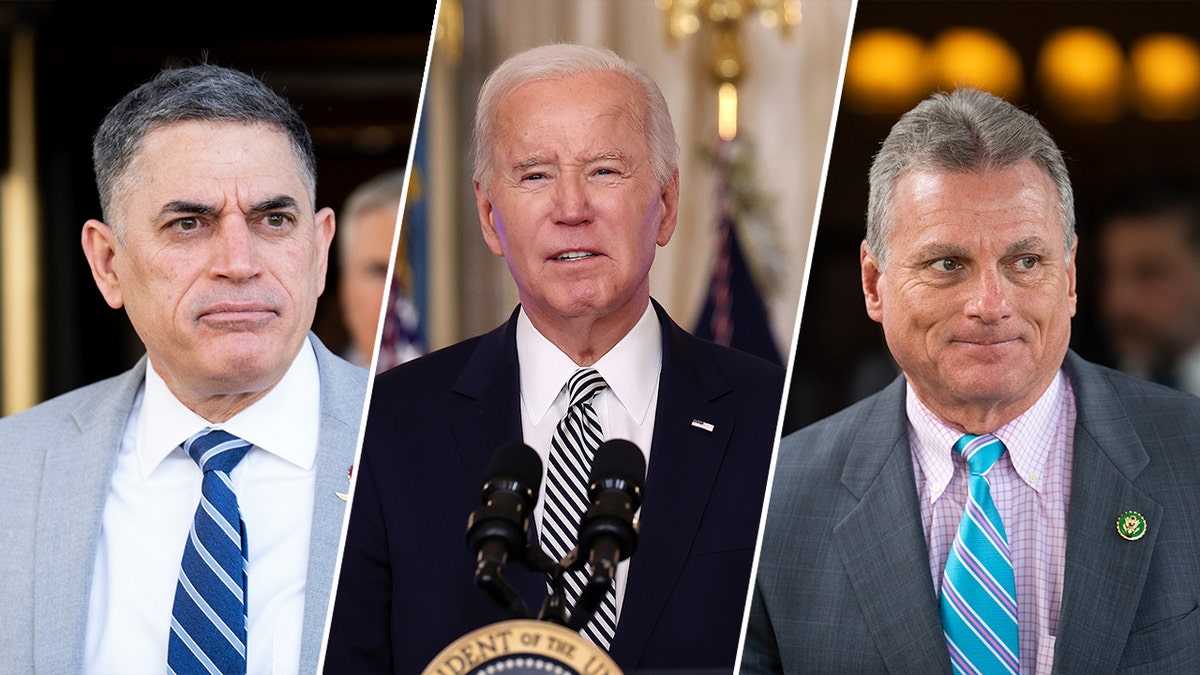
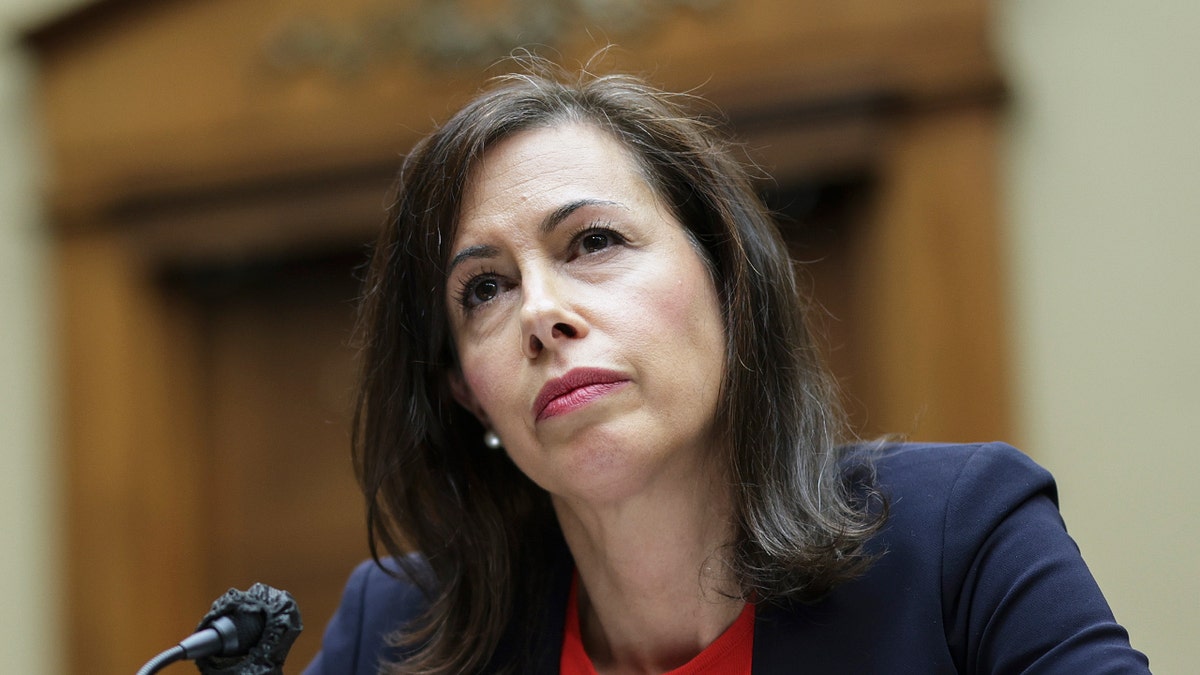







.jpg)
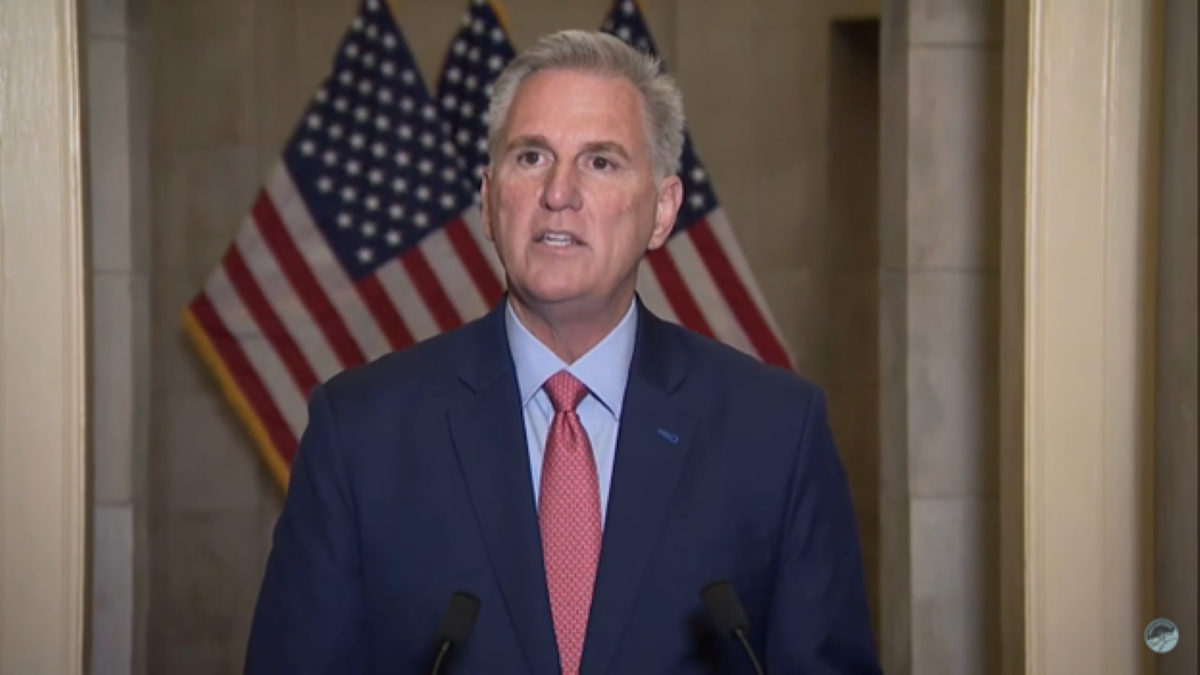

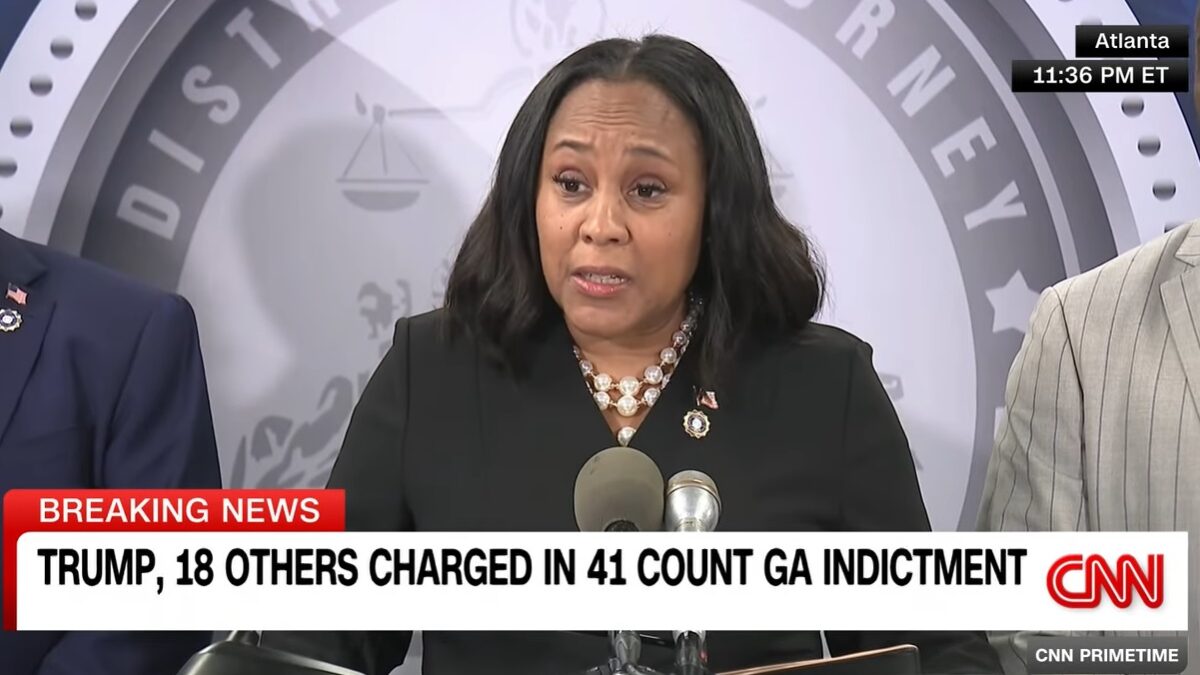

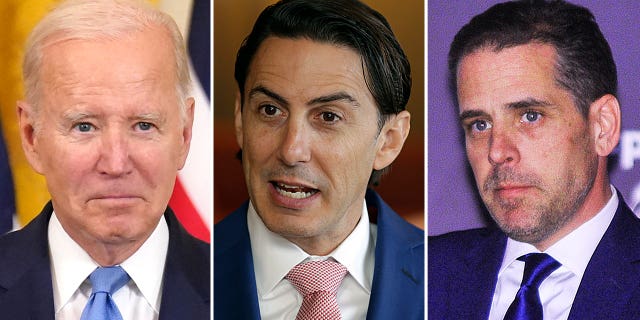
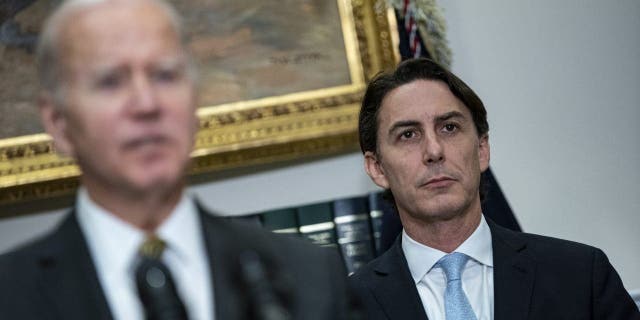

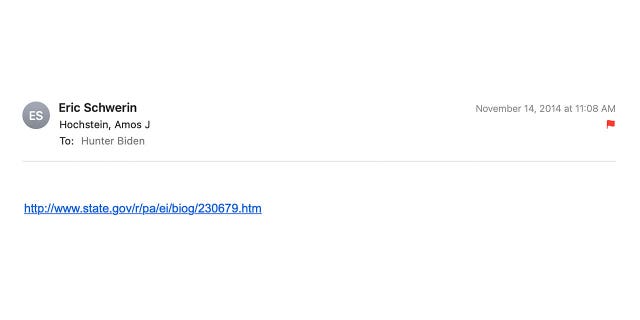
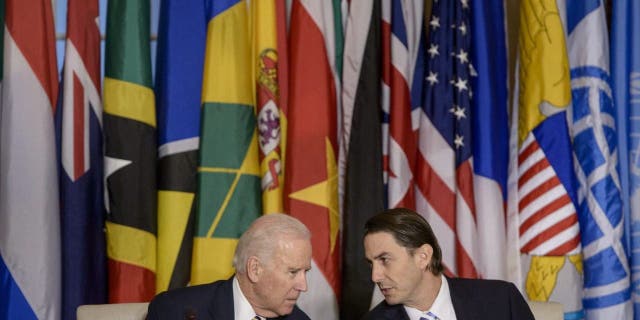

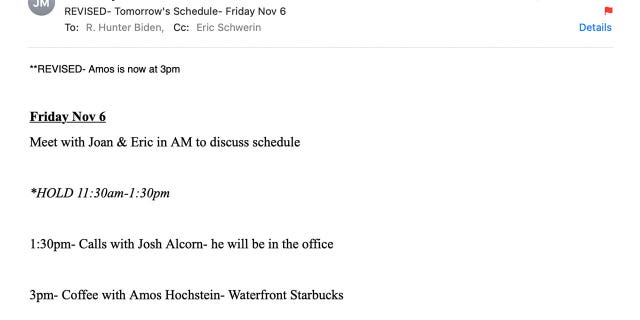
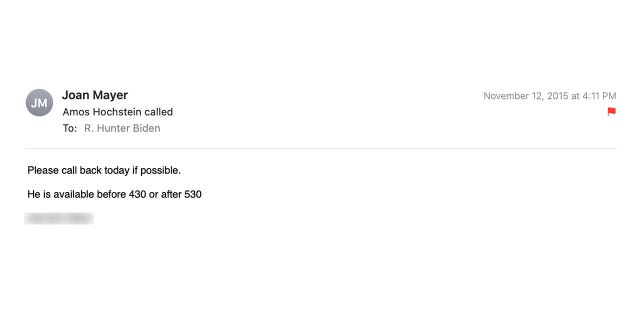
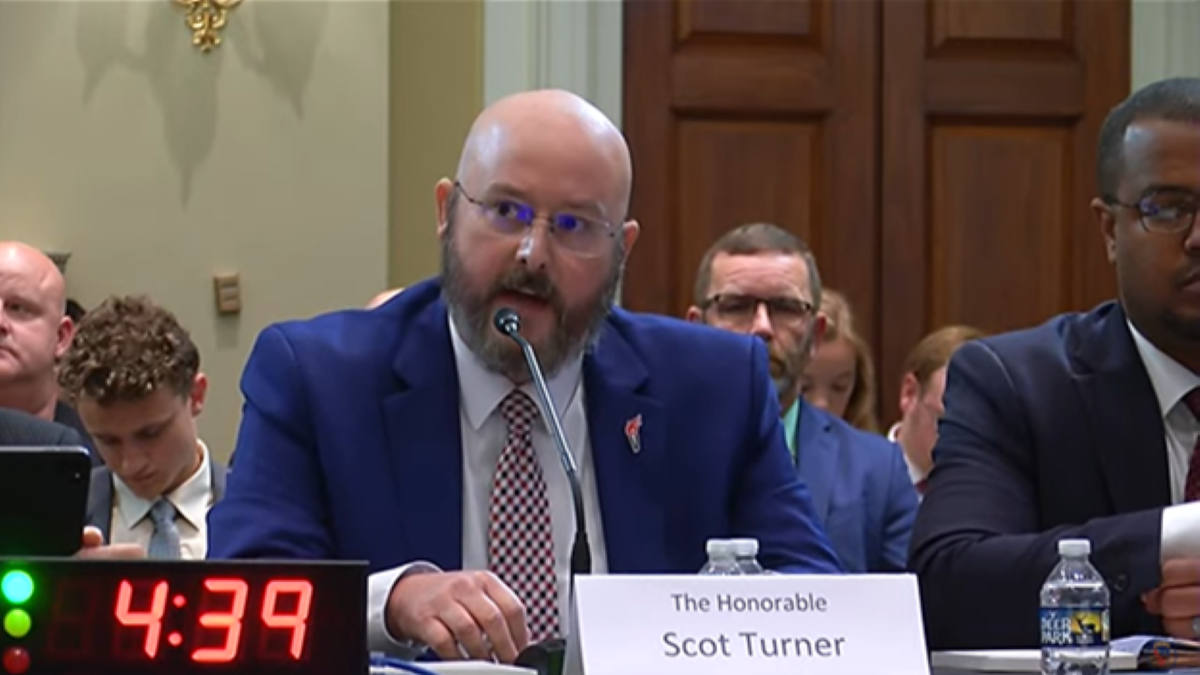
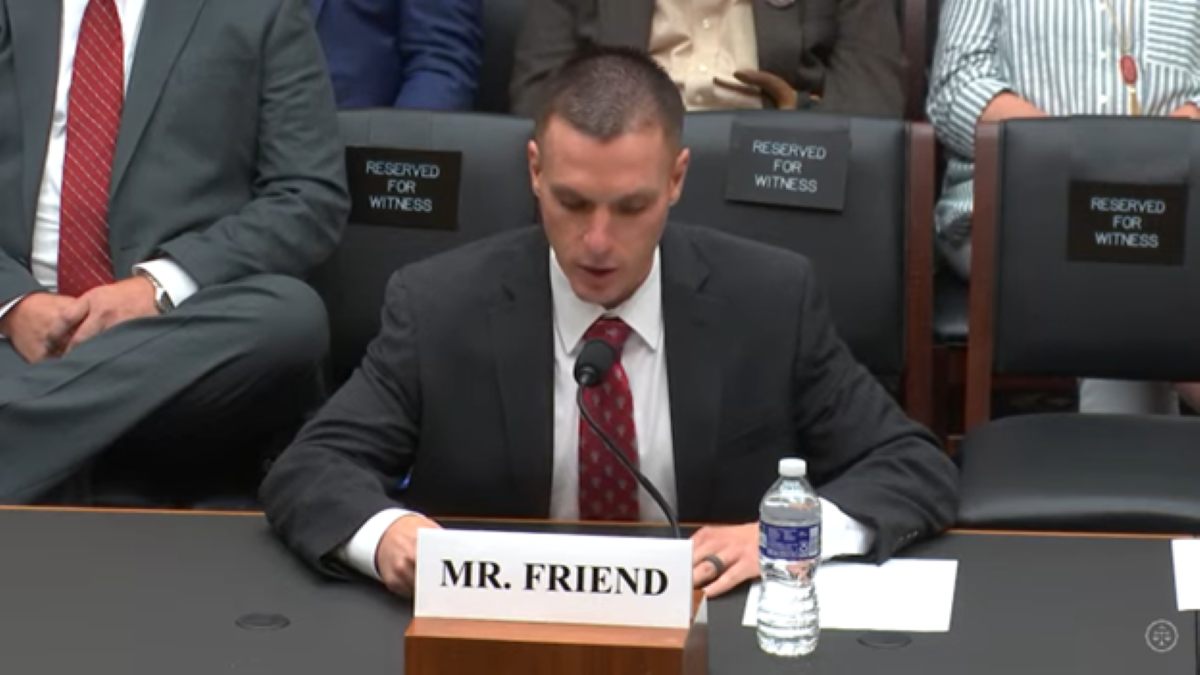

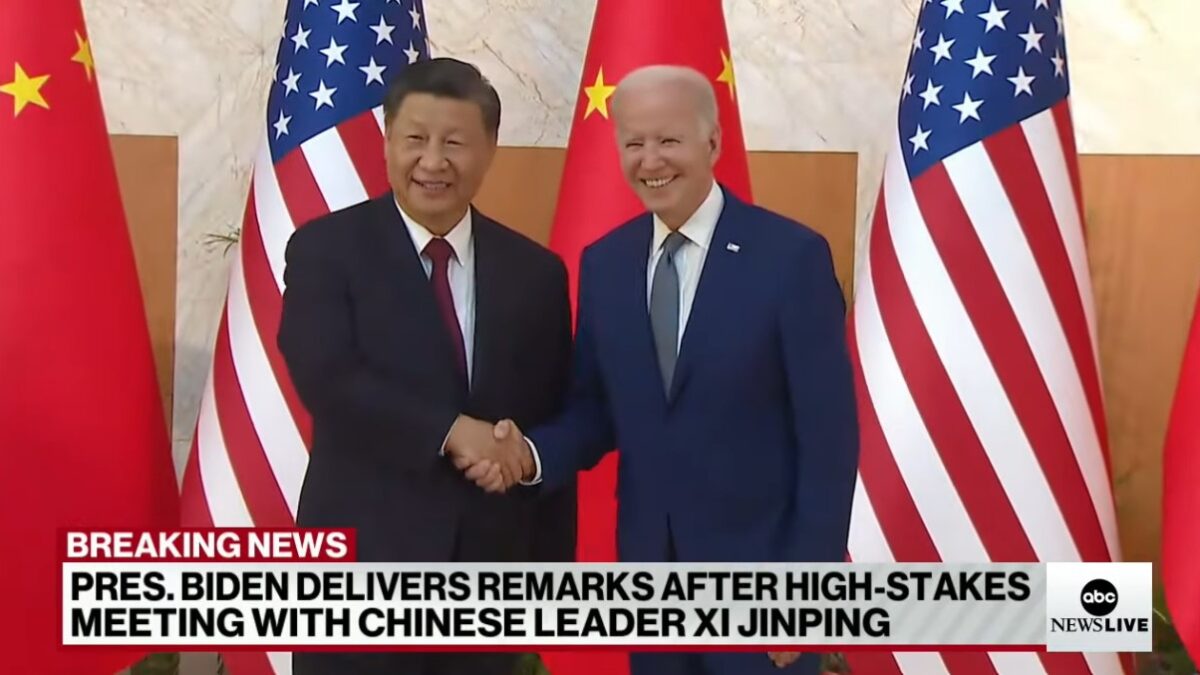
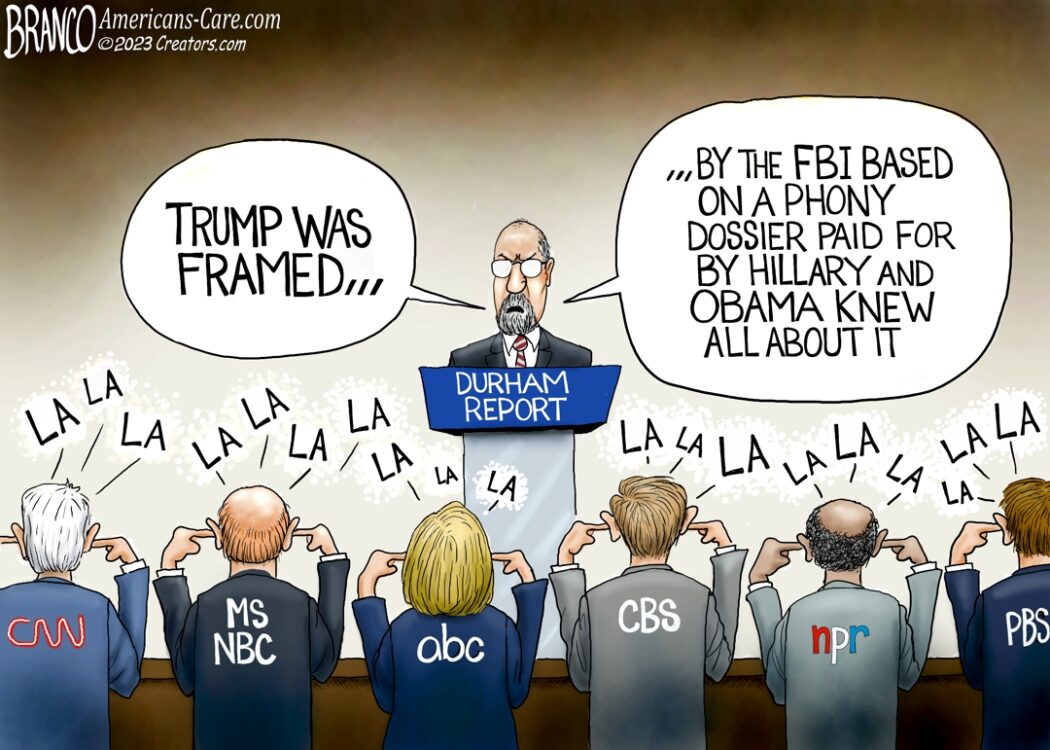

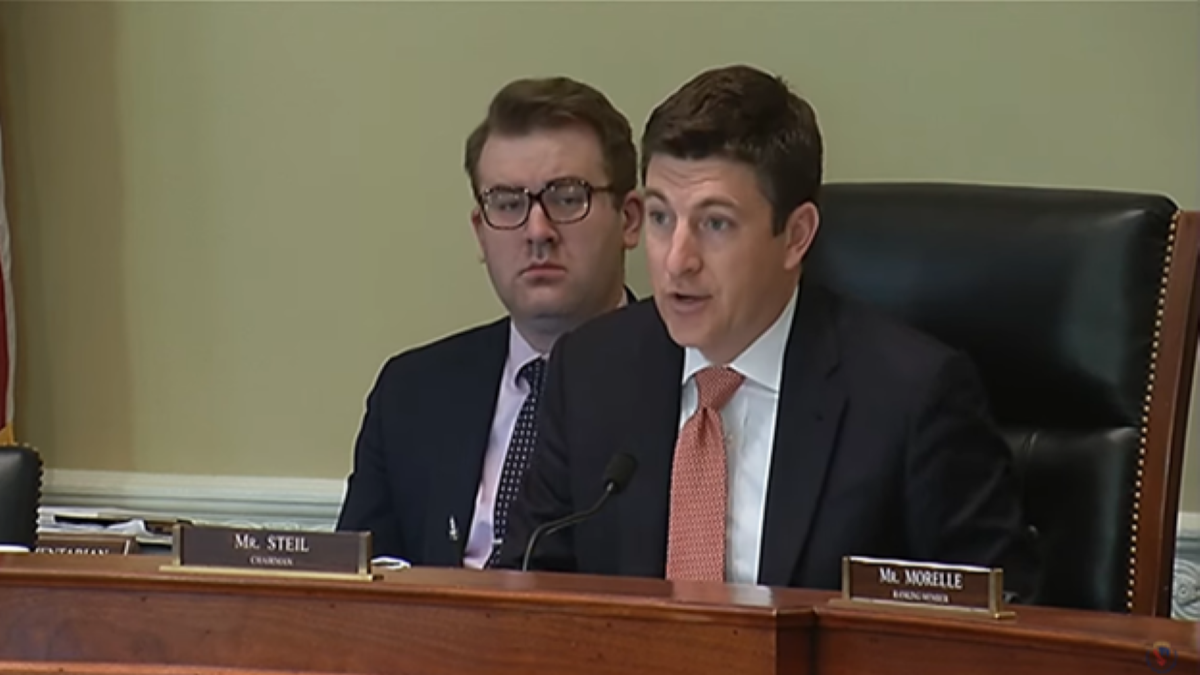
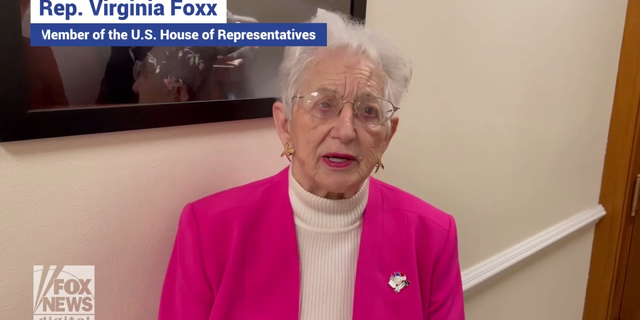
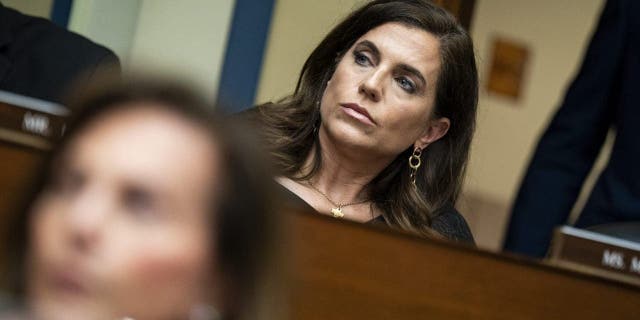


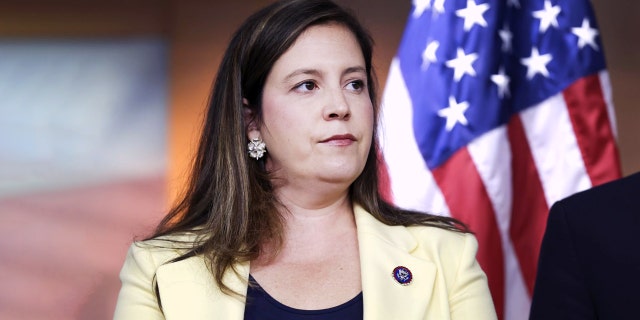
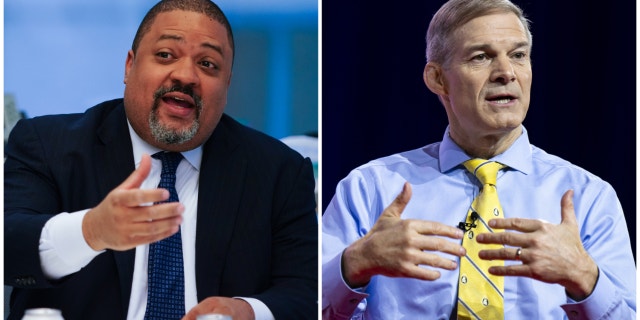
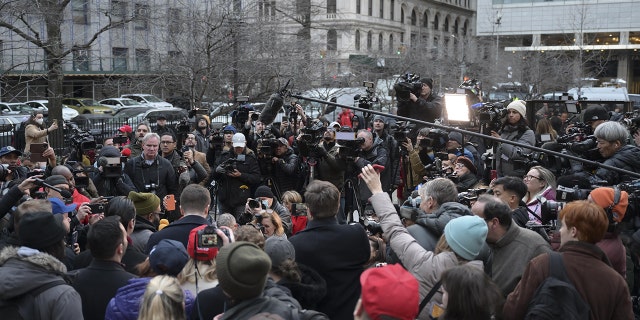


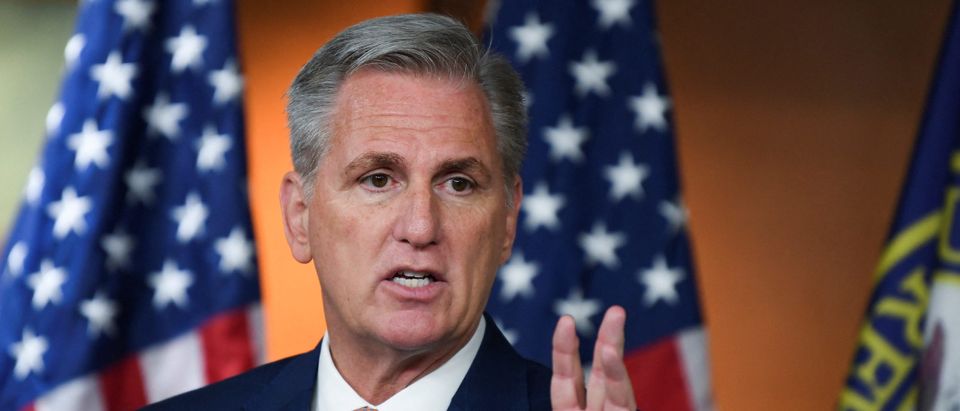


 Reported By


 What Did You Say?
You must be logged in to post a comment.