Perspectives; Thoughts; Comments; Opinions; Discussions

Posts tagged ‘Green Energy’

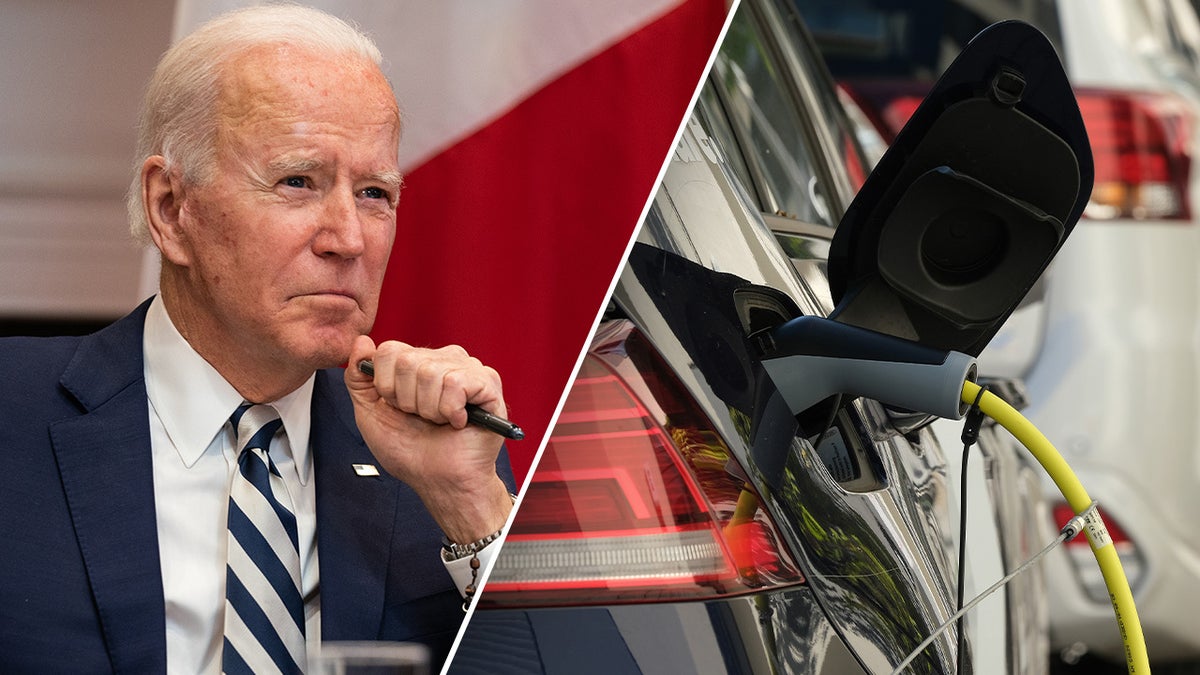
Record-High Gas Prices Don’t Bother Biden Because They Restrict Your Use Of Energy


BY: JORDAN BOYD | MARCH 20, 2024

Read more at https://thefederalist.com/2024/03/20/record-high-gas-prices-dont-bother-biden-because-they-restrict-your-use-of-energy/

Gas station pump

Author Jordan Boyd profile

JORDAN BOYD

VISIT ON TWITTER@JORDANBOYDTX

MORE ARTICLES

You wouldn’t know it from White House press releases, but Americans are paying roughly 45 percent more at the pump now than before President Joe Biden first took office. Anyone looking to take a quick weekend getaway or spring break outing in the coming days will pay an average of $3.51 per gallon to gas up their vehicles. Roadtrippers and commuters in states such as California are the hardest hit, paying upwards of $4.93 per gallon. Even notoriously cheap states for gas such as Texas still have Americans shelling out far more than $3 per gallon.

“Gas price inflation is back,” CNN, one of the few corporate media publications mentioning the price surge, noted at the beginning of its latest article on fuel. The Daily Mail repeated the same phrase in a recent headline.

The truth is, gas price inflation never left. Prices at the pump are definitively higher now than they were one year ago.

One might think that Biden, who is already lagging in presidential polls for the upcoming election, would do everything in his power to fix the problem because his campaign team knows Americans vote with their pocketbooks. Yet the Biden administration has adopted rhetoric about a so-called “dip” in the cost of unleaded from 2022 records to claim that inflation isn’t as bad or as Democrat-inflicted as it is.

This week, as the cost to fill a car climbs daily, White House Press Secretary Karine Jean Pierre went so far as to brag that the “actions that [Biden] took led to lowering gas prices.”

On Friday, she attributed the “fall” in record-high prices to President Joe Biden’s “unprecedented actions” on oil.

“We saw gas prices go down,” she repeated.

The White House, with the help of corporate media, has long touted “cooling” prices to flood the airwaves with propaganda seeking to obscure the nation’s dire economic conditions. Yet, as with every other category of inflation, gas costs have never technically stopped climbing since Biden’s entrance in 2021. Even when the price of unleaded varied slightly from the record high that plagued Biden’s first few presidential years thanks to his unfriendly oil and gas policies, the cost of filling up a car has remained steadily high.

The White House will do its best to cover up its role in the inflation crisis wreaking havoc on the country, but will stop short of enacting a real solution. The administration won’t lift any of its policies exacerbating high gas prices because jarring costs at the pump don’t necessary conflict with the administration’s goals.

The Biden administration openly desires to use chronically high gas prices to usher in electric vehicles and weather-dependent energy.

[Why Is Joe Biden Screwing Seniors To Subsidize Electric Vehicles?]


Jordan Boyd is a staff writer at The Federalist and co-producer of The Federalist Radio Hour. Her work has also been featured in The Daily Wire, Fox News, and RealClearPolitics. Jordan graduated from Baylor University where she majored in political science and minored in journalism. Follow her on Twitter @jordanboydtx.

Kristen Walker Op-ed: The slow demise of green energy?


By Kristen Walker Fox News | Published November 21, 2023 5:00am EST

Read more at https://www.foxnews.com/opinion/slow-demise-green-energy

The wheels are starting to fall off the green energy bandwagon. The rose-colored glasses are clearing up and reality is sinking in. 

The giant push toward a net zero utopia is not practical and has been a complete disservice to the American consumer. Components of the green movement are experiencing major setbacks, namely offshore wind, electric vehicles (EVs), and investments.

Offshore wind projects are struggling to secure financing and stay on track. The biggest blow came last month, when the world’s largest offshore wind developer Ørsted canceled two major projects off the New Jersey coastline, taking the wind right out of Gov. Phil Murphy’s green energy sails. Ørsted is also suspending work on offshore projects in Maryland and Delaware.

President Biden previously set a goal of ensuring 50% of car purchases are electric by 2030. The White House said EPAs recent tailpipe rules would provide a "clear pathway for a continued rise in EV sales."
The EV market is also losing steam. Sales are slumping and manufacturers are scaling back on production. (Anna Moneymaker/Pool/Getty Images | Sean Gallup/Getty Images)

Among the wave of cancellations are projects in Massachusetts, Rhode Island, New York and Connecticut. Several other projects are on the ropes and a host of companies are paying millions to break their contracts.

BIDEN ADMIN QUIETLY RELEASED STUDY SHOWING GREEN ENERGY RECEIVES FAR MORE SUBSIDIES THAN FOSSIL FUELS

The industry hit another snag recently when Germany-based Siemens Gamesa Renewable Energy pulled the plug on its wind turbine blade facility in Portsmouth, Virginia. Siemens Gamesa, one of the world’s leading suppliers, says, “development milestones to establish the facility could not be met.”

According to BloombergNEF, at least half of U.S. wind contracts have or are at risk of being terminated.  The causes are typically due to skyrocketing inflation, high interest rates, choked supply chains and financial troubles. 

Video

Offshore wind is costly and difficult to implement.

The EV market is also losing steam. Sales are slumping and manufacturers are scaling back on production.

EXPERT WARNS GREEN ENERGY PROJECTS ‘ARE NOT WORTH IT’ AS PRICES SPIRAL ‘OUT OF CONTROL’

Ford Motor Company stands to lose $4.5 billion on its EV business for 2023 and will be delaying many of their EV investments. 

General Motors said it was restructuring EV goals, Honda shelved plans to develop affordable EVs with GM, and Hertz said it will slow their rate of purchasing them due to high repair costs. Elon Musk is even considering putting off plans for a $1 billion plant in Mexico.

Video

Most, if not all, manufacturers are reporting major losses per EV sold. Ford lost $62,000 per vehicle in the third quarter; one luxury electric vehicle company lost an astounding $430,000. Countless others are losing tens of thousands of dollars per vehicle, quarter after quarter.

Car dealers are slashing EV prices. EVs sit on lots nearly twice as long as internal combustion engines. Even industry-leader Tesla has been shaving thousands off their retail prices due to unmet sales expectations.

This kind of loss is not sustainable for any company.

EV MARKET COULD BECOME THE ‘NEXT BIG FLOP’: ECONOMIST

Video

The EV market is niche. Those who want one have one. But the rest of America is not convinced they would be better off with an EV on account of a multitude of reliability factors. Nor can they afford the steep price tag.

Consequently, the last few months have seen stock prices drastically dropping in companies across the green spectrum. From wind to solar to EVs to fuel cells, investors are abandoning the “green” energy ship in droves. It might be sinking.

Siemens Energy stock is down 45%; Ørsted, 67%; Power Inc., a hydrogen fuel cell producer, 71%; Charge Point Holdings Inc., an EV charging company, 70%; Blink Charging Co., another EV charging company, 72%; and Nikola Corp., maker of heavy-duty EVs, has gone from $65 a share in mid-2020 to the current price of less than $1 per share.

Video

A recent Wall Street Journal article noted that such companies are “finding it more difficult to secure financing than at any time in the past decade.” 

CLICK HERE FOR MORE FOX NEWS OPINION

We need to read between the lines here. The green energy revolution is not working, nor is central planning. You cannot force Americans to buy cars they don’t want any more than you can force energy transitions that aren’t viable. 

Green energy is wholly inadequate to meet the needs of all Americans, and turns out, is insanely expensive.

Video

The World Economic Forum says that getting to net zero by 2050 will cost an extra $3.5 trillion a year. The U.S. has already poured hundreds of billions into the effort and continues to keep shoveling. All on the backs of the American taxpayer, to save a mere fraction of temperature. Maybe.

CLICK HERE TO GET THE FOX NEWS APP

Heritage Foundation’s chief statistician estimates that even if all fossil fuels were eliminated from the United States, not even 0.2 degrees Celsius would be salvaged.

It’s time to quit throwing other people’s money into these projects and let the market dictate the solutions.

CLICK HERE TO READ MORE FROM KRISTEN WALKER

Kristen Walker is a policy analyst for the American Consumer Institute, a nonprofit education and research organization. For more information about the Institute, visit www.theamericanconsumer.org or follow us on Twitter @ConsumerPal.

Biden Fell for China’s Empty-Promises Playbook at The San Francisco Summit


BY: HELEN RALEIGH | NOVEMBER 17, 2023

Read more at https://thefederalist.com/2023/11/17/biden-fell-for-chinas-empty-promises-playbook-at-the-san-francisco-summit/

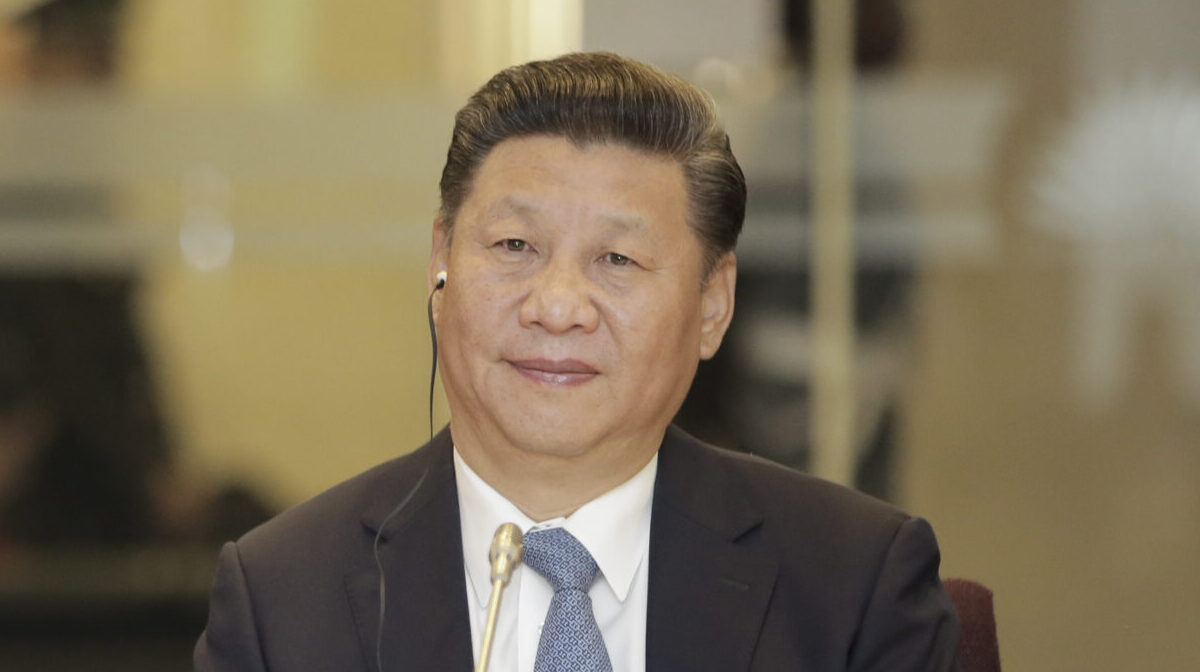
Xi Jinping

Author Helen Raleigh profile

HELEN RALEIGH

VISIT ON TWITTER@HRALEIGHSPEAKS

MORE ARTICLES

President Joe Biden and China’s leader Xi Jinping met this week on the sidelines of the Asia-Pacific Economic Cooperation (APEC) summit in San Francisco. The Biden administration touted the meeting as a significant foreign policy achievement, even though it accomplished little but photo ops.

Leading up to the APEC meeting, Xi had a weak hand, while the leverage was on the U.S. side. China’s economic growth has slowed down significantly. Its once high-flying property sector crashed and exports dropped. The youth unemployment rate reached 22 percent in June 2023 before Beijing stopped publishing the data altogether out of fear of causing public panic. Foreign firms have pulled billions out of China, concerned over its weak economy, hostile regulatory environment, and geopolitical tensions with the U.S. China risks prolonged economic stagnation as consumers are unwilling to spend money due to financial and political uncertainty.

In contrast, the U.S. economy grew almost 5 percent in the third quarter despite facing its own

challenges, such as inflation and ballooning national debt. Since China needs American companies’ investments and technologies to revive its weak economy, Biden could have waited for Xi to plead for a summit and used it as leverage to demand some behavioral changes from China. Preconditions could have been that China’s military stops its harassment of Taiwan and the Philippines in the South China Sea, or no more funding Russia and Iran’s geopolitical aggressions by purchasing their oil.

Sadly, Biden and his foreign policy team are known to turn U.S. leverage into weakness by focusing on the wrong priorities. For example, they continue to believe that climate change is the world’s biggest challenge and that the U.S. needs China’s cooperation to save the planet, even though China remains the world’s biggest polluter after signing the Paris Climate Agreement.

Biden’s green initiatives have only deepened the U.S. economy’s dependency on China since the communist regime dominates the global supply chain for solar panels, wind turbines, and batteries for electric vehicles due to its willingness to exploit slave laborers (most are ethnic minorities) and the nation’s abundant supply of coal.

Biden, led by misguided policies, sent several cabinet-level officials to China, including Secretary of State Antony Blinken and Treasury Secretary Janet Yellen. They practically begged Xi for a meeting. Xi, of course, played hard to get. Rather than reciprocating senior U.S. government officials’ multiple visits, Xi waited until last month to send Wang Yi, China’s minister of foreign affairs, to visit the U.S. and only recently agreed to a meeting with Biden. 

A few days before the summit, China’s People’s Daily, the mouthpiece of the Chinese Communist Party (CCP), faulted the U.S. for the deterioration of the Sino-U.S. relationship and demanded the U.S. “abandon its aggressive Cold War and aggressive mindset, fix the ‘action deficit’ with practical actions and concrete policies,” even though China is the one who has an action deficit as wide as the Grand Canyon. Remember when Xi promised President Barack Obama not to militarize artificial islands in the South China Sea and then armed those islands anyway and claimed 90 percent of the international waterway is Chinese territory?

Communist Party’s Playbook

What Xi has been doing is following the typical CCP playbook. Miles Yu, a former senior adviser to Secretary of State Mike Pompeo, points out that CCP leaders, starting with Mao, love to “use international gatherings to lend legitimacy to [a] beleaguered regime at home.” By playing hard to get with the Biden administration, Xi hid his weakened hand behind a strongman image. He “seeks to send the message to his caged people — aided by the CCP’s relentless propaganda machine — that their supreme leader is respected, even revered, on the global stage,” according to Yu. Another CCP go-to tactic is to make vague and unenforceable pledges for the distant future in exchange for concessions from the other side now.

Unfortunately, the Biden team fell for the CCP’s trick. In a post-summit press conference, Biden put on a brave face and claimed the summit was “among the most constructive and productive we’ve had,” with three key agreements: to restart cooperation on controlling fentanyl, to resume direct (high-level) military-to-military contact, and to set up expert exchanges on risks and safety issues in artificial intelligence (AI).

But none of these represent any meaningful achievement, since the CCP is known for making empty promises, and the joke is on whoever believes them. On the fentanyl issue, many China observers, including Kelley Currie, a former diplomat, quickly pointed out on X, “Don’t forget that China agreed to do this exact thing in 2019 and dramatically reduced the flow of fentanyl out of China, only to switch tactics and instead supply mass amounts of precursor chemicals to Mexican cartels.”

On the AI issue, China promised nothing. Xi has made enhancing the People’s Liberation Army’s capabilities through AI a national priority and has already committed plenty of resources for AI research and development. Xi will not change his course because of some experts’ exchanges on AI with Americans. If such a discussion occurs, China will exploit it to identify which American AI expert to poach and what latest AI technology China should steal.

Military Aggression

Biden clearly believes that resuming direct, high-level military-to-military contact between the U.S. and China was a significant accomplishment. He tweeted, “Clear and open communication between our defense establishments is vital to avoid miscalculation by either side and prevent conflict.” But it was Chinese military leaders who refused to pick up phone calls from the U.S. side, and they did so under Xi’s order.

Chinese pilots frequently made dangerous maneuvers near the U.S. and its allies’ military assets in the South China Sea, not because of a lack of communication but because of Xi’s deliberate policy decision: China regards the international water as its territory and tries to block the U.S. and its allies from accessing it through intimidation. According to Jacob Stokes, a senior fellow at the Center for New American Security, “China wants the United States and its partners to feel worried about rising military and security risks in East Asia.”

It’s unlikely the Chinese military’s aggressive behavior in and above the South China Sea will stop after the Biden-Xi summit. Furthermore, Elbridge Colby, a former Pentagon official, points out that military-to-military communication is “not vital. It’s not the key issue.” Responding to Biden’s self-congratulatory tweet, Colby wrote, “The key issue is China undertaking a historic military buildup and increasingly using that military to get ready for a war, as your own appointees and generals point out. Just really nowhere near the seriousness we need.”

President Biden and his foreign policy team want Americans to believe that his meeting with Xi in San Francisco was successful. But in truth, the U.S. gained nothing from the Biden-Xi summit. Don’t expect Xi to fulfill any promises or change his policies. The U.S.-China Economic and Security Review Commission’s recent 753-page report to Congress presented evidence that Xi is preparing his military forces and the rest of the country for war and treats diplomacy with the United States, such as the most recent Biden-Xi summit, “primarily as a tool for forestalling and delaying U.S. pressure over a period of years while China moves ever further down the path of developing its own economic, military, and technological capabilities.”

If anything, the world is becoming more dangerous after the Biden-Xi summit, and we are on Xi’s timeline.


Helen Raleigh, CFA, is an American entrepreneur, writer, and speaker. She’s a senior contributor at The Federalist. Her writings appear in other national media, including The Wall Street Journal and Fox News. Helen is the author of several books, including “Confucius Never Said” and “Backlash: How Communist China’s Aggression Has Backfired.” Her latest book is the 2nd edition of “The Broken Welcome Mat: America’s UnAmerican immigration policy, and how we should fix it.” Follow her on Parler and Twitter: @HRaleighspeaks.

Energy Inflation Isn’t An Accident, It’s A Planned Demolition


BY: RUPERT DARWALL | OCTOBER 10, 2022

Read more at https://thefederalist.com/2022/10/10/energy-inflation-isnt-an-accident-its-a-planned-demolition/

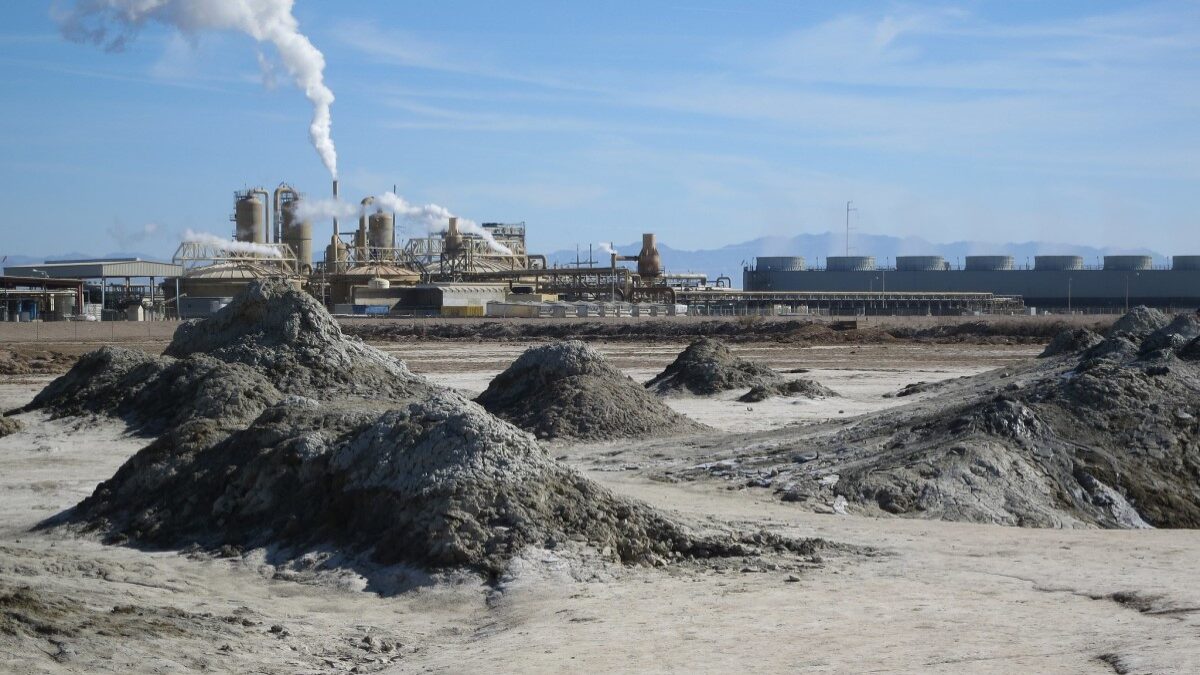
geothermal power plant

Author Rupert Darwall profile

RUPERT DARWALL

MORE ARTICLES

The West is experiencing its third energy crisis. The first, in 1973, was caused by the near-quintupling of the price of crude oil by Gulf oil producers in response to America’s support for Israel in the Yom Kippur war. Their action brought an end to what the French call the trente glorieuses — the unprecedented post–World War II economic expansion.

The second occurred at the end of the 1970s, when Iran’s Islamic revolution led to a more than doubling of oil prices. This again inflicted great economic hardship, but the policy response was far better. Inflation was purged at the cost of deep recession. Energy markets were permitted to function. High oil prices induced substitution effects, particularly in the power sector, and stimulated increased supply.

In the space of nine months, the oil price cratered from $30 a barrel in November 1985 to $10 a barrel in July 1986. It’s no wonder that the economic expansion that started under Ronald Reagan had such long legs.

This time is different. The third energy crisis was not sparked by Saudi Arabia and its Gulf allies or by Iranian ayatollahs. It was self-inflicted, a foreseeable outcome of policy choices made by the West: Germany’s disastrous Energiewende that empowered Vladimir Putin to launch an energy war against Europe; Britain’s self-regarding and self-destructive policy of “powering past coal” and its decision to ban fracking; and, as Joseph Toomey shows in a recent powerful essay, President Biden’s war on the American oil and gas industry.

Hostilities were declared during Joe Biden’s campaign for the Democratic presidential nomination. “I guarantee you. We’re going to end fossil fuel,” candidate Biden told a climate activist in September 2019, words that the White House surely hopes get lost down a memory hole. Toomey’s paper has all the receipts, so there’s no danger of that.

As he observes, Biden’s position in 2022 resembles Barack Obama’s in 2012, when rising gas prices threatened to sink his reelection. Obama responded with a ruthlessness that his erstwhile running mate lacks. He simply stopped talking about climate and switched to an all-of-the-above energy policy, shamelessly claiming credit for the fracking revolution that his own Environmental Protection Agency (EPA) tried to strangle at birth.

Passage of the comically mistitled Inflation Reduction Act places this option beyond Biden’s reach, even if he were so inclined. Democrats are hardly going to take a vow of climate omertà when they’ve achieved a political triumph of pushing through Congress what they regard as the most significant climate legislation to date.

Although the price of oil has slipped back from recent highs, the factors behind high gasoline prices remain in place. Foremost among these is the steep decline in U.S. oil refinery capacity triggered when Covid lockdowns crushed demand but continued after the economy reopened. There has never been such a large fall in operable refinery capacity. Moreover, Gulf Coast refineries were operating at 97 percent of their operating capacity in June 2022. As Toomey remarks, “There isn’t any more blood to be squeezed out of this turnip.”

Toomey identifies five factors driving this decline in refinery capacity. EPA biofuel blending mandates impose crippling costs on smaller refineries. When conventional refineries are converted to processing biofuels, up to 90 percent of their capacity is lost.

Biofuel mandates cost consumers far more than federal excise taxes. Toomey demonstrates that the Biden administration’s claim that biofuel mandates protect consumers from oil-price volatility is totally false; biofuel prices, he writes, “are essentially indexed to the price of crude oil.”

Biden could order the reversal of the EPA’s retroactive biofuel threshold rules. That he has not done so demonstrates that the administration isn’t serious about making energy affordable again. High prices for fossil fuel energy are an intended part of the plan.

Corporate and Wall Street ESG policies are another factor driving refinery closures, especially of facilities owned by European oil companies to meet punishing decarbonization targets that will effectively end up sunsetting them as oil companies. If finalized as proposed, the Securities and Exchange Commission’s proposed climate disclosure rules, with the strong support of the Biden administration, will heighten the vulnerability of U.S. oil and gas companies to climate activists and woke investors to force them to progressively divest their carbon-intensive activities, such as refining crude oil, and eventually out of the oil and gas sector altogether.

To these should be added aggressive federal policies aimed at phasing out gasoline-powered vehicles in favor of electric vehicles (EVs); an administration staffed from top to bottom by militants who believe that climate is the only thing that matters in politics; and an increasingly hostile political climate (“You know the deal,” Biden said of oil executives when campaigning for the presidency. “When they don’t deliver, put them in jail”). 

These policies, argues Toomey, will see China become the world’s leading oil refiner for years to come. Will Biden find himself asking China for supplies of refined gasoline? He might well find himself being saved from such an unfortunate position, made more so by Speaker Nancy Pelosi’s recent trip to Taiwan, by help from the other side of the southern border.

Mexico is constructing a $12 billion refinery, due to start producing gasoline next year. Perhaps President Biden’s next foreign trip should be to Mexico City.

This article is republished from RealClearEnergy, with permission.

Germany’s Green Energy Follies Are A Warning To The United States


BY: HELEN RALEIGH | SEPTEMBER 14, 2022

Read more at https://thefederalist.com/2022/09/14/germanys-green-energy-follies-are-a-warning-to-the-united-states/

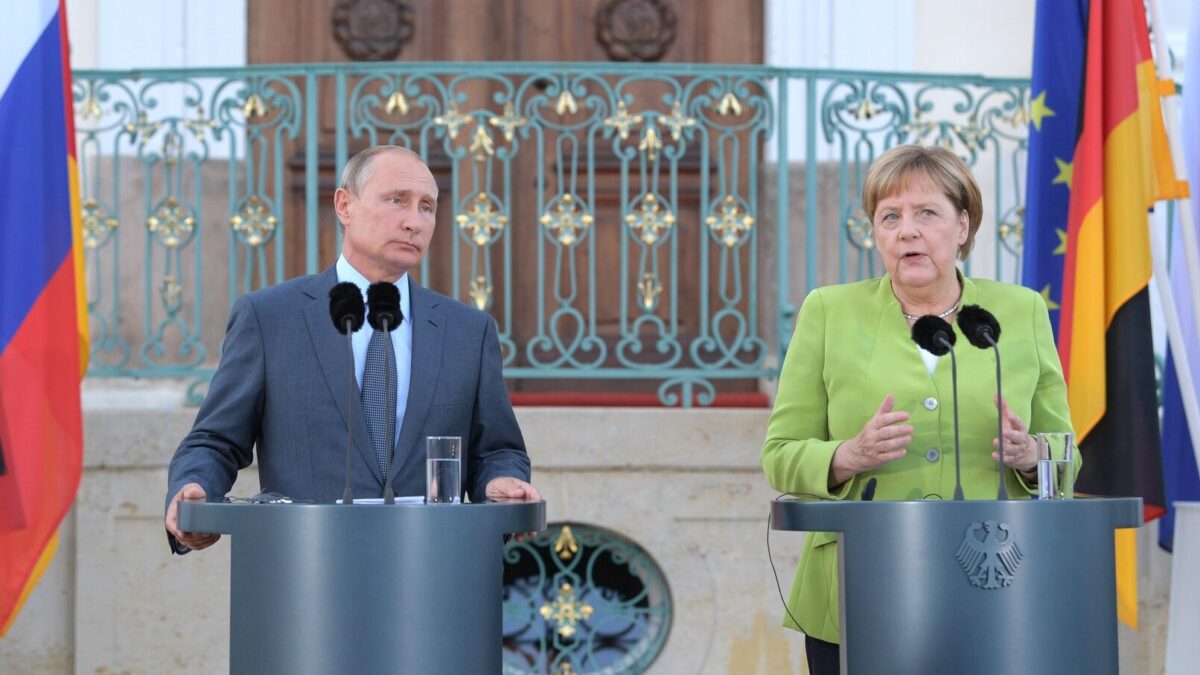
Angela Merkel and Vladimir Putin

Author Helen Raleigh profile

HELEN RALEIGH

VISIT ON TWITTER@HRALEIGHSPEAKS

MORE ARTICLES

Germany is reportedly working on reducing the nation’s economic dependency on Communist China due to concerns about “human rights abuses and the risks of being beholden to an increasingly assertive authoritarian state,” Reuters reports. Berlin finally learned one lesson from Russia’s invasion of Ukraine: it’s dangerous to economically rely on authoritarian regimes. 

Former German Chancellor Angela Merkel’s policies — building an economy based on Russia’s energy supply and China’s market demand — were primarily responsible for German’s economic predicament today. Zealous in fighting climate change, Merkel shut down coal mines and retired the majority of nuclear power plants in Germany while relying on Russia for energy and raw materials, despite repeated warnings from the Trump administration. By 2020, Russia supplied more than half of Germany’s natural gas and about a third of all the oil that Germans burned to heat homes, power factories, and fuel vehicles.

While paying Russia billions of euros for energy supply (the money no doubt helped finance Putin’s war chest), Merkel neglected to invest in German’s armed forces, even after Putin annexed the Crimean Peninsula from Ukraine. She outsourced Germans’ and, to a larger extent, Europe’s security to the United States and simply hoped for the best. When Merkel retired in 2021, after being in office for 16 years, German’s military was left “in a weak position and require years of renewal to become a credible deterrent to Russian aggression,” according to The American Institute for Contemporary German Studies.  

Strengthened China Ties

Besides empowering and enriching Russia, Merkel was keen on strengthening Germany’s economic ties with China while in office. No other leaders from Western democracies had visited China more often than Merkel (she had 11 state visits to China).

To promote Germany’s export-oriented economy, Merkel was indifferent to China’s aggression in the South China Sea, its geopolitical expansion through the “Belt and Road” infrastructure project, and its increasingly assertive foreign policies. In addition, she avoided criticizing China’s mishandling of Covid-19 in the early days of 2020 and turned a blind eye to many human rights abuses in China, especially the genocide of Uyghur Muslims and suppression of the pro-democracy movement in Hong Kong. 

Under Merkel, China became Germany’s largest trading partner in 2016. German’s auto industry especially relies on China — about 50 percent of German car maker Volkswagen’s profit comes from China. Merkel’s China policy has made Germany’s economy vulnerable and helped speed up the Chinese military’s modernization.

Beijing reportedly focused on investments in Germany to obtain critical technologies, especially those with dual-use, meaning both civilian and military applications. For example, engines made by German companies have powered several types of Chinese navy warships, Deutsche Welle found.  

Although Merkel retired in 2021, the effects of her economic policies continued. According to a German Economic Institute (IW) study, Germany’s economic dependency on China has continued to grow in 2022. “China’s share of German imports rose to 12.4 percent in the first half of 2022, compared with only 3.4 percent in 2000. German imports of Chinese goods… have surged by 45.7 percent year-on-year in the comparable period of the first six months. Germany’s trade deficit with the country had leapt to almost EUR 41 bn by mid-2022.”

A Wake-Up Call

After Russia invaded Ukraine, Germany joined other EU nations in imposing punitive economic sanctions on Russia. Putin retaliated by weaponizing his energy supply to Europe, sending energy prices soaring and dealing a blow to the German economy. 

Inflation in Germany has reached a 40-year high. Suppose Putin shut off the natural gas supply to Europe, as he threatened. In that case, many predict an energy-induced recession in Europe is inevitable, and Germany could lose close to $240 billion in economic output over the next two years.

The grim economic outlook, and the fact that Beijing refused to condemn Russia’s invasion of Ukraine and helped Russia evade the West’s economic sanctions by purchasing Russian energy and agriculture products, have become a wake-up call for Germany. Additionally, Beijing’s “zero-Covid” policy that has kept dozens of cities and millions of Chinese people in lockdown means German businesses have had limited access to the Chinese market, and the trend will continue in the foreseeable future. 

The German Economic Institute called for the government to change its economic policy, “specifically a reduction in incentives for doing business with China and a shift towards more trade with other emerging markets.” It also warned German businesses to “curb their dependency on China.” Otherwise, companies may expose themselves to bankruptcy due to Western sanctions imposed on China in the event of the People’s Liberation Army’s invading Taiwan. 

Deutsche Bank CEO Christian Sewing also warned, “When it comes to dependencies, we also have to face the awkward question of how to deal with China.” He appealed to the German government to decouple economically from China and acknowledged such a move would “require a change no less fundamental than decoupling from Russian energy.” 

Germany Stepping Back

These calls for action have reached their desired audience. Foreign Minister Annalena Baerbock acknowledged Germany couldn’t afford to “just behave following the motto ‘business first,’ without taking into account the long-term risks and dependencies.”

Reuters reports that Germany’s economic ministry is considering several actions to cut Germany’s reliance on China, including reducing or scrapping investment and export guarantees for China and no longer promoting trade fairs and manager training there. It is also contemplating screening not just Chinese investments in Germany but also German investments in China. It also might submit a complaint to the World Trade Organization about unfair Chinese trade practices, together with the Group of Seven, an intergovernmental political forum consisting of Canada, France, Germany, Italy, Japan, the United Kingdom, and the United States.

While Germany is waking up to the risks of economic dependency on authoritarian regimes, the Biden administration has deepened our nation’s economic reliance on China with a green revolution that centers around replacing fossil fuels with solar and wind, and gas-powered cars with electric vehicles (EVs). China dominates the global supply chain of raw materials and parts for EV batteries, solar panels, and wind turbines. The nation has been able to keep the manufacturing cost low by burning coal and employing forced labor from Uyghur and other ethnic minorities.

Even Politico has had to admit the dirty truth: “The U.S path to clean energy goes straight through China.” Germany’s economic woes should serve as a timely warning to the Biden administration that relying on an authoritarian regime is both dangerous and foolish.


Helen Raleigh, CFA, is an American entrepreneur, writer, and speaker. She’s a senior contributor at The Federalist. Her writings appear in other national media, including The Wall Street Journal and Fox News. Helen is the author of several books, including “Confucius Never Said” and “Backlash: How Communist China’s Aggression Has Backfired.” Follow her on Parler and Twitter: @HRaleighspeaks.

    As America Self-Destructs With Green Energy, China Preps For War With Coal


    BY: CHUCK DEVORE | SEPTEMBER 02, 2022

    Read more at https://thefederalist.com/2022/09/02/as-america-self-destructs-with-green-energy-china-preps-for-war-with-coal/

    Chinese workers installing solar panels

    Author Chuck DeVore profile

    CHUCK DEVORE

    VISIT ON TWITTER@CHUCKDEVORE

    MORE ARTICLES

    On Aug. 25, the California Air Resources Board, the state’s air quality regulator, announced a ban on the sales of new gasoline- and diesel-powered vehicles by 2035. Less than a week later, a heat wave threatened California with seven days of power shortages. So, the state’s grid operator asked electric vehicle owners not to recharge when they come home from work. This is all a painful part of the energy transition, we are told — needed to save the planet. 

    In its effort to wean itself off fossil fuels, California has found a willing and enthusiastic partner in the People’s Republic of China. Most batteries, solar panels, and wind turbines that make California’s green dreams possible are made in China. California leaders — from former Republican Gov. Arnold Schwarzenegger to former Democratic Gov. Jerry Brown, and current Democratic Gov. Gavin Newsom — have traveled to China to tout their green cooperation with Red China. 

    The push for electric vehicles (EVs) by California and China raises an intriguing question: Are both sides really weaning themselves off fossil fuels to save the planet and reduce pollution, or might there be an entirely different intention — at least for China?

    U.S. climate czar John Kerry, a former senator, former secretary of state, and the Democratic nominee for president in 2004, epitomized American elite opinion when he said on Aug. 30 that China has “generally speaking, outperformed its (climate) commitments” and that the U.S. and China can make a difference for the world by “working together.”

    When policymakers and strategists erroneously ascribe to others the same motives that they have themselves, it is called the Mirror-Image Fallacy. Opponents in warfare seek to deceive — the best deception plans are those that show the enemy what the enemy wants to believe. Mirror-Image Fallacy and deception plans can work hand-in-glove. 

    If China was truly going all-in on EVs to reduce pollution and curb its greenhouse gas emissions, one would expect to see that in its energy consumption profile. Instead, we see something different. Yes, China has been adding wind, solar, and nuclear power, but coal use is also increasing. 

    From 2010 to 2020, the amount of electricity produced by coal in China rose by 57 percent to 4,775 terawatt hours. From 2010 to 2021 — the latest year available and 2020 having been depressed by the response to Covid-19 — American coal use to generate electricity declined by 52 percent to 899 terawatt hours. U.S. coal power peaked in 2007. China surpassed U.S. coal use in 2006 and never looked back. Today, China generates more than five times the electricity from coal than the U.S., with construction underway or planned in China to build the equivalent of more than the entire operating U.S. coal fleet. By this one action alone, China will wipe out all projected U.S. reductions in greenhouse gas emissions — and then some. 

    Last year, China consumed 54 percent of the world’s coal. This is the main reason that China emits more greenhouse gasses than all the world’s developed nations combined — which shouldn’t be a shock given that America, Western Europe, and Japan outsourced much of their manufacturing to China over the past 20 years. 

    Apologists for China’s one-party communist government often cite the fact that China is still a developing nation, with about 200 million Chinese living on $5.50 a day as recently as 2018. It takes energy to be prosperous and prosperous people use energy — lots of it — for cars, air conditioning, heat, air travel, and the internet. Prosperous people, and those who expect to be, don’t typically try to overthrow their governments, either. For the Chinese Communist Party, this is key. 

    While the Western elite vanguard of the war against climate change sees greenhouse gas emissions as the singular existential threat, the Chinese Communist Party sees greenhouse gas emissions as the necessary byproduct of wealth, power, military might — and compliant subjects. 

    Were China’s leaders interested in growing their economy while improving air quality and holding the line on carbon dioxide emissions, they’d turn from coal to natural gas. If China expected to be an honest participant in the post-World War II liberal order, then it would have no qualms about increasing its dependence on natural gas. 

    But China has scant natural gas reserves, and the nearest large exporter, Russia, has built most of its pipeline capacity to serve Europe — which it is now cutting off, showing the danger of relying on foreign suppliers. Other major exporters in the Pacific include the U.S., Australia, and Indonesia, but China’s aggressive foreign policies have alienated these nations. Qatar has significantly increased its liquified natural gas exports to China, but these shipments are vulnerable to interdiction in the event of a conflict — it’s doubtful that much in the way of Chinese imports would make it past the Straits of Malacca.

    This last point leads to a final, stunning, and very troubling conclusion. For years, strategists have assumed that China would never start a conflict that would deliberately involve America as an enemy because China importsome 72 percent of its oil, with about 85 percent of that imported oil transiting the Straits of Malacca.

    But what if our policy experts have gotten China’s energy strategy all wrong? What if their efforts to reduce their reliance on oil had nothing to do with the environment and everything to do with energy security — with being able to fight a war indefinitely while being blockaded?

    In 2019, 45 percent of the oil used in the U.S. was refined into gasoline for cars. Another 29 percent was made into diesel and jet fuel — applications less immediately replaceable by batteries since hydrocarbon fuels have about 100 times the energy density of lithium-ion batteries — one of the reasons why long-haul trucking and commercial jets aren’t likely to be electric anytime soon. 

    China is well into a program to go electric with respect to passenger vehicles. In China, this practically means that EVs are mostly coal-powered. That still leaves more oil demand than China’s modest domestic oil production can handle, risking the depletion of China’s reputed billion-barrel strategic petroleum reserve in 200 days or so. 

    Of course, with the onset of Covid-19, China perfected complete control of its population, shutting down travel at will and confining people to their homes. But a war can’t be won on lockdown, and people get restless. Here’s where China’s hidden ace in the hole comes in: coal gasification.

    With a technology that matured in the 1920s, Germany under Hitler invested heavily in coal gasification to make gasoline and other fuels — Germany has a lot of coal and very little oil. On the eve of war in 1938, Germany produced just under 10 percent of its oil needs from domestic crude while importing 60 percent from overseas and about 8 percent from overland routes within Europe. The remaining 20 percent of Germany’s need was answered by converting coal to liquid fuels. By 1943, German synthetic fuel production had more than tripled to 42 million barrels annually. 

    In the 1940s, German synthetic oil was up to 20 times more costly than abundant American crude oil. But wartime necessities required its production. Today, deriving synthetic fuel from coal is about half of the cost of oil at $90 a barrel — but the process to manufacture it produces about double the greenhouse gas emissions by simply refining crude oil into fuels. Simply put, it’s cost-effective but bad for the climate — and China is investing heavily in it to reduce its reliance on imported oil. 

    A holistic look at China’s energy sector indicates a nation concerned only with energy security and not at all concerned with climate change. That has grave consequences for America’s ability to deter China from an ambitious campaign of military aggression.


    Chuck DeVore is Chief National Initiatives Officer at the Texas Public Policy Foundation, a former California legislator, special assistant for foreign affairs in the Reagan-era Pentagon, and a lieutenant colonel in the U.S. Army (retired) Reserve. He’s the author of two books, “The Texas Model: Prosperity in the Lone Star State and Lessons for America,” and “China Attacks,” a novel.

      A Biden Climate Emergency Would Unleash Unconstitutional Actions


      BY: CHUCK DEVORE | JULY 21, 2022

      Read more at https://thefederalist.com/2022/07/21/a-biden-climate-emergency-would-unleash-unconstitutional-actions/

      Earth

      Biden is considering invoking considerable powers, but executive actions taken for a ‘climate emergency’ would be unconstitutional.

      Author Chuck DeVore profile

      CHUCK DEVORE

      VISIT ON TWITTER@CHUCKDEVORE

      MORE ARTICLES

      The left is pressuring President Joe Biden to declare a climate emergency and his consideration of this declaration is a sign of desperation and weakness. Executive actions taken as a result of a “climate emergency” would die in the U.S. Supreme Court (more on that later).  

      The reason Biden may declare a climate emergency is simple: His green agenda has stalled. Persistent inflation, led by rising energy costs, and a nation likely in recession, has reduced the likelihood that a narrowly divided Congress will approve the application of additional environmental leaches to an anemic economy.

      It appears green dreams are the ultimate First World luxury good — it’s all fun and games until the average family shells out $5,000 a year more for gas, food, electricity, and rent. Yet the left demands more. Elected representatives are a roadblock. The people don’t know what’s best for them. The Vanguard of the Proletariat have met and decided that if Congress won’t act, then an array of administrative acronyms led by the dogmatic theoreticians of the White House — none of whom who have run a business — will.

      The powers Biden is considering invoking are considerable, though none of them were intended by Congress to do what administration is preparing to do. Even a short summary is terrifyingly breathtaking in ambition and disingenuous creativity.

      Burdensome Regulations

      In March, the Securities and Exchange Commission (SEC) proposed a rule to require “climate-related disclosures for investors.” This rule, if finalized, would deal further hammer blows to the domestic oil and gas industry — just after Biden was forced to go hat in hand to Saudi Arabia to beg Crown Prince Mohammed bin Salman for more oil. It would do that by requiring publicly traded companies to detail their greenhouse gas emissions, including those of their suppliers, whether they are publicly traded or not. In other words, privately held firms, family-owned companies, and individual proprietorships would be burdened with costly reporting requirements, causing more money to be put into paperwork and less money to be put into productive activity.

      Next, just because the Supreme Court rolled back regulatory power in June’s West Virginia v. Environmental Protection Agency (EPA) decision doesn’t mean that the EPA won’t still be used to achieve climate goals in ways Congress never authorized. For instance, it’s expected that the EPA will issue new particulate thresholds that would have the practical effect of regulating all combustion for energy and transportation purposes. Particulates are small particles that, in today’s era of clean air, are mostly generated by farming, wildfires, and construction activities — modern combustion is remarkably clean. However, because ambient levels of particulates are very hard to push below a certain level, there will always be an excuse to squeeze for more until every vehicle powered by hydrocarbons is removed from the road or curbed by fees. Put another way, it’s a war on using hydrocarbons to make energy or power vehicles.

      Misuse of the Law

      The declaration of a climate emergency would also embolden the Biden administration to invoke Section 202 of the Federal Power Act. This law, clearly intended by Congress to be used only in time of war or an emergency due to an increased demand for electricity or a shortage of electricity, will be used to shift electrical power from regions that have responsibly planned for their power needs to states that have gone green and, as a result, have made their grids vulnerable to the vicissitudes of weather. This means that the federal government could literally divert power contracted for by Arizona and shift it to California — a version of this happened a year ago. Essentially, a maximalist use of Section 202 will allow leftwing Biden appointees to turn the power off wherever they choose — all for environmental justice and the planet, of course.

      Finally, Biden’s environmental zealots are looking to the Defense Production Act (DPA) to commandeer any part of the economy they feel should be drafted into the fight against climate change. Former President Donald Trump used the DPA to order 3M to produce N95 masks and General Motors to produce ventilators for the federal government. Biden invoked it for Covid-19 purposes as well and then improbably expanded its use to (try to) address the baby formula shortage. With the DPA now unleashed for decidedly non-war applications, the ability to muck with all aspects of the economy for the “climate emergency” are endless.

      Administrative State in Retreat

      Fortunately, due to the unlikely success of the duo of Trump and Sen. Mitch McConnell (R-Ky.), the federal bench was well-provisioned with constitutionally minded jurists. As a result, the unbridled powers of the administrative state have been in retreat.

      Former six-term Indiana Republican Congressman John Hostettler, vice president of federal affairs with the Texas Public Policy Foundation, observes that, “Justice Alito’s concurrence in Gundy v. United States was a clear signal that he is willing to put an end to the administrative state if the right case comes before the Supreme Court. And the left knows it.”

      Hostettler was referring to Justice Samuel Alito’s 2019 opinion, which was characterized by his colleague, Justice Neil Gorsuch, as “not join[ing] either the [court] plurality’s constitutional or statutory analysis,” In it, Alito stated:

      The Constitution confers on Congress certain “legislative [p]owers,” Art. I, §1, and does not permit Congress to delegate them to another branch of the Government…. Nevertheless, since 1935, the Court has uniformly rejected nondelegation arguments and has upheld provisions that authorized agencies to adopt important rules pursuant to extraordinarily capacious standards….


      If a majority of this Court were willing to reconsider the approach we have taken for the past 84 years, I would support that effort. But because a majority is not willing to do that, it would be freakish to single out the provision at issue here for special treatment.

      Moreover, Hostettler maintains, “Given the addition of the likely votes of Justices [Brett] Kavanaugh and [Amy Coney] Barrett, there’s even more cause for optimism that the High Court is likely to do what Congress seems unable to accomplish. That optimism was bolstered with the outcome in West Virginia v. EPA. Although West Virginia wasn’t the nondelegation case that Alito’s previous pronouncement called for, it’s close enough to stiffen the resolve of Constitutionalists to come up with the right case so that the Court’s majority can further cement its direction on the ‘major question’ doctrine — the concept that if an agency seeks to regulate on a ‘major question’ the statute must clearly grant that express authority.”

      For this reason, Hostettler is confident that the Biden administration’s climate emergency overreach would “do to the expansive power of the administrative state what Dobbs did to Roe v. Wade.”

      In war there are casualties — and Biden’s climate war threatens to claim the once-mighty power of unelected bureaucrats and left-wing appointees to rule our lives without our votes.  


      Chuck DeVore is vice president of national initiatives at the Texas Public Policy Foundation, a former California legislator, special assistant for foreign affairs in the Reagan-era Pentagon, and a lieutenant colonel in the U.S. Army (retired) Reserve. He’s the author of two books, “The Texas Model: Prosperity in the Lone Star State and Lessons for America,” and “China Attacks,” a novel.

      Supporters Of Wind Farms Over Nuclear Power Are Eagle Killers, Not Conservationists


      REPORTED BY: KEN BRAUN | APRIL 18, 2022

      Read more at https://thefederalist.com/2022/04/18/supporters-of-wind-farms-over-nuclear-power-are-eagle-killers-not-conservationists/

      eagle

      Hundreds of hypocritical nonprofits implicitly endorse eagle elimination because they oppose nuclear energy and promote wind turbines.

      Author Ken Braun profile

      KEN BRAUN

      MORE ARTICLES

      On April 6, energy firm NextEra pleaded guilty to three federal charges of killing eagles with wind turbines. The plea included an $8 million fine, an agreement to pay almost $30,000 for future eagle kills, and a commitment to spend $27 million to prevent future kills.

      The penalties should have been worse. Prosecutors alleged NextEra’s raptor-slayers had executed 150 eagles in eight states.

      NextEra didn’t act alone. Hundreds of hypocritical nonprofits implicitly endorse eagle elimination because they oppose nuclear energy and promote massive build-out of wind turbines. Their combined annual budgets exceed $1 billion. The notorious list includes the Natural Resources Defense Council, the League of Conservation Voters, the Sierra Club, and the Environmental Defense Fund. Financial support comes from big names such as the Ford Foundation.

      A March 2021 Department of Energy report stated that a “typical” nuclear plant “needs a little more than 1 square mile to operate,” while “wind farms require 360 times more land area to produce the same amount of electricity and solar photovoltaic plants require 75 times more space.”

      Supporters of wind energy are not conservationists. There’s nothing “clean” about energy that devours hundreds of times the land needed by another carbon-free option and then needlessly wipes out eagles as a cost of doing business.

      Renewables Can’t Meet Energy Needs

      President Joe Biden hasn’t learned this yet. In his March 1 State of the Union address he pledged to “double America’s clean energy production in solar, wind, and so much more.”

      But despite hundreds of millions of dollars in taxpayer subsidies already given out, solar, and wind together still accounted for less than 5 percent of total American energy consumption in 2020. Biden’s speech didn’t mention increasing production of nuclear or the other fuels that account for 95 percent of the energy we need.

      In 2020 the combined output of every wind turbine and solar panel on Earth was 6,037 TWh (terawatt hours). In comparison, the American nuclear program alone produced 2,051 TWh, even as it represented just 8.4 percent of total U.S. energy consumption.

      Conservationists Should Support Nuclear Energy

      If the president, the Natural Resources Defense Council, and the rest were conservationists, they’d ditch the wasteful wind subsidies and instead demand a doubling (or more) of carbon-free nuclear energy. The Department of Energy reports uranium is “a common metal found in rocks all over the world” and “economically recoverable” in the United States and more than a dozen other nations.

      France obtained 36.1 percent of total energy consumption from nuclear in 2020. Of the five richest and largest industrial economies, the French are the least carbon intensive per capita. In 2020, French carbon emissions measured 3.8 tCO2 per person, compared to 4.6 for the United Kingdom, 7.0 for Germany, 8.2 for Japan, and 13.0 for the United States.

      If 36 percent of American energy consumption in 2020 had been nuclear, that could have theoretically displaced all of the coal and nearly half of oil consumption. (Although this would have required many more vehicles to run on electricity).

      Fake conservationists are marching us in the other direction. Last April the Natural Resources Defense Council and Environmental Defense Fund cheered the closure of the Indian Point nuclear station in upstate New York. In an absurd defense of the weather-restricted power industry, the Sierra Club released a graphic showing house cats kill more birds than wind turbines.

      Well, yes, house cats prey upon America’s inexhaustible supply of quickly reproducing sparrows, robins, and other small birds. For the Sierra Club to equate this with wind turbines wiping out big and slow-to-reproduce predators is as silly as saying a Formula One racer is comparable to what is found at a roadside used car lot.

      Protecting Wild Animals and the Wide Open

      Quoted by NPR after the federal plea deal, the leader of the eagle-killing wind firm copped a Sierra Club attitude: “NextEra President Rebecca Kujawa said collisions of birds with wind turbines are unavoidable accidents that should not be criminalized.”

      Every single one of those collisions is avoidable, because wind turbines themselves are avoidable. We’d be knocking almost all of them down if the sanctimonious anti-nuclear nonprofits acted like conservationists who enjoy witnessing wild animals and wide-open spaces.    


      Ken Braun is Capital Research Center’s senior investigative researcher and authors profiles for InfluenceWatch.org and the Capital Research magazine. He previously worked for several free-market policy organizations, spent six years as a chief of staff in the Michigan legislature, and wrote political columns for MLive Media Group.

      Green Energy Company Pleads Guilty After Their Wind Farms KILL 150 Bald Eagles


      Reported By Mike LaChance | Published April 8, 2022

      Read more at https://www.thegatewaypundit.com/2022/04/green-energy-company-pleads-guilty-wind-farms-kill-150-bald-eagles/

      A green energy company has pleaded guilty after it was discovered that 150 Bald Eagles have been killed by their wind farms. The Bald Eagle is the symbol of America and they are a protected species. Killing them is a serious crime.

      Do you remember a few years ago when Trump suggested that this could happen and people on the left scoffed at him?

      FOX Business reports:

      Wind energy company kills 150 bald eagles in US, pleads guilty

      A subsidiary of one of the largest U.S. providers of renewable energy pleaded guilty to criminal charges and was ordered to pay over $8 million in fines and restitution after at least 150 bald eagles were killed at its wind farms in eight states, federal prosecutors said Wednesday.

      NextEra Energy subsidiary ESI Energy was also sentenced to five years probation after being charged with three counts of violating the Migratory Bird Treaty Act during a court appearance in Cheyenne, Wyoming. The charges arose from the deaths of nine bald eagles at three wind farms in Wyoming and New Mexico.

      In addition to those deaths, the company acknowledged the deaths of golden and bald eagles at 50 wind farms affiliated with ESI and NextEra since 2012, prosecutors said. Birds were killed in eight states: Wyoming, California, New Mexico, North Dakota, Colorado, Michigan, Arizona and Illinois.

      NextEra, based in Juno Beach, Florida, bills itself as the world’s largest utility company by market value. It has more than 100 wind farms in the U.S. and Canada and also generates natural gas, nuclear and solar power.

      This is perfect sarcasm:

      Once again, Trump was right.

      Cross posted from American Lookout.

      Today’s Politically INCORRECT Cartoon


      Taxes In The Wind

      URL of the Original Posting Site: http://conservativebyte.com/2015/04/taxes-in-the-wind/

      Taxes-In-Wind-600-AEA
      bankrupt green NO BRIDGE
      Dupe and Chains Picture6

      Tag Cloud