Perspectives; Thoughts; Comments; Opinions; Discussions

Posts tagged ‘Gospel’

Easter Is the World’s Most Historically Verified Holiday


BY: SCOTT S. POWELL | MARCH 29, 2024

Read more at https://thefederalist.com/2024/03/29/easter-is-the-worlds-most-historically-verified-holiday/


empty garden tomb entrance

Author Scott S. Powell profile

SCOTT S. POWELL

MORE ARTICLES

From the beginning of recorded history, people have turned to religion as a way to find refuge, solace, and meaning. Judaism, Hinduism, Buddhism, Taoism, Islam, and most other religions point to their own prophets and teachers, but among those world religions, only Christianity has a founder who professed to be the Messiah — the Son of God. Easter is the historical account and conclusive evidence of that Messiah.

Easter weekend starts with Good Friday, the day of the crucifixion when God sacrificed His only Son, Jesus Christ, to fulfill His plan to provide salvation from sin for all who believe in Christ, the Savior. Easter Sunday is the celebration of Christ’s resurrection, the third day from His death by crucifixion, and the completion of God’s plan for the world to know who Jesus was.

Every other religious founder in history came into the world to live. The death of other religious leaders — such as Abraham, Moses, Buddha, and Mohammad — brought an anticlimactic end to their lives and their work. But Christ came into the world to die, and His sacrifice was the ultimate climax of His life, done for the benefit of all mankind — opening the way to eternal life and a full relationship with God.

Christ was also unique being the only figure in recorded history who was widely pre-announced starting 1,000 years before He was born, with more than 100 prophetic accounts from 18 different prophets from the Old Testament between the 10th and the fourth centuries B.C. — predicting the specifics of His coming birth, life, and death. Hundreds of years later, the details of Christ’s birth, life, betrayal, and death validated those prophecies in astonishingly accurate and minute detail. In fact, 1,000 years before Christ, David prophetically wrote about the crucifixion of Jesus at a time when crucifixion had not yet been invented as a means of execution.

Additionally, among the other world religions built on personalities, only Christianity claims its founder is still alive, having overcome death through resurrection. No Jew has believed that after Abraham died and was interred, his tomb ever became empty. After Buddha died, no disciple claimed he or she saw or spoke to him again. As for Mohammed, the founder of Islam, there is no trace of his appearing to his disciples or followers after he died. His occupied tomb is in Medina and is visited by tens of thousands of devout Muslim pilgrims every year.

The Living Proof

The resurrection was central to God’s providence because it provided “seeing is believing” evidence of God bringing Jesus the Savior back from being dead in a tomb to being alive — resurrected — for 40 days, so people would have irrefutable living proof of who He was.

The New Testament provides accounts from multiple sources who witnessed Jesus firsthand after the resurrection. Jesus made at least 10 separate appearances to His disciples between the resurrection and his ascension into Heaven, over a period of 40 days. Some of those appearances were to individual disciples, some were to several disciples, and one was to some 500 at one time.

Particularly noteworthy is that there were no accounts of witnesses who came forth and disputed these appearances or called it a “hoax.” Not a single one. Nor do we find any historical record of any witness accounts that were contradictory.

While there are skeptics of the biblical Jesus, there’s far more reliable historical evidence for His life, teachings, miracles, death, and resurrection than for other leading historical figures of ancient times, such as literary greats Virgil and Horace and military kings like Alexander the Great. The veracity of ancient history revolves around three things: the number of eyewitness accounts, the lapse of time between the eyewitness events and the written record, and the number of surviving manuscripts of that record.

No one doubts Virgil and Horace lived and originated great poetic masterpieces a few decades before Christ, although the written manuscripts of their works were recorded more than 400 years after they had died. No one doubts the life and accomplishments of Alexander the Great in the fourth century B.C., even though there are only two original biographers of his life, Arrian and Plutarch, who wrote their accounts some 400 years after Alexander died.

The eyewitness accounts of Jesus were recorded in writing within a generation of his life. And there are about 1,000 times more manuscripts that preserve the deeds and teachings of Jesus in the New Testament (about 25,000 total) than there are preserving other classical ancient works of historic figures who lived at the same time, with the exception of Homer, whose Iliad is backed by 1,800 manuscripts. But that is still less than one-tenth the number of ancient manuscripts that back the authenticity of the New Testament.

The Apostles’ Witness

We know the historical Jesus through four different accounts known as the gospels — Matthew, Mark, Luke, and John — not written hundreds of years later but within a generation or two of Jesus’ life. Apostles Matthew and John provide eyewitness accounts from their years of walking with Jesus as disciples. Mark also had eyewitness experience, although he was only a teenager when Jesus began his public ministry. Luke, the doctor, learned about Jesus from his friend Paul, the apostle who wrote the most letters in the New Testament.

Because of their experience with the resurrected Jesus, the apostles were in a unique position, knowing with certainty that Jesus was truly the Son of God. They had been present for the life, ministry, miracles, death, and resurrection of Jesus. If the claims about Jesus were a lie, the apostles would have known it. That is why their commitment to their testimony was so powerful and compelling.

Additionally, the apostles’ willingness to die for their claims has tremendous evidential value, also confirming the truth of the resurrection. No one will die for something he invented or believes to be false.

Seeing, talking to, and touching the risen Jesus transformed the apostles, who then committed the rest of their lives to educate and advocate for the truth about the message of salvation through Christ. Eleven of the 12 apostles, including Matthias who replaced Judas, the betrayer of Jesus, died as martyrs for their beliefs in the divinity of Christ. The twelfth, John, was exiled to Patmos Island, where he recorded the book of Revelation.

It turns out that Easter, which has its ultimate meaning in the resurrection, is one of ancient history’s most scrutinized and best-attested events.

While the mind can recognize the truth of the story of Jesus, God’s course from the cross through the resurrection and beyond is the transformation of the human heart, captured in John 3:16: “For God so loved the world, that he gave his only Son, that whoever believes in him should not perish but have eternal life.” 

Easter is the commemoration and celebration of the single event — God’s loving sacrifice for us — that has more power to transform the human heart for good and love than anything else.

Scott Powell is senior fellow at Discovery Institute and a member of the Committee on the Present Danger-China. His recent book, “Rediscovering America,” was the No. 1 Amazon New Release in the history genre for eight weeks. Reach him at scottp@discovery.org.

A 2021-Wearied World Can Still Rejoice Over The Same Old ‘Thrill Of Hope’


Posted BY: KYLEE ZEMPEL | DECEMBER 20, 2021

Read more at https://thefederalist.com/2021/12/20/a-2021-wearied-world-can-still-rejoice-over-the-same-old-thrill-of-hope/

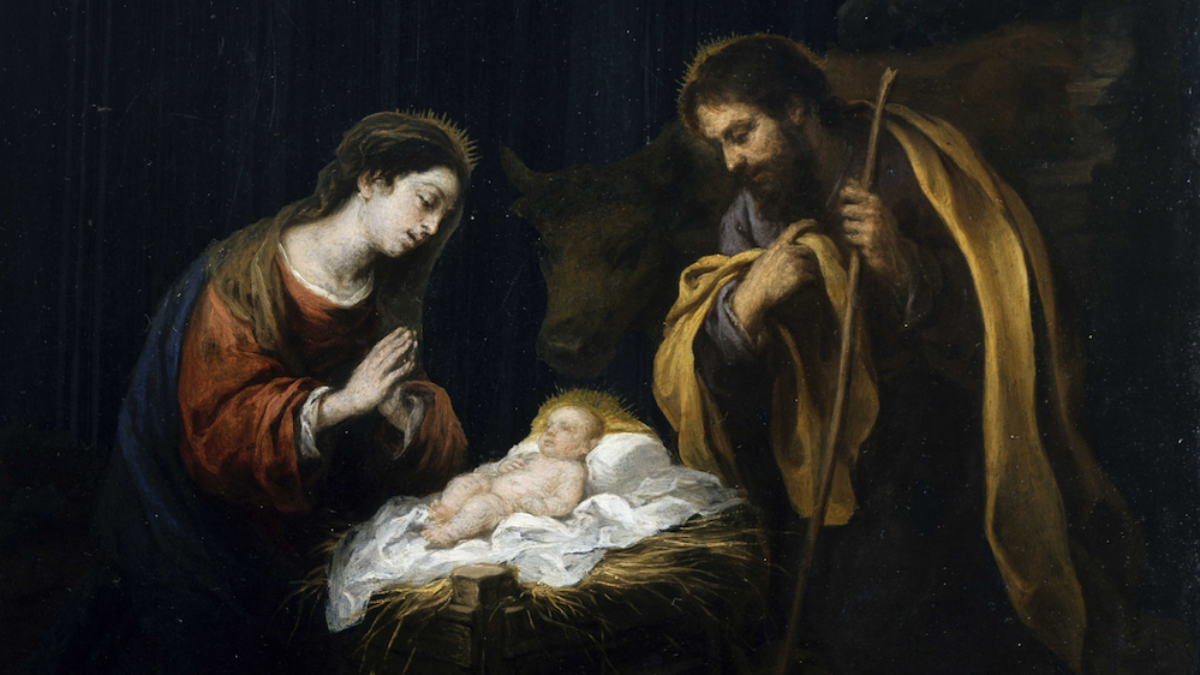
thrill of hope at Jesus' birth, nativity scene

In your despair and weariness this tired Christmas, embrace the thrill of hope and the glorious morn it brings.

KYLEE ZEMPELVISIT ON TWITTER@KYLEEZEMPELMORE ARTICLES

Less than a week out from Christmas, we’re once again steeped in the season that compels us to marvel at the incarnation, bustle to and fro with family and friends, and radiate all the levity our hearts can muster. Yet if there’s one word that best encapsulates many dispositions as 2021 comes to a close, it’s “weary.” Although we’re closing the chapter on another year, it doesn’t feel like any of the tiring stories are ending.

Covid-19 is still with us after two grueling years, and it’s poised to be the forever pandemic. Many churches and schoolchildren remain masked and socially distant. Gas and grocery prices are up, and wallets are lighter. Afghanistan and our borders are still in shambles. Small businesses in cities such as Kenosha are still trying to rebuild in the absence of justice for senseless destruction. Family activities are less light-hearted after traumas like the Waukesha Christmas parade replaced euphoria with fear. Broken families in Middle America are picking up the pieces after tornados leveled their homes and took loved ones. Others lost their livelihoods for having a different opinion on vaccines than the president and the other people in charge.

Around every corner lurks another obstacle, driving even optimists to wonder when the next shoe will drop. Just when parents got their kids back into classrooms, they were tasked with rising up against propaganda and exposing districts that concealed sexual assault allegations. Churches were finally gathering again as God intended, yet Christians have been stuck combatting divisive and anti-gospel racial ideologies within their own ranks.

And work is exhausting — for noble educators, needlessly understaffed nurses and doctors, business owners who can’t get people to work, truck drivers, firefighters and increasingly imperiled police officers, and medically coerced airline employees, just to name a few.

Meanwhile, the news cycle is endlessly mired in woke absurdity, corruption, death, lies, elitist hubris, and soul-sucking diktats, and every time you start to think you can catch your breath, the bad news begins all over again. This is our reality, and it hangs heavily over us even when daily responsibilities or moments of leisure temporarily distract us.

But there’s another reality — a reality that’s more real than any of the multitude of concerns we shoulder and wounds we nurse — and that’s the reality of eternal joys. As Christmas calls us to remember, those eternal joys were actually embodied in a holy babe, fully God yet fully man, who arrived humbly to rescue broken people from their curse of sinfulness. He arrived to live the life we could not live and die the death we no longer have to.

The reason for this season can feel far away. The miraculous birth was in another age in a faraway place, after all. And our current struggles can make it seem inaccessible, like the realities of Christmas aren’t compatible with the realities of our troubles. How can a historical event outshine our acute despair and uncertainty?

These dual realities bring to mind the masterful imagery of C.S. Lewis, who described heavenly things with a kind of concreteness and unfading quality that mortals can hardly fathom. In 2021, as in “The Great Divorce,” everything temporal and hellbound is gossamer — it is passing vapor and fleeting ghosts — when compared to the lasting actuality of all we find in Christ, which though now is often hidden, is as real and concrete as diamonds.

Thus, although COVID despair and riot violence may seem far more tangible than the Christmas story, for instance, those things are not worth comparingwith the future glory that began with the birth of Jesus.

It’s here we stand, gazing upon the swaddled Savior of the world, who was sent to a sin-stained Earth to teach his followers about their own brokenness, about the hard-to-swallow truth that their lives and their problems are like a mist, which “appears for a little time and then vanishes.”

His path too would include temptation, loss, and eventually death. But it would also include resurrection, enabling him as the conqueror of death to pluck our helpless lives out of the pit of despair and sin, onto the Solid Rock, and into a Living Hope.

This season and these truths recall a familiar tune:

O Holy Night!

The stars are brightly shining

It is the night of the dear Savior’s birth!

Long lay the world in sin and error pining

Till he appear’d and the soul felt its worth.

A thrill of hope the weary world rejoices

For yonder breaks a new and glorious morn!

This winter season as we’ve endured Thanksgiving and anticipated Christmas, it’s often been difficult to overcome this weariness and embrace joy.

But deliverance is here. It came in a dark and dirty stable, amid government decrees, weary travels, first-time parenting, and stressful logistics of acquiring basic necessities such as shelter. Thousands of years later, our new birth is still secured by the same Messiah that was born of humble beginnings and hope still emerges in the dark and dismal places. In your despair and weariness, embrace the thrill of hope and the glorious morn it brings.

Repent and believe. Trade your burdens and despair for hope. This is the gospel, and it is for you.


Kylee Zempel is an assistant editor at The Federalist. She previously worked as the copy editor for the Washington Examiner magazine and as an editor and producer at National Geographic. She holds a B.S. in Communication Arts/Speech and an A.S. in Criminal Justice and writes on topics including feminism and gender issues, religious liberty, and criminal justice. Follow her on Twitter @kyleezempel.

Identifying Hirsch’s False Teachings in “Redeeming Sex” Key to Discernment


waving flagJune 4, 2015 by

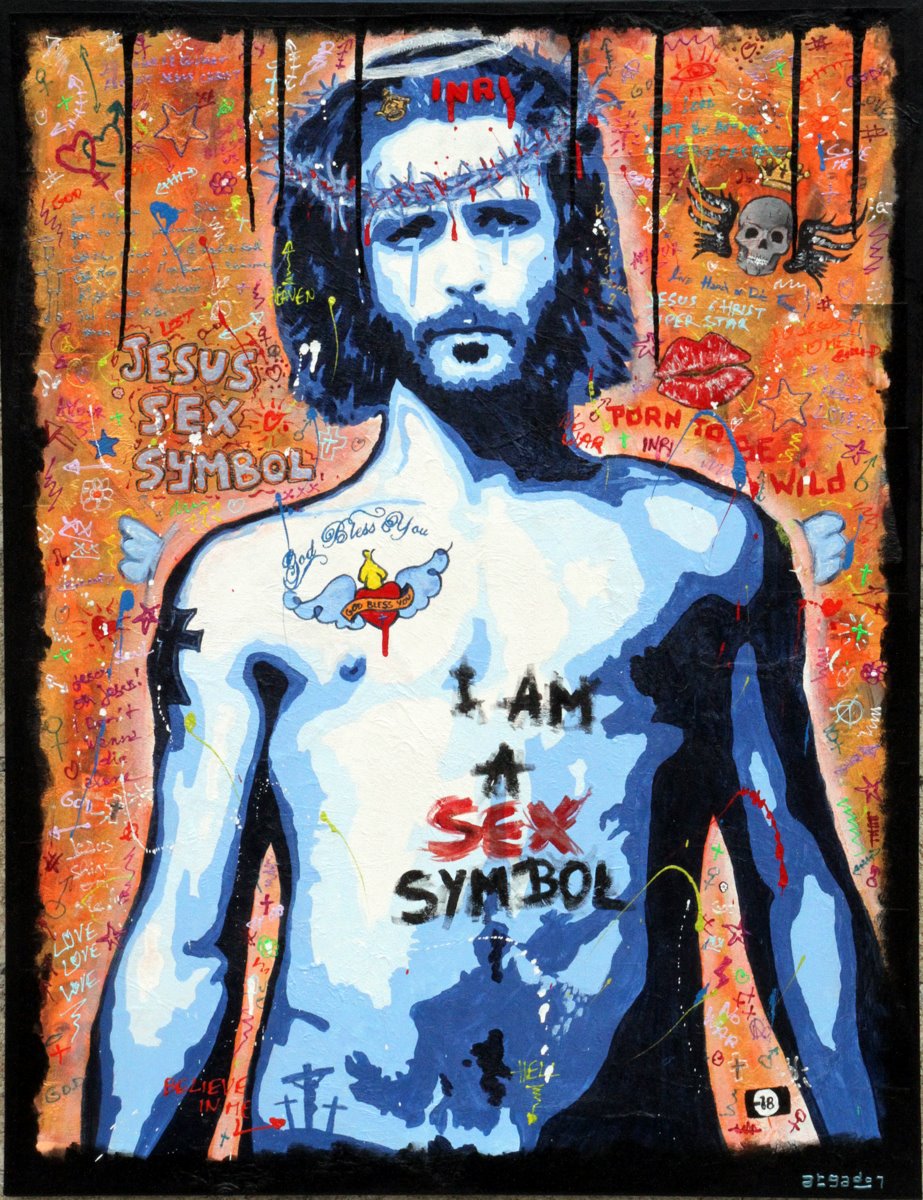
Copyright Ardogal (Contemporary Pop, Street Art & Graffiti Artist and French Painter Jean Sébastien Godfrin)

Many books about homosexuality are hitting the shelves to coincide with upcoming U.S. Supreme Court rulings on same-sex marriage. Among them I reviewed Scott McKnight’s A Fellowship of Differents and now Debra Hirsch’s Redeeming Sex.

Hirsch, a former lesbian-turned-heterosexual-married-self-describing-Christian, exemplifies the need and ability to discern false teaching presented as biblical. Many of her arguments are based on false premises, which lead to false conclusions.

Most disturbing is her approach that distorts and negates the person and work of Jesus Christ.

By suggesting Jesus as a “sex symbol” she writes he “would have been deeply attractive to both men and women” and it was likely that “genital sexual advances were made towards him.” Did Hirsch not read Isaiah 53? Isaiah prophesied that peoples’ redemption would come from one man who “had no beauty or majesty to attract us to Him, nothing in His appearance that we should desire Him.” Jesus was ordinary looking. And the pain and death he suffered, separation from his father, was more than enough to heal every person’s brokenness, including sexual sin.OKAY TO EXPOSE TEENS TO SEXUAL CONTENT BUT NOT THE BIBLE

Her reasoning regarding Jesus and celibacy is equally problematic. Regarding celibacy and comparing Jesus Christ to Roman Catholic priests Hirsch exposes her ignorance about common misperceptions related to institutionalized celibacy. More important, however, is that Jesus, as both fully God and fully man who was without sin, would not have thought romantically about women. His human nature was perfect and incomparable to the rest of a sinful human nature. Hirsch mentions nothing about obedience to God as a reason for celibacy—for all unmarried believers—one of only two sexual relationships Paul consistently and clearly admonishes that honor God.

Jesus was not celibate because he did not want to spare a wife or child from “the pain of the cross,” as Hirsch suggests. Jesus’s sole purpose was soteriological: to die a death he did not deserve for those who did deserve death—including everyone struggling with sexual sin—in order to redeem them from that sin, not to willfully continue it.

This is why through Christ’s love, grace and mercy, combined with a humble, contrite, repentant heart, and healing through the Holy Spirit, no practicing homosexual can claim to know and love Jesus Christ. To love Jesus is to follow him, to trust and obey him—no matter the cost. (McKnight brilliantly communicates this by citing testimonies from people struggling with sexual sin who claim nothing they have given up compares to the joy of knowing Jesus Christ.)

Furthermore, by defining sexuality and gender by man-made (not biblical) terms, Hirsch wrongly surmises the prostitute falling at Jesus’s feet (Luke 7:36-50) evidences what she defines as “social sexuality” and “genital sexuality.” Nothing could be further from biblical truth.

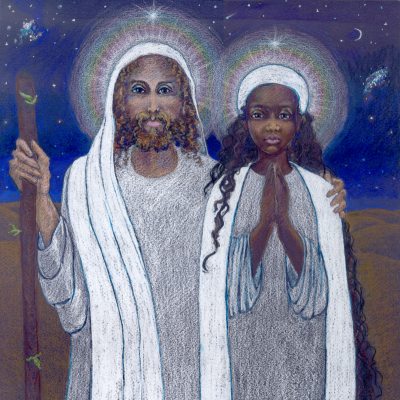
Yahshua_Miriam_fpageShe interprets this text as “Jesus blurs the lines, suggesting it is possible to love intensely outside of a marriage relationship.” This exemplifies both an arrogant western concept and an absurdly false claim.

The prostitute worshipped Jesus. She did not love him in a romantic, socially sexual, or genitally sexual way. The prostitute fell at Jesus’s feet because she loved him as her Lord and Savior.

Worshiping Jesus has absolutely nothing to do with a person’s emotional, asexual, or sexual feelings. Authentically worshiping Jesus for who he is as Lord does not even remotely imply that non-married women and men (the prostitute and Jesus) can love each other deeply. If anything, Jesus loved her as a father loves a child.

Hirsch’s doublespeak astounds. She asserts Jesus is “calling us to be in the ‘right’ loving relationship with God and with people…. to love God is to walk in his ways.” Yet she also maintains “there is no room for self-righteousness and exclusion based on disputed interpretations on nonessential issues of the Bible.” If sex, gender, and same-sex marriage is a nonessential issue of the Bible, then why write a book about it?

Further still, she justifies “God is ok with gay,” monogamous same-sex relationships provide “no incompatibility with following Jesus,” and “no ministry or church has the right to impose any change on an individual, let alone one so intrinsic as a sexual orientation.”WOE

Perhaps this explains why only verses that appear to support her assertions, taken out of context, are used as pull quotes instead of every verse if explained in their context would clearly refute them?

For anyone to argue the Bible “does not understand a modern day understanding of homosexuality” either reflects intellectually dishonesty, deception, or ignorance about sexual norms and practices during the Apostle Paul’s day. In fact, McKnight’s book paints an astonishing picture of that time, to which today’s standards pale in comparison. Again, if the Bible’s view of sex and gender is nonessential, why write a book about it?

One endorser claims Hirsch expresses a “Jesus-centered vision of how sexuality can glorify God and lead us to flourish.” Another, she offers “biblical, Jesus-lens insight.” Neither is truth.Liberalism a mental disorder 2

By using the Kinsey Scale as a plumb line Hirsch presupposes that human feelings, rationale, or psychology provide the basis for “trying to understand or define homosexuality,” which she claims, “is no easy task.” Homosexuality is easily understood when one first understands who God is. The gospel, not the Kinsey Scale, is what is needed to completely surrender to Jesus’s love, a love that surpasses all selfish and self-seeking choices to love and be loved by human standards.

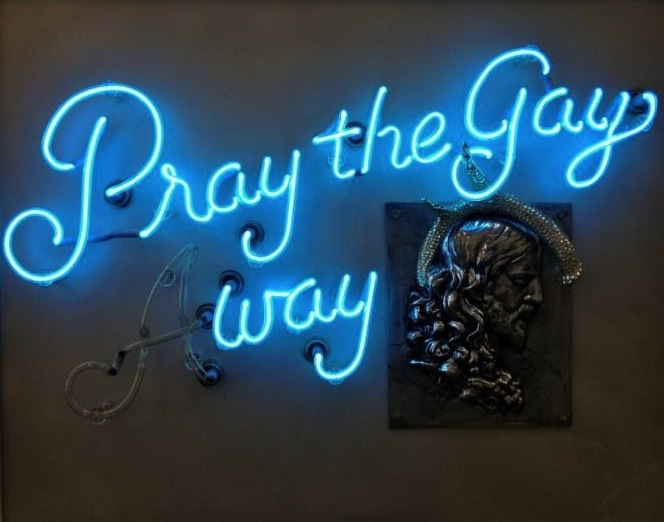
Biblical love exposes sin and articulates that only through God’s grace, with or without the help of Christians, God restores broken people to himself. Hirsch and others who condone the behavior and mindset of “practicing homosexual Christians” are not loving, but harming them. Worse still they make Jesus’s death worthless. pray2Hirsch’s misrepresentation of scripture is irresponsibly misleading. Sadly, she is not alone.

Hirsch like Rob Bell who “came out for same-sex marriage,” Rick Warren who held hands with and joked about kissing Elton John, the Progressive Christian Alliance, the Gay Christian Network, and many at RNS who unashamedly cite human knowledge and feelings above biblical wisdom.

Paul, who Jesus exclusively tutored for seven years, wrote more about sex and marriage and male and female relationships than anyone else. Wouldn’t reading what he wrote in its entirety be the logical starting point? Yet few Christians read the Bible.

Those who “walk in the spirit,” those who love God with their whole heart, soul, and mind, those who seek to renew their minds and “pick up their crosses,” would not choose to “walk in the lusts of the flesh.” They would not want to disobey Jesus because their love for him is so great.

Sinning, for believers, leads to repentance, not repetition of sin. Those who know and choose to follow and obey Jesus grasp the reality that their lives are not their own; their purpose extends beyond themselves. Human sexuality (and intellect, ingenuity, athleticism, or physical or psychological traits) is only rightly understood once God’s will, communicated in scripture, is understood.

The real issue is whether or not Jesus is who he says he is, and if so, is he worthy of following at any cost.freedom combo 2

Is China Set to Be the World’s Greatest Christian Nation?


http://lastresistance.com/5486/china-set-worlds-greatest-christian-nation/#zeMxk4Cs3i1g3STm.99

Posted By on Apr 21, 2014

Cathedral in China 

According to an article in the Telegraph, China is on schedule to comprise the globe’s largest population of Christians within fifteen years:

“By my calculations China is destined to become the largest Christian country in the world very soon,” said Fenggang Yang, a professor of sociology at Purdue University and author of Religion in China: Survival and Revival under Communist Rule. “It is going to be less than a generation. Not many people are prepared for this dramatic change.” 

China’s Protestant community, which had just one million members in 1949, has already overtaken those of countries more commonly associated with an evangelical boom. . . . Prof Yang . . . believes that number will swell to around 160 million by 2025. That would likely put China ahead even of the United States, which had around 159 million Protestants in 2010 but whose congregations are in decline.

The article’s headline says that China will be the “world’s most Christian nation,” but that isn’t exactly true. China has a huge population, and even if China has more Christians than America does within fifteen years, that wouldn’t necessarily mean that the nation itself is more Christian. 150 million Christians is a serious majority in the United States. But it would account for only about ten percent of China’s massive population.

Nonetheless, the statistics are quite startling. While the United States is abandoning its Christian heritage and republican roots to dabble more deeply in secularism, socialism, and nanny government, China is shedding its atheist heritage and tyrannical roots to embrace Christianity and the free market. (Notice, I did not write “Republican.” If you don’t know the difference, you’re part of the problem.)

Tag Cloud