Evidence is mounting that both the Biden campaign and the federal governmentinterfered in the 2020 election by running an info op to convince voters the Hunter Biden laptop was Russian disinformation. Missouri and Louisiana have unearthed some of the most damning evidence in their First Amendment lawsuit against the Biden administration, but a close analysis of the court filings suggests the FBI is not being forthright in identifying the players involved.
As part of the lawsuit Missouri and Louisiana’s attorneys general initiated, the states obtained limited initial discovery. Among other things, the plaintiffs obtained a list of government officials who communicated with Twitter about so-called content moderation and the deposition testimony of Elvis Chan, the assistant special agent in charge of the FBI’s San Francisco Cyber Branch.
In his deposition, Chan testified that he is one of the “primary” FBI agents who communicates with social media companies about so-called disinformation. During the 2020 election cycle, Chan coordinated meetings between the FBI’s Foreign Influence Task Force (FITF) and at least seven of the major tech giants, including Meta/Facebook, Twitter, Google/YouTube, Yahoo!/Verizon Media, and Microsoft/LinkedIn. Those meetings occurred at first quarterly and then monthly and weekly as the election neared.
In questioning Chan, attorneys representing Missouri and Louisiana pushed him on several points related to the censorship of the Hunter Biden laptop. The lawyers succeeded in eliciting testimony from Chan that the FBI regularly raised the possibility of “hack and dump” operations with senior officials at the various tech companies. Those discussions included the FBI warning the companies of a potential hack-and-leak occurring shortly before the 2020 election, like the Democratic National Committee hack and WikiLeaks that occurred in 2016.
The plaintiffs also quizzed Chan on the names of any government officials who discussed “hack-and-dump Russian operations” with the tech giants. Chan mentioned Section Chief Laura Dehmlow, “among others.” But Chan then danced around who those others were, saying he couldn’t recollect. Chan eventually identified four FBI officials that attended Department of Homeland Security Cybersecurity and Infrastructure Security Agency (CISA) meetings at which the FBI discussed the risk of hack-and-leak operations. These officials were Brady Olson, William Cone, Judy Chock, and Luke Giannini.
Regarding whether anyone within the FBI suggested Chan should raise the possibility of Russian hack-and-dump operations with the tech giants in 2020, Chan repeatedly said he could “not recall,” but at one point acknowledged, “They may have, but I don’t recollect at this time.”
The plaintiffs in Missouri v. Biden claim Chan’s “I do not recall,” is not credible. They say it is “facially implausible that Chan does not recall whether other federal officials discussed warning platforms about ‘hack-and-leak’ operations during 2020, especially after the fiasco of censorship of the Hunter Biden laptop story.” Furthermore, the plaintiffs added, “the only aspect of [Chan’s] internal discussions with the FBI about hack-and-leak operations that he does not recall is whether someone from the FBI suggested or directed him to raise the issue with social-media platforms.”
Uncovering whether someone — and if so, who — directed Chan or other FBI agents to warn tech companies about a potential hack-and-leak operation is necessary to unravel the extent of the government’s info ops. Did FBI agents with knowledge of either the Hunter Biden laptop or the existence of damaging communications possessed by other governments, such as Ukraine or China, prompt Chan and others to warn of an impending hack-and-leak to protect the Biden family from any fallout?
Chan also appeared less than forthcoming when questioned about whether he had discussed the 2020 election with any of the people involved in the DNC hack. Here, an unnoticed tidbit from Chan’s deposition proves interesting: Chan testified that he served as the supervisor for the Russian cyber squad that investigated the DNC server before the San Francisco office handed it off to FBI headquarters.
When asked whether “subsequent to the 2016 investigation of the hack of the DNC server,” he had “any communications with anyone involved in that investigation about the possibility that a hack-and-leak operation” could happen prior to the 2020 election, Chan initially provided a misleading response, saying he did “not remember discussing the potential for a 2020 election with any of the FBI personnel because they had moved on to different roles.”
Catching Chan’s narrowing of the question from “anyone” to “FBI personnel,” the plaintiffs’ attorney quickly queried, “and people outside the FBI?” Chan then noted he would have discussed national security cyber investigations involving Russian matters with Sean Newell, a deputy chief at the DOJ National Security Division who also worked on the DNC hack. But Chan refused to say whether Newell or anyone else who worked on the DNC hack had raised the issue of a 2020 hack-and-release repeat.
Chan’s reticence raises red flags. But piecing together two exhibits filed in the Missouri v. Biden case reveals a thread to pull to start getting some answers.
Exhibit 23 used during Chan’s deposition includes a series of emails related to the DNC hack that were filed in the special counsel’s criminal prosecution of former Clinton campaign attorney Michael Sussmann. In addition to Chan and Newell, the emails include names of about another dozen government agents.
When those names are cross-checked against the names of the federal officials with whom Twitter “had meetings or discussions” about so-called content moderation issues — a list Twitter provided the plaintiffs in Missouri v. Biden in response to a third-party subpoena — two names overlap: Chan and Jonathan Sills.
Sills, an attorney with the FBI’s Office of General Counsel, appeared in several emails in which Sussmann and the FBI discussed logistical details for conveying a copy of the DNC server data to the FBI. Given Sills was only added to the email threads when they discussed whether the FBI would pay CrowdStrike to make a copy of the data, it seems unlikely Sills had a broader involvement in the DNC hack-and-release investigation.
But why then was Sills communicating with Twitter about so-called content moderation issues? Was it about payments to Twitter? Or something else?
Recall we still don’t know the identities of the “folks in the Baltimore field office and at HQ that are just doing keyword searches for violations,” as then-Twitter legal executive Stacia Cardille complained in a Nov. 3, 2020, email to Jim Baker, the then-deputy general counsel for Twitter. “This is probably the 10th request I have dealt with in the last 5 days,” Cardille noted.
Remember also that the FBI’s Baltimore field office provided coverage to the Delaware U.S. attorney’s office out of which the Hunter Biden investigation was being run — to the extent FBI headquarters allowed.
When reached by phone in his D.C. office, Sills told The Federalist he was not authorized to comment on the matter, which is unfortunate because the people who can comment seem not to recollect the most pertinent points. A follow-up email to Sills went unanswered.
Eventually, though, these threads will all be pulled when discovery occurs in Missouri v. Biden. While some will lead nowhere, as the initial discovery proves, there is much to learn about the government’s involvement in the Hunter Biden info ops and its role in censoring speech on social media.
Margot Cleveland is The Federalist’s senior legal correspondent. She is also a contributor to National Review Online, the Washington Examiner, Aleteia, and Townhall.com, and has been published in the Wall Street Journal and USA Today. Cleveland is a lawyer and a graduate of the Notre Dame Law School, where she earned the Hoynes Prize—the law school’s highest honor. She later served for nearly 25 years as a permanent law clerk for a federal appellate judge on the Seventh Circuit Court of Appeals. Cleveland is a former full-time university faculty member and now teaches as an adjunct from time to time. As a stay-at-home homeschooling mom of a young son with cystic fibrosis, Cleveland frequently writes on cultural issues related to parenting and special-needs children. Cleveland is on Twitter at @ProfMJCleveland. The views expressed here are those of Cleveland in her private capacity.
A.F. Branco has taken his two greatest passions, (art and politics) and translated them into cartoons that have been popular all over the country, in various news outlets including NewsMax, Fox News, MSNBC, CBS, ABC, and “The Washington Post.” He has been recognized by such personalities as Rep. Devin Nunes, Dinesh D’Souza, James Woods, Chris Salcedo, Sarah Palin, Larry Elder, Lars Larson, Rush Limbaugh, and Presiden
Sen. Chuck Grassley, R-Iowa, revealed in a floor speech on Tuesday that material reviewed by his investigative staff supported whistleblower allegations that the FBI falsely labeled evidence of potential criminal conduct by members of the Biden family “Russian disinformation.” While Grassley had previously discussed the whistleblower allegations, he now confirmed for the first time that an independent review of the pertinent records supported the accusations.
In response to last week’s announcement by Senate Majority Leader Chuck Schumer that he planned to offer a resolution denouncing former President Donald Trump’s call to defund the FBI, Grassley excoriated Democrats for remaining silent while the country faced an uptick in violence against law enforcement officers and the radical left pushed to defund the police. The Iowa senator then chastised Democrats for offering a political resolution that ignored the weaponization of the FBI, proceeding then to catalog the DOJ and FBI’s many abuses.
Here, Grassley stressed that protected whistleblower disclosures made“clear that the FBI has within its possession very significant, very impactful, and very voluminous evidence with respect to potential criminal conduct by members of the Biden family.”
“I know the FBI falsely labeled that evidence as Russian disinformation to bury it,” Grassley continued, revealing that his staff had “independently reviewed records” that support the whistleblower allegations.
Tuesday’s comments came some six months after Grassley revealed that the FBI had possession of “a series of documents relating to information on Mykola Zlochevsky, the owner of Burisma, and his business and financial associations with Hunter Biden.” According to an October 2022 news release and an accompanying letter to Attorney General Merrick Garland, FBI Director Christopher Wray, and Delaware U.S. Attorney David Weiss, Grassley said:
The documents in the FBI’s possession include specific details with respect to conversations by non-government individuals relevant to potential criminal conduct by Hunter Biden. These documents also indicate that Joe Biden was aware of Hunter Biden’s business arrangements and may have been involved in some of them.
At the time, Grassley noted it was “unclear whether the FBI followed normal investigative procedure to determine the truth and accuracy of the information or shut down investigative activity based on improper disinformation claims in advance of the 2020 election…” The senator also expressed concern over whether Weiss had independently evaluated the evidence.
Grassley concluded his October 2022 letter by requesting from the DOJ and FBI all records from Jan. 1, 2014, forward “that reference Mykola Zlochevsky, Hunter Biden, James Biden and Joe Biden.” While his letter sought “all records,” Grassley explicitly highlighted several forms including, among others, FD-209a, which is used to record an “asset contract”; FD-794b, which is used to request a payment; FD-1023, which is used for a source report; and FD-1040a, which is used to close a source.
The specific documents requested suggest the whistleblower had claimed the FBI had a source that provided information on the Burisma owner and the Biden family.
While it is unclear whether the DOJ and FBI provided the documents, Grassley’s floor statement on Tuesday shows his office had access to records corroborating the whistleblower claims that the FBI buried evidence derogatory to the Biden family by framing it as Russian disinformation.
This latest revelation follows last week’s news that an Internal Revenue Service whistleblower claimed FBI headquarters interfered in the investigation into Hunter Biden and that two Biden-appointed U.S. attorneys declined to file tax charges against the president’s son, against the recommendation of career prosecutors.
Yet Garland and Wray remain silent. If it weren’t for Grassley’s various letters and floor statements, Americans would know little about the FBI’s political favoritism and the “get out of jail free card” they seem to be handing out to Hunter Biden at every opportunity.
But now that we know that evidence, likely including a confidential human source, was buried under the guise that it was Russian disinformation, will anything change?
Sadly, for all of Grassley’s efforts to expose the scandal, the last seven years suggest not.
Margot Cleveland is The Federalist’s senior legal correspondent. She is also a contributor to National Review Online, the Washington Examiner, Aleteia, and Townhall.com, and has been published in the Wall Street Journal and USA Today. Cleveland is a lawyer and a graduate of the Notre Dame Law School, where she earned the Hoynes Prize—the law school’s highest honor. She later served for nearly 25 years as a permanent law clerk for a federal appellate judge on the Seventh Circuit Court of Appeals. Cleveland is a former full-time university faculty member and now teaches as an adjunct from time to time. As a stay-at-home homeschooling mom of a young son with cystic fibrosis, Cleveland frequently writes on cultural issues related to parenting and special-needs children. Cleveland is on Twitter at @ProfMJCleveland. The views expressed here are those of Cleveland in her private capacity.
An Internal Revenue Service (IRS) whistleblower hinted to congressional leaders last week that the FBI improperly blocked aspects of the Hunter Biden investigation and that Biden-appointed U.S. attorneys blocked an indictment against the president’s son on tax charges. The carefully worded letter also indicated Attorney General Merrick Garland had testified inaccurately when he told the Senate Judiciary Committee that the Trump-appointed Delaware U.S. attorney had the authority to file charges against Hunter Biden in other jurisdictions.
Here are six reasons this whistleblower should terrify those behind the DOJ’s Biden family protection racket.
1. Whistleblower Has Corroborating Evidence
While Wednesday’s letter from the whistleblower’s attorney to the congressional oversight chairs spoke only in cryptic terms, as I detailed on Friday, individuals claiming to be “directly familiar with the case” revealed the whistleblower had accused two Biden-appointed U.S. attorneys of refusing “to seek a tax indictment against Hunter Biden despite career investigators’ recommendations to do so.”
The sources also claimed the whistleblower’s disclosures establish that Garland refused Delaware U.S. Attorney David Weiss’s request for special counsel protection and that Garland testified inaccurately when he represented to the Senate Judiciary Committee that Weiss had full authority “to bring cases in other jurisdictions if he feels it is necessary.”
It isn’t merely the seriousness of the whistleblower’s accusations that should shake those sheltering Hunter Biden, however, but the promise of corroborating evidence.
The whistleblower’s attorney, Mark Lytle, reportedly maintains his client can “identify contemporaneous witnesses to corroborate his claims of political interference.” The whistleblower will “be able to talk about these meetings that he attended, that were with both agents and prosecutors … and how he summarized those meetings and put it in writing and distributed those to folks within the IRS and sometimes other agents,” Lytle claims, adding that those contemporaneous memoranda and emails will “end up corroborating his credibility.”
Sources also maintain DOJ Inspector General Michael Horowitz has already begun reviewing documents that purportedly corroborate the whistleblower’s claims. They say he has sought out both IRS and FBI witnesses, indicating several paths exist to confirm the accusations of political bias.
2. IRS Agent Is Nonpartisan and Credentialed
The whistleblower’s apparent nonpartisan pedigree is another reason for participants in the Biden protection racket to be afraid. The whistleblower is “not a political person” and does not have a “political agenda,” Lytle told Fox News last week. He “is a career law enforcement official who hasn’t made any political donations and doesn’t even use social media,” the IRS agent’s attorney told Just the News.
“He is just a guy who likes his job as a law enforcement officer, as an investigator, and he takes it seriously, and he’s dedicated,” Lytle explained, adding, “And when he sees something that is not routine and doesn’t follow the rules, or … something maybe is affected by politics — that’s what made him come forward.”
“My client wrestled with whether or not to come forward,” the whistleblower’s attorney told Fox News. He had “sleepless nights. He decided he could not live with himself if he stayed quiet and said nothing.”
Also strengthening the whistleblower’s claims of a nonpartisan motivation is his insistence that “when he comes forward, this is not to talk to just one party or the other party.” Lytle stressed his client wants both sides of the political aisle to “ask him questions and cross-examine him.”
That Lytle is one of the whistleblower’s attorneys will also negate concerns of partisanship, given the attorney previously represented Yoel Roth, Twitter’s former head of trust and safety, during the heated Republican-controlled weaponization hearings. Lytle is also “currently defending a former FBI supervisor named Timothy Thibault who has been accused of pro-Biden political bias.” Before retaining Lytle, the whistleblower hired “prominent Democrat lawyer Mark Zaid, who previously represented clients whose allegations about a call with the Ukrainian president led to Donald Trump’s first impeachment in 2019.”
His dedicated service at the IRS will likewise bolster the whistleblower’s credibility. As an IRS special agent for more than 10 years, the whistleblower reportedly has been “trusted with international investigations,” received several commendations, and taught “other agents how to properly do investigations.” His lengthy experience will strengthen his claims that “protocols that would normally be followed by career law enforcement professionals in similar circumstances” were not followed in the case of the politically connected Hunter Biden.
3. Dual Authorization Was Required
The IRS whistleblower’s claims that two Biden-appointed U.S. attorneys inappropriately, and for political reasons, “declined to seek a tax indictment against Hunter Biden” carry more weight given the dual-authorization procedures required by the DOJ for criminal tax cases.
The Department of Justice Manual provides that the tax division oversees federal criminal tax enforcement. Thus, while a grand jury is empowered to investigate tax crimes, “the Tax Division must first approve and authorize the United States Attorney’s Office’s use of a grand jury to investigate criminal tax violations.” Accordingly, in tax cases, prosecutions generally require two independent assessments that criminal prosecution is appropriate.
In the case of Hunter Biden, both career investigators and career prosecutors in the DOJ tax division signed off on the recommended charges, the whistleblower maintains. That dual approval suggests the evidence underlying the proposed charges was strong. It also pits the two Biden-appointed U.S. attorneys, who allegedly declined to seek charges against the president’s son, against the recommendations of two distinct sets of career employees.
4. Criminal Violations Seem Obvious
“Of course, Biden officials are interfering in his son’s case — why else has Hunter skated for five years?”
That title from former federal prosecutor Andrew McCarthy’s Friday New York Post article capsulizes perfectly another reason those running the Biden family protection racket should be shaking: The political favoritism shown Hunter Biden is obvious.
Who else could lie on a federal firearm form to purchase a handgun — only to lose physical possession of the gun and have it turn up across the street from a school — without getting charged with a federal crime?
As McCarthy wrote, “The gun offenses are so straightforward that they’d take a competent investigator five days, not five years, to wrap into a prosecutable case.” Likewise, “[s]ome of the tax offenses, which stretch back seven years or more, are so undeniable that liens were placed on Hunter’s properties…”
A public that for years has witnessed the president’s son escape any consequence for his clearly criminal conduct will easily nod along to the whistleblower’s claims of political favoritism: The IRS agent’s accusations aren’t just believable — they are self-evident.
5. The Timing Is Suspect
The timing also renders the whistleblower’s claims believable. Recall that in March of 2022, The New York Times began prepping the country for an indictment of Hunter Biden by soft-peddling his criminal conduct. The Times even previewed several potential defenses the president’s son could assert to counter the series of predicted criminal charges.
The Times article was a transparent attempt to get ahead of an anticipated story, namely that a grand jury had indicted Hunter Biden. But a grand jury indictment never dropped. Instead, about six months later, the whistleblower reportedly filed complaints related to the investigation with the U.S. Treasury Inspector General for Tax Administration and the DOJ’s Office of Inspector General. The whistleblower’s complaints indicated charges had been recommended and approved by the tax division but never materialized because the Biden-appointed U.S. attorneys did not seek grand jury indictments as recommended.
The New York Times’ efforts to groom Americans to discount the seriousness of the expected criminal charges wasn’t needed because the DOJ and FBI already had the president’s son covered.
6. The Scandal Reaches the FBI and POTUS
The Biden-appointed U.S. attorneys who allegedly declined to seek grand jury indictments against the president’s son are not the only ones implicated, however. The whistleblower’s allegations reportedly also reach FBI headquarters, although that does not necessarily mean Director Christopher Wray.
The unnamed sources further maintain the whistleblower’s disclosures claim that “specific DOJ employees placed strictures on questions, witnesses and tactics investigators may be allowed to pursue that could impact President Biden.” This accusation suggests political corruption beyond the refusal of the DOJ to charge Hunter Biden with tax crimes.
Whether the “specific DOJ employees” refers to individuals working at FBI headquarters or elsewhere with the DOJ is unclear. Either way, the whistleblower’s claim conflicts with Garland’s testimony before the Senate Judiciary Committee that he had left the matter of Hunter Biden to the Delaware “U.S. Attorney’s office and the FBI squad working with him.”
Garland’s testimony suggests that whoever instituted those “strictures” acted without the authority to do so. That is bad enough, but the implication is worse: namely that either FBI headquarters or other DOJ employees have kept the president from being incriminated during the multi-year unraveling of Hunter Biden’s complicated “business” ventures.
Margot Cleveland is The Federalist’s senior legal correspondent. She is also a contributor to National Review Online, the Washington Examiner, Aleteia, and Townhall.com, and has been published in the Wall Street Journal and USA Today. Cleveland is a lawyer and a graduate of the Notre Dame Law School, where she earned the Hoynes Prize—the law school’s highest honor. She later served for nearly 25 years as a permanent law clerk for a federal appellate judge on the Seventh Circuit Court of Appeals. Cleveland is a former full-time university faculty member and now teaches as an adjunct from time to time. As a stay-at-home homeschooling mom of a young son with cystic fibrosis, Cleveland frequently writes on cultural issues related to parenting and special-needs children. Cleveland is on Twitter at @ProfMJCleveland. The views expressed here are those of Cleveland in her private capacity.
The FBI recently sought to develop sources inside Christian churches and Catholic dioceses as part of an effort to combat domestic terrorism, according to internal documents released by House Judiciary Committee on Monday. The internal documents — obtained last month by House Judiciary Committee Chairman Jim Jordan, R-Ohio, and Rep. Mike Johnson, R-La., who are also members of the so-called Weaponization Subcommittee — showed the FBI planned to use churches as “new avenues for tripwire and source development.” The federal law enforcement agency also aimed to specifically target “mainline Catholic parishes” as part of its efforts.
In addition, according to Jordan, the FBI expressed interest in “leverag[ing] existing sources and/or initiat[ing] Type 5 Assessments to develop new sources with the placement and access.” And, in another example, the agency cited a desire to to sensitize religious congregations “to the warning signs of radicalization and enlist their assistance to serve as suspicious activity tripwires.”
Judiciary Committee Chairman Jim Jordan, R-Ohio, conducts a Select Subcommittee on the Weaponization of the Federal Government hearing on March 9. (Tom Williams/CQ-Roll Call, Inc via Getty Images) (Tom Williams/CQ-Roll Call, Inc via Getty Images)
“Based on the limited information produced by the FBI to the Committee, we now know that the FBI relied on at least one undercover agent to produce its analysis, and that the FBI proposed that its agents engage in outreach to Catholic parishes to develop sources among the clergy and church leadership to inform on Americans practicing their faith,” Jordan wrote in a letter to FBI Director Christopher Wray on Monday.
Jordan also issued a subpoena for a series of related documents the committee previously requested from the FBI, but which the FBI has failed to provide.
“This information is outrageous and only reinforces the Committee’s need for all FBI material responsive to our request,” Jordan wrote to Wray. “The documents produced to date show how the FBI sought to enlist Catholic houses of worship as potential sources to monitor and report on their parishioners.”
“Americans attend church to worship and congregate for their spiritual and personal betterment,” the letter continued. “They must be free to exercise their fundamental First Amendment rights without worrying that the FBI may have planted so-called “tripwire” sources or other informants in their houses of worship.”
FBI Director Christopher Wray listens during a news conference at the Department of Justice on Jan. 27. (AP Photo/Carolyn Kaster)
Jordan and Johnson first requested related documents from the FBI on Feb. 16, days after former FBI agent and whistleblower Kyle Seraphin published an internal document originating from the FBI’s Richmond Field Office that appeared to outline a plan to “mitigate the threat of Radical-Traditionalist Catholics.”
The leaked document generated widespread condemnation from Republican lawmakers who said the FBI’s efforts may violate the Constitution. However, the original letter from Jordan and Johnson went unanswered prompting a follow-up request on March 20. Three days later, the FBI produced the 18-page document Jordan announced on Monday.
“The FBI received the subpoena,” the FBI told Fox News Digital in a statement. “The FBI recognizes the importance of congressional oversight and remains fully committed to cooperating with Congress’s oversight requests consistent with its constitutional and statutory responsibilities. The FBI is actively working to respond to congressional requests for information –including voluntary production of documents.”
The agency also referred Fox News Digital to recent comments Wray made during congressional testimony in which he said he was “aghast” when he saw reports about the FBI targeting Catholics.
“We took steps immediately to withdraw it and remove it from FBI systems. It does not reflect FBI standards,” Wray added. “We do not conduct investigations based on religious affiliation or practices, full stop. We have also now ordered our inspection division to take a look at how this happened and try to figure out how we can make sure something like this doesn’t happen again.”
The Federal Government was forced to pause the “Proud Boys’” trial regarding J6 insurrection and you will never guess why.
Special Agent Nicole Miller accidentally revealed that her boss ORDERED her to destroy 338 items of evidence via chat logs that were leaked. That’s bad news for the prosecution. And now it’s official. We are living under the very government our founding fathers warned us against.
Apparently, Miller not only lied to the defense, but also may have spied on attorney-client communications (last I checked, these fall under the ‘privileged’ category) after also being asked to “edit out that I was present” during a meeting with a confidential informant. I guess this is the kind of ‘higher loyalty’ James Comey wrote about.
As part of her testimony, prosecutors shared with defense lawyers a set of internal FBI messages that Miller had sent and received from colleagues related to the case — a standard production of evidence in criminal cases. To compile those exchanges, FBI headquarters sent Miller a spreadsheet of her messages — culled from a computer network classified at the “secret” level. Miller then reviewed the messages and filtered them to ensure only relevant, unclassified exchanges were included.
Miller sent her final list to prosecutors, who then packaged the messages into an Excel spreadsheet that they provided to defense lawyers. But unbeknownst to them, the messages Miller initially filtered out — including some that DOJ officials say are likely classified — were left in the final document as “hidden” rows in the Excel spreadsheet. Defense counsel stumbled upon them and began grilling Miller about them in front of jurors in the case.
Overnight, Justice Department attorneys told the defense team they were concerned there had been a “spill” of classified information in the hidden messages they accessed. And on Thursday, U.S. District Court Judge Tim Kelly paused the trial — already in its third month — to determine how to handle the error.
It’s the latest hiccup in a seditious conspiracy trial that has been marked by excruciating delays and extended legal disputes. Prosecutors say Proud Boys chair Enrique Tarrio and four leaders of the group schemed to prevent the transfer of power from Donald Trump to Joe Biden. The group, according to the Justice Department, split into teams that helped engineer the breach of police lines and, ultimately, the building itself, when one of the defendants, Dominic Pezzola, smashed a Senate-wing window with a stolen riot shield.
Assistant U.S. Attorney Jocelyn Ballantine, who is supervising the case for the Justice Department, acknowledged the likely “spill” of classified information Thursday morning. She raised particular concerns about a message sent to Miller by another agent who works on covert activity — and who she said did not work on the Proud Boys case — describing a supervisor’s order to “destroy 338 items of evidence.”
“That could impact a classified equity,” Ballantine said.
‘describing a supervisor’s order to “destroy 338 items of evidence.”’
Likely Story
I find the timing of Ballantine’s “classified” claim to be pretty fishy. Just this week, Tucker Carlsen unleashed quite a bit of video from this so-called insurrection. However, there’s only one problem. The insurrection part is missing.
For example, we all know the story of the QAnon Shaman.
Jacob Chansley, the spear-carrying Jan. 6 rioter whose horned fur hat, bare chest and face paint made him one of the more recognizable figures in the assault on the Capitol, was sentenced to 41 months in prison.
However, Carlsen revealed that video captures Chansley’s movements in the capitol that day. He went from room to room, offering up prayers, thanking police for their hard work, while escorted at all times by capitol police. The idea that anyone else would face a prison sentence after Carlsen’s big reveal is preposterous.
No wonder the prosecutor had to employ a stall tactic. Their entire case is in shambles.
Politico continues:
Defense lawyers cried foul, though, noting that the government’s claims of “classified” material arrived just as the defense sounded the alarm about the content of some of the inadvertently disclosed messages. While Miller testified Wednesday she had produced about “25 rows” of messages, defense lawyers said there were thousands of rows of hidden messages that included contents they contended were directly relevant to their case.
Some of the messages appeared to reveal that FBI agents accessed contacts between defendant Zachary Rehl and his attorney, which led Miller to tell a colleague she thought Rehl would take his case to trial. In another message, an FBI agent tells Miller, “You need to go into that CHS report you just put and edit out that I was present.” After defense attorneys began to press Miller about the attorney-client messages on Wednesday afternoon, prosecutors objected, and Kelly halted the trial to permit the parties to debate the matter.
After hearing arguments Thursday, Kelly ordered defense attorneys to refrain from reviewing or disseminating the messages until the FBI was able to conduct a classification review, a process that Ballantine said could likely be completed by the end of the day Thursday.
See No Evil, Hear No Evil
Telling a group of lawyers not to look at those messages is like telling people not to look at a car crash on the interstate. Worse, it’s like telling people not to look at the files on the Hunter Biden laptop. Any attorney worth their salt is definitely viewing those chats, before they mysteriously vanish faster than a Clinton-accuser.
The flare-up comes as prosecutors are nearing the end of their case against the Proud Boys. They’ve laid out evidence showing that Tarrio and his allies developed a sense of existential dread about a Biden presidency and quickly embraced Trump’s claims of fraud in the days and weeks after his defeat in the 2020 election. As Jan. 6 neared, the group’s leaders grew increasingly disillusioned with police — who they accused of insufficiently acting to investigate a man who stabbed several Proud Boys at a December 2020 rally in Washington. And they set up a new chapter, dubbed the “Ministry of Self Defense,” that included men they believed would follow orders.
A week before Jan. 6, Tarrio received a document from a girlfriend titled “1776 Returns” that sketched out a plan to occupy federal buildings in order to derail and delay Congress’ proceedings to certify the 2020 election.
Defense attorneys have contended that the group is little more than a glorified drinking club that had no actual plan to either storm the Capitol or prevent Biden from taking office. Miller’s testimony portrayed the group’s march through Washington on Jan. 6 as an organized and concerted advance toward the Capitol that pinpointed weaknesses in Capitol Police defenses and exploited them to help facilitate the breach of the Capitol.
House Democrats lied when they said an investigation into an FBI whistleblower’s claim of retaliation had been dismissed, according to a letter obtained exclusively by The Federalist. On the contrary, an investigation into Special Agent Steve Friend’s claims is ongoing.
Last week, Democrats on the House Judiciary Committee leaked a “staff report” that contained numerous misrepresentations to The New York Times, Monday’s letter to Inspector General Michael Horowitz said. The letter — signed by Tristan Leavitt, the president of Empower Oversight, the legal services firm representing Friend — began by condemning the “Forward” from committee ranking member Jerry Nadler and subcommittee ranking member Stacey Plaskett that declared by fiat and without evidence: “[T]he three individuals we have met [including Friend] are not, in fact, ‘whistleblowers.’”
Friend is indeed a whistleblower, the letter said. Not only that, but throughout the report that Democrats crafted and peddled to multiple media outlets, they falsely and repeatedly claimed the Office of Inspector General (OIG) had rejected Friend’s whistleblower retaliation claims, Leavitt stressed. “These mischaracterizations in the Democrat staff report were subsequently parroted by multiple media outlets,” including CNN and The Washington Post.
Contrary to the Democrats’ claims, echoed by friendly media outlets, Leavitt’s letter says that Friend’s whistleblower retaliation complaint, originally filed in September 2022, remains pending with the DOJ’s inspector general. While Friend had also alleged “systematic abuses of the Constitution, laws, and policy by the FBI,” in December of 2022, those allegations were referred to the FBI’s Inspection Division. But in follow-up inquiries, the OIG made clear, according to Empower Oversight, that the referral did not apply to Friend’s whistleblower retaliation claims.
In fact, since then, “Special Agent Friend and Empower Oversight continued to furnish additional information” to the OIG, and the inspector general continues to receive and evaluate information, the letter said, explaining the attorneys’ understanding of the investigation’s status. Friend’s attorneys said they understood the OIG intended “to interview Friend in order to obtain a more complete understanding of his allegations and fully assess both his underlying disclosures as well as his retaliation claims.”
Yet some media, without seeking comment from the OIG, “uncritically repeated” Democrats’ false narrative that the inspector general had rejected Friend’s claims. Conversely, when other outlets sought comment and clarification on the status of Friend’s case, Horowitz remained silent.
“This suggests a disturbing situation in which your office’s silence is allowing its reputation for neutrality and objectivity to be hijacked by partisans and their media allies to leave a false impression with the public — all in the service of undermining a whistleblower for political purposes,” Leavitt wrote.
Given the inspector general’s silence, Empower Oversight requested an update on the status of his office’s investigation into Friend’s whistleblower retaliation complaint — something his attorneys should not have to request. But given the Democrats’ lies, apparently it’s necessary to correct the record.
Monday’s letter also chastised House Democrats for leaking excerpts of Friend’s deposition transcripts, “without authorization of the Committee.” This was in violation of the committee’s representation to Friend that it would treat the transcripts “confidentially,” the letter added.
The leaks will likely continue, however; and sadly, so will the blatant lies.
Margot Cleveland is The Federalist’s senior legal correspondent. She is also a contributor to National Review Online, the Washington Examiner, Aleteia, and Townhall.com, and has been published in the Wall Street Journal and USA Today. Cleveland is a lawyer and a graduate of the Notre Dame Law School, where she earned the Hoynes Prize—the law school’s highest honor. She later served for nearly 25 years as a permanent law clerk for a federal appellate judge on the Seventh Circuit Court of Appeals. Cleveland is a former full-time university faculty member and now teaches as an adjunct from time to time. As a stay-at-home homeschooling mom of a young son with cystic fibrosis, Cleveland frequently writes on cultural issues related to parenting and special-needs children. Cleveland is on Twitter at @ProfMJCleveland. The views expressed here are those of Cleveland in her private capacity.
The FBI’s D.C. field office directed the Boston office to open investigations into more than 100 Americans who had attended the Jan. 6 rally despite having no evidence those individuals had committed any crime, according to whistleblower testimony reviewed by The Federalist. This represents the second attempt by the D.C. field office to sic the FBI on innocent Americans — in this case, people who were exercising their First Amendment right to free speech.
The D.C. field office pressured Boston’s FBI office to open criminal investigations into some 140 people who took buses from Massachusetts to D.C. on Jan. 6, according to testimony from George Hill, a whistleblower and recently retired FBI supervisory intelligence analyst, reviewed by The Federalist. The D.C. field office applied this pressure, Hill said, even though it had no evidence that any of those travelers had entered restricted areas of the Capitol.
Hill, a military veteran and former longtime FBI and NSA analyst, had previously identified himself as one of several whistleblowers cooperating with House Judiciary Committee investigators when he spoke with Just the News’ John Solomon last month. The Federalist’s review of Hill’s testimony confirmed the details he told Solomon and exposed more troubling information.
According to Hill’s testimony, after rioters entered the Capitol on Jan. 6, 2021, the D.C. field office, which was leading the investigation, presented the Boston office “definitive evidence” that two individuals within its jurisdiction had entered restricted areas of the Capitol. Boston opened investigations into those two individuals.
In his deposition testimony to congressional investigators, Hill explained that because those two people had arranged for buses to take rally-goers to Washington, the D.C. field office told the Boston office to open investigations into all 140 of the passengers.
According to the whistleblower, a Boston supervisory special agent, or SSA, told the D.C. field office, “Happy to do it. Show us where they were inside the Capitol, and we’ll look into it.”
But the D.C. field office said it couldn’t do that unless it knew the exact time and location in the Capitol where the individuals were located, according to Hill’s testimony. Then when Boston asked for access to the 11,000 hours of video to allow its own agents to review the footage themselves to assess whether to launch an investigation into any of the rally-goers, the D.C. field office refused to share the video, Hill’s testimony revealed. The bureau claimed the footage might reveal undercover agents or confidential human sources, according to the whistleblower.
Yet the D.C. field office persisted in its demand for Boston to open investigations into everyone on the bus, threatening to call the special agent in charge of the field office if the lower-level agent refused. The supervisory special agent remained firm, however. As Hill explained, the SSA told the D.C. field office that those 140 people “were going to a political rally, which is First Amendment protected activity.”
This move by the bureau represents its second such attempt — just from Hill’s testimony — to target innocent Americans. As The Federalist reported on Monday, Hill also told the House Judiciary Committee that the D.C. field office pressured local FBI field offices to open investigations on innocent, gun-owning Americans based on data mining that Bank of America voluntarily provided to the bureau.
According to The Federalist’s review of the testimony, Hill said the Bank of America list included people who used its credit or debit cards in D.C., or the surrounding Maryland and Virginia areas, on Jan. 5, 6, or 7, 2021. Furthermore, people who had ever (through Jan. 6, 2021) used a Bank of America product to purchase a firearm were elevated to the top of the list.
In both instances, Boston’s special agent in charge, Joseph Bonavolonta, withstood the outside pressure — something Hill commended in his testimony.
While Bonavolonta and the Boston office refused to investigate Americans based solely on their First Amendment activities or credit card receipts placing them in the greater-D.C. area, it is unclear whether other field offices launched investigations based on the D.C. office’s pressure. A source familiar with Hill’s testimony confirmed that Hill did not know the answer to that question either.
Open-source reporting, however, reveals that in at least one instance, the FBI questioned an individual who organized buses for rally-goers — apparently without any evidence of potentially illegal conduct. In January of 2021, FBI agents appeared at Jim Worthington’s suburban Philadelphia home to quiz him about the events of Jan. 6, 2021. Worthington was not home at the time but later spoke with investigators over the course of two hours, confirming he had been in D.C. for the rally and had “helped bring busloads of people to the event,” but had “never went to the Capitol.”
Given that Worthington, who also led the People4Trump PAC, never entered the Capitol, one must wonder what legitimate basis the FBI claimed it had to target him.
Or had the D.C. field office pressured the Philadelphia field office to open an investigation into Worthington? And what about the some-200 people who traveled to D.C. on the buses Worthington arranged? Did the local field office open investigations into those people? And what about the other 50-plus field offices? Did they also target individuals based on their First Amendment-protected activities? With stories of buses from acrossAmericatraveling to D.C. for the Jan. 6 rally, it is a definite possibility.
While it’s long been known that the House’s Jan. 6 Committee and the legacy media pushed a narrative that conflated the rally-goers and the rioters, the whistleblower’s allegations now suggest the FBI’s D.C. field office also treated Americans exercising their right to free speech as suspected criminals, without any evidentiary basis to do so.
Mollie Hemingway contributed to this report.
Margot Cleveland is The Federalist’s senior legal correspondent. She is also a contributor to National Review Online, the Washington Examiner, Aleteia, and Townhall.com, and has been published in the Wall Street Journal and USA Today. Cleveland is a lawyer and a graduate of the Notre Dame Law School, where she earned the Hoynes Prize—the law school’s highest honor. She later served for nearly 25 years as a permanent law clerk for a federal appellate judge on the Seventh Circuit Court of Appeals. Cleveland is a former full-time university faculty member and now teaches as an adjunct from time to time. As a stay-at-home homeschooling mom of a young son with cystic fibrosis, Cleveland frequently writes on cultural issues related to parenting and special-needs children. Cleveland is on Twitter at @ProfMJCleveland. The views expressed here are those of Cleveland in her private capacity.
An FBI whistleblower told congressional investigators that the D.C. field office pushed local offices to open criminal investigations into Americans based solely on financial transactions Bank of America tracked and voluntarily provided to the bureau, according to testimony reviewed by The Federalist.
“Bank of America, with no directive from the FBI, datamined its customer base,” whistleblower and recently retired FBI supervisory intelligence analyst George Hill told investigators for the House Judiciary Committee, according to Hill’s testimony.
Hill had identified himself last month as one of the whistleblowers cooperating with congressional investigators when speaking with Just the News’ John Solomon about the disclosures he made to the House Judiciary Committee during a transcribed deposition. A review of Hill’s testimony confirms the details the military veteran and former longtime FBI and NSA analyst told Solomon. It also reveals more troubling details.
According to the material reviewed, Hill testified that on either Jan. 7 or 8, 2021, Bank of America provided the FBI’s D.C. field office a “huge list” of individuals who used Bank of America credit or debit cards in D.C., or the surrounding Maryland and Virginia areas, on Jan. 5, 6, or 7, 2021. Bank of America then elevated to the top of the list anyone who had ever (through Jan. 6, 2021) used a Bank of America product to purchase a firearm.
There was no geographic or date-range limit to the search for firearm purchases, Hill stressed, meaning the individual would be flagged at the top of the list had he “purchased a shotgun in 1999” in Iowa, and used a Bank of America credit card to check out of a hotel on Jan. 5, 2021, in the Northern Virginia area, following a trip that could be completely unrelated to the Capitol riot on Jan. 6.
The D.C. field office, which oversaw the Jan. 6 investigation, distributed the Bank of America list internally to field offices throughout the country, Hill testified in his deposition. Hill further explained that his supervisor at the Boston field office refused to open an investigation on the individuals flagged on the list because there was “no predication.” “There’s no crime that was committed by using a [Bank of America] product in the District or around the District,” Hill testified, explaining his supervisor’s reasoning for why no “further action” was required.
But the D.C. field office pushed back, according to Hill. The D.C. field office told Boston’s supervisory special agent, or SSA, he needed to open up the cases. When the local office’s SSA refused, the D.C. field office threatened to call the assistant special agent in charge, or ASAC, of the local office, Hill told the congressional committee. The SSA stood firm in his refusal, as did the local ASAC, Hill said, even though the D.C. field office then threatened the ASAC that it would escalate the matter to the office’s special agent in charge, or SAC.
The D.C. field office then pushed the office’s SAC to open investigations into the targeted Americans. But to the SAC’s credit, he refused, Hill noted, saying the Boston SAC countered, “No, we’re not going to open up cases based on credit card or debit card activity that took place.”
While Boston’s FBI office refused to open the requested cases, Hill stressed that “what I don’t know and could not give accurate testimony to,” was whether the D.C. field office “took it upon themselves to open cases.”
Hill’s deposition testimony raises another troubling possibility: that one or more of the other 54 local FBI field offices either complied with the D.C. field office’s initial request to open investigations into innocent Americans, or later capitulated when the D.C. office escalated the request up the chain of command to the ASAC and then the SAC.
The only reason the Boston FBI office did not launch investigations into the Bank of America customers flagged by the D.C. field office is that the Boston office’s leadership stood firm against the pressure. And the only reason we know about the D.C. field office’s attempt to target innocent Americans based on Bank of America’s data mining gun owners who happened to be in the greater D.C. area on Jan. 5, 6, or 7, 2021, is that a whistleblower came forward.
What the FBI’s other 54 field offices did in response to the D.C. field office’s pressure is unknown. According to a person familiar with Hill’s testimony, Hill had no information on that question either. Also unknown is whether any other private businesses mined the financial information of their customers, as Bank of America had, and then handed that private information over to the feds.
Congressional investigations and more whistleblowers will be needed to uncover the extent of the FBI’s political targeting of innocent Americans.
Bank of America did not respond to The Federalist’s request for comment.
Mollie Hemingway contributed to this report.
Margot Cleveland is The Federalist’s senior legal correspondent. She is also a contributor to National Review Online, the Washington Examiner, Aleteia, and Townhall.com, and has been published in the Wall Street Journal and USA Today. Cleveland is a lawyer and a graduate of the Notre Dame Law School, where she earned the Hoynes Prize—the law school’s highest honor. She later served for nearly 25 years as a permanent law clerk for a federal appellate judge on the Seventh Circuit Court of Appeals. Cleveland is a former full-time university faculty member and now teaches as an adjunct from time to time. As a stay-at-home homeschooling mom of a young son with cystic fibrosis, Cleveland frequently writes on cultural issues related to parenting and special-needs children. Cleveland is on Twitter at @ProfMJCleveland. The views expressed here are those of Cleveland in her private capacity.
The following is adapted from a talk delivered at Hillsdale College on Feb. 7, 2023.
Elon Musk’s takeover of Twitter last October and the subsequent reporting on the “Twitter Files” by journalists Matt Taibbi, Bari Weiss, and a handful of others beginning in early December is one of the most important news stories of our time. The “Twitter Files” story encompasses, and to a large extent connects, every major political scandal of the Trump-Biden era. Put simply, the “Twitter Files” reveal an unholy alliance between Big Tech and the deep state designed to throttle free speech and maintain an official narrative through censorship and propaganda. This should not just disturb us, it should also prod us to action in defense of the First Amendment, free and fair elections, and indeed our country.
After Musk completed his acquisition of Twitter, he fired a slew of useless or insubordinate employees, instituted new content moderation policies, and tried to reform a woke corporate culture that bordered (and still borders) on parody. In the process, Musk coordinated with Taibbi and Weiss on the publication of a series of stories based on internal Twitter documents related to an array of major political events going back years:
the Hunter Biden laptop scandal, Twitter’s secret policy of shadowbanning,
President Trump’s suspension from Twitter after the Jan. 6 U.S. Capitol riot,
the co-opting of Twitter by the FBI to suppress “election disinformation” ahead of the 2020 election,
Twitter’s involvement in a Pentagon overseas psy-op campaign,
its silencing of dissent from the official Covid narrative,
its complicity in the Russiagate hoax,
and its gradual capitulation to the direct involvement of the U.S. intelligence community — with the FBI as a go-between — in content moderation.
As Taibbi has written, the “Twitter Files” “show the FBI acting as doorman to a vast program of social media surveillance and censorship, encompassing agencies across the federal government — from the State Department to the Pentagon to the CIA.”
The “Twitter Files” contain multitudes, but for the sake of brevity let us consider just three installments and their related implications: the suppression of the Hunter Biden laptop story, the suspension of Trump, and the deputization of Twitter by the FBI. Together, these stories reveal not just a social media company willing to do the bidding of an out-of-control federal bureaucracy, but a federal bureaucracy openly hostile to the First Amendment.
Hunter Biden’s Laptop
On Oct. 14, 2020, the New York Post published its first major exposé based on the contents of Hunter Biden’s laptop, which had been dropped off at a Delaware computer repair shop in April 2019 and never picked up. It was the first of several stories detailing Biden family corruption and revealing the close involvement of Joe Biden in his son’s foreign business ventures in the years during and after Biden’s vice presidency. Hunter, although doing no real work, was making tens of millions of dollars from foreign companies in places like Ukraine and China. The Post’s bombshell reporting shined a bright light on what was happening.
According to the emails on the laptop, Hunter introduced then-Vice President Biden to a top executive at Burisma, a Ukrainian energy company that was paying Hunter (who had no credentials or experience in the energy business) up to $50,000 a month to sit on its board. Soon after this meeting, Vice President Biden pressured the Ukrainian government to fire a prosecutor investigating the company.
In an earlier email, a top Burisma executive asked Hunter for “advice on how you could use your influence” to benefit the company. The Post’s ensuing stories revealed more of the same: a shocking level of corruption and influence-peddling by Hunter Biden, whose emails suggest his father was closely connected to his overseas business ventures. Indeed, those ventures appear to consist entirely of Hunter providing access to Joe Biden.
Twitter did everything in its power to suppress the Biden story. It removed links to the Post’s reporting, appended warnings that they might be “unsafe,” and prevented users from sharing them via direct message — a restriction previously reserved for child pornography and other extreme cases. In an extraordinary step, Twitter also locked the Post’s account and the accounts of people who shared links to its reporting, including White House Press Secretary Kayleigh McEnany. These actions were justified under the pretext that the stories violated Twitter’s hacked-materials policy, even though there was no evidence, then or now, that anything on the laptop was hacked.
Twitter executives at the highest levels were directly involved in these decisions. Former head of legal, policy, and trust Vijaya Gadde, the company’s chief censor, played a key role, as did former head of trust and safety Yoel Roth. Oddly, all this seems to have been done without the knowledge of Twitter’s then-CEO Jack Dorsey. And it was done despite internal pushback from other departments.
“I’m struggling to understand the policy basis for marking this as unsafe,” wrote a Twitter communications executive in an email to Gadde and Roth. “Can we truthfully claim that this is part of the policy?” asked former VP of global communications Brandon Borman. His question was answered by Deputy General Counsel Jim Baker — a former top lawyer for the FBI and the most powerful member of a growing cadre of former FBI employees working at Twitter — who said that “caution is warranted” and that some facts “indicate the materials may have been hacked.”
But there were no such facts, as Baker and other top Twitter executives knew at the time. The laptop was exactly what the Post said it was, and every fact the Post reported was accurate. Other major media outlets like The New York Times and The Washington Post would begrudgingly admit as much 18 months later, after Joe Biden was ensconced in the White House.
If there were no hacked materials in the Post’s reporting, why did Twitter immediately react as if there were? Because long before the Post published its first laptop story, there had been an organized effort by the intelligence community to discredit leaked information about Hunter Biden. The laptop, after all, had been in federal custody since the previous December, when the FBI seized it from the computer repair shop. So the FBI knew very well that it contained evidence of straightforward criminal activity (such as illicit drug use) as well as of corruption and influence-peddling.
The evening before the Post ran its first story on the laptop, FBI Special Agent Elvis Chan sent 10 documents to Roth at Twitter through a special one-way communications channel the FBI had established with the company. For months, the FBI and other federal intelligence agencies had been priming Roth to dismiss news reports about Hunter Biden ahead of the 2020 election as “hack-and-leak” operations by state actors. They had done the same thing with Facebook, whose CEO Mark Zuckerberg admitted as much to Joe Rogan in an August 2022 podcast.
As Michael Shellenberger reported in the seventh installment of the “Twitter Files,” the FBI repeatedly asked Roth and others at Twitter about foreign influence operations on the platform and were repeatedly told there were none of any significance. The FBI also routinely pressured Twitter to hand over data outside the normal search warrant process, which Twitter at first resisted.
In July 2020, Chan arranged for Twitter executives to get top secret security clearances so the FBI could share intelligence about possible threats to the upcoming presidential election. The next month, Chan sent Roth information about a Russian hacking group called APT28. Roth later said that when the Post’s story about Hunter Biden’s laptop broke, “It set off every single one of my finely tuned APT28 hack-and-leak campaign alarm bells.” Even though there was never any evidence that anything on the laptop was hacked, Roth reacted to it just as the FBI had conditioned him to do, using the company’s hacked-materials policy to suppress the story as soon as it appeared, just as the agency suggested it would, less than a month before the election.
Suspending the President
The erosion of Twitter’s content moderation standards would continue after the Hunter Biden laptop scandal, reaching its apogee on Jan. 8, 2021, two days after the Capitol riot. That is when Twitter made the extraordinary decision to suspend President Trump, even though he had not violated any Twitter policies.
As the “Twitter Files” show, the suspension came amid ongoing interactions with federal agencies — interactions that were increasing in frequency in the months leading up to the 2020 election, during which Roth was meeting weekly with the FBI, the Department of Homeland Security, and the Office of the Director of National Intelligence. As the election neared, Twitter’s unevenly applied, rules-based content moderation policies would steadily deteriorate.
Content moderation on Twitter had always been an unstable mix of automatic enforcement of rules and subjective interventions by top executives, most of whom used Twitter’s censorship tools to diminish the reach of Trump and others on the right through shadowbanning and other means. But that was changing. As Taibbi wrote in the third installment of the “Twitter Files”:
As the election approached, senior executives — perhaps under pressure from federal agencies, with whom they met more as time progressed — increasingly struggled with rules, and began to speak of ‘vios’ [violations] as pretexts to do what they’d likely have done anyway.
After Jan. 6, Twitter jettisoned even the appearance of a rules-based moderation policy, suspending Trump for a pair of tweets that top executives falsely claimed were violations of Twitter’s terms of service. The first, sent early in the morning on Jan. 8, stated: “The 75,000,000 great American Patriots who voted for me, AMERICA FIRST, and MAKE AMERICA GREAT AGAIN, will have a GIANT VOICE long into the future. They will not be disrespected or treated unfairly in any way, shape or form!!!” The second, sent about an hour later, simply stated that Trump would not be attending Joe Biden’s inauguration on Jan. 20.
That same day, key Twitter staffers correctly determined that Trump’s tweets did not constitute incitement of violence or violate any other Twitter policies. But pressure kept building from people like Gadde, who wanted to know whether the tweets amounted to “coded incitement to further violence.” Some suggested that Trump’s first tweet might have violated the company’s policy on the glorification of violence. Internal discussions then took an even more bizarre turn. Members of Twitter’s “scaled enforcement team” reportedly viewed Trump “as the leader of a terrorist group responsible for violence/deaths comparable to Christchurch shooter or Hitler and on that basis and on the totality of his Tweets, he should be de-platformed.”
Later on the afternoon of Jan. 8, Twitter announced Trump’s permanent suspension “due to the risk of further incitement of violence” — a nonsense phrase that corresponded to no written Twitter policy. The suspension of a sitting head of state was unprecedented. Twitter had never taken such a step, even with heads of state in Nigeria and Ethiopia who actually had incited violence. Internal deliberations unveiled by the “Twitter Files” show that Trump’s suspension was partly justified based on the “overall context and narrative” of Trump’s words and actions — as one executive put it — “over the course of the election and frankly last 4+ years.”
That is, it was not anything Trump said or did; it was that Twitter’s censors wanted to blame the president for everything that happened on Jan. 6 and remove him from the platform. To do that, they were willing to shift the entire intellectual framework of content moderation from the enforcement of objective rules to the consideration of “context and narrative,” thereby allowing executives to engage in what amounts to viewpoint discrimination.
Private companies, of course, for the most part have the right to engage in viewpoint discrimination — something the government is prohibited from doing by the First Amendment. The problem is that when Twitter suspended Trump, it was operating less like a private company than like an extension of the federal government.
***
Among the most shocking revelations of the “Twitter Files” is the extent to which federal law enforcement and intelligence agencies came to view Twitter as a tool for censorship and narrative control. In part six of the “Twitter Files,” Taibbi chronicles the “constant and pervasive” contact between the FBI and Twitter after January 2020, “as if [Twitter] were a subsidiary.” In particular, the FBI and the Department of Homeland Security wanted Twitter to censor tweets and lock accounts it believed were engaged in “election misinformation,” and would regularly send the company content it had pre-flagged for moderation, essentially dragooning Twitter into what would otherwise be illegal government censorship. Taibbi calls it a “master-canine” relationship. When requests for censorship came in from the feds, Twitter obediently complied — even when the tweets in question were clearly jokes or posted on accounts with few followers.
Some Twitter executives were unsure what to make of this relationship. Policy Director Nick Pickles at one point asked how he should refer to the company’s cooperation with federal law enforcement and intelligence agencies, suggesting it be described in terms of “partnerships.” Time and again, federal agencies stressed the need for close collaboration with their “private sector partners,” using the alleged interference by Russia in the 2016 election as the pretext for a massive government surveillance and censorship regime operating from inside Twitter.
Requests for content moderation, which increasingly resembled demands, came not only from the FBI and DHS, but also from a tangled web of other federal agencies, contractors, and government-affiliated think tanks such as the Election Integrity Project at Stanford University. As Taibbi writes, the lines between government and its “partners” in this effort were “so blurred as to be meaningless.”
The Deputization of Twitter
After the 2016 election, both Twitter and Facebook faced pressure from Democrats and their media allies to root out Russian “election meddling” under the thoroughly debunked theory that a Moscow-based social media influence operation was responsible for Trump’s election victory. In reality, Russia’s supposed meddling amounted to a minuscule ad buy on Facebook and a handful of Twitter bots. But the truth was not acceptable to Democrats, the media, or the anti-Trump federal bureaucracy.
In 2017, Twitter came under tremendous pressure to “keep producing material” on Russian interference, and in response it created a Russia Task Force to hunt for accounts tied to Moscow’s Internet Research Agency. The task force did not find much. Out of some 2,700 accounts reviewed, only two came back as significant, and one of those was Russia Today, a state-backed news outlet.
But in the face of bad press and threats from Democrats in Congress, Twitter executives decided to go along with the official narrative and pretend they had a Russia problem. To placate Washington and avoid costly new regulations, they pledged to “work with [members of Congress] on their desire to legislate.” When someone in Congress leaked the list of the 2,700 accounts Twitter’s task force had reviewed, the media exploded with stories suggesting that Twitter was swarming with Russian bots — and Twitter continued to go along.
After that, as described by Taibbi, “This cycle — threatened legislation wedded to scare headlines pushed by congressional/intel sources, followed by Twitter caving to [content] moderation asks — [came to] be formalized in partnerships with federal law enforcement.”
Late in 2017, Twitter quietly adopted a new policy. In public, it would say that all content moderation took place “at [Twitter’s] sole discretion.” But its internal guidance would stipulate censorship of anything “identified by the U.S. intelligence community as a state-sponsored entity conducting cyber-operations.” Thus Twitter increasingly allowed the intelligence community, the State Department, and a dizzying array of federal and state agencies to submit content moderation requests through the FBI, which Chan suggested could function as “the belly button of the [U.S. government].” These requests would grow and intensify during the Covid pandemic and in the run-up to the 2020 election.
By 2020, there was a torrent of demands for censorship, sometimes with no explanation — just an Excel spreadsheet with a list of accounts to be banned. These demands poured in from FBI offices all over the country, overwhelming Twitter staff. Eventually the government would pay Twitter $3.4 million in compensation. It was a pittance considering the work Twitter did at the government’s behest, but the payment illustrated a stark reality: Twitter, a leading gatekeeper of the digital public square and arguably the most powerful social media platform in the world, had become a subcontractor for the U.S. intelligence community.
***
The “Twitter Files” have revealed or confirmed three important truths about social media and the deep state.
First, the entire concept of “content moderation” is a euphemism for censorship by social media companies that falsely claim to be neutral and unbiased. To the extent they exercise a virtual monopoly on public discourse in the digital era, we should stop thinking of them as private companies that can “do whatever they want,” as libertarians are fond of saying. The companies’ content moderation policies are at best a flimsy justification for banning or blocking whatever their executives do not like. At worst, they provide cover for a policy of pervasive government censorship.
Second, Twitter was taking marching orders from a deep state security apparatus that was created to fight terrorists, not to censor or manipulate public discourse. To the extent that the deep state is using social media companies like Twitter and Facebook to subvert the First Amendment and run information psy-ops on the American public, these companies have become malevolent government actors. As a policy matter, the hands-off, laissez-faire regulatory approach we have taken to them should come to an immediate end.
Third, the administrative state has metastasized into a destructive deep state that threatens to bring about the collapse of America’s constitutional system within our lifetimes. Emblematic of the threat is the fact that “the intelligence community” has proven itself incapable of not interfering in American elections. The FBI in particular has directly meddled in the last two presidential elections to a degree that should call into question its continued existence. Indeed, the FBI’s post-9/11 transformation from a law enforcement agency to a counter-terrorism and intelligence-gathering agency with seemingly limitless remit has been a disaster for civil liberties and the First Amendment. We need either to impose radical reforms or scrap it entirely and start over.
The late great political scientist Angelo Codevilla argued that our response to 9/11 was completely wrong. Instead of erecting a sprawling security and surveillance apparatus to detect and disrupt potential terrorist plots, we should have issued an ultimatum to the regimes that were harboring Al Qaeda: You make war on these terrorists and bring them to justice or we will make war on you. The reason not to do what we did, Codevilla argued, is that a security and surveillance apparatus powerful and pervasive enough to do what we wanted it to do was incompatible with a free society. It might defeat the terrorists, but it would eventually be turned on the American people.
The “Twitter Files” leave little doubt that Codevilla’s prediction has come to pass. The question we face now is whether the American people and their elected representatives will fight back. The fate of the republic rests on the answer.
John Daniel Davidson is a senior editor at The Federalist. His writing has appeared in the Wall Street Journal, the Claremont Review of Books, The New York Post, and elsewhere. Follow him on Twitter, @johnddavidson.
Anonymous sources were once rarely used in journalism. They would only be cited when trying to preserve someone’s physical safety or report on the most sensitive national security matters, and there was an expectation that such unusual sourcing be reviewed by editors and carefully corroborated whenever possible.
Now anonymous sourcing has become the norm in reporting and is frequently used as a political weapon to disseminate Democrats’ talking points and smear their enemies. The illicit use of anonymous sources to launch libel against Democrats’ enemies ballooned after Donald Trump won the presidency in 2016, and the tactic was used to develop the Russia-collusion hoax and multiple other smears.
The most recent example may be the Chinese spy balloon news cycle. When word reached the public that Red China spent days hovering over the United States collecting sensitive information, public outrage ensued. Dozens of legislators and governors and Trump demanded President Joe Biden shoot down the balloon as soon as possible.
The Biden administration refused, claiming that neutralizing the airborne threat could cause harm to civilians. This initial claim aired in corporate media, sourced to an anonymous “official” who offered no evidence, that “the balloon did not pose a military or physical threat” to the United States. This decision, once again, drew ire from Americans.
Once the administration finally did shoot down the balloon over the Atlantic, the Biden administration pointed fingers. An unnamed official at the Department of Defense allegedly told reporters at an off-camera press briefing on Feb. 4 that Chinese balloons like this one “transited the continental United States briefly at least three times during the prior administration.”
That admission kicked off a corporate media frenzy. The press took the Pentagon’s word for it and accused Republicans of a “double standard.” Those who called for the end of the balloon, the press claimed, were hypocrites and Trump even more so because he “failed” to shoot down the spy equipment while in office.
Less than one day later, Trump and several high-level Trump national security officials who would have been briefed about a security breach during their tenure went on the record, with their names behind their statements, to deny any knowledge of Chinese spy balloons surveilling the United States under their watch. https://truthsocial.com/@realDonaldTrump/109812699029727017/embed
“I don’t ever recall somebody coming into my office or reading anything that the Chinese had a surveillance balloon above the United States,” Mark Esper, who was defense secretary from 2019 to 2020, told CNN.
Christopher Miller, who was acting defense secretary from 2020 to 2021, admitted “the first time I ever heard of anything like this was this weekend.”
“Had not a clue,” Miller said. “If something like that had happened, that’s like a national security threat.”
“I certainly never became aware that there was a three-bus-sized floating device coming across our country for five days, either as CIA director or secretary of state. [And] I’ve talked to others who are on my teams — they don’t know anything about it either,” said Mike Pompeo, who served as director of the Central Intelligence Agency and secretary of state under Trump.
Robert O’Brien, another former Trump national security advisor, said, “Unequivocally, I have never been briefed on the issue.” Former Director of National Intelligence John Ratcliffe outright stated the Biden administration’s anonymously sourced claim was “not true.”
Former Director of National Intelligence John Ratcliffe reiterates his statement that there were not 3 Chinese spy balloon incidents under Trump:
Even former National Security Advisor John Bolton, who has a history of fabricating intel and smears about Trump, said the Biden administration’s conveniently timed revelation was news to him.
“I don’t know of any balloon flights by any power over the United States during my tenure, and I’d never heard of any of that occurring before I joined in 2018,” Bolton told Fox News. “I haven’t heard of anything that occurred after I left either.”
Gen. Glen VanHerck, commander of North American Aerospace Defense Command and U.S. Northern Command, “clarified” two days after the Pentagon’s initial accusation that “we did not detect those threats” at the time Trump was in office. The Narrative™ that Trump failed to shoot down Chinese spy balloons had already made its way onto the pages and TV screens of millions by the time the Biden administration decided to walk back its smears against the previous administration filtered through an anonymous source to compliant media outlets.
On Feb. 7, days after Trump staff denied on the record and one day after the Pentagon claimed Red China’s repeat airborne espionage was only discovered retrospectively, corporate media still insisted spy balloons were “spotted on several occasions during President Donald Trump’s administration, including three instances where they traveled near sensitive US military facilities and training areas.”
The source? “People familiar with the matter” who worked under Trump. The people making these claims were conveniently not named, giving them cover to make any accusations they liked and media to air them with no accountability for either entity.
The Smear Operation Playbook
Classic journalism ethics state anonymous sourcing should be rare because the “public is entitled to as much information as possible on sources’ reliability.” Yet the practice of relying on unnamed information suppliers to communicate breaking news has become commonplace, especially when fronting smears against Democrats’ opponents. As a matter of fact, anonymously sourcing what later prove to be complete lies is often rewarded by the journalism industry today.
The most notable example of anonymous sourcing as a weapon was the Russia hoax. That is a years-long coup led by Democrats and intelligence agencies with the eager help of the corporate media to disqualify Trump from the White House and prevent his presidency from being effective. The Russia hoax also resulted in failed impeachments. It’s fair to say it never could have been pulled off without outlets such as CNN, The New York Times, The Washington Post, and more using unnamed sources to discredit their political enemies.
The Trump years were rife with media manipulation involving anonymous sources. In one dramatic episode, the media claimed to prove that Donald Trump Jr. was sent an email by Wikileaks giving him early access to leaked emails from top Democrats. Not only was the report untrue — CNN never saw the source email to Donald Trump Jr. and instead relied on the word of two anonymous sources who got the date on the email wrong — but the botched CNN report dramatically exposed how anonymous sources can lead to misinformation.
CNN’s faulty reporting was immediately “confirmed” by MSNBC and CBS. Of course, confirming erroneous reporting is an impossibility unless all three news outlets were relying on the same sources, confident that their anonymity would create the false impression that multiple sources could verify the story. In this case, the sources appear to have come from the office of Rep. Adam Schiff, a known liar and key perpetrator of the Russiagate hoax. This issue of multiple news outlets citing the same anonymous source has happened more than once, and it continues to be a problem.
But that failure was just the tip of the iceberg. During the Trump years, the media also claimed Trump’s national security adviser illicitly reached out to Russia’s government before Trump took office; that Trump aide Anthony Scaramucci was linked to the Russian Direct Investment Fund; that Trump attorney Michael Cohen confessed that Trump “directed” him to lie about contacting a Russian official; that Russia offered members of the Taliban bounties in exchange for killing American soldiers and Trump knew about it; that Trump pressured the Georgia secretary of state’s office to “find the fraud”; and many, many more complete fabrications relying on sources who hid their smears behind anonymity.
All of these claims were unvetted, untrue, and should have never been published. Instead, some were showered with praise and status. Others were barely corrected long after the coverage served its political purpose.
Real reporting requires due diligence. Corporate media, desperate to aid Democrats in their conquest of any Americans who disagree with them, have become pipelines of government information manipulation, especially from intelligence agencies. As a result, anonymous sources are easily duplicated and repackaged as “independent confirmation,” and so-called “news” sites are plagued with unverified intelligence and information — or, worse, allegations they verifiably know are untrue.
And they are happy about it. In 2019, then-New York Times Public Editor Liz Spayd denounced her employer for being “too timid in its decisions not to publish the material it had” quickly about Trump’s nonexistent connection with Russia.
“The idea that you only publish once every piece of information is in and fully vetted is a false construct,” she wrote. “If you know the FBI is investigating, say, a presidential candidate, using significant resources and with explosive consequences, that should be enough to write.”
Her call to normalize the unprofessionalism of partisan actors in newsrooms received amplification from fellow journos. The ubiquitous use and elevation of this unethical practice may have been popularized during the rise of Trump, but it has far outlived his presidency, something that independent media have routinely observed for years.
Today’s media complex relies on readers to keep trusting what it says, regardless of its extremely tainted records. The press doesn’t deserve that kind of benefit of the doubt.
Americans are still unclear on how many Chinese aircraft have compromised U.S. airspace and who let them. What they shouldn’t be unclear about is that the corrupt, untrustworthy, and democracy-threatening corporate media use anonymous sources to advance disinformation operations and push political narratives that often have no relationship to the truth.
Jordan Boyd is a staff writer at The Federalist and co-producer of The Federalist Radio Hour. Her work has also been featured in The Daily Wire, Fox News, and RealClearPolitics. Jordan graduated from Baylor University where she majored in political science and minored in journalism. Follow her on Twitter @jordanboydtx.
When the New York Post dropped its bombshell reporting on documents recovered from Hunter Biden’s abandoned laptop in October of 2020, Twitter did not reach out to the FBI to ask whether the reporting was Russian disinformation — despite extensive coordination with the FBI to prepare to combat foreign election interference. Instead, according to testimony at Wednesday’s House Oversight Committee hearing, Twitter relied on the tweets of supposed experts, making the tech giant’s decision to censor the Post’s story even more outrageous.
The House Oversight Committee, now in the hands of Republicans, questioned four former Twitter executives on their decision to censor the Hunter Biden laptop story. Rep. Andy Biggs, R-Ariz., pushed Twitter’s former global head of trust and safety, Yoel Roth, to explain the timing of Twitter’s decision to censor the New York Post story.
Biggs noted that in an 8:51 a.m. email on Oct. 14, 2020, Roth had taken the position that the laptop “isn’t clearly violative of our Hacked Materials Policy.” But then, by 10:12, Roth emailed his colleagues with Twitter’s decision to censor the story, stating that “the key factor informing our approach is consensus from experts monitoring election security and disinformation that this looks a lot like a hack-and-leak operation.”
What cybersecurity experts had Roth consulted between 9 a.m. and 10:15 a.m. on Oct. 14, 2020, the morning the Post story broke, Biggs asked the former Twitter executive.
Roth responded that the experts were ones the Twitter heads were following on the platform. “We were following discussions about this as they unfolded on Twitter,” Roth explained. “Cybersecurity experts were tweeting about this incident and sharing their perspectives, and that informed some of Twitter’s judgment here.”
Rep. Kelly Armstrong, R-N.D., was incredulous: “After 2016, you set up all these teams to deal with Russian interference, foreign interference, having regular meetings with the FBI, you have connections with all of these different government agencies, and you didn’t reach out to them once?”
“That’s right,” Roth said, noting he didn’t think it would be appropriate.
Instead, Twitter relied on the tweets of supposed national security experts.
Who those experts were, Roth didn’t say, but here we have another strange coincidence: In his testimony on Wednesday, Roth told the committee that a few weeks before the Post story dropped, he had participated in an exercise hosted by the Aspen Institute, with other media outlets and social media companies, that posed a hack and leak October surprise involving Hunter Biden. Roth testified that Garrett Graff facilitated that event.
And at 8:23 a.m. on Oct. 14, 2020, after the Post story broke, Graff tweeted his playbook for how the media should react to “this Biden-Burisma crap.”
Graff followed about some 10 minutes later, tweeting, “Also, what a TOTAL coincidence that this fake Hunter Biden scandal drops the literal day after it becomes clear that both of Bill Barr’s other intended October surprises—the Durham investigation and the unmasking investigation—have fallen apart??!”
Not long after Graff began pushing the “fake” Hunter Biden scandal narrative, Vivian Schiller joined in, calling the Hunter Biden story “nonsense” and claiming Graff’s exercise was “to test readiness of some MSM.”
And who is Schiller? According to Graff, Schiller “designed and ran” the Hunter Biden tabletop exercise that Roth participated in. She was also the former head of news at Twitter, in addition to previously being the CEO of NPR, among other gigs.
In addition to Graff and Schiller, CNN’s consultant and so-called national-security expert weighed in at 8:23 a.m., questioning the “amplifying” of the New York Post’s story, stressing that “amplification is the key to disinformation.”
Natasha Bertrand also tweeted an early morning “warning” that a Russian agent had been “teasing misleading or edited Biden material for nearly a year.”
Bertrand, also known as Fusion Natasha for falling for Fusion GPS’s Steele dossier and Alfa Bank hoax, was joined in pushing the disinformation narrative by The Washington Post’s alleged fact-checker Glenn Kessler.
By 8:30 a.m., Kessler had shared The Washington Post’s policy “regarding hacked or leaked materials,” and told Twitter users to “be careful what is in your social media feeds.”
Mother Jones’ D.C. bureau chief David Corn followed with a 9:07 tweet declaring that the “whole story” was predicated on “false Fox/Giuliani talking points” and pronouncing the Post as advancing “disinformation.”
Twitter’s decision to censor the Hunter Biden story was bad enough before, but to think the executives may have relied on so-called experts like these raises the outrage another octave.
Former Twitter Deputy General Counsel James Baker likewise indicated in an email that he had “seen some reliable cybersecurity folks question the authenticity of the emails in another way (i.e., that there is no metadata pertaining to them that has been released and the formatting looks like they could be complete fabrications.)” Baker, however, did not say whether he had spoken with the “cybersecurity folks,” and given that when pushed by the committee he hid behind attorney-client privilege, getting any more answers from Baker seems unlikely.
Beyond learning that Twitter executives opted to rely on the tweets of so-called experts over asking the FBI if the laptop was fake, Wednesday’s hearing consisted mainly of grandstanding — some on both sides of the aisle — and Democrats attempting to make the hearing about Trump when they weren’t complaining that the entire session was a waste of time. One additional salient fact came out, however, in addition to a review of the basics of Twitter’s censorship efforts.
Specifically, Roth clarified for the House committee that the FBI had not previously warned that an expected “hack-and-leak” operation was rumored to likely involve Hunter Biden. Rather, according to Roth’s testimony, the rumor that the hack-and-leak operation would target the Biden son came from another tech company.
Roth claimed in his Wednesday testimony that his Dec. 21, 2020, statement to the Federal Election Commission was being misinterpreted. In that statement, Roth had attested that “since 2018 he had regular meetings with the Office of the Director of National Intelligence, the Department of Homeland Security, the FBI, and industry peers regarding election security.” His signed declaration then noted that the “expectations of hack-and-leak operations were discussed throughout 2020. I also learned in these meetings that there were rumors that a hack-and-leak operation would involve Hunter Biden.”
According to Roth, he should have worded his statement differently because it was not the FBI that had raised Hunter Biden as a potential subject of the hack and leak, but a peer company. One would think, however, that Roth would have clarified this point to his lawyer some two-plus years ago when Twitter’s Covington & Burling attorney represented to the FEC in a cover letter that accompanied Roth’s statement that “reports from the law enforcement agencies even suggested there were rumors that such a hack-and-leak operation would be related to Hunter Biden.”
Clearly, the former Twitter executives seek to separate themselves from the FBI, but “The Twitter Files” make that next to impossible to accomplish. And, really, being beholden to the so-called experts tweeting out warnings of supposed Russian disinformation would hardly be an improvement.
Margot Cleveland is The Federalist’s senior legal correspondent. She is also a contributor to National Review Online, the Washington Examiner, Aleteia, and Townhall.com, and has been published in the Wall Street Journal and USA Today. Cleveland is a lawyer and a graduate of the Notre Dame Law School, where she earned the Hoynes Prize—the law school’s highest honor. She later served for nearly 25 years as a permanent law clerk for a federal appellate judge on the Seventh Circuit Court of Appeals. Cleveland is a former full-time university faculty member and now teaches as an adjunct from time to time. As a stay-at-home homeschooling mom of a young son with cystic fibrosis, Cleveland frequently writes on cultural issues related to parenting and special-needs children. Cleveland is on Twitter at @ProfMJCleveland. The views expressed here are those of Cleveland in her private capacity.
The media fell head over heels for a shoddy propaganda operation spearheaded by an ex-FBI agent. Twitter, internally, understood the operation to be partisan hackery but never spoke out. Organizations full of influential ex-government officials promoted the operation. And it’s only thanks to Matt Taibbi’s most recent contribution to “The Twitter Files” that we know the full extent of institutional corruption in the mind-boggling case of Hamilton 68.
American intelligence operatives have a history of using credulous reporters to spread disinformation for political purposes. (Remember when President Nixon’s team forged cables about John F. Kennedy and tried to get them in Life? Or the fate of Jean Seberg and her baby, thanks in part to COINTELPRO and the Los Angeles Times?) We’ve learned more and more about this in the years after the Cold War, yet elite media outlets eagerly swallow tactical disinformation when it confirms their priors.
The consequence? Self-appointed disinformation police in government and media shape American politics with actual disinformation, crafted specifically to quiet dissent.
New Information
Given access to Twitter’s internal records by new CEO Elon Musk, Taibbi pulled the company’s communications surrounding Hamilton 68 and reported his findings last Friday. The project styled itself as a “dashboard” that tracked Russian disinformation on Twitter.
As Taibbi wrote, “The secret ingredient in Hamilton 68’s analytic method was a list of 644 accounts supposedly linked ‘to Russian influence activities online.’ It was hidden from the public, but Twitter was in a unique position to recreate Hamilton’s sample by analyzing its Application Program Interface (API) requests, which is how they first ‘reverse-engineered’ Hamilton’s list in late 2017.”
The files unearthed by Taibbi show Twitter’s internal audit of the Hamilton 68 list found it to be, in the words of former executive Yoel Roth, “bullish-t.”
“These accounts are neither strongly Russian nor strongly bots,” another employee said. What Hamilton 68 was passing off as foreign disinformation was largely legitimate speech from anti-establishment American tweeters. Here’s Roth again: “Virtually any conclusion drawn from [the dashboard] will take conversations in conservative circles on Twitter and accuse them of being Russian.”
The “dashboard” confirmed elites’ bizarre anti-Trump Russia-collusion narrative by secretly classifying as Russian activity political speech from Americans with whom they disagreed.
Who ran Hamilton 68? Created by former FBI Special Agent Clint Watts, the project was supported by the Alliance for Securing Democracy and the German Marshall Fund. That means a host of powerful former government officials with long histories in and around intelligence agencies promoted the shoddy research for years or, at the very least, were complicit in Hamilton 68’s work by lending their support. Watts himself is an NBC News and MSNBC contributor. (Bill Kristol is a member of the Alliance’s advisory board.)
Institutional Corruption
It gets so much worse on three fronts: academia, Big Tech, and media.
First, Taibbi notes the suspicious research was promoted uncritically by elite American universities, including Harvard and Princeton. Second, the files show Twitter declined to call out Hamilton 68 publicly, opting to “play a longer game here,” in the words of one employee who now advises Pete Buttigieg at the Department of Transportation.
Third, and most importantly, Twitter’s efforts to privately nudge reporters away from the story failed miserably. Taibbi found, “[Emily] Horne wrote several times that she had no luck in steering journalists away from these hack headlines. ‘Reporters are chafing,’ she wrote, adding, ‘it’s like shouting into a void.’” Horne works for the Biden administration as well.
This is a damning illustration of the institutional corruption rotting American politics and culture. You may wonder how ex-spooks could create a secret list, hide their results, pass off the research as legitimate, convince just about every major media outlet to run with the findings, convince elite universities to run with them, and keep Twitter quiet in the process. The answer is that some institutional powerbrokers are corrupt, some are inexcusably incompetent, and others are a combination.
Media Enable It All
If the media, however, had a semblance of the competence and virtue journalists claim to have, there would be much more incentive for powerful people in other institutions to stop behaving badly.
Watts and Co. did not make an honest mistake. When leftists at Twitter saw the same information, they immediately and literally called BS — privately, at least. Even their warnings could not dissuade dozens of journalists and politicians from blasting Hamilton 68’s findings to millions of Americans for years. This was an attempt to create junk science, hide the results with a laughable excuse, and use it to bolster a false narrative that discredited a political opponent.
“This was an attempt to create junk science, hide the results with a laughable excuse, and use it to bolster a false narrative that discredited a political opponent.“
Journalists did their part and took the bait. Bear in mind that NBC News and MSNBC have used Watts himself as a national security contributor for years, ignoring plenty of evidence that he was a dishonest propagandist using their airwaves to advance the interests of intelligence agencies. They actually used their own “disinformation” reporters to spread more disinformation.
My colleague Mollie Hemingway called this out all the way back in 2018, when the likes of Adam Schiff, Dianne Feinstein, and an astounding array of media outlets were promoting Hamilton 68.
“Hamilton 68 won’t let anyone review their dashboard to determine in any way if they’re tracking actual Russian propaganda bots, or just conservative Americans who, for instance, care about FISA abuse,” Hemingway wrote. “Yet Hamilton 68’s claims are repeated uncritically by a media that asks no questions about the methodology.” (Twitter seemed to be misrepresenting its internal knowledge at the time, as well.)
Five years ago, making that point was met with attacks from anti-Trump activists who engaged in amateur intellectual gymnastics to classify every argument they disliked as Russian propaganda. The effect was to turn down the volume on people who were undercutting the campaign against Trump, empowering their own false narrative. Taibbi’s reporting vindicates the people who pushed back.
Emily Jashinsky is culture editor at The Federalist and host of Federalist Radio Hour. She previously covered politics as a commentary writer for the Washington Examiner. Prior to joining the Examiner, Emily was the spokeswoman for Young America’s Foundation. She’s interviewed leading politicians and entertainers and appeared regularly as a guest on major television news programs, including “Fox News Sunday,” “Media Buzz,” and “The McLaughlin Group.” Her work has been featured in the Wall Street Journal, the New York Post, Real Clear Politics, and more. Emily also serves as director of the National Journalism Center, co-host of the weekly news show “Counter Points: Friday” and a visiting fellow at Independent Women’s Forum. Originally from Wisconsin, she is a graduate of George Washington University.
House GOP Conference Chair Elise Stefanik of New York pledged that aggressive oversight of executive agencies to rid the federal government of overt corruption will be a top priority for Republicans in the new Congress. On Tuesday, Stefanik became one of a dozen Republican lawmakers appointed by House Speaker Kevin McCarthy to serve on the Select Subcommittee on the Weaponization of the Federal Government.
In an exclusive interview with The Federalist on Wednesday morning, Stefanik characterized the select panel, which was established under the Judiciary Committee led by Jim Jordan, R-Ohio, as House Republicans’ primary vehicle for pursuing accountability for the Biden administration’s abuses.
“A top priority for House Republicans is rooting out the weaponization of the federal government against everyday Americans,” said Stefanik. The No. 3 lawmaker in GOP leadership highlighted the nation’s top intelligence agencies as the committee’s primary focus.
“The FBI and DOJ are ripe for oversight, and they deserve oversight,” she said, while also pledging that investigations would come for the Internal Revenue Service and National Institutes of Health. Both agencies “have run rampant in targeting Americans,” Stefanik said, adding that Congress has a “constitutional duty” to conduct meaningful oversight.
“Democrats failed to do that when we were in one-party rule,” she added.
Whom the committee plans to subpoena remains an open question. “We’re going to make that decision as a select committee,” Stefanik said.
Other prominent members of the Republican conference named to the panel include Kentucky Congressman Thomas Massie and Wyoming Rep. Harriet Hageman. In August, Hageman successfully toppled three-term incumbent Liz Cheney in the Wyoming Republican primary by 37 points. Cheney, who ran House Speaker Nancy Pelosi’s Select Committee on Jan. 6 as vice chair, relied on Democrats switching parties to blunt a loss that might have otherwise been near unanimous among the state’s Republicans.
McCarthy endorsed Hageman in the race two years after Cheney endorsed a primary challenge to Massie from her perch in leadership. In the spring of 2021, House Republicans replaced Cheney with Stefanik as GOP conference chair.
Stefanik plans to take a lead role on the new panel probing the weaponization of the federal government as she did during the first impeachment saga of former President Donald Trump in 2019.
“The government has the responsibility to serve the American people, not go after them,” she said.
While Pelosi barred McCarthy’s appointments to the Select Committee on Jan. 6, Stefanik said the new House speaker was likely to seat Democrats on the probe. No minority appointments, however, have been made so far.
On Tuesday night, McCarthy kept his word to bar California Democrat Reps. Adam Schiff and Eric Swalwell from the House Intelligence Committee. McCarthy has also pledged to kick Minnesota Rep. Ilhan Omar off the Foreign Affairs Committee. Stefanik told The Federalist that while it was ultimately the speaker’s choice to approve Democrat appointments to the Select Committee on the Weaponization of the Federal Government, neither Schiff, Swalwell, nor Omar would likely be admitted to the panel.
McCarthy explained to reporters on Capitol Hill Tuesday night that the trio of lawmakers would still serve on committees but none related to the nation’s top secrets.
“They’ll serve on committees,” McCarthy said, “but they will not serve on a place that has national security relevance because integrity matters to me.”
Tristan Justice is the western correspondent for The Federalist. He has also written for The Washington Examiner and The Daily Signal. His work has also been featured in Real Clear Politics and Fox News. Tristan graduated from George Washington University where he majored in political science and minored in journalism. Follow him on Twitter at @JusticeTristan or contact him at Tristan@thefederalist.com.
The Department of Justice unsealed twin indictments on Monday against Charles McGonigal, a former FBI section chief involved in the decision to launch the Crossfire Hurricane investigation against then-Republican presidential candidate Donald Trump.
Here are six takeaways from yesterday’s news.
1. McGonigal Charged with Conspiring with Russian Interpreter to Launder Money — and More.
Monday morning brought breaking news that the U.S. attorney’s office for the Southern District of New York had unsealed a five-count indictment that charged McGonigal and Sergey Shestakov with violating the International Emergency Economic Powers Act, or IEEPA, and with conspiring to launder money. Prosecutors also charged Shestakov with lying to the FBI.
McGonigal, as the indictment explained, was previously a “senior official” in the FBI, having been employed by the bureau from 1996 to 2018, and working in Russian counterintelligence, organized crime matters, and counter-espionage. From 2016 until his retirement in 2018, McGonigal was the special agent in charge of the Counterintelligence Division of the FBI’s New York Field Office, a role in which he supervised and investigated Russian oligarchs, according to the indictment.
Shestakov, for his part, is described as a “former Soviet and Russian diplomat,” who was in that role from 1979 until his retirement in 1993. The press release announcing the charges notes that Shestakov is now a U.S. citizen, and he has “more recently served as an interpreter for United States federal courts and prosecutors.”
The indictment charged that McGonigal and Shestakov violated the sanctions imposed by the United States on Oleg Deripaska, a Russian oligarch, in violation of the IEEPA. Specifically, the indictment alleged the duo, in or about 2021, “agreed to and did investigate a rival oligarch of Deripaska in return for concealed payment from Deripaska.”
According to Monday’s press release, McGonigal and Shestakov negotiated with a representative of Deripaska, identified as Agent-1 in the indictment, “to conceal Deripaska’s involvement” in the relationship “by, among other means, not directly naming Deripaska in electronic communications,” using instead various nicknames, such as “the big guy.” McGonigal, Shestakov, and Deripaska also allegedly used “shell companies,” to hide the payments coming from Deripaska.
McGonigal allegedly first met Deripaska’s representative, Agent-1, while still employed by the FBI, but then in the spring of 2021, after McGonigal had retired from the bureau, he was allegedly solicited to work directly for Deripaska. Specifically, the indictment charged that Deripaska hired McGonigal to investigate a second Russian oligarch with whom Deripaska had an ongoing dispute over control of a Russian corporation. In exchange, Deripaska allegedly agreed to pay the partners $51,280, followed by monthly payments of $41,790, although the payments were made to a New Jersey corporation, which then transferred the funds to McGonigal and Shestakov.
The activities among McGonigal, Shestakov, and Deripaska’s intermediaries “largely” ceased, according to the indictment, upon the FBI executing search warrants and seizing McGonigal and Shestakov’s electronic devices on Nov. 21, 2021. Shortly before the FBI executed the search warrant, Shestakov allegedly lied to the FBI about his relationship with McGonigal, which formed the basis of the false statement charge against Shestakov.
2. McGonigal Is in More McTrouble
If the indictment in the Southern District of New York were not enough to shake McGonigal’s world, an hour later the Department of Justice released a second press release announcing the unsealing of a second indictment in the District of Columbia. This indictment charged McGonigal with making multiple false statements, concealing material facts, and falsifying records or documents — nine counts in total.
Underlying the nine criminal counts were allegations that McGonigal failed to accurately complete financial disclosure reports, which McGonigal was required to do on an annual basis, and failed to accurately report unofficial foreign travel and ongoing professional or official contracts with foreign nationals.
The accusations are related to McGonigal’s alleged failure to accurately report his financial situation, connections with foreign nationals, and his relationship with several unnamed individuals. Those individuals are identified as Persons A, B, C, and D, with McGonigal receiving large cash payments in exchange for what appear to be questionable “favors.”
For instance, the indictment described Person A as a naturalized U.S. citizen who was born in Albania and who had previously worked for the Albanian intelligence agency. It then alleged McGonigal “hid aspects of his relationship with Person A,” including “that he had accepted more than $225,000 from Person A, had traveled to Europe with Person A, and met numerous foreign nationals through Person A.”
It was McGonigal, according to the indictment, who approached Person A with the money-making scheme, when “no later than August, 2017,” he “inquired as to whether Person A could provide money to him.” Then on Sept. 7, 2017, Person A allegedly indicated he “was working on the money.” Thereafter, McGonigal traveled with Person A to Albania where he allegedly lobbied the Albanian prime minister on behalf of Person A.
Over the next several months, McGonigal allegedly received three cash payments from Person A, ranging from approximately $65,000 to $80,000 each time. The indictment further charged that “McGonigal caused the FBI-NY to open a criminal investigation of a U.S. citizen in which Person A would serve as a confidential human source.”
Specifically, on Nov. 25, 2017, McGonigal allegedly informed a federal prosecutor of “a potential new criminal investigation involving a U.S. citizen who had registered to perform lobbying work in the United States on behalf of an Albanian political party different from the one in which the Prime Minister was a member.” Then on Feb. 26, 2018, the FBI office “formally opened a criminal investigation focused on the ‘U.S. citizen lobbyist’ at defendant McGonigal’s request and upon his guidance.”
The indictment suggests McGonigal opened the investigation into “the U.S. citizen lobbyist” to further his monetary relationship with Person A and others, with the allegations stressing that McGonigal remained in communication with the prime minister after Person A arranged for them to meet in September of 2017. Person A and Person B, the latter identified in the indictment as a former senior Albanian government official and informal adviser to the Albanian prime minister, both then assisted the FBI in the investigation of “the U.S. citizen lobbyist.”
Elsewhere, the indictment charged that McGonigal attempted to arrange a meeting with Persons C and D and U.S. government authorities to benefit from the unnamed Person A. Among other things, the indictment claimed that McGonigal proposed Person D pay Person A’s company $500,000 in exchange for the scheduling of a meeting with a representative from the U.S. delegation to the United Nations. McGonigal then worked to coordinate the meeting, according to the charges.
3. The Shockwaves of This Latest FBI Scandal Hit Spygate
The two indictments alone represent another huge scandal to the FBI: McGonigal was no low-level agent but rather a special agent in charge of the Counterintelligence Division for the New York Field Office. And although McGonigal retired in 2018, some of his allegedly criminal conduct took place while still in that position and allegedly involved the launching of an investigation of a U.S. citizen who was lobbying for a political opponent of one of McGonigal’s foreign contacts.
In isolation, yesterday’s news is a body blow to the bureau, which already has two black eyes from the last seven years of scandals. But the New York indictment of McGonigal reverberates more directly to the SpyGate scandal and specifically the failure of the DOJ to pursue Christopher Steele for his own work for Deripaska.
The inspector general’s report on FISA abuse concluded that “Steele performed work for Russian Oligarch 1’s attorney on Russian Oligarch 1’s litigation matters,” with Deripaska the generically named “Oligarch 1.” Steele, the OIG report continued, “passed information to Department attorney Bruce Ohr advocating on behalf of one of Russian Oligarch 1’s companies regarding U.S. sanctions.” The report further found that Ohr and Steele’s communications concerning Deripaska occurred “in 2016 during the time period before and after Steele was terminated as a [confidential human source].”
Additionally, the OIG report connected that “Ohr said that he understood Steele was ‘angling’ for Ohr to assist him with his clients’ issues,” and that “Ohr stated that Steele was hoping that Ohr would intercede on his behalf with the Department attorney handling a matter involving a European company.”
Steele had reportedly also previously worked for Deripaska’s London-based attorney Paul Hauser, and Steele “appeared to lobby on behalf of Deripaska through a D.C.-based attorney, Adam Waldman.” Steele, however, never registered as a lobbyist under the Foreign Agent Registration Act, or “FARA.”
Yet Steele has never been charged with violating FARA. Why?
While this question has been asked again and again, the federal charges against McGonigal for his work on Deripaska’s behalf bring this question to the forefront again.
4. Speaking of Deripaska, There’s Another SpyGate Scandal Unresolved
The raising of Deripaska’s name in yesterday’s indictment also offers the chance to revisit another SpyGate scandal yet unresolved — a lesser noticed one buried in the hundreds of pages of the inspector general’s report on FISA abuse.
As I previously detailed, the IG report noted that on Dec. 7, 2016, Bruce Ohr called an interagency meeting to discuss Deripaska. During that meeting, Ohr apparently suggested trying to work with Deripaska, and later told a subordinate that the basis for the suggestion was that “Steele provided information that the Trump campaign had been corrupted by the Russians,” and that the corruption went all the way to President-elect Trump. So Ohr apparently suggested cutting a deal with a Russian oligarch based on the fake Steele dossier.
It also appears that agents considered cutting a deal with Deripaska to possibly ensnare Paul Manafort, with the end goal being to take down Trump — another startling possibility that would reveal our FBI viewing Trump as worse than the Russian oligarch.
To date, little has been explored of possible efforts by the DOJ or FBI to go easy on Deripaska for the great goal of getting Trump. But maybe the renewed focus on Deripaska will resurrect these overlooked details.
5. McGonigal’s Role in Crossfire Hurricane Raises Huge Red Flags
The charges against McGonigal also raise concerns about his role in the decision to launch Crossfire Hurricane.
In his congressional testimony, FBI Agent Jonathan Moffa testified that from July 28 to July 31 of 2016, officials in FBI headquarters discussed whether to open a counterintelligence investigation on Trump, purportedly based on information provided by a “friendly foreign government.” That information consisted of an Australian diplomat telling his American counterpart that Trump’s volunteer campaign adviser George Papadopoulos had suggested the Russians had dirt on Hillary Clinton. In explaining how he had learned of the discussions over whether to open the investigation that became known as Crossfire Hurricane, Moffa testified he had received an email from McGonigal, the then-section chief in FBI headquarters, that contained the reporting from the friendly foreign government.
After McGonigal helped decide to launch the Crossfire Hurricane investigation into the Trump campaign, FBI Director James Comey named him “the special agent in charge of the Counterintelligence Division for the New York Field Office” in October of 2016. In that position, McGonigal stayed engaged in aspects of the investigation, with his “team” questioning Carter Page in March of 2017. McGonigal would later also express concerns about the Page FISA leaking after a briefing to the House Intel Committee, and sure enough, a few weeks later the story leaked.
Given that if the allegations in the indictments are true, McGonigal has proven himself willing to be bought, his involvement in Crossfire Hurricane is extremely troubling.
6. A New Life for Durham
While McGonigal’s involvement in the Crossfire Hurricane investigation raises serious concerns, it also provides one final chance to learn the depth of the SpyGate scandal. With McGonigal facing serious federal criminal charges in two different districts, the incentive for him to seek a deal with the government is high. Given his involvement in the decision to launch Crossfire Hurricane and his later involvement in at least portions of the investigation, he may just have something to offer Special Counsel John Durham.
And McGonigal may have just the attorney to cut that deal: Seth DuCharme. DuCharme is listed as McGonigal’s attorney of record in court filings, and emailsreleased pursuant to FOIA requests show DuCharme previously worked for Durham.
Whether McGonigal has anything of value to Durham, however, remains to be seen.
Margot Cleveland is The Federalist’s senior legal correspondent. She is also a contributor to National Review Online, the Washington Examiner, Aleteia, and Townhall.com, and has been published in the Wall Street Journal and USA Today. Cleveland is a lawyer and a graduate of the Notre Dame Law School, where she earned the Hoynes Prize—the law school’s highest honor. She later served for nearly 25 years as a permanent law clerk for a federal appellate judge on the Seventh Circuit Court of Appeals. Cleveland is a former full-time university faculty member and now teaches as an adjunct from time to time. As a stay-at-home homeschooling mom of a young son with cystic fibrosis, Cleveland frequently writes on cultural issues related to parenting and special-needs children. Cleveland is on Twitter at @ProfMJCleveland. The views expressed here are those of Cleveland in her private capacity.
Soon after Elon Musk acquired Twitter, he gave a few reporters access to the tech giant’s internal communications, resulting in scandalous revelations about Twitter’s routine collusion with and censorship direction from the FBI — revelations you likely haven’t heard much about from the corporate media.
“The Twitter Files” showed that this symbiotic relationship between the feds and a so-called private company involved the suppression of the Hunter Biden laptop story right before the 2020 election, the silencing of Covid dissenters, and even the squelching of regime-challenging journalists, among other bombshells. According to the communications, the federal government paid Twitter some $3,000,000 for its assistance.
Notwithstanding these explosive revelations, backed up by the internal communications of high-level Twitter executives, the corporate media have ignored the scandals. But why?
Here are five reasons the corrupt press has refused to adequately cover “The Twitter Files.”
1. Giving Credence To Trump’s 2020 Election Claims Would Be Unforgivable
Accurate coverage of “The Twitter Files” would require the media to report on the FBI’s role in burying the Hunter Biden laptop story shortly before the 2020 election. Among other things, “The Twitter Files” revealed the FBI met monthly and then weekly with Twitter’s team, warning them of various foreign efforts to interfere in the election. Those internal communications, when coupled with an earlier statement Yoel Roth, the then-head of Twitter’s site integrity, provided to the Federal Election Commission, establish the FBI was behind Twitter’s censorship of the Hunter Biden story.
“Since 2018 he had regular meetings with the Office of the Director of National Intelligence, the Department of Homeland Security, the FBI, and industry peers regarding election security,” Roth stated. “During these weekly meetings, the federal law enforcement agencies communicated that they expected ‘hack-and-leak operations’ by state actors might occur in the period shortly before the 2020 presidential election, likely in October,” Roth said, adding that from those meetings he learned “that there were rumors that a hack-and-leak operation would involve Hunter Biden.” Roth then explained that those “prior warnings of a hack-and-leak operation and doubts about the provenance of the materials republished in the N.Y. Post articles,” led Twitter to conclude “the materials could have been obtained through hacking.”
When Roth’s statement is read together with the internal emails establishing that Twitter banned the New York Post’s blockbuster reporting under the guise that the materials had been hacked, the FBI’s responsibility for causing the censorship of this politically explosive story is clear. And because the FBI knew Hunter’s laptop had not been hacked and that the materials on it were authentic, by prompting the censorship of the story, the FBI knowingly interfered in the 2020 election.
Or as Donald Trump put it on Truth Social after “The Twitter Files” broke: “The biggest thing to come out of the Twitter Targeting Hoax is that the Presidential Election was RIGGED — And that’s as big as it can get!!!”
For the press to honestly cover “The Twitter Files,” then, would require it to give credence to Trump’s “RIGGED” claims — something it just cannot stomach. Instead, the corrupt media have responded to “The Twitter Files” with silence or spin.
2. Being the Press Means Never Having to Say You’re Sorry
A second reason the press refuses to cover “The Twitter Files” stems from the corrupt media’s inability to acknowledge its own bias, wrongdoing, and hackery. To report on the many scandals exposed by the files would require media elites to face their own involvement in censoring news and their failings as so-called journalists.
While historically, journalists stood in unity with their fellow reporters, when Twitter and other tech companies censored and then deplatformed the New York Post, the press — in the main — remained silent. In contrast, when Musk temporarily suspended reporters’ accounts who had posted location tracking information in violation of Twitter’s new rules, a thud sounded as the same journalists collectively collapsed on their fainting couches.
Not only did these supposed standard-bearers of journalism not condemn the censorship, most ignored the story. Those that did not ignore it, such as NPR, discussed not the details of the scandal, but their justification for ignoring it. “We don’t want to waste our time on stories that are not really stories, and we don’t want to waste the listeners’ and readers’ time on stories that are just pure distractions,” NPR intoned.
Covering “The Twitter Files” now would be an implicit admission that they were wrong not to report on the laptop story and that they were equally amiss in failing to condemn the censorship of the Post.
“The Twitter Files” also raise an uncomfortable set of questions for news outlets, namely: Did the FBI warn legacy media that supposed Russian disinformation, in the form of potentially hacked materials involving Hunter Biden, would drop? Is that why they ignored the story and allowed the censorship of the Post to go unchallenged?
Reporting on “The Twitter Files” would force legacy outlets to confront the potential reality that the FBI had played them and that they were willing to trust the government rather than be a check on its abuse.
“The Twitter Files” also vindicate Musk and counter the media narrative that his Twitter takeover spelled the beginning of the end for the tech giant. Not only did the avalanche of predicted hate speech not materialize, but under Musk’s leadership, Twitter’s newfound transparency has served both the public interest and a (functioning) free press. Reporting on these facts, then, would require the press not only to acknowledge its own failings but to apologize to Musk and admit their own complicity — things they are apparently unable to do.
3. Condemning the Feds Would Shut Down Sources and Hurt Their Heroes
The media are likely also ignoring “The Twitter Files” to protect their sources — both literally and figuratively.
Many of the same FBI agents and governmental officials, such as Rep. Adam Schiff, D-Calif., who pushed for Twitter to censor speech probably serve as regular sources for the legacy media. This scenario is especially likely if the FBI pushed for the press to censor the Hunter Biden story, as it had with Twitter and Facebook. Reporting on “The Twitter Files” would thus force the media to hammer some of the same individuals who give them valuable leaks. Condemning those individuals could shut down various source networks the corrupt media can’t risk.
The media likely also don’t want to “hurt” their sources or the FBI agents who pushed the Russia disinformation lie to tech companies because they see themselves on the same anti-Trump team.
Just as the media refuse to condemn the Department of Justice and FBI agents involved in pushing the Russia-collusion hoax because the press favored the unwarranted attacks on Trump that hamstrung his administration, the leftist media silently applauds the FBI’s interference in the 2020 election because it helped deny Trump a second term.
In this regard, the legacy media and the deep state share the same worldview — that the ends justify the means. The media will thus keep mum about what the FBI did because they’re grateful that intelligence agencies destroyed Trump’s chance to defeat Biden by prompting the censorship of the October surprise.
4. The Russian Bogeyman Must Be Preserved at All Costs
Ignoring “The Twitter Files” also helps the media preserve their Russia, Russia, Russia narrative.
The various “Twitter File” threads revealed several damning details concerning Russia’s supposed interference in American politics. First, they exposed how the FBI and federal intelligence agencies used Russia’s supposed interference in the 2016 election to push for more resources and collaboration with tech giants. Second, the files revealed that, notwithstanding federal agents’ claims, there were no systemic efforts by Russia to use Twitter to interfere in the U.S. elections. To the contrary, the internal communications showed the FBI pushing for evidence of Russian interference and Twitter executives countering that they weren’t seeing issues.
Third, as detailed above, “The Twitter Files” exposed that the Hunter Biden laptop story was not only not Russian disinformation but that the FBI used that excuse anyway to prompt censorship of the story.
Fourth and finally, the internal Twitter communications showed that the trending of the #ReleaseTheMemo hashtag was not prompted by Russian bots or Russian-connected accounts and that Democrats such as Sen. Dianne Feinstein and Schiff’s claims to the contrary were false. Those communications also revealed that even though Twitter negated the Russian-interference theory — telling politicians point blank that the evidence showed #ReleseTheMemo was trending because of organic interest in the hashtag — Democrats and the media continued to push that false storyline.
Reporting on “The Twitter Files” would require the media to first acknowledge they were wrong in their #ReleaseTheMemo hashtag coverage. But what’s more, covering Twitter’s internal communications would force the press to dispel the notion that Russia is the bogeyman behind every Republican candidate and every negative story about Democrats.
Corrupt media need to maintain Russia as the bad guy for future elections, however, and to counter future scandals affecting Democrats. Accurate reporting on “The Twitter Files” would lessen the effects of any later resort to a Russia, Russia, Russia narrative — and the press can’t have that.
5. Reporters Prefer Their Role as Propagandists to Journalists
While there are many practical reasons the press refuses to report on “The Twitter Files,” as a matter of principle, it all comes down to one: The legacy media have none.
The so-called journalists working at outlets that were once the standard by which all journalists were judged today value politics more than they do their professional obligations. Informing the public and providing a check on the rich, the powerful, and the politicians are no longer the end goals of corrupt reporters; rather, they seek to use their power to advance their own personal beliefs and agendas.
In short, the reporters refusing to cover “The Twitter Files” prefer their role as propagandists to journalists.
Margot Cleveland is The Federalist’s senior legal correspondent. She is also a contributor to National Review Online, the Washington Examiner, Aleteia, and Townhall.com, and has been published in the Wall Street Journal and USA Today. Cleveland is a lawyer and a graduate of the Notre Dame Law School, where she earned the Hoynes Prize—the law school’s highest honor. She later served for nearly 25 years as a permanent law clerk for a federal appellate judge on the Seventh Circuit Court of Appeals. Cleveland is a former full-time university faculty member and now teaches as an adjunct from time to time. As a stay-at-home homeschooling mom of a young son with cystic fibrosis, Cleveland frequently writes on cultural issues related to parenting and special-needs children. Cleveland is on Twitter at @ProfMJCleveland. The views expressed here are those of Cleveland in her private capacity.
News broke late yesterday that a search of the president’s home in Wilmington, Delaware, uncovered additional classified documents from Joe Biden’s time as vice president, stored unsecured in the family garage and separately in another room of the house. And I still haven’t stopped laughing.
Since August of 2022, when the FBI launched an unprecedented raid on former President Donald Trump’s Mar-a-Lago home, the entirety of the anti-Trump universe insisted — insisted — that the recently departed commander-in-chief’s possession of documents marked classified was a big f-ing deal.
Never mind that Trump had declassification authority as the president of the United States, or that the documents were stored at his home under the watchful eye of his Secret Service protection. Ignore too the fact that the National Archives could have worked with Trump to coordinate the storage of the documents under the technical possession of the government, but at a location of the former president’s choosing, just as was done with former President Barack Obama.
But because the loony left couldn’t resist one more sequel in their get-Trump franchise, as Trump exited the Oval Office, a backbench bureaucrat at the National Archives launched another hoax meant to finally, finally destroy Trump. Several leaks and a year-plus later, the plot culminated in the raid of Trump’s home followed by the appointment of a special counsel to investigate Trump.
And because the National Archives and the Biden administration went nuclear against Trump for possessing documents at Mar-a-Lago marked classified, they have no option but to pretend to treat Joe Biden’s possession of classified documents in an equally serious way. So, the National Archives referred the matter to the Department of Justice, just as it had with Trump, even though when it was Secretary of State Hillary Clinton mishandling classified documents, no criminal referral followed.
Likewise, Attorney General Merrick Garland directed a U.S. attorney to investigate Biden’s mishandling of the classified documents, to create the impression of equal justice under the law. Of course, given Garland’s appointment of a special counsel to investigate Trump, a plain ol’ ordinary U.S. attorney doesn’t level up, and for that, the attorney general is already receiving heat.
But the heat comes from the hypocrisy, not the gravity of the situation.
The Biden classified documents scandal is not a serious scandal. The botched withdrawal from Afghanistan is a serious scandal. Biden’s refusal to faithfully execute his duties as president of the United States by securing the southern border is a serious scandal. The Biden family pay-to-play escapades are a serious scandal. And the weaponization of the FBI and the intelligence community to interfere in the 2020 election and hand Biden the presidency is a serious scandal. This is not.
Laughable. Delicious. Outrageous. It is all those things and becomes more so by the day, with news that more classified documents are reposed in a residential garage, in addition to the closet at a D.C. think tank. And the story just becomes funnier the more the corrupt press tries to distinguish Biden’s possession of classified documents from Trump’s because Biden himself on video declared the possession of classified documents in Trump’s Mar-a-Lago home to be “just totally irresponsible.”
But a garage, Joe? Seriously? And is not knowing there were classified documents there, as Biden claims, any better?
The bottom line here is simple. This entire scandal is a joke. And now, thanks to the get-Trump franchise, irresponsible Biden will be forever cast as a laughingstock — and so will the propagandists in the press.
Margot Cleveland is The Federalist’s senior legal correspondent. She is also a contributor to National Review Online, the Washington Examiner, Aleteia, and Townhall.com, and has been published in the Wall Street Journal and USA Today. Cleveland is a lawyer and a graduate of the Notre Dame Law School, where she earned the Hoynes Prize—the law school’s highest honor. She later served for nearly 25 years as a permanent law clerk for a federal appellate judge on the Seventh Circuit Court of Appeals. Cleveland is a former full-time university faculty member and now teaches as an adjunct from time to time. As a stay-at-home homeschooling mom of a young son with cystic fibrosis, Cleveland frequently writes on cultural issues related to parenting and special-needs children. Cleveland is on Twitter at @ProfMJCleveland. The views expressed here are those of Cleveland in her private capacity.
Every president probably stashes away classified documents. The chances of any president being successfully prosecuted for pilfering them are infinitesimal. Nevertheless, now that we’ve learned Joe Biden has engaged in the same behavior as Donald Trump — perhaps worse, considering vice presidents are afforded less leeway on classified documents — precedent and transparency, our very democracy, demand Attorney General Merrick Garland name a special counsel to investigate (I get results!)
Right now, none of the rationalizations offered by the media for Biden’s actions over the past few days are operational. When the story first broke, outlets stressed that one of the vital “distinctions” between the two incidents was that Biden was in possession of fewer documents than Trump. Biden aides, we learned, had been utterly shocked to discover only a “small number” of classified documents “locked” in the personal offices of the president’s “think tank” — as if the location or the number of documents, or the alleged lock, rather than the contents, were the most newsworthy aspect of the story.
Today, we learned that a second “batch” of classified documents was uncovered at an “undisclosed” location. Suddenly, everything got incredibly vague. Biden aides, we are told, began diligently rummaging through boxes to ensure they were in complete compliance with the law. A completely independent source told collusion-hoaxer Ken Dilanian that the “search was described as exhaustive, with the goal of getting a full accounting of all classified documents that may have inadvertently been packed in boxes when Biden cleared out of the vice president’s office space in January 2017.” It’s heartening to know that the Bidens are such diligent, law-abiding folk.
Yesterday, we were told that classified documents that are found in a serious office setting, rather than just “lying around” in a home, was an important difference between the two cases. Today, Biden’s lawyer says that “small number” of classified documents was also found “locked” in Biden’s garage and an “adjacent” room of his Wilmington home. (Don’t worry, the president assures us it was safely stored next to his beloved Corvette.) You know, if we find another “small number” of documents, we might just have ourselves a full cache.
No doubt, journalists are super curious to know how those classified documents got into Joe’s garage. I mean, the guy had a think tank office at his disposal in D.C. Moreover, the initial documents were alleged to have been discovered before midterms, and yet we’re only hearing about new ones months later — and in convenient dribs and drabs.
Soon after CBS’s initial story, a four-byline puff piece from CNN reported that the documents found in the think tank were related to Ukraine, Iran, and the U.K., so not just keepsakes and letters and such. This week we also learned, in another soft-peddled report by The New York Times, that Biden, despite his insistence that he knew nothing about his son Hunter’s foreign entanglements, had met with a liaison from the Ukrainian energy interest Burisma, among many other revelations. Recall, Obama officials had also raised concerns about the Biden family business. Is there any chance those Ukrainian documents would have been embarrassing to the president? Seems a reasonable question.
What’s important now, we’re going to be instructed, is that Biden “immediately” contacted the authorities and is fully “cooperating.” Is it possible, and I’m just theorizing here, that Biden and his aides are lying? For one thing, cooperating is fine, but it’s not everything. Trump has every right to hire a lawyer and fight the Archives over documents. Maybe he’s got a case, maybe he doesn’t. But perhaps Biden also simply picked an opportune time to cooperate with his own administration in an effort to avoid any transparency. Far from “immediately” handing over this material, the president’s been in possession of classified documents for nearly seven years. How does the DOJ know there aren’t more documents stashed away? How does it know Biden, like Trump, didn’t put them in his garage on purpose? Because he says so?
Don’t get me wrong, it’s entertaining watching the comically obvious attempts to mitigate the damage. But if Biden hasn’t done anything wrong, he has absolutely nothing to fear.
David Harsanyi is a senior editor at The Federalist, a nationally syndicated columnist, a Happy Warrior columnist at National Review, and author of five books—the most recent, Eurotrash: Why America Must Reject the Failed Ideas of a Dying Continent. He has appeared on Fox News, C-SPAN, CNN, MSNBC, NPR, ABC World News Tonight, NBC Nightly News and radio talk shows across the country. Follow him on Twitter, @davidharsanyi.
While House Democrats’ first act of the 118th Congress was to demand a vote on their unsuccessful abortion up-until-birth in all 50 states legislation, House Republicans, keen to defend the nation’s most vulnerable, committed to using their newfound majority to pass two pro-life measures.
Neither of the legislative acts limits abortion in any way as the GOP’s previously proposed 15-week abortion ban would have done. Yet, Democrats and their allies in the corrupt corporate media, still reeling from the end of Roe v. Wade, shunned the legislation and smeared Republicans for daring to use their congressional power to curb Democrats’ abortion for all agenda.
“House Republicans turn their attention to restricting abortion rights,” the Washington Post wrote.
“Republican-controlled House pushes for new abortion restrictions,” the Guardian reported.
“House Republicans Are Already Voting On Anti-Abortion Bills As GOP Eyes Even More Restrictions,” one Forbes headline blared.
The first, a bill dubbed the Born-Alive Abortion Survivors Protection Act, doesn’t just seek to mandate life-saving medical care and legal protection for babies who survive botched abortions. The legislation also criminalizes abortionists’ failure to administer proper care and treatment for infants who are born alive.
The GOP’s belief that “Every baby is a precious life that must be protected,” however, was not shared by their Democrat colleagues. Instead of agreeing with Republicans’ attempts to give newborns who survive abortions proper care, Democrats defended the gruesome act of dismembering a delivered baby. Despite claiming the bill is unwarranted because infanticide is illegal, talking heads and leftist mouthpieces smeared the legislation as “extremist, dangerous, and unnecessary” and committed to obeying Democrat leadership’s orders to vote against it.
Democrat Sheila Jackson defends partial birth abortions, in which the abortionist “deliberately and intentionally vaginally delivers a living fetus until…the entire fetal head is outside the mother’s body” before snipping the baby’s neck.
The second GOP-led action is a resolution designed to condemn the more than 100 attacks, firebombings, and violent acts of vandalism that plagued pregnancy centers, churches, and other pro-life organizations following the Supreme Court’s Dobbs v. Jackson decision.
Additionally, the resolution urges the Biden administration, the FBI, Attorney General Merrick Garland, and the politicized Department of Justice, which focused on targeting peaceful pro-life protestors instead of violent pro-abortion vandalists, to “take action now to bring the perpetrators to justice.”
“Who could be opposed to that?” the resolution’s proponent Rep. Mike Johnson asked from the House floor on Wednesday.
My @HouseGOP resolution on the floor today is simple and important.
Congress must condemn the recent attacks on pro-life facilities, groups, and churches following the Dobbs decision. pic.twitter.com/brCe2l7JJE
Yet, Democrats were more than willing to brush off the history of political violence against pro-lifers in exchange for pushing more support for abortion.
Rep. Jan Schakowsky (D), arguing against a resolution condemning attacks on pro-life pregnancy centers:
"We have to make sure that people who are pro-life and pro-people who support abortion rights, and we support life, are included in opposing violence." pic.twitter.com/9uwhISGUlJ
Since the Supreme Court struck down Roe last summer, pro-life laws all around the nation have saved more than 10,000 lives. Despite House Republicans’ best efforts to pass pro-life legislation on the national level to expand life-saving measures, the Democrat-controlled Senate does not plan to advance the legislation.
Jordan Boyd is a staff writer at The Federalist and co-producer of The Federalist Radio Hour. Her work has also been featured in The Daily Wire and Fox News. Jordan graduated from Baylor University where she majored in political science and minored in journalism. Follow her on Twitter @jordanboydtx.
A.F. Branco has taken his two greatest passions, (art and politics) and translated them into cartoons that have been popular all over the country, in various news outlets including NewsMax, Fox News, MSNBC, CBS, ABC, and “The Washington Post.” He has been recognized by such personalities as Rep. Devin Nunes, Dinesh D’Souza, James Woods, Chris Salcedo, Sarah Palin, Larry Elder, Lars Larson, Rush Limbaugh, and President Donald Trump.
It seems like all I hear these days is how liberals are red-hot for teaching history, while retrograde troglodytes on the right are demanding that we suppress the teaching of history by banning critical race theory (CRT). Haranguing students, day in day out, about their white privilege is just teaching history.
On this beloved Kwanzaa week, here’s some history for you.
Celebrated exclusively by white liberals, Kwanzaa is a fake holiday invented in 1966 by black radical/FBI stooge Ron Karenga — aka Dr. Maulana Karenga, founder of United Slaves, the violent nationalist rival to the Black Panthers. Liberals have become so mesmerized by multicultural gibberish that they have forgotten the real history of Kwanzaa and Karenga’s United Slaves.
In what was ultimately a foolish gambit, during the madness of the ’60s, the FBI encouraged the most extreme black nationalist organizations in order to discredit and split the left. The more preposterous the group, the better. (It’s the same function Alexandria Ocasio-Cortez serves today.)
By that criterion, Karenga’s United Slaves was perfect.
Despite modern perceptions that blend all the black activists of the ’60s, the Black Panthers did not hate whites. Although some of their most high-profile leaders were drug dealers and murderers, they did not seek armed revolution.
No, those were the precepts of Karenga’s United Slaves. The United Slaves were proto-fascists, walking around in dashikis, gunning down Black Panthers and adopting invented “African” names. (I will not be shooting any Black Panthers this week because I am Kwanzaa-reform, and we are not that observant.)
It’s as if David Duke invented a holiday called “Anglika,” which he based on the philosophy of “Mein Kampf” — and clueless public schoolteachers began celebrating the made-up, racist holiday.
In the category of the-gentleman-doth-protest-too-much, back in the ’70s, Karenga was quick to criticize Nigerian newspapers that claimed that certain American black radicals were CIA operatives.
Now we know the truth: The FBI fueled the bloody rivalry between the Panthers and United Slaves. In the annals of the American ’60s, Karenga was the Father Gapon, stooge of the czarist police. Whether Karenga was a willing FBI dupe or just a dupe remains unclear.
In one barbarous outburst, Karenga’s United Slaves shot two Black Panthers to death on the UCLA campus: Al “Bunchy” Carter and John Huggins. Karenga himself served time, a useful stepping-stone for his current position as the chair of the Africana Studies Department at California State University at Long Beach.
The left has forgotten the FBI’s tacit encouragement of this murderous black nationalist cult founded by the father of Kwanzaa. The esteemed Cal State professor’s invented holiday is a nutty blend of schmaltzy ’60s rhetoric, black racism and Marxism. The seven principles of Kwanzaa are the very same seven principles of the Symbionese Liberation Army, another invention of The Worst Generation.
In 1974, Patty Hearst, kidnap victim-cum-SLA revolutionary, famously posed next to the banner of her alleged captors, a seven-headed cobra. Each snakehead stood for one of the SLA’s revolutionary principles: Umoja, Kujichagulia, Ujima, Ujamaa, Nia, Kuumba and Imani. These are the exact same seven “principles” of Kwanzaa.
When Karenga was asked to distinguish Kawaida, the philosophy underlying Kwanzaa, from “classical Marxism,” he essentially said that, under Kawaida, we also hate whites. (And here’s something interesting: Kawaida, Kwanzaa and Kuumba are also the only three Kardashian sisters not to have their own shows on the E! network.)
While taking the “best of early Chinese and Cuban socialism” (is that the mass murder or the seizure of private property?), Karenga said Kawaida practitioners believe one’s racial identity “determines life conditions, life chances and self-understanding.”
There’s an inclusive philosophy for you!
Sing to “Jingle Bells”:
Kwanzaa bells, dashikis sell
Whitey has to pay;
Burning, shooting, oh what fun
On this made-up holiday!
Kwanzaa emerged not from Africa, but from the FBI’s COINTELPRO. It is a holiday celebrated exclusively by idiot white liberals. Black Americans celebrate Christmas.
When the bureau’s own former general counsel calls the FBI’s conduct ‘odd,’ it’s clear who’s discrediting the agency: It isn’t conspiracy theorists — it’s the FBI.
Emails released on Saturday as part of the latest dump of the “Twitter Files” reveal that the week before the 2020 presidential election, the FBI field office investigating Hunter Biden sent multiple censorship requests to Twitter — so many in fact, a top attorney for the tech giant found it “odd.” This blockbuster detail from the weekend came mere days after the FBI issued a statement framing coverage of the “Twitter Files” as “misinformation” being peddled by “conspiracy theorists.”
The FBI has “some folks in the Baltimore field office and at HQ that are just doing keyword searches for violations,” then-Twitter legal executive Stacia Cardille stressed in a Nov. 3, 2020, email to Jim Baker, the then-deputy general counsel for Twitter. “This is probably the 10th request I have dealt with in the last 5 days,” Cardille continued, before telling Baker to let her know if he had any other questions.”
Less than an hour later, Baker responded to Cardille, noting it was “odd” that the FBI is “searching for violations of our policies.”
Independent journalist Matt Taibbi published these emails as part of a 50-something Christmas Eve “Twitter Files” thread that he remarked showed “the FBI acting as doorman to a vast program of social media surveillance and censorship, encompassing agencies across the federal government – from the State Department to the Pentagon to the CIA.”
The entire thread is newsworthy, but that FBI agents in both the Baltimore field office and at FBI headquarters were running keyword searches for supposed Twitter violations proves hugely significant because both offices were involved in the Hunter Biden investigation.
While the Delaware U.S. Attorney’s Office is — and was at the time of the 2020 election — handling the investigation into Hunter Biden, reportedly for potential money laundering and tax crimes, there is no separate Delaware FBI field office. Rather, the Baltimore FBI field office covers all of Delaware for the bureau and thus supported (and continues to support) the Delaware U.S. Attorney’s Office in its investigation of Hunter Biden.
We also know from multiple FBI whistleblowers that FBI headquarters entangled itself in the Hunter Biden probe: In July 2022, Sen. Chuck Grassley, R-Iowa, announced that “multiple FBI whistleblowers, including those in senior positions,” had claimed that “in August of 2020, FBI supervisory intelligence analyst Brian Auten opened an assessment, which was used by a team of agents at FBI headquarters to improperly discredit and falsely claim that derogatory information about Biden’s activities was disinformation, causing investigative activity and sourcing to be shut down.”
“The FBI headquarters team allegedly placed their assessment findings in a restricted access subfolder, effectively flagging sources and derogatory evidence related to Hunter Biden as disinformation while shielding the justification for such findings from scrutiny,” according to Grassley.
Given the involvement of both Baltimore FBI and FBI headquarters in the investigation of Hunter Biden — and the latter’s attempt to shut down the probe — the revelation that “some folks in the Baltimore field office and at HQ” were “doing keyword searches for violations,” suggests the FBI undertook a full-court press to interfere in the 2020 election.
Previously released “Twitter Files” and statements from Twitter and Facebook established the FBI lied to the tech giants, representing the Hunter Biden laptop story as Russian disinformation and prompting the censorship of the Biden-family scandal mere weeks before the 2020 election. Internal Twitter communications also revealed that the night before the New York Post published emails from Hunter Biden’s abandoned laptop that implicated Joe Biden in a pay-to-play scandal, “the FBI used a private communications channel to send 10 documents to a top Twitter executive.”
The “Twitter Files” also exposed “Twitter’s contact with the FBI was constant and pervasive, as if it were a subsidiary of the FBI,” as Taibbi explained in an earlier thread. The “Twitter Files” Taibbi previously reported showed that from “January 2020 to November 2022, there were over 150 emails between the FBI and former Twitter Trust and Safety Chief Yoel Roth.” Those communications indicated “agencies like the FBI and DHS regularly sending social media content to Twitter through multiple entry points, pre-flagged for moderation.”
These earlier threads, however, all focused on either communications coming from the San Francisco FBI field office or discussed the monthly and then weekly meetings between Twitter and the federal government’s Foreign Influence Task Force, or FITF. As Taibbi noted, the FBI greatly expanded the number of agents assigned to the FITF following the 2016 election, with the task force swelling to 80 agents.”
With FBI San Francisco and the FITF already liaisoning with Twitter, why then would the Baltimore field office and FBI headquarters have any involvement in communicating with Twitter? And as Saturday’s emails reveal, those officers were not merely passing on information they received, they were, according to a Twitter legal executive, running “keyword” searches — something even Baker, who was previously general counsel for the FBI, found “odd.”
And the Baltimore field office and FBI headquarters conducted these “keyword” searches and shared the results with Twitter for one reason only: to prompt Twitter to censor the speech the week before the 2020 presidential election.
“Odd” doesn’t even begin to capture the situation — which, given the connection between those two FBI offices and the Hunter Biden investigation, suggests a new wing to the Big Tech scandal: one in which FBI agents proactively sought out people and speech to censor for the benefit their politician of choice.
Ironically, the Wednesday before Taibbi broke this latest news, the FBI issued a statement claiming that “the correspondence between the FBI and Twitter show nothing more than examples of our traditional, longstanding and ongoing federal government and private sector engagements, which involve numerous companies over multiple sectors and industries. … It is unfortunate that conspiracy theorists and others are feeding the American public misinformation with the sole purpose of attempting to discredit the agency.”
When the bureau’s own former general counsel calls the FBI’s conduct “odd,” it’s pretty clear who is discrediting the agency: It isn’t conspiracy theorists — it’s the FBI.
Margot Cleveland is The Federalist’s senior legal correspondent. She is also a contributor to National Review Online, the Washington Examiner, Aleteia, and Townhall.com, and has been published in the Wall Street Journal and USA Today. Cleveland is a lawyer and a graduate of the Notre Dame Law School, where she earned the Hoynes Prize—the law school’s highest honor. She later served for nearly 25 years as a permanent law clerk for a federal appellate judge on the Seventh Circuit Court of Appeals. Cleveland is a former full-time university faculty member and now teaches as an adjunct from time to time. As a stay-at-home homeschooling mom of a young son with cystic fibrosis, Cleveland frequently writes on cultural issues related to parenting and special-needs children. Cleveland is on Twitter at @ProfMJCleveland. The views expressed here are those of Cleveland in her private capacity.
Democrats and RINO Republicans are pushing a $1.7 Trillion Omnibus bill that spends $47 Billion for Ukraine and $410 Million for Border security in the Middle East but nothing for our southern border.
A.F. Branco has taken his two greatest passions, (art and politics) and translated them into cartoons that have been popular all over the country, in various news outlets including NewsMax, Fox News, MSNBC, CBS, ABC, and “The Washington Post.” He has been recognized by such personalities as Rep. Devin Nunes, Dinesh D’Souza, James Woods, Chris Salcedo, Sarah Palin, Larry Elder, Lars Larson, Rush Limbaugh, and President Donald Trump.
Nearly 30 incidents of abortion-related attacks toward churches happened directly following the Supreme Court’s decision to overturn Roe v. Wade, according to a report by the Family Research Council (FRC).
Between January 2018 and September 2022, 420 anti-Christian incidents were reported by 397 churches across 45 states, including “vandalism, arson, gun-related incidents, bomb threats, and more,” according to FRC.
Arielle Del Turco, the author of the report, told the Daily Caller News Foundation she believes the report barely “scratches the surface.”
Dozens of U.S. churches have been targets of pro-abortion “hostility” since the Supreme Court overturned the landmark Roe v. Wade ruling in Dobbs v. Jackson Women’s Health Organization, a Family Research Council (FRC) report found.
“When the U.S. Supreme Court’s draft decision in Dobbs v. Jackson Women’s Health Organization was leaked on May 2, 2022, churches saw a spike in graffiti incidents with pro-abortion messages and protests that interrupted church services,” the report stated. “This trend has continued since the Dobbs decision was officially handed down and Roe v. Wade was overturned on June 24, 2022.”
FRC, a “nonprofit research and education organization,” released its report last week after looking into hostility against churches over a five-year period from 2018 to 2022. In 2022 alone, churches experienced 57 incidents of “hostility.” From 2019 to 2021 only five similar incidences involving pro-abortion rhetoric were reported, indicating a sharp increase over the last year likely related to the overturn of Roe, according to FRC.
Arielle Del Turco, the author of the report, told the Daily Caller News Foundation that she felt there is a “disturbing trend” of increased incidents during times of “heightened political tension” like the Dobbs decision. Over all five years, 420 incidents were reported by 397 churches in 45 states, including Washington, D.C., such as “vandalism, arson, gun-related incidents, bomb threats, and more,” according to the report. The report noted that the level of hostility also increased over time. Not all of the reported incidents were tied directly to pro-abortion rhetoric. In that same period, California, Texas, New York and Florida had the most amount of incidents with California ranking number one with 51, according to the report. Vandalism made up 77% of the incidents with arson coming in second at 13%.
Del Turco also said she believes the report barely “scratches the surface.”
“There are any number of reasons that churches would have been vandalized or attacked and we wouldn’t have heard about them either because the church isn’t alerting news outlets or we’ve heard of churches that it happens to all the time so they are going on their fifteenth, sixteenth time its happened and they are just not reporting it every time,” Del Turco explained.
NEW YORK, NY – MAY 07: Abortion-rights activists gather outside of a Catholic church in downtown Manhattan to voice their support for a woman’s right to choose on May 07, 2022, in New York City. The protests at the Basilica of St. Patricks Old Cathedral, which have been occurring weekly and where a small number of anti-abortion activists worship, have been given added urgency by the recent leaked Supreme Court ruling on Roe v. Wade. (Photo by Stephanie Keith/Getty Images)
“Criminal acts of vandalism and destruction of church property are likely symptomatic of a collapse in societal reverence and respect for houses of worship and religion — in this case, churches and Christianity,” FRC stated in the report. “Americans appear increasingly comfortable lashing out against church buildings, pointing to a larger societal problem of marginalizing core Christian beliefs, including those that touch on hot-button political issues related to human dignity and sexuality.”
FRC also noted the increase in reported hate crimes against Christians in the same period.
The FBI’s annual statistics showed hate crimes against Christians went up steadily from 2019 to 2021 with a small dip in 2020 likely due to lockdowns from COVID-19, according to an FRC analysis.
“In 2021, the most recent year with available data, the FBI reported 240 anti-Christian ‘hate crimes,’” FRC stated. “This was up from 213 anti-Christian incidents in 2020 … the FBI reported 217 anti-Christian incidents in 2019 and 172 in 2018.”
Del Turco said the increasing anger towards Christians shows a concerning trend of hostility toward religious institutions and that Americans need to “resolutely condemn.”
“Churches are just bearing the brunt of this political anger, however, the fact that they attack churches and not any other type of institution you could think of, I think it says something,” Turco concluded. “To me it indicates a hostility to Christianity generally and so when something flares up in the news that they are particularly angry about churches are then blamed.”
New materials released Monday as part of the ‘Twitter Files’ suggest the FBI was extensively involved in crafting the Russian disinformation narrative to kill the Hunter Biden laptop story.
The night before the New York Post published emails recovered from an abandoned Hunter Biden laptop that established Joe Biden’s connections with his son’s business dealings, the FBI used a private communications channel to send 10 documents to a top Twitter executive. While those documents and others remain cloistered at Twitter headquarters — likely because they are designated as classified — additional materials released Monday as part of the “Twitter Files,” part seven, suggest the FBI was extensively involved in crafting the Russian disinformation narrative to kill the Hunter Biden laptop story.
The Latest
“Heads up,” FBI Special Agent Elvis Chan opened an Oct. 13, 2020 late-evening email to Yoel Roth, the then-head of site integrity for Twitter. Chan’s email alerted him to a “Teleporter link” that would allow Roth to download 10 documents. “It is not spam!” Chan stressed, asking Roth to confirm receipt of the link. Two minutes later, at 6:24 p.m., California time, Roth acknowledged he had received the message and downloaded the files.
Chan’s Oct. 13, 2020, email was one of several internal communications published Monday by Michael Shellenberger in his thread on part seven of the “Twitter Files.” While the email contained no further details about the content of the 10 documents provided to the top Twitter executive, that Chan sent the email the evening before the New York Post’s story on the Hunter Biden laptop hit and mere hours after a lawyer for the Biden son had contacted John Paul Mac Isaac, the owner of the computer repair store where Hunter had abandoned his laptop, proves suggestive.
That the email came after normal business hours, via the private one-way communications channel used by the FBI, and included an alert to Roth to watch for the communication all also indicate that the message and the attached 10 documents concerned a matter of urgency. And what could be more urgent than the laptop October surprise?
By 9-something in the morning of Oct. 14, 2020, Jim Baker, the now-former deputy general counsel of Twitter, had already “seen some reliable cybersecurity folks question the authenticity of the emails,” as he told Roth and 11 other colleagues in an email. “The formatting looks like they could be complete fabrications,” Baker explained. Another email also showed Baker had arranged a phone conversation with Matthew Perry in the FBI’s Office of General Counsel for that same day.
For his part, by 10:00 a.m., Roth wrote some 15-plus colleagues that they had decided to block the Post’s Hunter Biden story as hacked material, explaining that a “key factor informing our approach is consensus from experts monitoring election security and disinformation that this looks a lot like a hack-and-leak that learned from the 2016 Wikileaks approach and our policy changes.”
“The suggestion from experts — which rings true,” Roth continued, “is there was a hack that happened separately, and they loaded the hacked materials on the laptop that magically appeared at a repair shop in Delaware (and was coincidentally reviewed in a very invasive way by someone who coincidentally then handed the materials to Rudy Giuliani).”
Those “reliable cybersecurity folks” and “experts monitoring election security and disinformation,” of which Baker and Roth spoke, might not have been connected to the FBI, or the documents Chan sent the prior evening. But if they are, which seems possible — if not likely — the evidence implicating the FBI in lying to interfere in the 2020 election just multiplied exponentially.
Prior to Monday’s “Twitter Files” dump, Roth acknowledged in a statement to the Federal Election Commission that “since 2018 he had regular meetings with the Office of the Director of National Intelligence, the Department of Homeland Security, the FBI, and industry peers regarding election security.” “During these weekly meetings, the federal law enforcement agencies communicated that they expected ‘hack-and-leak operations’ by state actors might occur in the period shortly before the 2020 presidential election, likely in October,” Roth said. Roth further explained that from those meetings he learned “that there were rumors that a hack-and-leak operation would involve Hunter Biden.”
Facebook’s founder Mark Zuckerberg likewise confirmed during an interview with Joe Rogan that the tech giant’s decision to censor the Hunter Biden story stemmed from the FBI basically telling his team, “Hey, just so you know, you should be on high alert.” “[W]e thought there was a lot of Russian propaganda in the 2016 election” Zuckerberg recalled the FBI warning his tech company, adding that the agency told them, “We have it on notice that basically there’s about to be some kind of dump similar to that so just be vigilant.”
“So, when the New York Post broke the Hunter Biden laptop story on Oct. 14, 2020,” Zuckerberg noted, “Facebook treated the story as potentially misinformation, important misinformation for five to seven days while the tech giant’s team could determine whether it was false.”
Of course, the Hunter Biden laptop story was not false and was not part of a “hack-and-leak” operation, and the FBI knew it, having seized the laptop from Mac Isaac in December of 2019. Thus, these statements from Roth and Zuckerberg establish the FBI lied to the tech giants, prompting them to censor the New York Post’s reporting and thereby interfere in the election.
Roth and Zuckerberg’s statements should be enough to cement the FBI’s peddling of false intel to interfere in a presidential election as one of our nation’s worst political scandals. But if the FBI’s Oct. 13, 2020 Teleporter message and documents provide further concrete evidence that the FBI fed Twitter the opinion of supposed experts that the laptop was hacked or fake, it will be difficult for even the propaganda press to keep ignoring the story.
It’s Classified
Unfortunately, Shellenberger references neither the underlying Teleporter message from Oct. 13, 2020, nor the content of the 10 documents. Matt Taibbi — who in his coverage of part six of the “Twitter Files” on Friday also referenced a Chan email from Oct. 16, 2020, directing two high-level Twitter executives to monitor their Teleporter messages for two important documents — likewise did not make any mention of the content of the Teleporter message or the two important documents attached. Why is that?
Another email released in Shellenberger’s thread on Monday provides a clue.
On July 15, 2020, Chan wrote to Roth and another individual at Twitter whose identity was redacted. In that email, Chan proposed “30 days out from the election,” providing Twitter temporary clearances, with Roth and his colleague picking who would receive clearances. And by Sept. 15, 2020, the FBI was adamant that “no impediments to information sharing exist,” including of classified information.
Given that Taibbi and Shellenberger make no mention of the content of the Teleporter messages and attachments and given that Teleporter served as a one-way communications system from the FBI, it seems likely the FBI used Teleporter to transmit classified materials to the select Twitter employees provided temporary security clearance. That possibility would also account for the cryptic way Baker and Roth describe the supposed experts’ view of the authenticity of the Hunter Biden laptop to other Twitter employees who likely lacked clearance.
So, once again, it appears the FBI will hide behind classification markings, just as it did to mask its malfeasance in obtaining four FISA surveillance warrants for Carter Page. But Republicans now hold the majority in the House, meaning there is a chance for the country to learn what Elon Musk can’t tell us.
Margot Cleveland is The Federalist’s senior legal correspondent. She is also a contributor to National Review Online, the Washington Examiner, Aleteia, and Townhall.com, and has been published in the Wall Street Journal and USA Today. Cleveland is a lawyer and a graduate of the Notre Dame Law School, where she earned the Hoynes Prize—the law school’s highest honor. She later served for nearly 25 years as a permanent law clerk for a federal appellate judge on the Seventh Circuit Court of Appeals. Cleveland is a former full-time university faculty member and now teaches as an adjunct from time to time. As a stay-at-home homeschooling mom of a young son with cystic fibrosis, Cleveland frequently writes on cultural issues related to parenting and special-needs children. Cleveland is on Twitter at @ProfMJCleveland. The views expressed here are those of Cleveland in her private capacity.
According to the latest drop of “Twitter Files” from Michael Shellenberger, “As of 2020, there were so many former FBI employees — ‘Bu alumni’ — working at Twitter that they had created their own private Slack channel and a crib sheet to onboard new FBI arrivals.” It appears that Twitter still has 14 employees on the payroll who worked at the FBI and CIA.
In addition to covering what was happening at Twitter, Weingarten details a broader number of suspicious links between Silicon Valley and U.S. intelligence agencies. Given the near-constant string of deep-state scandals and social media censorship we’ve endured in recent years, a big question we should all be trying to answer right now is, “What exactly are all these spooks doing at tech companies?”
So far, the answer appears to be: “They’re almost certainly up to no good.” After the first batch of “Twitter Files” dropped, it was revealed that Elon Musk fired Twitter Deputy General Counsel James Baker. Prior to going to work at Twitter, Baker was a top lawyer at the FBI from 2014 to 2017. In that capacity, he played a significant role in shepherding FBI’s baseless and illegal Russiagate investigation.
In fact, it’s probably safe to assume one of the reasons Baker exited the FBI was to dodge any accountability for the FBI’s reckless and politically motivated attempt to investigate the president of the United States. Twitter was a pretty soft landing.
Or at least it was, until it was revealed that Baker, who was still employed at Twitter as of a few weeks ago, got fired after he intercepted the internal company communications Musk was giving to journalists Matt Taibbi and Bari Weiss to expose the censorship and misdeeds of the company’s previous management. Nobody has quite figured out what he was doing, but there’s widespread speculation Baker may have removed Twitter communications with the FBI or other damning info before it could become public.
Yes, large global corporations need high-level, discreet corporate security, and potentially for benign purposes the particular skillsets that former law enforcement and intelligence personnel provide. However, the situation with Baker makes the problem plenty obvious. If you’re inclined to automatically trust the professionalism and integrity of the FBI and CIA, please have your head examined.
I want to know how many of these FBI and CIA agents are “sheep dipped.” In the intelligence world, “sheep dipping” is a term of art. It describes a tactic whereby a member of the military is “officially discharged from service” to do covert work. In secret, they are still eligible for rank promotions and military benefits.
I first learned the term from my father, because he was “sheep dipped.” He worked for the CIA in Laos in the early 1960s lead-up to the Vietnam War. He was a young Marine officer. During his year in Laos, his normal service records were replaced with records saying he was separated from the Marine Corps, to allow the government to deny any responsibility if anything happened to him. When he returned from Laos, they swapped out the files saying he’d left the Marine Corps with his regular service record, all as if nothing unusual had happened.
Suffice it to say, during this episode, dad witnessed the CIA’s involvement in drug smuggling and other unsavory behavior. The whole episode left a very bad taste in his mouth.
Fun fact I learned earlier this year: The man in charge of CIA operations in Laos when my father was there was the legendary spymaster Ray Cline. One Kennedy assassination conspiracy theory relates that Lee Harvey Oswald, who was still serving in the Marines when he briefly defected to the Soviet Union, didn’t really defect. He was sheep dipped and working for the CIA on an intelligence-gathering mission inside the Soviet Union.
The whole crazy escapade, according to the tale, was possibly organized by Cline, the local CIA station chief at the same time and place as one of Oswald’s previous overseas deployments. For what it’s worth, Cline also happens to be the former father-in-law of Stefan Halper, the dubious paid informant who was the FBI’s source for much of their bogus Trump-Russia investigation.
In case, you’re keeping track, why yes, I did just draw a line, albeit not a particularly straight one, that connects the Kennedy assassination and the Russiagate scandal. (It would have been too digressive to mention Cline and Halper’s connections to Watergate and Iran Contra, but I think you get the drift.)
Now, as clarification, I should say that “sheep dipping” seems to apply mostly to the intel community’s use of military personnel and isn’t necessarily an all-purpose phrase for CIA or FBI undercover work. One of the most annoying things about being subjected to years of completely credulous Russiagate and Steele dossier coverage was every pundit suddenly becoming an armchair expert on espionage and throwing around phrases such as “SIGINT” when we all know they just learned what signals intelligence was 15 minutes ago.
But the point here isn’t to offer up conspiracies about the Kennedy assassination. It’s to make the point that one reason conspiracy theories are so easy to believe is that it’s well-known the Deep-State Industrial Complex employs a lot of tactics such as sheep dipping that are expressly about manipulation and deception.
Combined with so many official denials over the years that turned out to be lies, this makes it impossible to believe intel agencies when they say they aren’t doing something. It was very much denied that American soldiers were in Southeast Asia when my dad was in the jungle learning how to eat soup with chopsticks. More recently, we have very dishonest denials about domestic spying by Obama intelligence officials John Brennan and James Clapper that in a just society should have led to criminal charges.
The FBI response to “Twitter Files” revelations that they were working behind the scenes with the social media network and encouraging censorship is about the furthest thing from reassuring. “The FBI regularly engages with private sector entities to provide information specific to identified foreign malign influence actors’ subversive, undeclared, covert, or criminal activities,” an FBI spokesman told journalist Jon Nicosia. “Private sector entities independently make decisions about what, if any, action they take on their platforms and for their customers after the FBI has notified them.”
Based on what we know, there’s absolutely no reason not to assume that, of the numerous former FBI and CIA employees at Twitter, some weren’t either informally or directly working for intel agencies. Further, it is incredibly alarming that the watchdogs that are supposed to protect us from rogue government agencies eroding our rights can’t be bothered to investigate this.
For most of my life, the corporate media, and the activist left in particular, treated these agencies with extreme skepticism. Revelations such as these would formerly have set off klaxons in newsrooms. But now? “People’s brains are so drowning in partisan muck that the Bernie/AOC left — which still pretends to find the CIA and FBI nefarious if you force them to take a stance — refuses to care about the grave dangers in what [Matt Taibbi] reported about FBI’s role [at Twitter],” says Glenn Greenwald. Worse, Greenwald observes that their shared partisan obsessions mean that the left has completely surrendered to the corporatist imperatives of liberal institutions such as the media. “The only real enemies they see are the Trump movement and GOP. That’s why I use ‘left-liberal’: their core worldviews have merged,” he further observes.
With the exception of an under-resourced conservative media and a few independent lefty journalists such as Taibbi and Greenwald — who have dared to stay true to ideals that most of the journalists now trying to discredit them claimed to hold six years ago — no one is interested in solid evidence suggesting intel agencies have been secretly curbing Americans’ First Amendment rights, and possibly doing so to explicitly influence elections.
The fact that so few people are curious about the nexus between intel agencies and Big Tech, even when the evidence is staring them in the face, should be a national scandal. Americans deserve to know the truth about whether our intel agencies are being used against citizens. We should be concerned that the full extent of what they’ve done — and what they likely continue to do — to us will never be known.
Mark Hemingway is the Book Editor at The Federalist, and was formerly a senior writer at The Weekly Standard. Follow him on Twitter at @heminator
A.F. Branco has taken his two greatest passions, (art and politics) and translated them into cartoons that have been popular all over the country, in various news outlets including NewsMax, Fox News, MSNBC, CBS, ABC, and “The Washington Post.” He has been recognized by such personalities as Rep. Devin Nunes, Dinesh D’Souza, James Woods, Chris Salcedo, Sarah Palin, Larry Elder, Lars Larson, Rush Limbaugh, and President Donald Trump.
Part 6 of the “Twitter Files” broke late Friday when independent journalist Matt Taibbi published a 40-something-tweet thread titled: “TWITTER, THE FBI SUBSIDIARY.” Here are six highlights from the latest drop of internal communications bandied back and forth between Twitter executives and government officials.
1. The FBI Was the Hand in Twitter’s Glove
“Twitter’s contact with the FBI was constant and pervasive, as if it were a subsidiary of the FBI,” Taibbi opened his “Twitter Files” thread from Friday. Then over the course of some 45 tweets, Taibbi provided proof from internal communications of the tech giant to support his claim and what Taibbi dubbed both the “master-canine quality of the FBI’s relationship to Twitter” and a “unique one-big-happy-family vibe” between Twitter and the FBI.
For instance, the “Twitter Files” revealed that from “January 2020 to November 2022, there were over 150 emails between the FBI and former Twitter Trust and Safety Chief Yoel Roth.” And the emails and other communications showed “agencies like the FBI and DHS regularly sending social media content to Twitter through multiple entry points, pre-flagged for moderation.” “What stands out,” Taibbi stressed, “is the sheer quantity of reports from the government.”
Twitter’s relationship was not limited to the FBI and the Department of Homeland Security, nor were communications limited to emails, Friday’s installment of the “Twitter Files” revealed. A Sept. 15, 2020 email from a then-legal executive at Twitter, Stacia Cardille, to Jim Baker, who served at the time as deputy general counsel, confirmed these points. The email, titled “Elections Work,” summarized Cardille’s elections-related work and opened by discussing “Government-Industry Sync.”
“I participated in our monthly (soon to be weekly) 90-minute meeting with FBI, DOJ, DHS, ODNI, and industry peers on election threats.” Cardille then noted several items of import — more on those later. Key here, however, is the revelation that Twitter and “industry peers” had monthly and “soon to be weekly” meetings with the “FBI, DOJ, DHS, and ODNI,” or Office of the Director of National Intelligence, showing Twitter was not the only tech company groomed by the feds to spy on and censor Americans, and that it wasn’t merely the FBI involved.
So maybe “hands-in-gloves” is a more apt descriptor.
2. Bloated FBI Task Force Pushed for Silly Censorship
While Cardille’s email to Baker cast Twitter’s relationship with the FBI and other federal organizations as related to “election threats,” the emails exchanged between the feds and Twitter reveal the government regularly pushed Twitter to target select accounts for posts far removed from any semblance of an election threat. Or, as Taibbi reported, “a surprisingly high number are requests by the FBI for Twitter to take action on election misinformation, even involving joke tweets from low-follower accounts.”
For instance, in one Nov. 10, 2022 email, “Fred” wrote, “Hello Twitter contacts,” “FBI San Francisco is notifying you of the below accounts which may potentially constitute violations of Twitter’s Terms of Service for any action or inaction deemed appropriate within Twitter policy.” Four Twitter account names followed, which were all suspended, including “one account whose tweets are almost all jokes,” but the latest of which Twitter considered “civic misinformation.”
Taibbi provided several more examples of the FBI alerting Twitter to accounts that the FBI believed were violating Twitter’s terms of service. Taibbi then provided screen grabs of the offensive accounts while stating that “many of the above accounts were satirical in nature,” and nearly all were “relatively low engagement.”
The FBI’s targeting of such “low engagement” accounts seems strange until you realized the FBI greatly expanded the number of agents assigned to its “social media-focused task force, known as FTIF,” created following the 2016 election. The task force “swelled to 80 agents,” Taibbi noted, before making a profound point: “The ubiquity of the 2016 Russian interference story as stated pretext for building out the censorship machine can’t be overstated. It’s analogous to how 9/11 inspired the expansion of the security state.”
3. Feds Thread the Constitutional Needle — or Try To
While Friday’s drop of the “Twitter Files” revealed the FBI and other federal agencies pushing Twitter to censor users, and Twitter acted as if the “ask” was a “tell,” the communications also show that the agents carefully crafted their requests to avoid triggering the Constitution.
Here it is necessary to understand the current state of First Amendment jurisprudence, which holds that when the government seeks the private censorship of speech, “what matters is the distinction between attempts to convince and attempts to coerce,” and “a public-official defendant who threatens to employ coercive state power to stifle protected speech violates a plaintiff’s First Amendment rights.” Conversely, a mere request does not trigger the Constitution.
Notice, then, the care the FBI used in its communications with Twitter: The FBI focused not on the government’s interest in censoring the speech, but on the Twitter accounts the FBI said it believed were “violating your terms of service.” The agents used the same or similar boilerplate language in the emails Taibbi published on Friday. Those same emails also ended with the caveat that the information provided by the FBI is “for any action or inaction deem[ed] appropriate within Twitter policy.”
An email from the FBI’s National Election Command Post to the San Francisco field office also parrots the key language necessary to avoid triggering the Constitution. Specifically, the FBI’s national election group asked the San Francisco field office to assist in coordinating efforts with Twitter to obtain “any location information associated with the accounts that Twitter will voluntarily provide to aid the FBI in assigning any follow-up deemed necessary to the appropriate FBI field office.” The same email makes clear the FBI would use the necessary “legal process” to obtain access to account-holders’ information.
For all the screaming about the First Amendment, then, and the declaration by many that the “Twitter Files” prove the FBI violated Americans’ constitutional rights by seeking the censorship of speech, these exchanges show the FBI attempting to thread the needle to avoid making Twitter a state actor.
Whether the FBI and Twitter succeeded in these efforts, however, remains to be seen because, as one of the country’s most preeminent First Amendment scholars Eugene Volokh explained in his essay “When Government Urges Private Entities to Restrict Others’ Speech,” there may be “room for courts to shift to a model where the government’s mere encouragement of private speech restrictions is enough to constitute a First Amendment violation on the government’s part.”
4. Are Feds Playing Fast and Loose with Classified Info?
The FBI’s efforts to maintain separation between itself and Twitter to avoid triggering the Constitution apparently didn’t prevent the federal government from sharing classified information. The Sept. 15, 2020 email from Cardille to Baker revealed this concerning detail.
“I explicitly asked if there were any impediments with the ability of the government to share classified information or other relevant information with industry,” Cardille wrote about her most recent “monthly (soon to be weekly) 90-minute meeting with FBI, DOJ, DHS, ODNI, and industry peers on election threads.” The “FBI was adamant that no impediments to information sharing exist,” Cardille told Twitter’s then-deputy general counsel.
How could that be? Do the FBI and other intelligence agencies ignore classification designations when working with the tech industry? Or is the supposed intel the FBI is feeding to the social media giants with the goal of censoring private speech so mundane it isn’t classified? Both scenarios are troubling, just for different reasons.
5. The FBI Outsources Its ‘Misinformation’ Flagging
Another important revelation from part six of the “Twitter Files,” Taibbi concisely punctuated thusly: “What most people think of as the ‘deep state’ is really a tangled collaboration of state agencies, private contractors, and (sometimes state-funded) NGOs. The lines become so blurred as to be meaningless.”
This conclusion followed from Taibbi’s review of communications received by Twitter via its “Partner Support Portal,” which the Center for Internet Security created. The Center for Internet Security, according to Taibbi’s reporting, is a non-governmental organization that serves as a DHS contractor. The Center for Internet Security “describes itself as ‘partners’ with the Cyber and Internet Security Agency (CISA) at the DHS.”
When the Center for Internet Security receives complaints related to supposed election “misinformation,” it says it will “forward it to our partners,” which in addition to the DHS’s Cyber and Infrastructure Security Agency, includes the “Election Integrity Partnership at Stanford University.” In turn, according to the “Twitter Files,” the Stanford University project will report “misinformation” to Twitter.
Taibbi provided an example in which Stanford flagged as misinformation a video it called “legal-heavy.” Then to support the idea that the video represented misinformation, the Center for Internet Security’s analysis of the legal issues was quoted at length. What was unclear from the exchange, however, was whether the Center for Internet Security accurately represented the content of the video or properly analyzed the law, as well as whether the video included other accurate points.
That Twitter would be willing to censor someone’s “legally heavy speech,” based on the say-so of various private third parties, may not implicate the First Amendment, but it is a dangerous squelching of free speech that prevents the public from learning and assessing conflicting viewpoints.
6. Some Very Suspicious Timing
A final and more isolated point from Friday’s Twitter dump concerns an email Taibbi highlighted because it showed the multiple channels Twitter and the FBI used to communicate. In the email Taibbi highlighted, San Francisco Special Agent Elvis Chan wrote to Roth and Cardille to “be on the lookout for a Teleporter message from me with two documents to download.” But that email is suggestive beyond the relevance noted because of the date and the suggestion that the message is significant.
Chan’s email to the high-level Twitter executives was dated Oct. 16, 2020, and began, “Twitter folks, I just got something hot off the presses today” — something apparently so important that Chan directed Roth and Cardille to monitor their Teleporter messages.
Now what could those two documents “hot off the presses” concern? Well, the FBI agent’s email to the Twitter executives came a mere two days after the New York Post broke the Hunter Biden laptop story on Oct. 14, 2020, raising real suspicions that the two documents related to that scandal.
And so, while the “Twitter Files” confirm many previously known facts and reveal some new details, they also raise more questions.
Margot Cleveland is The Federalist’s senior legal correspondent. She is also a contributor to National Review Online, the Washington Examiner, Aleteia, and Townhall.com, and has been published in the Wall Street Journal and USA Today. Cleveland is a lawyer and a graduate of the Notre Dame Law School, where she earned the Hoynes Prize—the law school’s highest honor. She later served for nearly 25 years as a permanent law clerk for a federal appellate judge on the Seventh Circuit Court of Appeals. Cleveland is a former full-time university faculty member and now teaches as an adjunct from time to time. As a stay-at-home homeschooling mom of a young son with cystic fibrosis, Cleveland frequently writes on cultural issues related to parenting and special-needs children. Cleveland is on Twitter at @ProfMJCleveland. The views expressed here are those of Cleveland in her private capacity.
Perhaps the most important outcome of these releases is the broadening recognition that Twitter, Facebook, Google, et al., are part of government propaganda operations.
It’s not clear whether Elon Musk’s takeover of Twitter is hostile.
Musk could be motivated by deeply personal reasons to battle Big Tech’s enforcement of Marxist identity politics. Or he could be attempting to do damage control for the regime by duping people who have reason to distrust the regime into believing Twitter is now more trustworthy. There are many other possibilities, too, and it’s impossible for outsiders to know which is true.
After all, the Twitter Files haven’t so far released that much new information. We already knew Big Tech was colluding with federal officials to deny Americans free speech and therefore self-government. We already knew the internet’s dominant infrastructure is completely rigged. We already knew Donald Trump’s Twitter defenestration was based on Twitter employees’ personal animus against him, not any objective reading of company policy.
We already knew Joe Biden is likely owned by foreign oligarchs who pay his son Hunter for access and influence, and that the Hunter Biden laptop story’s suppression was a deep state influence operation that tipped the 2020 election.
Whatever is going on behind the release of the Twitter Files, good things can come of it. This wormhole likely goes very deep, and even what we’re seeing now, quite close to the surface, is alarming and indicative enough. Perhaps the most important outcome of these releases is the broadening recognition that Twitter, Facebook, Google, et al., are part of government propaganda operations.
This is very likely why we’ve been hearing increasing alarms about “protecting democracy.” The existence and prevalence of this chant online is itself a strong indicator that democracy, or the concept of self-rule through free and fair elections, as the basic bloke thinks of it, doesn’t really exist anymore. At least, that’s certainly the case if Big Tech, in collusion with unelected officials who are almost as far-left as Twitter’s employees, selects what information voters may receive.
Twitter censorship directly or indirectly is what led to the horrendously regressive COVID policies, Biden's presidential victory, and why we got the record inflation, energy, crime, illegal immigration and Fentanyl crises. We are here today because of what Twitter did.
This Twitter-capade reveals further details about Big Tech’s function as an arm of U.S. “national security” and “intelligence” agencies. Decades ago, these agencies started going rogue on the formerly inalienable constitutional rights of American citizens, with tacit acquiescence from Congress through repeat authorizations and increased funding. These agencies and the entities they’ve colonized now treat the American people like occupied foreign territory, subject to psychological manipulation and institutional infiltration in a manner reminiscent of the Chinese Communist Party.
In fact, this whole affair emits more than merely a whiff of totalitarian collectivism, both communist and fascist. For one thing, the Twitter Files details about the revolving door between U.S. intelligence agency employees and Twitter — and surely also Google and Facebook — recall that Germany’s infamous National Socialists embedded party operatives on “private” company boards. So does today’s Chinese Communist Party.
One must also consider the possibility, if not absolute likelihood, that many of these “former” U.S. military and intelligence agents working at Twitter and Co. are not actually former, but covert government agents. I hear the practice is called “sheep dipping.” Former Twitter Deputy General Counsel Jim Baker certainly fits that description. So does Vijaya Gadde.
Over the weekend, while we both dealt with obstacles to new searches, it was @BariWeiss who discovered that the person in charge of releasing the files was someone named Jim. When she called to ask “Jim’s” last name, the answer came back: “Jim Baker.”
It’s also noteworthy that a number of these types, including Baker and big fat lying former CIA Director John Brennan, seem to be laundered through CNN and MSNBC stints as “security analysts.” I.e. to use TV to spread regime-desired disinformation, such as to help quash the Hunter Biden laptop story in 2020.
"…multiple episodes suggesting that Twitter had been penetrated by foreign intelligence agencies and/or was complicit in threats to democratic governance" pic.twitter.com/6Nm4ds0rtk
So, twitter employees were working with the FBI and foreign intelligence. And the higher ups were warned and were totally cool with it to the point they fired the whistle blower to silence the story. Just amazing. https://t.co/FxUsK8wajF
This use of spycraft against American citizens seems to be an increasingly recurring and increasingly visible aspect of our post-2016 dystopia. Recall that it appears to have been a feature of the Jan. 6, 2021 “insurrection,” the 2020 Michigan tyrant “kidnapping” false flag operation, the Spygate operation, the attempted FBI entrapment of Sen. Ron Johnson, and many more.
While the vast majority of Americans don’t use Twitter, it has a massive, outsized influence on every American’s everyday life. We saw that in real-time with the consent spiral manufactured, possibly by national security agencies, to impose unprecedented lockdowns in 2020.
Twitter has a fraction of the users of every other major online network, yet it controls the political conversation because of who uses it and how they use it. It’s helpful, even if not literally true, to think of Twitter as an influence operation targeted at Congress, the executive agencies, the corporate media that control the ruling Democrat Party, and other members of the ruling class. That’s who its users overwhelmingly are, especially the most active.
Twitter is where people go to link up to the woke hive mind. That’s why it’s poison to everyone, but especially Republican officeholders.
This is why Republican politicians make some of their stupidest decisions when framed by what they see on Twitter, because the Twitter “consensus” reflects the opposite of their constituents’ views. (This disconnect is a major reason The Federalist exists.) It’s simply a pressure tool for the leftist mob. That’s also why big business leaders are idiots to respond to Twitter mobs — the majority of their customers don’t pay any attention to Twitter.
This information asymmetry has been highly destructive to the American republic but highly useful to the nefarious actors who run our deeply corrupt federal agencies. For one thing, it has allowed the veiled imposition of a vast information iron curtain across Western countries where many people believe themselves to be free citizens. Twitter is the tip of the spear for this growing censorship regime now consisting of a shadowy web between federal officials, social media-sponsored “fact checking” censorship hacks, Big Tech, corporate media, intelligence agencies, and who knows what other entities.
Twitter has been the typical initiator of bans on a person, organization, idea, or conversation from an online voice — and sometimes from basic life necessities such as banking. Then Facebook, Apple, Google, and others follow suit. The other colluding entities get Twitter to do the heavy lifting of canceling a dissenting person, political movement, conversation, or idea, then just file behind and copy Twitter so they avoid blowback.
We now have more evidence to add to the growing pile establishing that Twitter wasn’t just functioning this way because almost all of its employees were far-left Democrat activists. It also has been rigging public conversation, and therefore public life and elections themselves, at the behest of elected and unelected Democrats using their public positions for deeply partisan gain.
The Biden administration admitted it was flagging specific posts for Twitter to take down. It called for Big Tech to inflict “consequences” on those who disagreed with Democrats, and attempted to publicly formalize its evisceration of this vital tool of democracy — free speech — with a “Disinformation Governance Board.” The Biden administration’s national security apparatus openly declared that anyone who doesn’t agree with Democrat politicians could be investigated as a potential “domestic terrorist”!
These government-entwined monopoly platforms obviously exist to disseminate coordinated information operations and kill competing information. They are staffed with de facto or actual intelligence agents at levels high enough to disappear key internal records. Anyone who claims these are simply “private companies” is either not intellectually competent, in denial, or part of the ongoing psy-op to deny Americans the right to make their own political decisions based on genuinely free and open public discussions.
Two months after the FBI subpoenaed the laptop Hunter Biden had abandoned at a Delaware computer repair store, the Drug Enforcement Administration searched the office of Hunter’s one-time psychiatrist Keith Ablow and seized a second laptop Hunter had left with him. The timing of the DEA raid and the fact that criminal charges were never filed against Ablow, coupled with whistleblowers’ claims that the FBI buried evidence against Hunter Biden, raises the question of whether the search was a pretext to recover Hunter’s laptop and protect the Biden family.
While the DEA’s recovery of the second Hunter Biden laptop escaped scrutiny over the last nearly three years, a Washington Post article from Saturday brings that laptop into focus — and with it questions about the DEA’s seizure of the laptop and agents’ decision to return it to Hunter.
Back in the News
In a weekend article titled “Some Hunter Biden Allies Making Plans to go After His Accusers,” The Washington Post reported that Hunter and his closest advisers are plotting an offensive for when Republicans assume control of the House of Representatives in January. The strategy sessions to counter what Biden associates frame as “an expected onslaught of investigations by House Republicans” began last September, according to the Post, with a meeting at the California home of Hunter Biden’s friend and lawyer Kevin Morris.
Morris, already famous in the entertainment industry as an attorney for the co-creators of “South Park,” gained notoriety when the New York Post reported that Morris “footed Hunter Biden’s overdue taxes totaling over $2 million.” In addition to Morris, David Brock, a liberal activist, reportedly joined in the September 2022 strategy session. “At one point, Hunter Biden himself happened to call into the meeting, connecting briefly by video to add his own thoughts,” according to the Post.
While not detailing Hunter’s purported thoughts, The Washington Post reported that Morris suggested “it was crucial” “for Hunter Biden’s camp to be more aggressive.” According to Saturday’s article, Morris then described during the September meeting at his California home the “defamation lawsuits the team could pursue against the presidential son’s critics, including Fox News, Eric Trump and Rudy Giuliani.” Morris also reportedly “outlined extensive research on two potential witnesses against Hunter Biden — a spurned business partner named Tony Bobulinski and a computer repairman named John Paul Mac Isaac.”
Brock provided more insight, telling the Post: “They feel that there is a whole counternarrative missing because of the whole Hunter-hater narrative out there.” “What we really got into was more the meat of it, the meat of what a response would look like,” Brock said of the September meeting. To aid the efforts, Brock planned to start a new group — since launched — named Facts First USA, which Brock described as a “SWAT team” designed to “ensure that the media and public do not accept the false narratives that flows from congressional investigations.”
More recently, according to the Post, “Brock’s group, Facts First, is engaging with Hunter Biden and those in his immediate circle.” Brock is reportedly “reviewing research that Morris has conducted on Biden’s adversaries, including Bobulinski and Mac Isaac.”
According to The Washington Post, Morris and others are also focused on whether the data claimed to be recovered from the laptop Hunter Biden abandoned at the Delaware computer repair store, “was improperly obtained and distributed,” with Hunter and his allies suggesting that the materials released by Giuliani and others may not have originated from the laptop Hunter abandoned at the repair shop. Instead, the help-Hunter crew posits that the information may have been improperly taken from a laptop Hunter left with Ablow, whom the Post frames as “close to Republican activist Roger Stone.” The Post then reported that “Morris has been overseeing a forensic analysis of that laptop to determine if it was the basis of the hard drives that were later distributed by Trump allies.”
Morris began floating a similar tangled conspiracy theory in May 2022, with CBS News reporting, “Morris and his team have been circulating provocative slides that tease a coming counter-narrative to political attacks against the president’s son.” The slides describe a “contextualized theory” positing that “there was no laptop dropped off with Mac Isaac, just a laptop which Hunter abandoned on Feb. 1, 2019, at the office of his psychiatrist, Dr. Keith Ablow.”
The New York Post’s Miranda Devine also lighted the conspiracy theory Morris floated in May, writing: “Morris alleges in his scrawled mind map, and in conversations with confidants, that Trump ally Roger Stone and his lawyer, Tyler Nixon, masterminded a plot with Ablow and Mac Isaac to create ‘clones’ of the laptop left in Newburyport to damage Joe before the 2020 election.” Morris pushed the theory based on Stone writing a foreword for Ablow’s 2020 book, “Trump Your Life,” and Ablow’s appearances on Fox News.
But as Devine detailed in her article, the material contained on the MacBook abandoned at Mac Isaac’s business included material created after Hunter had left the laptop with Ablow: “The biggest problem with Morris’ conspiracy theory of the ‘Ablow clones’ is that there are authentic videos and other material unique to the Mac Isaac laptop that were created after Hunter left his second laptop at Ablow’s office.”
Ablow has also dismissed the counternarrative as “a work of fiction,” stating: “I never looked at any laptop belonging to Hunter Biden, much less shared any laptop belonging to Mr. Biden with anyone, ever.” “I wouldn’t know how to access a password-protected laptop if my life depended on it,” Ablow added. Stone reportedly said the theory is “insane conjecture bordering on defamation.” Mac Isaac described it at the time as a “loose effort to muddy the waters.”
In response to Morris’s most recent push, as captured in Saturday’s Washington Post article, Mac Isaac’s attorney, Brian Della Rocca, told The Federalist, “As we have always said, Hunter Biden knows it is his laptop. That is why neither he nor his father have ever actually denied that it is his.” “The night before the story broke,” Della Rocca added, “Hunter’s attorney reached out to John Paul to ask about whether he still had Hunter’s laptop.” What Morris is doing now, Mac Isaac’s attorney claims, is “nothing more than trying to create more of a stir so the story will be worth more in Hollywood.”
Beneath the Surface
Whether crafting a Hollywood story or an offensive strategy to protect Hunter Biden, what Morris and Hunter’s other confidants fail to realize, however, is that by pushing the theory that the material recovered from the Delaware laptop originated from the laptop left with Ablow, they are resurrecting a story that received little scrutiny at the time: the DEA’s raid of Ablow’s office. And since Morris first pushed this conspiracy theory in May 2022, “highly credible whistleblowers” have come forward and accused the Department of Justice and FBI “of burying ‘verified and verifiable’ dirt on President Biden’s troubled son Hunter by incorrectly dismissing the intelligence as “disinformation.”
So, the question arises: Was the DEA’s raid of Ablow’s office a pretext to recover Hunter’s second laptop? And relatedly: Did the DEA return the laptop to Hunter without securing the evidence first for the criminal investigation against the now-president’s son?
While most Americans now know of the infamous laptop Hunter reportedly abandoned at a Delaware computer repair store, shortly after the New York Post broke the news that material recovered from the laptop implicated Joe Biden in Hunter’s shady business dealings, NBC News reported on Oct. 30, 2020: “[A]ccording to two people familiar with the matter, a different Hunter Biden laptop landed in the custody of the DEA in February when they executed a search warrant on the Massachusetts office of a psychiatrist accused of professional misconduct,” the psychiatrist being Ablow.
The February 2020 raid on the office of Hunter’s one-time Massachusetts-based psychiatrist Ablow received only passing mention at the time, with local outlets reporting that the DEA claimed the execution of the search warrant was part of an “ongoing investigation.” Coverage at the time also highlighted the revocation of Ablow’s medical license for alleged “inappropriate sexual activity with patients and illegally giving prescriptions to employees.”
There was no mention of the recovery of a laptop belonging to Hunter Biden at the time, or at any time until two unnamed sources told NBC News of that detail on Oct. 30, 2020. Since then, Ablow confirmed that Hunter left his laptop at a bungalow attached to Ablow’s office in 2019, where the Biden son was reportedly staying for intravenous ketamine treatments for his addiction in December 2018 and January 2019.
Ablow reportedly “made repeated efforts to persuade Hunter Biden to retrieve his computer,” with Ablow even contacting Hunter’s attorney to arrange for its return.” However, the second laptop reportedly remained in a safe in Ablow’s basement for a year, and the DEA raided the psychiatrist on Feb. 13, 2020, then returned the computer to Hunter’s lawyer George Mesires.
Red Flags
The timing of the raid and the return of the computer to Hunter’s lawyer raises several red flags, especially since federal charges were never brought against Ablow. First, the Feb. 13, 2020, DEA raid occurred some nine months after the Massachusetts Board of Medicine suspended Ablow’s medical license on May 15, 2019, for purportedly diverting “controlled substances from patients,” among other things. One would think the DEA would act more promptly to execute a search warrant to prevent the destruction of evidence.
Second, the DEA only executed the search warrant after the FBI issued a grand jury subpoena in mid-December of 2019 to seize the first Hunter Biden laptop from the Delaware store owner, raising the question of whether the real goal was to ensure there were no more Biden laptops floating about before the 2020 presidential election.
Third, even if there was nothing pretextual or nefarious about the raid on Ablow’s office, that the DEA returned the laptop to Hunter’s lawyer raises other concerns because at the time, and still to this day, Hunter Biden was under investigation. In fact, it was that investigation that served as the basis for the FBI to subpoena the laptop from the Delaware repair store. Given the ongoing investigation into Hunter Biden, why would the DEA return the laptop to his attorney?
Given the FBI whistleblowers’ claims that government agents buried incriminating evidence against Hunter Biden, the House oversight committees should pose these questions to the DEA to ensure that federal agency was not also acting as a protect-Biden front. And we can thank Morris and The Washington Post for reminding us of the DEA’s seizure of that second Hunter laptop — something that at the time seemed straightforward but, given the developments over the last six months, now smells suspect.
Editor’s note: This article has been updated to reflect that NBC News, not CBS News, first reported on the DEA’s recovery of a second laptop.
Margot Cleveland is The Federalist’s senior legal correspondent. She is also a contributor to National Review Online, the Washington Examiner, Aleteia, and Townhall.com, and has been published in the Wall Street Journal and USA Today. Cleveland is a lawyer and a graduate of the Notre Dame Law School, where she earned the Hoynes Prize—the law school’s highest honor. She later served for nearly 25 years as a permanent law clerk for a federal appellate judge on the Seventh Circuit Court of Appeals. Cleveland is a former full-time university faculty member and now teaches as an adjunct from time to time. As a stay-at-home homeschooling mom of a young son with cystic fibrosis, Cleveland frequently writes on cultural issues related to parenting and special-needs children. Cleveland is on Twitter at @ProfMJCleveland. The views expressed here are those of Cleveland in her private capacity.
The third batch of “Twitter Files,” published by independent journalist Matt Taibbi, revealed Twitter’s former lead censor, Yoel Roth, joking about the company’s collusion with government intelligence entities.
“After [Jan. 6, 2021], internal Slacks show Twitter executives getting a kick out of intensified relationships with federal agencies,” Taibbi wrote, publishing internal Slack messages that show Roth “lamenting a lack of ‘generic enough’ calendar descriptions [for] concealing his ‘very interesting’ meeting partners.”
“I’m a big believer in calendar transparency,” Roth said in one message. “But I reached a certain point where my meetings became… very interesting.”
In response to a colleague who commented “Very Boring Business Meeting That Is Definitely Not About Trump ;)” Roth responded “Preeeeeeeetty much.”
“DEFINITELY NOT meeting with the FBI I SWEAR,” Roth wrote in another message.
The Slack messages offer more evidence of explicit coordination between the government and Twitter to censor conservative accounts. The second batch of Twitter Files, published by independent journalist Bari Weiss on Thursday, revealed the lead of the company’s Strategic Response Team (SRT), a group designated to run the platform’s shadowban operations, was a former federal intelligence operative. Jeff Carlton, the team’s head, was previously an analyst for the CIA and the FBI, according to his since-deleted LinkedIn page.
This week, Twitter CEO Elon Musk also revealed that the company’s deputy general counsel, who played a key role in the suppression of the Hunter Biden laptop story, was a former general counsel of the FBI.
Weeks before the 2020 election, Twitter blocked users from publishing links to blockbuster stories from the New York Post that implicated then-candidate Joe Biden in his son’s potentially criminal overseas business ventures. Emails that showed the former vice president’s direct involvement with Hunter Biden’s influence-peddling schemes came from an abandoned laptop in Delaware. Despite no evidence the computer was ever hacked, Twitter suppressed the story across the platform citing its hacked materials policy. The first batch of “Twitter Files” out last week showed that the company deliberately shut down the bombshells from the Post out of partisanship.
Jim Baker played a pivotal role in censoring the story at Twitter as the company’s deputy general counsel, telling colleagues “caution is warranted” that the content might be the consequence of a hack. Prior to joining Twitter, Baker was instrumental in the FBI’s deep-state operation to undermine President Donald Trump by peddling the Russia hoax. Musk fired him from Twitter Tuesday and announced the termination with a tweet.
“In light of concerns about Baker’s possible role in suppression of information important to the public dialogue, he was exited from Twitter today,” Musk wrote.
“His explanation was …unconvincing,” Musk wrote in a follow-up on Baker’s justification for suppressing the laptop story.
Another post from Taibbi showed Twitter Policy Director Nick Pickles asking colleagues if employees could refer to corporate relationships with the FBI and Department of Homeland Security as “partnerships.”
In one internal Slack post published Friday night, Taibbi further exposed the partisan nature of Twitter’s censorship operations. On Oct. 9, 2020, someone shared a Trump tweet with Roth which read, “Breaking News: 50,000 OHIO VOTERS getting WRONG ABSENTEE BALLOTS. Out of control. A Rigged Election!!!”
“‘[A] rigged election’ would be enough to be in violation right?‘” wrote an employee whose name has been redacted.
“If the claim of fact were inaccurate, yes,” Roth wrote, then added, “But it looks like that’s true,” with a link to an articlefrom NPR.
Tristan Justice is the western correspondent for The Federalist. He has also written for The Washington Examiner and The Daily Signal. His work has also been featured in Real Clear Politics and Fox News. Tristan graduated from George Washington University where he majored in political science and minored in journalism. Follow him on Twitter at @JusticeTristan or contact him at Tristan@thefederalist.com.
Twitter CEO Elon Musk fired Jim Baker, the company’s deputy general counsel, on Tuesday after an “unconvincing” explanation of the terminated employee’s role in the suppression of the Hunter Biden laptop story.
On Sunday, independent journalist Matt Taibbi posted a link to an article from attorney Jonathan Turley published in the New York Post which connected Baker’s work at Twitter with his prior operations peddling the Russia hoax at the Department of Justice. In 2016, Baker was the Clinton campaign’s “go-to, speed-dial contact” to plant false claims about Kremlin collusion and the Trump White House effort. Clinton campaign lawyer Michael Sussmann picked Baker to give junk intelligence about a purported connection between President Donald Trump and the Russian Alfa Bank.
“He was effectively forced out due to his role and reportedly found himself under criminal investigation. He became a defender of the Russian investigations despite findings of biased and even criminal conduct,” Turley wrote. “After leaving the FBI, Twitter seemed eager to hire Baker as deputy general counsel.”
The first batch of “Twitter Files” out on Friday revealed how Baker went on to play an instrumental role in suppressing blockbuster stories from the New York Post about Hunter Biden’s laptop and the Biden family business ventures — stories containing emails that implicated then-candidate Joe Biden in the dealings.
“Baker soon weighed in with the same signature bias that characterized the Russian investigations,” Turley wrote. Internal documents made public last week show Baker pressed colleagues at Twitter for more information that Biden’s emails had been hacked.
“Caution is warranted,” Baker wrote, despite there never being evidence the emails were illegally hacked.
Musk responded to Taibbi’s post on Tuesday with the announcement that Baker had been fired.
“In light of concerns about Baker’s possible role in suppression of information important to the public dialogue, he was exited from Twitter today,” Musk wrote.
“Was he asked to explain himself?” inquired a user.
“Yes. His explanation was …unconvincing,” Musk replied.
In a “Twitter Files Supplemental” thread, Taibbi explained that last week’s delay in publishing the first round of files was due to Baker reviewing them without new Twitter leadership knowing.
“Twitter Deputy General Counsel (and former FBI General Counsel) Jim Baker was fired. Among the reasons? Vetting the first batch of ‘Twitter Files’ — without knowledge of new management,” Taibbi wrote.
The post suggests Baker was running interference behind Musk’s back to minimize the fallout over the reveal of Twitter’s behind-the-scenes operations to elect Joe Biden in 2020.
While general counsel at the FBI, Baker was central to the agency’s deep-state operations to undermine Trump as an agent of the Russian government. According to former FBI Deputy General Counsel Trisha Anderson in her testimony before House lawmakers in 2018, Baker “personally reviewed and made edits to the [Foreign Intelligence Surveillance Act]” warrant on Trump campaign adviser Carter Page.
The ex-FBI counsel would later defend the agency’s conduct, telling Yahoo News that officials took “seriously” the uncorroborated dossier commissioned by the DNC that alleged collusion, but “we didn’t necessarily take it literally.”
The agency’s legal chief, however, took it seriously enough to sign off on warrants to spy on political opponents. At least two of the warrant applications to conduct government surveillance on Page were declared illegal by a federal judge.
Tristan Justice is the western correspondent for The Federalist. He has also written for The Washington Examiner and The Daily Signal. His work has also been featured in Real Clear Politics and Fox News. Tristan graduated from George Washington University where he majored in political science and minored in journalism. Follow him on Twitter at @JusticeTristan or contact him at Tristan@thefederalist.com.
A new report compiled by congressional Republicans suggests that the FBI is “rotted at its core,” citing the targeting of pro-life activists and parents concerned about their children’s education.
Republicans on the United States House of Representatives’ Judiciary Committee released a report Friday titled “FBI Whistleblowers: What Their Disclosures Indicate About the Politicization of the FBI and the Justice Department.” The report contains approximately 1,000 pages of correspondence between lawmakers and current and former agency employees and the executive branch seeking clarification and documents related to actions lawmakers view as concerning.
“Over the last year, a multitude of whistleblowers have approached Judiciary Committee Republicans with allegations of political bias by the FBI’s senior leadership and misuses of the agency’s federal law-enforcement powers,” the report states. “Whistleblowers describe the FBI’s Washington hierarchy as ‘rotted at its core,’ maintaining a ‘systemic culture of unaccountability,’ and full of ‘rampant corruption, manipulation, and abuse.’”
The report specifically outlined information obtained from whistleblower testimony and other sources revealing how “actions by FBI leadership show a political bias against conservatives.” It expressed particular concern about the FBI’s embrace of an “anti-life agenda” while allowing “attacks on pro-life facilities and churches to go unabated.”
For its part, the FBI is insisting that it continues to go about its business in a politically neutral way. In a statement shared with The Christian Post, the law enforcement agency asserted that “we follow the facts without regards to politics.”
“The FBI has testified to Congress and responded to letters from legislators on numerous occasions to provide an accurate accounting of how we do our work. The men and women of the FBI devote themselves to protecting the American people from terrorism, violent crime, cyber threats and other dangers,” the statement added. “While outside opinions and criticism often come with the job, we will continue to follow the facts wherever they lead, do things by the book, and speak through our work.”
The document identified the harassment and threats U.S. Supreme Court justices have found themselves subject to following the leak of the draft decision in Dobbs v. Jackson Women’s Health Organization, which concluded that the U.S. Constitution does not contain a right to abortion, as violations of federal law: “In the face of ongoing threats to the justices and their families, the DOJ has, without any public explanation, neglected to institute a single prosecution for those acting in apparent violation and even brazen defiance of the law.”
After classifying the attacks on pro-life pregnancy centers following the leak of the Dobbs decision as violations of the Freedom of Access to Clinic Entrances Act, the report maintained that the DOJ was abiding by a double standard when it comes to enforcing the federal law. It lamented that “the administration has looked the other way on violence targeting pro-life groups and facilities” while acting “thuggish” in enforcing the provisions of the FACE Act preventing the assault of abortion clinic workers.
“On Sept. 23, an FBI SWAT team raided the home of Pennsylvania resident Mark Houck to arrest him on an indictment charging FACE Act violations punishable by up to 11 years in prison, based on simple shoving incidents. The warrant alleged that on Oct. 13, 2021, Houck shoved a Planned Parenthood volunteer escort outside a clinic. Houck’s wife, however, explained that Houck was provoked by the Planned Parenthood activist making ‘crude … inappropriate and disgusting’ comments to Houck’s 12-year-old son.”
The report added that the FBI deployed 15 vehicles and 25 agents to his home, where they pointed guns at Houck and his family, all because of a confrontation between the pro-life activist and the Planned Parenthood escort as he and his son prayed outside the abortion clinic. It added that while the FBI “claims that it is investigating ‘a series of attacks and threats targeting pregnancy resource centers, faith-based organizations, and reproductive health clinics,’” it hinted at a double standard because “the FBI has not executed any SWAT team ‘dawn’ raids to make arrests in these cases.”
The document contained additional examples of the DOJ’s FACE Act enforcement, which resulted in pro-life activists facing 11 years in prison.
In addition to suggestions of a political bias against pro-lifers, the report pointed to a similar derision toward “parents resisting a far-left educational curriculum.” It recounted the memorandum authored by U.S. Attorney General Merrick Garland directing law enforcement agencies to address a “disturbing spike in harassment, intimidation, and threats of violence” toward school officials.
The document stressed that the memo came five days after the National School Boards Association likened the “malice, violence, and threats” directed at school officials to “a form of domestic terrorism and hate crimes” and suggested that the federal government use counterterrorism statutes to prosecute those engaged in such behavior. The DOJ memo and the NSBA letter prompted considerable backlash, leading to Garland testifying before Congress.
While Garland assured lawmakers that he did not view “parents getting angry at school boards” as an example of domestic terrorism, a May 20 report released by the NSBA indicated that the Biden administration collaborated with the organization to craft the Sept. 29, 2021, letter that predated the memo.
According to the NSBA report, “White House officials discussed the existence of the [NSBA] Letter, its requests, and the contents of the Letter with Department of Justice officials more than a week before the Letter was finalized and sent to President [Joe] Biden.”
Friday’s report added that “the FBI quickly operationalized Attorney General Garland’s directive,” with FBI officials creating a new threat tag titled “EDUOFFICIALS” that applied to all “investigations and assessments of threats specifically directed against school board administrators, board members, teachers, and staff.” The report cited “information from whistleblowers” revealing that “the FBI has opened investigations with the EDUOFFICIALS threat tag in almost every region of the country and relating to all types of educational settings.”
Examples of incidents that led to FBI investigations included a mother informing a school board “we are coming for you.” The complaint that led to the investigation presented the woman as a threat because of her membership in a so-called “right-wing mom’s group” titled “Moms for Liberty” and her status as a “gun owner.”
Another parent that became the target of an FBI investigation vocally expressed opposition to mask mandates, with the complaint against him implying that he “fit the profile of an insurrectionist” because “he rails against the government,” “believes all conspiracy theories” and “has a lot of guns and threatens to use them.”
The complainant admitted to the FBI that they had “no specific information or observations of … any crimes or threats” and submitted the complaint because the FBI had created a website “to submit tips to the FBI in regards to any concerning behavior directed toward school boards.”
Other findings in the report declared that “The FBI is artificially inflating and manipulating domestic violent extremism statistics for political purposes,” adding: “the FBI downplayed and sought to reduce the spread of the serious allegations of wrongdoing leveled against Hunter Biden,” “the FBI is abusing its foreign surveillance authorities” and “the FBI is purging employees who refuse to align themselves with the leadership’s political ideology.”
It also denounced the raid upon former President Donald Trump’s residence at Mar-a-Lago over the summer.
Fox News anchor Bret Baier confronted a former CIA officer on Tuesday for endorsing claims that the Hunter Biden laptop story was Russian disinformation.
After the New York Post dropped the pre-election bombshell in October 2020, the laptop story was quickly denounced as Russian disinformation. The media pushed a letter from dozens of former intelligence officials that claimed the story had “all the classic earmarks of a Russian information operation.” No real evidence, however, was ever presented to corroborate that claim.
Of course, the laptop story is not Russian disinformation, and media outlets like the New York Timesand Politico have since verified the authenticity of the laptop.
While interviewing former CIA officer David Priess — one of that infamous letter’s signatories — Baier directly asked about his decision to advance false claims.
“Why did you sign on to that?” Baier asked.
Priess, however, defended his endorsement and tried to claim the letter was neutral, such that it did not outright call the laptop story Russian “disinformation.”
“Because of what it says. It has all of the classic earmarks of one of these operations,” he said. “You’ll note elsewhere in the letter, if you read it, that it also says we don’t know if this is a Russian operation at all. That has been dramatically changed in the retelling of the story.”
“The letter is merely pointing out that this is the kind of thing that time after time after time that people who study Russian disinformation, intelligence officers who look at Russian tactics, over the long period of time — this is the kind of thing they like to amplify, to sow discord within target countries,” he continued. “The fact is, the tactic is an old one, a tried and true one, and it’s been successful in the past.”
“But in this case it was not true — it was not true,” Baier fired back, citing media outlets that authenticated it.
But the former CIA officer remained stalwart. Priess told Baier he does not regret signing the letter and claimed it did not change the outcome of the 2020 election, despite President Joe Biden citing the letter during a debate with Donald Trump. Priess, in fact, said the letter was not wrong because it did not call the laptop story “Russian disinformation,” but one that has the “earmarks of a Russian information operation.”
“It’s not my fault if people don’t look up definitions,” Priess said smugly.
“I know, but the purpose of the letter is to have an effect,” Baier shot back. “And the nuance that you’re talking about never made it to candidate Biden, because he said it plainly on a debate stage.”
While the nuance that Priess drew out may be true, one wonders why those intelligence officers did not rush to correct the media and Biden if they were wrong by calling the laptop clear Russian disinformation. As Baier pointed out, the intelligence officials allowed the letter to be used as “Biden information,” rhetoric that helped his campaign.
The number of illegal aliens labeled as “special interest migrants” for potential national security risks increased by nearly 600% to 25,627 in fiscal year 2022, according to internal Customs and Border Protection (CBP) data obtained by the Daily Caller News Foundation.
Of the total, 60% of the illegal migrants were from Turkey, a country where Islamic State and other foreign terrorist organizations are known to operate, according to the State Department.
“Anybody that doesn’t think that serious threats to this country are sneaking in right now is naïve,” former Border Patrol Chief Rodney Scott told the DCNF.
Border Patrol saw an almost 600% increase in fiscal year 2022 in the number of illegal migrants flagged as “special interest” over national security concerns, according to internal U.S. Customs and Border Protection (CBP) data exclusively obtained by the Daily Caller News Foundation.
A “special interest” migrant is someone who isn’t a U.S. citizen who frequently travels in areas designated as national security concerns due to terrorist activity or other types of “nefarious activity,” according to the Department of Homeland Security (DHS). Border Patrol agents encountered 25,627 “special interest” illegal migrants compared to the 3,675 encounters in fiscal year 2021, according to the data.
“Special interest aliens” can include individuals who “possibly have a nexus to terrorism,” according to 2019 DHS fact sheet. The newly-obtained internal data refers to these individuals as “special interest migrants,” however.
Most of the encounters were recorded at the southern border, with the highest in El Paso, Texas, according to the data.
“When you have an open border, you don’t get to control who or what enters your home,” former Border Patrol Chief Rodney Scott told the Daily Caller News Foundation. “There are significant real threats coming across the border.”
“Unfortunately, all the current administration wants to focus on as an economic migrants and trying to say that they have a kinder, gentler migration policy, but they’re putting the entire Nation at Risk, as well as the millions of migrants that are handed to the cartels to be trafficked across the border,” Scott said.
CBP officials encountered over 2,000,000 migrants at the southern border between October 2021 and August 2022, a record number. Of those, CBP encountered 78 individuals on the terror watchlist.
Daily Caller News Foundation
“What you’re seeing is like a snapshot of what’s crossing the border, what the agents are encountering. That the bigger threat is they’re so overwhelmed that they’re leaving hundreds of miles of border on patrols every day,” Scott said.
If CBP can’t find derogatory information on them, “special interest” illegal migrants are typically released into the country, according to Scott.
“Unless when they run the record checks on that individual person flagged for some type of derogatory information, they’re going to be processed just like any other illegal alien. It basically means that they’re going to be processed, set up for a hearing in the future and released into the United States. We overly rely on the United States to have by current and valid information people that are global database, and that does not exist.”
Most of the “special interest” illegal migrants were from Turkey, which made up 60% of the grouping, with 15,376 encountered. Border Patrol also encountered 3,246 illegal migrants from Uzbekistan and 2,446 from Bangladesh.
Turkey, for example, is a “source and transit country” for Islamic State terrorists and other terrorists operating in Syria and Iraq, according to the State Department.
The Biden administration has implemented a number of policies that have allowed many illegal migrants to stay in the country. In August, it ended the Migrant Protection Protocols, which forced certain illegal migrants to await asylum proceedings in Mexico.
On the president’s first day in office, DHS issued a memorandum putting in place a 100-day moratorium on deportations. The notice also limited immigration enforcement to those who pose risks to national security, border security and public safety.
“Anybody that doesn’t think that serious threats to this country are sneaking in right now is naïve,” Scott said.
The FBI declined to comment on the matter. DHS did not respond to the DCNF’s request for comment.
A.F. Branco has taken his two greatest passions, (art and politics) and translated them into cartoons that have been popular all over the country, in various news outlets including “Fox News”, MSNBC, CBS, ABC, and “The Washington Post.” He has been recognized by such personalities as Dinesh D’Souza, James Woods, Sarah Palin, Larry Elder, Lars Larson, Rush Limbaugh, and President Donald Trump.
A.F. Branco has taken his two greatest passions, (art and politics) and translated them into cartoons that have been popular all over the country, in various news outlets including “Fox News”, MSNBC, CBS, ABC, and “The Washington Post.” He has been recognized by such personalities as Dinesh D’Souza, James Woods, Sarah Palin, Larry Elder, Lars Larson, Rush Limbaugh, and President Donald Trump.
A Daily Caller News Foundation reporter described how the FBI pressured Americans to sign away their gun rights during a Wednesday appearance on Real America’s Voice.
“The FBI opened various investigations into online threats made online, things like people … making controversial remarks on social media, potentially people tipping other people off, maybe saying things on things like planes, and the FBI received these tips, open investigations and after that, they use these investigations as an impetus to show up at people’s homes or in other redacted locations,” DCNF investigative reporter Gabe Kaminsky said on “The Water Cooler.” (RELATED: ‘A Certain Irony’: Rand Paul Rips FBI After Bombshell DCNF Report)
WATCH:
At least 15 people signed forms relinquishing their Second Amendment rights after the FBI presented them, Kaminsky reported. Gun Owners of America obtained the forms through the Freedom of Information Act (FOIA) and provided them to the DCNF.
“Obviously, we spoke to a lot of legal experts and a lot of gun experts, including people at Gun Owners of America and lawyers who have worked lot with these groups and are very familiar with these groups, who were unsure of the legality of how this bodes for not only the Second Amendment, but other statutes of U.S. code,” Kaminsky said.
One of the statutes in question discusses handling those who are mentally incompetent.
“The glaring discrepancy here is that the Gun Control Act of 1968 rules that the only way people can be barred, or one way people can be barred from possessing guns is if they are ruled mentally defective or adjudicated as mentally defective or adjudicated as being in a mental facility, and so these people are not going through that legal process,” Kaminsky said.
The House of Representatives voted in 2017 to overturn an Obama-era regulation allowing the Social Security Administration to share information about those with mental illness with the FBI, which operates the National Instant Background Check System (NICS).
The Justice Department did not immediately respond to a request for comment from the DCNF.
The government anonymously leaked accusations that the FBI retrieved a document detailing a foreign government’s military defenses and nuclear capabilities inside Mar-a-Lago.
A slew of the documents obtained at the Aug. 8 raid at Mar-a-Lago allegedly contained top secret content that only the president, his Cabinet members and near-Cabinet-level members are authorized to have knowledge of, sources told The Washington Post. Some of the information requires special clearances where only a few dozen people are allowed to have access to the operation’s existence. The sources did not reveal which foreign government’s information was contained in the document nor where in Mar-a-Lago the material was found, The Post reported. The leakers provided no detail on these so-called “nuclear documents,” leading to many unanswered questions on the severity and actual content in this document.
U.S. intelligence and defense communities have four separate categories for material classified as “nuclear documents:” nuclear weapon science and design, nuclear plans for allied countries, including Britain and France, plans for adversaries and nations in the gray zones that include Israel and India.
The FBI searched Trump’s home in part to find any classified documents relating to nuclear weapons, The Post previously reported. A receipt of property released to the public Aug. 12 disclosed that the FBI obtained 11 sets of classified documents, around 300 in total. These sets consisted of four sets of top secret information, three sets of secret and three more sets of confidential material. (RELATED: DOJ Says It Already Reviewed Documents Taken In Mar-A-Lago Raid)
(Photo by Joe Raedle/Getty Images)
The Department of Justice (DOJ) later released a highly redacted affidavit revealing that 14 out the 15 boxes sent to the National Archives and Record Association (NARA) in January had classification markings. The boxes contained 184 documents – 25 of the documents had “top secret” markings, 92 were labeled “secret” and 67 had a “confidential” warning. The document on the foreign government was one of the last batches of material found, The Post reported.
A grand jury issued May 11 ordered for all classified documents and top secret information to be returned to NARA, The Post reported. The subpoena listed more than two dozen sub-classifications of documents labeled “S/FRD,” which is primarily saved for the military use of nuclear weapons.
Agents reportedly found documents that are top secret to the extent that senior officials in President Joe Biden’s administration are unauthorized to review them, according to The Post. Some of the documents were referred to as “HUMINT Control Systems,” which are used to protect intelligence gathered from secret human sources. Some material was never meant to be shared with foreign nations, according to the affidavit.
U.S. District Judge Aileen M. Cannon approved Trump’s request for a special master to review the documents and temporarily barred the Department of Justice further review of the material. Some of the material had reportedly been subject to attorney-client privilege, though the DOJ found “limited” items protected under those terms.
The Biden administration and the corporate media continue to assure Americans that the FBI’s raid on former president Donald Trump’s Mar-a-Lago home was both legally justified and of the utmost necessity. But the deep-state cabal and the leftist media cartel provided similar assurances about Crossfire Hurricane and Special Counsel Robert Mueller’s targeting of Trump, with the assurances later proving worthless.
Here are five times SpyGate taught Americans to distrust and disprove accusations leveled at Donald Trump.
1. Devin Nunes’ Memo Exposing FISA Abuse
On February 2, 2018, the House Intelligence Committee, then-chaired by Republican Rep. Devin Nunes, released a four-page memo detailing abuses of the Foreign Intelligence Surveillance Act by the FBI.
Before the memo’s release, the FBI publicly opposed the move, claiming in a public statement that the bureau had “grave concerns about material omissions of fact that fundamentally impact the memo’s accuracy.” Justice Department officials likewise opposed releasing the memo, warning that “doing so would be ‘extraordinarily reckless.’”
The then-ranking Democrat on the House Intelligence Committee, Adam Schiff, also sought to scuttle the release of the memo — or at least preempt the detailed revelations of FISA abuse — by calling the memo a “conspiracy theory” in an op-ed for The Washington Post. In it, Schiff condemned the release, saying the memo was “designed to suggest that ‘a cabal of senior officials within the FBI and the Justice Department were so tainted by bias against President Trump that they irredeemably poisoned the investigation.’”
Nancy Pelosi, who is now speaker of the House, likewise attacked Nunes, demanding in a letter to then-House Speaker Paul Ryan that Nunes be removed as Intelligence Committee chairman. Nunes “disgraced” the committee with his “dishonest” handling of the committee’s review of the Russia collusion problem, Pelosi wrote. Nunes’ committee, Pelosi claimed, had become a “charade” and a “coverup campaign … to hide the truth about the Trump-Russia scandal.”
In response to the Nunes memo, former FBI Director James Comey told the country the memo was “dishonest and misleading.” Comey further claimed it “wrecked the House intel committee, destroyed trust with Intelligence Community, damaged relationship with FISA court, and inexcusably exposed classified investigation of an American citizen.”
Former CIA Director John Brennan also attacked Nunes, calling his exposure of the FISA abuse “appalling” and an abuse of his chairmanship of the House Intelligence Committee.
Of course, years later, Nunes was proven correct, as the inspector general’s report confirmed, establishing that the Republican House Intelligence chair had, if anything, understated the FISA abuse.
For all the assurances the DOJ, FBI, their former leaders, and top politicians provided the American public, they were either lying or wrong — or both because there was “a cabal of senior officials within the FBI and the Justice Department … so tainted by bias against President Trump that they irredeemably poisoned the investigation.”
2. Surveillance Warrants Are Hard to Get
In addition to wrongly condemning Nunes’ memo, government officials attempted to calm concerns over the FISA surveillance by assuring the public that the process of obtaining a surveillance warrant was “rigorous” and that to obtain surveillance of American citizens, a court must find “probable cause” that warrants the wiretap.
Adm. Michael Rogers, then a commander of United States Cyber Command, testified about the FISA process during a March 2017 congressional hearing. In response to a question posed to eliminate “confusion in the public” about the collection of personal data, Rogers confirmed that the National Security Agency “would need a court order based on probable cause to conduct electronic surveillance on a U.S. person inside the United States.”
During the same hearing, the then-recently fired former FBI Director Comey expanded on the surveillance process. “There is a statutory framework in the United States under which courts grant permission for electronic surveillance either in a criminal case or the national security case based on the showing of probable cause,” Comey testified before Congress. “It is a rigorous, rigorous process, involving all three branches of government,” the former FBI director stressed, noting it must go through an application process and then to a judge who must approve the order.
The IG report on FISA abuse proved the promised rigor didn’t exist. And the later conviction of Kevin Clinesmith for “falsifying a document that was the basis for a surveillance warrant against former Trump campaign official Carter Page,” punctuated that reality. The facts revealed in the IG report further established that Americans’ faith in the FISA Court to serve as a check on the government was misplaced, with the judges serving as but a rubberstamp of the DOJ’s surveillance applications. So much for those assurances.
3. Don’t Worry, ’Merica, No Spying on Trump Took Place
A third assurance Americans received from the powers-that-be was that no spying on the Trump campaign occurred. The inspector general’s report on FISA abuse disproved those reassurances as well, revealing that the “Obama Administration Spied on the Trump Campaign Big Time.”
This reality pushed Russia-collusion hoaxers into esoteric discussions on the true meaning of “spying.” Even the United States Senate played the “it depends what the meaning of spying is” game, with New Hampshire Democrat Sen. Jeanne Shaheen quizzing FBI Director Christopher Wray on whether he would agree with then-Attorney General William Barr’s use of the word “spying.”
“I was very concerned by his use of the word spying, which I think is a loaded word,” Shaheen bemoaned. “When FBI agents conduct investigations against alleged mobsters, suspected terrorists, other criminals, do you believe they’re engaging in spying when they’re following FBI investigative policies and procedures?” the senator asked Wray.
“That’s not the term I would use,” Wray replied, before noting that different people use different colloquialisms.
The discussion did not end there, however, with Shaheen pushing Wray on whether he had seen “any evidence that any illegal surveillance into the campaigns or the individuals associated with the campaigns by the FBI occurred.”
“I don’t think I personally have any evidence of that sort,” Wray replied.
But even sidestepping the silly debate over what “spying” means, the guarantee Shaheen provided the American public — that no illegal surveillance into the Trump campaign or individuals associated with the Trump campaign had occurred — proved worthless.
The Department of Justice has since admitted that it illegally surveilled former Trump campaign adviser Carter Page and that such surveillance reached Trump campaign documents. So, yes, our federal government illegally surveilled the campaign of a presidential candidate.
4. Redactions Are Necessary to Protect Sources and Methods
A fourth key commitment conveyed to Americans throughout the multi-year unraveling of the Russia collusion hoax concerned the need to redact details in the publicly released documents. Such redactions were necessary to protect sources and methods, our overlords assured us.
For instance, in a December 9, 2019 press release Wray issued in conjunction with the DOJ’s inspector general’s report on FISA abuse, Wray “emphasized that the FBI’s participation in this process was undertaken with my express direction to be as transparent as possible, while honoring our duty to protect sources and methods that, if disclosed, might make Americans less safe.” Wray further promised that the FISA abuse report presented all material facts, “with redactions carefully limited and narrowly tailored to specific national security and operational concerns.”
Republican Sens. Ron Johnson and Chuck Grassley challenged that portrayal of the redactions, suggesting in a letter to then-Attorney General William Barr that several footnotes “were classified in the IG report only because they contradict certain claims made in the public version of the inspector general’s report on FISA warrants documenting misconduct in the FBI’s spying operation of the Trump campaign.”
“We are concerned that certain sections of the public version of the report are misleading because they are contradicted by relevant and probative classified information redacted in four footnotes,” Grassley and Johnson wrote. “This classified information is significant not only because it contradicts key statements in a section of the report, but also because it provides insight essential for an accurate evaluation of the entire investigation.”
The Republican senators then asked for the four footnotes to be declassified, stressing that “the American people have a right to know what is contained within these four footnotes and, without that knowledge, they will not have a full picture as to what happened during the Crossfire Hurricane investigation.”
In April of 2020, Acting Director of National Intelligence Richard Grenell declassified the footnotes. And, as Grassley and Johnson had represented, the redactions weren’t necessary to protect “sources and methods.” Rather, the blacked-out lines were essential to distorting portions of the FISA report and to keeping the public in the dark about the full scope of the Spygate scandal.
Another document declassified by Grenell exposed that Mueller’s team falsely represented to a federal judge (and the American public) the substance of Michael Flynn’s December 2016 telephone conversation with then-Russian Ambassador Sergey Kislyak.
As I reported following Grenell’s declassification of the transcript of the call between Flynn, Trump’s then-incoming national security adviser, and Kislyak, Mueller’s office deceived the country and a federal court when prosecutors claimed Flynn had discussed U.S. sanctions with his Russian counterpart. The transcripts established that, contrary to court filings, Flynn never raised the issue of sanctions with the Russian ambassador.
The release of the Flynn transcript did reveal, however, the FBI’s secret “sources and methods” — but the sources and methods were those of deep-state actors seeking to rid themselves of the president’s chosen national security adviser by launching a perjury trap and then lying about what Flynn said.
5. Crossfire Hurricane Was Properly Predicated
To this day, both DOJ’s Inspector General Michael Horowitz and Wray maintain that the FBI’s launch of the Crossfire Hurricane investigation was properly predicated. Publicly released FBI documents say otherwise.
Former FBI agent Peter Strzok explained the supposed predicate for launching Crossfire Hurricane on July 31, 2016, in the opening “Electronic Communication” that he both prepared and approved. According to Strzok, the FBI opened the umbrella investigation into the Trump campaign after the government had “received information” “related to the hacking of the Democratic National Committee’s website/server.”
But Strzok’s summary of the information received made no mention of any intel obtained by the FBI related to the DNC hacking. Rather, the supposed intel “consisted of information received from an unnamed representative, now publicly known to be Alexander Downer, a then-Australian diplomat” stationed in London. The opening memorandum explained that Downer had relayed “statements Mr. [George] Papadopoulos made about suggestions from the Russians that they (the Russians) could assist the Trump campaign with the anonymous release of information during the campaign that would be damaging to Hillary Clinton.”
The opening document then asserted that Papadopoulos “also suggested the Trump team had received some kind of suggestion from Russia that it could assist this process with the anonymous release of information during the campaign that would be damaging to Mrs. Clinton (and President Obama.).” The electronic communication added a caveat, though, noting that it was unclear whether Papadopoulos “or the Russians were referring to material acquired publicly of [sic] through other means. It was also unclear how Mr. Trump’s team reacted to the offer.”
Thus, while Strzok framed the information received by the FBI as evidence “related to the hacking of the Democratic National Committee’s website/server,” the remainder of the Electronic Communication contradicted that claim and in fact acknowledged that the material might refer to “publicly acquired” information.
What the FBI did — or rather didn’t do — after the launch of Crossfire Hurricane further confirms the sham predicate set forth by Strzok in the Electronic Communication.
While Papadopoulos’s statements to Downer supposedly prompted the FBI to open the Crossfire Hurricane investigation, agents failed to question Papadopoulos for six months. The FBI also put little (or no) effort into determining who purportedly told Papadopoulos that the Russians had dirt on Hillary. The supposed source of that statement, Joseph Mifsud, could have been easily located soon after the launch of Crossfire Hurricane if the FBI genuinely believed Russia had conspired with the Trump campaign to hack and release the DNC emails.
Agents pursuing a legitimate investigation “would have immediately scoured Papadopoulos’s London-based connections and discovered he was associated with the London Centre of International Law Practice around the time he met with Downer. From there, the FBI could have easily fingered Mifsud as a possible source for the information, since he was listed as a board advisor and public source searches would show Mifsud had connections to Russia. (The intelligence community would have also hit on Mifsud’s many connections to Western intelligence agencies.)”
But the FBI did none of this, waiting instead until late January 2017 to quiz Papadopoulos on the source of the supposed inside information coming from Russia. Yet, Wray and the DOJ’s inspector general want Americans to trust them when they say that agents launched Crossfire Hurricane based on Papadopoulos’s London chat with Downer over drinks.
Special Counsel John Durham, however, says otherwise, having released a statement following the DOJ’s report on FISA abuse that informed the public that, “based on the evidence collected to date,” his team had “advised the Inspector General that we do not agree with some of the report’s conclusions as to predication and how the FBI case was opened.”
The special counsel’s public statements prove significant for two reasons. First, Durham’s comments refute the inspector general’s conclusions regarding the predication of Crossfire Hurricane. But beyond that, the fact that Durham needed to correct the record shows the lack of trust due the DOJ and even the inspector general’s office — something further confirmed during the special counsel’s prosecution of former Clinton campaign attorney Michael Sussmann.
Each of these five falsehoods peddled by the government to the public during the Russia collusion hoax has a clear corollary in the current scandal involving the FBI’s raid on Trump’s Mar-a-Lago home. And after the lies, pretext, and political warfare exposed during the unraveling of SpyGate, the DOJ and FBI’s current entreat to an angry public to “trust them” will be ignored — as it should.
Margot Cleveland is The Federalist’s senior legal correspondent. She is also a contributor to National Review Online, the Washington Examiner, Aleteia, and Townhall.com, and has been published in the Wall Street Journal and USA Today. Cleveland is a lawyer and a graduate of the Notre Dame Law School, where she earned the Hoynes Prize—the law school’s highest honor. She later served for nearly 25 years as a permanent law clerk for a federal appellate judge on the Seventh Circuit Court of Appeals. Cleveland is a former full-time university faculty member and now teaches as an adjunct from time to time. As a stay-at-home homeschooling mom of a young son with cystic fibrosis, Cleveland frequently writes on cultural issues related to parenting and special-needs children. Cleveland is on Twitter at @ProfMJCleveland. The views expressed here are those of Cleveland in her private capacity.
A.F. Branco has taken his two greatest passions, (art and politics) and translated them into cartoons that have been popular all over the country, in various news outlets including “Fox News”, MSNBC, CBS, ABC, and “The Washington Post.” He has been recognized by such personalities as Dinesh D’Souza, James Woods, Sarah Palin, Larry Elder, Lars Larson, Rush Limbaugh, and President Donald Trump.
Mark Levin suggested Wednesday that FBI agents who raided Mar-a-Lago may also have violated the Espionage Act, the same federal law that former President Donald Trump is accused of possibly violating.
The search warrant used to raid Mar-a-Lago last month revealed that Trump is under investigation for possible violations of the Espionage Act. Most likely, investigators are probing potential violation of the controversial law over Trump allegedly retaining highly classified documents at Mar-a-Lago, documents that could imperil national security in the wrong hands. Government attorneys included in a Justice Department court filing this week a picture of classified documents strewn on the floor of Trump’s Mar-a-Lago office.
Image source: The Department of Justice
The problem is that it’s not exactly clear where the documents came from. Were they discovered strewn on the floor of Trump’s office, as the picture suggests? Or were they found in a part of the property not where they were photographed, then staged for an evidentiary photo?
According to Levin, who is an attorney, staging the sensitive documents for a photo to be eventually released to the public via a court filing is a “grossly negligent use of classified documents” that should itself be prosecuted under the Espionage Act.
“It seems to me an argument should be made that spreading highly classified documents on the floor, with the covers of the documents noting that the documents are indeed classified and taking a photograph even of the covers purely for gratuitous public use (i.e., for no reasonable or legal purpose), is a grossly negligent use of classified documents and the FBI should be held accountable under the Espionage Act,” Levin wrote on Twitter.
2. and taking a photograph even of the covers purely for gratuitous public use (i.e., for no reasonable or legal purpose), is a grossly negligent use of classified documents and the FBI should be held accountable under the Espionage Act:
Whoever, being entrusted with or having lawful possession or control of any document, writing, code book, signal book, sketch, photograph, photographic negative, blueprint, plan, map, model, instrument, appliance, note, or information, relating to the national defense, (1) through gross negligence permits the same to be removed from its proper place of custody or delivered to anyone in violation of his trust, or to be lost, stolen, abstracted, or destroyed, or (2) having knowledge that the same has been illegally removed from its proper place of custody or delivered to anyone in violation of its trust, or lost, or stolen, abstracted, or destroyed, and fails to make prompt report of such loss, theft, abstraction, or destruction to his superior officer—Shall be fined under this title or imprisoned not more than ten years, or both.
So the argument goes, the documents were strategically photographed and the picture released to drive the public narrative in a certain direction. Indeed, constitutional lawyer Johnathan Turley outright said he believes the photo was “clearly intended for public consumption.”
“It is curious that the DOJ would release this particular picture which suggests classified material laying around on the floor. The point is to state a fact that hardly needs an optical confirmation: the possession of documents with classified cover sheets,” Turley wrote. “The government could simply affirmatively state the fact of the covered pages and would not likely be challenged on that point without the inclusion of this one photo.
“For critics, the photo may appear another effort (with prior leaks) to help frame the public optics and discussion. Clearly the court did not need the visual aid of a picture of documents with covers,” he added. “It seems clearly intended for public consumption.”
A top FBI agent who resigned after accusations he worked to undermine the probe into Hunter Biden’s laptop and business dealings also allegedly pressured bureau employees to pad domestic terror data, drawing accusations of politicizing the agency from Republicans.
Timothy Thibault, the FBI’s former assistant special agent in charge who resigned Friday after Republican allegations of his political bias in connection to the Biden laptop investigation, was allegedly one of the agents trying to get FBI employees to bolster Domestic Violent Extremism (DVE) case counts to satisfy “performance metrics,” whistleblowers alleged in July, Breitbart News reported. Thibault and other bureau agents were allegedly pushing FBI employees to reclassify cases to involve DVE even if they do not meet the criteria, the outlet reported.
DVE defines a person “without direction or inspiration from a foreign terrorist group or other foreign power who seeks to further political or social goals wholly or in part through unlawful acts of force or violence,” according to the FBI. The allegation that Thibault was one of the FBI agent’s pressuring others to bolster DVE cases was made to Breitbart by Republican Ohio Rep. Jim Jordan.
“These whistleblower allegations that the FBI is padding its domestic violent extremist data cheapens actual examples of violent extremism,” said Jordan in the letter. “This information also reinforces our concerns—about which we have written to you several times—regarding the FBI’s politicization under your leadership.”
Thibault was allegedly escorted out of the FBI building Friday, a source familiar with the matter told Fox News. The former agent was allegedly part of a widespread effort within the bureau to discredit and downplay “negative Hunter Biden information” and label it “disinformation,” Republican Iowa Sen. Chuck Grassley told Wray in July, citing whistleblowers.
Grassley accused Thibault in July of “improper conduct” in connection to the Hunter Biden probe after whistleblowers allegedly told the senator Thibault sought to shut the probe down. The investigation into Hunter Biden’s business dealings is still being run by the U.S. Attorney’s Office in Delaware.
A senior FBI agent who has faced scrutiny from lawmakers over alleged political bias has reportedly resigned and is no longer with the bureau.
FBI Assistant Special Agent in Charge Timothy Thibault was seen being escorted out of the FBI building Friday, the Washington Times first reported. Fox News later confirmed that Thibault retired over the weekend and was walked out of the building according to standard procedure. Thibault’s departure from the FBI comes after whistleblowers have raised concerns with lawmakers over alleged political bias within the bureau. Senate Judiciary Committee ranking member Sen. Chuck Grassley (R-Iowa) and House Judiciary Committee ranking member Rep. Jim Jordan (R-Ohio) have come forward with allegations from sources within the bureau who said leadership, including Thibault, exerted pressure on subordinates to downplay the Hunter Biden investigation.
Thibault was one of 13 special agents assigned to the Hunter Biden laptop investigation ahead of the 2020 election. In a July 18 letter sent to FBI Director Christopher Wray and Attorney General Merrick Garland, Grassley named Thibault and detailed “highly credible” whistleblower claims that he did not follow the FBI’s strict substantial factual predication guidelines in the course of the Hunter Biden investigation.
“Based on allegations, verified and verifiable derogatory information on Hunter Biden was falsely labeled as disinformation,” Grassley wrote. “Accordingly, the allegations provided to my office appear to indicate that there was a scheme in place among certain FBI officials to undermine derogatory information connected to Hunter Biden by falsely suggesting it was disinformation.”
After noting that Thibault displayed “a pattern of active public partisanship in his then public social media content,” Grassley revealed that in October 2020, one month before the presidential election, Thibault had ordered closed “an avenue of additional derogatory Hunter Biden reporting.”
In a separate letter, Jordan disclosed whistleblower allegations that Thibault had pressured his subordinates to pad the number of reported “domestic violent extremism” cases to support the White House’s narrative about threats facing the country.
“These whistleblower allegations that the FBI is padding domestic violent extremist data cheapens actual examples of violent extremism,” Jordan wrote. “This information also reinforces our concerns — about which we have written to you several times — regarding the FBI’s politicization under your leadership,” he told FBI Director Wray.
Wray called the allegations against Thibault “deeply troubling” during a Senate Judiciary Committee hearing earlier this month. Thibault was removed from his supervisory role on the Hunter Biden investigation after the whistleblower accusations became public.
Constitutional law expert Jonathan Turley on Wednesday responded to the DOJ’s release of a staged photo of so-called ‘classified’ documents strewn over the floor at Mar-a-Lago.
Biden’s corrupt Justice Department late Tuesday night responded to Trump’s request for a special master to be appointed to review the documents seized by the FBI in its raid of Trump’s Florida residence.
Trump-appointed US District Judge Aileen Cannon from the southern district of Florida on Saturday announced the “preliminary intent to appoint a special master” to review all of the records seized by the FBI during its unprecedented raid on President Trump’s home at Mar-a-Lago.
Judge Cannon said the FBI raid on Mar-a-Lago “involved political calculations” to diminish the leading voice of the Republican Party just months before the midterm election.
The DOJ’s response included one photo – “Attachment F” – the alleged ‘classified’ documents Trump was supposedly hoarding at Mar-a-Lago.
The FBI made sure to include the framed Time Magazine cover showing Trump in the White House being spied on by his Democrat political opponents – including Joe Biden.
This was done on purpose – a message if you will – and further confirmation that the release of the photo was purely political.
Jonathan Turley argued that the staged photo was “clearly intended for public consumption.”
“The picture could be seen by many that secret documents were strewn over the floor when this appears the method used by the FBI to isolate classified documents. It also seems entirely superfluous in releasing this one picture. ” Jonathan Turley wrote.
“It is curious that the DOJ would release this particular picture which suggests classified material laying around on the floor. The point is to state a fact that hardly needs an optical confirmation: the possession of documents with classified cover sheets. Indeed, the top of roughly half of the documents are redacted in photo. The government could simply affirmatively state the fact of the covered pages and would not likely be challenged on that point without the inclusion of this one photo.” he added.
“For critics, the photo may appear another effort (with prior leaks) to help frame the public optics and discussion. Clearly the court did not need the visual aid of a picture of documents with covers. It seems clearly intended for public consumption.” Turley said.
Notably, this filing includes this picture which is being widely distributed. It can, however, leave an obviously misleading impression that secret documents were strewn over the floor when this appears to be the work of the FBI agents… https://t.co/3P4HZv5wBd
A.F. Branco has taken his two greatest passions, (art and politics) and translated them into cartoons that have been popular all over the country, in various news outlets including “Fox News”, MSNBC, CBS, ABC, and “The Washington Post.” He has been recognized by such personalities as Dinesh D’Souza, James Woods, Sarah Palin, Larry Elder, Lars Larson, Rush Limbaugh, and President Donald Trump.
An elite FBI agent has resigned following allegations of political bias in the probe of Hunter Biden’s laptop, a source familiar with the matter told Fox News.
Assistant Special Agent in Charge Timothy Thibault had often retweeted and responded to Twitter content attacking Republicans in 2020, with members of Congress including Republican Sens. Chuck Grassley of Iowa and John Kennedy of Louisiana recently questioning his actions. Grassley accused him of attempting to shut down the Hunter Biden laptop investigation, and he had recently been removed from the job of assistant special agent in charge of the FBI’s Washington Field Office, according to CBS News.
A representative for Grassley sent the Daily Caller News Foundation a comment following Thibault’s resignation.
“Mr. Thibault’s blatant partisanship undermined the work and reputation of the FBI,” Grassley said. “This type of bias in high-profile investigations casts a shadow over all of the bureau’s work that he was involved in, which ranged from opening an investigation into Trump based on liberal news articles to shutting down investigative activity into Hunter Biden that was based on verified information. Political bias should have no place at the FBI, and the effort to revive the FBI’s credibility can’t stop with his exit. We need accountability, which is why Congress must continue investigating and the inspector general must fully investigate as I’ve requested.”
Whistleblowers said local FBI authorities had instructed employees not to look at Hunter Biden’s laptop to avoid further influencing election results, Republican Wisconsin Sen. Ron Johnson claimed last week.
Senator Ron Johnson (R-WI) speaks during a Senate Foreign Relations Committee hearing on the Fiscal Year 2023 Budget at the U.S. Capitol in Washington, U.S., April 26, 2022. Bonnie Cash/Pool via REUTERS
Former President Donald Trump alleged on TruthSocial following Thibault’s departure that he had convinced the FBI to raid his Mar-A-Lago residence, but Fox News reported that Thibault was not involved.
“We do not comment on personnel matters,” the FBI’s National Press Office told Daily Caller News Foundation.
The search warrant affidavit unsealed on Friday confirms the Department of Justice used a bait-and-switch tactic to justify the FBI’s unprecedented raid on former President Donald Trump’s home. The unredacted portions of the affidavit further expose the Biden administration’s manipulative and tenuous basis for the search and its reliance on inapplicable federal criminal code provisions to justify the targeting of a political enemy.
At noon on Friday, the search warrant affidavit used by the DOJ to obtain a warrant to raid Trump’s Mar-a-Lago home hit the public court docket, albeit with heavy redactions. While sparse, the unredacted portions of the affidavit nonetheless proved significant, especially when read in conjunction with the previously unsealed search warrant and the leaks to the compliant media cartel.
“The government is conducting a criminal investigation concerning the improper removal and storage of classified information in unauthorized spaces, as well as the unlawful concealment or removal of government records,” the affidavit opened, before noting that “the investigation began as a result of a referral the United States National Archives and Records Administration (NARA) sent to the United States Department of Justice (DOJ) on February 9, 2022.”
The affidavit then summarized the background of the NARA referral, explaining that “on February 9, 2022, the Special Agent in Charge of NARA’s Office of Inspector General sent a referral via email to the DOJ.” The referral explained that the NARA’s White House Liaison Division director had reviewed 15 boxes NARA had retrieved from Mar-a-Lago including “newspapers, magazines, printed news articles, photos, miscellaneous print-outs, notes, presidential correspondence, personal and post-presidential records, and ‘a lot of classified records.’” “Of most significant,” the search warrant affidavit explained, was that “highly classified records were unfoldered, intermixed with other records, and otherwise unproperly [sic] identified.”
While the next nearly eight pages of the search warrant affidavit remained redacted, the disclosures that followed exposed the affidavit’s focus on “classified records” as a sham. “On or about May 6, 2021, NARA made a request for the missing PRA records and continued to make requests until approximately late December 2021 when NARA was informed twelve boxes were found and ready for retrieval at the [Mar-a-Lago],” the affidavit continued, with the abbreviation “PRA” previously noted to stand for the Presidential Records Act.
As I explained previously, to fully comprehend the Biden administration’s weaponizing of the DOJ and FBI, it is necessary to understand the Presidential Records Act, the concept of “presidential records,” and the NARA’s role, and the search warrant affidavit’s references to those concepts confirm that point. In short:
“The Presidential Records Act provides that documents created or received by the president or his immediate staff, such as memos, letters, notes, emails, and other written communications, related to a president’s official duties, constitute ‘presidential records’ and must be preserved. The act further declares that the United States shall retain complete ownership, possession, and control of Presidential records.’ And at the conclusion of a president’s term in office, the ‘Archivist of the United States’ ‘assumes responsibility for the custody, control, and preservation of, and access to, the Presidential records.’”
The Presidential Records Act, however, expressly excludes specific documents from the definition of “presidential records,” including any documentary materials that are “official records of an agency,” “personal records,” or “extra copies of documents produced only for convenience of reference, when such copies are clearly so identified.” The federal statute further defines “personal records” as “diaries, journals, or personal notes ‘not prepared or utilized for, or circulated or communicated in the course of, transacting Government business’” or “materials relating to private political associations” or “relating exclusively to the President’s own election to the office of the Presidency.”
The public (understandably) may wish to sidestep the minutia of the mandates of the Presidential Records Act, but three top-line takeaways prove imperative to understanding the scandal of the Mar-a-Lago search. First, the Presidential Records Act is not a criminal statute, and violations of that federal law do not constitute a crime. Second, the Presidential Records Act does not reach broad swathes of documents retained by a former president, including “official records of an agency,” “personal records,” and convenience copies of presidential records. And third, the courts have refused to question a former president’s conclusion that a record constitutes a “personal record” and not a “presidential record.”
Two additional legal points require expansion for the populace to fully grasp the outrageous overreach of the DOJ, which was further exposed in the partially unsealed affidavit. The first legal principle of note concerns a president’s power to declassify documents. As Trump’s attorney stressed in a May 2022 letter to the DOJ, which the government released along with the redacted version of the search warrant affidavit, “a president has absolute authority to declassify documents.”
“Under the U.S. Constitution, the President is vested with the highest level of authority when it comes to the classification and declassification of documents,” Trump’s lawyer Evan Corcoran explained in his correspondence with the DOJ. Citing both the Constitution and Navy v. Egan, 484 U.S. 518, 527 (1988), wherein the United States Supreme Court wrote, “the President’s authority to classify and control access to information bearing on national security … flows primarily from this constitutional investment of power in the President and exists quite apart from any explicit congressional grant,” Corcoran countered the DOJ’s attempt to frame NARA’s discovery of documents marked “classified” as warranting a criminal investigation.
Trump’s lawyer stressed a second significant legal principle in the same letter, writing that “presidential actions involving classified documents are not subject to criminal sanction.” Then, after noting that “any attempt to impose criminal liability on a President or former President that involves his actions with respect to documents marked classified would implicate grave constitutional separation-of-powers issues,” Corcoran wrote: “Beyond that, the primary criminal statute that governs the unauthorized removal and retention of classified documents or material does not apply to the President.”
The attorney for the former president then quoted the statute that criminalizes the removal, possession, or retention of classified materials before stressing that “an element of this offense, which the government must prove beyond a reasonable doubt, is that the accused is ‘an officer, employee, contractor, or consultant of the United States.’” “The President is none of these,” Trump’s attorney continued, before concluding, “thus, the statute does not apply to acts by a President.”
Corcoran closed his letter by reminding the DOJ of its obligation “to be candid in representations made to judges,” and requested that a copy of the lawyer’s letter be provided “to any judicial officer who is asked to rule on any motion pertaining to this investigation, or on any application made in connection with any investigative request concerning this investigation,” as well as “any grand jury considering evidence in connection with this matter, or any grand jury asked to issue a subpoena for testimony or documents in connection with this matter.”
The search warrant affidavit referenced Corcoran’s letter and provided a copy to Magistrate Judge Bruce Reinhart, who issued the search warrant. The DOJ also informed Reinhart of a Breitbart News article from May 5, 2022, which states that a former Trump administration official, Kash Patel, had characterized as “misleading” reports that documents retrieved by NARA included classified material; Patel alleged that the reporting was misleading because Trump had declassified the materials at issue.
The DOJ informed Reinhart of the above details and thus, in essence, that the government lacked probable cause to search Mar-a-Lago based on a violation of the statute governing the mishandling of classified documents. But what Trump’s legal team did not foresee, and what the search warrant affidavit revealed, was that the DOJ would twist the facts to find other crimes to justify the targeting of Trump.
The introductory section of the affidavit summarized three other legal theories to justify the search, stating first that “the FBI’s investigation has established that documents bearing classification markings, which appear to contain National Defense Information (NDI), were among the materials” contained in the 15 boxes retrieved by the NARA. Second, the affidavit maintained that there was “probable cause to believe that additional documents that contain classified NDI or that are Presidential records subject to record retention requirements currently remain at the Mar-a-Lago.” And third, the affidavit claimed there was “also probable cause to believe that evidence of obstruction will be found at” Mar-a-Lago. Those legal theories track the three statutes cited by the DOJ to justify the search, namely 18 U.S.C. §§ 793(e), 1519, and 2071.
As I previously explained, none of those criminal code provisions require material to be classified for there to be criminal liability. Rather, Section 793(e), also called the Espionage Act, makes it a crime for a person “having unauthorized possession of, access to, or control over” “national defense information” to “willfully” share that information with a “person not entitled to receive it” or to “willfully retain” the national defense information and fail to deliver it to an employee of the United States “entitled to receive it,” if “the possessor has reason to believe [it] could be used to the injury of the United States or to the advantage of any foreign nation.”
The unredacted portions of the search warrant affidavit reveal how the DOJ manipulated the facts to fit within the Espionage Act. First, for the Espionage Act to apply, the material must qualify as “national defense information.” To establish probable cause that “national defense information” remained at Mar-a-Lago, the affidavit noted that a review by FBI agents of the 15 boxes retrieved by NARA “identified documents with classification markings in fourteen of the fifteen boxes.” The FBI agent who signed the search warrant affidavit then attested that based on his “training and experience,” he “knows that documents classified at these levels typically contain NDI” or “national defense information.”
What the DOJ did here, then, was this: It highlighted that the documents retrieved by the NARA contained “classification markings” and then used the FBI agent’s expertise to establish that documents that receive a classification marking typically include “national defense information.” That Trump declassified (or may have declassified) the documents is irrelevant under this analysis because the fact that they were ever classified would mean they likely qualified as “national defense information.”
The DOJ subtly confirmed this point by dropping a footnote that explains that “§ 793(e) does not use the term ‘classified information,’ but rather criminalizes the unlawful retention of ‘information relating to the national defense.’” The footnote continues by noting that Section 793(e) does not define “information related to the national defense,” but adds that courts have construed national defense information “broadly.”
In other words, the DOJ bent the Espionage Act to fit the facts of Trump’s possession of documents at Mar-a-Lago. The Biden administration couldn’t target Trump for mishandling classified material both because he declassified it and because the statute that criminalizes such mishandling doesn’t reach a president or a former president. So instead, they tried to find a crime to get the man.
Even then, there is a second problem with the DOJ’s reliance on the Espionage Act: An Espionage Act violation only occurs if the person has “unauthorized possession of, access to, or control over,” the national defense information. But how was Trump’s possession “unauthorized”?
From the unredacted portions of the affidavit, it appears the DOJ maintained that Trump’s possession of the national defense information was “unauthorized” because the documents were “presidential records” wrongly retained by Trump. But “presidential records” do not include agency records, personal records, or convenience copies, and the documents bearing the classification markings likely originated from intelligence community agencies and/or were hard copies printed for convenience, meaning Trump’s possession of those documents would not be “unauthorized” under the Presidential Records Act.
For the same reason, the DOJ’s reliance on Section 2017, which criminalizes the removal, destruction, or concealing of government records, falters because that criminal provision protects the government’s access to its own records, and merely possessing copies of government records is not enough to constitute a crime. Yet from the search warrant affidavit and the search warrant, it appears the government sought to recover from Trump hard copies of information it already had within its possession, either through various agencies or the electronic copies maintained by the relevant authorities. And it is a stretch for the government to rely on Section 2017 to criminalize Trump’s possession of the records.
Again, what we are seeing is a bending and twisting of the law to find a crime on which to launch the Mar-a-Lago raid. Mishandling of classified materials wouldn’t work, and Trump’s attorney made sure the DOJ knew that, so the creative team working under Attorney General Merrick Garland combed the federal code and found two plausible statutes on which to rely, adding a claim of obstruction of justice to round out the search warrant affidavit. While it is unclear from the affidavit the basis for the government’s obstruction of justice allegation, the affidavit establishes that the other criminal provisions relied upon representing illicit maneuvering to manufacture a crime for the man who was their political enemy.
Americans may shrug when prosecutors use pretext to target known drug dealers or human traffickers, but manipulating the criminal code to find a basis to search the home of a former president and a political enemy represents an appalling weaponization of the criminal justice system. And while large portions of the affidavit remain under seal, the country has seen enough to know that is precisely what the Biden administration did to get Trump.
Margot Cleveland is The Federalist’s senior legal correspondent. She is also a contributor to National Review Online, the Washington Examiner, Aleteia, and Townhall.com, and has been published in the Wall Street Journal and USA Today. Cleveland is a lawyer and a graduate of the Notre Dame Law School, where she earned the Hoynes Prize—the law school’s highest honor. She later served for nearly 25 years as a permanent law clerk for a federal appellate judge on the Seventh Circuit Court of Appeals. Cleveland is a former full-time university faculty member and now teaches as an adjunct from time to time. As a stay-at-home homeschooling mom of a young son with cystic fibrosis, Cleveland frequently writes on cultural issues related to parenting and special-needs children. Cleveland is on Twitter at @ProfMJCleveland. The views expressed here are those of Cleveland in her private capacity.
A.F. Branco has taken his two greatest passions, (art and politics) and translated them into cartoons that have been popular all over the country, in various news outlets including “Fox News”, MSNBC, CBS, ABC, and “The Washington Post.” He has been recognized by such personalities as Dinesh D’Souza, James Woods, Sarah Palin, Larry Elder, Lars Larson, Rush Limbaugh, and President Donald Trump.
The Department of Justice’s (DOJ) redacted affidavit relating to the raid on former President Donald Trump’s Mar-a-Lago home was released on Friday. The document shows that the DOJ pointed to a number of classified materials already obtained from Trump’s home as reason for the August search warrant request.
Though much of the affidavit was redacted, unsealed portions of it revealed that the latest search came after the FBI reviewed 15 boxes that Trump turned over to the National Archives and Records Administration (NARA) in January, sparking further concern about other potential documents. Fourteen of these boxes had classification markings,” according to the affidavit.
The 14 boxes contained 184 documents – 25 of the documents had “top secret” markings, 92 were labeled “secret” and 67 had a “confidential” warning, according to the affidavit.
The affidavit also notes that the DOJ requested Trump secure the storage room at Mar-a-Lago, pointing out that the department sent a letter to “FPOTUS COUNSEL 1” on June 8, 2022. This letter “reiterated that the PREMISES are not authorized to store classified information and requested the preservation of the STORAGE ROOM and boxes that had been moved from the White House to the PREMISES.”
“As I previously indicated to you, Mar-a-Lago does not include a secure location authorized for the storage of classified information,” the letter reads, according to the affidavit. “As such, it appears that since the time classified documents [redacted] were removed from the secure facilities at the White House and moved to Mar-a-Lago on or around January 20, 2021, they have not been handled in an appropriate manner or stored in au appropriate location. Accordingly, we ask that the room at Mar-a-Lago where the documents had been stored be secured and that all of the boxes that were moved from the White House to Mar-a-Lago (along with any other items in that room) be preserved in that room in their current condition until farther notice.”
FILE PHOTO: An aerial view of former U.S. President Donald Trump’s Mar-a-Lago home after Trump said that FBI agents raided it, in Palm Beach, Florida, U.S. August 15, 2022. REUTERS/Marco Bello/File Photo
Multiple media organizations, including CNN and The New York Times, pushed for the affidavit – which would shed light on the reasoning behind the unprecedented raid – to be released because of intense public interest and the unparalleled nature of the situation. Magistrate Judge Bruce Reinhart – who also signed off on the search warrant used in the FBI’s August 8 raid – ordered the DOJ to submit redactions to the affidavit after formally rejecting the department’s push to keep the document private. Reinhart approved the redactions on Thursday and noted the affidavit would be released by noon on Friday.
In the wake of the FBI’s search, Trump slammed the incident as being politically motivated. He encouraged the “immediate release of documents” relating to the search of his Florida home and, on August 22, filed a lawsuit asking for a “special master” to be appointed to independently oversee the review of various materials that had been taken. (RELATED: FBI Agents Remove 11 Sets Of Classified Documents From Mar-a-Lago)
The DOJ on Friday also released a document detailing its proposed redactions to the affidavit and reasons for the redactions – though notably the reasons for keeping portions of the affidavit under wraps were also redacted. In this document, the DOJ noted that the redactions are an effort to protect a “significant number of civilian witnesses.”
The Justice Department's reasons for keeping large portions of its Mar-a-Lago warrant application sealed are themselves sealed. pic.twitter.com/H86pYcnQL2
MORE: Here is "a chart identifying the government's proposed redactions as belonging to different categories of protected information," per the DOJ. But, as you can see, it's really hard to say. https://t.co/nqiAZfIWympic.twitter.com/XgaZOVFojX
American Family Association
American Family Association (AFA), a non-profit 501(c)(3) organization, was founded in 1977 by Donald E. Wildmon, who was the pastor of First United Methodist Church in Southaven, Mississippi, at the time. Since 1977, AFA has been on the frontlines of Ame
NEWSMAX
News, Opinion, Interviews, Research and discussion
Opinion
American Family Association
American Family Association (AFA), a non-profit 501(c)(3) organization, was founded in 1977 by Donald E. Wildmon, who was the pastor of First United Methodist Church in Southaven, Mississippi, at the time. Since 1977, AFA has been on the frontlines of Ame
American Family Association
American Family Association (AFA), a non-profit 501(c)(3) organization, was founded in 1977 by Donald E. Wildmon, who was the pastor of First United Methodist Church in Southaven, Mississippi, at the time. Since 1977, AFA has been on the frontlines of Ame
You Version
Bible Translations, Devotional Tools and Plans, BLOG, free mobile application; notes and more
Political
American Family Association
American Family Association (AFA), a non-profit 501(c)(3) organization, was founded in 1977 by Donald E. Wildmon, who was the pastor of First United Methodist Church in Southaven, Mississippi, at the time. Since 1977, AFA has been on the frontlines of Ame
NEWSMAX
News, Opinion, Interviews, Research and discussion
Spiritual
American Family Association
American Family Association (AFA), a non-profit 501(c)(3) organization, was founded in 1977 by Donald E. Wildmon, who was the pastor of First United Methodist Church in Southaven, Mississippi, at the time. Since 1977, AFA has been on the frontlines of Ame
Bible Gateway
The Bible Gateway is a tool for reading and researching scripture online — all in the language or translation of your choice! It provides advanced searching capabilities, which allow readers to find and compare particular passages in scripture based on

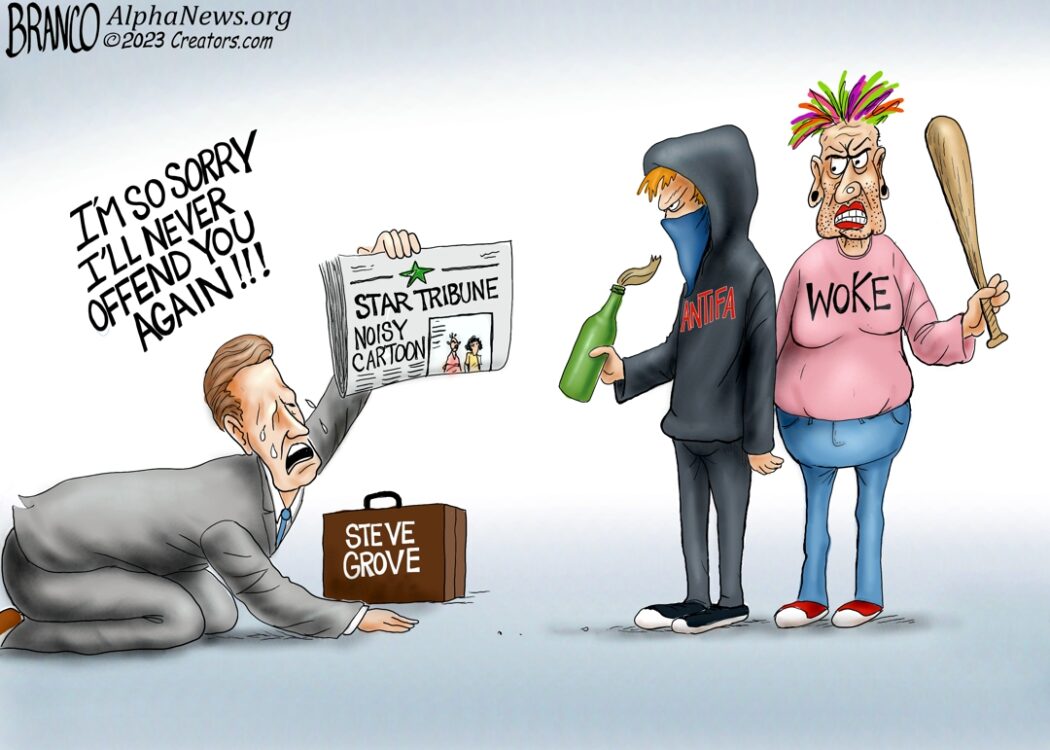
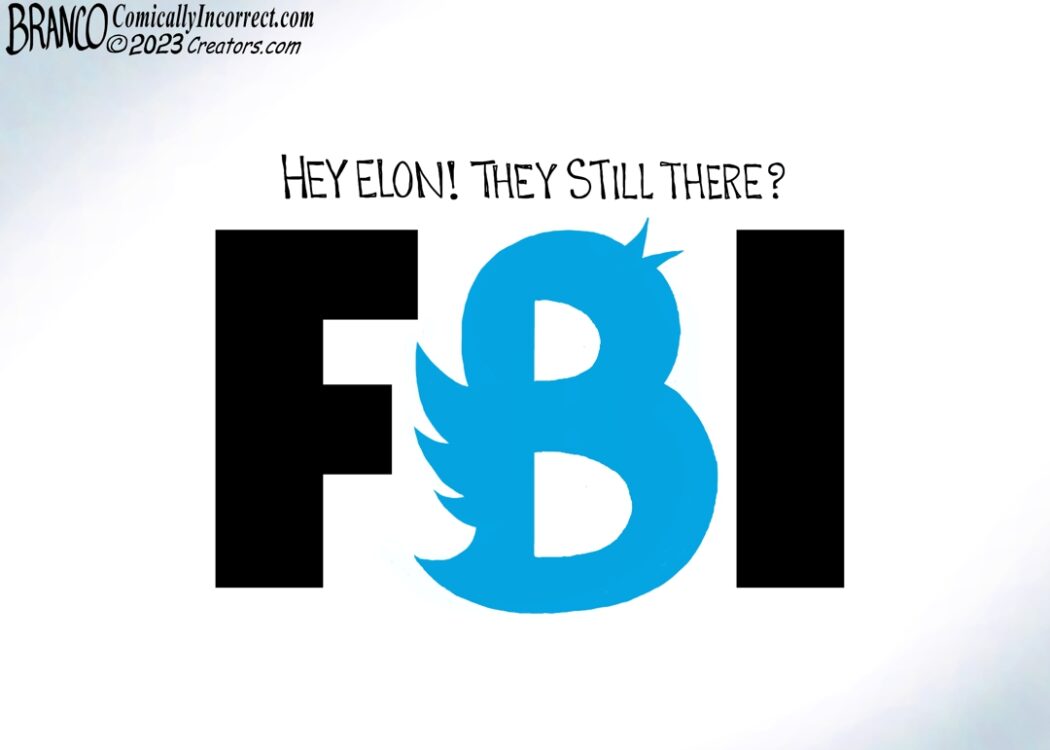
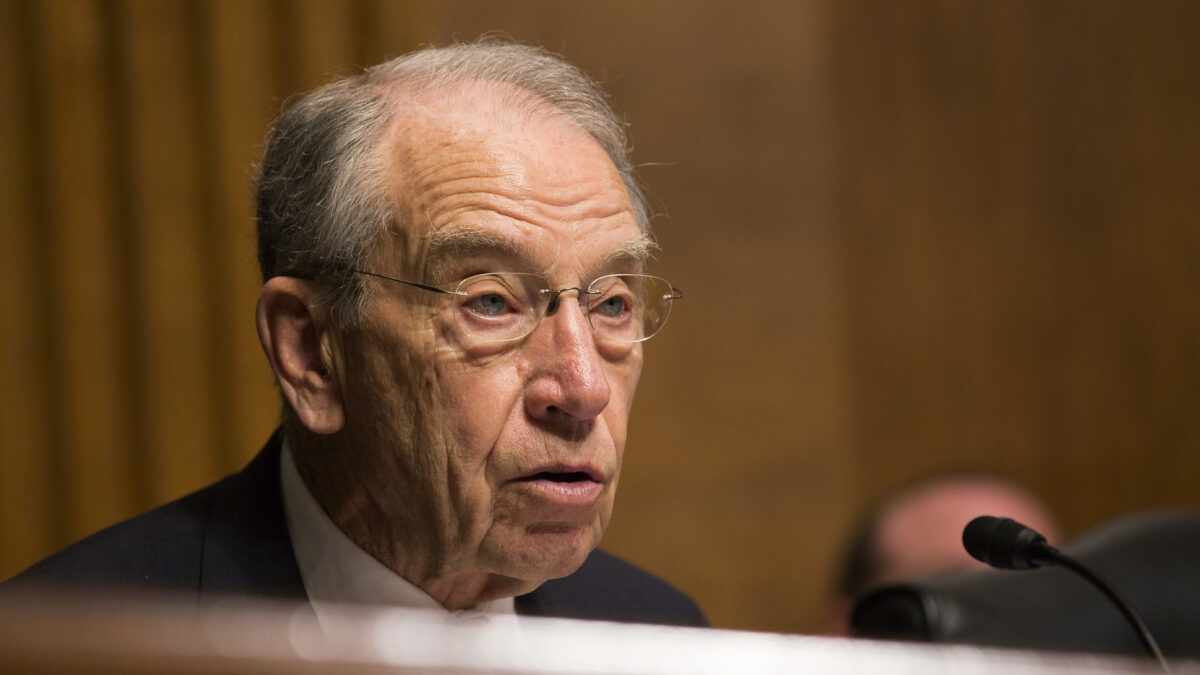
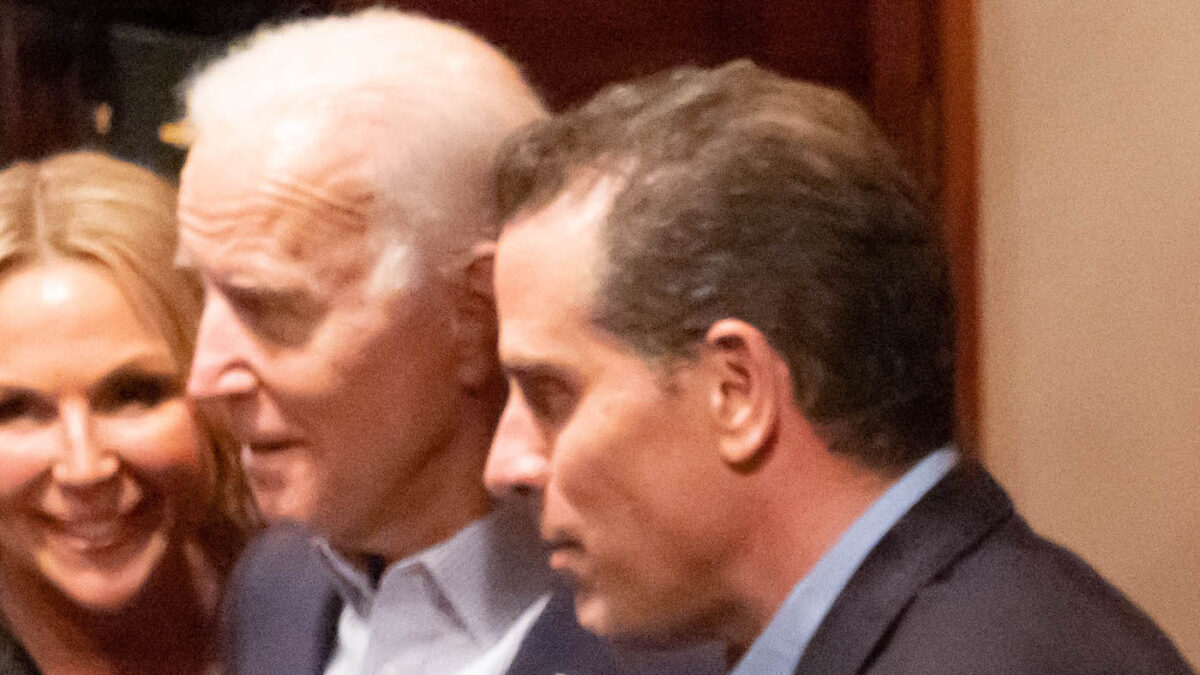
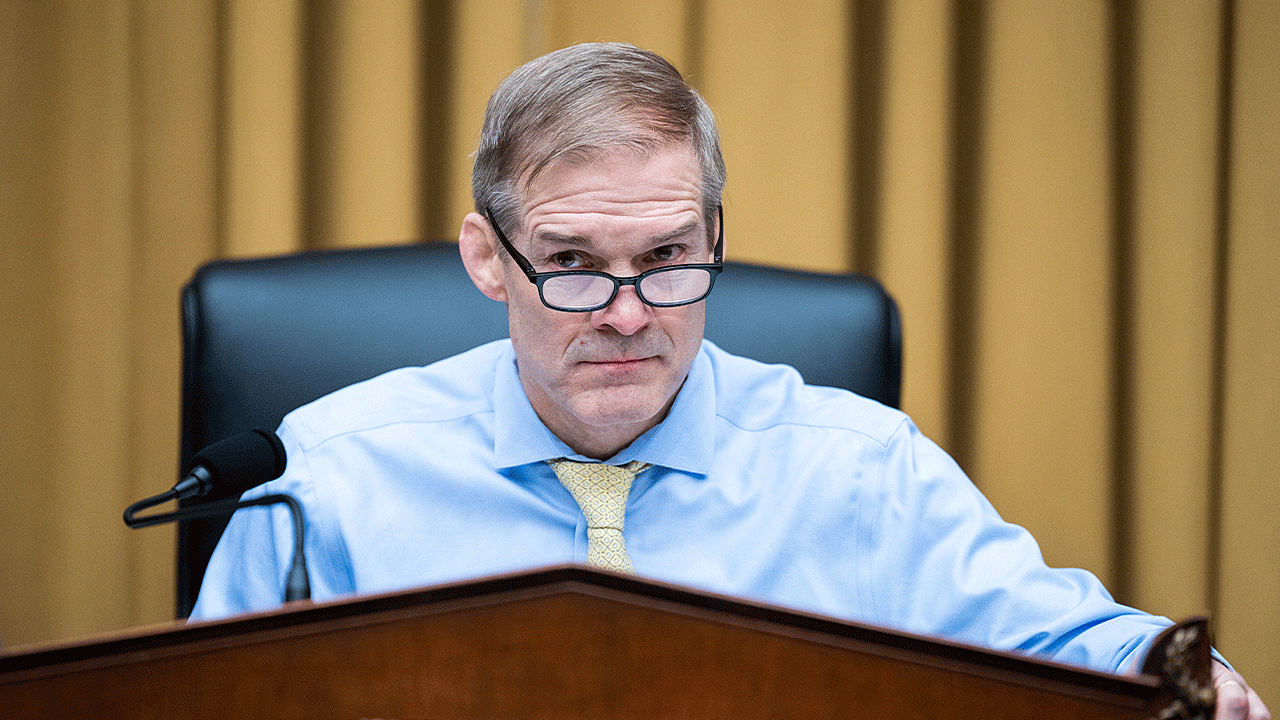
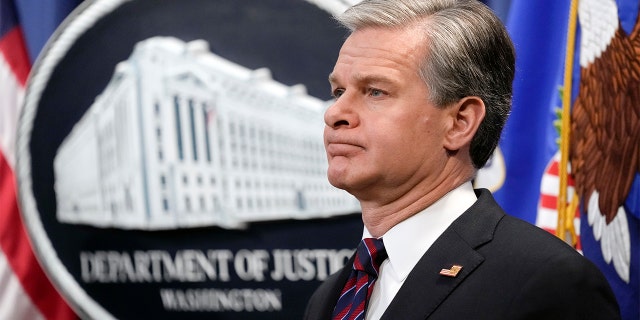
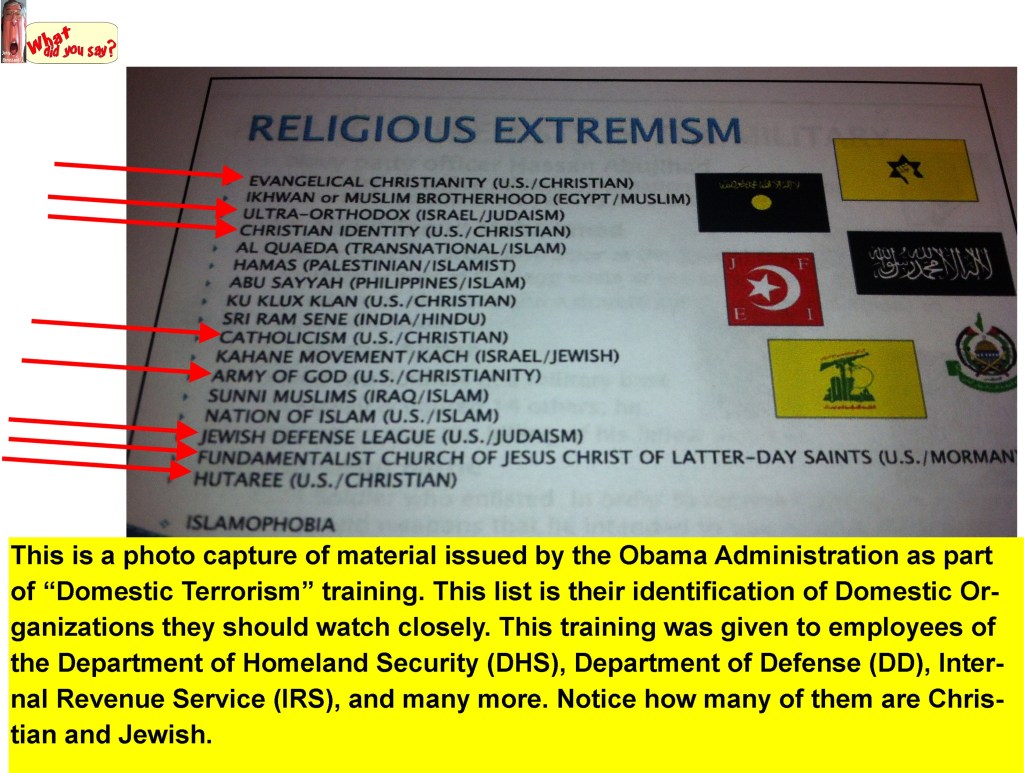





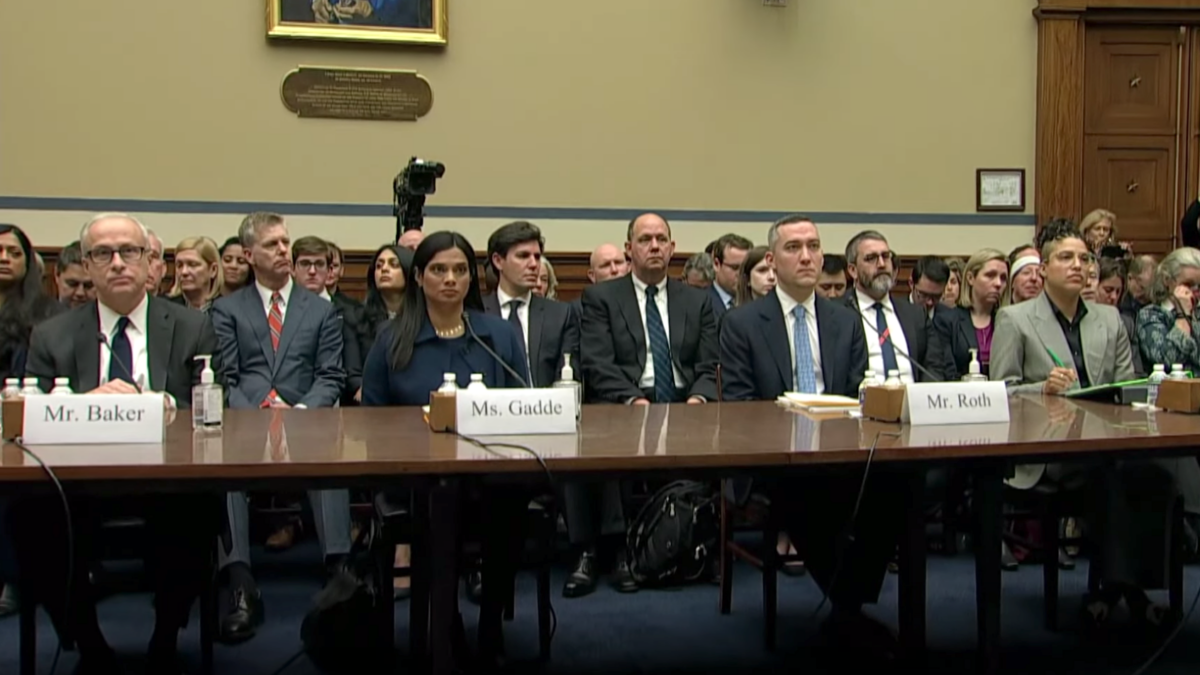
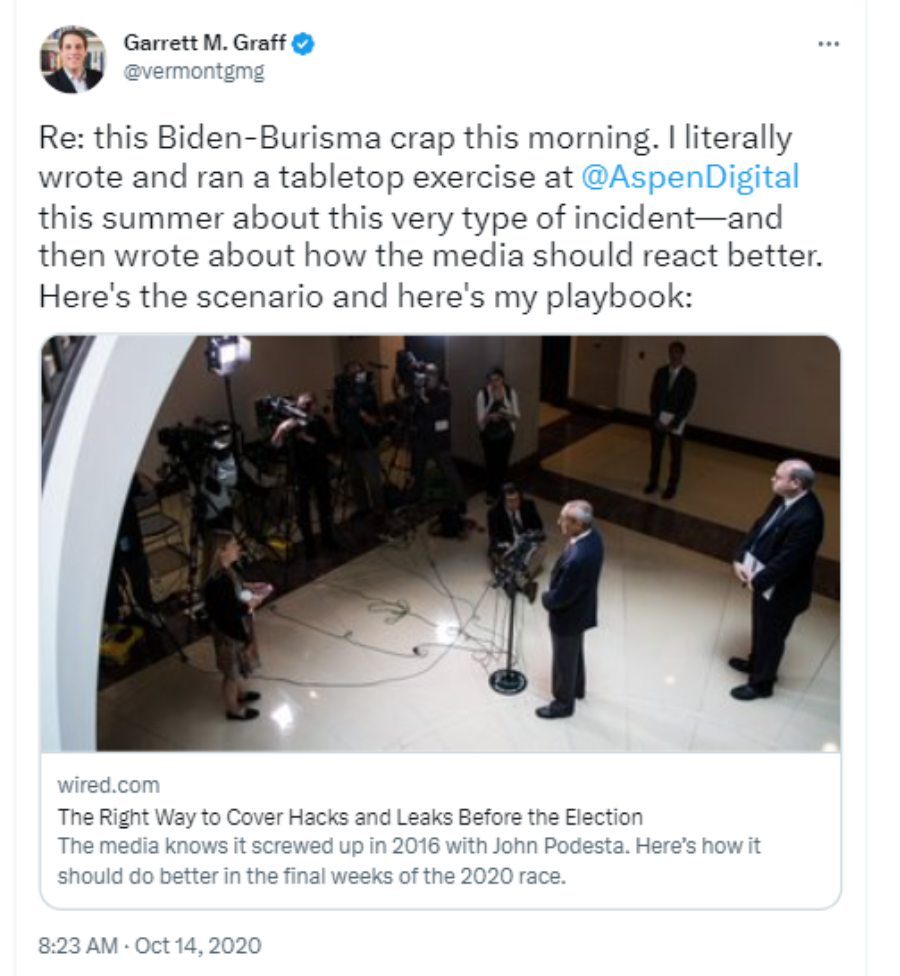
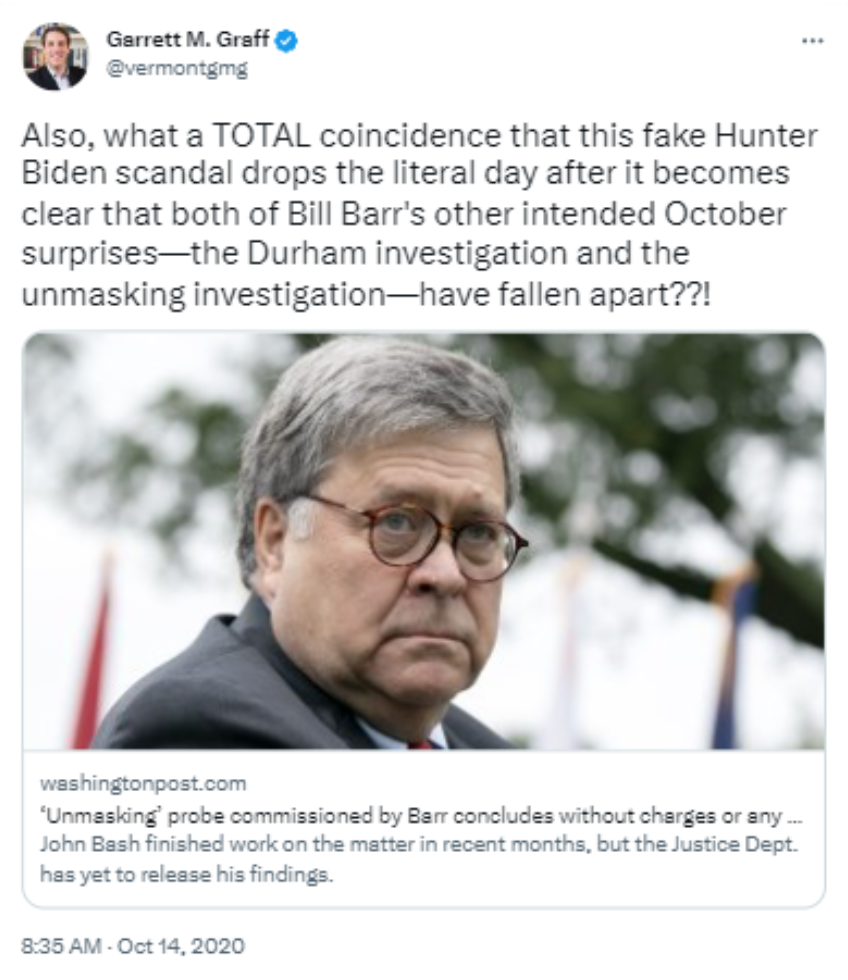
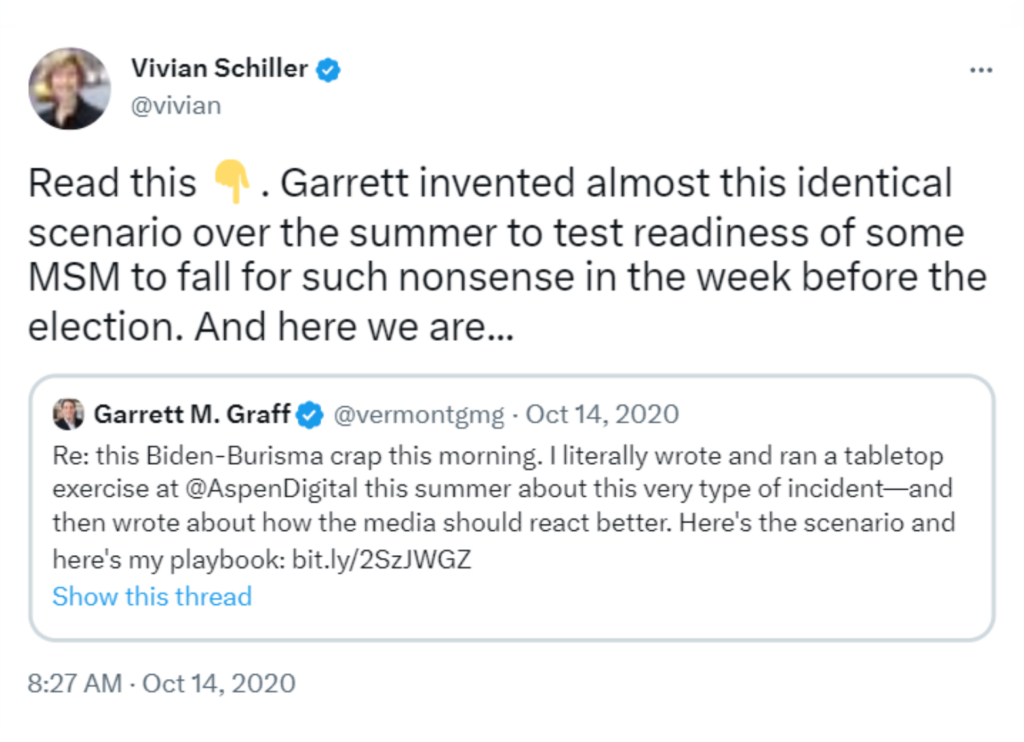
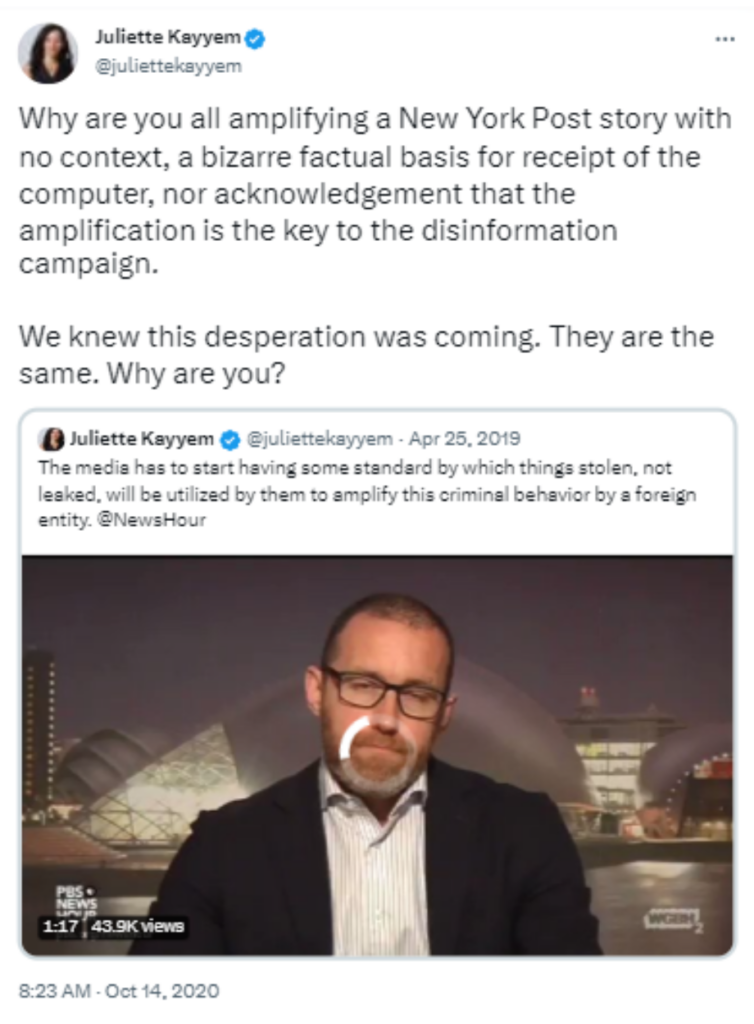
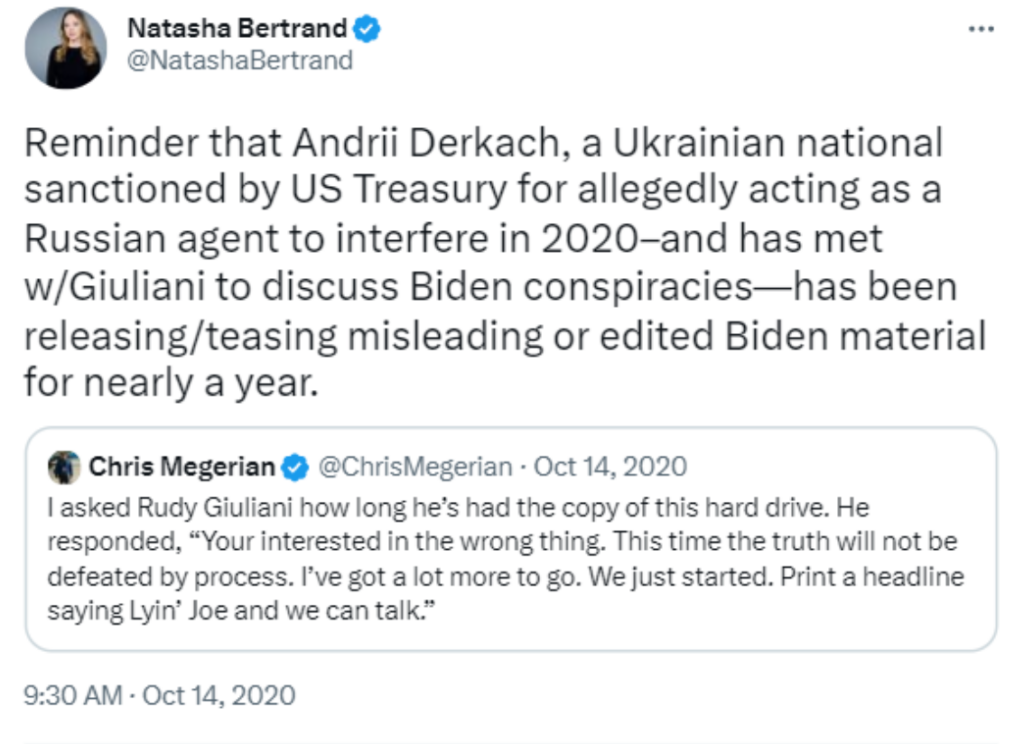
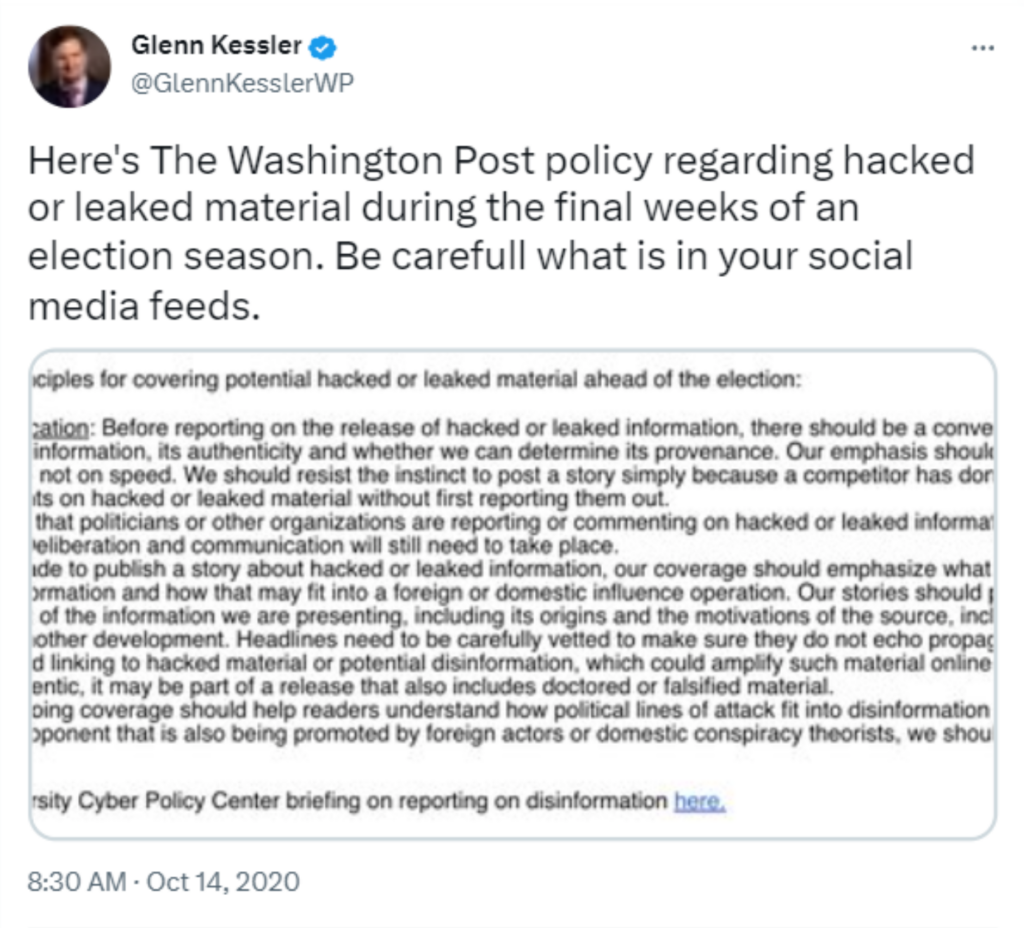
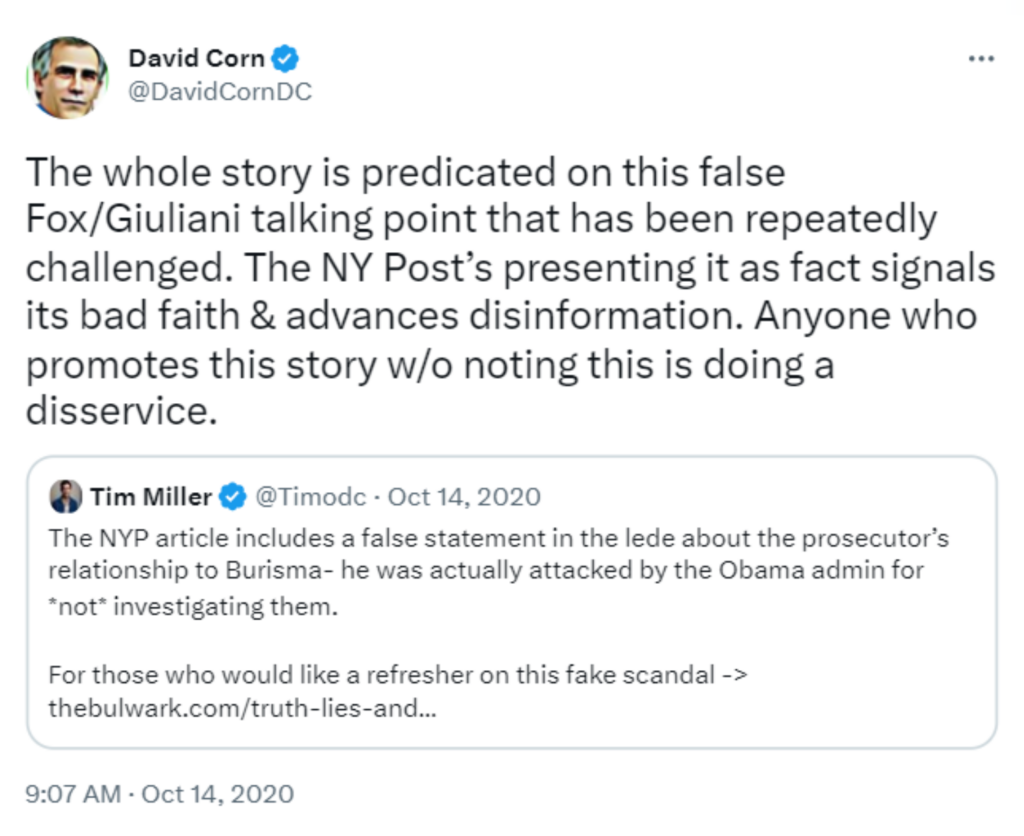
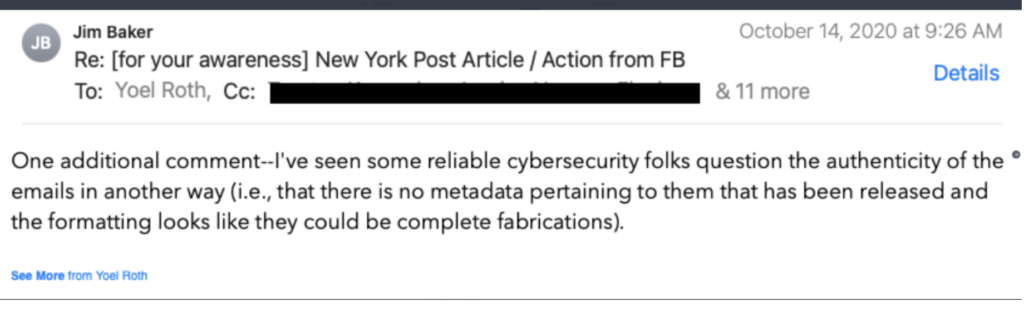

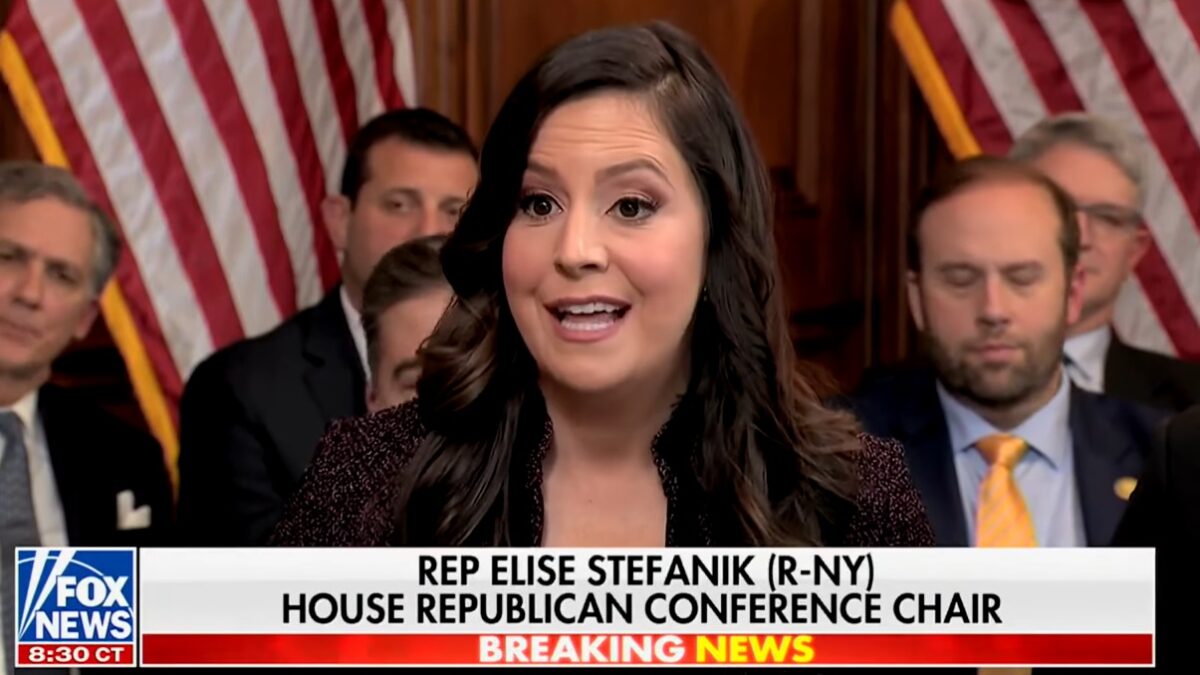



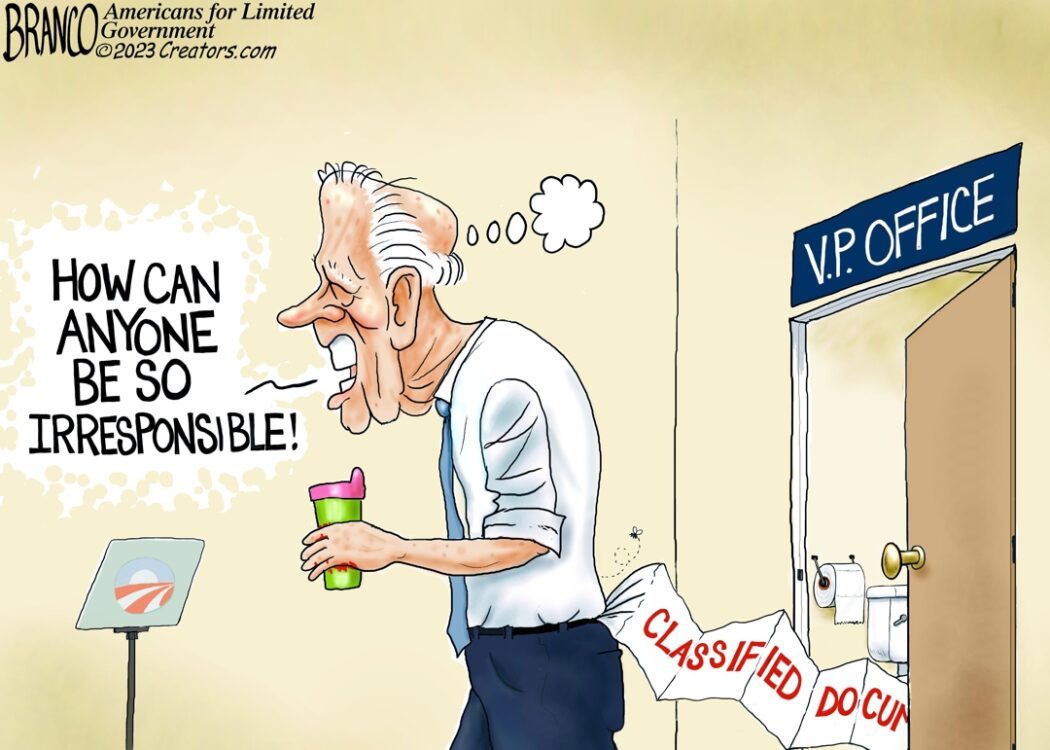
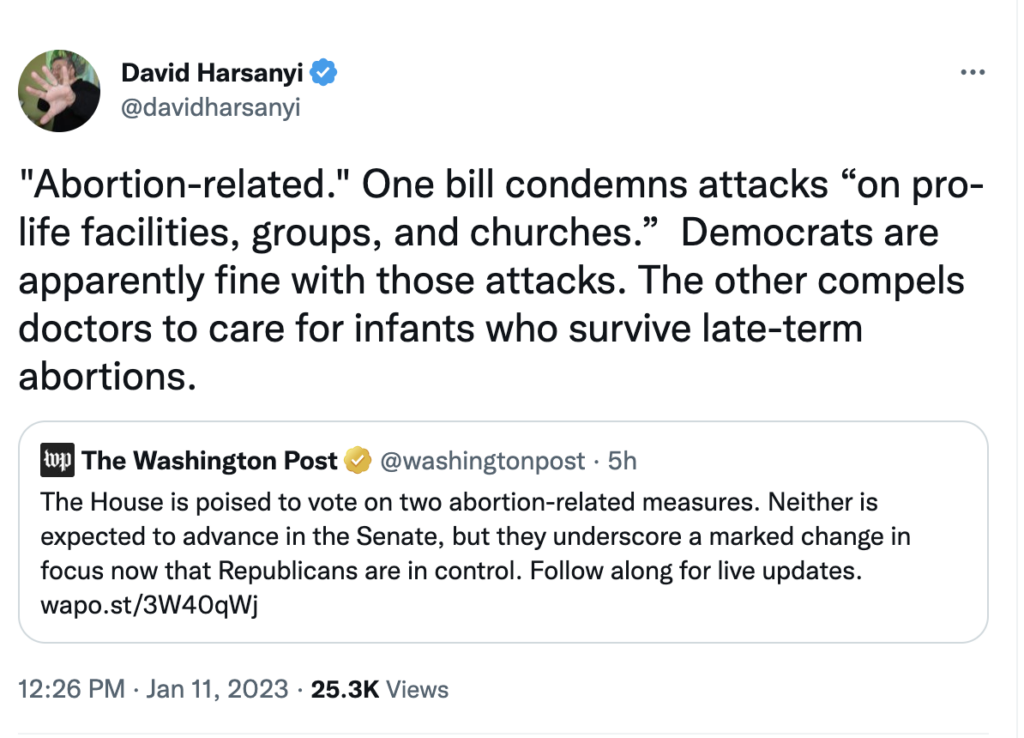
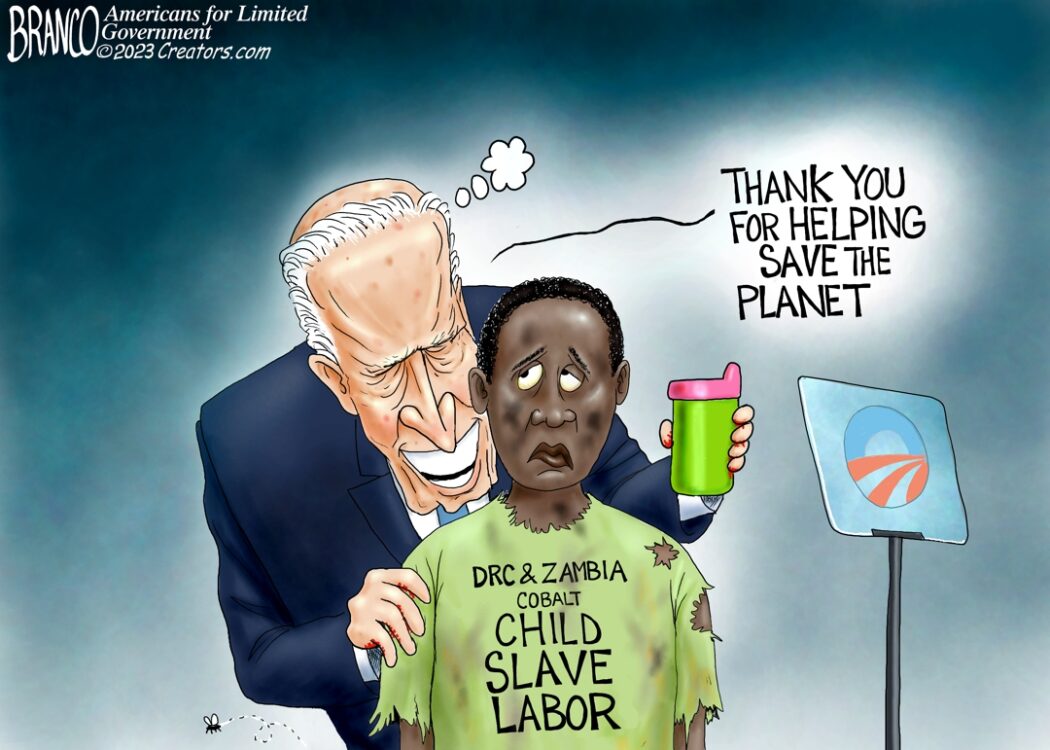
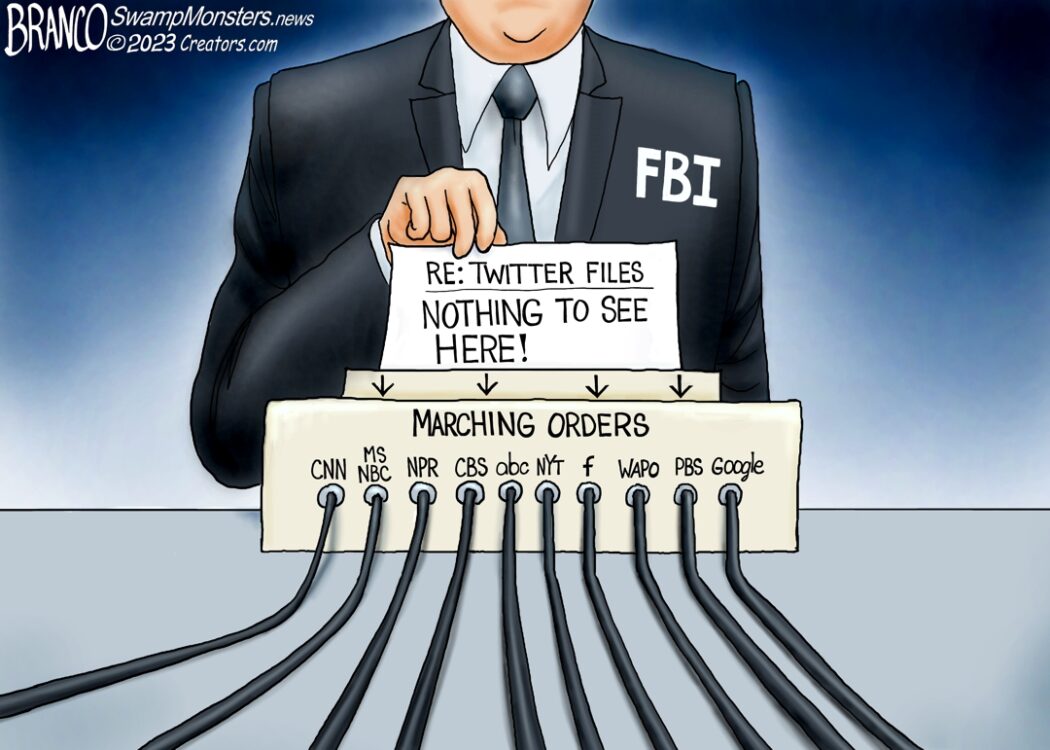


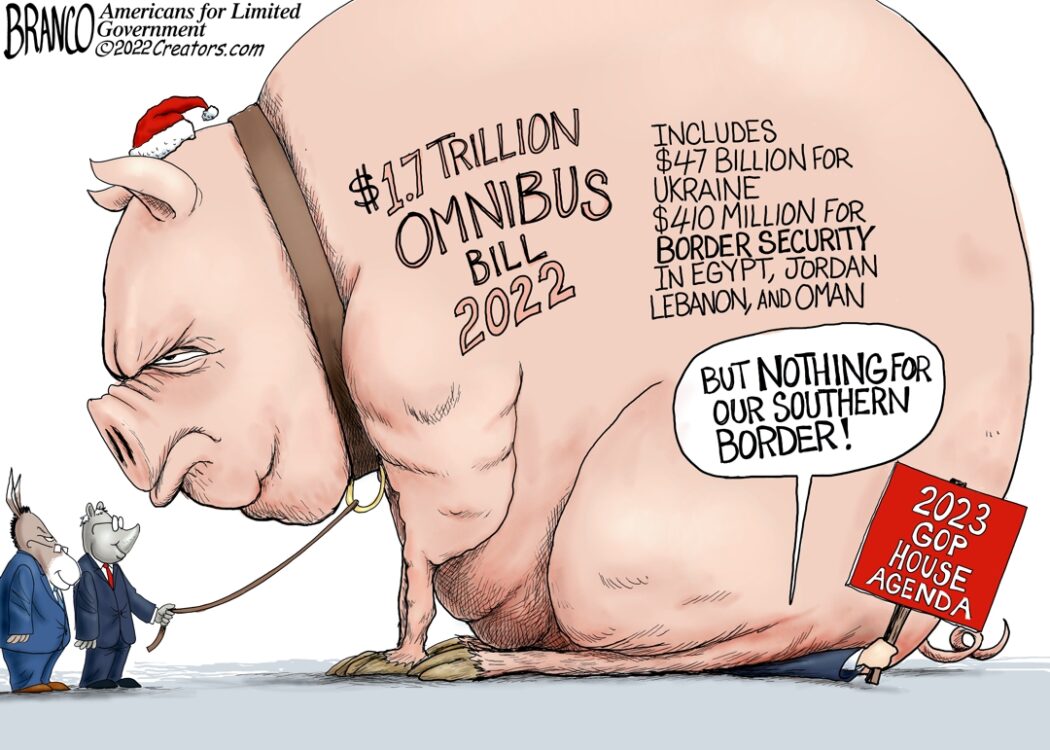






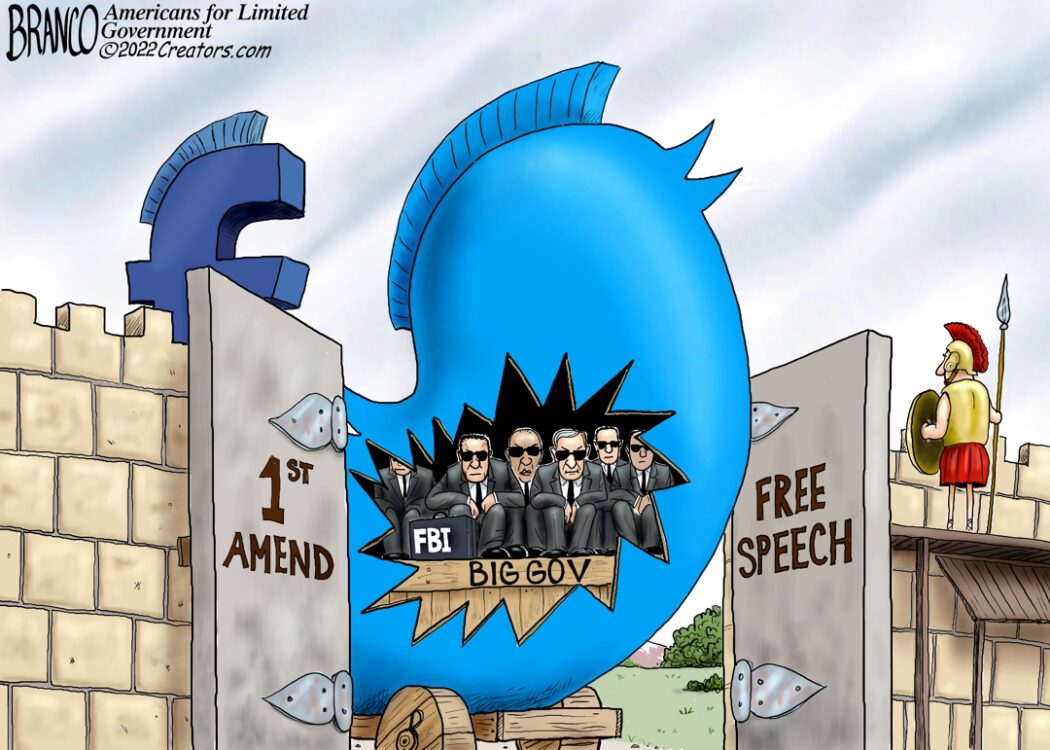


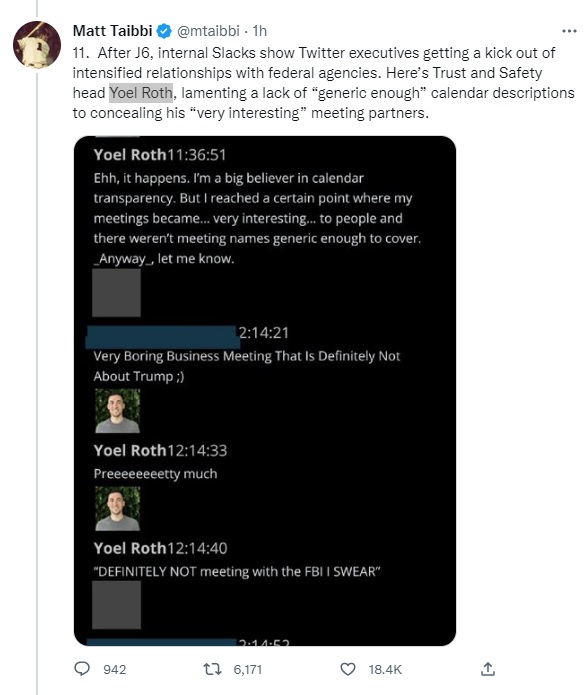
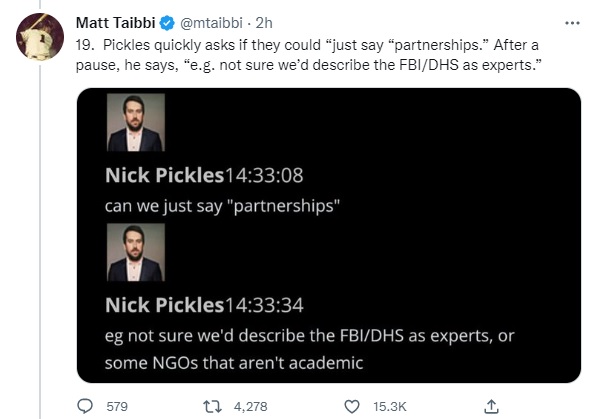
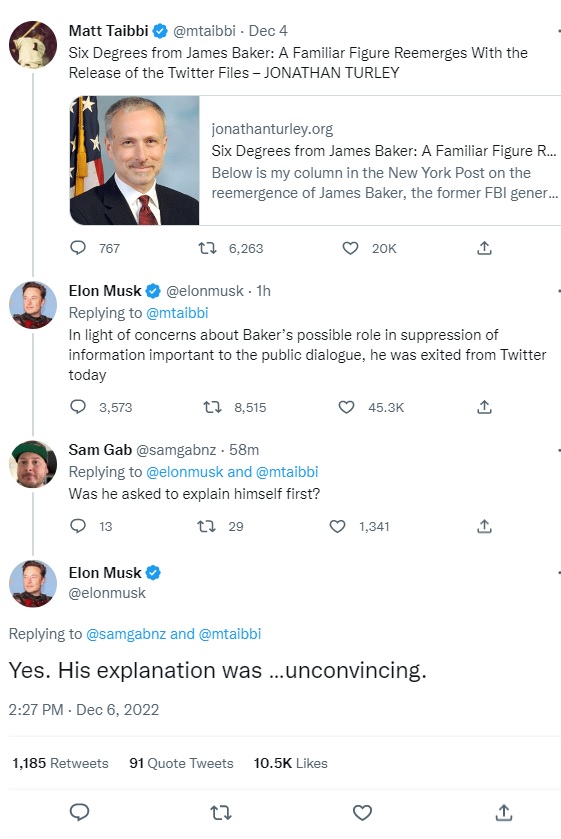


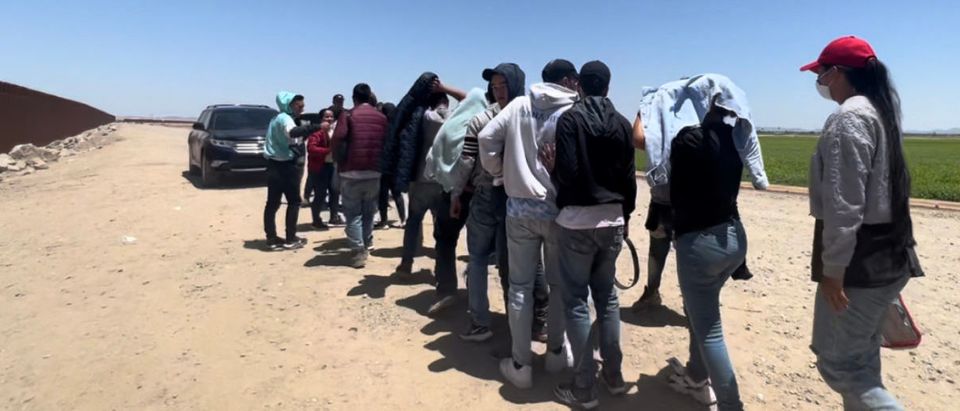

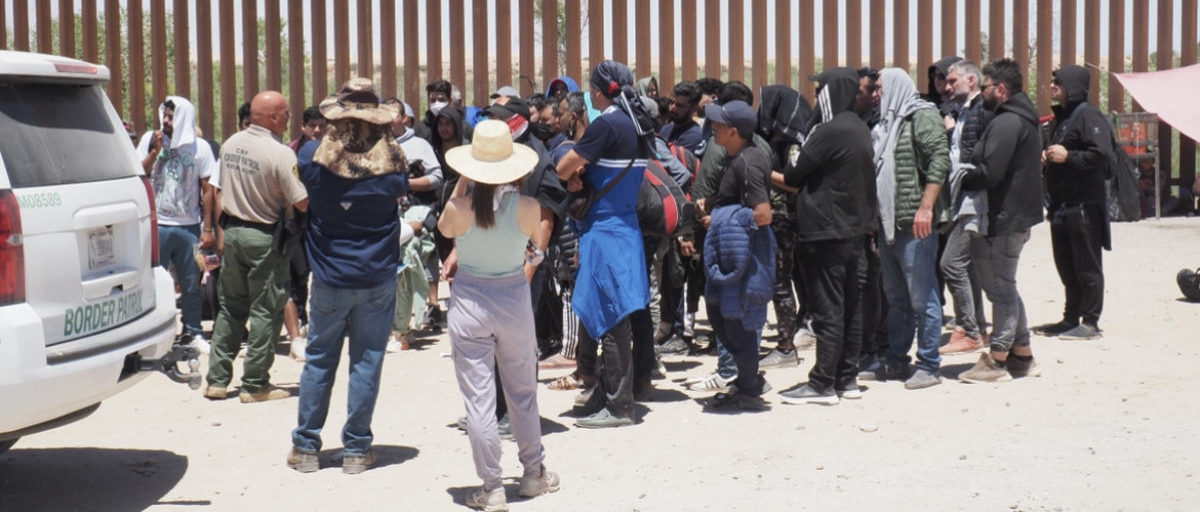
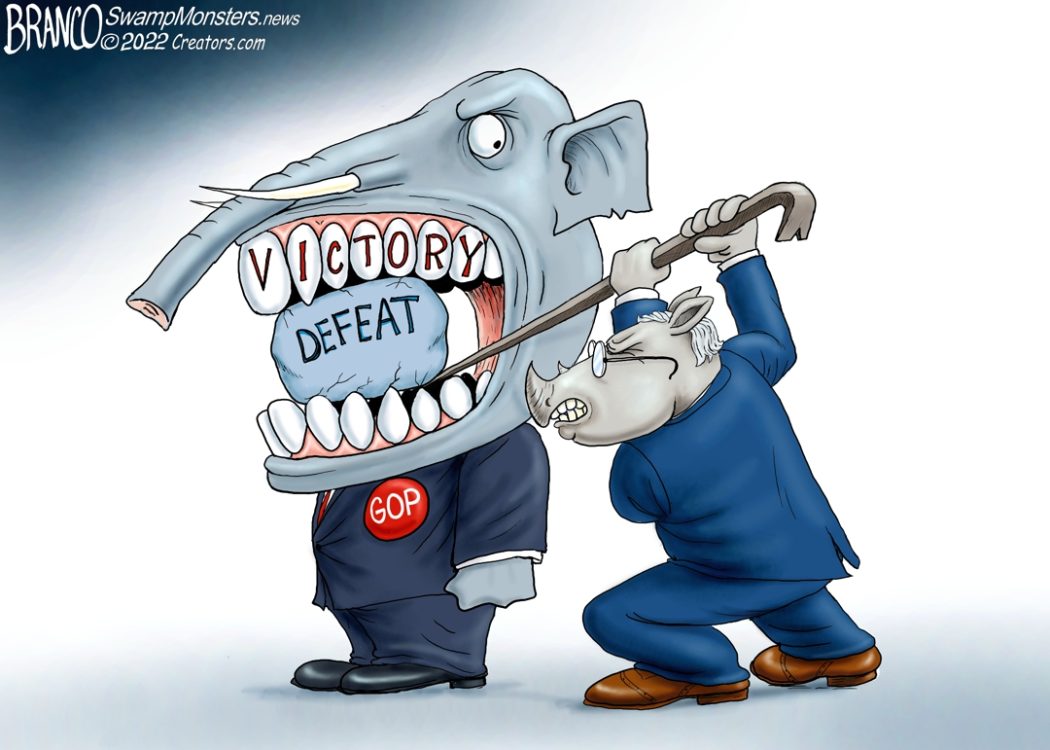
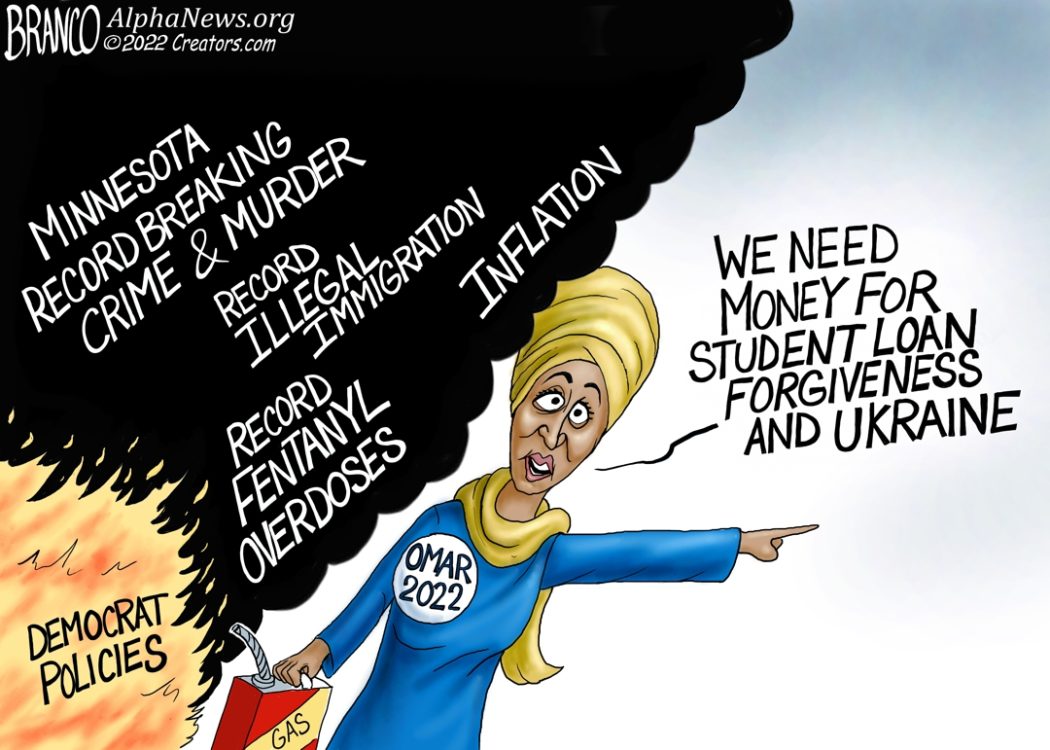
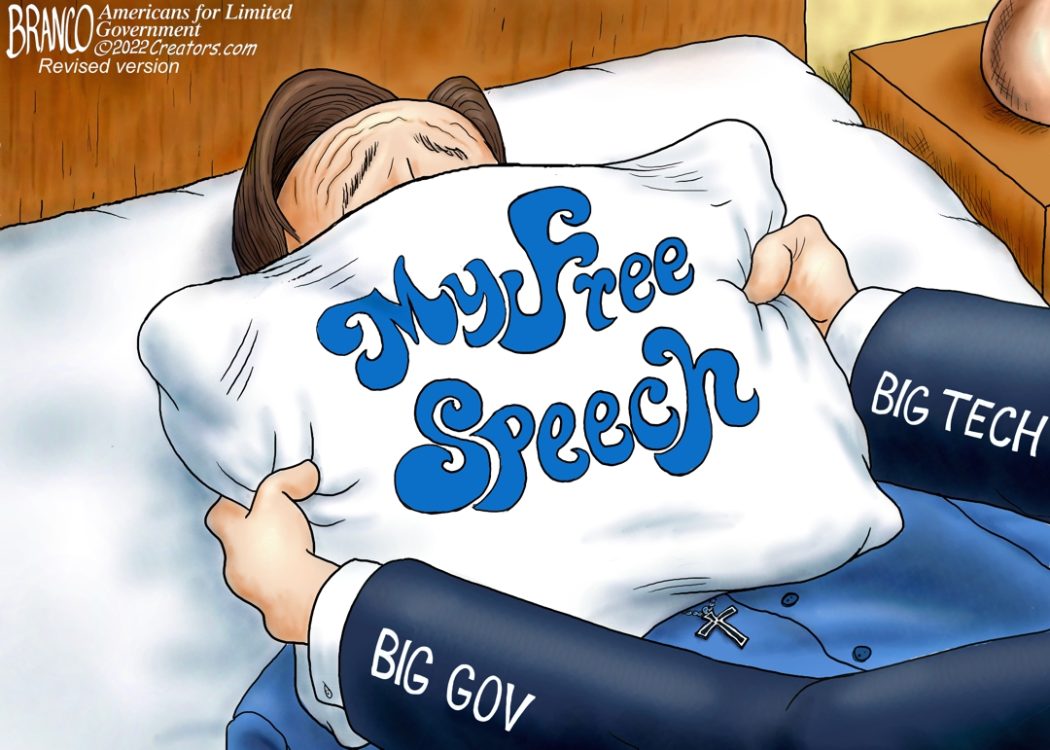
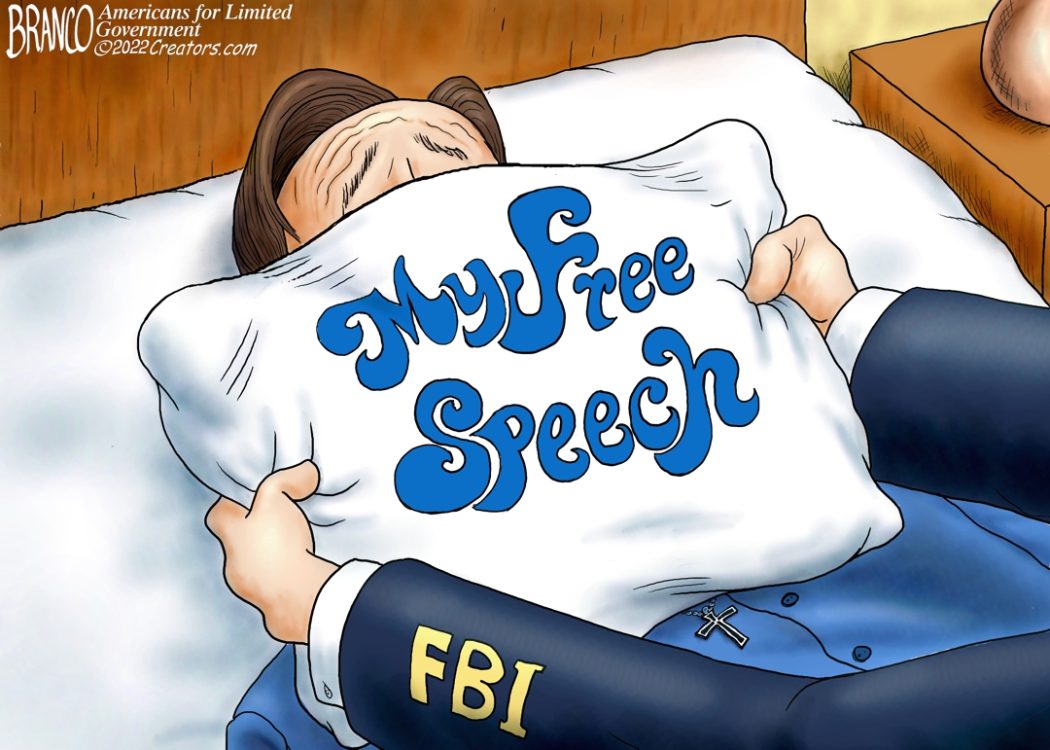
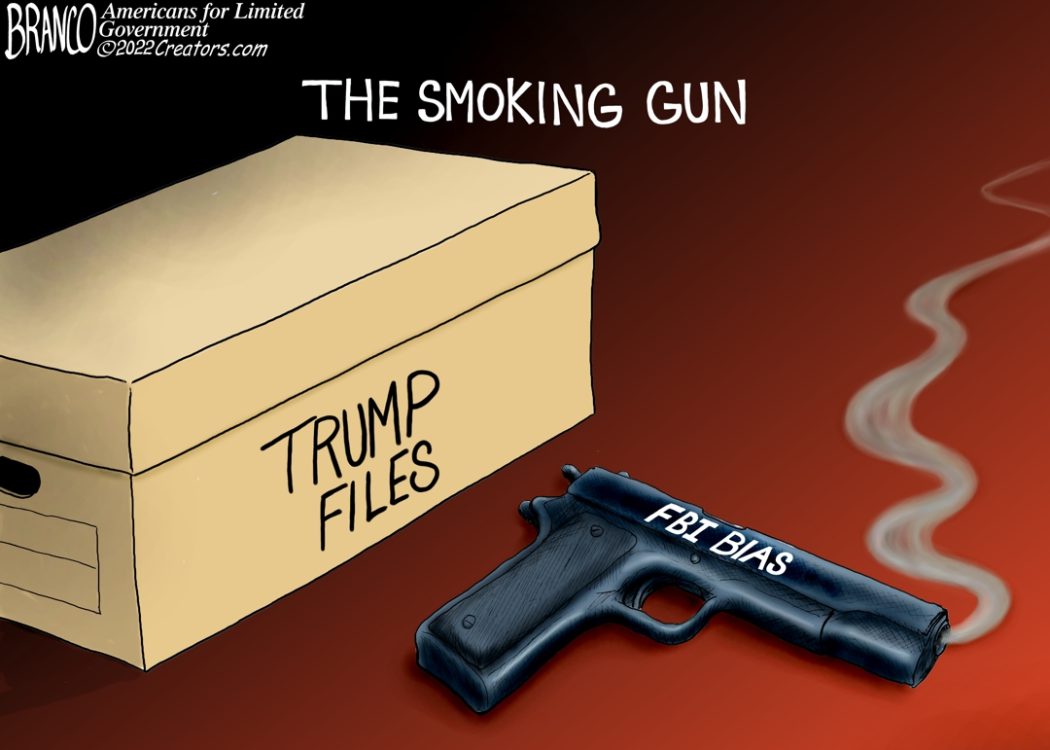
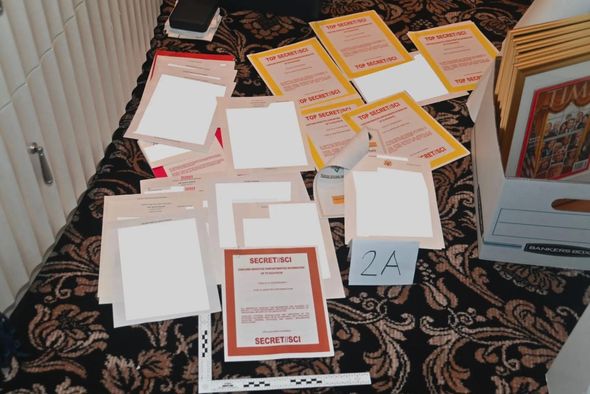
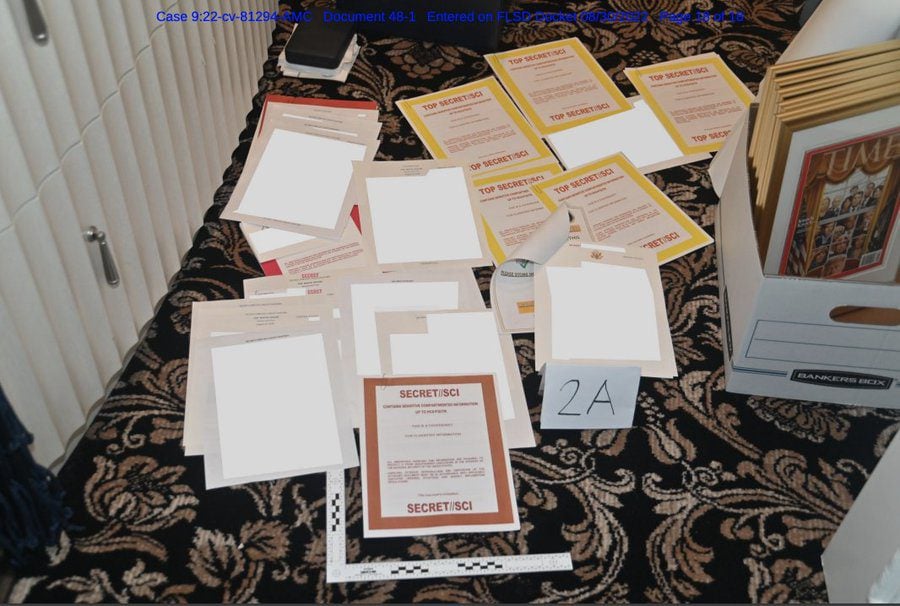


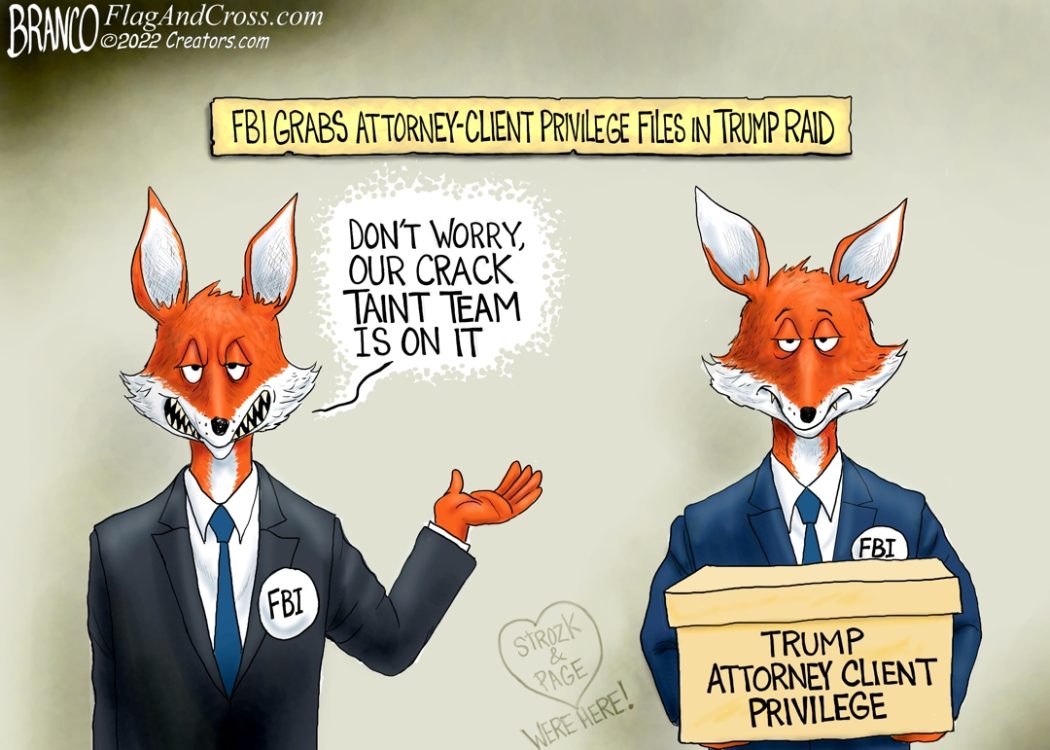
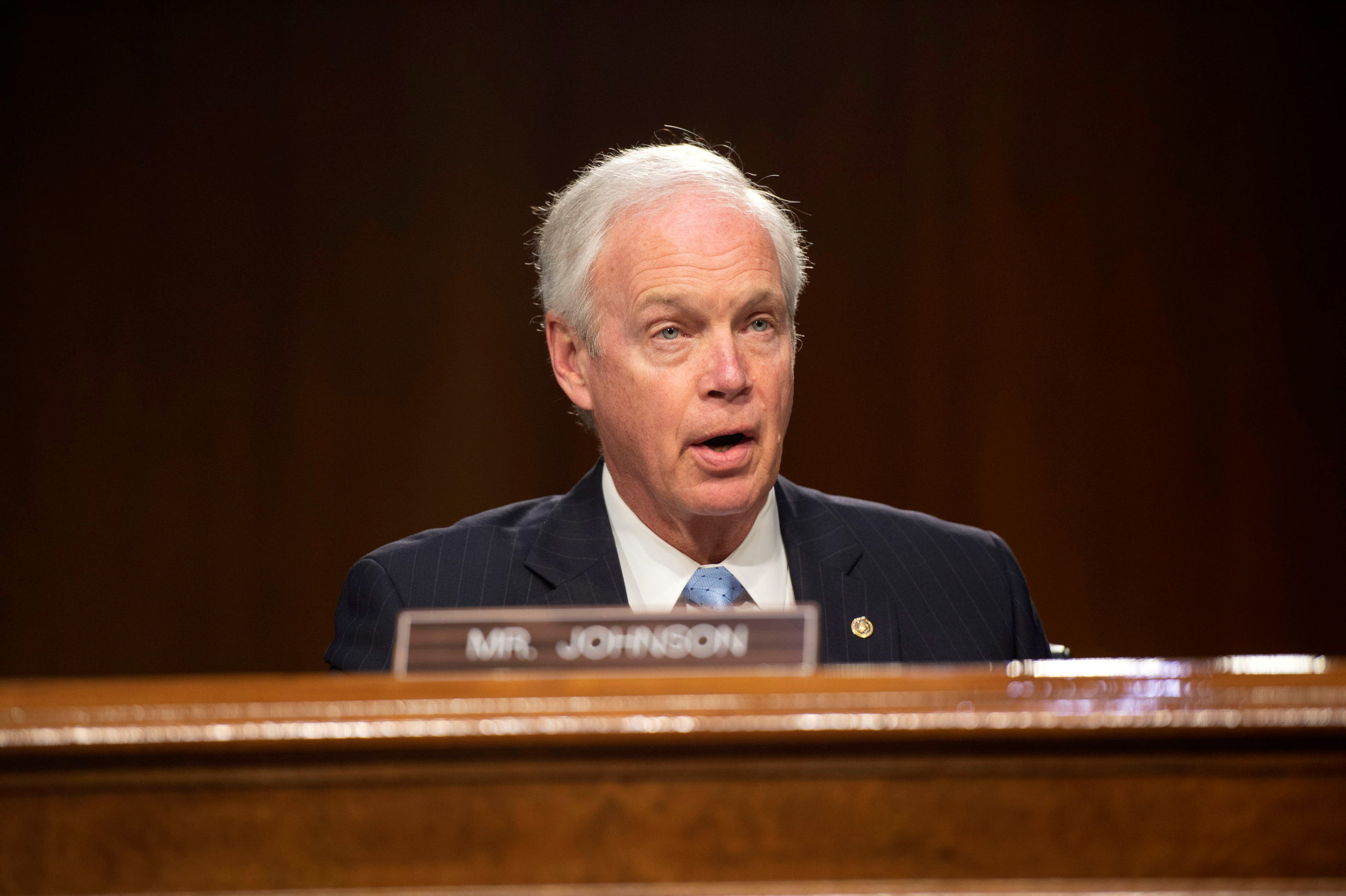
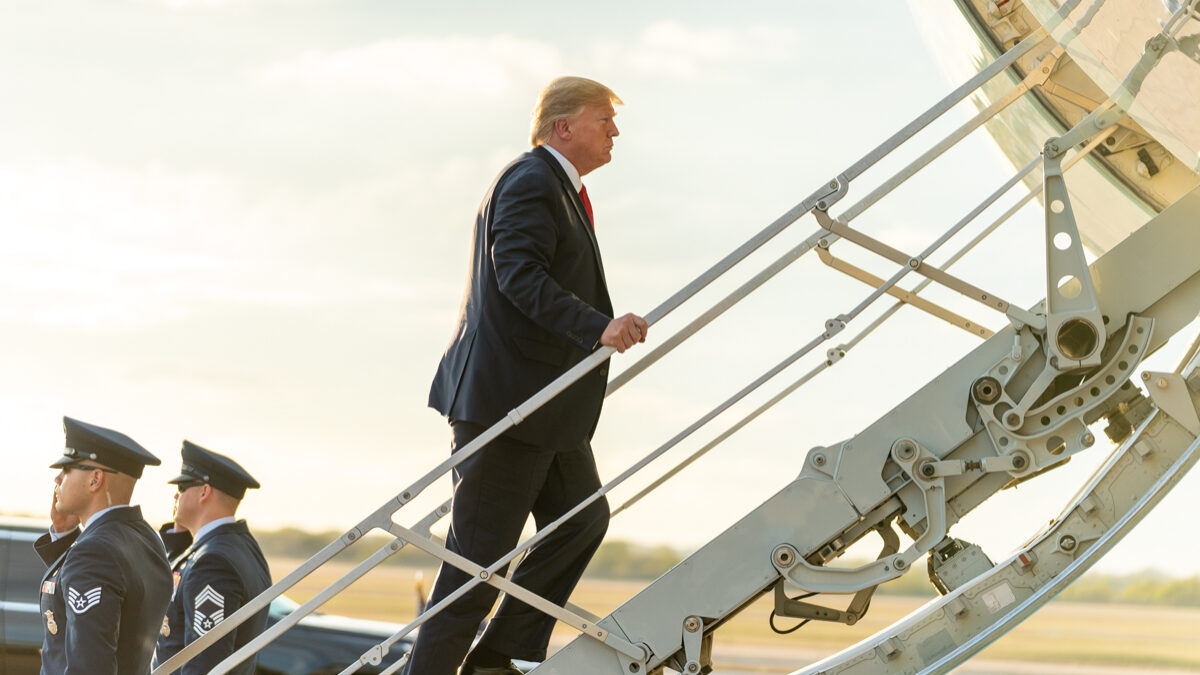
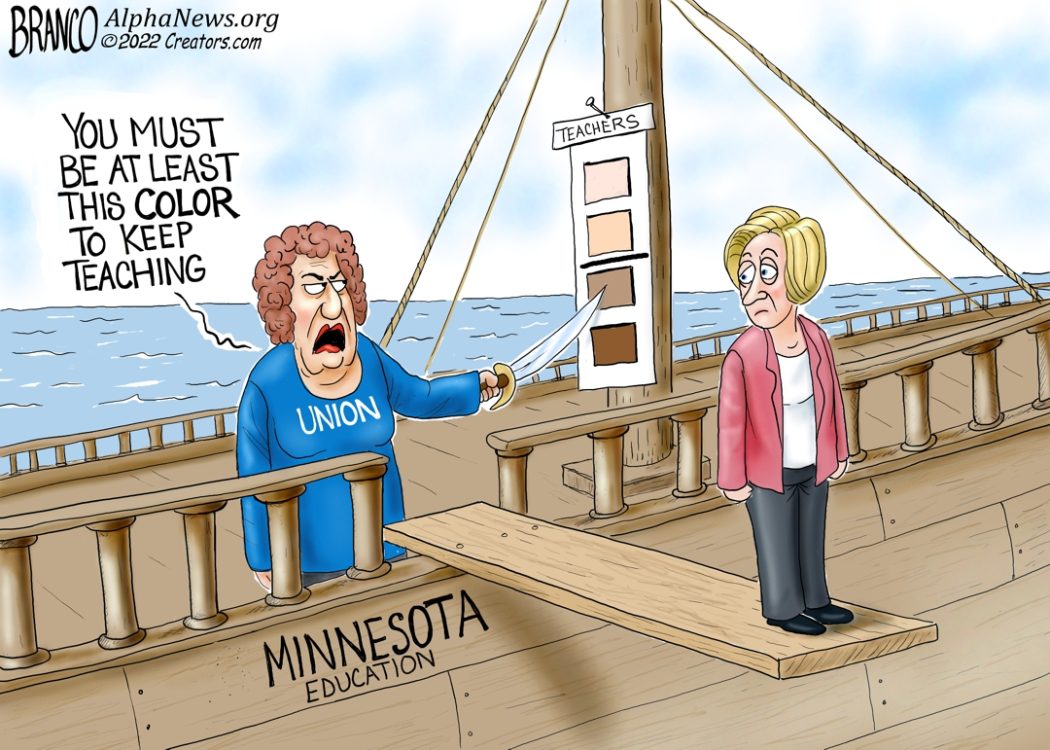
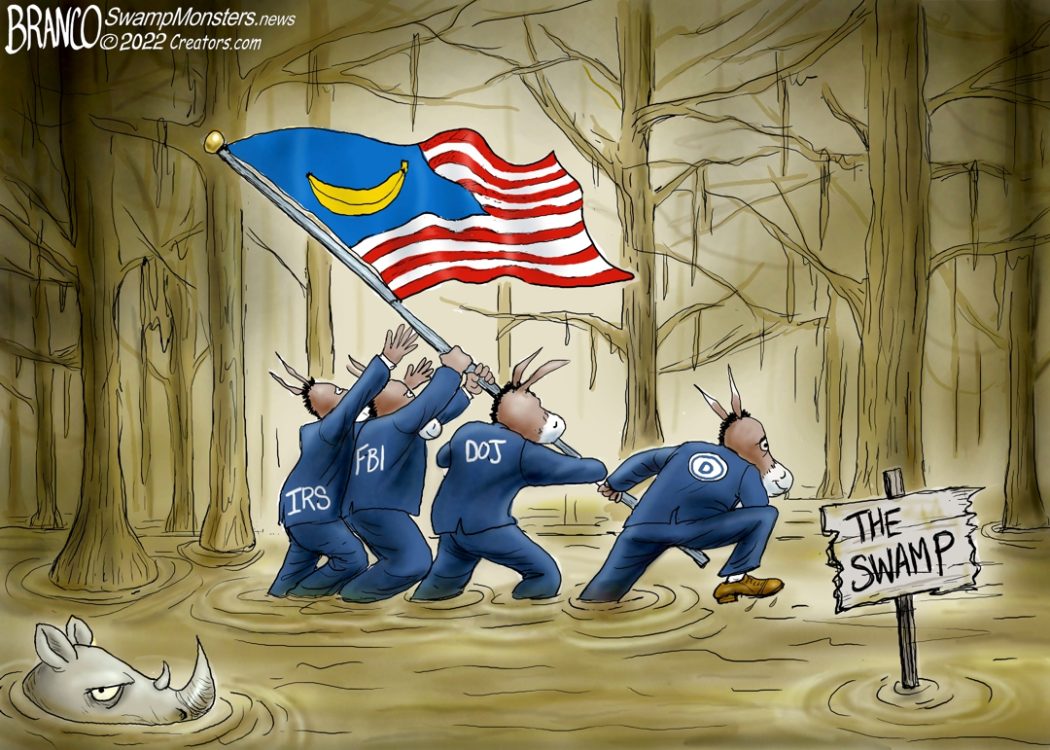
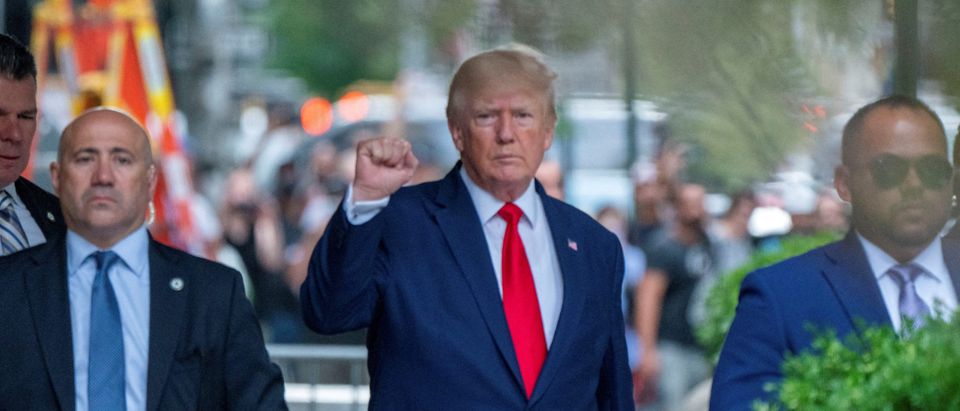

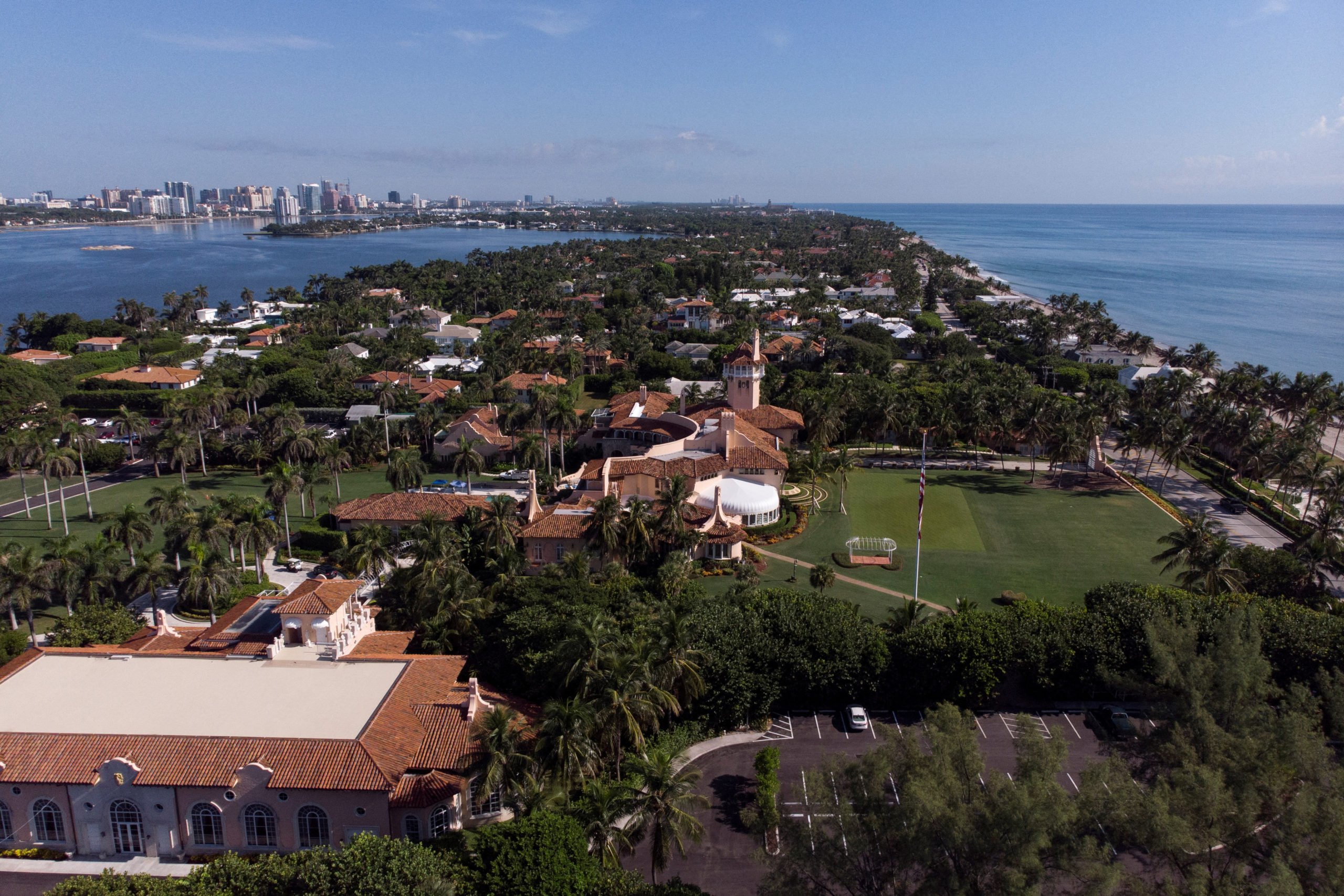

 What Did You Say?
You must be logged in to post a comment.