Supreme Court Justice Samuel Alito suggested Thursday during oral arguments regarding presidential immunity that criminalizing individuals just because they question government-run elections would destabilize true democracy.
Special counsel Jack Smith indicted former President Donald Trump for questioning the administration of the 2020 election. The high court is now hearing challenges as to whether presidents have immunity from criminal prosecutions for actions taken while in office that fall within the scope of their presidential duties.
“Let me end with just a question about, what is required for the functioning of a stable democratic society, which is something that we all want?” Alito began. “I’m sure you would agree with me that a stable, democratic society requires that a candidate who loses an election, even a close one, even a hotly contested one, leave office peacefully if that candidate is the incumbent?”
Justice Alito hypothesizes what could happen if presidents don’t have criminal immunity:
“If an incumbent…knows…that the president may be criminally prosecuted by a bitter political opponent, will that not lead us into a cycle that destabilizes the functioning of our country?” pic.twitter.com/zXSJEGMNOo
“Now, if an incumbent who loses a very close, hotly contested election knows that a real possibility after leaving office is not that the president is going to be able to go off in a peaceful retirement but that the president may be criminally prosecuted by a bitter political opponent, will that not lead us into a cycle that destabilizes the functioning of our country as a democracy?” Alito asked. “And we can look around the world and find countries where we have seen this process where the loser gets thrown in jail.”
“So, I think it’s exactly the opposite, Justice Alito,” Dreeben said. “There are lawful mechanisms to contest the results in an election and outside the record, but I think of public knowledge, petitioner and his allies filed dozens of electoral challenges and my understanding is lost all but one that was not outcome determinative in any respect. There were judges that said in order to sustain substantial claims of fraud that would overturn an election results that’s certified by a state, you need evidence, you need proof and none of those things were manifested. So there’s an appropriate way to challenge things through the courts with evidence, if you lose, you accept the results, that has been the nation’s experience.”
“Thank you,” Alito interjected.
Alito appears to warn Democrats that should the high court rule that certain presidential acts are not covered by presidential immunity and Smith’s lawfare case against the former president may continue — true democratic norms would be decimated as partisan politicians could weaponize the justice system to target their opponents.
Smith indicted Trump on charges of conspiracy to obstruct an official proceeding, obstruction of and an attempt to obstruct an official proceeding, and conspiracy against rights. In simpler terms, Smith alleges that Trump’s claims that the 2020 election was stolen were false and that Trump knew they were false.
To support his claims, Smith alleges that since federal agencies like the Department of Homeland Security’s Cybersecurity and Infrastructure Security Agency — which meddled in the 2020 election — told Trump the election wasn’t stolen, and he should have taken that at face value, as pointed out by Federalist Senior Editor John Daniel Davidson.
But objecting to elections is a tale as old as time. Failed presidential candidate Hillary Clinton still claims the 2016 election was stolen while Democratic Reps. Jim McGovern, Pramila Jayapal, Raul Grijalva, Sheila Jackson Lee, Barbara Lee, Maxine Waters — who also called the 2000 election “fraudulent” — and Jamie Raskin all objected to Congress’ certification of electoral votes in 2017 that formally declared Trump the winner, my colleague Tristan Justice details.
The 2004 election was also considered “stolen” by New York Rep. Jerry Nadler who went so far as to declare voting machines need to be investigated.
And even after the Supreme Court ended Al Gore’s attempt to overturn the outcome of the election, there were no steps taken to throw Gore in jail for challenging the contest.
Brianna Lyman is an elections correspondent at The Federalist.
After a marathon debate over whether former President Trump should be granted presidential immunity for crimes alleged by Special Counsel Jack Smith, legal experts tell Fox News Digital that most of the Supreme Court justices appear concerned with how the ruling will impact the future functioning of the executive branch.
In nearly three hours of debate on Thursday, the high court wrestled with this question: “Whether and if so to what extent does a former president enjoy presidential immunity from criminal prosecution for conduct alleged to involve official acts during his tenure in office?”
Legal experts told Fox News Digital that while it appeared the majority wasn’t sold on the idea of absolute immunity, they could determine that Trump, and any future former presidents, should be granted a qualified version of it.
“I think the court recognizes that it would be a dangerous precedent if future presidents can prosecute their political rivals,” Mark Brnovich, former attorney general of Arizona, told Fox News Digital.
The Supreme Court in Washington, March 7, 2024. (AP Photo/J. Scott Applewhite, File)
“They will set a limiting principle because, under the prosecutor’s theory, future prosecutors would have a lot of power to persecute their political rivals,” Brnovich said.
Over the course of questioning, the justices seemed generally split along ideological lines.
“If the potential for criminal liability is taken off the table, wouldn’t there be a significant risk that future presidents would be emboldened to commit crimes with abandon while they’re in office?” Justice Ketanji Brown Jackson asked in an exchange with Trump’s lawyer, John Sauer.
“Once we say, ‘No criminal liability, Mr. President, you can do whatever you want,’ I’m worried that we would have a worse problem than the problem of the president feeling constrained to follow the law while he’s in office,” Jackson said.
Supreme Court Justice Ketanji Brown Jackson (Tom Williams/CQ-Roll Call, Inc via Getty Images)
Conversely, Justice Samuel Alito questioned whether limiting immunity for a former president would send the country into a destabilizing cycle.
“If an incumbent who loses a very close, hotly contested election knows that a real possible after leaving office is not that the president is going to be able to go off into a peaceful retirement, but that the president may be criminally prosecuted by a bitter political opponent, will that not lead us into a cycle that destabilizes the functioning of our country as a democracy? And we can look around the world and find countries where we have seen this process, where the loser gets thrown in jail,” Alito remarked.
“We’re writing a rule for the ages,” Justice Neil Gorsuch later stated.
Former President Trump points to supporters during a campaign rally at the Atkinson Country Club on Jan. 16, 2024, in Atkinson, New Hampshire. (Brandon Bell/Getty Images)
John Shu, a constitutional scholar and former official in both Bush administrations, told Fox News Digital that the justices indicated “they believe this case isn’t really about Trump per se. It’s about the Office of the President, what future presidents can do, and whether they’ll be prosecuted for their choices.”
“It’s a very important issue and the Biden administration set a very bad precedent to go after not only a former president, but one who also is challenging Biden’s re-election,” he said.
“What the Biden administration has done here gives the terrible appearance of vindictiveness, and on an international or foreign policy level, it makes us look like just another banana republic that we generally criticize for prosecuting or trying to jail their political opponents,” he stated.
Shu added that “many of the justices perhaps find what Trump did after the 2020 election distasteful.”
“But they also seem uncomfortable with either granting blanket immunity on the one hand, or no immunity at all on the other. As often happens, the middle ground is where the discussions will be,” he said.
John Yoo, a law professor at University of California at Berkeley, said Trump’s argument “had much more success than many court watchers expected.”
“Only the three liberal justices seemed to reject the idea of immunity outright. The six conservative justices recognized the need to prevent future presidents from criminalizing policy and constitutional differences with their predecessors,” Yoo said.
He added that a possible outcome could be that the justices punt the question back to the lower courts and ask them to first determine whether Trump’s actions amounted to “official” or “private” acts, before they decide whether immunity might extend to official acts.
A decision in the case is expected early this summer.
The special counsel’s office declined to comment when reached by Fox News Digital.
Fox News’ Bill Mears and Shannon Bream contributed to this report.
Brianna Herlihy is a politics writer for Fox News Digital.
Demonstrators participate in a protest outside the U.S. Supreme Court on April 25, 2024, in Washington, D.C. The Supreme Court heard oral arguments in the Trump v. United States, a case about presidential immunity from prosecution on obstruction and conspiracy charges. (Photo: Kevin Dietsch/Getty Images)
Supreme Court justices on Thursday appeared to signal they may hand former President Donald Trump a partial victory in his presidential immunity case by possibly sending it back to a lower court.
Trump’s attorney Dean John Sauer argued that presidents should have constitutional immunity from prosecution for official acts conducted during their presidency. Chief Justice John Roberts, as well as justices Neil Gorsuch and Brett Kavanaugh, brought up the potential for the Supreme Court to send the case back to the United States Court of Appeals for the District of Columbia, which could delay a trial on Trump’s election interference case until at least after the election, according to Politico.
A three-judge appeals court panel unanimously rejected Trump’s immunity claim in a Feb. 6 ruling in the case originating from an indictment Jack Smithsecured against the former president over his efforts to contest the results of the 2020 election.
Roberts pressed Department of Justice (DOJ) counselor to Smith, Michael Dreeben, asking if the appeals court and the DOJ were arguing that Trump lacked immunity by default because he had been indicted.
“They said that there is no reason to worry because the prosecutor will act in good faith and there is no reason to worry because a grand jury will have returned the indictment,” Roberts said. “Now, you know how easy it is in many cases for a prosecutor to get a grand jury to bring an indictment and reliance on the good faith of the prosecutor may not be enough in some cases, I‘m not suggesting here, so if it’s tautological, if those are the only protections the court gave that is no longer your position, you are not defending that position, why shouldn’t we send it back to the court of appeals or issue an opinion making clear that that’s not the law?”
“Well, I am defending the court of appeals’ judgment and I do think there are layered safeguards the court can take into account that will ameliorate concerns about unduly chilling presidential conduct,” Dreeben responded. “That concerns us. We are not endorsing a regime that we think would expose former presidents to criminal prosecutions in bad faith, for political animus, without adequate evidence. A politically driven prosecution would violate the Constitution … It’s not something within the arsenal of prosecutors to do.”
Moreover, Justice Amy Coney Barrett indicated the possibility of establishing a test for presidential protection from prosecution, that would not quite be absolute immunity, which could also lead to delays if lower courts rule on it, according to Politico.
Justice Clarence Thomas questioned Dreeben about why no other president has faced prosecutions before Trump.
“Over the not-so-distant past … certain presidents have engaged in various activity, coups or operations like Operation Mongoose, when I was a teenager, and yet there were no prosecutions,” Thomas said. “Why? If what you’re saying is right, it would seem that would have been ripe for criminal prosecution of someone.”
“So, Justice Thomas, I think this is a central question,” Dreeben responded. “The reason why there have not been prior criminal prosecutions is that there were not crimes.”
Justice Elena Kagan characterized Sauer’s argument that a president may have criminal immunity for staging a coup after she presented him with a hypothetical as “sound[ing] bad,” which Trump’s attorney agreed with.
“It certainly sounds very bad, and that’s why the framers have a whole series of structural checks that have successfully, for the last two hundred and thirty-four years, prevented that very kind of extreme hypothetical. And that is the wisdom of the framers,” Trump’s attorney argued.
Hiking the minimum wage to $20 for California’s fast-food workers will result in job losses, higher prices, and more automation. Pictured: An employee helps a customer April 1 at a Chipotle restaurant in San Rafael, California. (Photo: Justin Sullivan/Getty Images)
California’s list of public policy failures was already long but hiking its minimum wage to $20 an hour for fast-food workers may belong at the top.
The predictable fallout in lost jobs and higher prices are already being felt, and the flood of residents fleeing the state is poised to accelerate.
California is already home to some of the highest taxes and costs of living in the country, the consequences of failed government policies. A higher minimum wage is more of the same.
Consider California’s “green” energy policies, which have created the highest utility rates in the nation. Instead of rolling back those mandates, the state created a new one: surcharges on utility bills, making the middle class pay more even if they don’t use more.
The overtaxing, overspending, and overregulating by the state government in Sacramento has turned California into such a basket case that 1.2 million more people left the state than moved in over the past three years—by far the biggest loss of any state and beating New York by 35%.
Californians clearly don’t like the effects of these policies, but they just got more of them with the higher minimum wage law for fast-food workers. This particular policy provides a superb example of how disastrous economic ideas become law: wonderful rhetoric, terrible results.
The law was advertised as forcing “greedy” corporations to pay workers a “living wage.” But businesses aren’t charities and can’t pay employees more than they produce or they’ll go bankrupt. Employers pay taxes and other costs on top of an employee’s earnings; at $20 an hour, many fast-food workers don’t provide enough value to justify the highest minimum wage in the country.
Not surprisingly, California’s fast-food companies have frozen hiring. Some are already announcing mass layoffs. This is not a small cohort of workers: California is, at least for now, home to half a million fast-food workers.
That number is already dropping and is set to plunge soon. McDonald’s has been investing millions of dollars in fully automated restaurants and opened the first such restaurant last year. Jack in the Box and El Pollo Loco, the Mexican chicken chain, both announced that they’ll use robotics to fully automate cooking and cashier functions.
The machines are cheaper than employing people at artificially inflated wage rates, plus the additional costs such as training, payroll taxes, and vulnerability to lawsuits, thanks to lawyer lobbies.
Where fast-food workers can’t be replaced, their jobs effectively will be outsourced. About 1,100 Pizza Hut delivery drivers are set to lose their jobs, with more layoffs announced at another restaurant chain, Round Table Pizza.
Consumers will have to use food delivery apps (also being targeted by California’s notorious legislation, AB 40), or they’ll have to pick up their orders themselves.
Apologists claim that corporations are just posturing and won’t really lay off thousands of workers. That thinking is largely made possible by the fact that many politicians never have run a business, had to make payroll, or hired minimum-wage workers.
In short, advocates of the $20 minimum wage don’t understand the impact of the policy they’re pushing. All the politicians know is that it’s a reliable vote winner—even if it throws low-wage workers under the bus not once, but twice. Hiking the minimum wage causes job losses, but it also increases prices. Because lower-income folks disproportionately eat at fast-food restaurants, they bear the brunt of these higher costs, in addition to losing their jobs.
A minimum wage of $20 an hour is really a state ban on any job that pays less than $20. Californians in that category either must go somewhere else where such work is still legal, work illegally “under the table,” or rely on welfare.
But the insanity doesn’t end there. The law also creates a Fast-Food Council that can raise the minimum wage for fast-food workers by another 3.5% per year, every year, until no fast-food workers are left standing.
California will continue to hemorrhage residents, and that rate of outmigration likely will accelerate as politicians target low-income workers with wage mandates and inflation. Eventually, all those willing to work will leave. The only ones left will be those on the state’s bloated welfare rolls.
The Golden State is killing the goose that laid its golden eggs.
Below is an expanded version of my column in the New York Post on the start of the Trump trial and much awaited explanation of District Attorney Alvin Bragg on the underlying alleged criminal conduct. The curious aspect of the case is that the prosecutors are stressing that they will prove largely uncontested facts. Indeed, if all of these facts of payments, non-disclosure agreements, and affairs are proven many of us (including liberal legal experts) are doubtful that there is any cognizable crime.
Here is the column:
For many of us in the legal community, the case of Manhattan District Attorney Alvin Bragg against former president Donald Trump borders on the legally obscene: an openly political prosecution based on a theory that even some liberal pundits have dismissed. Yet, this week the prosecution seemed like they were actually making a case for obscenity.
No, it was not the gratuitous introduction of an uncharged alleged tryst with a former Playboy bunny or planned details on the relationship with a former porn star. It was the criminal theory itself that seemed crafted around the standard for obscenity famously described by Supreme Court Justice Potter Stewart in the case of Jacobellis v. Ohio, 378 U.S. 184 (1964): “I shall not today attempt further to define [it] … But I know it when I see it.”
After months of confusion of what crime they were alleging in the indictment, the prosecution offered a new theory that is so ambiguous and undefined that it would have made Justice Stewart blush.
New York prosecutor Joshua Steinglass told the jury that one of the crimes that Trump allegedly committed in listing the payments to Stormy Daniels as a “legal expense” was New York Law 17-152. This law states “Any two or more persons who conspire to promote or prevent the election of any person to a public office by unlawful means and which conspiracy is acted upon by one or more of the parties thereto, shall be guilty of a misdemeanor.”
So they are arguing that Trump committed a crime by conspiring to unlawfully promote his own candidacy. He did this by paying to quash a potentially embarrassing story and then reimbursing his lawyer with other legal expenses.
Confused? You are not alone.
It is not a crime to pay money for the nondisclosure of an alleged affair. Moreover, it is also not a federal election offense (which is the other crime alleged by Bragg) to pay such money as a personal or legal expense. It is not treated under federal law as a political contribution to yourself.
Yet, somehow the characterization of this payment as a legal expense is being treated as an illegal conspiracy to promote one’s own candidacy in New York.
The Trump cases have highlighted a couple of New York’s absurdly ambiguous laws. Under another law, New York Attorney General Letitia James secured an almost half of billion dollar judgment against Trump for loans where the alleged victims not only did not lose a dime but were eager for more business from his company. The law does not actually require any loss to a victim to impose a roughly $500 million penalty against a defendant that James pledged to bag in her campaign for office. While the over and under valuing of assets is common in the real estate area, James singled out Trump.
James declined to explain how this law could be used against other businesses since actual losses or injuries are not viewed as necessary. Businesses would just have to trust her and her judgment. In other words, the law could have sweeping applications, but we will know a violation under the civil law when we see it.
As with James, Bragg saw it in Trump. His predecessor did not see it. He declined charging on this basis. Bragg did to. He stopped the investigation. However, after a pressure campaign, Bragg might not be able to see the crime, but he certainly saw the political consequences of not charging Trump.
In New York, prosecutors are expected to have extreme legal myopia: they can see no farther than Trump to the exclusion of any implication for the legal system or legal ethics. Of course, neither he nor his office has never seen this type of criminal case in any other defendant. Ever.
We have never seen a case like this one where a dead misdemeanor from 2016 could be revived as a felony just before any election in 2024. The misdemeanors in this case, including falsifying these payments, expired with the passage of the statute of limitations. But Bragg (with the help of Matthew Colangelo, a former top official in the Biden Justice Department) zapped it back into life by alleging a federal election crime that the Justice Department itself rejected as a basis for any criminal charge.
So now there is a second crime that is hard for most of us to see, at least outside of New York. Trump is accused of conspiring to promote his own candidacy by mislabeling this payment, even though it was part of a larger legal payment to his former counsel, Michael Cohen.
They do not see a crime in analogous mislabeling of payments by Democratic candidates. Take Hillary Clinton who served as senator from New York and ran for president against Trump. For months before the 2016 election, Hillary Clinton’s campaign denied that it had funded the infamous Steele dossier behind the debunked Russian collusion claims. That was untrue. When reporters tried to report on the funding story, one journalist said Elias that “pushed back vigorously, saying ‘You (or your sources) are wrong.’”
While the funds were part of the campaign budget, they were listed as legal expenses and the Clinton people continued to insist that such payments to a former intelligence figure to put together the dossier was a legal expenditure.
It is not clear if Trump even knew how this money was characterized on ledgers or records. He paid the money to his lawyer, who had put together this settlement over the nondisclosure agreement. Cohen will soon go on the stand and tell the jury that they should send his former client to jail for following his legal advice.
In addition to running for president, Trump was a married host of a hit television show. There were ample reasons to secure an NDA to bury the story. Even if money was paid to bury these stories with the election in mind, it is not unusual or illegal. There was generally no need to list such payments as a campaign contribution because they were not a campaign contribution in the view of the federal government.
It is not even clear how this matter was supposed to be noted in records. What if the Trump employee put “legal settlement in personal matter” or “nuisance payment”? Would those words be the difference?
Again, it is not clear. But that does not appear to matter in New York. The crime may not be clear or even comprehensible. However, the identity of the defendant could not be clearer, and the prosecutors are hoping that the jury, like themselves, will look no further.
Below is my column in The Hill on the man who lit himself on fire outside of the New York courthouse last week. What does matter may be the reaction to such “demonstrations.”
Here is the column:
The scene outside of the New York courthouse holding the Trump trial has become a microcosm of our deep political divisions and rage this month. Images of citizens screaming at each other from across security barriers have played out nightly on news programs.
But few were prepared for what occurred Friday night, when a man threw flyers in the air, poured a flammable liquid on himself and lit himself on fire.
Some immediately rushed to use the incident to fuel their own rage. On the far left, postings and comments declared MAGA supporters were lighting themselves and “MAGA Terrorist just set himself on fire.”
For many, it seemed a fact too good to check. Even after the police and fire officials explained that the material distributed by the man did not seem to relate to the trial, journalists pushed for a connection to the pro-Trump protesters. Officials reported that the flyers concerned wacky conspiracy theories related to schools and other matters.
What should be clear is that he was a deeply disturbed individual. Yet even self-immolation may no longer be treated as per se evidence of mental illness. In today’s politics, even setting yourself on fire can be rationalized.
An event was held recently at UCLA in which two psychiatrists appeared to rationalize self-immolation in the cause of people in Gaza.
Ragda Izar and Afaf Moustafa were reportedly discussing the self-immolation in front of Israel’s embassy of airman Aaron Bushnell in February to protest Israeli policies. It was referred to as a “revolutionary suicide” on the panel on “Depathologizing Resistance.”
UCLA’s Izar stated that Bushnell “carried a lot of distress…but does that mean that the actions he engaged in are any less valid?” She suggested that it is “normal to be distressed when you’re seeing this level of carnage [in Gaza].”
Moustafa is quoted as saying that “Psychiatry pathologizes non-pathological…reactions to a pathological environment or pathological society. It’s considered illness to choose to die in protest of the violence of war but perfectly sane to choose to die in service of the violence of war.”
There have been a few prominent historical self-immolations in protest, including the famous case of Thich Quang Duc, who burned himself alive to protest the Vietnam War in 1963. However, as lay persons, most of us would hazard to say that it is not “normal” or “valid” to set oneself on fire in a protest.
The dividing line between rage and reason has always been contextual. In my forthcoming book, “The Indispensable Right: Free Speech in an Age of Rage,” I discuss how we have faced regular periods of rage in our history. How one views rage depends largely on the underlying viewpoint. This country was born in rage with the Boston Tea Party, where a riot with massive property damage is celebrated as a moment of liberation.
Yet even self-immolation may now be viewed as somehow valid when used to oppose Israeli policies or other “distressful” realities. If Azzarello was motivated by his view of a conspiracy among educators or Trump’s trial, would his self-immolation also be viewed as valid?
Relativism has become deeply embedded in our politics, as we see in the continuing efforts to shut down opposing views. A year ago, Stanford University was the scene of a disgraceful shout-down of a federal judge who wanted to share his jurisprudential views. The university apologized to federal appellate Judge Kyle Duncan, particularly after a dean appeared to blame him at the event for “triggering” students by sharing his opposing views. The situation did not improve after the response of the university. At the time, I criticized Stanford President Marc Tessier-Lavigne and Law School Dean Jenny Martinez after they declined to punish any students. Instead, all students were required to watch a widely mocked video on free speech.
One year later, the Foundation for Individual Rights and Expression released “The Judge Duncan Shoutdown: What Stanford Students Think.” It turns out that 54 percent of Stanford students believe Judge Duncan’s visit should have been canceled by the administration. Seventy-five percent said that “shouting down speakers to prevent them from speaking on campus” is acceptable at least sometimes.Most chilling, almost 40 percent of the students stated that using physical violence to shut down a campus speaker can at times be acceptable.
Of course, the same students supporting violence to silence opposing views would be triggered and traumatized by others preventing them from hearing their own preferred viewpoints or speakers. For these deluded young people, violence is righteousness when used to silence others, but reprehensible if ever used to silence themselves.
Violent acts against others (or even against oneself in the case of self-immolation) can become “normal” once you accept that others have triggered a response through their conduct or speech. In recent years, we have seen journalists and lawyers throwing Molotov cocktails at police, and some justify it as a form of protest.
What we are losing is a sense of clarity or objectivity. Self-immolation is not normal whether committed by a monk or a madman. Likewise, violence against political opponents is not contextual, but wrong.
The alternative is to come up with excuses about how we must not “pathologize non-pathological…reactions to a pathological environment or pathological society.” That gobbledygook merely rationalizes the irrational and justifies the unjustifiable.
I have no familiarity with either Bushnell or Azzarello, but I know that setting yourself on fire or violently attacking others is indeed “less valid” than alternatives, such as participating in the political system. Before we stretch the spectrum of what is the new normal, we might want to consider the implications of this radical relativism that is taking hold in our political discourse. If you are heading to a rally with matches and a can of accelerant, then you have issues, and they are not political.
Jonathan Turley is the J.B. & Maurice C. Shapiro Professor of Public Interest Law at the George Washington University Law School.
Jury selection for 12 jurors wrapped up Thursday in Manhattan District Attorney Alvin Bragg’s lawfare against former President Donald Trump, with the next phase of the trial expected to begin as early as Monday. But with two selected jurors booted for potential bias and perjury and at least one juror who made clear she doesn’t like Trump’s “persona,” can he really get a fair trial?
Who Are the Jurors?
After two of the initial seven selected jurors were struck from the panel, another seven were chosen Thursday. The jurors will hear Bragg’s claim that Trump broke the law by allegedly classifying payments made by his then-lawyer, Michael Cohen, to pornographer Stormy Daniels as part of a nondisclosure agreement as “legal fees” instead of campaign expenditures. Federal prosecutors in the Southern District of New York declined to charge Trump in 2018.
The final selection of jurors is as follows:
A salesman originally from Ireland who follows MSNBC, The New York Times, the Daily Mail, and Fox News. This juror is reportedly set to serve as the case’s foreman, according to ABC News.
A corporate lawyer from Oregon who reads the NYT, Google News, and the Wall Street Journal. The juror “suggested that he could infer the former president’s intent without ‘reading his mind,’” according to ABC News.
A man who works in finance and follows Michael Cohen — a convicted liar and the prosecution’s star witness— on social media. The juror also said he believes Trump did some good for the nation, The New York Times reported.
A lawyer who told the court he has “political views as to the Trump presidency” in that he agrees with some policies but disagrees with others, according to The Times.
A product development manager who said she did not like Trump’s “persona,” according to ABC News.
A female health care worker who enjoys faith-based podcasts.
A woman who “works in an educational setting” and acknowledged that because Trump “was our president, everyone knows who he is,” according to The Times.
A businessman who likes to listen to podcasts on behavioral psychology.
A retired wealth managerwho claims he has no opinions that would hinder his ability to be impartial.
An engineer who said, “No, not really,” when asked if he has strong feelings about Trump, according to the NYT.
An English teacher from Harlem who appreciated Trump speaking “his mind,” according to ABC News.
A female who works in technology and relies on the NYT, Google, Facebook and TikTok for news. According to the NYT, “she said she probably has different beliefs than Mr. Trump, but that ‘this is a free country.’”
Two jurors were struck Thursday, one who admitted her inability to be impartial and another who had a possible history of vandalizing conservative political posters. One female juror told the court “outside influences” could impact her decision-making and expressed concerns about her identity becoming public, according to the Associated Press (AP).
“Yesterday alone I had friends, colleagues and family push things to my phone regarding questioning my identity as a juror,” the woman reportedly said. “I don’t believe at this point that I can be fair and unbiased and let the outside influences not affect my decision making in the courtroom.”
A second juror was dismissed after the prosecution argued he may have been dishonest about his past when he claimed he had never been arrested. “Prosecutors said they found an article about a person with the same name who had been arrested in the 1990s for tearing down posters pertaining to the political right in suburban Westchester County,” the AP reported.
Will These Jurors Deliver a ‘Common Sense Judgment’?
The Supreme Court held in the 1975 case Taylor v. Louisiana that “The purpose of a jury is to guard against the exercise of arbitrary power — to make available the common sense judgment of the community as a hedge against the overzealous or mistaken prosecutor … or biased response of a judge.”
The Sixth Amendment is designed to protect the accused from any arbitrary and capricious trials perpetrated by a weaponized government. A jury of the accused’s peers is meant to check the power of the government, a right created in response to the British courts’ habit of permitting judges to compel juries to change their verdict if the outcome was not favored by the judge.
But from what we know of the Manhattan jury pool, it’s not clear these New Yorkers will be willing to check the government on a case that experts on both sides of the aisle have called “dubious.” New York County, which encompasses Manhattan, voted for Joe Biden over Trump 87 percent to 12 percent in 2020.
Trump’s lawyer objected to one potential juror who posted a video of a crowd of people celebrating Biden’s 2020 victory. Judge Juan Merchan decided to chastise Trump instead and refused to strike the potential juror for cause.
Another potential juror who was excused because of a job conflict told reporters outside of the courthouse that while she believes it is important for Trump to get a fair trial, she did not “approve of what he did as president.“
Meanwhile of the dozen jurors selected, a number said they get their news from corporate media like The New York Times — one of the outlets that spent years disparaging Trump and spreading false information about him.
Three NYT reporters won Pulitzer Prizes for their “reporting” on the Russia-collusion hoax, which they based on anonymous sources. But FBI official Peter Strzok, who ran the investigation into the alleged collusion, privately acknowledged the report was filled with “misleading and inaccurate” information, as pointed out by The Federalist’s Mollie Hemingway.
Other jurors cited Google as a news source. Google “interfered” in elections at least 41 times over the past 16 years to harm candidates “who threatened [Google’s] left-wing candidate of choice,” a study from the Media Research Center found. In 2020, corporate media and Big Tech suppressed a bombshell report about the Biden family’s corrupt foreign business dealings mere weeks before the presidential election, adding to a pattern of burying negative press about Trump’s opponent while spreading lies about Trump.
Brianna Lyman is an elections correspondent at The Federalist.
A year ago, Stanford University was embroiled in controversy after federal appellate Judge Kyle Duncan was shouted down by law students. Now a survey by FIRE has found that a majority of students believe that Duncan should have been cancelled. Seventy-five percent believe that it is appropriate to shout down speakers. A year ago, I wrote a critical column on the ridiculous response of Stanford President Marc Tessier-Lavigne and Law School Dean Jenny Martinez who declined to punish any students. Instead all students were required to watch a widely mocked video on free speech.
The Stanford Federalist Society invited Judge Duncan of the United States Court of Appeals for the Fifth Circuit to speak on campus. However, liberal students, including members from the National Lawyers Guild, decided that allowing a conservative judge to speak on campus is intolerable and set about to “deplatform” him by shouting him down. In this event, Duncan was planning to speak on the topic: “The Fifth Circuit in Conversation with the Supreme Court: Covid, Guns, and Twitter.”
A video showed that the students prevented Duncan from speaking from the very beginning. Many called him a racist while others hurled insults like one yelling “We hope your daughters get raped.”Duncan was unable to continue and asked for an administrator to assist him. Dean Steinbach then took the stage and criticized the judge for seeking to be heard despite such objections. Steinbach, who was put on leave, later doubled down in defending her widely criticized actions.
Given the tepid response of the university, it is hardly surprising that students believe that stopping others from speaking is a form of free speech.
Another 36% stated that using physical violence to shut down a campus speaker is “always,” “sometimes,” or “rarely” acceptable.
75% said the same about shouting down a speaker to prevent them from speaking.
Not surprising, only six percent of conservative students now feel comfortable disagreeing with professors.
The survey is consistent with other surveys and polling in higher education.
These students have been taught for years that “speech is violence” and harmful. They have also been told by figures such as Pines that silencing others is an act of free speech. Academics and deans have said that there is no free speech protection for offensive or “disingenuous” speech. In one instance, former CUNY Law Dean Mary Lu Bilek insisted that disrupting a speech on free speech is itself free speech.
Even schools that purportedly forbid such interruptions rarely punish students who engage in them. For example, students disrupted a Northwestern class due to a guest speaker from Immigration and Customs Enforcement (after the class had heard from an undocumented
immigrant). The university let the protesters into the room after they promised not to disrupt the class. They proceeded to stop the class and then gave interviews to the media proudly disclosing their names and celebrating the cancellation. Northwestern did nothing beyond express “disappointment.”
At Stanford, law students received a mixed message in the law school denouncing the silencing of opposing views but refusing to hold any students or groups accountable. These schools are enablers of the anti-free speech movement and the rising of a generation of speech phobics. As I discuss in my forthcoming book, The Indispensable Right: Free Speech in an Age of Rage, academics and administrators continue to foster an environment of orthodoxy and viewpoint intolerance in higher education. This survey vividly demonstrates how schools like Stanford mouth commitments to free speech while sending a completely different message in the actual actions that it takes in the face of anti-free speech campaigns.
Lawyers in Donald Trump’s historic criminal trial on Thursday selected 12 jurors who will assess his guilt or innocence over the coming weeks in a case stemming from a hush-money payment to a porn star.
Lawyers for the defense and the prosecution still must select alternate jurors for the trial, the first ever in which a former U.S. president is the defendant. At the time of publication at least one alternate of the six needed had already been tapped. Those jurors were all sworn in, while remaining alternates are to be chosen on Friday.
Earlier in the day, the judge overseeing the trial dismissed a juror who said she felt intimidated that some personal information was made public.
Justice Juan Merchan also excused another juror after prosecutors said he may not have disclosed prior brushes with the law.
Trump’s outsized public presence created unique problems during the jury selection process, which started on Monday. Roughly half of the first 196 jurors screened in heavily Democratic Manhattan were dismissed after saying they could not impartially assess the Republican politician’s guilt or innocence.
Trump’s criticism of witnesses, prosecutors, the judge and their relatives in this case and others has also sparked concerns about harassment, prompting Merchan to impose a partial gag order.
Merchan dismissed the juror who said she felt intimidated after family, friends and colleagues had deduced that she had been selected for the trial.
“I don’t believe at this point that I can be fair and unbiased, and let the outside influences not affect my decision-making in the courtroom,” the juror said.
Trump, the Republican presidential candidate in the Nov. 5 election, also faces criminal cases in Washington, Georgia and Florida, but the New York case is the only one certain to go to trial this year. Officials involved in those cases have reported receiving death threats and harassment after being criticized by Trump.
Trump has pleaded not guilty in all four cases and has said, without evidence, that they are part of a broad-ranging effort by allies of Democratic President Joe Biden to hobble his candidacy.
A conviction would not bar him from taking office.
Corporate diversity, equity, and inclusion programs are likely to come under greater legal scrutiny in the wake of the Supreme Court’s unanimous ruling Wednesday in Muldrow v. City of St. Louis. (Photo: GOCMEN/iStock/Getty Images)
A low-profile case decided Wednesday by the Supreme Court could have big implications for employers’ diversity, equity, and inclusion programs.
Muldrow v. City of St. Louis was a case about a female police officer who alleged that she was transferred from one department to another because of her sex. She argued that the transfer violated Title VII of the Civil Rights Act, which forbids “race, color, religion, sex, or national origin” discrimination with respect to employment “compensation, terms, conditions, or privileges.”
She lost in the lower court because she could not show that the transfer caused her “significant” harm. The lower court held that the transfer “did not result in a diminution to her title, salary, or benefits” and caused “only minor changes in [her] working conditions.”
A unanimous Supreme Court reversed, holding that any harm—whether significant or insignificant—satisfies Title VII. Writing for the court, Justice Elena Kagan said that the policewoman “does not have to show … that the harm incurred was significant. Or serious, or substantial, or any similar adjective.”
The take-away is that the policewoman gets to sue, and so do a lot of other people. And not just over sex discrimination or transfers.
The opinion covers a lot more.
Title VII applies to all compensation, terms, conditions, and privileges of employment. If you have been fired, transferred, denied a bonus, or forced to attend (or excluded from) a training program, mentorship program, or retreat, on the basis of your race, sex, or religion, you can sue.
And now, you need not prove that you suffered any significant sort of harm.
As Justice Brett Kavanaugh explained in his concurring opinion, if there’s no floor on the amount of harm you must suffer, then the harm requirement is satisfied by any change in “money, time, satisfaction, schedule, convenience, commuting costs or time, prestige, status, career prospects, interest level, perks, professional relationships, networking opportunities, effects on family obligations, or the like.”
The ruling applies to sex-based transfers, like the policewoman, but it also applies to many corporate DEI programs.
It’s fashionable for corporate employers to create race- and sex-based employment conditions and privileges as part of their DEI initiatives. Some cases are obvious and egregious. For example, Novant Health fired a white male executive in order to replace him with two women—one black, the other white. And Starbucks fired a former manager because she was white.
Other cases are subtle yet ubiquitous. LinkedIn’s “employee resource groups” and mentoring and training programs for “systemically marginalized” groups are representative examples. LinkedIn gives employees access to official programs organized on race and sex lines and creates special mentorships for members of certain groups.
These are all “privileges of employment” under Title VII.
LinkedIn also provides the leaders of these groups special pay on top of their salaries, which is “compensation” under Title VII. Similarly, other companies, such as the law firms Morrison Foerster and Perkins Coie, provided race-based fellowships until they were sued. Other companies, like Twilio, consider race during layoffs.
Until Muldrow, cases challenging these programs faced the hurdle of having to prove “significant” harm. A judge might say, “Yes, you were discriminated against, but you didn’t really suffer.” To this, Kavanaugh and others would answer “discrimination is harm,” but that claim wouldn’t have gotten you anywhere.
A judge or jury sympathetic to DEI programs could easily say that a black person who was forced to work on certain projects to meet a client’s racial quota hadn’t suffered “significant” harm. Or that an Asian person denied the benefits of a mentorship program given to black employees hadn’t suffered “significant” harm. Or that a white person forced to undergo training telling her to “be less white” hadn’t suffered “significant” harm.
Today, that hurdle is gone. The harm requirement may now be satisfied by anything as simple as discomfort, status, or interest level. Functionally, discrimination alone is all that must now be proved.
That means that anti-DEI lawsuits just got a lot easier.
Today, the U.S. Supreme Court will take up Fischer v. United States, a case that could fundamentally change many cases of January 6th defendants, including the prosecution of former president Donald Trump. The case involves the interpretation of a federal statute prohibiting obstruction of congressional inquiries and investigations.
“Whoever corruptly—(1) alters, destroys, mutilates, or conceals a record, document, or other object, or attempts to do so, with the intent to impair the object’s integrity or availability for use in an official proceeding; or (2) otherwise obstructs, influences, or impedes any official proceeding, or attempts to do so, shall be fined under this title or imprisoned not more than 20 years, or both.”
Joseph Fischer was charged with various offenses, but U.S. District Judge Carl J. Nichols of the District of Columbia dismissed the 1512(c)2 charges. Judge Nichols found that the statute is exclusively directed to crimes related to documents, records, or other objects.
The D.C. Circuit reversed and held that Section 1512(c)(2) is a “catch all” provision that encompasses all forms of obstructive conduct. Circuit Judge Florence Pan ruled that the “natural, broad reading of the statute is consistent with prior interpretations of the words it uses and the structure it employs.” However, Judge Gregory Katsas dissented and rejected “the government’s all-encompassing reading.”
The Court will now consider the question of whether the U.S. Court of Appeals for the District of Columbia Circuit erred in construing 18 U.S.C. § 1512(c), which prohibits obstruction of congressional inquiries and investigations, to include acts unrelated to investigations and evidence.
The law itself was not designed for this purpose. It was part of the Sarbanes-Oxley Act of 2002 and has been described as “prompted by the exposure of Enron’s massive accounting fraud and revelations that the company’s outside auditor, Arthur Andersen LLP, had systematically destroyed potentially incriminating documents.”
Oral argument is today and I will be covering the arguments on X (Twitter).
Back to the oral argument, Prelogar admitted to Justice Alito that a minimal interference could potentially qualify, but questioned the likelihood of such a case. Alito hit her with how she would define minimal and said that the interruption of the Court "sounds minimal to me"…
The Court just ended argument. The three liberal justices offered support for the government and Justice Barrett seemed on the fence at points. It is hard to tell where Barrett may end up. However, there was clearly a skepticism from four justices, including Chief Justice Roberts
…The oral argument favored the defendants and could result in a wider impact on dozens of cases, including the prosecution of former President Trump. The loss of the obstruction counts for Jack Smith would undermine his narrative, but he could proceed on the remaining counts.
Former Florida Attorney General Pam Bondi stands on stage in an empty Mellon Auditorium while addressing the Republican National Convention on Aug. 25, 2020, in Washington, D.C. (Chip Somodevilla/Getty Images)
The outcome of President Donald Trump’s criminal trial in New York, where he’s charged with falsifying business records to cover making hush-money payments to a porn star, could come down to one juror.
Pam Bondi, the former attorney general for Florida, told Newsmax on Monday it was very important for Trump’s defense team to get jury selection right. Jury selection in the Trump trial began Monday in a Manhattan court.
“Everyone in the world knows who President Trump is and everyone in the world has formed an opinion about him one way or the other, so it’s whether you can be a fair or impartial juror in this trial,” Bondi said on “Newsline.”
Bondi said she hopes Trump’s defense team is combing the social media posts of prospective jurors to see if they posted negatively about the former president.
“You don’t want people on the jury who are going to lie to get on the jury,” Bondi said.
If one juror follows the law and votes to acquit Trump, that could lead to a hung jury, Bondi said.
“Hopefully you will find 12 jurors who say he didn’t do anything wrong because he did not,” Bondi said.
The defense and prosecution each are allowed to strike 10 prospective jurors for any reason but have unlimited challenges to strike a juror for cause, Bondi said.
“The judge is going to have to let President Trump’s defense attorneys really delve into detailed questions with all these potential jurors,” Bondi said.
The former Florida attorney general noted both the Southern District of New York and the Justice Department declined to take the Trump case.
“[Manhattan District Attorney] Alvin Bragg took this case and created 34 felony charges,” Bondi said. “It was never even a felony to begin with. It’s really ludicrous.”
About NEWSMAX TV:
NEWSMAX is the fastest-growing cable news channel in America!
Find Newsmax channel in your home via cable and satellite systems – More Info Here
Watch Newsmax+ on your home TV app or smartphone and watch it anywhere! Try it for FREE – See More Here: NewsmaxPlus.com
Below is my column in the New York Post on the start of the Trump trial today in New York. I have long been critical of the case as a clear example of the weaponization of the criminal justice system. No one seriously believes that Alvin Bragg would have spent this time and money to prosecute what is ordinarily a state misdemeanor if the defendant was anyone other than Trump. One does not have to like Trump to repel from the spectacle about to unfold in Manhattan.
Here is the column:
The famous Roman philosopher and orator Marcus Tullius Cicero once said, “The more laws, the less justice.” This week, New York judges and lawyers appear eager to prove that the same is true for cases against Donald Trump.
After an absurd $450 million decision courtesy of Attorney General Letitia James, Manhattan District Attorney Alvin Bragg will bring his equally controversial criminal prosecution over hush money paid to former porn star Stormy Daniels before the 2016 election.
Lawyers have been scouring the civil and criminal codes for any basis to sue or prosecute Trump before the upcoming 2024 election. This week will highlight the damage done to New York’s legal system because of this unhinged crusade. They’ve charged him with everything short of ripping a label off a mattress.
Just a few weeks ago, another judge imposed a roughly half billion dollar penalty in a case without a single victim who lost a single cent on loans with Trump. (Indeed, bank officials testified they wanted more business with the Trump organization).
Now Bragg is bringing a case that has taken years to develop and millions of dollars in litigation costs for all parties. That is all over a crime from before the 2016 election that is a misdemeanor under state law that had already expired under the statute of limitations.
Like his predecessor, Bragg previously scoffed at the case. However, two prosecutors, Carey R. Dunne and Mark F. Pomerantz, then resigned and started a public pressure campaign to get New Yorkers to demand prosecution.
Pomerantz shocked many of us by publishing a book on the case against Trump — who was still under investigation and not charged, let alone convicted, of any crime. He did so despite objections from his former colleague that such a book was grossly improper. Nevertheless, it worked. Bragg brought a Rube Goldberg case that is so convoluted and counterintuitive that even liberal legal analysts criticized it.
Trump paid Daniels to avoid any publicity over their brief alleged affair. As a celebrity, there was ample reason to want to keep the affair quiet, and that does not even include the fact that he is a married man. It also occurred before the 2016 election and there was clearly a benefit to quash the scandal as a candidate. That political motivation is at the heart of this long-delayed case.
With Trump, the Justice Department declined a repeat of the Edwards debacle and did not bring any federal charge. But Bragg then used the alleged federal crime to bootstrap a defunct misdemeanor charge into a felony in the current case. He is arguing that Trump intentionally lied when his former lawyer Michael Cohen listed the payments as retainer costs rather than a payment — to avoid reporting it as a campaign contribution to himself. Thus, if he had simply had Cohen report the payment as “hush money,” there would be no crime.
Likewise, John Podesta, Clinton’s campaign chairman, was called before congressional investigators and denied categorically any contractual agreement with Fusion GPS. Sitting beside him was Elias, who reportedly said nothing to correct the misleading information given to Congress.
Yet, there were no charges stemming from the hiding of the funding, though it was all part of the campaign budget.
Making this assorted business even more repellent will be the appearance of Cohen himself on the stand. Cohen recently was denounced by a judge as a serial perjurer who is continuing to game the system. Cohen has a long record as a legal thug who has repeatedly lied when it served his interests. He has a knack for selling his curious skill set to powerful figures like Trump and now Bragg.
For those of us who have been critics of Cohen from when he was still working for Trump, it is mystifying that anyone would call him to the stand to attest to anything short of the time of day . . . and even then, most of us would check our watches.
Fortunately, witnesses are no longer required to put their hand on the bible in swearing to testify truthfully in court. Otherwise, the court would need the New York Fire Department standing by in case the book burst into flames.
So, this is the case: A serial perjurer used to convert a dead state misdemeanor into a felony based on an alleged federal election crime that was rejected by the Justice Department.
They could well succeed in a city where nine out of ten potential jurors despise Trump. Trying Trump in Manhattan is about as difficult as the New York Yankees going to bat using beach balls rather than baseballs. It is hard to miss.
However, this is a Pyrrhic victory for the New York legal system. Whatever the outcome, it may prove a greater indictment of the New York court system than the defendant.
Jonathan Turley is an attorney and professor at George Washington University Law School.
Below is my column in The Hill on the growing controversy over NPR and the government subsidy of its programming. There is not much serious debate over the political bias of the company, but NPR has a right to slant its coverage. The question is why this company should be given a federal subsidy over its competitors.
Here is the column:
It has been a rough week for the National Public Radio (NPR) after a respected editor, Uri Berliner, wrote a scathing account of the political bias at the media outlet. Although NPR responded by denying the allegations, the controversy has rekindled the debate over the danger of the government selectively funding media outlets. That is a debate that does not simply turn on the question of bias, but more fundamentally on why the public should support this particular media company to the exclusion of others.
The Biden administration and Congress continue to struggle with a massive budget deficit and growing national debt, which stands at $34 trillion and is approximately 99 percent of Gross Domestic Product. Despite the need to make tough cuts in core public programs, the public subsidy for NPR has been protected as sacrosanct for decades.
NPR insists that only roughly 1 percent of its budget comes from the government. But that is misleading due to a federal law that distributes funds through local stations and the Corporation for Public Broadcasting. Hundreds of millions of dollars have been set aside for CPB in fiscal year 2026, a sizable increase from 2025.
In the meantime, NPR’s audience has been declining. Indeed, that trend has been most pronounced since 2017 — the period when Berliner said the company began to openly pursue a political narrative and agenda to counter Donald Trump. The company has reported falling advertising revenue and, like many outlets, has made deep staff cuts to deal with budget shortfalls.
For the record, despite the growing political bias shown by NPR news programs, I still view it to be unmatched in its quality and some of its programming. But the budget fight again raises a longstanding constitutional concern over subsidies for media by the federal government. It is not unconstitutional per se, but it continues to be an anomaly in a system that tries to separate government from the press.
The U.S. has never had a true “wall of separation” for media like the one Thomas Jefferson once referenced between church and state. Indeed, in 1791, Madison declared that Congress had an obligation to improve the “circulation of newspapers through the entire body of the people” and sponsored the Post Office Act of 1791, which offered newspapers cut-rate prices for reaching subscribers. For many years, newspapers would account for more than 95 percent of the weight of mail transported by the post office. It was a direct subsidy of the media, and it resulted in an explosion in the number of newspapers in the country.
Still, that subsidy benefited all newspapers regardless of their content or ownership. For decades, Congress has paid billions to the CPB and Voice of America. There is a valid debate over whether Voice of America is an outmoded Cold War-era federal program, but at least VOA is an actual federal program that explicitly carries programming for the government.
CPB and NPR are different. In a competitive media market, the government has elected to subsidize a selective media outlet. Moreover, this is not the media organization that many citizens would choose. While tacking aggressively to the left and openly supporting narratives (including some false stories) from Democratic sources, NPR and its allies still expect citizens to subsidize its work. That includes roughly half of the country with viewpoints now effectively banished from its airwaves.
NPR is precisely the type of press outlet that the framers sought to protect through the First Amendment. It is also the very sort of thing that should not be funded as part of a de facto state media.
While local PBS stations are supported “by listeners like you,” NPR itself continues to maintain that “federal funding is essential” to its work. If NPR is truly relying on federal funds for only 1 percent of its budget, why not make a clean break from the public dole? NPR would then have to compete with every other radio and media outlet on equal terms. And it would likely do well in such a competition, given its loyal base and excellent programming.
However, the funding of NPR has always imposed a different cost in terms of constitutional values as a media organization funded in part by taxpayers, including many who view the outlet as extremely biased. Such bias would not make NPR a standout among other news organizations. However, NPR is not like the others. While NPR prides itself on annual pledge drives, conservative taxpayers are not given a choice of whether to fund it. Congress effectively forces them to pledge every year, and they do not even get a tote bag in return.
This debate over the state-funding of NPR has developed an added concern recently due to changes in the media. There is a shift in recent years toward advocacy journalism as leading figures denounce the very concept of “objectivity” in the media.
Kathleen Carroll, former executive editor at the Associated Press, declared “It’s objective by who’s standard? …That standard seems to be white, educated, and fairly wealthy.”
NPR has been on the forefront of the advocacy journalism debate. Indeed, it has at times seemed to move toward dispensing with the journalism part altogether. NPR announced that reporters could participate in activities that advocate for “freedom and dignity of human beings” on social media and in real life. Reporters just need approval over what are deemed freedom or dignity enhancing causes. Presumably, that does not include pro-life or gun rights rallies.
While NPR is not alone in moving toward an advocacy model, it certainly makes the state-funding of NPR more and more problematic. Criticism of the obvious bias has not deterred NPR, which has doubled down on its exclusion of conservative voices. Berliner noted that NPR’s Washington headquarters has 87 registered Democrats among its editors and zero Republicans.
That includes its Chief Executive Officer Katherine Maher. After years of criticism over NPR’s political bias, the search for a new CEO was viewed as an opportunity to select someone without such partisan baggage. Instead, it selected Maher, who has been criticized for controversial postings on subjects ranging from looters to Trump. Those now-deleted postings included a 2018 declaration that “Donald Trump is a racist” and a variety of political commentary. Maher lashed out at Berliner, calling his criticism and call for greater diversity in the newsroom “profoundly disrespectful, hurtful, and demeaning.”
That one-sided division of the editors is increasingly reflected in its audience. Berliner noted that in 2011, 26 percent of the audience was still conservative. Now that is down to just 11 percent. At some point, that percentage is likely to reflect mere momentary dial confusion as NPR chases away its last conservative listeners. In the meantime, its audience is now approaching an estimated 70 percent liberal listeners, but it still expects 100 percent of taxpayers to fund its programming and bias.
The market tends to favor those products and programming that the public wants. If the demand for NPR is insufficient to support its budget, then Congress should not make up the shortfall and prop up the programming. If it is sufficient, then there is no need for the subsidy.
This debate should not turn on whether you agree with the slant of NPR programming. NPR clearly wants to maintain a liberal advocacy in its programming, and it has every right to do so. It does not have a right to federal funding.
Jonathan Turley is the J.B. and Maurice C. Shapiro Professor of Public Interest Law at the George Washington University Law School.
Kyle Benjamin Douglas Calvert, 26, has become the latest Antifa member arrested for alleged political violence. Calvert is accused in the explosion of an IED device outside of Alabama Attorney General Steve Marshall’s office in downtown Montgomery at around 3:42 a.m. on February 24. For years, Democratic politicians and the media have downplayed the violence of Antifa, even questioning its very existence. These photos may help them come to grips with the reality of Antifa.
The Department of Justice (DOJ) announced that Calvert has been charged with the malicious use of an explosive and possession of an unregistered destructive device. If convicted, Calvert faces a mandatory minimum of five years and a maximum of 20 years in prison, according to the DOJ.
Before the explosion, Calvert put up stickers, including those promoting Antifa, including stickers reading “Support your local antifa.”
Calvert, who reportedly identifies as transgender and nonbinary, expressed his “belief that violence should be directed against the government, and he has described his inability to control his own violent, aggressive impulses,” according to the DOJ. It supplied pictures of the nails and other evidence used in the construction of the bomb.
As I have written, it has long been the “Keyser Söze” of the anti-free speech movement, a loosely aligned group that employs measures to avoid easy detection or association. Yet, FBI Director Chris Wray has repeatedly pushed back on the denials of Antifa’s work or violence. In one hearing, Wray stated “And we have quite a number — and “Antifa is a real thing. It’s not a fiction.”
Some Democrats have played a dangerous game in supporting or excusing the work of Antifa. Former Democratic National Committee deputy chair Keith Ellison, now the Minnesota attorney general, once said Antifa would “strike fear in the heart” of Trump. This was after Antifa had been involved in numerous acts of violence and its website was banned in Germany. His own son, Minneapolis City Council member Jeremiah Ellison, declared his allegiance to Antifa in the heat of the protests this summer. During a prior hearing, Democratic senators refused to clearly denounce Antifa and falsely suggested that the far right was the primary cause of recent violence. Likewise, Joe Biden has dismissed objections to Antifa as just “an idea.”
It is at its base a movement at war with free speech, defining the right itself as a tool of oppression. That purpose is evident in what is called the “bible” of the Antifa movement: Rutgers Professor Mark Bray’s Antifa: The Anti-Fascist Handbook.
Bray emphasizes the struggle of the movement against free speech: “At the heart of the anti-fascist outlook is a rejection of the classical liberal phrase that says, ‘I disapprove of what you say but I will defend to the death your right to say it.’”
Bray admits that “most Americans in Antifa have been anarchists or antiauthoritarian communists… From that standpoint, ‘free speech’ as such is merely a bourgeois fantasy unworthy of consideration.” It is an illusion designed to promote what Antifa is resisting “white supremacy, hetero-patriarchy, ultra-nationalism, authoritarianism, and genocide.” Thus, all of these opposing figures are deemed fascistic and thus unworthy of being heard.
Bray quotes one Antifa member as summing up their approach to free speech as a “nonargument . . . you have the right to speak but you also have the right to be shut up.”
Hopefully, if found guilty, Calvert will actually face punishment. We previously discussed the case involving another Antifa member who was convicted after taking an ax to the door of Sen. John Hoeven’s office in Fargo. He was given no jail time, and the FBI even returned his ax. He later mocked the government by posting on social media “Look what the FBI were kind enough to give back to me!”
This case will no doubt be different . . . there is no bomb to give back to Calvert.
UC Berkeley’s law school dean, Erwin Chemerinsky, and his wife, law professor Catherine Fisk, faced a bizarre scene this week when third-year students invited into their home for a dinner held a disruptive protest and refused to leave. The students accused Fisk of assault after she tried to pull a microphone from the hands of Malak Afaneh, leader of Berkeley Law Students for Justice in Palestine.
Afaneh has been featured by Berkeley on its website discussing how “As a proud Muslim immigrant, a first gen, low income student, and a survivor, I know exactly what it feels like to not have anyone in your corner.” She added:
“As leaders at Berkeley Law, we have the privilege of being in spaces where we can gain access surrounding the U.S. legal system, information that is gatekept and withheld from the very communities that often need it the most.”
It appears that one of those privileged spaces was the Dean’s home. Chemerinsky was warned that protests might be held at his home. Moreover, flyers appeared around campus opposing the dinners. Chemerinsky discussed this threat in a statement to the school:
“The students responsible for this had the leaders of our student government tell me that if we did not cancel the dinners, they would protest at them. I was sad to hear this but made clear that we would not be intimidated and that the dinners would go forward for those who wanted to attend. I said that I assumed that any protest would not be disruptive.”
The Berkeley Law Students for Justice in Palestine depicted Dean Chemerinsky in a cartoon with a bloody knife and fork, which were denounced as anti-Semitic and raised images of the ancient blood libel against Jews.
Others attacks Chemerinsky as effectively a Zionist operative.
Once at the dinner, Afaneh and others began their protest. She started by saying “as-salamu alaykum” — or peace and blessings to you — when Fisk took hold of her and tried to take away her microphone.
There are already petitions to seek punishment for the “assault.” One petition states:
“On the last day of Ramadan, UC Berkeley Law Professor Catherine Fisk, and Dean Chemerinsky’s wife, assaulted a Palestinian Muslim hijabi law student that was exercising her First Amendment rights to draw attention to UC complicity in the genocide of the Palestinian people. Fisk and Chemerinsky would rather resort to violently assaulting one of their students than face the truth of their support for genocide.”
The suggestion is that you have a First Amendment right to enter a private residence, stage a loud protest, refuse to leave, and prevent others from associating.
Technically there was physical contact but no police complaint has been filed. Even under torts, there is a notion of molliter manus imposuit or “he gently laid hands upon.” The doctrine is used as a defense for using limited, reasonable force to keep the peace or respond to trespass to land or chattel.
Both Fisk and Chemerinsky can be heard saying that this is their home and that the protest must stop. Eventually, Afaneh and ten other students left the dinner.
“The dinner, which was meant to celebrate graduating students, was obviously disrupted and disturbed. I am enormously sad that we have students who are so rude as to come into my home, in my backyard, and use this social occasion for their political agenda.”
The problem is that these students have been told for years that deplatforming and disrupting events are forms of free speech. This has been an issue of contention with some academics who believe that free speech includes the right to silence others. Student newspapers have declared opposing speech to be outside of the protections of free speech. Academics and deans have said that there is no free speech protection for offensive or “disingenuous” speech. CUNY Law Dean Mary Lu Bilek showed how far this trend has gone. When conservative law professor Josh Blackman was stopped from speaking about “the importance of free speech,” Bilek insisted that disrupting the speech on free speech was free speech. (Bilek later cancelled herself and resigned after she made a single analogy to acting like a “slaveholder” as a self-criticism for failing to achieve equity and reparations for black faculty and students). Berkeley has lost cases in court over its failure to protect free speech.
Many faculty and deans remained quiet for years as conservatives, libertarians, and dissenters were cancelled on campus or deplatformed. It is only recently that some have become openly alarmed over the anti-free speech movement that they have fostered either directly or through their silence. In this case, the students felt justified to stop a dinner event in a private home. They also showed little fear that they would face any repercussions for their actions.
Ironically, I raise this very hypothetical in my torts classes each year. I also invite my students to my house for dinners. When we get to trespass, I present the hypothetical of what would occur if some of them refused to leave and what my options might be. The Chemerinsky home just became that very hypothetical.
For many of us, the lack of civility and respect by the students is disturbing but hardly surprising. There are many students who feel enabled for years by administrators and faculty at schools like Berkeley.
Dean Chemerinsky can be criticized for fueling this rage by denouncing conservative justices as “partisan hacks” simply because he disagrees with their jurisprudential views. Nevertheless, Chemerinsky has had a long and widely respected career as a scholar and administrator.
Clearly, neither Chemerinsky nor Professor Fisk deserved this disruption or the lack of respect. They refused to yield to the threats over this dinner and I respect them for that. Chemerinsky has tried to navigate the tensions on campus while supporting free speech rights. Chemerinsky and Fisk open their home to hold these dinners and most students clearly value and respect their gracious hospitality.
I also would not fault the Dean for declining to pursue discipline over the incident since this occurred in a private residence. However, I take a harsher view of disruptions of classes and public events. The protesters can demonstrate outside of a room or a hall to express their opposition to a speaker. What they cannot do is prevent others from speaking or hearing opposing views. Those responsible for such disruptions should be suspended or, for repeat offenders, expelled.
Regrettably, the scene that unfolded at the home of Dean Chemerinsky will be viewed by many as a triumph rather than an embarrassment for their cause. Disruption has become the touchstone of protests in higher education. At the same time, schools like UCLA have paid “activists-in-residence” or now bestow degrees in activism.
We now have a culture of disruption that has been consistently fostered by academics and administrators on our campuses. When asked “why the home of a dean?”, these students would likely shrug and answer “why not?”
In that sense, this is the ultimate example of the chickens literally coming home to roost. These students have been enabled for years into believing that such acts of disruption are commendable and that others must yield in the cancellation of events. For weeks, they demanded that these dinners be halted despite other students wanting to attend. In that sense, the appearance in an actual home is alarming, but hardly unexpected in our current environment.
For students such as Afaneh, it is just part of “the privilege of being in spaces” to continue one’s activism.
I have been a criminal defense attorney for my entire career, but there is a case out of Berkeley, California that is a real head scratcher. David Xu was the chief metallurgist for a company called Berkeley Engineering and Research (BEAR) and was caught on tape trying to poison a colleague. His actions are blamed for not only causing harm to Rong Yuan, but her parents. After spending only 10 days in jail, Alameda County prosecutors and a judge signed off on a probation deal in the case.
Xu was arrested back in 2019 after Yuan became suspicious that her illness (which she thought might be cancer) might be related to a water bottle that she used at work. When her parents used the bottle to cook, they also became ill. She set up a spy camera at work and caught David Xu tampering with the water bottle. It was tested and found to contain “extraordinarily high levels of cadmium, a poisonous heavy metal.”
That seems a pretty strong case for two counts of poisoning and an attempted murder prosecution. Yet, the prosecutors dropped the attempted murder charge and accepted a plea on the two poisoning counts. Then a probation officer recommended no jail time. The officer wrote that
“The defendant is highly educated and living at home with his wife and children. He is employed and earning a stable income. Although this matter represents the first and only offense, it was serious in nature and could have resulted in death or serious illness of the victims…. It is the hopes of this deputy that the defendant will take advantage of this second chance and can satisfactorily complete this probation.”
Alameda County DA Pamela Price
Even on the two poisoning counts, one would expect some jail time. This man hurt three people and could have killed a colleague. Yet, Alameda County DA Pamela Price signed off on letting Xu spend less than two weeks in jail for his crimes.
It is not clear what it takes to get actual jYet, Alameda County DA Pamela Price signed off on letting Xu spend less than two weeks in jail for his crimes. ail time in Alameda County under Price. The San Francisco Chronicle was unable to get sentencing data from her office and Price is the subject of a recall campaign over her lax enforcement record.
The Arizona Supreme Court ruled Tuesday that the state can enforce its long-dormant law criminalizing all abortions except when a mother’s life is at stake.
The case examined whether the state is still subject to a law that predates Arizona’s statehood. The 1864 law provides no exceptions for rape or incest but allows abortions if a mother’s life is in danger. The state’s high court ruling reviewed a 2022 decision by the state Court of Appeals that said doctors couldn’t be charged for performing the procedure in the first 15 weeks of pregnancy.
An older court decision blocked enforcing the 1864 law shortly after the U.S. Supreme Court issued the 1973 Roe v. Wade decision guaranteeing a constitutional right to an abortion. After the U.S. Supreme Court overturned Roe v. Wade in June 2022, then state Attorney General Mark Brnovich, a Republican, persuaded a state judge in Tucson to lift the block on enforcing the 1864 law. Brnovich’s Democratic successor, Attorney General Kris Mayes, had urged the state’s high court to side with the Court of Appeals and hold the 1864 law in abeyance.
“Today’s decision to reimpose a law from a time when Arizona wasn’t a state, the Civil War was raging, and women couldn’t even vote will go down in history as a stain on our state,” Mayes said Tuesday.
The justices said the state can start enforcing the law in 14 days.
Copyright 2024 The Associated Press. All rights reserved. This material may not be published, broadcast, rewritten or redistributed without permission.
For years, we have discussed the failure of universities to take actions against faculty and students shutting down events or acting unlawfully, including faculty guilty of criminal assault. Now, Vanderbilt has expelled three students after anti-Israel protests, including Jack Petocz, a political activist recognized by the White House and featured prominently in the New York Times and other news outlets.
“I did not touch a community service officer, nor am I anywhere near the individual in the video. I’d implore you to trust a student activist over rich, powerful, white men, but that’s your choice.”
He insisted that he and the other students were only “peacefully protesting the genocide in Palestine.”
Petocz’s activism, including opposing the Florida parental rights law, has been widely celebrated in the media including an article that featured him in a January 2022 front story on fighting conservative school boards. President Biden invited him to the White House for a bill signing and took a picture with him in the Oval Office.
Hi! My name is Jack Petocz, I’m the 17-year-old student activist who led nationwide walkouts against the “Don’t Say Gay” bill. Through being kicked out of school, harassed in public and doxxed, this moment was truly special to me. I’ll keep fighting ❤️ pic.twitter.com/DGksCMTWHS
“These actions are actively destructive of the values that underpin our community. Any participants in today’s events … who turn out to be Pomona students, are subject to immediate suspension. Students from the other Claremont Colleges will be banned from Pomona’s campus and subject to discipline on their own campuses.”
The actions of the university have led to protests on campus and calls for the student board to reverse that suspensions.
Below is my column in the New York Post on the recent rebuke of the Justice Department by a federal judge in a hearing on the refusal to comply with House subpoenas in the Biden corruption investigation. The Justice Department appears little concerned over the glaring disconnect in how it treats its own attorneys as opposed to other citizens — a pattern that we have discussed previously.
Those are four words that no lawyer wants to hear from a judge in a hearing. But that was not the least of it for Justice Department lawyers fighting House subpoenas into the Biden corruption scandal.
U.S. District Court Judge Ana Reyes slammed the DOJ for stonewalling Congress on the subpoenas while imprisoning figures like former Trump adviser Peter Navarro for doing the same thing. The Biden Administration has blocked the testimony of prosecutors Mark Daly and Jack Morgan, who were involved in an inexplicable decision of the Justice Department to allow major felonies against Hunter Biden to lapse.
In prior hearings, IRS whistleblowers testified that they had an agreement on the table to extend the statute of limitations on the crimes, but Special Counsel David Weiss allowed the period to lapse without any explanation. Since the DOJ was in the midst of a plea negotiations, it made no sense that the DOJ would simply kill potential charges.
The handling of the Hunter Biden investigation has been widely criticized as affording special treatment to the President’s son, including scuttling searches of Biden property and giving Hunter a heads up before attempts to interview him.
Ultimately, the DOJ cut a plea bargain with Hunter that many of us rejected as laughable. It not only failed to charge the full array of still viable criminal allegations (including being an unregistered foreign agent) but included an absurd immunity agreement that would bar future charges. The plea agreement fell apart in open court after the judge asked the lead prosecutor a simple question of whether in his long career, he had ever seen such an immunity deal. He answered no.
Yet even after that meltdown, the DOJ admits that it tried to restore most of the agreement, but Hunter Biden’s team was insistent that the original deal remained enforceable — a position repeatedly rejected by later courts.
The DOJ was in a bizarre position. Its effort to give Hunter a sweetheart deal — or at least most of the original deal — could not occur because the beneficiary wanted it all. It had little choice but to charge him with the tax and gun crimes.
The House is in the midst of an impeachment inquiry that includes allegations of influence over the Hunter investigation. While insisting that there was no pressure or special dealing in the matter, the DOJ has blocked key sources of evidence. That led to the House subpoenas.
I also have previously written on the sharp contrast between the Hunter Biden charges and those against Sen. Menendez despite the underlying similarities.
The only way for the House to investigate such corrupt special dealings is to interview the principle actors, including these two attorneys. Otherwise, as Democratic members have done, critics can insist that they have no direct evidence of wrongdoing.
It appears that confusion expressed by many of us is shared by Judge Reyes. Judge Reyes noted the obvious: “There’s a person in jail right now because you all brought a criminal lawsuit against him because he did not appear for a House subpoena.” The DOJ demanded six months in prison. Navarro is now serving a four-month sentence.
Former Trump adviser Steve Bannon also received a four-month sentence.
Reyes noted that “I think it’s quite rich you guys pursue criminal investigations and put people in jail for not showing up . . . And now you guys are flouting those subpoenas. . . . And you don’t have to show up?”
Reyes noted that the DOJ lawyers were “making a bunch of arguments that you would never accept from any other litigant . . . I imagine that there are hundreds, if not thousands of defense attorneys . . . who would be happy to hear that DOJ’s position is, if you don’t agree with a subpoena, if you believe it’s unconstitutional or unlawful, you can unilaterally not show up.”
The Justice Department insisted that it is different when its own prosecutors refuse to testify and noted that the House had also refused to a demand to have other Justice Department lawyers present for the depositions. They then stressed that the decision to defy the subpoena came after lengthy deliberations “at a high level.”
Reyes then asked if the DOJ would drop its opposition if it were allowed to have DOJ lawyers in the room for the questioning. When the lawyers said that they could not answer that question at this time, Reyes exclaimed, “Are you kidding me?”
The answer is that they really are not kidding about any of this stuff. The Justice Department continues to act with utter impunity in these cases. It abandoned consistency years ago with any semblance of restraint.
After being strung up on charges by President Joe Biden’s Department of Justice (DOJ), a 71-year-old great-grandmother may be thrown in jail because she walked around the Capitol for a few minutes on Jan. 6, 2021. Rebecca Lavrenz was convicted on four counts Thursday after just three days of jury deliberation for entering the Capitol on J6. Lavrenz entered the building through an open door around 2:43 p.m., according to the official statement of facts.
Lavrenz told The American Spectator‘s Jack Cashill that she “felt that if those doors [on the east side of the building] opened I was supposed to go through.” Lavrenz exited the Capitol around 2:53 p.m., just 10 minutes after entering, having briefly spoken to at least one Capitol Police Officer before leaving, according to the statement of facts.
Two FBI agents showed up on April 19, 2021, to Lavrenz’s home in Colorado. Lavrenz told the agents she was in the middle of baking a cake for her son and asked if they could return at a different time, according to The American Spectator. The agents returned one week later for a “consensual interview,” according to the statement of facts.
After months of investigation, agents reportedly told Lavrenz she should be grateful the weaponized agency would only charge the self-described “praying great-grandmother” with four misdemeanor charges for entering a building her tax dollars pay for.
“Glad?” Lavrenz reportedly said. “I shouldn’t be charged with anything.”
Lavrenz was charged with entering and remaining in a restricted building or grounds; disorderly conduct and disruptive conduct in a restricted building or grounds; disorderly conduct in a capitol; and parading, demonstrating, or picketing in a capitol, according to the criminal complaint. According to the Colorado Springs Gazette, Lavrenz could face up to a year in prison and fines of over $200,000, not including legal fees.
“My country is treating me like a criminal because I believe that they stole my rightful president,” Lavrenz said in an emotional video posted to social media. “And just standing up for my country makes me a criminal and it’s not right, it feels so weird to be here.”
JUST IN: 'Praying grandma' Rebecca Lavrenz has reportedly been found guilty by a DC jury after she briefly entered the Capitol on J6.
Glad to see our 'justice system' going after some "hard-hitting criminals."
Stewart Parks, who was sentenced to eight months in prison after being convicted of the same charges as Lavrenz along with theft of government property after he picked up a metal detector wand and walked around with it for a period of time, said on “The Vicki McKenna Show” that the Biden administration is trying to send a message that the so-called wrong kind of political protests won’t be tolerated.
“If you think about it, my house was raided and I was arrested on June 2, 2021, so I’ve been on a form of probation since that day,” Parks said. “I could have had four or five years if they had done it consecutively. These punishments are just way too harsh for a crime that wasn’t committed.”
The left has tried to portray Jan. 6 as a “violent insurrection” despite video footage and witness testimony contradicting the narrative. Tapes from the Capitol on Jan. 6 released by Speaker Mike Johnson after being withheld by former Speaker Nancy Pelosi show dozens of peaceful demonstrators walking through the Capitol as officers escort them or stand by, seemingly unconcerned.
Jan 6 defendants have long argued that the initial entrants were peaceably escorted into the building by Capitol Police, and therefore had no reasonable expectation that their conduct was unlawful
After he died last month in federal custody, Democrats are rallying around the death of an illegal alien who was convicted of murder more than two decades ago. Charles Leo Daniel, a Trinidad and Tobago citizen who illegally overstayed his U.S. visa, died due to unknown circumstances on March 7 in the Northwest Immigration and Customs Enforcement (ICE) Processing Center in Tacoma, Washington.
Daniel was first jailed after he was convicted in 2003 of the brutal murder of his landlord roommate with a “bloody butcher knife.” Court documents say police arrived on the scene to find Daniel “covered in blood.”
Daniel claimed self-defense but the court determined that “testimony to be lacking in credibility” and “found the forensic evidence inconsistent with Daniel’s account of how he had stabbed” the victim, Raymond Lindsay. The court initially sentenced Daniel to “220 months prison and 24 to 48 months of community custody.” A per curiam decision issued in 2007 affirmed that sentence after concluding that “the court did not misapply the law of self-defense.”
After an immigration judge ruled in favor of expelling Daniel from the country in 2020, Daniel was transferred into the custody of the Office of Enforcement and Removal Operations, where he died.
Shortly after his death, researchers at the University of Washington quickly alleged that the circumstances of Daniel’s detention, which included “the second-longest stretch in solitary confinement of any person in ICE custody since 2018,” caused him suffering and may have played a role in his death. The UW activists demand that Congress send “written information requests of the agency’s Congressional liaison.”
“If members of Washington’s Congressional delegation have chosen not to make use of this tool to date, now is the time to start, in the interests of transparency, accountability, and supporting the leadership of Washington communities who are using every tool at our disposal in our effort to stop the abuse of our neighbors,” the “research update” concludes.
A few weeks later, a dozen Democrat Senators sent a letter to Department of Homeland Security Secretary Alejandro Mayorkas and Patrick J. Lechleitner, the ICE official performing the duties of the director, on March 29 demanding an end to the “misuse of solitary confinement in immigration detention.”
Sens. Elizabeth Warren and Dick Durbin, two of the signees, also spoke out against solitary confinement for those convicted of crimes connected to the Jan. 6, 2021 Capitol riot. They did not, however, ever send a formal letter demanding better treatment for detained Americans than for illegal border crossers.
Democrats’ letter to ICE does not mention Daniel’s name. It does, however, use the same language as UW to pressure ICE into reducing punishments for foreigners who break U.S. law and murder Americans.
On March 21, Rep. Pramila Jayapal also released a statement scolding ICE for “overreliance on detention” and even suggested that “nearly 67 percent of people detained in ICE custody have no criminal record and many more only have minor offenses such as traffic violations.” While mentioning Daniel by name, she did not mention Daniel’s criminal record atop his violation of U.S. immigration law. Instead, she offered sympathy to his family for the “unacceptable tragedy.”
“First and foremost, my heart goes out to Mr. Daniel’s family and loved ones. His death is an unacceptable tragedy and there must be accountability and a full investigation to understand exactly what happened at the Northwest Detention Center,” she said.
Democrats’ attention to Daniel’s death received amplification from The News Tribune. The pro-illegal migration group La Resistencia also saw their fact-free claims of “harassment” and “intimidation” amid protests outside of the Tacoma detention facility published in a positive light.
Neither article mentioned Daniel’s criminal history.
Jordan Boyd is a staff writer at The Federalist and co-producer of The Federalist Radio Hour. Her work has also been featured in The Daily Wire, Fox News, and RealClearPolitics. Jordan graduated from Baylor University where she majored in political science and minored in journalism. Follow her on Twitter @jordanboydtx.
The indictment isn’t just about protected political speech, a judge says in denying former Presient Donald Trump’s attempts to dismiss racketeering charges in Georgia. Pictured: Trump speaks Tuesday at a campaign event in Grand Rapids, Michigan. (Photo: Spencer Platt/Getty Images)
The judge overseeing former President Donald Trump’s racketeering case in Georgia declined Thursday to dismiss the charges based on the First Amendment.
Trump’s attorneys argued in a December motion that the indictment “directly targets core protected political speech and activity,” urging Superior Court Judge Scott McAfee to dismiss the charges as violations of the First Amendment. But McAfee found that the state “alleged more than mere expressions of a political nature,” writing that the defendants did not find “any authority that the speech and conduct alleged is protected political speech.”
“Although the defendants characterize the relevant speech or actions as petitions to Congress regarding the validity of electors which must be afforded constitutional protection, at this stage the court must consider the method and manner of the criminal enterprise as alleged in the indictment,” the judge wrote of Trump and 14 co-defendants indicted in connection with trying to overturn the 2020 presidential election results in Georgia.
NEW: Judge McAfee denies Trump's efforts to throw out criminal charges in Fulton County on First Amendment grounds.
During a hearing on pretrial motions last week, Trump’s attorney told McAfee there was no “underlying basis” for the case other than protected speech. He said that even false statements are protected, pointing to a 2012 Supreme Court ruling in United States v. Alvarez.
McAfee wrote in his ruling that the allegations contained in the indictment “do not suggest that this prosecution comes solely because it believes the speech was inaccurate.”
“Instead, the indictment avers throughout that the defendants acted ‘willfully’ and ‘knowingly,’ and that they impacted matters of governmental concern,” the judge wrote. “These are not legal conclusions, but issues of fact.”
McAfee left open the possibility that Trump and the other 14 defendants would raise “similar as-applied challenges at the appropriate time after the establishment of a factual record.”
“President Trump and other defendants respectfully disagree with Judge McAfee’s order and will continue to evaluate their options regarding the First Amendment challenges,” Steve Sadow, Trump’s lead defense counsel, said in a written statement.
“It is significant that the court’s ruling made clear that defendants were not foreclosed from again raising their ‘as-applied challenges at the appropriate time after the establishment of a factual record,’” Sadow said.
The NY AG and fathead minion of the Biden administration filed a shocking motion in court. He revealed to Joe Biden-donor Judge Juan Merchan that he wouldn’t object to a 30-day delay in his trial of Donald Trump. That trial date was set to begin on March 25.
Trump’s team requested a 90-day delay and for good reason. The prosecutors at the Southern District of New York finally produced over 30,000 pages of documents requested by the Trump defense lawyers. Thus, a 90-day extension seems reasonable to review all the materials. But why did Bragg okay the delay?
Bragg brought the case. He shouldn’t have needed any delay to prosecute his frivolous case. Yet he appears to use the new information as an excuse.
What could the prosecutors of the SDNY provide in a case that began as a misdemeanor where the statute of limitations expired? And then to have such a case elevated to a felony when there is as in the case of Letitia James, no hurt party?
“The Manhattan district attorney’s office, which accused Mr. Trump of covering up a sex scandal during and after the 2016 presidential campaign, said the delay would give Mr. Trump’s lawyers time to review a new batch of records. The office sought the records more than a year ago, but only recently received them from federal prosecutors, who years ago investigated the hush-money payments at the center of the case,”The New York Times reported.
“In response to the new records — tens of thousands of pages of them — Mr. Trump’s lawyers requested that the trial be delayed 90 days. Although the former president frequently requests such delays, prosecutors consenting to any postponement makes one far more likely,” The Times also reported.
What took so long?
The people out to get Trump have had plenty of time to review documents. The fact that the Trump team is just getting them says either (1) they have nothing, or (2) they fabricated “evidence”.
One mystery was why SDNY didn’t turn over all of these documents when Bragg asked for them in early 2023. Bragg only partially answers that question today. For instance, Bragg says that SDNY only recently obtained five FBI interview memos, so they can’t be blamed for failing to produce them a year ago. A sixth memo was in their possession then but outside the scope of Bragg’s subpoena.
While Bragg says his “review is ongoing,” he says the only materials he’s identified as relevant to the case are 172 pages of notes pertaining to lawyer MICHAEL COHEN’s meetings with special counsel ROBERT MUELLER and “fewer than an estimated 270 documents” from Cohen’s phones. Those records, Bragg claims, are mostly “inculpatory and corroborative of existing evidence” — in other words, bad news for Trump.
These documents will reveal nothing new to help Bragg. And the scenario reminds me of Trump’s former personal lawyer’s supposed bombshells. Each one yielded nothing, and ultimately Cohen ended up in prison.
Bragg brought this case on the legally dubious theory that Donald Trump falsely marked nondisclosure agreement settlement in October 2016 as for legal services. The crux of Bragg’s novel legal theory is that Trump tried to cover up an illegal campaign donation from Cohen.
I remind you that both the Justice Department and the Federal Election Commission investigated this matter and determined Trump didn’t commit any campaign finance violation. Candidates can pretty much do whatever they want with their own money, and Trump financed much of his own campaign.
Trump’s team requested these documents – including the 172 pages of witness statements. They contend that these documents will bolster their case and prove that Bragg invented a crime out of thin air.
Major Problems on the Horizon for Democrats
Democrats’ insanity against Trump and everyone connected to Trump created major problems. Here’s the timeline.
Judge Merchan is set to oversee the trial of Steve Bannon on charges relating to the Build the Wall campaign in May. Thus, any delay in the Trump trial means that trial can’t start until after the Bannon trial.
Trump is winning in all areas of his classified documents case. Judge Aileen Cannon likely won’t put the Mar-a-Lago case on the schedule until after the election. A Trump win will change the complexity of that case significantly.
As for Bragg’s non-case, CNN legal analyst Elie Honig commented:
“I think there’s now for the first time a real question about whether this case gets tried before the November election.”
Even Honig’s timeline is optimistic. Because my bet is with a Trump win, this case gets tossed on Nov 6.
In a city of flacks, Ian Sams is prototypical. Quotable, punchy, and fast on social media, he stays ahead of the news cycle. Those traits are greatly valued by clients in this city where losing control of a narrative can allow a controversy to metastasize into a full fledge scandal. What is different is the client. Sams, a well–known Democratic operative, is not working for a Democratic campaign, but a Democratic president and speaks for the White House Counsel.
That position continues to raise eyebrows, as it did this week when Sams issued insulting and taunting postings after the House Oversight Committee asked the President to answer ten questions from its impeachment inquiry. Sams posted images of signs mocking the inquiry next to his title reading “White House spokesman for oversight and investigations. Deputy Assistant to the President & Senior Advisor to WH Counsel’s Office.”
The White House Counsel’s office has historically avoided engaging in political spin and attacks. It prides itself on representing the office of the Presidency, not the president as a person. President Biden has personal counsel to look after his interests as an individual. What is striking is that his personal counsel has shown far more circumspection and restraint in responding to such inquiries.
Sams has been previously questioned by the White House press corps over the accuracy of his statements and that fact that he is routinely cited as speaking for White House Counsel’s office on a variety of legal questions but lacks any law degree. He was also the subject of a complaint from the head of White House press corps over his giving them “marching orders” on how to control the allegations against the President.
Sams’s statements often are long on sarcasm and short on substance. Even normally favorable outlets like CNN have noted Sams’s refusal to address specific questions while lashing out at the Special Counsel or others.
Sams has a long resume as a political staffer. He graduated from the University of Alabama with a degree in political science, where he was president of the College Democrats. He went on to work with the Democratic Senatorial Campaign Committee (DSCC) in Washington, D. C. as well as Democratic candidates, including but not limited to Sen. Tim Kaine (Va.), Tom Carper (Del.), and Hillary Clinton. He also worked for the Democratic National Committee in Washington, D. C.
That is an impressive resume for any flack, and I do not fault Sams for his aggressive style or his clientele. Indeed, I do not even blame him for his work at the White House. I blame White House Counsel Ed Siskel, who has used Sams to materially change the role and function of his office in this corruption scandal. Siskel previously worked in the Obama Administration and was one of his students at the University of Chicago. His use of Sams has returned the office to an earlier, more partisan operation.
The White House Counsel’s office has been headed by some of Washington’s most revered legal figures from Lloyd Cutler to Boyden Gray. These were lawyers with strong Republican or Democratic alliances who were both aggressive and protective in support of their presidents. However, they maintained strict lines in offering objective (and sometimes unwelcomed) advice to presidents in the interest of their offices. They were adamant in maintaining space between the political and legal operations of the White House.
There have been White House counsels who lost that objectivity and separation to the great peril to themselves and their office. Nixon had John Ehrlichman, Chuck Colson, and John Dean — all of whom were convicted or pleaded guilty to criminal offenses.
The office under Siskel has returned to earlier models of partisan White House Counsel. The first such office holder, then called Special Counsel, was New York Judge Samuel Rosenman who made no pretense of any independent or apolitical role in working for Franklin Delano Roosevelt. He trained and was followed by Clark Clifford who was aggressively political.
Presidents have also routinely selected close friends or loyalists for the role. The office could be used as a counterfoil to the Attorney General, who often pursued conflicting institutional interests.
Yet, as the White House Counsel’s office grew, it took on greater ethical and reporting responsibilities. The culture changed to protecting the presidency as much as the president, including giving unwelcomed advice. That was the case in the final days of the Trump Administration when Pat Cipollone confronted the President on election fraud claims and actively pushed back on private counsel like Rudy Giuliani. During the impeachments, Cipollone was circumspect and restrained. He was rarely in the public eye and his office issued comparably few responses to media stories.
In past years, it was often difficult to get a statement on the record from the White House Counsel’s office, which routinely referred anything even remotely political to the Chief of Staff or the Press Secretary.
That has changed with Sams, who has issued statements from the White House Counsel’s office with the speed and the sarcasm of a DNC flack. This is often in response to requests for the legal position of the office to a major filing or legal claim.
He is unrelenting and, by all appearances, entirely unrestrained. Every day, there are Sams-I-am missives that border on the Seussian: “You do not like them. So, you say. Try them! Try them! And you may. Try them and you may, I say.”
I have previously raised concerns over the role of Sams in the impeachment inquiry. In my testimony in the first Biden impeachment hearing, I noted that the Biden White House was approaching a dangerous line in pushing false claims on the corruption scandal, including repeating President Biden’s past denials that he never spoke to his son or had knowledge of his son’s foreign dealings. It can lead to the same blurred lines that led to not just the impeachment articles but the criminal charges in the Nixon Administration.
Those concerns became magnified this month when the House sent the ten questions to the President to address glaring contradictions in his past public statements. Sams immediately responded on behalf of the White House Counsel:
“LOL. Comer knows 20+ witnesses have testified that POTUS did nothing wrong. He knows that the hundreds of thousands of pages of records he’s received have refuted his false allegations. This is a sad stunt at the end of a dead impeachment. Call it a day, pal.”
Again, it is the type of posting that one would expect from the DNC, not the WHC. Yet, Siskel clearly approves of this type of taunting, sarcastic response from an office that has fought to maintain its image of professionalism and prudence.
Sams, not Siskel, is now the face of the White House Counsel’s office. That is certainly welcomed by the Biden campaign, but it is often difficult to distinguish postings between the two operations. With an impeachment inquiry in the field, that aggressive media role can produce more than favorable media articles. It can become the basis for actual impeachment articles.
Despite hours of argument by the counsel for Hunter Biden, U.S. District Court Judge Mark Scarsi denied his eight motions to dismiss tax charges with a stinging rebuke that the defense omits one thing from its argument: actual evidence.
Hunter Biden has been arguing that he is the victim of selective prosecution despite a documented history of receiving special treatment as the son of the President. However, he has proven a key witness against himself in swatting down defenses raised by his counsel and publishing self-incriminating facts in his book.
The filings also did not address the fact that the Justice Department not only allowed the statute of limitations to run on major crimes but sought to finalize an obscene plea agreement with no jail time for Hunter. It only fell apart when a judge decided to ask a couple of cursory questions of the prosecutor, who admitted that he had never seen an agreement this generous for a defendant.
Special Counsel David Weiss noted in his filing that they filed new charges only after Hunter’s legal counsel refused to change the agreement and insisted that it remained fully enforceable.
One only has to look at the series of superseding indictments against Sen. Bob Menendez, D-N.J., to see how Hunter continues to receive special treatment. Rather than the four original counts, Menendez now faces 18 counts with his wife, Nadine Arslanian Menendez, and alleged co-conspirators Wael Hana and Fred Daibes.
What is most notable is not the proliferation of counts but the lack of comparative charges in the pending case against Hunter Biden. Some of us have long raised concerns over the striking similarity in the alleged conduct in both cases, but the absence of similar charges against the president’s son.
Judge Scarsi made fast work of the Biden filings as entirely insufficient to dismiss these charges. Abby Lowell and the defense team seem to be doubling down on the same claims despite the uniform rejection by courts.
The judge noted:
“As the Court stated at the hearing, Defendant filed his motion without any evidence. The motion is remarkable in that it fails to include a single declaration, exhibit, or request for judicial notice. Instead, Defendant cites portions of various Internet news sources, social media posts, and legal blogs. These citations, however, are not evidence.”
Lowell disagreed with the court’s order and pledged “to vigorously pursue Mr. Biden’s challenges to the abnormal way the Special Counsel handled this investigation and charged the case.” In truth, the “abnormal” treatment of Hunter was giving him advance notice of attempts to interview him and to search of Biden property. It was allowing the statute of limitations to run despite having an agreement on the table to keep potential felonies alive. It was trying to secure a plea agreement that even the prosecutor admitted in court was like nothing he had ever seen in his career.
The court even makes reference to Schrödinger’s cat, a paradox suggested by physicist Erwin Schrödinger in 1935 that a cat in a thought experiment could be viewed simultaneously as both alive and dead:
“The Court understands that its decision rests on an interpretation of the agreement neither party advocated—that the Diversion Agreement is a binding contract, but performance of its terms is not yet required. The Court, therefore, invites the parties to stipulate to further pretrial motion practice to the extent there are additional disputes that arise from the Court’s Schrödinger’s cat-esque construction of Defendant’s immunity under the Diversion Agreement.”
The court also rejected the repeated unsuccessful claim by Hunter that the plea agreement is enforceable. The court found that the agreement fell apart before preconditions were met. It is null and void.
“Having found that the Diversion Agreement is a contract that binds the parties but that the parties made the Probation Officer’s signature a condition precedent to its performance, the Court turns to Defendant’s theory of immunity: that the United States’ obligation to refrain from prosecuting Defendant under section II(15) of the Diversion Agreement is currently in force. It is not. The immunity provision is not one exempted from the term of the contract under the survival clause.”
Scarsi has scheduled a status conference for May 29.
It is a familiar pattern. Media outlets pick sides in a legal dispute and then distort the merits of the claims in favor of that party. In the fight between Disney and Florida, the media not only misrepresented a popular Florida parental rights bill (including falsely calling it the “Don’t Say Gay” law) but heralded Disney’s decision to enter the political fray to oppose the law. It then portrayed Disney’s legal moves to block state efforts to regain regulatory control over the company as brilliant and overwhelming. Some of us disagreed on all of those points, including the prospects of Disney’s ill-considered litigation strategy. Last week, that strategy collapsed with a settlement in which Disney decided to just “Let it go” and these same media outlets simply shrugged and moved on.
As I wrote at the time, it would be ridiculous for a court to rule that a company could stop a state from removing special treatment for a corporation like Disney. Even as the company racked up losses in court, the media and legal experts heralded its brilliance and toughness.
When it came to the lawsuits, the media portrayed the moves as brilliant and mocked Gov. Ron DeSantis, R-Fla., as outgunned as some of us struggled with how Disney could possibly prevail in the long term.
NBC News chief political analyst Chuck Todd insisted that Republicans had “better be careful going after Disney.” MSNBC host and former 2020 Biden campaign aide Symone Sanders-Townsend agreed and said “Oh, my money’s on the Disney lobbyists, honey. My money is on the Disney lobbyists.”
On a “Morning Joe,” co-host Joe Scarborough insisted “you can’t beat Disney.” MSNBC contributor Donny Deutsch agreed: DeSantis is “fighting a fight he can’t win, and this, to me, is a precursor of him on a bigger national stage. And he’s just stupid. It’s a stupid, stupid play.”
Vox wrote that “Disney is proving to be the foe that will not die.” Another Vox headline read “How Disney just beat Ron DeSantis.”
The problem is that Disney was never winning, but viewers were not told that. The company was gushing money while losing in court. In the end, the Florida’s Parental Rights in Education Act continued to garner overwhelming support in the state. DeSantis wrestled control away from Disney’s handpicked board and now Disney has dropped its challenge after suffering a series of losses in court. The Florida changes will be enforced, the new board will continue to regulate Disney, and the transferred authority from Disney’s board is null and void. So, what did Disney gain?
The response from the media? Crickets.
For Disney’s part, it spent millions of dollars, alienated millions of customers, and created precedent against itself. It literally achieved nothing material from its litigation against the state beyond driving up its own costs and reinforcing the regulatory authority against the company. It then walked away.
The order from the top was clear, if belated:
Let it go, let it go Can’t hold it back anymore Let it go, let it go Turn away and slam the door
There is a curious resolution of a civil right complaint against University of Minnesota Law School over a diversity fellowship sponsored by the law firm of Jones Day. Despite being created by a law firm and administered by a law school, the fellowship violated federal law in excluding white and male applicants. The law school finally threw in the towel, but there remains an uncertainty over whether the school is engaging in a subterfuge by opening up the scholarship while retaining its original purpose.
The Jones Day Diversity Fellowship launched in December 2022 to extend full tuition for three years at the law school. The scholarship also allows the recipient to work as a summer associate at Jones Day, one of the most sought-after firms for summer employment. The firm website maintains that “We aggressively pursue hiring, retaining, and developing lawyers from historically underrepresented groups and backgrounds.”
Various conservative sites have slammed the diversity fellowship, which was the subject of a civil rights complaint by Adam Kissel. The September 2023 complaint to the U.S. Department of Education’s Office for Civil Rights (OCR) is now closed following a settlement to drop any “preference based on race or sex.”
The question is what difference the settlement will make in actual awards.
Law schools have been accused of “gaming the system” on admissions criteria for years to circumvent federal law and governing cases on the use of race or gender. Those concerns only increased after the Supreme Court categorically rejected the use of race in admissions in Students for Fair Admissions Inc. v. President & Fellows of Harvard College and Students for Fair Admissions, Inc. v. University of North Carolina.
Critics are still unclear on how Jones Day and Minnesota Law School will achieve its diversity goals without applying such a preference, even if the applications are not limited on the basis of race.
The university maintains that it will not impose threshold exclusions of whites and males but will select applicants “based on their commitment to enhancing diversity and inclusion” and “whose life experiences bring unique, extraordinary, or other fresh perspective to campus, including first generation college graduate and students from socioeconomically challenged backgrounds.’”
This is a recurring complaint for Minnesota. It came under fire last May when the Office of Undergraduate Students created a paid internship program application to only non-White applicants.
The question going forward is whether there is a viable basis to challenge the program on an “as applied” theory. If white males continue to be excluded, the challengers could return to allege that nothing changed beyond the language.
Below is my column in the Hill on the return of the Comstock Act to the national debate. The controversial law came up in oral arguments over the access to the abortion pill in the Supreme Court. The history of the Act, and its namesake, remains a blot on our legal system. The repeal of the Comstock Act is long overdue.
Here is the column:
For the free speech community, the recent oral arguments over the expanded access to the abortion pill, mifepristone, contained a chilling jump-scare as two justices raised the applicability of the Comstock Act. That 151-year-old law banned the mailing of materials that were deemed “obscene, lewd, [or] lascivious.” The ban included everything ranging from contraception to pornography. It remains one of the most glaring attacks on free speech principles in our federal code.
The relevance of the Comstock Act to the issue of the availability of mifepristone is highly contested and unlikely to draw a majority on the Court. Indeed, while this same argument has been embraced by lower court judges, Justices Clarence Thomas and Samuel Alito appear to be outliers on the Supreme Court in raising its possible relevance in this case.
For some of us, this is a painful reminder that the law continues to linger on our books. In my forthcoming book, “The Indispensable Right: Free Speech in an Age of Rage,” I criticize the Comstock Act and call for Congress to repeal it as a protection of free speech. It still reflects the intolerance and arbitrariness of its namesake, the poisonous figure Anthony Comstock.
For the free speech community, naming a law after Comstock is akin to naming a law on business ethics after Bernie Madoff. Comstock personified the hate and intolerance that sustains censorship systems. He was born to a large, religious Calvinist farming family in New Canaan, Conn. Even in that deeply religious community, he was viewed as especially rigid in his moral views. During the Civil War, when most people were dealing with the horrors of mass casualties, Comstock was denouncing other soldiers for their use of profanity. Comstock was so widely disliked that, when a reporter once asked an assistant whether he had been punched in the face that morning, the assistant responded, “Probably.”
As the founder of the New York Society for the Suppression of Vice, Comstock set about his work of “saving the young from contamination” and “Devil traps.” His view of obscenity stretched from lascivious lifestyles to feminism to contraception. He campaigned against women who challenged social and business barriers. For example, he was unrelenting in his efforts to imprison Victoria Claflin Woodhull and her sister Tennessee “Tennie” Claflin. The two women had committed the offenses of not only setting up their own brokerage house in New York, but also publishing a newspaper openly discussing sexual freedoms.
Comstock was able to secure the appointment as a mail inspector and promised to use the position to perform a needed “weeding in God’s garden.” He ramped up his campaign against blasphemy and the writings of “infidels” and “free lusters.”
In the case of Woodhull and Claflin, Comstock pushed to have them arrested over the publication of their newspaper. After they defied him and continued to publish, he went to Connecticut to mail copies of the paper to an alias. He then used the mailing to have the sisters re-arrested for a federal misdemeanor for the interstate mailing. When supporters bailed them out, he had them arrested again.
Despite his lack of success, Comstock was able to get members of Congress to pass the Comstock Act. Always eager to prove their own virtue, members codified his agenda against “obscene, lewd, or lascivious” material. There he remains, lurking in codified form within our federal code. The act survives for the same reason it was first enacted: Members fear the stigma of rescinding a law purportedly barring obscene material.
It does not matter that we have ample laws criminalizing the transmission of material such as child pornography. Moreover, the Justice Department has maintained in an internal memo that the law should only be enforced where prosecutors can establish intent by the sender that the material will be used for unlawful purposes. Medically harmful or threatening material can also be subject to criminal or civil actions under other laws.
The applicability of this law to “lewd and lascivious” speech would likely be struck down, but it remains on the books as a statutory affront to our free speech values. Some Democratic members, such as Rep. Cori Bush (D-Mo.), have called for the Comstock Act to be rescinded.
For the free speech community, these members are uncertain champions in any fight against censorship. Democrats in Congress have overwhelmingly supported censorship and blacklisting of those deemed spreaders of disinformation, misinformation, and malinformation. Some of these members are now using McCarthyist attacks against those who criticize the president or testify for free speech. However, the free speech community is used to fleeting allies that rise and recede with the politics of the moment.
The Comstock Act is a relic from one of the most anti-free speech periods in our history. Countless citizens were abused under Comstock and his later-eponymous law. They are the victims of those who professed to “weed God’s garden” to rid our nation of “infidels” and “free lusters.”
The repeal of the Comstock Act will not materially change the case over the abortion pill or other related cases. It would, however, bring closure to a disgraceful period of history where social and political dissenters were isolated, ostracized, or imprisoned for their views. Ultimately, the most indecent thing revealed by Congress in passing the Comstock Act was the act itself.
The question is whether our current leaders have the courage to stand with liberty over zealotry and repeal the Comstock Act.
Jonathan Turley is the J.B. and Maurice C. Shapiro Professor of Public Interest Law at the George Washington University Law School.
A judge has ordered that Jan. 6 defendant Kevin Seefried be released from prison pending the appeal of his conviction. Last year, Seefried was sentenced to serve three years in federal prison for his role in Jan. 6 after being found guilty on five criminal charges, one felony and four misdemeanors.
Then, last December, the Supreme Court agreed to hear Fischer v. United States, a case concerning the proper application of 18 U.S.C. § 1512(c), a felony statute that federal prosecutors are using against Jan. 6 for “obstruction of an official proceeding.” If the Supreme Court rules the statute cannot be applied to Jan. 6 defendants, then Seefried and hundreds of others would have their felony convictions vacated, resulting in substantially lighter sentences. In light of the Supreme Court agreeing to hear the case, Seefried asked a judge to release him from prison pending appeal.
On Jan. 8, U.S. Attorney Matthew Graves asked a judge not to release Seefried. Graves argued:
Seefried cannot establish by clear and convincing evidence that he does not pose a danger to the community/is not a flight risk; nor can he show that … it is likely that the outcome in Fischer will result in a reduced sentence to a term of imprisonment less than the total of the time already served plus the expected duration of the appeal process.
But U.S. District Judge Trevor McFadden strongly disagrees with the government.
“The riot on January 6th was the culmination of a unique — indeed, never-before-seen — confluence of events. The Government provides the Court no evidence suggesting that any of the events that led to that riot are reasonably likely to recur. Nor does it point to any evidence that Seefried would participate in another riot if they did,” the judge wrote in his order on Tuesday.
“Instead, the Government invokes general atmospherics about a ‘fiercely contested presidential election’ and a ‘political maelstrom.’ It then leaves the Court to speculate that this ‘maelstrom’ will ultimately result in Seefried reoffending,” he explained.
McFadden described the government’s argument a “fact-free approach.”
“Ultimately, none of the Government’s arguments involve any facts specific to Seefried. Instead, they are purely class-based,” he condemned. “People who have already gone to prison, as a class, cannot be released. January 6th defendants, as a class, cannot be released during an election year.”
“In the end, if specific facts about Seefried lead the Government to believe that he is imminently likely to engage in criminal conduct, options remain open to the Government. But without those facts, the Court cannot deprive a citizen of his liberty based on guesswork alone,” McFadden explained. “Because the Government has presented no reason to believe that its previous concession about Seefried’s flight risk is no longer valid, the Court reaffirms its previous finding.”
“By clear and convincing evidence, Seefried is not likely to flee the jurisdiction or pose a harm to the community during his release,” McFadden declared.
McFadden ordered Seefried released from prison one year to the date of his surrender, which was May 31, 2023. That means he will be released in two months.
The United States Court of Appeals for the Fifth Circuit has blocked border enforcement by the state under Texas’s SB 4. Many of us had predicted this result given the prior precedent of the Supreme Court on the federal preemption of state immigration laws. However, the opinion also rejected the invasion theory made by states under Article 1, Section 10 and the “State War Clause.” I also previously discussed how this interpretation would fail due to the text, intent, and history of the underlying constitutional provision.
The lawsuit had a good-faith basis in challenging the scope of federal preemption and seeking to regain some room for state officials to protect their border. Texas and other states have been reduced to passive observers as the Biden Administration maintains an effective open border. The state is then expected to deal with the massive burden of the influx. While I agree with the Fifth Circuit that it is largely locked into the existing precedent in cases like Arizona v. United States, 567 U.S. 387, 399 (2012), finding “field preemption” of state immigration laws. The state can now seek a review with the Supreme Court itself.
In the 2-1 opinion, Chief Judge Priscilla Richman upheld the district court’s preliminary injunction, but it is effectively a ruling on the merits since it had to find a substantial likelihood of prevailing on the merits to rule in favor of the federal government. She found that that the detention and removal provisions conflict with federal laws and policies on granting access and asylum status for immigrants pending review. It is a bitter recognition for the state that the open border conditions are the product of federal laws and policies. The majority noted that:
“The Supreme Court in Arizona spent considerable time and ink in explaining how the removal procedures work under federal law. ‘Removal is a civil, not criminal, matter.’ The Texas and federal laws are not congruent on this score. The Supreme Court also explained that ‘[a] principal feature of the [federal] removal system is the broad discretion exercised by immigration officials.’”
Judge Andrew Oldham dissented and argued that “The people of Texas are entitled to the benefit of state law right up to the point where any particular application of it offends the Supremacy Clause. And Texas state officials should be trusted at least to try sorting those constitutional applications from any potentially unconstitutional ones.”
The rejection of the State War Clause argument is important for future cases in other states. The panel declared:
“Texas has not identified any authority to support its proposition that the State War Clause allows it to enact and enforce state legislation regulating immigration otherwise preempted by federal law. One would expect a contemporary commentator to have noticed such a proposition. Instead, in The Federalist No. 44, James Madison glossed over the portion of the State War Clause at issue here by writing: ‘The remaining particulars of this clause fall within reasonings which are either so obvious, or have been so fully developed, that they may be passed over without remark…’
Thus, we cannot say Texas has persuaded us that the State War Clause demonstrates it is likely to succeed on the merits.”
The State War Clause provides:
“No State shall, without the Consent of Congress, lay any Duty of Tonnage, keep Troops, or Ships of War in time of Peace, enter into any Agreement or Compact with another State, or with a foreign Power, or engage in War, unless actually invaded, or in such imminent Danger as will not admit of delay.”
Texas insisted that the massive numbers coming over the border is an invasion, particularly given the role of cartel gangs in organizing the effort. As I previouslywrote, Article I, Section 10, Clause 3 of the Constitution bars states from conducting foreign policy or performing other federal duties, including the power to “engage in War, unless actually invaded, or in such imminent Danger as will not admit of delay.”
That language was not the manifestation of a new deal with the states. It was largely taken from the much-maligned Articles of Confederation. Despite wanting to strengthen the powers of a federal government, the Framers incorporated the original recognition that a state can always act in self-defense in the face of an invasion. This argument is usually combined with the Guarantee Clause of Article IV of the Constitution that states that the federal government must protect the states “against Invasion; and on Application of the Legislature, or of the Executive (when the Legislature cannot be convened) against domestic Violence.” However, the reference to invasion was clearly used more narrowly to refer to the armed incursion of a state or nation.
In his Report of 1800, James Madison discussed the Guarantee Clause in relation to the enactment of the infamous Alien and Sedition Acts of 1798. He noted that “[i]nvasion is an operation of war.”
What constitutes an “invasion” in a colloquial sense is highly subjective. When Benedict Arnold took 1,600 men over the northern border into Canada in 1775, it was rightfully called an invasion. Yet when millions pour over the southern border, it is called lax enforcement. The legal difference is obvious. One was an organized national force seeking to take over a country. The other is a collection of people from various nations seeking to join this country. Yet, for border states, the distinction easily can be lost in the costs and the crime associated with runaway illegal immigration.
It is clear that the Constitution’s references to “invasion” meant an organized foreign army. When the Constitution was ratified, the federal government had only a small regular army, and border states were legitimately concerned about an invasion by hostile foreign powers or their surrogates.
The failure at our border is a problem of competency rather than the Constitution. If “invasion” can be defined this broadly, any lack of border security could be defined as an invasion, from illegal drug imports to illegal gang activity. The theory has been rejected by various trial and appellate courts. This issue will again be before the Fifth Circuit in United States v. Abbott, in an en banc review in April.
New York Supreme Court Justice Juan Merchan this week became the latest court to impose a gag order on former president Donald Trump with a stinging order that found a history of Trump attacks that threatened the administration of justice. The order will bar public criticism of figures who are at the center of the public debate over this trial and the allegation of the weaponization of the legal system for political purposes, including former Trump counsel Michael Cohen, former stripper Stormy Daniels, and lead prosecutor Matthew Colangelo. Trump is still able to criticize Manhattan District Attorney Alvin Bragg and Merchan himself. What is most striking is the protection of Cohen who continues to goad Trump in public attacks.
While many of us have criticized past attacks by the former president of judges and staff associated with cases, these gag orders raise very serious free speech questions in my view. Prosecutors like Special Counsel Jack Smith and Bragg have pushed for a trial before the election. (Recently, Smith even stated that he may force Trump into a trial running up to or even through the election).
After these charges were delayed until just before an election, they have maintained that it is essential to try Trump before November. The timing of charges and proposed trial dates were the choice of these prosecutors. If judges are inclined to facilitate the effort for a pre-election trial, they should show some recognition of the unique context for such prosecution. Yet, judges like federal District Judge Tanya Chutkan have stated that she will not make any accommodation for the fact that Trump is the leading candidate for the presidency.
I was previously highly critical of the efforts of Smith to gag Trump before the election. In my view, the order issued by Judge Chutkan was unconstitutional. I have opposed gag orders in many cases for decades as inimical to constitutional free speech rights.
The barring of Trump from criticizing jurors or court staff (or family members) is largely uncontroversial. However, Cohen and Daniels have long been part of the political campaigns going back to 2016. Indeed, I was highly critical of Cohen when he was still the thuggish lawyer for Trump. He is now one of the loudest critics of his former client and has made continual media appearances, including on his expected appearance in this case. Cohen’s appearance on the stand will only add to the lawfare claims given the recent view of a judge that he is a serial perjurer who appears to be continuing to game the legal system.
Cohen ironically went public to criticize Trump and celebrate the gagging of him:
“I want to thank Judge Merchan for imposing the gag order as I have been under relentless assault from Donald’s MAGA supporters. Nevertheless, knowing Donald as well as I do, he will seek to defy the gag order by employing others within his circle to do his bidding, regardless of consequence.”
Many Americans view the Bragg case as a raw political effort and many experts (including myself) view the case as legally flawed. Some polls show that a majority now believe the Trump prosecutions generally are “politically motivated.” This election could well turn on the allegation of lawfare. However, Merchan has now largely bagged the leading candidate (and alleged target of this weaponization) from being able to criticize key figures behind the effort.
The inclusion of Colangelo in the order is equally problematic. Trump has campaigned on his involvement in a variety of cases targeting him in his federal and state systems. His movement between cases is viewed by many as evidence of a “get Trump” campaign of prosecutors. He is currently the most talked about figure that many, including Trump, view as showing coordination between these cases and investigations.
My opposition to past gag orders was based on the constitutional right of defendants to criticize their prosecutions. Courts have gradually expanded both the scope and use of such orders. It has gone from being relatively rare to commonplace. However, the use to gag the leading candidate for the presidency in the final months of the campaign only magnifies those concerns.
There is a division on courts in dealing with such challenges involving politicians. For example, a court struggled with those issues in the corruption trial of Rep. Harold E. Ford Sr. (D–Tenn.). The district court barred Ford from making any “extrajudicial statement that a reasonable person would expect to be disseminated by means of public communication,” including criticism of the motives of the government or basis, merits, or evidence of the prosecution.
The United States Court of Appeals for the Sixth Circuit rejected the gag order as overbroad and stressed that any such limits on free speech should be treated as “presumptively void and may be upheld only on the basis of a clear showing that an exercise of First Amendment rights will interfere with the rights of the parties to a fair trial.”
This order allows for criticism of the case and both Merchan and Bragg. However, you have key figures like Cohen and Coangelo who are already central figures in this political campaign. In Cohen’s case, he has actively engaged in a campaign to block Trump politically and has done countless interviews on this case as part of the legal campaign.
While courts routinely rubber stamp such orders (and Trump’s history will reinforce the basis of the Merchan order), I would still try to appeal it. The odds always run against challenging such orders and appellate courts are disinclined to even review such orders. However, there is a legitimate free speech concern raised by this order that should be reviewed by higher courts.
House Judiciary Chairman Jim Jordan wants President Joe Biden’s Department of Justice to explain why it targeted Blaze investigative reporter Steve Baker for covering the Jan. 6, 2021 chaos at the U.S. Capitol. Baker, one of the leading conservative journalists covering the fallout from the events at the Capitol, faces four charges connected to his presence while reporting at the demonstrations.
In a letter penned on March 12, Jordan demanded U.S. Attorney for Washington D.C. Matthew Graves hand over documents, communications, and other information related to Baker’s arrest and charges as well as “the investigation, prosecution, or arrest of any journalists covering the events at the U.S. Capitol on January 6, 2021.”
“There are serious concerns about selective prosecution in this case as well as the Department’s commitment to the First Amendment rights of journalists,” Jordan warned. The Republican noted that “other journalists were in the Capitol at the same time as Mr. Baker who have not been charged with crimes” but Baker, “who has been critical of the Department’s handling of the January 6 investigations and prosecutions” was.
“As Mr. Baker’s attorney noted, the Department ‘is not allowed to decide what press coverage it likes and what press coverage offends it and take prosecutorial action based on those judgments’,” Jordan wrote.
The FBI told Baker last month to turn himself in without disclosing the exact charges he would face. When Baker self-surrendered in Dallas on March 1, the FBI “fingerprinted, photographed, handcuffed, and placed Mr. Baker in the back of an FBI vehicle, transported him to the courthouse, and brought him before the magistrate judge in ‘a belly chain, box cuffs, and leg shackles.’”
“Mr. Baker’s counsel, a former federal prosecutor, stated that, in his long career with the Department, he never once saw ‘in an initial appearance on misdemeanor charges where the defendant was told to report first to the FBI to be fingerprinted and photographed before going to the courthouse,’” Jordan noted.
Not only did Jordan say, “this conduct smacks of harassment and selective treatment for a disfavored criminal defendant,” but he also wrote that the DOJ’s actions inherently contradict its alleged principles.
“The disparate treatment of disfavored groups violates the Department’s mission of equal justice under the law,” Jordan
Jordan also noted that members of the Judiciary Committee filed an amicus brief to the Supreme Court, which is “considering whether the Department has improperly interpreted a financial crimes statute to sentence January 6 defendants to 20-year prison terms,” focused on “explaining how the Department’s conduct criminalizes politics and weaponizes the administration of justice.”
“All of these issues raise concerns about the Biden Administration’s commitment to equal application of the law,” Jordan concluded.
Jordan Boyd is a staff writer at The Federalist and co-producer of The Federalist Radio Hour. Her work has also been featured in The Daily Wire, Fox News, and RealClearPolitics. Jordan graduated from Baylor University where she majored in political science and minored in journalism. Follow her on Twitter @jordanboydtx.
A New York judge Tuesday issued a gag order barring Donald Trump from making public statements about witnesses, prosecutors, court staff and jurors in his upcoming criminal trial.
Judge Juan M. Merchan cited Trump’s previous comments about him, and others involved in the case, as well as a looming April 15 trial date in granting the prosecution’s request for a gag order.
“It is without question that the imminency of the risk of harm is now paramount,” Merchan wrote.
Prosecutors had asked for the gag order citing what they called his “long history of making public and inflammatory remarks” about people involved in his legal cases.
The order also bars Trump from making or directing others to make public statements about people involved in the trial, but it does not apply to the Manhattan District Attorney Alvin Bragg because he is an elected official. The gag order adds to restrictions put in place after Trump’s arraignment last April that prohibit him from using evidence in the case to attack witnesses.
Trump’s campaign did not immediately respond to a request for comment on the order. A message seeking comment was sent to the prosecutors’ office.
The trial, involving allegations related to hush money paid during Trump’s 2016 campaign to cover up marital infidelity claims, had been in limbo after his lawyers complained about a recent deluge of nearly 200,000 pages of evidence from a previous federal investigation into the matter. Trump’s lawyers accused Bragg’s office of intentionally failing to pursue evidence from the 2018 federal investigation, which sent Trump’s former lawyer Michael Cohen to prison. They contended prosecutors working under Bragg, a Democrat, did so to gain an unfair advantage in the case and harm Trump’s election chances. Cohen, now a vocal Trump critic, is poised to be a key prosecution witness against his ex-boss.
Merchan bristled at the defense’s claims at a hearing Monday, saying the DA’s office had no duty to collect evidence from the federal investigation, nor was the U.S. attorney’s office required to volunteer the documents. What transpired was a “far cry” from Manhattan prosecutors “injecting themselves in the process and vehemently and aggressively trying to obstruct your ability to get documentation,” the judge said.
The DA’s office denied wrongdoing and blamed Trump’s lawyers for bringing the time crunch upon themselves by waiting until Jan. 18 to subpoena the records from the U.S. attorney’s office — a mere nine weeks before the trial was originally supposed to start. Merchan, who earlier this month postponed the trial until at least mid-April to deal with the evidence issue, told defense lawyers that they should have acted sooner if they believed they didn’t have all the records they wanted.
Though the hush money case is seen as less consequential than his other prosecutions — which charge him with conspiring to overturn the results of the 2020 presidential election and illegally retaining classified documents — it has taken on added importance given that it’s the only one that appears likely for trial in the coming months.
The trial will begin with jury selection, a potentially arduous task given the publicity surrounding the case and Trump’s struggle for popularity in heavily Democratic Manhattan.
Trump has pleaded not guilty to charges that he falsified business records, a felony punishable by up to four years in prison, though there is no guarantee a conviction would result in jail time. Manhattan prosecutors say Trump did it as part of an effort to protect his 2016 campaign by burying what he says were false stories of extramarital sex. Trump on Monday repeated to reporters his claims that the case is a “witch hunt” and “hoax.”
Copyright 2024 The Associated Press. All rights reserved. This material may not be published, broadcast, rewritten or redistributed without permission.
“Too often today when we talk about criminal justice reform, when we talk about criminal justice issues, there’s no accountability for people who break the law,” Heritage Foundation legal fellow Zack Smith tells conferees in Berkeley, California. Pictured: A customer, his face blurred, makes a choice after a Target employee unlocks merchandise in a theft-proof cabinet at a store in Queens, New York. (Photo: Lindsey Nicholson/UCG/Universal Images Group/ Getty Images)
BERKELEY, Calif.—When scholars from the Right and Left recently met at UC Berkeley School of Law to debate what to do about surging crime, the event provided a rare opportunity to identify key philosophical and policy fault lines as Americans ponder policing and criminal justice. The conference, sponsored by Berkeley Law and The Heritage Foundation, featured not only scholars from across the political spectrum but district attorneys and former district attorneys—including San Francisco’s Chesa Boudin, now a professor at the law school and director of Berkeley’s Criminal Law & Justice Center. (The Daily Signal is Heritage’s news and commentary outlet.)
What became apparent throughout the conference is the stark contrast between each side’s view of human nature. Although both sides said they want fewer crimes, a wide and seemingly intractable gulf appeared to loom between the methods the Left and Right would use to achieve that end.
Zack Smith, a senior legal fellow at The Heritage Foundation, led off with a speech about the necessity of the discussion—especially considering demands for reduced sentencing and other criminal justice reforms that have coincided with increases in crime. In 2014, California adopted Proposition 47, a ballot initiative that reduced penalties for many crimes and led to the early release of many prisoners. The change led to a series of similar laws around the country.
“Too often today when we talk about criminal justice reform, when we talk about criminal justice issues, there’s no accountability for people who break the law,” Smith told conferees.
Smith said it was a myth that first-time drug offenders, for instance, spend time behind bars.
“Most people in prison today are committing violent crimes like rape, robbery, and murder, so whenever you hear panelists today or elsewhere talk about reducing the prison population by 50%, 75%, even 80% in some cases, that necessarily means releasing some repeat, violent offenders back into our communities,” the Heritage scholar said.
A panel on policing and public safety at the conference demonstrated the sharpest conflict of visions—as commentator Thomas Sowell has put it—between the Left and Right on crime. On the Right, the focus is on targeted policing in high- crime areas and stricter sentencing laws for those who commit crimes. On the Left, so-called prison abolitionists focus on structural forces and “root causes” to explain crime and blame more policing for creating more crime.
Jamelia Morgan, a professor at the Center for Racial and Disability Justice at Northwestern University Pritzker School of Law, argued for more “soft police” to take the place of traditional policing. Essentially, that means more social workers instead of police officers. Morgan pointed to the writings of Mariame Kaba, who is at the forefront of those who want to abolish police and prison. The law professor quoted from Kaba’s 2020 New York Times article, published just as the George Floyd protests and riots were beginning.
Morgan said, quoting Kaba:
As a society, we have been so indoctrinated with the idea that we solve problems by policing and caging people that many cannot imagine anything other than prisons and the police as solutions to violence and harm. People like me who want to abolish prisons and police, however, have a vision of a different society, built on cooperation instead of individualism, on mutual aid instead of self-preservation.
Kaba advocates spending more taxpayer money on housing, food, and education as an answer to problems of safety and justice.
Many U.S. cities defunded police departments in 2020 and 2021, after Floyd’s death in police custody in Minneapolis. The murder rate jumped by 30% from 2019 to 2020 according to the FBI, the largest single-year jump in recorded U.S. history.
Rafael Mangual, the Nick Ohnell fellow at the Manhattan Institute, said police are an essential element of promoting justice and protecting citizens in a free society. Police perform two broad roles, Mangual said, specifying that “one is to detect violations of the law, the other is to prevent violations of the law.” Often, just the presence of police is enough to deter crime, according to research, he said.
The second way to stop crime is to remove criminals from the street, the Manhattan Institute scholar said, noting crime statistics that show how investing in police led to sharp reductions in crime and other costs to the city and community.
“If a police officer makes an arrest and removes an active offender from the street, if that’s someone who was committing 10, 20, 30 felonies a year, that individual being in custody spares the community the crimes that would have otherwise been committed,” Mangual said.
The main thing driving recent spikes in crime is the problem of repeat offenders, he said. The same individuals often commit crimes over and over because the justice system puts them back on the street.
“In the city of Chicago, the typical homicide suspect has 12 prior arrests,” Mangual said. “One in five [homicide suspects], 20 prior arrests, these are not just individuals who are being locked up for the first offense and having the key thrown away.”
The problem of crime always will be with us, whether we like it or not, the Manhattan Institute scholar said.
“No one has ever been able to figure out how to eliminate poverty; no one has ever figured out how to eliminate inequality; no one has ever figured out how to eliminate crime or predation. It is part of the human condition,” Mangual said.
Taking away policing, which has proved to be effective in reducing crime and violence, is “irresponsible,” he concluded.
This enunciation of the constrained view of human nature provoked a response from representatives of the Left on the panel. Shakeer Rahman, an attorney for the Stop LAPD Spying Coalition and Los Angeles Community Action Network, appeared incredulous that Mangual said crime and inequality always will be with us.
“Abolitionists are the hopeful ones, because we believe that a world without poverty is possible, that that can be built and that’s at least worth prioritizing,” Rahman said.
Rahman said that this leads to the problem of racial disparities in incarceration. Factors such as structural racism led to this disparity, he said.
Mangual interjected at this point, saying he believes some structural factors drive crime. It isn’t because something is wrong with people like himself who have African roots, he said. Instead, the issue is the breakdown of families, Mangual argued. The disintegration of the family—especially black families—has created childhood disorders that lead to longer-term behavioral issues, he said.
Rahman responded that the U.S. criminal justice system has broken up black families, to which Mangual replied that research suggests that the prevalence of family members who engage in criminal activities is an even bigger driver of crime than fathers who are absent from the home.
Crime Surge a Hoax, the Left Says
According to a recent Gallup poll, the number of Americans—both Republicans and Democrats—who say they consider crime a “serious problem” is at the highest point since the polling firm began recording it in 2000. But many left-wing speakers at the conference said the widespread perception that crime has become a serious problem is based on media propaganda and is false.
USC Gould School of Law Professor Jody Armour, who focuses on critical race theory scholarship, said the perception that crime is increasing is just a “moral panic.”
One of the biggest points of contention at the Berkeley Law School conference was whether there is a spike in crime at all. On a panel about crime trends, civil rights lawyer Alec Karakatsanis said that media reporting on crime is the issue, not the crimes themselves.
Although many crime statistics are “true facts,” Karakatsanis said, they are used “to deceive people in profound ways.” He blamed the media for creating the impression that crime is up.
The civil rights lawyer pointed to a brazen theft at a San Francisco Walgreens that received widespread media coverage. The incident was real, he said, but it created a “false impression” that shoplifting is increasing when shoplifting is down.
Reported shoplifting incidents were down slightly in San Francisco in 2023 compared to the previous year, but the latest numbers are still much higher compared to 2019. Walgreens and other retail stores throughout the Bay Area often take extreme actions to prevent widespread retail theft, such as putting locks on freezers and shelves. One Walgreens location in Richmond, California—a city close to San Francisco—put chewing gum behind glass, The San Francisco Standard reported. Many Walgreens locations have closed down because the drug store chain says they no longer are profitable.
Talking about crime comes down to “framing,” Karakatsanis said, and “most people in society have utterly lost their way when they think about what public safety means.” The problem with looking at crime, he said, is that most people look at so-called index crimes such as homicide, assault, and property theft. Most crimes, he argued, aren’t reported as crimes. He pointed to tax evasion, “wage theft,” and corporate fraud.
A System Focused on Equity, Not Preventing Crime
Manhattan Institute scholar Heather MacDonald said she isn’t optimistic about criminal justice trends. MacDonald spoke about how many cities signal that crimes simply won’t be punished. So, she said, criminals became more brazen and the commission of many kinds of crimes exploded. She focused on the increase in retail crimes that the left-wing scholars dismissed.
“Our criminal justice elites have decided that they would rather subject the property of honest businessmen to mass expropriation than to apprehend and punish looters, because doing so has a disparate impact on minority criminals,” MacDonald said.
These are “not crimes of necessity, they are crimes of opportunity,” she said.
MacDonald drove home the point that the rise in retail and property crimes is not being driven by poverty or economic hardship. Many of those committing retail thefts record the act on a smartphone and post the videos on social media, she said.
“No one who has a smartphone is poor,” MacDonald said. “No one engaged in these crimes is unable to eat. Rather, predatory theft comes from a sense of entitlement. If others have something I don’t have, I’m entitled to take it.”
The Manhattan Institute scholar said society shouldn’t have to be conditioned to assume that the trivial items of life—such as shampoo—need to be locked up at retail stores.
“This is not a normal state,” MacDonald said. “It is due to a failure of will. The will to enforce the values of civilized society.”
Passage of California’s Prop 47, MacDonald said, launched a wave of similar decriminalization measures around the country. Reclassifying many property and drug felonies as misdemeanors, she said, has resulted in hardcore criminals remaining on the street.
“It is not a ‘moral panic’ to be concerned about the lawlessness that has broken out since 2020, it is realism,” MacDonald said, referring to Armour’s use of the term.
Former President Donald Trump makes remarks as he returns to the courtroom from a recess during a pretrial hearing in a so-called hush money case on Monday in New York City. Meanwhile, Trump’s request for a lower bond was granted Monday in a victimless civil fraud case. (Photo: Mary Altaffer/Getty Images)
Katelynn Richardson covers courts as a reporter for the Daily Caller News Foundation.
An appeals court agreed Monday to reduce former President Donald Trump’s New York civil fraud case bond while he appeals the ruling. If Trump is able to put up the $175 million bond within 10 days, the court agreed to block collection of the judgment, according to The Associated Press.
NEW YORK (AP) — New York appeals court agrees to block collection of Trump's civil fraud judgment if he puts up $175M within 10 days.
Trump initially faced a Monday deadline to pay a $454 million bond to cover the judgment issued by Judge Arthur Engoron.
Trump’s lawyers indicated in a court filing last week that he would not be able to post that bond, writing that “very few bonding companies will consider a bond of anything approaching that magnitude.” His attorneys sought to stay the execution of the judgment.
In response, New York state Attorney General Letitia James argued Trump had not supplied evidence that he would be unable to pay.
“If defendants were truly unable to provide an undertaking, they at a minimum should have consented to have their real estate interests held by Supreme Court to satisfy the judgment,” the filing stated.
Below is my column on the three major free speech cases heard by the Supreme Court in the last month. The three cases (Murthy v. Missouri, National Rifle Association of America v. Vullo, and Gonzalez v. Trevino) could hold the balance for whether free speech will be protected in the coming years from increasing censorship and targeting by the government.
Here is the column:
This month, the Supreme Court reviewed a trifecta of free speech cases that has government and civil libertarians alike on edge. While each of the cases raises an insular issue, they collectively run across the waterfront of free speech controversies facing this country.
For some of us, what was most chilling from oral arguments were the sentiments voiced by justices on the left of the court, particularly Justice Ketanji Brown Jackson. The court may now be reflecting the shift among liberal scholars and politicians away from freedom of speech and in favor of greater government speech regulation.
In my forthcoming book, “The Indispensable Right: Free Speech in an Age of Rage,” I explore the evolution of free speech in the United States, including the failure of the Supreme Court to protect free speech during periods of political unrest. Although a new revolutionary view of free speech emerged at the founding of the republic, it was quickly lost due to the regressive views of the federal courts over centuries of conflicted decisions.
We are now living through one of the most anti-free speech periods in our history. On our campuses, law professors are leading a movement to limit free speech under the pretext of combating hate speech or disinformation. A dangerous triumvirate has formed as government, corporate and academic interests have aligned to push limitations of free expression.
That triumvirate is now before the Supreme Court, which is looking at cases where government officials targeted critics, dissenting websites and revenue sources.
What was disconcerting was to hear many of those same voices from our campuses echoed this week on the court itself.
In Murthy v. Missouri, the court is considering a massive censorship system coordinated by federal agencies and social media companies. This effort was ramped up under President Joe Biden, who is arguably the most anti-free speech president since John Adams. Biden has accused companies of “killing people” by resisting demands to censor opposing views. Even though the administration was dead wrong on many pandemic-related issues, ranging from the origin of COVID-19 to the efficacy of masks, thousands were banned, throttled or blacklisted for pointing this out.
Biden’s sole nominee on the court, Justice Ketanji Brown Jackson, has long been an enigma on the issue of free speech. That is why these oral arguments had some alarming moments. While her two liberal colleagues suggested that some communications may not be coercive as opposed to persuasive, Jackson would have none of it. She believed that coercion is perfectly fine under the right circumstances, including during periods like a pandemic or other national emergencies claimed by the government. When dangerous information is spotted on social media sites in such periods, she seemed to insist, the government should feel free to “tell them to take it down.”
The sweeping quality of Jackson’s remarks shows that the relativistic views of free speech may now have a new champion on the court.
In a second case, National Rifle Association of America v. Vullo, the court considered an effort by a New York regulator to discourage banks and insurers from working with the NRA. Maria Vullo, who ran New York’s Department of Financial Services, allegedly used her office to pressure these businesses to cut off financial support for the nation’s leading gun rights organization.
As with Murthy, the Vullo case captures one of the principal tactics used by the anti-free speech movement in attacking the advertisers and businesses of targeted individuals and groups. One such government grant resulted in a list of the 10 most dangerous sites for advertisers to avoid, a list that happened to consist of popular conservative and libertarian news sites.
The idea of a Democratic New York regulator targeting a conservative civil rights organization did not appear particularly troubling in oral argument for some of the justices. In fact, the views expressed by some of the justices were appallingly dismissive. Justice Elena Kagan asked, “if reputational risk is a real thing, and if gun companies or gun advocacy groups impose that kind of reputational risk, isn’t it a bank regulator’s job to point that out?”
In the third case, Gonzalez v. Trevino, the court was considering the arrest of Sylvia Gonzalez, a 72-year-old former councilwoman in Castle Hills, Texas. She earned the ire of the sheriff, mayor and other officials with her criticisms of their conduct. She was subsequently charged with inappropriately removing a government document (a citizen petition) that she had mistakenly put with other papers. The charges were later dropped. The case smacked of retaliation — there is no evidence that anyone else has faced such a charge in similar circumstances.
The case resonates with many who believe that the legal system is being politically weaponized in this country. Many of us are appalled by the Gonzales case. However, in this case, the support for the government seemed to come from the right of the court, including the author of a prior decision limiting such challenges, Chief Justice John Roberts.
The free speech trifecta, therefore, covers the three areas of greatest concern for the free speech community: censorship, blacklisting and weaponization. The resulting opinions could curtail or magnify such abuses. For example, the social media case (Murthy) seemed to trouble the justices as to where to draw a line on coercion. If the court simply declines to draw such a line and rules for the government, it will likely fuel new censorship efforts by federal agencies.
What is disconcerting about the views expressed by Justices Kagan, Jackson and Sonia Sotomayor in two of the cases is not that they are outliers. The problem is that liberal justices long acted as the bulwark for free speech on the court. They are now viewed as the weakest link, often dismissive or hostile to free speech arguments.
When Justice Jackson defends the right of the government to coerce speech, she follows a long legacy of speech relativists on the court, including the earlier Justice Robert Jackson. He had warned that the court needed to approach speech prosecutions with “a little practical wisdom,” so as not to “convert the constitutional Bill of Rights into a suicide pact.”
The current Justice Jackson seemed to channel the same practicalities over principle in stressing that “you’ve got the First Amendment operating in an environment of threatening circumstances from the government’s perspective.”
The view of speech as harm or violence is all the rage on college campuses, and also in many Western countries where free speech is in a free fall. France, Canada and the United Kingdom now regularly arrest people for expressing hateful or controversial viewpoints. Those same anti-free speech arguments are now being heard in our own Congress and colleges in the U.S.
It is not clear how the court will decide these cases. One fear is that it could retreat to blurry lines that leave us all uncertain about what speech is protected. In an area that demands bright lines to prevent the chilling effect on speech, such vague outcomes could be lethal.
The government loves ambiguity when it comes to speech regulation. It now may have found new voices on the left side of the court to join in the ignoble effort of combating free speech. That renewed effort to introduce “a little practical wisdom” could mean a lot less freedom for Americans.
Jonathan Turley is the J.B. and Maurice C. Shapiro professor of Public Interest Law at the George Washington University Law School, where he teaches a class on the Constitution and the Supreme Court.
After Joe Biden was declared mentally incompetent by the Special Prosecutor in the classified documents case, I asked myself a simple question: “Who is competent in this case?”
In other words, somebody had to do Biden’s dirty work, if Joey Demento wasn’t giving the orders.
Consider what happened to Trump satellites when Democrats wrongly targeted him for Russian collusion. Paul Manafort, George Pappadopoulos, General Mike Flynn and others were investigated and railroaded. But in the case of Joe Biden’s obvious crime of possessing classified materials as a Senator and VP, we have nobody being examined.
Further, Biden has definite ties to the Chinese, the Ukrainians, and many nefarious characters who benefitted from the closeness to the Bidens. Hunter Biden gave us all the evidence we need of this, as he left one laptop at a repair shop, and another may be in the hands of Russian pimps.
So, who was involved with Joe Biden’s criminal carelessness? I asked this question of the handling of the classified documents:
What Biden most often says he does not recall is who packed his documents or other personal items when he left the vice presidency in 2009 and in the aftermath. Could it have been Hunter’s Chinese assistant? Biden admits that chain of custody for the classified materials is unknown to him. He doesn’t recall reading them, then removing them from wherever he got them.
“My problem was I never knew where any of the documents or boxes were specifically coming from or who packed them,” Biden said, telling Hur he relied on staff to do that instead.
I suggest the congressional committee find out who had access to these documents. Who did pack them? Apparently, I’m not the only one who wondered this. Nick Arama of Red State wrote:
One of the things that has been most shameful about Joe Biden’s classified documents scandal was how he said he didn’t have any idea how the docs got all over his house and in his offices. He has tried to blame his staff, including during his interview with Special Counsel Robert Hur’s team.
That’s just ridiculous as an excuse — the documents were all over his house and his offices, even his garage. Not to mention that he had material from when he was in the Senate. So this has been going on for decades. Plus, he had notes with some of the classified documents, and he told his ghostwriter about the classified documents in 2017. The common element there is Joe Biden. Not some staffer. But it’s typical Joe Biden who never wants to take responsibility for anything he does wrong and there were all kinds of problems with his actions here.
It turns out that within 24 hours of the release of Special Counsel Robert Hur’s report, Joe Biden promoted two of the aides whose names came up in regard to the classified documents. What a coincidence.
Two aides who helped in the movement and potential cover-up of this crime were promoted?
Aramas continues,
According to the House Oversight Committee, longtime Biden aide and director of Oval Office operations Annie Tomasini visited the Penn Biden Center “to take inventory of President Biden’s documents and materials” in March 2021. Classified documents were found there in Biden’s officer in November 2022.
Then, aide Kathy Chung told Congress that Richard Ruffner, another staffer, was involved, along with other people, in the transportation of the undiscovered classified materials from the General Services Administration facility.
Tomasini was promoted to deputy White House Chief of Staff on Feb. 8, and Richard Ruffner was promoted into Tomasini’s old job as director of Oval Office operations.
The plot thickens
The House Oversight Committee has been trying to get Tomasini in for a transcribed interview since November, but the White House has failed to cooperate. That should say a lot right there. What doesn’t the White House want her to say? They don’t cooperate, and then, on top of that, Biden gives her a promotion?
“The Department of Justice has failed to deliver accountability for President Biden’s mishandling of classified documents and now Biden aides involved in the scandal are getting promotions,” House Oversight Committee Chairman Rep. James Comer (R-Ky) told The Post.
“We’ve requested to interview Annie Tomasini about President Biden’s mishandling of classified documents but the White House is blocking her testimony and instead has promoted her to a senior role. The American people expect consequences for mishandling of classified information, not rewards,” he continued.
When dealing with the corruption of the Biden White House, little surprise me anymore.
These people claim to want transparency, then continually do the opposite. One can only imagine what we would learn if Biden actually allowed true investigations into these things.
We might learn the truth. That Biden is mentally incapable of running his family, much less the country. We most certainly would learn that in his dementia Joe Biden assigned his crackhead son to run their criminal organization. And we would be able to track down every illicit dime they collected from the Chinese, Ukrainians, Romanians, and so on.
I suspect we might understand how the Chinese flew a spy balloon across America with no recourse. Or why they weren’t made to compensate America for release of Covid, and the resulting aftermath.
Many questions would be answered if we could get to the real truth. But too many Leftists get rich and powerful off the spreading of lies and protecting those who tell them.
Below is my column on Fox.com for the hearing this week on the corruption scandal involving the Biden family. For years, the Democrats have opposed any effort to investigate the Bidens, including as part of the current impeachment inquiry. Various members misrepresented my earlier testimony during the hearing on the basis for the impeachment inquiry. Members like Rep. Jamie Raskin (D., Md.) stated that I joined other witnesses in saying that there was nothing that could remotely be impeachable in these allegations. That is demonstrably untrue. My testimony stated the opposite. I refused to pre-judge the evidence, but stated that there was ample basis for the inquiry and laid out various impeachable offenses that could be brought if ultimately supported by evidence. I also discussed those potential offenses in columns. The purpose of the hearing was not to declare an impeachment on the first day of the inquiry. Unlike the two prior impeachments by many of these same Democratic members, this impeachment inquiry sought to create a record of evidence and testimony to support any action that the House might take.
Here is the column:
In the 1966 movie “A Man for All Seasons,” Sir Thomas More faces Richard Rich, an ambitious office seeker who would ultimately lie and betray him. In this British historical drama, More warns Rich that “when a man takes an oath, he’s holding his own self in his own hands like water, and if he opens his fingers then, he needn’t hope to find himself again.”
This week, Democrats appear to have finally drained away what remained of themselves and their party. For years, Democratic members and the media have demanded any evidence of the direct involvement or knowledge of President Joe Biden of the influence-peddling operation of his son, Hunter, and his brothers, James and Frank.
In the hearing, witnesses testified under oath about specific meetings with Joe Biden discussing these foreign dealings and the family business interests. Bank records were introduced showing the transfers of millions going to Hunter and various Biden family members.
Faced with the evidence that the president lied about his lack of any knowledge or involvement in the influence peddling, the Democrats opened their fingers wider.
Rep. Dan Goldman, D., N.Y., captured the problem for Democrats in even addressing any of the mounting evidence contradicting the president. Yet, Goldman has long shown a willingness to rush in where angels fear to tread.
In previous attacks, Goldman repeatedly hit the Bidens with friendly fire when eliciting damaging answers from witnesses. Goldman has a habit of raising the worst evidence that his colleagues have avoided. In one hearing, he stumbled badly in raising the WhatsApp message where Hunter told a Chinese businessman that his father was sitting next to him and would not be pleased unless he sent him money. On another occasion, he prompted an IRS whistleblower to note that an email Goldman read into the record was actually a direct contradiction of the denials of the president.
In the latest misstep, Goldman pressed former Biden partner Tony Bobulinski on a proposal shared with Hunter and others to reserve 10% for “the Big Guy.” In other emails, Bobulinski was told to use such codes to avoid mentioning Joe Biden’s name. He was expressly identified as “the Big Guy.” Video
Goldman snapped at Bobulinski, “Did anyone ever respond to that email?”
Bobulinski responded “Yes, they did numerous times. Hunter himself did.”
Goldman blurted out “you’re right” before angrily reclaiming his time to cut him off.
Things did not prove any easier for other members. Rep. Alexandria Ocasio-Cortez, D., N.Y., imploded by mocking Bobulinski and challenging him “It is simple, you name the crime. Did you watch him steal something?”
Bobulinski proceeded to rattle off a series of possible criminal acts and Ocasio-Cortez cut him off. She then bizarrely pretended that he did not just list the crimes and barked “What is the crime, sir? Specifically?”
Bobulinski was not the only one confused and noted “you ask and answer the question, I answered the question, RICO, you’re obviously not familiar with…”
That is when Ocasio-Cortez again cut him off with “Excuse me, sir. Excuse me, sir. Excuse me, sir. RICO is not a crime, it is a category. What is the crime?”
With that, it appears that Trump has now been cleared of charges in Atlanta by no one other than Alexandria Ocasio-Cortez. Racketeering is a crime and some of the crimes referenced by Bobulinski are commonly part of such conspiracies.
The exchange captured the lunacy of the hearing as Democrats demanded evidence and then ignored it when it was repeatedly offered by witnesses and members.
Yet, Ocasio-Cortez was illuminating on one point. Neither she nor her colleagues were willing to admit the obvious. Few people now disagree that Hunter was openly engaging in influence peddling, which is a form of corruption that the government has long fought around the world. It is also clear that Joe Biden knew of that influence peddling not just from his son but newspaper accounts. He had knowledge of the corruption and facilitated it. However, Ocasio-Cortez wanted to ignore the millions of dollars acquired in influence peddling to press a witness on whether he saw the president steal something like a purse or a hubcap.
The Democrats have allowed their very identity to drip through their open fingers. They have become a party that calls for censorship, ballot cleansing, and court packing. Now they are dismissing allegations of raw influence peddling after opposing every effort to investigate it.
Those who raise free speech or free press concerns now face a McCarthy-like mantra from Democratic members that they are nothing more than fellow travelers of Russia as we head into yet another election. Some Democratic members have called for criminal charges against reporters or demanded the names of sources. MSNBC contributor and former Sen. Claire McCaskill even attacked former and current members testifying in favor of free speech as “Putin apologists” and Putin lovers.
As a lifelong Democrat from a politically active Chicago family, I can no longer recognize the party from my youth. We once stood for something other than the next election or hating others.
By the end of the hearing, virtually every Democratic member had attacked the witnesses and denied the obvious corruption surrounding the Biden family. They had become a party of Richard Riches. Of course, this unified effort to deny the obvious left little time to look down at what remained in their hands. They had owned the moment when the party fought to shield one of the most extensive and lucrative influence peddling operations in history.
After that ignoble effort, there was little reason to look down since they “needn’t hope to find [themselves] again.”
Jonathan Turley is the Shapiro professor of public interest law at George Washington University and a practicing criminal defense attorney. He is a Fox News contributor.
Lawyers for former President Trump are blasting New York Attorney General Letitia James’ “unconstitutional” attempts to block the GOP presumptive nominee’s appeal and force a property sale as the deadline for him to post hundreds of millions of dollars of bond in the case looms. Trump and his legal team have appealed and requested a stay on his $464 million civil fraud judgment. On Monday, his lawyers said that “ongoing diligent efforts have proven that a bond in the judgment’s full amount is a ‘practical impossibility,’” amid attempts to approach about 30 surety companies.
The lawyers said the “enormous magnitude” of the bond requirement, which effectively requires cash reserves approaching $1 billion, is “unprecedented for a private company.”
James has pushed back, calling Trump’s request for a stay “extraordinary” and “improper.” James has said that Trump should be able to secure the entire value via multiple sureties or offer his real estate holdings as collateral.
But Trump attorney Clifford S. Robert on Thursday sent a letter to the Appellate Division of New York’s Supreme Court, arguing James’ efforts are “unconstitutional.”
“It would be completely illogical — and the definition of an unconstitutional Excessive Fine and a Taking — to require Defendants to sell properties at all, and especially in a ‘fire sale,’ in order to be able to appeal the lawless Supreme Court judgment, as that would cause harm that cannot be repaired once the Defendants do win, as is overwhelmingly likely, on appeal,” Robert wrote.
Robert also argued that by James demanding Trump post bond in the full amount in order to appeal, she and the Supreme Court of New York have “sought to impose a patently unreasonable, unjust, and unconstitutional (under both the Federal and New York State Constitutions) bond condition, which would cause irreparable harm and foreclose any review of Supreme Court’s deeply flawed decision in this case.”
“In short, while attempting to cynically and wrongfully tar the Defendants’ witnesses as ‘unreliable,’ the Attorney General does not actually dispute the truth of a single one of their specific claims,” Robert wrote. “This is unsurprising because these claims are undeniable to those with knowledge of real estate and sureties.”
Fox News Digital has learned that Trump and his legal team currently have “all options on the table.”
A source familiar told Fox News Digital that his team plans “to exhaust all options.”
New York Attorney General said she is “prepared” to ask the judge to seize former President Donald Trump’s assets if he cannot pay the $354 million judgment handed down in his civil fraud case. (ABC News/Screenshot/Brendan McDermid-Pool/Getty Images)
“The Trump team is continuing to look at every conceivable option,” the source said, adding that they are “hoping for the best, but preparing for the worst.”
Michael Cohen was back in court this week and it did not go well. The former fixer for Donald Trump was in court seeking a reduction in his federal sentence and to answer for his use of Google’s AI chatbot to submit arguments with fake case authority. However, things went off the rails when his counsel cited his prior testimony as evidence of his rehabilitation. U.S. District Judge Jesse M. Furman called the argument “perverse” and noted that Cohen is clearly a serial perjurer and cited the need for continued “deterrence.” That is hardly a promising review before Cohen appears as the star witness for Manhattan District Attorney Alvin Bragg in the prosecution of former president Donald Trump.
Throughout his career, the disbarred lawyer has found powerful clients who valued his reputation for supporting any side that offered the biggest payback.
For full disclosure, I have been a critic of Cohen for years, including columns when he was still representing Trump.
Cohen has been repeatedly accused of perjury. For example, after Cohen turned on Trump, he went from being a pariah to a hero for many Democrats. Yet, he continued the same pattern. When he was called before the House to testify against Trump soon after his plea agreement with the Justice Department, Cohen was again accused of perjury:
The House Oversight Committee chairman, Elijah Cummings, a Democrat from Maryland, began his questioning by noting that he told him that he had better testify truthfully this time or be nailed to the cross. “Didn’t I tell you that?” Cummings asked. “Yes, you did, more than once,” Cohen replied.
Then Cohen went forward and claimed he had cared nothing about jobs or pardons from Donald Trump. However, a number of news organizations reported that Cohen was upset after lobbying for the White House counsel, chief of staff, or other jobs in the administration. Despite a multitude of such sources, Cohen has insisted, “I was extremely proud to be the personal attorney for the president of the United States of America. I did not want to go to the White House. I was offered jobs.” There is little ambiguity here. Either multiple witnesses lied, or Cohen once again lied to Congress.
Then Cohen stated, “I have never asked for, nor would I accept, a pardon from President Trump.” That also directly contradicts multiple sources who say his lawyer pressed the White House for a pardon, and that Cohen unsuccessfully sought a presidential pardon after FBI raids on his office and residences last year. (Roughly a month later, he decided to cooperate with special counsel Robert Mueller.).
Even after being stripped of his bar license and sentenced to three years in prison, Cohen continued the pattern. In 2019, Cohen failed to appear to testify before the Senate Intelligence Committee, citing the inability to travel due to a medical surgery. However, he was seen partying before the hearing date with five friends with no apparent problems.
Even in jail, Cohen was accused of lying to a court in violation of an order for early release due to medical problems. He was ordered back into custody after being spotted at a high-end restaurant.
After Cohen admitted to various criminal acts in federal court to secure his plea agreement, he then declared that he lied. In his 2018 guilty plea before U.S. District Judge William Henry Pauley III, Cohen admitted to this conduct under oath.
Cohen was later asked by Trump counsel “Did you lie to Judge Pauley when you said that you were guilty of the counts that you said under oath that you were guilty of? Did you lie to Judge Pauley?”
Cohen matter-of-factly responded “yes.” He was then again asked “So you lied when you said that you evaded taxes to a judge under oath; is that correct?” He again responded “yes.”
Despite just admitting to a federal crime of perjury, the Justice Department and specifically the Southern District of New York’s U.S. Attorney’s office declined to prosecute.
Cohen was useful again and had found powerful allies who valued his curious skill set of being able to say anything at any time to help his patrons.
One judge, however, had had enough. In his court order, U.S. District Judge Jesse M. Furman stated:
“It gives rise to two possibilities: one, Cohen committed perjury when he pleaded guilty before Judge Pauley or, two, Cohen committed perjury in his October 2023 testimony. Either way, it is perverse to cite the testimony, as Schwartz did, as evidence of Cohen’s ‘commitment to upholding the law.’”
He went on to criticize Cohen’s other lawyer, E. Danya Perry, in trying to excuse his perjury:
“These efforts to turn a sow’s ear into a silk purse fall flat. Cohen’s testimony was not, as Perry contends, a ‘clumsy’ or ‘poorly worded’ attempt to argue that… the government abused its prosecutorial discretion in charging those crimes. To the contrary, he unambiguously testified that he ‘didn’t’ commit tax evasion and that he ‘lied’ to Judge Pauley when he said that he had…Moreover, when given multiple opportunities to retreat from or clarify that testimony later, he stuck to his guns.”
He added that
“Specifically, Cohen repeatedly and unambiguously testified at the state court trial that he was not guilty of tax evasion and that he had lied under oath to Judge Pauley when he pleaded guilty to those crimes…This testimony is more troubling than the statements that Cohen had previously made in his book and on television — statements that the Court had specifically cited in denying Cohen’s third motion for early termination of supervised release… because it was given under oath…Either way, it is perverse to cite the testimony, as Schwartz did, as evidence of Cohen’s ‘commitment to upholding the law.’”
Indeed, that is the unique perversity of Michael Cohen. He has continued to game the system and play the media to his own advantage. Even admitting perjury on the stand did not produce a criminal charge. He has found new allies who need his unique ability to support their cause without the burden of accuracy or veracity.
What will be truly amazing is to see Bragg call Cohen to the stand in light of this record. Bragg’s weak criminal case will turn in great part on a serial liar and disbarred lawyer. Defense counsel need only read from past transcripts to establish a self-impeaching record of contradictions and lies. For Bragg to present Cohen as credible is incredible, particularly given this latest finding in 2024 by a federal judge. It is hard to present a witness as a redemptive sinner when he does not have a single redemptive moment to show a jury.
None of this may matter to a New York jury. Cohen learned long ago that you need to know your audience. No one looks to Michael Cohen for the truth. They look to him to say what needs to be said to rationalize a result. What is most perverse about Michael Cohen is the continued perverse need for Michael Cohen.
N.B.: Cohen responded to a tweet yesterday where I incorrectly referenced Judge Pauley rather than Judge Furman. I later deleted the tweet. Cohen however objected “Wrong you idiot (@JonathanTurley). Judge Pauley didn’t make the statement, Judge Jesse Furman did.” Indeed, you are right Michael, I did confuse the two names on X. It was Judge Furman who called you a perjurer. Of course, I have long admitted to being a serial offender of “Twitter” typos. That is bad but it is not quite as bad as being accused of being a serial perjurer.
Fox News contributor Jonathan Turley discusses the latest in Fulton County D.A. Fani Willis’ misconduct investigation and unpacks key Supreme Court cases.
In a big week for the Supreme Court, justices heard several cases relating to the First Amendment. Arguments from one case relating to government censorship sparked viral backlash after Justice Ketanji Brown Jackson appeared to suggest government collusion with social media companies could be justified. On “America’s Newsroom” on Wednesday, Fox News contributor and constitutional scholar Jonathan Turley outlined his concern over the “chilling” remarks from Justice Jackson.
JONATHAN TURLEY: There are indeed important First Amendment cases here. As someone associated with the free speech community, we’re all on edge. It was chilling in the social media case to hear justices like Jackson repeatedly say, what’s the problem with the government coercing speech? Why shouldn’t they, when there are really troubling periods … like in the pandemic. And many of us were really sort of agape at that, because much of what the government did on censorship was wrong. Many things that they were censoring, by scientists who were fired and disciplined and barred from social media, in some cases. They were vindicated, ultimately, on things like the origin of the virus [in a Chinese lab], showing that it’s not just a possibility, many consider it the leading possibility. Closing of schools. They were vindicated on many of those things. And yet you had Jackson saying, I don’t see why the government can’t coerce social media. So, we’re all very concerned where the government will land there.
Supreme Court Justice Ketanji Brown Jackson, who was unable to define the word “woman” when asked at her confirmation hearing last year, is now under scrutiny for her dissent in a landmark decision rejecting affirmative action. (Tom Williams/CQ-Roll Call, Inc via Getty Images)
The Supreme Court heard Murthy v. Missouri on Monday, a case challenging the Biden administration’s alleged coordination with Big Tech to censor certain messages. The case stemmed from a lawsuit brought by Republican-led states Missouri and Louisiana that accused high-ranking government officials of working with social media companies “under the guise of combating misinformation” that ultimately led to censoring speech on topics that included Hunter Biden’s laptop, COVID-19 origins and the efficacy of face masks — which the states argued was a First Amendment violation.
As the justices questioned whether the Biden administration crossed the constitutional line, Justice Brown Jackson appeared to suggest that such actions can be justified.
“My biggest concern is that your view has the First Amendment hamstringing the federal government in significant ways in the most important time periods,” she told the lawyer representing Louisiana, Missouri and private plaintiffs.
“And so I guess some might say that the government actually has a duty to take steps to protect the citizens of this country, and you seem to be suggesting that that duty cannot manifest itself in the government encouraging or even pressuring platforms to take down harmful information,” she continued.
“So, can you help me? Because I’m really — I’m really worried about that because you’ve got the First Amendment operating in an environment of threatening circumstances from the government’s perspective, and you’re saying that the government can’t interact with the source of those problems,” Jackson added.
Her comments quickly went viral with dozens of people insisting that “hamstringing the federal government” is “literally the point” of the First Amendment.
Fox News’ Lindsey Kornick and Alexa Moutevelis contributed to this report.
Below is my column in the Hill on the recent decision in Georgia and the “odor of mendacity” rising out of various courtrooms across the country. It is the smell of not just selective prosecution but political bias in our legal system. It is becoming harder to deny the existence of a two-track system of justice in the country as commentators and even a few courts raise concerns over the role of politics in prosecutions.
Here is the column:
The removal of lead special prosecutor Nathan Wade from Donald Trump’s prosecution had the feel of a Southern Gothic.
Channeling Tennessee Williams in his play “Cat on a Hot Tin Roof,” Judge Scott McAfee wrote that, after their testimony, there remained “an odor of mendacity.” That odor was particularly strong after the hearings indicated that Wade may have committed perjury in his earlier divorce case, and that both Willis and Wade were credibly accused of lying on the stand about when their relationship began.
For many citizens, mendacity, or dishonesty, is wafting from various courtrooms around the country. The odor is becoming intolerable for many Americans as selective prosecution is being raised in a wide array of cases. The problem is that courts have made it virtually impossible to use this claim to dismiss counts. Yet there is a disturbing level of merit to some of these underlying objections.
For years, conservatives have objected that there is a two-tier system of justice in this country. I have long resisted such claims, but it has become increasingly difficult to deny the obvious selective prosecution in a variety of recent cases and opinions.
I have long stated that the charges against Trump over documents at Mar-a-Lago are strong and based on established precedent. However, the recent decision of Special Counsel Robert Hur not to bring criminal charges against President Joe Biden has undermined even that case.
Hur described four decades of Biden serially violating laws governing classified documents. The evidence included Biden telling a third party that he had classified material in his house and actually reading from a classified document to his non-cleared ghostwriter. There is evidence of an effort to destroy evidence and later an effort of the White House to change the report. There is also Biden’s repeated denial of any knowledge or memory of the documents found in nine locations where he worked or lived.
Hur ultimately had to justify the lack of charges based on a belief that he could not secure a conviction from a D.C. jury with an elderly defendant with diminished mental faculties. Although Special Counsel Jack Smith could still proceed on obstruction counts, his prosecution of Trump for the retention and mishandling of national security documents is absurdly in conflict with the treatment Biden is receiving.
In New York, the legislature changed the statute of limitations to allow Trump to be sued while New York Attorney General Letitia James effectively ran on a pledge of selectively prosecuting him. She never specified any particular crime, just promising to bag Trump. Ultimately, James used a law in an unprecedented way to secure an absurd penalty of roughly half a billion dollars, even though no one lost a dime because of the Trump loans.
Manhattan District Attorney Alvin Bragg has also come up with an unprecedented way of using a state law to effectively prosecute Trump for a federal offense that the Justice Department has already rejected.
The same odor has been lingering in the Hunter Biden cases. The Justice Department had reached a ridiculous plea agreement with Hunter Biden that would have allowed for no jail time and a sweeping immunity agreement that would have protected him from all of his other alleged crimes.
As the plea agreement fell apart in court, the prosecutor admitted that he had never seen a defendant given such a deal over his long career. This came after the Justice Department had allowed the statute of limitations to run out on major felonies and scuttled efforts to conduct searches and interviews. Even after that embarrassing hearing, the Justice Department was still trying to preserve the agreement.
It is not just the Trump and Biden cases where there is a stench of selective prosecution. Consider a few other recent cases.
In California, U.S. District Court Judge Cormac J. Carney issued an opinion that found such evidence of selective prosecution against conservative groups. In considering a far-right group, Carney noted that the Justice Department has had sharply different approaches based on the political views of the defendants. Antifa and other leftist groups often see charges dropped, whereas federal prosecutors seek draconian sentences against conservative defendants.
“Such selective prosecution leaves the troubling impression that the government believes speech on the left more deserving of protection than speech on the right. The government remains free to prosecute those, like Defendants, who allegedly use violence to suppress First Amendment rights. But it cannot ignore others, equally culpable, because Defendants’ speech and beliefs are more offensive. The Constitution forbids such selective prosecution,” Carney noted.
Likewise, this week, former U.S. Attorney Rachael Rollins was disbarred after being found to have lied to investigators about leaking material to the press for political purposes. Rollins had allegedly made a clear and knowingly false statement to federal investigators, but the Justice Department just shrugged it off and refused to indict.
FBI Director James Comey received similar gentle treatment after removing FBI material and arranging for information to be leaked to the media. Meanwhile, defendants such as Trump’s National Security Adviser Michael Flynn were pursued relentlessly for making false statements to investigators under Comey’s watch.
These and other cases have fulfilled Trump’s narrative about a politically weaponized legal system. The fact is that many in cities like New York are thrilled by selective prosecution and biased sentencing decisions directed at locally unpopular figures.
The rest of us are left in courtrooms, from Georgia to Washington to New York, asking the same question of Tennessee Williams’ “Big Daddy” Pollitt: “What’s that smell in this room? …Didn’t you notice a powerful and obnoxious odor of mendacity in this room? There ain’t nothin’ more powerful than the odor of mendacity.”
Jonathan Turley is the J.B. and Maurice C. Shapiro professor of Public Interest Law at the George Washington University Law School.
Below is my column in the New York Post on the ruling in the Willis/Wade controversy. The references to the decision as “Solomonic” or “Solomonesque” might not be fair to King Solomon. Indeed, the comparison only highlights what is missing in Willis: an overriding interest in the case as opposed to their own position. While the court gave Willis two options (to transfer the case or remove her former lover), there is a third option: step aside.
Here is the column:
Many commentators reviewing the decision of Fulton County Superior Court Judge Scott McAfee to disqualify lead Special Counsel Nathan Wade but not Fulton County District Attorney Fani T. Willis as “Solomonic” or “splitting the baby” in the Trump prosecution. Indeed, it was similar in all but one respect. The baby at issue before King Solomon survived. That whole point of the story was not to kill the baby but to see which of the two women loved the baby more.
In the story from 1 Kings 3:16–28, two mothers claim the male child who Solomon declares that each can get one half. One mother immediately accepts while the second woman begs him to just give the first woman the child and not to kill him. Solomon immediately gives the second woman the child as clearly the mother who loves the baby.
But if either Wade or Willis truly loved “their baby” — the case against Trump — they would have removed themselves weeks ago. Their personal controversies have derailed the case and mired the prosecution in scandal. Ethically, this should not have been a difficult question. They should have stepped aside.
That conclusion is more than evident in Judge McAfee’s decision, which shreds their claims on the stand and outside of the courthouse.
Judge McAfee also indicates that the testimony of Wade failed to resolve questions of filing false statements to a prior court and that his testimony on when the relationship began stood contradicted.
McAfee has done a fair job throughout the case. Moreover, he makes a valid point when he notes that this evidence does not establish a strong basis for claiming that the case was brought or pursued due to this relationship or possible financial gain. Indeed, the purpose of this case was not personal but political. While the indictments contain some valid criminal charges, they are largely minor offenses like unlawful access to voting areas. The overall racketeering claim used to ensnarl Trump is forced and weak.
The problem is that the Court casts doubt on Wade’s testimony on the relationship, but ignores that Willis effectively ratified those claims in her own testimony. Willis and Wade are both prosecuting people for the very same conduct of filing false statements with courts and making false statements. The two lawyers testified in tandem but only one was disqualified.
McAfee is no Solomon in this decision. He splits the accused to avoid making the harder decision. If he disqualified Willis, he likely would have had to disqualify her entire office. That would throw the entire case (and certainly the pre-election schedule) into doubt. So he left her with the choice:
“The prosecution of this case cannot proceed until the State selects one of two options. The District Attorney may choose to step aside, along with the whole of her office, and refer the prosecution to the Prosecuting Attorneys’ Council for reassignment. Alternatively, SADA Wade can withdraw, allowing the District Attorney, the Defendants, and the public to move forward without his presence or remuneration distracting from and potentially compromising the merits of this case.”
He is leaving Wade with no choice at all beyond an appeal. However, Willis will be allowed to place her own interests as the overriding purpose of the prosecution. In some ways, it is a result that should please no one other than Donald Trump.
The defense removed the lead special prosecutor while leaving Willis carrying more baggage than Amtrak. It does not, however, serve the interests of justice. Willis will now prosecute defendants for false statements as her own questionable testimony is likely to be investigated by the state and the bar. She could still be effectively removed or disqualified. That prospect does not appear to give Willis pause.
It is not too late for Willis to act professionally in best interests of her office and the people of Fulton County. She can step aside in light of the damning findings of the court. Otherwise, like the first woman in the trial with Solomon, she would rather see the baby sawed in half than give it up entirely.
Jonathan Turley is an attorney and professor at George Washington University Law School.
Judge Scott McAfee sided with defendants in Georgia in a motion to toss certain counts of former President Donald Trump’s indictment. Pictured: Trump speaks during an election-night watch party at Mar-a-Lago on March 5, 2024, in West Palm Beach, Florida. (Photo: Win McNamee/Getty Images)
The judge overseeing the racketeering case against former President Donald Trump and his co-defendants in Georgia dismissed six counts of the indictment Wednesday. Judge Scott McAfee, who is expected to soon decide whether Fulton County District Attorney Fani Willis will be disqualified from the case over an alleged conflict of interest, sided with defendants in a separate motion to toss certain counts.
He wrote that six counts did not “give the Defendants enough information to prepare their defenses intelligently, as the Defendants could have violated the Constitutions and thus the statute in dozens, if not hundreds, of distinct ways.”
McAfee’s ruling said that the state can still bring new indictments on the six charges, which all center on “Solicitation of Violation of Oath by Public Officer.”
“The Court’s concern is less that the State has failed to allege sufficient conduct of the Defendants—in fact it has alleged an abundance,” he wrote. “However, the lack of detail concerning an essential legal element is, in the undersigned’s opinion, fatal. As written, these six counts contain all the essential elements of the crimes but fail to allege sufficient detail regarding the nature of their commission, i.e., the underlying felony solicited.”
“Under the standards articulated by our appellate courts, the special demurrer must be granted, and Counts 2, 5, 6, 23, 28, and 38 quashed,” he wrote.
I think Judge McAfee's decision is correct. I also note that he acknowledges a crime based in the solicitation of a violation of oath is complicated further by the federal constitution having a different structure and tradition from the Georgia Constitution. The DA needs details. pic.twitter.com/k7kEdxsV3Z
McAfee noted in a footnote that his order does not “mean the entire indictment is dismissed.”
“The State may also seek an indictment supplementing these six counts,” he wrote. He also denied defendants’ efforts to dismiss certain overt acts contained in the indictment.
“The Court made the correct legal decision to grant the special demurrers and quash important counts of the indictment brought by DA Fani Willis,” Steve Sadow, Trump’s lead defense counsel, said in a statement provided to the Daily Caller News Foundation.
“The counts dismissed against President Trump are 5, 28 and 38, which falsely claimed that he solicited GA public officials to violate their oath of office,” Sadow continued. “The ruling is a correct application of the law, as the prosecution failed to make specific allegations of any alleged wrongdoing on those counts. The entire prosecution of President Trump is political, constitutes election interference, and should be dismissed.”
McAfee is also expected to rule on the motion to disqualify Willis by the end of the week. Trump co-defendant Michael Roman accused Willis in a Jan. 8 motion of financially benefiting from appointing her lover Nathan Wade to work as special prosecutor on the case.
Willis and Wade have denied the relationship began before he was hired, though a close friend of Willis testified it began in 2019 and Wade’s former law partner supplied details about their relationship starting earlier to the attorney who filed the motion.
Below is my column in Fox.com on the superseding indictment of Sen. Bob Menendez (D., N.J.), who faces new charges after the cooperation of a former associate. The new charges only magnified the striking similarities between the corruption scandals involving Menendez and Hunter Biden. The timing could not be more interesting given filings the same week by Hunter Biden claiming selective prosecution.
Here is the column:
Sen. Bob Menendez, D-N.J., was in court this week for another superseding indictment brought by federal prosecutors in the Southern District of New York. Rather than the four original counts, he now faces 18 counts with his wife, Nadine Arslanian Menendez, and alleged co-conspirators Wael Hana and Fred Daibes.
What is most notable is not the proliferation of counts but the lack of comparative charges in the pending case against Hunter Biden. Some of us have long raised concerns over the striking similarity in the alleged conduct in both cases, but the absence of similar charges against the president’s son. That contrast just got even greater.
The allegations in the two cases draw obvious comparisons.
Menendez is accused of accepting a $60,000 Mercedes-Benz as part of the corrupt practices. In Hunter’s case, it was a $142,000 Fisker sports car. For Menendez, there were gold bars worth up to $120,000. For Biden, there was the diamond allegedly worth $80,000. Underlying both cases are core allegations of influence peddling and corruption. However, the Justice Department threw the book at Menendez while minimizing the charges against Biden. That includes charging Menendez as an unregistered foreign agent under the Foreign Agents Registration Act (FARA). Many of us have said for years that the treatment of Hunter under FARA departs significantly from the treatment of various Trump figures like former Trump campaign chair Paul Manafort as well as Menendez.
Now, there is a new layer of troubling comparisons to be drawn in the two cases.
The superseding indictment incorporates new charges after the plea and cooperation of Menendez’s former co-defendant and businessman Jose Uribe.
Uribe appears to have supplied the basis for some of the new charges, including a telling account with Nadine Menendez. She allegedly asked Uribe what he would say to law enforcement about the payments used for a Mercedes-Benz convertible and Uribe said that he could say that the payment were a “loan.” Nadine Menendez responded that “sounded good.”
The loan discussion hit a familiar cord with those of us who have written about the Biden corruption scandal. The Bidens have repeatedly referred to payment from foreign sources as “loans.” That most notoriously included millions given by his counsel Kevin Morris. In some cases, foreign money was received by President Joe Biden’s brother James and then immediately sent to the president’s personal account marked as a loan repayment. James admitted that the $40,000 was coming from the Chinese.
The Justice Department in the Menendez case dismissed the claim of loans as merely a transparent effort to hide influence peddling. That includes not just the convertible payment but more than $23,000 that one businessman made toward the senator’s wife’s mortgage.
Menendez and Biden share the array of luxury gifts, cars, and loans. However, the most important common denominator was the underlying corruption. Both cases are classic examples of influence peddling, which has long been a cottage industry in Washington, D.C. What they do not share is the same level of prosecution or press support. Menendez is a pariah in Washington and Hunter is the president’s son.
Menendez is blamed by many inside the Beltway not for being corrupt but for being open about it. The fact that others have been prosecuted for conduct similar to his own has not stopped Hunter from claiming victim status. He has told courts that even the few charges brought against him are evidence of selective prosecution.
In the most recent filing, Special Counsel David Weiss dismissed many of Hunter’s claims as “patently false” and noted that Hunter Biden virtually flaunted his violations and engaged in obvious efforts to evade taxes and hide his crimes. Weiss further noted that other defendants did not write “a memoir in which they made countless statements proving their crimes and drawing further attention to their criminal conduct.” It was a devastating take-down of Hunter’s claims, but it did not address the conspicuous omission of charges brought against Menendez, including FARA charges.
It also does not address the fact that the Justice Department not only allowed the statute of limitations to run on major crimes but sought to finalize an obscene plea agreement with no jail time for Hunter. It only fell apart when a judge decided to ask a couple of cursory questions of the prosecutor, who admitted that he had never seen an agreement this generous for a defendant. Weiss noted in his filing that they filed new charges only after Hunter’s legal counsel refused to change the agreement and insisted that it remained fully enforceable.
As Hunter continues to claim to be the victim of selective prosecution in various courts, judges need only to look over the Menendez case to see the truth of the matter. Hunter is not the victim of selective prosecution but the beneficiary of special treatment in the legal system.
Jonathan Turley is the Shapiro professor of public interest law at George Washington University and a practicing criminal defense attorney. He is a Fox News contributor.
One of the big takeaways from the newly released transcript of Joe Biden’s two-day interview with Robert Hur is that the special counsel was being exceedingly generous when describing the president as a “sympathetic, well-meaning, elderly man with a poor memory.”
Much of the conversation with Hur is littered with barely incoherent answers and spiraling word salads. Though, the reader is occasionally entertained by Biden’s blowhard-y non-sequiturs. We learn about Biden’s Corvette — twice. We learn that the president is a frustrated architect but an excellent archer. Biden jokes that there might be risqué pictures of Dr. First Lady Jill Biden.
Then again, the fact that the entire two-day interview isn’t a giant nonsensical rant is not as impressive as his defenders might believe. The president is, indeed, completely coherent at times. And those are the times he’s probably lying.
When Hur released his report last month, for example, it noted that Biden couldn’t recall the year his son died. This is not the kind of event that typically slips a healthy person’s mind — not even one who is constantly trying to emotionally manipulate the public with misleading claims about the cause of his son’s death.
Recall that Biden feigned great anger about this interaction. “There’s even a reference that I don’t remember when my son died,” he barked at reporters when the report was released. “How in the hell dare he raise that? Frankly, when I was asked the question, I thought to myself: It wasn’t any of their damn business.”
The transcript shows that it was Biden who brought up his late son Beau, not Hur. The president claimed he believed Beau had died in 2017 or 2018 when he had tragically died of brain cancer in 2015.
Who knows? Maybe Biden forgot what he said? Reading the full context of his answer, and considering the president’s lifelong fabulism, it is not entirely out of the question that the president purposely floated the wrong date to try and justify his pilfering of classified documents. Either way, it’s bad.
Here is the key interaction:
MR. HUR: So, during this time when you were living at Chain Bridge Road and there were documents relating to the Penn Biden Center, or the Biden Institute, or the Cancer Moonshot, or your book, where did you keep papers that related to those things that you were actively working on?
PRESIDENT BIDEN: Well, um .. . I , I, I, I, I don’ t know. This is, what, 2017, 2018, that area?
MR. HUR: Yes, sir.
PRESIDENT BIDEN: Remember, in this timeframe, my son is either been deployed or is dying, and, and so it was and by the way, there were still a lot of people at the time when I got out of the Senate that were encouraging me to run in this period, except the President. I’m not — and not a mean thing to say. He just thought that she had a better shot of winning the presidency than I did. And so I hadn’t, I hadn’t, at this point — even though I’m at Penn, I hadn’t walked away from the idea that I may run for office again. But if I ran again, I’d be running for President. And, and so what was happening, though – what month did Beau die? Oh, God, May 30th –
MS. COTTON: 2015.
UNIDENTIFIED MALE SPEAKER: 2015.
PRESIDENT BIDEN: Was it 2015 he had died?
UNIDENTIFIED MALE SPEAKER: It was May of 2015.
PRESIDENT BIDEN: It was 2015.
By the way, just as Beau did not die in Iraq, Joe was never “at Penn,” not in any real way. The outgoing vice president was bequeathed an honorary professor position at the school, which the Philadelphia Inquirer noted in 2019 was “a vaguely defined role that involved no regular classes and around a dozen public appearances on campus, mostly in big, ticketed events.”
More importantly, Biden also contradicted himself when speaking about the documents themselves.
When Hur asked the president about the classified papers in his possession, the president contended that he “had no purpose for them, and I think it would be inappropriate for me to keep clearly classified documents.” But Hur, in his prepared testimony for Congress, says: “We also identified other recorded conversations during which Mr. Biden read classified information aloud to his ghostwriter.”
So, the documents did have a very specific purpose. Those files were used, according to Amtrak Joe, to help earn $8 million writing a book after leaving the Obama administration. Yet, when the Hur report was released, the left wing did what they always do when confronted with bad news: they feigned a meltdown. They smeared the messenger. They concoct conspiracy theories. They denied reality. They’re doing the same right now.
The media continues to frame Hur’s findings as an exoneration of Biden to head off the (correct) perception that there is a stark, selective prosecution when it comes to the hoarding of classified documents. Donald Trump, yes. Biden and Hillary Clinton, no.
In The New York Times, Charlie Savage begins the paper’s story on the leaked transcripts by misleading readers with the contention that Hur had found “insufficient evidence to charge Mr. Biden.” This is not true. Hur’s report concluded that Biden came off as too feeble-minded to be convicted by a jury for his decades-long mishandling of classified information. According to the special counsel, the president had “willfully retained classified information.” And he had done it for years before winning the presidency.
During today’s hearing Democrats falsely used the word “exoneration” a number of times. Hur noted that the word “does not appear anywhere in my report, and that is not my conclusion.”
So, the fact remains that there are two ways to look at the Hur report. Either the president lacks the mental acuity to be charged for breaking the law, or he should be charged for breaking the law. Pick one.
Below is my column in the Hill on the real possibility of a federal trial of former president Donald Trump just before or even through the 2024 election. The claim that this schedule is the result of treating Trump like other criminal defendants is increasingly dubious given statements of courts and the Special Counsel.
Here is the column:
“This trial will not yield to the election cycle.” Those words of U.S. District Judge Tanya Chutkan last year made clear that she will not consider that Donald Trump will likely be the 2024 Republican presidential nominee in setting the schedule for his federal trial in Washington, D.C.
Most recently, in the federal prosecution in Florida, Special Counsel Jack Smith declared that he will not consider himself bound by the Justice Department’s longstanding policy of not bringing charges or holding trials of candidates close to an election.
With the Supreme Court reviewing the immunity question (and a decision not expected until June), a nightmare scenario is unfolding in which Trump could be tried not just before the general election, but actually through November’s election.
Chutkan has insisted that her refusal to consider Trump’s candidacy is simply denying special treatment to the former president. But there is nothing typical about how she and others have handled the case. The fact that Chutkan was pushing for a March trial date shows just how extraordinary her handling has been.
In the D.C. courts, with thousands of stacked up cases, that would be a rocket docket for a complex case of this kind. There are roughly 770,000 pending cases in roughly 100 district courts around the country. The backlog of pending criminal cases in the federal court system increased by more than a quarter in the last five years. Even when defendants plead guilty, criminal cases average 10 months. If a trial is needed, it runs on average to two years, absent serious complications over classified or privileged material. Smith indicted Trump less than a year ago.
At every juncture, Smith has tried to expedite and spur the case along. This has included an attempt to cut off standard appellate options for Trump. It seems as if the entire point is to try Trump before the election. Smith has offered no reason, other than that he wants voters to consider the outcome of the trial. It is a rare acknowledgement of a desire for a trial to become a factor in an election.
Judge Chutkan has shown the same determination. The judge was criticized for comments she made before any charges were brought that strongly suggested she thought Trump should be criminally charged. Chutkan told one defendant that he showed “blind loyalty to one person who, by the way, remains free to this day.” In another case, Chutkan told the defendant that it was unfair that he might go to prison but “the architects of that horrific event will likely never be charged.”
When asked to recuse herself, Chutkan denied the clear implication of her own words. She insisted that she has not expressly stated that “’President Trump should be prosecuted’ and imprisoned… And the defense does not cite any instance of the court ever uttering those words or anything similar.”
Of course, neither the court nor the prosecutors seem willing to apply a similarly deferential view of the meaning of Trump’s words within the context of the case. There, the implications are sufficient for that “one person” described earlier by the court.
Chutkan is now reportedly telling parties in other cases that she will be out of the country in August, and that defendants will have to delay any proceedings in light of her plans…unless she can try Trump. She told lawyers that she will stick with her schedule unless “I’m in trial in another matter that has not yet returned to my calendar.”
Given the apparent motivation of the trial court to try Trump before the election, the only other source of restraint would be the Justice Department itself. Smith, however, has insisted that he will show no such restraint, even if he tries Trump through the election.
In his filings in Florida, Smith insisted that the oft-cited Justice Department policy to avoid such proceedings within 60 days of an election would not be applied in Trump’s case. He insisted that, since everyone knows about the allegations, there would be no harm or foul in holding him for trial for the weeks before the election as his opponent, President Biden, is free to traverse the country campaigning.
Smith’s position was applauded by commentators who had previously invoked the rule to oppose charges that might have helped Trump before prior elections. Take Andrew Weissmann, who served as the controversial top aide to Special Counsel Robert Mueller. Now an MSNBC legal analyst, Weissmann assured viewers that there was no problem trying Trump just before the election because this is just “an internal rule. It is not a law.”
He then added “Second, the rule does not apply! For anyone who has been at the Justice Department, this is such a red herring.” He insisted this is only meant to avoid some “covert cases” being tried “because you don’t want to influence the election when that person — the candidate — doesn’t have an opportunity to get to trial.”
However, when the issue was the possibility of Special Counsel John Durham charging figures in the Russia investigation before the 2020 election, Weissmann and Professor Ryan Goodman wrote a column not only invoking the rule but encouraging prosecutors to refuse to assist Durham.
I have previously written about the ambiguity of this rule and the selectivity of its applications. However, Weissmann and Goodman were adamant that such prosecutions would be dangerous. Even though no actual election candidate would have been charged, they invoked this Justice Department “norm” and declared, “The Justice Department should not take action that could distort an election and influence the electorate. If someone is charged immediately before an election, for instance, that person has no time to offer a defense to counter the charges. The closer the election, the greater the risk that the department is impermissibly acting based on political considerations, which is always prohibited.”
It is certainly true that these charges have been known for a while, but Trump may not have an ability to present a complete defense before the election. It is also clear that he will have to choose between campaigning for office and defending his liberty.
Moreover, this is the leading candidate for the presidency, and the opponent to the current incumbent. A 2023 poll found that a 47 percent plurality of Americans already believe the charges are politically motivated. That appearance will only worsen as the election approaches, a recognition that should force a modicum of restraint upon both the court and the prosecution. Finally, Smith is referencing the election as the reason to expedite the trial precisely because it may have an influence on voters.
The Trump trials are troubling precisely because they are being handled differently because of who the defendant is. No one can seriously suggest that Judge Chutkan would be moving other cases or canceling trips in order to shoehorn them into the calendar this year, if it were not for the election and the name of the defendant. Such cases are, after all, notorious for taking years to work out complicated pre-trial matters.
Most citizens already see that reality. State prosecutors in New York and Georgia waited for years to charge Trump, then pushed for expedited schedules in order to try him before the election.
That brings us back to Judge Chutkan’s pledge to “not yield to the election cycle.” Yet the expedited effort of the court seems clearly motivated by the election cycle. She and Smith are depending on the election cycle as they struggle to pull Trump into court at the height of a presidential campaign. It is a schedule conceived for the “one person” described by Chutkan in the earlier cases. As the calendar continues to shrink, claims of blind justice increasingly look like the blind pursuit of a specific person.
Jonathan Turley is the J.B. & Maurice C. Shapiro Professor of Public Interest Law at the George Washington University Law School.
Special Counsel David Weiss has filed a blistering opposition to the motion to dismiss by Hunter Biden in California that cites his own book and conflicting statements as creating “nothing more than a house of cards.” The filing (below) shows how Hunter’s claims (repeated by many in the media) collapse under even cursory review in court.
Weiss’s filing bulldozes through arguments of selective prosecution and political influence in the case. He specifically notes that Biden repeatedly makes statements without any proof or support in his filings.
The filing begins by outright accusing Hunter Biden and his counsel of lying to the court about what occurred after the earlier plea agreement fell apart in court after the judge in Delaware asked about a sweeping immunity clause in paragraph 14. Notably, Weiss said that it was Hunter Biden’s legal team that inexplicably shut down negotiations by playing hardball in seeking to preserve the original agreement:
“The government proposed changes to the agreements that addressed only the issues identified during the hearing. Exh. 3. The defendant rejected these counterproposals on August 7, 2023. Id. Instead, the defendant began insisting that the proposed Diversion Agreement had bound both parties, even though it had not been approved by the Chief U.S. Probation Officer, a condition precedent to formation that would have brought it into effect. Moreover, by taking this position, he chose to shut down any further negotiations that could address the issues raised at the hearing.”
It then accuses Biden and his counsel as outright lying to the court:
“In his motion, in multiple places, the defendant falsely states that DOJ ‘inexplicably demanded Mr. Biden plead guilty to felonies with jail time.’ He cites nothing in support of his false claims, which is a consistent theme across his motions. The government attaches as Exhibit 3 a redacted letter from the defendant’s counsel which confirms the defendant understood that the government had proposed changes to only those paragraphs that were at issue during the hearing, not paragraphs regarding the charges the defendant must plead to or any “jail time” the defendant must serve. As shown in Exhibit 3, the government proposed changes to Paragraphs 14, 15 and 17 of the Diversion Agreement, and Paragraph 5(b) of the Plea Agreement. The government proposed no changes to Paragraph 1 of the Plea Agreement, which required the defendant to plead guilty to two misdemeanors. Nor did the government propose any changes to Paragraph 6 of the Plea Agreement, in which the United States had agreed to recommend a sentence of probation. The defendant rejected these counterproposals and refused further negotiations…His newly invented claim in his motion that the government “inexplicably demanded Mr. Biden plead guilty to felonies with jail time” is patently false, unsupported by evidence, and belied by his own letter and representations in his filings in the Delaware case.”
The rest of the filing is equally devastating.
Weiss notes that Biden repeatedly misrepresents facts or claims authority that does not exist. He notes that Biden does not cite any cases of similarly situated individuals who were not prosecuted. For example, it notes:
“The only attempt the defendant makes to link animus directly to prosecutors is his claim that “reports indicate Mr. Weiss himself admitted [the charges] would not have been brought against the average American.” Motion at 13. However, his citation does not include a reference to reports (plural), rather it includes a single New York Times citation, which includes a denial immediately after the quoted excerpt: “A senior law enforcement official forcefully denied the account.” An anonymous account that is “forcefully denied” is not evidence that can satisfy the defendant’s burden of producing “clear evidence” of discriminatory intent and animus by prosecutors.”
In rejecting the two cases that he references, Weiss takes a swipe at Hunter’s book. When he published the book, some of us noted that he was making statements against his own interest in possible prosecutions. Weiss just made that a reality:
“The defendant compares himself to only two individuals: Robert Shaughnessy and Roger Stone, both of whom resolved their tax cases civilly for failing to pay taxes. Shaughnessy failed to file and pay his taxes, but he was not alleged to have committed tax evasion. By contrast, the defendant chose to file false returns years later, failed to pay when those returns were filed, and lied to his accountants repeatedly, claiming personal expenses as business expenses. Stone failed to pay his taxes but did timely file his returns, unlike the defendant. Neither Shaughnessy nor Stone illegally purchased a firearm and lied on background check paperwork. And neither of them wrote a memoir in which they made countless statements proving their crimes and drawing further attention to their criminal conduct. These two individuals are not suitable comparators, and since the defendant fails to identify anyone else, his claim fails.”
The brief even takes a shot at the use of public statements by former Attorney General Eric Holder to prove selective prosecution, noting that Holder seems hopelessly conflicted in his own claim of selective prosecution:
“The defendant cites media commentary by former Attorney General Eric Holder, who acknowledged that the defendant is not similarly situated to other individuals: ‘This isn’t some kind of ordinary run-of-the-mill tax case, [] this was an abuse of the tax system . . .’”
The filing annihilates the public claims of Hunter and his allies. It is the difference between making a case in the court of public opinion and making a case in an actual court of law.
Below is my column in USA Today on the unanimous decision of the Supreme Court to reject the disqualification of former president Donald Trump from the 2024 election. Some Democrats are now seeking to resume the effort through Congress to prevent voters from being able to vote for the leading candidate for the presidency.
Here is the column:
“Nothing in the Constitution requires that we endure such chaos.” Those words from the Supreme Court in its Trump v. Anderson ruling on Monday put an end to the effort of Democratic secretaries of state to engage in ballot cleansing by removing former President Donald Trump from the 2024 election. The court’s decision was one of the most important and impactful moments in its history.
During the first Trump impeachment in 2019, I cautioned Democrats not to toss aside constitutional standards out of their hatred for the president. I quoted from the play “A Man For All Seasons,” when Sir Thomas More is told by his son-in-law that he would “cut a great road through the law to get after the Devil?” More responded, “And when the last law was down, and the Devil turned ‘round on you, where would you hide, Roper, the laws all being flat?”
As More described England, the United States also is “planted thick with laws, from coast to coast.” The nation’s highest court on Monday decided to leave them standing.
After months of activists and experts calling for the court to allow ballot cleansing by individual states, the justices refused. Figures like Harvard professor Laurence Tribe had insisted that the legal theory allowing Trump’s removal from ballots was “unassailable” and rejected opposing positions as “absurd.” Many news outlets posted the analysis of former federal court Judge J. Michael Luttig, who also called the theory “unassailable” and denounced the arguments against disqualification as “revealing, fatuous, and politically and constitutionally cynical.” He predicted that the court would simply affirm the Colorado Supreme Court.
Democratic members of Congress further pushed the narrative that only judicial activists and MAGA justices would oppose disqualification. Rep. Jamie Raskin, D-Md., declared: “This is their opportunity to behave like real Supreme Court justices.”
Well, the court rejected that “unassailable” theory in a unanimous decision. While Tribe’s view was repeated with little contradiction on many networks and newspapers for months, it failed to garner a single vote from either the left or the right of the court.
Things are not going well for those seeking to remake the nation. In 2020, Harvard professor Michael Klarman warned that all of the plans to change the country were ultimately dependent on packing the court. With the 2020 election, he stated that Democrats could change the election system to guarantee Republicans “will never win another election.”
However, Klarman conceded that “the Supreme Court could strike down everything I just described,” so the court itself had to be changed.
Now that the three progressive justices have joined their conservative colleagues in ruling for Trump, they apparently also will have to go. Former MSNBC host Keith Olbermann declared that “the Supreme Court has betrayed democracy. Its members including Jackson, Kagan and Sotomayor have proved themselves inept at reading comprehension. And collectively the ‘court’ has shown itself to be corrupt and illegitimate. It must be dissolved.”
The problem for many on the left is that the unanimous decision shattered the narrative repeated for months that Colorado would be reversed because the conservative justices would robotically protect Trump (despite the fact that they have repeatedly ruled against Trump and his policies). Now, by Rep. Raskin’s measure, Justices Ketanji Brown Jackson, Elena Kagan and Sonia Sotomayor are no longer acting as “real Supreme Court justices.”
Supreme Court transcended ideological divisions
The fact is that the Supreme Court justices have proved, again, that they are precisely the “real Supreme Court justices” that the Founding Fathers envisioned. The court was created to be able to transcend our divisions and politics. On Monday, a court sharply divided along ideological grounds showed the nation that it could speak with one voice. In doing so, it spoke to the things that bind us to each other, including an article of faith in our Constitution that defines us all.
In the news media and in universities, there is a persistent message that the court and the Constitution are the problem. In a New York Times column, “The Constitution Is Broken and Should Not Be Reclaimed,” law professors Ryan Doerfler of Harvard and Samuel Moyn of Yale called for the Constitution to be “radically” altered to “reclaim America from constitutionalism.”
Georgetown law professor Rosa Brooks previously went on MSNBC to warn citizens not to become “slaves” to the Constitution and that the Constitution itself is now the problem for the country.
Harvard law professor Mark Tushnet and San Francisco State University political scientist Aaron Belkin even called upon President Joe Biden to defy rulings of the Supreme Court that he considers “mistaken” in the name of “popular constitutionalism.”
The lumberjack school of constitutional law is the rage on our campuses. Free from the obstructions of constitutional demands, activists (and a newly constituted court) could set about pursuing the devil as a nation of Ropers.
Supreme Court ruling provides moment of clarity
Despite the push of court packing and extreme interpretations of the law, most Americans continue to cling to America’s core institutions and constitutional values. For those reasons, this opinion could be one of the most significant in the court’s history, not because of what it did but what it would not allow to be done. It is a moment of clarity for a nation mired in rage politics. It was not just the opinion that brought that clarity but what followed the opinion.
A day after the unanimous ruling, millions of citizens will line up at polling places around the country to vote for their preferred candidates. It is their choice and privilege as citizens. They are also speaking with one voice. Not for a particular party or person, but as free people claiming their right to choose their own leaders.
Jonathan Turley is the Shapiro professor of Public Interest Law at George Washington University. Follow him on X, formerly Twitter: @JonathanTurley
American Family Association
American Family Association (AFA), a non-profit 501(c)(3) organization, was founded in 1977 by Donald E. Wildmon, who was the pastor of First United Methodist Church in Southaven, Mississippi, at the time. Since 1977, AFA has been on the frontlines of Ame
NEWSMAX
News, Opinion, Interviews, Research and discussion
Opinion
American Family Association
American Family Association (AFA), a non-profit 501(c)(3) organization, was founded in 1977 by Donald E. Wildmon, who was the pastor of First United Methodist Church in Southaven, Mississippi, at the time. Since 1977, AFA has been on the frontlines of Ame
American Family Association
American Family Association (AFA), a non-profit 501(c)(3) organization, was founded in 1977 by Donald E. Wildmon, who was the pastor of First United Methodist Church in Southaven, Mississippi, at the time. Since 1977, AFA has been on the frontlines of Ame
You Version
Bible Translations, Devotional Tools and Plans, BLOG, free mobile application; notes and more
Political
American Family Association
American Family Association (AFA), a non-profit 501(c)(3) organization, was founded in 1977 by Donald E. Wildmon, who was the pastor of First United Methodist Church in Southaven, Mississippi, at the time. Since 1977, AFA has been on the frontlines of Ame
NEWSMAX
News, Opinion, Interviews, Research and discussion
Spiritual
American Family Association
American Family Association (AFA), a non-profit 501(c)(3) organization, was founded in 1977 by Donald E. Wildmon, who was the pastor of First United Methodist Church in Southaven, Mississippi, at the time. Since 1977, AFA has been on the frontlines of Ame
Bible Gateway
The Bible Gateway is a tool for reading and researching scripture online — all in the language or translation of your choice! It provides advanced searching capabilities, which allow readers to find and compare particular passages in scripture based on



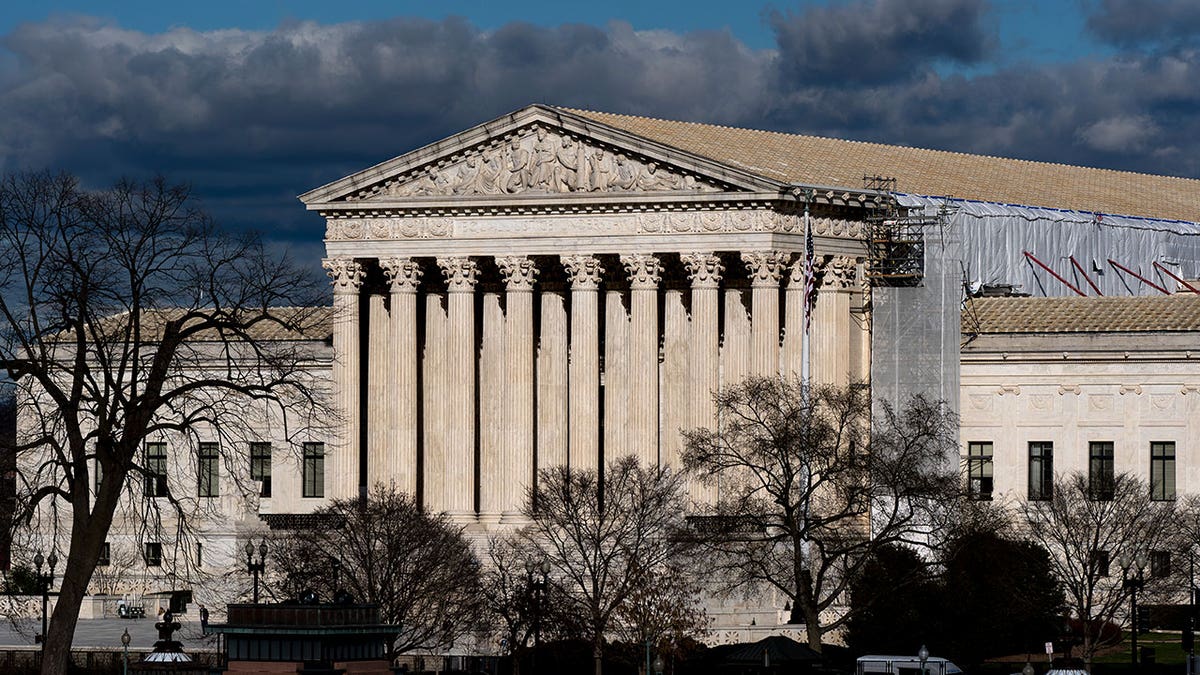
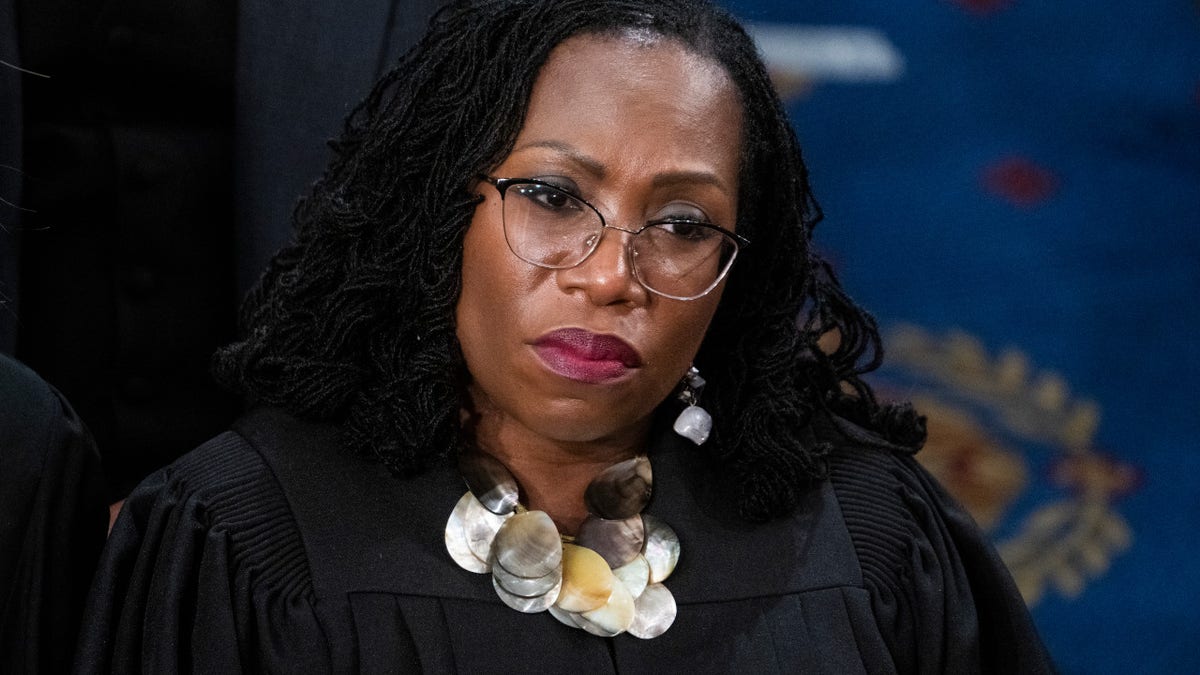
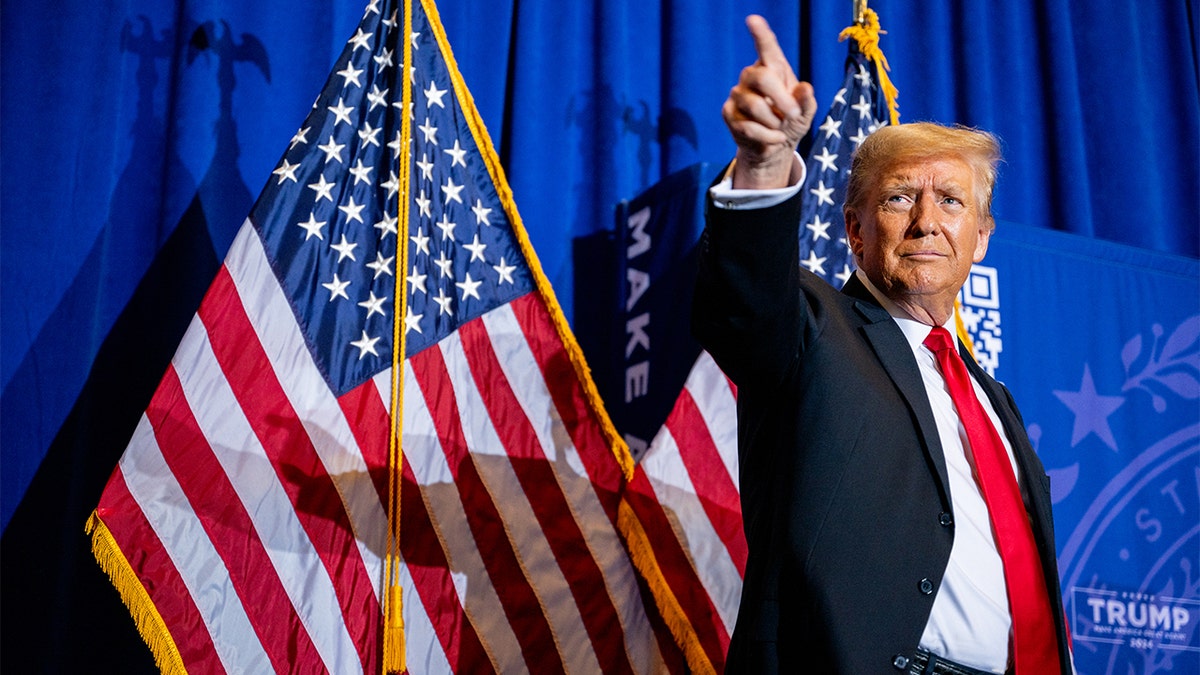
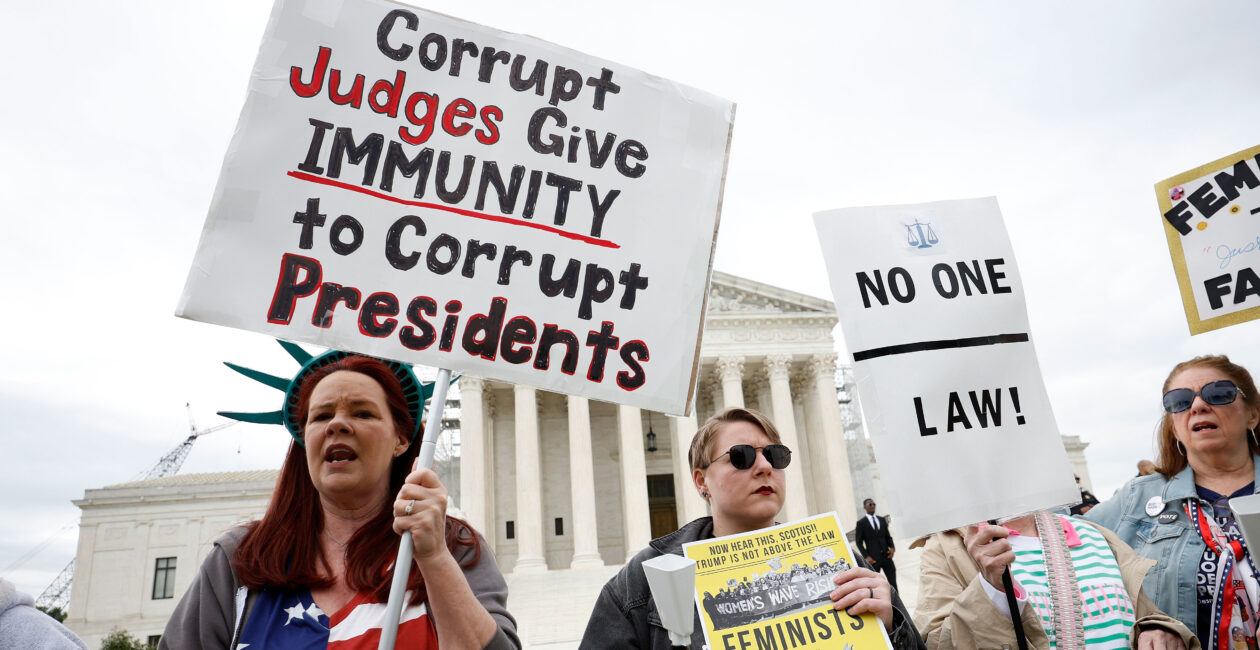


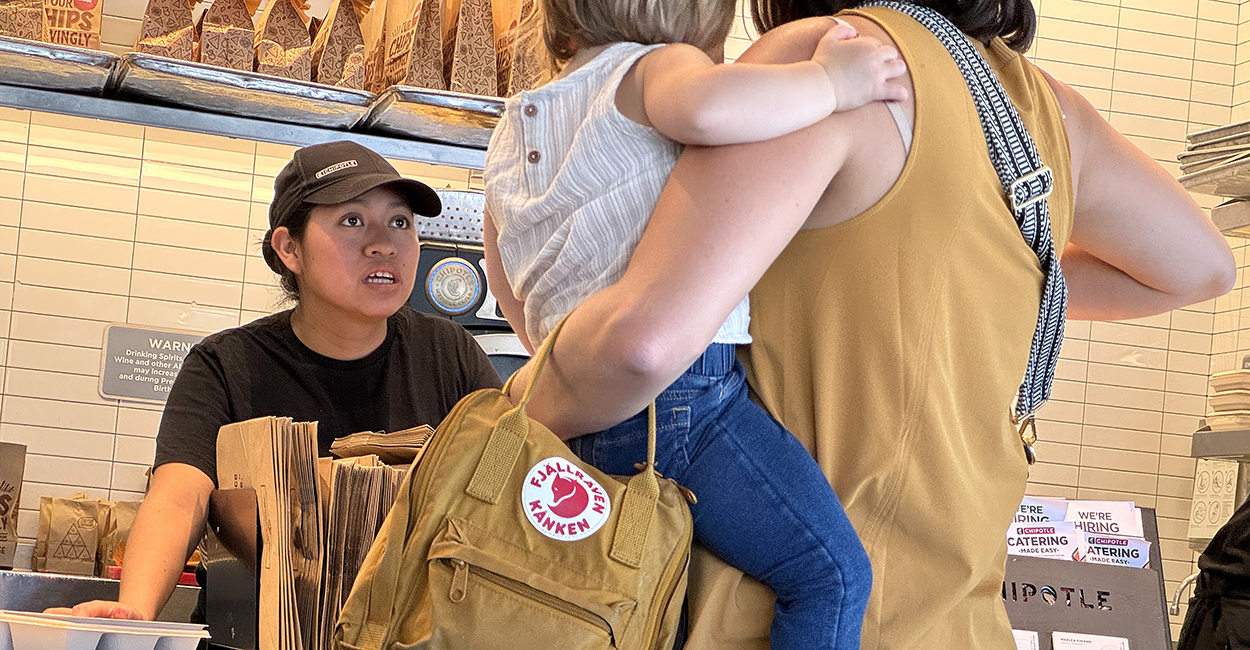


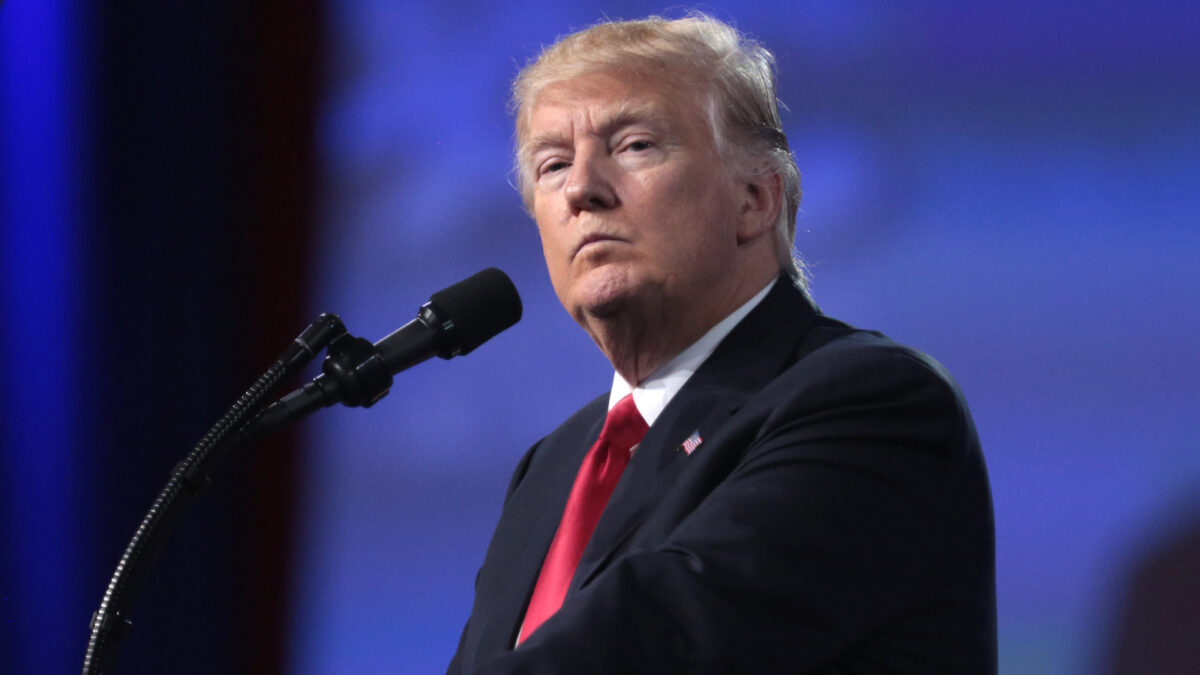








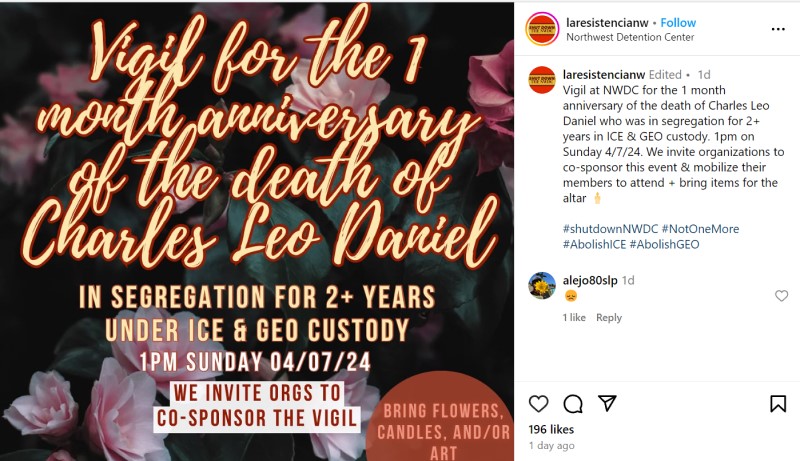
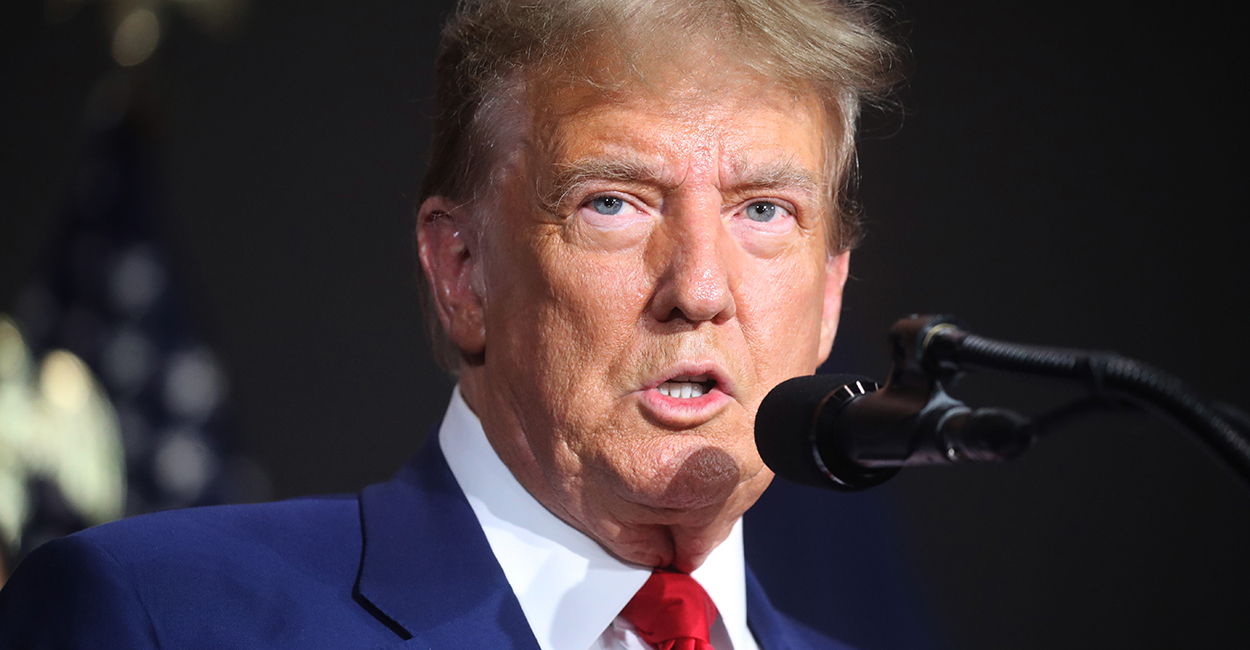








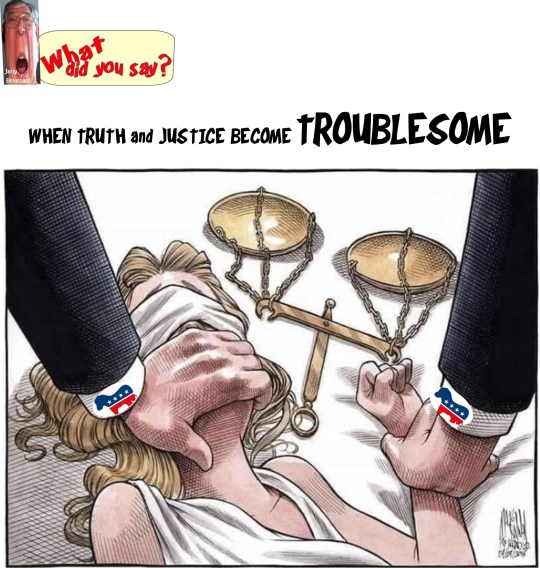

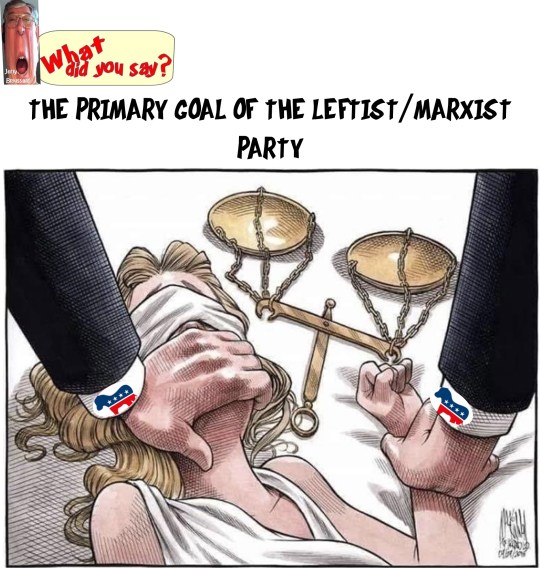


 By
By 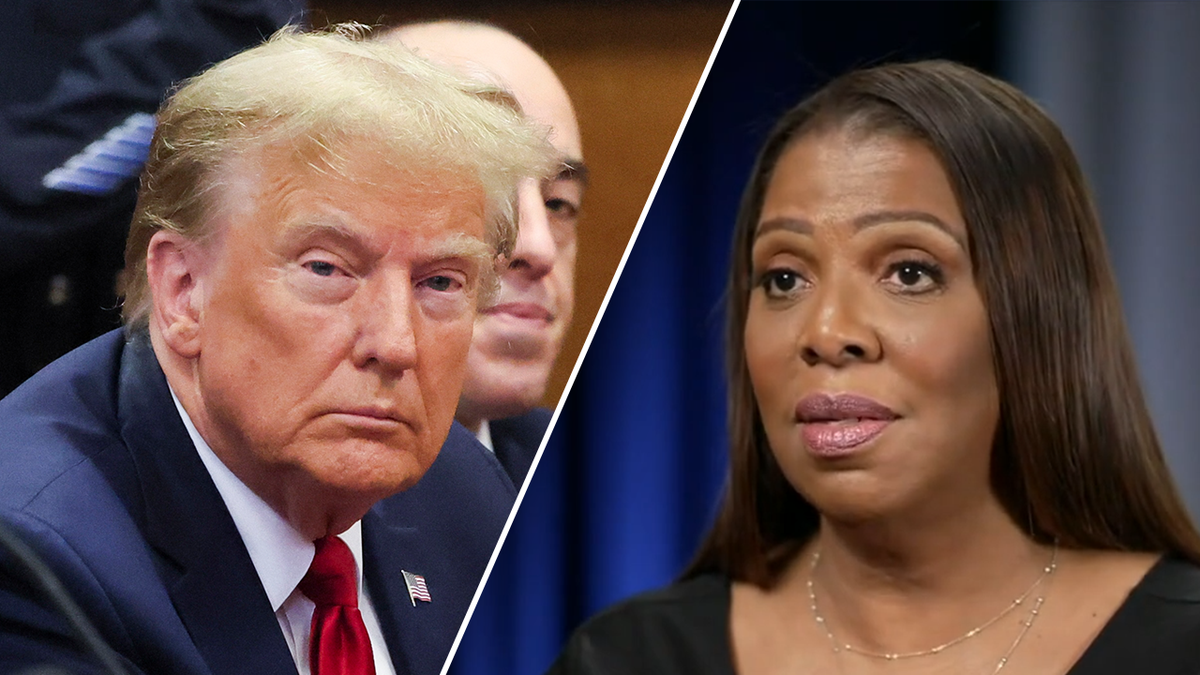


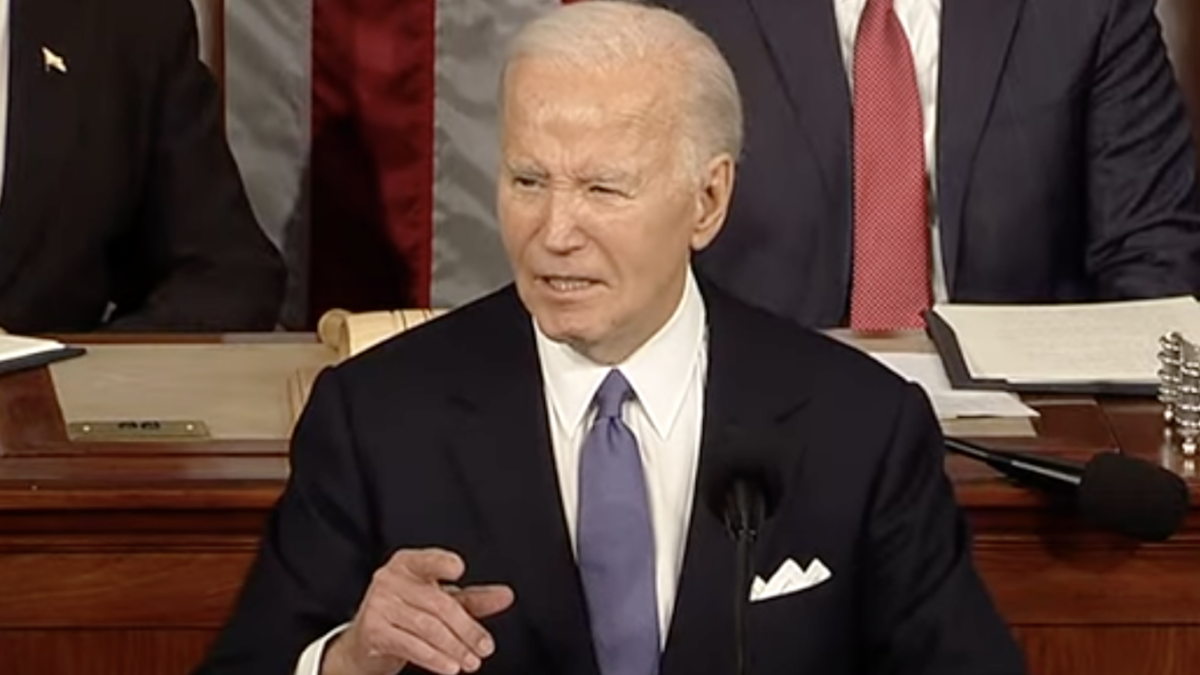


 What Did You Say?
You must be logged in to post a comment.