Louisiana’s attorney general announced Monday that she is asking a federal court to dismiss a lawsuit that seeks to overturn the state’s new law requiring the Ten Commandments to be displayed in every public-school classroom by Jan. 1.
The suit was filed in June by parents of Louisiana public school children with various religious backgrounds who contend the law violates First Amendment language forbidding government establishment of religion and guaranteeing religious liberty. Proponents of the law argue that it is not solely religious but that the Ten Commandments have historical significance to the foundation of U.S. law.
As kids in Louisiana prepare to return to school this month, state officials presented large examples of posters featuring the Ten Commandments that Attorney General Liz Murrill argues “constitutionally comply with the law.” The Republican said she is not aware of any school districts that have begun to implement the mandate, as the posters “haven’t been produced yet.”
Murrill said the court brief being filed, which was not immediately available, argues that “the lawsuit is premature and the plaintiffs cannot prove that they have any actual injury.”
“That’s because they don’t allege to have seen any displays yet and they certainly can’t allege that they have seen any display of the Ten Commandments that violates their constitutional rights,” she added.
Murrill pointed to more than a dozen posters on display during Monday’s press conference to support her argument that the displays can be done constitutionally. Some of the posters featured quotes or images of famous figures — late Supreme Court Justice Ruth Bader Ginsburg, Martin Luther King Jr., Moses and U.S. House Speaker Mike Johnson.
No matter what the poster looked like, the main focal point was the Ten Commandments. Additionally, each display, at the bottom in small print, included a “context statement” that describes how the Ten Commandments “were a prominent part of American public education for almost three centuries.”
Republican Gov. Jeff Landry signed the legislation in June — making Louisiana the only state to require that the Ten Commandments be displayed in the classrooms of all public schools and state-funded universities. The measure was part of a slew of conservative priorities that became law this year in Louisiana.
When asked what he would say to parents who are upset about the Ten Commandments being displayed in their child’s classroom, the governor replied: “If those posters are in school and they (parents) find them so vulgar, just tell the child not to look at it.”
In an agreement reached by the court and state last month, the five schools specifically listed in the lawsuit will not post the commandments in classrooms before Nov. 15 and won’t make rules governing the law’s implementation before then. The deadline to comply, Jan. 1, 2025, remains in place for schools across the state.
Louisiana’s new law does not require school systems to spend public money on Ten Commandments posters. It allows the systems to accept donated posters or money to pay for the displays. Questions still linger about how the requirement will be enforced and what happens if there are not enough donations to fund the mandate.
Copyright 2024 The Associated Press. All rights reserved. This material may not be published, broadcast, rewritten or redistributed without permission.
In my new book, The Indispensable Right: Free Speech in an Age of Rage,” I write about a global anti-free speech movement that is now sweeping over the United States. While not the first, it is in my view the most dangerous movement in our history due to an unprecedented alliance of government, corporate, academic, and media forces. That fear was amplified this week with polling showing that years of attacking free speech as harmful has begun to change the views of citizens.
As discussed in the book, our own anti-free speech movement began in higher education where it continues to rage. It then metastasized throughout our politics and media. It is, therefore, not surprising to see the new Knight Foundation-Ipsos study revealing a further a decline in students’ views concerning the state of free speech on college campuses.
The study shows that 70 percent of students “believe that speech can be as damaging as physical violence.” It also shows the impact of speech codes and regulations with two out of three students reporting that they “self-censor” during classroom discussions.
Not surprisingly, Republican students are the most likely to self-censor given the purging of conservative faculty and the viewpoint intolerance shown on most campuses. Some 49 percent of Republican students report self-censoring on three or more topics. Independents are the second most likely at 40 percent. Some 38 percent of Democrats admit to self-censuring.
Sixty percent of college students strongly or somewhat agree that “[t]he climate at my school or on my campus prevents some people from saying things they believe, because others might find it offensive.”
The most alarming finding may be that only 54 percent of students believe that colleges should “allow students to be exposed to all types of speech even if they may find it offensive or biased.” That figure stood at 78 percent in 2016.
The poll follows similar results in a new poll by the Foundation for Individual Rights and Expression (FIRE) of the population as a whole. It found that 53% of Americans believe that the First Amendment goes too far in protecting rights. So there is now a majority who believe that the First Amendment, including their own rights, should be curtailed.
The most supportive of limiting free speech are Democrats at a shocking 61%. However, a majority (52%) of Republicans also agreed.
Roughly 40% now trust the government to censor speech, agreeing that they trust the government “somewhat,” “very much,” or “completely” to make fair decisions about what speech should be disallowed.
It is no small feat to convince a free people to give up their freedoms. They have to be afraid or angry. These polls suggest that they appear both very afraid and very angry.
It is the result of years of indoctrinating students and citizens that free speech is harmful and dangerous. We have created a generation of speech phobics who are willing to turn their backs on centuries of struggle against censorship and speech codes.
Anti-free speech books have been heralded in the media. University of Michigan Law Professor and MSNBC legal analyst Barbara McQuade has written how dangerous free speech is for the nation. Her book, “Attack from Within,” describes how free speech is what she calls the “Achilles Heel” of America, portraying this right not as the value that defines this nation but the threat that lurks within it.
McQuade and many on the left are working to convince people that “disinformation” is a threat to them and that free speech is the vehicle that makes them vulnerable.
This view has been pushed by President Joe Biden who claims that companies refusing to censor citizens are “killing people.” The Biden administration has sought to use disinformation to justify an unprecedented system of censorship.
Recently, the New York Times ran a column by former Biden official and Columbia University law professor Tim Wu describing how the First Amendment was “out of control” in protecting too much speech.
Wu insists that the First Amendment is now “beginning to threaten many of the essential jobs of the state, such as protecting national security and the safety and privacy of its citizens.” He claims that the First Amendment “now mostly protects corporate interests.”
There is even a movement afoot to rewrite the First Amendment through an amendment. George Washington University Law School Professor Mary Anne Franks believes that the First Amendment is “aggressively individualistic” and needs to be rewritten to “redo” the work of the Framers.
Her new amendment suggestion replaces the clear statement in favor of a convoluted, ambiguous statement of free speech that will be “subject to responsibility for abuses.” It then adds that “all conflicts of such rights shall be resolved in accordance with the principle of equality and dignity of all persons.”
Franks has also dismissed objections to the censorship on social media and insisted that “the Internet model of free speech is little more than cacophony, where the loudest, most provocative, or most unlikeable voice dominates . . . If we want to protect free speech, we should not only resist the attempt to remake college campuses in the image of the Internet but consider the benefits of remaking the Internet in the image of the university.”
Franks is certainly correct that those “unlikeable voices” are less likely to be heard in academia today. As discussed in my book, faculties have largely cleansed with the ranks of conservative, Republican, libertarian, and dissenting professors through hiring bias and attrition. In self-identifying surveys, some faculties show no or just a handful of conservative or Republican members.
One of the most dangerous and successful groups in this anti-free speech movement has been Antifa. I testified in the Senate on Antifa and the growing anti-free speech movement in the United States. I specifically disagreed with the statement of House Judiciary Committee Chairman Jerry Nadler that Antifa (and its involvement in violent protests) is a “myth.”
Antifa is at its base a movement at war with free speech, defining the right itself as a tool of oppression. It is laid out in Rutgers Professor Mark Bray’s “Antifa: The Anti-Fascist Handbook” in which he emphasizes the struggle of the movement against free speech: “At the heart of the anti-fascist outlook is a rejection of the classical liberal phrase that says, ‘I disapprove of what you say but I will defend to the death your right to say it.’”
Bray quotes one Antifa member as summing up their approach to free speech as a “nonargument . . . you have the right to speak but you also have the right to be shut up.”
However, the most chilling statement may have come from arrested Antifa member Jason Charter after an attack on historic statues in Washington, D.C. After his arrest, Charter declared “The Movement is winning.” As these polls show, he is right.
Last year, we discussed the free speech case of Matthew Garrett, formerly a tenured history professor at Bakersfield College who was investigated and disciplined after he questioned the use of grant money to fund social justice initiatives. Bakersfield College has one of the worst records on free speech in higher education and has been repeatedly sued by faculty. It will now pay another $2.4 million in a settlement to subsidize the anti-free speech actions of its administration. The question is why California taxpayers continue to allow faculty and administrators to burn through millions in these efforts to punish divergent or dissenting viewpoints. Matthew Garrett will reportedly receive $2,245,480 over the next 20 years as well as an immediate one-time payment of $154,520 as “compensation for back wages and medical benefits since [his] dismissal.” Unfortunately, the college got its way in insisting that he resign from the Kern Community College District. So, it achieved greater uniformity and orthodoxy in viewpoints at the cost of millions in damages.
The Foundation for Individual Rights and Expression supported his case and detailed in 2023 how his criticism of DEI programs made him a target of faculty and administrators:
Animosity toward Garrett by some faculty and administrators increased over the past couple years as Garrett and several other faculty members associated with the Renegade Institute for Liberty — a Bakersfield College think tank Garrett founded — joined the faculty diversity committee. Other committee members say that the Renegade faculty have made it difficult for the group to get anything done by stalling campus diversity initiatives. But it was Garrett’s comments regarding a proposed racial climate task force during a diversity committee meeting last fall that led Bakersfield to recommend Garrett’s termination.
At the October 2022 meeting of the Bakersfield Equal Opportunity and Diversity Advisory Committee, Garrett criticized a proposal by professor Paula Parks to create a racial climate task force he felt might usurp the jurisdiction of the diversity committee. He also contested the student survey data cited as justification for the proposed task force and questioned the survey’s objectivity and the lack of evidence connecting the data presented and the proposed solutions. Several other faculty members in the meeting also challenged the veracity of the survey data. But ultimately, the committee voted to approve the creation of the task force.
On Nov. 15, Parks published an op-ed in Kern Sol News accusing Garrett and other Renegade Institute-affiliated faculty of a “disturbing pattern of actions” that “created negativity and division in the name of free speech.”
We previously also discussed the case of History Professor Daymon Johnson who was put under investigation after he commented on the extremist comments of another professor. Professor Andrew Bond denounced the United States as a “sh*t nation” and then invited conservatives to quote him. In August 2019, Bond posted a statement on Facebook that:
“Maybe Trump’s comment about sh*thole countries was a statement of projection because honestly, the US is a f**king piece of sh*t nation. Go ahead and quote me, conservatives. This country has yet to live up to the ideals of its founding documents.”
[Text changes added to profanity from the original]
Johnson proceeded to do exactly what Bond suggested and quoted him on the Facebook page for the Renegade Institute for Liberty. He asked others “Do you agree with this radical SJW from BC’s English Department? Thoughts?” He then posted on his own Facebook account the following statement according to his complaint:
“Johnson then used his personal Facebook account to comment on what he had reposted: ‘Maybe he should move to China, and post this about the PRC in general or the Chinese Communist Party and see how much mileage it gets him. I wonder, do they still send the family the bill for the spent round?’”
Johnson said that the college would not allow him to read the complaint but subjected him to months of investigation.
After the investigation was finally concluded with no action by the Kern Community College District (which oversees the college), it stated that it would “investigate any further complaints of harassment and bullying and, if applicable, [taking] appropriate remedial action including but not limited to any discipline determined to be appropriate.”
That threat took on a more menacing meaning given the controversy involving John Corkins, vice president of the Board of Trustees of the Kern Community College District Board. Corkins declared in an open meeting that critics of Critical Race Theory should be “culled” from the faculty and “taken to the slaughterhouse.”
As shown by Corkins, it remains popular in California to pledge to wipe out conservatives and dissenters from faculty. There are comparably few left. Conservatives and libertarians have been gradually purged from many institutions.
A survey conducted by the Harvard Crimson shows that more than three-quarters of Harvard Arts and Sciences and School of Engineering and Applied Sciences faculty respondents identified as “liberal” or “very liberal.” Only 2.5% identified as “conservative,” and only 0.4% as “very conservative.”
Likewise, a study by Georgetown University’s Kevin Tobia and MIT’s Eric Martinez found that only nine percent of law school professors identify as conservative at the top 50 law schools. Notably, a 2017 study found 15 percent of faculties were conservative. Another study found that 33 out of 65 departments lacked a single conservative faculty member.
Some sites like Above the Law have supported the exclusion of conservative faculty. Senior Editor Joe Patrice defended “predominantly liberal faculties” by arguing that hiring a conservative law professor is akin to allowing a believer in geocentrism to teach at a university. So, the views of roughly half of the judiciary and half of the country are treated as legitimately excluded as intellectually invalid.
We have also seen administrators and faculty treat public or private funds as a subsidy for radical policies. For example, Oberlin College abused a small family grocery store for years and racked up millions in costs and damages that it expected alumni to cover. There was no blowback for its president or administrators.
These cases continue unabated despite a long litany of losses for universities and colleges over free speech limits and faculty discipline. The reason is that it is still personally and professionally beneficial for these professors and administrators to attack those with dissenting viewpoints. While faith in higher education is at an all-time low and these schools are gushing money in litigation, there are few remaining dissenting voices on faculties and even fewer willing to resist retaliation by speaking up.
Settlements are now just a cost of doing business for the anti-free speech movement in higher education. The costs are born by taxpayers or donors who are expected to foot the bill for intellectual intolerance.
Texas won a big victory in the United States Court of Appeals in the long struggle over floating buoy barriers in the Rio Grande River to help block unlawful migration. In United States v. Abbott, the court ruled 11-7 in an en banc decision against the Biden Administration over the barrier. It is an interesting decision that included a sharp disagreement over the claim that the large numbers of migrants across the border constitute an “invasion” under Article I, Section 10, Clause 3 (“[n]o state shall, without the Consent of Congress, . . . engage in war, unless actually invaded, or in such imminent Danger as will not admit of delay”).
In its challenge, the Biden Administration claimed the placement of the buoys violated the Rivers and Harbors Act of 1899. The appellate panel and trial court previously ruled in favor of the federal government. However, both were overturned. The majority found that the specific stretch of the Rio Grande that was chosen by the state is not covered by the Rivers and Harbors Act because it is not “navigable.” The definition of navigable waters has long been a matter of dispute in the courts.
Yet, it was the invasion issue that had many of us watching for this decision. I have previously expressed doubts over this theory. I agree with Texas on its criticism of the Biden Administration’s disastrous handling of the border. The impact on Texas is devastating. However, I do not believe that it qualifies as an invasion under Article I.
The opinions deal with this issue in dicta rather than the central holding. Some judges felt that the court should have addressed the issue.
What is interesting is the concurring opinion of Judge James Ho that the meaning of “invasion” is a “political question.” As such, he believes that courts must defer to the Texas governor’s assertion that there is an invasion, at least so long as the governor is acting in “good faith.”
In his concurring opinion, Judge Andrew Oldham maintains that Ho is wrong about the necessity of the court in taking up the issue.
In her dissenting opinion, Judge Dana Douglas objects that this approach would have sweeping and destabilizing effects and “would enable Governor Abbott to engage in acts of war in perpetuity.”
Below is my column in the New York Post on President Joe Biden’s call to reform the Supreme Court by ending lifetime tenure for Supreme Court justices.
Here is the column:
President (and Supreme Court Chief Justice) William Howard Taft once said, “presidents come and go, but the Supreme Court goes on forever.” But not if Joe Biden has his way. Indeed, both the president and Court as we know it could be gone.
In a failed attempt to save his nomination, Biden offered to “reform” the Court by imposing an 18-year term limit that would jettison the three most senior conservative justices. ith only six months left in his presidency, Biden’s efforts are likely to fail, but, unfortunately, could set the stage for activists under a Harris Administration in seeking to change the Court forever.
For more than 50 years, Biden staunchly refused to play politics with the Supreme Court and support calls for “reforms” from the left of his party.
For a politician who has long been criticized for changing positions with the polls on issues from abortion to criminal justice to gun rights, the Court was one of the few areas of true principle for Biden. Even though he refused to answer questions on packing the Court in the 2020 election, he ultimately rejected the call as president.
Yet Biden’s final principle fell this month when facing the premature and involuntary end of his candidacy. Faced with being a one-term president, the Supreme Court would have to be sacrificed. Biden opted for the least of the evils in pushing for term limits rather than court packing. It was the more popular option for Biden to yield on. Voters have always loved term limits.
The Associated Press-NORC Center for Public Affairs Research found 67% of Americans, including 82% of Democrats and 57% of Republicans, support a proposal to set finite terms for justices. But there were few law professors and even fewer Democratic members clamoring for term limits until conservatives secured a stable majority on the Court. Then, suddenly, the Court had to be “reformed” without delay.
It is no accident that the first three justices who would be term limited off the Court are conservatives: Clarence Thomas (after 33 years on the Court), Chief Justice John Roberts (after 19 years), and Justice Samuel Alito (after 18 years).
Think, however, about the iconic decisions we would have lost with term limits in place. Liberal Justice Williams Douglas’s 36 years on the Court would have literally been cut in half. He would have been kicked off in 1957. His famous opinions like Griswold v. Connecticut (1965), striking down bans on contraceptives, would not have been written — an ironic result for those seeking limits after the Court’s ruling in Dobbs.
Likewise, liberal icon Ruth Bader Ginsberg’s tenure would have ended in 2011 before she wrote her famous dissent Shelby County v. Holder (2013), defending voting rights.
Anthony Kennedy’s term would have ended in 2011 rather than 2018, before he wrote opinions such as United States v. Windsor, striking down the Defense of Marriage Act.
Obviously, other justices could have written opinions in these cases, but the point is that many justices wrote their best opinions after 18 years on the Court. Moreover, the Framers clearly wanted these positions as lifetime appointments as an added protection against political pressure or influence.
For more than two centuries, presidents have struggled with the Supreme Court, but none (until now) have attempted to end life tenure on the Court. Presidents have served as the firewall for the anger and radicalism that has periodically engulfed the Court. Now President Biden is leading the mob for changing this institution for the first time since its founding.
It is a testament to what I call “an age of rage” in my new book. After years of supporting the Court when it was setting aside conservative precedent, liberals now want the Court changed to dump or dilute the majority. It is unlikely to end there. After sending Thomas, Roberts, and Alito packing, many want to go further and pack the Court itself.
Democratic leaders such as Sen. Elizabeth Warren (D-Mass.) have called for outright court packing — a proposal that Vice President Kamala Harris has suggested that she might support. Where Biden is a political opportunist in belatedly joining this movement, Harris is a true believer from the far left. If she is elected, the Congress is still likely to be closely divided. That will only increase pressure to convert the Court into an alternative avenue for social and political reform.
Harvard professor Michael Klarman warned that all of the plans to change the country were ultimately dependent on packing the court. With the 2020 election, he stated that Democrats could change the election system to guarantee Republicans “will never win another election.”
Notably, if Biden were to seek this change as a legislative matter without a constitutional amendment, future Congresses could short terms further from 18 to 8 years or even less.
In his speech, Biden declared that he wanted the membership of the Court changed with greater “regularity.” If Congress has this authority, it could change the occupants of the Court faster than a South Beach timeshare condo. That is clearly the opposite of what the Framers intended, but Biden insists that these times are different, and democracy will only be safeguarded by attacking one of our core stabilizing institutions.
According to the Washington Post, the president made his pledge in a Zoom call to the left-wing Congressional Progressive Caucus, chaired by Rep. Pramila Jayapal (D-Wash.) and co-chaired by Rep. Ilhan Omar (D-Minn.). It did not succeed in resuscitating his candidacy.
The pledge will be dead on arrival with Congress. What is left is a King Lear-like tragedy of a president, betrayed by those closest to him, and wandering the land for continued relevance. History will show a pitiful figure who offered up the Court as the cost of staying in power, only to lose his candidacy and his legacy.
Jonathan Turley is a Fox News Media contributor and the Shapiro professor of public interest law at George Washington University. He is the author of “The Indispensable Right: Free Speech in an Age of Rage.”
Below is my column in The Hill on the recent notice that this blog is now being formally “reviewed” by NewsGuard, a company that I just criticized in a prior Hill column as a threat to free speech. The questions from NewsGuard were revealing and concerning. Today, I have posted the response of NewsGuard’s co-founder Gordon Crovitz as well as my response to his arguments.
Here are is the column:
Recently, I wrote a Hill column criticizing NewsGuard, a rating operation being used to warn users, advertisers, educators and funders away from media outlets based on how it views the outlets’ “credibility and transparency.” Roughly a week later, NewsGuard came knocking at my door. My blog, Res Ipsa (jonathanturley.org), is now being reviewed and the questions sent by NewsGuard were alarming, but not surprising.
I do not know whether the sudden interest in my site was prompted by my column. I have previously criticized NewsGuard as one of the most sophisticated operations being used to “white list” and “black list” sites. My new book, “The Indispensable Right: Free Speech in an Age of Rage,” details how such sites fit into a massive censorship system that one federal court called “Orwellian.”
For any site criticizing the media or the Biden administration, the most chilling words today are “I’m from NewsGuard and I am here to rate you.”
Conservatives have long accused the company of targeting conservative and libertarian sites and carrying out the agenda of its co-founder Steven Brill. Conversely, many media outlets have heralded his efforts to identify disinformation sites for advertisers and agencies.
Brill and his co-founder, L. Gordon Crovitz, want their company to be the media version of the Standard & Poor’s rating for financial institutions. However, unlike the S&P, which looks at financial reports, NewsGuard rates highly subjective judgments like “credibility” based on whether they publish “clearly and significantly false or egregiously misleading” information. They even offer a “Nutrition Label” for consumers of information.
Of course, what Brill considers nutritious may not be the preferred diet of many in the country. But they might not get a choice since the goal is to allow other companies and carriers to use the ratings to disfavor or censor non-nutritious sites.
The rating of sites is arguably the most effective way of silencing or marginalizing opposing views. I previously wrote about other sites supported by the Biden administration that performed a similar function, including the Global Disinformation Index (GDI). GDI then released a list of the 10 most dangerous sites, all of which are popular with conservatives, libertarians and independents. GDI warned advertisers that they were accepting “reputational and brand risk” by “financially supporting disinformation online.” The blacklisted sites included Reason, a respected libertarian-oriented source of news and commentary about the government. However, HuffPost, a far left media outlet, was included among the 10 sites at lowest risk of spreading disinformation.
When NewsGuard came looking for Res Ipsa, the questions sounded like they came directly from CGI. I was first asked for information on the financial or revenue sources used to support my blog, on which I republish my opinion pieces from various newspapers and publish original blog columns.
Given NewsGuard’s reputation, the email would ordinarily trigger panic on many sites. But I pay not to have advertising, and the closest I come to financial support would be my wife, since we live in a community property state. If NewsGuard wants to blacklist me with my wife, it is a bit late. Trust me, she knows.
NewsGuard also claimed that it could not find a single correction on my site. In fact, there is a location for readers marked “corrections” to register objections and corrections to postings on the site. I also occasionally post corrections,changes and clarifications.
NewsGuard also made bizarre inquiries, including about why I called my blog “Res Ipsa Liquitur [sic] – the thing itself speaks. Could you explain the reason to this non-lawyer?” Res ipsa loquitur is defined in the header as “The thing itself speaks,” which I think speaks for itself.
But one concern was particularly illuminating:
“I cannot find any information on the site that would signal to readers that the site’s content reflects a conservative or libertarian perspective, as is evident in your articles. Why is this perspective not disclosed to give readers a sense of the site’s point of view?”
I have historically been criticized as a liberal, conservative or a libertarian depending on the particular op-eds. I certainly admit to libertarian viewpoints, though I hold many traditional liberal views. For example, I have been outspoken for decades in favor same-sex marriage, environmental protection, free speech and other individual rights. I am a registered Democrat who has defended reporters, activists and academics on the left for years in both courts and columns.
The blog has thousands of postings that cut across the ideological spectrum. What I have not done is suspend my legal judgment when cases touch on the interests of conservatives or Donald Trump. While I have criticized Trump in the past, I have also objected to some of the efforts to impeach or convict him on dubious legal theories.
Yet, NewsGuard appears to believe that I should label myself as conservative or libertarian as a warning or notice to any innocent strays who may wander on to my blog. It does not appear that NewsGuard makes the same objection to HuffPost or the New Republic, which run overwhelmingly liberal posts. Yet, alleged conservative or libertarian sites are expected to post a warning as if they were porn sites.
NewsGuard is not alone in employing this technique. Mainstream media outlets often label me as a “conservative professor” in reporting my viewpoints. They do not ordinarily label professors with pronounced liberal views or anti-Trump writings as “liberal.”
Studies show that the vast majority of law professors run from the left to the far left. A study found that only 9 percent of law school professors at the top 50 law schools identify as conservative. A 2017 study found only 15 percent of faculties overall were conservative.
It is rare for the media to identify those professors as “liberal,” including many professors on the far left who regularly denounce conservatives or Republicans. It is simply treated as not worth mentioning. Yet, anyone libertarian or right of center gets the moniker as a warning that their viewpoint should considered in weighing their conclusions. Yet, NewsGuard is in the business of labeling people . . . and warning advertisers. It considers my writings to be conservative or libertarian and wants to know “Why is this perspective not disclosed to give readers a sense of the site’s point of view?”
It does not matter that my views cut across the ideological spectrum or that I do not agree with NewsGuard’s label. Indeed, while I clearly hold libertarian views, libertarians run a spectrum from liberal to conservative. The common article of faith is the maximization of individual rights, while there is considerable disagreement on many policies. Steven Brill is considered a diehard liberal. Would it be fair to add a notice or qualifier of “liberal” to any of his columns or opinions?
It does not matter. Apparently from where NewsGuard reviewers sit, I am a de facto conservative or libertarian who needs to wear a digital bell to warn others.
It is a system that includes what Elon Musk correctly called “the advertising boycott racket.” Musk was responding to another such group pushing a rating system as an euphemism for blacklisting. For targeted sites, NewsGuard is now the leading racketeer in that system. It makes millions of dollars by rating sites — a new and profitable enterprise with dozens of other academic and for-profit groups. They have commoditized free speech in blacklisting and potentially silencing others. If you are the Standard & Poor’s of political discourse, you can rate sites out of existence by making them a type of junk bond blog.
Yet, the fact that I have no advertisers or sponsors to scare off does not mean that NewsGuard cannot undermine the site. The company has reportedly received federal contracts, which some in Congress have sought to block. It is also allied with organizations like Turnitin to control what teachers and students will read or use in schools. The powerful American Federation of Teachers, which has been criticized for its far left political alliances with Democratic candidates, has also pushed NewsGuard for schools.
This is why my book calls for a number of reforms, including barring federal funds for groups engaged in censoring, rating or blacklisting sites. NewsGuard shows that such legislation cannot come soon enough.
N.B.: The original version of this column included MSNBC as an example of liberal sites that do not post their own ideological bent or label. I later heard from NewsGuard that they did indeed mark down MSNBC for failing to make such a disclosure, so I removed it from this blog column. I posted a response today on why I continue to oppose rating systems such as NewsGuard.
On the weekend, I ran a column critical of NewsGuard and its recent notification of this blog that it was being “rated.” NewsGuard co-founder Gordon Crovitz responded to that column the next day. We have previously exchanged emails on my concerns over rating systems generally, including the Global Disinformation Index (which is not related to NewsGuard). I noted the concerns over bias from conservatives and members of Congress, but my primary concern remains with the concept of a rating system for media sites and blogs. While NewsGuard has given high ratings to some conservative sites, I generally oppose media rating systems due to free speech concerns and the use of these systems by the current anti-free speech movement.
I have always found Gordon to be open and frank about these subjects and I wanted readers on the blog to hear the opposing view from him directly. He was kind enough to consent to my posting the following. I will be posting a response to Gordon separately in the hopes that we can use this controversy as a foundation for a much needed discussion of rating systems and their impact on free speech.
Here is his response:
Jonathan:
We welcome the publicity, but your complaints in your July 27 commentary in the Hill about NewsGuard seem based on some misunderstandings.
First, we launched NewsGuard in 2018 as an alternative either to the Silicon Valley platforms secretly putting their thumbs on the scale for news and information sites or for calls to have the government censor social media and other online speech. Digital platforms were (and are) secretly rating news and information websites, with no disclosure about their criteria and no way for the people running the websites even to find out how they were rated. The only other entity rating news and information sites at the time we launched was GDI, which as you have written is a left-wing advocacy group–which like the digital platforms does not disclose its criteria or let publishers know how they are rated (except when information escapes such as the top 10 list of “risky” sites, which as you noted are all conservative or libertarian sites).
As I have written as a (libertarian-leaning) conservative former publisher, including in this recent Washington Examiner article https://www.washingtonexaminer.com/opinion/3091369/advertisers-fear-supporting-journalism-heres-how-to-fix-that/, I wouldn’t trust the platforms or a left-wing advocacy group either. We launched NewsGuard as the transparent and apolitical alternative, with the goal of giving news consumers basic information about websites they encounter online.
We reach out to the people running news and information websites for several purposes. We want to be sure we correctly assess sites based on our nine criteria. We’re a journalistic enterprise, so would always reach out for comment before concluding a site fails any of our criteria. We often quote the people running websites to provide more context about their site, whether they fail any criteria or not. More than a quarter of the websites we’ve rated have taken steps, usually relating to greater transparency, to get higher ratings.
In your column, you asserted that NewsGuard treats liberal sites preferentially compared with how we treat conservative or libertarian sites. This is false, as the many high scores for conservative and libertarian sites–and low scores for liberal sites–makes clear. You’ll see examples in the Washington Examiner article I linked to above. (There are right-wing sites like OAN that get low ratings such as for its Dominion Voting Systems claims, and there are left-wing sites that get low ratings for false claims such as about Donald Trump.)
In your Hill article, you claimed that “it does not appear” that we expect left-wing sites to disclose their point of view to readers. You gave the example of MSNBC. I am attaching our publicly available rating for this website. You will see it fails our criterion relating to news/opinion for failing to disclose its orientation. The MSNBC website scores lower than Fox News using our criteria because MSNBC fails to disclose its orientation whereas the website for Fox News does disclose its. (MSNBC also fails our criterion for gathering and presenting responsibly due to claims it made about Trump, Ron DeSantis, Steve Bannon and others.)
We also anticipated even back when we launched that there would be calls for government censorship if secret and partisan ratings were the only ones available in the market. I would have thought, including based on your recent book, that you’d especially welcome an accountable market alternative to censorship.
Finally, I appreciated your obituary for Bob Zimmer and your calls for the Chicago Principles to be widely adopted. (Whether our UChicago fully lives up to them is a topic for another day–I prefer the more energetic approach of Ed Levi to today’s more appeasing practices.) More information about websites is an exercise of free speech, and when done with transparent apolitical criteria equally applied seems to me a market solution you should support, not criticize or fear.
Former Attorney General Bill Barr did not improperly pressure prosecutors to reduce sentencing recommendations for political activist Roger Stone, according to a new government watchdog report. The exoneration of Barr came more than four years after a deluge of media reports alleging wrongdoing.
However, J.P. Cooney, a Justice Department official now serving as Special Counsel Jack Smith’s top deputy, cultivated a politically toxic environment, disseminated baseless conspiracy theories about Trump and his political appointees, and engaged in unprofessional conduct as he oversaw the team making sentencing recommendations, according to the same report.
Cooney is mentioned (as the “Fraud and Public Corruption Section Chief”) a whopping 394 times in the 85-page report released from the Justice Department’s inspector general on July 24. Cooney supervised a team of four attorneys who prosecuted Stone for what the government successfully argued in front of a Washington, D.C., jury were lies and obstruction during Special Counsel Robert Mueller’s investigation into Trump campaign officials. Mueller’s two-year, $32 million investigation was itself spun up by anti-Trump officials in the Justice Department after the Democrat National Committee and Democrat presidential nominee Hillary Clinton bought and paid for an information operation falsely alleging the Trump campaign was in cahoots with Russia to steal the 2016 election. Two members of Cooney’s team also worked on the Mueller investigation.
The Fraud and Public Corruption (FPC) team sought an unprecedented sentence of seven to nine years in prison for Stone, dramatically beyond what others convicted of similar crimes faced. When developing that sentencing goal, the team by its own admission thought the “closest analogue” to the Stone conviction was that of Scooter Libby, a target of a previous special counsel in a highly controversial prosecution. Libby’s proposed sentencing range was 30-37 months and he was sentenced to 30 months, which was derided as “excessive” by former President George W. Bush.
Yet the Cooney team larded up the Stone sentencing memo with every escalatory adjustment it could find, however disputable, to achieve a much harsher sentence and treat Stone differently than the Justice Department treats other defendants.
As soon as Cooney’s supervisors saw what he and his team had planned, “they all agreed that the sentencing recommendation was too high” and expressed grave concern about the situation. Interim U.S. Attorney Timothy Shea, who had started on the job just that week, said he “had never seen [perjury] cases produce a sentence that high, and that he was aware of many violent crimes that did not result in sentences ‘anywhere near’ the sentence the team was recommending for Stone,” according to the report. He noted that the escalatory adjustments were arguably made in error, in at least one case, and that the guidance was completely “out of whack” relative to other cases. Further, Stone was a “first-time offender, older than most offenders, and convicted of a nonviolent crime,” and “comparable cases” were sentenced around two to three years.
Cooney responded to the criticism of his extreme sentencing proposal by spreading an elaborate conspiracy theory with no supporting evidence that Trump, Barr, and Shea were being improperly political. Cooney admitted to investigators that “he had no information suggesting that anyone from Main Justice (i.e., DOJ leadership offices) was involved in the Stone sentencing at this time and no evidence pointing to improper motivations influencing these discussions” when he spread the conspiracy theory with his underlings.
In phone calls and other conversations with his prosecution team, Cooney spread his evidence-free conspiracy theory that “Shea was acting out of fear of then President Trump and, more particularly, fear of the consequences of not seeking a lower sentence for an influential friend of then President Trump.” He continued his conspiracy theories in other conversations. “Prosecutor 1 said that when he asked [Cooney] what was going on, [Cooney] replied that ‘this is coming from Main Justice. Tim Shea is getting pressure from Main Justice about the Stone sentencing recommendation, and Tim Shea is terrified of the President,’” according to the report. Cooney acknowledged he had no evidence to support these statements.
Another prosecutor said Cooney told him that “Shea did not care about Stone or the Stone case, but that Shea was ‘afraid of the President’ and that this fear was driving Shea’s actions,” according to the report. That same prosecutor said Cooney said multiple times that “Shea was afraid of the President and said it ‘with substantial conviction.’” Cooney later acknowledged he had no evidence to support his false claim.
At the same time, reporters began calling the Department of Justice to ask about the sentencing guideline dispute. That meant that at least one person within the department was getting information to reporters at left-wing media outlets to bully Trump appointees to acquiesce to their demands. Partisan bureaucrats had commonly used that tactic throughout the Trump presidency. While strict guidelines opposed unauthorized disclosures to the press, DOJ and FBI officials rarely bothered to investigate such leaks, much less hold employees accountable for them. In many cases, they were the worst offenders. For example, former FBI Director James Comey leaked to the media by disclosing information to an attorney who then passed the information on to The New York Times. The investigative report on the sentencing memos discusses how various DOJ employees denied leaking to the media while also noting they spoke about the sentencing controversy with other attorneys.
Unsurprisingly, the sentencing dispute became a major news story, with the perspective of Cooney’s team adopted by the recipients of the leaks. After the Justice Department issued a second sentencing guideline memo, the four prosecutors all removed themselves from the case and were lavished with praise by left-wing media outlets. Prosecutor Aaron Zelinsky went on to testify in front of Congress about the situation. His claims that the sentencing dispute was guided by politics were untrue, but investigators blamed Cooney for spreading the falsehoods.
The second sentencing memo did not call for a specific jail time but left it to the judge’s discretion. Judge Amy Berman Jackson agreed with the second sentencing memo and ordered Stone to serve 40 months in prison, many years fewer than Cooney’s team had aimed for. Trump commuted Stone’s sentence before he was taken into custody.
In its report, the Justice Department IG said that Cooney’s “speculative comments in meetings with the trial team about the political motivations” of Trump officials “in connection with their handling of the Stone sentencing contributed to an atmosphere of mistrust” that “unnecessarily further complicated an important decision in the case.” It further determined that his baseless comments to the trial team formed a substantial basis for Zelinsky’s explosive but wrong testimony to the House Judiciary Committee on June 24, 2020.
Cooney’s Checkered DOJ Record
Cooney’s track record at DOJ includes many other controversial political actions.
For example, one of the primary instigators of the Russia-collusion hoax was FBI Deputy Director Andrew McCabe, now a CNN contributor. In April 2018, federal investigators issued a criminal referral for just some of the criminal leaks and lies he had engaged in while at the FBI. After sitting on a criminal referral for nearly two years, Cooney announced on Feb. 14, days after the Stone sentencing memo situation, that he had decided to let McCabe get away with the lies and the leaks.
Those who aren’t political allies of Cooney’s receive different treatment. Cooney prosecuted Steve Bannon in 2022 for a contempt of Congress charge related to him not complying with a subpoena from the controversial Jan. 6 Committee comprised exclusively of members hand-selected by Speaker of the House Nancy Pelosi. Bannon, who hosts the popular alternate media program “War Room,” is currently serving his four-month prison sentence. Civil libertarians are concerned about the Biden administration’s imprisonment of powerful media voices during the election season.
Incidentally, Attorney General Merrick Garland was found in contempt of Congress earlier this year for failing to comply with a subpoena from the House Judiciary Committee, which unlike the Jan. 6 Committee is a real committee with members appointed by both Republicans and Democrats, but the Department of Justice has not charged him.
Thwarting Election Integrity
After the extremely controversial 2020 election, Attorney General Barr issued a memorandum allowing the Department of Justice to investigate election irregularities if they were serious and substantiated. “While it is imperative that credible allegations be addressed in a timely and effective manner, it is equally imperative that Department personnel exercise appropriate caution and maintain the Department’s absolute commitment to fairness, neutrality and non-partisanship,” Barr wrote.
While many Americans would hope the Justice Department would investigate election irregularities in a timely fashion, particularly in an election as unprecedented as 2020, Democrat activists were livid. In response, Cooney cooked up a letter of outrage that quickly leaked to the media and helped shut down any meaningful investigations into the election. When The New York Times wrote about the letter, it was clear that Trump officials had already figured out Cooney’s mode of operating.
“On Thursday, [Cooney] said in an email sent to Mr. Barr via Richard P. Donoghue, an official in the deputy attorney general’s office, that the memo should be rescinded because it went against longstanding practices, according to two people with knowledge of the email,” The New York Times wrote. “In response, Mr. Donoghue told Mr. Cooney that he would pass on his complaint but that if it leaked to reporters, he would note that as well. Given that the email was born out of a concern for integrity, Mr. Donoghue said in his reply that he would assure officials ‘that I have a high degree of confidence that it will not be improperly leaked to the media.’”
Somehow the letter simultaneously made it to Cooney’s political allies at left-wing media outlets.
Rabid Pursuit of Trump
Weeks after President Joe Biden was inaugurated, Cooney was still stinging over not being able to put Stone in prison for nearly 10 years. He cooked up a plan, which appeared in The Washington Post and New York Times, to once again go after Roger Stone and other Trump associates in a new Jan. 6-related investigation.
His supervisors noted, “Cooney did not provide evidence that Stone had likely committed a crime — the standard they considered appropriate for looking at a political figure.” Further, his investigative plans were “treading on First Amendment-protected activities.” Nevertheless, he continued pursuing various plans to target Trump affiliates, and the U.S. attorney’s office began pursuing investigations along the lines of what Cooney had proposed, according to reporting.
President Biden and corporate media continued to pressure the Department of Justice and Garland to go after former President Donald Trump, who was widely expected to become Biden’s 2024 opponent. The famously conflict-averse Garland finally relented and put together a special counsel team heavily focused on Cooney and his extreme theories.
Democrat activists have cheered the special counsel for its aggressive actions against Trump, including a shocking raid on his Mar-a-Lago home, exhaustive investigations into communications and finances of Trump and many of his associates, and relentless pushes for courts to rush judgments ahead of the November elections.
Cooney and Smith’s approach has been less successful outside Democrat conversations. “It’s almost hard to believe how comprehensively the hubris and zealotry of anti-Donald Trump lawfare have blown up in their practitioners’ faces,” wrote The Washington Post’s Jason Willick after one major defeat. “Not only did the Supreme Court’s Monday ruling in Trump v. United States create new and enduring presidential immunities against criminal prosecution, but it also eviscerated the fiction of an ‘independent’ Justice Department and even inadvertently threw the validity of Trump’s New York hush money conviction into question.”
Left-wing media outlets such as Talking Points Memo have praised Cooney, noting that he was a partisan activist in college. Cooney, who was president of the College Democrats at Notre Dame University, wrote a column in the school newspaper that regularly praised President Bill Clinton and criticized Independent Counsel Ken Starr and his investigation of Clinton. Cooney once wrote of Starr as a “partisan political hit-man” for investigating Clinton and complained about the $30 million price tag of the investigation. He lamented the country’s “insatiable craving for controversy and scandal” regarding Clinton and worried it would destroy the country.
“We are pleased with the court’s decision recognizing that students can, in fact, challenge unconstitutional policies implemented by school boards in Virginia,” America First Legal attorney Andrew Block told The Daily Signal.
Fairfax County Public Schools in Northern Virginia requires all students to refer to “students who identify as gender-expansive or transgender by their chosen name and pronoun, regardless of the name and gender recorded in the student’s permanent pupil record.”
Conservative public interest law firm America First Legal sued the district on behalf of a Roman Catholic student who believes the policy opposes her religious beliefs. The student believes God made only two genders—male and female—and that to reject one’s biological sex is to reject the image of God within that person.
The school district argued that the student, who was followed into the girls’ bathroom by a boy and is compelled to use preferred pronouns under the school district’s policy, did not have standing to sue. In Wednesday’s hearing, the court overruled that motion, recognizing that students can challenge unconstitutional policies. The court held that the student did not allege “discriminatory purpose or intent.”
Stephanie Lundquist-Arora, a Fairfax County mom of three who has followed this issue closely, celebrated the decision.
“I’m joining other parents across Fairfax County today as we collectively inhale the fresh scent of common sense with the court’s verdict,” she told The Daily Signal. “We knew all along that it was tyrannical and completely wrong to try to compel our children’s speech with forced pronoun usage in their public schools. It is such a relief that justice has prevailed this time to preserve our children’s constitutional rights.”
Fairfax County Circuit Court Judge Brett Kassabian gave the plaintiff 21 days to file responsive pleadings.
For years, former CNN Anchor Lynne Russell was the familiar face of Headline News for the country. She may soon be making headlines again as the lead plaintiff in what could prove a major Second Amendment challenge in Washington, D.C. Russell is challenging the city’s prohibition on “off-body” carrying of weapons, including keeping a handgun in a purse. That type of off-body carry is precisely what may have saved Russell’s life in a shootout with an armed assailant in 2015. Russell’s nightmare began when the armed assailant grabbed her outside of their motel in Albuquerque, New Mexico and forced her into her room. He then threw her across the room on to the bed as her husband, Chuck De Caro, a former CNN correspondent, was coming out of the shower.
Russell then had the amazing calmness and control to suggest to her husband that there might be something in her purse that the man would want. Inside was her gun and De Caro pulled it out and exchanged fire with the man. He was shot three times but survived. The assailant did not.
Both Russell and De Caro showed amazing courage. The fact that De Caro could come out of a shower naked and immediately engage a gunman in a shootout is worthy of a Die Hard sequel.
Russell is now leading the fight for others, particularly women, who use off-body carry for self-protection. For many women, a holster is not a convenient option with dresses and other outfits. Indeed, there are guns and purses specifically designed for women to blend into clothing styles.
2344.1A licensee shall carry any pistol in a manner that it is entirely hidden from view of the public when carried on or about a person, or when in a vehicle in such a way as it is entirely hidden from view of the public.
2344.2A licensee shall carry any pistol in a holster on their person in a firmly secure manner that is reasonably designed to prevent loss, theft, or accidental discharge of the pistol.
It is not just a matter of style. A holster on a dress outfit is more likely to stand out and could serve as an attraction for felons who are seeking to steal a weapon.
The Russell challenge seems quite strong to me. Under the post-Bruen jurisprudence, it will be difficult for the District to show historical support for limiting gun rights to on-body-carry situations. While the District is citing a contemporary New Jersey law, that is not quite the historical support that the Court has previously demanded. The Court held that “when the Second Amendment’s plain text covers an individual’s conduct, the Constitution presumptively protects that conduct.” To overcome that presumption “the government must demonstrate that the regulation is consistent with this Nation’s historical tradition of firearm regulation.”
It is doubtful that any early gun laws barred carrying weapons off body. Indeed, the most common weapons like muskets necessarily were carried on horseback or kept at arm’s reach.
I have previously written how New York, D.C., and Chicago are examples of Democratic cities that routinely commit lasting self-inflicted wounds to gun control efforts with poorly conceived and poorly drafted measures. In 2008, the District of Columbia brought us District of Columbia v. Heller, the watershed decision declaring that the Second Amendment protects the individual right of gun possession. In 2010, Chicago brought us McDonald v. City of Chicago, in which the Court declared that that right is incorporated against state and local government.
These cities are the gifts that keep on giving for gun rights advocates. Politically, local officials are heralded for any gun control legislation, and they are rarely blamed for major losses that come later in the courts — losses that often expand the reach of prior cases.
The case is Russell et.al. v. District of Columbia et.al. Case number 2024-cv-1820.
We previously discussed the free speech lawsuit of Portland State University Professor Bruce Gilley who was blocked from the Twitter account of the University of Oregon’s Division of Equity and Inclusion after tweeting “All men are created equal.” The court just granted a preliminary injunction holding that there was a substantial likelihood that he would prevail on the merits against the University of Oregon.
Portland State University Professor Bruce Gilley was excluded from a Diversity Twitter page by the Communication Manager of the Division of Equity and Inclusion at the University of Oregon. (The manager is identified as “tova stabin” who the court notes “spells her name with all lowercase letters.”). Stabin has now left the school.
In Gilley v. Stabin, Judge Hernández previously offered this background:
On or about June 14, 2022, Defendant stabin, in her capacity as Communication Manager, posted a “racism interruptor” to the Division’s Twitter page, @UOEquity. The Tweet read “You can interrupt racism,” and the prompt read, “It sounded like you just said_________. Is that really what you meant?”
Plaintiff Bruce Gilley, a professor at Portland State University, responded to the Tweet the same day it was posted with the entry “all men are created equal.” Plaintiff is critical of diversity, equity, and inclusion (“DEI”) principles, and intended his tweet to promote a colorblindness viewpoint. Plaintiff tagged @uoregon and @UOEquity in his re-tweet. Also on June 14, 2022, Defendant stabin blocked Plaintiff from the @UOEquity account. Once he was blocked, Plaintiff could no longer view, reply to, or retweet any of @UOEquity’s posts….
Plaintiff later filed a public records request with the University of Oregon to inquire about the policy VPEI uses to block Twitter users. … The University initially responded that there was no written policy and that “the staff member that administers the VPEI Twitter account and social media has the autonomy to manage the accounts and uses professional judgment when deciding to block users.” …Plaintiff also asked whether other Twitter users had been blocked from @UOEquity, and the University responded that two other users were blocked. … Plaintiff asserts that “[b]oth of the other users have expressed politically conservative viewpoints, including criticizing posts of the @UOEquity account.” Am. Compl. ¶ 70.
On June 27, 2022, Defendant stabin responded to an email from University of Oregon employee Kelly Pembleton, who was helping respond to Plaintiff’s public records request. Defendant stabin sent the following in response to Pembleton’s request for a list of the users she had blocked on @UOEquity:
“Doesn’t take real long. I’ve only ever blocked three people. Here is the list. I’m assuming the issue is this guy Bruce Gilley. He was not just being obnoxious, but bringing obnoxious people to the site some. We don’t have much following and it’s the social I pay least attention to. Here’s a screenshot of everyone I’ve ever blocked. I hardly do it (and barely know how to).”
Minutes later, Defendant stabin sent another email to Pembleton about the records request. The email reads, in pertinent part:
“Oh, I see. It is Bruce who brought it. Not surprising. He was commenting on one of the “interrupt racism” posts, as I recall talking something about the oppression of white men, if I recall. Really, they are just there to trip you up and make trouble. Ugh. I’m around at home for a quick zoom about it.’
The court previously denied the university’s motion to dismiss. The University of Oregon then continued to spend public dollars to try to defend its right to censor academics and students in this arbitrary way. Now it has lost the key fight over the preliminary injunction.
In his decision, Judge Hernández zeroed in on the guidelines allowing for the censorship of offensive or hateful speech:
“Plaintiff has shown that the two provisions of the social media guidelines he challenges create a risk of censoring speech that is protected by the First Amendment. As Plaintiff points out, speech that is “hateful,” “racist,” or “otherwise offensive” is protected by the Constitution. Pl. Br. 3 (citing Snyder v. Phelps, 562 U.S. 443, 454 (2011); Cohen v. California, 403 U.S. 15, 25 (1971); Am. Freedom Def. Initiative v. King County, 904 F.3d 1126, 1131 (9th Cir. 2018)). The Court held that the @UOEquity account was a limited public forum, meaning that any restrictions on speech must be reasonable and viewpoint-neutral. Op. & Ord. 25.5 Plaintiff is correct that the provisions allowing the Communications Manager to block “hateful,” “racist,” and “otherwise offensive” speech create a risk of viewpoint discrimination because “[w]hat is offensive or hateful is often in the eye of the beholder.” Pl. Br. 4. If Plaintiff was blocked for posting “all men are created equal” because the post was viewed as hateful, racist, or otherwise offensive, such blocking would violate the Constitution. Deleting or hiding the post for that reason would also violate the Constitution.”
That is why this decision could have a lasting impact for higher education. The Oregon language is not dissimilar from many schools limiting campus speech under vague guidelines.
Notably, we have discussed how these schools have been losing in federal courts in their effort to maintain censorship systems. Yet, administrators continue undeterred in pursuing these policies with the support of their faculty.
Oregon has long been known for radical viewpoints in academia. I previously criticized the school policy to monitor student speech on social media and off campus as part of its speech regulations.
It is unlikely that the legislature will object to this expensive fight to preserve the right to censor speech. The state itself has moved aggressively against free speech rights of doctors and others in areas like abortion. However, the people of Oregon should consider the use of their tax dollars to seek to limit the “indispensable right” of free speech and to give figures like stabin such discretion over what speech to allow on campus.
District Court Judge David Carter delivered a crushing blow against free speech rights in elementary schools in an outrageous case out of Orange County. Principal Jesus Becerra at Viejo Elementary punished a seven-year-old girl named B.B. in the lawsuit for writing “any life” under a “Black Lives Matter” picture. Judge Carter issued a sweeping decision that said that she has no free speech rights in the matter due to her age and that the school is allowed to engage in raw censorship. He is now being appealed.
The message from the school seems to be that black lives matter but free speech does not. The school found a kindred spirit in Judge David Carter.
After a lesson on Martin Luther King, B.B. gave her picture to a friend, believing the inclusive image of four shapes of different races and the words would be comforting to a friend. However, when that child showed the picture to a parent, a complaint was filed that B.B.’s picture was insensitive and offensive. Becerra responded by disciplining the child for her inclusive picture.
Becerra should be fired, but his extreme views and lack of judgment is hardly unique in education. The far greater damage was created by Carter’s opinion.
Judge Carter ruled that B.B. has no free speech to protect due to her age, but that “students have the right to be free from speech that denigrates their race while at school.”
Judge Carter added that “an elementary school … is not a marketplace of ideas… Thus, the downside of regulating speech there is not as significant as it is in high schools, where students are approaching voting age and controversial speech could spark conducive conversation.”
The court leaves a vacuum of protected rights that he fills with what seems unchecked authority for the school: “a parent might second-guess (the principal’s) conclusion, but his decision to discipline B.B. belongs to him, not the federal courts.”
In my view, Judge Carter is dead wrong, though I expect he will find support among some of the judges on the Ninth Circuit.
The Court applies the famous ruling in Tinker v. Des Moines Indep. Cmty. Sch. Dist., 393 U.S. 503 (1969), as a license for sweeping censorship and discipline. Yet, the Court held in Tinker that students have free speech rights and that any restrictions require evidence of “interference, actual or nascent, with the schools’ work or collision with the rights of other students to be secure and to be let alone.” It then imposes a high standard that it must “materially disrupt[] classwork or involves substantial disorder or invasion of the rights of others.” This disruption must be “caused by something more than a mere desire to avoid the discomfort and unpleasantness that always accompany an unpopular viewpoint.”
However, what is more disturbing is the disconnection of the right from anything but a narrow functionalist view of free speech. In my new book, “The Indispensable Right: Free Speech in an Age of Rage,” I criticize the functionalist approaches that tie the protection of free speech to its function in advancing a democracy.
I argue for a return to the view of free speech as a natural or human right — a view that was popular at the beginning of our Republic but soon lost to functionalist rationales. Those rationales allow for the type of endless trade-offs evident in the Carter decision.
Carter’s functionalist or instrumentalist approach makes it easier to simply discard any free speech rights in elementary students. In my view, they have free speech rights as human beings as do their parents. Under Carter’s approach, schools can engage in a wide array of indoctrination by declaring opposing political and social views to be “disruptive.”
Ironically, my book criticizes Judge Carter in another case over his failure to consider free speech concerns. In his decision in the January 6th case involving John Eastman, Carter dismisses his arguments that he had a right to present his novel theory against certification of the election.
While many of us disagreed with Eastman, there was a concern over efforts to strip lawyers of their bar licenses and even use criminal charges against such figures. However, what concerned me the most was sweeping language used by Carter in his decision.
Carter’s narrow view of free speech and his expansive view of state authority is hardly unique. B.B. is devoid of free speech protections even in this outrageously abusive case. The reason is that she is not of an age where her speech is viewed as worthy of protection. It is an example of the distortive and corrosive effect of functionalism in free speech jurisprudence in my view.
Below is my column in the New York Post on the ruling against Nina Jankowicz in her defamation case. It turns out that calling opposing views defamation is no better than calling them disinformation.
Here is the column:
For free speech advocates, there are few images more chilling than that of Nina Jankowicz singing her now-infamous tune as “the Mary Poppins of Disinformation.” The woman who would become known as the “Disinformation Czar” sang a cheerful TikTok parody of “Supercalifragilisticexpialidocious” to rally people to the cause of censorship.
When the press caught wind of President Biden’s plan to appoint Jankowicz as head of the Department of Homeland Security’s new “disinformation board,” Fox News said she “intended to censor Americans’ speech.” The backlash was swift. Plans for the board were suspended, and Jankowicz resigned in 2022. She then sued Fox News for defamation.
On Monday, the case was dismissed. But Chief Judge Colm Connolly, a Delaware Democrat, didn’t just say it was legally unfounded — he demolished the claims of figures like Jankowicz that they are really not engaged in censorship.
These figures gleefully worked to silence others with the support of millions in public dollars for years. Yet, when exposed to criticism, they often portrayed themselves as victims with an obliging and supportive media.
They all took a page from Mary Poppins, who “taught us the most wonderful word!” In this case, the word is “disinformation”, and it is certainly not connected to “censorship.” Rather you are supposed to call the barring, blacklisting and throttling of opposing views “content moderation.”
Jankowicz took that not-so-noble lie to a new level. After losing her job, she launched a campaign soliciting funds to sue those who called her a censor. I was highly critical of these efforts as trying to use defamation as another tool to chill critics and shut down criticism. It was a telling lawsuit, as Jankowicz simply labeled criticism of her as “defamation” — just as she labeled opposing views “disinformation.” The objections to her work were called false and she insisted that she was really not seeking to censor people with her work.
Connolly made fast work of that effort. After holding that people are allowed to criticize Jankowicz as protected opinion, the court added:
“I agree that Jankowicz has not pleaded facts from which it could plausibly be inferred that the challenged statements regarding intended censorship by Jankowicz are not substantially true. On the contrary … censorship is commonly understood to encompass efforts to scrutinize and examine speech in order to suppress certain communications.
“The Disinformation Governance Board was formed precisely to examine citizens’ speech and, in coordination with the private sector, identify ‘misinformation,’ ‘disinformation,’ and ‘malinformation.’ … that objective is fairly characterized as a form of censorship.”
Of course, in America’s burgeoning censorship infrastructure, the entire decision is likely to be viewed as some form of disinformation, misinformation or malinformation. After all, even true facts can be deemed censorable by the Biden-Harris administration.
I testified previously before Congress on how Jen Easterly, who heads the Cybersecurity and Infrastructure Security Agency, extended her agency’s mandate over critical infrastructure to include “our cognitive infrastructure.” The resulting censorship efforts included combating “malinformation” — described as information “based on fact, but used out of context to mislead, harm, or manipulate.”
Thus, referring to Jankowicz as engaged in censorship on this defunct board may be true, but could still be treated as “malinformation.”
As I discuss in my book, these setbacks are unlikely to deter the corporate, academic and government figures aligned in our current anti-free speech movement. Millions of government and private dollars are flowing to universities and organizations engaged in targeting or blacklisting individuals and groups. It is now a growing industry unto itself.
The new censors have gone corporate and mainstream. Silencing others is now a calling, a profession. They have literally made free speech into a commodity that can be packaged and controlled for profit.
Yet Confucius once said that “the beginning of wisdom is the ability to call things by their right names.” This opinion takes a large step toward such wisdom.
If figures like Jankowicz want to continue to make money silencing others, we can at least call them for what we believe they are: censors.
Jonathan Turley is a Fox News Media contributor and the Shapiro professor of public interest law at George Washington University. He is the author of “The Indispensable Right: Free Speech in an Age of Rage.” (Turley appears as a legal analyst on Fox, but nothing in this column is written on behalf of Fox Corp.)
The United States Court of Appeals for the Eighth Circuit has handed down a major ruling in Worth v. Jacobson in favor of the Second Amendment. The opinion by Judge Duane Benton upholds a lower court in striking down a Minnesota law limiting gun permits for persons 21 years old. It is a question that could find its way to the Supreme Court once splits among the circuits develop.
As noted by scholars such as Stephen Halbrook, it is also the first appellate court to rely on the Supreme Court’s recent decision in Rahimi, which gun rights advocates argued might be a break in the dam of Second Amendment protections. That dubious claim is even less compelling after reading this opinion.
Minnesota has joined states like New York and Illinois in advancing weak arguments to the benefit of gun rights advocates. It argued that, since the Founding, states have restricted guns in the hands of “irresponsible or dangerous groups, such as 18 to 20-year-olds.” That proposition was left virtually unsupported as was the suggestion that 18 to 20-year-olds are a public danger.
Moreover, the court ruled that it would not matter:
“Minnesota states that from the founding, states have had the power to regulate guns in the hands of irresponsible or dangerous groups, such as 18 to 20year-olds. At the step one ‘plain text’ analysis, a claim that a group is ‘irresponsible’ or ‘dangerous’ does not remove them from the definition of the people.”
Minnesota also argued that the plaintiffs were required to shoulder their burden in showing that they are covered by the Second Amendment. It noted that they “did not submit expert reports or facts about the Second Amendment’s text.” That argument is meritless. They are clearly “people” under the Constitution. The court held:
“Ordinary, law-abiding, adult citizens that are 18 to 20-year-olds are members of the people because: (1) they are members of the political community under Heller’s “political community” definition; (2) the people has a fixed definition, though not fixed contents; (3) they are adults; and (4) the Second Amendment does not have a freestanding, extratextual dangerousness catchall.”
The Worth decision by Judge Benton is a tour de force on the Second Amendment. It is well-reasoned and, in my view, right on the law.
For most of us, this election could not become more confusing. However, Rep. Jasmine Crockett (D., Tx.) may have added a whole new level of confusion for many in suggesting that Donald Trump may have been the latest victim of systemic racism among law enforcement in the United States.
Trump previously cited his alleged abuse in the criminal justice system as a point of shared experience with some in the black community. Crockett, however, seems to be willing to go further in suggesting that he may be the latest victim of a racist law enforcement system.
In the hearing with Secret Service Director Kimberly Cheatle, the failure to stop and hold Thomas Crooks was raised by both parties in an unprecedented failure of security. Crockett then got her chance and suggested that Trump may have come close to dying at the hands of white privilege.
“I want to talk about training and the fact that there was a little bit of confusion between this suspicious person, and this perceived threat situation, and it seems like a different analysis is being done. One of my questions is what training your officers are getting on bias.
I’ve learned over and over again, dealing with law enforcement, that there’s generally no perception of threat when it’s a young white male, even if he’s carrying a long gun. Yet a lot of times, at least in this country, when it comes to law enforcement, there’s a perception of threat simply because a person has a little bit more melanin in their skin.
…Often times, one of the things that we’ve consistently advocated for on my side — and when I say my side, I mean when we’re faced with a tragedy where law enforcement has made a mistake — is bias training and whether or not our officers are getting it. So I’m curious, in some of the training that you’re talking about that’s part of your budget, is bias training part of it?”
Cheatle responded with “Yes, that’s true.” (An apparent response to the training element).
Notably, Crockett began by getting Cheatle to acknowledge that this was not a failure due to DEI, or Diversity Equity and Inclusion, policies. She then suggested that further DEI training may be needed in light of the assassination attempt.
To be clear, there is no evidence that Crooks was allowed to walk away after being spotted with a “long gun.” The current theory is that Crooks hid the gun before the event.
Moreover, he was identified as a possible threat due to being found with a golf range finder. However, that was not considered a barred or threatening device by the Secret Service.
Yet, Trump may find common ground here with Vice President Kamala Harris who has long maintained that “We do have two systems of justice” and has added:
“I don’t think that most reasonable people who are paying attention to the facts would dispute that there are racial disparities and a system that has engaged in racism in terms of how the laws have been enforced. It does us no good to deny that. Let’s just deal with it. Let’s be honest. These might be difficult conversations for some, but they’re not difficult conversations for leaders, not for real leaders.”
Trump may be willing to have the “difficult conversation” as the now purported victim of white privilege in the dismissal of would-be presidential assassins.
Below is my Hill column on President Joe Biden shifting his position on the Supreme Court and agreeing to “limits” on the Supreme Court. This ran before President Biden finally consented to withdraw from the race. It makes this last-ditch effort even more tragic for his legacy. He resisted these calls for 50 years, including roughly four years of his presidency. He only succumbed in the final six months as he struggled to save his candidacy. It did not work, but his pledge will outlast his presidency.
As I mentioned in the column, the ploy might not work, and Biden might not make it past the convention. The pledge, however, will remain and now Biden is committed to the ill-conceived legislation. After what I called “succession by defenestration” in yesterday’s column, Vice President Kamala Harris will likely want to show continuity in fulfilling this pledge. Indeed, judging from her past statements, she may double down on pushing for new limits. The irony is that his offer did not close the deal with the party for Biden, but he will now likely seek to fulfill the deal in limiting the Court.
Here is the earlier column (without changes due to the announcement):
This week, President Joe Biden finally named a price. As a growing number of panicked Democrats moved to force him off the ticket before the convention, Biden has offered something that the far left has demanded for years: limiting the Supreme Court. It was another defining moment for Biden, and it was far from complimentary.
Winston Churchill once purportedly asked an English socialite at a dinner if her principles would prevent her from sleeping with him for 5 million pounds. The socialite admitted that it would be hard to turn down such a fortune. Churchill then offered five pounds. When his aghast antagonist asked, “What type of woman do you think I am?” Churchill replied “We’ve already established that. Now we are haggling about the price.”
This week, Biden finally stopped haggling and set his price.
According to the Washington Post, the president held a Zoom call with the left-wing Congressional Progressive Caucus, chaired by Rep. Pramila Jayapal (D.-Wash.) and co-chaired by Rep. Ilhan Omar (D-Minn.). He thrilled them by agreeing to “come out with a major initiative on limiting the court.” He added that he was looking to them for support because “I need some help.” Even the New York Times noted the timing as a shift in his position that would appeal to the far left of his party.
It was another reversal for the president prompted by political expediency like his flipping on the filibuster rule and, years ago, on abortion.
In the 2020 election, many of us were highly critical of Biden for refusing to reveal his position on packing the Supreme Court and other so-called reform proposals. It was one of the major issues in the election, but Biden refused to tell voters where he stood to avoid alienating both moderates and the far left. Liberal professors, pundits and politicians, including Sen. Elizabeth Warren (D-Mass.), continued to demand that the court be packed with an instant liberal majority.
During his administration, Biden sought to appease his base by establishing a commission that explored absurd, radical proposals for changing the court. As many of us predicted, Biden waited years and later admitted that he had no intention to pack the court. He then decided to run for reelection and faced a revolt in his party, including hysteria over his dismal polling numbers.
If those numbers were 10 points higher, the Supreme Court might be safe for another 10 years. However, it is now just another price for power.
In decades of public service, Biden has shown an impressive moral and political flexibility. He has shifted on almost every major issue as polls made his earlier positions unpopular, or when trying to appeal to a larger Democratic constituency. From abortion to gun rights to criminal justice, Biden does not allow principle to stand in the way of politics, and the politics today could not be more dire.
What is most striking about a term limits proposal is that it is completely removed from the substance of the left’s complaints. Ironically, while many believe that President Biden is too enfeebled to serve as president, no one has credibly made that claim about the older justices.
Oral arguments show that members such as Justice Clarence Thomas are active and impressive in questioning counsel in oral argument. One can certainly disagree with Thomas’s jurisprudential views, but there is no basis to question his mental acuity. The irony is crushing. Faced with calls for him to step aside due to his own cognitive decline, Biden is seeking to win reelection by pushing aside justices who are clearly more mentally fit for their own positions.
Term limits would hit conservatives harder than liberals on the court. It is reminiscent of President Franklin Delano Roosevelt’s transparent and nonsensical 1937 effort to appoint a new justice for any justice who reaches the age of 70 and refuses to resign.
It just so happened that the age rule would negate the elderly “Four Horsemen” who were standing in the way of his New Deal legislation and allow him to instantly pack the court with six new Democratically selected members. When the court suddenly began to approve his programs in what was called “the switch in time that saved nine,” Democrats dropped the scheme.
Biden appears set to try to limit the court through legislation rather than a constitutional amendment since he knows that he could never get an amendment through Congress or the requisite three-quarters of state legislatures. It is not clear whether the new scheme would pass constitutional muster. Ultimately, it would have to be reviewed by . . . you guessed it . . . the Supreme Court.
The Biden legislation will likely be no more consequential than his Supreme Court commission. But it will be a cathartic moment for the far left, and it dangles the prospect of other changes, including court packing, if Democrats can secure both houses of Congress.
Those calls will only increase as advocates call for changing the court “by any means necessary.” We have already seen protesters harass justices at their homes and law professors encouraging the mob to get “more aggressive” in targeting individual justices.
The saddest aspect of this announcement is not what it says about the Supreme Court. The court was designed by the Framers to withstand such attacks. It was designed for this very moment.
The saddest aspect is what it says about a president who is done haggling. With a mutiny building in his party, President Biden is signaling that everything must go in a political Black Friday clearance. The Supreme Court is just the latest political commodity. But Biden has to wonder if this is all worth the prize even if he is able to make it beyond the Democratic National Convention.
Tell us this, Mr. President: When the haggling is over, what will be left of your legacy beyond your final asking price?
Below is my column in the Hill on the withdrawal of President Joe Biden from the 2024 election. After weeks of Democrats and the media raising the alarm of his mental capacity, Biden finally gave up his public refusal to step aside. Harris will now be the nominee through succession by defenestration or being tossed from a window. Yet, there remains a lingering question of Biden’s capacity to serve for another six months as president.
Here is the column:
President Joe Biden’s decision to withdraw as the Democratic Party’s nominee solved an immediate problem for his party. Biden has plummeted in the polls as the vast majority of voters concluded that he is too diminished by age to serve another term. Yet, it has now created several new problems, including the obvious problem of a president who is viewed as incapable of running for an office that he continues to hold.
The Democratic Party essentially created its own political version of the 25th Amendment in forcing Biden off the ticket. This decision was about as voluntary as leaving a building by way of a window on the 46th floor. That is particularly the case when you are thrown out of the window by your closest friends.
The unseemly image of succession by defenestration will soon be whitewashed by a media that will praise Biden after weeks of declaring him incompetent and enfeebled.
That, however, leaves the lingering question after the fall. How can Biden remain in office when he is incapable of running for the office? Biden is notably vague about the reason for his withdrawal after maintaining for days that he will be the party’s nominee. He simply says that it is in the best interests of the country.
The Democratic establishment has two equally unappealing options.
First, it could argue that Biden was withdrawing out of recognition that he is no longer politically viable. But that makes a mockery out of the democratic process. Millions of people went through the primary elections to select him as their nominee. Now he would be set aside and replaced by a vote of the party establishment like a shift in the Russian politburo.
Second, it could admit that Biden was, as stated for weeks in the media and by figures like Special Counsel Robert Hur, greatly diminished both mentally and physically. However, that makes this withdrawal an admission that could trigger a fight under the 25th Amendment. The development could create a new constitutional controversy. The 25th Amendment was written with largely physical disabilities in mind. If a president is comatose, the incapacity is obvious and Section 4 allows the vice president and a majority of the Cabinet to sign a declaration to Congress that a president is incapable of holding office.
However, Harris is eager to avoid the image of Brutus in the dispatching of the president. To support such a declaration would risk Biden proclaiming “Et tu, Kamala?” to the nation. The key to succession by defenestration is not to be seen as the hand that pushes the president out the window. Politics follows the same rules as the mafia for capo di tutti i capi: Kill a don, never be a don. While sometimes honored in the breach in the mob, it is hardly an auspicious path for a politician.
There is, however, another intriguing possibility.
Section 4 provides that a president’s fitness can be put before Congress when the “Vice President and a majority of either the principal officers of the executive departments or such other body as Congress may by law provide.”
Previously Democrats have cited that language to suggest that they could create their own body to force former President Donald Trump out of office. Indeed, Rep. Jaime Raskin (D-Md.) sponsored legislation called the Oversight Commission on Presidential Capacity Act to create a commission empowered to examine a president to Congress on the president’s capacity. It would circumvent the necessity of getting Harris to be the primary hand that dispatched a president.
The question is whether Congress will now make this decision to warrant an investigation or even a Raskin-like bill. This is different than President Lyndon Johnson’s decision on March 31, 1968, that “I shall not seek, and I will not accept the nomination of my party for another term as your president.” That was before any primaries. In this case, Biden won a primary in which the Democratic Party obstructed anyone who would challenge him and barred any debate.
Millions voted for him, and tens of millions of dollars were contributed to his campaign. He is now withdrawing weeks before accepting the nomination. That unprecedented decision alone would warrant a House investigation into Biden’s continuing capacity to serve in an office that he no longer believes he can run to occupy after January 2025.
Before this decision, a special counsel cited President Biden’s diminished faculties as a reason not to indict him for unlawfully retaining and handling classified material. Now, the president is effectively saying that, in addition to being allegedly too diminished to be prosecuted, he is too diminished to run for the office that he currently holds.
The question is whether Biden has ended the fight to retain his nomination only to trigger a fight to retain his office.
Below is my column in USA Today on the decision to dismiss the Florida case against former president Donald Trump. The decision will soon force the Eleventh Circuit and possibly the Supreme Court in the wonderland of Special Counsels.
Here is the column:
In “Alice’s Adventures in Wonderland,” the Mad Hatter asks Alice, “Why is a raven like a writing desk?” It turned out that the Mad Hatter had no better idea than Alice. In her 93-page order, U.S. District Judge Aileen Cannon seemed to face the same dilemma when she asked special counsel Jack Smith why a private citizen is like a confirmed U.S. attorney. On Monday, she dismissed the criminal case against former President Donald Trump over his handling of classified documents, ruling that Smith’s appointment as special counsel was unlawful.
Cannon has struggled with the assertion of Attorney General Merrick Garland that he may pick private citizens to serve as special counsels and exercise greater authority than a federal prosecutor without any appointment under the Constitution or clear statutory authority. The Biden administration has argued that even asking about its authority is as absurd and frivolous as asking about ravens and writing desks. It notes that most courts have dismissed these claims with little argument or consideration.
Yet, Cannon kept coming back to the question: Why is a private citizen like a confirmed U.S. attorney?
Justice Clarence Thomas raised same issue in Trump immunity case
“If this unprecedented prosecution is to proceed, it must be conducted by someone duly authorized to do so by the American people,” Thomas wrote. “The lower courts should thus answer these essential questions concerning the Special Counsel’s appointment before proceeding.”
Someone just did. Cannon found the question neither frivolous nor easy. After all, we have a demanding constitutional process for the presidential appointment of a U.S. attorney and the Senate confirmation of that nominee. Yet, the Justice Department has argued that Garland can either follow that constitutional process or just grab any private citizen (like former top Justice Department official Jack Smith) to exercise more power than a federal prosecutor. Moreover, he can make such unilateral appointments by the gross if he wants.
Cannon also noted that the special counsel is pulling funds from the Treasury ($12 million by the latest count) without any clear appropriation from Congress.
Article I, Section 9, Clause 7 of the Constitution states, “No Money shall be drawn from the Treasury, but in Consequence of Appropriations made by Law.” Yet, Smith is pulling money under a permanent indefinite appropriation reserved for an “independent counsel.”
He is not an independent counsel, however, because the Independent Counsel Act expired in 1999. This means Smith must show some “other law” granting him this authority. The court said that he failed to do so.
‘Very little oversight or supervision’
Cannon noted that “there does appear to be a ‘tradition’ of appointing special-attorney-like figures in moments of political scandal throughout the country’s history. But very few, if any, of these figures actually resemble the position of Special Counsel Smith. Mr. Smith is a private citizen exercising the full power of a United States Attorney, and with very little oversight or supervision.”
From the outset, I have maintained that the Florida case was the greatest threat to Trump. Where the other cases had serious constitutional, statutory and evidentiary flaws, the Florida case was based on well-established laws and precedent.
It was not the law but the lawyer who proved to be the problem. Jack Smith was himself the argument that would bring down his case − at least for now.
The special counsel said Monday that he will appeal, but the decision makes any trial in Florida before the election virtually impossible. That in itself is a huge victory for Trump.
Smith still has a second case in Washington, D.C., with an ideal judge and jury pool. However, the Supreme Court recently ripped the wings off that case by first limiting the use of obstruction charges (which constitute half of the four counts against Trump) and then declared that Trump is either absolutely immune or presumptively immune on a wide array of acts and evidence impacting the indictment.
U.S. District Judge Tanya Chutkan has proved very favorable to Smith in moving away obstacles to try Trump before the election. However, perhaps for that reason, the Supreme Court went out of its way to narrow her range of movement on these questions.
Thus, even if Chutkan refuses to reconsider the constitutional issues on Smith’s appointment, she will be hard pressed to hold a trial before the election and even harder pressed to make it stick on appeal.
In the end, the appointment question has good-faith arguments on both sides, which Judge Cannon acknowledged in her detailed opinion. She could be reversed on appeal, but this issue seems likely to go to the Supreme Court.
Immunity case could go up to Inauguration Day
Convicting Trump either before or after the election seems to be Smith’s overriding priority. The Washington Post reported this month that the special counsel is prepared to pursue the conviction of Trump until Jan. 20, when Trump would take the oath of office if elected in November.
The problem for Smith is now another question worthy of the Mad Hatter: What can crawl and fly with only hands but no legs or wings?
The answer is the one thing that Smith no longer has: time.
We previously discussed how Hunter Biden adopted the arguments of the National Rifle Association (NRA) and other gun rights groups to challenge the law that his father has championed as a key gun control reform. In his effort to challenge his various charges, Hunter Biden has gone full Trump. Now, Hunter has adopted the Trump argument that special counsels are unconstitutional in seeking to toss out all of the charges by Special Counsel David Weiss, it is the very argument that Democrats and liberal law professors have denounced as meritless and menacing. Having recently embraced the conservative justices in challenging gun laws, Hunter is now channeling Justice Clarence Thomas on the unconstitutionality of special counsel appointments — an argument that his father denounced as wrong and “specious.”
I recently discussed the decision of Judge Aileen Cannon to strike down the Florida case against former President Donald Trump. Law professors ridiculed the concurrence of Justice Thomas in arguing that special counsels lack a constitutional foundation.
Biden is now asking the federal courts to adopt the Thomas position. On Thursday, courts in California and Delaware were asked to dismiss the criminal tax and gun cases against Biden.
The motions track the analysis of Judge Cannon and argue that “the Attorney General relied upon the exact same authority to appoint the Special Counsel in both the Trump and Biden matters, and both appointments are invalid for the same reason.”
I wrote in my column that the challenges seem to draw courts into the Wonderland of Special Counsels.
In “Alice’s Adventures in Wonderland,” the Mad Hatter asks Alice, “Why is a raven like a writing desk?” It turned out that the Mad Hatter had no better idea than Alice.
In her 93-page order, U.S. District Judge Aileen Cannon seemed to face the same dilemma when she asked Special Counsel Jack Smith why a private citizen is like a confirmed U.S. Attorney.
However, a key difference between Smith and Weiss is that it could lead these courts to asking, “why is a Weiss like a Smith?” The extent that he is not could prove a critical distinction. Weiss is a Senate confirmed U.S. Attorney where Smith was a private citizen plucked by Merrick Garland from the general population for the position.
Biden is seeking to brush over that Mad Hatter anomaly:
“The constitutional flaw at the center of the Special Counsel’s appointment is that Congress has not established the office of a Special Counsel. Given that Congress requires a U.S. Attorney to be nominated by the President and confirmed by the Senate, it makes no sense to assume that Congress would allow the Attorney General to unilaterally appoint someone as Special Counsel with equal or greater power than a U.S. Attorney. That is what has been attempted here.”
Carnegie Mellon University Professor Uju Anya has joined the ranks of academics spreading the conspiracy theory that the assassination attempt on former President Donald Trump was “staged.” As for the killing and wounding of bystanders, Anya explained that “that’s exactly what they do.” We previously discussed other academics who have spread this conspiracy theory. However, few are willing to go as far as Professor Anya in explaining how the other victims were used to make the staging more plausible. Anya declared:
“It was staged. Like a stupid Tubi movie set in the Bronx with palm trees in the background. They lie, and people die. That’s exactly what they do
…That’s the record. Whatever ‘attack’ on him they set up to stoke his followers’ fears and sentiments threat and persecution has now cost lives.
…And people died behind this farce. Actual people’s lives gone for them to stage this stupid show. People dying doesn’t make the attack any less staged. Someone who thought the attack was real could’ve killed others trying to prevent harm. Also, someone could’ve shot the shooter to hide the plot.”
The faculty bio states that Anya is an Associate Professor of Second Language Acquisition. She describes herself as
“a scholar of language learning and Black experiences in multilingualism. My primary fields of
inquiry are critical applied linguistics, critical sociolinguistics and critical discourse studies examining race, gender, sexual and social class identities in new language learning through the multilingual journeys of African American students.”
Likewise, in a now since-deleted Threads posting, Professor of Psychology at San Diego Mesa College Inna Kanevsky also fueled the baseless conspiracy theory. She posted
“‘He took a bullet for his country!’ No, he didn’t. He took it, like everything else he
took and keeps taking, for himself. For his own personal aggrandizement.”
Professor Anya has long been a controversial figure including her wish that Queen Elizabeth would die a long “excruciating” death. She later doubled down on the hateful statements.
She also tweeted out crude remarks about the 2022 elections: “contrary to all these major media outlets, the red wave coming is my period on Friday.”
So, these and other faculty believe that Trump enlisted a kid who was thrown out of his high school shooting club as a bad shot to wing him at 130 yards from a sloped position. The conspiracists also decided to kill or wound some supporters to make the staging look real. In our age of rage, this all makes sense to these professors.
I agree with Professor Anya that such political statements are protected speech. However, her unhinged and hateful commentary exposes the radicalism of many faculty in higher education today.
Winston Churchill once famously said that “nothing in life is so exhilarating as to be shot at without result.”
For Donald Trump, the failed assassination attempt in Pennsylvania could prove politically exhilarating. After rising with a fist pump and a call to fight on, Trump seems to have gone from being a movement to a mythological figure with his supporters. All he needs now is a big blue ox named Babe to return to the campaign trail.
This assassination attempt should also concentrate the minds of everyone on the escalating rhetoric in this campaign, particularly the media in maintaining inflammatory narratives. Yet, the hateful and unhinged language has continued unabated from academics declaring that the assassination attempt was staged to those who complain that the only problem was that Thomas Matthew Crooks missed.
For years, Democrats have repeated analogies of Trump to Hitler and his followers to brownshirted neo-Nazis. Indeed, defeating Trump has been compared to stopping Hitler in 1933. The narrative began as soon as Trump was elected when the press and pundits uniformly and falsely claimed that Trump had praised neo-Nazis and Klansmen in 2017 as “fine people” in Charlottesville.
It did not matter. The press and politicians have hammered away at the notion that Trump is seeking to end democracy and that everyone from gay people to reporters will be “disappeared.”
After the Supreme Court’s recent ruling on presidential immunity, Rachel Maddow went on the air with a hysterical claim that “death squads” had just been green lighted by conservatives. Democratic strategist Jame Carville insists that Trump’s reelection will bring “the end of the Constitution.”
It is all what I call “rage rhetoric” in my new book, “The Indispensable Right: Free Speech in an Age of Rage.” The book explores centuries of rage politics and political violence. This is not our first age of rage but it could well be the most dangerous.
Two years before the assassination attempt, I appeared before the Senate Judiciary Committee to testify on the expansion of domestic terrorism investigations. Democrats were seeking to pressure the FBI to focus on far-right groups as potential terrorist groups. The use of political views rather than conduct has been used historically to crackdown on groups from socialists to anarchists to feminists.
The narrative that the threat of violence is coming primarily from the Right is demonstrably false but consistently echoed in the media. We have seen a growing level of leftist violence in the last decade. That includes riots in cities like Portland and Seattle where billions of dollars of damage occurred, hundreds of officers injured, and many citizens killed. In 2020 alone, 25 people were killed in the protests.
The Democrats often raise the Jan. 6th riot, and it is important to acknowledge that the damage extended to an attack on our constitutional process. However, the preceding protest around the White House caused more injuries and more property damage. Then President Trump had to be removed to a safe location as Secret Service feared a breach of the White House.
There were a reported 150 officers injured (including at least 49 Park Police officers around the White House) in the Lafayette Park riot. Protesters caused extensive property damage including the torching of a historic structure and the attempted arson of St. John’s Church.
Mass shootings by leftist gunmen have repeatedly occurred but those are treated as one off while any conservative shooter is part of a pattern of right-wing violence.
Keith Ellison, the Democratic attorney general of Minnesota, mocked the notion of liberal violence. In one tweet, he declared “I have never seen @BernieSanders supporters being unusually mean or rude. Can someone send me an example of a ‘Bernie Bro’ being bad. Also, are we holding all candidates responsible for the behavior of some of their supporters? Waiting to hear.”
Republican Representative Steve Scalise of Louisiana replied dryly: “I can think of an example.” Scalise was severely wounded at the 2017 shooting at a congressional baseball game practice by a Sanders supporter.
Ellison was a particularly ironic Democratic politician to repeat this mantra. When he was the Democratic National Committee deputy chair, Ellison praised Antifa, a violent anti-free speech group that regularly attacks conservatives, pro-lifers, and others. Ellison said Antifa would “strike fear in the heart” of Trump. This was after Antifa had been involved in numerous acts of violence and its website was banned in Germany.
Ellison’s son, Minneapolis City Council member Jeremiah Ellison, declared his allegiance to Antifa in the heat of the protests this summer. When confronted about Antifa’s violence, then House Judiciary Chairman Jerry Nadler denied that the group existed. Likewise, Joe Biden has dismissed objections to Antifa as just “an idea.”
In the meantime, Biden has called Trump and his supporters “enemies of the people.” He recently said that the threat to democracy was so great that debates are no solution: “we’re done talking about the debate, it’s time to put Trump in a bullseye.”
Even after the attempted assassination of Justice Brett Kavanaugh, the media has failed to see a pattern while stoking the claim of a right-wing violent movement.
In the meantime, Democrats previously filed to strip Secret Service protection from Trump. The former Chair of the J6 Committee and the ranking Democrat on the House Homeland Security Committee introduced the legislation, called Denying Infinite Security and Government Resources Allocated toward Convicted and Extremely Dishonorable (DISGRACED).
The press and pundits continue to tell Americans that Trump and his supporters are going to kill democracy and probably those they love. While most people dismiss the rage rhetoric, there are some who take it as a license to take the most extreme action.
We are still learning about Thomas Matthew Crooks, 20, who was killed after trying to assassinate Trump. A registered Republican, Crooks gave money to ActBlue to support Democratic candidates. Yet, we know him all too well. He is likely to be found to be a lonely, unhinged individual who found meaning in an attempted political murder.
Thomas Crooks like Nicholas Roske (who tried to kill Justice Kavanaugh) are the faces that watch from the political shadows. They hear leaders telling them to stop the Nazis before democracy dies . . . and they believe them.
As for Democrats, the anger evident every night on cable networks may reflect a degree of insecurity about becoming the very thing that they are campaigning against. It is time for the party to look around to take stock of its anti-democratic policies.
Democratic secretaries of state have sought to block not just Trump but third-party candidates from ballots to prevent voters from supporting them. They have called for cleansing ballots of over 120 other Republicans. They have supported censorship, blacklisting, and other attacks on free speech.
As a lifelong Democrat, I have repeatedly asked what we have become in this age of rage. If we embrace groups like Antifa, oppose free speech, and cleanse ballots, we will have little beyond our rage to sustain us.
Below is my column in the New York Post on the opinion of Judge Aileen Cannon. Once again, Democracy is “under attack” because a judge ruled against the prosecution in a Trump case. Indeed, law professors and legal experts are demanding the removal of Cannon for having the temerity to adopt an opposing view of the underlying constitutional claim.
Here is the column:
“This is how republics collapse.”Those ominous words captured the hand-wringing, hair-pulling reaction to the dismissal of the Florida case against Donald Trump by Judge Aileen Cannon. It was not just that she reached a conclusion long supported by some conservative lawyers and a Supreme Court justice. To rule in favor of Trump in such a dismissal is, once again, the end of Democracy as we know it.
The 93-page order methodically goes through the governing cases and statutes for the appointment of prosecutors. There has long been a debate over how an attorney general like Merrick Garland can circumvent the constitutional process for the appointment of a U.S. Attorney and unilaterally elevate a citizen to wield even greater power.
With the expiration of the Independent Counsel Act in 1999, attorneys general have long relied upon their inherent authority to appoint “inferior officers” to special counsel investigations. The issue has never been conclusively ruled upon by the Supreme Court, even though lower courts have rejected this challenge.
The Trump ruling is certainly an outlier and the odds favor prosecutor Jack Smith on appeal. Many point to a challenge in 2019 in the D.C. Circuit to the appointment of Robert Mueller. The court found that “binding precedent establishes that Congress has ‘by law’ vested authority in the Attorney General to appoint the Special Counsel as an inferior officer.”
That is the view of many lawyers and judges. However, Judge Cannon disagreed and found a lack of clear authority for both the appointment and the appropriations used for Smith. Nevertheless, legal experts were incredulous and irate. Jed Shugerman, a Boston University Law professor, is quoted as expressing shock that Judge Cannon is essentially saying, “I’m not bound by the DC Circuit, and I think they misinterpret this.”
He added that it showed an “astonishing level of dismissiveness.”
However, in point of fact, Judge Cannon is not bound by the D.C. Circuit. As a federal judge in Florida, she is bound by the 11th Circuit and, of course, the Supreme Court. She is allowed to reach a different conclusion on a matter of law.
Laurence Tribe, a law professor at Harvard University, declared that “Judge Cannon just did the unthinkable,” He added, “This finally gives Jack Smith an opportunity to seek her removal from the case. I think the case for doing so is very strong.” (Tribe previously declared that he was certain “without any doubt, beyond a reasonable doubt, beyond any doubt” that Trump could be charged with the attempted murder of former Vice President Michael Pence).
It does not matter to these critics that other lawyers and judges agree with Judge Cannon.
Justice Clarence Thomas recently expressed the same view in the Trump immunity decision in his concurrence. He did not view this as a settled question and wrote “if this unprecedented prosecution is to proceed, it must be conducted by someone duly authorized to do so by the American people. The lower courts should thus answer these essential questions concerning the special counsel’s appointment before proceeding.”
Yet these experts believe that a judge without a direct controlling case on the question should be removed for reaching the same conclusion as a member of the Supreme Court and at least two former U.S. Attorneys General.
Of course, these experts would be aghast at any suggestion that D.C. District Court Judge Tanya Chutkan should be removed after being reversed by the Supreme Court in the recent immunity opinion.
Such experts are not raising questions of bias over Chutkin’s rulings in favor of Smith or the similar pattern of Manhattan Judge Juan Merchan.
Yet Cannon is viewed as not simply wrong, but partisan in ruling for Trump.
How do republics collapse?
When judges are pressured or removed for ruling against favored parties.
When the system is undermined by leading political leaders who go to the steps of the Supreme Court to threaten justices that they “will pay the price” for ruling against one side.
Alexander Hamilton once said that the Republic is preserved “through the medium of courts of justice, whose duty it must be to declare all acts contrary to the manifest tenor of the Constitution void.”
That does not mean that the trial courts are always right. That is why we have appellate courts. However, conflicting decisions are the norm in cases that make it to the Supreme Court. Indeed, the justices often wait for such divisions to occur before they finally resolve long-standing questions.
These demands for the removal of Judge Cannon are simply extensions of the same group think culture of the “defenders of Democracy.”This Republic will not “collapse” if Judge Cannon is right or if she is wrong. It is safe as long as judges are able to rule according to their understanding of the law, regardless of the demands of the perpetually and emphatically enraged.
Below is my column in Fox.com on renewed attacks on free speech and the apologists for this anti-free speech movement, including most recently comedian Jon Stewart. From moves to amend the First Amendment to mocking those being targeted, the left is pushing back at polls and efforts to restore free speech values.
Here is the column:
“The First Amendment Is Out of Control.” That headline in a recent column in the New York Times warned Americans of a menace lurking around them and threatening their livelihoods and very lives. That menace is free speech, and the media and academia are ramping up attacks on a right that once defined us as a people.
In my new book “The Indispensable Right: Free Speech in an Age of Rage,” I discuss how we are living in the most dangerous anti-free speech period in our history. An alliance of the government, corporations, academia, and media have assembled to create an unprecedented system of censorship, blacklisting, and speech regulation. This movement is expanding and accelerating in its effort to curtail the right that Supreme Court Justice Louis Brandeis once called “indispensable” to our constitutional system.
It is, of course, no easy task to convince a free people to give up a core part of identity and liberty. You have to make them afraid. Very afraid.
The current anti-free speech movement in the United States has its origins in higher education, where faculty have long argued that free speech is harmful. Starting in secondary schools, we have raised a generation of speech phobics who believe that opposing views are triggering and dangerous. Anti-free speech books have been heralded in the media. University of Michigan Law Professor and MSNBC legal analyst Barbara McQuade has written how dangerous free speech is for the nation. Her book, “Attack from Within,”describes how free speech is what she calls the “Achilles Heel” of America, portraying this right not as the value that defines this nation but the threat that lurks within it.
McQuade and many on the left are working to convince people that “disinformation” is a threat to them, and that free speech is the vehicle that makes them vulnerable. It is a clarion’s call that has been pushed by President Joe Biden who claims that companies refusing to censor citizens are “killing people.” The Biden administration has sought to use disinformation to justify an unprecedented system of censorship.
As I have laid out in testimony before Congress, Jen Easterly, who heads the Cybersecurity and Infrastructure Security Agency, extended her agency’s mandate over “critical infrastructure” to include “our cognitive infrastructure.” The resulting censorship efforts included combating “malinformation” – described as information “based on fact, but used out of context to mislead, harm, or manipulate.” So, you can cite true facts but still be censored for misleading others.
The media has been running an unrelenting line of anti-free speech columns. Recently, the New York Times ran a column by former Biden official and Columbia University law professor Tim Wu describing how the First Amendment was “out of control” in protecting too much speech. Wu insists that the First Amendment is now “beginning to threaten many of the essential jobs of the state, such as protecting national security and the safety and privacy of its citizens.” He bizarrely claims that the First Amendment “now mostly protects corporate interests.”
So free speech not only threatens your life, your job, and your privacy, but serves corporate masters. Ready to sign your rights away?
Wait, there is more.
There is a movement afoot to rewrite the First Amendment through an amendment. George Washington University Law School Professor Mary Anne Franks believes that the First Amendment is “aggressively individualistic” and needs to be rewritten to “redo” the work of the Framers.
Her new amendment suggestion replaces the clear statement in favor of a convoluted, ambiguous statement of free speech that will be “subject to responsibility for abuses.” It then adds that “all conflicts of such rights shall be resolved in accordance with the principle of equality and dignity of all persons.” Franks has also dismissed objections to the censorship on social media and insisted that “the Internet model of free speech is little more than cacophony, where the loudest, most provocative, or most unlikeable voice dominates . . . If we want to protect free speech, we should not only resist the attempt to remake college campuses in the image of the Internet but consider the benefits of remaking the Internet in the image of the university.”
Franks is certainly correct that those “unlikeable voices” are rarely heard in academia today. As discussed in my book, faculties have largely purged conservative, Republican, libertarian, and dissenting professors. The discussion on most campuses now runs from the left to far left without that pesky “cacophony” of opposing viewpoints.
Experts at leading universities were fired or stripped of positions for questioning COVID claims. Conservative faculty have been hounded from schools and conservative sites have been targeted by government-funded programs. Thousands have been banned from social media.
What is particularly maddening for many in the free speech community is how the left has responded to opposition to censorship and blacklisting. Some are claiming to be victims by those who criticize their work to target individuals and groups as disinformation.
Others, like comedian Jon Stewart mock those who object to the erosion of free speech by noting that conservatives are making these objections on television or online. So, according to Stewart, how can there be a problem if you are able to still object? The suggestion is that there can be no threat to free speech unless people are completely silenced.
Stewart insists that “we are surrounded by and inundated with more speech than has ever existed in the history of communication.” In other words, because people can still speak, the well-documented systems of censorship and blacklisting must not be so bad.
It is not clear what Stewart would accept as sufficient censorship. In universities, polls show both faculty and students afraid to speak openly. The government has funded a host of programs to pressure the source of revenue of conservative sites and to target dissenting voices. Yet, because we are raising objections to these trends, Stewart laughs at the very notion that free speech is under fire. After all, he is doing just fine.
What appears to be a punchline to Stewart is a bit more serious for others who have their livelihoods threatened by the anti-free speech movement. Stewart has the benefit of being a liberal comedian on a liberal network. Try being a conservative comedian today getting air time on most cable outlets or college campuses. Like so many academics, everything seems just fine to them. With the purging of opposition viewpoints, those who remain have little to complain about.
The effort to assure citizens that “there is nothing to see here” is belied by a massive censorship system described by one federal court as “Orwellian.” Conservatives face cancel campaigns and blacklisting in academic and media forums.
As I discussed in my new book, conservative North Carolina professor Dr. Mike Adams faced calls for termination for years with investigations and cancel campaigns. He repeatedly had to go to court to defend his right to continue to teach. He was then again targeted after an inflammatory tweet. He was done. Under pressure from the university, he agreed to resign with a settlement. Four years ago this month, Adams went home just days before his final day as a professor. He then committed suicide.
Many others have resigned or retired. For them, the anti-speech movement takes away everything that brings meaning to an intellectual life from publications to associations to even employment. It is a chilling message to others not to join the “cacophony of … unlikeable voices.”
Some citizens seem sufficiently afraid or angry to surrender their free speech rights. They have lost faith in free speech. For the rest of us, their crisis of faith cannot be allowed to become a contagion. We must have a reawakening in this country that, despite our many divisions, we remain united by this indispensable human right.
Jonathan Turley is a Fox News Media contributor and the Shapiro Professor of Public Interest Law at George Washington University. He is the author of “The Indispensable Right: Free Speech in an Age of Rage” (Simon & Schuster, June 18, 2024).
NBCUniversal lost a major motion in the defamation lawsuit brought by Plaintiff Dr. Mahendra Amin, an obstetrician gynecologist who was accused by MSNBC hosts, including Rachel Maddow and Nicolle Wallace, of performing unnecessary hysterectomies at an Immigration and Customs Enforcement (ICE) center. The case will now go forward to trial on the claim that Maddow and Wallace made “verifiably false” statements on air.
Defamation lawsuits are fairly common for major media, including like the recent settlements of Fox with Dominion and NBC and various outlets with high school student Nicholas Sandmann.
The Supreme Court has given the press added “breathing room” with the higher standard of proof found in cases such as New York Times v. Sullivan. Under that standard, a plaintiff must show that a statement was knowingly false or published with reckless disregard of the truth. The complaint alleges that NBC reporters Jacob Soboroff and Julia Ainsley developed the story on whistleblower’s claims despite initial skepticism from the network’s standards department.
MSNBC quickly followed with a series of on-air reports in which the doctor was often referred to as the “uterus collector.” The story was based on allegations by “a former nurse at the facility named Dawn Wooten.” Wooten is quoted extensively in the opinion:
We’ve questioned among ourselves like goodness he’s taking everybody’s stuff out …. That’s his specialty, he’s the uterus collector. I know that’s ugly … is he collecting these things or something[?] … Everybody he sees, he’s taking all their uteruses out or he’s taken their tubes out.
Despite misgivings about Wooten’s credibility, MSNBC went forward with stories that portrayed Dr. Amin as a virtual Dr. Mengele. Critics charged that the story was irresistible for the channel in bringing together reproductive health issues, immigration, and social equity issues. Whatever the reason, hosts and executives set aside their doubts and ran stories that made Dr. Amin an infamous figure throughout the country.
Judge Lisa Godbey Wood (S.D. Ga.) found that the stories were false in claiming that Dr. Amin performed “hysterectomies that were unnecessary, unauthorized, or even botched.” She also found that MSNBC may have published the reports knowing that the allegations were false or with reckless disregard of the truth.
In granting summary judgment in favor of Dr. Amin, Judge Wood wrote:
Multiple statements are verifiably false. The undisputed evidence has established that: (1) there were no mass hysterectomies or high numbers of hysterectomies at the facility; (2) Dr. Amin performed only two hysterectomies on female detainees from the ICDC; and (3) Dr. Amin is not a “uterus collector.” The Court must look to each of the statements in the context of the entire broadcast or social media post to assess the construction placed upon it by the average viewer. Doing so, the undisputed evidence establishes that multiple NBC statements are false.
The Court emphasized that “it does not matter that NBC did not make these accusations directly, but only republished the whistleblower letter’s allegations. If accusations against a plaintiff are “based entirely on hearsay,” “[t]he fact that the charges made were based upon hearsay in no manner relieves the defendant of liability. Charges based upon hearsay are the equivalent in law to direct charges.”
That can be a chilling standard for the media, which often reports on the fact of allegations that are newsworthy. However, Judge Wood said that NBC went well beyond such a role in this case:
…the focus of these three broadcasts was not on unnecessary or unconsented-to “medical procedures.” The focus was on “mass hysterectomies” and “high numbers of hysterectomies,” performed without necessity and consent, at the facility. This is reinforced by MSNBC’s own headlines: “WHISTLEBLOWER: HIGH NUMBER OF HYSTERECTOMIES AT ICE DETENTION CTR.” and “COMPLAINT: MASS HYSTERECTOMIES PERFORMED ON WOMEN AT ICE FACILITY.”
The court noted that “[w]hile opinions and hyperbole are typically non-actionable, they become actionable when they are capable of being proved false.” That includes MSNBC referring to Dr. Amin as someone known to be a “uterus collector” and “taking everybody’s stuff out” state facts that can be proved false. Judge Wood held that “[t]hese statements are not mere subjective assessments of Plaintiff over which reasonable minds could differ. They are also not simply rhetorical hyperbole or obviously exaggerated statements that are unprovable…”
Under Georgia law, the court held that this met the “actual malice” standard. What makes the case particularly damaging is the use of MSNBC’s own hosts, lawyers, and fact-checkers to show knowingly false or reckless publication:
Plaintiff has presented evidence that NBC’s statements were inherently implausible. The allegations that there were “mass hysterectomies,” Plaintiff was a “uterus collector” or collected uteri, Plaintiff performed hysterectomies “for which no medical indication existed,” and that Plaintiff performed hysterectomies on all or nearly all his patients are so implausible that a jury could infer actual malice. The implausibility of these statements is clear, given that NBC found evidence of only two hysterectomies. NBC’s investigation did not yield evidence of more than two hysterectomies. Wooten told NBC she did not know how many women had had hysterectomies.
An attorney source, Sarah Owings, told NBC that her team was not finding evidence of mass hysterectomies. Another attorney source, Ben Osorio, told NBC that one client had had a hysterectomy that medical records revealed was medically necessary and another client believed she had had a hysterectomy, but no evidence supported this claim. NBC’s own reporter, Julia Ainsley, reinforced these facts when she texted her colleague: “But only two hysterectomies?” The attorney who told NBC that there were more than two hysterectomies, Andrew Free, also told NBC that those reports had not been confirmed and were still being vetted. Free even explicitly told NBC that he could confirm only one hysterectomy.
Nevertheless, NBC published statements that Plaintiff performed mass hysterectomies. Although NBC’s own sources told it that there was evidence of only one hysterectomy, NBC stated as fact: “five different women … had a hysterectomy done”; “as many as 15 immigrant women were given full or partial hysterectomies”; and “[e]verybody this doctor sees has a hysterectomy, just about everybody.” These statements contradict information known to NBC at the time of reporting. The same applies to the accusations that Plaintiff was a “uterus collector” or that detainees referred to him as such. Aside from Wooten’s allegation, NBC lacked any evidence that could support the accusation that Plaintiff collected uteri or was known as the “uterus collector” at the ICDC. A jury could conclude that NBC knew these allegations were false.
Plaintiff has presented evidence that there were obvious reasons to doubt Wooten’s reliability, credibility, and accuracy. In her interview with NBC, Wooten could not name Plaintiff, did not know what happened when detainees visited Plaintiff, and did not know how many women had received gynecological procedures, even acknowledged this herself. Wooten could not provide a number for how many women she had spoken to about gynecological care at the facility. She told NBC that she had spoken to “several women” in the eight years she worked at the ICDC. In essence, Wooten could provide only hearsay evidence to support her allegations. NBC’s reporter, Jacob Soboroff, texted his colleague that one source had “heard mixed things about Wooten.” NBC’s deputy head of Standards was critical of Wooten because she “provide[d] no evidence to back up her claims,” had “no direct knowledge of what she’s claiming,” and she could not “name the doctor involved.”
MSNBC’s hosts also voiced concerns over Wooten’s reliability. Rachel Maddow believed Wooten’s whistleblower letter jumped to conclusions and “didn’t want to assume it’s true.” Chris Hayes also criticized Wooten’s letter because it was based on secondhand information and Wooten had “no factual, firsthand knowledge.” Not only did NBC have reasons to doubt Wooten, but NBC actually doubted her.
…
Here, there is evidence of just that. The deputy head of NBC’s Standards, Chris Scholl, said that the whistleblower letter “boils down to a single source—with an agenda—telling us things we have no basis to believe are true.” He also later said that Wooten “has a beef” and “a whole separate agenda.” As detailed above, Scholl interspersed these observations of Wooten’s bias with doubts about the truth of Wooten’s story. While only a jury can determine whether Wooten was a credible or believable source, Plaintiff has submitted sufficient evidence that would enable a jury to find that she was not….
The court also details how top executives ran the story despite their own reservations.
Chris Scholl approved the initial news article written by Ainsley and Soboroff. He also worked on MSNBC’s broadcasts of the statements. As detailed above, Scholl expressed concerns over the veracity of the statements. He pointed out the lack of evidence to support the accusations, doubted Wooten as a credible source, and said that NBC had been unable to verify the accusations. Scholl even explicitly stated: “We don’t know the truth.” A jury could determine that Scholl expressed serious doubts.
Judge Wood notes that Maddow “is responsible for the content of her show,” but ran the story despite expressing the fact that she had “serious doubt” about the account of the whistleblower.
She also noted that Hayes said that the story went viral because it recalled Nazi Germany or the Jim Crow South, but, in reality, that was “not the case here.”
While the court acknowledges that NBC could well convince a jury at trial, he held:
Plaintiff has presented sufficient evidence that could enable a jury to find actual malice. A jury could also conclude that NBC did not act with actual malice given the evidence that it published opposing information. This duel of conflicting evidence must be resolved by a jury….
Athletes compete in the 5,000-meter final during the Oregon Relays at Hayward Field on April 23, 2021 in Eugene, Oregon. | Getty Images/Steph Chambers
A federal judge in Kansas temporarily blocked the U.S. Department of Education’s Title IX rule change in several states that would’ve expanded the education civil rights law’s definition of sex discrimination to include gender identity and sexual orientation.
U.S. District Judge John Broomes issued a ruling Tuesday in response to a lawsuit brought by Southeastern Legal Foundation and Mountain States Legal Foundation on behalf of their clients, Moms for Liberty and Young America’s Foundation. The ruling applies to Alaska, Kansas, Utah, Wyoming and a middle school in Stillwater, Oklahoma.
The Trump-appointed judge reasoned that Title IX’s definition of the word “sex” clearly means the “traditional concept of biological sex in which there are only two sexes, male and female.”
Earlier this year, the Department of Education announced new Title IX regulations, slated to go into effect in August. The expansion of the definition of “sex” to include gender identity and sexual orientation prompted several states to sue, fearing the new rule could deprive women of equal opportunities in sports and privacy in bathrooms.
Broomes wrote that “legislative history” surrounding the 1972 civil rights law makes it clear that “sex” meant biological sex, not gender identity and sexual orientation. He added that Title IX prohibits discrimination that awards preferential treatment to one sex over the other but doesn’t prohibit differential treatment in the form of “sex separation” or “sex-specific benefits,” so long as one gender is not treated as inferior to the other.
“The Final Rule would, among other things, require schools to subordinate the fears, concerns, and privacy interests of biological women to the desires of transgender biological men to shower, dress, and share restroom facilities with their female peers,” Broomes wrote.“Moreover, to expand sex discrimination to encompass ‘self-professed and potentially ever-changing gender identity is inconsistent with Title IX’s sex-separation dictates.'”
Tiffany Justice and Tina Descovich, co-founders of the conservative parental rights group Moms for Liberty, celebrated the ruling, declaring, “Gender ideology does not belong in public schools, and we are glad the courts made the correct call to support parental rights.”
“We will always stand up for the rights of parents and the protection of children. All parents must have their voices heard and their right to raise their own children is part of the very fabric of a free America,” the co-founders added. “The federal government has no right to claim our children as their own or to push parents out of the classroom.”
Broomes is not the only federal judge who has blocked the Biden administration’s Title IX rule change. U.S. District Judge Danny C. Reeves in Kentucky, a George W. Bush appointee, temporarily halted the new regulation in a separate ruling last month.
Reeves’ ruling temporarily blocked the Title IX rule change in Kentucky, Indiana, Ohio, Tennessee, Virginia and West Virginia. The decision came about not long after another federal judge in Louisiana, U.S. District Judge Terry A. Doughty, a Trump appointee, temporarily blocked the rule from taking effect in Idaho, Louisiana, Mississippi and Montana.
In his ruling, Reeves argued that Title IX’s purpose was to “level the playing field” between men and women in education. The federal judge asserted that the Department of Education’s rule change was an attempt to “derail deeply rooted law.”
“At bottom, the department would turn Title IX on its head by redefining ‘sex’ to include ‘gender identity,'” he said. “But ‘sex’ and ‘gender identity’ do not mean the same thing. The department’s interpretation conflicts with the plain language of Title IX and therefore exceeds its authority to promulgate regulations under that statute.”
Douglas Adams, author of The Hitchhiker’s Guide to the Galaxy, wrote “The President [of the Galaxy] in particular is very much a figurehead—he wields no real power whatsoever. […] His job is not to wield power but to draw attention away from it.” This week, Rep. Daniel Goldman (D-NY) seemed to be taking the Hitchhiker’s Guide as a guide for government. When asked about the alarming physical and mental decline of President Joe Biden, Goldman suggested that it really does not matter. In responding to a call for Biden’s removal under the 25th Amendment, Goldman suggested that the Republic is safe because it is safely in the hands of people around Biden. It is an argument that flips the 25th Amendment on its head and embraces the idea of a figurehead president.
After the Hur report was released noting the diminishment of the President’s faculties, Goldman was one of the most vocal in shouting the Special Counsel down. He went public declaring that the President is “sharper than anyone I’ve spoken to” on public policy issues.
He has continued brushed away the growing calls for President Biden to step aside as incapable of serving another four years. Indeed, some are calling for an investigation into whether he can carry out the duties of his office until January 2025.
“So, let’s not just focus on Joe Biden here. Let’s focus on the people around him, the administration, the policies, and most importantly, the appreciation and protection for the rule of law and our democracy that Donald Trump, every single day, has vowed to take down.”
He added that Biden is “vibrant” and that “the reality is that Joe Biden has surrounded himself with an incredibly capable team with almost no turnover.”
Other Democrats have attempted to avoid the manifest confusion and infirmity of the president. This includes Democrats who repeatedly called for formal action to remove former President Donald Trump under the 25th Amendment, including Reps. Nancy Pelosi, D-Calif.; Pramila Jayapal, D-Wash.; Jamie Raskin, D-Md.; Maxine Waters, D-Calif., and Sen. Chuck Schumer, D-N.Y.
However, it was Goldman who, as usual, came up with the most vertigo-triggering spin.
The 25th Amendment was designed to specifically avoid a figurehead presidency where family or aides perform critical functions of the office. That was indeed the concern with presidents like Woodrow Wilson when a stroke left him incapable to function as president. His wife Edith hid the truth from the public and the Congress as she and others carried out his functions.
He also had “an incredibly capable team” around him, but they were not elected president.
In the meantime, the media is still struggling to explain to the public why they did not disclose the President’s condition earlier while promulgating the “cheap fake” narrative. For weeks heading into the debate, media outlets repeated the claim that videos showing Biden’s confusion were false and misleading. Some are now reportedly admitting that they did not want to confirm “right-wing media” accounts — an admission of shaping the news for political purposes.
The greatest threat to President Biden may ultimately be the political calculus. For most of these members, their loyalty to Biden ends at the point that he endangers their own hold on power. A couple dozen members are reportedly preparing a letter calling for possible removal in the hope that they can replace Biden with someone who has a better chance of beating Trump. It is no easy feat, but Democratic operatives are furiously working out the complications under federal election laws and state laws.
In the meantime, the 25th Amendment process is looming. More citizens may become convinced by what Pelosi said about then President Donald Trump: “Congress has a constitutional duty to lay out the process by which a president’s incapacity and the president of any party is determined…A president’s fitness for office must be determined by science and facts.”
The Washington Post is reporting that Special Counsel Jack Smith may try to convict former president Donald Trump all the way through the election and up to 11:59 am on January 20th. After the oath, the Justice Department has long maintained that it will not prosecute a sitting president.
There is also a long-standing policy of the Justice Department to abstain from criminal proceedings before an election to avoid the appearance of trying to influence the outcome. Smith has signaled that he will discard that policy and that he is prepared to try Trump not only up to the election but through the election.
He is now reportedly willing to try Trump up to January 20th.
Smith has made trying Trump before the election the overriding priority in his two cases against the former president. He failed repeatedly to force a shorter schedule on appeal before the Supreme Court. His arguments were revealing. He suggested that the public should have a possible conviction before they cast their votes. It flipped the DOJ policy on its head in openly seeking to influence the election.
The Supreme Court was not persuaded, though Smith did succeed in effectively cutting the appellate process a bit shorter. He then lost in spectacular fashion before the Court on presidential immunity.
According to the Post, he is not giving up the ghost and is now committed to a trial running up to Inauguration Day: “Current officials, speaking on the condition of anonymity, expressed … that if Trump wins the election, the clock on the two federal cases against him would keep ticking until Jan. 20, when he would be sworn in as the 47th president.”
Even with Smith’s continued push to try Trump at all costs before the Inauguration, it could be a challenge. There is a 30-day period before the Supreme Court case is effectively returned to district court.
Judge Tanya Chutkan has been highly favorable for Smith and highly motivated in seeking a trial before the election. That led to problems highlighted in the recent opinion. Chutkan was so motivated that she failed to create an adequate record on these issues. That record will now have to be established. If Chutkan rules as she did earlier, she is expected to be hostile to Trump’s claims on his conduct falling within official functions. However, she will need to make the record and her decision could again be appealed. The Court left clear guidelines that will make it difficult for Chutkan to, again, dismiss such claims.
Moreover, the pre-trial motions were stopped with the latest appeal. They must now be addressed. Finally, she pledged to give the Trump team over 80 days for preparation after the appeal, which will be added to the 30 days, the period for the remand record, and the pre-trial motions.
There is also the need for the court and Smith to deal with the Fischer decision limiting the use of the obstruction charges — impacting two of the four counts against Trump. As I have previously written, Smith has various options but could trigger a new reversal on appeal if he follows his signature inclination to resist legal limits.
In other words, Smith’s appetite for a trial before the Inauguration may exceed his ability to force that expedited schedule.
President Joe Biden delivered an address from the White House last night on the presidential immunity decision by the Supreme Court. While pledging that he will defend the rule of law, President Biden misrepresented what that law is in the aftermath of Trump v. United States. While we have often discussed false constitutional claims by the President as well as other false statements, an address of this kind is particularly concerning in misleading citizens on the meaning of one of the most important decisions in history.
As I have previously written, I am not someone who has favored expansive presidential powers. As a Madisonian scholar, I favor Congress in most disputes with presidents. However, I saw good-faith arguments on both sides of this case and the Court adopted a middle road on immunity — rejecting the extreme positions of both the Trump team and the lower court.
One of the most glaring moments in the address came when President Biden declared that “for all…for all practical purposes, today’s decision almost certainly means that there are virtually no limits on what a president can do.”
That is not true.
The Court found that there was absolute immunity for actions that fall within their “exclusive sphere of constitutional authority” while they enjoy presumptive immunity for other official acts. They do not enjoy immunity for unofficial, or private, actions.
The Court has often adopted tiered approaches in balancing the powers of the branches. For example, in his famous concurrence to Youngstown Sheet & Tube Co. v. Sawyer, 343 U.S. 579 (1952), Justice Robert Jackson broke down the line of authority between Congress and the White House into three groups where the President is acting with express or implied authority from Congress; where Congress is silent (“the zone of twilight” area); and where the President is acting in defiance of Congress.
Here the Court separated cases into actions taken in core areas of executive authority, official actions taken outside those core areas, and unofficial actions. Actions deemed personal or unofficial are not protected under this ruling.
It is certainly true that the case affords considerable immunity, including for conversations with subordinates. However, this did not spring suddenly from the head Zeus. As Chief Justice John Roberts lays out in the majority opinion, there has long been robust protections afforded to presidents.
There are also a host of checks and balances on executive authority in our constitutional system. This includes judicial intervention to prevent violations of the law as well as impeachment for high crimes and misdemeanors.
President Biden’s hyper-ventilated response is crushingly ironic. He was vice president when President Barack Obama killed an American citizen without a trial or a charge. When former Attorney General Eric Holder announced the “kill list” policy (that included the right to kill any American citizen), he was met with applause, not condemnation.
The Obama-Biden administration then fought every effort by the family to sue the government. President Biden would have been outraged by any attempt of a Republican district attorney to charge him or President Obama with murder. He would also be outraged by prosecutors pursuing criminal charges for the deaths associated with the deluge of undocumented persons over the Southern border.
In his address, President Biden also claimed that “the law would no longer” define “the limits of the presidency.” That is also untrue. This case was remanded for the purpose of defining what of these functions would be deemed private as opposed to official. Even on official actions, former president Donald Trump could be prosecuted if the presumptive immunity is rebutted by prosecutors.
What was most glaring for many civil libertarians was President Biden’s portrayal of himself as a paragon of constitutional fealty. He declared that “I know I will respect the limits of the presidential powers as I have for the last three-and-a-half years.” That was also untrue. President Biden has racked up an impressive array of losses in federal courts where he was found to have violated the constitution. This includes rulings that his administration has exceeded his authority and engaged in racial discrimination in federal programs. Indeed, Biden has often displayed a cavalier attitude toward such violations.
For example, the Biden administration was found to have violated the Constitution in its imposition of a nationwide eviction moratorium through the Centers for Disease Control and Prevention (CDC). Biden admitted that his White House counsel and most legal experts told him the move was unconstitutional. But he ignored their advice and went with that of Harvard University Professor Laurence Tribe, the one person who would tell him what he wanted to hear. It was, of course, then quickly found to be unconstitutional.
Biden showed the same disregard over the unconstitutionality of his effort to unilaterally forgive roughly half a trillion dollars in student debt. Courts have already enjoined that effort as presumptively unconstitutional (though an appellate court in one of those cases relaxed aspects of the injunction).
While some of us have challenged these predictions, the other presidential candidates are missing a far more compelling argument going into this election. While democracy is not on the ballot this election, free speech is.
For many of us in the free speech community, President Biden has become the most anti-free speech president since John Adams. As discussed in my new book, “The Indispensable Right: Free Speech in an Age of Rage,” the Biden Administration has helped fund and maintain an unprecedented censorship system in the United States.
That record is hardly supportive for a president claiming to be the defender, if not the savior, of the Constitution.
Below is my column in the New York Post on the Supreme Court’s historic presidential immunity decision. I am not someone who has favored expansive presidential powers. As a Madisonian scholar, I favor Congress in most disputes with presidents. Yet, the reaction to the Court’s decision has been baffling from academics who did not raise a whimper of opposition when President Barack Obama killed an American citizen without a trial or a charge. When former Attorney General Eric Holder announced the “kill list” policy (that included the right to kill any American citizen), he was met with applause, not condemnation. Moreover, even the government conceded before the Supreme Court that official acts did deserve protection from prosecution. The issue was only where to draw that line. The Court found that there was absolute immunity for actions that fall within their “exclusive sphere of constitutional authority” while they enjoy presumptive immunity for other official acts. They do not enjoy immunity for unofficial, or private, actions.
I felt that there were good-faith arguments on both sides of this issue. The reaction, however, of politicians and pundits is to again denounce and even threaten the justices. Rage has again replaced reason as commentators misrepresent the opinion and race to the bottom in reckless rhetoric. It is not clear what these paper-bag pundits are more upset about: the fact that the Court ruled in favor of immunity or that the Court again failed to yield to years of harassment and threats from the left. What they fail to understand is that this is precisely the moment that the Court was designed for.
Here is the column:
Within minutes of the Supreme Court’s decision on presidential immunity, liberal politicians and pundits seemed to move from hyperbole to hyperventilation. When not breathing into paper bags, critics predicted, again, the end of the republic. CNN’s Van Jones declared that it was “almost a license to thug, in a way.”
Sen. Richard Blumenthal (D-Conn.) declared: “My stomach turns with fear and anger that our democracy can be so endangered by an out-of-control court” and denounced six justices as “extreme and nakedly partisan hacks — politicians in robes.”
Blumenthal has previously shown greater intestinal fortitude, as when he threatened the justices that they would either rule as Democrats demanded or face “seismic” changes to their court.
Jones warned the justices that “politically it’s bad” for them to rule this way. The comment captures the misguided analysis of many media outlets. The Supreme Court was designed to be unpopular; to take stands that are politically unpopular but constitutionally correct.
Court independence
Indeed, the Democrats have become the very threat that the court was meant to resist. Recently, senators demanded that Chief Justice John Roberts appear to answer to them for his own decisions. (Roberts wisely declined.)
Senate Majority Leader Chuck Schumer previously declared in front of the Supreme Court, “I want to tell you, [Neil] Gorsuch, I want to tell you, [Brett] Kavanaugh, you have released the whirlwind, and you will pay the price.” Now Rep. Alexandria Ocasio-Cortez (D-NY) announced that she will seek the impeachment of all six of the conservative justices. She was immediately joined by other Democratic members.
Notably, scholars have long disagreed where to draw the line on presidential immunity. The court adopted a middle approach that rejected extreme arguments on both sides. Yet, because Ocasio-Cortez disagrees with their decision, she has declared that this “is an assault on American democracy. It is up to Congress to defend our nation from this authoritarian capture.”
Previously, Ocasio-Cortez admitted that she does not understand why we even have a Supreme Court. She asked “How much does the current structure benefit us? And I don’t think it does.”
Other members, such as Sen. Elizabeth Warren (D-Mass.), have called for packing the Court with additional members to immediately secure a liberal majority to rule as she desires.
For these pundits and politicians, justice is merely an extension of politics and subject to the whims of the majority. These are same voices who chastised Judge Aileen Cannon for “slowwalking” her decisions by holding hearings on constitutional questions. They pointed to Judge Tanya Chutkan, who supported the efforts of special counsel Jack Smith to try Trump before the election, turning her court into a rocket docket. Chutkan quickly set aside this challenge, as well as other objections from Trump.
Indeed, at the oral argument, Chief Justice Roberts marveled at the conclusory analysis by Patricia Ann Millett in upholding Chutkan. He referred to the opinion celebrated by the left as little more than declaring “a former president can be prosecuted because he’s being prosecuted.” Chutkan and the DC Circuit were fast but ultimately wrong. Indeed, the Supreme Court noted that the judge created little record for the basis of her decisions.
In a perverted sense, Democrats are giving the public a powerful lesson in constitutional law. As Alexander Hamilton stated in The Federalist No. 78, judicial independence “is the best expedient which can be devised in any government to secure a steady, upright and impartial administration of the laws.”
This is the moment that the Framers envisioned in creating the Court under Article III of the Constitution. It would be our bulwark even when politicians lose faith in our Constitution and seek to dictate justice for those who they dislike.
An ‘Age of Rage’
In my new book, “The Indispensable Right: Free Speech in an Age of Rage.” I discuss other such moments in our history. This is not our first age of rage. During periods of intense fear or anger, people often turn on free speech or other rights as inconvenient or outdated.
We have heard the same voices of the faithless today. MSNBC commentator Elie Mystal has called the Constitution “trash” and argued that we should simply just dump it. Law professors Ryan D. Doerfler of Harvard and Samuel Moyn of Yale called for the Constitution to be “radically altered” to “reclaim America from constitutionalism.”
None of these threats or bloviating will work. The court is designed to stand against everyone and everything except for the Constitution. It was forged for this moment.
Jonathan Turley is the J.B. and Maurice C. Shapiro professor of public interest law at the George Washington University School of Law.
Former President Donald Trump listens during his debate with President Joe Biden on Thursday night on CNN. (Photo: Justin Sullivan/Getty Images)
In what is undoubtedly one of the most significant constitutional decisions it has ever issued with respect to the separation of powers and the powers of the presidency, the Supreme Court issued a 6-3 decision Monday saying that former presidents are entitled to broad immunity from criminal prosecution after they leave office for acts committed while in office.
The decision in Trump v. U.S., with a majority opinion written by Chief Justice John Roberts, is just as historic as the high court’s March 4 decision in Trump v. Anderson, in which the court held unanimously that Trump could not be disqualified from the presidential ballot under the insurrection clause of the 14th Amendment.
The Supreme Court’s decision in Trump v. U.S. is one, however, that will likely have a bigger impact on how presidents are likely to act in the future while in office.
In the wake of criminal charges that brought against him by special counsel Jack Smith for acts Trump undertook while contesting the outcome of the 2020 presidential election and during the events of Jan. 6, 2021, Trump asked the Supreme Court to decide whether a former president has absolute immunity from criminal prosecution for his “official” acts as president.
This is an issue of first impression before the high court. The closest case on point is Nixon v. Fitzgerald (1982), in which the court held that a president has absolute immunity from civil liability arising from any acts “within the ‘outer perimeter’ of his official responsibility.”
Trump argued that former presidents should be absolutely immune from criminal prosecution for any “official acts” they undertook as president, with the sole exception being for acts which led to a president’s impeachment by the House of Representatives and subsequent removal from office by the Senate after a trial.
As support, Trump cites the Constitution’s impeachment judgment clause, which provides: “Judgment in Cases of Impeachment shall not extend further than to removal from Office, and disqualification to hold and enjoy any Office of honor, Trust or Profit under the United States: but the Party convicted shall nevertheless be liable and subject to Indictment, Trial, Judgment and Punishment, according to Law.”
Trump noted that, although the Democrat-run House impeached him twice while in office, the Senate acquitted him both times following a trial. Moreover, Trump claims, the second impeachment trial covered “much of the same conduct charged in the indictment.”
Judge Tanya Chutkan, who is presiding over the D.C. criminal case, rejected Trump’s immunity claim, holding that a former president “may be subject to federal investigation, indictment, prosecution, conviction, and punishment for any criminal acts undertaken while in office.” Her ruling was affirmed on appeal by the U.S. Court of Appeals for the D.C. Circuit, which declined even to extend the Fitzgerald standard to the criminal context.
Writing in Federalist No. 70, Alexander Hamilton decried feebleness in a president and said that an effective president must be vigorous and ever-prepared to act energetically, decisively, and with dispatch if he is to best serve our national interests. The president of the United States, Hamilton wrote, should never hesitate out of fear of the possibility of being criminally prosecuted after leaving office for decisions he made while in office—especially in times of crisis.
While rejecting Trump’s broader argument premised on the impeachment judgment clause—Roberts stated in his majority opinion that “the text of the Clause provides little support for such an absolute immunity”—the Supreme Court, sensitive to the concerns raised by Hamilton and by the Fitzgerald court, still gave Trump’s lawyers most of what they wanted. The high court provided Trump (and all future former presidents) with a broad measure of protection for official actions he and others undertake while in office.
Indeed, Roberts noted that while former presidents are less likely to be prosecuted than they are to be sued, the threat of being sent to prison would no doubt have a far greater chilling effect than the possibility of paying a civil monetary judgment.
Roberts noted that, although a president shares certain powers with Congress, Article II of the Constitution vests certain powers—such as the power to issue pardons, veto legislation, nominate judges, or negotiate treaties—exclusively with the president. The court made it clear that presidents are absolutely immune for actions taken within their exclusive constitutional authority.
The high court stated that, as Trump’s lawyers had conceded during oral argument, former presidents are not immune for unofficial acts that they undertake in office (Bill Clinton’s deposition testimony, where he likely perjured himself, in the Paula Jones case would be a quintessential example of an unofficial act undertaken while he was still in office). But the court provided some guidance about how to distinguish between what is an official act and what is an unofficial act, while leaving it up to the trial court take the first crack at applying these standards to the allegations against Trump.
Borrowing from Fitzgerald, the court held that former presidents are presumptively immune from prosecution for actions they undertook within the outer perimeter of their official responsibilities, and that it is the prosecution’s burden to present enough evidence to overcome that presumption by showing that such a prosecution would pose no “dangers of intrusion upon the authority and functions of the Executive Branch.”
Moreover, Roberts stated, a reviewing court may not inquire into a president’s motives, since conducting such a “highly intrusive” inquiry would undoubtedly involve courts examining sensitive internal deliberations based on mere allegations of wrongdoing. Such “broad-reaching discovery,” Roberts wrote, could “seriously cripple the President’s exercise of his official duties.”
Furthermore, the Supreme Court added that testimony or private records of the president or his advisers probing such conduct may not be admitted as evidence at trial, adding to the government’s burden of persuasion.
While leaving many issues for the trial court and, potentially, the D.C. Circuit to ponder, the high court’s majority did dispatch some allegations against Trump. The court held that Trump’s discussions with Justice Department officials clearly fell on the side of official acts that fall within a president’s “conclusive and preclusive” authority for which he cannot be prosecuted (which may also have an impact on pending criminal charges against former Assistant Attorney General Jeff Clark).
The majority also cast serious doubt—without deciding the issue—on the viability of the charges against Trump stemming from his communications with then-Vice President Mike Pence. The court noted that communications between presidents and vice presidents about the scope of their official responsibilities are considered official acts, which would seemingly cover the scope of Pence’s duties under the Constitution and the Electoral Counts Act with respect to the Electoral College certification process.
However, since the vice president is also the president of the Senate, a legislative body, the Supreme Court remanded this issue to the trial court to assess whether a prosecution involving Trump’s alleged attempts to influence Pence’s oversight of the certification proceedings would “pose any dangers of intrusion on the authority and functions of the Executive branch.”
The court touched upon—again, without deciding—other aspects of the case against Trump. These included Trump’s interactions with state officials claiming that the election results in those states were tainted by fraud and his involvement in arranging for contingent electors (referred to as “fake” electors by the mainstream media) to cast votes for him in states where there was still ongoing litigation. Roberts said that this would involve “a close analysis of the indictment’s extensive and interrelated allegations.”
Regarding Trump’s speeches and social media posts on and around Jan. 6, 2021, when the Capitol riot occurred, Roberts left open the possibility that some of those remarks, “perhaps as a candidate for office or party leader,” might fall on the side of unofficial conduct. But the chief justice added that “Presidents possess extraordinary power to speak to his fellow citizens and on their behalf,” and as a result, “most of a President’s public communications are likely to fall comfortably within the outer perimeter of his official responsibilities.”
Roberts concluded his majority opinion by stating:
The President enjoys no immunity for his unofficial acts, and not everything the President does is official. The President is not above the law. But Congress may not criminalize the President’s conduct in carrying out the responsibilities of the Executive Branch under the Constitution. And the system of separated powers designed by the Framers has always demanded an energetic, independent Executive. The President therefore may not be prosecuted for exercising his core constitutional powers, and he is entitled, at a minimum, to a presumptive immunity from prosecution for all his official acts. That immunity applies equally to all occupants of the Oval Office, regardless of politics, policy, or party.
Precisely so!
Once the case is remanded to the lower court, Chutkan will have to assess the impact of Monday’s decision. The thumb on the scale will favor Trump, not the special counsel. Moreover, Chutkan also will have to grapple with the extent to which Fischer v. U.S., which the high court announced Friday, applies to Trump.
In Fischer, the Supreme Court ruled in favor of one of the Jan. 6 defendants and narrowed the scope of 18 U.S.C. § 1512, a federal statute enacted in the wake of the Enron scandal that addresses obstruction of an official proceeding. Two of the four charges pending against Trump in that case allege violations of that section of the code.
Chutkan may also decide to take up an issue raised by Justice Clarence Thomas in a concurring opinion, and which Judge Aileen Cannon is currently considering in the Florida classified documents case—whether Smith’s designation as special counsel by the Justice Department violates the Constitution’s appointments clause, since Smith was neither nominated by a president nor confirmed by the Senate to that position. Thomas left no doubt what he thinks about that issue.
All of this makes it extremely unlikely that Trump’s D.C. case will be heard before the Nov. 5 election, if ever. Monday’s ruling will also have a dramatic effect on the pending charges against Trump in Fulton County, Georgia, potentially crippling that already-troubled prosecution as well.
The Supreme Court’s decision in Fischer v. United States rejecting the use of obstruction of legal proceedings against January 6th defendants will potentially impact hundreds of cases. For some, it may lead to dismissals or, in the cases with multiple charges, resentencings. One of those cases that will be impacted is the pending prosecution of former president Donald Trump who is facing four charges, including two obstruction counts. However, it is not clear if Special Counsel Jack Smith will yield to the decision or possibly take the dubious path laid out by Justice Ketanji Brown Jackson in her concurrence.
Smith has long tended to push the law to the breaking point to bag defendants. That was the case when his conviction of former Virginia Governor Robert F. McDonnell was unanimously reversed as overextending another law.
It is doubtful that he will go quietly into the night after the Fischer decision. In most cases, a prosecutor would go back and secure a superseding indictment in light of the loss of the obstruction claims. Those claims were central to the narrative of the government under the current indictment.
That is not Smith’s style. He may decide to push even harder for a trial before the election on the remaining counts. Smith has made the trial before the election an overriding priority throughout his appointment. He also has a very favorable and motivated judge in United States District Judge Tanya Chutkan.
He could also take a not-so-subtle hint from Jackson in her concurrence. Jackson supported the majority in finding that the obstruction provision, Section 1512(c), was enacted after the Enron case to address the destruction of documents and records.
Section 1512(c)(1) prohibits corruptly obstructing an official proceeding by altering, destroying, mutilating, or concealing a record, document, or other object with the intent to impair the object’s integrity or availability for use in an official proceeding. However, a second provision under subsection (c)(2) allowed for charges that would “otherwise” obstruct, influence, or impede an official proceeding. The Court held that the obstruction cases under Section 1512(c)(2) must be tied to impairing the integrity or availability of evidence.
However, in a single justice concurrence, she added a way that Smith and other prosecutors might still be able to shoehorn January 6th into a Section 1512 offense:
“That official proceeding [Congress’s certification of the Electoral College vote] plainly used certain records, documents, or objects—including, among others, those relating to the electoral votes themselves. See Tr. of Oral Arg. 65–67. And it might well be that Fischer’s conduct, as alleged here, involved the impairment (or the attempted impairment) of the availability or integrity of things used during the January 6 proceeding “in ways other than those specified in (c)(1).” Ante, at 8. If so, then Fischer’s prosecution under §1512(c)(2) can, and should, proceed. That issue remains available for the lower courts to determine on remand.”
Notably, no other justice joined Jackson in the concurrence. However, Smith and Chutkan could reason that it was not expressly rejected and presumably, the three justices in dissent would support the broader reading since they were willing to sign off on the ultimate extension of the obstruction of justice statute. That includes Justice Amy Coney Barrett.
However, that still leaves less than a majority and an application that runs against the grain of the opinion. Just saying that a proceeding involves “certain records” is transparently artificial and forced. Even the submission of an alternative slate of electors is not the destruction of electors certified by the secretaries of state.
Those challenges under the same loose theory could have been viewed as attempting to negate or destroy certifications from the states. It would likely, in my view, result in another reversal. It is, in my view, too clever by half.
That may not concern Smith who may still want to use the obstruction counts to increase the likelihood of convictions on the other counts. In such a circumstance, the overturning of the two obstruction convictions might still leave the conviction for conspiracy to defraud the United States and conspiracy against the rights of citizens.
We will see in the coming weeks, but Smith is likely waiting for the other shoe to drop in the Trump immunity case. That could add additional complications if the case is remanded by the Court for further proceedings. There is little time for a trial before November if the district court must hold hearings on claims that statements or actions were taken by Trump as part of his office.
Chutkan sought to meet Smith’s demand for a trial before the election by converting her court into a virtual rocket docket. The cost of the fast pace was that she created little record on these issues. That might have to be done in a remand and will exhaust additional days on the rapidly shrinking calendar for Smith.
Either way, Monday will throw the final card on the table for Smith and the Court will determine if what is left in his hand. It may not deter Smith. It often seems like both bad gamblers and special counsels tend to double down on weak hands. If history is any measure, Smith is likely to bet the farm on whatever remains.
The problem is that the farm does not belong to him.
Harvard Law School professor emeritus Alan Dershowitz says the Supreme Court’s ruling Friday that raised the legal bar for prosecutors pursuing obstruction charges against Jan. 6 protesters is a victory for civil liberties.
The justices ruled 6-3 to throw out a lower court’s decision that had allowed a charge of corruptly obstructing an official proceeding — the congressional certification of President Joe Biden’s victory over former President Donald Trump that the rioters sought to prevent — against defendant Joseph Fischer, a former police officer. The justice directed the lower court to reconsider the matter.
“It’s so interesting because it’s the conservative justices who are giving some meaning to civil liberties and the liberal justices who are saying lock them up and throw them in jail,” Dershowitz said on Newsmax TV’s “National Report.”
“It shows the partisan nature of the judiciary.”
The justices ruled that the charge of obstructing an official proceeding, enacted in 2002 in response to the financial scandal that brought down Enron Corp., must include proof that defendants tried to tamper with or destroy documents. Only some of the people who entered the Capitol on Jan. 6, 2021, fall into that category, the court ruled.
The court, in the decision authored by Chief Justice John Roberts, ruled that an obstruction conviction requires prosecutors to show that a defendant “impaired the availability or integrity” of documents other records related to an official proceeding – or attempted to do so.
Dershowitz said the ruling is good for civil liberties.
“This is a victory for civil liberties, a victory for truly liberal people, but also a victory for Republicans and for Trump,” the famed legal scholar said.
He also said the ruling could benefit those who engaged in anti-Israel and anti-Semitic protesters on college campuses.
“You can’t give rights to some people without giving rights to other people,” Dershowitz said.
“This may give rights to all protesters. This is a ruling by conservative justices that is very supportive of civil liberties. It really is a very dramatic demonstration of how partisanship is more important than principle, even for some justices of the Supreme Court.”
Overall, Dershowitz said he was happy with the ruling.
“I think it’s a good day for America, a good day for protesters, a good day for civil liberties,” Dershowitz said. “This was a necessary response to the over broadening of criminal law.”
About NEWSMAX TV:
NEWSMAX is the fastest-growing cable news channel in America!
Find Newsmax channel in your home via cable and satellite systems – More Info Here
Watch Newsmax+ on your home TV app or smartphone and watch it anywhere! Try it for FREE – See More Here: NewsmaxPlus.com
An isolated tent is pitched April 22 near a homeless camp in Chicago’s Humboldt Park. (Photo: Scott Olson/Getty Images)
The Supreme Court issued a 6-3 decision Friday holding that the government may punish the homeless by fines or imprisonment for trespassing or camping on public property.
In 2013, the city of Grants Pass, Oregon, had a population of roughly 38,000 and as many as 600 homeless individuals on any given day. Many of these homeless individuals clustered in encampments that all too frequently serve as a hotbed of disease, addiction, and rampant crime committed by and against the encampment dwellers.
In the case now known as City of Grants Pass v. Johnson, the city responded by enforcing its “camping ban” ordinance, which barred the use of blankets, pillows, and cardboard boxes while sleeping within the city. Violators were subject to a $295 civil fine for initial violations, which could escalate to $1,250 and 30 days in jail for repeat offenders convicted on charges of criminal trespass.
Similar ordinances, of course, have been adopted by many cities and localities throughout the country.
A lawsuit was promptly filed on behalf of a group of homeless individuals challenging the ordinance. The 9th U.S. Circuit Court of Appeals enjoined enforcement of the law, holding that it would violate the cruel and unusual punishments clause of the Eighth Amendment to the Constitution—“Excessive bail shall not be required, nor excessive fines imposed, nor cruel and unusual punishments inflicted”—to fine someone for sleeping on public property if no bed is available at a secular shelter.
In so ruling, the 9th Circuit relied on two earlier Supreme Court decisions—Robinson v. California (1962), which held that a state can’t criminalize the status of being a narcotics addict, and Powell v. Texas (1968), which held that a state may outlaw public drunkenness. These rulings, in the 9th Circuit’s view, barred the government from punishing someone for involuntary conduct, which sleeping ultimately is.
Writing for the majority in the Supreme Court decision issued Friday, Justice Neil Gorsuch resoundingly and rightfully rejected the lower court’s results-oriented interpretation of the high court’s precedents.
Gorsuch held that the enforcement of generally applicable laws regulating camping on public lands doesn’t qualify as “cruel and unusual punishment” and that public camping ordinances “are nothing like the law at issue in Robinson.”
Gorsuch noted that status is not the issue since it “makes no difference whether the charged defendant is currently a person experiencing homelessness, a backpacker on vacation, or a student who abandons his dorm room to camp out in protest on the lawn of a municipal building.”
Further, Gorsuch opined, the ordinance punished conduct, not status, and therefore was fully consistent with the high court’s opinion in the Powell case.
Moreover, he stated, the Constitution’s cruel and unusual punishments clause focuses on the question of “what ‘method or kind of punishment’ a government may impose after a criminal conviction, not on the question whether a government may criminalize particular behavior in the first place or how it may go about securing a conviction for that offense.”
While stating that there was no need to reconsider the Supreme Court’s decision in the Robinson case, Gorsuch noted that the court at the time “expressly recognized the ‘broad power’ States enjoy over the substance of their criminal laws.”
Additionally, Gorsuch noted, the penalties that Grants Pass adopted to prevent homeless encampments weren’t “cruel” because they weren’t remotely similar to the hideously painful punishments—such as drawing and quartering—that the Framers of the Constitution knew. Nor were those penalties “unusual,” he wrote, but rather laws of this ilk are “commonplace.”
Justice Clarence Thomas would have gone further, writing in a concurring opinion that, in his view, the Robinson case was wrongly decided and should be overturned.
In Thomas’s view, the high court’s holding in Robinson that the Constitution prohibits enforcement of laws that criminalize somebody’s status “conflicts with the plain text and history of the Cruel and Unusual Punishments Clause.”
Quoting from an earlier opinion by Justice Antonin Scalia, Thomas opined that for too long and on too many occasions, the Supreme Court has “proclaimed itself sole arbiter of our Nation’s moral standards.”
Justice Sonia Sotomayor, joined by Justices Elena Kagan and Ketanji Brown Jackson, dissented. Sotomayor decried what in her view was the court’s abdication of “its role in safeguarding constitutional liberties for the most vulnerable among us.”
Sotomayor stated: “It is possible to acknowledge and balance the issues facing local governments, the humanity and dignity of homeless people, and our constitutional principles. Instead, the majority focuses almost exclusively on the needs of local governments and leaves the most vulnerable in our society with an impossible choice: Either stay awake or be arrested.”
But in writing this, Sotomayor failed to offer any textual or historical analysis for this seemingly new constitutional right to camp on public lands, at least in the absence of adequate available public housing.
Dealing with homelessness is a difficult and longstanding problem with real consequences for public safety, government budgets, and humanitarian considerations. As Gorsuch recognized in Friday’s opinion, the issue of how to address homelessness “is complex” and the causes of homelessness “are many.”
Although we all may be sympathetic to the plight of the homeless, the Eighth Amendment doesn’t give federal judges primary responsibility “for assessing those causes and devising those responses,” Gorsuch wrote.
The Supreme Court’s decision in the Grants Pass case returns this problem to the political process, which is precisely where it belongs.
The presidential debate last night was chilling to watch as President Joe Biden clearly struggled to retain his focus and, at points, seemed hopelessly confused. The winner was clear: Special Counsel Robert Hur. For months, Democrats in Congress and the media have attacked Hur for his report that the president came across as an “elderly man with a poor memory.” Hur concluded that prosecuting Biden would be difficult because a jury would view him as a sympathetic figure of a man with declining mental capabilities. That was evident last night, and the question is whether a man who was too diminished to be a criminal defendant can still be a president for four more years.
Hur laid out evidence that President Biden had unlawfully retained and mishandled classified evidence for decades. However, he also concluded that “at trial, Mr. Biden would likely present himself to a jury, as he did during our interview of him, as a sympathetic, well-meaning, elderly man with a poor memory.” He found that “it would be difficult to convince a jury that they should convict him—by then a former president well into his eighties—of a serious felony that requires a mental state of willfulness.”
What has followed is the usual pile-on in the media with legal analysts, press, and pundits denouncing Hur for his findings.
Hur likely does not anticipate any apologies even as commentators on CNN and MSNBC admit that there are now unavoidable questions of Biden’s ability to be the nominee.
Democrats have repeatedly insisted that Hur did not find Biden diminished and that he actually was impressed by his memory and mental acuity. Hur contradicted that in his own testimony before Congress.
Indeed, the denial campaign took on a bizarre character, particularly when Rep. Pramila Jayapal (D., Wash.) insisted that Hur “exonerated” Biden. Hur pushed back: “I need to go back and make sure that I take note of a word that you used, ‘exoneration.’ That is not a word that is used in my report and that is not a part of my task as a prosecutor.”
Jayapal shot back, “You exonerated him.”
Hur responded, “I did not exonerate him. That word does not appear in the report.”
The debate showed not only what Hur saw but why the Justice Department is making a clearly laughable privilege claim to delay any release of the audiotape until after the election.
Free speech may have taken a beating in the U.S. Supreme Court’s ruling giving Big Government and Big Tech free rein over the First Amendment, but an attorney for the private plaintiffs in the case says the battle is far from over.
NCLA represents the private plaintiffs in the ruling that saw a 6-3 majority in Murthy v. Missouri reverse a lower court’s injunction that blocked the federal government from partnering with social media giants to silence posts it doesn’t like. As my colleague Shawn Fleetwood wrote, the decision — based on an absurd standing argument — effectively frees the Biden administration to continue its censoring operations during the 2024 election.
“The Supreme Court majority has practically erased the First Amendment and permitted government to co-opt private entities, like social media platforms, to accomplish its censorship aims,” NCLA said in a press release following the ruling.
In the majority opinion, Justice Amy Coney Barrett wrote that the plaintiffs failed to establish standing because they did not “demonstrate a substantial risk that, in the near future, they will suffer an injury that is traceable to a Government defendant and redressable by the injunction they seek.”
“Because no plaintiff has carried that burden, none has standing to seek a preliminary injunction,” the decision opines.
‘Truth Can Get You Fired’
But if the past is truly an indicator of the future, it’s difficult to reconcile the standing argument with the speech suppression that occurred, particularly against those who rightly questioned the government’s Covid policies and voiced legitimate concerns over Covid vaccines.
NCLA’s clients, Drs. Jayanta Bhattacharya, Martin Kulldorff, Aaron Kheriaty, and Jill Hines, were all censored for daring to challenge the government’s “disinformation” campaign on the pandemic. It cost Kulldorff his job as a respected professor at Harvard.
“I am no longer a professor of medicine at Harvard. The Harvard motto is Veritas, Latin for truth. But, as I discovered, truth can get you fired. This is my story — a story of a Harvard biostatistician and infectious-disease epidemiologist, clinging to the truth as the world lost its way during the Covid pandemic,” he wrote earlier this year in a column for City Journal. Kulldorff had questioned the lockdowns and vaccine mandates.
"Scientific institutions have enjoyed enormous prestige among the public. The COVID-19 pandemic, and the dreadful performance of the experts and institutions, ended this idyll. – @mgurrihttps://t.co/3KcnfTq0Gj
No one was hurt by the government? The majority opinion asserts that while the Big Tech speech suppressors did have content moderation policies and may have been censoring users, the plaintiffs provided no documentation showing the government coerced the social media giants to do so. As censor-in-chief Joe Biden would say, that’s malarkey.
Younes said the ruling is rooted in some “factual errors” by the majority. The Louisiana District Court Judge who on July 4, 2023, issued the injunction against the government said the executive branch“seems to have assumed a role similar to an Orwellian ‘Ministry of Truth.’” U.S. District Judge Terry Doughty conducted a thorough review of voluminous records showing dozens of agencies communicating with Big Tech companies, according to Younes.
“[There were] probably close to 100 federal officials that we know of who were colluding with, coercing, pressuring, influencing the companies to effectuate their censorship desires,” the attorney said, adding that the justices in the majority appear to have “read the government’s brief and just believed everything they said.”
In his dissent, Justice Samuel Alito warned that the government’s conduct was “blatantly unconstitutional, and the country may come to regret the Court’s failure to say so.”
“Officials who read today’s decision together with Vullo will get the message. If a coercive campaign is carried out with enough sophistication, it may get by. That is not a message this Court should send.”
Difficult but Not Impossible
While the high court remanded the case to the lower court “for further proceedings consistent with this opinion,” Younes said expanded discovery might just stop the overreaching government yet. NCLA plans to go after government and Big Tech communications involving its clients to show the direct harm caused, as demanded in the majority’s standing argument.
“The district court has shown that it believes in our case and … said this is arguably the most massive attack on free speech in the history of the United States, which I agree with,” Younes said. “The federal government was censoring entire narratives, entire lines of thought. If you questioned the efficacy of the vaccines in 2021, even if you were a vaccine expert like our client, Martin Kulldorff, you would be censored on social media, as he was.”
The case may also get an assist from a presidential candidate. Robert F. Kennedy Jr., now running as an independent, had sought to intervene in the Supreme Court case but was turned back by the majority. If anyone knows censorship, it’s RFK Jr., who was blocked from social media as part of what the government and corporate media have described as the “Disinformation Dozen” for challenging the government’s faulty narrative on Covid vaccines. Kennedy has lots of emails showing the Biden administration trying to silence his speech.
As government water carrier USA Today reported, one email shows the Biden administration pouncing after Kennedy suggested baseball legend Hank Aaron’s death may have been caused by his Covid-19 vaccine.
“Wanted to flag the below tweet and am wondering if we can get moving on the process for having it removed ASAP,” the digital director for the White House’s Covid response team wrote in an email to an official at Twitter, the publication reported.
Alito also dissented in the court’s rejection of Kennedy’s motion to join the lawsuit, suggesting standing could be a problem and RFK Jr. could help take away that argument.
“[The Supreme Court is] making it very difficult to bring the case, but they’re not making it impossible,” Younes said.
If the Supreme Court won’t stand up to assaults on the First Amendment, Congress must, said plaintiff Jill Hines, NCLA client and co-director of Health Freedom Louisiana.
“After reviewing the shocking and incriminating evidence indicating a massive government censorship scheme, the Justices erroneously determined to allow the government access to social media companies for the purpose of undermining free speech,” she said in the press release. “Congress must act immediately to defund agencies and third parties actively involved in this broadly pervasive and unconstitutional censorship scheme.”
Matt Kittle is a senior elections correspondent for The Federalist. An award-winning investigative reporter and 30-year veteran of print, broadcast, and online journalism, Kittle previously served as the executive director of Empower Wisconsin.
Below is my column in USA Today on why the opponents of President Joe Biden should make free speech the focus of this election. With the Supreme Court taking an off ramp in Murthy v. Missouri on Internet censorship, the free speech community is left, for now, with the political process to protect free speech. It is a potentially unifying issue for many Americans who are alarmed by the current anti-free speech movement. I have previously written that the Biden Administration has chilling analogies to the Adams Administration in the weaponization of the legal system and the crackdown on free speech. What should most concern Biden is the possibility of another aspect of history repeating itself: a defeat like the one in 1800.
The 2024 election is looking strikingly similar to the election of 1800 and, if so, it does not bode well for Biden. In my book “The Indispensable Right: Free Speech in an Age of Rage,” released last week, I discuss our long struggle with free speech as a nation. It is an unvarnished history with powerful stories of our heroes and villains in the struggle to define what Justice Louis Brandeis called our “indispensable right.”
One of the greatest villains in that history was President John Adams, who used the Alien and Sedition Acts to arrest his political opponents – including journalists, members of Congress and others. Many of those prosecuted by the Adams administration were Jeffersonians. In the election of 1800, Thomas Jefferson ran on the issue and defeated Adams.
Government efforts to limit free speech are Orwellian
We are now seeing what is arguably the most dangerous anti-free speech movement in our history. President Joe Biden is, in my view, the most anti-free speech president since Adams. Under his administration, we have seen a massive censorship system funded and directed by the government.A federal judge described the system as “Orwellian” in its scope and impact.
Biden has repeatedly called for greater censorship and accused social media companies of “killing people” by not silencing more dissenting voices. Other Democrats such as Sen. Elizabeth Warren of Massachusetts have pushed for restrictions on “unacceptable” speech. The Biden administration seeks to censor even true statements as disinformation.
For example, I testified before Congress last year on how Jen Easterly, who heads the Cybersecurity and Infrastructure Security Agency, extended her agency’s mandate over critical infrastructure to include “our cognitive infrastructure.” The resulting censorship efforts included combating “malinformation” – described as information “based on fact, but used out of context to mislead, harm, or manipulate.”
The left has picked up the cudgels of censorship and blacklisting once used against them. During the McCarthy period, liberals were called “communist sympathizers.” Now, conservative justices are called“insurrectionist sympathizers.”
Candidates should call out Biden on censorship
In this election, Robert F. Kennedy Jr., Jill Stein, Donald Trump and Cornel West should talk about the threats against free speech at every debate and stump speech. They will have to overcome a news media that has been complicit in the attacks on free speech, but these candidates can break through by raising it as a key issue dividing Biden from the rest of the field.
So far, the anti-free speech movement has flourished largely in the echo chambers of academia and the media. It is time for the public to render its judgment.
As discussed in my book, we are hardwired for free speech. It is in our DNA. Despite these periods of crackdowns on free speech, we have always rejected those who wanted to regulate the views of others. Jefferson called the Federalists “the reign of the witches.” (Ironically, Jefferson would himself prosecute critics, though not to the same extent as Adams).
Attacks on free speech have returned with a vengeance before another presidential election. After fighting in the courts and in the public to expand censorship, Biden should now have to defend it with the voters. Let’s have at it, as we did in 1800.
Free speech is again on the ballot. It is time for the public to decide.
Below is my column on Fox.com on my book and how our current “age of rage” may be the most dangerous for free speech, but it is not our first such period in history. Indeed, the current debate is returning this nation to the very debate that erupted at the start of our Republic.
Here is the column:
As the nation heads into the July 4th holiday, we have rarely been more divided as a people. Ironically, we are still debating the core values that define us, particularly the right to free speech. Indeed, “debate” hardly captures the rising anger and animosity from campuses to Congress. hat is also nothing new.
While I have called this “an age of rage,” it is not our first. The United States was born in rage.
Roughly 250 years ago, a group calling itself the Sons of Liberty boarded three ships and dumped almost 100,000 pounds of English tea into the Boston harbor. The “Boston Tea Party” is still celebrated as an act of defiance that helped spark the American Revolution.
It was also an act of rage, a key moment that is the focus of my book out this week, “The Indispensable Right: Free Speech in an Age of Rage.” As a nation, we have gone through almost cyclic periods of unhinged rage, including periods of what I call “state rage.” The first victim has always been free speech, including in our current age of rage. Indeed, this is arguably the most dangerous anti-free speech period in our history.
“The Indispensable Right“ is a reference to the description of Justice Louis Brandeis of core value in our nation. It is also a reference that captures our inherent conflict with free speech. Brandeis and his colleague Oliver Wendell Holmes are enshrined as civil libertarians who became the “great dissenters,” arguing for rights that remained unrealized for decades.
Yet, these two jurists would support some of the most abusive denials of free speech in our history. Holmes would supply the single most regrettable line of any opinion: that free speech protections do not allow citizens to shout fire in a crowded theater. That paraphrasing of his decision in Schenck v. United States continues to be used today as a rationalization for censorship and limits on free speech.
On free speech, Brandeis and Holmes were no heroes. Our true heroes are detailed in this book, a collection of true dissenters — anarchists, unionists, communists, feminists and others who risked everything to fight for their right to speak.
George Bernard Shaw once said “a reasonable man adjusts himself to the world. An unreasonable man expects the world to adjust itself to him. Therefore, all progress is made by unreasonable people.”
These are stories of wonderfully unreasonable people like Anita Whitney, a feminist who left a family of privilege to fight for social and political justice. The descendent of a family on the Mayflower and niece of Supreme Court Justice Cyrus W. Field, Whitney defied threats of the police that she would be arrested if she spoke in California in 1919 in Oakland.
With police standing around on stage, she refused to be silent and spoke against the lynchings of Blacks occurring around the country. Her abusive conviction would ultimately go before the court (with Brandeis and Holmes) and they would vote to uphold it.
Time and again, this country has abandoned our free speech values as political dissidents were met with state rage in the form of mass crackdowns and imprisonments. It is an unvarnished story of free speech in America and for better or worse, it is our story. Yet, we have much to learn from this history as this pattern now repeats itself. The book explains why we are living in the most dangerous anti-free speech period in our history.
In the past, free speech has found natural allies in academia and the media. That has changed with a type of triumvirate — the government, corporations, and academia — in a powerful alliance against free speech values.
Ironically, while these groups refer to the unprecedented threat of “fake news” and “disinformation,” those were the very same rationales used first by the Crown and then the U.S. government to crack down on free speech in the early American republic.
The difference is the magnitude of the current censorship system from campuses to corporations to Congress. Law professors are even calling for changing the First Amendment as advancing an “excessively individualistic” view of free speech. The amendment would allow the government to curtail speech to achieve “equity” and protect “dignity.”
Others, including President Biden, have called for greater censorship while politicians and pundits denounce defenders of free speech as “Putin lovers” and “insurrectionist sympathizers.”
Despite watching the alarming rise of this anti-free speech movement and the rapid loss of protections in the West, there is still reason to be hopeful. For those of us who believe that free speech is a human right, there is an inherent and inescapable optimism. We are wired for free speech as humans. We need to speak freely, to project part of ourselves into the world around us. It is essential to being fully human.
In the end, this alliance may reduce our appetite for free speech but we will never truly lose our taste for it. It is in our DNA. That is why this is not our first or our last age of rage. However, it is not the rage that defines us. It is free speech that defines us.
Jonathan Turley is a Fox News Media contributor and the Shapiro Professor of Public Interest Law at George Washington University. He is the author of “The Indispensable Right: Free Speech in an Age of Rage” (Simon & Schuster, June 18, 2024).
Below is my column in the New York Post on the vicious attacks being directed at Judge Aileen Cannon as she addresses pre-trial motions in the Florida prosecution of former president Donald Trump. The sheer hypocrisy in the media is overwhelming after denouncing any criticism of Judge Juan Merchan in the Manhattan prosecution. For Cannon, it is nothing short of a press pile-on.
Here is the column:
The politicians, the press, and pundits are in a feeding frenzy around Judge Aileen Cannon, the federal judge presiding in the Florida case against former President Donald Trump. There is a torrent of hit pieces and petty attacks on virtually every media platform. What is impressive is the complete lack of self-awareness over the hypocrisy of these attacks. Just a few weeks ago, the New York Times and other media outlets went into vapors when anyone uttered criticism of Manhattan Justice Juan Merchan in another Trump case.
In 2020, Judge Cannon was confirmed in a bipartisan vote, with the support of liberals such as Senator Patrick Leahy (D-Vt.) and Dianne Feinstein (D-Cal.). Now she is being denounced as a “partisan, petty prima donna, “wacko, crazy, loony, nutty, ridiculous, and outlandish,” and a “right-wing hack.” From the descriptions in the Washington Post, New York Times and virtually every mainstream media outlet, you would think that Cannon was a freak in the courtroom, raving uncontrollably at any passerby.
These critics often stress that she is an appointee of Trump, even though many Trump appointees have ruled against the former president on 2020 election issues. And these same figures denounced Trump for attacking the perceived political bias of Democratic nominees in some of his cases.
Cannon was randomly selected, as opposed to Merchan, who was hand-picked to try Trump even though he is a political donor to President Joe Biden and has a daughter who is a major Democratic operative. Yet these same figures denounced those who questioned Merchan’s refusal to step aside or criticized his rulings against Trump throughout the trial.
In reality, the “loose Cannon” spin is utterly disconnected with her actual rulings.
She has ruled for and against both parties on major issues. That includes the rejection of major motions filed by the Trump team and most recently challenged Trump counsel on their claims that the Special Counsel is part of “a shadow government.”
Notably, when Cannon recently rejected the main motion for dismissal by the Trump team, the Washington Post buried that fact in an article titled “Judge Cannon Strikes Paragraph in Trump Classified Document Indictment.” The suggestion was that the striking of a single paragraph was more newsworthy than insisting that Trump go to trial on these counts. (Also buried in the article is a recognition that the removal of this one paragraph “does not have a substantive effect on the case.”)
Most recently, the left expressed nothing short of horror that Judge Cannon allowed the Trump team to argue a point of constitutional law in a hearing. Scholars and former prosecutors (including former attorneys general) have argued that the appointment of special counsels like Smith are unconstitutional. This is a novel and intriguing constitutional objection that is based on the text of the Constitution, which requires that high-ranking executive officers like U.S. Attorneys be appointed under statute or nominated by the president (and confirmed by the Senate).
Yet after the expiration of the Independent Counsel Act in Jun 1999, the Justice Department asserts the right to take any private citizen like Smith and effectively give him greater authority than a U.S. Attorney. This glaring inconsistency has led to a number of challenges. Thus far, they have been unsuccessful, but none have gone to the Supreme Court. Cannon wanted to hear oral arguments before ruling on the question. That decision has sent the politicians and reporters into another frenzy of faux outrage and indignation.
MSNBC legal analyst and NYU law professor Melissa Murray went on with host Chris Hayes to tell Judge Cannon to “stay in her lane” and mock her consideration of constitutional claim:
“Girl, stay in your lane. Stay. In. Your. Lane. So, yes, not only has the issue of whether the special counsel comports with the structures of constitutional law, that’s been settled. That’s been addressed in multiple courts. Settled. We don’t have to rehash that … If this were an actual issue it would ultimately be decided by the Supreme Court, not by a district court judge in Fort Pierce, Florida.”
It is a baffling lecture. Cannon is precisely in her lane in hearing a claim without controlling authority. The fact is that the Supreme Court has not ruled on the issue and many lawyers have objected to the summary treatment given the claim by other courts. The point of creating a record is to allow a full review that could well end up at the Supreme Court.
Who isn’t staying in their lane? Cannon’s colleagues.
The New York Times recently reported that two judges attempted to get Cannon to hand off the case when it was randomly assigned to her. So, the suggestion is that two of her colleagues breached any sense of collegiality and confidentiality to contribute to a hit piece on Cannon.
It is worth noting that there was no reason for Cannon to decline the selection, particularly not due to her appointment by Trump. A variety of Trump appointees have ruled against Trump on matters without a hint of objection from the left.
While it is true that Cannon was just put on the bench a couple years ago, that did not seem to bother these same pundits in the Georgia case. Fulton County Superior Court Judge Scott McAfee was put on the bench only shortly before being assigned the Georgia case against Trump and associates.
Cannon is a true American success story and, if she were only to rule in favor of the left, she would certainly be the subject of glowing stories of how she went from being born in Cali, Colombia to joining the federal bench. Her mother escaped Cuba after the revolution, and she grew up with a deep-seated faith in the rule of law. She graduated from Duke University and, after a stint as a journalist, graduated from Michigan Law School magna cum laude.
Yet there will be no “American dream” stories for Cannon like the ones that ran for Sonia Sotomayor after her nomination.
Cannon is a Republican and has the temerity to follow a conservative jurisprudence. For the media, that makes her unworthy (much like the lack of coverage on Justice Clarence Thomas’ incredible life story).
There is little chance that the scorched Earth campaign against Cannon will work. When your family escapes Communist Cuba and then the drug-ravaged city of Cali, partisan media hit pieces are hardly intimidating. That may be frustrating for many in the media, but she is fulfilling the purpose of Article III of the Framers. She will rule and she will not yield.
Jonathan Turley is the J.B. and Maurice C. Shapiro Professor of Public Interest Law at the George Washington University School of Law.He is the author of “The Indispensable Right: Free Speech in an Age of Rage” (Simon and Schuster, 2024).
Below is my column in The Hill on last week’s cases and the sharp contrast to the handling of the Trump case in Manhattan. Two of these cases hold particular resonance with some of us who criticized Bragg’s prosecution.
Here is the column:
In 1976, Saul Steinburg’s hilarious “View of the World from 9th Avenue” was published on the cover of the New Yorker. The map showed Manhattan occupying most of the known world with wilderness on the other side of the Hudson River between New York and San Francisco. The cartoon captured the distorted view New Yorkers have of the rest of the country.
Roughly 50 years later, the image has flipped for many. With the Trump trial, Manhattan has become a type of legal wilderness where prosecutors use the legal system to hunt down political rivals and thrill their own supporters. New York Attorney General Letitia James (D) ran on a pledge to bag former president Donald Trump. (She also sought to dissolve the National Rifle Association.)
Manhattan District Attorney Alvin Bragg also pledged to get Trump. Neither specified how they would do it, but both were elected, and both were lionized for bringing controversial cases against Trump.
Just beyond the Hudson River, the response to these cases has been far less positive. James secured an obscene civil penalty of almost half a billion dollars without having to show there was a single victim or dollar lost from alleged overvaluation of assets.
Through various contortions, Bragg converted a dead misdemeanor case into 34 felonies in an unprecedented prosecution. New Yorkers and the media insisted that such selective prosecution was in defense of the “rule of law.”
This week in the Supreme Court, a glimpse of the legal landscape outside of Manhattan came more sharply into view. It looked very different as the Supreme Court, with a strong conservative majority, defended the rights of defendants and upheld core principles that are being systematically gutted in New York.
In Gonzalez v. Trevino, the court held in favor of Sylvia Gonzalez, who had been arrested in Castle Hills, Texas in 2019 on a trumped-up charge of tampering with government records. She had briefly misplaced a petition on a table at a public meeting.
This was a blatant case of selective prosecution by officials whom Gonzalez had criticized. She was the only person charged in the last 10 years under the state’s records laws for temporarily misplacing a document. She argued that virtually every one of the prior 215 felony indictments involved the use or creation of fake government IDs.
Although the charges were later dropped, the case reeked of political retaliation and selective prosecution. There is no evidence that anyone else has faced such a charge in similar circumstances. Yet when she sued, the appellate court threw her case out, requiring Gonzales to shoulder an overwhelming burden of proof to establish selective prosecution for her political speech. The justices, on the other hand, reduced that burden, allowing Gonzalez togo back and make the case for selective prosecution.
Unlike the Trump case, the criminal charges against Gonzales were thrown out before trial. For Trump, selective prosecution claims were summarily dismissed, even though no case like Bragg’s appears to have ever been brought before.
The Bragg case is raw political prosecution. No one seriously argues that Bragg would have brought this case against anyone other than Trump. Indeed, his predecessor rejected the case. Yet people were literally dancing in the streets when I came out of the courthouse after the verdict against Trump. In fact, the selectivity of the prosecution was precisely why it was so thrilling for New Yorkers.
Another case decided this week was Erlinger v. United States. The justices ruled 6-3 (and not along the standard ideological lines) to send back a case in which Paul Erlinger had been convicted of unlawful possession of a firearm as a felon. He was given an enhanced sentence for having three prior convictions for violent felonies or serious drug offenses. However, the court denied him the right to have a jury rule on the key issue of whether these prior offenses occurred on different occasions.
The court ruled that a jury had to decide this issue unanimously under a standard of beyond reasonable doubt. This is in contrast to how the Trump case was handled, in which jurors could disagree on key aspects of the crime yet still convict the defendant.
In Trump’s trial, Judge Juan Merchan effectively guaranteed a conviction by telling jurors that they did not have to agree with specificity on what had occurred in the case to convict Trump. The only way to get beyond the passage of the statute of limitations on the dead misdemeanor for falsifying business records had been to allege that the bookkeeping violation in question occurred to conceal another crime. Bragg did not bother to state clearly what that crime was, originally alluding to four different crimes.
It was not until the end of the case that Merchan would lay out three possible crimes for the jury. All the way up to the final instructions in the case, legal analysts on CNN and other outlets expressed doubt about what the actual theory of the criminal conduct was in the case.
Despite spending little time on these secondary crimes at trial, Merchan told the jury that they could convict if they believed that invoices and other documents had been falsified to hide federal election violations, other falsification violations or a tax violation.
Those are very different theories of a criminal conspiracy. Under one theory, Trump was hiding an affair with a porn actress with the payment of hush money before the election. Under another theory, he was trying to reduce a tax burden for someone else (that part was left hazy). As a third alternative, he might have falsified the documents to hide the falsification of other documents, a perfectly spellbinding circular theory.
If those sound like they could be three different cases, then you are right. Yet Merchan told the jurors that they did not have to agree on which fact-pattern or conspiracy had occurred. They could split 4-4-4 on the secondary crime motivating the misdemeanors and just declare that some secondary crime was involved.
That was all that is required in New York when in pursuit of Trump.
Neither of these two cases is controlling in the Trump case, although there are two others pending on the use of obstruction (Fischer v. United States) and presidential immunity (Trump v. United States) that could affect some of the cases against Trump. But Gonzales and Erlinger demonstrate the high level of protections that we normally afford criminal defendants. A court with a 6-3 conservative majority just ruled for the rights of all defendants in defense of the rule of law.
That is not how the law is seen from 9th Avenue.
It all comes down to the legal map. As even CNN senior legal analyst Elie Honig observed, this case of contorting the law for a selective prosecution would not have succeeded outside of an anti-Trump district.
On the New Yorker map circa 2024, once you cross the Hudson River eastward, you enter a legal wilderness.
Jonathan Turley is the J.B. and Maurice C. Shapiro Professor of Public Interest Law at the George Washington University School of Law.He is the author of “The Indispensable Right: Free Speech in an Age of Rage” (Simon and Schuster, 2024).
Will Rogers once said that “if you ever injected truth into politics, you’d have no politics.” In Wales, it appears that the government is challenging that assessment. However, if the new legislation criminalizing political lies is successful, the Welsh are likely to find themselves with the same abundance of lies but little free speech.
A proposal in the Welsh parliament (or the Senedd) would make it the first country in the world to impose criminal sanctions for lying politicians. Adam Price, the former leader of the liberal Plaid Cymru Party is pushing for the criminalization, citing a “credibility gap” in UK politics.
Astonishingly, this uniquely bad idea has received support from a key committee. Once on track for adoption, this is the type of law that can become self-propelling through the legislature. Few politicians want to go on record voting against a law banning political lies. The free speech implications are easily lost in the coverage.
The new law would make it a criminal offense for a member of the Senedd, or a candidate for election to the Senedd, to willfully, or with intent to mislead, make or publish a statement that is known to be false or deceptive. There is a six-month period for challenges to be brought. The law allows a defense that a statement could be “reasonably inferred” to be a statement of opinion, or if it were retracted with an apology within 14 days. If guilty, the politician would be disqualified from being a Senedd member.
The defense is hardly helpful. It creates an uncertainty as to which statements would be deemed an opinion and which would be treated as a statement of fact. It invites selective and biased prosecutions. After all, what does it mean to accuse a politician of trying to “mislead” the public?
Winston Churchill said “a politician needs the ability to foretell what is going to happen tomorrow, next week, next month, and next year. And to have the ability afterwards to explain why it didn’t happen.”
It is a standard heavily laden with subjectivity and potential selectivity in prosecution. It is more likely to determine not whether lies can be told but which lies can be told. The government and the majority of the public are likely to hold certain “misleading” claims of politicians to be true or opinion while holding a harsher view of the claims of the opposition.
Consider the massive censorship system in our own country. During Covid, you were labeled a liar, conspiracist, or racist for holding views now viewed as credible. For example, academics joined this chorus in marginalizing anyone raising the lab theory. One study cited the theory as an example of “anti-Chinese racism” and “toxic white masculinity.” As late as May 2021, the New York Times’ Science and Health reporter Apoorva Mandavilli was calling any mention of the lab theory as “racist.” Mandavilli and others made clear that reporters covering the theory were Covid’s little Bull Connors. She tweeted wistfully “someday we will stop talking about the lab leak theory and maybe even admit its racist roots. But alas, that day is not yet here.”
Now federal agencies have stated that they believe that the origin of the virus was indeed the Chinese lab. If this law were in place, politicians could have been charged with lying and barred from the legislature — would have only served to diminish dissenting views further in the government.
Politicians have long been accused of lying to the public. In this country, presidents routinely lie on matters great and small. Many of those lies cost citizens dearly, from “keeping your doctor” under ObamaCare to losing your life in Vietnam. Criminalizing lies in campaigns because of the spread of disinformation or disorder is a slippery slope that vests unprecedented power in the Justice Department.
There is obviously an abundance of statements from politicians that could be deemed as intentionally misleading. Officials can then simply pick and choose which politicians they want to tar with the allegation and potentially bar from office.
Scotland recently passed a new crime law covering “stirring up hatred” relating to age, disability, religion, sexual orientation, transgender identity or being intersex. That crime covers insulting comments and anything “that a reasonable person would consider to be threatening or abusive.”
Free speech is in a free fall after years of criminalization of speech. Generations have been shaped in the educational system to fear free speech. The alliance of government, media, and academic forces have created generations of speech phobics. The anti-free speech movement in the United Kingdom should be a cautionary tale for every American. The tide of this movement has reached our shores and the same alliance is working to reduce the protections for free speech.
As I discuss in my new book, The Indispensable Right: Free Speech in an Age of Rage, this international movement has left free speech in tatters in the West. Now there are law professors calling for the First Amendment to be rewritten to remove its “excessively individualistic” protections.
The free speech community in the United Kingdom has fought bravely to preserve this right against all odds. Wales is a reminder that this remains a global struggle that requires free speech advocates to unite against this rising tide.
In my new book, The Indispensable Right: Free Speech in an Age of Rage, and a recent academic work, I discuss a new rationale being used by administrators to punish free speech: threatening academic collegiality or campus tranquility. I was discussing the Fourth Circuit case of Porter v. Board of Trustees of North Carolina State University, which was unfortunately not reviewed by the Supreme Court. Now, as feared, it is being replicated by the Sixth Circuit in Gruber v. Tenn. Tech. Bd. of Trustees. The result is a new and serious threat to free speech in higher education to curtail speech where it would be “likely to cause disruption” or undermine the “fostering [of] a collegial educational environment.”
The Porter case involved the targeting of a conservative faculty member who opposed diversity views. Given the purging of conservative professors from faculties and the intolerance on our campuses, the use of collegiality to justify disciplinary action is likely to fall more heavily on the dwindling number of conservatives.
However, Gruber involved professors who spoke out against a conservative colleague. As previously addressed by Keith Whittington, the case involved Professor Andrew Donadio, who serves as the faculty advisor for the local chapter of Turning Point USA at Tennessee Tech University.
Donadio was attacked by Professor Julia Gruber and Instructor Andrew Smith who hold strikingly anti-free speech views that are evident in the flyers that they put up around campus denouncing the “hate and hypocrisy” of “Professor Donadio and Turning Point USA.” In addition to saying that his views are “not welcome at Tennessee Tech,” they declared that there should be “no unity with racists” and that “hate speech is not free speech.”
Gruber and Smith are only the latest examples of academics who reject free speech rights for others, but still demand that their own views be protected. Fortunately for them, the free speech community supports free speech regardless of its inherent merits or the hypocrisy of speakers.
Provost Lori Bruce disciplined Gruber and Smith under Policy 600, requiring faculty members “to conduct themselves fairly, honestly, in good faith, and in accordance with the highest ethical and professional standards.”
As with Porter, the use of a lack of collegiality has long been used against those with unpopular views. I previously wrote:
“The lack of collegiality and professionalism has long been shibboleth for those have sought to block minorities and women from appointments. Many objected to the claims of ‘lack of collegiality’ and bad ‘temperament’ raised against figures like Justice Sotomayor when she was nominated for the Court. Indeed, the American Association of University Professors has stressed that collegiality is often a coded or biased basis for discrimination. It cautioned against this use since, “[i]n the heat of making important academic decisions regarding hiring, promotion, and tenure, it would be easy to confuse collegiality with the expectation that a faculty member display ‘enthusiasm,’ or evince ‘a constructive attitude’ that ‘will foster harmony.’” Indeed, collegiality is commonly defined as being “cooperative,” a virtue that is hard to display when you are a dissenting voice on a matter of intense and passionate debate with your colleagues.”
Nevertheless, Sixth Circuit Judges Richard Griffin, Helene White, and Eric Murphy upheld the lower court decision supporting the university:
When deciding whether the plaintiff engaged in protected activity, we first determine whether the action constitutes speech on a matter of public concern, and if it does, we apply the “Pickering balancing test” to determine whether the plaintiff’s interest in commenting outweighs the defendant’s interest as an employer in promoting the efficiency of the public services it performs through its employees. The balancing test considers the manner, time, and place of the expressive action, and the pertinent considerations include whether the action (1) impairs discipline by superiors or harmony among coworkers, (2) negatively affects close working relationships for which personal loyalty and confidence are necessary, (3) impedes performance of the speaker’s duties or interferes with the employer’s regular operations, and (4) undermines the employer’s mission….
TTU does not dispute that the district court properly concluded that the plaintiffs’ speech was a matter of public concern. Even so, as the district also properly concluded, the plaintiffs’ distribution of the flyers was not protected speech because their speech interest was outweighed by TTU’s interest in preventing a disruption to its pedagogical and collegial environment….
At the outset, the “manner” of the plaintiffs’ speech decreased its expressive value and increased TTU’s operational interests. Plaintiffs did not speak in the classroom or through scholarship, where professors’ “rights to academic freedom and freedom of expression are paramount.”
Nor is this a simple case of one professor raising a race-related issue with another or expressing disagreement with a group’s ideology, perhaps one-on-one or in a more private setting. Instead, the plaintiffs posted flyers in an academic building at a time they knew students would be on campus for class and posted an additional flyer the next day. Those flyers were highly likely to cause disruption, and they did so in several ways.
Specifically, the flyers identified Donadio as a “racist college professor” and branded members of Turning Point USA as “racist students.” They stated in bold text that the professor and group’s “hate & hypocrisy are not welcome at Tennessee Tech.” The dissemination of “disrespectful, demeaning, insulting, and rude” messages targeting a colleague and students—regardless of whether some accusations may have had basis in fact—to the entire university community undoubtably threatened to disrupt TTU’s learning environment and academic mission.
For one, flyers that publicly attack a colleague as racist and threaten that the colleague is on the anonymous author’s “list” certainly “impairs … harmony among co-workers.” {Plaintiffs protest that they did not interact with Donadio professionally, so there was no harmony to impair. But even if the professors did not work closely together, they were nonetheless colleagues on TTU’s faculty, and it was not unreasonable for Bruce to conclude that on-campus and public accusations of racism—even between colleagues who did not work together—could cause disruption of the university’s operations.}
Perhaps more critically, by attacking students, the flyers threatened the core of TTU’s educational “mission” and undermined the plaintiffs’ ability to perform their teaching “duties.” The flyers insinuated that, like Donadio, all students who were members of Turning Point USA were racist. The accusations harmed these students’ educations.
For example, one Turning Point USA member, having been deemed a racist, missed class because of the fallout. In addition, the accusations affected the plaintiffs’ effectiveness in the classroom. Students in the club, or those considering joining the club, who were taking courses with Gruber and Smith might reasonably fear the potential treatment they would receive in class due to differing political views. This case is thus factually distinguishable from cases like Pickering, where a teacher was disciplined for writing a letter to a local newspaper criticizing the school district that was “in no way directed towards any person with whom [the teacher] would normally be in contact in the course of his daily work as a teacher.” And most basically, TTU has ‘an interest in fostering a collegial educational environment.’ Permitting professors to circulate flyers with personal attacks on colleagues and students undoubtably undermines that interest.
To be sure, the flyers were quickly collected and affected only a handful of students and professors. But evidence of widespread disruption is not necessary: it was reasonable for Bruce to believe that, had the flyers remained posted, they could have caused far greater disruption.
Lastly, the “place” of the plaintiffs’ speech undermines their interests even further. Even if they did not undertake this speech pursuant to their official duties, they also did not engage in it away from campus as private citizens. Rather than make their claims on their personal Facebook pages or in a local newspaper, they chose to use TTU’s own property as the billboard for their speech. But public employers have greater interest in regulating speech “at the office” (or here on campus) than they do away from the public employers’ property. Indeed, the conclusion that the First Amendment protected the plaintiffs’ speech would mean that TTU remained powerless to remove the flyers off of its property. So this case raises no concern that TTU sought to “leverage” its employment relationship with the plaintiffs to regulate their speech “outside” the context of its university functions.
All told, the Pickering balancing test weighs against the plaintiffs’ speech being protected. The flyers, which attacked a professor and student organization and stated that they were not welcome on campus, created a reasonable threat of disrupting TTU’s academic mission and is the type of speech that a learning institution has a strong interest in preventing. Under the Pickering balancing test, TTU’s interest in preventing a potential disruption to its pedagogical and collegial environment outweighed the plaintiffs’ interest in distributing the flyers. Thus, the plaintiffs’ speech was not protected, foreclosing their First Amendment retaliation claim.
The allowance for censorship and sanctions for speech “likely to cause disruption” would gut free speech protections on campus. The court suggests that the ability of the university to crack down on the speech was magnified by the fact that others might be particularly interested in their views or exposed to them. It is enough that it threatened the tranquility of campus and the collegiality of the faculty.
This week we discussed an analogous position at Harvard where Lawrence Bobo, the Dean of Social Science, rejected views of free speech as a “blank check” and said that criticizing university leaders like himself or school policies are now viewed as “outside the bounds of acceptable professional conduct.”
The refusal of the Court to take the Porter decision was crushing for many of us in the free speech community and academia. Hopefully, Gruber will receive a more favorable review in light of the expanding threat to free speech to “foster a collegial educational environment.”
In Charles Dickens’ Oliver Twist, a court informs the irascible character of Mr. Bumble that it assumes a level of control of his wife’s conduct. Mr. Bumble responds that “if the law supposes that, the law is a ass – a idiot.” The scene came to mind with a decision yesterday when the Wisconsin Supreme Court voted 4-3 in Sojenhomer v. Village of Egg Harbor that a sidewalk is not a “pedestrian way.” Lawyers in Wisconsin are already sending around Bumble-like harrumphs to the decision, which is a testament to the ability of judges to ignore plain meaning to achieve desired results.
Where the Mad Hatter in Alice in Wonderland asked, “why is a raven like a writing-desk?” the Wisconsin Supreme Court asked why a sidewalk is not like a pedestrian way. The result is equally maddening.
At issue was the effort of the state to create more sidewalks. Faced with resistance from homeowners, the state was using eminent domain to simply condemn the land and claim it for sidewalks. However, Wisconsin has strong protections for homeowners, including statutes expressly stating that the power of eminent domain must be “strictly construed” against the government.
Moreover, there is a statute that expressly bars the use of eminent domain to take property for “pedestrian way[s].” It defines a “pedestrian way” as “a walk designated for the use of pedestrian travel.”
To every Bumble and non-Bumble alike, that would seem to describe a sidewalk, which is defined by Merriam-Webster as “a usually paved walk for pedestrians at the side of a street.”
Reading the text of this section as a whole, we find several indications that the definition of pedestrian way does not include sidewalks. For starters, both § 346.02(8)(a) and (b) use the terms “sidewalk” and “pedestrian way” in ways that signify that each term has a separate, non-overlapping meaning. … Section 346.02(8)(b) states that pedestrian ways shall be treated ‘as if’ they were sidewalks for utility installation and assessment purposes. The phrase “as if” signals that one category (pedestrian ways) should receive the same treatment as a different category (sidewalks). That is the same way the legislature used “as if” in, for example, Wis. Stat. § 53.03, which states that Wisconsin courts “may treat a foreign country as if it were a state” in guardianship proceedings. Just as foreign countries are not states but should be treated as if they were for guardianship purposes, pedestrian ways are not sidewalks, but should be treated as if they were for utility-installation and assessment purposes.
The analogy is a poor one, in my view. The treatment of a foreign state like a domestic state captures the fact that both are governing units with similar inherent functions and powers. That is a far cry from saying a “pedestrian way” is NOT a “sidewalk.”
Justice Dallet then adds:
The language of § 346.02(8)(a) also suggests that sidewalks are not pedestrian ways. That paragraph makes the rules of the road pertaining to sidewalks also applicable to pedestrian ways. But if sidewalks are pedestrian ways, then the rules of the road applicable to sidewalks would already apply to pedestrian ways. The point here, to be clear, is not that reading the term “pedestrian way” to include sidewalks would result in surplusage….
However, that may indicate that “pedestrian ways” are a broader category than just sidewalks. It does not suggest that sidewalks are not pedestrian ways.
That seems to be the point of the dissent by Chief Justice Annette Kingsland Ziegler:
The plain language of the statute demonstrates that the term “pedestrian way” is broadly defined, and includes sidewalks. A sidewalk——that portion of the highway created for the travel of persons on foot——is clearly a subset of pedestrian ways——walks set apart or assigned for the use of pedestrian travel. It is a straightforward, common-sense interpretation of the statutory language that a “walk designated for the use of pedestrian travel” necessarily includes that part of the highway “constructed for the use of pedestrians…”
[I]n other words, a closer look at the plain meaning of the statutes reveals that all sidewalks are pedestrian ways, but that not all pedestrian ways are sidewalks….
What is particularly galling about the decision of the majority is that they avoid the required strict construction of the law against the government as inapplicable by simply declaring that there is no ambiguity in the language of the statutes, a preposterous claim that requires a level of willful judicial blindness.
The creative effort to ignore the obvious is reminiscent of the fictional Canadian case where a horse was declared a bird. Though sometimes cited as a real case, it appears to be an opinion written to show how legal interpretations can take on absurd dimensions to result in desired ends.
In Regina v. Ojibway (8 Criminal Law Quarterly 137 (1965-66)), a Canadian indigenous tribe member puts down a suffering horse but is then charged under a criminal provision for shooting a bird under the Small Birds Act (R.S.O.). Blue, J., delivers the opinion for the court, granting the appeal, saying:
For the purpose of the Small Birds Act, all two-legged, feather-covered animals are birds. This, of course, does not imply that only two-legged animals qualify, for the legislative intent is to make two legs merely the minimum requirement. The statute therefore contemplated multi-legged animals with feathers as well.
Counsel submits that having regard to the purpose of the statute only small animals “naturally covered” with feathers could have been contemplated. However, had this been the intention of the legislature, I am certain that the phrase “naturally covered” would have been expressly inserted just as “Long” was inserted in the Longshoreman’s Act.
Therefore, a horse with feathers on its back must be deemed for the purpose of this Act to be a bird, a fortiori, a pony with feathers on its back is a small bird.
In Wisconsin, it appears that the Supreme Court would have simply said that the pony, since a pony can be treated “as if” it is a horse, it is not a horse.
When Indiana University implemented DEI standards in its law school curriculum, Professor John Lawrence Hill warned the state legislature about attempts by “extreme idealogues to indoctrinate students” that “fly in the face” of America’s legal foundations.
“This class is guaranteed to further polarize and politicize the law school environment and represents yet another attempt by the academic Left to provide a platform for extreme idealogues to indoctrinate students who are essentially academic hostages,”Hill wrote in his letter. “DEI is now ‘in’ at the McKinney school….”
In an interview with The Federalist, Hill, a professor at Indiana University Robert H. McKinney School of Law (IU McKinney) says that issues with the ABA’s DEI requirements are long-standing.
A New ABA Requirement
In February 2022, the ABA introduced a new standard for legal education. Standard 303(c) reads, “A law school shall provide education to law students on bias, cross-cultural competency, and racism: (1) at the start of the program of legal education, and (2) at least once again before graduation.”
This marks the first time the ABA has mandated non-legal coursework in law school curriculum.
Hill learned of the new ABA requirement when he was serving on the law school’s academic affairs committee, which was tasked with implementing curricular reform. At the time, Hill chalked it up to an “unnecessary” addition to students’ legal education.
Once Hill departed from the committee, however, the university faculty capitalized on the new ABA instructions. Although standard 303(c) can be satisfied through orientation sessions, lectures, or “other educational experiences,” the faculty at IU McKinney opted to create a mandatory DEI course.
“[As] things developed, and I saw the way it was going … it wasn’t just unnecessary. It’s been baleful,” Hill says. “I mean, it’s really been … used as a predicate to make other changes.”
DEI at the Expense of Constitutional Law
In order to introduce new DEI coursework, the committee gave three proposals to the faculty. Two of them involved moving constitutional law to the second year, a major departure from traditional law school curriculum. Hill says this provoked a “huge faculty fight.”
“Every single one of us took constitutional law in the first year. Every single law student has taken Con Law in the first year for a century,” Hill recalls telling the faculty. “Why is it that all of a sudden our students can’t do this?”
In a memo, Hill urged the faculty to reject the abandonment of constitutional education for first-year students. Hill says he suggested a number of alternatives, including reducing the hours of one of his own classes, civil procedure.
“People freaked out at the memo,” Hill remembers. “There was a lot of anger.”
As a professor of constitutional law himself, Hill viewed the proposals to move constitutional law as particularly egregious.
“I believe that the real reason for throwing Constitutional Law out of the first year is plainly ideological,” Hill wrote in his letter to state senators. “Our Constitution enshrines and projects the values of liberty, individuality, and equality under the law. These values, which have served our nation for over 235 years, fly in the face of the DEI paradigm.”
In April, the faculty agreed to keep constitutional law in the first-year curriculum while still incorporating the “responsible lawyering” course. The new curriculum will take effect this fall.
“The law school has not considered or approved a 1-hour Diversity, Equity, and Inclusion (DEI) course,” a spokeswoman for IU McKinney said in a statement to The Federalist. “A new 1L course, Responsible Lawyering, will include professional identity formation, consistent with ABA Standard 303, among other professionalism topics.”
However, “responsible lawyering” was added in direct response to the ABA’s DEI agenda. According to the ABA, this type of coursework will “reinforce the skill of cultural competency and their obligation as future lawyers to work to eliminate racism in the legal profession.” Hill describes this curriculum as a sign of more leftist change down the road.
“In law, sometimes a case is called a signal. It may be more modest in terms of what it actually rules, but it signals a change … a new way of doing things. The ABA requirement was cover, and it was a signal that … law schools can make changes, including pretty dramatic changes,” Hill says. “Many people in our faculty said this is a cover. The ABA has given us cover. That term was used specifically by other faculty members.”
According to Hill, these changes run deeper than some may think.
“What ties all this together is that there is an ideological agenda. Some people understand that consciously. They embrace it. They pursue it. A lot of other people just sort of go along, understanding the current. You know, people can sense when political currents are changing or where they’re moving, and so they sort of move with it, without really sharing the goal as such. But I think that this was something that came down from on high [that is] ideological, deeply ideological.”
In an interview with The Federalist, Raatz confirmed he is investigating the matter personally.
“We can all be sensitive to one another, but to mandate diversity, equity, inclusion … what does that really mean?” Raatz, a recipient of Hill’s letter, told The Federalist. “To just be frank about it, I’m not a proponent of DEI, honestly, and I’m going to determine just what their parameters are, and we’ll go from there.”
Fighting a DEI Agenda
Hill sent his letter to Raatz and Crane on Saturday afternoon. The senators are members of the Indiana Senate Education and Career Development Committee, and Hill hopes making them aware of the situation could lead to action.
“I have taught at McKinney for 21 years. I love this school and I love our students,” Hill wrote. “I hope that there might be something that you and your colleagues in the Indiana House and Senate might be able to do to respond to these developments.”
In the meantime, his concern is primarily for the quality of education at IU McKinney.
“When I started teaching, I was middle of the road. I wasn’t, you know, a wild-eyed progressive, but I wasn’t a libertarian or a conservative, either. I tried to kind of find the middle way, but I started to see the extent to which our textbooks, the way people teach classes, who gets tenure, who’s elevated — I mean, there’s so much of politics in it.”
Today, Hill says he still has hope for the law school — and for Americans.
“The most important thing is that you get everything accurate,” Hill told The Federalist. “I think once people know, it makes it harder for the powers that be to continue to advance these causes. I mean, everyone is aware of what’s going on. People are smart. Americans are smart. Once they’re aware of what’s going on, how it’s going on, it removes the cover for people who are trying to essentially push these values, these courses.”
Monroe Harless is a summer intern at The Federalist. She is a recent graduate of the University of Georgia with degrees in journalism and political science.
The Kindle and audiotape versions are now immediately available. The book itself can be mailed directly from Amazon or purchased locally. We were surprised that Barnes & Noble put in on display a couple days early.
This book has been 30 years in the making for me. It is a relief to see it released at long last. While the book challenges the anti-free speech movement sweeping over our campuses, corporations, and Congress, I hope that it will also offer some common grounds on a core constitutional value that defines us as a people.
From the book:
“We are justifiably proud of our protection of free speech, particularly at a time when the right is in decline around the world. Yet our often mythic view of free speech ignores our systemic denial of this right. If we are to understand this right, we have to recognize our history through the figures and failures that shaped us. We have to ask difficult questions about the limits of our tolerance for the speech of others, including those who we view as hateful or harmful. We cannot focus on just the redemptive moments when our rage subsided and reason pre- vailed. We remain a nation grappling with what free speech means to us as a people. What follows is meant to be the unvarnished story of free speech in America. For better or worse, it is our story.”
“Jonathan Turley’s magnum opus should be required reading for everyone who cares about free speech—certainly including anyone who questions or criticizes strong free speech protection. This a unique synthesis of the historical, philosophical, artistic, and even physiological bases for protecting free speech as a right to which all human beings are inherently entitled, and Turley provides riveting accounts of the courageous individuals, throughout history, who have struggled and sacrificed in order to exercise and defend the right. The Indispensable Right is an indispensable book.” —Nadine Strossen, former president of the American Civil Liberties Union
“Brilliant and intellectually honest, Jonathan Turley has few peers as a legal scholar today. With The Indispensable Right, he has given us a robust reexamination and defense of free speech as a right. Rich with historical content and insight, this superbly-written book calls out both the left and the right for attacks on free speech while offering in the final chapter a path forward.” —William P. Barr, former Attorney General and author of the No. 1 New York Times bestseller One Damn Thing After Another.
“This efficient volume is packed with indispensable information delivered with proper passion. Jonathan Turley surveys the fraught history of “the indispensable right” and today’s dismayingly broad retreat from its defense. He is especially illuminating on how the concept of “harm” from speech has been broadened to serve the interest of censors.” —George F. Will, Pulitzer Prize winner and Washington Post columnist.
“The First Amendment has consumed Jonathan Turley for more than thirty years. Lucky for us that he waited until now, amidst a climate of unprecedented rage rhetoric, to deliver a master class on the unvarnished history of free speech in America. The Indispensable Right is enlightening and engaging. It is also cautionary tale against state overcorrection of the often acrimonious, free exchange of ideas that are an essential part of the human experience.” —Michael Smerconish, host of CNN’s “Smerconish”
“During these often-bitter times, Jonathan Turley is my “go-to” commentator for smart, clear and honest analysis on any difficult legal controversy.” —Jim Webb, former Democratic U.S. Senator, Secretary of the Navy, and bestselling author
“Jonathan Turley’s book is the rarest of accomplishments: a timely and brilliantly original yet disciplined and historically grounded treatment of free speech. He dispels the view that our current social turmoil is “uncharted waters”—from the 1790’s Whiskey Rebels to the 1920’s Wobblies to the 1950’s communists, we’ve been here before—and argues persuasively that free speech is a human need and that we must resist the urge to restrict speech as “disinformation” or “seditious” or offensive to “woke” sensibilities.” —Michael B. Mukasey, former Attorney General and U.S. District Judge
“Jonathan Turley is one of the most astute and most honest analysts of the intersection of politics and law. Thirty years in the making, this book brilliantly proposes means for preserving the most important Constitutional right: the right to free speech. Elegantly written, exhaustively researched, and passionately argued, Turley has given us a superb and necessary tract for our time.” —Stephen B. Presser, Raoul Berger Professor of Legal History Emeritus, Northwestern University School of Law
“Jonathan Turley recognizes free speech as an essential good—an activity that is central to our very nature as human beings. This is in sharp contrast with those who defend free speech as merely instrumental to some other value, like democracy or the pursuit of truth; rationales that are then used to justify limiting speech in ways that obstruct human flourishing. In this important book, he explains why free speech has historically come under threat during periods of rage and proposes policies that will protect freedom of speech from those who would today destroy this indispensable right.” —Randy E. Barnett, Patrick Hotung Professor of Constitutional Law, Georgetown University Law Center
“The Indispensable Right is a courageous, provocative case by one of America’s most prolific public intellectuals for resurrecting natural law or embracing an autonomous basis for the protection of free speech. Not all First Amendment defenders will be persuaded––but one needn’t sign on to Turley’s robust view of free speech to appreciate the unique clarity and deep historical research he brings to his argument. Read this insightful book to understand the peril of today’s broad-based assault on free speech.”
—Michael J. Glennon, Professor of Constitutional and International Law, Tufts University, author of Free Speech and Turbulent Freedom: The Dangerous Allure of Censorship in the Digital Era.
“A vigorous defense of free speech, a right enshrined but often hobbled or outright abrogated. A smart book that invites argument—civil argument, that is, with good faith and tolerance.”
—Kirkus Book Reviews
“Turley has written a learned and bracing book, rigorously detailed and unfailingly evenhanded. For all his grim recounting of the assaults on free speech, his is ultimately a buoyant book.”
Below is my column in The Hill on the concerning record of Attorney General Merrick Garland on a variety of recent matters, including a frivolous privilege claim to withhold the audiotape of President Joe Biden during the Hur interview. There is a certain corruption of judgment that is evident from this and other decisions by Garland since he became Attorney General.
Here is the column:
This week, Attorney General Merrick Garland took to the pages of the Washington Post to lash out at critics who are spreading what he considers “conspiracy theories crafted and spread for the purpose of undermining public trust in the judicial process itself.” His column, titled “Unfounded attacks on the Justice Department must end,” missed the point.
It is Garland himself who has become the problem. The solution is in Wilmington, Delaware, where 12 average citizens just showed a commitment to the rule of law that seems to be harder and harder for the attorney general to meet.
Since his appointment, Garland has repeated a mantra that he is apolitical and would never yield to the pressures of politics or the White House. When he was nominated, I believed that claim and enthusiastically supported Garland’s confirmation. He was, I thought, the perfect man for the job after his distinguished judicial service as a moderate judge.
I was wrong. Garland’s tenure as attorney general has shown a pronounced reluctance to take steps that would threaten President Biden. He slow-walked the appointment of a special counsel investigating any Biden, and then excluded from the counsel’s scope any investigation of the massive influence peddling operation by Hunter Biden, his uncle and others.
However, it is what has occurred in the last six months that has left some of us shaken, given our early faith in Garland.
I have long been a critic of Garland’s failure to order a special counsel to look into the extensive evidence of corruption surrounding the Bidens. As I stated in my testimony in the Biden impeachment hearing, there is ample evidence that Biden lied repeatedly about his knowledge of this corruption and his interaction with these foreign clients.
However, a more worrisome concern is the lack of consistency in these investigations. First, Special Counsel Robert Hur found that Biden knowingly retained and mishandled classified material. However, he concluded that Biden’s age and diminished faculties would make him too sympathetic to a jury. It was less sympathetic than pathetic, given that this is the same man who is running for re-election to lead the most powerful nation on Earth. More importantly, Garland has not made obvious efforts to reach a consistent approach in the two cases by dropping charges based on the same crimes by Trump in Florida. (Such action would not affect the obstruction counts).
Second, Garland has allowed Special Counsel Jack Smith to maintain positions that seem diametrically at odds with past Justice Department policies. This includes Smith’s statement that he will try Trump up to (and even through) the next election. It also includes a sweeping gag order which would have eviscerated free speech protections by gagging Trump from criticizing the Justice Department. While Garland has said that he wants to give the special counsels their independence, it falls to him to protect the consistency and values of his department.
Garland’s most brazenly political act has been the laughable executive privilege claim used to withhold the audiotape of the Hur-Biden interviews. The Justice Department has not claimed that the transcript is privileged, but only that the audiotape of Biden’s comments is privileged. This is so logically disconnected that even CNN hosts have mocked it.
The Justice Department went further in court by adding conspiracy to absurdity as part of its unhinged theory. It asserted a type of “deepfake privilege” on the basis that the release of the audiotape could allow AI systems to create fake versions of the president’s words. It ignores that there are already ample public sources now to create such fake tapes and that, by withholding the real audiotape, the Justice Department only makes such fake copies more likely to arise and ensnare the unwary.
Most importantly, the arguments of a “he-who-must-not-be-heard” privilege or a deep-fake privilege are ridiculous. Garland knows that, as would any first-year law student. Yet, he is going along with a claim that is clearly designed to protect Biden from embarrassment before the next election. It is entirely political and absurd.
After stumbling through a half-hearted defense of the audiotape decision before he was held in contempt of Congress, Garland was faced with another clear test of principle. Three House committees (Oversight, Judiciary, and Ways and Means) this month referred for prosecution cases of perjury against Hunter Biden and his uncle, James Biden. Despite what appear to be open-and-shut allegations that they lied to Congress, most everyone in Washington believes that Garland and the Justice Department will slow-walk and then scuttle the referrals to protect the Bidens.
This is the same Justice Department that seemed on a hair-trigger to prosecute Trump officials for perjury and contempt after referrals from Democrat-controlled committees.
The questions at issue were not “gotcha” traps, like showing up at Michael Flynn’s office to nail him on his description of a meeting with Russian diplomats. These were some of the most-discussed questions heading into Hunter Biden’s long-delayed appearance before the committees.
Hunter is accused of lying about his position at Rosemont Seneca Bohai, a corporate entity that moved millions of dollars from foreign individuals and entities to Hunter Biden. He also allegedly lied about the identity of the recipient of his controversial message to a Chinese businessman, in which he threatened that his father was sitting “right next to me” and would join him in retaliating against the Chinese if they did not send millions. They promptly wired the money as demanded.
Hunter’s answers appear to be demonstrably untrue. Yet, there is little faith that the Justice Department will allow the matter to be presented to a grand jury. If Garland’s pledge to remain apolitical were widely accepted, there would be little question about the prosecution of such compelling claims.
Garland now appears entirely adrift in his own department. While mouthing platitudes about being beyond politics, he continues to run interference for the Biden White House. He appears to be looking to close aides for such direction.
He should instead look to those 12 people in Wilmington, Delaware.
Despite facing overwhelming evidence of Hunter Biden’s guilt, his legal team pursued a jury-nullification strategy. Wilmington is Bidentown, the hometown for the president and his family. An array of Bidens, including the first lady, lined up behind Hunter during the trial, in case anyone forgot that fact.
Yet the jury convicted Hunter on all counts without any hesitation. Despite sympathy for a recovering drug addict in a town that has overwhelmingly supported the Bidens for decades, “nobody mentioned anything about political motivations” in the jury room, as one juror noted. “I was never thinking of President Joe Biden,” said another.
Garland needs to show a modicum of that courage and principle as attorney general. He could start by dropping the farcical privilege claims over the audiotape and sending the referrals to the U.S. Attorneys Office for the same priority treatment afforded to Trump officials like Flynn.
As it stands, few believe that will happen, despite Garland’s repeated line about transcending politics. It is not the mantra that is in doubt, but the man.
Jonathan Turley is the J.B. and Maurice C. Shapiro Professor of Public Interest Law at the George Washington University School of Law.He is the author of “The Indispensable Right: Free Speech in an Age of Rage” (Simon and Schuster, 2024).
We have previously discussed the view of Michigan Law Professor and MSNBC legal analyst Barbara McQuade on free speech. We have strikingly different views on free speech. McQuade just published “Attack from Within: How Disinformation Is Sabotaging America” and calls free speech our “Achilles heel.” My book, The Indispensable Right: Free Speech in an Age of Rage, is out in the coming days with a more robust view of free speech.
Notably, McQuade’s call to limit free speech is justified as needed to combat disinformation, misinformation, and malinformation. Yet, McQuade just went public with a full-throated defense of what the U.S. government now calls a “conspiracy theory.” She maintains that the Hunter Biden laptop should still be discounted or dismissed as Russian disinformation.
In her comments, Professor McQuade joins the Post’s Philip Bump as one of the last dogs in this fight. Most media figures have long accepted the view of the U.S. government that the Hunter Biden laptop is “real” and authenticated.
I have previously disagreed with Professor McQuade on issues such as her belief that former president Donald Trump could be charged with manslaughter over the January 6th riot. Yet, those disagreements represent materially different understandings of the operative legal standards. Harvard Professor Laurence Tribe went even further in arguing that Trump could be charged with attempted murder. Academics can disagree on such matters and free speech allows us to hash out our differences.
However, I was still surprised by the effort to resurrect the Russian disinformation claim. Professor McQuade noted that the agent at the Biden trial could not say with certainty that nothing was changed to the laptop before it was obtained by agents from the computer shop. However, FBI agent Erika Jensen said that there was no evidence tampering.
That space, however, was big enough to drive a conspiracy theory through on X:
Trying again!
This week, FBI Agent Erika Jensen testified at the trial of Hunter Biden about the abandoned laptop that a repair shop owner gave to Robert Costello, attorney for Rudy Giuliani, shortly before the 2020 election. At the time, 50 former senior intelligence officers…
As noted by @emptywheel, however, questions remain about the chain of custody of the laptop, and [FBI] Agent [Erika] Jensen testified that she was unable to say whether the laptop was tampered with before the FBI obtained it.
And, as @AshaRangappa has noted, even if the content was authentic, it still may have been a Russian influence operation, just like the DNC hack-and-leak operation, designed to sow discord. If so, mission accomplished! […] Therefore, it remains unknown whether Russia was involved with the scheme, and it is still correct to say that the laptop has “all of the hallmarks of a Russian intelligence operation.”
Under this theory, any negative stories found in documents or electronic sources can have “the hallmarks of a Russian intelligence operation” in any given election. That same skepticism, of course, did not apply to the Steele dossier, which was secretly funded by the Clinton campaign and found by U.S. intelligence as containing possible Russian disinformation.
It is a variation on proving a negative. McQuade and others appear to be arguing that you must prove that there was no Russian involvement before giving weight to the damaging contents of the laptop.
Of course, there still has been no showing of any fake file or email. To the contrary, the most damaging emails on influence peddling and other potential criminal conduct have been verified. Yet, McQuade is repeating the claim that “even if the content was authentic, it still may have been a Russian influence operation.” There is also the more obvious explanation that Hunter abandoned his laptop at a computer shop and it was given to the FBI.
What is striking is how advocates are now abandoning the claims of false emails and files in favor of an argument that it may be true but still disinformation. This is consistent with the positions of many academics and the Biden Administration. The Cybersecurity and Infrastructure Security Agency (CISA) maintains this position.
CISA head Jen Easterly declared that her agency’s mandate over critical infrastructure would be extended to include “our cognitive infrastructure.” That includes not just “disinformation” and “misinformation,” but combating “malinformation” – described as information “based on fact, but used out of context to mislead, harm, or manipulate.”
The chain of custody argument continues to be used in Congress despite the federal court and federal agencies recognizing the authenticity of the laptop. The Delaware jury also did not appear persuaded by the claims of Hunter Biden’s defense counsel. It is, in my view, transparently evasive. The issue remains the files on the laptop detailing a massive influence peddling operation and a myriad of criminal acts committed by the President’s son. None of those files have been challenged by evidence of tampering or planting.
Ironically, the continued effort to keep this theory alive seems precisely the type of disinformation that Professor McQuade has cited in justifying limits on free speech.
There are obviously many media and academic figures who are heavily invested in what the government now calls a “conspiracy theory.” I previously discussed how the Bidens have succeeded in a Houdini-like trick in making this elephant of a scandal disappear from the public stage. They did so by enlisting the media in the illusion. Houdini knew the trick would work because the audience wanted the elephant to disappear.
Attorney General Merrick Garland—seen here returning from a break in testifying before the House Judiciary Committee on June 4—is catching heat from House Republicans. (Photo: Chip Somodevilla/Getty Images)
Attorney General Merrick Garland has been held in contempt of Congress.
The vote in favor of contempt was over Garland’s refusal to hand over audio recordings related to President Joe Biden’s interview about classified documentswith Justice Departmentspecial counsel Robert Hur.
The vote was by party line with one Republican voting against, Rep. Dave Joyce of Ohio, according to Fox News’ Chad Pergum.
House Speaker Mike Johnson, R-La., said Wednesday before the vote that the action had to be taken because Garland is refusing to comply with a “lawful subpoena.”
This week, Attorney General Merrick Garland will be held in contempt of Congress for refusing to comply with a lawful subpoena.
— Speaker Mike Johnson (@SpeakerJohnson) June 12, 2024
During a House Judiciary Committee hearing on June 4, Republicans demanded that Garland hand over the audio recordings. The Hur interviews with the president were prompted by the charge that Biden mishandled classified documents after his time as vice president.
A transcript of Hur’s discussions with Biden has already been released. However, the president has withheld the audio recording, claiming executive privilege. Republicans argue that the full audio recordings would give the public a full picture of Biden’s mental state. That’s because the special counsel recommended not prosecuting Biden because he came off in the lengthy interview as an “elderly man with a poor memory” and saidthe president’s “diminished faculties” mean he was less likely to have willfully violated the law.
Garland also refused to hand over the audio, which is what prompted Republicans in the House to move for holding him in contempt.
Two former aides to former President Donald Trump, Peter Navarro and Steve Bannon have been sentenced to jail for being held in contempt of Congress. However, former Attorney General Eric Holder, who was held in contempt of Congress while serving under President Barack Obama, did not face prosecution. Obama’s DOJ inspector general refused to prosecute Holder.
Garland has said that the Justice Department went to great lengths to cooperate with Congress on the Hur investigation, but that the request for audio constituted a larger attack on the DOJ.
“There have been a series of unprecedented and, frankly, unfounded attacks on the Justice Department,” Garland said in a press conference in May, the Associated Press reported. “This request, this effort to use contempt as a method of obtaining our sensitive law enforcement files is just the most recent.”
Republicans argued in debates on the House floor that withholding information from Congress interferes with the legislative branch’s ability to provide a check on the power of the president. Rep. Jim Comer, R-Ky., chairman of the House Oversight and AccountabilityCommittee, said on the House floor on Wednesday that Biden misled the American people about his handling of classified documents and that the president needs to be held accountable.
🚨Chairman Comer Speaks on House Floor in Support of Resolution to Hold Attorney General Garland in Contempt
"President Biden has lied to the American people about his mishandling of classified documents.
“President Biden’s Department of Justice appears to be taking every step to insulate him from the consequences—whether it’s hiding these audio recordings or attempting to give Hunter Biden a sweetheart plea deal to shield Joe Biden from facing any accountability for his role in his family’s influence-peddling schemes,” Comer said. “That is unacceptable.”
Congressional Democrats have opposed the attempt to retrieve the special counsel’s audio recording.
“This is what they want to do, because they don’t have the votes to impeach Joe Biden, right? That’s why they did Merrick Garland,” Rep. Jared Moskowitz, D-Fla., said, as reported by Fox News. “That’s why they went after [Hunter Biden]. It’s all trying to please their base because Congress doesn’t want to do what Donald Trump wants, which is to impeach Joe Biden, so they can have even scores.”
For months, I have been expressing disbelief that Hunter Biden and his defense team were going to take the gun case to trial. Even on the eve of the trial, I thought that the defense might snap into sanity and plead out the case. The reason was simple. A guilty plea would have materially improved the chances that Hunter could get probation and avoid jail by accepting responsibility. Conversely, a trial in a case with overwhelming evidence of guilt would make it less likely that a judge would depart from the guidelines at sentencing. Nevertheless, Hunter went forward with a nullification strategy and, in so doing, it may have nullified his best chance to reduce the risk of jail time.
After the verdict, I have been stating that jail time is a real possibility in this case despite the fact that this is a first offender. Frankly, I do not see any real need for incarceration in this type of case and many judges would be likely tempted to grant “downward departures” in sentencing or disregard any recommended prison sentence.
It is also important to note that, after the Supreme Court’s ruling in United States v. Booker, sentencing guidelines are discretionary. Judge Maryellen Noreika could sentence him to probation in light of his struggle with his addiction and his status as a first offender (as well as the absence of other aggravating factors).
Yet, while many view this as a relatively minor offense, the sentencing guidelines do not.
Judges regularly sentence people to prison for these offenses. The sentencing guidelines put the recommendation at 15 to 21 months in prison. Moreover, over 90 percent of those convicted are sentenced to prison time.
The chances of probation are increased with guilty pleas, which generally allow for a downward departure of two levels for taking responsibility. That may not seem like a lot, but it could prove determinative for a judge on a marginal call over the need for incarceration. By pursuing the nullification strategy, Hunter lost that benefit and now would have to belatedly accept responsibility just before sentencing after putting the court and public through a trial.
If the defense reviewed Judge Noreika’s past cases, they would have seen that she takes a tough approach on gun cases. In May, she sentenced defendant Zhi Dong to a year in jail for lying about his address on a gun form. Notably, that was twice the recommended sentence of the prosecutors.
One point of distinction is that Dong purchased 19 pistols and 10 “lower receivers” rather than the single gun purchased by Biden. It is also notable that the prosecutors were only seeking six months of incarceration in that arguably more serious case.
The defense strategy also makes it more difficult for Special Counsel David Weiss, who has shown remarkable lenience at critical stages of his investigation. It was Weiss who allowed the most serious tax offenses to lapse under a statute of limitations (despite reportedly having an agreement to extend the period). It was Weiss who sought to give Hunter an obscene sweetheart deal that would have avoided any jail time and given him immunity for all crimes.
Many remain skeptical of Weiss and his actions in this case. For that reason, the failure to plead guilty puts Weiss in a box. Given the sentencing guidelines of prison time, any recommendations for probation would be read as more favoritism for the president’s son. Weiss may feel compelled to follow the recommendations to show that Hunter is being treated the same as other defendants.
Given the calculation for the three felonies, the defense had to know that they were increasing the chances of prison time by pursuing a nullification defense. The hope was that Wilmington is Bidentown and no local jury would convict the son of the favorite son of Delaware.
It didn’t work out that way. The team seemed to overplay its hand with defenses that were so implausible as to be insulting for the jury. They suggested that Hunter might not have checked the box or signed the form during a brief window where he was not using drugs. The prosecutors demolished those defenses within two days of the trial.
Accepting responsibility after a trial does not guarantee a downward departure. For example, in U.S. v. Womack, a defendant sought a departure for accepting responsibility before trial as a drug dealer. However, he still went to trial on other issues and the trial judge refused any departure on the basis of his earlier admissions of guilt. It found that he was still minimizing his responsibility for the underlying crimes. That decision was upheld on appeal.
Now, Hunter may have painted both the prosecutors and the court into a corner. In a play for a hung jury, Hunter may have hoisted himself on his own petard. Guilt was never in doubt, but his efforts also removed any question of accepting responsibility before he was facing actual sentencing for his offenses.
The book has been 30 years in the making. The book explores our struggle with free speech and why we continue to grapple with the meaning of this core, defining right. It does so in part through the stories of courageous figures who refused to yield to the demands of others to be silent, even at the risk of their own lives. The book seeks to reexamine the essence of this right and how, after a brief moment of clarity at our founding, we abandoned its true foundation as a natural or autonomous right. Many agree with Justice Louis Brandeis that free speech is indispensable but not why it is indispensable. That lack of proper foundation has left the right vulnerable to continual tradeoffs and contractions, particularly in what is now arguably the most dangerous anti-free speech period in our history.
Here is an excerpt from the book for those interested in obtaining a copy:
Free speech is a human right. It is the free expression of thought that is the essence of being human. As will be discussed in chapter 2, free speech is often justified in functionalist terms; it is protected because it is necessary for a democratic process and the protection of other rights. That is certainly true. Brandeis’s view of the right’s indispensability was due to the fact that most rights are realized through acts of expression, from the free press to association to religious exercise. However, it is more than the sum of its practical benefits. It is the natural condition of humans to speak. It is compelled silence or agreement that is unnatural. That is why it takes coercion or threats to compel silence from others.
We rarely teach the philosophy of free speech to young students. They largely learn a rote understanding of the First Amendment and a functionalist explanation on how the free speech right protects other rights. If students even receive civics lessons, there is little time or inclination to teach the relationship of speech to the essential qualities of being human. Natural and autonomous theories tie free speech to a preexistent or immutable status. As such, it is not the creation of the Constitution, but rather embodied in that document. There remains considerable debate over how natural rights theory motivated the Framers. What is clear is that these men were moved in the eighteenth century to create something that was a radical departure from what came before it.
As historian Leonard Levy observed, “liberty of expression barely existed in principle and practice in the American colonies,” let alone other nations around the world. What possessed James Madison to draft the First Amendment in absolutist terms was likely a mix of the experiential and the philosophical. The Framers had experienced the denial of free speech at the hands of the Crown, but it would have been an easy matter to expressly protect political speech. Rather than replicate what came before, the Framers spoke of protecting all speech from abridgment from the government. These were men who often spoke of the “unalienable” rights of humans in defining the role of the government. A transcendent right to free speech was consistent with the concepts of natural rights that emerged from the Enlightenment.
One of the most influential philosophers for the Framers (and a host of later philosophers like Voltaire) was John Locke. In 1689, Locke published his masterpiece, Two Treatises of Government, on the foundation for civil society and government. He described a “state of nature” and how God created the Earth with all that creation left in common for the use of mankind. Locke then presented his “labor theory” of property as a natural right that flowed from this divine gift. According to Locke, people have a right to property by removing something found in nature and mixing it with their labor. Through his labor, man becomes a creator by “join[ing] it to something that is his own.” In other words, God gave Man the ability to create and claim the creations “mixed with his labor” as his own. What was left in common for the use of all was converted into private property through individual enterprise. Yet Locke added a “proviso” that you must still leave “enough and as good” for others. Many writers have explored both the labor theory and the proviso in defining the right to property, particularly against efforts of government to distribute wealth. It also raises a question of why God would leave everything in common and then allow Man to “make it his own property.” The reason, I suggest, is that humans are themselves creators with a common need to express themselves in the world around them. Putting aside the desire to procreate as itself an act of creation, the desire to create objects or expressions is irresistible for most people, from the simple act of doodling to the construction of the Great Wall of China. It is seen from the drawings in the cave of Lascaux from 17,000 BCE to the graffiti on walls in New York City in the twenty-first century. Creation is the expression of ourselves, the projection into the world of our values and visions.
Consider the center of Michelangelo’s magnificent Sistine Chapel. People have debated for centuries of what the image of God touching Man was meant to depict. For many, the image is taken as giving life or an element of divinity. However, what is the divinity passed to Man? Perhaps that touch is not the act of creation but the power of creation. After all, the scriptures maintain that Man is both the creation of God but also made in the image of God. What is divine is the ability to change the world around us, to create. When Renaissance painter and writer Giorgio Vasari described Michelangelo, he used “the divine Michelangelo” to capture the provenance of his creations. The very terms create, and creation are semantically and conceptually tied to the ultimate “Creator.” To again bring in Locke, it is to use what is left in common to express ourselves in unique ways. Just as Man was created from clay, God left us clay to form our own creations from the state of nature.
To be human is to create, and these creations are a form of speech. Under this view, whether it is a column or a cake or a cathedral, creation is a quintessentially human act. Without such expression, we are human in form alone; realized clay, but clay alone, from the original act of creation.
What makes us human is obviously a subject heavily infused with subjectivity and religiosity. How one views the essential elements of humanity depends on how one views the potential and position of humans. Like other animals, we procreate; we experience pain and pleasure. We share chemical, muscular, and emotive impulses with other animals. There is even some evidence that other species have sentience. New studies indicate that other animals have an awareness of their existence and cognitive abilities long assumed to be uniquely human. We share 98.7 percent of our genetic sequencing with great apes like chimpanzees and bonobos. Does that make us more conversant, less hairy apes? We also share 80 percent with a cow, and 61 percent with a fruit fly. There is even a 60 percent overlap with a banana. The effort to distinguish a human from a banana is easy with comparisons from color to complexity. However, it is easier to explain why we are not a banana than it is to explain what makes us human beings.
Humans are more than talking bananas, despite our shared genetic sequencing. Whether that is due to the “divine touch” captured in the Sistine Chapel or some other element will continue to occupy philosophers and theologians for centuries to come. Yet understanding the essence of humanity is not entirely a debate over metaphysical points. There are some physical elements that distinguish humans in how we interact with the world around us. In her book The Creative Brain, neuroscientist Nancy Andreasen notes that the human brain is wired to all nonlinear thought and “when the brain/mind thinks in a free and unencumbered fashion, it uses its most human and complex parts.”
Neurological studies suggest that the human brain is hardwired for expression. The evolution of innovative capabilities offered a survival advantage, including the ability to communicate and motivate through pictures and words. These include “basic biological needs in animals such as live-or-die (dire necessity), physical energy conservation, and survival through deception.” This may have been responsible for creating the drive for innovation and expression in humans: “Given adaptive evolutionary processes, it is reasonable to assume that all of these have become interwoven into the underlying brain mechanisms of creativity in humans.”
The frontal lobe was the last part of the human brain to evolve and addresses the complex cognitive functions that are closely associated with being human. The oldest part of the brain is often called the reptilian brain containing the brain stem and the cerebellum. Much as in other animals, it controls our bodily functions, from heart rate to balance. The limbic brain added key components for creative thought and high cognitive functioning. Containing the hippocampus, the amygdala, and the hypothalamus, the limbic brain gives us our powerful emotions and memories. Scientists have long identified the neocortex, including the frontal lobe, as affording humans higher capacities for language, imagination, and abstract thought. Neuroscientists believe that “subcortical brain circuits” evolved late in the development of “the forebrain bundle” and are the key to our curiosity and creativity.
Our early understanding of these physiological differences often came from intentional or accidental denials of stimulus or speech. It also came from the loss of the function of brain areas. Much of this early knowledge came from tragic stories like that of Phineas Gage and his tamping iron.
In September 1848, Gage, twenty-five, was working as a railroad foreman in Cavendish, Vermont. His crew was removing rock to lay track and, as the foreman, it fell to Gage to set the charge. A hole was drilled, and explosives stuffed into the bottom. The next step was to pack sand over the TNT using a tamping iron. The iron was 43 inches long, 1.25 inches in diameter, and weighed 13.25 pounds. Gage shoved it down the hole but accidentally sparked the explosive. It was a nearly lethal mistake. Gage had built an effective cannon out of rock and was staring directly down the barrel. The rod shot straight out of the hole and entered Gage’s left cheek and passed through the top of his skull. Brain matter and blood covered Gage as he was blown a fair distance from the hole. The crew was horrified.
They assumed Gage was dead and were shocked when he regained consciousness and walked to a nearby oxcart to be taken to a doctor. In the cart, Gage was seen writing in his workbook, and he could recognize figures like Dr. John Martyn Harlow, who came to treat him. Despite Gage’s extraordinary demeanor, Harlow expected his patient to die. That prognosis was understandable given the massive wound and the bleeding, which continued for two days. Gage then developed an infection that left him semiconscious for a month. His friends prepared a coffin for him. However, Gage did not die. The rod had blown away part of his brain’s frontal lobe. Harlow recognized that this was a unique opportunity to better understand the function of that body part by observing changes after its removal. It was clearly not necessary for life, but it was necessary to being fully human. Even on the evening of the accident, Gage was conversant and could remember names and other details.
After a month, Gage was able to travel to New Hampshire to continue his convalescence at his parents’ home. Yet, more than just the loss of sight in one eye, Gage was an altogether changed man. He was more aggressive and had problems maintaining relationships. He became abusive and a heavy drinker. He had a hard time holding down a job. Despite being described as a model foreman, the mining company did not want him back. Gage would take various jobs including driving coaches in Chile and would even travel with his rod as a human curiosity with American showman P. T. Barnum. He would eventually die from what was described as epileptic seizures in 1860 at the age of thirty-six.
Some changes in Gage’s personality were clearly related to the trauma of having a metal rod blown through his head. Moreover, some of the changes in Gage dissipated over time. Yet there remained lasting changes. His friends stated that his personality was different, and some described him as more impulsive, socially inappropriate, and as possessing what were described as “animal propensities.” In his study, Dr. Harlow recounted how Gage’s supervisors:
regarded him as the most efficient and capable foreman . . . considered the change in his mind so marked that they could not give him his place again. . . . He is fitful, irreverent, indulging at times in the grossest profanity (which was not previously his custom), manifesting but little deference for his fellows, impatient of restraint or advice when it conflicts with his desires. . . . A child in his intellectual capacity and manifestations, he has the animal passions of a strong man. . . .His mind was radically changed, so decidedly that his friends and acquaintances said he was “no longer Gage.”
Some of these changes have been tied to the loss of parts of the brain connected to emotional processing. The tamping iron is now believed to have destroyed roughly 11 percent of the white matter in Gage’s frontal lobe and 4 percent of his cerebral cortex. Later studies showed evidence of damage to the left and right prefrontal cortices. Studies of traumatic brain injury (TBI) show how creativity can be lost with these areas of the brain. Gage’s wound not only removed part of the frontal lobe but caused traumatic injury to much of what remained after the rod was blown through his head.
Whether by divine creation or evolutionary change, humans are creative beings. The loss of parts of the brain has been shown to have profound impacts. Even in monkeys, the removal of prefrontal lobes produced changes in personality. However, for humans, the loss of areas of the limbic and neocortex can limit those functions allowing for creative expression—the very areas that distinguish humans from other primates. Neuroscience studies have found that the “inordinate capacity for creativity [in humans] reflects the unique neurological organization of the human brain.” It was not just that Gage was viewed as having “animal propensities,” he lacked human characteristics. Creative thinking requires the ability to project images; to apply concepts to new forms of application or expression. It necessitates “fundamental cognitive processes such as working memory, attention, planning, cognitive flexibility, mentalizing, and abstract thinking.” These are functions contained in prefrontal areas of the brain. What Gage lost may have been not just part of his brain but part of his essential humanity. Without the ability to be creative and to express himself, the explosion was de-evolutionary, arguably returning Gage to an earlier state of primate. He was still physiologically human but lacked the full capacity for human expression.
That returns us to Michelangelo’s touch. Some have noted the framing over the image of God is in the shape of the human brain. God’s image appears over what can be interpreted as the limbic system, and his right arm extends to the prefrontal cortex, the areas that most distinguish human beings from other primates. Michelangelo was an anatomist who began dissecting corpses at age seventeen. In a 1990 paper published in the Journal of the American Medical Association, Dr. Frank Meshberger showed how the depiction in The Creation of Adam in the central panel appeared to be an anatomical cross section of the human brain. The anatomical overlay raises the question of what Michelangelo was trying to convey beyond a humanistic element. For example, by literally embedding the Almighty in the human brain, it could be viewed as bestowing the divine gift of creation and transcendent thought.
To be denied the gift of creation is to leave humans in a state far from divine. The Gage story allowed science to judge what happened to creativity and other human characteristics when an actual part of the human body was removed. The loss of certain environmental elements can produce similar effects on humans. As a lawyer that began his career working with prisoners, I have long observed the rapid decline of clients in segregation where inmates are cut off from most human contact or avenues for expression for prolonged periods of time. The impact of such isolation is often immediate and pronounced. Human beings are inherently social animals and require forms of expression or avenues of interaction. In one study of segregation, researchers found dramatically heightened levels of depression, anxiety, hallucinations, and other forms of mental illness. One common complaint is “a perceived loss of identity.” It is a profound by-product of being deprived the interaction with others that we can lose our sense of ourselves, or self-identity. In a curious way, we need others to be ourselves.
Clearly, various elements are in play in segregated conditions that include sensory deprivation, monotonous routine, and strict confinement. However, studies show a need for inmates to be able to break from monotony and have exposure and interaction with different expressive elements. This is not simply psychological but physiological. One recent study looked at the impact of isolation of Antarctic expeditioners. These individuals could speak with each other and work on tasks associated with their expedition, including journals. But the range of intellectual stimulation and expression was sharply limited by the monotonous and confined conditions. Research found evidence of a shrinking hippocampus in the subjects. The seahorse-shaped region embedded in the temporal lobe of the brain is key to memory and creativity. In his work on creativity in the human brain, Dr. Roger Beaty noted that “memory, imagination, and creative thinking all activated the bilateral hippocampus.” The studies on isolation suggest that humans forced into limiting or monotonous existences can experience actual physical losses affecting the capacity for creativity. They can lose their full potential for the range of human creative thought.
Isolation studies do not prove human nature or its essential elements. Yet the question remains: What is uniquely human? There exists a driving desire in humans to create, to express, to invent, and to build. While bees and termites can create intricate structures, humans constantly break from the status quo and seek new forms and concepts. It is not merely an effort to survive. Indeed, the iconic image of the starving artist attests to how this creative drive can be the denial of every other aspect of life. It is an irresistible, even involuntary impulse. Mozart, when once asked about his music composition, admitted “whence and how they come. I know not; nor can I force them.” Nor can many deny them, from artistic to political expression—even at one’s peril. As Dr. Andreasen noted, “[A]t the neural level associations begin to form where they did not previously exist, and some of these associations are perilously novel.”
It is a drive that everyone exhibits in ways that can be grand or gross. Even neighbors who spend weeks creating elaborate Halloween or holiday displays seem to be fulfilling a deeper human impulse. As evidenced by the neurological studies, we are constructed for creative thought, for remembering and imagining, and for projecting thoughts into the future to create new realities. That process involves expression in myriad forms. It is an impulse that is irresistible for many. It is also an impulse that can threaten the status quo, which is why the earlier forms of government sought to control the expression of divergent thoughts.
Below is my column in the New York Post on the conviction of Hunter Biden in Delaware and how his nullification strategy may have backfired. As discussed below, empathy can turn into insult when jurors are given patently implausible theories by the defense. Hunter finally found a group of people who were unwilling to see him as immune from responsibility for his conduct. Hunter literally came up a donut short of a defense in Wilmington.
Here is the column:
The conviction of Hunter Biden on all of the federal gun counts created a surprising new precedent in Delaware … for Hunter Biden. In terms of the law, this was the easiest judgment since the Jussie Smollett verdict. (Actually the Biden jury took a third of the time with a verdict in just three hours.)
For Hunter Biden, though, this was the first time he’s ever been held accountable for any criminal conduct, be it drug use, or prostitution, or tax evasion, or violations of various federal laws. To have that moment come in the hometown of the Bidens likely only magnified the shock.
Last year, I described the growing legal problems of Hunter Biden as the cost of “legal gluttony.” The Bidens have always been adept at avoiding accountability, particularly for the extensive influence-peddling operation that raked in millions in foreign payments.
That appetite for special treatment proved the undoing of Hunter, much like his appetite in other areas of his life. Hunter and his team expected the same level of immunity when he worked with special counsel David Weiss to cut an astonishing deal to avoid any real punishment for these or other crimes. Even before the deal was cut, Weiss allowed major crimes to expire under the statute of limitations (despite having an agreement to extend that period). He also agreed to a deal that would have avoided any jail time and would have given Hunter an immunity bath that would have drowned the entire criminal code. Hunter and his legal team succeeded in securing this sweetheart deal, which shocked many of us.
More importantly, it shocked US District Judge Maryellen Noreika, who only had to question the immunity provision to have the entire agreement fall apart in open court. The prosecutor admitted that he had never seen a plea bargain like this in his long career. That’s when the legal gluttony became even more pronounced. Rather than fight to preserve key elements of the plea agreement, defense counsel said, “Just rip it up.” Later, the special counsel said the Hunter defense team would not agree to a compromise agreement and instead forced the matter to trial.
I wrote before the trial that the defense was insane to try the case rather than plead guilty. A plea would have virtually guaranteed that there would be no jail time in the case. Instead, the defense launched an open jury nullification effort to get the jury to simply ignore the evidence. In the hometown of the Bidens, this was the best jury pool that Hunter could hope for. However, the nullification strategy was another manifestation of a gluttonous appetite.
Hunter Biden was still demanding a pass in a case where guilt was unavoidably and undeniably obvious to everyone. Defense counsel Abbe Lowell made a series of defenses that collapsed within the first two days in spectacular fashion.
Lowell suggested that someone else checked the box on the form and that Hunter may have had a brief window of sobriety or non-drug use. Hunter’s own words played from his audiobook knocked down much of those arguments, and a store employee recounted watching Hunter fill out the form.
In the first interview with a juror, Fox News seemed to confirm that the Biden defense overplayed its hand. The juror raised the text messages showing Hunter trying to score drugs at a 7-Eleven. Lowell suggested that he might have been at the store buying a donut. However, the juror noted that Hunter stated in his book that the 7-Eleven was his favorite spot for buying drugs, just as his texts indicated. He clearly viewed the story as more hole than donut. It is an example of how an all-you-can-eat defense can fail to even get a donut from a sympathetic jury.
The problem now is that this all played out in front of the judge who will now sentence Hunter.
Noreika witnessed the attempt to secure the sweetheart deal and then the disaster in open court. She watched as a defendant not only refused to admit guilt but decided to put on an obvious jury nullification defense.
That history could weigh in favor of a short jail stint for Hunter, a risk that would have been effectively eliminated by a guilty plea.
Hunter will now face an even greater risk in Los Angeles on the more serious counts of tax evasion. It is, again, an open-and-shut case.
I expect that he will plead guilty in that case. If Delaware made any impression on Hunter, it is that there are real costs to allowing your appetite to exceed your limitations.
Jonathan Turley is an attorney and professor at George Washington University Law School.
For years, some of us have asked why the Capitol was so poorly prepared for the January 6th riot. As part of the coverage on that day, I remarked at the start of the protests that I had never seen the Capitol so thinly protected for a major demonstration. Some paths to the Capitol were protected by a handful of bicycle officers and thin barriers. Now, a previously unreleased video taken on Jan. 6, 2021, shows then-Speaker Nancy Pelosi, D-Calif., admitting that she was responsible for the lack of preparedness.
“We have responsibility, Terri. We did not have any accountability for what was going on there. And we should have. This is ridiculous. You’re going to ask me in the middle of the thing when they’ve already breached…that, should we call the Capitol Police? I mean the National Guard? Why weren’t the National Guard there to begin with?…They clearly didn’t know, and I take responsibility for not having them just prepared for more.”
The video was never released by the J6 Committee, which was criticized for its highly choreographed and scripted hearings with little balance in the presentation of evidence. The lack of emphasis on the security issues was glaring and raised by critics throughout the hearings.
While Democrats and the media dismissed the issue and claims that Trump offered to supply the national guard, it was later confirmed that those offers were made to Congress and rejected. A report from Capitol Police Inspector General Michael Bolton also found that Capitol police were told that they could not use critical riot materials and tactics in preparation for the Jan. 6th protests.
What was so curious about the lack of precautions that morning is that the Capitol had just experienced the violence outside of the White House in the Lafayette Park protests.
To this day, the media and many members continue to repeat false accounts of the Lafayette Park. Many still have stories posted that claim that Lafayette Park was cleared for Trump to hold a photo op in front of a church. I discussed those accounts in testimony before Congress and in columns on the clearing of the Lafayette Park area. NPR still has a story on its website entitled “Peaceful Protesters Tear-Gassed To Clear Way For Trump Church Photo-Op.” More officers were injured in the Lafayette Park protests than on January 6th.
As previously discussed in repeated columns, the House Democratic leadership refused to hold a single hearing with key witnesses on what occurred before the riot. After using a “snap impeachment,” weeks went by without calling such witnesses before the Trump impeachment trial. Such evidence would have challenged the narrative and raised questions over decisions made by Congress that left the Capitol vulnerable to such an attack.
In the Lafayette Park protests, White House officials feared that the compound could be breached by violent protesters who had injured dozens of officers and engaged in arson and attacks around the White House during that weekend. They decided to clear the area to install fencing (which Congress only ordered after the Jan. 6th riot). They also deployed the National Guard and the “heavier, less lethal weapons” that the Inspector General found were denied to the Capitol Police.
Had Pelosi and others accepted National Guard support and installed fencing as was done at the White House, it is doubtful that the riot on January 6th would have occurred, or any disruption would have been far more limited in scope. The fact that the J6 Committee downplayed this major factor in the riot further undermines how the investigation was framed by the Democratic leadership. Pelosi barred the GOP members selected for the committee, hand picking two anti-Trump Republican members.
The absence of any balance on the committee was evident from the start. There was little effort to present alternative explanations or defenses to critical issues raised in hearings. No opposing witnesses were called who might contradict the narrative put forward by the Committee, including witnesses who would debunk the much-repeated, false claim that Trump wrestled with his driver to gain control of the presidential limo to drive to the Capitol.
With the Speaker admitting on tape that she bore responsibility for the lack of precautions, one would think that the J6 Committee, including then Vice Chair Liz Cheney, would consider that relevant for the public to understand the underlying facts. Instead, it was buried with much other countervailing evidence.
American Family Association
American Family Association (AFA), a non-profit 501(c)(3) organization, was founded in 1977 by Donald E. Wildmon, who was the pastor of First United Methodist Church in Southaven, Mississippi, at the time. Since 1977, AFA has been on the frontlines of Ame
NEWSMAX
News, Opinion, Interviews, Research and discussion
Opinion
American Family Association
American Family Association (AFA), a non-profit 501(c)(3) organization, was founded in 1977 by Donald E. Wildmon, who was the pastor of First United Methodist Church in Southaven, Mississippi, at the time. Since 1977, AFA has been on the frontlines of Ame
American Family Association
American Family Association (AFA), a non-profit 501(c)(3) organization, was founded in 1977 by Donald E. Wildmon, who was the pastor of First United Methodist Church in Southaven, Mississippi, at the time. Since 1977, AFA has been on the frontlines of Ame
You Version
Bible Translations, Devotional Tools and Plans, BLOG, free mobile application; notes and more
Political
American Family Association
American Family Association (AFA), a non-profit 501(c)(3) organization, was founded in 1977 by Donald E. Wildmon, who was the pastor of First United Methodist Church in Southaven, Mississippi, at the time. Since 1977, AFA has been on the frontlines of Ame
NEWSMAX
News, Opinion, Interviews, Research and discussion
Spiritual
American Family Association
American Family Association (AFA), a non-profit 501(c)(3) organization, was founded in 1977 by Donald E. Wildmon, who was the pastor of First United Methodist Church in Southaven, Mississippi, at the time. Since 1977, AFA has been on the frontlines of Ame
Bible Gateway
The Bible Gateway is a tool for reading and researching scripture online — all in the language or translation of your choice! It provides advanced searching capabilities, which allow readers to find and compare particular passages in scripture based on


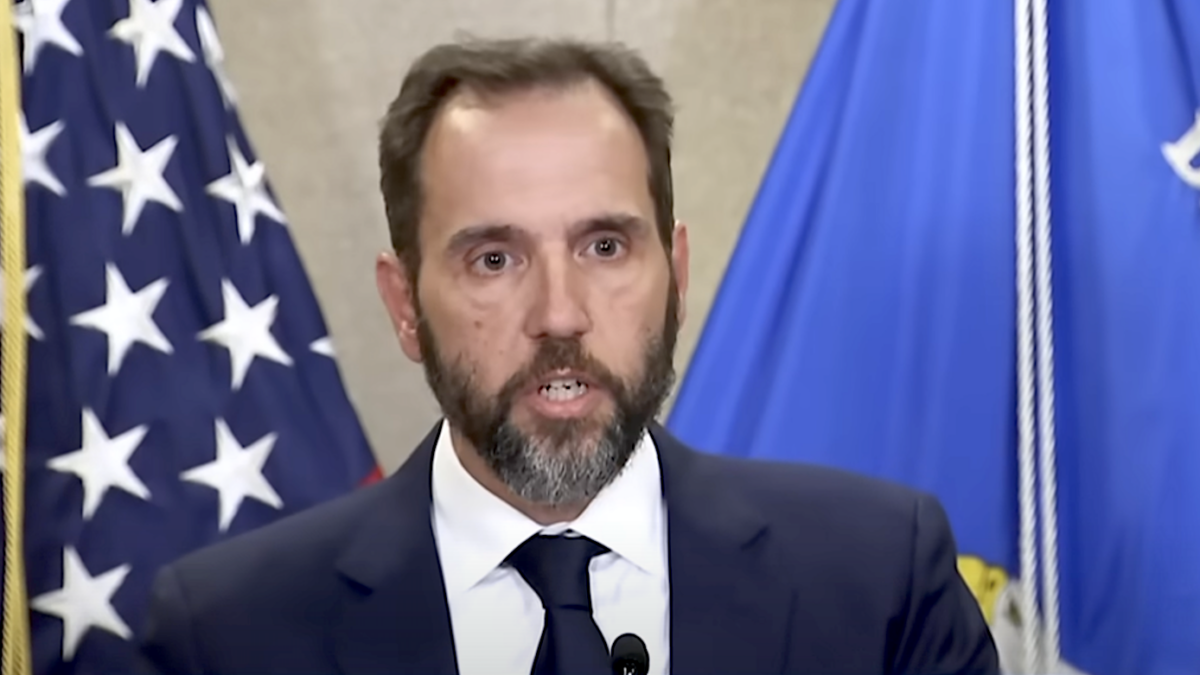






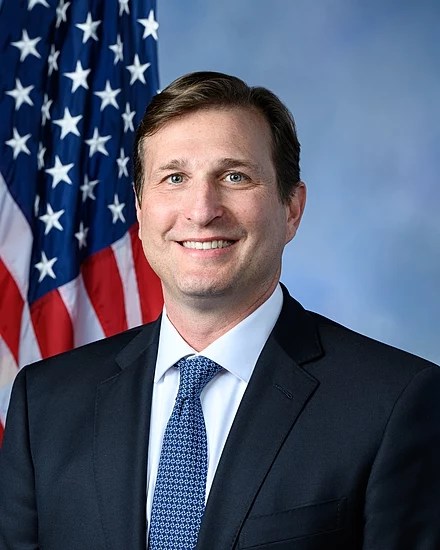


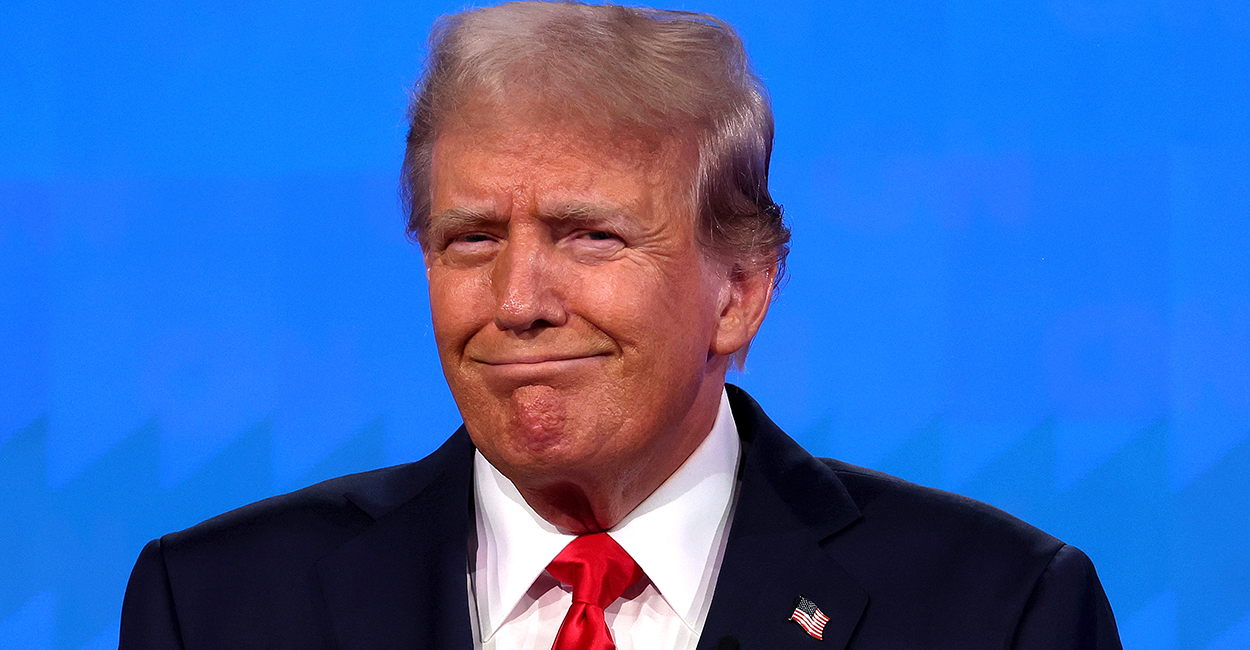






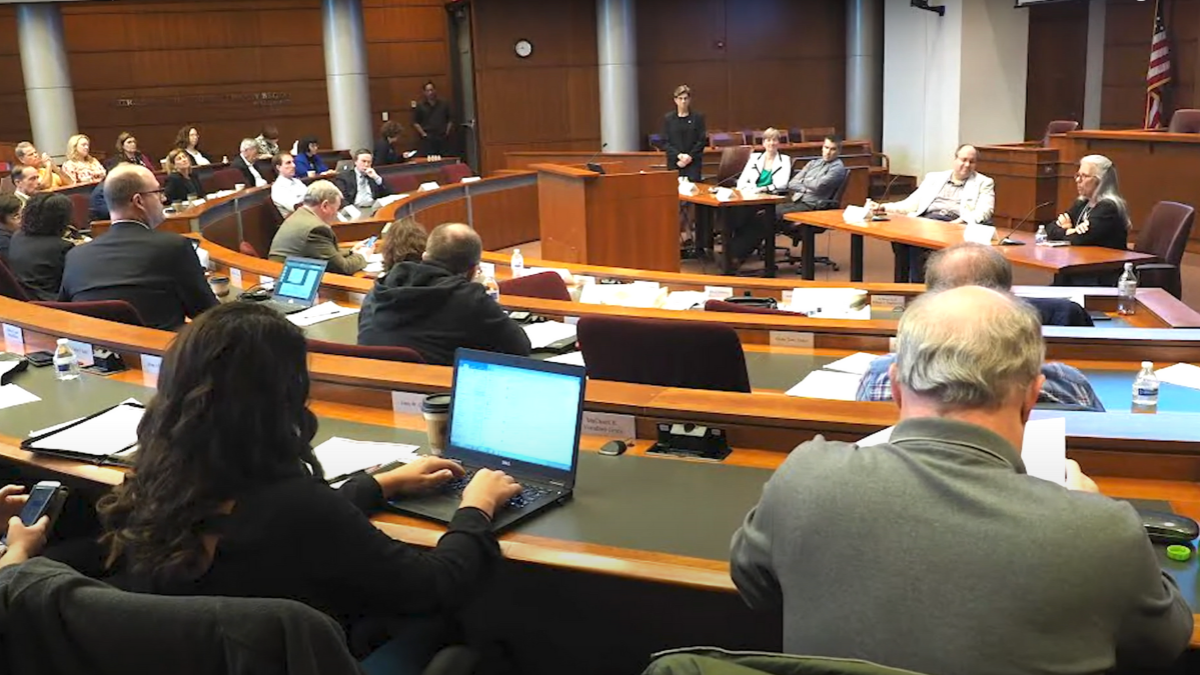


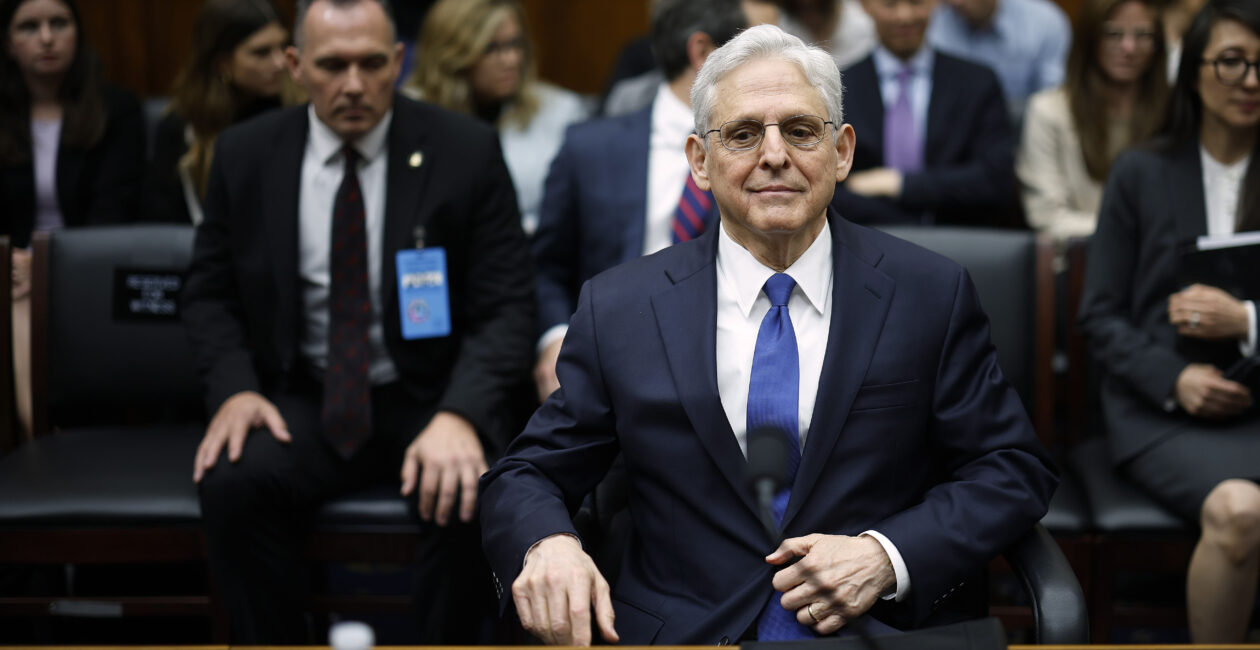


 What Did You Say?
You must be logged in to post a comment.