Perspectives; Thoughts; Comments; Opinions; Discussions

Posts tagged ‘Judiciary Committee’

Why CISA’s Censorship and Election Interference Work Is The ‘Most Insidious Attack on American Democracy’


BY: M.D. KITTLE | MARCH 05, 2024

Read more at https://thefederalist.com/2024/03/05/why-cisas-censorship-and-election-interference-work-is-the-most-insidious-attack-on-american-democracy/

Cyber security illustration of lock on grid as shadowy characters pass.

Author M.D. Kittle profile

M.D. KITTLE

MORE ARTICLES

West Virginia Secretary of State Mac Warner last month eviscerated the Big Brother censorship operation known as the Cybersecurity and Infrastructure Security Agency (CISA).

“When we have our own federal agencies lying to the American people, that’s the most insidious thing that we can do in elections,” the election integrity champion told officials from the FBI and CISA on a panel at the winter meeting of the National Association of Secretaries of State (NASS) in Washington, D.C., according to Wired’s Eric Geller. While Geller did his best to defend the federal agency — under the suggestive headline, “How a Right-Wing Controversy Could Sabotage US Election Security” — its history of censorship and election interference validate Warner’s concern.

The agency’s work, particularly the extracurricular business CISA has conducted in recent years, has been rightly criticized for its massive overreach. A report released last fall by the House Judiciary Committee and the Select Subcommittee on the Weaponization of the Federal Government details just how CISA “Colluded With Big Tech And ‘Disinformation’ Partners To Censor Americans.”

“Although the investigation is ongoing, information obtained to date has revealed that the Cybersecurity and Infrastructure Security Agency (CISA)—an upstart agency within the Department of Homeland Security (DHS)—has facilitated the censorship of Americans directly and through third-party intermediaries,” the congressional report states. 

The report goes on to assert that the shadowy agency has “metastasized into the nerve center of the federal government’s domestic surveillance and censorship operations on social media.” 

‘Platforms Have Got to Get More Comfortable With Gov’t’

Launched in 2018, CISA was supposed to be “an ancillary agency designed to protect ‘critical infrastructure’ and guard against cybersecurity threats,” the report notes. By 2020, the agency was “routinely” targeting what CISA officials claimed to be “disinformation” on social media. A year later, the agency had established a formal team devoted to what it decided was “misinformation,” “disinformation,” and “malinformation,” the latter of which CISA defines as “information based on fact, but used out of context to mislead, harm, or manipulate.” In other words, factual information that is problematic to the Biden regime. 

CISA’s parent agency DHS launched the much-ridiculed and ultimately disbanded “Disinformation Governance Board” in 2022, to streamline the work of colluding with social media providers to shut down speech the government didn’t like or found inconvenient. 

A federal lawsuit filed by then-Missouri Attorney General Eric Schmitt, now a U.S. senator, uncovered troubling conversations between the Biden administration and private companies about the pathways for removing information the government deemed false or misleading. A federal judge in a ruling last year barred the Biden administration from its censorship work, although the U.S. Supreme Court stayed the injunction when it took up the case.

Leaked documents obtained by The Intercept show that Microsoft executive and former DHS official Matt Masterson texted CISA director Jen Easterly in February 2022, saying “Platforms have got to get comfortable with gov’t. It’s really interesting how hesitant they remain.”

But it seems Big Tech was getting pretty comfortable with the Biden administration’s puppet enforcer. The Intercept report showed, among other alarming revelations, that Facebook operated a portal where Homeland Security could report allegations of “disinformation.”  CISA also has worked in concert with the Election Integrity Partnership and Virality Project, which is accused of conspiring with state, local, and federal government officials to trample the First Amendment rights of social media users, according to a class-action lawsuit

“But the EIP did not act alone. In fact, the EIP was created ‘in consultation’ with the Department of Homeland Security’s Cybersecurity and Infrastructure Security Agency, or CISA, with the idea for the EIP allegedly originating from CISA interns who were Stanford students,”  The Federalist’s Senior Legal Correspondent Margot Cleveland wrote in May. 

‘Only a Matter of Time’ 

Facing more public outrage over its unconstitutional actions, the CISA audaciously insisted it merely plays an “informational” role. 

As the congressional report notes: 

  • CISA is “working with federal partners to mature a whole-of-government approach” to curbing alleged misinformation and disinformation.
  • CISA considered the creation of an anti-misinformation “rapid response team” capable of physically deploying across the United States. 
  • CISA moved its censorship operation to a CISA-funded non-profit after CISA and the Biden Administration were sued in federal court, implicitly admitting that its censorship activities are unconstitutional.
  • CISA wanted to use the same CISA-funded non-profit as its mouthpiece to “avoid the appearance of government propaganda.”  

The agency’s advisory committee, according to the report, worried that it would be “only a matter of time before someone realizes we exist and starts asking about our work.” Incidentally, the advisory committee created a “Protecting Critical Infrastructure from Misinformation & Disinformation” subcommittee whose members included Vijaya Gadde — Twitter’s former chief legal officer who was “involved in censoring [the New York] Post’s Hunter Biden laptop” story. Gadde was also “behind the decision to permanently ban former President Trump from Twitter.”

‘Most Insidious Attack on American Democracy’

Geller’s Wired piece took aim at Warner, West Virginia’s outspoken secretary of state who is making a run for governor. At last month’s secretaries of state meeting, Warner “lambasted” CISA and FBI officials for “what he said was their agencies’ scheme to suppress the truth about US president Joe Biden’s son Hunter during the 2020 election and then cover their tracks,” Geller wrote, as if he is not privy to the same public documents and testimony confirming Warner’s assertions. In Geller’s account, the FBI was merely advising Twitter and Facebook to be on the lookout for Russian disinformation.

But how do you square the intelligence community’s “advisory” role after learning Joe Biden’s 2020 campaign prompted a former acting CIA director to “help Biden” by leading 50 colleagues to sign a letter spreading the false claim that damning emails from Hunter Biden’s laptop — published by the New York Post — were Russian disinformation? And all of that just weeks before the election.

Perhaps not surprisingly, the FBI and CISA officials did not respond to Warner’s charges and the meeting quickly went on, Geller reported before he quickly attempted to establish Warner as a dreaded “election denier,” noting that the secretary of state “attended an election-denier rally after Biden’s 2020 victory.” 

But Warner is no conspiracy theorist. The West Point graduate served nearly a quarter century in the U.S. Army and then worked with the State Department in Afghanistan, according to his bio. Warner knows about security threats. 

CISA’s activities are “the most insidious attack on American democracy that I know of in U.S. history,” Warner told The Federalist in an interview last week. He called the targeting and censoring of state-defined “disinformation” a “psychological operation against the American people” that is “as bad as it gets.” 

Warner said he has spoken to CISA officials multiple times but that they have yet to heed his calls for an after-action report on the 2020 election — to truly find out what went right and what went wrong. 

A Warning

It appears most state elections officials don’t want to deal with the actual threat of the Biden administration’s disinformation and political silencing campaign. 

“They know they will be lambasted by mainstream press,” Warner said. No one wants to be hit with the “election denier” label so effectively applied by the accomplice media. “It’s not easy, not politically expedient for them.”

Warner is one of the few speaking out against CISA and pulling away from involvement with the agency. But Geller worries Warner’s conservative colleagues will join him in breaking ties with CISA, as conservatives in Congress work to cut the budget of the abusive agency.  

“It remains unclear how many of Warner’s colleagues agree with him. But when WIRED surveyed the other 23 Republican secretaries who oversee elections in their states, several of them said they would continue working with CISA,” Geller wrote. 

“But others who praised CISA’s support also sounded notes of caution,” he added. 

They need only look at CISA’s record and its rhetoric in the agency’s brief existence to know that Warner’s warnings aren’t merely the stuff of a “right-wing controversy.” 

“One could argue we’re in the business of critical infrastructure, and the most critical infrastructure is our cognitive infrastructure, so building that resilience to misinformation and disinformation, I think, is incredibly important,” CISA director Jen Easterly said at 2021’s RE:WIRED conference.

Apparently running roughshod over the First Amendment isn’t warning enough. 


Matt Kittle is a senior elections correspondent for The Federalist. An award-winning investigative reporter and 30-year veteran of print, broadcast, and online journalism, Kittle previously served as the executive director of Empower Wisconsin.

‘Smoking-gun documents’ prove Facebook censored Americans on behalf of White House, Jim Jordan says


Jordan shared documents that ‘prove’ Facebook changed content after ‘unconstitutional pressure’ from White House

Brian Flood

By Brian Flood | Fox News | Published July 27, 2023 2:28pm EDT

Read more at https://www.foxnews.com/media/smoking-gun-documents-prove-facebook-censored-americans-behalf-white-house-jim-jordan-says

Rep. Jim Jordan, R-Ohio, on Thursday shared what he called “smoking-gun documents” proving Facebook censored Americans on behalf of the Biden administration in a lengthy social media thread.

Jordan wrote the all-caps message, “THE FACEBOOK FILES, PART 1: SMOKING-GUN DOCS PROVE FACEBOOK CENSORED AMERICANS BECAUSE OF BIDEN WHITE HOUSE PRESSURE,” before diving into the lengthy thread reminiscent of the so-called “Twitter Files” used earlier this year to disclose once-internal documents given to journalists once Elon Musk bought the social media platform. 

“Never-before-released internal documents subpoenaed by the Judiciary Committee PROVE that Facebook and Instagram censored posts and changed their content moderation policies because of unconstitutional pressure from the Biden White House,” Jordan wrote on X, formerly known as Twitter. 

“During the first half of 2021, social media companies like Facebook faced tremendous pressure from the Biden White House—both publicly and privately—to crack down on alleged ‘misinformation,’” he continued. “In April 2021, a Facebook employee circulated an email for Facebook CEO Mark Zuckerberg and COO Sheryl Sandberg, writing: ‘We are facing continued pressure from external stakeholders, including the [Biden] White House’ to remove posts.”

‘FACEBOOK RECEIPTS’ PROJECT AIMS TO REVEAL META’S ABILITY TO INFLUENCE CONGRESS THROUGH HIGH-POWERED LOBBYISTS

Jim Jordan questions FBI Director Wray

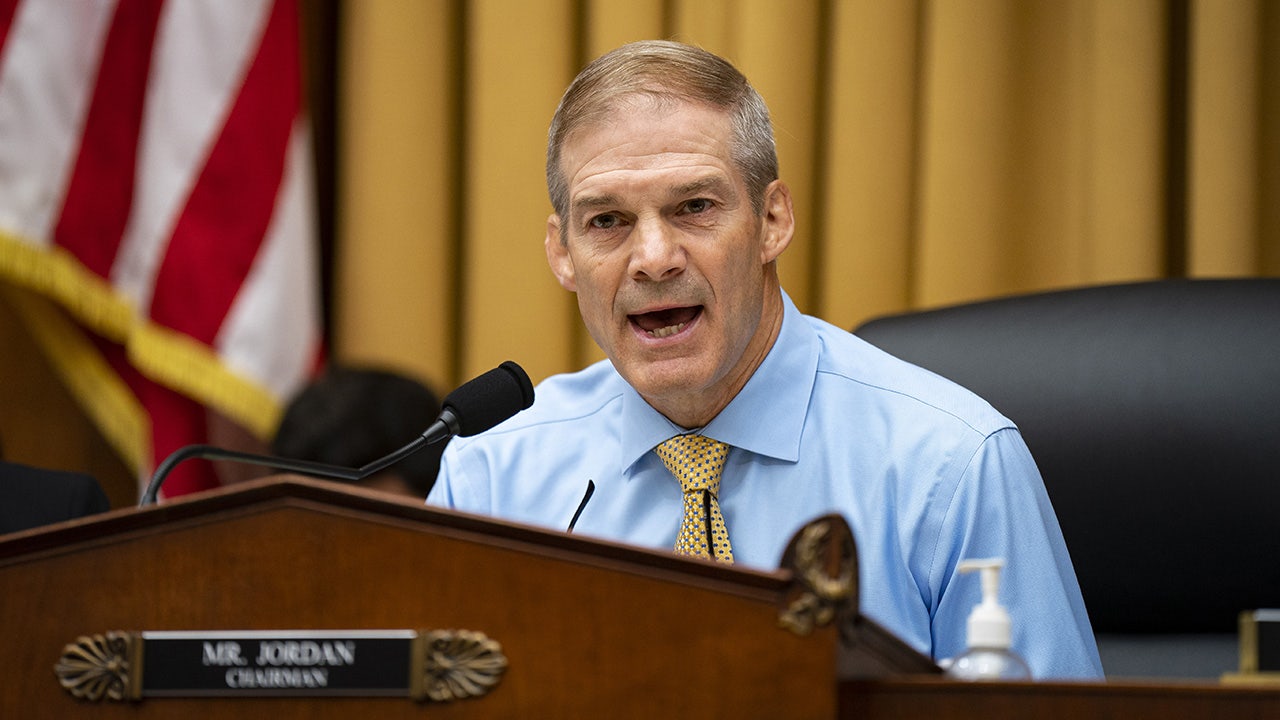
Rep. Jim Jordan, chairman of the House Judiciary Committee, shared what he calls “smoking-gun documents” proving Facebook censored Americans on behalf of the White House.  (Al Drago/Bloomberg via Getty Images)

Jordan then wrote that an April 2021 email revealed that a Facebook executive informed his team that a Biden administration senior advisor was “outraged” that Facebook did not remove a particular post. The post, according to Jordan, was a meme of actor Leonardo DiCaprio pointing at a TV with the caption, “10 years from now you will be watching TV and hear… Did you or a loved one take the COVID vaccine? You may be entitled to…”

AOC SAYS FACEBOOK ‘SHOULD BE BROKEN UP,’ ‘SUBJECT TO ANTITRUST ACTIVITY’

Facebook noted that “removing content like that would represent a significant incursion into traditional boundaries of free expression in the US,” but Andy Slavitt, the Biden senior advisor who was worked up over the meme, “disregarded the warning and the First Amendment,” according to Jordan. 

“What happened next? Facebook panicked,” Jordan wrote. “In another April 2021 email, Brian Rice, Facebook’s VP of public policy, raised the concern that Slavitt’s challenge felt ‘very much like a crossroads for us with the [Biden] White House in these early days.’”

Jordan noted that “Facebook wanted to repair its relationship with the White House to avoid adverse action,” and provided a document in which someone who appears to be a Facebook staffer wrote, “Given what is at stake here, it would also be a good idea if we could regroup and take stock of where we are in our relations with the [White House], and our internal methods too,” in an internal document. 

“This wasn’t the first time that the Biden White House was angry that Facebook didn’t censor more,” Jordan wrote before listing other examples. 

“In July 2021, President Biden publicly denounced Facebook and other social media platforms, claiming they were ‘killing people’ by not censoring alleged ‘misinformation,’” Jordan wrote. “On August 2, 2021, Facebook admitted it was going to change its policies because of pressure from the Biden White House.”

BIG TECH BACKLASH: APPLE, GOOGLE, FACEBOOK, AMAZON CEOS GRILLED ON CAPITOL HILL

A Facebook logo on a phone

Facebook is accused of censoring Americans on behalf of the White House.  ((Photo Illustration by Thiago Prudencio/SOPA Images/LightRocket via Getty Images))

Jordan then wrote that “it wasn’t just the White House,” because “Facebook also changed its policies in direct response to pressure from Biden’s Surgeon General, censoring members of the ‘disinformation dozen'” for sharing claims about COVID. 

“These documents, AND OTHERS that were just produced to the Committee, prove that the Biden Admin abused its powers to coerce Facebook into censoring Americans, preventing free and open discourse on issues of critical public importance,” Jordan wrote. 

TOP BIDEN OFFICIAL RAISES EYEBROWS BY ‘LOBBYING’ FORMER AGENCY AFTER LEAVING GOVERNMENT, WATCHDOG SAYS

“Only after the Committee announced its intention to hold Mark Zuckerberg in contempt did Facebook produce ANY internal documents to the Committee, including these documents, which PROVE that government pressure was directly responsible for censorship on Facebook,” he continued. “Based on Facebook’s newfound commitment to fully cooperate with the Committee’s investigation, the Committee has decided to hold contempt in abeyance. For now. To be clear, contempt is still on the table and WILL be used if Facebook fails to cooperate in FULL.”

Jordan ended his thread with, “To be continued…”

Facebook and the White House did not immediately respond to a request for comment. 

Video

For more Culture, Media, Education, Opinion, and channel coverage, visit foxnews.com/media

Brian Flood is a media reporter for Fox News Digital. Story tips can be sent to brian.flood@fox.com and on Twitter: @briansflood. 

Biden Admin Grew Censorship Complex To Silence True But Inconvenient ‘Malinformation,’ House Committee Shows


BY: TRISTAN JUSTICE | JUNE 27, 2023

Read more at https://thefederalist.com/2023/06/27/biden-admin-grew-censorship-complex-to-silence-true-but-inconvenient-malinformation-weaponization-committee-shows/

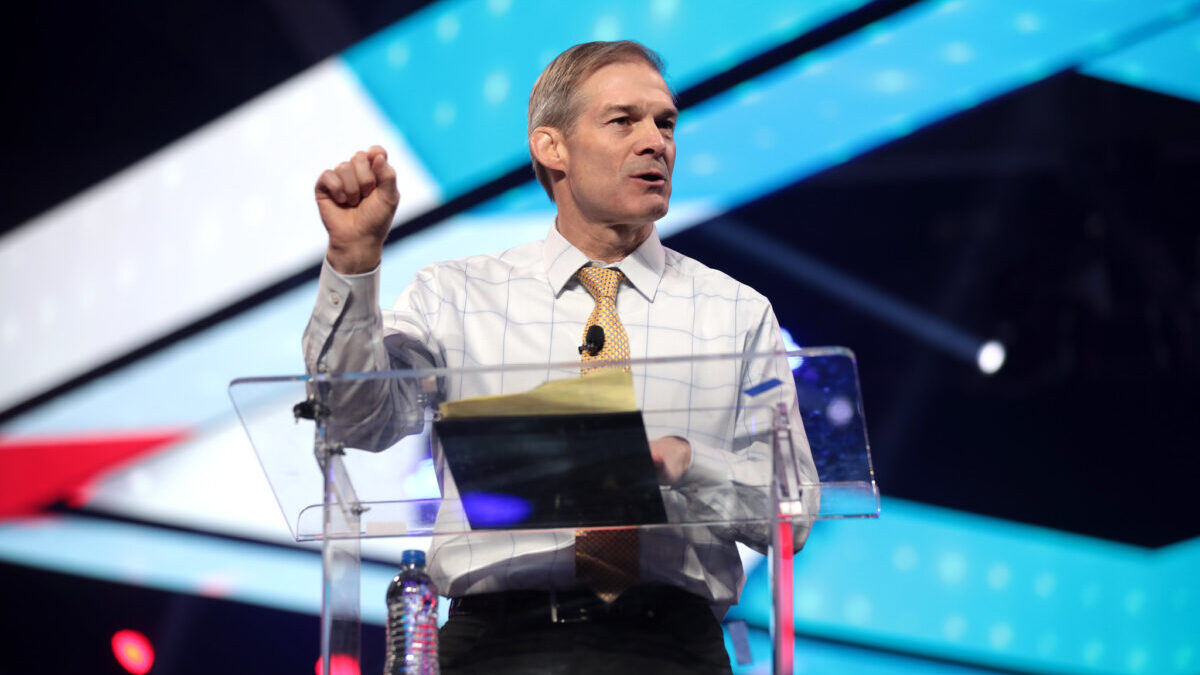
Jim Jordan

Author Tristan Justice profile

TRISTAN JUSTICE

VISIT ON TWITTER@JUSTICETRISTAN

MORE ARTICLES

The Biden administration’s war on so-called disinformation included a federal initiative to censor “malinformation,” information that is true but inconvenient to the Democrat ruling regime.

On Monday, lawmakers on the House Select Subcommittee on the Weaponization of the Federal Government published an interim report on the Department of Homeland Security’s “disinformation” programs within the Cybersecurity and Infrastructure Security Agency (CISA). According to the report, CISA “metastasized into the nerve center of the federal government’s domestic surveillance and censorship operations on social media,” and has steadily expanded the scope of its censorship since 2018.

“In 2022 and 2023, in response to growing public and private criticism of CISA’s unconstitutional behavior, CISA attempted to camouflage its activities, duplicitously claiming it serves a purely ‘informational’ role,” the report reads.

CISA ultimately outsourced its dystopian censorship regime to third-party nonprofits and colluded with Big Tech companies to suppress information deemed incorrect or harmful to regime narratives. CISA, lawmakers wrote, “exploited its connections with Big Tech and government-funded non-profits to censor, by proxy, in order to circumvent the First Amendment’s prohibition against government-induced censorship.”

“This included the creation of reporting ‘portals’ which funneled ‘misinformation’ reports directly to social media platforms,” the report says.

The government’s disinformation efforts extended to the censorship of “malinformation,” defined by CISA as “based on fact, but used out of context to mislead, harm, or manipulate.”

“In other words, malinformation is factual information that is objectionable not because it is false or untruthful, but because it is provided without adequate ‘context’ — context as determined by the government,” lawmakers explained.

According to their report, CISA tried to “disguise the true nature” of the agency’s work by “removing references to surveillance and censorship” from its website. President Joe Biden’s Department of Justice also interfered with CISA public records requests to stonewall congressional oversight. The select subcommittee is still waiting on CISA’s compliance with subpoenas.

The select subcommittee held a hearing on the federal government’s disinformation efforts in March featuring two journalists behind the “Twitter Files,” Substack reporters Matt Taibbi and Michael Shellenberger.

“American taxpayers are unwittingly financing the growth and power of a censorship industrial complex run by America’s scientific and technological elite, which endangers our liberties and democracy,” Shellenberger told lawmakers. “The censorship industrial complex combines established methods of psychological manipulation, some developed by the U.S. military during the global war on terror with highly sophisticated tools from computer science.”

“We learned Twitter, Facebook, Google, and other companies developed a formal system for taking in moderation requests from every corner of government, from the FBI, the DHS, the HHS, DoD, the Global Engagement Center at State, even the CIA,” Taibbi added. “A focus of this fast-growing network … is making lists of people whose opinions, beliefs, associations or sympathies are deemed misinformation, disinformation, or malinformation. That last term is just a euphemism for ‘true but inconvenient.’”

MALINFORMATION = Information that’s TRUE, but INCOVENIENT.

Lawmakers made clear in their report Monday that the committee “will continue to investigate CISA’s and other Executive Branch agencies’ entanglement with social media platforms.”

The Department of Homeland Security isn’t the only agency in the Biden administration engaged in the censorship industry. The Biden State Department funded a “Disinformation Index” that blacklisted conservative websites from major advertisers.


Tristan Justice is the western correspondent for The Federalist and the author of Social Justice Redux, a conservative newsletter on culture, health, and wellness. He has also written for The Washington Examiner and The Daily Signal. His work has also been featured in Real Clear Politics and Fox News. Tristan graduated from George Washington University where he majored in political science and minored in journalism. Follow him on Twitter at @JusticeTristan or contact him at Tristan@thefederalist.com. Sign up for Tristan’s email newsletter here.

Feinstein, Fetterman, and Biden Illustrate Democrats’ Double Standard on Mental Acuity


BY: JONATHAN S. TOBIN | APRIL 21, 2023

Read more at https://thefederalist.com/2023/04/21/feinstein-fetterman-and-biden-show-democrats-double-standard-on-mental-acuity/

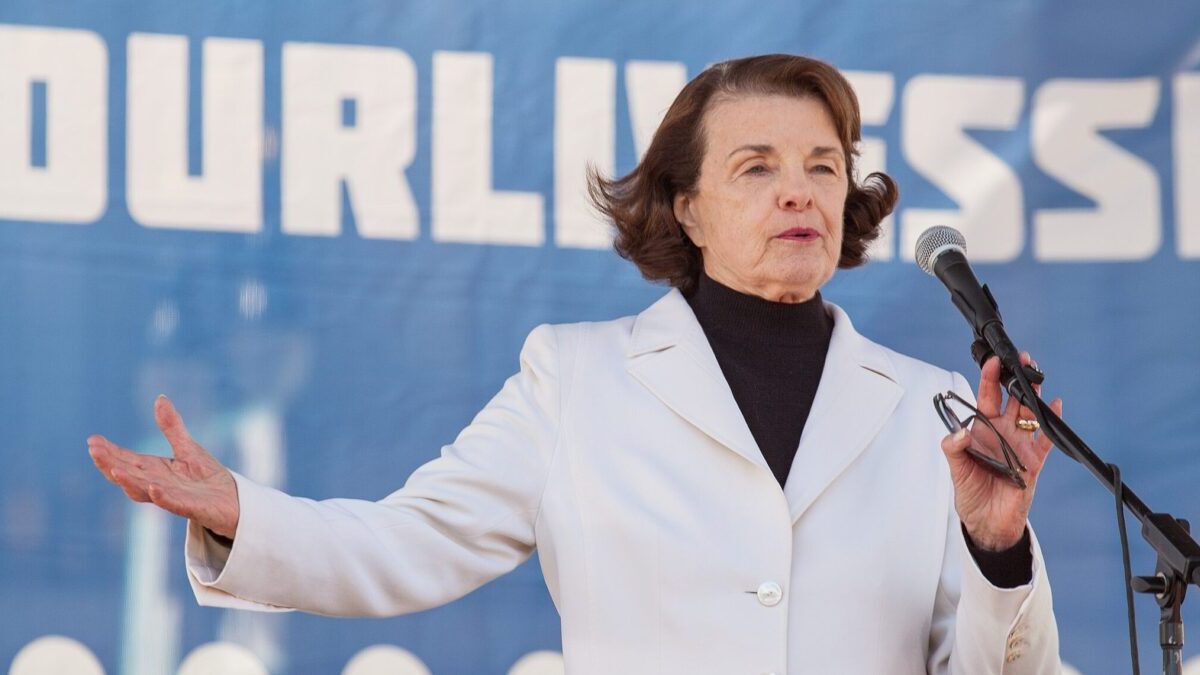
Sen. Dianne Feinstein
The push to force the California senator’s resignation is hypocritical and raises questions about what will happen in a Biden second term.

Author Jonathan S. Tobin profile

JONATHAN S. TOBIN

VISIT ON TWITTER@JONATHANS_TOBIN

MORE ARTICLES

This week, Sen. John Fetterman, D-Pa., went back to work after spending several weeks away from Congress due to being hospitalized for severe depression. But while Democrats, who were sorely pressed to maintain their narrow majority in his absence, celebrated his return, C-Span video of him chairing a Senate subcommittee provided sobering evidence of the recovering stroke victim’s limitations. Much like his disastrous election debate last October, at the hearing, Fetterman’s halting speech, barely understandable comments, and inability to communicate without electronic aid illustrated his incapacity. 

But while Democrats are quick to slam as bigots anyone who had the temerity to notice Fetterman’s problems, they are not feeling quite so generous about another member of their Senate caucus. The double standard creates an ominous precedent that ought to hang over the 2024 presidential election.

While they’ve been circling the wagons around Fetterman, Democrats have been pressuring Sen. Dianne Feinstein, D-Calif., to resign due to the perception that she lacks the physical energy or the mental acuity to do her job. But unfortunately for Senate Majority Leader Chuck Schumer, D-N.Y., and the California Democrats who want to replace her, the ailing 89-year-old has refused to step down, though she has already announced she won’t run for re-election next year.

Feinstein vs. Fetterman

Feinstein was hospitalized for shingles in February and has remained absent since then. With no date set for her return, the vacancy on the Judiciary Committee, where her absence leaves the Democrats without a majority, has created a serious problem for the efforts of the Biden administration and Schumer to confirm federal judges. The duel between the ailing Feinstein and her party has, at least for the moment, benefited Republicans. But the implications of the controversy go beyond its impact on her desire to stay on until her term expires in January 2025.

There are currently four senators who are over 80, including Minority Leader Mitch McConnell, R-Ky., who returned this week from an extended medical absence after a fall. Thirty senators are in their 70s. Whatever one thinks about the question of elderly senators serving, the campaign to push Feinstein out of her seat sets an interesting precedent.

Democrats have reacted to questions posed by Fetterman’s obvious limitations as a senator with both denial and an attempt to shame skeptics with pious rhetoric about ableism. They have attempted to depict him as a poster child for tolerance for those who suffer from mental health issues.

But they are indifferent to criticisms of their effort to push Feinstein out of her seat on the grounds of ageism, which have just as much validity as their defense of Fetterman.

Feinstein vs. Biden

Even worse, their belief that Feinstein’s diminishing capacities render her ineligible for a seat in the Senate stands in even starker contrast to the position President Joe Biden’s mental state has placed Democrats in.

Ever since Biden became their presumptive presidential nominee in March of 2020, ignoring his decline has become a political necessity for Democrats, and even more so with each passing month. At the very least, his never-ending stream of gaffes, frequent confusion in public, and erratic behavior raises questions about his mental acuity. Yet the corporate media treat questions about his health as off limits and proof of the bad morals of conservatives.

Still, as was the case with Feinstein until recently, the 80-year-old Biden remains fit enough to silence inquiries from Democrats. As president, it’s far easier to shield him from public scrutiny. More importantly, most in the party are coming to terms with the fact that they may be stuck with him for the 2024 election.

No matter his mental state, having spent his entire life working to become president, Biden clearly has no intention of giving up after only one term. He will have to be dragged from the White House kicking and screaming. The obvious alternatives — Vice President Kamala Harris or California Gov. Gavin Newsom — lack much appeal for the party’s grassroots or its donor class. So, many on the left are convinced Biden may be their best bet for victory next year, especially if the election is a rematch of the 2020 race against former President Donald Trump.

Double Standard

Yet whether you think Democrats’ decision to get rid of someone who can’t do her job is sensible or insensitive and nasty, it does raise questions about the same standard not being applied to Fetterman and most especially to Biden.

Feinstein has met her Democratic colleagues halfway by asking to be replaced on the Judiciary Committee so they can continue confirming leftist judges at an even faster pace than McConnell confirmed conservatives during the Trump administration. But replacing her on the committee requires GOP acquiescence and, for understandable reasons, Republicans are only too happy to let the current stalemate created by her absence continue. That’s led to mounting anger from Democrats, who think Feinstein is being selfish.

The empty seat on the Judiciary Committee has turned the issue into a crisis for Democrats, but many of them have been pushing for her resignation for years. Feinstein’s voting record can’t be criticized by the left, but she has at times engaged in collegial or commonsensical behavior that they regard as insufficiently woke.

Feinstein Too Reasonable for Some

In 2019, she enraged global warming extremists when she brusquely lectured a group of visiting schoolchildren about the importance of compromise when they began to virtue signal to her about not supporting the most alarmist environmental measures.

Just as bad from their point of view were allegations that she behaved decently toward conservative judicial nominees such as Justice Amy Coney Barrett, which some characterized as treating her with “kid gloves.” That’s despite the fact that Feinstein had intolerantly targeted her for her Catholic faith, saying that “the dogma lives loudly within you.”

That goes a long way toward explaining why Feinstein’s incapacity has been an issue for left-wingers who have no problem tolerating a leftist like Fetterman, who, leaving aside his hospitalization for depression, also still needs special equipment to be able to understand his colleagues and who appears to converse only with difficulty.

But there’s more at stake in this discussion than the Democrats’ hypocrisy on the question of fitness for office.

What if Biden’s Health Can’t Be Hid?

Democrats appear to be serious about asking the American people to re-elect an already diminished man who will be 82 in January 2025 and presumably serve until he’s 86. So, the idea that the questions they are currently raising about Feinstein can’t be raised about Biden ought to be a bridge too far even for inveterate Trump haters.

Just as important, they need to ask themselves in the coming year what they will do if Biden’s health continues to decline and ultimately puts him in the same position as Feinstein, where the problems can no longer be concealed. By declaring that questions about Biden’s mental acuity are off-limits or in bad taste, they are essentially setting up a situation where Harris being forced to step in and govern is a realistic possibility sometime in the next five years.

The only realistic alternative to simply hoping and praying Biden will continue to decline at a slow enough rate that his problems can continue to be concealed or smoothed over without political consequences is to begin asking the same hard questions about his health that they are currently posing to Feinstein. It remains to be seen whether anyone of consequence in the party has the guts or the wisdom to point this out before it is too late.


Jonathan S. Tobin is a senior contributor to The Federalist, editor in chief of JNS.org, and a columnist for Newsweek. Follow him on Twitter at @jonathans_tobin.

Judge Nukes Alvin Bragg’s Request To Quash Subpoena Because ‘No One Is Above The Law’


BY: MARGOT CLEVELAND | APRIL 20, 2023

Read more at https://thefederalist.com/2023/04/20/judge-nukes-alvin-braggs-request-to-quash-subpoena-because-no-one-is-above-the-law/

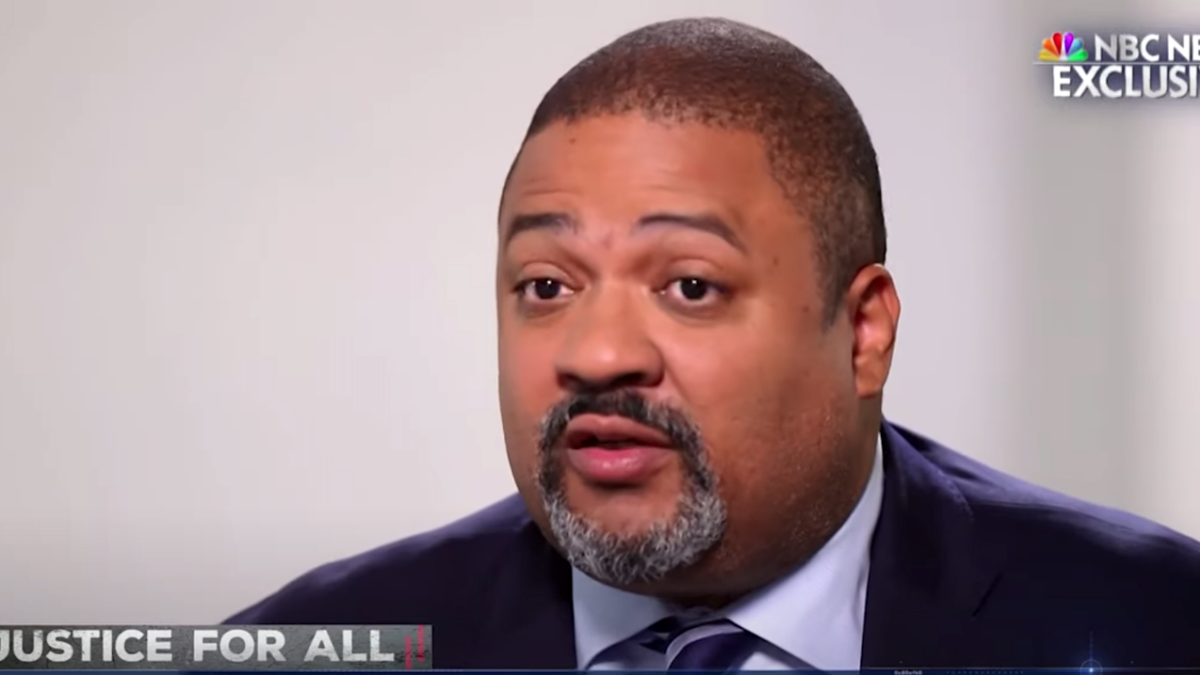
Alvin Bragg
‘By bringing this action, Bragg is engaging in precisely the type of political theater he claims to fear,’ the court wrote.

Author Margot Cleveland profile

MARGOT CLEVELAND

VISIT ON TWITTER@PROFMJCLEVELAND

MORE ARTICLES

A federal judge on Wednesday denied Manhattan District Attorney Alvin Bragg’s request for a court order to prevent the House Judiciary Committee from questioning a former prosecutor involved in the investigation of Donald Trump. Bragg, however, didn’t just lose on the merits. The court’s 25-page order eviscerated the Manhattan D.A. — and his former prosecutor, Mark Pomerantz.

Two weeks ago, Rep. Jim Jordan, R-Ohio, issued a subpoena directing Pomerantz to appear before the House Judiciary Committee at 10:00 on April 20, 2023. Pomerantz was previously a special assistant district attorney before abruptly resigning because Bragg had allegedly decided not to seek criminal charges against Trump.

Bragg responded to news of the subpoena by directing Pomerantz not to provide any information about his prior work to the Judiciary Committee. He also filed a complaint in federal court against Jordan and the committee, seeking an order declaring the Pomerantz subpoena invalid. Bragg simultaneously sought entry of a temporary restraining order to freeze the subpoena pending resolution of his lawsuit.

On Wednesday, federal Judge Mary Kay Vyskocil denied Bragg’s request to stop the Judiciary Committee from questioning Pomerantz. “Mr. Pomerantz must appear for the congressional deposition. No one is above the law,” Vyskocil wrote in a transparent swipe at the New York prosecutor who hung his pathetic indictment on that platitude. 

While Bragg posited that the Judiciary Committee lacked a valid legislative purpose to issue the subpoena, Vyskocil rejected that argument. Congressional committees have the constitutional authority to conduct investigations and issue subpoenas, the court explained, and the court’s role is “strictly limited to determining only whether the subpoena is ‘plainly incompetent or irrelevant’” to any legitimate committee purpose. Because Jordan and the committee identified several valid legislative purposes underlying the subpoena, the court held Bragg could not quash it.

The court also held that the “speech or debate clause,” which provides that “for any Speech or Debate in either House,” Senators and Representatives “shall not be questioned in any other Place,” likely would prevent Bragg from suing Jordan and the committee.

Vyskocil also rejected Bragg’s argument that requiring Pomerantz to submit to questioning would infringe on the attorney-client and work-product privilege the Manhattan D.A.’s office held regarding communications Pomerantz was privy to. Here, the court stressed that the indictment of Trump occurred long after Pomerantz had resigned and that any privilege that may have existed was likely waived by Pomerantz publishing his book, “People vs. Donald Trump: An Inside Account.”

“As its subtitle indicates, the book recounts Pomerantz’s insider insights, mental impressions, and his front row seat to the investigation and deliberative process leading up to” the Trump indictment, the court wrote. Yet Bragg did next to nothing to stop the publication of the book. Under these circumstances, “Bragg cannot seriously claim that any information already published in Pomerantz’s book and discussed on prime-time television in front of millions of people is protected from disclosure,” the court concluded.

It Gets Better

The court’s conclusion, however, wasn’t the highlight of the decision. Rather it was Vyskocil’s summary of how the country arrived at a place where it sees a state prosecutor filing a complaint in federal court against the House Judiciary Committee that includes 35 pages and a vast majority of exhibits that “are nothing short of a public relations tirade against former President and current presidential candidate Donald Trump.”

That descriptor alone should give pause to anyone still believing Bragg’s indictment of Trump was righteous. But the opinion highlighted many more facts that confirm the targeting of Trump was a witch hunt.

For instance, it included many excerpts from Pomerantz’s book showing the criminal charges against Trump were ridiculous. So-called “hush money” payments to Stormy Daniels “did not amount to much in legal terms,” Pomerantz wrote. “Paying hush money is not a crime under New York State law, even if the payment was made to help an electoral candidate.” 

The book excerpts quoted by the court included numerous additional problems Pomerantz saw with the legal theory Bragg eventually relied upon in charging Trump. Trump and his legal team have been highlighting these same many flaws. And now a federal judge just told the country that the “very experienced, sophisticated, and extremely capable attorney” Pomerantz — who had wanted to charge Trump — agreed with all (or most) of Trump’s legal arguments. 

The court also noted that Pomerantz was a “pro bono” attorney for the Manhattan D.A.’s office. This should strike the public as strange, especially in light of the well-heeled credentials the opinion highlighted: his clerkship at the Supreme Court, his work as a federal prosecutor, and his many years as a criminal defense attorney and partner at the prominent New York City law firm of Paul, Weiss, Rifkind, Wharton & Garrison.

While the court omitted any mention of Paul, Weiss’ connections to the Biden administration and Democrats, referring to Pomerantz’s “pro bono” status should raise some red flags.

If not, Vyskocil was more explicit elsewhere in the opinion, such as when she said she was “unmoved by Bragg’s purported concern at the prospect of ‘inject[ing] partisan passions into a forum where they do not belong.’”

“By bringing this action, Bragg is engaging in precisely the type of political theater he claims to fear,” the court wrote.

Beyond chastising Bragg for playing politics, Vyskocil rebuked him for his legal arguments, most devastatingly when Bragg argued the court should quash the subpoena of Pomerantz to ensure the grand jury’s secrecy.

“The secrecy of the grand jury proceedings in the pending criminal case was compromised before the indictment was even announced,” Vyskocil countered, citing CNN’s coverage of the charges against Trump based on leaks. 

The court also unleashed a few zingers on Pomerantz. While Pomerantz complains he is in a “legally untenable position” because he will be forced to make a choice between “legal or ethical consequences” or “potential criminal and disciplinary exposure,” the court “notes that Pomerantz is in this situation because he decided to inject himself into the public debate by authoring a book that he has described as ‘appropriate and in the public interest.’” 

And in response to Pomerantz making “it abundantly clear that he will seek to comply with Bragg’s instructions” not to respond to the subpoena, the court remarked that Pomerantz “claimed deference to the District Attorney’s command is a surprising about-face, particularly given that Pomerantz previously declined the District Attorney’s request to review his book manuscript before publication.”

What Next?

Those already well-versed in the outrageousness of the indictment will take delight in the court’s ripostes. The question remains, however, whether the opinion’s detailed summary of the flaws in Bragg’s legal theory — as identified by Pomerantz himself — will convince the remainder of the country that the indictment is a sham. Or will they discard Vyskocil’s decision as a Trump-appointee diatribe?

Maybe it will take the Judiciary Committee questioning Pomerantz on those precise weaknesses for the unconvinced to realize that once again Trump is right — it is a witch hunt. 

We should know soon whether the questioning will go forward and whether Pomerantz will respond to the questions or follow Bragg’s directive. But if the latter, both Bragg and Pomerantz will find themselves back in front of Vyskocil because the Trump appointee wisely ruled that any future disputes related to the Pomerantz subpoena or other subpoenas related to the Judiciary Committee’s inquiry must be filed in the same case mater. 

Vyskocil’s devastating conclusion likely caused Bragg as much heartache as her denial of his motion to declare the subpoena of Pomerantz invalid. For Bragg knows that absent reversal by the Second Circuit, the same outcome awaits further challenges of the House Judiciary Committee’s subpoena power.


Margot Cleveland is The Federalist’s senior legal correspondent. She is also a contributor to National Review Online, the Washington Examiner, Aleteia, and Townhall.com, and has been published in the Wall Street Journal and USA Today. Cleveland is a lawyer and a graduate of the Notre Dame Law School, where she earned the Hoynes Prize—the law school’s highest honor. She later served for nearly 25 years as a permanent law clerk for a federal appellate judge on the Seventh Circuit Court of Appeals. Cleveland is a former full-time university faculty member and now teaches as an adjunct from time to time. As a stay-at-home homeschooling mom of a young son with cystic fibrosis, Cleveland frequently writes on cultural issues related to parenting and special-needs children. Cleveland is on Twitter at @ProfMJCleveland. The views expressed here are those of Cleveland in her private capacity.

‘Not If the Woman Holds It’: Chip Roy Responds to Nadler’s Claims About Domestic Violence and Guns


By SARAH WEAVER, STAFF WRITER | July 21, 2022

Read more at https://www.conservativereview.com/not-if-the-woman-holds-it-chip-roy-responds-to-nadlers-claims-about-domestic-violence-and-guns-2657707363.html/

Screen Shot 2022-07-21 at 9.27.35 AM
Screenshot/YouTube/PBSNewsHour

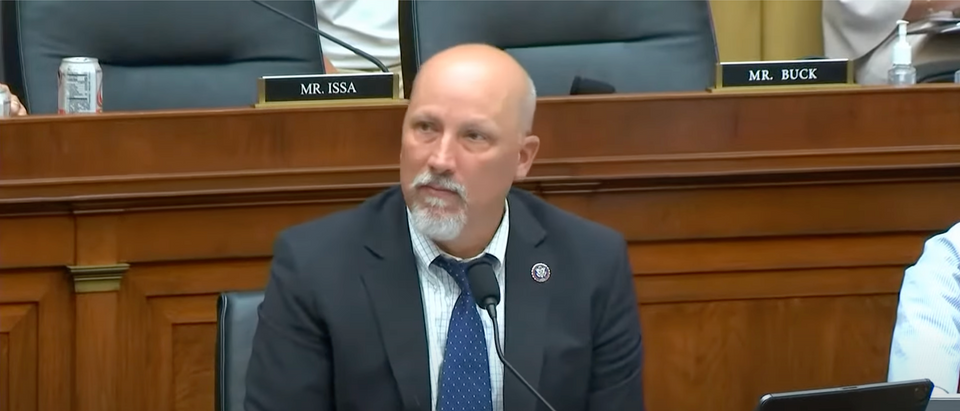
Republican Texas Rep. Chip Roy responded to Democratic New York Rep. Jerry Nadler’s claim Wednesday that the presence of a gun in a house would increase the likelihood of women being killed in domestic violence situations.

“The presence of a gun in domestic violence situations increases the risk of homicide by women by 500%,” Nadler, chairman of the House Judiciary Committee, said in a hearing Wednesday. “So, pass this amendment, and you’ll see an increase in domestic — in homicides of women by 500%.”

“I would note that the chairman just said that the existence of a firearm — I think you might have said in the household, I’m not sure — increases the likelihood of violence by 500% or something of that nature,” Roy responded.

“And I’d say, well, not if the woman holds it.”

Trending videos

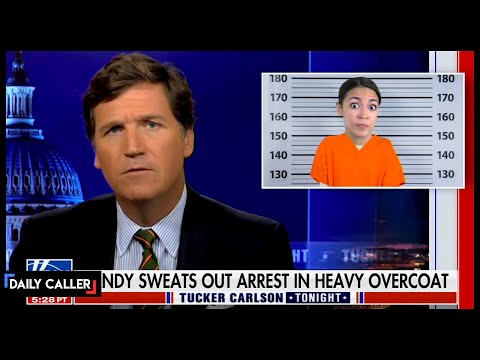
Tucker’s Reaction To AOC’s Fake Handcuff Fiasco!

Roy also said that Nadler’s position would result in banning all guns.

“If you’re saying firearms generally, then the next step for the chairman is to limit all firearms — which, let’s get to the heart of it, we know that that is where our colleagues wish to go,” Roy said. (RELATED: ‘That’s The Point’: Rep. Nadler Admits Bill Will Confiscate Guns In ‘Common Use’)

Two were debating H.R. 1808, also known as the “Assault Weapons Ban Act of 2021.”

“This bill makes it a crime to knowingly import, sell, manufacture, transfer, or possess a semiautomatic assault weapon (SAW) or large capacity ammunition feeding device (LCAFD),” the bill’s summary reads.

The committee approved the ban Wednesday, with every Republican on the committee voting against the legislation. The bill will advance to the House floor for a vote.

The bill was first introduced by Democratic Rhode Island Rep. David Cicilline in March 2021.

A Short History Of Democrats’ Vicious Tactics For Controlling The Judiciary


Reported by Frank Scaturro DECEMBER 4, 2020

As the courts have become hyper-politicized over the past few decades, the judicial nomination process has deteriorated. With this presidential term drawing to a close, we should note the new depths of obstruction that have become a part of the Senate Democrats’ playbook these past four years.

Origins of Obstruction

Matters were already bad when a Democratic Senate rejected Robert Bork for the Supreme Court in 1987 with such notorious vilification that “bork” was added to the dictionary as a verb denoting such unfair and harsh tactics. Four years later came personal vilification for Clarence Thomas before he squeaked by the Senate on a 52–48 vote.

Thomas nonetheless made it through a Democratic Senate that had not entirely shaken a long tradition of bipartisanship on judicial nominations. In fact, from the government’s establishment in 1789 through 2000, 97 percent of Senate-approved judges faced no recorded opposition, and 96 percent were confirmed by voice vote or unanimous consent as opposed to roll-call votes.

Recorded votes tended to be lopsided. When President Bill Clinton nominated Ruth Bader Ginsburg and Stephen Breyer to the Supreme Court, instead of Republicans retaliating for past treatment, the nominees were confirmed respectively by margins of 96–3 and 87–9. This was despite a number of known controversial positions Ginsburg had taken during her career that Republicans chose not to highlight.

During George W. Bush’s administration, Democrats engaged in wholesale filibusters of circuit court nominees, a tactic that resulted in the defeat of several. Previously, only one judicial nomination fell apart after coming up short on a vote on cloture — the procedure by which senators, with a supermajority vote, could end debate and force a confirmation vote. That was the fate of Justice Abe Fortas, whom Lyndon B. Johnson tried to elevate to chief justice in 1968.

Whether Fortas could garner the simple majority of senators required for confirmation was unclear. His unusual case included bipartisan opposition and ethical questions — he actually resigned from the Supreme Court the following year — and did not leave even the most strident opponents of Bork and Thomas with a sense that they had the filibuster in their procedural toolbox.

In 2005, early in Bush’s second term, Republican Senate Majority Leader Bill Frist proposed to change the supermajority requirement for cloture on nominations (then at 60 votes) to a simple majority, an idea known as the “nuclear option,” which would have effectively ended judicial filibusters. Democratic Minority Leader Harry Reid threatened to retaliate with an unprecedented level of obstructionism that would freeze most Senate business. This scenario did not play out after a compromise, engineered by the “Gang of 14,” derailed any change to cloture.

Eight years later, however, Reid was majority leader, and with the shoe on the other foot, he orchestrated by parliamentary maneuver the very rule change that had once evoked his threats of senatorial Armageddon, essentially ending the filibuster for all nominations other than for the Supreme Court in 2013.

Unprecedented Partisanship During the Trump Era

Gorsuch Filibuster

That exception for filibusters on Supreme Court nominations was quickly put to the test after Donald Trump became president in 2017 and Democrats launched a filibuster of the new president’s first judicial nominee to reach the floor, Neil Gorsuch. Thanks to Reid’s handiwork in 2013, Majority Leader Mitch McConnell garnered support for adding Supreme Court nominations to the others that were subject to simple majorities to invoke cloture.

Abuse of Cloture Motions

Although Democrats were in the minority in the Senate throughout Trump’s term, they used the tools in their arsenal more than any Senate minority before them. While the simple majority threshold made it easier than before to invoke cloture, even when a cloture motion succeeded, a confirmation vote was not immediate but subject to a limit of 30 hours of further consideration.

That time notoriously went by with little-to-no actual debate on the nomination at issue, but of course, actual deliberation was not the goal. By forcing votes on cloture, Democrats could take up more of the Senate’s time and make it that much more difficult to process nominations, not to mention other business.

This the Democratic minority did indiscriminately. All three of Trump’s Supreme Court nominees — Gorsuch, Brett Kavanaugh, and Amy Coney Barrett — were subjected to cloture votes. Adding Samuel Alito (a George W. Bush appointee) to those three, four of the six sitting Republican-appointed justices have faced cloture votes, in contrast to all four of the justices nominated by Presidents Bill Clinton and Barack Obama.

Senate Democrats have also regularly forced cloture votes for even noncontroversial nominees to circuit courts, district courts, and even the non-life-tenured courts of federal claims. Eight district court nominees who had previously been nominated by Obama before Trump renominated them were subjected to cloture votes despite a lack of meaningful opposition; five of them received between 95 and 100 votes for confirmation and zero against, and another was confirmed by a voice vote.

It was only after the cloture rule was broadened in 1949, during Harry Truman’s presidency, to cover any pending matter that nominations could be subject to a cloture motion. Since then, there were a total of 136 cloture votes on judicial nominees through the end of the Obama administration. Trump’s nominees have considerably more than that entire total, at 192 and counting.

The Disintegration of Bipartisanship

The bipartisanship that used to attend most judicial nominations is also falling apart. According to the Heritage Foundation, more confirmed judges received more than 30 percent opposition votes during the Trump administration than during all previous administrations combined, from George Washington to Obama. Moreover, the majority of negative votes cast against judicial nominees in American history were against Trump nominees.

The three Trump-appointed Supreme Court justices were confirmed with almost total Democratic opposition. Only three Democrats voted to confirm Gorsuch, one to confirm Kavanaugh, and none to confirm Barrett, making her the first Supreme Court nominee to be confirmed without any votes from a major minority party since 1869.

In Kavanaugh’s case, Democrats employed kitchen-sink tactics of obstruction that included repeated interruptions during his hearings and deluging him with more written questions for the record than the combined number of such questions to prior Supreme Court nominees in American history. All other tactics were eclipsed by the disgraceful last-minute attempt to destroy Kavanaugh, when Christine Blasey Ford’s sexual-assault allegation, after being buried for six weeks by ranking member Sen. Dianne Feinstein, was sprung on the committee after the initial hearings, a desperate tactic that flouted the process for handling sensitive matters.

Weaponization of the Blue Slip

On top of everything else, Democrats tried, in the words of long-serving Senate Judiciary Committee member (and former chairman) Orrin Hatch, to “weaponize the blue slip” tradition for circuit and district courts. That was the courtesy established in approximately 1917 in which a nominee’s home-state senators receive blue pieces of paper on which they could express their views about the nomination to the committee. It was a tradition (as opposed to a rule) intended to encourage pre-nomination consultation, but Democrats during this administration routinely withheld positive blue slips, especially for circuit nominees, as a workaround in the absence of a true filibuster.

“Today, Democrats are trying to turn the blue-slip process into a de facto filibuster,” Hatch charged in 2017. “They want a single senator to be able to do in the Judiciary Committee what it once took 41 senators to do on the Senate floor.”

Sen. Chuck Grassley, who chaired the committee during the first two years of the Trump administration, noted that only two of 19 Judiciary Committee chairmen who served over the span of a century treated the blue slip as a strict veto that would preclude a hearing in the absence of two positive blue slips, and he was not going to allow Democratic obstructionism to prevent him from proceeding with hearings for circuit nominees. Still, the blue slip has impeded the advancement of district court nominations through committee, and many trial court judgeships in states with Democratic senators remain vacant due to the withholding of blue slips or the threat of doing so.

It is thanks to current Republican leadership in the Senate and specifically the Judiciary Committee that so many nominees have been processed and made their way to confirmation. As the repeated operation of the 30-hour rule took its toll on nominations, McConnell garnered a majority to reduce the post-cloture clock to two hours for district court nominations.

To date, the Senate has confirmed 229 Article III (life-tenured) judges nominated by Trump. That total includes 53 circuit court judges, which ranks second among all four-year presidential terms to that of Jimmy Carter, who, boosted by the creation of 35 new seats on the courts of appeals in 1978, holds the record at 56. For several months this year, there was no room for Trump to increase his appointments to the courts of appeals because every vacancy had been filled.

Historical Support for Lame-Duck Confirmations

There are now two more appellate nominees, Thomas L. Kirsch II for Barrett’s former seat on the Seventh Circuit and Raúl M. Arias-Marxuach to fill the First Circuit vacancy created by the death of Juan Torruella on Oct. 26. There is no reason they cannot be confirmed before Inauguration Day. Kirsch already had his hearing before the Judiciary Committee, as have 11 pending nominees to district or federal claims courts.

While any nomination that is not processed by Jan. 3, the end of the current congressional term and beginning of the next, is automatically returned to the president, it can be resubmitted and processed without the need for a new hearing. There is ample precedent for lame-duck judicial confirmations, from John Adams’ appointment of John Marshall as chief justice after his re-election defeat, to Carter’s appointment of Breyer to the First Circuit after his loss to Ronald Reagan.

There is an unmistakable dissonance between Joe Biden’s calls for national unity and his party’s judicial obstructionism over the past four years. As a Judiciary Committee chairman, Biden helped to lay much of the groundwork for this sorry state of affairs. For his Democratic successors in the Senate, obstructionism is an ongoing project that seems to find no limit.

Consider the exception that proved the rule: When leftist interest groups criticized Feinstein after she praised Graham’s handling of Barrett’s Supreme Court nomination hearings and gave the chairman a hug — never mind that every Democrat voted against the nominee — Feinstein’s party compelled her to step down as the Judiciary Committee’s top Democrat. Is there any level of malevolence toward judicial nominations that would satisfy today’s Democratic leadership?

Frank Scaturro served as counsel for the Constitution on the staff of the Senate Judiciary Committee between 2005 and 2009, in which capacity he worked on the nominations of John Roberts and Samuel Alito to the Supreme Court and Neil Gorsuch to the Tenth Circuit. He is the author of, among other titles, “The Supreme Court’s Retreat from Reconstruction” (Greenwood Press, 2000). Follow him on Twitter at @FrankScaturro.

Delegates begin planning for changes to U.S. Constitution


http://minutemennews.com/2014/06/delegates-begin-planning-changes-u-s-constitution/

INDIANAPOLIS | Representatives and senators from 29 states met Thursday in the Indiana Statehouse to begin planning for the first state-led revisions to the U.S. Constitution since the nation’s fundamental governing document was enacted in 1789.

The significance of the work undertaken by The Mount Vernon Assembly to prepare for a future Convention of the States was not lost on the 94 official and participating delegates, mostly Republicans, who filled the House chamber.

“Nothing like this has occurred in over two centuries, though certainly the founders of this nation assumed it would have happened long ago,” said Indiana Senate President David Long, R-Fort Wayne, an organizer of the meeting.

Article V of the U.S. Constitution requires Congress call a Convention of the States for proposing constitutional amendments if legislatures in two-thirds of the states (34 states) request one. If the convention approves an amendment, it then can be ratified by three-fourths of the states (38 states) and added to the Constitution without additional congressional approval.

However, because an Article V convention never has been called, there are no clear procedures on how it would begin, what rules the convention would follow or whether it could be limited in scope.

The Mount Vernon Assembly, which organized last December at George Washington’s Virginia estate and is planning to change its name to the Assembly of State Legislatures, has taken it upon itself to start answering those questions to ensure a future Convention of the States gets off on the right foot.

“It has been a failure on the part of state legislatures for not stepping up for the past 200 years and saying, here’s how we’re going to do it, so that’s what we’re doing,” said state Rep. Chris Kapenga, a Wisconsin Republican.

“It’s time we accept the responsibility given us because there’s little debate in state legislatures, or in the public, that something’s not right in Washington.”

Throughout the morning, delegates discussed their organizing principles and whether they were being too deliberate in their planning.

Kapenga pushed back on the few lawmakers who wanted to jump ahead to debating amendment proposals that someday could be considered by a Convention of the States.

“This is the Constitution of the United States — we have to be very cautious and go through this process where we make sure anything that we put down is debated and discussed, and debated and discussed, and the final product is solid,” Kapenga said.

In the afternoon, delegates organized into four committees to begin tackling detailed planning questions for a Convention of the States, including how many delegates each state should have, whether states must send Congress an identical request and whether past state calls for Article V conventions, such as those submitted by Indiana in 1861 and 1979, are still valid.

State Sen. Jim Arnold, D-LaPorte, was appointed co-chairman of the Judiciary Committee. He will help shape answers to those questions and others ahead of the assembly’s December meeting, where its proposed rules for a Convention of the States will be approved.

Ultimately, the Convention of the States, if one ever is called, must decide whether to accept the rules and procedures proposed by the Assembly of State Legislatures.

Long said regardless of that decision, the work of planning and preparing for a convention has reminded states of their rights under America’s federalist system of government and their role in the constitutional amendment process.

“States’ rights has never been, nor should it ever be, a partisan issue,” Long said. “It is instead a constitutionally based concept that has made us the great country that we are today — 50 independent states, governed separately but united together.”

Copyright 2014 nwitimes.com. All rights reserved. This material may not be published, broadcast, rewritten or redistributed.

<!– AP Usage Tag

–>


Tag Cloud