Perspectives; Thoughts; Comments; Opinions; Discussions

Posts tagged ‘Internet’

The FCC’s Political Attack on Elon Musk Has Put American Lives in Danger


By: Mollie Hemingway | October 01, 2024

Read more at https://thefederalist.com/2024/10/01/the-fccs-political-attack-on-elon-musk-has-put-american-lives-in-danger/
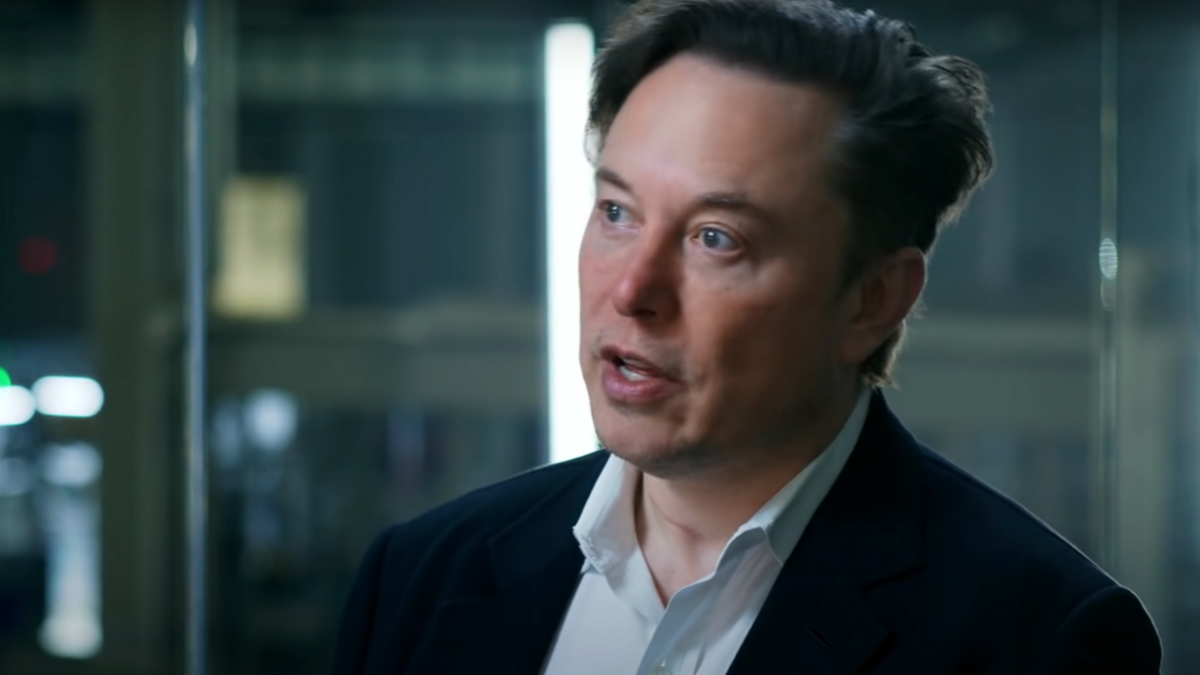

Elon Musk

Author Mollie Hemingway profile

Mollie Hemingway

Visit on Twitter@mzhemingway

More Articles

Disrupting communications is a military strategy that has been deployed during wars throughout history. It’s also what the federal government has done to rural Americans as part of its war on Elon Musk, a tech billionaire whose support of free speech has put him at odds with the Biden administration and other powerful Democrats. The decision to cut rural Americans off from broadband communications had already been strongly criticized as harmful, politically motivated, and completely without merit even before Category 4 Hurricane Helene wrought destruction last week in some of the most remote areas of Georgia, Tennessee, and North Carolina.

Now the FCC’s war on Musk may have turned deadly. The death toll is already at 138 Americans across six states, with many hundreds still missing. Among the serious problems facing rural victims is an inability to communicate with potential rescuers as roads are washed out, telecommunications are down, electricity is out, and people are facing fatal flooding.

It didn’t have to be this way.

In 2020, the Federal Communications Commission awarded Musk’s Starlink an $885.5 million award to help get broadband access to 642,000 rural homes and businesses in 35 states. A subsidiary of SpaceX, Starlink is a satellite internet system delivering high-speed internet to anyone on the planet. The plan would work out to less than $1,400 per linkup, same-day delivery of the necessary hardware, and only a few hours to get up and running.

Some 19,552 households and businesses in North Carolina would have had access to Starlink if they desired. Of the 21 worst-hit counties in North Carolina, the FCC-funded Starlink program would have served all or part of 17 of them, according to multiple officials. The FCC suddenly canceled that grant in 2022, a few months before Joe Biden suggested that the federal government find ways to go after Musk, a former Democrat who began criticizing some of the Democrat Party’s support of censorship of and lawfare against political opponents. After a challenge from SpaceX, the FCC reaffirmed its decision to cancel the award in 2023.

Democrat FCC Chairwoman Jessica Rosenworcel implausibly claimed to believe that Starlink couldn’t provide the service it had promised, a claim that didn’t pass the smell test for many industry observers at the time it was made. Starlink and its military counterpart were in wide use by other government programs. What’s more, at this moment Donald Trump and Elon Musk are rushing Starlink kits to remote North Carolina on their own. So are other Americans doing relief operations. And the White House is claiming it is also going to send Starlink kits to the area.

“The @FCC would rather Americans die, than approve a very inexpensive way to connect people in disaster areas. They should be ashamed,” Maye Musk, the mother of Elon Musk, said on X. “Biden, Harris and the FCC are also punishing people in disaster areas and rural areas. Shame on them,” she added.

Other agencies also joined Democrats’ anti-Musk efforts. As The Wall Street Journal reported, the Department of Justice pursued multiple attacks on Musk and his companies. The Federal Trade Commission began harassing X by making myriad questionable document demands, including requests for information on the journalists who worked on the project exposing how previous leaders of Twitter had colluded with the federal government to censor American speech and debate. The National Labor Relations Board went after Tesla over its dress code. The Securities and Exchange Commission and the U.S. Fish and Wildlife Service are also investigating Musk and his companies.

The FCC’s politically motivated cancellation of the contract in 2022 left rural Americans with no options.

The cancellation “is without legal justification,” FCC Commissioner Brendan Carr, who voted against canceling the award, said at the time. “[I]t will leave rural Americans waiting on the wrong side of the digital divide.”

The FCC’s political action against Musk isn’t the only Biden administration action harming Americans who were ravaged by Helene. Joe Biden named Kamala Harris the Broadband Czar in April 2021 and placed her in charge of a $100 billion slush fund for broadband projects. At the Commerce Department, a $42.5 billion subset of that program was launched in 2021, with guidance written to limit the ability of Starlink to compete for contracts. The Broadband Equity, Access, and Deployment (BEAD) Program was supposed to fund programs in all 50 states. It has been a complete failure.

More than three years later, not a single rural American family or business has been connected to broadband through the program. At best the groundwork will begin four years after the launch and won’t finish until 2030 at the earliest. For that much taxpayer money, Starlink could be provided to 140 million people, and without the wait, observers noted.

The FCC’s anti-Musk efforts come at the same time that the Democrat-run agency fast-tracked a shocking application by a group backed by the Democrat Soros family to purchase more than 200 radio stations across the country. Federal law requires applicants with significant foreign ownership, as the Soros group has, to go through significant paperwork and security reviews prior to receiving licenses for radio stations. They didn’t follow the law and yet the FCC fast-tracked the approval for the first time in its history.

“Your last name should not determine how the government treats you, and very clearly that’s what is happening here,” said Carr of the FCC’s politicized actions on behalf of the Soros group and against the Musk group.


Mollie Ziegler Hemingway is the Editor-in-Chief of The Federalist. She is Senior Journalism Fellow at Hillsdale College and a Fox News contributor. She is the co-author of Justice on Trial: The Kavanaugh Confirmation and the Future of the Supreme Court. She is the author of “Rigged: How the Media, Big Tech, and the Democrats Seized Our Elections.” Reach her at mzhemingway@thefederalist.com

Biden’s Ministry of Diversity Comes for the Internet


By: Peter St. Onge @profstonge / December 27, 2023

Read more at https://www.dailysignal.com/2023/12/27/bidens-ministry-of-diversity-comes-for-the-internet/

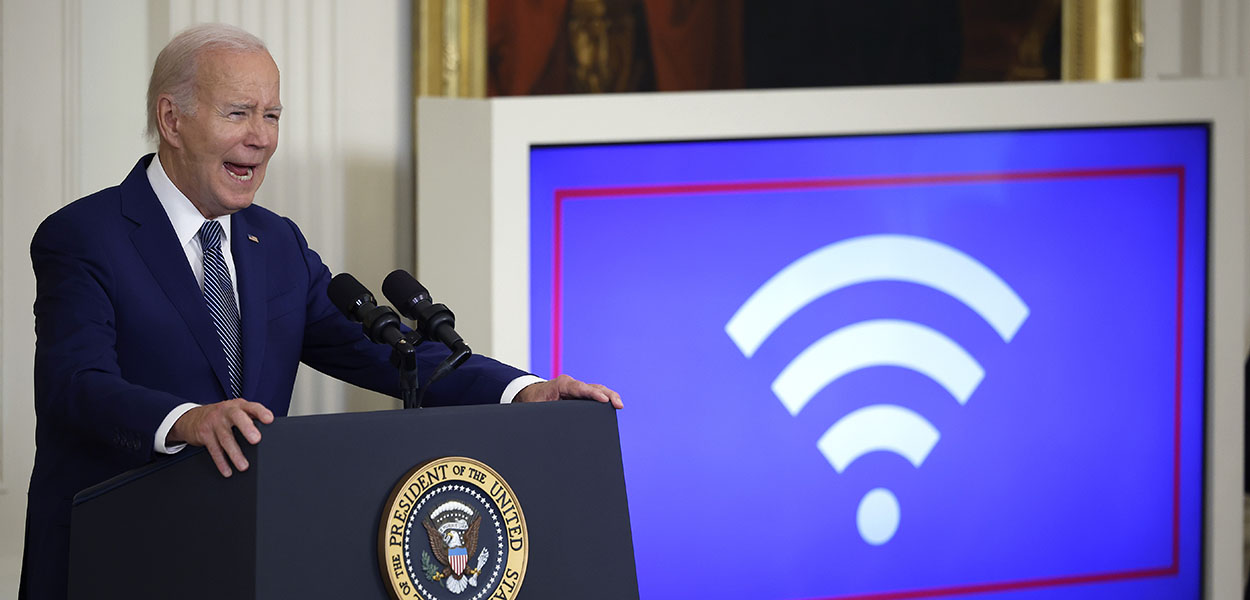
By increasing federal control of the internet, the Biden administration raises concerns about government intrusion and censorship, increased consumer costs, and slowed investment in technology. Pictured: President Joe Biden announces a $42 billion investment in high-speed internet infrastructure June 26 during an event in the East Room of the White House. (Photo: Chip Somodevilla/Getty Images)

The Federal Communications Commission has adopted “woke” new rules to control internet services that will increase consumer costs, slow investment in new technologies, and raise the prospect of yet more government intrusion and censorship.

Commissioner Brendan Carr—one of two Republicans on the five-member FCC—called the plan “an unlawful power grab that gives the government a roving mandate to micromanage nearly every aspect of how the internet functions.”

Former FCC adviser Adam Candeub added: “The FCC is dishonestly claiming that it is promoting equity and fairness. However, the FCC is just seizing control over business decisions, funneling resources to politically preferred constituencies.”

The timing is particularly suspect, given entrepreneur Elon Musk’s effort to provide uncensored internet access via Starlink to go with the uncensored speech he already has delivered on his social media site X (formerly Twitter).

The FCC adopted the package of regulations Nov. 15. The new rules would empower the commission to prosecute internet service providers for alleged discrimination based on race, ethnicity, and other protected classes, as well as income.

The rules empower the FCC to “crack down on digital inequities,” as The Associated Press put it. By which the commission might mean, for example, punishing companies for building infrastructure in neighborhoods where the agency expects people actually will buy it.

The newly Democrat-dominated FCC allegedly imposed the new rules to “eliminate discrimination” in access to internet services. By which the commission means the uneven rollout of 5G service, itself stymied by regulatory red tape.

Congress, in the 2021 bipartisan infrastructure bill, delegated to the FCC the task to “ensure that all people of the United States benefit from equal access to broadband internet access.”

In fact, the agency found no evidence of intentional discrimination, but the leftists on the FCC used Congress’ delegation as an excuse to force equity and diversity mandates ranging from controls over discounts, language options, and credit checks to marketing and advertising.

What’s the goal? Essentially to reinstate so-called “net neutrality” rules that dictate how internet service providers treat traffic and use those rules to ram through a federal takeover of Americans’ access to the internet.

Beyond risking a dramatic expansion of federal control of the internet, the rules are likely to raise costs and slow service—the exact opposite of the stated intent. And the rules could radically expand government intrusion in the economy by characterizing a business that pursues more affluent customers as engaging in a form of discrimination.

As for costs, the rules will push companies to waste money building services that customers don’t want, to avoid charges of discrimination. This effectively would pass the costs on to actual paying customers, who would have to foot the bill for building potentially billions of dollars in broadband to nowhere.

The likely result will be higher costs for internet service for all customers, along with higher cable or streaming services—even phone bills—if the FCC uses these restrictions as a template for  other services.

After all, companies already have plenty of incentive to build infrastructure where they think customers will pay for it. This rule is intended to make companies build even where customers won’t pay.

We know how that turns out from then-President Donald Trump’s repeal of similar “net neutrality” rules: The repeal actually lowered prices and raised speeds. This new rule puts all that at risk, piling more costs on families who already are suffering under inflation.

Indeed, given that companies themselves have limited capital budgets they now will have to spread over nonbuying customers, companies are likely to degrade service across the network. This will force not only higher costs but slower speeds.

The second effect is even more ominous: The risk of a radical increase in the federal government’s interference across the economy by expanding diversity mandates to include income and wealth.

This is because any product with a price automatically discriminates by income. The carmaker Ferrari, for example, disproportionately sells to rich people not because it doesn’t like poor people, but because poor people can’t afford its cars.

Are we to regard the very concept of price as implicit discrimination that requires a government solution? If so, we would need a Ministry of Prices and a Ministry of Incomes to ensure the proletariat are all equally chained.

As incompetent as the Biden administration has proven to be from inflation to the southern border to foreign policy, the one thing the president’s men and women put on their thinking caps for is capturing power.

The collateral damage, to both the economy and free speech, could be catastrophic.

The FCC is voting to seize American internet infrastructure in the name of ‘equity’


By: PETER GIETL | NOVEMBER 15, 2023

Read more at https://www.theblaze.com/return/the-fcc-is-voting-to-seize-american-internet-infrastructure-in-the-name-of-equity/

When regimes capture power, it’s often not in the dramatic fashion of the storming of the Bastille. Instead, it’s a bureaucratic takeover, hidden in jargon and filled with clichés, for the greater good. The Federal Communications Commission is poised to vote today on a sweeping set of new rules called the “Preventing Digital Discrimination Order.”

The 200-page report recommends implementing an exhaustive array of new restrictions that will alter the internet forever. It springs from section 60506 of the Infrastructure Investment and Jobs Act 2021. This legislation was meant to infuse some federal dollars into America’s sagging internet infrastructure. Unfortunately, this vote will grant the FCC the power to control nearly every aspect of internet infrastructure in the name of our secular gods of diversity, equity, and inclusion.

The TL;DR of the obtuse rules is the ability to censor, control, and regulate internet service providers based on vague laws around equity. Most disturbing is that it doesn’t have to be “discrimination” as it’s generally understood but rather “disparate outcomes,” meaning all internet infrastructure must produce perfect equity or face the wrath of the United States government.

The agency’s unelected officials will convene to deliberate on regulations to integrate the latest progressive ideals regarding race and identity into the internet landscape. It’s expected to pass 3-2. It will stifle innovation and impede internet access opportunities, all in pursuit of achieving equity.

If approved, this would mark the first time the FCC would gain the authority to oversee various aspects of every ISP’s service termination policies, including customer credit usage, account history, credit checks, and account termination, among other related matters.

Experts have been sounding the alarm about what this could mean for internet freedom.

Even FCC Commissioner Brendan Carr has blasted the power-grab, calling it a free pass giving the “administrative state effective control of all internet services and infrastructure.”

“President Biden has called on the FCC to adopt new rules of breathtaking scope,” Carr noted on X, formerly Twitter. “Those rules would give the federal government a roving mandate to micromanage nearly every aspect of how the Internet functions — from how ISPs allocate capital and where they build, to the services that consumers can purchase; from the profits that ISPs can realize and how they market and advertise services to the discounts and promotions that consumers can receive.”

“The FCC reserves the right under this plan to regulate both ‘actions and omissions, whether recurring or a single instance.’ In other words, if you take any action, you may be liable, and if you do nothing, you may be liable. There is no path to complying with this standardless regime. It reads like a planning document drawn up in the faculty lounge of a university’s Soviet Studies Department.”

These regulators have established a framework that could penalize any organization seeking to enhance internet accessibility or provide internet services if the agency determines that it did so in a manner that facilitates discrimination. Whatever the regulators decide that means.

Congressional pushback

Ranking Member Ted Cruz (R-Texas) of the U.S. Senate Commerce Committee, along with 27 fellow senators, is urging the Federal Communications Commission to withdraw its preliminary proposal regarding “Digital Discrimination.” This proposal would grant the federal government significant influence over virtually every facet of the internet, potentially subjecting broadband providers to extensive, vague, and detrimental liability under a “disparate impact” standard.

In a letter to FCC Chairwoman Rosenworcel, the senators wrote:

Your Draft Order, which largely follows a Biden administration diktat, will create crippling uncertainty for the U.S. broadband industry, chill broadband investment, and undermine Congress’s objective of promoting broadband access for all Americans. We urge you to adhere to the will of Congress and conform to the plain meaning of [the bipartisan infrastructure bill] to avoid causing serious damage to the competitive and innovative U.S. broadband industry.”

Net neutrality back door

This power-grab is also a de facto attempt to bring back net neutrality. Net neutrality, with its burdensome and intrusive regulations, hinders the internet’s natural evolution. The internet has thrived remarkably well without the heavy hand of net neutrality oversight. Moreover, these regulations prevent internet service providers from rightfully charging substantial fees to content giants like video streaming platforms, which are voraciously consuming bandwidth. By prohibiting these fees, net neutrality shifts the responsibility of expanding network capacity entirely onto individuals and away from giant tech platforms.

This, in turn, is expected to result in higher costs for consumers, as they will be forced to bear the burden of more expensive internet packages, even if they don’t use these data-intensive streaming services. As it stands, net neutrality stifles innovation, undermines market forces, and ultimately harms consumers and the internet ecosystem. The idea that they would resurrect these onerous rules through the back door is no less worrying just because it isn’t surprising.

The one silver lining to this is that the disparate impact rules they cite to justify the power-grab have been struck down by the Supreme Court. There will no doubt be immediate lawsuits to try to fight these rules. Across varying industries and government entities, a concerted effort exists to curtail your freedom. From COVID lockdowns to tech censorship, expansive regulations, gun laws, and the jailing of political dissidents, the underlying result is curtailing your freedoms. The regime knows a free internet is one of the last tools the American people have left, which is why it tries to control it at every turn.

Study: Outside of School, America’s Teens Average 70 Hours Per Week Glued to Screens


BY: JOY PULLMANN | OCTOBER 31, 2022

Read more at https://thefederalist.com/2022/10/31/study-outside-of-school-americas-teens-average-70-hours-per-week-glued-to-screens/

little girl on smartphone
America’s young people are wasting almost all of their waking free time on entertainment instead of personal development or service to others.

Author Joy Pullmann profile

JOY PULLMANN

VISIT ON TWITTER@JOYPULLMANN

MORE ARTICLES

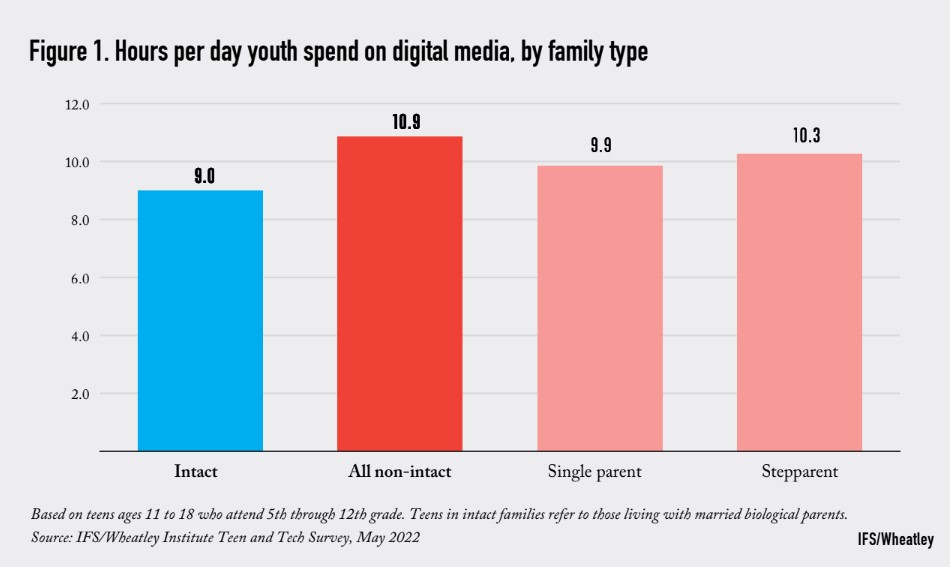
Americans ages 11 to 18 play online for an average of 10 hours per day, according to a study out today by a research team that includes psychologist Jean Twenge, author of “iGen” and “Generation Me.”

The researchers surveyed 1,600 Americans ages 11 to 18 in May 2022. On average, the study participants reported using digital media an average of 10 hours and four minutes per day, on such entertainment activities as social media, video chat, texting, shopping, and gaming.

That’s a total of 70 hours per week spent online, approximately double the average time spent in school. If teens were suddenly banned from screen time, they could use the time freed from solely that to instead hold down both a full-time and a part-time job. Some of this average may include multitasking, such as texting while scrolling Instagram, the study said, but this total of 70 hours per week spent on screens also did not include time spent watching TV.

Low-Class Behavior Rampant in Middle Class

The researchers say their Institute for Family Studies and Wheatley Institute study is the first to examine the effects of family structure on young people’s screen time. They found that teens living with their own biological and married parents still spent an astonishing amount of time on screens, at an average of nine hours per day. Still, that was nearly two hours fewer per day, on average, than children living without a biological parent, who spent an average of 11 hours per day online.

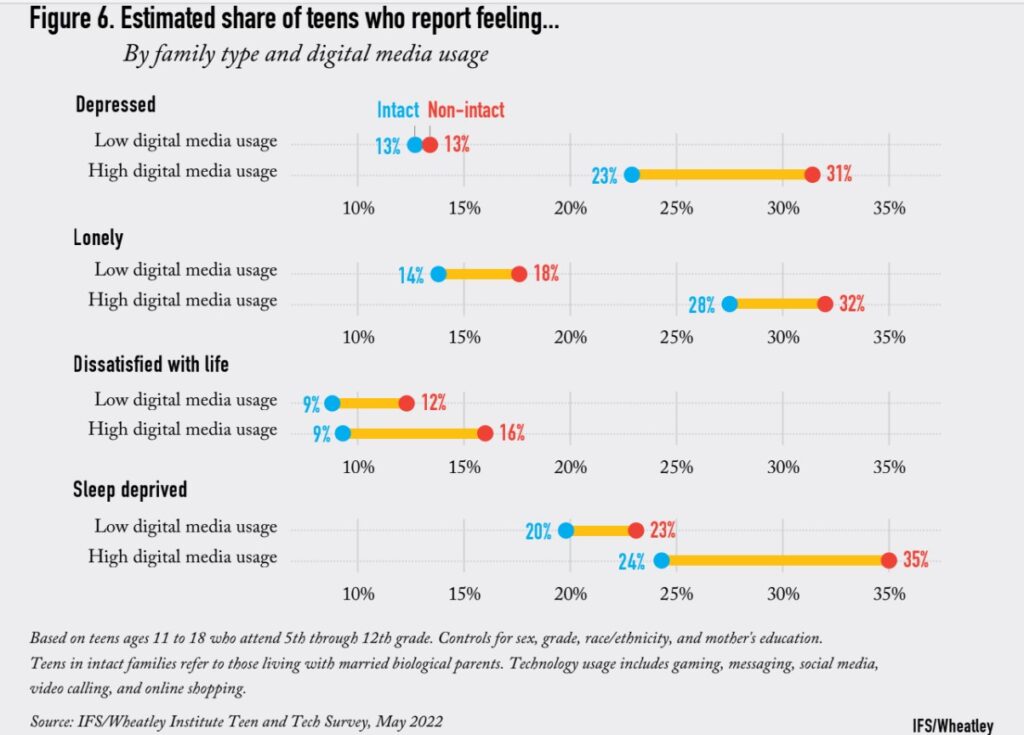
“The adolescents most likely to be depressed, lonely, and dissatisfied with life are heavy digital media users in stepparent, single-parent, or other non-intact families,” write study authors Twenge, Wendy Wang, Jenet Erickson, and Brad Wilcox. “The link between excessive technology use and poor mental health is larger for youth in non-intact families compared to those in intact families.”

So, according to this study’s findings, children in intact families spend an average of 63 hours per week amusing themselves online, while children in broken families spend an average of 77 hours per week amusing themselves online. The study discovered “especially large differences by family structure in youth time spent on gaming and texting. For example, youth in stepfamilies report spending about 50 minutes a day more texting than youth in intact families.”

Other studies on children’s screen use reinforce this finding — that America’s young people are wasting almost all of their waking free time on entertainment instead of personal growth or service to others. As this IFS/Wheatley study points out, this shift has happened extremely quickly, and it’s not all because of the 2020-2022 Covid lockdowns that also arrested American children’s development. Between 2009 and 2017, “the time high school students spent online doubled.”

The study points out that high screen time for adolescents is correlated with depression, loneliness, lack of sleep, and negative body image. It does not mention the opportunity cost of diverting young people’s free time to entertainment consumption instead of personal development that benefits others, such as learning to repair bicycles, playing outside, testing out jobs through work and internships, or working to save for college or marriage.

The study recommends that parents keep electronic devices out of kids’ bedrooms at night, limit screen time to a few hours per day, delay smartphone access to age 16 or 18, keep kids off social media as long as possible, and arrange for their kids to make friends with kids in families with similar boundaries about tech use to help their children socialize with people instead of robots.

Unchallenged mass tech addiction is one more way our morally bankrupt ruling class incentivizes destructive lower-class behaviors instead of encouraging lower classes to raise their standards. This works to erase the middle class by indulging laziness, like the shameful “quiet quitting” PR campaign. This is another form of societal suicide. Laziness cannot maintain, let alone keep advancing, the United States’ world-class level of scientific and cultural advancement.

Nothing worth having comes without strenuous and sustained effort. Internet addictions erase not only willpower but also self-discipline, excellence, and the communication skills needed to work with others and sustain key relationships such as marriages, as Twenge and others’ academic work shows.

This Is a National Crisis

If a child played with Legos for 10 hours a day, every day, his parents or teacher would have him screened for autism and developmental delays. If a child played pretend for 10 hours a day, at any age, he’d be sent to the school psychologist.

If your child did anything for 10 hours a day, you’d be worried about him and work strenuously to bring some balance to his life, for his own good. Parents need to man up and do the hard work of tightly restricting the addictive side of the internet from their kids, for not only their own good but for the sake of our country. Even 30 hours of screen time a week is obviously excessive for kids. Seventy hours of screen time a week is completely out of control, the willful destruction of our future.

“If an unfriendly foreign power had attempted to impose on America the mediocre educational performance that exists today, we might well have viewed it as an act of war,” wrote the National Commission on Excellence in Education in the famous 1983 report, “A Nation At Risk.” “As it stands, we have allowed this to happen to ourselves.”

The same sentiment applies to today’s American youth, but in a far more advanced condition. If a foreign nation had imposed on Americans the destruction of our mental and moral capacity that results from such rampant internet addiction as this study explores, we’d consider it an act of war. In fact, it’s pretty clear that our top foreign adversary created an addictive social media app for the same reason it helps Mexican drug cartels ship fentanyl across our border: because China knows that if they destroy America’s future, they rule the world.

The only thing standing between them and your kids is you, parents. Maybe a few elected officials could stand with us and take down these internet monopolies that make bank strip-mining our future, or at least require real proof of parental consent for children to use addictive tech products, such as a tiny credit card payment. But don’t wait for others to do your job for you. Put down your phone, grab your kids, and make your family motto the title of one of my childhood books: “Do Something Besides Watching TV.”

If your children enter adulthood having done nothing with 25,000 hours of their lives they can never get back, and with their brains destroyed by internet slot machines, that’s on you. You’re the one paying for their phone and letting them self-destruct. Tell them to get a job or read some books or do anything but sabotage themselves and our society. If you don’t, you deserve to be judged the same way as moms who put Mountain Dew in their babies’ bottles.


Joy Pullmann is executive editor of The Federalist, a happy wife, and the mother of six children. Here’s her printable household organizer for faith-centered holidays. Sign up here to get early access to her next ebook, “101 Strategies For Living Well Amid Inflation.” Her bestselling ebook is “Classic Books for Young Children.” Mrs. Pullmann identifies as native American and gender natural. She is the author of several books, including “The Education Invasion: How Common Core Fights Parents for Control of American Kids,” from Encounter Books. Joy is also a grateful graduate of the Hillsdale College honors and journalism programs.

Joshua Lawson of the Federalist Op-ed: Giving 2021 A Fighting Chance Requires We All Choose To Do What Is Hard


Commentary by Joshua Lawson JANUARY 5, 2021

Even before the horrible year that was 2020, New Year’s Eve celebrations have long been filled with the near-certain expectation that things will definitely get better. Generally speaking, it’s a fine sentiment. Optimism is good; hope is good; and striving to improve the future from where we are today led us from the cave to the fields, across vast oceans, and into the limitless of outer space.

But nothing magical happens when the calendar year flips over. There’s no unexplained scientific phenomenon that shifts the incalculable number of atoms in our known universe into undaunted forces for good simply because we’ve reached the conclusion of this year’s cycle through the Gregorian calendar. Instead, history tells us things can always get worse.

After the stock market crashed in 1929, the Great Depression didn’t reach its darkest days until 1933. The 1938 Nazi annexation of Austria was followed by the invasion of Poland in 1939, then the steamrolling of France and near-defeat of Britain in 1940.

Yet while there’s no iron-clad guarantee that 2021 will be great, every one of us can contribute to the effort to make a redemptive year a reality.

No government action will make 2021 better than what we just went through in 2020. As with most positive change, any meaningful, lasting shifts in the trajectory of our towns and our nation will stem from individuals choosing to do good.

World events of a grand nature will remain outside our ability to master. Pandemics, wildfires, and — unless you live in one of a handful of swing states — presidential elections involving more than 158 million votes are things almost entirely beyond our control. Yet, even in the worst of times, we can control how we interact with our fellow Americans, and a shift in the right direction in this regard is one of the simplest — albeit difficult — steps we can take.

It’s within the grasp of each of us, as individuals, to decide if what we both consume and contribute is life-affirming or malevolent, restorative or toxic. In our workplaces, online using social media, with our families, and interacting with total strangers, we are responsible for how we live amongst one another.

In our current rancorous political environment, we’ll have a chance at a better year if we realize most genuine conversations or debates aren’t best served in a tit-for-tat on Facebook or Twitter but in person over coffee, lunch, or a drink after work. This doesn’t mean surrendering our principles or allowing ourselves to be walked over. It does, however, require we prudently recognize whose minds are open to change, and those who refuse to be unconvinced of what they believe; which arguments may bear fruitful discussion, and those that will only lead to more frustration and anger this country can do without.

Regardless of one’s faith, there is wisdom in the instructions given in the Bible’s 2 Timothy:

Again I say, don’t get involved in foolish, ignorant arguments that only start fights. A servant of the Lord must not quarrel but must be kind to everyone, be able to teach, and be patient with difficult people. (2 Timothy 2:23)

As the author of the epistle to Timothy later notes, being honest doesn’t mean being needlessly hurtful or tactless, and he reminds us to “Gently instruct those who oppose the truth.” There’s an Aristotelian golden mean between failing to state a necessary truth and being an overly blunt jerk about it.

Similar valuable cautions are given in Titus 3:2 not to slander, to “avoid quarreling,” and to “show true humility to everyone.” Later in the chapter, we’re also reminded it may be best to walk away from those who continue to engage in foolish controversies:

If people are causing divisions among you, give a first and second warning. After that, have nothing more to do with them. (Titus 3:10)

Admittedly, it’s hard to do, especially in a climate that often mistakenly views the last person who responded in a Facebook fight as “the winner” or politeness as a sign of “weakness.” Even so, it’s one of the few ways to lower the temperature to the point where authentic, amiable exchanges and healthy debates are possible. We’ll be a better nation in 2021 if Americans take time to ask and reflect, “Will this truly make things better?” before acting.

Furthermore, giving 2021 a fighting chance will involve constantly “checking one’s priors” at the door. Or, as Jordan Peterson has phrased it, we’d do well to “Assume that the person you are listening to might know something that you don’t.”

As more Americans limit their media consumption to voices and opinions they already agree with, ideological and philosophical blind spots pose an increasingly higher risk. Yet rarely are things as simple as either the “left” or “right” (antiquated terms to begin with) being absolutely correct or absolutely wrong.

Taking in the views of only a small territory of the political spectrum is one of the contributing factors that led us to a place, never more evident than in 2020, where one half of the country can’t even stand being in line next to the other half — six feet apart, no less. We don’t have to agree, but we have to be able to at least relate to where those we disagree with are coming from. This begins with the humility to acknowledge we may be wrong about something, or, at least, not as correct as we think we are.

“Genuine conversation is exploration, articulation, and strategizing,” Peterson writes, “When you’re involved in a genuine conversation, you’re listening.” This may also require mingling outside a safe, “bubbled,” friend group, especially if that group is comprised of similarly like-minded folks.

It means not assuming to know the totality of someone’s beliefs and values based on their stance on a single issue. It means being OK with someone thinking, even acting, in a way we personally disagree with (as long as it doesn’t directly infringe on anyone’s rights to life, liberty, or pursuit of happiness). A tolerance of true intellectual diversity will be a key factor in helping 2021 rebound after the past year.

In what could be the most important New Year’s resolution we make, by exercising humility, patience, and grace, we can each take responsibility in helping make 2021 the year we all need it to be, one individual choice at a time.

ABOUT THE AUTHOR:
Joshua Lawson is managing editor of The Federalist. He is a graduate of Queen’s University as well as Hillsdale College where he received a master’s degree in American politics and political philosophy. Follow him on Twitter @JoshuaMLawson.

Peak Spock Speaks


disclaimerDrawn and Posted Chip Bok | June 5, 2018

URL of the original posting site: http://bokbluster.com/2018/06/05/peak-spock-speaks/

Aspiring novelist Ben Rhodes created narratives for the Obama administration. In a NYT story he once took credit for creating a media echo chamber to push the president’s Iran nuclear deal. But on election night 2016 Rhodes found himself at a loss for words. Peak Spock Speaks Now he’s written a book. It’s titled “The<!– AddThis Advanced Settings above via filter on wp_trim_excerpt –><!– AddThis Advanced Settings below via filter on wp_trim_excerpt –><!– AddThis Advanced Settings generic via filter on wp_trim_excerpt –><!– AddThis Share Buttons above via filter on wp_trim_excerpt –><!– AddThis Share Buttons below via filter on wp_trim_excerpt –>

<!– AddThis Share Buttons generic via filter on wp_trim_excerpt –>” data-title=”Peak Spock Speaks” data-url=”http://bokbluster.com/2018/06/05/peak-spock-speaks/”&gt;


peak spock speaks

Aspiring novelist Ben Rhodes created narratives for the Obama administration. In a NYT story he once took credit for creating a media echo chamber to push the president’s Iran nuclear deal. But on election night 2016 Rhodes found himself at a loss for words.

Peak Spock Speaks

Now he’s written a book. It’s titled “The World as It Is.” Or “Peak Spock” as Maureen Dowd calls it.

In the book President Obama consoles despondent young Ben by telling him, “There are more stars in the sky than grains of sand on the earth.”

Back on earth Obama says, “Sometimes I wonder whether I was 10 or 20 years too early.”

To which Matthew Continetti asks, “What was he early for?,” “Fundamentally transforming America?” “The moment when the rise of the oceans began to slow”?

Nope. According to Ms. Dowd, “We just weren’t ready for his amazing awesomeness.”

Ben Rhodes now works for MSNBC. His brother, David Rose, is president of CBS News.

White House Correspondents Nerd Prom


Drawn and Published by Chip Bok | May 1, 2018

URL of the original posting site: http://bokbluster.com/2018/05/01/white-house-correspondents-nerd-prom/

nerd prom

Hardened reporters cringed at Michelle Wolf’s comedy routine at the White House Correspondents dinner. She hit a new low when she played the light side of abortion for laughs. She didn’t get many.

Nerd Prom

And I haven’t seen anyone ridicule women the way Wolf attacked Sarah Huckabee Sanders since um … well, maybe The Donald.

FCC shoots down petitions to delay open internet rules


 URL of the Original Posting Site: http://www.engadget.com/2015/05/10/fcc-cant-stop-wont-stop/ 

Remember when a wolfpack of cable companies and telecoms — including AT&T, CenturyLink, the American Cable Association, USTelecom and more — filed motions to delay the FCC from enacting parts of its open internet order? Well, the Commission was having none of that. Late in the day this past Friday, Wireless Competition Bureau chief Julie Veach and Wireless Telecommunications Bureau chief Roger Sherman handed down an order dismissing those petitions, pointing out that additional protection for the internet as we know it is crucial and that the petitioners’ cases aren’t as strong as they think.Tyranney Alert

Most of those groups had their sights set on one crucial proviso: the FCC’s new rules would classify internet service providers as “common carriers,” which they believed would bring not only the industry but the infrastructure that powers the internet under tighter, heavier government control. Despite the fact that companies that would now fall under that umbrella wouldn’t be subject to the full scope of regulatory oversight per the Telecommunications Act, they’re still fighting back in the name of the internet’s future growth. To hear dissenting FCC commissioner Ajit Pai tell it, the FCC would have the “the power to micromanage virtually every aspect of how the Internet works.” The petition filed by USTelecom, the CTIA, AT&T and CenturyLink spelled gloom and doom for the web as we know if the FCC gets its way:

“From day one, the Commission’s assertion of comprehensive control over the Internet will subject broadband Internet access providers – especially, small providers – to enormous unrecoverable costs and reduce their ability and incentive to invest in broadband infrastructure.”burke

To be clear, AT&T and company did not petition against the three “bright light” rules – no blocking legal content, no throttling and no paid prioritization – contained in the FCC’s Open Internet Order. While we guess it’s good everyone involved can agree on at least that much, it doesn’t change the fact that courts still have to rule on the lawsuits challenging the validity of the FCC’s plan. Tom Wheeler might be convinced of his eventual victory, but you can bet no one’s going to leave the ring until one set of ideals has been laid out on the ground.

OARLogo Picture6

Supreme Court Agrees to Rule On Limiting First Amendment


http://www.infowars.com/supreme-court-agrees-to-rule-on-limiting-first-amendment/

Case will directly impact political hyperbole on the internet

Supreme Court Agrees to Rule On Limiting First Amendment

by Kurt Nimmo | Infowars.com | June 18, 2014

Click on image to see movie trailer and more

Click on image to see movie trailer and more

FreeSpeech1-300x204The Supreme Court will soon decide if threatening speech posted on the internet is protected by the First Amendment.

The Court said it will hear an appeal from a Pennsylvania man convicted of making threatening comments on Facebook against his estranged wife, elementary schools, judges and the FBI.Anthony Elonis was convicted of transmitting threatening communications in interstate commerce and sentenced to 44 months in prison.

The case is Elonis v. United States.

Mr. Elonis’ lawyers argued an individual should not be convicted of making a threat unless there is evidence he actually intended violence. Elonis said much speech posted on the internet is “inherently susceptible to misinterpretation.” He insisted his posted remarks did not demonstrate a “subjective intent to threaten” based on previous Supreme Court precedent and are protected speech under the First Amendment.

The Justice Department countered by saying Elonis’ argument undermines “one of the central purposes of prohibiting threats,” which is to protect individuals “from the fear of violence and from the disruption that fear engenders.”

According to the government the defendant’s behavior was not merely “careless talk, exaggeration, something said in a joking manner or an outburst of transitory anger. The statements that qualify as true threats (from the defendant) thus have a significant, serious character.”

In the past the Court has ruled laws covering threats must not infringe on the First Amendment. This includes “political hyperbole” one may construe as subjectively threatening and “unpleasantly sharp attacks” that are not in fact true threats.

Eating-Away-the-First-AmendmentIn The Ethics of Liberty Murray Rothbard argues that threats must be “palpable, immediate, and direct” and “embodied in the initiation of an overt act” in order to be considered actual threats. Language, no matter how abusive or subjectively threatening, cannot be regarded as violence.

If the Court rules in favor of the government, the landscape of the internet will change dramatically. Political hyperbole, often uncivil and “unpleasantly sharp,” will become illegal and subject to prosecution.

Last month Democrat Senate Majority Leader Harry Reid moved to amend the Constitution in order to limit political speech.

“If ultimately adopted, it would mark the first time in American history that a constitutional amendment rescinded a freedom listed as among the fundamental rights of the American people,” warns Ken Klukowski.

Political speech falling outside the parameters set by the ruling political class constitutes a threat to the establishment. This speech flourishes on the internet, specifically on alternative news media websites.

Many lawmakers may indeed be outraged by the ability of individuals like Anthony Elonis to issue verbal threats over the internet. However, for the elite, the overriding agenda is to limit and outlaw speech that may endanger their hold on political power.

VOTE 02


FCC to cripple the Internet


http://www.foxnews.com/tech/2014/05/14/fcc-to-cripple-internet/?intcmp=latestnews

The Federal Communications Commission thinks the Internet in the United States can be run at two speeds. Backtracking from an earlier proposal, the FCC now believes it will be just fine to let Internet service providers (ISPs) control what you access online, with a few exceptions that the FCC would police.

While this new proposal might not kill the Internet, as it exists now, it would certainly cripple it – at least for American consumers and businesses.

Multiple leaks about FCC chairman Tom Wheeler’s proposal to the commission, which will be presented on Thursday, indicate that the agency would not allow ISPs to give preferential treatment – faster Internet access – to their own subsidiaries. But it would allow other companies to pay for faster, more reliable access. (No matter that such a similar restriction has already failed in the case of Comcast giving preferential treatment to its own Golf Channel.)

If the Internet does not maintain net neutrality, wherein all digital data is treated the same, countless businesses will suffer.

Tyrannical Censorship Alert

Unfortunately, there is no halfway approach to how data should flow over the Internet. It’s a binary proposition: Either access to the Internet is equal, no matter the type or size of the business, or it is not. Letting Amazon have better access because it can pay and because it is not owned by AT&T will not make the situation more equal.

If the Internet does not maintain net neutrality, wherein all digital data is treated the same, countless businesses – tech companies in Silicon Valley, auto companies in Detroit, health care providers in Houston, startups in New York – will suffer. And, of course, you and I will pay for diminishing service and be denied the option of choosing what we want to read, view and listen to at faster speeds.

Representatives of the country’s largest ISPs are claiming that the one solution to preserving net neutrality in the U.S. – legally classifying broadband Internet utilities as utilities – “would threaten new investment in broadband infrastructure and jeopardize the spread of broadband technology across America, holding back Internet speeds and ultimately deepening the digital divide.” That’s according to a press release attached to a letter signed by Verizon CEO Lowell McAdam, AT&T CEO Randall Stephenson, Time Warner Cable CEO Robert Marcus and Comcast CEO Brian Roberts.

Nothing could be further from the truth.

In the first place, those companies are proposing to introduce their own digital divide, in which consumers would have no choice. Faster, more reliable Internet access would be granted only to those companies that would pay AT&T, Time Warner, et al. Want better access to your child’s school website? Too bad, Verizon will say no – unless the school can fork over the kind of fees that an Amazon or Facebook would pay. Thus, the digital divide would grow exponentially if these CEOs have their way. 

Secondly, there is no “threat to new investment in broadband.” Indeed, the situation is quite the opposite. There is constant improvement in optical switches, which increase speeds. And there is plenty of motivation for ISPs to upgrade: It’s called competition (can you say Google Fiber?). You and I pay dearly for these services every month, but if it’s not enough to run their businesses properly, then AT&T, Time Warner and Verizon should start charging subscribers more up front and providing better service. Crippling the Internet for their own profit, with no promise of improvement, is not a solution. It’s a disincentive for ISPs to upgrade.

Moreover, access to and the flexibility of the Internet have done nothing but improve under the de facto standard of net neutrality since the early ’90s. Suddenly handing over control of how reliably and how fast certain content gets sent to a few companies would kneecap the U.S. economy.

It would stall such initiatives such as autonomous cars, which will save lives by preventing deaths on American highways but which require high-speed Internet connections. Allowing ISPs to charge more for that access would stymie such innovation and, to put it bluntly, ultimately cost lives. The idea that Comcast or Time Warner might give YouTube better online access than a doctor sending critical diagnostic information to a hospital is frightening.

Failure to support net neutrality and to reclassify broadband Internet service as a utility will also handcuff American businesses that have to compete on a global stage. Companies in other countries would have a marked advantage with full and equal Web access. Consider how many startups would move just a few miles from Seattle to Vancouver to get a Canadian Internet advantage. Meanwhile, the burgeoning startup scene in cities such as London and Berlin would also be given a boost.

The big ISPs like Verizon and Comcast are right about one thing: The FCC cannot micromanage how every content provider gets information onto the Web. Provisions established when Comcast purchased NBC Universal have already failed. And even if such restrictions could withstand legal challenges, enforcement would take years in each case, by which time businesses would be shut and innovation squelched.

When President Obama was running for office, he said on multiple occasions: “I will take a back seat to no one in my commitment to network neutrality.” This week, it’s time the president got into the front seat.

So what can you do? Email your members of Congress, email the White House … and email the FCC – if, that is, you can get through.

John R. Quain is a personal tech columnist for FoxNews.com. Follow him on Twitter @jqontech or find more tech coverage at J-Q.com.

VOTE 02

Harry Reid Defends Latest Obamacare Delay Because “People Are Not Educated On How To Use The Internet”


http://conservativebyte.com/2014/03/harry-reid-defends-latest-obamacare-delay-people-educated-use-internet/#Et2VcvVetPq6Gcm4.99

Posted on March 26, 2014

Another excuse to serve as a takeover of America. Liberal logic doesn’t have to make sense.

At first I thought this had to be a joke, unbelievably, it is not.

Listen to the news broadcast yourself

(http://youtu.be/AAtgsizDWV0)

Reid

Complete Message

Lesson Learned


Author Unknown

An unemployed man is desperate to support his family of a wife and three kids.  He applies for a janitor’s job at a large firm and easily passes an aptitude test.

The human resources manager tells him, “You will be hired at minimum wage of $5.35 an hour.  Let me have your e-mail address so that we can get you in the loop.  Our system will automatically e-mail you all the forms and advise you when to start and where to report on your first day.”

Taken back, the man protests that he is poor and has neither a computer nor an e-mail address.

To this the manager replies, “You must understand that to a company like ours that means that you virtually do not exist.  Without an e-mail address you can hardly expect to be employed by a high-tech firm.  Good day.”

Stunned, the man leaves.  Not knowing where to turn and having $10 in his wallet, he walks past a farmers’ market and sees a stand selling 25 lb. crates of beautiful red tomatoes.  He buys a crate, carries it to a busy corner and displays the tomatoes. In less than 2 hours he sells all the tomatoes and makes 100% profit.

Repeating the process several times more that day, he ends up with almost $100 and arrives home that night with several bags of groceries for his family.

During the night he decides to repeat the tomato business the next day.  By the end of the week he is getting up early every day and working into the night. He multiplies his profits quickly.

Early in the second week he acquires a cart to transport several boxes of tomatoes at a time, but before a month is up he sells the cart to buy a broken-down pickup truck.

At the end of a year, he owns three old trucks.  His two sons have left their neighborhood gangs to help him with the tomato business, his wife is buying the tomatoes, and his daughter is taking night courses at the community college so she can keep books for him.

By the end of the second year he has a dozen very nice used trucks and employs fifteen previously unemployed people, all selling tomatoes.  He continues to work hard.

Time passes and at the end of the fifth year he owns a fleet of nice trucks and a warehouse that his wife supervises, plus two tomato farms that the boys manageThe tomato company’s payroll has put hundreds of homeless and jobless people to work.  His daughter reports that the business grossed over one million dollars.

Planning for the future, he decides to buy some life insurance.

Consulting with an insurance adviser, he picks an insurance plan to fit his new circumstances.  Then the adviser asks him for his e-mail address in order to send the final documents electronically.

When the man replies that he doesn’t have time to mess with a computer and has no e-mail address, the insurance man is stunned, “What, you don’t have e-mail?  No computer?  No Internet?  Just think where you would be today if you’d had all of that five years ago!”

“Ha!” snorts the man. “If I’d had e-mail five years ago I would be sweeping floors at Microsoft and making $5.35 an hour.”

Which brings us to the moral of the story: Since you got this story by e-mail, you’re probably closer to being a janitor than a millionaire.

Sadly, I received it also.

Tag Cloud