Perspectives; Thoughts; Comments; Opinions; Discussions

Posts tagged ‘Federal Trade Commission’

The FCC’s Political Attack on Elon Musk Has Put American Lives in Danger


By: Mollie Hemingway | October 01, 2024

Read more at https://thefederalist.com/2024/10/01/the-fccs-political-attack-on-elon-musk-has-put-american-lives-in-danger/

Elon Musk

Author Mollie Hemingway profile

Mollie Hemingway

Visit on Twitter@mzhemingway

More Articles

Disrupting communications is a military strategy that has been deployed during wars throughout history. It’s also what the federal government has done to rural Americans as part of its war on Elon Musk, a tech billionaire whose support of free speech has put him at odds with the Biden administration and other powerful Democrats. The decision to cut rural Americans off from broadband communications had already been strongly criticized as harmful, politically motivated, and completely without merit even before Category 4 Hurricane Helene wrought destruction last week in some of the most remote areas of Georgia, Tennessee, and North Carolina.

Now the FCC’s war on Musk may have turned deadly. The death toll is already at 138 Americans across six states, with many hundreds still missing. Among the serious problems facing rural victims is an inability to communicate with potential rescuers as roads are washed out, telecommunications are down, electricity is out, and people are facing fatal flooding.

It didn’t have to be this way.

In 2020, the Federal Communications Commission awarded Musk’s Starlink an $885.5 million award to help get broadband access to 642,000 rural homes and businesses in 35 states. A subsidiary of SpaceX, Starlink is a satellite internet system delivering high-speed internet to anyone on the planet. The plan would work out to less than $1,400 per linkup, same-day delivery of the necessary hardware, and only a few hours to get up and running.

Some 19,552 households and businesses in North Carolina would have had access to Starlink if they desired. Of the 21 worst-hit counties in North Carolina, the FCC-funded Starlink program would have served all or part of 17 of them, according to multiple officials. The FCC suddenly canceled that grant in 2022, a few months before Joe Biden suggested that the federal government find ways to go after Musk, a former Democrat who began criticizing some of the Democrat Party’s support of censorship of and lawfare against political opponents. After a challenge from SpaceX, the FCC reaffirmed its decision to cancel the award in 2023.

Democrat FCC Chairwoman Jessica Rosenworcel implausibly claimed to believe that Starlink couldn’t provide the service it had promised, a claim that didn’t pass the smell test for many industry observers at the time it was made. Starlink and its military counterpart were in wide use by other government programs. What’s more, at this moment Donald Trump and Elon Musk are rushing Starlink kits to remote North Carolina on their own. So are other Americans doing relief operations. And the White House is claiming it is also going to send Starlink kits to the area.

“The @FCC would rather Americans die, than approve a very inexpensive way to connect people in disaster areas. They should be ashamed,” Maye Musk, the mother of Elon Musk, said on X. “Biden, Harris and the FCC are also punishing people in disaster areas and rural areas. Shame on them,” she added.

Other agencies also joined Democrats’ anti-Musk efforts. As The Wall Street Journal reported, the Department of Justice pursued multiple attacks on Musk and his companies. The Federal Trade Commission began harassing X by making myriad questionable document demands, including requests for information on the journalists who worked on the project exposing how previous leaders of Twitter had colluded with the federal government to censor American speech and debate. The National Labor Relations Board went after Tesla over its dress code. The Securities and Exchange Commission and the U.S. Fish and Wildlife Service are also investigating Musk and his companies.

The FCC’s politically motivated cancellation of the contract in 2022 left rural Americans with no options.

The cancellation “is without legal justification,” FCC Commissioner Brendan Carr, who voted against canceling the award, said at the time. “[I]t will leave rural Americans waiting on the wrong side of the digital divide.”

The FCC’s political action against Musk isn’t the only Biden administration action harming Americans who were ravaged by Helene. Joe Biden named Kamala Harris the Broadband Czar in April 2021 and placed her in charge of a $100 billion slush fund for broadband projects. At the Commerce Department, a $42.5 billion subset of that program was launched in 2021, with guidance written to limit the ability of Starlink to compete for contracts. The Broadband Equity, Access, and Deployment (BEAD) Program was supposed to fund programs in all 50 states. It has been a complete failure.

More than three years later, not a single rural American family or business has been connected to broadband through the program. At best the groundwork will begin four years after the launch and won’t finish until 2030 at the earliest. For that much taxpayer money, Starlink could be provided to 140 million people, and without the wait, observers noted.

The FCC’s anti-Musk efforts come at the same time that the Democrat-run agency fast-tracked a shocking application by a group backed by the Democrat Soros family to purchase more than 200 radio stations across the country. Federal law requires applicants with significant foreign ownership, as the Soros group has, to go through significant paperwork and security reviews prior to receiving licenses for radio stations. They didn’t follow the law and yet the FCC fast-tracked the approval for the first time in its history.

“Your last name should not determine how the government treats you, and very clearly that’s what is happening here,” said Carr of the FCC’s politicized actions on behalf of the Soros group and against the Musk group.


Mollie Ziegler Hemingway is the Editor-in-Chief of The Federalist. She is Senior Journalism Fellow at Hillsdale College and a Fox News contributor. She is the co-author of Justice on Trial: The Kavanaugh Confirmation and the Future of the Supreme Court. She is the author of “Rigged: How the Media, Big Tech, and the Democrats Seized Our Elections.” Reach her at mzhemingway@thefederalist.com

Biden’s FTC Punished Twitter For Seceding From The Censorship Complex


BY: MARGOT CLEVELAND| JULY 17, 2023

Read more at https://thefederalist.com/2023/07/17/bidens-ftc-punished-twitter-for-seceding-from-the-censorship-complex/

Twitter owner Elon Musk

Author Margot Cleveland profile

MARGOT CLEVELAND

VISIT ON TWITTER@PROFMJCLEVELAND

MORE ARTICLES

The Federal Trade Commission inappropriately pressured an independent third-party auditing firm to find Twitter had violated the terms of its settlement agreement with the FTC, a motion filed last week in federal court reveals. That misconduct and the FTC’s own repudiation of the terms of the settlement agreement entitle Twitter to vacate the consent order, its lawyers maintain. This latest development holds significance beyond Twitter’s fight with the FTC, however, with the details providing further evidence that the Biden administration targeted Twitter because of its owner Elon Musk’s support for free speech on his platform.

I “felt as if the FTC was trying to influence the outcome of the engagement before it had started,” a CPA with nearly 30 years of experience with the Big Four accounting firm Ernst & Young (EY) testified last month. The FTC’s pressure campaign left EY partner David Roque so unsettled that he sought guidance from another partner concerning controlling ethical standards for CPAs to assess whether his independence had been compromised by the federal agency. Roque’s testimony prompted attorneys for Twitter to seek documents from the FTC to assess whether the federal agency had repeated its pressure campaign with EY’s successors, but the agency refused to provide any details to the social media giant. Twitter responded last week by filing a “Motion for a Protective Order and Relief From Consent Order.” 

That motion and its accompanying exhibits provide shocking details of an abusive agency targeting Twitter. When those facts are coupled with the report on the FTC issued earlier this year by the House Weaponization Subcommittee, it seems clear the Biden administration is targeting Twitter because Musk seceded from the Censorship-Industrial Complex.

FTC’s Pre-Musk Enforcement Actions

Thursday’s motion began with the background necessary to appreciate the gravity of the FTC’s scorched-earth campaign against Twitter. 

More than a decade ago, the FTC entered into a settlement agreement with Twitter after finding Twitter had violated the Federal Trade Commission Act by misrepresenting the extent it protected user information from unauthorized access. That 2011 settlement agreement resulted in a consent order that required Twitter to establish a “comprehensive information security program” that met specific parameters. The 2011 consent order also required Twitter to obtain an assessment from an independent third-party professional confirming compliance with the terms of the settlement agreement. 

From 2011 to 2019, Twitter operated under the 2011 consent order and received about 10 “demand letters” from the FTC seeking additional information. Then in October 2019, Twitter informed the FTC that “some email addresses and phone numbers provided for account security may have been used unintentionally for advertising purposes.” In investigating that report, the FTC sent Twitter another 15 or so demand letters over a two-year period before filing a complaint in a California federal court on May 25, 2022, alleging Twitter had violated the 2011 consent order and Section 5 of the FTC Act by misrepresenting the extent to which Twitter maintained and protected the privacy of nonpublic consumer information. 

The next day, the court entered a “Stipulated Order” — meaning Twitter and the FTC had agreed to the terms of that order — “for Civil Penalty, Monetary Judgment, and Injunctive Relief.” That stipulated order allowed the FTC to reopen the 2011 proceeding and enter an updated consent order, which created a new “compliance structure.”

Under the 2022 order, Twitter was required to establish and maintain a “comprehensive privacy and information security program” to “protect[] the privacy, security, confidentiality, and integrity” of certain user information by Nov. 22, 2022. The 2022 consent order also required Twitter to obtain an assessment of its compliance with the terms of the court order by “qualified, objective, independent third-party professionals.”

Musk Makes Waves

Musk entered into an agreement on April 25, 2022, to purchase Twitter, effective Oct. 27, 2022, and one must wonder if that April agreement prompted Twitter’s then-management to enter the May 2022 consent decree, as Twitter’s prior management handcuffed Musk to the terms of the agreement forged with the FTC. Either way, the May 2022 consent order governed Twitter’s operations under Musk’s new management. 

While the 2022 consent decree remained unchanged after Musk’s purchase became final, the FTC’s posture toward Twitter changed drastically. As Twitter’s Thursday motion detailed, “in the five months between the signing of the Consent Order on May 25, 2022, and Mr. Musk’s acquisition of Twitter, Inc. on October 27, 2022, the FTC sent Twitter only three demand letters.”

All three letters concerned a whistleblower’s claims that Twitter had violated the Federal Trade Commission Act and the 2011 consent order by making false and misleading statements about its security, privacy, and integrity. The FTC waited nearly two months after receiving the whistleblower’s complaint before serving its first demand letter on Twitter.

FTC Goes Scorched Earth

According to Twitter’s motion for relief from the 2022 consent order, “Musk’s acquisition of Twitter produced a sudden and drastic change in the tone and intensity of the FTC’s investigation into the company.” Among other things, the FTC publicly stated it was “tracking recent developments at Twitter with deep concern.” The FTC also stressed that the revised consent order provided the agency with “new tools to ensure compliance,” and it was “prepared to use them.”

And use them the FTC did: The agency immediately issued two demand letters to Twitter seeking information about workforce reductions and the launch of Twitter Blue. Those demand letters came before Twitter was even required under the 2022 consent decree to have its new programs in place. Since then, Twitter’s attorneys note, the FTC has pummeled Twitter’s corporate owner, X Corp., with “burdensome demand letters” — more than 17 separate demand letters, with some 200 individual demands for information and documents, translates into a new demand letter every two weeks.

FTC Starts Drilling Former Employees

In addition to the FTC’s flurry of demand letters, it began deposing former Twitter employees — five to date — and is currently seeking to question Musk. The FTC also deposed Roque on June 21, 2023, but the questioning backfired. Twitter learned from that deposition, as its lawyers put it in Thursday’s motion, “that the FTC’s harassment campaign was even more extreme and far-reaching than it had imagined.”

Roque was the Ernst & Young partner overseeing the assessment it was hired by Twitter to perform — an assessment mandated by the May 2022 consent decree. Twitter’s previous management retained EY in July 2022 to issue the assessment report of its security measures. 

In late February 2023, EY withdrew from the engagement. Many of the FTC’s questions to Roque probed the reasoning for the withdrawal, including the high number of personnel changes and EY’s difficulty in starting the assessment because of Twitter upheaval caused by Musk’s changes.

Deposition Backfires Big Time 

During the FTC’s question of Roque about EY’s withdrawal from the engagement and various emails exchanged by partners, the longtime CPA dropped a bombshell: The FTC had so pressured Roque to reach its preconceived conclusion that Twitter had violated the consent decree that Roque sought help researching the ethical standards that govern CPAs to assess whether EY’s independence had been compromised.

Roque revealed that detail when the FTC’s lawyer quizzed him on the meaning of a chat message exchange he had with fellow EY partner Paul Penler on the evening of Feb. 21, 2023, shortly before the Big Four firm announced it was withdrawing from its engagement to assess Twitter’s compliance with the 2022 consent order. 

While the actual chat message was filed under seal as Exhibit 16 in support of Twitter’s motion, the transcript of Roque’s questioning was provided to the court, revealing the pertinent aspects of the conversation.

Roque began by asking Penler, “Where is the best place to confirm independence consideration for attest engagement?” About 15 minutes later, Roque followed up by asking whether specific language about an “adverse interest threat” “could work for Twitter?” Roque then commented to Penler that “EY interests are not aligned with Twitter anymore because of the FTC.”

Mild-Mannered CPA Drops Bombshell 

After showing Roque a copy of his chat exchange with Penler, the FTC attorney quizzed the EY partner on why he had sent the note and what he meant by the various lines. That’s when the bomb exploded, with Roque explaining he had contacted Penler — who was with EY’s professional practice group, the internal group that was responsible for ensuring the firm adequately followed professional standards — because Roque had concerns about whether the FTC had threatened his independence.

“As we were moving forward with this engagement, we had ongoing discussions with the FTC,” Roque explained. “[D]uring those discussions,” Roque continued, “the FTC kept expressing their opinion more and more adamantly about the extent of procedures Ernst & Young would need to perform based on their expectations. And there was also expectations around the results they would expect us to find based on the information Twitter had already provided to the FTC and the FTC had reviewed.” 

Those conversations, Roque testified, made him feel “as if the FTC was trying to influence the outcome of the engagement before it had started,” so he was attempting to assess whether EY had an “adverse threat,” meaning “somebody outside of the arrangement we had with Twitter trying to influence the outcome of our results.” 

FTC Spin Falls Flat

After Roque revealed his concerns about the FTC’s conduct, the lawyer for the federal agency pushed him to backtrack by asking leading questions. Rather than hedge, Roque stood firm, as these exchanges show:

FTC Attorney: “To be clear, no one from the FTC directed you to reach a particular conclusion about Twitter’s 22 program, correct?”

Roque: “There was suggestions of what they would expect the outcome to be.”

* * *

FTC Attorney: “No one from the FTC actually told you what EY’s report should say in its conclusions, correct?” 

Roque: “There was a conversation where it was conveyed that the FTC would be surprised if there was areas on our report that didn’t have findings based on information the FTC was already aware of, and if Ernst & Young didn’t have findings in those areas, we should expect the FTC would follow up very significantly to understand why we didn’t have similar conclusions.”

Twitter’s Lawyer Pounces

After two fails, the FTC moved on to other questions, but Twitter’s lawyer, Daniel Koffmann, returned to the topic when it was his turn to question Roque. Koffmann asked Roque whether there was a particular meeting with the FTC in which the agency had given him the impression that it “was expecting a certain outcome in the assessment that Ernst & Young was conducting relative to Twitter’s compliance with the consent order.” 

Roque mentioned two meetings. He described the first, which was in December 2022, as “interesting” and “surprising” because when EY noted that Twitter, under its new ownership, might opt to terminate its contract with the firm, the FTC was “very adamant about this is absolutely what you will do and this is going to occur, and you’ll produce a report at the end of the day.” Roque found the FTC’s stance “a bit surprising,” since the report was not due for another six to seven months and the federal agency would not know what might transpire during that time period.

Roque further explained that he found the December 2022 meeting “unusual” because the FTC provided “specificity on the execution of very specific types of procedures that they expected to be performed.”

“It was almost as if they were giving us components of our audit program to execute,” Roque said. While EY could perform such a review, it would be a different type of engagement than the one it had entered with Twitter. Rather, EY’s assessment for Twitter was to access, for instance, how security operates and how the user administration process is managed. In conducting that assessment, the firm would look at specific controls. But the FTC was giving EY very specific tests to run, which was inconsistent with a typical audit, Roque explained.

It was the second meeting, which took place in January 2022, that raised real concerns for Roque. It was then, Roque said, that the FTC “started providing areas that they were expecting us to look at.” Roque testified that the FTC “communicated that they would expect Ernst & Young to have findings or exceptions or negative results in certain areas based on what they already understood from an operational standpoint, based on information Twitter had provided, and that if we ended up producing a report that didn’t have findings in those areas, that they would be surprised, and they would be definitely following up with us to understand why we didn’t — why we reached the conclusions we did if they were sort of not reflecting gaps in the controls.”

Roque would go on to agree with Twitter’s attorney that during the January 2022 meeting, “the representatives from the FTC expressed that they believed Ernst & Young’s assessment would lead to findings or exceptions about Twitter’s compliance with the consent order.” 

Twitter Takes FTC to Task

A little over a week after Roque’s deposition, Twitter’s legal team wrote the FTC a scathing letter noting that Roque’s alarming testimony “demonstrates that the FTC has resorted to bullying tactics, intimidation, and threats to potential witnesses.”

“It strongly suggests that the FTC has attempted to exert improper influence over witnesses in order to manufacture evidence damaging to X Corp. and Mr. Musk,” the letter continued, adding that Roque’s testimony also raised serious questions about whether the FTC’s bias would render any future enforcement action unconstitutional.

The Twitter letter ended by requesting documents and information from the FTC “to evaluate the nature and scope of the FTC’s misconduct and the remedial measures that will be necessary.” Among other things, Twitter asked for communications between FTC personnel and the company that succeeded EY as Twitter’s independent assessor, as well as another company Twitter considered but did not select to replace EY.

The FTC refused Twitter’s request. In its letter denying Musk access to any documents, Reenah L. Kim, the same attorney who allegedly made the statements to Roque, claimed Twitter’s accusations of so-called “bullying tactics, intimidation, and threats to potential witnesses” by the FTC “are completely unfounded.” 

Lots of Legal Implications

Following the FTC’s refusal to provide Twitter the requested documents, Musk’s legal team filed its “Motion for a Protective Order and Relief From Consent Order” with the California federal court where the 2022 consent decree had been entered. In this recently filed motion, Musk’s attorneys argue the FTC “breached” the consent order when it attempted “to dictate and influence the content, procedures, and outcome” of the court-ordered assessment, which the consent decree required to be both “objective” and “independent.”

To support its argument, Twitter highlighted the FTC’s own language in an earlier letter the agency had sent to Twitter’s prior management team discussing the importance of the same “independence” requirement from the first consent decree. That order was clear, the FTC wrote, that “Twitter must obtain periodic security assessments ‘from a qualified, objective, independent third-party professional.’”

The “assessor must be an independent third party — not an employee or agent of either Twitter or the FTC,” the letter continued, adding that if the auditor were indeed an agent of Twitter, “Twitter would be in violation of the Order’s requirement that it obtain a security assessment from an ‘independent third-party’ professional.” The FTC then stressed: “The very purpose of a security or privacy order’s assessment provision is to ensure that evaluation of a respondent’s security or privacy program is truly objective — i.e., unaffected by the interests (or litigation positions) of either the respondent or the FTC.” 

The FTC’s interference with EY’s independence thus constituted a violation of the 2022 consent decree, Twitter’s legal team argued, justifying the court vacating that order — or at a minimum modifying it. Twitter also argued in its motion that as a matter of fairness, the consent decree should be set aside given the FTC’s outrageously aggressive demands for documents, compared to its posture toward Twitter prior to Musk’s purchase. 

That motion remains pending before federal Magistrate Judge Thomas Hixon, with a hearing set for next month.

Connection to the Censorship Complex

While Twitter’s Thursday motion does not directly connect to the Censorship-Industrial Complex, the FTC’s posture toward Twitter changed following news that Musk intended to purchase the tech giant to make it a free-speech zone. And when Roque’s testimony is considered against the backdrop of evidence previously exposed by the House Subcommittee on the Weaponization of the Federal Government, it seems clear the Biden administration sought to punish Twitter for exiting from the government’s whole-of-society plan to censor supposed misinformation.

The House subcommittee’s March 2023 report, titled “The Weaponization of the Federal Trade Commission: An Agency’s Overreach to Harass Elon Musk’s Twitter,” established the FTC had requested the names of every journalist Musk had provided access to internal communications, which had led to the earth-shattering revelations contained in the “Twitter Files.” Many of the FTC’s other demands, the House report concluded, also “had little to no nexus to users’ privacy and information.” The report thus concluded that the “strong inference” “is that Twitter’s rediscovered focus on free speech [was] being met with politically motivated attempts to thwart Elon Musk’s goals.” 

Know-Nothing Khan

House Judiciary Chair Jim Jordan, R-Ohio, attempted to question FTC Chair Lina Khan on Thursday about the agency’s apparent interference with EY’s independence and its connection to the federal government’s efforts to silence speech.

“The FTC has engaged in conduct so irregular and improper that Ernst & Young (‘EY’) — the independent assessor designated under a consent order between Twitter and the FTC to evaluate the company’s privacy, data protection, and information security program — ‘felt as if the FTC was trying to influence the outcome of the engagement before it had started,’” Jordan said.

But Khan claimed she knew nothing about Roque or his deposition testimony. 

That doesn’t change the fact that the FTC has been laser-focused on Twitter since Musk revolted against the Censorship-Industrial Complex. Whether Twitter will convince the California federal court that the FTC’s conduct justifies tearing up the consent decree, however, remains to be seen.


Margot Cleveland is The Federalist’s senior legal correspondent. She is also a contributor to National Review Online, the Washington Examiner, Aleteia, and Townhall.com, and has been published in the Wall Street Journal and USA Today. Cleveland is a lawyer and a graduate of the Notre Dame Law School, where she earned the Hoynes Prize—the law school’s highest honor. She later served for nearly 25 years as a permanent law clerk for a federal appellate judge on the Seventh Circuit Court of Appeals. Cleveland is a former full-time university faculty member and now teaches as an adjunct from time to time. As a stay-at-home homeschooling mom of a young son with cystic fibrosis, Cleveland frequently writes on cultural issues related to parenting and special-needs children. Cleveland is on Twitter at @ProfMJCleveland. The views expressed here are those of Cleveland in her private capacity.

The FCC Repeals Internet Regulations After Months Of Wild Protests


Reported by Eric Lieberman | Tech and Law Reporter | 8:43 PM 12/13/2017

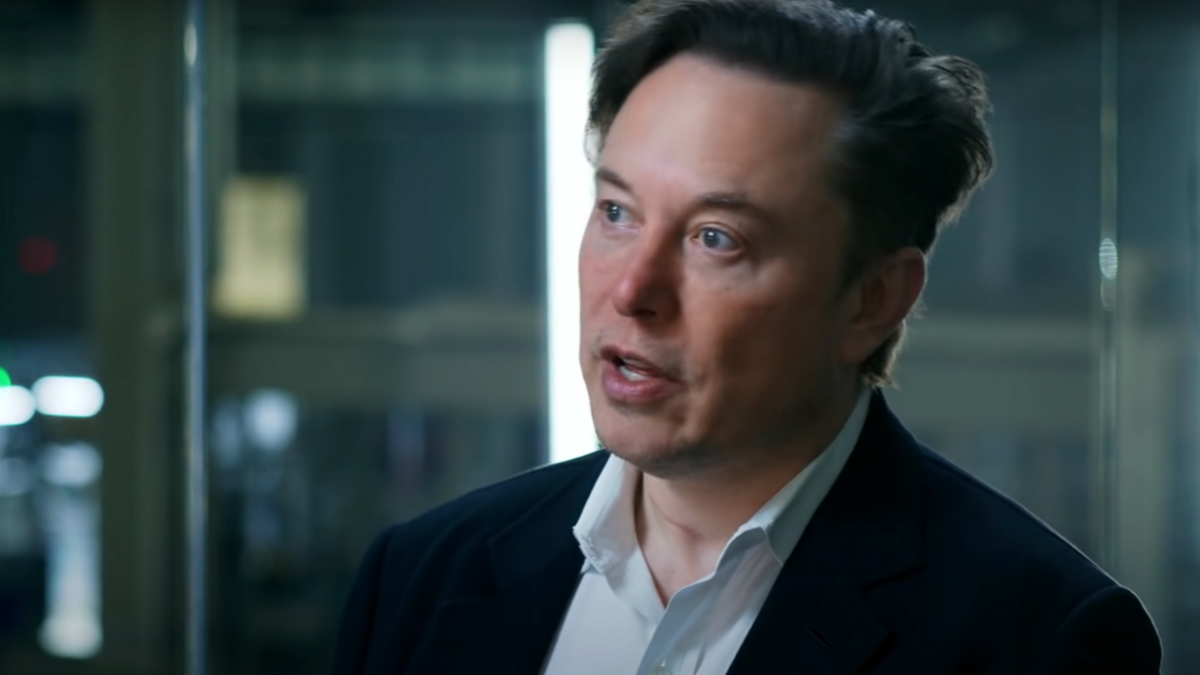
WASHINGTON, DC – JULY 19: (L-R) Federal Communications Commission Chairman Ajit Pai and nominees Jessica Rosenworcel and Brendan Carr prepare to testify before the Senate Commerce, Science and Transportation Committee during their confirmation hearing in the Dirksen Senate Office Building on Capitol Hill July 19, 2017 in Washington, DC. Pai has served as the FCC chairman since January of 2017 and is due for re-appointment. (Photo by Chip Somodevilla/Getty Images)

The Federal Communications Commission (FCC) repealed Obama-era internet regulations Thursday in a 3-2 vote, signaling a culmination to a long-winded and highly heated debate. Net neutrality — an amorphous concept generally meaning all internet traffic should be treated equally — has been fiercely contested in recent years, increasing in intensity over recent months. Specifically, the best way to enforce net neutrality, or ensure that internet service providers (ISPs) don’t partake in unfair practices, is the crux of the policy dispute.

Proponents of the net neutrality rules imposed by former FCC Chairman Tom Wheeler argue that placing the government at the center of the internet is needed to ensure wireless carriers like Comcast and Verizon don’t triage consumers by offering different services with varying speeds, also known as fast lanes. They further contend that the regulations are integral to preventing content owners (think Netflix and Hulu) from paying broadband providers to “cut to the front of the line” at congested nodes of internet traffic, also known as “paid prioritization.” Such corporations could also conceivably favor their own content over that of others in what sometimes is called “vertical prioritization.”

Say, for example, Comcast wanted to encourage its customers to use its On Demand platform for entertainment viewing purposes, it may slow Netflix’s streaming capabilities. Thus far, there has been minimal evidence of ISPs engaging in throttling or paid prioritization. Yet, advocates of the rules argue that it will likely occur prevalently, especially as the internet ecosystem becomes even more complex.

To enforce the rules, Wheeler made the internet a public utility, like water or electricity, under the Title II classification — a fact some supporters of the now-nixed net neutrality regulations are unaware of.

Critics of the net neutrality rules, and thus proponents of the FCC’s decision to repeal the mandate, are generally supportive of a neutral internet, just not in its present state under the Title II category. The onus to police the industry from engaging in anti-competitive behavior has fallen on the Federal Trade Commission (FTC) for years (along with the Department of Justice’s own oversight). The FCC’s repeal plans to restore jurisdictional authority to the FTC.

Even ISPs have said they agree there should be a neutral internet as long as it doesn’t overly burden their ability to operate freely and offer special deals that can benefit consumers.

“Your internet Thursday afternoon will not change in any significant or substantial way from the internet you are experiencing today on Wednesday. Nor will it be different next week, nor will it be different on a Thursday a year from now,” Michael Powell, president and CEO of NCTA, a trade association representing the internet and television association, said in a media briefing. “This isn’t just a hollow promise or pledge — it’s rooted in sound self-interest. I think one of the things that the debate often obscures is the fact that ISPs like net neutrality too … they make a lot of money on an open internet.”

He says that the industry has “discovered over decades of providing these services that an open internet model is much more profitable than a closed internet model, or one that tends to create artificial scarcity,” and believes clamping down on users’ capabilities is bad business.

Powell provides an example of one of the most well known online service providers in history realizing this.

“Ever since AOL abandoned the use of closed models, industrial actors have recognized the folly frequently of that model, and continued to pursue that otherwise,” he said.

He says the industry is quarreling over how the FCC of the past, specifically under the later years of the Obama administration, decided to mandate net neutrality rules specifically through Title II classification and delegate itself enormous power.

Nevertheless, the clamor over the debate has caused some to become so incensed they have resorted to vile, racist actions.  Non-bigoted arguments made in op-eds and from grassroots organizations lack the hateful content but still use extreme — and arguably hyperbolic — language.

“Trump’s FCC Wants To Kill A Free And Open Internet,” reads one.

“Everything Ajit Pai Has Fucked Up in the Last Three Months,reads an irreverently critical headline from Gizmodo.

“White House Endorses FCC Chair Ajit Pai’s Quest To Murder Net Neutrality,” reads another.

The brouhaha has been so steadily raucous — and in most instances elusive of actual nuanced policy debates — that Jon Leibowitz, a Democratic commissioner at the FTC from 2004-2013, felt the need to write an op-ed for The Wall Street Journal (which officially endorsed Pai’s rollback) titled “Everybody Calm Down About Net Neutrality.”

“The rhetoric over net neutrality has reached a fever pitch, with each side predicting dire consequences if opponents get their way,” opened Leibowitz, who was was FTC chairman starting in 2009. “There is a critical need for protections from anticompetitive practices online, but both sides are exaggerating. Just as the sky did not fall when the FCC imposed its current Title II version of net neutrality in 2015, it also won’t fall if the FCC reclassifies broadband as an information service later this week.”

He describes the situation as that of “Chicken Little” because “the FTC, my former agency, is an experienced cop on the beat in this area. It protected internet users from unfair, deceptive and anticompetitive practices for the two decades before the FCC’s 2015 rule, which removed its jurisdiction.”

He also references aforementioned historical events.

“Consider the core principles of net neutrality, which I have long supported: unfettered access of the entire (lawful) internet and transparency about broadband providers’ practices,” wrote Leibowitz in TheWSJ. “The FTC worked on those issues for years. In 2000, it conditioned AOL’s acquisition of Time Warner on the combined company’s commitment to treat competing internet providers operating on its network fairly.”

Pai says his plan, which is supported by the two other Republican Commissioners Michael O’Rielly and Brendan Carr, will satisfy both those core principles due to a mandate that ISPs be transparent with their practices and offerings. That way, the FTC steps in only when it deems necessary.

“Tomorrow is an important day as the FCC will vote on rolling back heavy handed Obama-era Internet regulations,” Pai told The Daily Caller News Foundation on Wednesday.

Critics of the repeal, on the other hand, believe enforcing transparency isn’t completely doable or viable.

Setting aside the extremely violent threats made against Pai, as well as a Republican U.S. congressman, some proponents of the repeal consider the public attention to the issue a good thing.

“Americans cherish the free and open Internet, so the public has rightly expressed a range of views on this topic,” Carr told TheDCNF. “Now, some of the stories trending out there are simply fanning the false flames of fear. Indeed, the apocalyptic rhetoric is surprising, even for Washington standards.”

He says that the move to repeal isn’t “a radical new experiment,” but rather an apt reversion to “the same regulatory framework — Title I — that governed the internet in 2015 and for the prior 20 years.”

Overall, Carr expects the rollback to be a big win for consumers and for innovation, the latter of which will help the former.

Roslyn Layton, a visiting scholar at the American Enterprise Institute who also served on the 2016-2017 FCC Presidential Transition Team, said in a prior interview that the net neutrality rules imposed in 2015 don’t comport with innovation. For example, 5G, the next generation of wireless technology, will allow significantly faster internet and spur further development of technological capabilities that turn former pipe dreams into tangible realities. But this will only occur if net neutrality rules are fully repealed as planned and broadband providers are permitted to expand and invest, including in remote, rural, low-income areas of the country, according to Layton.

Commissioner O’Rielly agrees.

“Chairman Pai’s proposal will pass 3-2 tomorrow. As a result, in the short term, it is unlikely that consumers will notice any changes to their broadband experience,” O’Rielly told TheDCNF on Wednesday. “In the long term, by lifting Title II and removing heavy-handed regulations that inject uncertainty into the market – such as a requirement to come to the FCC to ask permission to innovate – I expect to see more investment and innovation in the broadband industry.”

Democratic FCC Commissioner Jessica Rosenworcel did not respond to TheDCNF’s most recent request for comment by time of publication, and Democratic FCC Commissioner Mignon Clyburn declined to comment for the time being.

The article has been updated to reflect the finalized voting, the results of which were highly expected.

Follow Eric on Twitter

Send tips to eric@dailycallernewsfoundation.org.

EXCLUSIVE: IRS Launches Investigation Of Clinton Foundation


waving flagAuthored by Richard Pollock, Reporter / 07/26/2016

Vote In One and you get them allIRS Commissioner John Koskinen referred congressional charges of corrupt Clinton Foundation “pay-to-play” activities to his tax agency’s exempt operations office for investigation, The Daily Caller News Foundation has learned. The request to investigate the Bill, Hillary and Chelsea Clinton Foundation on charges of “public corruption” was made in a July 15 letter by 64 House Republicans to the IRS, FBI and Federal Trade Commission (FTC). They charged the foundation is “lawless.”

The initiative is being led by Rep. Marsha Blackburn, a Tennessee Republican who serves as the vice chairwoman of the House Committee on Energy and Commerce, which oversees FTC. The FTC regulates public charities alongside the IRS. The lawmakers charged the Clinton Foundation is a “lawless ‘pay-to-play’ enterprise that has been operating under a cloak of philanthropy for years and should be investigated.”

Koskinen’s July 22 reply came only a week after the House Republicans contacted the tax agency. It arrived to their offices Monday, the first opening day of the Democratic National Convention in Philadelphia.

“We have forwarded the information you have submitted to our Exempt Organizations Program in Dallas,” Koskinen told the Republicans.

The Exempt Organization Program is the division of the IRS that regulates the operations of public foundations and charities. It’s the same division that was led by former IRS official Lois Lerner when hundreds of conservative, evangelical and tea party non-profit applicants were illegally targeted and harassed by tax officials.

Blackburn told The DCNF she believes the IRS has a double standard because, “they would go after conservative groups and religious groups and organizations, but they wouldn’t be looking at the Clinton Foundation for years. It was as if they choose who they are going to audit and question. It’s not right.” 

Blackburn said she and her colleagues will “continue to push” for answers on the Clinton Foundation’s governing policies, including its insular board of directors. She said they also will examine conflicts of interest and “follow the money trail.”

“In my opinion, there’s a lack of good governance, there is the appearance of conflicts of interest, and there are continued questions about the financial dealings,” she told The DCNF.

House Republicans singled out Laureate Education and Uranium One as two companies that seemed to have paid lavish sums to the Clintons and later received official government benefits. Laureate hired former President Bill Clinton as “honorary chancellor,” paying him $16.5 million over five years. The Baltimore-based company, which operates for-profit universities in 28 countries, also donated between $1 million and $5 million to the Clinton Foundation, according to the foundation’s web site.

While Bill was collecting a paycheck from the company and his wife was secretary of state, the International Finance Corporation (IFC), an arm of the World Bank, invested $150 million in Laureate. It was the largest-ever single IFC investment to an educational company. The United States government is the largest contributor to the IFC. During that same period, the Department of State’s U.S. Agency for International Development awarded $55 million to the International Youth Foundation. Laureate CEO Douglas Becker is on the foundation’s board of directors. International Youth Foundation, the Clinton Foundation and Laureate jointly participated in foundation programs.

A Laureate spokesman denied the quid pro quo charges: “Allegations of any quid pro quo between Laureate, the International Youth Foundation and the Clintons are completely false,” she told The DCNF, adding, “the IFC’s decision to invest in Laureate had no connection to and was not influenced in any way whatsoever by Hillary Clinton.”Partyof Deceit Spin and Lies

The IFC also awarded $150 million to another company owned by Frank Giustra, a close friend of Bill Clinton. Giustra donated $100 million to create the “Clinton Giustra Enterprise Partnership” within the Clinton Foundation. The funds went to Pacific Infrastructure, a company in which Giustra had a significant financial stake. The company was to build a port and oil pipeline in Colombia that was strenuously opposed by environmental and human rights groups because the pipeline sliced through five indigenous villages and forcibly displaced the tribes.

Giustra also was an owner in Uranium One, a uranium mining company with operations in Kazakhstan and in the western United States. Giustra wanted to sell a share of the uranium business to Russia’s atomic energy agency, which required U.S. approval, including that of Secretary Clinton. The Russian investment was approved.

Blackburn added that it appeared the Clinton Foundation — which was tax-exempt only to construct and manage Clinton’s presidential library — never got IRS approval to become a tax-exempt global organization with operations in Africa, Asia, Latin America, the Pacific and the Caribbean.

“In the Clinton Foundation we have a charity that has never filed the appropriate paperwork,” Blackburn charged.

Charles Ortel, a Wall Street analyst who has been investigating the Clinton Foundation, told TheDCNF that the expansion of the foundation into a global giant was not legally approved by the IRS.

“It’s crystal clear in a review of their application that their purposes were narrowly limited, as they should have been, to a presidential archive in Little Rock, Arkansas,” he said to The DCNF. “End of discussion.”

Blackburn also questions the makeup of the Clinton Foundation’s board of directors, which IRS rules require include independent, arm’s-length board members. The Clinton Foundation board mainly consists of close friends, business colleagues and big donors to the Clintons, as reported by The DCNF.

“All charities need to guard against incestuous relationships which limit their ability to be objective,” the congresswoman said. “In the Clinton Foundation, we see a lack of diversity within their board.”

Uranium One did not respond to The DCNF’s request for comment. The Clinton Foundation also did not respond to The DCNF’s request for comment.

fight Picture1 true battle In God We Trust freedom combo 2

Tag Cloud