Perspectives; Thoughts; Comments; Opinions; Discussions

Posts tagged ‘evangelicals’

Americans’ trust in the church rebounding after seeing record lows: Poll


By Anugrah Kumar, Christian Post Contributor | Monday, July 28, 2025

Read more at https://www.christianpost.com/news/americans-trust-in-the-church-rebounding-after-seeing-record-lows.html?utm_source=Daily&utm_campaign=Daily&utm_medium=newsletter

Getty Images
Getty Images

Public trust in the church as an institution has risen after three years of stagnation, with 36% of Americans now saying they have a great deal or quite a lot of confidence in it. The shift, recorded in Gallup’s latest survey on the topic, marks the first significant increase since 2020.

Confidence in the church had fallen to 31% in 2022 and remained around 32% over the following two years, near its lowest recorded levels. Gallup has tracked this trend annually since 1973, when trust stood at 66%, reaching a high of 68% in 1975.

The only other major rebound in recent decades came in 2001, when post-9/11 sentiment briefly raised confidence to 60%, the last time the institution earned such broad support, as reported by Lifeway Research.

The latest numbers show the American church regaining some ground, matching levels last seen in 2021 when confidence was at 37%. While still far from majority support, the increase is notable across several demographics, particularly among political conservatives.

Among Republicans, trust in the church jumped from 49% in 2024 to 64% this year. That change aligns with broader gains in institutional confidence among Republican voters following the reelection of President Donald Trump.

In contrast, confidence in the church fell slightly among Democrats, from 22% to 21%, and rose modestly among independents from 28% to 30%, according to Gallup.

The divide along party lines follows political patterns in institutional trust. In the same survey, Gallup recorded a 73-point increase in Republican confidence in the presidency, while Democrats’ trust in that office dropped 58 points. Gallup noted that partisan control of institutions plays a central role in public trust, stating that confidence often correlates more with political affiliation than with institutional performance.

Women, younger Americans and lower-income households showed marked increases in trust toward the church over the past year. Women’s confidence rose eight points to 36%, closing the previous gender gap. Americans aged 18 to 37 experienced the largest increase, rising from 26% to 32%. Those aged 38 to 54 increased three points to 31%, and Americans 55 and older grew from 39% to 42%.

Trust among black and Hispanic Americans remained lower than among white Americans, but all groups showed modest gains. Thirty-one percent of black Americans and 33% of Hispanic Americans expressed high confidence in the church, compared to 37% of white Americans. In 2024, the figure for all non-white respondents stood at 30%.

Those with some college education but no degree reported one of the steepest increases — up 11 points to 36%. People earning less than $50,000 per year also grew from 31% to 39% in confidence, while those in households earning more than $100,000 rose from 29% to 36%.

Despite the increase, the church still ranks behind small businesses (70%), the military (62%), and science (61%) in terms of public trust. It falls in the middle tier, alongside the police (45%), higher education (42%), and the medical system (32%).

Institutions with lower levels of confidence than the church include the presidency (30%), banks (30%), public schools (29%), the U.S. Supreme Court (27%), and large tech companies (24%). Newspapers (17%), the criminal justice system (17%), big business (15%), television news (11%), and Congress (10%) occupy the bottom of Gallup’s 2025 ranking.

Gallup’s Megan Brenan noted that institutional trust tends to shift dramatically depending on which party holds power. “… Partisans’ confidence is easily restored when their political party controls the institution,” she wrote. “The flip side, of course, is that the confidence of the other party’s supporters declines when their party loses power.”

The average public confidence across the 14 institutions measured by Gallup remains low. This year, just 28% of Americans reported high trust in these institutions overall, the same as in 2024.

Christians Have Done the Most to Promote Liberty and Equality in America


BY: PAUL KRAUSE | MAY 30, 2023

Read more at https://thefederalist.com/2023/05/30/christians-have-done-the-most-to-promote-liberty-and-equality-in-america/

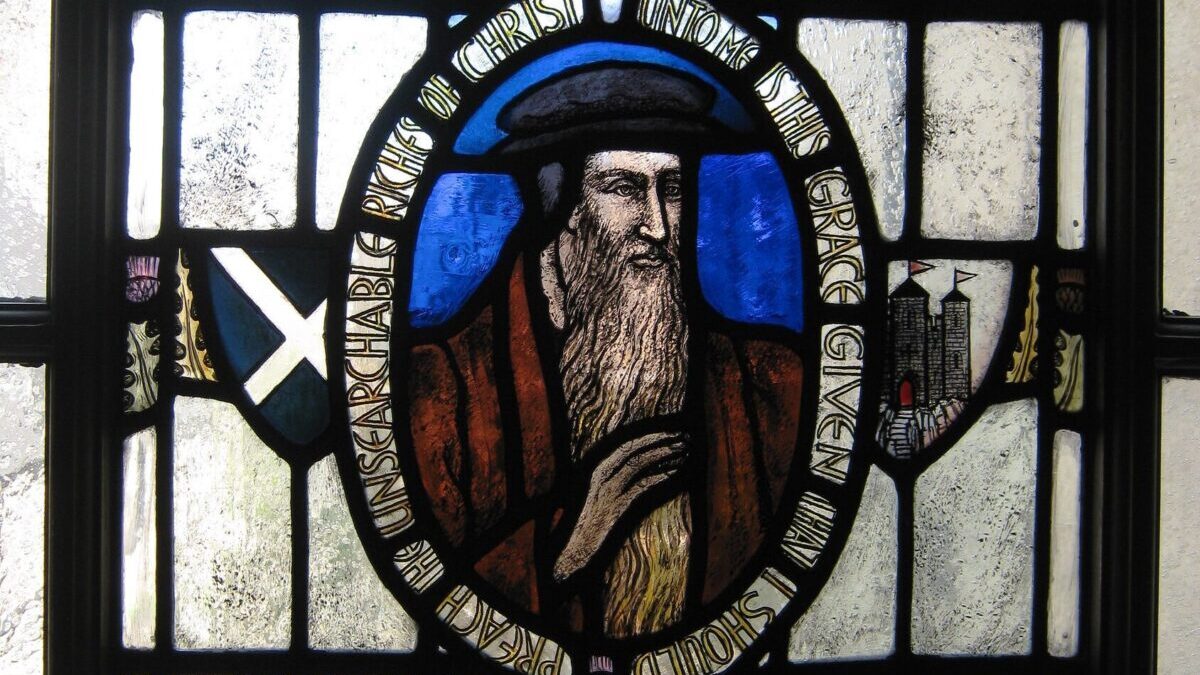
John Knox on stained glass window

Author Paul Krause profile

PAUL KRAUSE

MORE ARTICLES

The most uneducated but wildly popular critique of Christianity in America — especially on social media —  is that Christianity has been a bastion of oppression and intolerance. So much so that the advancements made in liberty and equality over the centuries have come only when America and American leaders have rejected Christianity. In his new book Proclaim Liberty Throughout All the Land, historian Mark David Hall offers a concise corrective to this inaccurate and often ignorant hot-take and popular narrative.

Hatred of Christianity is one of the pillars of the current anti-American ideology that permeates universities and the governing spirit of our ruling elite. Mockery of Christians, especially evangelicals, is also one of the core tenets of progressive culture. This hostility and mockery are unwarranted. Far from being agents of oppression and anti-intellectualism, Hall highlights how Christians have been the bedrock of social activism advancing liberty and equality, as well as promoting education reform, increasing literacy, and publishing newspapers and magazines.

We are all familiar with the asinine proclamations of America as a secular country, that progress, liberty, and equality are atheist ideals, and that committed Christians are the greatest threat to America’s future. Yet, as Hall forcefully rebuts, “it is simply false to claim that liberty and equality have been advanced primarily when America’s leaders embrace progressive manifestations of religion or reject faith altogether.”

Looking at the Puritans, the American Revolution, evangelical social reform prior to the Civil War, and contemporary debates over religious liberty, Hall reveals what used to be well-known: Christianity has been the heart of true social progress and explosive advancements in human liberty, equality, and democratic government.

Puritans and Foundations of Liberty

To celebrate the 200th anniversary of the landing of the Pilgrims, Daniel Webster, one of the most important senators the United States ever had, lauded the Pilgrims and Puritans as champions of the liberty that our “civil and religious liberty” grew from. Today, however, it is common to imagine Puritans as petty tyrants, intolerant theocrats, and bah humbug killjoys.

When I was a student at Yale taking classes on American Puritanism, our professor went to great lengths to de-indoctrinate us of the popular stereotypes of the Puritans. The Puritans were among the most educated people at the time, established our most venerable institutions of higher education, promoted the advancement and discoveries of Enlightenment science, vigorously advocated for public literacy, and enjoyed a good laugh, beer, and sex.

The real history of the Puritans that I learned at Yale is covered again by Hall in his opening chapter deconstructing the lies of secularists and anti-Christian writers and hacktivists portraying the Puritans in a dark and inaccurate light. The Puritans, our author reminds us, “valued natural rights, government by the consent of the governed, and limited government; they were convinced that citizens have a right, and perhaps even a duty, to resist tyrannical government.” When traveling through the lands the Puritans helped to build in the 1830s, Alexis de Tocqueville remarked, “Puritanism was not merely a religious doctrine, but corresponded in many points with the most absolute democratic and republican theories.”

As historians and scholars of Puritanism have long asserted, the democratic ethos of congregationalist church politics helped develop the local customs of self-government in New England that would form the basis for “Democracy in America,” as Tocqueville famously put it. But what about the banishment of certain Baptist dissenters and the Salem witch trials, the critic asks? These events did happen, but they are drastically overblown by contemporary critics.

The banishment of a handful of religious dissenters in Massachusetts was only after these rabble-rousing individuals repeatedly, and deliberately, returned to cause trouble and disturb the peace. Also, Hall reminds us, when compared to Europe, where more than 100,000 men and women were prosecuted as witches and half sentenced to death, only 272 individuals in America were ever charged with witchcraft. The Salem witch trials, which happened in 1692, marked the last execution of a witch in North America. In Europe, witches were still executed as late as 1782.

Completing his overview of the Puritans, Hall writes that the Puritans “created political institutions that were more democratic than any the world had ever seen, and they strictly limited civil leaders by law.”

Rebellion to Tyrants Is Obedience to God

Another one of the popular putdowns of Christianity by its critics (and even some Christians) is that Christianity doesn’t permit rebellion to tyrannical government but supports tyrannical government. In a gross and deeply literalist reading of the Apostle Paul in Romans (somewhat ironic all things considered), these critics assert that because a single passage in the New Testament supposedly teaches obedience to government, which is ordained by God, the American revolutionary patriots rejected Christian teachings and had to utilize secular and Enlightenment arguments to advance the cause of liberty during the American Revolution.

Again, this is patently false, as any decently educated person knows. Kody Cooper and Justin Dyer recently published a superb book, The Classical and Christian Origins of American Politics, addressing this myth in detail. Hall, too, quickly covers the problems of this critique. Highlighting Calvinist theological history (something that these critics have no knowledge of, despite their claims of educated intelligence), covering important names known to students of theology, such as John Ponet, John Knox, George Buchanan, Samuel Rutherford, and even John Cotton (grandfather of Cotton Mather), Hall shows that Christian theological history had come to see rebellion to tyrants as obedience to God and Scripture.

Moreover, most of the popular and patriotic arguments for revolution were not conversant with theorists such as John Locke but with Scripture. The Old Testament, especially, was appealed to by the patriotic clergy in favor of revolution. Christians, far from submitting to tyranny, offered complex theological arguments against tyranny and, therefore, helped formulate a political theology of liberty and equality in the process.

Evangelicals Against Oppression

Perhaps the most common trope that our contemporary anti-Christian elite culture pushes is the tyrannical and ignorant evangelical Christian. This, too, is a stereotype with little basis in history. In fact, many of our best institutions of higher learning were founded by evangelical Christians even if they have since departed from that faith that gave birth to them (Harvard, Yale, and Oberlin, to name a few). The first opponents of slavery and proponents of abolition were the heirs of the Puritans, such as the Rev. Samuel Sewall, who published the first anti-slavery writing in 1700.

Motivated by a vigorous religious faith, the Second Great Awakening was the fire that fueled anti-slavery and abolitionist politics in antebellum America. Men and women of Methodist, Baptist, and congregationalist (Puritan) backgrounds were oftentimes the leading champions of liberty and equality for African-Americans and indigenous Americans. As Hall writes, it was American evangelicals, and especially evangelical women, who most actively “oppos[ed] the evils of slavery and Indian removal.”

During the antebellum years, American evangelicals sought to “work together to help end social evils” and established “thousands of organizations aimed at alleviating suffering and reforming society.” Evangelicals were on the front lines of creating new educational institutions, promoting education reforms to advance public literacy, and establishing newspapers as a means of confronting social evils. Furthermore, Evangelicalism, originally a religious minority grouping, was deeply indebted to religious liberty as the means for its social growth and prominence.

This spirit of religious social reform for liberty led to the contemporary defense of religious liberty as the bedrock on which all liberty and equality before the law stands: “Christian legal organizations have been among the best advocates for religious liberty for all, including citizens who embrace non-Christian faiths,” Hall writes.

Why Christianity Matters to America

In Proclaim Liberty Throughout All the Land, Hall gives us yet another triumphant and important book to correct the polemical, inaccurate, and deeply misleading public presentation of the relationship between Christianity and American politics. Far from the evil bogeyman and religion of oppression that ungrateful critics claim, Christianity has been a positive force for good and the growth of liberty and equality. In fact, America has been best when it has reached into the heart of Christianity for its social reforms and advancement of liberty and equality rather than rejecting Christianity.


Paul Krause is the editor-in-chief of VoegelinView. He is the author of “Finding Arcadia: Wisdom, Truth, and Love in the Classics” (Academica Press, 2023), “The Odyssey of Love: A Christian Guide to the Great Books” (Wipf and Stock, 2021), and contributed to “The College Lecture Today” (Lexington, 2019) and “Making Sense of Diseases and Disasters” (Routledge, 2022).

David French Joins NYT, New Yorker In Bashing Christians On Christmas


Reported by Nathanael Blake DECEMBER 28, 2020

So much for peace on earth and goodwill to men. America’s legacy media elites used the Sunday before Christmas for extra Christian-bashing, with white evangelicals the preferred targets.

Writing in The New Yorker, Michael Luo complained that “white evangelical Protestants, once again, overwhelmingly supported President Trump in the election,” and that “churches, particularly conservative ones, fought lockdown orders and rebuffed public-health warnings.”

New York Times columnist Nicholas Kristof interviewed leftist pastor Jim Wallis, with the conversation quickly turning to accusations that “White evangelicalism has destroyed the ‘evangel.’” At The Dispatch, Time columnist David French concluded that much of the scorn white evangelical Christians receive is deserved. He says the world often “rejects Christians because Christians are cruel.”

Yeah, well, merry Christmas to you too.

To be sure, Christians should humbly accept correction if it is deserved, even when the word of reproof is delivered by pagans. But the above writers’ broad indictments against American evangelicals do not withstand scrutiny. Although each criticism has particular errors, they are united by two shared mistakes. The first is a failure to account for differences of denomination and devotion. Lumping Pentecostals, Presbyterians, and prosperity-gospel preachers together is sloppy, as is neglecting to distinguish between those who are committed churchgoers and those who are only nominally evangelical.

It might be said that these varieties of white evangelicals have in common an overwhelming political support for Donald Trump, but this retort only highlights the second error shared by these writers: the assumption that voting for Trump was necessarily immoral.

It is easy to pick out Trumpian words and deeds that are not compatible with the gospel. It is also easy to do the same with his Democratic opponents and their policies. Asserting that voting for Trump is a moral stain on evangelicals, without weighing the alternatives, presumes what is in question. This error is shared by each writer (and Kristof’s interview subject), but each finds some unique ways to express it.

Luo, for instance, unfavorably compares the response of today’s Christians to the pandemic with Christians’ response to past plagues. But although he is correct that reckless churches should be rebuked, he makes no effort to distinguish between the reckless and those cautiously meeting in person, or to value preserving the gathering of believers. Nor does he quantify how many churches are foregoing precautions, or show how many of these congregations fall under the “white evangelical” category.

He suggests that, to eliminate risk, Christians should forgo all in-person meeting, and he dismisses the religious liberty claims that have been raised against capricious government restrictions on churches. But if the casinos, strip clubs, and abortion clinics are getting better treatment than churches, then anti-Christian discrimination has replaced public health policy.

Furthermore, even from a secular public health perspective, eliminating church services would do more harm than good, as churchgoing seems to have been essential to helping many Americans make it through the difficulties of this year. We are physical beings, not disembodied minds who can live in the cloud indefinitely.

Meanwhile, Kristof and his interview subject Wallis presume that technocratic welfare-statism is the obvious way to care for the poor and oppressed, so they dismiss anyone who disagrees with them as bad Christians. This complacent assumption of moral and political rectitude precludes them from understanding those they condemn.

Thus, although Kristof recently wrote a column of questions about Christians and abortion, he seems to have ignored the many responses explaining its paramount importance as a political issue for conservative Christians. His indifference is particularly notable at Christmas, because Luke’s advent narrative emphasizes the humanity of both the unborn John the Baptist and of Jesus. And if the unborn are human, then Christians cannot support the party of abortion on demand.

Kristof and Wallis’s reflexive acceptance of the left’s shibboleths of the moment also leads to ridiculous anachronisms such as declaring Jesus a “person of color.” This conceptual colonization of first-century Israel by modern American racial concepts is odious and misleading—“person of color” makes no sense in that context.

It is, indeed, worse than the depictions of a blond, blue-eyed Jesus (are there many of those?) that Wallis complains about. Portrayals of Jesus and other biblical figures in local style and appearance have been a common, if inaccurate, artistic practice across centuries and cultures.

Race is also central to French’s condemnation of his fellow white evangelicals. In his telling, they are guilty of “some outright racism” but perhaps even more of being seduced by a “Christian nationalism” that “will always minimize America’s historic sins and the present legacy (and reality) of American racism.” French is, for instance, upset that more white evangelicals do not believe that racism is an “extremely” or “very serious” threat to “America and America’s future.”

But even if white evangelicals are wrong in their assessment of the depth and danger of America’s racial problems, this is not enough to condemn them as cruel. It is, in fact, precisely the sort of issue on which Christians may reasonably disagree.

Furthermore, the data French cites does not account for crucial factors such as whether respondents are regular churchgoers or merely culturally evangelical. In addition, French ignores education and class in his analysis, even though the study he relies on emphasizes the importance of these factors in understanding the politics of white evangelical subgroups.

French’s article, like the others, is mostly an impressionistic interpretation of white evangelicalism in America. By their reckoning, white evangelicals have become reckless plague-bearers with no regard for the poor and oppressed, and their cruelty rightly earns them the world’s opprobrium.

There may be some individuals who match this grim depiction, but as a general description of tens of millions of evangelicals, it is obviously untrue. Look around the country and evangelical churches are holding services with masks, distancing, and lots of hand sanitizer. Evangelicals, both individually and corporately, are caring for those in need in their communities and around the world, and treating people of all races with dignity and respect.

In this Christmas season, French, Kristof, and Luo should stop building evangelical strawmen to burn in effigy. Instead, they, like all of us, should contemplate and rejoice in the miracle of God become man to save His people from their sins.

ABOUT THE AUTHOR:
Nathanael Blake is a Senior Contributor at The Federalist. He has a PhD in political theory. He lives in Missouri.

Pastors witnessing sexual revolution devour the sheep


Reported by Steve Jordahl (OneNewsNow.com) | Friday, November 16, 2018

pastor's office (sign)Sexual dysfunction is rampant in our culture and a new study suggests the Church has not been spared.

Four out of five pastors have counseled church members or their own staff about marital infidelity last year, and more than 70 percent were approached by those dealing with pornography according to a report by The Brushfires Foundation.

The newly-released study, “Sexuality and the Church in America I,” was written by Brushfires founder Daniel Weiss in collaboration with the Barna Group. That well-known polling organization surveyed 410 pastors across the country in late 2017 to learn about sexual issues in their own churches.

church pews“I think we were impressed by how many problems pastors are encountering over the course of a year,” Weiss tells OneNewsNow. “Really, we had no way of knowing that in the past and this research is groundbreaking in that regard.”

In all the study looked at 18 different sexual dysfunctions ranging from same-sex attraction and pornography addiction to sexting and sexual abuse.

The average pastor contends with eight of these issues in a year but the majority of pastors feel unprepared or unqualified to offer help.

man using computer in dark room“We don’t expect that they’re going to be experts on all of these issues,” he observes, “and it just shows the need for us to bring these topics more out into the open in our churches.”


Weiss says his study shows the need for churches to start talking about these difficult issues and to bring in resources to help with the healing.

“We’d like to propose a better way forward where the church approaches these issues in kind of a sexual discipleship manner,” he says, “where it’s not just about those who are struggling but about the entire community learning more about these issues and coming together to support those that are struggling.”

The Church can also be a huge help to those outside its walls who have nowhere else to go for real answers, he adds.

ABOUT THE AUTHOR: Steve Jordahl

I have been a school teacher and administrator serving Minnesota and abroad. I have started and supported American International schools and programs along with being a teacher and administrator in…

SORRY, CHRISTIANS: The Bible Fails ‘Inclusive Language’ Standards At Evangelical College


Reported by Photo of Eric Owens Eric Owens | Education Editor | 9:09 AM 03/17/2017

‘art’ by Eric Owens

An evangelical Christian university in Minnesota is encouraging its professors to stop using words with masculine connotations — such as “man” and “mankind”because those words aren’t sufficiently “inclusive.” Bethel University in St. Paul is the school, reports Campus Reform.

The document asking faculty members to avoid using masculine terminology is entitled “Language is a Powerful Tool.” “To be clear in our Christian witness, the Bethel faculty encourages the use of inclusive language,” the document explains.

Professors at 6,000-student Bethel University should “avoid using masculine terms to refer to people who may be either male or female.” They should “employ inclusive language and images when speaking about or addressing human beings in academic work, public discourse, classroom discussion, college documents and publications and in worship experiences.” “Use a substitute for words like ‘man’ or ‘mankind’” when making general references to people, the guide says. “English is sometimes awkward” but “words like ‘humans,’ ‘humanity,’ ‘beings,’ ‘people” and ‘all’ are often adequate substitutes.”

Obviously, Bethel University’s guidance for using inclusive language in “documents and publications and in worship experiences” runs into considerable difficulty in any encounter with the Bible, the collected sacred texts of Christianity.

In Genesis 1:26, for example, the New International Version of the Bible reports God as saying, “Let us make mankind in our image, in our likeness.”

In Genesis 1:27, the New International Version relates this information: “So God created mankind in his own image, in the image of God he created them; male and female he created them.”

The older King James Version of the Bible presents even more problems for “inclusive” language. For example, that Bible’s version of Genesis 1:25 reads, in part: “And God made the beast of the earth after his kind.”

The New Testament also creates thorny problems for advocates of “inclusive” gender language. For example, Matthew 18:11 reads: “For the Son of man is come to save that which was lost.”

The very exact phrase “son of man” interweaves in a very critical way throughout several Old Testament and New Testament books, including Ezekiel, Daniel, the Gospels, the Acts of the Apostles and Revelation.

In any case, Bethel University’s faculty language guide also urges professors to avoid several phrases including “man and wife.” Other sections of the guide address “inclusive language” as it relates to age, race, disabilities and social class. Bethel University’s faculty committee on family and gender equity created the school document on “inclusive” language. The document repeatedly stresses that its advice is voluntary and not mandatory.

“Our goal is to encourage a humble and Christ-like use of language, not to fetter specific disciplines,” the document explains.

A single year of tuition, fees and room and board at Bethel University currently costs $46,550.

Follow Eric on TwitterLike Eric on Facebook. Send education-related story tips to erico@dailycaller.com.

Trump delivers for religious right


waving flagAuthored

Religious conservatives’ gamble on President Trump is paying off.

The last several days have brought a slew of victories for evangelicals, many of whom set aside their reservations about Trump to back him during the presidential campaign.

From the nomination of Neil Gorsuch to the Supreme Court, to Trump’s affirmation of support for allowing tax-exempt churches to engage in politics, to the appointment of Liberty University President Jerry Falwell Jr. to an education task force, evangelicals are seeing the new president quickly deliver on a number of fronts.

“I never doubted his sincerity or his commitment. There were, obviously, those who did. Not just in the evangelical community or in the faith community, but more broadly,” said Ralph Reed, the chairman of the Faith & Freedom Coalition.

“Certainly even for those doubters, this week has laid any of those concerns to rest.”

Trump, a thrice-married business mogul who once expressed support for abortion rights, hardly fit the mold of a conventional conservative candidate. Some evangelicals were hesitant to fully embrace Trump, particularly after a leaked “Access Hollywood” video showed him bragging about using his celebrity to get away with touching women without their consent. He dismissed the tape as mere “locker room talk.”

Yet Trump won the voting bloc decisively in the election, with 80 percent of white evangelicals supporting him over Hillary Clinton, according to an exit poll conducted by NBC News.

Trump is repaying their support in spades, with promises to repeal the Johnson amendment, which prevents tax-exempt religious organizations from engaging in political activity, and his nomination of a conservative jurist to the Supreme Court.

“I think if you really go back and you look at the campaign, it’s undeniable. He received an astonishing 81 percent of the evangelical vote in no small measure because of ironclad commitments he made that were explicit and unambiguous in areas of policy and personnel,” Reed said.

Religious conservatives in Congress are eager to capitalize on having an ally in the White House. On the same day Trump reaffirmed support for getting rid of the Johnson amendment, Rep. Jody Hice (R-Ga.) and House Majority Whip Steve Scalise (R-La.) introduced legislation to do just that.  While Trump declared he’d “totally destroy” the law, Hice and Scalise’s bill would allow only political activity by tax-exempt religious organizations in limited circumstances, though they would still be banned from giving to campaigns.  Hice told The Hill he expects his bill to come up for a vote in the House sometime in the near future, though a specific timeline hasn’t been finalized.

“We have great momentum,” Hice, a Southern Baptist pastor, said of Trump’s support. “I think that this is going to send a great, positive message to the evangelical community throughout the country that strongly supported him.”

It hasn’t been entirely smooth sailing, however. Trump this week announced he’d uphold an Obama-era executive order prohibiting federal contractors from discriminating against workers on the basis of sexual orientation.  Former President Obama’s 2014 order stirred fierce debate in the House last year when Rep. Sean Patrick Maloney (D-N.Y.) offered amendments to annual spending bills to ensure the order’s enforcement. Its adoption caused one spending bill to collapse on the floor, in large part because of Republicans who opposed the amendment.

Trump, the first GOP presidential candidate to mention the LGBTQ community at a party nominating convention, made a point of emphasizing his support for gay rights when announcing he’d keep Obama’s order in place.

“President Trump continues to be respectful and supportive of LGBTQ rights, just as he was throughout the election,” the White House said in a statement.

Conservatives expressed disappointment in Trump’s move, though they are still hopeful he will sign an executive order to ban retaliation against religious groups and businesses opposed to gay marriage.

“Trump can and should protect all Americans from violence and oppression, but he should not go along with Obama’s policies of elevating ‘sexual orientation and gender identity’ to a protected class,” Heritage Foundation senior research fellow Ryan Anderson wrote.

But it’s Trump’s selection of Gorsuch for the Supreme Court that has generated the most excitement among religious conservatives.  One of Gorsuch’s most notable rulings was siding with Hobby Lobby and the Little Sisters of the Poor in 2013, when they challenged a provision in the healthcare law requiring them to include contraceptive coverage in their employees’ insurance plans. The Supreme Court eventually ruled in a 5-4 decision a year later that closely held for-profit corporations should be exempted for the contraceptive mandate if its owners have religious objections.

“Things that he promised, he followed through on. The biggest one being this past week with the Supreme Court,” said Rep. Doug Collins (R-Ga.), another Southern Baptist pastor serving in Congress.

“I mean, when you look at that from all rounds and all sides, especially from the professional conservative point of view, the court pick was the one that I think helped voters come through [for] Trump.”

kick-em-out-of-office

Tag Cloud