Perspectives; Thoughts; Comments; Opinions; Discussions

Posts tagged ‘ELECTION INTEGRITY PARTNERSHIP’

Why CISA’s Censorship and Election Interference Work Is The ‘Most Insidious Attack on American Democracy’


BY: M.D. KITTLE | MARCH 05, 2024

Read more at https://thefederalist.com/2024/03/05/why-cisas-censorship-and-election-interference-work-is-the-most-insidious-attack-on-american-democracy/

Cyber security illustration of lock on grid as shadowy characters pass.

Author M.D. Kittle profile

M.D. KITTLE

MORE ARTICLES

West Virginia Secretary of State Mac Warner last month eviscerated the Big Brother censorship operation known as the Cybersecurity and Infrastructure Security Agency (CISA).

“When we have our own federal agencies lying to the American people, that’s the most insidious thing that we can do in elections,” the election integrity champion told officials from the FBI and CISA on a panel at the winter meeting of the National Association of Secretaries of State (NASS) in Washington, D.C., according to Wired’s Eric Geller. While Geller did his best to defend the federal agency — under the suggestive headline, “How a Right-Wing Controversy Could Sabotage US Election Security” — its history of censorship and election interference validate Warner’s concern.

The agency’s work, particularly the extracurricular business CISA has conducted in recent years, has been rightly criticized for its massive overreach. A report released last fall by the House Judiciary Committee and the Select Subcommittee on the Weaponization of the Federal Government details just how CISA “Colluded With Big Tech And ‘Disinformation’ Partners To Censor Americans.”

“Although the investigation is ongoing, information obtained to date has revealed that the Cybersecurity and Infrastructure Security Agency (CISA)—an upstart agency within the Department of Homeland Security (DHS)—has facilitated the censorship of Americans directly and through third-party intermediaries,” the congressional report states. 

The report goes on to assert that the shadowy agency has “metastasized into the nerve center of the federal government’s domestic surveillance and censorship operations on social media.” 

‘Platforms Have Got to Get More Comfortable With Gov’t’

Launched in 2018, CISA was supposed to be “an ancillary agency designed to protect ‘critical infrastructure’ and guard against cybersecurity threats,” the report notes. By 2020, the agency was “routinely” targeting what CISA officials claimed to be “disinformation” on social media. A year later, the agency had established a formal team devoted to what it decided was “misinformation,” “disinformation,” and “malinformation,” the latter of which CISA defines as “information based on fact, but used out of context to mislead, harm, or manipulate.” In other words, factual information that is problematic to the Biden regime. 

CISA’s parent agency DHS launched the much-ridiculed and ultimately disbanded “Disinformation Governance Board” in 2022, to streamline the work of colluding with social media providers to shut down speech the government didn’t like or found inconvenient. 

A federal lawsuit filed by then-Missouri Attorney General Eric Schmitt, now a U.S. senator, uncovered troubling conversations between the Biden administration and private companies about the pathways for removing information the government deemed false or misleading. A federal judge in a ruling last year barred the Biden administration from its censorship work, although the U.S. Supreme Court stayed the injunction when it took up the case.

Leaked documents obtained by The Intercept show that Microsoft executive and former DHS official Matt Masterson texted CISA director Jen Easterly in February 2022, saying “Platforms have got to get comfortable with gov’t. It’s really interesting how hesitant they remain.”

But it seems Big Tech was getting pretty comfortable with the Biden administration’s puppet enforcer. The Intercept report showed, among other alarming revelations, that Facebook operated a portal where Homeland Security could report allegations of “disinformation.”  CISA also has worked in concert with the Election Integrity Partnership and Virality Project, which is accused of conspiring with state, local, and federal government officials to trample the First Amendment rights of social media users, according to a class-action lawsuit

“But the EIP did not act alone. In fact, the EIP was created ‘in consultation’ with the Department of Homeland Security’s Cybersecurity and Infrastructure Security Agency, or CISA, with the idea for the EIP allegedly originating from CISA interns who were Stanford students,”  The Federalist’s Senior Legal Correspondent Margot Cleveland wrote in May. 

‘Only a Matter of Time’ 

Facing more public outrage over its unconstitutional actions, the CISA audaciously insisted it merely plays an “informational” role. 

As the congressional report notes: 

  • CISA is “working with federal partners to mature a whole-of-government approach” to curbing alleged misinformation and disinformation.
  • CISA considered the creation of an anti-misinformation “rapid response team” capable of physically deploying across the United States. 
  • CISA moved its censorship operation to a CISA-funded non-profit after CISA and the Biden Administration were sued in federal court, implicitly admitting that its censorship activities are unconstitutional.
  • CISA wanted to use the same CISA-funded non-profit as its mouthpiece to “avoid the appearance of government propaganda.”  

The agency’s advisory committee, according to the report, worried that it would be “only a matter of time before someone realizes we exist and starts asking about our work.” Incidentally, the advisory committee created a “Protecting Critical Infrastructure from Misinformation & Disinformation” subcommittee whose members included Vijaya Gadde — Twitter’s former chief legal officer who was “involved in censoring [the New York] Post’s Hunter Biden laptop” story. Gadde was also “behind the decision to permanently ban former President Trump from Twitter.”

‘Most Insidious Attack on American Democracy’

Geller’s Wired piece took aim at Warner, West Virginia’s outspoken secretary of state who is making a run for governor. At last month’s secretaries of state meeting, Warner “lambasted” CISA and FBI officials for “what he said was their agencies’ scheme to suppress the truth about US president Joe Biden’s son Hunter during the 2020 election and then cover their tracks,” Geller wrote, as if he is not privy to the same public documents and testimony confirming Warner’s assertions. In Geller’s account, the FBI was merely advising Twitter and Facebook to be on the lookout for Russian disinformation.

But how do you square the intelligence community’s “advisory” role after learning Joe Biden’s 2020 campaign prompted a former acting CIA director to “help Biden” by leading 50 colleagues to sign a letter spreading the false claim that damning emails from Hunter Biden’s laptop — published by the New York Post — were Russian disinformation? And all of that just weeks before the election.

Perhaps not surprisingly, the FBI and CISA officials did not respond to Warner’s charges and the meeting quickly went on, Geller reported before he quickly attempted to establish Warner as a dreaded “election denier,” noting that the secretary of state “attended an election-denier rally after Biden’s 2020 victory.” 

But Warner is no conspiracy theorist. The West Point graduate served nearly a quarter century in the U.S. Army and then worked with the State Department in Afghanistan, according to his bio. Warner knows about security threats. 

CISA’s activities are “the most insidious attack on American democracy that I know of in U.S. history,” Warner told The Federalist in an interview last week. He called the targeting and censoring of state-defined “disinformation” a “psychological operation against the American people” that is “as bad as it gets.” 

Warner said he has spoken to CISA officials multiple times but that they have yet to heed his calls for an after-action report on the 2020 election — to truly find out what went right and what went wrong. 

A Warning

It appears most state elections officials don’t want to deal with the actual threat of the Biden administration’s disinformation and political silencing campaign. 

“They know they will be lambasted by mainstream press,” Warner said. No one wants to be hit with the “election denier” label so effectively applied by the accomplice media. “It’s not easy, not politically expedient for them.”

Warner is one of the few speaking out against CISA and pulling away from involvement with the agency. But Geller worries Warner’s conservative colleagues will join him in breaking ties with CISA, as conservatives in Congress work to cut the budget of the abusive agency.  

“It remains unclear how many of Warner’s colleagues agree with him. But when WIRED surveyed the other 23 Republican secretaries who oversee elections in their states, several of them said they would continue working with CISA,” Geller wrote. 

“But others who praised CISA’s support also sounded notes of caution,” he added. 

They need only look at CISA’s record and its rhetoric in the agency’s brief existence to know that Warner’s warnings aren’t merely the stuff of a “right-wing controversy.” 

“One could argue we’re in the business of critical infrastructure, and the most critical infrastructure is our cognitive infrastructure, so building that resilience to misinformation and disinformation, I think, is incredibly important,” CISA director Jen Easterly said at 2021’s RE:WIRED conference.

Apparently running roughshod over the First Amendment isn’t warning enough. 


Matt Kittle is a senior elections correspondent for The Federalist. An award-winning investigative reporter and 30-year veteran of print, broadcast, and online journalism, Kittle previously served as the executive director of Empower Wisconsin.

Report: Feds Coordinated Broad Censorship of Americans on Election, COVID, More


By: Casey Harper @CaseyHarper33 / November 07, 2023

Read more at https://www.dailysignal.com/2023/11/07/report-reveals-how-federal-government-censored-social-media/

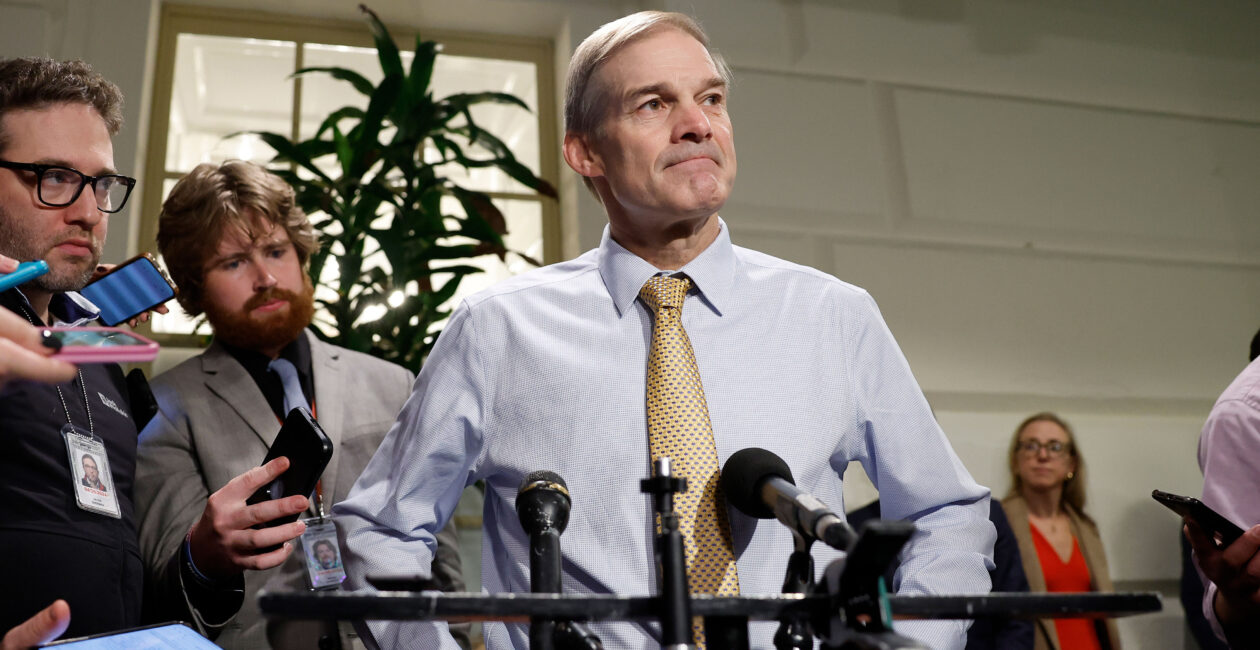
“The federal government, disinformation ‘experts’ at universities, Big Tech, and others worked together through the Election Integrity Partnership to monitor & censor Americans’ speech,” Rep. Jim Jordan, pictured Oct. 20, posted on X. (Photo: Anna Moneymaker/Getty Images)

The federal government coordinated with an array of entities to censor Americans’ speech online, a newly released report from the Select Subcommittee on the Weaponization of the Federal Government shows. In particular, the report shows that the Department of Homeland Security worked with Stanford University and the Global Engagement Center, which works across agencies but sits under the State Department, to create a streamlined process for identifying and censoring posts.

These groups formed the Election Integrity Partnership, which the report shows worked to censor and limit certain posts going into the 2020 presidential election. The report argues the federal government was “heavy handed” with universities and social media companies and censored conservative viewpoints far more often than liberal points of view under the guise of combating disinformation.

“Created in the summer of 2020 ‘at the request’ of the Cybersecurity and Infrastructure Security Agency (CISA), the EIP provided a way for the federal government to launder its censorship activities in hopes of bypassing both the First Amendment and public scrutiny,” the report said.

The report lays out how EIP analysts searched social media sites for undesirable content.

From the report:

The EIP’s misinformation ‘analysts’ next scoured the internet for additional examples for censorship. If the submitted report flagged a Facebook post, for example, the EIP analysts searched for similar content on Twitter, YouTube, TikTok, Reddit, and other major social media platforms. Once all of the offending links were compiled, the EIP sent the most significant ones directly to Big Tech with specific recommendations on how the social media platforms should censor the posts, such as reducing the posts’ ‘discoverability,’ ‘suspending [an account’s] ability to continue tweeting for 12 hours,’ ‘monitoring if any of the tagged influencer accounts retweet’ a particular user, and, of course, removing thousands of Americans’ posts.

This report is the latest in a series of reports, including the “Twitter Files,” which show the federal government pressured private and nonprofit organizations to quiet certain viewpoints. Much of this push for censorship was fueled by concerns that former President Donald Trump was propelled to the White House by misleading news and content on social media sites.

House Speaker Mike Johnson, R-La., sparked headlines last month when he said that Twitter was an “FBI subsidiary” before billionaire Elon Musk took over. Johnson raised concerns again after this latest report.

Sen. Rand Paul, R-Ky., pointed to the report as well, pushing for his legislation, the Free Speech Protection Act. Paul said that under this legislation, which he co-wrote with Rep. Jim Jordan, R-Ohio, the government “will be stripped of its ability to shroud its actions in secrecy and infringe upon the First Amendment rights of the American people.”

This latest report includes documents obtained from Standard that show examples of the censorship and the coordination between federal and private entities.

“The American people deserve to know if they were targeted by their own government and so-called ‘disinformation’ experts,” Jordan, who leads the weaponization committee, wrote on X.

This article was originally published on The Center Square.

Lawsuit Shows Government’s Hands All Over The Election Integrity Partnership’s Censorship Campaign


BY: MARGOT CLEVELAND | MAY 03, 2023

Read more at https://www.foxnews.com/us/atlanta-active-shooter-situation-leaves-multiple-people-injured-police-say

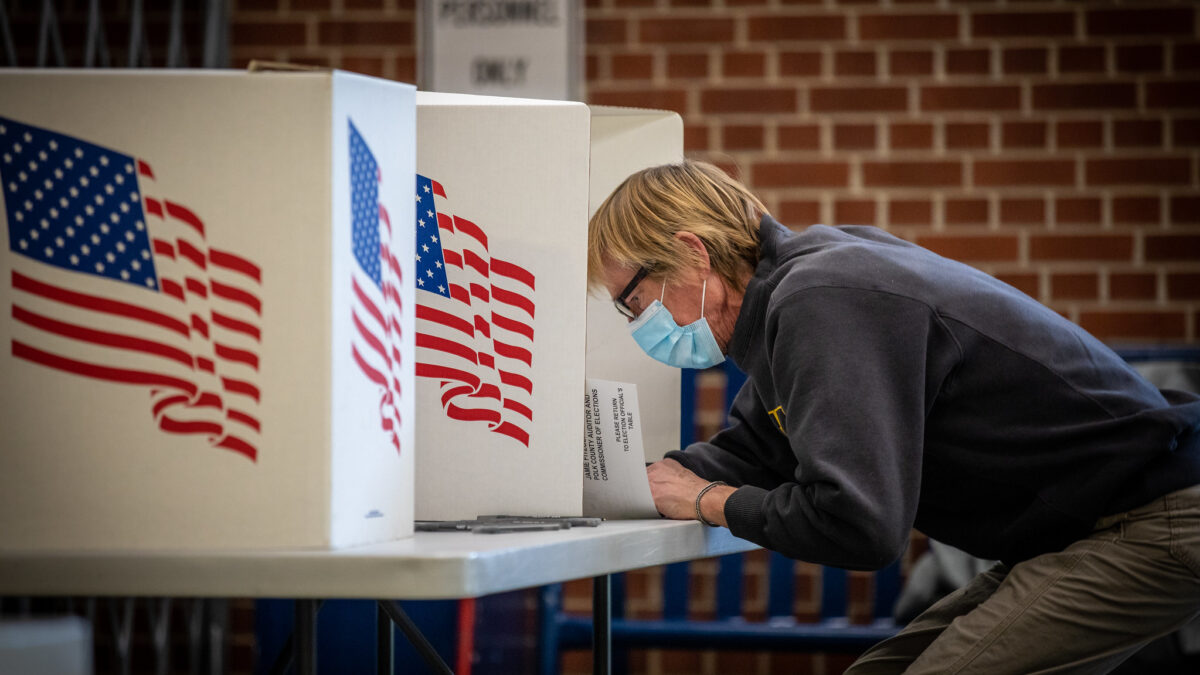
man wearing mask votes in 2020 election
While private platforms did the censoring, the complaint establishes it was the government that initiated and pushed for that censorship.

Author Margot Cleveland profile

MARGOT CLEVELAND

VISIT ON TWITTER@PROFMJCLEVELAND

MORE ARTICLES

The members of the Election Integrity Partnership and Virality Project conspired with state, local, and federal government officials to violate the First Amendment rights of social media users, a class-action lawsuit filed on Tuesday in a Louisiana federal court alleged.

Over the course of the 88-page complaint, the named plaintiffs, Gateway Pundit founder Jim Hoft and Co-Director of Health Freedom Louisiana Jill Hines, detailed extensive direct and indirect government involvement with the defendants’ censorship activities, allegedly making the private entities and individuals “state actors” for purposes of the Constitution. 

Here are the highlights of the government’s alleged connection to the defendants’ censorship activities.

A Bit About the Defendants

Formed in 2020, the Election Integrity Partnership (EIP) describes itself as a partnership “between four of the nation’s leading institutions focused on understanding misinformation and disinformation in the social media landscape: the Stanford Internet Observatory, the University of Washington’s Center for an Informed Public, Graphika, and the Atlantic Council’s Digital Forensic Research Lab.” In early 2021, the same four entities expanded their focus to address supposed Covid-19 “misinformation” on social media, calling the effort the “Virality Project.”

In both the run-up to the 2020 election and since then, EIP and the Virality Project pushed Big Tech companies to censor speech. Excepting the University of Washington, which was not named in the class-action lawsuit, the institutions involved in the EIP and Virality Project are private entities, and the individuals running those institutions are non-governmental actors. Thus, without more, the censorship efforts would not implicate the First Amendment.

The Alleged Conspiracy

But there was more — much more — a conspiracy between the defendants, according to the complaint. Those defendants include the Stanford Internet Observatory and the Leland Stanford Junior University and its board of trustees, the latter two of which are allegedly legally responsible for the observatory’s conduct; Alex Stamos, the director of the Stanford Internet Observatory; Renée DiResta, the Stanford Internet Observatory’s research manager; the Atlantic Council; the Atlantic Council’s Digital Forensic Research Lab; and Graham Brookie, the senior director of the Atlantic Council’s DFRLab. 

In support of the alleged conspiracy, the plaintiffs quoted at length the defendants’ own words, much of it culled from the EIP’s post-election report, but also pulled from interviews and its webpage. Here we see the EIP boast of its “coalition” that exchanged information with “election officials, government agencies,” and “social media platforms.” “The work carried out by the EIP and its partners during the 2020 U.S. election,” the defendants stressed, “united government, academia, civil society, and industry, analyzing across platforms, to address misinformation in real time.” 

The united goal, according to the complaint, was censorship. This is clear from Stamos’ Aug. 26, 2020, comment to The New York Times, when the Stanford Observatory director explained that the EIP sought to collaborate with Big Tech to remove “disinformation.” The EIP further explained that it saw itself filling the “critical gap” of monitoring supposed election “misinformation” inside the United States — a gap the EIP recognized existed because the First Amendment prevents the government from censoring speech.

But the EIP did not act alone. In fact, the EIP was created “in consultation” with the Department of Homeland Security’s Cybersecurity and Infrastructure Security Agency, or CISA, with the idea for the EIP allegedly originating from CISA interns who were Stanford students. The CISA then assisted Stanford as it sought to “figure out what the gap was” the EIP needed to address. Two weeks before EIP officially launched, Stanford also met “with CISA to present EIP concept.” 

Government Collaboration with EIP

The government continued to work with EIP after its formation. Both federal and state-level government officials submitted “tickets” or reports of supposed misinformation to EIP, which would then submit them to the social media companies for censorship. EIP’s post-election report identified government partners who submitted tips of misinformation, including CISA, the State Department’s Global Engagement Center (GEC), and the Elections Infrastructure Information Sharing and Analysis Center, the last of which received reports of disinformation from state and local government officials. EIP would then forward the complaints to the social media companies for censorship. 

CISA also helped EIP by connecting it with election-official groups, such as the National Association of Secretaries of State and the National Association of State Election Directors, both of which represent state and local government officials. CISA facilitated meetings between EIP and those groups as well, leading to censorship requests fed to the EIP and then forwarded to social media companies.

The government’s entanglement with the censorship efforts of EIP was more pronounced when it came to the Center for Internet Security because CISA both funded the Center for Internet Security and directed state and local election officials to report supposed misinformation to it. CISA further connected the Center for Internet Security to EIP, resulting in the former feeding the latter a substantial number of misinformation tickets. EIP then pushed those censorship requests to social media companies.

Later, as the 2020 election neared, CISA coordinated with the Center for Internet Security and EIP “to establish a joint reporting process,” with the three organizations agreeing to “let each other know what they were reporting to platforms like Twitter.” 

Overlapping Personnel

The individuals responsible for EIP, including Stamos, DiResta, and Kate Starbird, all “have or had formal roles in CISA.” Both Stamos and Starbird are members of CISA’s Cybersecurity Advisory Committee, while DiResta is a “Subject Matter Expert” for a CISA subcommittee. 

Additionally, two of the six CISA members who “took shifts” in reporting supposed misinformation to Big Tech companies apparently worked simultaneously as interns for CISA and at the Stanford Internet Observatory and EIP, reporting “misinformation” to the social media companies on behalf of both CISA and EIP. In fact, the two interns reported “misinformation” to platforms on behalf of CISA by using “EIP ticket numbers.” One of the CISA interns also forwarded a detailed report of supposed “misinformation” from the Election Integrity Partnership to social media companies using CISA’s reporting system. 

Coordination with Virality Project

As noted above, after the 2020 election, the Election Integrity Project replicated its censorship efforts to combat so-called Covid “misinformation” through the Virality Project. The Virality Project used the foundations established with the government’s assistance for the EIP and continued to collaborate with government officials and Big Tech.

The Virality Project boasted of its “strong ties with several federal government agencies, most notably the Office of the Surgeon General (OSG) and the CDC.” The Virality Project also identified “federal health agencies” and “state and local public health officials” as “stakeholders” who “provided tips, feedback and requests to assess specific incidents and narratives.” And as was the case with the Election Integrity Project, the Virality Project flagged content for censorship by social media companies, including Twitter, YouTube, Facebook, and Instagram, through a ticket system.

While it was those private platforms that censored Hoft, Hines, and an untold number of other Americans, the class-action complaint establishes it was the government that initiated and pushed for that censorship, while hiding behind EIP and other organizations. And because EIP allegedly conspired with the government to silence the plaintiffs’ speech, the class-action lawsuit seeks to hold it liable too. 

The defendants have some time before responding. When they do, they’ll likely seek to have the lawsuit tossed, arguing they aren’t the government and thus could not violate the First Amendment. The detailed allegations of collaboration with the government make it unlikely they will succeed on a motion to dismiss, however, which will mean the plaintiffs will be entitled to discovery — and that’s where we’ll likely see the real evidence of a conspiracy. 


Margot Cleveland is The Federalist’s senior legal correspondent. She is also a contributor to National Review Online, the Washington Examiner, Aleteia, and Townhall.com, and has been published in the Wall Street Journal and USA Today. Cleveland is a lawyer and a graduate of the Notre Dame Law School, where she earned the Hoynes Prize—the law school’s highest honor. She later served for nearly 25 years as a permanent law clerk for a federal appellate judge on the Seventh Circuit Court of Appeals. Cleveland is a former full-time university faculty member and now teaches as an adjunct from time to time. As a stay-at-home homeschooling mom of a young son with cystic fibrosis, Cleveland frequently writes on cultural issues related to parenting and special-needs children. Cleveland is on Twitter at @ProfMJCleveland. The views expressed here are those of Cleveland in her private capacity.

The Censorship Complex Isn’t A ‘Tinfoil Hat’ Conspiracy, And The ‘Twitter Files’ Just Dropped More Proof


BY: MARGOT CLEVELAND | MARCH 10, 2023

Read more at https://thefederalist.com/2023/03/10/the-censorship-complex-isnt-a-tinfoil-hat-conspiracy-and-the-twitter-files-just-dropped-more-proof/

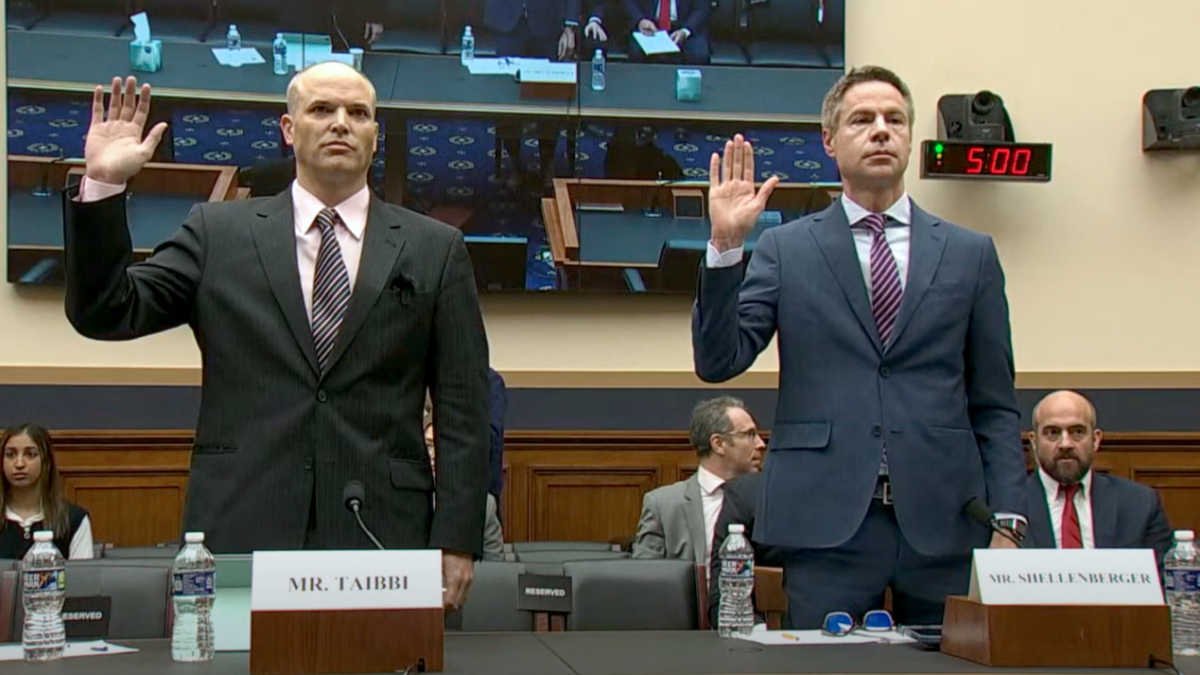
Matt Taibbi and Michael Shellenberger raise their right hands before testifying about Twitter Files and Censorship Complex
Sometimes there is a vast conspiracy at play, and the problem isn’t that someone is donning a tinfoil hat but that he’s buried his head in the sand.

Author Margot Cleveland profile

MARGOT CLEVELAND

VISIT ON TWITTER@PROFMJCLEVELAND

MORE ARTICLES

“It may be possible — if we can take off the tinfoil hat — that there is not a vast conspiracy,” Democrat Colin Allred of Texas scoffed at independent journalist Matt Taibbi during Thursday’s House Judiciary subcommittee hearing. But while Allred was busy deriding Taibbi and fellow witness, journalist Michael Shellenberger, the public was digesting the latest installment of the “Twitter Files” — which contained yet further proof that the government funds and leads a sprawling Censorship Complex.

Taibbi dropped the Twitter thread about an hour before the House Judiciary’s Select Subcommittee on the Weaponization of the Federal Government hearing began. And notwithstanding the breadth and depth of the players revealed in the 17-or-so earlier installments of the “Twitter Files,” Thursday’s reporting exposed even more government-funded organizations pushing Twitter to censor speech. 

But yesterday’s thread, titled “The Censorship-Industrial Complex,” did more than merely expand the knowledge base of the various actors: It revealed that government-funded organizations sought the censorship of truthful speech by ordinary Americans. 

In his prepared testimony for the subcommittee, Shellenberger spoke of the censorship slide he saw in reviewing the internal Twitter communications. “The bar for bringing in military-grade government monitoring and speech-countering techniques has moved from ‘countering terrorism’ to ‘countering extremism’ to ‘countering simple misinformation.’ Otherwise known as being wrong on the internet,” Shellenberger testified

“The government no longer needs the predicate of calling you a terrorist or an extremist to deploy government resources to counter your political activity,” Shellenberger continued. “The only predicate it needs is the assertion that the opinion you expressed on social media is wrong.”

Being “wrong” isn’t even a prerequisite for censorship requests, however, with the Virality Project headed out of the Stanford Internet Observatory reportedly pushing “multiple platforms” to censor “true content which might promote vaccine hesitancy.” 

An excerpt showed this verboten category included “viral posts of individuals expressing vaccine hesitancy, or stories of true vaccine side effects,” which the so-called disinformation experts acknowledged might “not clearly” be “mis or disinformation, but it may be malinformation (exaggerated or misleading).” 

Silencing such speech is bad enough, but the Virality Project “added to this bucket” of “true content” worthy of censorship: “true posts which could fuel hesitancy, such as individual countries banning certain vaccines.” 

Let that sink in for a minute. The Virality Project — more on that shortly — pushed “multiple platforms” to take action against individuals posting true news reports of countries banning certain vaccines. And why? Because it might make individuals “hesitant” to receive a Covid shot.

So who is this overlord of information, the Virality Project?

The Stanford Internet Observatory reports that it launched the Virality Project in response to the coronavirus, to conduct “a global study aimed at understanding the disinformation dynamics specific to the COVID-19 crisis.” Stanford expanded the project in January 2020, “with colleagues at New York University, the University of Washington, the National Council on Citizenship, and Graphika.”

Beyond collaboration with state-funded universities, the Virality Project, in its own words, “built strong ties with several federal government agencies, most notably the Office of the Surgeon General (OSG) and the CDC, to facilitate bidirectional situational awareness around emerging narratives.” According to the Virality Project’s 2022 report, “Memes, Magnets, and Microchips Narrative Dynamics Around COVID-19 Vaccines,” “the CDC’s biweekly ‘COVID-19 State of Vaccine Confidence Insights’ reports provided visibility into widespread anti-vaccine and vaccine hesitancy narratives observed by other research efforts.”

The Virality Project’s report also championed its success in engaging six Big Tech platforms — Facebook (including Instagram), Twitter, Google (including YouTube), TikTok, Medium, and Pinterest — using a “ticket” system. The social media platforms would “review and act on” reports from the Virality Project, “in accordance with their policies.” 

With the Virality Project working closely with the surgeon general and the CDC, which provided “vaccine hesitancy narratives” to the Stanford team, and the Stanford team then providing censorship requests to the tech giants, the government censorship loop was closed. 

Censorship requests were not limited to Covid-19, however, with the Stanford Internet Observatory’s Election Integrity Partnership playing a similar role in providing Twitter — and presumably other Big Tech companies — requests to remove supposed election disinformation. 

Earlier “Twitter Files” established that the Election Integrity Partnership was a conduit for censorship requests to Twitter for other government-funded entities, such as the Center for Internet Security. And in addition to receiving millions in government grants, during the 2020 election, the Center for Internet Security partnered with the Cyber and Infrastructure Security Agency at the Department of Homeland Security — again completing the circle of government censorship we saw at play during the 2020 election cycle.

The groups involved in both the Election Integrity Partnership and the Virality Project are also connected by government funding. The Election Integrity Partnership boasted that it “brought together misinformation researchers” from across four organizations: the Stanford Internet Observatory, the University of Washington’s Center for an Informed Public, Graphika, and the Atlantic Council’s Digital Forensic Research Lab. Both Graphika and the University of Washington also partnered with Stanford for the Virality Project, along with individuals from New York University and the National Council on Citizenship.

Beyond the taxpayer-funded state universities involved in the projects, Graphika received numerous Department of Defense contracts and a $3 million grant from the DOD for a 2021-2022 research project related to “Research on Cross-Platform Detection to Counter Malign Influence.” Graphika also received a nearly $2 million grant from the DOD for “research on Co-Citation Network Mapping and had previously researched “network mapping,” or the tracking of how Covid “disinformation” spreads through social media.

The Atlantic Council likewise receives federal funding, including a grant from the State Department’s Global Engagement Center awarded to its Digital Forensics Research Lab. And Stanford rakes in millions in federal grants as well.

The government funding of these censorship conduits is not the only scandal exposed by the “Twitter Files.” Rather, the internal communications of the social media giant also revealed that several censorship requests rested on bogus research. 

But really, that is nothing compared to what Thursday’s “Twitter Files” revealed: a request for the censorship of truthful information, including news that certain Covid shots had been banned in some countries. And that censorship request came from a group of so-called disinformation experts closely coordinating with the government and with several partners funded with government grants — just as was the case during the 2020 election.

This all goes to show that sometimes there is a vast conspiracy at play and that the problem is not that someone is donning a tinfoil hat, but that he’s buried his head in the sand.


Margot Cleveland is The Federalist’s senior legal correspondent. She is also a contributor to National Review Online, the Washington Examiner, Aleteia, and Townhall.com, and has been published in the Wall Street Journal and USA Today. Cleveland is a lawyer and a graduate of the Notre Dame Law School, where she earned the Hoynes Prize—the law school’s highest honor. She later served for nearly 25 years as a permanent law clerk for a federal appellate judge on the Seventh Circuit Court of Appeals. Cleveland is a former full-time university faculty member and now teaches as an adjunct from time to time. As a stay-at-home homeschooling mom of a young son with cystic fibrosis, Cleveland frequently writes on cultural issues related to parenting and special-needs children. Cleveland is on Twitter at @ProfMJCleveland. The views expressed here are those of Cleveland in her private capacity.

Tag Cloud