Perspectives; Thoughts; Comments; Opinions; Discussions

Posts tagged ‘Big Data’

To Address the Loneliness Epidemic, the Feds Want to Control Your Town and Friends


BY: STELLA MORABITO | MAY 30, 2023

Read more at https://thefederalist.com/2023/05/30/to-address-the-loneliness-epidemic-the-feds-want-to-control-your-town-and-friends/

person walking in park, lonely

Author Stella Morabito profile

STELLA MORABITO

VISIT ON TWITTER@STELLA_MORABITO

MORE ARTICLES

U.S. Surgeon General Vivek Murthy recently released an advisory titled “Our Epidemic of Loneliness and Isolation.” It warns that social isolation is a major public health problem. The 81-page document presents six government-directed “pillars” of action to address the health hazards of social isolation.

On the surface, these six directives may look innocuous, but they present a clear and present danger to the autonomy of our private lives and relationships. The project is potentially so massive in scope that it’s not an overstatement to say it threatens to regulate our freedom of association in ways we never could have imagined.

Let’s look in greater depth at those pillars and the risks they pose.

‘Building a Social Infrastructure’

The first stated goal is to “strengthen social infrastructure in local communities.” It defines “social infrastructure” as the regular events and institutions that make up community life, and says the federal government should both fund local organizations and direct how they’re structured, including their locations. This can only mean that all local communities must answer to the federal bureaucracy in the quest to strengthen social connections among people.

Social infrastructure, the report says, includes physical parts of a community, such as housing, libraries, parks and recreation spaces, transport systems, and so forth. The report expresses concern that some people have better access to such locations than other people, and recommends federal interventions.

Those are likely to be used to promote densified housing along the lines of the “15-minute city” (more accurately termed 15-minute ghettoes), as well as the eventual dismantling of single-family housing. The goal of replacing private vehicles with public transportation fits easily into this scheme too.

I don’t presume that this plan will, by itself, drive wholesale changes in our physical infrastructure. But it would certainly provide authority and justification for changes supported by radical environmentalists, all of which diminish our freedoms.

The advisory warns that participation is mandatory if the plan is to work: “It will take all of us — individuals, families, schools, and workplaces, health care and public health systems, technology companies, governments, faith organizations, and communities — working together…”

The report’s proposed infrastructure to solve the problem of social isolation seems designed to lock everybody into compliance with and dependence upon federal mandates. Local control is then lost.

We end up with a massive federal infrastructure that can monitor the levels of social connection and disconnection in every nook and cranny of society. As described in the report, this would mean every institution, every governmental department, every volunteer association, every locality, every church, every faith community, every organization, every club, every service club, every sports league, and so on, would likely be assessed and “strengthened” to promote social connection.

‘Enact Pro-Connection Public Policies Everywhere’

According to the second pillar, “Government has a responsibility to use its authority to monitor and mitigate the public health harm caused by policies, products, and services that drive social disconnection.” How will these be tracked and mitigated? It “requires establishing cross-departmental leadership to develop and oversee an overarching social connection strategy. Diversity, equity, inclusion, [DEI] and accessibility are critical components of any such strategy.”

In other words, some people are more socially connected than others, and that’s not fair. They enjoy benefits — as in “unearned privileges” — that put others at a disadvantage. So, the government needs to intervene for the sake of equity to “spread the wealth” of social connections.

DEI is a creature of identity politics, which serves to erase human individuality and replace it with demographic identity markers that label people as either oppressors or victims, thus cultivating more resentments and hostilities in society. By injecting the codes of DEI into all social relationships, we’re bound to become even more divided, alienated, and lonely. And the federal government is bound to become even more authoritarian and meddlesome in our personal relationships and social interactions.

‘Mobilize the Health Sector’

Another threat to the private sphere of life comes under the directive to “mobilize the health sector” by expanding “public health surveillance and interventions.” This sounds very much like tracking your social connections and intervening when the bureaucracy deems it necessary. Big Brother sitting in on your doctor visits and therapy sessions?

The report indicates that health care workers will be trained to track cases of what the government views as social connection and disconnection. As they obediently report to the federal bureaucracy, most individual and local control will be lost. Medicine is bound to become more federalized and less private than ever when answering to these mandates.

Consider also that mental health practitioners are already suggesting that signs of racial or cultural bias should be classified as a mental illness.

Consider also that mental health practitioners are already suggesting that signs of racial or cultural bias should be classified as a mental illness. “

Of course, to the promoters of DEI, all white people are inherently racially biased, simply because of their skin color. This brings to mind the disturbing practice in the Soviet Union of consigning political dissenters to psychiatric treatment. The official line was that you must be mentally ill if you disagree with communism.

‘Reform Digital Environments’

The advisory recognizes that overuse of the internet and social media can drive people deeper into social isolation. But it also promotes centralized government control over technology development, especially in human interactions: “We must learn more by requiring data transparency from technology companies,” it says. So, government would decide how to design and use such technologies. It would very likely compel technology companies to provide data to the government on Americans’ social connections.

The advisory also backs the “development of pro-connection technologieswith the goal of creating “safe” environments and “safeguarding the well-being of users.” Such phrasing has been used in recent years to justify censorship under the guise of protecting certain demographics.

In light of the importance of DEI to the overall strategy, this sounds ominously like a call for further “protection,” i.e., government control of the private sphere. Again, the primary director of all these remedies is the federal bureaucracy, not a trusted family member, friend, pastor, or neighbor.

‘Deepening Our Knowledge’

The fifth pillar of the advisory pushes a “research agenda” that enlists all “stakeholders” — that means every level of government, every organization, every corporation, every school, every family, every individual — to deepen their knowledge about social connection and disconnection. Of course, the advisory has already predetermined the outcome of much of this research, and we can be reasonably confident this research will reflect the outlook offered by the advisory. After all, that’s how researchers get grants and research contracts.

I imagine institutions will publicize their “studies” through a media monopoly that promotes the preferred narrative on what kinds of relationships we should have, what we can and can’t talk about. Essentially, we’ll get a flood of government propaganda about their preferences for human relationships.

In the context of today’s censorship regime, this means promoting a single narrative that will drown any competing views offered by critics and the public with the favored views of government and corporate interests, parroted endlessly by Big Media.

‘Cultivate a Culture of Social Connection’

Finally, the advisory advocates for cultivating “a culture of connection,” one based on “kindness, respect, service, and commitment to one another.” This sounds lovely, doesn’t it? Unfortunately, our government’s relentless push for woke policies tells us that we cannot expect to understand those terms as traditional virtues.

Rather, such terms will likely be used in woke Orwellian fashion, to direct our social interactions and behaviors. For example, not dating a transgender person is now labeled unkind and “transphobic.” “Gender affirming care” — i.e., castration and mutilation of children — is the only “respectful” way of treating gender dysphoria. Your “responsibility” is to comply without question.

The advisory also calls for the media and the arts to promote stories that encourage “connection,” most likely in the Orwellian sense that wokeness demands. Further, the report cautions that certain kinds of social connection are harmful for individuals and society. It warns that too much like-mindedness can lead to extremism and violence.

We should be very skeptical of the federal government’s role in deciding which groups it deems acceptable, given its growing politicization of law enforcement, its attempts to silence concerned parents at school board meetings by labeling them “domestic terrorists,” and its overall undermining of due process and the Bill of Rights.

The Historical Pattern of Big Government Is Atomization, Not Social Connection

Ironies abound in this advisory. The pretext for government injecting itself into our personal lives is to rescue us from the misery of our loneliness epidemic. Never mind that government policies are largely to blame for family breakdown, welfare dependency, urban blight, attacks on free speech, attacks on privacy, and countless other developments that result in an acute sense of isolation and polarization.

Never mind that the proven prescription for loneliness is the opposite: a private sphere of life where intact families raise their children with a sense of virtue; where institutions of faith give people a sense of order and purpose in life; and where friends can confide in one another without meddlers eavesdropping on their conversations. This sphere of life — the private sphere — is the fount of freedom, love, and trust that nurtures social connections. It can only thrive in privacy.

But this private sphere seems to be in the crosshairs of Murthy’s massive government project to “fix” the social connections of all Americans. The government will doubtless enlist a media monopoly and Big Tech for support in monitoring those connections.

Given the current direction of this administration’s policies, it will also deploy heavy-handed political censorship — of which Murthy already proved a huge fan during Covid — to enforce compliance and punish dissent. Such censorship heightens the fear of speaking openly, which only builds more walls between people. Ironically, we would end up more atomized than ever.

The Tentacles of Bureaucracy

This may sound over the top to a general reader who may find the advisory benign and even welcoming, and perhaps just a narrowly focused plan to address a recognized health issue.

I am very skeptical about that for two reasons. The first is the natural inclinations of bureaucracies populated by “experts.” Bureaucracies never shrink. They continuously bloat. That’s the nature of the beast. Their protectors keep pushing their relevance on some issue or problem. Their experts — who will always “know better” than anyone else — will present solutions to be deployed by the bureaucracy. Compliance will then be demanded. And the bureaucracy will continue to bloat until its tentacles strangle every area of life.

The second reason for skepticism is history, which is filled with examples of governments invading the private sphere of life, specifically the institutions of family, faith, and community. That private sphere is still the most decentralized area of life, the one in which individuals are most able to think and speak freely, unless the government invades. Communist China, the Soviet Union, and Nazi Germany are prime examples in the 20th century of government invading the private sphere.

Eminent sociologist Robert Nisbet wrote about the deep-seated tendency of governments to hijack the functions of the mediating institutions of family, faith, and community. When the government takes over those functions, we lose those institutions as buffer zones between the isolated individual and the all-powerful state. We become powerless in the resulting isolation.

Nisbet posed this rhetorical question: “What remains then, but to rescue the masses from their loneliness, their hopelessness, and despair, by leading them into the promised land of the absolute, redemptive State?”

I believe the surgeon general’s advisory vindicates Nisbet’s point. Indeed, the state creates the malady and then offers its authority as the only cure as it rushes into the vacuum. The strategy for doing so seems evident in the report’s “six pillars.”

Where Does It All End?

No one can say for sure where this “Ministry of Loneliness” proposal will end up. History — particularly recent history — has warned us about such projects. The goals of this advisory may seem unobjectionable, but the concern is about who decides how we connect socially.

When the “who” is the federal government, we should remember that the pattern of the mass state is always to induce loyalty to the mass state. That pattern always comes with a push to surrender our loyalty to one another as individual human beings capable of real kindness and real love. That amounts to something I call the weaponization of loneliness.

We must insist on making our own decisions to live as free individuals. That means pushing back in any way possible against potential intrusions in the private sphere of life. It means rejecting the pseudo-intimacy and pseudo-connection that our federal government seems intent on foisting upon us in exchange for control of our private lives and relationships. Otherwise, we end up in much worse isolation that renders us powerless and unfree.


Stella Morabito is a senior contributor at The Federalist. She is author of “The Weaponization of Loneliness: How Tyrants Stoke Our Fear of Isolation to Silence, Divide, and Conquer.” Her essays have appeared in various publications, including the Washington Examiner, American Greatness, Townhall, Public Discourse, and The Human Life Review. In her previous work as an intelligence analyst, Morabito focused on various aspects of Russian and Soviet politics, including communist media and propaganda. Follow Stella on Twitter.

Swedes Are Implanting Microchip Vaccine Passports. It Won’t Stop There


Reported BY: JOE ALLEN | DECEMBER 23, 2021

Read more at https://thefederalist.com/2021/12/23/swedes-are-implanting-microchip-vaccine-passports-it-wont-stop-there/

A skinput system projecting tech onto a person's arm

Last week, the world glimpsed a future in which vaccine passports are implanted under the skin. A viral video from South China Morning Post profiled a Swedish start-up hub, Epicenter, that injects its employees with microchips.

“Right now it is very convenient to have a COVID passport always accessible on your implant,” its chief disruption officer, Hannes Sjöblad, told the interviewer. Oddly enough, he repeatedly spoke of chipping “arms” when we clearly see a woman opening doors with her hand.

Two years earlier, Sjöblad told ITV, “I want us humans to open up and improve our sensory universe, our cognitive functions. … I want to merge humans with technology and I think it will be awesome.”

Naturally, some Christians see the Mark of the Beast. In a sane world, the idea of having your hand chipped to access public goods or private property—to receive a mark in order to “buy, sell, or trade”—should alarm anyone, regardless of religious persuasion. The same goes for using an implanted brain-computer interface to access the digital realm, as Elon Musk plans to do with Neuralink.

Yet for a growing fringe, this invasive tech isn’t just desirable. It’s already normal. Presently, some 5,000 Swedes use implanted radio frequency identification (RFID) chips to open doors, pay cashless, present medical records, access concert venues, and ride public transportation. According to Ars Technica, as of 2018 an estimated 50,000-100,000 people worldwide have microchip implants, primarily in their hands.

A 2019 analysis in Nature reported about 160,000 people have deep brain stimulation devices implanted in their heads. Currently, this is only done out of necessity to treat disorders like epilepsy and Parkinson’s disease, or even addiction and depression. Of these devices, only 34 are true brain-computer interfaces. However, with current advances in technology, enormous injections of capital, and the U.S. Food and Drug Administration’s (FDA’s) recent approval, that number will rapidly climb.

Hurtling Toward a Hybrid Humanity

Enthusiasts say they aim to propel these technologies from healing to enhancement. In 2018—the same year Biohax gained international attention for chipping thousands of Swedish hands—MIT Technology Review boosted it with the fawning headline: This company embeds microchips in its employees, and they love it.”

Since the first human-grade RFID implant was patented in 1997, followed by FDA approval in 2004, subdermal microchips have become just another device in a growing cyborg toolkit. Drawing on that cache, the Internet of Bodies paradigm has gained enormous traction among the medical establishment. At the extreme end, the concept of natural-born humanity is to be abolished.

For more than six decades, the U.S. Defense Advanced Research Projects Agency (DARPA) has funded Human 2.0 projects, with particular interest in brain-computer interfaces. Citing these and many other human-machine hybrids, the World Economic Forum’s chairman Klaus Schwab recently spelled out his vision of civilizational transformation. His widely read books—“The Fourth Industrial Revolution” (2016) and “The Great Reset” (2020)—both describe inexorable progress toward total technocracy. The same idea emerges in a 2019 government analysis by Policy Horizons Canada, entitled “Exploring Biodigital Convergence.” According to the authors, “Digital technology can be embedded in organisms [and today] biotechnology may be at the cusp of a period of rapid expansion—possibly analogous to digital computing circa 1985.” Its success will hinge on sweeping surveillance. The document goes on to describe tracking chips, wearable bio-sensors, internal organ sensors, Web-connected neurotech, swallowable digital pills—merging body and brain with the digital beehive.

Last spring, the UK’s Ministry of Defense published the jarring study, Human Augmentation: The Dawn of a New Paradigm.” The authors promise this “will become increasingly relevant, partly because it can directly enhance human capability and behaviour, and partly because it is the binding agent between people and machines.” Surveying today’s cyborgs, they write, “Once inserted, these ‘chips’ can…replace many of our keys and passwords, allowing us to unlock doors, start vehicles, and even log onto computers and smartphones.”

All the above authors fret over ethics in a perfunctory fashion, but most accept the “inevitable” fusion of man with machine. If military strategists, corporate elites, and government officials are taking this prospect seriously, so should we.

The New Normal Is Total Digitalization

For people with any sense at all, the notion of having a microchip jabbed into your hand (or your head) triggers animal revulsion. Disturbing as it may be, a more immediate concern is the widespread use of non-invasive biometric systems.

Wherever the New Normal takes hold, access to society is granted or denied on the basis of arbitrary “health and safety” concerns. Today, it’s masks or vaccine status. Tomorrow, it could be ideology. Authorities don’t have to chip you if they can simply scan your smartphone and tell you to get lost, or lock you in your dwelling pod whenever “the numbers” rise.

To cite one common example among many, the biometric company Clear rode the Patriot Act to prominence. Today, Clear is contracting to provide biometric and QR code-based vaxxports to fully jabbed citizens on the go. It won’t stop there. Not without a fight. As Clear’s CEO Caryn Seidman-Becker told CNBC last year, “Just like screening was forever changed post-9/11, in a post-Covid environment you’re going to see screening and public safety significantly shift. But this time it’s beyond airports. It’s sports stadiums, it’s retail, its office buildings, its restaurants.”

Taking a more cerebral angle, tech mogul Bryan Johnson founded Kernel to develop non-invasive brain-scanning helmets to enhance your health and happiness. The devices can also gather users’ neurological data. Last summer, Johnson told Bloomberg Businessweek that by 2030 he’d like to put his BCI helmets in every American household. These people want to completely transform our mental and physical spaces. It isn’t even a secret. They want some form of transhumanism, whether they use the term or not. It’s past time to smash their devices.

America Cannot Let This Happen

One by one across the globe, canaries are falling dead in the digital coal mine. We see implanted vaxxports in Sweden, lockdowns for the unvaccinated in Austria and Germany, and yes, quarantine camps in Australia. The Untact program in South Korea is specifically designed to replace human interaction with social robots and the Metaverse. At the pandemic’s outset, American writers at The Atlantic and CNN urged U.S. leaders to adopt Chinese authoritarianism. Their wish is beginning to come true.

While I doubt any population will be forcibly chipped like wayward housecats—at least not in the near future—no nightmarish policy is truly off the table. In the past 21 months, the United States has seen mandated mRNA gene therapies, QR code-based vaccine passports, mass deletion of supposed “misinformation,” and even drone surveillance to monitor social distancing. Meanwhile, more young adults died from fentanyl overdoses than from any transmissible disease.

If the biosecurity state can force you to wear an obedience mask to buy groceries, what can’t they do? Resist their measures at every turn. Drag these people down from the seats of power. Dismantle the structures they’ve already put in place.

I’m no absolutist. Tools are tools, and every naked ape needs one. For the most part, I couldn’t care less if techno-fetishists chip themselves or refashion their appendages. Had their subculture remained on the fringe, I’d still find such people fascinating. But that’s not what’s happening. Riding waves of germaphobia—the ultimate organic disruption—tech titans and their think tank ministers are establishing a secular religion. The world’s wealthiest men, wielding the most powerful tools on earth, are erecting inescapable systems of control. We can’t combat them if we don’t acknowledge what they are.

Scientism is their faith. Technology is their sacrament. Their cult is a cyborg theocracy. Even if they rain fire from the sky with the press of a button, never bend the knee to their silicon gods.


Joe Allen is a fellow primate who wonders why we ever came down from the trees. For years, he worked as a rigger on various concert tours. Between gigs, he studied religion and science at UTK and Boston University. Find him at www.joebot.xyz or @JOEBOTxyz.

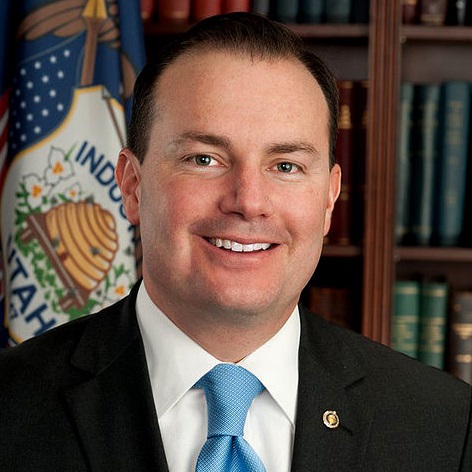
Senator Mike Lee Op-ed: Big Tech Insists They’re Protecting Americans From China While Importing Chinese-Style Social Controls


Mike Lee

Commentary By Mike Lee | OCTOBER 22, 2021

Read more at https://thefederalist.com/2021/10/22/big-tech-insists-theyre-protecting-americans-from-china-while-importing-chinese-style-social-controls/

If you need evidence that Big Tech firms are starting to worry about the growing movement to diffuse their immense market power, look no further than their newest scare tactic: using China as an excuse to avoid antitrust scrutiny.

Google, Amazon, Facebook, Apple, and the nonprofit proxies they pay to defend them have put a lot of effort into trying to convince America that subjecting Big Tech to more stringent antitrust enforcement or regulation would have dire consequences. They’ve warned that innovation would suffer, but that rings hollow when so many of the new innovative companies are already being bought up (and then often shut down) by Big Tech.

They’ve suggested that antitrust action might result in the loss of the free services we’ve come to depend upon. But how do they call their services “free” when we pay for them by giving them all of our personal data, which they store and monetize, and when they rely on our content to make their platforms valuable in the first place?

Big Tech firms have told us we should be grateful for the superior quality of their services, which could suffer if they were broken up. But then again, one could argue that Google Search was better before it was filled with ads.

YouTube was better before its algorithms tried to corrupt our children and amplify the reach of terrorists. Facebook was better before it censored people of faith and conservatives, while protecting those who post revenge porn. Instagram was better before it drove our teenagers to anxiety and depression. Amazon was better before it silenced conservative authors and raised questions about its influence on a multibillion-dollar defense contract.

Having failed with each of those claims, Big Tech has turned to a new bogeyman: China. Antitrust enforcement actions against Big Tech—or legislation aimed at restoring and protecting competition in Big Tech markets—would risk crippling America’s ability to combat the growing threat from Communist China, or so the line goes. The cynicism would be offensive if the argument weren’t so laughable.

It’s not just lobbyists bringing these arguments to my office and others on Capitol Hill. Earlier this summer, former Google CEO Eric Schmidt said in an interview, “These gross proposals like breaking them up and so forth, it’s not going to be helpful because it’s going to set us back against China.”

Last month, the National Security Institute began a series “examining the national security implications of antitrust challenges at home and abroad.” The first panel featured Big Tech defenders suggesting the antitrust laws were written for late-19th-century monopolists and are too outdated to deal with Big Tech, and that Big Tech is a driver for research that is essential to national security. Antitrust scrutiny, they implied, might hinder the companies’ ability to compete with China, who won’t be imposing the same restraints on their own companies.

Like every other excuse Big Tech has made, this too rings hollow and we should flatly reject it. That doesn’t mean the antitrust laws should be enforced in the absence of actual anticompetitive harm. Nor does it mean that we should radically alter our antitrust laws to embrace a “big is bad” philosophy. But the idea that Big Tech should be treated with kid gloves makes no sense. The fact is, American ingenuity is strong enough to compete and win on the merits without coddling or amnesty from our antitrust laws.

Competition, and the innovation and disruption that facilitate it, are what made these companies American success stories. That same competition, innovation, and disruption are what will keep them at their best or make way for the next great American success story. You see, competition in Big Tech doesn’t threaten American, it threatens the monopolists—and that makes America stronger.

Insulating American companies from competition out of a fear of foreign competitors will do the opposite of what Big Tech claims to want: we will be stuck with stagnant monopolists too complacent either to benefit American consumers or to protect us from foreign threats.

In fact, it is Big Tech companies themselves that pose the greatest threat when it comes to China. They not only can’t protect us from foreign threats, but in some cases actively cooperate with them.

Google has been accused of working with the Chinese military, and has acknowledged developing a filtered version of its search engine to satisfy Chinese censors. Amazon has been working with a Chinese partner to expand its web-hosting services in the highly censored country.

The New York Times revealed earlier this year that Apple—which assembles nearly all of its products in China— has stored data on Chinese government servers, shared customer data with the Chinese government, removed apps from its App Store to appease the Chinese government, and banned apps from a critic of the Chinese Communist Party. The Times also alleged that Facebook was courting the Chinese government in 2016 by developing a censorship tool. Facebook has admitted to sharing data with Chinese state-owned companies, and last year it undertook to expand its Chinese ad business.

These are the benevolent corporate heroes who are going to save us from the Chinese threat? Give me a break.

Far from saving us, it seems like the habits of their new Chinese friends are rubbing off on our Big Tech big brothers. In a way, Silicon Valley is helping America keep up with China: now we too have censored speech on the internet, constant surveillance, and tightly controlled marketplaces.

Instead of embracing the very crony capitalism that has been so destructive to American prosperity in the past, American firms should spend more energy competing on the merits for Americans’ business, and less time cozying up to Chinese bureaucrats. The free market should pick winners and losers, not Communist apparatchiks.

This whole episode leads me to only one conclusion: insisting that antitrust enforcers pull their punches or risk impairing our ability to face the threats from China is nothing short of corporate extortion, a protection racket at a global scale. What we need is more competition, and less protectionism. The only way we will defeat the economic threat of communist China is by empowering American businesses to challenge and disrupt the would-be Chinese collaborators that make up Big Tech.

The hypocrisy is glaring: Big Tech wants to assist Communist China in exchange for access to its economy, while pointing to the Chinese threat as an excuse for anticompetitive and monopolistic conduct in the United States. Americans deserve better, and we should refuse to entertain this disingenuous and insulting excuse.

Mike Lee is a U.S. Senator from Utah and author of “Our Lost Constitution: The Willful Subversion of America’s Founding Document.”

Tag Cloud