Perspectives; Thoughts; Comments; Opinions; Discussions

Posts tagged ‘Atheism’

THE BEST COMMENTARY I’VE READ IN MANY YEARS: The Conversion of Ayaan Hirsi Ali to Christianity Is a Dire Warning to the West


BY: JOHN DANIEL DAVIDSON | NOVEMBER 14, 2023

Read more at https://thefederalist.com/2023/11/14/the-conversion-of-ayaan-hirsi-ali-to-christianity-is-a-dire-warning-to-the-west/


Ayaan Hirsi Ali

Author John Daniel Davidson profile

JOHN DANIEL DAVIDSON

VISIT ON TWITTER@JOHNDDAVIDSON

MORE ARTICLES

Over the weekend, Ayaan Hirsi Ali revealed in an essay at Unherd that she has become a Christian. For Christians, this is welcome and joyous news. But it’s also instructive. A former Muslim who very publicly rejected Islam and became an avowed atheist in the aftermath of the 9/11 attacks, Ali has been speaking and writing in defense of Western civilization and liberal values for decades. 

Now she has come to the conclusion that there is no way to maintain Western civilization and no way to preserve its liberal values apart from Christianity. Just as she came to discover the fundamentalist Islam of her youth was a dead end, she has also discovered the atheism she adopted in response to it is also a dead end.

Ali is right, of course, although the reasons she gives for her conversion might raise some eyebrows. “Part of the answer is global,” she writes. Ali says the West is under threat from three different but related forces: “the resurgence of great-power authoritarianism and expansionism in the forms of the Chinese Communist Party and Vladimir Putin’s Russia; the rise of global Islamism, which threatens to mobilise a vast population against the West; and the viral spread of woke ideology, which is eating into the moral fibre of the next generation.”

She’s also right about that but wrong to think Christianity is primarily about countering those forces or preserving a particular civilizational or political project. As great as Western civilization is, it arose as a byproduct of the Christian faith, the sole object of which is communion with Almighty God by means of salvation through Jesus Christ. Things like freedom of speech, rule of law, and human rights are fruits of the Christian faith, but they are not what Christianity is about.

Still, Ali’s conversion is instructive in an important way. As Hussein Aboubakr Mansour noted on X (formerly Twitter) over the weekend, Ali was “the poster child of what the New Atheists promised Islam.” There was a lot of discussion after 9/11 about how Islam needed its own Reformation to tame and secularize it, as Christianity had supposedly been tamed and pacified by the Protestant Reformation (never mind the century of continental war that it triggered). What the atheists promised Ali and other disillusioned Muslims was rationalism, freedom of inquiry and expression, and scientific objectivity — all of which would flourish in Muslim societies just as it had in the West, if only Muslims would set aside their backward religion and embrace the secular humanism of Western elites.

According to this theory, Christianity itself had served its purpose in the West, bestowed all its gifts, and could safely be discarded. We could live forever, drawing on its capital, which we assumed would never run out. The Islamic world needed to do likewise, and all would be well.

But something very different happened instead. It turns out, the capital was gradually spent and never replenished. Liberalism always depended for its vitality on something it cannot itself supply: the Christian faith, active and alive among the people. As the French philosopher Rémi Brague wrote back in the 1990s, “Faith produces its effects only so long as it remains faith and not calculation. We owe European civilization to people who believed in Christ, not to people who believed in Christianity.”

Ali’s conversion, which is laudable on its own (even if she doesn’t quite yet grasp the true object of her new faith), is a stark reminder that the liberal, secular West cannot survive without the Christian faith from which it emerged. Indeed, the secular elites who once promised apostate Muslims like Ali that they could have all the benefits of Christianity without Christianity itself are now abandoning the principles they once espoused.

In recent weeks, we have seen this abandonment most potently in the Red-Green alliance between the global left and the pro-Hamas crowd, who have been marching through the streets of Western cities in a show of force reminiscent of the Black Lives Matter riots of 2020. The naked antisemitism of the Hamas people, together with the deafening silence of the elites of the global left, tells you everything you need to know about the durability of secular humanism.

There is no room anymore for freedom of speech, open inquiry, or rational debate among the people and institutions that once espoused these ideals. There is only the brute force of the mob. It’s easy to see this at work throughout Western society, not just on the Israel-Hamas issue. What commitment do our elites really have to liberal totems like science and rationality, after all, when they insist that a man can become a woman, or that children can consent to castration and sterilization? When a nominee for the U.S. Supreme Court insists she cannot define what a woman is because she is not a biologist, we’ve stepped firmly into what C.S. Lewis called the void, where nothing is objectively true and all that matters is will and power.

“Unless we offer something as meaningful, I fear the erosion of our civilisation will continue,” writes Ali. “And fortunately, there is no need to look for some new-age concoction of medication and mindfulness. Christianity has it all.”

Indeed it does, and it has given us all that is good in our civilization. Having first rejected the Christian faith, however, our secular elites are now rejecting all those other good things that sprang from it, and positing a very different sort of society. Instead of a society that embraces rationality and freedom and human rights, they offer something from the pagan past: a society that embraces power and violence and domination. If we’re honest with ourselves, we can already see, on the streets of London and New York and Paris, what that society will look like.

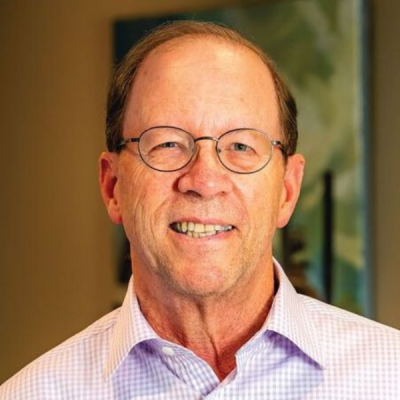
John Daniel Davidson is a senior editor at The Federalist. His writing has appeared in the Wall Street Journal, the Claremont Review of Books, The New York Post, and elsewhere. He is the author of the forthcoming book, Pagan America: the Decline of Christianity and the Dark Age to Come, to be published in March 2024. Follow him on Twitter, @johnddavidson.

Morality and Atheism: Who Makes The Rules?


This content is sponsored by BY RICHARD E. SIMMONS III 

“There is truth, and there is falsehood. There is good, and there is evil. There is happiness, and there is misery. There is that which ennobles, and there is that which demeans. There is that which puts you in harmony with yourself, with others, with the universe, and with God, and there is that which alienates you from yourself, and from the world, and from God…The greatest error in modern times is the confusion between these orders.” – Charles Malik, Former Lebanese Ambassador to the United States, President of the United Nations General Assembly | Unsplash Siyuan @jsycra

We live in a time where people are truly perplexed over what has gone wrong with our world. There seems to be so much instability in people’s lives. When you look into what’s happening within our culture and world, there seems to be so much moral confusion. How does a modern person determine what is right or wrong?

Max Hocutt, professor of philosophy at the University of Alabama says:

“The fundamental question of ethics is, who makes the rules? God or men? The theistic answer is that God makes them. The humanistic answer is that men make them. This distinction between theism and humanism is the fundamental division in moral theory.”

Hocutt is correct. The problem then becomes if morals and ethics are determined by men, who makes these decisions? Who determines how we ought to live? How should we conduct our lives?

To personalize it, how do we determine what is moral if there is no God who reveals to us what is right or wrong? Is it determined by our feelings, by our ability to reason?

If there is no God, who or what is a guiding force in our lives? We must conclude what Richard Dawkins rationally describes in his book River Out of Eden:

“In a universe of blind physical forces and genetic replication, some people are going to get hurt, other people are going to get lucky, and you won’t find any rhyme or reason to it, nor any justice. The universe we observe has precisely the properties we should expect if there is at bottom, no design, no purpose, no evil, and no good. Nothing but blind pitiless indifference, DNA neither knows or cares. DNA just is. And we dance to its music.”

Think about what he said. If God does not exist, then what are we as human beings? We are purposeless products of biological evolution, which means all morality is subjective. It is based on your opinion.

This has such an impact on a culture when there is no moral compass. You just follow your DNA, wherever it leads you. Richard Dawkins admitted this in a radio interview with radio host Justin Brierley, as Dawkins makes it clear that human morality is nothing more than the outcome of the evolutionary process:

Brierley: “When you make a value judgment, don’t you immediately step yourself outside of this evolutionary process and say that the reason this is good is that it’s good? And you don’t have any way to stand on that statement.”

Dawkins: “My value judgement itself could come from my evolutionary past.”

Brierley: “So therefore it’s just as random in a sense as any product of evolution.”

Dawkins: “You could say that…Nothing about it makes it more probable that there is anything supernatural.”

Brierley: “Ultimately, your belief that rape is wrong is as arbitrary as the fact that we’ve evolved five fingers rather than six.”

Dawkins: “You could say that, yeah.”

This is astonishing that the world’s most prominent atheist could not emphatically say that rape is immoral. Though he may not believe this is true within his heart, he seeks to be a consistent Darwinian atheist.

However, Dawkins does believe that it is not good for a society always to follow Darwinian morality because it is “ruthless.” He says,

“I have always said that I am a passionate anti-Darwinian when it comes to the way we should organize our lives and morality. We want to avoid basing our society on Darwinian principles.”

Dawkins, on the one hand, says that we live our lives based on our DNA, but then introduces a moral code by telling us not to follow our DNA. The more I read of Richard Dawkins, the more I recognize how inconsistent he can be.

The individual who has had the most to say about atheism and morality is the great German philosopher Friedrich Nietzsche. He clearly stated that there is no absolute right or wrong. For this reason, he had much contempt for Christianity, because it elevated such beliefs as love, morality, and humility. You can’t build a civilization of power on these beliefs.4

Nietzsche predicted that the English-speaking world would seek to abandon a belief in God, but would attempt to hold on to Christian values. However, he predicted correctly that when societies reject God, Christian morality itself will eventually disappear. The reason is because it will be more difficult to motivate people to be moral, for they will naturally follow their selfish instincts and desires.5

Dr. Arthur Leff, now deceased, was a brilliant professor at Yale Law School. Back in 1979, he published an article in the Duke Law Journal titled “Unspeakable Ethics, Unnatural Law.” Today, it’s considered a very important and prominent essay. It is uncertain what Leff believed about God, but what troubled him was that if there is no God, then there’s no way that one can make any kind of case for human morality, particularly human rights. Here is a paraphrased summary of what he said:

You can say it is wrong for a majority to take advantage of any minority by force, but that is an opinion and not an argument. You can assert all sorts of things, but what you cannot do is say one point of view is morally right and all others are not. If someone says it is all right to enslave a minority, and you say no, it is wrong, who is to say your view of morality is right and theirs is wrong? Maybe it helps to frame it this way: if there is no God, who among us gets to impose their will on everyone else? Who gets to establish the moral laws that people are to follow? These questions are so intellectually troubling that you would think there would be more legal and ethical thinkers trying to come to grips with this.

Leff’s words suggest that if there is a God, then He would make the law for us to follow. We’d base our law on Him. And this, by the way, is how Western civilization was built, with biblical truth as its foundation. We require a moral foundation on which to build a culture. As T.S. Eliot penned many years ago:

“It is in Christianity that our arts have developed; it is in Christianity that the laws of Europe… have been rooted.”

Returning to Leff’s argument, his words also suggest that if there is no God, then moral law has to be grounded in human opinion. So, we must ask, who gets to establish their human opinion as law so that everyone has to obey it? Why should your view of morality have privilege over my view? Ultimately, what you end up with is that those in power will make sure their moral values prevail. Of course, that’s what happened in Nazi Germany.

I close with this quote from Charles Malik, Former Lebanese Ambassador to the United States, President of the United Nations General Assembly:

“There is truth, and there is falsehood. There is good, and there is evil. There is happiness, and there is misery. There is that which ennobles, and there is that which demeans. There is that which puts you in harmony with yourself, with others, with the universe, and with God, and there is that which alienates you from yourself, and from the world, and from God…The greatest error in modern times is the confusion between these orders.”

Get your copy of Richard’s newest book Reflections on the Existence of God on Amazon or at reflectionsontheexistenceofgod.com. Preview Chapter 1 for free here!

Richard E. Simmons III is a Christian author, speaker, and the Executive Director of The
Center for Executive Leadership, a non-profit, faith-based ministry in Birmingham, Alabama.
His best-selling titles include The True Measure of a Man, The Power of a Humble Life,
Wisdom: Life’s Great Treasure, and his newest book, Reflections on the Existence of God.
Follow Richard on Facebook, Instagram, and LinkedIn @thecenterbham. Tune in to
Richard’s Reliable Truth Podcast on your favorite podcast app.

Texas Shooter “Preached Atheism,” Used FB to Push Anti-Christian Message


Reported By V Saxena | November 6, 2017 at 8:20am

URL of the original posting site: https://conservativetribune.com/texas-shooter-preached-atheism/?

Former classmates of Devin Patrick Kelley, the deceased suspect allegedly behind the deadly mass shooting Sunday at a church in Texas, described him to reporters as a “creepy,” “crazy” and “weirdanti-Christian zealot who used his Facebook page to proselytize about atheism.

“He was always talking about how people who believe in God we’re (sic) stupid and trying to preach his atheism,” former classmate Nina Rose Nava wrote to the U.K. Daily Mail.

Christopher Leo Longoria, another former classmate, said he eventually removed Kelley as a Facebook friend because of the constant negativity he had expressed.

Patrick Boyce, who reportedly attended New Braunfels High School with Kelley, described the suspected killer as “the first atheist I met.”

“He went (to the) Air Force after high school, got discharged but I don’t know why,” he added.

The Daily Beast confirmed that Kelley had indeed entered the Air Force, where he was court-martialed in 2012 for assaulting his wife and their child.

“A judge sentenced him with a bad-conduct discharge, 12 months confinement, and two reductions in rank to basic airman, according to an appeals court decision in 2013 that affirmed the decision against Kelley,” The Daily Beast reported.

According to Fox News, Kelley entered the First Baptist Church in Sutherland Springs around 11:20 a.m. Sunday morning dressed in black tactical gear and reportedly wearing a ballistic vet. He then allegedly used a Rudger AR to mow down 26 men, women and children, including the pastor’s 14-year-old daughter, after which he attempted to flee but was reportedly gunned down by a good guy with a gun.

While Kelley’s reported Facebook activities paint a picture of an anti-Christian zealot, his LinkedIn page listed him as a former teacher’s aide for a Vacation Bible School in Kingsville, where he reportedly taught for roughly a month, according to the New York Daily News. What remains unknown is why the position lasted only a month, let alone why he even chose to work at a Christian organization if he disliked Christians so much.

Another former classmate of Kelley’s claimed she grew up attending the same school as him.

“I grew up going to school with him … always creeped me out and was different,” the classmate, who asked to remain anonymous, said to the Mail.

One of Kelley’s former friends described as outright “crazy.”

“I ended up distancing myself from him in high school after he got in an argument with me in school and he tried punching me several times,” the friend said. “Dude was crazy man.”

H/T Breitbart

Tag Cloud