The crackdown on free speech continues in the United Kingdom as officials use recent rioting to justify a roundup of citizens who they view as “pushing harmful and hateful beliefs.” The government is ramping up arrests of those with “extremist ideologies” in the latest wave of arrests. The crackdown includes those accused of misogynist views. In my book, “The Indispensable Right: Free Speech in an Age of Rage,” I discuss how difficult it is to get a free people to give up freedoms. They have to be afraid, very afraid. For that reason, governments tend to attack free speech during periods of public anger or fear. That pattern is playing out, yet again, in the United Kingdom. The recent anti-immigration riots have given officials a renewed opportunity to use anti-free speech laws to target those with opposing views. For years, I have been writing about the decline of free speech in the United Kingdom and the steady stream of arrests. A man was convicted for sending a tweet while drunk referring to dead soldiers. Another was arrested for an anti-police t-shirt. Another was arrested for calling the Irish boyfriend of his ex-girlfriend a “leprechaun.” Yet another was arrested for singing “Kung Fu Fighting.” A teenager was arrested for protesting outside of a Scientology center with a sign calling the religion a “cult.” Last year, Nicholas Brock, 52, was convicted of a thought crime in Maidenhead, Berkshire. The neo-Nazi was given a four-year sentence for what the court called his “toxic ideology” based on the contents of the home he shared with his mother in Maidenhead, Berkshire.
While most of us find Brock’s views repellent and hateful, they were confined to his head and his room. Yet, Judge Peter Lodder QC dismissed free speech or free thought concerns with a truly Orwellian statement: “I do not sentence you for your political views, but the extremity of those views informs the assessment of dangerousness.”
Lodder lambasted Brock for holding Nazi and other hateful values:
“[i]t is clear that you are a right-wing extremist, your enthusiasm for this repulsive and toxic ideology is demonstrated by the graphic and racist iconography which you have studied and appeared to share with others…”
Even though Lodder agreed that the defendant was older, had limited mobility, and “there was no evidence of disseminating to others,” he still sent him to prison for holding extremist views.
After the sentencing Detective Chief Superintendent Kath Barnes, Head of Counter Terrorism Policing South East (CTPSE), warned others that he was going to prison because he “showed a clear right-wing ideology with the evidence seized from his possessions during the investigation….We are committed to tackling all forms of toxic ideology which has the potential to threaten public safety and security.”
“Toxic ideology” also appears to be the target of Ireland’s proposed Criminal Justice (Incitement to Violence or Hatred and Hate Offences) law. It covers the possession of material deemed hateful. The law is a free speech nightmare. The law makes it a crime to possess “harmful material” as well as “condoning, denying or grossly trivializing genocide, war crimes, crimes against humanity and crimes against peace.” The law expressly states the intent to combat “forms and expressions of racism and xenophobia by means of criminal law.”
The Brock case proved, as feared, a harbinger of what was to come. The home secretary, Yvette Cooper, has vowed to crack down on people “pushing harmful and hateful beliefs.” That includes what she calls extreme misogyny.
Cooper said that the problem revealed by the recent protests was “gaps in the current system” and stressed that “it’s not OK any more to ignore the massive growing threat caused by online hatred towards women and for us to ignore it because we’re worried about the line, rather than making sure the line is in the right place as we would do with any other extremist ideology.”
She added: “For too long governments have failed to address the rise in extremism, both online and on our streets, and we’ve seen the number of young people radicalized online grow. Hateful incitement of all kinds fractures and frays the very fabric of our communities and our democracy.”
For free speech advocates, it is chilling to hear UK officials state that they have been too lax on free speech in the past and must now take censorship and arrests more aggressively. The United Kingdom has a myriad of laws criminalizing speech with vague terms allowing for arbitrary enforcement. For example, Public Order Act 1986 prohibits any expressions of racial hatred, defined as hatred against a group of persons by reason of the group’s color, race, nationality (including citizenship) or ethnic or national origins.
Section 18 of the Act specifically includes any speech that is “threatening, abusive, or insulting.” An arrest does not have to be based on a showing of intent to “stir up racial hatred,” but can merely be based on a charge that “having regard to all the circumstances racial hatred is likely to be stirred up thereby.”
For those Americans who have remained silent during as this anti-free speech movement grows, you need only to look to the United Kingdom to see what this movement means for our “indispensable right.” That wave has now reached our shores, and it will require each one of us to defend a right that defines us all.
Three years ago, we discussed the conviction of a British man for “toxic ideologies,” under the draconian laws criminalizing inciteful or dangerous speech. The erosion of free speech appears to have only accelerated in the UK. As is often the case, the attacks on free speech increase during periods of unrest, anger or fear. With the recent anti-immigration riots, British authorities have used their laws to round up a large number of citizens expressing anti-immigrant views and some have already been convicted. Those cases include Wayne O’Rourke, 35, who has been sentenced to three years in prison for “stirring up racial hatred.”
As I have previously written, the riots were triggered by false reports spread online about the person responsible for an attack at a Taylor Swift-themed dance event that left three girls dead and others wounded. Despite false claims about his being an asylum seeker, the alleged culprit was an 18-year-old British citizen born to Rwandan parents. The government and news outlets were quick to challenge these accounts, but violent riots have raged across the country, including such despicable acts as burning immigrant housing. There is no question that the government should crack down on such violence and arrest those engaging in criminal conduct. However, the government immediately pursued those who were expressing hateful or inciteful views.
In my book, “The Indispensable Right: Free Speech in an Age of Rage,” I discuss the collapse of free speech protections in Europe and the United Kingdom specifically. That discussion includes the case of Nicholas Brock, 52, who was convicted for his collection of racist and extreme right material in his home. Detective Chief Superintendent Kath Barnes, Head of Counter Terrorism Policing South East (CTPSE) acknowledged that others might collect such items for historical or academic purposes but Brock crossed the line because he agreed with the underlying views:
“From the overwhelming evidence shown to the jury, it is clear Brock had material which demonstrates he went far beyond the legitimate actions of a military collector…Brock showed a clear right-wing ideology with the evidence seized from his possessions during the investigation….We are committed to tackling all forms of toxic ideology which has the potential to threaten public safety and security.”
That “commitment” is evident in a slew of arrests after the recent riots.
The United Kingdom is an example of what I describe as a pattern of “rage rhetoric” becoming “state rage” in these periods of unrest.
Once again, many of these postings are worthy of condemnation as racist and inflammatory. Many of us have done so. Defending free speech is not a defense of the underlying viewpoints but rather the right to express opposing viewpoints. Good speech can then rebut the bad speech.
The United Kingdom is now committed to silencing opposing views through censorship and criminal charges. As discussed in the book, such laws have never succeeded in history. Not once. They have never killed “toxic ideologies” or deterred any movement. What they do is suppress the free speech of everyone in an ill-conceived effort to legislatively ban hate in society.
An example is found in Germany, which has long had some of the harshest censorship and criminalization laws. According to polling, only 18 percent of Germans feel free to express their opinions in public. Fifty-nine percent of Germans do not even feel free expressing themselves in private among friends. Only 17 percent feel free to express themselves on the internet. They have silenced the wrong people, but there is now a massive censorship bureaucracy in Europe and the desire to silence opposing voices has become insatiable.
Recently, I wrote about the chilling message of Metropolitan Police Commissioner Sir Mark Rowley that not only will British authorities arrest citizens for anti-immigration postings but may pursue others in countries like the United States for stirring up trouble. Now, they are imprisoning “keyboard warriors,” who express inciteful thoughts.
According to the local Lincolnshire Free Press, O’Rourke encouraged his 90,000 followers to join the protests and told them how to remain anonymous during protests. That is similar to many posts on the left by groups like Antifa. O’Rourke wrote such postings as “People of Southport where the f**k are you, get out on the street,” “give them hell lads,” and “Sunderland, go on lads.”
Notably, his counsel Lucia Harrington assured the court that her client wants to “re-educate” himself on these issues. His self-imposed “reeducation” was not enough for Judge Catarina Sjolin Knight, who denounced O’Rourke and “[t]he flames fanned by keyboard warriors like you.”
Lincolnshire Chief Superintendent Kate Anderson promised more such cases for those espousing disfavored views: “This charge demonstrates that we will take fast and decisive action against anyone suspected of sharing harmful content online. We retain a commitment to proactively police and keep people safe across the county.”
Many others have been similarly charged. That includes first offender William Nelson Morgan, 69, who was seen holding a stick and refusing to disperse at a protest at a library in West Yorkshire. He was sentenced to two years and eight months in prison even though he did not take part in rioting. While there can be legitimate charges and penalties for a failure to disperse, the roughly three-year sentence seems fueled on the content of his viewpoints rather than his specific actions.
Likewise, Billy Thompson, 31, received 12 weeks in jail for posting emojis depicting minorities and a gun with inflammatory language. He did not participate in the rioting. There are many more such cases being reported daily.
As in Germany, years of prosecuting free speech has achieved nothing beyond chilling the speech of all citizens. For years, I have been writing about the decline of free speech in the United Kingdom and the steady stream of arrests.
There is an alternative to criminalizing speech. You can punish criminal conduct including proportionate sentencing for the failure to disperse. You can then allow free speech to combat false or hateful viewpoints. British politicians have acknowledged that a large number of citizens hold anti-immigration views. Cracking down on such viewpoints will change few minds and likely only reaffirm the anger directed against the government. Opposition to these laws has fallen to a dwindling number of free speech advocates in the UK, including author J.K. Rowling. Rowling has opposed a Scottish law, the Hate Crime and Public Order (Scotland) Act 2021, that criminalizes speech viewed as “stirring up hatred” relating to age, disability, religion, sexual orientation, transgender identity or being intersex. That crime covers insulting comments and anything “that a reasonable person would consider to be threatening or abusive.”
For those in the United States who have remained silent in the face of our own anti-free speech movement, Europe offers a glimpse into our future if we do not fight to preserve this indispensable right.
Below is my column in The Hill on the move of the European Union to force Elon Musk to censor X users, including political speech leading up to the 2024 election. The column discusses this Rockwell painting, which we often use in discussing free speech controversies.
Here is the column:
Eighty years ago, the U.S. government launched a war bond campaign featuring a painting by artist Norman Rockwell in the struggle against the authoritarian threat from Europe. The picture they chose was Rockwell’s Freedom of Speech depicting a man rising to speak his mind at a local council meeting in Vermont. The image rallied the nation around what Louis Brandeis called our “indispensable right.”
Now, that very right is again under attack from another European government, which is claiming the right to censor what Americans are allowed to say about politics, science and other subjects. Indeed, the threat from the European Union may succeed in curtailing American freedom to an extent that the Axis powers could not have imagined. They may win, and our leaders have not said a thing yet about it.
In my book “The Indispensable Right: Free Speech in an Age of Rage,” I discuss the inspiration for Rockwell’s painting: a young selectman in Vermont named James “Buddy” Edgerton. The descendent of a Revolutionary War hero, Edgerton stood up as the lone dissenter to a plan to build a new schoolhouse over the lack of funding for such construction.
For Rockwell, the scene was a riveting example of how one man in this country can stand alone and be heard despite overwhelming opposition to his views. It was, for Rockwell (and for many of us), the quintessential American moment. In the 1940s, people like Edgerton had to travel to small board meetings or public spaces to speak their mind. Today, the vast majority of political speech occurs over the Internet and specifically social media. That is why the internet is the single greatest advancement for free speech since the printing press. It is also the reason governments have spent decades seeking to control speech over the internet, to regulate what people can say or read.
One of the greatest threats to free speech today is the European Digital Services Act. The act bars speech that is viewed as “disinformation” or “incitement.” European Commission Executive Vice President Margrethe Vestager celebrated its passage by declaring that it is “not a slogan anymore, that what is illegal offline should also be seen and dealt with as illegal online. Now it is a real thing. Democracy’s back.”
In Europe, free speech is in free fall. Germany, France, the United Kingdom and other countries have eviscerated free speech by criminalizing speech deemed inciteful or degrading to individuals or groups. The result had made little difference to the neo-Nazi movement in countries like Germany, which is reaching record numbers. It has, however, silenced the rest of society. According to polling, only 18 percent of Germans feel free to express their opinions in public. Fifty-nine percent of Germans do not even feel free expressing themselves in private among friends. Only 17 percent feel free to express themselves on the internet. They have silenced the wrong people, but there is now a massive censorship bureaucracy in Europe and the desire to silence opposing voices has become insatiable.
Some in this country have the same taste for speech-regulation. After Elon Musk bought Twitter and dismantled most of the company’s censorship program, many on the left went bonkers. That fury only increased when Musk released the “Twitter files,” confirming the long-denied coordination and support by the government in targeting and suppressing speech.
In response, Hillary Clinton and other Democratic figures turned to Europe and called upon them to use their Digital Services Act to force censorship against Americans. The EU immediately responded by threatening Musk with confiscatory penalties against not just his company but himself. He would have to resume massive censorship or else face ruin.
It was a case of the irresistible force meeting the immovable object. The anti-free speech movement had finally found the one man who could not be bullied, coerced or threatened into submission. Musk’s defiance has only magnified the unrelenting attacks against him in the media, academia and government. If Musk can be broken, these figures will once again exercise effective control over a large swath of speech globally.
This campaign recently came to a head when Musk had the audacity to interview former president Donald Trump. In anticipation of the interview, one of the most notorious anti-free speech figures in the world went ballistic. European Commissioner for Internal Markets and Services Thierry Breton issued a threatening message to Musk, “We are monitoring the potential risks in the EU associated with the dissemination of content that may incite violence, hate and racism in conjunction with major political — or societal — events around the world, including debates and interviews in the context of elections.”
While offering a passing nod to the freedom of speech, he warned Musk that “all proportionate and effective mitigation measures are put in place regarding the amplification of harmful content in connection with relevant events.” In other words, be afraid, be very afraid. Musk responded with “Bonjour!” and then suggested that Breton perform a physically challenging sexual act.
To recap, the EU is now moving to force censorship upon American citizens to meet its own demands of what is false, demeaning or inciting. And that includes censorship even of our leading political candidates for the presidency. The response from the Biden administration was not a presidential statement warning any foreign government from seeking to limit our rights or even Secretary of State Antony Blinken calling the EU ambassador to his office for an expression of displeasure.
That’s because Biden and Harris are not displeased with but supportive of letting the EU do what they are barred from doing under our Constitution. This administration is arguably the most anti-free speech government since John Adams signed the Sedition Act. They have supported a massive system of censorship, blacklisting and targeting of opposing voices. Democratic members have given full-throated support for censorship, including pushing social media companies to expand in areas ranging from climate control to gender identity.
So, after only 80 years, our leaders are silent as a European government threatens to reduce our political speech to the lowest common denominator, which they will set according to their own values. Not a shot will be fired as Biden and Harris simply yield our rights to a global governing system.
But we do not have to go quietly into this night. Free speech remains a human right that is part of our DNA as Americans. We can fight back and protect millions of Edgertons who want to express their views regardless of the judgment of the majority.
I previously called for legislation to get the U.S. government out of the censorship business domestically. We also need new legislation to keep other countries from regulating the speech of our own citizens and companies. While this country has long threatened retaliation in combatting market barriers in other countries, we need to do the same thing for free speech. We need a federal law that opposes the intrusion of the Digital Services Act into the U.S. If free speech is truly the “indispensable right” of all Americans, we need to treat this threat as an attack on our very existence. It is not only the rawest form of foreign intervention into an election, but a foreign attack on our very freedoms. This is why we must pass a Digital Freedom Act.
The United States hailed a “promising start” to Gaza cease-fire talks Thursday, as pressure mounted for a deal to halt the spread of a war that the Hamas-run territory’s health ministry said has killed 40,005. The conflict sparked by Hamas’s unprecedented October 7 attack on Israel has devastated Gaza, displaced nearly all of its population at least once and triggered a towering humanitarian crisis.
Talks involving CIA director William Burns opened in the Qatari capital Doha, US National Security Council spokesman John Kirby said.
“Today is a promising start,” Kirby told reporters in Washington, adding: “There remains a lot of work to do.”
The talks were expected to continue on Friday, he said.
Hamas official Osama Hamdan said the movement did not take part in Thursday’s meeting but stood ready to join the indirect negotiations if they produced new commitments from Israel. The Palestinian group has demanded the implementation of a truce plan laid out in late May by President Joe Biden.
“If the mediators succeed in forcing the (Israeli) occupation to agree, we would, but so far there’s nothing new,” Hamdan told AFP.
He said Hamas would not take part in protracted negotiations that “give (Israeli Prime Minister Benjamin) Netanyahu more time to kill the Palestinian people”.
So far, there has been only one truce in November, when Gaza militants released 105 hostages seized in the October 7 attack, the Israelis among them in exchange for 240 Palestinian prisoners held in Israeli jails.
The latest diplomatic push comes as the health ministry in Gaza said the death toll in the besieged Palestinian territory had surpassed 40,000 — which UN chief Antonio Guterres said was “yet another reason” why a ceasefire was needed now.
“Given the… disturbing number of people who remain unaccounted for, who may be trapped or dead under the rubble, this number may, if anything, be an undercount,” his spokesman Farhan Haq said.
“This is yet another reason why we need to have a ceasefire now, as well as the release of all hostages and unimpeded humanitarian assistance.”
The Gaza health ministry, which does not provide a breakdown of civilian and militant casualties, said the tally included 40 deaths in the previous 24 hours. The Israeli military said it had killed “more than 17,000” Palestinian militants in Gaza since the war began.
– ‘Time is now’ –
British foreign minister David Lammy and his French counterpart Stephane Sejourne are to discuss the truce talks with Israel’s top diplomat Israel Katz on Friday. In Beirut on Wednesday, visiting US envoy Amos Hochstein said a deal in Gaza “would also help enable a diplomatic resolution here in Lebanon and that would prevent an outbreak of a wider war”.
“We have to take advantage of this window for diplomatic action and diplomatic solutions. That time is now,” he added.
Hamas’s October 7 attack on southern Israel triggered the war and resulted in the deaths of 1,198 people, mostly civilians, according to an AFP tally of Israeli official figures. Militants also seized 251 people, 111 of whom are still held in Gaza, including 39 the military says are dead. Mediation efforts have repeatedly stalled since the week-long truce in November.
Hamas officials, some analysts and critics in Israel have said Netanyahu has sought to prolong the war for political gain. Israeli media this week quoted Defense Minister Yoav Gallant as privately telling a parliamentary committee that a hostage release deal “is stalling… in part because of Israel”.
Netanyahu’s office accused Gallant of adopting an “anti-Israel narrative” and said Hamas leader Yahya Sinwar is “the only obstacle to a hostage deal”.
– Bloodied children –
The latest mediation push follows the July 31 killing of Sinwar’s predecessor, Hamas political leader and truce negotiator Ismail Haniyeh. His killing during a visit to Tehran sent fears of a wider conflagration soaring. Iran and its regional allies blamed Israel and vowed retaliation. Israel has not claimed responsibility for the attack. Western leaders have urged Tehran to avoid hitting Israel over Haniyeh’s killing, which came hours after an Israeli strike in Beirut killed Hezbollah’s military commander.
Fallout from the conflict has drawn in Iran-aligned groups from Lebanon, Yemen, Iraq and Syria.
More than 370 Hezbollah members have been killed in 10 months of near daily cross-border fire with Israeli forces, according to an AFP tally, more than the Iran-backed movement lost in the 2006 war with Israel. On the Israeli side, 22 soldiers and 26 civilians have been killed, including in the annexed Golan Heights, according to military figures.
In Gaza, where the war has destroyed much of the territory’s housing and other infrastructure, relatively few deaths were reported on Thursday. In the deadliest bombardment, emergency services said air strikes killed five people in Gaza City. Israel’s military said troops had killed about 20 militants in Rafah, southern Gaza. On Wednesday, dead and wounded including bloodied children arrived at Nasser Hospital in the southern city of Khan Yunis after an Israeli strike.
“I was not pro-Hamas but now I support them and I want to fight,” one grieving man shouted.
In my new book on free speech and various columns, I write about the European Digital Services Act (DSA) as one of the greatest assaults on free speech in history. One of the most notorious anti-free speech figures in the world is European Commissioner for Internal Markets and Services Thierry Breton. Where some censor’s express reluctance in their work, Breton is chillingly enthusiastic in threatening those with opposing views with charges and financial ruin. The latest is Elon Musk for his decision to interview former President Donald Trump.
After Musk bought Twitter and pledged to dismantle much of the company’s massive censorship system, Breton went after the company at the urging of Hillary Clinton.
For those who criticized the European Union as a dangerous step toward a transnational governance system, Breton is the personification of their worst fears. He has wielded the sweeping powers and vague standards of the DSA to force companies to engage in comprehensive censorship regardless of national laws or their own values.
As I wrote in the book:
“Under the DSA, users are ’empowered to report illegal content online and online platforms will have to act quickly.’ This includes speech that is viewed not only as ‘disinformation’ but also ‘incitement.’ European Commission Executive Vice President Margrethe Vestager has been one of the most prominent voices seeking international censorship. At the passage of the DSA, Vestager was ecstatic in declaring that it is ‘not a slogan anymore, that what is illegal offline should also be seen and dealt with as illegal online. Now it is a real thing. Democracy’s back.’”
This week, Breton was irate that Musk was giving Trump a forum on X, formerly Twitter. He was not the only one. The interview was interrupted by what Musk said was a distributed denial-of-service (DDS) attack by people trying to prevent the interview.
Notably, a DDS attack interrupted a prior interview with Republican Gov. Ron DeSantis. Like Breton, many were working tirelessly to prevent others from hearing opposing views.
Breton threatened Musk that the EU was watching and that the Trump interview could bring crippling sanctions under the DSA: “As there is a risk of amplification of potentially harmful content in [the EU] in connection with events with major audience around the world, I sent this letter to @elonmusk.”
As in the past, Breton refused to recognize that he was interfering with elections in another country. Sitting in his EU office, he demanded that whatever is discussed in the interview should satisfy his own content standards: “As the relevant content is accessible to EU users and being amplified also in our jurisdiction, we cannot exclude potential spillovers in the EU.” Breton expressly warned that the censors were watching. Breton wrote of the Musk-Trump interview: “Therefore, we are monitoring the potential risks in the EU associated with the dissemination of content that may incite violence, hate and racism in conjunction with major political – or societal – events around the world, including debates and interviews in the context of elections.” Breton added his perfunctory mantra that free expression is fine, but only if he does not consider it “harmful.”
“This notably means, on one hand, that freedom of expression and of information, including media freedom and pluralism, are effectively protected and, on the other hand, that all proportionate and effective mitigation measures are put in place regarding the amplification of harmful content in connection with relevant events, including live streaming, which, if unaddressed, might increase the risk profile of X and generate detrimental effects on civic discourse and public security.”
He then threatened to impose ruinous financial penalties until Musk censored others, including potentially one of two leading presidential candidates in the United States. Musk responded with a defiant message that began with “Bonjour!” He added a vulgar Tropic Thunder reference.
Breton is one of the key figures in an anti-free speech movement that has swept over Europe. It is now using the DSA, as many of us predicted, to force other countries to censor their citizens and even their leaders. It is free speech regulated to the lowest common denominator, the level set by the EU and Breton.
There is a crushing irony. The left has made “foreign interference” with elections a mantra of claiming to be defending democracy. Yet, it applauds EU censors threatening companies that carry an interview with a targeted American politician. It also supports importing such censorship and blacklisting systems to the United States. When you agree with the censorship, it is not viewed as interference, but an intervention.
If citizens want to see where the anti-free speech movement will take us in the United States, they need only to look at Europe where free speech is in a virtual free fall. As I wrote in “The Indispensable Right: Free Speech in an Age of Rage”:
“The impact of these laws was evident in a poll of German citizens. Only 18 percent of Germans feel free to express their opinions in public. Fifty-nine percent of Germans did not even feel free expressing themselves in private among friends. And just 17 percent felt free to express themselves on the internet. The only true success of censorship has been the forced or compelled silence of those with opposing views. That pretense of social harmony is treated as success even though few minds are changed as fewer voices are heard in society.”
Musk may be the only individual with sufficient money and commitment to stand up to the EU and the global censors. That is precisely why Musk is being targeted by so many in the media, academia, and government. It is also why many of us support X and its struggle against the EU and Breton.
Oil prices jumped by more than 3% on Monday, rising for a fifth consecutive session on expectations of a widening Middle Eastern conflict that could tighten global crude oil supplies. Brent crude futures settled higher at $82.30 a barrel, gaining $2.64, or 3.3%. U.S. West Texas Intermediate crude futures settled at $80.06 a barrel, up $3.22, or 4.2%.
The U.S. Defense Department said over the weekend announced that it will send a guided missile submarine to the Middle East as the region braces for possible attacks on Israel by Iran and allies.
“We’re piling assets one on top of the other and giving the impression that, if this turns hot, it could also turn ugly,” said Bob Yawger, director of energy futures at Mizuho in New York.
Iran and Hezbollah have vowed to retaliate for the assassinations of Hamas leader Ismail Haniyeh and Hezbollah military commander Fuad Shukr. An attack could widen the Middle Eastern conflict, while tightening access to global crude supplies and boosting prices. Such an assault could lead the United States to place embargos on Iranian crude exports, potentially affecting 1.5 million barrels per day of supply, Yawger said.
Meanwhile, Israeli forces continued operations near the southern Gaza city of Khan Younis on Monday following an airstrike over the weekend on a school compound that killed at least 90 people, according to the Gaza Civil Emergency Service. Israel said the death toll was inflated. Hamas cast doubt on its participation in new ceasefire talks on Sunday.
“The market is increasingly concerned about a region-wide conflict there,” said John Kilduff, partner at Again Capital in New York. A broadening war could lead Israel to target Iranian oil hamper crude output from other significant producers in the area, including Iraq, Kilduff said.
Brent gained 3.7% last week while WTI rose 4.5%, buoyed by stronger-than-expected U.S. jobs data that fed hopes for an interest-rate cut in the world’s biggest consumer of crude oil.
“Support is coming from last week’s better-than-expected U.S. data, which eased fears of a U.S. recession,” said IG markets analyst Tony Sycamore.
Three U.S. central bankers said last week that inflation appeared to be cooling enough for the Federal Reserve to cut interest rates as soon as next month. Rate cuts tend to raise economic activity, which increases the use of energy sources such as oil.
Investors were looking ahead to U.S. consumer price index data for July on Wednesday, which is expected to show month-on-month inflation ticked up to 0.2% after a minus-0.1% reading in June. Oil prices drew support when consumer prices in China, the biggest global oil importer, rose faster than expected in July.
On Monday Russia evacuated civilians from parts of a second region next to Ukraine after Kyiv increased military activity near the border only days after its biggest incursion into sovereign Russian territory since the start of the war in 2022.
The United States and European allies called on Iran to “stand down” Monday, as fears mounted of an imminent attack on Israel that could spark an all-out war in the Middle East. Tensions are soaring in the region, with the United States rushing a missile submarine and an aircraft carrier group in a show of support for its key ally.
Iran and its Lebanese ally Hezbollah have vowed revenge for the killing of the political leader of the Palestinian group Hamas in Tehran, and of a Hezbollah commander in Beirut. International efforts to stave off an Iranian attack intensified, with US President Joe Biden and the leaders of France, Germany, Italy and Britain warning Tehran in a joint statement on Monday.
“We called on Iran to stand down its ongoing threats of a military attack against Israel and discussed the serious consequences for regional security should such an attack take place,” they said after speaking on Monday.
The White House warned that a “significant set of attacks” by Iran and its proxies was possible as soon as this week, saying that Israel shared the same assessment.
As the frantic diplomacy continued, German Chancellor Olaf Scholz and British Prime Minister Keir Starmer both called on Iranian President Masoud Pezeshkian to urge de-escalation. But Pezeshkian said Monday his country has the “right to respond to aggressors.”
Hamas political chief Ismail Haniyeh had been in Tehran for the new Iranian president’s inauguration last month when Haniyeh was killed in an attack that Iran has blamed on Israel. Israel assassinated Hezbollah commander Fuad Shukr in Beirut a day earlier, leaving the region on edge.
– ‘No further time to lose’ –
Israeli military spokesman Rear Admiral Daniel Hagari said his country was “ready to foil any threat in real time” but added that he was “not familiar” with reports that Iran was expected to launch an attack in the next 24 hours.
Israel’s Defense Minister Yoav Gallant said the country had strengthened defenses and organized “offensive options” as “threats from Tehran and Beirut may materialize.”
Washington and the four European nations meanwhile intensified their calls for a ceasefire in Gaza, regarding the conflict sparked by Hamas’s October 7 attack on Israel as the root cause of the tensions in the Middle East. They backed a call by Biden and the leaders of Egypt and Qatar for renewed talks between Israel and Hamas this Thursday, “and stressed there is no further time to lose.”
They also called for “unfettered” delivery of aid to devastated Gaza.
The pressure to bring an end to the fighting in the Gaza Strip and for Hamas to release its hostages came as the militant group’s armed wing said it had killed one Israeli captive and wounded two more in “incidents”. The Ezzedine Al-Qassam Brigades said in a statement that two of its fighters “assigned to guard” the hostages had fired at them in “two separate incidents” and that a committee had been formed to investigate.
Hamas has urged mediators to implement a truce plan earlier presented by Biden instead of holding more talks. But Israel has accepted the invitation from the United States, Qatar and Egypt to send negotiators.
“The reason we’re doing that is to finalize the details of the implementation of the framework agreement,” Israeli government spokesman David Mencer told a news conference.
– ‘Stop this war’ –
Pressure for a ceasefire in Gaza grew after civil defense rescuers in the Hamas-run territory said an Israeli air strike on Saturday killed 93 people at a school housing displaced Palestinians. Israel said it targeted militants operating out of the school and mosque.
On Monday, witnesses told AFP Israel struck Khan Yunis and Rafah from the air. Palestinian group Islamic Jihad, which has been fighting alongside Hamas in Gaza, said its militants were battling Israeli troops in Khan Yunis. In central Gaza’s Nuseirat refugee camp, Suhail Abu Batihan said the Israeli bombardment was “causing terror” among residents, calling on mediators and “the world… to intervene to stop this war.”
The Gaza war began with Hamas’s October 7 attack on southern Israel which resulted in the deaths of 1,198 people, mostly civilians, according to an AFP tally based on official Israeli figures. Militants also seized 251 people, 111 of whom are still held captive in Gaza, including 39 the military says are dead.
Israel’s retaliatory military offensive in Gaza has killed at least 39,897 people, according to a new toll from the territory’s health ministry, which does not provide a breakdown of civilian and militant deaths.
Minnesota Gov. Tim Walz is facing scrutiny from Republicans over what they say are pro-China remarks, including an interview in which the Democratic vice presidential nominee said he does not agree with the idea there needs to be an adversarial relationship with the communist government.
Walz worked briefly in China as a teacher, traveling to Guangdong in 1989 for a teach abroad program to teach English and American history. He later became a member of Congress and governor of Minnesota.
The Wall Street Journal, citing local media reports, reported that one trip to China doubled as his honeymoon in 1994, and he planned his wedding date to coincide with the fifth anniversary of the Tiananmen Square crackdown.
In an interview from 2016, Walz said he believed there was potential for a strong relationship between China and the U.S., although he also said China needed to play “by the rules” on human rights and the environment.
Vice President Kamala Harris, the Democratic presidential candidate, and Gov. Tim Walz, the Democratic vice presidential candidate, appear on stage together during a campaign event at Girard College Aug. 6, 2024, in Philadelphia. (Andrew Harnik/Getty Images)
“I’ve lived in China and, as I’ve said, I’ve been there about 30 times. … I don’t fall into the category that China necessarily needs to be an adversarial relationship. I totally disagree, and I think we need to stand firm on what they’re doing in the South China Sea, but there’s many areas of cooperation we can work on,” he said in the interview with Agri-Pulse Communications.
In the interview, he noted he was on the congressional executive commission on China, a bipartisan commission that focuses on human rights.
Walz taught the same year as the Tiananmen Square crackdown by the communist regime against pro-democracy protesters. He later started a company to organize trips to China and, as he noted in his remarks, has visited the country dozens of times, conducting summer education trips to China. The New York Post reported that he said after his initial travel there, “No matter how long I live, I will never be treated that well again.”
It’s brought criticism from some on the right who believe Walz is soft on the threat coming from the Chinese Communist Party.
Former acting Director of National Intelligence Richard Grenell said “communist China is very happy with [Walz] as Kamala’s VP pick.”
“No one is more pro-China than Marxist Walz,” Grenell said.
Tim Walz owes the American people an explanation about his unusual, 35-year relationship with Communist China.
James Hutton, a former assistant secretary at the Department of Veterans Affairs, said Walz “doesn’t see China as a problem.”
“This is a guy who will have to learn the truth of the vicious nature of the dictatorship in Beijing. Communist tyranny may not be a bad thing to Walz, but the rest of the world knows. Walz is dangerous.”
“Tim Walz owes the American people an explanation about his unusual, 35-year relationship with Communist China,” Sen. Tom Cotton, R-Ark., said.
The flag of China is flown behind a pair of surveillance cameras outside the Central Government Offices in Hong Kong, China, July 7, 2020. (Roy Liu/Bloomberg via Getty Images)
The Harris campaign and some Democrats have pushed back against that criticism.
“Throughout his career, Gov. Walz has stood up to the CCP, fought for human rights and democracy and always put American jobs and manufacturing first. Republicans are twisting basic facts and desperately lying to distract from the Trump-Vance agenda: praising dictators and sending American jobs to China,” spokesperson James Singer said in a statement to Fox News Digital.
“Vice President Harris and Governor Walz will ensure we win the competition with China and will always stand up for our values and interests in the face of China’s threats.”
Others, including Washington Post columnist Josh Rogin, noted that Walz criticized Beijing for cultural genocide in Tibet and Xinjiang in 2009, accompanied Speaker Nancy Pelosi on a visit to Tibet and had met with the Dalai Lama. He has also co-sponsored resolutions on key human rights issues.
Sen. Jeff Merkley, D-Ore., told the Post his selection is “an affirming signal that a Harris-Walz administration would continue to make human rights a key part of the United States’ relationship with China.”
“In 2014, he said in an interview with U.S. media that he ‘cares a lot about human rights and democracy in China.’ He was also a member of the Congressional-Executive Commission on China. He has bad intentions,” another said.
Fox News’ Eryk Michael Smith contributed to this report.
Adam Shaw is a politics reporter for Fox News Digital, primarily covering immigration and border security.
We have been discussing media rating systems being used to target advertisers and revenue sources for certain cites and companies. NewsGuard and the Global Alliance for Responsible Media (GARM) have been criticized as the most sophisticated components of a modern blacklisting system targeting conservative or dissenting voices. I recently had a series of exchanges with NewsGuard after a critical column. Now, the House Judiciary Committee under Chairman Rep. Jim Jordan (R-Ohio) is moving forward in demanding documents and records from leading companies utilizing the GARM system, a company that I have previously criticized. It is a welcomed effort for anyone who is concerned over the use of these blacklisting systems to curtail free speech. However, time is of the essence.
The demand to preserve evidence went to various companies, including Adidas, American Express, Bayer, BP, Carhartt, Chanel, CVS and General Motors.
In my new book, I discuss the rating systems as a new and insidious form of blacklisting. Notably, Elon Musk has now filed a lawsuit against GARM and may be able to get more evidence out in discovery on the operations of this outfit.
It is an effort to strangle the financial life out of sites by targeting their donors and advertisers. This is where the left has excelled beyond anything that has come before in speech crackdowns.
Years ago, I wrote about the Biden administration supporting efforts like the Global Disinformation Index (GDI) to discourage advertisers from supporting certain sites. All of the 10 riskiest sites targeted by the index were popular with conservatives, libertarians and independents. That included Reason.org and a group of libertarian and conservative law professors who simply write about cases and legal controversies. GDI warned advertisers against “financially supporting disinformation online.” At the same time, HuffPost, a far-left media outlet, was included among the 10 sites at lowest risk of spreading disinformation.
Once GDI’s work and bias was disclosed, government officials quickly disavowed the funding. It was a familiar pattern. Within a few years, we found that the work had been shifted instead to groups like the GARM, which is the same thing on steroids. It is the creation of a powerful and largely unknown group called the World Federation of Advertisers (WFA), which has huge sway over the advertising industry and was quickly used by liberal activists to silence opposing views and sites by cutting off their revenue streams.
Notably, Rob Rakowitz, head of GARM, pushed GDI and embraced its work. In an email to GARM members obtained by the committee last month, Rakowitz wrote that he wanted to “ensure you’re working with an inclusion and exclusion list that is informed by trusted partners such as NewsGuard and GDI — both partners to GARM and many of our members.”
GARM is being used by WFA to achieve what GDI failed to accomplish. The WFA site refers to Rakowitz as “a career change agent” who will “remove harmful content from ad-supported digital media.”
Rakowitz’s views on free speech are chilling and his work shows how these systems can be used to conceal bias in targeting the revenue of sites with opposing views.
Rakowitz has denounced the “extreme global interpretation of the US Constitution” and how civil libertarians cite “‘principles for governance’ and applying them as literal law from 230 years ago (made by white men exclusively).”
He appears to be referring to free speech. If so, it is deeply troubling. Some of us believe that free speech is a human right, not just an American right. Those “white men” include philosophers from the Enlightenment whose ideas were incorporated in the Framer’s view of inalienable rights like free speech.
The threat against free speech today is being led by private groups seeking to exercise an unprecedented level of control over what people can read and discuss.
Pundits and politicians, including President Joe Biden and former President Barack Obama, have justified their calls for censorship (or “content moderation” for polite company) by stressing that the First Amendment only applies to the government, not private companies. That distinction allows Obama to declare himself to be “pretty close to a First Amendment absolutist.” He did not call himself a “free speech absolutist” because he favors censorship for views that he considers to be “lies,” “disinformation,” or “quackery.”
The distinction has always been a disingenuous evasion. The First Amendment is not the sole or exclusive definition of free speech. Censorship on social media is equally, if not more, damaging for free speech. Those who value free speech should oppose blacklisting systems, as was the case during the McCarthy period. Now that conservatives and libertarians are being blacklisted, it is suddenly less troubling for many on the left.
Rakowitz now wields massive influence over public discourse in this collaboration with corporations and groups like GDI. As was done to the left during the McCarthy period, blacklisting systems are now being used to control public access to information by choking off the revenue of sites.
The current anti-free speech movement is the most dangerous in history due precisely to this sophistication and the unprecedented alliance of corporate, media, academic, and government interests.
GARM and other media rating systems have been embraced by many who would prefer to silence opposing voices than respond to them. Rakowitz was wildly popular at Davos in calling for a “safer” Internet that would target dangerous sites much like GDI: “GARM has been officially recognized as a key project for 2020 within the WEF’s platform on Shaping the Future of Media Entertainment and Culture.”
The House committees are pushing forward with a sense of urgency. It is clear that the investigations in government-supported censorship and these blacklisting operations will end if the Democrats retake the house. It is expected that these companies will seek to delay any disclosures in the hope that the House will change hands and this system will again be allowed to recede back into the darkness.
We have previously discussed schools such as Harvard, Yale, and even courts removing portraits of white people in the name of inclusivity despite complaints that the left is engaging in its own form of racism. The media as praised these efforts and, in one case, MSNBC’s Rachel Maddow spurred Rockefeller University to change what she derided as the “Dude Wall.” Now Canada’s Dalhousie University Medical School has joined these ranks in ordering the removal of former “old” and “white” deans in a campaign to “put people first” … with some obvious exceptions.
Dean of Medicine David Anderson announced the portrait cleansing in a message as part of the school’s “Valuing People” initiative. He declared that showing former white deans was inimical to “creating positive, safe, and inclusive environments for people to thrive.”
He claimed that the appearance of white people in the portraits make students feel unwelcomed and “dominated by senior male white leaders.” In other words, their race was viewed as interfering with maintaining a healthy and friendly environment.
This exclusion was all done in the name of inclusion, part of the Orwellian logic of today’s culture in higher education.
What is lost is the history of the institution and the recognition of those who built the medical school regardless of their race. Whatever they may have done for the school has been now superseded by their race and gender. As greater gender and racial diversity is achieved, those portraits show an institutional progression that is reflective of a changing society and profession.
Below is my column in The Hill on the controversies surrounding the Paris Olympics. Criticisms of the Opening Ceremony continue with the Vatican weighing in this week to condemn the scenes discussed below.
Here is the column:
“I wanted no part of politics.” Those words of Jesse Owens after the 1936 Olympics echoed in my mind as I watched the string of controversies emerge from the Paris games.
From the scenes in the Opening Ceremony to even the food service in the Olympic village, the 2024 Olympics sometimes seemed like a clash not of individual athletes but of political agendas.
The Opening Ceremony of director Thomas Jolly is still raising protests from religious and other groups over two controversial segments. In one scene, three young people are shown flirting in a library while reading books like “Les Liaisons Dangereuses” (Dangerous Liaisons) and “Le Diable au Corps” (Devil in the Flesh). They then run to an apartment for what was clearly a threesome sex-romp, culminating in the participants pushing the cameraman out of the bedroom.
Many people (including me) could not care less about who or how many people you have sex with. Many also would prefer not to have to explain to kids watching what the scene meant if they failed to pick up the meaning from the hot stairway kissing scene.
Then there was the feast scene, featuring DJ and producer Barbara Butch, described as “an LGBTQ+ icon who calls herself a ‘love activist.’” For many, the tableau evoked Leonardo da Vinci’s “The Last Supper” — an image that was brought home for many by the Christ-like halo worn by Butch in the center.
For the record, I loved many parts of the Opening Ceremony with its stunning imagery and wonderful music. I also welcomed the inclusion of scenes with gay or trans people to show the diversity of French culture.
But for games that are supposed to serve as a shared experience for a world composed of many religions, cultures and practices, these two scenes were gratuitously divisive. Why was a threesome sex romp so vital to the vision of these Olympics?
For many, the hoisting of the Olympic flag upside down seemed to capture the approach of the French organizers. The games are supposed to capture our shared love of sports and ability to come together as a world for these games.
But that was only the beginning of the controversies, as the games appeared to make political and social divisions into an Olympic sport. It seemed like every aspect of the games, no matter how small, had to “make a point.”
For example, the environmentalists prevailed in pushing a green agenda that succeeded in not only producing possibly more carbon emissions but certainly pushing many nations over the edge.
Athletes have complained that their performances were undermined by the conditions at the village. That included “green beds” made of cardboard — beds that are ideal for recycling and a nightmare to actually sleep on. Athletes complained that they competed with little sleep on the beds designed by some woke Marquis de Sade.
Air conditioning was a “non” at the Paris Olympics, leaving athletes sweltering on their cardboard beds. It was so miserable that various countries flew in air units to make the rooms inhabitable.
Then there was the food shortage. Many blamed the push for plant-based food to lower the games’ carbon footprint. The result was that many teams, given their athletes’ need for high-protein and high-calorie meals, turned up their noses at the “reasonable,” “sustainable” choices and flew in not just their own food but also their own chefs.
None of this, of course, was about the athletes, who were left literally scavenging for meat. Their food and living conditions were meant to send a message, much like the opening ceremony, that was separate from them or their competitions. It seems like only interest groups were cheering, as athletes literally sweated it out before even going to compete.
Ironically, the many planes and trucks used to ship air conditioning units, food, and staff to Paris likely wiped out any climate benefits.
The games then became the focus of an even more intense debate over the decision to allow transgender athletes to compete in women’s sports.
Imane Khelif of Algeria defeated Angela Carini of Italy in just 46 seconds in the ring. Carini tapped out, stating that in her entire career she had never been hit that hard.
It was later revealed that Khelif and another boxer, Lin Yu‑ting of Taiwan, had failed to meet gender eligibility tests at the Women’s World Boxing Championships in New Delhi just last year. (It should be noted that Khelif is not a transgender athlete but someone listed with differences of sexual development, known as DSDs.) Khelif and Yu-ting competed in the last Olympics without medaling. (Yu-ting won a fight on Friday in the women’s 57kg category against Uzbekistan’s Sitora Turdibekova to reach the quarterfinals.)
In fairness, the Olympics, like all federations, is struggling with this issue and it is not the responsibility of the French organizers. Yet the theme of the games also outraged some civil libertarians. For example, there was another controversy at the start of the games when France announced that its Muslim athletes would not be allowed to wear their hijabs, or hair coverings, a decision that some of us condemned as a gratuitous denial of their faith. France is infamous for barring religious garb in public as part of its secularist tradition.
At the same time, French authorities have announced that charges are being considered against critics of the participants and organizers of the “Last Supper” scene.
There is little debate that direct, intentional threats should be prosecuted as they are in the U.S. But France is now one of the most anti-free speech nations in the West, with its sweeping criminalization of speech that can be interpreted as “inciting” or “intimidating” others.
These measures reflect the most glaring disconnect in the Opening Ceremony where the French motto of Liberty, Equality and Fraternity (“liberté, égalité, fraternité”) was celebrated.
In today’s France, “liberté” is no longer valued. Individual rights of religion and speech are routinely sacrificed in the name of “equity” and “fraternity.”
Many in this country believe that we should follow the same path. As I discuss in my new book The Indispensable Right: Free Speech in an Age of Rage,” this movement has reached our shores, with many calling for individual rights like free speech to be limited by goals of equity. There is even a movement to amend the First Amendment as “aggressively individualistic.”
In spite of our best efforts, the athletes of the Paris games continue to inspire us. Ratings are soaring. I have been glued to the television and have already fallen into the habit of gasping in shock when a gymnast steps slightly out of bounds after doing a routine that would have left me crippled for life for just attempting. They make us believe that anything is possible, even superhuman feats.
There are times when athletes cannot escape the politics of our age. When Owens won four gold medals with Hitler watching, there was no missing the transcendent meaning of his achievement.
That message, however, was far more powerful because it was delivered by an athlete as part of his competition. The problem with the Paris games is that they are trying to make it more about us than it is about them.
An Italian boxer’s decision to abandon her Olympic match against an Algerian fighter who was deemed to have male chromosomes has reinvigorated controversy around gender fairness.
A former Olympic boxing champion called out organizers for allowing the fight to even take place on “America’s Newsroom” on Thursday.
“It is very hard to qualify for the Olympics,” two-time Team USA Olympic gold medalist Claressa Shields said.
“You have to go through so many different international tournaments, country tournaments to even make it to the Olympics. So, for me, I can understand her devastation. But it shouldn’t be ruined due to a man. And I think that the Olympics definitely dropped the ball.”
Angela Carini of Team Italy reacts after abandoning the Women’s 66kg preliminary round match against Imane Khelif of Team Algeria in the first round on day six of the 2024 Summer Olympics at North Paris Arena in Paris on Thursday. (Richard Pelham/Getty Images)
Algerian boxer Imane Khelif defeated Italy’s Angela Carini in Paris on Thursday after Carini abandoned the match 46 seconds after it began, saying afterward that one punch from Khelif “hurt too much” to continue.
“[At] my first Olympics, I was 17 years old, so I hadn’t even fully developed as a woman, so I couldn’t imagine getting inside the ring with a biological man,” Shields said.
“I don’t even see how the Olympics done something like this.”
Khelif fought under a firestorm of controversy regarding a failed gender eligibility test in 2023. DNA tests showed Khelif tested positive for having high levels of testosterone.
Algeria’s Imane Khelif, left, fights Italy’s Angela Carini in their women’s 66kg preliminary boxing match at the 2024 Summer Olympics in Paris on Thursday. (AP Photo/John Locher)
“Based on DNA tests, we identified a number of athletes who tried to trick their colleagues into posing as women. According to the results of the tests, it was proved that they have XY chromosomes. Such athletes were excluded from competition,” International Boxing Association president Umar Kremlev said.
Khelif and the Algerian Olympic Committee (COA) both denied the claims. The International Olympic Committee also cleared Khelif to compete in the Games.
Taiwan’s Lin Yu-Ting was also cleared to compete despite failing to meet gender eligibility standards alongside Khelif in 2023.
“It’s just unfair. I just can’t believe that it’s being done, and I just couldn’t imagine it happening to me,” Shields said.
Italy’s ANSA quoted Rosario Coco, the president of Gaynet Communications in Italy, as saying that he learned Khelif was intersex and not transgender.
“In contrast to the reports that have been circulating, the Algerian athlete Imane Khelif is not a trans woman,” Coco told the news agency.
“From the information we have about her, she is an intersex person, who has always socialized as a woman and has a sporting history in women’s competitions.”
Claressa Shields celebrates after defeating Savannah Marshall during their undisputed middleweight championship fight at The 02 Arena in London on Oct. 15, 2022. (Mark Robinson/Top Rank Inc via Getty Images)
Shields has vocalized her outrage against the decision to allow Khelif and Yu-Ting to compete in the Olympics, arguing athletes should compete against opponents of the same sex.
“I don’t have anything against transgender women or transgender men. All I’m saying is men should fight against men, women should fight against women and transgenders should fight against transgenders,” Shields stated.
Fox News’ Ryan Gaydos contributed to this report.
Madeline Coggins is a Digital Production Assistant on the Fox News flash team with Fox News Digital.
Iran Supreme Leader Ayatollah Ali Khamenei, has ordered Iran to strike Israel directly in retaliation for the killing in Tehran of Hamas leader Ismail Haniyeh, sources told The New York Times. Haniyeh was assassinated in the Iranian capital Tehran early on Wednesday morning, an attack that drew threats of revenge on Israel and fueled further concern that the conflict in Gaza was turning into a wider Middle East war.
The Palestinian Islamist militant group and Iran’s Revolutionary Guards confirmed Haniyeh’s death. The Guards said it took place hours after he attended a swearing-in ceremony for Iran’s new president. Although the strike on Haniyeh was widely assumed to have been carried out by Israel, Prime Minister Benjamin Netanyahu’s government made no claim of responsibility and said it would make no comment on the killing.
Haniyeh was killed by a missile that hit him “directly” in a state guesthouse where he was staying, Khalil Al-Hayya, a senior Hamas official, told a news conference in Tehran, quoting witnesses who were with Haniyeh. “Now we are waiting for the full investigation from the (Iranian) brothers,” Al-Hayya said. Haniyeh, normally based in Qatar, had been the face of Hamas’ international diplomacy as the war set off by the Hamas-led attack on Israel on Oct. 7 has raged in Gaza. He had been taking part in internationally-brokered indirect talks on reaching a cease-fire in the Palestinian enclave.
The assassination occurred less than 24 hours after Israel claimed to have killed Hezbollah’s most senior military commander in the Lebanese capital Beirut in retaliation for a deadly rocket strike in the Israeli-occupied Golan Heights. Two Lebanese security sources said on Wednesday that the body of Hezbollah operations chief Fuad Shukr had been found in the rubble of a building hit by an Israeli airstrike in Beirut’s southern suburbs.
Netanyahu made no mention of Haniyeh’s killing in a televised statement on Wednesday evening but said Israel had delivered crushing blows to Iran’s proxies of late, including Hamas and Hezbollah, and would respond forcefully to any attack.
“Citizens of Israel, challenging days lie ahead. Since the strike in Beirut there are threats sounding from all directions. We are prepared for any scenario, and we will stand united and determined against any threat. Israel will exact a heavy price for any aggression against us from any arena,” he said.
The latest events appear to set back chances of any imminent cease-fire agreement in the nearly 10-month-old war in Gaza between Israel and the Iran-backed Hamas. Hamas’ armed wing said in a statement Haniyeh’s killing would “take the battle to new dimensions and have major repercussions.” Vowing to retaliate, Iran declared three days of national mourning and said the U.S. bore responsibility because of its support for Israel.
ISRAEL INVITES ‘HARSH PUNISHMENT,’ KHAMENEI SAYS
Iran’s Supreme Leader Ayatollah Ali Khamenei said Israel had provided the grounds for “harsh punishment for itself” and it was Tehran’s duty to avenge Haniyeh’s death. Iranian forces have already made strikes directly on Israel earlier in the Gaza war.
Israeli government spokesperson David Mencer told a briefing with journalists that Israel was committed to Gaza cease-fire negotiations and securing the release of Israeli hostages held by Palestinian militants in Gaza. U.S. Secretary of State Antony Blinken, at an event in Singapore, sidestepped a question on Haniyeh’s killing, saying a cease-fire deal in Gaza was key to avoiding wider regional escalation. He told Channel News Asia that the U.S. had neither been aware of nor involved in the killing.
Qatar, which has been brokering talks aimed at halting the fighting in Gaza along with Egypt, condemned Haniyeh’s killing as a dangerous escalation of the conflict.
“Political assassinations and continued targeting of civilians in Gaza while talks continue leads us to ask, how can mediation succeed when one party assassinates the negotiator on other side?” Prime Minister Sheikh Mohammed bin Abdulrahman Al Thani said on X.
Egypt said Haniyeh’s assassination showed a lack of political will on Israel’s part to calm tensions.
Palestinian President Mahmoud Abbas condemned the killing and Palestinian factions in the Israeli-occupied West Bank called for a strike and mass demonstrations.
In Israel, the mood was buoyant as Israelis welcomed what they saw as a major achievement in the war against Hamas. Residents in besieged Gaza feared Haniyeh’s death would prolong the fighting that has devastated the enclave.
“This news is scary. We feel that he was like a father to us,” said Gaza resident Hachem Al-Saati.
MESHAAL IS LIKELY SUCCESSOR TO HANIYEH
Haniyeh’s most likely successor is Khaled Meshaal, his deputy-in-exile who lives in Qatar, analysts and Hamas officials said. Under Meshaal, Hamas emerged as an ever more important player in the Middle East conflict due to his charisma, popularity and regional standing, analysts said. Meshaal narrowly survived an attempt on his life in Jordan ordered by Netanyahu in 1997.
Appointed to the top Hamas job in 2017, Haniyeh moved between Turkey and Qatar’s capital Doha, escaping the travel curbs of the blockaded Gaza Strip and enabling him to act as a negotiator in the truce talks or to talk to Hamas’ ally Iran. Three of his sons were killed in an Israeli airstrike in April.
His deputy Saleh Al-Arouri was killed in January by Israel, leaving Yehya Al-Sinwar, the Hamas chief in Gaza and the architect of the Oct. 7 attack on Israel, and Zaher Jabarin, the head of the group in the West Bank, in place but in hiding.
That assault by Hamas-led fighters killed about 1,200 people in southern Israeli communities and some 250 people were taken to Gaza as hostages, Israeli tallies say.
In response, Israel launched a ground and air offensive in the coastal enclave that has killed more than 39,400 people, according to Gaza health officials, and left more than 2 million facing a humanitarian crisis.
No end appears to be in sight for Israel’s campaign there as the cease-fire talks falter.
Chinese sailors and naval officers stand April 23 at the end of an open house celebrating the Chinese navy’s 75th anniversary in Qingdao, China. (Kevin Frayer/Getty Images)
As Americans focus on the presidential election campaign and domestic political uncertainty, China’s large-scale military exercises loom on the horizon after an unusually provocative summer of such activity. Tensions across the Taiwan Strait simmer and a standoff with the Philippines persists in the South China Sea, and China is becoming more direct with America and its allies, indicating its approach is evolving quickly.
First, activity over the Taiwan Strait by China’s air force (the People’s Liberation Army Air Force) has remained at elevated levels since 2021, but recently set new records.
On July 11, for example, 66 Chinese aircraft were detected over the Taiwan Strait, the highest single-day activity this year. Even more concerning, 56 of the aircraft crossed over Taiwan’s side of the strait, constituting the highest single-day crossing of the median line since recordkeeping began in 2020.
China’s increased military activity also led to the highest recorded 10-day average median line crossing: 23.4 aircraft. Such crossings are highly provocative. That said, activity over the past few months continues an upward trend.
The recent wave of intimidation by the Chinese air force, known as PLAAF, began soon after a July 10 meeting between the top U.S. envoy to Taiwan, Raymond Greene, and Taiwan President Lai Ching-te. Greene pledged increased measures to defend Taiwan, and his visit remains the most plausible reason for China’s response, given historical precedent.
But it’s worth noting that the Chinese escalation also coincided with NATO’s 75th-anniversary summit in Washington, which ran from July 9 through 11, where China was mentioned on multiple occasions. With surprisingly stern language, the NATO summit’s communique warns that “the stated ambitions and coercive policies [of the Chinese Communist Party] continue to challenge [NATO’s] interests, security and values.”The alliance’s communique reiterates that China “cannot enable the largest war in Europe in recent history without this negatively impacting its interests and reputation.”
In all, China is mentioned 14 times in the document, demonstrating NATO’s first clear acknowledgment that transatlantic security is now deeply intertwined with issues emanating from the Indo-Pacific.
Participation by South Korea, Japan, Australia, and New Zealand in the NATO summit further signals the alliance’s deepening concern for the region and how a war there would affect European security.
In response to NATO’s statements, China’s Ministry of Defense offered stern words of its own on the same day as the communist regime’s record aircraft activity over Taiwan. China insisted NATO’s statements constitute “belligerent rhetoric,” making clear that China “will firmly uphold its own sovereignty, security and development interest.” China’s dissatisfaction with the U.S.-led world order and its reach in the Indo-Pacific is well known, and that animosity is being played out increasingly in military shows of force.
Chinese and Russian forces also gathered June 25 near the Blagoveshchensk–Heihe Bridge, which connects Russia and northeast China. According to China Military, a publication funded by the People’s Liberation Army, priorities included “encirclement and capture operations” within the domains of “aerial reconnaissance, surface interception, and ambushes on the shore.”
China said the motivation for the military exercise was to combat separatism—a justification especially significant considering that China quickly labeled Lai, Taiwan’s president, a “separatist” after his May 20 inauguration.
China’s summer activity is expanding to include a variety of other military exercises. On July 13, China carried out multiple waves of missile tests in Inner Mongolia. China’s Rocket Force, responsible for the tests, likely will play a critical role in the regime’s military operations in a war over Taiwan’s future. As such, these tests also serve as preparation for a potential Taiwan war scenario and for more provocative exercises with the Chinese navy and air force during exercises expected soon in the South China Sea. If these missile tests are deemed successful by Chinese leader Xi Jinping, he may decide to execute a more complex and provocative challenge in the region.
NATO’s concern is reinforced by China’s increasingly apparent support of Russia in the ongoing Russia-Ukraine war. More directly, China and Belarus began joint exercises July 8 dubbed Eagle Assault 2024. This coincided with a visit to Warsaw by Ukrainian President Volodymyr Zelenskyy, during which Ukraine and Poland signed a security agreement. The China-Belarus military exercise took place just 17 miles from the Ukraine border and 2 miles from Poland.
Like Russia, Belarus is a member of the Shanghai Cooperation Organization, a Eurasian economic and security coalition. This partnership provides China with an impetus for a greater military presence in Europe, but how it serves China’s strategic interests is less clear. However, this military exercise, planned well in advance and coinciding with the NATO summit in Washington, certainly underscores China’s dismay with Europe’s demurring on Chinese trade and increasing realization of it as a threat.
Earlier this month, China also deepened military cooperation with the United Arab Emirates and Laos, respectively, through two exercises: Falcon Shield 2024 and Friendship Shield 2024. While noteworthy, neither exercise raised a red flag militarily. But the exercises did demonstrate China’s continued willingness to engage favorably with partners who are amenable to accepting its position on Taiwan.
In the South China Sea, a familiar hotspot, China and Russia are increasing joint military engagement, as they are elsewhere. On July 14, Joint Sea 2024 began at a naval port in Zhanjiang, southern China, headquarters for China’s South Sea fleet. Both countries conducted a variety of anti-submarine and air defense exercises.
At the same time, a separate Chinese-Russian naval patrol entered the South China Sea, passing close to Japanese islands, in what the two nations described as a routine operations unrelated to the geopolitical climate. The joint forces simulated missile firing and cross-deck landing operations and carried out gun drills. Military exercises are routinely scheduled during the summer months. But the recent activity amid regional and global tensions demonstrates an unusual increase in Beijing’s risk-taking not seen in previous years.
China also is finding ways to test the United States more directly.
Case in point: Chinese and Russian bomber aircraft were detected July 25 and intercepted by NORAD as they flew into the Alaska Air Defense Identification Zone off the coast of Alaska. This is the latest example of China and Russia’s deepening defense ties and marks the first time two U.S. adversaries deployed strategic bombers together near the United States. The Chinese aircraft in question was the H-6 bomber, capable of carrying nuclear weapons and sometimes active over the Taiwan Strait.
This latest Alaska incident came just weeks after Chinese warships were detected July 6 and 7 near Alaska’s Aleutian Islands. While steering clear of territorial waters, the Chinese vessels passed into the exclusive U.S. economic zone. This marks the fourth consecutive year that China’s naval assets have been detected near Alaska—another component of China’s upward-trending assertiveness in the Pacific.
Only days after that, the Chinese aircraft carrier Shandong, along with two missile destroyers and a frigate, made headlines as they passed close to the Philippines on the way to the Western Pacific to carry out another set of drills.
In a departure from the norm, the carrier group didn’t pass through the Bashi Channel separating Taiwan and the Philippines, but instead went through the Balintang Channel, which runs between two groupings of some of the Philippines’ northernmost islands. This diversion, while subtle, signals continued aggression toward the Philippines, where U.S. Marines recently held joint exercises.
Vietnam also has seen tension before with China in the South China Sea, but unlike the Philippines, Hanoi’s most recent Chinese-style artificial island expansion hasn’t drawn noticeable displeasure from Beijing. Since its positive diplomatic developments with both the U.S. and China last September and December, Vietnam has rapidly pursued island reclamation in the South China Sea. Discovery Great Reef, South Reef, Namyit Island, and Pearson Reef all received dozens of acres of land expansion since November, according to the Asia Maritime Transparency Initiative.
Barque Canada Reef continues to be Vietnam’s largest outpost and recipient of recent efforts, gaining 174 acres of land over the past six months. In all, 692 acres have been added since November. This is up from 404 acres the prior year and represents a 100% increase in land reclamation since 2022.
Manila’s seemingly minor actions prompted violent responses from Beijing and Western states’ diplomatic activities triggered military posturing, but China hasn’t condemned Vietnam’s sweeping reclamation campaign.
Why is China choosing not to back down over the Philippines while simultaneously turning a blind eye to Vietnam’s recent surge of island-building in the same region?
China’s selective enforcement of its own standards points to the likelihood that its reactions are reserved for the U.S. or actions that Beijing perceives to be prompted by or indirectly benefit the U.S.
As tensions over Taiwan and features in the South China Sea reach a boiling point, efforts to understand Beijing’s thinking are paramount and could offer ways to better address and mitigate its escalations. America’s lack of strategic direction is commensurate with China’s recent threatening actions. Beijing’s timing, location, and choice of willing partners lessen the probability that its activities happen at the same time by coincidence and hold no greater meaning.
Washington must be alert in the coming months, particularly around Thursday, Aug. 1, the anniversary of the founding of the People’s Liberation Army—a symbolic date that China often uses for strategic messaging. The United States has been in China’s crosshairs for years. But given its recent conduct, Beijing is more likely than ever to double down on its posturing and take on added risks with Washington and allies such as the Philippines.
France’s Sports Minister, Amélie Oudéa-Castéra, has announced that French Muslim athletes will be barred from wearing hijabs at the Olympics. The decision is a gross violation of the religious freedom of Muslim athletes and should be condemned throughout the world.
I have long been critical of the French crackdown on Muslim head coverings and swimwear. Officials insist that such religious clothing is inconsistent with the secular laws of the country. The denial of basic religious freedom in France is consistent with the French denial of free speech protections. As discussed in my new book, free expression is in tatters in France.
France has been a leader in the rollback on free speech in the West with ever widening laws curtailing free speech. These laws criminalize speech under vague standards referring to “inciting” or “intimidating” others based on race or religion. For example, fashion designer John Galliano has been found guilty in a French court on charges of making anti-Semitic comments against at least three people in a Paris bar. At his sentencing, Judge Anne Marie Sauteraud read out a list of the bad words used by Galliano to Geraldine Bloch and Philippe Virgitti, including using ‘dirty whore” in criticism.
In another case, the father of French conservative presidential candidate Marine Le Pen was fined because he had called people from the Roma minority “smelly.” A French teenager was charged for criticizing Islam as a “religion of hate.”
The freedoms of speech and religion are co-existent and co-dependent. Religious speech is the leading target of government crackdowns under blasphemy laws and censorship systems. The freedom of speech sustains all other rights, which is why it is accurately called “the indispensable right.”
It is little surprise that a nation that criminalizes speech would also deny religious expression and observances.
There should be global outrage over the refusal to allow French Muslim women to adhere to their religious values in sporting events. These women want to compete for their nation, but their nation will not allow them to do so in a way that is consistent with their faith.
Every nation should protest this action and demand that France reverse its intolerant position.
Security personnel stand guard outside the Wuhan Institute of Virology in Wuhan, China, on Feb. 3, 2021. (Hector Retamal/AFP/Getty Images)
Did you know that four months before the world had ever heard of COVID-19—on Sept. 3, 2019—authorities in the Veneto region of Italy discovered COVID-19 antibodies in local blood samples. Of course, you didn’t. The deadly and mysterious COVID-19 was around much longer than anyone had previously suspected.
We now know that fact, and indeed much more, because of the investigative diligence of the Senate Homeland Security and Government Affairs Committee.
On June 18, the committee focused on the crucial question of the pandemic’s origins—whether the pandemic originated from a viral transmission from an animal in nature to humans or somehow leaked from a laboratory in Communist China. Dr. Gregory Koblenz of George Mason University told the committee that there could be a “definitive conclusion” on COVID-19’s origin without an “independent” and fully transparent international investigation.
Short of a full confession from China or a Western intelligence breakthrough, that’s unlikely.
However, there is a mountain of accumulating evidence, both biological and circumstantial, that points to a laboratory origin. And the prime candidate for such a leakage remains the Wuhan Institute of Virology, which had long been engaged in the genetic manipulation of coronaviruses and which had also been a secondary recipient of American research grant funding.
The Senate committee heard sworn testimony from several prominent virologists on both sides of this vexing question in an attempt to get a better idea of where and how one of the world’s most dangerous and deadly pathogens emerged. However, the most powerful testimony was delivered by Dr. Steven Quay, an independent virologist and president of Atossa Therapeutics, and by Richard Ebright, a microbiologist at Rutgers University.
Based on mounting evidence, Quay and Ebright provided detailed scientific assessments of the origins of COVID-19, and their combined contributions on this crucial topic constitute the most impressive account to date on the topic. Both provided the Senate with a detailed description of the critical timeline and the circumstances of the contagion, while Quay offered compelling data and impressive statistical analyses.
Weight of Evidence
True, certain facts are already well-known. The Wuhan Institute of Virology, barred from U.S. grant funding by the Trump administration at the inception of the pandemic, was a center of risky coronavirus gain of function research; that is, research using “humanized mice” deliberately designed to make coronaviruses more transmissible and pathogenic.
Worse, the experiments were conducted under substandard safety conditions. Altogether, the weight of the available evidence, provided by both scientists, points straight to a Chinese laboratory leak.
Among the scientists’ many impressive arguments, three stand out:
The Hunan seafood market is a weak candidate for COVID-19 Origins. While cited by Communist Chinese officials and some Western virologists as the most likely location of viral spillover from some animal to a human, Quay told the Senate: “First, the virus was spreading in Wuhan in the early fall of 2019, two to four months before the first case in the Hunan seafood market. This is supported by 14 observations or evidence. This should be sufficient to dismiss the Hunan market as the source of the outbreak.” Likewise, Ebright stated, “Human cases at the Hunan seafood market in mid- to late-December 2019 cannot—even in principle—shed light on spillover into humans that occurred one to five months earlier in July-November 2019.” Both scientists emphasized that no infected animal host has yet been identified that would justify the natural origin of COVID-19 at the market or anywhere else. Ebright added,“No—zero—sound evidence has been presented that SARS-CoV-2 has a natural origin.”
The genomic features of the novel coronavirus are incompatible with a natural origin. Among the many reasons pointing to a lab origin, Dr. Quay noted, “ … the genome of SARS-CoV-2 has seven features that would be expected to be found in a virus constructed in a laboratory and which are not found in viruses from nature. The statistical probability of finding each feature in nature can be determined and the combined probability that SARS2 came from nature is less than one in a billion.”
Among the genetic features of the novel coronavirus is a peculiar feature of its capacity to infect organisms on its surface. SARS-CoV-2 is called a coronavirus because its surface is literally covered with protein spikes, giving it a crown-like appearance. It is the spikes that enable the virus to bind and infect the cells of its victims. But this particular coronavirus has what virologists call a “furin cleavage site” among its spikes, a unique feature that makes humans especially vulnerable to this viral infection.
As Ebright told the senators, “SARS-CoV-2 is the only one of more than 800 known SARS-related coronaviruses (sarbecoviruses) that possesses [a furin cleavage site]. Mathematically, this finding—by itself—implies that the probability of encountering a natural SARS-related coronavirus possessing [a furin cleavage site] is less than 1 in 800, P<0.005.”
Note well: In his testimony, Quay cites a revealing email from none other than Dr. Kristian Andersen of the Scripps Institute to his colleagues that “[t]he furin link keeps bugging me … .” Likewise, in a Feb. 2, 2020, email, virologist Robert Garry of Tulane University outlined his detailed observations to his colleagues: “I really can’t think of a plausible natural scenario where you get from the bat virus or one very similar to it to nCoV where you insert exactly 4 amino acids 12 nucleotides that all have to be added at the exact same time to gain this function—that and you don’t change any other amino acid in S2? I just can’t figure out how this gets accomplished in nature. Do the alignment of the spikes at the amino acid level—it’s stunning.”
Andersen was the lead author of “The Proximal Origins of SARS-CoV-2,” published on March 17, 2020, in Nature Medicine, and Garry was one of his co-authors. Despite their private assessments, they publicly concluded: “We do not believe that any type of laboratory-based scenario is plausible.”
Their paper quickly became one of the most influential papers in academic history. When Dr. Francis Collins, then-director of the National Institutes of Health, strongly endorsed the paper, he solidified the then-dominant government and media narrative that COVID-19 had a “natural” origin.
Dr. Anthony Fauci, then-director of the National Institute for Allergy and Infectious Diseases “prompted” the authors to write the paper, though he claimed he did not steer them toward any specific conclusion and maintained an “open mind” on the origins issue, recently reaffirming that claim under oath in recent congressional testimony. Nonetheless, despite Andersen’s initial misgivings, as well as Garry’s own stated incredulity of the “natural” origin of the novel coronavirus, they plowed ahead with their publication anyway. Their rapid reversal from their initial assessments remains one of the most remarkable events in the history of the global pandemic.
The circumstantial evidence is most compatible with a lab leak. As Quay told the Senate, “There is complete agreement that the closest viruses to SARS 2 are coronaviruses found only in bats from Southern China or across the southern border in Laos. This is 1,500 [kilometers] from Wuhan. The distance from Washington, D.C. to the Florida Everglades. Imagine you are having dinner at a restaurant in North Bethesda [in Maryland] next to NIAID labs. You get sick and are told that the virus you caught is only found in bats from the Everglades, but it is also being studies at those laboratories you see out the restaurant window.”
Quay and Ebright also recited the well-known efforts of the Chinese communist officials in January 2020 to shut down crucial scientific information and cover up the research being conducted in Wuhan. Even though China locked down Wuhan in January 2020, as Ebright noted, three Wuhan Institute researchers were infected and hospitalized with COVID-19 as early as November 2019.
Fading Natural Origin Theory
During the pandemic’s early stages in America, federal officials and a team of top virologists worked diligently to promote the narrative that COVID-19 had a natural origin and had jumped from an animal—an “intermediate host”—to humans. The problem, however, is that the proponents of the “natural origins” hypothesis have failed to produce the evidence of any such a host before the first human infections.
It was not for lack of a herculean effort. In attempting to prove that the pandemic had a “natural origin,” Chinese officials and scientists took hundreds of specimens of animals and market suppliers from the Hunan market, plus thousands of animal specimens from three provinces in southern China, and many more thousands of specimens from wildlife, including pangolins and bats, as well as from domestic animals.
All were found “negative” for SARS-CoV-2. In detailing China’s extraordinary research effort, Quay observed, “… the largest effort to find a virus host in the history of the world came up empty.”
In his June 18 Senate testimony, Garry reaffirmed his conviction that SARS-CoV-2 had a natural origin and remains the most rational explanation for the emergence of the COVID-19 pandemic. During the hearing, however, Ebright directly challenged his fellow witness and took aim at the validity of the famous March 2020 Nature Medicine article.
As Ebright told the senators, “It presents no new data and presents no new data analyses.” As he further noted, analysts at the Defense Intelligence Agency also criticized the paper because, in their language, it was not based on “scientific analysis, but on unwarranted assumptions.”
In questioning Garry, Sen. Josh Hawley, R-Mo., exclaimed, “Multiple intelligence community agents and components have concluded it was likely a lab leak, and they concluded that at the same time that you and your people were propagandizing the American public and using the channels and influence of the American government to censor ordinary Americans.”
Underscoring Hawley’s point, neither Garry nor his co-authors could have even begun to make a strong, data-driven, scientific argument for a “natural origin” of COVID-19. China had shut down release of any such information in January 2020, hiding samples, deleting the genetic sequences of the virus, and crushing internal scientific dissent. Moreover, even if the novel coronavirus emerged naturally from an animal, that does not mean that it did not come from a Chinese laboratory. As Sen. Rand Paul, R-Ky., noted, “Dr. Garry has told us that this couldn’t have come from bats. It had to go through an intermediate host. That may well be true … but what he also doesn’t tell you is the animal host could be a laboratory animal.”
More to Come
The Senate probe came on the heels of a staff report from the House Select Subcommittee on the Coronavirus Pandemic revealing email communications from Fauci, Collins, and Jeremy Farrar, a British scientist who participated in the early 2020 deliberations among top virologists, as well as the authors of the Nature Medicine article. There is, however, more to come. During the Senate hearing, Sen. Ron Johnson, R-Wis., for the second year in a row, highlighted the continuing failure of Xavier Becerra, secretary of the U.S. Department of Health and Human Services, to release 50 unredacted emails, including internal communications between Fauci, Collins, and Farrar, and any discussions they may have had concerning the origins of the pandemic. While Becerra told Johnson last year he would get back to him, Johnson has still not gotten the vital information he requested.
Washington “cover-ups” are invariably self-destructive. House and Senate investigators are enriching a large and growing public record, while detailing the well-documented federal weaknesses in responding to the global pandemic that killed more than a million Americans.
Such a strong record can provide a basis not only for major institutional reforms at our federal public health agencies, but also the long overdue accountability for those who have deliberately misled Congress and the American people.
Ofir Akunis was solidly entrenched in the Knesset, serving in his 15th year as a lawmaker. The popular Likud figure — formerly a party spokesman and adviser to Benjamin Netanyahu— had held a number of ministerial roles over the last nine years and was minister of science and technology in the current government.
So, why exactly would the 50-year-old (now 51), not exactly known for an active role in the Diaspora, accept Netanyahu’s offer to become the consul general to New York in a post-Oct. 7 world?
“It’s a very good question. I think that we are living in challenging times. I think that it’s not less important to be here these days and represent the State of Israel and the Jewish people from New York,” Akunis told JNS in his office on Manhattan’s Second Ave.
“I think that a political leader should do more things in his career. And I think that this is the right place to be these days. Especially these days,” he said.
While Akunis generally hews close to Netanyahu in principle, he has carved out his own path, and while he rarely contradicts Netanyahu, he has avoided being sycophantic.
Netanyahu has been known to shuffle off political rivals and annoyances to diplomatic posts, but that doesn’t appear to be the case with Akunis. The position of consul general had been open since Asaf Zamir, appointed by the previous government, resigned in March 2023 to protest the advancement of judicial reform by Netanyahu.
Netanyahu floated firebrand Social Equality Minister May Golan for the post in April 2023, but backlash from the more left-wing American Jewish community quickly put that idea to bed. The consulate had been served by a series of acting consuls general until Akunis’s arrival.
While Akunis may lack diplomatic bona fides, his appointment was largely viewed as one of a professional, technocratic hand coming on to steady a ship that’s been rocking since Hamas’ massacre.
“I think that the very main issue here is the attacks on the Israeli and Jewish students in the universities and among the campuses. This is unacceptable,” Akunis said of his top priority since taking over in May.
His very first meeting, he told JNS, concerned the attacks on Jews and Israelis at Columbia and NYU.
“This is urgent, because we are a few weeks before the new year on the campuses, and I’m calling from here to the American people and to the American leaders to do whatever they can to stop” the violent antisemitic protests that took place in the spring.
“If someone wants to protest against the State of Israel or against the Jewish communities, he can do it,” Akunis said, but not by waving Hamas, Hezbollah, and ISIS flags, as was seen at a number of campus protests.
“To scream and shout, ‘Oct. 7 was only the beginning,’ this is unacceptable,” he said. “This is not freedom of speech. It’s freedom of hate.”
Akunis went so far as to say last week that New York City was in danger of falling under “radical Muslim occupation,” similar to European cities that have succumbed to violent Islamist riots and so-called no-go zones that are essentially off-limits to non-Muslims.
“I think that radical Islam, influenced by Tehran and the Axis of Evil, is a huge problem, not only to the State of Israel, not only to the Jewish communities. It’s the Axis of Evil versus the Western world,” Akunis told JNS.
“How do I know it? I can hear from here, from this office — the screaming of ‘Death to America, to Israel, glory to Palestine.’ So it’s not about us anymore,” said Akunis, describing protests that have taken place outside the consulate.
He warned again of “a lot of neighborhoods” around Europe under “radical Muslim occupation,” citing London, Paris, Brussels, and Malmö as examples.
“I didn’t know that such a thing would happen here in the United States,” Akunis said. “We can see it in the streets. It’s not my imagination.”
It is critical that Americans understand that the issue has gone far beyond the Israeli-Palestinian conflict, morphing into a broader anti-American bent, he said.
“I think that I need to send this match message to my American friends. I think that this is the right message,” asking people to open their eyes to the support for terrorism taking place on New York’s streets.
And it’s happening during a broader time of political uncertainty and upheaval in the United States. Akunis arrived in the midst of a critical election season. Asked who on the political battlefield he has found to partner with and who he is still trying to bring on board, Akunis said, “I’m trying to bring everybody to support Israel. I think that the American administration, American people, American leaders, must stand with Israel.”
He was quick to note, though, that “the Israelis are not part of the election campaign. The American people will choose the president and their administration. And we, of course, respect any result we’ll see here on Nov. 5. This is the main idea of democracy — the will of the people.
Perhaps getting in a delicate shot at those who have opined on Israel’s domestic political affairs, including New York Sen. Chuck Schumer, who called for Netanyahu to stand down as premier, Akunis said he was “sure that you, the Americans, will respect the will of the people in Israel.”
Regarding his early dealings with American Jews, Akunis stressed the unity he’s seen in the community members that he’s been dealing with on the street level. “This unity reflects strength, and not the opposite. We will not be victims anymore,” he said, adding that “in the darkest days, you can see the light.”
In turn, the Jewish community looked for unity from its supposed partners and allies in other American minority and religious communities in the aftermath of Oct. 7, but largely encountered “radio silence”.
While American Jewish leaders have been quick to note their deep disappointment, worry and anger on that front, Akunis inferred to JNS that those concerns are overblown by the media, which he said tends to amplify the negative.
“I’m talking with them all the time,” he said of those erstwhile partners. “Beyond the big headlines, I think that most Americans, including the communities that you just mentioned, support Israel. There’s a lot of voices for Israel.”
While Akunis said he has not received a straight answer on why those communities went silent during Israel’s darkest hour, he is “asking them to reflect on their solidarity with Israel,” and he expects attitudes will change soon.
Israel killed a senior commander in the Lebanese militant group Hezbollah on Wednesday, the second top field leader killed in less than a month, and the group said it retaliated by firing scores of rockets at Israeli military positions near the border. The Israeli military estimated that around 100 rockets were fired and said there were no reports of casualties.
International diplomats are scrambling to prevent the near-daily clashes between Israel and Hezbollah from spiraling into an all-out war that could possibly lead to a direct confrontation between Israel and Iran, which is Hezbollah’s main backer. Hezbollah says it will stop its attacks once Israel agrees to a cease-fire with Hamas in the Gaza Strip.
Some Israeli officials have said they are seeking a diplomatic solution to the standoff and hope to avoid war. At the same time, they have warned that the scenes of destruction seen in Gaza will be repeated in Lebanon if war breaks out. Hezbollah, meanwhile, is far more powerful than Hamas and believed to have a vast arsenal of rockets and missiles capable of striking anywhere in Israel.
The nearly nine-month war in Gaza has caused massive devastation across the besieged territory and displaced most of its 2.3 million people, often multiple times. Israel’s military estimated Tuesday that around 1.9 million people — more than 80% of all Palestinians in the Gaza Strip — are now clustered into the territory’s central region.
Evacuees have been told by Israel to seek refuge in an overcrowded coastal area filled with sprawling tent camps where there are few basic services. Israeli restrictions, the ongoing fighting and the breakdown of law and order have curtailed humanitarian aid efforts, causing widespread hunger and sparking fears of famine. The top U.N. court has concluded there is a “plausible risk of genocide” in Gaza — a charge Israel strongly denies.
Israel launched the war in Gaza after Hamas’ Oct. 7 attack, in which militants stormed into southern Israel, killed some 1,200 people — mostly civilians — and abducted about 250. Since then, Israeli ground offensives and bombardments have killed more than 37,900 people in Gaza, according to the territory’s Health Ministry, which does not distinguish between combatants and civilians in its count.
Copyright 2024 The Associated Press. All rights reserved. This material may not be published, broadcast, rewritten or redistributed without permission.
NEW YORK (AP) — Victims of Hamas’ Oct. 7 attack on Israel sued Iran, Syria and North Korea on Monday, saying their governments supplied the militants with money, weapons and know-how needed to carry out the assault that precipitated Israel’s ongoing war in Gaza. The lawsuit, filed in federal court in New York, seeks at least $4 billion in damages for “a coordination of extrajudicial killings, hostage takings, and related horrors for which the defendants provided material support and resources.”
Iran’s mission to the United Nations declined to comment on the allegations, while Syria and North Korea did not respond.
The United States has deemed Iran, Syria and North Korea to be state sponsors of terrorism, and Washington has designated Hamas as what’s known as a specially designated global terrorist.
Because such countries rarely abide by court rulings against them in the United States, if the lawsuit’s plaintiffs are successful, they could seek compensation from a fund created by Congress that allows American victims of terrorism to receive payouts. The money comes from seized assets, fines or other penalties leveled against those that, for example, do business with a state sponsor of terrorism.
The lawsuit draws on previous court findings, reports from U.S. and other government agencies, and statements over some years by Hamas, Iranian and Syrian officials about their ties. The complaint also points to indications that Hamas fighters used North Korean weapons in the Oct. 7 attack. But the suit doesn’t provide specific evidence that Tehran, Damascus or Pyongyang knew in advance about the assault. It accuses the three countries of providing weapons, technology and financial support necessary for the attack to occur.
Iran has denied knowing about the Oct. 7 attack ahead of time, though officials up to Supreme Leader Ayatollah Ali Khamenei have praised the assault. Iran has armed Hamas as a counter to Israel, which the Islamic Republic has long viewed as its regional archenemy.
In the years since the collapse of Tehran’s 2015 nuclear deal with world powers, Iran and Israel have been locked in a shadow war of attacks on land and at sea. Those attacks exploded into the open after an apparent Israeli attack targeting Iran’s embassy complex in Damascus, Syria, during the Israel-Hamas war, which sparked Tehran’s unprecedented drone-and-missile attack on Israel in April.
Neighboring Syria has relied on Iranian support to keep embattled Syrian President Bashar Assad in power amid a grinding civil war that began with the 2011 Arab Spring protests. Like Iran, Syria also offered public support for Hamas after the Oct. 7 attack. North Korea denies that it arms Hamas. However, a militant video and weapons seized by Israel show Hamas fighters likely fired North Korean weapons during the Oct. 7 attack
South Korean officials, two experts on North Korean arms and an Associated Press analysis of weapons captured on the battlefield by Israel point toward Hamas using Pyongyang’s F-7 rocket-propelled grenade, a shoulder-fired weapon that fighters typically use against armored vehicles. The lawsuit specifically cites the use of the F-7 grenade in the attack as a sign of Pyongyang’s involvement.
“Through this case, we will be able to prove what occurred, who the victims were, who the perpetrators were — and it will not just create a record in real time, but for all of history,” said one of the attorneys, James Pasch of the ADL, also called the Anti-Defamation League. The Jewish advocacy group frequently speaks out against antisemitism and extremism.
Hamas fighters killed around 1,200 people, mostly civilians, and abducted about 250 during the Oct. 7 attack. Israel invaded Gaza in response. The war has killed more than 37,000 Palestinians, according to the Gaza Health Ministry. It doesn’t say how many were civilians or fighters.
The lawsuit was filed on behalf of over 125 plaintiffs, including the estates and relatives of people who were killed, plus people who were physically and/or emotionally injured. All are related to, or are themselves, U.S. citizens. Under U.S. law, foreign governments can be held liable, in some circumstances, for deaths or injuries caused by acts of terrorism or by providing material support or resources for them.
The 1976 statute cited in the lawsuit, the Foreign Sovereign Immunities Act, is a frequent tool for American plaintiffs seeking to hold foreign governments accountable. In one example, a federal judge in Washington ordered North Korea in 2018 to pay $500 million in a wrongful death suit filed by the parents of Otto Warmbier, an American college student who died shortly after being released from that country.
People held as prisoners by Iran in the past have successfully sued Iran in U.S. federal court, seeking money earlier frozen by the U.S.
The new lawsuit joins a growing list of Israel-Hamas war-related cases in U.S. courts.
Last week, for example, Israelis who were taken hostage or lost loved ones during Hamas’ Oct. 7 attack sued the United Nations agency that aids Palestinians, claiming it has helped finance the militants by paying agency staffers in U.S. dollars and thereby funneling them to money-changers in Gaza who allegedly give a cut to Hamas.
The agency, known as UNRWA, has denied that it knowingly aids Hamas or any other militant group.
___
Gambrell reported from Dubai, United Arab Emirates. AP writers Courtney Bonnell and Eric Tucker in Washington contributed.
Copyright 2024 The Associated Press. All rights reserved. This material may not be published, broadcast, rewritten or redistributed without permission.
Will Rogers once said that “if you ever injected truth into politics, you’d have no politics.” In Wales, it appears that the government is challenging that assessment. However, if the new legislation criminalizing political lies is successful, the Welsh are likely to find themselves with the same abundance of lies but little free speech.
A proposal in the Welsh parliament (or the Senedd) would make it the first country in the world to impose criminal sanctions for lying politicians. Adam Price, the former leader of the liberal Plaid Cymru Party is pushing for the criminalization, citing a “credibility gap” in UK politics.
Astonishingly, this uniquely bad idea has received support from a key committee. Once on track for adoption, this is the type of law that can become self-propelling through the legislature. Few politicians want to go on record voting against a law banning political lies. The free speech implications are easily lost in the coverage.
The new law would make it a criminal offense for a member of the Senedd, or a candidate for election to the Senedd, to willfully, or with intent to mislead, make or publish a statement that is known to be false or deceptive. There is a six-month period for challenges to be brought. The law allows a defense that a statement could be “reasonably inferred” to be a statement of opinion, or if it were retracted with an apology within 14 days. If guilty, the politician would be disqualified from being a Senedd member.
The defense is hardly helpful. It creates an uncertainty as to which statements would be deemed an opinion and which would be treated as a statement of fact. It invites selective and biased prosecutions. After all, what does it mean to accuse a politician of trying to “mislead” the public?
Winston Churchill said “a politician needs the ability to foretell what is going to happen tomorrow, next week, next month, and next year. And to have the ability afterwards to explain why it didn’t happen.”
It is a standard heavily laden with subjectivity and potential selectivity in prosecution. It is more likely to determine not whether lies can be told but which lies can be told. The government and the majority of the public are likely to hold certain “misleading” claims of politicians to be true or opinion while holding a harsher view of the claims of the opposition.
Consider the massive censorship system in our own country. During Covid, you were labeled a liar, conspiracist, or racist for holding views now viewed as credible. For example, academics joined this chorus in marginalizing anyone raising the lab theory. One study cited the theory as an example of “anti-Chinese racism” and “toxic white masculinity.” As late as May 2021, the New York Times’ Science and Health reporter Apoorva Mandavilli was calling any mention of the lab theory as “racist.” Mandavilli and others made clear that reporters covering the theory were Covid’s little Bull Connors. She tweeted wistfully “someday we will stop talking about the lab leak theory and maybe even admit its racist roots. But alas, that day is not yet here.”
Now federal agencies have stated that they believe that the origin of the virus was indeed the Chinese lab. If this law were in place, politicians could have been charged with lying and barred from the legislature — would have only served to diminish dissenting views further in the government.
Politicians have long been accused of lying to the public. In this country, presidents routinely lie on matters great and small. Many of those lies cost citizens dearly, from “keeping your doctor” under ObamaCare to losing your life in Vietnam. Criminalizing lies in campaigns because of the spread of disinformation or disorder is a slippery slope that vests unprecedented power in the Justice Department.
There is obviously an abundance of statements from politicians that could be deemed as intentionally misleading. Officials can then simply pick and choose which politicians they want to tar with the allegation and potentially bar from office.
Scotland recently passed a new crime law covering “stirring up hatred” relating to age, disability, religion, sexual orientation, transgender identity or being intersex. That crime covers insulting comments and anything “that a reasonable person would consider to be threatening or abusive.”
Free speech is in a free fall after years of criminalization of speech. Generations have been shaped in the educational system to fear free speech. The alliance of government, media, and academic forces have created generations of speech phobics. The anti-free speech movement in the United Kingdom should be a cautionary tale for every American. The tide of this movement has reached our shores and the same alliance is working to reduce the protections for free speech.
As I discuss in my new book, The Indispensable Right: Free Speech in an Age of Rage, this international movement has left free speech in tatters in the West. Now there are law professors calling for the First Amendment to be rewritten to remove its “excessively individualistic” protections.
The free speech community in the United Kingdom has fought bravely to preserve this right against all odds. Wales is a reminder that this remains a global struggle that requires free speech advocates to unite against this rising tide.
Sayyed Hassan Nasrallah, head of Lebanon’s Hezbollah, on Wednesday warned that his group will fight with “no rules” and “no ceilings” if a broader war with Israel erupted, and that nowhere in Israel would be safe from Hezbollah’s attacks.
In a televised address, Nasrallah said that included possible targets in the Mediterranean Sea. Nasrallah also threatened Cyprus for the first time, saying Hezbollah could consider it “a part of the war” if it continued to allow Israel to use its airports and bases for military exercises.
The White House reportedly canceled a meeting with Israel after Israeli Prime Minister Benjamin Netanyahu claimed the U.S. was withholding military aid in a video message. The meeting was scheduled for Thursday to discuss Iran, but top advisers to President Joe Biden were enraged by the video, Axios reported, citing U.S. officials.
“This decision makes it clear that there are consequences for pulling such stunts,” a U.S. official told Axios.
Netanyahu said in the video it was “inconceivable that, in the past few months, the administration has been withholding weapons and ammunitions to Israel.”
President Joe Biden has delayed delivering certain heavy bombs since May over concerns about Israel’s killing of civilians in Gaza. Yet the administration has gone to lengths to avoid any suggestion that Israeli forces have crossed a red line in the deepening Rafah invasion, which would trigger a more sweeping ban on arms transfers.
White House press secretary Karine Jean-Pierre said they have provided Israel with billions of dollars in weapons and had only paused one weapons shipment.
“We genuinely do not know what he is talking about,” she said.
Netanyahu also claimed Secretary of State Antony Blinken, in a recent visit to Israel, said he was working around the clock to end the delays. However, Blinken said Tuesday the only pause was related to those heavy bombs from May.
“We, as you know, are continuing to review one shipment that President Biden has talked about with regard to 2,000-pound bombs because of our concerns about their use in a densely populated area like Rafah,” Blinken said during a State Department news conference. “That remains under review. “But everything else is moving as it normally would.”
U.S. envoy Amos Hochstein told Netanyahu in person that his accusations were inaccurate and out of line, Israeli officials told Axios. National security adviser Jake Sullivan will still be meeting with his Israeli counterpart, Tzachi Hanegbi. Israeli Defense Minister Yoav Gallant will also be visiting early next week, officials told Axios.
In March, Netanyahu canceled a meeting with U.S. officials after they declined to veto a UN Security Council resolution that mentioned a cease-fire in Gaza.
Information from the Associated Press was used in this report.
FIRST ON FOX: Hunter Biden informed his business associates in late 2013 that a top Chinese Communist Party (CCP) leader allegedly asked him to travel to China to talk about future “business opportunities,” according to an email obtained and verified by Fox News Digital.
In December 2013, Biden accompanied his father, then-Vice President Joe Biden, on a six-day trip around Asia that included China, South Korea and Japan. While in Beijing, Biden introduced his father to one of his Chinese business associates, who was accompanied by another associate, in the lobby of the hotel they were staying in.
During the China leg of the trip, Biden attended multiple events with his dad, including a lunch that featured some of the most powerful CCP leaders in China. On Dec. 5, Jonathan Li, the business associate who Vice President Biden was introduced to, emailed Biden asking him how his China trip was going, prompting Biden to email later that day that everything “went very well.”
“Do you know former Governor of Hong Kong- C.H. Troung (sp?),” Hunter asked. “He wants me to come to HK to visit to discuss business opportunities. He sat next to Dad at lunch w/ Premiere and implied we knew each other- but I don’t remember him.”
Tung Chee-hwa, vice chairman of the Chinese People’s Political Consultative Conference. (YouTube/Screenshot)
“Very good, I can go with you to find out what he can do for us,” Li said to Hunter.
“Troung” refers to C.H. Tung, a former governor of Hong Kong and billionaire who served as the vice chairman of the Chinese People’s Political Consultative Conference (CPPCC) between 2005 and 2023, a former business associate of Biden confirmed to Fox News Digital. The CPPCC is the “key mechanism for multi-party cooperation and political consultation” under the leadership of the CCP, according to the CPPCC website.
In December 2013, Hunter Biden asked his business associates whether they knew C.H. Tung, or Tung Chee-hwa, a former governor of Hong Kong and billionaire who served as the vice chairman of the Chinese People’s Political Consultative Conference. (Fox News)
Fox News Digital could not confirm whether Biden took Tung up on his alleged offer to visit Hong Kong to discuss “business opportunities.”
Biden’s email about Tung would not be the last time that his name was mentioned in his emails. In July 2014, James Bulger, who goes by “Jimmy,” and served as the chairman of Boston-based Thornton Group LLC — a firm that joined forces with Hunter’s now-defunct Rosemont Seneca to launch its joint-venture with Chinese investment firm Bohai Capital to create BHR Partners— emailed Biden about introducing their Chinese business associates to Tung.
In July 2014, Hunter Biden said he would be “happy” to help introduce BHR CEO Jonathan Li and BHR committee person Andy Lu to “Mr. Tung,” who refers to Tung Chee-hwa, the vice chairman of the Chinese People’s Political Consultative Conference at the time. (Fox News)
In the July 2014 email, Bulger asked Biden to introduce Li and Andy Lu, who was a BHR committee member, to “Mr. Tung” to discuss “BHR investment targets” and “fundraising,” alleging Biden sat next to Tung at a 2013 dinner welcoming Vice President Biden to Beijing, according to previous Fox News Digital reporting.
“It is my understanding that during the trip to Beijing that you made with your father, President Xi hosted a welcome dinner,” Bulger wrote. “[A]t that dinner, you were seated right next to Mr Tung, therefore J and Andy believe it would be very helpful if you could please send a brief email to Mr Tung laying out that you are a partner and Board Member of BHR and that You would be grateful to Mr Tung if he could meet your local partners to discuss the Fund.”
Corporate media organizations spent years dismissing negative information pertaining to Hunter Biden and his father, President Biden, right. (Photo by Paul Morigi/Getty Images for World Food Program USA)
“Please let me know if you can introduce these two to Mr Tung by email it is very important to our BHR initiative [sic] at this moment,” Bulger stressed.
Biden responded that he was “happy” to fulfill the request but said he could not recall the names of the gentlemen who sat next to him at the dinner.
“Happy to do this,” he wrote, “but I have no email address for Mr. Tung and he very well may have sat next to me, but I don’t recall the two gentlemen’s names to my left and right. Regardless, I would suggest the team draft an email in Mandarin and English for my approval ASAP.”
“Let me reach out to Lin and J will revert ASAP,” Bulger replied later that day.
Multiple inquiries from Fox News Digital to Biden’s lawyer, Bulger, Li, Lu and Tung previously went unreturned about whether Biden ended up introducing Tung to his associates.
In addition to the 2013 dinner in Beijing, Tung was on the “expected attendees” guest list for at least two state dinners at the White House during the Obama-Biden administration. Tung’s bio on the Obama administration archives website for the January 2011 dinner says he was “Vice Chairman, CPPCC, former Hong Kong Chief Executive.”
In another press release for the September 2015 state dinner, Tung’s bio lists him as “Vice Chairman of the National Committee of the Chinese People’s Political Consultative Conference.”
Chinese President Xi Jinping, right, shakes hands with then-Vice President Joe Biden inside the Great Hall of the People on Dec. 4, 2013 in Beijing. (Photo by Lintao Zhang/Getty Images)
According to a 2018 report by the U.S.-China Economic and Security Review Commission, a U.S. government agency, the CPPCC is a “central part” of China’s United Front system, which works to “co-opt and neutralize sources of potential opposition to the policies and authority of its ruling Chinese Communist Party (CCP).”
According to a 2021 report by The Diplomat, the CPPCC is “designed to liaise with non-Communist Party members – and ultimately see them work with the CCP to advance its interests.” While serving as vice chairman of the CPPCC, Tung also founded the China-U.S. Exchange Foundation (CUSEF) in 2008.
Tung has many powerful contacts in Washington, D.C., including President Biden’s top climate diplomat, John Podesta. Fox News Digital previously reported that Podesta referred to Tung as his “friend” and took several phone calls from him between 2015 and 2016 while serving as the chairman for Hillary Clinton’s failed campaign.
In May 2013, Tung and Podesta spoke at a luncheon hosted by the Center for Strategic and International Studies, which included Chinese Ambassador to the United States Cui Tiankai.
“For the last four years though, Center for American Progress and China-U.S. Exchange Foundation have co-hosted a US.-China track II dialogue and we continue to host these dialogues on an annual basis,” Podesta said. “I have the highest regard for C.H. Tung’s tireless efforts to bring our two nations closer together. He is always looking ahead to anticipate emerging challenges in the U.S.-China relations and to figure out what he can do to make those challenges more manageable.”
John Podesta, founder and director of the Center for American Progress, speaks at The Center for American Progress CAP 2019 Ideas Conference in Washington, D.C., on May 22, 2019. (Photo by Michael Brochstein/SOPA Images/LightRocket via Getty Images)
Fox News Digital also previously reported on Tung being instrumental in CUSEF’s targeting of Historically Black Colleges and Universities by visiting the office of a Black public relations consultant’s office across the street from the White House in 2009 to learn more about Black Americans.
“In 2009, the former chief executive of Hong Kong visited me in my office with his staff from the China-United States Exchange Foundation, and they wanted to know how we got a Black president,” Julia Wilson told the University of Arkansas Pine Bluff students during a 2017 presentation. “They were saying, ‘We don’t know anything about Black people. So can you write us a white paper and share it with us. How did Black people get enough power to vote a Black man into office?’ So they really needed an overview of our history. Who are we? Who are African Americans?”
Tung’s organization would go on to pay out over $1M to Wilson’s firm, Wilson Global Communications, between 2017 and December 2023.
Biden’s attorney, Li, and the White House did not respond to Fox News Digital’s requests for comment.
Cameron Cawthorne is a politics editor for Fox News Digital. Story tips can be sent to Cameron.Cawthorne@Fox.com and on Twitter: @cam_cawthorne
Senior Hamas official Osama Hamdan told CNN that the group doesn’t know how many Israeli hostages are still alive. During the interview, filmed in Lebanon, Hamdan was asked about the hostages. “How many of those 120 are still alive?” Hamdan was asked.
“I don’t have any idea about that,” he said. “No one has any idea about this.”
Hamdan, a member of Hamas’ politburo, is based in Lebanon but maintains contact with Hamas leadership in Gaza. He spoke about the hostage release cease-fire deal, which has seen little progress since U.S. President Joe Biden unveiled the proposal last month. The Biden administration has pointed at Hamas for being a significant barrier to achieving the deal.
Speaking to reporters at the G7 summit, Biden said: “I’ve laid out an approach that has been endorsed by the U.N. Security Council, by the G7, by the Israelis, and the biggest hang-up so far is Hamas refusing to sign on even though they have submitted something similar.”
U.S. Secretary of State Antony Blinken on Wednesday claimed Hamas had not accepted the deal, but presented “numerous changes” that went beyond the group’s previous demands.
“Hamas proposed numerous changes to the proposal that was on the table. Some of the changes are workable and some are not,” Blinken said. “As a result, the war will go on and more people will suffer.
“It’s time for the haggling to stop and the cease-fire to start. Israel accepted the proposal as it is, Hamas didn’t. It is clear what needs to happen.”
Hamdan said Israel’s position regarding the cease-fire length is unacceptable to Hamas.
“The Israelis want the cease-fire only for six weeks and then they want to go back to the fight,” Hamdan said, adding that the U.S. “did not convince the Israelis to accept” a permanent cease-fire.
In the interview, Hamdan repeatedly deflected any Hamas responsibility for the war in Gaza or the state of the hostages. Hamdan referred to the “Al-Aqsa Flood” (Hamas’ name for the Oct. 7 invasion and terror attack) as “a reaction against the occupation.”
Asked about recent messages published by The Wall Street Journal, allegedly leaked from Hamas leader Yahya Sinwar and stating his determination to continue fighting, Hamdan dismissed them as fake.
“It was fake messages done by someone who is not Palestinian and was sent (to the) Wall Street Journal as part of the pressure against Hamas and provoking the people against the leader,” Hamdan claimed, without providing evidence.
Hamdan also blamed Israel for the mistreatment of Israeli hostages in Gaza. Responding to the testimony of an Israeli doctor who said the hostages had suffered mental and physical abuse, Hamdan claimed, “I believe if they have a mental problem, this is because of what Israel has done in Gaza.”
A Hamas spokesman accused U.S. Secretary of State Antony Blinken of being “part of the problem” as he urged the group to accept a cease-fire deal with Israel, Breitbart reported. The spokesman was not identified in the story. Blinken has been on a diplomatic mission in the Middle East following a United Nations Security Council resolution that formalized the Biden administration’s ceasefire and hostage release proposal, which Israel had accepted under U.S. pressure while maintaining its goal to dismantle Hamas’ military and governing capabilities.
The Biden administration has been pressing Hamas to accept the deal, urging countries with influence over the group to apply pressure. However, Hamas has continued to reject the proposal, demanding additional concessions. The State Department stated last week the current proposal is “virtually identical” to past Hamas proposals. As Breitbart News pointed out, Hamas had previously rejected similar plans when President Joe Biden announced the proposal.
Hamas’s primary objection is the lack of an explicit guarantee of a permanent cessation of hostilities from Israel. For weeks, the group has insisted on a written guarantee of a permanent ceasefire from the U.S.
Earlier this week, Hamas expressed approval of the U.N. Security Council resolution but emphasized the need for ongoing negotiations. Subsequently, the group released a formal statement on Tuesday outlining additional requirements, such as gaining authority over the Gaza-Egypt border.
Additionally, they sought adjustments to the schedule for the withdrawal of Israeli troops from Gaza.
On Wednesday, Blinken criticized Hamas’ response during a press conference in Doha with Qatari Prime Minister Mohammed bin Abdulrahman Al Thani, the Times of Israel reported.
“Hamas has proposed numerous changes to the proposal that was on the table. Some of the changes are workable, some are not,” Blinken said. “A deal was on the table that was virtually identical to the proposal that Hamas made on May 6 — a deal that the entire world is behind, a deal Israel has accepted.
“Hamas could have answered with a single word: ‘Yes.’ Instead, Hamas waited nearly two weeks and then proposed more changes, a number of which go beyond positions that had previously been taken and accepted.”
On the other hand, Hamas refuted the notion that its demands were new.
Following his visit to Egypt, Israel, Jordan, and Qatar, Blinken is expected to return to the U.S. without securing a deal. He has vowed to continue efforts to broker an agreement.
Jim Thomas is a writer based in Indiana. He holds a bachelor’s degree in Political Science, a law degree from U.I.C. Law School, and has practiced law for more than 20 years.
Aid access to the Gaza Strip is extremely limited with less than 1,000 truckloads of humanitarian assistance entering the enclave since May 7, after Israel began a military operation in southern Gaza’s Rafah area, the United Nations said on Friday. The U.N. Office for the Coordination of Humanitarian Affairs (OCHA) said that between May 7 and May 23, only 906 truckloads entered the enclave of 2.3 million people, where a famine looms amid the war between Israel and Palestinian militants Hamas. U.N. spokesperson Stephane Dujarric said about 800 of those truckloads were food supplies.
OCHA said 143 truckloads passed through the Israel-controlled Kerem Shalom crossing in Gaza’s south, while in Gaza’s north 62 passed through the Erez crossing and 604 via Erez West. It said 97 truckloads have come through a U.S.-built floating pier in central Gaza that began operating a week ago.
The Rafah crossing from Egypt into Gaza has been closed since Israel began stepping up its military operation in the area, creating a backlog of aid in Egypt where some of the food supplies have begun to rot.
Israel and the United States had called on Egypt, which is also concerned about the risk of Palestinians being displaced from Gaza, to reopen the border. Egypt had said it was closed due to the threat posed to aid work by Israel’s military operation.
On Friday, Egypt’s President Abdel Fattah al-Sisi agreed with U.S. President Joe Biden by phone to temporarily send humanitarian aid and fuel to the U.N. via the Kerem Shalom crossing, the Egyptian presidency said. Aid shipments could begin as soon as Friday evening, said Egyptian security sources, speaking on condition of anonymity.
The United Nations welcomes the move, Dujarric said. On Thursday he said: “There are a lot of doorways into Gaza. … Whether by land or by sea, we don’t control those doorways, but we want them all to be open.”
OCHA said on Friday its figures do not include commercial trucks because the U.N. has been unable to observe private-sector deliveries through Kerem Shalom crossing due to insecurity.
“Additionally, just over 1 million liters of fuel have entered the Gaza Strip since the beginning of the military operation in Rafah,” OCHA said in an update posted online.
“This represents an average of 29% of fuel allocations that would have been received under arrangements in place prior to 6 May, further affecting the functioning of bakeries, hospitals, water wells, and other critical infrastructure,” it said.
The U.N. says at least 500 trucks a day of aid and commercial goods need to enter Gaza. In April, an average of 189 trucks entered a day – the highest since the war started in October.
Israel is retaliating against Hamas, which rules Gaza, over an Oct. 7 attack by the Palestinian militants in which more than 1,200 people were killed and over 250 taken hostage, according to Israeli tallies. Nearly 130 hostages are believed to remain captive in Gaza.
Israel launched an air, ground and sea assault on the blockaded Palestinian territory, killing more than 35,000 Palestinians, according to Gaza health authorities. (Reporting by Michelle Nichols; editing by Jonathan Oatis)
Looters steal Gaza aid delivered via a U.S.-built floating pier, raising concerns about aid to Palestinians and regional security. Pictured: This handout image shows U.S. soldiers and sailors working with Israeli troops May 16 to erect the temporary pier on the Gaza coast. (Photo: U.S. Central Command/ Getty Images)
Joshua Arnold is a staff writer at The Washington Stand, contributing both news and commentary from a biblical worldview.
It took far longer for Americans to build a floating pier on the Gazan coast to deliver aid for civilians caught in the Israel-Hamas war than for the aid to be looted.
President Joe Biden announced the pier project during his State of the Union address March 7. After delays, the pier was in place by May 7. However, due to “high winds and high sea swells,” as deputy Pentagon press secretary Sabrina Singh described it, no aid could be delivered immediately.
The first 10 truckloads of food aid were landed on the floating pier last Friday and were subsequently delivered to a warehouse for the U.N. World Food Programme 8 miles away. On Saturday, 16 more trucks landed with aid. However, “11 of those trucks never made it to the warehouse,”said Stéphane Dujarric, spokesman for the U.N. secretary-general. “Crowds had stopped the trucks at various points along the way.” The Associated Press reported gunfire erupting at the scene, leaving at least one man dead.
“There was, you know, what I think I would refer to as ‘self-distribution,’” Dujarric said.
In response to the looting, the U.S. military halted further aid deliveries Sunday.
Due to a lack of specific reporting, it’s not clear who was responsible for plundering the aid caravan.
U.N. officials planted the suggestion that the aid was looted by Palestinian civilians, brought to the brink of starvation by Israel’s blockade in its war with Hamas, the terrorist organization that governs the Gaza Strip and massacred some 1,200 civilians Oct. 7 in Israel. Following this lead, most media reports have attributed the “self-distribution” simply to “crowds.”
However, it would be strange if civilian crowds in Gaza had enough firearms to cause a shootout over aid. This is Gaza, not Chicago.
Since its bloody coup in 2007, Hamas has governed the territory with an iron fist, brutally eliminating any perceived threat to its control. It’s hard to believe that any Palestinian in the Gaza Strip has firearms besides Hamas and its allied terrorist groups.
Perhaps the U.S. military drew the same conclusion. Perhaps it suspected the supplies plundered from aid trucks eventually wound up in the hands of terrorists—even if the terrorists happily used crowds of hungry civilians to stop the caravan initially. Perhaps that’s why the U.S. military halted further aid deliveries.
Meanwhile, of the food aid that made it through to the U.N. warehouse, U.S. officials say they believe none has been distributed to those in need. When asked Tuesday whether aid had reached Gaza residents, Pentagon press secretary Maj. Gen. Pat Ryder responded: “I do not believe so.”
That makes two problems with the American military’s Gaza food delivery mission.
First, international and nongovernmental aid organizations on the ground aren’t effective at distributing aid to those in need. Second, once aid enters Gaza, it’s hard to prevent it from falling into the hands of nefarious actors.
🚨 Breaking: Assisted by @UNRWA, Hamas terrorists again take control of aid trucks today before they reach civilians 👇
Civilians in Gaza are starving despite hundreds of aid trucks entering every day. Meanwhile most Hamas terrorists are obese. pic.twitter.com/YKUcCWFxuY
Any U.S. aid delivery strategy that fails to account for these two problems is doomed to misfire. Biden promised no U.S. military “boots on the ground” in Gaza (are boots on a floating pier anchored to the ground much different?). This means the U.S. must, at some point, hand off the aid to groups already handling it so ineffectively and insecurely. When asked Tuesday “who was responsible for security” of the looted aid trucks, the U.N.’s Dujarric admitted, “There is no—we don’t have any armed security.”
The current U.S. plan to get the pier’s terminal up and running again is for the aid convoys to travel to the World Food Programme warehouse by “new routes.” This, obviously, solves none of the problems.
This new plan is likely to last only as long as it takes for the same “crowds” to ambush a convoy on its new route. If the crowd still has guns and the men in the trucks don’t, it’s hard to imagine any other outcome but more looting.
Neither problem should have surprised the Biden administration, if officials were willing to listen to America’s close friend and ally, Israel. Israel has known all along that Hamas commandeers confiscate aid shipments and that Gazan aid organizations are ineffective. As of Tuesday, Israeli border guards had outworked international aid agencies to the point that “650 truckloads [were] waiting for collection and distribution … on the Gazan side of the crossings,” according to an Israeli agency, Coordination of Government Activities in the Territories.
“Crossings” is plural because Israel worked to open a second border crossing to aid trucks May 1, after Hamas damaged the crossing in its Oct. 7 terrorist attacks in southern Israel. Meanwhile, Hamas stole the first convoy of aid to enter the Gaza Strip through the newly restored crossing under the coordination of the United Nations Relief and Works Agency for Palestine Refugees.
In February, a U.S. diplomat denied that Hamas seized any aid shipments into Gaza, but he also acknowledged that Hamas could “shape where and to whom assistance goes.” America’s difficulties delivering aid to the Gaza Strip underscore who is the villain and who is the hero in this story.
Reporting from international and mainstream media outlets would convince you that Israel is out to maximize the suffering of people in Gaza, including by starving them to death. The International Criminal Court recently issued “preposterous” indictments against Israeli leaders, “saying that Israel has starved Gazans to death,” as Eugene Kontorovich, director of the Center for Middle East and International Law at George Mason University’s Scalia Law School, said on “Washington Watch.”
“It’s not clear that anyone has starved in Gaza,” Kontorovich said. But, he added, “to the extent there’s a problem with food supplies there, it is well known that Hamas steals and plunders all the civilian, all the humanitarian supplies that are coming in. So, it’s not clear why it’s Israel rather than Hamas that is being accused of this.”
The International Criminal Court has no official jurisdiction, so it “can’t really do anything directly against Israel,” Kontorovich said. The charges nevertheless are “blood libel against the Jews,” he said, a classic example of antisemitism that will be used “in a further diplomatic campaign to delegitimize Israel.”
But the claim that Israel is trying to starve Palestinian civilians by not allowing aid into Gaza is simply false. Since the beginning of the war, Israel has allowed 19,981 truckloads of food, 1,752 truckloads of water, 4,213 truckloads of shelter equipment, 2,002 truckloads of medical supplies, and 1,784 truckloads of mixed supplies into Gaza, as well as 297 tanks of fuel and 541 tanks of cooking gas. That adds up to 572,300 tons of humanitarian aid on 29,746 trucks. (Meanwhile, Gaza’s other neighbor, Egypt, has closed its border crossing and is allowing no aid into the strip.)
Israel has done this, even though it knows much of the aid will end up in its enemy’s hands, to alleviate the suffering of Gazan civilians. The Israelis have delivered thousands of leaflets, broadcast their targets in advance, and otherwise sacrificed operational efficiency in countless ways to spare Palestinian lives. Israel has done all this, and then the international community blames it when Hamas, a terrorist organization, steals humanitarian aid from civilians and uses those civilians as human shields.
No country in the world is doing more to help the people of Gaza than the nation of Israel. Yet Biden’s decision to build a floating pier on the Gaza coast was essentially a rebuke to our ally, a declaration that Israel isn’t doing enough. It took only two days of real-world interactions for the Biden administration to discover that Gaza aid delivered through an American port of entry faces all the same barriers as aid delivered through an Israeli port of entry—none of which are Israel’s fault.
Biden’s floating pier is an inefficient, costly alternative to Israeli border crossings. U.S. officials claimed the pier initially could handle 90 trucks per day, possibly up to 150 trucks. Yet only a couple dozen trucks have left the pier since its completion two weeks ago. For comparison, 403 aid-bearing trucks entered Gaza on Monday alone, nearly all through Israel.
The floating pier involved the labor of 1,000 U.S. servicemembers and a price tag of $320 million, Reuters reported.
“The administration got what it wanted” out of the pier, speculated National Review’s senior political correspondent, Jim Geraghty, “which was a couple of ‘U.S. military starts delivering aid to Gaza through floating pier’ headlines this past weekend.”
But for the civilians of Gaza, the Biden administration has delivered next to nothing.
President Joe Biden greets Israeli Prime Minister Benjamin Netanyahu as they meet on the sidelines of the 78th U.N. General Assembly in New York City last Sept. 20. On Monday, a highly politicized International Criminal Court announced its decision to seek arrest warrants against Netanyahu and Israeli Minister of Defense Yoav Gallant in connection with the Israel-Hamas war. (Photo: Jim Watson/AFP/Getty Images)
Brett is the Jay Kingham Senior Research Fellow in International Regulatory Affairs in Heritage’s Margaret Thatcher Center for Freedom. Read his research.
For more than two decades, supporters of the International Criminal Court have urged the U.S. to ratify the Rome Statute and join the court. But multiple U.S. administrations of both parties refused, concerned that the ICC lacks safeguards against political manipulation and violates national sovereignty by claiming jurisdiction over the nationals and military personnel of non-party states.
The politicization of the ICC and other international organizations regarding the Israel-Palestinian situation is not new. It’s part of a broad-based effort by the Palestinian Authority to weaponize international organizations in its dispute with Israel and seek recognition absent a negotiated peace.
In the case of the ICC, the Palestinians submitted a declaration to it in 2009 accepting the court’s jurisdiction in its “territory.” The ICC rejected the declaration because it was not a state recognized by the United Nations. Rather than negotiate with Israel and achieve statehood through a peace process, the Palestinians sought recognition in the United Nations. After the Security Council rejected a Palestinian bid for U.N. membership in 2011, the General Assembly granted the “State of Palestine” nonmember observer state status in 2012 over the opposition of the United States.
The U.S. has opposed efforts by the Palestinians to become full members of the U.N. because, as reiterated this month, “We also have long been clear that premature actions here in New York, even with the best of intentions, will not achieve statehood for the Palestinian people.”
Nonetheless, based on its elevated status in the U.N. General Assembly, the ICC recognized Palestine as a state and accepted its accession to the Rome Statute in 2015. That opened the door to an ICC investigation of “past, ongoing and future crimes within the court’s jurisdiction” within the territory of the “State of Palestine,” which the court sought to define as “the Palestinian Territory occupied in 1967 by Israel, as defined by the 1949 Armistice Line, [which] includes the West Bank, including East Jerusalem, and the Gaza Strip.”
The ICC opened an official investigation into the situation in Palestine in 2021.
The ICC prosecutor confirmed it would cover “crimes committed since 13 June 2014 in Gaza and the West Bank, including East Jerusalem. It is ongoing and extends to the escalation of hostilities and violence since the attacks that took place on 7 October 2023,” adding:
In accordance with the Rome Statute, my Office has jurisdiction over crimes committed on the territory of a State Party and with respect to the nationals of States Parties.
The U.S. opposed the investigation, asserting that the ICC lacks jurisdiction because Israel is not a party to the Rome Statute and because the Palestinians “do not qualify as a sovereign state and therefore, are not qualified to obtain membership as a state in, participate as a state in, or delegate jurisdiction to the ICC.”
In addition, the prosecutor’s statement is objectionable as it implicitly endorses Palestinian territorial claims outside of a negotiated agreement with Israel.
There’s also the principle of complementarity, under which the ICC is supposed to investigate only if national authorities are unwilling or unable to prosecute genuinely. Israel has demonstrated repeatedly, including during the current conflict in Gaza, that it will investigate and punish its soldiers for crimes or negligence.
In defiance of this evident willingness of Israel to hold its soldiers accountable, the ICC yielded to pressure from the Palestinians, nongovernmental organizations, and a few other governments to issue arrest warrants against Israeli leaders. This is the latest stratagem in a multipronged—multilateral, bilateral, rhetorical, military, economic, and legal—effort to pressure Israel to end the current conflict and make concessions to the Palestinians.
The ICC also issued warrants for Hamas leaders relating to the killing, raping, and kidnapping of hundreds of Israeli civilians on Oct. 7. But the ICC ignores Hamas’ responsibility for much of the suffering of Palestinian civilians due to the theft of humanitarian aid, use of civilians as human shields, and misusing civilian and U.N. facilities, including hospitals and schools.
Instead, the court accuses Israel of willingly causing suffering and starvation even though Israel has gone to extraordinary lengths to evacuate Palestinians from harm’s way and facilitate humanitarian aid, including more than 500,000 tons of food, water, medical supplies, and shelter.
In short, the ICC has enabled Palestinian lawfare efforts against Israel, damaged prospects for peace by recognizing Palestinian statehood (and, implicitly, its territorial claims), asserted jurisdiction over Israeli citizens even though Israel has rejected ICC jurisdiction, and ignored Israel’s demonstrated ability and willingness to investigate crimes.
Of course, the ICC has not just targeted Israel. The ICC has also launched an investigation into American actions in Afghanistan. Like the Israel investigation, the court proceeded even though the U.S. is not a party to the Rome Statute and has rejected its jurisdiction. In response, the U.S. sanctioned ICC officials and applied political pressure that contributed to the ICC deciding to deprioritize its investigation into alleged U.S. crimes and, instead, focus on alleged crimes committed by the Taliban and the Islamic State-Khorasan.
The U.S. should be willing to similarly protect its ally Israel. A condemnation by President Joe Biden falls woefully short. Legislation introduced in Congress would apply sanctions to ICC officials if the court is conducting a preliminary examination or investigation against the U.S. or allies that have not consented to ICC jurisdiction or is pursuing charges against a U.S. persons or protected persons from U.S. allies that have not consented to ICC jurisdiction.
At a minimum, the U.S. should cease all cooperation with and support of the ICC and its investigations.
Additionally, however, the U.S. should not neglect the instigator: the Palestinians. Annual appropriations legislation includes a provision to suspend Economic Support Fund aid to the Palestinians if they “initiate an International Criminal Court judicially authorized investigation, or actively support such an investigation, that subjects Israeli nationals to an investigation for alleged crimes against Palestinians.”
Although imprecise language allowed previous administrations to dodge this requirement, it’s past time to apply this prohibition.
Rewarding bad behavior ensures more of it. To protect sovereignty and preserve incentives for future peace negotiations, the U.S. should signal its strong objection to this illicit attempt by the ICC and the Palestinians to hobble Israel’s efforts to defend itself.
President Biden has made his “biggest blunder” yet by driving China and Russia into a closer strategic partnership through his faulty foreign policy, one expert warned, as Chinese President Xi Jinping and Russian President Vladimir Putin met in Beijing to strengthen bilateral ties.
Heritage Foundation senior fellow Michael Pillsbury argued on “Fox & Friends”that the “shocking” relationship the two nuclear world powers have fostered never would have happened under the Trump administration.
“Basically… we’re seeing what [former President] Trump was trying to do with China when he called himself ‘Tariff Man’ to get leverage over China to help us in various ways,” Pillsbury told co-host Brian Kilmeade on Thursday.
“That’s simply not happening with Biden and to draw, to push together two nuclear powers, Russia and China, it’s really a blunder of the highest order. … The Russians had a million army troops built up on the Chinese border for a while, so to see them come together like this to me is just shocking. It’s one of the biggest blunders we’ll see in my lifetime.”
Pillsbury’s comments come as Putin visited Xi in Beijing to strengthen bilateral relations and garner additional support for the war in Ukraine.
Russian President Vladimir Putin and Chinese President Xi Jinping shake hands during a meeting in Beijing on Oct. 18, 2023. (Sergei Guneyev/Pool/AFP via Getty Images)
Putin began his two-day state visit on Thursday, where both countries claimed to want an end to the war in Ukraine.
“This would never happen under Trump,” Pillsbury said. “This is a big blunder, I think, by the Biden people to drive Russia and China together. This was one of Trump’s goals never to allow this to happen.”
Meanwhile, China has vowed “resolute measures” against the U.S. in retaliation for Biden’s newly announced tariffs on $18 billion worth of Chinese imports. The new measures include an increase in the tariff rate on electric vehicles from 25% to 100% this year, along with hikes on tariffs in “strategic sectors” including steel, aluminum, semiconductors, batteries and solar cells, the White House said.
“China heavily subsidized all these products, pushing Chinese companies to produce far more than the rest of the world can absorb. And then dumping the excess products onto the market and unfairly low prices, driving other manufacturers around the world out of business,” President Biden said Tuesday in a speech at the White House.
Former Trump national security aide John Ullyot argued the summit between Putin and Xi was clearly a “show of force” against the U.S. as both countries face deepening tensions with the West.
“It’s a show of force in the sense that it is… a rebuke to the West, that has… put in these sanctions,” Ullyot said Thursday on “FOX & Friends First.” “But it also is a sign that there’s increasing access here between Russia and China, where… Russia has been shut off from exporting oil and natural gas to the Western Europe, and so now they’re having to look at other markets, and of course, the biggest market… that’s a border state of theirs, and in the region in Asia it is obviously China, so they want to strengthen that.”
“There’s a pipeline that is out now on hold that they want to get approval for the pipeline that goes through Mongolia from North Russia,” he continued. “But more than anything else… this is a show that there’s an axis that… Russia can exploit to work with China to go against the sanctions that are put on Russia, so also get financial and currency stability as well.”
The hikes come after Trump imposed tariffs on thousands of Chinese goods in 2018 and 2019 in response to an investigation that found China was violating U.S. intellectual property laws and coercing American companies into transferring sensitive technology to Chinese firms as a condition of gaining access to China’s market.
Fox News’ Greg Norman contributed to this report.
Bailee Hill is an associate editor with Fox News Digital. Story ideas can be sent to bailee.hill@fox.com
The “consequences will be grave” if President Joe Biden can’t find the “political courage to stand up to radicals on his left flank” and support Israel, Senate Minority Leader Mitch McConnell warned in a speech on the Senate floor Thursday.
“Other allies who rely on ‘ironclad’ guarantees from America will question our commitment,” the Kentucky Republican said while speaking out against Biden’s warnings that U.S. weapons will not be used in an Israeli attack on Rafah out of concerns for civilian casualties.
McConnell said that Biden’s refusal to back an ally at war will backfire.
“Nations on the fence, in the middle of a major power competition for influence, will look elsewhere for their own security, and our enemies will be emboldened,” the senator said.
McConnell acknowledged that “war is hell” and “innocent noncombatants suffer,” but still, “civilized nations hold themselves to the highest standards and take deliberate care to minimize harm to civilians.”
Israel, he added, goes to “great lengths” to avoid civilian casualties, including accepting “great risk” to its soldiers to avoid endangering innocent civilians.
“But the forces sworn to erase Israel from the earth follow a different code,” he said. “[To] Hamas, civilian casualties are not tragedies; they’re tools of the trade.”
“To these savages, kidnapping, torture, rape, and murder aren’t crimes; they’re tactics,” McConnell said. “For terrorists around the world, human suffering is the weapon of choice. And Hamas seeks to magnify it.”
He added that Israel tried to avoid the war, including negotiating a cease-fire, but Hamas “used this cease-fire to plan and prepare for war” and launched its attacks on Oct. 7.
Hamas also chose to put fighting positions in hospitals, schools, and the United Nations, while directly attacking humanitarian aid crossings to exploit human suffering “because it works.”
“They know the media will cover it — ‘if it bleeds, it leads’ — because they know it creates an international rush to blame Israel,” said McConnell.
This has led to “leftist fifth columns and useful idiots on university campuses” to express solidarity with the terrorists and forcing Biden to choose between a “supposedly ‘ironclad’ commitment to an ally under attack and the will of his leftist political base.”
And, McConnell said, “Hamas bet correctly.”
McConnell further warned that Biden is old enough to remember the 1968 protests at the Democratic National Convention, but he doesn’t choose to heed what happened.
“Caving to the college radicals will only whet their appetite to spend the summer demanding further anti-Israel concessions at his party’s convention,” said McConnell.
Israeli Defvense Forces reported on Monday that they’ve begun attacks against Hamas targets in Rafah, Gaza Strip, after the latest round of talks on a proposed cease-fire took a turn unsatisfactory to Israeli leadership. The news came after Hamas announced it had accepted an Egyptian-Qatari proposal for a cease-fire to halt the seven-month-long war with Israel in Gaza, hours after Israel ordered about 100,000 Palestinians to begin evacuating from the southern city of Rafah, signaling that a long-promised ground invasion there could be imminent.
Israel’s military spokesperson said Monday that all proposals regarding negotiations to free hostages in Gaza are examined seriously, and that in parallel it continues to operate in the Hamas-ruled territory.
“We examine every answer and response in the most seriously manner and are exhausting every possibility regarding negotiations and returning the hostages,” Rear Adm. Daniel Hagari said when asked during a media briefing whether Hamas saying it accepted a cease-fire proposal would impact a planned offensive in the Gaza city of Rafah.
“In parallel, we are still operating in the Gaza Strip and will continue to do so.”
An Israeli official says Hamas approved a “softened” Egyptian proposal that was not acceptable and not approved by Israel, which apparently keeping up airstrikes on the Rafah hideouts of Hamas terrorists, as covered live by Newsmax.
Newsmax’s John Huddy is on the ground in Israel as the sound of strikes rang in the air, reportedly from nearby Rafah.
“This would appear to be a ruse intended to make Israel look like the side refusing a deal,” said the Israeli official, who spoke on condition of anonymity.
Israel’s Channel 12 quotes Israeli officials saying Israel’s negotiating team has just received Hamas’ response from the mediators. The report says Israel is now carefully evaluating the Hamas response and will issue orderly comments later this evening.
It says the Israeli officials are already saying “this is not the same proposal” for a deal that Israel and Egypt agreed upon 10 days ago, and that served as the basis for the indirect negotiations since then.
“All kinds of clauses” have been inserted, according to the TV report.
These new clauses, among other issues, relate to the cardinal questions of if, how and when the war would end, and what kind of guarantees are being offered to that effect.
Hamas, the report noted, had been toughening its demands in recent days, and demanding the war end during the first, 40-day phase of the deal, rather than in the second or third phases.
Israel, for its part, has repeatedly rejected ending the war as part of a hostage deal at all, instead insisting it will resume fighting once the deal is implemented, in accordance with its twin war goals: returning the hostages and destroying Hamas’s military and governance capacities.
Earlier, Hamas said in a brief statement that its chief, Ismail Haniyeh, had informed Qatari and Egyptian mediators that the group accepted their cease-fire proposal. The statement gave no details of the accord.
There has been no successful agreement on a cease-fire in Gaza since a week-long pause in the fighting in November. The Hamas announcement of an agreement came hours after Israel ordered the evacuation of parts of Rafah, the city on Gaza’s southern edge that has served as the last sanctuary for around half of Gaza’s 2.3 million residents.
In recent days, Egyptian and Hamas officials have said the cease-fire would take place in a series of stages during which Hamas would release hostages it is holding in exchange for Israeli troop pullbacks from Gaza.
It is not clear whether the deal will meet Hamas’ key demand of bringing about an end to the war and complete Israeli withdrawal.
Hamas said in a statement Haniyeh had delivered the news in a phone call with Qatar’s prime minister and Egypt’s intelligence minister. After the release of the statement, Palestinians erupted in cheers in the sprawling tent camps around Rafah, hoping the deal meant an Israeli attack had been averted.
Israel’s closest allies, including the United States, have repeatedly said Israel should not attack Rafah. The looming operation has raised global alarm over the fate of around 1.4 million Palestinians sheltering there.
Aid agencies have warned that an offensive will worsen Gaza’s humanitarian catastrophe and bring a surge of more civilian deaths in an Israeli campaign that in nearly seven months has killed 34,000 people and devastated the territory.
President Joe Biden spoke Monday with Israeli Prime Minister Benjamin Netanyahu and reiterated U.S. concerns about an invasion of Rafah. Biden said that a cease-fire with Hamas is the best way to protect the lives of Israeli hostages held in Gaza, a National Security Council spokesperson said on condition of anonymity to discuss the call before an official White House statement was released.
Hamas and key mediator Qatar said that invading Rafah will derail efforts by international mediators to broker a cease-fire. Days earlier, Hamas had been discussing a U.S.-backed proposal that reportedly raised the possibility of an end to the war and a pullout of Israeli troops in return for the release of all hostages held by the group. Israeli officials have rejected that trade-off, vowing to continue their campaign until Hamas is destroyed.
Netanyahu said Monday that seizing Rafah, which Israel says is the last significant Hamas stronghold in Gaza, was vital to ensuring the terrorists can’t rebuild their military capabilities and repeat the Oct. 7 attack on Israel that triggered the war.
Lt. Col. Nadav Shoshani, an army spokesman, said about 100,000 people were being ordered to move from parts of Rafah to a nearby Israel-declared humanitarian zone called Muwasi, a makeshift camp on the coast. He said that Israel has expanded the size of the zone and that it included tents, food, water and field hospitals.
It wasn’t immediately clear, however, if that material was already in place to accommodate the new arrivals.
Around 450,000 displaced Palestinians already are sheltering in Muwasi. The U.N. agency for Palestinian refugees, known as UNRWA, said it has been providing them with aid. But conditions are squalid, with few bathrooms or sanitation facilities in the largely rural area, forcing families to dig private latrines.
After the evacuation order announcement Monday, Palestinians in Rafah wrestled with having to uproot their extended families once again for an unknown fate, exhausted after months living in sprawling tent camps or crammed into schools or other shelters in and around the city. Few who spoke to The Associated Press wanted to risk staying.
Mohammed Jindiyah said that at the beginning of the war, he had tried to hold out in his home in northern Gaza after Israel ordered an evacuation there in October. He ended up suffering through heavy bombardment before fleeing to Rafah. He is complying with the order this time but was unsure now whether to move to Muwasi or another town in central Gaza.
“We are 12 families, and we don’t know where to go. There is no safe area in Gaza,” he said.
Sahar Abu Nahel, who fled to Rafah with 20 family members including her children and grandchildren, wiped tears from her cheeks, despairing at a new move.
“I have no money or anything. I am seriously tired, as are the children,” she said. “Maybe it’s more honorable for us to die. We are being humiliated.”
Israeli military leaflets were dropped with maps detailing a number of eastern neighborhoods of Rafah to evacuate, warning that an attack was imminent and anyone who stays “puts themselves and their family members in danger.” Text messages and radio broadcasts repeated the message.
UNRWA won’t evacuate from Rafah so it can continue to provide aid to those who stay behind, said Scott Anderson, the agency’s director in Gaza.
“We will provide aid to people wherever they choose to be,” he told the AP.
The U.N. says an attack on Rafah could disrupt the distribution of aid keeping Palestinians alive across Gaza. The Rafah crossing into Egypt, a main entry point for aid to Gaza, lies in the evacuation zone. The crossing remained open Monday after the Israeli order.
Jan Egeland, secretary-general of the Norwegian Refugee Council, condemned the “forced, unlawful” evacuation order and the idea that people should go to Muwasi.
“The area is already overstretched and devoid of vital services,” Egeland said. He said that an Israeli assault could lead to “the deadliest phase of this war.”
Israel’s bombardment and ground offensives in Gaza have killed more than 34,700 Palestinians, around two-thirds of them children and women, according to pro-Hamas Gaza health officials. The tally doesn’t distinguish between civilians and combatants. More than 80% of the population of 2.3 million have been driven from their homes, and hundreds of thousands in the north are on the brink of famine, according to the U.N.
Tensions escalated Sunday when Hamas fired rockets at Israeli troops positioned on the border with Gaza near Israel’s main crossing for delivering humanitarian aid, killing four soldiers. Israel shuttered the crossing — but Shoshani said it wouldn’t affect how much aid enters Gaza as others are working.
Meanwhile, Israeli airstrikes on Rafah killed 22 people, including children and two infants, according to a hospital.
The war was sparked by the unprecedented Oct. 7 raid into southern Israel in which Hamas and other terrorists killed around 1,200 people, mostly civilians, and abducted around 250 hostages. After exchanges during a November cease-fire, Hamas is believed to still hold about 100 Israelis captive as well the bodies of around 30 others.
The mediators over the cease-fire — the United States, Egypt and Qatar — had appeared to scramble to salvage a cease-fire deal they had been trying to push through the past week. Egypt said it was in touch with all sides Monday to “prevent the situation from … getting out of control.”
CIA Director William Burns, who had been in Cairo for talks on the deal, headed to meet the prime minister of Qatar, an official familiar with the matter said. It wasn’t clear whether a subsequent trip to Israel that had been planned would happen. The official spoke on condition of anonymity to discuss the closed-door negotiations.
In a fiery speech Sunday evening marking Israel’s Holocaust memorial day, Netanyahu rejected international pressure to halt the war, saying that “if Israel is forced to stand alone, Israel will stand alone.”
On Monday, Netanyahu accused Hamas of “torpedoing” a deal by not budging from its demand for an end to the war and a complete Israeli troop withdrawal in return for the hostages’ release, which he called “extreme.”
Information from The Associated Press, Reuters, and Newsmax’s Eric Mack contributed to this report.
Now this could truly be educational. Students protesting on our campuses have been offered free scholarships at Shiraz University in Fars. So, while Northwestern has reached a settlement with protesters to give scholarships to Palestinian students and positions to Palestinian faculty, U.S. protesters can now go to Iran for their education.
Mohammad Moazzeni, head of Shiraz University told media that “students and even professors who have been expelled or threatened with expulsion can continue their studies at Shiraz University and I think that other universities in Shiraz as well as Fars Province are also prepared [to provide the conditions].”
Warning: vegan meals are not available at Iranian protests. Instead, it has ordered the arrest and killing of writers and artists while holding such fun events as a cartoon competition on the Holocaust.
While expungements are not a common feature of the criminal justice system, it does have unique elements like judicially ordered blindings. Likewise, where else can you go where a criminal defendant was ordered to be executed by being tied into a burlap bag and thrown down a cliff with sharp rocks?
Some universities clearly have space after students were arrested for protesting the death sentence given a rapper. That includes Shiraz University where the Iranian regime’s Ministry of Intelligence and Security (MOIS) arrested students for protests.
The good thing is that U.S. students are already covering up their faces. Iranian women have faced arrest for being photographed without hijabs.
Students like Khymani James, the Columbia organizer declaring that “Zionists don’t deserve to live” have the right viewpoint but may find that the Iranian officials are less supportive in other respects.
Just a year studying abroad in Iran is worth a lifetime of education.
So Iranian universities are making the ultimate pitch to come for the free education and stay for the free amputations.
The U.S. under a second Trump administration would “be there” to help Israel defend itself against Iran, former President Donald Trump told Time magazine in an exclusive interview.
Despite promoting what Time termed an overall foreign policy based on “transactional isolationism,” Trump made it clear he would back Israel against Iran.
“If they attack Israel, yes, we would be there,” Trump told Time.
The former president added he now believes a two-state solution, with a Palestinian state neighboring Israel in peace, is increasingly unlikely after Hamas’ Oct. 7 attack and massacre and Israel’s retaliatory war.
“There was a time when I thought two-state could work,” he said. “Now I think two-state is going to be very, very tough.”
Trump, running to unseat President Joe Biden in November’s general election, criticized Israel’s handling of its war against the Hamas terrorists, who also took nearly 250 hostages Oct. 7.
He called for Israel to “get it over with.”
The former president appeared to levy criticism on Israeli Prime Minister Benjamin Netanyahu for failing to prevent Hamas’ attack.
“It happened on his watch,” Trump said.
The presumptive Republican presidential nominee, once a close ally with Netanyahu, also told Time that he “had a bad experience with Bibi.”
According to Trump, a January 2020 U.S. operation to kill a top Iranian general was supposed to be a joint attack until Netanyahu backed out at the last minute.
“That was something I never forgot,” Trump told the magazine.
Forty years ago, a KGB defector, Yuri Bezmenov, revealed the systematic plan Soviet communists used to take down countries and establish a communist-type society and regime. More recently, a Chinese defector immigrant, Xi Van Fleet, has been on a crusade to warn Americans about the parallels between what is happening in America today and what Mao did in the Chinese Cultural Revolution.
The systematic plan Bezmenov revealed involves four fluid stages of communist subversion: 1) demoralization, 2) disorientation, 3) crisis, and 4) normalization. In Mao’s America, Xi Van Fleet explains how Mao’s destruction of the “Four Olds” (old ideas, old culture, old customs, and old habits) is being replicated by today’s leftist cancel culture, which will end what is left of freedom in America if not stopped.
Demoralization
The first stage in the Bezmenov analysis, demoralization, lasts a generation or more. One of its main thrusts is to undermine the Judeo-Christian beliefs, customs, habits, and traditions that have been foundational to America — these parallel the Four Olds that Mao destroyed in China.
Another target for demoralization is the family, which communists want to replace with the state. Xi Van Fleet points out that just as the Chinese Cultural Revolution turned children against their parents, American families are under increasing attack. Government schools, the medical establishment, and popular culture — which now support the transgender movement — are increasingly turning children against their parents.
A third demoralization strategy is breaking the people’s loyalty and love for their country by rewriting history, denigrating the founders and national heroes, and destroying historic monuments — again, the Four Olds. In summary, the goal of demoralization is to disconnect people from the virtue of the past and render them unable to assess what is true.
Disorientation
The second stage of the communist strategy, according to Bezmenov, builds on demoralization to advance society’s disorientation, a condition wherein the masses feel bewildered and helpless. While it’s impossible to prove intentionality at this time, the China-originated Covid-19 pandemic caused massive disorientation in the U.S. when the government mandated masks, social distancing, quarantines, lockdowns, and the abandonment of tried-and-true medical practices of preventive and therapeutic treatments.
Another important part of disorientation happened early in the Covid crisis after the death of George Floyd. Assertions of systemic racism in law enforcement triggered rioting, looting, and the destruction of several billion dollars’ worth of property, along with the tearing down of historic statues and memorials in many cities across the United States.
Americans became further disoriented when they realized government authorities were unable or unwilling to do anything about the destruction in big cities across America. There were few arrests while more than 2,000 police officers were injured. Disorientation may have reached its peak when cities with the most lawlessness, such as Minneapolis, Seattle, New York, Los Angeles, Chicago, Philadelphia, and Baltimore, initiated efforts to defund local law enforcement.
Crisis
Following disorientation is the crisis stage. An unprecedented crisis stage for America came in November 2020 with election rigging. Democrat operatives exploited the fear factor of Covid-19 in the summer months of 2020. They visited almost every swing state to change voting rules to accommodate expanded mail-in ballots, drop boxes, and extended vote-tally deadlines — all of which facilitate vote fraud.
The crisis that ensued from election irregularity was deepened by the massive media and social media censorship and cancellation campaigns that began well before the Nov. 3, 2020, election. The Department of Homeland Security division called the Cybersecurity and Infrastructure Security Agency, better known as CISA, collaborated with the Stanford University-based NGO Election Integrity Partnership (EIP) to suppress information that would help Trump.
EIP launched a campaign to prevent the public from challenging the anticipated voting irregularities by getting agreements from all the social media companies — Facebook, Instagram, Twitter, YouTube, Reddit, and Pinterest — to modify their customer terms-of-service policies to incorporate language about “delegitimization.” Once that was accomplished, according to Mike Benz, a former U.S. State Department communications policymaker and an expert on propaganda, the door was opened to algorithmic mass censorship and cancellation.
EIP exerted pressure on all the social media companies to adhere to their customer service policies and censor, cancel, or deplatform any content that contained “delegitimized” narratives about new election protocols and “processes,” election “issues and outcomes,” “mail-in ballots,” “early voting,” “drop boxes,” “Dominion Voting Systems,” and “Antifa.”
The media treatment of the Hunter Biden laptop story that broke in mid-October 2020 in the New York Post illustrates just how quickly the channels of propaganda and media manipulation fall into place. The laptop story (which contained massive incriminating evidence revealing a compromised Joe Biden family), was immediately delegitimized and taken down from every social media site. At the same time, 51 former top intelligence officials signed a letter, published in The New York Times and The Washington Post, stating that the contents of Hunter Biden’s laptop had “all the classic earmarks of a Russian information operation.”
After the 2020 election, social media effectively thwarted discussion about election fraud. Again EIP insisted that social media companies uphold the terms-of-service contracts that required censoring social media content containing newly delegitimized terms, such as “Stop the Steal,” “dead voter rolls,” “Sharpiegate,” “stolen election,” “ballot harvesting,” and “Postal Service,” to name a few. Additionally, people questioning the integrity of the 2020 election were marginalized by the media and discredited as “election deniers.”
Bemenov’s four stages are fluid, so demoralization and disorientation continue in the crisis stage. We see this with lawfare against Donald Trump, his aides, and some 1,200 Jan. 6 participants arrested by the FBI.
The target is not just Trump and his supporters, but the American people, who are now seeing that large parts of the justice system in America resemble that of a banana republic. With equal justice under the law and respect for the Constitution being mocked, the subliminal message is, “This is not the America you know; it’s a new world that you have entered, so get used to it.”
Normalization
While America is still in the crisis stage, some subversion experts argue that the lawfare, censorship, and cancellation regimes that now exist are really part of the last stage of communist takeover known as normalization — Bezmenov’s fourth and final stage. If America’s borders remain open and the American people are denied access to information, become accustomed to rigged elections, accept limitations on free speech, and acquiesce to the rewriting of history, the constitutional republic that was the United States will be gone, and the new world of communist global elite control will be normalized.
John Adams, the second president, unequivocally warned, “Liberty once lost is lost forever.” It is no longer enough just to man the ramparts. It’s time for the people to turn the tables on the elite destroyers of our constitutional republic.
Scott Powell is senior fellow at Discovery Institute and a member of the Committee on the Present Danger-China. His recent book, “Rediscovering America,” was the No. 1 Amazon New Release in the history genre for eight weeks. Reach him at scottp@discovery.org.
Colleges around the U.S. implored pro-Palestinian student protesters to clear out tent encampments with rising levels of urgency Monday, including an ultimatum from Columbia University for students to sign a form and leave the encampment by the afternoon or face suspension.
Columbia activists defied the 2 p.m. deadline with chants, clapping and drumming from the encampment of more than 300 people. No officials appeared to enter the encampment, with at least 120 tents staying up as the deadline passed.
The notice sent Monday by the Ivy League university in Manhattan to protesters in the encampment said that if they left by the deadline and signed a form committing to abide by university policies through June 2025 or an earlier graduation, they could finish the semester in good standing. If not, the letter said, they will be suspended, pending further investigation.
Early protests at Columbia, where demonstrators set up tents in the center of the campus, sparked pro-Palestinian demonstrations across the country. Students and others have been sparring over the Israel-Hamas war and its mounting death toll. Many students are demanding their universities cut financial ties with Israel. The number of arrests at campuses nationwide is approaching 1,000.
College classes are wrapping up for the semester, and campuses are preparing for graduation ceremonies, giving schools an extra incentive to clear encampments. The University of Southern California canceled its main graduation ceremony this spring. Others are asking the protests to resolve peacefully so they can hold their ceremonies.
Fewer new tent encampments have sprouted around the country as the school year winds down. But students have dug in their heels at tent encampments at some high-profile universities, with standoffs continuing between protesters and administrators at Harvard, the University of Pennsylvania, Yale and others.
Protesters at Yale set up a new camp with dozens of tents Sunday afternoon, nearly a week after police arrested nearly 50 and cleared a similar one nearby. Later Sunday, they were notified by a Yale official that they could face discipline, including suspension, and possible arrest if they continued the encampment on a grassy area known as Cross Campus, protesters and school officials said. No deadline to leave was set.
Yale said in a statement Monday that while it supports peaceful protests and freedom of speech, it does not tolerate policy violations such as the encampment. School officials said that the protest is near residential colleges where many students are studying for final exams, and that permission must be granted for groups to hold events and put-up structures on campus.
Protests were also still active at a number of other campuses. Near George Washington University, protesters at an encampment breached and dismantled the barriers Monday morning used to secure University Yard, the university said in a statement. The yard had been closed since last week.
About 275 people were arrested Saturday at various campuses including Indiana University at Bloomington, Arizona State University and Washington University in St. Louis.
In its letter to student protesters, Columbia officials noted that exams are beginning, and graduation is upcoming.
“We urge you to remove the encampment so that we do not deprive your fellow students, their families and friends of this momentous occasion,” the letter said.
Mahmoud Khalil, the lead negotiator on behalf of protesters, said university representatives began passing out the notices at the encampment shortly after 10 a.m. Monday. A spokesperson for Columbia confirmed the letter had gone out to students but declined to comment further.
Under the terms spelled out in the letter, students who leave the encampment would be put on disciplinary probation through June 2025. Students who are already receiving discipline, or who face harassment or discrimination charges for actions in the encampment, are not eligible for the offer.
Red and orange tents stayed up on the lawn as protesters considered the latest amnesty offer from the administration. A hundred feet away, a student cafe was open, and people enjoyed coffee in the warm spring sun.
On one side of the shuttered campus, students and staff lined up for security checks across the street from a cluster of TV trucks. At the other side, a police officer stood next to an unmarked black sedan with blue and red lights quietly flashing.
The demonstrations have led Columbia to hold remote classes and set a series of deadlines for protesters to leave the encampment, which they have missed. The school said in an email to students that bringing back police “at this time” would be counterproductive.
The students and administrators have negotiated to end the disruptions, but the sides have not come to an agreement, university President Minouche Shafik said in a statement Monday. The university said it will offer an alternative venue for the protests after exams and graduation.
Columbia’s handling of the protests has prompted federal complaints.
A class-action lawsuit on behalf of Jewish students alleges a breach of contract by Columbia, claiming the university failed to maintain a safe learning environment, despite policies and promises. It also challenges the move away from in-person classes and seeks quick court action requiring Columbia to provide security for the students.
Meanwhile, a legal group representing pro-Palestinian students is urging the U.S. Department of Education’s civil rights office to investigate Columbia’s compliance with the Civil Rights Act of 1964 for how they have been treated.
The plight of students who have been arrested has become a central part of protests, with the students and a growing number of faculty demanding amnesty for protesters. At issue is whether the suspensions and legal records will follow students through their adult lives.
Copyright 2024 The Associated Press. All rights reserved. This material may not be published, broadcast, rewritten or redistributed without permission.
The U.K.’s ‘Rwanda Plan’ could serve as a model for the U.S. as both countries struggle to stem illegal immigration. Immigrants should be deported or sent to a safe third country to await the processing of their asylum claims. Pictured: Illegal immigrants sit on an inflatable raft before attempting to illegally cross the English Channel to reach Britain, off the coast of Sangatte, France, on July 18, 2023. (Photo: BERNARD BARRON, AFP/Getty Images)
After nearly two years of legal and political challenges, Britain’s parliament has finally passed a law confirming that Rwanda is a safe place to send people who arrive in the U.K. illegally by sea. This is a major policy win for the Conservative government of Prime Minister Rishi Sunak and a victory for common sense. Britain, like the U.S. and Europe, is experiencing mass illegal migration in the guise of asylum claims. The British devised the Rwanda plan in response, but the U.S. already has successful equivalents that can be resurrected when there is a will to once again control America’s borders.
Like those coming to the U.S. by land, most people illegally arriving in Britain by boat are economic migrants. Britain’s asylum system has been swamped by growing demand, and backlogs for processing cases stretch into years.
In 2018, only 300 people arrived illegally in the U.K. by small boat from France across the English Channel. In 2022, it was more than 45,000. And in August 2023, the U.K. received its 100,000th illegal boat-borne immigrant, one of 700 who arrived each day. Nearly all of the 100,000 are still in Britain, joined by ever-increasing numbers.
From Jan. 1 to April 21 this year, 6,265 small boats arrived in the U.K. carrying illegal immigrants, with the largest numbers being from Afghanistan and Vietnam.
Having left the European Union, the British are unable to return asylum-seekers to the first safe country in the EU under what are called the Dublin Regulations. By mid-2023, 96% of asylum-seekers who arrived in 2021 had not received final decisions in their cases, and around 50,000 were being housed in hotels, costing the United Kingdom the equivalent of more than $8.8 million U.S. a day. The limitless liability of illegal immigration to the U.K. is an important electoral issue for Conservative Party voters.
Sound familiar?
In August 2023, Sunak’s government passed an Illegal Migration Act that barred people who entered illegally by sea from applying for asylum. The act requires British officials to return inadmissible aliens—without appeal—back to their birth country, if possible, or if not, to a safe third country.
To implement the act, Britain needed a safe third country to house putative asylum-seekers pending case processing. Britain does not have any developing-country neighbors, so they struck a deal with Rwanda in 2022 in which that Central African country would be compensated to take up to 1,000 putative asylum applicants over five years.
Anyone sent to Rwanda could opt at any time to return to their home country or to be resettled in Rwanda as refugees, but they could not return to Britain. The British government fought a series of legal challenges to its policy, but passage of the new law should clear the way for removal flights to Rwanda within weeks from now.
Sunak says he means business. “The only way to stop the boats is to eliminate the incentive to come, by making it clear that if you are here illegally, you will not be able to stay,” he said at a press conference. “We are ready. The plans are in place.”
The government has also set aside judges and courts on standby to handle the inevitable legal challenges.
The Rwanda plan is Britain’s attempt to regain control over its borders and national sovereignty. The goal is to cut off the possibility of asylum from boat arrivals, thus both destroying the business model of maritime smugglers and saving lives. This past week, five people died when over 100 illegal migrants attempted to cross the English Channel in an overcrowded boat.
The Rwanda plan has many opponents. The United Nations High Commission for Refugees argues that if the U.K. is successful, it will set a “worrying precedent for dismantling asylum-related obligations that other countries, including in Europe, may be tempted to follow …” Perhaps so, but the alternative is to cede control over immigration to foreign actors in perpetuity.
The British hope to emulate the success of Australia, which in 2001, started turning back boats carrying illegal migrants. The idea was to give “no advantage” to asylum applicants arriving illegally by boat over those arriving by air.
Australia set up detention and asylum processing centers on the island nation of Nauru, and on Manus Island in Papua New Guinea. Eventually, Australia adopted a strict rule that no asylum-seeker arriving by boat and processed offshore would ever be resettled in Australia. The policy faced considerable political opposition but was highly effective in reducing demand.
The message was quickly understood by would-be boat migrants and migrant traffickers across Southeast Asia. “Arrival numbers went off a cliff once the Australians started to deport … because ‘news spreads like wildfire among refugees,’” wrote Matthew Paris in the Spectator.
When a later Australian government closed the Manus and Nauru centers, illegal migration soared again. In 2012, more than 600 people drowned when boats carrying illegal migrants capsized. In response, Australia reopened the offshore centers and resumed sending back all illegal aliens who arrived or attempted to arrive in Australia by sea.
As before, the putative asylum applicants remained in the offshore centers for the entire time, pending the adjudication of their cases. The offshoring policy and an unbending Australian government destroyed the market for maritime migrant smugglers. For example, in 2014, only a single boat carrying migrants made it to Australia.
At its peak in 2014, Nauru’s camp had 1,233 asylum applicants living there. By June 2023, only three remained. Though the boat-borne illegal migration virtually stopped, a credible ability to restart offshore processing is vital to Australia maintaining its current control over seaborne illegal immigration. Therefore, Australia is paying the equivalent of $288,000 U.S. a year to Nauru to keep the detention/processing option open in reserve.
The U.S. does not have the advantage of being an island. But as recently as the Trump administration, we had Safe Third Country agreements in place with Central American countries and the Migrant Protection Protocols with Mexico. Under these agreements, any asylum applicant coming to the U.S. and first passing through a third safe country to get here would be sent back to that country if he or she had not applied for asylum in that country. For example, all those who crossed illegally into the U.S. from Mexico were returned there pending their case adjudication.
The U.S. needs to use all the economic and diplomatic leverage at our disposal to revive those agreements. Meanwhile, similar to the U.K. and Australia, we should prohibit asylum applications from those illegally crossing between ports of entry to discourage frivolous and fraudulent asylum claims.
The BorderLine is a weekly Daily Signal feature examining everything from the unprecedented illegal immigration crisis at the border to immigration’s impact on cities and states throughout the land. We will also shed light on other critical border-related issues like human trafficking, drug smuggling, terrorism, and more.
Hamas on Wednesday released a propaganda video showing Israeli-American hostage Hersh Goldberg-Polin, who has not been seen since he was kidnapped during the terrorist group’s attacks on Israel on Oct. 7. Goldberg-Polin, 23, identified himself as an Israeli in the video and commented he had been held hostage for “nearly 200 days,” an indication the video was recorded recently, according to The Times of Israel. The video, which runs almost three minutes long, shows Goldberg-Polin asking the Israeli government to bring the hostages home.
The young man is missing his left arm from the elbow down. He lost his limb when Hamas terrorists attacked the Supernova rave in the Negev desert in the early hours of Oct. 7. Video from the onslaught showed Goldberg-Polin’s arm was blown off when Hamas terrorists threw hand grenades into a shelter where he and others tried to hide.
Media outlets in Israel do not show hostage videos, saying they are an act of psychological warfare, according to the New York Post.
Goldberg-Polin was at the music festival with a friend and was shown on video being loaded onto a truck, with his left arm mangled from the explosion.
A media representative for Goldberg-Polin’s parents, Rachel Goldberg and Jon Polin, declined to speak with the press after the video of their son was released.
The video comes a few days after his family had made an impassioned plea begging he be released in time for the start of Passover.
“All of the symbolic things we do at the Seder will take on a much more profound and deep meaning this year,” Goldberg told reporters.
She said the family was planning to hold their Seder, but said “if 15 minutes in, we just can’t do it, and we need to cry, then we will cry.”
Goldberg and Polin spoke with the Post earlier this month when six months had passed since their son and 250 other hostages were taken.
“At a certain point, we did realize that hope is mandatory, optimism is mandatory,” Goldberg said. “We’re trying to save our son’s life, we’re trying to help save the lives of all of the hostages who are still alive.”
Drs. Ragda Izar and Afaf Moustafa caused a controversy recently at UCLA medical school after publicly rationalizing the self-immolation in front of Israel’s embassy of airman Aaron Bushnell in February to protest Israeli policies. Dr. Izar is listed as part of the UCLA staff. It was, according to one of the doctors, a “revolutionary suicide.” We recently discussed a mandatory lecture at the UCLA medical school of one of the university’s “activists-in-residence” replete with anti-Semitic postings and racist rhetoric.
The professors made their comments as part of a panel on “Depathologizing Resistance” as reported previously by The Washington Free Beacon. Dr. Izar stated that Bushnell “carried a lot of distress…but does that mean that the actions he engaged in are any less valid?” She suggested that it is “normal to be distressed when you’re seeing this level of carnage [in Gaza].”
Dr. Moustafa is quoted as saying “Psychiatry pathologizes non-pathological … reactions to a pathological environment or pathological society. It’s considered illness to choose to die in protest of the violence of war but perfectly sane to choose to die in service of the violence of war.”
HUH?????
Neither doctor ever evaluated or examined Bushnell. At the end of the discussion, Dr. Izar acknowledged that psychiatrists should not comment on people they have not evaluated.
There have been a few self-immolations in history as a form of protest, particularly the famous case of Thich Quang Duc who burned himself alive to protest the Vietnam War in 1963.
However, as a lay person, I would venture to say that it is not “normal” or “valid” to set yourself on fire in a protest. If self-immolation is the new normal, this could make the “publish or perish” culture of the faculty a bit more precarious at UCLA.
Between racist lectures from “activists-in-residence” and self-immolation rationalizations, it is not clear when UCLA medical students hunker down on such tangential matters like the central nervous system.
A senior Iranian Revolutionary Guards commander said Thursday that Iran could review its “nuclear doctrine” amid Israeli threats. While it was unclear exactly what he meant, and that term tends to refer to countries that, unlike Iran, have nuclear weapons, below is an outline of where Iran stands.
As its 2015 nuclear deal with major powers has eroded over the years, Iran has expanded and accelerated its nuclear program, reducing the time it would need to build a nuclear bomb if it chose to, though it denies wanting to.
COLLAPSE OF THE DEAL AND BREAKOUT TIME
The 2015 deal introduced strict limits on Iran’s nuclear activities in exchange for the lifting of international sanctions against Tehran. It slashed Iran’s stock of enriched uranium, leaving it only with a small amount enriched to up to 3.67% purity, far from the roughly 90% purity that is weapons grade.
The United States said at the time that a main aim was to increase the time Iran would need to produce enough fissile material for a nuclear bomb – the biggest single hurdle in a weapons program – to at least a year.
In 2018 then-President Donald Trump pulled the United States out of the deal, reimposing sanctions on Tehran that slashed its oil sales and battered its economy. In 2019, Iran started breaching the restrictions on its nuclear activities and then pushed far beyond them.
It has now breached all the deal’s key restrictions, including on where, with what machines and to what level it can enrich uranium, as well as how much material it can stockpile.
Its stock of enriched uranium, which was capped at 202.8 kg under the deal, stood at 5.5 tons in February, according to the latest quarterly report by the U.N. nuclear watchdog that inspects Iran’s enrichment plants.
Iran is now enriching uranium to up to 60% purity and has enough material enriched to that level, if enriched further, for two nuclear weapons, according to the International Atomic Energy Agency’s theoretical definition.
That means Iran’s so-called “breakout time” – the time it would need to produce enough weapons-grade uranium for a nuclear bomb – is close to zero, likely a matter of weeks or days.
The IAEA inspects Iran’s declared enrichment sites: an above-ground plant and a larger, underground one at its Natanz complex and another buried inside a mountain at Fordow.
As a result of Iran ceasing to implement elements of the deal, the IAEA can no longer fully monitor Iran’s production and inventory of centrifuges, machines that enrich uranium, and it can no longer conduct snap inspections. That has prompted speculation about whether Iran could have set up a secret enrichment site, but there are no concrete indications of one.
WEAPONIZATION
Aside from uranium enrichment, there is the question of how long it would take Iran to produce the rest of a nuclear weapon and potentially make it small enough to put in a delivery system like a ballistic missile, should it choose to. This is much harder to estimate as it is less clear how much knowledge Iran has.
U.S. intelligence agencies and the IAEA believe Iran had a coordinated nuclear weapons program that it halted in 2003. It worked on aspects of weaponization, and some work continued until as late as 2009, the IAEA found in a 2015 report.
Iran denies ever having a nuclear weapons program, though Supreme Leader Ali Khamenei has said that if it wanted to world leaders “wouldn’t be able to stop us.”
Estimates of how long Iran would need for weaponization generally vary between months and about a year.
In March 2023 the top U.S. military officer at the time, General Mark Milley, testified to Congress that weaponization would take Iran several months, though he did not say what that assessment was based on.
In a quarterly report in February this year, the IAEA said: “Public statements made in Iran regarding its technical capabilities to produce nuclear weapons only increase the Director General’s concerns about the correctness and completeness of Iran’s safeguards declarations.”
Diplomats said those statements included a television interview by Iran’s former nuclear chief Ali Akbar Salehi in which he likened producing a nuclear weapon to building a car, and said Iran knew how to make the parts needed.
If you want to know what post-liberalism and the end of democratic self-government look like, a mayor in Brussels just gave us a glimpse.
On Tuesday, Belgian police surrounded and temporarily shut down the National Conservatism Conference on an order issued by Emir Kir, the mayor of the district where the conference was being held. The order, said the mayor, was “to guarantee public safety.”
Mayor Kir has a capacious view of public safety. His shutdown order declared that NatCon’s “vision is not only ethically conservative (e.g. hostility to the legalization of abortion, same-sex unions, etc.) but also focused on the defense of ‘national sovereignty’, which implies, amongst other things, a ‘Eurosceptic’ attitude.” Some of the speakers, the order went on, “are reputed to be traditionalists,” and the conference must be banned “to avoid foreseeable attacks on public order and peace.”
But of course, the invocation of “public safety” was a fig leaf to cover the mayor’s naked authoritarianism in a country where freedom of speech and assembly is supposed to be enshrined in the 1830 Belgian constitution, as the country’s prime minister noted on X after the incident.
What happened at the Claridge today is unacceptable. Municipal autonomy is a cornerstone of our democracy but can never overrule the Belgian constitution guaranteeing the freedom of speech and peaceful assembly since 1830. Banning political meetings is unconstitutional.Full stop.
— Alexander De Croo 🇧🇪🇪🇺 (@alexanderdecroo) April 16, 2024
There was, of course, no disturbance and no threat to public safety. The conferencegoers’ real crime was questioning the ruling postliberal regime in Europe and daring to espouse conservative or traditionalist ideas that the globalist left wants to stamp out.
The event, which was supposed to be a two-day affair featuring leading European conservatives such as Hungarian Prime Minister Viktor Orbán, former British politician Nigel Farage, German Cardinal Ludwig Müller, and French writer and politician Éric Zemmour, was proceeding smoothly (and peacefully) when police in riot gear arrived and blockaded the entrance of the building, barring anyone from entering. It wasn’t until much later in the day, according to a report in The Washington Post, that about 40 protesters showed up and chanted slogans 300 feet from the conference venue. In other words, nothing happened.
(The Post, for its part, disingenuously framed the incident as “giving Europe’s hard-right elites a further opportunity to rail against cancel culture and Brussels overreach.” As if they were at fault for objecting to the mayor and police trying to shut down their conference!)
In the end, a Belgian court struck down the mayor’s order in a late-night legal challenge, allowing the conference to continue the next day. The court’s decision noted, “it does not seem possible to infer from the contested decision that a peace-disrupting effect is attributed to the congress itself,” and that “the threat to public order seems to be derived purely from the reactions that its organization might provoke among opponents.”
So, the little tyrant mayor was thwarted in the end, but only by the swift action of one of Belgium’s highest courts. Before his order was struck down, though, the mayor offered a window into the emerging postliberal Europe: It’s the kind of place where the police show up to peaceful conferences about conservatism, where things like free speech and freedom of assembly count for nothing, and where deviating from the left’s political orthodoxy marks you as a threat to public safety.
How could this happen, one might ask, in a country where human rights are supposedly sacrosanct? The answer is straightforward but unpleasant. Europe might have been the cradle of Western civilization, but today it’s postliberal and indeed post-Christian, which means the basis for things like free speech and freedom of assembly is gone. That the NatCon conference was allowed to go forward is a result of vestigial liberalism, the last dregs of Christian civilization being drained from public life in Europe. No one should presume there’s much left in the cup at this point.
Why is that? Because once you reject normative claims about the human person that give these ideas coherence, they eventually go away. Having rejected the Christian teaching of imago Dei, on what basis are the political leaders of Brussels going to affirm that every person has the right to speak freely? Human rights such as freedom of speech are only self-evidently true if one accepts certain underlying claims about God and man. And I assure you Mayor Kir doesn’t accept those ideas. He thinks they’re dangerous.
The prime minister of Belgium might still invoke the country’s old 19th-century constitution, but the public official who sends in the police to break up a quiet meeting of conservatives and traditionalists is truer to the spirit of the age. You might say the future belongs to him.
How well does the mainstream American right understand the dynamic here? Not well enough. An open statement organized by the Mercatus Center at George Mason University was circulated Tuesday condemning the attempted shutdown of the NatCon conference and expressing support for the organizers’ right to hold a peaceful assembly. The signatories stated that while they support NatCon’s right to gather, they “believe that national conservatism as a political and ideological movement is profoundly mistaken, both empirically and normatively, on most fronts. We also believe that our profound and deep differences should be the subject of public contestation and debate, not silencing and cancellation.”
That’s all well and good, but this way of thinking belongs to a world that’s disappearing. Public contestation and debate about deep differences — as well as tolerance, freedom, pluralism, and all the other hallmarks of liberal societies — are luxuries that only Christian societies can afford. We flatter ourselves to say that only liberal societies can afford them because, of course, liberalism depends for its sustenance on the Christian faith, alive and active among the people. Cut off from its source of vitality, liberalism withers and dies, as it is now doing in both Europe and America.
Do the signatories realize that? I’m not sure. The last line of their open letter declares: “We are critical of national conservatism as an ideology because of its incompatibility with the principles of a society of free people. But we are opposed much more deeply to the illiberalism on display in Brussels today.”
Opposing blatant illiberalism is necessary and good, but one must go further and ask how it became ascendant. Perhaps secular liberalism is playing a role in its own demise. To preserve free societies, perhaps we’re going to have to question whether liberalism can really be secular, whether the public square can really be neutral, and much else besides. National conservatism might have something to say about all that, and also about how to restore liberalism’s vitality. Those are going to be hard conversations for those on the secular, mainstream right, who, like Richard Dawkins, think you can have the culture without the cult. You can’t, and we should all know that by now.
The irony, of course, is that national conservatism as a political and ideological movement might just represent the last, best hope for the preservation of free speech in Europe. But if men like Mayor Kir keep at it and have their way, then we’d better batten down the hatches. There are rough seas ahead.
John Daniel Davidson is a senior editor at The Federalist. His writing has appeared in the Wall Street Journal, the Claremont Review of Books, The New York Post, and elsewhere. He is the author of Pagan America: the Decline of Christianity and the Dark Age to Come. Follow him on Twitter, @johnddavidson.
FIRST ON FOX: A group of top Senate Republican leaders is urging President Biden to block oil sanctions relief for the Venezuelan government, an authoritarian regime which continues to oppress its opponents. The seven lawmakers, led by Sen. Dan Sullivan, R-Alaska, sent a letter to the president Friday, calling on him to cancel the so-called General License 44, which is set to come up for renewal later this week. They argued that Venezuela’s government has failed to meet key requirements related to ensuring fair elections that it agreed to when the Biden administration issued the six-month license last year.
“History has proven time and time again that appeasing dictators does not work. We strongly urge you to reinstate and fully enforce all U.S. sanctions on the [Nicolás] Maduro regime,” they wrote. “We must not cede American leverage by lifting U.S. sanctions while the Maduro government deliberately disregards its obligations.”
“If the U.S. fails to take a credible stance on ensuring free and fair elections are held in Venezuela, the prospects of a democratic Venezuela will continue to diminish, which will further embolden authoritarian aggressors such as the People’s Republic of China, Iran, and Russia,” the lawmakers continued.
The Biden administration is expected to issue a decision on sanctions relief for the Venezuelan oil sector this week. (AP Photo/Andrew Harnik)
In October, Venezuelan President Nicolás Maduro signed an agreement with the nation’s opposition leaders, agreeing to freer elections as part of a deal in which the U.S. Treasury Department eased sanctions on the South American country’s key oil sector. However, the Maduro regime almost immediately began taking actions in apparent violation of the deal, cracking down on the opposition and imprisoning political opponents ahead of Venezuela’s upcoming presidential election slated for July 2024. The State Department said in October it would not renew the General License 44 absent progress by the Venezuelan government.
The October agreement broadly authorized oil and gas transactions with Venezuela and came a year after the Biden administration granted a separate license for California-based energy firm Chevron to continue drilling in Venezuela. According to federal data, U.S. oil imports from Venezuela have spiked from zero barrels in December 2022 to nearly 5 million barrels in January.
Sen. Dan Sullivan, R-Alaska, speaks at a hearing on Feb. 3, 2021. (Brandon Bell-Pool/Getty Images)
In 2019, the Trump administration imposed heavy sanctions on the nation’s oil industry after a dispute arose between Maduro and opposition leader Juan Guaido over the 2018 presidential election. Those sanctions led to a precipitous fall off in U.S. imports of Venezuelan oil.
In a statement on Tuesday to Fox News Digital, Sullivan, who serves as the ranking member on the Senate Armed Services Readiness and Management Support Subcommittee, expressed deep concern with Biden – both potentially for maintaining sanctions relief for Venezuela and recent actions his administration has taken to curb domestic production.
“Joe Biden needs to wake the hell up and stop appeasing dictators and the eco-colonialists – fast,” he said. “The world is on fire and Biden is still focused on appeasing his most far-left radical supporters at the expense of America’s national security.”
Sullivan noted that the Department of the Interior is expected to soon finalize regulations blocking off 13 million acres of land across the National Petroleum Reserve, an area in North Slope Borough, Alaska, set aside by Congress for resource development. Bloomberg reported last week the agency is expected to finalize those rules this week.
Interior Secretary Deb Haaland is expected to finalize a plan to block off half of the National Petroleum Reserve in Alaska from future drilling projects. (Shannon Finney/Getty Images)
“The NPR-A is one of the world’s most prolific oil basins and Biden wants to lock up more than half of it. Literally, during the same week, his administration is expected to renew their lifted oil sanctions for the Maduro dictatorship in Venezuela,” Sullivan said.
“Alaska, more than any other state, has taken the brunt of this administration’s failed energy policy,” he continued. “This rule, once finalized, is on track to be the 61st action by his administration targeting Alaska. Like many others, it ignores the laws on the books and has been done without real consultation of impacted Alaska Native communities.”
Oil pipelines stretch across the landscape outside Nuiqsut, Alaska, where ConocoPhillips operates the Alpine Field on May 28, 2019. (Bonnie Jo Mount/The Washington Post via Getty Images)
Calls placed to The White House were not returned at press time.
Joining Sullivan in penning the letter to Biden were Republican Sens. James Risch of Idaho, John Barrasso of Wyoming, Bill Hagerty of Tennessee, Pete Ricketts of Nebraska and Marco Rubio and Rick Scott of Florida.
Thomas Catenacci is a politics writer for Fox News Digital.
“Give me five minutes with a person’s checkbook,” the late Billy Graham remarked, “and I will tell you where their heart is.”
That famous dictum is no longer true because… who uses checkbooks? But a modern corollary is now applicable: “Show me the podcasts you follow in your feed and actually listen to, and I’ll tell you whether you are genuinely informed about ____.”
Podcasts have become an alternative to news programs—network, cable or on the radio—and to newspapers. Sports pods came first as fans of specific franchises are “super consumers” of news and analysis of the clubs they follow. My feed is full of Cleveland sports for example: “Terry’s Talkin’” with Terry Pluto and David Campbell of Cleveland.com, along with “Orange and Brown Talk” and “Buckeye Talk” from the same platform with different hosts who cover the Cleveland Browns and The Ohio State University Buckeyes football have been in my podcast feed the longest.
An Israeli soldier on top of a tank on the border with the Gaza Strip, in southern Israel, Sunday, March 17, 2024. (AP)
Also on the feed is the relatively new “Kings of the North” pod, hosted by Doug Lesmaires and Bill Landis, which has forged a concept that “northern” college football deserved its own pod—as opposed to, say, dreaded SEC pods that don’t understand that the best college football is played north of Tennessee. It’s quite entertaining, as well as my other regular sports pods. That’s what the best sports pods are: entertaining and informative.
Of political and general news pods, there are now thousands competing with sports pods. I enjoy “Getting Hammered” with Mary Katharine Ham and Vic Matus because it is funny and topical, and I feel like I am listening in to conversations my adult children might be having. It does cover some news, but mostly it provides a dive into the informed perspectives on the news of a different age cohort.
But if the subject you are interested in is Israel’s war in Gaza, and quite likely the imminent, much expanded battle between the IDF and Hezbollah on the northern border of the Jewish state, you have to be much more selective.
Thus, I have become a daily listener to the Times of Israel’s The Daily Briefing (especially when the platform’s senior analyst Haviv Rettig Gur is a guest) and it’s “What Matters Now” pod which also often features Rettig Gur, who has become something of a must-listen to interpreter of the war for non-Israelis.
I discovered Rettig Gur on the “Call Me Back” podcast hosted by Dan Senor, a pod on which Senor interviews key observers of the war in Gaza and the likelihood of another front that exploded in intensity in the north. Senor is an American who seems to know pretty much every journalist and many officials in Israel.
Senor’s March 21 interview of Israeli War Cabinet member Ron Dermer was perhaps the first “strategic” pod I have listened to. Dermer quite obviously had many messages to deliver from the War Cabinet to the American public that supports Israel’s war. He picked Senor’s pod because he wanted to speak to that audience specifically. It was a wise choice. Senor is a seasoned interviewer but, in this episode, like almost every other episode, Senor is eliciting information, not dealing out his opinions.
Finally, I’m not Jewish, but I am also not blind to the surge in antisemitism in the United States to truly staggering levels, so I make a habit of listening to every “Commentary” pod that appears as well as relevant ones from The Free Press, the platform pioneered by Bari Weiss which has exploded in popularity as an alternative to legacy media.
The latter is usually a new take with a new voice on most episodes, but the Commentary pod has a recurring format: Editor-in-chief of Commentary Magazine John Podhoretz leads a daily conversation with his Executive Editor Abe Greenwald and two or three of his key contributors—Matt Continetti, Seth Mandel and Christine Rosen—through every aspect of Israel’s war and its impact on Jewish Americans of the antisemitic Krakatoa that went off in the states after 10/7, as well as a good mix of domestic American politics as campaign 2024 heads into its third turn.
Bari Weiss launched The Free Press, an important alternative to the legacy media. (Francine Orr / Los Angeles Times via Getty Images)
What “JPod,” as Podhoretz is known online and off, does is simply run through the current developments with his gang of very, very smart voices—say, a focus on the abstention of the U.S. on last week’s Security Council Resolution decoupling a ceasefire from release of the hostages or on the views of American Jewry on Prime Minister Benjamin Netanyahu. The Commentary pod also welcomes guests like Dr. Jonathan Schanzer, Eli Lake or Eliana Johnson. They also welcome—wait for it—the remarkable Rettig Gur now and again.
Finally, I make a point to listen to Donniel Hartman, 66, and Yossi Klein Halevi, 71, on their “For Heaven’s Sake” pod, whenever it appears, because these are two very smart old Israeli friends who are public intellectuals of great reputation in Israel who seem to me to be left and center-left (and both anti-Netanyahu) and thus certain to introduce me to some Israeli thinking that isn’t necessarily going to make it into news reports I ordinarily read. They also represent voices from my age cohort with references throughout to their 50-plus years of Israeli history and politics.
Bottom line, I’d have half as many facts and views of the war if I only listened to two of these four podcasts focused mostly on Israel’s war of survival. If I relied only on American legacy media, I would have a terribly distorted view of the war and would be blind and dumb to vast amounts of crucial data about the war.
Thus, on Friday’s night “Special Report”—Gillian Turner sitting in for Bret Baier—the “Winners and Losers of the Week” segment came up, and I rattled off these pods as the “winners of the week” because of their collective coverage of this terrible but necessary war. I recommend all four of them to you because so much of the coverage of the war in Gaza and what seems likely to be a war in Lebanon requires a lot of information and assessment that most reporters and pundits simply don’t have the time to acquire.
Give me five minutes with your podcast feed, and I’ll know not just your passions, but probably your point of view on politics generally and whether or not you are in a position to even articulate an informed opinion on the war that Israel is waging. Give them all a try. Start, perhaps with Senor’s conversation with Dermer from last week and his latest interview or Rettig Gur which posted early Monday morning in the U.S.
I would be happy to listen to a pod that was news from the Palestinian point of view, but I am afraid there just isn’t anything that can be relied on given Hamas’ stranglehold on Gaza’s Arab population. If you have a suggestion, leave it in the comments. I’ll give any serious pod a chance. But if you are an American journalist or elected official who is commenting on the war without reference to the Israeli point of view—not just the government’s positions and statements but the Israeli public’s almost completely United attitude towards the war—perhaps say nothing until you are least informed of the facts in Gaza and on the northern border. To get those facts, you are going to have to go in harms way and out of your American news comfort zones.
Try it. You may not change your mind, but at least you will be less in danger of holding a risible opinion untethered to the reality of the situation in Israel.
Hugh Hewitt is one of the country’s leading journalists of the center-right. A son of Ohio and a graduate of Harvard College and the University of Michigan Law School, Hewitt has been a Professor of Law at Chapman University’s Fowler School of Law since 1996, where he teaches Constitutional Law. Hewitt launched his eponymous radio show from Los Angeles in 1990, and it is today syndicated to hundreds of stations and outlets across the country every Monday through Friday morning. Hewitt has frequently appeared on every major national news television network, hosted television shows for PBS and MSNBC, written for every major American paper, authored a dozen books and moderated a score of Republican candidate debates, most recently the November 2023 Republican presidential debate in Miami and four Republican presidential debates in the 2015-16 cycle. Hewitt focuses his radio show and this column on the Constitution, national security, American politics and the Cleveland Browns and Guardians. Hewitt has interviewed tens of thousands of guests from Democrats Hillary Clinton and John Kerry to Republican Presidents George W. Bush and Donald Trump over his 40 years in broadcast, and this column previews the lead story that will drive his radio show today.
President Joe Biden and Chinese President Xi Jinping discussed Taiwan, artificial intelligence and security issues Tuesday in a call meant to demonstrate a return to regular leader-to-leader dialogue between the two powers. The call, described by the White House as “candid and constructive,” was the leaders’ first conversation since their November summit in California produced renewed ties between the two nations’ militaries and a promise of enhanced cooperation on stemming the flow of deadly fentanyl and its precursors from China.
Xi told Biden that the two countries should adhere to the bottom line of “no clash, no confrontation” as one of the principles for this year.
“We should prioritize stability, not provoke troubles, not cross lines but maintain the overall stability of China-U.S. relations,” Xi said, according to China Central Television, the state broadcaster.
The call kicks off several weeks of high-level engagements between the two countries, with Treasury Secretary Janet Yellen set to travel to China on Thursday and Secretary of State Antony Blinken to follow in the weeks ahead.
Biden has pressed for sustained interactions at all levels of government, believing it is key to keeping competition between the two massive economies and nuclear-armed powers from escalating to direct conflict. While in-person summits take place perhaps once a year, officials said, both Washington and Beijing recognize the value of more frequent engagements between the leaders.
The two leaders discussed Taiwan ahead of next month’s inauguration of Lai Ching-te, the island’s president-elect, who has vowed to safeguard its de-facto independence from China and further align it with other democracies. Biden reaffirmed the United States’ longstanding “One China” policy and reiterated that the U.S. opposes any coercive means to bring Taiwan under Beijing’s control. China considers Taiwan a domestic matter and has vigorously protested U.S. support for the island.
Taiwan remains the “first red line not to be crossed,” Xi told Biden, and emphasized that Beijing will not tolerate separatist activities by Taiwan’s independence forces as well as “exterior indulgence and support,” which alluded to Washington’s support for the island.
Biden also raised concerns about China’s operations in the South China Sea, including efforts last month to impede the Philippines, which the U.S. is treaty-obligated to defend, from resupplying its forces on the disputed Second Thomas Shoal.
Next week, Biden will host Philippines President Ferdinand Marcos Jr. and Japanese Prime Minister Fumio Kishida at the White House for a joint summit where China’s influence in the region was set to be top of the agenda.
Biden, in the call with Xi, pressed China to do more to meet its commitments to halt the flow of illegal narcotics and to schedule additional precursor chemicals to prevent their export. The pledge was made at the leaders’ summit held in Woodside, California, last year on the margins of the Asia-Pacific Economic Cooperation meeting.
At the November summit, Biden and Xi also agreed that their governments would hold formal talks on the promises and risks of advanced artificial intelligence, which are set to take place in the coming weeks. The pair touched on the issue on Tuesday just two weeks after China and the U.S. joined more than 120 other nations in backing a resolution at the United Nations calling for global safeguards around the emerging technology.
Biden, in the call, reinforced warnings to Xi against interfering in the 2024 elections in the U.S. as well as against continued malicious cyberattacks against critical American infrastructure, according to a senior U.S. administration official who previewed the call on the condition of anonymity.
He also raised concerns about human rights in China, including Hong Kong’s new restrictive national security law and its treatment of minority groups, and he raised the plight of Americans detained in or barred from leaving China.
The Democrat president also pressed China over its defense relationship with Russia, which is seeking to rebuild its industrial base as it presses forward with its invasion of Ukraine. And he called on Beijing to wield its influence over North Korea to rein in the isolated and erratic nuclear power.
As the leaders of the world’s two largest economies, Biden also raised concerns with Xi over China’s “unfair economic practices,” the official said, and reasserted that the U.S. would take steps to preserve its security and economic interests, including by continuing to limit the transfer of some advanced technology to China.
Xi complained that the U.S. has taken more measures to suppress China’s economy, trade and technology in the past several months and that the list of sanctioned Chinese companies has become ever longer, which is “not de-risking but creating risks,” according to the broadcaster.
Yun Sun, director of the China program at Stimson Center, said the call “does reflect the mutual desire to keep the relationship stable” while the men reiterated their longstanding positions on issues of concern.
The call came ahead of Yellen’s visit to Guangzhou and Beijing for a week of bilateral meetings on the subject with finance leaders from the world’s second largest economy — including Vice Premier He Lifeng, Chinese Central Bank Gov. Pan Gongsheng, former Vice Premier Liu He, American businesses and local leaders.
An advisory for the upcoming trip states that Yellen “will advocate for American workers and businesses to ensure they are treated fairly, including by pressing Chinese counterparts on unfair trade practices.”
It follows Xi’s meeting in Beijing with U.S. business leaders last week, when he emphasized the mutually beneficial economic ties between the two countries and urged people-to-people exchange to maintain the relationship.
Xi told the Americans that the two countries have stayed communicative and “made progress” on issues such as trade, anti-narcotics and climate change since he met with Biden in November. Last week’s high-profile meeting was seen as Beijing’s effort to stabilize bilateral relations.
Ahead of her trip to China, Yellen last week said that Beijing is flooding the market with green energy that “distorts global prices.” She said she intends to share her beliefs with her counterparts that Beijing’s increased production of solar energy, electric vehicles and lithium-ion batteries poses risks to productivity and growth to the global economy.
U.S. lawmakers’ renewed angst over Chinese ownership of the popular social media app TikTok has generated new legislation that would ban TikTok if its China-based owner ByteDance doesn’t sell its stakes in the platform within six months of the bill’s enactment.
As chair of the Committee on Foreign Investment in the U.S., which reviews foreign ownership of firms in the U.S., Yellen has ample leeway to determine how the company could remain operating in the U.S.
Meanwhile, China’s leaders have set a goal of 5% economic growth this year despite a slowdown exacerbated by troubles in the property sector and the lingering effects of strict anti-virus measures during the COVID-19 pandemic that disrupted travel, logistics, manufacturing and other industries.
China is the dominant player in batteries for electric vehicles and has a rapidly expanding auto industry that could challenge the world’s established carmakers as it goes global.
The U.S. last year outlined plans to limit EV buyers from claiming tax credits if they purchase cars containing battery materials from China and other countries that are considered hostile to the United States. Separately, the Department of Commerce launched an investigation into the potential national security risks posed by Chinese car exports to the U.S.
Copyright 2024 The Associated Press. All rights reserved. This material may not be published, broadcast, rewritten or redistributed without permission.
Hungarian Prime Minister Viktor Orbán is expected to visit former President Donald Trump at his Florida home of Mar-a-Lago on Friday but is not scheduled to meet with President Biden or visit the White House during his trip courting potential foreign policy in the U.S. The visit was first reported last week by The New York Times.
Orbán’s trip to the U.S. comes without an invitation from the White House, according to The Guardian. The Hungarian prime minister is expected to speak at a panel with the leader of the conservative think tank the Heritage Foundation on Thursday before heading to Trump’s West Palm Beach estate. Orbán, who has been in office since 2010, has promoted what he calls “illiberal democracy” and has been criticized by international observers, including the U.S. State Department, for leading an increasingly autocratic system in Hungary, including allegations that he has rolled back minority rights, seized control of the judiciary and media and manipulated the country’s election system to remain in power, according to The Associated Press.
A Trump campaign spokesman responded to criticism about Orbán’s visit in a statement to Fox News Digital on Thursday.
“There’s only one candidate in the race who has been endorsed by Vladimir Putin– Crooked Joe Biden. That’s because he knows a Biden presidency will make America weak and jeopardize our standing on the world stage,” the spokesman said.
President Donald Trump, left, shakes hands with Viktor Orbán, Hungary’s prime minister, at the West Wing of the White House in Washington, D.C., on May 13, 2019. (Andrew Harrer/Bloomberg via Getty Images)
Heritage Foundation senior fellow Mike Gonzalez questioned in a 2023 op-ed, “Why is the Biden administration funding agitation against Hungary, a NATO ally with a pro-American population?” As he put it, “Hungary may sit strategically at the crossroads of Europe, but what irritates the liberals in the White House is that its government stands up for Western values.”
Some American conservative commentators have championed Orbán for standing against the European Union on mass migration and vowing border security. In what some on the right celebrate as protecting family values, Orbán exempted women with four children from paying income tax for life in 2019, the BBC reported.
Orbán and Trump have long been allies, and Trump regularly praises the right-wing populist politician in his campaign speeches. The two met in August 2022 at Trump’s Bedminster, New Jersey, golf club when Orbán traveled to the U.S. to speak at the Conservative Political Action Conference, or CPAC, in Texas.
President Donald Trump, right, speaks to the media during a meeting with Hungarian Prime Minister Viktor Orbán in the Oval Office of the White House in Washington, D.C., on May 13, 2019. (Mark Wilson/Getty Images)
In April 2023, when charges were filed in the first of Trump’s four criminal cases, Orbán posted a message of support for Trump urging him to “keep on fighting.” Trump said in early 2022 that he was giving his “complete support and endorsement” to Orbán’s re-election campaign that year.
Hungarian Prime Minister Viktor Orbán, right, attends the annual Economic Season opening event in Budapest, Hungary on Monday. (Arpad Kurucz/Anadolu via Getty Images)
Amid some concern that Orbán is lobbying the U.S. on behalf of Russia, Katalin Cseh, a member of the European Parliament representing Hungary’s opposition Momentum party, told The Guardian, “If Trump really was the China hawk he claims to be, he would be grilling Orbán about cozying up to Beijing.”
“But it seems Trump is more interested in cozying up to authoritarians himself,” she said, according to the outlet, adding that “they could even be swapping notes on how to undermine NATO to suit Putin’s interests.”
The trip comes as Sweden on Thursday formally joined NATO, ending decades of post-World War II neutrality following Russia’s 2022 invasion of Ukraine despite objections from NATO members Turkey and Hungary. Orbán earlier this year said in a speech that he would welcome a Trump return to the White House to “make peace here in the eastern half of Europe.”
The U.S. ambassador in Budapest, David Pressman, however, surmised in an interview with The Guardian earlier this year that the Hungarian government was pursuing a “fantasy” foreign policy.
The Associated Press contributed to this report.
Danielle Wallace is a reporter for Fox News Digital covering politics, crime, police and more. Story tips can be sent to danielle.wallace@fox.com and on Twitter: @danimwallace.
By Jewish News Syndicate Staff | Tuesday, 27 February 2024 07:43 AM EST
Senior Israeli officials said on Tuesday that they were unaware of any basis for U.S. President Joe Biden’s remarks on Monday that a hostage-for-cease-fire agreement in Gaza is imminent. During an unannounced visit to Van Leeuwen Ice Cream in Manhattan, near Rockefeller Plaza, Biden was asked about when a cease-fire in Gaza might start.
“I hope by the end of the weekend,” Biden said, per the pool report.
“My national security adviser tells me that we’re close. We’re close. We’re not done yet,” Biden said. “My hope is by next Monday, we’ll have a cease-fire.”
Ynet quoted the senior Israeli officials as saying on Tuesday morning that they do not understand “what the American president’s optimism is based on.”
The Hamas terrorist group also weighed in on Biden’s comments, with a source telling Reuters that the statement was premature and did not align with the situation on the ground. “There are still big gaps that need to be bridged before there is a cease-fire,” he said.
A spokesman for the Qatari Foreign Ministry said on Tuesday that there has been no breakthrough in the negotiations that can be announced, while expressing that Doha is “optimistic” that a deal can be reached, even though Hamas and Israel don’t agree on any of the main issues. He added that Qatar has no intention of responding to Biden’s comments.
Reuters reported on Tuesday morning on the details of the proposal discussed at the Paris summit last weekend and submitted to Hamas for review. Citing a senior official privy to the details of the talks, the news agency reported that the proposal focuses on the first phase of the agreement, would last for 40 days and include the release of 10 Palestinian security prisoners for every Israeli hostage, which is seven more Palestinian terrorists freed per Israeli captive compared to the previous deal last November — 40 Israeli hostages in total for 400 Palestinian security prisoners in the first stage. Further, the Israeli captives include women, abductees aged 19 and under, adults aged 50 and over and sick captives.
Both sides will cease fire for 40 days and the IDF patrol flights over Gaza will stop for 8 hours a day. After the first phase, the IDF will gradually begin to withdraw its forces from dense areas of the Strip. Additionally, displaced Palestinians will gradually be allowed to return to the northern Gaza Strip, except for men of enlistment age for Hamas.
With regard to humanitarian aid, the proposal reportedly includes a commitment to bring in 500 aid trucks every day and to supply 200,000 tents and 60,000 trailers. Also, Gazans will be allowed to rehabilitate bakeries and hospitals.
According to The New York Times, the 40 captives to be released in the first phase in exchange for 15 Palestinian prisoners convicted of terror offenses would include five IDF soldiers and 35 civilians, including seven women who Israel believes should have been freed in the November deal. To release the seven women, Israel offered to release 21 Palestinian prisoners under the previous deal.Republished with permission from Jewish News Syndicate.
The door to mission work in the former Soviet Union began to open in 1989 when the Berlin Wall came down. In August 1991, communism was overthrown in the USSR, and the former Soviet republics became independent. The largest country of these, Russia (155 million), became a huge new mission field.
My name is Tom Ruhkala. I made contact with the formerly underground Baptist churches in Russia in the winter of 1992. We had lived in Tampere, Finland, since 1980, where my wife and I were Baptist missionaries with our three children. I am an evangelist and church planter. I made my first trip into St. Petersburg, Russia, in February 1992.
The Baptists were starving. They could only afford one or two small meals a day. And the winters are bitterly cold and long. We brought in humanitarian aid and Bibles and began working with those Baptist churches in western Russia. They were separate from the state Baptist churches, because they refused to follow the Soviet mandates controlling the teaching of children and did not let the KGB monitor their preaching services.
During the next 10 years, I was able to preach hundreds of times in western Russia and as far north as the Arctic Ocean. I got to know the Russian people well and established a rapport with the Russian Baptist Christian community. We had an open door to preach the Gospel in the schools, colleges, hospitals, prisons, community centers, everything from small house churches to large public buildings and outdoor tent meetings for evangelism in the summer.
The Russian people were curious, even eager, to hear what we had to say. For 70 years, the Bible was banned, and Christians were persecuted. In order to understand the Russian prison system, you have to understand the cruelty of a godless nation and how they treat their religious minorities.
Since the Bolsheviks took over in 1917, first under Lenin and later Stalin, the Soviet Union was officially an atheist state. All religion was carefully regulated and never allowed to grow. Our Russian Christian friends were unregistered with the state and, therefore, not allowed to attend university or learn a foreign language. Their pastors had all been arrested at one time or another, and many were sent to prison camps in Siberia. Many never returned. They were put in the regular prison population with hardened criminals.
I talked with Pastor Dimitri Minyakov, who was sent to one of the most remote prisons in Siberia for preaching the Bible. He was a political prisoner like Alexei Navalny and considered the most dangerous foe to the Soviet state. He was subjected to harsh conditions of labor with a reduced food ration. He almost didn’t survive.
Rev. Tom Ruhkala with Russian Baptist Pastor Dimitri Minyakov (Courtesy Tom Ruhkala)
The system is intended to break you. Minyakov’s children had to bring him food and clothing from way across Russia. These Christians were the persecuted minority, because they wanted to raise their families according to the Word of God. If they were caught holding an unsanctioned religious meeting, they were considered criminals, and their Bibles were confiscated, and the men sent to prison. Sometimes the authorities would even take their furniture and personal belongings and leave families destitute. In grade school, teachers mocked their children before their peers for refusing to wear the Communist Young Pioneer pins. Times were hard for the unregistered Christians.
Seventy years of atheism purged society of the knowledge of God. They learned to lie and cheat to get ahead, so much so, that corruption was the accepted norm in society. I remember my Russian brother telling me, “Never believe a Russian.” They are accomplished liars and thieves. It is a hellish society where there is no fear of God, no ultimate accountability for one’s actions.
The police were almost all corrupt and easily bought off. Women sold themselves for money. Families were destroyed through alcoholism, and there was little compassion for the children left on the street. I’d never seen drunken men before sleeping in the middle of the street with their little children trying to wake them up and pull them to the side of the road. In fact, sometimes it was the Mafia that created order in all this chaos as businesses paid them money for security.
I can remember preaching the Gospel of Jesus in a large circus tent where we held evangelistic meetings for two weeks in St. Petersburg. Older ladies came forward in tears crying, “Prosti minya!” “Forgive me! Forgive me!” They groaned in pain and cried out, saying they didn’t know. They had forgotten God. The gospel of Christ changed hardened hearts right before our eyes.
A certain Baptist pastor was sent to one of the Siberian prison camps for preaching the Gospel. He shared the Good News of Jesus, His death and resurrection, with his fellow inmates. One of the other prisoners, named Sergei, was a big, strong gang member. He was known to the prison guards for being extremely violent.
Rev. Tom Ruhkala is a retired Baptist missionary. He served in Finland for 40 years. He made multiple trips to Russia and traveled extensively throughout Western Russia. (Courtesy Tom Ruhkala)
One of those guards, named Andrei, was often tasked with keeping Sergei in a special cage. Then something strange happened. Sergei became quiet and obedient. He had heard the gospel from the Baptist pastor and had believed in Jesus. Andrei observed the change in behavior and thought it was Sergei’s new way to fool the guards. But Sergei’s good behavior continued, and he even began to share his testimony of God’s forgiveness through the blood of Christ.
This unexpected transformation made Andrei think that there might be some truth to this thing about Jesus. In the end, Andrei also accepted Christ as his Savior and was changed from the inside out. When I met them, they were Christian brothers and members of the same Baptist church in Volodarskaya, a suburb of St. Petersburg.
I was invited twice to the young men’s prison in Arkangelsk, the city in the far north on the White Sea of the Arctic Ocean. The prisoners were young men whose ages ranged from 14 to 22 years old. Warden Plakinov was the commandant and a major in the Red Army. The Russian prison system is run by the Red Army. These young men had committed every serious crime, from rape to murder. But there was hope that they would turn from their evil ways.
Rev. Tom Ruhkala preaching the Gospel of Jesus Christ to young men in a Russian prison (Courtesy Tom Ruhkala)
When I spoke from the Bible about the Lord Jesus, I had a captive audience in more ways than one. They listened with great interest that the Son of God died for sinners like them. Later in the prison yard, many of them came up to me thanking me for coming and caring for their souls. The second time I visited this prison, they remembered me, and many had eagerly embraced the message of salvation.
Warden Plakinov was the commandant and a major in the Red Army. The Russian prison system is run by the Red Army.
During those 10 years, I made over 35 ministry trips to Russia and Estonia. We always had to be careful about keeping our car in a secure compound called a “staianka” guarded by armed guards for the night. The streets were not safe. Once, when my wife and daughter came with me to St. Petersburg, they wanted to go outside for a walk. Our host pleaded with them not to go because it was very dangerous. We had to exercise caution at all times. People still managed to steal from us and swindle us and pass counterfeit bills to us.
America is becoming more of a godless society like Russia was in those days. Besides the Russian Christians that we worked with, we found that we were viewed as rich western targets to be exploited in every way. If the people appeared friendly, it was always to con us somehow. We learned that the average Russian on the street was an opportunist, willing to take advantage of anyone.
In a society where there is no fear of God, there is cruelty and suffering on every hand. America is sadly heading in that direction.
Rev. Tom Ruhkala is a retired Baptist missionary. He served in Finland for 40 years. He made multiple trips to Russia and traveled extensively throughout Western Russia.
A push by President Joe Biden’s administration for a two-state solution is falling on deaf ears because Israel is winning the war against Hamas and could end it in less than a month, retired Brig. Gen. Blaine Holt said Monday on Newsmax.
“The Israelis are winning this war right now,” Holt said on “Wake Up America.” “Even Egypt is backing off. And when you’re winning a war, you don’t tend to look at your ally and say, ‘Oh, we’ll stop fighting now.’ They’re going to victory, and then they’re going on their way to Hezbollah.”
The Israeli Defense Forces (IDF) rejected the latest Hamas calls for a cease-fire as it prepares for a final invasion of Rafah, giving the terrorists until March 10 to release the remaining hostages, which are estimated to be in the range of 100 that have yet to be confirmed dead.
“I think what the March 10 thing looks like is: We’re going to continue to prepare the battle space and take care of as many civilians as we possibly can in advance of March 10; we’ll get people diverted, replace them as we prepare for this onslaught, because this is the final push,” Holt said of the Israel position.
“This is no more than the IDF just saying we’re going to take care of civilians, and while we do, you should reconsider your position on the hostages.”
Israel has long condemned Hamas’ Oct. 7 terrorist attack and taking of hostages as human shields to use as leverage for its long-sought statehood, brought on by acts of barbaric terrorism.
“I’m not certain if Hamas has any ability whatsoever to do a thing about the hostages, whether they have control over them, whether they’re alive, and what that means, because the International Red Cross and other groups have not produced one ounce of proof of life,” Holt said. “But I think March 10 militarily means we’re going to close the curtain on this chapter of this war.”
Holt said Israel and world leaders have little fear in telling the Biden administration to stay out of their war decisions.
“Openly and on the world stage, you’ve got states now telling the United States and this administration in particular: ‘You’re not going to bully us; you’re not going to – just because you have a political problem at home with your own elections doesn’t mean you get to inflict political damage here in our country where we’ve endured horrific, barbaric attacks that are unprecedented in the modern age and that we would somehow reward the Palestinians’ – who three times by the way rejected a two-state solution, because they want a one-state solution where Israel is driven into the sea, in their words only,” Holt said.
“The administration, its academics, it’s nonpractitioners – it’s folks who know zero about warfare and geopolitics – are looking at polls here domestically with the Arab populations that they have lost for voters.
“They’ve certainly lost a lot of the Jewish vote, and they’re looking at how to fix it. And they want to fix it on the backs of [Prime Minister Benjamin] Netanyahu and the Israelis, and it’s quite sick.”
About NEWSMAX TV:
NEWSMAX is the fastest-growing cable news channel in America!
Find Newsmax channel in your home via cable and satellite systems – More Info Here
Watch Newsmax+ on your home TV app or smartphone and watch it anywhere! Try it for FREE – See More Here: NewsmaxPlus.com
Eric Mack has been a writer and editor at Newsmax since 2016. He is a 1998 Syracuse University journalism graduate and a New York Press Association award-winning writer.
President Joe Biden on Monday accused House Republicans of “walking away from the threat of Russia.”
While walking gingerly in the cold from Marine One and across the White House lawn with first lady Jill Biden, Biden briefly stopped to answer a couple of reporters’ questions, as seen on C-SPAN. After saying he’d be willing to meet with House Speaker Mike Johnson, R-La., Biden then was asked whether he would “go as far as to say that Alexei Navalny’s blood is on the hands of House Republicans right now?”
Navalny, Russian President Vladimir Putin’s fiercest foe who crusaded against official corruption and staged massive anti-Kremlin protests, died in prison Friday, Russia’s prison agency said. Biden later blamed Putin for Navalny’s death and warned there could be consequences, saying he was “not surprised” but “outraged” by the opposition leader’s passing.
Conservative lawmakers have refused to support aid to Ukraine until Biden and Democrats agree to stricter border security measures to deal with the migrant crisis.
The president on Monday said the GOP is “making a big mistake” regarding Russia.
“The way they’re walking away from the threat of Russia, the way they’re walking away from NATO, the way they’re walking away from meeting our obligations, it’s just shocking. I mean, they’re wild. I’ve never seen anything like it,” Biden said.
The reporter followed up to ask whether Navalny’s death might nudge the House Republicans to take up Ukraine aid.
“I hope so, but I’m not sure anything’s going to change,” he said.
Another reporter asked whether the president was looking into imposing sanctions against Russia following Navalny’s death.
“We already have sanctions but we are considering additional sanctions, yes,” he said before turning and walking toward the White House.
The Democrat-led Senate on Tuesday passed a $95.34 billion aid package for Ukraine, Israel, Gaza, and Taiwan. A $66.3 billion bipartisan House bill to fund military aid to those countries and tighten border security was unveiled Friday.
President Joe Biden’s policies arguably strengthened Iran’s proxies in the Middle East, including the Houthi rebels in Yemen. Pictured: Thousands of Houthi supporters, holding Yemeni and Palestinian flags, gather Feb. 9 at Sebin Square to stage a solidarity demonstration with Palestinians and protest in Sanaa, Yemen, against Israel’s efforts to eradicate the Hamas terrorist group in the Gaza Strip. (Photo: Mohammed Hamoud/Anadolu/Getty Images)
Not only has the president empowered Iran by relaxing former President Donald Trump’s sanctions on the world’s top state sponsor of terrorism, but he has also empowered Iran’s proxies through various geopolitical moves that make war more likely. Biden is not alone; previous administrations have directed funds to ostensible U.S. allies in the region, funds that likely contribute to the proxies’ forces.
Biden’s relaxation of Trump-era sanctions netted Tehran at least $77 billion, some of which Iran directs to proxies across the region. Yet the president’s other policies also emboldened Iran’s proxies, who have attacked Israel, U.S. forces, and global shipping since the Oct. 7 Hamas terrorist attacks in southern Israel.
“We have enabled and fed our enemies and constricted our friends,” Rob Greenway, director of The Heritage Foundation’s Center for National Defense, told The Daily Signal. (The Daily Signal is Heritage’s news outlet.)
Greenway, who orchestrated Trump’s sanctions against Tehran, warned that Biden’s policies have “strategically appeased Iran.”
Benham Ben Taleblu, a senior fellow focused on Iran at the Foundation for the Defense of Democracies, told The Daily Signal that Iran has propped up proxies that represent “a state within a state,” exploiting instability in Iraq, Lebanon, and Yemen to “benefit from the largesse of U.S. policy.”
Taleblu notes that this poses a “philosophical problem” for America, which funds Iraq and Lebanon, even though it cannot prevent those governments from funneling that money to Iran’s proxies in their countries. Iran excels at “indigenizing the capabilities” of its allies by partnering with groups that have already arisen in another country.
Neither the White House nor the State Department provided comments for this article.
1. The Houthis
The Iran-backed Houthi movement, a Shiite militant group in Yemen, adopted the slogan “God is the greatest, death to America, death to Israel, a curse upon the Jews, victory to Islam.” The Houthis took control of Sanaa, Yemen’s capital city, in 2014, pushing the country’s then-president, Abdrabbuh Mansur Hadi, to the east. Hadi and his successor, Rashad Muhammad al-Alimi, enjoy support from the U.S. and Saudi Arabia.
During the Trump administration, the U.S. provided billions of dollars worth of arms to the Saudi-led coalition against the Houthis in Yemen. Trump vetoed a bill to block this funding in 2019. Trump’s secretary of state, Mike Pompeo, designated the Houthis a terrorist group in 2021.
Under Biden, however, Secretary of State Antony Blinken reversed the terrorist designation in a move the administration framed as intended to “alleviate or at least not worsen the suffering of the Yemeni civilians who live under Houthi control.”
In February 2021, Biden announced: “We are ending all American support for offensive operations in the war in Yemen, including relevant arms sales.”
The Houthis have repeatedly fired on international commercial shipping since mid-November, mostly targeting vessels with commercial ties to the U.S., Britain, or Israel. These attacks have prompted many companies to reroute ships to avoid the Red Sea, which offers a quicker, more direct route for global trade; the companies take the longer, more expensive route around Africa.
Since Jan. 11, U.S. and British planes have carried out retaliatory strikes across Yemen to respond to the Houthi attacks.
Greenway, the Heritage expert, warned that “Yemen aid is also invariably being diverted to the Houthis.”
He said the terrorists “create the humanitarian crisis, demand aid, and divert aid,” in a vicious spiral.
Last month, the Biden administration moved to redesignate the Houthis as a terrorist group, though it stopped short of the harsher designation Pompeo had used. Trump’s secretary of state had put the Houthis on the Foreign Terrorist Organization list, which bars members’ entry into the U.S. and enables the freezing of any Houthi assets in the U.S., among other things.
Blinken, by contrast, announced on Jan. 17 that the State Department would consider the Houthis a “specially designated global terrorist group” after a 30-day delay in which the U.S. would try to facilitate “humanitarian assistance” to Yemenis.
Edem Wosornu, the United Nations’ aid operations director, warned Wednesday against designating the Houthis as a terrorist group, saying the move may harm “Yemen’s already fragile economy.”
Rich Goldberg, a senior adviser at the Foundation for the Defense of Democracies who previously directed a Trump White House program to counter Iran’s development of nuclear weapons, called Blinken’s forthcoming sanctions on the Houthis “toothless,” noting that they include “five broad general exemptions.”
Goldberg mentioned Saudi Arabia’s truce with Iran last year, which he said involved the Saudis “basically buying off the Houthis and the Iranians in exchange for the Houthis stopping drone strikes.”
Goldberg told The Daily Signal that the Biden administration sent Saudi Arabia many signals that it wouldn’t back Riyadh when facing Iran’s provocations.
Saudi Crown Prince Mohammed Bin Salman “decided there is no U.S. support, the U.S. is pumping money into threats attacking Saudi Arabia, so they need to cut their own deal with the Iranians to protect themselves,” Goldberg said.
The Saudis are pouring an “unknown amount” of money into Yemen, he said.
Ben Taleblu, the other senior fellow at the Foundation for the Defense of Democracies, warned that the Houthis have “some of the most damning” missile capabilities of any Iran proxies. He noted that the Houthis launched the medium-range Burkan-3 ballistic missile for the first time in 2019.
2. UNRWA and Hamas
Biden restored funding that may have directly contributed to the Oct. 7 terrorist attacks, when Hamas terrorists brutally massacred at least 1,200 Israelis, including raping women and murdering babies, and taking hundreds hostage.
The United Nations Relief and Works Agency for Palestine Refugees in the Near East portrays itself as an aid organization, but the Israel Defense Forces provided evidence that 12 UNRWA employees took part in the Oct. 7 massacre. The U.S., Germany, Britain, and seven other countries cut off UNRWA aid after the revelations surfaced late last month.
Israel revealed Sunday that Hamas operated a tunnel right underneath UNRWA’s headquarters in Gaza City. UNRWA chief Philippe Lazzarini insisted that the U.N. agency “did not know what is under its headquarters.” He said the agency left its headquarters Oct. 12, five days after Hamas’ terrorist attacks in Israel.
In 2014, however, part of the parking lot at the UNRWA headquarters began to sink, likely because of a Hamas tunnel underneath, The Wall Street Journal reported.
“No one talked about what was causing the collapse,” a former UNRWA official said, according to the Journal. “But everyone knew.”
U.N. Watch’s Hillel Neuer revealed what he claimed to be a chat group with 3,000 UNRWA teachers celebrating the Oct. 7 attacks in Israel. Neuer testified that U.N. leaders “could not possibly have been shocked that UNRWA employees are implicated in terrorism,” because his organization sent them reports in 2015, 2017, 2019, and 2021.
In 2018, the State Department under Trump announced that the U.S. would stop contributing to UNRWA, noting that the U.S. had shouldered a “very disproportionate share” of the burden and criticizing the U.N. relief agency’s “business model and fiscal practices” as “simply unsustainable.”
In 2021, the Biden administration announced plans to provide $235 million to UNRWA, restoring part of the approximately $360 million that the U.N. agency would have expected if the U.S. had not cut off funding in 2018.
It remains unclear how much of this money went to Hamas or to UNRWA employees who may have helped Hamas on Oct. 7.
“Hezbollah is a threat 10 times larger than Hamas, with long-range capabilities, precision-guided munitions, [unmanned aerial vehicles], and the ability to inflict far more damage on Israel than we’ve seen Hamas do even on Oct. 7,” Goldberg, the senior adviser at the Foundation for the Defense of Democracies, told The Daily Signal.
Hezbollah started a war on July 12, 2006, when militants captured two members of an Israel Defense Forces patrol inside Israel and killed the other three. Hezbollah launched rockets into Israel as a diversion. After Israel responded with rockets, a ground invasion, and a blockade, the United Nations negotiated a cease-fire.
The United Nations approved, and both Israel and Lebanon agreed to, U.N. Security Council Resolution 1701, which, among other things, requires Hezbollah to disarm and withdraw its forces north of the Litani River. That river is about 19 miles north of Israel’s border with Lebanon.
The U.S. has spent billions of dollars over decades funding both the Lebanese Armed Forces and the U.N. Interim Force in Lebanon, a “temporary” U.N. peacekeeping body established in 1978. Resolution 1701 states that the U.N.’s Lebanon force must disarm Hezbollah south of the Litani River, yet to this day, Hezbollah has armed forces south of that river.
“The return on investment is quite negative for the U.S. taxpayer in Lebanon these last two decades,” Goldberg said. “The threat has metastasized to such a degree that Israel is almost deterred from action in a full-scale attack on Hezbollah, and potentially deterred from action against Iran and its nuclear program.”
According to leaks following Hamas’ Oct. 7 attacks, Biden warned Israel against launching a preemptive strike against Hezbollah. “Now we see Hezbollah’s ramped up,” Goldberg noted.
Since Oct. 7, Hezbollah has attacked Israeli outposts along the Lebanese border and launched rockets into Israel. The Jewish state has evacuated tens of thousands of civilians from Israeli villages and towns near the border with Lebanon, fearing an Oct. 7-style attack from the north. Israel has demanded that Hezbollah abide by the terms of Resolution 1701.
A Biden envoy, Amos Hochstein, has been negotiating in the region. According to Axios’ Barak Ravid, earlier this month Hochstein presented a peace proposal to Israeli Prime Minister Benjamin Netanyahu. The proposal wouldn’t require Hezbollah to move its forces north of the Litani River but only 5 to 6 miles from the Israeli border, with the Lebanese Armed Forces filling in.
Hezbollah has already moved most of its elite Radwan force north of this line. Israel would have to pull forces away from the border and move its jets out of Lebanese airspace. Western powers also would send money to Lebanon to sweeten the deal for Hezbollah.
Goldberg denounced the plan as a “bag of magic beans.” He noted that the plan doesn’t explain how fighters who live in southern Lebanese towns would be forced to leave, or how Israel could verify that missiles had been moved from under schools, homes, and hospitals in southern Lebanon.
“Who would ensure Hezbollah can’t come in to attack Israel?” Goldberg asked. “It will be the LAF and UNIFIL. That’s ludicrous after 17 years of teaching us that they will not do anything to stop Hezbollah.”
He was referring to the Lebanese Armed Forces and the U.N. Interim Force in Lebanon.
Hezbollah has “taken effective political control of the country,” so the LAF does not represent any sort of check on Hezbollah, Goldberg said.
“In exchange for giving Israel no sense of security, there reportedly will also be a massive bailout of the Lebanese economy, and an Israeli commitment to negotiate giving up territory on the Lebanese border,” he said. “It’s completely insane.”
Israel needs the ability “to give residents of evacuated communities enough confidence to return to their homes” and to “prevent an Oct. 7-type invasion,” Goldberg argued, and this proposed deal doesn’t come close to meeting those goals.
The U.S. has generously funded the Lebanese army for years, with a slight, unexplained pause during the Trump administration.
“A lot of the money we give to the government of Lebanon goes to Hezbollah,” warned Greenway, director of Heritage’s Center for National Defense.
Goldberg noted that Congress knew the UNIFIL funding wasn’t deterring Hezbollah and yet continued to approve it, anyway.
“Going back to 2007, every year members of Congress wrote letters about the enforcement of [Resolution] 1701,” Goldberg said, specifying that many lawmakers demanded answers from the administrations of George W. Bush, Barack Obama, Trump, and Biden. “It has been a bipartisan failure for years.”
Goldberg noted that the Trump administration attempted to “start enforcing congressionally mandated Hezbollah sanctions” and that the U.S. Drug Enforcement Agency and the Justice Department reopened investigations into the terrorist group that were closed during the Obama administration.
“You haven’t heard anything on cracking down on Hezbollah since Joe Biden took office,” Goldberg said.
Hezbollah released videos in July 2023 showing how the terrorist group prepared for a multipoint invasion to kill and capture Israelis in Israel, Goldberg noted, adding that these videos “look like Oct. 7, only they’re set in Northern Israel, not on the Gaza border.”
“Hamas executed a plan that Hezbollah created,” he said.
4. Iran-Backed Militias in Iraq
The U.S. launched airstrikes on Feb. 2 targeting al Hashd al Shabi, an Iran-linked militia and part of Iraq’s Popular Mobilization Forces, following a Jan. 28 drone attack on the military base Tower 22 in Jordan that killed three American service members.
Heritage’s Greenway explained that the government of Iraq “owns” the Popular Mobilization Forces, but Iran effectively controls them. The U.S. has supplied $10 billion or more each year to Baghdad on semimonthly cargo flights carrying massive pallets of cash, drawn from Iraqi oil sales proceeds deposited at the Federal Reserve, The Wall Street Journal reported. It remains unclear how much of this money goes to Iran-backed militias.
Greenway warned that the Popular Mobilization Forces—an umbrella organization of about 67 diverse militias—are often “bigger than the army, and most groups are under Iran specifically and are designated terrorist groups.”
He also argued that when the U.S. allows Iraq to send money to Iran in exchange for natural gas, these electricity payments constitute a form of money laundering. (The State Department in November extended a waiver allowing Iran to sell electricity to Iraq and use the money to purchase goods overseas.)
As of 2022, Iraq was the world’s fifth-largest oil producer, producing 4.61 million barrels per day, according to the U.S. Energy Information Administration. Yet Iraq imports electricity from its eastern neighbor.
“A major oil producer importing electricity? It’s the stupidest thing in the world,” Greenway previously told The Daily Signal. “Iraq deliberately decides they need electricity and it won’t bring in countries to improve its electric grid.”
The Islamic Resistance in Iraq, an umbrella term for pro-Iran Shiite Islamist insurgents in Iraq, claimed responsibility for the Jan. 28 attack on the military base. The Islamic Resistance in Iraq is an ally of the Popular Mobilization Forces.
Taleblu, the expert at the Foundation for the Defense of Democracies, explained that the Iran-backed militias in Iraq started the Islamic Resistance in Iraq as an “umbrella group designed to further hinder attribution” for attacks.
When Islamic Resistance in Iraq takes responsibility for attacks like the one Jan. 28, it prevents the U.S. and allies from identifying which specific militia carried out the attack, Taleblu said. He described the resistance group as a “proxy for the proxies” of Iran.
For his part, Goldberg noted that the Trump administration attempted to start “squeezing Baghdad to stop financing these militias using U.S. cash.” But its efforts largely failed, he said, due to opposition from within the Defense Department, which sees the militias as allies against the Islamic State terrorist group.
Biden’s Vision for Iran
Why does Biden seem intent on helping Iran? Goldberg attributed the Biden administration’s policy to a balance-of-powers mentality that sees U.S. intervention as the major threat to Middle East peace.
“There is a worldview that in order to create an equilibrium in the Middle East that avoids conflict, you have to empower Iran to be an equal of the Sunnis and Israel,” he said. “Once they have a mutually assured destruction going on, the U.S. can pull out of the Middle East.”
“It’s a completely extremist, nonserious, ideologically fringe worldview, driven by the belief that the Islamic Republic of Iran is not an enemy but an enemy we have created,” Goldberg said.
If Biden wants to avoid a wider war in the Middle East, he needs to take action to deter Iran’s proxies. Unfortunately, the president’s policies seem to have done the opposite so far, perhaps even by design.
The uptick in Chinese nationals illegally crossing the southern border proves the record-breaking number of foreigners walking into our nation and being shipped by border agents to American cities with little to no vetting is no longer a crisis but a full-fledged invasion.
The Biden administration’s long-held talking point is that the current border crisis is fueled by a surge of struggling migrants from unstable Latin American countries. Chinese migrants, however, not natural disaster victims in Central America, have become the fastest-growing people group to take advantage of the lapsed southern U.S. border.
Border Patrol agents in San Diego alone recorded encounters with 269 Chinese nationals on Monday, Fox News’s Bill Melugin reports. Since the 2024 fiscal year began, Customs and Border Protection clocked more than 20,000 Chinese nationals illegally crossing into the U.S. via the southern border. Some of them crossed with the help of the Chinese Communist Party-linked app TikTok.
The 2024 number is already dangerously close to the 24,000 Chinese border crossers who were apprehended in the 2023 fiscal year and up significantly from the 450 Chinese arrests border agents made during President Joe Biden’s first year in office.
A large amount of the illegal crossings in San Diego sector happen in Jacumba where there is a small gap in the wall that illegal immigrants pour through every day. (We shot this a couple weeks ago). Inexplicably, the Biden admin has made no effort to fill or fix this small gap. pic.twitter.com/wqQRI917VU
In January alone, border agents encountered 176,205 illegal border crossers. That number may be a significant drop compared to recent record-breaking months, but it still exceeds 23 of the last 24 Janauries on record.
Border Patrol chiefs in several high-traffic sectors have warned that the overwhelming number of foreign illegal border crossers entering the U.S. puts our nation at risk because “information can be hidden” and “their agendas, their ideologies, the reason for them coming could be missed.” Gloria Chavez, chief patrol agent for Rio Grande Valley Border Patrol, complained to the House Homeland Security Committee last year that the influx of specifically Chinese migrants has slowed her agents’ interview process to seven hours to ensure some level of vetting.
Even then, CBP does not turn them away. Instead, busloads of Chinese nationals are dropped off in the heart of the U.S. and told to appear for an immigration court date that is often set years in advance.
“My Committee has been informed that some of these Chinese nationals have even been found to be affiliated with the People’s Liberation Army and the Chinese Communist Party (CCP)—and those are just the ones we’ve been able to vet,” Chairman Mark Green noted. “As the CCP works to undermine and infiltrate our institutions and even military installations, Secretary Mayorkas has made it clear to the entire world that our borders are open. This is simply unsustainable, and the national security risks are massive.”
America’s number one foreign enemy isn’t just sending spies through gaps in the abandoned border wall. It’s also actively fueling the death and destruction at the open southern border. Communist China has long taken advantage of Biden’s lax policies to poison hundreds of thousands of Americans with one of the most potent, lucrative, and lethal drugs on the black market.
One gram of fentanyl alone, about the size of a pack of table sugar, can kill approximately 500 people. Yet, in 2023, CBP seized 27,000 pounds of fentanyl, nearly twice as much as they seized in 2022. Since Biden was elected, CBP has reported record-breaking fentanyl seizures nearly every month, marking an 800 percent jump since 2019.
Cartels do most of the fentanyl smuggling, but their operations are directly sustained by investors linked to the Chinese Communist Party, who fund thousands of illegal marijuana-growing and selling operations in Mexico and the U.S. They produce the precursor chemicals required to make fentanyl in Asia and then ship them to packaging facilities close to the southern American border.
Jordan Boyd is a staff writer at The Federalist and co-producer of The Federalist Radio Hour. Her work has also been featured in The Daily Wire, Fox News, and RealClearPolitics. Jordan graduated from Baylor University where she majored in political science and minored in journalism. Follow her on Twitter @jordanboydtx.
American Family Association
American Family Association (AFA), a non-profit 501(c)(3) organization, was founded in 1977 by Donald E. Wildmon, who was the pastor of First United Methodist Church in Southaven, Mississippi, at the time. Since 1977, AFA has been on the frontlines of Ame
NEWSMAX
News, Opinion, Interviews, Research and discussion
Opinion
American Family Association
American Family Association (AFA), a non-profit 501(c)(3) organization, was founded in 1977 by Donald E. Wildmon, who was the pastor of First United Methodist Church in Southaven, Mississippi, at the time. Since 1977, AFA has been on the frontlines of Ame
American Family Association
American Family Association (AFA), a non-profit 501(c)(3) organization, was founded in 1977 by Donald E. Wildmon, who was the pastor of First United Methodist Church in Southaven, Mississippi, at the time. Since 1977, AFA has been on the frontlines of Ame
You Version
Bible Translations, Devotional Tools and Plans, BLOG, free mobile application; notes and more
Political
American Family Association
American Family Association (AFA), a non-profit 501(c)(3) organization, was founded in 1977 by Donald E. Wildmon, who was the pastor of First United Methodist Church in Southaven, Mississippi, at the time. Since 1977, AFA has been on the frontlines of Ame
NEWSMAX
News, Opinion, Interviews, Research and discussion
Spiritual
American Family Association
American Family Association (AFA), a non-profit 501(c)(3) organization, was founded in 1977 by Donald E. Wildmon, who was the pastor of First United Methodist Church in Southaven, Mississippi, at the time. Since 1977, AFA has been on the frontlines of Ame
Bible Gateway
The Bible Gateway is a tool for reading and researching scripture online — all in the language or translation of your choice! It provides advanced searching capabilities, which allow readers to find and compare particular passages in scripture based on





 By
By 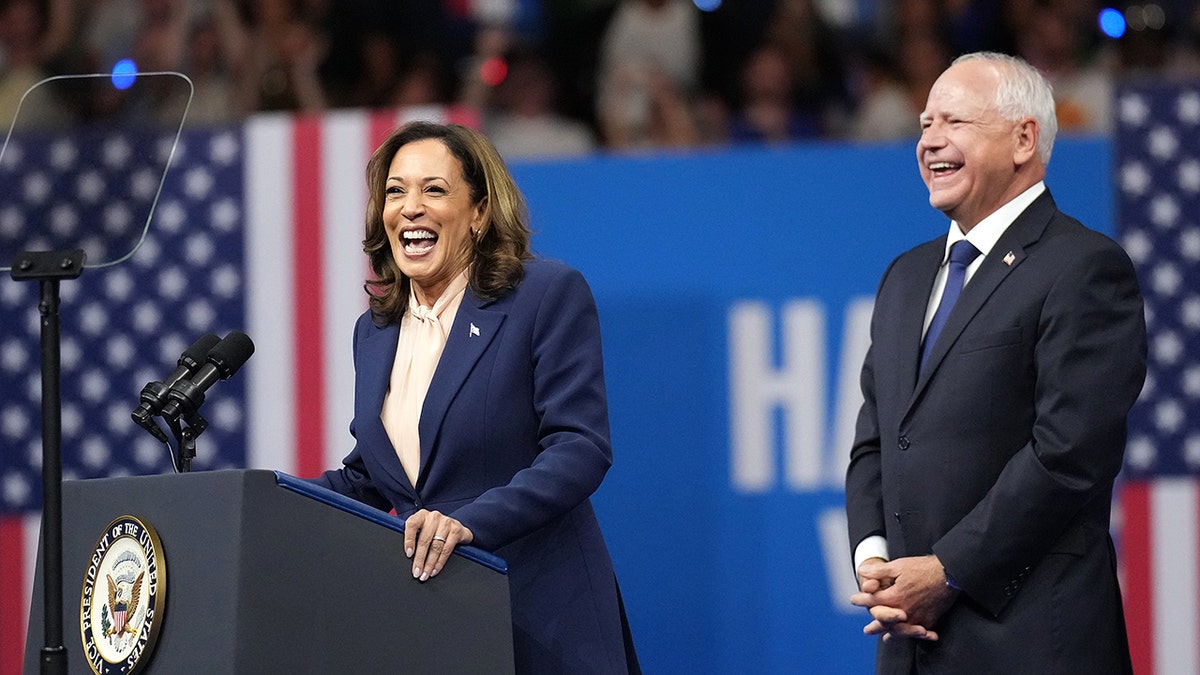
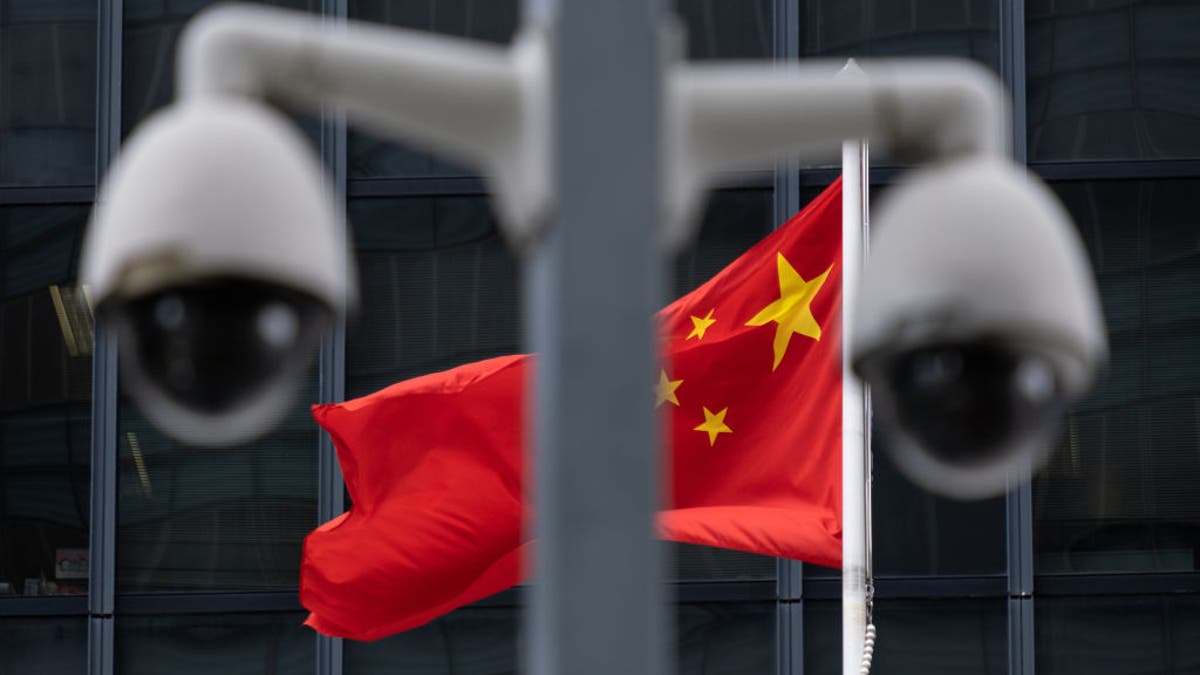


 By
By 
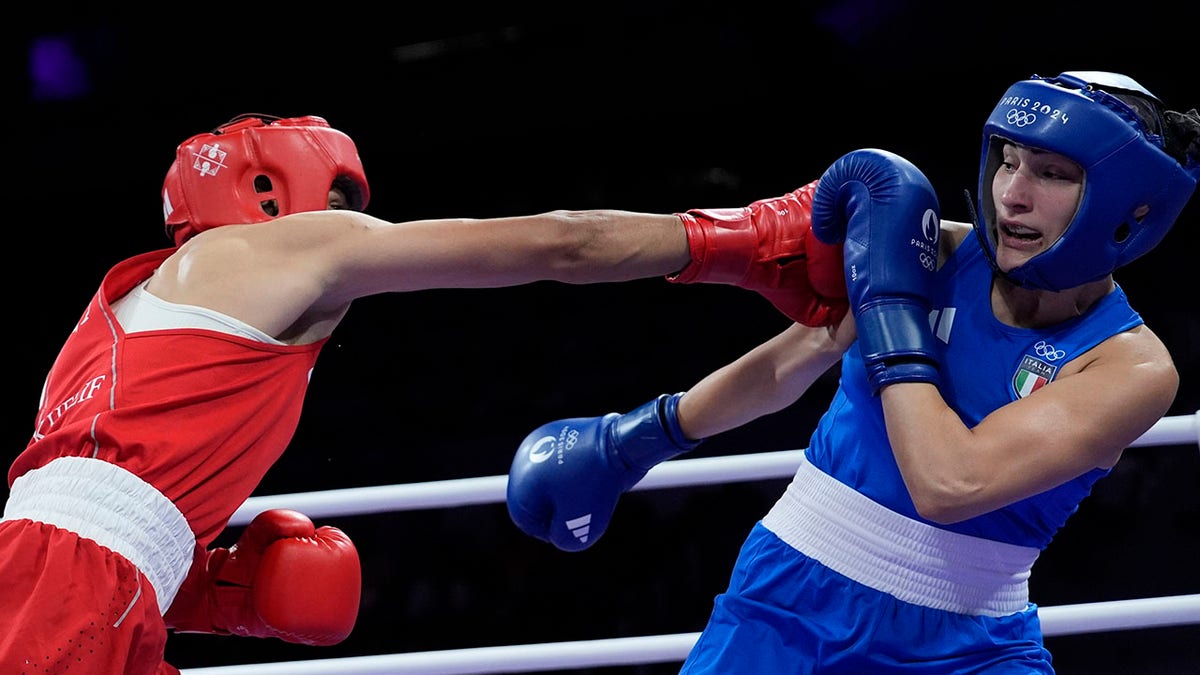
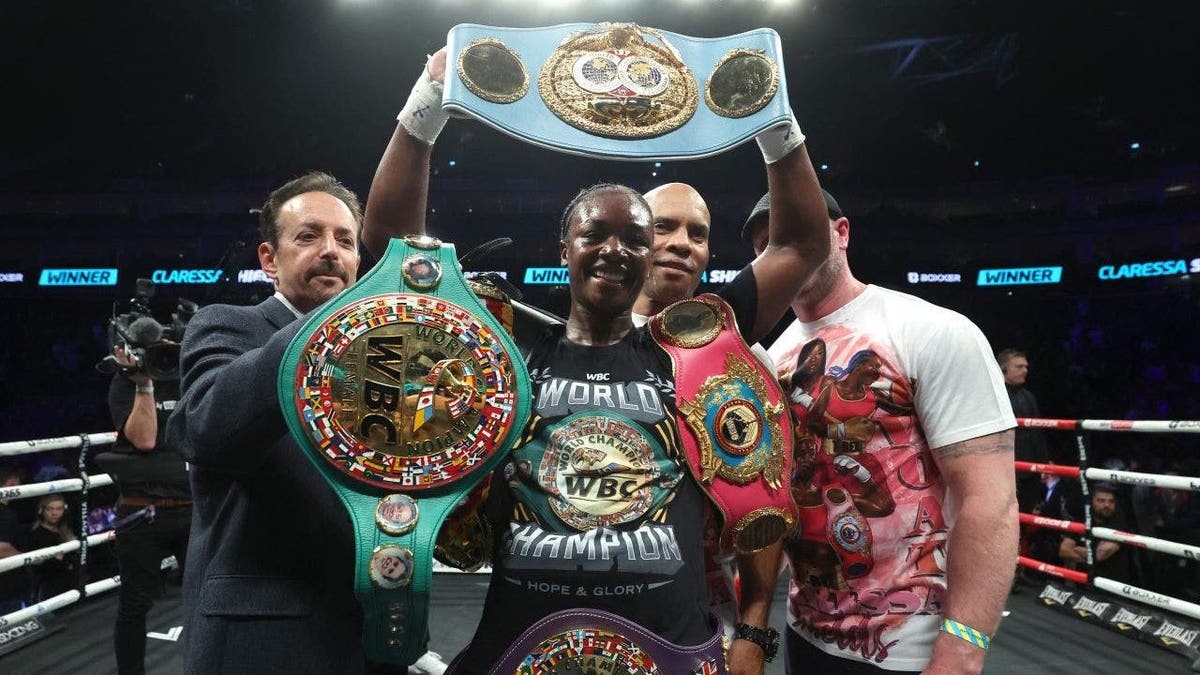


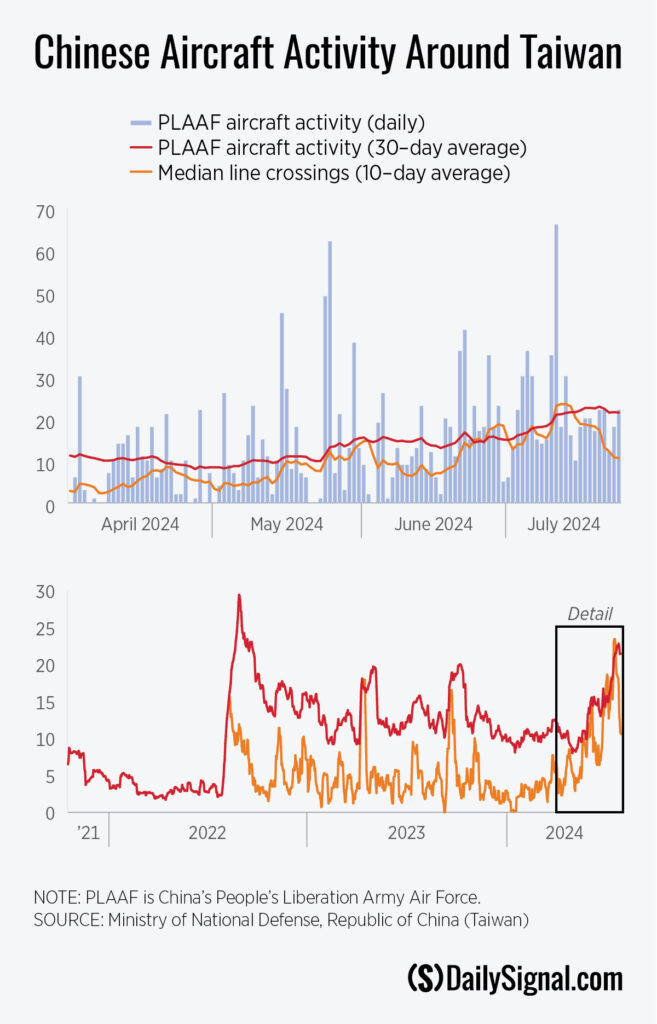
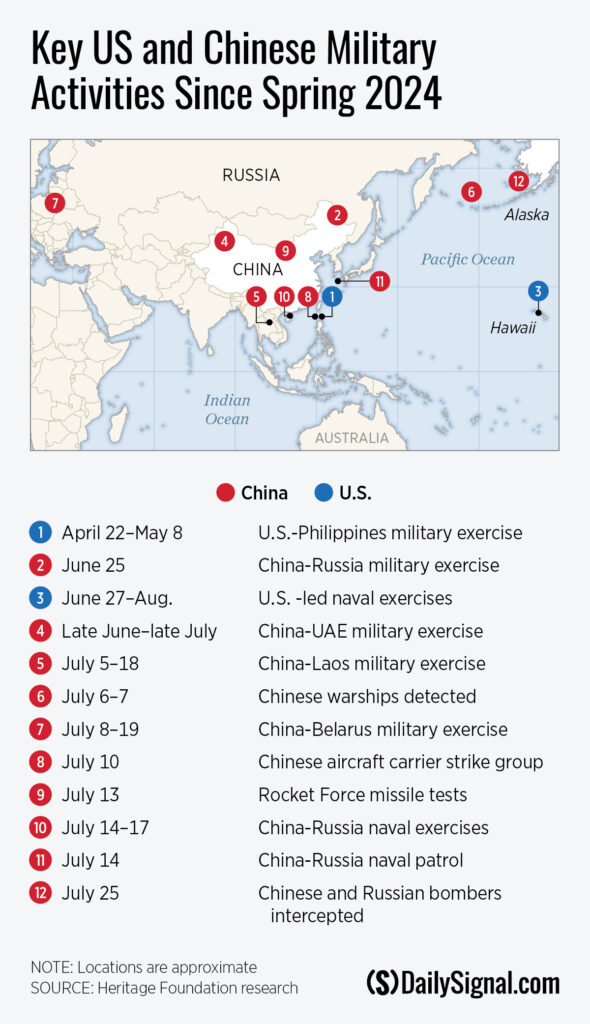


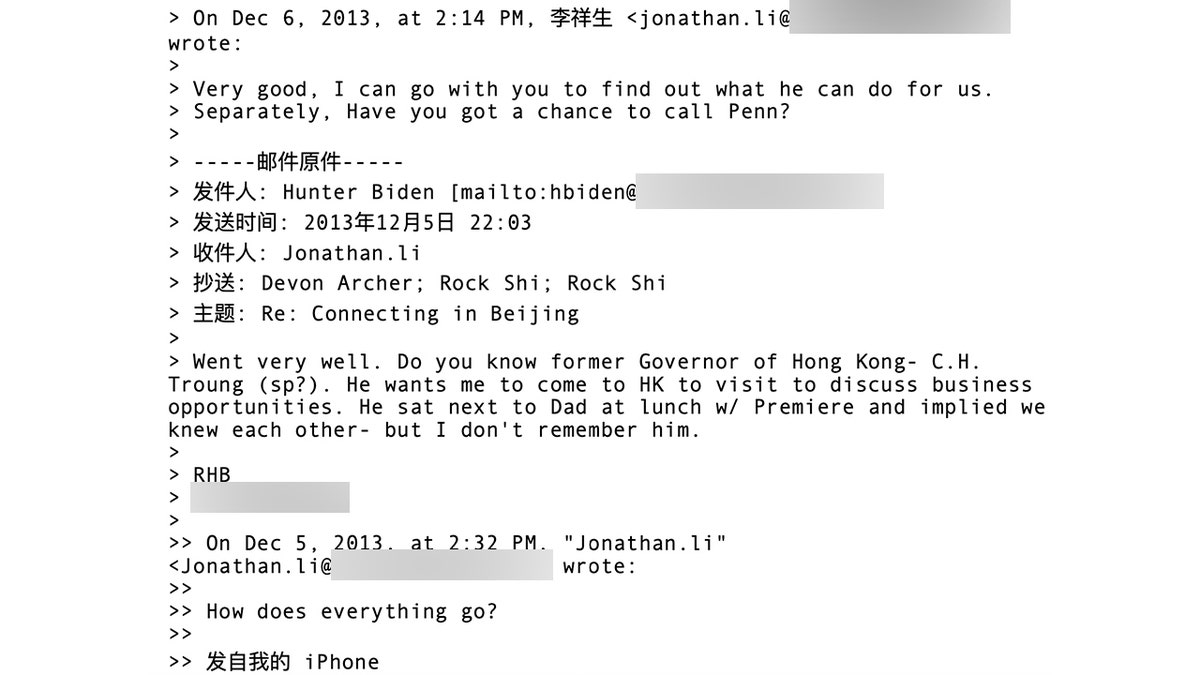
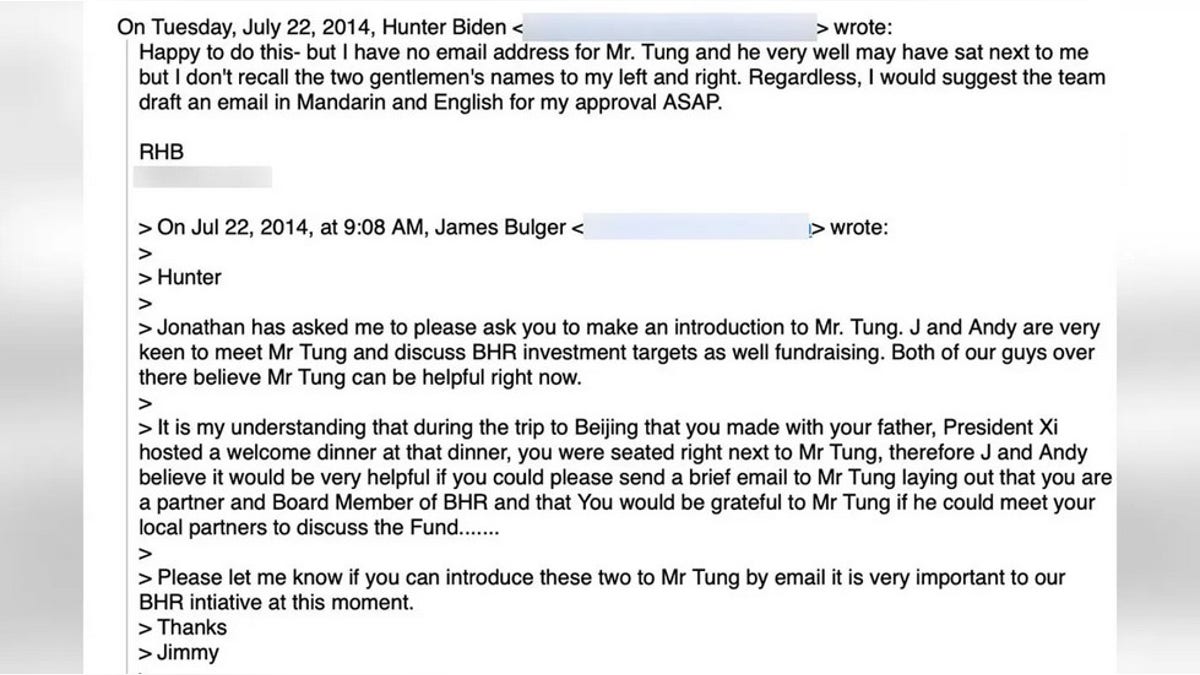
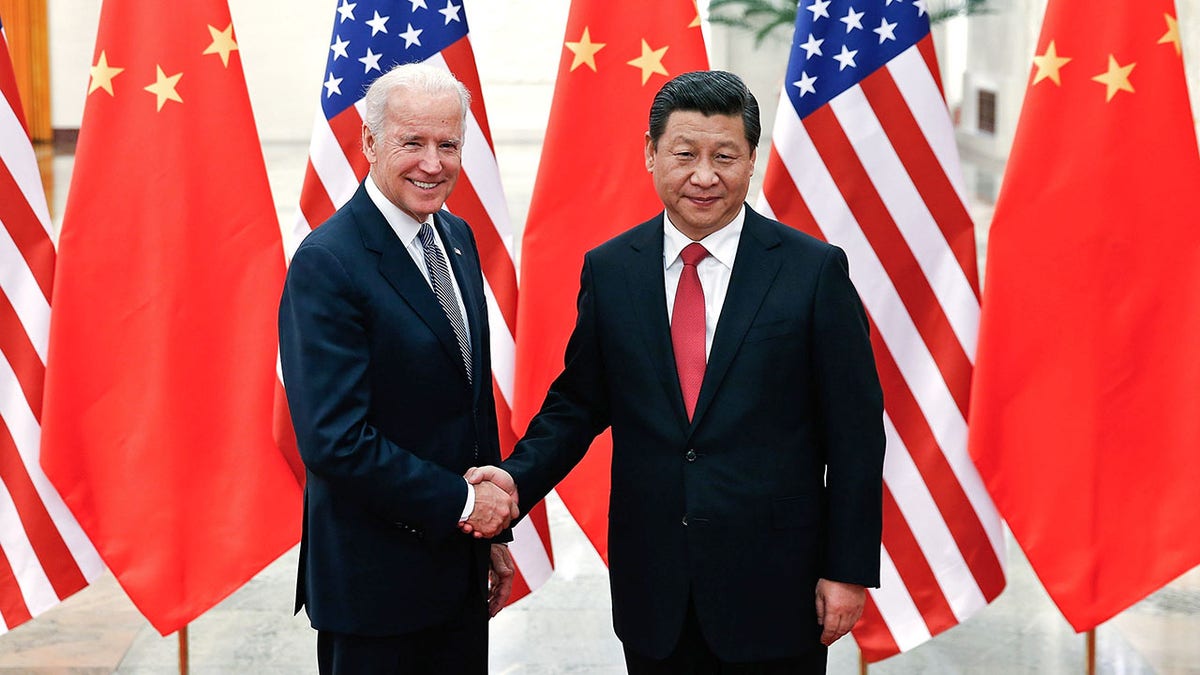


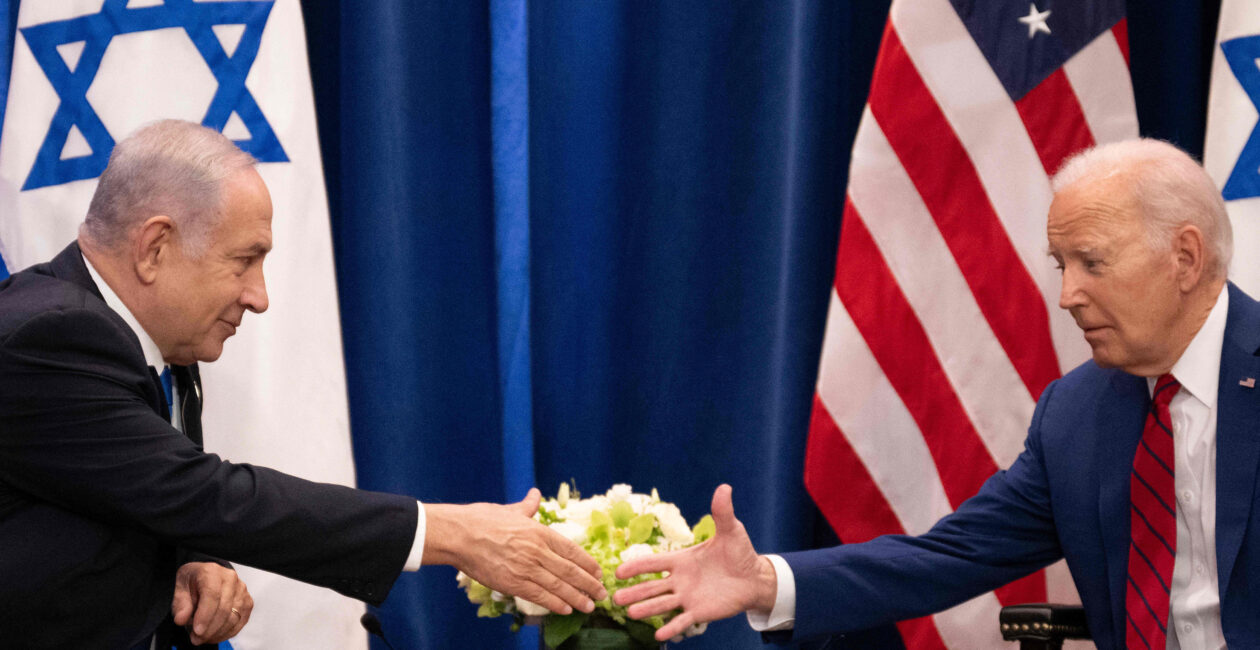
 By
By 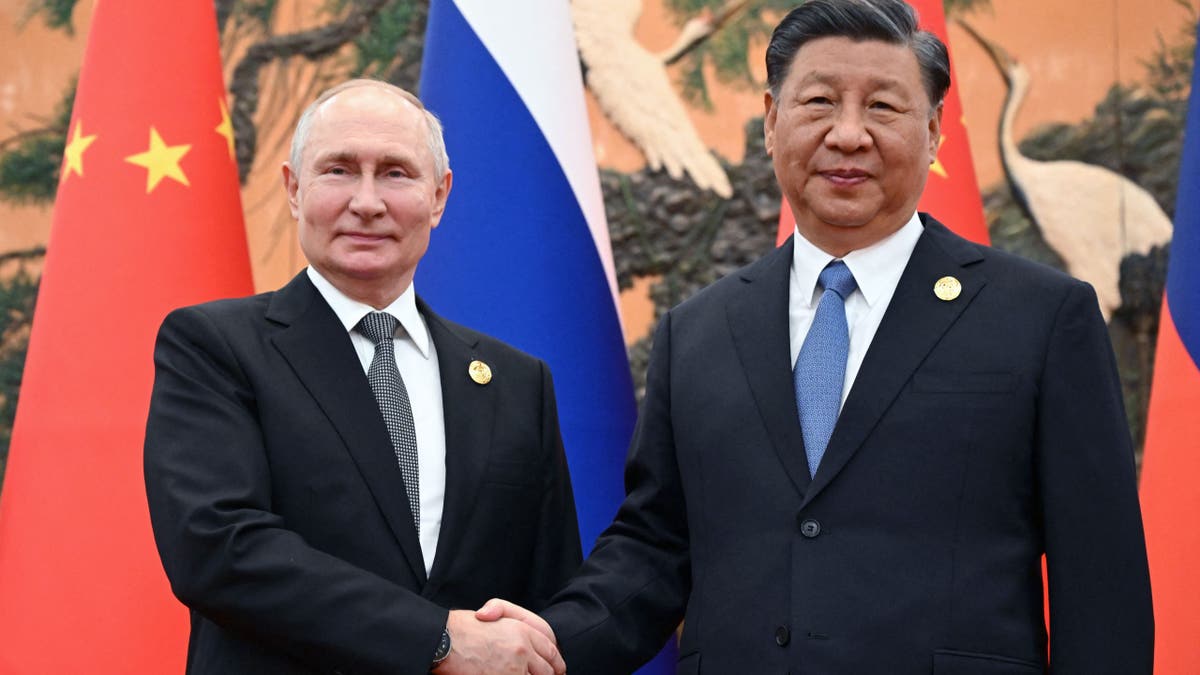






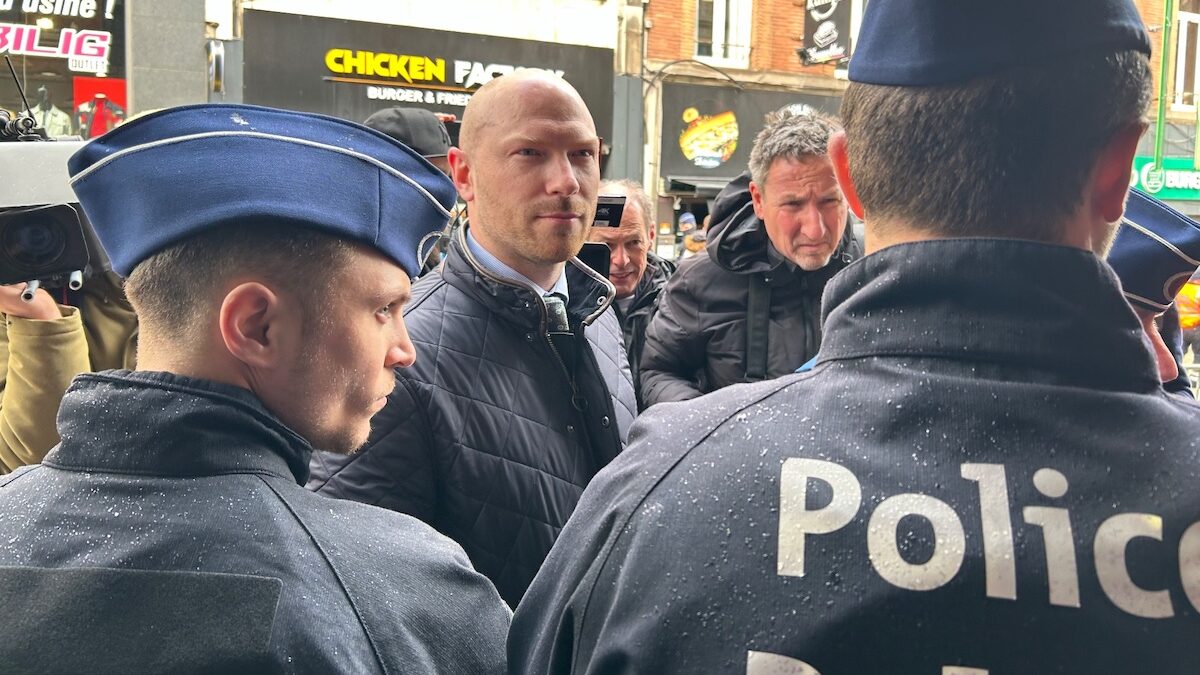

 By
By 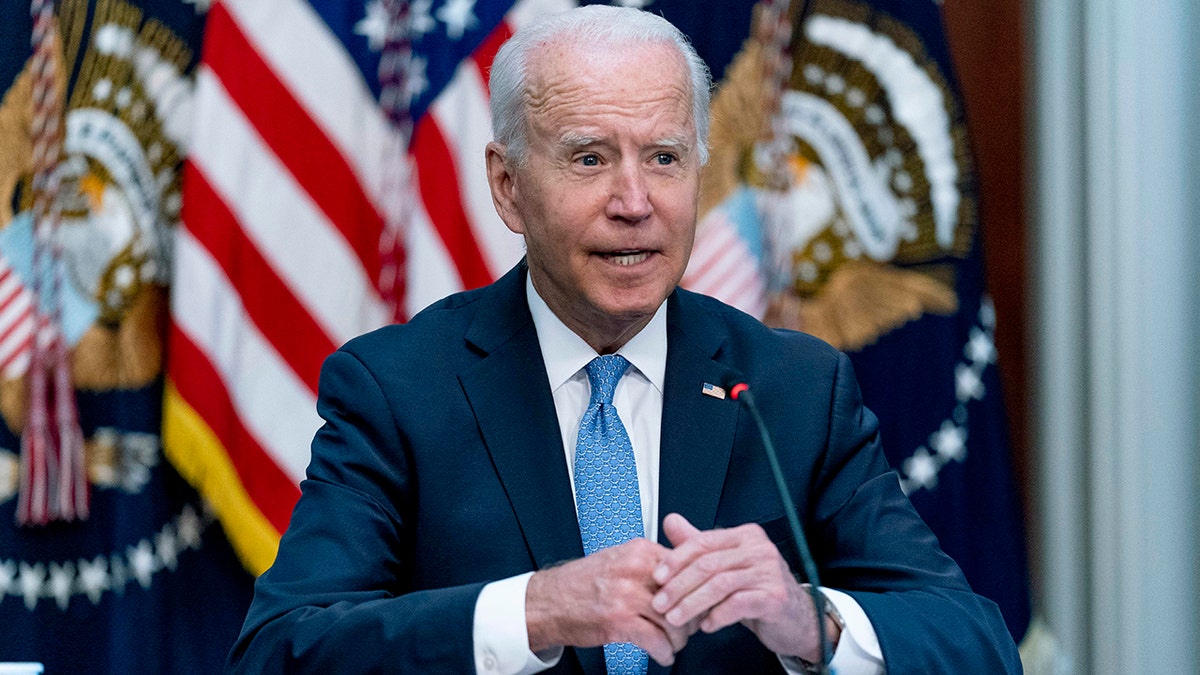
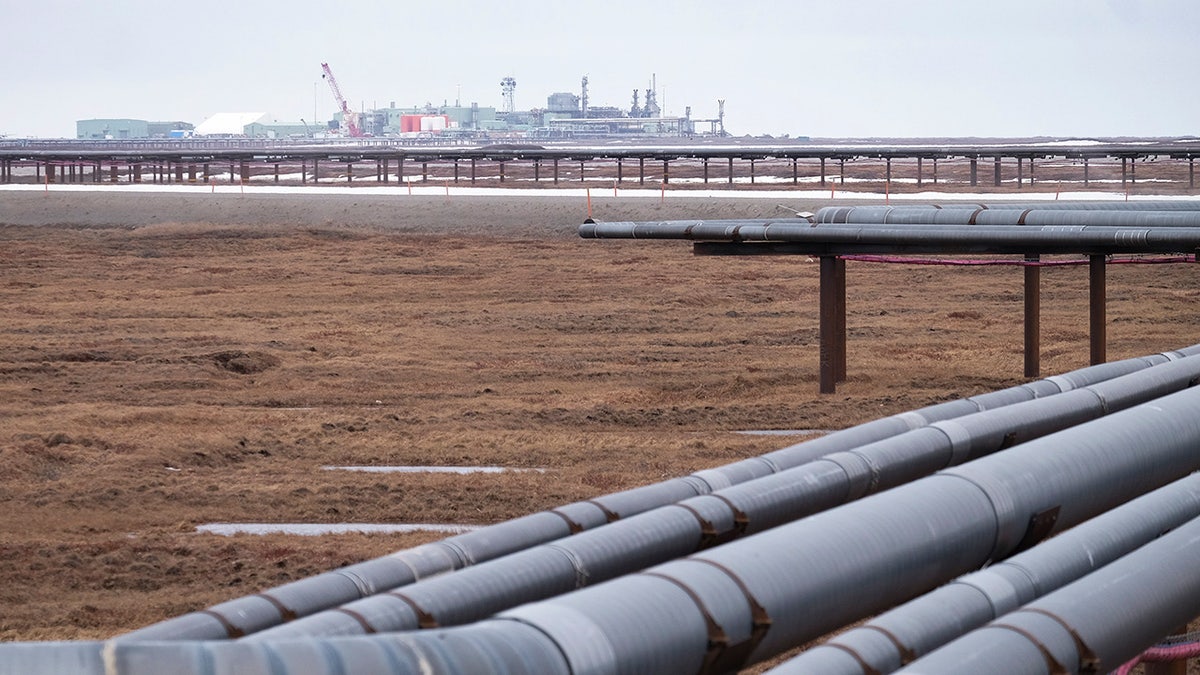
 By
By 



 By
By 
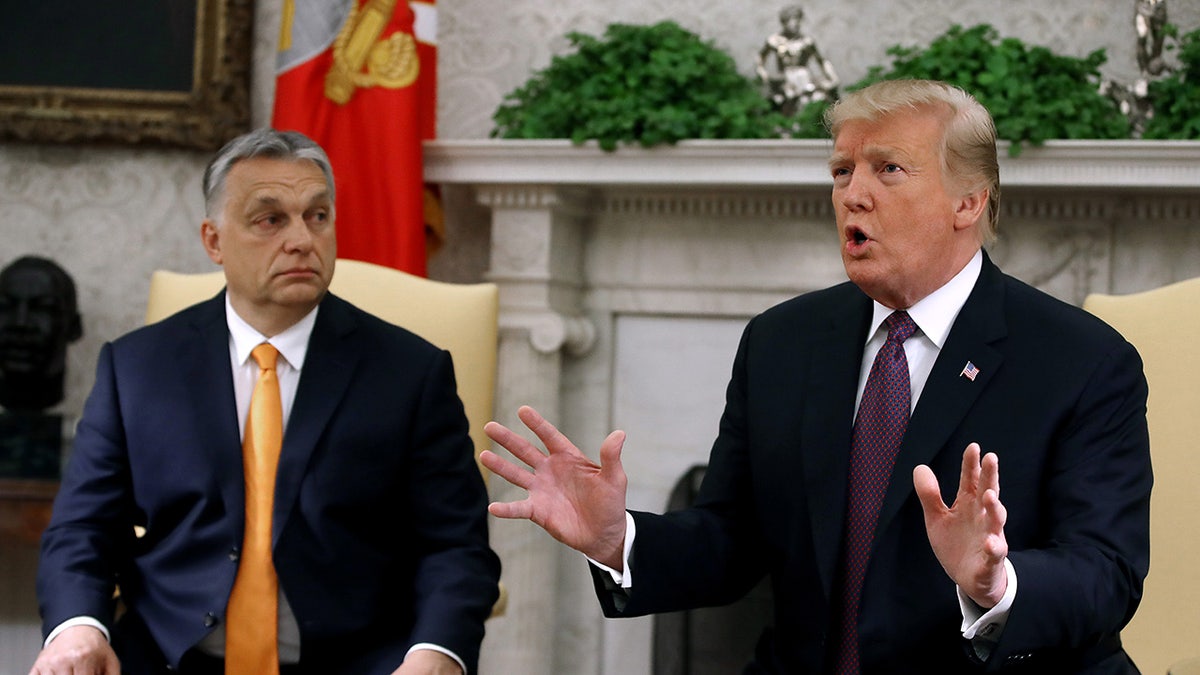

 By
By 
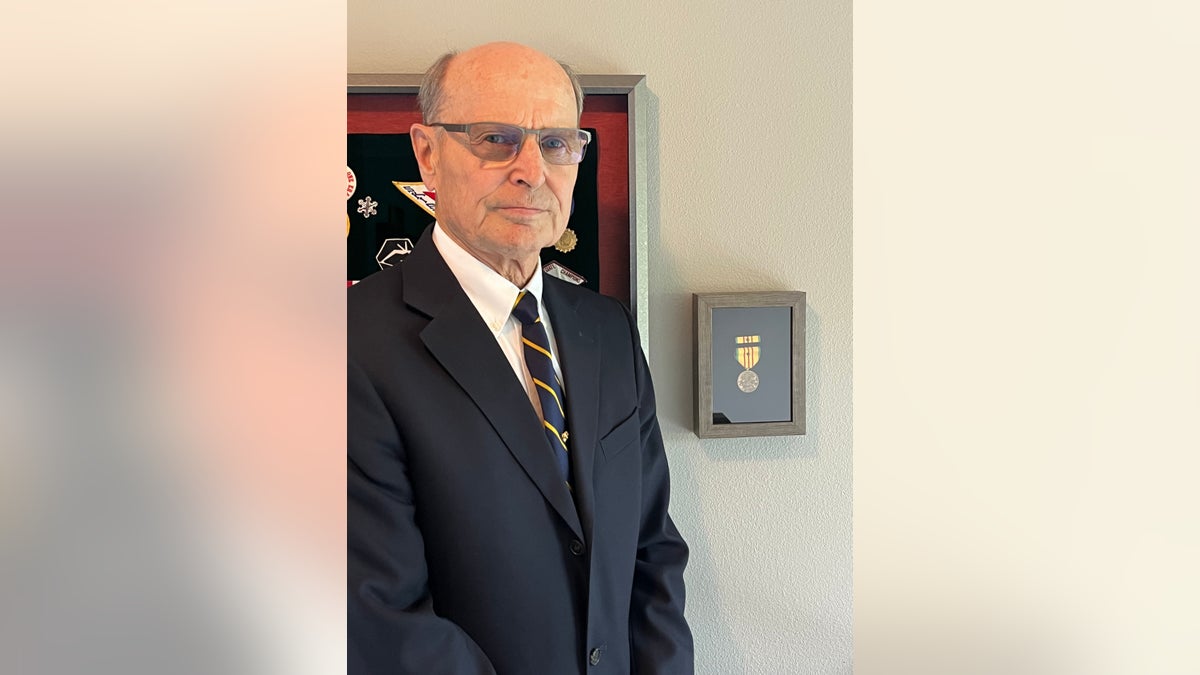







 What Did You Say?
You must be logged in to post a comment.