Fox is reporting that Michael Cohen was back on TikTok last night using the Trump trial to troll for dollars. Cohen reportedly appeared in a teeshirt showing Trump in an orange jumpsuit and asked for more followers. He also reportedly announced his candidacy for Congress, which would allow him to take one of the seemingly few oaths that the serial perjurer has not violated.
Who would have thought that District Attorney Alvin Bragg calling a porn star to the stand would be the moral high ground for key witnesses? Next could be a disbarred, convicted perjurer who is still seeking to make money off the case.
Cohen previously pledged not to discuss the trial after many of us objected to Judge Juan Merchan’s gag order as unconstitutional, particularly as to Cohen who has continued to attack Trump on the air while defending the gag order for his own protection.
Cohen’s prior promise lasted a record of a couple days before he broke it on TikTok. Now he is appearing with a tee-shirt mocking Trump and using the moment to pursue a congressional seat.
For Judge Merchan, this is precisely what he was warned about. He has stubbornly enforced his poorly written and excessively broad order. After admitting that this was a “case of first impression” on the extension of gag orders to such things as repostings on social media, Merchan clarified his meaning not with a new order but by imposing sanctions on Trump.
Trump is now appealing the gag order and Cohen is doing his best to undermine not just his residual credibility but that of the court. Between the lurid testimony of Daniels and the continued antics of Cohen, Merchan looks completely feckless, if not farcical, in his own courtroom.
For Merchan and the prosecutors, none of this can come as a surprise.
There is an old fable of a scorpion who wants to cross a river and convinced a hesitant frog to carry him on its back. After all, if he stung the frog in the river, they both would die. That seemed logical so the frog agreed to do so only to have the scorpion deliver a lethal sting halfway across. When the frog asked why the scorpion would doom them both, the scorpion replies: “I am sorry, but I couldn’t resist the urge. It’s in my nature.”
Cohen has always been open as a grifter.
The problem is not Cohen. He continues to act to his nature. The problem is a political and legal system that enables him as a serial liar. It is a system that continues to call Cohen to the stand and ask him to swear to God to offer the “truth, the whole truth, and nothing but the truth” without a signature joke drum roll before his punchline.
Yet, Cohen now wants to take an oath of office in the legislative branch. He seems to collect oaths the way some collect animal heads for a trophy wall. The question is whether other members could suppress laughter when he swears that he is taking the oath of office “without… purpose of evasion.”
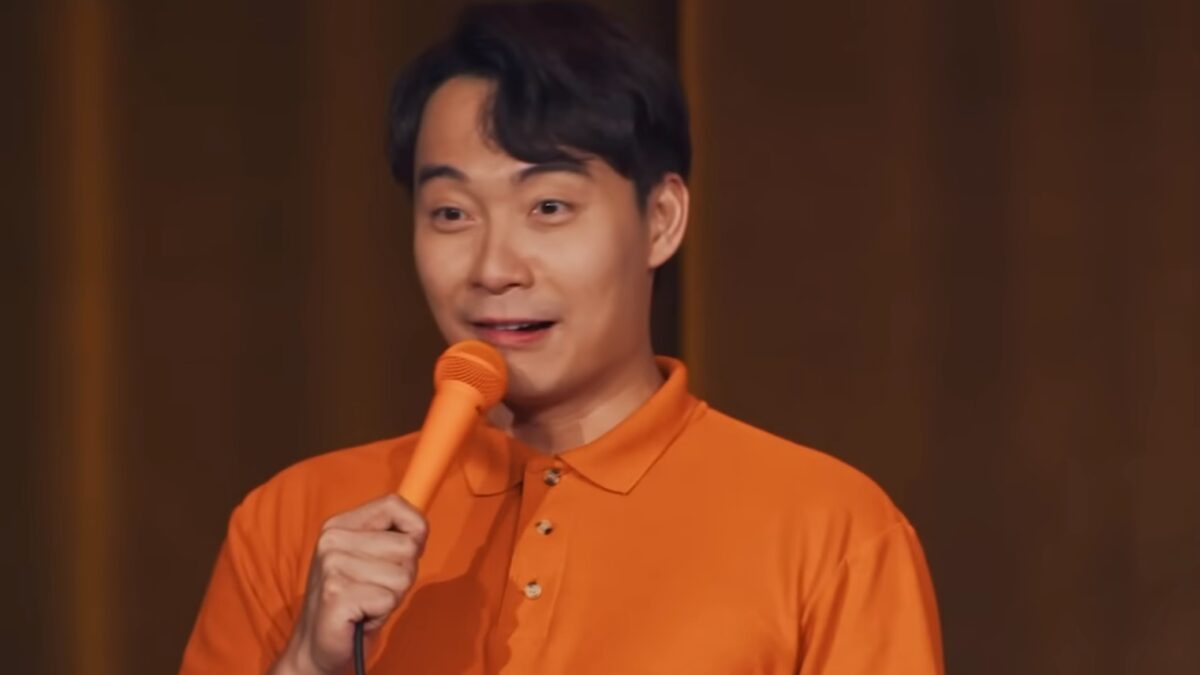
Americans often wonder why they should care or what the consequences would be if China replaced the United States as the world’s most powerful nation. Surprisingly, a clear answer to this question can be found in the ongoing saga of comedian Nigel Ng Kin-ju.
Ng, more popularly known as Uncle Roger, is a British-Malaysian comedian and internet personality who has become wildly popular over the last couple of years, thanks to his hilarious critiques of Westerners’ attempts at cooking Asian food. Even if you are not familiar with his name, chances are you have stumbled upon one of his videos while scrolling through YouTube, Instagram, or TikTok, where he has a combined 20.8 million followers.
Overall, things were working out quite nicely for Uncle Roger until he committed the gravest of modern-day sins: criticizing Chinese President Xi Jinping and Communist China.
In a recent upload clipped from one of his stand-up comedy shows, Uncle Roger asked an audience member if he was from Boston. When then the gentleman responded that he was in fact from Guangzhou, China, Uncle Roger immediately feigned a look of exaggerated concern and retorted, “China, good country, good country. … We have to say that now, correct?” The entire audience, including the gentleman from Guangzhou, burst into laughter.
— Nigel Ng (Uncle Roger) (@MrNigelNg) May 14, 2023
Uncle Roger continued taking shots at China, noting that the man’s Huawei phone was listening to everything he was saying and repeating, “Long live President Xi.”
The comedian then really went for it, asking who in the audience was from Taiwan. Responding to the cheers of a few Taiwanese audience members, Uncle Roger brazenly quipped, “Not a real country, not a real country,” and, “I hope one day you rejoin the motherland. One China!”
He ended by soliciting the audience to write the Chinese Communist Party (CCP) and state that Uncle Roger is a “good comrade.”
The clip immediately went viral and caught the eyes of some of Twitter’s more well-known critics of China, including Melissa Chan, Lele Farley, and former Pentagon official Elbridge Colby, who retweeted the video along with the caption, “This guy gets what it’ll look like.” The clip’s virality, however, was not limited to American audiences, and it swiftly caught the eyes of the censorship brigade in Beijing.
On Saturday, Taiwanese news outlet New Liberty Times reported that China suspended Uncle Roger’s Weibo and Bilibili social media accounts. Between both platforms, the comedian lost access to hundreds of thousands of subscribers. Weibo said the channel was muted due to “violations of relevant laws and regulations.”
Uncle Roger’s social media blacklisting came just days after Chinese comedian Li Haoshi was arrested for making jokes about the CCP’s People’s Liberation Army. Li’s management company was also hit with a $2 million fine.
“We will never allow any company or individual to wantonly slander the glorious image of the army on any stage in the capital city … or to make fun of serious subject matters,” regulators in Beijing said.
You might ask yourself why censorship within China’s borders should matter to Americans, especially as the United States has serious internal issues. America has her share of problems, not the least of which are those dealing with First Amendment rights. And the rules Beijing regulators decide to enforce have no effect on the average American’s life — for now.
Imagine for a moment, however, a hypothetical world where China has invaded and conquered Taiwan. It might not be readily apparent, but this world would look drastically different than the one you know today. In this world, American credibility in Asia will have been destroyed due to its inability or unwillingness to deter China. Realizing American power is on the way out, nations like Japan, South Korea, and Australia will hedge their bets and move away from Washington and closer to Beijing.
China is now the hegemon, or dominant nation, in Asia. And that means China directly or indirectly controls about half of the world’s economy. If you want to do business in Asia, ship your goods through Pacific waters, or source any of your supply chain on the continent, you will not be able to do so without China’s consent.
And if you think American autarky might be the answer, you may want to reconsider. As Colby noted in a piece for Time Magazine:
America will be at best roughly 20% of global GDP, a far smaller base for competition, making it likely our economy would be outclassed and left behind by China’s much larger area over time. Even more, though, China will very likely seek to diminish the U.S. This is just basic power politics.
At this point, all Americans directly or indirectly work for Chinese companies that are themselves controlled by the CCP, and if you want to keep your income stream flowing, you will have no choice but to bend to the party’s will. If you do not want to play along, well, look no further than what is happening right now with Uncle Roger. He made a simple joke at the expense of the party, and his ability to do business in China vanished.
A China that has gained hegemonic status in Asia now has that same power and authority over all facets of the global economy, including right here in the United States. What suggests that China would not gladly wield such a weapon at its discretion?
This is not the first time Uncle Roger has offended the CCP. In 2021, he angered Chinese social media users after he uploaded a video featuring outspoken China critic Mike Chen. Uncle Roger swiftly deleted the video and apologized to his Chinese audience, no doubt hoping to preserve his market share. As the latest developments show, however, appeasement only lasts until you inevitably upset the party line again, for which you will promptly be punished. Hopefully, Uncle Roger can learn from his past, and Americans can learn from him.
A future discourse dictated by Chinese power is not one that aligns with the preservation of American values or prosperity, and that is just the future Xi is hoping for.
Lane Kendall is a graduate of Wichita State’s Elliott School of Communication and holds a Master’s of International Studies in Korean and East Asian Studies from Korea University in Seoul, South Korea. His research and writing focus on East Asia’s geopolitics and America’s power competition with China, Russia, and Iran.
One of the biggest challenges presented by China as compared to the USSR is the depth of the Chinese penetration of America’s economy, politics, culture, and society.
“It is time to acknowledge reality: The United States is in a New Cold War with the PRC [People’s Republic of China],” Heritage President Kevin Roberts wrote, expressing a sentiment espoused throughout the report.
For decades, America has followed a bipartisan and naïve policy of unfettered engagement with China, which has allowed the Chinese Communist Party to entrench and enrich itself within the international system while facing no consequences for its aggression abroad or totalitarianism at home. China now uses its wealth and technology to supercharge a policy of civil-military fusion, linking economics and military strategy.
One of the biggest challenges presented by China as compared to the USSR is the depth of the Chinese penetration of America’s economy, politics, culture, and society. The Heritage plan leaves no stone unturned when discussing these malign activities, advocating a “whole-of-government and whole-of-society effort” to counter them.
1. Ban Dangerous Chinese Apps
TikTok and other CCP-linked apps are incredibly popular, especially among American youth. These apps threaten personal privacy and national security. Heritage recommends an outright ban of TikTok and a more aggressive, risk-oriented approach to assessing foreign-owned information technologies in the U.S.
This would take very little in terms of new law, and the federal government has processes in place to monitor or ban these apps. Congress is already debating this issue, so the prognosis looks good.
2. Ban the Import and Sale of Chinese Drones
Although a lesser-known issue, CCP-linked drone manufacturers, specifically Da-Jiang Innovations (DJI), dominate the commercial and recreational markets. As with TikTok, all information collected by those drones is stored on CCP-accessible servers.
Local, state, and federal agencies have used DJI drones — some given as free “gifts” during the pandemic — to “monitor every aspect of life in these cities,” including “the precise location of critical infrastructure and other sensitive information.”
Bans on these drones can be included in the annual National Defense Authorization Act (NDAA) or implemented via executive order. Educating non-federal officials about the drones could reduce the threat at the state and local levels.
3. Risk-Manage Inbound Investment
China’s direct investment in American firms peaked in 2015, but its national security implications remain. Often funneled through middlemen who camouflage Chinese involvement, CCP-linked investment still reaches into the billions annually.
The federal government has the tools to properly manage and review this. The 2018 Foreign Investment Risk Review Modernization Act (FIRRMA) enabled the Committee on Foreign Investment in the United States (CFIUS) to scrutinize these investments more.
Expanding definitions in FIRRMA can empower CFIUS to address all forms of Chinese investment, even through intermediaries, while direct legislative language can force reviews when agencies decline to use the power granted by law.
4. Reject Damaging ESG Policies
So-called environmental, social, and governance policies have been a debacle for investors and a sop to Chinese-linked firms, which control the supply chains for ESG-mandated renewable energy. ESG weakens the U.S. while strengthening its greatest foe.
Congress can end this damaging strategy through legislation, which it indeed did before President Biden vetoed it. Congress should continue pushing to end ESG through law and work to advance the understanding of ESG’s danger in the corporate sector.
5. Increase Munition Production and Arm Taiwan
This issue is paramount to countering China, particularly as the CCP has advanced its aggression toward Taiwan. The Heritage report acknowledges the trade-offs inherent in the decisions about arms sales and transfers and proposes an augmentation of our defense-industrial base to overcome these scarcity issues going forward.
Today, we can prioritize Taiwan by sending critical munitions, ensuring that capabilities sent elsewhere do not overly affect the defense of Taiwan, drawing down our own stocks in accordance with the law, and facilitating arms purchases from other nations.
6. Foster Innovation in the U.S. Maritime and Shipping Sectors
America’s “uncompetitive and outdated shipbuilding and shipping sector diminishes U.S. competitiveness, undermines the resilience of the economy, constrains the nation’s ability to mobilize and sustain a wartime economy, and meet the U.S. Navy’s global responsibilities,” according to the report.
The major stumbling block to reform is the restrictive Jones Act, which should be repealed and replaced with a law focused on promoting innovation in the maritime sector. The Jones Act, or the Merchant Marine Act of 1920, mandates that U.S.-made and U.S.-owned vessels transport goods between American ports, and that U.S. citizens operate the vessels.
Free-market solutions will allow the creativity of American industry to excel, developing novel methods of transportation, growing our shipbuilding and shipping capacities, and backstopping American naval power.
7. Expand Export Controls
The U.S. policy of engagement with China had allowed the chronic export of technologies used to advance China’s military aims. Legislation has since limited certain “foundational technology” exports, but the federal bureaucracy has failed to implement controls by refusing to label these technologies.
Congress must exercise its oversight power and force executive branch agencies to make these determinations in line with the law, so as to cease the transfer of critical security technology to the CCP.
8. Hold China Accountable for Covid-19
Regardless of the pandemic’s specific origin, a great deal of evidence has shown the CCP deliberately covered up the virus, allowing it to spread unchecked. Since then, the CCP has stonewalled investigations into its behavior, using its leverage at the World Health Organization to avoid accountability.
The U.S. government should cease funding the WHO until it conducts a thorough investigation of China’s involvement in the pandemic, end all financing of Chinese biomedical research, and propose unbiased international standards by which pandemics can be detected and limited without interfering with national sovereignty.
9. Prioritize the Pacific Islands
The Pacific Islands are often overlooked in the geopolitical competition with China. Many small island nations comprise the region, but it is strategically important to maintain a U.S. presence in the Pacific, especially through its links to Asia and Australia.
China has focused on this region, seeking to cut off the U.S. from its Indo-Pacific allies.
“Winning the New Cold War” suggests the U.S. compete on the same turf by renewing existing diplomatic and security agreements, exploring the expansion of those accords to other nations, and engaging diplomatically through high-level visits and summits.
10. Establish a Quad Select Initiative
The Quad — the U.S., Australia, India, and Japan — is one of America’s most important initiatives to counter China. It links the key players in the Indo-Pacific and builds bridges for future cooperation.
Expanding this multilateral format by selectively inviting other nations to join for military, economic, or planning purposes would allow the U.S. to enhance regional alliances and foster broader anti-CCP cooperation.
This would not require any legislation but merely a change in the executive posture. Creating a more open architecture for the Quad would serve as a significant counter to Chinese regional aggression.
These 10 points are the plan’s low-hanging fruit, and the federal government could adopt these policies tomorrow if it had the will. Heritage’s “Winning the New Cold War” aims to bolster that resolve. Time will tell if it succeeds, but the plan is an excellent start.
Mike Coté is a writer and podcaster focusing on history, Great Power rivalry, and geopolitics. He has also written for National Review and The National Interest, blogs at rationalpolicy.com, and can be found on Twitter @ratlpolicy.
There’s plenty of blame to go around for the disappointing results of the last week’s election: the current post-Covid rules (or lack thereof) for voting, mismanaged ballot collection and counting, Republican leadership, and American voters. Naturally, all of these factors played a role in helping a party that has failed on multiple fronts to stay securely in power.
However, one major reason for Democrats winning was Gen Z voters coming out in large numbers to vote for them — though this was not quite as big a reason as Democrats believe. This cohort was responsible for electing cognitively impaired man-child John Fetterman and incompetent shrew Kathy Hochul as well as reelecting Covid tyrant Gretchen Whitmer. Less unsurprisingly, they’re also responsible for supporting the legalization of marijuana and expanding abortion.
Why did these young people feel motivated enough to go and vote against their interests and keep the country on a downward trajectory? Do they like rising crime, high inflation, mass illegal immigration, homeless encampments, high gas prices, and a shrinking economy? Did they really think Biden would pay off their student loans? Are they just brainwashed zombies who comply with the narratives of TikTok?
Based on my extensive experience as an English teacher, I would say that yes, the average Gen Z American is largely indifferent to important issues that affect the country, even ones that affect their general quality of life. Every day, I witness their lack of reasoning skills and personal drive.This in turn causes them to be disturbingly introverted and handle most of their interactions with people through social media. Many have no real community or deep-seated beliefs and act more on feelings than principle.
Instead, they spend most of their waking life on the internet, consuming mindless content and dreaming up fake personas for themselves. And as a result, they are largely immature, lonely, and neurotic.
This much is argued by writer and former English professor Mark Bauerlein, who writes that Gen Z, “will be the most conformist cohort in American history, already favoring cancellation more than any other age group, and politics will be a primary mode of grouping.” This generation is told what to think by various online influencers, and they passively comply.Because of screen addiction, they will never learn to think or act for themselves, nor will they ever really want to.
The propagandizing effect of heavy social media usage cannot be overstated. For young people, nearly every narrative and social phenomenon now originate from the internet. This means that it’s the dumb and disturbed “influencers” online, not parents or teachers, informing this next generation about politics, economics, and culture. And the algorithms of popular social media sites are designed to curate and amplify this same defective messaging a million times over. The subversive effect on people with still-developing frontal cortexes is not all that different from the “Ludivico technique” in “A Clockwork Orange” in which criminals are forcibly bombarded with images and music in order to condition them against misconduct.
Why is Gen Z so glued to their screens? Two friends and fellow teacher-writers Jeremy Adams and Shane Trotter have examined this question in depth. In his book “Hollowed Out,” Adams argues how the breakdown of family, schools, and the culture at large has left today’s young people morally and intellectually adrift: Not working? Not supporting oneself? Playing video games all day on somebody else’s dime? Not feeling a crumb of shame about it — even describing such a state as happy? That is hollowness.
The many norms and standards (these things that would “fill in” a person) that used to be reinforced by their parents, pastors, teachers, politicians, entertainers, and artists simply aren’t anymore. Should it surprise people that the kids carelessly withdraw from the world and play on their phones?
In Trotter’s book “Setting the Bar,” he attributes the failures of Gen Z to low standards and a permissive parenting culture that coddles kids:
The typical modern youth experience — from the school environment, to the parenting norms, to the broader cultural value structure — is ingraining limiting beliefs and destructive habits that leave our kids ill-equipped for the challenges that lie ahead of them.
No one challenges the kids, so they grow up soft and slow, making them the perfect sheep to be manipulated en masse.
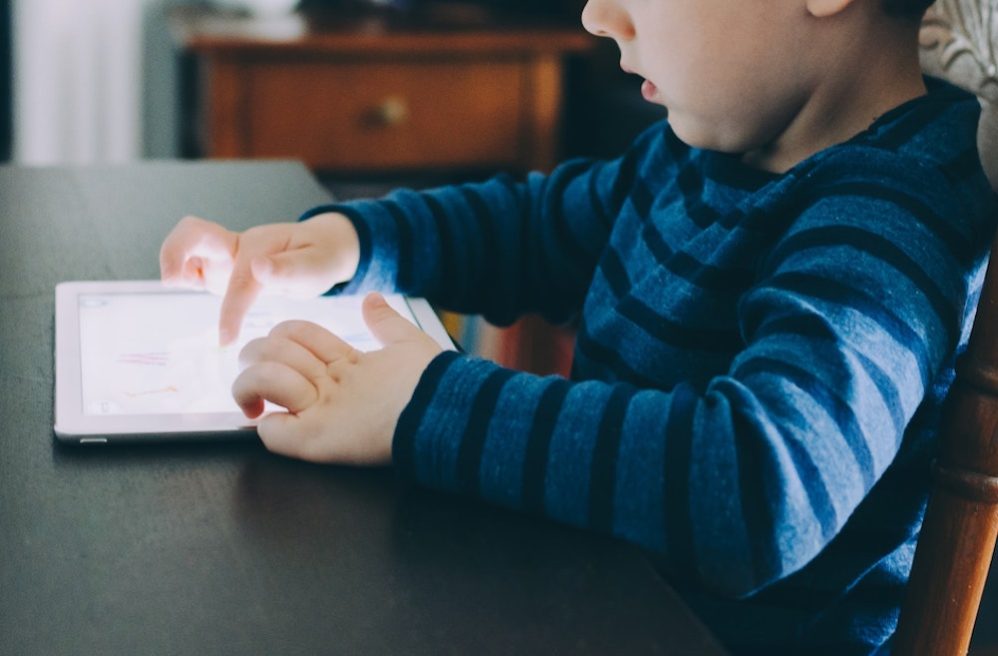
Adams and Trotter demonstrate how circumstances have turned many Zoomers into sad, confused individuals doomed to have an impoverished adulthood. Instead of receiving lessons on independence, critical thinking, and disciplined living, too many of them are protected from all forms of adversity and given an iPad to keep them pacified. This treatment insulates them so much from reality that they never come to know themselves and are bored to the point of despair.
Ironically, understanding this dark reality may be the key to generational reform. True, it might be easy to agree with Bauerlein that Gen Z is hopeless and will probably bring the rest of the nation down with them, but this theory assumes that the Gen Z lifestyle is actually sustainable. The students in my classes all share a natural desire to be better people. I do what I can to offer them a way out; that is, I talk to them and push them to do more. At first, they resist and resort to their phone for comfort but this attitude changes when they feel the profound joy of actually learning and accomplishing something.
Conservatives can shake their heads at today’s young adults refusing to grow up, or they can actually try to reach these kids. It’s not like they want to be lonely, ignorant, or “neurodivergent.” And most, if they’re being honest, don’t want to be slaves to their smartphones. Rather, like everyone else, they want goodness, beauty, and truth. They want loving relationships, authentic experiences, and some degree of mastery over their emotions and impulses. Above all, they want meaning.
If they have those things, then they will stop voting for corrupt mediocrities and suicidal social policies. More importantly, they will stop wasting away their lives on frivolity and enjoy a fruitful and fulfilling adulthood. Although election results are technically a political matter, what they reveal about voters is a cultural and moral one. We should treat this midterm as the Gen Z cry for help. It’s time for us to go out and save them.
Auguste Meyrat is an English teacher in the Dallas area. He holds an MA in humanities and an MEd in educational leadership. He is the senior editor of The Everyman and has written essays for The Federalist, The American Conservative, and The Imaginative Conservative, as well as the Dallas Institute of Humanities and Culture. Follow him on Twitter.
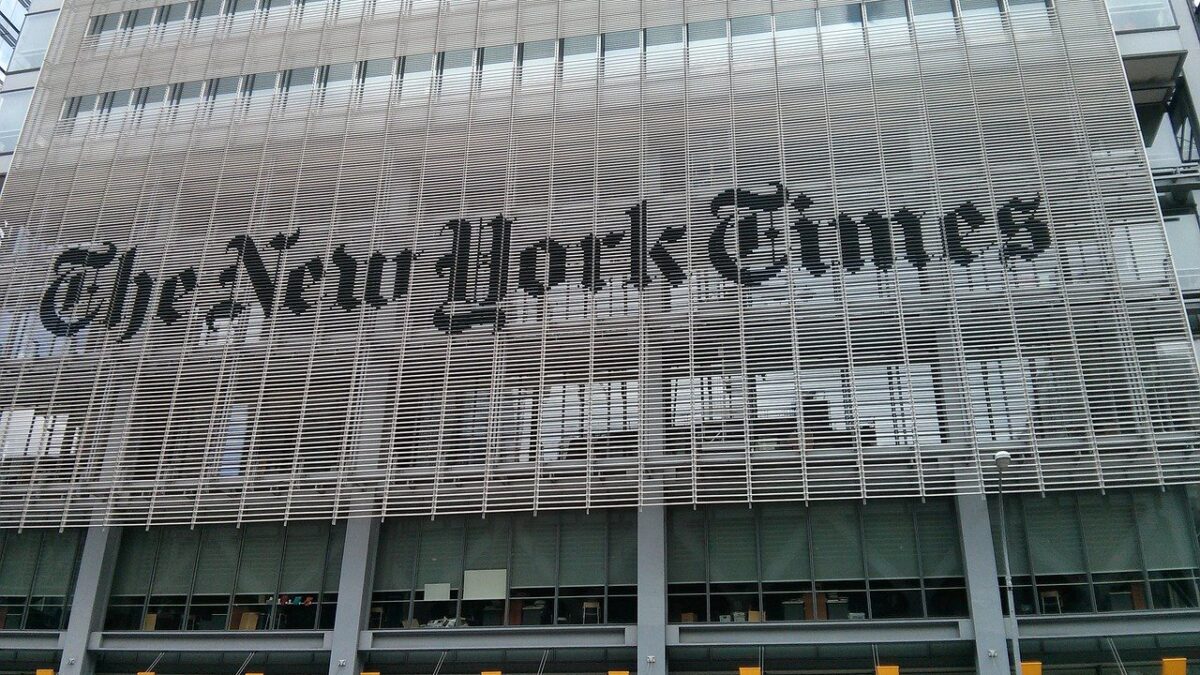
The New York Times asked TikTok, a social media app with known connections to the Chinese Communist Party (CCP), to censor American users sharing election integrity concerns on its platform.
In a recent article titled, “On TikTok, Election Misinformation Thrives Ahead of Midterms,” Times writer Tiffany Hsu details how “TikTok is shaping up to be a primary incubator of baseless and misleading information” ahead of the 2022 midterms, with the issue of voter fraud being a prominent topic shared across the platform. Buried within the article, however, Hsu tacitly reveals that as a result of the Times reaching out to the CCP-connected company, TikTok began censoring users from using a popular hashtag associated with fears about election interference.
“Baseless conspiracy theories about certain voter fraud in November are widely viewed on TikTok, which globally has more than a billion active users each month,” the article reads. “Users cannot search the #StopTheSteal hashtag, but #StopTheSteallll had accumulated nearly a million views until TikTok disabled the hashtag after being contacted by The New York Times.”
Hsu goes on to note the platform’s failure to address the spread of “misinformation” in foreign elections, citing those in France and Australia as examples.
“The app [also] struggled to tamp down on disinformation ahead of last week’s presidential election in Kenya,” Hsu wrote, referencing a report by Odanga Madung, a researcher for the Mozilla Foundation. “Mr. Madung cited a post on TikTok that included an altered image of one candidate holding a knife to his neck and wearing a blood-streaked shirt, with a caption that described him as a murderer. The post garnered more than half a million views before it was removed.”
As reported by Federalist Senior Contributor Helen Raleigh, TikTok “is owned by ByteDance, a Beijing-based internet company” and “collects an enormous amount of data on its users, including IP addresses, browsing history, and biometric information.” While ByteDance argues that American user data “is safe because it is stored on U.S. soil,” China’s national intelligence law mandates that “all Chinese tech companies must turn over any data they collect if the government demands it.”
“[A] recent BuzzFeed News report, based on leaked internal TikTok meetings, shows that ByteDance’s Chinese employees have repeatedly accessed nonpublic U.S. user data,” Raleigh said. “One employee of TikTok’s trust and safety department said in a September 2021 meeting that ‘Everything is seen in China.’”
The actions by the Times to push TikTok into censoring Americans isn’t the first time the news outlet has played footsy with the CCP. Late last year, the Times faced public backlash after purportedly downplaying the role Chinese leader Xi Jinping played in the genocide of Uyghur Muslims in the Xinjiang region of China.
“For unknown reasons, the New York Times appears to have intentionally withheld documents that directly linked top Chinese Communist Party officials, including General Secretary Xi Jinping, to the ongoing genocide of Uyghur Muslims in the Xinjiang Uygur Autonomous Region” wrote Florida GOP Sen. Marco Rubio in a letter to New York Times publisher A.G. Sulzberger. “In those now-released ‘Top Secret’ transcripts — documents that the New York Times has allegedly had in its possession since at least 2019 — Xi explicitly authorized changing local counterterrorism laws, rounding up and sentencing Uyghurs, the use of forced sterilization, and the use of slave labor in Xinjiang.”
The paper has since denied such accusations, with Assistant Managing Editor for International Michael Slackman claiming Rubio was “simply wrong on the facts.” But a pattern seems to be emerging.
Shawn Fleetwood is an intern at The Federalist and a graduate of the University of Mary Washington. He also serves as a state content writer for Convention of States Action and his work has been featured in numerous outlets, including RealClearPolitics, RealClearHealth, and Conservative Review. Follow him on Twitter @ShawnFleetwood
After the terrifying ransack of the U.S. capitol Wednesday during a Donald Trump “stop the steal” rally, big tech companies are joining leftist elites in the media and government in their effort to squash the Trump movement once and for all. Seizing on the backlash from the riot, they have seamlessly banned President Trump from Twitter, Facebook, Instagram, and Snapchat.
What happened at the capitol was an embarrassment for our country. Now, the hypocritical outcries from Democrats, who proudly condoned left-wing Antifa and Black Lives Matter rioters as they terrorized American cities all summer, are ushering in a great reckoning.
The Jan. 6 demonstrators, the vast majority of whom were peaceful, were there to protest legitimate claims of election irregularities and voter fraud. But Google-owned YouTube doesn’t want you to know that. They announced Thursday that they will ban all videos about voter fraud in the 2020 election.
The one free speech haven, Parler, Apple is keying up to ban from its app store and bar from iOS devices, claiming content on the website contributed to the capitol unrest. Google has already jumped the gun, banning Parler yesterday.
Every corner of the Trump movement is being publicly purged from the internet. Thursday, Shopify stripped all online stores for President Trump, including the Trump Organization and Trump’s affiliated campaign account.
Anyone who has supported the president is in for it, as well. Rick Klein, the political director at ABC News, in a now-deleted tweet said that getting rid of Trump is “the easy part.” The more difficult task will be “cleansing the movement he commands.” Democrats have already created a “Trump Accountability Project,” an enemies list to ban, cancel, or fire anyone who staffed, donated to, endorsed, or supported President Trump and his administration.
Trump subverted the elites who run our country. He took on big pharma and China. He negotiated, renegotiated, and destroyed trade deals in his mission to put America and American workers first. He went to war with critical race theory institutionalized in our schools and in government.
He stood for things that those who run our biggest corporations and hold our highest government positions detest. For virtually his entire presidency, they tried everything to delegitimize his administration, beginning with the now-debunked Russiagate. Trump showed their corruption, and now he will pay.
The man, the administration, and his supporters will likely go down in history books as delusional and dangerous. Why? Because the left has a monopoly on power, so they can control what people see and therefore think.
As the left’s arbiters of “truth,” big tech has been banning users they don’t agree with and suppressing stories like The New York Post’s blockbuster investigation into Hunter Biden‘s laptop and sketchy deals with foreign governments and companies with ties to the Communist Chinese government. With the help of their partisan “independent fact checkers,” big tech and the media made sure average Americans never knew about this before they went to the polls.
Following the riot among Trump supporters in the capitol, Facebook removed President Trump’s video calling for peace and rule of law, claiming it instigated violence. Then Facebook de-platformed him. Trump’s speech didn’t fit the narrative that he was a pro-violence, lawlessness insurrectionist.
This disturbing reality we live in, where one political party now has the power to control the narrative in all aspects of our lives — school, work, social media, and government — might make us feel eerie echoes of living under Chinese Communist Party influence instead of in the United States of America.
Perhaps what’s most troubling, and something that we might not have even considered in the chaos of the last few days, is the long-term impact this will have on American children. Generation Z or Zoomers, aged 13 to 21, may be one of the first generations that is more influenced by what they see and read on social media and the internet than what they hear at the dinner table from mom and dad.
A Business Insider’s poll found that 59 percent of Zoomers listed social media as their top news source. While technology used to serve as a way to make information accessible, a way to have the world at your fingertips with just a quick search, it has become something much different. It is teaching the youngest and most impressionable among us that suppression is normal and personal censorship is an important survival mechanism.
Children are being taught to watch what they say and think, lest they be labeled a racist, white supremacist, homophobe, or xenophobe. Indeed, making a pro-Trump TikTok video can get your college admission rescinded and subject you to intense personal harassment. A three-second insensitive or politically incorrect Snapchat video from 2016 can get you featured in a New York Times article and your college admission rescinded, and subject you to bitter bullying.
For young people today, it’s becoming normal to see political leaders in our country deemed “dangerous” to be ousted from public platforms and ostracized from society. They watch their parents self-censor at work, fearful of backlash from employees or coworkers that could get them fired.
Americans used to support the right of people to hold and express opinions others disagree with. Yet the newest generation believes feelings are more valuable than freedom. Study after study finds that younger people are more supportive of limiting speech than are older generations.
A recent survey found that an overwhelming majority of students at the University of Wisconsin-Madison think the government should be able to punish “hate speech.” Of course, “hate speech” is simply the left’s ambiguous term for anything veering from the leftist orthodoxy on issues such as abortion, sex, race, and immigration.
Silicon Valley oligarchs have an agenda. They aren’t platforms, they are publishers, which should nullify the privileges they enjoy under Section 230. Will the Democrats who are now running our government do anything to stop big tech tyranny? Of course not.
This problem is not going away. America’s ethos of free speech and expression is going extinct at the hands of big tech and the leftists controlling media and government.
The U.S. Capitol riots are over, thanks to law enforcement. However, the censorship that followed has created a dangerous precedent.
For young people, their “normal” is beginning to feel increasingly like it’s heading towards life in China. It’s less free and tolerant than the America their parents grew up in. Imagine how much worse things will be when today’s youths are running the country.
ABOUT THE AUTHOR:
Evita Duffy is an intern at The Federalist and a junior at the University of Chicago, where she studies American History. She loves the Midwest, lumberjack sports, writing, & her family. Follow her on Twitter at @evitaduffy_1
American Family Association
American Family Association (AFA), a non-profit 501(c)(3) organization, was founded in 1977 by Donald E. Wildmon, who was the pastor of First United Methodist Church in Southaven, Mississippi, at the time. Since 1977, AFA has been on the frontlines of Ame
NEWSMAX
News, Opinion, Interviews, Research and discussion
Opinion
American Family Association
American Family Association (AFA), a non-profit 501(c)(3) organization, was founded in 1977 by Donald E. Wildmon, who was the pastor of First United Methodist Church in Southaven, Mississippi, at the time. Since 1977, AFA has been on the frontlines of Ame
American Family Association
American Family Association (AFA), a non-profit 501(c)(3) organization, was founded in 1977 by Donald E. Wildmon, who was the pastor of First United Methodist Church in Southaven, Mississippi, at the time. Since 1977, AFA has been on the frontlines of Ame
You Version
Bible Translations, Devotional Tools and Plans, BLOG, free mobile application; notes and more
Political
American Family Association
American Family Association (AFA), a non-profit 501(c)(3) organization, was founded in 1977 by Donald E. Wildmon, who was the pastor of First United Methodist Church in Southaven, Mississippi, at the time. Since 1977, AFA has been on the frontlines of Ame
NEWSMAX
News, Opinion, Interviews, Research and discussion
Spiritual
American Family Association
American Family Association (AFA), a non-profit 501(c)(3) organization, was founded in 1977 by Donald E. Wildmon, who was the pastor of First United Methodist Church in Southaven, Mississippi, at the time. Since 1977, AFA has been on the frontlines of Ame
Bible Gateway
The Bible Gateway is a tool for reading and researching scripture online — all in the language or translation of your choice! It provides advanced searching capabilities, which allow readers to find and compare particular passages in scripture based on








 What Did You Say?
You must be logged in to post a comment.