
10 Things the U.S. Can Start Doing Right Now to Counter China’s Dominance
BY: MIKE COTÉ | APRIL 11, 2023
Read more at https://thefederalist.com/2023/04/11/10-things-the-u-s-can-start-doing-right-now-to-counter-chinas-dominance/


MIKE COTÉ
VISIT ON TWITTER@@RATLPOLICY
The Heritage Foundation released a thorough report titled “Winning the New Cold War: A Plan for Countering China” on March 28. In an address to introduce the plan, Sen. Marco Rubio, R-Fla., declared that the report will “help us to wake up and to realize that we are not just in a competition; we’re in a conflict.”
“It is time to acknowledge reality: The United States is in a New Cold War with the PRC [People’s Republic of China],” Heritage President Kevin Roberts wrote, expressing a sentiment espoused throughout the report.
This foregrounding of the stark reality of the geopolitical competition with China characterizes Heritage’s expert analysis, cutting through the typical attitude of the corporate media and President Joe Biden.
For decades, America has followed a bipartisan and naïve policy of unfettered engagement with China, which has allowed the Chinese Communist Party to entrench and enrich itself within the international system while facing no consequences for its aggression abroad or totalitarianism at home. China now uses its wealth and technology to supercharge a policy of civil-military fusion, linking economics and military strategy.
One of the biggest challenges presented by China as compared to the USSR is the depth of the Chinese penetration of America’s economy, politics, culture, and society. The Heritage plan leaves no stone unturned when discussing these malign activities, advocating a “whole-of-government and whole-of-society effort” to counter them.
1. Ban Dangerous Chinese Apps
TikTok and other CCP-linked apps are incredibly popular, especially among American youth. These apps threaten personal privacy and national security. Heritage recommends an outright ban of TikTok and a more aggressive, risk-oriented approach to assessing foreign-owned information technologies in the U.S.
This would take very little in terms of new law, and the federal government has processes in place to monitor or ban these apps. Congress is already debating this issue, so the prognosis looks good.
2. Ban the Import and Sale of Chinese Drones
Although a lesser-known issue, CCP-linked drone manufacturers, specifically Da-Jiang Innovations (DJI), dominate the commercial and recreational markets. As with TikTok, all information collected by those drones is stored on CCP-accessible servers.
Local, state, and federal agencies have used DJI drones — some given as free “gifts” during the pandemic — to “monitor every aspect of life in these cities,” including “the precise location of critical infrastructure and other sensitive information.”
Bans on these drones can be included in the annual National Defense Authorization Act (NDAA) or implemented via executive order. Educating non-federal officials about the drones could reduce the threat at the state and local levels.
3. Risk-Manage Inbound Investment
China’s direct investment in American firms peaked in 2015, but its national security implications remain. Often funneled through middlemen who camouflage Chinese involvement, CCP-linked investment still reaches into the billions annually.
The federal government has the tools to properly manage and review this. The 2018 Foreign Investment Risk Review Modernization Act (FIRRMA) enabled the Committee on Foreign Investment in the United States (CFIUS) to scrutinize these investments more.
Expanding definitions in FIRRMA can empower CFIUS to address all forms of Chinese investment, even through intermediaries, while direct legislative language can force reviews when agencies decline to use the power granted by law.
4. Reject Damaging ESG Policies
So-called environmental, social, and governance policies have been a debacle for investors and a sop to Chinese-linked firms, which control the supply chains for ESG-mandated renewable energy. ESG weakens the U.S. while strengthening its greatest foe.
Congress can end this damaging strategy through legislation, which it indeed did before President Biden vetoed it. Congress should continue pushing to end ESG through law and work to advance the understanding of ESG’s danger in the corporate sector.
5. Increase Munition Production and Arm Taiwan
This issue is paramount to countering China, particularly as the CCP has advanced its aggression toward Taiwan. The Heritage report acknowledges the trade-offs inherent in the decisions about arms sales and transfers and proposes an augmentation of our defense-industrial base to overcome these scarcity issues going forward.
Today, we can prioritize Taiwan by sending critical munitions, ensuring that capabilities sent elsewhere do not overly affect the defense of Taiwan, drawing down our own stocks in accordance with the law, and facilitating arms purchases from other nations.
6. Foster Innovation in the U.S. Maritime and Shipping Sectors
America’s “uncompetitive and outdated shipbuilding and shipping sector diminishes U.S. competitiveness, undermines the resilience of the economy, constrains the nation’s ability to mobilize and sustain a wartime economy, and meet the U.S. Navy’s global responsibilities,” according to the report.
The major stumbling block to reform is the restrictive Jones Act, which should be repealed and replaced with a law focused on promoting innovation in the maritime sector. The Jones Act, or the Merchant Marine Act of 1920, mandates that U.S.-made and U.S.-owned vessels transport goods between American ports, and that U.S. citizens operate the vessels.
Free-market solutions will allow the creativity of American industry to excel, developing novel methods of transportation, growing our shipbuilding and shipping capacities, and backstopping American naval power.
7. Expand Export Controls
The U.S. policy of engagement with China had allowed the chronic export of technologies used to advance China’s military aims. Legislation has since limited certain “foundational technology” exports, but the federal bureaucracy has failed to implement controls by refusing to label these technologies.
Congress must exercise its oversight power and force executive branch agencies to make these determinations in line with the law, so as to cease the transfer of critical security technology to the CCP.
8. Hold China Accountable for Covid-19
Regardless of the pandemic’s specific origin, a great deal of evidence has shown the CCP deliberately covered up the virus, allowing it to spread unchecked. Since then, the CCP has stonewalled investigations into its behavior, using its leverage at the World Health Organization to avoid accountability.
The U.S. government should cease funding the WHO until it conducts a thorough investigation of China’s involvement in the pandemic, end all financing of Chinese biomedical research, and propose unbiased international standards by which pandemics can be detected and limited without interfering with national sovereignty.
9. Prioritize the Pacific Islands
The Pacific Islands are often overlooked in the geopolitical competition with China. Many small island nations comprise the region, but it is strategically important to maintain a U.S. presence in the Pacific, especially through its links to Asia and Australia.
China has focused on this region, seeking to cut off the U.S. from its Indo-Pacific allies.
“Winning the New Cold War” suggests the U.S. compete on the same turf by renewing existing diplomatic and security agreements, exploring the expansion of those accords to other nations, and engaging diplomatically through high-level visits and summits.
10. Establish a Quad Select Initiative
The Quad — the U.S., Australia, India, and Japan — is one of America’s most important initiatives to counter China. It links the key players in the Indo-Pacific and builds bridges for future cooperation.
Expanding this multilateral format by selectively inviting other nations to join for military, economic, or planning purposes would allow the U.S. to enhance regional alliances and foster broader anti-CCP cooperation.
This would not require any legislation but merely a change in the executive posture. Creating a more open architecture for the Quad would serve as a significant counter to Chinese regional aggression.
These 10 points are the plan’s low-hanging fruit, and the federal government could adopt these policies tomorrow if it had the will. Heritage’s “Winning the New Cold War” aims to bolster that resolve. Time will tell if it succeeds, but the plan is an excellent start.







 Authored by

 In the week prior to the administration signing what should constitute an
 Depending on the magnification and size of your monitor, each pencil dot would span something on the order of 1,000 years. The myriad 10-degree Celsius temperature flips all happened before man-made carbon dioxide could have had any impact—the final temperature spike started at the end of the last ice age.
 A question some overzealous attorneys general might be asking right now is, “Where did this ‘denier’ data come from?” The answer is:


 <!–
<!– 






 about the

 America’s economic freedom has been declining at an alarming pace. Indeed, as The Wall Street Journal recently
  new jobs to other, more competitive nations and has meant


 What Did You Say?
A major new report, published today in the journal The New Atlantis, challenges the leading narratives that the media has pushed regarding sexual orientation and gender identity.
Co-authored by two of the nation’s leading scholars on mental health and sexuality, the 143-page report discusses over 200 peer-reviewed studies in the biological, psychological, and social sciences, painstakingly documenting what scientific research shows and does not show about sexuality and gender.
The major takeaway, as the editor of the journal explains, is that “some of the most frequently heard claims about sexuality and gender are not supported by scientific evidence.”
Here are four of the report’s most important conclusions:
The report, “Sexuality and Gender: Findings from the Biological, Psychological, and Social Sciences,” is co-authored by Dr. Lawrence Mayer and Dr. Paul McHugh. Mayer is a scholar-in-residence in the Department of Psychiatry at Johns Hopkins University and a professor of statistics and biostatistics at Arizona State University.
McHugh, whom the editor of The New Atlantis describes as “arguably the most important American psychiatrist of the last half-century,” is a professor of psychiatry and behavioral sciences at the Johns Hopkins University School of Medicine and was for 25 years the psychiatrist-in-chief at the Johns Hopkins Hospital. It was during his tenure as psychiatrist-in-chief at Johns Hopkins that he put an end to sex reassignment surgery there, after a study launched at Hopkins revealed that it didn’t have the benefits for which doctors and patients had long hoped.
Implications for Policy
The report focuses exclusively on what scientific research shows and does not show. But this science can have implications for public policy.
Take, for example, our nation’s recent debates over transgender policies in schools. One of the consistent themes of the report is that science does not support the claim that “gender identity” is a fixed property independent of biological sex, but rather that a combination of biological, environmental, and experiential factors likely shape how individuals experience and express themselves when it comes to sex and gender.
The report also discusses the reality of neuroplasticity: that all of our brains can and do change throughout our lives (especially, but not only, in childhood) in response to our behavior and experiences. These changes in the brain can, in turn, influence future behavior.
This provides more reason for concern over the Obama administration’s recent transgender school policies. Beyond the privacy and safety concerns, there is thus also the potential that such policies will result in prolonged identification as transgender for students who otherwise would have naturally grown out of it.
The report reviews rigorous research showing that “only a minority of children who experience cross-gender identification will continue to do so into adolescence or adulthood.” Policymakers should be concerned with how misguided school policies might encourage students to identify as girls when they are boys, and vice versa, and might result in prolonged difficulties. As the report notes, “There is no evidence that all children who express gender-atypical thoughts or behavior should be encouraged to become transgender.” (If the image below does not play, please proceed to https://youtu.be/O9RE_VD1nf8)
Beyond school policies, the report raises concerns about proposed medical intervention in children. Mayer and McHugh write: “We are disturbed and alarmed by the severity and irreversibility of some interventions being publicly discussed and employed for children.”
They continue: “We are concerned by the increasing tendency toward encouraging children with gender identity issues to transition to their preferred gender through medical and then surgical procedures.” But as they note, “There is little scientific evidence for the therapeutic value of interventions that delay puberty or modify the secondary sex characteristics of adolescents.”
Findings on Transgender Issues
The same goes for social or surgical gender transitions in general. Mayer and McHugh note that the “scientific evidence summarized suggests we take a skeptical view toward the claim that sex reassignment procedures provide the hoped for benefits or resolve the underlying issues that contribute to elevated mental health risks among the transgender population.” Even after sex reassignment surgery, patients with gender dysphoria still experience poor outcomes:
Mayer and McHugh urge researchers and physicians to work to better “understand whatever factors may contribute to the high rates of suicide and other psychological and behavioral health problems among the transgender population, and to think more clearly about the treatment options that are available.” They continue:
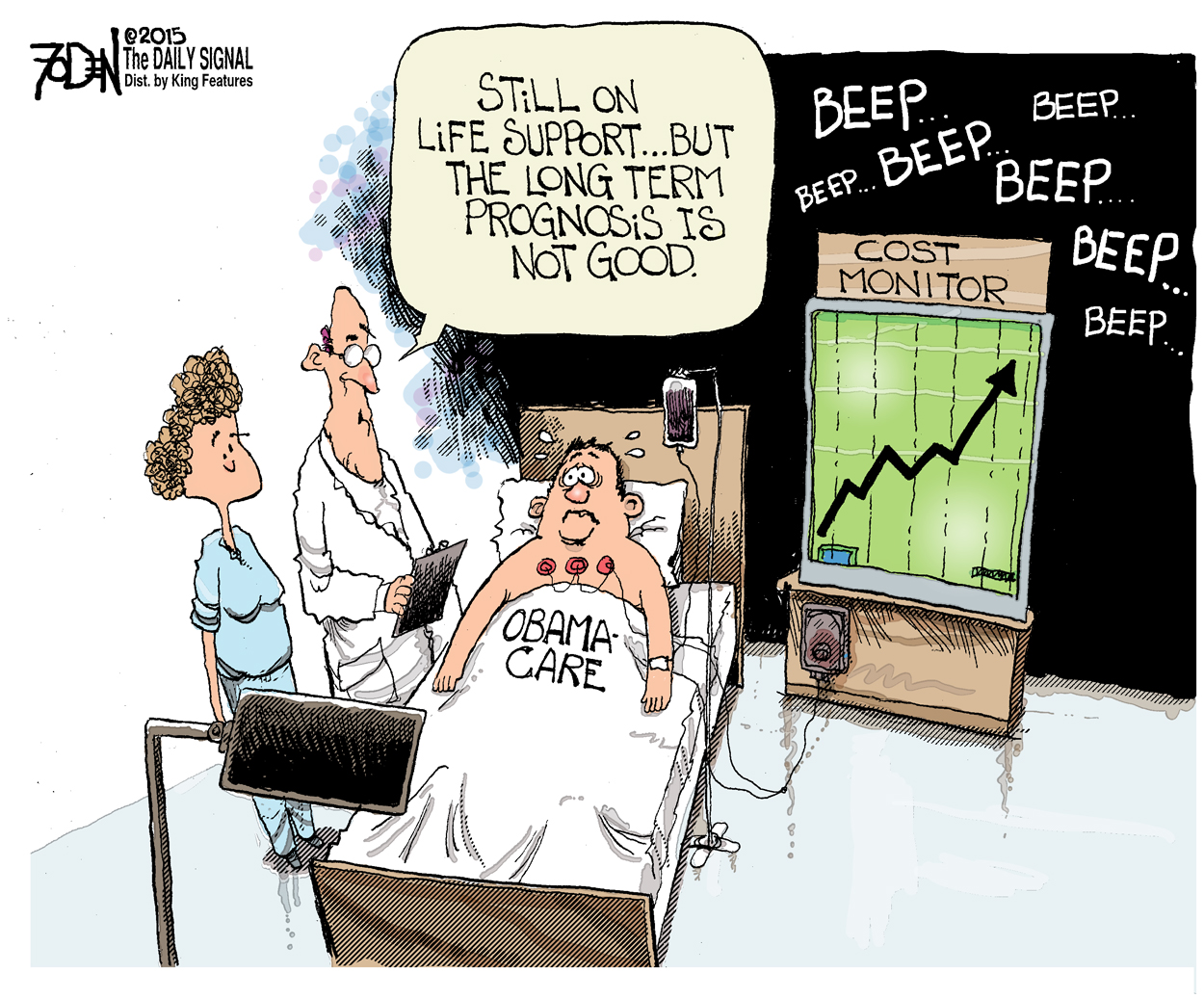
Policymakers should take these findings very seriously. For example, the Obama administration recently finalized a new Department of Health and Human Services mandate that requires all health insurance plans under Obamacare to cover sex reassignment treatments and all relevant physicians to perform them. The regulations will force many physicians, hospitals, and other health care providers to participate in sex reassignment surgeries and treatments, even if doing so violates their moral and religious beliefs or their best medical judgment.
Rather than respect the diversity of opinions on sensitive and controversial health care issues, the regulations endorse and enforce one highly contested and scientifically unsupported view. As Mayer and McHugh urge, more research is needed, and physicians need to be free to practice the best medicine.
Stigma, Prejudice Don’t Explain Tragic Outcomes
The report also highlights that people who identify as LGBT face higher risks of adverse physical and mental health outcomes, such as “depression, anxiety, substance abuse, and most alarmingly, suicide.” The report summarizes some of those findings:
What accounts for these tragic outcomes? Mayer and McHugh investigate the leading theory—the “social stress model”—which proposes that “stressors like stigma and prejudice account for much of the additional suffering observed in these subpopulations.”
But they argue that the evidence suggests that this theory “does not seem to offer a complete explanation for the disparities in the outcomes.” It appears that social stigma and stress alone cannot account for the poor physical and mental health outcomes that LGBT-identified people face.
As a result, they conclude that “More research is needed to uncover the causes of the increased rates of mental health problems in the LGBT subpopulations.” And they call on all of us work to “alleviate suffering and promote human health and flourishing.”
Findings Contradict Claims in Supreme Court’s Gay Marriage Ruling
Finally, the report notes that scientific evidence does not support the claim that people are “born that way” with respect to sexual orientation. The narrative pushed by Lady Gaga and others is not supported by the science. A combination of biological, environmental, and experiential factors likely account for an individual’s sexual attractions, desires, and identity, and “there are no compelling causal biological explanations for human sexual orientation.”
Furthermore, the scientific research shows that sexual orientation is more fluid than the media suggests. The report notes that “Longitudinal studies of adolescents suggest that sexual orientation may be quite fluid over the life course for some people, with one study estimating that as many as 80 percent of male adolescents who report same-sex attractions no longer do so as adults.”
These findings—that scientific research does not support the claim that sexual orientation is innate and immutable—directly contradict claims made by Supreme Court Justice Anthony Kennedy in last year’s Obergefell ruling. Kennedy wrote, “their immutable nature dictates that same-sex marriage is their only real path to this profound commitment” and “in more recent years have psychiatrists and others recognized that sexual orientation is both a normal expression of human sexuality and immutable.”
But the science does not show this.
While the marriage debate was about the nature of what marriage is, incorrect scientific claims about sexual orientation were consistently used in the campaign to redefine marriage.
In the end, Mayer and McHugh observe that much about sexuality and gender remains unknown. They call for honest, rigorous, and dispassionate research to help better inform public discourse and, more importantly, sound medical practice.
As this research continues, it’s important that public policy not declare scientific debates over, or rush to legally enforce and impose contested scientific theories. As Mayer and McHugh note, “Everyone—scientists and physicians, parents and teachers, lawmakers and activists—deserves access to accurate information about sexual orientation and gender identity.”
We all must work to foster a culture where such information can be rigorously pursued and everyone—whatever their convictions, and whatever their personal situation—is treated with the civility, respect, and generosity that each of us deserves.