
Perspectives; Thoughts; Comments; Opinions; Discussions

Posts tagged ‘romance’

“An Old White Cultural Institution”: Professor Denounces Romance as a Creation of White Supremacy


By: Jonathan Turley | May 19, 2024

Read more at https://jonathanturley.org/2024/05/19/an-old-white-cultural-institution-professor-denounces-romance-as-a-creation-of-white-supremacy/

In higher education, there is a virtual cottage industry of academics declaring everything from math to meritocracy to be forms of white supremacy and racism. Now, it appears romance will be added to the list. University of California Santa Barbara Black Studies Professor Sabrina Strings has written how romance promotes white supremacy and “global pigmentocracy.” In The End of Love: Racism, Sexism, and the Death of Romance, Strings recounts having “endured” her own bad relationships and maintains that “Romance is an old white cultural institution that began in the Middle Ages.” In an interview with The Current,  Strings explains that “I am only one of the millions of Gen X-to-Gen Z women who have endured a seemingly endless array of miserable relationships with men.” In viewing romance through her own lens, Strings comes up with distinctly different views of literature and famous relationships. For example, many people have read the story of Lancelot and Guinevere, a story of forbidden love that introduced disharmony and disaster to King Arthur’s Round Table.  It is a story of love and eventual betrayal. It is both irresistible and irrational. Many accounts show Lancelot rescuing Guinevere and, torn by their mutual loyalty to King Arthur, the couple finally succumbs to the inexorable pull of love to each other. It is a tragedy of love and loyalty that leaves everyone in ruin. Arthur would die of wounds in the later battles, Guinevere would die in a convent, and Lancelot would, according to some accounts, die as a hermit. It is a powerful tale of how love can overwhelm all other considerations and shatter every other bond.

That is not exactly how Professor Strings sees it. She says that the tale is really about how a man of lower status is trying to secure greater power and prestige by seducing a higher class European Christian woman: “Love is very much about generosity, but romance is very much about what you can get from somebody, especially if you’re a man who is social climbing.”

Professor Strings zeros in on the beauty and whiteness of Guinevere. She notes that the queen was viewed as irresistibly attractive and pale in complexion:

“We can easily recognize these features today as those representing the apex of whiteness, even though race did not exist at the time of Troyes’s writing. Nevertheless, to the extent that some of these representations occurred before the seventeenth century dawn of race science, they have what historians have called a ‘proto-racist’ bent. Indeed, scholars have shown that the preference for light skin, hair, and eyes existed prior to the advent of racism, and that these characteristics were co-opted by it and enlisted for the purpose of installing a global pigmentocracy.”

The “whiteness” could also simply reflect the racial makeup of the historical characters as opposed to any “global pigmentocracy.” Yet, according to Professor Strings, romance is about “women who are not peak white or are ‘insufficiently white’ are subject deservedly to deceit, manipulation, assault and rape.”

Professor Strings previously wrote a 2019 book about how “fatphobia” is rooted in racism.

In today’s academic environment, there often seems a rush to racialize common practices, customs, or terminology. Publications clamor for such articles and discovering another hidden racist element in society can bring academic accolades. However, others have already staked out many areas such as mathematicsastrophysicsstatisticsmeritocracyclimate changedietingtippingskiingchess, and organized pantries. Most recently, the American Psychological Association declared that merit-based hiring may be racist. Even robots are now declared to be part of the supremacist menace because they are often made of white plastic. Indeed, it now appears that both romance and marriage are vehicles for white supremacy. We previously discussed the writings of George Mason Professor Bethany Letiecq on how marriage advances “White, heteropatriarchal supremacy in America.” Nevertheless, the Strings book has met with acclaim and praise from many. Ms. Magazine praised the book as espousing the foundations of romance in “the white supremacist cishetallo patriarchy. Personal, historical, rigorous and readable, this is a fresh and essential feminist analysis on sexism, whiteness and toxic masculinity.” Other reviews note that Strings “challeng[es]readers to accept the end of love as they know it and to embrace more queer and feminist ideas of love, equity and partnership.”

Identifying Hirsch’s False Teachings in “Redeeming Sex” Key to Discernment


waving flagJune 4, 2015 by

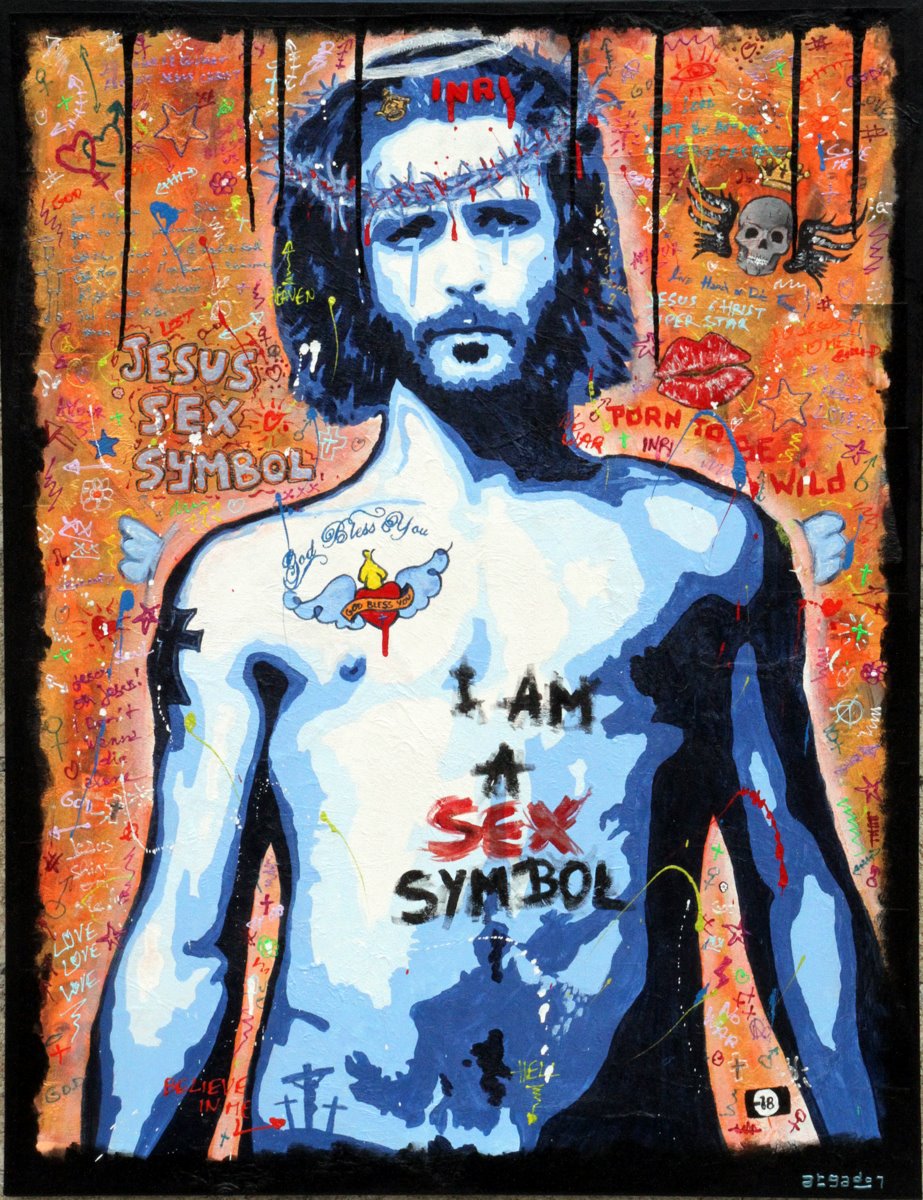
Copyright Ardogal (Contemporary Pop, Street Art & Graffiti Artist and French Painter Jean Sébastien Godfrin)

Many books about homosexuality are hitting the shelves to coincide with upcoming U.S. Supreme Court rulings on same-sex marriage. Among them I reviewed Scott McKnight’s A Fellowship of Differents and now Debra Hirsch’s Redeeming Sex.

Hirsch, a former lesbian-turned-heterosexual-married-self-describing-Christian, exemplifies the need and ability to discern false teaching presented as biblical. Many of her arguments are based on false premises, which lead to false conclusions.

Most disturbing is her approach that distorts and negates the person and work of Jesus Christ.

By suggesting Jesus as a “sex symbol” she writes he “would have been deeply attractive to both men and women” and it was likely that “genital sexual advances were made towards him.” Did Hirsch not read Isaiah 53? Isaiah prophesied that peoples’ redemption would come from one man who “had no beauty or majesty to attract us to Him, nothing in His appearance that we should desire Him.” Jesus was ordinary looking. And the pain and death he suffered, separation from his father, was more than enough to heal every person’s brokenness, including sexual sin.OKAY TO EXPOSE TEENS TO SEXUAL CONTENT BUT NOT THE BIBLE

Her reasoning regarding Jesus and celibacy is equally problematic. Regarding celibacy and comparing Jesus Christ to Roman Catholic priests Hirsch exposes her ignorance about common misperceptions related to institutionalized celibacy. More important, however, is that Jesus, as both fully God and fully man who was without sin, would not have thought romantically about women. His human nature was perfect and incomparable to the rest of a sinful human nature. Hirsch mentions nothing about obedience to God as a reason for celibacy—for all unmarried believers—one of only two sexual relationships Paul consistently and clearly admonishes that honor God.

Jesus was not celibate because he did not want to spare a wife or child from “the pain of the cross,” as Hirsch suggests. Jesus’s sole purpose was soteriological: to die a death he did not deserve for those who did deserve death—including everyone struggling with sexual sin—in order to redeem them from that sin, not to willfully continue it.

This is why through Christ’s love, grace and mercy, combined with a humble, contrite, repentant heart, and healing through the Holy Spirit, no practicing homosexual can claim to know and love Jesus Christ. To love Jesus is to follow him, to trust and obey him—no matter the cost. (McKnight brilliantly communicates this by citing testimonies from people struggling with sexual sin who claim nothing they have given up compares to the joy of knowing Jesus Christ.)

Furthermore, by defining sexuality and gender by man-made (not biblical) terms, Hirsch wrongly surmises the prostitute falling at Jesus’s feet (Luke 7:36-50) evidences what she defines as “social sexuality” and “genital sexuality.” Nothing could be further from biblical truth.

Yahshua_Miriam_fpageShe interprets this text as “Jesus blurs the lines, suggesting it is possible to love intensely outside of a marriage relationship.” This exemplifies both an arrogant western concept and an absurdly false claim.

The prostitute worshipped Jesus. She did not love him in a romantic, socially sexual, or genitally sexual way. The prostitute fell at Jesus’s feet because she loved him as her Lord and Savior.

Worshiping Jesus has absolutely nothing to do with a person’s emotional, asexual, or sexual feelings. Authentically worshiping Jesus for who he is as Lord does not even remotely imply that non-married women and men (the prostitute and Jesus) can love each other deeply. If anything, Jesus loved her as a father loves a child.

Hirsch’s doublespeak astounds. She asserts Jesus is “calling us to be in the ‘right’ loving relationship with God and with people…. to love God is to walk in his ways.” Yet she also maintains “there is no room for self-righteousness and exclusion based on disputed interpretations on nonessential issues of the Bible.” If sex, gender, and same-sex marriage is a nonessential issue of the Bible, then why write a book about it?

Further still, she justifies “God is ok with gay,” monogamous same-sex relationships provide “no incompatibility with following Jesus,” and “no ministry or church has the right to impose any change on an individual, let alone one so intrinsic as a sexual orientation.”WOE

Perhaps this explains why only verses that appear to support her assertions, taken out of context, are used as pull quotes instead of every verse if explained in their context would clearly refute them?

For anyone to argue the Bible “does not understand a modern day understanding of homosexuality” either reflects intellectually dishonesty, deception, or ignorance about sexual norms and practices during the Apostle Paul’s day. In fact, McKnight’s book paints an astonishing picture of that time, to which today’s standards pale in comparison. Again, if the Bible’s view of sex and gender is nonessential, why write a book about it?

One endorser claims Hirsch expresses a “Jesus-centered vision of how sexuality can glorify God and lead us to flourish.” Another, she offers “biblical, Jesus-lens insight.” Neither is truth.Liberalism a mental disorder 2

By using the Kinsey Scale as a plumb line Hirsch presupposes that human feelings, rationale, or psychology provide the basis for “trying to understand or define homosexuality,” which she claims, “is no easy task.” Homosexuality is easily understood when one first understands who God is. The gospel, not the Kinsey Scale, is what is needed to completely surrender to Jesus’s love, a love that surpasses all selfish and self-seeking choices to love and be loved by human standards.

Biblical love exposes sin and articulates that only through God’s grace, with or without the help of Christians, God restores broken people to himself. Hirsch and others who condone the behavior and mindset of “practicing homosexual Christians” are not loving, but harming them. Worse still they make Jesus’s death worthless. pray2Hirsch’s misrepresentation of scripture is irresponsibly misleading. Sadly, she is not alone.

Hirsch like Rob Bell who “came out for same-sex marriage,” Rick Warren who held hands with and joked about kissing Elton John, the Progressive Christian Alliance, the Gay Christian Network, and many at RNS who unashamedly cite human knowledge and feelings above biblical wisdom.

Paul, who Jesus exclusively tutored for seven years, wrote more about sex and marriage and male and female relationships than anyone else. Wouldn’t reading what he wrote in its entirety be the logical starting point? Yet few Christians read the Bible.

Those who “walk in the spirit,” those who love God with their whole heart, soul, and mind, those who seek to renew their minds and “pick up their crosses,” would not choose to “walk in the lusts of the flesh.” They would not want to disobey Jesus because their love for him is so great.

Sinning, for believers, leads to repentance, not repetition of sin. Those who know and choose to follow and obey Jesus grasp the reality that their lives are not their own; their purpose extends beyond themselves. Human sexuality (and intellect, ingenuity, athleticism, or physical or psychological traits) is only rightly understood once God’s will, communicated in scripture, is understood.

The real issue is whether or not Jesus is who he says he is, and if so, is he worthy of following at any cost.freedom combo 2

Tag Cloud