When he could have stayed on script and let his popularity carry him along, he instead continued taking ever-larger risks and angering powerful people.
Whatever the reason, most people agree that Fox lost more than Carlson. While he can take his massive following and start fresh, Fox can hardly avoid looking like a domesticated conservative media company.
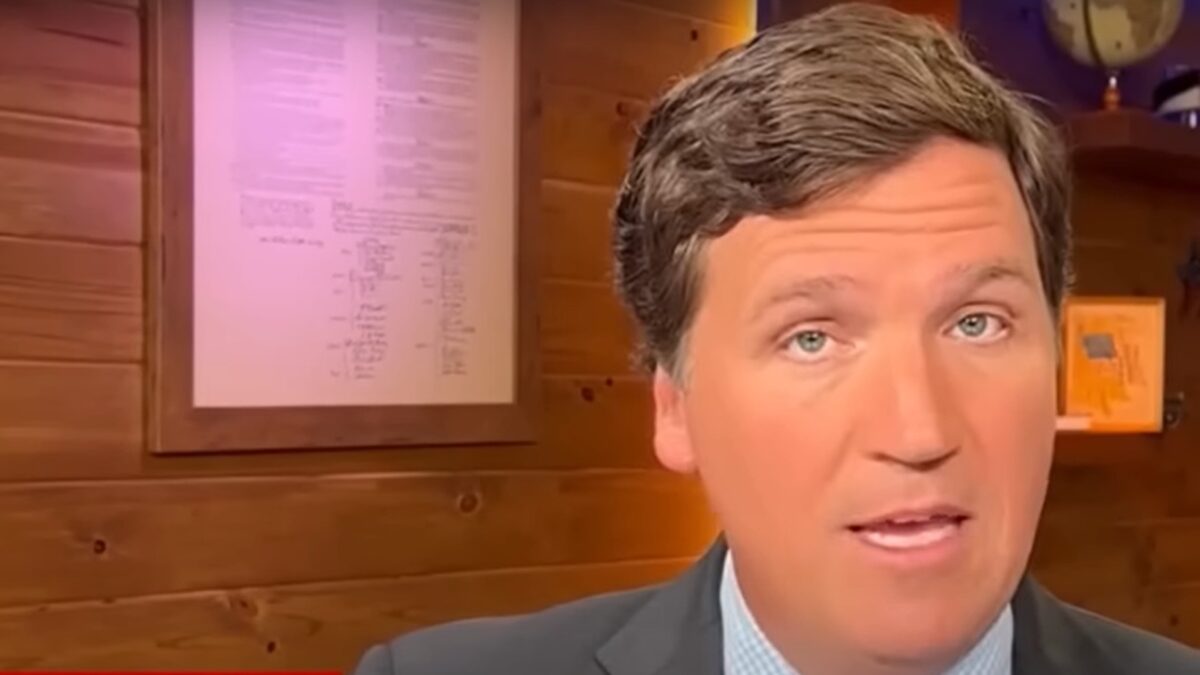
For many, Carlson was the only reason to watch cable television, let alone Fox. He was the one authentic person who challenged the Democrat and Republican party lines. As Daily Wire host Matt Walsh recently noted on his show, Carlson’s monologues were news events in themselves because they resonated so well with many Americans. Besides making him popular, Carlson’s authenticity and independence made him unique and likely irreplaceable.
Some people have compared his departure to that of Bill O’Reilly, who also commanded large audiences, but O’Reilly was a pundit for a different time. His brand differed entirely from Carlson’s. He cheered for the right’s old priorities: fighting terrorists, expanding global trade, and lowering the corporate tax rate. By contrast, Carlson voiced populist, anti-establishment, and non-interventionist opinions.
While O’Reilly is a relic of “Conservatism Inc.,” Carlson is emblematic of what conservative media has become: a wide diversity of voices on a variety of platforms that all oppose the leftist narrative propagated by legacy media outlets. By dumping Carlson, Fox’s leaders are deciding to return to the good ol’ days of Conservative Inc. From now on, news and opinion broadcasts will be safe, filtered, and milquetoast.
In the short term, this might protect Fox from more lawsuits and harassment, but in the long term, this assures that Fox will fade into oblivion along with the rest of cable television as alternative online media takes over.
Rather than treating this as a loss, conservatives should welcome the change. This might push more people, especially older generations, to abandon cable news altogether. Conservatives can leave the insipid programming of cable news for the leftist midwits who pride themselves on being (mis)informed.
Frankly, Carlson could not stay at Fox forever. Though he excelled as a cable broadcaster, his commentary, intelligence, and willingness to explore controversies fit new styles of conservative media too. When he could have stayed on script and let his popularity carry him along, he instead continued taking ever-larger risks and angering powerful people. In many ways, he had a stronger counter-cultural and anti-establishment bent than the typical punk rocker, which admittedly is not saying much these days.
As such, it is fitting that he can move into a medium that allows him to work on his own terms. Not only will this allow him more freedom to express himself and to amplify important voices and arguments, but it will also be more profoundly American.
Whereas state-run media controls information and thought in some foreign nations, Americans can listen to different voices all arguing and competing with one another to grow their audiences. Doubtless, American leftists hope to follow suit and destroy all alternative media and abolish free speech. Quite understandably, they see that only gadflies like Carlson, who dissent from their agenda, hold them back from complete cultural, political, and economic supremacy. This is why they devote extensive energy and resources to controlling all social media and cable media platforms. And it looks like they finally succeeded in taking down Fox.
Fortunately, leftist attempts to censor and control online public discourse have mostly played out like a clumsy game of whack-a-mole. They will silence one dissenter only to have 10 more pop up and say something even more “dangerous.”
Moreover, they cannot help but look like fascists and hypocrites every time they play this game, even angering those in the old guard like Bill Maher who at least try to be principled.
That does not mean their failures should make anyone comfortable with the assault on free speech and alternative media in America. People who are committed to the truth and a marketplace of ideas should continue to call out censorship and corporate monopolies.
Even if Carlson rebounds and Fox collapses, it is still outrageous that he was ousted in the first place. To turn this setback into a win, conservatives must see the intentions behind his exit, support alternative media, and (as Tucker Carlson said in a video after his termination) speak out against the falsehoods as confidently and frequently as possible.
Auguste Meyrat is an English teacher in the Dallas area. He holds an MA in humanities and an MEd in educational leadership. He is the senior editor of The Everyman and has written essays for The Federalist, The American Conservative, and The Imaginative Conservative, as well as the Dallas Institute of Humanities and Culture. Follow him on Twitter.
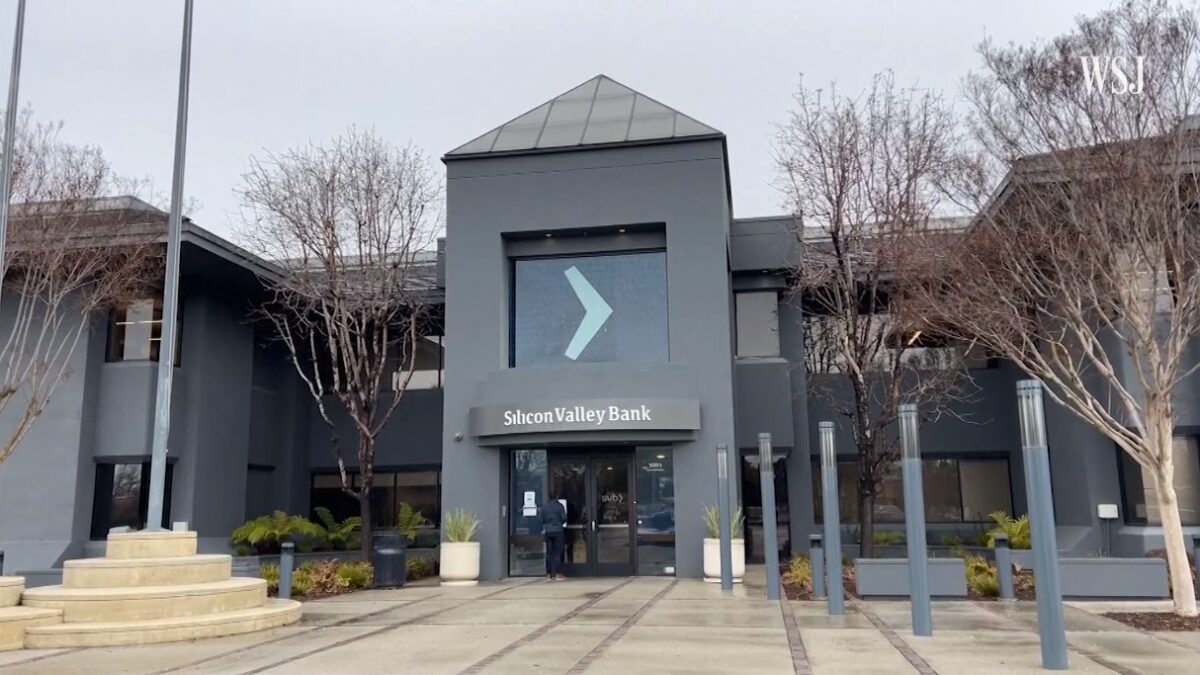
Maxine Waters, Mitt Romney, President Biden, Treasury Secretary Janet Yellen, and most other Washington politicians agree on one thing: Silicon Valley Bank (SVB) executives should lose their jobs and equity holders should lose everything, but SVB depositors should get made whole.
“Failing to intervene and make sure depositors get all their money back will hurt normal people and destabilize the entire U.S. banking system,” they say. Not only that, but they’re assuring us this definitely isn’t a bailout! Even many on the nationalistright echoed these talking points.
Except they are wrong. At best, they don’t understand the banking system, banking regulations, and the incentives being created here. At worst, they are — as is certainly the case for Democrats like Eric Swalwell — arguing solely for the interests of large and wealthy investment firms that had money at SVB without regard for the interests of normal working Americans.
To understand why, we need to examine what happened with SVB in the run-up to the crisis.
Silicon Valley Bank’s Collapse
SVB has had tremendous growth over the last 10 years as the Federal Reserve’s easy money programs flooded the tech industry with cheap capital.
Banks are tasked with managing assets and liabilities. Liabilities include deposits and debt, and assets include government securities and loans. SVB’s business revolved around serving Silicon Valley’s startups and the wealthy investment funds buying and selling these startups. That meant taking in an explosion of deposits from these investment funds as cheap money from the Fed flooded in — a liability — and making loans to startups and venture capital funds with those deposits — an asset.
But unlike most banks, where about 75 percent of the deposits are used for loans, SVB used its explosive deposit growth to plow nearly 60 percent of its assets into government securities — some treasuries but mostly mortgage-backed securities. While these securities are “safe,” meaning there is little to no default risk, these securities do move in price as interest rates change. So, most banks will hedge, or pay to remove, this interest rate risk.
The thing is, SVB’s massive bond portfolio wasn’t hedged. Put more plainly, SVB was using customer deposits to make a massive bet on lower rates. Obviously, that didn’t work out, as rates increased all of 2022. Once depositors figured out that any selling of the unhedged bond portfolio to meet depositor withdrawals would lead to big losses and be unable to cover all withdrawals, there was a rush to the exits — a bank run.
All of this has been covered by the financial media, but two things have been left out. First, nobody knows how solid the other 40 percent of SVB’s assets, given out as loans, are. At least some of these loans were given to now-failing speculative tech or cryptocurrency firms.
Second, SVB’s bank run wasn’t the type you see in “It’s a Wonderful Life.” SVB’s depositors aren’t small business owners — who are covered up to $250,000 by the FDIC — they are some of the most sophisticated and wealthy financiers in the world. They benefited heavily during the Fed’s easy money policies over the last 10 years, and now the reverse of these easy money policies is hurting them.
This is why the cast of characters above isn’t arguing for the FDIC-insured amounts to be met. They are specifically arguing that those with far more than the FDIC-insured amount be fully made whole.
Not only were these depositors sophisticated, but they were also purposefully taking a risk to get a higher interest rate on their deposits at SVB. They also had every reason to know that SVB was a risky bet, as publications like Grant’s Interest Rate Observer have been warning about SVB’s portfolio of bonds for some time. It just so happens that the vast majority of these depositors are also wealthy donors to the Democrat Party and other leftist causes, increasing the political expediency of the government’s action.
Yes, It Is a Bailout
When the Biden administration or the rest of the cast of characters insists this isn’t a bailout, they are playing word games. When they insist the taxpayer isn’t “on the hook,” that is a lie. The “taxpayer” isn’t paying, but “bank customers” across the country are. An FDIC fund that essentially taxes banks — including the small bank in your hometown — is being used. At the end of last year, the Deposit Insurance Fund had $128 billion.
But 89 percent of SVB’s $175 billion in deposits, or $156 billion, was uninsured because it was above the $250,000 FDIC insurance limit. Depending on how bad the SVB asset write-downs are, which is yet to be determined, the insurance fund could get completely overwhelmed. Again, “bank customers” would then make up the difference. So, the fact of the matter is that working Americans are once again subsidizing a bailout of the coastal oligarchs.
This creates a terrible incentive or moral hazard, where now large, deep-pocketed entities can search out the bank with the highest return on their deposits, no matter how irresponsible that bank’s behavior, and believe they will receive their money back in the event of failure. This is also why arguing that SVB depositors suffering a small reduction in their accounts with deposits above $250,000 would lead to a banking collapse is disingenuous. The fear is that because the Democrats’ 2011 Dodd-Frank legislation created a handful of large banks that were essentially deemed “too big to fail,” then money will flow out of deposits at banks like SVB or smaller regional banks and into the too-big-to-fail banks.
But the risks taken by SVB and its unhedged bond portfolio are extremely out of step with the rest of the U.S. banking system. If this is a risk, it could be combated in a number of ways that actually fix the fundamental problem without bailing out the rich and politically connected SVB depositors.
One solution could involve raising the amounts covered by FDIC insurance. Another solution could involve the government pledging to intervene if a run on a bank with sound financials occurred. Either way, pretending the world stops if rich SVB depositors weren’t made completely whole is not a serious position.
Any further market mayhem only serves to prove the point. For one, the U.S. is going into a large slowdown, more is at play than the banking system, and much of the stress on the banking system is because Fed easy money policies created excess (and inequality). This will continue to be exposed in the slowdown.
The government did the exact opposite of what it should have done. Going forward, they haven’t come out with a large enough program to solidify the system’s stability and protect responsible banks, but SVB depositors received immediate relief.
Throw the Bums Out
Said differently, the politically connected just received immediate relief from Washington, and the rest of us will be left to deal with the potential incoming wave of unemployment, market stresses, and other banking issues because none of the fundamental problems are being addressed here.
Politically, the problem is twofold. Despite being completely oligarchic, the Democrats still control much of the country’s underclass. The other junior party in this arrangement, the Republicans, practice buffet line-style libertarianism. Republicans like Romney pretend to believe in markets but always clamor to intervene when they or their friends are affected — even while they couldn’t care less about the economic problems facing their actual voting base.
The political system of the United States is then ripe for a crackup. The solution is a radical populism that makes Donald Trump look tame by comparison. Of course, any more bank bailouts should be paid for by taxes on the rich — they are the ones who benefit, after all. And, of course, we should let SVB fail, and its depositors take a loss, even while we rush to reintroduce manufacturing jobs into the heartland.
The government will always pick winners and losers. It’s time the roles were reversed.
American Family Association
American Family Association (AFA), a non-profit 501(c)(3) organization, was founded in 1977 by Donald E. Wildmon, who was the pastor of First United Methodist Church in Southaven, Mississippi, at the time. Since 1977, AFA has been on the frontlines of Ame
NEWSMAX
News, Opinion, Interviews, Research and discussion
Opinion
American Family Association
American Family Association (AFA), a non-profit 501(c)(3) organization, was founded in 1977 by Donald E. Wildmon, who was the pastor of First United Methodist Church in Southaven, Mississippi, at the time. Since 1977, AFA has been on the frontlines of Ame
American Family Association
American Family Association (AFA), a non-profit 501(c)(3) organization, was founded in 1977 by Donald E. Wildmon, who was the pastor of First United Methodist Church in Southaven, Mississippi, at the time. Since 1977, AFA has been on the frontlines of Ame
You Version
Bible Translations, Devotional Tools and Plans, BLOG, free mobile application; notes and more
Political
American Family Association
American Family Association (AFA), a non-profit 501(c)(3) organization, was founded in 1977 by Donald E. Wildmon, who was the pastor of First United Methodist Church in Southaven, Mississippi, at the time. Since 1977, AFA has been on the frontlines of Ame
NEWSMAX
News, Opinion, Interviews, Research and discussion
Spiritual
American Family Association
American Family Association (AFA), a non-profit 501(c)(3) organization, was founded in 1977 by Donald E. Wildmon, who was the pastor of First United Methodist Church in Southaven, Mississippi, at the time. Since 1977, AFA has been on the frontlines of Ame
Bible Gateway
The Bible Gateway is a tool for reading and researching scripture online — all in the language or translation of your choice! It provides advanced searching capabilities, which allow readers to find and compare particular passages in scripture based on





 What Did You Say?
You must be logged in to post a comment.