
If China’s Yuan Usurps The Dollar, The World Economy Will Be At Communists’ Whims
BY: MACKENZIE BETTLE | APRIL 17, 2023
Read more at https://thefederalist.com/2023/04/17/if-chinas-yuan-usurps-the-dollar-the-world-economy-will-be-at-communists-whims/

MACKENZIE BETTLE
In July 1944, 44 delegates from Allied countries came together during World War II in Bretton Wood, New Hampshire. The goal? Devise an international currency system to manage foreign exchange that would disadvantage no country and effectively facilitate post-war rebuilding and commerce. The outcome: The U.S. greenback would be the world’s reserve currency.
It has been almost 80 years since, and all nations have been better off with a United States dollar-dominated world. World gross domestic product (GDP) in 1940 was $7.81 trillion. For 2023, the world GDP is expected to be $112.6 trillion. That is an increase of 1,441 percent. Billions of people have been lifted out of poverty because of this.
China is working overtime to disrupt the dollar-dominated world economy. The significance of the dollar losing its premier position cannot be overstated. The Biden administration should not overlook this.
Most Americans may be unaware of crucial transactions occurring around the globe recently. And who could blame them? All the corporate media’s main headlines have been over the now-public indictment of former President Donald Trump, over factually weak allegations involving hush-money payments to a porn star.
The indictment of a former president is a crossing-of-the-Rubicon moment in American history. But displacing the dollar as the world’s reserve currency, as China and Russia have both made known is their objective, has analogous ramifications for the world. But while the world watches Trump’s indictment, they are missing China’s transactions with some of our major allies and trading partners in the yuan. Notably, China is doing this with nations that need better stewards.
Bloomberg News reported in February 2023 that the Inevitable Rise of the Petroyuan (yuan used to settle Middle East oil transactions) was a “myth.” One month later, Saudi Arabia and OPEC are now considering just that.
In our republic, the founders “separated the purse from the sword.” With the passing of the Federal Reserve Act of 1913, Congress further separated the purse from our elected representatives by giving the Federal Reserve power over the nation’s money supply.
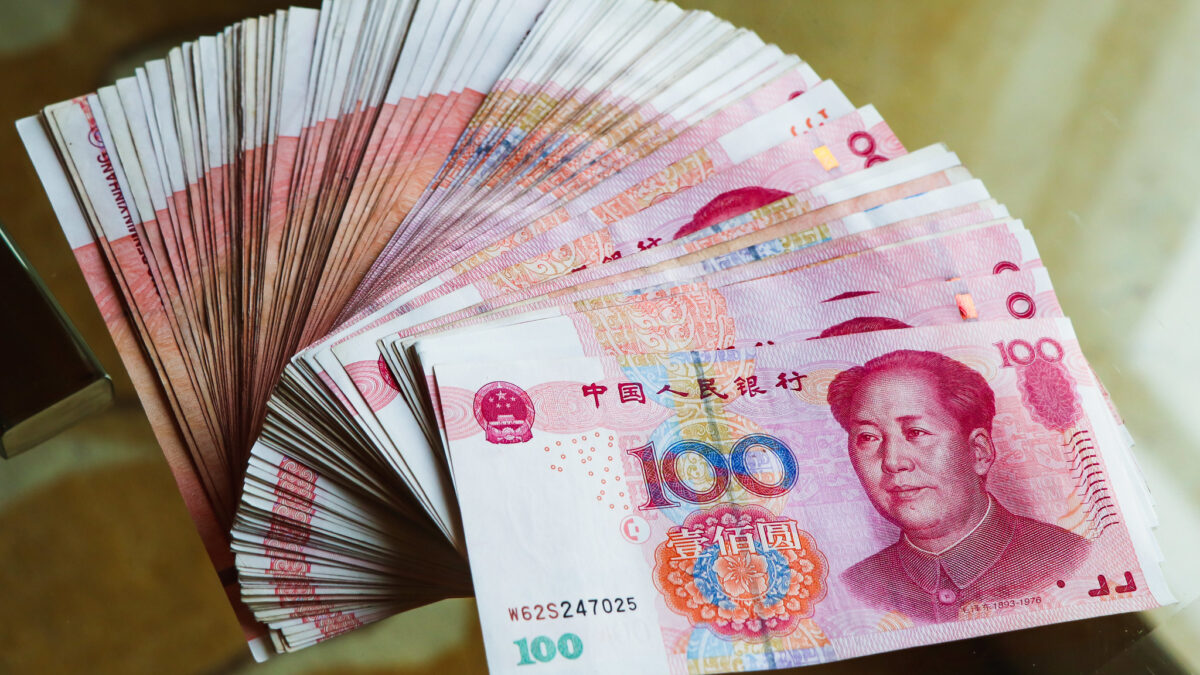
China has no such separation of powers. President Xi Jinping wields both the sword and purse. What that means if the yuan were to become the global reserve currency is giving the Chinese Communist Party effective control over the money supply for the entire world. The United States would still have the dollar, but it would require exchanging for the yuan to transact with other nations.
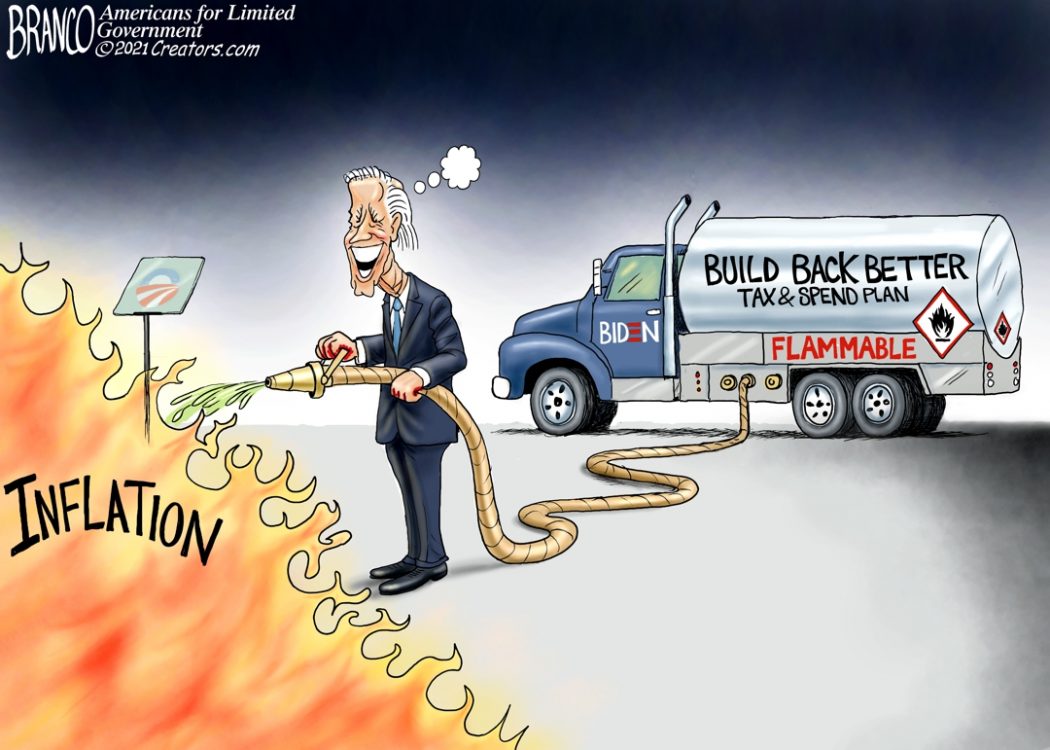
Inflation and deflation can both have devastating effects on the economy. Deflation is what caused the Great Depression. Inflation, as we all feel the pain currently, caused an entire decade to be lost in the 1970s.
Allowing China to become the facilitator of the currency used in global commerce, such as the dollar is now, would be to give unprecedented powers to a communist dictatorship. The ebbs and flows of the global economic apparatus would be subject to a hostile foreign power that has no issue retaliating against other sovereign nations that disagree with them.
If the Chinese yuan were to become the global reserve currency, it would, in essence, give the CCP the ability to cripple entire nations. With a country as hostile as China, entire sovereign nations would be subject to the whims of the communists who run their countries. The CCP could arbitrarily restrict credit, enact sanctions, block entire nations from global commerce vis a vis foreign exchange prohibition, and use any of the other vast economic warfare tools the global reserve currency brings. Of course, unless nations decide to toe the Communist Party line.
The world would be like when we were younger and our financial life was dependent upon allowances given to us by our parents. Except in this case, instead of doing chores, nations would have to accept genocide, persecution of minorities, and the desecration of civil rights. We can bet governments would likely have to become complicit. That is not out of the realm of possibility when dealing with actors such as communists.


 What Did You Say?
American workers and motorists got some badly-needed relief this week when the price of oil plunged to its lowest level in years. The oil price has fallen by about 25 percent since its peak back in June of $105 a barrel. This is translating to lower prices at the pump with many states now below $3 a gallon.
At present levels, these lower oil and gas prices are the equivalent of a $200 billion cost saving to American consumers and businesses. That’s $200 billion a year we don’t have to send to Saudi Arabia, Kuwait and other foreign nations. Now that’s an economic stimulus par excellence.
Oil prices are falling because of changes in world supply and world demand. Demand has slowed because Europe is an economic wreck. But since 2008 the U.S. has increased our domestic supply by a gigantic 50 percent. This is a result of the astounding shale oil and gas revolution made possible by made-in-America technologies like hydraulic fracturing and horizontal drilling. Already thanks to these inventions, the U.S. has become the number one producer of natural gas. But oil production in states like Oklahoma, Texas and North Dakota has doubled in just six years.
Without this energy blitz, the U.S. economy would barely have recovered from the recession of 2008-09. From the beginning of 2008 through the end of 2013 the oil and gas extraction industry created more than 100,000 jobs while the overall job market shrank by 970,000.When the radical greens carry around signs saying “No to Fracking,” they couldn’t be promoting a more anti-America message. It would be like Nebraska not growing corn.
We are just skimming the surface of our super-abundant oil and gas resources. New fields have been discovered in Texas and North Dakota that could contain hundreds of years of shale oil and gas supplies.
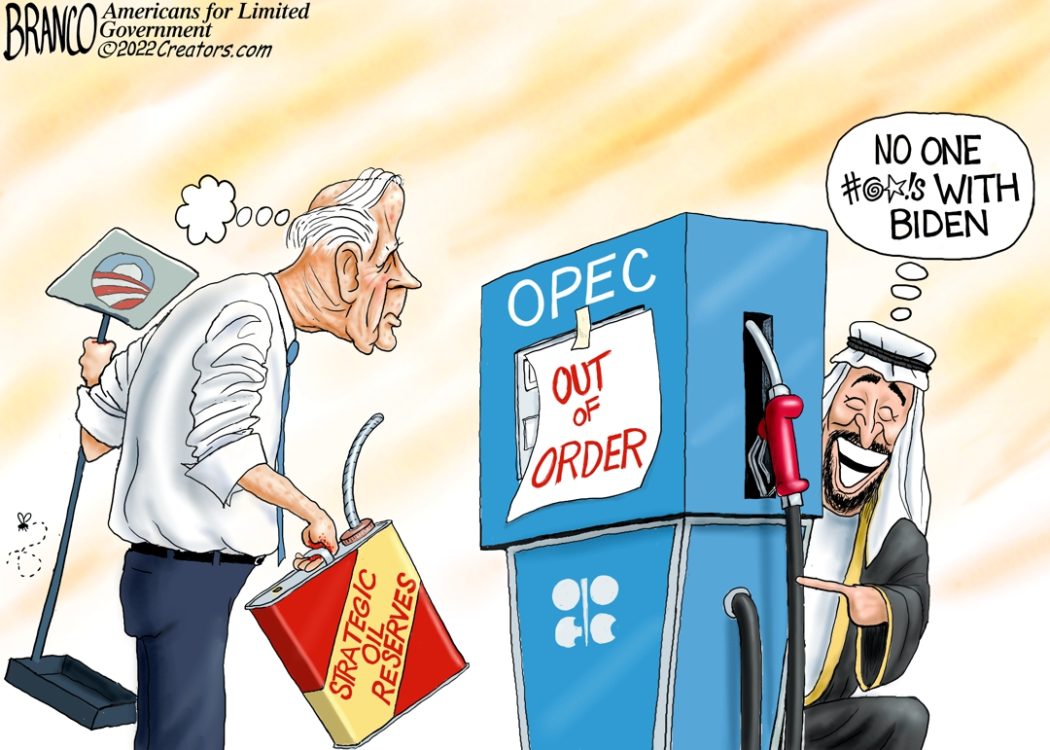
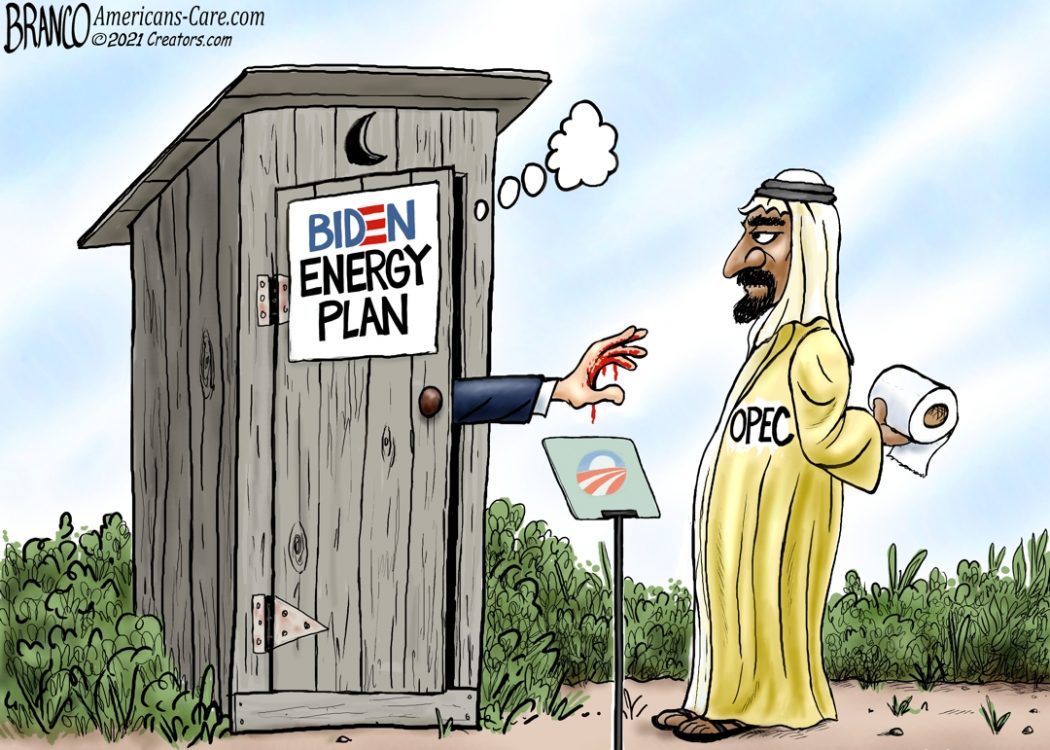
Here’s another reason to love the oil and gas bonanza in America. It’s breaking the back of OPEC. Saudi Arabia is deluging the world with oil right now, which is driving the world price relentlessly lower. The Arabs understand–as too few in Washington do–that shale energy boom is no short term fad. It could make energy cheaper for decades to come. As American drillers get better at perfecting the technologies of cracking through shale rock to get to the near infinite treasure chest supplies of energy locked inside, we will soon overtake Saudi Arabia as the dominant player in world energy markets.
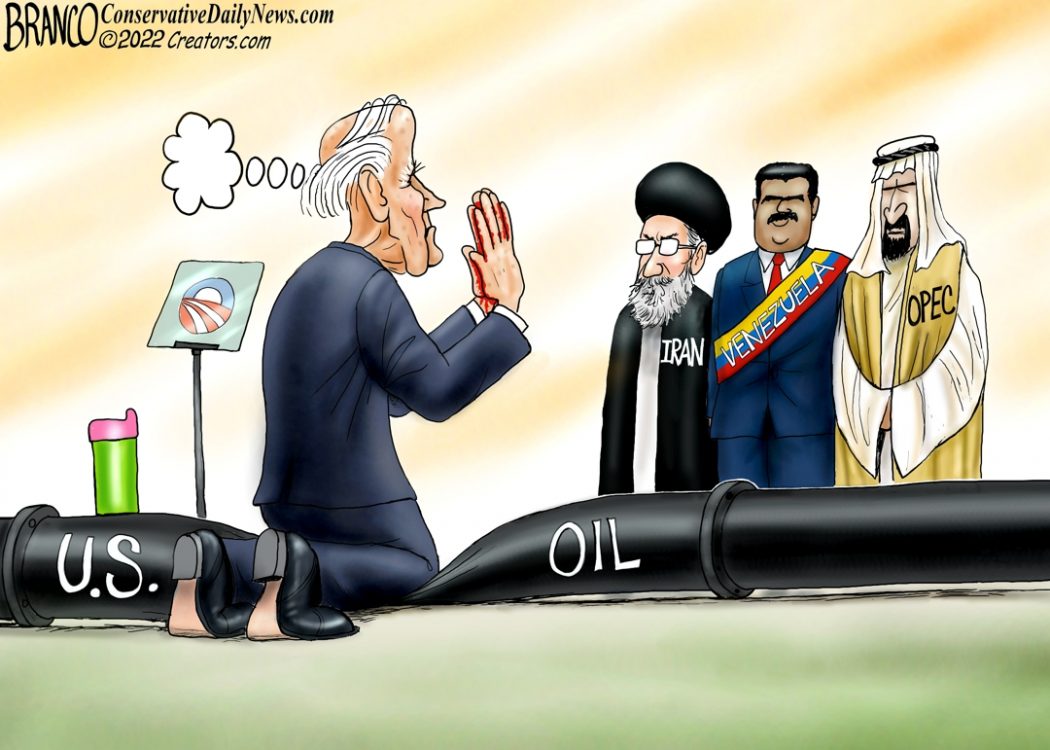
You can’t have a cartel if the world’s largest producer–America–isn’t a member. OPEC will never again be able to create the level of economic turmoil that the Arab members of OPECs engineered in the 1970s with their oil embargo. And by the way: lower oil prices place increased pressure on Iran’s mullahs to abandon their nuclear program and curb Putin’s capabilities to engage in East Europe aggression.
Yet the political class still doesn’t get it. As recently as 2012 President Obama declared that “the problem is we use more than 20 percent of the world’s oil and we only have 2 percent of the world’s proven oil reserves.” Then he continued with his Malthusian nonsense, “Even if we drilled every square inch of this country right now, we’d still have to rely disproportionately on other countries for their oil.” Apparently, neither he nor his fact checkers have ever been to Texas or North Dakota. And we don’t have 2 percent of the world’s oil. Including estimates of onshore and offshore resources not yet officially “discovered”, we have ten times more than the stat quoted by the president–resources sufficient to supply hundreds of years of oil and gas.
America, in sum, has been richly endowed with a nearly invincible 21st century economic and national security weapon to keep us safe and prosperous. The plunge in gas prices is just one visible sign of this supply explosion. Think of how much bigger this revolution could be if we started building pipelines, repealed the ban on oil exports, expanded drilling on public lands, and stopped trying to punitively tax and regulate the oil and gas.
For much of the last forty years, oil’s periodic price spikes have remained a constant threat to growth. Higher consumer energy costs as well as increased industrial production costs weighted on the economy. Now oil is one of the primary accelerators; the new big drag on the economy is politicians who despise the carbon-based industry.