
Perspectives; Thoughts; Comments; Opinions; Discussions

Posts tagged ‘LAW SCHOOL’

A Third of All DC District Judges Were Not Born in United States


By: Beth Brelje | March 25, 2025

Read more at https://thefederalist.com/2025/03/25/a-third-of-all-dc-district-judges-were-not-born-in-united-states/
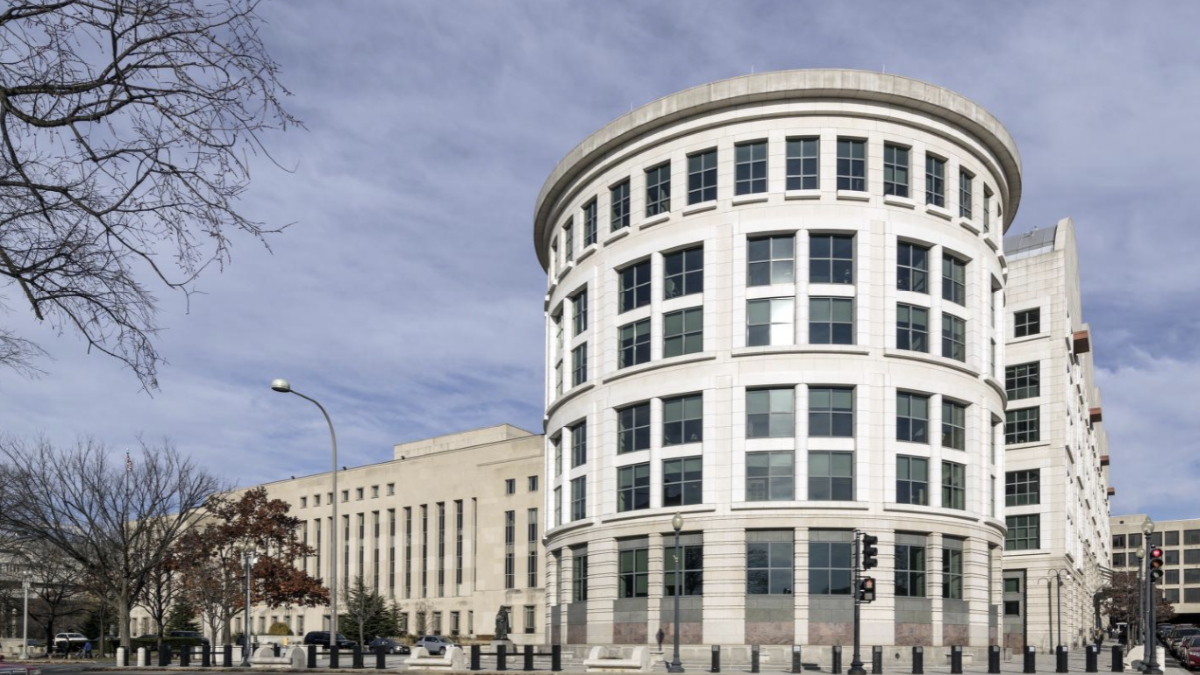

Of all the judges in the U.S. all five foreign-born judges of the D.C. court managed to get their fingerprints on controversial Trump cases.

Author Beth Brelje profile

Beth Brelje

Visit on Twitter@BethBrelje

More Articles

The United States District Court for the District of Columbia, the source of many of the cases interfering with President Donald Trump’s authority, has 15 judges, (Counting Chief Judge James Boasberg) and five of them were born outside the United States.

While country of origin doesn’t come up in most jobs, it is worth asking if judges with ties to foreign nations and cultures are the right ones to make decisions affecting the U.S. military or immigration.

The concept of foreign-born judges is a newer phenomenon in this district. In addition to the 15 main judges, the D.C. District has 10 older, senior judges who still occasionally hear cases in the district. This group, nominated as far back as Ronald Reagan the 1980s, were all born in the U.S.

But starting in 2014, former President Barack Obama appointed Judge Tanya Sue Chutkan, born in Kingston, Jamaica. She was in the U.S. by 1979, attending George Washington University. Before sitting on federal court, she had no experience as a judge. Chutkan is overseeing the legal challenge to DOGE’s work to slash excess government spending.    

Obama also appointed Judge Amit P. Mehta to the D.C. court. Mehta also had no previous experience as a judge. Mehta was born in Patan, Gujarat, India. He and his parents came to the U.S. when he was a baby, age one. He was raised in Maryland. Mehta will oversee four January 6 civil cases that aim to blame Trump for injuries and squeeze money, court time, and political embarrassment out of him.

The other three foreign born judges were nominated by former President Joe Biden.

Judge Ana Cecilia Reyes was nominated in 2021, also with no prior experience as a judge. She was born in Montevideo, Uruguay and moved to Spain, and while still a child, moved to Louisville, Kentucky, where she grew up. She is the first openly LGBT Latina to be appointed to this court. Reyes presided over an objection to Trump’s executive order declaring “gender dysphoria” as “inconsistent” with the “high standards for troop readiness,” as The Federalist’s Shawn Fleetwood reported. Reyes blocked Trump’s order with a preliminary injunction.

The first Muslim and Arab American in the D.C. district court, Judge Amir Hatem Mahdy Ali was born and raised in Canada to Egyptian parents. According to his Questionnaire for Judicial Nominees, Ali was not required to register for the U.S. Selective Service. That is because he was not a citizen until 2019. He graduated from the University of Waterloo in Ontario, Canada with a software engineering degree in 2008 and then attended Harvard Law School in the U.S., graduating with a law degree in 2011. He worked as a volunteer on Biden’s 2020 transition team and for a phone bank in support of Biden’s presidential campaign. He worked for some nonprofits but never served as a judge until Biden appointed him in 2024. Amir has written extensively and negatively about Trump’s so-called “Travel ban,” a 2017 Executive Order which restricted travel to the U.S. from seven predominantly Muslim countries for 90 days.

In his writing, he said, “prejudice and intolerance” were “the very hallmark of [Trump’s] campaign against Muslims.”

Before he was a judge, Ali spoke at the National Press Foundation and gave tips to reporters about how to cover the courts.

When confirmed, Amir was a member of the Capital Area Muslim Bar Association; Muslim American Judicial Advisory Council; National Arab American Bar Association; National Association of Criminal Defense Lawyers; National Police Accountability Project; and the Native American Bar Association of D.C., among others.

Ali single handedly restored $2 billion in USAID spending to foreign nonprofit contractors that the Trump Administration had paused for 90 days, in a stunning overreach of authority last month.

The newest judge on the D.C. District Court is also foreign born.

Before slinking out of office, Biden and his handlers got Judge Sparkle Sooknanan confirmed. She was sworn in Jan. 2, 2025. Born in the dual-island nation Trinidad and Tobago in 1983, she left her home country at age 16 to pursue college and graduated from Brooklyn Law School in 2010.

She was a law clerk for Supreme Court Justice Sonia Sotomayor, and during the Biden Administration she was the principal deputy assistant attorney general in the Civil Rights Division for the Department of Justice before Biden tapped her for her first ever judge gig in the D.C. Court, according to her Questionnaire for Judicial Nominees.

Last week, Sooknanan dutifully did her part to slow Trump’s agenda, ordering the reinstatement of Democrat Susan Grundmann to the Federal Labor Relations Authority, a move that keeps the board in a Democrat majority.   

None of these cases have gone in front of conservative judges in conservative states, say in Missouri or South Dakota. They all happened to land in the laps of judges that have spoken out or ruled against Trump or his policies in the past.

Out of all the judges in the nation, all five foreign-born judges of the D.C. District court managed to get their fingerprints on a controversial Trump case.  

The United States is in the midst of a soft coup. Not the violent kind that takes out a nation’s leader, but one orchestrated by judicial actions that choke off executive power before our eyes.

We have seen other obvious, corrupt schemes in plain sight before. The Biden basement presidential campaign of 2019; the “insurrection” that wasn’t; the mask and vaccine mandates; the Biden is mentally competent story; the “flawless” Afghan withdrawal; the “secure” borders; and the incompetent candidate swap to Kamala Harris, made Americans realize the best chance we have to stop corruption is to vote it out.

The public did its part by voting in a clear mandate for Trump’s agenda. But corruption is still visible, though court decisions by unelected activist judges. The only remedy now is for the Supreme Court to step in and this time, get its hands dirty, deliberate, and make real decisions based on the Constitution.    


Beth Brelje is an elections correspondent for The Federalist. She is an award-winning investigative journalist with decades of media experience.

American Bar Association Requiring All Law Schools to Push DEI, Displacing Constitutional Law


BY: MONROE HARLESS | JUNE 18, 2024

Read more at https://thefederalist.com/2024/06/18/american-bar-association-requiring-all-law-schools-to-push-dei-displacing-constitutional-law/

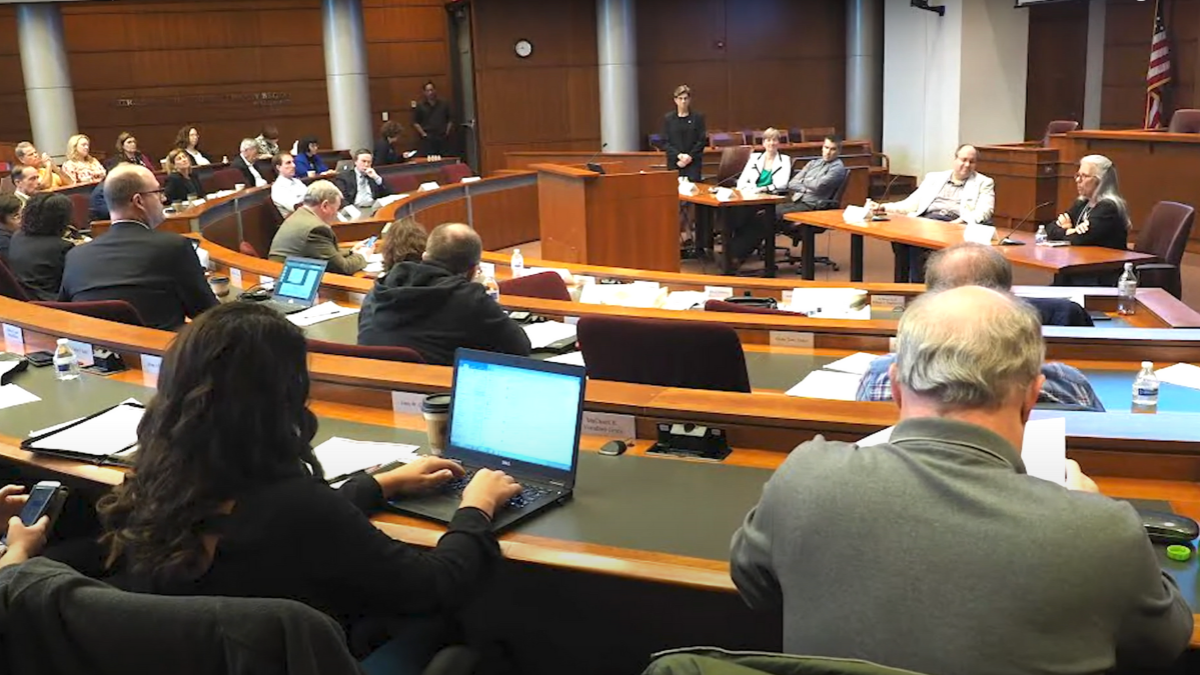
IU Robert H. McKinney Law School classroom

Author Monroe Harless profile

MONROE HARLESS

VISIT ON TWITTER@MONROEHARLESS

MORE ARTICLES

When Indiana University implemented DEI standards in its law school curriculum, Professor John Lawrence Hill warned the state legislature about attempts by “extreme idealogues to indoctrinate students” that “fly in the face” of America’s legal foundations.

Addressed to Indiana State Sens. Jeff Raatz and John Crane, Hill’s letter challenges the university’s new mandatory “responsible lawyering” course for first-year law students, introduced to comply with the American Bar Association’s (ABA) “cross-cultural competency” requirements. Hill argues that this move politicizes legal education.

“This class is guaranteed to further polarize and politicize the law school environment and represents yet another attempt by the academic Left to provide a platform for extreme idealogues to indoctrinate students who are essentially academic hostages,” Hill wrote in his letter. “DEI is now ‘in’ at the McKinney school….”

In an interview with The Federalist, Hill, a professor at Indiana University Robert H. McKinney School of Law (IU McKinney) says that issues with the ABA’s DEI requirements are long-standing.

A New ABA Requirement

In February 2022, the ABA introduced a new standard for legal education. Standard 303(c) reads, “A law school shall provide education to law students on bias, cross-cultural competency, and racism: (1) at the start of the program of legal education, and (2) at least once again before graduation.”

This marks the first time the ABA has mandated non-legal coursework in law school curriculum.

Hill learned of the new ABA requirement when he was serving on the law school’s academic affairs committee, which was tasked with implementing curricular reform. At the time, Hill chalked it up to an “unnecessary” addition to students’ legal education.

Once Hill departed from the committee, however, the university faculty capitalized on the new ABA instructions. Although standard 303(c) can be satisfied through orientation sessions, lectures, or “other educational experiences,” the faculty at IU McKinney opted to create a mandatory DEI course.

“[As] things developed, and I saw the way it was going … it wasn’t just unnecessary. It’s been baleful,” Hill says. “I mean, it’s really been … used as a predicate to make other changes.”

DEI at the Expense of Constitutional Law

In order to introduce new DEI coursework, the committee gave three proposals to the faculty. Two of them involved moving constitutional law to the second year, a major departure from traditional law school curriculum. Hill says this provoked a “huge faculty fight.”

“Every single one of us took constitutional law in the first year. Every single law student has taken Con Law in the first year for a century,” Hill recalls telling the faculty. “Why is it that all of a sudden our students can’t do this?”

In a memo, Hill urged the faculty to reject the abandonment of constitutional education for first-year students. Hill says he suggested a number of alternatives, including reducing the hours of one of his own classes, civil procedure. 

“People freaked out at the memo,” Hill remembers. “There was a lot of anger.”

As a professor of constitutional law himself, Hill viewed the proposals to move constitutional law as particularly egregious.

“I believe that the real reason for throwing Constitutional Law out of the first year is plainly ideological,” Hill wrote in his letter to state senators. “Our Constitution enshrines and projects the values of liberty, individuality, and equality under the law.  These values, which have served our nation for over 235 years, fly in the face of the DEI paradigm.”

In April, the faculty agreed to keep constitutional law in the first-year curriculum while still incorporating the “responsible lawyering” course. The new curriculum will take effect this fall.

“The law school has not considered or approved a 1-hour Diversity, Equity, and Inclusion (DEI) course,” a spokeswoman for IU McKinney said in a statement to The Federalist. “A new 1L course, Responsible Lawyering, will include professional identity formation, consistent with ABA Standard 303, among other professionalism topics.”

However, “responsible lawyering” was added in direct response to the ABA’s DEI agenda. According to the ABA, this type of coursework will “reinforce the skill of cultural competency and their obligation as future lawyers to work to eliminate racism in the legal profession.” Hill describes this curriculum as a sign of more leftist change down the road.

“In law, sometimes a case is called a signal. It may be more modest in terms of what it actually rules, but it signals a change … a new way of doing things. The ABA requirement was cover, and it was a signal that … law schools can make changes, including pretty dramatic changes,” Hill says. “Many people in our faculty said this is a cover. The ABA has given us cover. That term was used specifically by other faculty members.”

According to Hill, these changes run deeper than some may think. 

“What ties all this together is that there is an ideological agenda. Some people understand that consciously. They embrace it. They pursue it. A lot of other people just sort of go along, understanding the current. You know, people can sense when political currents are changing or where they’re moving, and so they sort of move with it, without really sharing the goal as such. But I think that this was something that came down from on high [that is] ideological, deeply ideological.”

In an interview with The Federalist, Raatz confirmed he is investigating the matter personally. 

“We can all be sensitive to one another, but to mandate diversity, equity, inclusion … what does that really mean?” Raatz, a recipient of Hill’s letter, told The Federalist. “To just be frank about it, I’m not a proponent of DEI, honestly, and I’m going to determine just what their parameters are, and we’ll go from there.”

Fighting a DEI Agenda

Hill sent his letter to Raatz and Crane on Saturday afternoon. The senators are members of the Indiana Senate Education and Career Development Committee, and Hill hopes making them aware of the situation could lead to action. 

“I have taught at McKinney for 21 years. I love this school and I love our students,” Hill wrote. “I hope that there might be something that you and your colleagues in the Indiana House and Senate might be able to do to respond to these developments.”

In the meantime, his concern is primarily for the quality of education at IU McKinney. 

“When I started teaching, I was middle of the road. I wasn’t, you know, a wild-eyed progressive, but I wasn’t a libertarian or a conservative, either. I tried to kind of find the middle way, but I started to see the extent to which our textbooks, the way people teach classes, who gets tenure, who’s elevated — I mean, there’s so much of politics in it.”

Today, Hill says he still has hope for the law school — and for Americans.

“The most important thing is that you get everything accurate,” Hill told The Federalist. “I think once people know, it makes it harder for the powers that be to continue to advance these causes. I mean, everyone is aware of what’s going on. People are smart. Americans are smart. Once they’re aware of what’s going on, how it’s going on, it removes the cover for people who are trying to essentially push these values, these courses.”


Monroe Harless is a summer intern at The Federalist. She is a recent graduate of the University of Georgia with degrees in journalism and political science.

Tag Cloud