Perspectives; Thoughts; Comments; Opinions; Discussions

Posts tagged ‘IRS Whistleblower’

Baltimore FBI Agent Agrees Weiss Didn’t Have Ultimate Authority to Charge Hunter Biden


BY: MARGOT CLEVELAND | SEPTEMBER 14, 2023

Read more at https://thefederalist.com/2023/09/14/baltimore-fbi-agent-agrees-weiss-didnt-have-ultimate-authority-to-charge-hunter-biden/

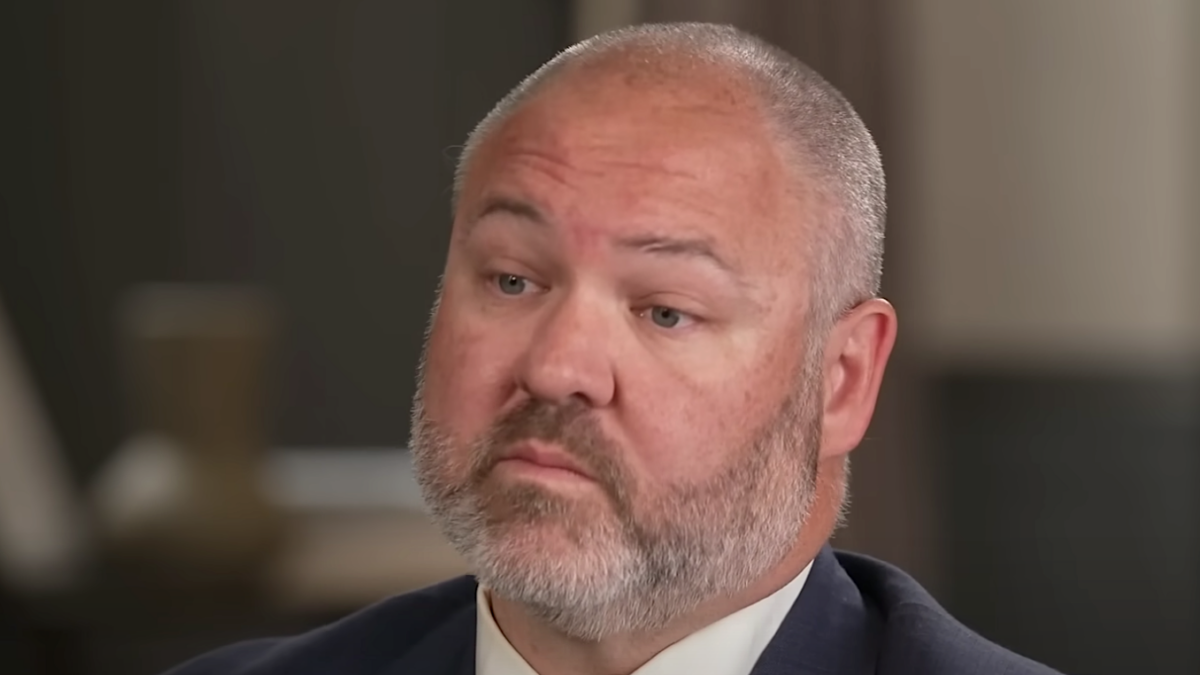
Baltimore FBI field office

Author Margot Cleveland profile

MARGOT CLEVELAND

VISIT ON TWITTER@PROFMJCLEVELAND

MORE ARTICLES

The assistant special agent in charge (ASAC) of the Baltimore FBI office sat for a transcribed interview on Monday with the House Judiciary Committee. The transcript from the closed-door session, which The Federalist has reviewed in full, reveals a rare find: an FBI agent still involved in the Hunter Biden investigation who will admit the obvious — that Delaware U.S. Attorney David Weiss did not have ultimate authority to charge the president’s son.

Monday’s interview of the Baltimore ASAC, whose name is being withheld by the House Judiciary Committee, followed the questioning last week of her boss, Thomas Sobocinski, the special agent in charge. Both Sobocinski and the ASAC attended the Oct. 7, 2022, meeting in which, according to IRS whistleblower Gary Shapley, Weiss said he was not the final decisionmaker on whether to bring charges against Hunter Biden.

In questioning the ASAC, the Judiciary Committee asked about her understanding of Weiss’s authority. She initially testified that she understood Weiss had the authority “to move forward and bring charges if that was what the determination was and he would go forth in doing that.” But after several back-and-forths, which included the ASAC reviewing the statutory language that would allow Weiss to bring charges in another district, she acknowledged that Weiss did not have the ultimate authority to charge Hunter Biden. 

“But based on what we just discussed, it’s true that Mr. Weiss alone was not the deciding person on whether charges are filed?” the House attorney queried.

“I would say, based on the statute, seeing that, as it reads here … yes, I would say that there is someone else, the Attorney General, as it’s noted here in the statute, that is involved in this process,” the ASAC replied. 

The House attorney continued: “[I]s it your understanding today that there is another person involved in whether Mr. Weiss could bring charges in another jurisdiction?”

“Yes,” the ASAC concurred.

The ASAC’s answer has been obvious to everyone for months, yet Democrats, the legacy media, and Weiss and Merrick Garland apologists have refused to acknowledge the reality. Even the ASAC’s boss, throughout his interview with the House Judiciary Committee, maintained, “Weiss had the authority in the U.S. to bring the charges where venue presented itself,” wherever he wanted, whether it be in California or D.C. And even when pushed on the limitations of a U.S. attorney’s authority, Sobocinski said Weiss had the authority and it was merely a matter of administrative hoop-jumping for the Delaware U.S. attorney to charge Biden in another district. 

In fact, that Sobocinski couldn’t admit the truth rendered his entire testimony not credible. That is precisely why no one should believe anything Weiss and AG Garland say about the Hunter Biden investigation either — because they first deceived Congress and the American public about Weiss’s authority and have since doubled down on their misrepresentations. 

Garland, for his part, told Sen. Chuck Grassley under oath that “the U.S. attorney in Delaware has been advised that he has full authority … to bring cases in other jurisdictions if he feels it’s necessary.” Weiss then covered for Garland, telling the House Judiciary Committee in a letter on June 7, 2023, that “as the Attorney General has stated, I have been granted ultimate authority over this matter, including responsibility for deciding where, when, and whether to file charges and for making decisions necessary to preserve the integrity of the prosecution…” 

Then after the transcript of Shapley’s congressional closed-door interview was released, revealing the whistleblower’s testimony that during the meeting on Oct. 7, 2022, Weiss had said he was not the ultimate decisionmaker on whether to charge Hunter Biden, Weiss clarified his statement. While saying he stood by what he had written in his June 7, 2023, letter to the House Judiciary Committee, Weiss wrote in an early July follow-up letter that he wished to expand on what he meant. He acknowledged that as the U.S. attorney for the District of Delaware, he lacked the authority to charge Hunter Biden in other districts. Yet, not to worry, Weiss assured the House oversight committee: Garland had promised him that, if necessary, the AG would grant Weiss special attorney status to allow him to prosecute Hunter Biden in D.C., California, or any other jurisdiction.

The most revealing fact from Monday’s interview is that it took this long and this ASAC to say openly what the attorney general, the U.S. attorney, and the special agent in charge of the Baltimore FBI field office continue to obfuscate about: Weiss’s pre-special counsel authority. The only real reason to hide the reality that Weiss lacked the authority to charge Hunter Biden in D.C. and California is that it means the failure to charge him for felony tax offenses falls on the U.S. attorneys and attorney general his father appointed. 

Thus the ASAC’s testimony also confirmed that the Biden-appointed U.S. attorneys in D.C. and California had refused to bring charges against Hunter Biden in their districts where they had proper venue for the alleged tax felonies.

On the question of what, precisely, Weiss had said during the Oct. 7, 2022, meeting, the ASAC was less helpful, however, not remembering many of the details. But not only didn’t she remember what Shapley claimed was said during the meeting. She also didn’t remember what her boss, Sobocinski, admitted to saying during the meeting. Her lack of recall thus doesn’t carry much of a punch, especially when she hadn’t taken notes during the meeting, as Shapley had.

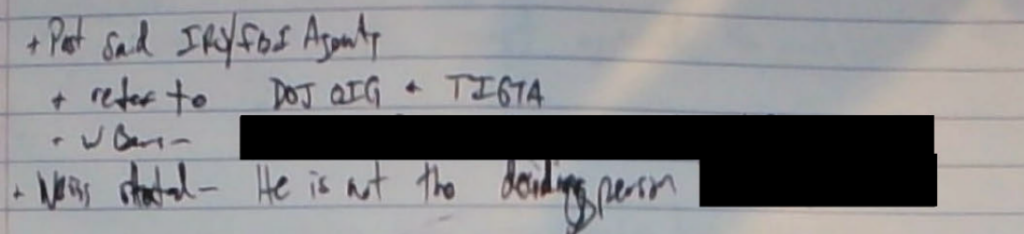
Of course, during the interview, the DOJ and FBI’s attorneys tried to spin Shapley’s email notes as merely a summary of the meeting written later, but the IRS whistleblower has already destroyed that narrative. On Wednesday, his attorneys provided the House Judiciary Committee a copy of the handwritten notes he had taken during the meeting. 

While those notes corroborate Shapley’s testimony, we are much beyond the question of what Weiss said during the meeting. We are now at the point that the House needs to launch additional impeachment inquiries of Garland, Weiss, and FBI Director Christopher Wray to uncover what the DOJ and FBI did (or didn’t do) to cover up for Hunter and Joe Biden and then cover up their cover-up.


Margot Cleveland is an investigative journalist and legal analyst and serves as The Federalist’s senior legal correspondent. Margot’s work has been published at The Wall Street Journal, The American Spectator, the New Criterion (forthcoming), National Review Online, Townhall.com, the Daily Signal, USA Today, and the Detroit Free Press. She is also a regular guest on nationally syndicated radio programs and on Fox News, Fox Business, and Newsmax. Cleveland is a lawyer and a graduate of the Notre Dame Law School, where she earned the Hoynes Prive—the law school’s highest honor. She later served for nearly 25 years as a permanent law clerk for a federal appellate judge on the Seventh Circuit Court of Appeals. Cleveland is a former full-time university faculty member and now teaches as an adjunct from time to time. Cleveland is also of counsel for the New Civil Liberties Alliance. Cleveland is on Twitter at @ProfMJCleveland where you can read more about her greatest accomplishments—her dear husband and dear son. The views expressed here are those of Cleveland in her private capacity.

IRS Whistleblower Gives Congress More Documents, Boosting His Credibility and Busting the DOJ’s


BY: MARGOT CLEVELAND | SEPTEMBER 13, 2023

Read more at https://thefederalist.com/2023/09/13/irs-whistleblower-gives-congress-more-documents-boosting-his-credibility-and-busting-the-dojs/

IRS whistleblower Gary Shapley

Author Margot Cleveland profile

MARGOT CLEVELAND

VISIT ON TWITTER@PROFMJCLEVELAND

MORE ARTICLES

On Monday, IRS whistleblower Gary Shapley provided congressional oversight committees nine new documents related to the botched Hunter Biden investigation, according to a letter sent Wednesday morning to the House Judiciary Committee. The letter also contained a redacted 10th new document: the handwritten notes Shapley took during the Oct. 7, 2022, meeting in which Delaware U.S. Attorney David Weiss allegedly announced to his team that he was “not the deciding official on whether charges are filed” against Hunter Biden.

Those handwritten notes further bolster Shapley’s earlier testimony about the meeting and debunk counterclaims by the special agent in charge of the FBI’s Baltimore field office that Weiss had not said he lacked authority to charge Hunter Biden. What the other nine documents reveal, however, remains to be seen.

“Yesterday the Washington Post published a story reportedly based on a transcript it obtained of the Committee’s interview of Federal Bureau of Investigation (FBI) Special Agent in Charge Thomas J. Sobocinski,” the letter from Shapley’s Empower Oversight attorneys to the House Judiciary Committee opened. Sobocinski was one of seven attendees at the Oct. 7, 2022, meeting, in which — according to Shapley’s previous testimony, corroborated by an email he sent following the meeting — Weiss said he was “not the deciding official” on whether to charge Hunter Biden and that he had been denied special counsel authority to charge the president’s son in D.C. or California. 

As The Federalist reported earlier Wednesday based on its review of the transcript of Sobocinski’s interview, “Sobocinski claimed he did not remember Weiss saying he had sought (and been denied) special counsel status or that Weiss had represented that he was ‘not the deciding official.’” Further, “according to Sobocinski, had Weiss said either of those things, he would have remembered it,” with the FBI agent implying Shapley’s claims were false. 

According to the transcript, Sobocinski tried to discredit Shapley’s testimony and the email he had sent following the October meeting by stressing that Shapley had not drafted the email during the meeting and thus the notes were not really “contemporaneous” with Weiss’s supposed statements. 

In its Wednesday letter to the Judiciary Committee, Shapley’s legal team responded to Sobocinski’s objections by providing the committee a redacted copy of Shapley’s “contemporaneous handwritten notes,” in order to let the committee “access the truthfulness and reliability of Mr. Sobocinski’s testimony.” Empower Oversight, which represents Shapley, further stressed in its letter that, unlike Shapley, Sobocinski took no notes during the meeting on Oct. 7, 2022.

Shapley’s handwritten notes taken during the meeting do indeed track the email summary he sent later that evening. In his notes, he wrote: “Weiss stated— He is not the deciding person.” This provides strong corroboration for Shapley’s email and his testimony.

Conversely, Sobocinski has nothing to corroborate his (lack of) recollection of the meeting. Sobocinski has also proven himself not credible by testifying that Weiss had ultimate authority to charge Hunter Biden anywhere, anytime — well, kinda, sort of, not really. 

While Shapley’s credibility remains bars above Sobocinski’s, the bottom line is it doesn’t really matter what Weiss said during the October meeting. What matters is what happened and whether Biden’s Department of Justice refused to pursue tax felony charges in other venues and kept Weiss from doing so himself. What matters is whether the DOJ and FBI interfered in the Hunter Biden investigation. 

On the first question, Americans may never get a clear answer, as Weiss continues to obfuscate and cover for Attorney General Merrick Garland. But on the DOJ and FBI’s interference in the Hunter Biden investigation, there is already overwhelming evidence establishing this scandal — and it isn’t merely coming from Shapley or his fellow IRS whistleblower. Rather, another whistleblower exposed the burying of the FD-1023 form, which implicated both Hunter and Joe Biden in a Burisma bribery scandal. That whistleblower also revealed to Sen. Chuck Grassley that FBI Supervisory Intelligence Analyst Brian Auten opened an “assessment” in August 2020 to improperly discredit “verified and verifiable” derogatory intel about Hunter Biden.

The nine new documents Shapley provided to the House Ways and Means Committee and the Senate Finance Committee may add even more evidence of the DOJ and FBI’s interference in the investigation of the president’s son. But unless and until the committees vote to release that information publicly, they will remain secreted from the American public. Likewise, the redacted portions of Shapley’s handwritten notes will remain confidential as potentially protected taxpayer information until the relevant congressional committees authorize their release. 

That may happen sooner than originally planned, however, now that the White House is attempting to spin the impeachment inquiry into Joe Biden as misinformation, with an assist from the DOJ and FBI lawyers representing Sobocinski.

2023-09-13 Letter to House Judiciary – 10-7-22 Notes by The Federalist on Scribdhttps://www.scribd.com/embeds/671047106/content?start_page=1&view_mode=scroll&access_key=key-eqkS2VXSh3XTA40s9ZCt


Margot Cleveland is an investigative journalist and legal analyst and serves as The Federalist’s senior legal correspondent. Margot’s work has been published at The Wall Street Journal, The American Spectator, the New Criterion (forthcoming), National Review Online, Townhall.com, the Daily Signal, USA Today, and the Detroit Free Press. She is also a regular guest on nationally syndicated radio programs and on Fox News, Fox Business, and Newsmax. Cleveland is a lawyer and a graduate of the Notre Dame Law School, where she earned the Hoynes Prive—the law school’s highest honor. She later served for nearly 25 years as a permanent law clerk for a federal appellate judge on the Seventh Circuit Court of Appeals. Cleveland is a former full-time university faculty member and now teaches as an adjunct from time to time. Cleveland is also of counsel for the New Civil Liberties Alliance. Cleveland is on Twitter at @ProfMJCleveland where you can read more about her greatest accomplishments—her dear husband and dear son. The views expressed here are those of Cleveland in her private capacity.

No, Appointing A ‘Special Counsel’ Is Not a License for DOJ To Obstruct Congress


BY: TRISTAN LEAVITT AND JASON FOSTER | AUGUST 21, 2023

Read more at https://thefederalist.com/2023/08/21/no-appointing-a-special-counsel-is-not-a-license-for-doj-to-obstruct-congress/

Merrick Garland and Joe Biden

Author Tristan Leavitt and Jason Foster profile

TRISTAN LEAVITT AND JASON FOSTER

MORE ARTICLES

The need for more public scrutiny of the Justice Department’s improper handling of the Hunter Biden case was already high following whistleblower revelations, the collapse of the sweetheart plea deal, and Attorney General Merrick Garland’s appointment of Delaware U.S. Attorney David Weiss as “special counsel.” Now, the Biden legal team has apparently released a trove of its emails with prosecutors to friendly press. These new revelations about Justice Department collusion with Biden family lawyers make it clear the two sides acted essentially as allies to kill the case, and it almost worked.

It is now more important than ever that Congress get serious about obtaining answers from the DOJ. Our client, IRS supervisor Gary Shapley, and IRS case agent Joe Ziegler both blew the whistle to Congress regarding five years’ worth of political favoritism, pulling punches, and conflicts of interest in the Biden case on Weiss’s watch. Since then, they’ve been threatened, retaliated against, and removed from the case.

On March 1, 2023, Garland swore to Congress that the buck stopped with Weiss alone in the Hunter Biden case. But the Justice Department’s actions directly undercut his claims. Just weeks later, DOJ headquarters officials granted an audience for Biden lawyers to appeal above Weiss’s head, and soon an unprecedented generous plea deal with the president’s son was offered as the whistleblowers were removed from the case. Only after that plea agreement fell apart in open court on July 26 did Garland finally give Weiss the “special” authority they both claimed this year he did not need.

U.S. Attorney Weiss was obviously the wrong choice for special counsel because IRS whistleblowers had already credibly alleged that his own office and he himself had given Biden preferential treatment and provided misleading information to Congress. With his appointment as special counsel, many across the political spectrum (including perhaps Garland) seemed to think that move somehow insulated the Justice Department from congressional questioning about the growing controversy. But it shouldn’t. 

Nothing in the Constitution grants prosecutors or “special” or “independent” counsels immunity from congressional oversight — especially in this unprecedented situation where the special counsel himself is alleged to have committed wrongdoing. No matter how many insiders in the modern D.C. establishment assume otherwise, that does not make it true. Prosecutors wield immense power, and there must be a check against the abuse and selective use of that power.

Just because Congress chooses to defer to the Justice Department’s “ongoing criminal inquiry” excuse on some oversight inquiries does not mean it always must, or that the objection is based on any constitutional limit to the congressional power to investigate. Congress has frequently made the opposite judgment and successfully obtained information about ongoing criminal cases when needed for its oversight function.

In our previous combined 30-year careers on Capitol Hill, we personally led congressional probes related to ongoing law enforcement matters, including the Anthrax attacks, Operation Fast and Furious, Secret Service scandals, the Clinton email server, the Parkland school shooting, the Trump-Russia allegations, and many more. We have conducted transcribed interviews of officials from line attorneys and line agents up to the deputy attorney general. We obtained sensitive law enforcement information about ongoing matters in official briefings from senior officials, including the then-FBI director, as well as lawfully from executive branch whistleblowers without the knowledge or consent of their agency management.

And that’s just our personal experience. There’s also a long, well-documented history of extensive federal law enforcement oversight by Congress, even in ongoing cases. So it is simply uninformed and untrue to claim that constitutional oversight interest must yield to ongoing criminal matters. The truth is quite the opposite — especially when government misconduct is involved.

The Justice Department doesn’t even believe its own rhetoric on the sanctity of information about ongoing criminal cases. Its senior officials routinely leak information about ongoing cases to friendly media outlets with no consequence whenever it suits them — as they no doubt have done in this case. The same officials simultaneously and hypocritically claim they must stiff-arm legitimate congressional oversight to preserve the “integrity” of pending criminal matters. In reality, more forceful congressional oversight is exactly what’s needed to restore public faith in the integrity of how the DOJ handles high-profile criminal cases. 

The appointment of Weiss and the controversies that led to it raise serious questions about Justice Department misconduct, and those questions need not be sidelined indefinitely in deference to the very process in need of scrutiny right now. 

An Inadequate Regulatory Solution

The current “special counsel” designation is rooted in Justice Department regulations adopted under Attorney General Janet Reno in 1999 after Congress allowed the old “independent counsel” statute to lapse. That law had fueled sprawling inquiries from Iran-Contra to Whitewater by prosecutors overseen by a court rather than by the attorney general. Although that law ensured more independence than the current regulations, it led to excesses that eventually generated bipartisan opposition to renewing the statute.

The DOJ recognized conflicts of interest would still arise and threaten public confidence in its integrity. The special counsel regulations were meant to address that problem. However, attorneys general have only selectively followed portions of the regulations, choosing to ignore certain provisions when it suits them because there is no enforcement mechanism. For example, by appointing the current U.S. attorney from Delaware who has already been handling this case for five years, Garland chose to ignore the portion of the regulations that would require a special counsel be someone from outside the government. In light of the whistleblower testimony and the failed plea deal, that decision undermines public confidence in the inquiry rather than enhancing it.

Without any binding force of law, this type of special counsel status isn’t actually all that special. The named prosecutor actually just exercises the attorney general’s own statutory authority as delegated and described in the appointment order. Since Congress defines the scope of the attorney general’s statutory authority, it has every right to investigate how that authority is being used and whether the DOJ’s procedures are effective in preventing conflicts of interest.

Spoiler alert: They aren’t.

Studying whether to resurrect some form of the independent counsel statute or impose some portions of the special counsel regulations as a statutory requirement would be more than enough of a legislative purpose to justify enforcing subpoenas to the Delaware prosecutors. Add to that evidence of misleading testimony and letters to Congress about the scope of Weiss’s authority, and the case for compelled testimony and document production is already very strong — even without any formal impeachment inquiry into the officials involved.

Statutes Recognize Congressional Access

To hear some people talk, you’d think Congress must inevitably yield to the interests of any criminal inquiry and defer to any prosecutor’s discretionary whim with no public accountability. This is the unstated assumption of those who eagerly embrace lawfare against domestic political opponents through the criminal process. It is uncritically adopted too often by people who should know better.

The law recognizes, however, that insulating ongoing criminal cases from public scrutiny by elected officials is not the prime goal of government. The presidential pardon power is the ultimate example of this principle, but it can also be seen in several statutory provisions that recognize: The congressional need for information to fulfill its constitutional duties can trump the interests of preserving a criminal case.

As Iran-Contra Independent Counsel Lawrence Walsh noted:

The legislative branch has the power to decide whether it is more important perhaps to destroy a prosecution than to hold back testimony they need. They make that decision. It is not a judicial decision, or a legal decision, but a political decision of the highest importance.

He should know. Oliver North’s famously immunized testimony before Congress eventually led to Walsh’s conviction of North being overturned on appeal.

The statutory procedure for Congress to obtain an order granting immunity for witness testimony is set out at 18 U.S.C. § 6005 and implicitly anticipates sharing information about ongoing criminal matters with Congress. The law requires that the attorney general receive 10 days prior notice of the request and allows a delay of up to 20 days, but it does not allow the attorney general to block the order. The notice and delay period merely enable consultation, during which the attorney general would presumably need to share information about any ongoing criminal inquiry if there were any hope of persuading Congress to abandon its plan to immunize the witness.

Similarly, statutes like 26 U.S.C. § 6103(f)(5) (“Disclosure by whistleblower”) explicitly authorize protected disclosures of otherwise confidential tax return information to certain committees of Congress without regard to whether it’s related to an ongoing criminal inquiry. If not for this provision, Congress may never have learned about improprieties in the Hunter Biden case reported by the IRS whistleblowers. Whistleblower statutes such as 5 U.S.C. § 2302 and § 2303 also protect disclosures to Congress by law enforcement personnel at other agencies, including the FBI.

A Long History of Precedents

Congress has many times obtained testimony and documents from prosecutors involved in active probes, including deliberative prosecutorial memoranda. Below are just a handful of the dozens from the past century.

Palmer Raids: In 1920 and 1921, Congress investigated Attorney General Mitchell Palmer’s raids on suspected communists, and Palmer testified in public House and Senate hearings regarding deportation cases open on appeal.

Teapot Dome: The next year, Congress opened investigations into the Teapot Dome scandal. After Congress investigated for approximately a year and a half suspicious financial transactions surrounding the Interior Department’s disposition of oil and gas leases, it eventually became clear that an equally big problem was the Justice Department’s failure to prosecute wrongdoers.

When Congress began discussing the need for a special counsel to take prosecutions out of the hands of the Justice Department, President Calvin Coolidge attempted to get ahead of the issue by indicating on Jan. 27, 1924, his intent to nominate two such special counsels (a Republican and a Democrat). Congress adopted a joint resolution requiring that the president appoint the special counsels — subject to confirmation by the Senate. After rejecting the first two nominees, the Senate confirmed two others in mid-February 1924.

Congress did not wait for the newly confirmed counsels to finish their work. On March 1, 1924, the Senate established its own select committee to investigate the same prosecutorial decisions for which the special counsel now had jurisdiction. Its goal was to probe the Justice Department’s prosecutorial decisions and find cases that could still be prosecuted. It interviewed dozens of Justice Department attorneys — including about open cases — and obtained investigative records and prosecutorial memoranda. 

When Attorney General Harry Daugherty’s brother refused to testify on the grounds that he was a private citizen, the case rose to the Supreme Court. The 1927 decision in McGrain v. Daugherty “sustain[ed] the power of either house to conduct investigations and exact testimony from witnesses for legislative purposes.” In this case, it noted, “[T]he subject to be investigated was the administration of the Department of Justice — whether its functions were being properly discharged or were being neglected or misdirected, and particularly whether the Attorney General and his assistants were performing or neglecting their duties in respect of the institution and prosecution of proceedings to punish crimes and enforce appropriate remedies against the wrongdoers, specific instances of alleged neglect being recited.”

But what legislative purpose could come from investigating open cases? The court answered:

The functions of the Department of Justice, the powers and duties of the Attorney General, and the duties of his assistants are all subject to regulation by congressional legislation, and … the department is maintained and its activities are carried on under such appropriations as, in the judgment of Congress, are needed from year to year.

The Supreme Court also reaffirmed in this case Congress’s inherent power to punish witnesses who refused to provide testimony. The court noted in Daugherty:

The power of inquiry — with process to enforce it — is an essential and appropriate auxiliary to the legislative function. … Mere requests for … information often are unavailing, and also that information which is volunteered is not always accurate or complete, so some means of compulsion are essential to obtain what is needed.

Two years later, another subject of the investigation, Harry Sinclair, argued before the Supreme Court that because the joint resolution signed into law on Feb. 8, 1924, gave a special counsel jurisdiction to investigate his affairs, Congress has ceded its own such jurisdiction to the courts. The court held in Sinclair v. United States: “Neither [the] Joint Resolution … nor the action taken under it operated to divest the Senate or the committee of power further to investigate. … The authority of that body, directly or through its committees, to require pertinent disclosures in aid of its own constitutional power is not abridged because the information sought to be elicited may also be of use in [the prosecution of pending] suits.” The court upheld Sinclair’s punishment for contempt of Congress.

Special Subcommittee to Investigate the Department of Justice: In early 1952, the House established a select committee of the Judiciary Committee to investigate (among other things) the Justice Department’s failure to enforce federal tax fraud and bribery laws. Around the same time, the attorney general appointed a “Special Assistant to the Attorney General,” Newbold Morris, to investigate the same matters.

Morris was fired by the attorney general just 63 days later and thus did not testify before the subcommittee until a week after his removal. However, in its overall review of the Justice Department’s failure to prosecute cases, the subcommittee went on to interview a sitting assistant U.S. attorney and the appellate chief of the Justice Department’s Tax Division, as well as several members of a St. Louis grand jury. 

Church Committee: In January 1975, revelations emerging from Watergate — that the executive branch has used intelligence agencies to conduct domestic operations — led to the Senate establishing a select committee that came to be known for its chairman, Sen. Frank Church. The 800-plus witnesses interviewed over the next year included a host of Justice Department officials, from the attorney general down to an assistant section chief at the FBI. Meanwhile, the House Judiciary Subcommittee on Civil and Constitutional Rights also held hearings with sitting DOJ officials.

Billy Carter: In July 1980, the Senate established a select committee of its Judiciary Committee to investigate the relationship between President Jimmy Carter’s brother, Billy Carter, and the government of Libya, as well as whether the Justice Department had properly handled an investigation into that relationship and a decision to proceed civilly rather than with criminal prosecution.

The attorney general, the assistant attorney general over the Justice Department’s Criminal Division, and three deputy assistant attorneys general all provided testimony to the subcommittee. The department also provided prosecutorial memoranda, correspondence with the defendant, and other investigative reports and interview summaries.

ABSCAM: In late-March 1982, the Senate established a select committee to study Justice Department domestic undercover operations. The committee conducted interviews of a host of department witnesses, including line-level attorneys on Brooklyn’s Organized Crime Strike Force.

Recognizing that their preferences had to bow to constitutional oversight realities, Justice officials wrote to the select committee on July 15, 1982: “[T]he Department does not normally permit Strike Force attorneys to testify before congressional committees. … [W]e have traditionally resisted questioning of this kind because it tends to inhibit prosecutors from proceeding through their normal tasks free from the fear that they may be second-guessed, with the benefit of hindsight, long after they take actions and make difficult judgments in the course of their duties.”

In a statement that applies to all investigative interviews, the DOJ added that it would produce line-level attorneys “because of their value to you as fact witnesses and because you have assured us that they will be asked to testify solely as to matters of fact within their personal knowledge and not conclusions or matters of policy.” The department also produced more than 20,000 pages of documents, including prosecutorial memoranda. The House Judiciary Subcommittee on Civil and Constitutional Rights conducted a similar investigation, also receiving access to confidential DOJ documents.

E.F. Hutton: In 1985 and 1986, the House Judiciary Subcommittee on Crime investigated the Justice Department’s conclusion of a plea agreement with stock brokerage firm E.F. Hutton. Hutton pleaded guilty to 2,000 counts of felony mail and wire fraud in May 1985, yet the department immunized a number of witnesses and ultimately charged none, instead simply requiring the payment of a $2 million fine and other conditions. The Justice Department produced a prosecutorial memorandum to the subcommittee.

Iran-Contra: On Jan. 6 and 7, 1987, the Senate and House, respectively, established select committees to investigate arms sales to Iran and the diversion of funds to Contras in Nicaragua. The two chambers then merged their investigations and hearings. The investigators had approximately 500 depositions and other interviews, from the attorney general down to the lowest-level Justice Department officials with knowledge of the case. Despite initial protests by the department that producing documents might prejudice pending or anticipated litigation by the independent counsel, the 1 million-plus pages of documents obtained by the committees included the documents they sought from the DOJ.

Ruby Ridge: In 1995, the Senate Judiciary Subcommittee on Terrorism, Technology and Government Information investigated the Justice Department’s conduct preceding and during the siege of Randall Weaver’s home at Ruby Ridge, Idaho. The subcommittee interviewed line witnesses and agents, the U.S. attorney for the District of Idaho, and other department officials.

Operation Fast and Furious: Beginning in 2011, we led Sen. Chuck Grassley’s investigation for the Senate Judiciary Committee into the Bureau of Alcohol, Tobacco, Firearms and Explosives’ Operation Fast and Furious, where the gunwalking of more than 2,000 firearms contributed to the murder of U.S. Border Patrol Agent Brian Terry. We interviewed line officials, the U.S. attorney for the District of Arizona, and the chain of command in ATF and into the Justice Department, all while the prosecutions and appeals of various individuals charged in the operation were ongoing.

Congress Must Act

Given all this history and our personal experience in congressional oversight of federal law enforcement, it is frustrating to see even some members of Congress uncritically assume that their authority ends where a criminal inquiry begins.

It does not.

While it is clearly not a prerequisite to obtaining Justice Department testimony or documents in pending matters, several of the investigations above began with the body voting to establish a select committee. The current House has the added advantage of having already empaneled the Select Subcommittee on the Weaponization of the Federal Government and tasked it with looking into the expansive authority vested in the executive branch to investigate citizens of the United States, “including ongoing criminal investigations.” Surely an example like this where that expansive authority was not used against the president’s son in the same aggressive ways it has been used in others is worthy of investigation.

By providing hundreds of emails between the Biden camp and the Justice Department to friendly press outlets, either Hunter Biden’s legal team or the Justice Department has waived any claim of confidentiality. Congress should subpoena those communications immediately and let the public read them in full rather than relying on selected snippets chosen for curated narratives.

We aren’t suggesting that enforcing Congress’s constitutional right to information on pending criminal inquiries will be easy. It will take work and a shift in mindset away from relying on the executive branch or the courts to vindicate legislative branch oversight prerogatives. Congress must rely on its own constitutional powers — inherent contempt, the power of the purse, and impeachment — to be an effective check and balance on executive power once again. 


Tristan Leavitt is the president of Empower Oversight. Jason Foster is the founder and chair of Empower Oversight.
WATCH: McCarthy’s closed-door video sets up bombshell hearing on Hunter Biden/IRS investigation


By Elizabeth Elkind | Fox News | Published July 18, 2023 9:55am EDT

Read more at https://www.foxnews.com/politics/watch-mccarthys-closed-door-video-bombshell-hearing-hunter-biden-irs-investigation

EXCLUSIVE: House Speaker Kevin McCarthy on Tuesday played a video for House Republicans that shows President Biden denying any wrongdoing related to his family’s business dealings, one day before a whistleblower is expected to tell Congress that the investigation into Hunter Biden was politicized. The video, obtained exclusively by Fox News Digital, shows a timeline of Biden defending his family’s actions. But it ends with IRS whistleblower Gary Shapley claiming the IRS probe he was part of was prevented from taking steps “that could have led us to President Biden.”

Shapley and one other whistleblower are expected to claim on Wednesday at the House Oversight and Accountability Committee that the Justice Department interfered in the IRS investigation of Hunter Biden and his business dealings. The hearing is a culmination of linked probes by Oversight as well as the House Judiciary and Ways & Means committees into both Hunter and the president’s brother James Biden.

“This video is what the speaker is using to educate the broader House Republican conference on the status of the Biden family investigation,” a source familiar with McCarthy’s effort told Fox News Digital.

REPUBLICANS ERUPT OVER 2015 EMAIL EXPOSING ‘ULTIMATE PURPOSE’ OF HUNTER’S INVOLVEMENT WITH BURISMA

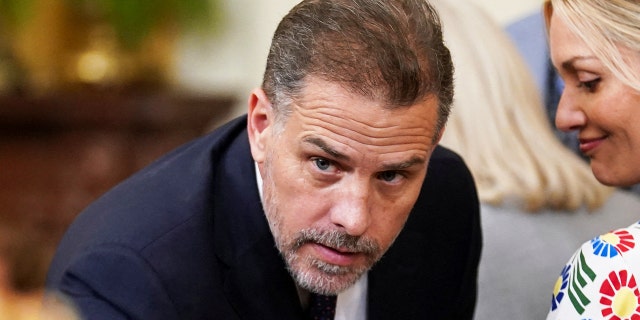
Hunter Biden at the White House
Hunter Biden’s business dealings will be front-and-center of a House GOP-led hearing on Wednesday (Kevin Lamarque/Reuters)

It signals the importance House GOP leaders are placing on the Biden investigation, which has been a top priority for Republicans since taking the House majority last year. It’s also served as a unifying issue for what has proved to be an ideologically fractured conference. McCarthy’s video and Wednesday’s hearing come as the speaker is facing a fierce spending battle on defense and other annual appropriations, as the narrowly divided House has given a small faction of hardline conservatives greater influence over legislation.

HOUSE GOP DEMAND TRANSCRIBED INTERVIEWS FROM HUNTER BIDEN PROSECUTOR, DOJ, IRS, SECRET SERVICE OFFICIALS

But nearly all House Republicans have been united in their suspicions of wrongdoing by the president’s family members.

Hunter Biden reached a deal with the U.S. Attorney in Delaware last month to plead guilty to misdemeanor tax charges and one felony count related to firearms possession after a years-long probe into his foreign business dealings including in Ukraine and China.

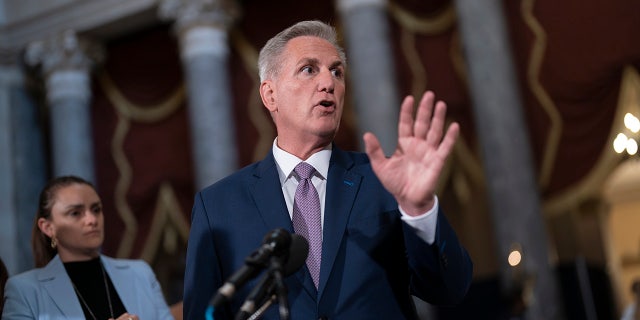
House Speaker Kevin McCarthy
Speaker of the House Kevin McCarthy is preparing for the hearing with a visual messaging memo for his conference (AP Photo/J. Scott Applewhite)

The two-minute video shown privately to lawmakers on Tuesday features various news clips dating back to the 2020 presidential debates. Biden is shown saying “nothing was unethical” about his son’s foreign work, which is followed by a clip of a news anchor revealing James and Hunter Biden were under investigation. Then Biden is shown outside the White House telling reporters it’s “not true” that Hunter Biden’s foreign associates wired over $1,000,000 to three of the president’s relatives.

HUNTER BIDEN INVESTIGATORS LIMITED QUESTIONS ABOUT ‘DAD,’ ‘BIG GUY’ DESPITE FBI, IRS OBJECTIONS: WHISTLEBLOWER

McCarthy’s compilation also notes reporting that stated U.S. banks flagged concern over 150 transactions linked to Hunter and James Biden, and a White House statement that called the pair’s dealings “private matters.”

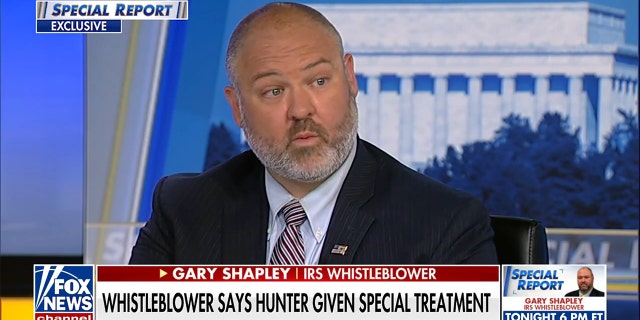
IRS agent Gary Shapley sits down on the Fox News Channel "Special Report" set for an interview
IRS Criminal Supervisory Special Agent Gary Shapley Jr., defended his claims that the Justice Department interfered with U.S. Attorney David Weiss’ Hunter Biden investigation in an interview with Fox News’ “Special Report.”  (Fox News)

Biden himself swore multiple times that he was not involved in his family’s foreign business links. Fourteen-year IRS veteran Shapley alleged to the Ways & Means committee that the Hunter Biden probe he was formerly part of in Delaware was stymied by the Justice Department. He said efforts by Trump-appointed U.S. Attorney David Weiss to get special counsel status were rebuffed, and that Weiss was denied the ability to bring charges in other districts – something that would directly contradict claims of Weiss’s independence made by Attorney General Merrick Garland.

Weiss denied those claims in a letter to Senate Judiciary ranking member Lindsey Graham, R-S.C. this month.

Elizabeth Elkind is a politics reporter for Fox News Digital. 

IRS Whistleblower Knocks Out Hunter Biden’s Lawyers and the Washington Post with One Blow


BY: MARGOT CLEVELAND | JULY 05, 2023

Read more at https://thefederalist.com/2023/07/05/irs-whistleblower-knocks-out-hunter-bidens-lawyers-and-the-washington-post-with-one-blow/

IRS whistleblower Gary Shapley
Hunter Biden’s lawyers tried to turn him into a victim by smearing Gary Shapley — but Shapley fired back.

Author Margot Cleveland profile

MARGOT CLEVELAND

VISIT ON TWITTER@PROFMJCLEVELAND

MORE ARTICLES

Hunter Biden’s high-priced attorneys again tried to turn the president’s son into a victim by portraying IRS whistleblower Gary Shapley as a partisan leaker and a criminal — but on Monday, Shapley responded. Shapley’s counter was a devasting blow to Hunter Biden’s legal strategy and also represented a shot across the bow of the Biden-friendly Washington Post. 

On Friday, Winston and Strawn attorney Abbe David Lowell dispatched a 10-page missive to Rep. Jason Smith, R-Mo., the chair of the House Ways and Means Committee, regarding what Lowell called the Republican House’s “obsession with attacking the Biden family.” While the letter complained of the House’s supposed abandonment of congressional protocol and rules of conduct, Hunter Biden’s attorneys’ real focus was Shapley, whom they painted as a partisan hack, not a whistleblower — and a criminal to boot. 

The June 30 letter from Hunter’s attorneys strongly implied Shapley was responsible for leaking information to The Washington Post that served as the basis for an Oct. 6, 2022 article authored by Devlin Barrett and Perry Stein. The article claimed that “federal agents investigating President Biden’s son Hunter have gathered what they believe is sufficient evidence to charge him with tax crimes and a false statement related to a gun purchase…” Biden’s lawyers then challenged the House to ask the whistleblowers if they had leaked information to the Post.

Shapley didn’t wait for the House to ask, instead submitting an affidavit to the House Ways and Means Committee on Monday in which he unequivocally swore he “was not the source for the October 6, 2022, Washington Post article.” Shapley further attested that he had never “had any contact with Barrett or Stein,” the authors of the article. He also stated under oath that he “never leaked confidential taxpayer information.”

The whistleblower then expressly authorized “the Washington Post and/or journalists Devlin Barrett, Perry Stein, or any other Washington Post reporter to release any communications directly or indirectly to or from me,” agreeing “to waive any purported journalistic privilege and/or confidentiality that would have arisen had I been a source for the Washington Post.”

At the same time, Shapley’s lawyers wrote to Washington Post authors Barrett and Stein, noting that “Biden family attorneys have falsely accused SSA Shapley of illegally leaking to you for your story, ‘Federal agents see chargeable tax, gun-purchase case against Hunter Biden.’”

“As you know, SSA Shapley was not a source for you on that story, or any other story for that matter,” the letter continued. “SSA Shapley has never communicated with either of you, either on or off the record.” 

Then, after stressing that Shapley had waived any confidentiality that would have arisen, the whistleblower’s lawyers asked them “to correct Mr. Biden’s attorneys and clear SSA Shapley’s good name of these false and retaliatory charges.” 

The Federalist asked both Barrett and Stein whether Shapley was a source for their article, but the reporters did not respond to the inquiries. Whether they will respond to Shapley’s entreat remains to be seen.

What is clear, however, is that Hunter Biden’s attorneys don’t care whether Shapley was the source. They are being paid to defend Hunter Biden, and beyond cutting a sweetheart deal with Joe Biden’s DOJ, that means attacking everyone else. With Shapley and his testimony representing the most serious threat to the Biden family, the attacks on the IRS whistleblower are likely to continue.

While there is little that can be done to stop Hunter Biden’s lawyers from smearing Shapley, congressional oversight committees should ensure the Biden administration’s DOJ isn’t providing an assist. A recent New York Times article suggests Hunter Biden’s attorneys are attempting to inveigle the DOJ in the attack on Shapley.

“Hunter Biden’s lawyers have told the Justice Department that Mr. Shapley has broken federal laws that keep grand jury material secret,” The New York Times reported last week. In his Monday affidavit, Shapley also refuted this point, saying he never knowingly released grand jury material. But that might not matter to a Justice Department that answers to Hunter’s father.

Thankfully, Shapley and the other whistleblowers have a strong advocate in Sen. Chuck Grassley, R-Iowa, who seems two steps ahead of everything the DOJ and other Biden apologists pull. It is unfortunate, though, that the left-wing press that once championed whistleblowers seems intent now to serve as scribes for Hunter Biden’s attorneys. If the Post reporters remain silent, we’ll know they intend to keep things that way.

This article has been updated since publication.


Margot Cleveland is The Federalist’s senior legal correspondent. She is also a contributor to National Review Online, the Washington Examiner, Aleteia, and Townhall.com, and has been published in the Wall Street Journal and USA Today. Cleveland is a lawyer and a graduate of the Notre Dame Law School, where she earned the Hoynes Prize—the law school’s highest honor. She later served for nearly 25 years as a permanent law clerk for a federal appellate judge on the Seventh Circuit Court of Appeals. Cleveland is a former full-time university faculty member and now teaches as an adjunct from time to time. As a stay-at-home homeschooling mom of a young son with cystic fibrosis, Cleveland frequently writes on cultural issues related to parenting and special-needs children. Cleveland is on Twitter at @ProfMJCleveland. The views expressed here are those of Cleveland in her private capacity.

Here’s What the IRS Whistleblower Will Tell Lawmakers About the Hunter Biden Probe Behind Closed Doors


BY: MARGOT CLEVELAND | MAY 26, 2023

Read more at https://thefederalist.com/2023/05/26/heres-what-the-irs-whistleblower-will-tell-lawmakers-about-the-hunter-biden-probe-behind-closed-doors/

IRS Whistleblower Gary Shapley

Author Margot Cleveland profile

MARGOT CLEVELAND

VISIT ON TWITTER@PROFMJCLEVELAND

MORE ARTICLES

IRS Supervisory Special Agent Gary Shapley will appear before the House Ways and Means Committee later Friday morning to submit to questioning from both Democrats and Republicans.

Missing, however, will be any members of the Senate Finance Committee, which refused to conduct a joint interview with the House oversight committee. While Republican Rep. Jason Smith, chair of the Ways and Means Committee, held the power to authorize Senate representatives to attend the transcribed interview of the whistleblower.

Smith inexplicably ignored Shapley’s statement that he “would welcome” the participation of designated Senate staffers in the House hearing. Thus, the House hearing will proceed, but not on a bicameral basis. 

According to a person familiar with the proceedings, the House Ways and Means Committee will convene at 9:30 a.m., with Shapley appearing for questioning with his two lawyers, Mark Lytle from Nixon Peabody and Tristan Leavitt of Empower Oversight. The closed-door questioning is expected to last all day.

While the Ways and Means Committee will question Shapley in a closed session, the public can guess the content of much of his testimony given the high-profile nature of the case against Hunter Biden. In fact, neither Shapley nor his attorneys have ever publicly confirmed that Hunter Biden is the target of the Internal Revenue Service investigation, yet it is uniformly agreed that the whistleblower’s testimony concerns the handling of the tax probe into the president’s son.

Shapley, a 14-year veteran at the IRS, provided some insight into his likely testimony when he sat for an exclusive interview with CBS News on Wednesday. During that interview, Shapley explained that he was first assigned to the investigation in January 2020. “When I took control of this particular investigation, I immediately saw deviations from the normal process,” Shapley told CBS News. “It was way outside the norm of what I’ve experienced in the past,” the whistleblower stressed.

Shapley further claimed during the interview that “there were multiple steps that were slow-walked — were just completely not done — at the direction of the Department of Justice.” That statement coincides with the information contained in an earlier letter sent by the whistleblower’s lawyers to the oversight committees. That letter maintained that the whistleblower has detailed “examples of preferential treatment and politics improperly infecting decisions and protocols that would normally be followed by career law enforcement professionals in similar circumstances if the subject were not politically connected.” 

“People directly familiar with the case” provided more particulars to Shapley’s claims, asserting that “specific DOJ employees placed strictures on questions, witnesses and tactics investigators may be allowed to pursue that could impact President Biden.” The unnamed sources also stressed that the improper politicization of the case came from the Justice Department and FBI headquarters. 

When read together, these details raise a huge red flag because they mean the interference from the DOJ and FBI headquarters began under the Trump administration. So, who in the Trump administration was responsible for slow-walking the Hunter Biden investigation? What investigative steps were not taken? 

In a letter from Shapley’s legal team to the congressional oversight committees, he spoke of irregularities beginning in the summer of 2020 in both the DOJ Tax Division and an unnamed U.S. attorney’s office, which CNN would later report is the office of Delaware U.S. Attorney David Weiss. Weiss has been investigating Hunter Biden since 2018. 

Another detail from Shapley’s CBS News interview that foreshadows the content of his Friday testimony concerns his explanation of the “red line” meeting that convinced the IRS supervisory special agent his oath of office required him to come forward. According to Shapley, while he had been noticing deviations in the investigative process for a couple of years, he just couldn’t “fathom that DOJ might be acting unethically.” Then came an October 2022 meeting he had with federal prosecutors, after which Shapley told CBS News, “It just got to that point where that switch was turned on, and I just couldn’t silence my conscience anymore.”

While the CBS News interview did not air further details about the meeting, a letter from Shapley’s legal team described a “charged meetings on October 7, 2022,” during which the U.S. attorney — reportedly Weiss — “became aware that both the IRS and the FBI had longstanding concerns about the handling of the case” and that those concerns had been communicated up the chain of command. Then, after an Oct. 17, 2022, meeting at which Shapley continued to raise concerns, he and his investigative team were excluded from future meetings on the case.

Shapley seems poised to name names on Friday, and his attorney has told Just the News that “he’ll be able to talk about these meetings that he attended, that were with both agents and prosecutors.” Shapley summarized those meetings and distributed his notes to the IRS and other agents, his lawyer explained, and along with his emails, these documents will corroborate his story. 

The whistleblower can also identify other IRS agents who participated in the meetings and can confirm his testimony. The DOJ’s decision earlier this month to remove Shapley’s entire investigative team from the Hunter Biden investigation may backfire, serving as a catalyst to loosen the other agents’ lips.

But in the meantime, it will be Shapley doing the talking. And while Americans won’t know at once what the IRS supervisory special agent has to say, the House Ways and Means Committee has the authority to submit the information obtained from Sharpley to both the Senate and the House of Representatives, thereby making the testimony public. 

Democrats used that statutory carveout to release Trump’s tax information publicly, and Republicans should follow their lead — and soon.


Margot Cleveland is The Federalist’s senior legal correspondent. She is also a contributor to National Review Online, the Washington Examiner, Aleteia, and Townhall.com, and has been published in the Wall Street Journal and USA Today. Cleveland is a lawyer and a graduate of the Notre Dame Law School, where she earned the Hoynes Prize—the law school’s highest honor. She later served for nearly 25 years as a permanent law clerk for a federal appellate judge on the Seventh Circuit Court of Appeals. Cleveland is a former full-time university faculty member and now teaches as an adjunct from time to time. As a stay-at-home homeschooling mom of a young son with cystic fibrosis, Cleveland frequently writes on cultural issues related to parenting and special-needs children. Cleveland is on Twitter at @ProfMJCleveland. The views expressed here are those of Cleveland in her private capacity.

IRS Whistleblower Letter Accuses DOJ of Retaliation in Hunter Biden Probe


Chris Pandolfo

By Chris Pandolfo , Gillian Turner | Fox News | Published May 16, 2023 2:02pm EDT

Read more at https://www.foxnews.com/politics/irs-whistleblower-letter-accuses-doj-retaliation-hunter-biden-probe

Attorneys for an IRS whistleblower say the whistleblower’s entire team has been removed from the Hunter Biden probe and have accused the government of illegal retaliation, according to a letter sent to the House and Senate judiciary committees. The whistleblower’s attorneys told Congress that the removal was on the order of the Department of Justice.

“Today the Internal Revenue Service (IRS) Criminal Supervisory Special Agent we represent was informed that he and his entire investigative team are being removed from the ongoing and sensitive investigation of the high-profile, controversial subject about which our client sought to make whistleblower disclosures to Congress,” the letter states.

“He was informed the change was at the request of the Department of Justice,” attorneys Mark Lytle and Tristan Leavitt wrote.

Whistleblower protections are enshrined in federal statute. The protocol is for a whistleblower to first go to their immediate supervisor or the supervisor in charge with the issue at hand. If the whistleblower believes that reaching out to a supervisor could jeopardize their well-being, or that supervisor is implicated in any potential misconduct, the whistleblower can go directly to the inspector general of their agency. From there, the inspector general can communicate with Congress, when appropriate.

In this case, one of the disclosures the IRS whistleblower made was to the U.S. Treasury inspector general for tax administration, sources told Fox News.

The removal of a whistleblower from a situation or investigation could potentially be seen as retaliatory, depending on the circumstances, but it also may be necessary to preserve objectivity of the investigation and the alleged witness, sources said.

READ THE LETTER BELOW. APP USERS: CLICK HERE

https://static.foxnews.com/foxnews.com/content/uploads/2023/05/IRSDOJretaliation.pdf

Fox News’ Bradford Betz contributed to this report.

Chris Pandolfo is a writer for Fox News Digital. Send tips to chris.pandolfo@fox.com and follow him on Twitter @ChrisCPandolfo.

Tag Cloud