Francine Champagne was elected to her local school board in Canada in November 2022. By November 2023, she had been fired from her university teaching job and suspended from Winnipeg’s Louis Riel School Division (LRSD) board so many times — without pay — and with endless suspensions in sight, that she was forced to resign as a trustee of the board.
Champagne’s “crime”? A few posts she made on her personal Facebook page. One said, “Make men masculine again, make women feminine again, make children innocent again.” Another read, “To identify is to live a lie.” The third post was a link to the Stop the World Control website, which, Champagne explained, “included information on the sexualization and grooming of children, the United Nations’ agenda and the WHO’s ‘educational’ material.”
It’s important to remember that Champagne was elected to her position. She beat out an incumbent candidate who’d been on the board for decades and received votes from 2,817 people who determined she was the best voice to represent them and oversee the education of their children. What’s more, freedom of speech is enshrined in the Canadian Charter of Rights and Freedoms.
According to Champagne, her first six months on the LRSD board were positive. She visited numerous schools, attended district events, and built “an excellent rapport” with administrators, teachers, and the community. But then she ventured to ask that the board discuss a statement the board chairwoman, Sandy Nemeth, had posted on LRSD’s social media platforms declaring that LRSD fully supports LGBT resources in their schools.
“I simply asked during one of our meetings if we could talk about the stance of each trustee, because we never had addressed the issue,” said Champagne. “[Nemeth] immediately shut me down and told me harshly that she made the decision to emit a statement on behalf of the trustees, and that the diversity policy was not up for discussion. That was the end of that.”
It was, indeed, the beginning of the end for Champagne. Shortly after the dust-up with the board chair, Nemeth herself informed Champagne — during “Pride Month,” of course — that she had breached the LRSD code of conduct for her “hateful” posts that didn’t align with LRSD’s diversity policy.
Phony pretext in hand, the witch hunters set to work destroying Champagne’s life, starting, predictably, by attacking her in the press. Just five days after Nemeth’s confrontation, screenshots of the “hateful” posts appeared in the Winnipeg Free Press alongside an article about Champagne being “anti-trans” and “anti-LGBTQ.”
The next day, the LRSD board suspended Champagne for three months, and that same week, she lost her job.
The nightmare had just begun. Nemeth told the CBC that the decision to suspend Champagne “came after the realization of some incredibly unfortunate — and I will define unfortunate to mean disrespectful, hateful — comments on her Facebook page specifically indicating transphobia, homophobia, and just a general complete lack of [respect] for the LGBTQ community.”
“Because Champagne was democratically elected by the community, there is no provision within the Public Schools Act for the board to remove her,” Nemeth added. “However, the board can and will continue to suspend Champagne if she fails to sign and uphold the code of conduct.”
The board continued to issue suspension after suspension and went so far as to ban friends and supporters who showed up to board meetings to defend Champagne permanently from LRSD property. One community member noted in a letter to the LRSD board, “You are doing to her what you accuse her of doing to you, and that is bullying and discrimination.”
Champagne is a devout Catholic who expressed having “no fear” during her ordeal. “People are constantly calling me, emailing me, praying for me,” she said. “And I feel very peaceful inside just knowing that I’m standing on God’s truth.”
After determining that the LRSD work environment had “become unbearable” and that “it would be unsafe and unhealthy to work in an environment where intolerance reigns,” Champagne issued a statement of resignation and told her side of the story the media had largely ignored.
“I was no longer able to afford the legal fees towards the appeal process and other matters,” she said. “I surely did not become a school trustee with the intention of entering a legal battle. My objective was to focus on education (the 3Rs) and the molding of healthy minds, but political activism seems to take precedence. For all the reasons listed above, I will be forced to leave the board, and not of my own volition.”
Responding to Champagne’s letter of resignation, the LRSD board danced on her grave with nauseating sanctimony.
“Since June 6, 2023, the school board has endeavoured to hold a colleague accountable for words and deeds that caused great harm to students, staff, and members of our community while also working to reassure our community of our commitment to safe and caring working and learning environments,” they wrote. “The board extends appreciation to everyone in LRSD and beyond for their messages and demonstrations of support. We want to reassure you that actions and language that cause harm will never be tolerated, and decisive action will always be taken against anyone who attempts to spread baseless, malicious, deceitful and vengeful lies about our students, staff, and families.”
“The board accuses me of being harmful for trying to protect the children from all of this,” Champagne said. “In psychology, this is called gaslighting or projection. Unreal! The board has made its intentions clear: traditional views will not be tolerated.”
As Champagne’s martyrdom testifies to the power of the woke mob, Monique LaGrange continues to fight. Like Champagne, LaGrange was democratically elected and expelled as a trustee for refusing to apologize for posting a meme to her Facebook page or to undergo sensitivity training.
According to The Democracy Fund which is representing LaGrange in a lawsuit against the Red Deer Catholic Regional Schools, the meme “depicted two side-by-side photographs, one of children holding swastika flags and the other of children holding pride progress flags. The meme … included a caption stating, ‘brainwashing is brainwashing.’”
“I was elected to stand up and protect our children, and that is what I am doing,” LaGrange said.
“Our society is messed up, but God will fix this,” concluded Champagne, “all in His perfect timing.”
Teresa Mull is an assistant editor of the Spectator World, a policy adviser for education at the Heartland Institute, and author of “Woke-Proof Your Life.”
The mob’s stranglehold of speech on college campuses may be beginning to loosen thanks to legal challenges aimed at strengthening the free-speech rights of college professors and students. Just look at Western Michigan University. In 2021, WMU fired adjunct music professor Daniel Mattson solely for writing about his religious views off-campus on his own time. After a remarkably short seven months of litigation, Mattson was vindicated this year on Oct. 31.
Mattson, a professional symphony trombonist, had worked for WMU’s School of Music since 1999. He performed in the university’s Western Brass Quintet, comprised of School of Music faculty members. As part of his duties, Mattson also performed with the Western Winds, a student-faculty ensemble.
In 2009, Mattson returned to Catholicism and left behind his prior homosexual lifestyle. For several years, he wrote articles and spoke at public events explaining how the church should engage with people who experience same-sex attraction. All the while, Mattson strictly compartmentalized his religious activity from his work at WMU. He never initiated a discussion about his religious beliefs or views concerning sexuality with students.
Punished for Christian Ideas
In 2017, Mattson’s writing culminated in Why I Don’t Call Myself Gay: How I Reclaimed My Sexual Reality and Found Peace — an autobiographical account of his experience with same-sex attraction. He advocated that the church should sympathetically engage people who experience same-sex attraction while offering Catholicism as a better way.
In October 2021, Mattson agreed to perform as a guest artist at the School of Music. A recently appointed faculty member and LGBT activist discovered Mattson’s writings on his experiences with homosexuality and his recommitment to the Catholic faith. She launched a campaign to cancel Mattson’s planned events. As she posted to Twitter: “I won’t be going to any recitals by ex-gay activists, thanks.” She engaged students, faculty members, and DEI administrators in this effort. In the weeks leading up to the recital, there was extensive discussion over email and on social media among faculty and students, many of whom expressed support for the idea that Mattson’s presence on campus was “harmful” to students who identify as LGBT.
The administration’s response to the outcry over Mattson’s religious speech was swift and harsh. Matson was first stripped of his core duties, hindered in important school activities, and finally, WMU refused to renew his teaching contract.
Mattson refused to allow activists to cancel him without a fight. He challenged WMU’s forcing him to choose between earning a livelihood as a world-class artist and mentor for aspiring musicians on campus and his life as a religious believer and witness for conflicted Catholics off-campus.
Violations of Free Speech and Religion
In March 2023, Mattson, represented by the Center for Individual Rights, a nonprofit public interest law firm, filed a federal lawsuit on Mattson’s behalf challenging his firing as a violation of his rights to free exercise of religion and freedom of speech under the First and 14th Amendments.
WMU’s efforts to cancel Mattson ran afoul of both recent and longstanding Supreme Court precedent guaranteeing the right to religious free speech. Just last year, in Kennedy v. Bremerton School District, the Supreme Court reaffirmed a longstanding rule that government action that burdens a sincere religious practice in a manner that is not “neutral” must be justified by a compelling government interest and must be narrowly tailored to that interest.
In the 2018 decision Masterpiece Cake Shop v. Colorado Civil Rights Commission, the court found that a plaintiff may also prove a free exercise violation by showing evidence of government hostility to religion. Here, the school administration had made its views clear in an email sent to the entire school community. “Mr. Mattson is also a high-visibility advocate for the position that homosexuality is a chosen lifestyle that is to be avoided. He has stated his position strongly and widely. While he is free to express his beliefs, we cannot ignore the fact that they are harmful to members of our LGBTQ community, particularly our students.”
Another body of law going back to the 1960s prohibits retaliation by a public employer against an employee on the basis of protected speech by the employee, where that speech was directed to an issue of public concern and was not made as part of the employee’s official duties.
Confronted with the controlling legal authority in Mattson’s suit and his refusal to let WMU cancel him so cavalierly, WMU was again swift to respond. Rather than attempting to defend its sectarian or viewpoint-based punishment in a court of law, less than seven months after Mattson filed suit, WMU settled the case and agreed to pay Mattson substantial damages and attorney’s fees.
These are the workings of the leftist cancel mob. Instead of a wholly government-controlled censorship regime, militant activist mobs have informally coordinated with DEI bureaucrats. Together, they have cowed administrators to censor, punish, expel, and fire students and professors who contradicted leftist orthodoxies about skin color and sex. These radicals have met the slightest deviations from DEI orthodoxy with draconian punishments, and sincere religious believers have suddenly been at risk of losing their livelihoods.
Even more rewarding than the financial compensation for Mattson is the vindication in standing up for the rights of all individuals to religious expression regardless of what others think. As more victories like this pile up, we may hope that we’re reaching a turning point in the battle against cancel culture.
J. Robert Renner is the Deputy General Counsel of the Center for Individual Rights and counsel of record for Mr. Mattson.
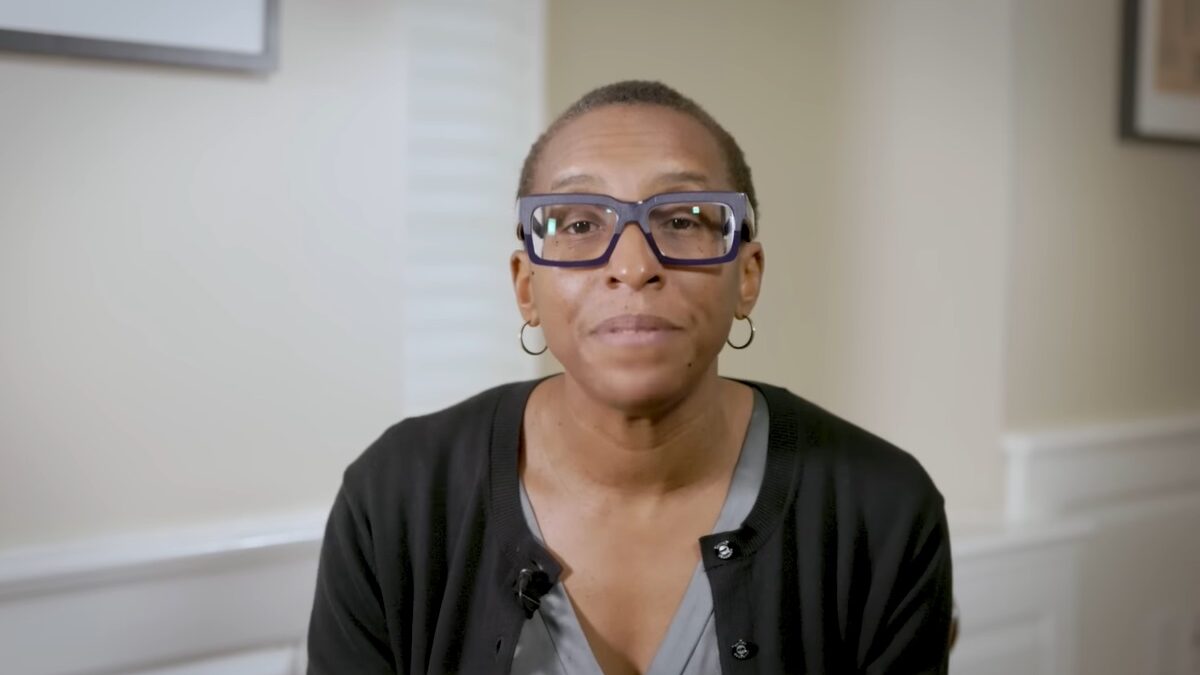
The board of Harvard unanimously voted to retain the university’s president Claudine Gay despite her public refusal to say that calls for genocide of Jewish students would contradict Harvard’s code of conduct — and subsequent allegations of past plagiarism.
“Our extensive deliberations affirm our confidence that President Gay is the right leader to help our community heal and to address the very serious societal issues we are facing,” the Harvard Corporation announced in a statement on Tuesday.
Gay kept her position despite both credible allegations of plagiarism and an abysmal performance alongside other university presidents before the House Education and the Workforce Committee. On Capitol Hill last week, Gay along with the presidents of the Massachusetts Institute of Technology and the University of Pennsylvania refused to testify that calls for Jewish genocide violate student codes of conduct — despite their schools’ histories of punishing students for conservative speech.
“We embrace a commitment to free expression even of views that are objectionable, offensive, hateful,” Gay said. “It’s when that speech crosses into conduct that violates our policies against bullying, harassment, intimidation.”
Gay’s peers offered lawmakers similar answers when it came to confronting students who called for the genocide of Jews at their respective schools. University of Pennsylvania President M. Elizabeth Magill resigned from her role on Saturday after donors responded to her disastrous testimony by pulling contributions. Ross Stevens, a hedge fund manager who graduated from the University of Pennsylvania’s Wharton Business School, threatened to withdraw a $100 million donation from his alma mater — and he was only one donor to threaten to pull funding.
Investor and Harvard alumnus Bill Ackman claimed that Gay’s poor performance had cost Harvard more than a billion dollars. But somehow Gay survived both poor reactions from donors and allegations of plagiarism, a chief sin in academia — and it was likely not a coincidence.
Gay is the first black woman to run the university that is one of the nation’s oldest and most prestigious institutions in higher education.
“She assumed leadership with high expectations, but her tenure, which began this summer, has been mired in scandal,” Chris Rufo reported Monday in City Journal. “As dean and then as president, Gay has been accused of bullying colleagues, suppressing free speech, overseeing a racist admissions program, and, following the Hamas terror campaign against Israel, failing to stand up to rampant anti-Semitism on campus.” She landed the top job at Harvard despite having only authored 11 peer-reviewed articles, four of which have now come under allegations of plagiarism.
Gay, however, is among one of the most protected classes according to the left’s hierarchy of victimhood. Firing not just a woman but a black woman would be blasphemous against the religion of identity politics.
“A white male would probably already be gone,” observed Carol Swain, a retired professor from Vanderbilt and Princeton whose work was apparently plagiarized by Gay.
Swain, who is black, told Fox News that “obviously” Harvard “did not have the courage to fire its first black president.”
The New York Post reported Monday night that Harvard University even threatened the paper months ago over the Post’s own probe into Gay’s allegations of plagiarism. Yet, as dean, Gay reportedly forced “dozens” of students to leave campus over violations of academic integrity codes.
So-called diversity, equity, and inclusion (DEI) initiatives such as the programs endorsed by Gay, however, have begun to replace merit-based standards in academia, government, and business, with physical characteristics becoming a factor in employment eligibility. The vice president and a Supreme Court justice were both explicitly chosen based on their sex and skin color.
In the Soviet Union, residents needed a party card to guarantee their employment and other benefits unavailable to the rest of the country. In America today, special perks are now afforded to those who meet the criteria of preferred classes, from race to sexual orientation.
DEI is welfare for idiots who are unemployable in the absence of identity politics. In the Soviet Union, the party card was a guarantee of employment and perks unavailable to the unwashed masses. In America in 2023, identity politics serves the same purpose. With the right skin…
Tristan Justice is the western correspondent for The Federalist and the author of Social Justice Redux, a conservative newsletter on culture, health, and wellness. He has also written for The Washington Examiner and The Daily Signal. His work has also been featured in Real Clear Politics and Fox News. Tristan graduated from George Washington University where he majored in political science and minored in journalism. Follow him on Twitter at @JusticeTristan or contact him at Tristan@thefederalist.com. Sign up for Tristan’s email newsletter here.
Since its CEO hailed DEI (diversity, equity, and inclusion) initiatives and a backlash for targeting kids with LGBTQ Pride messaging, Target’s stock price hit its lowest level since the 2020 pandemic lockdowns.
Shares hit a low of $133.42 on Wednesday in early trading and has dropped for eight consecutive sessions, its longest losing streak since November 2018, the New York Post reported.
Its market capitalization has seen about a $12.7 billion drop to $61.6 billion Wednesday since CEO Brian Cornell hailed DEI as having been a boon to business.
“When we think about purpose at Target, it’s really about helping all the families, and that ‘all’ word is really important,” Cornell told Fortune’s “Leadership Next” podcast this month. “Most of America shops at Target, so we want to do the right thing to support families across the country.’
“I think those are just good business decisions, and it’s the right thing for society, and it’s the great thing for our brand.”
Cornell hailed DEI initiatives has being a moneymaker.
“The things we’ve done from a DE&I standpoint, it’s adding value,” he said. “It’s helping us drive sales, it’s building greater engagement with both our teams and our guests, and those are just the right things for our business today.”
But now it has led to backlash, boiling before June’s Pride Month for the LGBTQIA+ community. Calls for Target boycotts on Twitter have been going on since mid-March, condemning pride messaging and LGBTQ clothing for children, and even babies, TheStreet reported.
Target closed at $160.96 on March 17 (topping at $162.43 at 11 a.m. ET that day) since Cornell’s remarks and has only closed lower since, including $133.80 on Tuesday.
Notably, Target’s Twitter account activity has been virtually nonexistent since October, just days after CEO Elon Musk took over — a sign it might be engaging in its own political boycott. The Target boycott has also rejected “tuck-friendly” clothing and merchandise from a vendor who sells items with satanic messaging, The Washington Post reported.
Also, new song called “Boycott Target” by Forgiato Blow and Jimmy Levy surged Monday to the No. 1 spot in the iTunes hip hop chart, increasing the surge against Target in a campaign similar to the one waged against Bud Light.
“Attention all shoppers, there’s a clean up on every aisle,” Blow raps in the opening line. “Target is targeting your kids.”
Bud Light infamously used Dylan Mulvaney, a pro-President Joe Biden transgender social media influencer, to help sell its beer in April, leading to a backlash that has seen a campaign rise against the brewer. Anheuser-Busch’s share price has fallen around $13.63 since it closed at $66.57 on March 31, just a day before Mulvaney appeared on Twitter to brag about the personalized Bud Light cans and partnership. The share price dipped to $52.94 on Wednesday, or more than 20% loss of market capitalization to $91.7 billion.
It is clear that state-sponsored SEL violates the U.S. Constitution in its attempt to infuse the religious science of ‘right human relations’ into education while cloaking it in secular language.
Social-emotional learning will soon become spiritual-ethical learning, and the public school systems will decide whose spiritual and ethical beliefs to teach.
For families that care about raising their children with the moral and religious values of their own faith tradition, questions about which spiritual and ethical teachings should be taught prompt even more speculation about whether so-called social-emotional learning (SEL) should be taught in public education at all.
As the theory adopts spiritual and ethical dimensions, it will amount to state-sanctioned religion.
What Is SEL, and How Has It Changed?
Social-emotional learning (SEL) is a mental-health framework that has woven itself into the very fabric of our education system. Standards, assessments, curricula, and even college and career readiness standards have been altered to teach, measure, and track students’ adoption of SEL’s five core competencies — put forth by its standard-bearer, the Collaborative for Academic Social Emotional Learning (CASEL).
Since its birth in 1994 at the Fetzer Institute and up until 2020, CASEL’s definition of social-emotional learning and its competencies have relatively stayed the same. It described SEL as “the process through which children acquire the skills to recognize and manage emotions, develop caring and concern for others, make responsible decisions, establish positive relationships, and handle challenging situations effectively.”
In 2020, amid the chaos of the global pandemic and racial riots, CASEL quietly updated that definition and its five core competencies. Its new definition of Transformative SEL and adjusted competencies reflect the view that so-called social and emotional learning needs to be taught through a racial and “equity” lens.
SEL lessons and the subjects addressed through them act as both a springboard and smokescreen for activist teachers to have discussions about race, sex, and class that aim to create a critical consciousness in children. Once they are led to believe the systems of society have been set up to oppress specific groups of people, students can be coached to become social-justice activists who show their empathy and compassion by tearing down the systems of society in order to build ones that are more “equitable.”
In this vision, “equitable” means equal outcomes through the redistribution of resources, not equal opportunity under the law. The whole purpose of social-emotional learning has therefore been changed to explicitly “address issues such as power, privilege, prejudice, discrimination, social justice, empowerment, and self-determination” with the goal of developing “justice-oriented, global citizens.”
Spirituality Through SEL
As if this departure from its original purpose were not destructive enough, social-emotional learning is undergoing another revision — one that will seek to address the spiritual needs of students as a part of the Whole School, Whole Community, Whole Child (WSCC) model. Created by the Centers for Disease Control and Prevention (CDC) and the Association for Supervision and Curriculum Development (ASCD), WSCC claims to create a comprehensive school health approach by fostering collaboration among the public health and education sectors through the integration and alignment of their services, far beyond hearing and vision screenings.
These public-private partnerships will take other medical and mental health services that are generally rendered out of school and facilitated by parents and caregivers and instead allow them to be offered as aid provided by the school so the needs of the “whole child” can be met. Spirituality will soon be seen as one of those needs.
🧵The CDC expands into education via the WSCC model of Community/Healthy Schools. They want children accessing psycho-social-emotional, medical, sexual, reproductive, dental, and eye services at school. They are collecting data, expanding Medicaid, and removing parental consent. pic.twitter.com/mDaXv5Nd4U
Recently, there has been an influx of SEL programs in the market that incorporate spirituality into their lessons. The Fetzer Institute, along with Rockefeller Philanthropy Advisors and Dr. Lisa Miller from Columbia’s Teachers College, launched the Collaborative for Spirituality in Education. Fetzer’s support of research on the spiritual aspects of childhood development led to the social-emotional learning program, “What Makes Me: Core Capacities for Living and Learning.”
Released in collaboration with UNICEF and the Learning for Well-being Foundation — a “Whole Child Partner” committed to advancing the WSCC model worldwide — it addresses nine core capacities that are believed to protect and improve the lives of children based on the U.N.’s Convention on the Rights of the Child (UNCRC).
Both children’s ‘evolving capacities’ and ‘children’s spiritual well-being’ are key parts of achieving multiple children’s rights, as outlined in the UNCRC. The evolving capacities of the child are mentioned in both Article 5 and Article 14.1 in regard to children being able to exercise their own rights (Article 5), and their freedom of thought, conscience and religion (Article 14.1). Moreover, Articles 17, 23.3, 27 and 32 … recognize spiritual well-being as a goal of these rights alongside physical, mental and moral well-being, among others.
“What Makes Me” seeks to teach spirituality through SEL as “a more active and engaged process in which some persons choose to shape and create a way of knowing and living that may or may not draw on religion” and as something that involves the conscious choice to explore life’s “big questions.”
The UNCRC also states that children have sexual rights from birth and should be able to learn about sexual behaviors as young as age 5 through Comprehensive Sexuality Education, including the idea that sex is not binary or immutable. One must wonder if the “spirituality” they intend to impart to children as a fundamental “right” is a wide acceptance of sexual variance and the offering of an alternative belief system that differs from their familial, cultural, and religious beliefs.
“What Makes Me” is not the only SEL program incorporating spirituality that Fetzer invests in. It recently pledged $1 million to the QUESTion Project, started by mentalist and owner of The Open Future Institute, Gerard Senehi. It asks students questions such as: “Who am I?” “What is my purpose?” “What does a good life look like?” If administered in a public school using taxpayer money, these questions violate the separation of church and state and cross the line into the government using education to institute an unconstitutional state-sanctioned religion. SEL programs such as these meet the federal government’s definition of a religion, which is a “comprehensive belief system that addresses the fundamental questions of human existence, such as the meaning of life and death, man’s role in the universe, and the nature of good and evil, and that gives rise to duties of conscience.”
The First Amendment commands that the government can “make no law respecting an establishment of religion, or prohibiting the free exercise thereof.”
Considering the esoteric and mystical religious roots of social-emotional learning and CASEL through the Fetzer Institute, and its broadening into explicitly teaching “spirituality,” it is clear that state-sponsored SEL violates the U.S. Constitution in its attempt to infuse the religious science of “right human relations” into education while cloaking it in secular language.
The role and responsibility of molding and shaping a child’s moral character does not belong in public classrooms backed by organizations with political or societal agendas.
It should remain in the loving arms of the family, where it has been since the dawn of time.
Lisa Logan is the host of the YouTube Channel Parents of Patriots and author of the Substack Education Manifesto. As a wife, mother and patriot, she has made it her mission to expose the sinister agenda behind social-emotional learning programs to save our children and the future of our country.
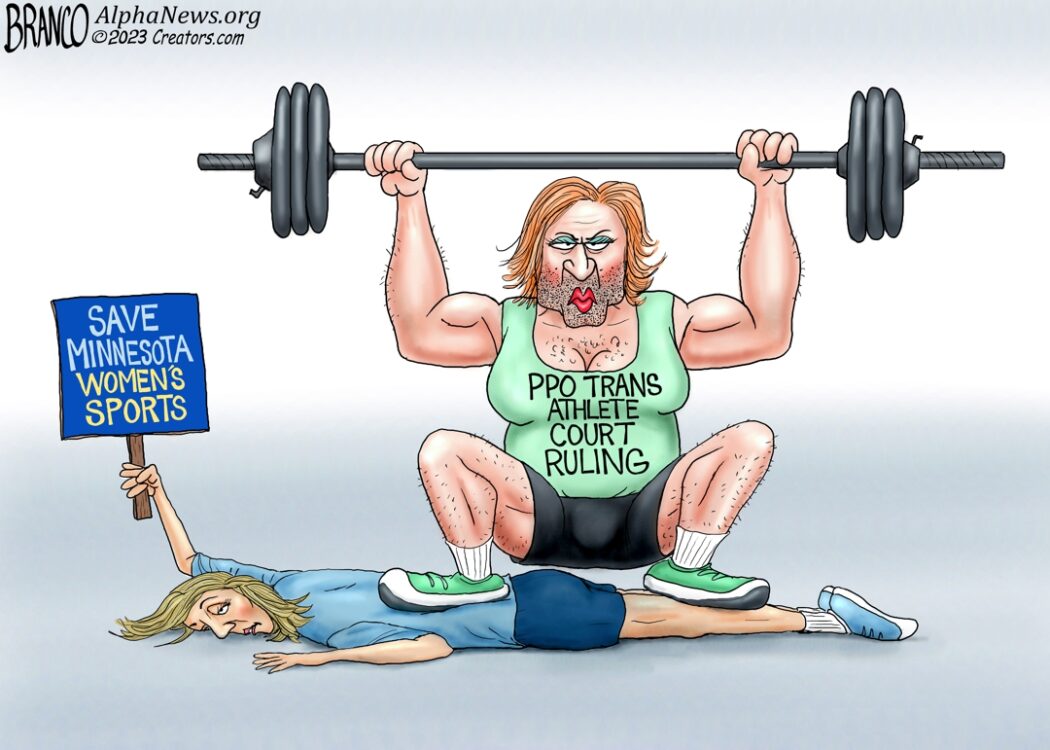
A.F. Branco has taken his two greatest passions, (art and politics) and translated them into cartoons that have been popular all over the country, in various news outlets including NewsMax, Fox News, MSNBC, CBS, ABC, and “The Washington Post.” He has been recognized by such personalities as Rep. Devin Nunes, Dinesh D’Souza, James Woods, Chris Salcedo, Sarah Palin, Larry Elder, Lars Larson, Rush Limbaugh, and President Donald Trump.
Little more than a decade ago, DEI was just another arcane acronym, a clustering of three ideas, each to be weighed and evaluated against other societal values. The terms diversity, equity, and inclusion weren’t yet being used in the singular, as one all-inclusive, non-negotiable moral imperative. Nor had they coalesced into a bureaucratic juggernaut running roughshod over every aspect of national life.
They are now.
Seemingly in unison, and with almost no debate, nearly every major American institution — including federal, state, and local governments, universities and public schools, hospitals, insurance, media and technology companies, and major retail brands — has agreed that the DEI infrastructure is essential to the nation’s proper functioning.
From Amazon to Walmart, most major corporations have created and staffed DEI offices within their human resources bureaucracy. So have sanitation departments, police departments, physics departments, and the departments of agriculture, commerce, defense, education, and energy. Organizations that once argued against DEI now feel compelled to institute DEI training and hire DEI officers. So have organizations that are already richly diverse, such as the National Basketball Association and the National Football League.
Many of these offices in turn work with a sprawling network of DEI consulting firms, training outfits, trade organizations, and accrediting associations that support their efforts.
“Five years ago, if you said ‘DEI,’ people would’ve thought you were talking about the Digital Education Initiative,” Robert Sellers, University of Michigan’s first chief diversity officer, said in 2020. “Five years ago, if you said DEI was a core value of this institution, you would have an argument.”
Diversity, equity, and inclusion is an intentionally vague term used to describe sanctioned favoritism in the name of social justice. Its Wikipedia entry indicates a lack of agreement on the definition, while Merriam-Webster.com and the Associated Press online style guide have no entry (the AP offers guidance on related terms). Yet however defined, it’s clear DEI is now much more than an academic craze or corporate affectation.
“It’s an industry in every sense of the word,” says Peter Schuck, professor emeritus of law at Yale. “My suspicion is that many of the offices don’t do what they say. But they’re hiring people, giving them titles and pretty good money. I don’t think they do nothing.”
It’s difficult to know how large the DEI Industrial Complex has become. The Bureau of Labor Statistics hasn’t assessed its size. Two decades ago, MIT professor Thomas Kochan estimated that diversity was already an $8 billion-a-year industry. Yet along with the addition of equity, inclusion, and like terms, the industry has surely grown an order of magnitude larger. Six years ago, McKinsey and Company estimated that American companies were spending $8 billion a year on diversity training alone. DEI hiring and training have only accelerated in the years since.
“In the scope and rapidity of institutional embrace,” writes Marti Gurri, a former CIA analyst who studies media and politics, “nothing like it has transpired since the conversion of Constantine.”
Yet in our time, no Roman Emperor has demanded a complete cultural transformation. No law was passed mandating DEI enactment. No federal court ruling has required its implementation. There was no clarion call on the order of President Dwight D. Eisenhower’s “military industrial complex” warning. No genuine public crisis matched the scale of the response.
The sources of this transformation are both deep and fairly recent. On one level, they can be traced back to the egalitarian movements that have long shaped American history — from the nation’s founding, through the Civil War and Reconstruction to the battles for women’s suffrage, the civil rights movement, and same-sex marriage. In other ways, the rapid transformation can seem no more explicable than an eccentric fashion trend, like men of the late 18th century wearing periwigs. However, a few pivot points of recent history bent its arc in DEI’s direction.
The push for affirmative action is the most obvious influence, a program first conceived during the Reconstruction era but then abandoned for nearly a century. Although triumphs for social justice, the Civil Rights Act and Voting Rights acts of the late 1950s and 1960s didn’t stop discrimination; the country would need to take more affirmative steps toward assisting minority groups and achieving more equitable outcomes, proponents argued. A controversial policy from the start (with the Supreme Court expected to curb its use in college admissions this term), affirmative action was further complicated by immigration reforms that allowed for more non-European immigrants, setting off a seismic demographic shift that continues to reverberate.
The diversity movement of the early 1990s was in part an attempt to capitalize on the new multicultural reality. Stressing individual and institutional benefits rather than moral failings, early corporate diversity training programs hewed to traditional values of equality and meritocracy. Creating a diverse workplace, R. Roosevelt Thomas wrote in the Harvard Business Review, in 1990, “should always be a question of pure competence and character unmuddied by birth.”
But in other ways, the recent explosion of DEI initiatives reflects shortcomings of earlier efforts, as suggested by the headline of a 2016 article in the Harvard Business Review, “Why Diversity Fails.” Even as high-achieving first- and second-generation immigrants have thrived in certain industries, particularly STEM fields, people of color remain scarce in senior institutional positions. There is also the deeper issue of what many in the post-George Floyd era have taken to calling systemic or structural racism, citing major disparities for black Americans in education, health care, homeownership, arrests, incarceration, and household wealth.
More recently, a spate of widely publicized police killings of unarmed African Americans has galvanized a growing belief, especially among progressives and especially since Donald Trump’s election, that America is an irredeemably racist nation. In 2020, in the wake of the Floyd murder and in advance of a fraught election, a moral panic set in. Having increased their ranks, social justice entrepreneurs and bureaucrats were poised to implement an ideological agenda and compound their institutional power.
Although no hard numbers exist on the exact size of the industry, the “DEIfication” of America is clear. From Rochester, New York, to San Diego, California, cash-strapped municipalities have found the funds to staff DEI offices. Startups and small companies that once relied on their own employees to promote an inclusive culture now feel compelled to hire diversity consultants and sensitivity trainers to set them straight.
At Ohio State University, for example, the average DEI staff salary is $78,000, according to public information gathered by economist Mark J. Perry of the American Enterprise Institute — about $103,000 with fringe benefits. Not to be outdone by its Big Ten conference rival, the University of Michigan pays its diversity officers $94,000 on average — about $124,000 with benefits. Until he retired from the position last summer, Michigan’s chief diversity officer, Robert Sellers, was paid over $431,000 a year. His wife, Tabbye Chavous, now has the job, at the vice provost rank and a salary of $380,000.
For smaller organizations that cannot afford a full-time equity officer, there are other options for shoring up social justice bona fides — namely, working with any of the hundreds of DEI consulting agencies that have risen like mushrooms after a night’s rain, most of them led by “BIPOC” millennials. With some firms, the social justice goals are unmistakable. The Racial Equity Institute is “committed to the work of anti-racist transformation” and challenging “patterns of power” on behalf of big-name clients like the Harvard Business School, Ben & Jerry’s, and the American Civil Liberties Union. With others, the appeal has less to do with social change than exploring marketing opportunities and creating a “with-it” company culture, where progressive politics complement the office foosball tables and kombucha on tap.
“Diversity wins!” declares the management consultancy McKinsey & Company. Certainly diversity officers have been winning, although opposition is building in Florida and elsewhere, where the wider woke agenda that includes DEI has advanced. Even minimally trained practitioners are in high demand, and signs of their influence abound.
Major tech companies like Google publicly chart the “Black+ and Latinx+” people they’ve hired and assure the public that Artificial Intelligence will prioritize the DEI political agenda. ChapGPT, an AI model that can generate remarkably cogent writing, has been designed with a liberal bias, summarily rejecting requests that don’t conform to the algorithm’s notions of “positivity, equality and inclusivity.”
In education, college students are required to take DEI-prescribed courses. Community college employees in California are evaluated on their DEI competencies. Loyalty oaths to the DEI dogma are demanded of professors. Applicants to tenure-track positions, including those in math and physics, are rejected out of hand if their mandatory DEI statements are found wanting. Increasingly, DEI administrators are involved in hiring, promotion, and course content decisions.
“Academic departments are always thinking, ‘We need to run this by Diversity,’” says Glenn Ricketts, public affairs officer for the National Association of Scholars.
The industry’s reach can also be seen in the many Orwellian examples of exclusion in the name of inclusion, of reprisals in the name of tolerance. Invariably, they feature an agitated clutch of activists browbeating administrators and executives into apologizing for an alleged trespass against an ostensibly vulnerable constituency. When that has been deemed insufficient or when senior executives have sensed a threat to their own legitimacy, they’ve offered up scapegoats on false or flimsy pretexts. That might be a decades-long New York Times reporter, a head curator at a major art museum, an adjunct art history professor, a second-year law student, or a janitor at a pricey New England college. (The list is long.)
Often enough, the inquisitions have turned into public relations debacles for major institutions. But despite the intense criticism and public chagrin, the movement marches on.
The expansion “happened gradually at first, and people didn’t recognize the tremendous growth,” Perry says. “But after George Floyd, it really accelerated. It became supercharged. And nobody wanted to criticize it because they would been seen as racists.”
Not playing along with the DEI protocols can end an academic career. For example, when Gordon Klein, a UCLA accounting lecturer, dismissed a request to grade black students more leniently in 2020, the school’s Equity, Diversity, and Inclusion office intervened to have him put on leave and banned from campus. A counter-protest soon reversed that. However, when Klein also declined to write a DEI statement explaining how his work helped “underrepresented and underserved populations,” he was denied a standard merit raise, despite excellent teaching evaluations. (He is suing for defamation and other alleged harms.)
Scores of professors and students have also been subject to capricious, secretive, and career-destroying investigations by Title IX officers, who work hand-in-glove with DEI administrators, focusing on gender discrimination and sexual harassment. As writer and former Northwestern University film professor Laura Kipnis recounts in “Unwanted Advances,” individuals can be brought up on charges without any semblance of due process, as she was, simply for “wrongthink” — that is, for having expressed thoughts that someone found objectionable.
With activist administrators assuming the role of grand inquisitors, “the traditional ideal of the university — as a refuge for complexity, a setting for free exchange of ideas — is getting buried under an avalanche of platitudes and fear,” she writes. And it would appear that students and professors would have it no other way. By and large, they want more bureaucratic intervention and regulations, not less.
As more institutions create DEI offices and hire ever more managers to run them, the enterprise inevitably becomes self-justifying. According to Parkinson’s Law, bureaucracy needs to create more work, however unnecessary or unproductive, to keep growing. Growth itself becomes the overriding imperative. The DEI movement needs the pretext of inequities, real or contrived, to maintain and expand its bureaucratic presence. As Malcolm Kyeyume, a Swedish commentator and self-described Marxist, writes: “Managerialism requires intermediation and intermediation requires a justifying ideology.”
Ten years ago, Johns Hopkins University political scientist Benjamin Ginsberg found that the ratio of administrators to students had doubled since 1975. With the expansion of DEI, there are more administrators than ever, most of whom have no academic background. On average, according to a Heritage Foundation study, major universities across the country currently employ 45 “diversicrats,” as Perry calls them. With few exceptions, they outnumber the faculty in history departments, often two or three to one.
At Michigan, Perry wasn’t able to find anyone with the words “diversity,” “equity,” or “inclusion” in his job title until 2004; and for the next decade, such positions generally remained centralized at the provost level, working for the university as a whole. But in 2016, Michigan president Mark Schlissel announced that the university would invest $85 million in DEI programs. Soon after, equity offices began to “metastasize like a cancer,” Perry says, across every college, department, and division, from the college of pharmacy to the school’s botanical garden and arboretum, where a full-time DEI manager is now “institutionalizing co-liberatory futures.” All the while, black enrollment at Michigan has dropped by nearly 50 percent since 1996.
Despite the titles and the handsome salaries, most DEI administrative positions are support staff jobs, not teaching or research positions. In contrast with the provisions of Title IX, DEI is not mandated by law; it is entirely optional. DEI officers nevertheless exert enormous influence, in part because so few people oppose them. The thinking seems to be that if you’re against the expanding and intrusive diversity, equity, and inclusion agenda, you must be for the opposite — discrimination, inequality, and exclusion.
“By telling themselves that they’re making the world a better place, they get to throw their weight around,” says Ricketts. “They have a lot of money, a lot of leverage, and a lot of people who just don’t want to butt heads with them — people who just want to go along to get along. People who are thinking, ‘If we embrace DEI, nobody can accuse us of being racist or whatever.’ They’re trying to cover their backsides.”
Some organizations, it seems, are merely trying to keep up with cultural trends.
Consider Tucson, Arizona, where diversity is not a buzzy talking point but an everyday reality. With a population that is 44 percent Hispanic, 43 percent white, and only 4.6 percent black, the city has had no major racial incidents in decades. Yet like hundreds of others communities, Tucson suddenly decided in direct response to the Floyd murder 1,600 miles away that it needed an office of equity.
To many observers, it seemed that the city was just “getting jiggy with it,” pretending to solve a problem that didn’t exist. After a two-year search, it hired Laurice Walker, the youngest chief equity officer in the country, at age 28, with a salary of $145,000 — nearly three and a half times what Tucson’s mayor, Regina Romero, earns.
Not that the mayor is complaining. “I think this position is about putting an equity lens into all that we do,” Romero said in May, by which she means — well, nobody is quite sure what “equity” means, particularly with respect to federal legislation clearly prohibiting positive and negative discrimination alike.
But trying to get out in front of the DEI train can also result in getting run over by it.
When the city council of Asheville, North Carolina, hired Kimberlee Archie as its first equity and inclusion manager, its members probably didn’t anticipate being accused of having a “white supremacy culture.” After all, city manager Debra Campbell is black, as are three of the seven women making up the city council. The council had cut police funding and unanimously approved a reparations resolution.
Archie nevertheless complained that her colleagues still weren’t doing enough to advance racial equity. “What I describe it as is kind of like the bobblehead effect,” she said in 2020. “We’d be in meetings … and people’s heads are nodding as if they are in agreement. However, their actions didn’t back that up.”
The drama in western North Carolina illustrates a dilemma that organizations face going forward. They can pursue an aggressive political agenda in which white supremacy is considered the country’s defining ethos (per The New York Times’ “1619 Project“) and present discrimination as the only remedy to past discrimination (see Ibram X. Kendi). Or they take the path of least resistance, paying rhetorical tribute to DEI enforcers as the “bobbleheads” that Archie disparages but doing little more than that. After all, they still have universities, businesses, and sanitation departments to run, alumni and investors to satisfy, students to teach, research to pursue, roads to be paved, sewage to be treated, costs to be minimized, and profits to be maximized.
Perhaps, too, senior administrators and executives are beginning to realize that, despite the moral panic of 2020, the most culturally diverse country in the world might not be irredeemably racist, even if it’s no longer acceptable to say so. The United States twice elected an African American man named Barack Hussein Obama as president. His first attorney general was a black man, who would be replaced by a black woman. His vice president would pick a woman of mixed race as his running mate. The mayors of 12 of the 20 largest U.S. cities are black, including the four largest cities.
Likewise, many of the people whom Americans most admire — artists, athletes, musicians, scientists, writers — are black. Lately, most winners of MacArthur Foundation “genius” grants are people of color. Gay marriage is legal, and enjoys wide public support, even among conservatives. The disabled, neurodivergent, and gender-divergent are applauded for their courage and resilience. And nonwhite groups, particularly Asians, Latinos, and African immigrants, have been remarkably upwardly mobile (often without official favoritism).
Clearly, troubling disparities persist for African Americans. What’s much less clear is that racism, systemic or not, remains the principal cause of these disparities or that a caste of equity commissars will reverse them. And now, it would seem that narrowing these disparities runs counter to their self-interest.
“I don’t want to deny that there’s genuine goodwill on the part of some of these programs,” says Prof. Schuck, stressing that he hasn’t examined their inner workings. “But some of these conflicts are not capable of being solved by these gestures. They have to justify their own jobs, their own budgets, however. And that creates the potential for a lot of mischief. They end up trafficking in controversy and righteousness, which produces the deformities we’ve been seeing in policies and conduct.”
Still, to hear DEI officers, it’s they who are beleaguered and overwhelmed. Yes, they have important-sounding jobs and rather vague responsibilities. They are accountable to nobody, really. Rather than fighting “the man,” they now are the man, or at least the gender-neutral term for man in this context. But this also means that they are starting to catch flak, particularly as the evidence mounts that the institutions they advise and admonish aren’t actually becoming more fair, open, and welcoming. They’re not even becoming more ethnically diverse.
Like other DEI advocates, the National Association of Diversity Officers in Higher Education has declined to answer questions for this article. Its officers are too busy traveling to conferences to do so, a spokeswoman said.
But at a recent association meeting, Anneliese Singh of Tulane University invoked Rosa Parks’ refusal to take a back seat to discrimination. Although Parks was a housekeeper and diversicrats have comfortable university sinecures, their struggles are analogously distressing, Singh suggested. The latter, too, are on the “front lines” in a harrowing war. However, she said, her colleagues needed to remember what mattered most: Looking out for themselves.
“It is not self-indulgence,” she said, now quoting the feminist and civil rights activist Audre Lord. “It is self-preservation. And that is an act of political warfare.”
For the moment, it’s a war Singh and her DEI colleagues are clearly winning.
This article was originally published by RealClearInvestigations.
The Pentagon’s investigation into the U.S. military in 2021 found about 100 individuals engaged in extremist activities out of a force of 2 million. It appears investigators were looking in the wrong place. The search for extremists might have yielded better results had they examined the Department of Defense Education Activity (DODEA), the government agency that administers K-12 education to the children of military personnel.
The Claremont Institute’s recently released report“Grooming Future Revolutionaries” describes shocking indoctrination taking place at overseas schools. It is a must-read, especially for military parents of the nearly 70,000 children in these schools.
I am a military spouse and the mother of a former DODEA student. The particular teacher training that was the focus of Claremont’s report is the reason, in part, why I lost all trust in the system.
In May 2021, I saw that DODEA would be holding an “Equity and Access Summit” for teachers and administrators. Knowing that “equity” means different things to different people, I wanted to get a sense of what it meant at DODEA. When I managed to gain access to the recordings, I was absolutely floored by what I saw and heard.
As the Claremont report shows, the summit featured hours of teacher training steeped in critical race and gender identity theories.
Claremont released a video of summit clips in which a principal talks about a student who felt like he’d done something wrong because he’s a “young, white male.” The teacher said she didn’t know what to tell him — but she seemed pleased with the breakthrough. Perhaps she was just following the lead of DODEA’s diversity, equity, and inclusion (DEI) chief Kelisa Wing, who is currently under investigation by DOD for a history of disparaging comments toward white people.
Video Evidence of Teachers Pushing CRT
The report also highlights literature teacher Gregory DeJardin’s presentation called “Combating 1- Sided Narratives (Decolonize the Curriculum).” DeJardin insists teachers become social activists and interviewed several students in his class at Vicenza High School in Italy about their difficulties with “majority culture.” It was painfully apparent in their answers that they were parroting his dogma, as one student said: “[School] is getting better about being more diverse and not taking a very normative perspective but there are definitely issues and I feel like it is still incredibly skewed to the white, male, heterosexual and Protestant gaze.”
Betty Roberts, an educator at Robinson Barracks Elementary School in Germany, talked about critical literacy. She wants her students to look deeply into textbook versions of events to find hidden biases. She asks her students questions like: “Is the American Revolution still being fought today?” She presses further and asks if the American Revolution was just a “transition from one group of rich white men to another group of rich white men.” Roberts goes on to express her gratefulness to the teachers’ union for its training on white fragility because she recognized her need for cultural humility.
Normalizing Transgenderism
Aside from the relentless instruction on anti-racism and white privilege, a clear effort was underway to normalize transgender identities and the notion of a gender spectrum. Genevieve Chavez and Lindsey Bagnaschi, presenters of “Ally 101 — Creating an Inclusive Classroom for LGBTQ+ Students,” talked about gender transitions they have facilitated for students at their schools in Spain and Germany, respectively — sometimes without parental knowledge or consent.
And many LGBT educators apparently belong to a system-wide resource-sharing group on Schoology curated by a DODEA educator. Chavez recommends resources from the group such as “Teaching with Mx. T” and “Teaching Outside the Binary.” But there is another similar group that’s passcode protected — and it’s for students. Teachers can add students to their own LGBT chat rooms in Schoology, and parents are not invited.
If teachers run out of content from people like “Mx. T,” they can use Discovery Education, which many recommended during the summit. One of the programs is “Speak Truth to Power.” This program offers lesson plans that are “flexible, standards-aligned digital resources, designed to educate, engage and inspire the next generation of human rights defenders.” Sounds good, doesn’t it — until you see that transgender activist Jazz Jennings is one of those human rights defenders. But Discovery Education is password-protected, with one portal for students and another for teachers, so we really have no idea what’s being promoted to our children via third-party content creators who can update information in real-time.
Congress Needs to Do More
Our children deserve to learn in an environment free from divisive ideologies, and thankfully, DODEA’s activism has not gone unnoticed by Congress. Rep. Vicky Hartzler, R-Mo., wrote a letter to DOD asking why teachers are being trained to secretly “transition” children at overseas schools. After a year, she still had not received an answer. She also introduced H.R. 4764, the No CRT for our Military Kids Act.
In the Senate, Marsha Blackburn, R-Tenn., offered an amendment to the National Defense Authorization Act (NDAA) of 2023 to prevent DODEA schools from hiding important medical information from parents — but it was voted down.
Rep. Elise Stefanik, R-N.Y., introduced a Servicemember Parents Bill of Rights amendment to the NDAA to provide for more transparency and accountability in DODEA schools. It was adopted in committee with bipartisan support by a vote of 39-19 and is in the House-passed NDAA.
But Congress needs to do much more to ensure the safety of our military children and also that of any DODEA educator who is being intimidated into conformity. It will likely take years to sort out the mess at DODEA, so in the meantime, Congress could consider extending the military’s Non-DOD Schools Program to all students instead of only to those who are not in close proximity to a DODEA school.
Whatever the case, it looks like an extremist stand down is in order for DODEA, and it just might net more than the .005 percent found among our uniformed force.
Amy Haywood is a former senior legislative assistant for a U.S. House representative and an educator with years of experience working in a research-based program to help third culture kids adjust to life overseas. She holds a master’s degree in national security and strategic studies from the U.S. Naval War College.
The Connecticut Democratic Party has officially dumped both Thomas Jefferson’s and Andrew Jackson’s names from its annual fundraising dinner due to their ties to slavery. The move was made in response to demands from the state’s chapter of the NAACP.
Each fall, the state party holds a Jefferson-Jackson-Bailey dinner to raise money for the party. Similar Jefferson-Jackson dinners are held by Democrats around the country (the Bailey name is peculiar to Connecticut).
But now the first two names are gone, voted out unanimously by the party’s state board in just a few minutes with almost no discussion, according to the Hartford Courant.
“As members of the Democratic Party, we are proud of our history as the party of inclusion. Democrats have led the way on civil rights, LGBT equality and equal rights for women,”the board’s resolution declared. “It is only fitting that the name of the party’s most visible annual event reflects our dedication to diversity and forward-looking vision.”
A replacement name will be chosen later.
Jefferson is well-known to most Americans for writing the Declaration of Independence, serving as America’s third president, championing religious freedom, and being one of the nation’s leading intellectuals in its early years. He was also a key figure in the genesis of the Democratic-Republican party, which evolved into the modern Democratic Party, so throughout history Democrats have been happy to claim him as their own.
Now, though, Democrats are souring on Jefferson due to his position as a slaveholder, as well as the belief that he fathered children with slave Sally Hemmings.
Andrew Jackson is even more vilified today. While his presidency was a key point in the rise of the “common man” as a major force in American politics, Jackson was also a slaveholder, and his policies toward American Indians have been characterized by some as genocidal.
Calls to change the name grew after the massacre of black churchgoers in Charleston, South Carolina last month.
Party chairman Nick Balletto said he hoped the rest of the country would join Connecticut in rejecting Jefferson’s legacy.
“I wasn’t looking to be a trailblazer or set off a trend that’s going to affect the rest of the country,”Balletto told the Connecticut Post. “Hopefully, they’ll follow suit when they see it’s the right thing to do.” Balletto added that the name simply had to go, because some people were offended by it. “When something offends someone, it’s beyond being politically correct,” Balletto said. “It just causes a need for change.” “You can’t change history, but you don’t have to honor it.”
This report, by Blake Neff, was cross-posted by arrangement with the Daily Caller News Foundation.
American Family Association
American Family Association (AFA), a non-profit 501(c)(3) organization, was founded in 1977 by Donald E. Wildmon, who was the pastor of First United Methodist Church in Southaven, Mississippi, at the time. Since 1977, AFA has been on the frontlines of Ame
NEWSMAX
News, Opinion, Interviews, Research and discussion
Opinion
American Family Association
American Family Association (AFA), a non-profit 501(c)(3) organization, was founded in 1977 by Donald E. Wildmon, who was the pastor of First United Methodist Church in Southaven, Mississippi, at the time. Since 1977, AFA has been on the frontlines of Ame
American Family Association
American Family Association (AFA), a non-profit 501(c)(3) organization, was founded in 1977 by Donald E. Wildmon, who was the pastor of First United Methodist Church in Southaven, Mississippi, at the time. Since 1977, AFA has been on the frontlines of Ame
You Version
Bible Translations, Devotional Tools and Plans, BLOG, free mobile application; notes and more
Political
American Family Association
American Family Association (AFA), a non-profit 501(c)(3) organization, was founded in 1977 by Donald E. Wildmon, who was the pastor of First United Methodist Church in Southaven, Mississippi, at the time. Since 1977, AFA has been on the frontlines of Ame
NEWSMAX
News, Opinion, Interviews, Research and discussion
Spiritual
American Family Association
American Family Association (AFA), a non-profit 501(c)(3) organization, was founded in 1977 by Donald E. Wildmon, who was the pastor of First United Methodist Church in Southaven, Mississippi, at the time. Since 1977, AFA has been on the frontlines of Ame
Bible Gateway
The Bible Gateway is a tool for reading and researching scripture online — all in the language or translation of your choice! It provides advanced searching capabilities, which allow readers to find and compare particular passages in scripture based on





















 What Did You Say?
You must be logged in to post a comment.