House Republicans announced Thursday they have reached agreement on a Plan B to avert a government shutdown by Friday midnight, The Hill reported.
“We have reached an agreement and details will be forthcoming,” House Appropriations Committee Chair Tom Cole, R-Okla., said after leaving House Speaker Mike Johnson’s office.
The House could vote later Thursday.
Earlier reports said Republicans were focused on a clean stopgap funding bill that stripped many of the new policy provisions in the bill that President-elect Donald Trump torpedoed on Wednesday, including a pay raise for lawmakers.
The earlier reports said that Trump’s desire for the debt ceiling to be raised would be put off in the continuing resolution with an eye toward raising the borrowing limit twice in 2025, The Hill reported.
It’s unclear if that’s where they landed.
Rep. Stephanie Bice, R-Okla., told reporters, “The plan is to put a bill on the floor that we think is a reasonable step forward,” as she also left Johnson’s office, according to The Hill.
House Speaker Mike Johnson, R-La., is taking flak from his own conference over his 11th-hour rush to secure another continuing resolution to fund the government, according to multiple reports. With the deadline of midnight Friday to pass a CR to keep the government open through March 14 and Johnson’s commitment to a 72-hour rule for lawmakers to review the legislation, one lawmaker called it a “dumpster fire” while another called it having to eat a “crap sandwich,” The Hill reported.
Worse for conservative lawmakers, included in the CR is $100.4 billion in disaster aid and another $10 billion in economic assistance for farmers, turning the short-term funding bill into an omnibus, according to sources.
“It’s a total dumpster fire. I think it’s garbage,” Rep. Eric Burlison, R-Mo., told reporters. “This is what Washington, D.C., has done. This is why I ran for Congress, to try to stop this. And sadly, this is happening again.”
Added Rep. Chip Roy, R-Texas: “We get this negotiated crap, and we’re forced to eat this crap sandwich. Why? Because freaking Christmas is right around the corner. It’s the same dang thing every year. Legislate by crisis, legislate by calendar. Not legislate because it’s the right thing to do.”
Johnson defended the add-ons at a Tuesday press conference.
“This is a small CR that we had to add things to that were out of our control. We’ve got man-made disasters,” Johnson said. “I wish it weren’t necessary. I wish we hadn’t had record hurricanes in the fall. And I wish our farmers were not in a bind so much that creditors are not able to lend to them.”
Adding to the angst is that as of Tuesday morning, text of the CR hadn’t been published, pushing the 72-hour window well into Friday. Many lawmakers were planning to leave Washington, D.C., on Thursday for Christmas recess.
“Same crap we already knew,” one House Republican told the Washington Examiner. “No text. No timeline.”
Another Republican, who was in Johnson’s closed-door conference meeting Tuesday morning, told the Examiner that despite Johnson’s pledge to give lawmakers the full 72-hour window for review, he “clearly is OK if we don’t.”
“I think that he can do better,” Burlison said of Johnson, according to The Hill. “He can communicate better. The fact that we haven’t seen the language today and we’re supposed to vote on it this week is unacceptable.”
The House Oversight Committee is planning to create a subcommittee for the newly formed Department of Government Efficiency (DOGE), the committee announced Thursday. The subcommittee is to be chaired by Rep. Marjorie Taylor Greene, R-Ga., and will work with Elon Musk and Vivek Ramaswamy to aid the pair in the incoming administration’s goal of weeding out government inefficiency and wasteful spending.
Oversight Committee Chair James Comer, R-Ky., said the subcommittee will “align with the Trump administration’s priorities to eliminate government waste, streamline the federal government’s operations and cut red tape that’s stifling jobs and increasing costs for the American people.”
Posting on X to announce her specific role, Greene wrote, “Big News. Comer to create @GOPoversight DOGE subcommittee chaired by Marjorie Taylor Greene to work with @elonmusk, @VivekGRamaswamy.”
“We’re going to work very closely with Elon Musk and Ramaswamy,” Comer added. “We’ve had initial conversations. We are serious about reducing the size of government.”
Describing their DOGE initiative in The Wall Street Journal opinion article Wednesday, Musk and Ramaswamy wrote, “DOGE will work with legal experts embedded in government agencies, aided by advanced technology, to apply these rulings to federal regulations enacted by such agencies.
“DOGE will present this list of regulations to President Trump, who can, by executive action, immediately pause the enforcement of those regulations and initiate the process for review and rescission. This would liberate individuals and businesses from illicit regulations never passed by Congress and stimulate the U.S. economy.”
In the spirit of transparency, Musk and Ramaswamy announced they will be launching a new podcast together called “DOGEcast” with plans to make public all the government cost-cutting they are considering and how such streamlining will be implemented.
House Speaker Mike Johnson, R-La., on Wednesday announced a new policy to prevent transgender women from using women’s bathrooms on the House side of Capitol Hill, Politicoreported. Rep. Nancy Mace, R-S.C., previously introduced a bill to ban transgender women from using Capitol bathrooms designated for women after Delaware Democrat Rep.-elect Sarah McBride, a transgender woman, became the first transgender person elected to Congress earlier this month.
“All single-sex facilities in the Capitol and House Office Buildings — such as restrooms, changing rooms, and locker rooms — are reserved for individuals of that biological sex,” Johnson wrote in a statement. “It is important to note that each Member office has its own private restroom, and unisex restrooms are available throughout the Capitol. Women deserve women’s only spaces.”
Johnson later told reporters that “like all House policies, it’s enforceable. And we have single-sex facilities for a reason, and women deserve women’s only spaces.”
Democrat lawmakers on Wednesday introduced a resolution to mark the Transgender Day of Remembrance that would memorialize transgender people around the world who were violently killed in the past year. In a statement Monday, McBride denounced Mace’s resolution and the controversy over bathroom usage as a distraction.
“This is a blatant attempt from far right-wing extremists to distract from the fact that they have no real solutions to what Americans are facing,” McBride said. “We should be focused on bringing down the cost of housing, health care, and childcare, not manufacturing culture wars.”
Four years ago, Democrats and their pals in corporate media began painting then-President Donald Trump and Republicans who questioned the results of the troubled 2020 election as “election deniers.” Now, Democrats are doing all they can — including breaking election law — to challenge GOP victories in Iowa and Pennsylvania despite “insurmountable” odds. Even The Washington Post, part of the left’s corporate media public-relations team, sees the writing on the wall for Sen. Bob Casey, D-Penn. The entrenched incumbent lost to Republican challenger Dave McCormick by some 24,000 votes in a swing state election that helped Republicans take back the Senate with a comfortable majority. The Associated Press and other news outlets called the race for McCormick. But Casey and his party of election integrity deniers, led by Democrat political ambulance chaser Marc Elias (Hillary Clinton’s Russian dossier peddler), refuse to concede. Instead, Casey’s campaign has sought an expensive recount, and has no compunction about grinding election law under foot to tally enough votes to hold the seat.
‘Tipping the Scales’
“Sen. Casey just refuses to accept the fact that he’s lost this election, so he is costing taxpayers well over a million dollars” for a statewide recount, Linda Kerns, 2024 Pennsylvania Election Integrity Counsel for the Republican National Committee and the Trump campaign, told The Federalist late last week on the “Simon Conway Show” in Des Moines.
If Sleepy Senator Bob Casey had put as much energy, resources, attention, & firepower into the needs of Pennsylvanians over the last 2 decades as he is putting into fighting the outcome of this election, maybe he would have gotten more votes. Congrats @DaveMcCormickPA.
The Democrat senator and his attorneys are pushing for invalid provisional and mail-in ballots not correctly signed or properly dated to be counted, contrary to a Pennsylvania court ruling. Democrats on some county boards dismissed the law and the court ruling in agreeing to accept suspect and invalid ballots.
“I think we all know that precedent by a court doesn’t matter anymore in this country,” Bucks County Commissioner Diane Ellis-Marseglia, a Democrat, said Thursday.
“People violate laws anytime they want,” she added. “So, for me, if I violate this law, it’s because I want a court to pay attention. There’s nothing more important than counting votes.” It was a troubling statement from a public official, and another in countless examples of why Democrats got their clocks cleaned in this month’s election. Voters have had more than enough of leftist-led lawlessness over the past four years.
Even the Dem-friendly Washington Post editorial board can smell the desperation. The election lawlessness, too, now seems a bridge too far for the left-leaning WaPo board.
“Democrats would surely protest if a Republican commissioner made the same statement [as Ellis-Marseglia] to justify tipping the scales for their party’s Senate nominee — and they would be right,” the editorial board wrote in a piece headlined, “Democrats thumb their nose at the rule of law in Pennsylvania.” “Elections need rules, established in advance of the voting, and those rules must be applied equally and consistently.”
The same newspaper, of course, joined a chorus of accomplice media outlets chiding swing state Republican Senate candidates, Eric Hovde in Wisconsin and Kari Lake in Arizona, for not conceding closely contested elections. The conservatives have raised election integrity questions, but neither has asked election officials and courts to break the law to reverse their opponents’ election leads.
“Four years ago, many Republicans embraced Trump’s brand of denialism when he stoked far-fetched theories to try to undo his loss of the presidency. Now, they are largely staying silent amid scattered false claims of rigged elections in downballot races — and they’re calling on Sen. Bob Casey (D) to concede that he narrowly lost in Pennsylvania,” a team of leftist Washington Post reporters concluded in the piece — published a day before the editorial — that served as a defense of Casey’s recount call and a knock-on Republicans mulling their own legal options.
In Pennsylvania the math doesn’t look good for Casey, but he’s counting on the recount and a stack of invalid votes.
“But even if Sen. Casey wins on these, there’s still not enough for him to win this election so he’s just desperately hanging on,” Kerns said.
‘The Election Deniers are the Democrats’
It’s a similar situation in Iowa’s 1st Congressional District, where Democrat Christina Bohannan’s campaign on Thursday sought a recount of the votes in an election in which incumbent Republican Rep. Mariannette Miller-Meeks won by less than 1,000 votes. The purple district saw Miller-Meeks win her first term in 2020 by a final recount tally of just six votes.
Bohannan’s path to victory appears unlikely, too, but the campaign said in a statement that a recount will ensure “that every voter is heard” and that they have “full trust in this process and will accept the results regardless of the outcome.” The Associated Press has yet to call the race.
Miller-Meeks said the vote count, as it stands, is “insurmountable” and that the districtwide recount is an unnecessary expense to taxpayers.
“In Iowa, all of the legal ballots have been counted, all of the provisional ballots and the military ballots have been counted. The counties have certified their election results, and we remain ahead. We gained votes on election night,” the congresswoman told The Federalist Friday on the “Simon Conway Show” on NewsRadio 1040 WHO in Des Moines. “So, it’s an insurmountable lead. But, yes, my concern is after the recount when we’re still ahead, which we will be, I’m very confident of that, they’re going to continue to deny the election and they may go on to do a contest and try to get ballots admitted that were illegal ballots.”
Republicans have already secured enough victories to hold the House, but Democrats are fighting tooth and nail to stave off defeat and a wider GOP majority in a handful of races yet to be called. Those include Iowa’s 1st Congressional District, two House races in California, and one each in Alaska and Ohio.
Miller-Meeks said the tables have turned in the “election denier” narrative.
“We’ve heard for four years how Republicans were a threat to democracy; they were going to overturn democracy. But really what is happening is that the election deniers, the people who are trying to thwart the rule of law, trying to thwart what a state constitution allows when it comes to elections, are the Democrats,” the Republican congresswoman said.
Beth Brelje is an elections correspondent for The Federalist. She is an award-winning investigative journalist with decades of media experience.
Matt Kittle is a senior elections correspondent for The Federalist. An award-winning investigative reporter and 30-year veteran of print, broadcast, and online journalism, Kittle previously served as the executive director of Empower Wisconsin.
Attorney General Merrick Garland—seen here returning from a break in testifying before the House Judiciary Committee on June 4—is catching heat from House Republicans. (Photo: Chip Somodevilla/Getty Images)
Attorney General Merrick Garland has been held in contempt of Congress.
The vote in favor of contempt was over Garland’s refusal to hand over audio recordings related to President Joe Biden’s interview about classified documentswith Justice Departmentspecial counsel Robert Hur.
The vote was by party line with one Republican voting against, Rep. Dave Joyce of Ohio, according to Fox News’ Chad Pergum.
House Speaker Mike Johnson, R-La., said Wednesday before the vote that the action had to be taken because Garland is refusing to comply with a “lawful subpoena.”
This week, Attorney General Merrick Garland will be held in contempt of Congress for refusing to comply with a lawful subpoena.
— Speaker Mike Johnson (@SpeakerJohnson) June 12, 2024
During a House Judiciary Committee hearing on June 4, Republicans demanded that Garland hand over the audio recordings. The Hur interviews with the president were prompted by the charge that Biden mishandled classified documents after his time as vice president.
A transcript of Hur’s discussions with Biden has already been released. However, the president has withheld the audio recording, claiming executive privilege. Republicans argue that the full audio recordings would give the public a full picture of Biden’s mental state. That’s because the special counsel recommended not prosecuting Biden because he came off in the lengthy interview as an “elderly man with a poor memory” and saidthe president’s “diminished faculties” mean he was less likely to have willfully violated the law.
Garland also refused to hand over the audio, which is what prompted Republicans in the House to move for holding him in contempt.
Two former aides to former President Donald Trump, Peter Navarro and Steve Bannon have been sentenced to jail for being held in contempt of Congress. However, former Attorney General Eric Holder, who was held in contempt of Congress while serving under President Barack Obama, did not face prosecution. Obama’s DOJ inspector general refused to prosecute Holder.
Garland has said that the Justice Department went to great lengths to cooperate with Congress on the Hur investigation, but that the request for audio constituted a larger attack on the DOJ.
“There have been a series of unprecedented and, frankly, unfounded attacks on the Justice Department,” Garland said in a press conference in May, the Associated Press reported. “This request, this effort to use contempt as a method of obtaining our sensitive law enforcement files is just the most recent.”
Republicans argued in debates on the House floor that withholding information from Congress interferes with the legislative branch’s ability to provide a check on the power of the president. Rep. Jim Comer, R-Ky., chairman of the House Oversight and AccountabilityCommittee, said on the House floor on Wednesday that Biden misled the American people about his handling of classified documents and that the president needs to be held accountable.
🚨Chairman Comer Speaks on House Floor in Support of Resolution to Hold Attorney General Garland in Contempt
"President Biden has lied to the American people about his mishandling of classified documents.
“President Biden’s Department of Justice appears to be taking every step to insulate him from the consequences—whether it’s hiding these audio recordings or attempting to give Hunter Biden a sweetheart plea deal to shield Joe Biden from facing any accountability for his role in his family’s influence-peddling schemes,” Comer said. “That is unacceptable.”
Congressional Democrats have opposed the attempt to retrieve the special counsel’s audio recording.
“This is what they want to do, because they don’t have the votes to impeach Joe Biden, right? That’s why they did Merrick Garland,” Rep. Jared Moskowitz, D-Fla., said, as reported by Fox News. “That’s why they went after [Hunter Biden]. It’s all trying to please their base because Congress doesn’t want to do what Donald Trump wants, which is to impeach Joe Biden, so they can have even scores.”
This week CNN published information from what it says is a secret recording to frame Pennsylvania Republican Rep. Scott Perry as — what else? — a racist conspiracy theorist. On Wednesday, the network published quotes from what it says was an audio recording of a closed-door meeting on antisemitism wherein Perry notes the Ku Klux Klan was “the military wing of the Democratic Party.”
“The KKK in modern times, a lot of young people think somehow it’s a right-wing organization when it is the military wing of the Democratic Party. Decidedly, unabashedly, racist and antisemitic,” Perry said.
“The KKK is not affiliated in any way with the modern Democratic Party,” CNN added in its “news” article. Perhaps CNN was so eager to absolve the Democrat Party of any relationship to the KKK, which was founded by Democrats, that the network refused to even consider the legitimacy of Perry’s comments.
The hit, based on a supposedly off-the-record meeting between staff and lawmakers, generated hostile coverage against the Republican lawmaker from the New Republic, the Daily Beast, and the Philadelphia Inquirer.
If the racist agitators from the 2017 Charlottesville protests had set up antisemitic encampments on college campuses across the country after months of preparations paid for by dark money groups on the far right, the corporate press would be publishing an avalanche of screeds indicting the Republican Party as an infiltrated vehicle of the KKK. While the media will often point to former Klan leader David Duke’s support for Donald Trump as evidence of supposed GOP racism, Richard Spencer, who organized the Charlottesville race riots, endorsed President Joe Biden in 2020.
The Democratic Party includes an increasing number of supporters of antisemitism, which the Klan also promoted more than 150 years ago. The antisemitic protests that broke out after the Oct. 7 Israeli massacre by Palestinian terrorists have featured swastika symbols, which the KKK also embraced. The pro-Palestinian demonstrators are acting like the KKK while using some of the same symbols to terrorize Jewish students and shut down college campuses.
“The KKK was founded by Democrats, but not the party,” USA Today concluded. “We rate the claim that the Democratic Party started the Civil War to preserve slavery and founded the KKK as FALSE because it is not supported by our research.”
“They came up with all these various caveats – ‘Well, you know, it wasn’t all Democrats; it was only most Democrats in the South,’” Stepman told The Federalist. “I’m thinking, if this was literally any other institution, if this was the name of a street, or if this was a statue, it would have been immediately canceled. It might have even been ripe for being torn down by a mob.”
The House Oversight hearing about Washington D.C.’s response to the current antisemitic demonstrations was canceled Wednesday morning after police cleared a protester encampment at George Washington University. More than 30 people were arrested, according to the Associated Press. More than 2,800 demonstrators have been arrested on college campuses nationwide.
Tristan Justice is the western correspondent for The Federalist and the author of Social Justice Redux, a conservative newsletter on culture, health, and wellness. He has also written for The Washington Examiner and The Daily Signal. His work has also been featured in Real Clear Politics and Fox News. Tristan graduated from George Washington University where he majored in political science and minored in journalism. Follow him on Twitter at @JusticeTristan or contact him at Tristan@thefederalist.com. Sign up for Tristan’s email newsletter here.
Former Special Counsel Robert Hur corrected House Democrats, who persisted in their assertions during a public hearing that he had “exonerated” President Joe Biden in the classified documents case.
Hur submitted a 345-page report in early February, outlining his decision against charging Biden for mishandling classified docs, but the word “exonerate” does not appear anywhere in his ruling, a fact he brought up multiple times during his hours-long testimony before the House Judiciary Committee on Tuesday.
Committee ranking member Rep. Jerry Nadler, D-N.Y., used his opening preamble to say Hur’s report “represents the complete and total exoneration of President Biden.”
“That is not what the report says,” Hur said later in the hearing. “The report is not an exoneration. That word does not appear in my report.”
Committee member Rep. Pramila Jayapal, D-Wash., also asserted that Hur’s report was a “complete exoneration” of Biden.
“I need to go back and make sure that I take note of a word that you used, exoneration. That is not a word that appears in the report. That’s not part of my task as a prosecutor,” Hur said.
Regardless, Hur’s decision not to charge Biden, exoneration or not, fueled the ire of Republican committee member Rep. Tom McClintock, R-Calif., who railed against Hur’s decision as a “glaring double standard” of justice, given former President Donald Trump is facing a federal trial for mishandling classified docs in Florida.
“The fact the only person being prosecuted for this offense happens to be the president’s political opponent makes it an unprecedented assault on our democracy. This is the worst we could expect from a banana republic,” McClintock told Hur, who is not the special counsel bringing Trump to trial. Jack Smith is.
In fact, Hur left the Justice Department last week.
Hur would not comment further on the difference between the cases, but in his report, he acknowledged Biden’s cooperation vs. Trump’s refusal to hand over classified material. That and the fact Biden is a “well-meaning, elderly man with a poor memory.”
“That’s one of the points you make, President Biden is likely to be an elderly sympathetic person with a poor memory. How does that bear on any individual’s guilt or innocence?” McClintock said. “Isn’t that a question for a judge … after guilt or innocence is determined? Here’s the problem. Donald Trump is being prosecuted for the same act that you’ve documented Joe Biden committed.”
McClintock went on, “All I have to do when I am caught taking home classified materials, ‘I’m sorry, I’m getting old, my memory isn’t so great?’ This is the doctrine that you’ve established in our laws now and it is frightening.”
Hur responded, “Congressman, my intent is certainly not to establish any sort of doctrine. I had a particular task. I had a particular set of evidence to consider and make a judgment to one particular set of evidence and that’s what I did.”
McClintock had the last word.
“The foundation of our justice system is equal justice under law. That’s what gave the law its respect and its legitimacy. … It doesn’t matter who comes before her, all are treated equally. You’ve destroyed this foundation. And the rule of law becomes a sick mockery. It becomes a weapon to wield against political rivals and a tool. And I’m desperately afraid this decision of the Department of Justice has now crossed a very bright line,” he concluded.
Speaker Mike Johnson, R-La., and House GOP leadership members say President Joe Biden’s proposed 2025 fiscal year budget “is a roadmap to accelerate America’s decline.”
Biden on Monday unveiled a $7.3 trillion spending wish list that is as much an election-year pitch to voters — one that slams Republicans and former President Donald Trump by name — as it is a policy proposal.
“The price tag of President Biden’s proposed budget is yet another glaring reminder of this Administration’s insatiable appetite for reckless spending and the Democrats’ disregard for fiscal responsibility,” Johnson, House Majority Leader Steve Scalise, R-La., Majority Whip Tom Emmer, R-Minn., and Republican Conference Chair Elise Stefanik, R-N.Y., said in a joint statement.
“Biden’s budget doesn’t just miss the mark — it is a roadmap to accelerate America’s decline.”
It has been widely reported Biden wants to raise $5.5 trillion in tax on corporations and high earners during the next decade, the 2025 budget showed. That would help cut the federal deficit and pay for new programs to assist those who make less cope with high housing and child care costs, according to The Associated Press.
“While hardworking Americans struggle with crushing inflation and mounting national debt, the President would increase their pain to spend trillions of additional taxpayer dollars to advance his left-wing agenda,” the GOP leaders said in their statement.
They added that the House Republican Conference has “taken action to steer our nation back to a path of fiscal sanity.”
“Our efforts to rein in the runaway spending spree from last year’s budget have already yielded results, lowering projected deficits by $2.6 trillion over the next decade,” they said in the statement.
“The House’s budget plan for the next fiscal year, preceding the President’s proposal, reflects the values of hardworking Americans who know that in tough economic times, fiscal discipline is non-negotiable. House Republicans understand the American people expect and deserve nothing less from their government.”
Although Biden released his proposed 2025 budget, Congress has yet to pass full funding for federal agencies for the current fiscal year. House Republicans on Thursday issued a plan that aims to balance the federal budget within a decade by cutting $14 trillion in federal spending, including green energy subsides and student loan forgiveness, while reducing taxes. The White House, though, called that plan unworkable.
The nonpartisan Congressional Budget Office (CBO), which provides independent analyses of budgetary and economic issues to support the Congressional budget process, released a Feb. 7 report that offered a budget and economic outlook for 2024 to 2034. In CBO’s projections, federal budget deficits total $20 trillion over the 2025–2034 period and federal debt held by the public reaches 116 percent of the gross domestic product (GDP).
The Republican-controlled U.S. House of Representatives on Thursday approved a bill to avert a partial government shutdown, sending the measure to the Democrat-majority Senate less than two days before funding for some federal agencies runs out.
Two-hundred and seven Democrats joined 113 Republicans in a 320-99 vote to approve the short-term stopgap measure, which would extend by one week federal funding that expires at midnight on Friday (0500 GMT on Saturday) and set a March 22 funding deadline for other government agencies.
Senate Majority Leader Chuck Schumer said he hoped his chamber would pass the bill, known as a continuing resolution on Thursday evening and forward it to President Joe Biden to sign into law.
While both chambers’ leaders agreed on the measure, there are potential stumbling blocks in the Senate, where some hardline Republicans are expected to demand amendment votes in exchange for their consent to fast-track the bill.
The stopgap, the fourth needed to keep federal agencies open in the fiscal year that began on Oct. 1, is intended to give the House and Senate time to pass 12 appropriations bills to fund the government.
About two months have passed since Republican House Speaker Mike Johnson and Schumer agreed on a $1.59 trillion discretionary spending level for the fiscal year. House and Senate leaders on Wednesday reached agreement on a slate of full-year appropriations bills to fill in the details.
Johnson, who has wielded the speaker’s gavel only since late October, once again relied on a procedural move that required substantial Democrat support to pass the CR, a tactic that could anger hardline conservatives.
In a sign of potential problems for Johnson, the measure was opposed by 97 Republicans.
Johnson had been pressured by hardline Republicans to use a shutdown as a bargaining chip to force Democrats to accept conservative policy riders, including partisan provisions to restrict the flow of migrants across the U.S.-Mexico border.
“We’re not going to do anything to actually change the border. We’re not going to do anything that’s going to actually hold the line,” said Representative Chip Roy, a prominent hardliner. “It’s just the Swamp doing what the Swamp does!” he added, using a pejorative term for Washington politics.
But Republican Representative Patrick McHenry predicted that Johnson would face no threat as a result of votes on spending legislation, unlike his predecessor Kevin McCarthy, who a small group of hardliners voted out of leadership for passing a bipartisan bill to avert a shutdown in September.
“This is the House Republicans coming to terms with reality,” said McHenry. “It’s been clear for months that this is the outcome. To get on with it is the best thing.”
Major ratings agencies say the repeated brinkmanship is taking a toll on the creditworthiness of a nation whose debt has surpassed $34 trillion.
Johnson is likely to face heightened hardline pressure after the first appropriations bills are unveiled this weekend. Hardliners say they expect the bills to show few conservative victories on spending or policy.
President Joe Biden on Monday accused House Republicans of “walking away from the threat of Russia.”
While walking gingerly in the cold from Marine One and across the White House lawn with first lady Jill Biden, Biden briefly stopped to answer a couple of reporters’ questions, as seen on C-SPAN. After saying he’d be willing to meet with House Speaker Mike Johnson, R-La., Biden then was asked whether he would “go as far as to say that Alexei Navalny’s blood is on the hands of House Republicans right now?”
Navalny, Russian President Vladimir Putin’s fiercest foe who crusaded against official corruption and staged massive anti-Kremlin protests, died in prison Friday, Russia’s prison agency said. Biden later blamed Putin for Navalny’s death and warned there could be consequences, saying he was “not surprised” but “outraged” by the opposition leader’s passing.
Conservative lawmakers have refused to support aid to Ukraine until Biden and Democrats agree to stricter border security measures to deal with the migrant crisis.
The president on Monday said the GOP is “making a big mistake” regarding Russia.
“The way they’re walking away from the threat of Russia, the way they’re walking away from NATO, the way they’re walking away from meeting our obligations, it’s just shocking. I mean, they’re wild. I’ve never seen anything like it,” Biden said.
The reporter followed up to ask whether Navalny’s death might nudge the House Republicans to take up Ukraine aid.
“I hope so, but I’m not sure anything’s going to change,” he said.
Another reporter asked whether the president was looking into imposing sanctions against Russia following Navalny’s death.
“We already have sanctions but we are considering additional sanctions, yes,” he said before turning and walking toward the White House.
The Democrat-led Senate on Tuesday passed a $95.34 billion aid package for Ukraine, Israel, Gaza, and Taiwan. A $66.3 billion bipartisan House bill to fund military aid to those countries and tighten border security was unveiled Friday.
The chairman of the House intelligence committee, Rep. Mike Turner, issued an unusual cryptic statement on Wednesday saying the committee had made available to all members of Congress information about an unspecified “serious national security threat.” But sources close to ABC News report that the threat relates to Russia’s plans to place a nuclear weapon in space.
According to ABC: “This is not to drop a nuclear weapon onto Earth but rather to possibly use against satellites.”
The network said the development is “very concerning” and “a big deal.”
Turner wants the White House and Pentagon to release information about the threat.
“I am requesting that President Biden declassify all information relating to this threat so that Congress, the Administration, and our allies can openly discuss the actions necessary to respond to this threat,” Representative Mike Turner said in the statement.
Turner provided no further information, and his office did not immediately respond to requests for further comment.
Turner’s statement was released in the midst of intense debate in Congress over how the United States should be dealing with global threats from Russia and other rivals, with security hawks urging greater global involvement and some lawmakers most closely allied with former Republican President Donald Trump advocating for a more “America First” approach to world affairs.
The Biden administration has been ramping up its criticism of House Republicans for possibly blocking a $95-billion bill passed by the Senate that would supply aid to Ukraine, Israel and Taiwan. Supporters of the bill argue that a major reason for the United States to back the government in Kyiv is to push back against threats from Russia that extend beyond Ukraine.
House Speaker Mike Johnson, a staunch Trump ally who says he will not rush to allow a vote on the Senate bill, told reporters at the Capitol there was no need for public alarm. “Steady hands are at the wheel. We’re working on it and there’s no need for alarm,” he said.
‘NOT A CAUSE FOR PANIC’
Senators Mark Warner and Marco Rubio, the Democratic chairperson and Republican vice chairperson of the Senate Intelligence Committee, issued a joint statement saying their panel has the intelligence in question and has been “rigorously” tracking the issue.
“We continue to take this matter seriously and are discussing an appropriate response with the administration. In the meantime, we must be cautious about potentially disclosing sources and methods that may be key to preserving a range of options for U.S. action,” the statement said.
A source familiar with the matter said Warner and Rubio had been briefed on the threat two weeks ago. The source said the issue was not unrelated to the security spending bill, but there is no direct tie between them.
Representative Jim Himes, the top Democrat on the House intelligence panel, said the issue in Turner’s statement is significant, “but it is not a cause for panic.”
“As to whether more can be declassified about this issue, that is a worthwhile discussion but it is not a discussion to be had in public,” Himes said in a statement.
Jake Sullivan, President Joe Biden’s national security adviser, declined to provide specifics. He said he had arranged a briefing for Thursday with congressional leaders and that he was surprised by Turner’s decision to issue the statement.
“That’s been on the books so I am a bit surprised that Congressman Turner came out publicly today, in advance of a meeting on the books, for me to go sit with him alongside our intelligence and defense professionals tomorrow,” Sullivan told a briefing.
“I’m not in a position to say anything further today. Like I said, I look forward to the discussion with (Turner) and obviously from there we will determine how to proceed, but standing here at the podium today I can’t share anything further,” Sullivan said.
Sullivan made clear that he had initiated the meeting with the Gang of Eight scheduled for Thursday. The Gang of Eight refers to the Republican and Democratic leaders of the House and Senate, and the top Republican and Democrat on the House and Senate intelligence committees.
Tony Bobulinski, former business partner of Hunter Biden, is testifying before the House Oversight and Judiciary committees Tuesday, alleging the Biden family peddled President Joe Biden’s influence to China and Ukraine — all with the “enabler” Joe Biden’s knowledge and blessing.
“It is clear to me that Joe Biden was ‘the brand’ being sold by the Biden family,” Bobulinski said in his opening statement obtained by Newsmax before the closed-door testimony under oath. “His family’s foreign influence peddling operation — from China to Ukraine and elsewhere — sold out to foreign actors who were seeking to gain influence and access to Joe Biden and the United States government.
“Joe Biden was more than a participant in and beneficiary of his family’s business; he was an enabler, despite being buffered by a complex scheme to maintain plausible deniability.”
The testimony is being taken under subpoena in the House GOP’s Biden impeachment inquiry, and Bobulinski laments the U.S. government and complicit media has ignored his “extensive evidence” and allegations for years — even to the point of suppression — he said in his opening statement.
“For nearly four years, I have tried to tell the American people the truth about serious corruption at the very top of their government,” his statement read. “In return, I have been falsely accused of being a purveyor of ‘Russian disinformation’ and a political surrogate.
“My continuous efforts to inform the American people of the facts have been actively suppressed by both the United States government and the so-called ‘mainstream’ media.”
The Biden family was unconstitutionally peddling foreign influence on Biden’s name and the power of his higher office, Bobulinski said.
“The only reason any of these international business transactions took place — with tens of millions of dollars flowing directly to the Biden family — was because Joe Biden was in high office,” Bobulinski said. “The Biden family business was Joe Biden, period.”
Among the allegations of bribery are the ties to the Chinese Communist Party and the China Energy Company (CEFC), where the Bidens “successfully sought to infiltrate and compromise Joe Biden and the Obama-Biden White House,” according to Bobulinski.
The operation began in 2015 and continued until March 2018, when CEFC Chairman Ye Jianming “was detained for corruption in China, never to be seen again,” Bobulinski added.
“It is also not a coincidence that CEFC used the Biden family’s weakest link, Hunter Biden, and the promise of large sums of money to the tune of tens of millions of dollars initially, and eventually the profits from investing billions of dollars in the United States and around the world,” Bobulinski said.
Bobulinski bulleted four “critically important facts” in his opening statement.
1. “Joe Biden was aware of the CEFC transaction, enabled it and had a constitutional responsibility and obligation to the American people to shut it down before it began.”
2. “Joe Biden’s immediate family members were enriched to the tune of tens of millions of dollars from some of our most dangerous adversaries, including the Chinese Communist Party and players from Russia, Ukraine, Romania, Kazakhstan, and other foreign nations and entities.”
3. “Joe Biden’s status as the head of the family served an enforcement role — for example, when Hunter stated deliberately that his father Joe was sitting right next to him while demanding immediate payment of the $10 million CEFC had committed to the Biden family, as well as when Hunter demanded CEFC circumvent SinoHawk Holdings.”
4. “United States law enforcement appears to have been singularly unwilling to speak with me or to hear the facts we will be discussing today. I have never been contacted to provide testimony nor asked to speak with anyone connected with Joe Biden’s administration, including his Department of Justice, the Federal Bureau of Investigation, the Internal Revenue Service, or local law enforcement. That includes U.S. Attorney David Weiss for the District of Delaware or any of the several grand juries I now know were convened after my name became publicly known.”
Bobulinski noted he is a U.S. Navy veteran upholding the highest standards of truth and devotion to the U.S. and not a partisan operative — as has been alleged. Also, he is nonpartisan, despite admittedly having donated to Democrat political campaigns in the past.
“I implore each and every one of you to remove your partisan hats today and focus on one party: the United States of America,” his statement concluded. “I hope your focus will be on a thorough and extensive investigation and exposure of all of the facts and evidence — and on answering the question of how we as a country allowed the White House to be infiltrated by our most existential adversary, the Chinese Communist Party.
“I also hope you will hold the complicit parties, including Joe Biden, accountable for their actions, as well as enact new laws that prevent this kind of deep corruption from ever happening again.”
Eric Mack has been a writer and editor at Newsmax since 2016. He is a 1998 Syracuse University journalism graduate and a New York Press Association award-winning writer.
Senior House Democrats are considering the use of a discharge petition to get around Speaker Mike Johnson if he refuses to introduce the $95 billion overseas aid bill approved by a 70-29 vote in the Senate on Tuesday.
Johnson, R-La., has not said if he will bring the bill up for a House vote, but on Monday, he said the legislation, which provides aid for Ukraine, Israel, and Taiwan, is silent on illegal immigration, “the most pressing issue facing our country,” reported Newsweek.
A discharge petition would require support from 218 House members, including at least four Republicans. If approved, the Senate bill could be voted on like any other legislation, likely not before the end of this month.
The Senate’s bill allows $60 billion of military aid for Ukraine, $14 billion for Israel, $8 billion for Taiwan, and less than $10 billion in wider humanitarian assistance, including in Gaza.
Johnson, in a statement Monday, said that House Republicans were “crystal clear from the very beginning of discussions that any so-called national security supplemental legislation must recognize that national security begins at our own border.”
Without any border policy changes from the Senate, he said, “the House will have to continue to work its own will on these important matters. America deserves better than the Senate’s status quo.”
Rep. Ami Bera, D-Calif., posted on X that if Johnson won’t bring the “critical aid package to the floor, I stand ready to sign a discharge petition to get the job done. The world is watching.”
“We must deliver critical security assistance to our partners and humanitarian aid to civilians in Gaza,” he added.
Former House Speaker Nancy Pelosi, D-Calif., told CNN Monday that House Minority Leader Hakeem Jeffries “said he has not ruled out using a discharge petition, which is a parliamentary maneuver to try and bring a bill to the floor.”
In addition, pro-Ukraine conservatives have also called for a discharge petition, including former Rep. Adam Kinzinger, who on X called Johnson an “idiot” and said it’s “time for a discharge petition, or for three Republicans to vote against every rule until he agrees. You will not win unless you fight fire with fire.”
A formal vote by the full House to authorize an impeachment inquiry will make “for a stronger case” against President Joe Biden for peddling influence through his family’s foreign business dealings, Rep. Jim Jordan, R-Ohio, told Newsmax on Thursday. Jordan chairs the House Judiciary Committee, which is helping the Oversight and Accountability Committee probe the Bidens’ business dealings.
It was reported Wednesday that House Republicans are considering holding a formal vote next month to authorize the impeachment inquiry as the party looks to legitimize its investigation into wrongdoing.
“We would like to go to a formal vote for an impeachment inquiry. You don’t have to do that. We’re in an impeachment inquiry,” Jordan told “Wake Up America” co-host Rob Finnerty. “
“The speaker of the House said that there’s no requirement, but it’s a stronger case if you have to go to court to fight these things.”
House Speaker Mike Johnson has expressed some caution about the impeachment push, warning against a rush to judgment. But he says the evidence already uncovered by Republican chairmen is “alarming.”
Jordan told Finnerty that work remained before the House could consider an impeachment vote.
“We learned so much when we actually had Devon Archer, one of his [Hunter Biden’s] business partners, under oath in a deposition earlier this year … there’s a handful of key people that I think we do need to talk to, and then we make a decision based on all the facts, and what we may learn from those individuals, and how that squares with other testimony we’ve received and the documents.”
Jordan stressed that getting to a vote on impeachment “depends on the facts” and must be done properly.
“I do think this impeachment inquiry vote that we want to take in the House, and I think we’re gonna have the votes for it,” he said, “I think will be helpful when we inevitably have to go to court to get documents and to get these depositions done in the sequence that they need to be done,” the chair said.
Before his appearance concluded, Jordan was asked whether embattled Rep. George Santos, R-N.Y., should be expelled from the House. The chamber is expected to vote Friday on whether to expel Santos, who faces criminal corruption charges and new accusations that he misspent campaign money.
“I’m against it,” Jordan said. “I think that’s always a decision between the person in office and the voters back in his or her district. That’s how our system works, and we have due process. I’m against it.”
About NEWSMAX TV:
NEWSMAX is the fastest-growing cable news channel in America!
Find Newsmax channel in your home via cable and satellite systems – More Info Here
Watch Newsmax+ on your home TV app or smartphone and watch it anywhere! Try it for FREE — See More Here: NewsmaxPlus.com
House Republicans want President Joe Biden to “challenge Beijing” when he meets Chinese President Xi Jinping next week in San Francisco. The White House confirmed Friday that Biden and Xi will meet Wednesday on the sidelines of the Asia-Pacific Economic Cooperation summit. During their first meeting in nearly a year, they will discuss trade, Taiwan, and managing fraught U.S.-Chinese relations.
Republicans on the House Select Committee on China sent Biden a letter Wednesday urging the president to “challenge Beijing” to prove that it wants to improve relations with the U.S., according to multiple media reports.
The items, in the letter, that Biden should demand from Xi included:
Release all U.S. citizens deemed wrongly detained in China.
Cease all military operations in Taiwan’s air space.
Establish know-your-customer requirements on shipments of fentanyl ingredients.
Release and drop charges against Hong Kong pro-democracy campaigner Jimmy Lai and others held by China.
End near-collisions between Chinese and U.S. warships.
“If Xi fails to deliver, your administration must end its pursuit of zombie engagement and shift gears to a more assertive posture in order to defend American interests and values,” committee Chair Rep. Mike Gallagher, R-Wis., wrote, NBC News reported.
“Despite repeated concessions from Washington over the past year, Beijing has made none and continues to threaten core U.S. interests,” Gallagher said in a statement to the Washington Examiner.
“At this week’s meeting, the administration should walk away from the table if the CCP [Chinese Communist Party] proves unwilling to address even the most basic issues in the relationship, such as immediately releasing all Americans wrongfully detained in the PRC [People’s Republic of China], ceasing dangerous and unjustifiable intercepts of American forces, and halting operations in Taiwan’s Air Defense Identification Zone east of the Median Line.”
GOP members on the China committee said they agree with the administration’s “desire to deter a devastating conflict” with China but expressed concerns that the U.S. has made too many concessions while not demanding enough. Republicans criticized Biden for not sanctioning Chinese officials for the “erosion of Hong Kong’s authority” or for its treatment of Uyghur Muslims.
Biden and Xi last met in November 2022 in Bali, Indonesia, at a summit of the Group of 20 economies.
Former President Donald Trump on Wednesday added his name to the list of people congratulating newly elected House Speaker Mike Johnson, R-La., who secured the gavel through a unanimous party-line vote, ending the weekslong impasse to pick a new speaker after the ouster earlier this month of Rep. Kevin McCarthy from the seat.
“Congratulations to Rep. Mike Johnson,” Trump posted on his Truth Social page, shortly after the House vote. “He will be a GREAT “SPEAKER.” MAKE AMERICA GREAT AGAIN!”
“My strong SUGGESTION is to go with the leading candidate, Mike Johnson, & GET IT DONE, FAST!” Trump wrote in a post.
Johnson’s nomination came Tuesday, marking the fourth person to be nominated for the leadership seat. Rep. Tom Emmer, R-Minn., was nominated earlier in the day but dropped his bid, leaving the candidacy open for Johnson.
Trump, though, said he would not make an endorsement in the speakership race after offering his congratulations to other candidates, including “Reps. Byron Donalds (Florida), Charles J. ‘Chuck’ Fleischmann (Tennessee), Mark Green (Tennessee), & Roger Williams (Texas), & the ultimate winner of yesterday’s vote, by a significant margin, Mike Johnson (Louisiana).”
He said all of them had supported him “in both mind and spirit, from the very beginning of our GREAT 2016 Victory and commented that “In 2024, we will have an even bigger, & more important, WIN!”
Rep. Andrew Clyde, R-Ga., told Newsmax on Tuesday he has two amendments for an appropriations bill to defund the prosecution efforts against former President Donald Trump. If enacted, his proposals would defund special counsel Jack Smith, Manhattan District Attorney Alvin Bragg, and Fulton County District Attorney Fani Willis’ prosecutions.
“We have not taken the Justice Department’s bill up in committee yet. I am on that committee, so I have the right to introduce an amendment to that committee, and I think when we do this amendment — that I will introduce — it will defund any federal prosecution of a presidential candidate prior to the November ’24 election.
“Also, a second amendment that I’m going to be adding to that is to defund any state or local prosecution — any federal money from going to that office if they decide to prosecute a presidential candidate prior to the 2024 election,” he adds. “And if we can do this, then I think it’ll work.”
The two proposed amendments to the Commerce, Justice, Science, and Related Agencies Appropriations Bill directly affects funding to the Justice Department.
Former Republican vice presidential candidate Sarah Palin told Newsmax that the importance of whistleblower Devon Archer’s testimony about the Bidens will be superseded by lawmakers’ response.
Archer, Hunter Biden’s former business partner, appeared Monday before the House Oversight Committee in a closed-door session. Sources close to the whistleblower said Archer will tell Congress that on at least two dozen occasions, Hunter Biden had then-Vice President Joe Biden on speakerphone at his meetings with foreign potential business partners, including from Ukraine and Romania, implying Joe Biden’s alleged involvement in his son’s deals.
“The real game changer will be any kind of commitment from Congress, from those who hold the strings of what happens next in terms of holding anybody accountable,” Palin told co-host Bianca de la Garza on “John Bachman Now.”
“When there’s action taken that shows that people are serious about this and that there are consequences for the misdeeds that I believe are going to be very, very apparent, very clear.
“The game changer is going to be what happens after this testimony. Where’s the commitment to hold those accountable.”
Palin was asked about Joe Biden on Friday joking about getting impeached while touting falling inflation and “Bidenomics.”
“I think any reasonable and responsible American is beyond patient when it comes to the flippant comments and the flippant attitudes coming from the Biden family and from those in his circle of influence because we know that there is corruption, there is misdeeds,” Palin told de la Garza.
“The FBI has had Hunter’s laptop for four years now and sat on it with clear evidence of criminality, Hunter’s. And then we have his father, Joe, saying he has nothing to do with, say, the unethical business practices of Hunter’s. And yet, go to the tape. There’s photos of President Biden with Hunter and those business partners.”
After saying it has been “lie after lie” with the Bidens, Palin added that the president’s reputation has been known since he was in the U.S. Senate.
“He’s been known for the plagiarism, for the lies, for the exaggerations and yet the left and the media, they let him get away with it,” Palin said.
The former Alaska governor, who was Sen. John McCain’s running mate in 2008, also was asked about Biden and the first lady acknowledging their seventh grandchild, who was at the center of a paternity dispute between Hunter Biden and mother Lunden Roberts.
“They’re missing out on their seventh grandchild not having the involvement that hopefully, henceforth, they will start having,” Palin said.
About NEWSMAX TV:
NEWSMAX is the fastest-growing cable news channel in America!
Find NEWSMAX in over 100 million U.S. homes via cable/streaming – More Info Here
The previously unnamed Internal Revenue Service “Whistleblower X” revealed himself during public testimony before three GOP-led House committees Wednesday, saying he is a “gay Democrat married to a man” and wrongfully slandered as a partisan operative or a “traitor” to his party.
“In coming forward, I am risking my career, my reputation, and my casework outside of this investigation,” Joe Ziegler, with the IRS for 13 years, said in his opening statement.
“I’m no more credible than this man sitting next to me due to my sexual orientation or my political beliefs,” Ziegler continued. “I was raised and have always strived to do what is right.
“I have heard from some that I am a traitor to the Democratic Party and that I am causing more division in our society. I implore you, that if you were put in my position with the facts as I have stated them, that you would be doing the exact same thing.”
Ziegler and Shapley, career IRS criminal investigators, allege the Justice Department obstructed with their yearslong investigation into Hunter Biden.
“In early August 2022, federal prosecutors from the Department of Justice Tax Division drafted a 99-page memorandum,” Ziegler continued in his opening statement. “In so [doing,] they were recommending for approval felony and misdemeanor charges for the 2017, ’18, and ’19 tax years.
“That did not happen here, and I am not sure why.
“And, as the special agent on this case, I thought the felony charges were well supported.”
Leaders of the House Judiciary, Oversight and Accountability, and Ways and Means committees led the hearing, the first public testimony from the two IRS agents assigned to the federal case into President Joe Biden’s youngest son, Hunter, which was focused on tax and gun charges.
“The decision to bring felony counts against Hunter Biden was agreed to by both prosecutors and investigators in the fall of 2021,” Ziegler added. “I met with prosecutors assigned to the case, and we all agreed and decided which charges we are going to recommend to in the prosecution report, which included felony counts related to 2014, and ’18.
“In March of 2022, the prosecutors requested Discovery from the investigative team and presented the case to the D.C. U.S. attorney’s office and in later meetings, in early August of 2022, all four attorneys agreed to recommend felony and misdemeanor charges for the 2017, ’18, and ’19 tax years, insofar as the Department of Justice Tax Division attorney sent an email about the process of bringing charges to include felony and misdemeanor tax charges in two separate districts, Delaware and Los Angeles.”
The congressional inquiry into the Justice Department’s case against Hunter Biden was launched last month, days after it was announced that the younger Biden will plead guilty to the misdemeanor tax offenses as part of an agreement with federal prosecutors.
The House Ways and Means Committee voted to publicly disclose hundreds of pages of testimony from the IRS employees in which they described several roadblocks agents on the case faced when trying to interview individuals relevant to the case or issue search warrants.
One of Shapley’s most explosive claims was U.S. Attorney David Weiss in Delaware, the federal prosecutor who led the investigation, asked to be provided special counsel status in order to bring the tax cases against Hunter Biden in jurisdictions outside Delaware, including Washington, D.C., and California, but was denied.
Both Weiss and the Justice Department have vehemently denied such claims, saying he had “full authority” of the case and never sought to bring charges in other states.
Ziegler described his persistent frustrations with the way the case was handled, dating back to the Trump administration under Attorney General William Barr. He said he started the investigation into Hunter Biden in 2015 and began to delve deeply into his life and finances. Republicans have also sought testimony from other agents involved in the case but have been mostly unsuccessful thus far.
Republicans, including the three chairmen — Reps. Jim Jordan, R-Ohio, James Comer, R-Ky., and Jason Smith, R-Mo. — have sought to paint the Justice Department’s case as rife with political interference and bias.
“Bank records so far show the Biden family, their business associates, and their companies received over $10 million from foreign nationals and their related companies,” Comer said in his opening statement.
“A lot of this money poured in while Joe Biden was Vice President.
“Despite creating many companies after Vice President Biden took office, the Biden family used business associates’ companies to receive millions of dollars from foreign companies in China, Ukraine, and Romania.
“After foreign companies sent money to business associates’ companies, the Bidens then received incremental payments over time to different bank accounts.
“These complicated financial transactions were used deliberately to conceal the source of the funds and total amounts. No normal business operates like this.
“What were the Bidens’ selling? Nothing but influence and access to the Biden network. This is an influence-peddling scheme to enrich the Bidens. We need to know whether Joe Biden is compromised by these schemes and if our national security is threatened.”
They have also called the plea agreement Hunter Biden made with prosecutors to likely avoid jail time a “sweetheart deal.”
High-ranking officials at the Justice Department have countered these claims by pointing to the extraordinary set of circumstances surrounding a criminal case into a subject who at the time was the son of a leading presidential candidate.
Testimony from Justice Department officials could come after Hunter Biden appears for his plea hearing next week.
Material from The Associated Press was used to compile this report.
Matthew Whitaker, former acting attorney general in the Trump administration, told Newsmax on Friday that House Republicans’ request that the investigation into Hunter Biden be made available for transcribed interviews is a crucial next step in getting to the bottom of whether the president’s son received favorable treatment.
The chairs of the House Committee on Oversight and Accountability (James Comer, R-Ky.), Judiciary Committee (Jim Jordan, R-Ohio), and Ways and Means Committee (Jason Smith, R-Mo.), sent letters to Attorney General Merrick Garland, IRS Commissioner Daniel Werfel, and Kimberly Cheatle, the director of the Secret Service, requesting individuals be made available by 5 p.m. July 13. The inquiries, according to the letters, are based on testimony from two IRS whistleblowers that raise “serious questions about the federal government’s commitment to evenhanded justice and the veracity of assertions made to Congress” regarding “allegations of politicization and misconduct with respect to the investigation of Hunter Biden.”
“This is an important development, and only the Republicans in the House can get these answers,” Whitaker told “John Bachman Now.” “These are people that have been identified by the whistleblower under oath. And remember, these whistleblowers are very experienced IRS special agents that investigate serious crimes, felonies. And so these individuals had various roles.”
Two of the people requested are Martin Estrada, the U.S. attorney for the central district of California, and Matthew Graves, the U.S. attorney for the District of Columbia, who IRS whistleblower Gary Shapley testified declined requests by David Weiss, the U.S. attorney for Delaware overseeing the case, to bring felony charges against Hunter Biden.
“Others were in this critical meeting where U.S. Attorney Weiss said he did not have the authority to bring certain types of cases and had, you know, expressed his frustration,” Whitaker said. “I think there are also people at main justice — political appointees of Joe Biden that serve under Merrick Garland — that also need to be brought in, because all of them have a piece and a part into how this investigation was frustrated and how Hunter Biden is going to get away with two misdemeanors and a don’t-do-it-again letter.”
In a plea agreement with the Department of Justice, Hunter Biden pleaded guilty to two misdemeanor tax offenses and admitted to illegally possessing a weapon after his 2018 purchase of a handgun. As part of that admission, he would enter a diversion program; and if he meets the conditions of the program, the gun charge would be removed from his record.
“There are more questions than answers right now,” Whitaker said. “And at the end of the day, House Republicans are the only people that can get to the bottom of this.”
About NEWSMAX TV:
NEWSMAX is the fastest-growing cable news channel in America!
Find NEWSMAX in over 100 million U.S. homes via cable/streaming – More Info Here
House Speaker Kevin McCarthy, R-Calif., said Tuesday that investigations into alleged influence-peddling schemes by President Joe Biden and his family will not be deterred after Biden’s son, Hunter Biden, reached a plea deal with the Department of Justice on tax-related charges to avoid jail time on a gun offense.
“This does nothing to our investigation,” McCarthy told reporters Tuesday, according to The Hill. “It actually should enhance our investigation because the DOJ should not be able to withhold any information now saying that there’s a pending investigation. They should be able to provide [House Oversight Committee] Chairman [James] Comer with any information that he requires.”
As part of the agreement, Hunter Biden, 53, will plead guilty to misdemeanor tax offenses and admit to illegally possessing a weapon after his 2018 purchase of a handgun. As part of that admission, he would enter a diversion program, and if he meets the conditions of the program, the gun charge would be removed from his record.
Christopher Clark, Hunter Biden’s attorney, said he considers the case against his client to be resolved, The Hill reported. But the Delaware office of U.S. Attorney David Weiss, who was appointed by former President Donald Trump, said the investigation is still ongoing.
McCarthy said he hopes that is not a ploy by the DOJ to withhold information and avoid complying with House Republicans.
“How can Hunter Biden plead guilty, no jail time, and the DOJ say there’s still an investigation, try to withhold information to the House?” McCarthy said. “That’s unacceptable and will not stand.”
House Republican leaders return to Capitol Hill this week, struggling to control anger within the party that might derail their legislative agenda over the summer, The Hill reported on Monday.
Rep. Andy Biggs, R-Ariz., the former head of the Freedom Caucus, said talks with Speaker Kevin McCarthy were initiated by the anger of his handling of the debt ceiling negotiations, that “I haven’t been overly pleased or participatory … but I’ll just say that I don’t think we’re moving in the right direction as far as solving this massive growth in national debt.”
Biggs continued that “my biggest concern is, What’s the coalition that the speaker has built? We want to know who his coalition partners are. Is it the Democrats, or is it going to be the conservative voices and the other Republicans in the conference?”
When Biggs was asked if the conservatives would resort to their successful strategy of blocking floor action, the representative immediately responded, “Oh, I think it’s always on the table. I’m an ‘all-tools’ guy.”
Threats such as this illustrate the delicate balancing act McCarthy and other Republican leaders face as try to cut deals with President Joe Biden in order to enact must-pass bills like raising the debt ceiling and funding the government without angering the conservative wing of the GOP that view deficits as a greater threat than a default or a shutdown.
Rep. Ralph Norman, R-S.C., voiced the concern of the conservative wing, saying: “I’m not worried about a shutdown. The country’s going to be permanently shut down if we don’t get our spending under control. And I’m tired of hearing, ‘We’ll do it tomorrow.’ “
After conservative rebels backed off of their revolt last Monday, announcing they would let legislative business resume, at least for the time being, McCarthy has sought the aid of top deputy, Rep. Garret Graves, R-La., to help in the attempt to further mitigate the concerns of the conservatives, according to those familiar with the talks.
But Rep. Matt Gaetz, R-Fla., last week suggested that if there’s no progress by the time the House is ready to vote on another rule — which could happen as soon as Wednesday — conservatives might block floor activity once again.
However, Rep. Bob Good, R-Va., another one of the Republican rebels, was more optimistic about the direction of talks with McCarthy, saying “there have continued to be constructive, healthy conversations on how we’re gonna work together this entire conference to cut spending.”
With House conservatives having shut down the chamber over House Speaker Kevin McCarthy’s deal-making with President Joe Biden, there are conversations going on to try to bring the caucus back together.
It might have to be done amid a developing rift between McCarthy, R-Calif., and House Majority Leader Steve Scalise, R-La., the GOP’s No. 2 as potential movement toward a possible notice to vacate looms, according to Punchbowl News.
“There was a lot of anger being expressed,” Scalise told the Capitol Hill insiders’ blog on Thursday morning. “And frankly, you know … a lot of the anger they expressed was that they felt they were misled by the speaker during the negotiations in January on the speaker vote.
“Whatever commitments were made, they felt like he misled them, and broke promises, and they expressed that.”
While more than a dozen House conservatives have blocked rules on four bills this week, effectively shutting down the chamber, there are some allegations coming from Rep. Andrew Clyde, R-Ga., about being pressured to back the speaker’s debt-ceiling compromise with Biden under the threat his pistol-brace bill would not reach the House floor.
There is “a lot of anger on a lot of sides of our conference,” Scalise admitted to Punchbowl News.
“[McCarthy has] got to resolve those issues with those members who have those feelings. You know, I’m working on getting the pistol-brace bill passed, and we’re bringing it next week.”
McCarthy remains unfazed about talk of a potential threat of disenfranchised fiscal conservatives making a motion to vacate him from leadership.
“We’ve been through this before,” McCarthy told reporters Wednesday. “We’re the small majority.
“You work through this and you’re going to be stronger.”
The notice to vacate is a move to call for a vote of no confidence for the House speaker, which could lead to another round of contentious votes to determine the House GOP leader.
“There’s a lack of confidence,” according to Rep. Ralph Norman, R-S.C., “with the speaker and leadership, and we told him that; we told him this [Tuesday].”
Scalise, who has not challenged McCarthy’s leadership, told Punchbowl News the issue is on McCarthy’s plate after he cut deals to get his speaker’s gavel after 15 rounds of voting in January.
“I don’t know what those promises were,” Scalise said. “[I] understand some of them went and talked to [McCarthy] and when they left they still publicly were expressing anger with him over what they perceived as broken promises, and that’s got to get resolved.
“I don’t know what the promises were. I wasn’t part of that. … So, I still don’t know what those agreements were. Whatever they are, [conservatives] feel that the agreements were broken. That’s got to get resolved. Hopefully it does.”
Not only did the conservatives object to the deal with Biden as insufficient, they claim it violated the terms of an agreement they had reached with McCarthy to roll back spending even further, to 2022 levels, to make him speaker.
“There was an agreement in January,” Rep. Ken Buck, R-Colo., told reporters after he left the speaker’s office Wednesday morning. “And it was violated in the debt-ceiling bill.”
McCarthy insists the agreement he made during the speakers race to roll back spending to 2022 was not a guaranteed outcome, only a goal. Besides, the debt deal has a provision that would automatically return spending to the 2022 level if Congress fails to put in place all the funding bills by January.
“We never promised we’re going to be all at ’22 levels — I said we would strive to get to the ’22 level or the equivalent amount,” McCarthy said Wednesday. “We’ve met all that criteria.”
McCarthy also said he’s not opposed to more funding for Ukraine, but he wants to see exactly what’s needed rather than simply agree to undoing the spending caps that he negotiated with Biden and that were just signed into law.
For now, McCarthy and his leadership team need to just figure out how to bring the House chamber back into session.
“This is insane,” Rep. Steve Womack, R-Ark., said. “This is not the way a governing majority is expected to behave, and frankly, I think there will be a political cost to it.”
The bills on tap this week were not the most pressing on the agenda, but are popular among Republicans and carry important political messages even if they have no chance of becoming law.
Among them is a pair of bills related to gas stoves, including one that would prohibit the use of federal funds to regulate gas stoves as a hazardous product.
House action came to a sudden halt midday Tuesday when the band of conservatives refused to support a routine procedural vote to set the rules schedule for the day’s debate. It was the first time since 2002 a routine rules vote was defeated.
Information from The Associated Press was used in this report.
FBI whistleblower Garret O’Boyle, whose testimony last week before the House Select Subcommittee on the Weaponization of the Federal Government detailed the retribution he faced after speaking out against the agency’s practices, told Newsmax on Tuesday that he thinks the “lion’s share of the upper echelons of management in the FBI” need to go. O’Boyle also said on Newsmax’s“John Bachman Now” that he’s been hearing from FBI personnel on all levels who agree with him and that they “see the same things.”
“Since my testimony, I’ve heard from several other agents and FBI employees from all over the nation, different field offices and they all are telling me, ‘We are with you.’ … That’s even up to the GS14 and GS15 level, which is your first-line supervisor and mid-level management,” O’Boyle said.
But he added that it’s the “senior-executive staff level and up through the assistant director, up to the director himself, need to clean house. I think it’s the only way that the FBI hopefully someday can become a respected institution again. But it certainly isn’t that right now.”
O’Boyle’s attorney, Jesse Binnall, who appeared with his client on Newsmax, said it angers him that the media has “absolutely no interest” in getting to the heart “of the misconduct that’s been going on in the highest levels of our government, both at the FBI and the Department of Justice.”
Binnall added that the media are more concerned about stopping former President Donald Trump than going after the FBI and DOJ, which will “stop at nothing to cover up people like Hillary Clinton, who have very seriously abused our system, and they’re never going to talk about people like Garret, who have courageously stood up for accountability.”
O’Boyle also said that he thinks the nation is at a “sad point” as it has a “two-tiered system” of justice.
“It’s very clear to anyone who’s paying attention,” he said. “The government will come for anybody they want, but if you’re in those upper echelons like Hillary Clinton, you can walk free and no one’s going to bat an eye.”
About NEWSMAX TV:
NEWSMAX is the fastest-growing cable news channel in America!
Find NEWSMAX in over 100 million U.S. homes via cable/streaming – More Info Here
Senate Minority Leader Mitch McConnell on Tuesday said “everybody needs to relax” about the possibility of a debt default, insisting that the United States will not default on its payments.
“The last 10 times we raised the debt ceiling, there were things attached to it,” the Kentucky Republican told reporters in his home state, reported The Hill. “This is not that unusual. It is almost entirely required when you have a divided government.”
Treasury Secretary Janet Yellen has warned that the country could go into default on its debts by June 1, but McConnell insisted that President Joe Biden and House Speaker Kevin McCarthy will reach an agreement.
“Regardless of what may be said about the talks … the president and the speaker will reach an agreement,” said McConnell. “It will ultimately pass on a bipartisan vote in both the House and the Senate. The country will not default.”
McConnell, who has strongly supported McCarthy, R-Calif., through the negotiations, has said repeatedly that Biden must reach a deal with McCarthy.
McConnell had been expected to play a role in the talks but instead has maintained a supporting role, saying that any deal must come between the White House and the House Republicans. As a result, the Democrat-controlled Senate has not played a large role in the discussions.
McConnell has joined McCarthy at the White House for some of the talks, but most of the discussions are now between teams; Rep. Garret Graves, R-La., and Patrick McHenry, R-N.C., lead the GOP; while Democrats are headed by White House counselor Steve Ricchetti, Office of Management and Budget Director Shalanda Young, and White House Director of Legislative Affairs Louisa Terrell.
Republican negotiators Tuesday said the White House is showing little urgency in the discussions, considering that the House 72-hour rule means a deal much be reached by later this week so a bill can be passed before Yellen’s June 1 deadline.
FBI whistleblower Garret O’Boyle, one of three testifying before the House Select Subcommittee on the Weaponization of the Federal Government Thursday, had a warning for any of his former colleagues who may be thinking about testifying against the agency: Don’t do it.
“The FBI will crush you,” O’Boyle warned, when committee member Rep. Kelly Armstrong, R-N.D., asked him what he’d advise. “This government will crush you and your family if you try to expose the truth about things that they are doing are wrong, and we are all examples of that.”
O’Boyle said he would tell colleagues that he would take their complaints to Congress for them or put them in touch with Congress, “but I would advise them not to do it.” He admitted that not testifying would not solve the issues the FBI has, or shine light on corruption, but based on his experience, he’d still urge them to turn away.
O’Boyle’s words came at the end of a lengthy, often-heated hearing in which he joined two other FBI whistleblowers, Stephen Friend, and Marcus Allen, to testify about the retribution they experienced for coming forward with statements on several issues. This included the investigations into the Jan. 6, 2021, protests at the Capitol, the investigations of parents speaking out at school board meetings, and other instances that the Republicans on the committee say show the weaponization of the government against the American people.
In O’Boyle’s case, he told the committee that he was forced to rely on charity after the FBI moved him and his family from Kansas to Virginia, but soon ended his assignment. He claimed the bureau blocked him for six weeks from getting his family’s personal property back.
Chairman Jim Jordan asked all three men for their reactions to the FBI’s activities against them, and all insisted they followed the oaths they had taken when they went to work with the agency. They agreed with Jordan that they felt the “full weight of the federal government” come down on them, particularly when the FBI sent a letter to members of the committee to inform them that the agents’ security clearances had been revoked.
“Of course, they timed it perfectly,” said Jordan. “It’s in the letter to us yesterday. We knew they would. We knew it was going to happen that way.”
They also testified that their former colleagues have not reached out to them to support them after they found themselves put out.
“I know for a fact that my former supervisor had a meeting with my squad shortly after I was suspended, and he told them that I was going to be arrested, fired, and charged. So if that’s not chilling, I don’t know what it is,” said O’Boyle.
Friend agreed, commenting that those who have reached out to him “have used encrypted ways to do it because they fear retribution.”
Allen added that he’s been “ghosted by everybody.”
Earlier in the hearing, Allen testified that he was targeted based on “unsubstantiated accusations that I hold ‘conspiratorial views’ regarding the events of Jan. 6, 2021, and that I allegedly sympathize with criminal conduct. I do not.”
O’Boyle said the actions against him came after his testimony in another proceeding that the FBI prioritized investigations of anti-abortion activiy after the 2022 Dobbs v. Jackson decision that overturned the Roe v. Wade decision on legal abortion.
He said Thursday that he was forced to accept a new position in another state and that the FBI ordered him to report when his family’s youngest child was only two weeks old.
Friend, meanwhile, said he has filed a complaint with the Office of Special Counsel saying he was suspended after he raised concerns about the FBI’s manipulation of crime statistics, the treatment of Jan. 6 defendants, and the agency’s use of SWAT teams.
“The FBI weaponized the security clearance processes to facilitate my removal from active duty within one month of my disclosures,” he said, also alleging the agency “initiated a campaign of humiliation and intimidation to punish and pressure me to resign” and refused his request for records so he could get another job “in an obvious attempt to deprive me of the ability to support my family.”
He also accused the FBI’s Inspection Division of having “imposed an illegal gag order in an attempt to prevent me from communicating with my family and attorneys.”
The hearing was organized by Judiciary Committee Chair Jim Jordan, R-Ohio, and comes after the release publication of Special Counsel John Durham’s report that revealed the FBI lacked evidence to open its investigation on former President Donald Trump’s 2016 campaign.
The hearing also comes after the Judiciary Committee’s Republicans released a 1,000-page report with the allegations of the politicization of the FBI and Justice Department politicization.
House Speaker Kevin McCarthy, R-Calif., blasted President Joe Biden for being disingenuous and failing to negotiate on the House-passed debt ceiling package, saying time is running out and Biden wants debt default more than a deal.
“I still think it’s far apart,” McCarthy told a reporter Monday while walking through the Capitol Building. “It doesn’t seem to me yet they want a deal. It just seems like they want to look like they are in a meeting, but they aren’t talking anything serious.”
McCarthy cited the nonpartisan Congressional Budget Office report released recently that was forced to raise the debt estimates from the February report.
“In the meantime, we just watched the CBO come out and say we’re $100 billion further in debt,” McCarthy said. “It seems more like they want a default than a deal to me.”
Time is running out to reach a deal before the June warning of surpassing the debt limit and sending the U.S. into debt default for the first time.
“I think we’ve got to have a deal done by this weekend to have a timeline to be able to pass it in both houses,” McCarthy said.
Corrupt corporate media outlets love scandal but when it comes to questions about whether President Joe Biden sold out the U.S. to enrich his family, they deliberately turn a blind eye.
There are plenty of questions ripe for the asking about the Biden family’s dealings with people tied to some of the nation’s biggest foreign adversaries. Republicans have spent months searching for answers, but every piece of evidence of corruption they uncover simply raises more questions. Meanwhile, press outlets that usually busy themselves with aiding Democrat investigations of this nature either deny the evidence or remain silent altogether.
Here are nine questions the corporate media should ask POTUS about his latest scandal but likely won’t.
1. What Exactly Is the Biden Family Business?
Perhaps the biggest question the American people deserve to know an answer to is: What exactly does the Biden family do to warrant massive payments from foreign nationals? Outside of spending decades influencing U.S. domestic and foreign policy, nobody seems to know.
“We know what [Trump’s] businesses were. I’m not saying whether I agreed with what he did or not but I actually know what these businesses are. What are the Biden businesses?” Oversight Committee Chairman James Comer asked during a press conference this week.
2. Why Did Your Unqualified Grandchild Get Paid?
Joe Biden’s son Hunter receiving checks from foreign energy moguls makes some sense if you overlook his suspect rise to fame in the international energy sector. Why at least one of Biden’s grandkids, some nieces or nephews, and even an ex-daughter-in-law are all on the receiving end of funds from foreign nationals is unexplainable.
Despite having no formal experience or education that would qualify them to receive payments from foreign energy companies or “legal fees,” bank records show that at least nine people, between Biden family members and their lovers, spent decades getting rich on at least $10 million from people associated with some of the United States’ biggest foreign adversaries.
3. How Many More Bidens Received Money from Foreign Nationals?
If Hunter’s ex-wife Kathleen Buhle profited off of deals she claimed to have “my head buried in the sand” about, it’s more than fair to ask the president just how many more members of the Biden circle benefitted from these international deals.
4. Why Dilute Payments from Foreign Nationals?
Payments to the Bidens were diced up and transferred to a spread of Biden associates before hitting the family’s bank accounts. These transactions often occurred within weeks of significant political action by the then-vice president in the country of the transactions’ origins.
“It’s very hard to come up with any legitimate business reason to conduct transactions in this type of complex way,” Rep. Kelly Armstrong noted during a recent Oversight Committee presser. “Why would separate payments go to Hunter Biden’s business and to himself individually? Why would Walker transfer money from his business account to his personal account before distributing the money? Why are other Biden family members receiving any of these payments?”
These are fair questions, based not on speculation but on the pure facts outlined in the Biden family bank records. If the Bidens’ multimillion-dollar “business” is legitimate, the president shouldn’t have a problem answering basic questions about the complexity of transactions from Chinese, Romanian, and other companies.
5. How Many More Biden Bank Accounts and Shell Companies Are There?
Republican investigators say they’ve looked into four of at least 12 apparently Biden-linked bank accounts and have discovered “a web” of more than 20 companies that were “formed during Joe Biden’s vice presidency.” The question of how many more are out there has yet to be determined but could be helped with clarification from the president.
6. Why Did You Repeatedly Lie about Your Knowledge of Hunter’s Dealings?
During a presidential debate in October 2020, Biden told the nation that neither he nor any of his family members profited from overseas business deals with companies connected to communist China.
That is completely false. It’s also evident that Biden knew about his family’s dealings.
In fact, visitor logs show that Hunter’s associates visited the White House more than 80 times while the elder Biden was vice president. During some of these meetings, several of Hunter’s closest assistants and business partners met with Biden and Biden aides and even attended VP briefings. Vice President Biden also welcomed Hunter on several official trips on Air Force Two, which Hunter appeared to use to secure deals that would enrich his family.
Why would the president go to great lengths to lie over and over and over about it?
7. Should Presidents’ Families Make Money off of People Associated with Our Top Foreign Enemy?
Biden’s approval with Americans is already low. His proximity to the national security threat his family transactions pose only serves to further hurt that low trust.
8. Have You Instructed the DOJ to Avoid Taking Action against You and Your Family?
Biden-appointed U.S. attorneys in California and Washington, D.C. both apparently blocked the filing of criminal tax charges against Hunter Biden, according to one IRS whistleblower. The Department of Justice also gave potentially false statements about information on the Bidens’ business in China. And the FBI, which falls under the DOJ’s authority, has refused to turn over records that allegedly implicate Biden in a bribery scheme, despite a congressional subpoena. What’s stopping the DOJ from continuing to do what’s politically favorable for the president and his family by ignoring the issue at hand? Certainly not Biden.
9. How Many Media Outlets Have You Asked to Defend You amid the Investigation?
Comer asked Democrats this week “Do you want to continue covering up the Bidens’ influence-peddling schemes when the evidence is being placed right in front of you?”
The same can be asked of the corrupt corporate media which, since before the 2020 election, offered the president and his family not scrutiny but defense. From the moment House Republicans officially launched an investigation into Biden’s corruption, the press inaccurately asserted there was “no evidence of wrongdoing.” In addition to repeatedly taking the White House’s assertions of innocence at face value, the press tried to distract from the Biden family’s scandals by conflating that corruption with the Trump family’s conduct and blacked out coverage of Comer’s ongoing supply of evidence.
Jordan Boyd is a staff writer at The Federalist and co-producer of The Federalist Radio Hour. Her work has also been featured in The Daily Wire, Fox News, and RealClearPolitics. Jordan graduated from Baylor University where she majored in political science and minored in journalism. Follow her on Twitter @jordanboydtx.
Most committee hearings flounder because politicians waste time grandstanding, but lawmakers shouldn’t squander the chance to ask insightful questions of the ‘Twitter Files’ witnesses.
Matt Taibbi and Michael Shellenberger testify on Thursday before the House Select Subcommittee on the Weaponization of the Federal Government. Little they say will be new, yet because corporate media have refused to cover the story, many Americans remain ignorant about the massive scandals Taibbi, Shellenberger, and the other independent journalists have revealed over the last three months in the “Twitter Files.”
Here’s what the House committee must do to break the cone of silence.
Introduce Taibbi and Shellenberger to Americans
Most Americans know little about Taibbi and Shellenberger, allowing the left to execute its go-to play when faced with inconvenient facts: call the messengers members of a right-wing conspiracy. The House’s weaponization committee should thus ensure the public knows neither Taibbi nor Shellenberger can be written off as conservative conspirators, much less “ultra MAGA.”
Hopefully, the two witnesses for the majority party will ensure their opening statements detail their non-conservative “credentials” — something Taibbi has attempted to do on Twitter, writing: “I’m pro-choice and didn’t vote for Trump,” and noting he is an independent.
Taibbi’s work covering politics for Rolling Stone and his “incisive, bilious takedowns of Wall Street,” as well as past appearances on “Real Time with Bill Maher,” “The Rachel Maddow Show” on MSNBC, and his work with Keith Olbermann, are the non-conservative credentials Americans need to hear.
Shellenberger’s biography likewise confirms he is no right-winger or Trump surrogate. Time Magazine named him “Hero of the Environment.” “In the 1990s, Shellenberger helped save California’s last unprotected ancient redwood forest, inspire Nike to improve factory conditions, and advocate for decriminalization and harm reduction policies,” his webpage reads — details helpful to highlight for the listening public.
If Taibbi and Shellenberger’s prepared testimony omits these and other details, Chair Jim Jordan should open the hearing by asking the witnesses to share with the country their political and policy perspectives and then push them on why all Americans should care about the “Twitter Files.”
Here, the committee and its witnesses need to remind Americans of the importance of free speech and that the silencing of speech harms the country, even when it is not the government acting as the censor. (In fact, I would argue it is precisely because our country has lost a sense of the importance of free speech that the government successfully outsourced censorship to Twitter.)
Guide Them So They Tell a Coherent Story
Next, the questioning will begin. Unfortunately, here’s where most committee hearings flounder because politicians prefer to pontificate than pose insightful questions to their witnesses. But in the case of the “Twitter Files,” Republicans can do both because the witnesses have already provided detailed answers to much of what the country needs to know in the nearly 20 installments they published over the last several months.
Thus the goal of the committee should be to provide a platform that allows the witnesses to tell the story of the scandals uncovered. Ideally, then, committee members will lead the witnesses through their testimony as if each question represents the opening paragraph of a chapter, with Taibbi and Shellenberger given the floor to provide the details.
Start at the Beginning, the Best Place to Start
Committee members will all want to focus on the most shocking discoveries, such as the censorship of the Hunter Biden laptop story and the government’s demands to silence unapproved Covid messages. But those events merely represent symptoms of the diseased state of free speech Taibbi and Shellenberger uncovered, and the latter represents the real threat to our country.
Democrats, independents, and apolitical Americans will also be inclined to immediately write off the hearings as political theater if Republicans immediately flip to the Hunter Biden laptop scandal and Covid messaging. Both are important parts of the story, but Americans first need to understand the context.
Begin there: After Elon Musk purchased Twitter, he provided Taibbi, Shellenberger, and other independent journalists access to internal communications. What communications were accessible? What types of emails did the journalists review? How many? What else remains to explore?
Buckets of Scandals
The story will quickly progress from there, but how?
While the committee could walk Taibbi and Shellenberger through each of their individual “Twitter Files” reports, the better approach would be to bucket the scandals because each thread the journalists wrote included details that overlapped with earlier (and later) revelations.
Remember: The scandals are not merely the “events,” such as the blocking of the New York Post’s coverage of the Hunter Biden laptop story. Rather, they go back to first principles — in this case, the value of free speech.
Twitter’s Huge Censorship Toolbox
Moving next to what Taibbi called Twitter’s “huge toolbox for controlling the visibility of any user,” the House committee should ask the witnesses to expand on those tools, which include “Search Blacklist,” “Trends Blacklist,” “Do Not Amplify” settings, limits on hashtag searches, and more.
What were those tools? How often were they used and why? Did complaints from the government or other organizations ever prompt Twitter to use those visibility filters? Were official government accounts ever subjected to the filters? If so, why?
Twitter-Government Coordination
The natural next chapter will focus on any coordination between Twitter and the government. Again, the “Twitter Files” exposed the breadth and depth of government interaction with the tech giant — from FBI offices all over the country contacting Twitter about problematic accounts to, as Taibbi wrote, Twitter “taking requests from every conceivable government agency, from state officials in Wyoming, Georgia, Minnesota, Connecticut, California, and others to the NSA, FBI, DHS, DOD, DOJ, and many others.”
Internal communications also showed the CIA — referred to under the euphemism “Other Government Agencies” in the emails — working closely with Twitter as well. Other emails showed Twitter allowed the Department of Defense to run covert propaganda operations, “whitelisting” Pentagon accounts to prevent the covert accounts from being banned. The multi-agency Global Engagement Center, housed in the Department of State, also played a large part in the government’s efforts to prompt the censorship of speech.
Both the Biden and Trump administrations reached out to Twitter as well, seeking the removal of various posts, as did other individual politicians, such as Rep. Adam Schiff and Sen. Dianne Feinstein.
To keep the conversation coherent, the committee should catalog the various government agencies, centers, and individuals revealed in the “Twitter Files” and ask the witnesses how these government-connected individuals or organizations communicated with Twitter, how they pressured Twitter, the types of requests they made, and their success.
The “Twitter Files” detailed censorship requests numbering in the tens of thousands from the government. Asking the witnesses to expand on those requests and how individual Americans responded when they learned they were supposedly Russian bots or Indian trolls will make the scandal more personal.
Non-Governmental Organizations
Questioning should then proceed to the non-governmental organizations connected to Twitter’s censorship efforts. Again, the committee should first provide a quick synopsis of the revelations from the “Twitter Files,” highlighting the involvement of various nonprofits and academic institutions in the “disinformation” project, including the Election Integrity Partnership, Alliance Securing Democracy (which hosted the Hamilton 68 platform), the Atlantic Council’s Center for Internet Security, and Clemson University.
What role did these organizations play? Have you reviewed all of the communications related to these groups? Were there other non-governmental organizations communicating with Twitter? How much influence did these groups have?
Disinformation About Disinformation
The story should continue next with testimony about the validity of the various disinformation claims peddled to Twitter. Internal communications showed Twitter insiders knew the Hamilton 68 dashboard’s methodology was flawed. Other emails indicated Twitter experts found the claims of Russian disinformation coming from Clemson, the Atlantic Council’s Digital Forensics Research Lab, and the Global Engagement Center questionable.
Highlighting these facts and then asking the witnesses to elaborate on the revelations, organization by organization, will advance the story for the public.
Funding Sources
Next up should be the funding of those organizations, which came from government grants and often the same few private organizations. Here the Committee should ask Taibbi the status of his research on the financing of these organizations — something the journalist indicated last month he is delving into.
Taibbi also suggested the Global Engagement Center’s funding should be looked at in the next budget. Why? What should the House know before it makes future budget decisions?
Connecting the Censorship Complex Dots
After these details have been discussed, the committee should connect the dots as Taibbi did when he wrote: “What most people think of as the ‘deep state’ is really a tangled collaboration of state agencies, private contractors and (sometimes state-funded) NGOs. The lines become so blurred as to be meaningless.”
Read that quote — and other powerful ones from either the emails or the journalists covering the story — to the witnesses. Hopefully, staffers already have the best quotes blown up and ready for tomorrow.
Can you explain what you mean, here, Mr. Taibbi? What “state agencies”? What NGOs? Mr. Shellenberger, do you agree? What governmental or non-governmental players did you see involved?
What Was the Media’s Role?
Asking the witnesses about the media’s involvement will then close the circle on the big picture, which is ironic given the press’s role in circular reporting — something even Twitter recognized. Hamilton 68 or the Global Engagement Center would announce Russian disinformation and peddle it to the press, Twitter, and politicians. Then when Twitter’s review found the accounts not concerning, politicians would rely on the press’s coverage to bolster the claims of disinformation and pressure Twitter to respond. And even when Twitter told the reporters (and politicians) the disinformation methodologies were lacking, the media persisted in regurgitating claims of Russian disinformation.
Can you explain how the press responded when Twitter told reporters to be cautious of the Hamilton 68 database? What precisely did Twitter say? Did you find similar warnings to the media about the Global Engagement Center’s data?
Specific Instances of Censorship
Then the committee should focus on specific instances of censorship, with the Hunter Biden laptop story and Covid debates deserving top billing.
While Republicans care most about the censorship of the laptop story, this committee hearing is not the place to put the Biden family’s pay-to-play scandals on trial. Rather, Americans need to understand four key takeaways: The laptop was real, the FBI knew it was real, the FBI’s warnings to Twitter and other tech giants prompted censorship of the Post’s reporting, and the legacy media were complicit in silencing the story. Having the witnesses explain why Twitter censored the story with the goal of conveying those points will be key.
However, highlighting the censorship of Covid debates offers a better opportunity to cross the political divide of the country and to convince Americans that the hand-in-glove relationship between media and government threatens everyone’s speech. Stressing that both the Trump and Biden administrations pushed Twitter to censor Covid-related speech will also bolster that point.
The committee should start by summarizing the various Covid topics considered verboten — the virus’ origins, vaccines, natural immunity, masking, school closings — and then stress that the science now indicates the speech silenced was correct. Highlighting specific tweets that were blocked and medical professionals who were axed from the platform, while asking the witnesses to explain how this happened, will show the public the real-world implications of a Censorship Complex governing debate in America.
Where Do We Go from Here?
The committee should close by giving Taibbi and Shellenberger the floor, asking: “Where do we go from here?”
The “Twitter Files” revealed that the government and its allies did not limit their efforts to Twitter but pushed censorship at other platforms, and also that a new “cottage industry” in disinformation has already launched. How do Americans know they are hearing the truth? How do we know the government is not manipulating or censoring the truth?
Furthermore, if the same Censorship Complex that limits speech on social media succeeds in canceling alternative news outlets, and if the legacy media won’t provide a check on the government, how do we preserve our constitutional republic?
That last question is not for tomorrow’s witnesses, however. It is for every American.
Margot Cleveland is The Federalist’s senior legal correspondent. She is also a contributor to National Review Online, the Washington Examiner, Aleteia, and Townhall.com, and has been published in the Wall Street Journal and USA Today. Cleveland is a lawyer and a graduate of the Notre Dame Law School, where she earned the Hoynes Prize—the law school’s highest honor. She later served for nearly 25 years as a permanent law clerk for a federal appellate judge on the Seventh Circuit Court of Appeals. Cleveland is a former full-time university faculty member and now teaches as an adjunct from time to time. As a stay-at-home homeschooling mom of a young son with cystic fibrosis, Cleveland frequently writes on cultural issues related to parenting and special-needs children. Cleveland is on Twitter at @ProfMJCleveland. The views expressed here are those of Cleveland in her private capacity.
At nearly midnight on Friday, 13 House Republicans gave Speaker Nancy Pelosi the votes she needed to pass the so-called “bipartisan infrastructure bill” — colloquially known in DC as the BIF. In doing so, these House Republicans, among them two members of the House GOP leadership team, all but guaranteed House passage of Joe Biden’s hotly partisan, $2 trillion reconciliation bill, which represents the largest cradle-to-grave expansion of federal power since the New Deal.
Over at National Review, Philip Klein called the move by these 13 Republicans “political malpractice,” and a “betrayal.” He’s right, particularly on the first point.
Republicans who supported the bill predictably justified their vote as one for “roads and bridges,” pointing to the benefits that the bill’s largest provisions — like the $47 billion in climate funding and the $66 billion for the failing Amtrak system, provided without any reform — will ostensibly bring to their districts.
As Rep. Don Bacon (R-Neb.) told The Hill, “I thought it was good for our district, I thought it was good for our country.” Meanwhile, left-of-center commentator Andrew Sullivan huffed about the “fanatical tribalism” being applied to a bill about infrastructure.
That the BIF was a bill solely focused on infrastructure may have been true at the bill’s conception. But for months, a single and unavoidable political reality has been obvious: the substance of the bill hardly mattered. Rather, the infrastructure bill was but a chit, a chess piece, in forcing through passage of the larger, hotly partisan reconciliation legislation. Their fates were linked; one would not pass without the other.
This was a choice made very clearly, and very openly, by congressional Democrats. In June, Pelosi stated, “There ain’t gonna be no bipartisan bill, unless we have a reconciliation bill,” a sentiment she reiterated in October when she confirmed “the bipartisan infrastructure bill will pass once we have agreement on the reconciliation bill.”
House Progressives made the linkage of the two bills central to their strategy of leveraging concessions in the reconciliation legislation, refusing to provide votes for the BIF until their reconciliation demands were met (six of them ended up refusing to support passage the BIF, paving the way for House Republicans to be the deciding votes).
Even President Joe Biden tied the fate of the infrastructure legislation to the reconciliation bill. He did so explicitly in June, then said he didn’t really mean it after Senate Republicans expressed outrage (but then 18 of them voted to pass the bill in August, anyway), and then linked them again in October when he told House Democrats that infrastructure “ain’t going to happen until we reach an agreement on the next piece of legislation,” reconciliation the infrastructure bill.
So to claim that a vote for the infrastructure legislation was merely a vote for “roads and bridges,” devoid of any other major political context, is just willfully ignorant of the obvious and openly stated politics at work. A vote for the infrastructure bill was very clearly a vote for the reconciliation legislation. The inability to understand this reality raises not only questions of basic political acumen, but of the ability of House Minority Leader Kevin McCarthy’s leadership team to hold their conference together on consequential votes.
It’s worth unpacking a few of the provisions in the reconciliation bill that this group of Republicans will help make possible. Among them:
A 10-year amnesty for illegal immigrants, which includes work permits and driver’s licenses and cannot be undone by future administrations for a decade.
Facilitates enforcement of Biden’s vaccine mandate by increasing OSHA penalties on businesses up to $700,000 per violation and provides billions in funding for the Department of Labor to increase enforcement.
Mandates taxpayer coverage of abortion, leaving the long-agreed upon Hyde amendment out of the bill.
Provides half a trillion dollars in climate spending, including clean energy tax credits to subsidize solar, electric vehicles, and clean energy production, as well as federal spending on clean energy technology and manufacturing, all while limiting domestic energy production, thereby increasing dependence on Russia and China.
Provides roughly $400 billion for expanded government childcare and universal pre-K, which pumps millions into failed Head Start programs, excludes support for families who prefer at-home child-care arrangements, and by requiring that preschool teachers have a college degree, will reduce the availability of child-care options.
A host of new taxes, and a giant tax cut for the rich: by including a repeal on the cap for the state and local tax deduction, Democrats will provide a $30 billion net direct tax cut for the top 5 percent of earners, largely in blue states where the state and local taxes are much higher.
The “Build Back Better” reconciliation legislation is a bill that transforms the role of the state in every aspect of an individual’s life, while expanding key Democratic priorities like amnesty, abortion, cheap foreign labor, a dysfunctional health care system, and invasions of financial privacy. And consideration of the bill in the House wasn’t made possible by the Democrats in the majority, but by House Republicans.
There are those, like Sullivan, who will still bemoan that political polarization has taken over even relatively popular policies like infrastructure. But politicizing the infrastructure bill was the clear and unambiguous choice that Democrats made when they linked the two bills. To expect most Republicans to be as tin-eared and politically naive (or, like Rep. Adam Kinzinger, as openly tied to Democratic priorities) as the group of 13 is ridiculous. It’s asking them to act against their own self-interest.
Democrats drafted a partisan reconciliation bill with no Republican input, full of provisions they knew Republicans wouldn’t support, and then hijacked an otherwise bipartisan bill to ensure passage of its much more expansive and partisan cousin. This was a specific choice Democrats made, and Republicans are not responsible for it — nor should they be expected to vote for a bill that is the stated gateway to related legislation with which they profoundly disagree.
Regardless, the infrastructure bill now goes to the president’s desk. Eighteen Republican senators helped pass it in August, and so did 13 House Republicans (for a total of 31), knowing full well they were also voting on the amnesty-filled, abortion-funding, financially-snooping, cheap-labor loving reconciliation bill, gave it the required boost. Betrayal, as Klein noted, is not too strong a term.
Rachel Bovard is The Federalist’s senior tech columnist and the senior director of policy at the Conservative Partnership Institute.
I admit that there are always things that seem to be used in order to cover up other things that are being done. Last week the House shot down the Trade Adjustment Assistance bill, but passed the Trade Promotion Authority (both are unconstitutional).With the coverage of the Charleston Church shooting in South Carolina, the House advanced the TPA again, and this time it passed.
In a 218-208 vote (previous vote was 219-211), with 28 Democrats and 50 Republicans voting in favor of the bill, the House advanced the fast track bill which would illegally delegate authority to the Executive Branch to work out trade agreements. As I’ve pointed out before, trade agreements involve tariffs (taxes). As such, those must originate in the House of Representatives.
All Bills for raising Revenue shall originate in the House of Representatives…
This is not a treaty, it’s a trade agreement. Too many people are confusing the TPA with the Trans-Pacific Partnership, which is a treaty. I do believe confusion is exactly what is being perpetrated on the American people at this point in order to advance the agenda.
The House on Thursday took the first step toward resuscitating the White House’s trade agenda by passing legislation granting President Obama fast-track authority.
The bill now goes to the Senate, where the White House and GOP leaders are seeking to strike a deal with pro-trade Democrats.
The Senate is now expected to vote on the legislation, but that is presumed to pass since they have already passed before. “This is a vote to re-establish America’s credibility,”said Representative Paul Ryan (R-WI).
Previously, Senator Ted Cruz (R-TX) attempted to justify such actions by saying that the TPA wouldn’t give Obama more authority and chastening others that said such legislation would undermine the law. But it does, in fact, do that. Furthermore, if this is passed through the Senate and the TPP is approved, there is no doubt that American jobs will be lost, which is, in part, why the TAA was also attempting to be pushed through.
All of this is setting America up for the Trans-Pacific Partnership. There is no question about that. RT reports:
Senator Elizabeth Warren (D-Massachusetts) is a vocal critic of the deal because of a provision called Investor-State Dispute Settlement (ISDS). The provision would mediate disputes between foreign investors and a government, which Warren believes will inhibit regulation and pose a threat to American sovereignty.
ISDS is designed to address the problem of uneven national economic policies in an interconnected global economy. Foreign investors have to deal with the risk of having their investments seized if and when a new government comes to power and decides to nationalize the businesses of foreign industries. While this isn’t a risk in a stable company with a strong judicial system like the United States, it is a genuine risk in other countries without such stability. ISDS is an arbitration process that uses sanctions to put pressure on governments who have unfairly seized property.
That means that ISDS would allow foreign investors to make complaints against the United States, which is a point that many take issue with. Warren argues that the agreement could “tilt the playing field in the United States further in favor of big multinational corporations.”Many opponents of the TPP worry that multinational corporations could argue that environmental, financial and minimum wage regulations could qualify for a dispute under ISDS, potentially costing the United States expensive damages.
Sorry conservatives, but Republicans are once again selling us out right along with many Democrats. They are selling out American jobs, sovereignty and most of all they are not following the rules of the Constitution they swore to uphold and defend. The push is on now to see if Senator Rand Paul (R-KY) will take to the Senate floor and provide a filibuster for this unconstitutional legislation.
GOP leaders have no good options as they scramble to resuscitate a trade package that is critical to President Obama’s economic agenda. Congressional Republicans and Obama suffered a jarring defeat on Friday, when trade opponents voted down a workers’ aid bill in a bid to scuttle a larger Senate-passed package that would pave the way for a sweeping trade pact with Japan, Vietnam and nine other Pacific Rim nations. The opposition came from Republicans, who widely reject the Trade Adjustment Assistance (TAA) program on ideological grounds, and from Democrats who saw taking down TAA, a program they’ve long championed, as their best chance to sink an accompanying bill allowing trade promotion authority (TPA), also known as fast-track.
Although the House passed the TPA bill the same day, the rule governing the process requires approval of the TAA bill before fast-track can reach the president’s desk. Monday saw a flurry of phone calls and meetings between party leaders, including one between Obama and Speaker John Boehner (R-Ohio). GOP leaders huddled Monday in Boehner’s office but they didn’t settle on a path forward. By Monday night, the Speaker’s office announced that the House would buy more time, voting on a rule Tuesday that would give the chamber until July 30 to take another vote on TAA.
But earlier in the day, House Majority Leader Kevin McCarthy (R-Calif.) had warned: “The longer something like this sits out there, the harder it is to bring it back.”
Here are three possible scenarios that could play out in the coming days and weeks:
VOTE ON TAA AGAIN
What might be the easiest of several options is still a heavy lift for backers of the president’s trade agenda.
As GOP leaders have suggested, the House could soon vote again on the workers aid program — a vote that, if successful, would send the fast-track legislation to Obama’s desk. The challenge is that, following Friday’s 126-302 vote against TAA, Obama and Boehner need more than 90 lawmakers to switch their votes from no to yes. And after bucking the president and voting to derail his trade package on Friday, there are few political upsides for Democrats to reverse course now. Rep. Henry Cuellar (Texas), a pro-trade Democrat, said Monday that he’s pushing the idea of sweetening TAA to provide Democrats more incentive to get on board — something along the lines of Minority Leader Nancy Pelosi’s (D-Calif.) recent proposal to include a highway funding bill alongside trade legislation.
“I think we could get a few more Republicans, but the question is: How do you get more Democrats over here?”Cuellar said.
While it’s highly improbable Democratic rebels would switch their TAA votes en masse, there are a handful who expressed a willingness to reconsider their votes the second time around. Rep. Henry Cuellar (Texas), who like Obama is a Chicago Democrat, initially told his colleagues during a closed-door caucus meeting last week he would vote for the aid bill and against fast-track. But when the vote was called Friday, he reneged and voted against both.
His spokesman said Gutiérrez “wanted to make clear that he opposed TPA.”
On the GOP side, leadership aides have said they don’t expect to add many more Republicans to their TAA tally. They’ve topped out at around 93 GOP yes votes, and Democrats must vote for TAA if they don’t want the multibillion-dollar program to expire in September, aides said. But one GOP lawmaker predicted there were dozens of other Republicans prepared to switch their votes to yes if there was movement on the Democratic side of the aisle. “I think that there are probably 30 to 40 Republicans that would change their vote from no to yes, and so they are trying to get another 30 to 40 Democrats from no to yes so that they can move it forward,”the GOP lawmaker said Monday.
Lawmakers watching Friday’s failed TAA roll call on the electronic vote board said there was a group of Republicans who waited until the last second to cast their vote, suggesting they might be open to supporting the aid legislation. They included North Carolina Reps. Richard Hudson and George Holding, GOP sources said, though a Hudson aide denied he would flip his vote. Another possible yes vote is conservative Rep. Tom McClintock (R-Calif.), who had been whipping support for the fast-track bill but voted no on TAA. “People like that could potentially switch,”the GOP lawmaker said.
VOTE ON ENTIRE SENATE TRADE PACKAGE
The Senate-passed trade bill, which combined TAA and TPA, was cobbled together to attract enough bipartisan support to defeat a Democratic filibuster. It just squeaked by, with 62 senators — including 14 Democrats — voting in favor.
House GOP leaders decided to split the package into separate votes, hoping there would be enough Democratic support to move the TAA piece, while Republicans would do the heavy lifting on TPA. That strategy collapsed when Democrats, behind Pelosi, killed TAA. If TAA fails a second time, GOP leaders might decide to push the Senate package as a whole. Rep. Gerry Connolly (Va.), another pro-trade Democrat, predicted Monday that they have the votes to pass it, though it would be a nail-biter due to opposition on both sides of the aisle.
“I don’t think there’s some magic formula that President Obama can put on the table and make all of the Democratic concerns about TPA disappear. And I don’t think there’s some magic formula that John Boehner can put on the table to make all of the Republican concerns about TAA disappear,”Connolly said. “I don’t think there are any easy options here.”
A House Democratic leadership aide said Monday that there wouldn’t likely be any significant Democratic defections, making the whip counting easier for Republicans whipping the vote. “Any Democrat who is already on the record supporting TPA has a very clear, vested interest in seeing it pass,” said the aide, whose boss supports Obama’s trade agenda.
VOTE ON A STAND-ALONE TPA BILL
A third option: The House could vote again on just the fast-track bill and either send it to the Senate or try to merge it with the Senate-passed package.
But both of those scenarios have their challenges. Because a stand-alone TPA bill would not be tied to a workers’ aid provision, aides believe the legislation would lose support from the 14 Senate Democrats who helped pass it last time. The absence of the TAA legislation would also erode support in the White House. Cuellar said he’s been in several conversations with administration officials since Friday’s vote, and they’ve vowed not to back any trade package that excludes the additional help for workers displaced by trade deals. “They personally told me they’re not going to deal without TAA,” he said.
But McCarthy, in a briefing with reporters Monday, didn’t rule out that option.
Cristina Marcos and Jordan Fabian contributed to this report, which was updated at 8:18 a.m. on June 16.
House GOP have 198 safe seats. House Democrats have 162 safe seats. House GOP have a 36 seat advantage over the Democrats in terms of safe seats.
There are 75 seats being contested and for the Democrats to become the majority again they need to win in 56 of these 75 seats. This means they need to win all 26 seats they have a small lead, plus all 17 seats they are tied, plus 13 of the 32 seats that the GOP have a small lead.
Senate GOP have 41 seats safe or not up for grabs. Senate Democrats have 40 seats safe or not up for grabs.
Senate GOP have a 1 seat advantage over the Democrats in terms of safe seats.
There are 19 seats being contested and for the GOP to become the majority again they need to win in 10 of these 19 seats. This means they have to win all 5 seats they have a small lead plus 5 of the 8 seats they are tied.
For the Democrats to keep a majority they have to win all 6 seats they have a small lead plus 4 of the 8 seats they are tied.
It is obviously a lot closer for the battle to control the US Senate than it is for the battle to control the US House.
We may not know the outcome after the general election on November 4, 2014 if Georgia and Louisiana contests are still in play. There is a Libertarian
Click on image to see movie trailer and more
candidate in Georgia for US Senate who could receive enough votes to keep any candidate from receiving 50% of the votes plus 1. If this happens then a runoff is held for the top 2 vote getters on Tuesday January 6, 2015.
There are no party primaries in Louisiana. All candidates from all parties appear on the open primary ballot. If no candidate receives a majority (50% of the vote plus 1) on November 4, 2014, then a runoff is held between the top two vote getters on Saturday December 6, 2014.
There are 33 states electing 36 US Senators in 2014, and 19 of these states have closely contested elections with 100 days before the general election. The projections with respect to which seats are contested can change between now and then. Please get out and vote for the Republican candidate in these 33 states. Our country is never going to be able to get on the right track again if the majority of voters continue to elect Democrats to the US Senate. If you live in one of the 17 states that is not electing a US Senator in 2014, then consider adopting a Republican candidate to donate money and time to make calls to get out the vote. The future of this republic is on the line
American Family Association
American Family Association (AFA), a non-profit 501(c)(3) organization, was founded in 1977 by Donald E. Wildmon, who was the pastor of First United Methodist Church in Southaven, Mississippi, at the time. Since 1977, AFA has been on the frontlines of Ame
NEWSMAX
News, Opinion, Interviews, Research and discussion
Opinion
American Family Association
American Family Association (AFA), a non-profit 501(c)(3) organization, was founded in 1977 by Donald E. Wildmon, who was the pastor of First United Methodist Church in Southaven, Mississippi, at the time. Since 1977, AFA has been on the frontlines of Ame
American Family Association
American Family Association (AFA), a non-profit 501(c)(3) organization, was founded in 1977 by Donald E. Wildmon, who was the pastor of First United Methodist Church in Southaven, Mississippi, at the time. Since 1977, AFA has been on the frontlines of Ame
You Version
Bible Translations, Devotional Tools and Plans, BLOG, free mobile application; notes and more
Political
American Family Association
American Family Association (AFA), a non-profit 501(c)(3) organization, was founded in 1977 by Donald E. Wildmon, who was the pastor of First United Methodist Church in Southaven, Mississippi, at the time. Since 1977, AFA has been on the frontlines of Ame
NEWSMAX
News, Opinion, Interviews, Research and discussion
Spiritual
American Family Association
American Family Association (AFA), a non-profit 501(c)(3) organization, was founded in 1977 by Donald E. Wildmon, who was the pastor of First United Methodist Church in Southaven, Mississippi, at the time. Since 1977, AFA has been on the frontlines of Ame
Bible Gateway
The Bible Gateway is a tool for reading and researching scripture online — all in the language or translation of your choice! It provides advanced searching capabilities, which allow readers to find and compare particular passages in scripture based on

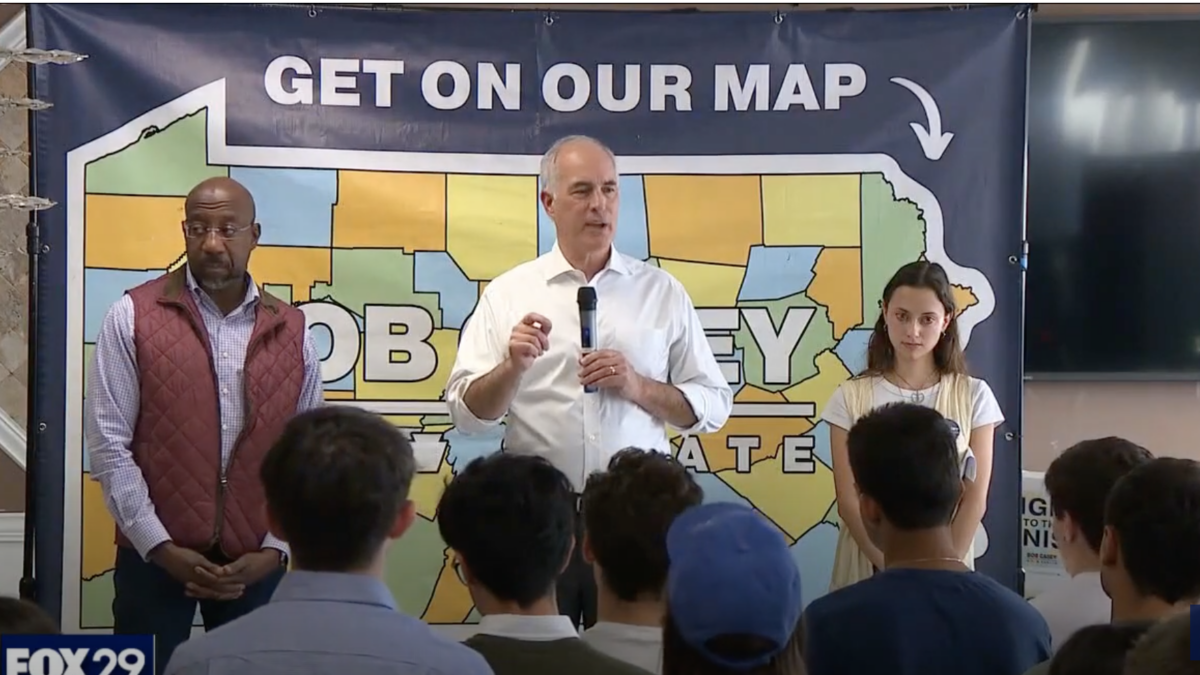

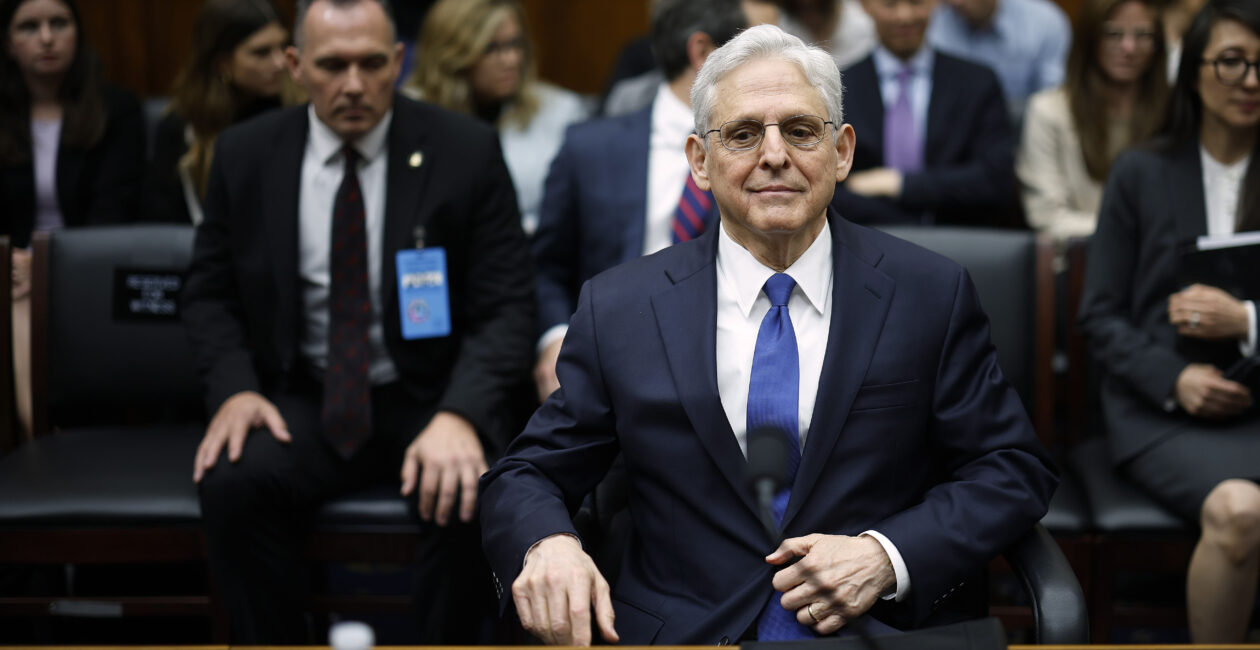

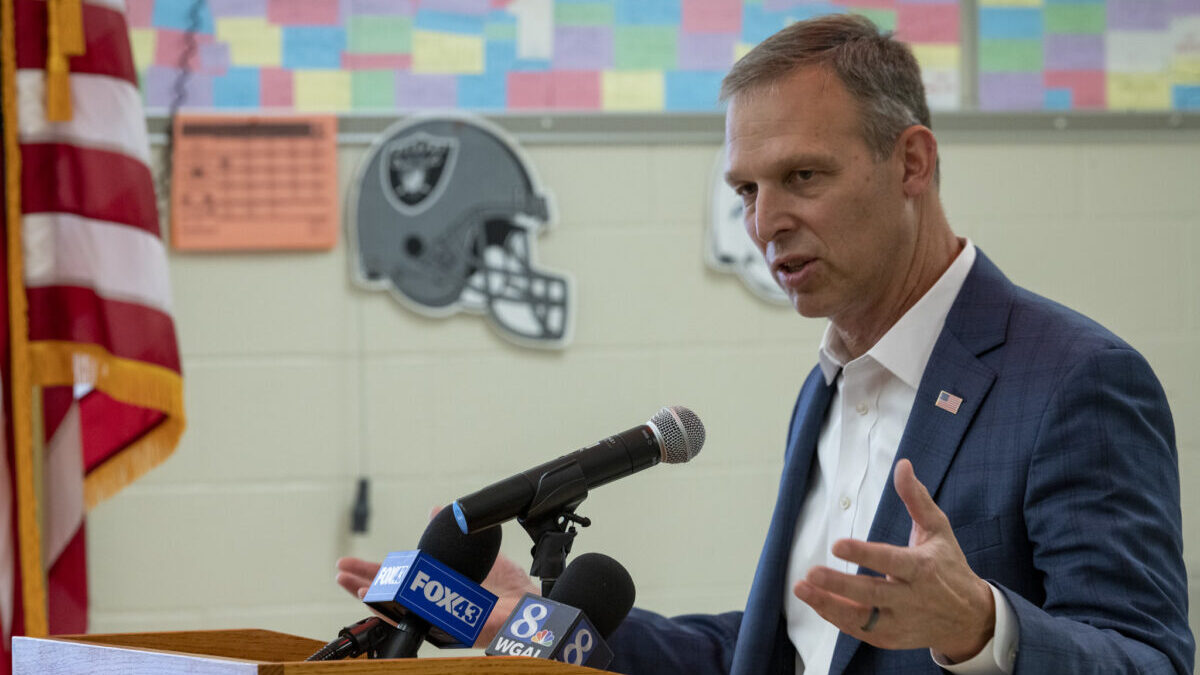



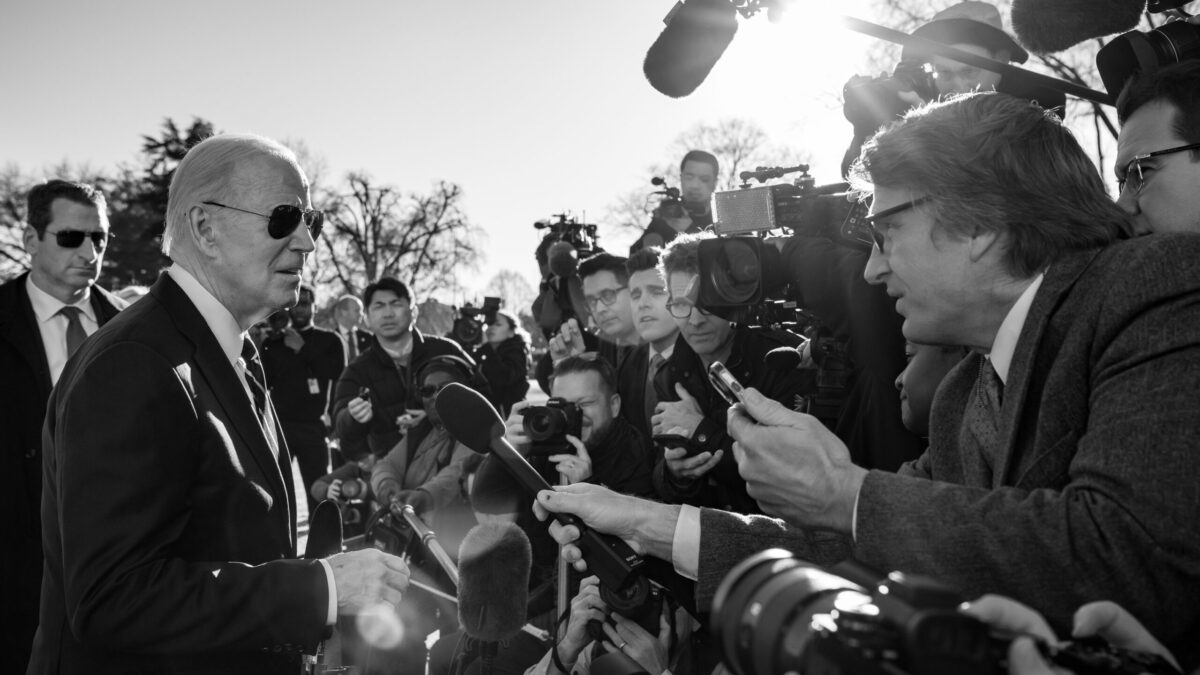


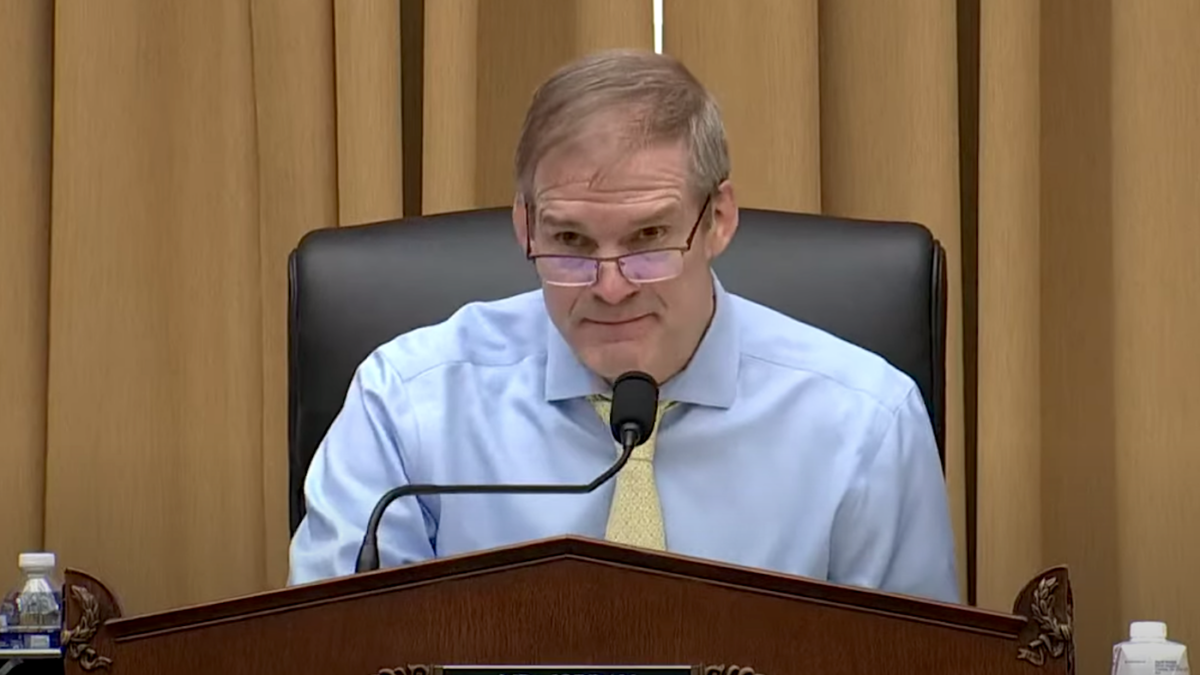






 What Did You Say?
You must be logged in to post a comment.