
EXCLUSIVE: Jan. 6 Committee Is Using Innocent Americans’ Assertion of Their Constitutional Rights as Proof of Guilt
BY: MARGOT CLEVELAND | JULY 12, 2022
Implying guilt based on a witness asserting his rights ‘is a McCarthy-esque tactic that offends the Constitution and is unworthy of the United States Congress.’

MARGOT CLEVELAND
VISIT ON TWITTER@PROFMJCLEVELAND
The Jan. 6 Committee is abusing its power by asking inappropriate questions about their fellow Americans’ beliefs and associates, and publicly portraying witnesses who exercise their Fifth Amendment rights as guilty — all to put on a show trial.
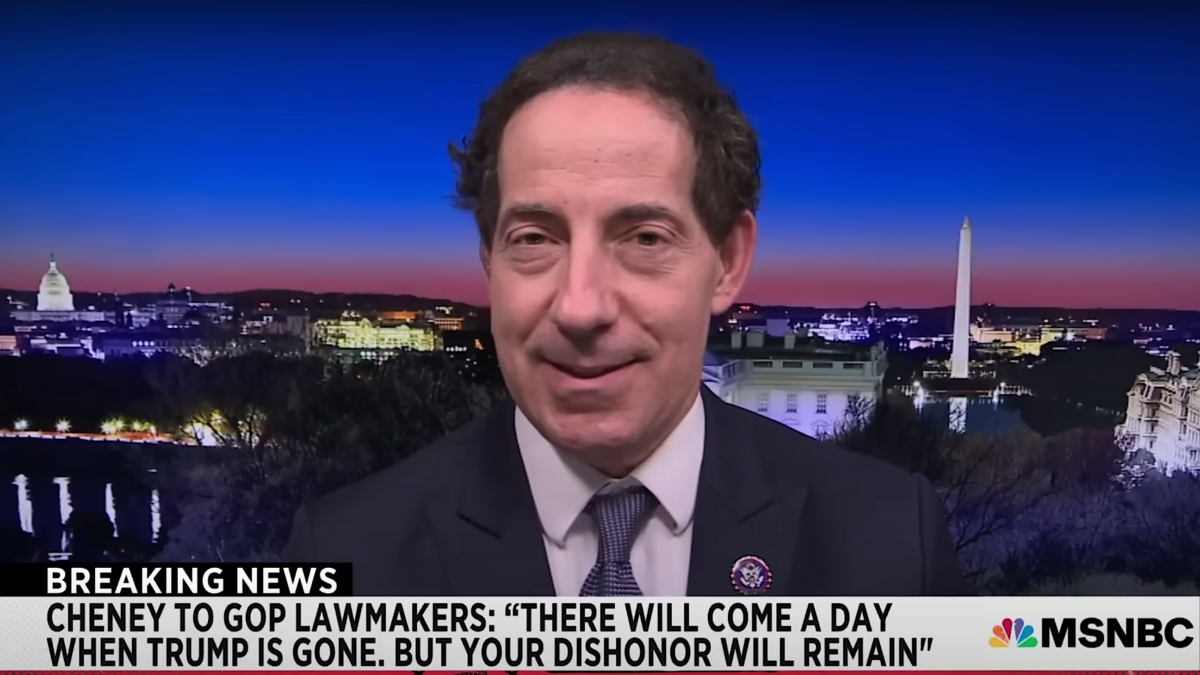
Later on, Tuesday, the Jan. 6 Committee will hold yet another public hearing, this one purportedly to focus “on the role of extremists” in the attack on the Capitol. While the precise script for the afternoon’s proceedings remains unknown, last week Democrat Rep. Jamie Raskin previewed the committee’s plans, telling The New York Times that when public hearings resumed in July, “he intends to lead a presentation that will focus on the roles far-right groups like the Proud Boys, the Oath Keepers and 1st Amendment Praetorian played in the Capitol attack.” According to the Times, “Mr. Raskin has also promised to explore the connections between those groups and the people in Mr. Trump’s orbit.”
Recycling the Fifth Amendment Tactic
An attorney for 1st Amendment Praetorian, or 1AP, a nonprofit dedicated to protecting free speech, spoke exclusively with The Federalist about the committee’s questioning of 1AP, the group’s founder, and another member of the nonprofit, all of whom she represents. From the framing of the questions posed to her clients, Leslie McAdoo Gordon was left with the firm impression that the Jan. 6 Committee merely wanted video capturing her clients declining to answer the questions for the purpose of impugning their character during the televised hearings.
“The committee knew before the depositions that my clients would be asserting their First and Fifth Amendment rights, and also would not answer any questions because the depositions were being held in violation of the rules established by the House,” McAdoo Gordon told The Federalist. So, shortly after the hearing began and the 1AP witnesses made clear they would not answer any questions, the staffers moved to general topic areas and would ask a few prepared questions, then the committee representative would note that he had more questions on the topic and inquire whether if he asked those questions, the witnesses intended to assert the same objections.
“My clients would respond ‘yes’ to that question, so then the committee would move forward with the next topic,” McAdoo Gordon said. “But after covering various topics, the committee staffer at the end volleyed a litany of individual questions to my clients, forcing them to respond to each question with ‘Rules, First, and Fifth,’ the shorthand we had agreed to with the committee to convey their objections to questions posed.”
Given that the committee had broadcast video of Michael Flynn asserting his Fifth Amendment right against self-incrimination in an earlier hearing, McAdoo Gordon said she wouldn’t be surprised if Tuesday’s hearings include clips of her clients refusing to answer the committee’s questions.
In fact, she said as much to the committee in a letter last week. After calling the lawmakers out for implying to the public that Flynn was guilty of some crime because he asserted his Fifth Amendment rights, McAdoo Gordon wrote that implying guilt based on a witness asserting his rights, “is a McCarthy-esque tactic that offends the Constitution and is unworthy of the United States Congress.” The attorney added that she is “forced to anticipate that the Committee will use the same totalitarian tactic to improperly smear 1AP.”
The irony is that McAdoo Gordon was working with the committee to arrange for her clients to testify voluntarily, within the bounds of the First Amendment, until the committee concocted what she has called a “cockamamie” criminal conspiracy theory. The committee argued in litigation with former Trump attorney John Eastman “that President Trump, Dr. Eastman, and others conspired to defraud the United States by disrupting the electoral count,” supposedly in violation of Section 371 of the federal criminal code, which makes it a crime to “conspire to defraud” the United States. The committee’s pushing of what she called a “preposterous” legal theory left McAdoo Gordon “with no option but to recommend that my clients assert their Fifth Amendment right against self-incrimination.”
McAdoo Gordon told The Federalist that during her clients’ depositions, the committee asked a series of questions that she likely would have allowed her clients to answer if the meeting had been on a voluntary basis. Putting aside the question of whether the committee was properly constituted, the 1AP’s attorney noted Congress had a legitimate interest in investigating the riots and violence at the Capitol on Jan. 6, 2021.
“What 1AP did, or more accurately put, didn’t do, on Jan. 6 was relevant to the committee’s investigation into the riot and the violence at the Capitol, and I was working to arrange for my clients to voluntarily provide the committee with that information,” McAdoo Gordon said. Likewise, the committee had questions about a couple tweets my clients sent on the sixth, and again, such questions were relevant to the Jan. 6 investigation. “
“But once the committee advanced the absurd Section 371 criminal conspiracy theory, I could no longer recommend my clients speak with the committee,” the attorney explained. McAdoo Gordon did respond to the committee on behalf of her clients, however, after Raskin “falsely described 1AP as a ‘far right’ group with a ‘role’ in the ‘Capitol attack’” in his interview with the Times. “All of those points are false and defamatory,” she told the committee. “1AP is a mainstream, non-partisan group with no role whatsoever in the attack on the Capitol.”
Violating the First Amendment
It isn’t just the Fifth Amendment the committee has been shredding, however. “Even if my clients did not assert the Fifth Amendment, I would have still objected to several questions on First Amendment grounds,” McAdoo Gordon added. While some questions related to Jan. 6 were relevant, the majority of the questions posed to 1AP representatives were none of Congress’s business, McAdoo Gordon stressed. And even the process reveals the warped authoritarianism of the committee, the attorney added.
“At the beginning of the depositions, the congressional staff sought confirmation that we were not recording the proceedings in any way, while they proceeded to video record the questioning,” McAdoo Gordon said. She then noted that while witnesses called before a federal grand jury in Washington, D.C., can obtain a transcript of their testimony, the Jan. 6 Committee refuses to allow those they target to obtain transcripts of their subpoenaed testimony.
The committee’s hiding of the transcripts serves to cover their lies and to control the narrative of the show trial, but it also allows the Jan. 6 Committee to hide the wildly inappropriate questions it posed to the witnesses.
“Do you believe in QAnon?” “Do you believe that Joe Biden is the legitimately elected president of the United States?” “What’s your understanding of what happened on 1/6?”
“A Committee of the United States Congress actually asked my clients those questions,” McAdoo Gordon told The Federalist in an exclusive weekend interview.
“Before the deposition, I assured my clients that their political and personal beliefs would not be probed,” the D.C. attorney explained. “While I knew from the subpoenas the Jan. 6 Committee intended to seek constitutionally protected information concerning other 1AP members, my jaw just kept dropping further when they started to question my clients on what they thought and believed.”
The committee also asked Robert Lewis, who is a retired United States Army Green Beret and recipient of the Bronze Star and a Purple Heart, and Philip Luelsdorff, a former U.S. Army Ranger, to describe 1AP activities. For whom and for what purpose did they provide volunteer services? Did they provide security? Surveillance? Assistance with legal activities? What training did they provide? And how were they able to afford to provide the training and volunteer services? Where did the money come from? Who made donations? What bank accounts were used? Did the organization accept cryptocurrency?
Again, none of those questions concerned the events of Jan. 6. Rather, the committee focused on events long before the Jan. 6 events at the Capitol. For instance, it asked whether 1AP provided security for polling places. Other questions concerned 1AP’s security work at a Nov. 14 rally and a Dec. 12 rally.
In essence, the committee is seeking information about 1AP’s members, financial status, donors, and activities. None of that is relevant to the Jan. 6 riots, and all of it is off-limits to the government, the lawyer said. “The Committee had no business asking those questions, so my clients weren’t about to answer them in violation of their First Amendment rights.”
“The Committee had cited as ‘evidence’ against my clients that they obtained a permit for a demonstration the day before the riot. How is obtaining a permit to hold a peaceful protest evidence of a role in a riot the next day? It isn’t,” McAdoo Gordon said. The committee also sought to quiz Lewis and Luelsdorff on their relationship with the Trump family, the White House, the campaign, and numerous specific individuals such as Sidney Powell and Michael Flynn. The staff further asked whether they had been in contact with any of the defense attorneys representing any of the Jan. 6 defendants.
“The government should not be asking a civic organization, which is what 1AP is, about its relationships, in general, with other people, much less about the organization’s donors or lawyers with whom they spoke,” McAdoo Gordon stressed.
Assuming Guilt with Dishonest Framing
Beyond asking inappropriate questions that implicated 1AP’s First Amendment rights, the committee framed several questions in the “do you still beat your wife” format. Before the election, did they provide security “in order to overturn the election”? “Have you engaged in any activities to overturn the certified election results?” “Have you engaged in any activities to reinstall Donald Trump as president of the United States since Jan. 20, 2021?” These questions all presuppose that the “election results” were sought to be “overturned,” as opposed to challenged.
But of course, the Jan. 6 Committee’s focus on the few unfounded claims of election fraud, as opposed to the numerous violations of state election law and evidence of illegal voting — issues Trump and his legal team pursued — aids in the narrative that the protesters wanted to “install” Trump or overturn the election, as opposed to protest election irregularities. And by using a guilt-by-association strategy, the committee paints not just 1AP and its volunteers as complicit in the violence at the Capitol, but every American who attended the rallies and peacefully protested the disastrous 2020 election.
“The committee might be using nicer language, but its questioning is Stalinist in nature nonetheless,” McAdoo Gordon said.
The 1AP lawyer is correct. But because the corrupt media is effectively serving as a state-run press for its preferred politicians, most of America will be oblivious to that fact when the hearings resume later today.



 In reading the article
 What Did You Say?
You must be logged in to post a comment.