Perspectives; Thoughts; Comments; Opinions; Discussions

Posts tagged ‘college students’

Swing States Are Using Taxpayer Money to Turn Out Democrat-Leaning Young Voters


BY: SHAWN FLEETWOOD | MAY 01, 2024

Read more at https://thefederalist.com/2024/05/01/swing-states-are-using-taxpayer-money-to-turn-out-democrat-leaning-young-voters/

College students

Author Shawn Fleetwood profile

SHAWN FLEETWOOD

VISIT ON TWITTER@SHAWNFLEETWOOD

MORE ARTICLES

Democrat election officials in Arizona and Nevada are using taxpayer resources to register and turn out Democrat-favorable young voters ahead of the 2024 election.

On Monday, Arizona Secretary of State Adrian Fontes, a Democrat, announced that his office is partnering with the ALL IN Campus Democracy Challenge to launch the “Arizona Campus Voting Challenge.” According to an office press release, this allegedly “nonpartisan initiative” is designed to increase voter engagement among students attending accredited universities throughout the state.

Young voters (18-29) broke for Democrat House candidates over Republican ones by a nearly 2-to-1 margin during the 2022 midterms, according to estimates by the Center for Information & Research on Civic Learning and Engagement at Tufts University.

Participation in the Arizona Campus Voting Challenge is free and allows participating colleges to become “eligible for awards based on voter turnout and registration rates on their campuses for the November 5, 2024 election.” Federal law makes it illegal to “make[] or offer[] to make an expenditure to any person, either to vote or withhold his vote.”

Students who join will also be “provided guidance and tools to create an action plan for increasing student engagement on their campus,” according to Fontes’ office.

“By signing up for the Arizona Campus Voting Challenge, all accredited, degree-granting higher education institutions across the state can improve, measure, and celebrate efforts to institutionalize nonpartisan civic learning, political engagement and informed voter participation,” the presser reads. “Institutions that sign up for the Arizona Campus Voting Challenge will also be automatic participants in the nationwide ALL IN where awards are issued for highest voter turnout, most improved voter turnout, and highest rate of voter registration. As well as state-specific awards for meeting objectives mapped out in an institution’s nonpartisan democratic engagement action plan.”

Despite being marketed as “nonpartisan,” the initiative appears to be anything but. As I previously wrote in these pages, ALL IN is an enterprise of Civic Nation, a left-wing nonprofit headed by Valerie Jarrett, a former senior adviser to President Barack Obama. The initiative has previously produced Democrat talking points, such as the baseless claim that “strict voter ID requirements” are “barriers” to voting.

ALL IN’s leadership team is also comprised of Democrats. Founding advisory board member Alicia Kolar Prevost, for example, previously served in the Clinton administration and worked at the Democratic National Committee.

Not Democrats’ First Rodeo

Fontes is hardly the only left-wing election official using his office to turn out a demographic favorable to Democrats.

Earlier this year, Nevada Secretary of State Francisco Aguilar, also a Democrat, announced his office would be accepting applications to join his “Youth Advisory Task Force” to engage young voters ahead of the 2024 election. According to an office press release, the task force’s priorities include “identifying and proposing programs that support participatory democracy and solutions to any problem concerning the level of participatory democracy of young voters,” and “supporting projects … that encourage and advance participatory democracy of young voters.”

Task force members were appointed by Aguilar earlier this month and include “high school and college students, as well as non-students, between the ages of 17 and 24.” There are roughly 118,000 students enrolled in Nevada colleges, according to Univstats.

Michigan Democrat Secretary of State Jocelyn Benson launched a similar task force in October.

Democrats Use Taxpayer Dollars to Target Young Voters

At the same time Democrat officials like Fontes and Aguilar target young voters with taxpayer dollars in their respective states, President Joe Biden is weaponizing the federal government to take these efforts nationwide.

Signed in March 2021, Executive Order 14019 directed hundreds of federal agencies to interfere in state and local election administration by using taxpayer funds to boost voter registration and get-out-the-vote activities. Agencies were instructed to collaborate with so-called “nonpartisan third-party organizations” that have been “approved” by the White House to provide “voter registration services on agency premises.” Of course, many of these “nonpartisan” groups have been identified as extremely left-wing, such as the ACLU and Demos.

As part of its compliance with the “Bidenbucks” order, the Department of Education issued a memo in February announcing that Federal Work-Study funds — which are used to provide part-time campus jobs to help students with tuition costs — may be used to employ students by government agencies for work such as “supporting broad-based get-out-the-vote activities, voter registration, providing voter assistance at a polling place or through a voter hotline, or serving as a poll worker.” The agency also released a “toolkit” that included guidelines for universities on how to increase voter registration and turnout on their campuses.

A Nationwide Strategy

Through the use of these taxpayer-funded GOTV operations and voter registration drives conducted by left-wing nonprofits such as the Voter Participation Center, Democrats are hoping young voters can make the difference for Biden in the battleground states needed to win the presidency this November.

In the 2020 election, for example, Biden won Arizona by less than 11,000 votes, or 0.4 percent. The Grand Canyon State also experienced close elections in the 2022 midterms, in which Democrat Kris Mayes defeated Republican Abe Hamadeh in the attorney general’s race by just 280 votes.

Given these slim margins and college students’ history of (mostly) backing Democrats, it’s no surprise Biden and Co. have made them a major focus of 2024 GOTV operations. With many students living near or on university grounds, campuses make for the perfect Democrat Party registration hubs and offer the party an opportunity to expand their chances of electoral success.

Shawn Fleetwood is a staff writer for The Federalist and a graduate of the University of Mary Washington. He previously served as a state content writer for Convention of States Action and his work has been featured in numerous outlets, including RealClearPolitics, RealClearHealth, and Conservative Review. Follow him on Twitter @ShawnFleetwood

Op-ed: Almost 1 in 10 college students threatened with punishment for their speech: study


By Adam Goldstein , Greg Lukianoff Fox News | Published December 5, 2023 5:00am EST

Read more at https://www.foxnews.com/opinion/almost-1-in-10-college-students-threatened-punishment-their-speech-study

Ignited by Hamas’ terrorist attack against Israel, divisive domestic conversations about the Israeli-Palestinian conflict have driven a new wave of campus censorship. But the problem of stifled speech on campus for both students and faculty has been around long before Oct. 7. 

According to a forthcoming survey developed by our organization, the Foundation for Individual Rights and Expression, about 1 in 10 college students say they have been threatened with disciplinary action – or worse, actually disciplined – for their speech. 

Our 2022 survey of college faculty yields similarly depressing results. About one in six professors report that they have either been threatened with punishment or actually investigated for their academic freedom or free speech.

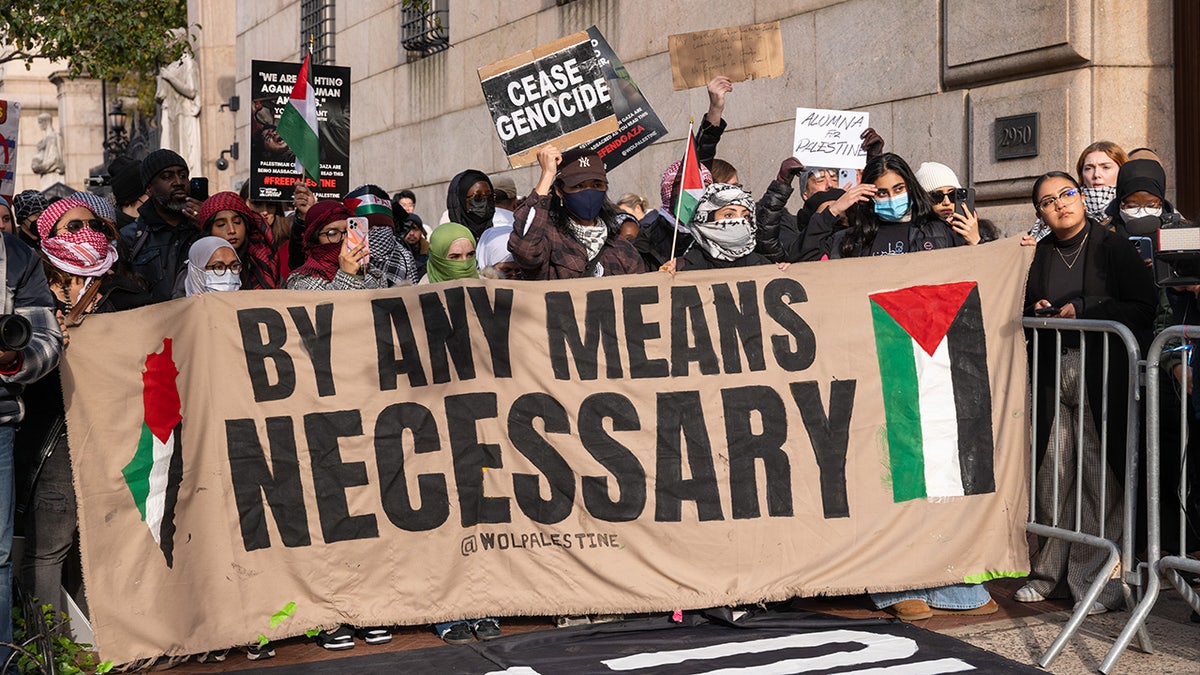
Pro-Palestinian protesters at Columbia University
Students demonstrate in support of Palestinians and for free speech outside of the Columbia University campus on Nov. 15, 2023, in New York City. (Spencer Platt/Getty Images)

The common, but rarely discussed, thread linking this oppressive atmosphere on campus is college and university administrations. And as long as censorial administrators have disproportionate power over higher education, this problem will continue.

CLASHES OVER ISRAEL-HAMAS WAR SHATTER STUDENTS’ SENSE OF SAFETY ON US COLLEGE CAMPUSES

In the student survey, which was conducted by College Pulse between Sept. 5 and Oct. 20, students answered questions about their experiences with speech and the disciplinary process. Three percent said they had been punished for their speech, and 6% said they had been threatened with punishment. 

Consider the scope of that number extended out to the larger student population. Given the total undergraduate population of the country, that’s well over a million students being threatened (or worse) by campus bureaucrats for their speech. It means a student is roughly as likely to face disciplinary censorship as they are likely to be left-handed. 

Video

And what kind of speech can get you investigated according to the study? For a New York University student, it was participation in a pro-Palestinian group. For a University of Pennsylvania student, it was expressing the opinion that the U.S. was right to have invaded Iraq. And for a Drake University student, it was simply being overheard by fellow students telling a professor about her mental health.

JULIANNA MARGULIES: COLLEGE KIDS WITH ‘THEY/THEM’ PRONOUNS SUPPORTING HAMAS WOULD BE ‘BEHEADED’ IN GAZA

The survey also revealed that students should watch what they say in their most private of spaces. Of those who were threatened or disciplined, a quarter faced punishment for speech in their dorm room. That disturbing focus on living spaces isn’t unusual. For all of FIRE’s 24-year existence, “residential life” administrators who run the dorms have been major enforcers of university speech codes. 

While the situation is clearly very bad for students, for professors it’s even worse. Given that faculty political diversity has never been lower, with some departments having left-leaning supermajorities and others having no conservative faculty at all, one would think that professors would not be targeted as often. And one would be wrong. 

Video

Since 2014, as Lukianoff and Rikki Schlott explain in their new book “The Canceling of the American Mind,” we know of over 1,000 attempts to get professors sanctioned for their speech or research. 

THE MOST EXTREME ANTI-ISRAEL, HAMAS-SYMPATHIZING MOMENTS ON COLLEGE CAMPUSES SINCE THE OCT. 7 ATTACKS

About two-thirds of those attempts were successful, resulting in some form of punishment and almost 200 fired professors. This number dwarfs any period in U.S. higher education history since the early 1970s, when the Supreme Court cemented freedom of speech as a right on college campuses and academic freedom as a special concern within that right.

Facing a cancel culture that targets both students and faculty, how did administrators respond? With transparent political litmus tests that enable and encourage the purge.

Video

More than half of the large universities in the country require “diversity, equity, and inclusion” statements, which are often vague and nebulously defined political litmus tests pressuring professors to adhere to the dominant ideology on campus. Wherever they appear, from student admission to faculty post-tenure review, these requirements reinforce the ideological status quo, suppress viewpoint diversity, and increase the risk that what passes for curriculum today will be dogma tomorrow. 

One place those litmus tests appear is in the hiring of more administrators, and make no mistake: At most schools, administrators, not faculty, decide what happens, when it happens, and how much to spend in doing it. 

PROFESSOR WHO PRAISED HAMAS ‘RESISTANCE FIGHTERS’ ON GLIDERS NO LONGER EMPLOYED BY EMORY UNIVERSITY

Yale has a one-to-one ratio of administrators to students, with Harvard not far behind. At the U.S. News & World Report’s top 50 schools in the country, there are three times as many administrators and non-instructional staff as there are faculty, according to a recent report from the Progressive Policy Institute.

Video

Once again, one might well think that hiring would slow down, giving the looming “enrollment cliff” – the demographic shift where the college-age population shrinks due to lower birth rates. But that’s never stopped colleges before. From 2015 to 2018, when enrollment and instructional employees declined, administrative staff grew over 6%. The surge in non-teaching positions is one of the primary reasons why the cost of educating a single student has gone up so dramatically over the past several decades. 

Making matters worse, many of the new administrators consider policing the speech of students and faculty part of their job. Indeed, DEI administrators have been involved in some of the highest-profile cancellations, including federal Judge Kyle Duncan at Stanford this year, Harvard professor Carole Hooven last year, and University of Central Florida professor Charles Negy in 2021. 

CLICK HERE FOR MORE FOX NEWS OPINION

And if administrators are part of the Bias Related Incident team at a particular college, part of their job is to police speech on campus, often investigating anonymous reports of students or professors engaging in allegedly offensive speech. A study released this year by North Dakota State University found that nearly two-thirds of students favored reporting professors who engaged in “offensive speech,” made up of statements of opinion – or even fact – the students didn’t like. 

Video

The situation for free speech on campus has gone from bad to grim over the last decade. It will be no easy task to fix it. But one of the first steps to both a freer and less expensive college experience is to dramatically decrease the campus bureaucracy, eliminate positions that exist to police speech, and make sure every university employee is informed that their job is to protect free speech and academic freedom, not to squelch it.

CLICK HERE TO GET THE FOX NEWS APP

Greg Lukianoff is president and CEO of the Foundation for Individual Rights and Expression (FIRE) and the co-author, along with Rikki Schlott, of the new book, “The Canceling of the American Mind: Cancel Culture Undermines Trust and Threatens Us All—But There Is a Solution.”

Adam Goldstein is vice president of strategic initiatives at the Foundation for Individual Rights and Expression (FIRE).

Watching Phones Instead of Reading Good Books Is Starving Kids’ Souls


BY: KATIE SCHUERMANN | OCTOBER 11, 2022

Read more at https://thefederalist.com/2022/10/11/watching-phones-instead-of-reading-good-books-is-starving-kids-souls/

young man on his phone

Author Katie Schuermann profile

KATIE SCHUERMANN

MORE ARTICLES

Consortium for Classical Lutheran Education 2022 conference. It is excerpted here with CCLE permission.

My husband pastors a campus church at a Big Ten university, and we live amongst college students. It is a blessed life, one in which our evenings are longer and our mornings shorter, all because we have the privilege of fostering 50-plus Gen Z-ers in the faith.

What passion and curiosity reside in the hearts and heads of our young people! But do you know what else resides there? Fear and distrust of most everything coming out of the mouth of anyone older than them.

For so many of these students grew up reading, hearing, watching, and absorbing stories that assert that they are omniscient, that no outside source is as trustworthy as their own feelings. They are certain they know what is best for themselves, and anyone who asserts otherwise is an indoctrinated false prophet of the dead past who simply refuses to sing along with Elsa, “Let it go.”

How did these young people come to trust their own corrupted gut more than the wisdom of their parents? I suspect it has something to do with Cinderella, Ariel, Elsa, and Anna; as well as Monica, Ross, Rachel, Phoebe, Joey, and Chandler; and “Modern Family,” “Sex and the City,” “Parks and Recreation,” Marvel movies, and even “Veggie Tales,” for many of our present college students were raised in homes dominated by screens.

Much of their free time was spent absorbing serial television, and while not every televised program, movie, and YouTube channel necessarily tells false stories, much of modern programming follows a storytelling formula that ensures the pet social agendas of screenwriters are always being covered in the plot and in ways that narrate lies surrounding sexual identity, the sanctity of life, the good order of creation and marriage, the strength of men, and the reality of absolutes.

Stories have always been a part of how we pass down what is good and beautiful and true to our children, but depending on the storyteller, this practice can corrupt as easily as benefit. As more and more families turn over the care of their children to institutions, programs, clubs, teams, and devices, parents are no longer controlling the narrative of the stories being passed down to their children.

The loudest, most powerful propagandist holds the bullhorn, and he makes sure the story’s plot fits his personal agenda, no matter if it is evil and ugly and false. This proves especially dangerous in the classroom, where most children spend the greater part of everyday away from their parents.

We now have generations of children raised by bullhorns, and it is commonplace for a child to be occupied by some sort of program every moment of every day, whether it is a daycare program, school program, televised program, sports program, or an arts program — you name it. Many of today’s college students have had few opportunities in life to grow bored, to daydream, and to experience what happens to their bodies and minds and emotions when not occupied. They seem to have missed out on what used to be standard human experiences such as unregulated play, relating to peers of all shapes, sizes, and maturity levels, and making messy, wonderful, formative relationships with imperfect people.

I have observed that when young people are denied the opportunity to share experiences with other real people, they bond with the fake experiences and fake people they see on a screen instead. It is not uncommon for conversations amongst college students to be centered around Disney or “Game of Thrones” or the show “Friends” or countless other streamed programs. Sadly, those Hollywood-scripted shows are the memories peers share, and those designed-to-disorder plots are the common experiences with which they relate to each other.

So, what do we do about it? How do we reclaim the hearts and minds — the attention — of our children? We have to turn off the television, certainly, and power down our devices and pick out the books to be read before bedtime as well as model chastity and charity and temperance and kindness and patience in our own lives.

As Rod Dreher suggests in “The Benedict Option,” “Christians are going to have to become better tellers of our own story,” for the screenwriters are already pitching a relentless campaign for that position, programming our children into an understanding of humanity and of God that is false, an understanding that fools’ men, born free, into living as slaves to bullhorns.

Bo Giertz, the most celebrated storyteller in my own tradition of Lutheranism, writes: “People often think they are free when they put themselves above God’s commands and don’t do what He wants. Actually, they only stop serving one power and begin serving another. Jesus tells us there is only one way to find true freedom: to remain in His Word, listening, receiving, and understanding. Then we perceive truth, and the truth sets us free, truly free.” (“Wednesday after the Third Sunday in Lent,” To Live with Christ, Bo Giertz, 224.)

We need more of this truth that “sets us free” in the stories our children are consuming. We need to read and discuss books with them that teach toward virtue and away from vice, so our youth can recognize tyranny and slavery to sin when they see it.

And they need to know they are not alone. When the time of persecution inevitably comes — when their character and endurance are put to the ultimate test — it is helpful for them to know that they are in good company. They stand with Jesus and the Apostle Paul and Samwise Gamgee and Josip Lasta and Charles Wallace and Katniss and the Rev. John Ames and Robbie Jones and saints and angels and hundreds of years of fictional heroes who have been tested and tried and even triumphed.

Think of it this way. A child is born having no formative memories of virtues and vices. At least, we hope he doesn’t, for firsthand knowledge of tyranny and sloth and intemperance would suggest that the child has been abandoned or deceived by a parent or abused by an adult or has endured some unthinkable suffering.

But a child can still know that patience is a virtue, that joy accompanies charity, that self-sacrifice has its rewards, and that chastity is a beautiful, worthy aspiration, because he has heard the story of Joseph in Egypt and Isaac on the altar and Stephen in Jerusalem and Frodo in Mordor and Bigwig in “Watership Down” and Anne in Avonlea. These characters and stories — fiction or nonfiction — give children memories of virtues before they experience them themselves. These stories teach children into a thought pattern and into a mindset and behavior that is virtuous, that is free.

As Wendell Berry writes in his essay “A Native Hill”: “It is not from ourselves that we learn to be better than we are.” Our children need us to keep telling them good, true stories — especially the true story of their forefathers, both in the family and in the faith — so they can learn to be better than they are. For we have already seen that, if left to the world and its false stories, our children will learn to be worse than they are.


Katie Schuermann is a full-time homemaker, a part-time musician, and a seasonal writer. Find her books and more at katieschuermann.com.

Dr. Carlos Campo Op-ed: Resisting cancel culture: Teaching college students how to think


Commentary by By Dr. Carlos Campo, Op-ed Contributor| Tuesday, June 29, 2021

Read more at https://www.christianpost.com/voices/resisting-cancel-culture-teaching-college-students-to-think.html/

Carlos Campo
Dr. Carlos Campo is president of Ashland University in Ohio | Courtesy of Ashland University

A few years ago, we were surprised to read Pew research statistics indicating that, “for the first time in U.S. history,” Americans felt like higher education was “headed in the wrong direction.”  As we dug into the reasons why, tuition costs topped the list, but other factors got our attention. In particular, we were intrigued and troubled by the complaint that “professors bring their social and political views into the classroom,” and that “colleges and universities are too concerned with protecting students from potentially offensive views.”

The report went on to state that, “When asked about the trade-off between allowing free speech, however distasteful, on college campuses versus protecting students from views they may find offensive, the public comes down clearly on the side of free speech.” Nearly 90% indicated that “it’s more important to allow people to speak their minds freely, even if some students find their views upsetting or offensive, than it is to ensure that students aren’t exposed to views they find upsetting or offensive, even if that limits what people are allowed to say.”

After reading the study, we felt as though the opinions expressed therein certainly did not reflect the ethos here at Ashland University, but we weren’t exactly sure how to quantify how we differed from these perceptions. We decided to take some specific actions to try to counter those views. For one, we adopted our version of the “Chicago Principles” of free speech, so named because the University of Chicago founded them in 2014. We became the 33rd institution to take this action, and the list now tops 100. We reinforced our fundamental commitment is “to the principle that debate or deliberation may not be suppressed because the ideas put forth are thought by some or even by most members of the University community to be offensive, unwise, immoral or wrong-headed. It is for the individual members of the University community, not for the University as an institution, to make those judgments for themselves, and to act on those judgments not by seeking to suppress speech, but by openly and vigorously contesting the ideas that they oppose.” A good first step.

We also borrowed from Alan Jacobs’ work and printed out and posted dozens of “Thinking Person’s Checklists” that featured items like, “Remember that you don’t have to respond to what everyone else is responding to in order to signal your virtue and right-mindedness,” hoping to foster greater civility and more vigorous dialogue. Our noted Ashbrook Scholars program had already doffed textbooks, relying instead on primary documents for their rigorous study of history and political science.

Next, we coined the phrase, “Teaching students how to think, not what to think.” The positive response to this tagline was immediate and overwhelming. I even had one student stop me in a hallway and say, “My grandfather made me come to Ashland because he read your slogan and said any school that is committed to that ideal deserves my money!” Heartened by affirming reactions all around, we applied for and were granted a trademark for the phrase. We understood the inherent limitations of the phrase, as we surely teach students “what to think” when it comes to certain elements of math, science, and at least bare historical facts, but liked how it expressed our disdain for inculcation.

But we soon realized how difficult it is to stand behind our aspirational “how to think” stance in 21st century academic life in America. The initial challenge came in the wake and undertow of the George Floyd and Breonna Taylor atrocities. We—like many universities—declared this a “watershed moment” in our history, one that demanded immediate and sustained action. Among other initiatives, we quickly constructed a module for all freshmen on race, which included “an introduction to diversity, equity, and inclusion concepts and competencies.”

While our intentions seemed pure enough, the struggle to formulate a “basic introduction” to these “concepts” while holding true to our trademarked mantra was formidable. Surely we had an obligation to “tell students what to think” about these complex issues. There are certain indisputable “facts” regarding white privilege, unconscious bias, and a number of other topics seminal to an introduction like this. We, of course, teach that racism is evil. We don’t offer a set of anthropological theories and leave it up to the students (except in the sense that believing anything we teach is up to the students) whether or not to think that whites are superior, blacks and Jews are inferior, etc. We reject all of those propositions outright, with no pretense of neutrality whatsoever.

But some in our community believed we had a “duty” to educate our students a certain way about these topics. In particular, many felt as though Critical Race Theory (CRT) should be the primary underpinning for our students’ understanding of these issues. Others emphasized that “standard Diversity Equity and Inclusion (DEI) theories” featured certain elements all students needed to know. We decided that we could not stand by our commitment to “unfettered intellectual inquiry” and not present all sides to our students—they deserved the right to formulate their own conclusions. If teaching CRT (and/including standard DEI theory) meant nothing more than opposing bigotry as traditionally understood and applying the moral truisms most of us learned as children, then yes, of course. But this is not the case: these theories rely on a set of highly controversial and theoretical principles that are not uniformly accepted. We were fine presenting and consider the approaches outlined in CRT and DEI, but out of respect for our students and commitment to the unencumbered pursuit of truth we could not treat any of it as settled truth. In the end, we wound up with a seminar that simply outlined very basic concepts, defined them from multiple viewpoints, and was ultimately more rudimentary than many hoped and probably not all that successful. “Teaching students how to think, not what to think” is harder business than we knew.

Our trials with our seminar on race emphasized a crucial dilemma facing American colleges and universities. In academia today, we realize that “viewpoint discrimination” has become so rampant that our essential function as places where the unencumbered pursuit of truth is indeed threatened. Intellectual intolerance has grown to a point that many faculty members feel silenced, and even students who voice “dangerous” opinions face intimidation and even expulsion. Places like FIRE and ACTA (Foundation for Individual Rights in Education and the American Council of Trustees and Alumni) are fighting to preserve intellectual freedom on our campuses, but their good work is often muted in academe.

Our hope is that more schools will resist the cultural pressure to simply adopt what the “academic intelligentsia” ratify as acceptable. The best colleges in our nation established their reputations on being places that openly challenged us, and never “canceled” perspectives or limited subjects—they wrestled with them in ways that developed some of the best minds and people we have ever known. Let us rise once again to the high calling of unconstrained learning. It is hard work, but worth it.

ABOUT THE COMMENTATOR:

Dr. Carlos Campo is the 30th president of Ashland University in Ashland, Ohio.  He previously served as president of Regent University.  He is serving as educational consultant for the Gates Foundation and as chair of the Alliance for Hispanic Education for the National Hispanic Christian Leadership Conference. 

BUILD 45! College Students Are Raising Money For A Trump Statue In PUERTO RICO


Written by K. Walker on June 17, 2019

URL of the original posting site: https://clashdaily.com/2019/06/build-45-college-students-are-raising-money-for-a-trump-statue-in-puerto-rico/

How likely is it that you’ll see this on CNN?

Slim and None and Slim is out of town.

The College Republican Federation is raising money to build a bronze statue of President Trump to be placed in front of the capitol building in San Juan. The “Walkway of Presidents” currently has statues of nine U.S. Presidents that have made official visits to the island during their term in office.

Melvin Soto Vazquez, the vice president of the federation, explains that the statue is being crowdfunded because of fiscal restraints aimed at curtailing non-essential public works projects. The legislature of Puerto Rico is also quite hesitant to allocate funds to commission the statue for President Trump, so, the college Republicans decided to take the task on themselves. They started a GoFundMe campaign called “Build 45!” with a goal of $45,000 for the statue but so far, they have only managed to raise around $6,700.

Watch Vazquez talk about the statue to Daily Caller reporter, Stephanie Hamill: https://youtu.be/tGioQ_Jqprc

These college kids are fans of the President and want his likeness in front of the capitol building. They think that he’s been doing quite a lot for Puerto Rico by allocating billions in aid in the aftermath of Hurricane Maria. Of course, you’d never hear that on the Media(D).

These young Republicans also want to have the first statue of President Trump on U.S. soil. Wouldn’t that be a thumb in the eye to the leftists? Pretty cool, guys!

Tag Cloud